




The handwritten notes on Class 11 English Hornbill Chapter 8 The Laburnum Top have been carefully prepared for one-shot revision, according to the latest 2026-27 CBSE syllabus.
- Length: 26 handwritten pages covering the full poem, a line-by-line paraphrase, poetic devices and every textbook question.
- Must-learn idea: the goldfinch turning the still laburnum tree into an "engine", the central image every exam question circles back to.
- Also on this page: a poetic devices concept card, an imagery breakdown, common mistakes and links to the sibling Hornbill chapters.






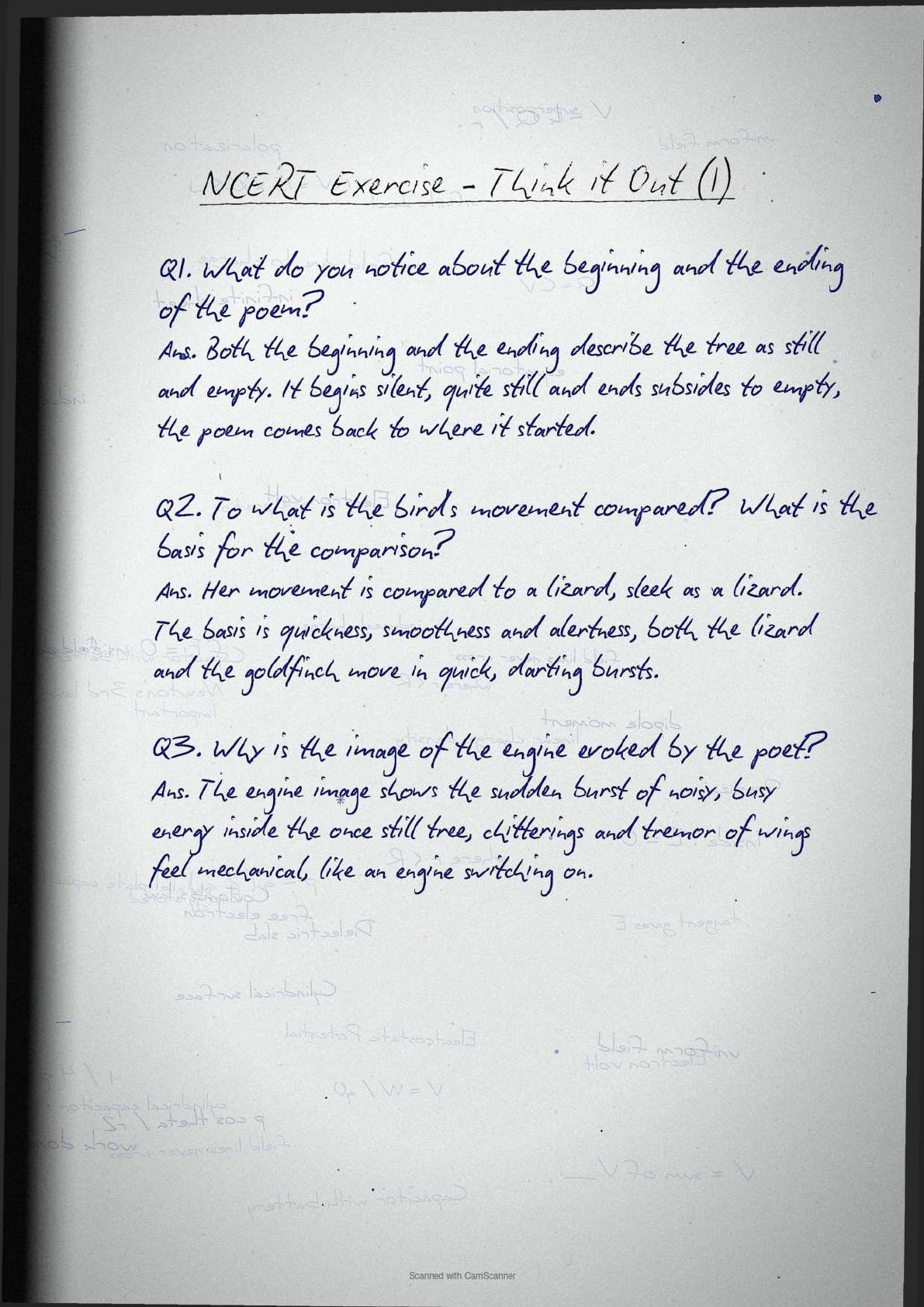
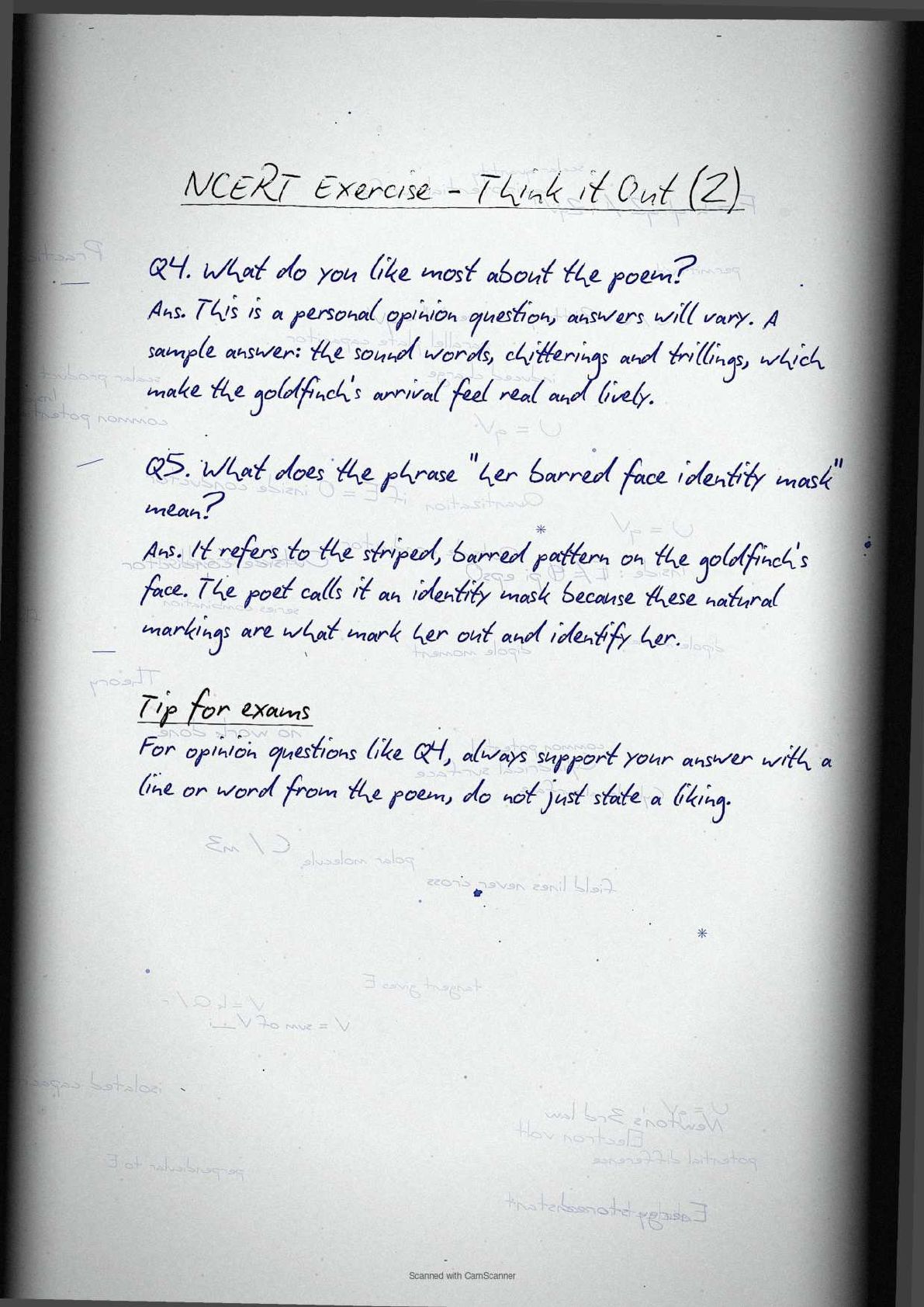
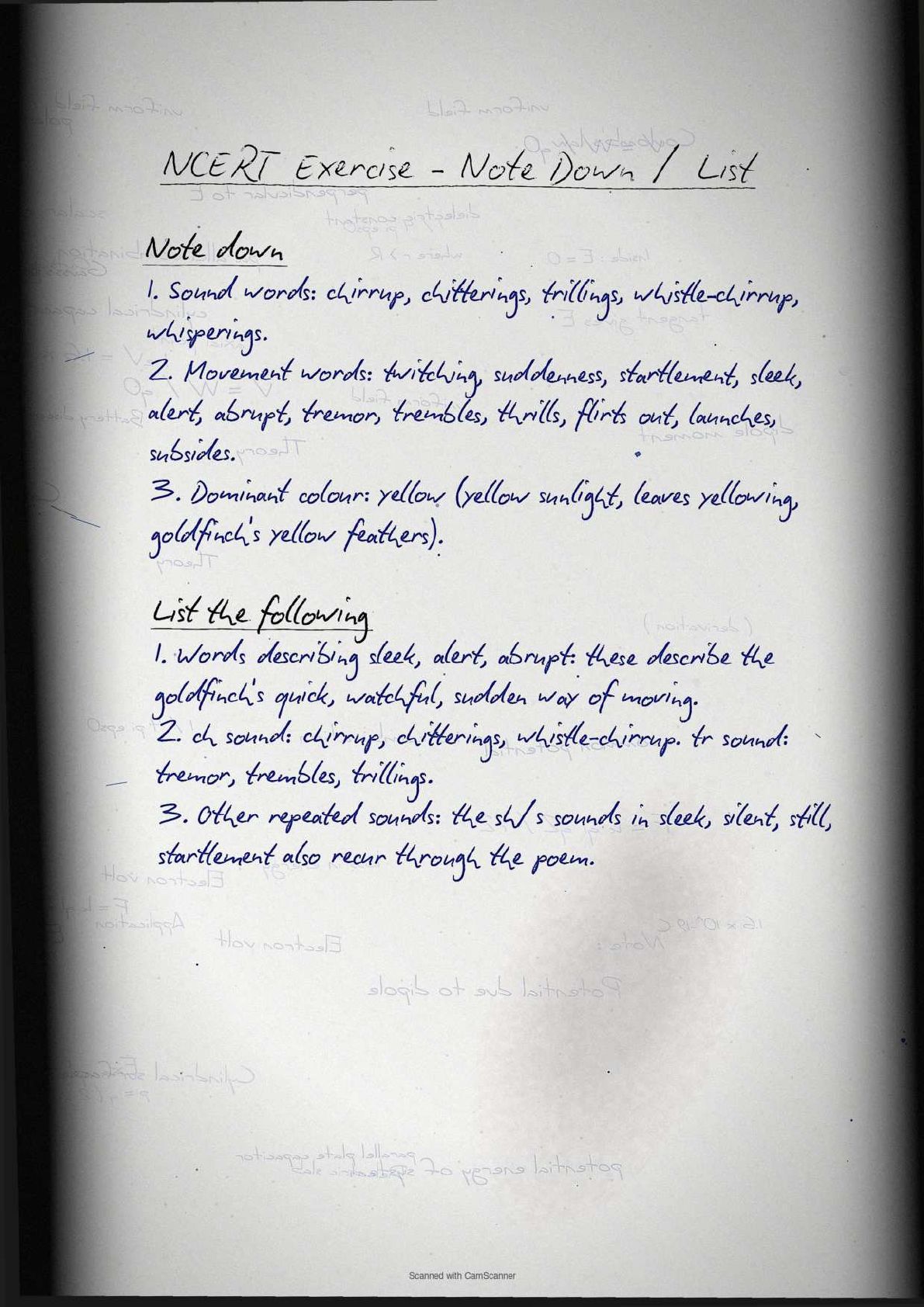
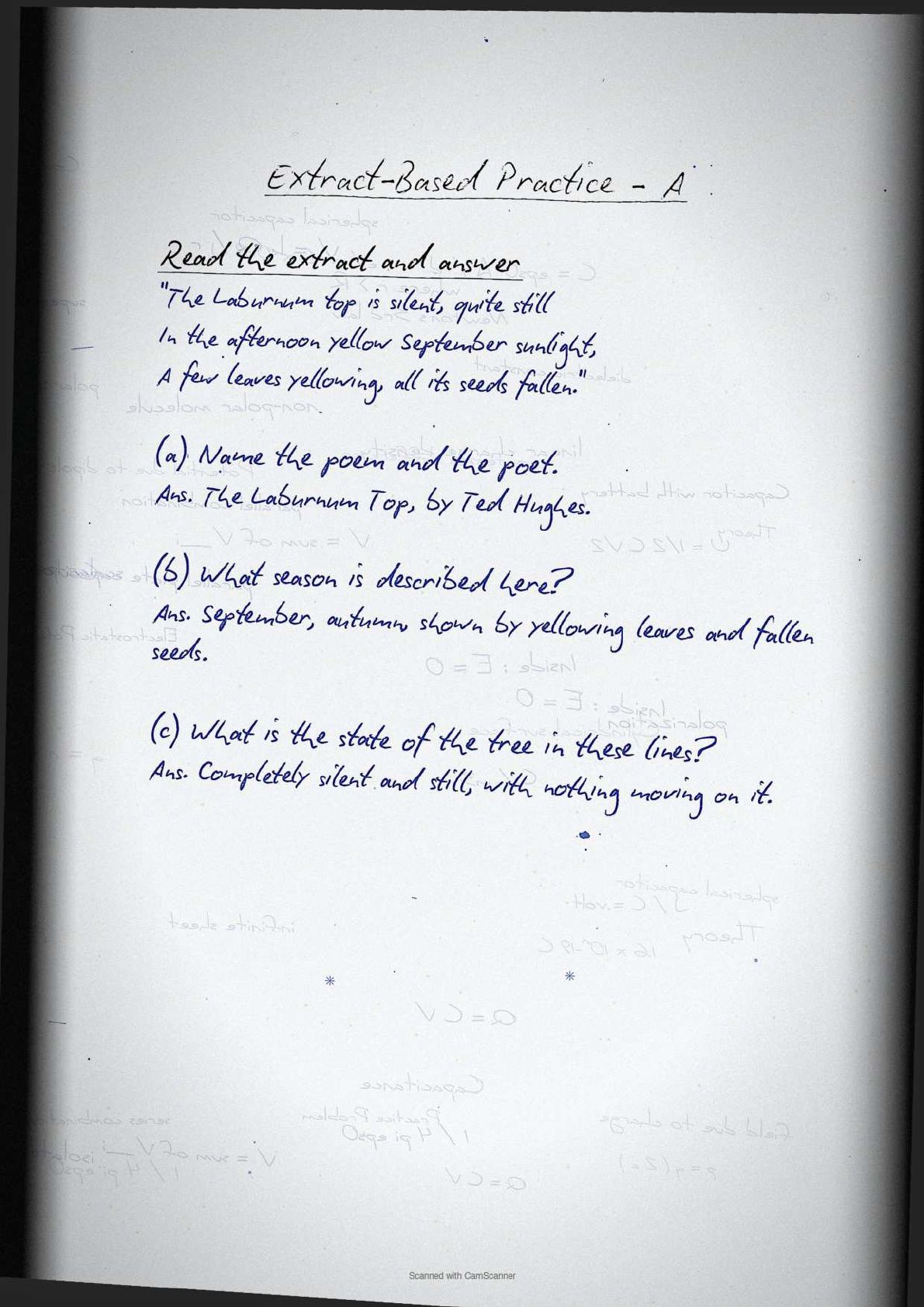

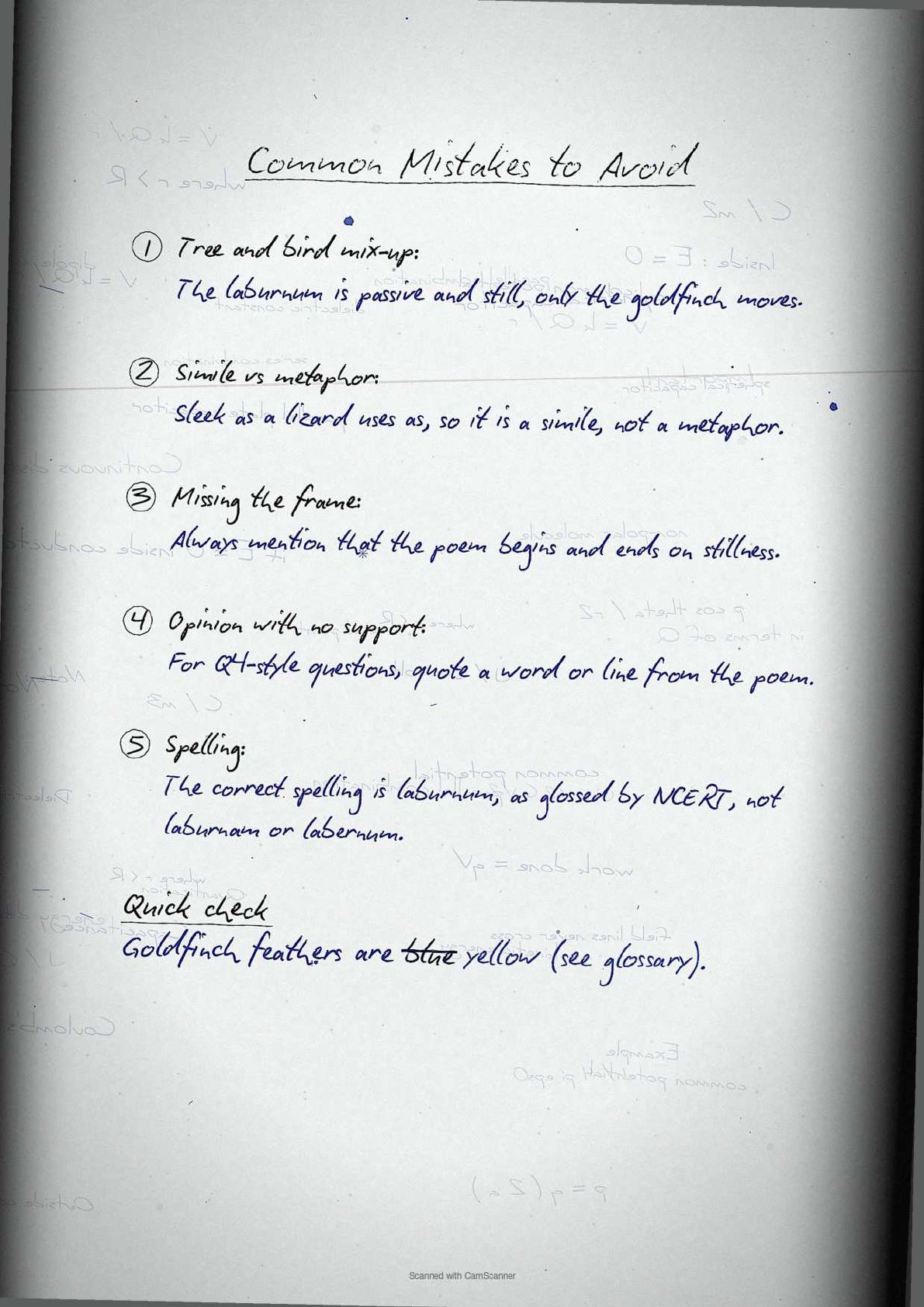
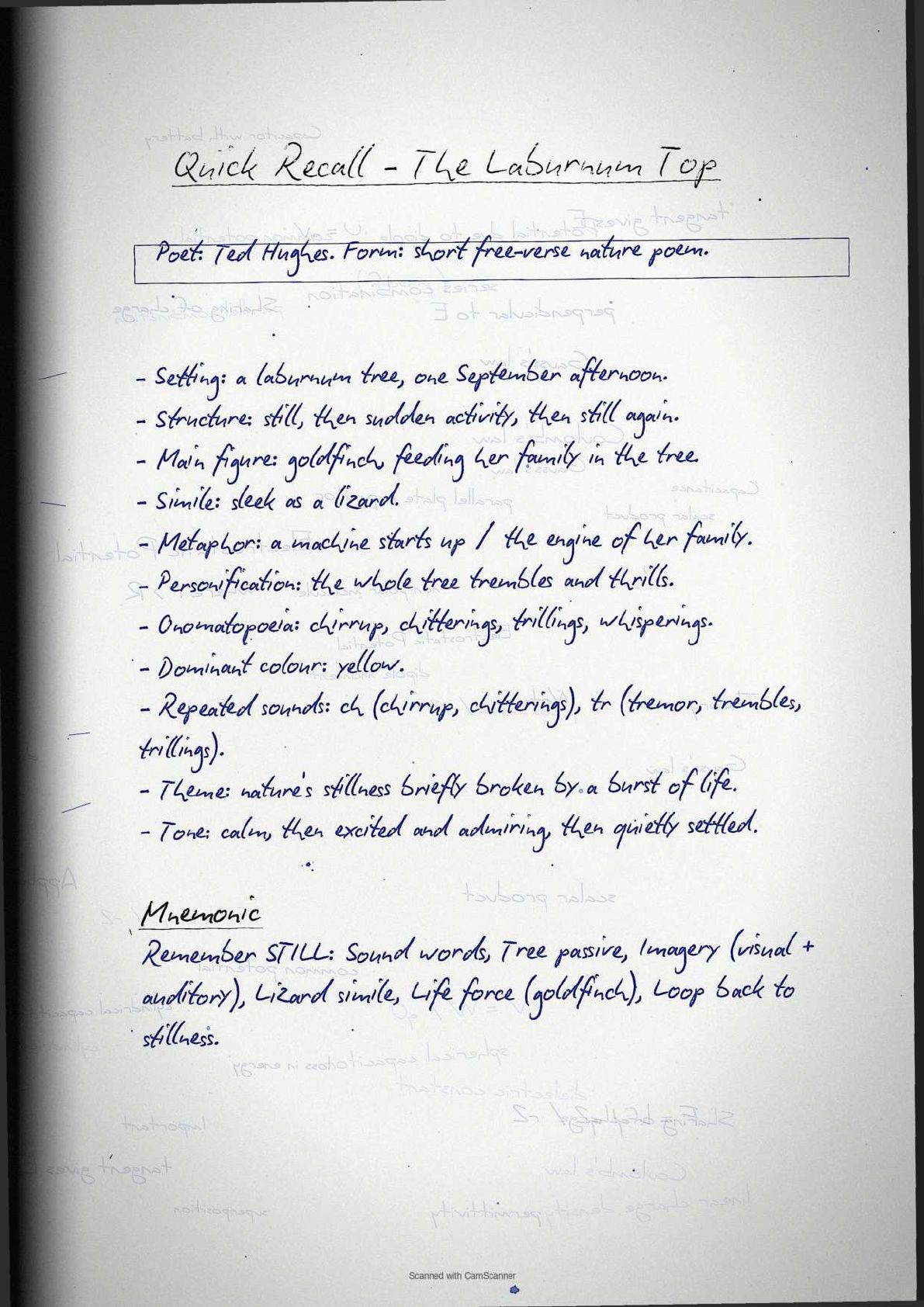
Every page in these The Laburnum Top handwritten notes is written by hand, checked against the 2026-27 NCERT Hornbill print, and matched to the way Class 11 papers ask about Ted Hughes's imagery and the poem's central metaphor.
Student Feedback: In a Collegedunia survey of 10,780 Class 11 English students, 71% of students said they could recall the poem's images but struggled to explain why Ted Hughes calls the goldfinch's activity an "engine". Toppers reported that writing the extended metaphor out in one sentence, tree as engine, bird as driver, fixed the confusion in a single revision session.
Source: 2026-27 Class 11 English student survey. Sample of 10,780 students from CBSE schools across 15 states.
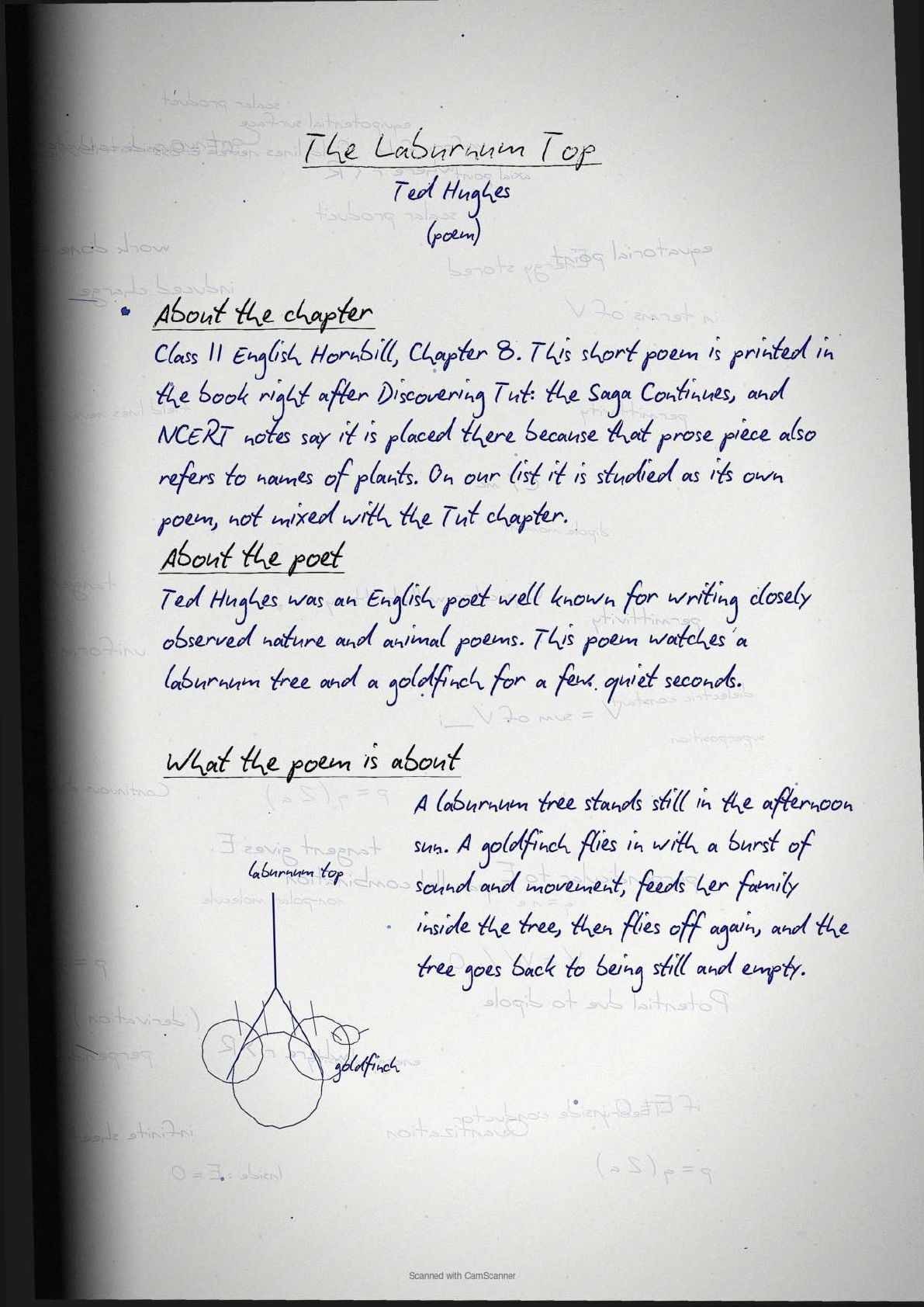
About the Poem: Ted Hughes and The Laburnum Top
Ted Hughes (1930-1998) was an English poet who served as Poet Laureate of the United Kingdom from 1984 until his death, and is remembered for nature poetry that studies animals and plants at close range. The Laburnum Top first appeared in his 1967 collection Wodwo and is printed in the NCERT Hornbill textbook as Chapter 8. A laburnum is a small tree with hanging yellow flowers that bloom in spring and early summer.
Hughes sets his poem in September, after the laburnum has already flowered, so the tree the reader meets is quiet, its seeds gone and its leaves just starting to turn colour. The poem watches that quiet tree for a few seconds and records exactly what changes when a bird family visits it.
| Fact | Detail |
|---|---|
| Poet | Ted Hughes, English poet and Poet Laureate (1984-1998) |
| Collection | Wodwo, published 1967 |
| Season in the poem | September, afternoon light, leaves just turning yellow |
| Central creature | A goldfinch and her family (fledglings) |
| Form | Free verse, no fixed rhyme scheme |
The Laburnum Top Explained in Simple Language
Source: English Tutorials by Poonam on YouTube
The Laburnum Top Line by Line: A Simple Paraphrase
The poem moves in one continuous scene, so the notes break it into four short stages rather than stanza by stanza. Reading it this way makes the shift from stillness to motion easy to trace.
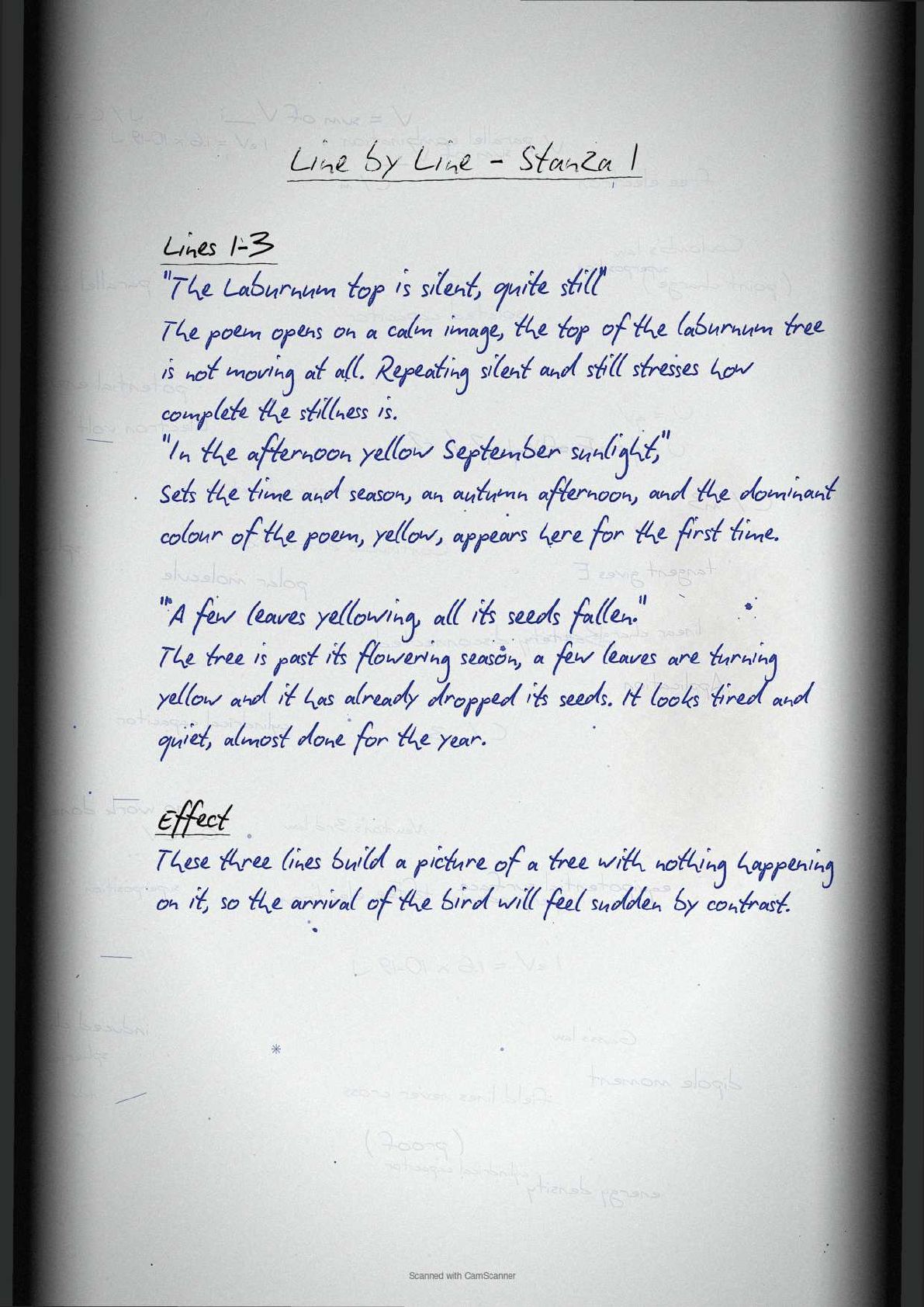
- Stage 1, the still tree: the laburnum top stands silent in the September afternoon light, its leaves turning yellow and its seeds already fallen. Nothing moves.
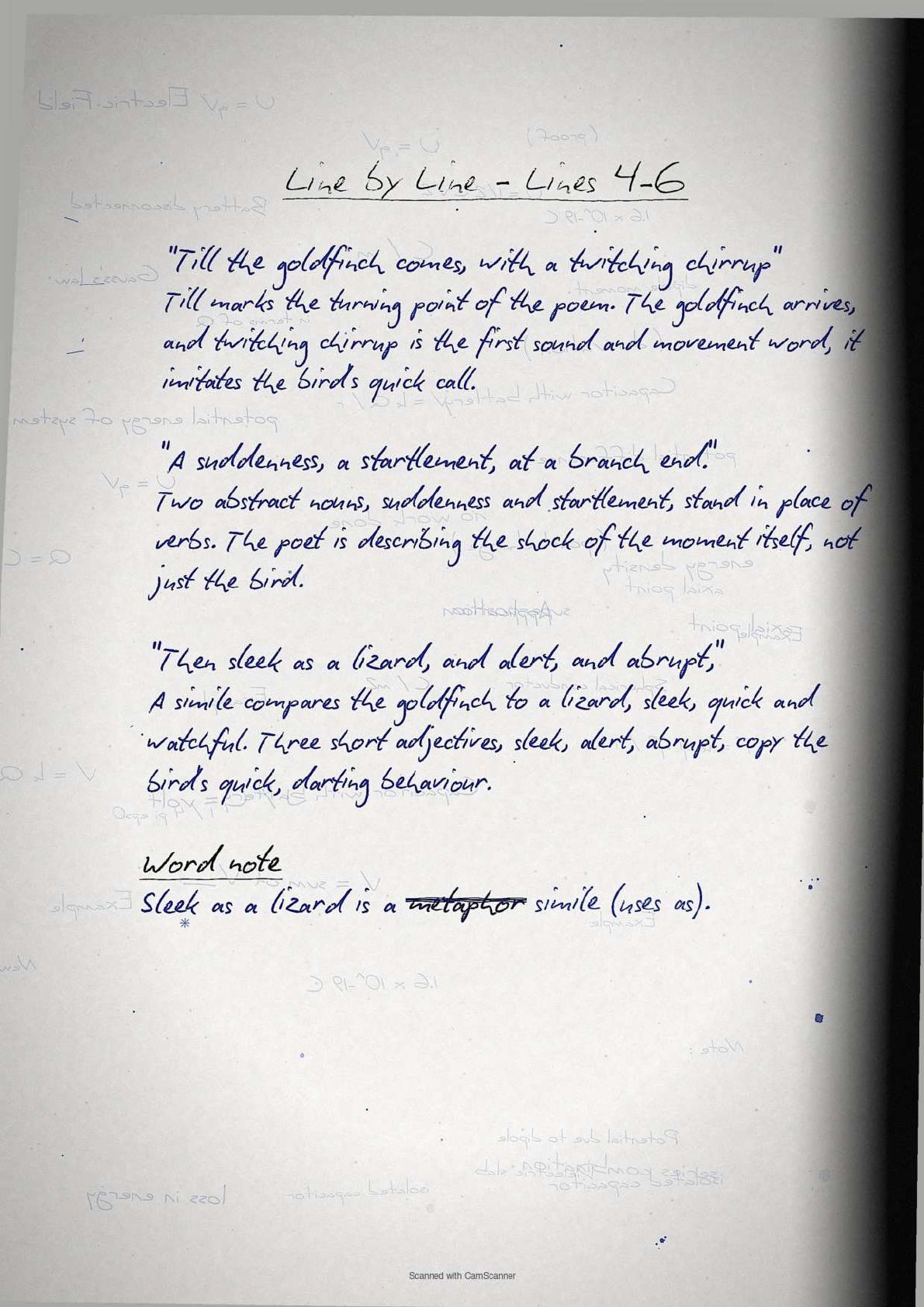
- Stage 2, the goldfinch arrives: a sudden chirrup and a startled movement announce the goldfinch. She lands sleek and alert, like a lizard, and disappears into the thick leaves.
- Stage 3, the tree comes alive: the moment she enters, a burst of chittering and trilling starts up. Hughes compares the sound and motion to a machine or engine switching on, and the whole tree trembles.
- Stage 4, stillness returns: the goldfinch feeds her family, shows her barred face at the branch end, then flies off with them over what the poem calls the golden sea. The tree goes still again, empty of her.
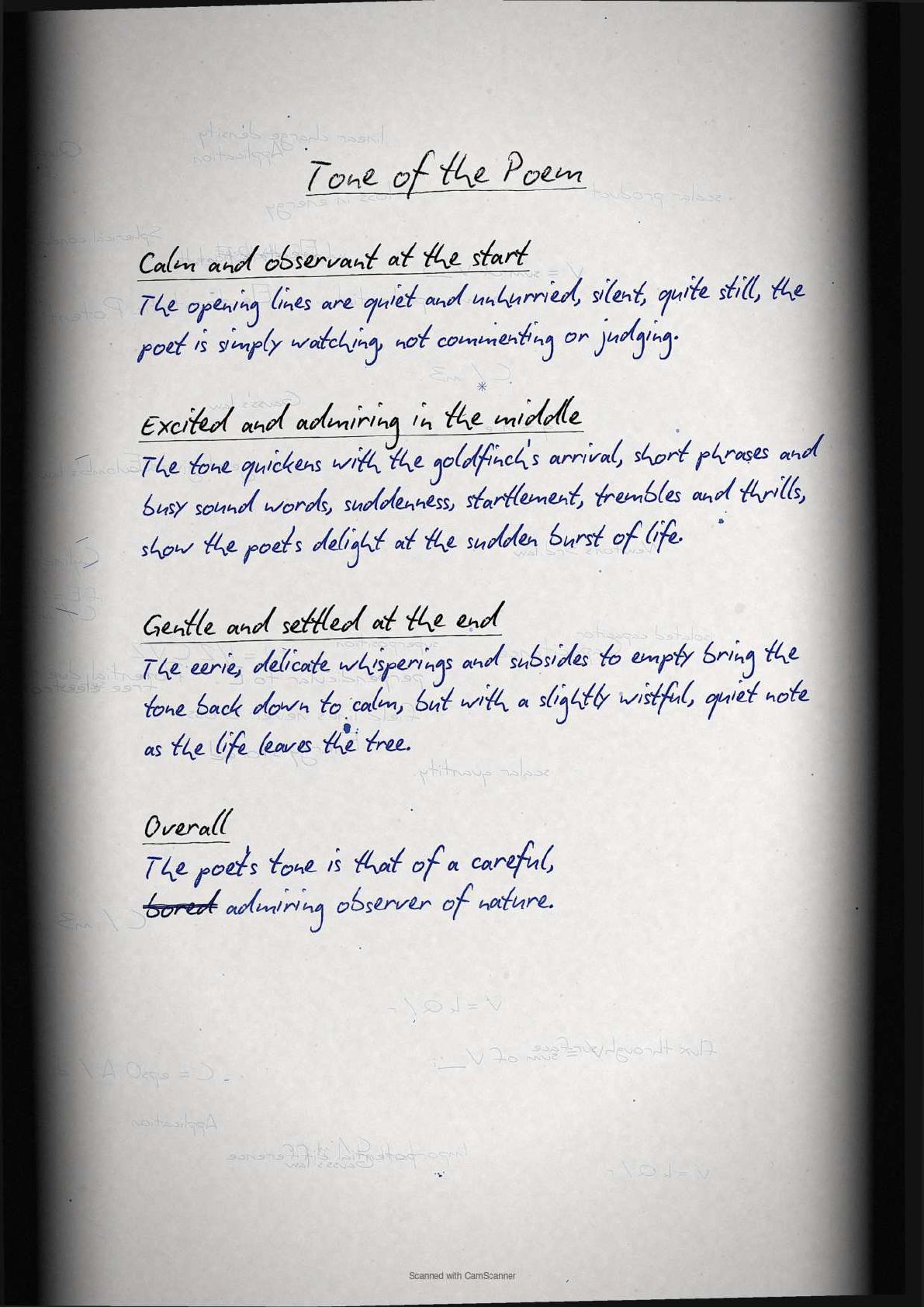
Read as a whole, the poem covers barely a minute of real time. Stillness, sudden activity, stillness again is the shape every exam answer on structure should mention.
The Central Image: Stillness Before the Goldfinch Arrives
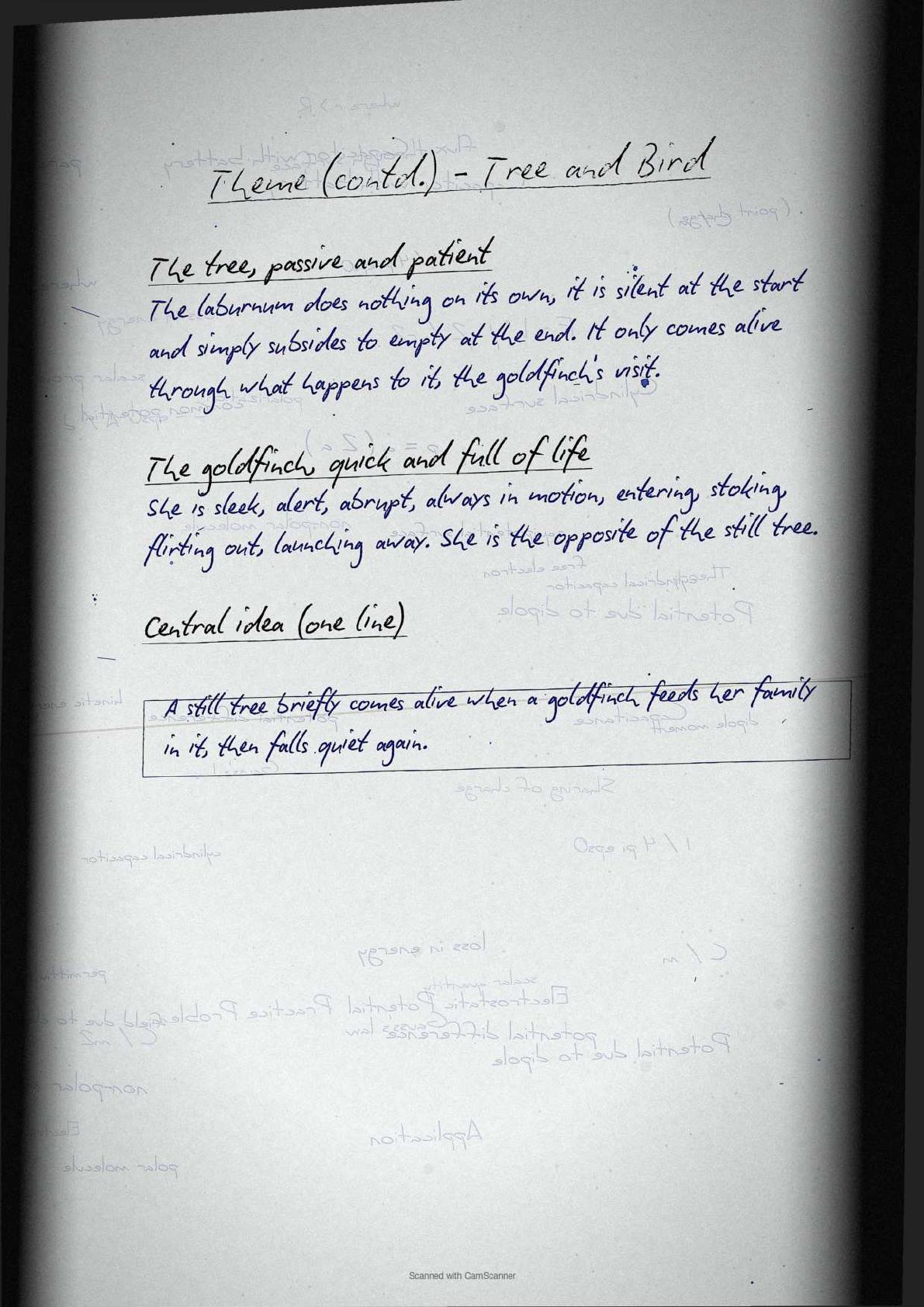
The poem opens and closes on the same note: a tree standing alone and unmoving. The word "silent" in the very first line is doing real work, because it sets up the contrast the whole poem depends on. A tree that seemed to have nothing left to offer, its flowers gone and seeds fallen, turns out to be exactly where a family of birds chooses to live.
Hughes gives the still tree a precise, almost painterly setting: afternoon light, September, yellowing leaves. Nothing in that opening image suggests life is about to happen, which is why the goldfinch's arrival lands as such a surprise. Students often miss that the poem's last line returns to stillness too, so the structure is circular, not linear.
The Goldfinch as the Engine: Extended Metaphor Explained
The poem's best-known line calls the goldfinch's family activity "the engine of her family". Hughes builds this into a full extended metaphor, not a single throwaway comparison, and exam answers score well only when they trace the whole comparison, not just the one phrase.
| Mechanical term | What it stands for in the poem |
|---|---|
| Engine or machine | The burst of activity, sound and movement inside the tree |
| She stokes it full | The goldfinch feeding her chicks, like fuelling a furnace |
| Chitterings, trillings, tremor of wings | The engine's noise and vibration, coming from real bird sounds |
| The tree trembles and thrills | The whole structure shaking as the machine runs |
Tip: the exam wants both halves stated together. Write what the mechanical word is (engine, machine, stokes) and what it represents in the tree (the goldfinch feeding her family), and the metaphor answer is complete.
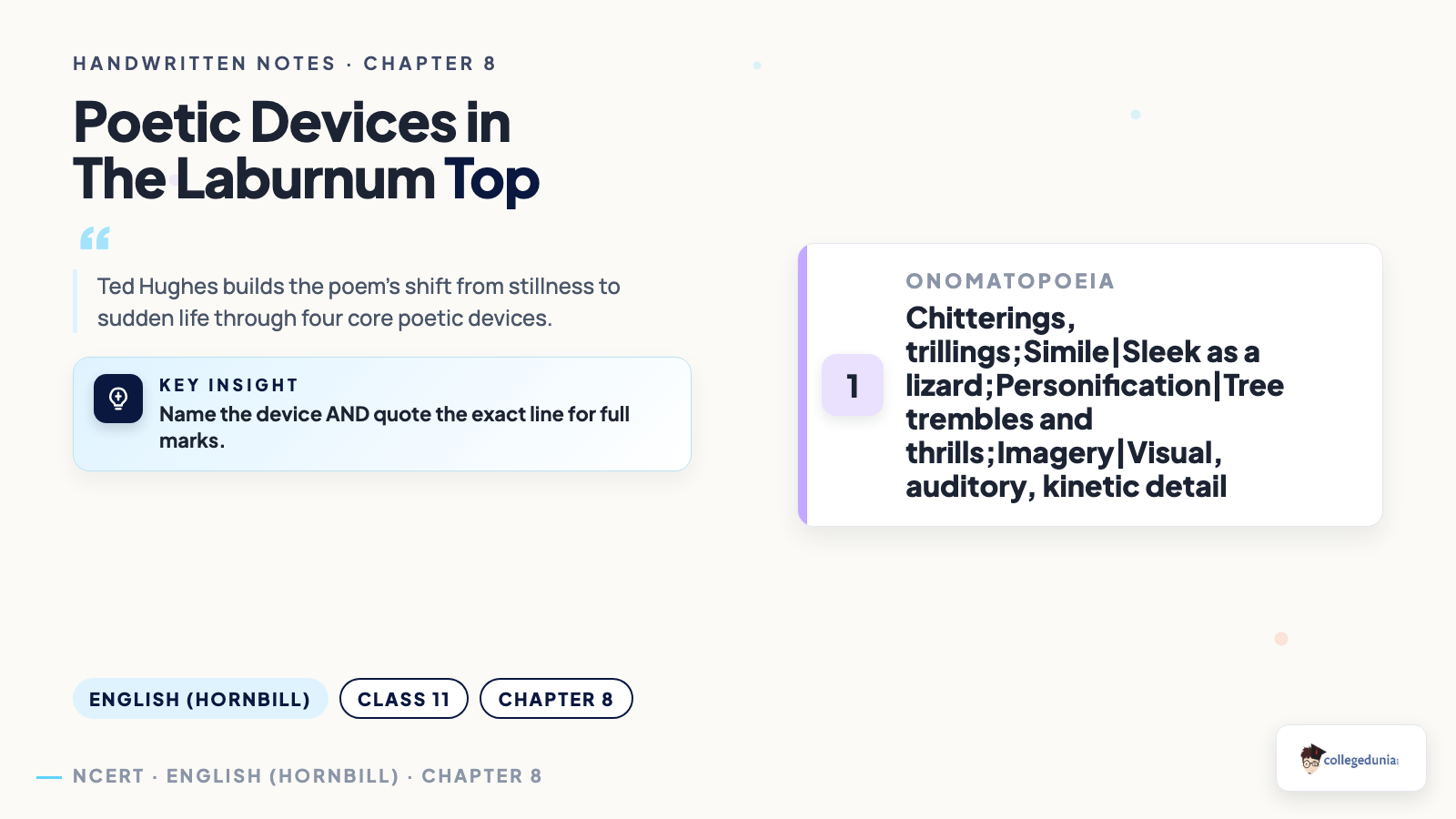
Poetic Devices in The Laburnum Top
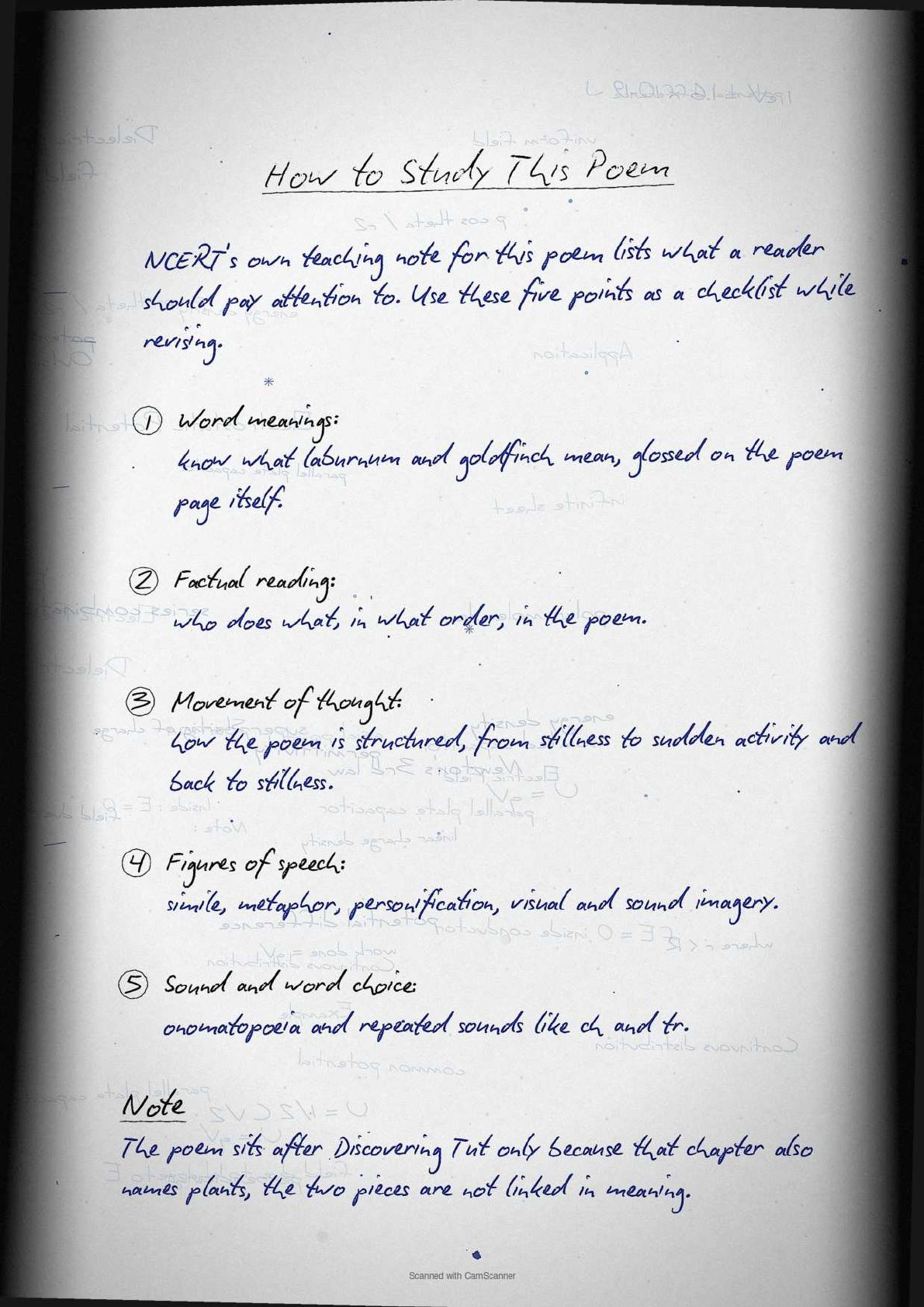
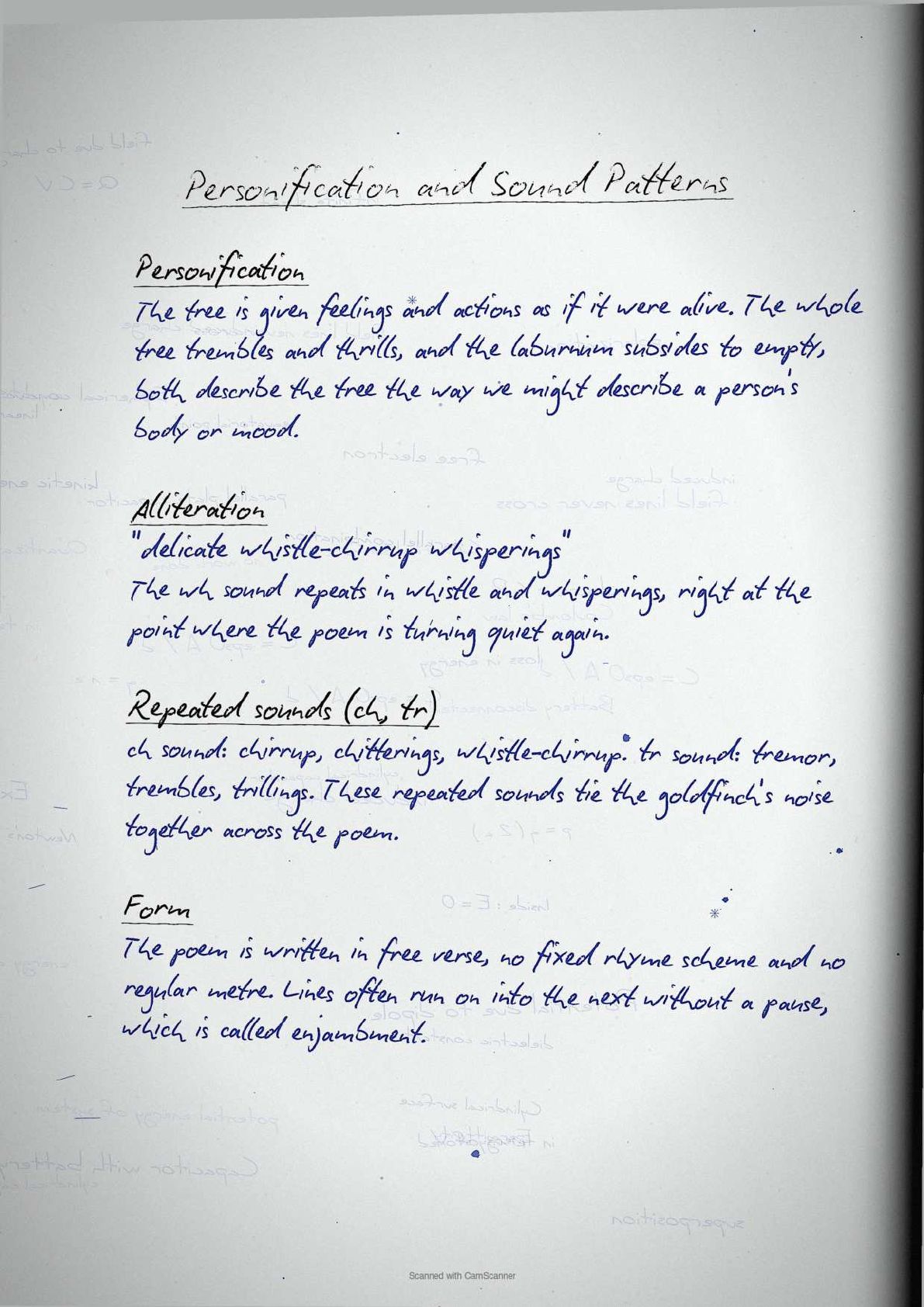
Four devices carry almost all the marks in this chapter, and the handwritten notes work through each with the exact line it comes from.
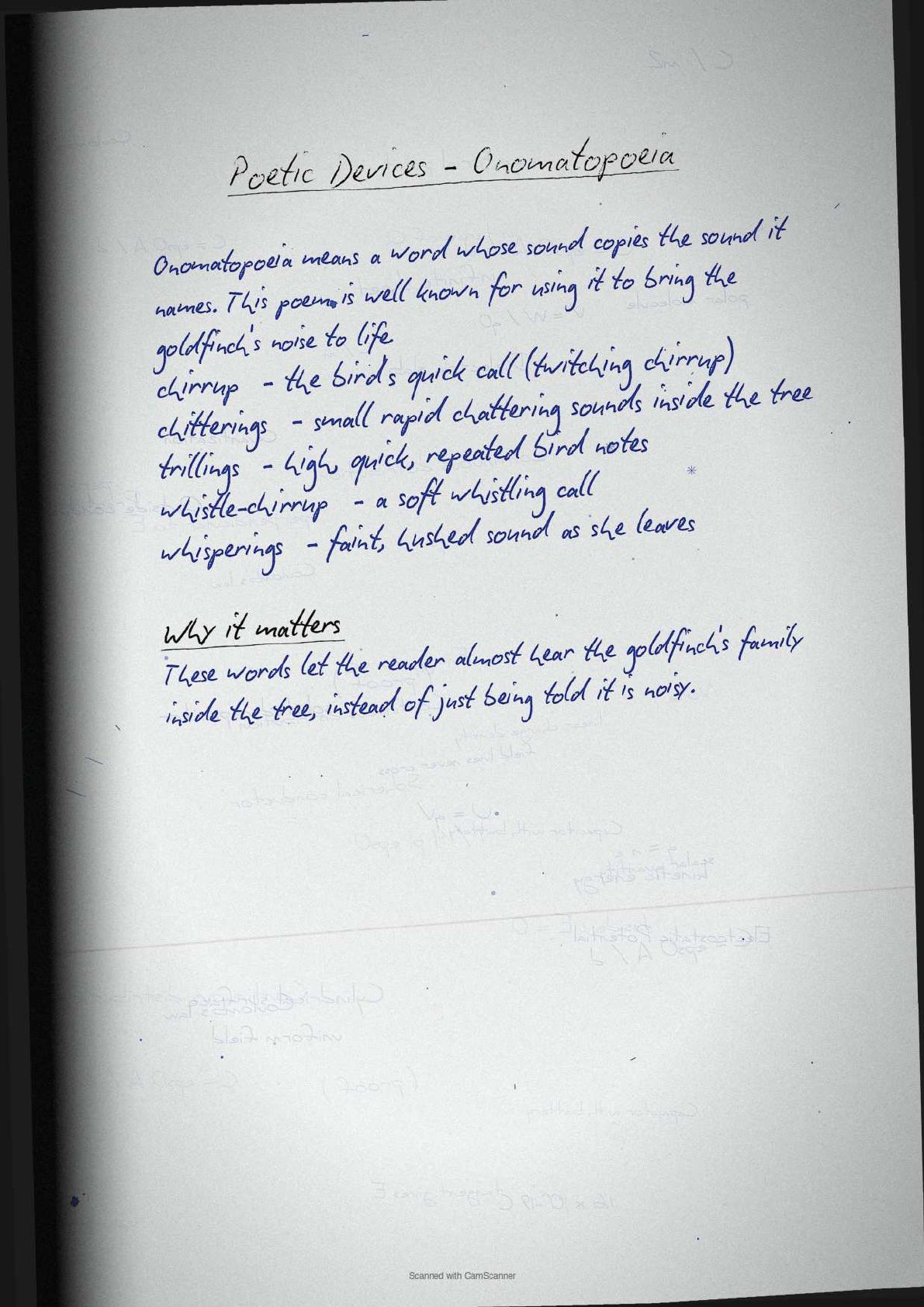
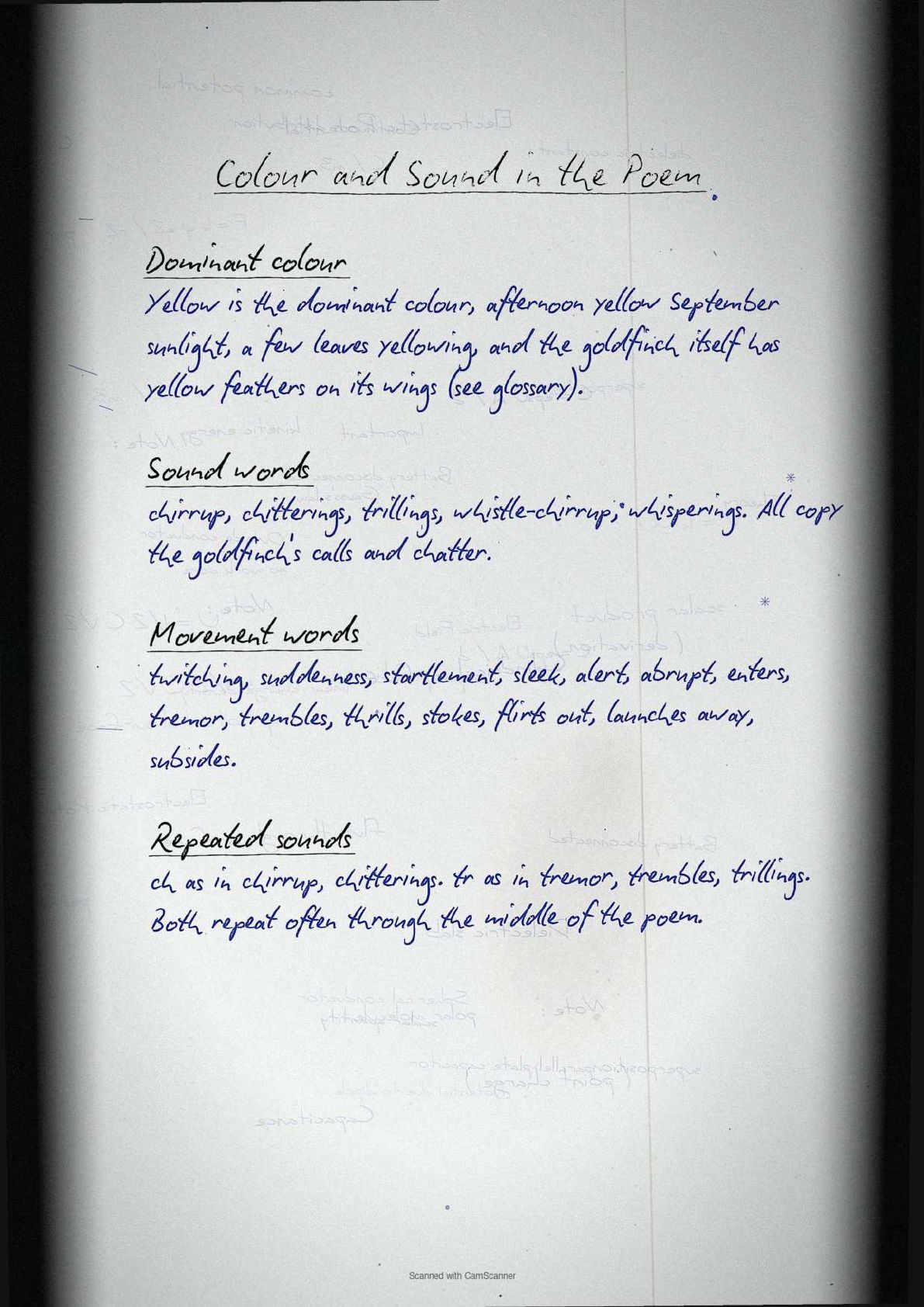
- Onomatopoeia: words such as chitterings and trillings sound like the noise they name, so the reader hears the birds before being told what is happening.
- Simile: the goldfinch is described as "sleek as a lizard", a comparison that captures her quick, low, alert movement along the branch.
- Personification: the tree is said to tremble and thrill, giving a non-living thing an almost human capacity for excitement.
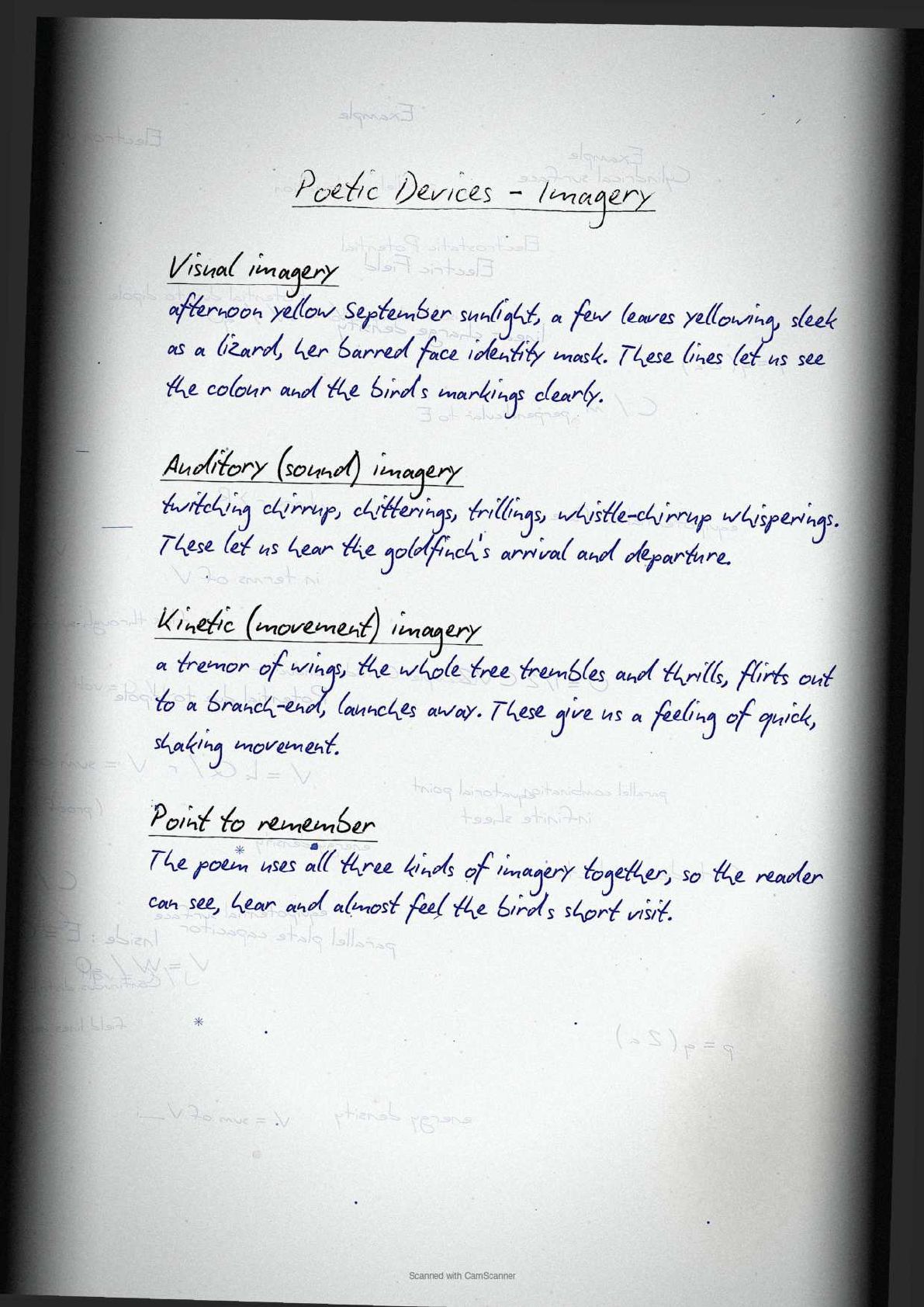
- Imagery: visual detail (yellow September light, the barred face mask), auditory detail (chitterings, trillings) and movement detail (a tremor of wings) work together in every stanza.
Theme of The Laburnum Top: Nature's Hidden Vitality
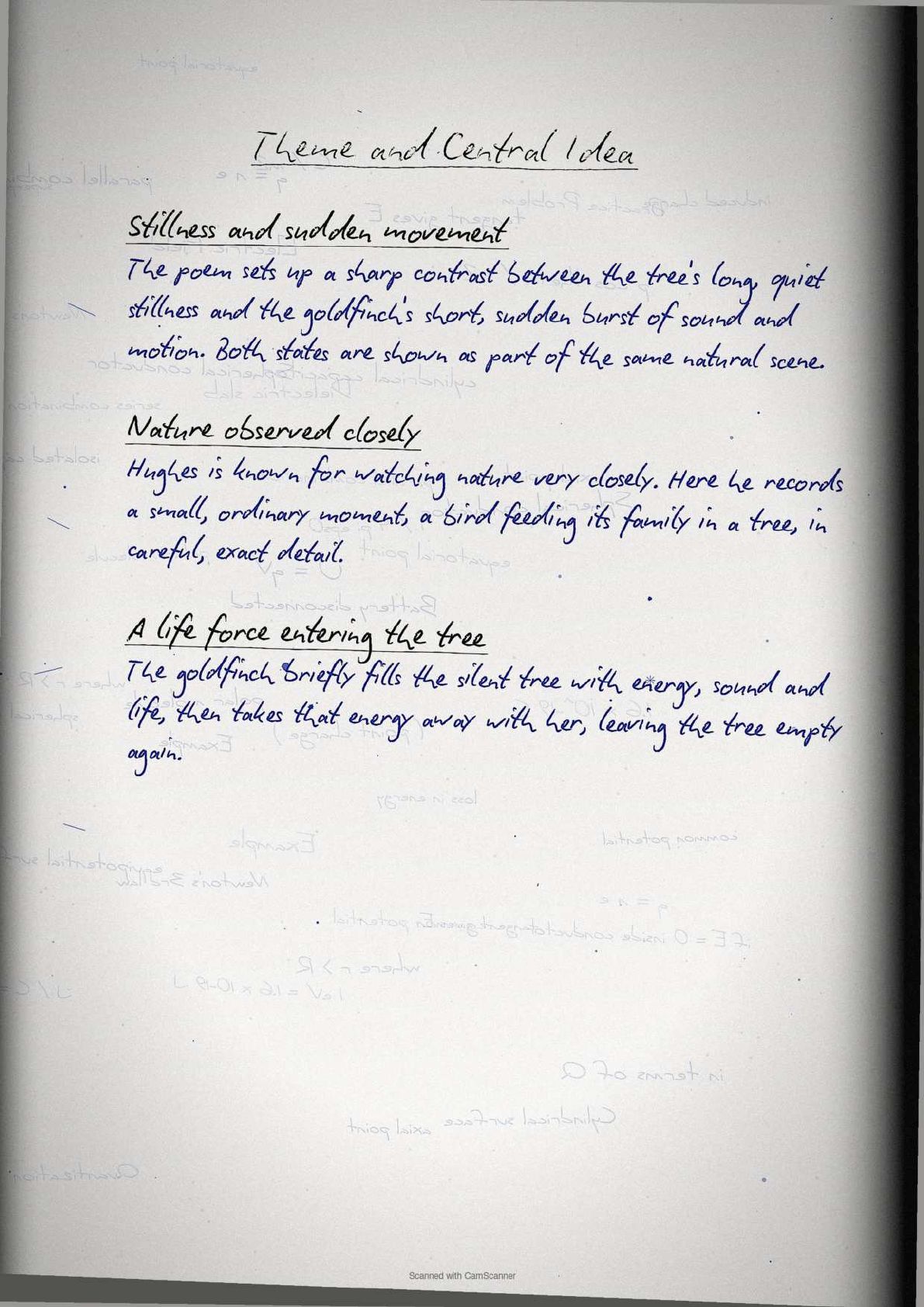
The poem's theme is bigger than a single bird visiting a tree. Hughes is arguing that life and energy hide inside things that look empty or finished, and that a small, ordinary event, a bird feeding her young, is enough to reveal it. The laburnum, past its flowering season, looks like it has nothing left to give, yet it becomes, for a few seconds, the busiest place in the poem.
A second, quieter theme sits underneath the first: brief moments of intense life are followed by a return to calm, and neither the tree nor the reader is worse off for it. The final image, the family flying off over the golden sea, closes the poem on movement continuing elsewhere, not loss.
Common Mistakes Students Make in The Laburnum Top
Four traps that cost easy marks in the Class 11 English paper:
- Calling the goldfinch's family her mate. The poem describes fledglings, her family of young birds, not a partner.
- Explaining the engine metaphor with only one half. Naming the mechanical word without saying what it represents in the tree loses marks.
- Missing that the poem starts and ends in stillness. Students who quote only the busy middle miss the circular structure examiners ask about.
- Confusing simile and metaphor. "Sleek as a lizard" is a simile (uses "as"); "the engine of her family" is a metaphor (no "as" or "like").
Imagery and Onomatopoeia: How Hughes Builds the Sound of the Tree
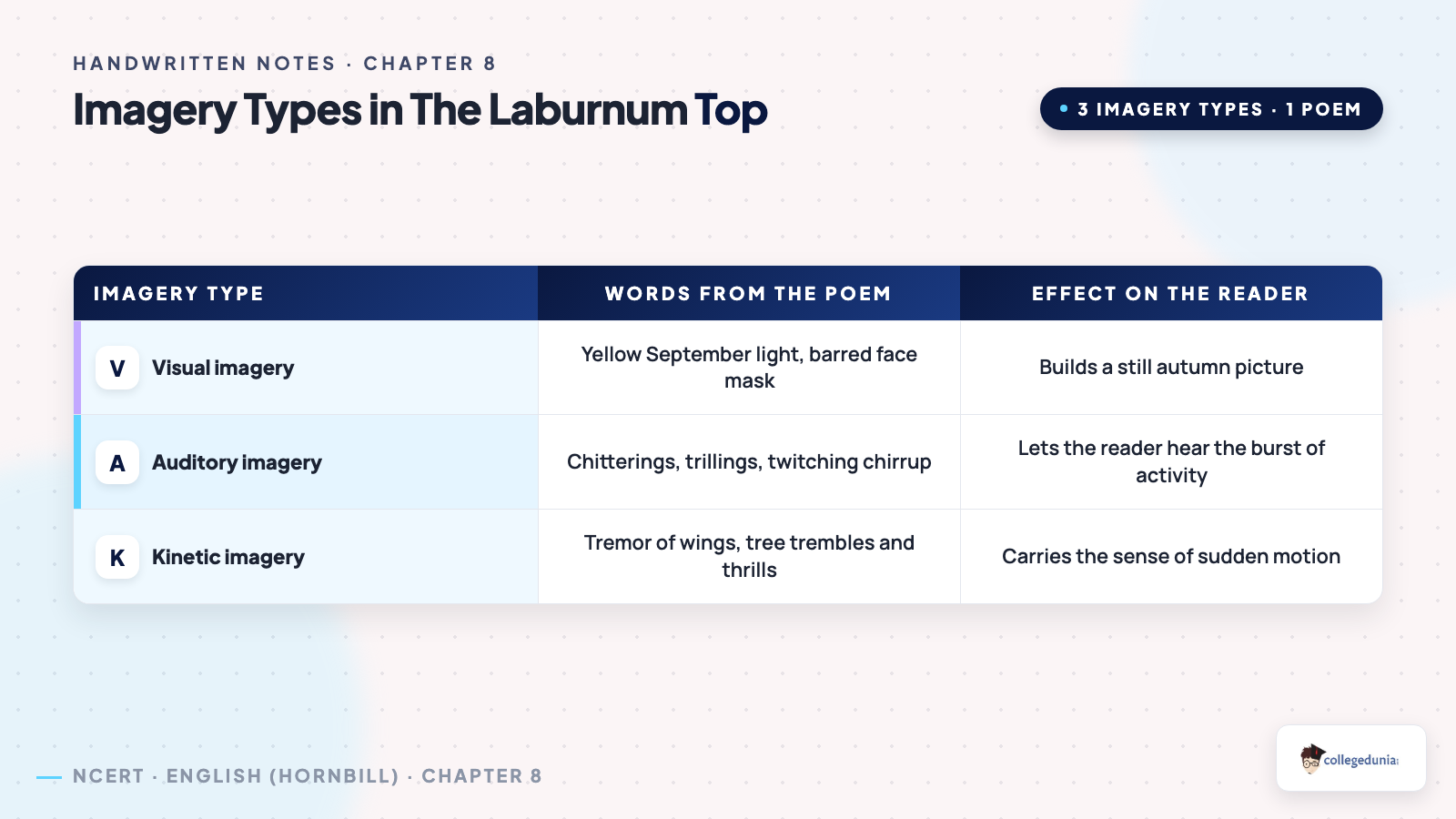
Two kinds of imagery do most of the work in this short poem, and the notes keep them in separate columns so revision does not blur them together.
| Type of imagery | Words from the poem | Effect on the reader |
|---|---|---|
| Visual imagery | Yellow September light, yellowing leaves, barred face identity mask | Builds a still, autumn picture before anything moves |
| Auditory imagery (onomatopoeia) | Chitterings, trillings, twitching chirrup | Lets the reader hear the burst of bird activity directly |
| Kinetic imagery | Tremor of wings, tree trembles and thrills, branch goes on waving | Carries the sense of sudden physical motion through the tree |
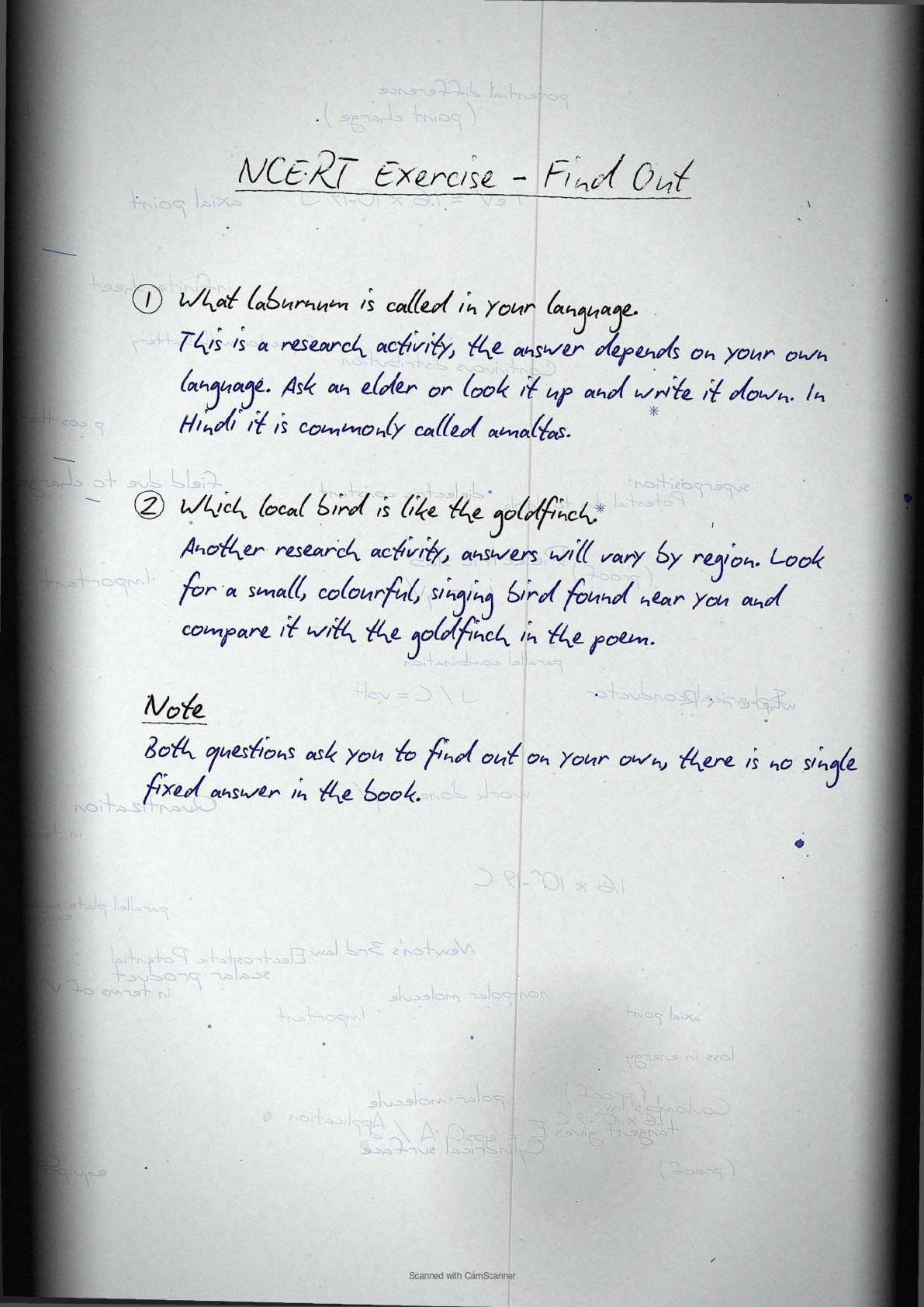
NCERT Textbook Exercise Q&A for The Laburnum Top
The chapter closes with short "Understanding the Poem" questions. The handwritten notes answer each one in full, and the table below shows what every answer is built from.
| Exercise question (in substance) | Where the answer is built |
|---|---|
| What is the state of the laburnum tree at the start and the end of the poem | The stillness section, quoting the opening and closing lines |
| What does the arrival of the goldfinch do to the tree | The engine metaphor section, with the chittering and trilling imagery |
| Why does the poet compare the tree's activity to a machine or engine | The extended metaphor table, mechanical term against meaning |
| What is suggested by the phrase "her barred face identity mask" | The visual imagery section, describing the goldfinch's markings |
| How does the poem end, and what mood does the ending leave | The theme section, on brief intensity followed by calm |
What the The Laburnum Top Handwritten Notes PDF Contains
The file is a handwritten set of revision notes, with the poem's key lines and the textbook figure placed where the chapter uses them.
- Pages 1 to 6: cover, about Ted Hughes, the full poem text and the four-stage paraphrase.
- Pages 7 to 14: the stillness image, the extended engine metaphor and a worked explanation of every poetic device.
- Pages 15 to 20: the theme, the imagery breakdown table and a page of commonly confused terms.
- Pages 21 to 26: the common mistakes list, the quick recall sheet and every textbook exercise question answered in full.
How to Use These Handwritten Notes Most Effectively
This poem is short but image-dense, so a slow first read matters more than speed. Students who split revision into three short blocks reported finishing it in under an hour.
- Block 1, 15 minutes. Read the full poem twice, then write the four-stage paraphrase from memory.
- Block 2, 20 minutes. Learn the engine metaphor table and the four poetic devices with one example each.
- Block 3, 15 minutes. Attempt all five exercise-style questions in writing, then check them against the notes.
How These Handwritten Notes Pair with Other English Hornbill Resources
Also Check: the typed notes, solutions and NCERT Book PDF for this same chapter cover the poem from different angles, useful once the handwritten pass is done.
| Resource | Best used for | Open it |
|---|---|---|
| Class 11 English Hornbill Notes | Typed revision notes for The Laburnum Top with every term explained | The Laburnum Top Class 11 Notes (coming soon) |
| Class 11 English Hornbill Solutions | Full worked answers to every textbook exercise question | The Laburnum Top Class 11 NCERT Solutions (coming soon) |
| Class 11 English Hornbill Book PDF | The official chapter text as printed by NCERT | The Laburnum Top Class 11 Book PDF (coming soon) |
Also Check: in the printed Hornbill textbook, The Laburnum Top sits right after the prose Chapter 3, Discovering Tut: The Saga Continues. Students revising this poem often pair it with that chapter's own resources below.
| Chapter 3, Discovering Tut: The Saga Continues | Best used for | Open it |
|---|---|---|
| Class 11 English Hornbill Handwritten Notes | Handwritten revision notes for the prose chapter printed alongside this poem | Discovering Tut: The Saga Continues Class 11 Handwritten Notes |
| Class 11 English Hornbill Notes | Typed revision notes for Discovering Tut: The Saga Continues | Discovering Tut: The Saga Continues Class 11 Notes (coming soon) |
| Class 11 English Hornbill Solutions | Full worked answers to every Discovering Tut textbook question | Discovering Tut: The Saga Continues Class 11 NCERT Solutions (coming soon) |
| Class 11 English Hornbill Book PDF | The official Discovering Tut chapter text as printed by NCERT | Discovering Tut: The Saga Continues Class 11 Book PDF (coming soon) |
NCERT Handwritten Notes for Class 11 English Hornbill: All Chapters
Related Links: handwritten revision notes for every chapter of the Class 11 English Hornbill textbook, written to the 2026-27 syllabus.
| Chapter | Class 11 English Hornbill Handwritten Notes |
|---|---|
| Chapter 1 | The Portrait of a Lady Class 11 Handwritten Notes (coming soon) |
| Chapter 2 | We're Not Afraid to Die Class 11 Handwritten Notes (coming soon) |
| Chapter 3 | Discovering Tut: the Saga Continues Class 11 Handwritten Notes (coming soon) |
| Chapter 4 | The Ailing Planet Class 11 Handwritten Notes (coming soon) |
| Chapter 5 | The Adventure Class 11 Handwritten Notes (coming soon) |
| Chapter 7 | A Photograph Class 11 Handwritten Notes (coming soon) |
| Chapter 8 | The Laburnum Top Class 11 Handwritten Notes (this page) |
| Chapter 9 | The Voice of the Rain Class 11 Handwritten Notes (coming soon) |
| Chapter 10 | Childhood Class 11 Handwritten Notes (coming soon) |
| Chapter 11 | Father to Son Class 11 Handwritten Notes (coming soon) |
The Laburnum Top Class 11 Handwritten Notes FAQs
Questions Students Ask Before Downloading These Notes
Ques. Who wrote The Laburnum Top and where was it first published?
Ans. Ted Hughes wrote The Laburnum Top. It first appeared in his 1967 poetry collection Wodwo and is printed as Chapter 8 of the NCERT Class 11 English Hornbill textbook.
Ques. What is the central image of The Laburnum Top?
Ans. A laburnum tree stands silent and still in the September afternoon light until a goldfinch arrives with her family. The tree bursts into sound and movement while she feeds her chicks, then returns to stillness once she flies away.
Ques. Why does Ted Hughes compare the goldfinch's activity to an engine?
Ans. Hughes uses the engine or machine as an extended metaphor for the sudden burst of noise and motion the goldfinch brings to the tree. She stokes it full, feeding her chicks the way fuel feeds a furnace, while the chittering, trilling and tremor of wings act as the engine's sound and vibration.
Ques. What poetic devices are used in The Laburnum Top?
Ans. The poem uses onomatopoeia (chitterings, trillings), simile (sleek as a lizard), personification (the tree trembles and thrills) and a mix of visual, auditory and kinetic imagery to describe the goldfinch's visit.
Ques. What does "her barred face identity mask" mean?
Ans. The line describes the distinctive black, white and red markings on a goldfinch's face, which look like a mask and let the bird be identified at a glance, even for a moment at the branch end.
Ques. What is the theme of The Laburnum Top?
Ans. The poem shows that life and energy can hide inside things that look empty or finished. A quiet, past-flowering tree becomes, for a few seconds, the busiest place in the poem once a goldfinch feeds her family in it, and then returns calmly to stillness.
Ques. Is The Laburnum Top written in a fixed rhyme scheme?
Ans. No. The poem is written in free verse, without a fixed rhyme scheme or regular metre, which lets Hughes shape each line around the sound and movement he is describing.
Ques. Where can I download the Class 11 English Hornbill Chapter 8 handwritten notes PDF?
Ans. Use the download button at the top of this page. The file is free and printable, runs to 26 handwritten pages, and follows the 2026-27 chapter order, so it can sit beside the textbook while you revise.



Comments