




These Nutrition, Health and Well-being handwritten notes turn the whole chapter into clean, hand-written pages for fast last-minute revision. They follow the 2026-27 NCERT syllabus and Chapter 8 of Class 11 Home Science. Students get the changing food needs of children through infancy, the preschool years and school age, breast feeding and weaning, how to plan balanced meals, how food habits form, the major deficiency diseases like PEM, anaemia and goitre, growth monitoring and the national immunisation schedule, all in a neat pen-on-paper format that is easy to skim before a test.
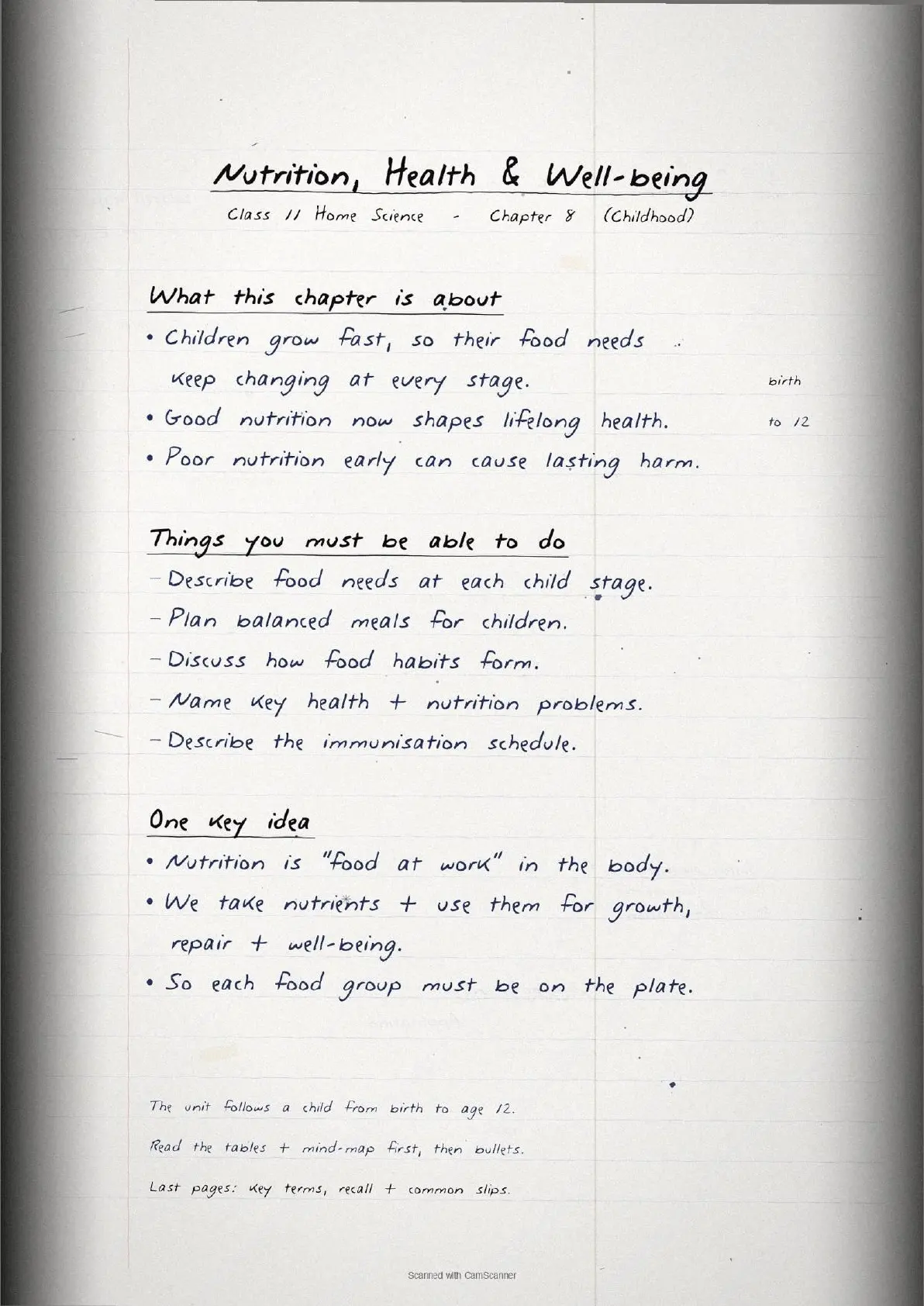
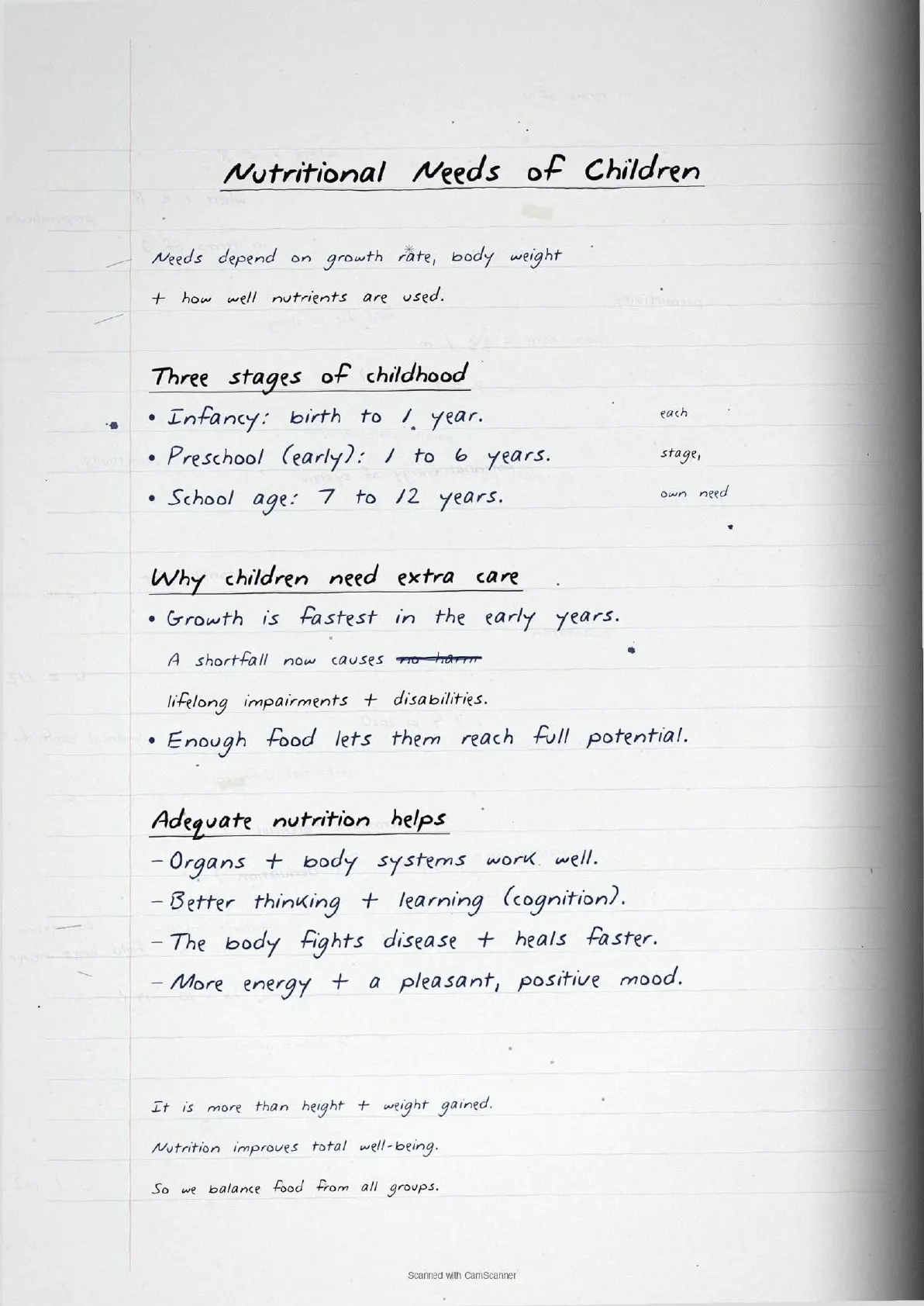
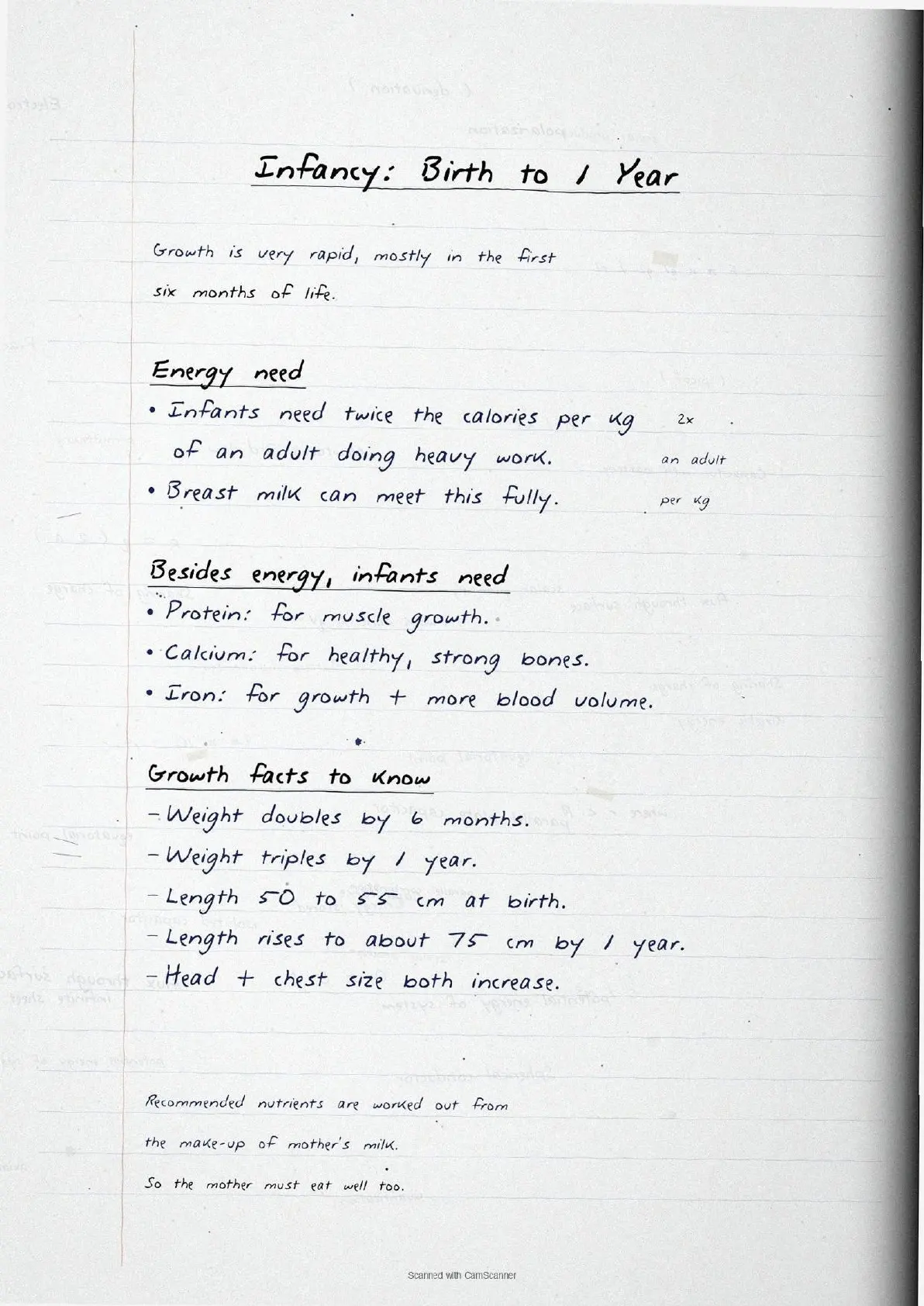
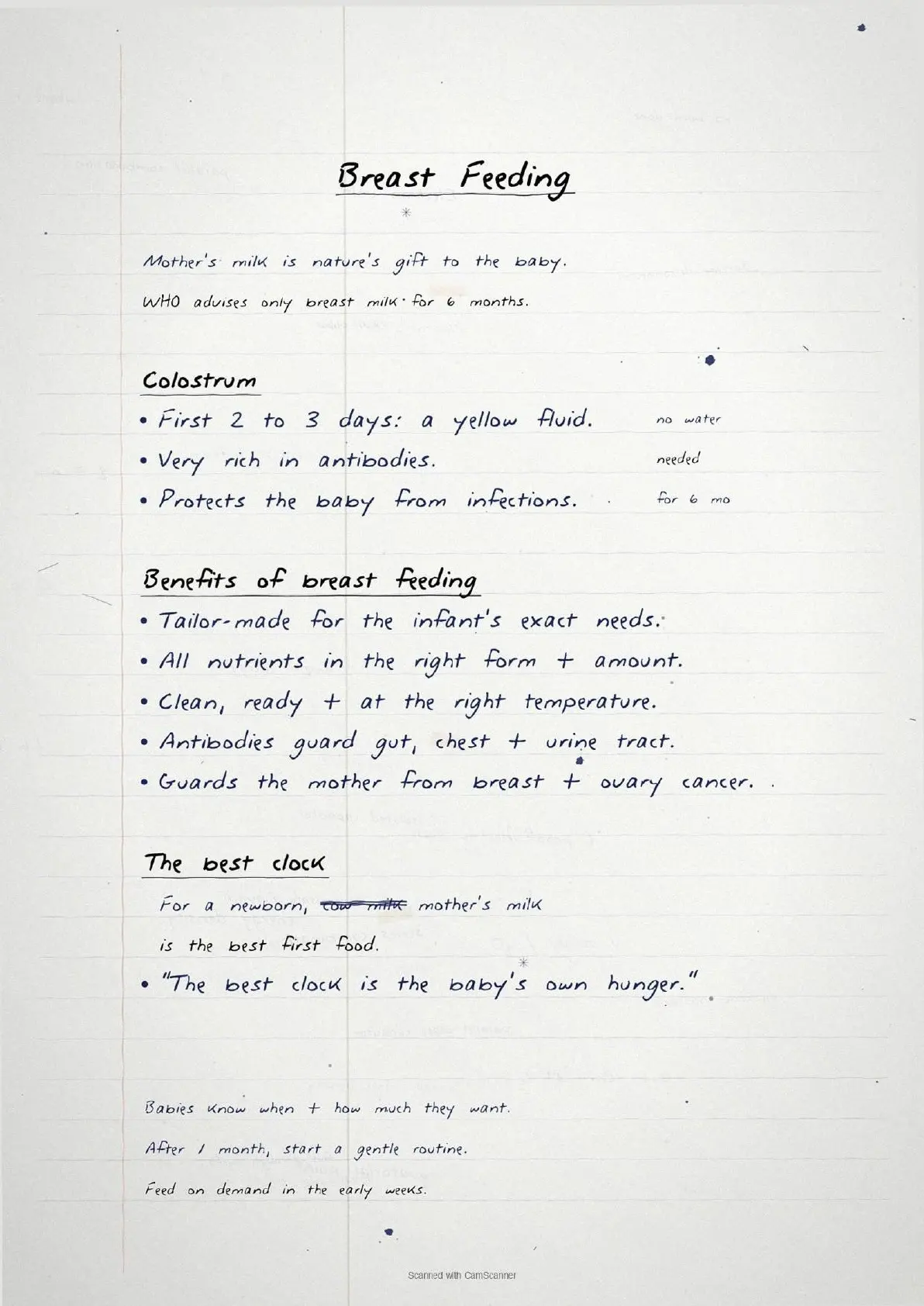
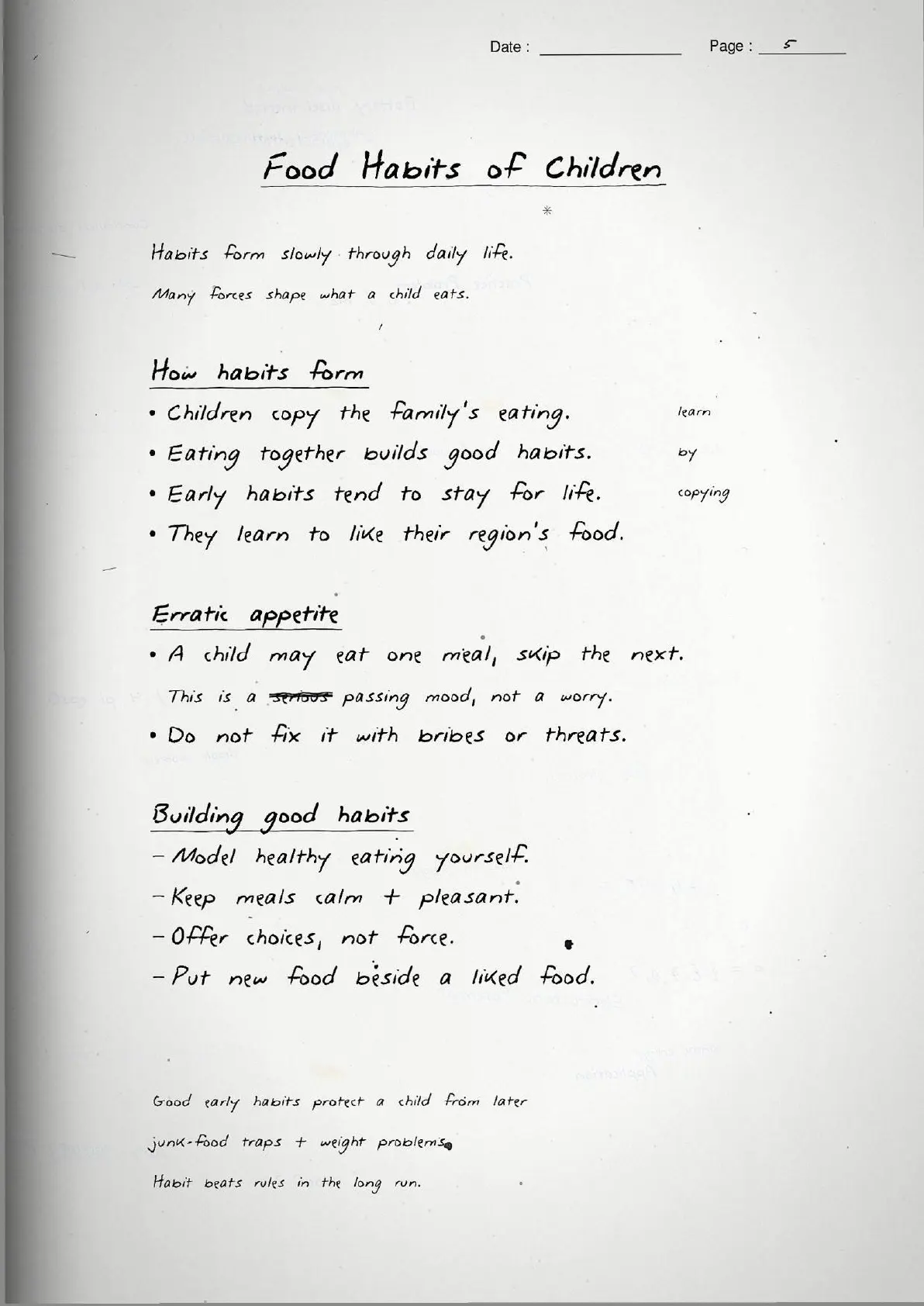
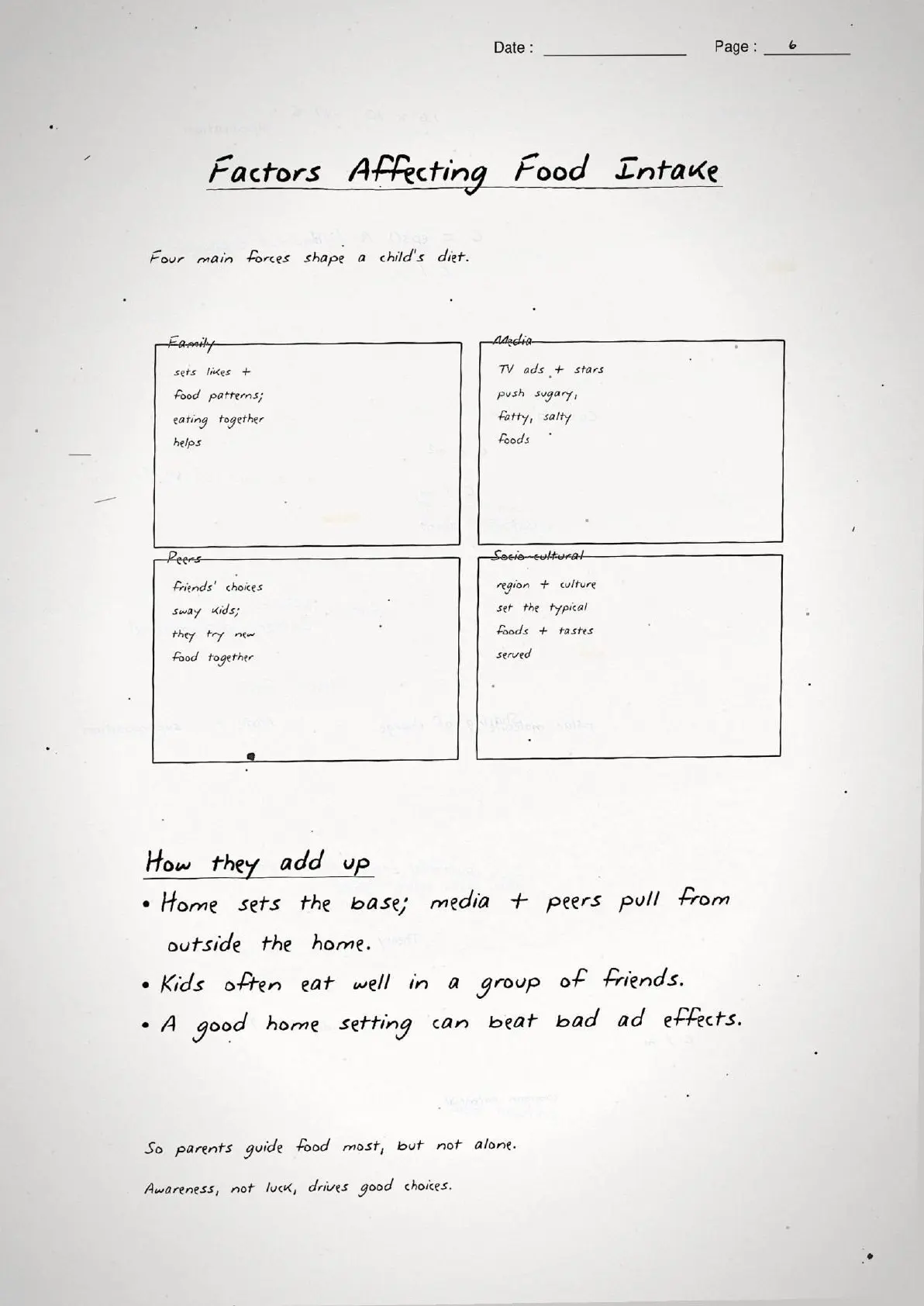
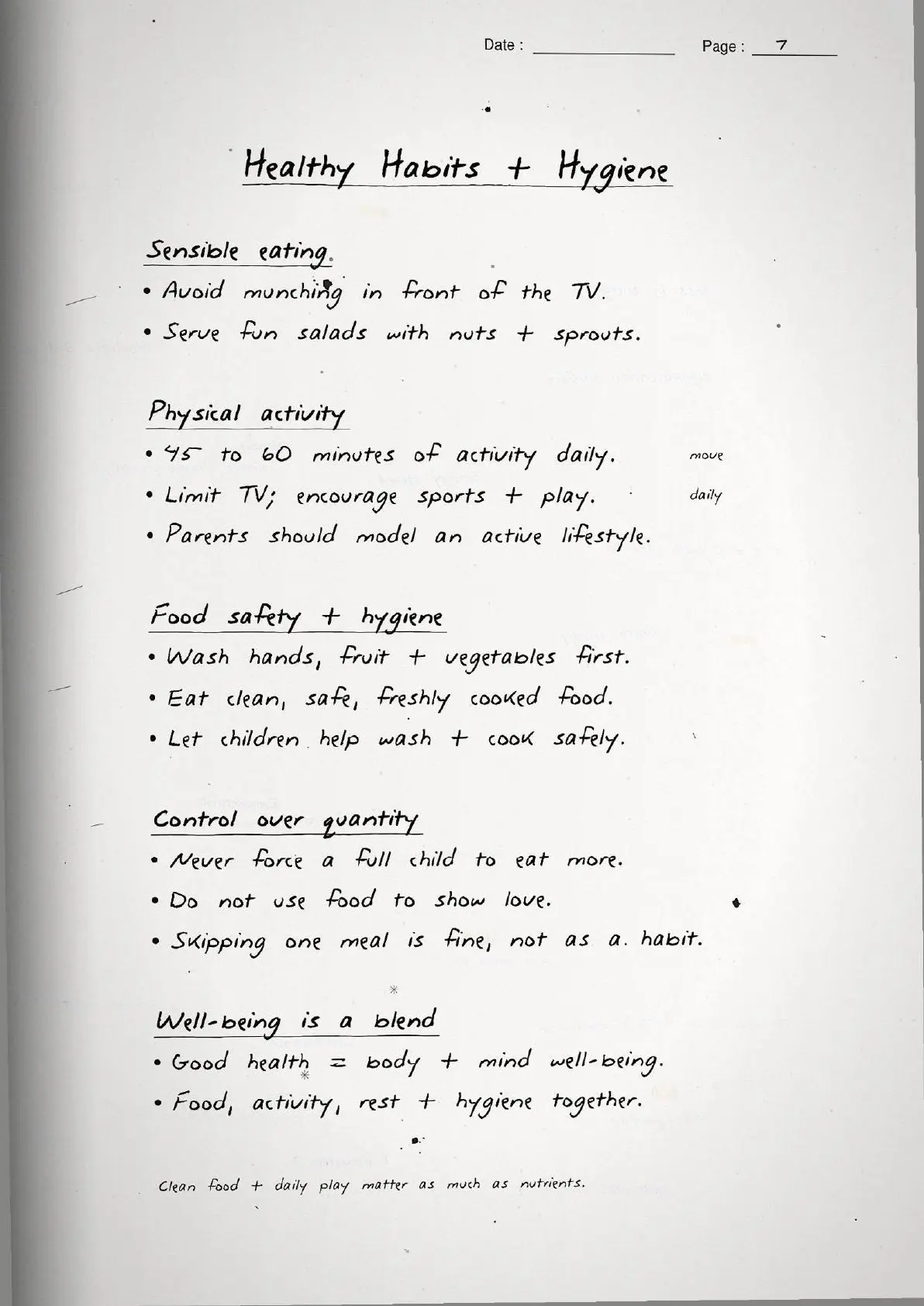
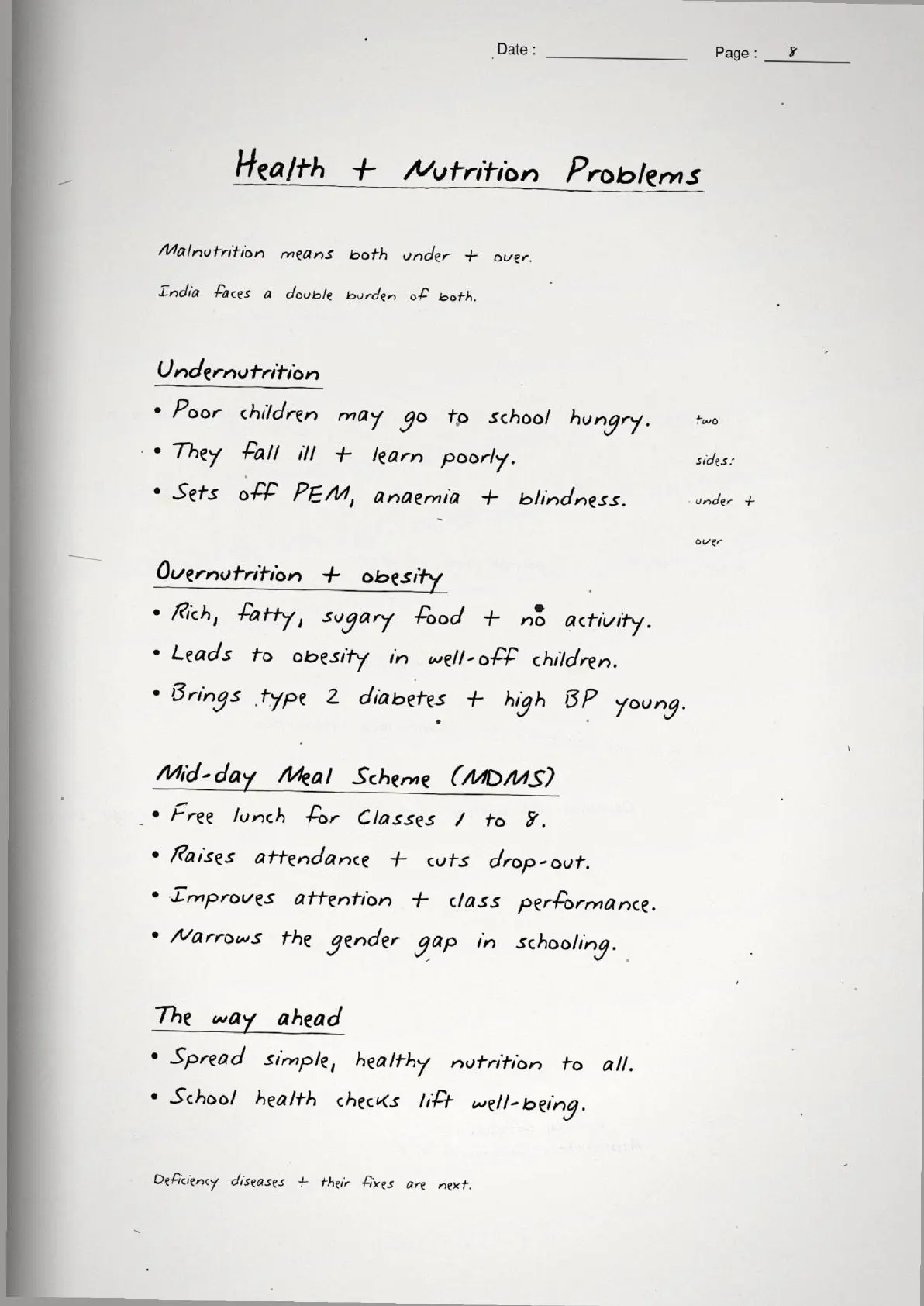
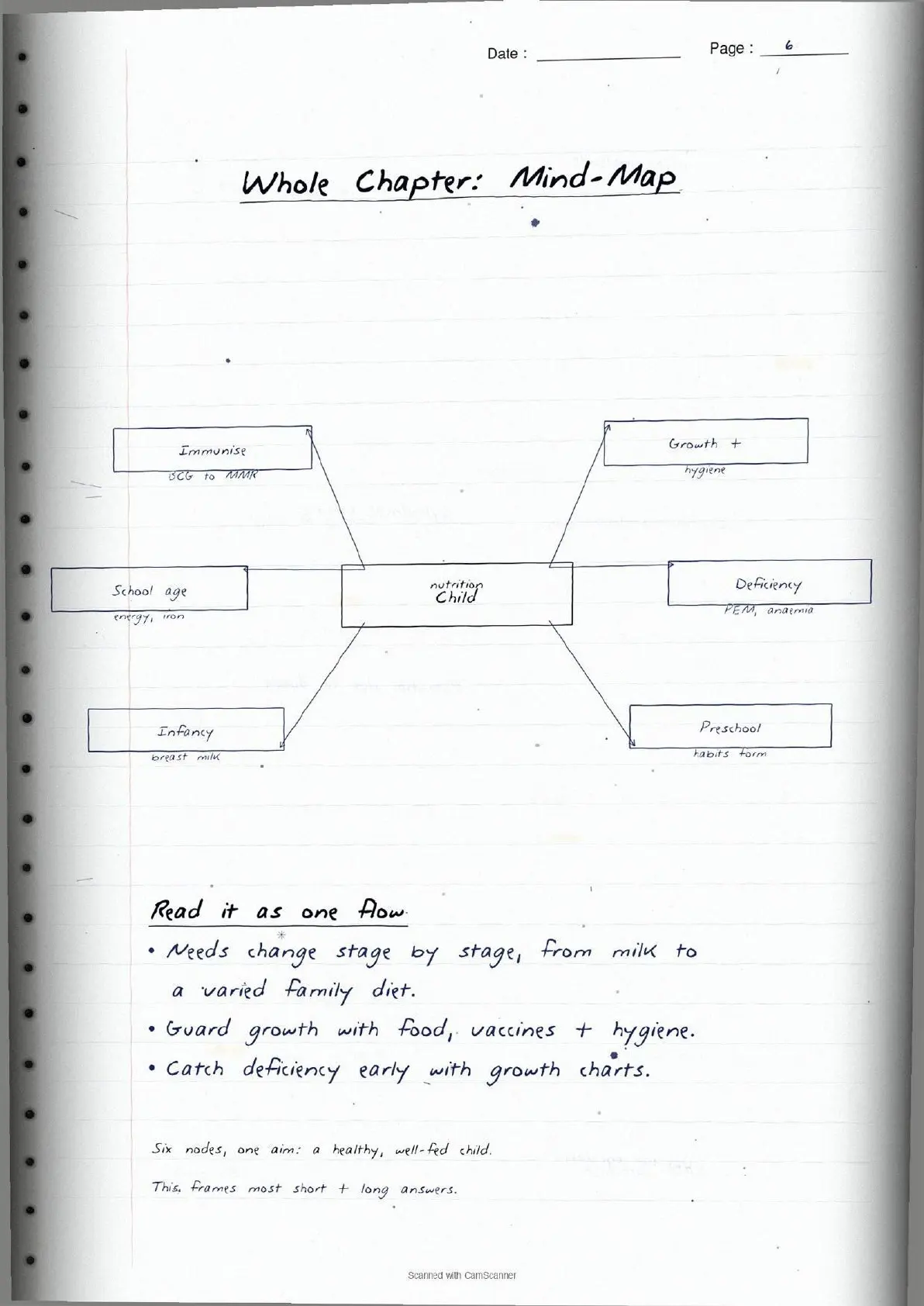
- Hand-written pages with boxed key terms, stage-wise needs tables, a marasmus-versus-kwashiorkor comparison and a labelled child-nutrition mind-map.
- This chapter sits in the Childhood unit of Class 11 Home Science, so its child-care ideas link straight to CUET and the Class 11 final exam.
- Pairs with the NCERT Solutions, Notes and Book PDF linked lower on this page.
These Nutrition, Health and Well-being handwritten notes are prepared from the official NCERT Home Science (Human Ecology and Family Sciences) textbook and checked against recent CBSE Class 11 question papers.
Student Feedback: In a Collegedunia poll of 4,360 Class 11 Home Science students, 78% of students said the hand-written pages helped them recall the difference between marasmus and kwashiorkor and the infant immunisation ages faster than printed text, because the side-by-side tables and boxed deficiency pairs made the details stick.
Source: 2026-27 Class 11 Home Science student poll. Sample of 4,360 students from CBSE schools across 9 states.
What These Nutrition, Health and Well-being Handwritten Notes Contain
Nutrition, Health and Well-being is the childhood chapter of Class 11 Home Science. It follows a child from birth to about age 12 and explains how food needs, feeding practices and health care change at each step. These handwritten notes condense it into pages that read like a topper's own notebook, with the numbers and disease names boxed so they are easy to spot. The notes are organised under three threads, each on its own set of pages:
- Stage-wise needs: infancy, the preschool child and the school-age child, with the energy and protein figures for each group.
- Feeding and habits: breast feeding, colostrum, weaning and complementary feeding, planning balanced meals, and how food habits form.
- Health and problems: deficiency diseases such as PEM, anaemia, vitamin A deficiency and goitre, their prevention, growth monitoring and immunisation.
Because the pages are handwritten, the key figures and disease pairs sit in boxes, tables and arrows rather than long paragraphs. A student can flip through the nutrition health and well-being class 11 pages in a few minutes and still recall the stage-wise needs, the deficiency diseases and the immunisation schedule.
Nutritional Needs of Children at Each Stage
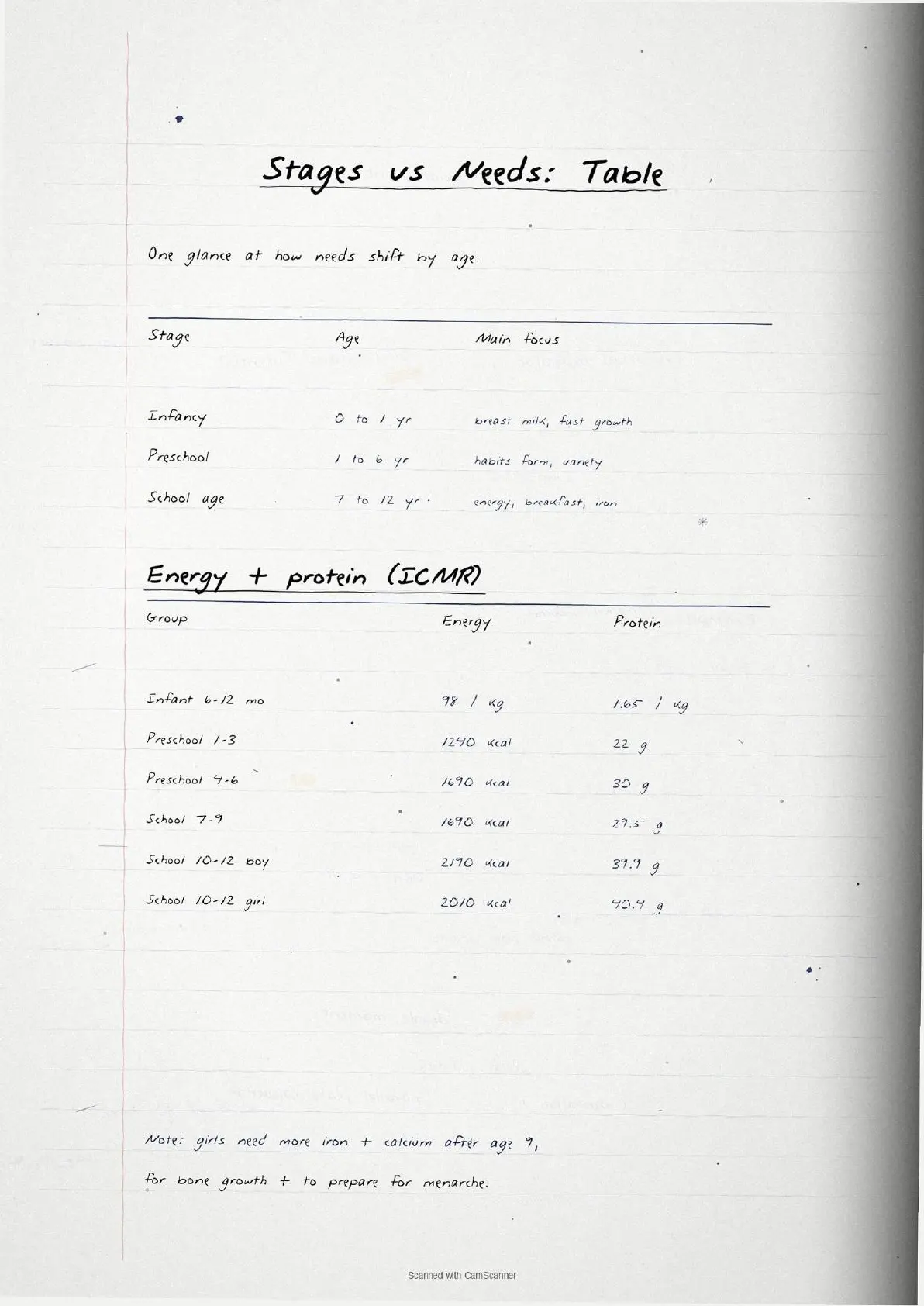
The first block of pages settles what a child needs to eat and why the answer keeps changing. Needs depend on the growth rate, body weight and how well nutrients are used, so the notes split childhood into three clear stages and give the food focus for each one.
| Stage | Age | Main food focus on the page |
|---|---|---|
| Infancy | Birth to 1 year | Breast milk only for 6 months, then weaning; very rapid growth. |
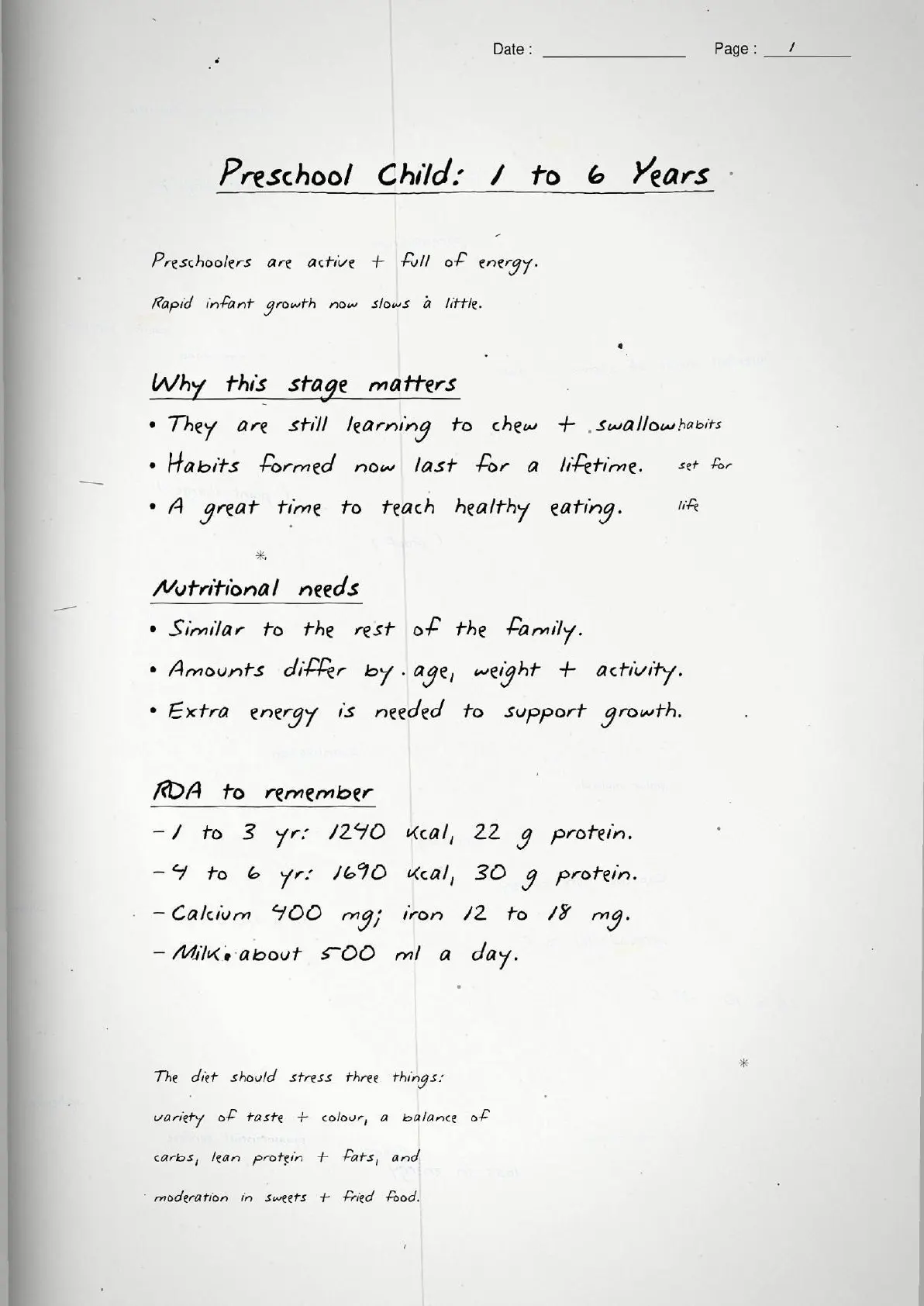
| Preschool | 1 to 6 years | Variety and small portions; food habits are forming. |
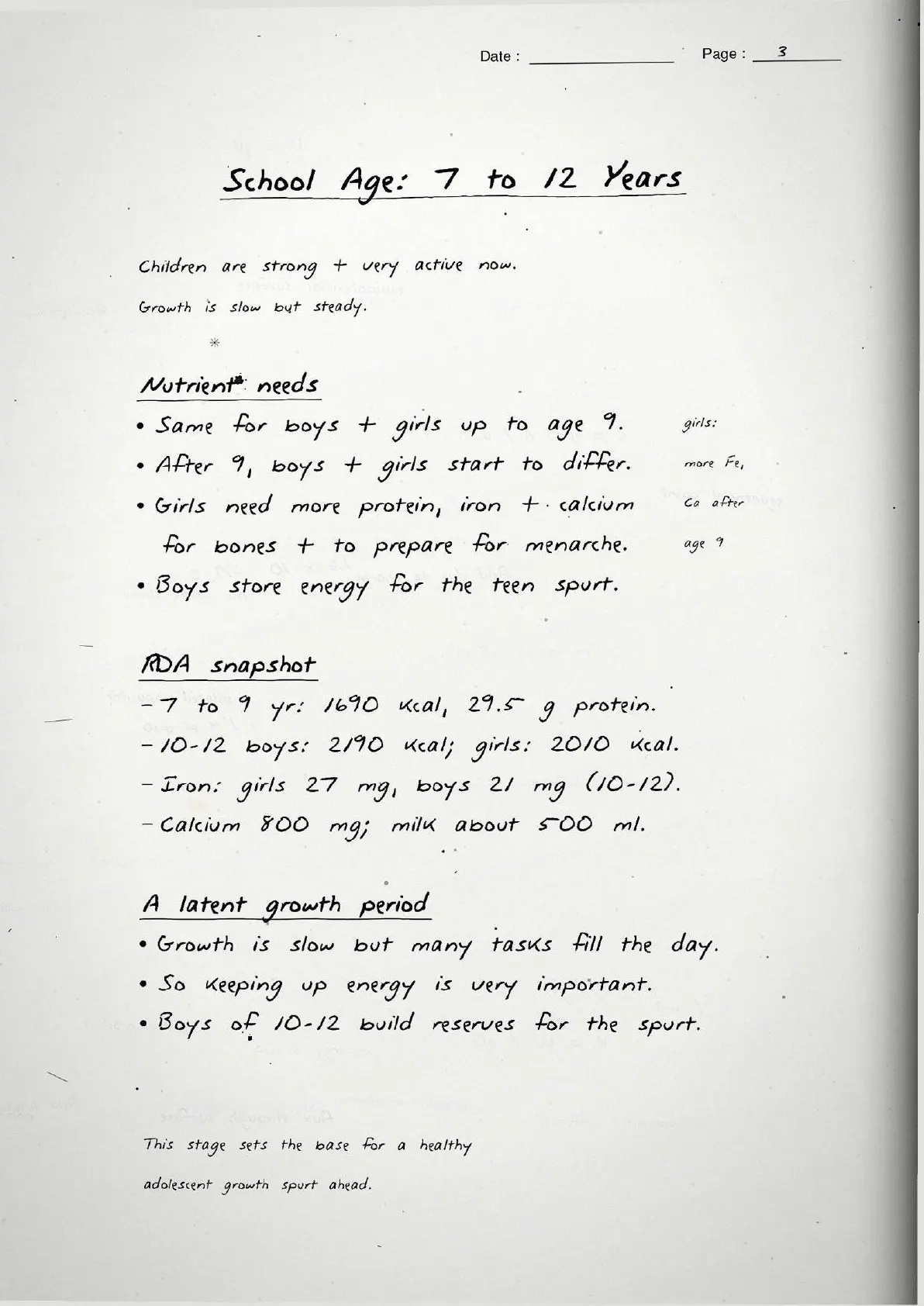
| School age | 7 to 12 years | Steady energy, breakfast, extra iron and calcium for girls. |
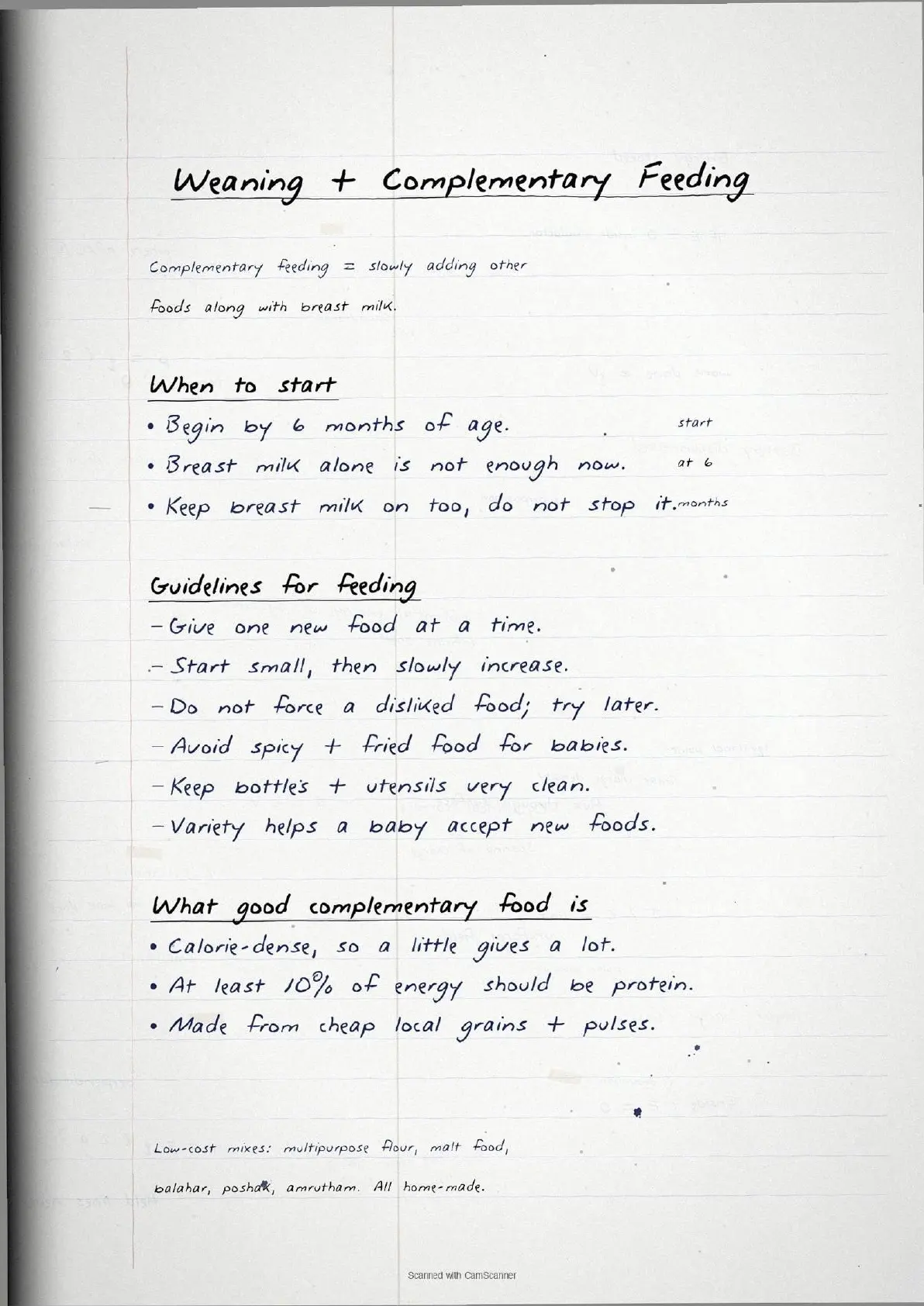
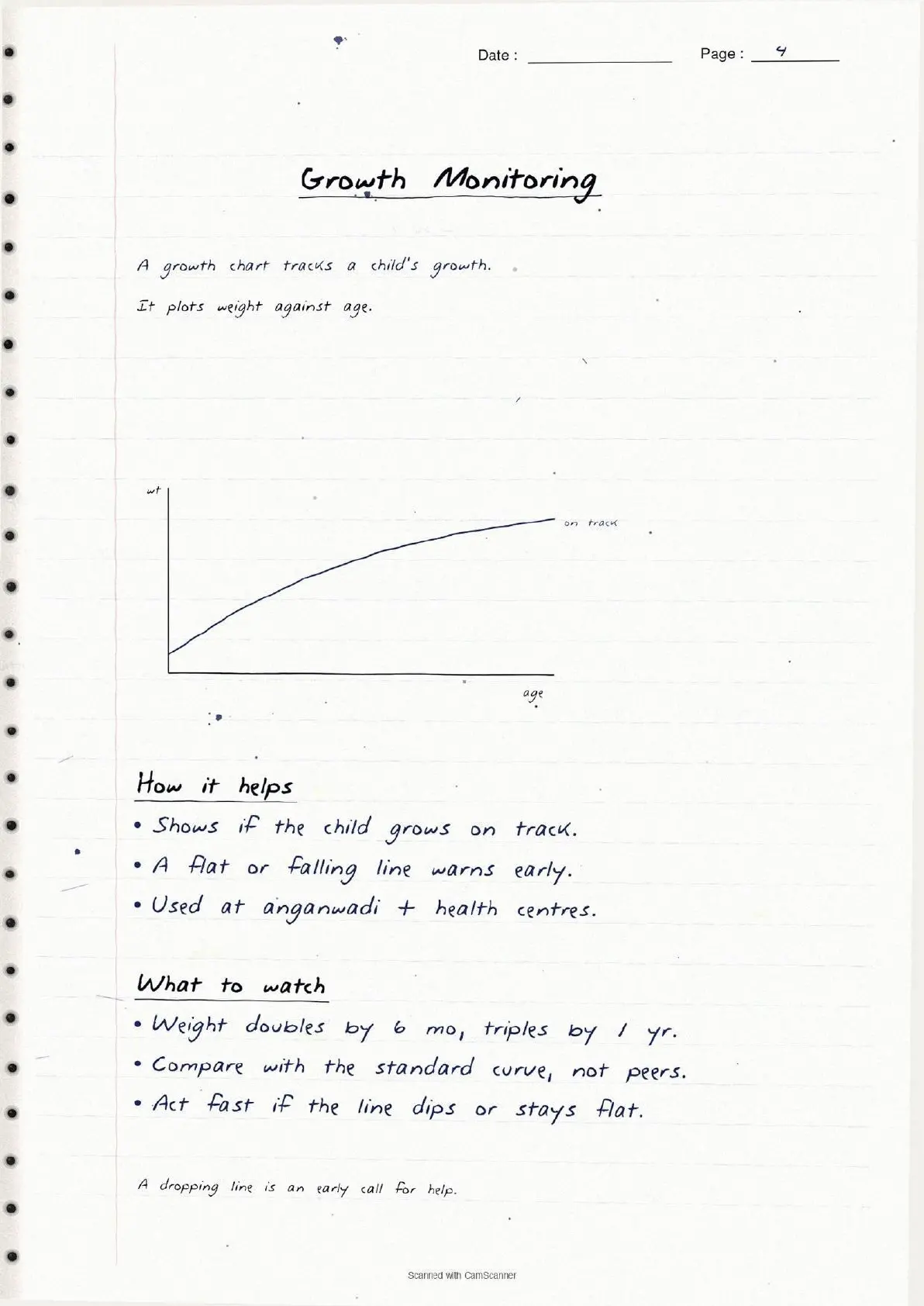
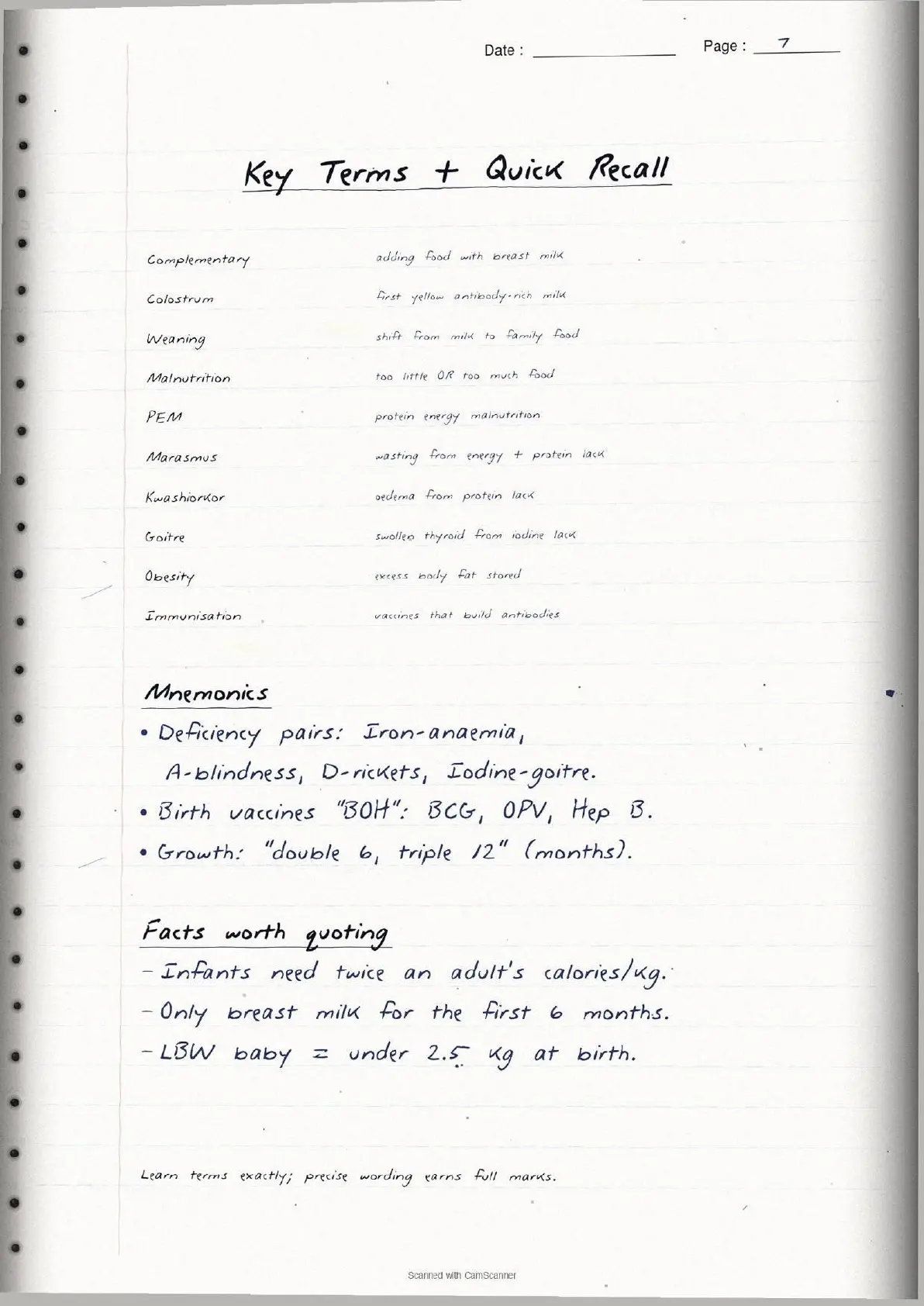
For infancy, the notes stress that an infant needs about twice the calories per kilogram of an adult doing heavy work, that weight doubles by 6 months and triples by 1 year, and that breast milk alone meets all this for the first six months. A boxed note explains colostrum, the yellow first milk rich in antibodies that guards the baby against infection. Weaning and complementary feeding then begin by six months while breast milk continues, with rules boxed clearly: one new food at a time, start small, never force a disliked food and keep utensils clean.
The preschool and school-age pages carry the ICMR energy and protein figures and a firm feeding rule.
- Preschool RDA: about 1240 kcal and 22 g protein at 1 to 3 years, rising to 1690 kcal and 30 g at 4 to 6 years.
- School-age RDA: 1690 kcal at 7 to 9 years; 2190 kcal for boys and 2010 kcal for girls at 10 to 12 years.
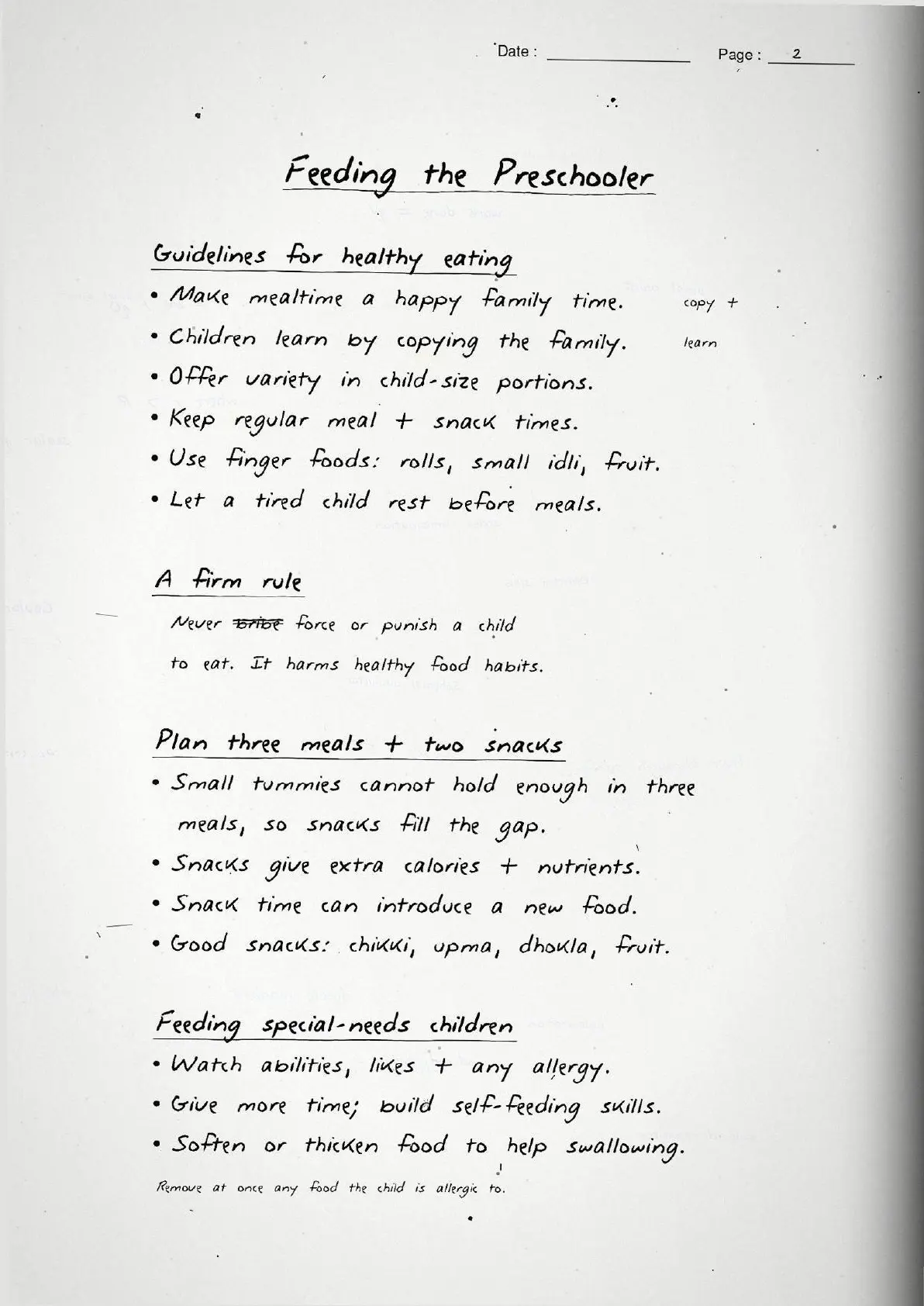
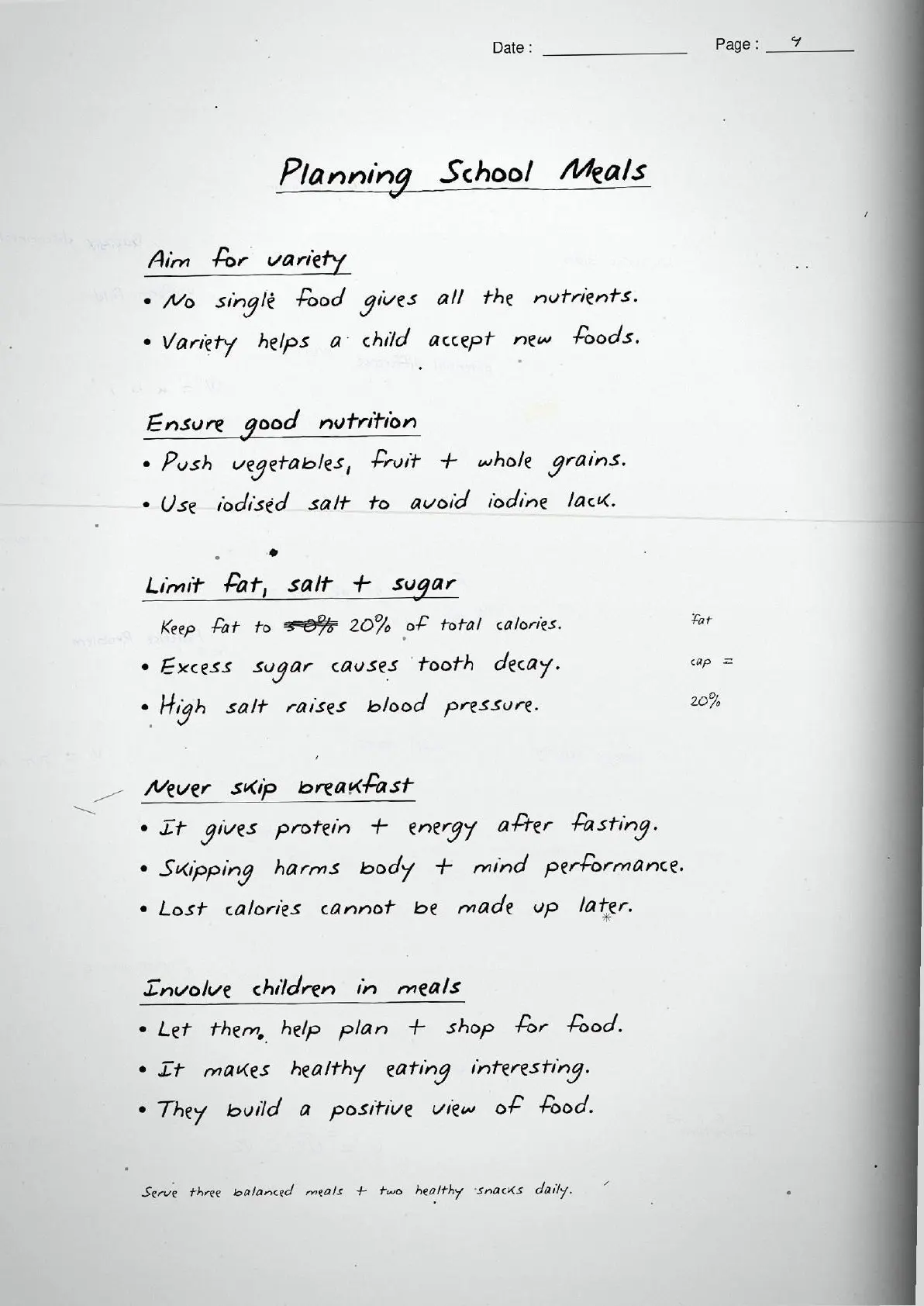
- Feeding rule: plan three balanced meals and two healthy snacks, never bribe or force a child to eat, and never skip breakfast.
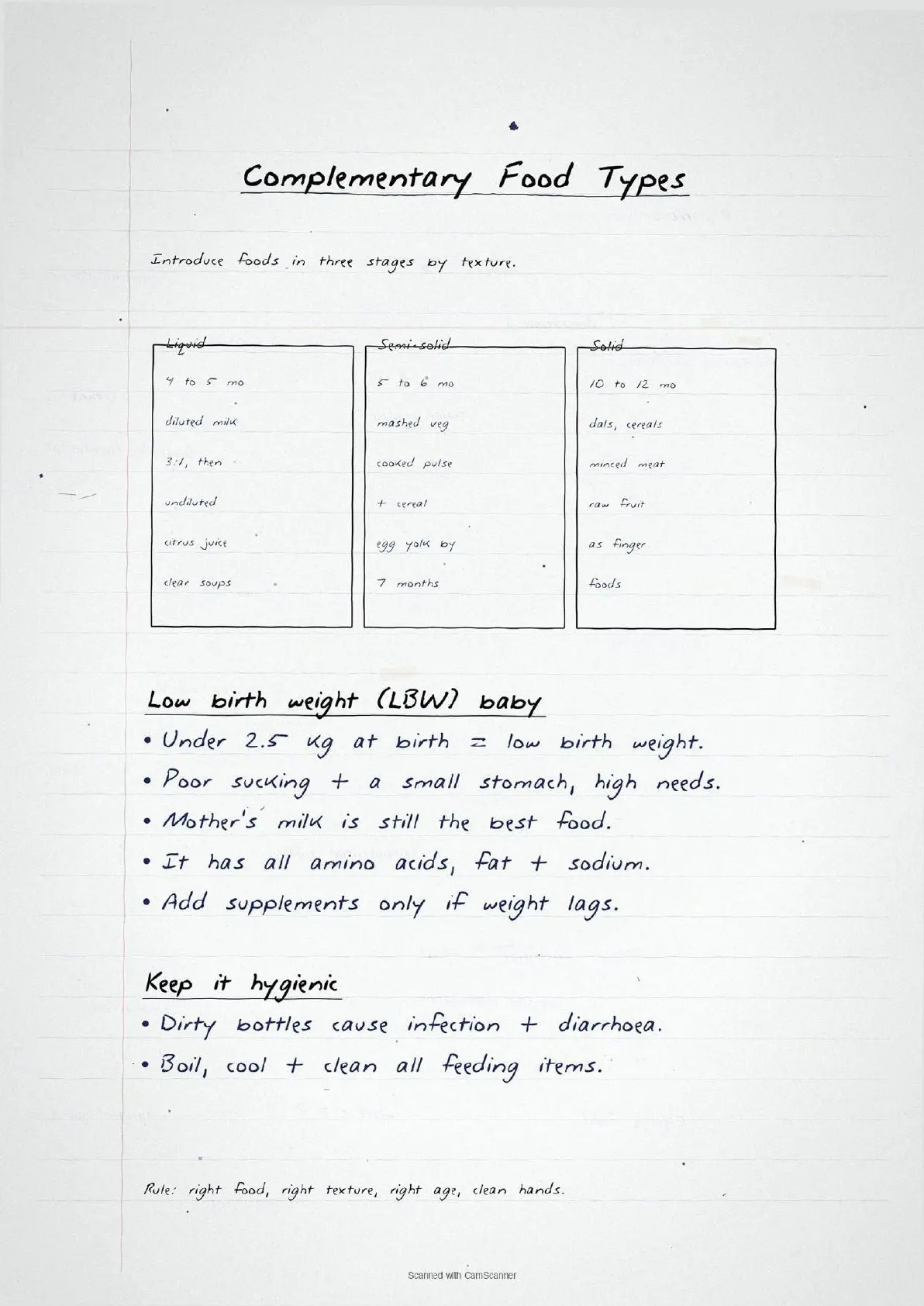
A low birth weight (LBW) baby, under 2.5 kg at birth, gets its own boxed note, since these babies suck poorly but have high needs and still do best on mother's milk.
Nutrition Problems, Prevention and Immunisation
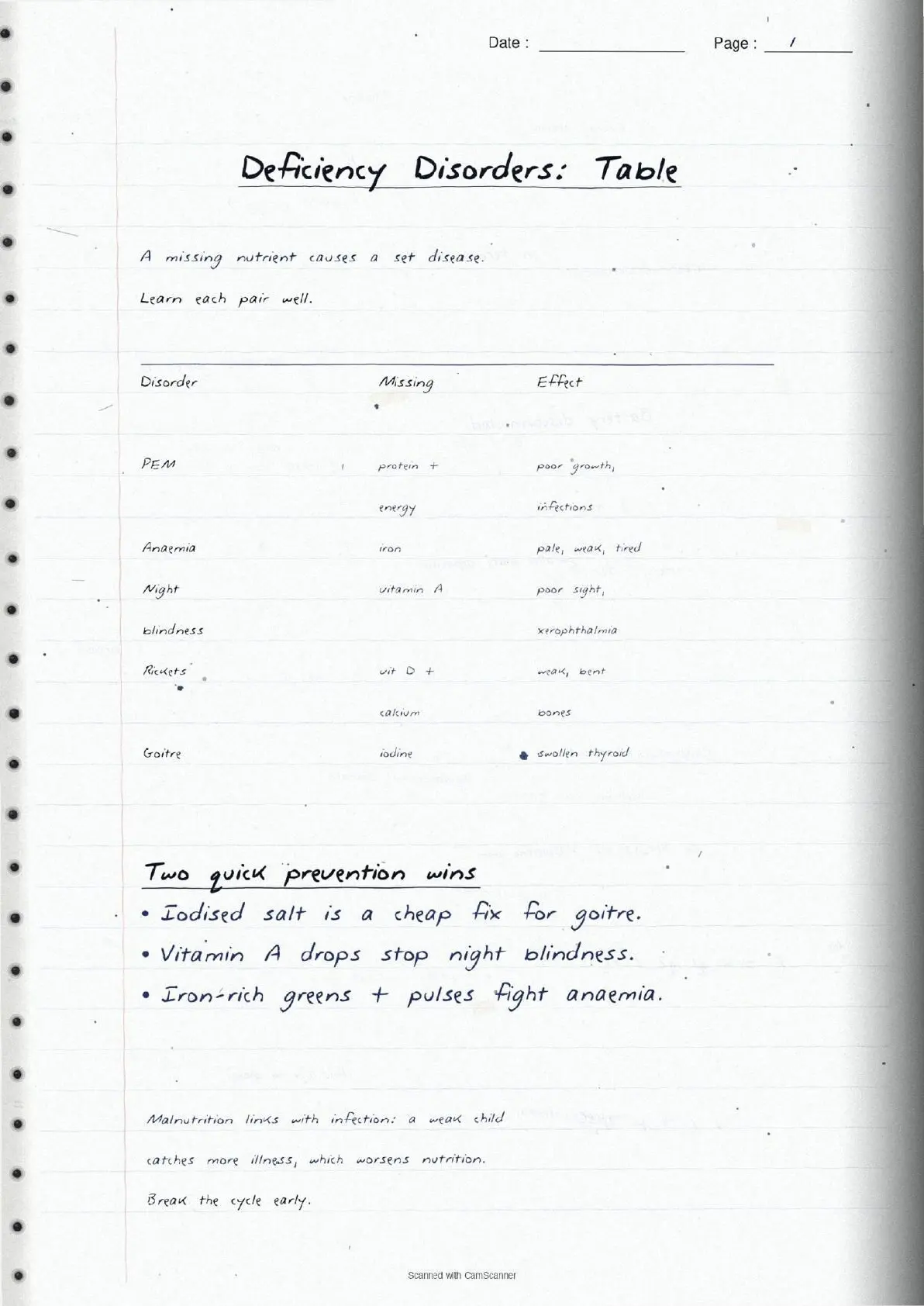
The last block of pages deals with what goes wrong and how to stop it. The notes name malnutrition as both undernutrition and overnutrition, the double burden India carries, then set out each deficiency disease in a boxed table so the missing nutrient and its effect sit side by side.
| Disorder | Missing nutrient | Main effect |
|---|---|---|
| PEM | Protein and energy | Poor growth, frequent infections. |
| Anaemia | Iron | Pale, weak and tired child. |
| Night blindness | Vitamin A | Poor sight, xerophthalmia. |
| Rickets | Vitamin D and calcium | Weak, bent bones. |
| Goitre | Iodine | Swollen thyroid gland. |
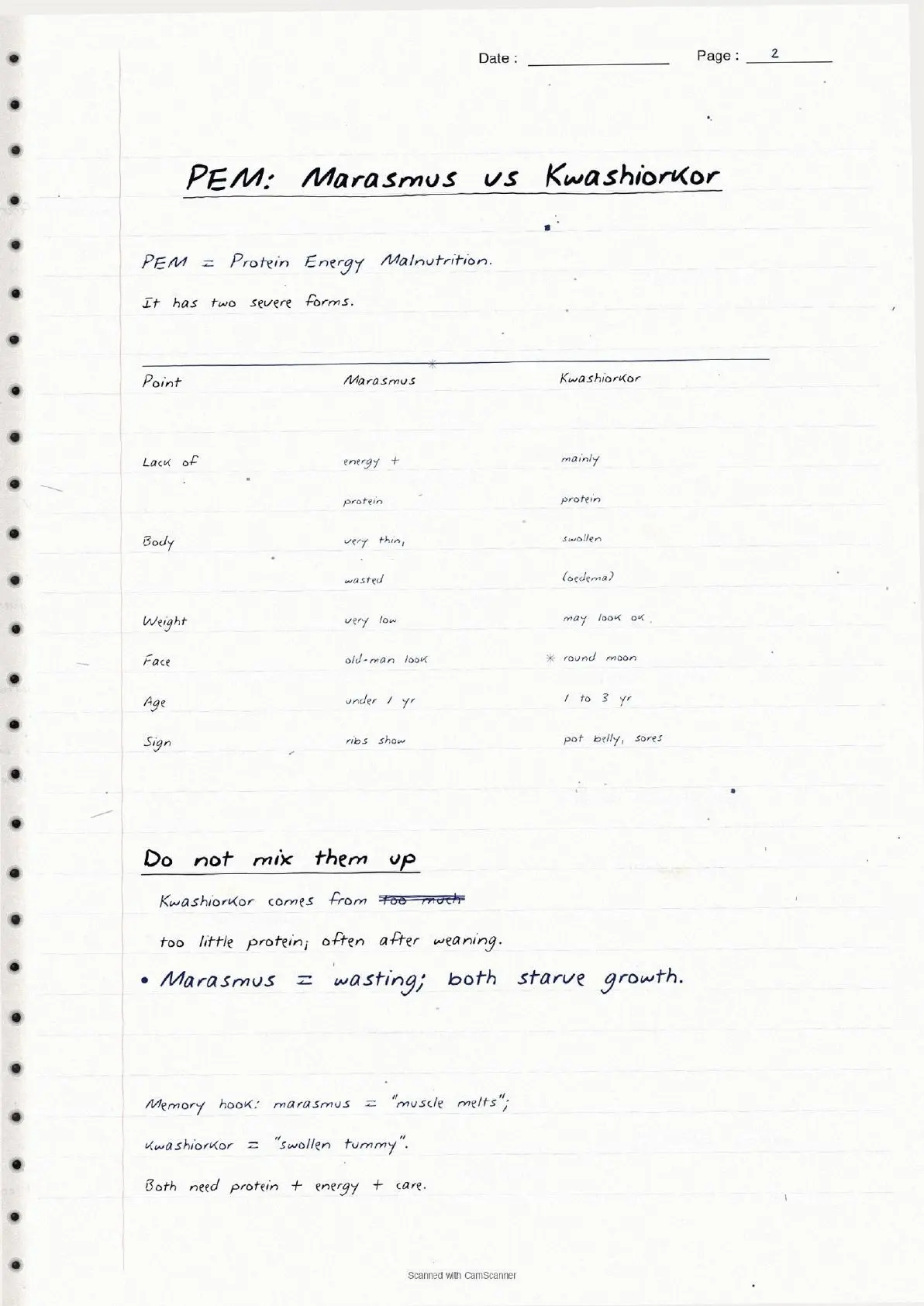
A full page is given to PEM (Protein Energy Malnutrition), which has two severe forms that students often confuse. Marasmus comes from a lack of both energy and protein, leaving the child very thin and wasted with an old-man face, usually under one year. Kwashiorkor comes mainly from too little protein, often after weaning, and shows swelling (oedema), a pot belly and skin sores between one and three years. A memory hook on the page reads "marasmus melts muscle, kwashiorkor swells the tummy".
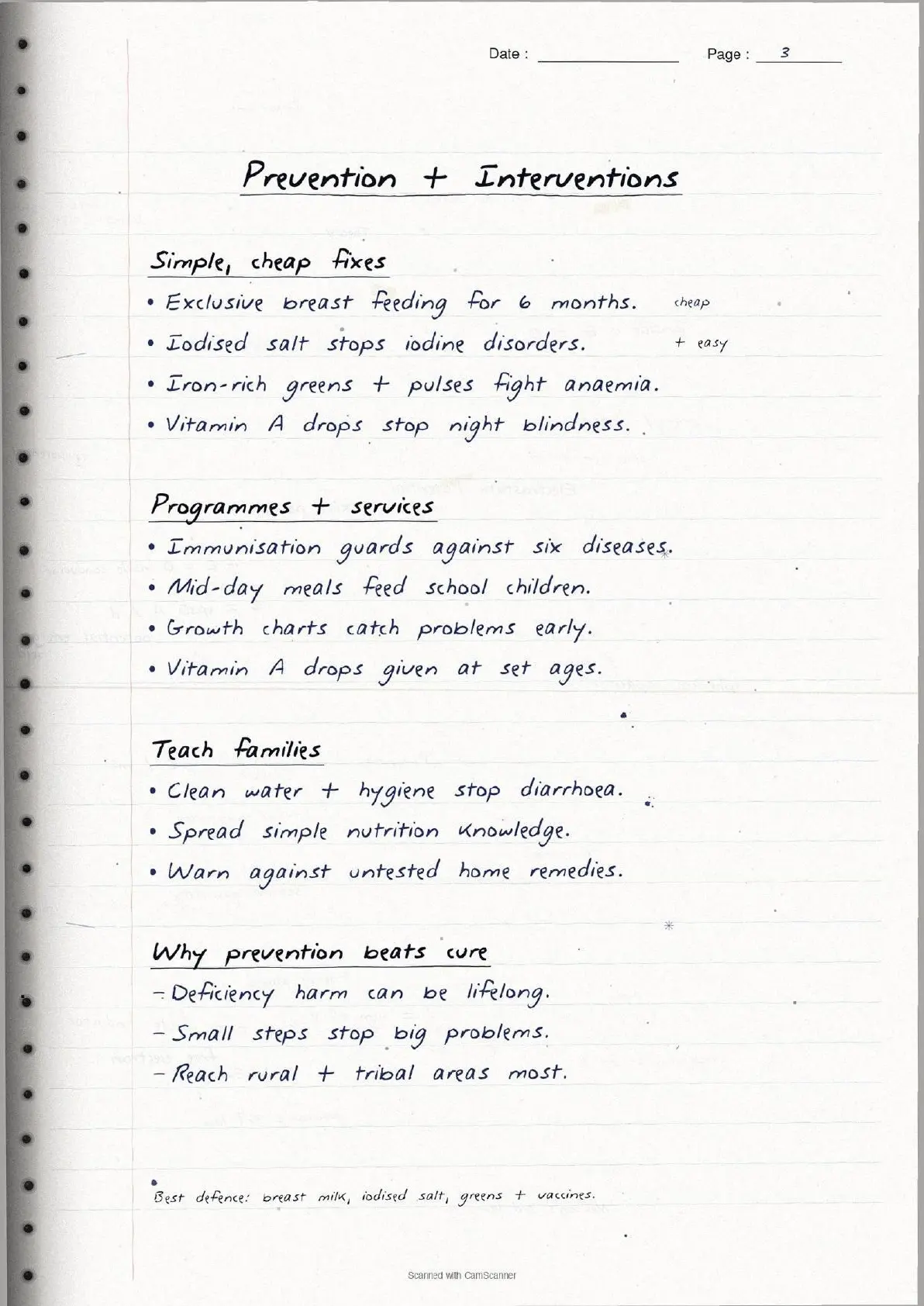
The prevention and interventions pages list cheap, workable fixes and the national programmes behind them.
- Simple fixes: exclusive breast feeding for six months, iodised salt for goitre, iron-rich greens and pulses for anaemia, and vitamin A drops for night blindness.
- Programmes: immunisation, the Mid-day Meal Scheme for Classes 1 to 8, and growth charts at anganwadi and health centres.
- Growth monitoring: a growth chart plots weight against age; a flat or falling line is an early warning to act.
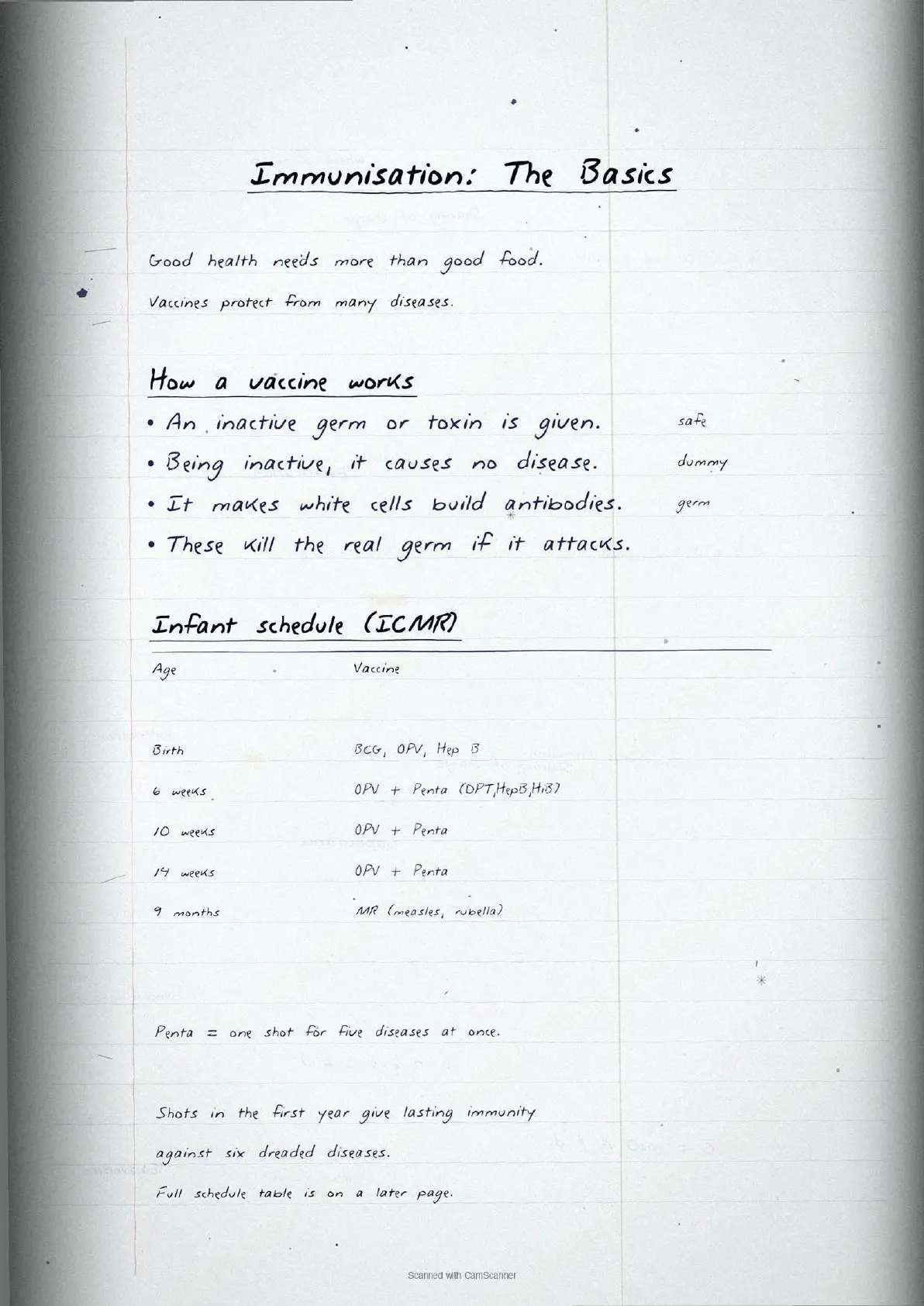
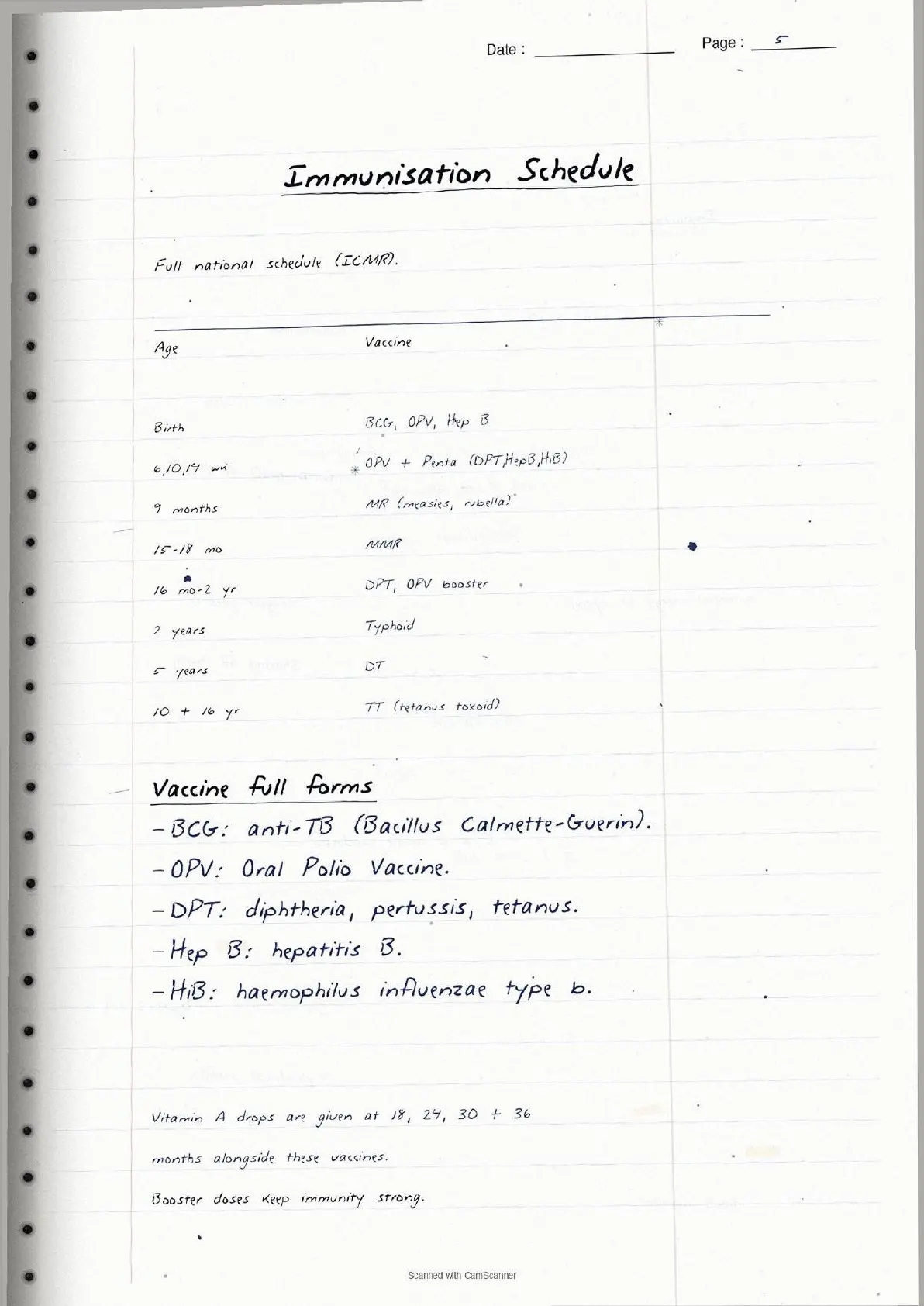
The chapter closes with immunisation. A vaccine gives an inactive germ or toxin so the body builds antibodies without falling ill. The notes carry the national schedule as a table, from BCG, OPV and Hepatitis B at birth through the Penta doses at 6, 10 and 14 weeks, MR at 9 months, MMR at 15 to 18 months and later boosters, with vitamin A drops given alongside from 18 months.
How to Use These Handwritten Notes
Handwritten notes work best as a final-revision tool, not a first read. Here is how to get the most out of the Nutrition, Health and Well-being handwritten notes in the last days before a test.
- Download: tap the download card above to save the handwritten pages to your device.
- First read: read the printed Notes once so the handwritten pages act as a refresher, not a first source.
- Recall drill: cover the page and try to write the three childhood stages, the five deficiency diseases and the birth vaccines from memory.
- Night before: flip through the marasmus-versus-kwashiorkor table and the immunisation schedule for a quick last-minute recall.
Many students search for class 11 home science chapter 8 notes on their phone the night before a test, so a saved set of handwritten pages lets you revise offline. Use them for speed, then check the solutions to confirm your answer points.
Common Mistakes These Notes Help You Avoid
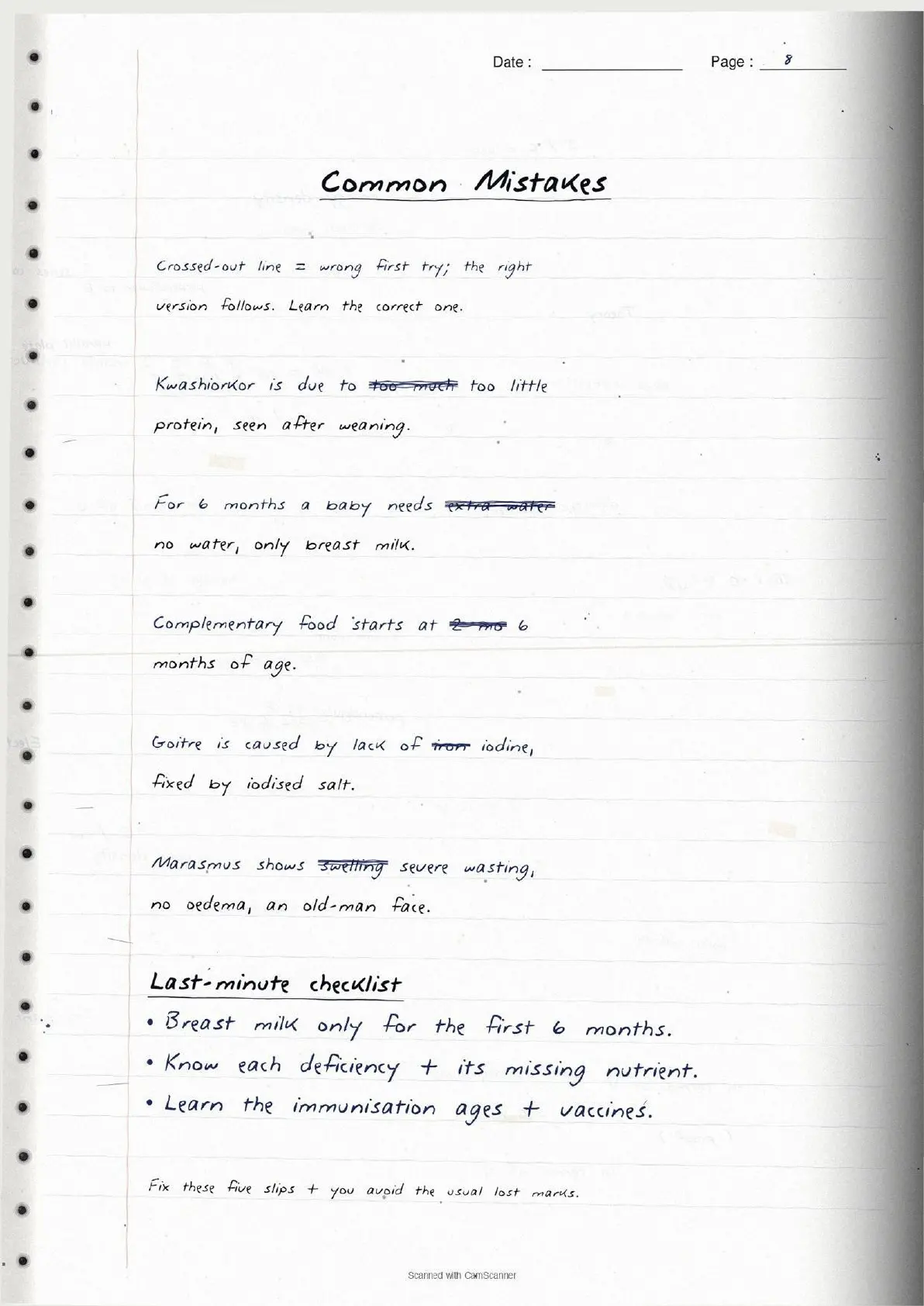
A few errors cost marks every year in this chapter. The handwritten notes flag each one in the margin so you can fix it before the exam. These five are the most common.
- Swapping the two forms of PEM. Kwashiorkor is from too little protein with swelling; marasmus is severe wasting with no oedema.
- Giving water to a young baby. For the first six months a baby needs only breast milk, no water.
- Wrong weaning age. Complementary food starts at 6 months, not at 2 months, and breast milk continues.
- Mixing up deficiency pairs. Goitre is from iodine, anaemia from iron, night blindness from vitamin A.
- Forgetting the numbers. Remember double weight by 6 months, triple by 1 year and LBW below 2.5 kg.
Students who fix these five points usually move from average to high marks, since the notes box every deficiency pair and key figure so the soft points are hard to miss.
How These Handwritten Notes Pair with the Solutions and Book PDF
These handwritten notes are a fast revision tool. To prepare fully, students should use them alongside the other resources for the same chapter, all linked in the table below.
| Resource | Best used for |
|---|---|
| Nutrition, Health and Well-being NCERT Solutions | Step-by-step answers to all chapter review questions |
| Nutrition, Health and Well-being Class 11 Notes | Quick chapter summary with all stages, deficiencies and vaccines in one place |
| Nutrition, Health and Well-being NCERT Book PDF | Reading the original NCERT chapter text and figures |
Tip: read the printed Notes first, then attempt the solutions, and keep these handwritten pages for the final night-before flip. Using them for recall, not for the first read, builds memory faster.
All Class 11 Home Science Handwritten Notes by Chapter
The table links the handwritten notes for every chapter in Class 11 Home Science, so students can move across the course in one click. Nutrition, Health and Well-being is highlighted.
| Chapter | Handwritten Notes |
|---|---|
| Chapter 1 | Human Ecology and Family Sciences |
| Chapter 2 | Understanding the Self |
| Chapter 3 | Food, Nutrition, Health and Fitness |
| Chapter 4 | Management of Resources |
| Chapter 5 | Fabrics Around Us |
| Chapter 6 | Media and Communication Technology |
| Chapter 7 | Concerns and Needs in Diverse Contexts |
| Chapter 8 | Nutrition, Health and Well-being |
| Chapter 9 | Our Apparel |
| Chapter 10 | Financial Management and Planning |
| Chapter 11 | Care and Maintenance of Fabrics |
FAQs on Nutrition, Health and Well-being Handwritten Notes
Nutrition, Health and Well-being Class 11 Home Science Handwritten Notes Common Questions
Ques. Where can I download the Nutrition, Health and Well-being handwritten notes PDF?
Ans. You can download the Nutrition, Health and Well-being Class 11 Home Science handwritten notes PDF directly from this page. It is free, follows the 2026-27 NCERT, and presents the stage-wise food needs, the deficiency diseases and the immunisation schedule as neat handwritten pages.
Ques. What is the difference between marasmus and kwashiorkor in Class 11 Home Science?
Ans. Both are severe forms of PEM. Marasmus is caused by a lack of both energy and protein and leaves the child very thin and wasted with an old-man face. Kwashiorkor is caused mainly by too little protein, often after weaning, and shows swelling or oedema, a pot belly and skin sores. The handwritten notes compare them in a side-by-side table.
Ques. What topics do these handwritten notes cover?
Ans. They cover the nutritional needs of children in infancy, the preschool years and school age, breast feeding and colostrum, weaning, planning balanced meals, how food habits form, deficiency diseases such as PEM, anaemia, vitamin A deficiency and goitre, their prevention, growth monitoring and the national immunisation schedule.
Ques. Are handwritten notes good for revising Class 11 Home Science Chapter 8?
Ans. Yes. Handwritten notes are best for fast, last-minute revision because the boxed deficiency pairs, the stage-wise tables and the immunisation schedule make the details easy to skim. Use them after a first read of the printed Notes, not as your only source.
Ques. When should weaning and complementary feeding begin according to this chapter?
Ans. Complementary feeding should begin at about six months of age, when breast milk alone is no longer enough, while breast feeding still continues. The notes list the rules: one new food at a time, start small, never force a disliked food and keep all utensils clean.



Comments