




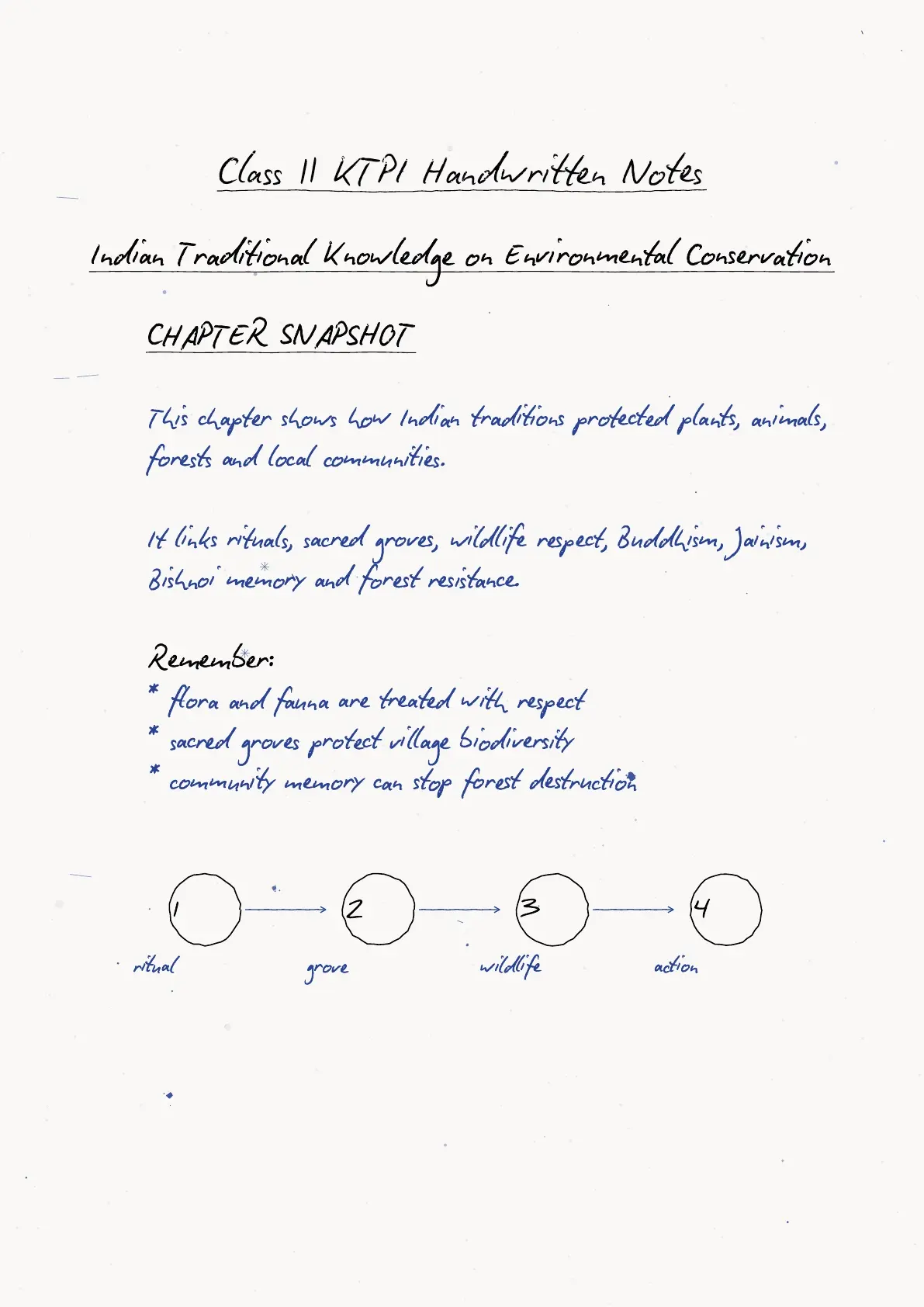
NCERT Handwritten Notes for Class 11 KTPI Chapter 5 Indian Traditional Knowledge on Environmental Conservation are prepared for quick 2026-27 revision. The PDF covers tree rituals, sacred groves, wildlife respect, Buddhism, Jainism, Bishnoi conservation, khejri tree value and forest resistance.
- Resource: Class 11 KTPI environmental conservation handwritten revision notes PDF.
- Chapter focus: traditional ecological knowledge, sacred spaces, ahimsa and community action.
- Revision use: examples, answer frames, comparison points and common mistakes.
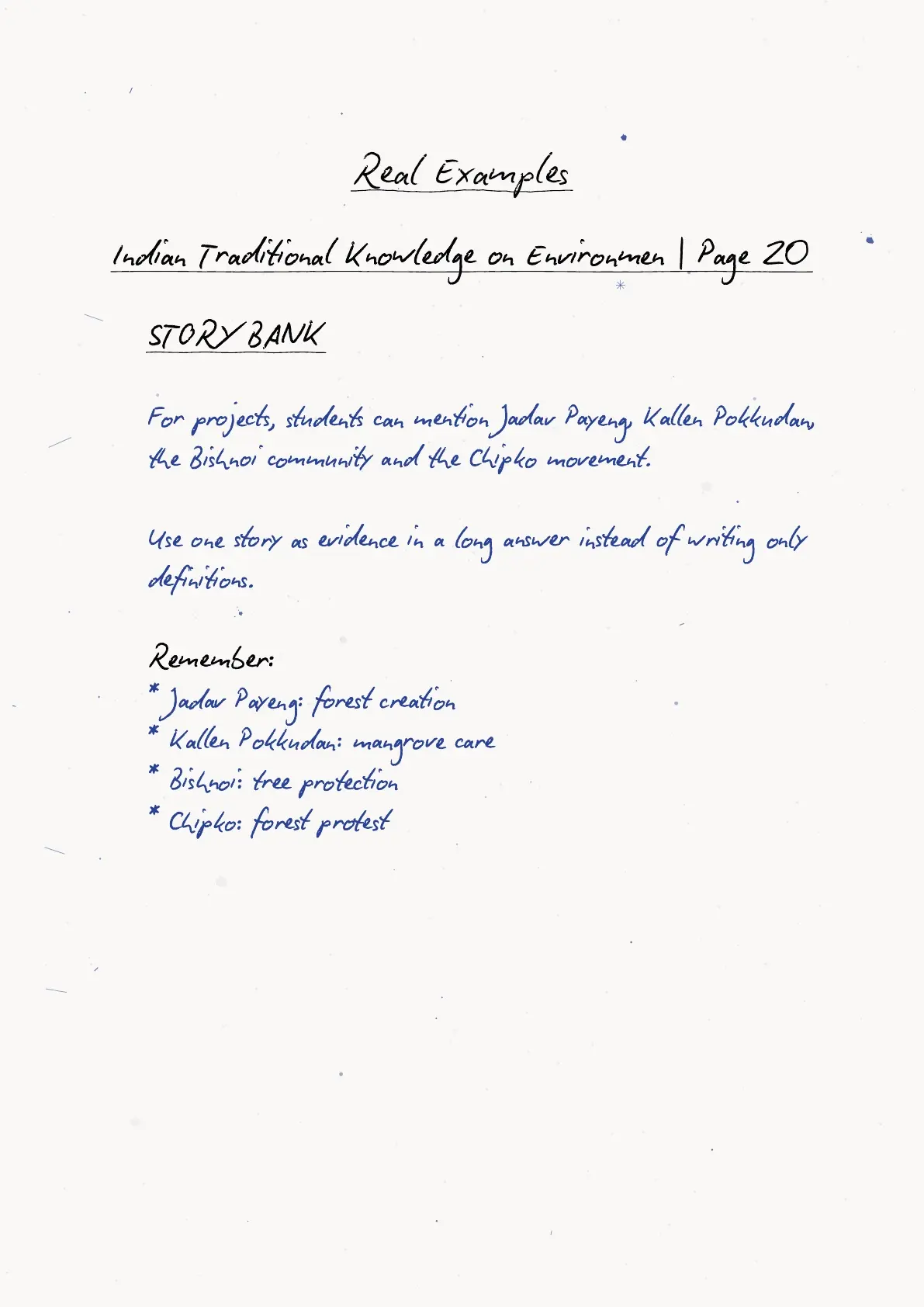
Student Feedback: Students revise this chapter faster when they remember one example for each theme: tree ritual, sacred grove, wildlife respect and community resistance.
Environmental Conservation Handwritten Notes Overview
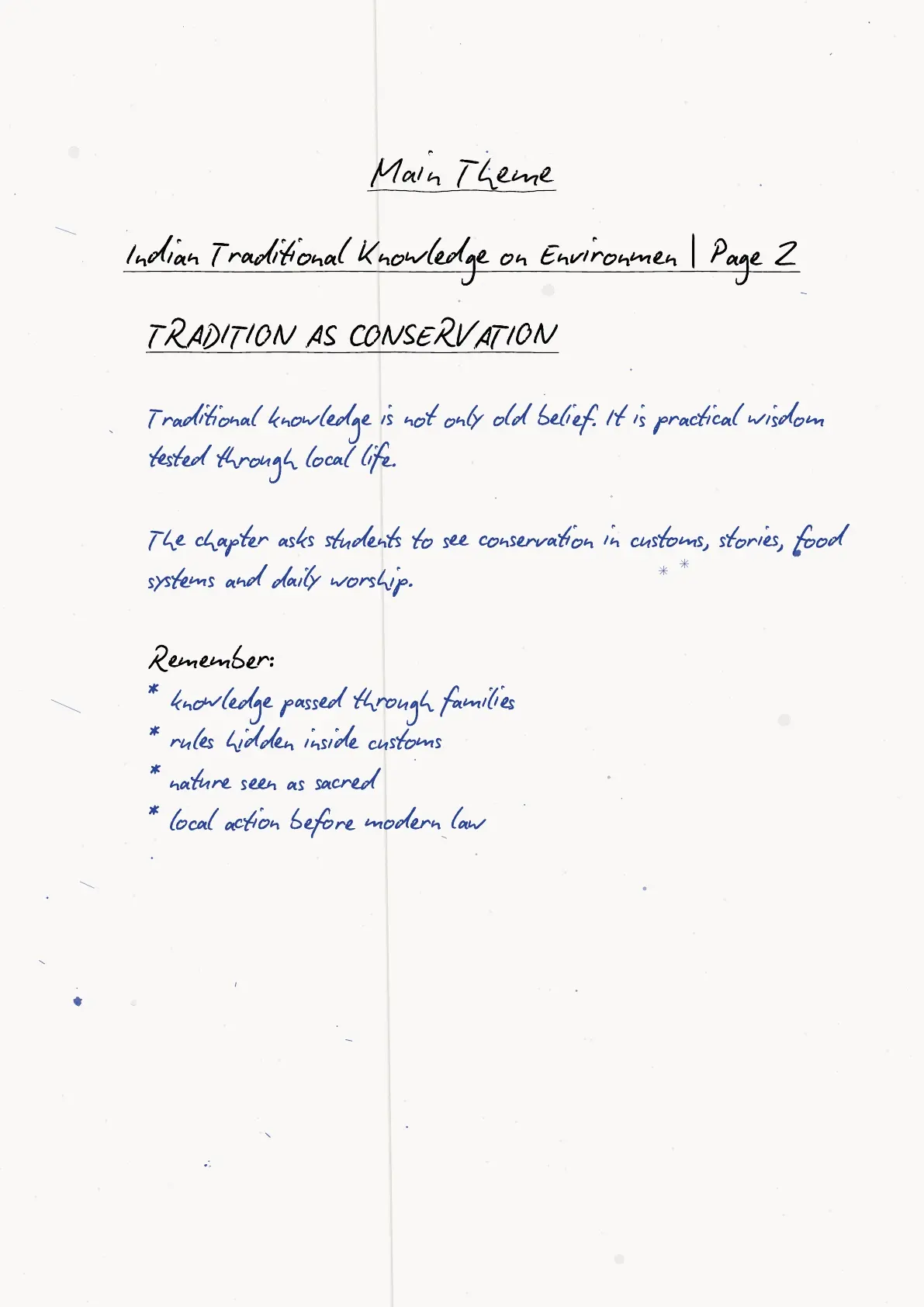
The Indian Traditional Knowledge on Environmental Conservation handwritten notes explain how customs worked as practical conservation rules. The chapter covers tree worship, sacred groves, animal respect, Buddhist and Jaina ethics, Bishnoi courage and forest resistance.
The core revision idea is simple: traditional knowledge protected nature by making care a social habit.
- Nature side: flora, fauna, sacred groves, khejri tree and local biodiversity.
- Ethics side: compassion, ahimsa, respect for animals and restraint in use.
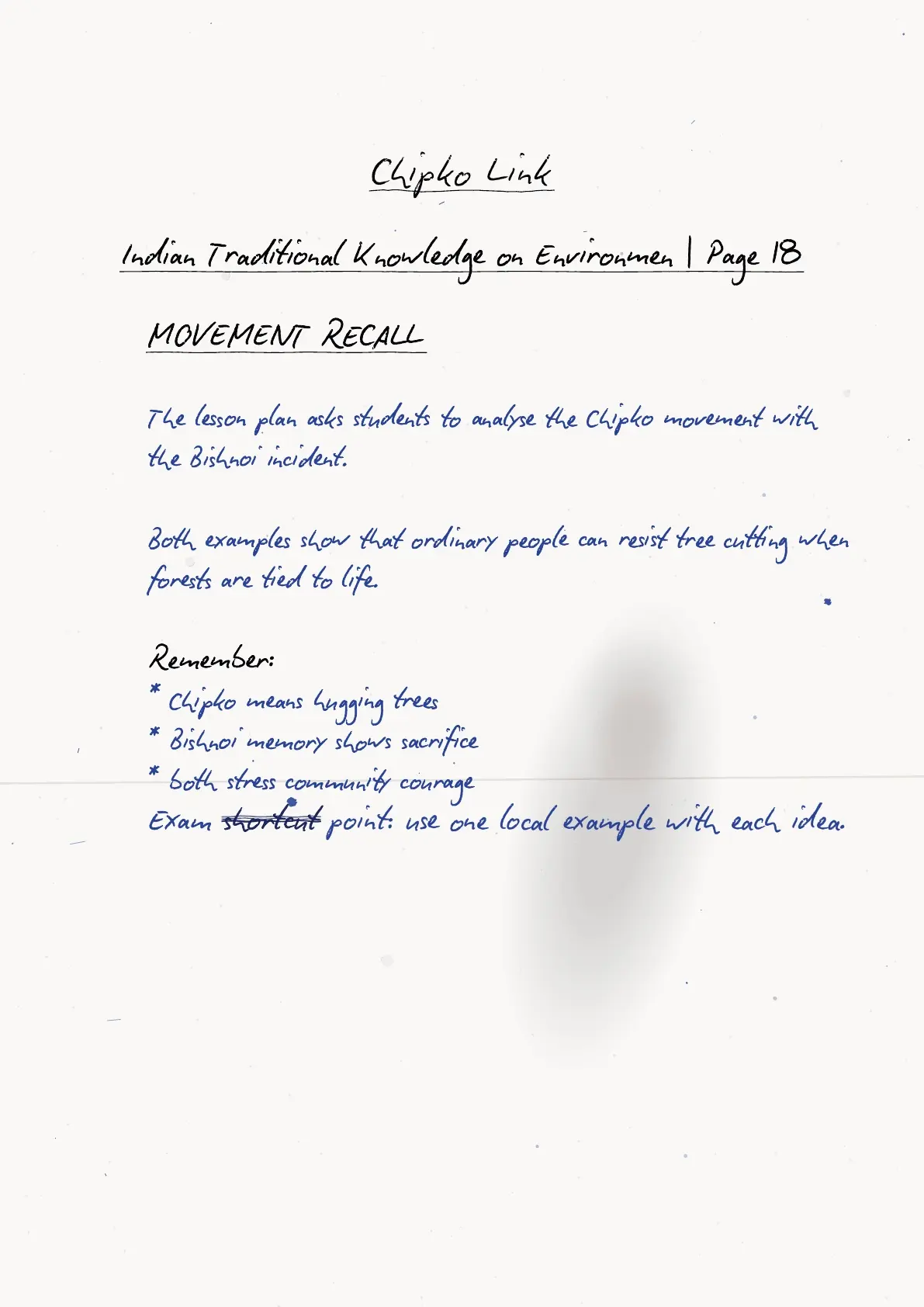
- Action side: Bishnoi memory, Chipko-style resistance and criticism of unjust forest rules.
Tree Rituals, Flora and Sacred Groves
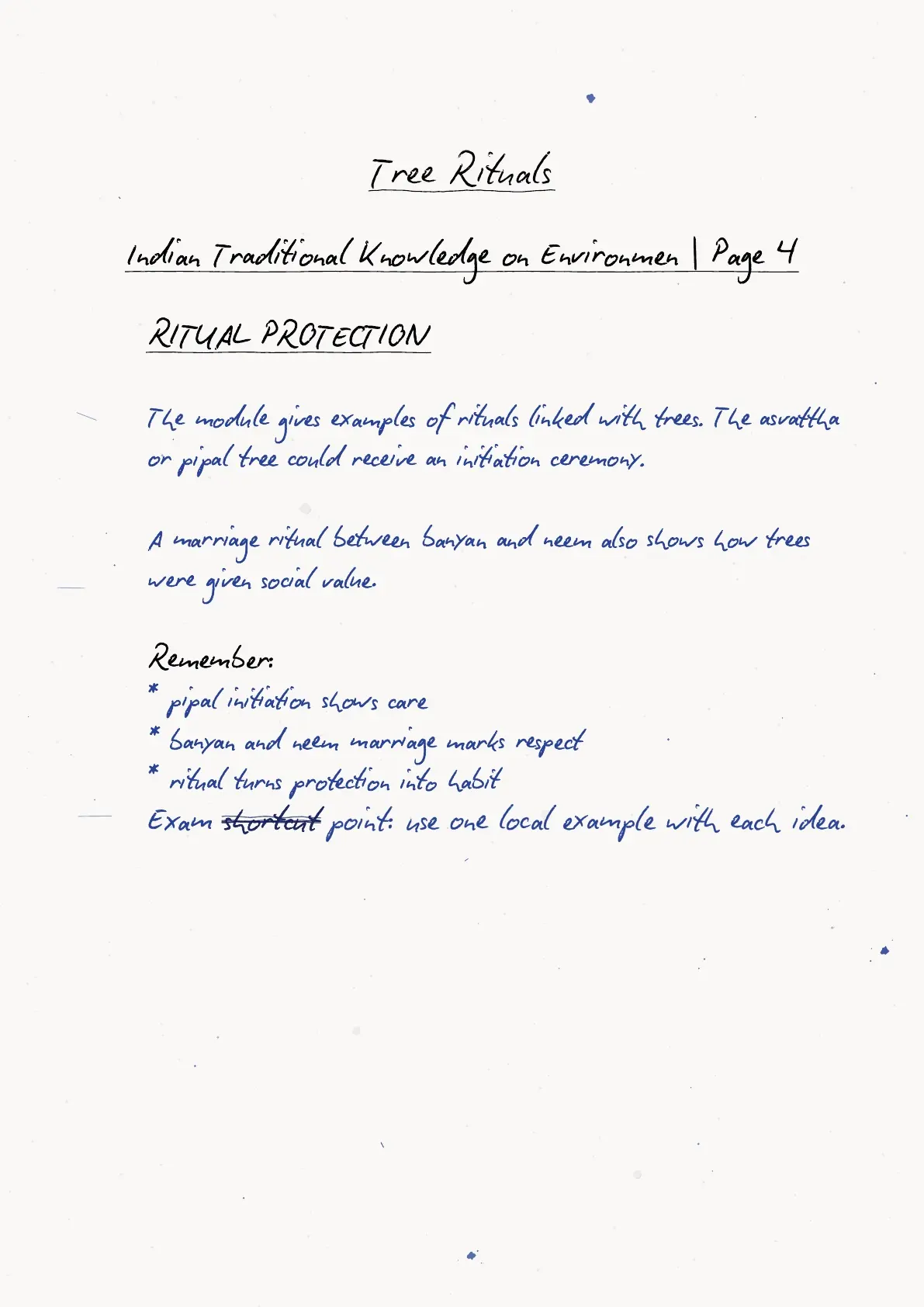
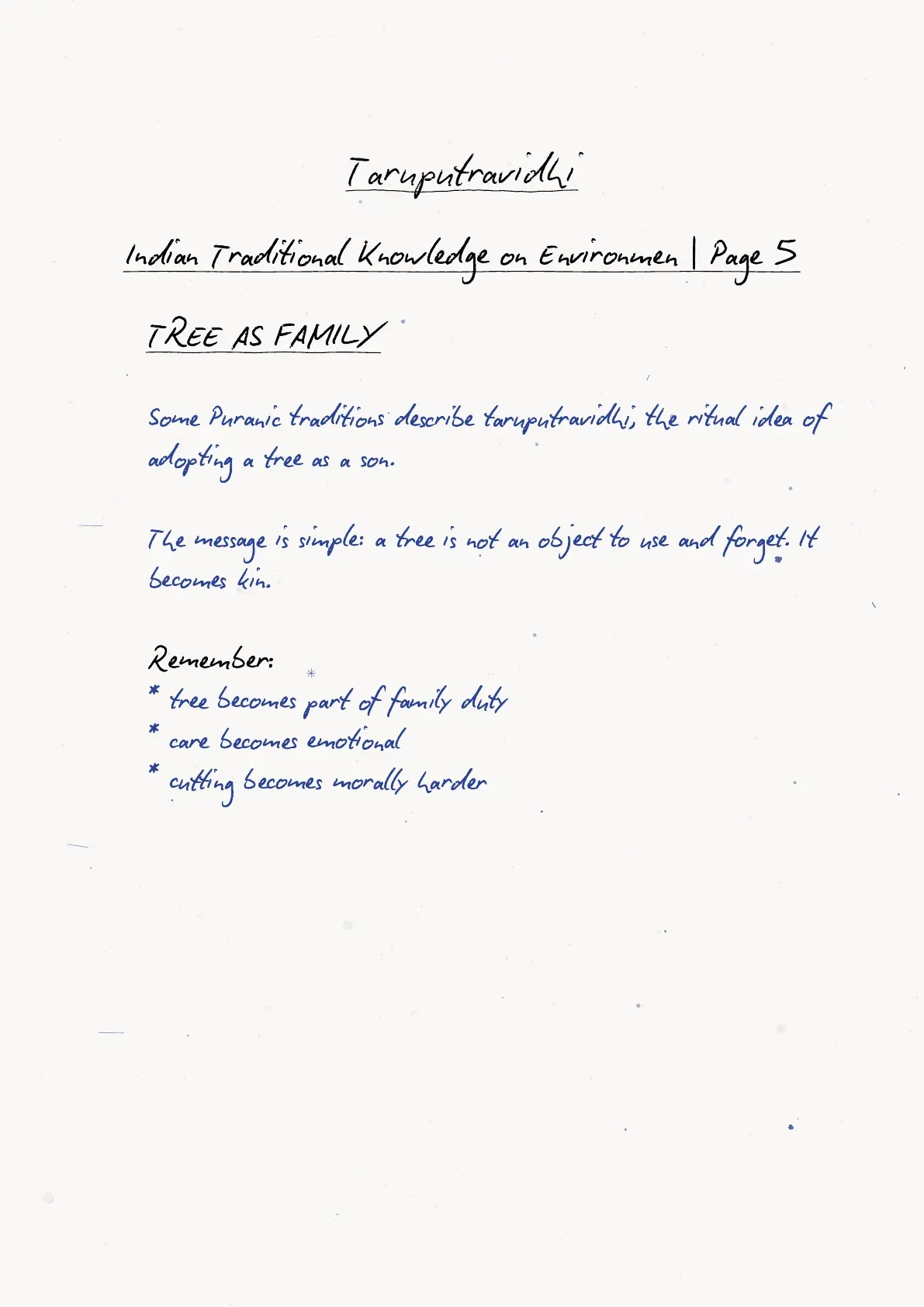
The module describes rituals linked with trees, including the asvattha initiation ceremony and the banyan-neem marriage ritual. It also notes taruputravidhi, where a tree could be adopted as a son.
| Idea | Meaning | Revision use |
|---|---|---|
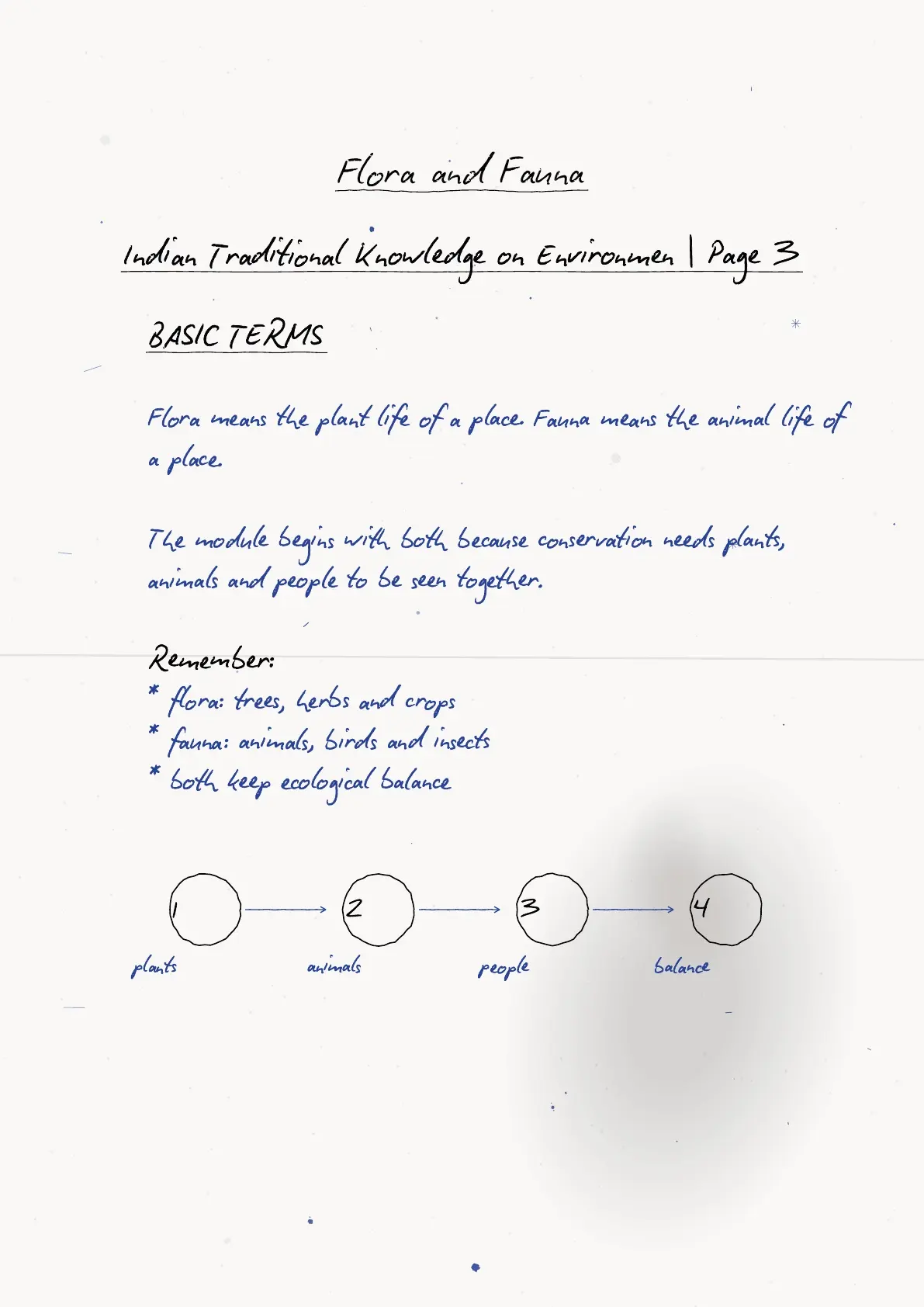
| Flora and fauna | Plants and animals of a place. | Use as the opening pair for the chapter. |
| Tree rituals | Customs that give trees social and sacred value. | Use pipal, banyan, neem and taruputravidhi. |
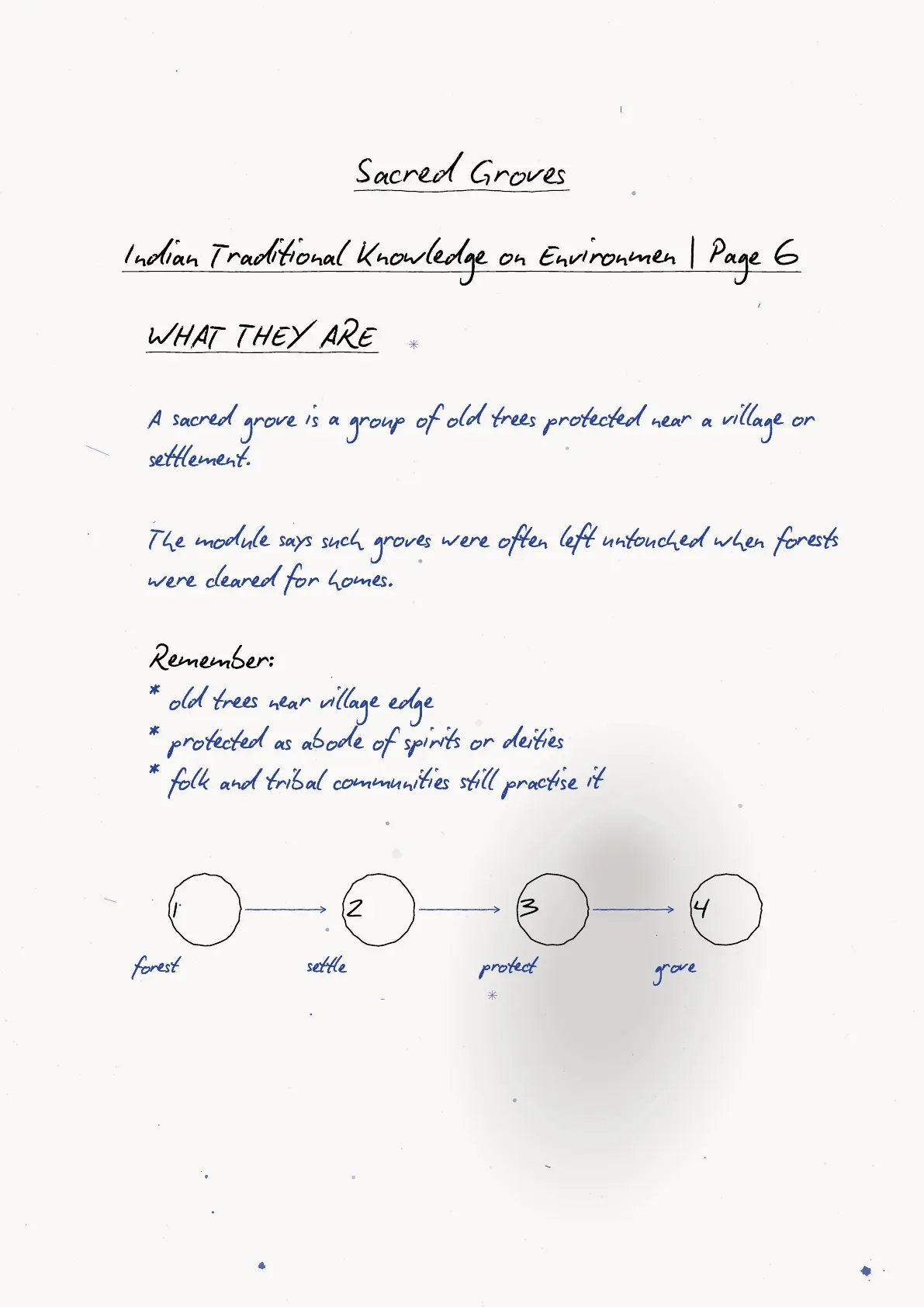
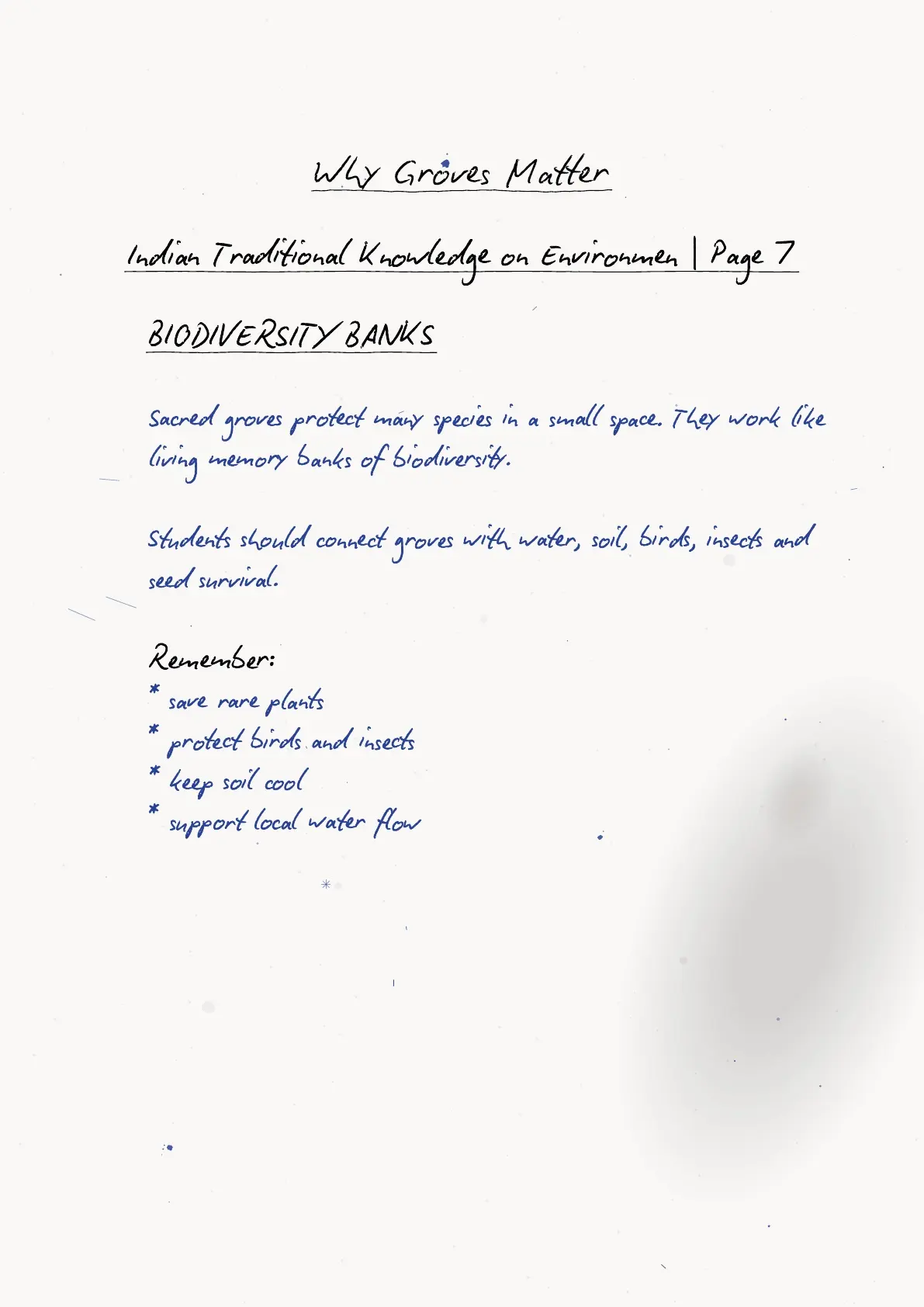
| Sacred groves | Old tree clusters protected near villages. | Write them as biodiversity spaces. |
| Local knowledge | Practical wisdom passed through communities. | Connect it with conservation action. |
Class 11 KTPI Environmental Conservation Video
Source: TEDx Talks on YouTube
Wildlife, Buddhism, Jainism and Ahimsa
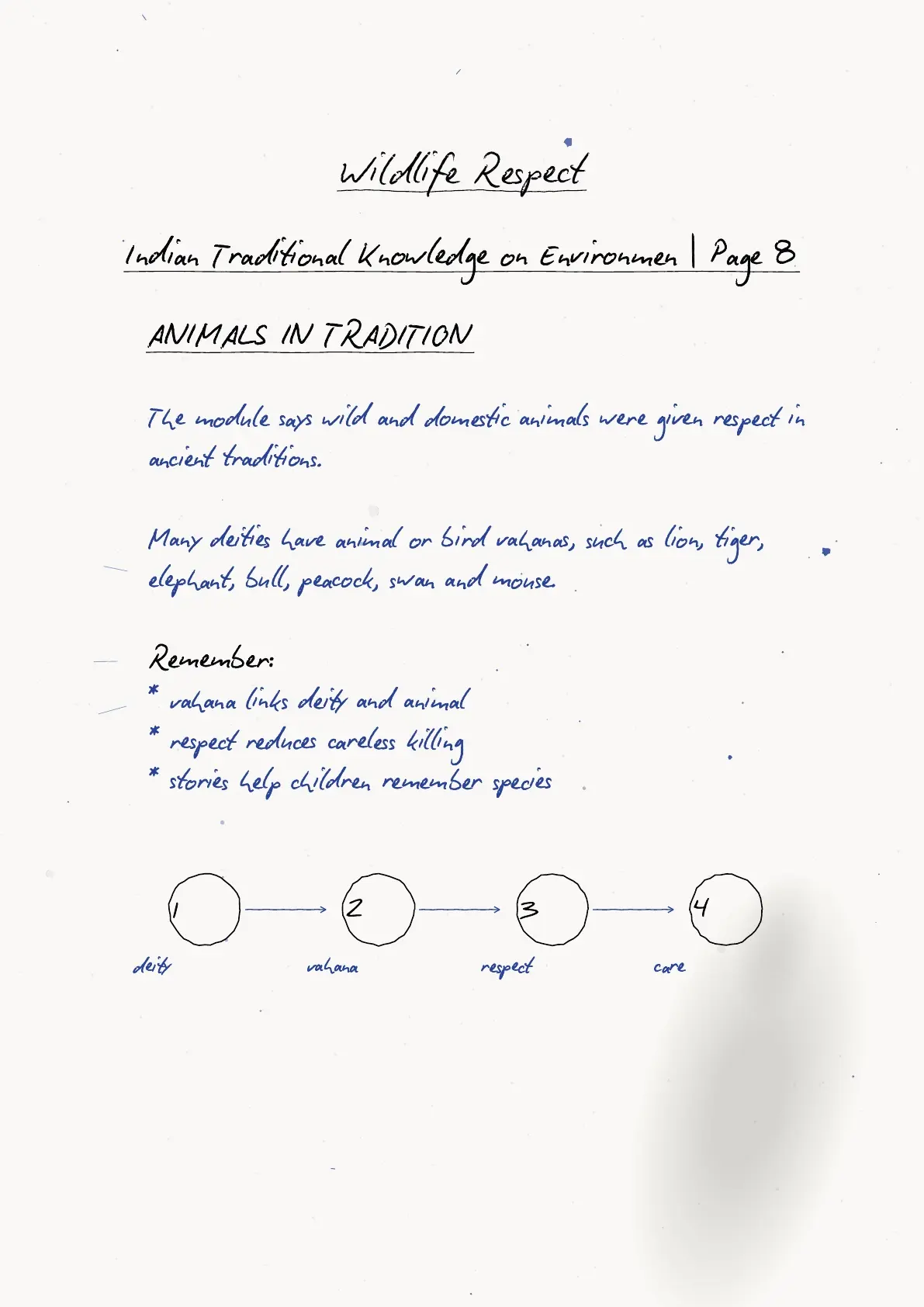
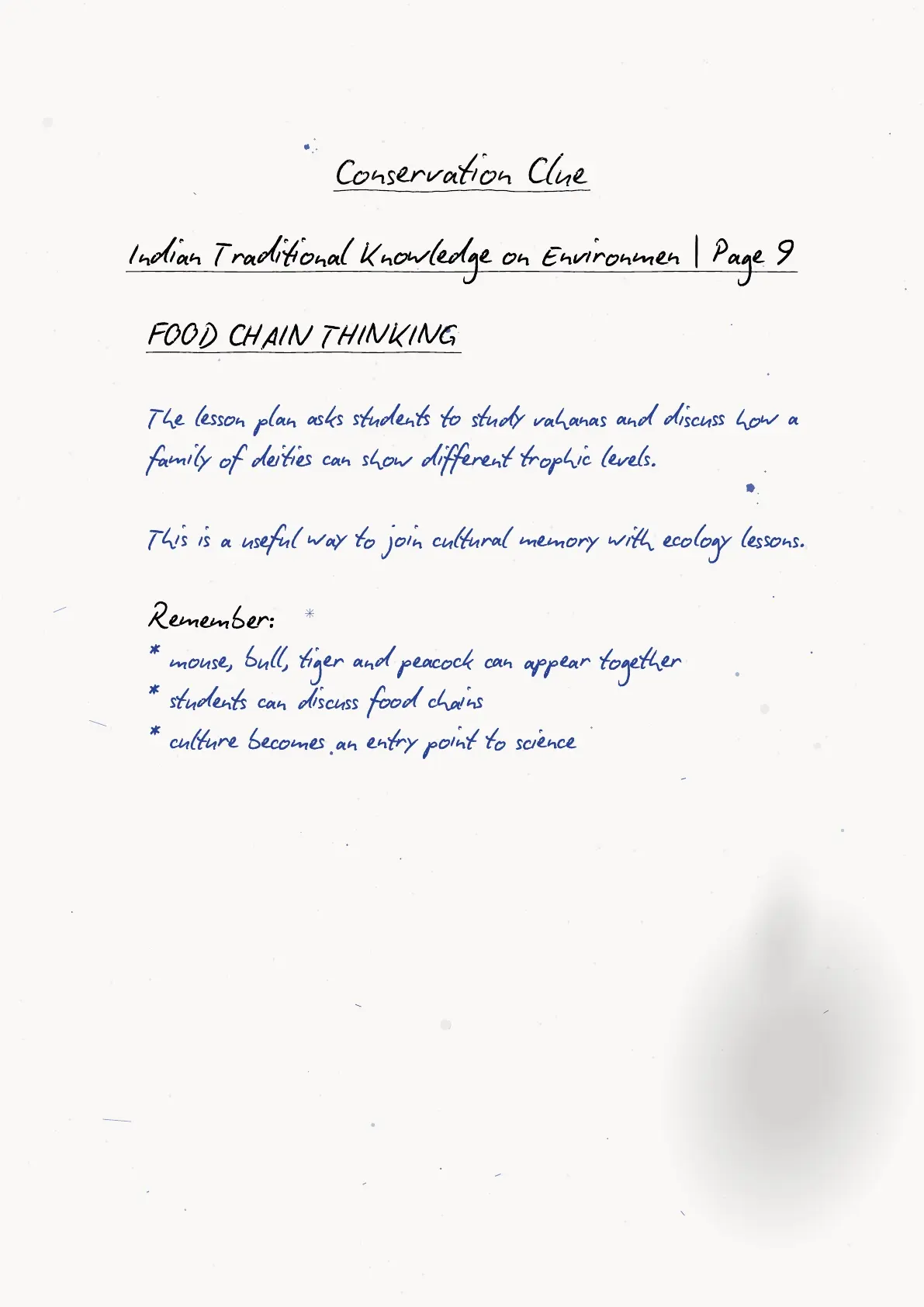
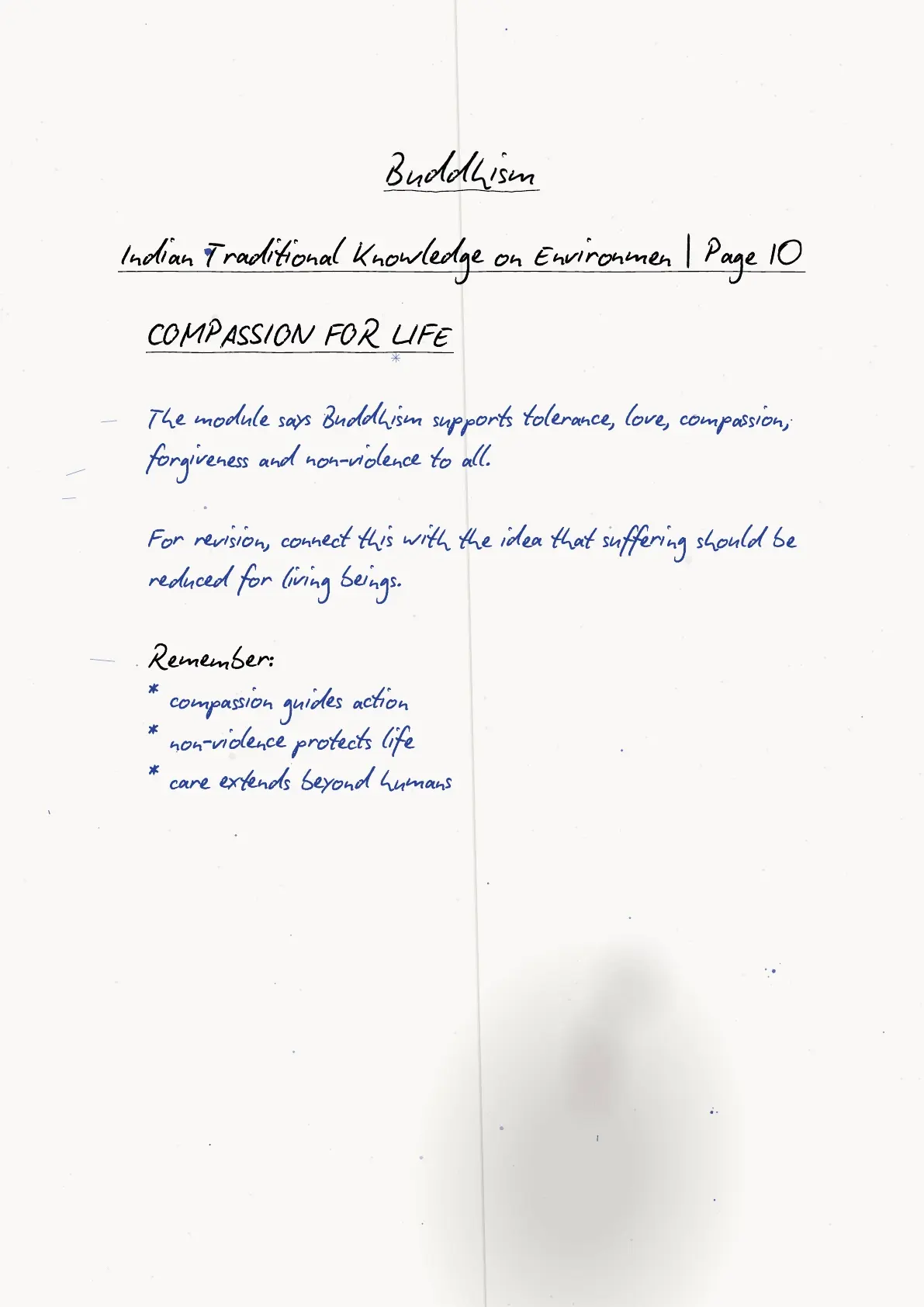
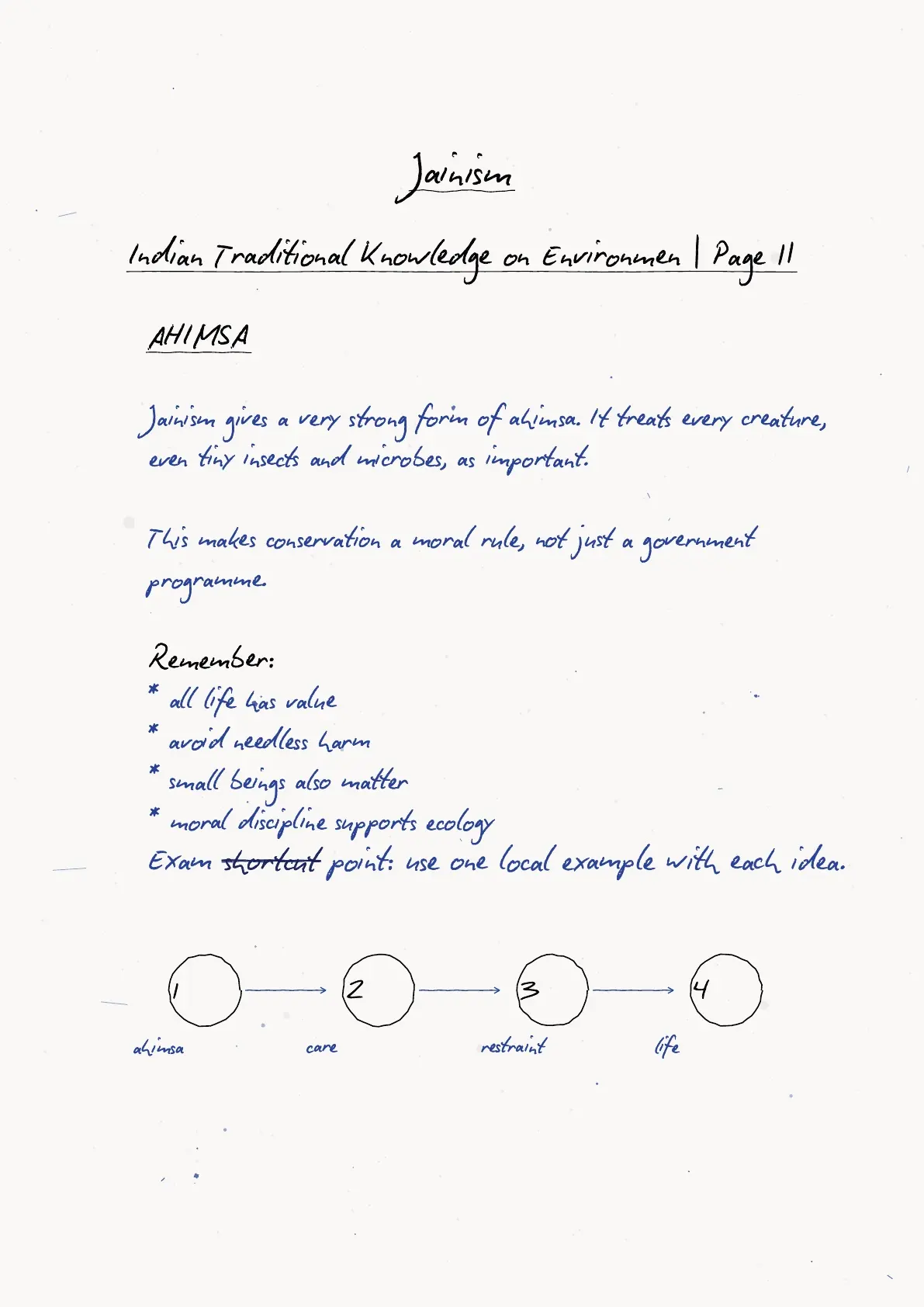
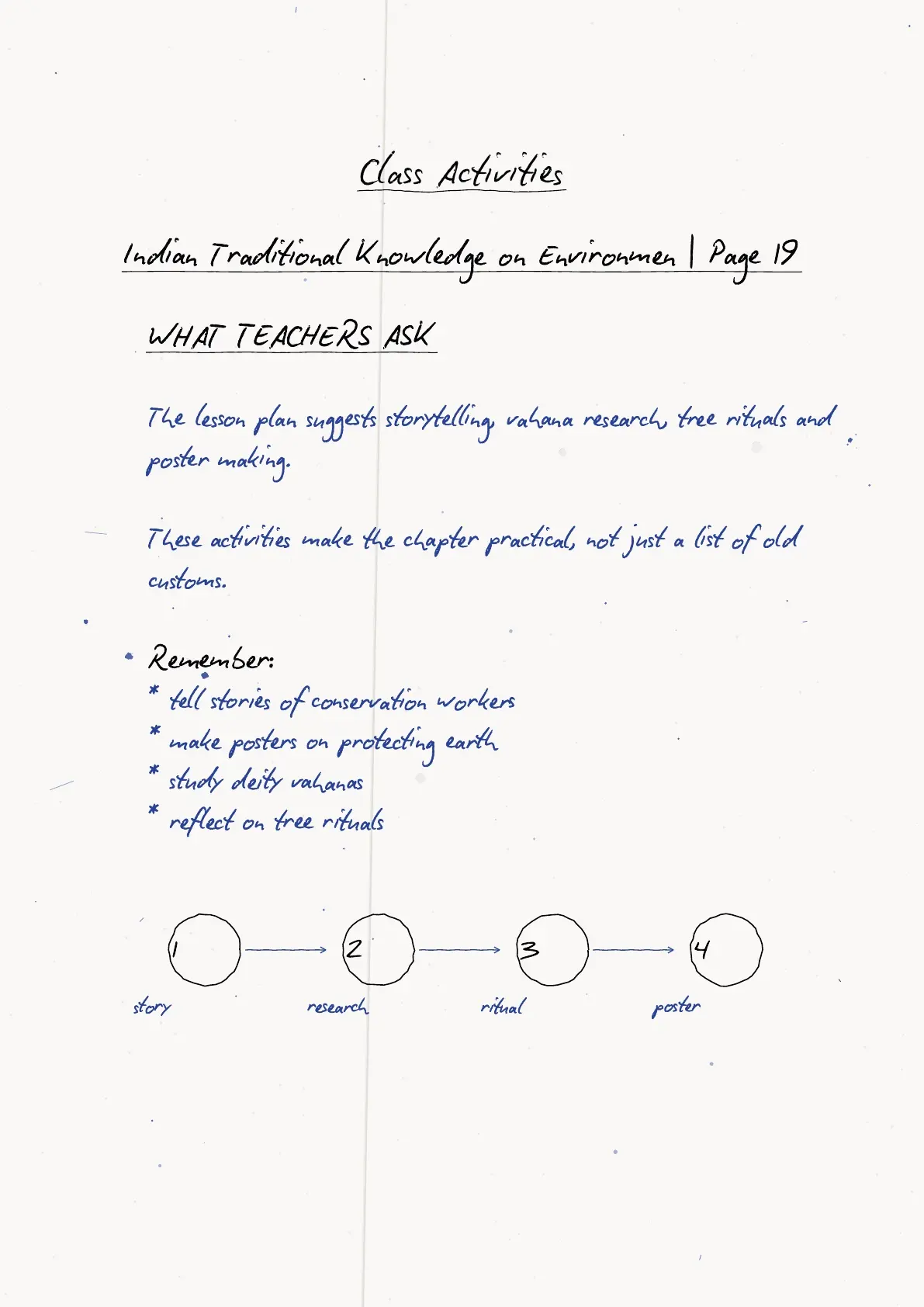
Wildlife respect appears through the idea of vahanas, where animals and birds are linked with deities. Buddhism teaches compassion and non-violence. Jainism gives a strict ahimsa ethic for every living being.
Use ahimsa as the bridge between moral discipline and ecological protection.
| Tradition | Conservation message | Example for answer |
|---|---|---|
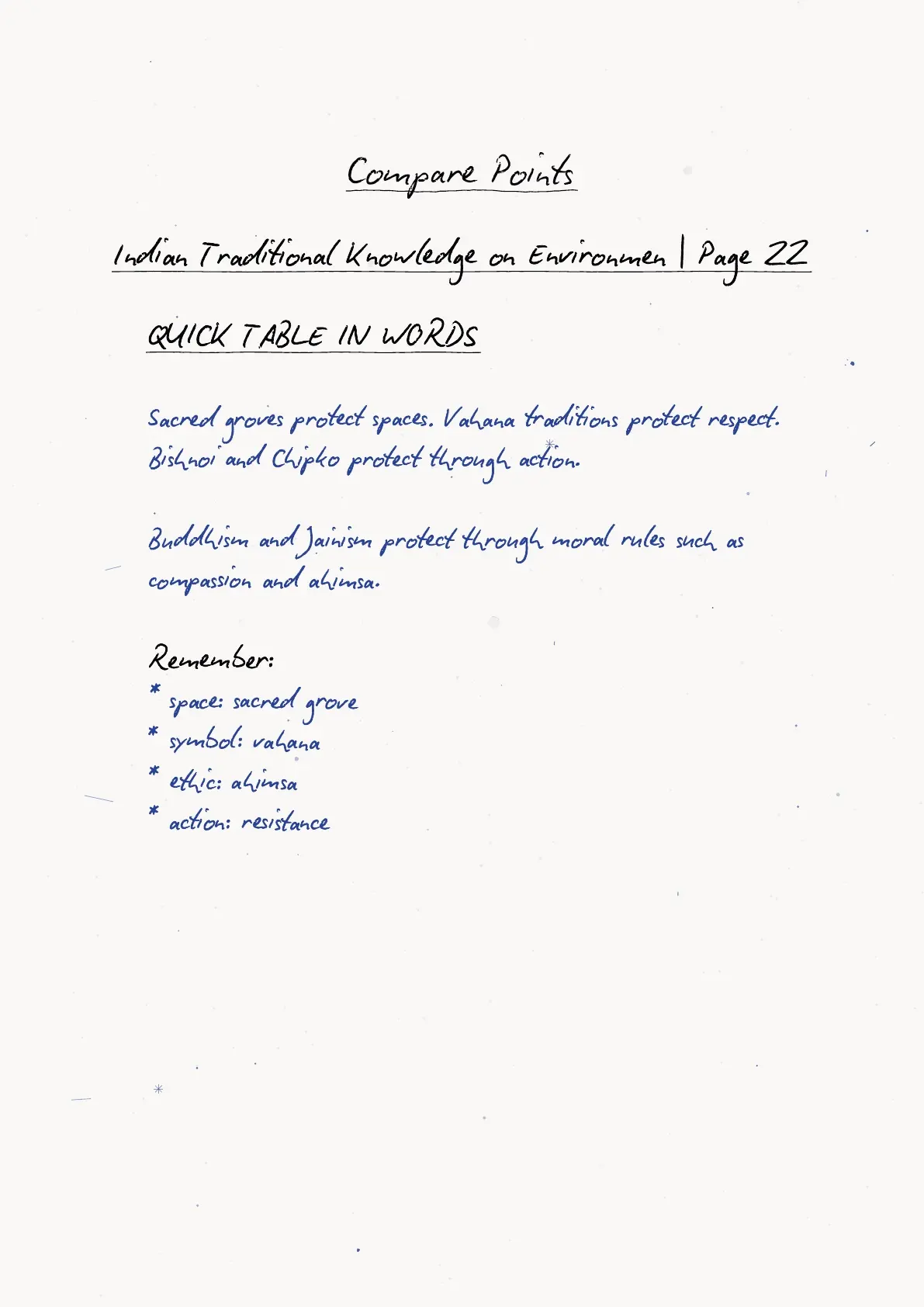
| Vahana tradition | Animals and birds receive pride of place. | Lion, tiger, elephant, bull, peacock, swan and mouse. |
| Buddhism | Compassion and non-violence reduce harm. | Tolerance, love and forgiveness to all life. |
| Jainism | Ahimsa applies even to the smallest beings. | Every creature is treated as important. |
Bishnoi, Khejri Tree and Forest Resistance
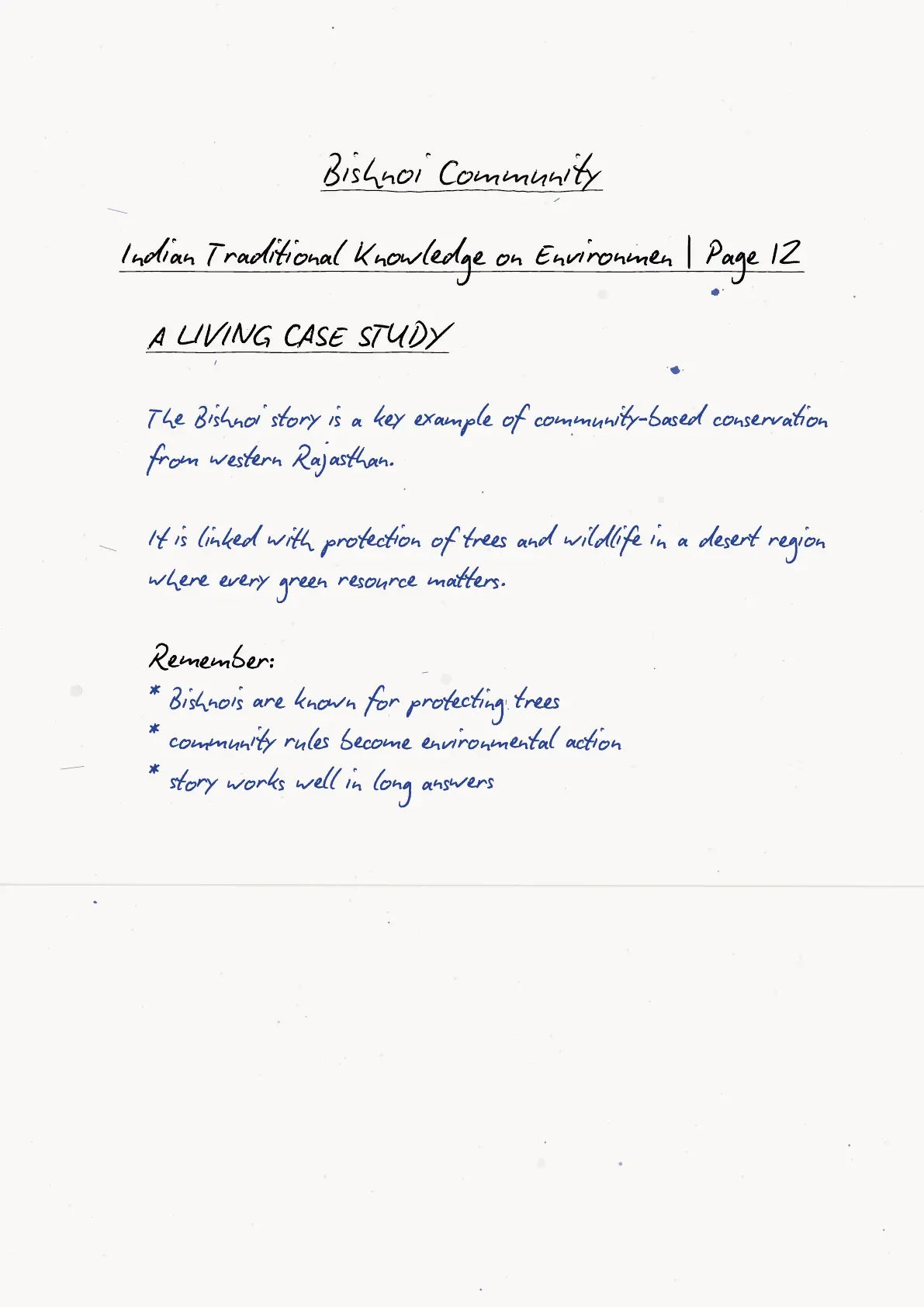
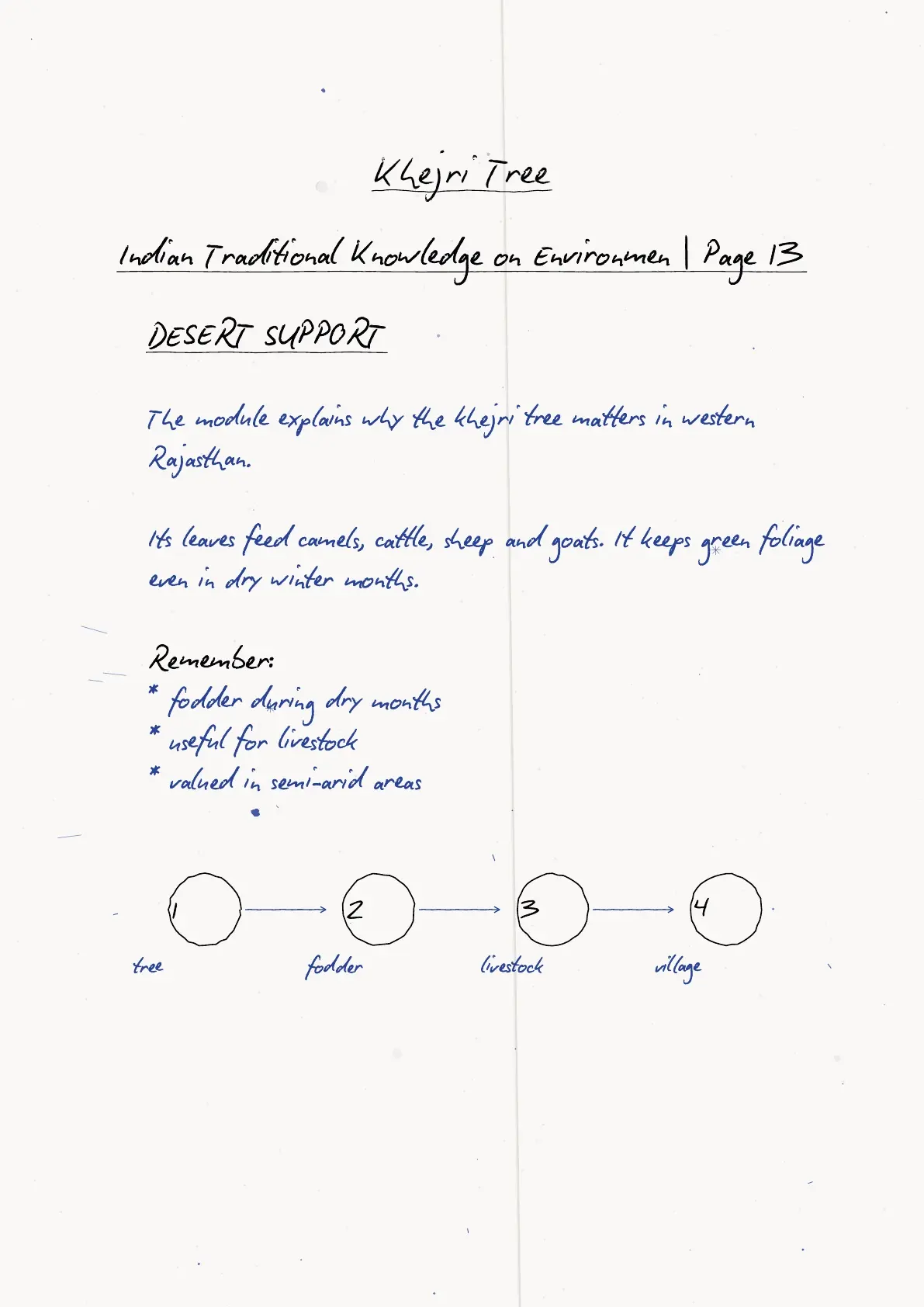
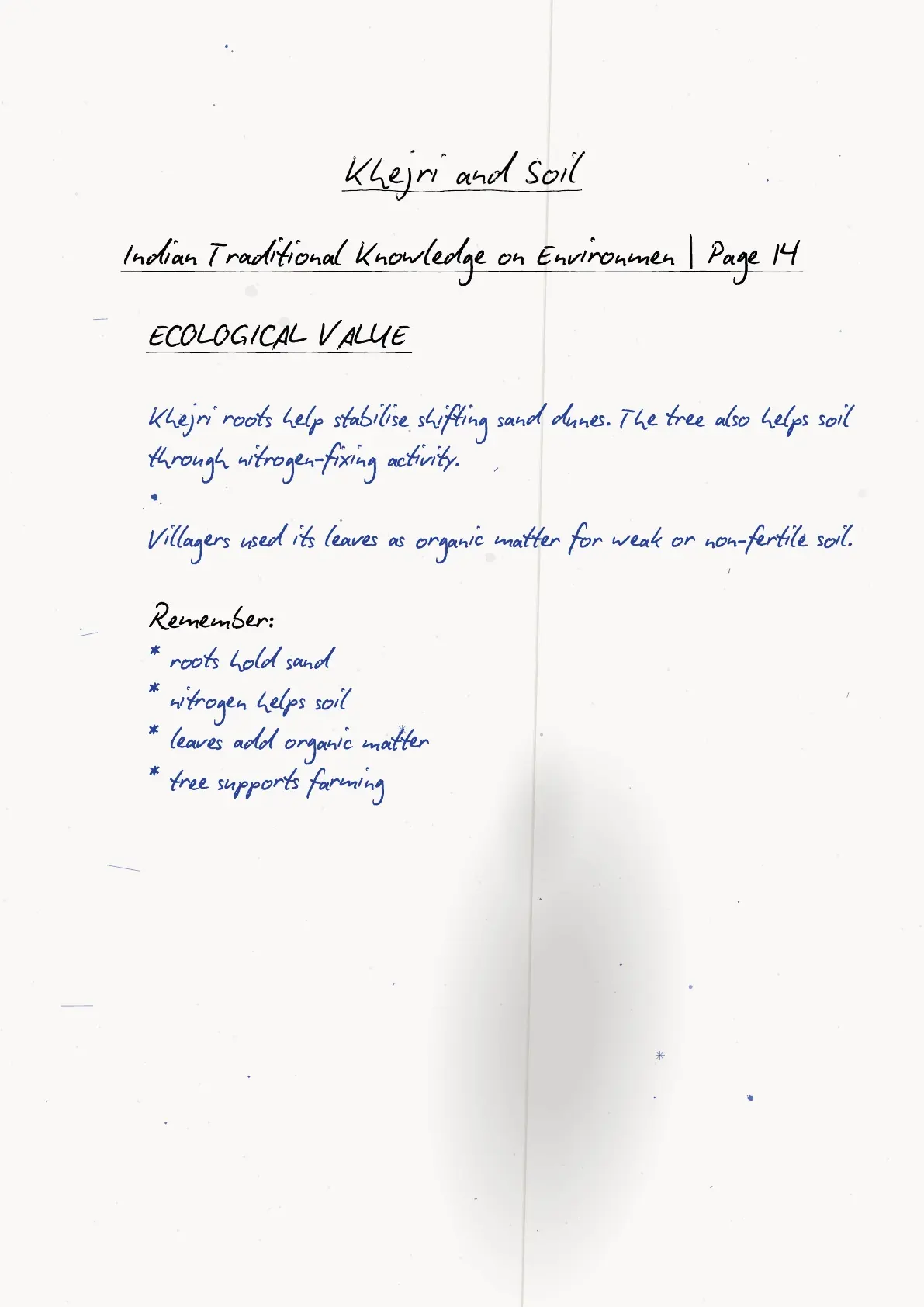
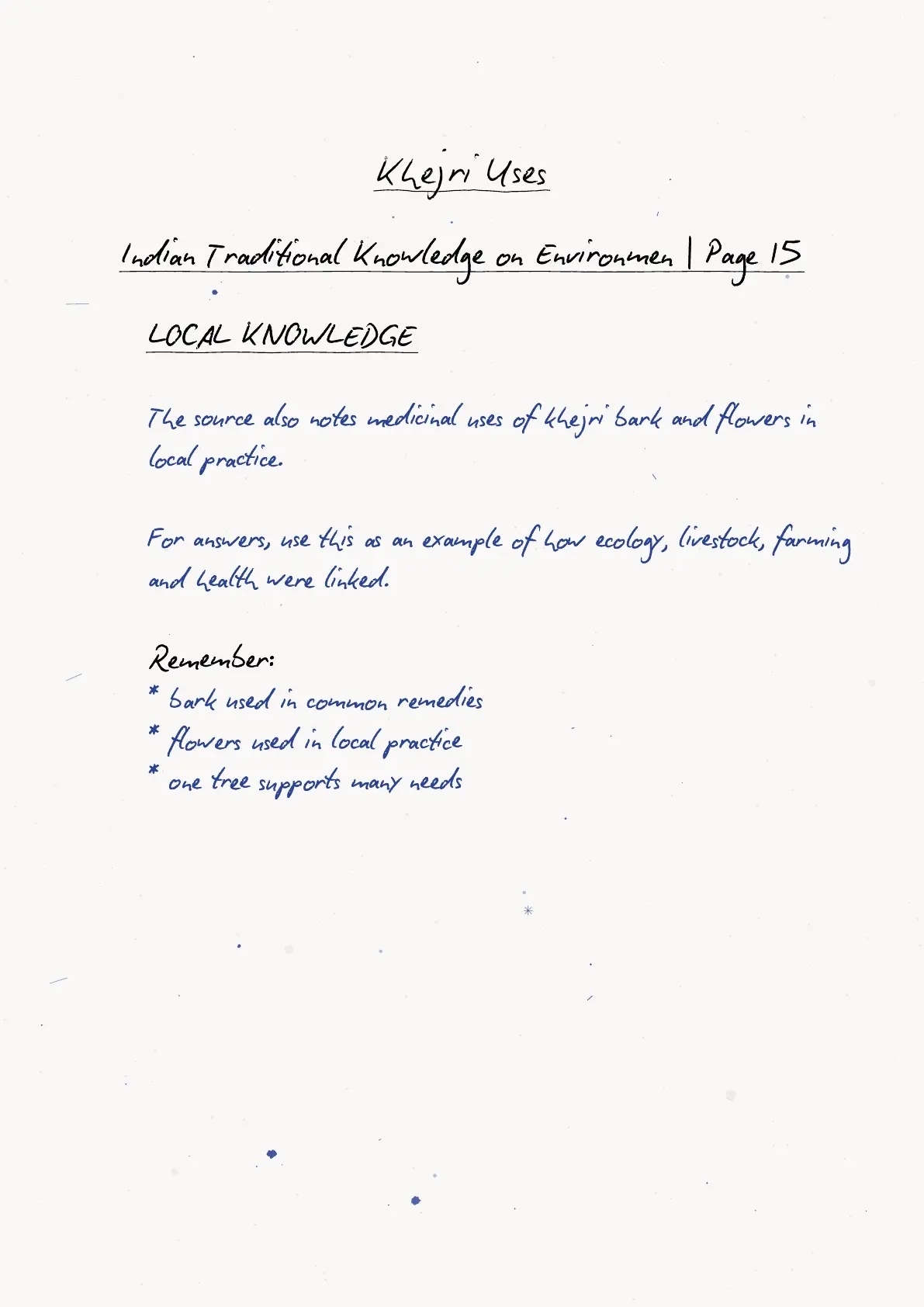
The Bishnoi story and the khejri tree form the strongest case study. Khejri supports livestock, stabilises sand dunes, helps soil and gives local communities a reason to protect trees.
- Khejri recall: fodder, dry-season leaves, soil support, sand-dune control and local remedies.
- Bishnoi recall: community rules made tree protection a shared duty.
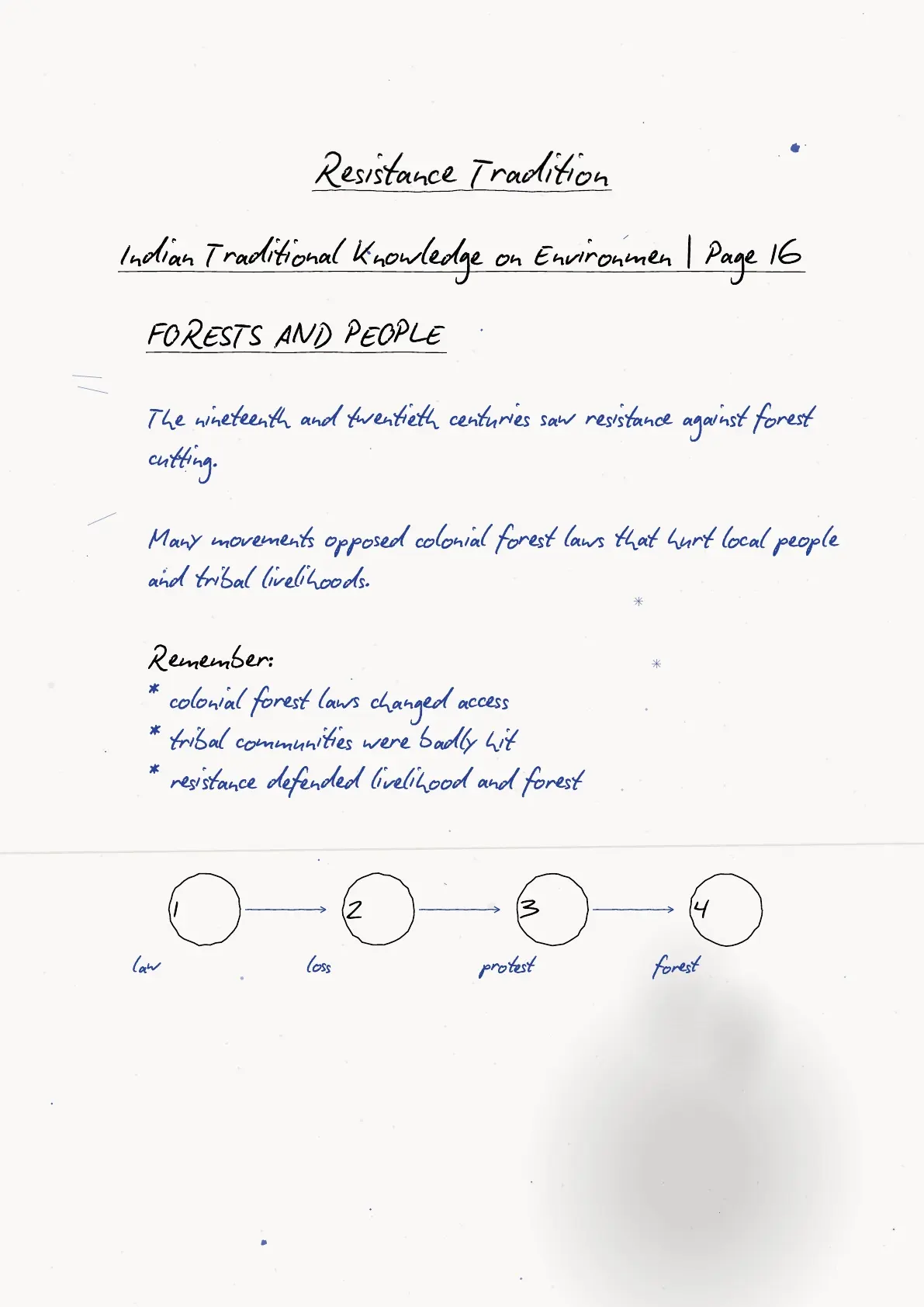
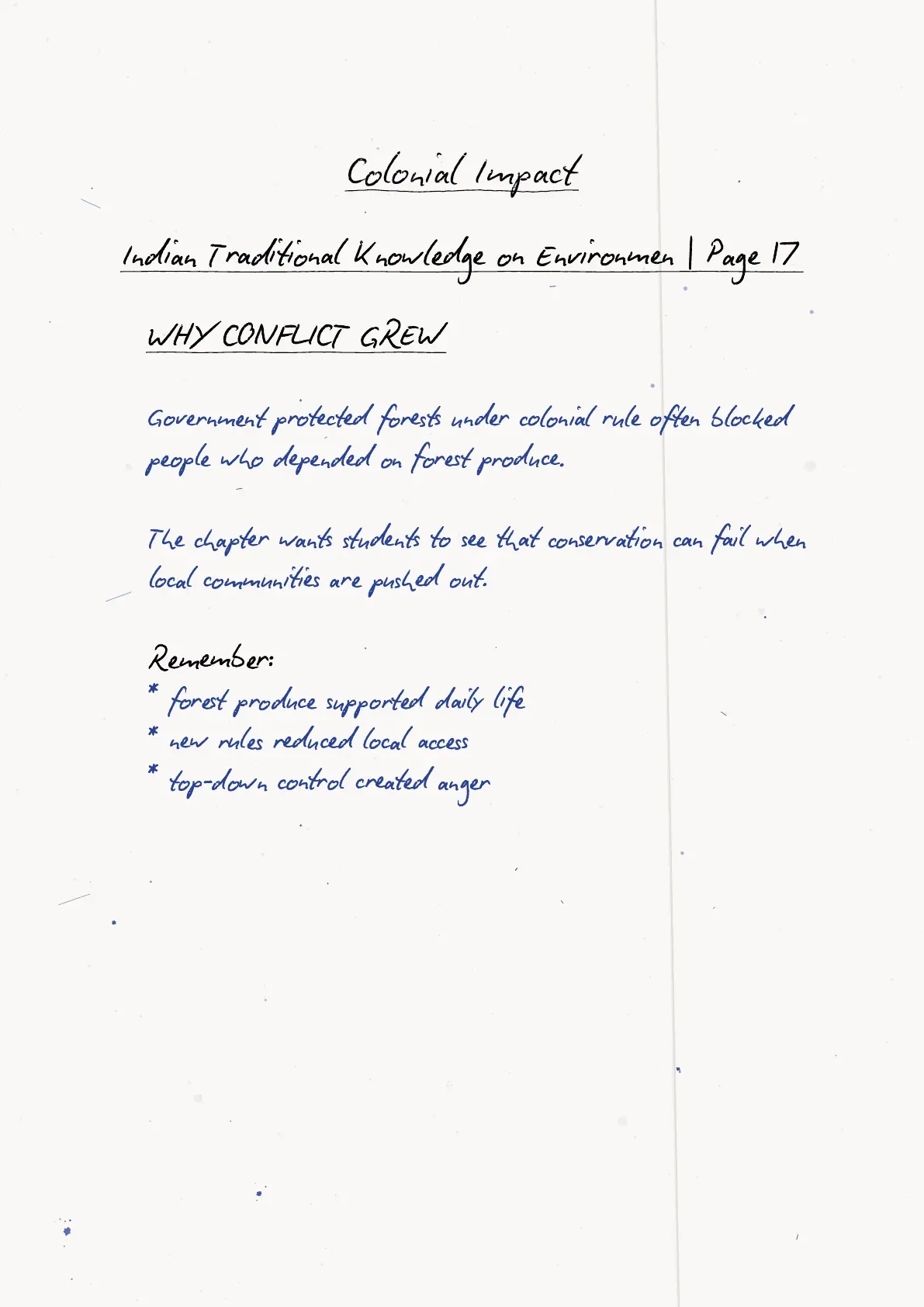
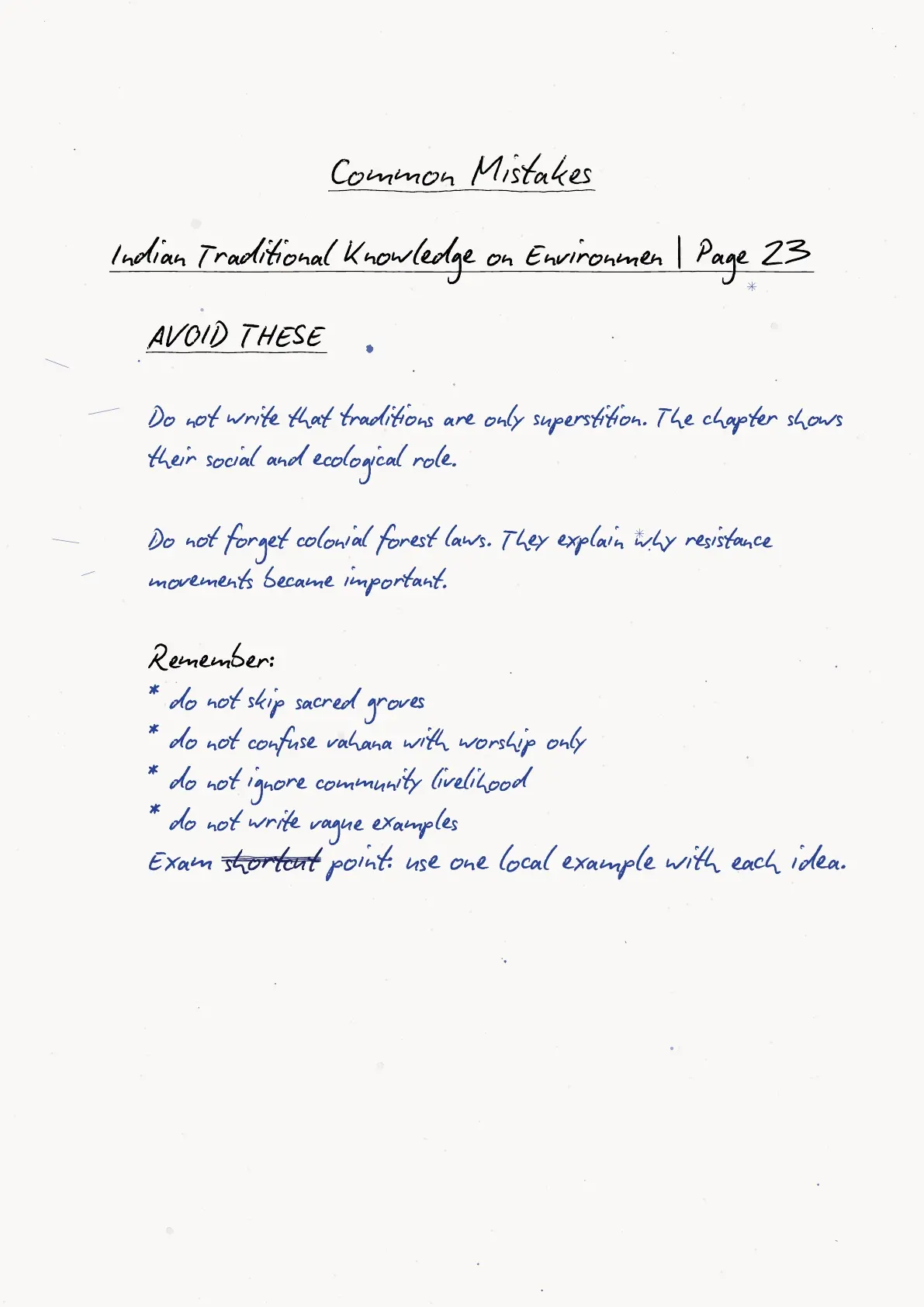
- Resistance recall: colonial forest laws hurt local and tribal livelihoods.
- Chipko recall: people resisted tree cutting by turning forest care into action.
How to Use the Environmental Conservation Handwritten Notes PDF
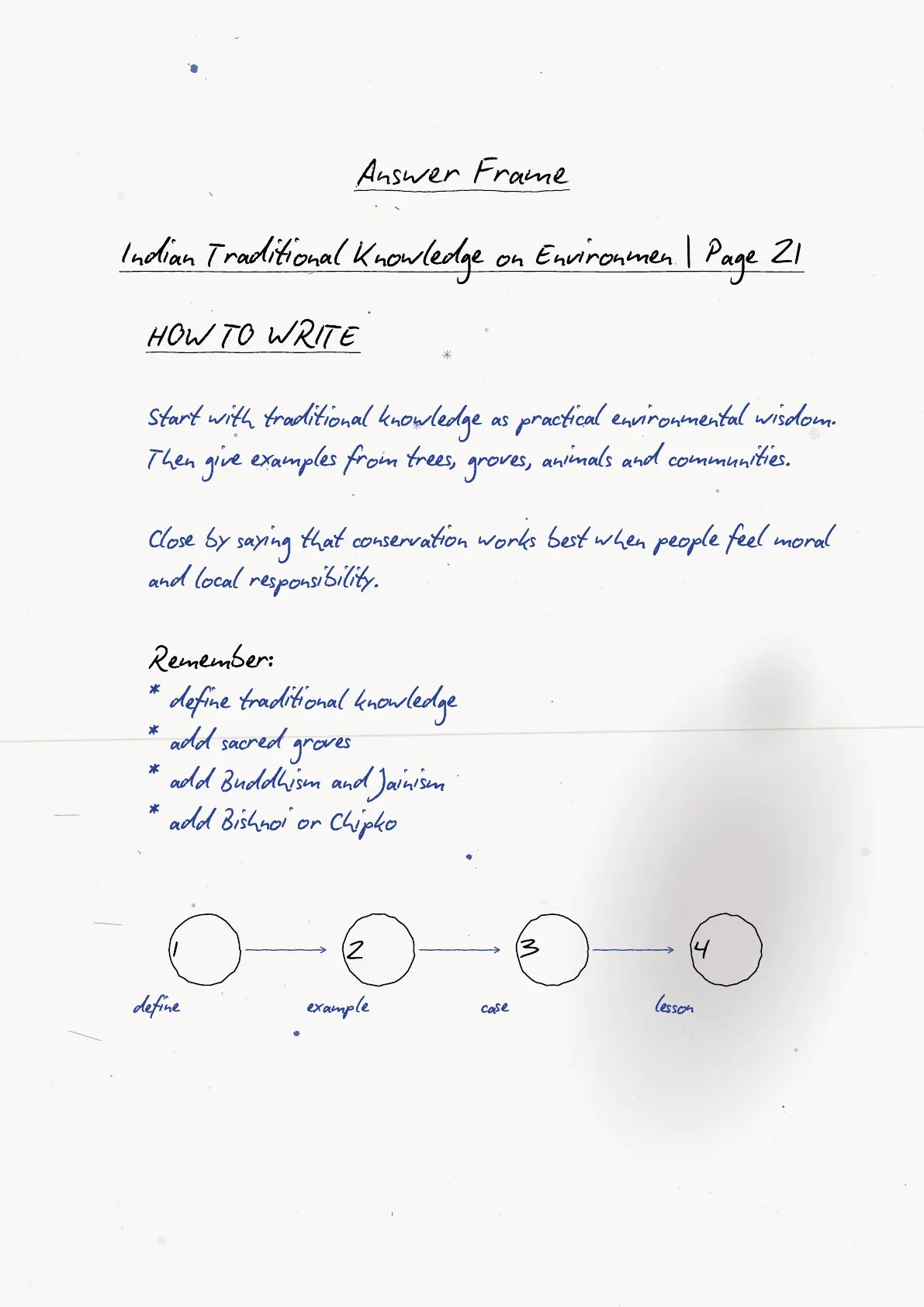
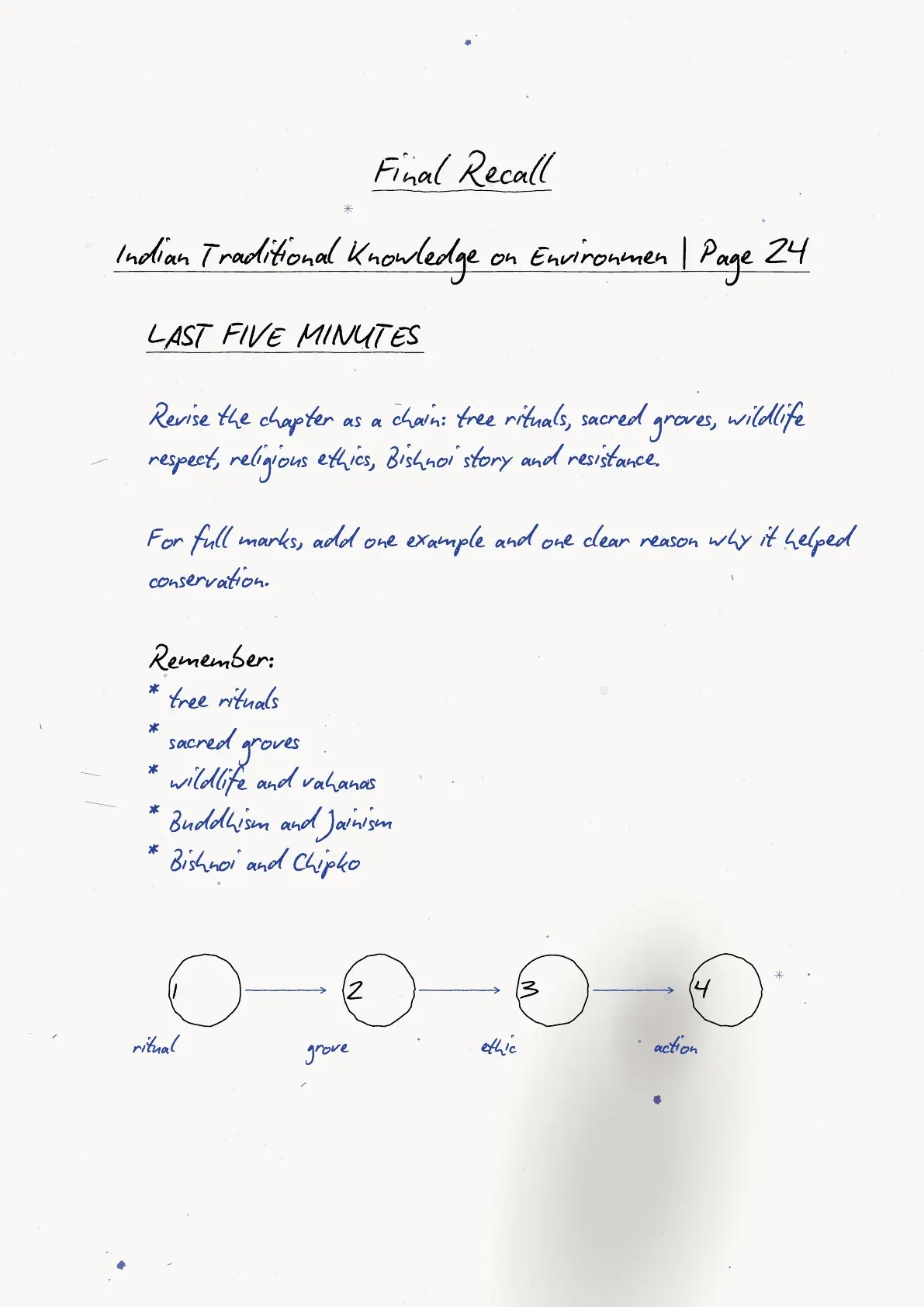
Start with the first pages for the theme of traditional knowledge. Then revise sacred groves and wildlife respect. End with the Bishnoi, khejri and forest resistance pages before writing long answers.
For a 200-word answer, use this order: define traditional knowledge, explain two conservation practices, add one community example, and close with the lesson for modern environmental care. Specific examples score better than a general paragraph on nature.
Related Class 11 KTPI Resources
| Resource | Use it for | Link |
|---|---|---|
| NCERT Solutions | Exercise answers for the related KTPI source chapter. | Class 11 KTPI Chapter 5 Solutions |
| NCERT Book PDF | Original textbook and module reading. | Class 11 KTPI Chapter 5 Book PDF |
| Notes | Typed revision notes for theory-heavy study. | Class 11 KTPI Environmental Conservation Notes |
| Handwritten Notes | Quick one-shot revision before tests. | Class 11 KTPI Environmental Conservation Handwritten Notes |
All Class 11 KTPI Handwritten Notes
| Chapter | Title | Handwritten Notes |
|---|---|---|
| Chapter 1 | Astronomy in India | Open handwritten notes |
| Chapter 2 | Chemistry in India | Open handwritten notes |
| Chapter 3 | Indian Literature Part I Introduction of Indian Literature | Open handwritten notes |
| Chapter 4 | Indian Philosophical Systems | Open handwritten notes |
| Chapter 5 | Indian Traditional Knowledge on Environmental Conservation | Open handwritten notes |
| Chapter 6 | Life Sciences 1 Ayurveda for Life, Health and Well-Being | Open handwritten notes |
| Chapter 7 | Life Sciences 2 The Historical Evolution of Medical Tradition in Ancient India | Open handwritten notes |
| Chapter 8 | Mathematics in India | Open handwritten notes |
| Chapter 9 | Theatre and Drama in India | Open handwritten notes |
Class 11 KTPI Environmental Conservation Handwritten Notes FAQs
Ques. What is covered in Class 11 KTPI environmental conservation handwritten notes?
Ans. The PDF covers tree rituals, sacred groves, wildlife respect, Buddhism, Jainism, Bishnoi conservation, khejri tree value and forest resistance.
Ques. What are sacred groves?
Ans. Sacred groves are old tree clusters protected near villages because communities treat them as sacred spaces.
Ques. Why is the khejri tree important?
Ans. Khejri gives fodder, helps stabilise sand dunes, supports soil fertility and is useful in desert village life.
Ques. How should students write long answers from this chapter?
Ans. Start with traditional knowledge, add sacred groves and tree rituals, then use Bishnoi or Chipko as the community example.



Comments