




NCERT Handwritten Notes for Class 11 KTPI Chapter 3 Indian Literature Part I - Introduction of Indian Literature are prepared for quick 2026-27 revision. The schedule title is Indian Literature Part I, and the local NCERT source chapter is Language and Literature of India.
- Resource: Class 11 KTPI Indian Literature Part I handwritten revision notes PDF.
- Chapter focus: language, oral traditions, language diversity, ancient literature, epics and fables.
- Revision use: quick notebook pages, answer frames, common mistakes and glossary-style recall.
Student Feedback: Students revise this chapter faster when they group examples into oral traditions, language diversity and literature types.
Indian Literature Part I Handwritten Notes Overview
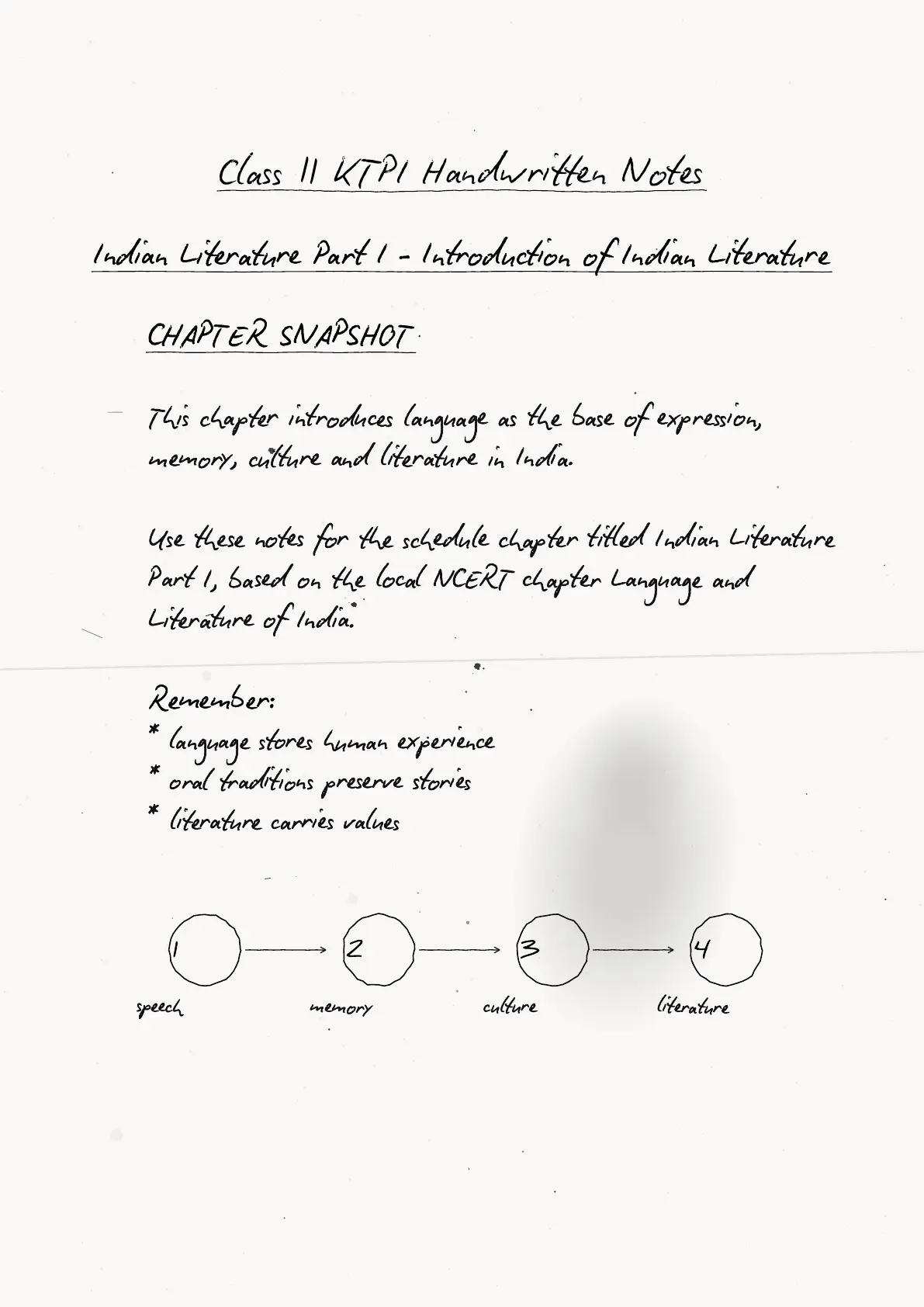
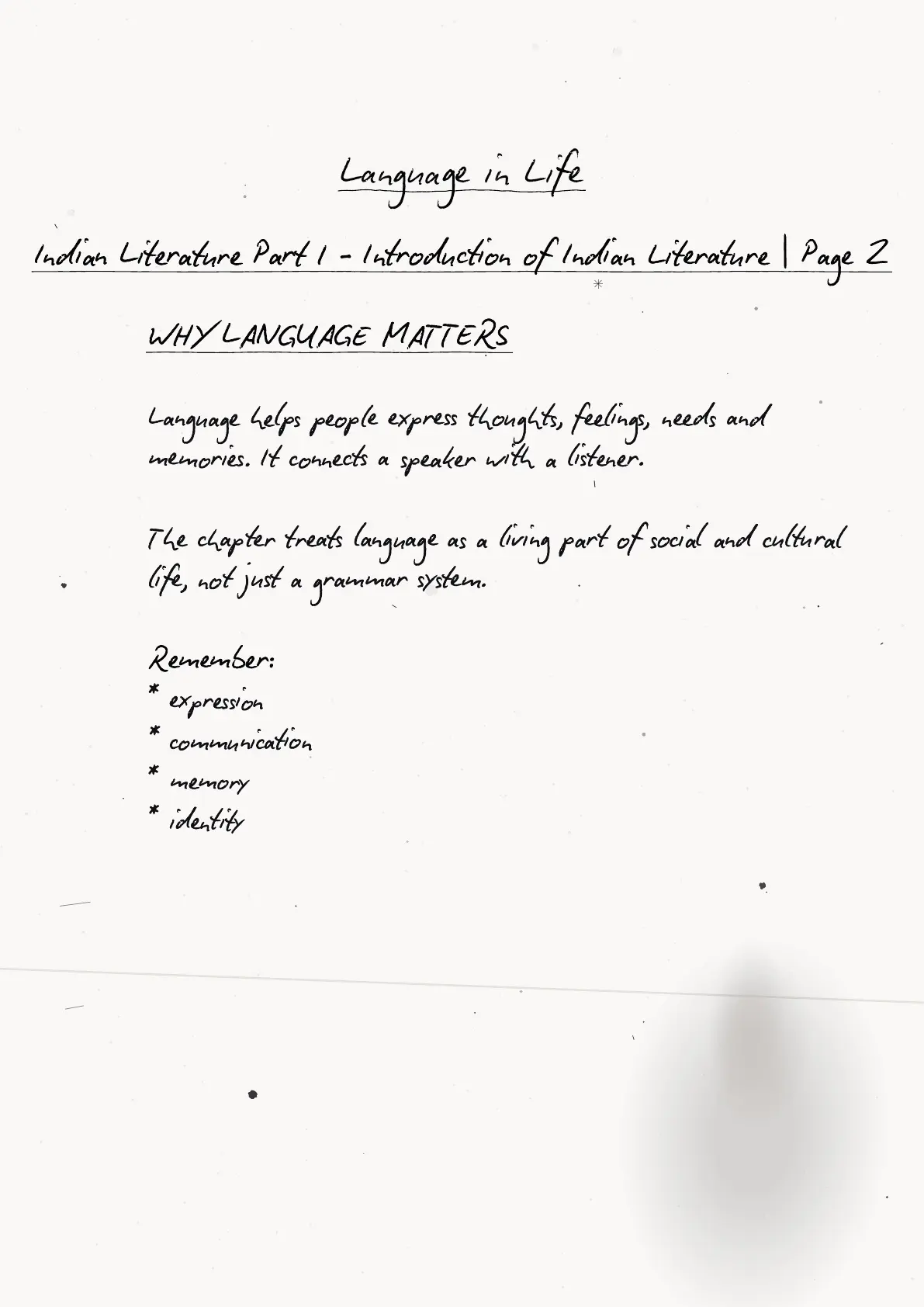
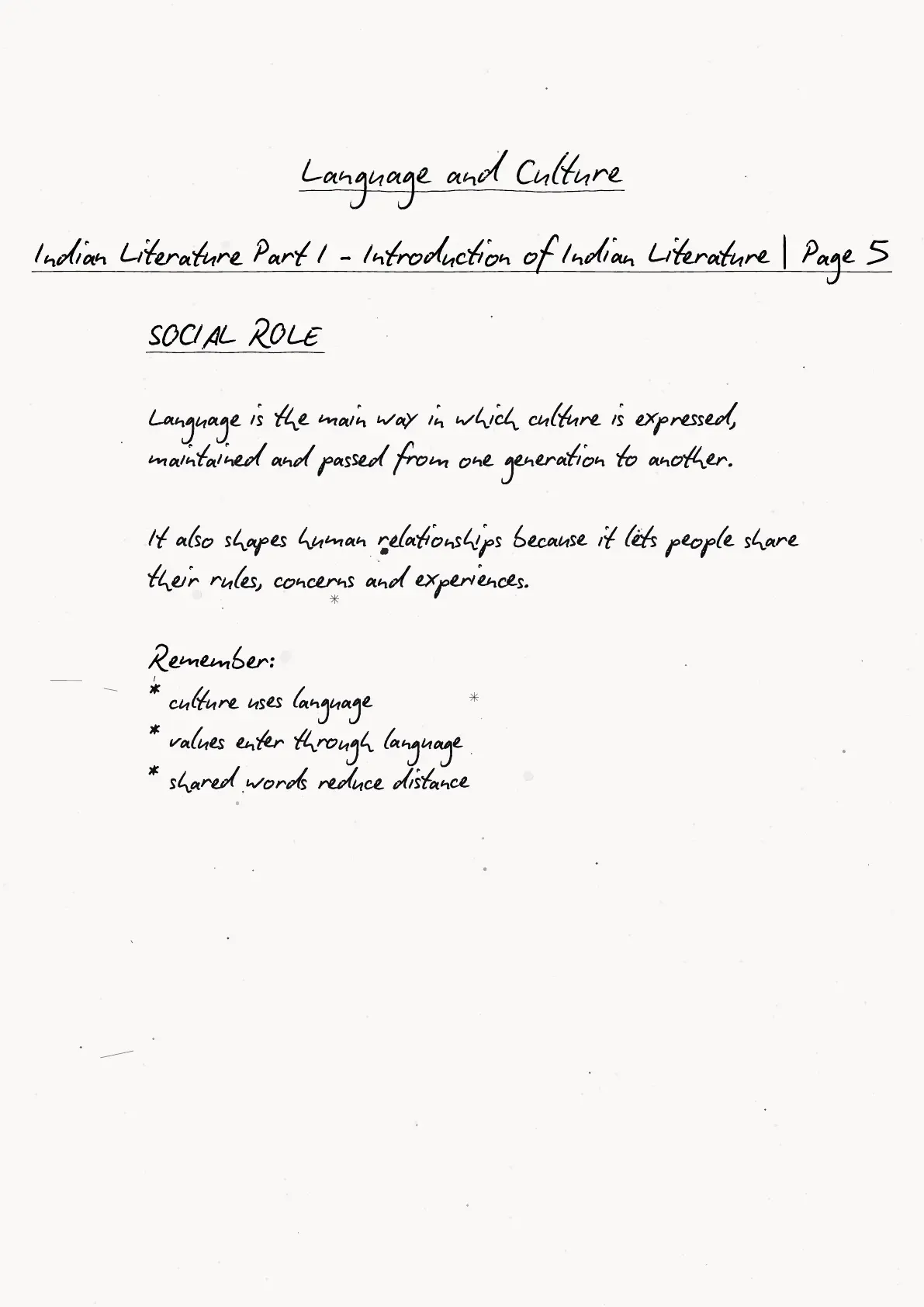
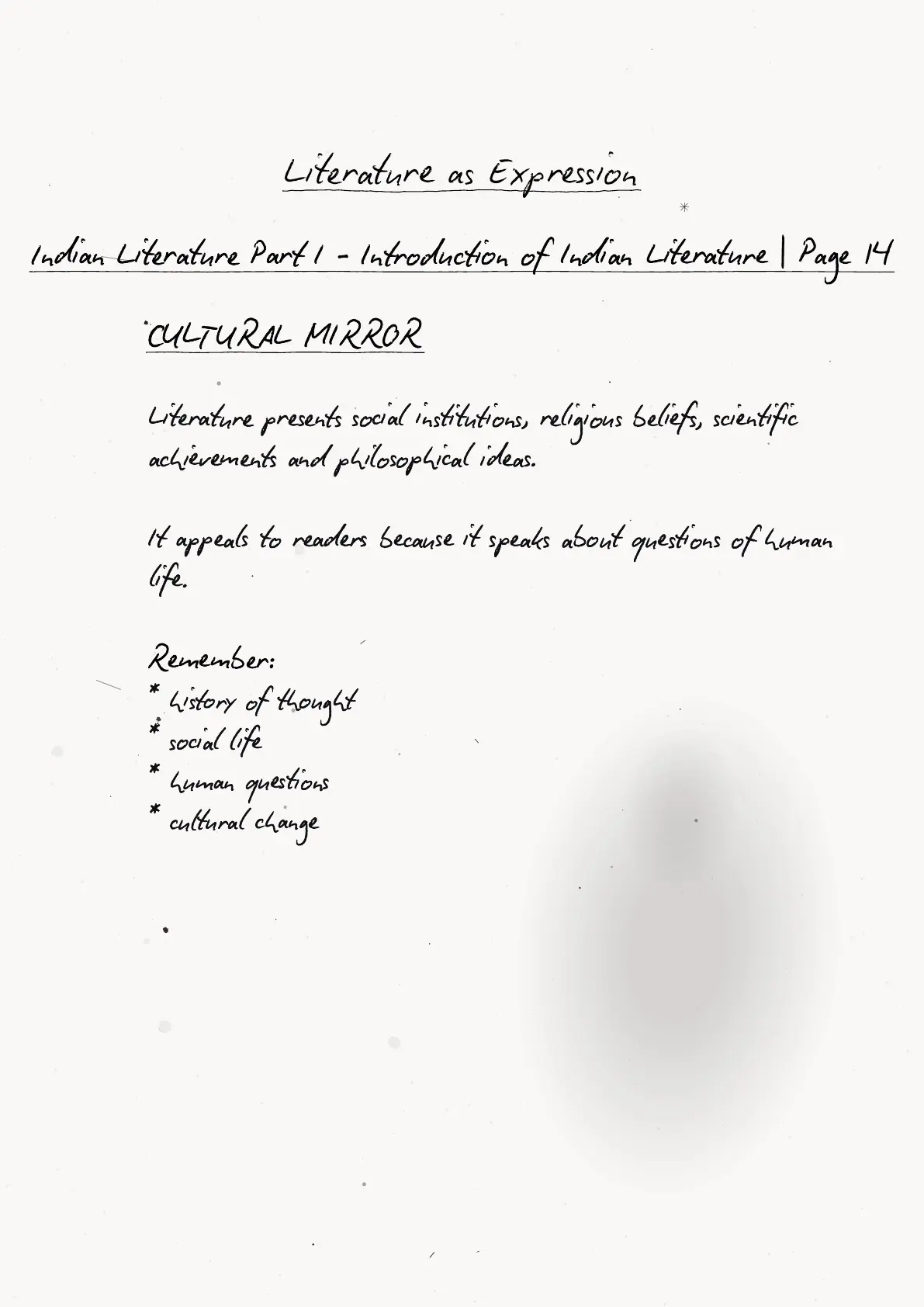
The Indian Literature Part I handwritten notes explain how language, oral tradition and literature carry culture. The local NCERT chapter title is Language and Literature of India, so the notes include language in daily life, co-existence, print culture, language families, ancient literature, epics and fables.
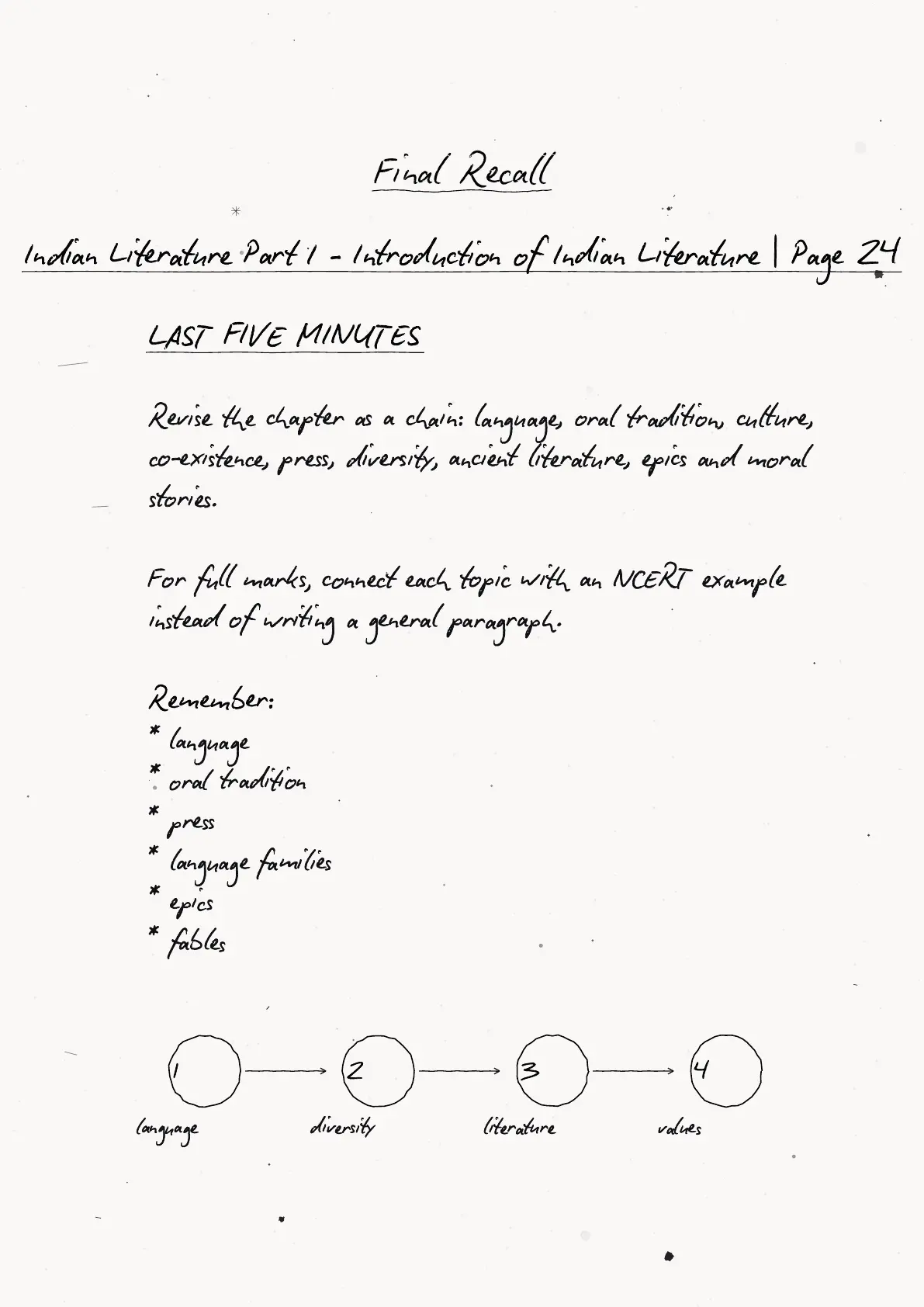
The core revision idea is simple: language preserves human experience, and literature turns that experience into shared memory.
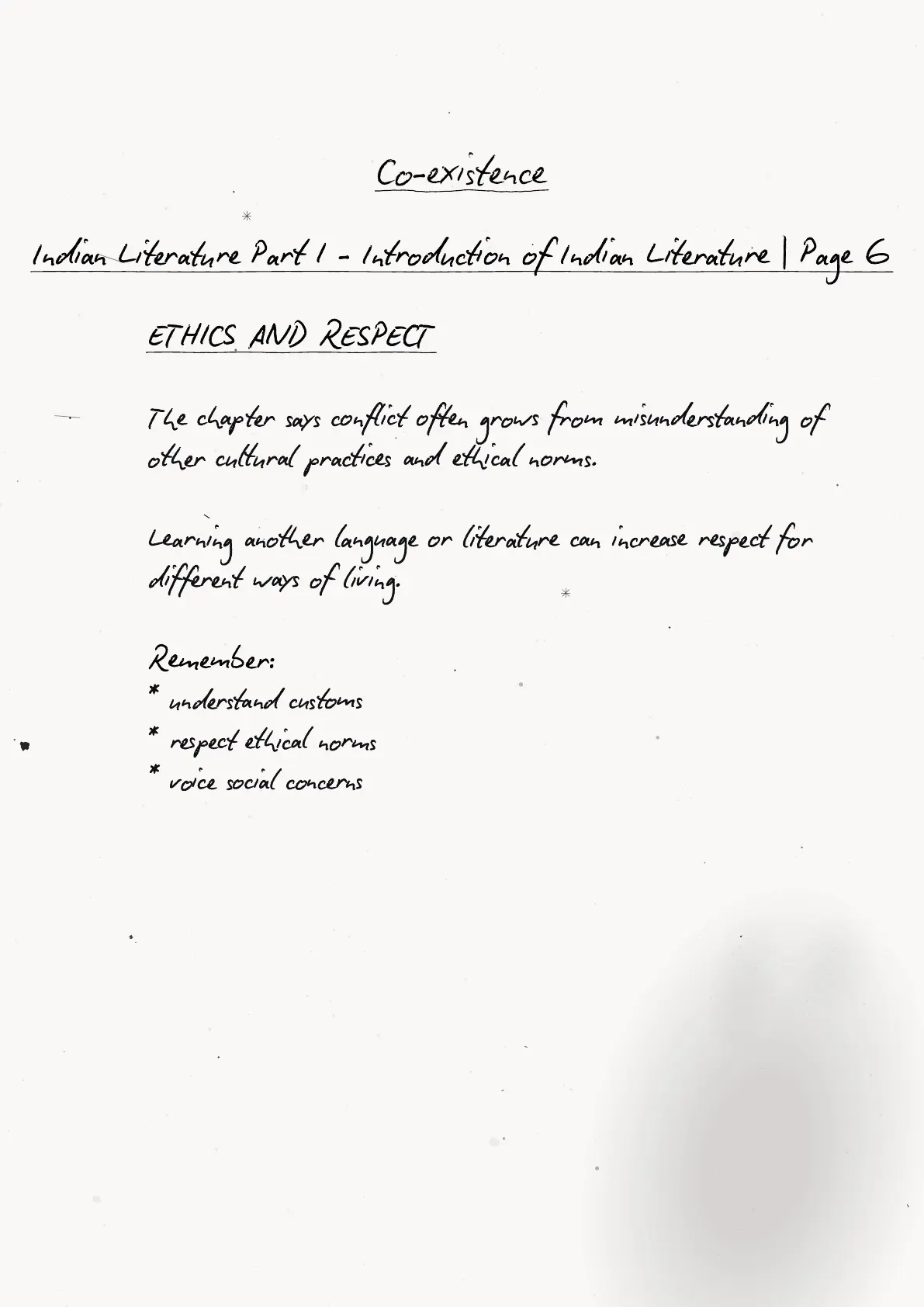
- Language side: expression, communication, culture, social values and co-existence.
- Diversity side: language families, Sanskrit, Prakrit, Pali, Tamil and regional languages.
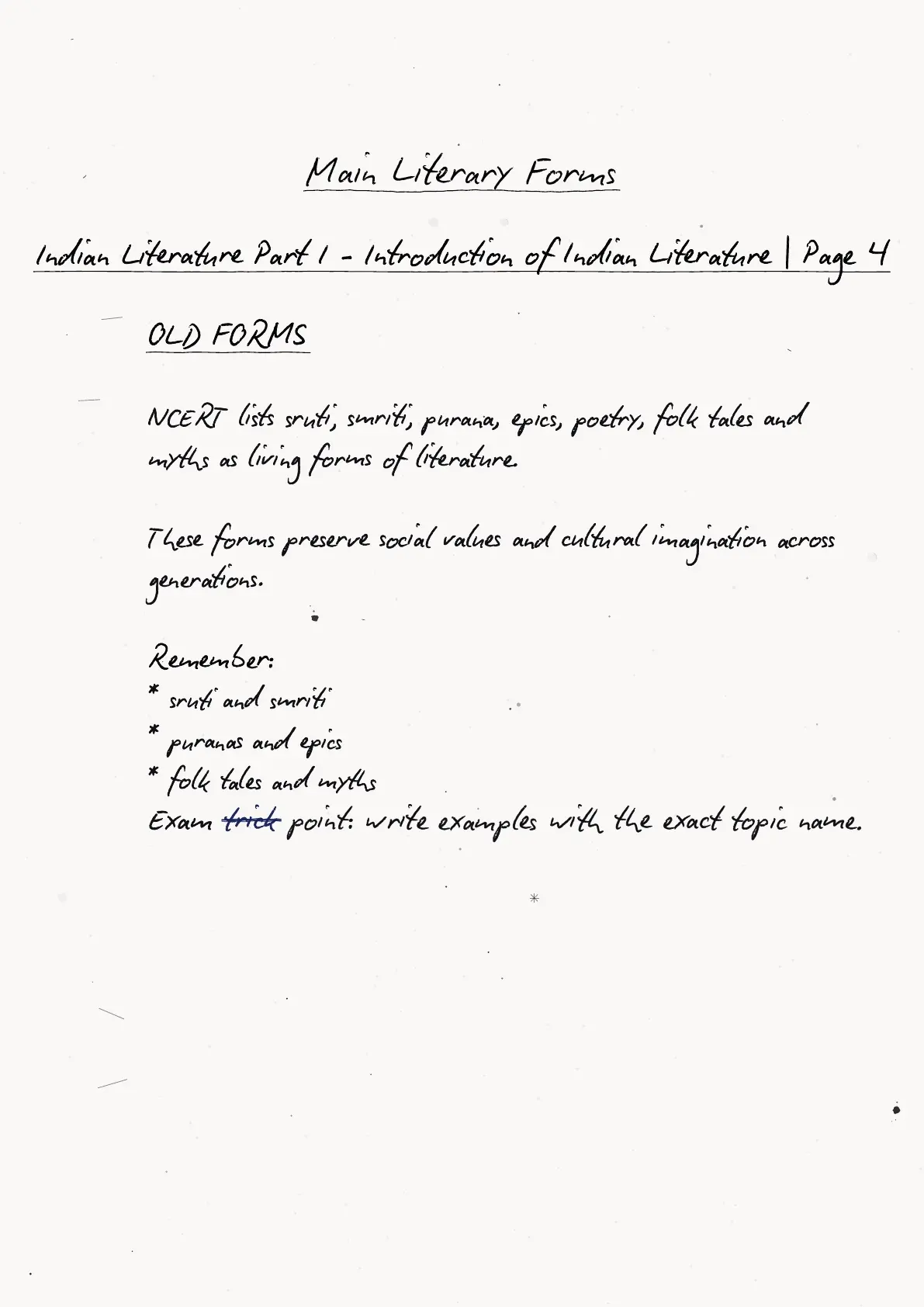
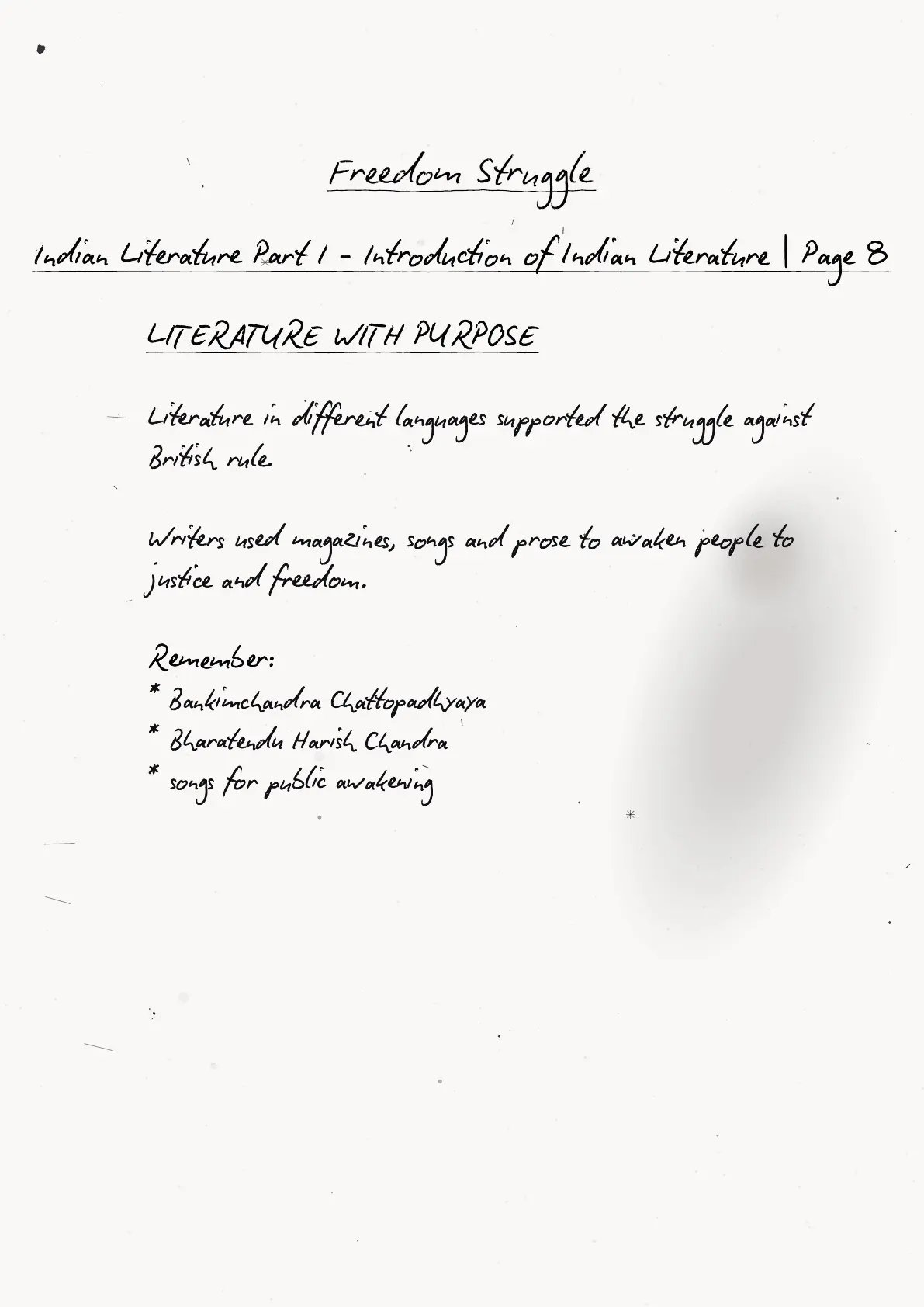
- Literature side: sruti, smriti, epics, poetry, fables, Jataka tales and modern writing.
Language, Oral Traditions and Culture
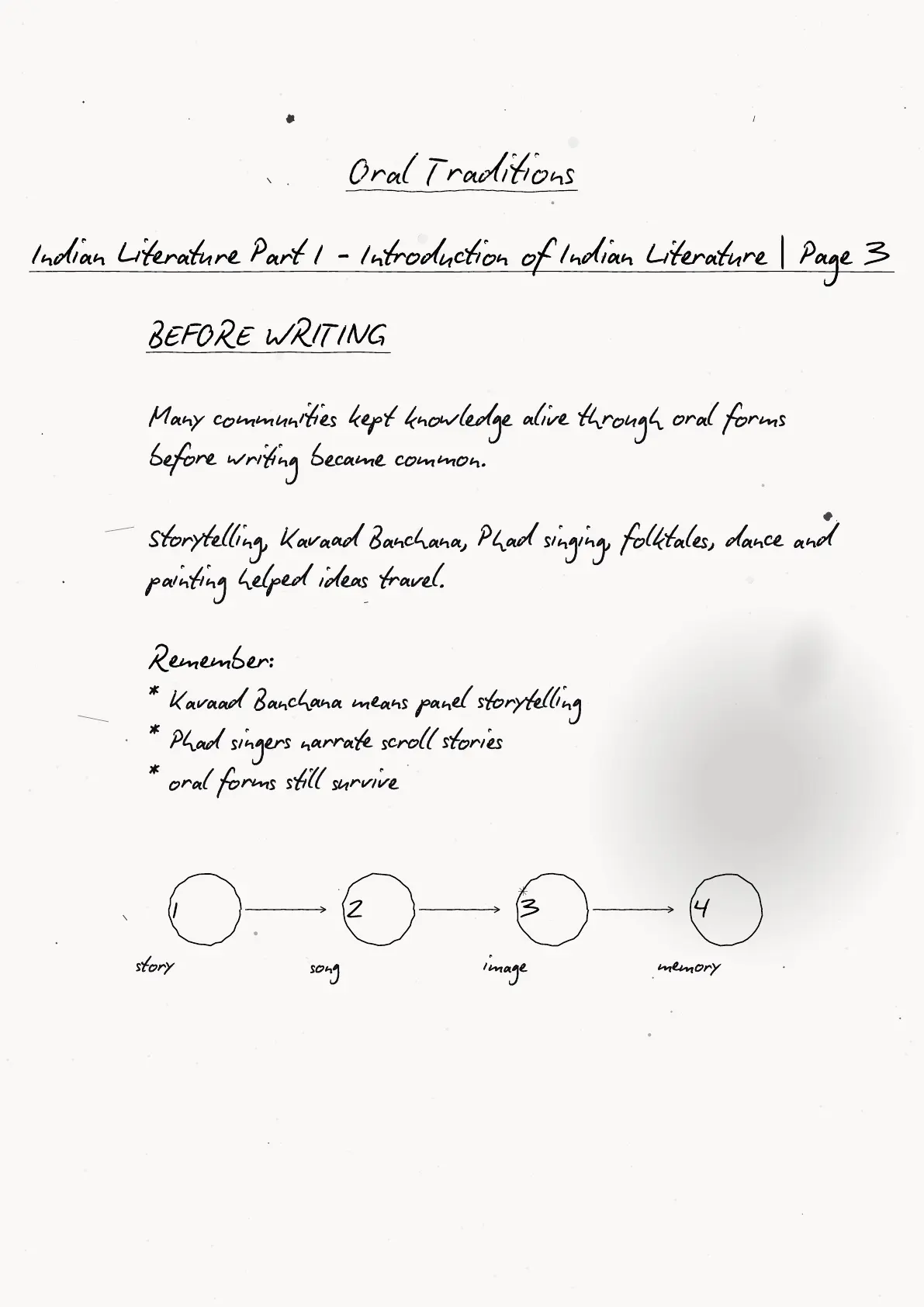
NCERT begins by showing language as a living need. It lets people express thoughts, pass memories and build relationships. Oral traditions such as Kavaad Banchana, Phad singing, folktales, historical narration, dance and painting preserved knowledge before writing became common.
| Topic | NCERT example | Revision point |
|---|---|---|
| Oral tradition | Kavaad Banchana, Phad singing and folktales. | Use for knowledge before writing. |
| Culture | Language expresses values, ethics and social memory. | Connect language with co-existence. |
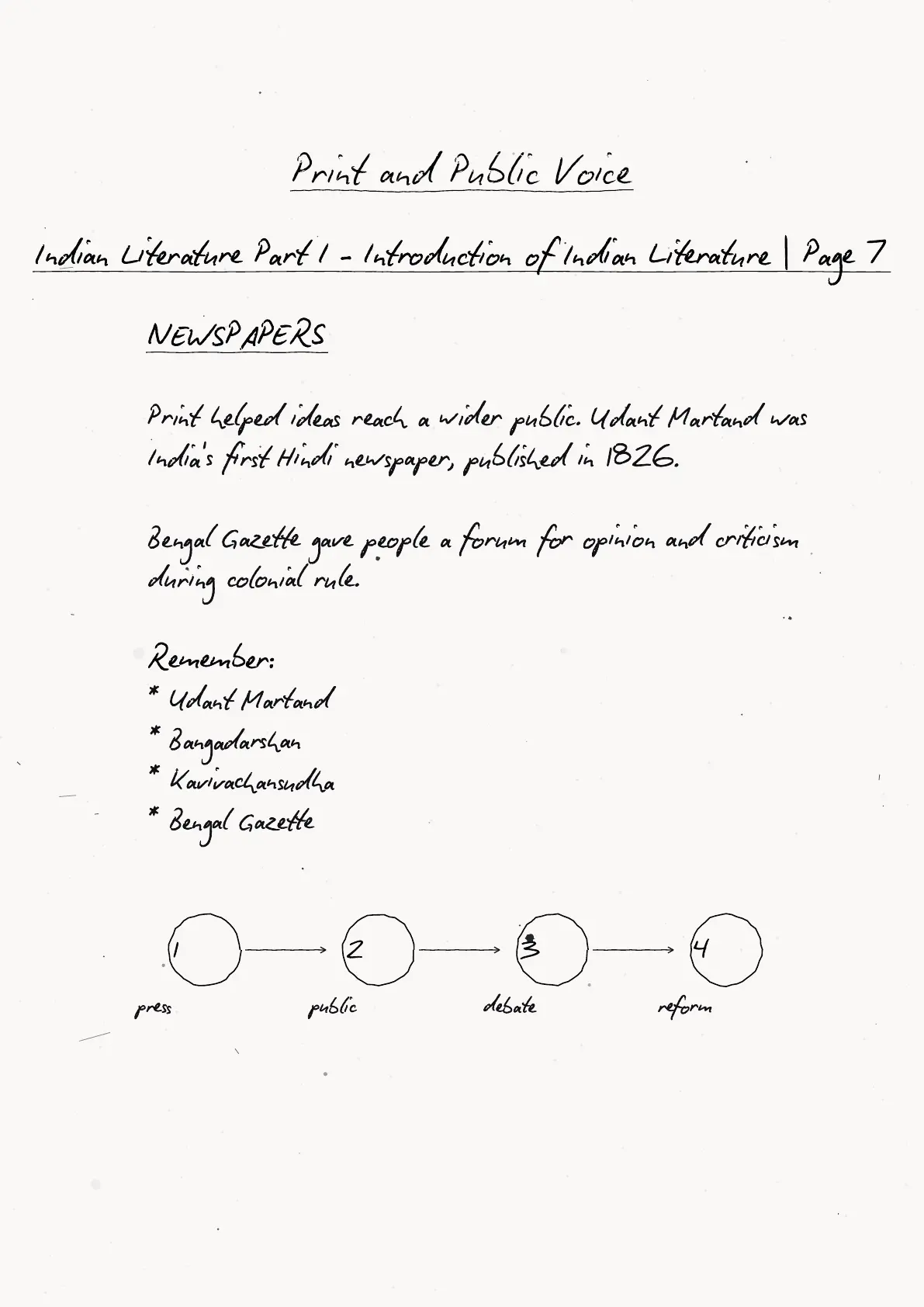
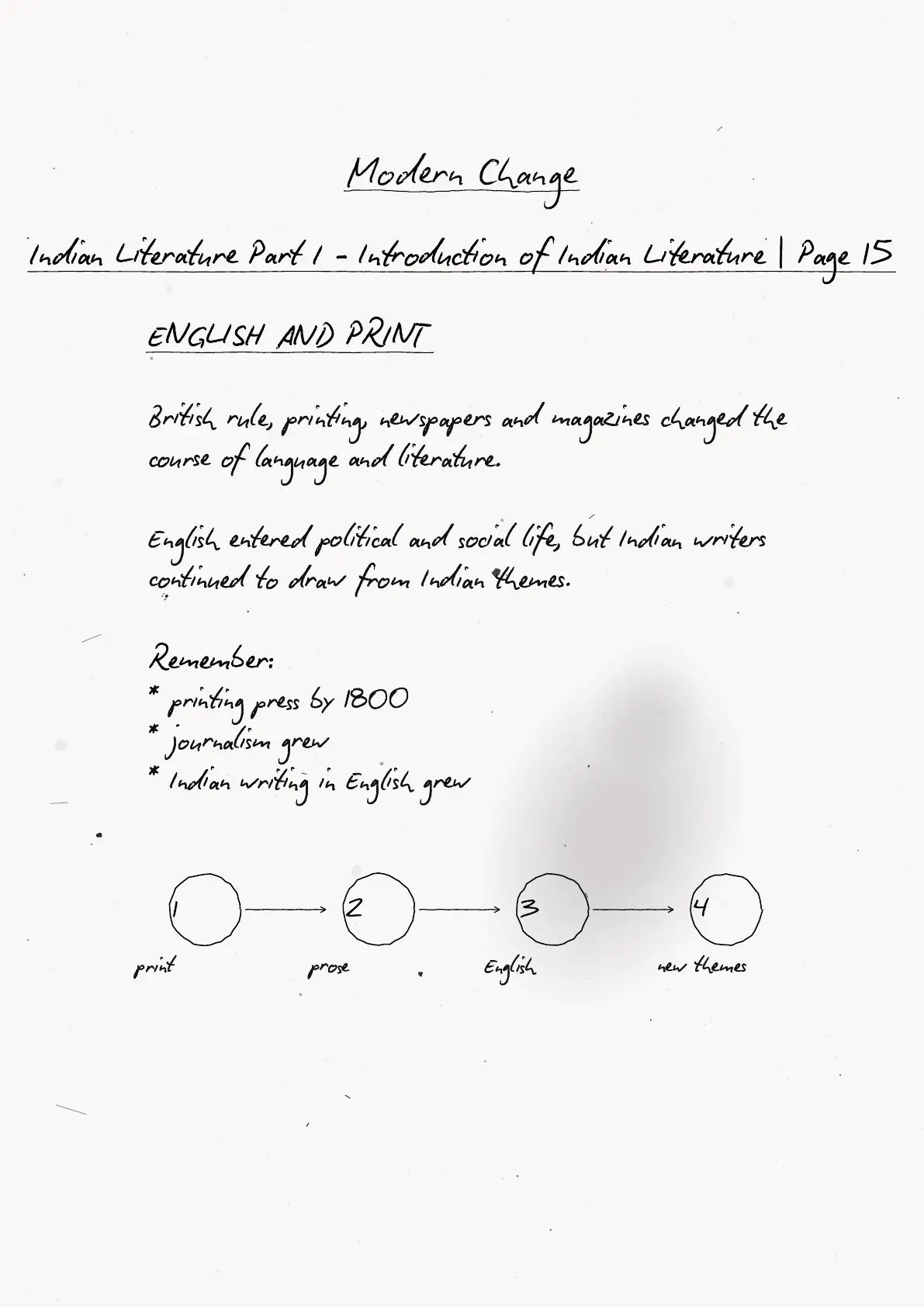
| Print culture | Udant Martand, Bangadarshan, Kavivachansudha and Bengal Gazette. | Use for public debate and awakening. |
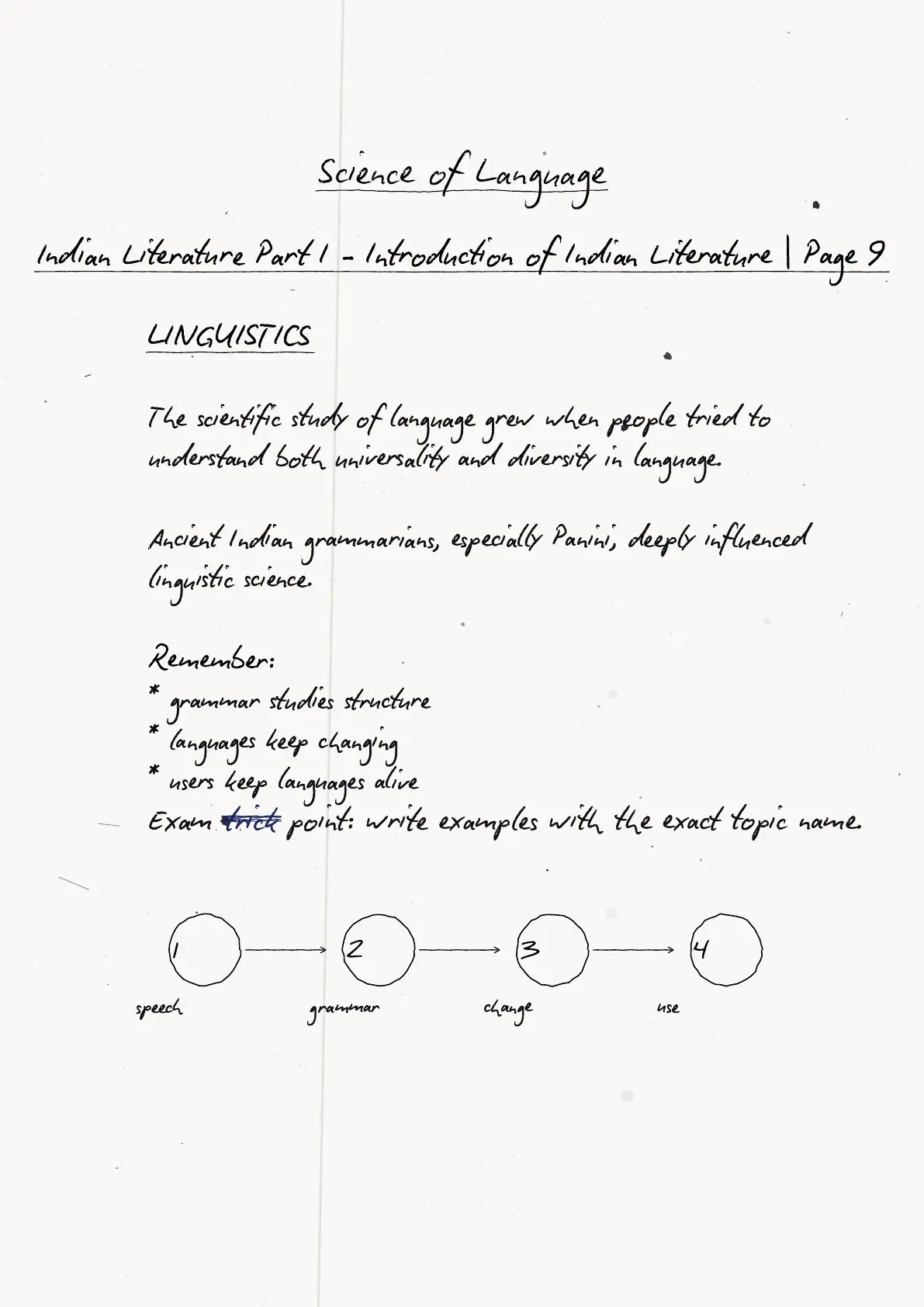
| Linguistics | Panini and Sanskrit grammar. | Use for science of language. |
Class 11 KTPI Indian Literature Video
Source: LTX IAS Classes on YouTube
Language Diversity and Literary Forms
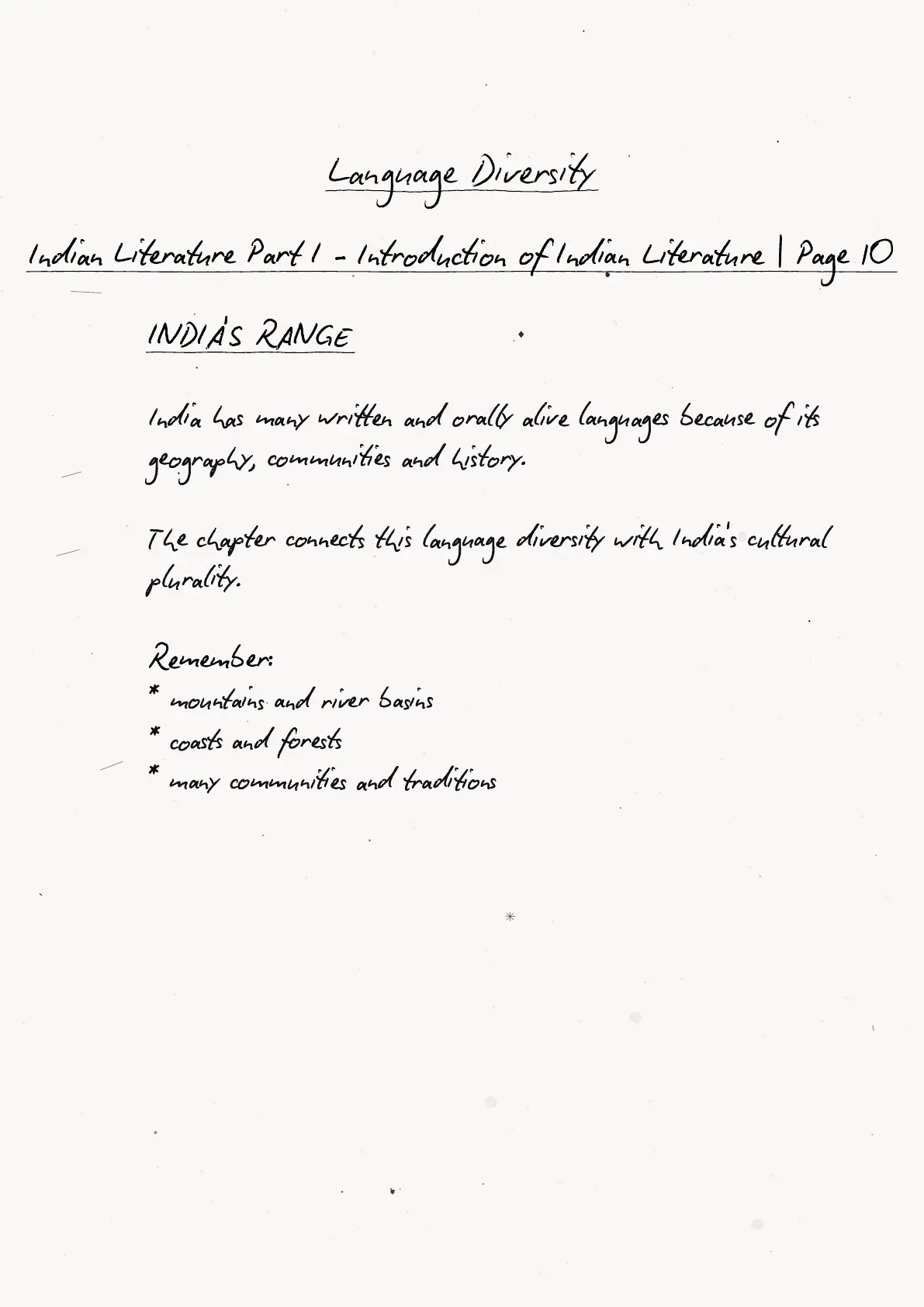
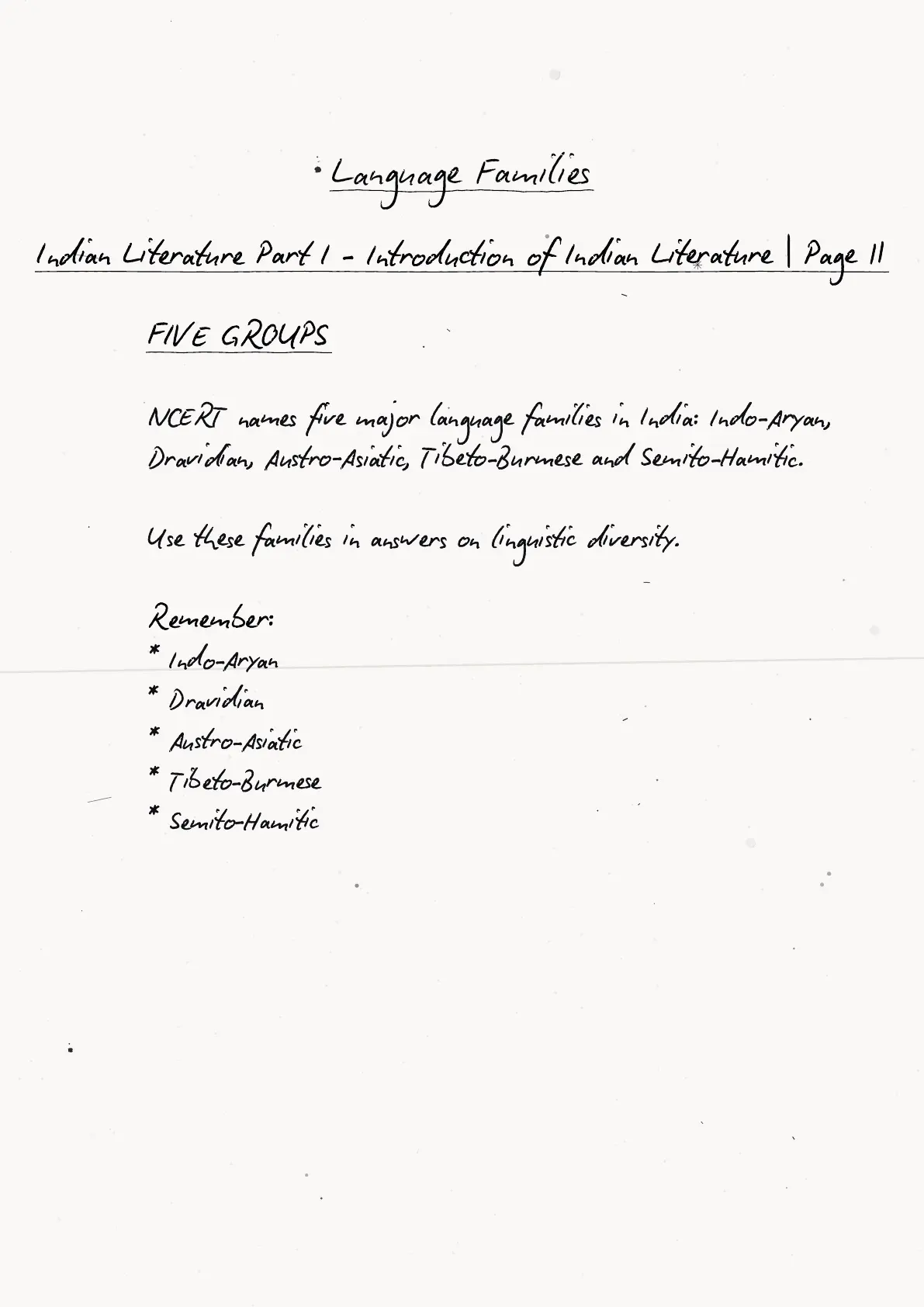
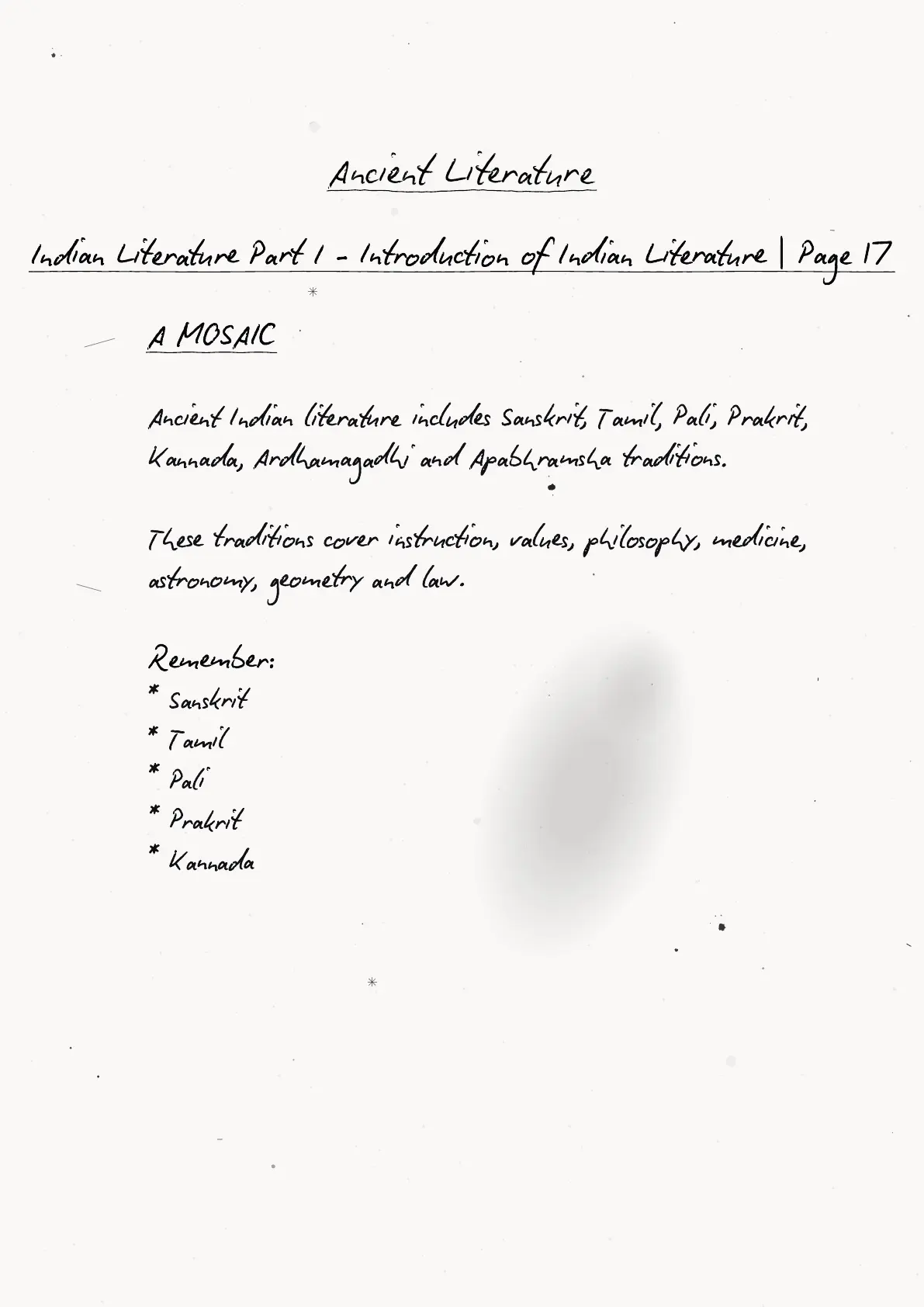
India's language diversity is one of the chapter's key scoring areas. NCERT names five major language families: Indo-Aryan, Dravidian, Austro-Asiatic, Tibeto-Burmese and Semito-Hamitic. The chapter also explains how Sanskrit, Prakrit, Pali, Apabhramsha and Tamil shaped Indian literary history.
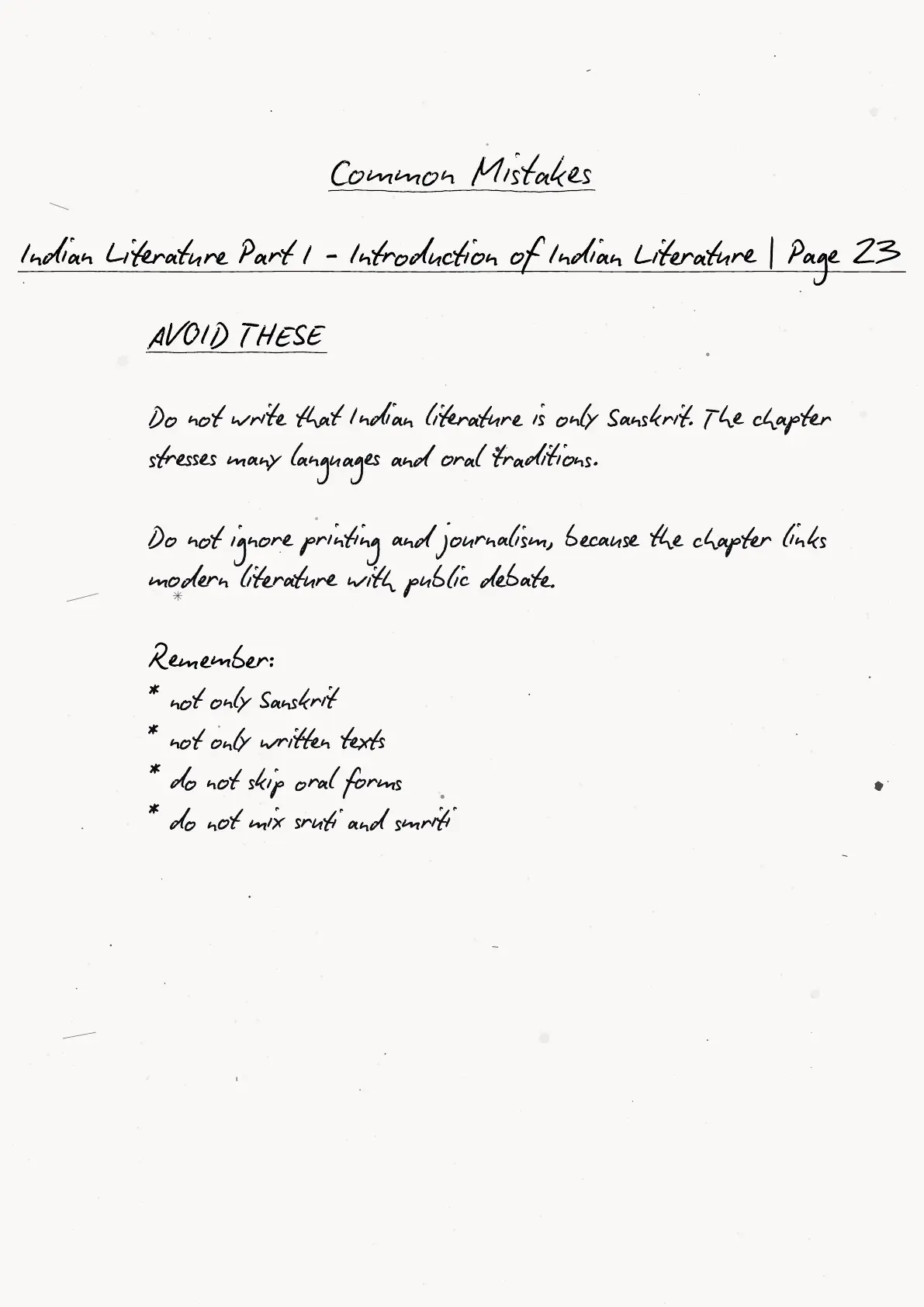
Do not write only about Sanskrit. The chapter stresses many languages, oral forms and regional traditions.
| Language area | What to remember | Answer use |
|---|---|---|
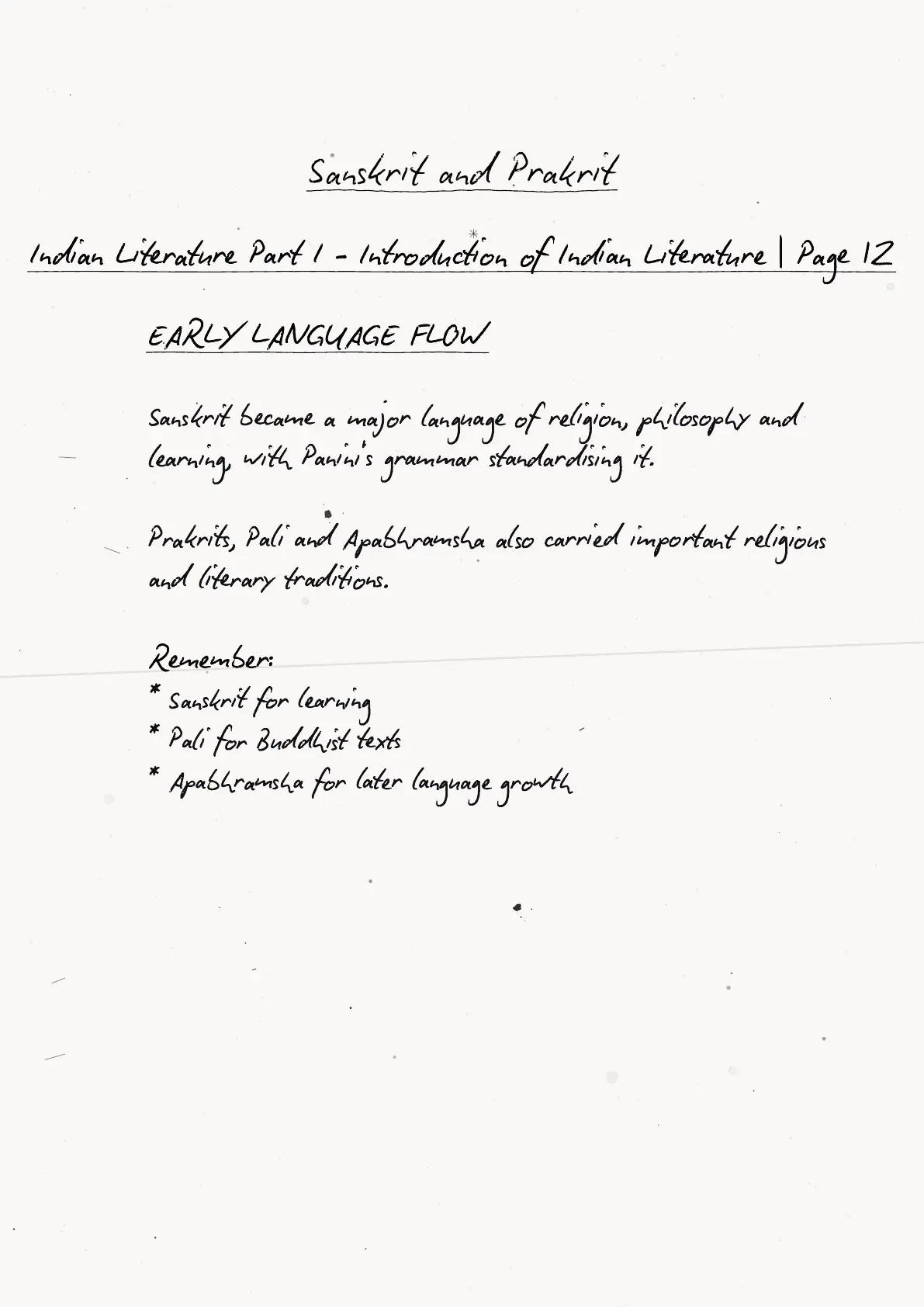
| Sanskrit | Language of learning, religion and philosophy with Panini grammar. | Use for standardisation and grammar. |
| Prakrit and Pali | Used in drama, inscriptions, Buddhist texts and Jataka tales. | Use for non-Sanskrit traditions. |
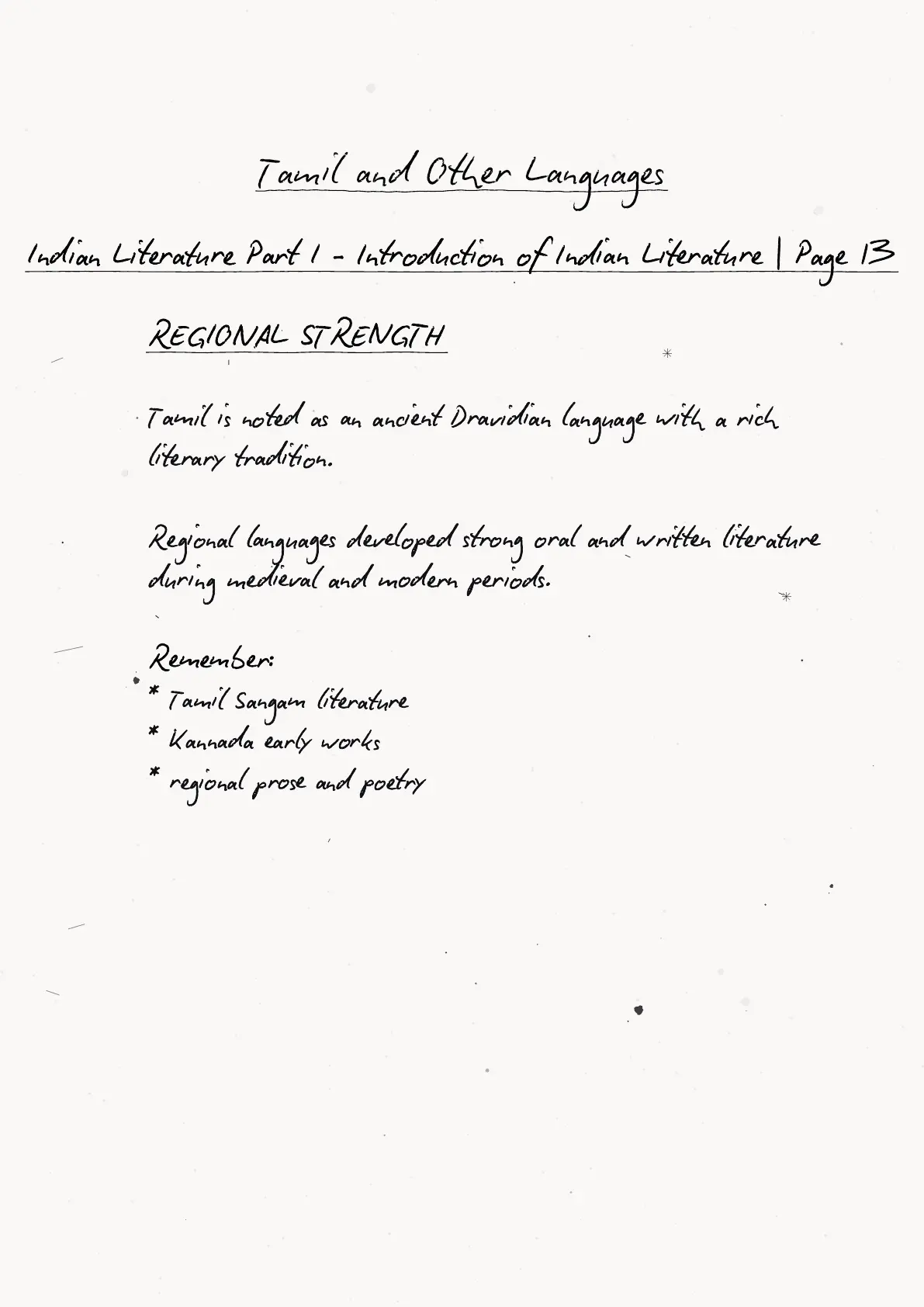
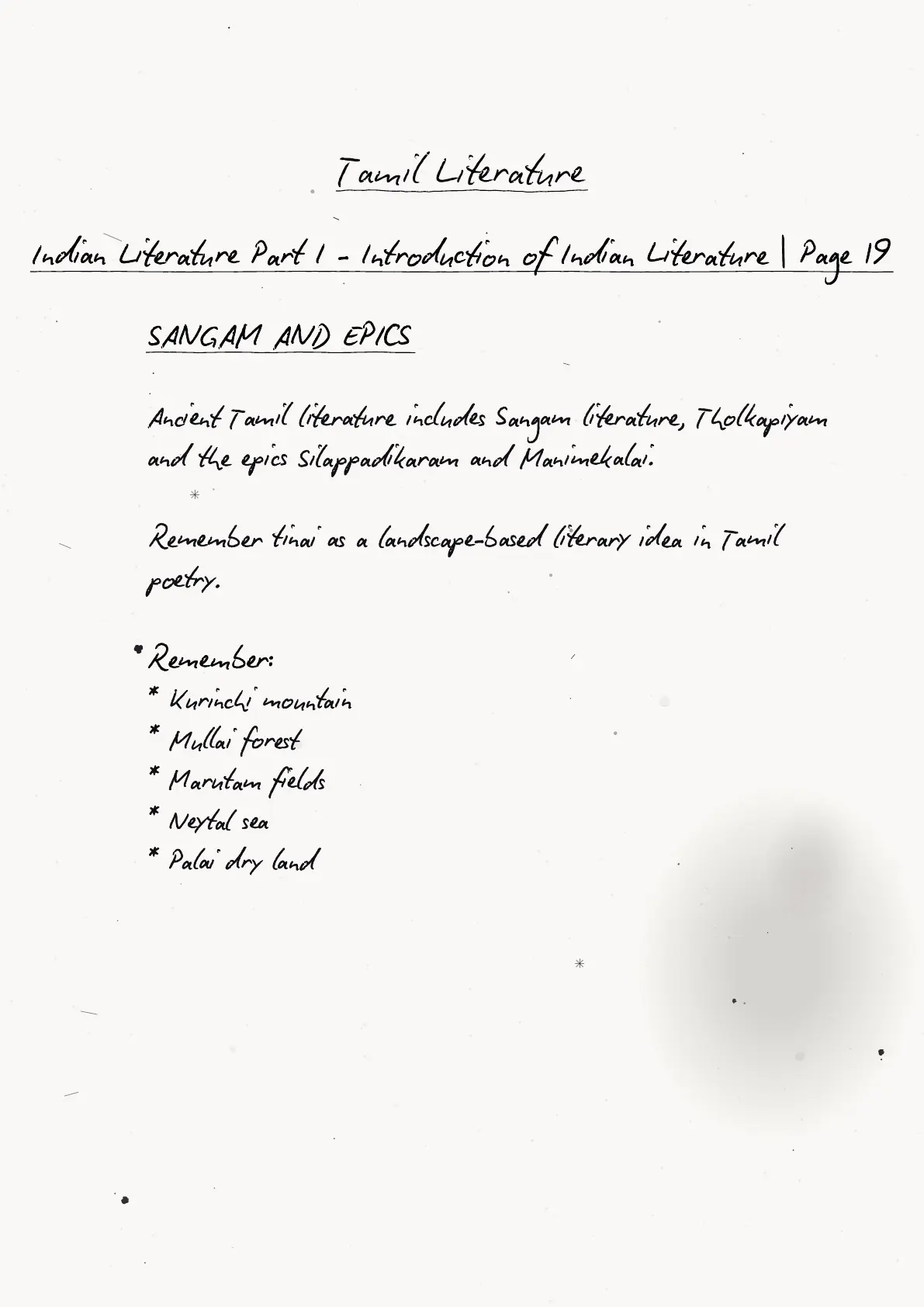
| Tamil | Sangam literature, Tholkapiyam, tinai, Silappadikaram and Manimekalai. | Use for ancient Dravidian literature. |
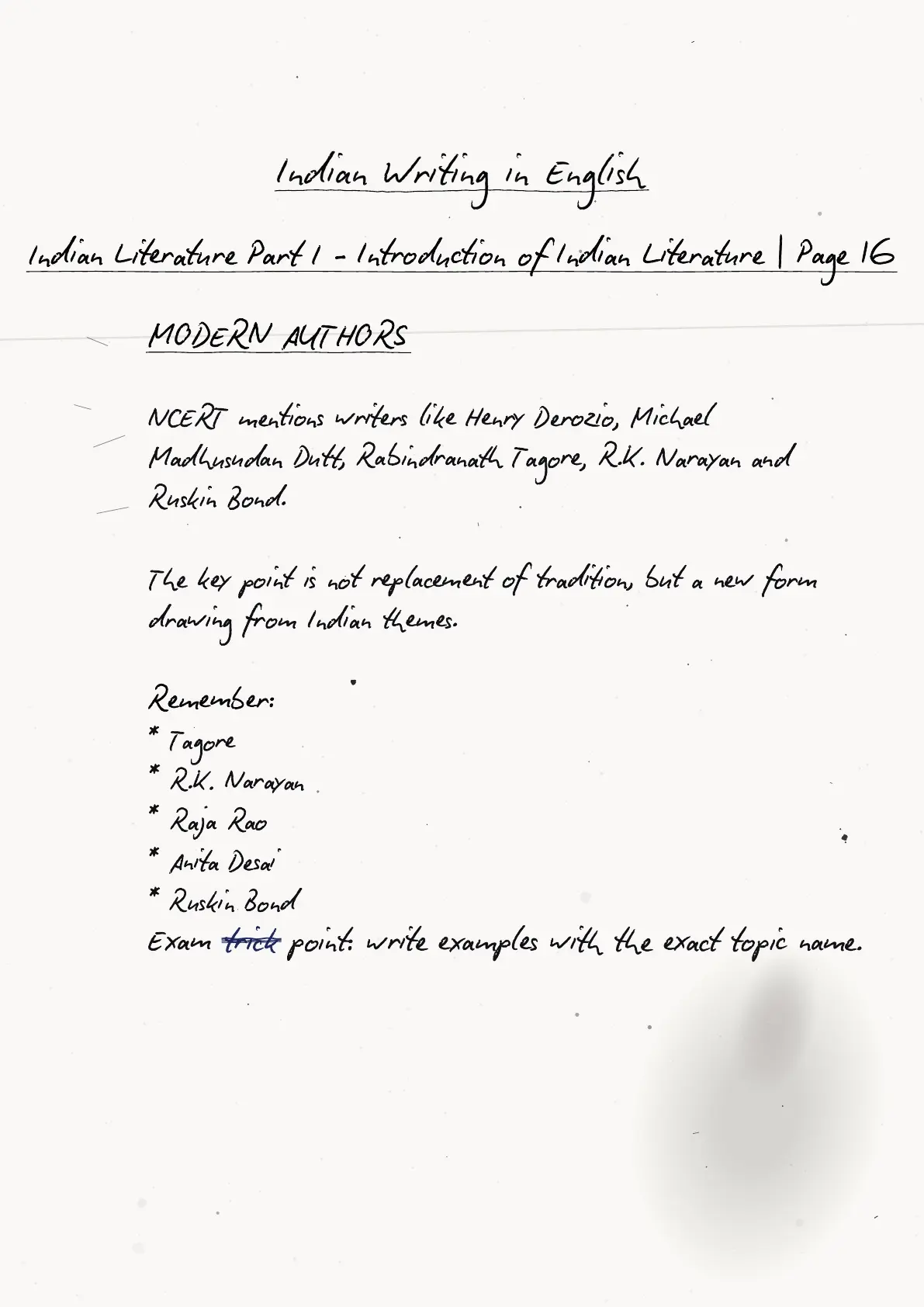
| Modern languages | Printing and journalism enriched prose and public debate. | Use for modern change. |
Vedic, Tamil, Epic and Fable Traditions
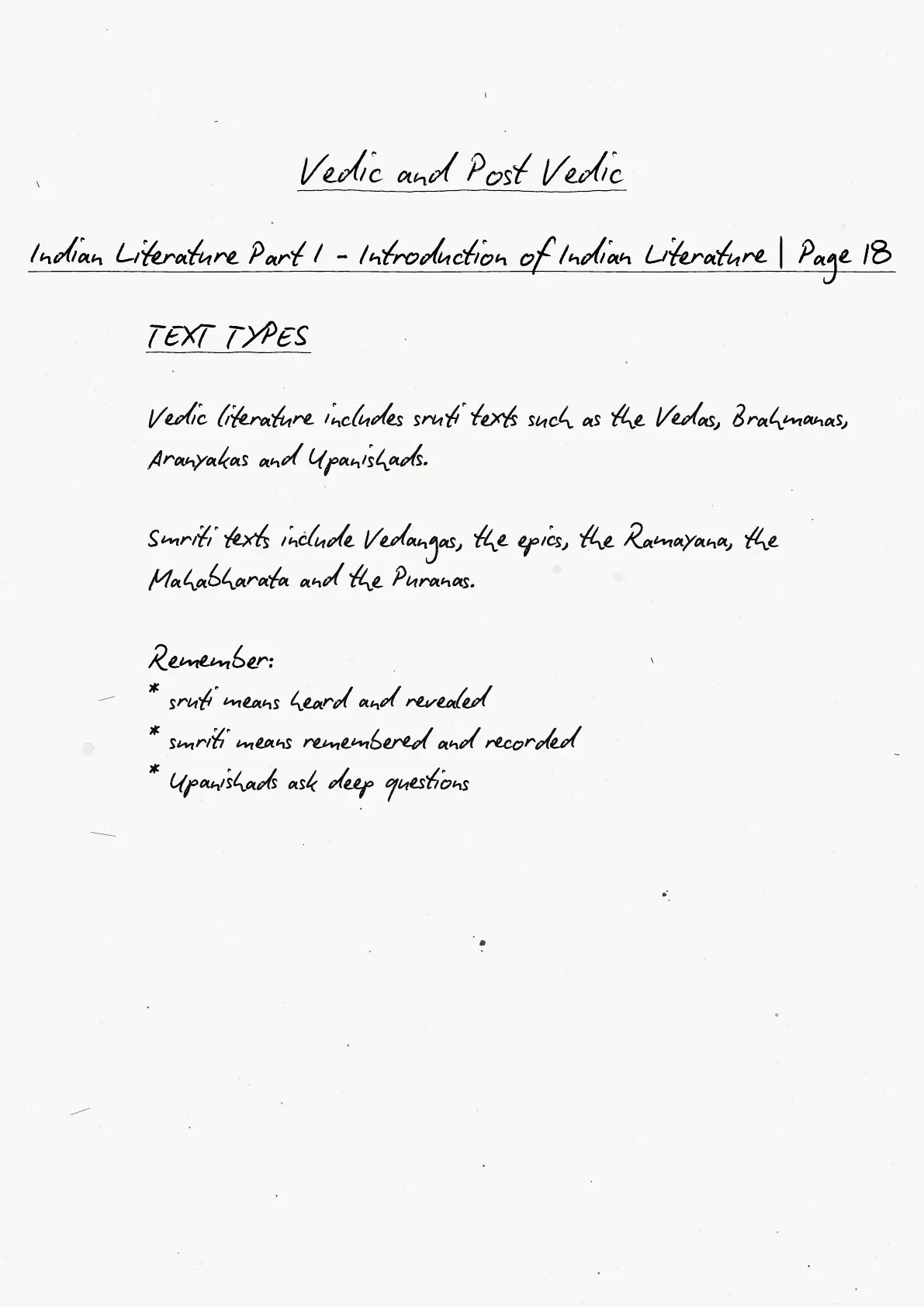
The ancient literature section moves through Vedic and post-Vedic forms, Tamil literature, epics, Panchatantra and Jataka tales. Sruti literature includes the Vedas, Brahmanas, Aranyakas and Upanishads. Smriti literature includes Vedangas, the Ramayana, the Mahabharata and the Puranas.
- Vedic age: sruti and smriti texts, four Vedas and Upanishadic enquiry.
- Post Vedic age: Sanskrit drama, poetry and prose through writers such as Bhasa and Kalidasa.
- Tamil literature: Sangam literature, tinai landscapes and two major Tamil epics.
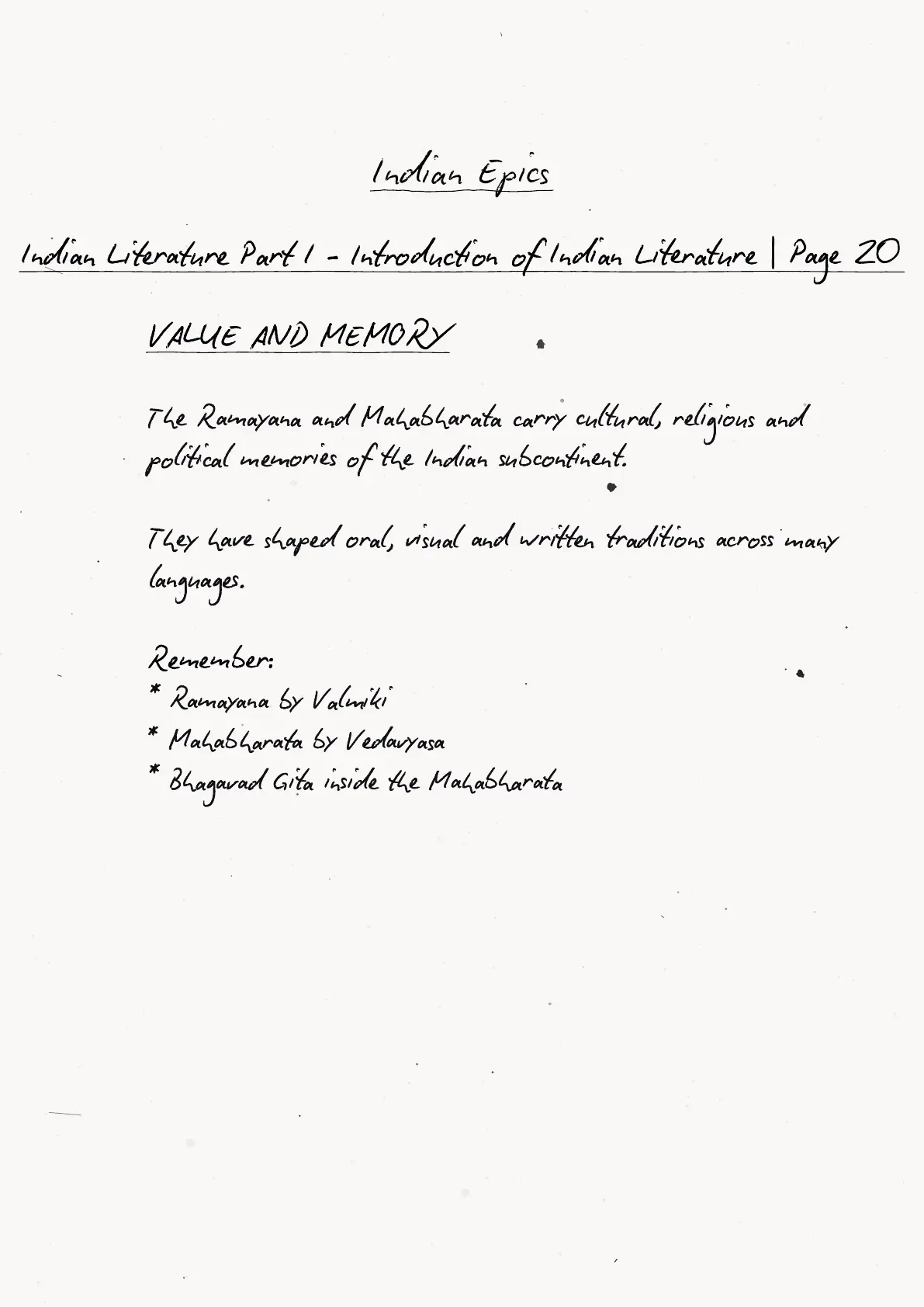
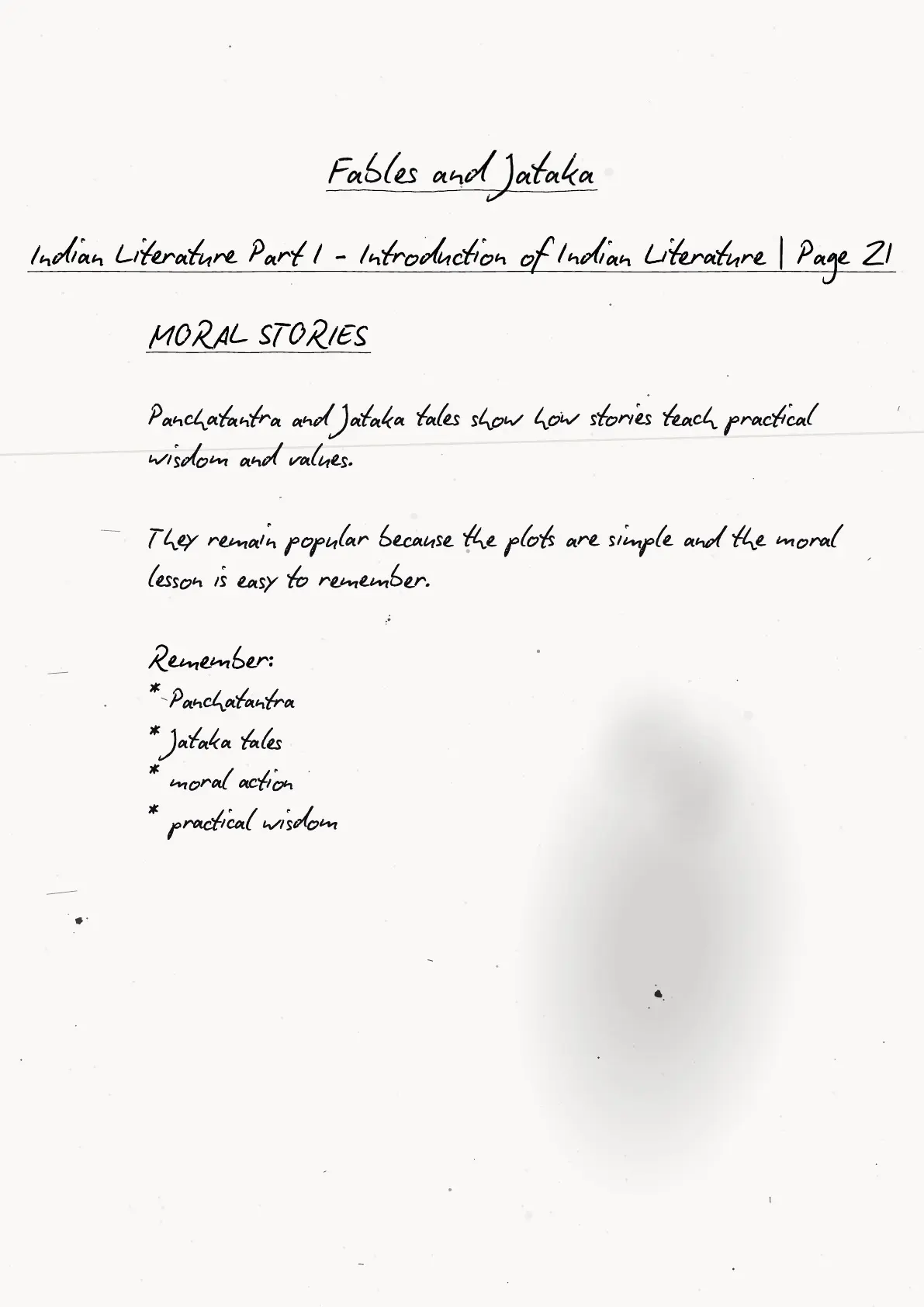
- Epics and fables: Ramayana, Mahabharata, Panchatantra and Jataka tales as value-based literature.
How to Use the Indian Literature Part I Handwritten Notes PDF
Start with the first pages for the chapter map. Then revise language in human life, oral traditions, print culture, language families, ancient literature, Tamil literature, epics and fables. The final pages give answer frames and common mistakes.
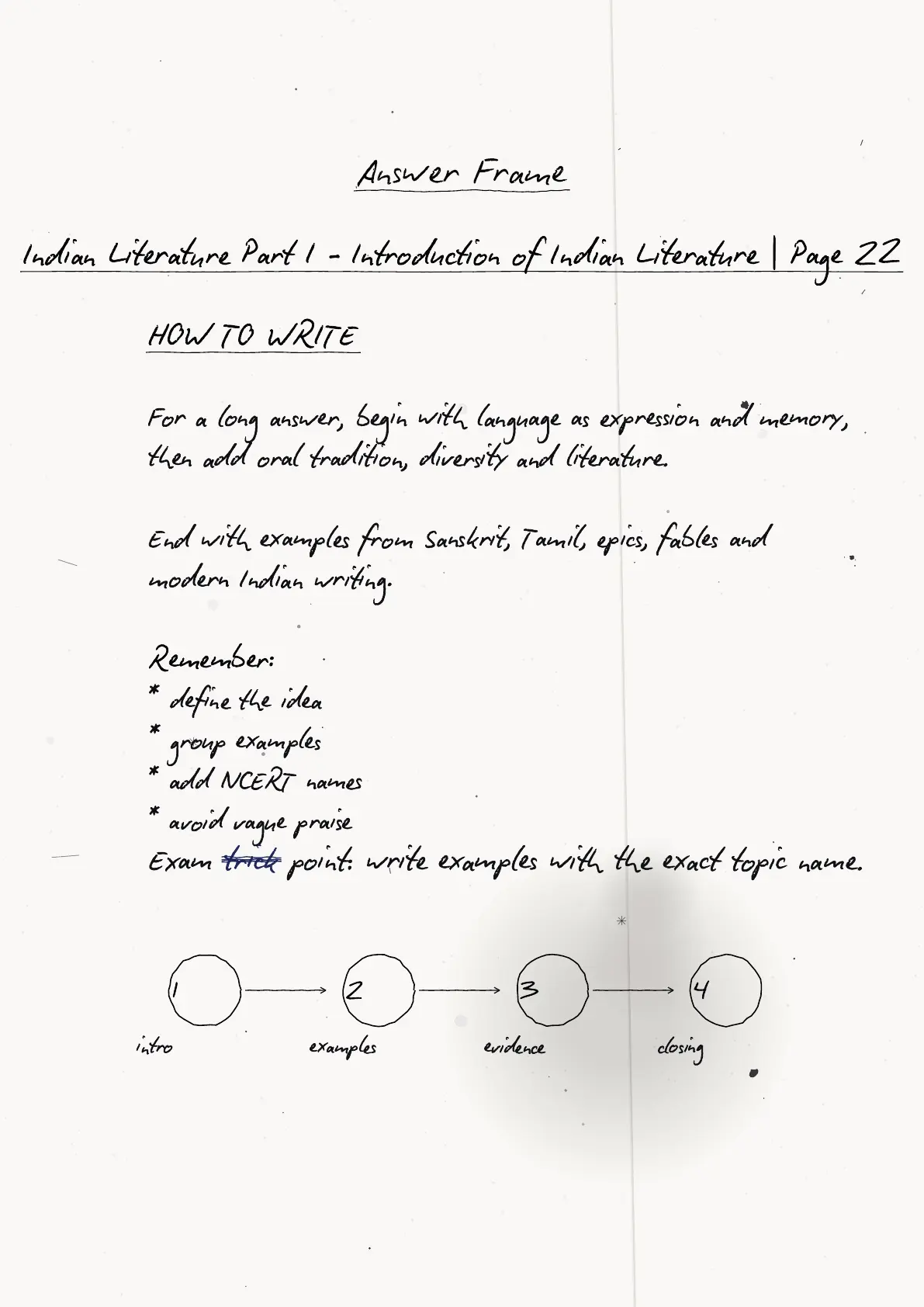
For long answers, write in groups instead of making a random list. A good structure is language and culture, language diversity, ancient literature, and modern public voice. Add one NCERT example under each group.
Related Class 11 KTPI Resources
| Resource | Use it for | Link |
|---|---|---|
| NCERT Solutions | Exercise answers for the local NCERT chapter. | Class 11 KTPI Language and Literature Solutions |
| NCERT Book PDF | Original textbook reading and source examples. | Class 11 KTPI Language and Literature Book PDF |
| Notes | Typed revision notes for theory-heavy study. | Class 11 KTPI Indian Literature Part I Notes |
| Handwritten Notes | Quick one-shot revision before tests. | Class 11 KTPI Indian Literature Part I Handwritten Notes |
All Class 11 KTPI Handwritten Notes
| Chapter | Title | Handwritten Notes |
|---|---|---|
| Chapter 1 | Astronomy in India | Open handwritten notes |
| Chapter 2 | Chemistry in India | Open handwritten notes |
| Chapter 3 | Indian Literature Part I Introduction of Indian Literature | Open handwritten notes |
| Chapter 4 | Indian Philosophical Systems | Open handwritten notes |
| Chapter 5 | Indian Traditional Knowledge on Environmental Conservation | Open handwritten notes |
| Chapter 6 | Life Sciences 1 Ayurveda for Life, Health and Well-Being | Open handwritten notes |
| Chapter 7 | Life Sciences 2 The Historical Evolution of Medical Tradition in Ancient India | Open handwritten notes |
| Chapter 8 | Mathematics in India | Open handwritten notes |
| Chapter 9 | Theatre and Drama in India | Open handwritten notes |
Class 11 KTPI Indian Literature Part I Handwritten Notes FAQs
Ques. What is covered in Class 11 KTPI Indian Literature Part I handwritten notes?
Ans. The PDF covers language in human life, oral traditions, culture, print, language families, ancient literature, epics, Panchatantra and Jataka tales.
Ques. Which NCERT source chapter supports these notes?
Ans. These notes are based on the local NCERT KTPI chapter Language and Literature of India, while keeping the schedule title Indian Literature Part I.
Ques. Which examples are important for revision?
Ans. Revise Kavaad Banchana, Phad singing, Panini, Udant Martand, five language families, Sangam literature, Ramayana, Mahabharata, Panchatantra and Jataka tales.
Ques. How should students write long answers from this chapter?
Ans. Group the answer into language and culture, language diversity, ancient literature and modern public voice, then add one NCERT example under each group.



Comments