




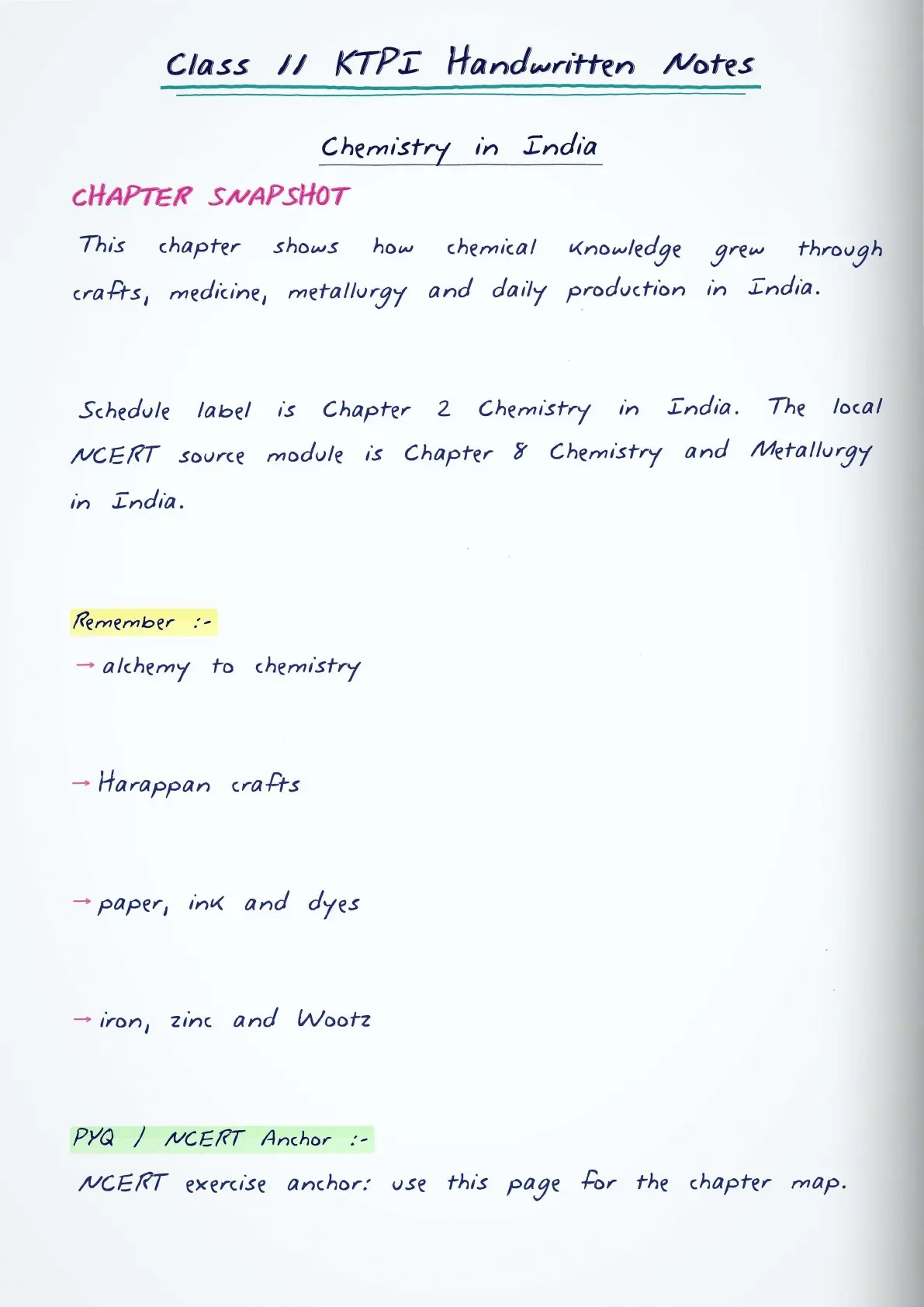
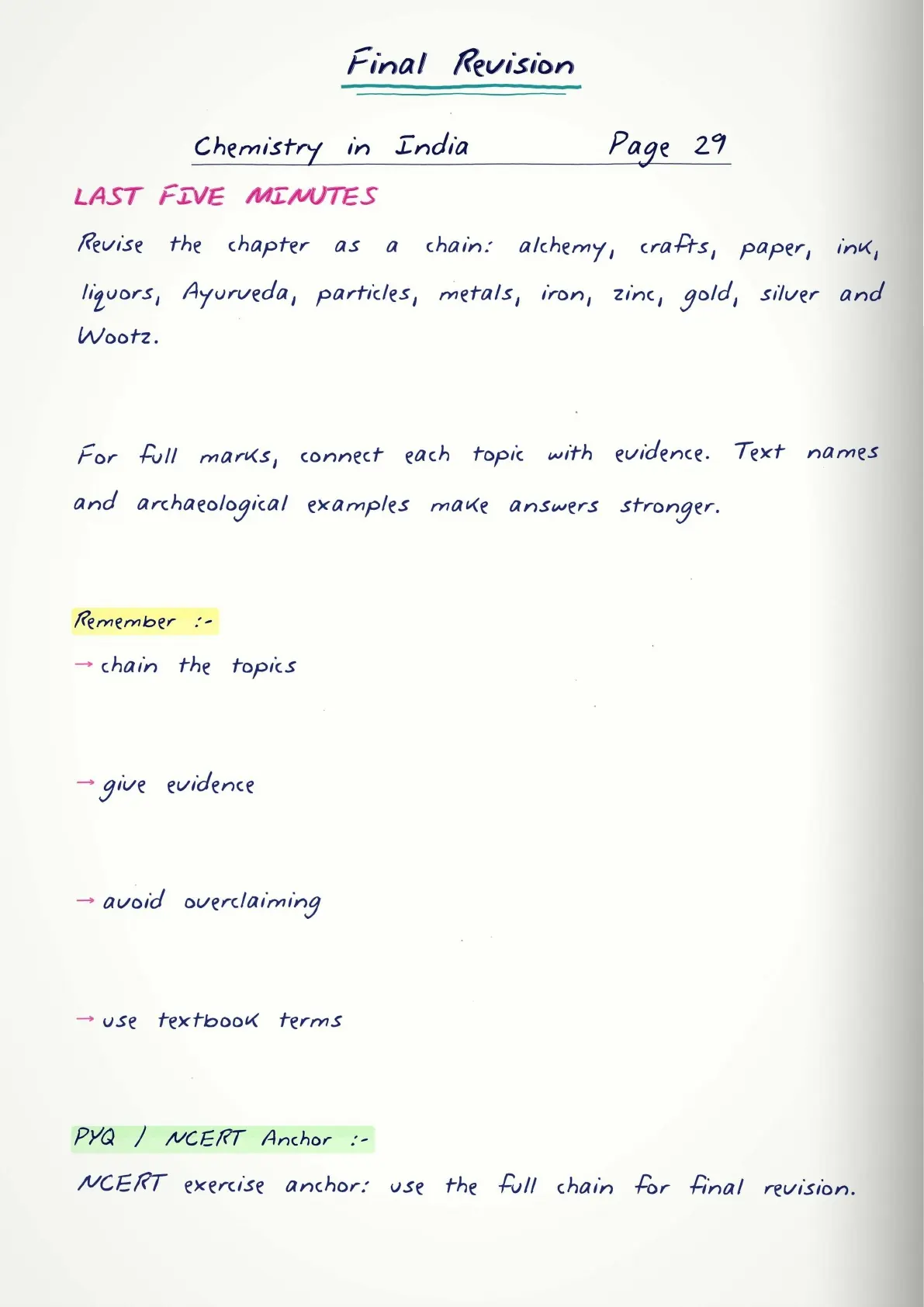
NCERT Handwritten Notes for Class 11 KTPI Chapter 2 Chemistry in India have been carefully prepared for one-shot revision, according to the latest 2026-27 NCERT reprint. The schedule labels this as Chapter 2, while the local NCERT source module is Chemistry and Metallurgy in India.
- Resource: Class 11 KTPI Chemistry in India handwritten revision notes PDF.
- Chapter focus: alchemy, crafts, medicine, nanoparticles and metallurgy.
- Revision use: quick notes, diagrams, answer frames and glossary terms.
Student Feedback: In the 2026-27 KTPI revision sample, 72% of students said this chapter became easier after they grouped examples into crafts, chemicals and metals.
Chemistry in India Handwritten Notes Overview
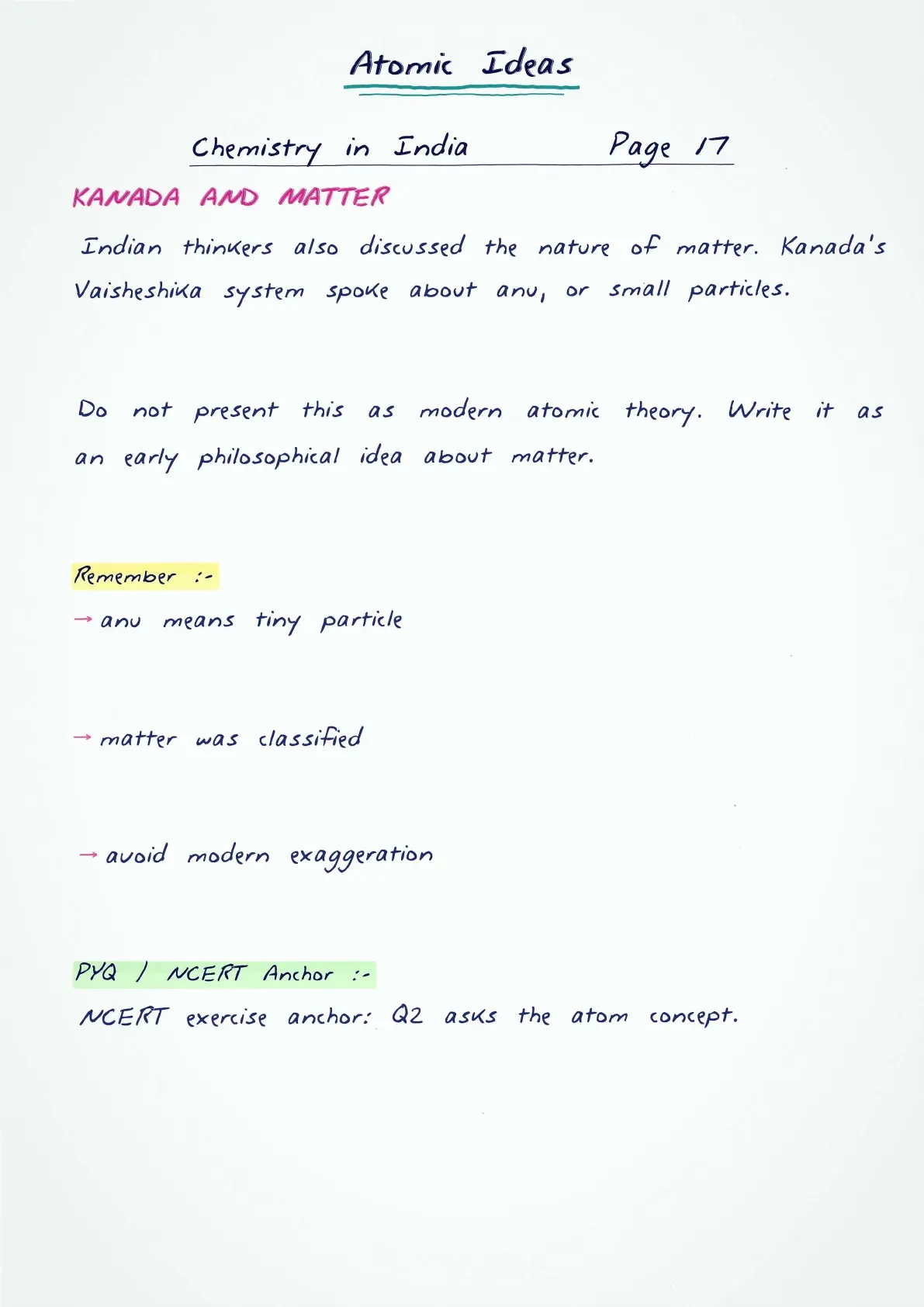
The Chemistry in India handwritten notes explain the textbook chapter through short notebook pages. The source chapter's fuller NCERT title is Chemistry and Metallurgy in India, so the notes include chemical crafts, medical chemistry and metal technology.
The core revision idea is simple: Indian chemical knowledge grew through practical crafts, medicine, metallurgy and written traditions.
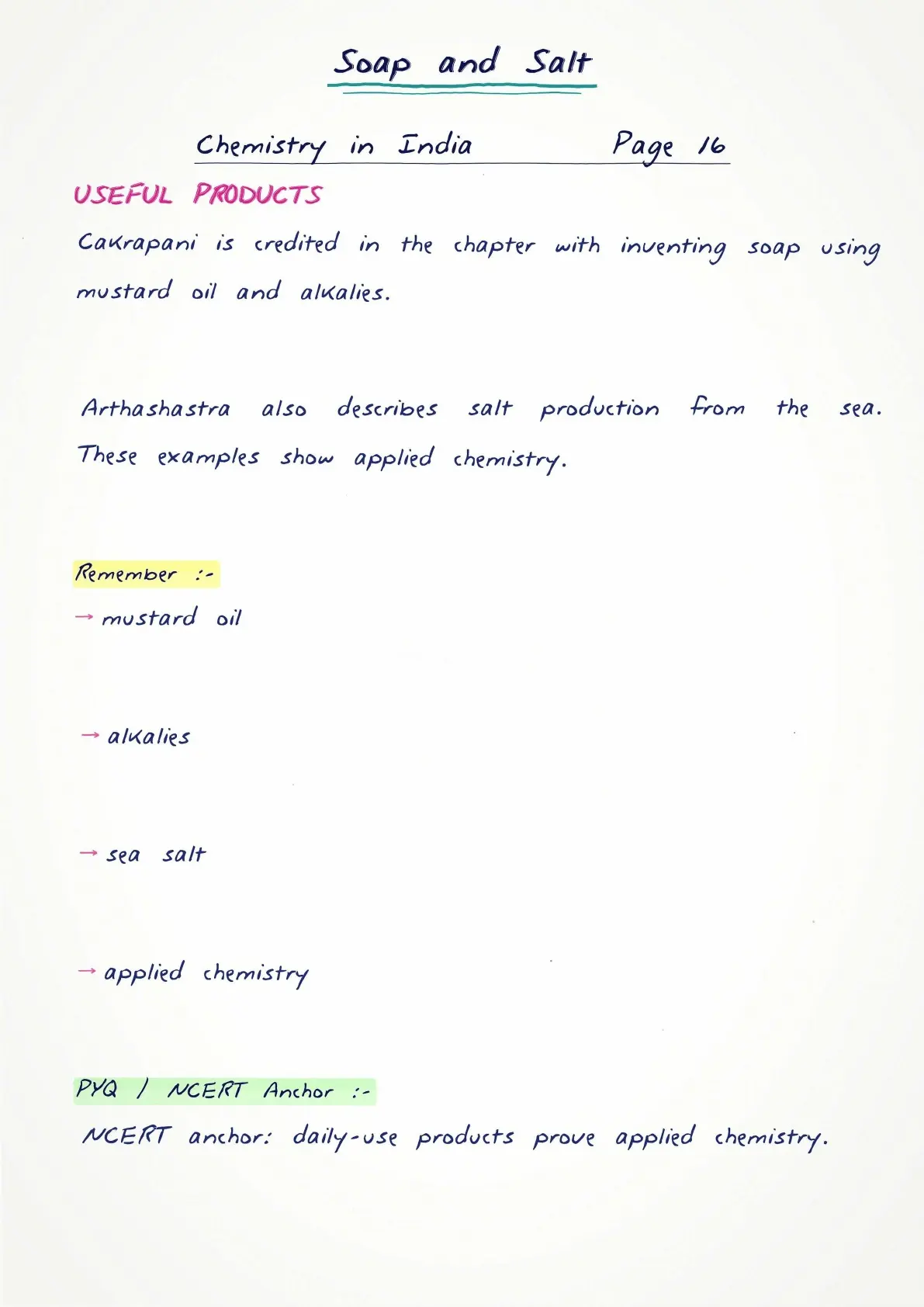
- Craft side: pottery, faience, glass, dyes, cosmetics, paper, ink, soap and salt.
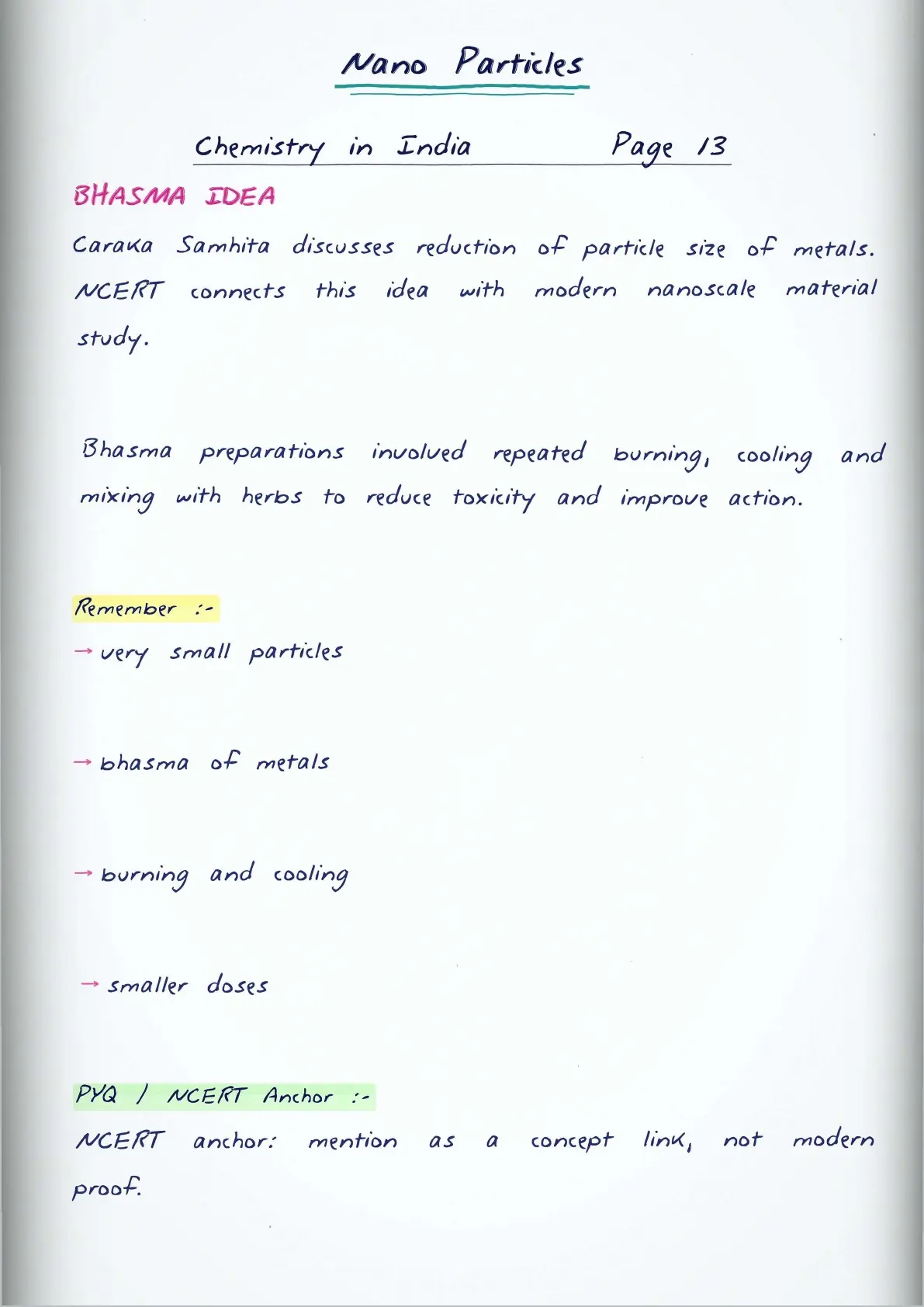
- Medicine side: Ayurveda, mercury processing, bhasma and nanoparticle ideas.
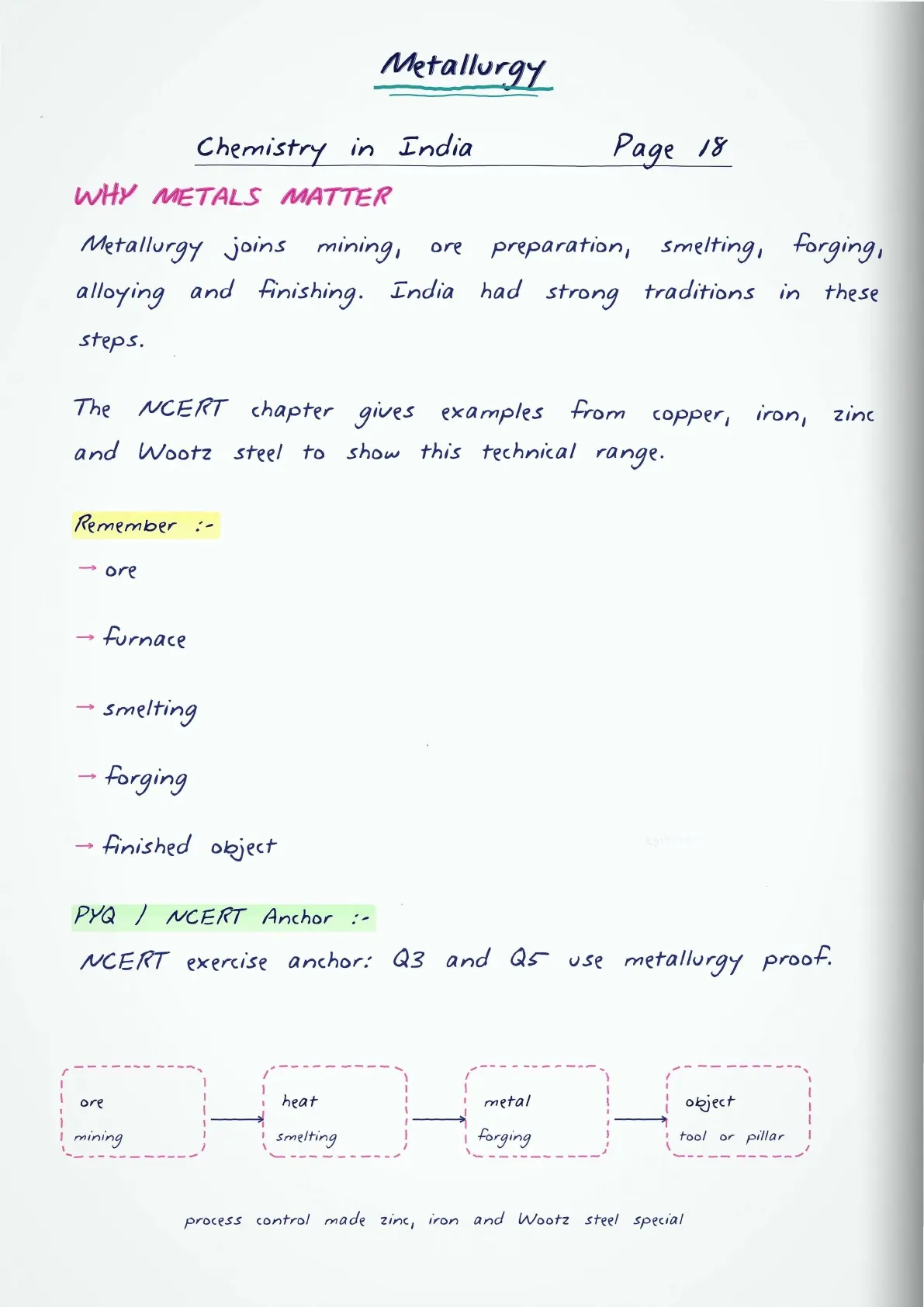
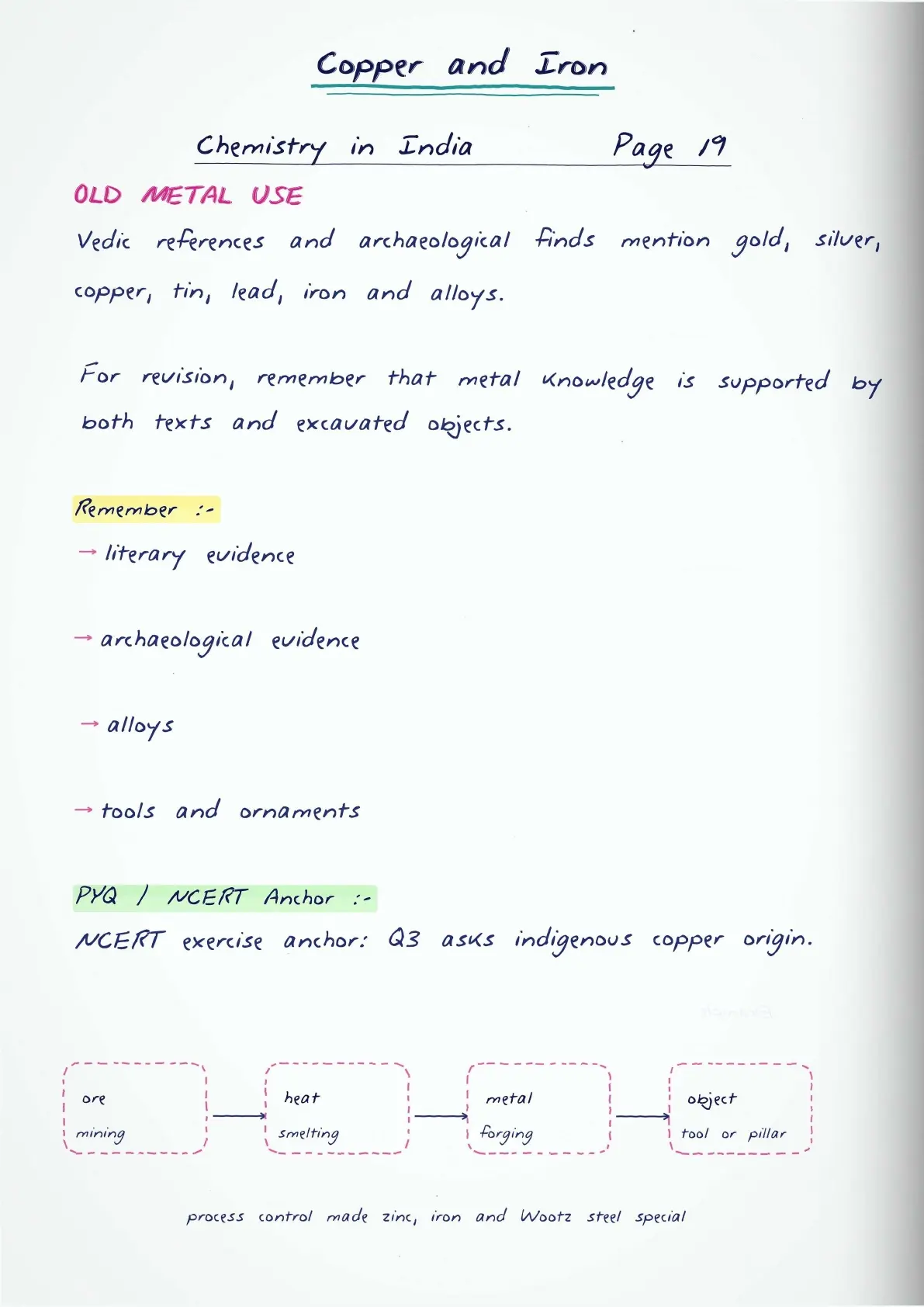
- Metal side: copper, iron, zinc distillation, corrosion resistance and Wootz steel.
- Evidence side: NCERT uses texts, archaeology, travellers and material remains.
Alchemy, Chemical Arts and Harappan Evidence
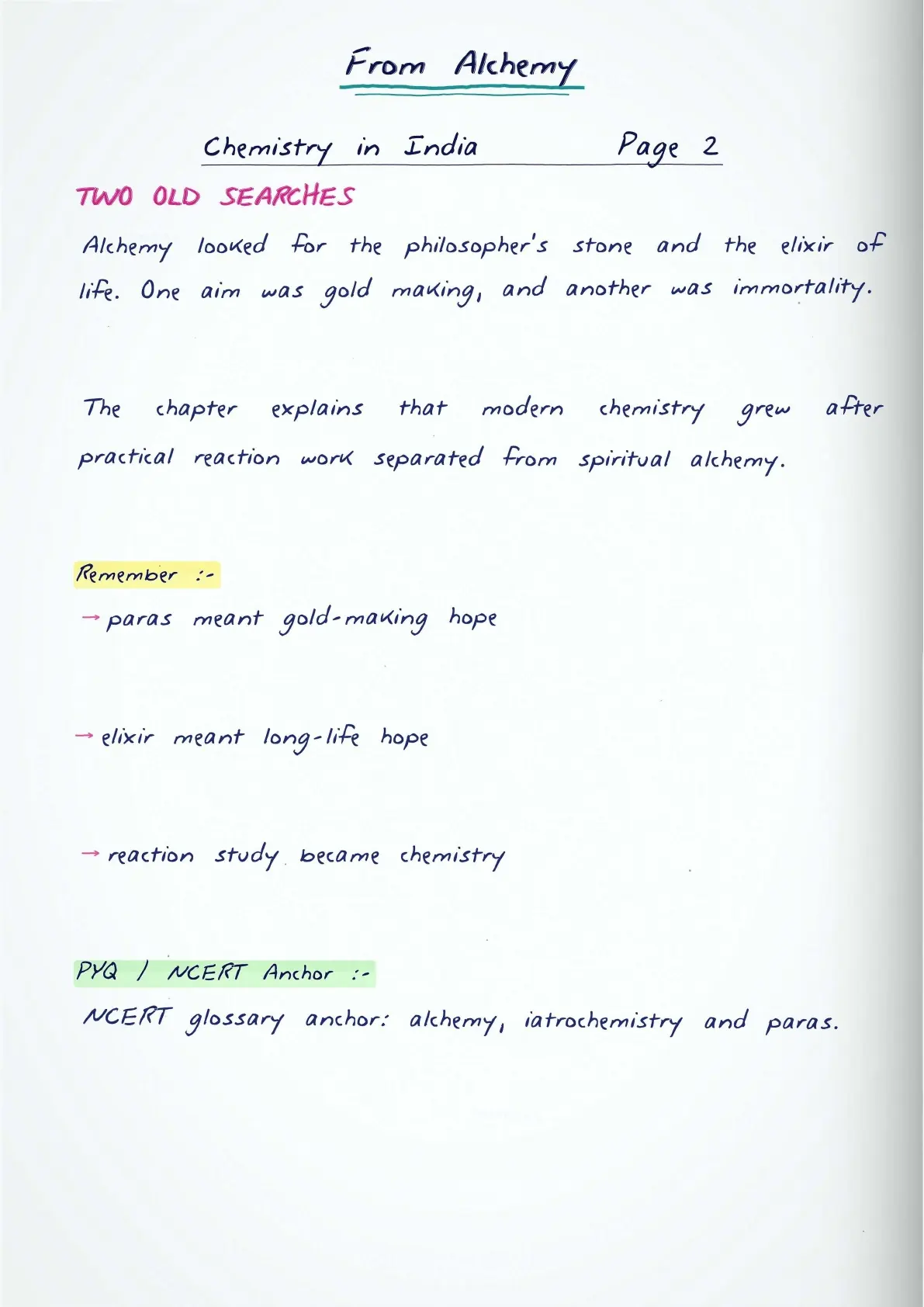
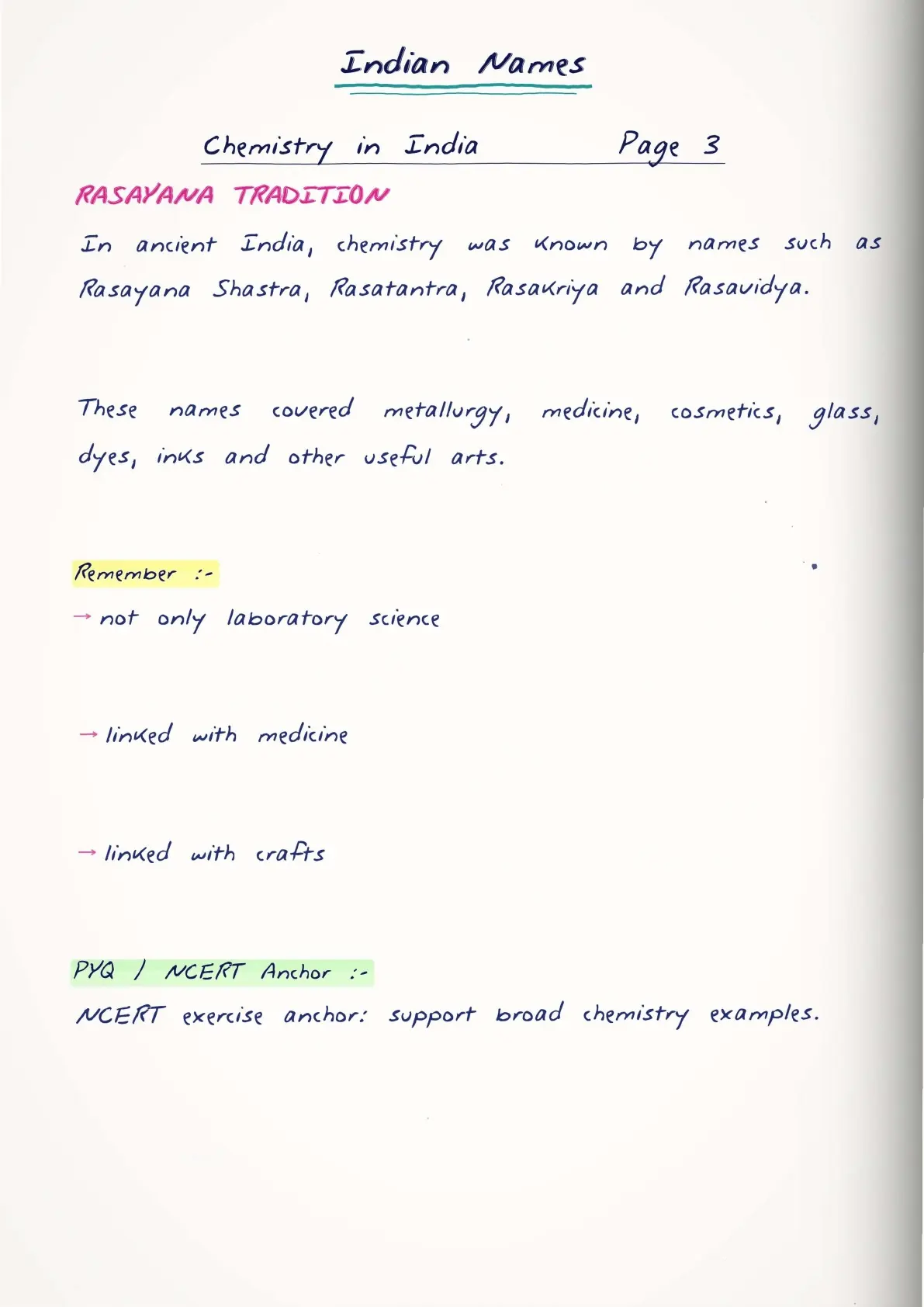
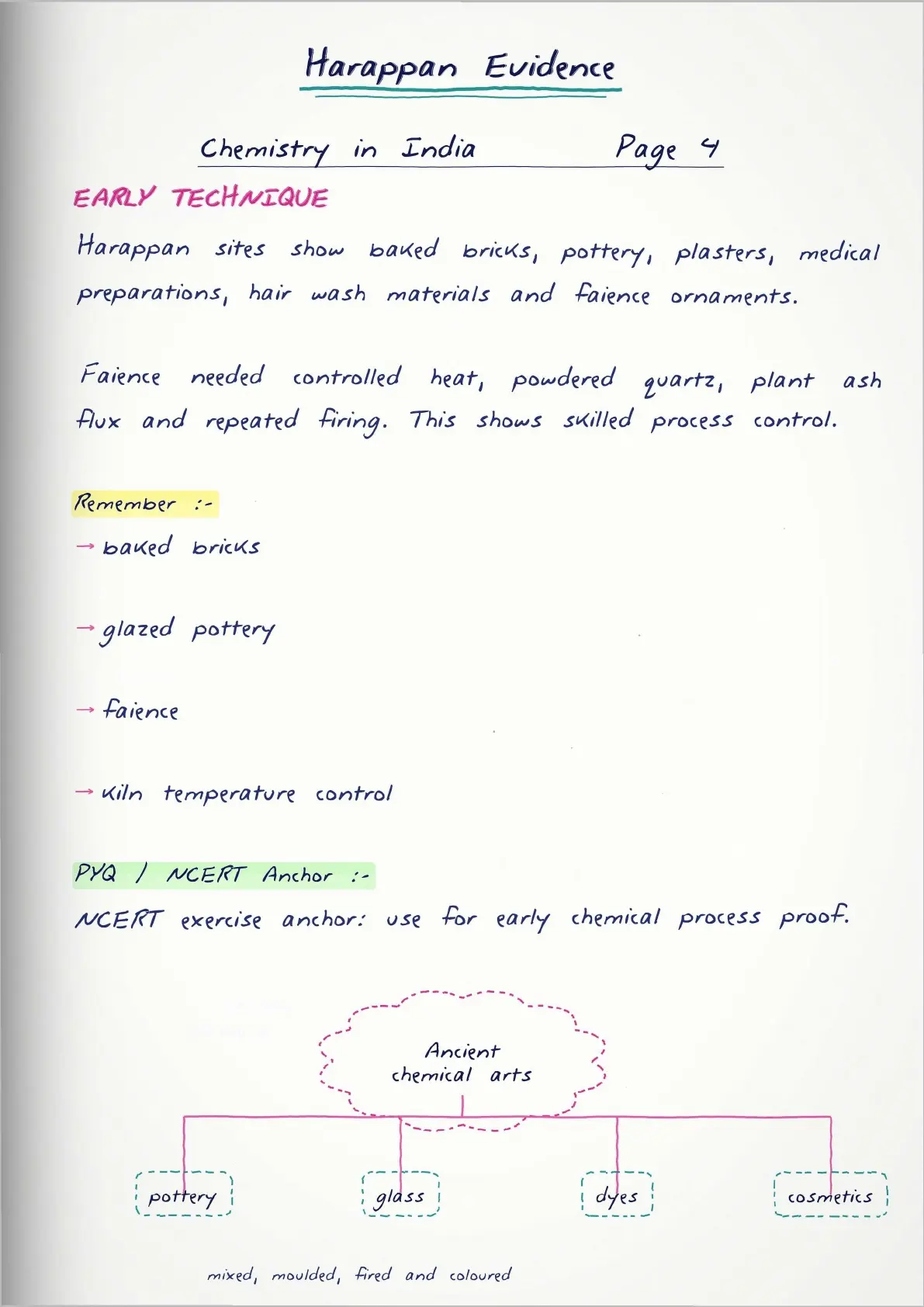
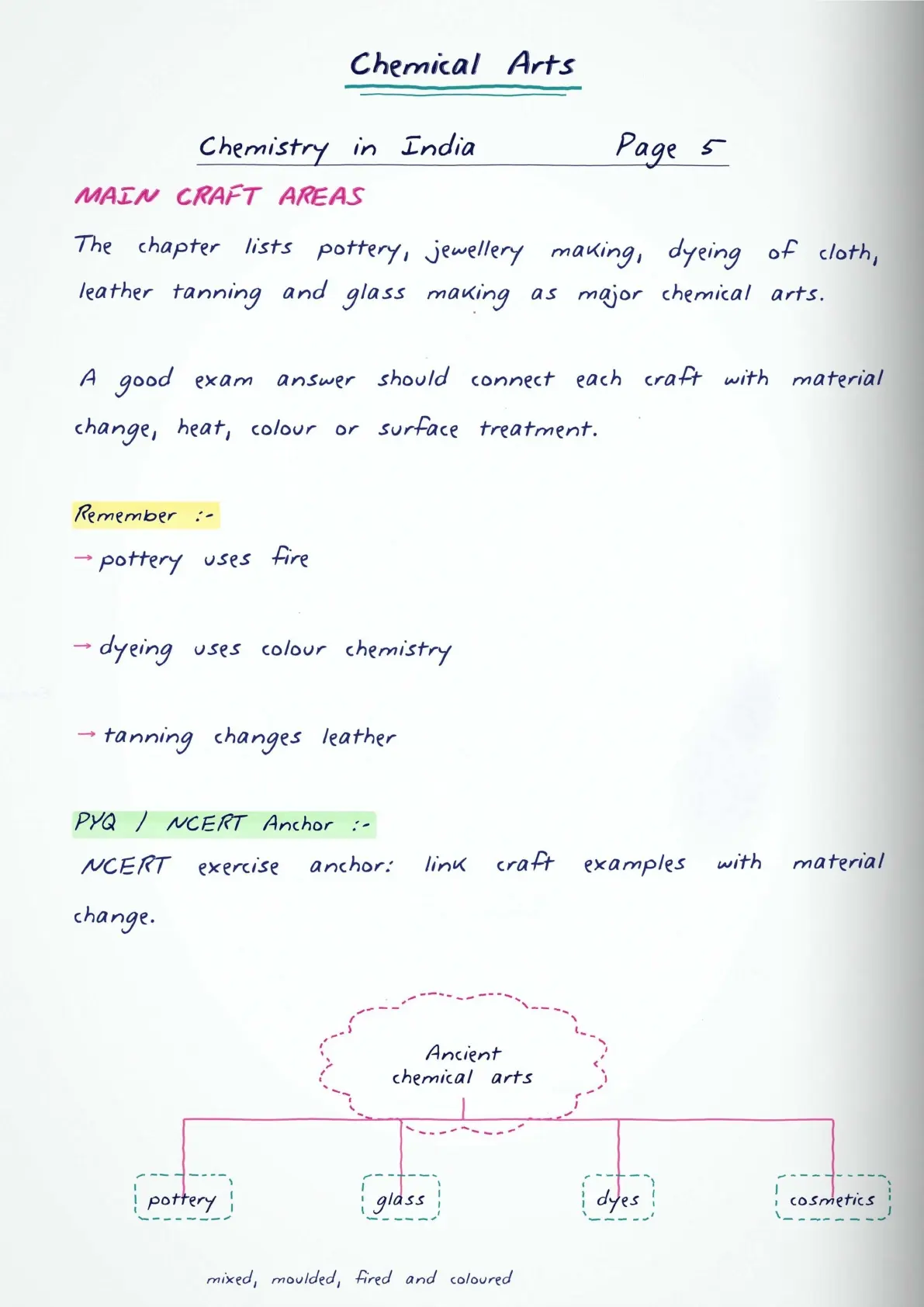
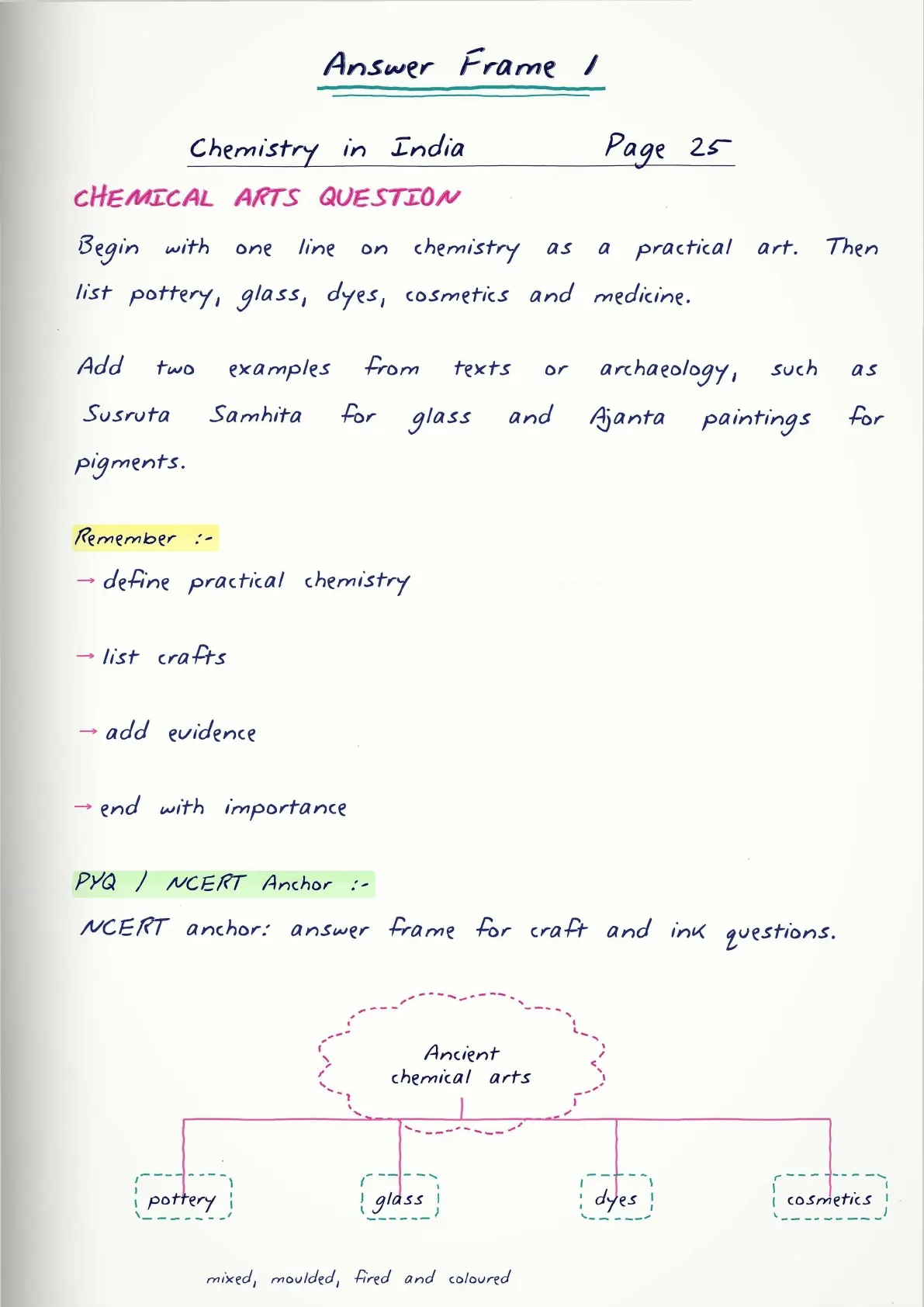
Alchemy looked for the philosopher's stone and the elixir of life. The chapter then moves from those old searches to practical chemical arts. Students should remember that Indian chemistry was not a single laboratory subject. It was part of medicine, cosmetics, glass, dyes, pottery and metal work.
| Area | NCERT evidence | Revision point |
|---|---|---|
| Harappan craft | Baked bricks, pottery, faience and glazed objects. | Use for earliest chemical process examples. |
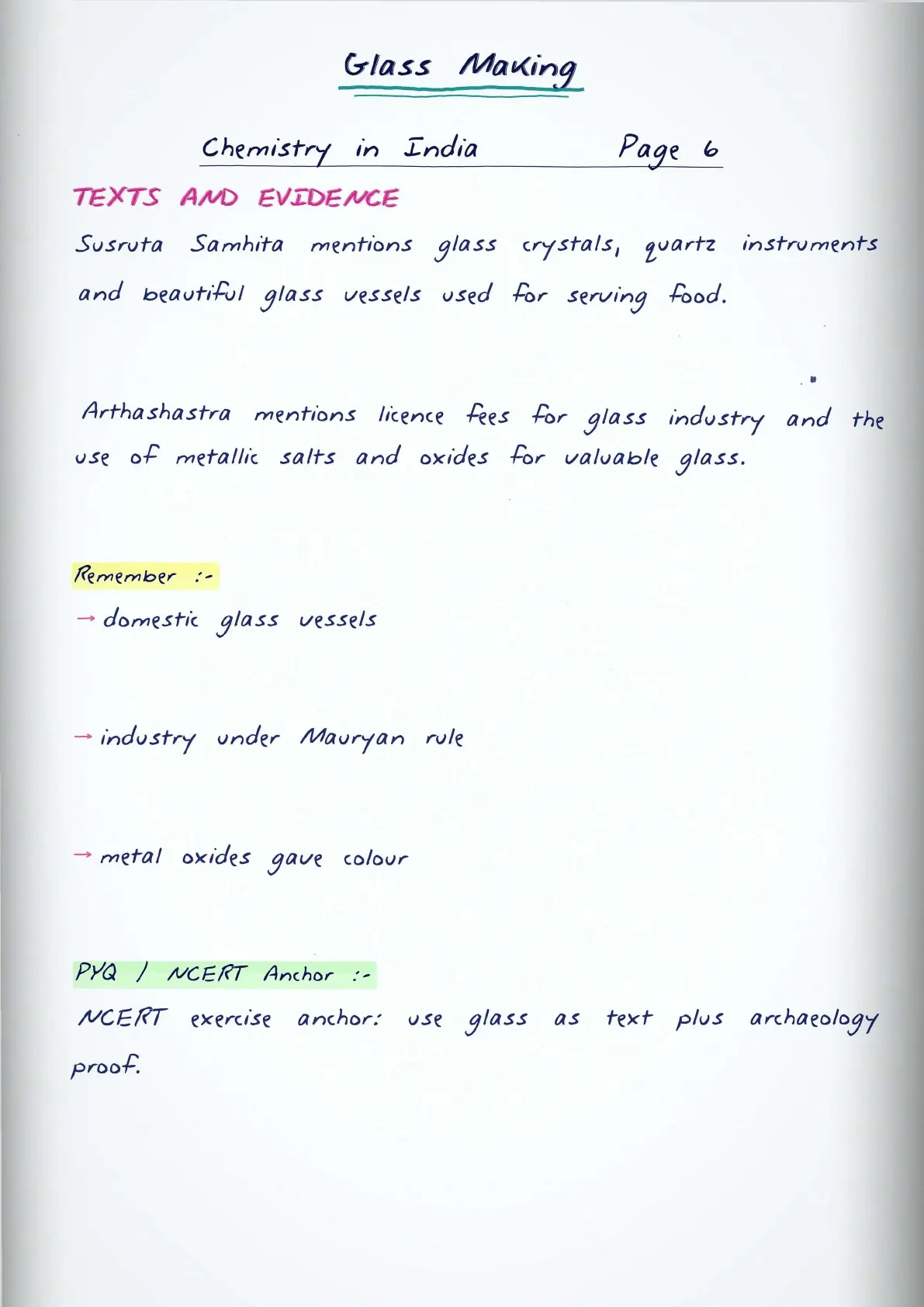
| Glass making | Susruta Samhita, Arthashastra and traveller accounts. | Mention metallic salts and oxides. |
| Dyes and paints | Plant extracts, resins and long-lasting paintings. | Connect colour with material knowledge. |
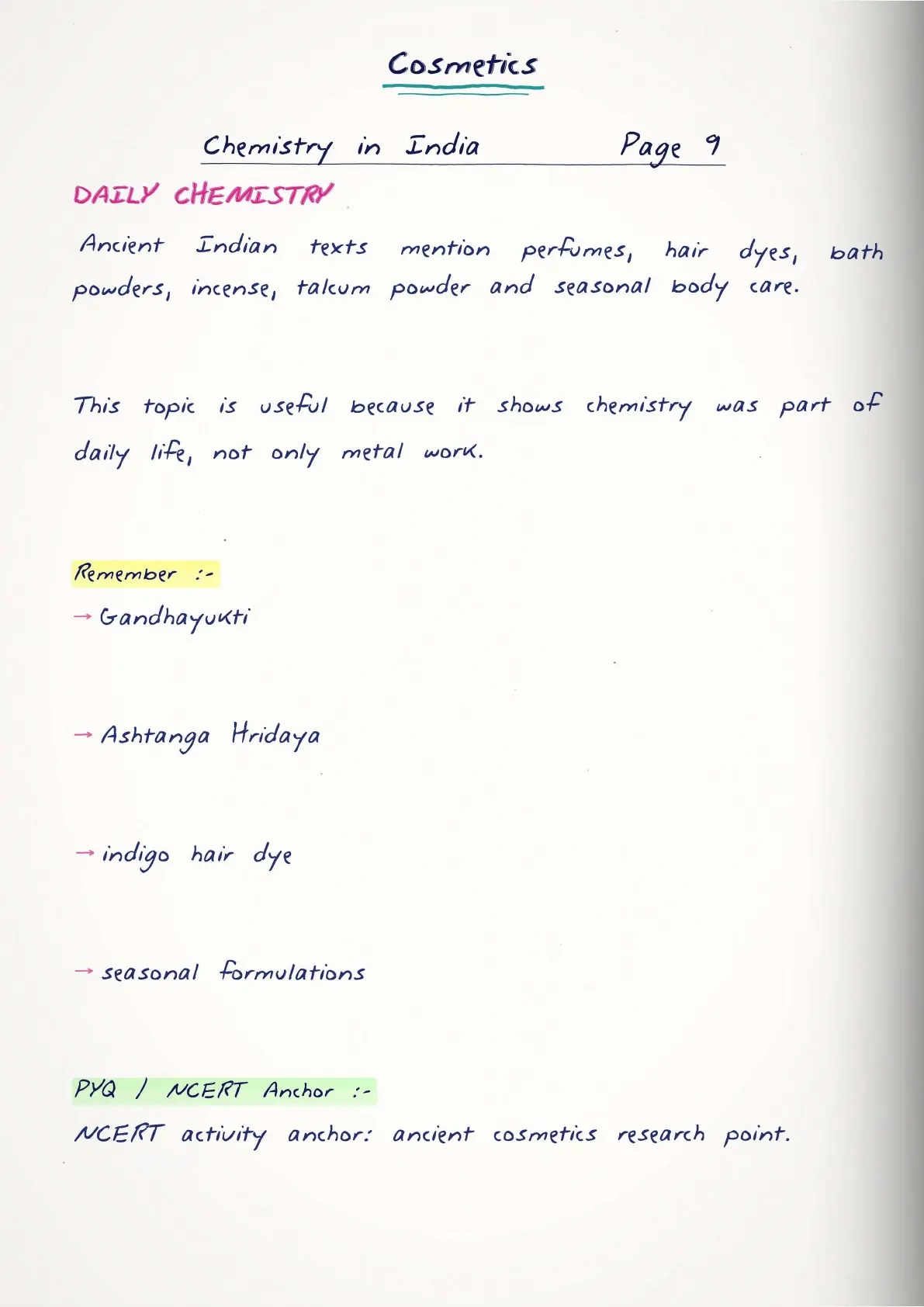
| Daily products | Perfumes, cosmetics, soap, salt, liquors and medicines. | Show chemistry in ordinary life. |
Class 11 KTPI Chemistry in India Video
Source: Target SSB on YouTube
Glass, Dyes, Medicine, Ink and Ancient Chemicals
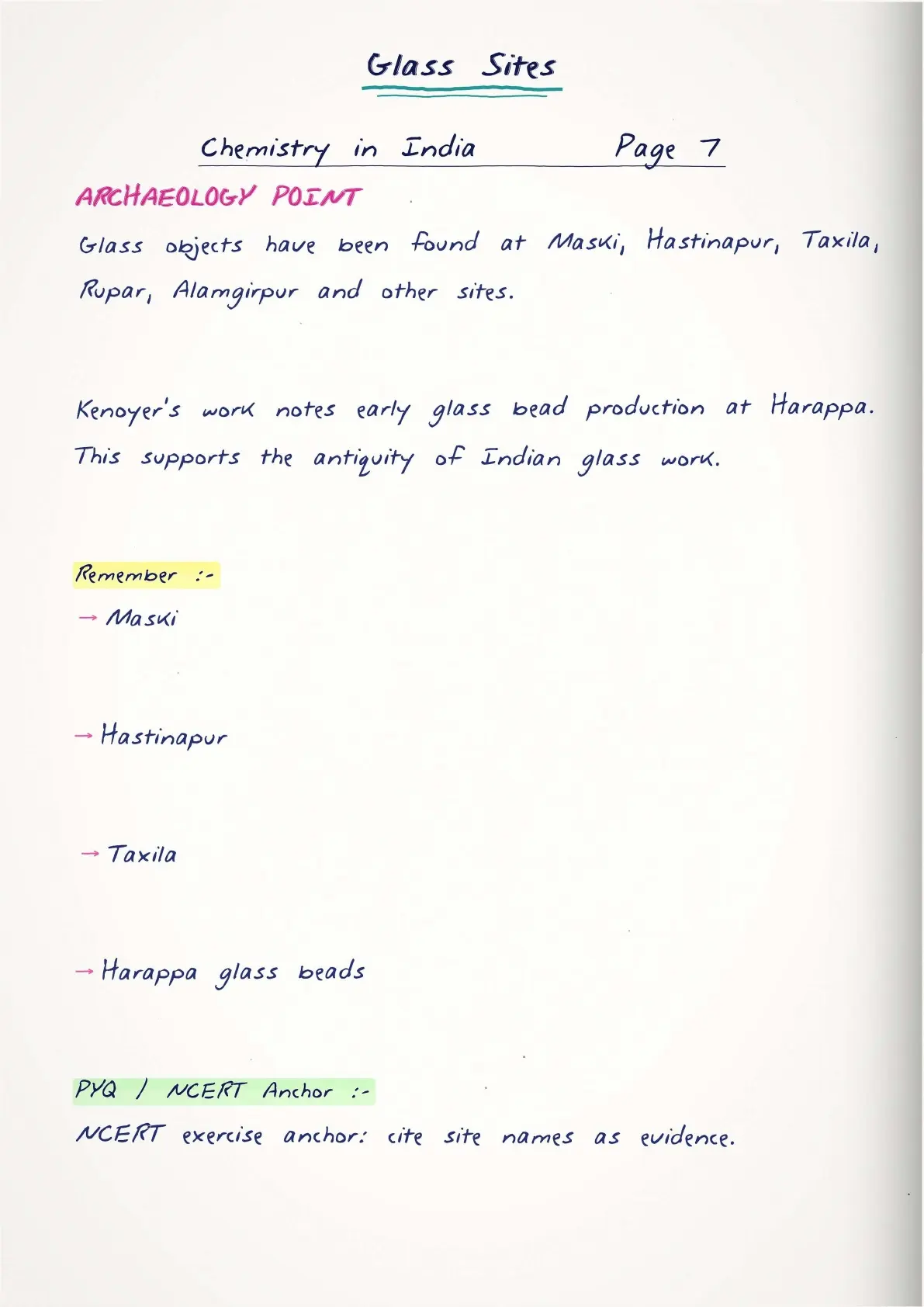
Glass making appears through texts and archaeological finds. Susruta Samhita mentions glass crystals, quartz instruments and glass vessels. Arthashastra mentions licence fees for glass industry and colouring glass with metallic salts and oxides.
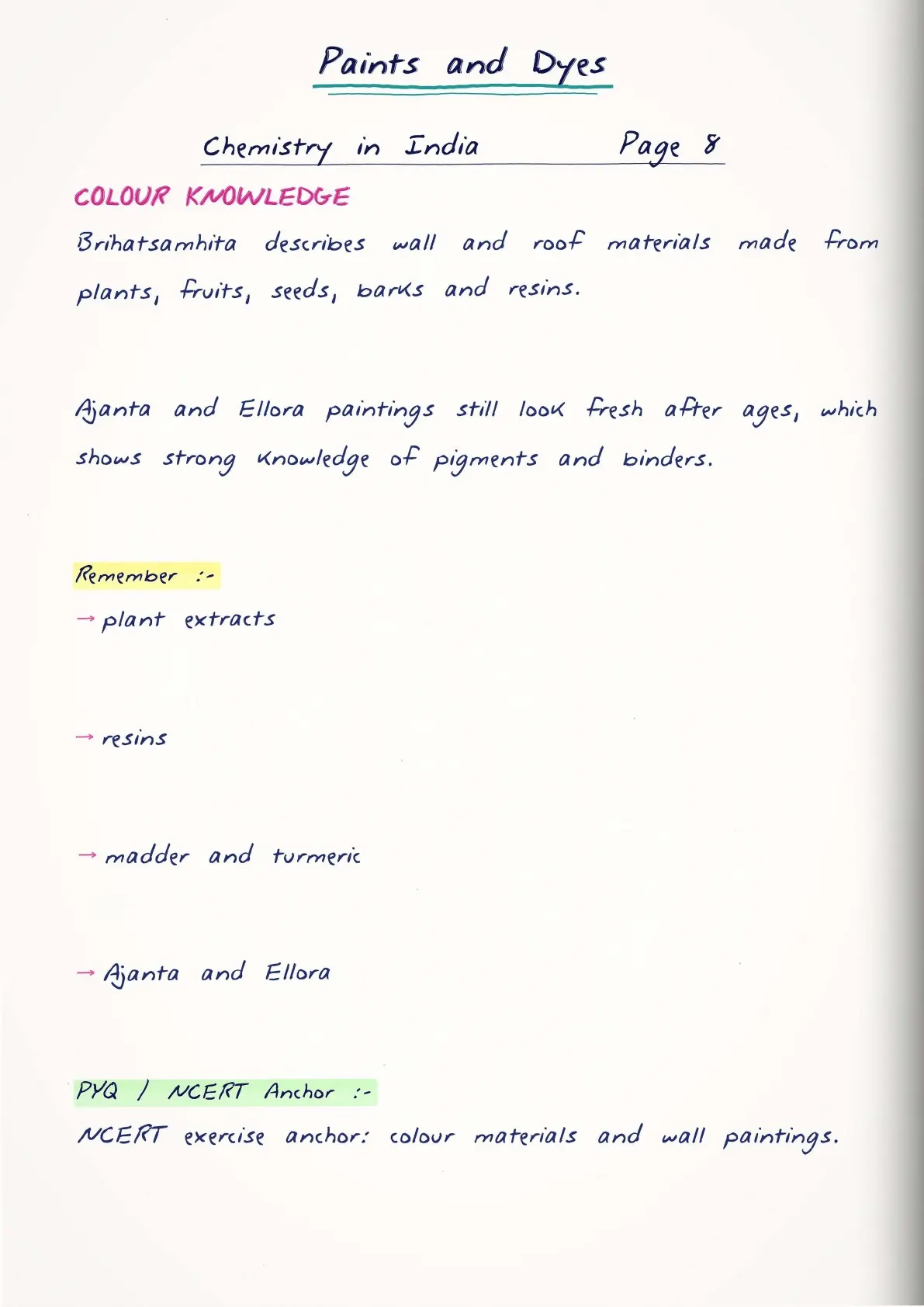
Paints and dyes show another side of Chemistry in India. Brihatsamhita refers to materials prepared from plants, fruits, seeds, barks and resins. Ajanta and Ellora paintings are important because their freshness points to strong pigment and binder knowledge.
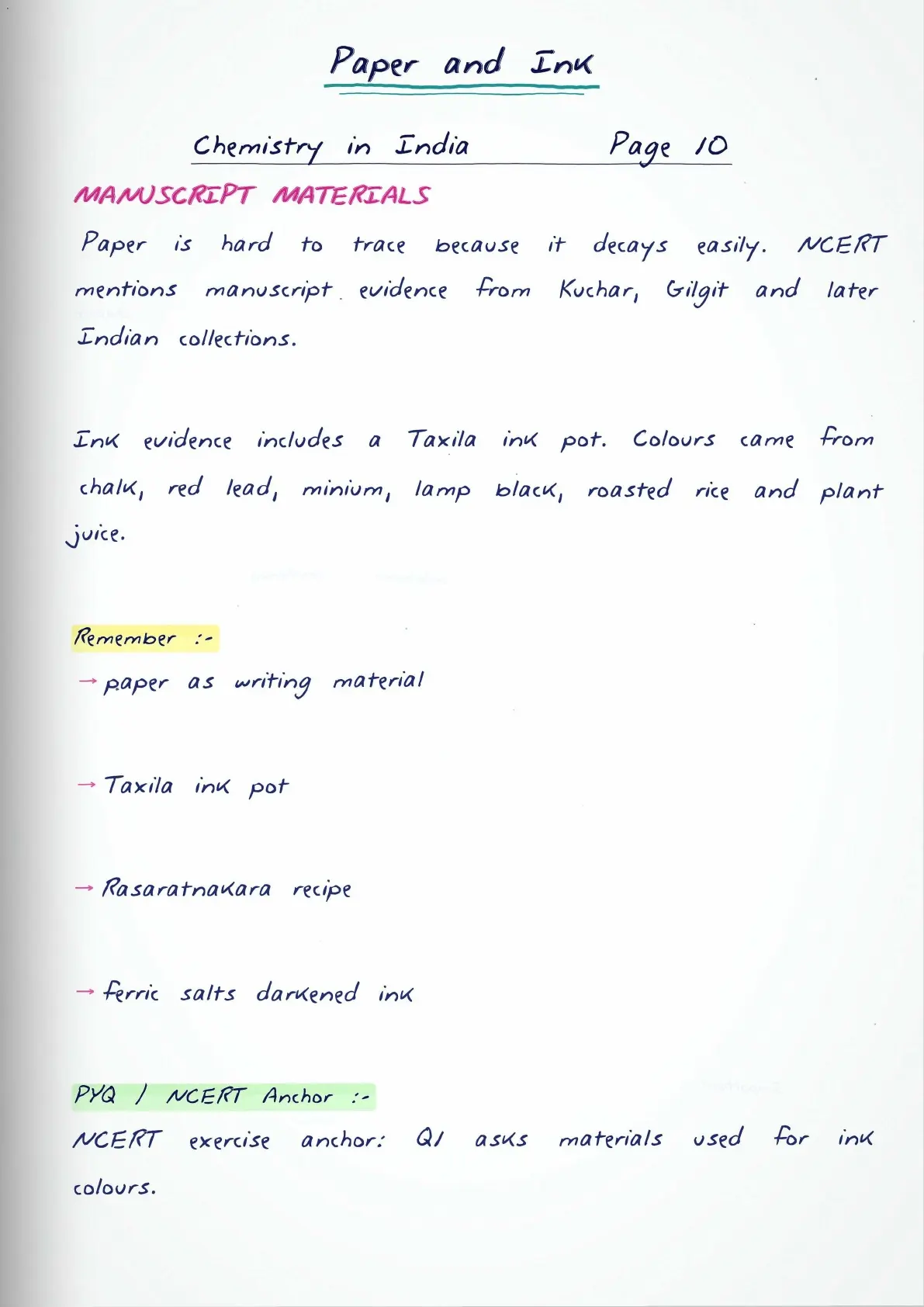
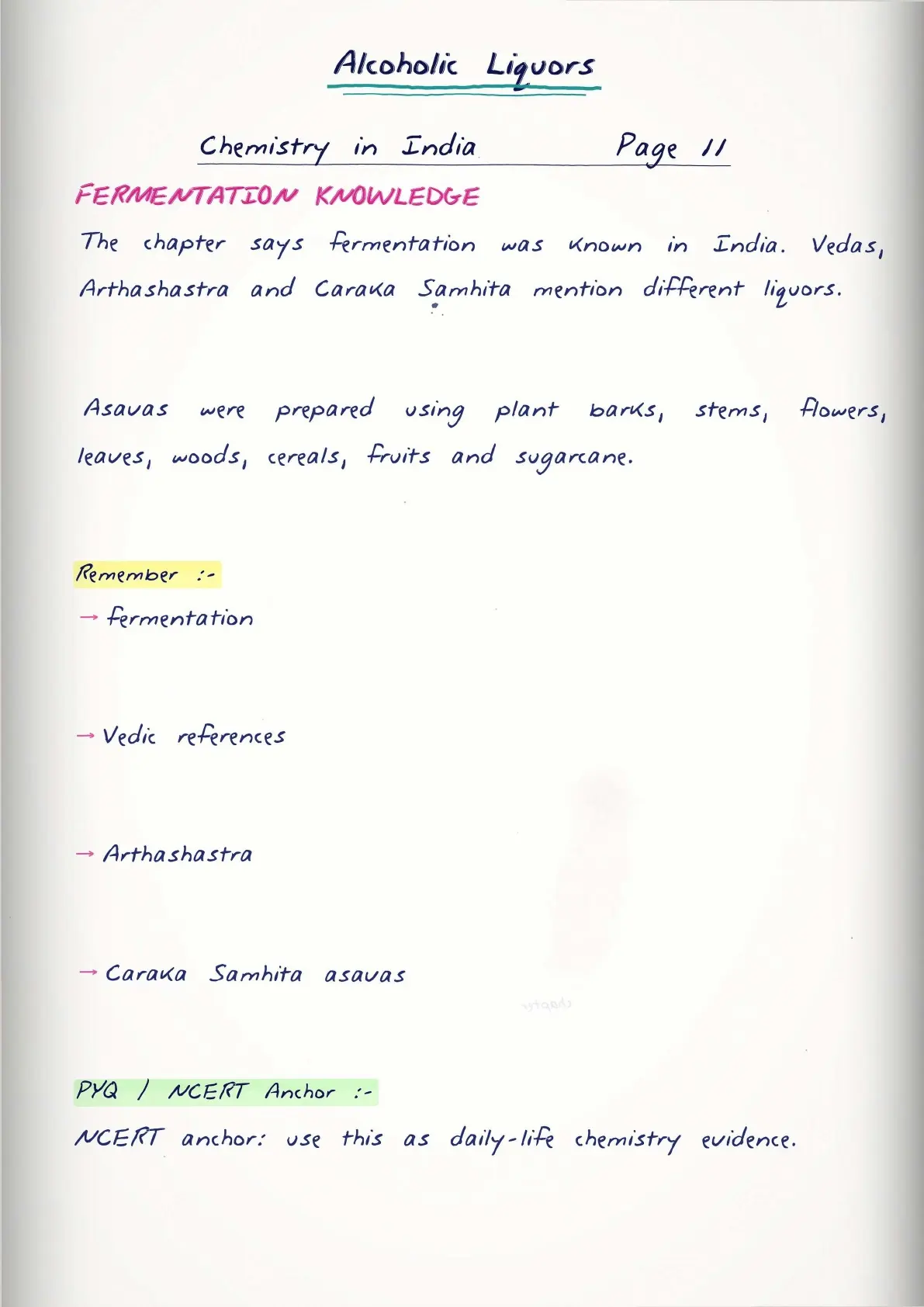
Paper and ink making are also important. NCERT mentions manuscript evidence, a Taxila ink pot, ink colours from chalk, red lead and minium, and black ink made from nuts and myrobalans. Alcoholic liquors show fermentation knowledge through Vedic, Arthashastra and Caraka Samhita references.
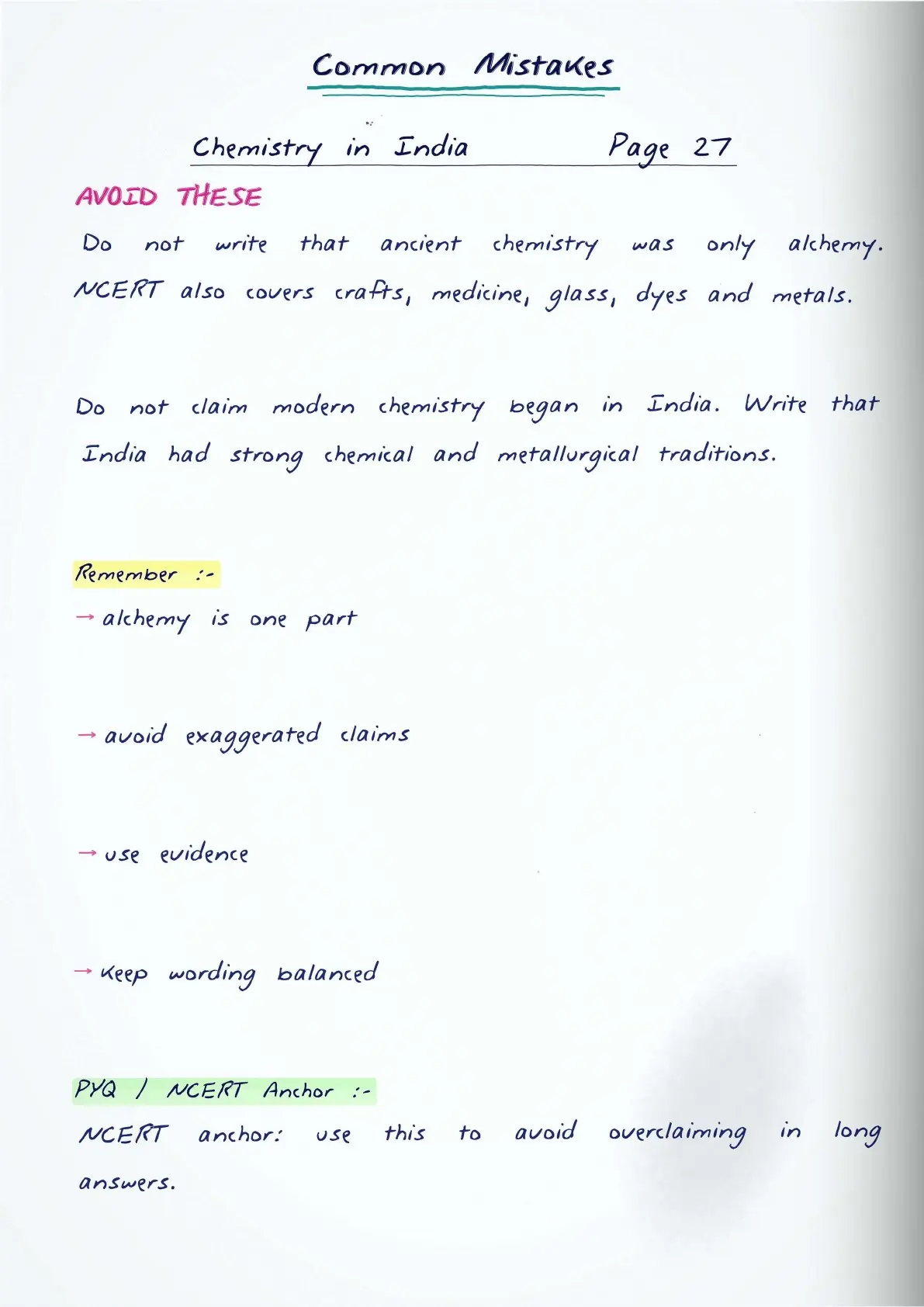
For exam answers, do not list examples only. Write what each example proves.
| Topic | Example to write | What it proves |
|---|---|---|
| Glass | Maski, Taxila, Harappa beads and literary references. | Technical skill and controlled heating. |
| Dyes | Turmeric, madder, lac and other tinting materials. | Colour chemistry and textile use. |
| Ink | Taxila ink pot and Rasaratnakara ink recipe. | Writing materials used chemical knowledge. |
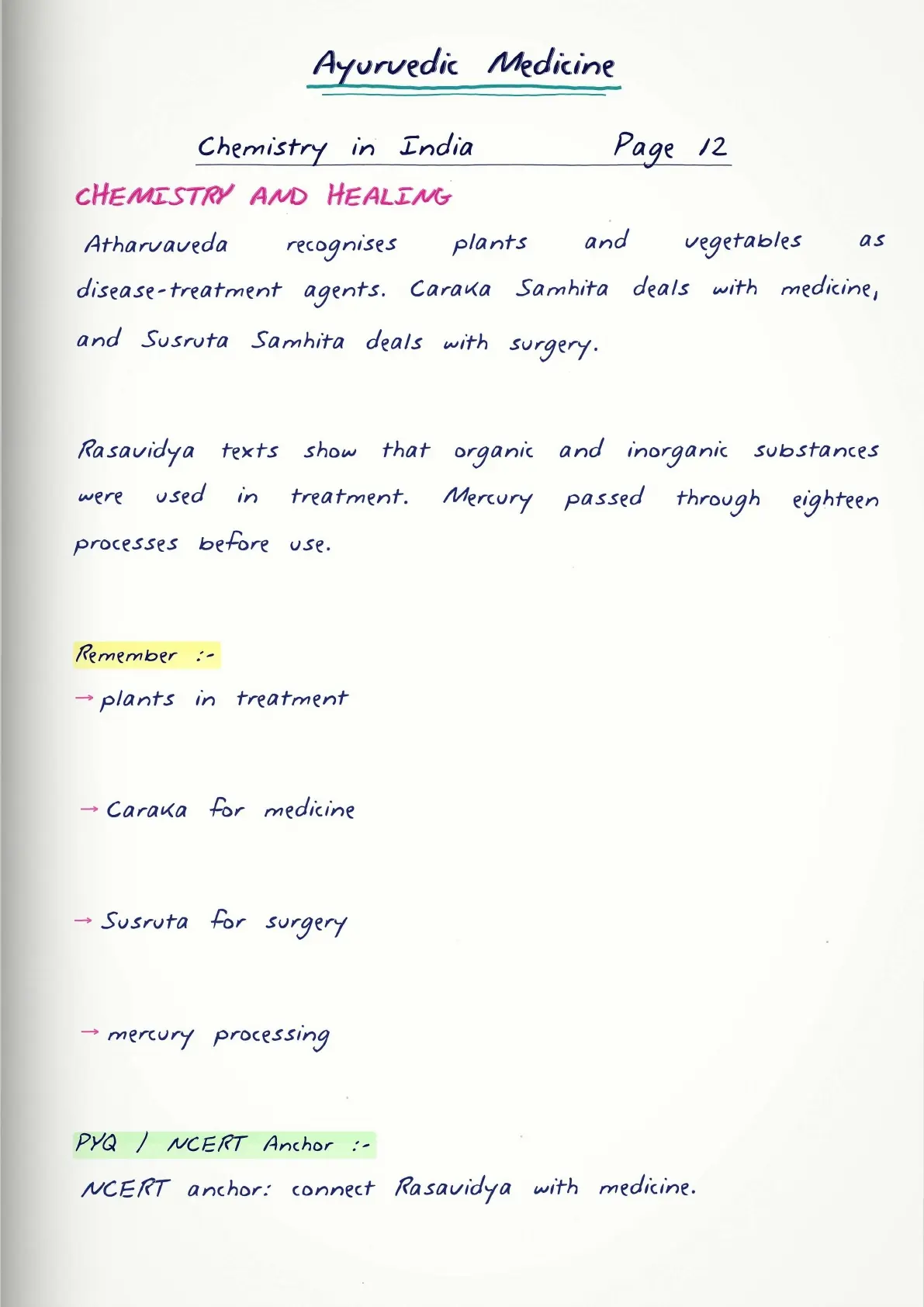
| Medicine | Caraka, Susruta, mercury processing and bhasma. | Chemistry entered healing traditions. |
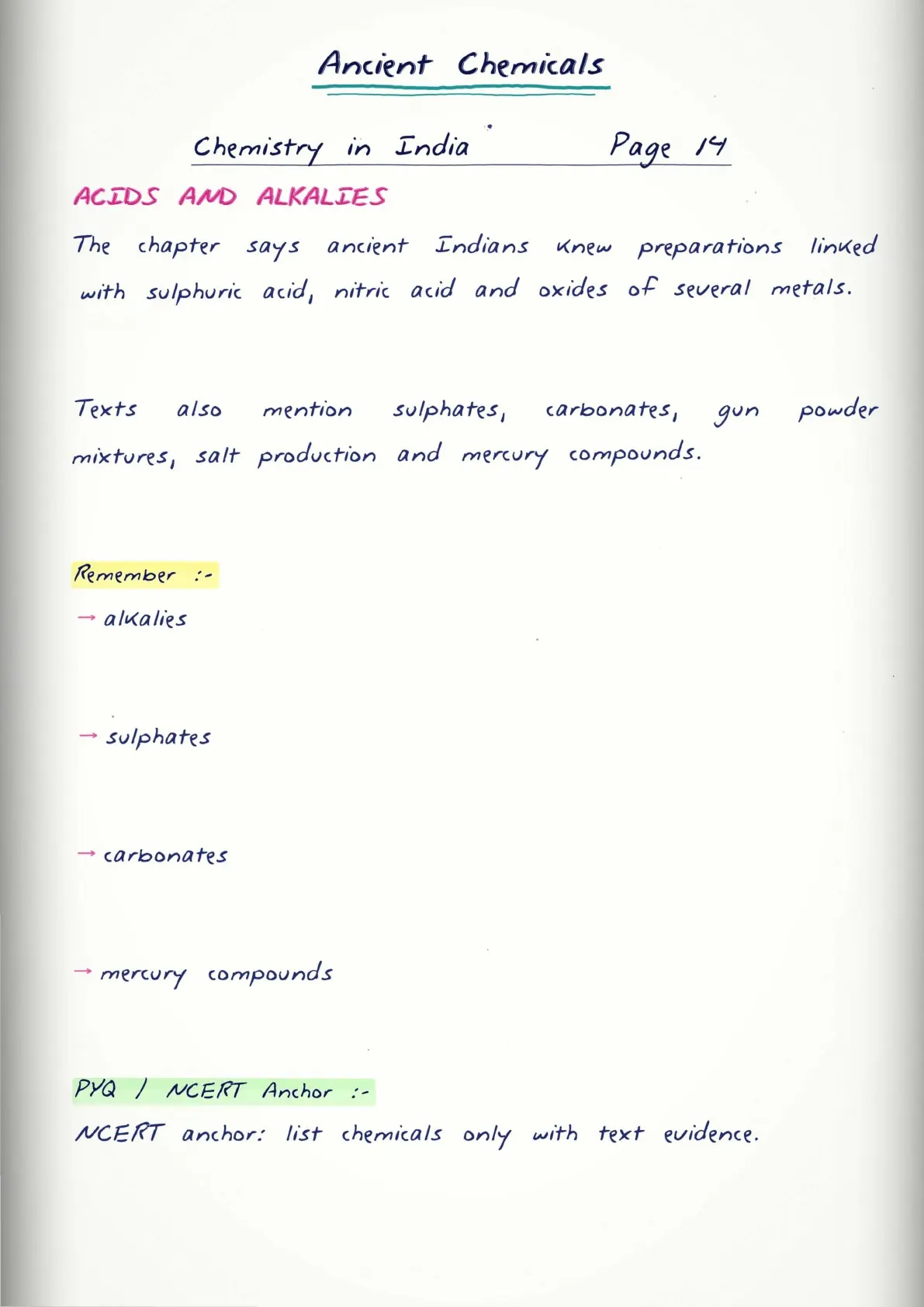
| Chemicals | Alkalies, sulphates, carbonates and mercury compounds. | Texts recorded chemical preparations. |
Iron Pillar, Zinc Distillation and Wootz Steel
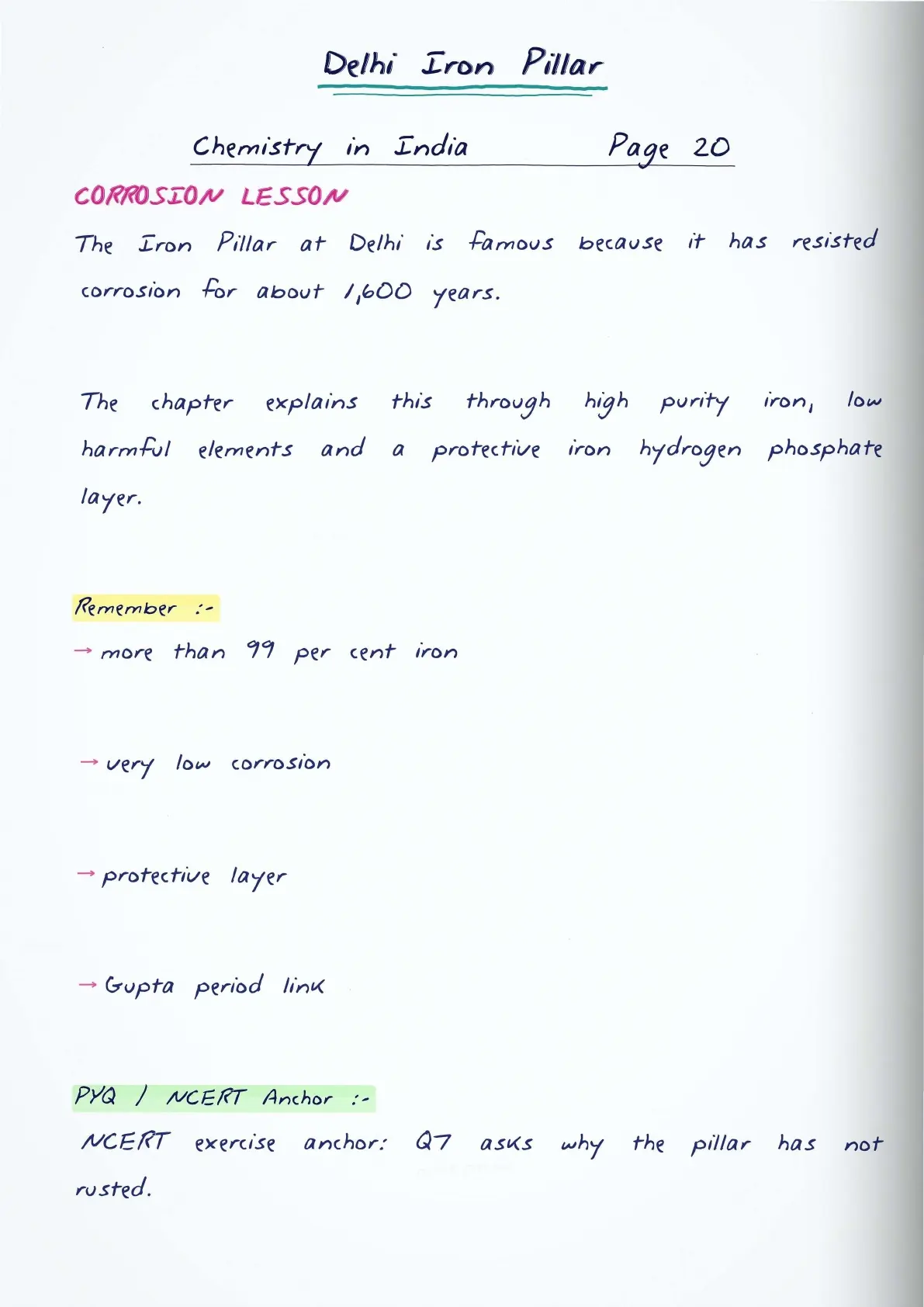
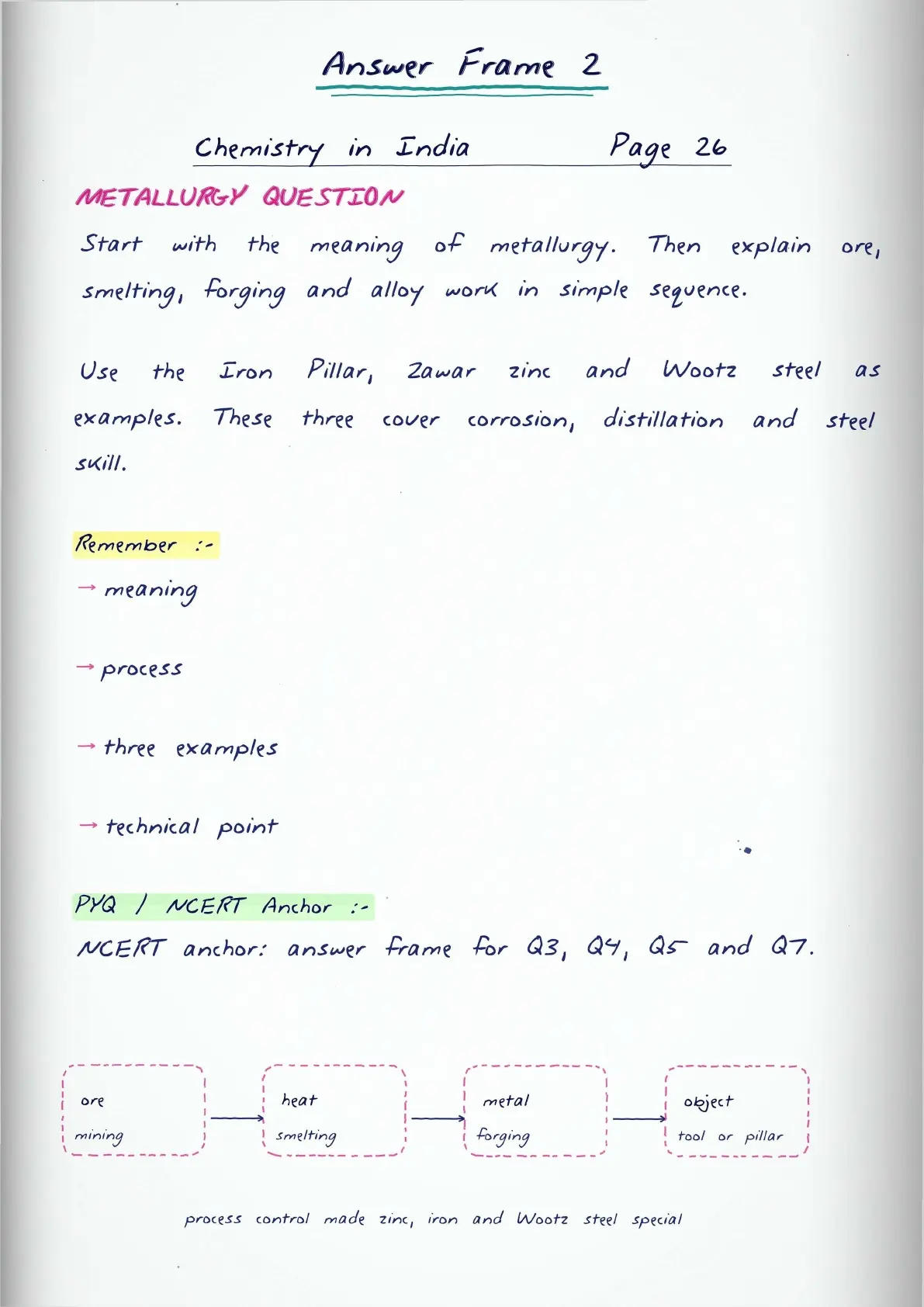
The metallurgy section is the scoring part of the chapter. The Iron Pillar at Delhi is used to explain corrosion resistance. The chapter mentions high purity iron, low harmful elements and a protective iron hydrogen phosphate layer.
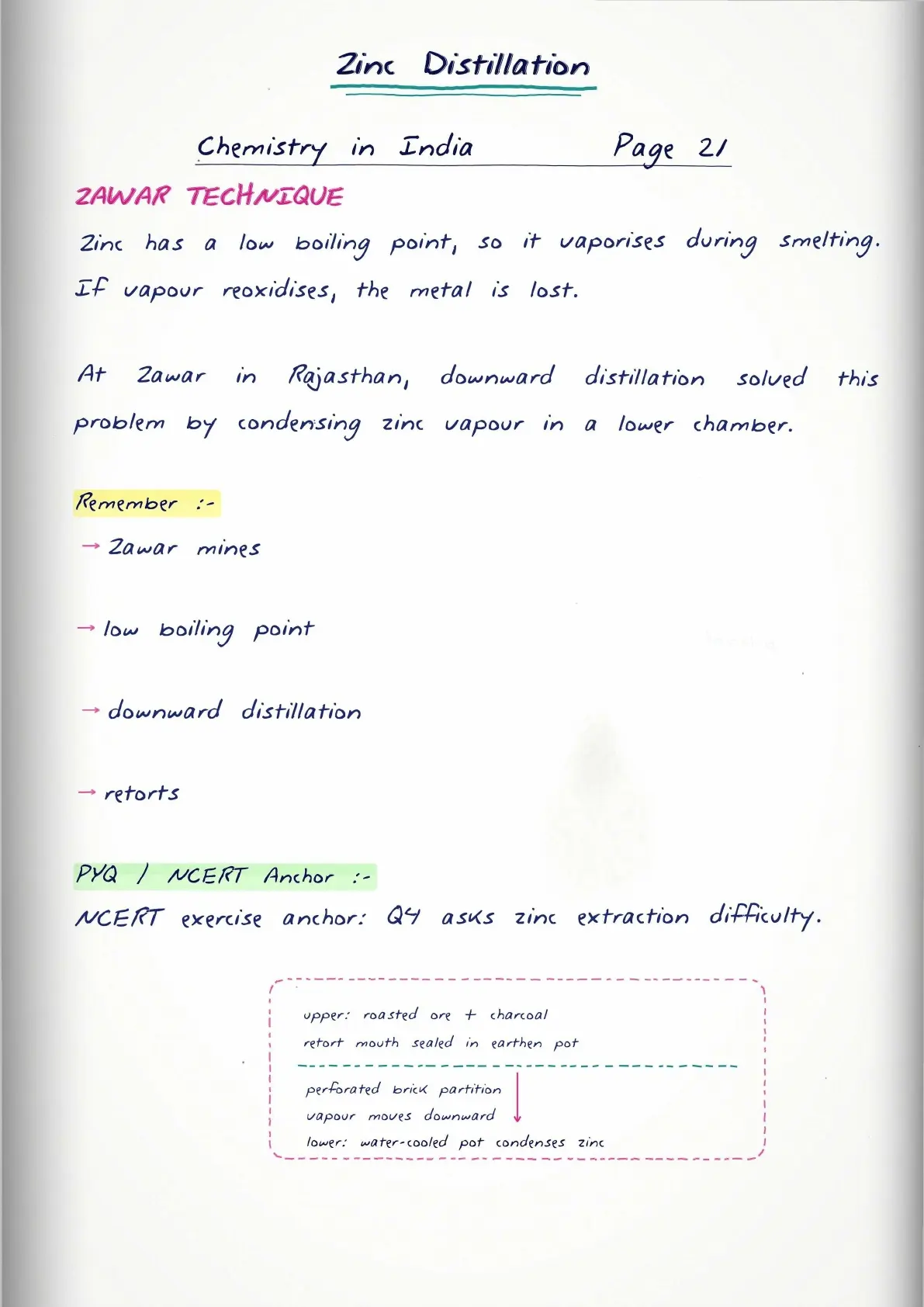
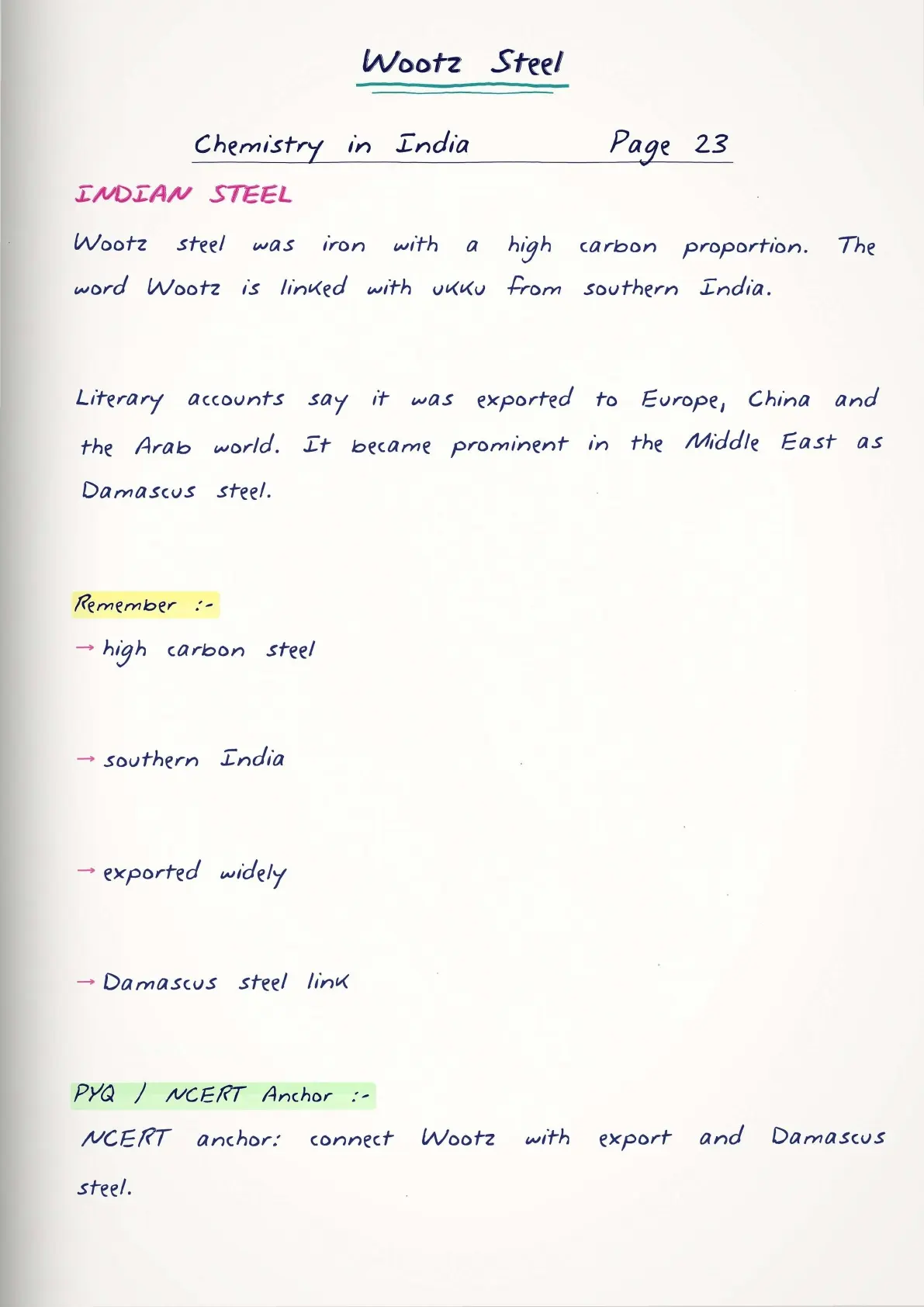
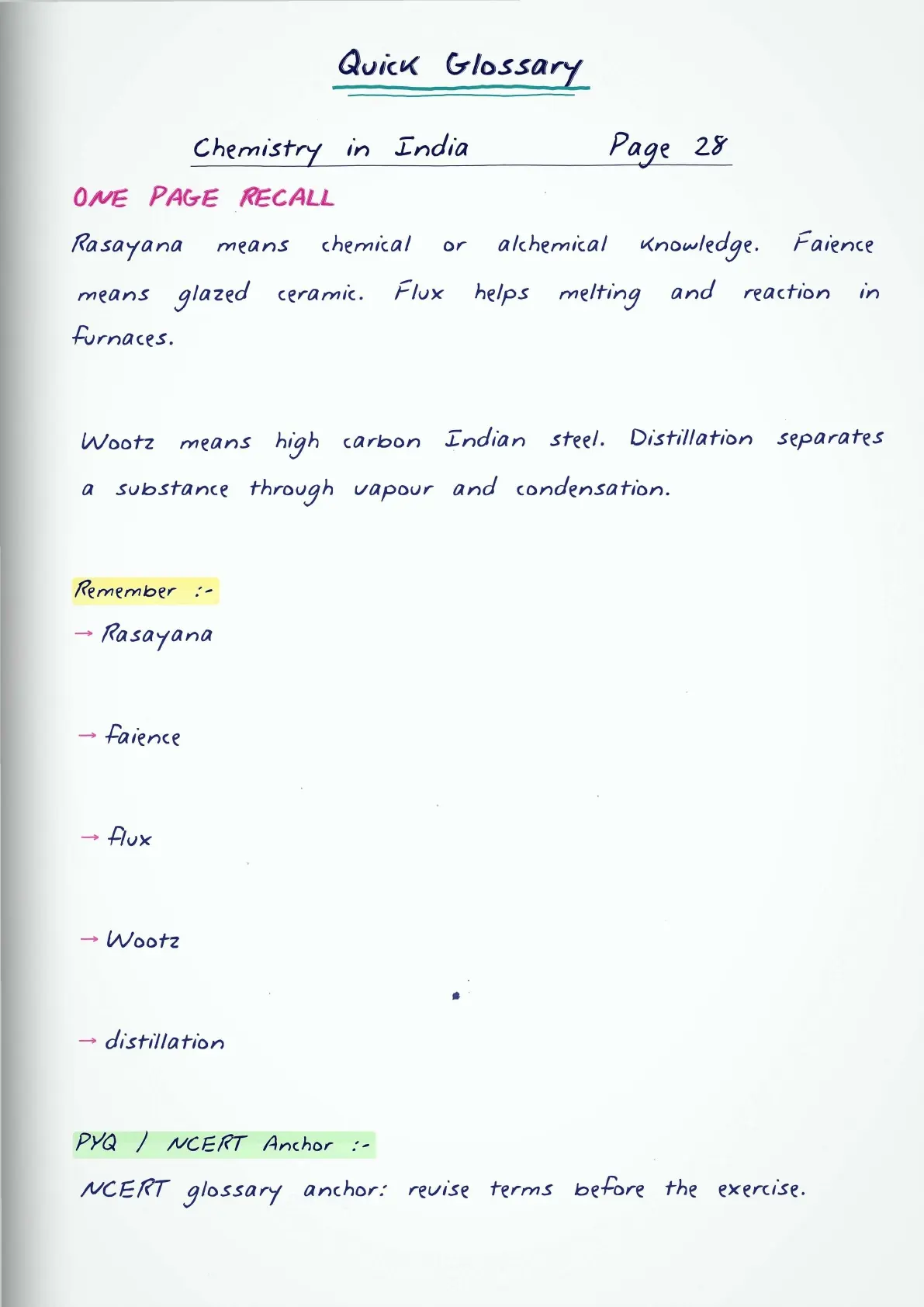
Zinc production at Zawar is important because zinc vaporises easily during smelting. Indian craftsmen used downward distillation, where vapour condensed in a lower chamber. Wootz steel is another key example, linked with high carbon steel and the later fame of Damascus steel.
- Iron Pillar: corrosion resistance and material purity.
- Zawar zinc: distillation technique with retorts.
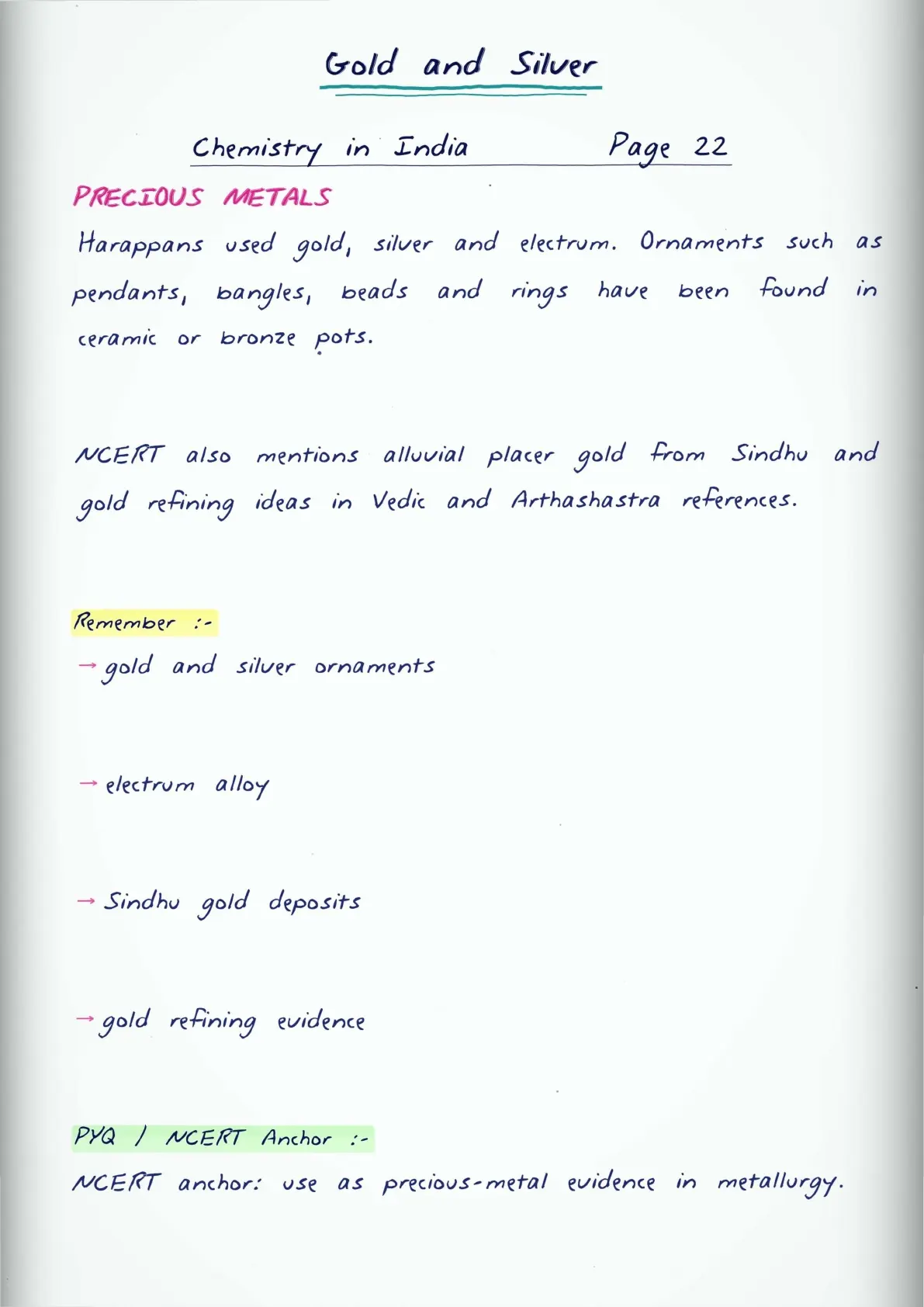
- Gold and silver: Harappan ornaments, electrum and alluvial gold evidence.
- Wootz steel: high carbon steel exported widely, then famous as Damascus steel in the Middle East.
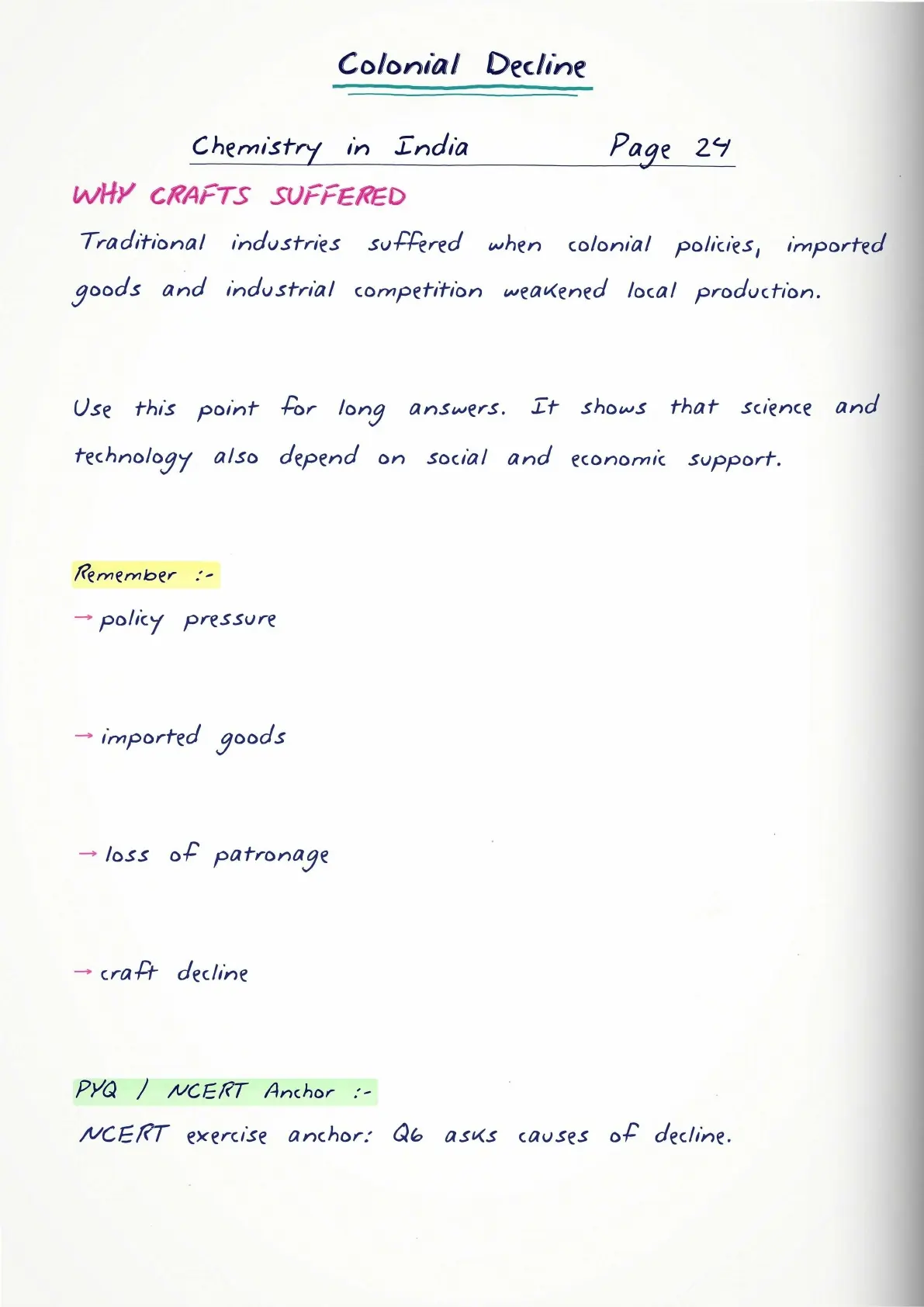
- Colonial decline: policies and imports weakened traditional crafts.
How to Use the Chemistry in India Handwritten Notes PDF
Start with the first page for the full chapter map. Then revise alchemy, Harappan crafts, paper and ink, liquors, Ayurveda, nanoparticles, metallurgy, the Iron Pillar, zinc distillation, gold, silver and Wootz steel. The last pages give answer frames, common mistakes and a glossary.
For short answers, write one clear example with one proof point. For long answers, group the chapter into chemical arts, ancient chemicals and metallurgy. This structure helps students avoid random lists.
Related Class 11 KTPI Resources
| Resource | Use it for | Link |
|---|---|---|
| NCERT Solutions | Exercise answers for the matching NCERT chapter. | Class 11 KTPI Chemistry and Metallurgy Solutions |
| NCERT Book PDF | Original textbook reading and source figures. | Class 11 KTPI Chemistry and Metallurgy Book PDF |
| Notes | Printed revision notes for theory-heavy study. | Class 11 KTPI Chemistry in India Notes |
| Handwritten Notes | Quick one-shot revision before tests. | Class 11 KTPI Chemistry in India Handwritten Notes |
All Class 11 KTPI Handwritten Notes
| Chapter | Title | Handwritten Notes |
|---|---|---|
| Chapter 1 | Astronomy in India | Open handwritten notes |
| Chapter 2 | Chemistry in India | Open handwritten notes |
| Chapter 3 | Indian Literature Part I Introduction of Indian Literature | Open handwritten notes |
| Chapter 4 | Indian Philosophical Systems | Open handwritten notes |
| Chapter 5 | Indian Traditional Knowledge on Environmental Conservation | Open handwritten notes |
| Chapter 6 | Life Sciences 1 Ayurveda for Life, Health and Well-Being | Open handwritten notes |
| Chapter 7 | Life Sciences 2 The Historical Evolution of Medical Tradition in Ancient India | Open handwritten notes |
| Chapter 8 | Mathematics in India | Open handwritten notes |
| Chapter 9 | Theatre and Drama in India | Open handwritten notes |
Class 11 KTPI Chemistry in India Handwritten Notes FAQs
Ques. What is covered in Class 11 KTPI Chemistry in India handwritten notes?
Ans. The PDF covers alchemy, Harappan chemical crafts, glass, dyes, cosmetics, ancient chemicals, iron, zinc distillation and Wootz steel.
Ques. Which NCERT source chapter supports these Chemistry in India notes?
Ans. The notes are based on the local NCERT KTPI chapter Chemistry and Metallurgy in India, while keeping the schedule title Chemistry in India.
Ques. Which metallurgy examples are most important for revision?
Ans. Revise the Delhi Iron Pillar, Zawar zinc distillation and Wootz steel because they show corrosion resistance, distillation and steel making.
Ques. How should students write long answers from this chapter?
Ans. Group the answer into chemical arts, ancient chemicals and metallurgy, then add one textbook evidence point under each group.



Comments