



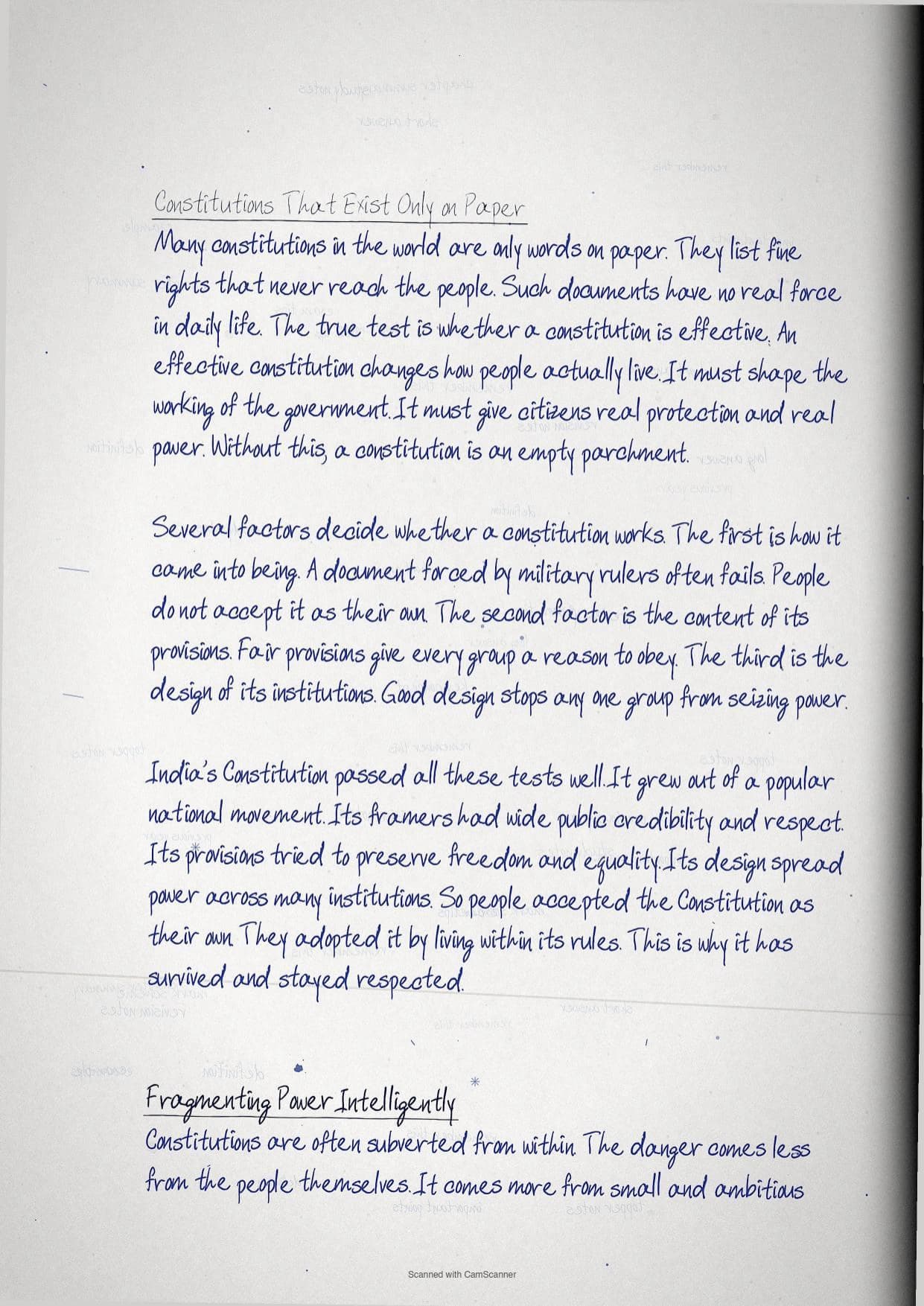
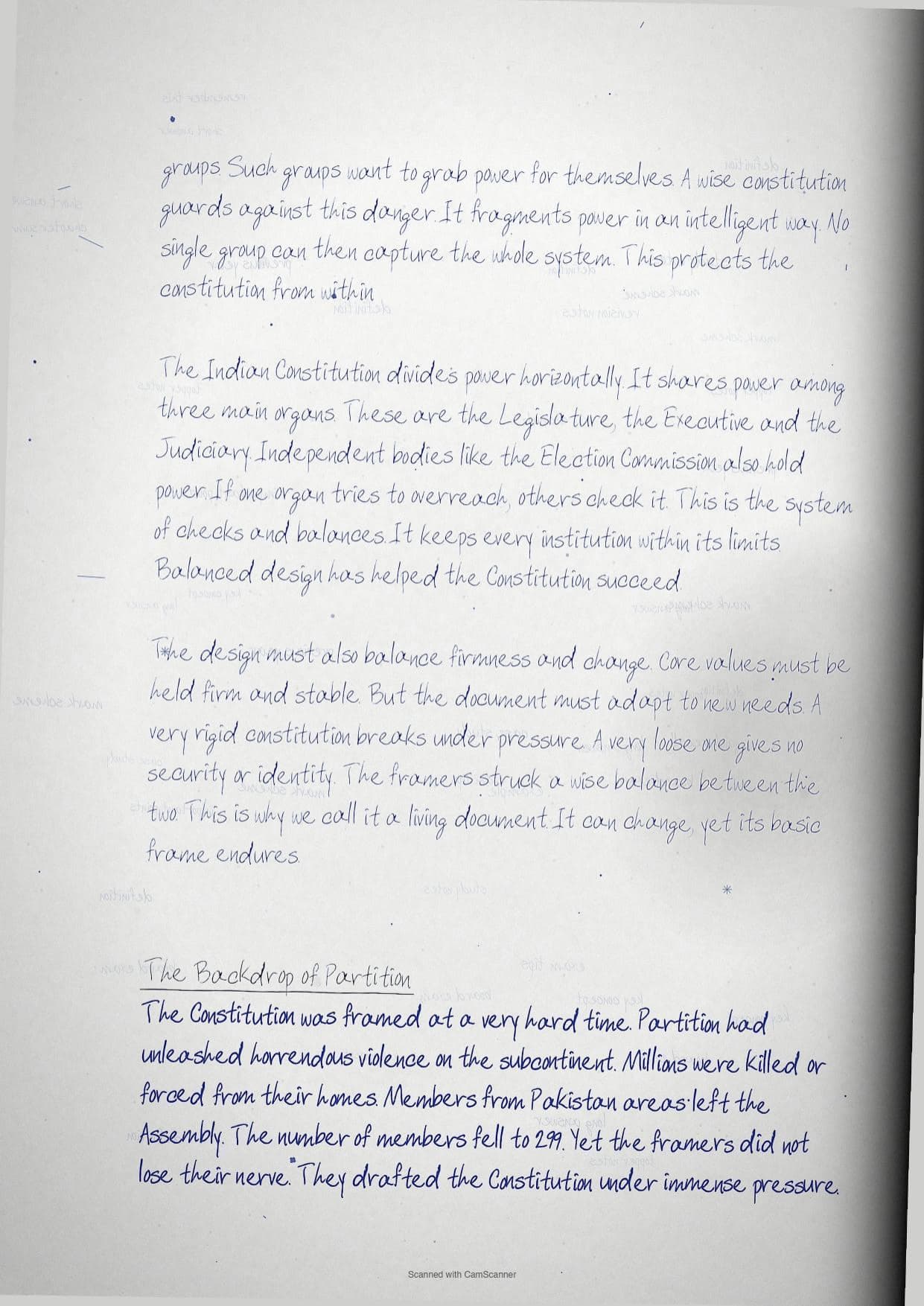
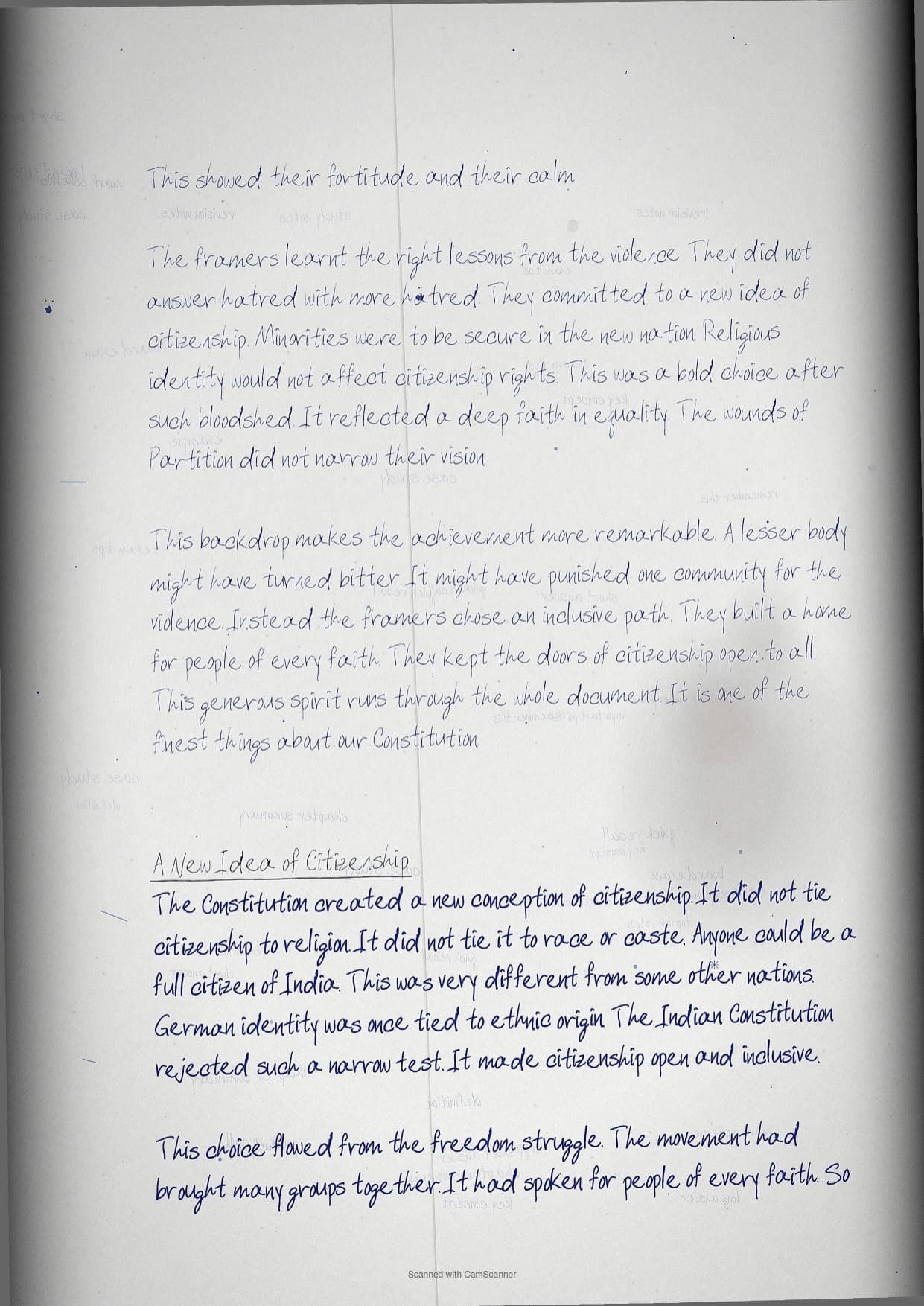
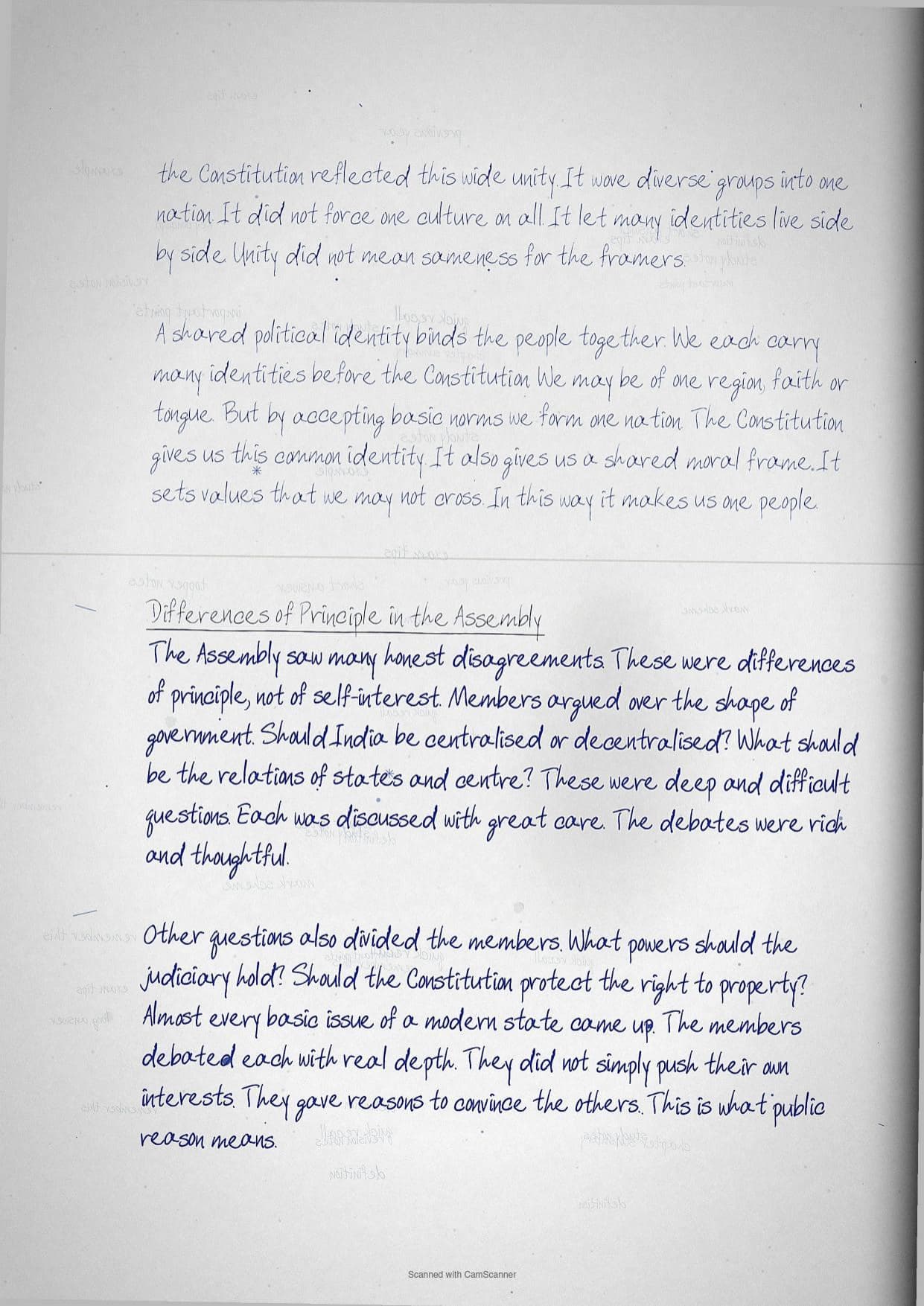
Class 11 Political Science Chapter 1 Constitution: Why and How is a high-frequency chapter in the CBSE Class 11 Political Science exam. These class 11 political-science handwritten notes chapter 1 Constitution: Why and How follow the 2026-27 NCERT and cover why a society needs a constitution, coordination, assurance and enforceable rules, who has the power to make decisions..
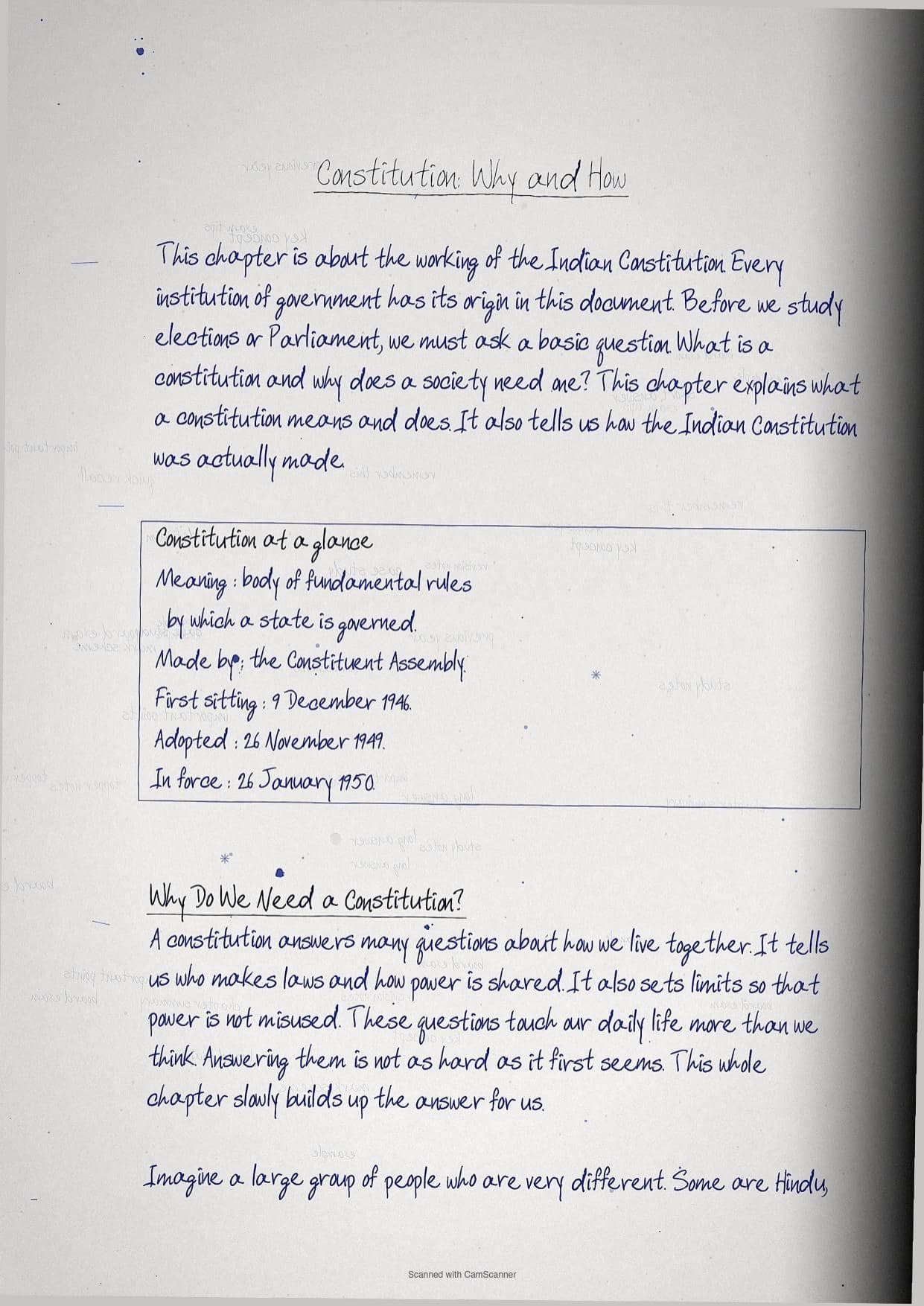
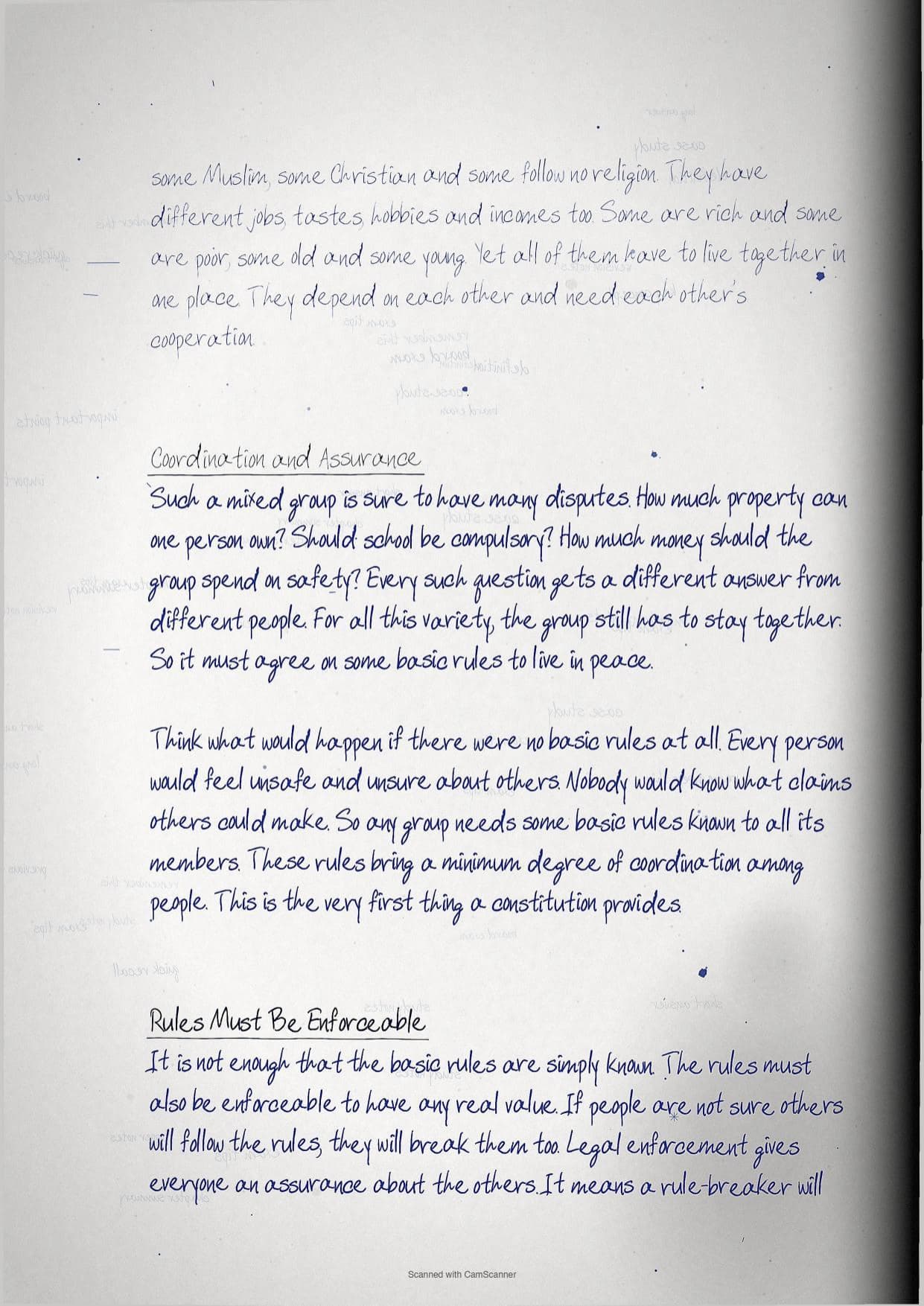
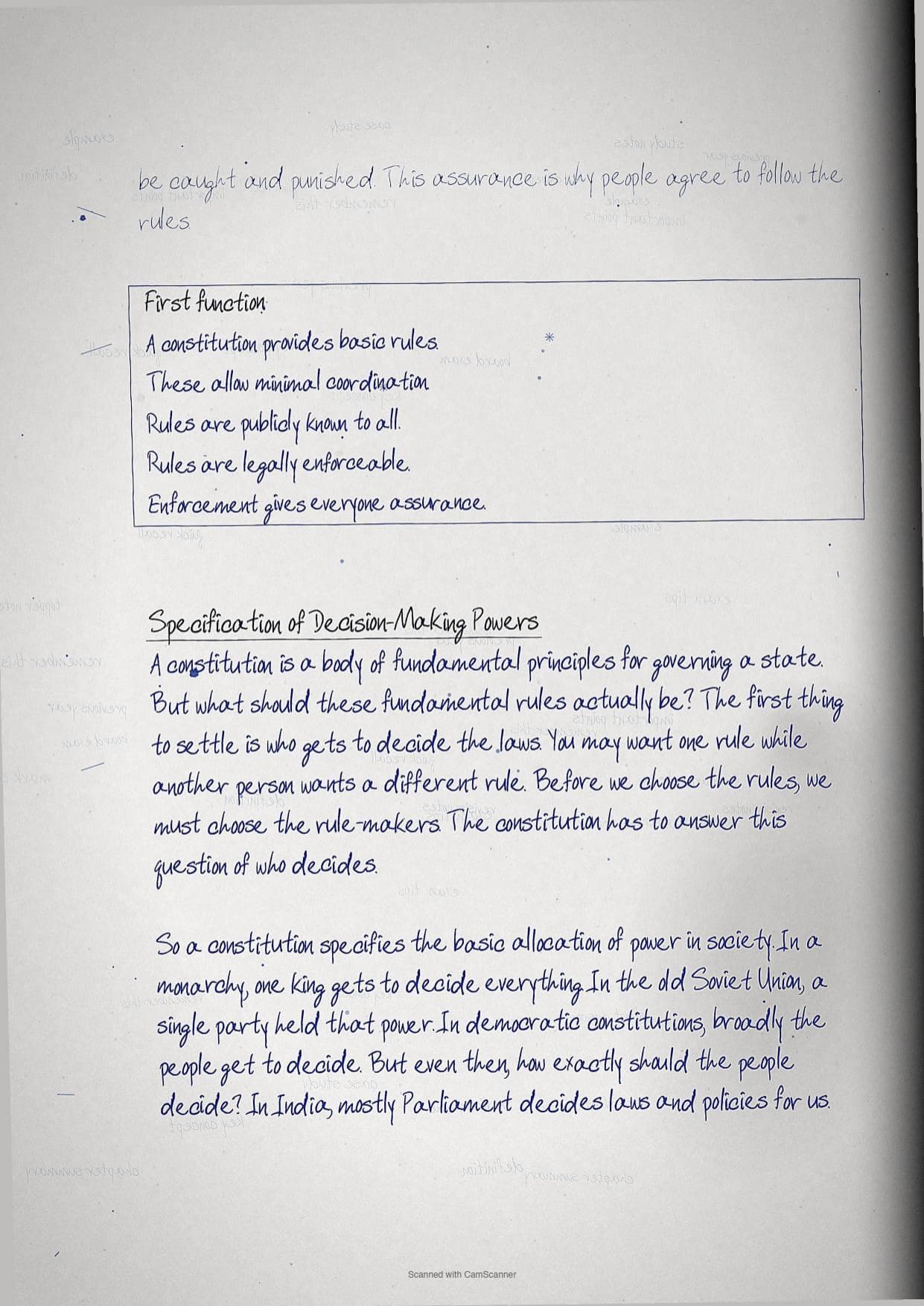
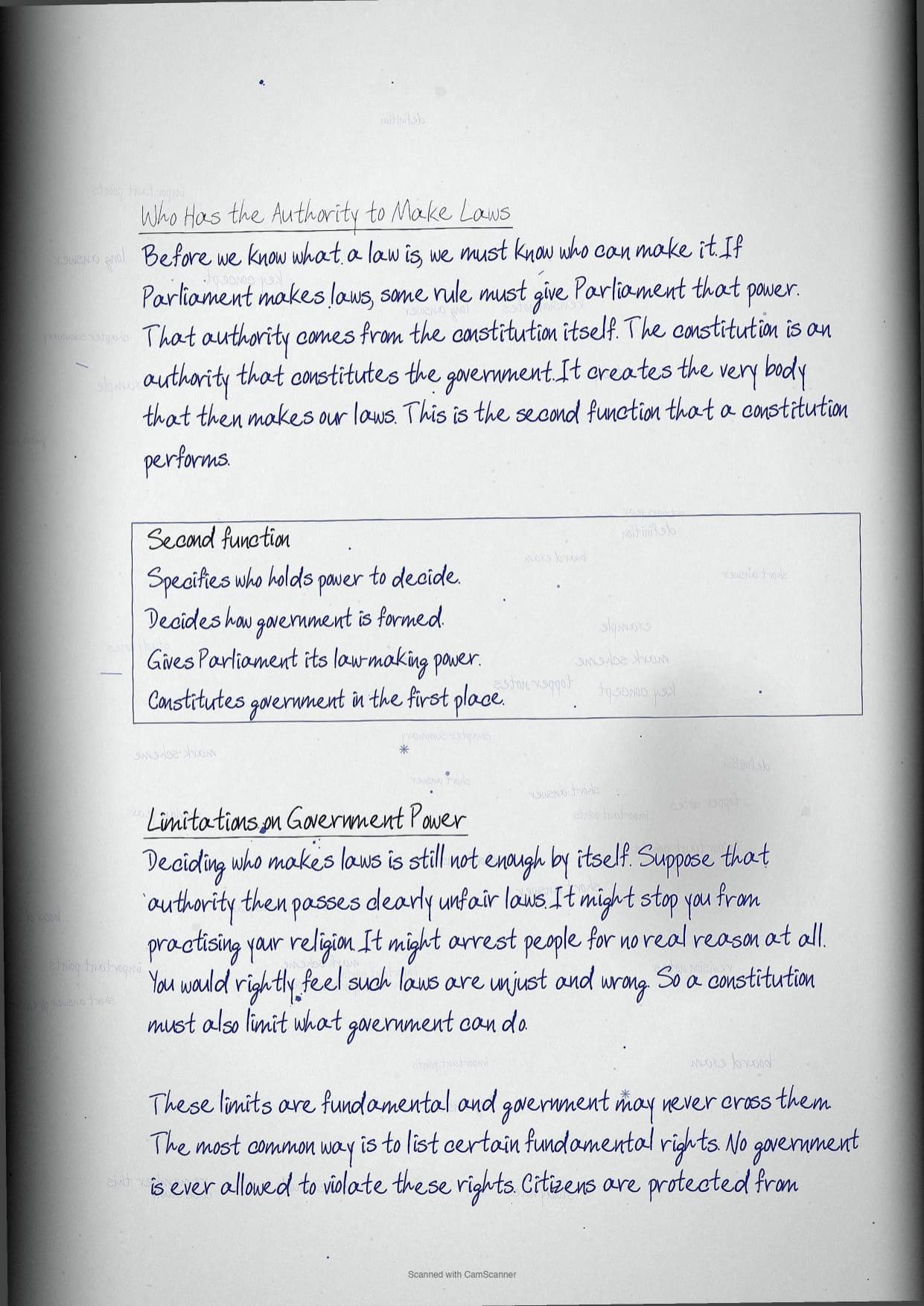
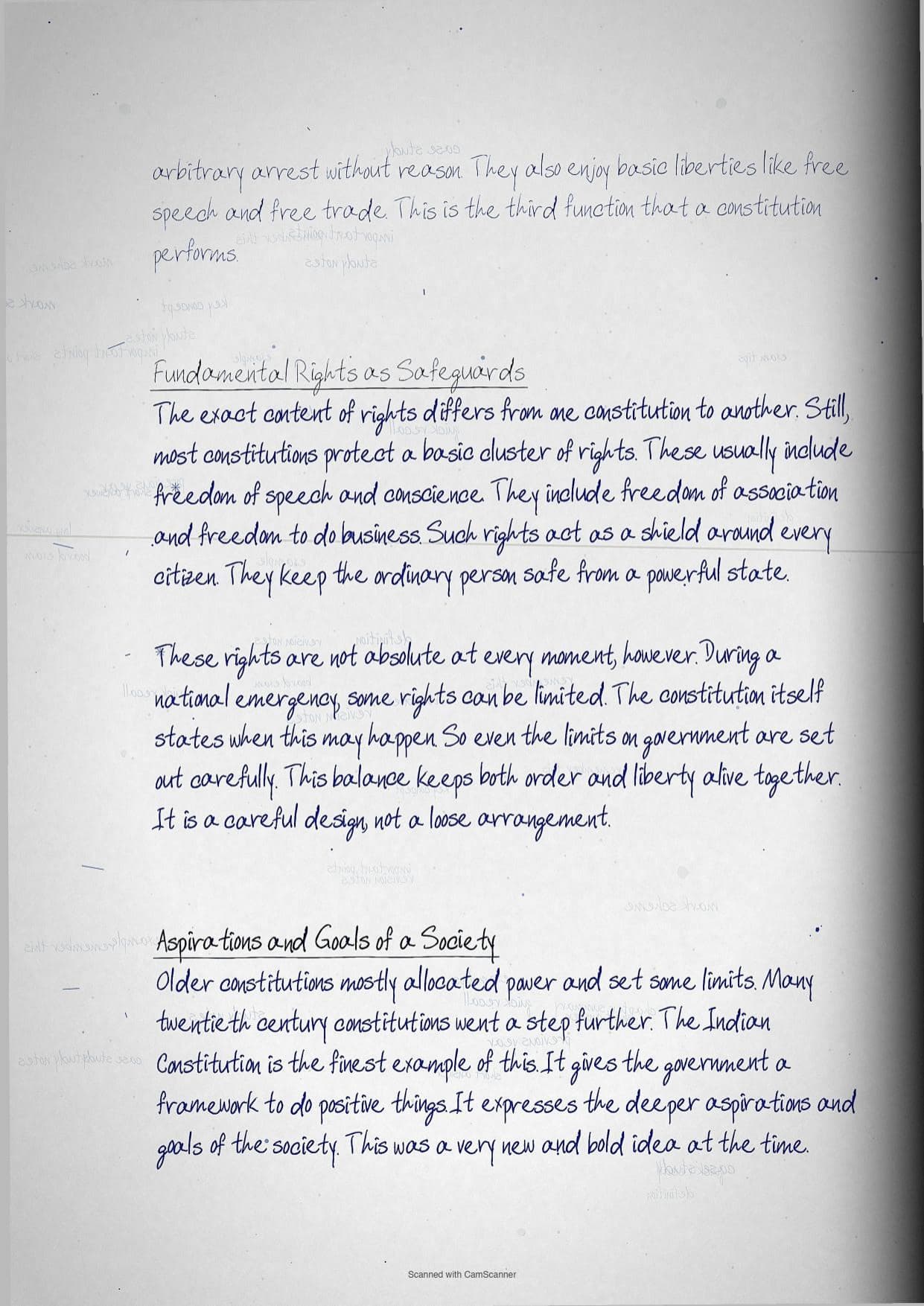
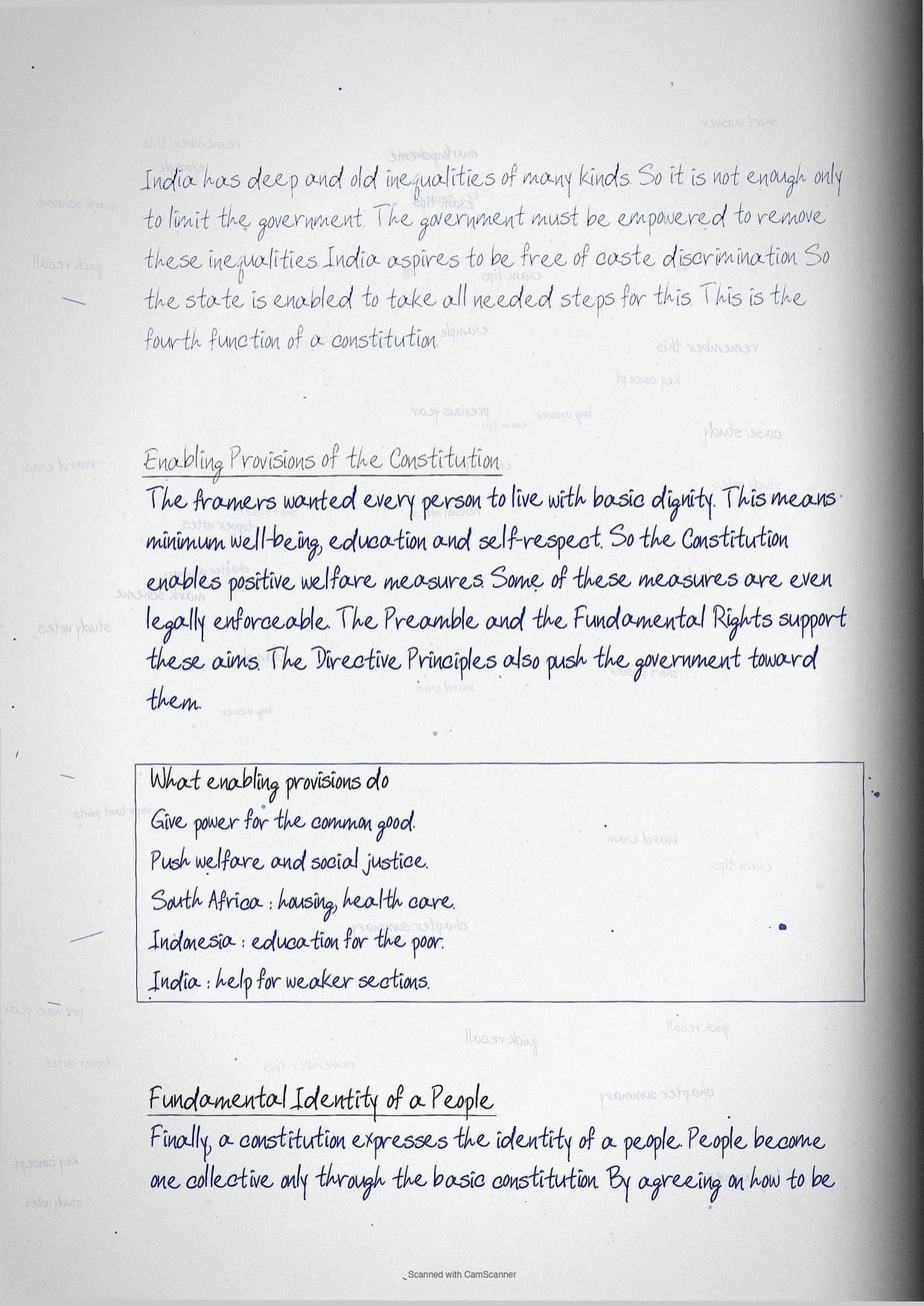
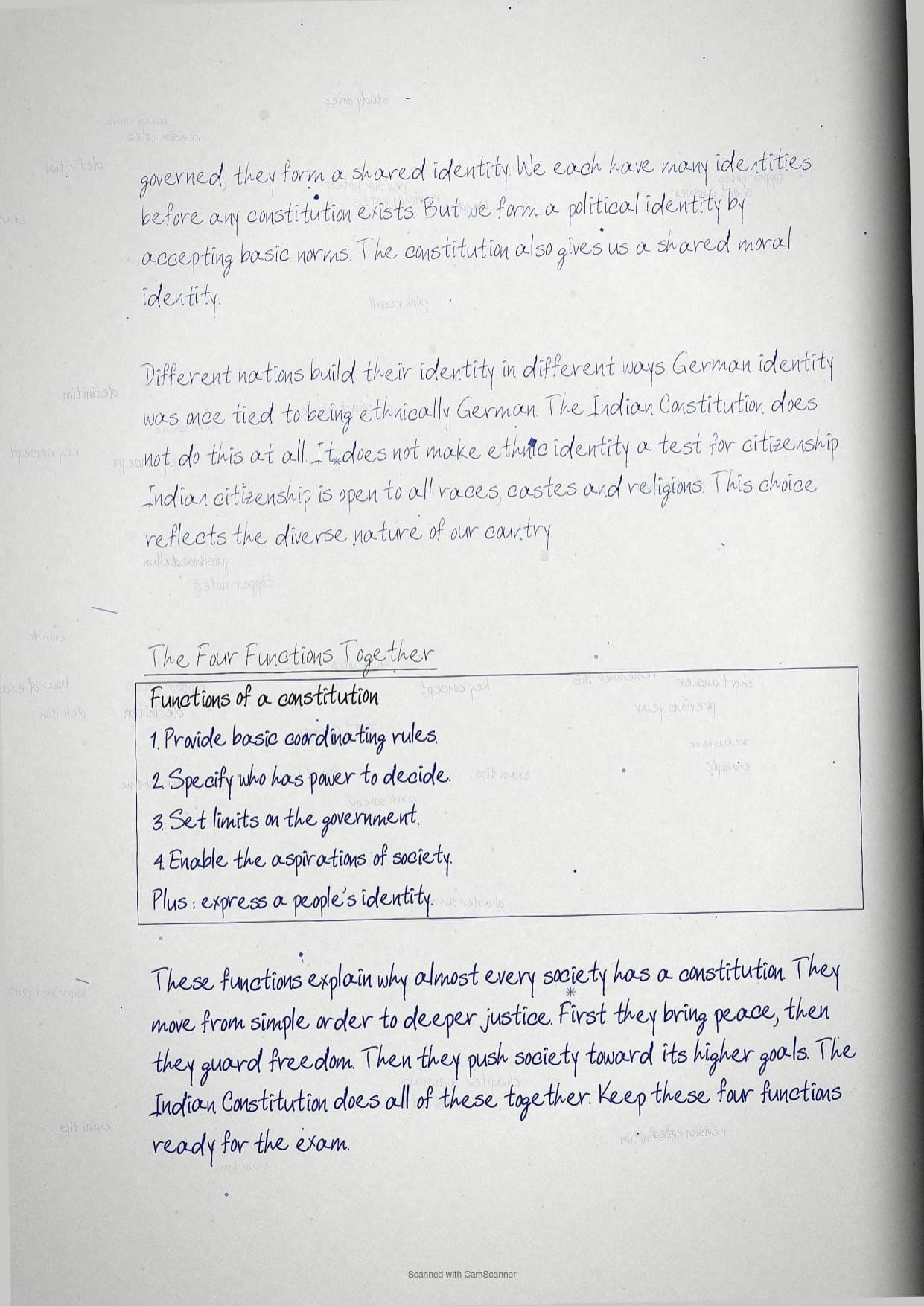
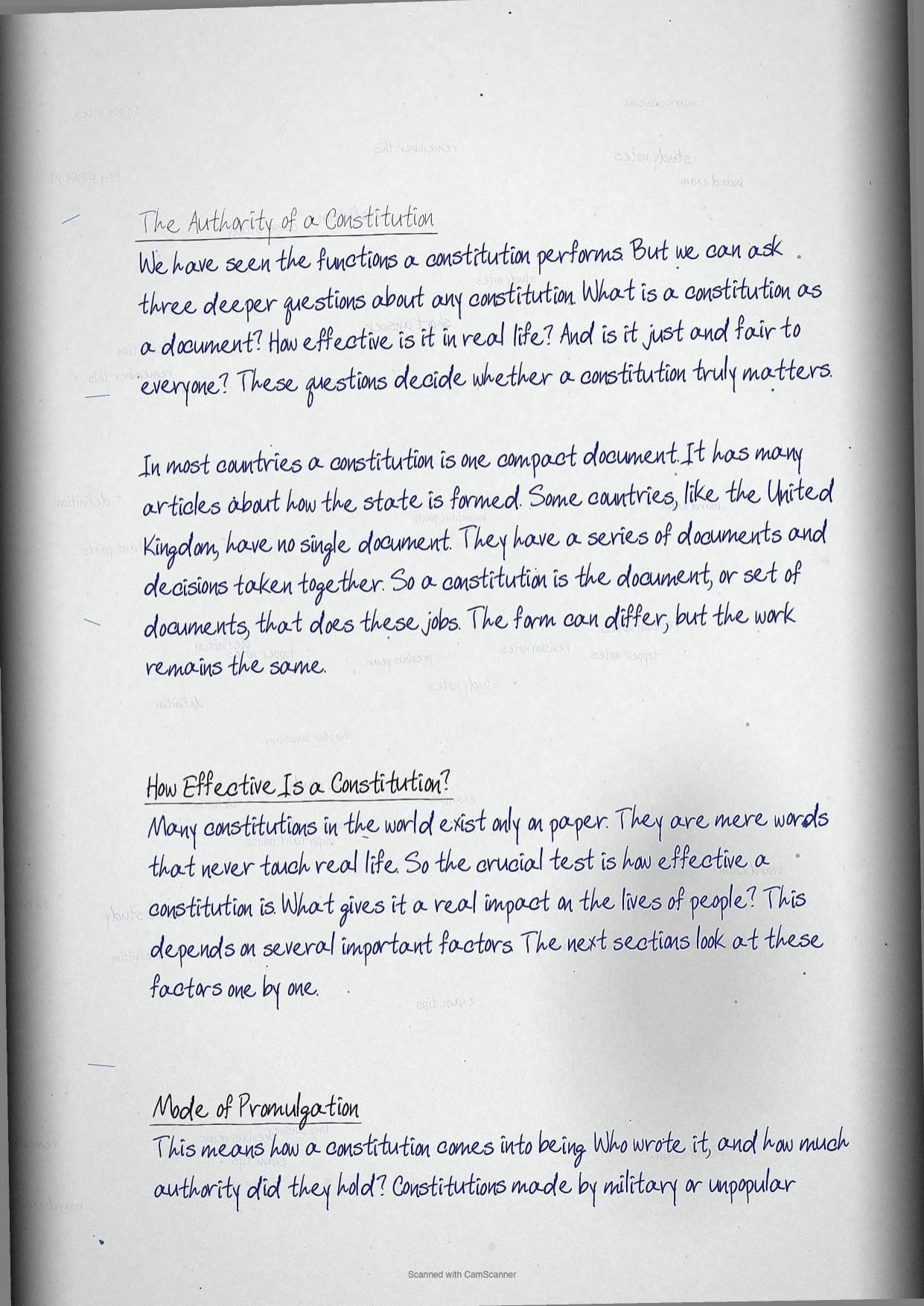
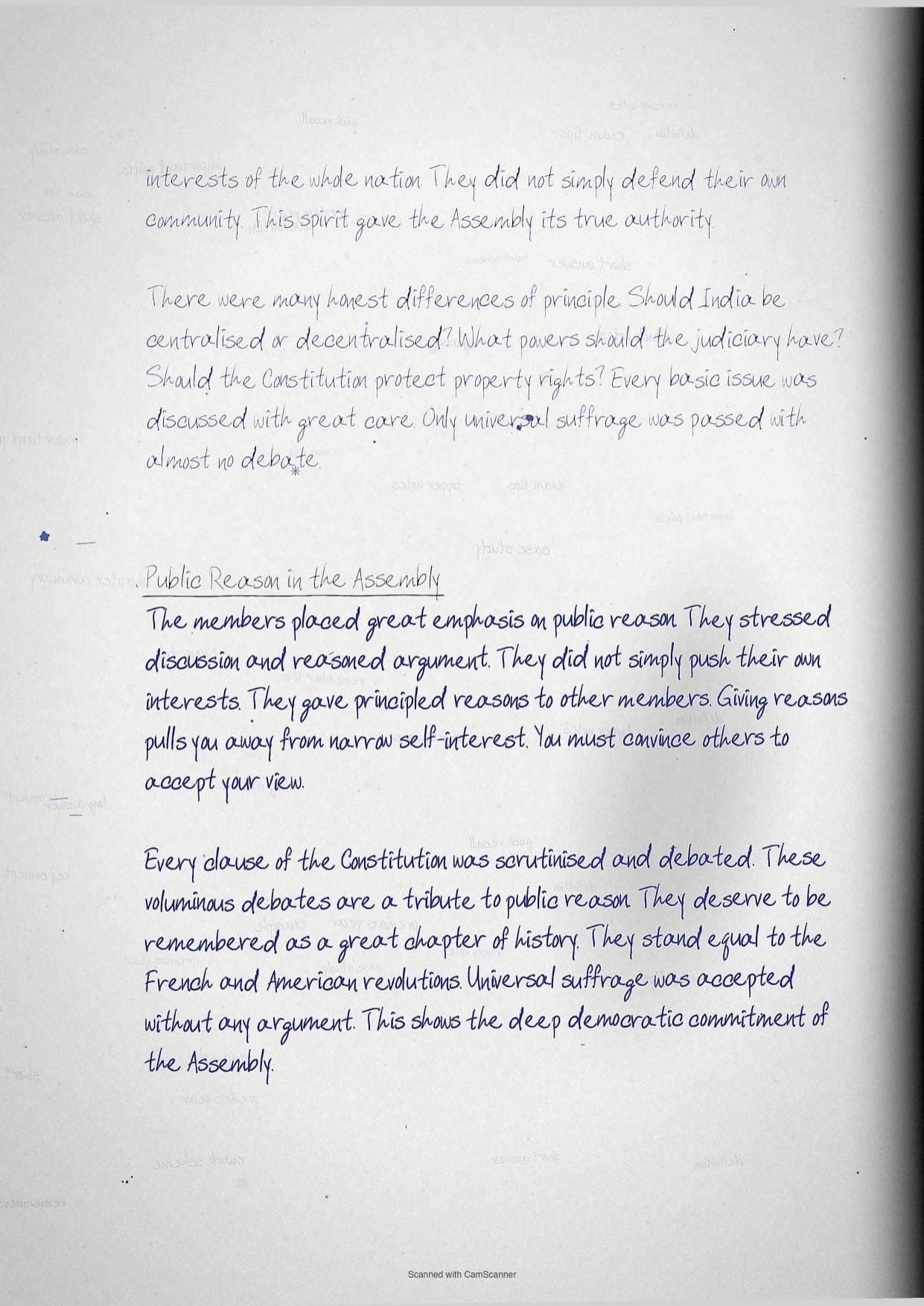
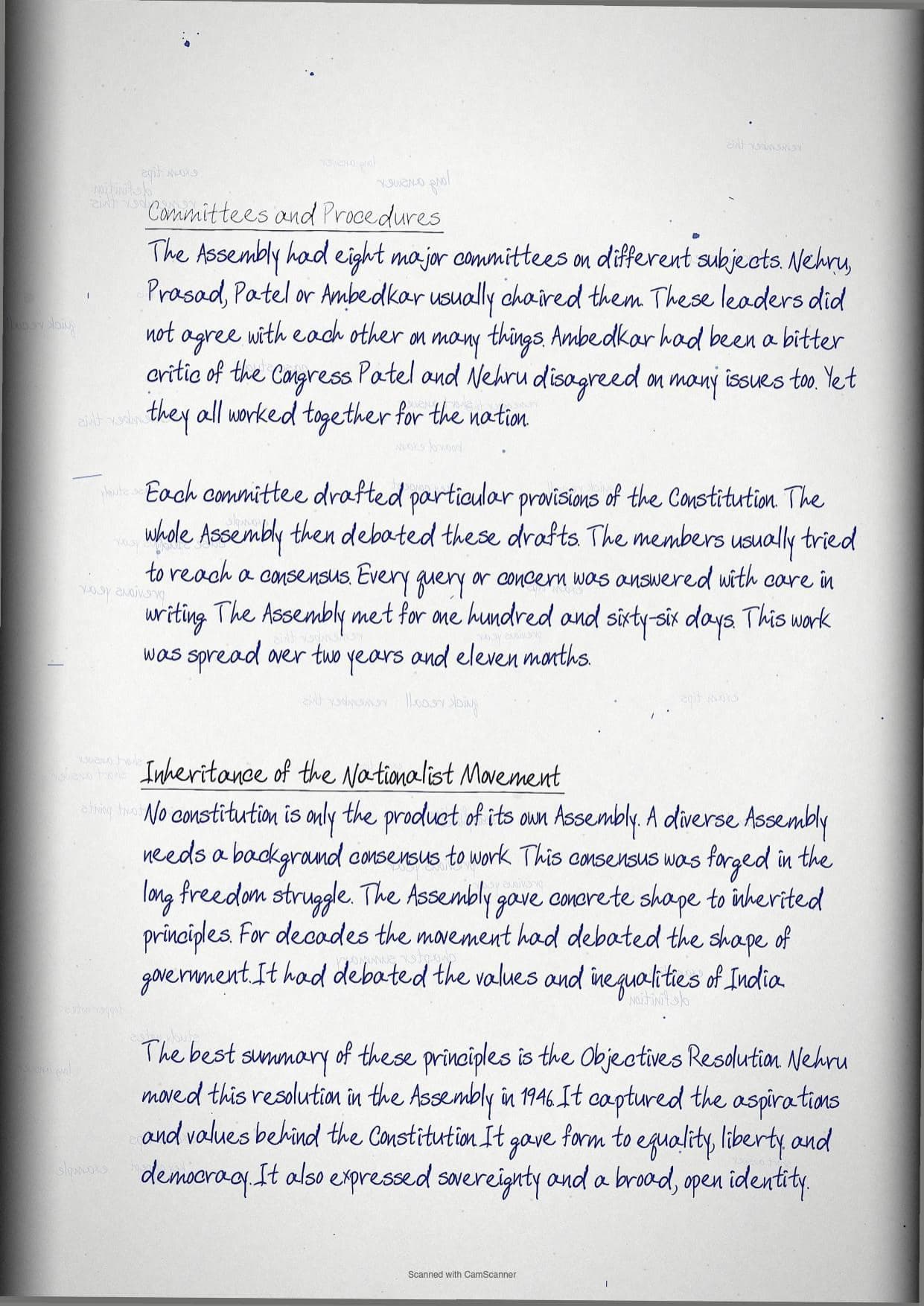
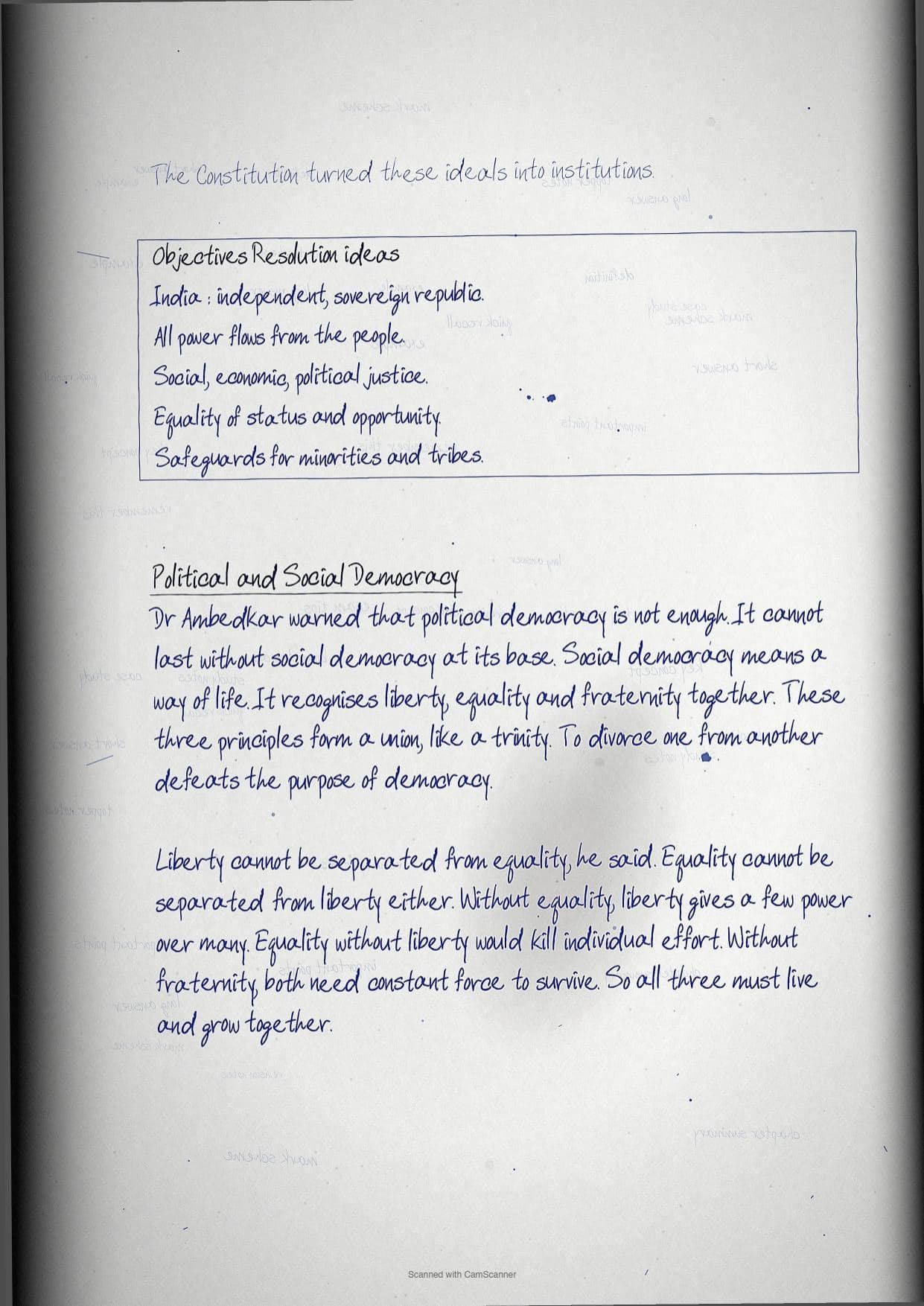
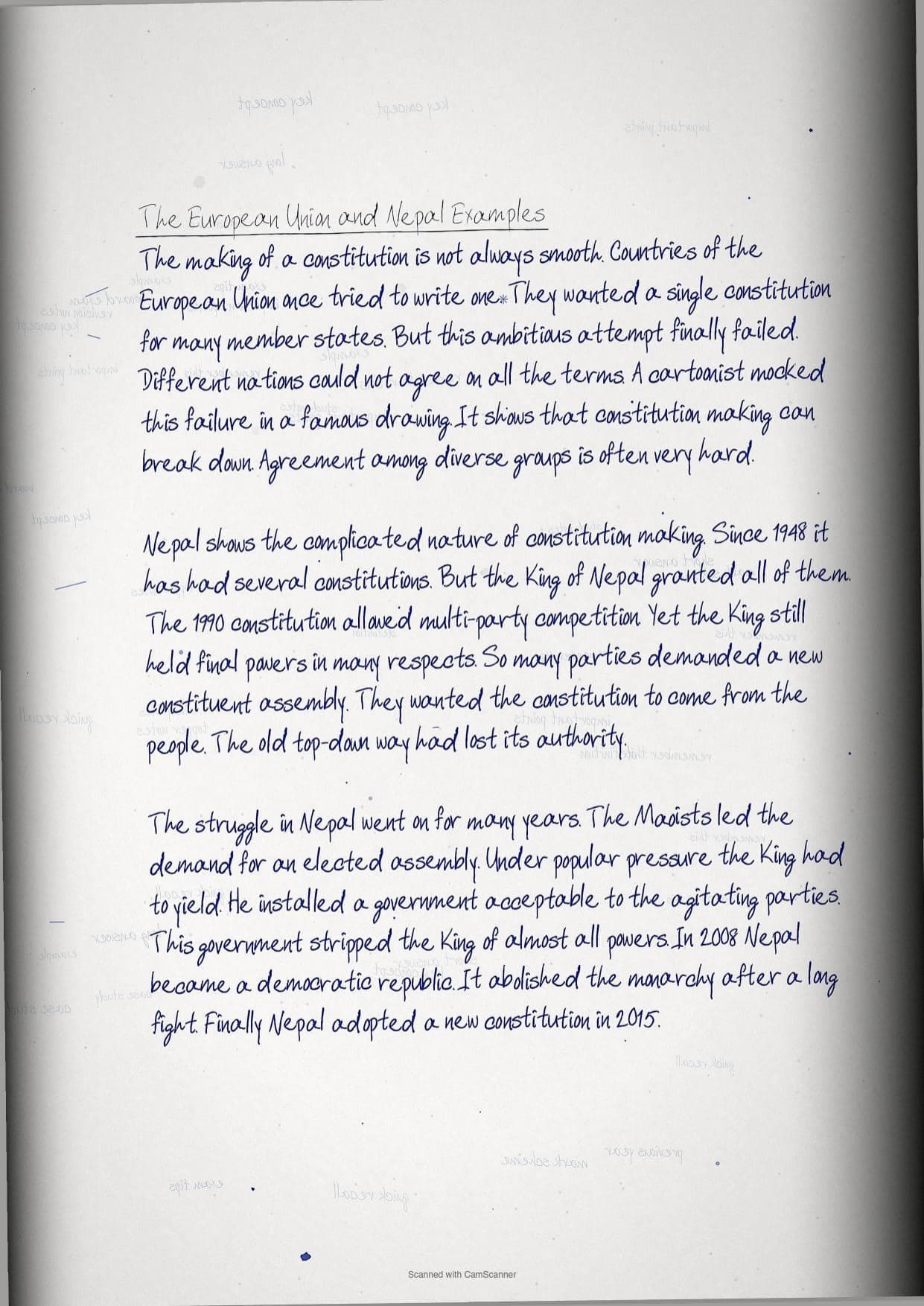
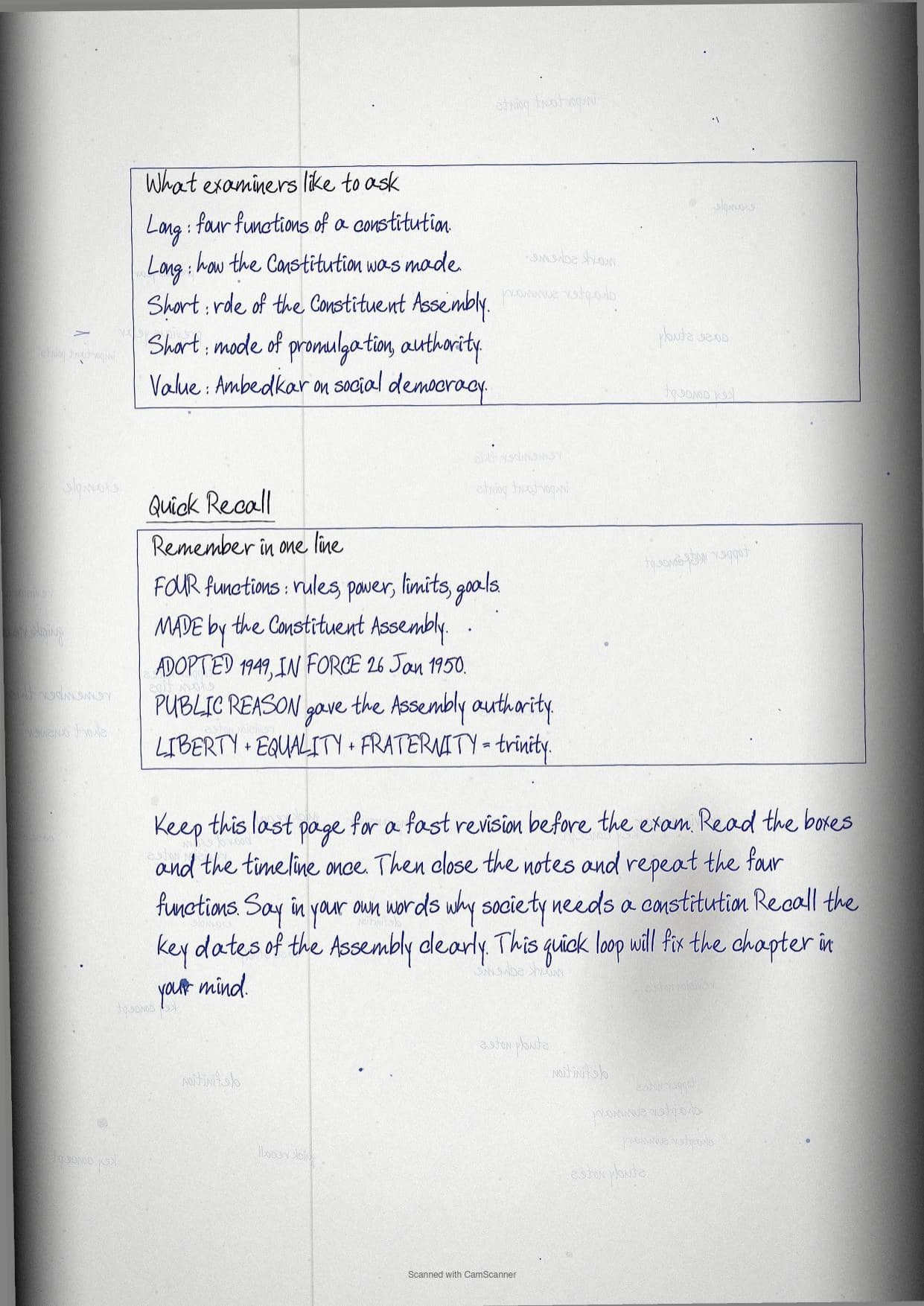
- CBSE Class 11 Weightage: a scoring chapter in the Political Science paper, asked in short and long answers.
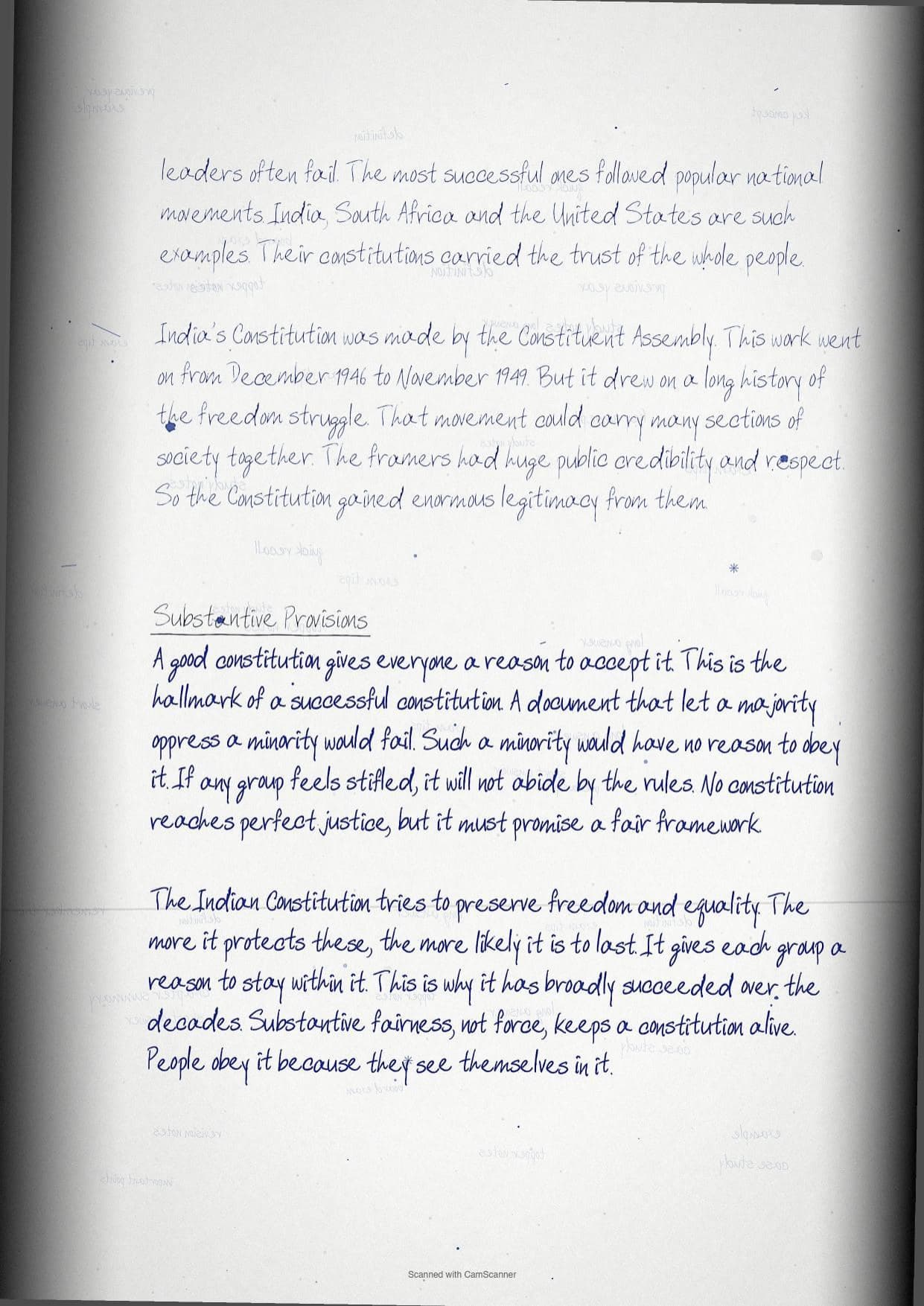
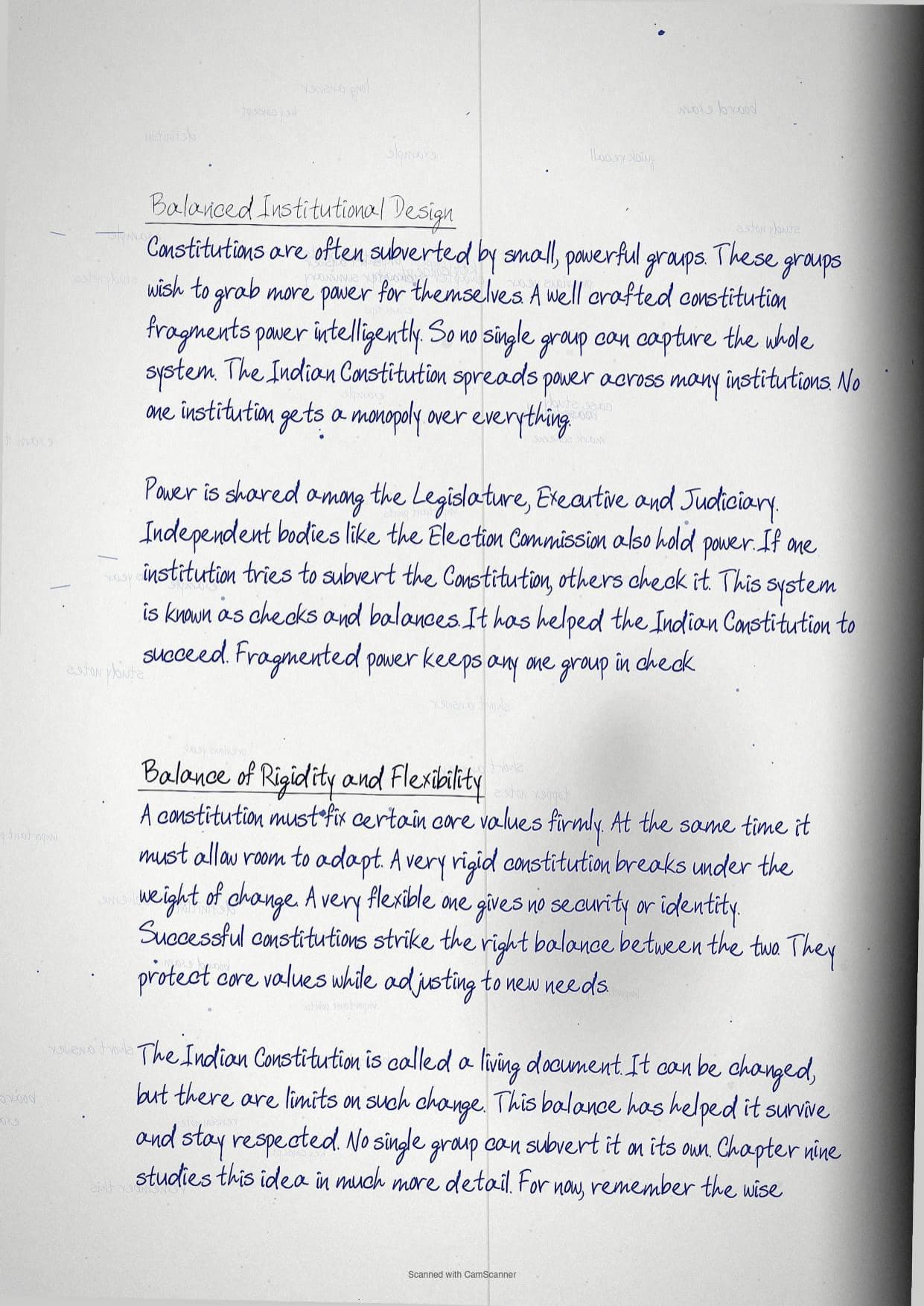
- What the notes cover: why a society needs a constitution, coordination, assurance and enforceable rules, who has the power to make decisions, limits on the government and fundamental rights.
- Best for: quick revision before Class 11 exams and a base for CUET later.
You can read the complete class 11 political-science handwritten notes for Constitution: Why and How, with key terms, boxed definitions, and quick revision points, in the PDF below.
These handwritten notes are written by subject teachers, mapped to the 2026-27 NCERT, and checked against the last five years of CBSE Class 11 Political Science papers.
What the Constitution: Why and How Handwritten Notes Cover
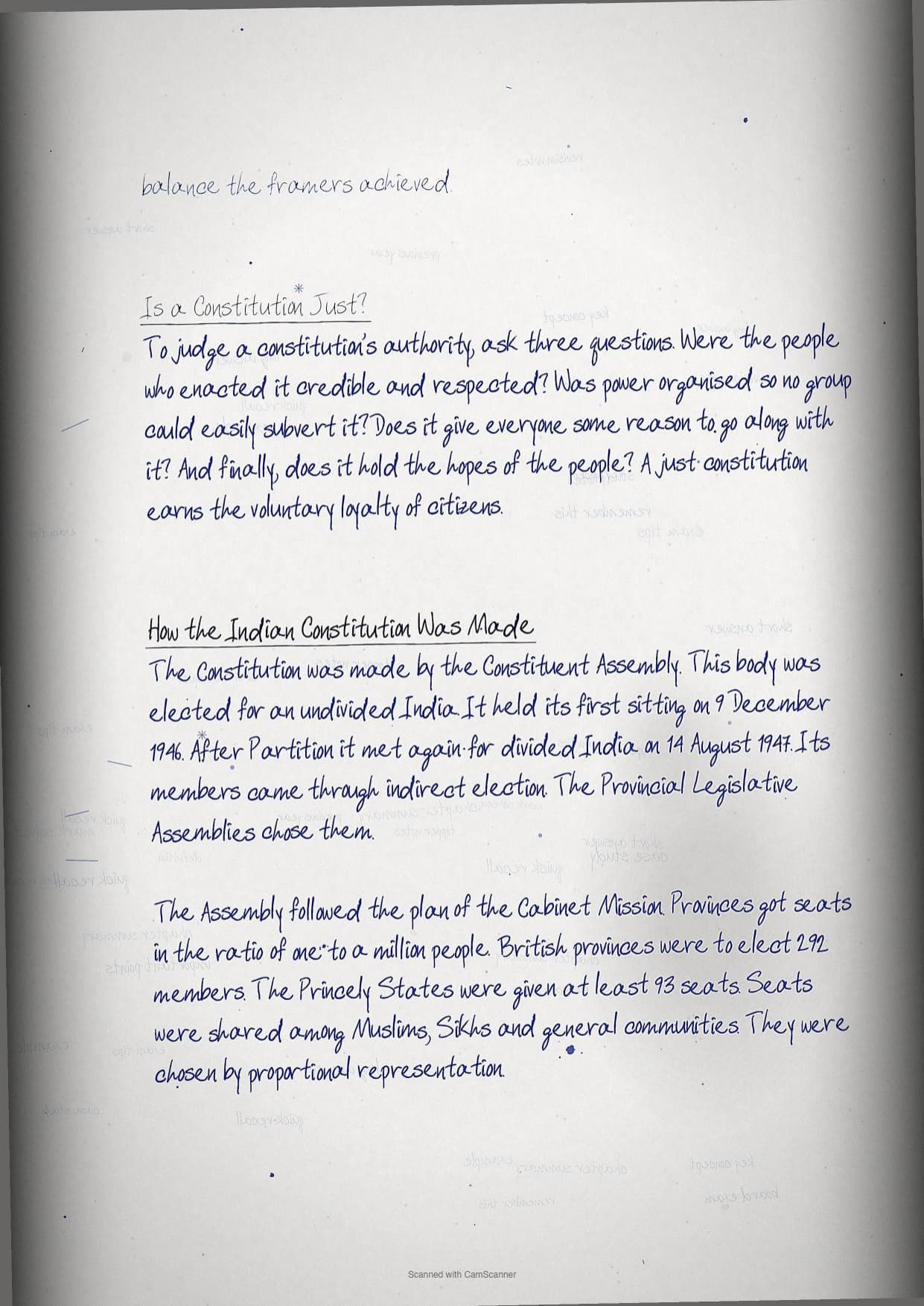
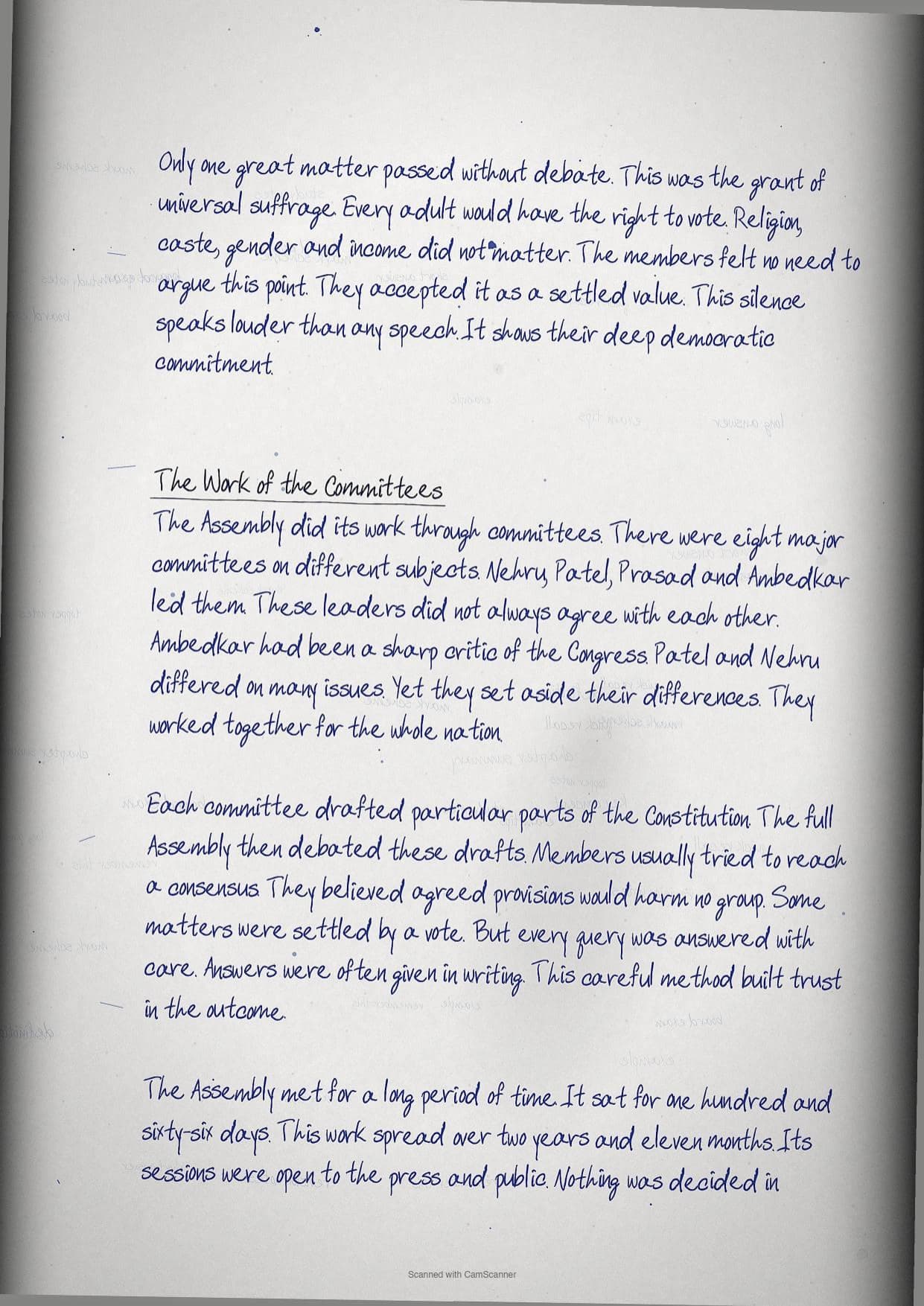
This chapter explains what a constitution is and why every society needs one. It sets out the four functions a constitution performs. It then tells the story of how the Indian Constitution was made by the Constituent Assembly.
- Why a society needs a constitution
- Coordination, assurance and enforceable rules
- Who has the power to make decisions
- Limits on the government and fundamental rights
- Aspirations and identity of a people
- What makes a constitution effective and just
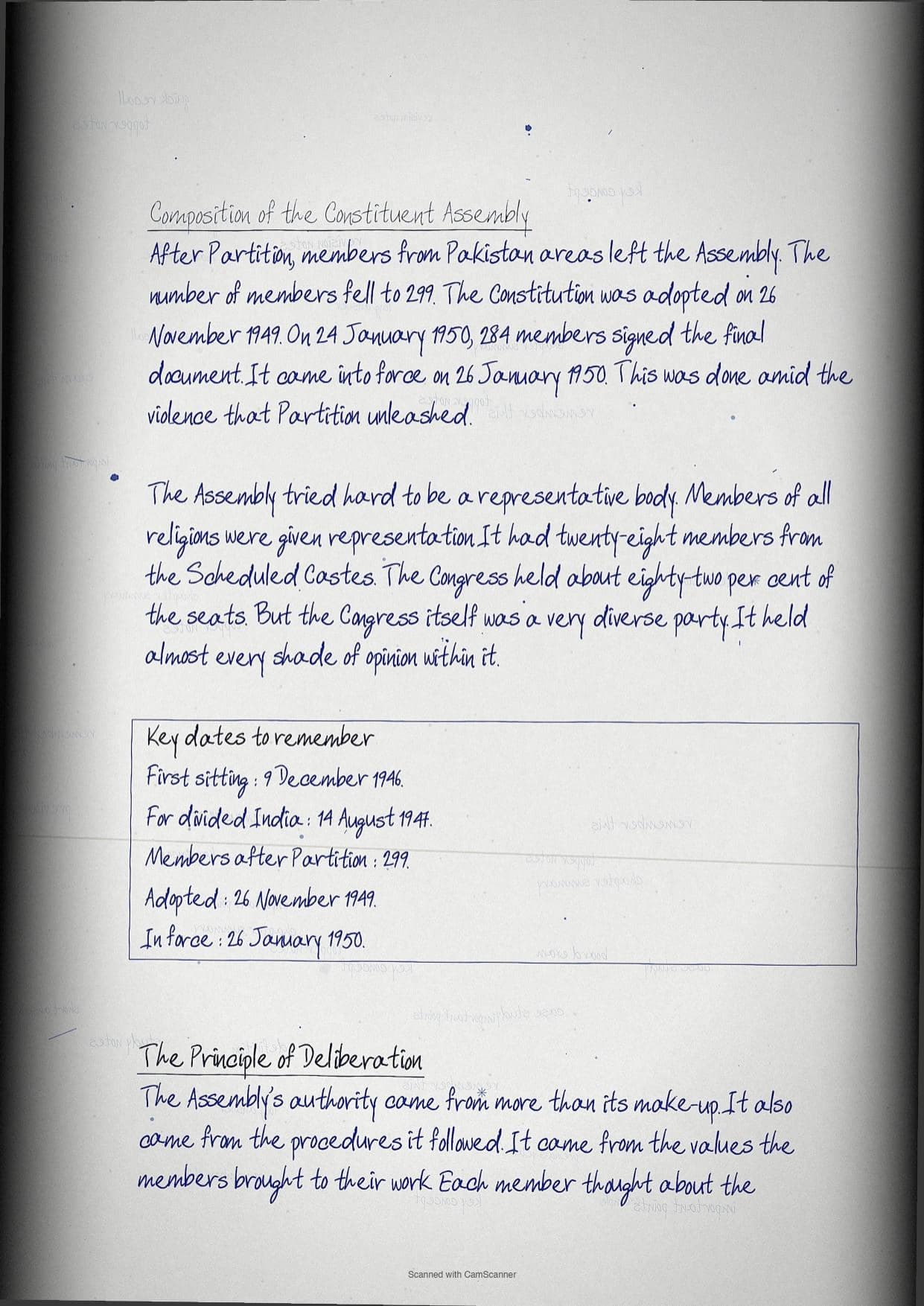
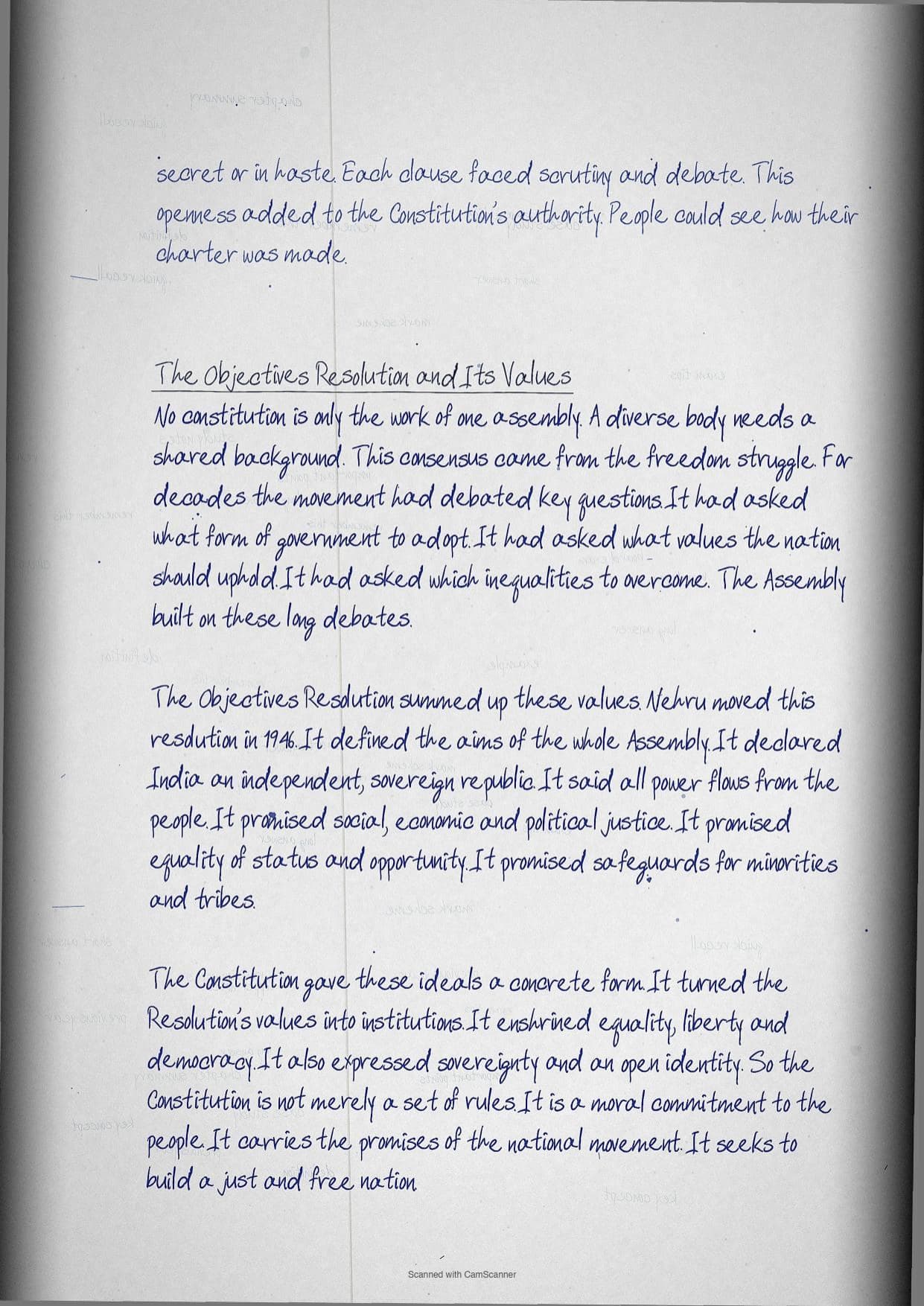
- How the Constituent Assembly framed the Constitution
Constitution: Why and How Self-Assessment Quiz
Try these quick questions after you read the notes. Tap each question to check your answer. They cover the points CBSE asks most often.
Which is NOT a function of a constitution?
(a) provide basic rules (b) allocate power (c) collect taxes directly (d) set limits on government
Answer: (c) collect taxes directly - a constitution frames rules, not day-to-day tax collection
When did the Constitution come into force?
(a) 26 Nov 1949 (b) 15 Aug 1947 (c) 26 Jan 1950 (d) 9 Dec 1946
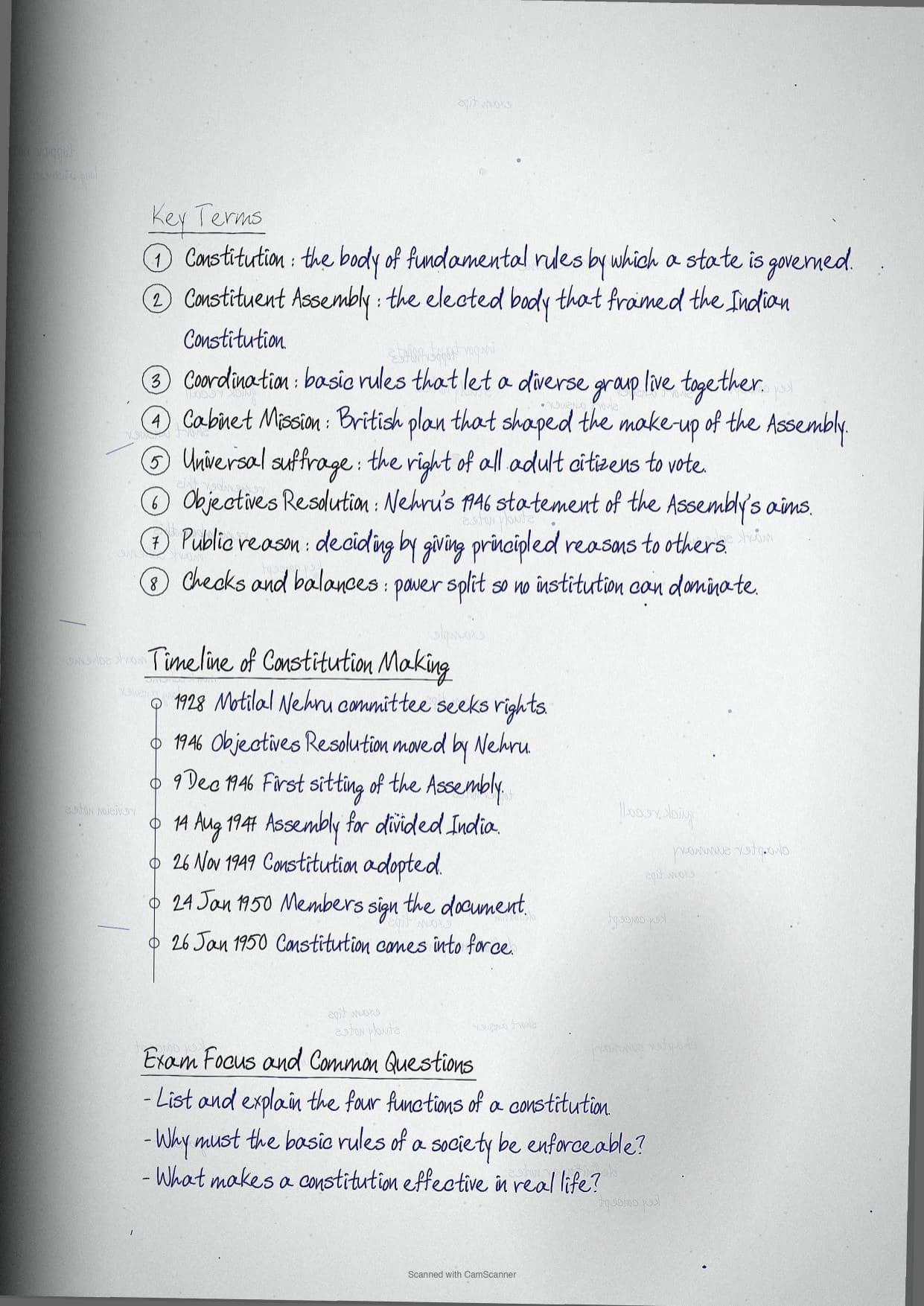
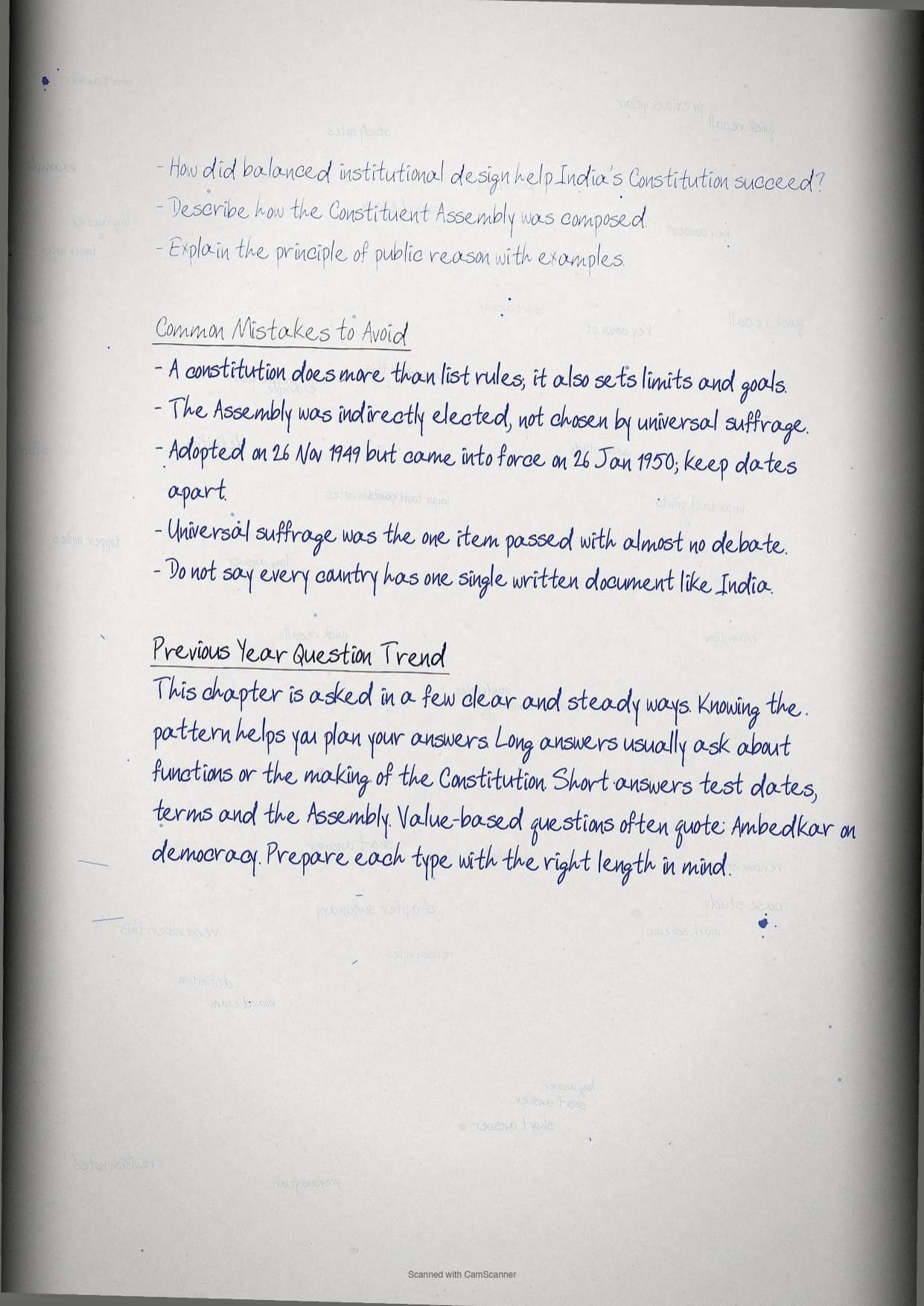
Answer: (c) 26 Jan 1950 - it was adopted in 1949 but enforced in 1950
Who moved the Objectives Resolution?
(a) Ambedkar (b) Nehru (c) Patel (d) Rajendra Prasad
Answer: (b) Nehru - he moved it in 1946 to define the Assembly's aims
The Constituent Assembly was elected by?
(a) universal suffrage (b) the King (c) Provincial Legislative Assemblies (d) the British Parliament
Answer: (c) Provincial Legislative Assemblies - members were chosen by indirect election
Which was passed with almost no debate?
(a) property rights (b) universal suffrage (c) centre-state relations (d) powers of judiciary
Answer: (b) universal suffrage - it was accepted without argument, showing democratic commitment
Constitution: Why and How Topic-wise Weightage for CBSE Class 11 Political Science
Some parts of this chapter are asked more often than others. The table below shows which sub-topics to revise first, based on recent CBSE Class 11 question trends.
| Sub-topic | Weightage | CBSE Frequency |
|---|---|---|
| Four functions of a constitution | High | asked most years |
| Making of the Indian Constitution | High | asked most years |
| Constituent Assembly and its composition | Medium | common |
| What makes a constitution effective | Medium | common |
| Public reason and deliberation | Low | occasional |
Key Terms and Ideas in Constitution: Why and How
These are the terms and ideas the exam asks about most. Learn each one so you can define it and use it in your answers.
| Term / Idea | What it means |
|---|---|
| Constitution | body of fundamental rules by which a state is governed |
| Coordination | basic known rules that let a diverse group live together |
| Allocation of power | it decides who has the power to make decisions |
| Limits on government | it fixes limits the government may never cross |
| Enabling provisions | it empowers the state to pursue social goals |
| Constituent Assembly | elected body that framed the Constitution, 1946 to 1949 |
| Public reason | members decided by giving principled reasons to others |
| Objectives Resolution | Nehru's 1946 statement of the Assembly's aims |
How Collegedunia's Handwritten Notes Help You Revise Constitution: Why and How
These notes are made for the night before the exam. They keep the facts short and easy to scan. Collegedunia maps every point to the 2026-27 NCERT.
- Clear handwriting: each topic is written in neat, easy-to-read handwriting.
- Boxed key terms: the main terms and definitions are boxed by hand for fast recall.
- Diagrams and tables: simple hand-drawn tables and charts make ideas clear.
- Colour-coded headings: new sub-topics stand out, so you find any section in seconds.
How to Use These Handwritten Notes for Class 11 Political Science Revision
Use these class 11 political-science handwritten notes in two passes. Read them slowly once for the full chapter. Then, near the exam, read only the boxes and key terms for a fast recall.
- Read the notes once with the NCERT chapter open beside you.
- Say each key term and idea in your own words.
- Practise one long-answer question from a past paper.
- On the last day, revise only the key terms and the boxes.
Class 11 Political Science Handwritten Notes for All Chapters
The table below links the class 11 political-science handwritten notes for every chapter. Use it to jump to any other chapter's notes.
| Chapter | Resource |
|---|---|
| Chapter 1 | Constitution: Why and How Handwritten Notes |
| Chapter 2 | Rights in the Indian Constitution Handwritten Notes |
| Chapter 3 | Election and Representation Handwritten Notes |
| Chapter 4 | Executive Handwritten Notes |
| Chapter 5 | Legislature Handwritten Notes |
| Chapter 6 | Judiciary Handwritten Notes |
| Chapter 7 | Federalism Handwritten Notes |
| Chapter 8 | Local Governments Handwritten Notes |
| Chapter 9 | Constitution as a Living Document Handwritten Notes |
| Chapter 10 | The Philosophy of the Constitution Handwritten Notes |
| Chapter 11 | Political Theory: An Introduction Handwritten Notes |
| Chapter 12 | Freedom Handwritten Notes |
| Chapter 13 | Equality Handwritten Notes |
| Chapter 14 | Social Justice Handwritten Notes |
| Chapter 15 | Rights Handwritten Notes |
| Chapter 16 | Citizenship Handwritten Notes |
| Chapter 17 | Nationalism Handwritten Notes |
| Chapter 18 | Secularism Handwritten Notes |
Constitution: Why and How Class 11 Political Science Handwritten Notes FAQs
Ques. Where can I download Constitution: Why and How Class 11 Political Science Handwritten Notes PDF?
Ans. You can download the Constitution: Why and How Class 11 Political Science Handwritten Notes PDF directly from this page. Both the Normal and HD versions are free.
Ques. Are these handwritten notes aligned with the 2026-27 NCERT?
Ans. Yes. These notes follow the current 2026-27 syllabus for Class 11 Political Science. Difference between adopting and enforcing the Constitution
Ques. How many pages is the Class 11 Political Science Constitution: Why and How Handwritten Notes PDF?
Ans. The notes run about 20 pages. They cover the full chapter with key terms, hand-drawn boxes, and a short self-assessment quiz.
Ques. What is the main idea of the 11th standard Political Science chapter Constitution: Why and How?
Ans. The Constitution was adopted by the Constituent Assembly on 26 November 1949. It came into force across the country on 26 January 1950, now celebrated as Republic Day.
Ques. Are these Constitution: Why and How notes enough for the CBSE Class 11 exam?
Ans. Yes, for revision. The Collegedunia handwritten notes cover every key point and exam term. Read them with the NCERT chapter and practise past questions.



Comments