




Questions from Class 11 Political Science Chapter 11 Political Theory: An Introduction come up often in the CBSE Class 11 exam. These class 11 political-science handwritten notes chapter 11 Political Theory: An Introduction follow the 2026-27 NCERT and cover human beings, reason and political life, what is politics and why we cannot avoid it, politics beyond politicians and.
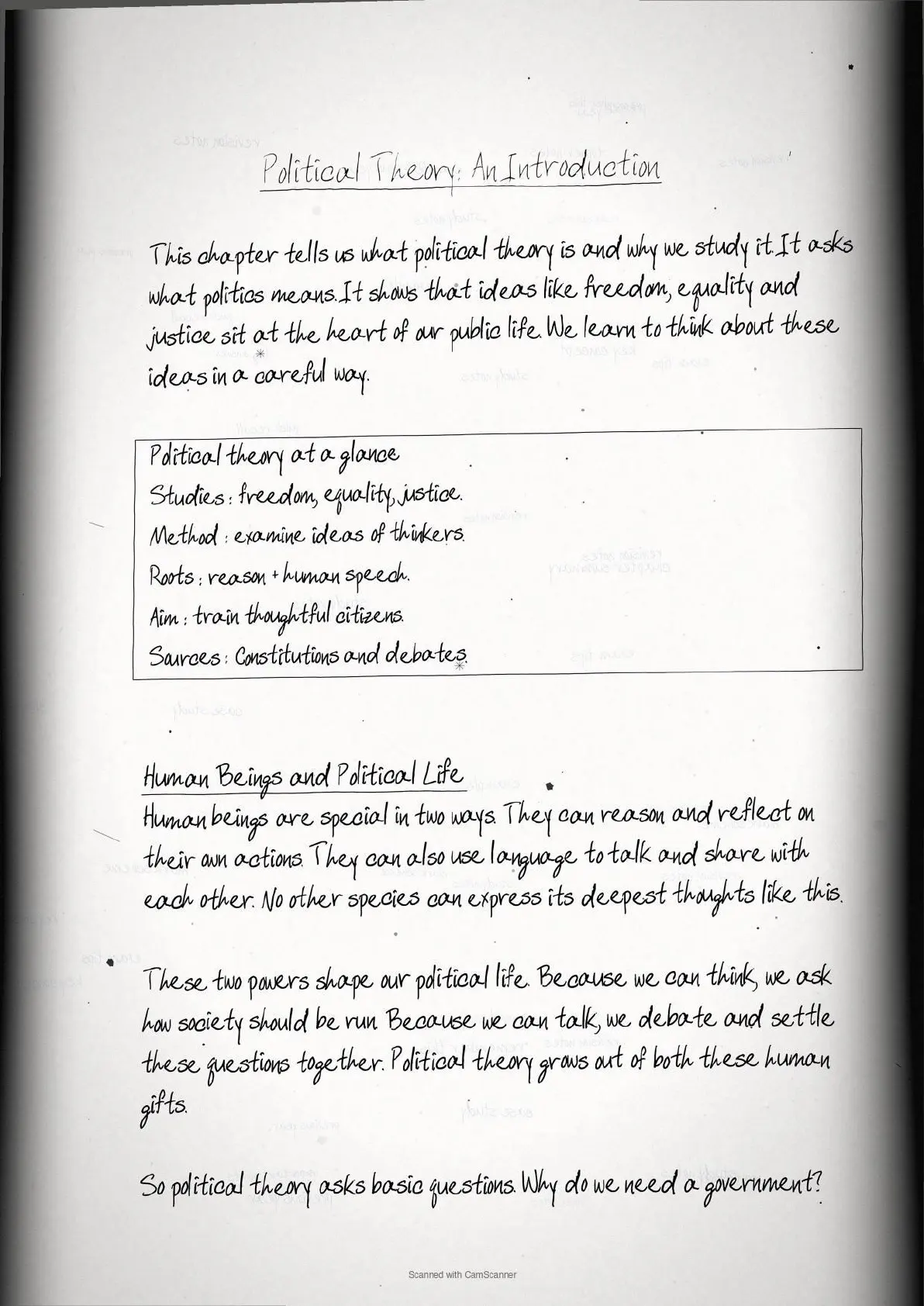
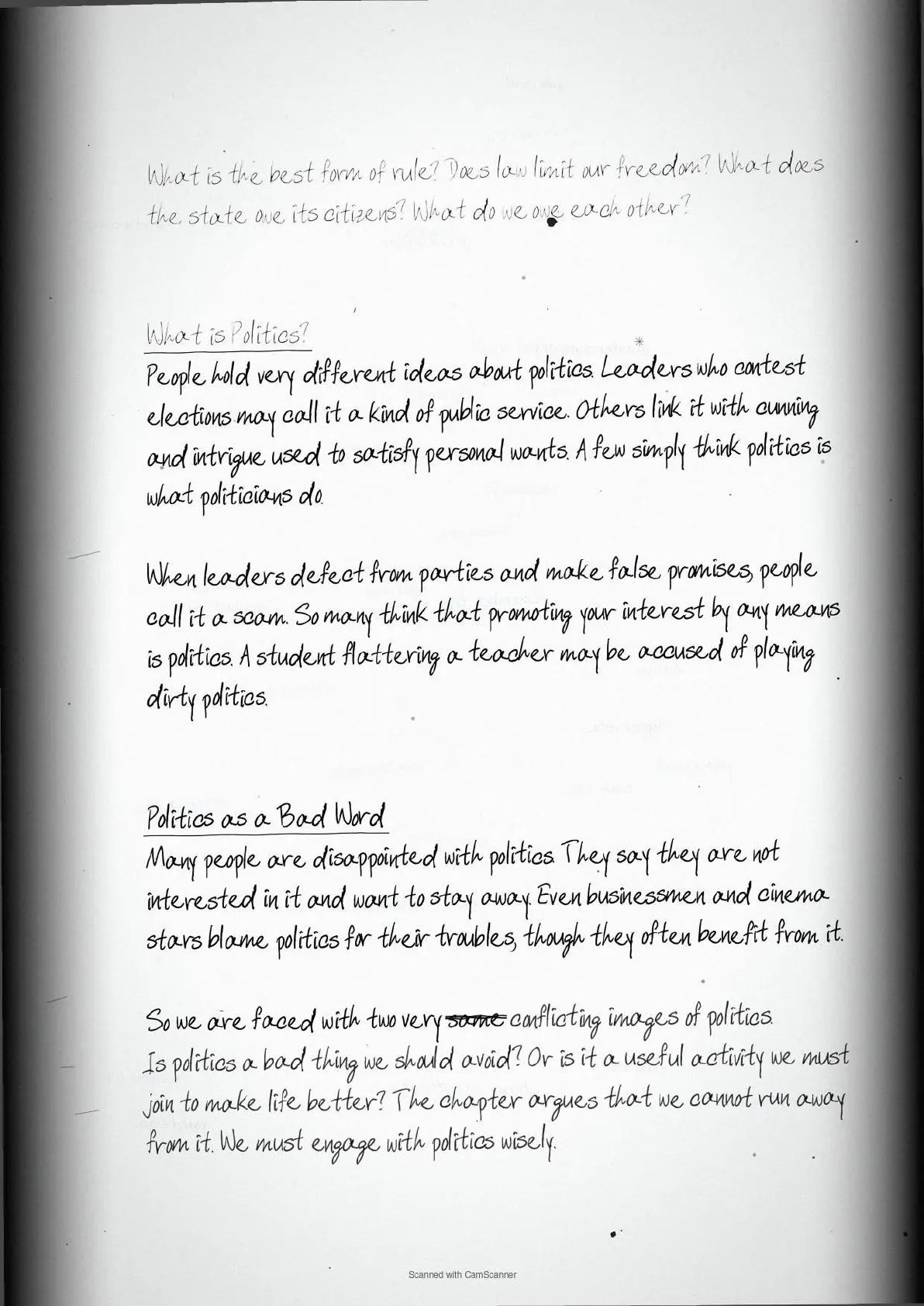
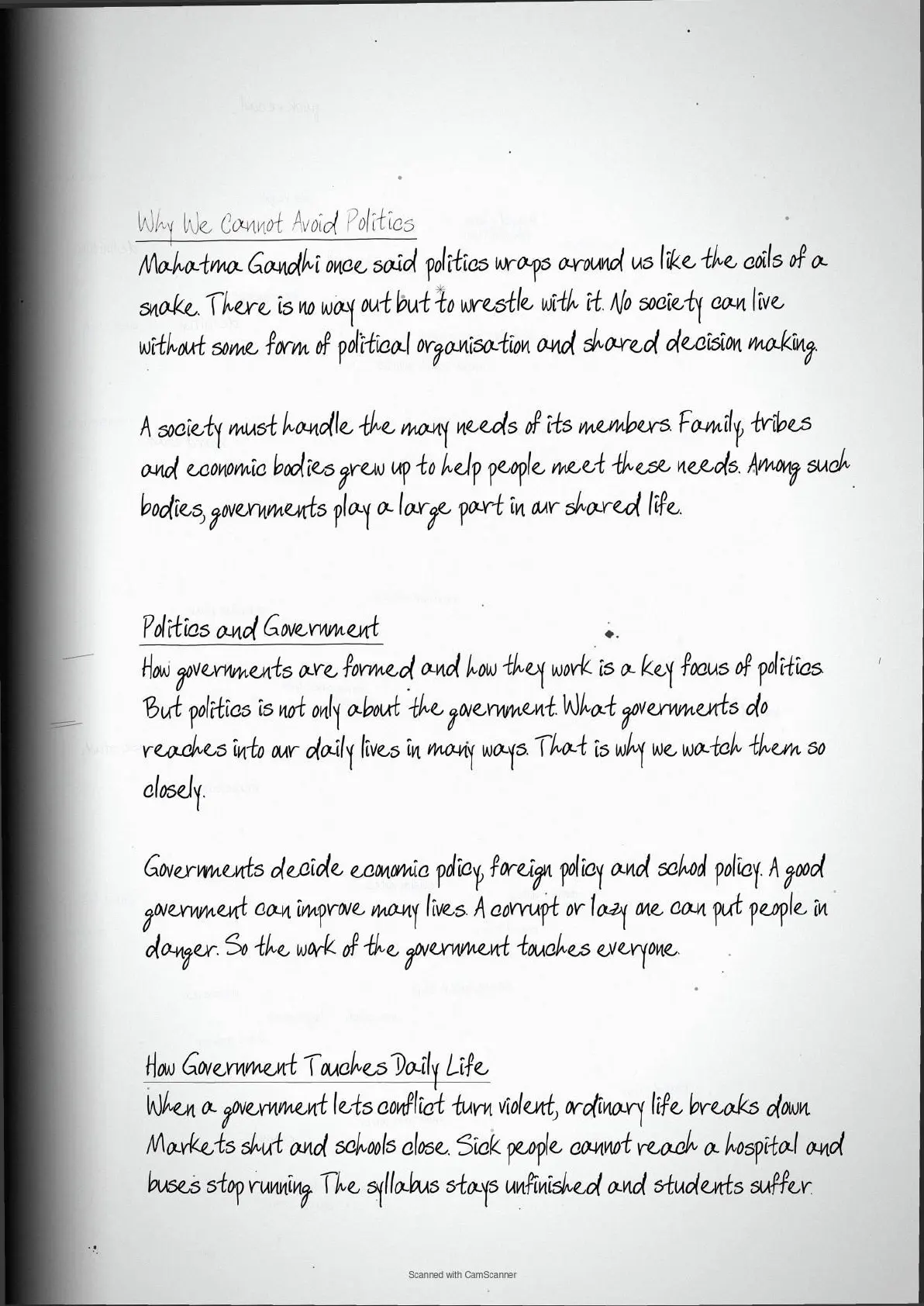
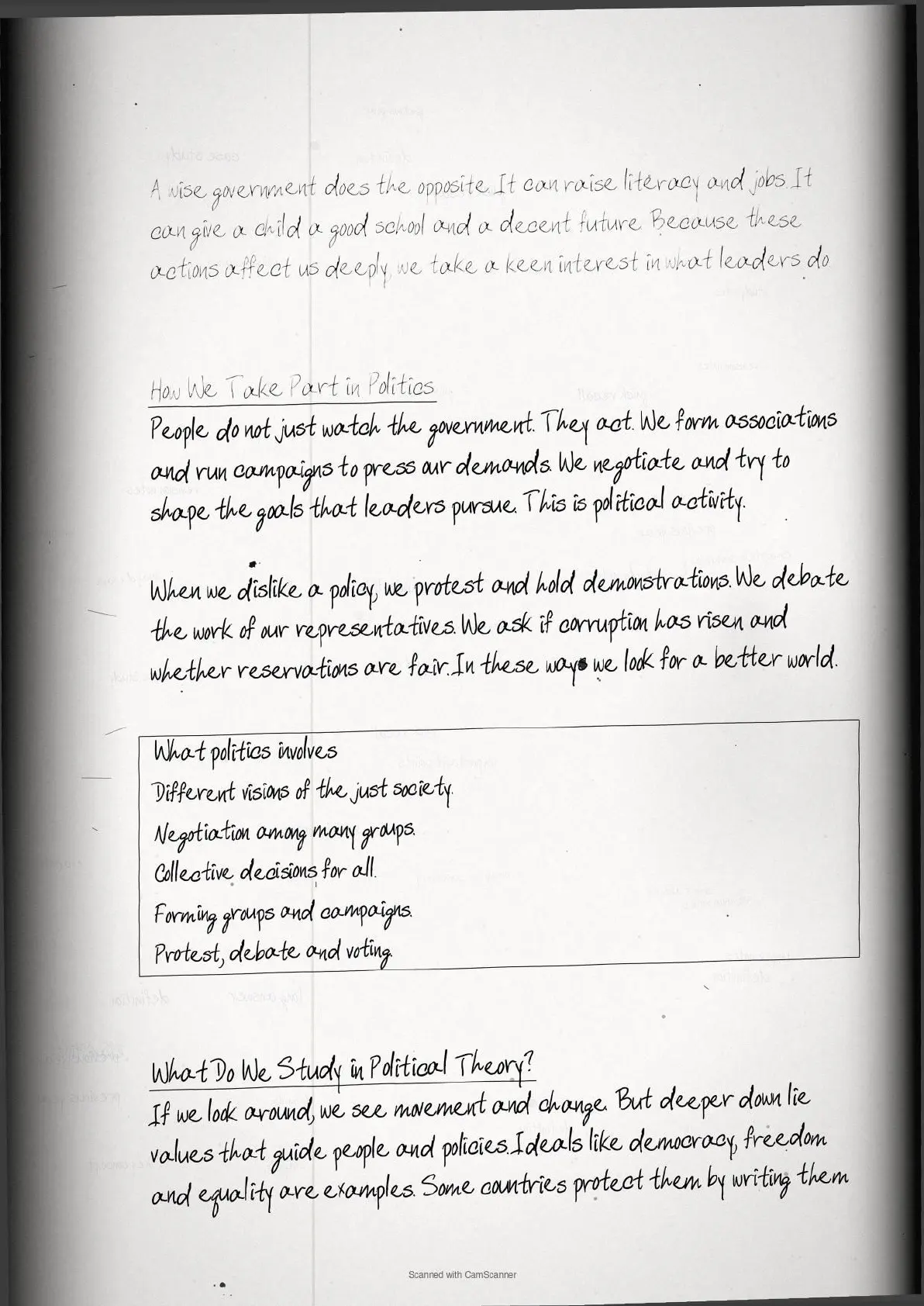
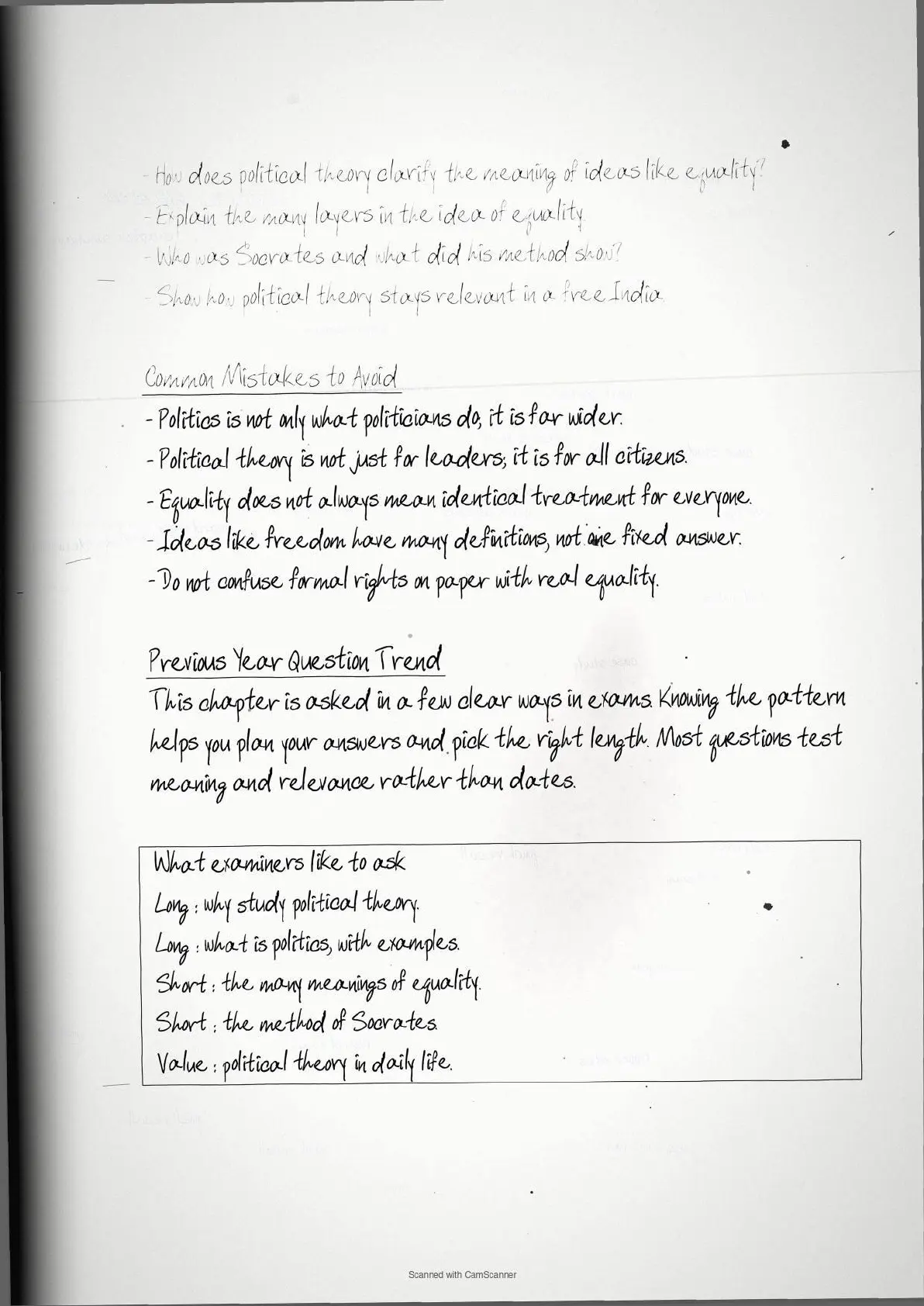
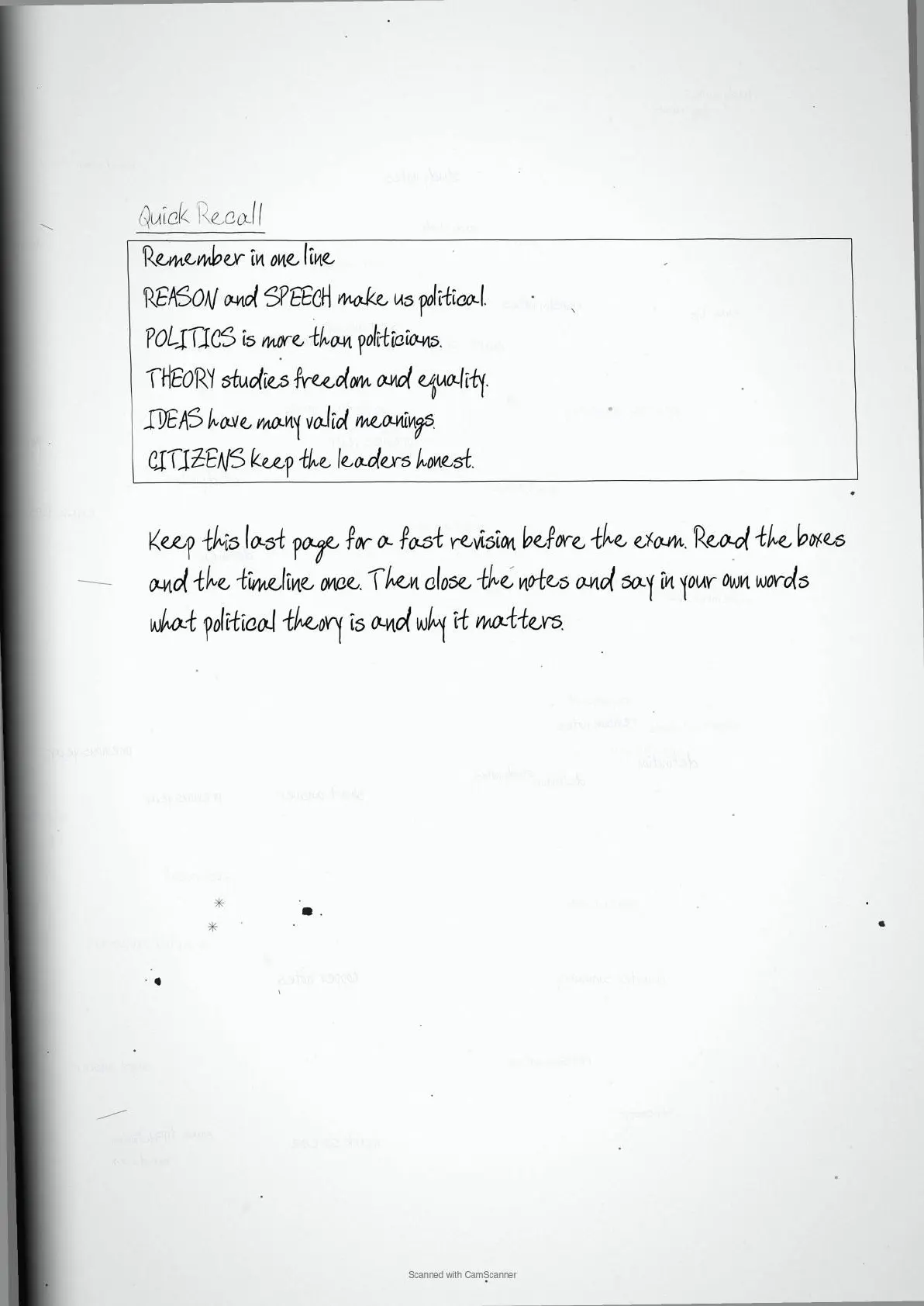
- CBSE Class 11 Weightage: a scoring chapter in the Political Science paper, asked in short and long answers.
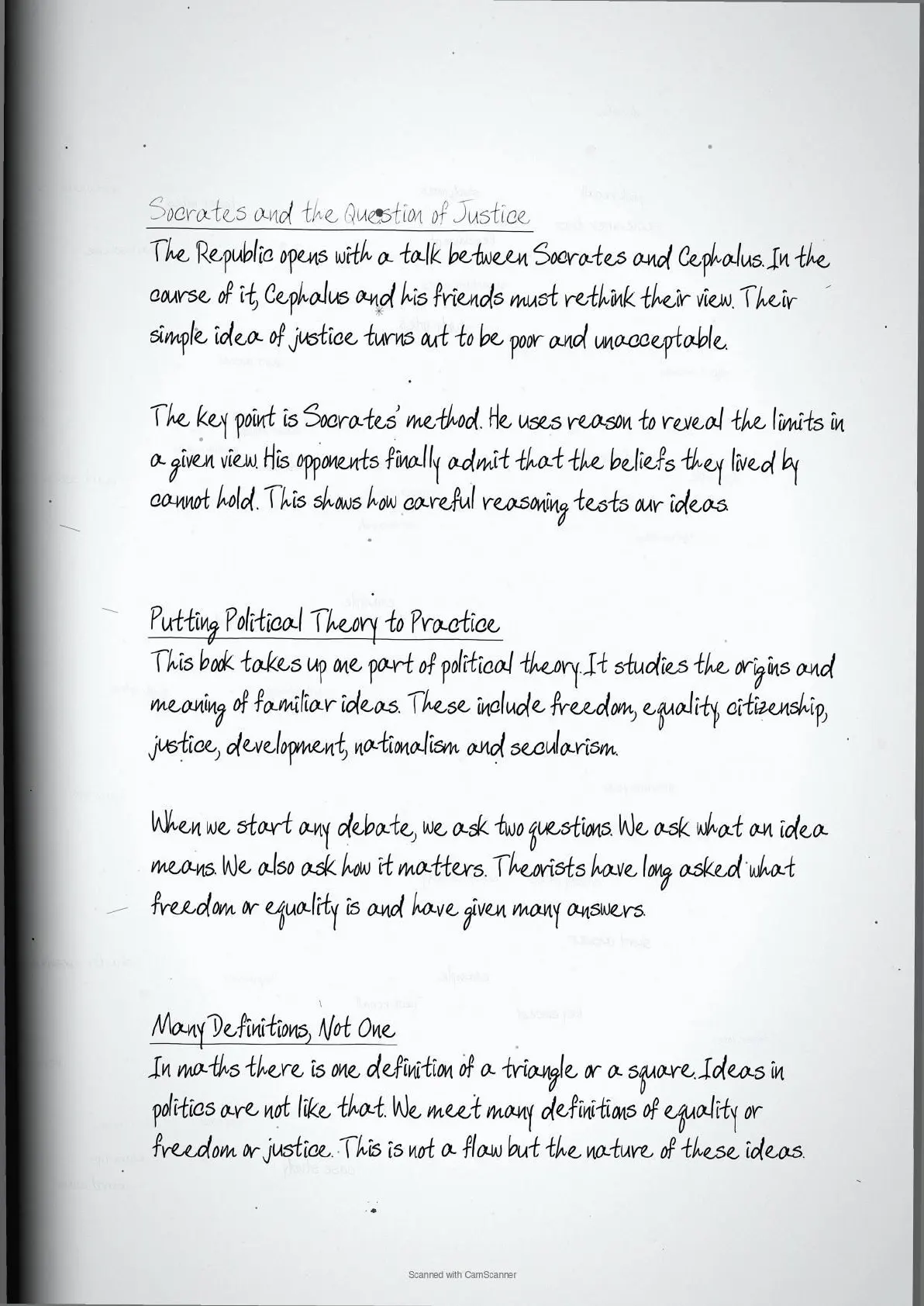
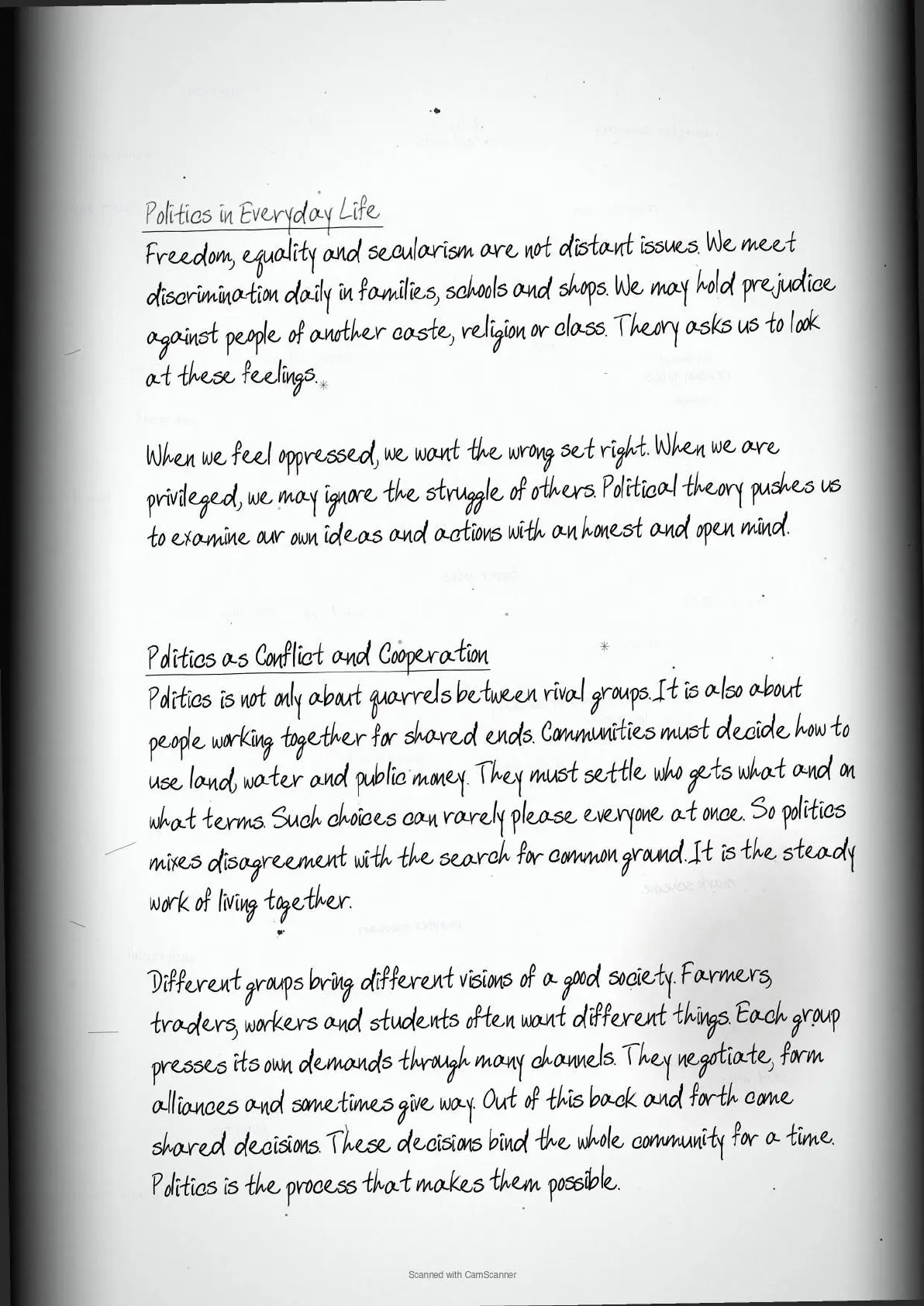
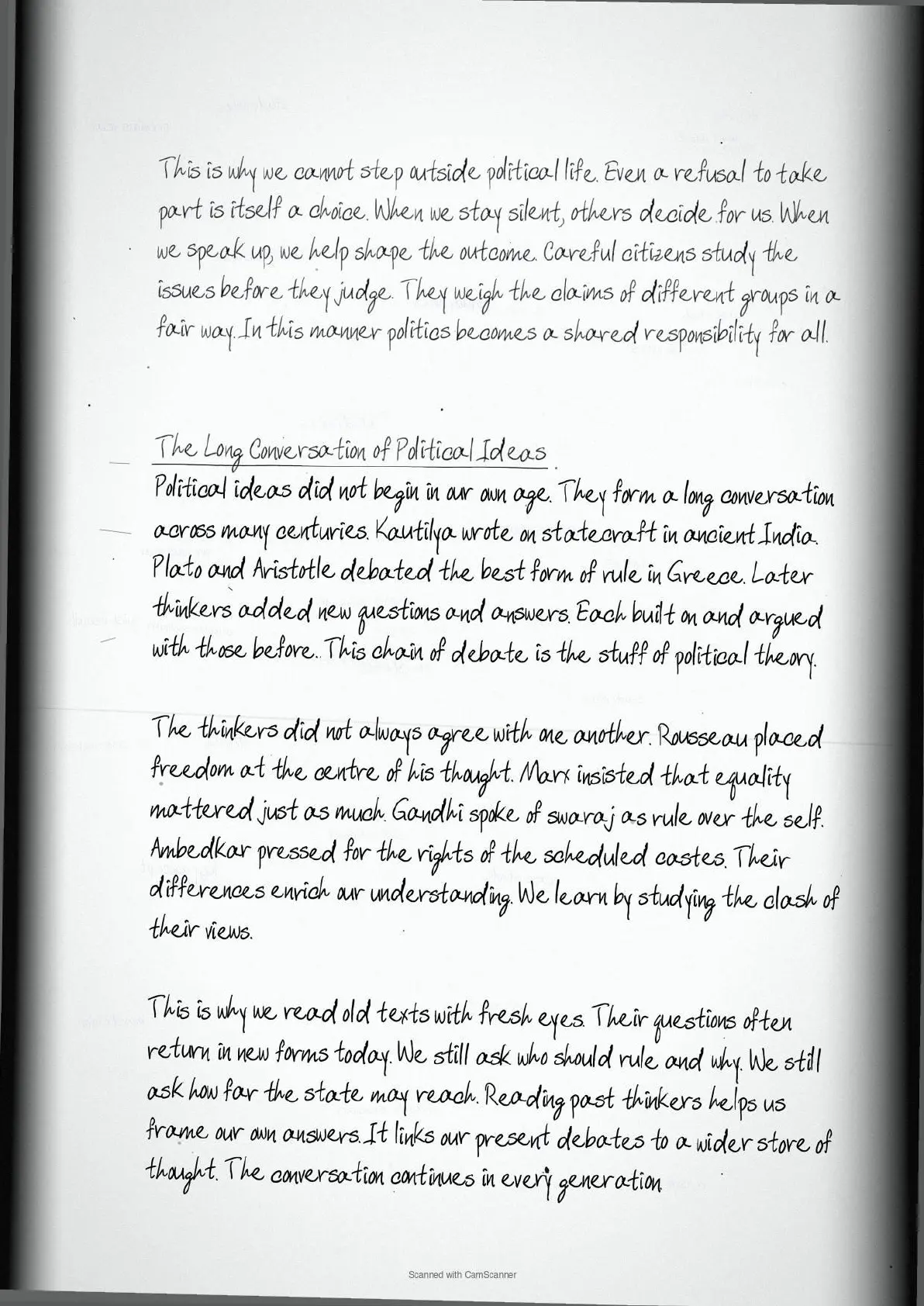
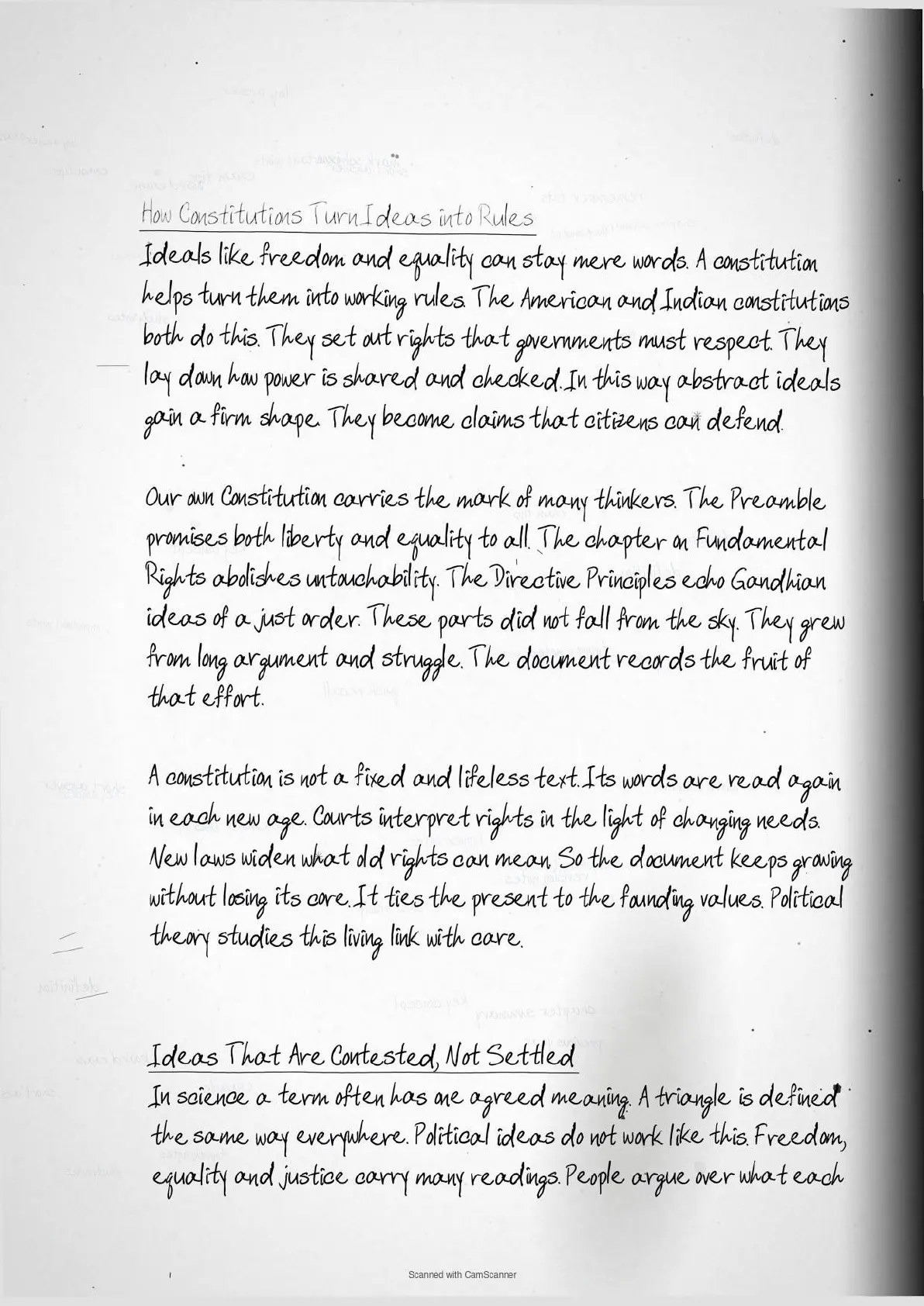
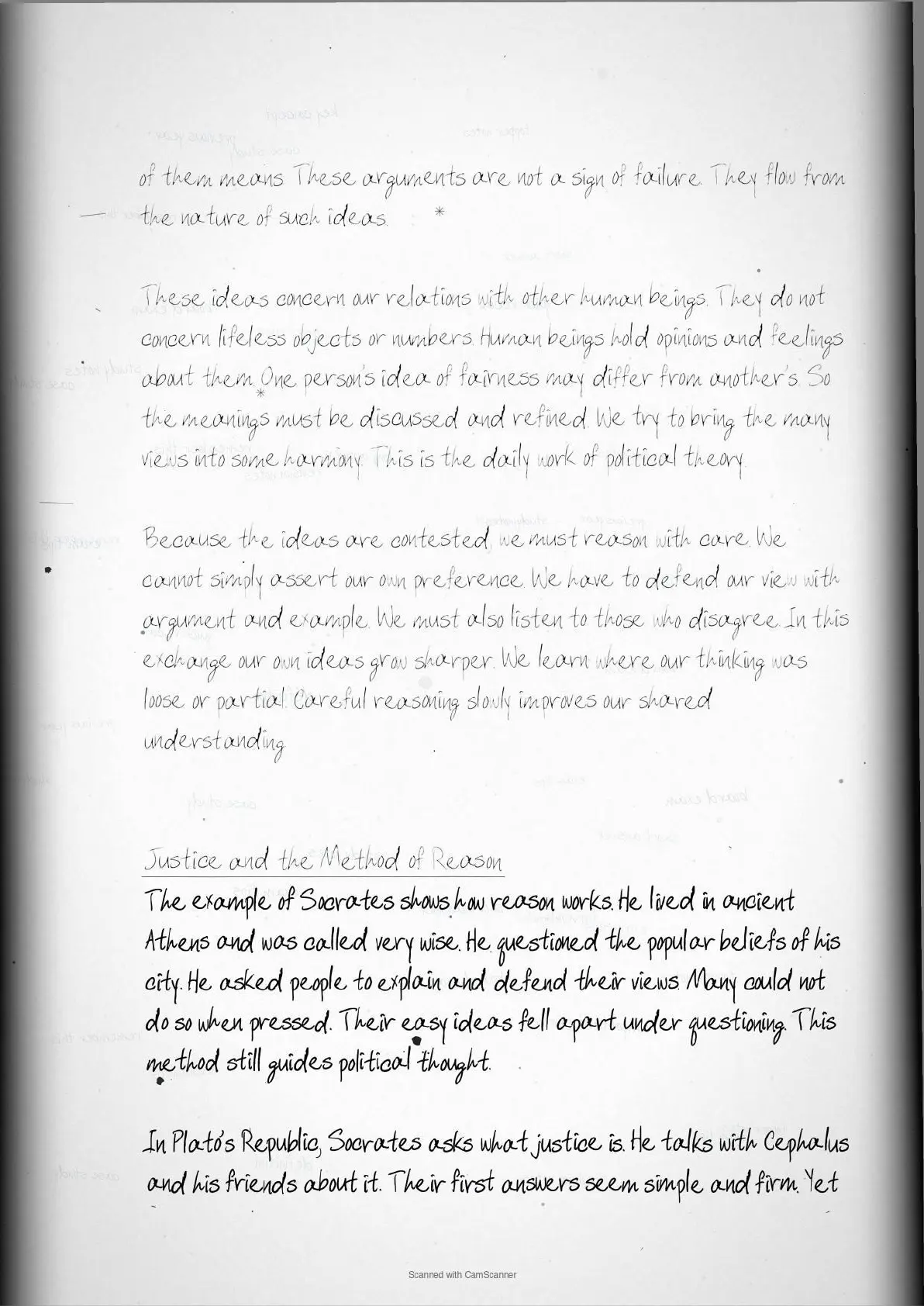
- What the notes cover: human beings, reason and political life, what is politics and why we cannot avoid it, politics beyond politicians and government, what we study in political theory.
- Best for: quick revision before Class 11 exams and a base for CUET later.
You can read the complete class 11 political-science handwritten notes for Political Theory: An Introduction, with key terms, boxed definitions, and quick revision points, in the PDF below.
These handwritten notes are written by subject teachers, mapped to the 2026-27 NCERT, and checked against the last five years of CBSE Class 11 Political Science papers.
What the Political Theory: An Introduction Handwritten Notes Cover
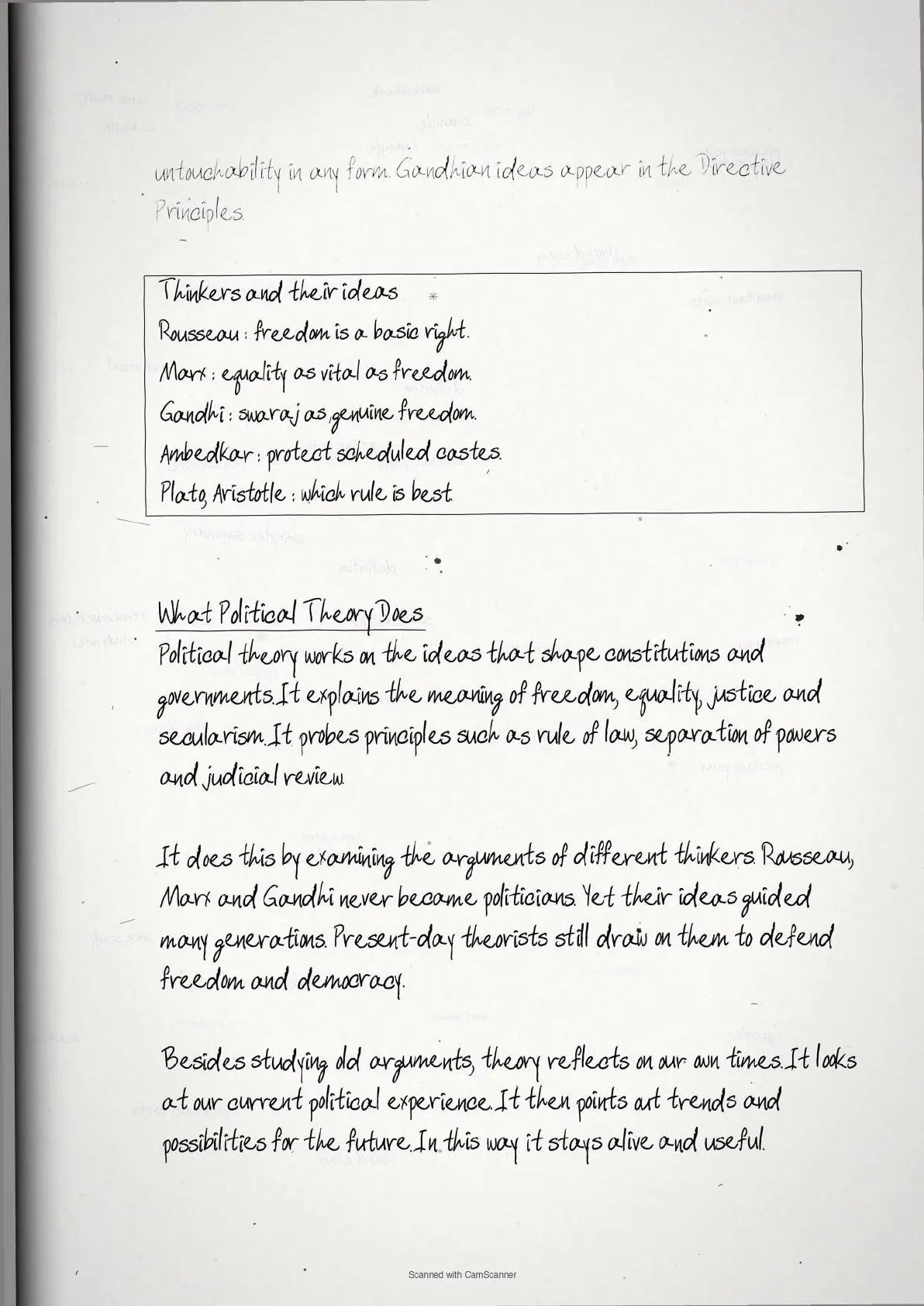
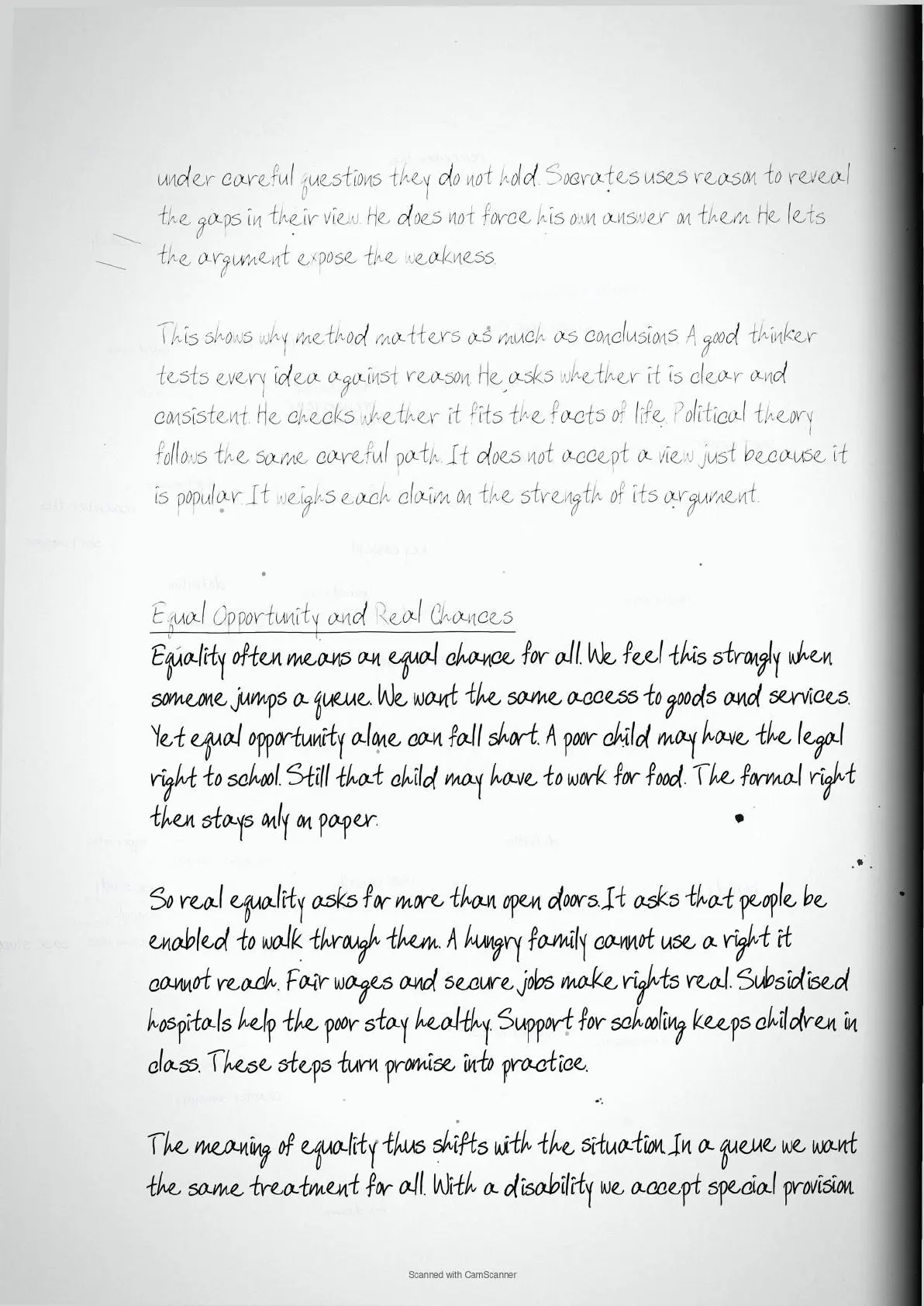
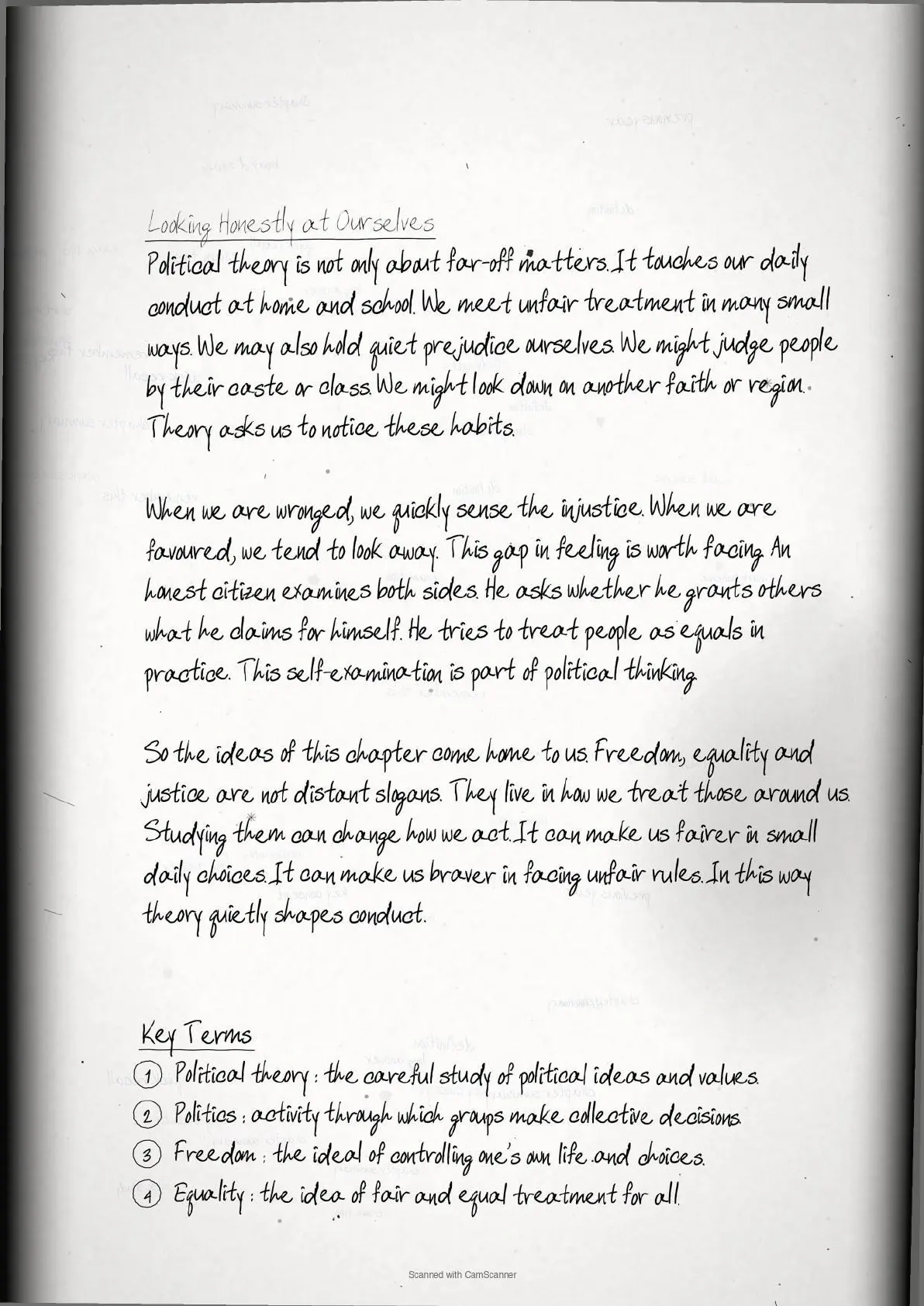
Political theory is the careful study of ideas like freedom, equality and justice. It grows from two human gifts, reason and speech. This chapter explains what politics is and why every citizen should study political theory.
- Human beings, reason and political life
- What is politics and why we cannot avoid it
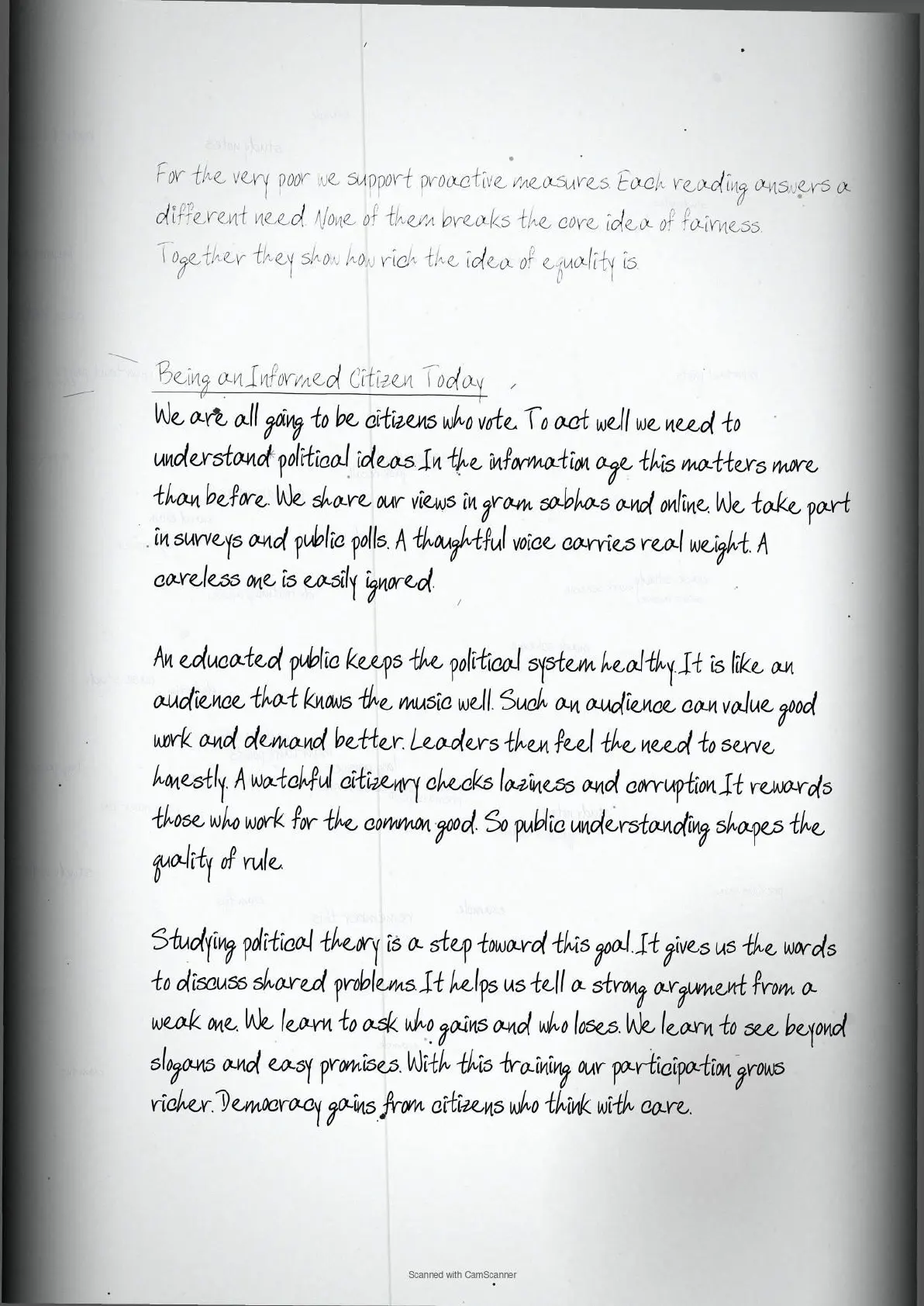
- Politics beyond politicians and government
- What we study in political theory
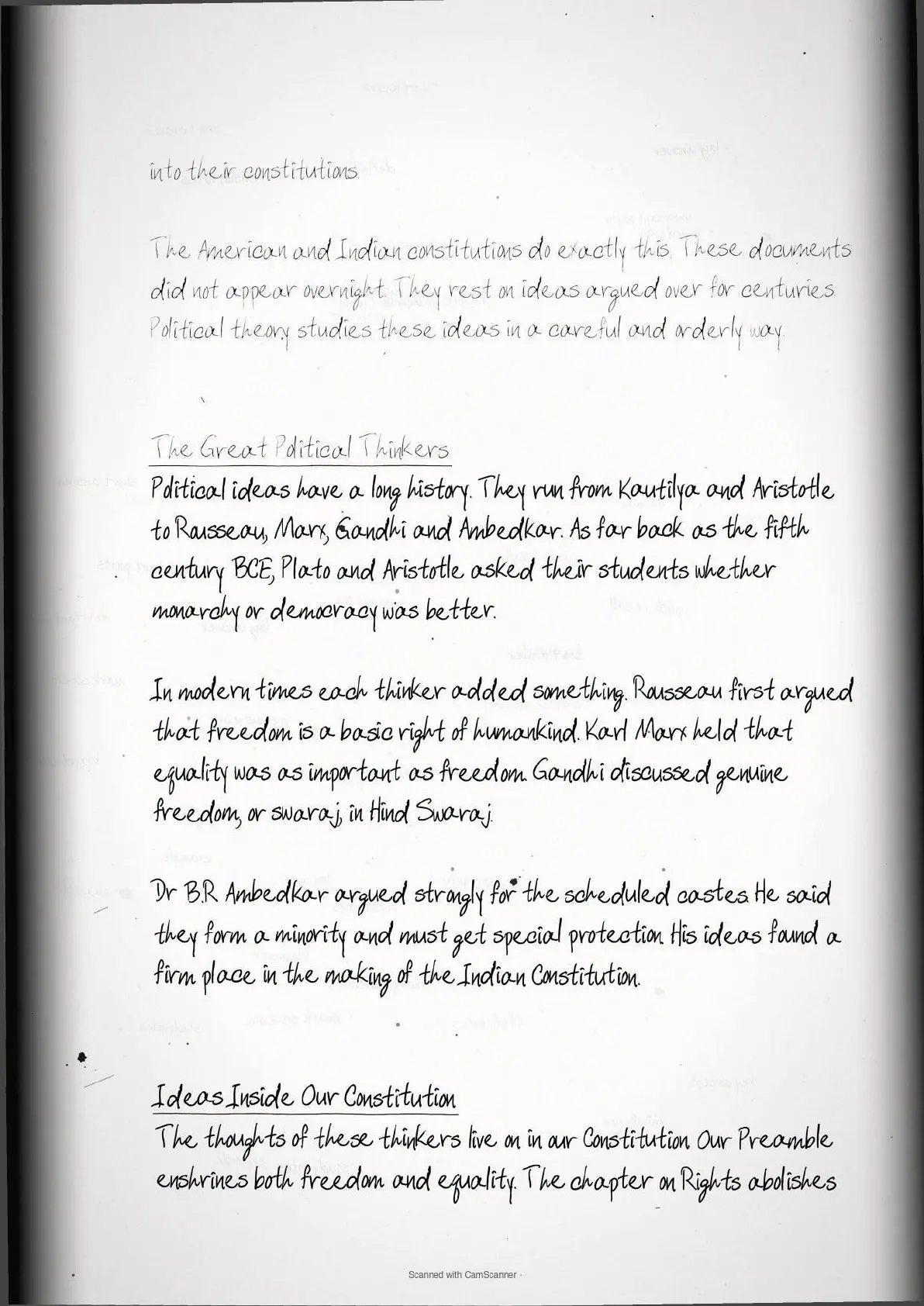
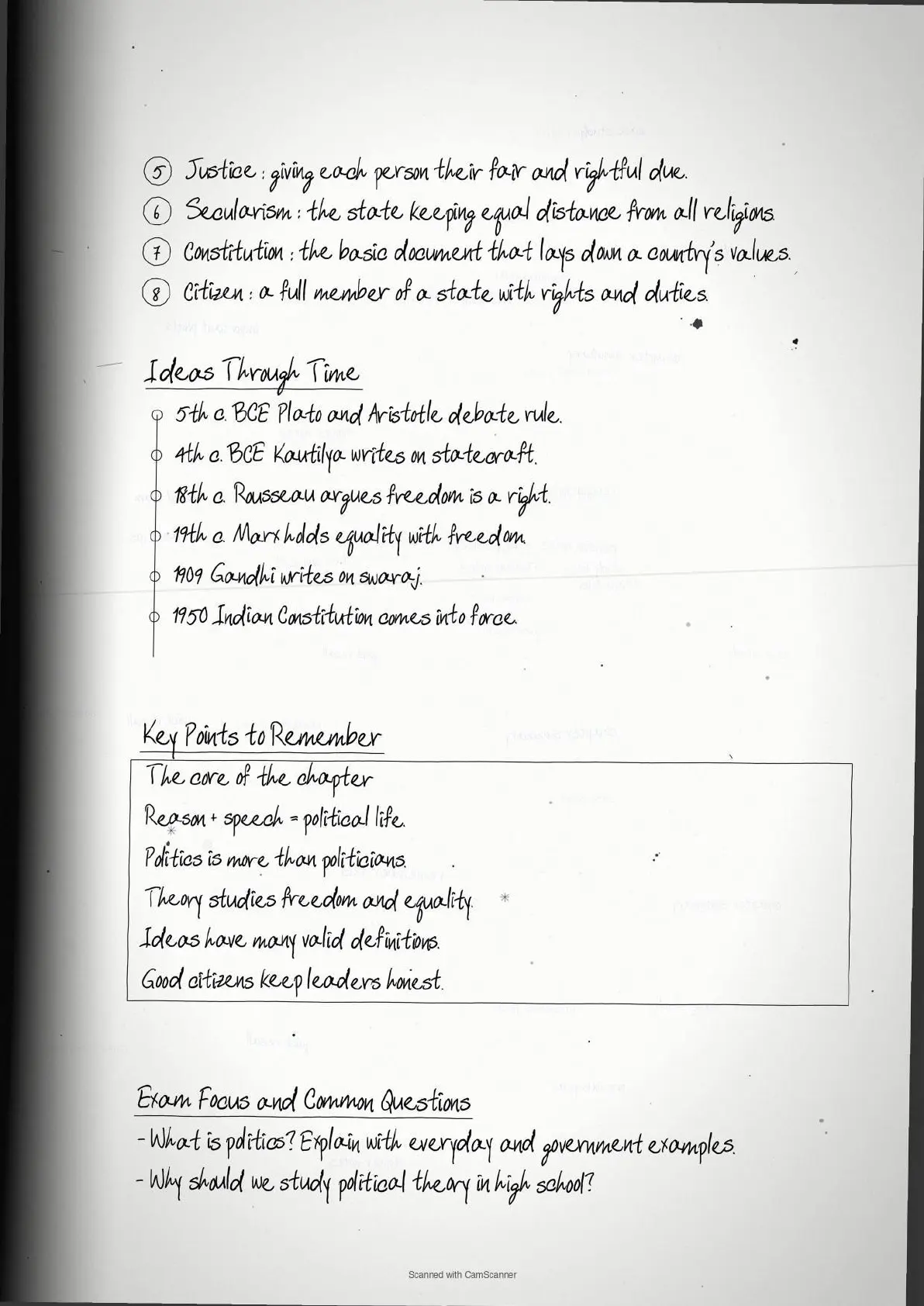
- Thinkers from Kautilya to Ambedkar
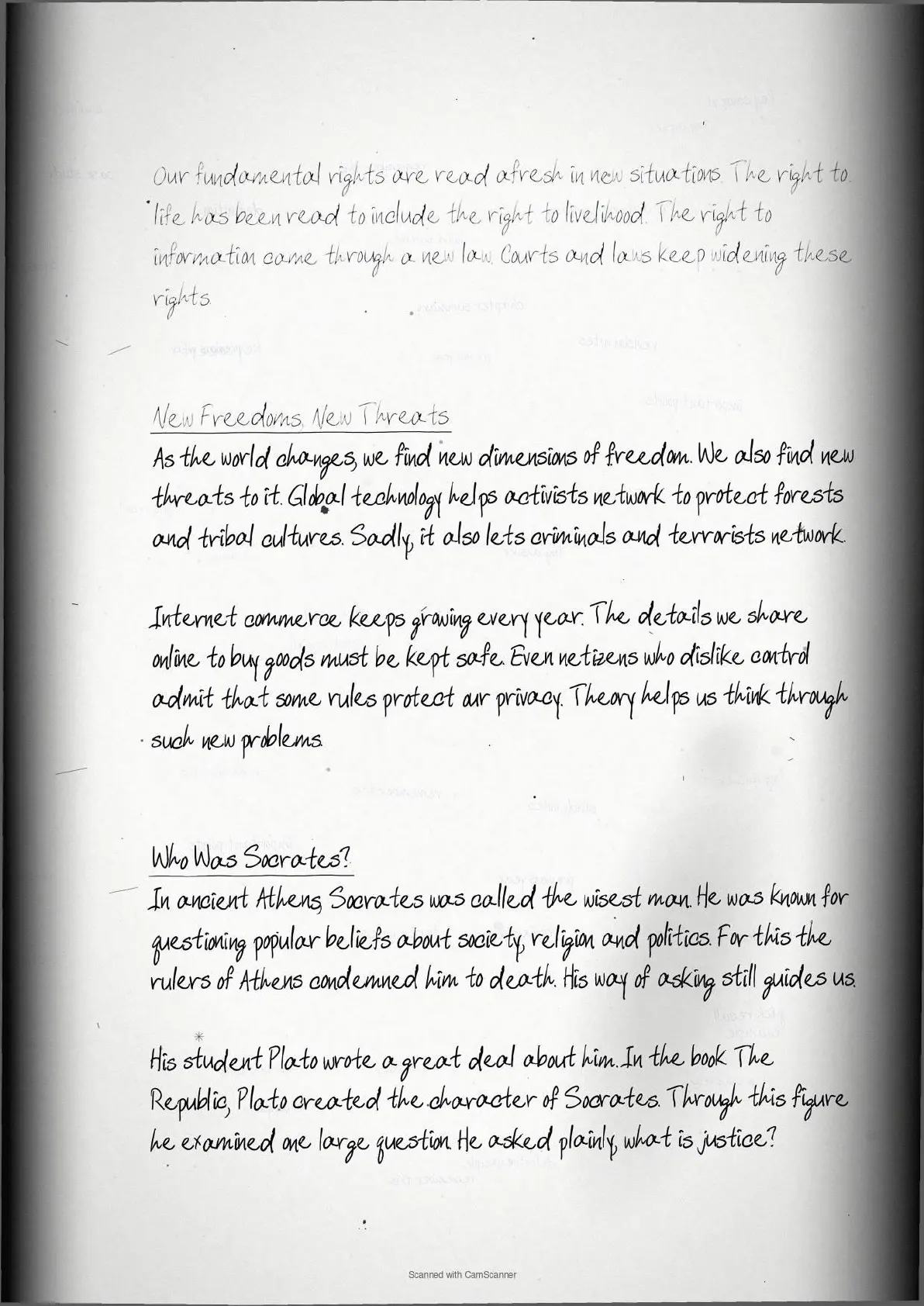
- Socrates and the question of justice
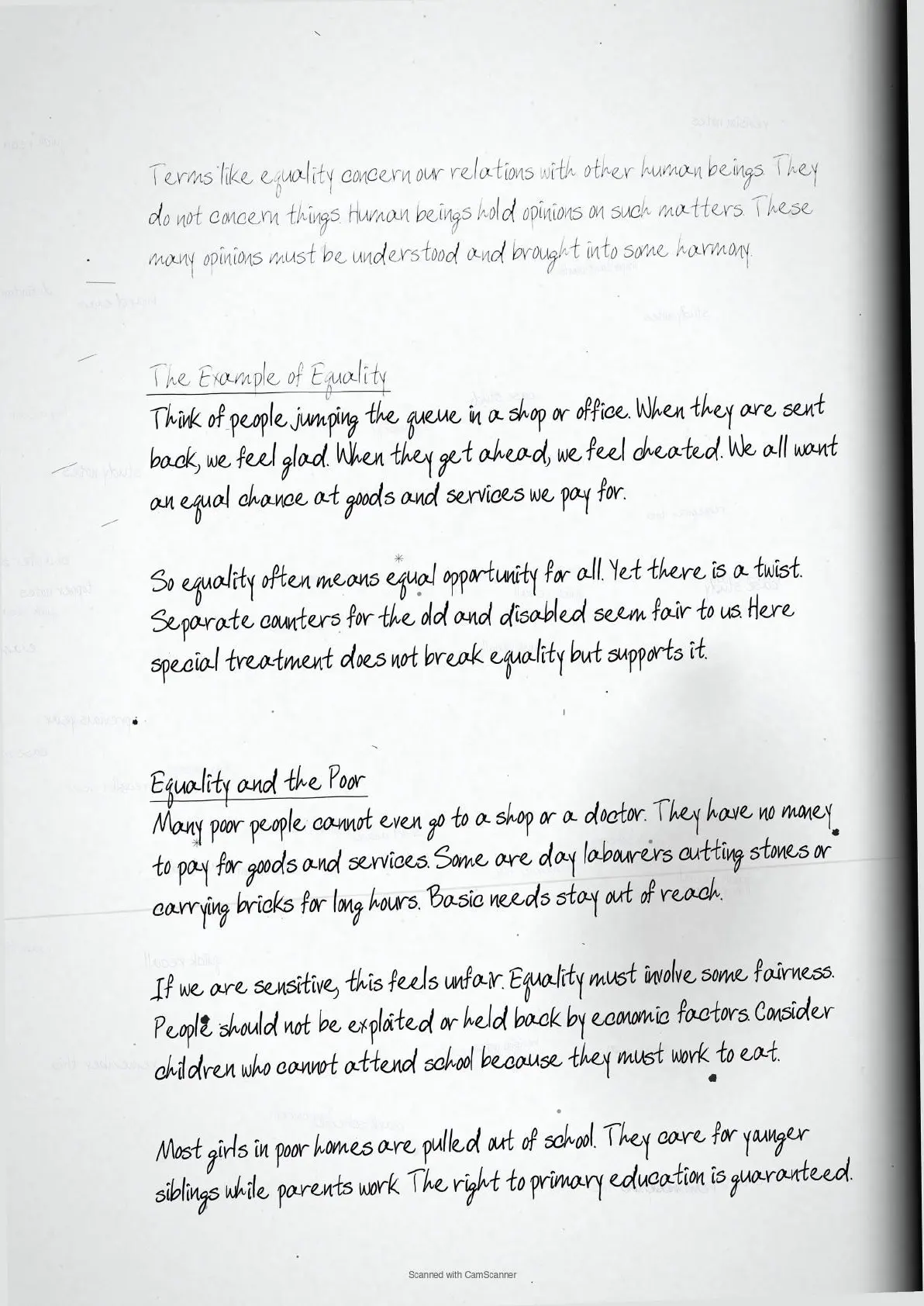
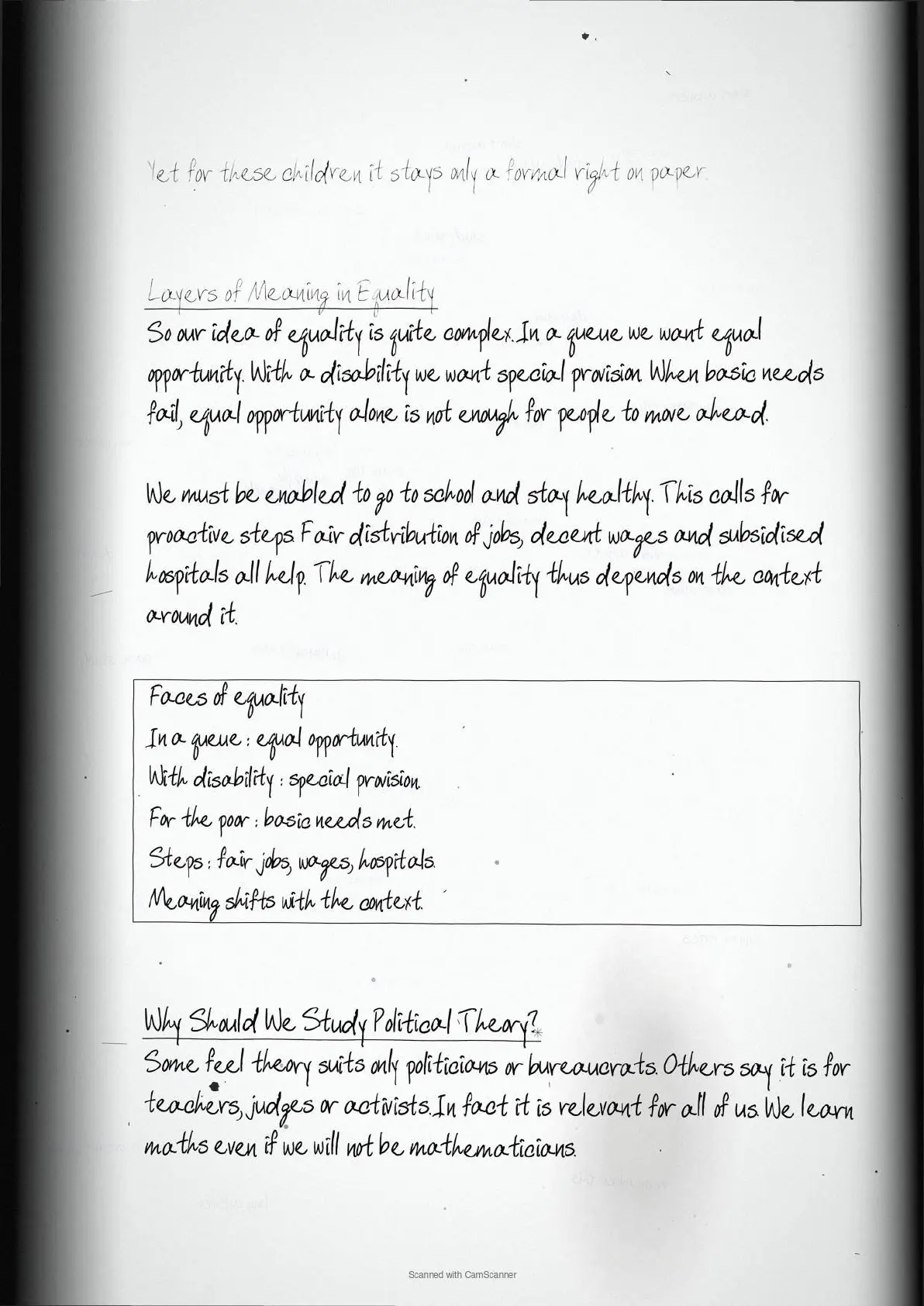
- The many meanings of equality
Political Theory: An Introduction Topic-wise Weightage for CBSE Class 11 Political Science
Some parts of this chapter are asked more often than others. The table below shows which sub-topics to revise first, based on recent CBSE Class 11 question trends.
| Sub-topic | Weightage | CBSE Frequency |
|---|---|---|
| What is politics | High | often |
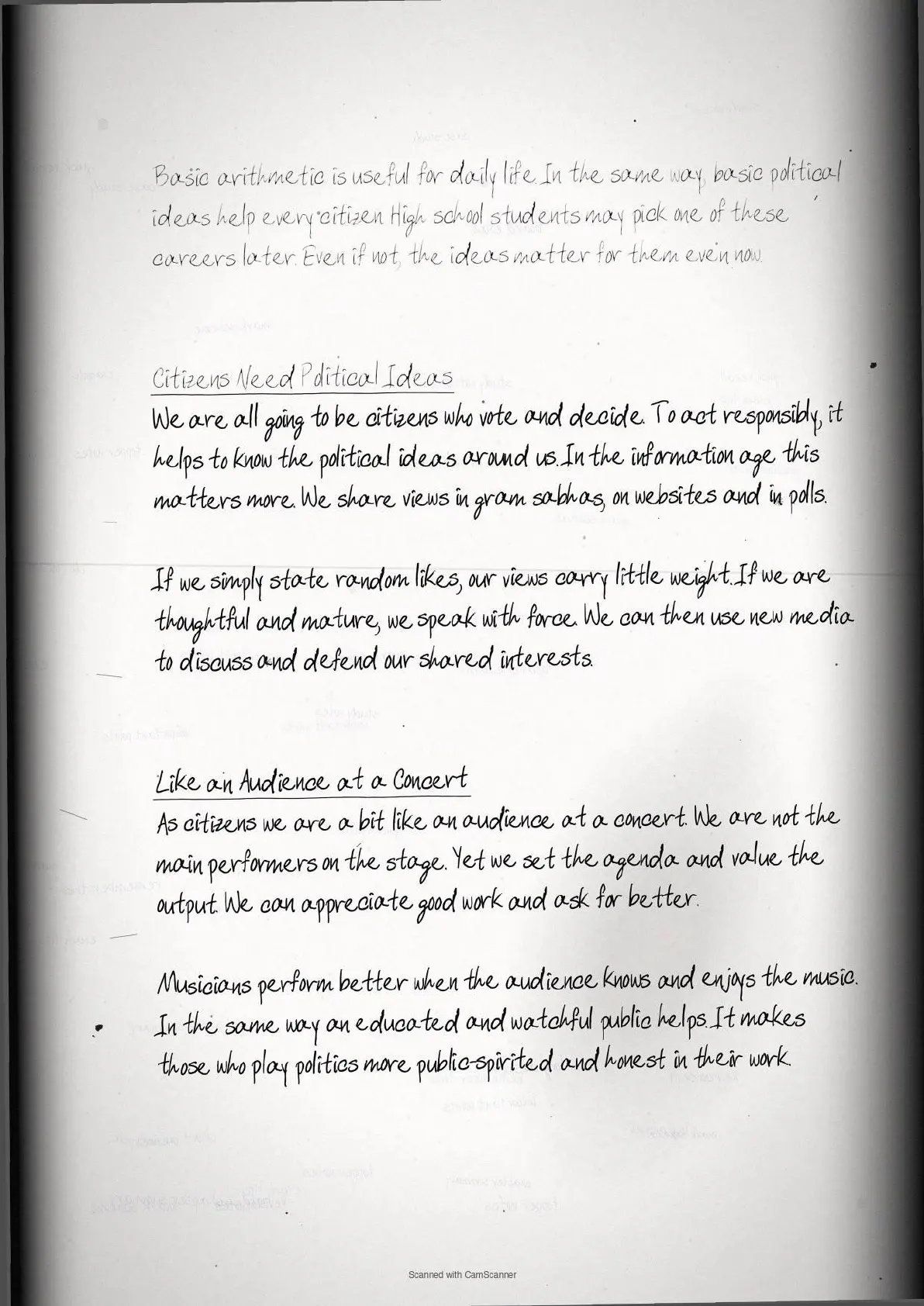
| Why study political theory | High | often |
| Meaning and layers of equality | Medium | common |
| Socrates and his method | Medium | common |
| Great political thinkers and the Constitution | Low | sometimes |
Key Terms and Ideas in Political Theory: An Introduction
These are the terms and ideas the exam asks about most. Learn each one so you can define it and use it in your answers.
| Term / Idea | What it means |
|---|---|
| Political theory | careful study of political ideas and values |
| Reason and speech | the two human gifts behind political life |
| Politics | how groups make collective decisions together |
| Many definitions | ideas like equality have no single fixed meaning |
| Socrates | used reason to reveal limits in a view of justice |
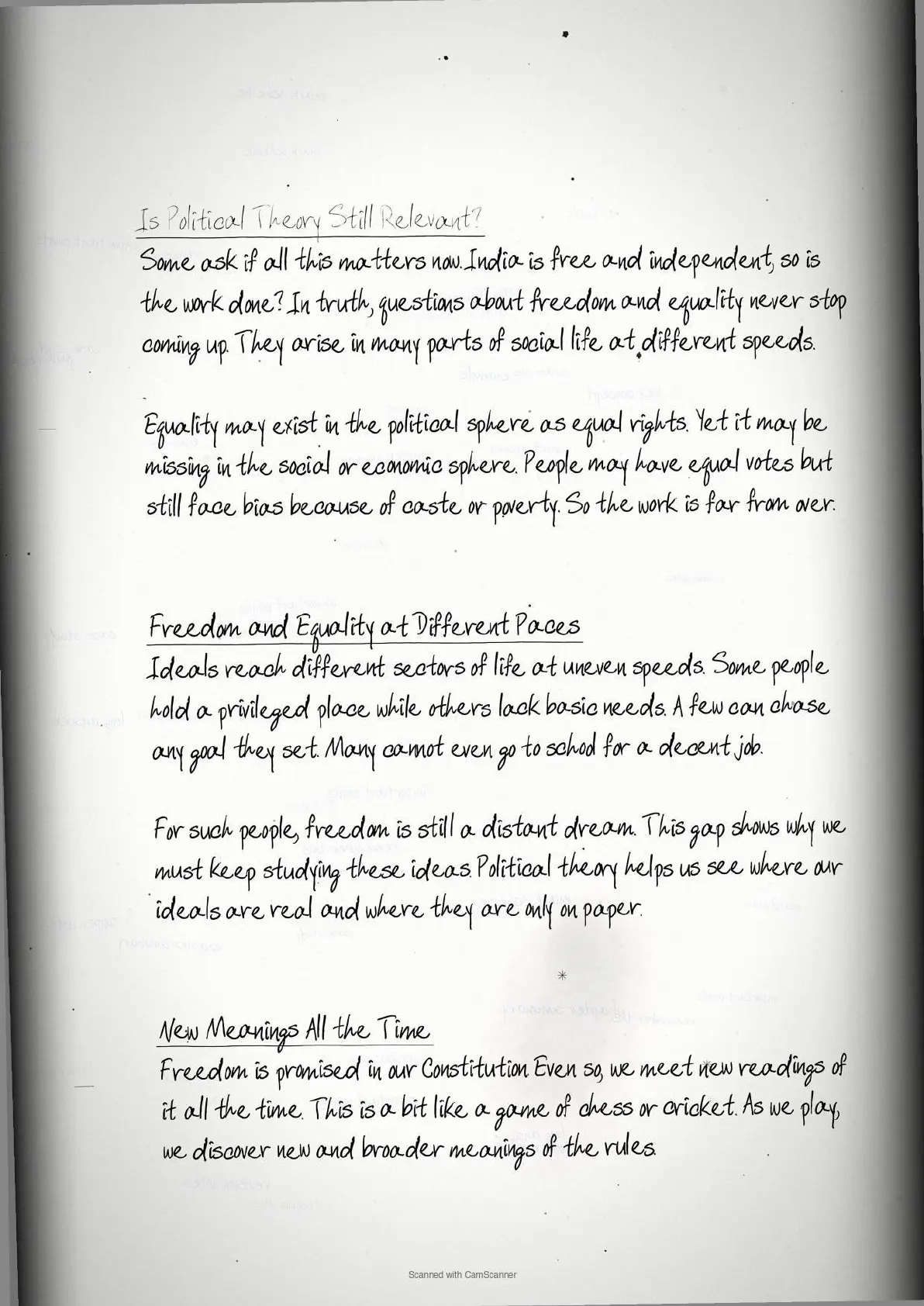
| Relevance | freedom and equality reach sectors at different speeds |
| Constitution | enshrines freedom, equality and abolishes untouchability |
| Good citizens | informed public keeps leaders public-spirited |
How Collegedunia's Handwritten Notes Help You Revise Political Theory: An Introduction
These notes are made for the night before the exam. They keep the facts short and easy to scan. Collegedunia maps every point to the 2026-27 NCERT.
- Clear handwriting: each topic is written in neat, easy-to-read handwriting.
- Boxed key terms: the main terms and definitions are boxed by hand for fast recall.
- Diagrams and tables: simple hand-drawn tables and charts make ideas clear.
- Colour-coded headings: new sub-topics stand out, so you find any section in seconds.
Political Theory: An Introduction Self-Assessment Quiz
Try these quick questions after you read the notes. Tap each question to check your answer. They cover the points CBSE asks most often.
Political theory grows out of which two human capacities?
(a) reason and speech (b) wealth and power (c) faith and custom (d) art and trade
Answer: (a) reason and speech - humans can reflect on actions and share ideas through language.
Who first argued that freedom is a fundamental right of humankind?
(a) Karl Marx (b) Rousseau (c) Aristotle (d) Kautilya
Answer: (b) Rousseau - he first argued for freedom as a basic right of humankind.
In Plato's Republic, Socrates mainly examines the question of
(a) what is liberty (b) what is justice (c) what is trade (d) what is power
Answer: (b) what is justice - Plato uses Socrates to examine the meaning of justice.
Separate counters for the old and disabled show that equality can mean
(a) identical treatment (b) justified special treatment (c) no rules at all (d) more taxes
Answer: (b) justified special treatment - special provision can support equality, not break it.
Political theory clarifies concepts by mainly
(a) memorising dates (b) examining thinkers' arguments (c) counting votes (d) drawing maps
Answer: (b) examining thinkers' arguments - it studies the reasoning of past and present thinkers.
How to Use These Handwritten Notes for Class 11 Political Science Revision
Use these class 11 political-science handwritten notes in two passes. Read them slowly once for the full chapter. Then, near the exam, read only the boxes and key terms for a fast recall.
- Read the notes once with the NCERT chapter open beside you.
- Say each key term and idea in your own words.
- Practise one long-answer question from a past paper.
- On the last day, revise only the key terms and the boxes.
Class 11 Political Science Handwritten Notes for All Chapters
The table below links the class 11 political-science handwritten notes for every chapter. Use it to jump to any other chapter's notes.
| Chapter | Resource |
|---|---|
| Chapter 1 | Constitution: Why and How Handwritten Notes |
| Chapter 2 | Rights in the Indian Constitution Handwritten Notes |
| Chapter 3 | Election and Representation Handwritten Notes |
| Chapter 4 | Executive Handwritten Notes |
| Chapter 5 | Legislature Handwritten Notes |
| Chapter 6 | Judiciary Handwritten Notes |
| Chapter 7 | Federalism Handwritten Notes |
| Chapter 8 | Local Governments Handwritten Notes |
| Chapter 9 | Constitution as a Living Document Handwritten Notes |
| Chapter 10 | The Philosophy of the Constitution Handwritten Notes |
| Chapter 11 | Political Theory: An Introduction Handwritten Notes |
| Chapter 12 | Freedom Handwritten Notes |
| Chapter 13 | Equality Handwritten Notes |
| Chapter 14 | Social Justice Handwritten Notes |
| Chapter 15 | Rights Handwritten Notes |
| Chapter 16 | Citizenship Handwritten Notes |
| Chapter 17 | Nationalism Handwritten Notes |
| Chapter 18 | Secularism Handwritten Notes |
Political Theory: An Introduction Class 11 Political Science Handwritten Notes FAQs
Ques. Where can I download Political Theory: An Introduction Class 11 Political Science Handwritten Notes PDF?
Ans. You can download the Political Theory: An Introduction Class 11 Political Science Handwritten Notes PDF directly from this page. Both the Normal and HD versions are free.
Ques. Are these handwritten notes aligned with the 2026-27 NCERT?
Ans. Yes. These notes follow the current 2026-27 syllabus for Class 11 Political Science. Students often ask why they should study political theory if they will not become politicians.
Ques. How many pages is the Class 11 Political Science Political Theory: An Introduction Handwritten Notes PDF?
Ans. The notes run about 22 pages. They cover the full chapter with key terms, hand-drawn boxes, and a short self-assessment quiz.
Ques. What is the main idea of the 11th standard Political Science chapter Political Theory: An Introduction?
Ans. Political theory is useful for every citizen, not only for leaders. It helps us understand ideas like freedom and equality so we can vote and act responsibly.
Ques. Are these Political Theory: An Introduction notes enough for the CBSE Class 11 exam?
Ans. Yes, for revision. The Collegedunia handwritten notes cover every key point and exam term. Read them with the NCERT chapter and practise past questions.



Comments