




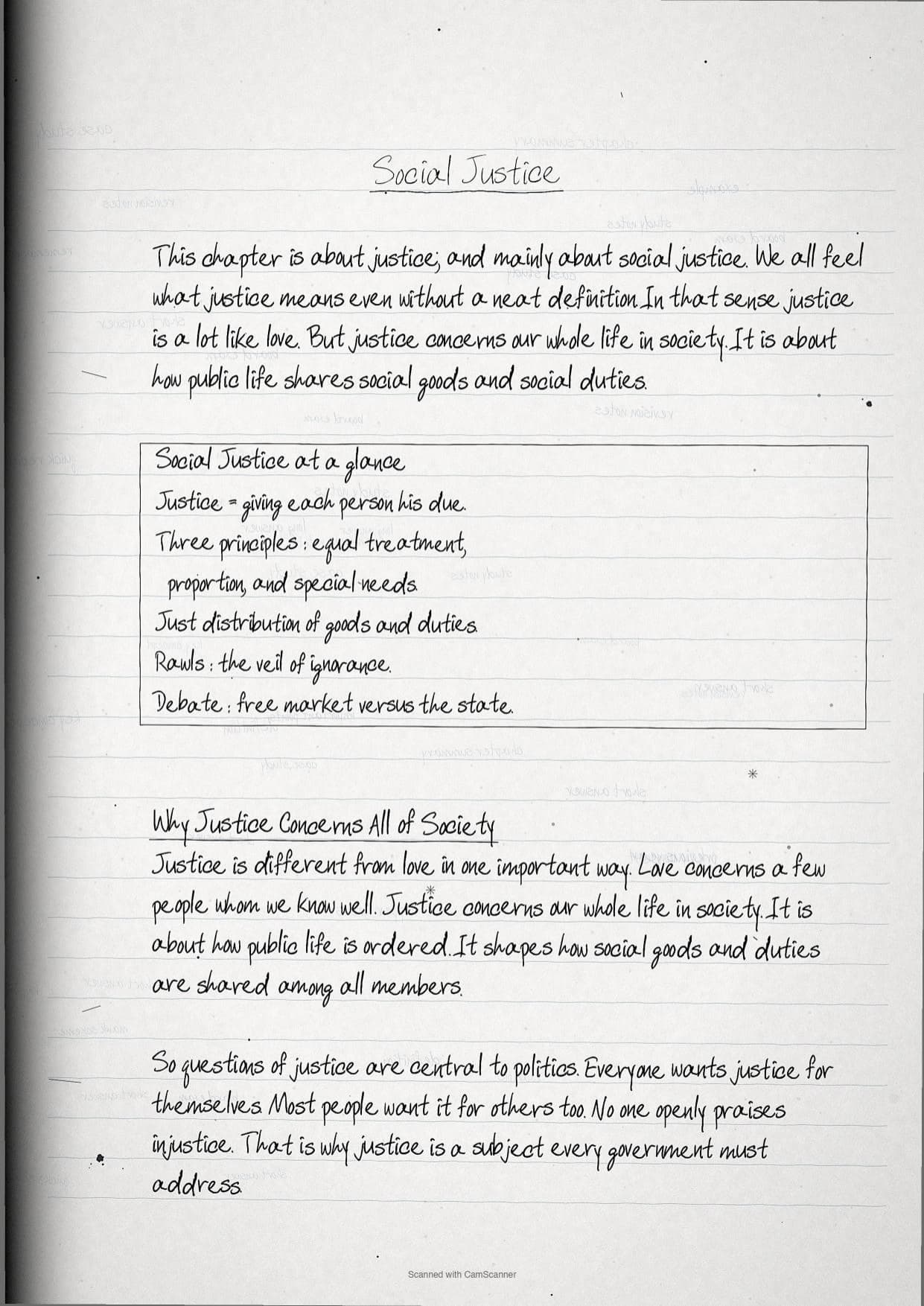
Social justice means giving each person their due through fair distribution of goods and duties. Class 11 Political Science Chapter 14 Social Justice builds this idea step by step. These class 11 political-science handwritten notes chapter 14 Social Justice follow the 2026-27 NCERT and cover what is justice, from dharma to plato and socrates, giving each person their.
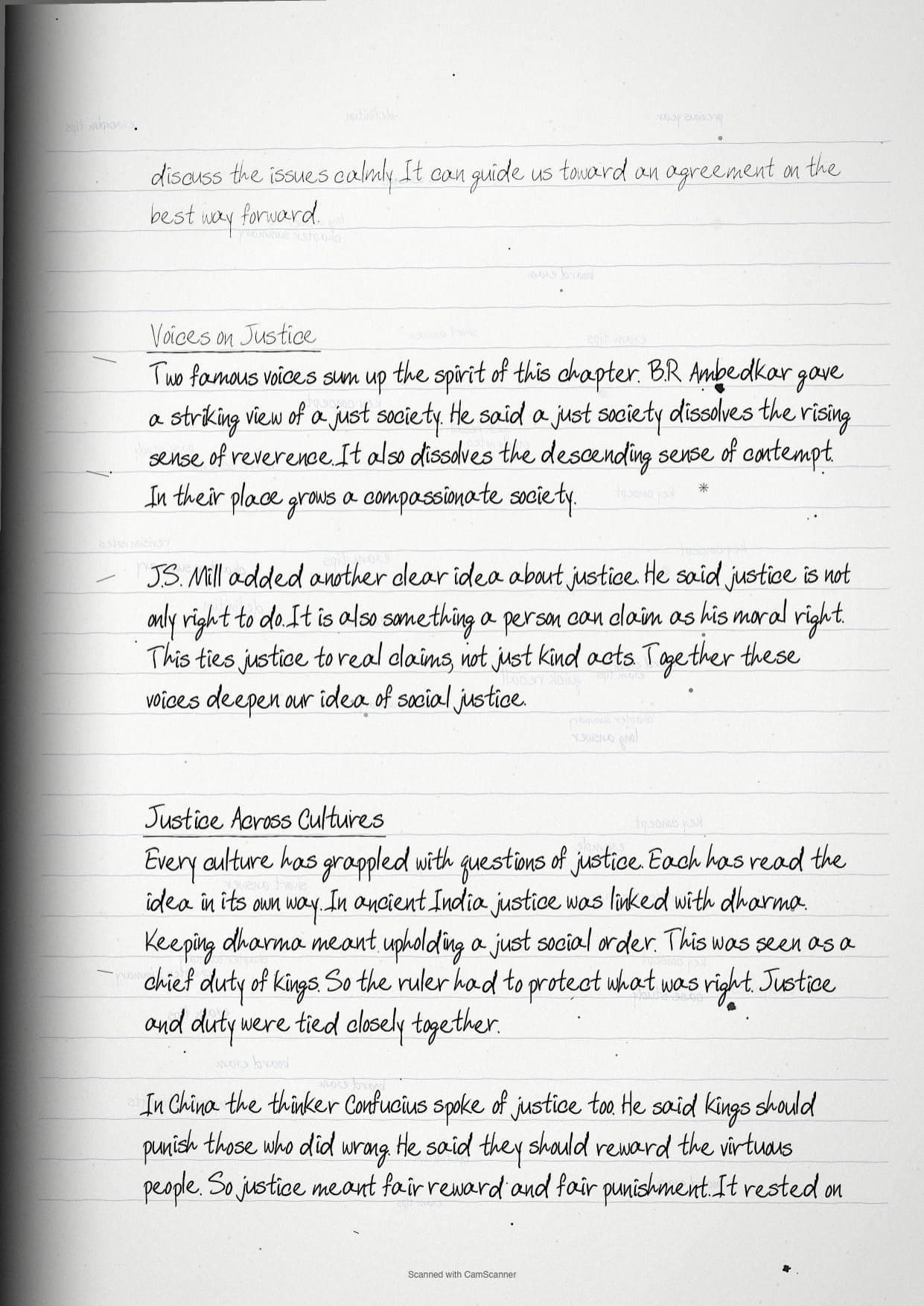
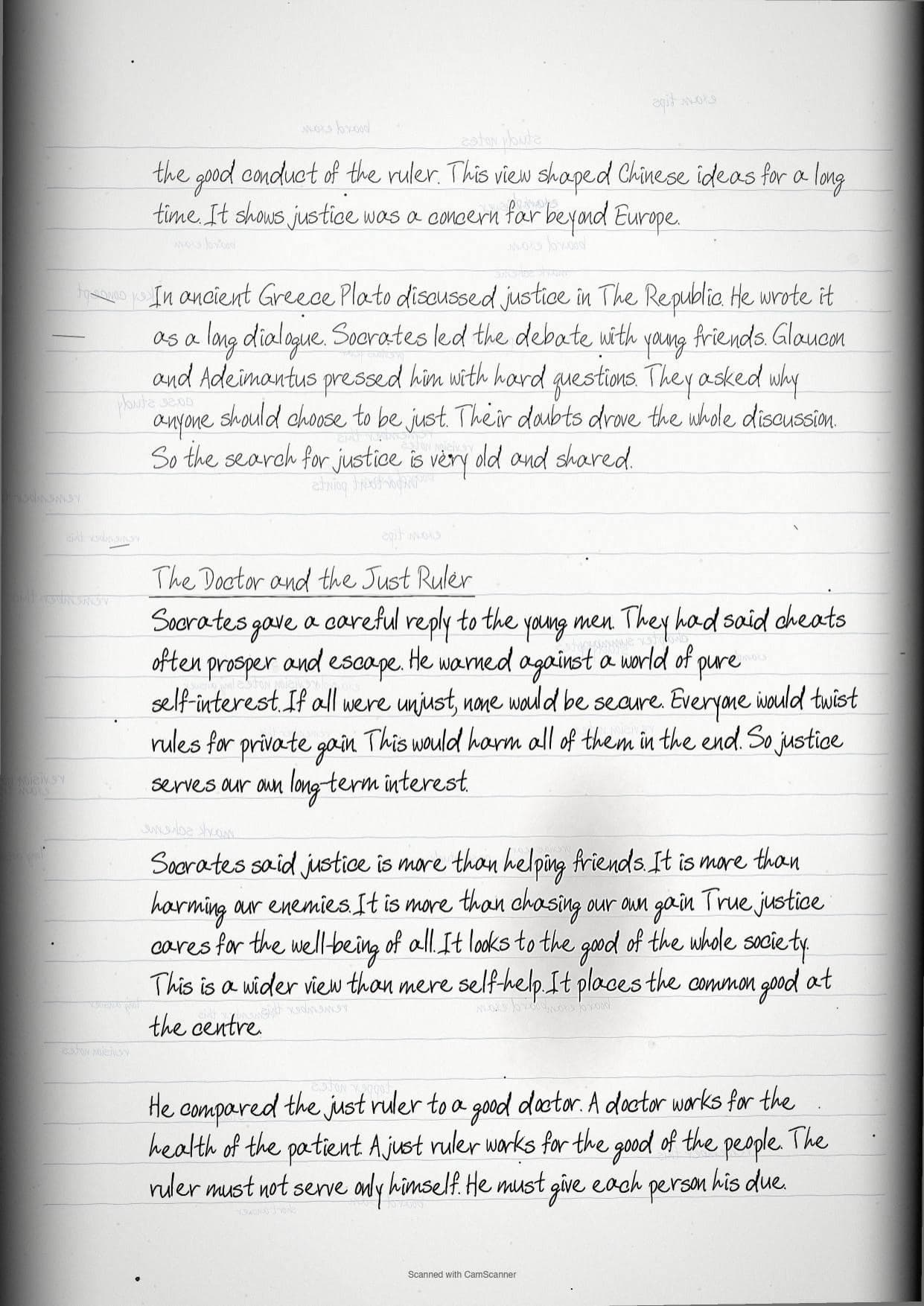
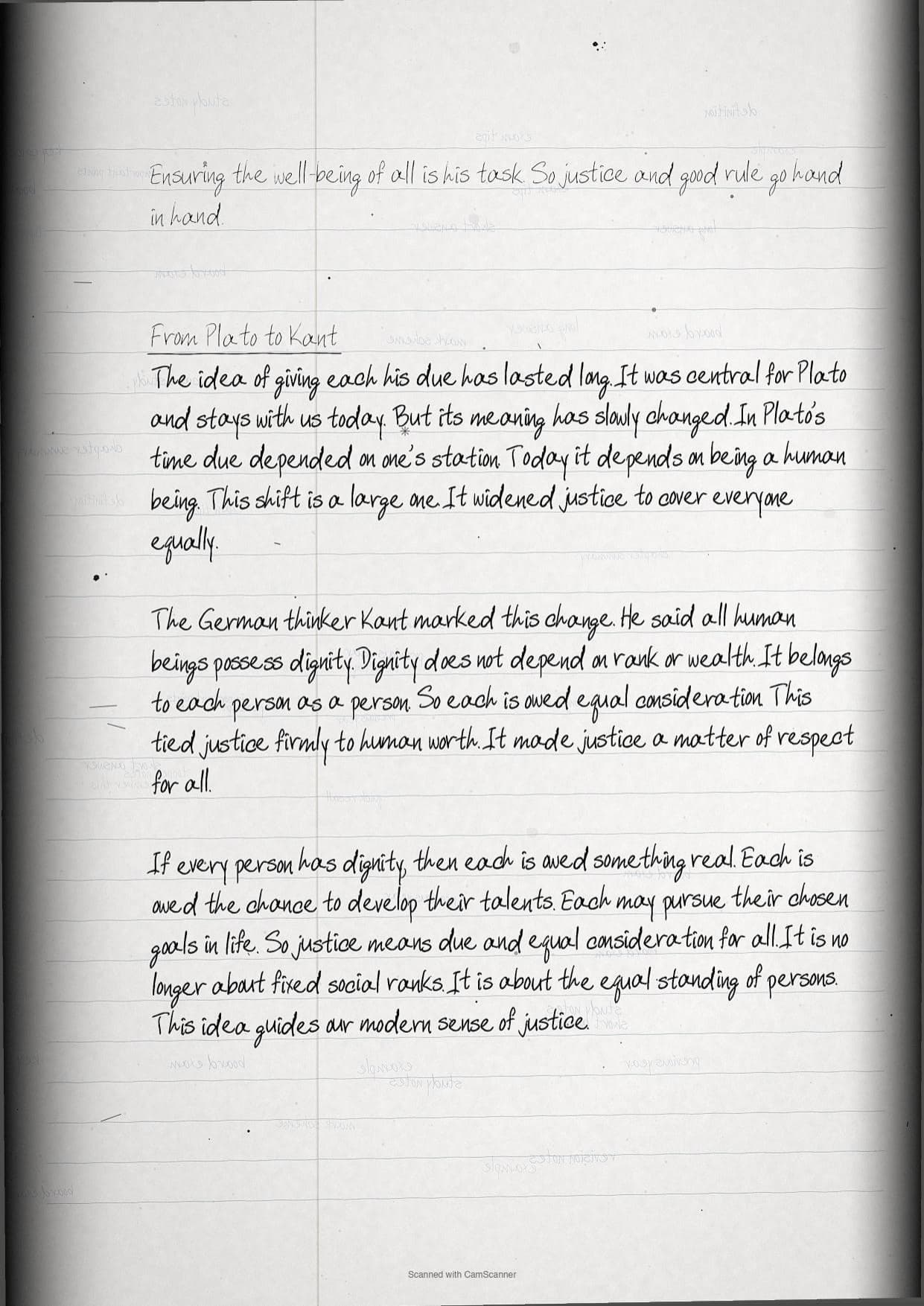
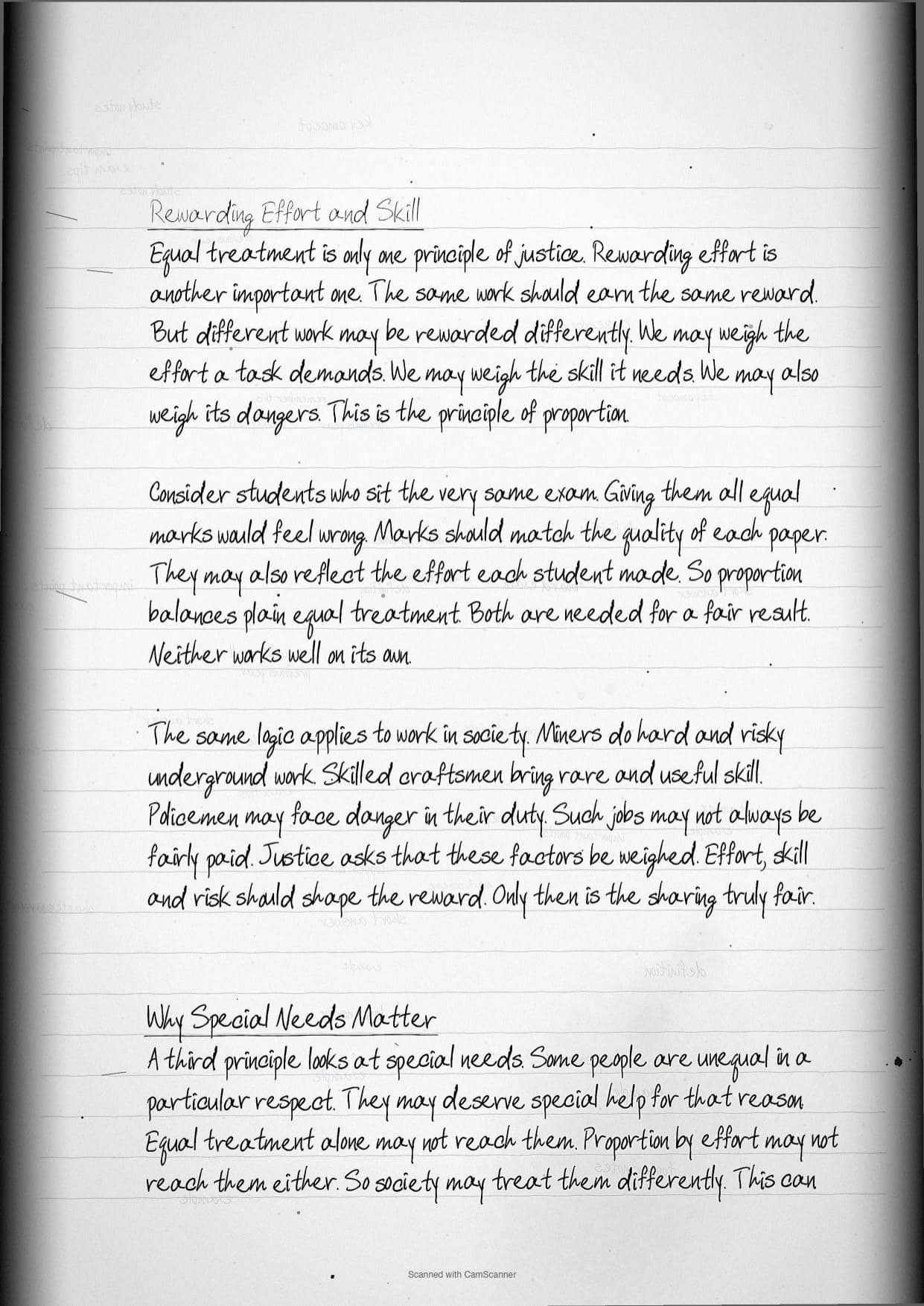
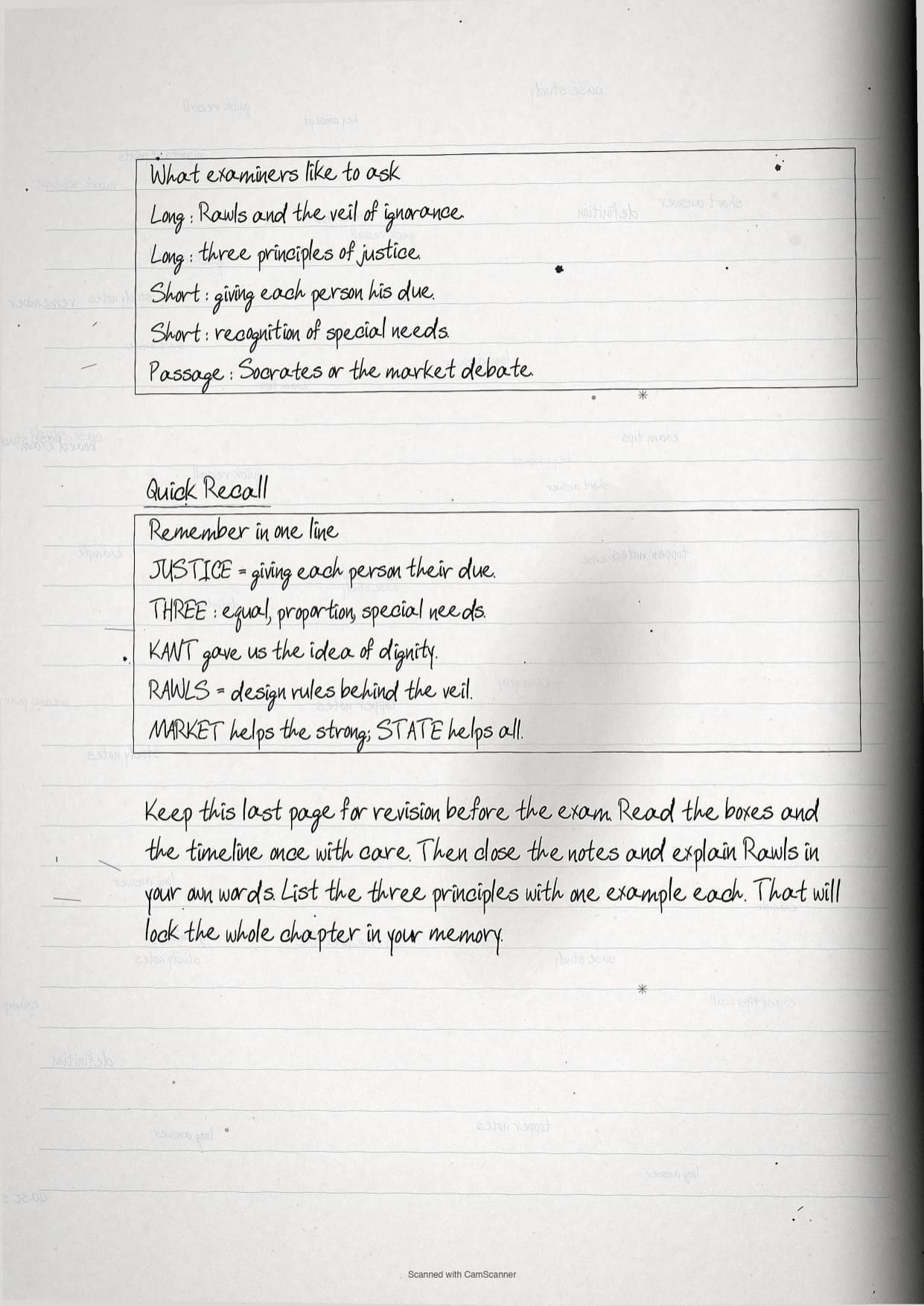
- CBSE Class 11 Weightage: a scoring chapter in the Political Science paper, asked in short and long answers.
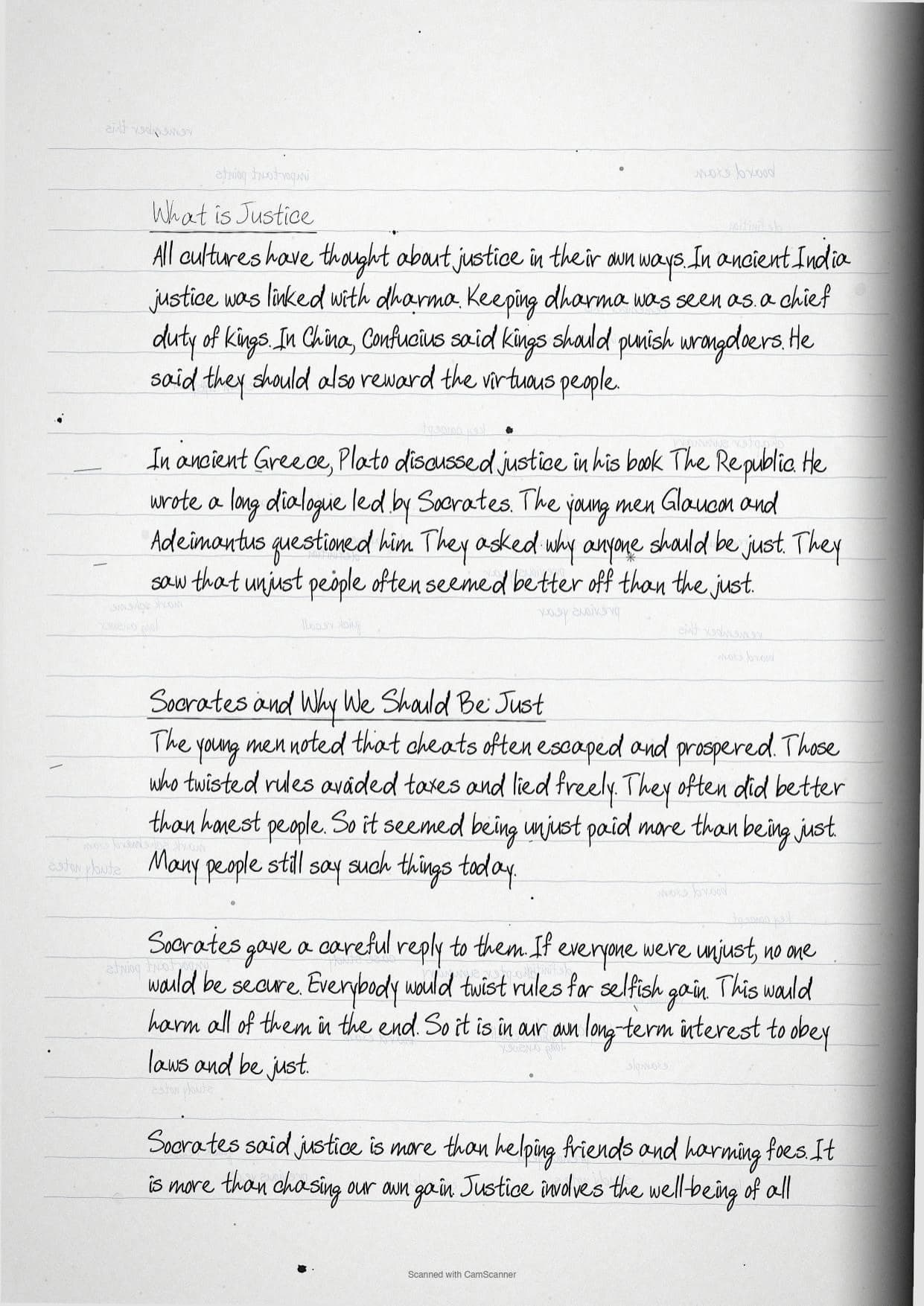
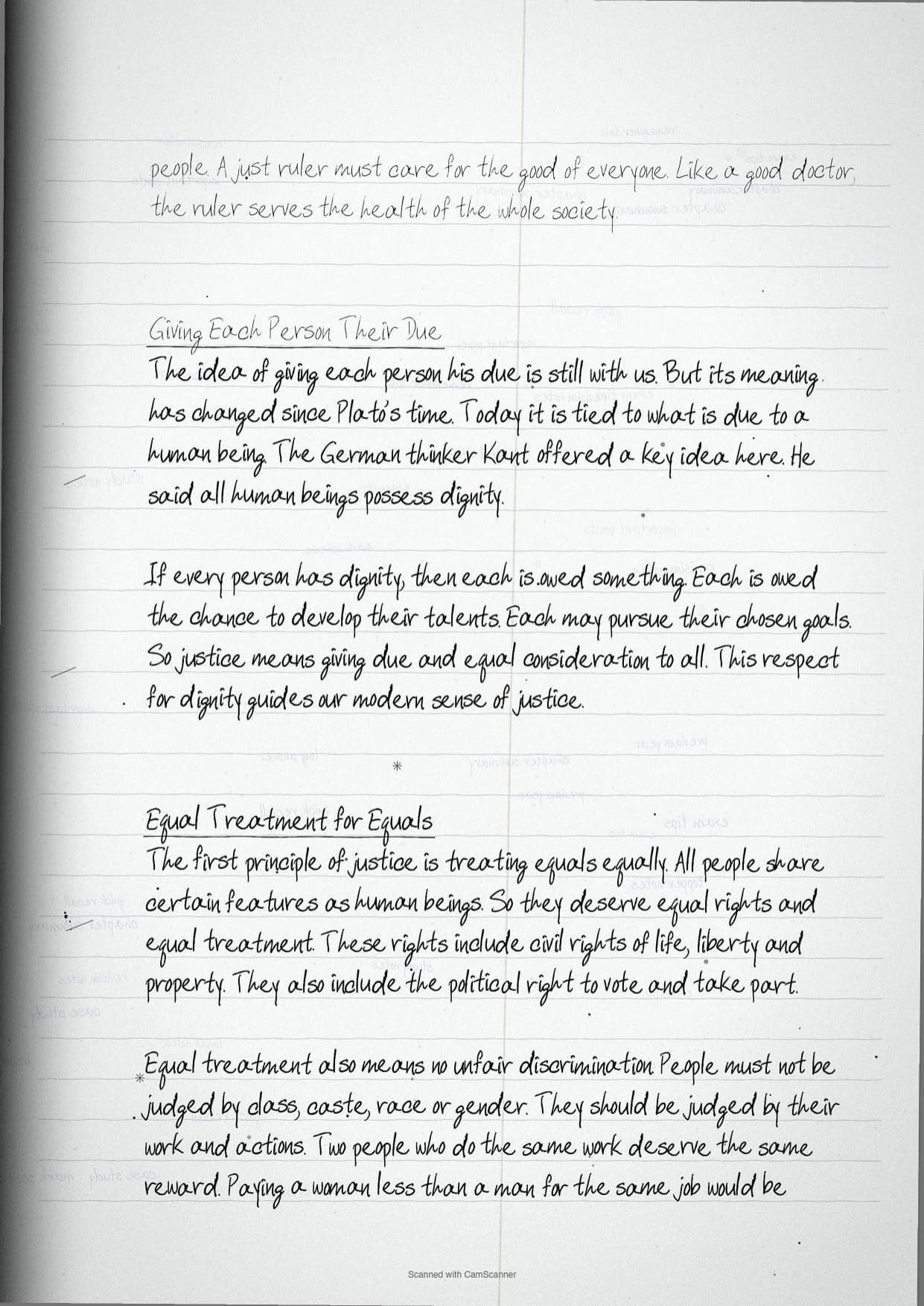
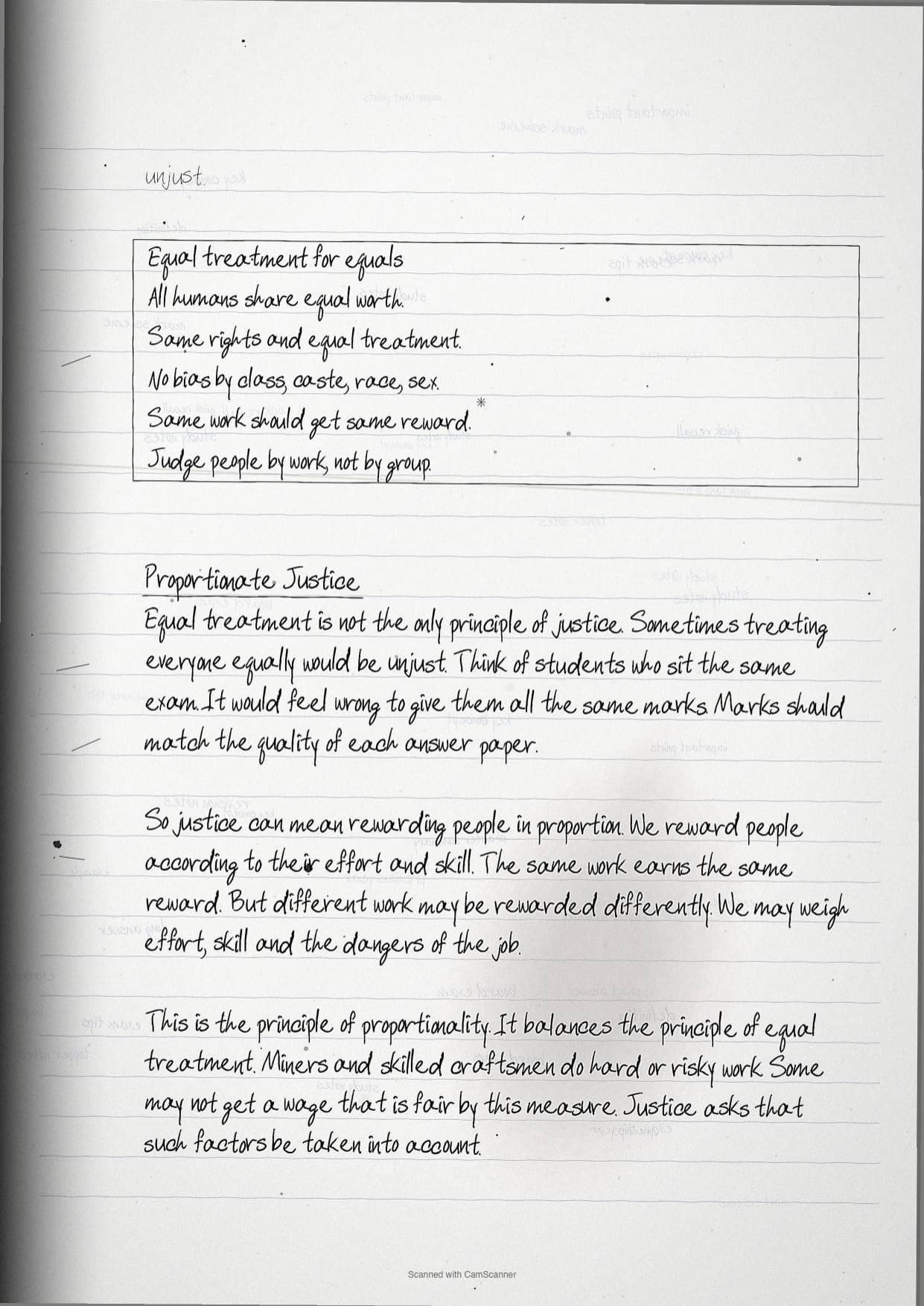
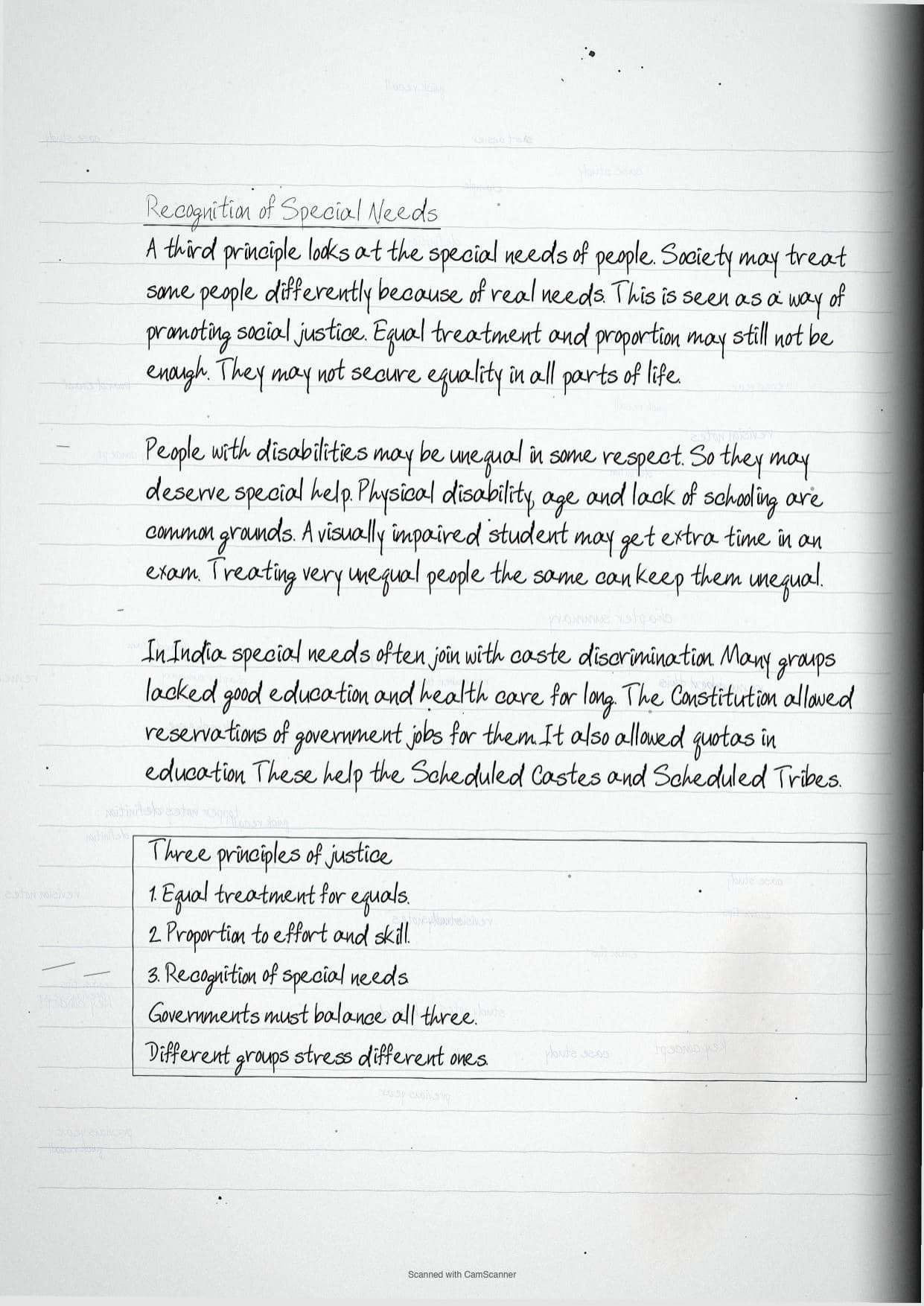
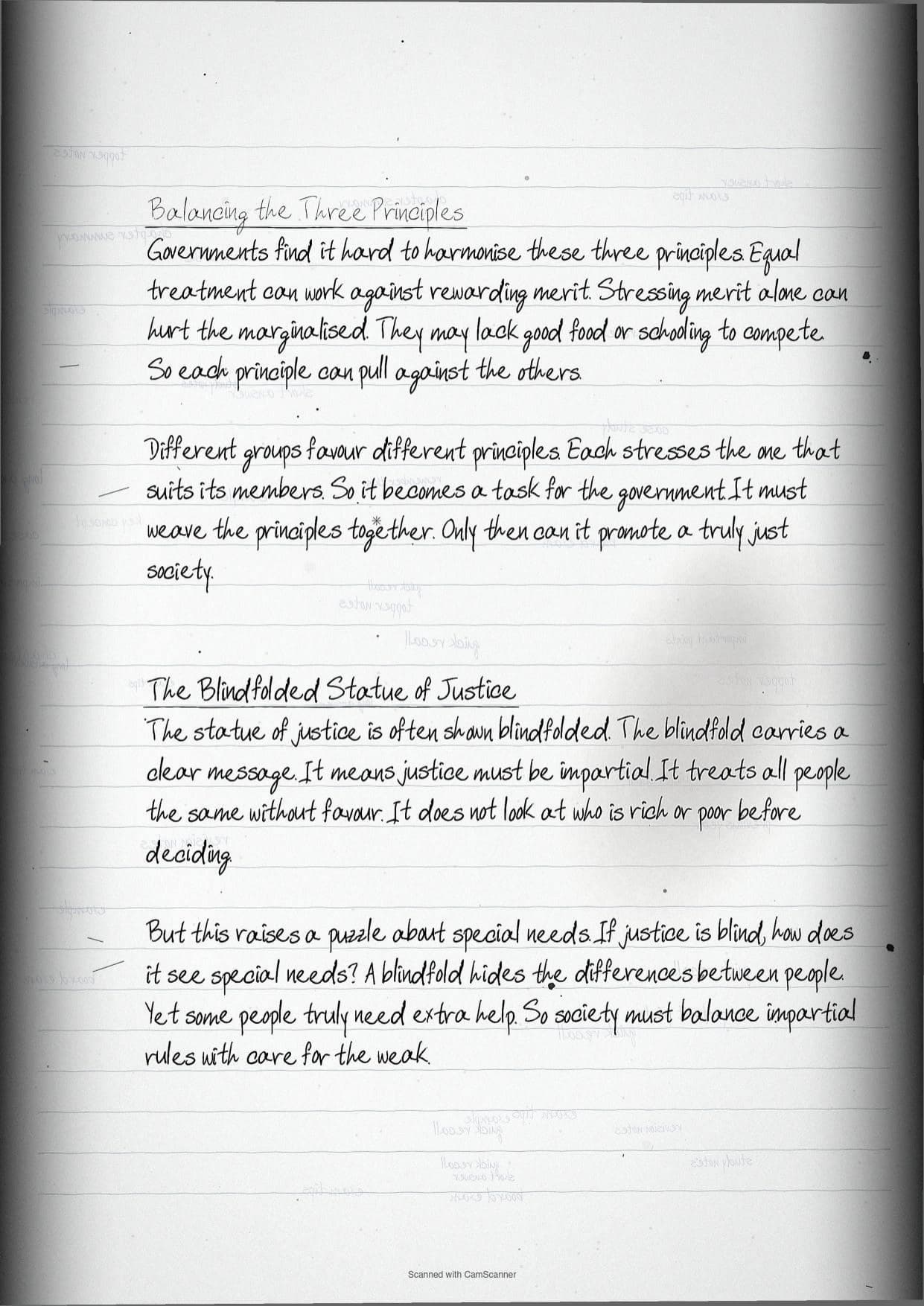
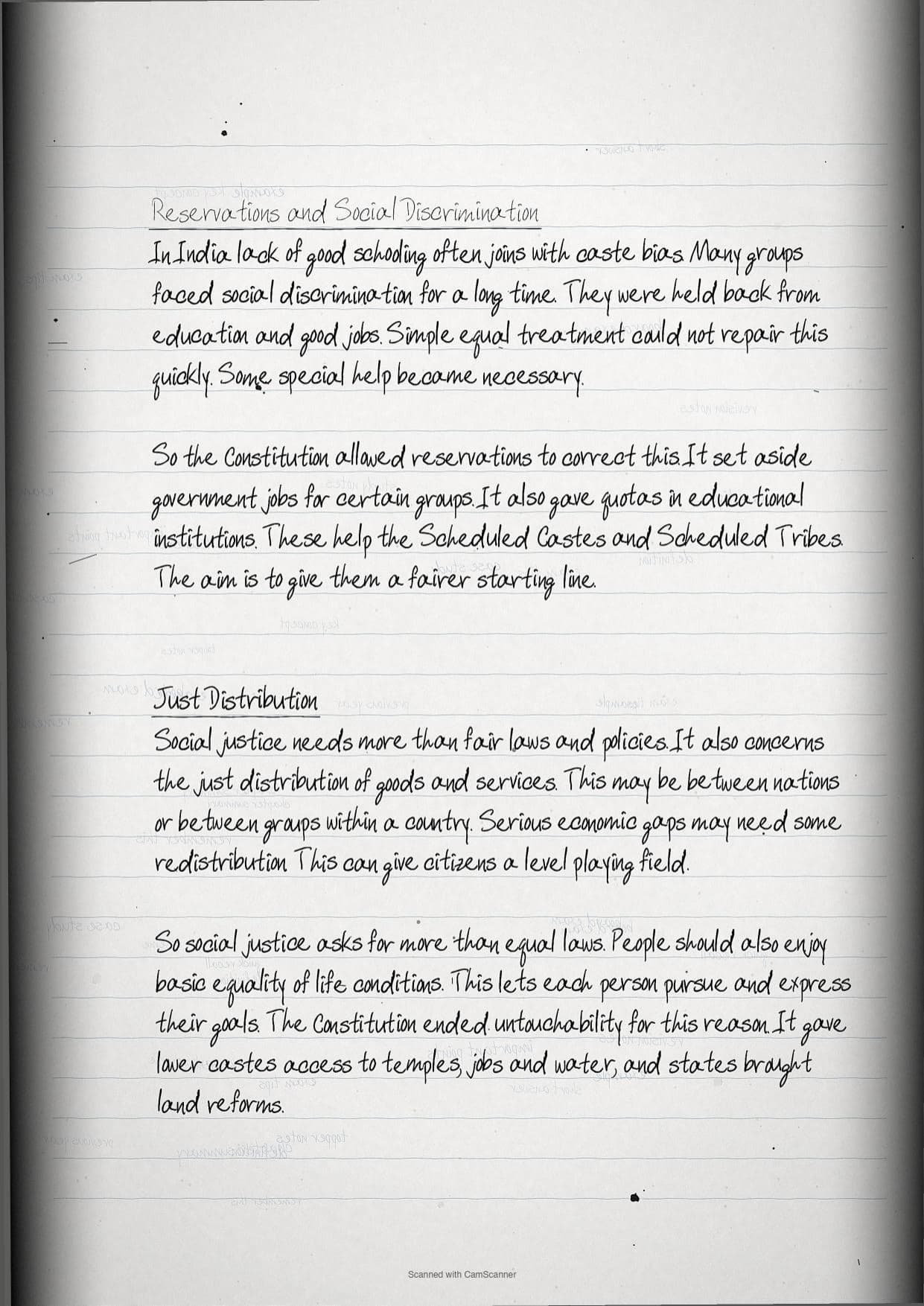
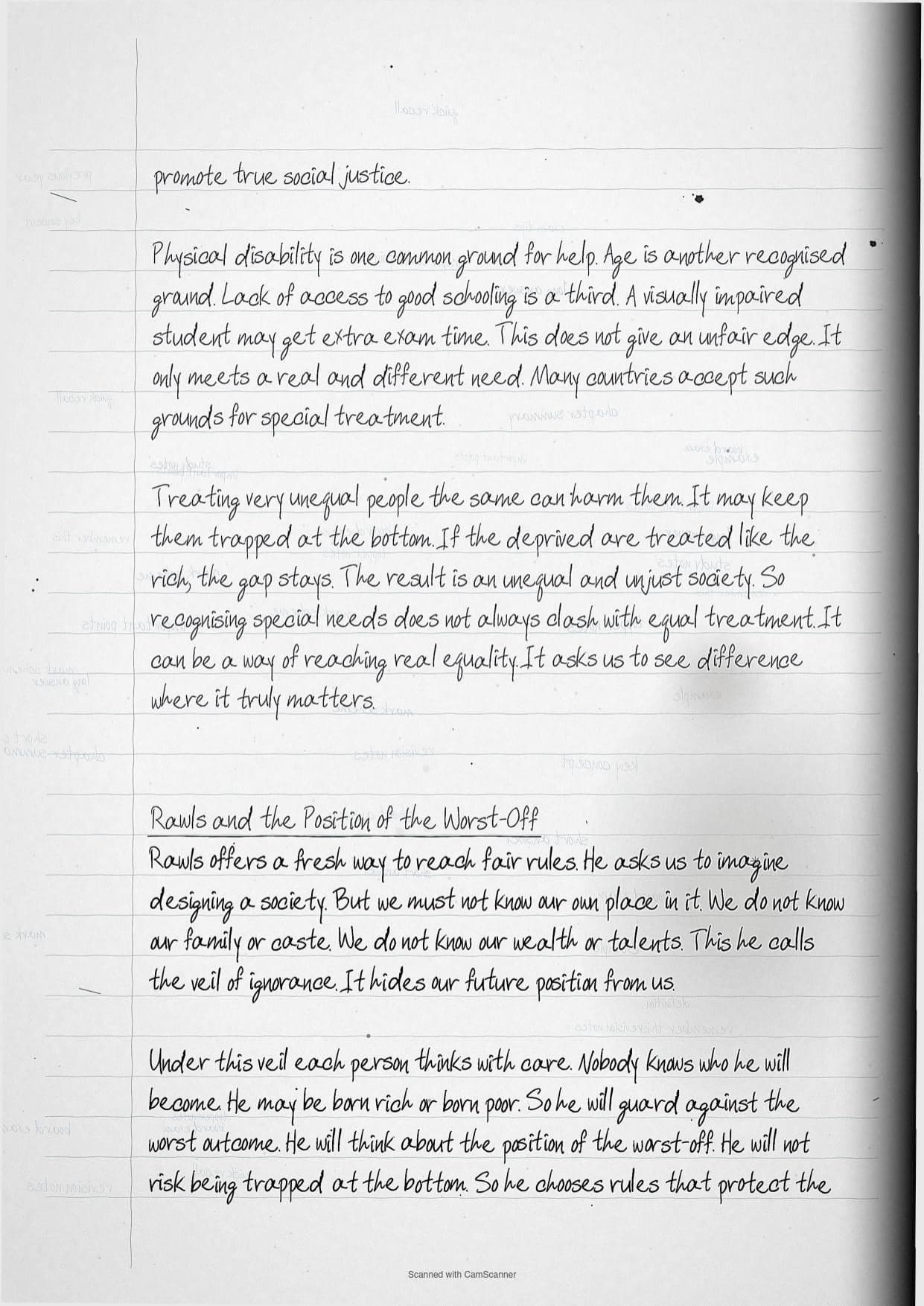
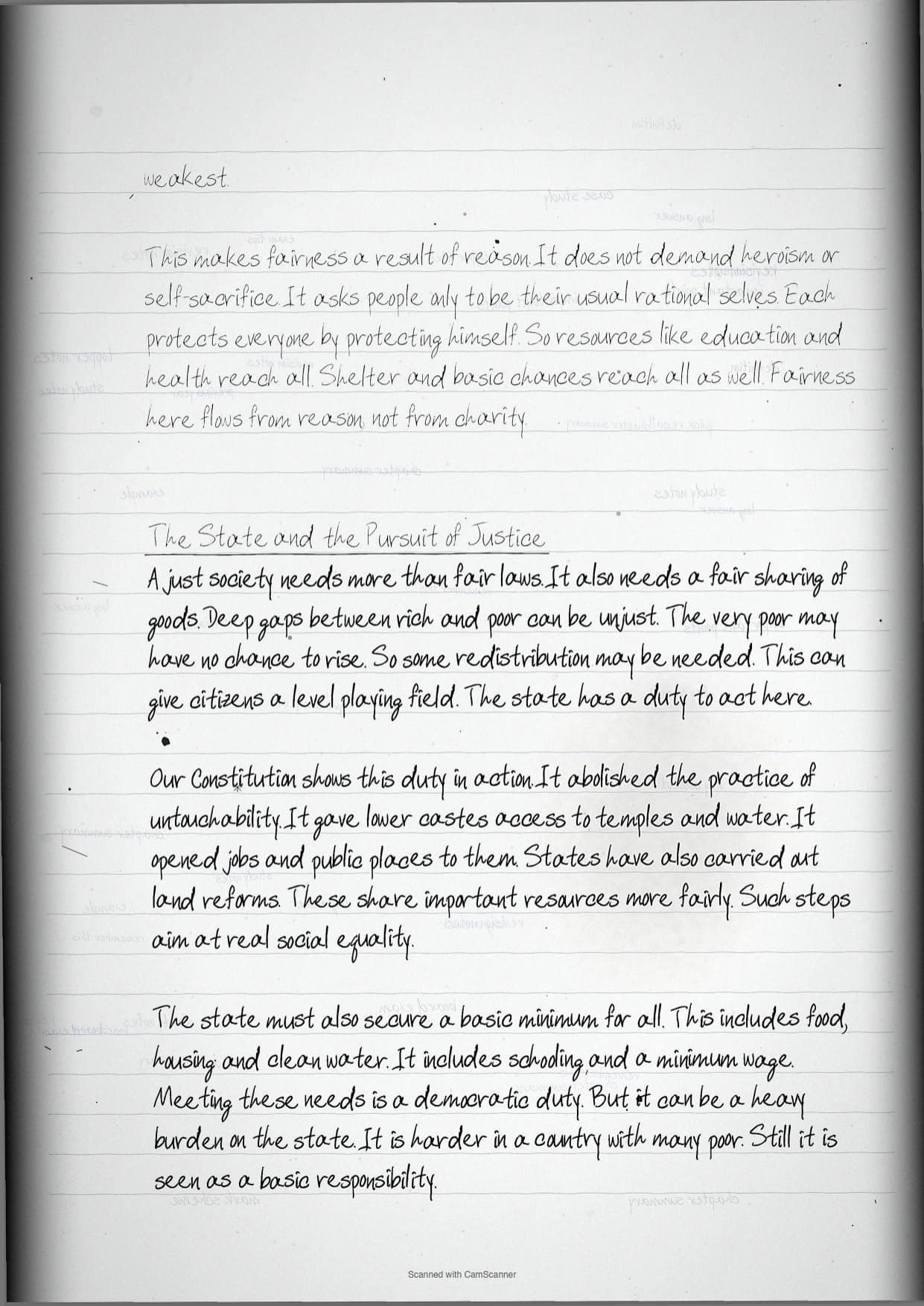
- What the notes cover: what is justice, from dharma to plato and socrates, giving each person their due and kant on dignity, equal treatment for equals, proportionate justice and effort.
- Best for: quick revision before Class 11 exams and a base for CUET later.
You can read the complete class 11 political-science handwritten notes for Social Justice, with key terms, boxed definitions, and quick revision points, in the PDF below.
These handwritten notes are written by subject teachers, mapped to the 2026-27 NCERT, and checked against the last five years of CBSE Class 11 Political Science papers.
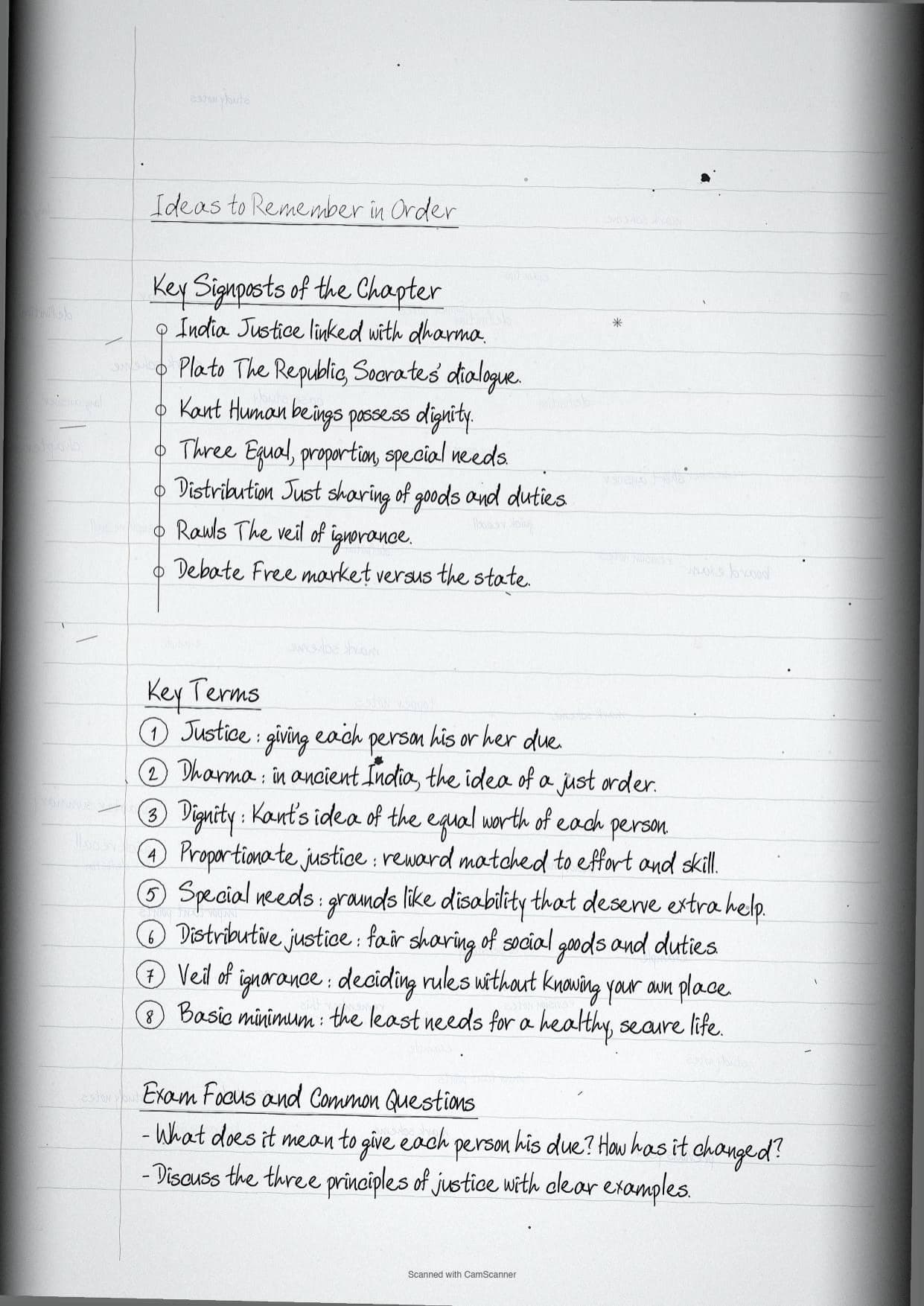
Key Terms and Ideas in Social Justice
These are the terms and ideas the exam asks about most. Learn each one so you can define it and use it in your answers.
| Term / Idea | What it means |
|---|---|
| Justice | giving each person his or her due |
| Dharma | in ancient India, the idea of a just order |
| Dignity | Kant's idea of the equal worth of each person |
| Proportionate justice | reward matched to effort and skill |
| Special needs | grounds like disability that deserve extra help |
| Distributive justice | fair sharing of social goods and duties |
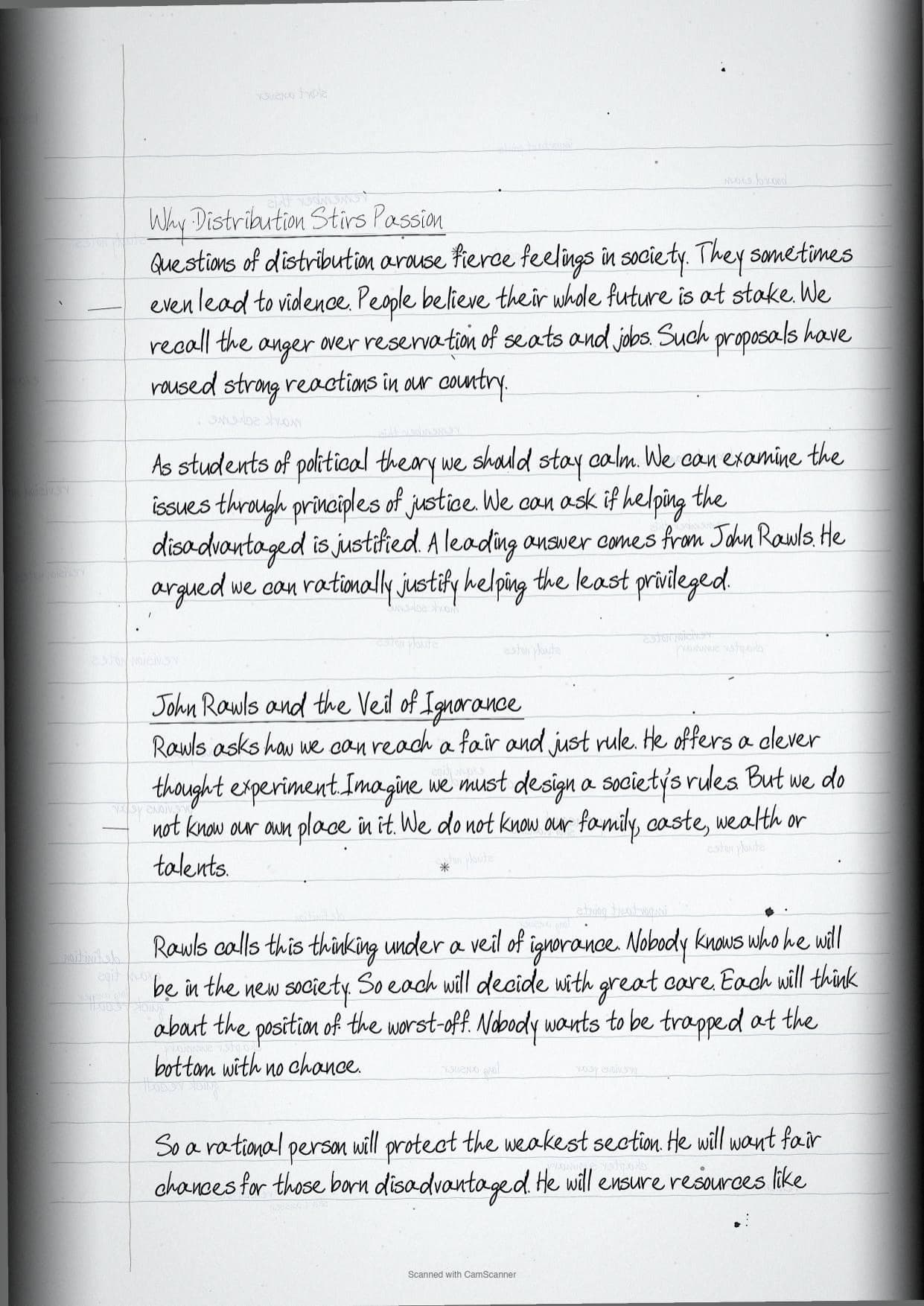
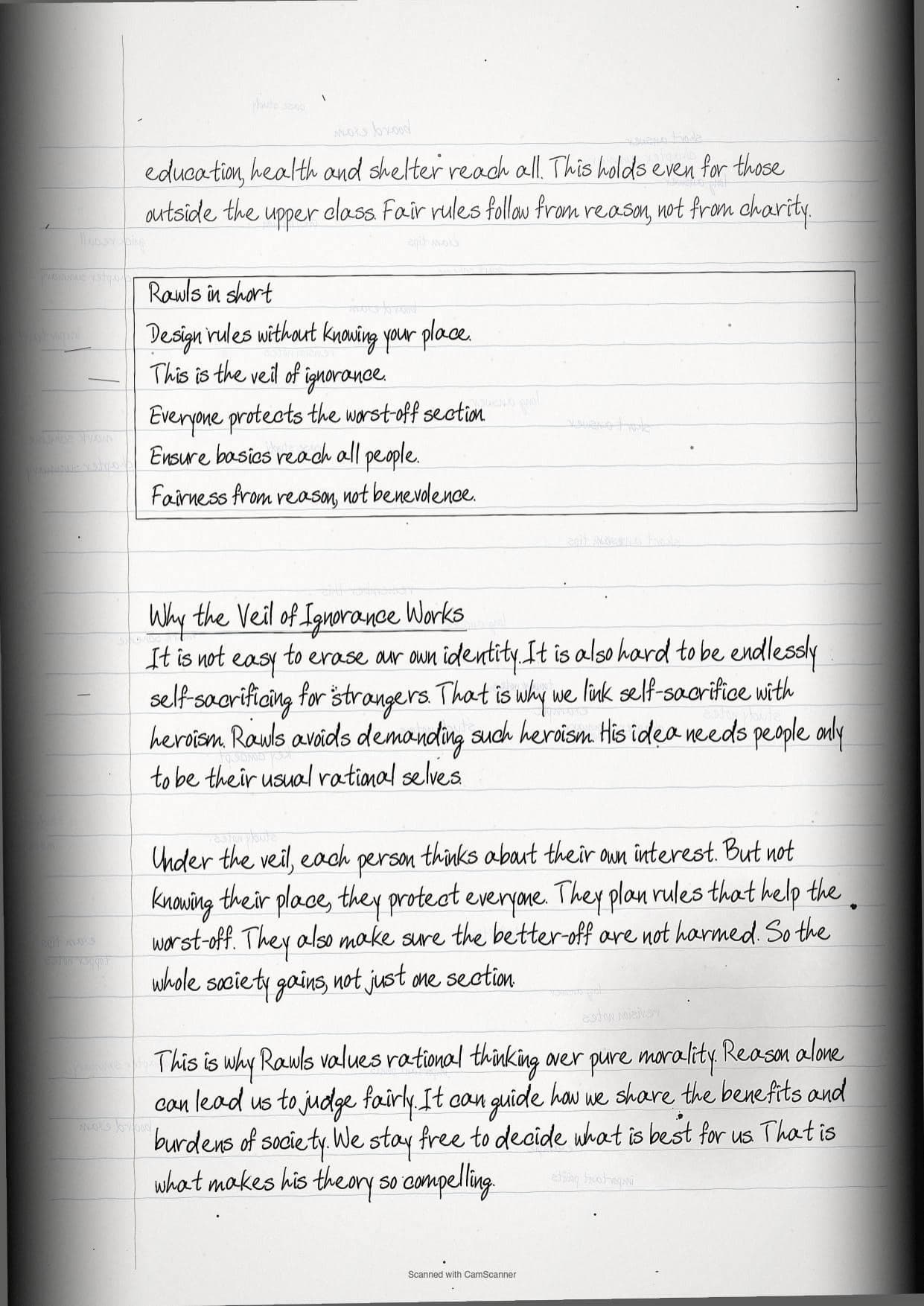
| Veil of ignorance | deciding rules without knowing your own place |
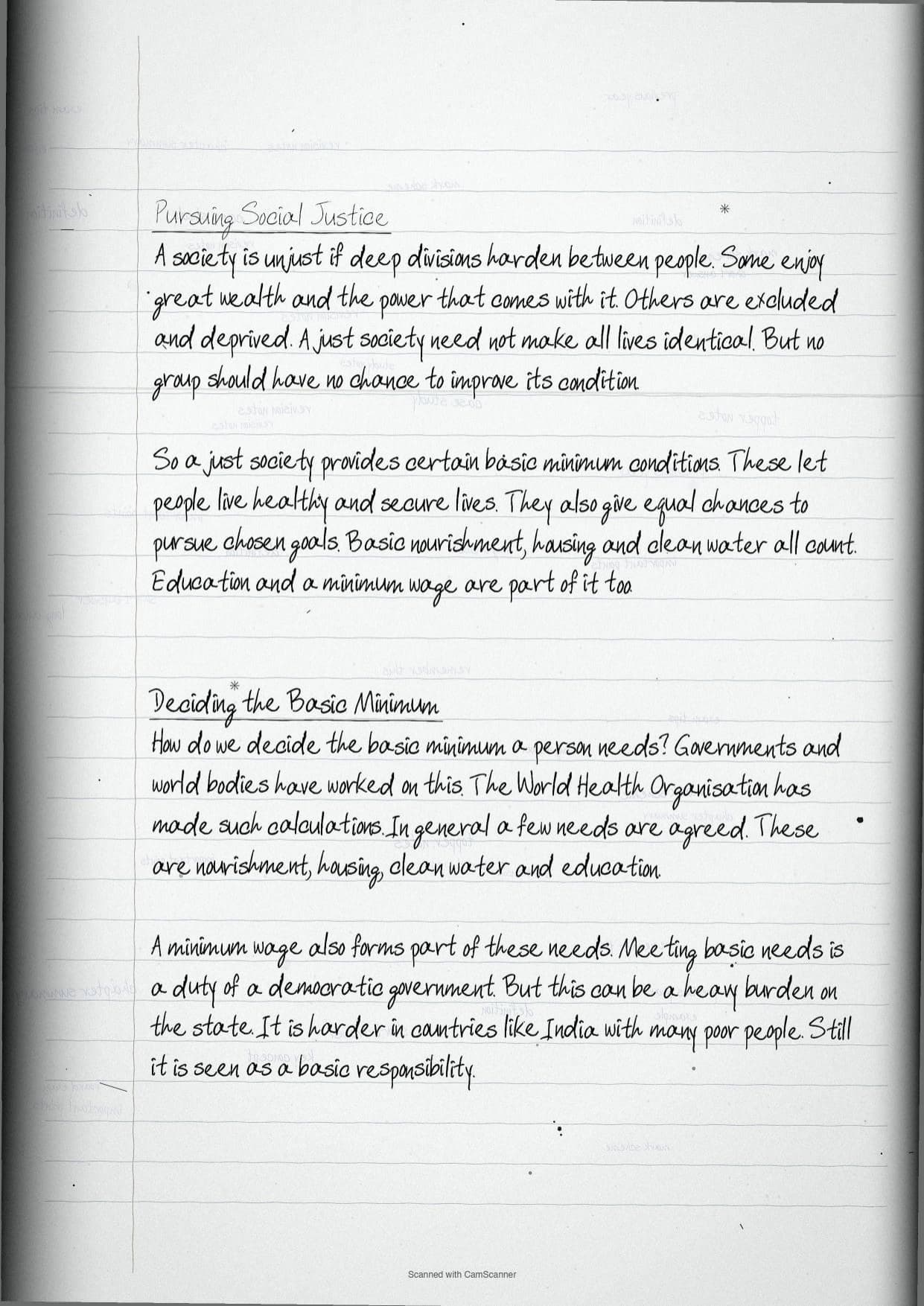
| Basic minimum | the least needs for a healthy, secure life |
What the Social Justice Handwritten Notes Cover
Social justice is about giving each person their due and sharing social goods and duties fairly. This chapter traces justice from Plato and Kant to the three modern principles of justice. It ends with John Rawls and the debate between free markets and state intervention.
- What is justice, from dharma to Plato and Socrates
- Giving each person their due and Kant on dignity
- Equal treatment for equals
- Proportionate justice and effort
- Recognition of special needs
- John Rawls and the veil of ignorance
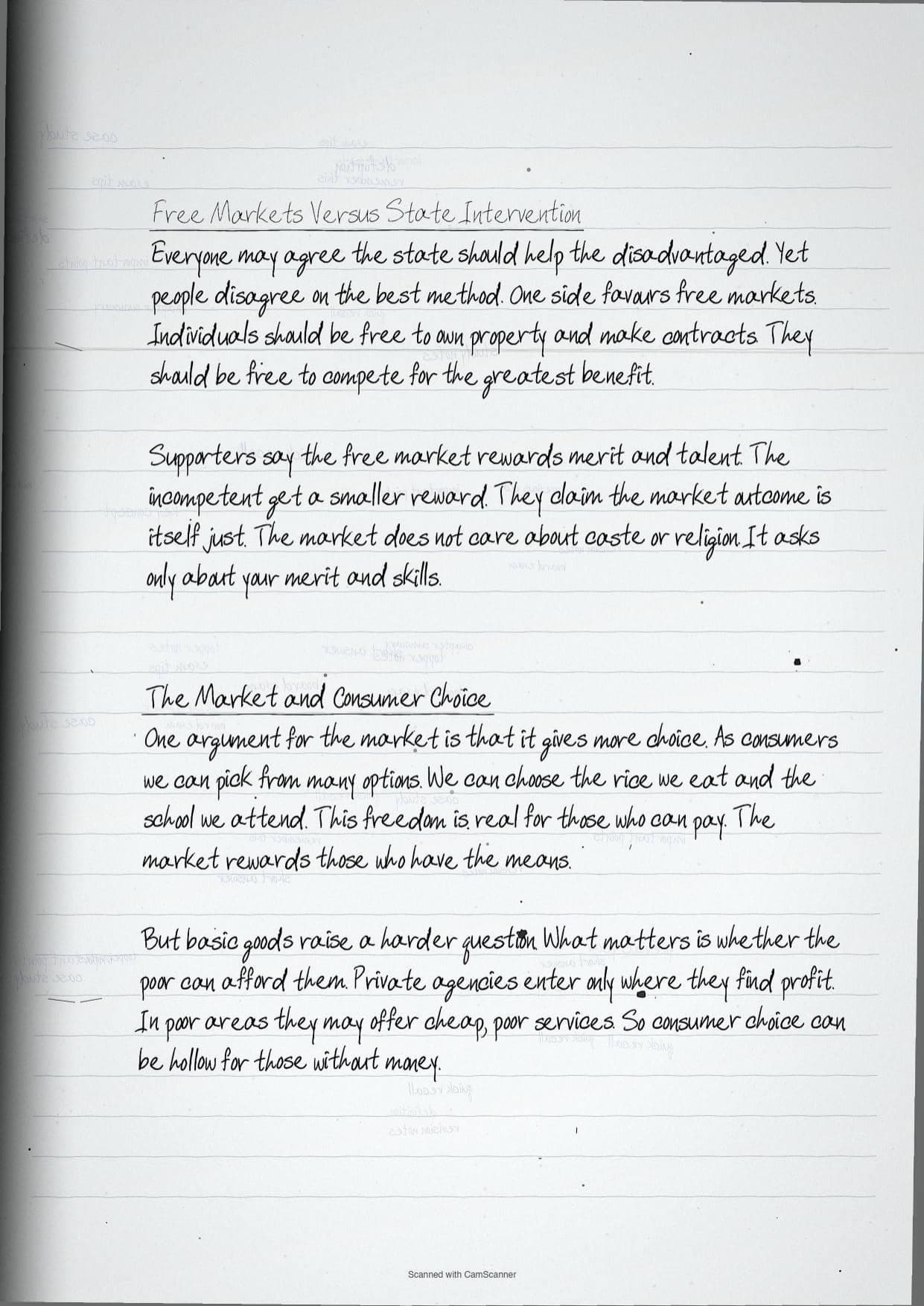
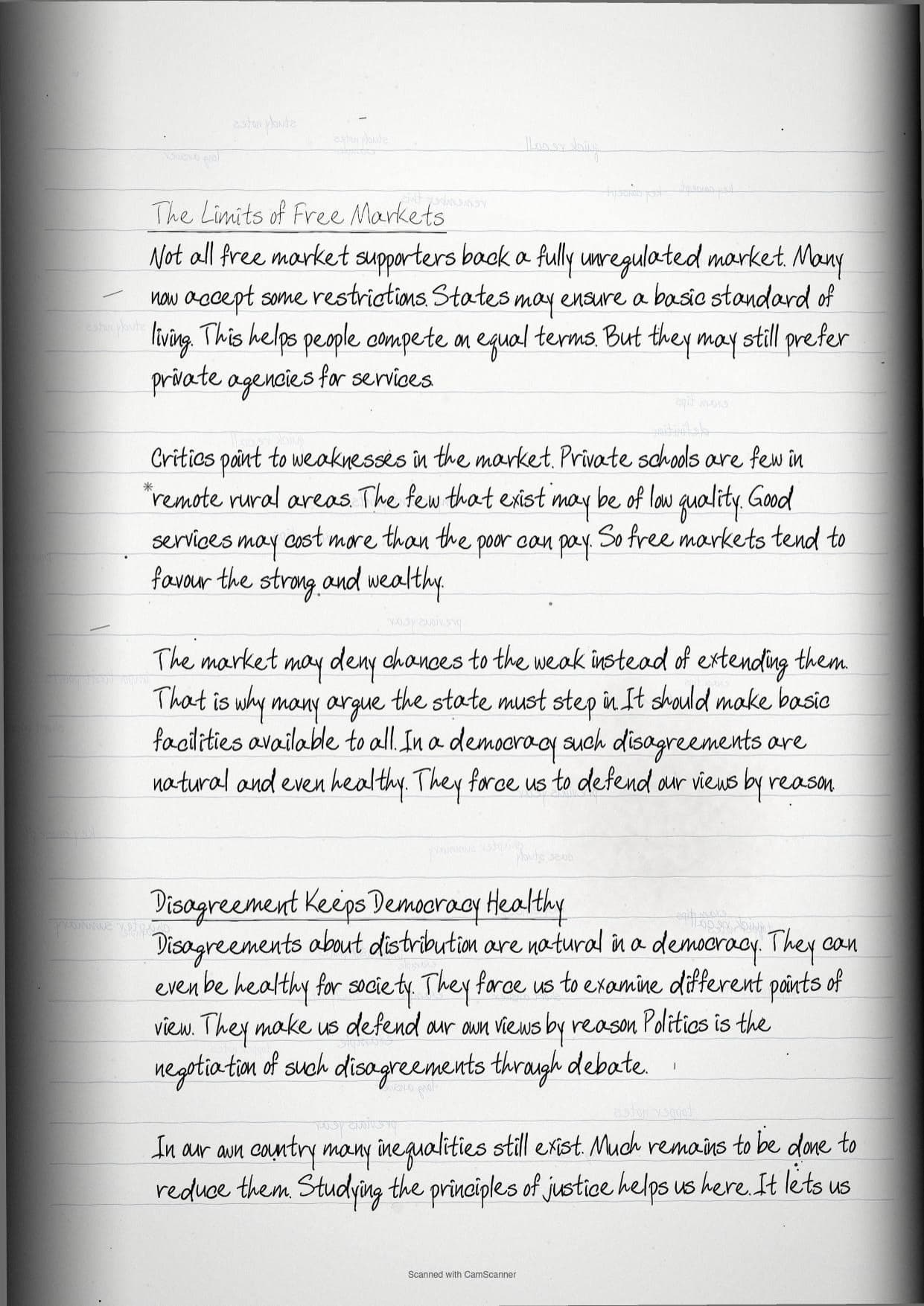
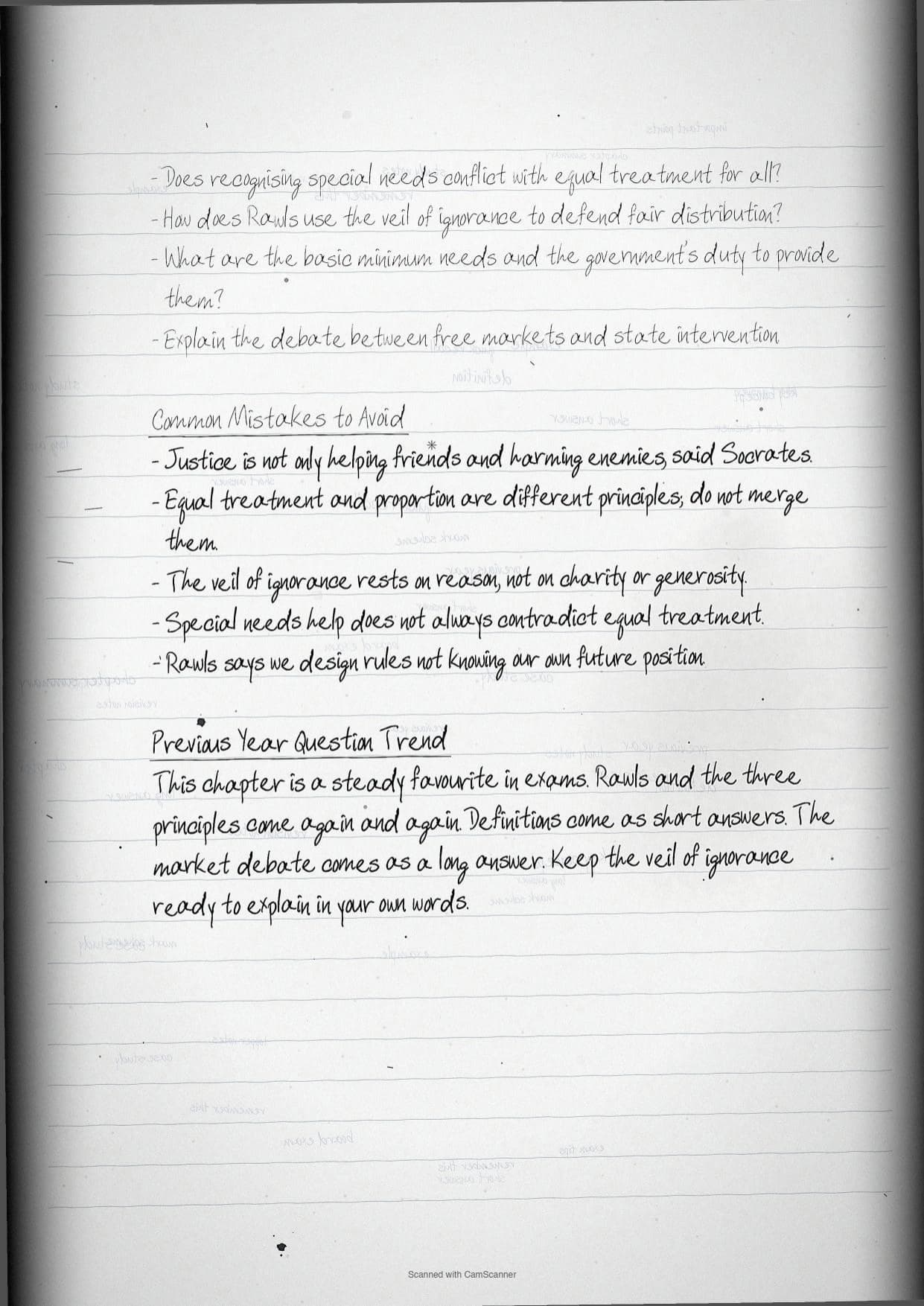
- Free markets versus state intervention
Social Justice Topic-wise Weightage for CBSE Class 11 Political Science
Some parts of this chapter are asked more often than others. The table below shows which sub-topics to revise first, based on recent CBSE Class 11 question trends.
| Sub-topic | Weightage | CBSE Frequency |
|---|---|---|
| John Rawls and the veil of ignorance | High | asked almost every year |
| Three principles of justice | High | frequent long answer |
| Giving each person his due | Medium | regular short answer |
| Free market versus state debate | Medium | common long answer |
| Recognition of special needs | Low | occasional short answer |
How Collegedunia's Handwritten Notes Help You Revise Social Justice
These notes are made for the night before the exam. They keep the facts short and easy to scan. Collegedunia maps every point to the 2026-27 NCERT.
- Clear handwriting: each topic is written in neat, easy-to-read handwriting.
- Boxed key terms: the main terms and definitions are boxed by hand for fast recall.
- Diagrams and tables: simple hand-drawn tables and charts make ideas clear.
- Colour-coded headings: new sub-topics stand out, so you find any section in seconds.
Social Justice Self-Assessment Quiz
Try these quick questions after you read the notes. Tap each question to check your answer. They cover the points CBSE asks most often.
In ancient India justice was associated with which idea?
(a) karma (b) dharma (c) moksha (d) artha
Answer: (b) dharma - maintaining dharma was seen as a chief duty of kings.
Who gave the idea that human beings possess dignity?
(a) Plato (b) Socrates (c) Kant (d) Rawls
Answer: (c) Kant - he said all humans have dignity and are owed equal consideration.
The veil of ignorance was proposed by whom?
(a) John Rawls (b) Karl Marx (c) J.S. Mill (d) Confucius
Answer: (a) John Rawls - to argue that fair rules follow from rational thinking.
Which is NOT one of the three principles of justice?
(a) equal treatment for equals (b) proportion to effort (c) recognition of special needs (d) absolute equal income
Answer: (d) absolute equal income - the three principles are equal treatment, proportion and special needs.
Free markets tend to favour whom, according to critics?
(a) the weak and poor (b) the strong and wealthy (c) only the state (d) rural areas
Answer: (b) the strong and wealthy - so many argue the state must ensure basic facilities.
How to Use These Handwritten Notes for Class 11 Political Science Revision
Use these class 11 political-science handwritten notes in two passes. Read them slowly once for the full chapter. Then, near the exam, read only the boxes and key terms for a fast recall.
- Read the notes once with the NCERT chapter open beside you.
- Say each key term and idea in your own words.
- Practise one long-answer question from a past paper.
- On the last day, revise only the key terms and the boxes.
Class 11 Political Science Handwritten Notes for All Chapters
The table below links the class 11 political-science handwritten notes for every chapter. Use it to jump to any other chapter's notes.
| Chapter | Resource |
|---|---|
| Chapter 1 | Constitution: Why and How Handwritten Notes |
| Chapter 2 | Rights in the Indian Constitution Handwritten Notes |
| Chapter 3 | Election and Representation Handwritten Notes |
| Chapter 4 | Executive Handwritten Notes |
| Chapter 5 | Legislature Handwritten Notes |
| Chapter 6 | Judiciary Handwritten Notes |
| Chapter 7 | Federalism Handwritten Notes |
| Chapter 8 | Local Governments Handwritten Notes |
| Chapter 9 | Constitution as a Living Document Handwritten Notes |
| Chapter 10 | The Philosophy of the Constitution Handwritten Notes |
| Chapter 11 | Political Theory: An Introduction Handwritten Notes |
| Chapter 12 | Freedom Handwritten Notes |
| Chapter 13 | Equality Handwritten Notes |
| Chapter 14 | Social Justice Handwritten Notes |
| Chapter 15 | Rights Handwritten Notes |
| Chapter 16 | Citizenship Handwritten Notes |
| Chapter 17 | Nationalism Handwritten Notes |
| Chapter 18 | Secularism Handwritten Notes |
Social Justice Class 11 Political Science Handwritten Notes FAQs
Ques. Where can I download Social Justice Class 11 Political Science Handwritten Notes PDF?
Ans. You can download the Social Justice Class 11 Political Science Handwritten Notes PDF directly from this page. Both the Normal and HD versions are free.
Ques. Are these handwritten notes aligned with the 2026-27 NCERT?
Ans. Yes. These notes follow the current 2026-27 syllabus for Class 11 Political Science. What is the veil of ignorance in Rawls' theory of justice?
Ques. How many pages is the Class 11 Political Science Social Justice Handwritten Notes PDF?
Ans. The notes run about 20 pages. They cover the full chapter with key terms, hand-drawn boxes, and a short self-assessment quiz.
Ques. What is the main idea of the 11th standard Political Science chapter Social Justice?
Ans. It asks us to design society's rules without knowing our own future place in it. Since no one knows if they will be rich or poor, each person rationally chooses rules that protect the worst-off.
Ques. Are these Social Justice notes enough for the CBSE Class 11 exam?
Ans. Yes, for revision. The Collegedunia handwritten notes cover every key point and exam term. Read them with the NCERT chapter and practise past questions.



Comments