



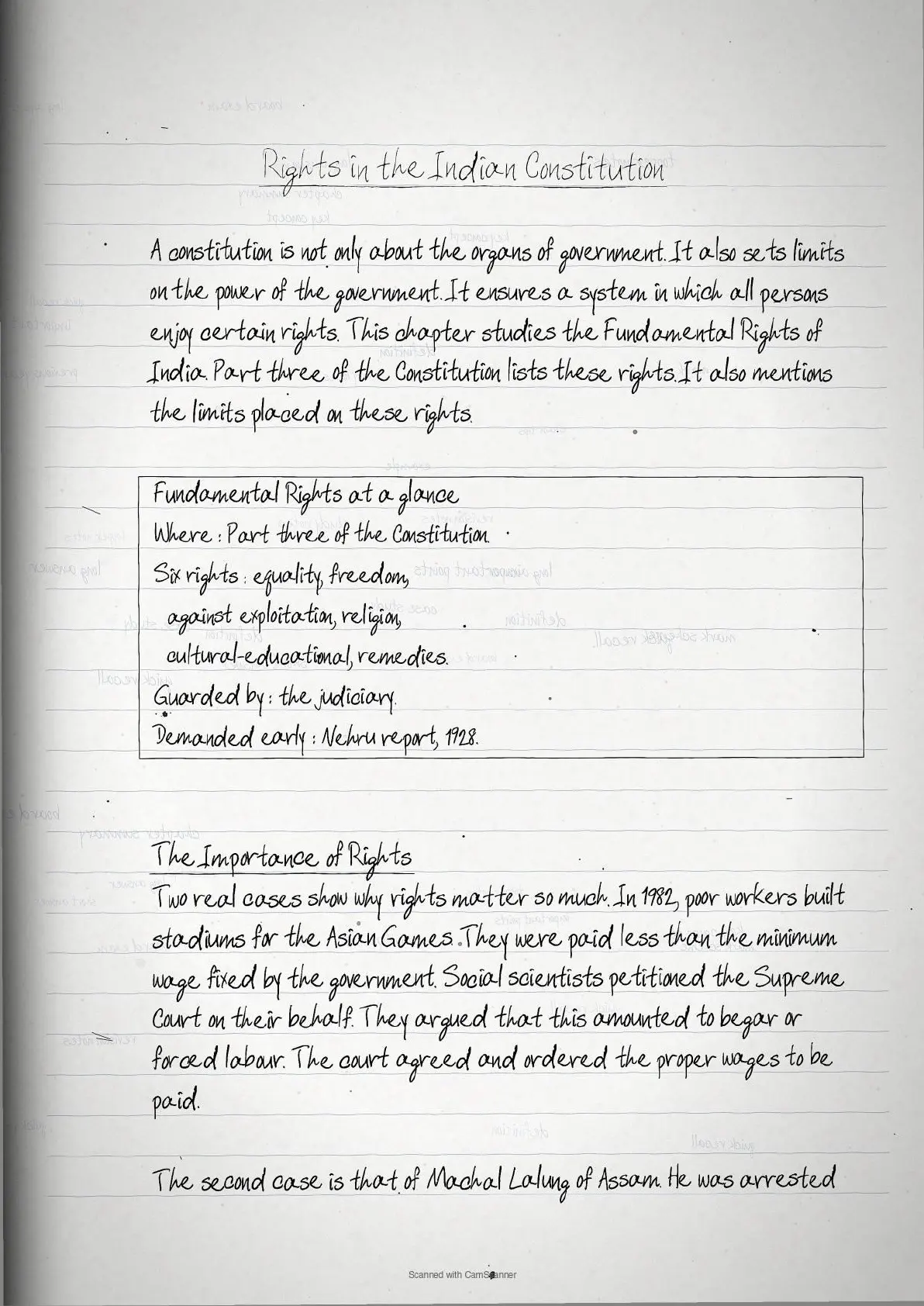
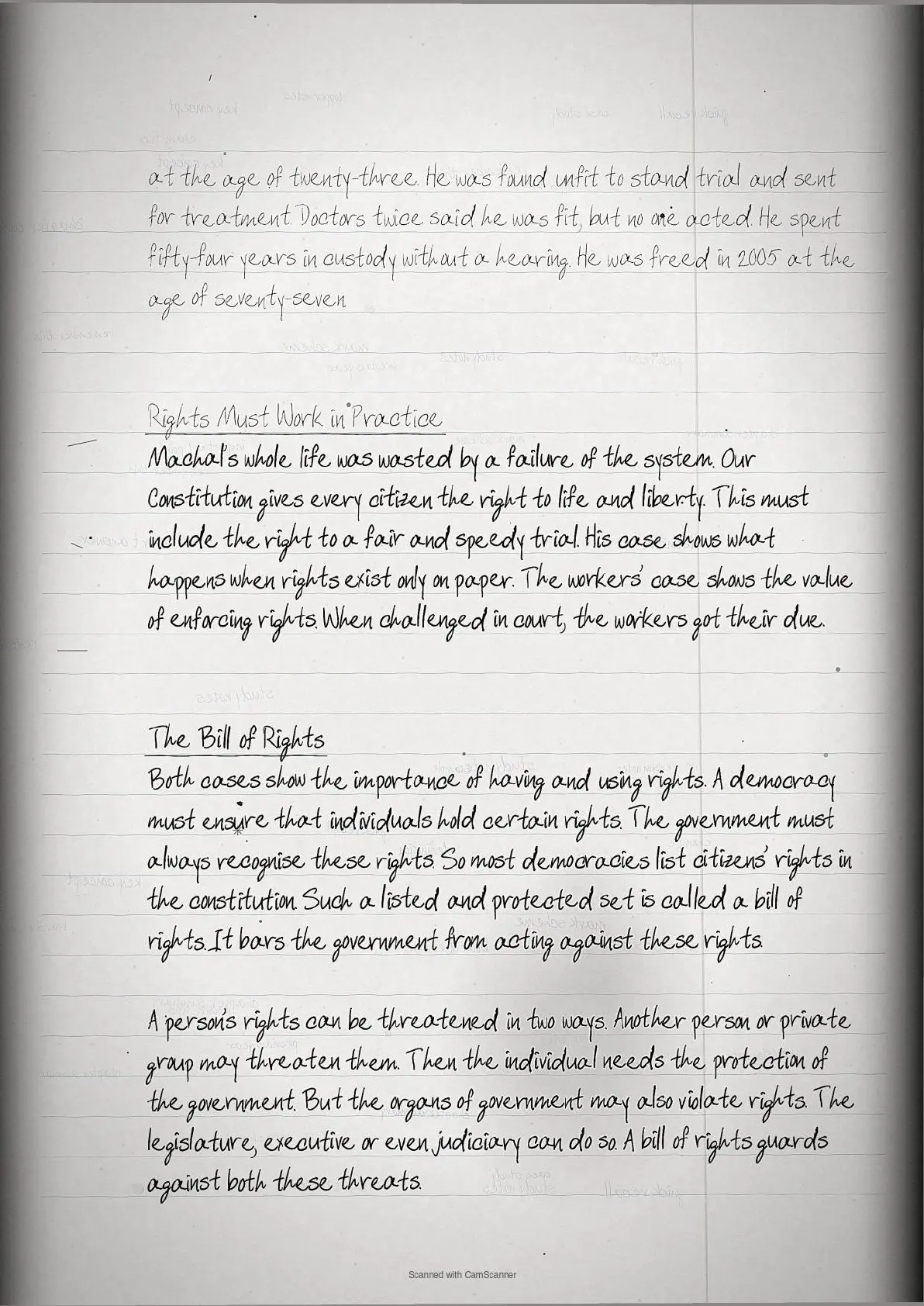
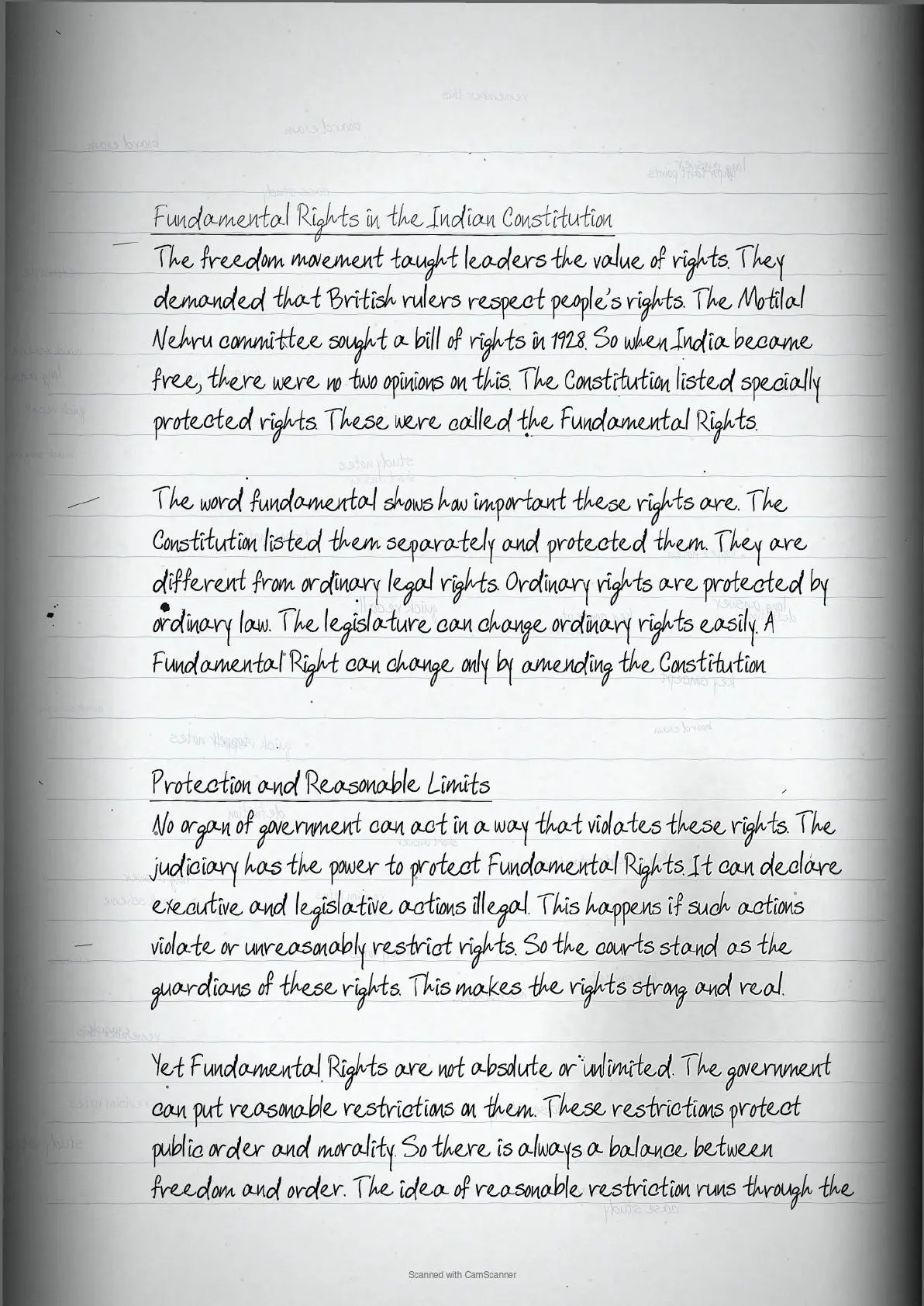
Fundamental Rights protect the individual, set limits on government, and are guarded and expanded by the judiciary. Class 11 Political Science Chapter 2 Rights in the Indian Constitution builds this idea step by step. These class 11 political-science handwritten notes chapter 2 Rights in the Indian Constitution follow the 2026-27 NCERT and cover why rights matter and the.
- CBSE Class 11 Weightage: a scoring chapter in the Political Science paper, asked in short and long answers.
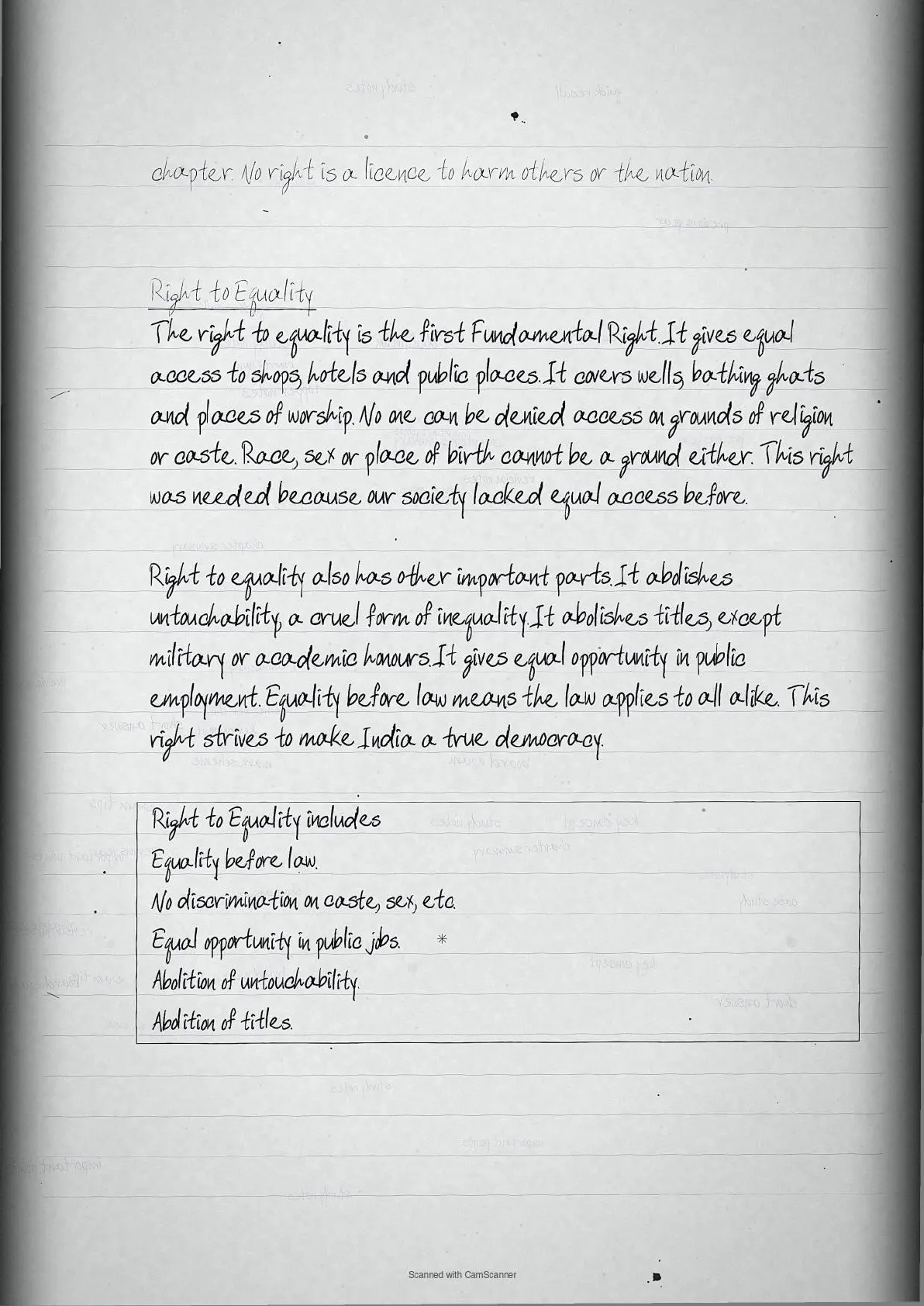
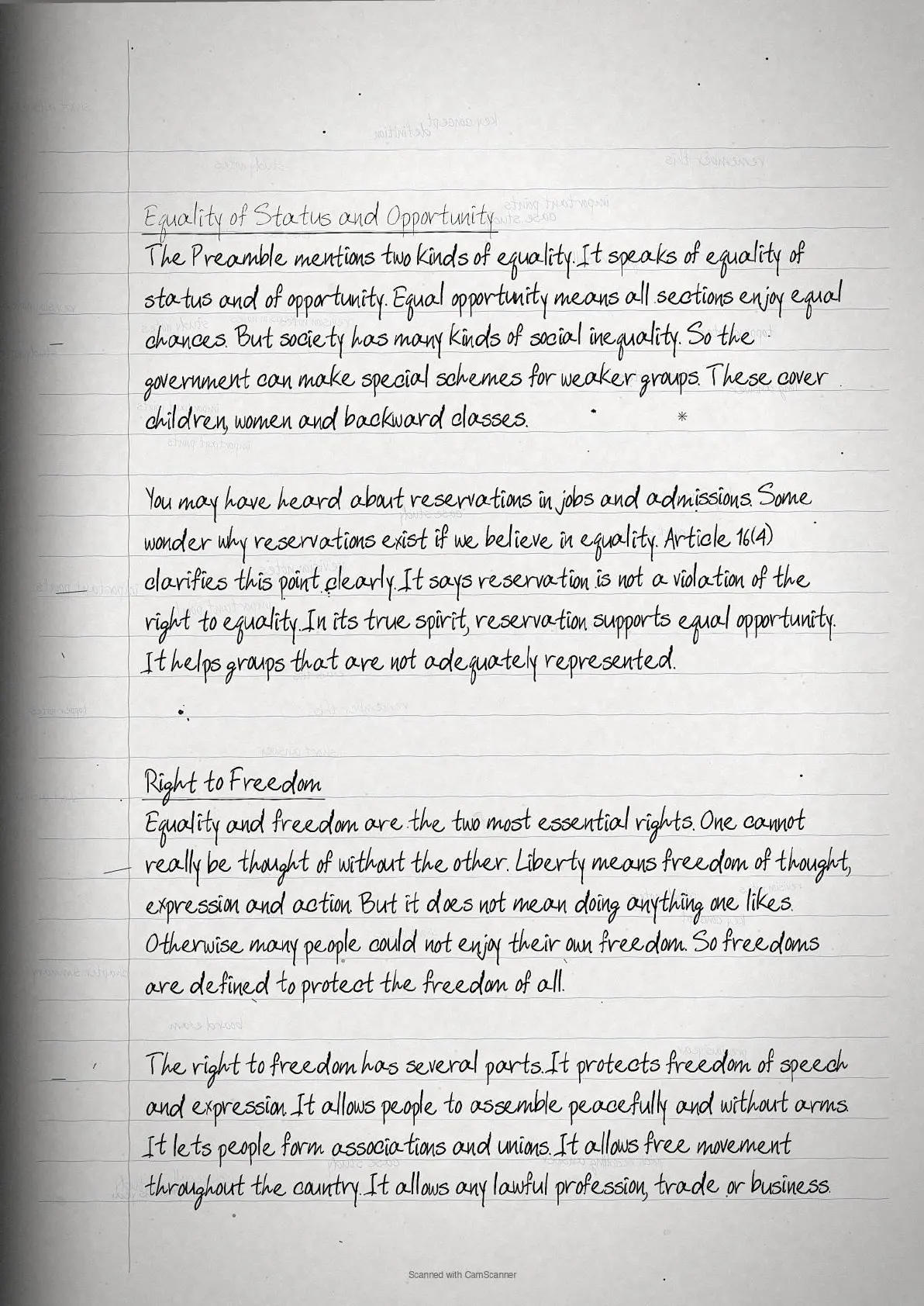
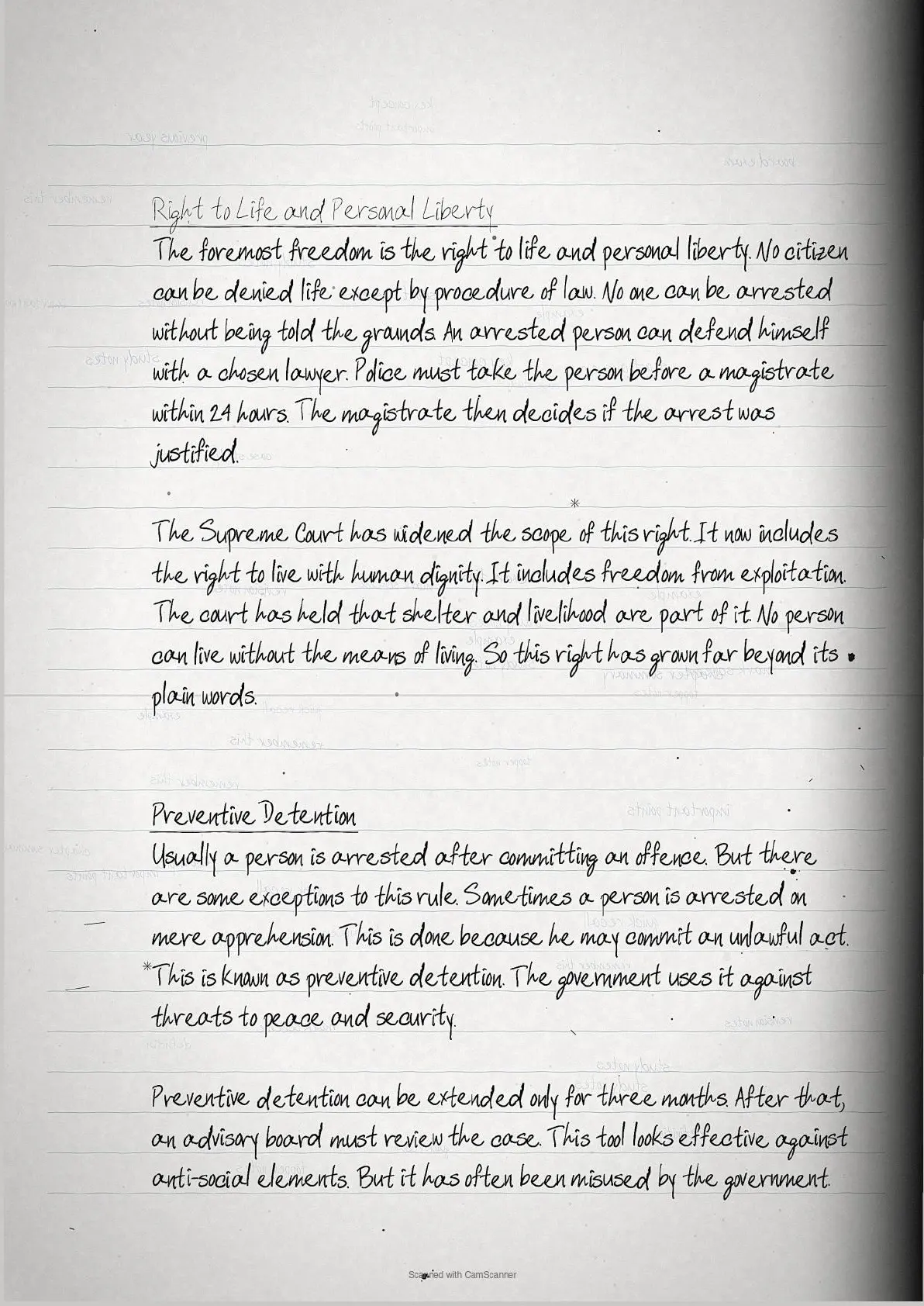
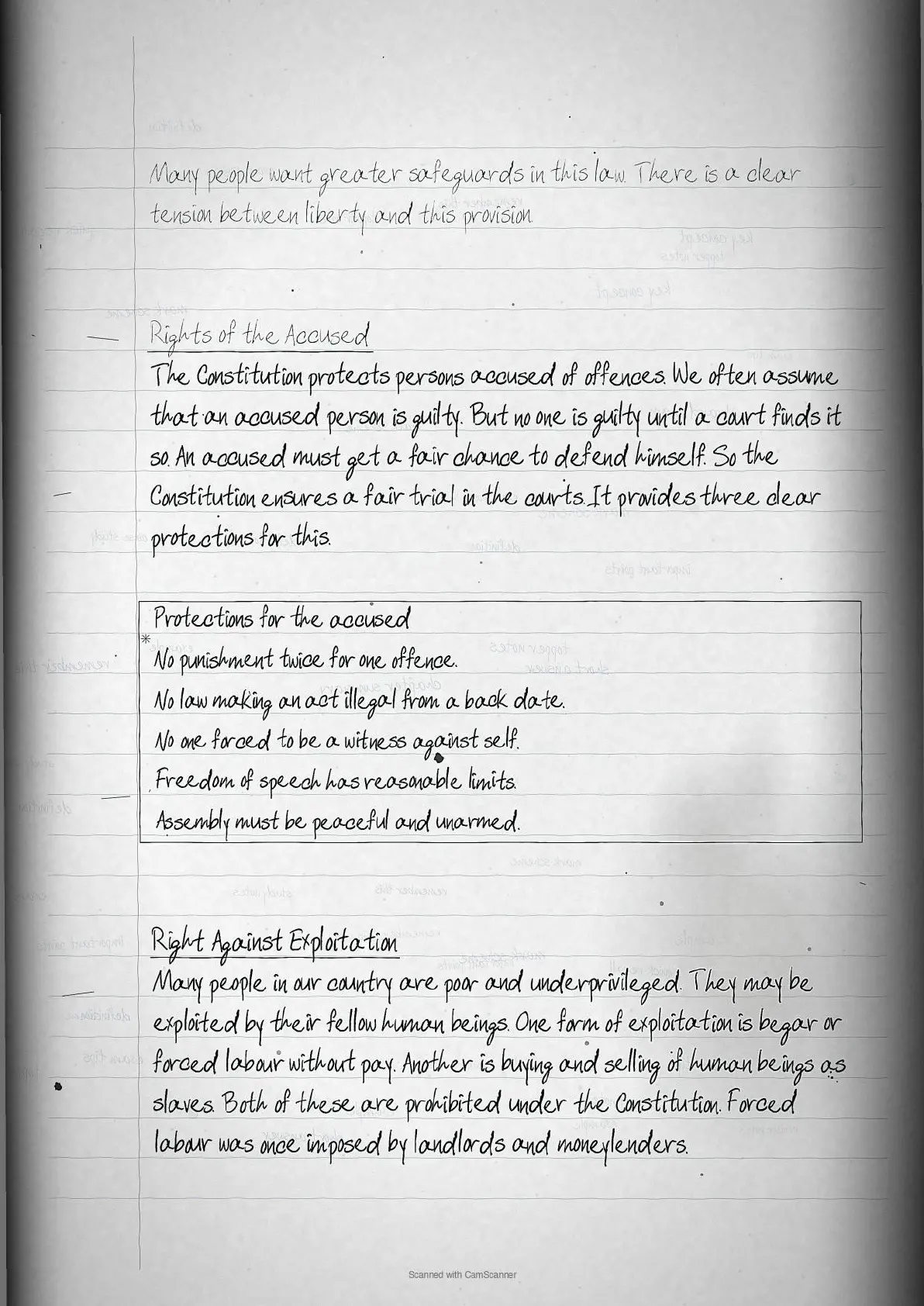
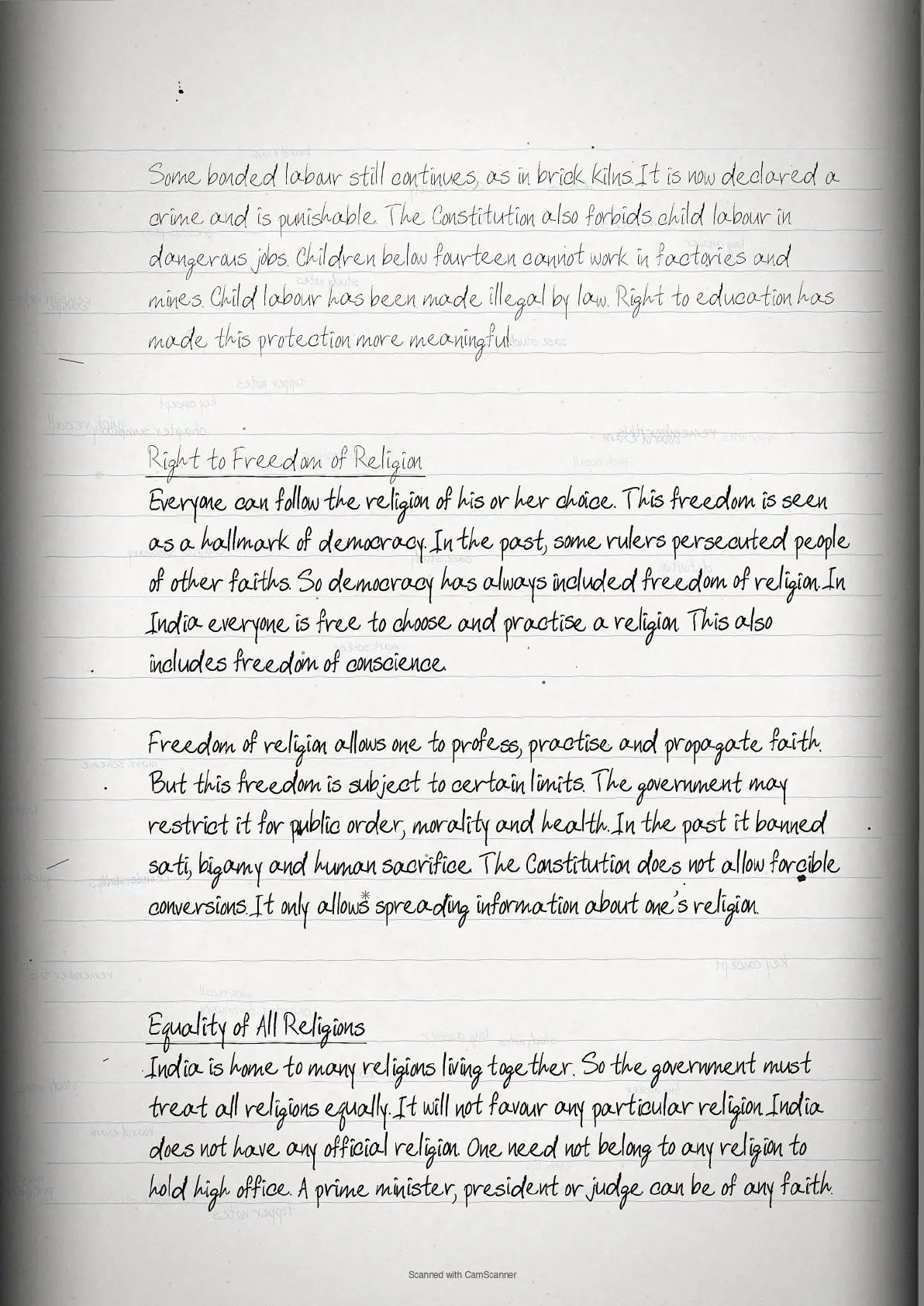
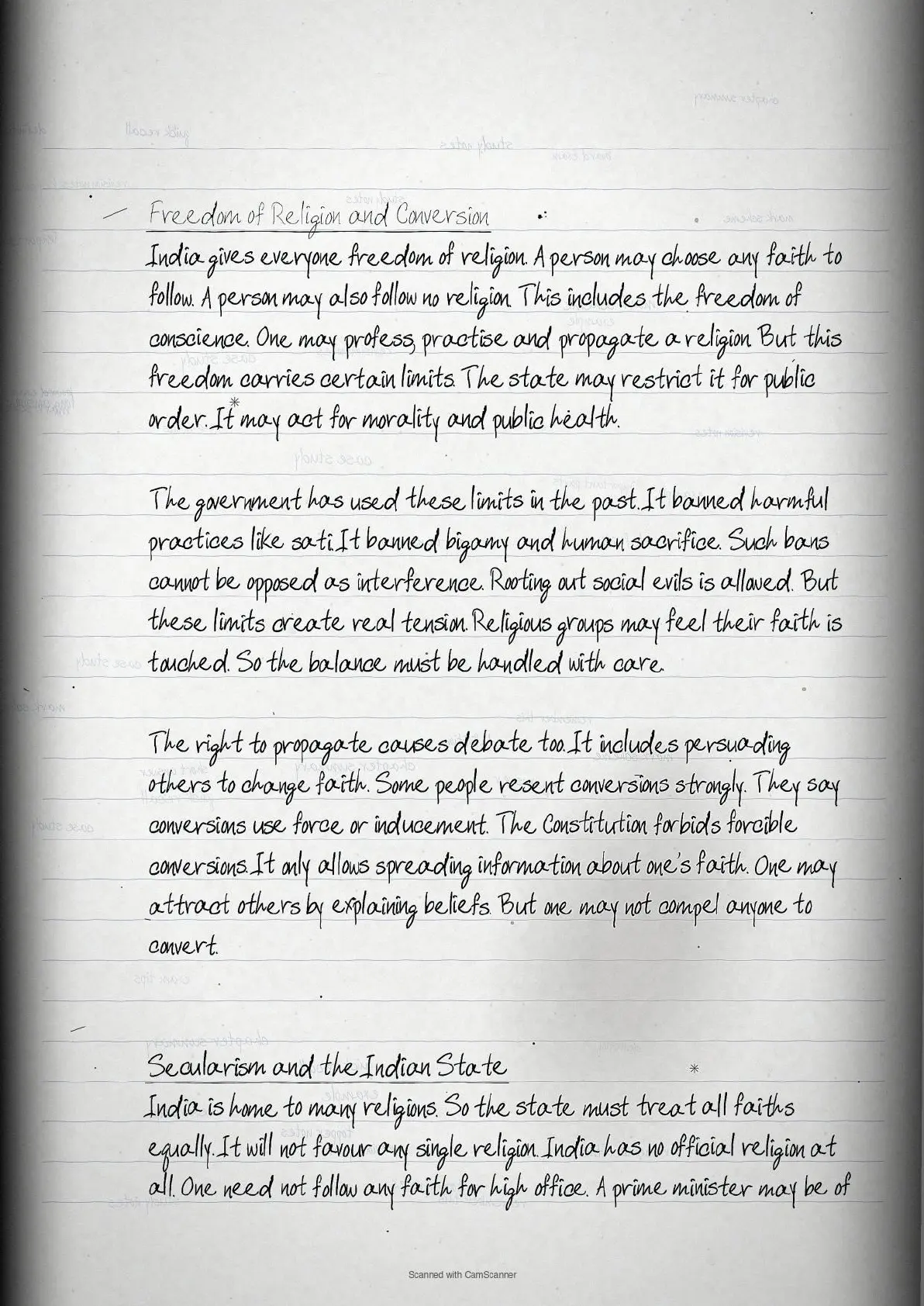
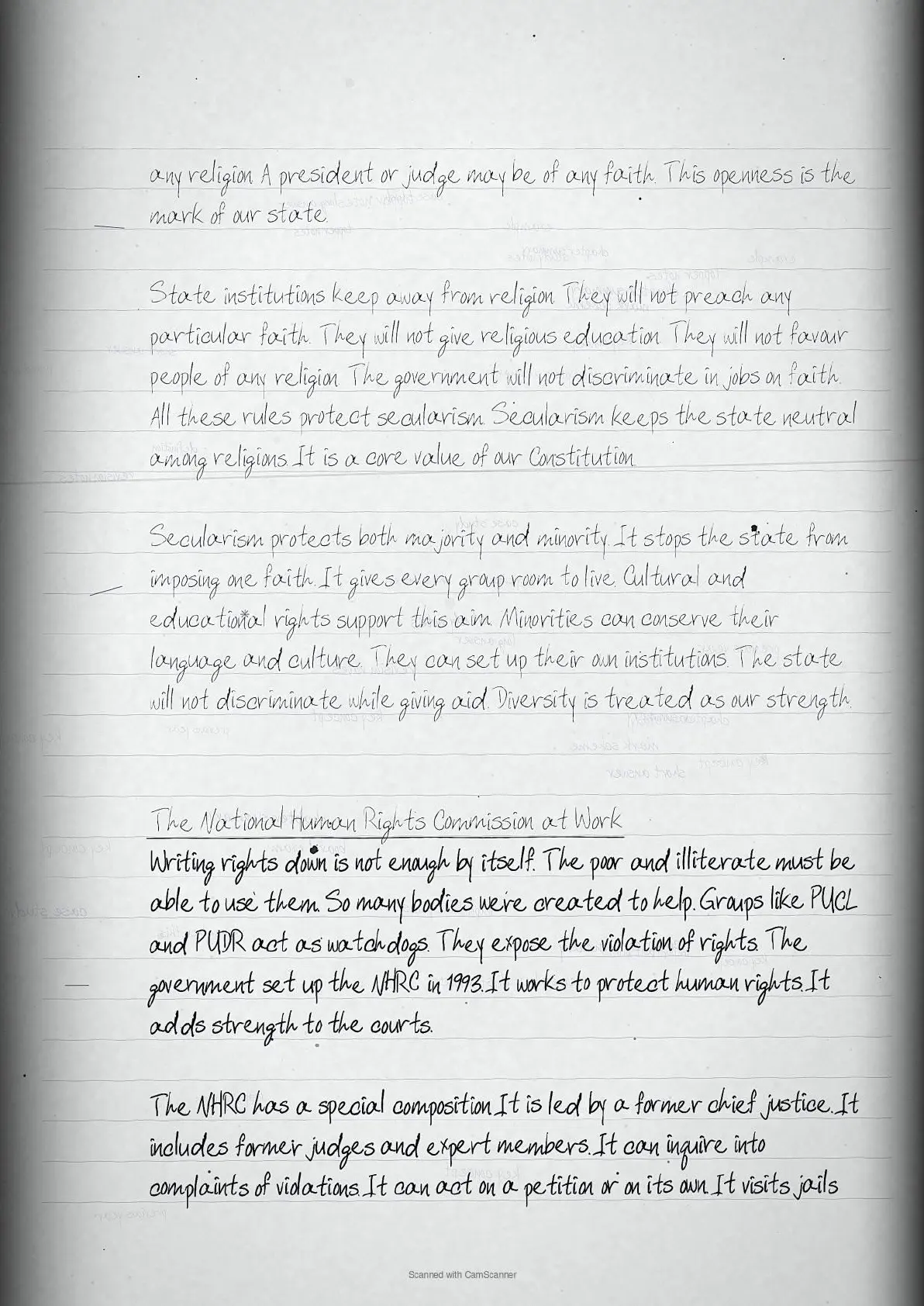
- What the notes cover: why rights matter and the idea of a bill of rights, right to equality and reasonable restrictions, right to freedom, life and personal liberty, right against exploitation and freedom of religion.
- Best for: quick revision before Class 11 exams and a base for CUET later.
You can read the complete class 11 political-science handwritten notes for Rights in the Indian Constitution, with key terms, boxed definitions, and quick revision points, in the PDF below.
These handwritten notes are written by subject teachers, mapped to the 2026-27 NCERT, and checked against the last five years of CBSE Class 11 Political Science papers.
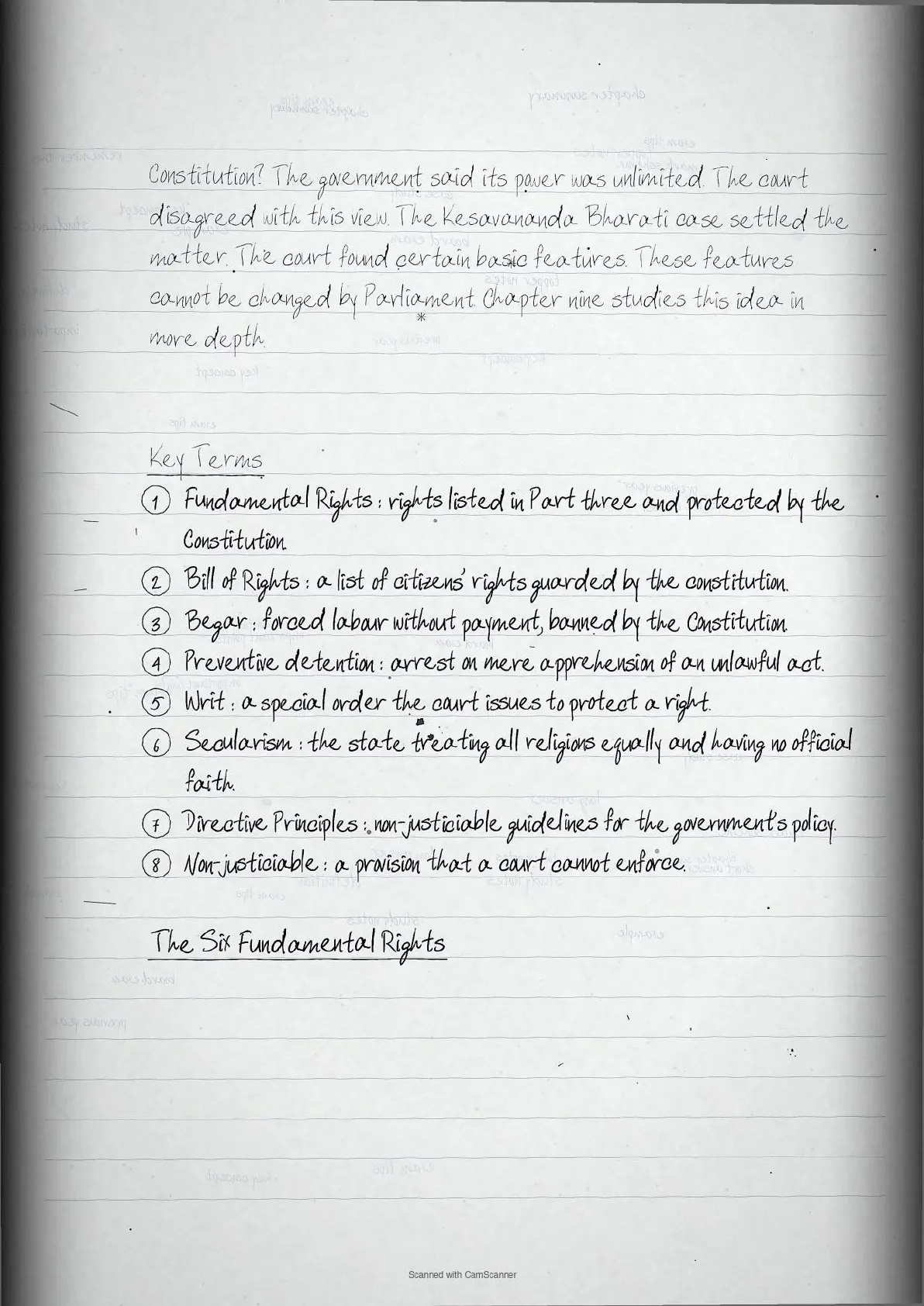
Key Terms and Ideas in Rights in the Indian Constitution
These are the terms and ideas the exam asks about most. Learn each one so you can define it and use it in your answers.
| Term / Idea | What it means |
|---|---|
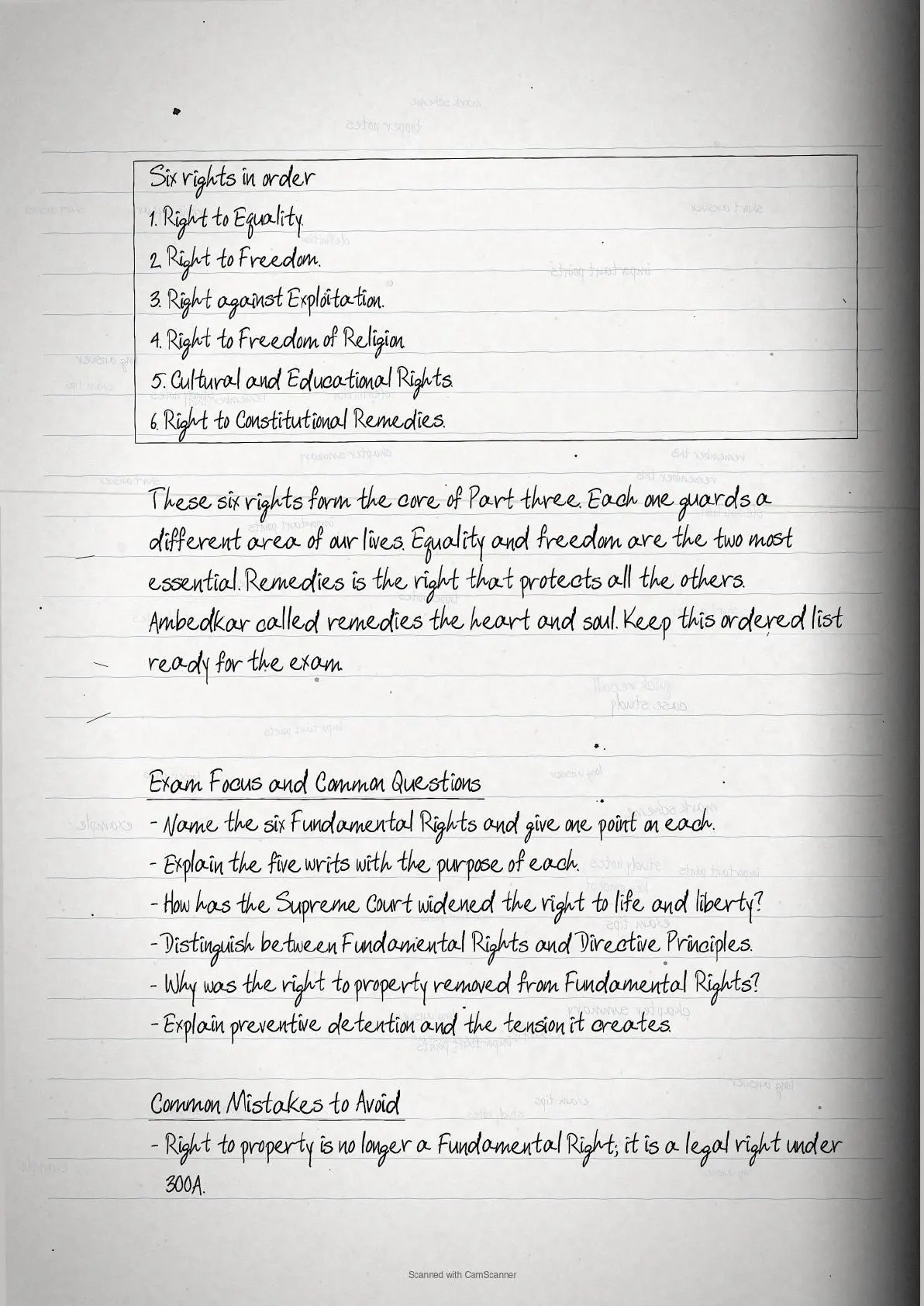
| Fundamental Rights | rights in Part three, protected by the Constitution |
| Bill of Rights | list of citizens' rights guarded by the constitution |
| Right to Equality | equal access, no discrimination, no untouchability |
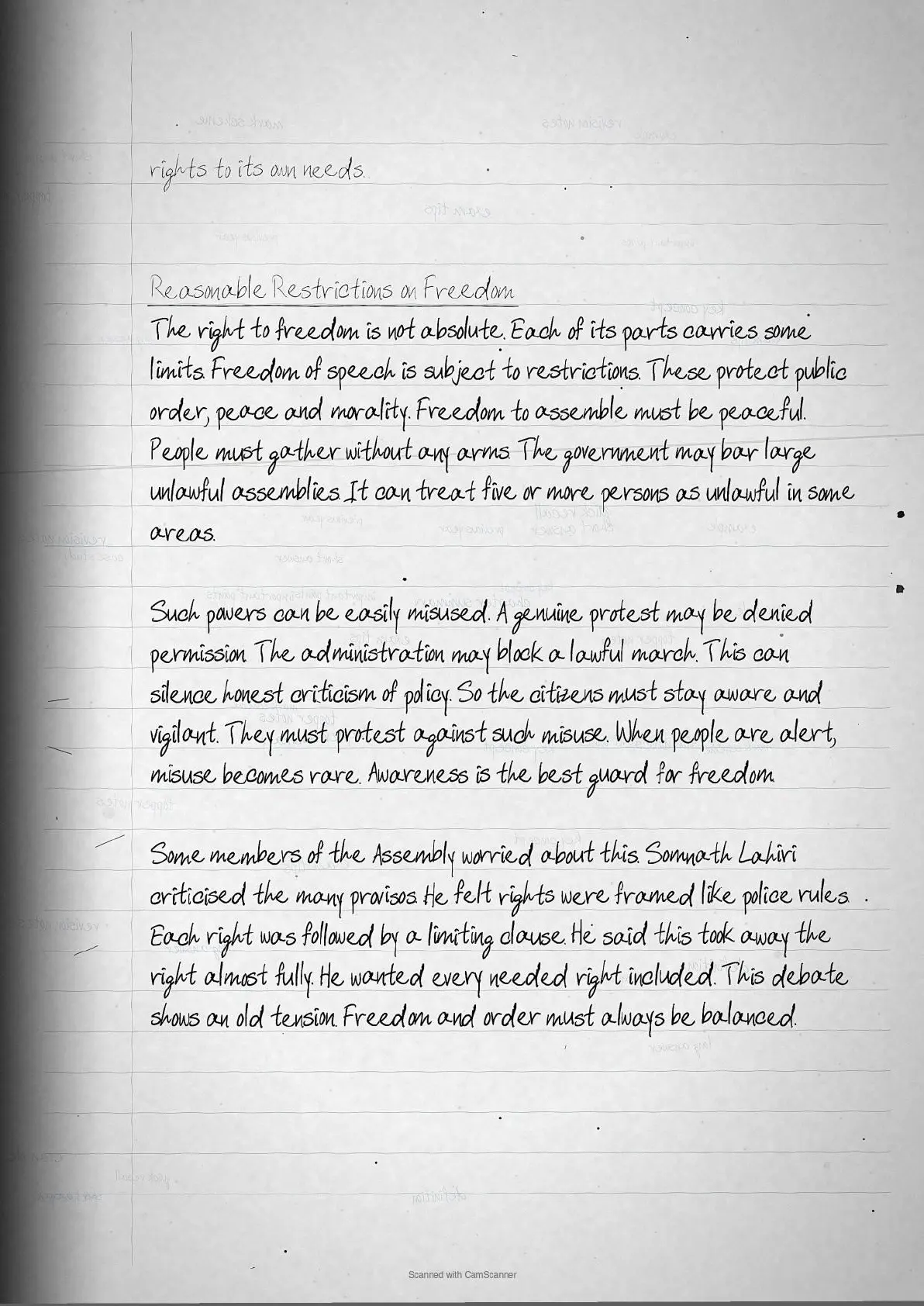
| Right to Freedom | speech, assembly, movement, life and liberty |
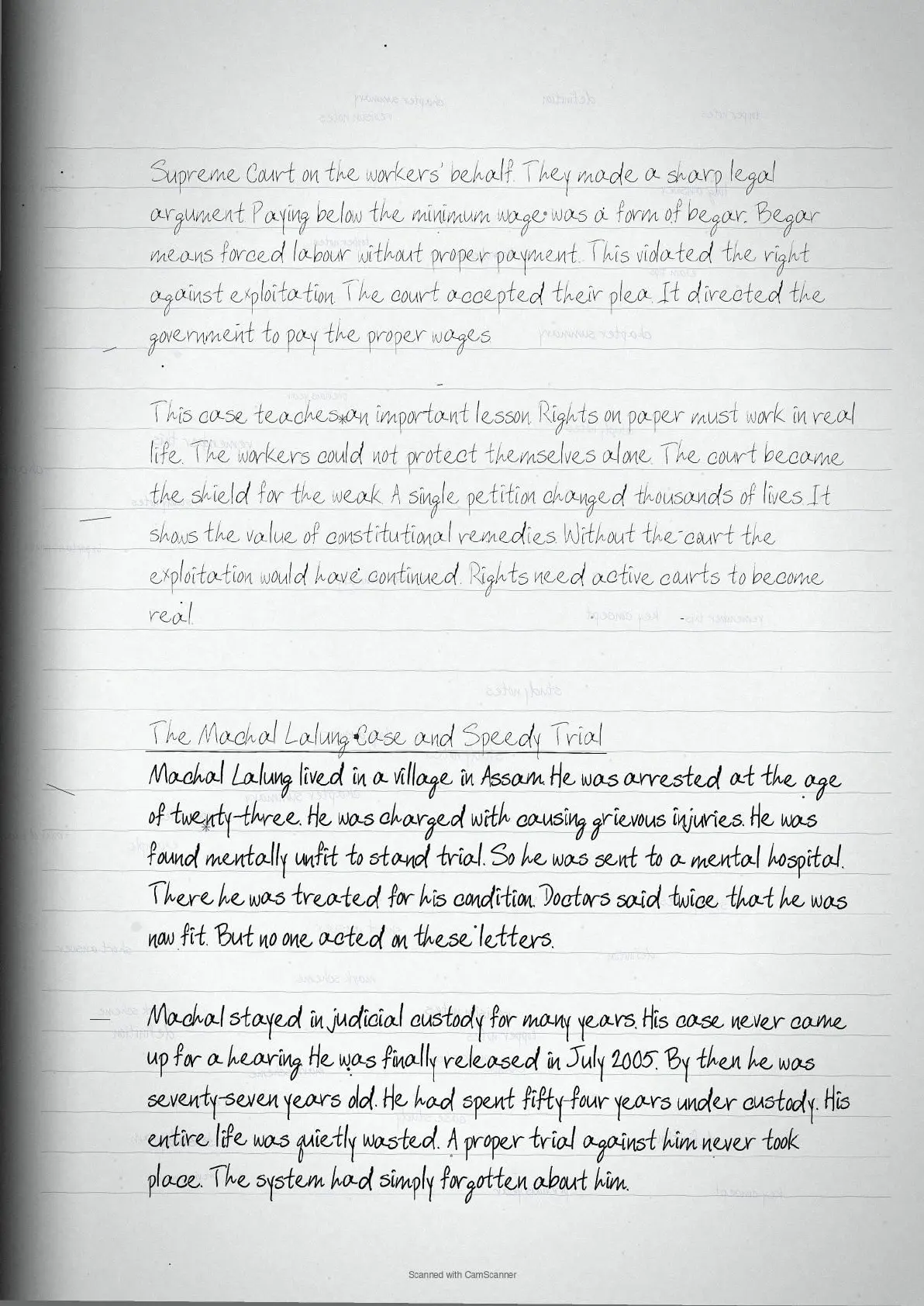
| Right against Exploitation | bans begar, trafficking and child labour |
| Constitutional Remedies | heart and soul; lets citizens move the courts |
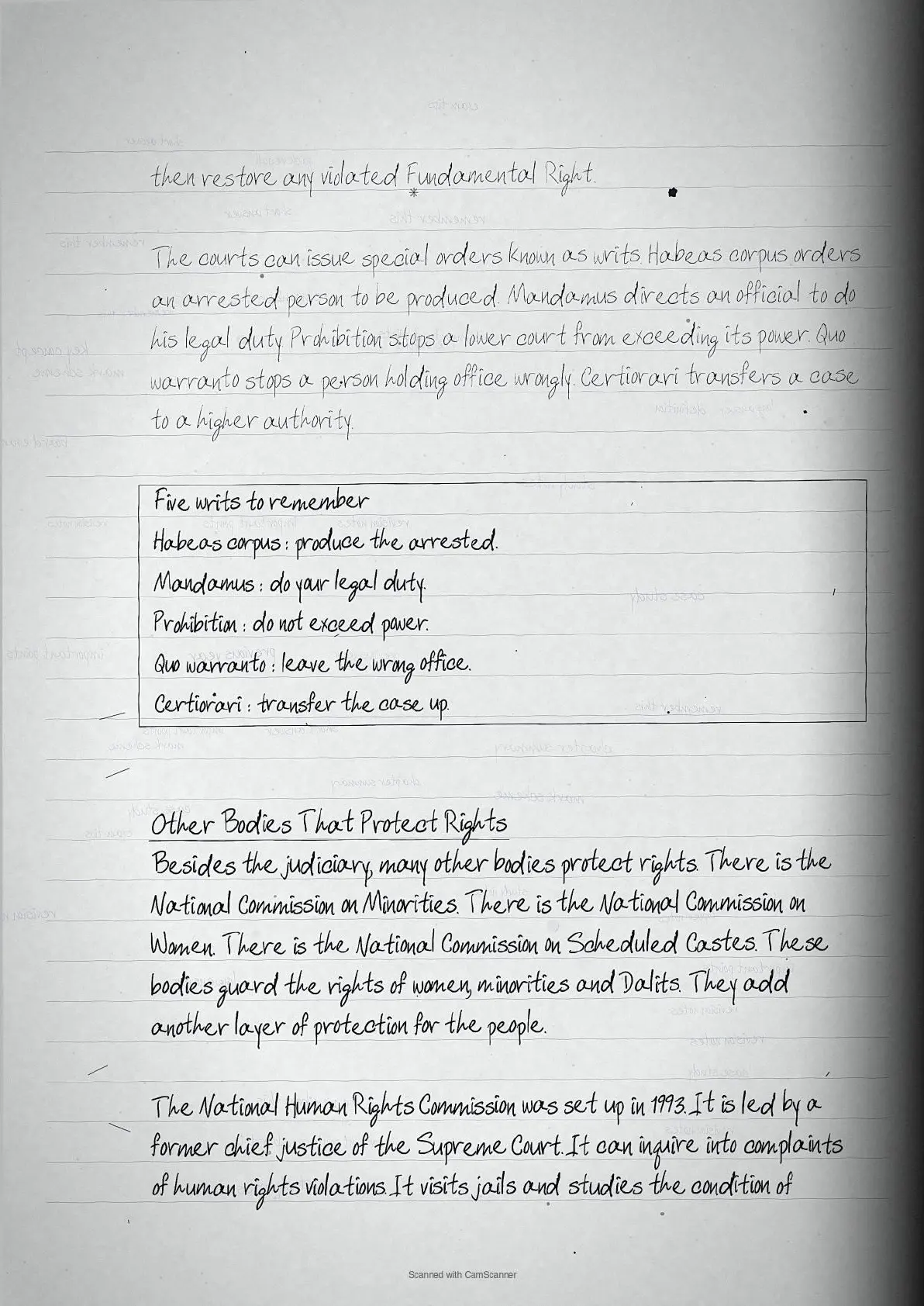
| Writs | habeas corpus, mandamus, prohibition, quo warranto, certiorari |
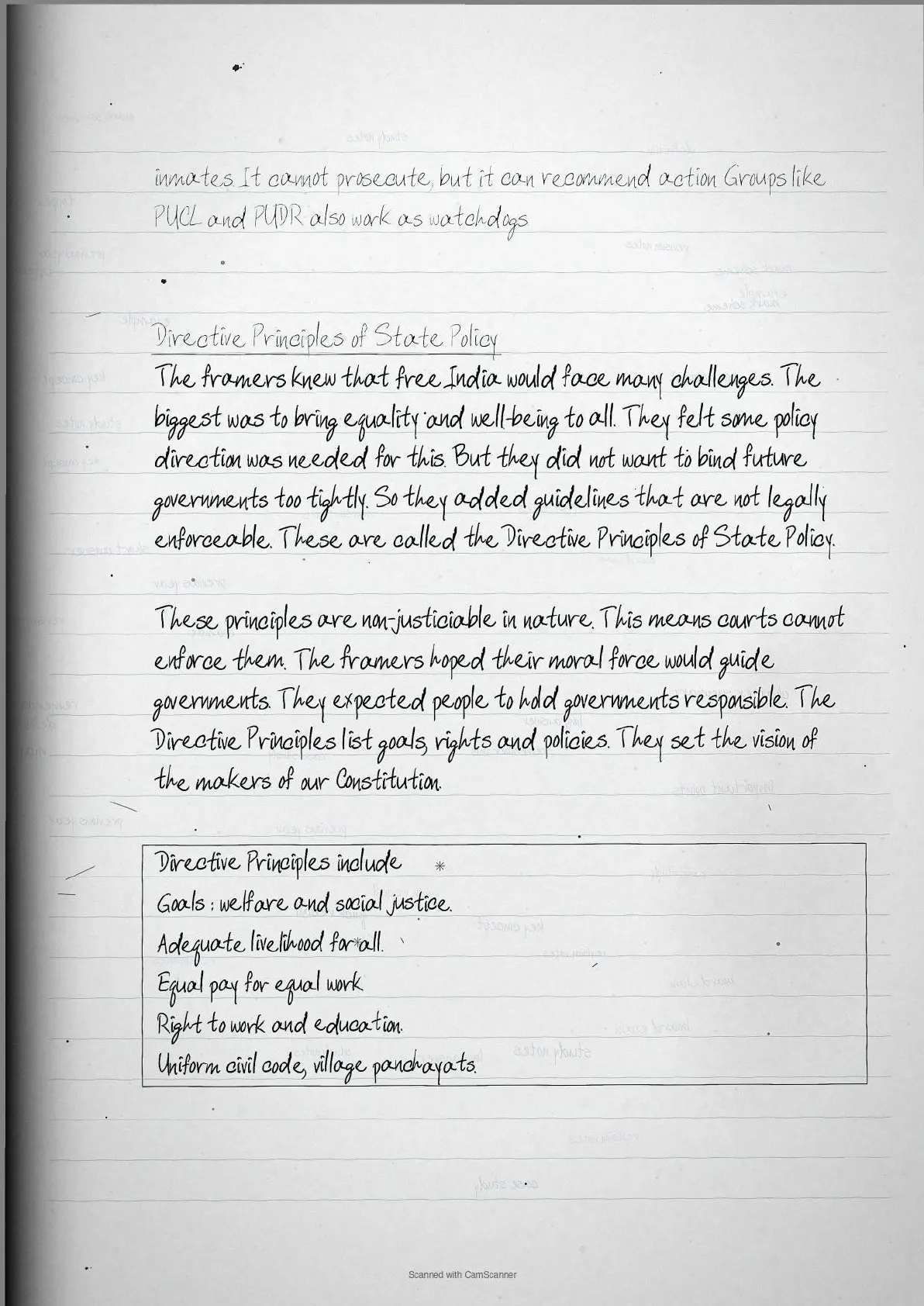
| Directive Principles | non-justiciable guidelines for government policy |
What the Rights in the Indian Constitution Handwritten Notes Cover
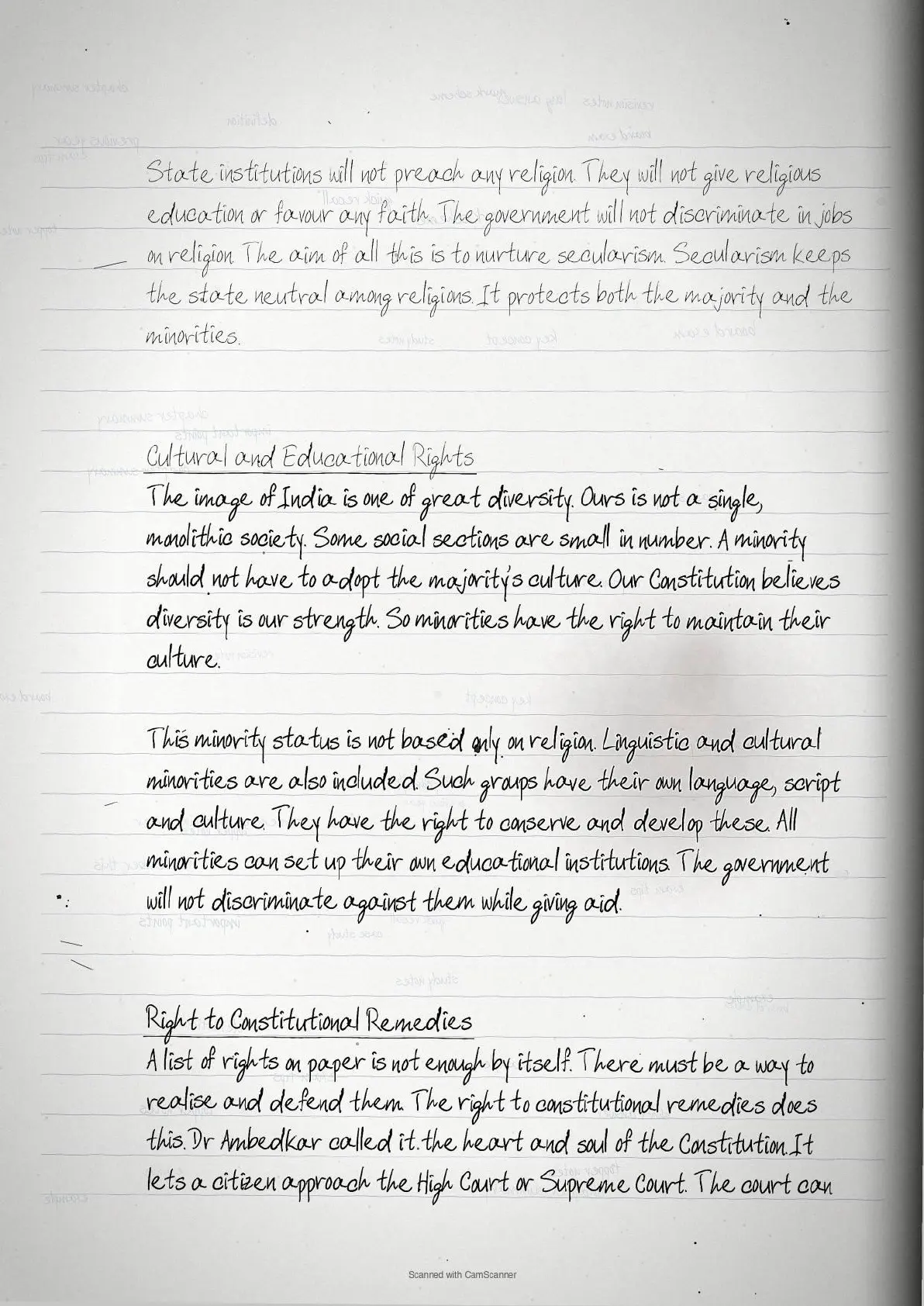
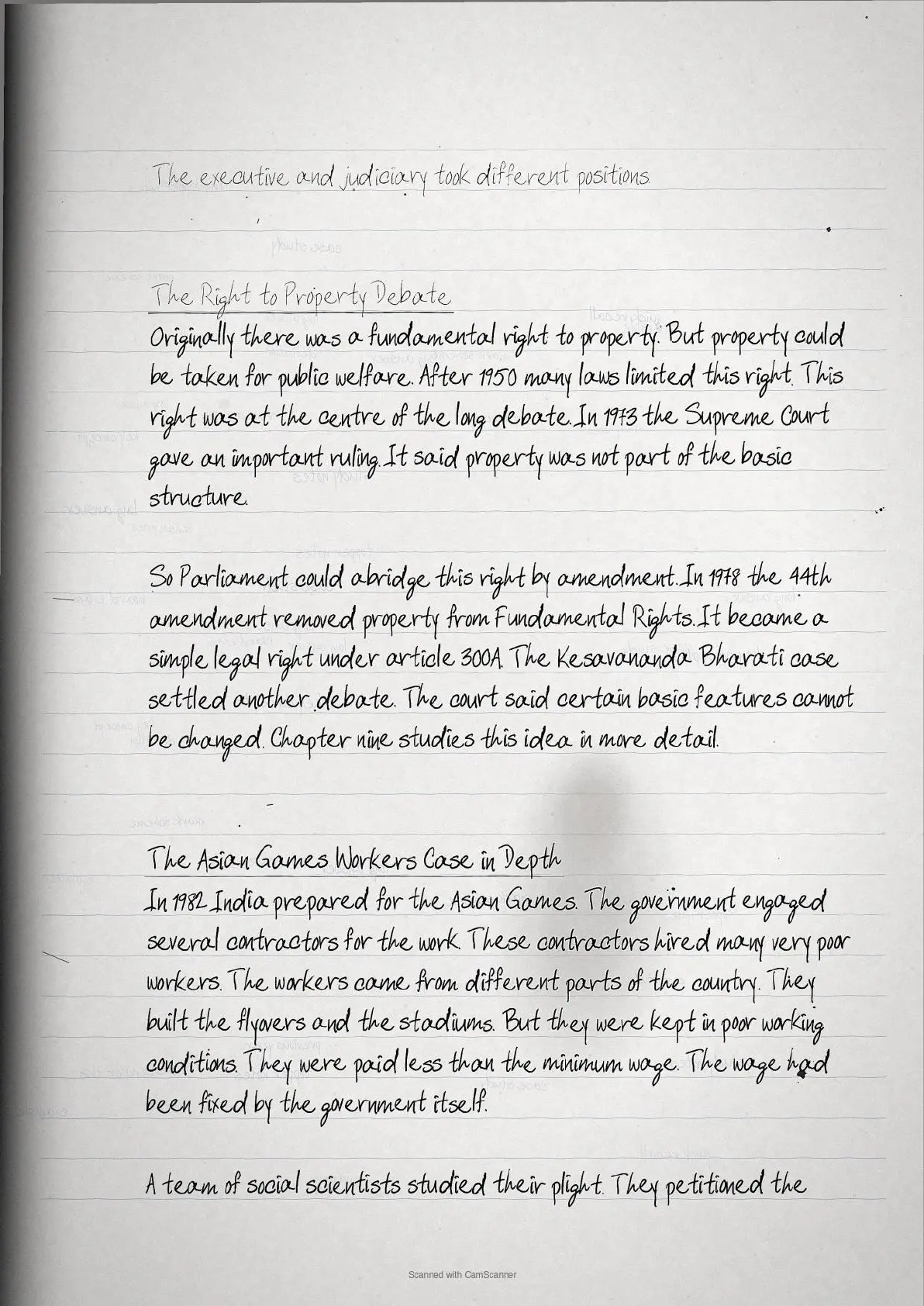
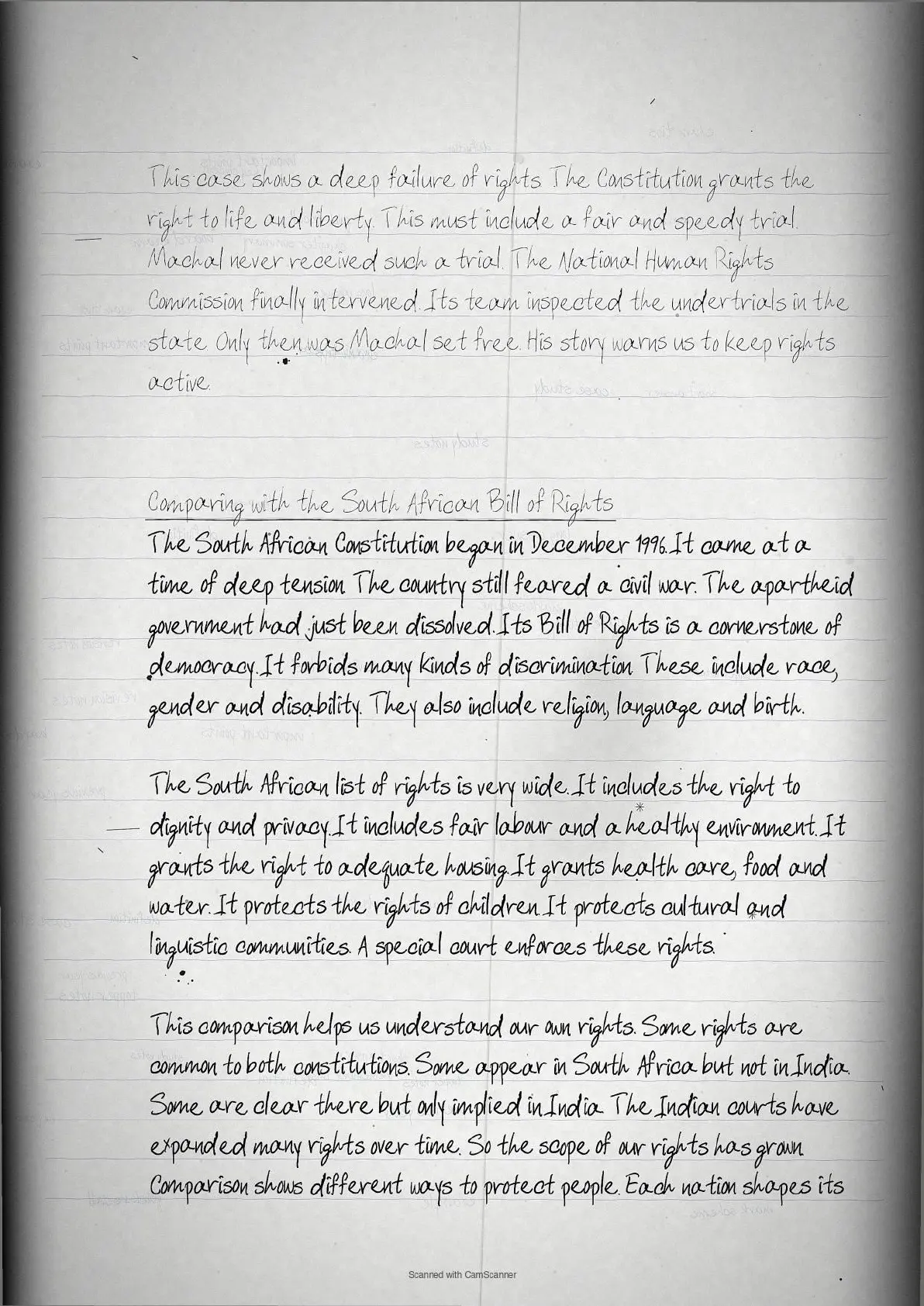
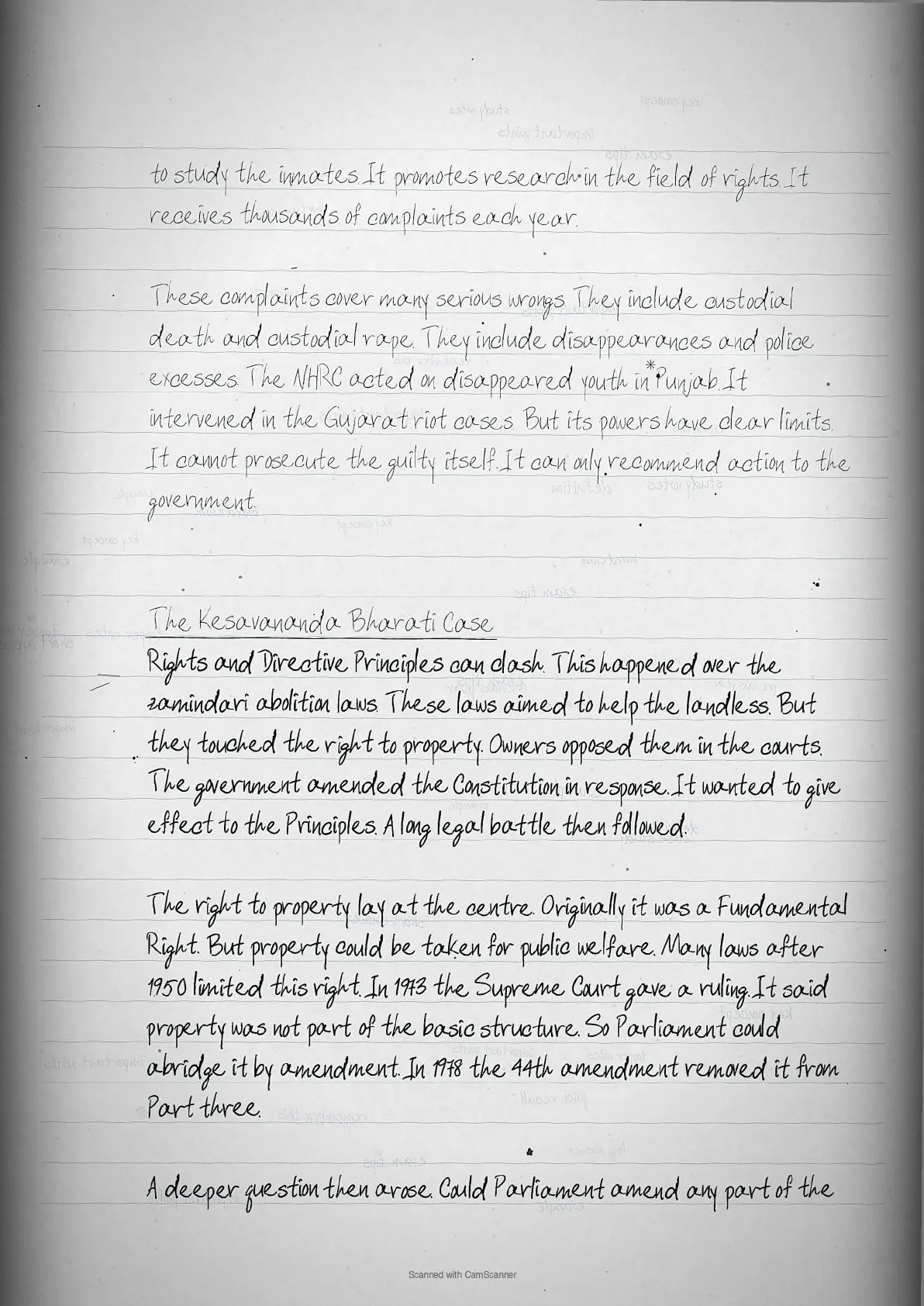
This chapter studies the six Fundamental Rights listed in Part three of the Indian Constitution. It explains how these rights are protected and how the judiciary has expanded them. It also compares Fundamental Rights with the Directive Principles of State Policy.
- Why rights matter and the idea of a bill of rights
- Right to Equality and reasonable restrictions
- Right to Freedom, life and personal liberty
- Right against Exploitation and freedom of religion
- Cultural, educational and constitutional remedies
- The five writs and human rights bodies
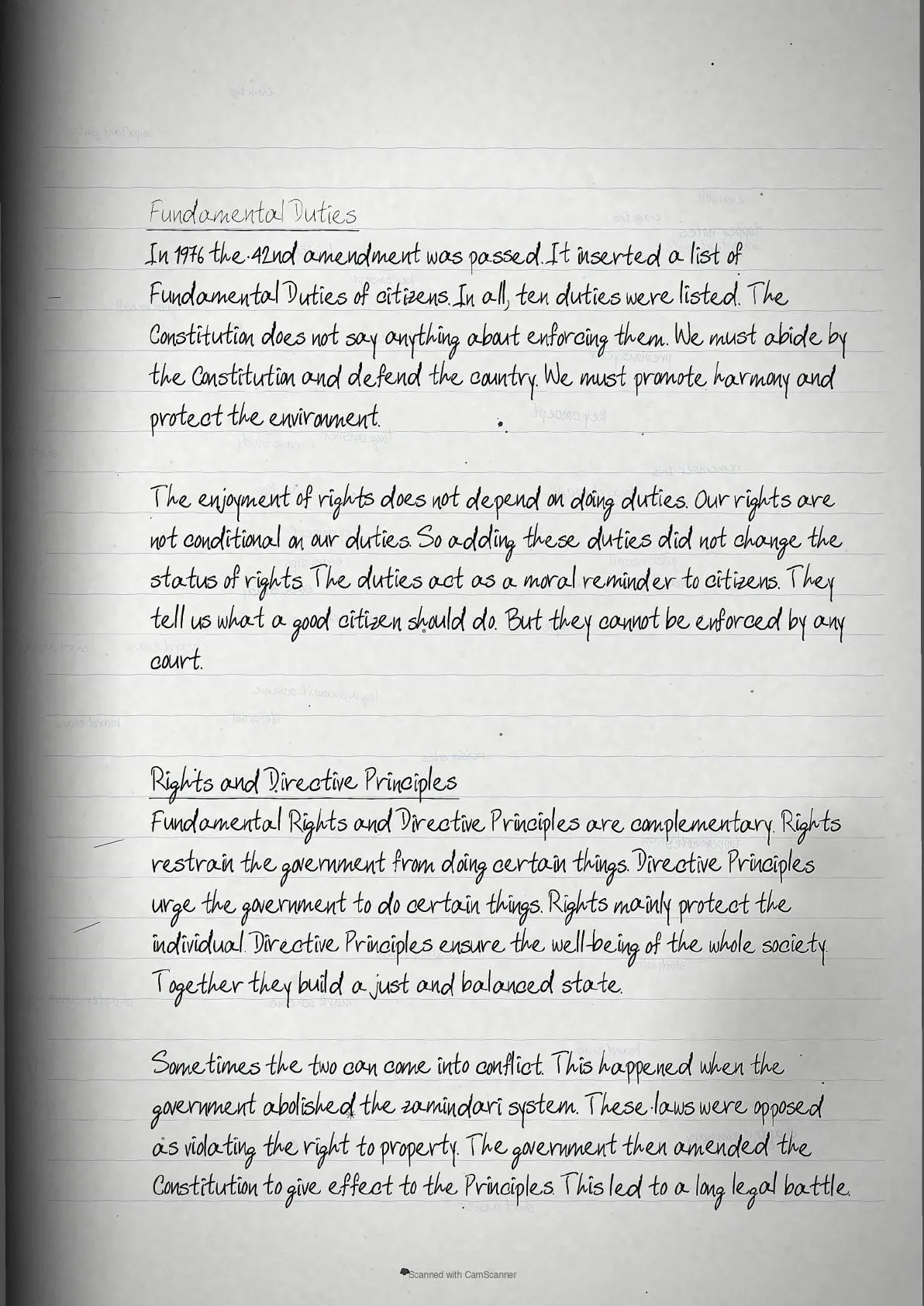
- Directive Principles and the right to property debate
Rights in the Indian Constitution Topic-wise Weightage for CBSE Class 11 Political Science
Some parts of this chapter are asked more often than others. The table below shows which sub-topics to revise first, based on recent CBSE Class 11 question trends.
| Sub-topic | Weightage | CBSE Frequency |
|---|---|---|
| The six Fundamental Rights | High | asked most years |
| Right to Constitutional Remedies and writs | High | asked most years |
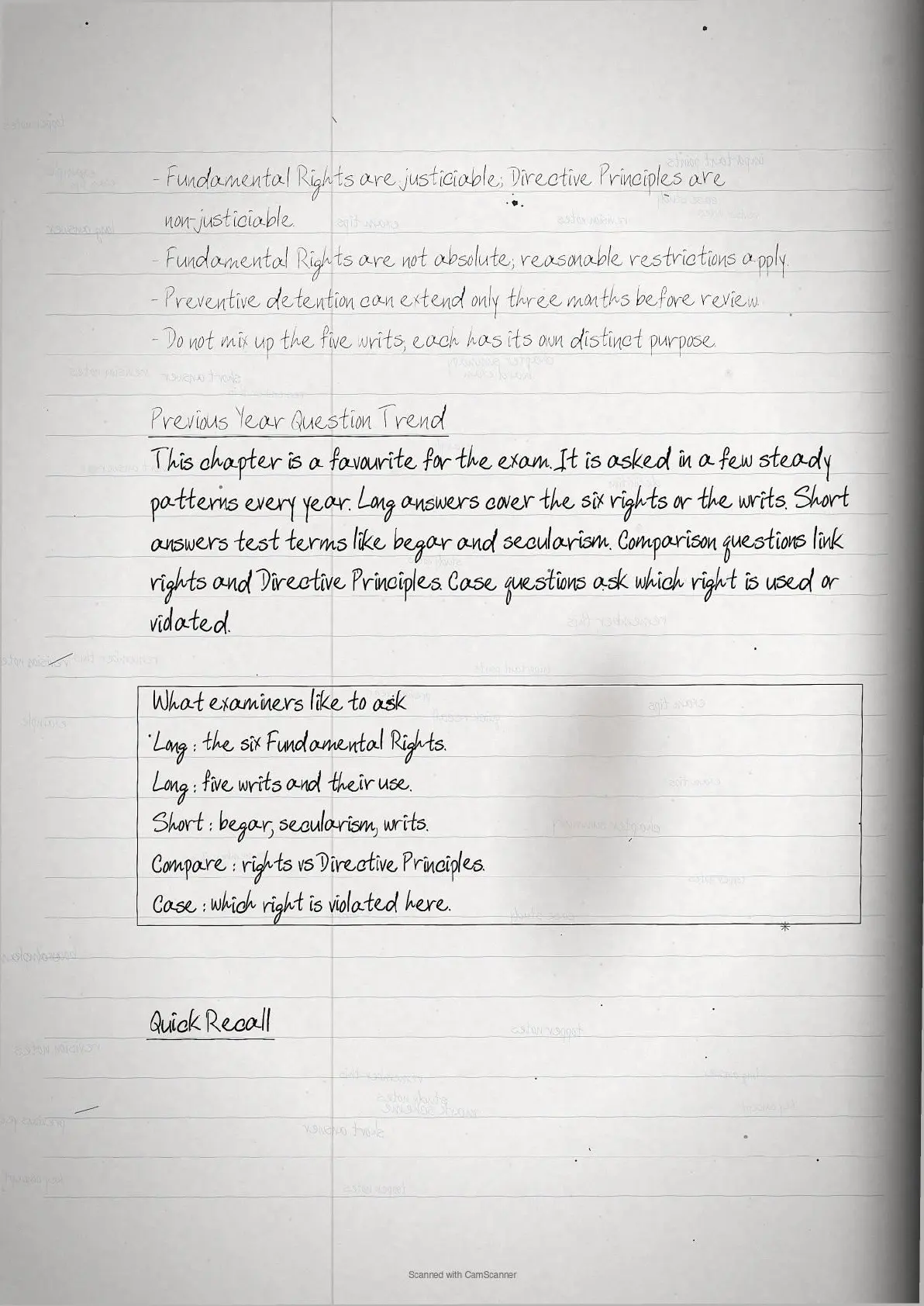
| Rights versus Directive Principles | Medium | common |
| Right to life, liberty and preventive detention | Medium | common |
| Right to property debate | Low | occasional |
How Collegedunia's Handwritten Notes Help You Revise Rights in the Indian Constitution
These notes are made for the night before the exam. They keep the facts short and easy to scan. Collegedunia maps every point to the 2026-27 NCERT.
- Clear handwriting: each topic is written in neat, easy-to-read handwriting.
- Boxed key terms: the main terms and definitions are boxed by hand for fast recall.
- Diagrams and tables: simple hand-drawn tables and charts make ideas clear.
- Colour-coded headings: new sub-topics stand out, so you find any section in seconds.
Rights in the Indian Constitution Self-Assessment Quiz
Try these quick questions after you read the notes. Tap each question to check your answer. They cover the points CBSE asks most often.
Which right did Ambedkar call the heart and soul?
(a) equality (b) freedom (c) constitutional remedies (d) religion
Answer: (c) constitutional remedies - it lets citizens approach courts to restore rights
The writ to produce an arrested person is?
(a) mandamus (b) habeas corpus (c) certiorari (d) quo warranto
Answer: (b) habeas corpus - the court orders the arrested person to be produced
Right to property is now?
(a) a Fundamental Right (b) a Directive Principle (c) a legal right under 300A (d) abolished fully
Answer: (c) a legal right under 300A - the 44th amendment removed it from Part three
Directive Principles are?
(a) justiciable (b) non-justiciable (c) part of writs (d) fundamental duties
Answer: (b) non-justiciable - courts cannot enforce them
Preventive detention can extend only for?
(a) one month (b) three months (c) six months (d) one year
Answer: (b) three months - after that an advisory board reviews the case
How to Use These Handwritten Notes for Class 11 Political Science Revision
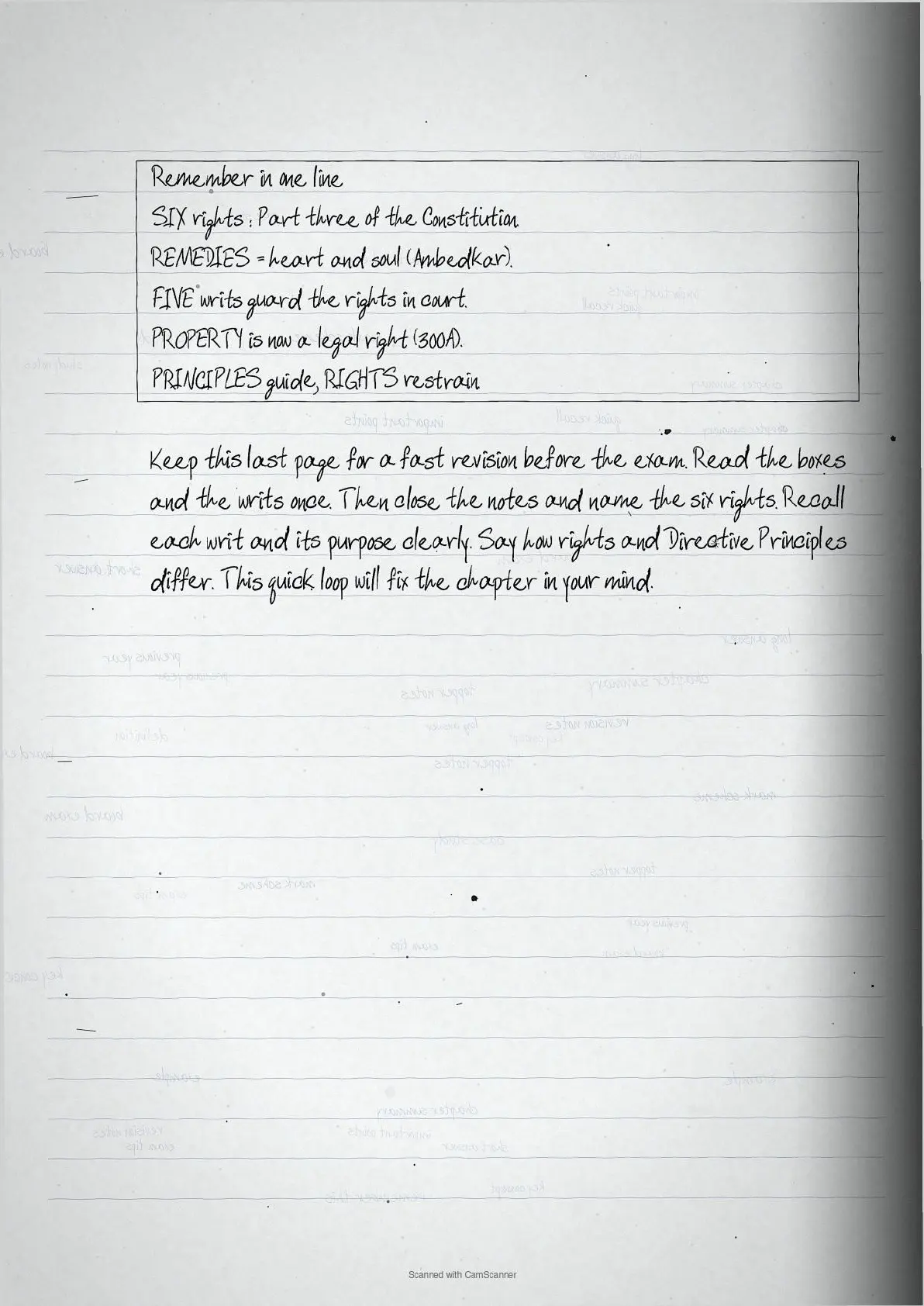
Use these class 11 political-science handwritten notes in two passes. Read them slowly once for the full chapter. Then, near the exam, read only the boxes and key terms for a fast recall.
- Read the notes once with the NCERT chapter open beside you.
- Say each key term and idea in your own words.
- Practise one long-answer question from a past paper.
- On the last day, revise only the key terms and the boxes.
Class 11 Political Science Handwritten Notes for All Chapters
The table below links the class 11 political-science handwritten notes for every chapter. Use it to jump to any other chapter's notes.
| Chapter | Resource |
|---|---|
| Chapter 1 | Constitution: Why and How Handwritten Notes |
| Chapter 2 | Rights in the Indian Constitution Handwritten Notes |
| Chapter 3 | Election and Representation Handwritten Notes |
| Chapter 4 | Executive Handwritten Notes |
| Chapter 5 | Legislature Handwritten Notes |
| Chapter 6 | Judiciary Handwritten Notes |
| Chapter 7 | Federalism Handwritten Notes |
| Chapter 8 | Local Governments Handwritten Notes |
| Chapter 9 | Constitution as a Living Document Handwritten Notes |
| Chapter 10 | The Philosophy of the Constitution Handwritten Notes |
| Chapter 11 | Political Theory: An Introduction Handwritten Notes |
| Chapter 12 | Freedom Handwritten Notes |
| Chapter 13 | Equality Handwritten Notes |
| Chapter 14 | Social Justice Handwritten Notes |
| Chapter 15 | Rights Handwritten Notes |
| Chapter 16 | Citizenship Handwritten Notes |
| Chapter 17 | Nationalism Handwritten Notes |
| Chapter 18 | Secularism Handwritten Notes |
Rights in the Indian Constitution Class 11 Political Science Handwritten Notes FAQs
Ques. Where can I download Rights in the Indian Constitution Class 11 Political Science Handwritten Notes PDF?
Ans. You can download the Rights in the Indian Constitution Class 11 Political Science Handwritten Notes PDF directly from this page. Both the Normal and HD versions are free.
Ques. Are these handwritten notes aligned with the 2026-27 NCERT?
Ans. Yes. These notes follow the current 2026-27 syllabus for Class 11 Political Science. Difference between Fundamental Rights and Directive Principles
Ques. How many pages is the Class 11 Political Science Rights in the Indian Constitution Handwritten Notes PDF?
Ans. The notes run about 20 pages. They cover the full chapter with key terms, hand-drawn boxes, and a short self-assessment quiz.
Ques. What is the main idea of the 11th standard Political Science chapter Rights in the Indian Constitution?
Ans. Fundamental Rights are justiciable and restrain the government from certain actions. Directive Principles are non-justiciable guidelines that urge the government to work for the well-being of society.
Ques. Are these Rights in the Indian Constitution notes enough for the CBSE Class 11 exam?
Ans. Yes, for revision. The Collegedunia handwritten notes cover every key point and exam term. Read them with the NCERT chapter and practise past questions.



Comments