



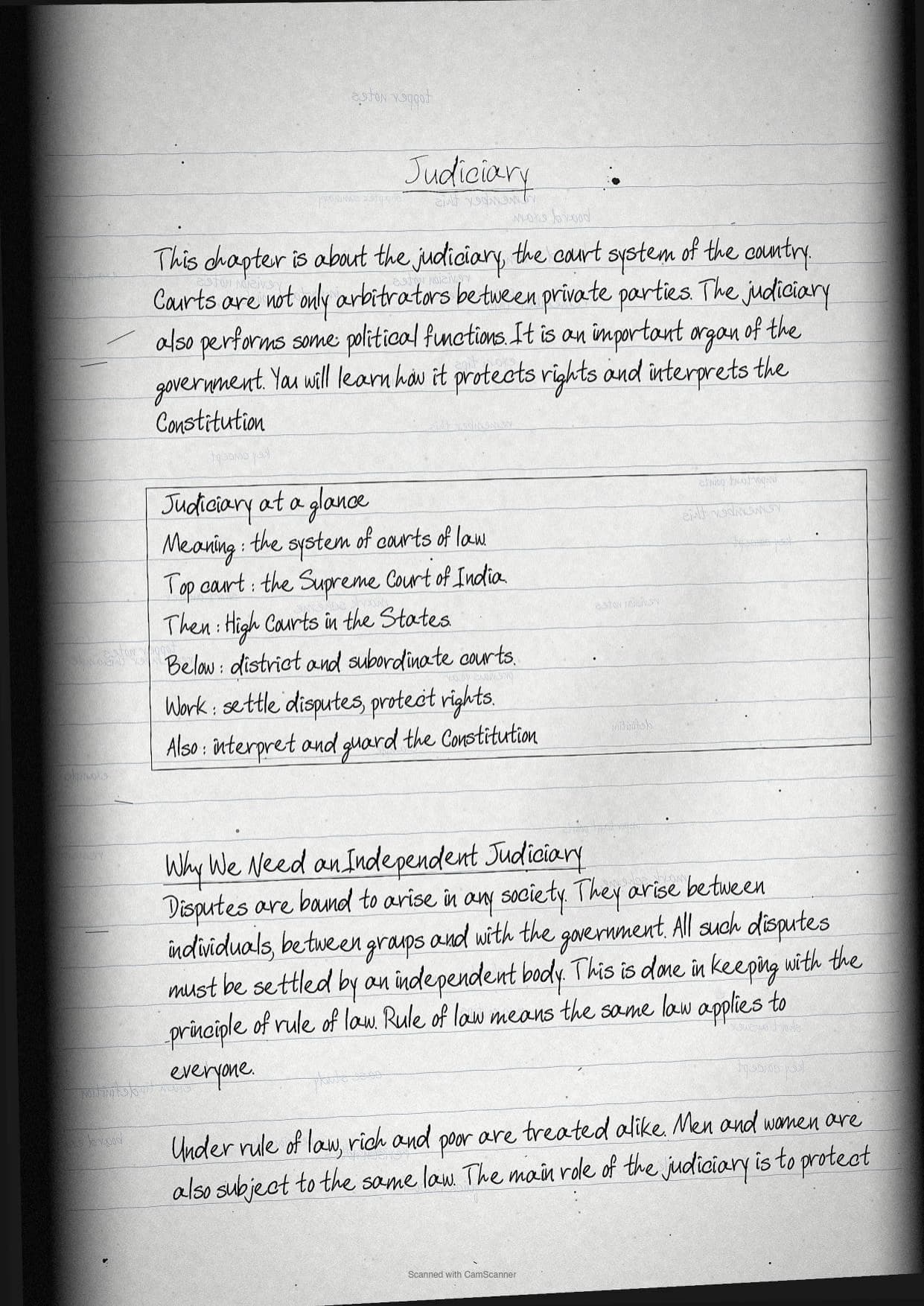
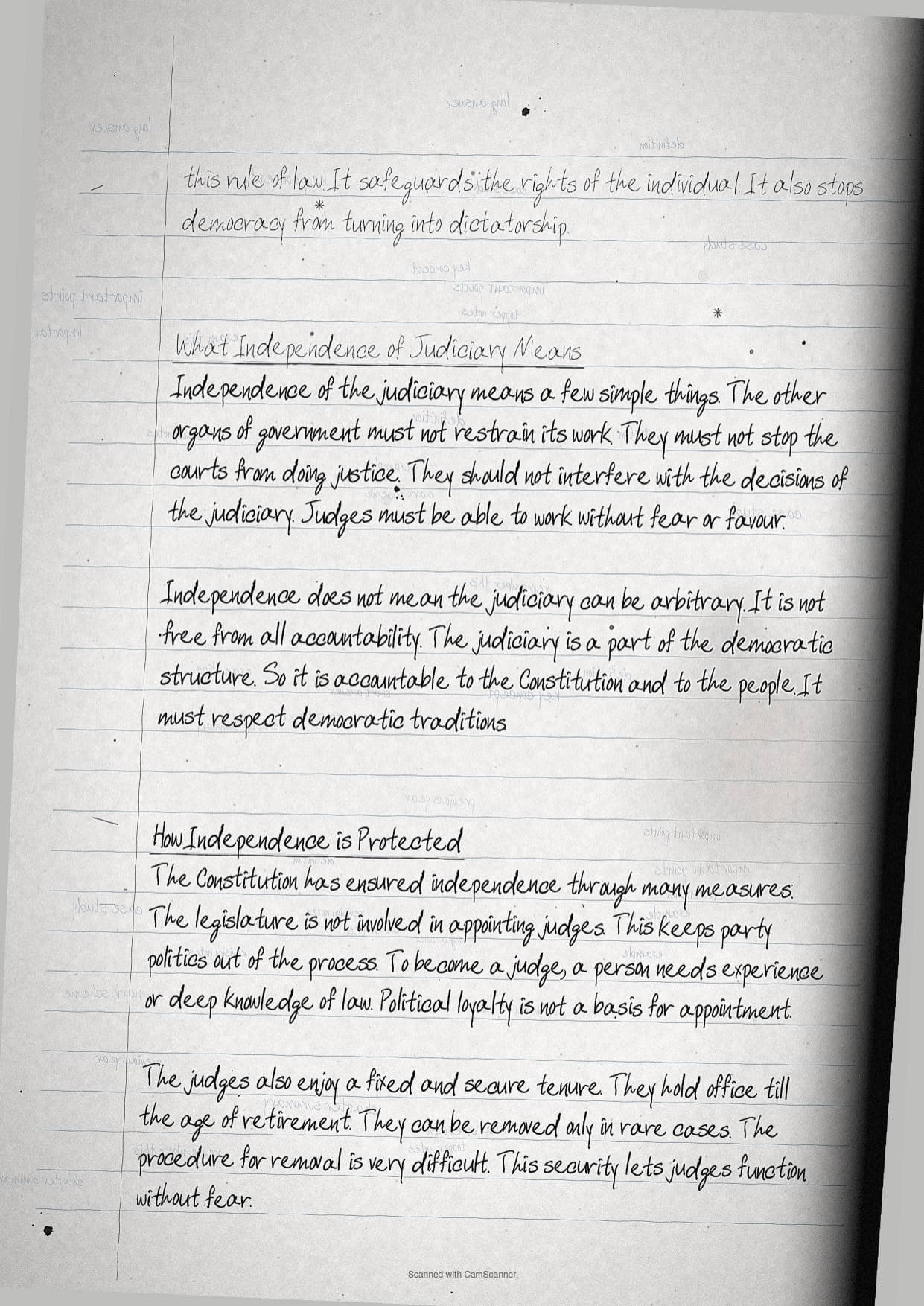
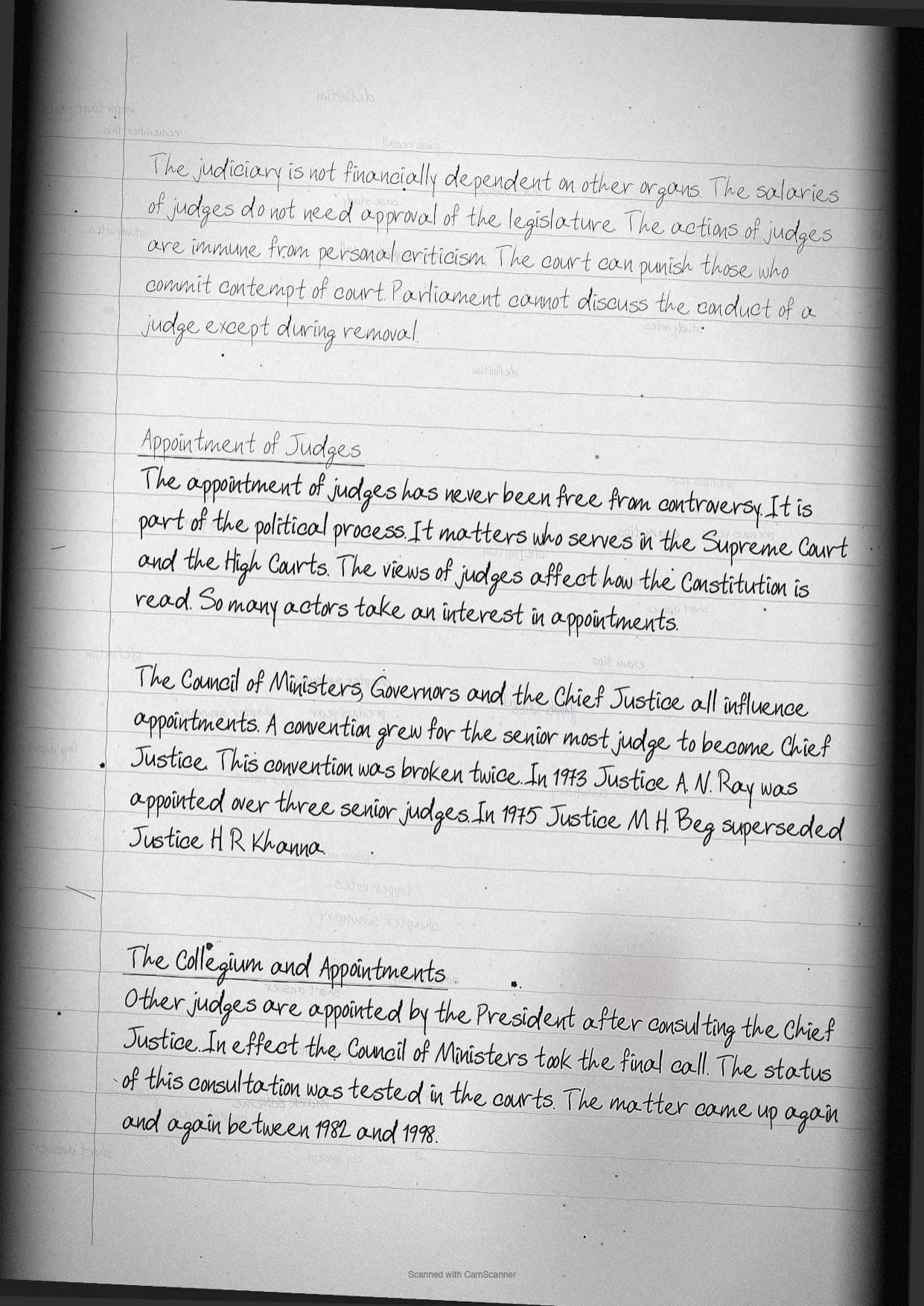
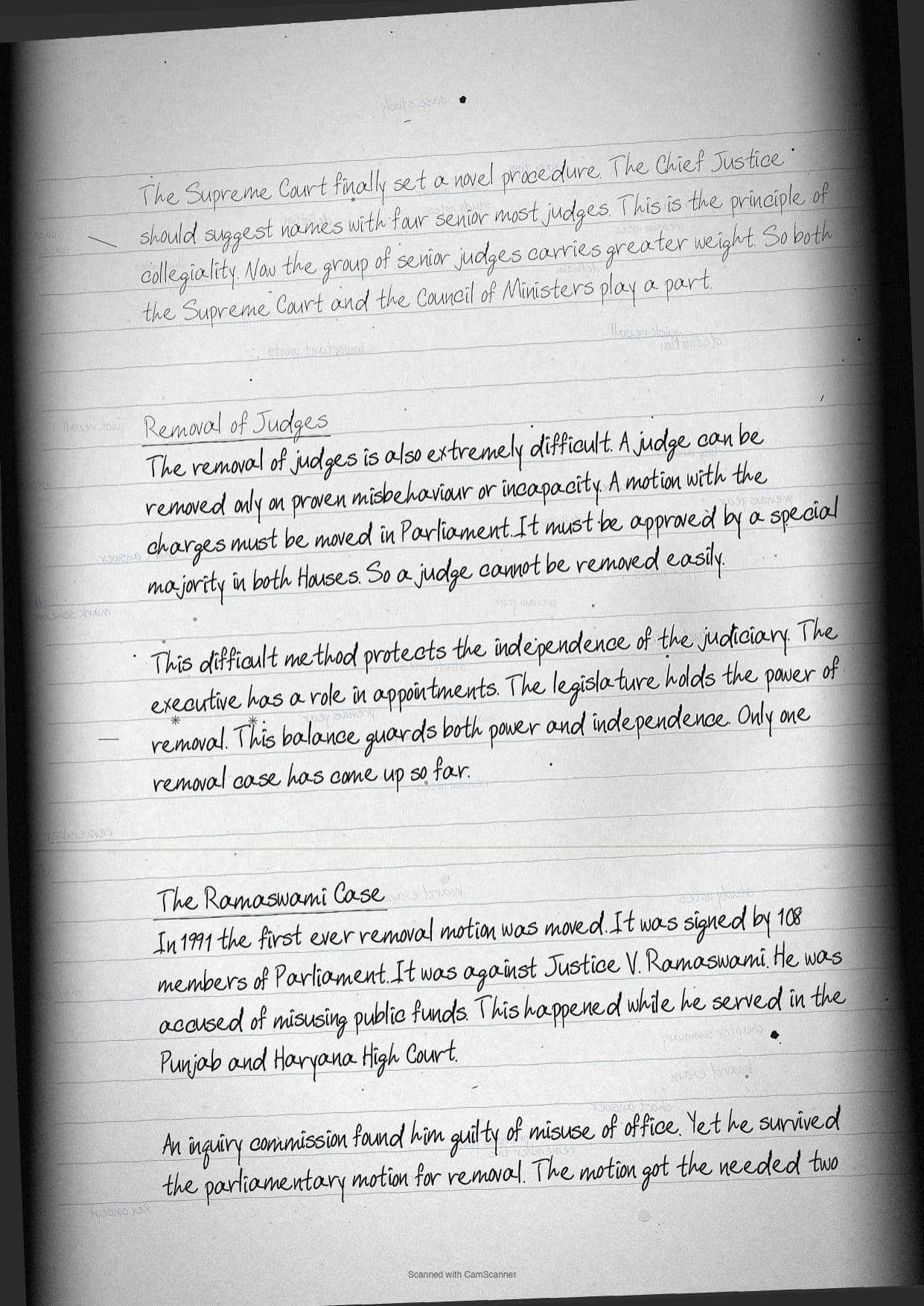
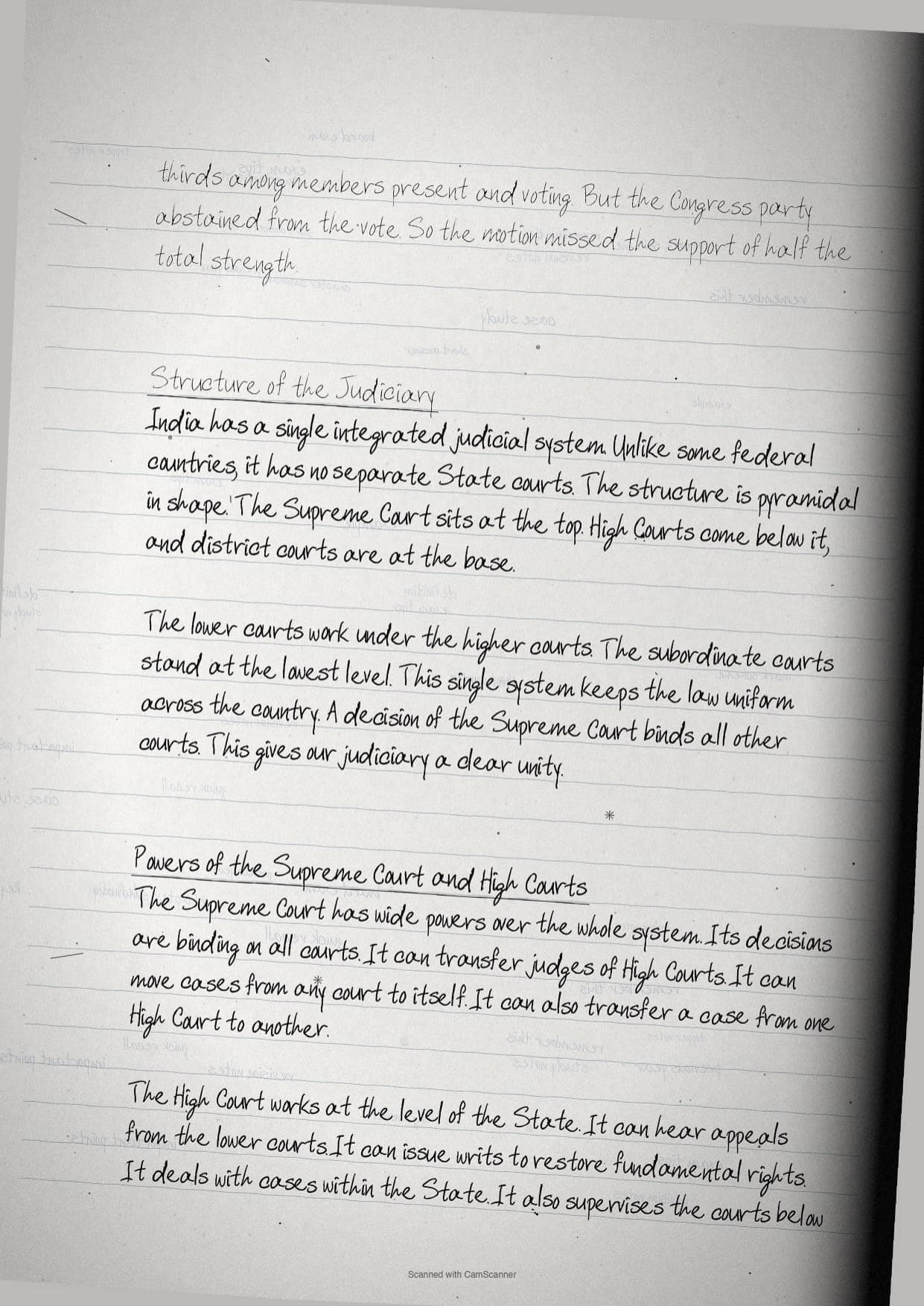
An independent judiciary protects rule of law, guards rights and interprets the Constitution. Class 11 Political Science Chapter 6 Judiciary builds this idea step by step. These class 11 political-science handwritten notes chapter 6 Judiciary follow the 2026-27 NCERT and cover why we need an independent judiciary, how independence of judges is protected, appointment and removal of judges..
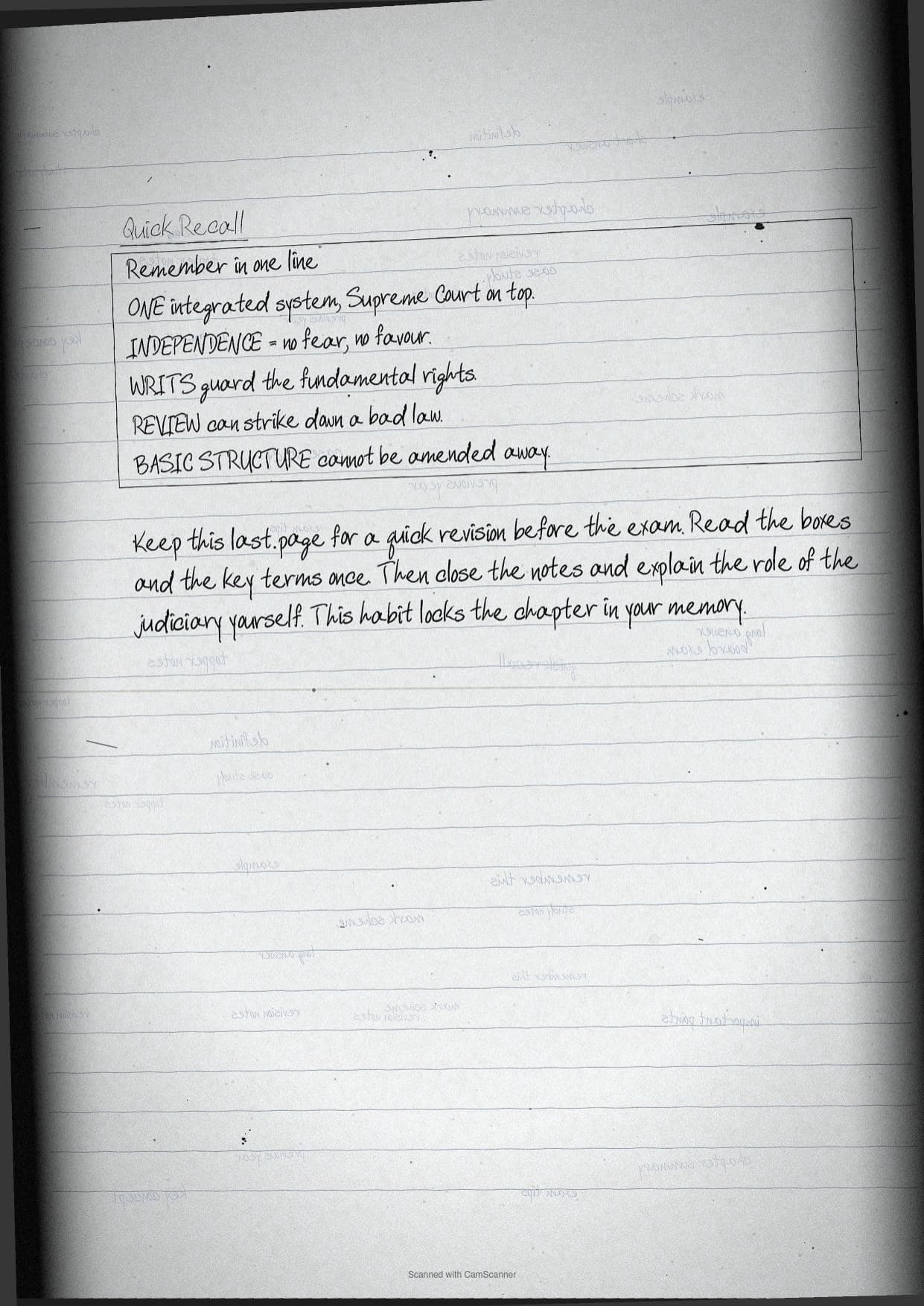
- CBSE Class 11 Weightage: a scoring chapter in the Political Science paper, asked in short and long answers.
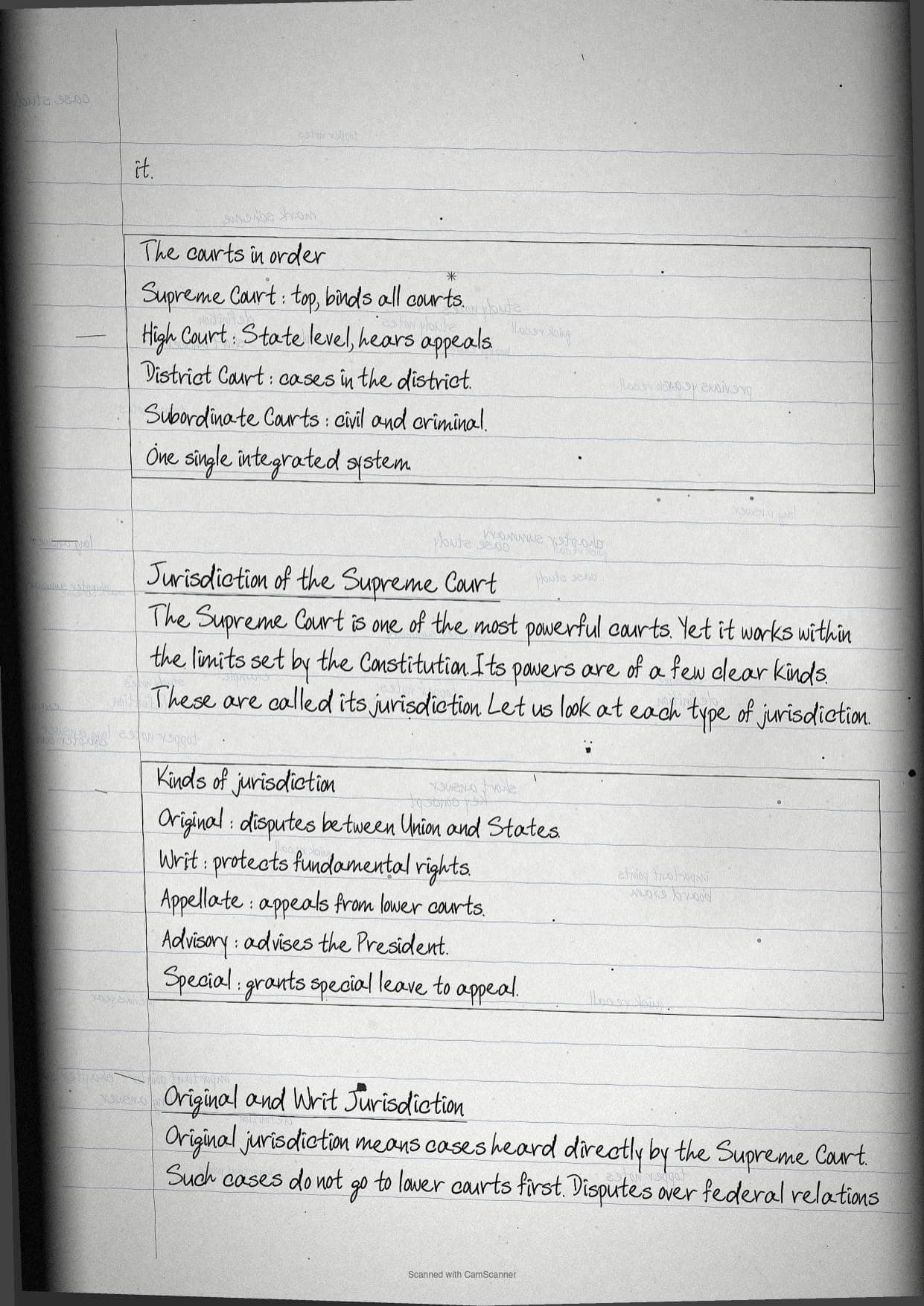
- What the notes cover: why we need an independent judiciary, how independence of judges is protected, appointment and removal of judges, structure of the integrated judiciary.
- Best for: quick revision before Class 11 exams and a base for CUET later.
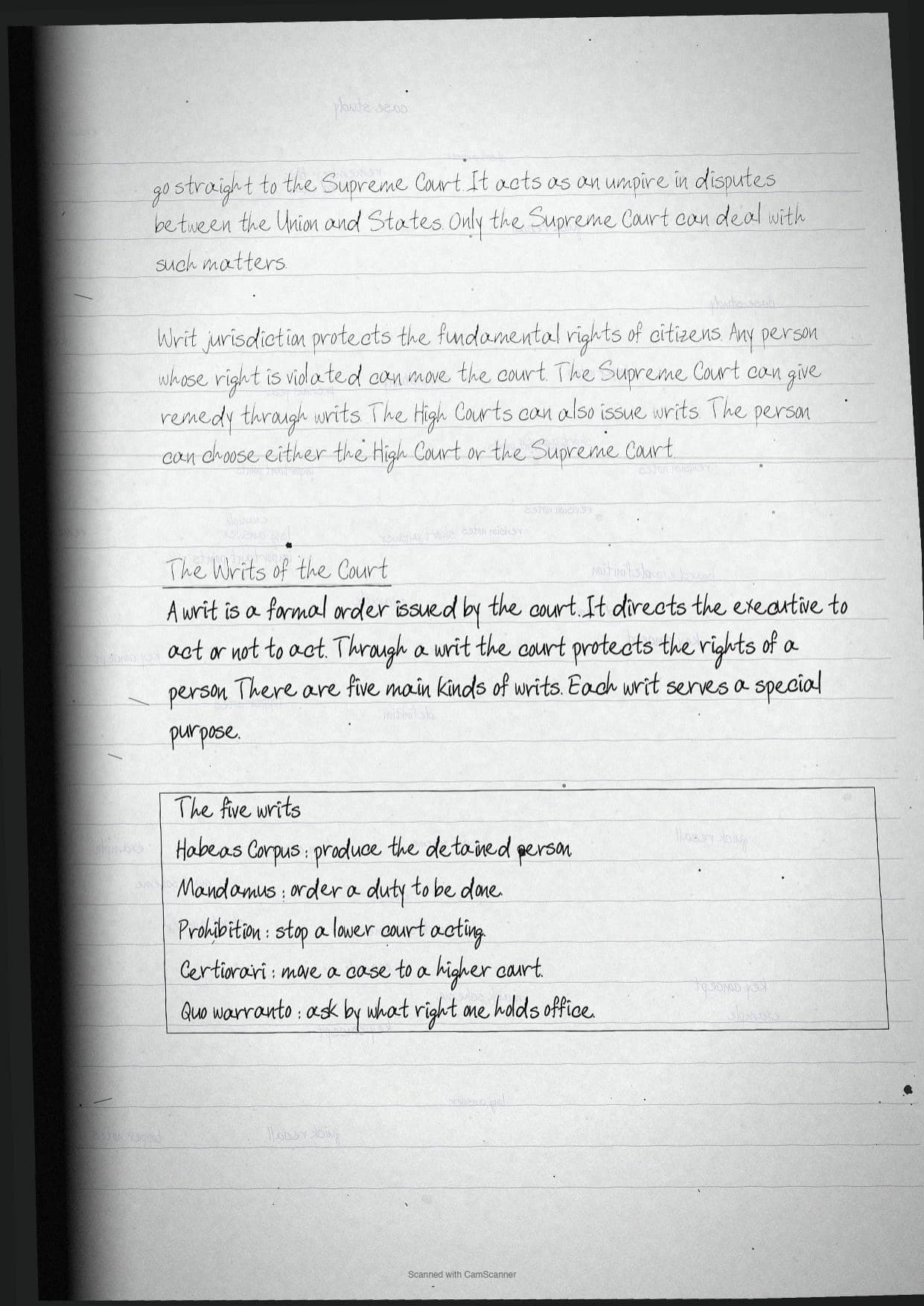
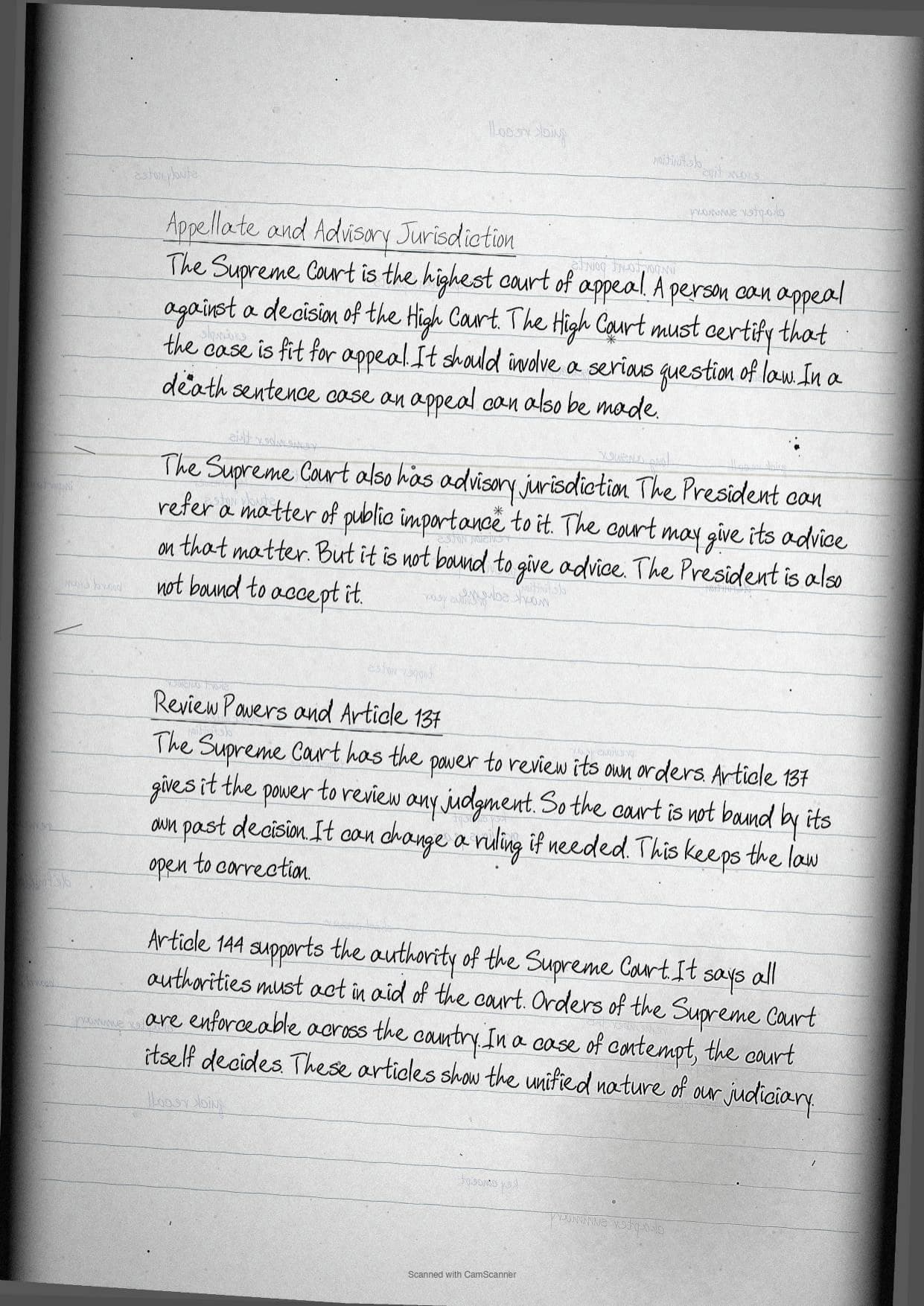
You can read the complete class 11 political-science handwritten notes for Judiciary, with key terms, boxed definitions, and quick revision points, in the PDF below.
These handwritten notes are written by subject teachers, mapped to the 2026-27 NCERT, and checked against the last five years of CBSE Class 11 Political Science papers.
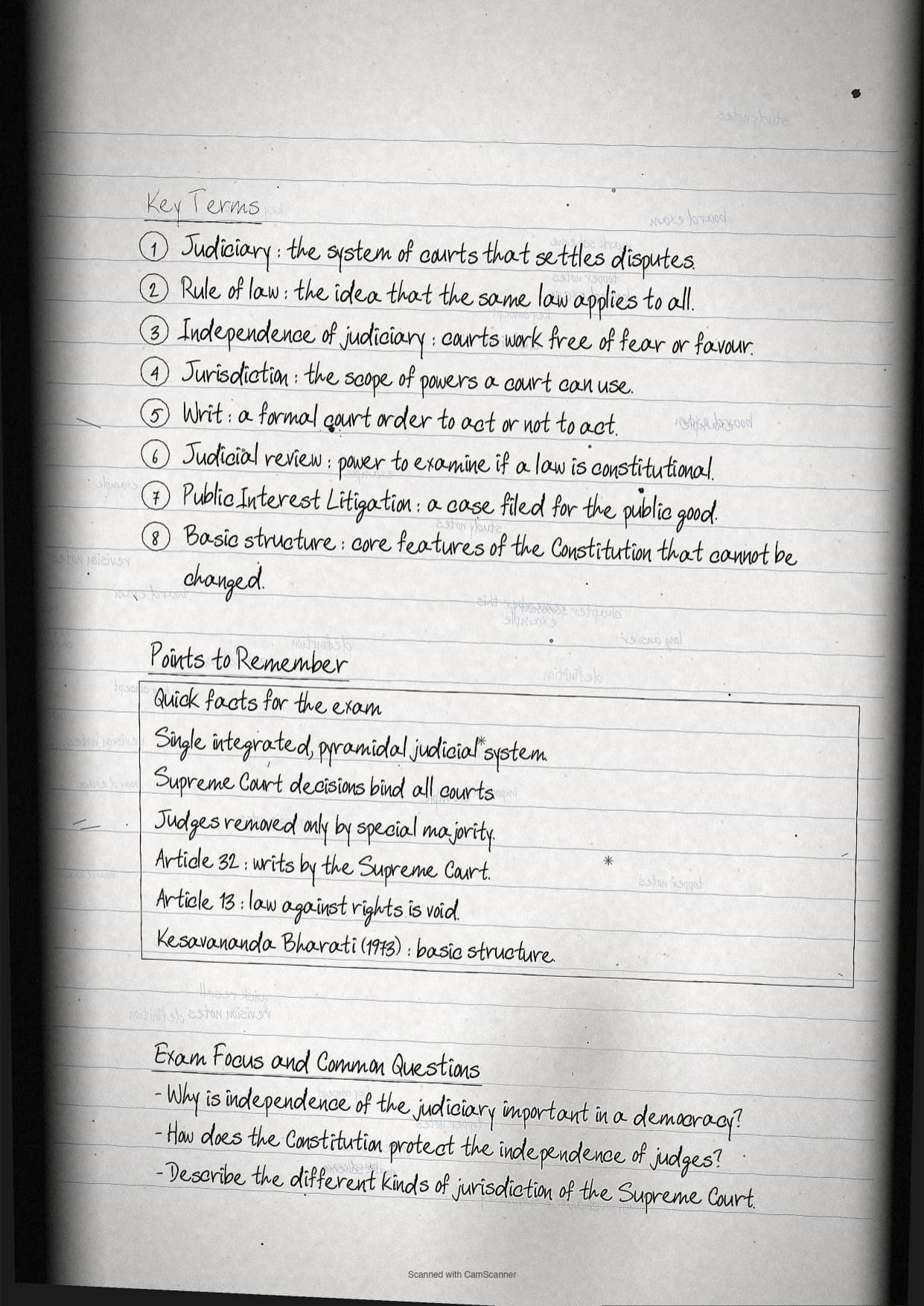
Key Terms and Ideas in Judiciary
These are the terms and ideas the exam asks about most. Learn each one so you can define it and use it in your answers.
| Term / Idea | What it means |
|---|---|
| Judiciary | the system of courts that settles disputes |
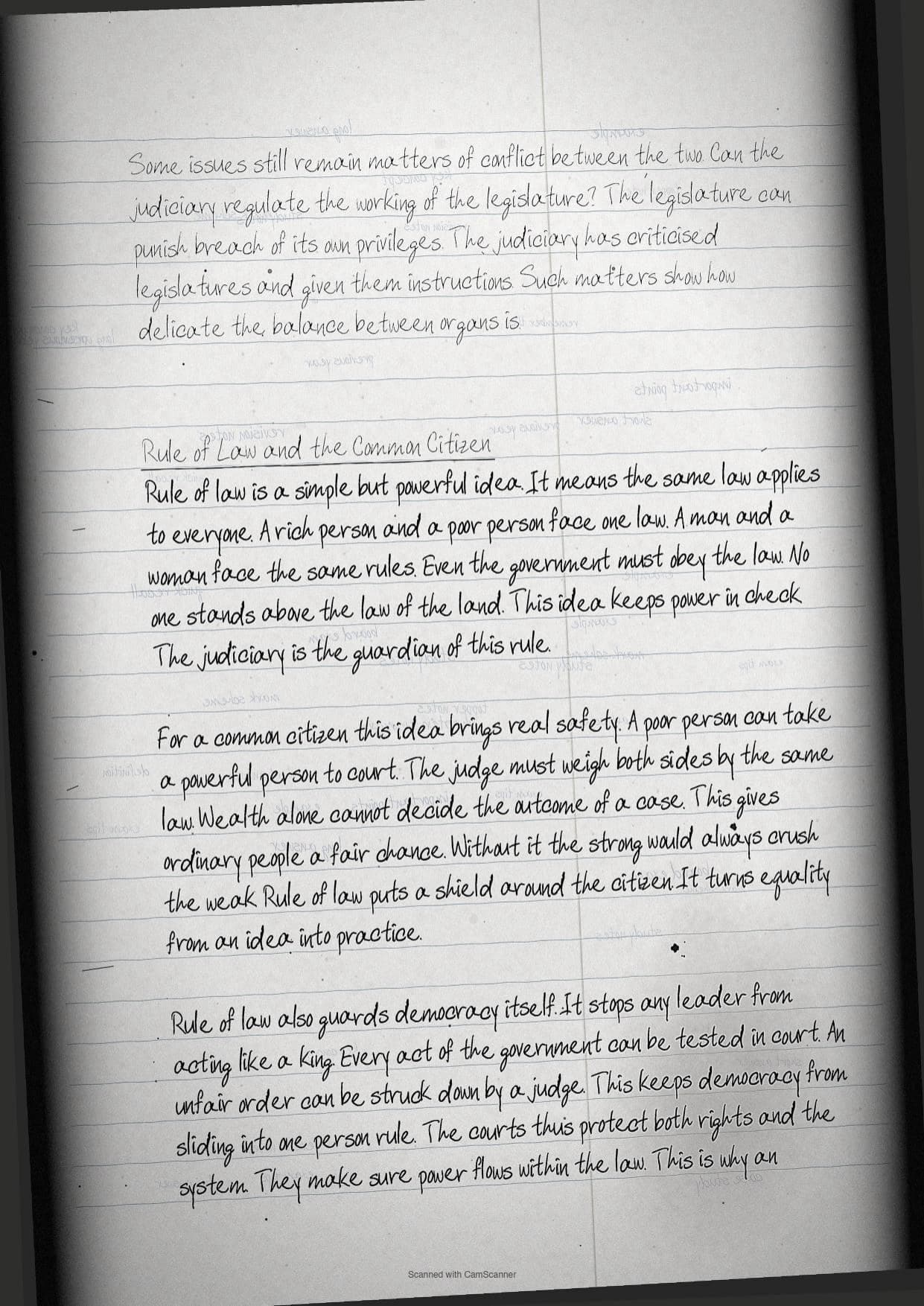
| Rule of law | the same law applies to every person |
| Independence of judiciary | courts work free of fear or favour |
| Jurisdiction | the scope of powers a court can use |
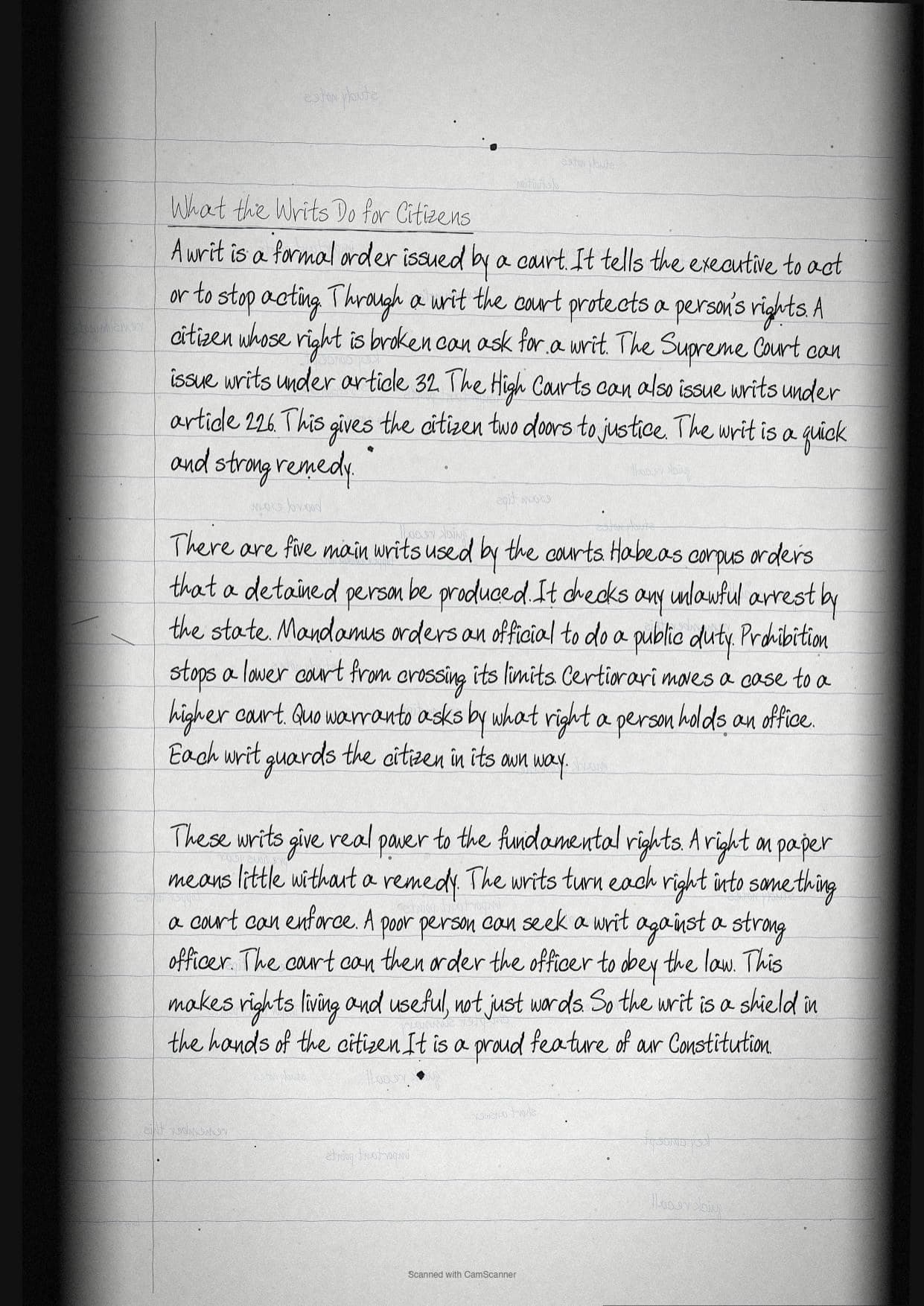
| Writ | a formal court order to act or not to act |
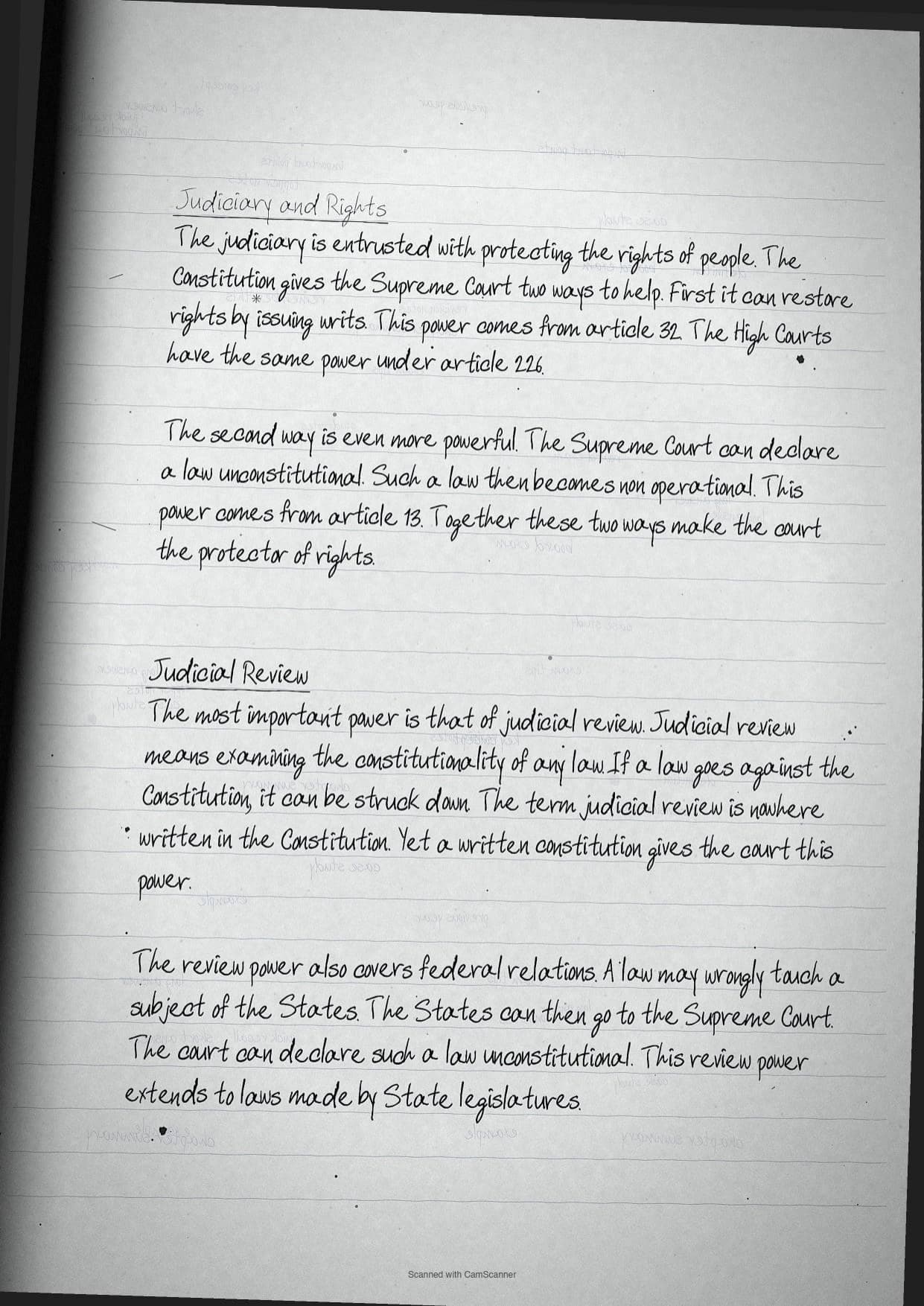
| Judicial review | power to examine if a law is constitutional |
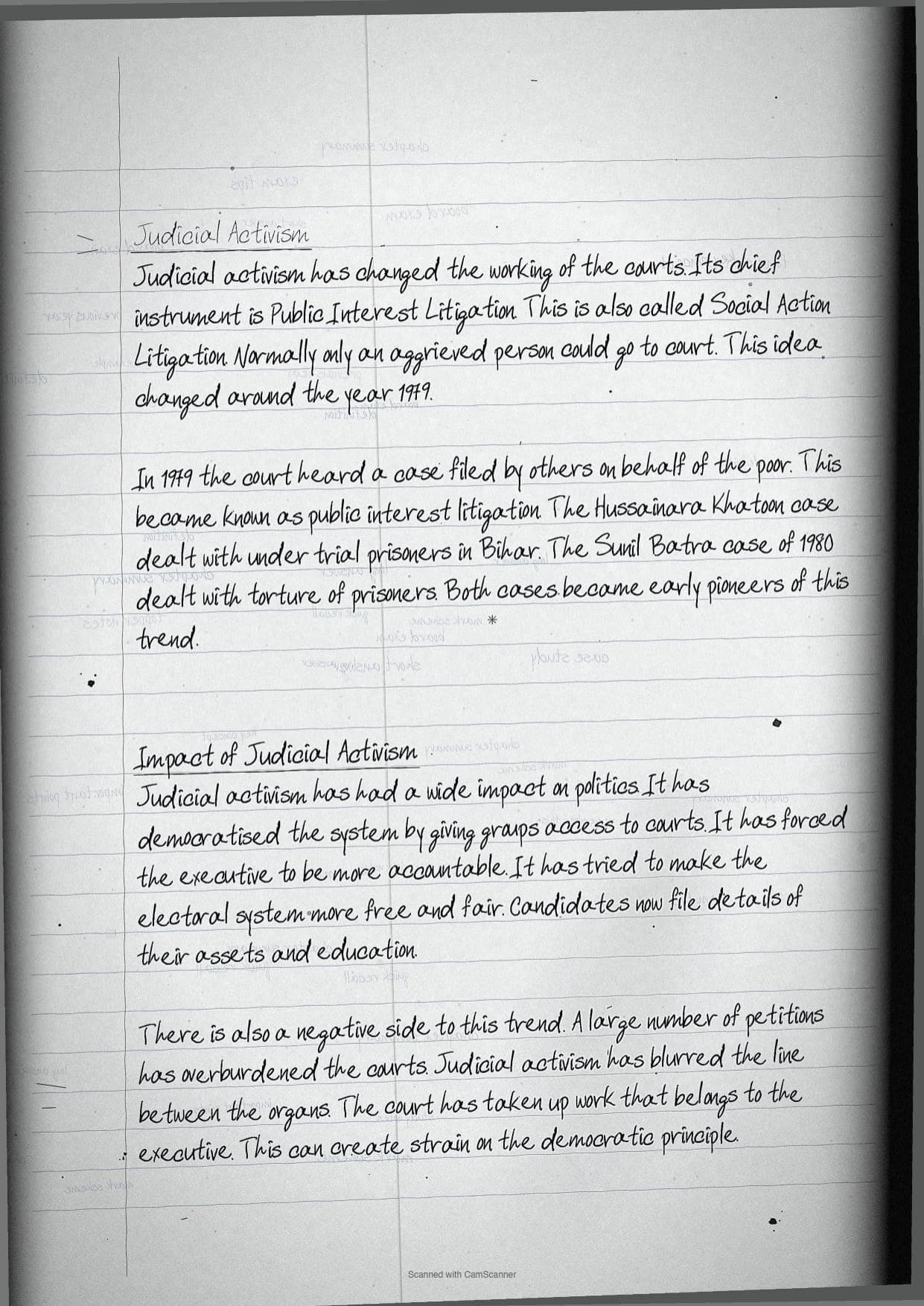
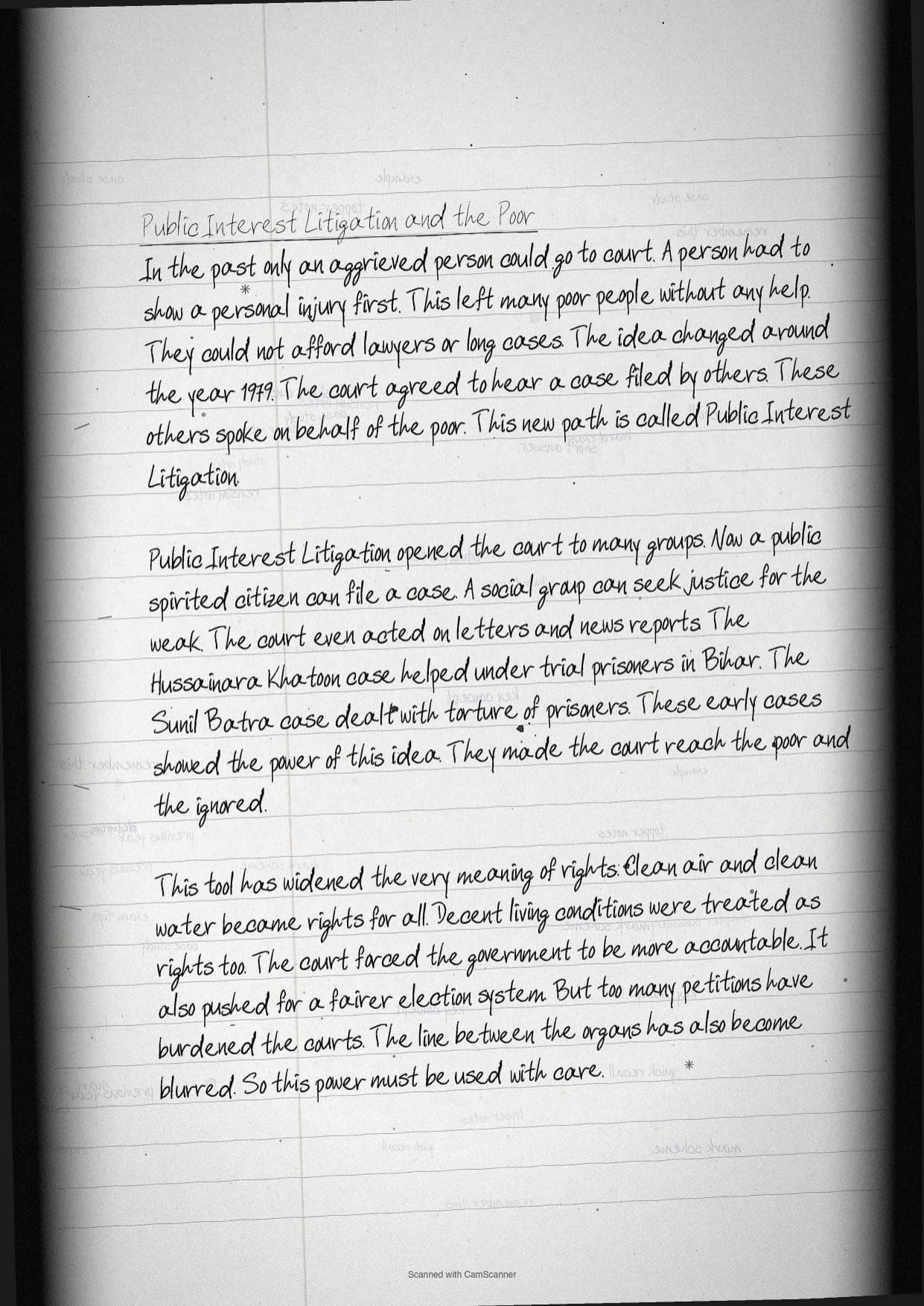
| Public Interest Litigation | a case filed for the public good |
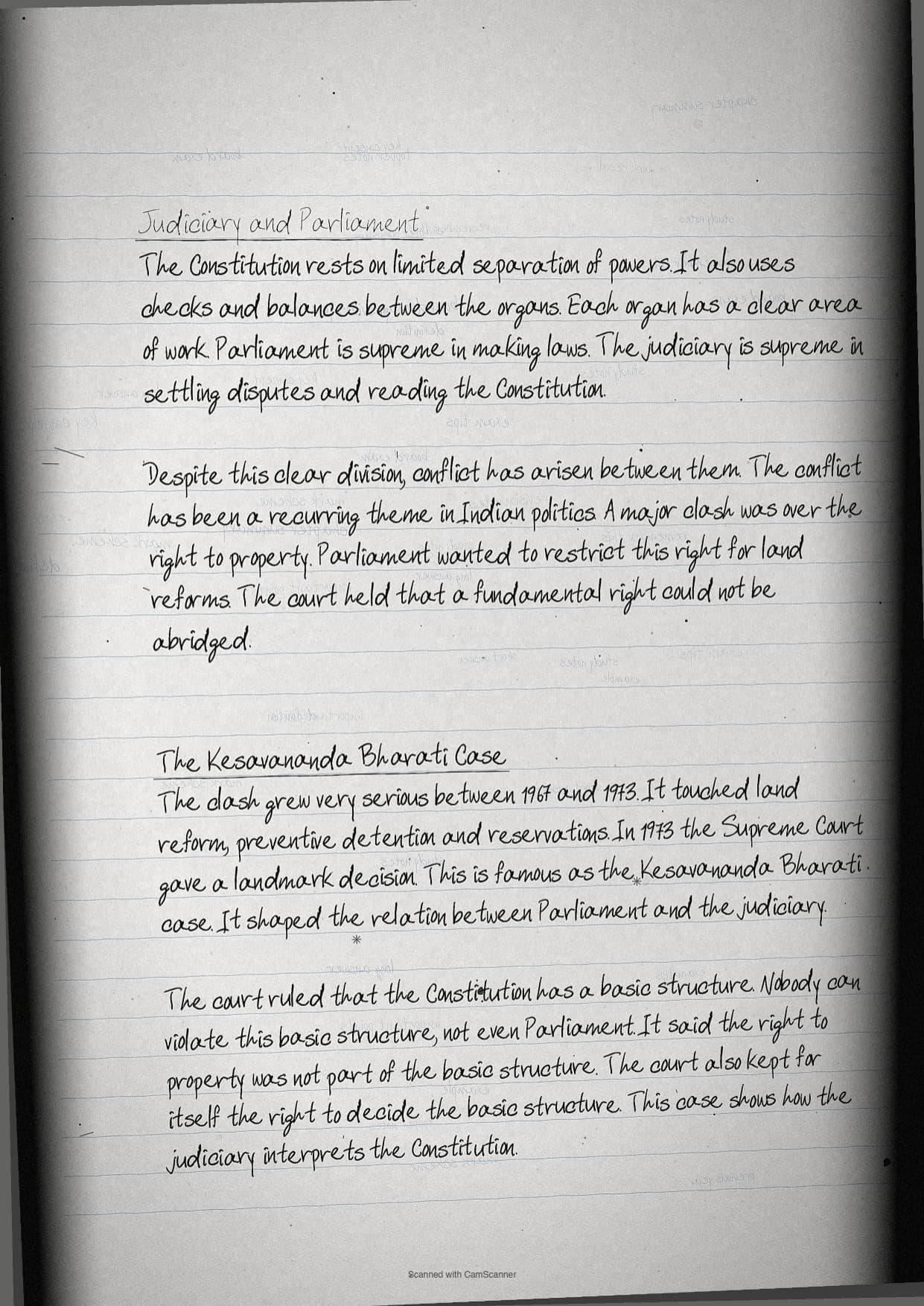
| Basic structure | core features of the Constitution that cannot be changed |
What the Judiciary Handwritten Notes Cover
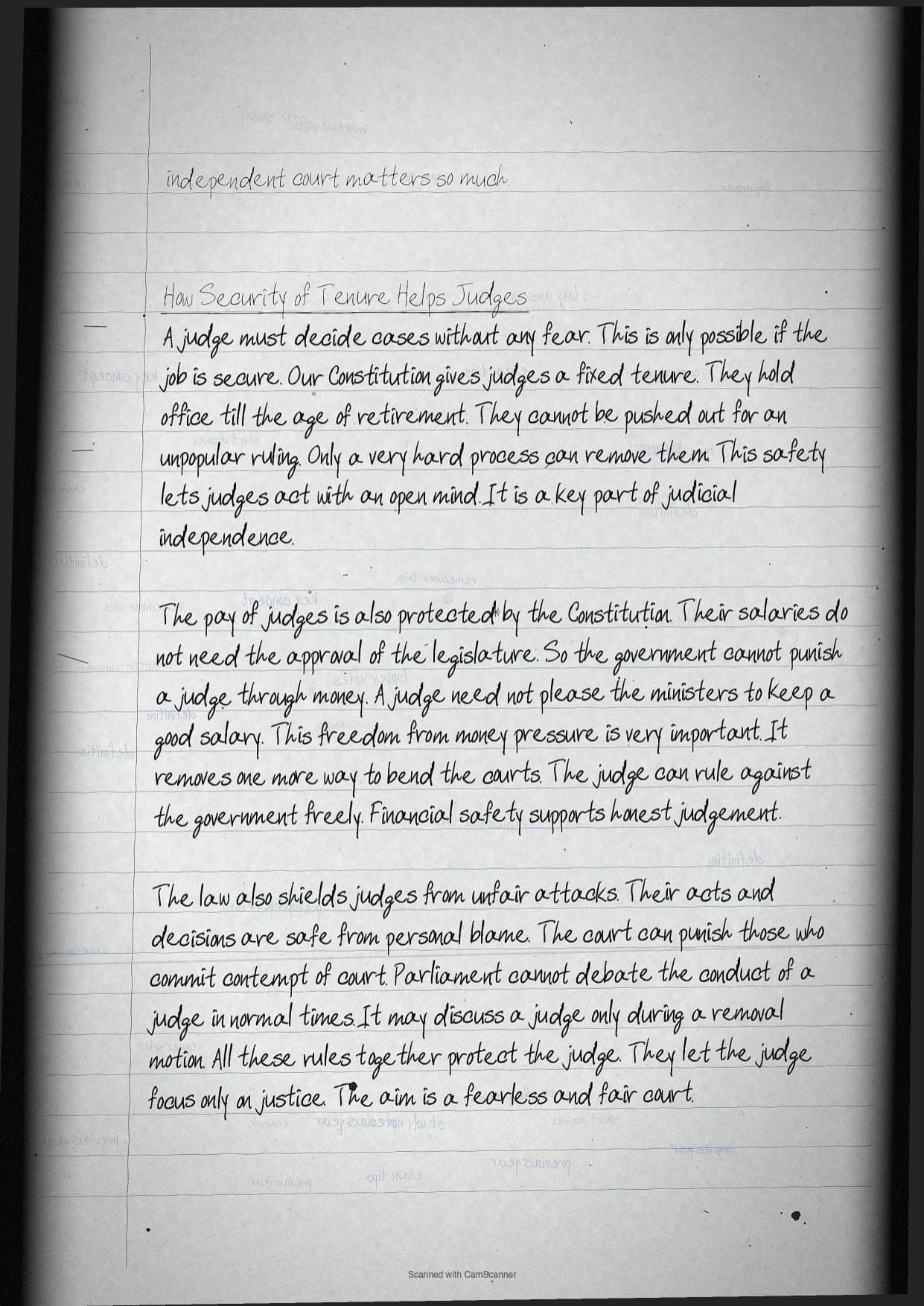
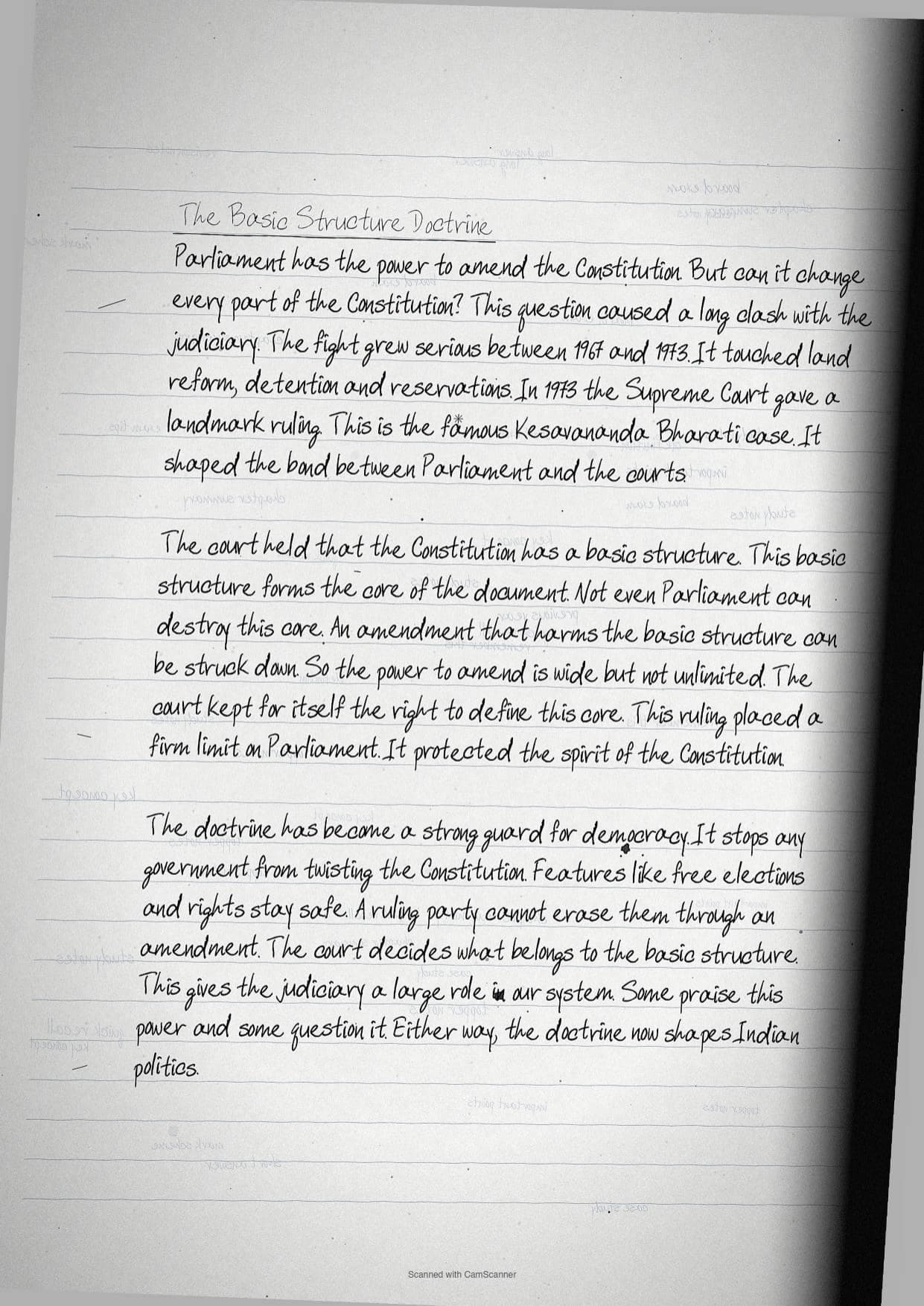
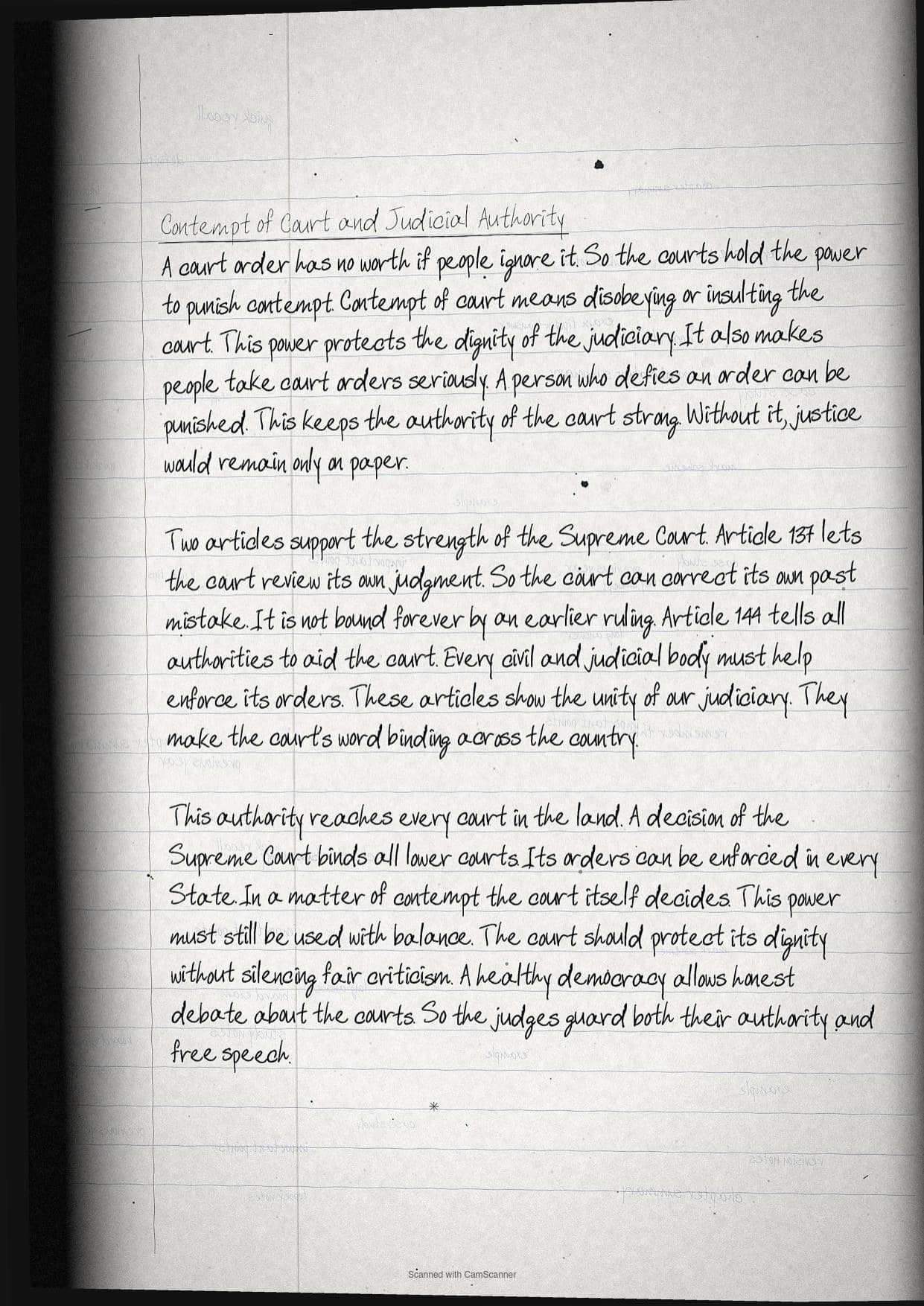
Handwritten revision notes on the Judiciary, the court system of India. Learn why the judiciary must be independent and how the Constitution protects it. See how the Supreme Court guards rights and interprets the Constitution.
- Why we need an independent judiciary
- How independence of judges is protected
- Appointment and removal of judges
- Structure of the integrated judiciary
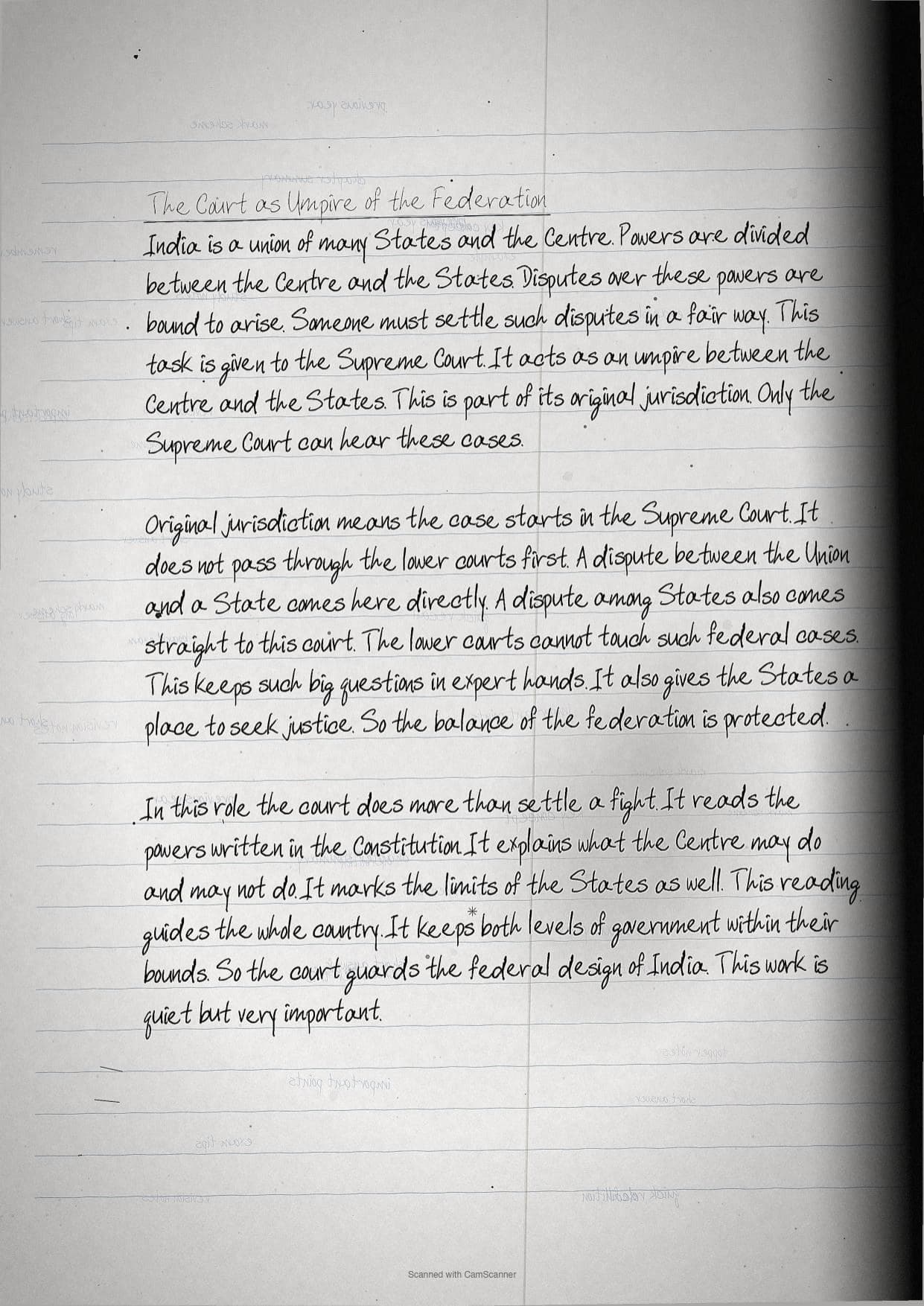
- Jurisdiction of the Supreme Court
- Judicial activism and PIL
- Judicial review and the basic structure
Judiciary Topic-wise Weightage for CBSE Class 11 Political Science
Some parts of this chapter are asked more often than others. The table below shows which sub-topics to revise first, based on recent CBSE Class 11 question trends.
| Sub-topic | Weightage | CBSE Frequency |
|---|---|---|
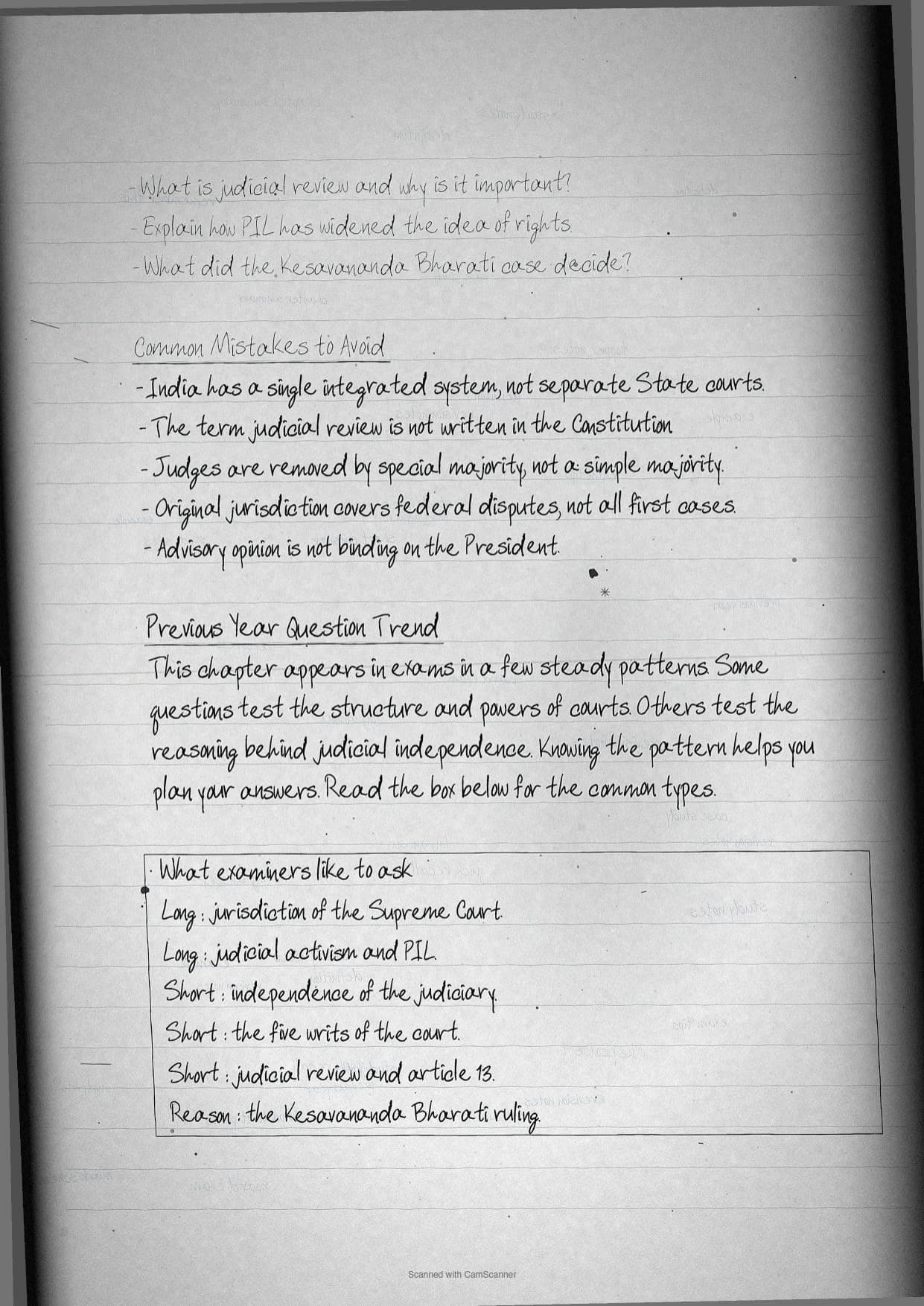
| Jurisdiction of the Supreme Court | High | asked most years |
| Judicial activism and PIL | High | asked often |
| Independence of the judiciary | High | asked often |
| Judicial review | Medium | frequent |
| Kesavananda Bharati case | Medium | sometimes |
How Collegedunia's Handwritten Notes Help You Revise Judiciary
These notes are made for the night before the exam. They keep the facts short and easy to scan. Collegedunia maps every point to the 2026-27 NCERT.
- Clear handwriting: each topic is written in neat, easy-to-read handwriting.
- Boxed key terms: the main terms and definitions are boxed by hand for fast recall.
- Diagrams and tables: simple hand-drawn tables and charts make ideas clear.
- Colour-coded headings: new sub-topics stand out, so you find any section in seconds.
Judiciary Self-Assessment Quiz
Try these quick questions after you read the notes. Tap each question to check your answer. They cover the points CBSE asks most often.
India has which kind of judicial system?
(a) separate State courts (b) single integrated system (c) two parallel systems (d) only federal courts
Answer: (b) single integrated system - pyramidal, with the Supreme Court at the top
Which jurisdiction covers disputes between the Union and the States?
(a) appellate (b) advisory (c) original (d) writ
Answer: (c) original - the Supreme Court acts as an umpire in federal disputes
A judge can be removed only by?
(a) simple majority (b) the President alone (c) special majority in both Houses (d) the Chief Justice
Answer: (c) special majority in both Houses - on proven misbehaviour or incapacity
The Hussainara Khatoon case is linked to?
(a) right to property (b) public interest litigation (c) judicial appointments (d) money bills
Answer: (b) public interest litigation - it dealt with under trial prisoners in Bihar
The basic structure doctrine came from which case?
(a) Sunil Batra (b) Ramaswami (c) Kesavananda Bharati (d) Hussainara Khatoon
Answer: (c) Kesavananda Bharati - the 1973 case ruled the basic structure cannot be violated
How to Use These Handwritten Notes for Class 11 Political Science Revision
Use these class 11 political-science handwritten notes in two passes. Read them slowly once for the full chapter. Then, near the exam, read only the boxes and key terms for a fast recall.
- Read the notes once with the NCERT chapter open beside you.
- Say each key term and idea in your own words.
- Practise one long-answer question from a past paper.
- On the last day, revise only the key terms and the boxes.
Class 11 Political Science Handwritten Notes for All Chapters
The table below links the class 11 political-science handwritten notes for every chapter. Use it to jump to any other chapter's notes.
| Chapter | Resource |
|---|---|
| Chapter 1 | Constitution: Why and How Handwritten Notes |
| Chapter 2 | Rights in the Indian Constitution Handwritten Notes |
| Chapter 3 | Election and Representation Handwritten Notes |
| Chapter 4 | Executive Handwritten Notes |
| Chapter 5 | Legislature Handwritten Notes |
| Chapter 6 | Judiciary Handwritten Notes |
| Chapter 7 | Federalism Handwritten Notes |
| Chapter 8 | Local Governments Handwritten Notes |
| Chapter 9 | Constitution as a Living Document Handwritten Notes |
| Chapter 10 | The Philosophy of the Constitution Handwritten Notes |
| Chapter 11 | Political Theory: An Introduction Handwritten Notes |
| Chapter 12 | Freedom Handwritten Notes |
| Chapter 13 | Equality Handwritten Notes |
| Chapter 14 | Social Justice Handwritten Notes |
| Chapter 15 | Rights Handwritten Notes |
| Chapter 16 | Citizenship Handwritten Notes |
| Chapter 17 | Nationalism Handwritten Notes |
| Chapter 18 | Secularism Handwritten Notes |
Judiciary Class 11 Political Science Handwritten Notes FAQs
Ques. Where can I download Judiciary Class 11 Political Science Handwritten Notes PDF?
Ans. You can download the Judiciary Class 11 Political Science Handwritten Notes PDF directly from this page. Both the Normal and HD versions are free.
Ques. Are these handwritten notes aligned with the 2026-27 NCERT?
Ans. Yes. These notes follow the current 2026-27 syllabus for Class 11 Political Science. What is judicial review and why does it matter?
Ques. How many pages is the Class 11 Political Science Judiciary Handwritten Notes PDF?
Ans. The notes run about 22 pages. They cover the full chapter with key terms, hand-drawn boxes, and a short self-assessment quiz.
Ques. What is the main idea of the 11th standard Political Science chapter Judiciary?
Ans. Judicial review is the power of the Supreme Court to examine whether a law is constitutional. If a law goes against the Constitution, the court can strike it down, which protects rights and the federal balance.
Ques. Are these Judiciary notes enough for the CBSE Class 11 exam?
Ans. Yes, for revision. The Collegedunia handwritten notes cover every key point and exam term. Read them with the NCERT chapter and practise past questions.



Comments