



The 2026-27 NCERT keeps Class 11 Political Science Chapter 8 Local Governments in full for the CBSE course. These class 11 political-science handwritten notes chapter 8 Local Governments follow the 2026-27 NCERT and cover why local governments matter in a democracy, growth of local bodies from sabhas to panchayats, the 73rd and 74th amendments of 1992. This page.
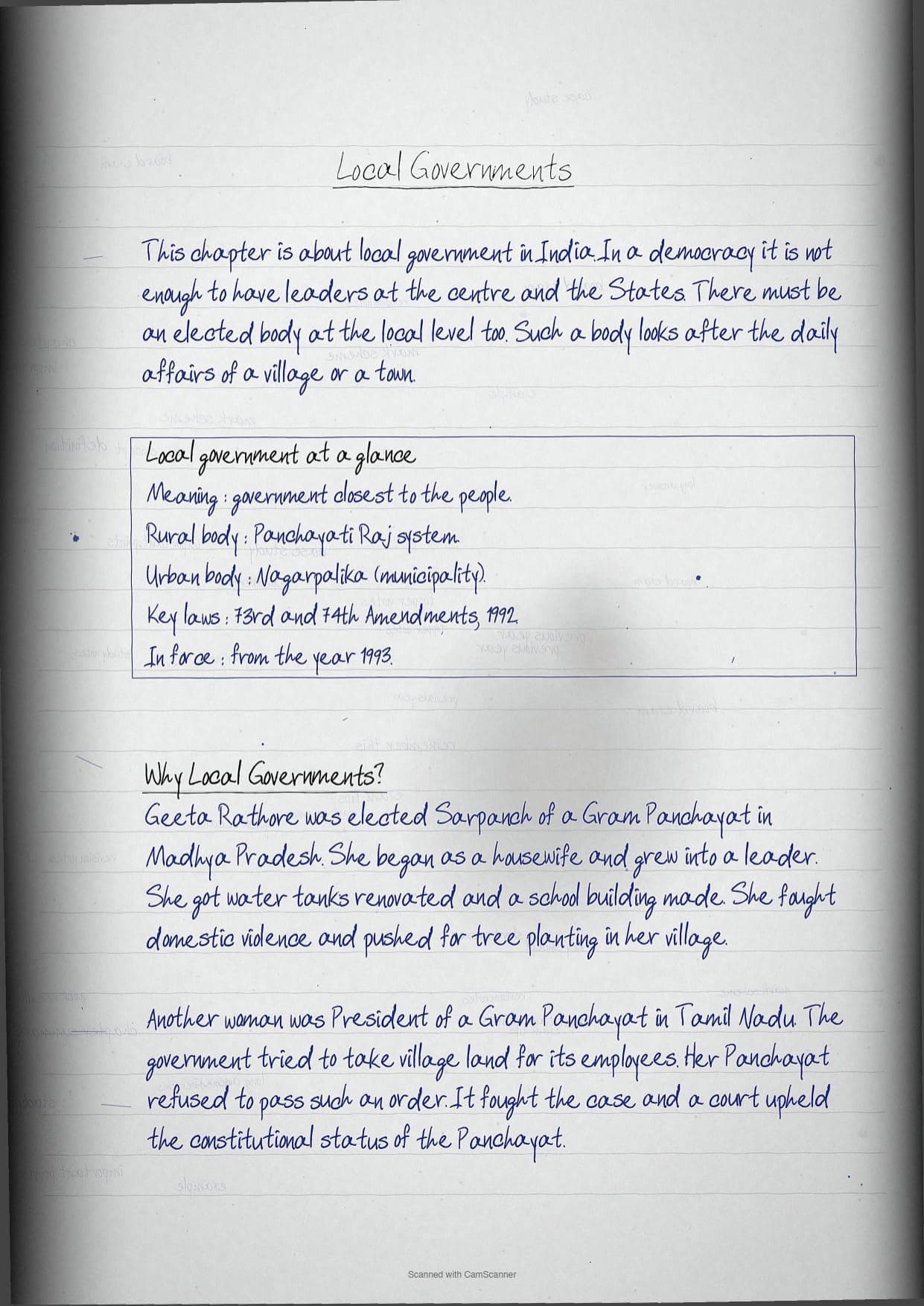

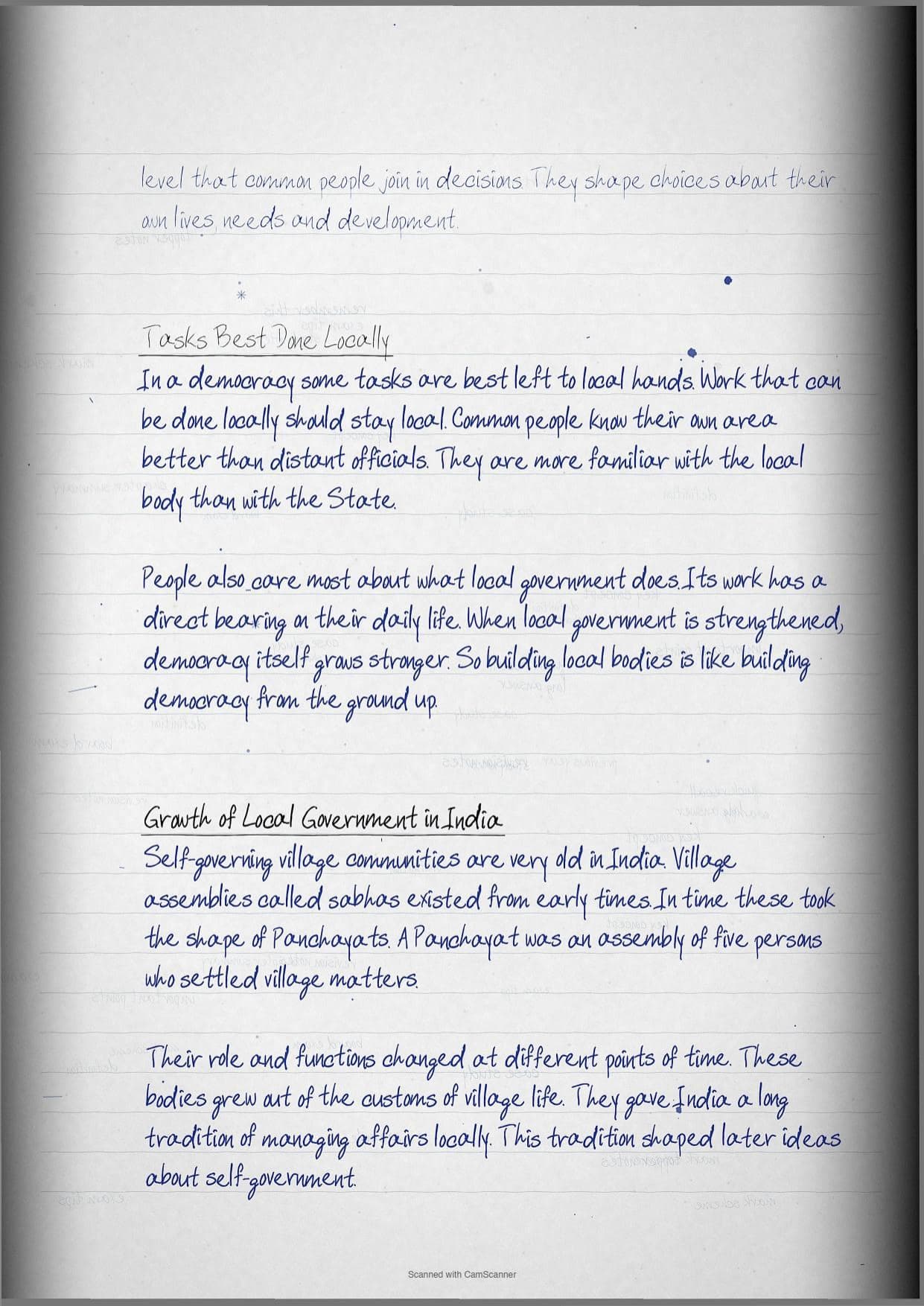
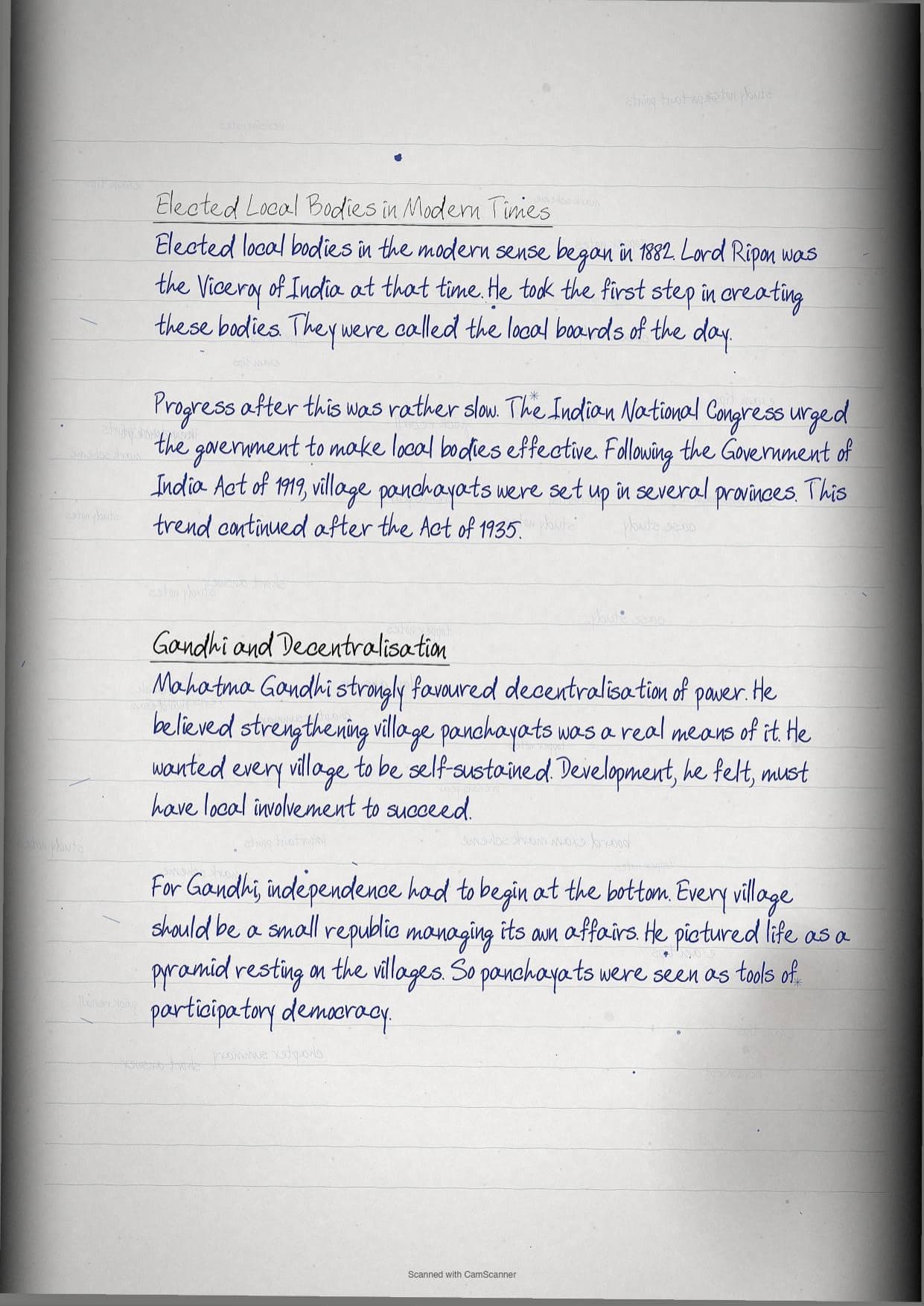
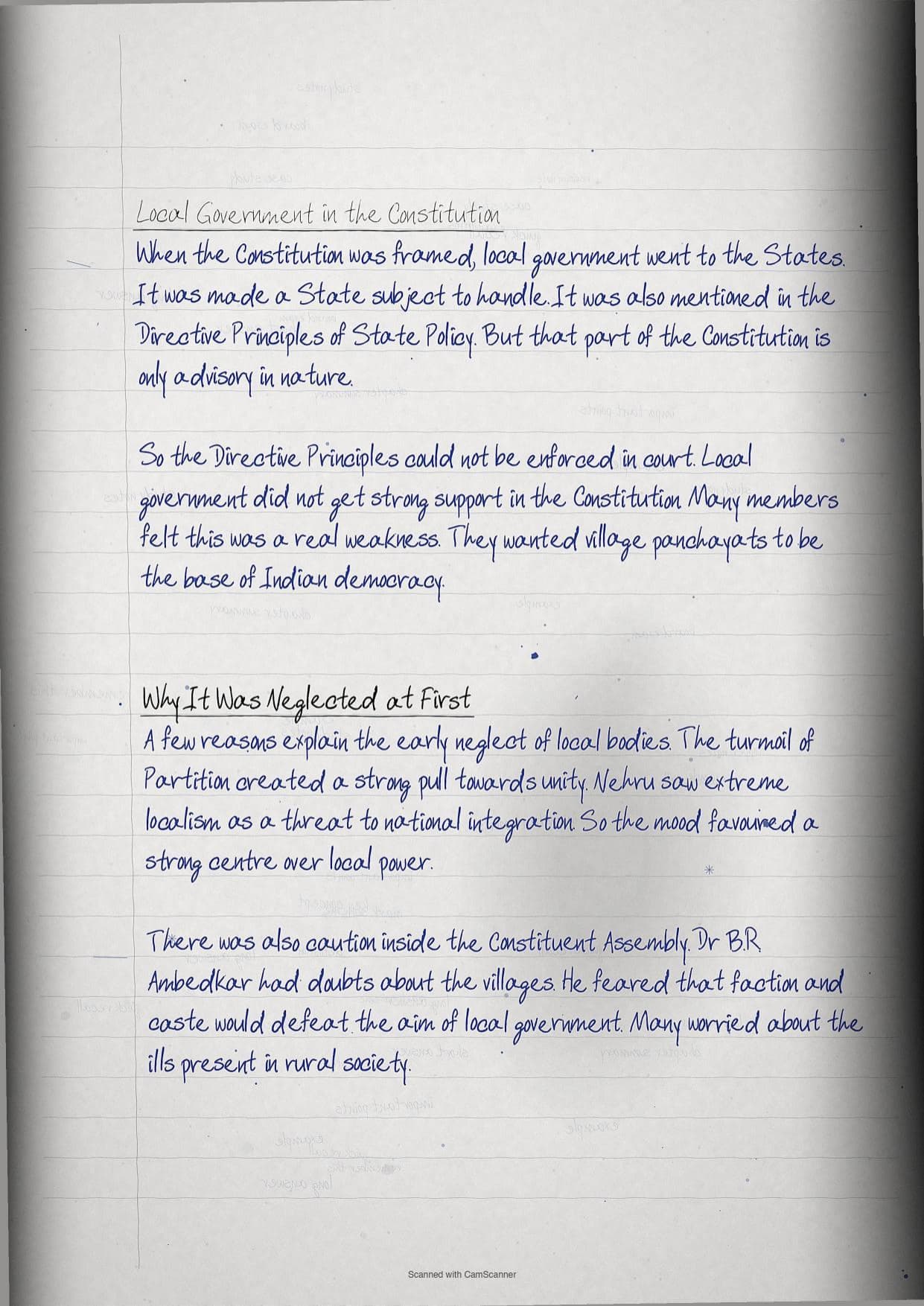
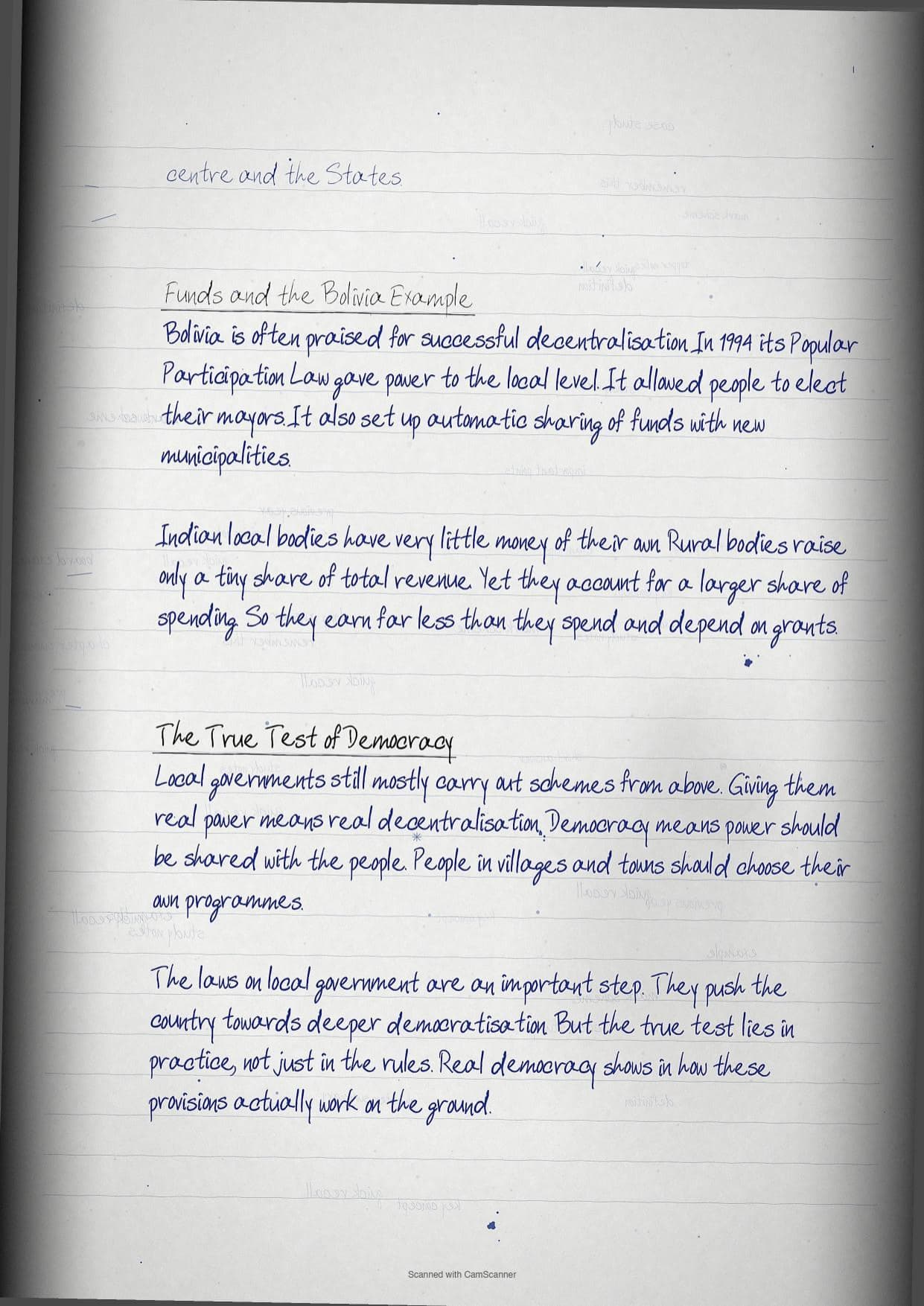
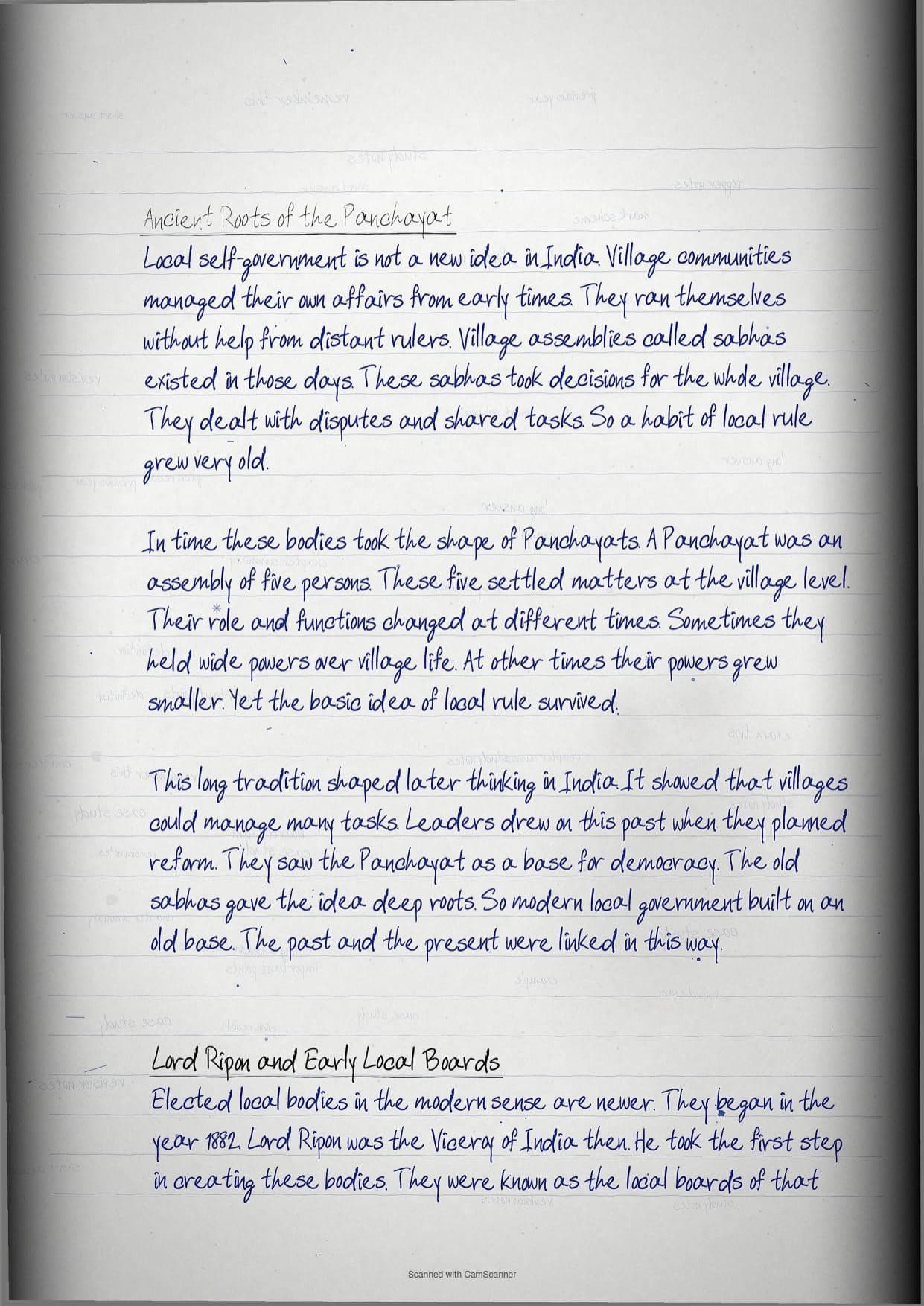
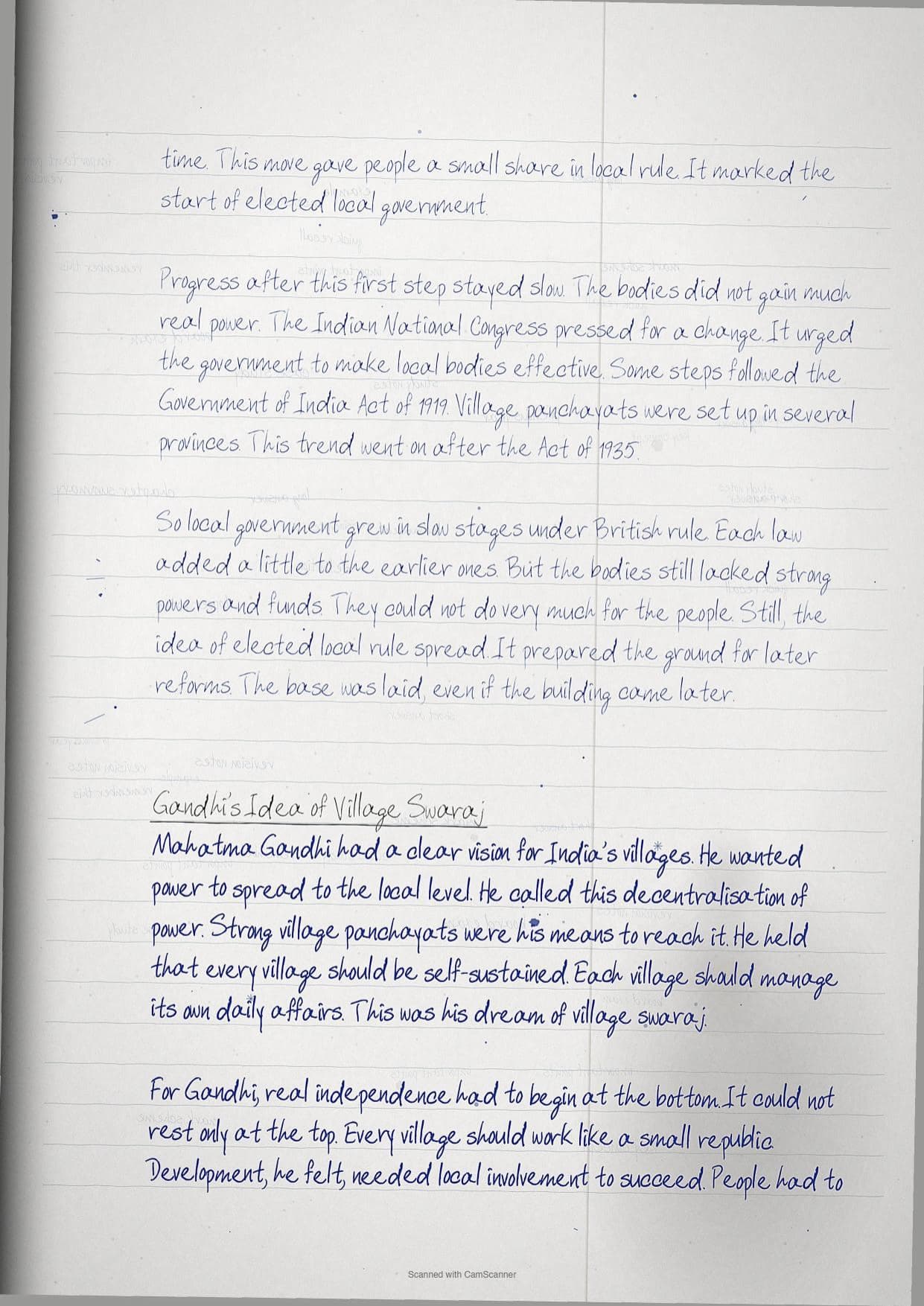
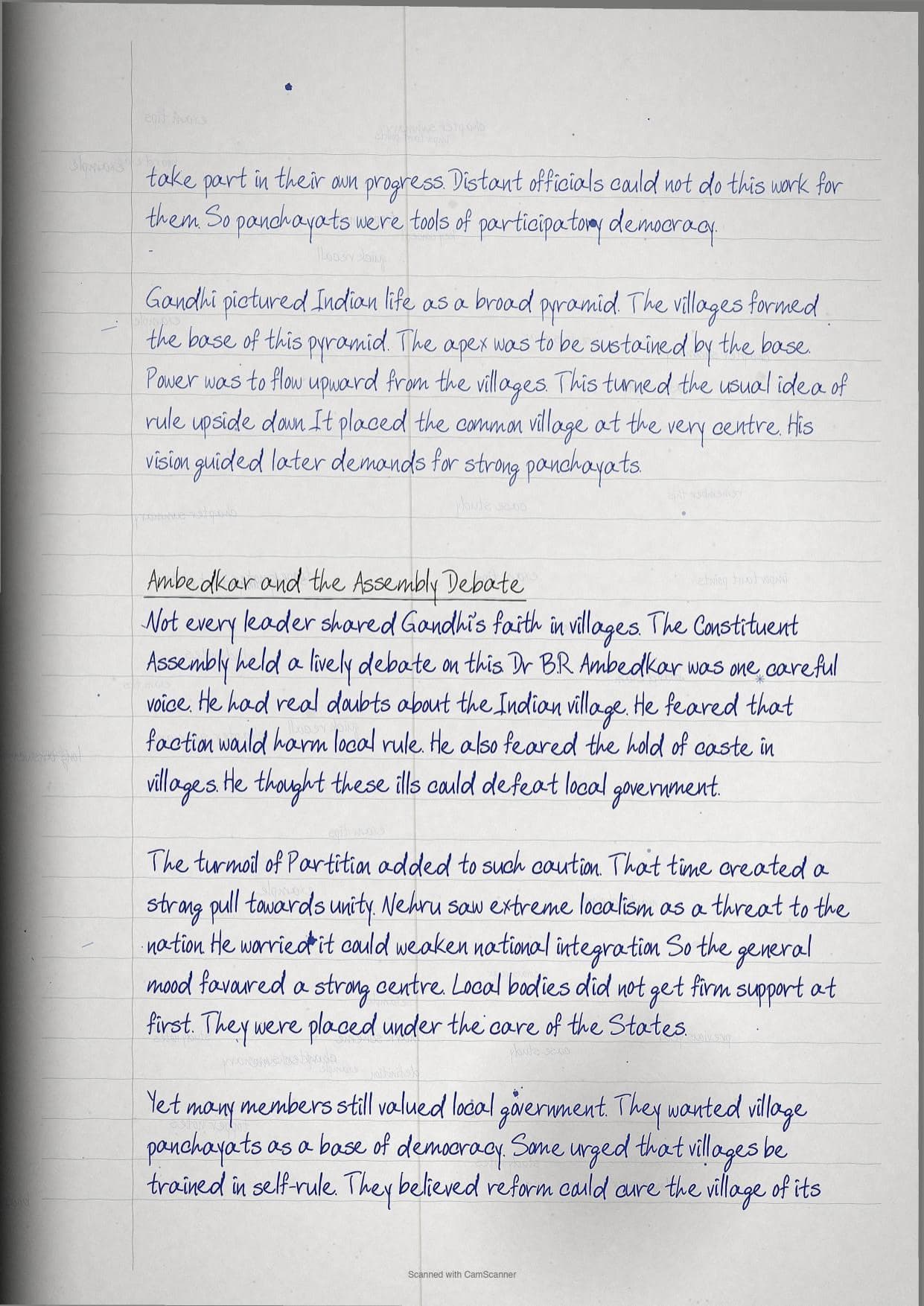
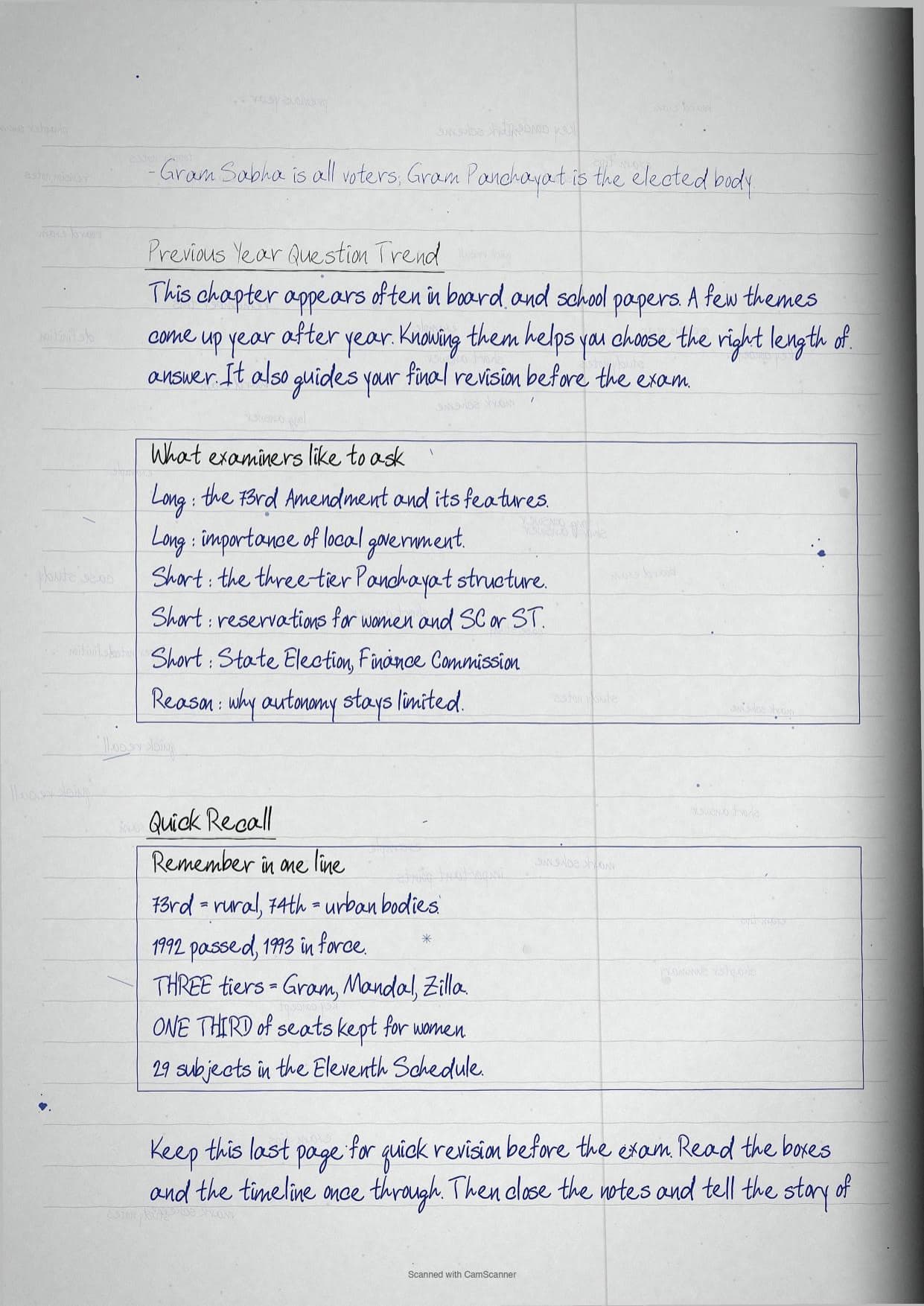

- CBSE Class 11 Weightage: a scoring chapter in the Political Science paper, asked in short and long answers.
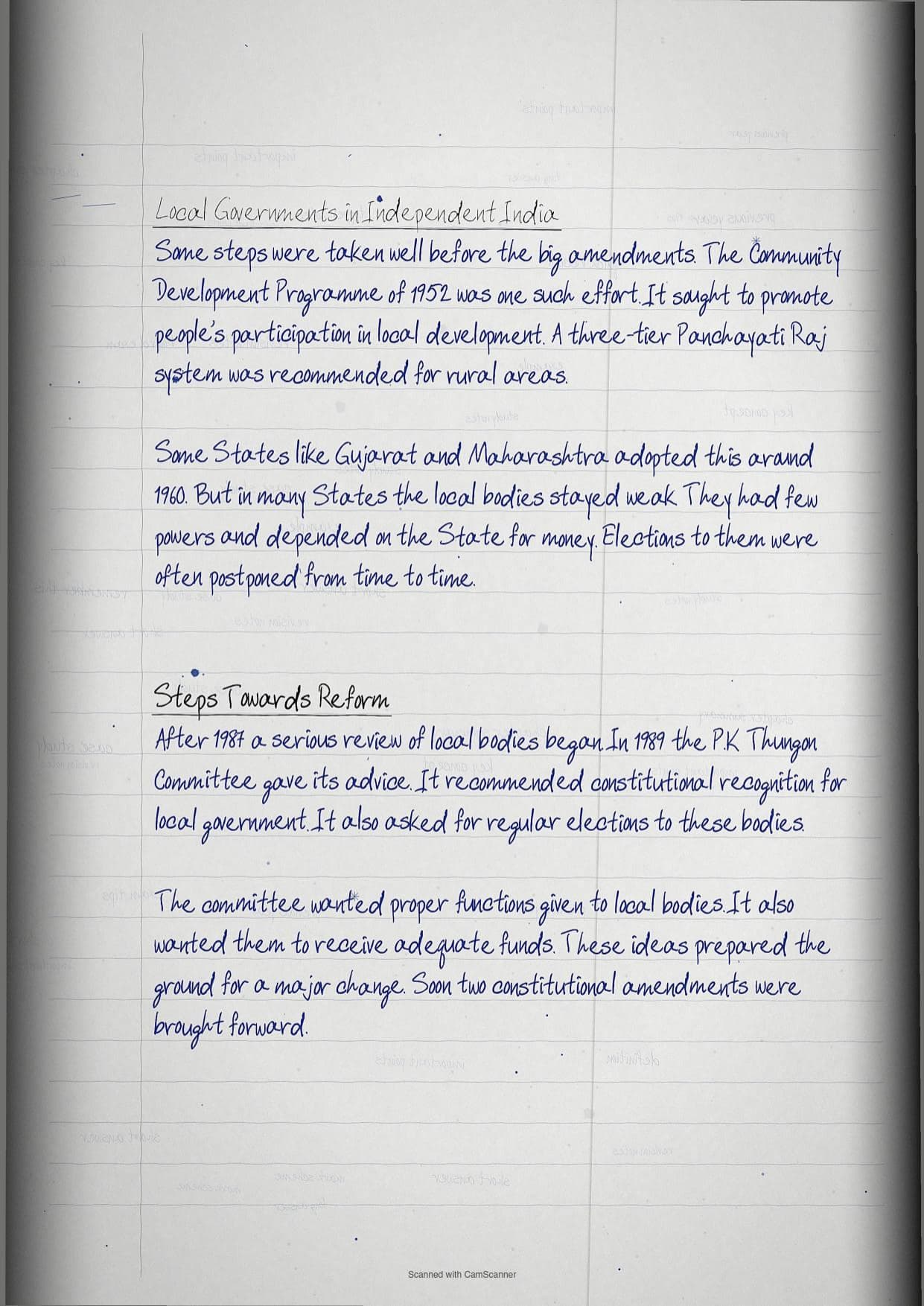
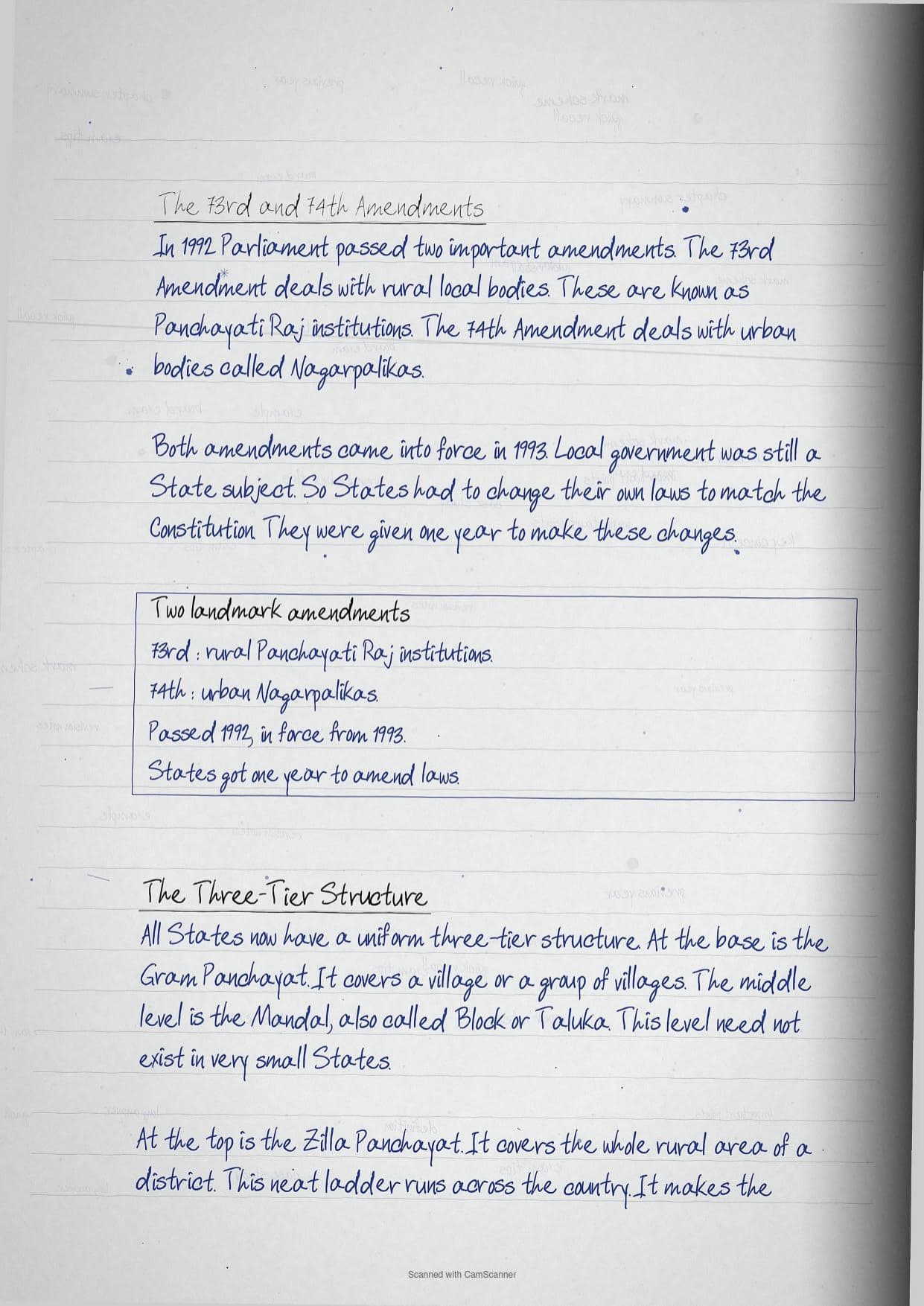
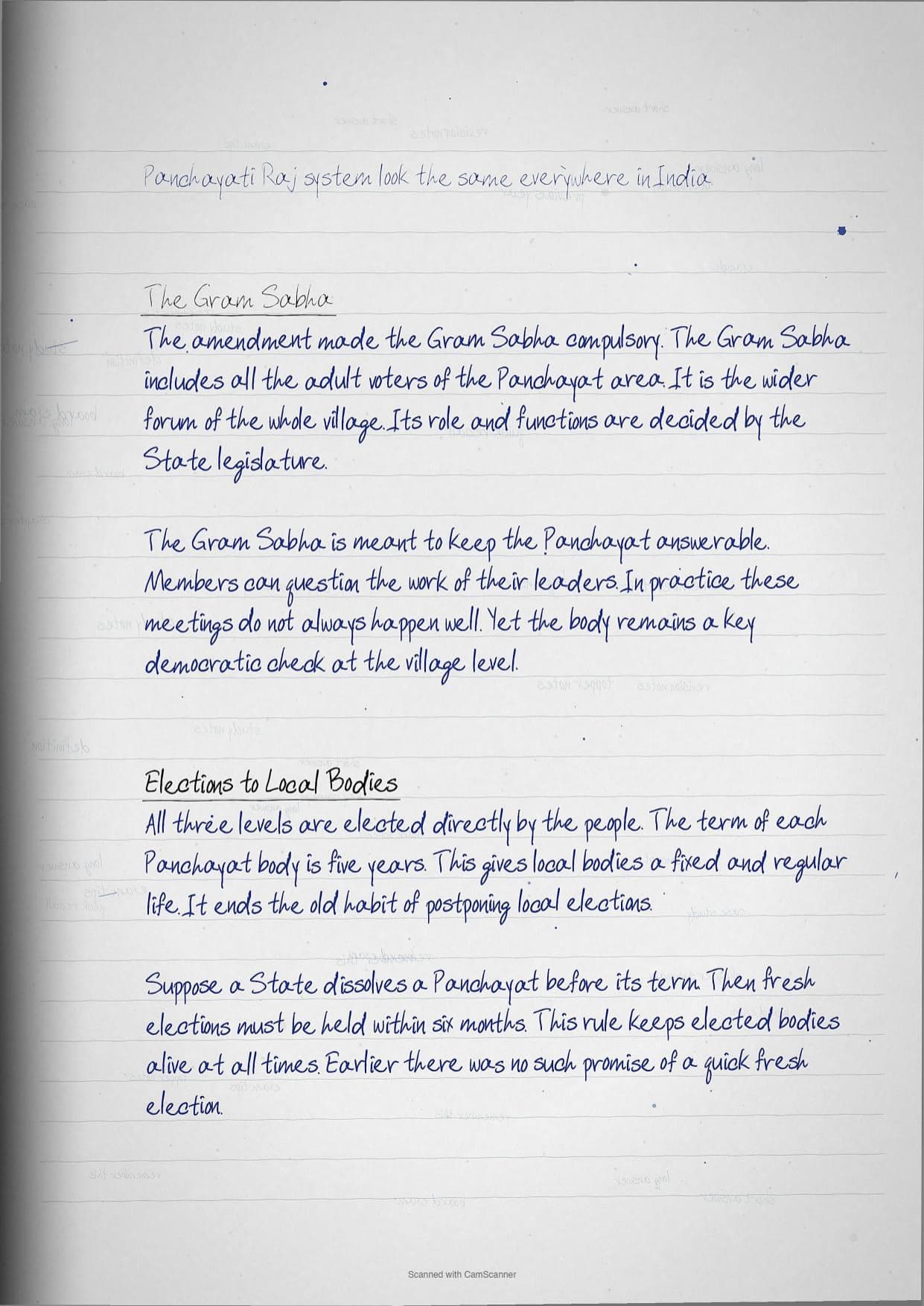
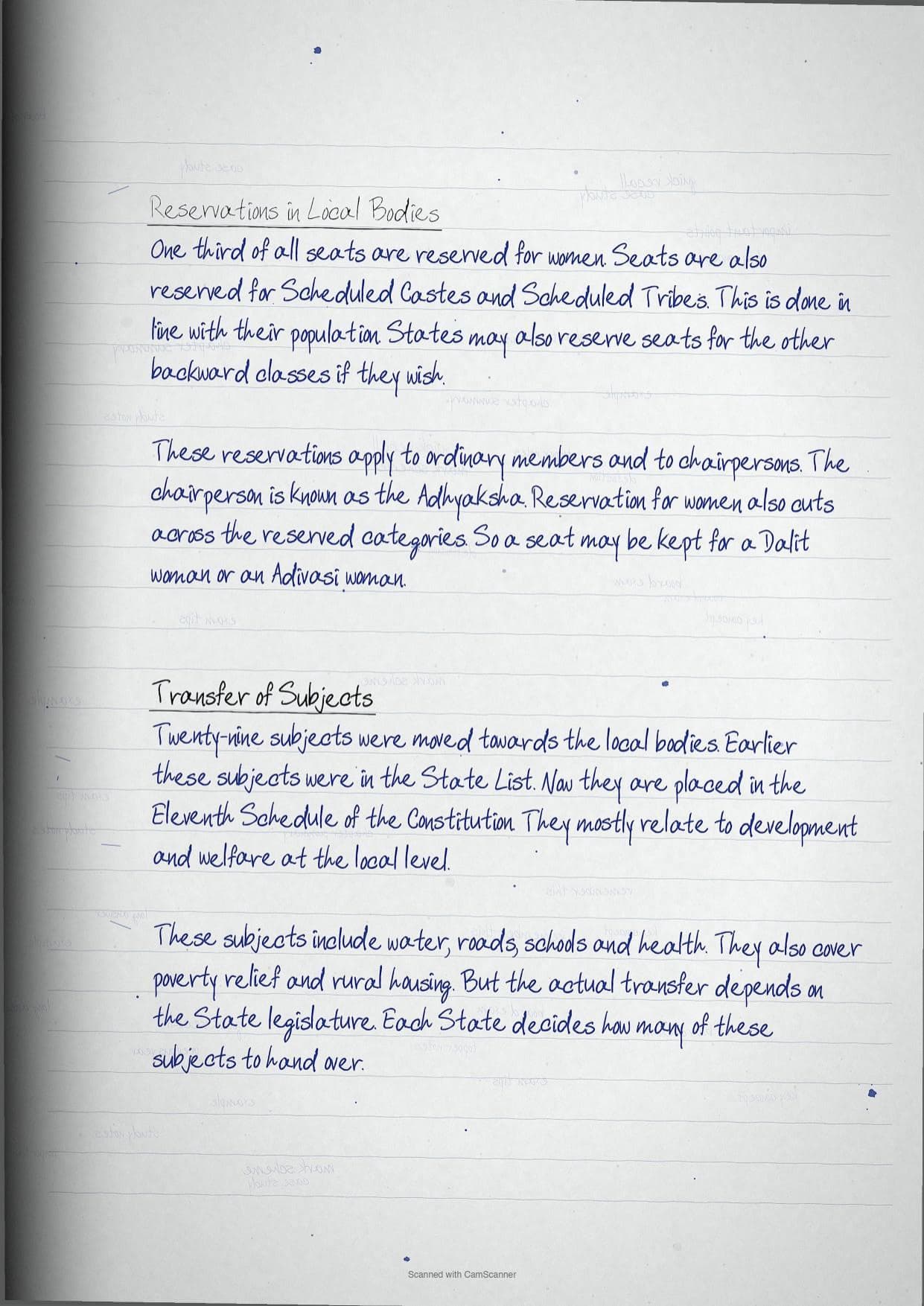
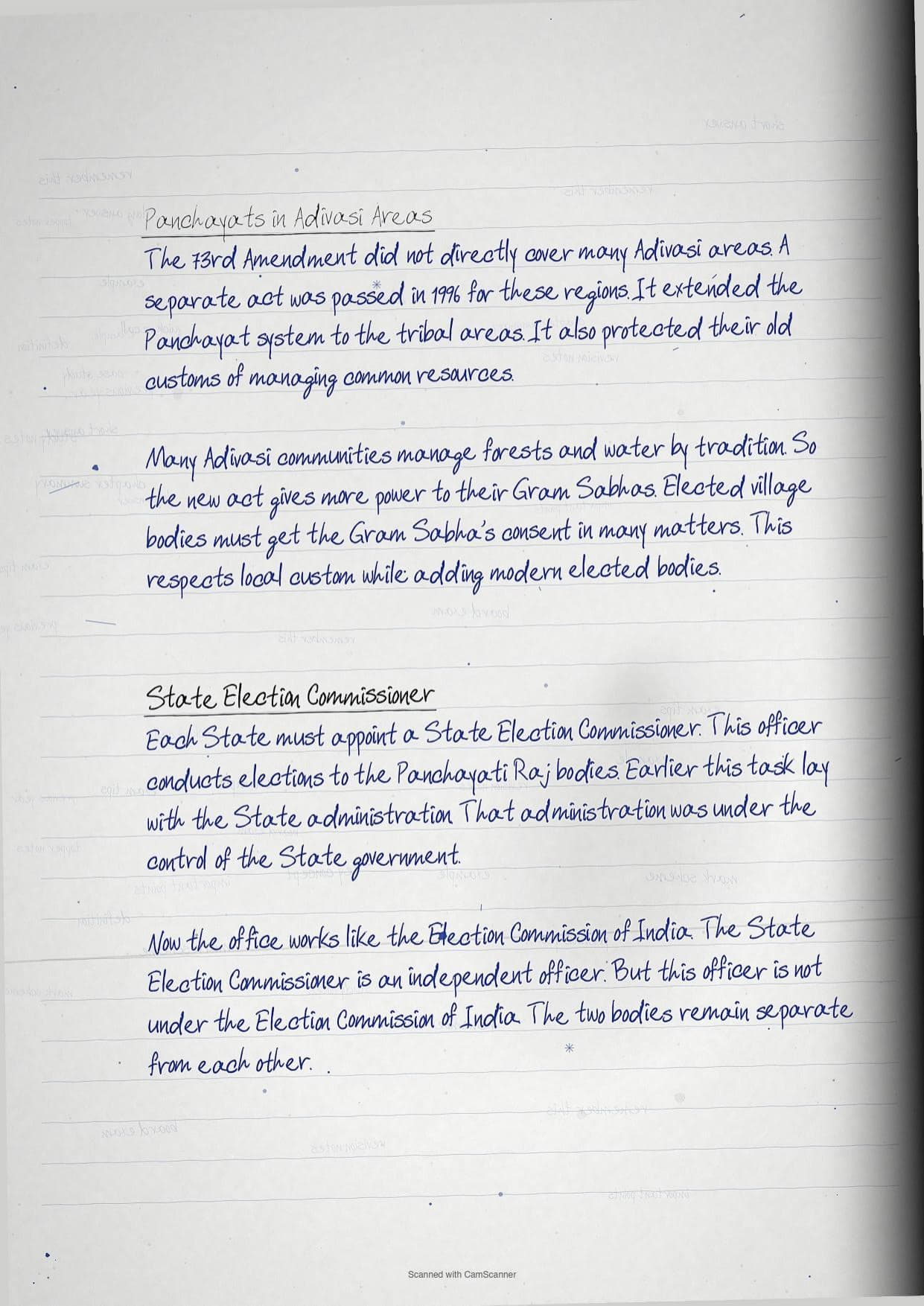
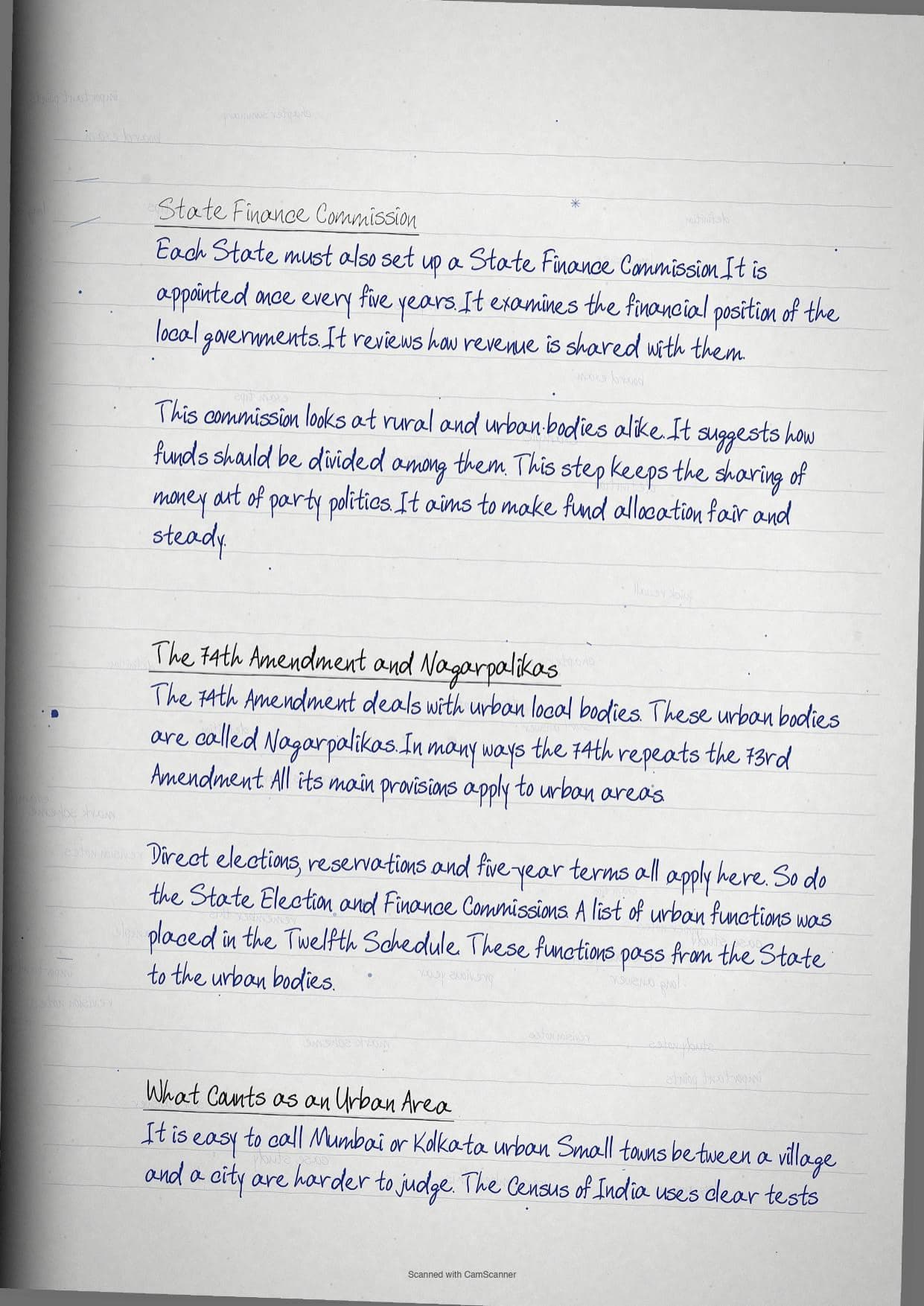
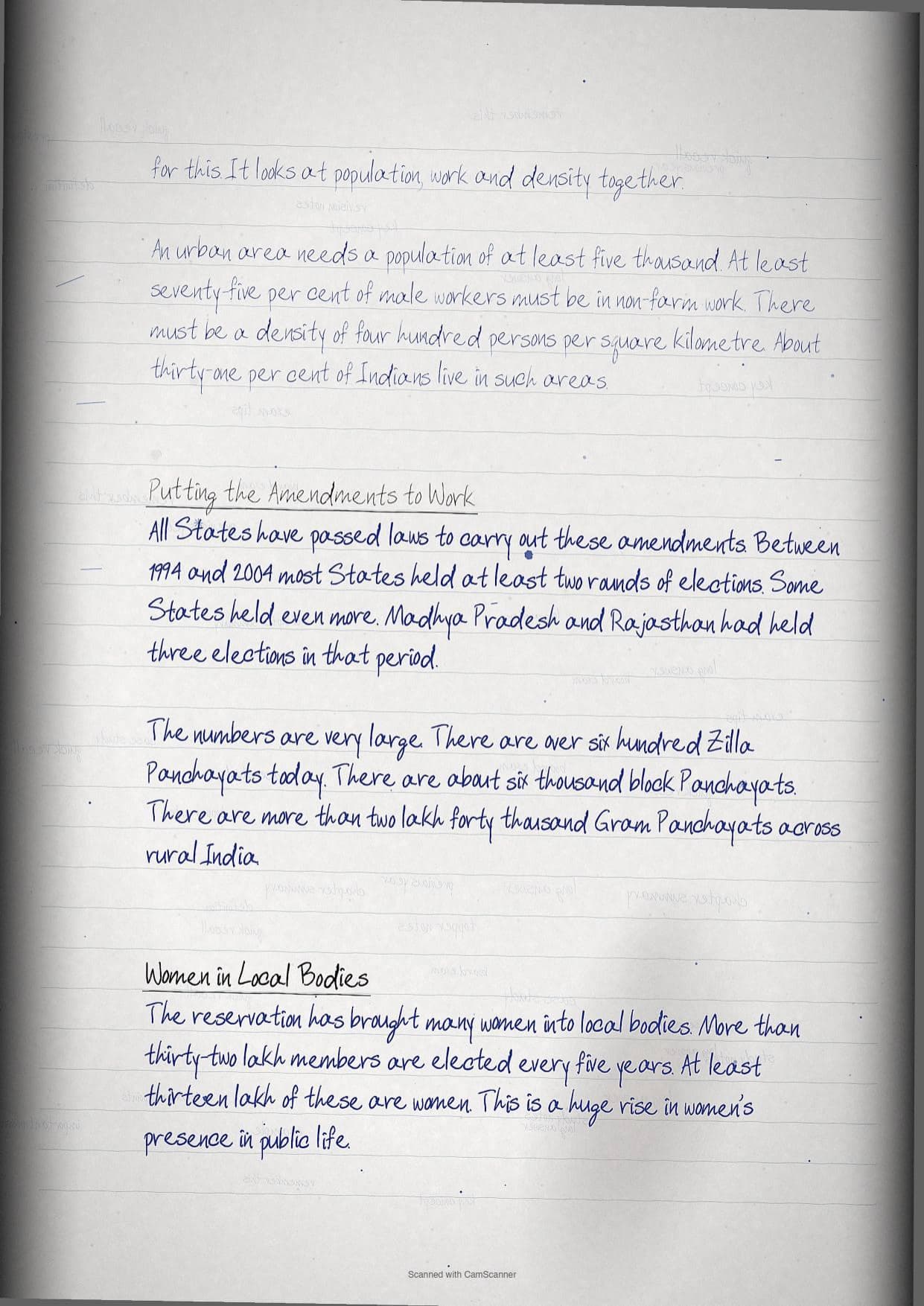
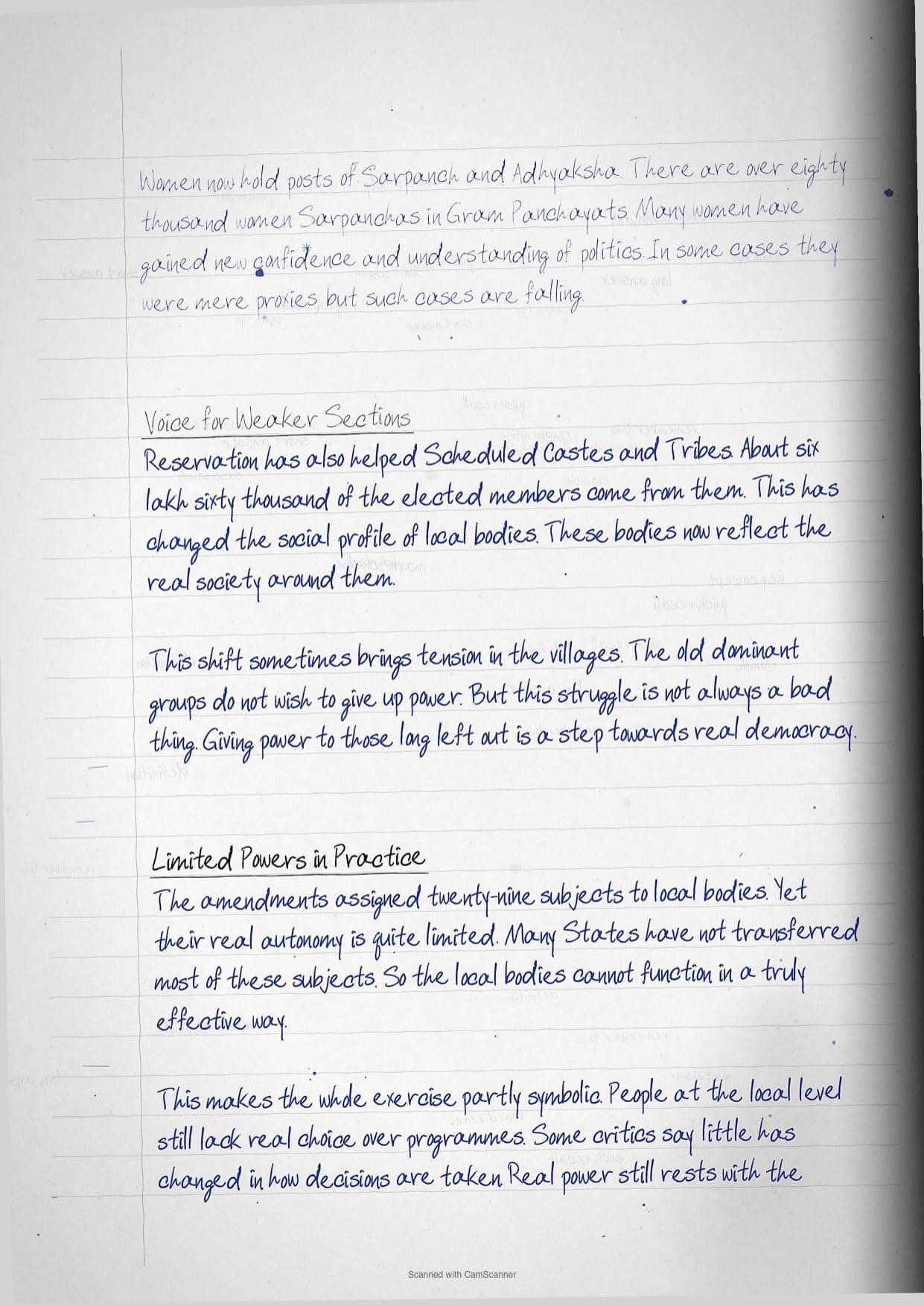
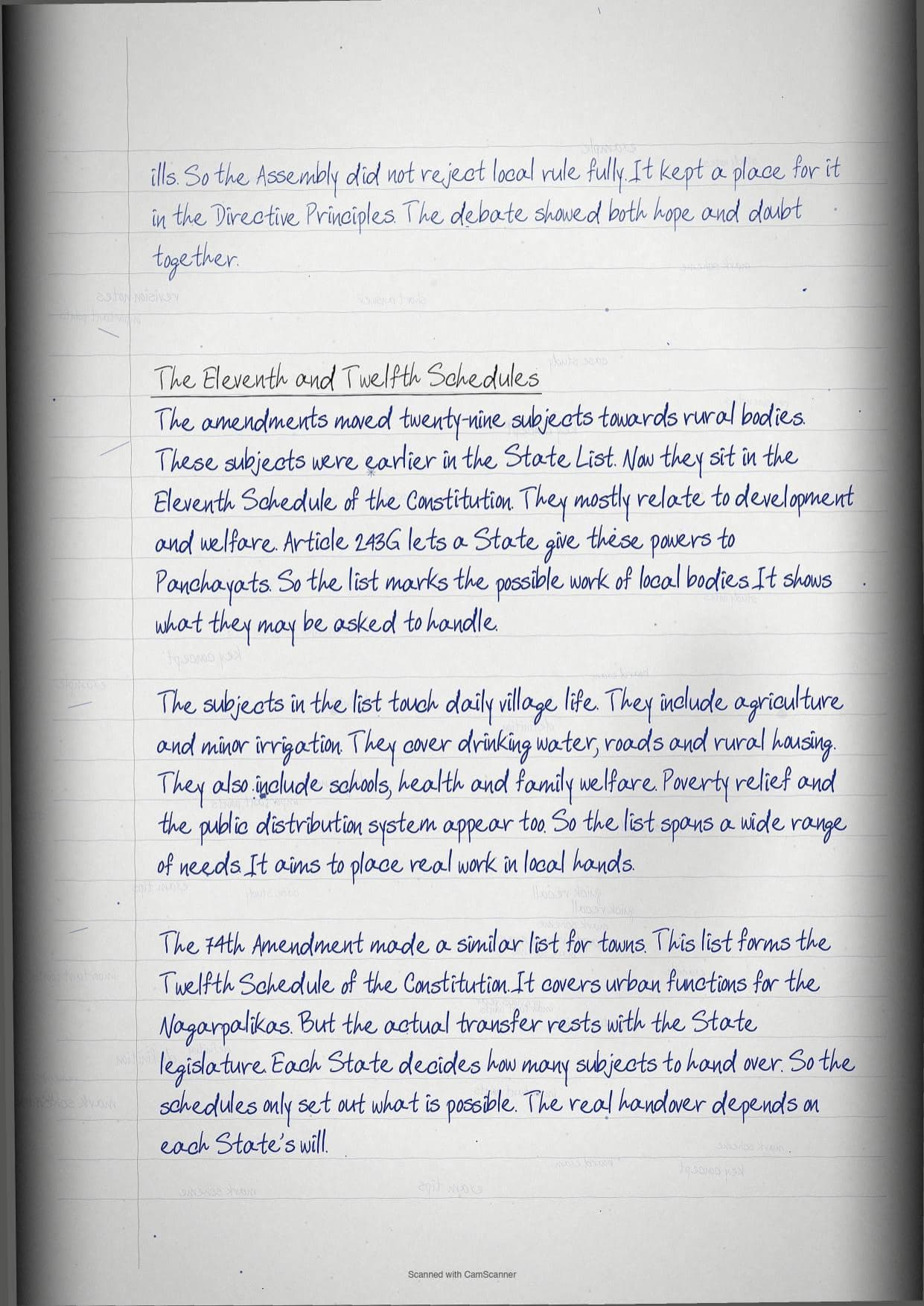
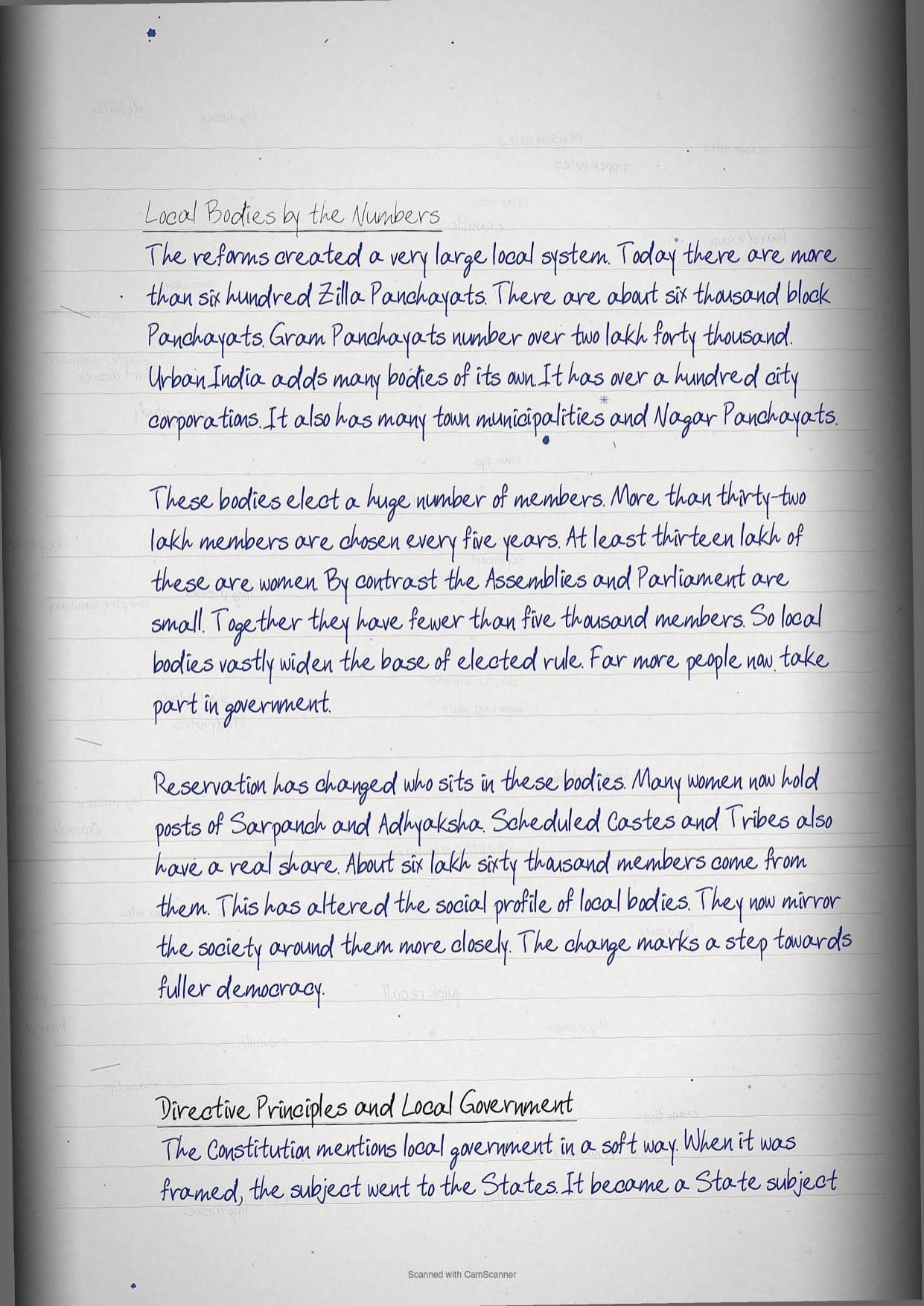
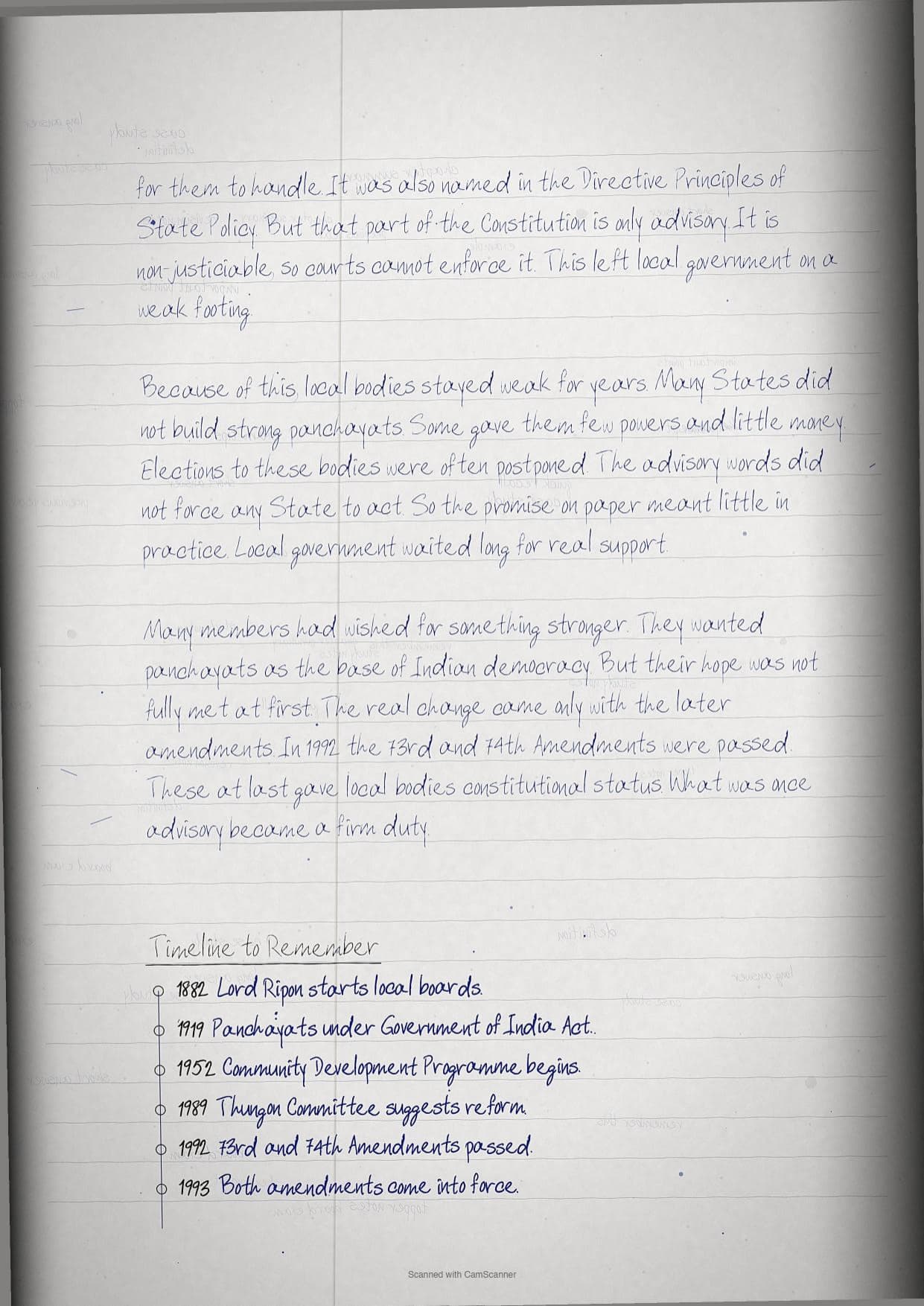
- What the notes cover: why local governments matter in a democracy, growth of local bodies from sabhas to panchayats, the 73rd and 74th amendments of 1992, the three-tier panchayati raj structure.
- Best for: quick revision before Class 11 exams and a base for CUET later.
You can read the complete class 11 political-science handwritten notes for Local Governments, with key terms, boxed definitions, and quick revision points, in the PDF below.
These handwritten notes are written by subject teachers, mapped to the 2026-27 NCERT, and checked against the last five years of CBSE Class 11 Political Science papers.
Local Governments Topic-wise Weightage for CBSE Class 11 Political Science
Some parts of this chapter are asked more often than others. The table below shows which sub-topics to revise first, based on recent CBSE Class 11 question trends.
| Sub-topic | Weightage | CBSE Frequency |
|---|---|---|
| 73rd Amendment and its features | High | asked most years |
| Importance of local government | High | asked most years |
| Reservations for women and weaker sections | Medium | frequent |
| State Election and Finance Commissions | Medium | frequent |
| Limited autonomy in practice | Low | occasional |
What the Local Governments Handwritten Notes Cover
Local government is the elected government closest to the people, in villages and towns. The 73rd and 74th Amendments of 1992 gave local bodies constitutional status. This chapter covers their growth, structure, reservations and the gap between rules and practice.
- Why local governments matter in a democracy
- Growth of local bodies from sabhas to panchayats
- The 73rd and 74th Amendments of 1992
- The three-tier Panchayati Raj structure
- Reservations for women and SC or ST
- State Election and Finance Commissions
- Limited autonomy and the true test of democracy
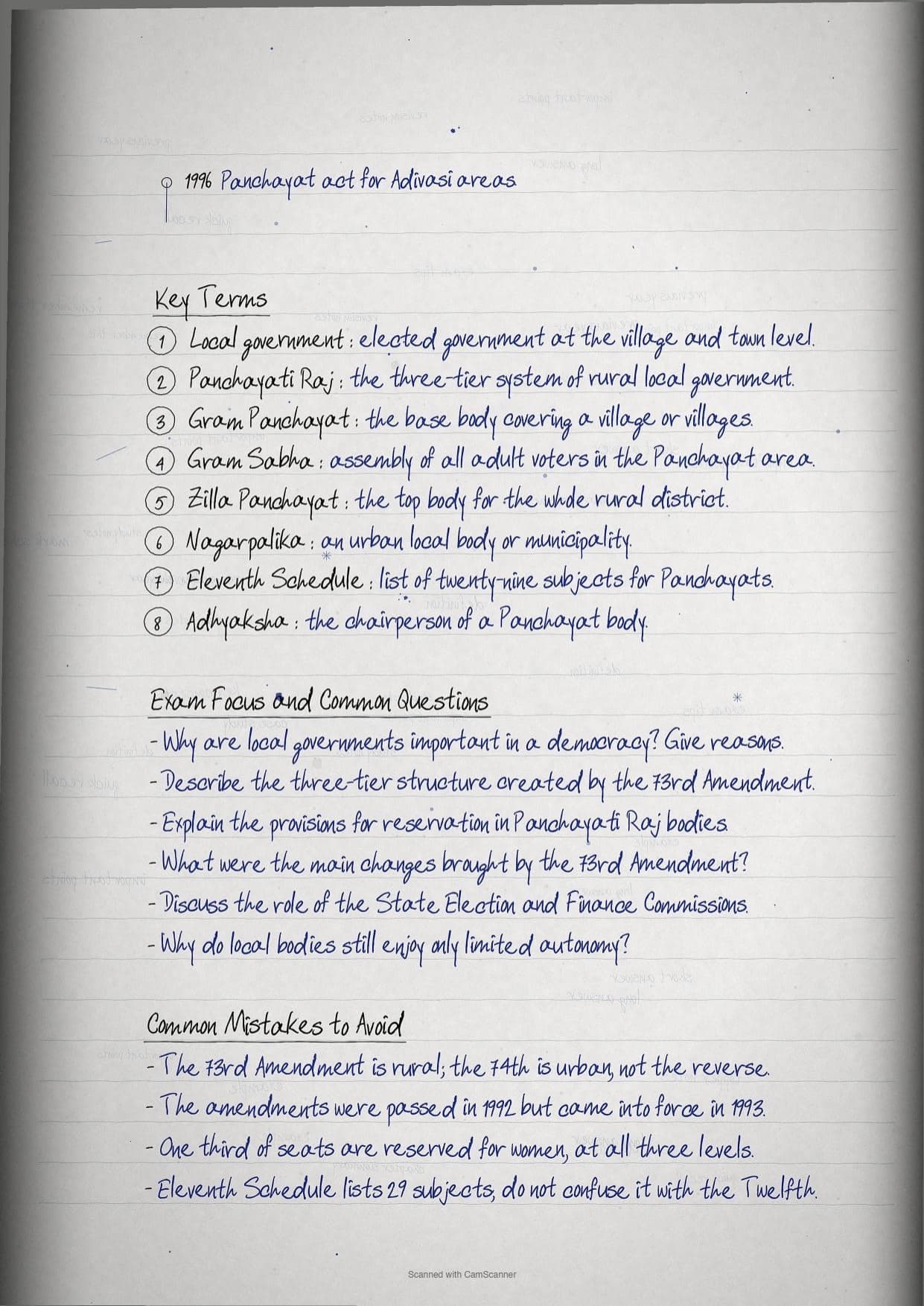
Key Terms and Ideas in Local Governments
These are the terms and ideas the exam asks about most. Learn each one so you can define it and use it in your answers.
| Term / Idea | What it means |
|---|---|
| Local government | elected body at village and town level |
| Panchayati Raj | three-tier rural local government system |
| 73rd Amendment | deals with rural Panchayati Raj bodies |
| 74th Amendment | deals with urban Nagarpalikas |
| Three tiers | Gram Panchayat, Mandal, Zilla Panchayat |
| Reservation | one third of seats reserved for women |
| Eleventh Schedule | twenty-nine subjects for Panchayats |
| Limited autonomy | many subjects not really transferred |
How Collegedunia's Handwritten Notes Help You Revise Local Governments
These notes are made for the night before the exam. They keep the facts short and easy to scan. Collegedunia maps every point to the 2026-27 NCERT.
- Clear handwriting: each topic is written in neat, easy-to-read handwriting.
- Boxed key terms: the main terms and definitions are boxed by hand for fast recall.
- Diagrams and tables: simple hand-drawn tables and charts make ideas clear.
- Colour-coded headings: new sub-topics stand out, so you find any section in seconds.
Local Governments Self-Assessment Quiz
Try these quick questions after you read the notes. Tap each question to check your answer. They cover the points CBSE asks most often.
The 73rd Amendment deals with which bodies?
(a) Urban (b) Rural (c) Both (d) District only
Answer: (b) Rural correct - the 73rd covers Panchayati Raj institutions, the 74th covers urban bodies.
What share of seats is reserved for women?
(a) One fourth (b) One third (c) Half (d) One fifth
Answer: (b) One third correct - one third of seats at all three levels are reserved for women.
When did the two amendments come into force?
(a) 1989 (b) 1992 (c) 1993 (d) 1996
Answer: (c) 1993 correct - they were passed in 1992 and came into force in 1993.
How many subjects are in the Eleventh Schedule?
(a) 18 (b) 29 (c) 12 (d) 32
Answer: (b) 29 correct - twenty-nine subjects were listed for the Panchayats.
Who conducts Panchayat elections?
(a) Collector (b) State Election Commissioner (c) Governor (d) EC of India
Answer: (b) State Election Commissioner correct - each State appoints this independent officer.
How to Use These Handwritten Notes for Class 11 Political Science Revision
Use these class 11 political-science handwritten notes in two passes. Read them slowly once for the full chapter. Then, near the exam, read only the boxes and key terms for a fast recall.
- Read the notes once with the NCERT chapter open beside you.
- Say each key term and idea in your own words.
- Practise one long-answer question from a past paper.
- On the last day, revise only the key terms and the boxes.
Class 11 Political Science Handwritten Notes for All Chapters
The table below links the class 11 political-science handwritten notes for every chapter. Use it to jump to any other chapter's notes.
| Chapter | Resource |
|---|---|
| Chapter 1 | Constitution: Why and How Handwritten Notes |
| Chapter 2 | Rights in the Indian Constitution Handwritten Notes |
| Chapter 3 | Election and Representation Handwritten Notes |
| Chapter 4 | Executive Handwritten Notes |
| Chapter 5 | Legislature Handwritten Notes |
| Chapter 6 | Judiciary Handwritten Notes |
| Chapter 7 | Federalism Handwritten Notes |
| Chapter 8 | Local Governments Handwritten Notes |
| Chapter 9 | Constitution as a Living Document Handwritten Notes |
| Chapter 10 | The Philosophy of the Constitution Handwritten Notes |
| Chapter 11 | Political Theory: An Introduction Handwritten Notes |
| Chapter 12 | Freedom Handwritten Notes |
| Chapter 13 | Equality Handwritten Notes |
| Chapter 14 | Social Justice Handwritten Notes |
| Chapter 15 | Rights Handwritten Notes |
| Chapter 16 | Citizenship Handwritten Notes |
| Chapter 17 | Nationalism Handwritten Notes |
| Chapter 18 | Secularism Handwritten Notes |
Local Governments Class 11 Political Science Handwritten Notes FAQs
Ques. Where can I download Local Governments Class 11 Political Science Handwritten Notes PDF?
Ans. You can download the Local Governments Class 11 Political Science Handwritten Notes PDF directly from this page. Both the Normal and HD versions are free.
Ques. Are these handwritten notes aligned with the 2026-27 NCERT?
Ans. Yes. These notes follow the current 2026-27 syllabus for Class 11 Political Science. Students often ask why local bodies still have limited power despite the amendments.
Ques. How many pages is the Class 11 Political Science Local Governments Handwritten Notes PDF?
Ans. The notes run about 20 pages. They cover the full chapter with key terms, hand-drawn boxes, and a short self-assessment quiz.
Ques. What is the main idea of the 11th standard Political Science chapter Local Governments?
Ans. The amendments listed twenty-nine subjects for local bodies, but the actual transfer depends on each State. Many States have not handed over most subjects, so local bodies still lack real autonomy in practice.
Ques. Are these Local Governments notes enough for the CBSE Class 11 exam?
Ans. Yes, for revision. The Collegedunia handwritten notes cover every key point and exam term. Read them with the NCERT chapter and practise past questions.



Comments