



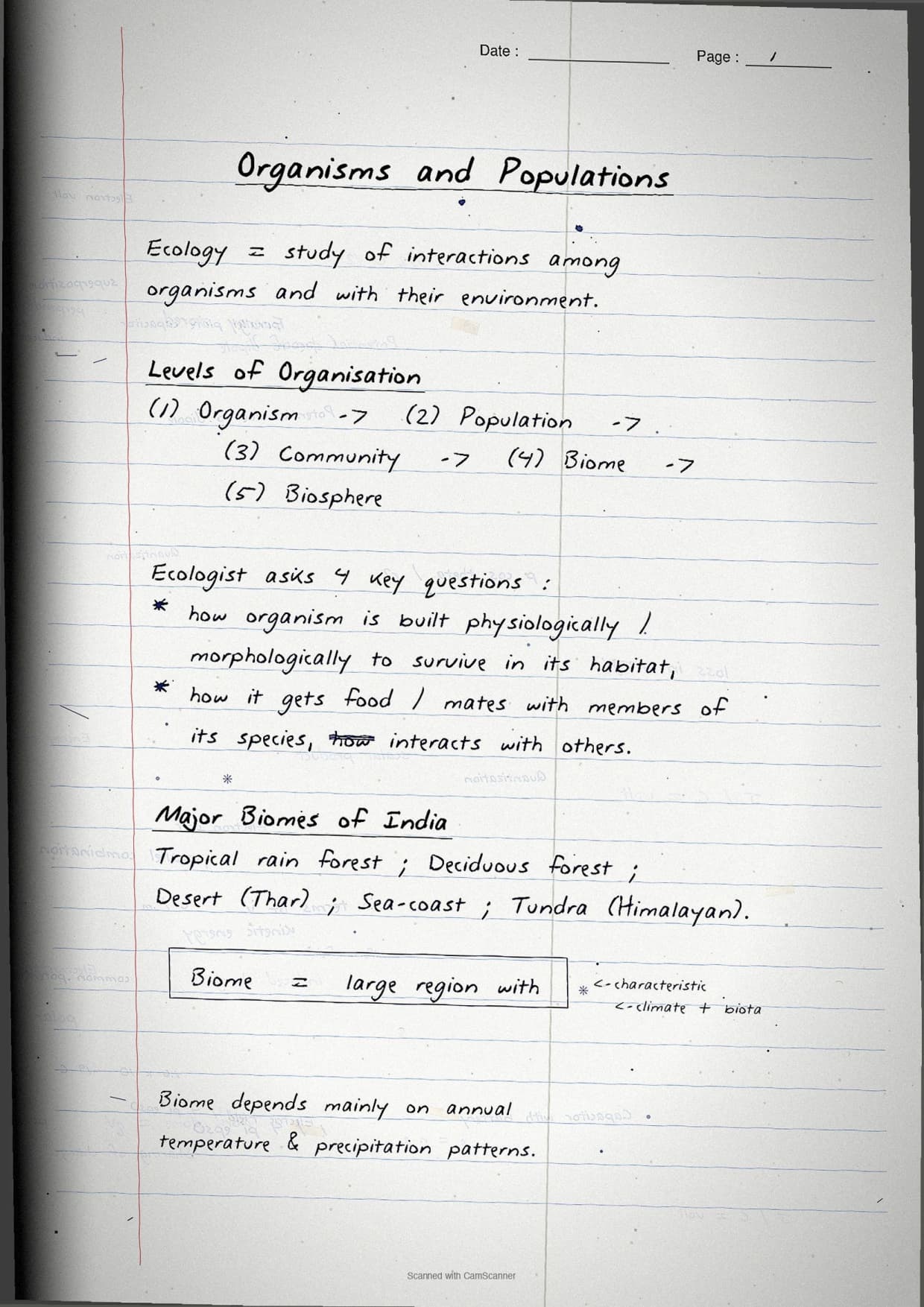
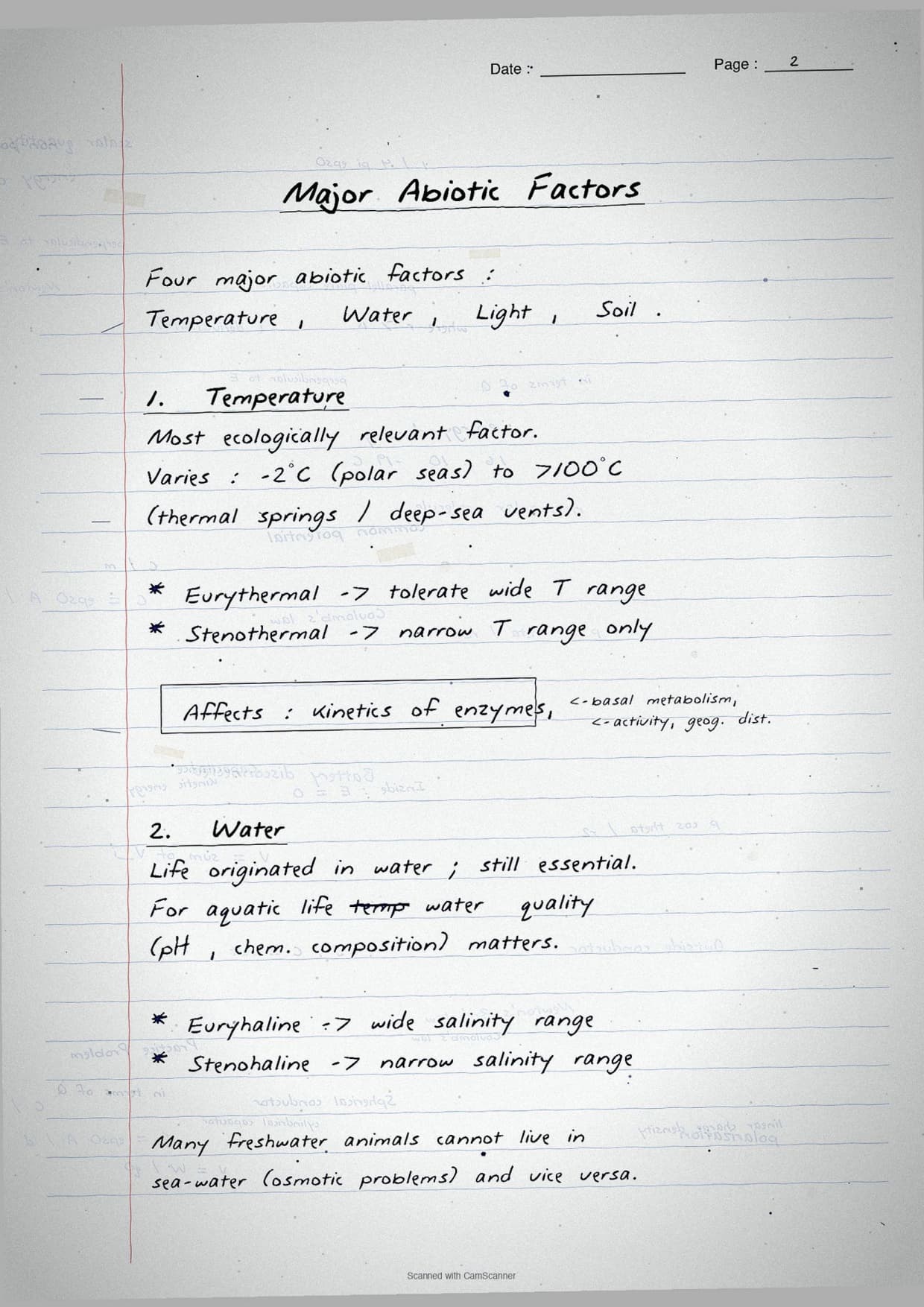
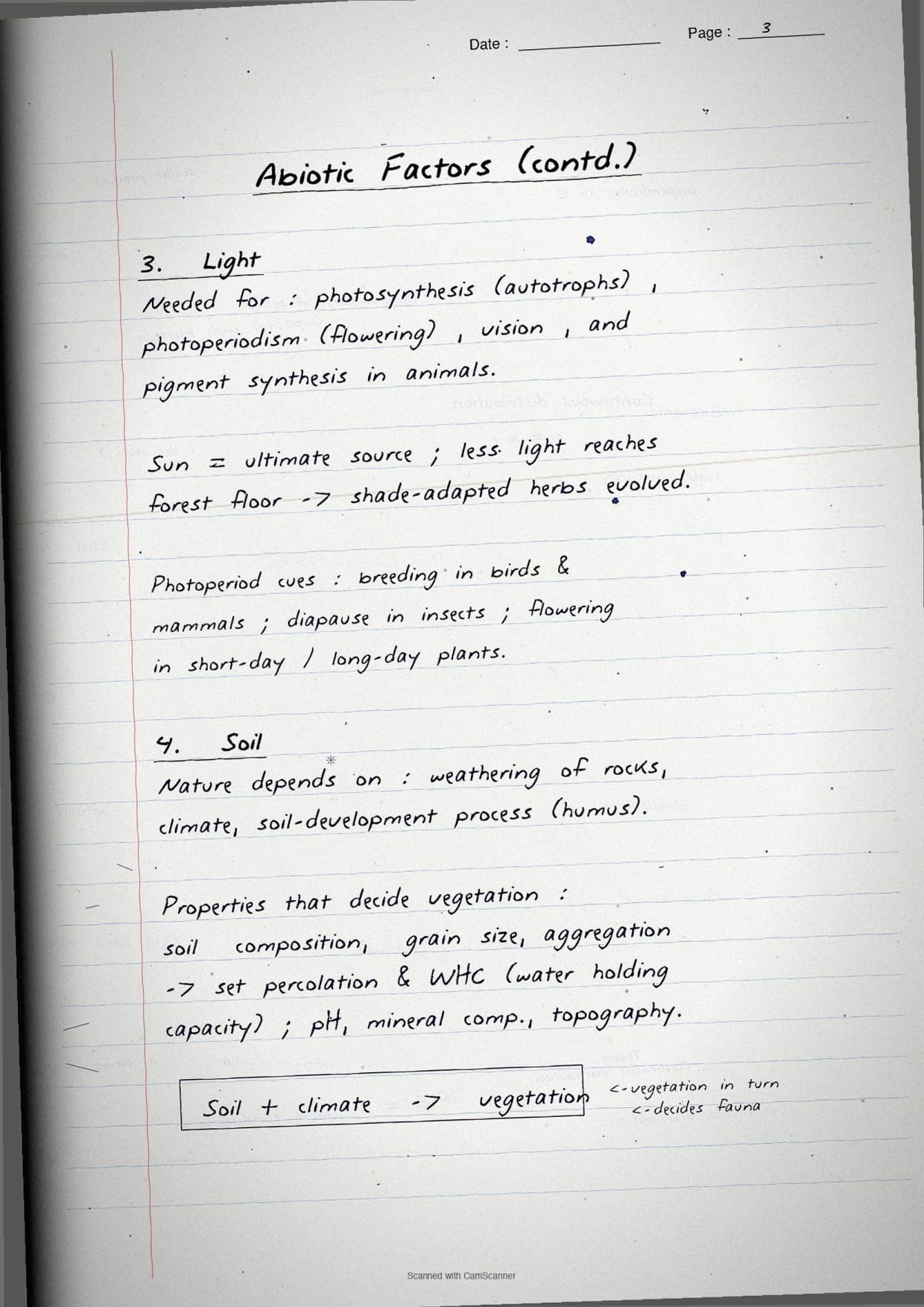
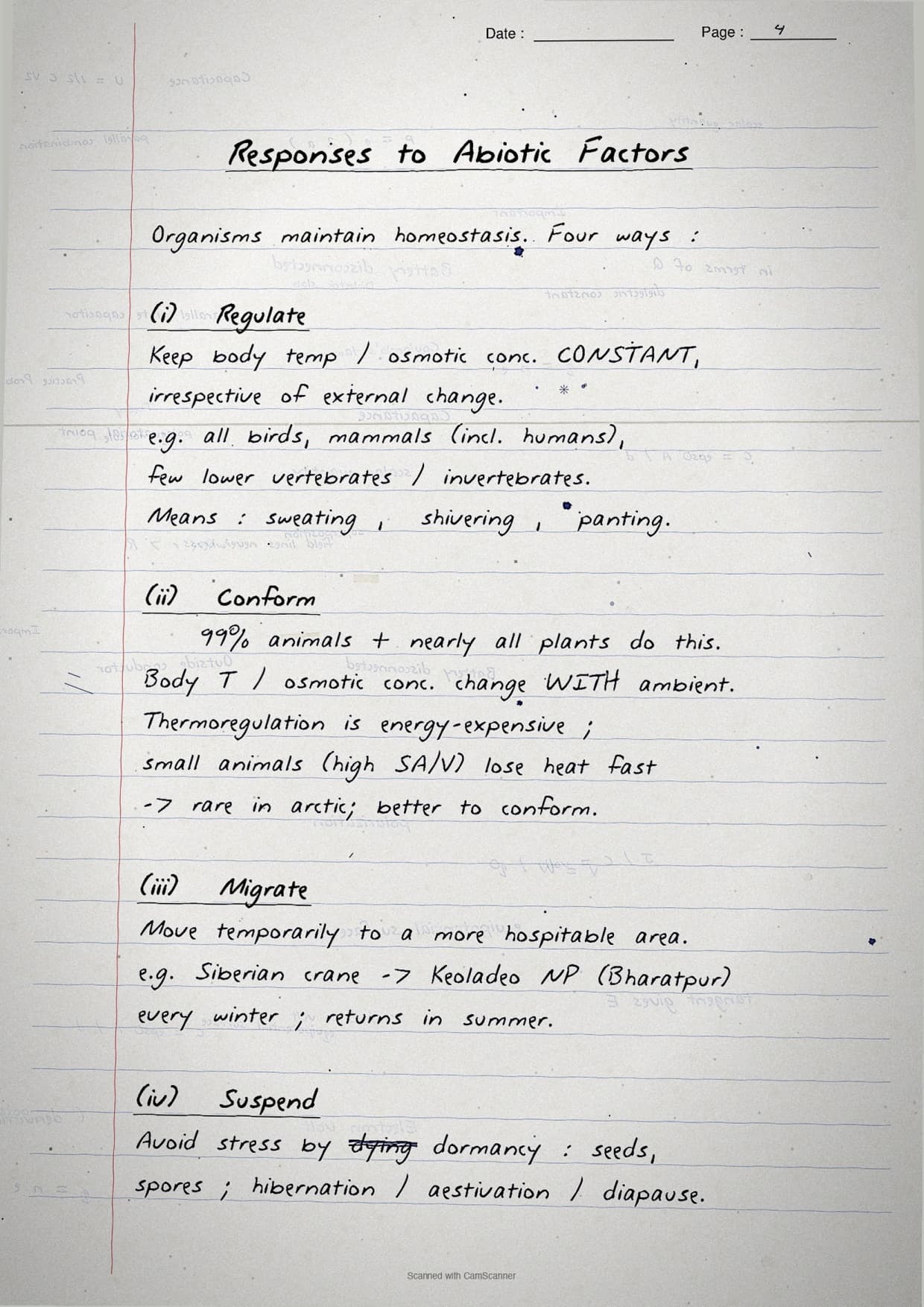
Class 12 Biology Chapter 11 Organisms and Populations covers ecology in the 2026-27 NCERT, from abiotic factors and organismic responses to population growth models and six interspecific interactions. This Collegedunia scanned notebook compresses the chapter into 26 ruled-paper pages with hand-drawn sigmoid curves, age pyramids and an interaction matrix.
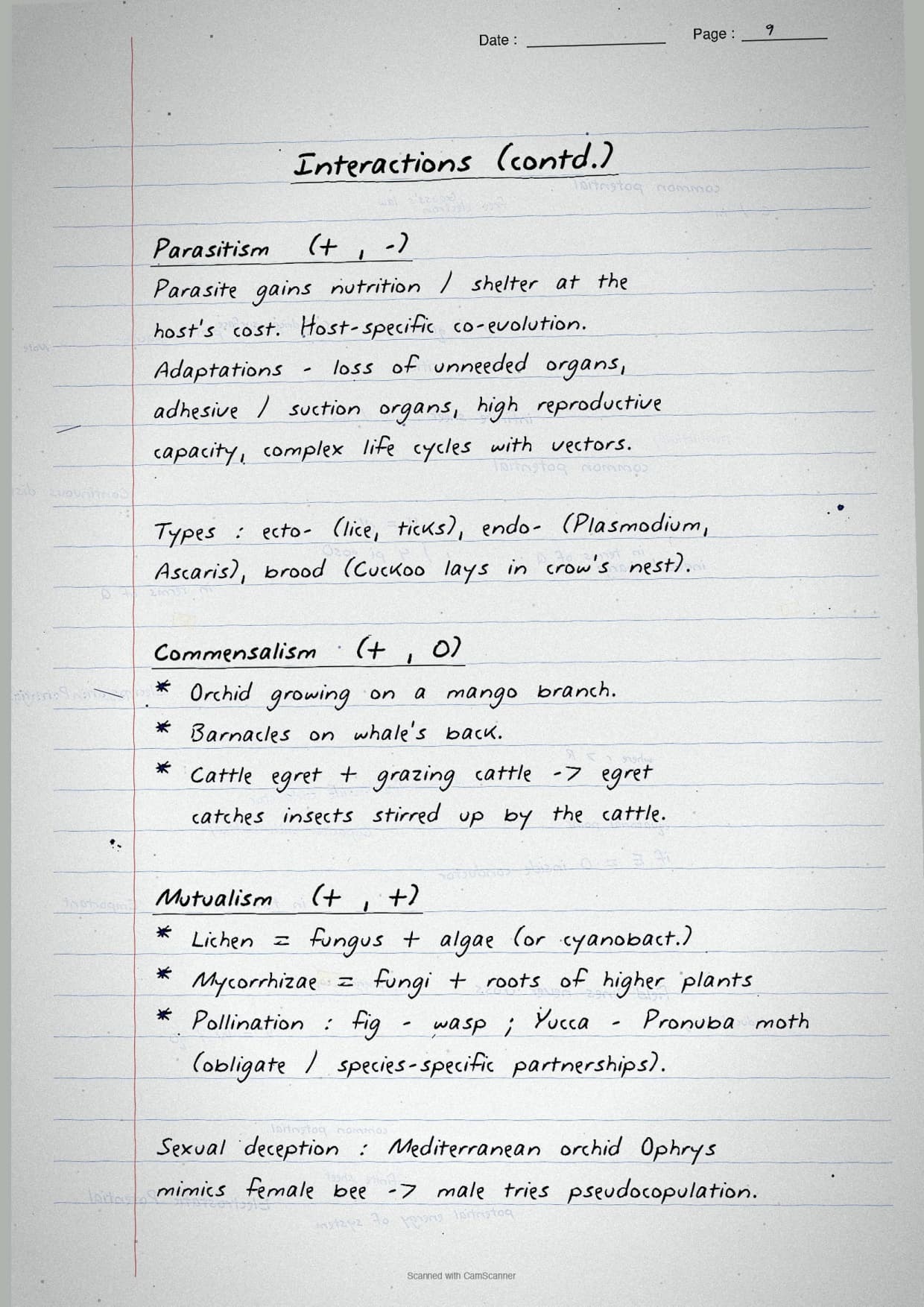
- CBSE Weightage: 5 to 7 marks (one 3-mark question on logistic growth or population interactions plus a 2-marker on adaptations is the standard CBSE pattern)
- NEET Weightage: 3 to 5 questions per paper (consistent 4 to 6% of NEET Biology, drawn most often from interactions and growth equations)
How will Collegedunia's Handwritten Notes Help You Revise Organisms and Populations?
This chapter is unusually equation-and-sign-pair heavy: dN/dt, K, +/+, +/0, -/0. Hand-drawn curves and matrix cells encode sign-pairs as spatial memory, which is how MCQs are actually recalled.
- Hand-drawn growth curves: Exponential J-curve and logistic sigmoid sketched side by side with N on y-axis, time on x-axis, K dashed asymptote and inflexion at K/2 marked.
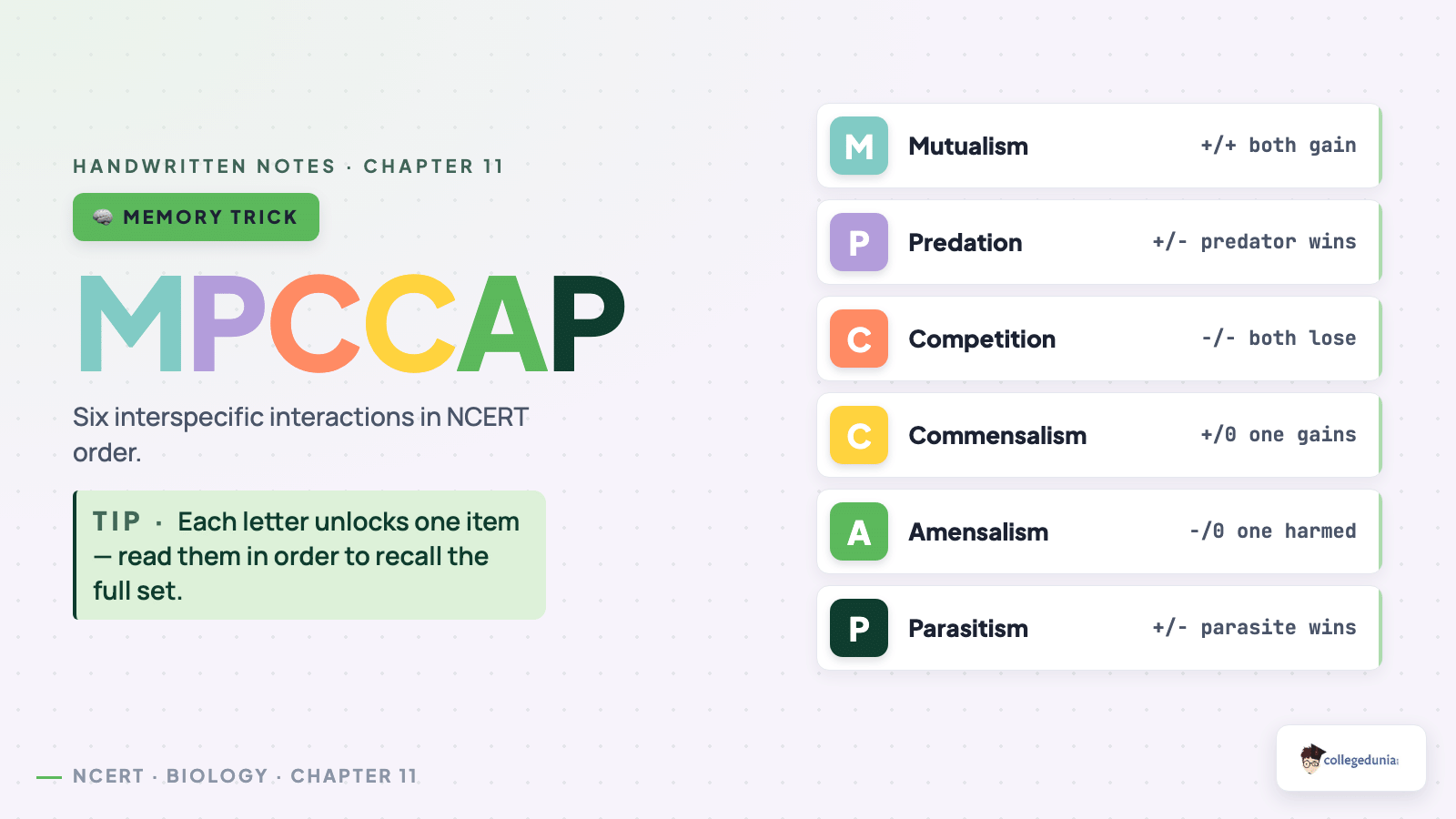
- Six-cell interaction matrix: A 2x3 grid of sign-pairs (mutualism, competition, predation, parasitism, commensalism, amensalism) with one NCERT example sketched in each cell.
- Margin "asked in" tags: Each interaction and equation has a tag showing the recent year it was asked, so high-frequency facts catch the eye first.
What's Inside the Class 12 Biology Chapter 11 Organisms and Populations Handwritten Notes PDF
A 26-page scan with a fixed ink-colour code. The page map below shows what each block covers so you can jump to whichever sub-topic you are weakest on.
| Pages | Topic | Pen Colour |
|---|---|---|
| 1-2 | Levels of ecology: organism, population, community, biome; Krakatau case | Blue + orange |
| 3-6 | Abiotic factors: temperature, water, light, soil; photoperiod, thermophiles | Blue + green + red |
| 7-10 | Responses: regulate, conform, migrate, suspend; hibernation vs aestivation | Blue + orange |
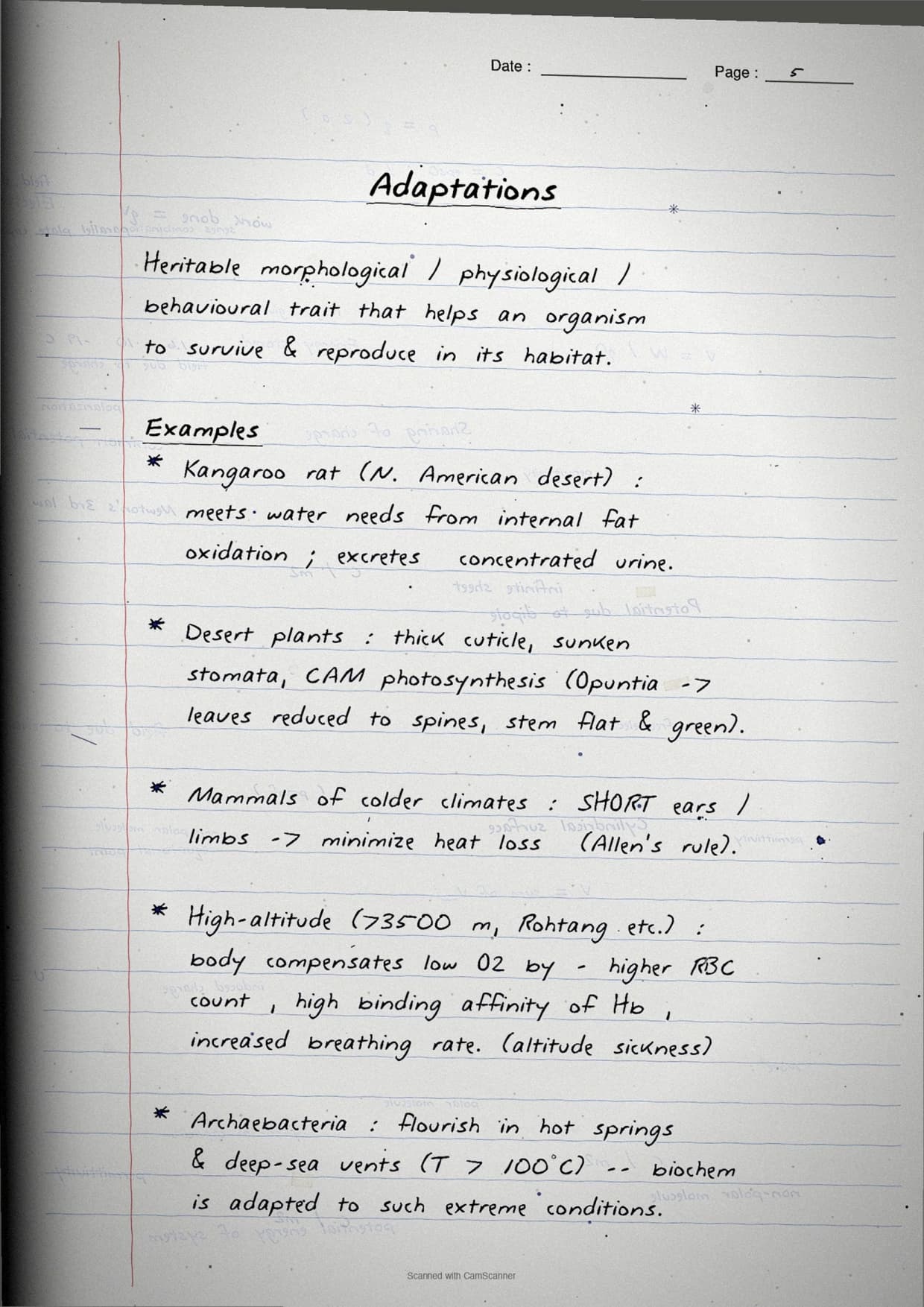
| 11-14 | Adaptations: Opuntia, kangaroo rat, high-altitude humans, Allen's rule | Blue + green + red |
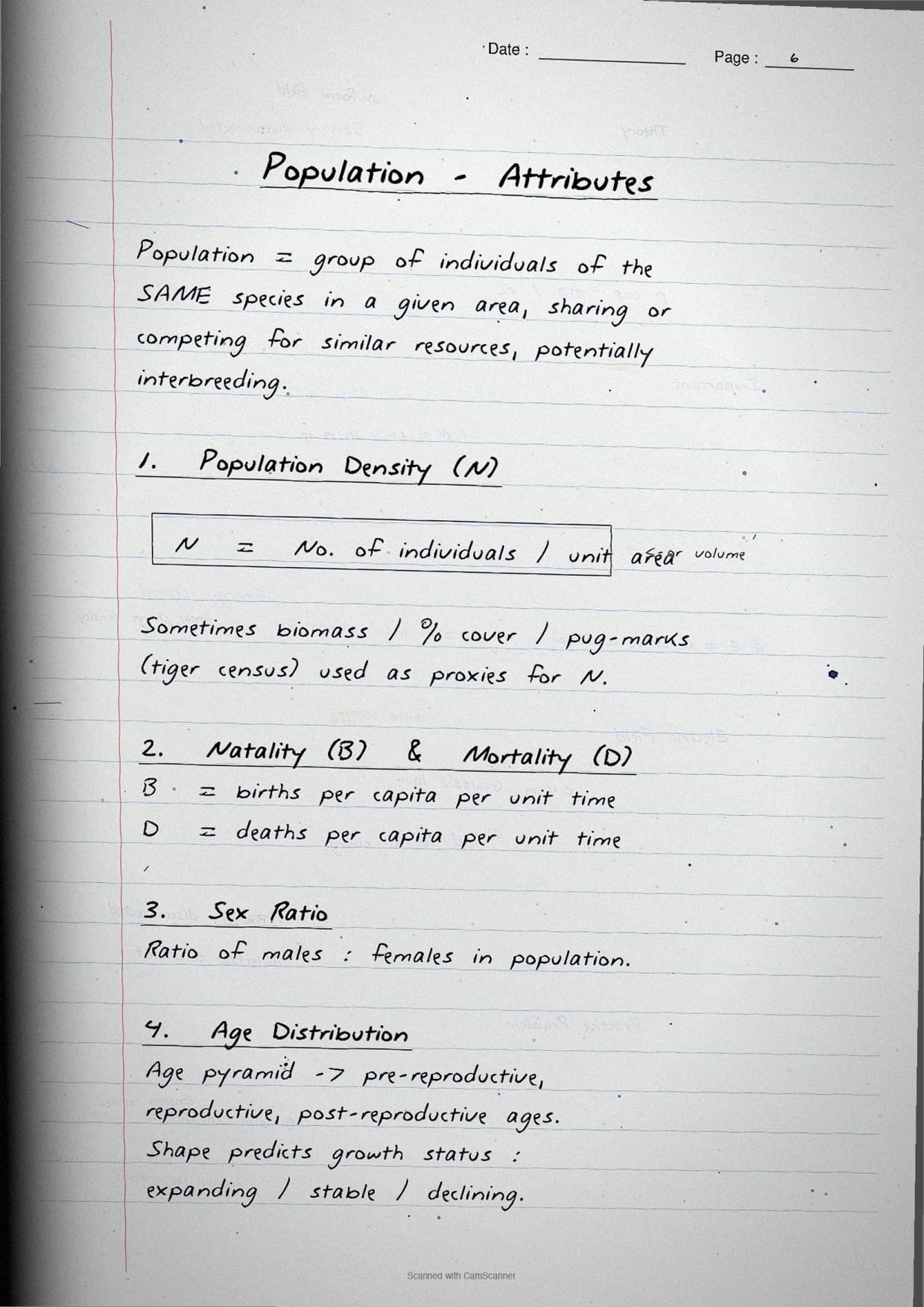
| 15-17 | Population attributes: density, natality, mortality, sex ratio, age pyramid | Blue + orange + red |
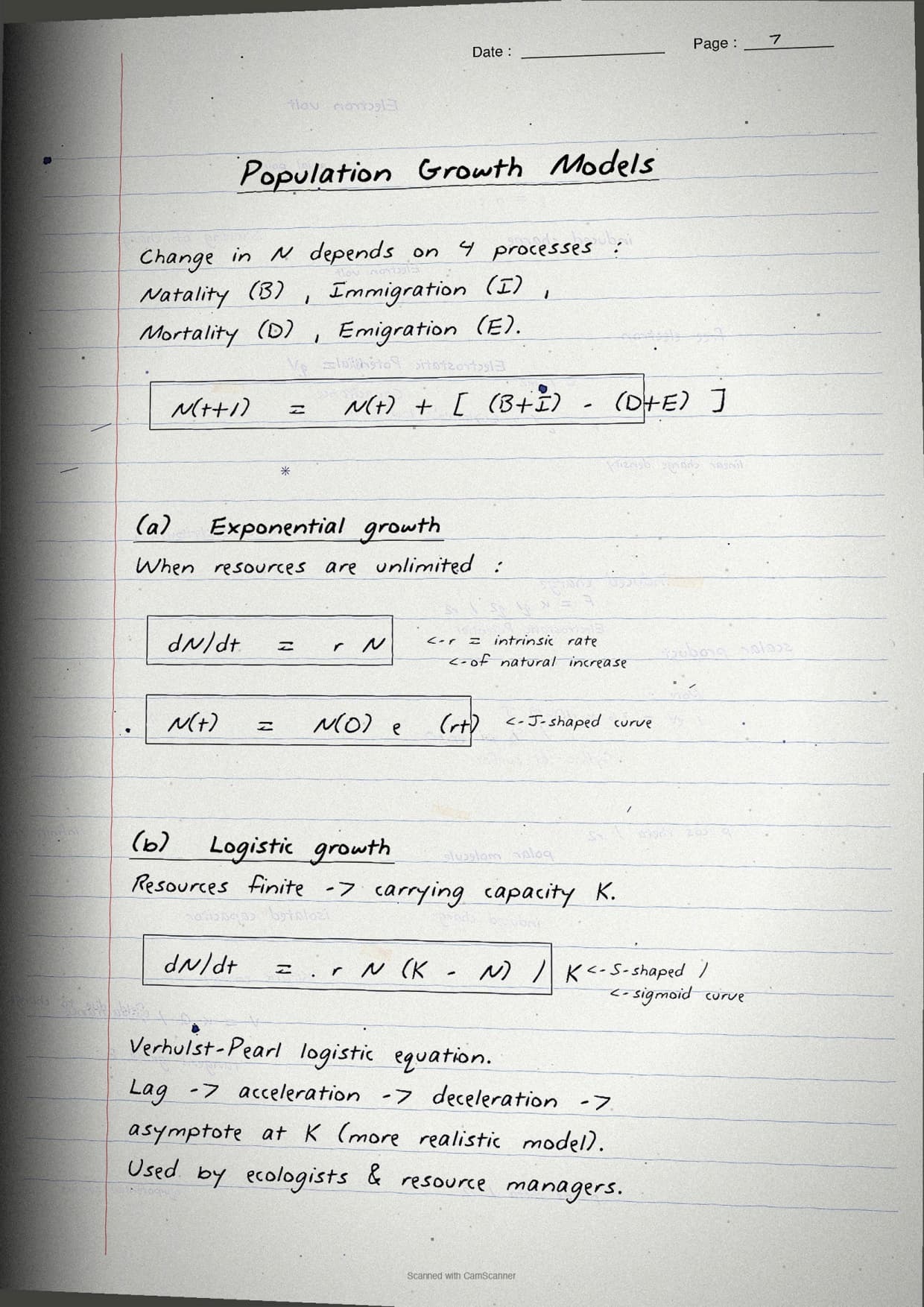
| 18-21 | Population growth: exponential J-curve, logistic sigmoid, intrinsic rate r, K | Blue + green |
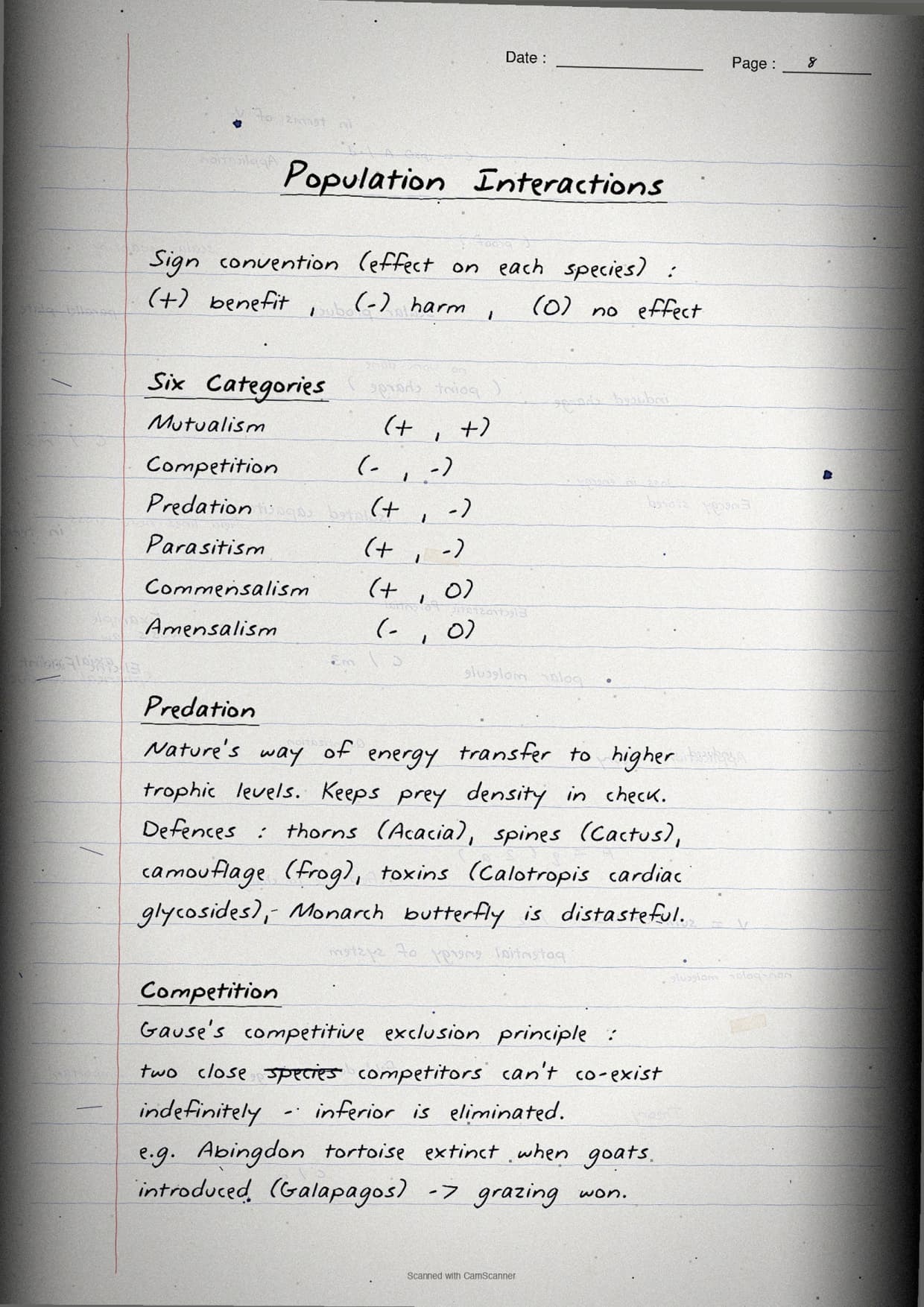
| 22-25 | Interspecific interactions: 6-cell matrix, Gause's principle, Pisaster | Blue + orange |
| 26 | Last-24-hour revision strip | Mixed |
Organisms and Populations Video Lecture for Class 12 Biology
Source: Magnet Brains on YouTube
Organisms and Populations Diagram Inventory
Six of the last seven NEET papers had a figure-based question on growth curves or interaction sign-pairs. Every hand-drawn diagram in the PDF is listed below.
| Figure | What It Shows | Page | NEET Frequency |
|---|---|---|---|
| Fig 11.1 | Sigmoid logistic curve: lag, log, deceleration, asymptote at K | 19 | Very High |
| Fig 11.2 | Exponential J-curve: Nt = N0 ert | 18 | Very High |
| Fig 11.3 | Six-cell interaction matrix with one example sketched per cell | 23 | Very High |
| Fig 11.4 | Three age pyramids: expanding, stable, declining | 17 | High |
| Fig 11.5 | Three survivorship curves: Type I, II, III | 16 | High |
| Fig 11.6 | Opuntia with spines + fleshy stem (CAM photosynthesis) | 12 | Medium |
| Fig 11.7 | Allen's rule: arctic fox (short ears) vs fennec fox (long ears) | 14 | Medium |
| Fig 11.8 | Gause's Paramecium aurelia vs P. caudatum in shared culture | 25 | Medium |
For last-day revision, prioritise Fig 11.1, 11.3 and 11.5.
Organisms and Populations Top 6 Concept-Example Pairs for Quick Recall
These six concept-example pairs cover every direct-recall MCQ from the last five NEET and CBSE papers on this chapter.
| Concept | NCERT Example | NEET / CBSE Frequency (last 5 yrs) | Page |
|---|---|---|---|
| Logistic growth | dN/dt = rN(K-N)/K; sigmoid | 5 | 19 |
| Mutualism | Lichen (alga + fungus); Ficus-fig wasp | 5 | 22 |
| Commensalism | Cattle egret + cattle; orchid on mango tree | 4 | 23 |
| Allen's rule | Arctic fox vs fennec fox (ears) | 4 | 14 |
| Gause's principle | Paramecium aurelia vs P. caudatum | 3 | 25 |
| Opuntia adaptation | Spines + CAM photosynthesis | 4 | 12 |
Logistic Growth Derivation: The 4 Steps CBSE Always Asks
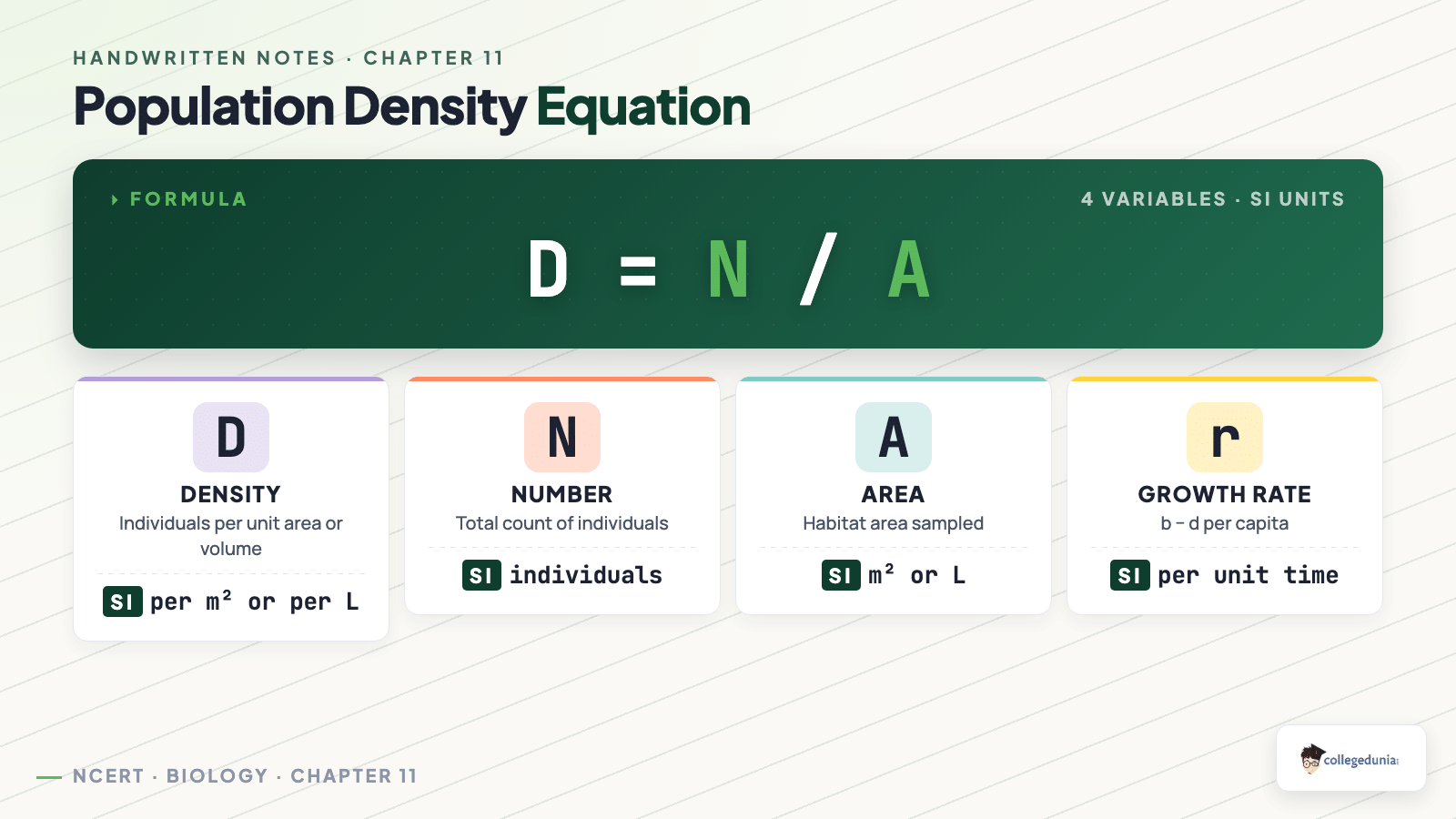
The logistic growth derivation is the most-asked 3-marker on this chapter. Page 19 labels every stage of the S-curve.
- State assumption: Resources are finite; per-capita rate falls as N approaches K.
- Write differential: dNdt = rN(K-NK) (Verhulst-Pearl).
- Sketch sigmoid: S-curve with lag, log, deceleration; inflexion at N = K/2; asymptote at K.
- Interpret limits: When N << K: bracket → 1, growth nearly exponential. When N = K: bracket = 0, dN/dt = 0.
Organisms and Populations Memory Mnemonics for Hard-to-Remember Lists
Interaction sign-pairs and adaptation lists are where marks slip. The notes include hand-drawn mnemonic boxes that bundle each list into a memorable cue.
Interaction Matrix: Why It Earns You 3 Marks Every Year
The six-cell interaction matrix is the most-frequent diagram question on this chapter. Page 23 carries the full grid with one NCERT example per cell.
| Cell | Function |
|---|---|
| Mutualism (+/+) | Lichen, mycorrhiza, Ficus-fig wasp |
| Competition (-/-) | Two Paramecium species, flamingo vs fish |
| Predation (+/-) | Pisaster sea star; lion vs deer |
| Parasitism (+/-) | Cuckoo brood parasitism; Plasmodium |
| Commensalism (+/0) | Cattle egret + cattle; barnacle on whale |
| Amensalism (-/0) | Penicillium on Staphylococcus |
Organisms and Populations Last 24-Hour Revision Card
Page 26 is a single-glance card for exam eve. These eight facts cover the highest-frequency CBSE and NEET questions on this chapter.
- Levels: organism → population → community → biome.
- Abiotic four: temperature, water, light, soil.
- Responses: regulate (mammals, birds), conform (~99%), migrate (flamingo), suspend (hibernate / aestivate).
- Adaptations: Opuntia spines + CAM; kangaroo rat = metabolic water; Allen's rule = short ears in cold.
- Growth: exponential dN/dt = rN (J-curve); logistic dN/dt = rN(K-N)/K (S-curve, asymptote K).
- Six interactions: Mutualism +/+, Competition -/-, Predation +/-, Parasitism +/-, Commensalism +/0, Amensalism -/0.
- Keystone: Paine's Pisaster removal; Gause's competitive exclusion principle.
Class 12 Biology Organisms and Populations Most-Asked Previous Year Question Trends
Growth-curve derivations and sign-pair MCQs dominate the PYQ landscape.
| Year | Exam | Topic Asked | Marks / Qs |
|---|---|---|---|
| 2025 | CBSE Board | Logistic growth derivation | 3 marks |
| 2025 | NEET | Commensalism example | 1 Q |
| 2024 | NEET | Allen's rule application | 1 Q |
| 2024 | CBSE Board | Opuntia adaptations | 5 marks |
| 2023 | NEET | Match interaction to sign pair | 1 Q |
| 2022 | NEET | Gause's competitive exclusion | 1 Q |
| 2021 | CBSE Board | Methods of measuring population density | 3 marks |
Student Feedback: Chapter 11 Organisms and Populations Difficulty Read
Student Feedback
- 70% of students in a 2025-26 survey (11,300 students) rated the logistic-growth equation derivation as the hardest sub-topic in this chapter.
- 59% reported losing marks on classifying mutualism, commensalism, predation and parasitism examples.
- Average student spent 5.2 hours on the first read and 2.1 hours on a focused revision pass before the board exam.
Source: 2025-26 Class 12 Biology student survey. 11,300 students across 18 states.
Other Resources for Organisms and Populations Class 12 Biology
| Resource | Link |
|---|---|
| Handwritten Notes | Organisms and Populations Handwritten Notes |
| NCERT Solutions | Organisms and Populations Class 12 Biology NCERT Solutions |
| Notes | Organisms and Populations Class 12 Biology Notes |
| Formula Sheet | Organisms and Populations Class 12 Biology Formula Sheet |
| NCERT Book PDF | Organisms and Populations Class 12 Biology NCERT Book PDF |
| Exemplar Book PDF | Organisms and Populations Class 12 Biology NCERT Exemplar Book PDF |
| Exemplar Solutions | Organisms and Populations Class 12 Biology NCERT Exemplar Solutions |
NCERT Handwritten Notes for Class 12 Biology: All Chapters
Use the table to jump to the handwritten notes for any other Class 12 Biology chapter.
| Chapter | Resource |
|---|---|
| Chapter 1 | Sexual Reproduction in Flowering Plants Handwritten Notes |
| Chapter 2 | Human Reproduction Handwritten Notes |
| Chapter 3 | Reproductive Health Handwritten Notes |
| Chapter 4 | Principles of Inheritance and Variation Handwritten Notes |
| Chapter 5 | Molecular Basis of Inheritance Handwritten Notes |
| Chapter 6 | Evolution Handwritten Notes |
| Chapter 7 | Human Health and Disease Handwritten Notes |
| Chapter 8 | Microbes in Human Welfare Handwritten Notes |
| Chapter 9 | Biotechnology Principles and Processes Handwritten Notes |
| Chapter 10 | Biotechnology and Its Applications Handwritten Notes |
| Chapter 11 | Organisms and Populations Handwritten Notes |
| Chapter 12 | Ecosystem Handwritten Notes |
| Chapter 13 | Biodiversity and Conservation Handwritten Notes |
Organisms and Populations Class 12 Biology Handwritten Notes FAQs
Ques. Where can I download Organisms and Populations Class 12 Biology Handwritten Notes PDF?
Ans. You can download the Organisms and Populations Class 12 Biology Handwritten Notes PDF directly from this page. Both the Normal and HD versions are available, and both are free.
Ques. Are these handwritten notes aligned with the 2026-27 NCERT?
Ans. Yes. The notes reflect the current 2026-27 syllabus for Class 12 Biology Chapter 11. The chapter retains all topics on abiotic factors, organismic responses, adaptations, population attributes, growth models and interspecific interactions; no sub-topic was removed in the latest NCERT edition.
Ques. How many pages is the Class 12th Biology Organisms and Populations Handwritten Notes PDF?
Ans. The handwritten notes PDF runs 26 pages and covers all seven major sub-topics: levels of ecology, abiotic factors, organismic responses, adaptations, population attributes, growth models, and interspecific interactions, plus a last-page revision card.
Ques. What diagrams are included in the Organisms and Populations handwritten notes?
Ans. The notes include 8 hand-drawn diagrams: the sigmoid logistic growth curve, the exponential J-curve, the six-cell interaction matrix with examples, three age pyramids (expanding / stable / declining), three survivorship curves (Type I / II / III), Opuntia with spines, Allen's rule (arctic vs fennec fox), and Gause's Paramecium exclusion experiment.
Ques. What is the weightage of Class 12 Biology Chapter 11 Organisms and Populations in NEET?
Ans. Organisms and Populations contributes 3 to 5 questions every NEET paper, roughly 4 to 6% of the NEET Biology section. Questions are drawn most frequently from interspecific interactions (sign-pair MCQs), population growth equations (logistic vs exponential), and adaptations (Allen's rule, Opuntia, kangaroo rat).
Ques. Are the Organisms and Populations Class 12 Biology handwritten notes good for NEET 2027?
Ans. Yes, the notes are designed for NEET 2027 candidates. Each concept-example pair carries a margin tag showing the most recent year NEET asked about it, so you know what is overdue versus over-asked.
Ques. How long will it take to revise this handwritten notes PDF?
Ans. A full three-pass revision (diagrams, mnemonics, self-quiz) takes about 2 hours. The last-page revision card alone can be skimmed in 8 to 10 minutes on the morning of the exam.
Ques. Is the logistic growth derivation explained in these notes?
Ans. Yes. Page 19 carries the full four-step derivation of the logistic equation dN/dt = rN(K-N)/K, with the sigmoid S-curve sketched alongside, the inflexion at N = K/2 marked, and the asymptote K shown as a dashed horizontal line.
Ques. What is the six-cell interaction matrix in these notes?
Ans. Page 23 carries a 2x3 grid with one cell each for mutualism (+/+, lichen), competition (-/-, Paramecium), predation (+/-, Pisaster), parasitism (+/-, cuckoo), commensalism (+/0, cattle egret), and amensalism (-/0, Penicillium on bacteria). Every cell has the sign-pair plus one NCERT example sketched.



Comments