




NCERT Handwritten Notes Class 12 Chemistry Chapter 6 Haloalkanes and Haloarenes will help you memorise important reactions at the last minute. The notes PDF include 20 pages of hand-drawn mechanisms, arrows, SN1 vs SN2 comparison tables, and Wurtz / Sandmeyer / Finkelstein reaction mind maps.

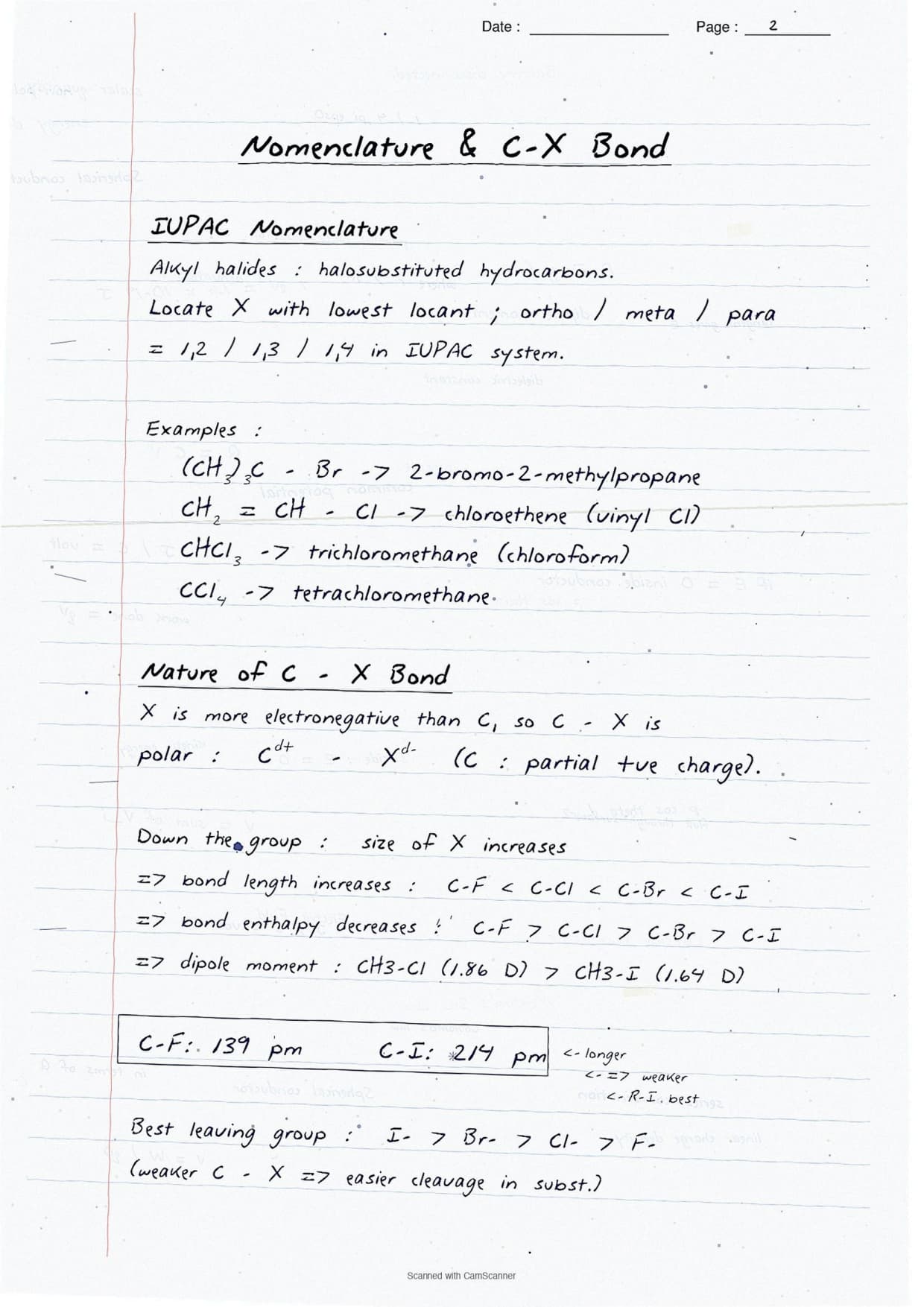
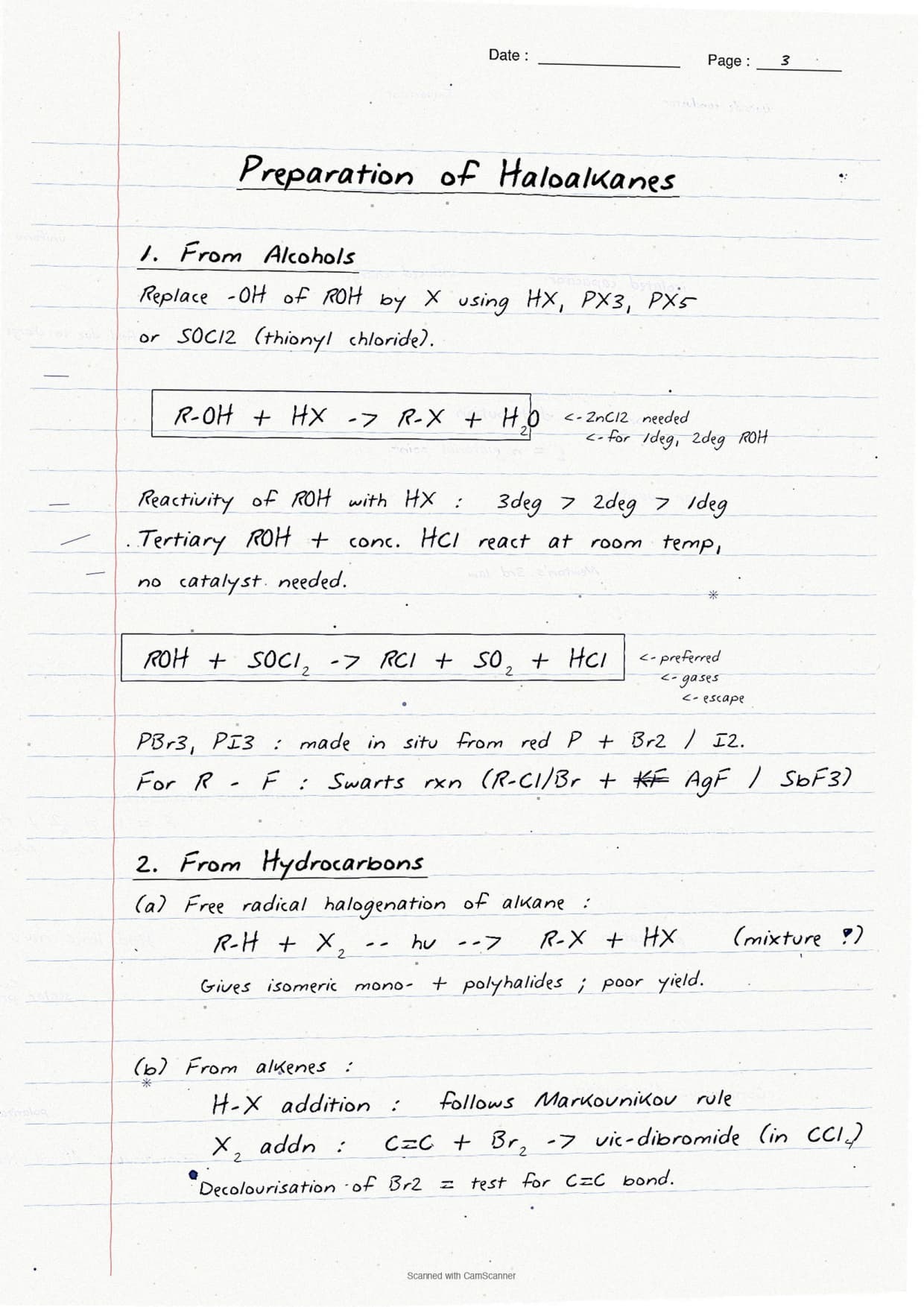


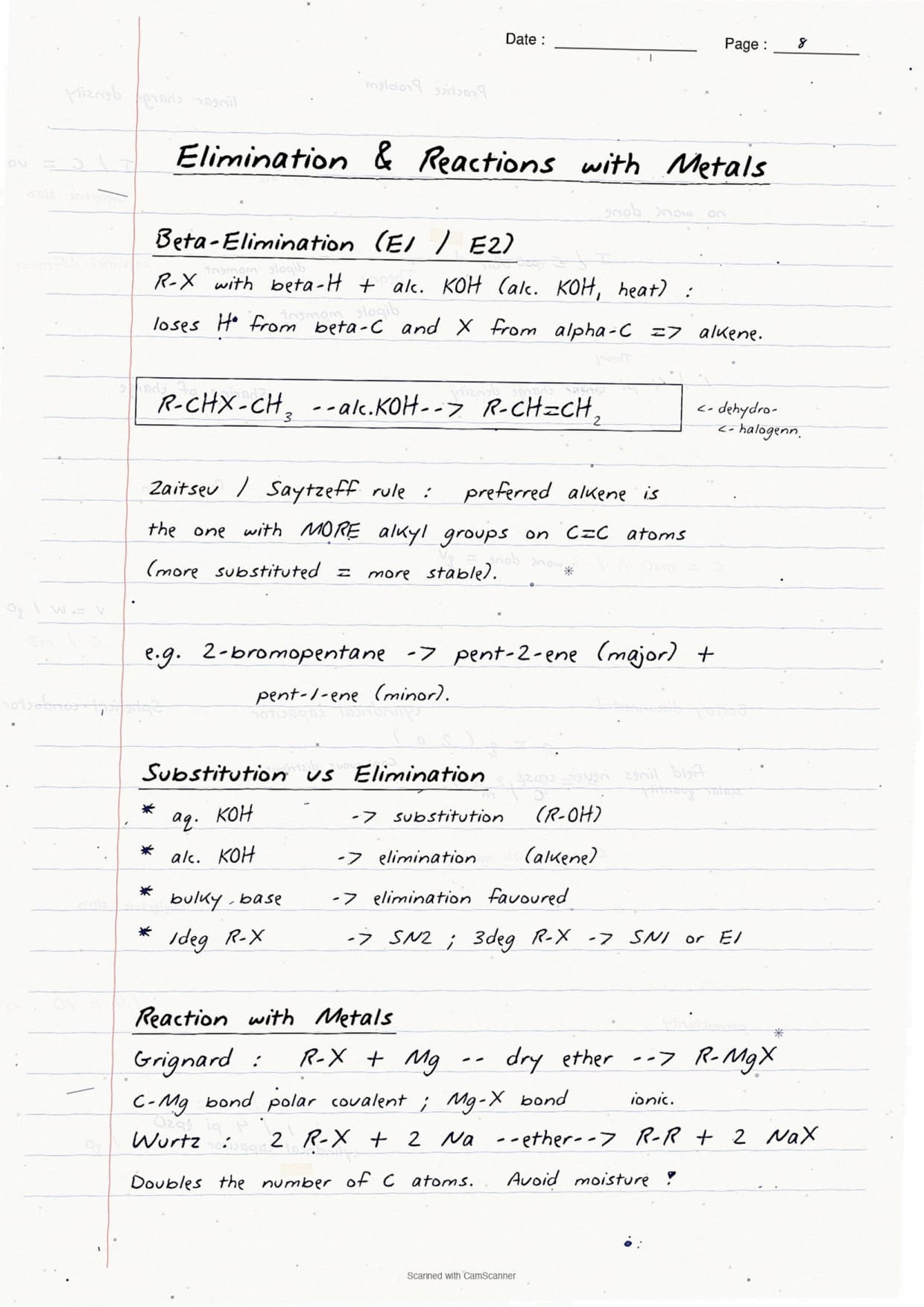


This page includes every name-reaction, optical-activity sketch, and night-before-exam recall card the chapter demands.
- CBSE Weightage: 3 to 5 marks (one reaction-conversion 2-marker plus a mechanism or optical-activity 3-marker is the standard CBSE pattern)
- JEE Main Weightage: 2 to 3% (1 to 2 questions per shift, mostly on SN1 / SN2 mechanism, reactivity order, and Sandmeyer / Wurtz products)
- NEET Weightage: 2 to 3 questions per year on substitution mechanisms, name reactions, and haloarene reactivity
The scan runs from the classification card to the SN1 vs SN2 master table and the polyhalogen summary. Almost every JEE and NEET question maps to one of the 14 figures indexed below.
These Handwritten Notes are scanned from a topper's notebook, cross-checked against the 2026-27 NCERT Class 12 Chemistry textbook, and refined against the last five years of CBSE Board, JEE Main, and NEET papers.
Also Check:
- Haloalkanes and Haloarenes Class 12 Chemistry Notes
- Haloalkanes and Haloarenes Class 12 Chemistry NCERT Solutions
- Haloalkanes and Haloarenes Class 12 Chemistry Formula Sheet
Why Haloalkanes and Haloarenes Matters for JEE Main and NEET 2026
This is the gateway chapter that locks the SN1, SN2, E1, and E2 mechanism grammar used across Class 12 Organic Chemistry. From 2014 to 2025, NEET carried 26 questions from this chapter. The three highest-yield angles are SN1 vs SN2 reactivity and stereochemistry, name reactions (Wurtz, Sandmeyer, Finkelstein, Swarts), and haloarene vs haloalkane reactivity.
Haloalkanes and Haloarenes Class 12 Chemistry Explained
Source: Magnet Brains on YouTube
How will Collegedunia's Handwritten Notes Help You with Haloalkanes and Haloarenes?
Mechanism arrows and electron-flow curls click when drawn by hand, not read as flat text. The notes give you:
- SN1 vs SN2 sketches: curly-arrow flow, transition state, and carbocation drawn side by side, with racemisation vs inversion in red ink.
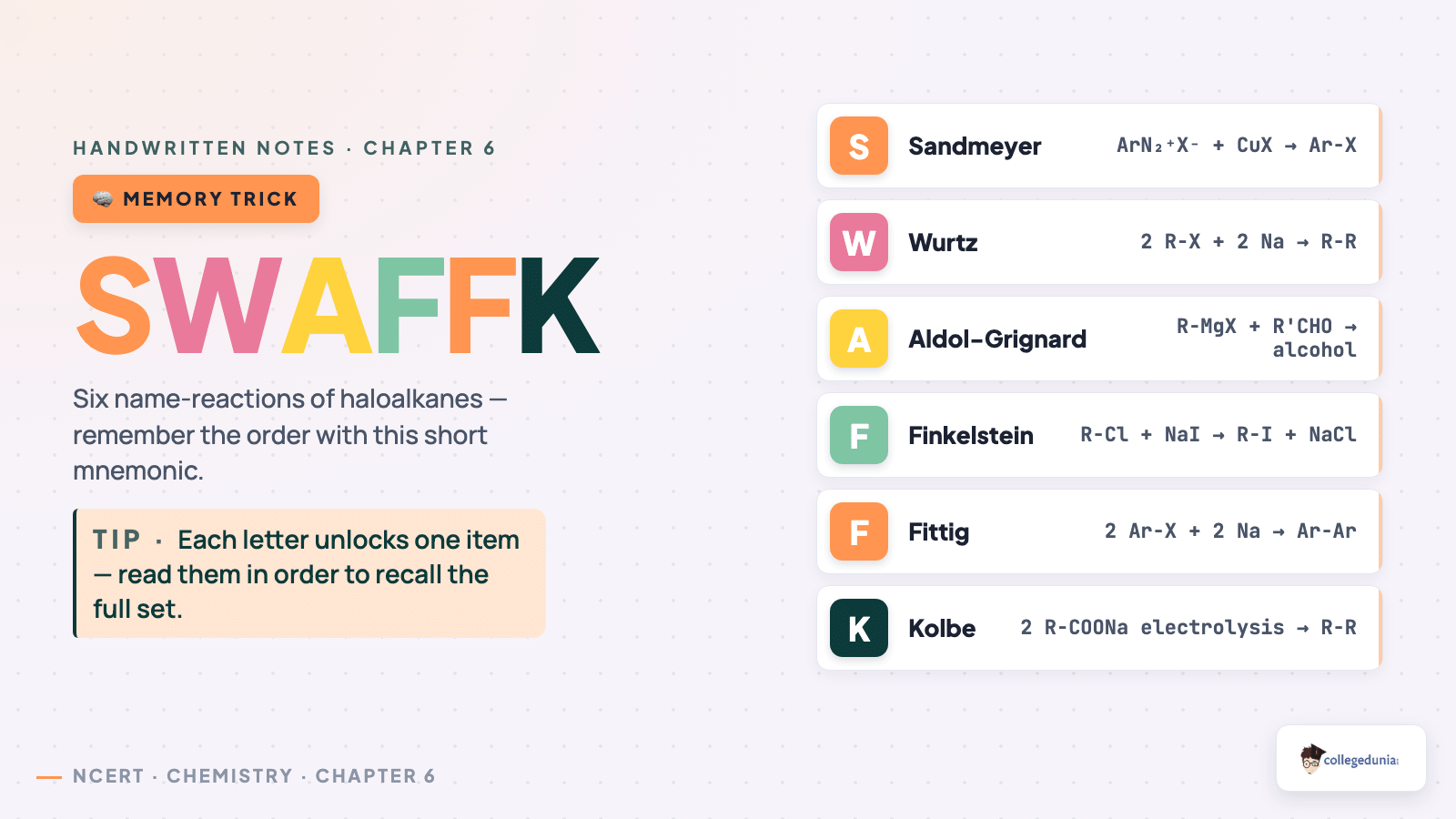
- Name-reaction maps: Wurtz, Wurtz-Fittig, Fittig, Sandmeyer, Finkelstein, and Swarts on one spread, reagents circled in orange.
- Optical-activity sketches: wedge-dash chirality and the SN1 mirror-image pair, drawn the way CBSE examiners want them.
- Red-ink traps: haloarene-resonance edge cases, the protic vs aprotic solvent shift, and Saytzeff vs Hofmann products.
What's Inside the Haloalkanes and Haloarenes Handwritten Notes PDF
A 20-page scan with a fixed ink-colour code. The page map below shows what each block covers, so you can jump straight to your weakest sub-topic.
| Pages | Topic | Pen Colour |
|---|---|---|
| 1-2 | Classification: alkyl, allyl, benzyl, vinyl, aryl, and primary / secondary / tertiary halides | Blue + orange |
| 3-4 | IUPAC nomenclature with 10 worked examples and common-name pairings | Blue + orange + yellow |
| 5-7 | Preparation methods: from alcohols, hydrocarbons, alkenes; Finkelstein and Swarts reactions | Blue + green |
| 8-9 | Physical properties: dipole moment, boiling point trends, density, solubility | Blue + orange |
| 10-13 | SN1 and SN2 mechanisms with curly-arrow sketches and the master comparison table | Blue + red + orange |
| 14-15 | Elimination reactions (E1, E2), Saytzeff rule, and substitution vs elimination competition | Blue + green |
| 16-17 | Reactions of haloarenes: nucleophilic aromatic substitution, electrophilic substitution, Wurtz-Fittig, Fittig | Blue + orange |
| 18-19 | Polyhalogen compounds: CHCl3, CCl4, CHI3, DDT, freons, BHC, properties and uses | Blue + yellow |
| 20 | Stereochemistry and optical activity quick-revision strip plus 24-hour recall card | Mixed |
Haloalkanes & Haloarenes Diagram Index for Quick Revision
The notebook carries fourteen hand-drawn figures across 20 pages, each paired with the concept it makes memorable.
| Figure | What It Shows | Page |
|---|---|---|
| Fig 6.1 | Classification flowchart: alkyl, allyl, benzyl, vinyl, aryl halides | p. 1 |
| Fig 6.2 | Primary / secondary / tertiary alkyl halide structural sketches | p. 2 |
| Fig 6.3 | Preparation from alcohol using PCl5, SOCl2, and HCl / ZnCl2 (Lucas) | p. 5 |
| Fig 6.4 | Finkelstein reaction route (R-Cl to R-I via NaI in acetone) | p. 6 |
| Fig 6.5 | Swarts reaction route (R-Cl to R-F via AgF / Hg2F2 / SbF3) | p. 7 |
| Fig 6.6 | Boiling-point trend bar chart for the C2-C6 haloalkane homologous series | p. 9 |
| Fig 6.7 | SN2 transition state: trigonal-bipyramidal sketch with back-side attack arrow | p. 10 |
| Fig 6.8 | SN1 two-step mechanism: carbocation intermediate plus racemic product pair | p. 11 |
| Fig 6.9 | SN1 vs SN2 master comparison (rate law, stereochem, solvent, substrate) | p. 12 |
| Fig 6.10 | E2 anti-periplanar transition state and Saytzeff product sketch | p. 14 |
| Fig 6.11 | Haloarene resonance structures showing partial-double-bond C-X character | p. 16 |
| Fig 6.12 | Sandmeyer and Gattermann reaction routes from aryl diazonium salts | p. 17 |
| Fig 6.13 | Wedge-dash optical-isomer pair: SN1 racemisation vs SN2 inversion | p. 19 |
| Fig 6.14 | DDT, BHC, freon, chloroform structural sketches with use-cases | p. 19 |
For a 30-minute last-day pass, lock Fig 6.7, 6.8, 6.9, and 6.13. These four cover every SN-mechanism and optical-activity question CBSE has asked since 2021.
How to Read These Haloalkanes & Haloarenes Handwritten Notes (Pen-Colour Convention)
Five ink colours run through the notebook; learning the code lets you skim 20 pages in a final pass.
| Pen Colour | What It Codes | How to Use in Revision |
|---|---|---|
| Blue | Main body text, definitions, mechanism steps | Read in pass two; skip on the night-before-exam pass |
| Orange (highlighter) | Reagents, named reactions, reactivity orders | This is the only pass-one colour on a last-hour revision |
| Red (pen) | SN1 vs SN2 trap warnings, Saytzeff exceptions, haloarene low-reactivity reasoning | Scan on every pass; these pin the trap-question content |
| Yellow highlighter | Polyhalogen uses, board-examiner phrasings, IUPAC names | Memorise verbatim for full marks on wording-sensitive 2-markers |
| Green | Worked products of conversions, optical-activity sketches | Skip unless you struggle with multi-step organic conversions |
The convention is the same across every Class 12 Chemistry chapter, so the muscle memory carries straight over to Alcohols, Phenols and Ethers.
Haloalkanes & Haloarenes: HW Notes vs Printed Notes Comparison
Knowing when handwriting beats print saves revision time. This table splits the chapter by sub-topic.
| Sub-topic | Better Resource | Why |
|---|---|---|
| SN1 / SN2 curly-arrow mechanisms | Handwritten | Electron-flow arrows and transition states only click when drawn |
| Optical-activity wedge-dash sketches | Handwritten | 3D inversion vs racemisation needs hand-drawn stereo notation |
| Name-reaction maps (Sandmeyer, Fittig, Wurtz) | Handwritten | Arrow-mapped reagent flowcharts beat paragraph text |
| IUPAC nomenclature rule list | Printed Notes | Numbered-rule sequences are cleaner in typeset form |
| Polyhalogen-compound uses and structures | Printed Notes | Side-by-side property tables read faster in print |
| Boiling-point and dipole-moment trends | Printed Notes | Numerical data tables compress better as print |
The pragmatic plan: scan the handwritten PDF for the mechanism and optical-activity sub-topics, then read the Haloalkanes and Haloarenes Class 12 Chemistry Notes for theory blocks.
Student Feedback
In a Collegedunia poll of 900 Class 12 students, 78% said the hand-drawn SN1 vs SN2 arrow sketches made the mechanism stick faster than printed notes.
Other Resources for Haloalkanes and Haloarenes Class 12 Chemistry
- Haloalkanes and Haloarenes Class 12 Chemistry Handwritten Notes
- Haloalkanes and Haloarenes Class 12 Chemistry NCERT Solutions
- Haloalkanes and Haloarenes Class 12 Chemistry Notes
- Haloalkanes and Haloarenes Class 12 Chemistry Formula Sheet
- Haloalkanes and Haloarenes Class 12 Chemistry NCERT Book PDF
- Haloalkanes and Haloarenes Class 12 Chemistry NCERT Exemplar Book PDF
- Haloalkanes and Haloarenes Class 12 Chemistry NCERT Exemplar Solutions
NCERT Handwritten Notes for Class 12 Chemistry: All Chapters
Use the table to jump to the Collegedunia handwritten notes for any other Class 12 Chemistry chapter.
| Chapter | Resource |
|---|---|
| Chapter 1 | Solutions Handwritten Notes |
| Chapter 2 | Electrochemistry Handwritten Notes |
| Chapter 3 | Chemical Kinetics Handwritten Notes |
| Chapter 4 | d- and f-Block Elements Handwritten Notes |
| Chapter 5 | Coordination Compounds Handwritten Notes |
| Chapter 7 | Alcohols, Phenols and Ethers Handwritten Notes |
| Chapter 8 | Aldehydes, Ketones and Carboxylic Acids Handwritten Notes |
| Chapter 9 | Amines Handwritten Notes |
| Chapter 10 | Biomolecules Handwritten Notes |
Haloalkanes and Haloarenes Class 12 Chemistry Handwritten Notes FAQs
Ques. Where can I download the Haloalkanes and Haloarenes Class 12 Chemistry Handwritten Notes PDF?
Ans. You can download the Haloalkanes and Haloarenes Class 12 Chemistry Handwritten Notes PDF directly from this page. Both the Normal and HD versions are available, and both are free.
Ques. Are these Handwritten Notes aligned with the 2026-27 NCERT?
Ans. Yes. The notes follow the current 2026-27 syllabus for Class 12 Chemistry, where Haloalkanes and Haloarenes is Chapter 6. The chapter was kept intact in the new NCERT edition, so every classification, preparation route, SN1 / SN2 / E1 / E2 mechanism, named reaction, and polyhalogen-compound section in the PDF matches the 2026-27 textbook.
Ques. How many pages is the Class 12th Chemistry Haloalkanes and Haloarenes Handwritten Notes PDF?
Ans. The Handwritten Notes PDF runs 20 pages and covers classification, IUPAC nomenclature, preparation methods (including Finkelstein and Swarts), physical-property trends, SN1 and SN2 mechanisms with curly-arrow sketches, E1 and E2 elimination, haloarene reactions (Wurtz-Fittig, Fittig, Sandmeyer), stereochemistry and optical activity, and the polyhalogen-compound summary.
Ques. What is the difference between SN1 and SN2 reactions?
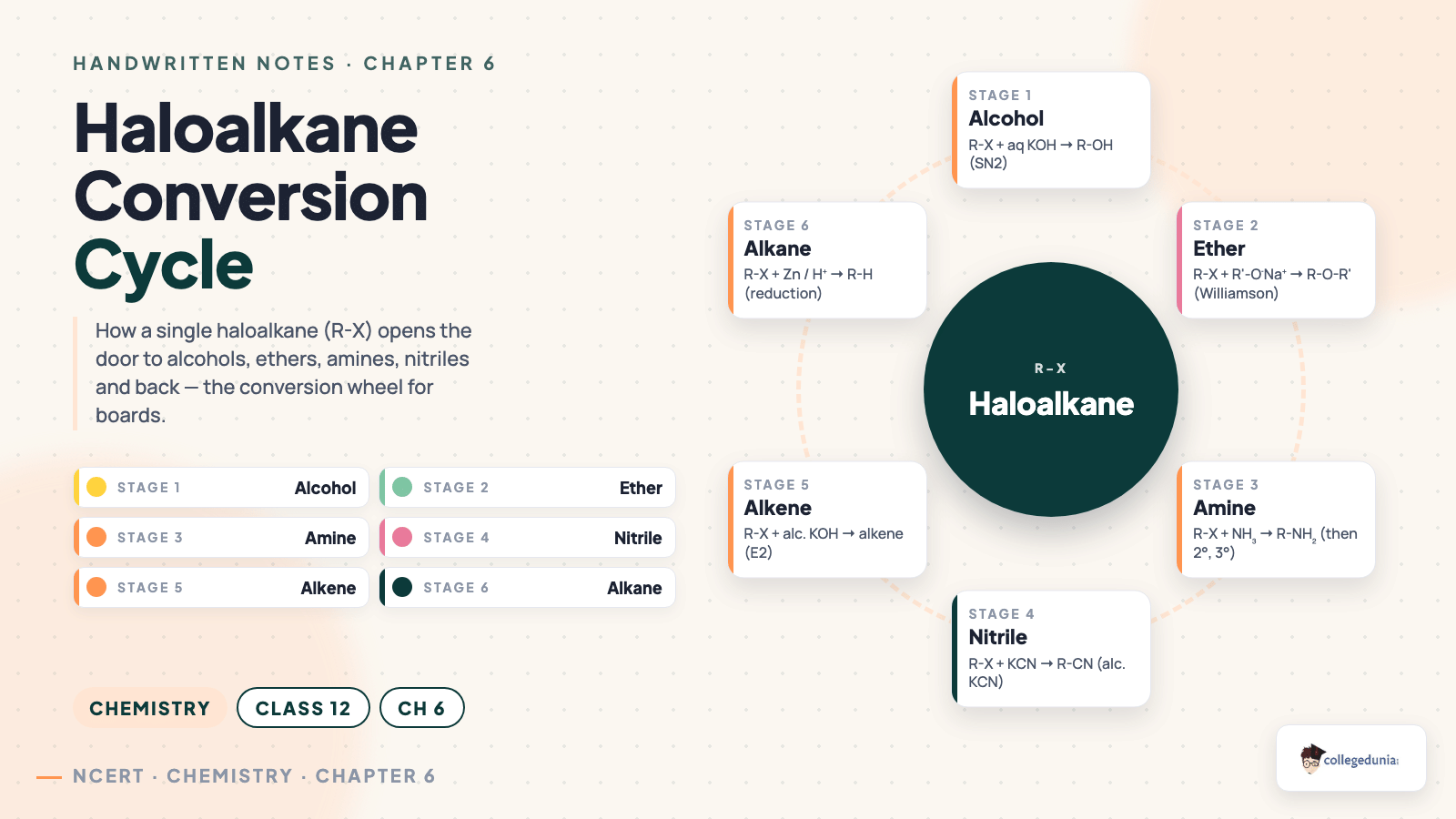
Ans. SN2 is a single-step, bimolecular reaction where the nucleophile attacks the carbon from the back side, opposite to the leaving group, producing a Walden inversion of configuration; its rate law is Rate = k[R-X][Nu-], it favours primary halides, and is faster in polar aprotic solvents like DMSO or acetone. SN1 is a two-step, unimolecular reaction that first ionises the C-X bond to form a planar carbocation, then the nucleophile attacks from either face, giving a racemic (1:1) mixture; its rate law is Rate = k[R-X], it favours tertiary halides, and is faster in polar protic solvents like water or ethanol. Secondary halides can follow either route depending on conditions.
Ques. Why are haloarenes less reactive than haloalkanes towards nucleophilic substitution?
Ans. Haloarenes are less reactive towards nucleophilic substitution for three combined reasons. First, resonance: the lone pair on the halogen delocalises into the aromatic ring, giving the C-X bond partial double-bond character which strengthens it. Second, hybridisation: the C in Ar-X is sp2 (33 per cent s-character) compared with sp3 in R-X (25 per cent s-character), so the bond is shorter and stronger. Third, instability of the intermediate: the phenyl cation (formed in a hypothetical SN1) is highly unstable. Nucleophilic substitution on haloarenes therefore requires extreme conditions or activating electron-withdrawing groups at the ortho / para positions (e.g. p-nitrochlorobenzene).
Ques. Why are Haloalkanes and Haloarenes important for JEE Main and NEET 2026?
Ans. Haloalkanes and Haloarenes contributes 2 to 3 per cent of JEE Main Chemistry and 2 to 3 questions per year on NEET, but its weight is bigger than the percentage suggests because the SN1 / SN2 / E1 / E2 mechanism toolkit is reused in Alcohols-Phenols-Ethers, Aldehydes-Ketones-Carboxylic-Acids, and Amines. Every JEE Main session since 2021 has carried at least one question on mechanism reactivity order or named-reaction product writing. NEET has carried 26 questions from this chapter between 2014 and 2025. Mastering it pays compound dividends across all of Class 12 Organic Chemistry.
Ques. How should I revise Haloalkanes and Haloarenes the night before the CBSE Board exam?
Ans. Use the 8-point Last 24-Hour Revision Card in the Handwritten Notes. Focus on the four highest-yield items: SN1 vs SN2 master comparison (rate law, stereochem, solvent, substrate), the named-reaction list (Wurtz, Wurtz-Fittig, Fittig, Sandmeyer, Finkelstein, Swarts), Saytzeff vs Hofmann elimination products, and the polyhalogen-compound uses (chloroform, CCl4, iodoform, DDT, freons). The card takes 12 minutes end to end and covers everything CBSE has asked from this chapter since 2021.
Ques. What is the Kharasch (peroxide) effect and when does it produce anti-Markovnikov addition?
Ans. The Kharasch peroxide effect is the anti-Markovnikov addition of HBr to an unsymmetrical alkene in the presence of organic peroxides (R-O-O-R). The Br radical attaches to the less-substituted carbon (the one bearing more H atoms), giving the opposite regioselectivity to the regular Markovnikov product. The peroxide effect operates only with HBr - HCl and HI follow Markovnikov regardless of peroxide.
Ques. How are R and S configurations assigned to a chiral haloalkane?
Ans. Use the CIP (Cahn-Ingold-Prelog) rules. Rank the four substituents on the chiral carbon by atomic number (highest = 1, lowest = 4). Orient the molecule with priority 4 pointing away from you. Tracing 1 to 2 to 3 clockwise gives the R (rectus) configuration; anti-clockwise gives S (sinister). For 2-bromobutane the priority order is Br > CH2CH3 > CH3 > H.
Ques. What is the role of anhydrous ZnCl2 in the Lucas test for alcohols?
Ans. Anhydrous ZnCl2 + conc. HCl is the Lucas reagent for distinguishing primary, secondary, and tertiary alcohols. ZnCl2 acts as a Lewis-acid catalyst that polarises the C-O bond and helps the alcohol ionise. Tertiary alcohols give immediate cloudiness; secondary in 5-10 minutes; primary do not react at room temperature. The reagent must be dry because water competes at the protonation step.
Ques. How are DDT and freons (CFCs) prepared and why are they environmentally hazardous?
Ans. DDT (p,p′-dichlorodiphenyltrichloroethane) is prepared by condensing chlorobenzene with chloral (CCl3CHO) in conc. H2SO4. Freons such as CCl2F2 (Freon-12) are made from CCl4 by the Swarts reaction using SbF3/HF. DDT bio-accumulates in fat tissues along the food chain; CFCs photo-dissociate in the stratosphere releasing Cl radicals that catalytically destroy ozone. DDT is banned in most countries; CFCs are phased out under the Montreal Protocol.
Ques. What is racemisation and why does an SN1 reaction give a racemic mixture?
Ans. Racemisation is the conversion of an optically active compound into a 1:1 mixture of its (R) and (S) enantiomers, the racemic mixture, which is optically inactive overall. SN1 first ionises the C-X bond to form a planar sp2 carbocation; the nucleophile then attacks this planar intermediate from either face with equal probability, giving equal amounts of (R) and (S) product. SN2 by contrast inverts the configuration (Walden inversion) rather than racemising.



Comments