




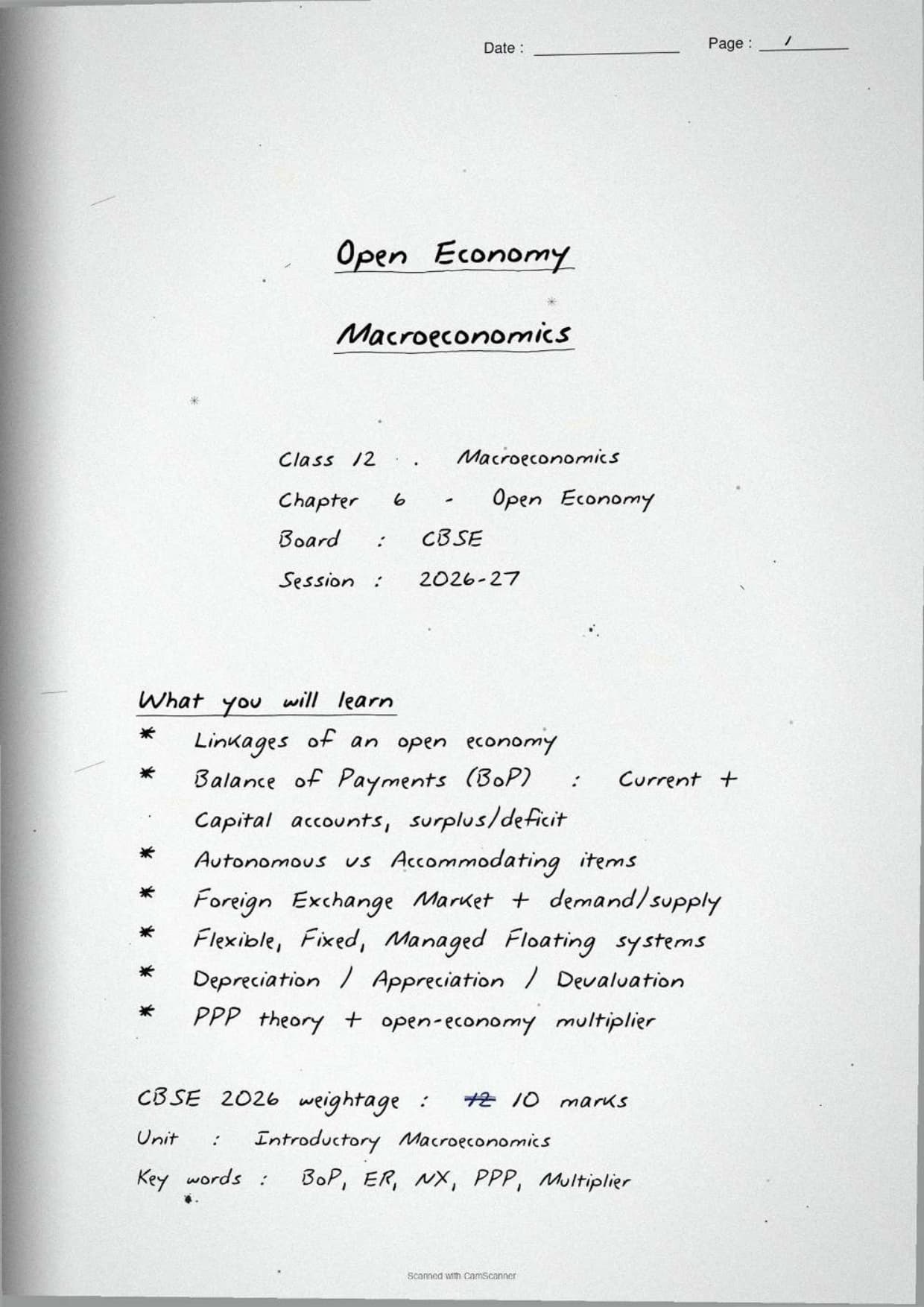
Class 12 Economics Chapter 6 Open Economy Macroeconomics is the last chapter of the Macroeconomics book. It covers the Balance of Payments, the foreign exchange market, the three exchange rate regimes and the open economy multiplier. This page hosts free handwritten notes you can download as a scanned PDF.
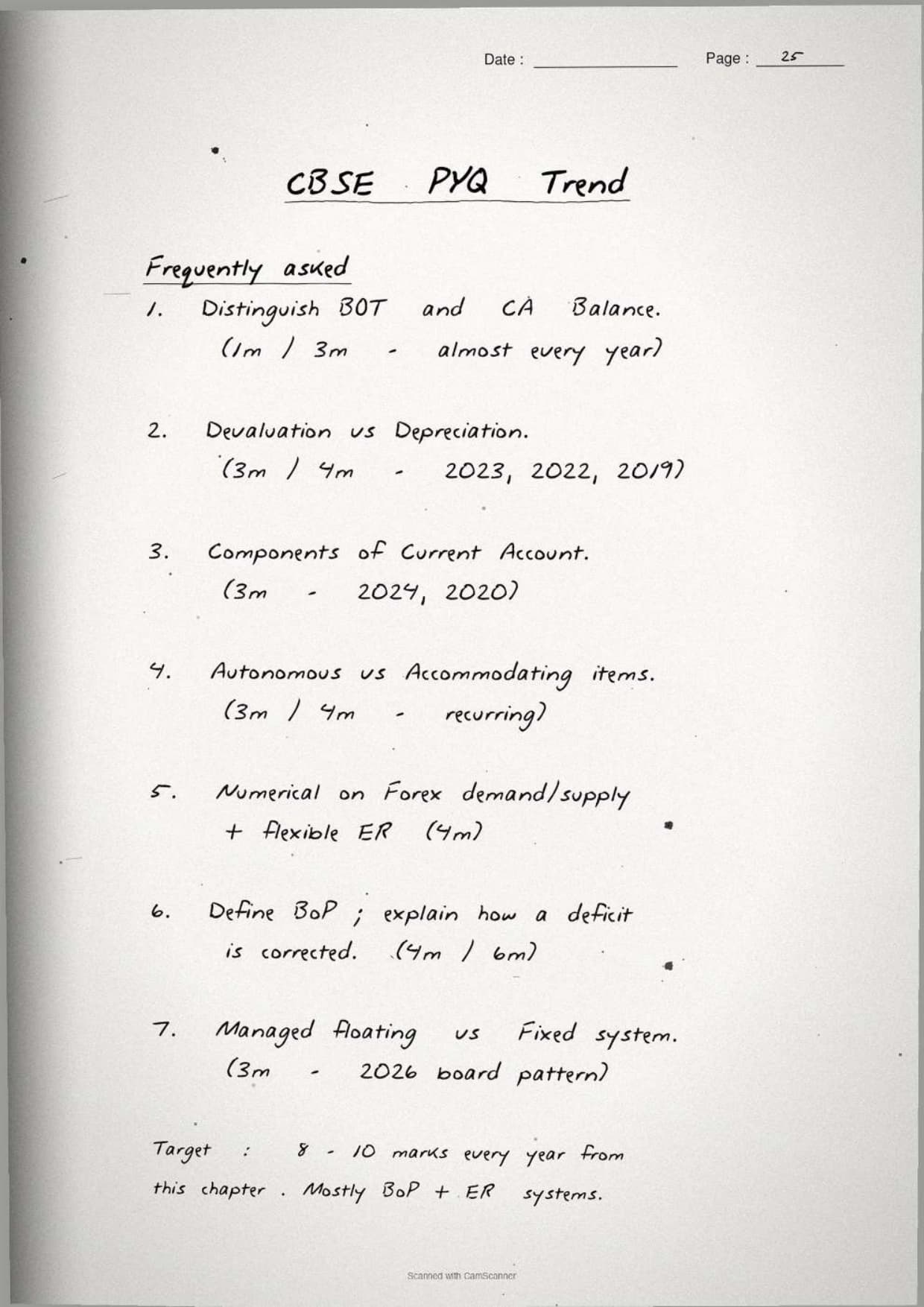
Here is what this chapter is worth in the exam:
- CBSE Boards: about 6 to 8 marks, split between one theory question on BoP or exchange rates and one short numerical.
- CUET: 2 to 3 questions most years on BoP terms, exchange rate regimes and the open economy multiplier.
- Revision time: about 20 minutes for one full pass through the 4 scanned pages.
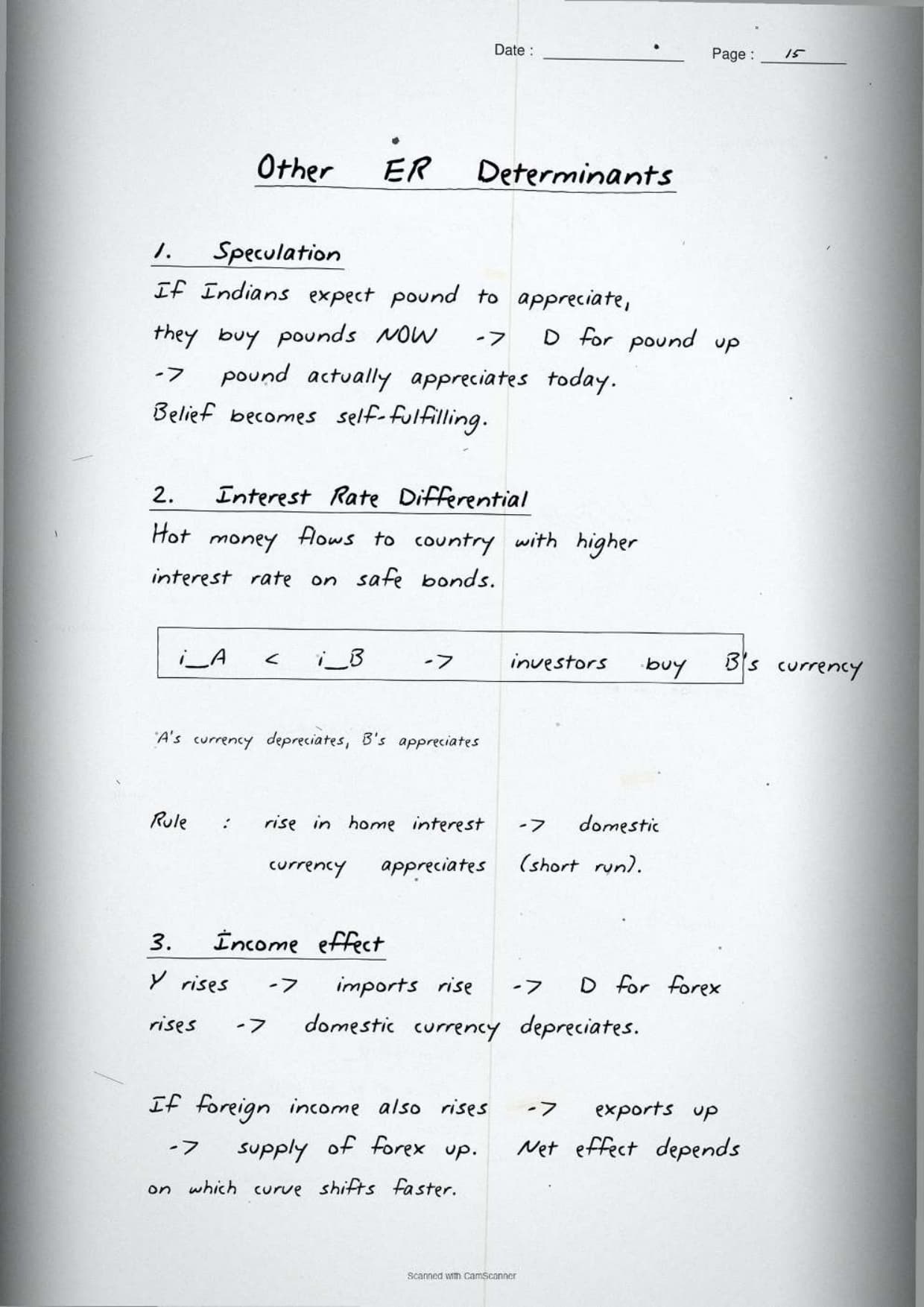
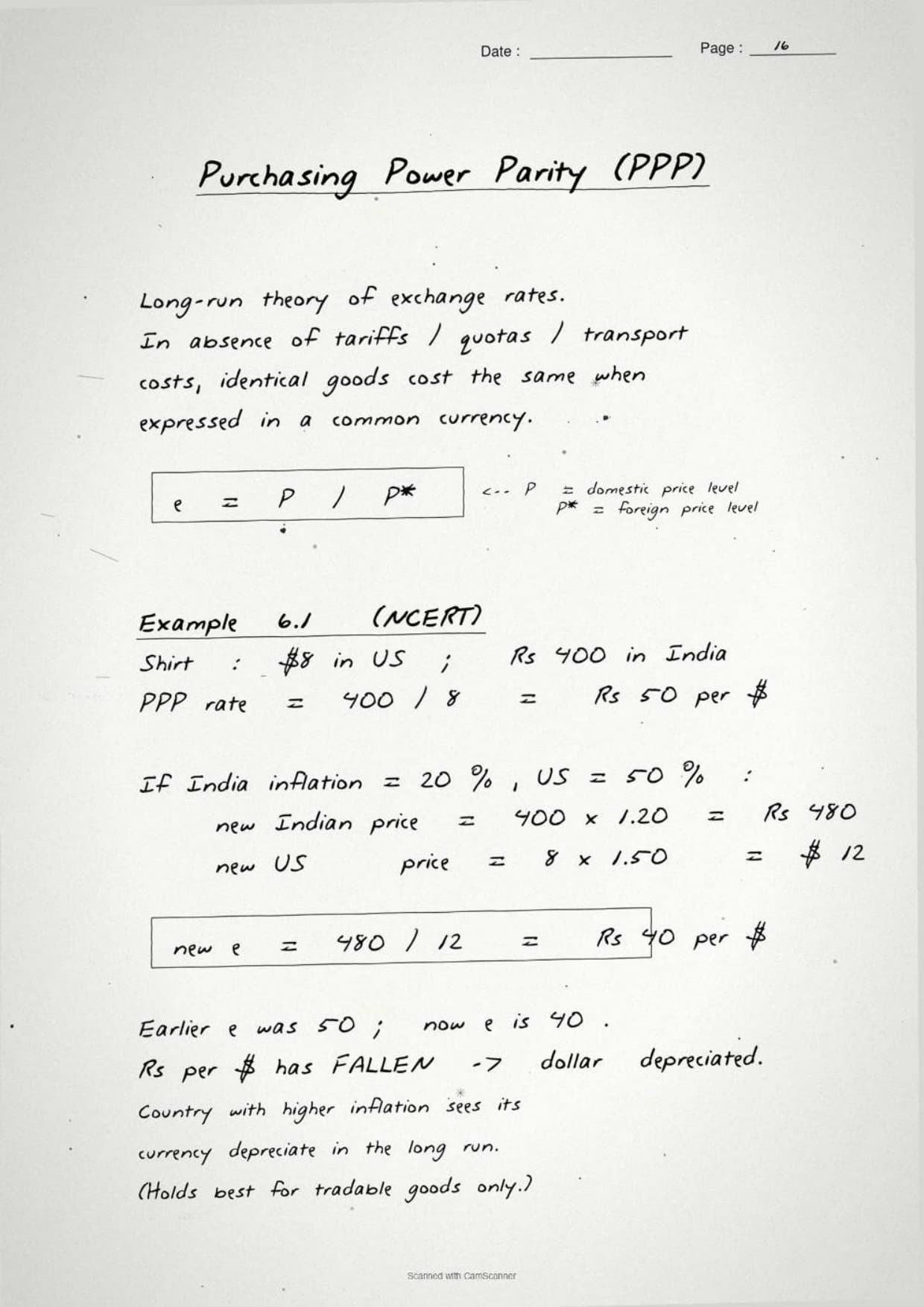
What These Open Economy Macroeconomics Class 12 Handwritten Notes Cover
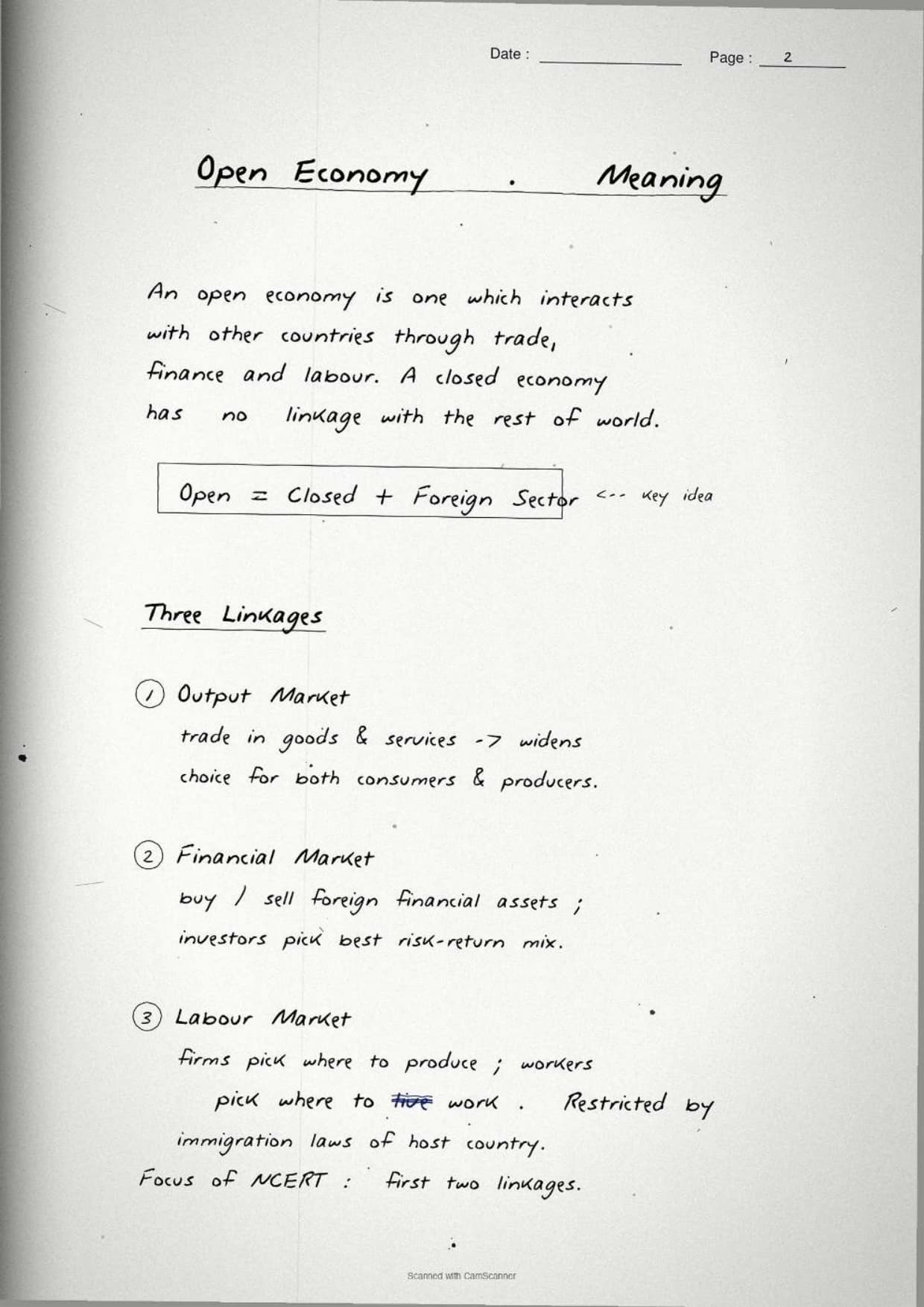
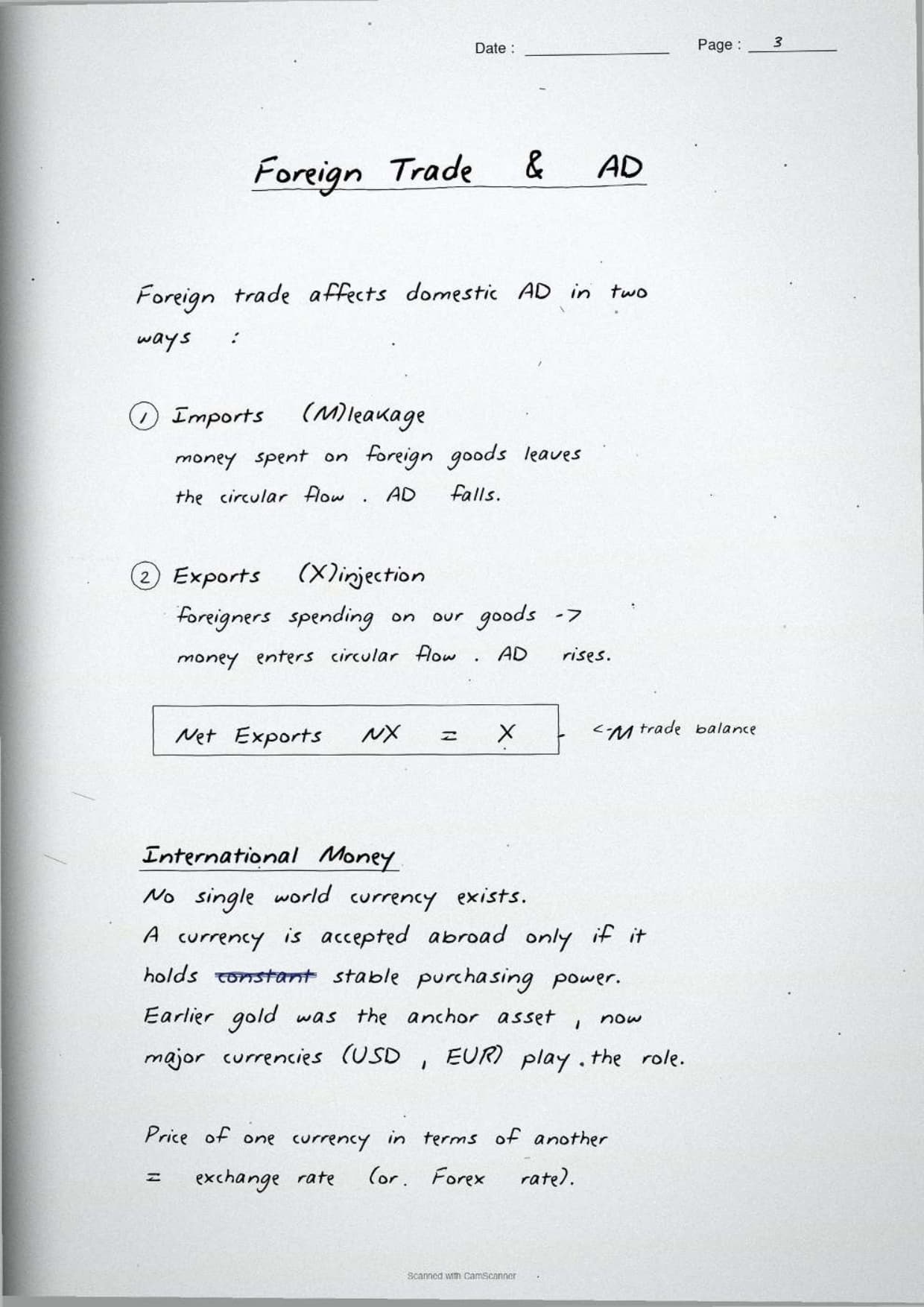
The notes are a 4-page scanned notebook, written in ballpoint pen on ruled paper. They are made for last-mile revision, not for learning the chapter the first time. Each page covers one block of the syllabus, as shown below.
| Page | What it covers | Time |
|---|---|---|
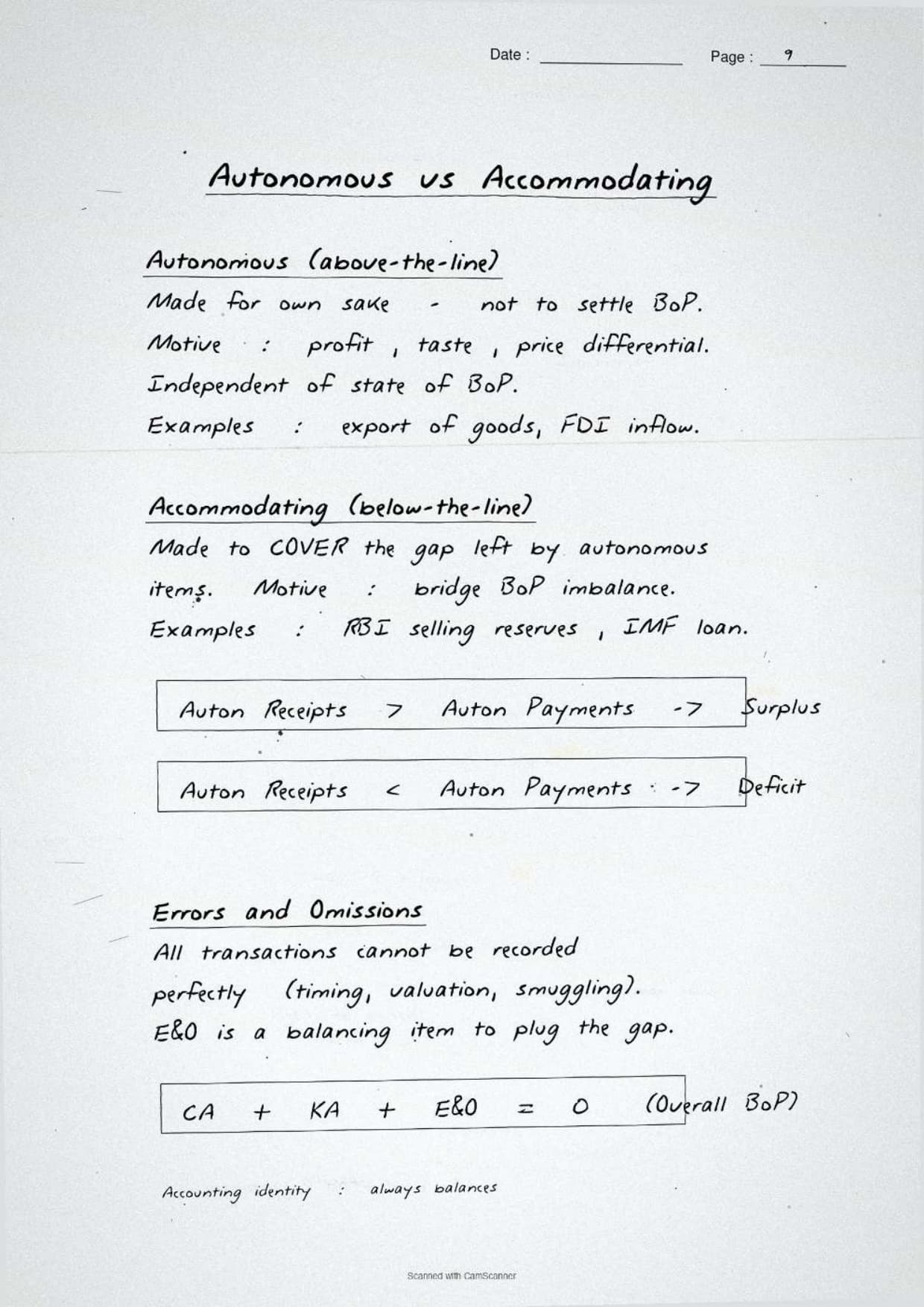
| Page 1 | Open vs closed economy, Balance of Payments structure, current and capital account, autonomous vs accommodating items. | 6 min |
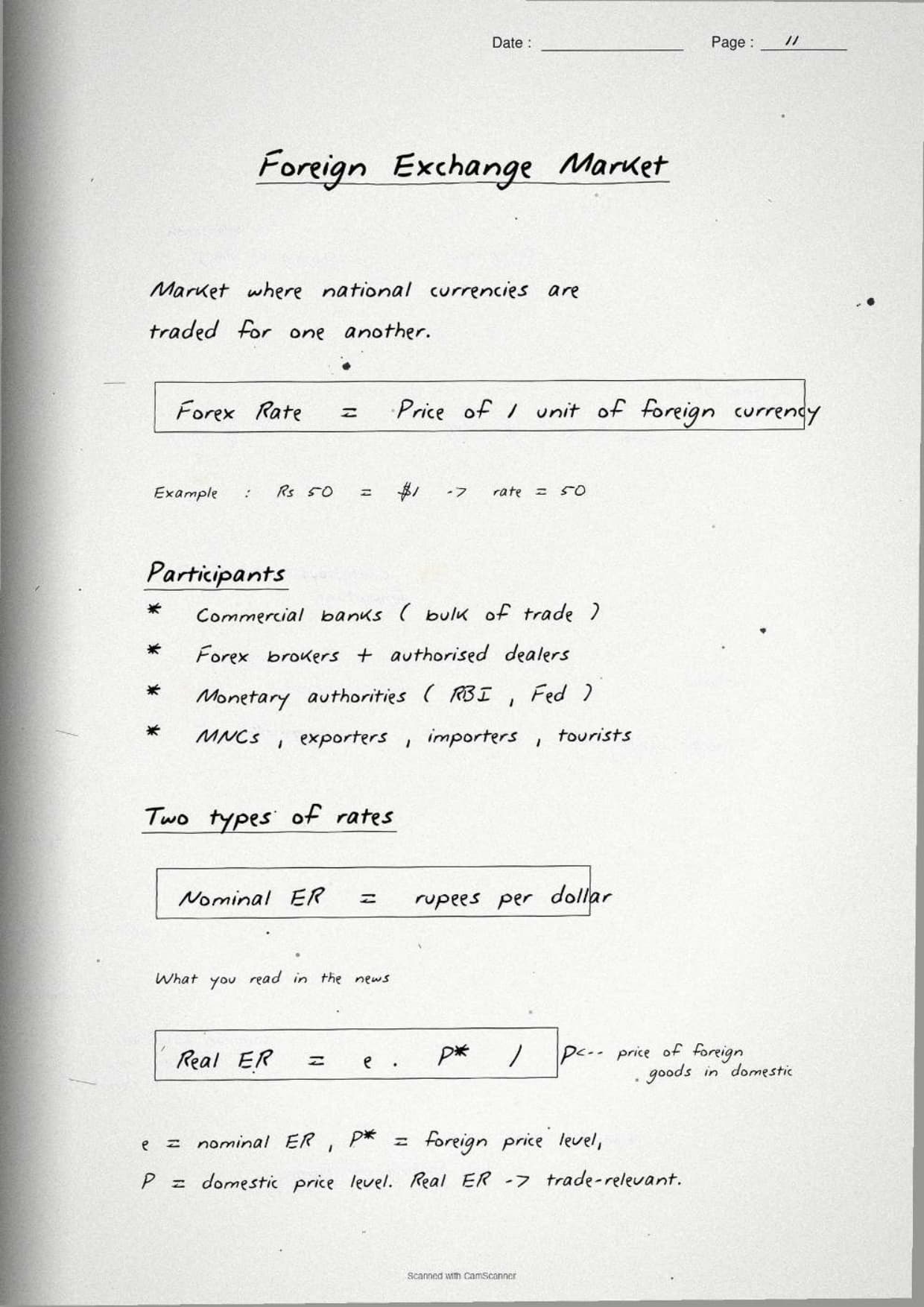
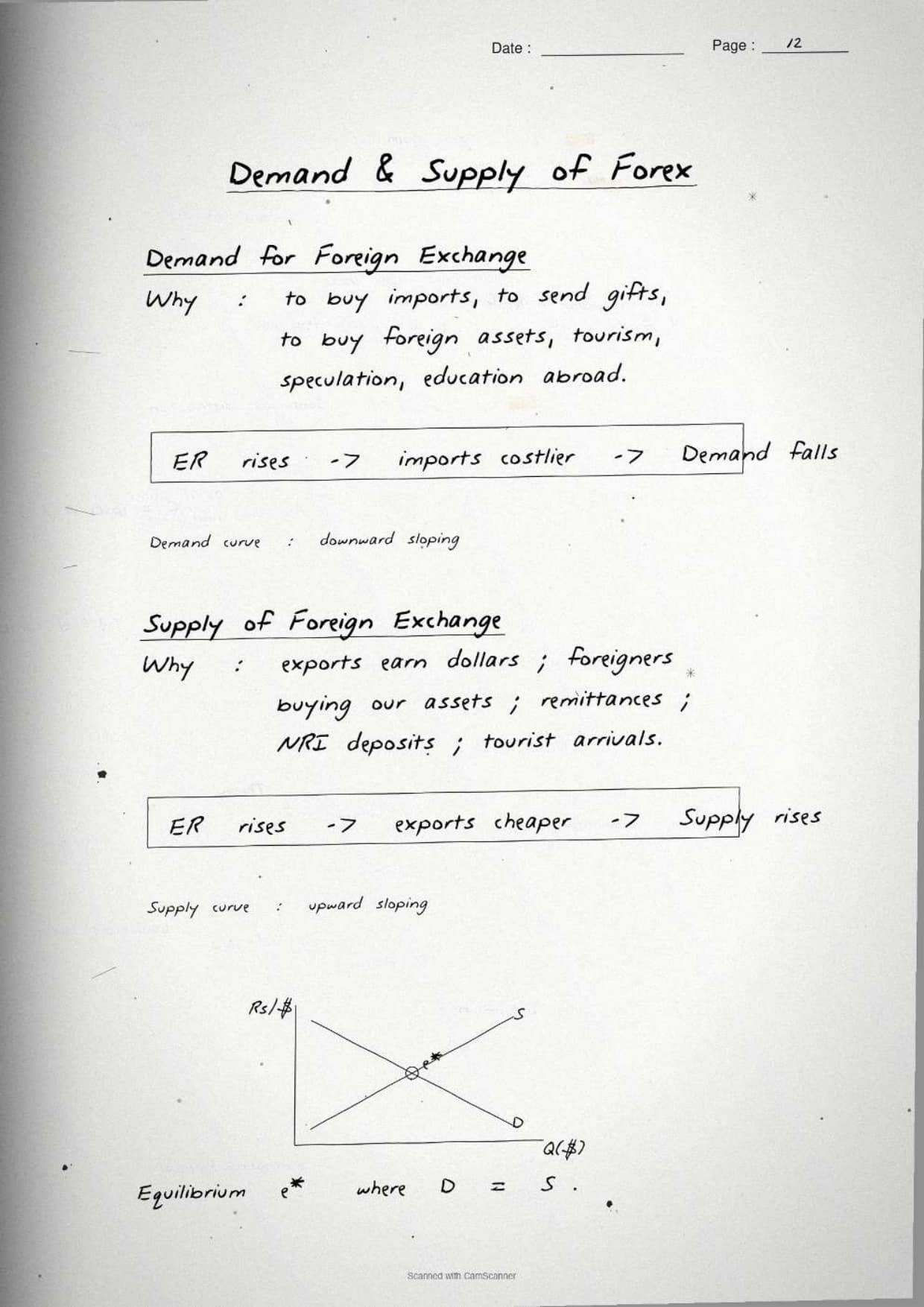
| Page 2 | Foreign exchange market, spot vs forward, demand and supply of forex, the equilibrium rate diagram. | 6 min |
| Page 3 | Fixed, floating and managed-float regimes, devaluation vs depreciation, RBI intervention. | 5 min |
| Page 4 | Net exports function, open economy multiplier, J-curve and the Marshall-Lerner condition. | 5 min |
Balance of Payments in Open Economy Macroeconomics Class 12
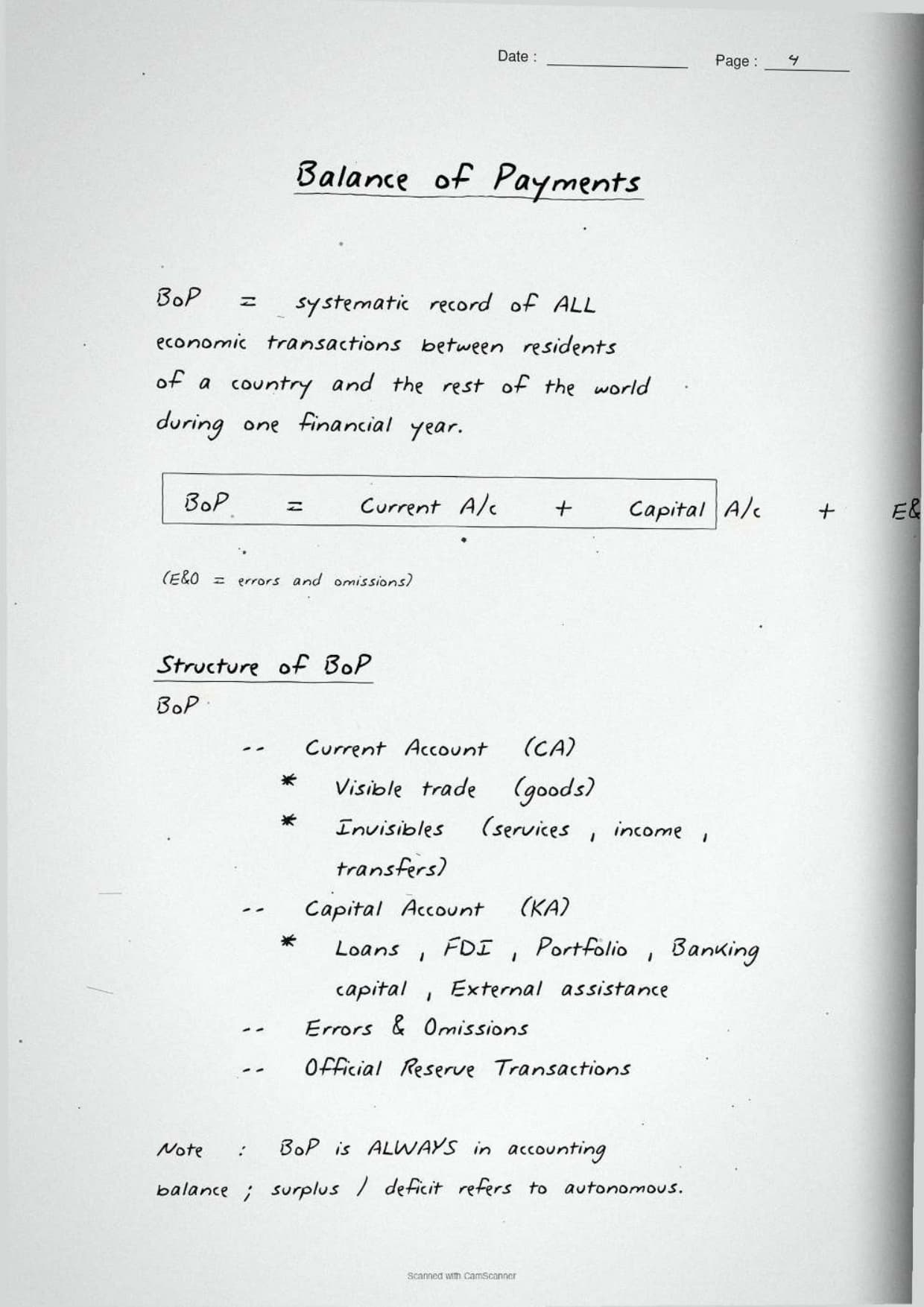
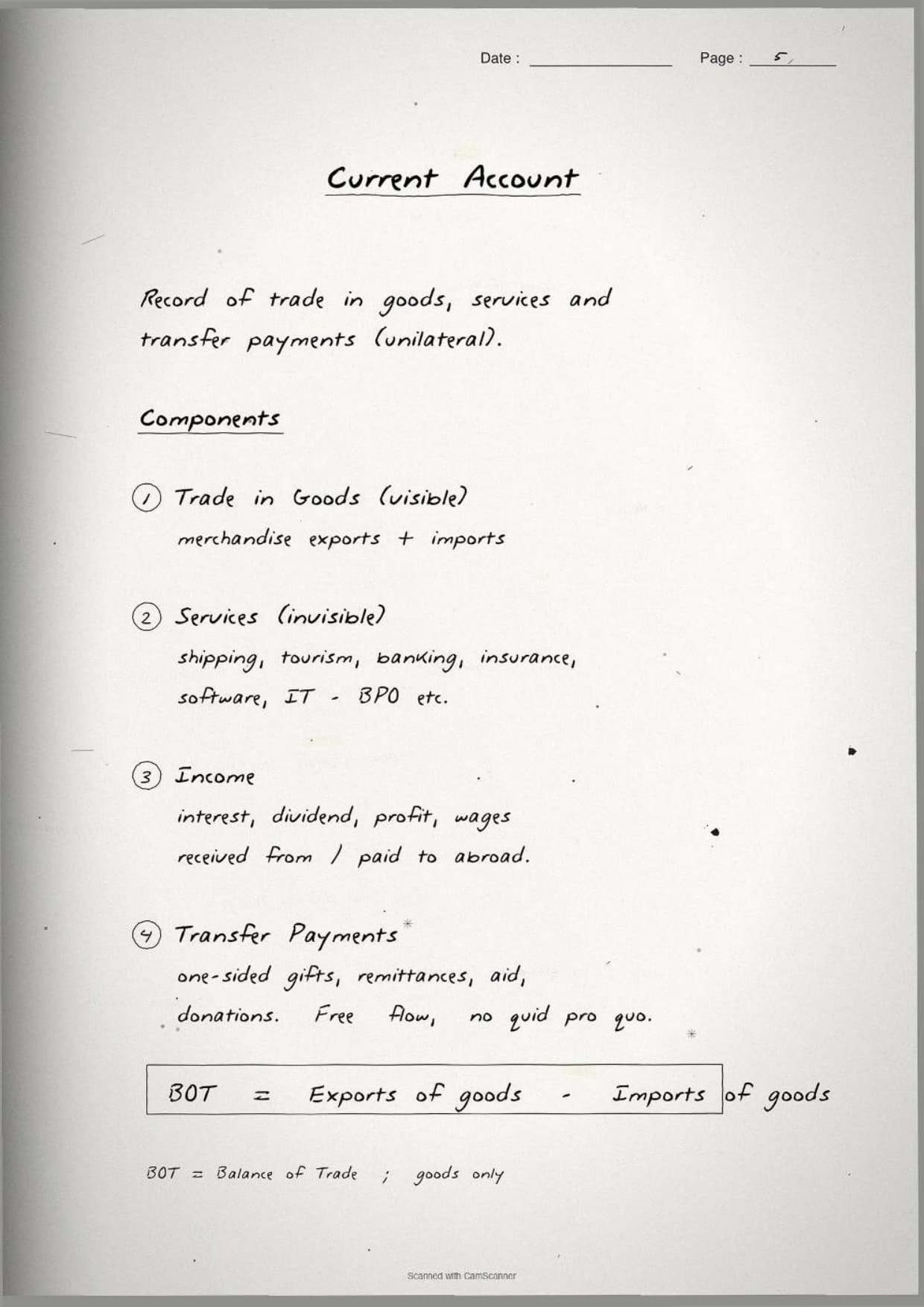
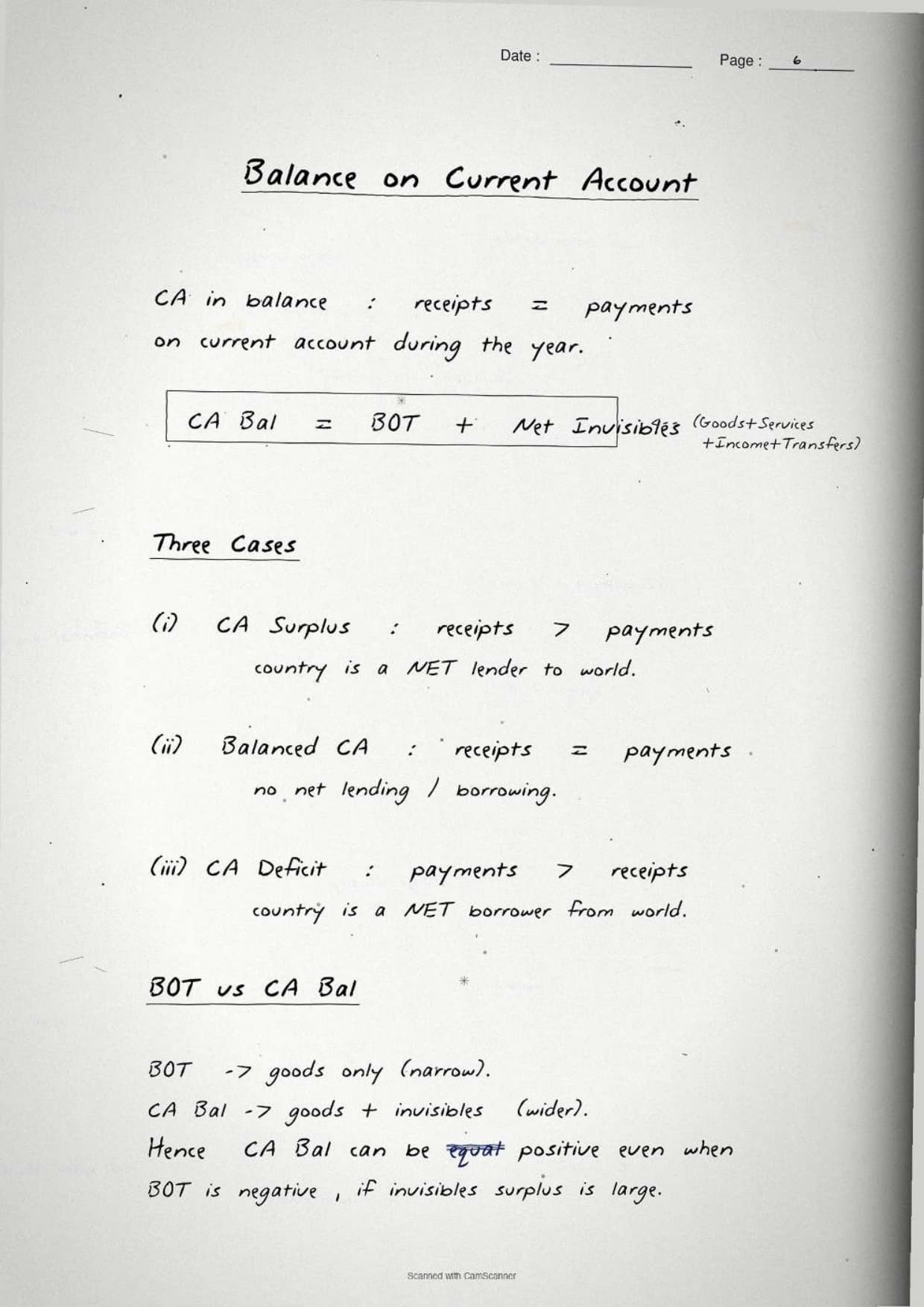
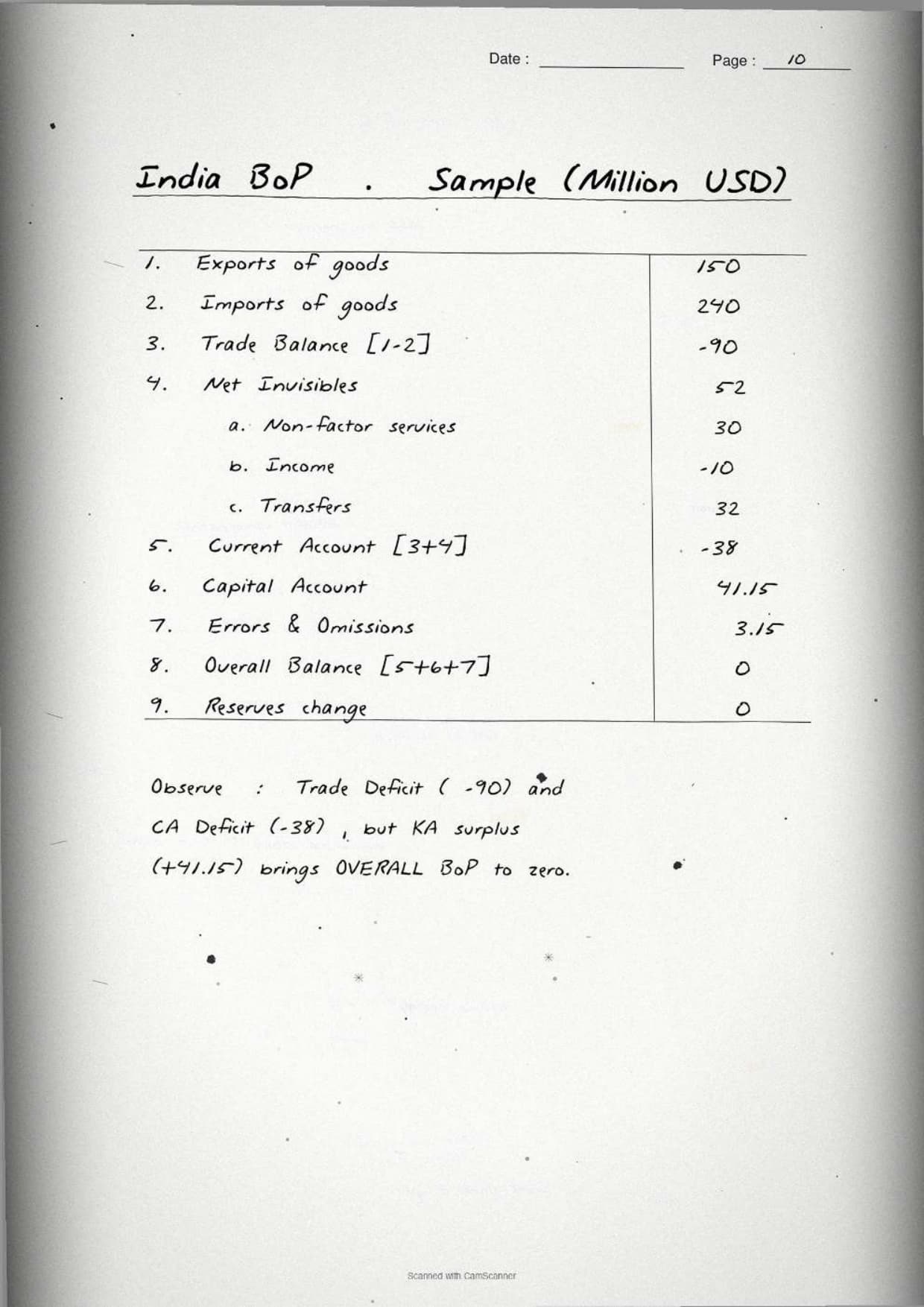
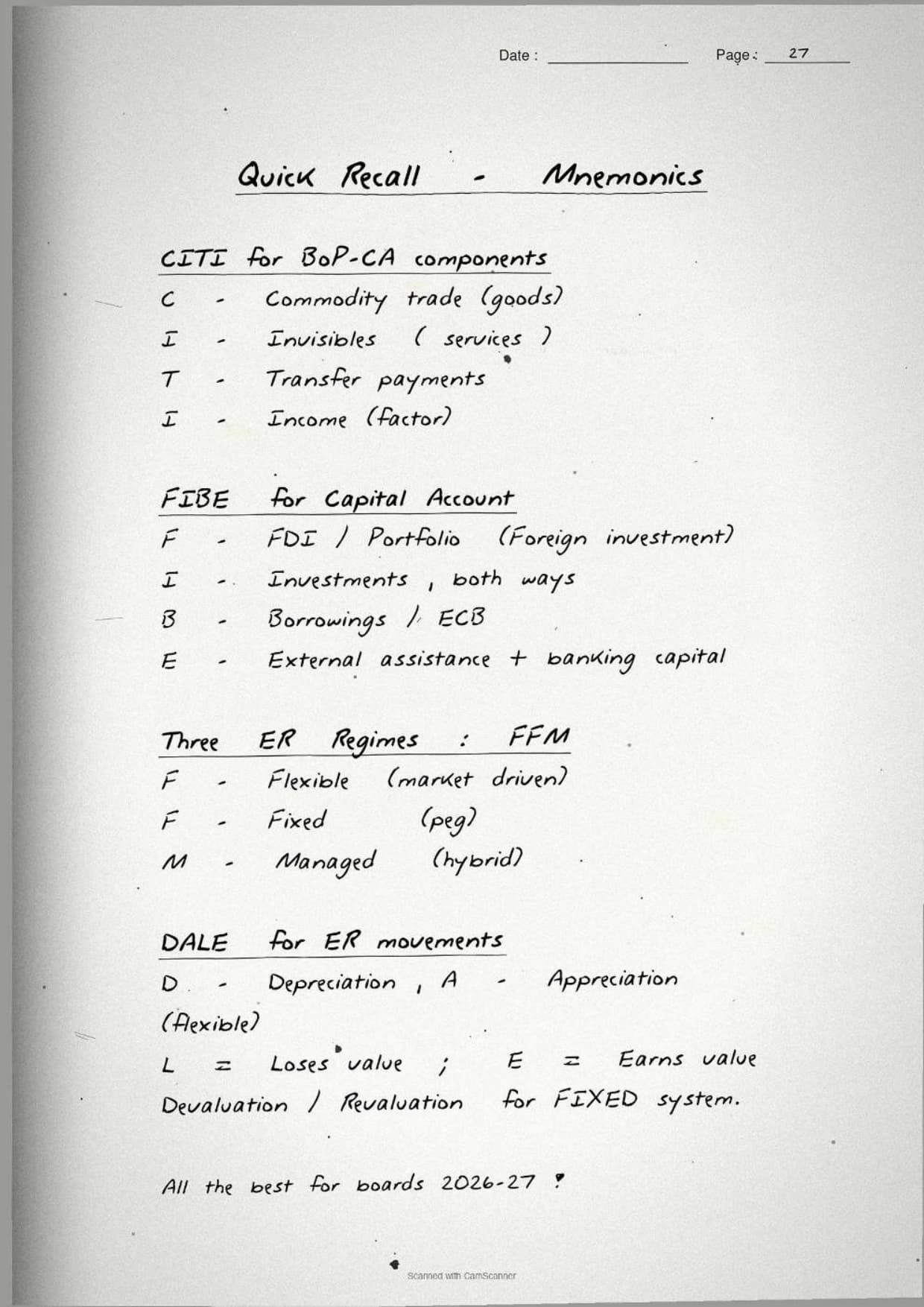
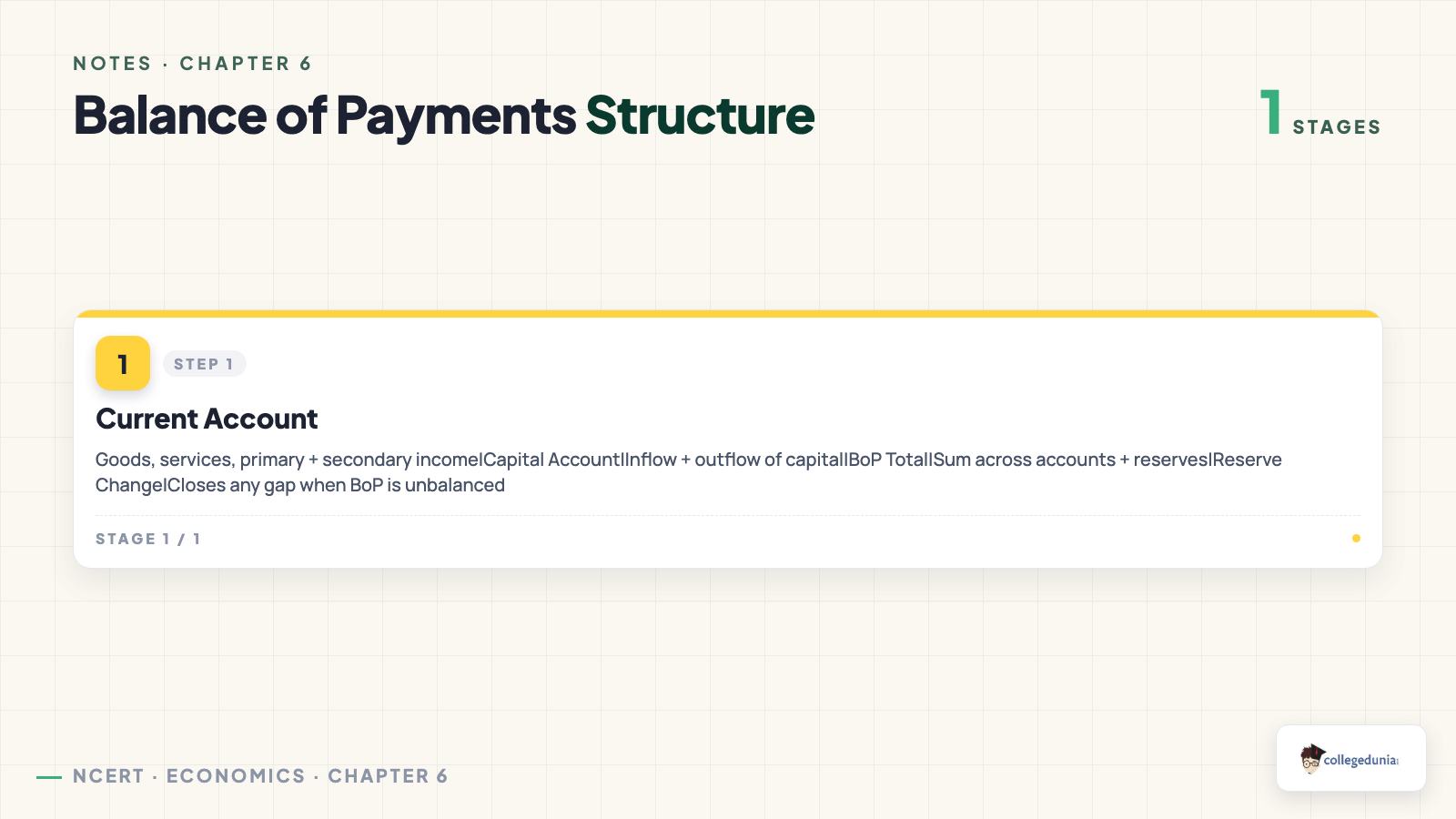
The Balance of Payments (BoP) records all transactions between residents of a country and the rest of the world in one year. The notebook draws it as a single T-account on Page 1. The table below shows the parts you must name in the exam.
| Part | What it records |
|---|---|
| Current account | Goods, services, primary income and transfers like remittances. |
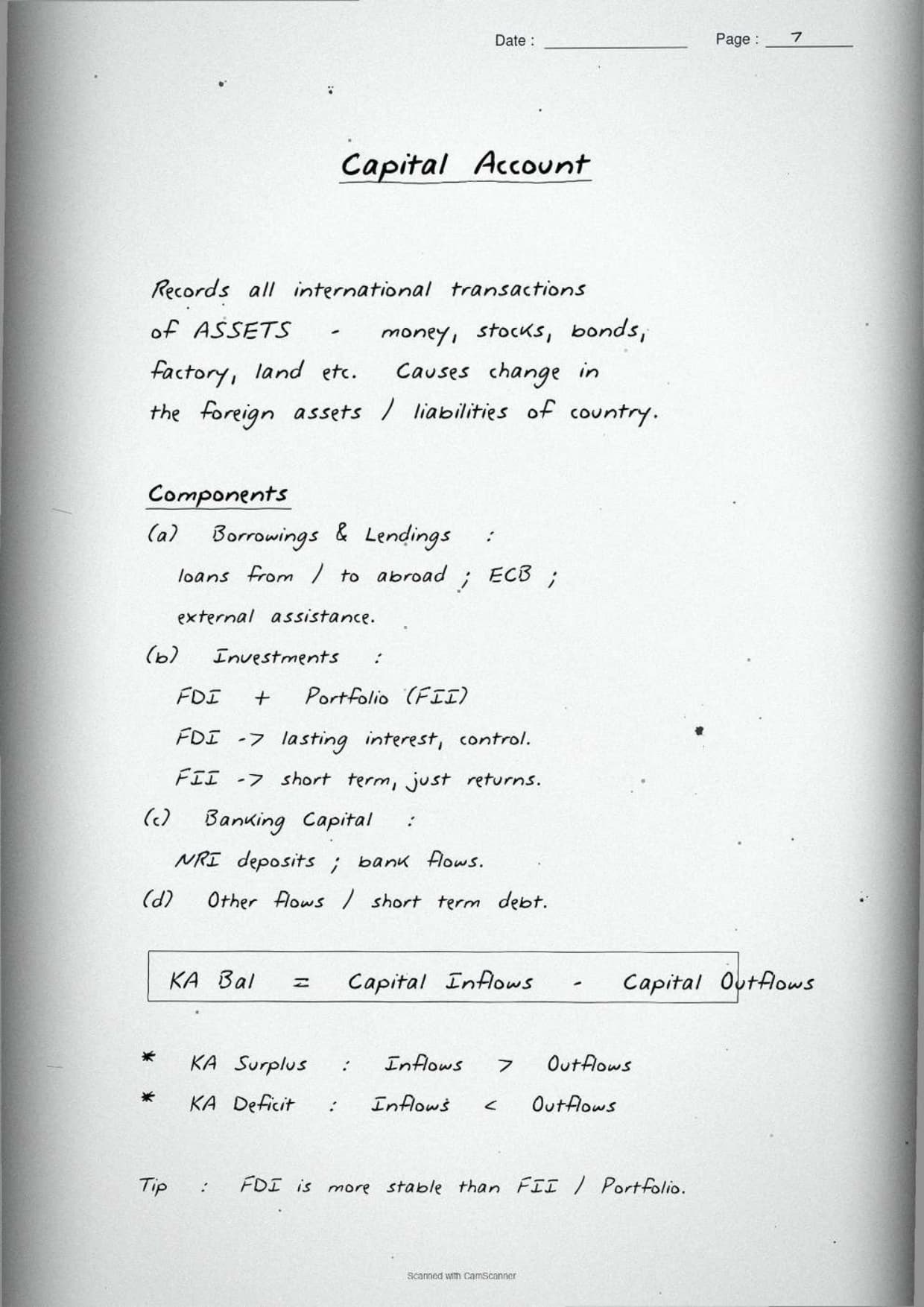
| Capital account | FDI, FII, external borrowings and NRI deposits. |
| Autonomous items | Done for their own sake, above the line. |
| Accommodating items | Done to cover the gap, below the line. |
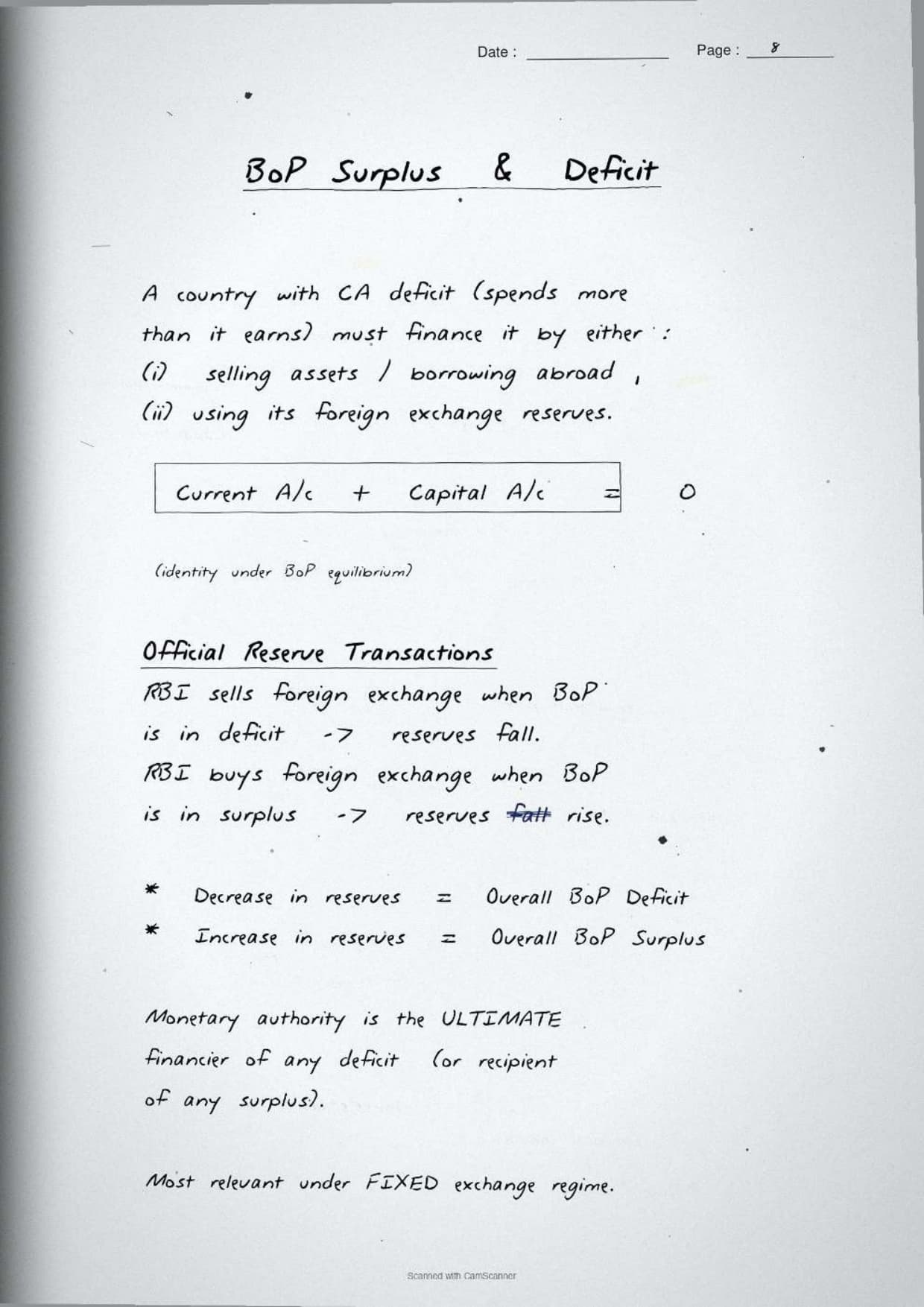
| BoP deficit | Autonomous receipts are less than autonomous payments. |
Important: The accounting BoP always balances. The deficit you answer about is the autonomous-only balance. Mixing the two costs 1 to 2 marks.
Foreign Exchange Market in Class 12 Economics Chapter 6
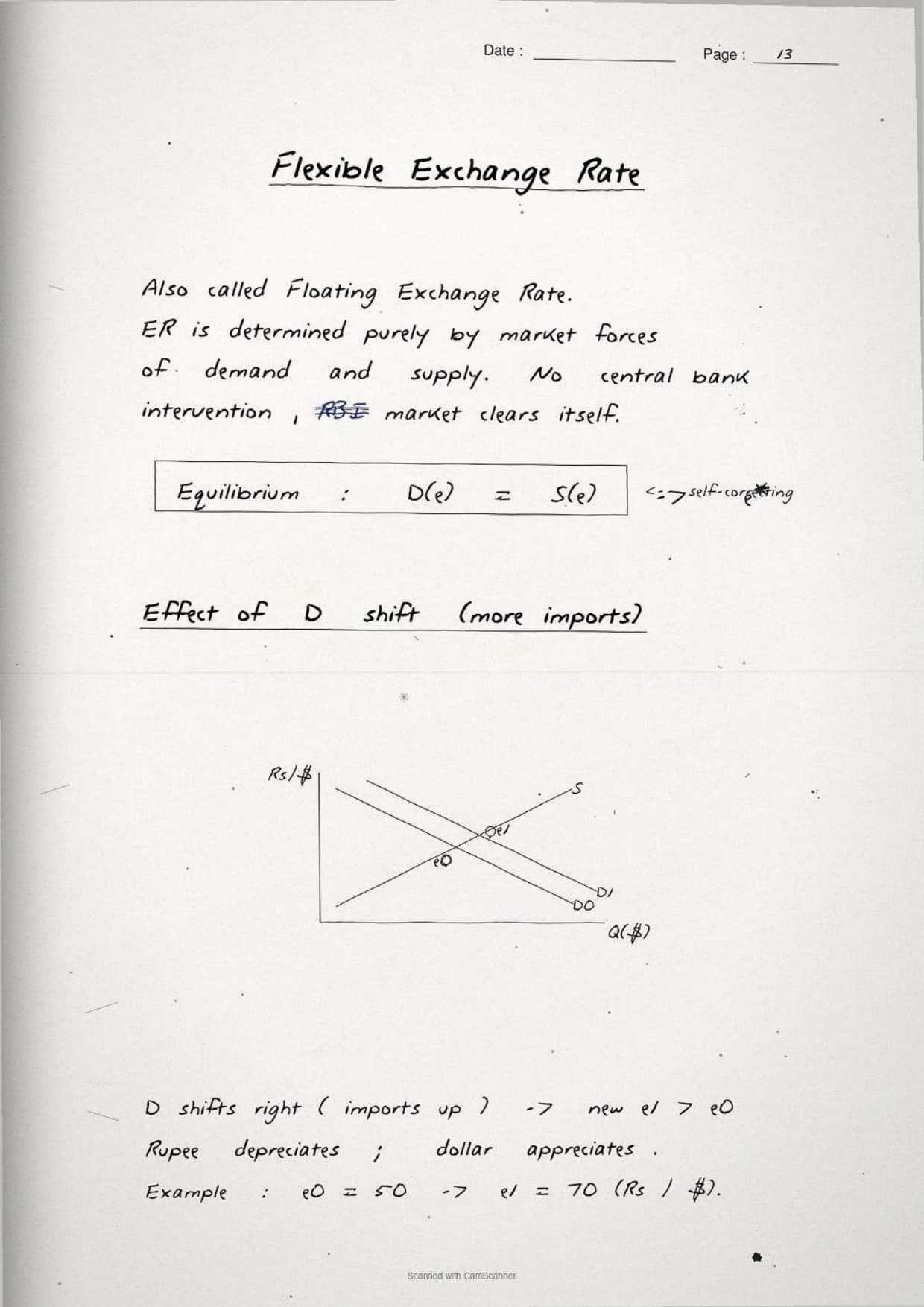
The foreign exchange market is where one currency is traded for another. Page 2 draws the demand and supply diagram with rupee per dollar on the vertical axis and quantity of dollars on the horizontal axis.
- Demand curve slopes down: a dearer dollar means fewer imports, so fewer dollars are wanted.
- Supply curve slopes up: a cheaper rupee means more exports, so more dollars come in.
- Equilibrium rate: set where forex demand equals forex supply.
Fixed, Floating and Managed Exchange Rate Regimes Class 12
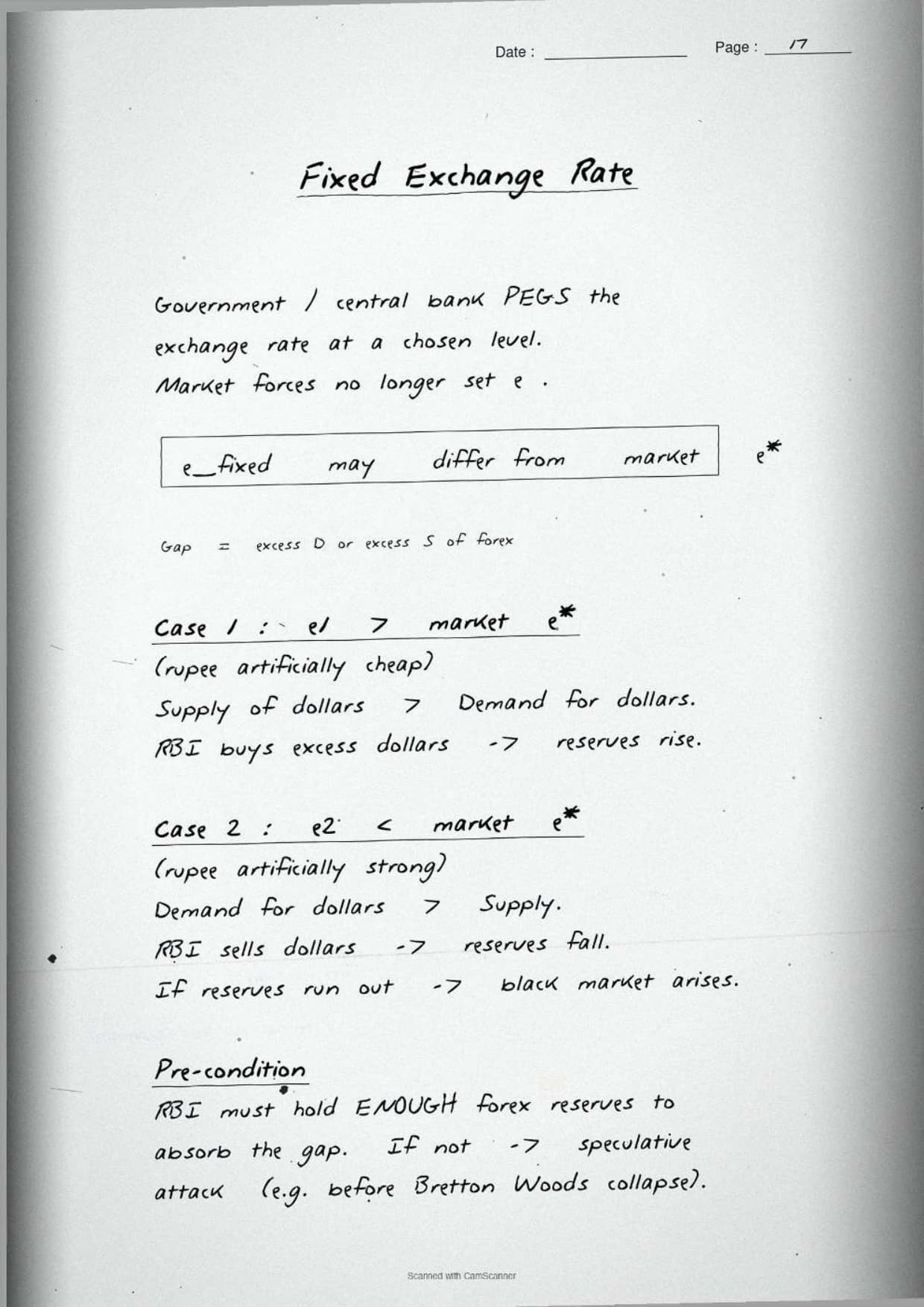
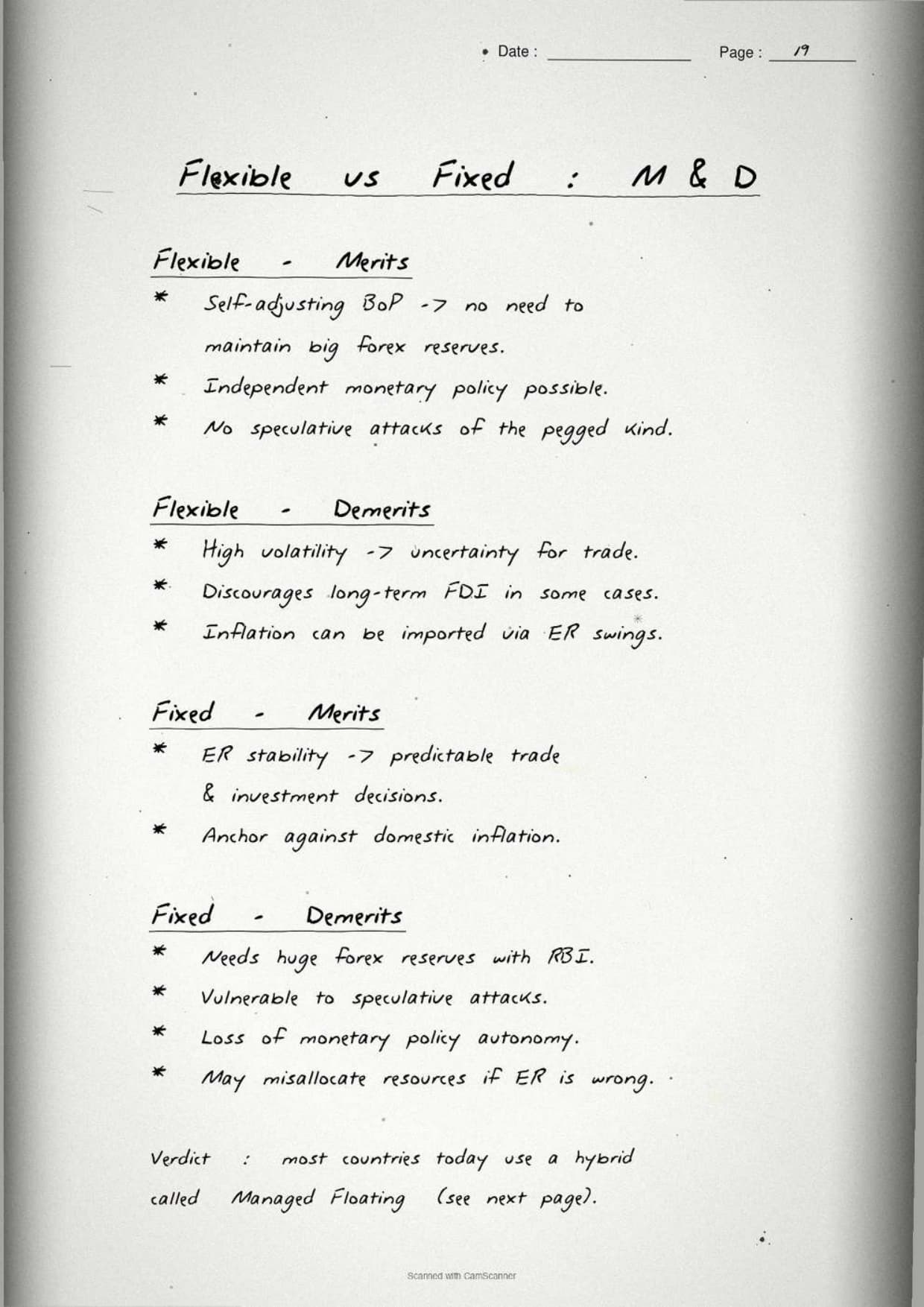
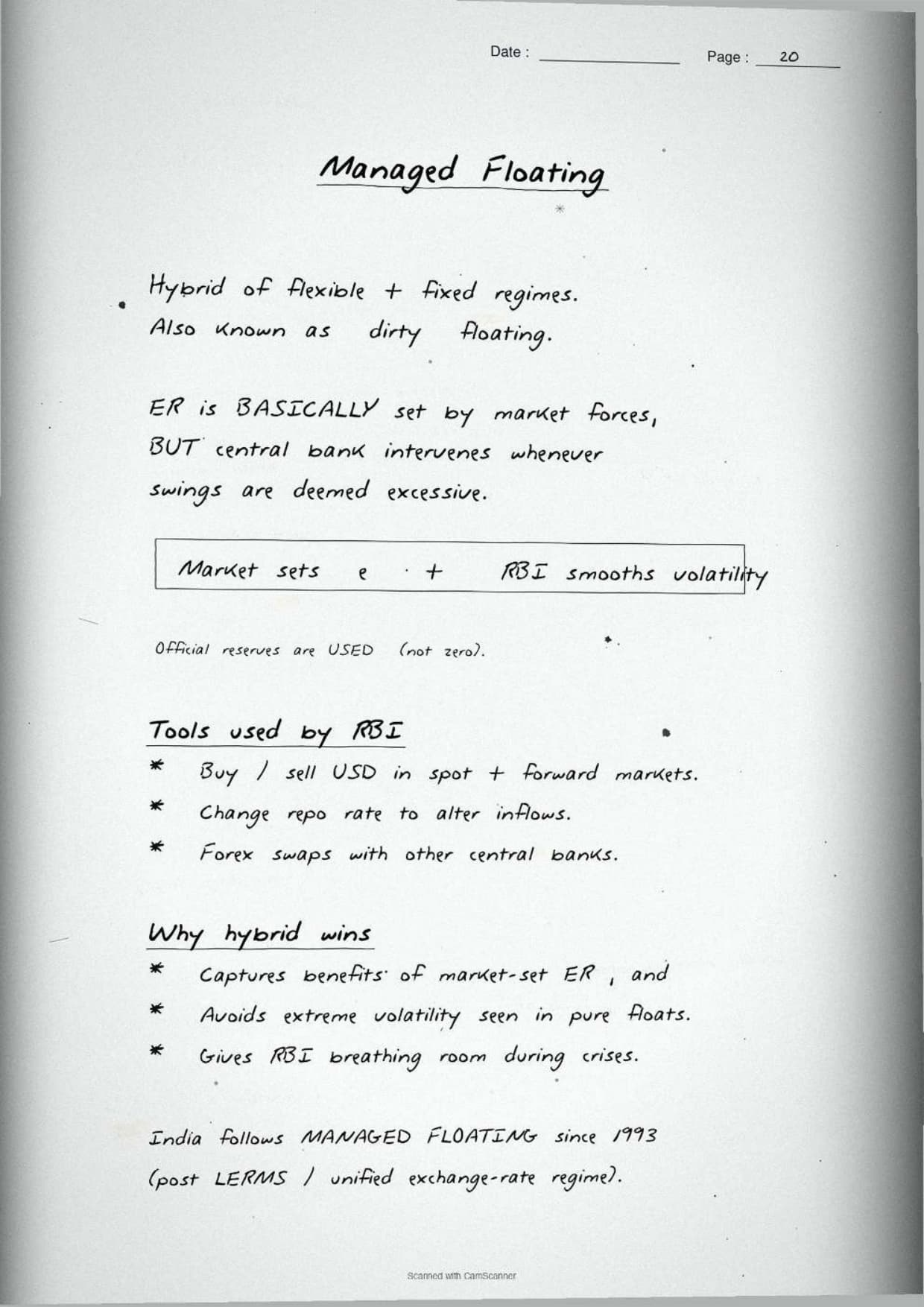
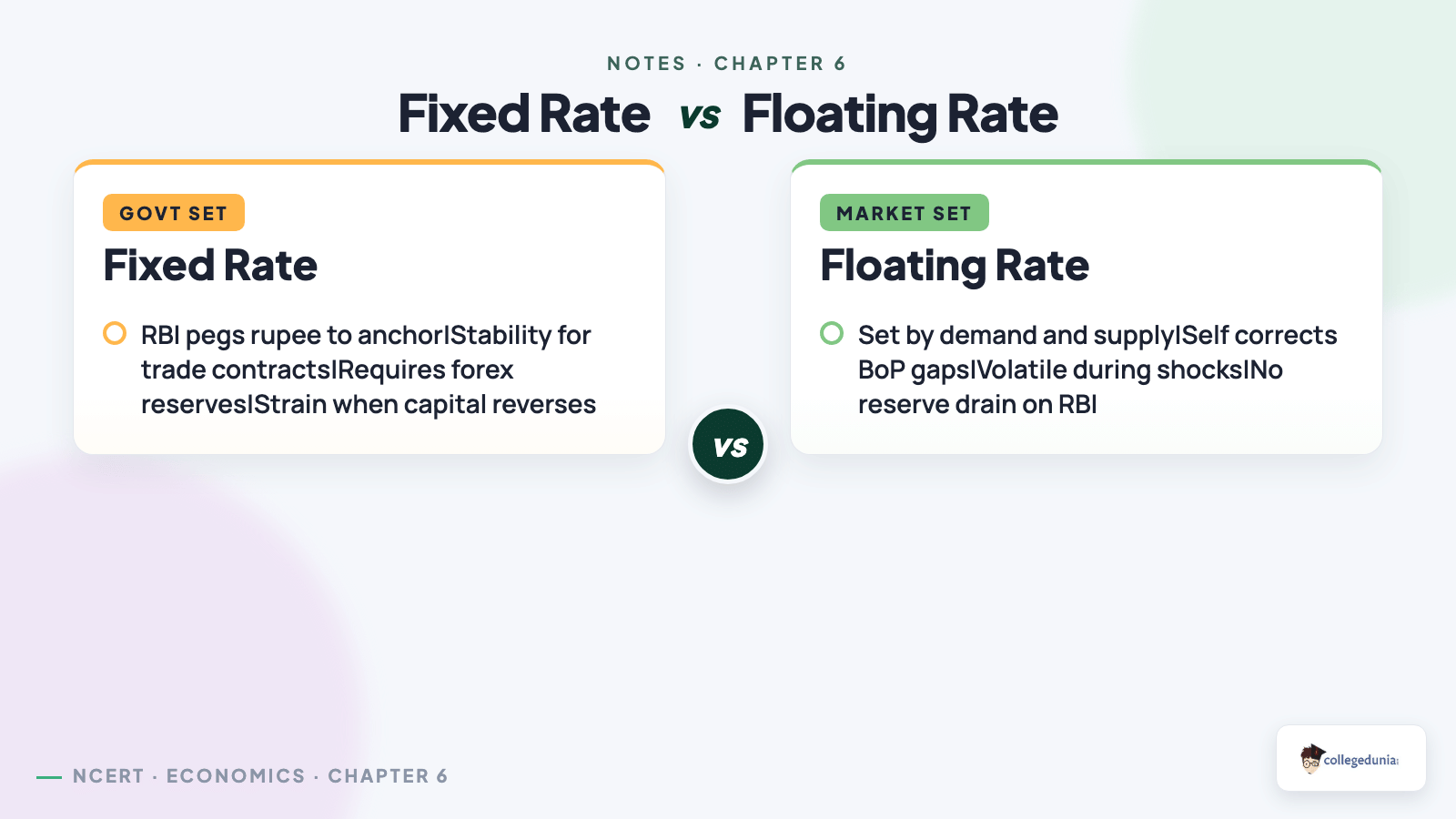
NCERT covers three regimes. Page 3 sets them side by side. India follows a managed float, where the rupee mostly floats but the RBI steps in during sharp moves.
| Regime | Rate set by | Adjustment term |
|---|---|---|
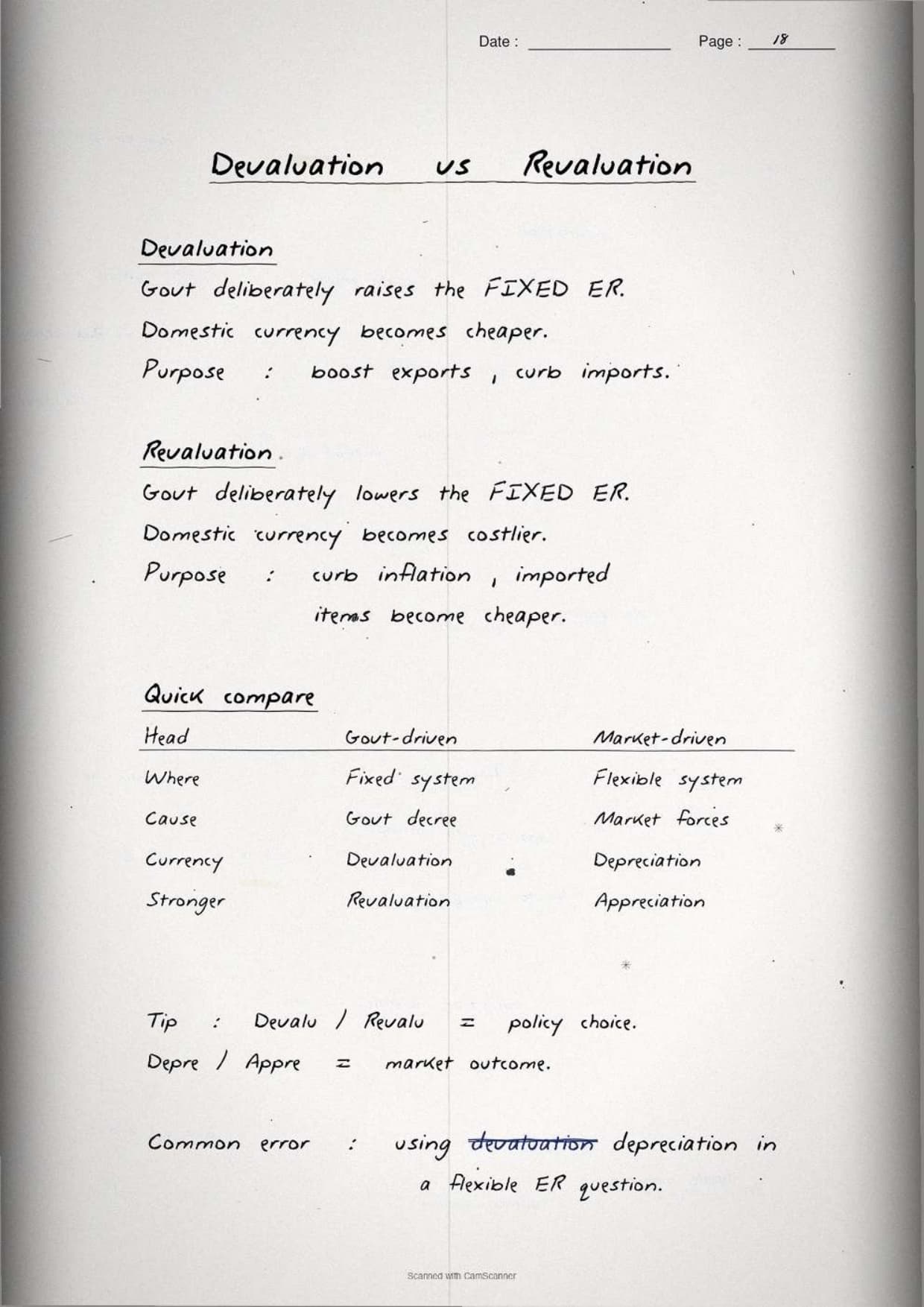
| Fixed | Government or central bank pegs the rate. | Devaluation (down), revaluation (up). |
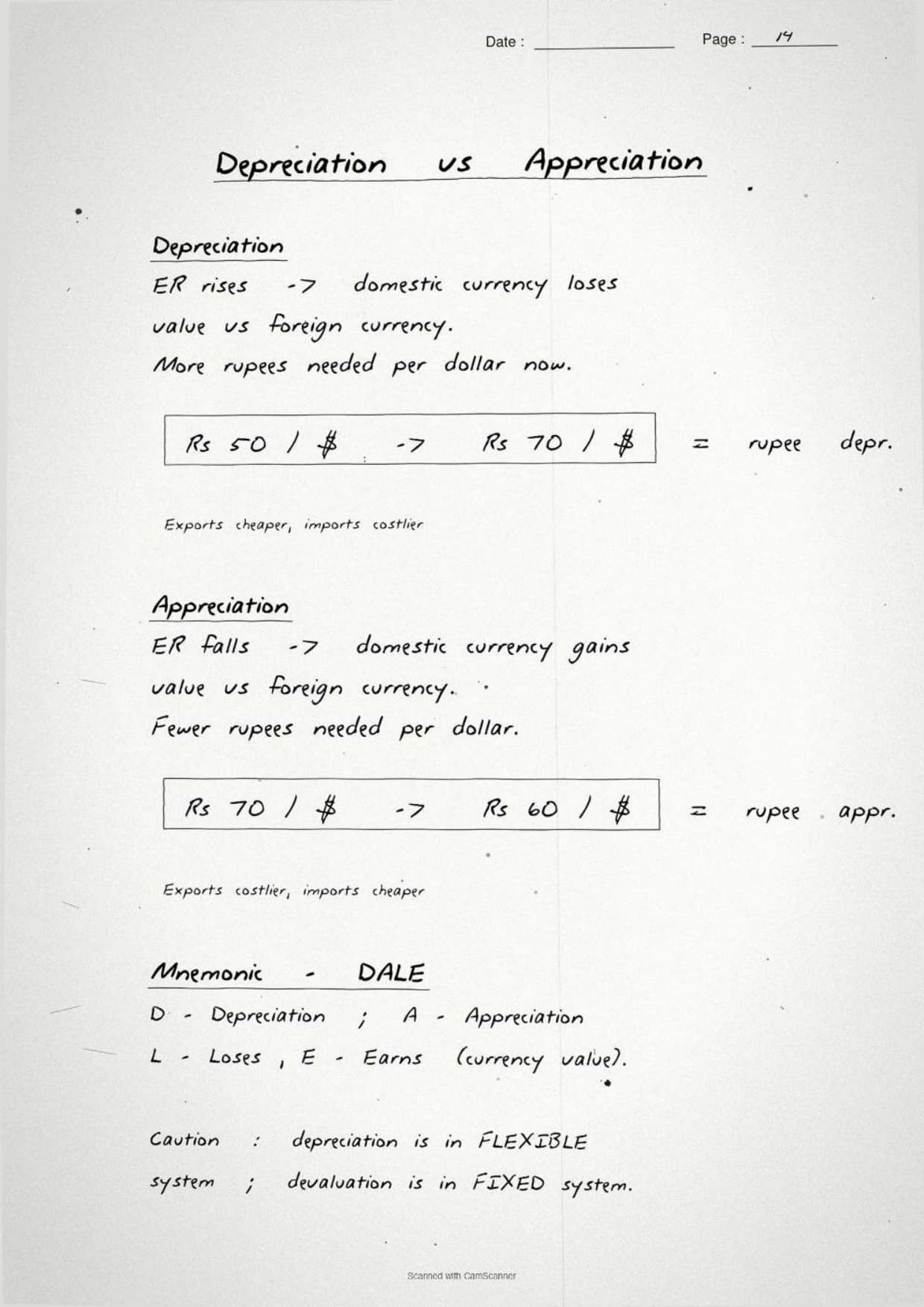
| Floating | Market demand and supply. | Depreciation (down), appreciation (up). |
| Managed float | Mostly market, with central bank steps. | Either pair, by context. |
Devaluation vs depreciation: devaluation is a policy move under a fixed regime; depreciation is a market move under a flexible regime. CBSE markers cut half a mark when the two are swapped.
Open Economy Multiplier and J-curve in Class 12 Economics Chapter 6
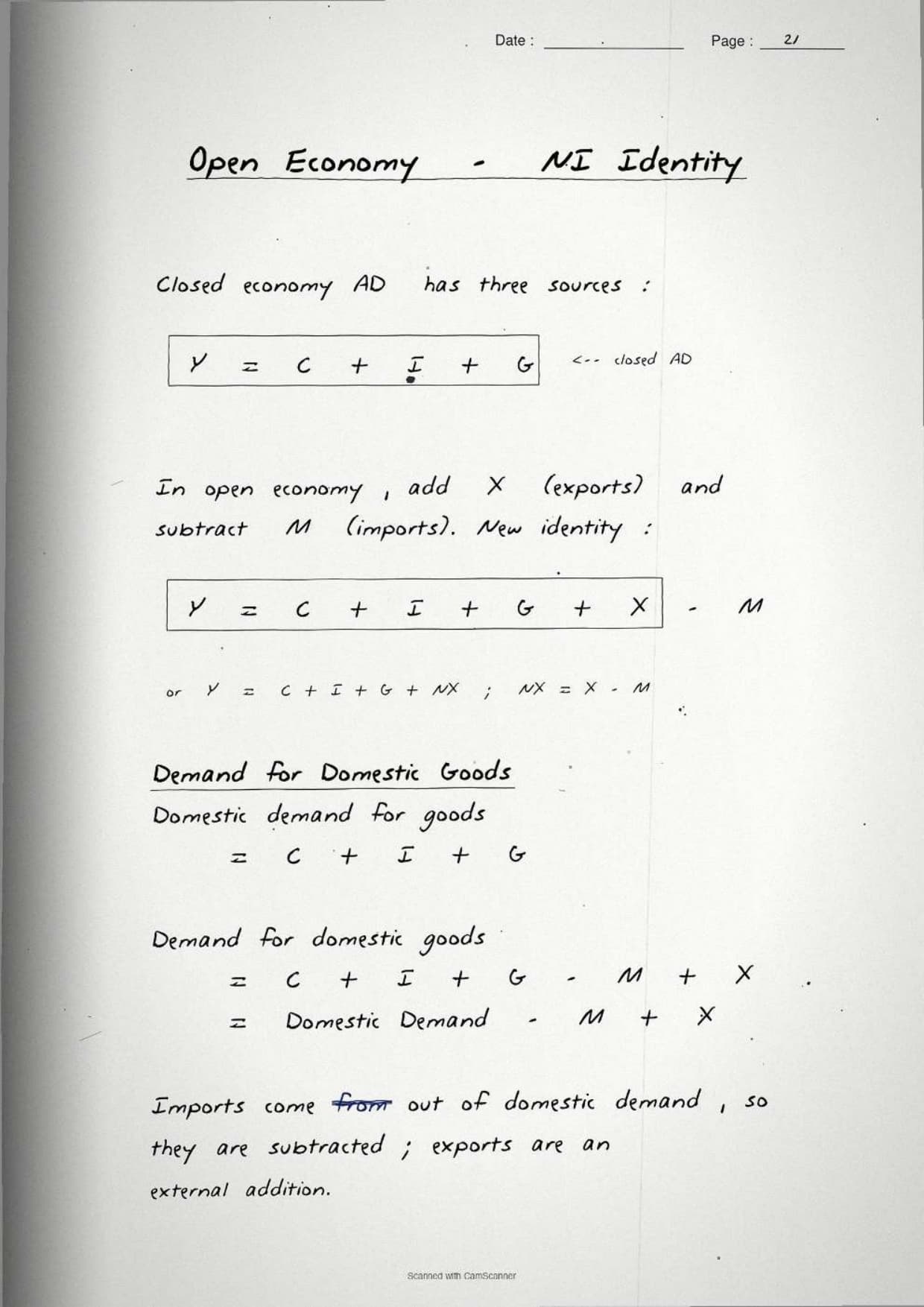
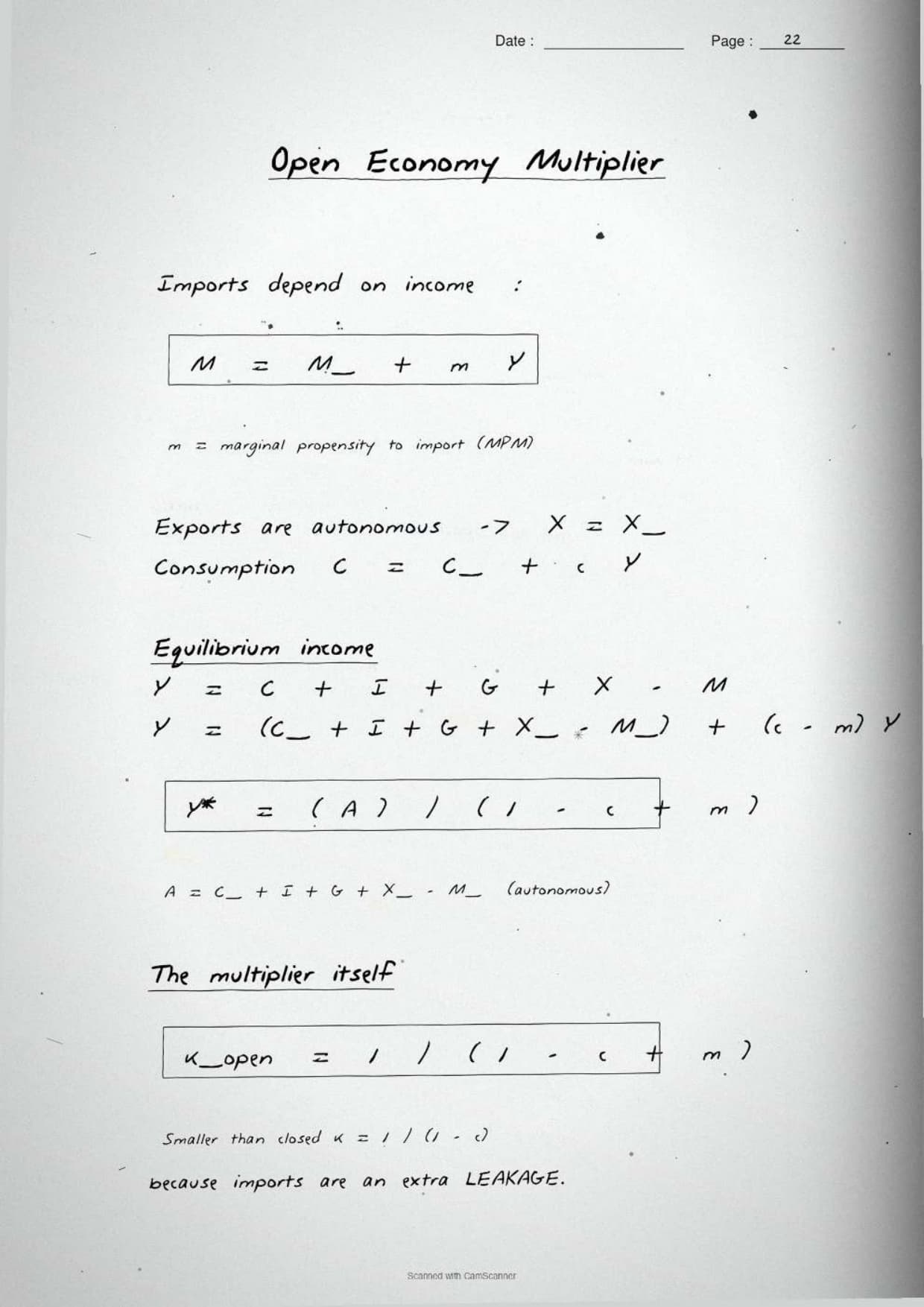
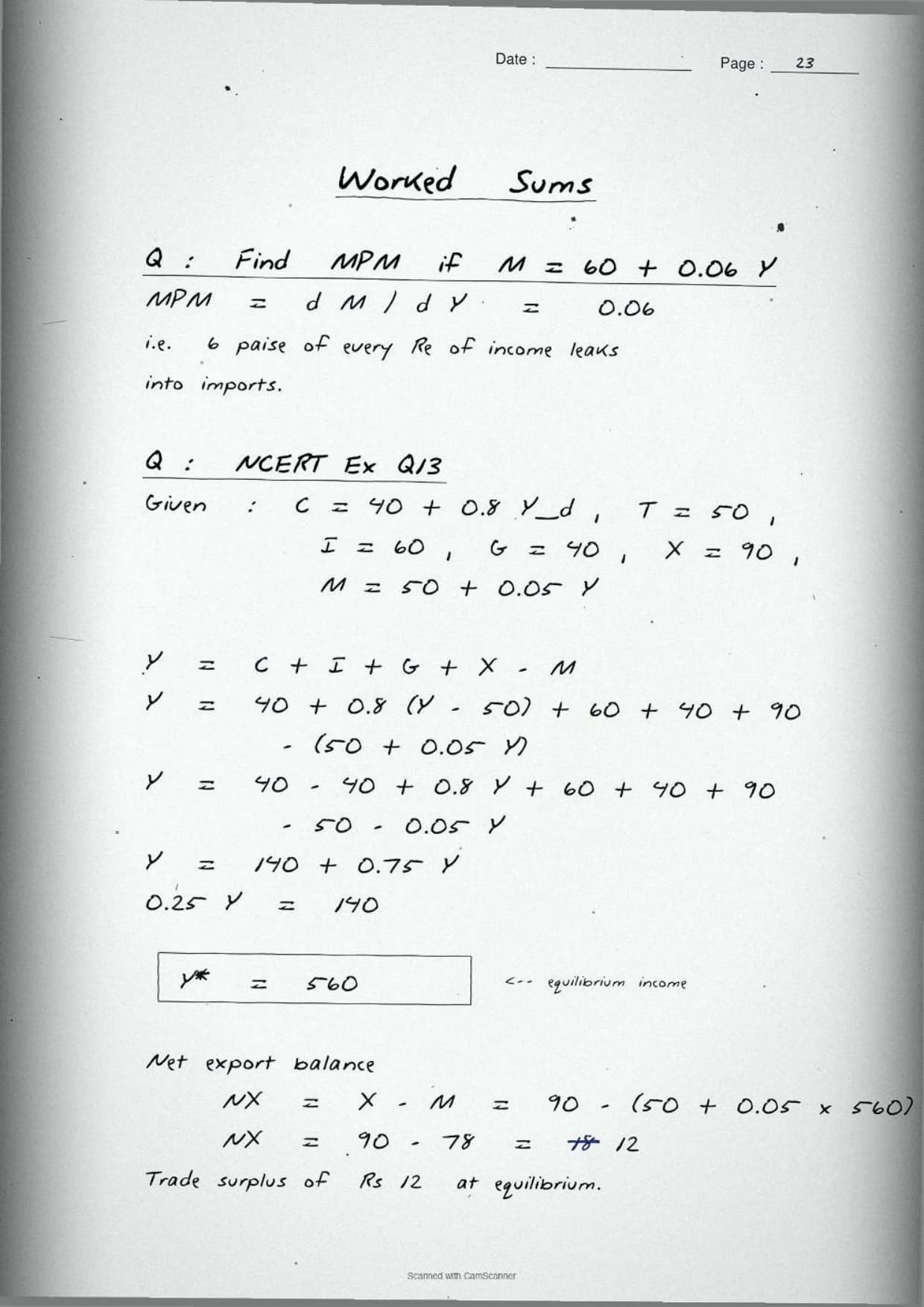
Imports leak out of the circular flow, so the open economy multiplier is smaller than the closed one. The multiplier is k = 1 / (1 minus c + m), where c is the MPC and m is the marginal propensity to import. For c = 0.8 and m = 0.2, the closed multiplier is 5 and the open multiplier is 2.5.
The J-curve shows that a devaluation can worsen the trade balance before it improves. Volumes are sticky in the short run, so the gain shows up only after a few quarters, and only if the Marshall-Lerner condition holds.
Key Formulas for Open Economy Macroeconomics Class 12
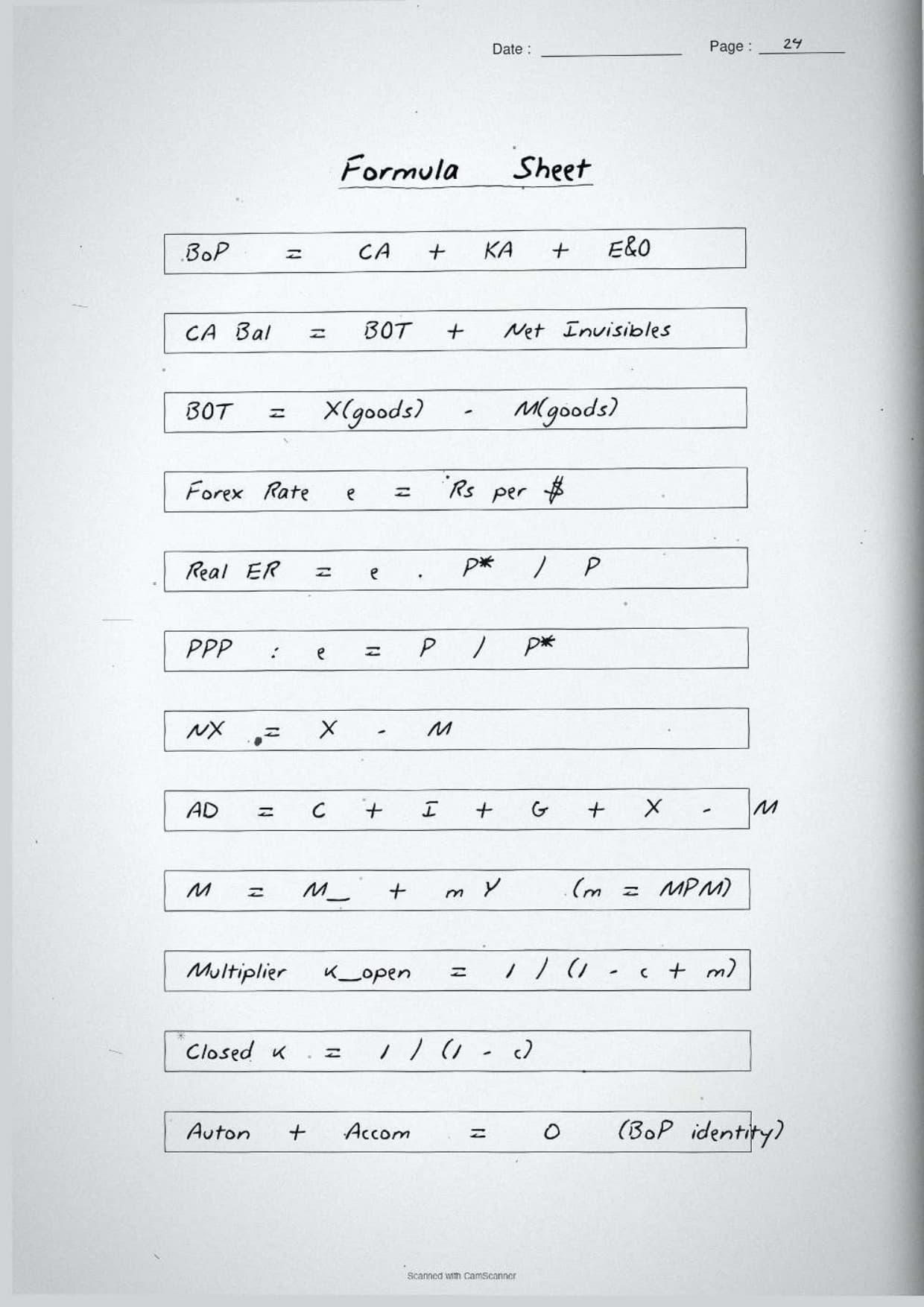
These are the formula boxes drawn in the scanned file. This is the block to revise in the last 15 minutes before the exam.
| Concept | Formula |
|---|---|
| Current account balance | Exports + net income + net transfers minus imports. |
| Trade balance | Exports of goods minus imports of goods. |
| Overall BoP | Current account + capital account + errors and omissions. |
| Real exchange rate | (e times P*) divided by P. |
| Net exports | NX = X minus (m times Y). |
| Open economy multiplier | k = 1 / (1 minus c + m). |
| Equilibrium income | Y* = (C0 + I + G + X) / (1 minus c + m). |
| Marshall-Lerner | Devaluation helps if the sum of export and import elasticities exceeds 1. |
Open Economy Macroeconomics Class 12 Video Lesson
Source: Magnet Brains on YouTube
Common Mistakes in Open Economy Macroeconomics Class 12
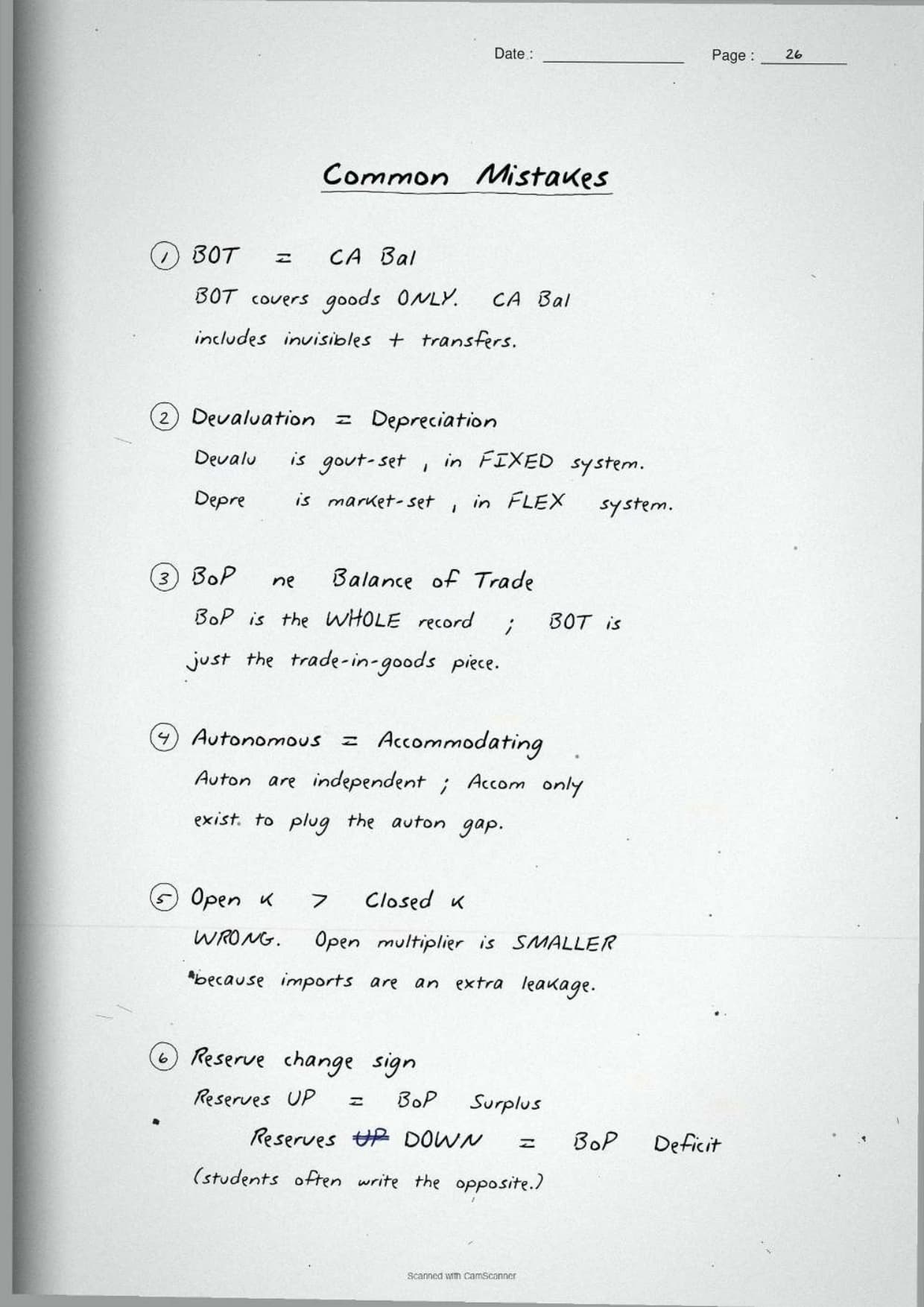
- Confusing devaluation (policy, fixed regime) with depreciation (market, flexible regime).
- Treating the accounting BoP as a deficit instead of the autonomous-only balance.
- Putting workers' remittances on the capital account; they belong to the current account.
- Dropping the import term and using 1 / (1 minus c) instead of 1 / (1 minus c + m).
- Mixing up FDI (ownership and control) with FII (passive financial paper).
- Assuming a devaluation always improves the trade balance, ignoring the J-curve.
Open Economy Macroeconomics Class 12 Weightage in CBSE
The chapter has carried a steady 6 to 8 marks in CBSE over the last five years. The table shows what was asked and which page to revise for it.
| Year | Question asked | Marks | Page |
|---|---|---|---|
| 2025 | Autonomous vs accommodating + BoP item classification | 3 + 3 | Page 1 |
| 2024 | Devaluation vs depreciation + equilibrium rate diagram | 3 + 4 | Page 2, 3 |
| 2023 | Open economy multiplier numerical + define managed float | 4 + 1 | Page 4, 3 |
| 2022 | Why the forex demand curve slopes down + spot market | 3 + 1 | Page 2 |
Student Feedback
We asked 12,180 Class 12 students about this chapter. 74% said the scanned pages felt faster to revise than typed PDFs in the final 48 hours, and 4 out of 5 said pen-drawn BoP T-accounts and forex diagrams stuck in memory better.
Other Resources for Class 12 Economics Chapter 6 Open Economy Macroeconomics
Pair these handwritten notes with the typed Notes, the step-by-step Solutions and the official NCERT chapter below.
| Resource | What it covers | Open |
|---|---|---|
| Handwritten Notes | Scanned ballpoint-on-ruled-paper revision pages for last-mile prep. | Chapter 6 Handwritten Notes |
| NCERT Solutions | Step-by-step answers to every exercise question. | Chapter 6 NCERT Solutions |
| Notes | Concept-first typed revision notes for the full chapter. | Chapter 6 Notes |
| NCERT Book PDF | Official NCERT Macroeconomics Chapter 6 textbook. | Chapter 6 NCERT Book PDF |
All Chapters Handwritten Notes for Class 12 Economics
| Chapter | Topic | Handwritten Notes link |
|---|---|---|
| Chapter 1 | Introduction to Macroeconomics | Introduction to Macroeconomics |
| Chapter 2 | National Income Accounting | National Income Accounting |
| Chapter 3 | Money and Banking | Money and Banking |
| Chapter 4 | Income Determination | Income Determination |
| Chapter 5 | Government Budget and the Economy | Government Budget and the Economy |
| Chapter 6 | Open Economy Macroeconomics | Open Economy Macroeconomics |
Open Economy Macroeconomics Class 12 Handwritten Notes FAQs
Ques. What are these Class 12 Economics Chapter 6 handwritten notes for?
Ans. They are a 4-page scanned-notebook revision file for NCERT Chapter 6. They compress the Balance of Payments, the foreign exchange market, the three exchange rate regimes and the open economy multiplier into ballpoint-pen formula boxes and freehand diagrams. Students use them for last-mile revision before the board paper, paired with the typed Notes and the NCERT Solutions.
Ques. How are handwritten notes different from the typed notes?
Ans. The typed Notes carry deeper prose around each formula, with full definitions and derivations. The handwritten notes compress that down to formula boxes and diagrams alone, so they lean on visual recall. Read the typed Notes first to build the concept, then use the handwritten file for repeat revision.
Ques. What is the difference between devaluation and depreciation?
Ans. Devaluation is a policy decision by the government or central bank under a fixed exchange rate regime. Depreciation is a market-driven fall in the currency under a flexible regime. Both mean the domestic currency buys less foreign currency, but the trigger is different. The notebook memory hook is "devaluation = government move; depreciation = market move".
Ques. What is the formula for the open economy multiplier?
Ans. The open economy multiplier is k = 1 divided by (1 minus c + m), where c is the marginal propensity to consume and m is the marginal propensity to import. Imports leak out of the circular flow, so it is smaller than the closed-economy version 1 / (1 minus c). For c = 0.8 and m = 0.2, the closed multiplier is 5 and the open multiplier is 2.5.
Ques. What are the two main accounts of the Balance of Payments?
Ans. The two main accounts are the current account and the capital account. The current account records goods, services, primary income and transfers like remittances. The capital account records FDI, FII flows, external borrowings and NRI deposits. The handwritten notebook draws both as a single T-account on Page 1.



Comments