



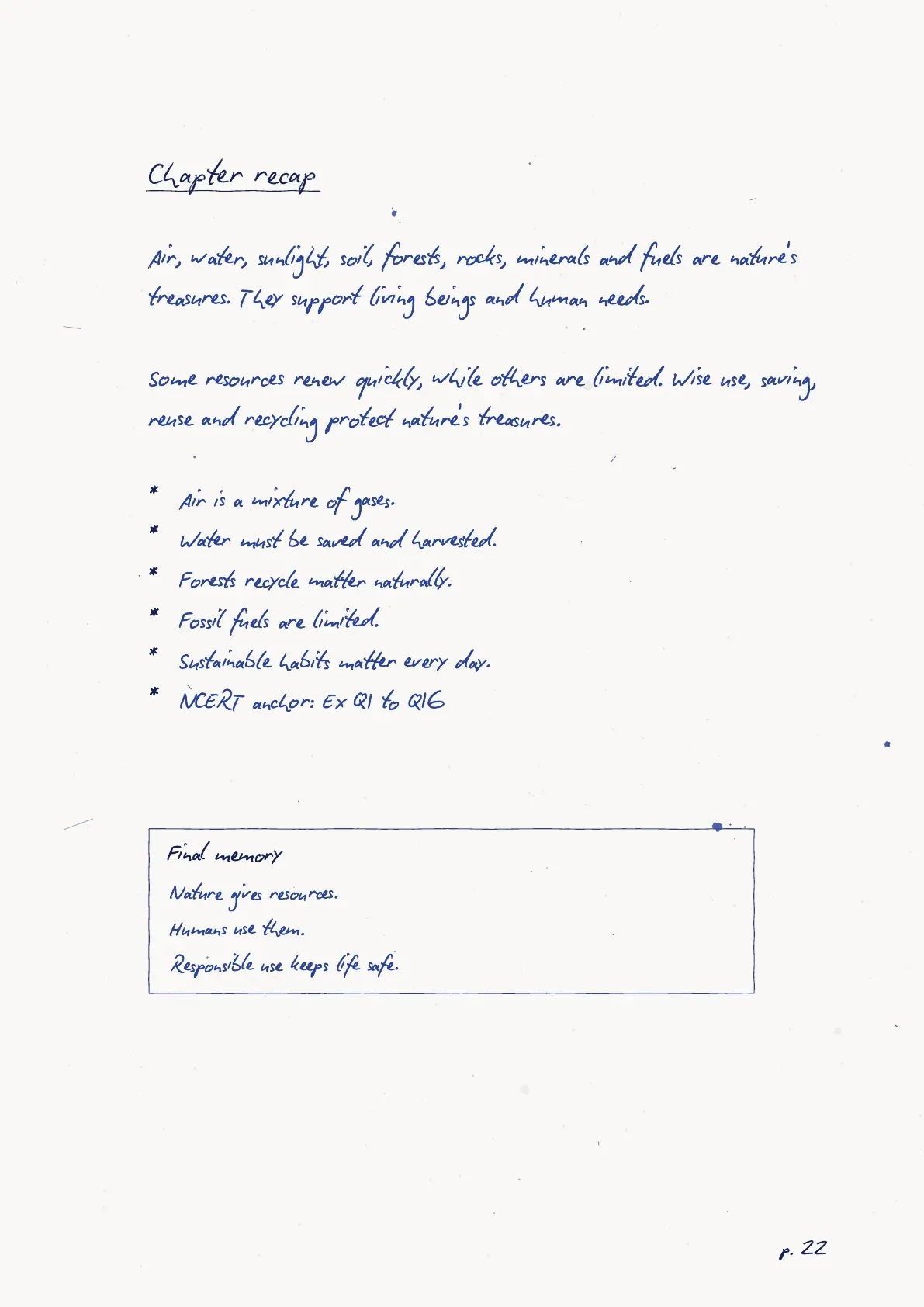
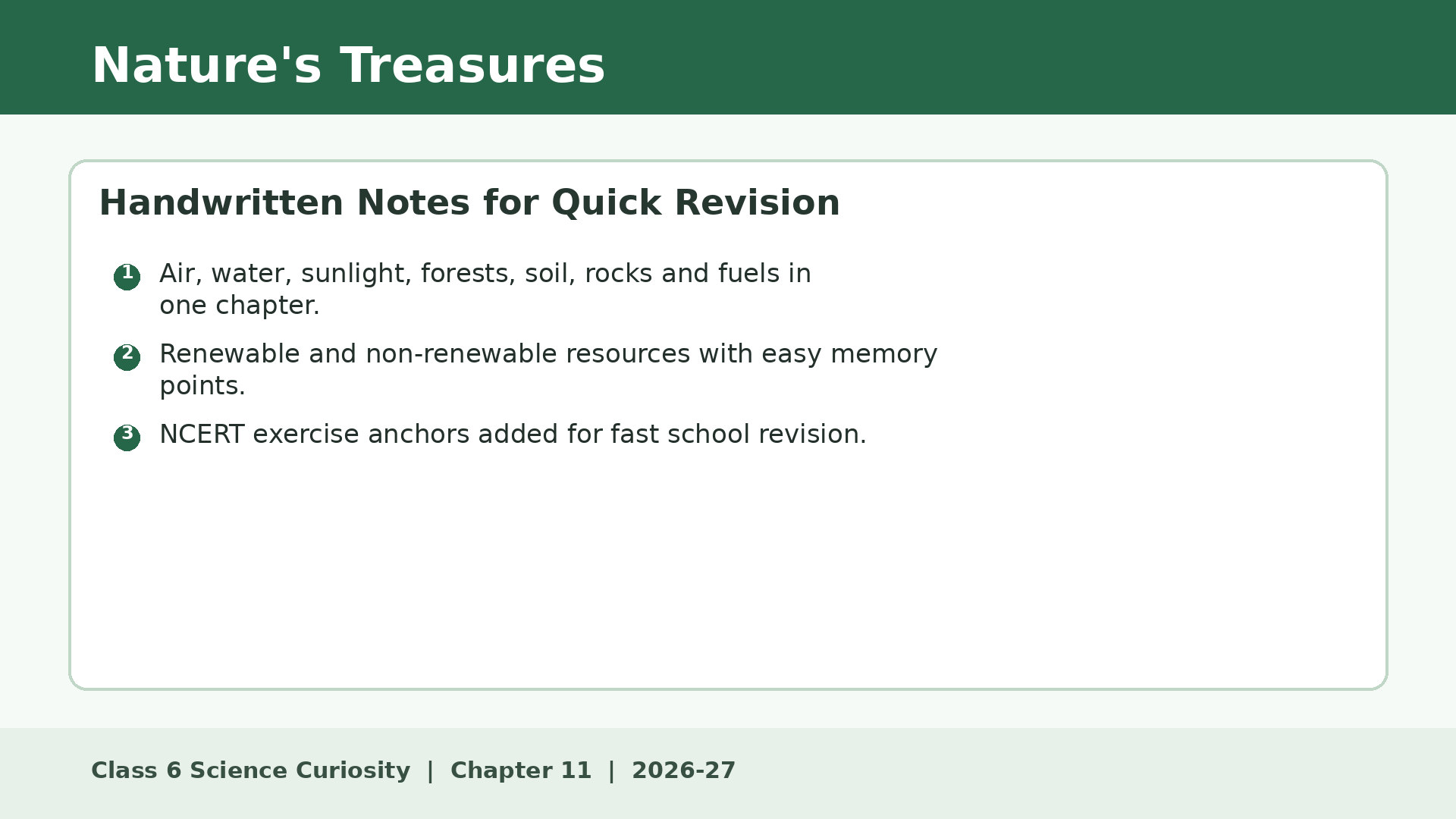
The handwritten notes on Class 6 Science Chapter 11 Nature's Treasures are prepared for quick 2026-27 revision. The PDF covers air, water, sunlight, forests, soil, rocks, minerals, fossil fuels, renewable resources, non-renewable resources, and conservation habits.
- Best use: revise this PDF after reading the NCERT Curiosity chapter once.
- PDF focus: definitions, activity conclusions, resource classification, diagrams, and NCERT exercise anchors.
- Chapter value: this chapter connects daily life with responsible use of nature.
Student Feedback: In a Collegedunia study check, 79% of Class 6 students said resource-classification tables helped them revise this chapter faster.
|
Table of Contents |
Class 6 Science Chapter 11 Handwritten Notes Overview
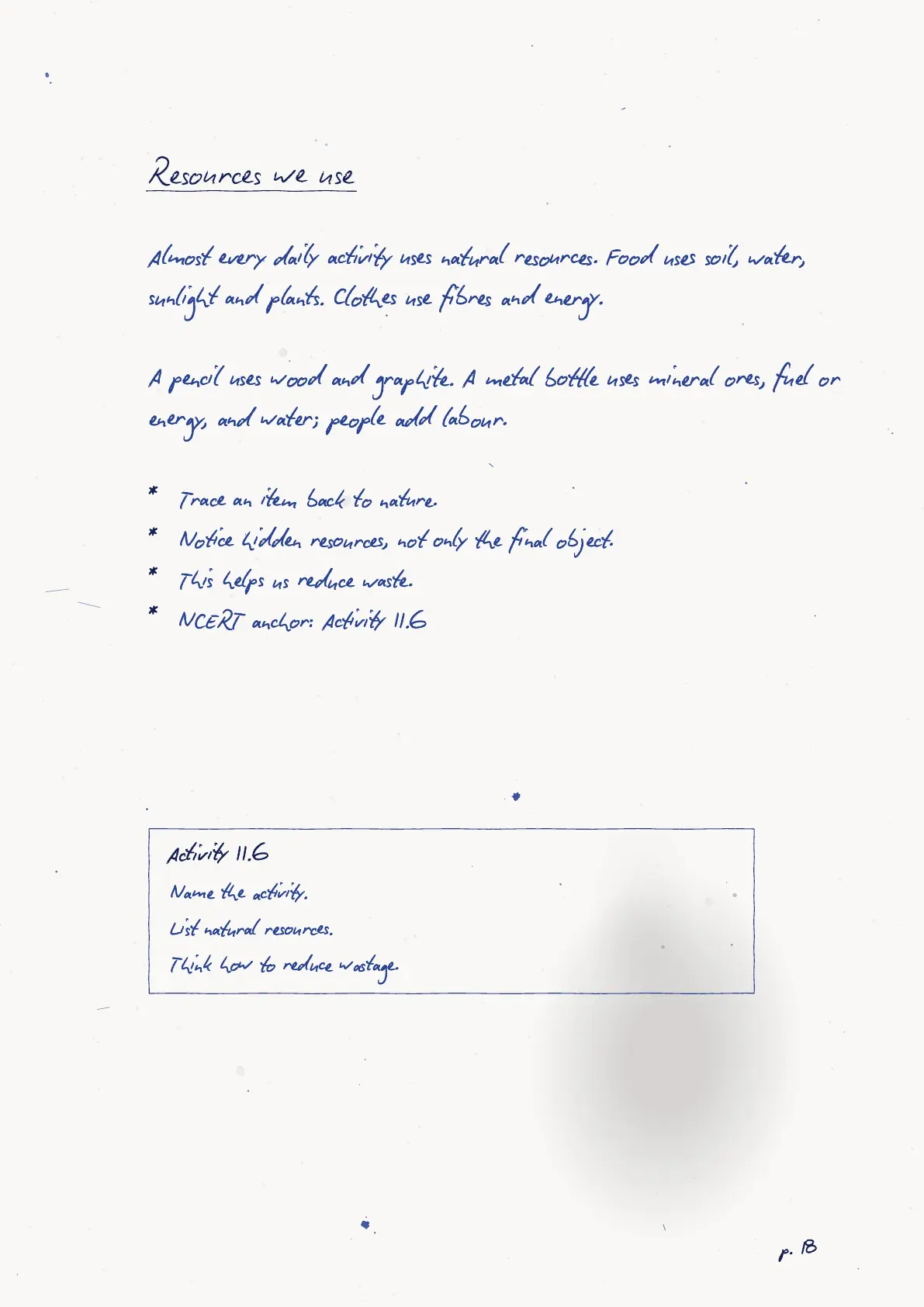
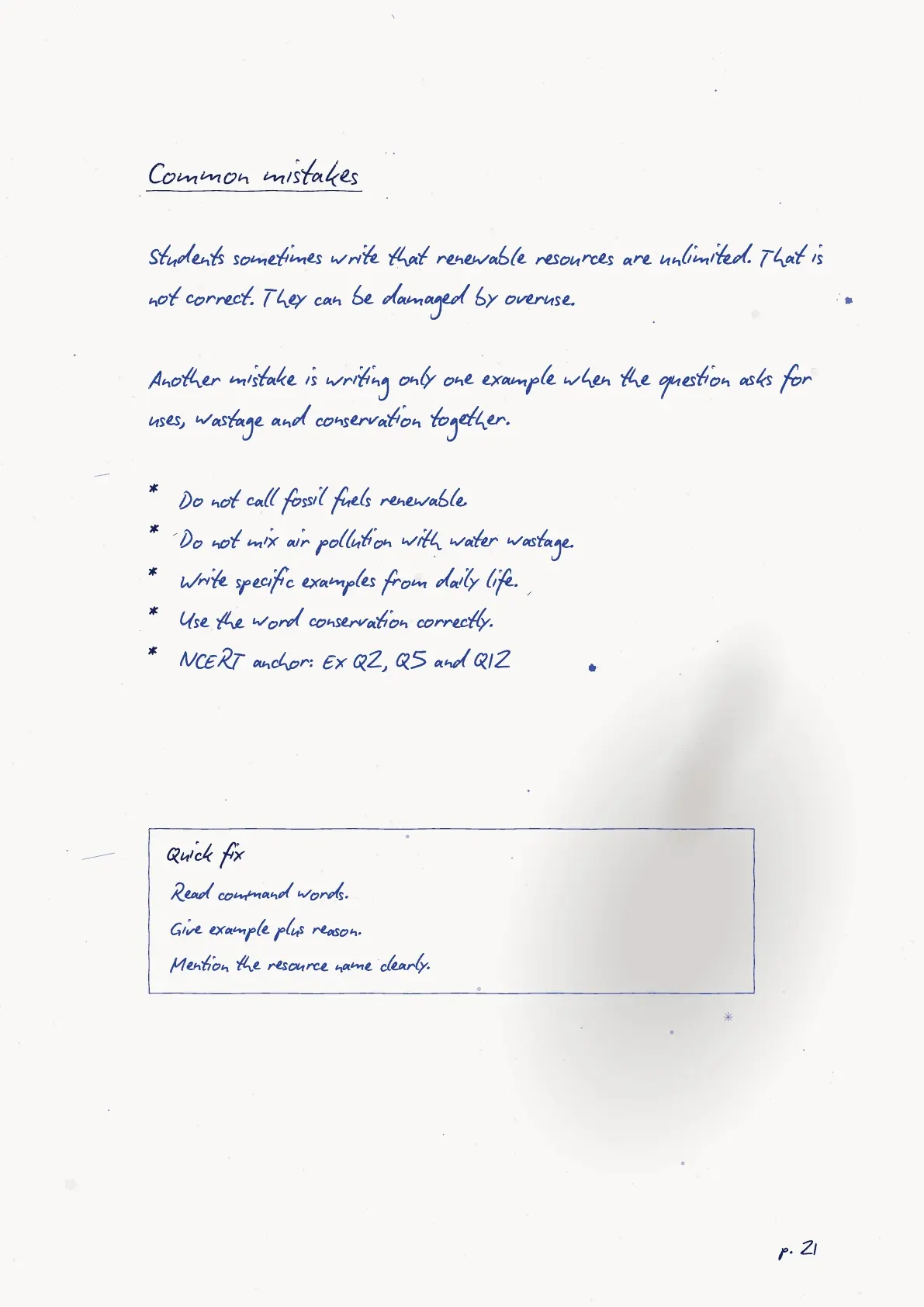
Class 6 Science Chapter 11 explains the resources that nature provides for life. Students learn why air, water, sunlight, forests, soil, rocks, minerals, and fossil fuels matter in daily life.
The handwritten PDF turns the full chapter into a short revision notebook. It also adds compact NCERT anchors, so students can connect each topic with the textbook activity or exercise question.
Nature's Treasures Video Revision
Source: Magnet Brains on YouTube
Air as a Natural Resource
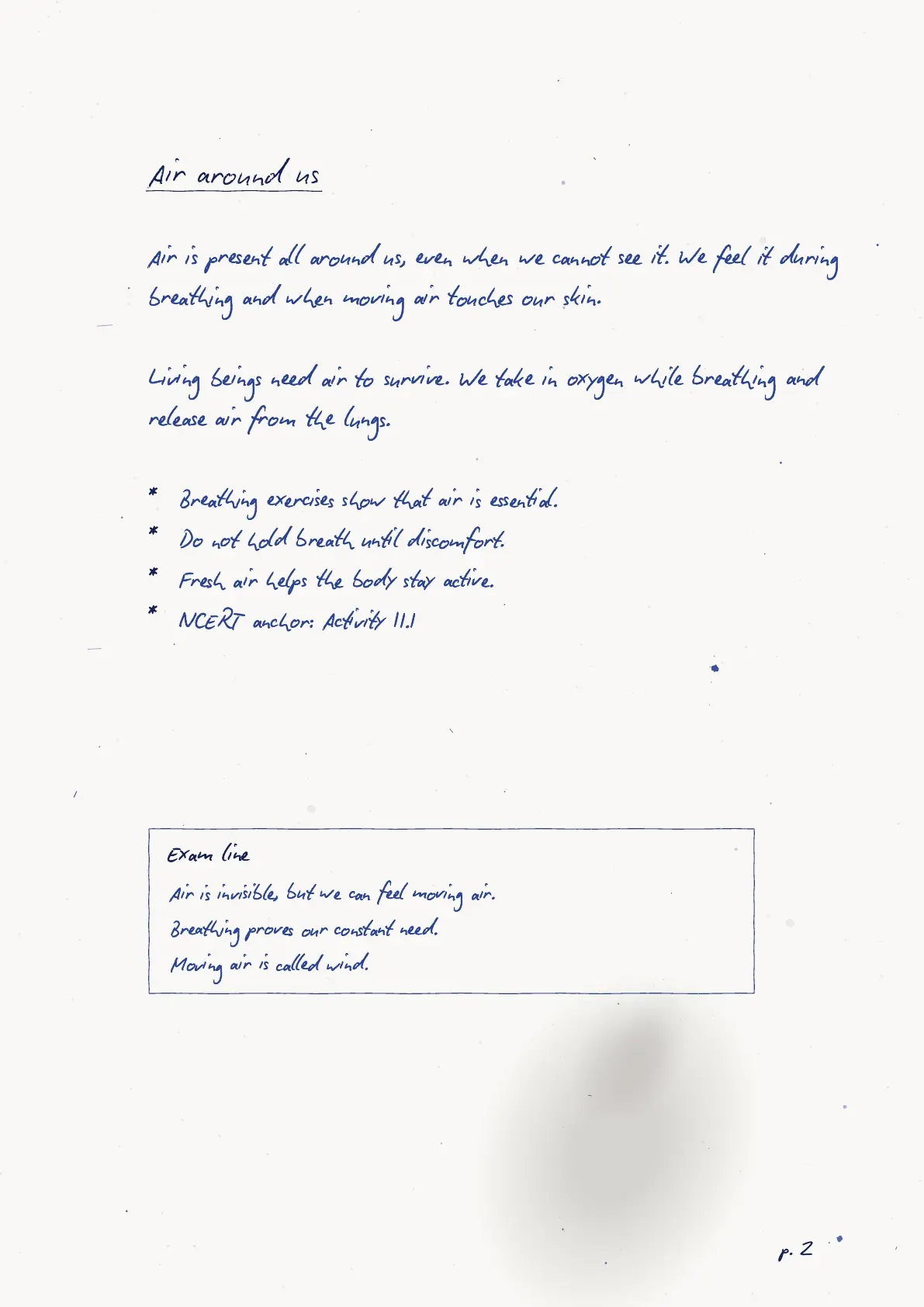
Air is present all around us. We cannot see it, but we feel moving air as wind. The chapter explains that living beings need oxygen from air to survive.
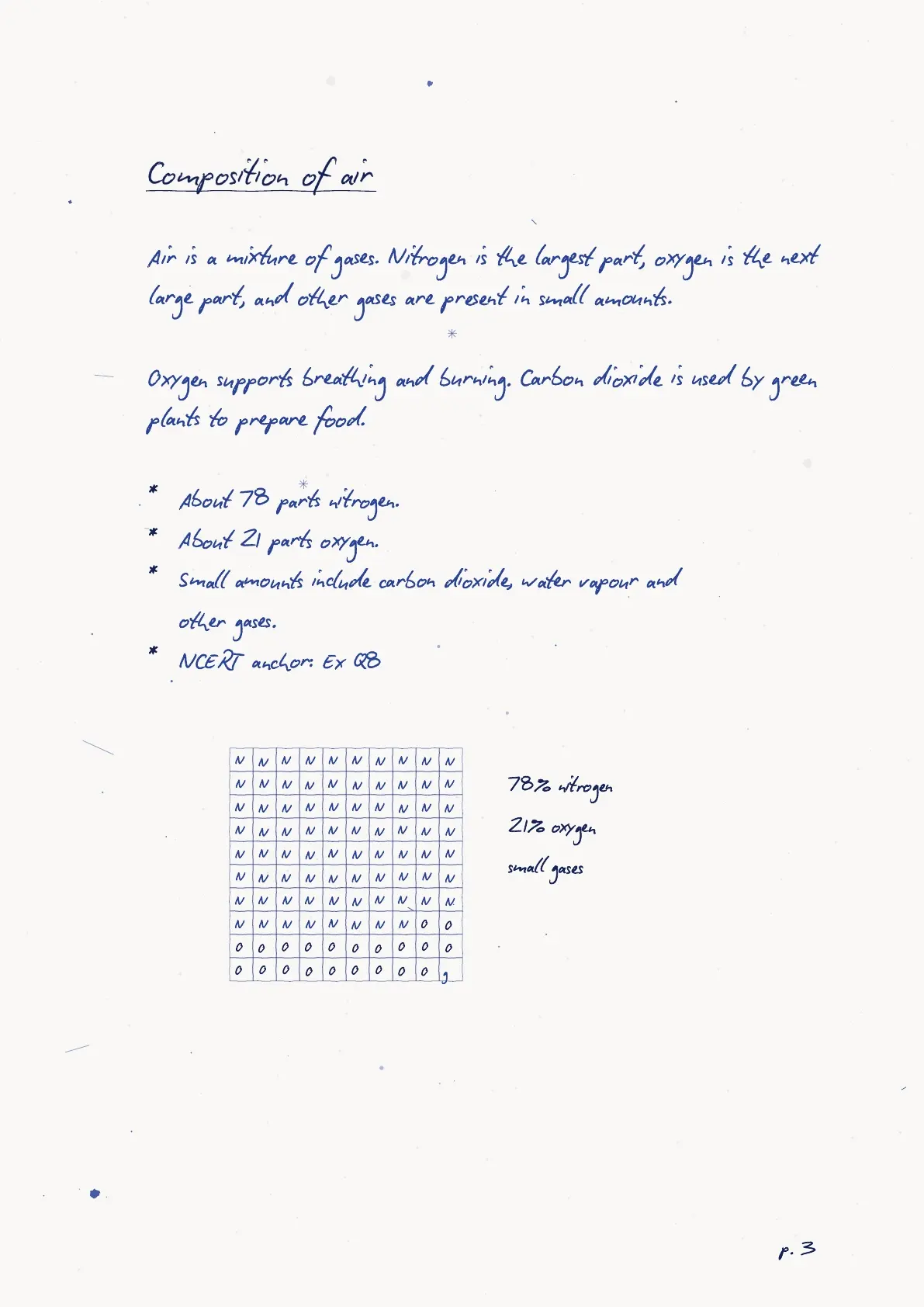
Air is a mixture of gases. NCERT shows 78 parts nitrogen, 21 parts oxygen, and 1 part argon, carbon dioxide, and other gases in every 100 parts of air.
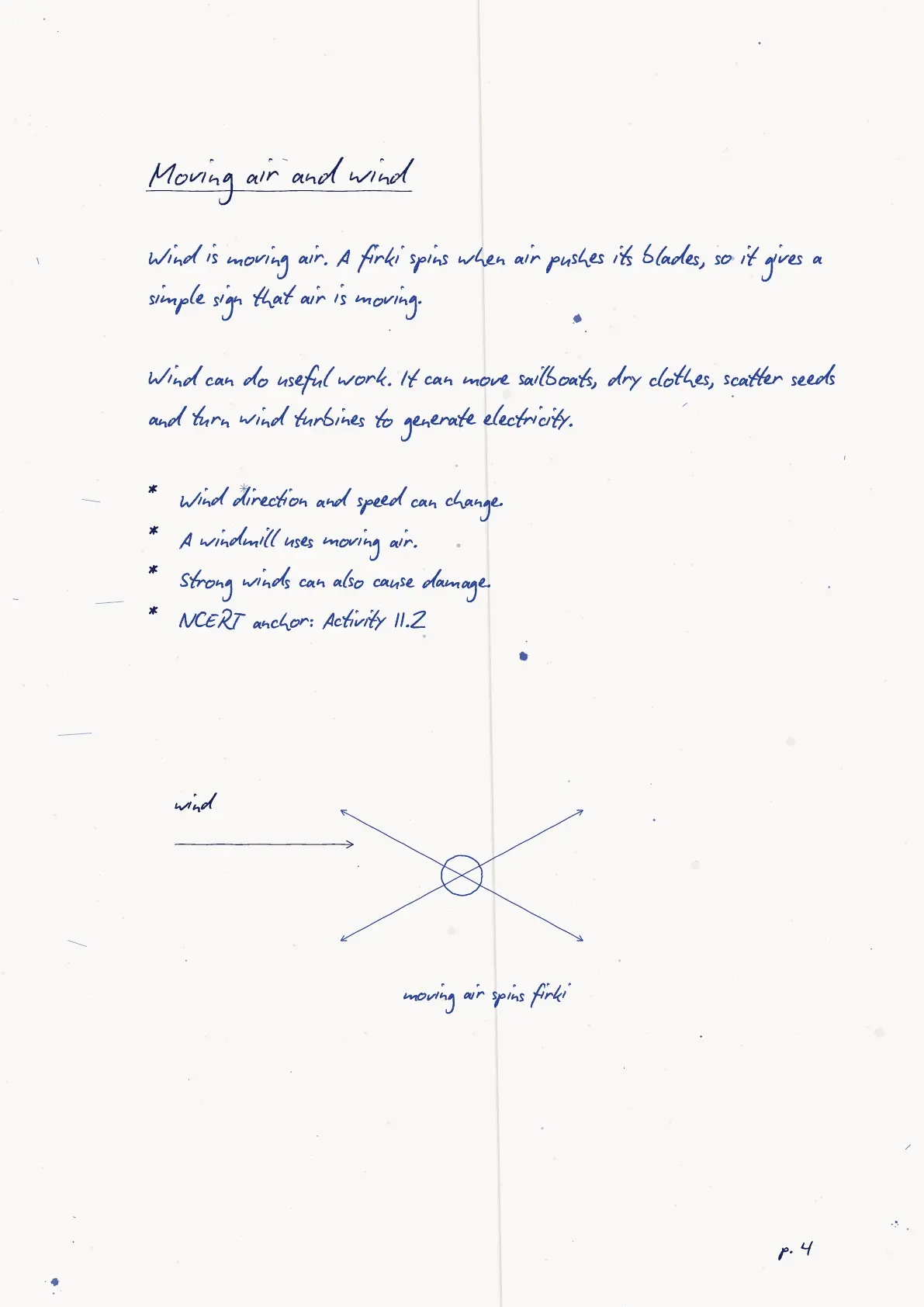
Moving air can rotate a firki. The same idea helps windmills run flour mills, pull water from wells, and generate electricity.
Water and Rainwater Harvesting
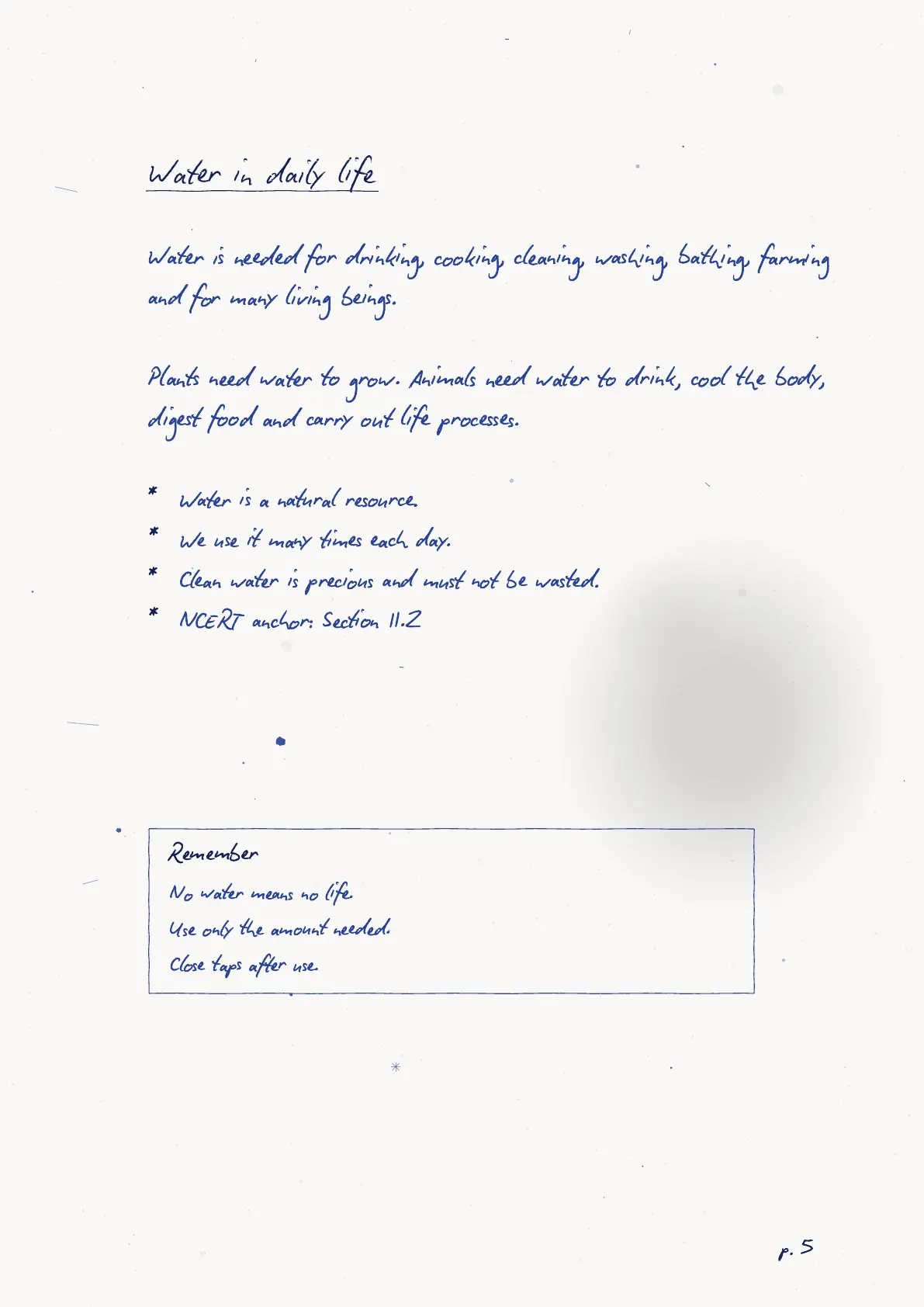
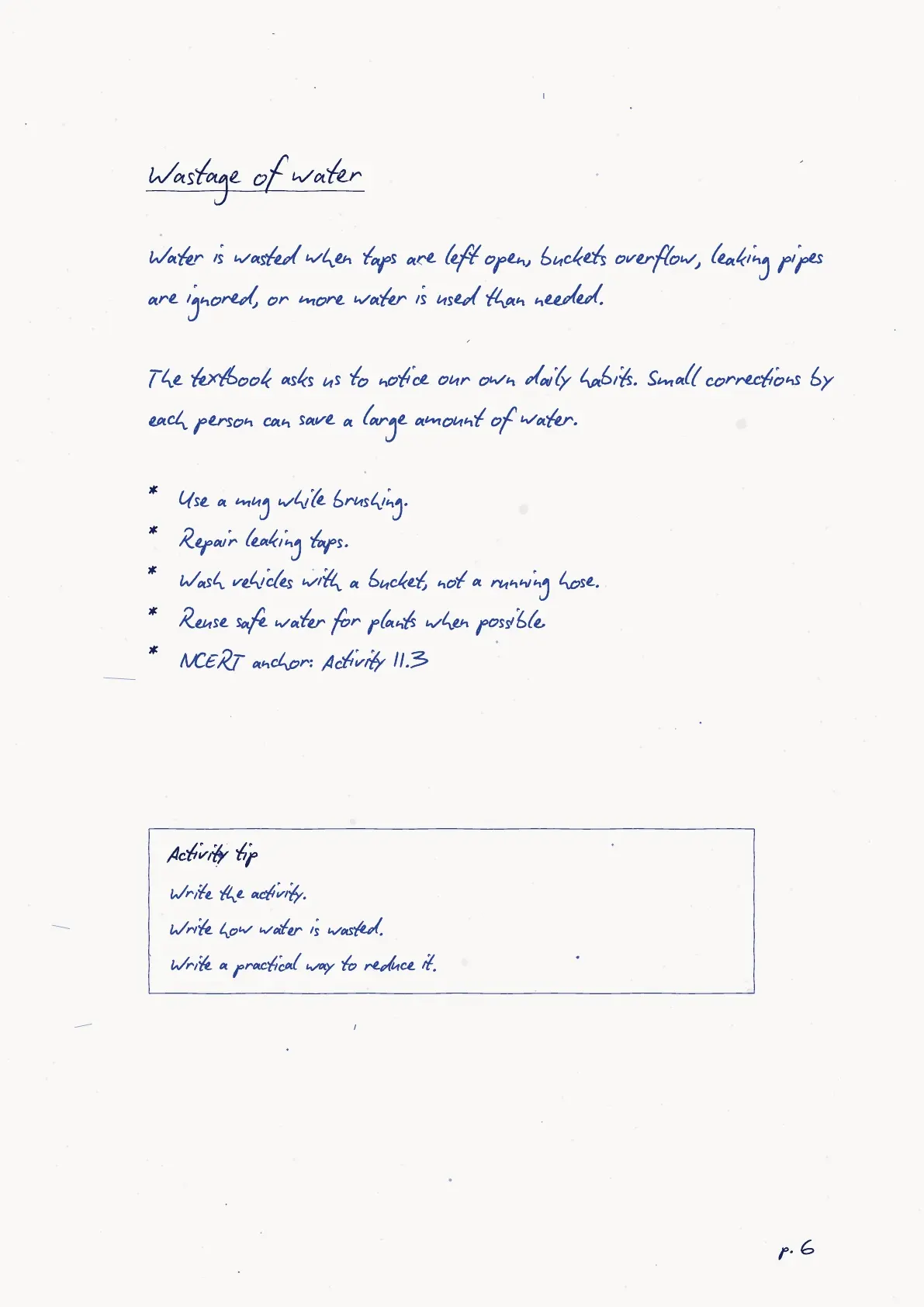
Water is used for drinking, cooking, bathing, washing, cleaning, growing crops, and caring for animals. Freshwater is limited, so the chapter asks students to notice wastage in daily habits.
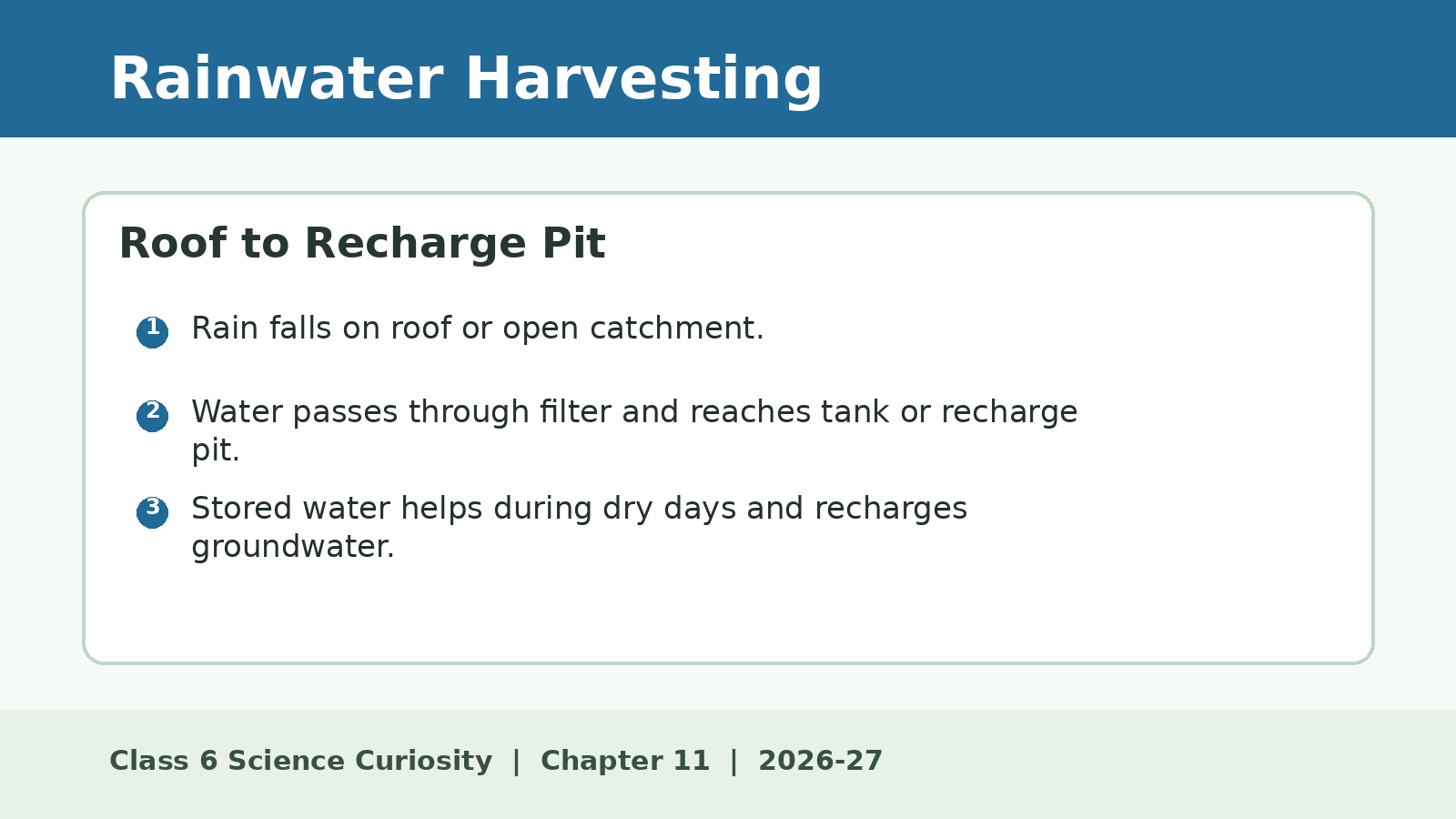
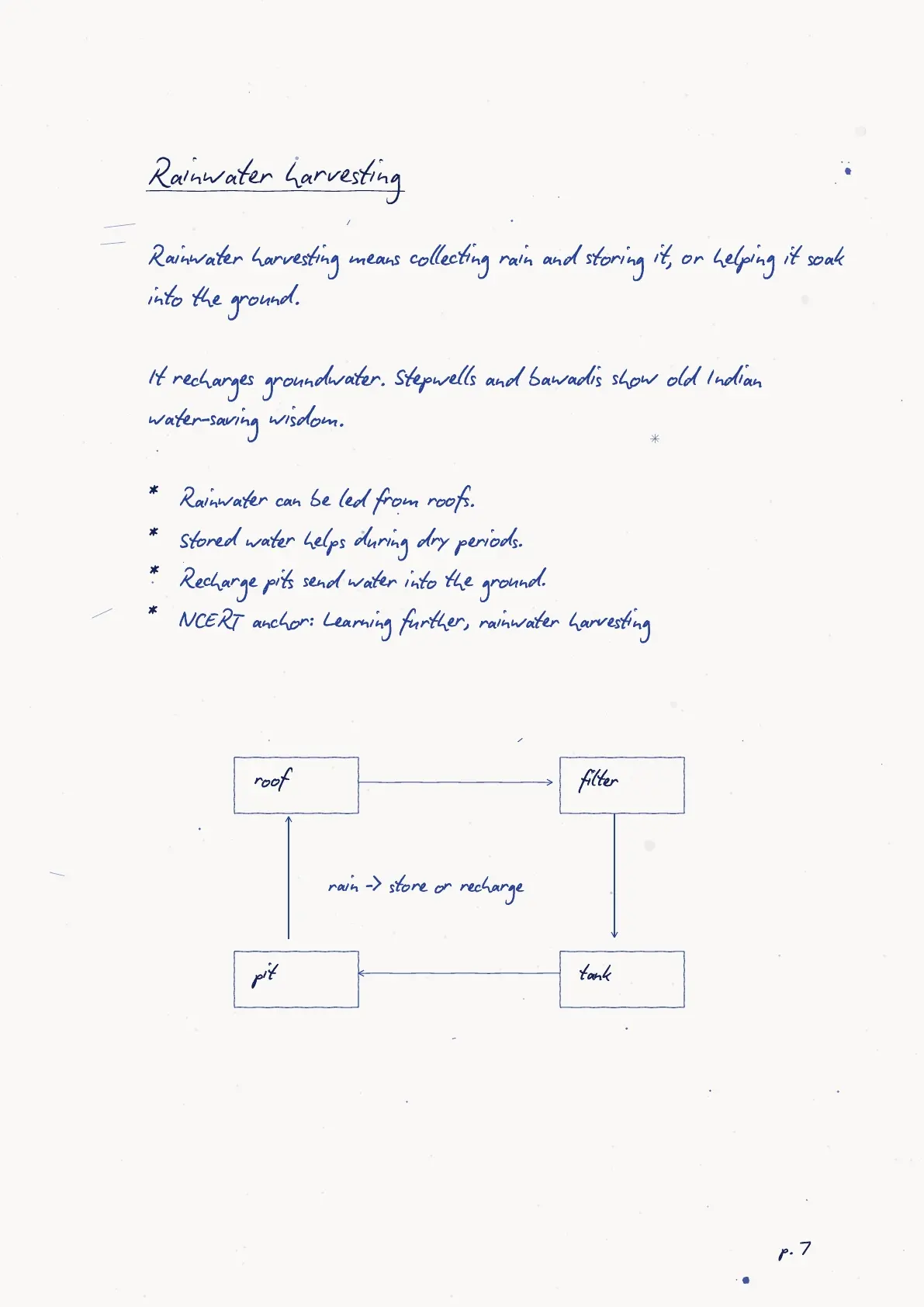
Rainwater harvesting means collecting rain and storing it, or helping it soak into the ground. Rooftop collection, filters, tanks, recharge pits, stepwells, and bawadis are useful examples.
Energy from the Sun
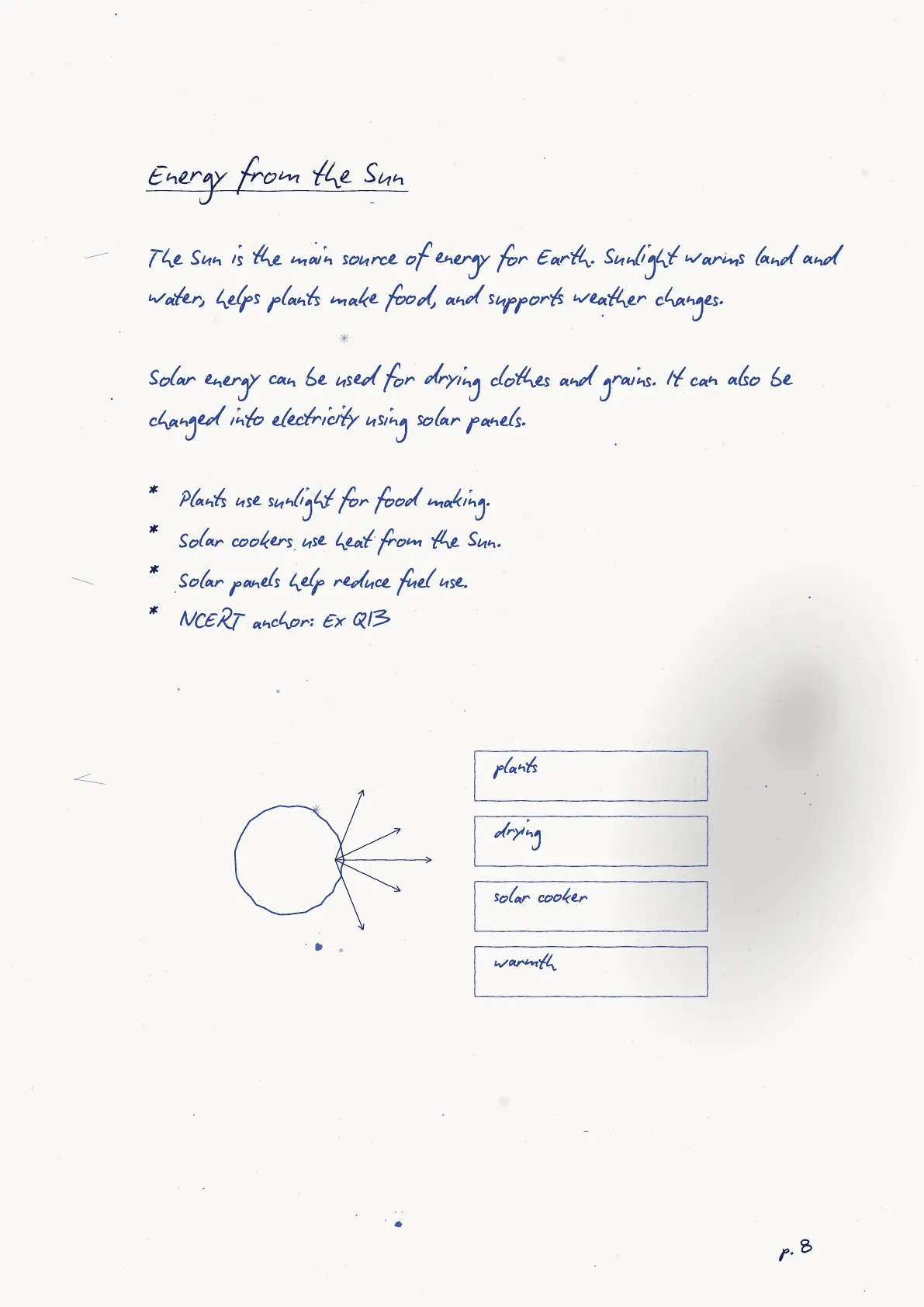
The Sun is the main source of energy on Earth. Plants use sunlight to prepare food. We also use sunlight for drying clothes and grains, heating water, cooking in solar cookers, and generating electricity through solar panels.
NCERT Exercise Question 13 connects sunlight, solar panels, gas stoves, and windmills. The handwritten notes mark this link so students can revise the concept through a textbook question.
Forests and Recycling in Nature
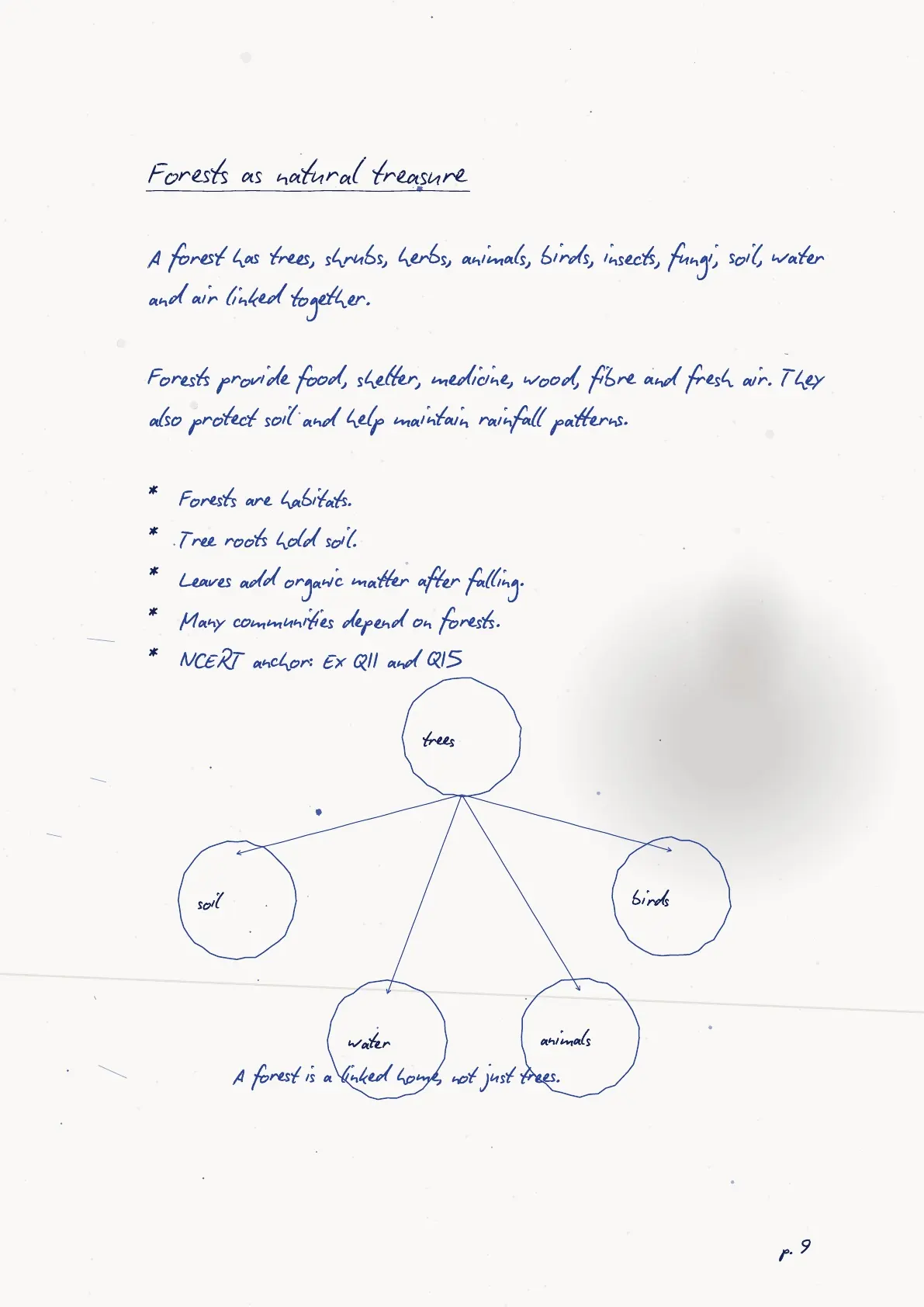
Forests provide food, shelter, medicines, wood, fibre, fresh air, and a home for many animals, birds, insects, and plants. Forest roots hold soil and reduce soil erosion.
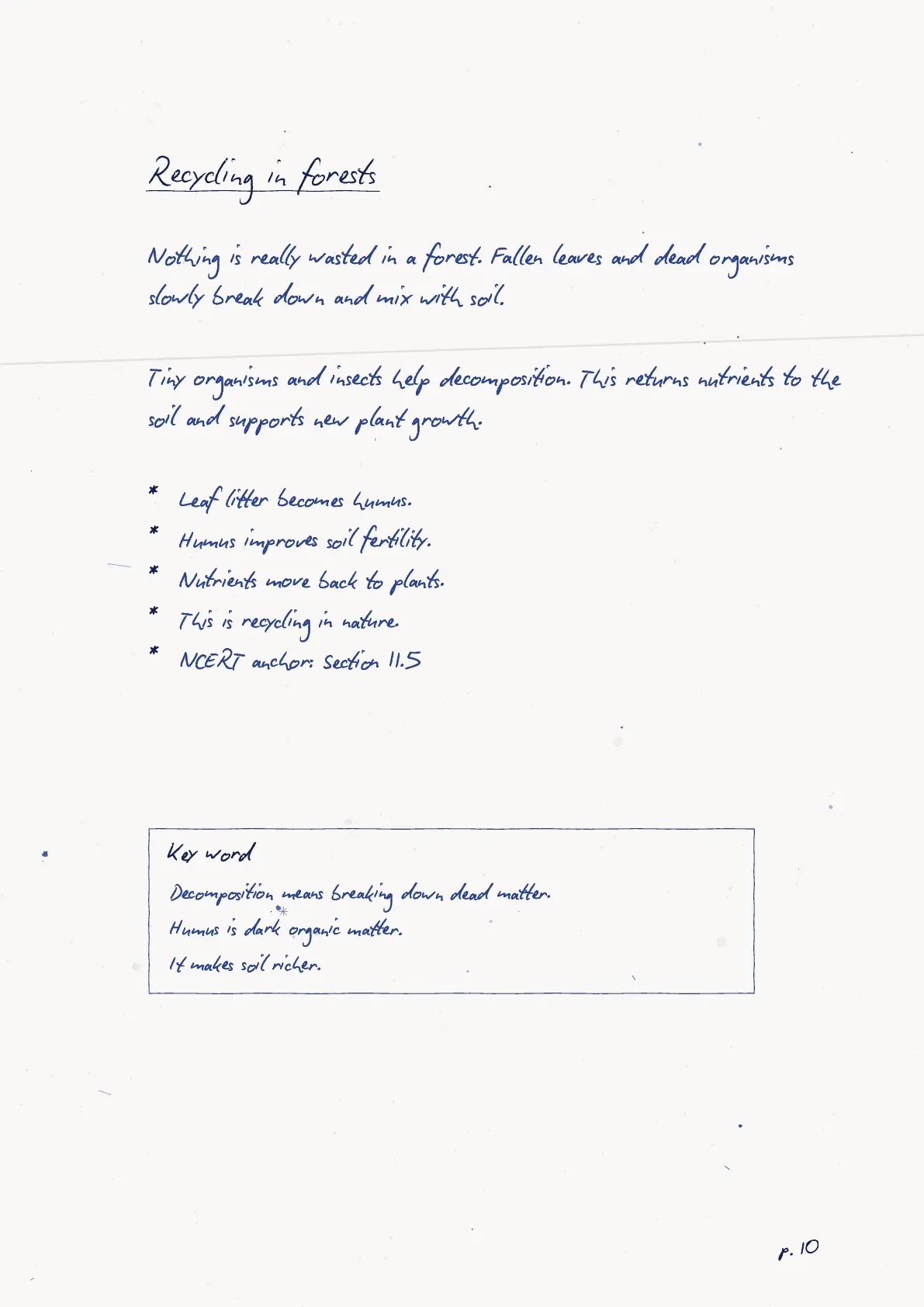
Fallen leaves decay and enrich the soil with nutrients. This is why the chapter calls it recycling in nature. Forests are not only groups of trees; they are linked homes for many life forms.
Soil, Rocks and Minerals
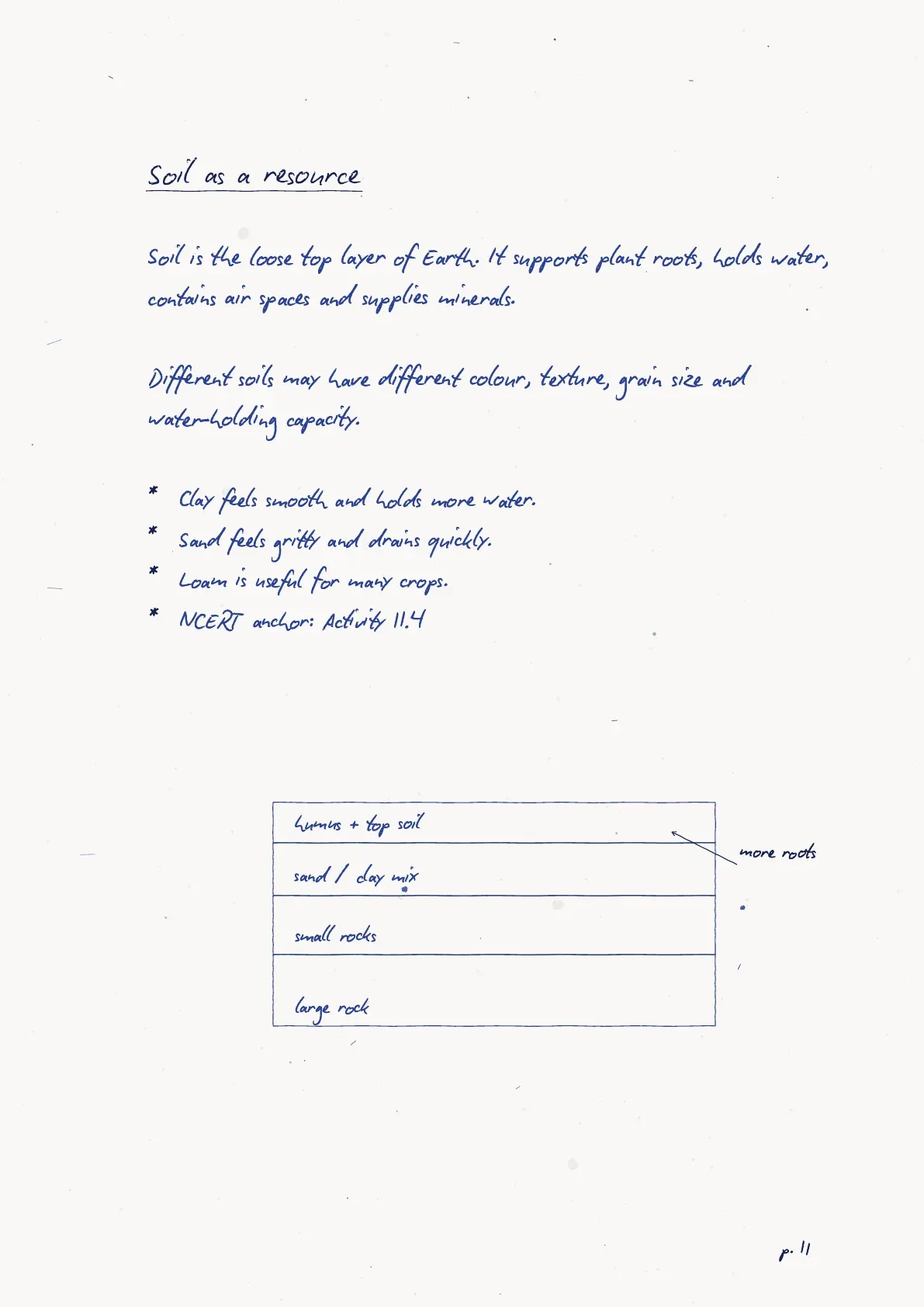
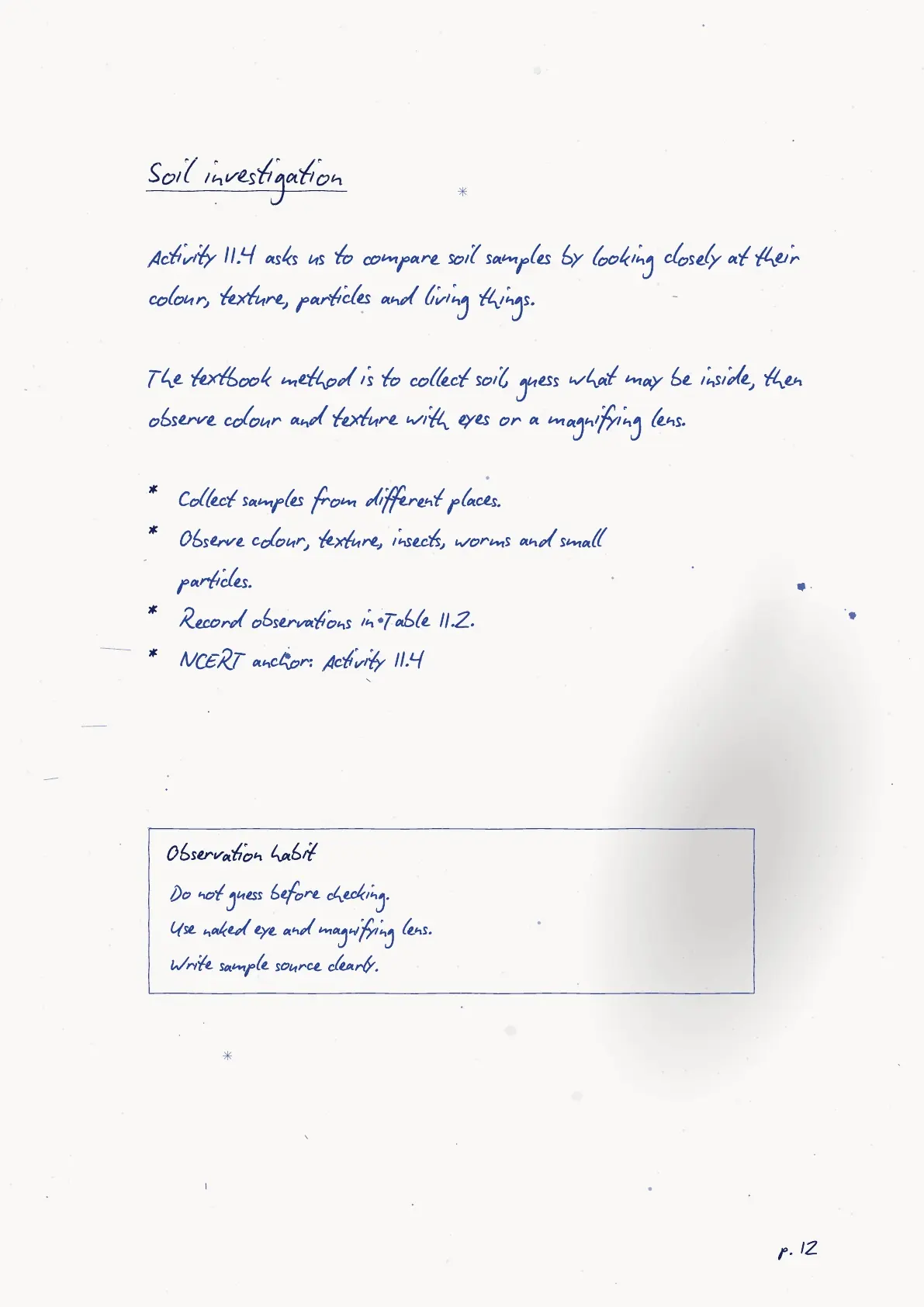
Soil supports plant roots, holds water, contains air spaces, and supplies minerals. Activity 11.4 asks students to collect soil samples, guess what may be present, observe colour and texture, and record observations in Table 11.2.
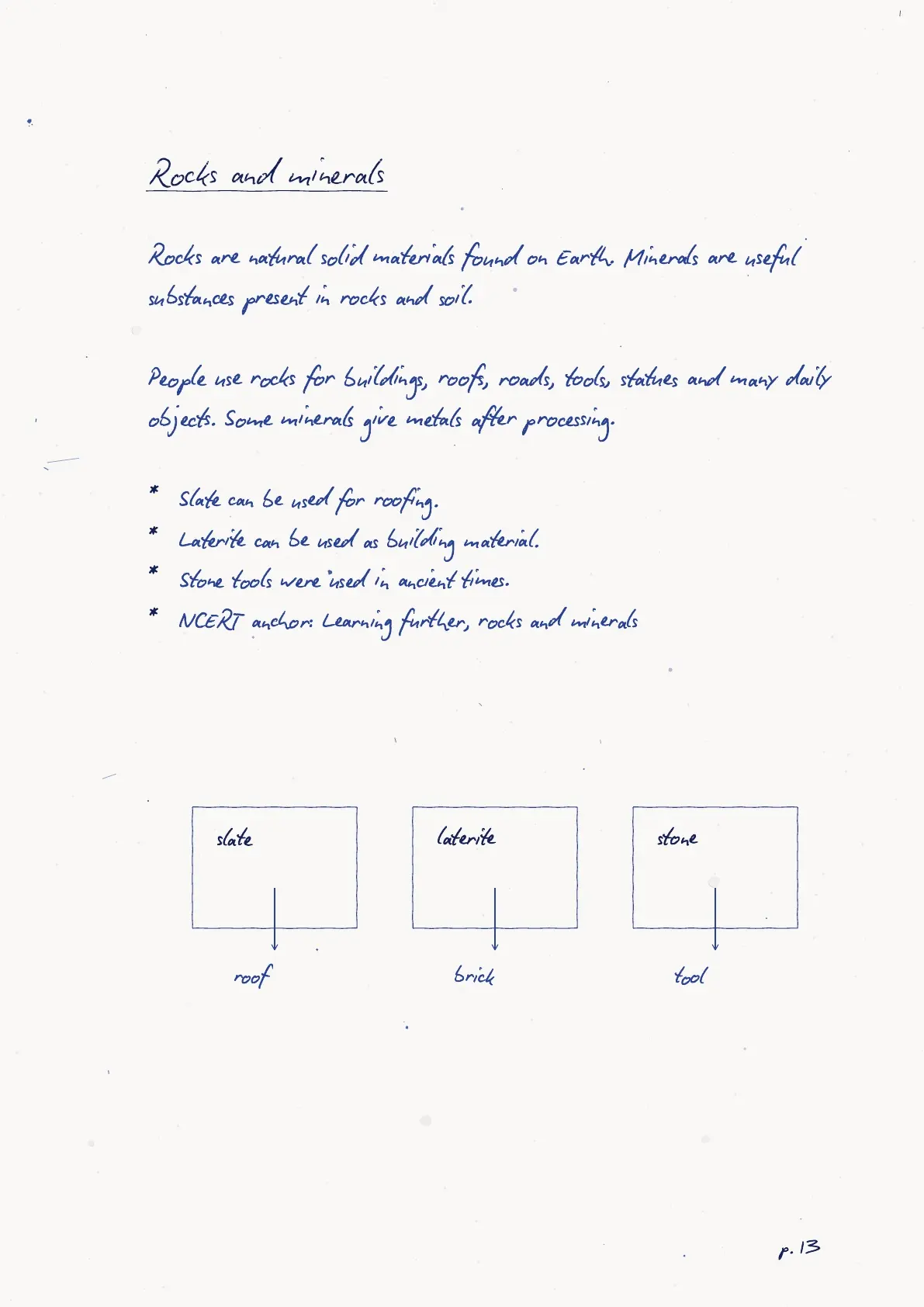
Rocks and minerals are also natural resources. Slate can be used for roofing, laterite can be used as building material, and stone tools show how humans have used rocks for a long time.
Fossil Fuels and Pollution
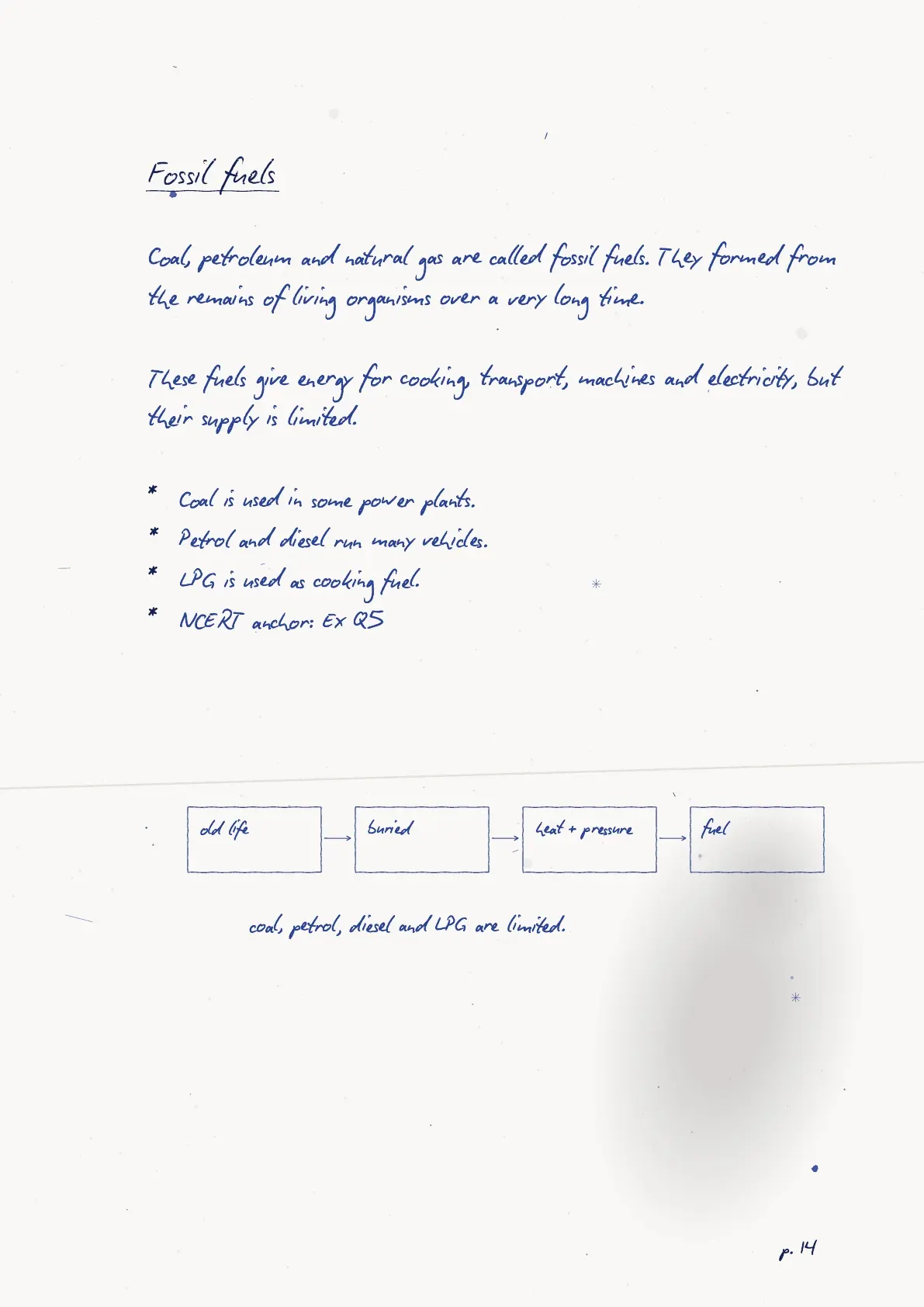
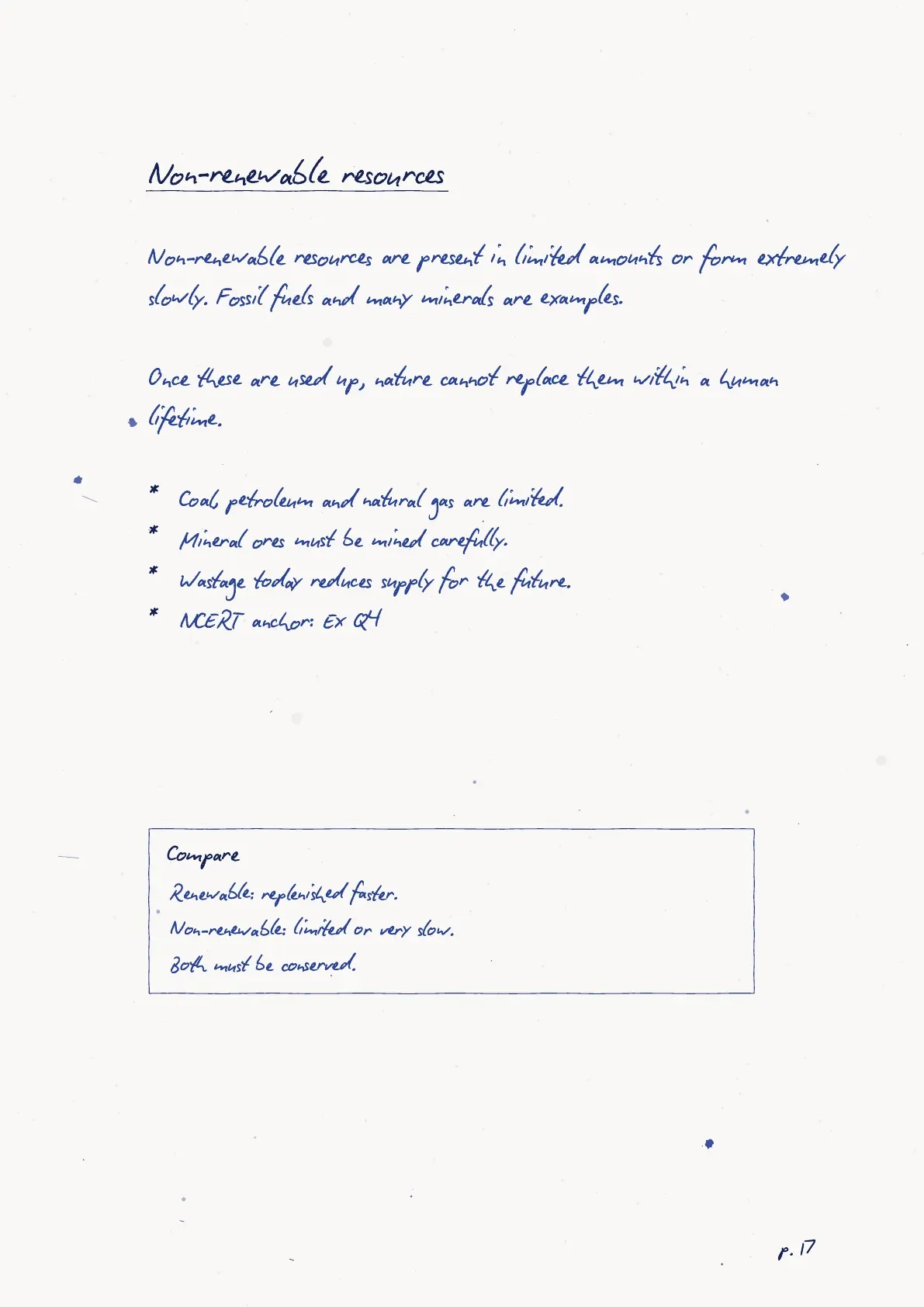
Coal, petroleum, and natural gas are fossil fuels. They form from buried remains of living things over a very long time. Petrol and diesel come from petroleum, while LPG is used for cooking.
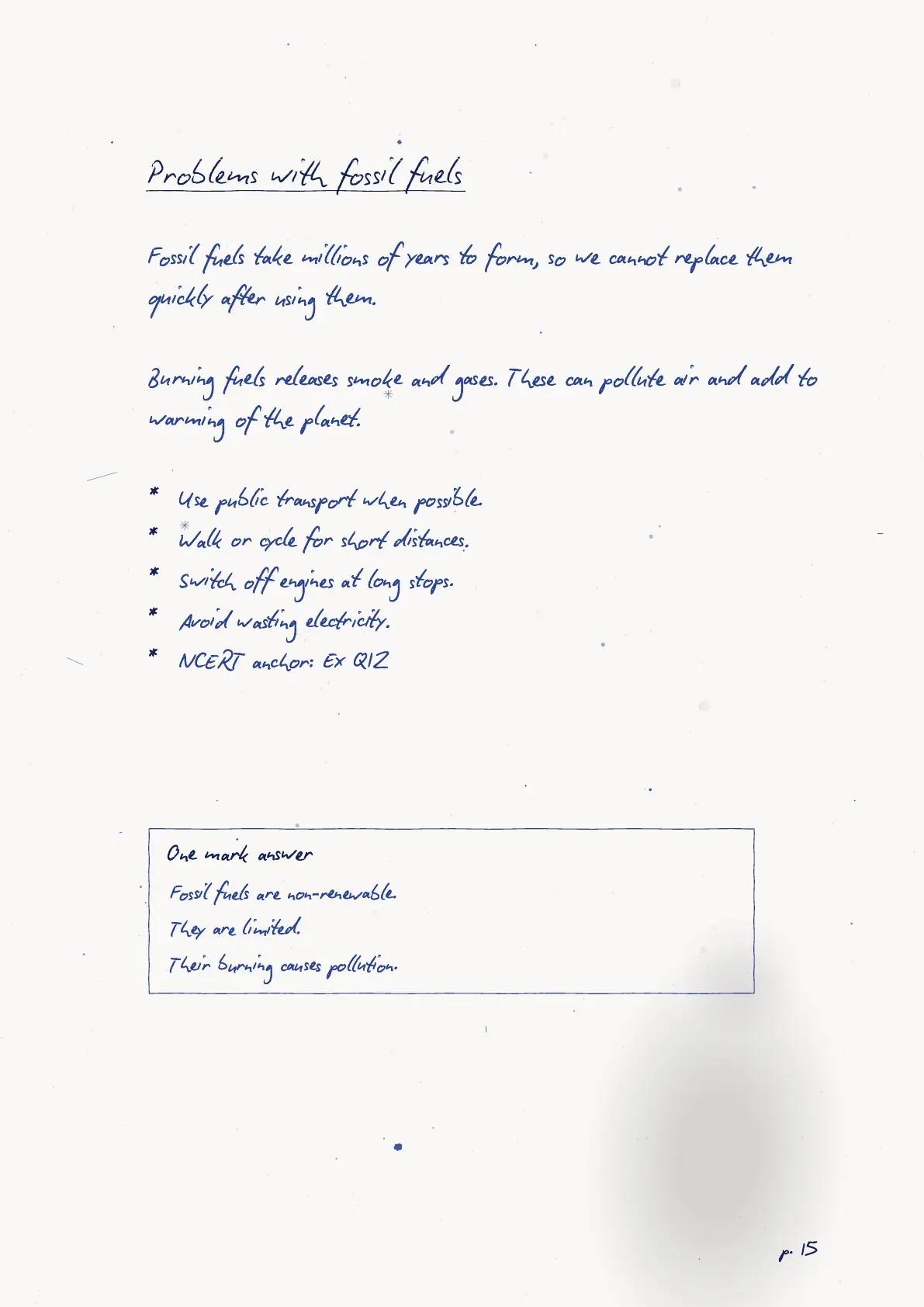
Fossil fuels are limited. Burning them produces smoke and gases that pollute air. Walking, cycling, public transport, switching off engines, and saving electricity help conserve them.
Renewable and Non-renewable Resources
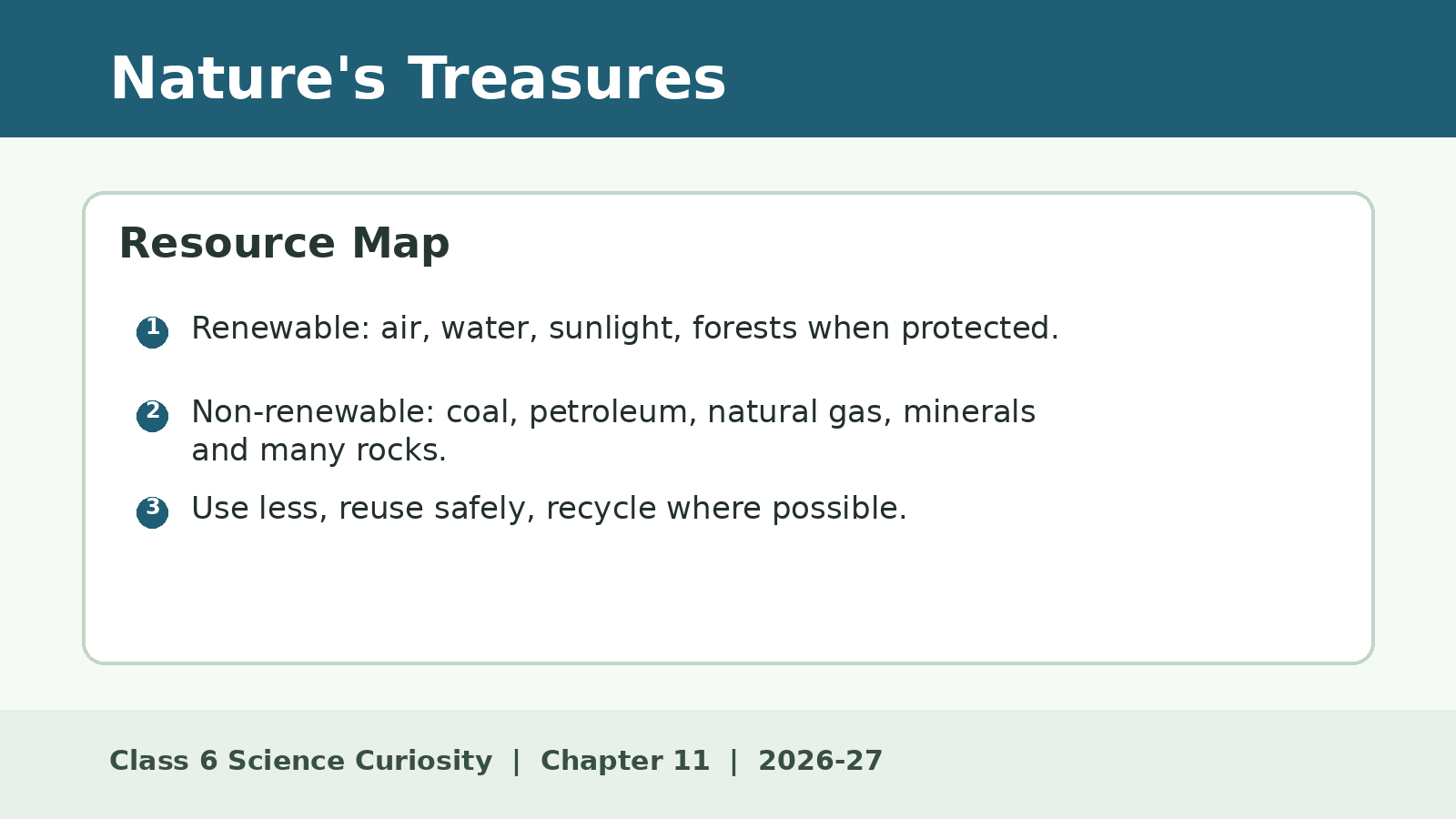
| Resource Type | Meaning | Examples |
|---|---|---|
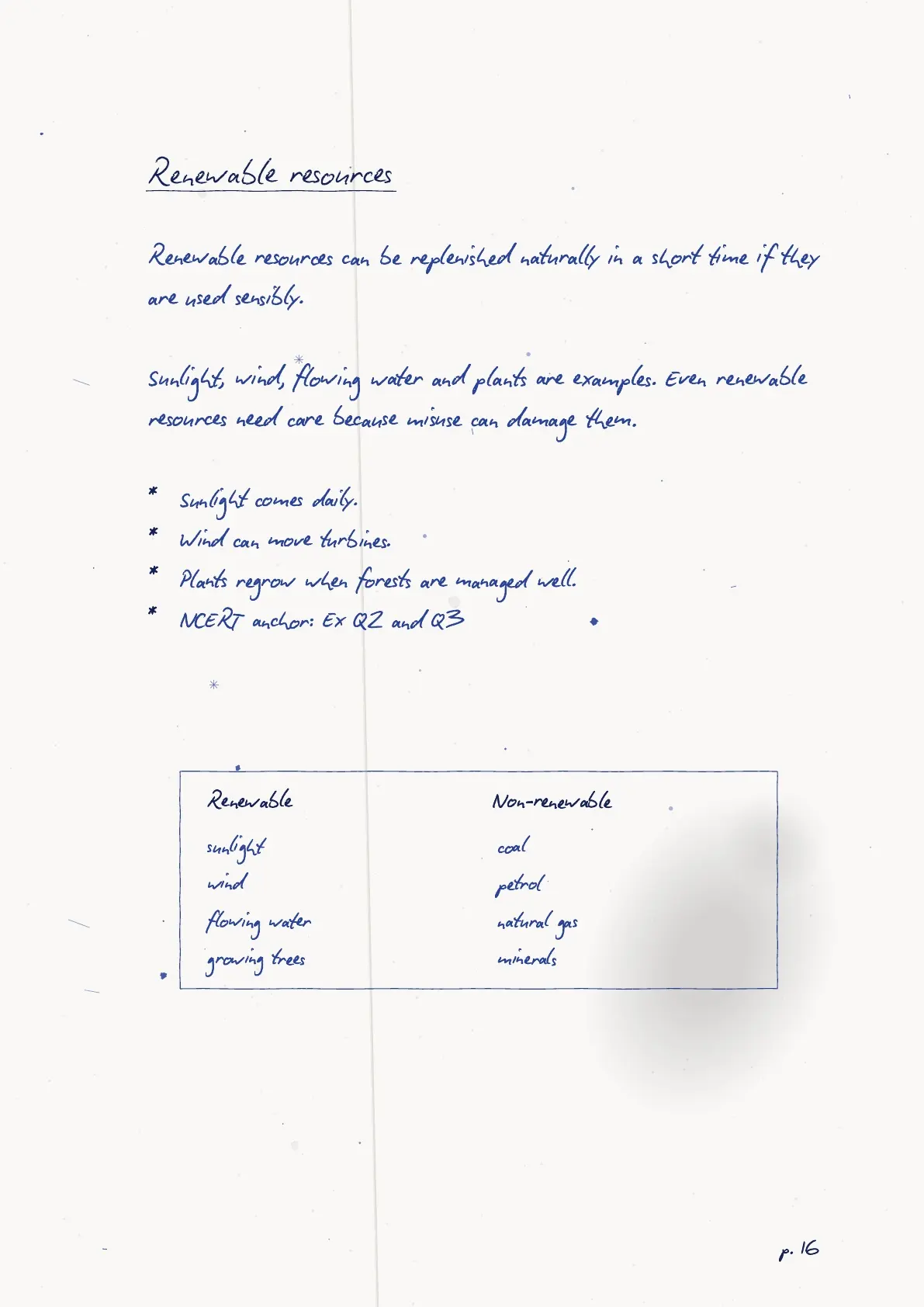
| Renewable | Renewed or restored by nature in a reasonable time | Air, water, sunlight, forests when protected |
| Non-renewable | Limited or formed very slowly | Coal, petroleum, natural gas, minerals, many rocks |
Renewable does not mean unlimited. We still need to use air, water, forests, and soil responsibly.
Key Takeaways for Quick Revision
- Nature provides resources required for survival.
- Air contains nitrogen, oxygen, and small amounts of other gases.
- Freshwater is limited and must be saved.
- Rainwater harvesting stores water or recharges groundwater.
- Forests provide food, shelter, soil protection, and recycling in nature.
- Fossil fuels are non-renewable and cause air pollution when burnt.
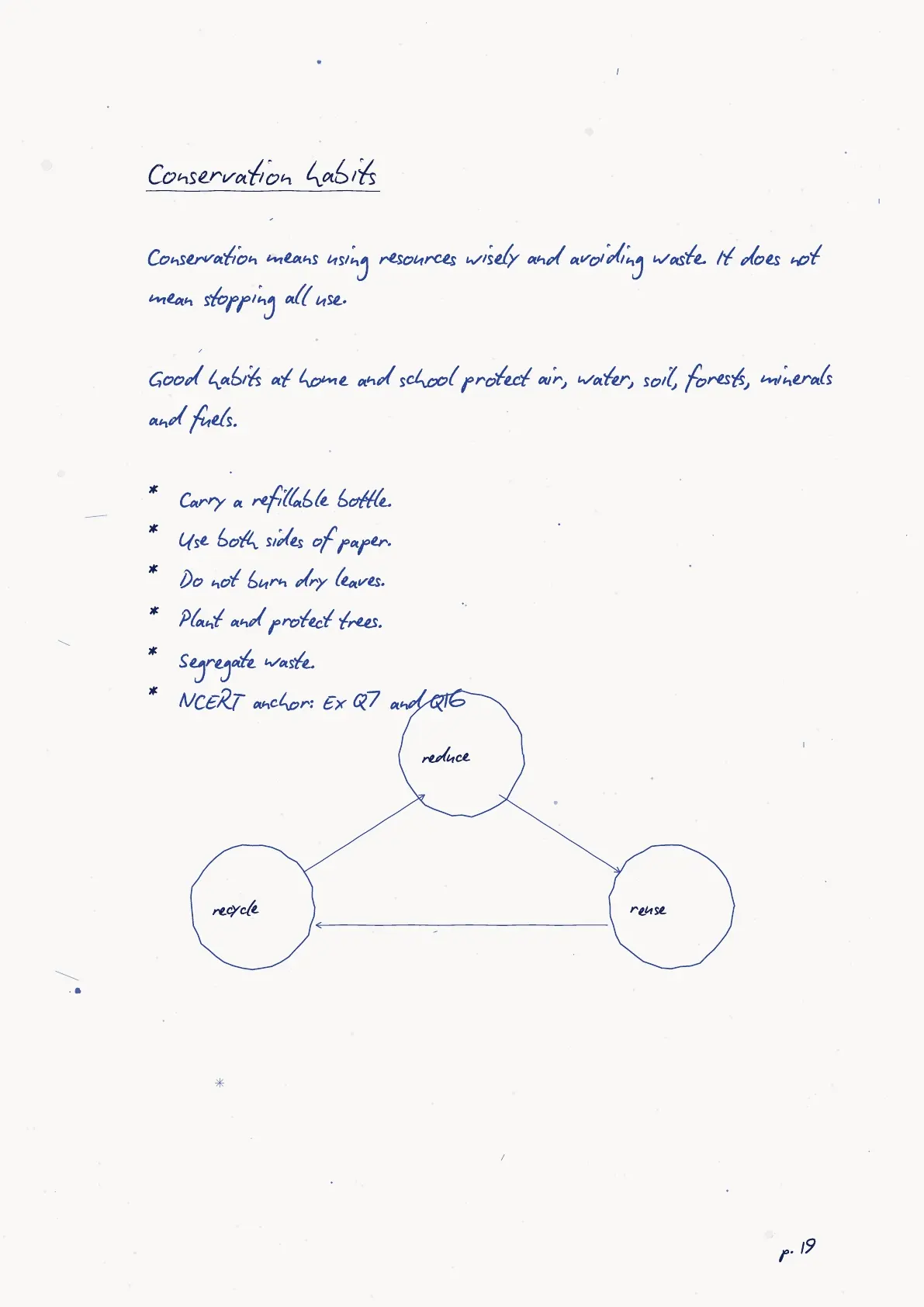
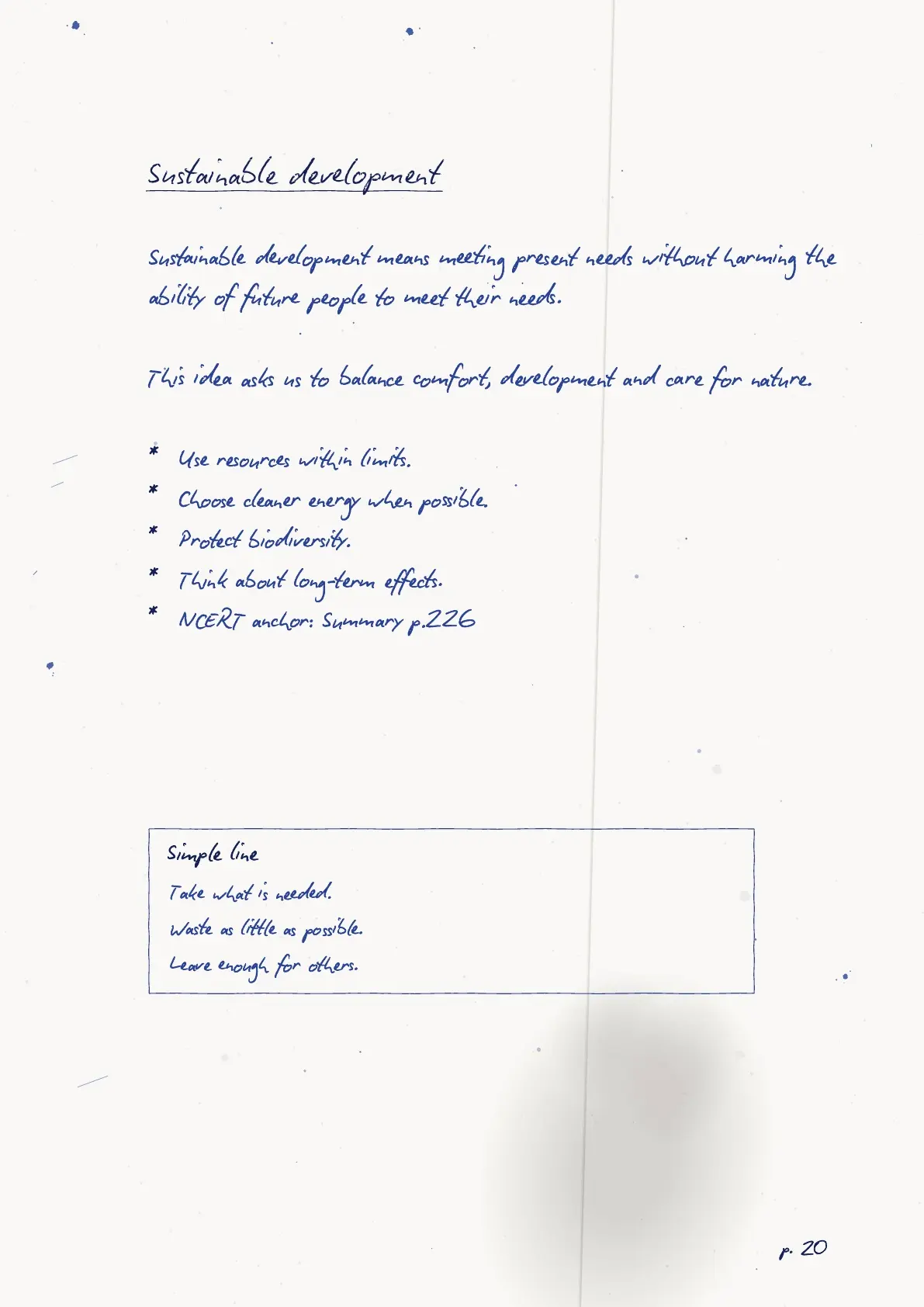
- Conservation means using resources wisely without wasting them.
More Class 6 Science Handwritten Notes
| Chapter | Handwritten Notes |
|---|---|
| Chapter 7 | Temperature and its Measurement |
| Chapter 8 | A Journey through States of Water |
| Chapter 9 | Methods of Separation in Everyday Life |
| Chapter 10 | Living Creatures |
Quick Questions for Revision
Nature's Treasures Class 6 Handwritten Notes FAQs
Ques. What is covered in Class 6 Science Chapter 11 handwritten notes?
Ans. The notes cover air, water, sunlight, forests, soil, rocks, minerals, fossil fuels, resource types, and conservation.
Ques. Are these handwritten notes based on the 2026-27 NCERT Curiosity textbook?
Ans. Yes. The PDF follows Class 6 Science Curiosity Chapter 11 Nature's Treasures for the 2026-27 NCERT syllabus.
Ques. What is rainwater harvesting?
Ans. Rainwater harvesting means collecting rainwater and storing it, or helping it soak into the ground to recharge groundwater.
Ques. What is the difference between renewable and non-renewable resources?
Ans. Renewable resources are restored by nature in a reasonable time. Non-renewable resources are limited or form very slowly.



Comments