



NCERT Handwritten Notes for Class 6 Vocational Education Kaushal Bodh Chapter 6 Cooking without Fire help students revise the 2026-27 project on no-fire cooking, kitchen tools, safety rules, recipes, measuring ingredients, waste disposal and food Mela planning. The PDF is arranged like quick handwritten revision pages so students can recall each activity before practical work.
- Best for revision: use these handwritten notes before recipe reading, beverage making and food Mela activities.
- Project focus: learn how to prepare simple dishes without using fire or heat.
- Skill focus: revise safety, teamwork, measurement, presentation and clean waste handling.
Chapter6CookingwithoutFireHandwrittenNotes.pdf?page=1&dpi=150)
Chapter6CookingwithoutFireHandwrittenNotes.pdf?page=2&dpi=150)
Chapter6CookingwithoutFireHandwrittenNotes.pdf?page=3&dpi=150)
Chapter6CookingwithoutFireHandwrittenNotes.pdf?page=4&dpi=150)
Chapter6CookingwithoutFireHandwrittenNotes.pdf?page=5&dpi=150)
Chapter6CookingwithoutFireHandwrittenNotes.pdf?page=6&dpi=150)
Chapter6CookingwithoutFireHandwrittenNotes.pdf?page=7&dpi=150)
Chapter6CookingwithoutFireHandwrittenNotes.pdf?page=8&dpi=150)
Chapter6CookingwithoutFireHandwrittenNotes.pdf?page=9&dpi=150)
Chapter6CookingwithoutFireHandwrittenNotes.pdf?page=10&dpi=150)
Chapter6CookingwithoutFireHandwrittenNotes.pdf?page=11&dpi=150)
Chapter6CookingwithoutFireHandwrittenNotes.pdf?page=12&dpi=150)
Chapter6CookingwithoutFireHandwrittenNotes.pdf?page=13&dpi=150)
Chapter6CookingwithoutFireHandwrittenNotes.pdf?page=14&dpi=150)
Chapter6CookingwithoutFireHandwrittenNotes.pdf?page=15&dpi=150)
Chapter6CookingwithoutFireHandwrittenNotes.pdf?page=16&dpi=150)
Chapter6CookingwithoutFireHandwrittenNotes.pdf?page=17&dpi=150)
Chapter6CookingwithoutFireHandwrittenNotes.pdf?page=18&dpi=150)
Chapter6CookingwithoutFireHandwrittenNotes.pdf?page=19&dpi=150)
Chapter6CookingwithoutFireHandwrittenNotes.pdf?page=20&dpi=150)
Chapter6CookingwithoutFireHandwrittenNotes.pdf?page=21&dpi=150)
Chapter6CookingwithoutFireHandwrittenNotes.pdf?page=22&dpi=150)
Student Feedback: In a Collegedunia review of common Class 6 project doubts from over 6,400 students, Cooking without Fire became easier when students revised the project as a sequence: read recipe, measure, prepare, serve and clean.
- 74% needed a clearer way to separate mixing, spreading and assembling.
- 69% wanted short notes for measuring cups, teaspoons and tablespoons.
- 61% confused wet waste, dry waste and reusable containers.
Cooking without Fire Chapter 6 Quick Map
Chapter 6 teaches students how to prepare tasty food without using a stove, fire or direct heat. The project begins with learning why some foods can be eaten raw and then moves to recipes, surveys, measurement, preparation, serving, waste handling and food Mela organisation.
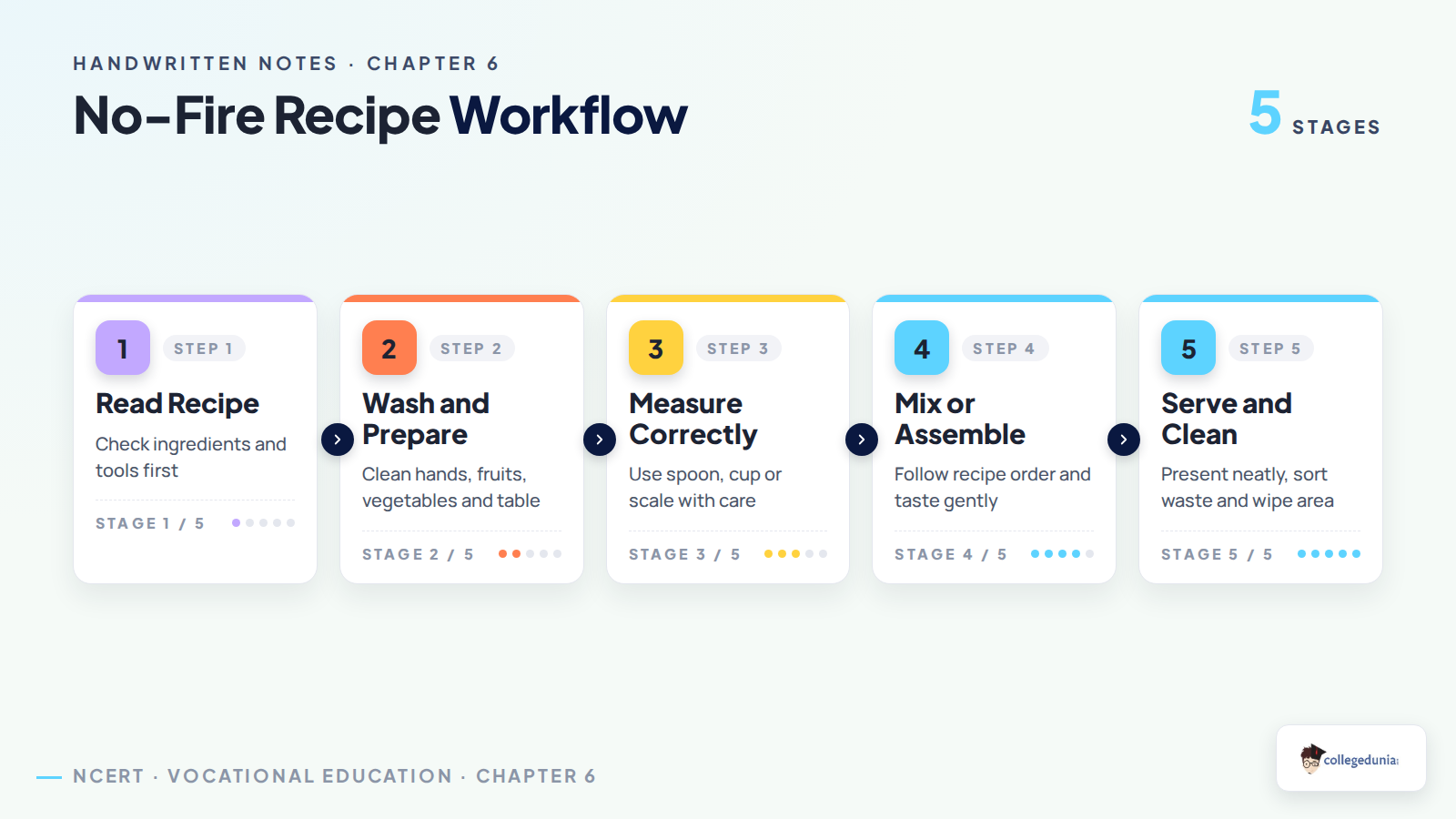
The main idea is simple: a no-fire dish still needs planning, hygiene, correct ingredients and teamwork. Students should not treat it as just mixing anything in a bowl. The recipe steps must be read and followed carefully.
| Project Part | What Students Do | Revision Cue |
|---|---|---|
| Recipe reading | Read ingredients and steps before starting. | Read all first. |
| Tool use | Use knife, board, grater, peeler, whisk and cups safely. | Slow and careful. |
| Preparation | Mix, spread or assemble ready-to-eat ingredients. | Follow order. |
| Waste disposal | Separate wet waste, dry waste and reusable items. | Clean finish. |
Kitchen Tools and Safety Rules
Students need basic kitchen tools such as a tray, bowls, plates, measuring cups, knife, chopping board, peeler, grater, fork, whisk and wooden churner. They also need soap, clean water, apron, hair cover and separate bins for wet and dry waste.
- Wash hands before and after handling food.
- Use sharp tools only as demonstrated by the teacher.
- Cut food away from the body and keep fingers away from the blade.
- Clean spilled water immediately so nobody slips.
- Ask the teacher before using the internet, mixer or grinding stone.
Revision cue: safety marks are earned by clean hands, careful cutting, dry floor and organised tools.
Recipe Reading and Dish Presentation
A recipe is a set of instructions that tells students how to make a dish. It lists the ingredients and the order of steps. Before starting, students should read the full recipe, check quantities, collect utensils and ask about unfamiliar words.
Dish presentation is also part of the chapter. A dish should look neat, colourful and inviting. Fruit salad can use fruits of different colours. Bhel Puri can be topped with Sev, peanuts or mint leaves. Buttermilk can be garnished with chopped mint leaves.
| Recipe Step | Meaning | Common Example |
|---|---|---|
| Mixing | Combining ingredients together. | Salad or beverage. |
| Spreading | Applying a soft item on a surface. | Butter on bread, chutney on roll. |
| Assembling | Putting ingredients together to make a dish. | Bhel Puri, sprouts Chaat, sandwich. |
Beverages Salads Sprouts and Assembled Dishes
The chapter gives several no-fire recipes. Beverages include buttermilk, Jaljeera, Kokam sherbet and lemonade. Cutting and mixing dishes include salad and fruit Chaat. Assembling dishes include Koshimbir, sprouts Chaat, Bhel Puri, cucumber Raita, sandwich and coconut chocolate balls.
- Buttermilk: curd, water, roasted cumin powder, salt and optional mint.
- Fruit Chaat: chopped fruits, lemon juice, optional honey or sugar and Chaat Masala.
- Sprouts: soaked legumes kept in a wet muslin cloth until sprouts appear.
- Sandwich: bread, butter, tomato, cucumber, salt, pepper and optional chutney.
Important: students should taste gently, accept suggestions and record any changes made to the recipe.
Measuring Ingredients and Storage
Cooking needs both standard and non-standard measurements. Standard units include grams, millilitres and litres. Non-standard measures include a pinch, teaspoon, tablespoon or cup. Students should know rough estimates because a scale may not always be available.
| Measure | Approximate Quantity | Use in Chapter |
|---|---|---|
| Teaspoon | About 5 ml liquid | Small flavour amounts. |
| Tablespoon | About 15 ml liquid | Lemon juice or chutney quantity. |
| Cup | About 250 ml liquid | Water, curd or chopped ingredients. |
| 1 litre bottle | About 1 litre | Estimating beverage water. |
Storage also matters. Grains and legumes should be kept in airtight containers. Spices and herbs should stay away from heat and light. Cut vegetables and milk should be stored carefully so they remain safe.
Kitchen Waste Disposal and Food Mela Planning
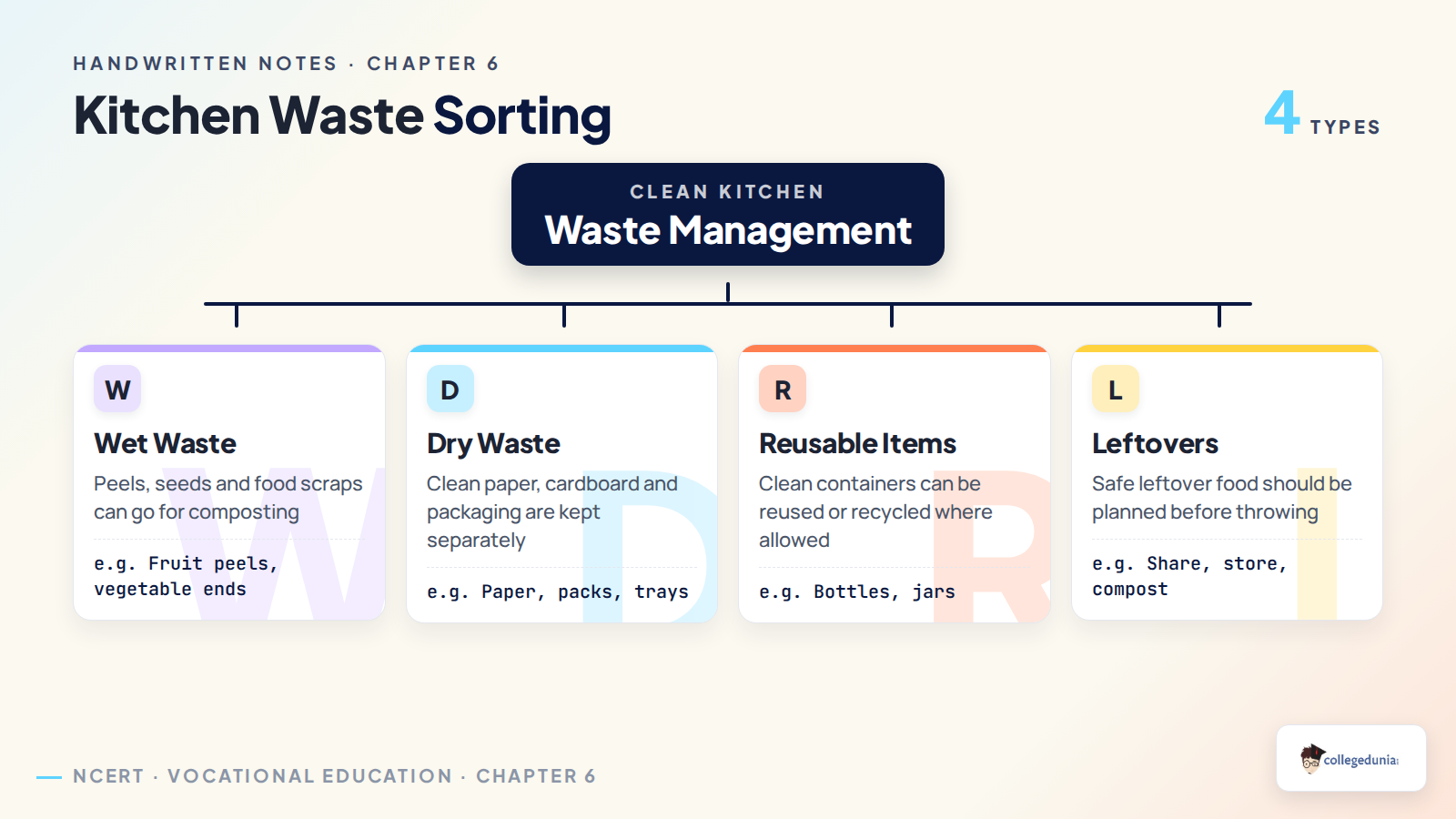
Kitchen waste should be segregated into different bins. Organic waste can be collected for composting where suitable. Clean bottles, jars, food trays, cardboard and paper packaging can be kept separately for recycling. Leftover food should be planned before it is thrown away.
The chapter ends with a small food Mela. Students choose a special food item, make a poster or invitation, attract visitors to the stall, maintain cleanliness and clean up after the event.
- Write what is special about the food item.
- Prepare a neat poster or invitation card.
- Keep the serving area clean and covered.
- Use separate bins and clean the stall after the Mela.
Cooking without Fire Chapter Video
The video below supports the official Class 6 Kaushal Bodh Chapter 6 project and can be used before revising the handwritten notes.
Source: NCERT OFFICIAL on YouTube
Related Class 6 Kaushal Bodh Resources
Use these resources with the handwritten notes when you want to read the official chapter or revise the same project in another format.
| Resource | Use It For | Link |
|---|---|---|
| NCERT Book PDF | Read the official Chapter 6 text and activities. | Cooking without Fire NCERT Book PDF |
| Class 6 Vocational Education Notes | Revise the same project in typed notes format. | Cooking without Fire Notes |
| Class 6 Vocational Education Solutions | Check short answers and activity responses. | Cooking without Fire Solutions |
All Class 6 Vocational Education Handwritten Notes
The table below keeps the same resource type together, so students can move chapter by chapter through Class 6 Vocational Education handwritten notes.
| Chapter | NCERT chapter title | Handwritten notes link |
|---|---|---|
| Chapter 1 | School Kitchen Garden | Open Handwritten Notes |
| Chapter 2 | Biodiversity Register | Open Handwritten Notes |
| Chapter 3 | Maker Skills | Open Handwritten Notes |
| Chapter 4 | Animation and Games | Open Handwritten Notes |
| Chapter 5 | School Museum | Open Handwritten Notes |
| Chapter 6 | Cooking without Fire | Current handwritten notes |
Class 6 Vocational Education Chapter 6 Cooking without Fire FAQs
Ques. What is covered in Class 6 Vocational Education Chapter 6 Cooking without Fire?
Ans. The chapter covers no-fire cooking, recipe reading, kitchen tools, measuring ingredients, beverages, salads, sprouts, waste disposal and organising a food Mela.
Ques. Why are handwritten notes useful for Cooking without Fire?
Ans. Handwritten notes make the practical project easier to revise because students can review short pages on tools, safety, recipes, measurement, storage and waste handling.
Ques. Which dishes are included in the Cooking without Fire chapter?
Ans. The chapter includes buttermilk, Jaljeera, Kokam sherbet, salad, Koshimbir, fruit Chaat, Shrikhand, Bhel Puri, sprouts, lemonade, mint chutney, sandwich, cucumber Raita, sprouts Chaat and coconut chocolate balls.
Ques. What safety rules should students remember?
Ans. Students should wash hands, use sharp tools carefully, wipe spilled water, keep food covered, follow teacher instructions and dispose of wet and dry waste separately.



Comments