



The handwritten notes on Class 7 Vocational Education Chapter 2 School Habitat Garden help students revise the 2026-27 Kaushal Bodh project quickly. The PDF covers animal needs, expert interaction, natural habitat observation, garden layout, shelters, feeders, water points, maintenance and Kaushal Mela presentation.
- Best use: revise the project before filling activity tables or drawing the garden layout.
- PDF focus: space, shelter, food, water, windbreaks, puddling areas, bird boxes and insect shelters.
- Revision style: topper's handwritten notes with short project points, tables and diagrams drawn by hand.
Chapter2SchoolHabitatGardenHandwrittenNotes.pdf?page=1&dpi=150)
Chapter2SchoolHabitatGardenHandwrittenNotes.pdf?page=2&dpi=150)
Chapter2SchoolHabitatGardenHandwrittenNotes.pdf?page=3&dpi=150)
Chapter2SchoolHabitatGardenHandwrittenNotes.pdf?page=4&dpi=150)
Chapter2SchoolHabitatGardenHandwrittenNotes.pdf?page=5&dpi=150)
Chapter2SchoolHabitatGardenHandwrittenNotes.pdf?page=6&dpi=150)
Chapter2SchoolHabitatGardenHandwrittenNotes.pdf?page=7&dpi=150)
Chapter2SchoolHabitatGardenHandwrittenNotes.pdf?page=8&dpi=150)
Chapter2SchoolHabitatGardenHandwrittenNotes.pdf?page=9&dpi=150)
Chapter2SchoolHabitatGardenHandwrittenNotes.pdf?page=10&dpi=150)
Chapter2SchoolHabitatGardenHandwrittenNotes.pdf?page=11&dpi=150)
Chapter2SchoolHabitatGardenHandwrittenNotes.pdf?page=12&dpi=150)
Chapter2SchoolHabitatGardenHandwrittenNotes.pdf?page=13&dpi=150)
Chapter2SchoolHabitatGardenHandwrittenNotes.pdf?page=14&dpi=150)
Chapter2SchoolHabitatGardenHandwrittenNotes.pdf?page=15&dpi=150)
Chapter2SchoolHabitatGardenHandwrittenNotes.pdf?page=16&dpi=150)
Chapter2SchoolHabitatGardenHandwrittenNotes.pdf?page=17&dpi=150)
Chapter2SchoolHabitatGardenHandwrittenNotes.pdf?page=18&dpi=150)
Chapter2SchoolHabitatGardenHandwrittenNotes.pdf?page=19&dpi=150)
Chapter2SchoolHabitatGardenHandwrittenNotes.pdf?page=20&dpi=150)
Chapter2SchoolHabitatGardenHandwrittenNotes.pdf?page=21&dpi=150)
Chapter2SchoolHabitatGardenHandwrittenNotes.pdf?page=22&dpi=150)
Chapter2SchoolHabitatGardenHandwrittenNotes.pdf?page=23&dpi=150)
Chapter2SchoolHabitatGardenHandwrittenNotes.pdf?page=24&dpi=150)
These handwritten revision notes follow the 2026-27 NCERT Kaushal Bodh School Habitat Garden chapter and keep the project steps easy to revise.
Student Feedback: In a Collegedunia review of common Class 7 project doubts from over 12,400 students, School Habitat Garden became easier when students learnt the four animal needs first and then matched each need with one garden feature.
School Habitat Garden Quick Map
School Habitat Garden is Project 2 in Class 7 Kaushal Bodh. It teaches students how a school can create a small safe habitat for birds, insects, butterflies, squirrels and other visitors.
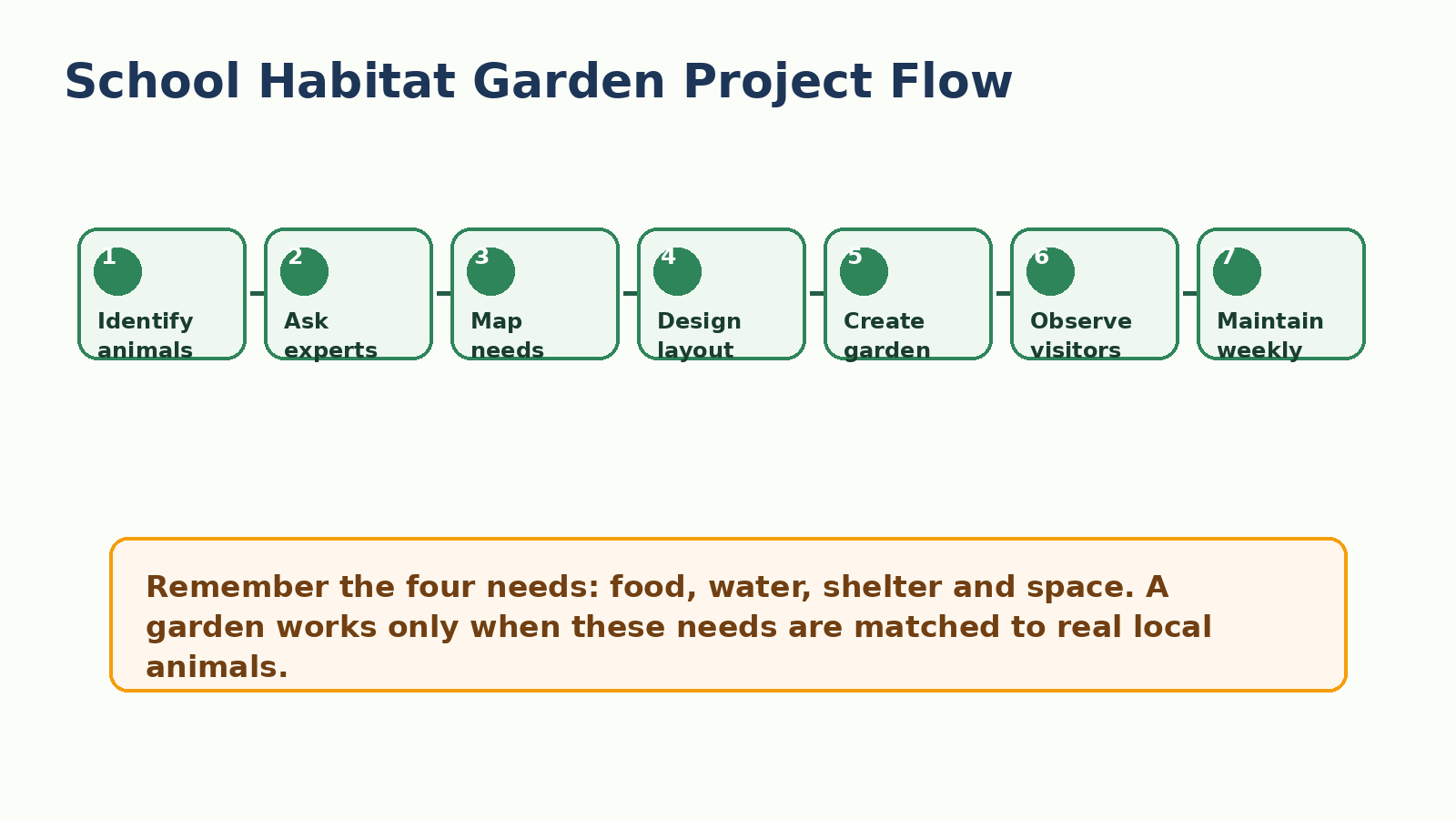
The handwritten PDF turns the chapter into short revision pages. Students can use it before discussing the project, making observation tables or presenting the garden in Kaushal Mela.
- Identify animals found in and around the school.
- Ask experts about food, water, shelter and space needs.
- Design the layout with plants, feeders, shelters and quiet paths.
- A habitat garden works only when animal needs are matched to real garden features.
Animal Needs in the Habitat Garden
Every animal needs food and water, but the exact need changes by species. A sparrow needs dense bushes or nest boxes. A butterfly needs flowers, damp soil and wind protection. A spider needs web space where insects pass.
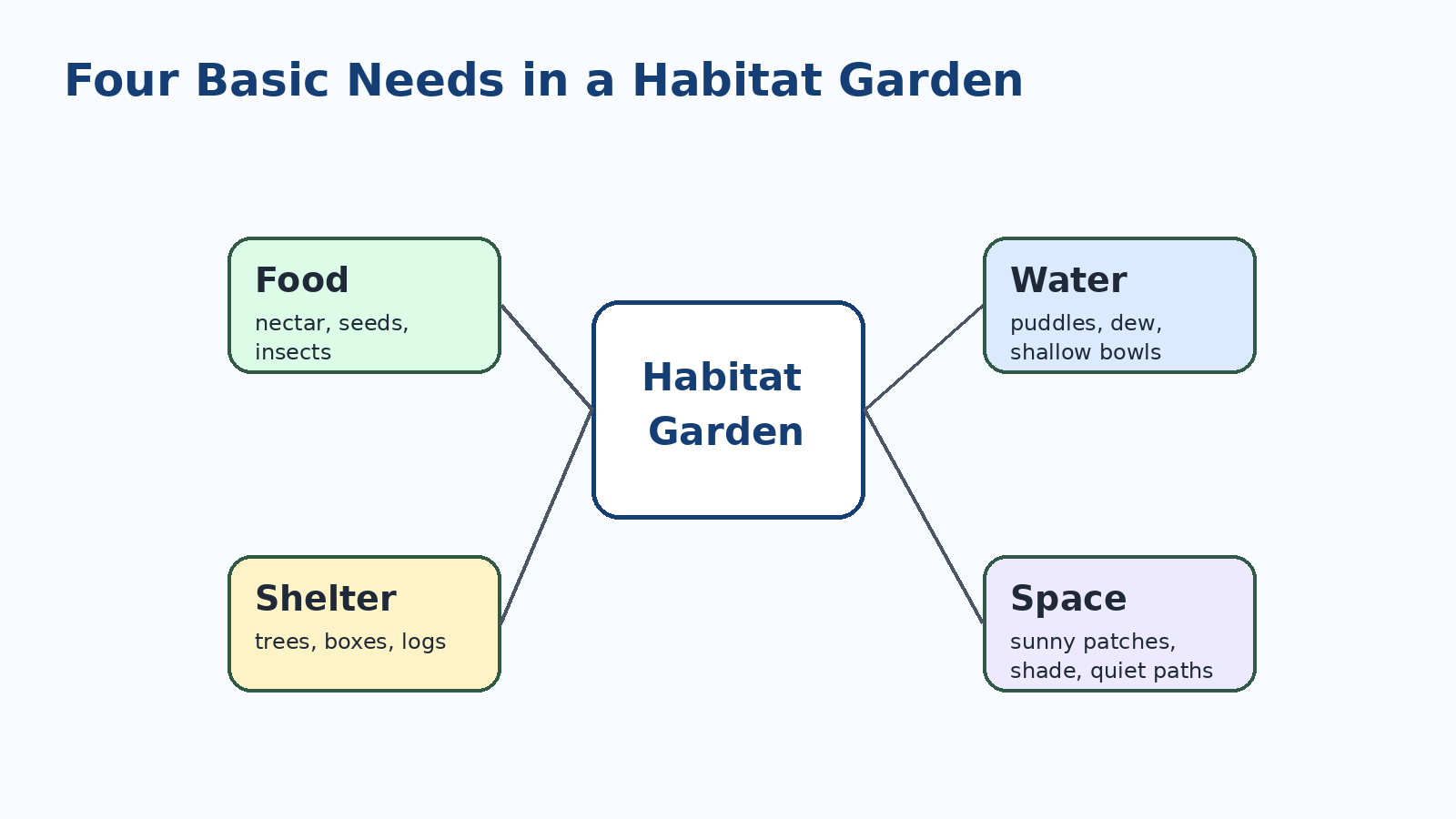
The notes use the four-need frame from NCERT: space, shelter, food and water. This helps students write one clear example for each animal.
- Space: open sunny patches, shade, wall corners, trees and quiet paths.
- Shelter: trees, bushes, nest boxes, rocks, logs, cracks and dry leaves.
- Food: nectar, seeds, grains, leaves, insects, fruits or safe feeder material.
- Water: puddles, dew, shallow bowls, moist soil or dripping taps.
School Habitat Garden Project Video Recap
Source: Prof.Analysis on YouTube
Expert Interaction and Observation
The chapter asks students to talk to a gardener, farmer, naturalist, conservationist, zoologist, entomologist, lepidopterist or botanist before designing the garden.
Expert advice helps students choose local plants, safe shelters and practical ways to avoid unwanted animals. It also helps them understand which animals are already active near the school.
- Ask which animals are likely to visit the school garden.
- Ask how to avoid mosquitoes, snakes or unsafe hiding places.
- Observe where animals move, feed, bathe, hide and rest.
- Record animal name, date, place, activity and remarks.
Designing and Creating the Garden
A good layout is drawn from the top view. It should show flowering plants, pathways, water points, feeding areas, shelter corners, windbreaks, mudpuddling spots and dustbathing areas.
After the design is ready, students mark the area, remove debris, keep useful trees or shrubs, prepare soil, add compost, create a fence and slowly add non-plant elements.
- Birds: use nesting boxes, grains, shallow water and safe height.
- Butterflies: use flowers, flat rocks, moist pebble trays and windbreaks.
- Insects: use logs, straw, pinecones, bricks and dry leaves with small gaps.
- Pots: use 2 parts soil, 1 part compost and 1 part dry leaves or cocopeat.
Maintenance, Showcase and Revision Use
The garden will host living things, so it needs regular care. Students should divide work into teams and rotate responsibility so everyone learns the maintenance process.
A good project answer should name the animal need, the garden feature and the reason that feature helps. This makes classroom explanations clearer.
- Water plants and refill shallow water containers regularly.
- Clean paths and remove stagnant water to prevent mosquitoes.
- Compost fallen leaves and safe plant waste.
- Label plants, feeders, shelters, puddling spots and dustbathing areas.
Related School Habitat Garden Class 7 Resources
Use the links below with the handwritten notes. They help students move from quick revision to the official chapter and other chapter resources.
| Resource | Use it for | Link |
|---|---|---|
| NCERT Notes | Read the chapter summary and project points | Open notes |
| NCERT Book PDF | Official chapter text, figures and activity tables | Open book PDF |
| Previous Handwritten Notes | Revise Plant Nursery before this project | Open Chapter 1 handwritten notes |
All Class 7 Vocational Education Handwritten Notes
Students revising Kaushal Bodh can move through the handwritten notes chapter by chapter.
| Chapter | Topic | Handwritten notes link |
|---|---|---|
| Chapter 1 | Plant Nursery | Open Chapter 1 notes |
| Chapter 2 | School Habitat Garden | Current page |
| Chapter 3 | Tie and Dye | Open Chapter 3 notes |
| Chapter 4 | AI Assistant | Open Chapter 4 notes |
| Chapter 5 | Storytime with Puppets | Open Chapter 5 notes |
| Chapter 6 | Family Health Handbook | Open Chapter 6 notes |
School Habitat Garden Class 7 Handwritten Notes FAQs
Ques. What is covered in School Habitat Garden handwritten notes?
Ans. The notes cover animal needs, expert interaction, observation, layout design, bird boxes, butterfly puddles, insect shelters, garden creation, visitor records and maintenance.
Ques. What are the four basic needs of animals in this chapter?
Ans. The four basic needs are space, shelter, food and water. Students must match each need with a garden feature for the selected animal.
Ques. How do these handwritten notes help in the Class 7 project?
Ans. They break the project into short revision pages so students can fill activity tables, draw the garden layout and explain each habitat feature clearly.
Ques. What should students include in the garden layout?
Ans. The layout should include plants, paths, water points, feeders, shelters, windbreaks, mudpuddling areas, dustbathing corners and quiet observation space.



Comments