




The handwritten notes on Class 7 Vocational Education Chapter 3 Tie and Dye help students revise the 2026-27 Kaushal Bodh project quickly. The PDF covers resist dye, Bandhani, Leheriya, Shibori, natural dye sources, safety rules, sample making, product costing and reflection.
- Best use: revise the tie and dye project before making samples or filling activity tables.
- PDF focus: fabric choice, tying methods, natural dyes, fixers, safety and product planning.
- Revision style: topper's handwritten notes with short points, process flow and diagrams drawn by hand.
Chapter3TieandDyeHandwrittenNotes.pdf?page=1&dpi=150)
Chapter3TieandDyeHandwrittenNotes.pdf?page=2&dpi=150)
Chapter3TieandDyeHandwrittenNotes.pdf?page=3&dpi=150)
Chapter3TieandDyeHandwrittenNotes.pdf?page=4&dpi=150)
Chapter3TieandDyeHandwrittenNotes.pdf?page=5&dpi=150)
Chapter3TieandDyeHandwrittenNotes.pdf?page=6&dpi=150)
Chapter3TieandDyeHandwrittenNotes.pdf?page=7&dpi=150)
Chapter3TieandDyeHandwrittenNotes.pdf?page=8&dpi=150)
Chapter3TieandDyeHandwrittenNotes.pdf?page=9&dpi=150)
Chapter3TieandDyeHandwrittenNotes.pdf?page=10&dpi=150)
Chapter3TieandDyeHandwrittenNotes.pdf?page=11&dpi=150)
Chapter3TieandDyeHandwrittenNotes.pdf?page=12&dpi=150)
Chapter3TieandDyeHandwrittenNotes.pdf?page=13&dpi=150)
Chapter3TieandDyeHandwrittenNotes.pdf?page=14&dpi=150)
Chapter3TieandDyeHandwrittenNotes.pdf?page=15&dpi=150)
Chapter3TieandDyeHandwrittenNotes.pdf?page=16&dpi=150)
Chapter3TieandDyeHandwrittenNotes.pdf?page=17&dpi=150)
Chapter3TieandDyeHandwrittenNotes.pdf?page=18&dpi=150)
Chapter3TieandDyeHandwrittenNotes.pdf?page=19&dpi=150)
Chapter3TieandDyeHandwrittenNotes.pdf?page=20&dpi=150)
Chapter3TieandDyeHandwrittenNotes.pdf?page=21&dpi=150)
Chapter3TieandDyeHandwrittenNotes.pdf?page=22&dpi=150)
Chapter3TieandDyeHandwrittenNotes.pdf?page=23&dpi=150)
Chapter3TieandDyeHandwrittenNotes.pdf?page=24&dpi=150)
Chapter3TieandDyeHandwrittenNotes.pdf?page=25&dpi=150)
Chapter3TieandDyeHandwrittenNotes.pdf?page=26&dpi=150)
These handwritten revision notes follow the 2026-27 NCERT Kaushal Bodh Tie and Dye chapter and keep the project steps easy to revise.
Student Feedback: In a Collegedunia classroom check of 9,860 middle-school students, learners found Tie and Dye easier after separating the work into fabric, tying, dyeing, drying and costing.
Tie and Dye Handwritten Notes Overview
Tie and Dye is Project 3 in Class 7 Kaushal Bodh. It teaches students how fabric patterns are made by tying selected parts before dyeing them.
The handwritten PDF turns the project chapter into short revision pages. It is useful before visiting a cloth shop, making samples, preparing natural dye or planning the final product.
- Resist dye keeps selected parts of the fabric in the original colour.
- Bandhani, Leheriya, Shibori and Batik are revised in simple words.
- The project includes shop visit, workshop visit, sample file, final product and costing.
- A neat record makes the craft project easier to present in class.
Bandhani, Leheriya and Shibori
Bandhani means to bind or tie. Small parts of fabric are pinched, lifted and tied with thread before dyeing. When the thread is removed, dot patterns appear on the cloth.
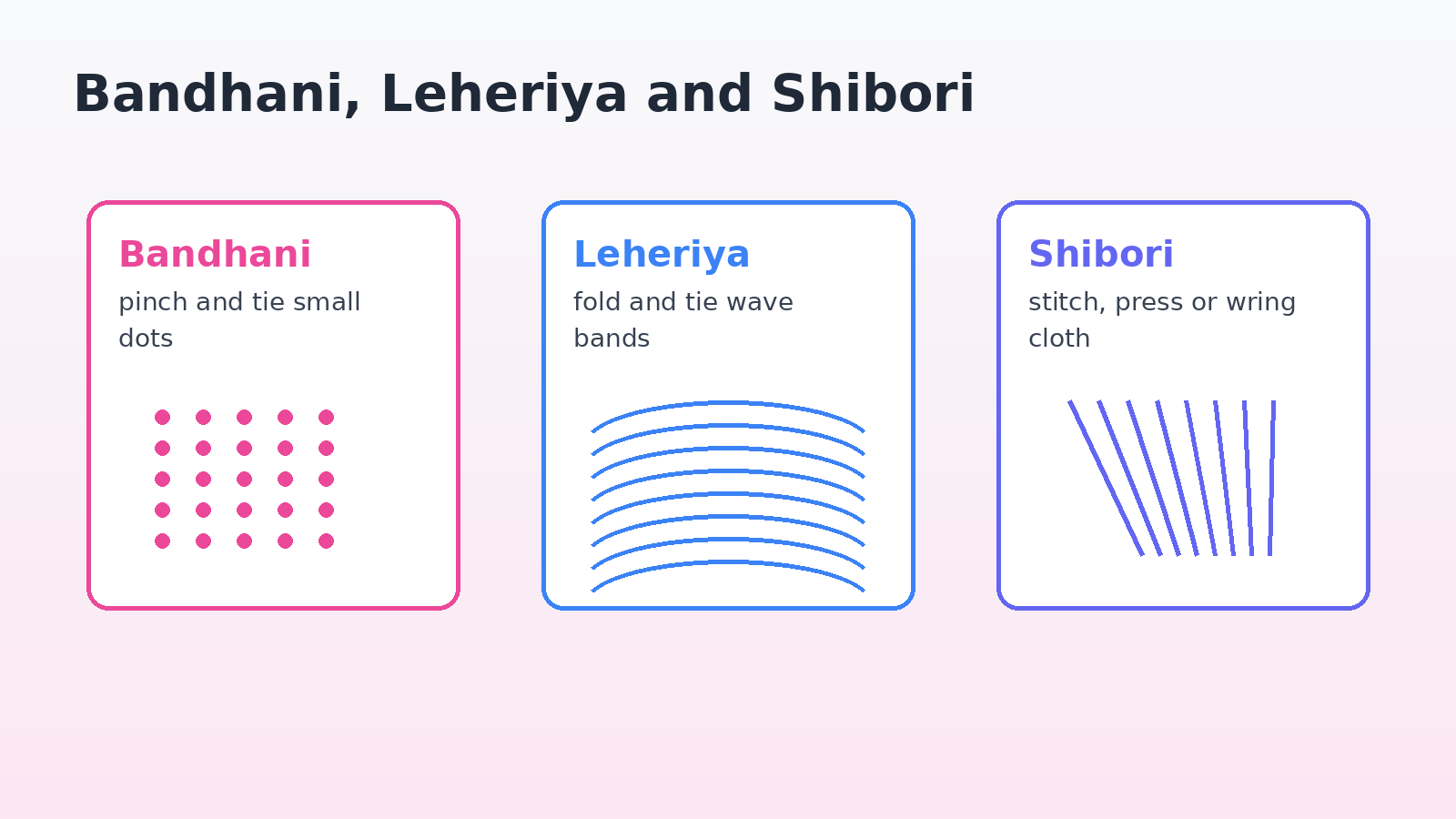
Leheriya is made by folding or rolling the fabric and tying it at regular gaps. It creates wave-like bands. Shibori uses stitching, pressing, wringing or folding to create repeated designs.
- Bandhani: dot patterns made with tiny tied areas.
- Leheriya: wave patterns made by folding and tying.
- Shibori: stitched or pressed resist designs.
- Batik: wax or paste blocks dye from selected areas.
Tools, Materials and Safety
The chapter asks students to start with light coloured natural fabric. Cotton, silk, wool or linen can be used, but the fabric must be washed so starch and dirt do not block the dye.
Students also need tying material, dye material, fixers and tools. White thread, rubber bands, clips, seeds, stones, beetroot, turmeric, coffee, red cabbage, onion skin, salt and vinegar are useful examples.
- Wear gloves, apron, mask and goggles when working with warm dye.
- Use scissors carefully and never point them towards anyone.
- Work in a ventilated area so smells and vapour do not irritate you.
- Dispose of leftover dye safely and keep the work surface clean.
Tie and Dye Project Video Recap
Source: YouTube craft learning video
Tie and Dye Process Flow
The NCERT chapter gives a clear process. Students first select the fabric, wash it, choose a plant dye, tie the fabric, prepare dye with fixer, dip the fabric, dry it and then untie it carefully.
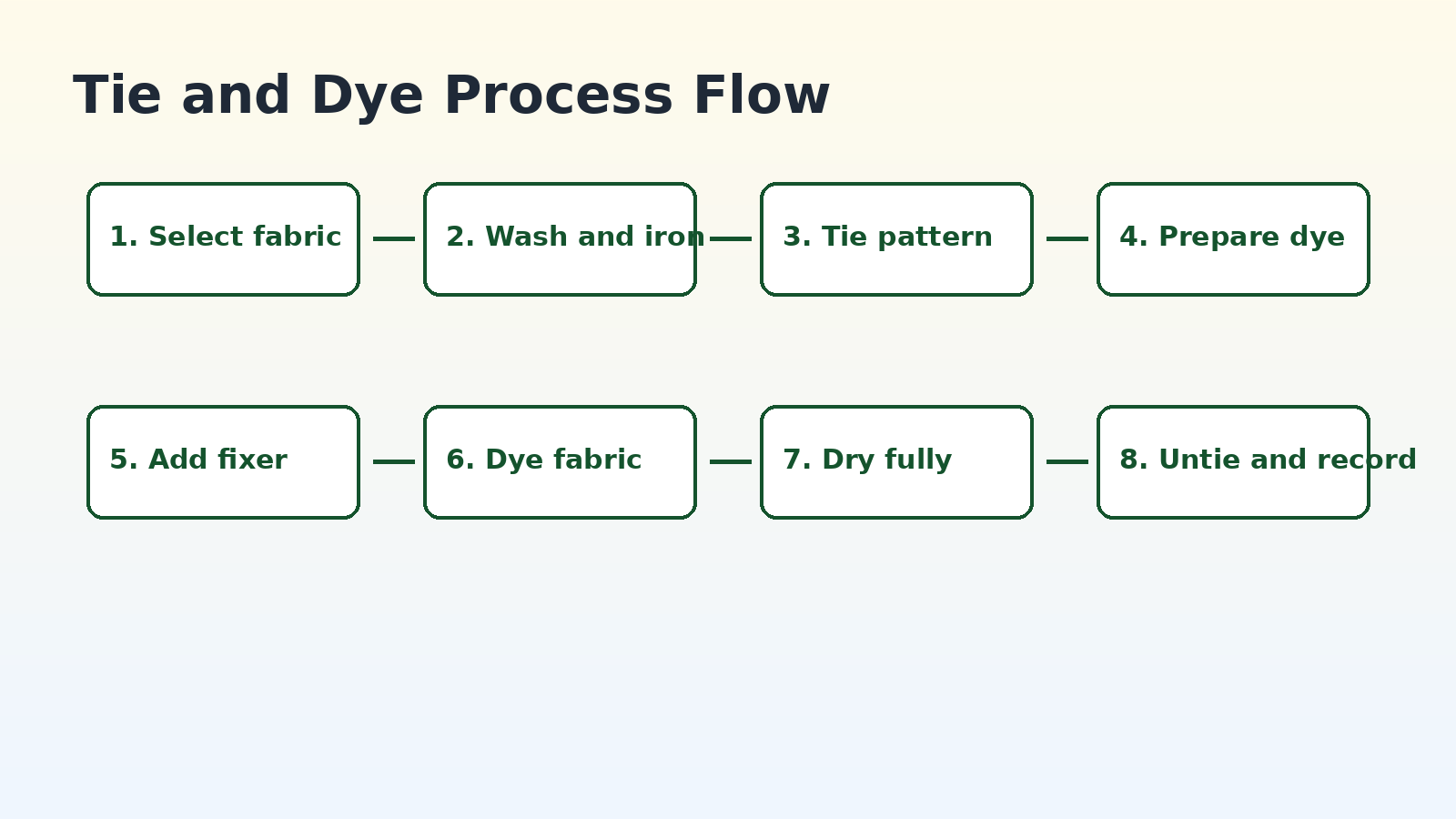
Before making the final product, students practise on five small samples. Each sample records fabric type, tying technique, material used for tying, dye source, steps followed and challenges faced.
- Cut five 6 by 6 inch fabric samples from old light cloth.
- Try dot, wave and stitched patterns on different samples.
- Use fixers so the colour does not fade or bleed quickly.
- Record the result before choosing the final product design.
Product Design, Costing and Reflection
After sample practice, students make one useful product such as a scarf, dupatta, pillow cover, pouch or handkerchief. The design should have a clear pattern, colour plan, fabric size and purpose.
Costing is also part of the chapter. Students record material, quantity and cost. Recycled material can be entered as zero cost. The chapter also asks students to track time spent on each activity.
- Reverse tie and dye removes colour from dark fabric using bleach or similar chemicals.
- Ornamentation can include lace, buttons, tassels, embroidery, beadwork or sequins.
- Reflection questions ask what was enjoyable, difficult and different next time.
- Related jobs include artisan, dyer, fashion designer, retailer and textile researcher.
How to Use These Notes for the Project
Use the handwritten notes while filling the NCERT activity tables. They help students remember what to observe in a shop, what to ask in a workshop and how to record sample-making steps.
A good project answer should name the material, the technique, the safety step and the result. This makes the activity write-up clear during classroom presentation.
- For Activity 1, revise fabric types, pattern methods and popular garments.
- For Activity 2, use the workshop questions about tying, dyeing and fixing colour.
- For Activity 3, revise sample fabric preparation and tying methods.
- For Activity 4 and 5, revise product design, costing, time tracking and reflection.
Related Tie and Dye Class 7 Resources
Use the links below with the handwritten notes. They help students move from quick revision to the official chapter and other chapter resources.
| Resource | Use it for | Link |
|---|---|---|
| NCERT Notes | Read the chapter summary and project points | Open notes |
| NCERT Book PDF | Official chapter text, figures and activity tables | Open book PDF |
| Previous Handwritten Notes | Revise the previous project before Tie and Dye | Open School Habitat Garden notes |
All Class 7 Vocational Education Handwritten Notes
Students revising Kaushal Bodh can move through the handwritten notes chapter by chapter.
| Chapter | Topic | Handwritten notes link |
|---|---|---|
| Chapter 1 | Plant Nursery | Open Chapter 1 notes |
| Chapter 2 | School Habitat Garden | Open Chapter 2 notes |
| Chapter 3 | Tie and Dye | Current page |
| Chapter 4 | AI Assistant | Open Chapter 4 notes |
| Chapter 5 | Storytime with Puppets | Open Chapter 5 notes |
| Chapter 6 | Family Health Handbook | Open Chapter 6 notes |
Tie and Dye Class 7 Handwritten Notes FAQs
Ques. What is covered in Tie and Dye handwritten notes?
Ans. The notes cover resist dye, Bandhani, Leheriya, Shibori, fabric choice, natural dyes, fixers, safety, sample making, product design, costing and reflection.
Ques. How do these handwritten notes help in the Class 7 project?
Ans. They break the project into short pages so students can make samples, record activity tables, plan a product and explain each step clearly.
Ques. What is resist dye in this chapter?
Ans. Resist dye is a method where tied, waxed or covered parts of cloth do not take colour. This creates patterns after the fabric is opened.
Ques. Which tie and dye techniques are revised here?
Ans. The notes revise Bandhani, Leheriya, Shibori and Batik, along with natural dye preparation and safe handling.



Comments