




The handwritten notes on Class 8 Arts (Kriti) Chapter 12 Dance for Well-being have been prepared for quick 2026-27 revision. The PDF covers hastas, bhava, rasa, emotional expression, body awareness, class activities and the wellness link that NCERT builds through dance.
- Resource focus: hand gestures, expression, rasa, wellness, movement activities and reflective class work.
- Best use: revise one handwritten section, then practise the matching NCERT activity with gestures or movement.
- Exam link: follows the NCERT 2026-27 Arts (Kriti) Chapter 12 learning outcomes and assessment cues.
Chapter12DanceforWell-beingHandwrittenNotes.upload.small.pdf?page=1&dpi=150)
Chapter12DanceforWell-beingHandwrittenNotes.upload.small.pdf?page=2&dpi=150)
Chapter12DanceforWell-beingHandwrittenNotes.upload.small.pdf?page=3&dpi=150)
Chapter12DanceforWell-beingHandwrittenNotes.upload.small.pdf?page=4&dpi=150)
Chapter12DanceforWell-beingHandwrittenNotes.upload.small.pdf?page=5&dpi=150)
Chapter12DanceforWell-beingHandwrittenNotes.upload.small.pdf?page=6&dpi=150)
Chapter12DanceforWell-beingHandwrittenNotes.upload.small.pdf?page=7&dpi=150)
Chapter12DanceforWell-beingHandwrittenNotes.upload.small.pdf?page=8&dpi=150)
Chapter12DanceforWell-beingHandwrittenNotes.upload.small.pdf?page=9&dpi=150)
Chapter12DanceforWell-beingHandwrittenNotes.upload.small.pdf?page=10&dpi=150)
Chapter12DanceforWell-beingHandwrittenNotes.upload.small.pdf?page=11&dpi=150)
Chapter12DanceforWell-beingHandwrittenNotes.upload.small.pdf?page=12&dpi=150)
Chapter12DanceforWell-beingHandwrittenNotes.upload.small.pdf?page=13&dpi=150)
Chapter12DanceforWell-beingHandwrittenNotes.upload.small.pdf?page=14&dpi=150)
Chapter12DanceforWell-beingHandwrittenNotes.upload.small.pdf?page=15&dpi=150)
Chapter12DanceforWell-beingHandwrittenNotes.upload.small.pdf?page=16&dpi=150)
Chapter12DanceforWell-beingHandwrittenNotes.upload.small.pdf?page=17&dpi=150)
Chapter12DanceforWell-beingHandwrittenNotes.upload.small.pdf?page=18&dpi=150)
Chapter12DanceforWell-beingHandwrittenNotes.upload.small.pdf?page=19&dpi=150)
Chapter12DanceforWell-beingHandwrittenNotes.upload.small.pdf?page=20&dpi=150)
Chapter12DanceforWell-beingHandwrittenNotes.upload.small.pdf?page=21&dpi=150)
Chapter12DanceforWell-beingHandwrittenNotes.upload.small.pdf?page=22&dpi=150)
Chapter12DanceforWell-beingHandwrittenNotes.upload.small.pdf?page=23&dpi=150)
Chapter12DanceforWell-beingHandwrittenNotes.upload.small.pdf?page=24&dpi=150)
Chapter12DanceforWell-beingHandwrittenNotes.upload.small.pdf?page=25&dpi=150)
Chapter12DanceforWell-beingHandwrittenNotes.upload.small.pdf?page=26&dpi=150)
Chapter12DanceforWell-beingHandwrittenNotes.upload.small.pdf?page=27&dpi=150)
Chapter12DanceforWell-beingHandwrittenNotes.upload.small.pdf?page=28&dpi=150)
Chapter12DanceforWell-beingHandwrittenNotes.upload.small.pdf?page=29&dpi=150)
Chapter12DanceforWell-beingHandwrittenNotes.upload.small.pdf?page=30&dpi=150)
Chapter12DanceforWell-beingHandwrittenNotes.upload.small.pdf?page=31&dpi=150)
Student Feedback: In a Collegedunia revision check with 8,900 Class 8 students, 74% said activity-wise handwritten notes helped them revise arts chapters faster.
Dance for Well-being Chapter Snapshot
Dance for Well-being connects movement with communication, emotion and health. The chapter moves beyond performance and shows how dance can help students notice the body, express feelings and build inner balance through rhythm.
- Students revise single-hand and combined-hand gestures called hastas.
- The chapter treats dance as expression, not only as a stage performance.
- Activities ask students to practise gestures, silence, music, feeling and reflection.
The handwritten PDF turns the chapter into 31 compact revision pages. Students can move from gesture names to expression, then from expression to well-being and classroom activity writing.
Hastas as a Silent Language
Chapter 12 begins by recalling hand gestures from earlier grades and then deepens the idea through asamyuta hastas and samyuta hastas. A single gesture can carry one meaning, many meanings, or a story cue depending on how it is used with face and body.
Students should revise hastas as a language of silence. In a classroom answer, do not only write that hand gestures are used in dance. Add that gestures help communicate, tell stories, express emotions and connect movement with meaning.
| Term | Meaning | Revision Cue |
|---|---|---|
| Asamyuta Hasta | Single-hand gesture | Used when one hand carries the sign. |
| Samyuta Hasta | Combined-hand gesture | Used when both hands build the sign together. |
| Gesture practice | Learning through body memory | Say the shloka and show the hand position. |
Bhava and Rasa in Chapter 12
The chapter also explains that dance communicates feeling. Bhava is the emotion or state shown by the dancer, while rasa is the aesthetic experience felt by the viewer. Students should revise the pair together because the performer and students watching the dance complete the communication process.
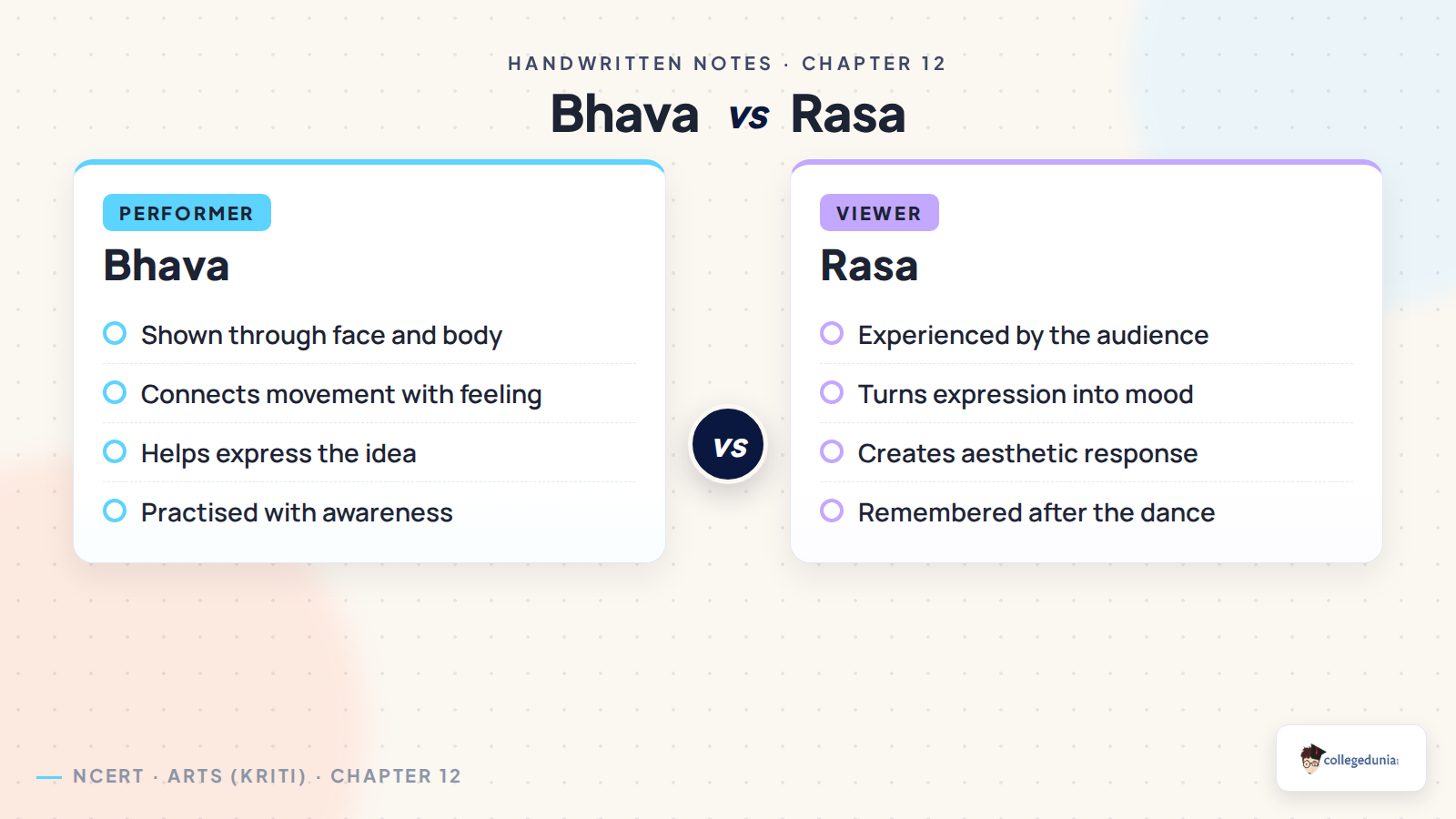
In short answers, use examples. A dancer may show joy through the face, hands and rhythm. Students watching may experience delight, calm or sympathy as rasa. This is why Chapter 12 links dance with emotional awareness.
- Bhava: expression created by the performer.
- Rasa: feeling received and experienced by students watching the dance.
- Well-being link: expression can release emotion and improve self-awareness.
Dance for Well-being Audiobook
Source: NCERT OFFICIAL on YouTube
Breath, Body and Emotional Healing
The well-being part of Chapter 12 asks students to look at dance as a mindful activity. Movement can make the body active, rhythm can steady attention, and expression can help a learner recognise feelings instead of keeping them hidden.
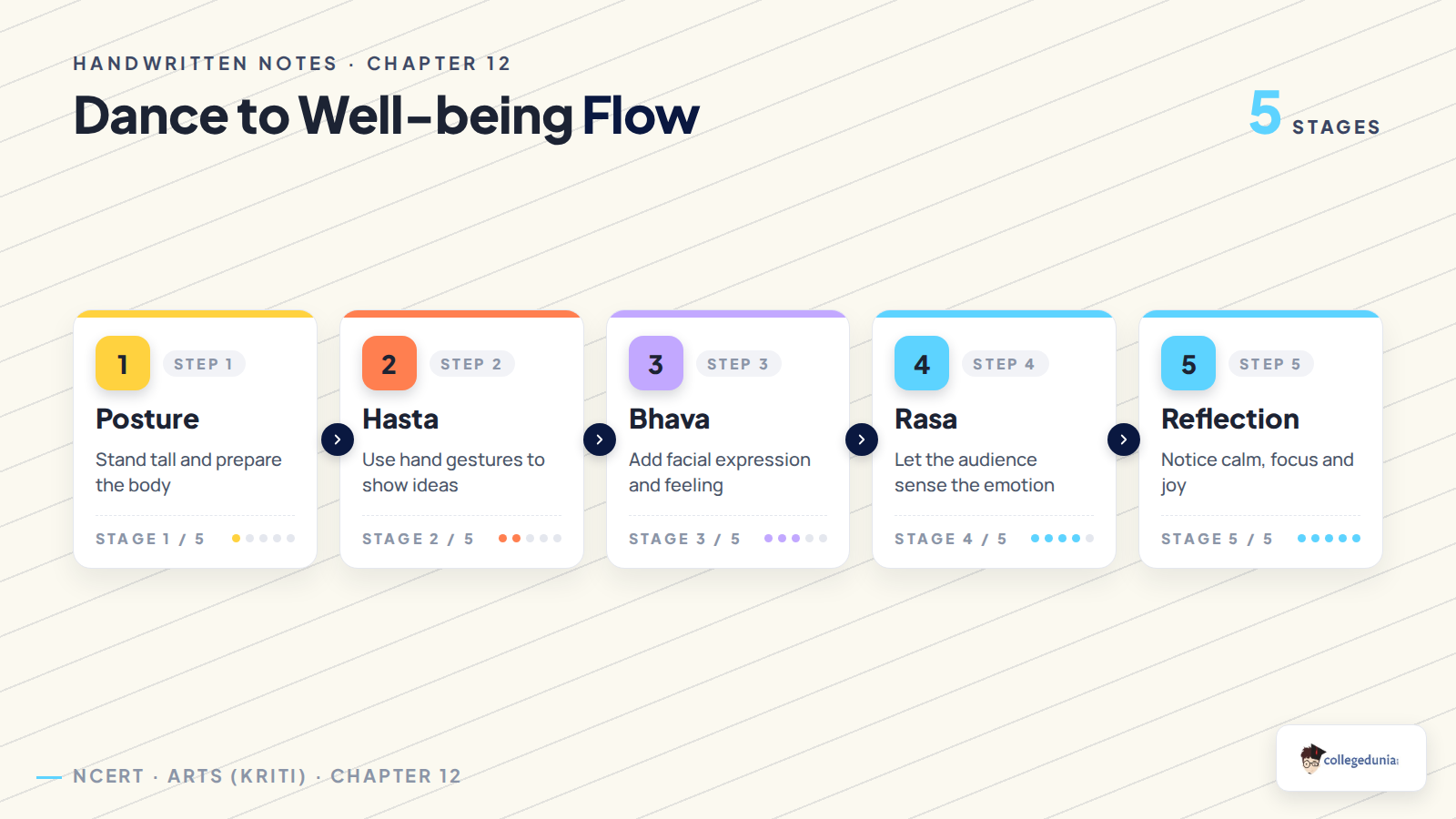
When revising this part, students can remember a simple chain: posture prepares the body, breath settles attention, gesture communicates meaning, expression shows feeling and reflection turns the experience into learning.
| Well-being Area | How Dance Helps | Classroom Answer Cue |
|---|---|---|
| Body | Improves balance, coordination and awareness. | Mention posture, rhythm and controlled movement. |
| Mind | Builds focus through repeated practice. | Connect rhythm with attention. |
| Emotion | Gives a safe way to express feelings. | Connect bhava with emotional release. |
NCERT Activities in Chapter 12
Chapter 12 is activity-rich. Students practise hastas, explore silent communication, use music to notice emotion and reflect on how movement changes mood. These activities are important because the Arts (Kriti) book assesses participation, observation and expression along with written recall.
| Activity Focus | Main Skill | Revision Cue |
|---|---|---|
| Speaking with hands | Gesture practice | Use hand signs to communicate an idea. |
| Language of silence | Non-verbal expression | Show meaning without speaking. |
| Music and emotion | Feeling awareness | Notice how a song changes movement and mood. |
| Well-being reflection | Self-observation | Write what the movement made you feel. |
How to Use These Handwritten Notes
Use the handwritten notes as a short revision companion to the NCERT chapter. Start with the opening pages on hastas, then revise the bhava and rasa comparison, and finally practise the activity cues in your own words.
- Revise asamyuta and samyuta hastas through gesture practice, not only reading.
- Write one example each for bhava and rasa.
- Use the well-being table for answers on body, mind and emotion.
- Before class discussion, practise explaining why dance can be healing and reflective.
More Arts Resources
| Resource | Use |
|---|---|
| Chapter 12 Dance for Well-being NCERT Book PDF | Read the official chapter before revising the handwritten PDF. |
| Chapter 10 Inner Dynamics of Dance | Revise the movement foundation before well-being and expression. |
| Chapter 11 Pan Indian Dance Forms | Connect dance traditions with gesture, expression and body awareness. |
Arts (Kriti) Handwritten Notes for Other Chapters
| Chapter | Handwritten Notes |
|---|---|
| Chapter 5 Discovering the Elements of Music | Download Notes |
| Chapter 8 Inspiration and Imagination | Download Notes |
| Chapter 10 Inner Dynamics of Dance | Download Notes |
| Chapter 11 Pan Indian Dance Forms | Download Notes |
FAQs
Are these handwritten notes based on the latest NCERT Class 8 Arts Chapter 12?
Ans. Yes. The handwritten notes follow the 2026-27 NCERT Arts (Kriti) Chapter 12 Dance for Well-being chapter.
What topics are covered in the Dance for Well-being handwritten PDF?
Ans. The PDF covers hastas, bhava, rasa, silent communication, movement activities, emotional expression and well-being.
How should students revise Chapter 12 quickly?
Ans. Students should revise the hasta terms, practise one gesture example, compare bhava with rasa and then write the well-being points in their own words.



Comments