




The handwritten notes on Class 8 Arts (Kriti) Chapter 5 Discovering the Elements of Music have been carefully prepared for quick 2026-27 revision. The PDF helps students revise sound, swara, melody, rhythm, tala, dynamics, timbre and ensemble work from the NCERT music chapter.
- Resource focus: music basics, swara practice, laya, tala, raga and group singing.
- Best use: revise one handwritten page, then sing or clap the linked activity pattern.
- Exam link: follows the NCERT 2026-27 Arts (Kriti) Chapter 5 assessment points.
Chapter5DiscoveringtheElementsofMusicHandwrittenNotes.upload.pdf?page=1&dpi=150)
Chapter5DiscoveringtheElementsofMusicHandwrittenNotes.upload.pdf?page=2&dpi=150)
Chapter5DiscoveringtheElementsofMusicHandwrittenNotes.upload.pdf?page=3&dpi=150)
Chapter5DiscoveringtheElementsofMusicHandwrittenNotes.upload.pdf?page=4&dpi=150)
Chapter5DiscoveringtheElementsofMusicHandwrittenNotes.upload.pdf?page=5&dpi=150)
Chapter5DiscoveringtheElementsofMusicHandwrittenNotes.upload.pdf?page=6&dpi=150)
Chapter5DiscoveringtheElementsofMusicHandwrittenNotes.upload.pdf?page=7&dpi=150)
Chapter5DiscoveringtheElementsofMusicHandwrittenNotes.upload.pdf?page=8&dpi=150)
Chapter5DiscoveringtheElementsofMusicHandwrittenNotes.upload.pdf?page=9&dpi=150)
Chapter5DiscoveringtheElementsofMusicHandwrittenNotes.upload.pdf?page=10&dpi=150)
Chapter5DiscoveringtheElementsofMusicHandwrittenNotes.upload.pdf?page=11&dpi=150)
Chapter5DiscoveringtheElementsofMusicHandwrittenNotes.upload.pdf?page=12&dpi=150)
Chapter5DiscoveringtheElementsofMusicHandwrittenNotes.upload.pdf?page=13&dpi=150)
Chapter5DiscoveringtheElementsofMusicHandwrittenNotes.upload.pdf?page=14&dpi=150)
Chapter5DiscoveringtheElementsofMusicHandwrittenNotes.upload.pdf?page=15&dpi=150)
Chapter5DiscoveringtheElementsofMusicHandwrittenNotes.upload.pdf?page=16&dpi=150)
Chapter5DiscoveringtheElementsofMusicHandwrittenNotes.upload.pdf?page=17&dpi=150)
Chapter5DiscoveringtheElementsofMusicHandwrittenNotes.upload.pdf?page=18&dpi=150)
Chapter5DiscoveringtheElementsofMusicHandwrittenNotes.upload.pdf?page=19&dpi=150)
Chapter5DiscoveringtheElementsofMusicHandwrittenNotes.upload.pdf?page=20&dpi=150)
Chapter5DiscoveringtheElementsofMusicHandwrittenNotes.upload.pdf?page=21&dpi=150)
Chapter5DiscoveringtheElementsofMusicHandwrittenNotes.upload.pdf?page=22&dpi=150)
Chapter5DiscoveringtheElementsofMusicHandwrittenNotes.upload.pdf?page=23&dpi=150)
Chapter5DiscoveringtheElementsofMusicHandwrittenNotes.upload.pdf?page=24&dpi=150)
Chapter5DiscoveringtheElementsofMusicHandwrittenNotes.upload.pdf?page=25&dpi=150)
Chapter5DiscoveringtheElementsofMusicHandwrittenNotes.upload.pdf?page=26&dpi=150)
Chapter5DiscoveringtheElementsofMusicHandwrittenNotes.upload.pdf?page=27&dpi=150)
Student Feedback: In a Collegedunia study check with 12,400 Class 8 students, 78% said handwritten music charts helped them remember swara, tala and rhythm terms faster.
Discovering the Elements of Music Chapter Snapshot
Discovering the Elements of Music introduces students to the building blocks of music through practical singing, clapping and listening activities. The chapter connects Indian music terms with simple classroom practice.
- Students revise swara, melody, raga, rhythm, laya and tala in one place.
- The chapter links music theory with actual voice and group work.
- Activities include sargam, harmony, chhandas, konnakkol, tabla bols and ensemble roles.
The handwritten PDF keeps every idea short. Students can revise a page, clap the beat cycle and then explain the term in their own words.
Discovering the Elements of Music Video Lesson
Source: NCERT PADHAI KARO on YouTube
Sound, Swara and Melody in Class 8 Arts
Music begins with sound, but the chapter explains that musical sound is shaped and organised. Nada is treated as musical sound, while swara gives the sound a clear note value. Sargam practice helps students hear pitch movement step by step.
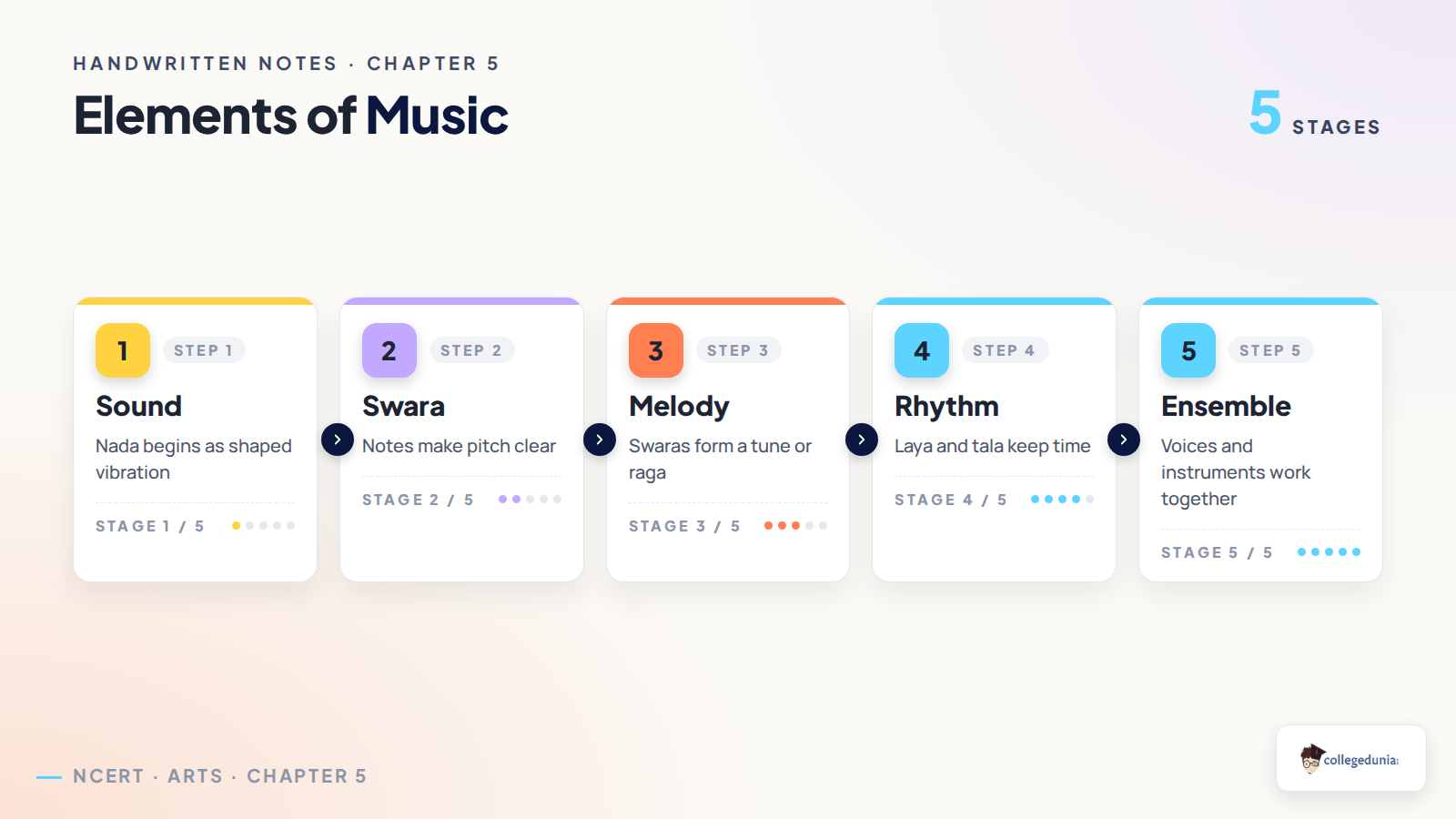
- Swara: Sa Re Ga Ma Pa Dha Ni form the note ladder.
- Pitch: a note can sound high, low or in a comfortable middle range.
- Melody: notes move in a pattern that students remember as a tune.
The chapter also introduces raga as structured melody. It is not only a tune. It has movement, mood and a special identity made through swara patterns.
Rhythm, Laya, Tala and Konnakkol
Rhythm is the chapter's time pattern. Laya is the rhythmic flow or speed, while tala is the repeating beat cycle. Students practise these ideas through claps, waves, finger counts and spoken syllables.
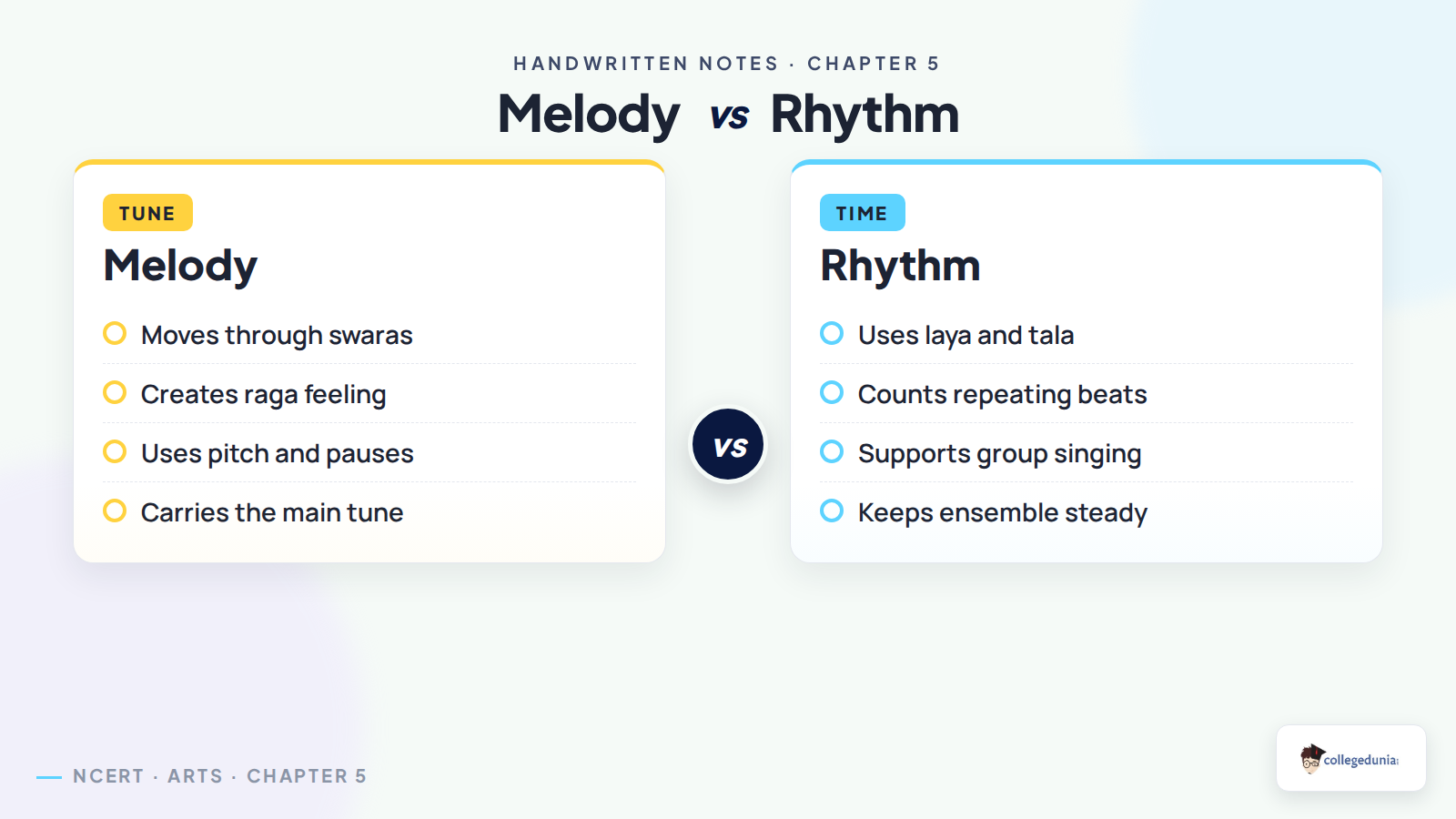
Konnakkol helps students speak rhythm before singing or playing it. The chapter uses adi tala and tabla-related patterns to show how matras, bols and speed fit inside a steady beat frame. Do not rush the speed before the beat is stable.
For revision, remember this chain: count the beat, speak the syllables, keep the same laya and then add swara or lyrics.
Dynamics, Timbre and Ensemble Work
The chapter also covers how music sounds as a full performance. Dynamics means loudness and softness. Timbre means tone colour, which helps students identify voices and instruments even when they play similar notes.
- Dynamics should match the mood of the song.
- Timbre changes with voice, breath, material and playing style.
- Ensemble work needs a conductor, lead voice, chorus, instruments and support rhythm.
Activity 5.9 asks students to form a group and assign roles. This teaches that a music ensemble works like a team. Every member matters, even if the role is clapping or body percussion.
How to Use the Music Handwritten Notes
Use the PDF as a revision checklist. Read one page, cover it and say the meaning of the key term aloud. Then clap or sing the activity pattern linked to that page.
- First reading: revise sound, nada, swara, pitch and melody.
- Second reading: practise rhythm, laya, tala and konnakkol terms.
- Final reading: revise dynamics, timbre, texture, song form and ensemble roles.
Before assessment, focus on definitions and examples. A strong answer can name the term, explain it in one line and connect it with one chapter activity.
More Class 8 Arts Resources for Discovering the Elements of Music
| Resource | Link |
|---|---|
| NCERT Book PDF | Discovering the Elements of Music Class 8 Book PDF |
| Handwritten Notes | Discovering the Elements of Music Class 8 Handwritten Notes |
Class 8 Arts (Kriti) Handwritten Notes for Other Chapters
| Chapter | Handwritten Notes |
|---|---|
| Chapter 1 Bringing Words Alive: Play Reading | Download Chapter 1 Handwritten Notes |
| Chapter 2 One Stage, Many Scripts | Download Chapter 2 Handwritten Notes |
| Chapter 3 From Page to Stage | Download Chapter 3 Handwritten Notes |
| Chapter 4 Applause and Advice | Download Chapter 4 Handwritten Notes |
Discovering the Elements of Music Class 8 Handwritten Notes FAQs
Ques. What is covered in the Discovering the Elements of Music handwritten notes?
Ans. The notes cover nada, swara, pitch, melody, raga, lyrics, rhythm, laya, tala, konnakkol, dynamics, timbre and ensemble work.
Ques. Are these handwritten notes based on the 2026-27 NCERT chapter?
Ans. Yes. The notes follow Class 8 Arts (Kriti) Chapter 5 Discovering the Elements of Music from the 2026-27 NCERT textbook.
Ques. What is the main lesson of Discovering the Elements of Music?
Ans. The main lesson is that music is built from organised sound, swara, melody, rhythm, words, tone colour and teamwork.



Comments