




Questions from Class 8 Social Science Chapter 3 The Rise of the Marathas come up often in the CBSE Class 8 exam. These class 8 social-science handwritten notes chapter 3 The Rise of the Marathas follow the 2026-27 NCERT and cover who the marathas were and the deccan before them, the bhakti saints of maharashtra, chhatrapati shivaji, his.
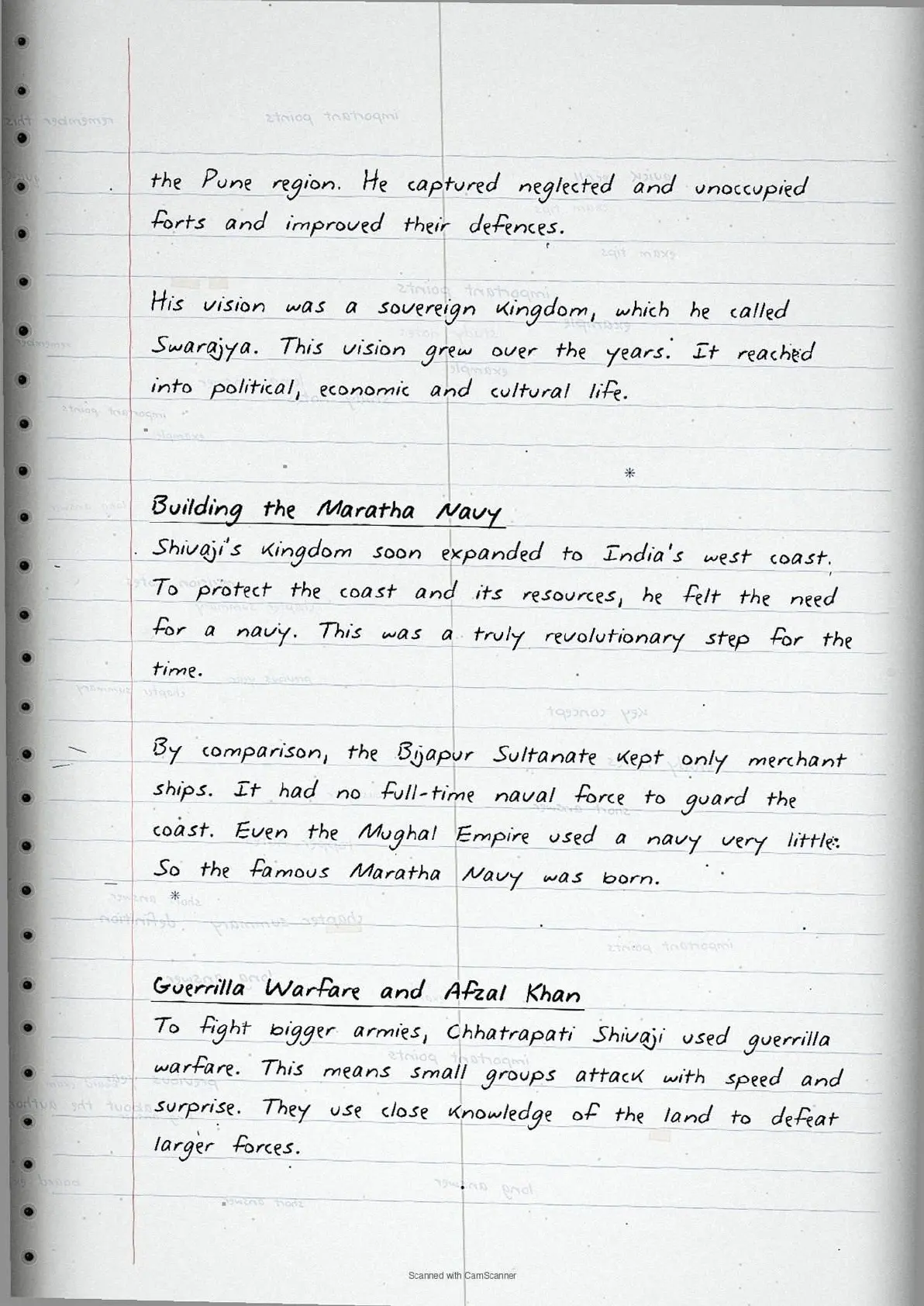
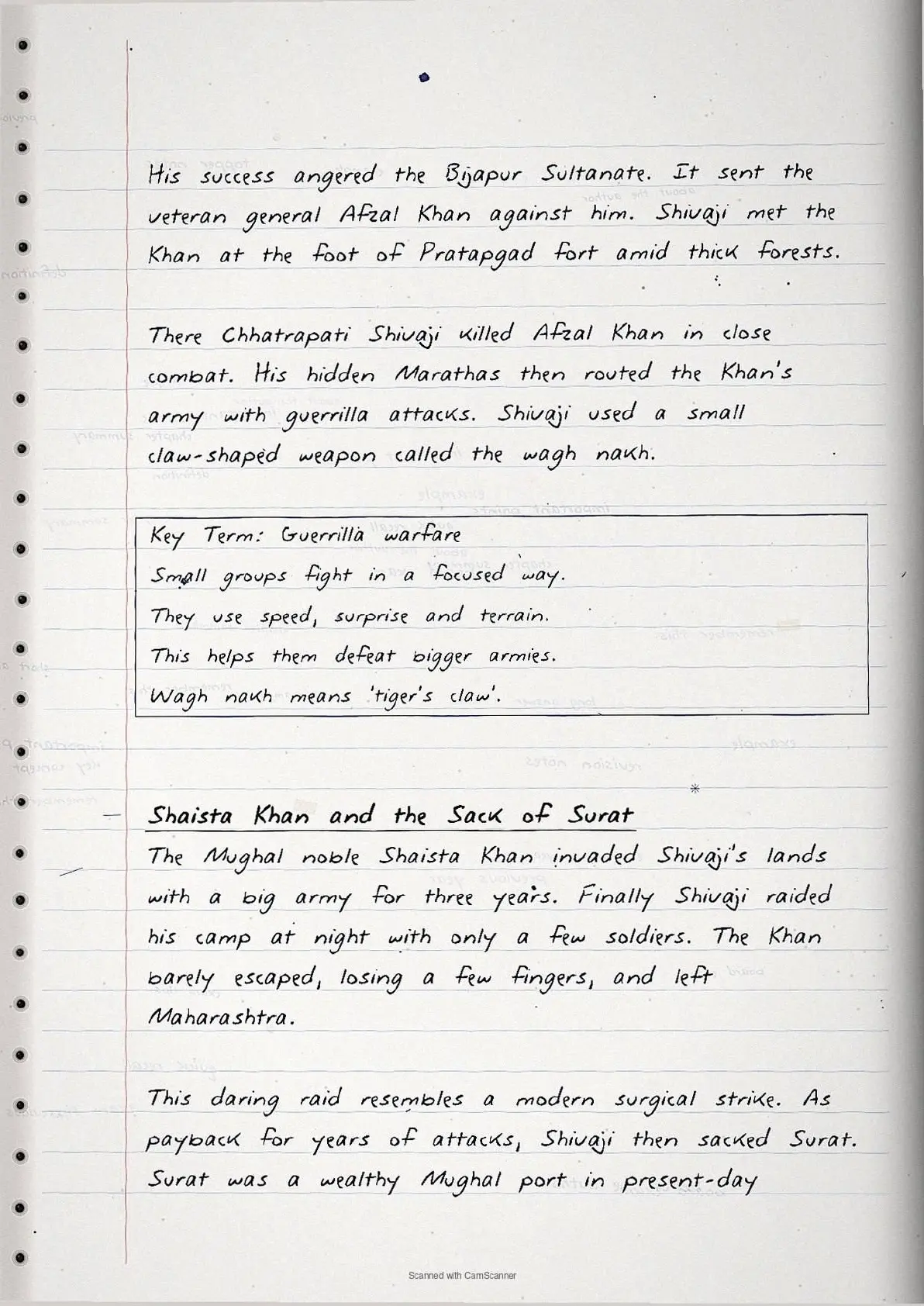
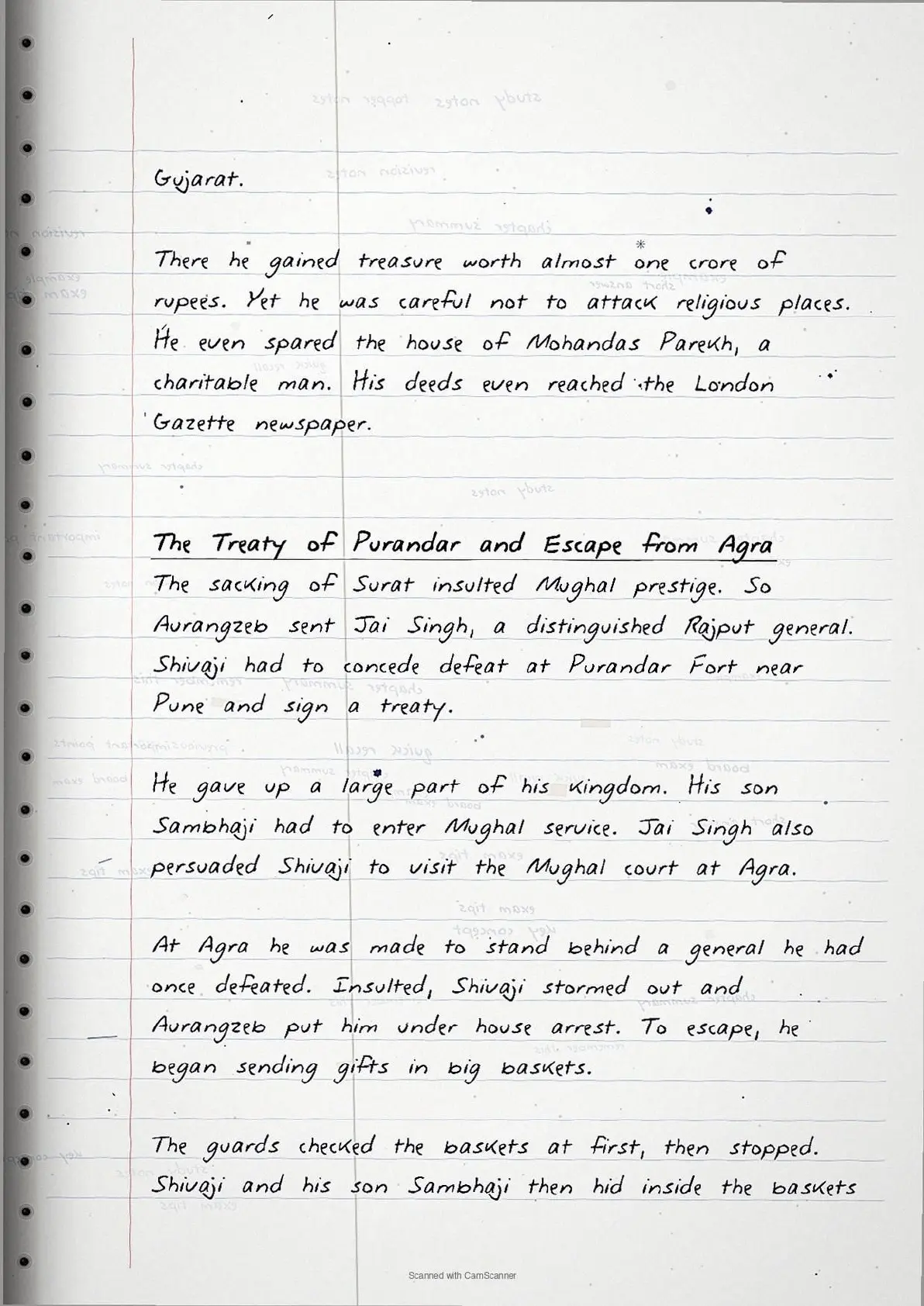
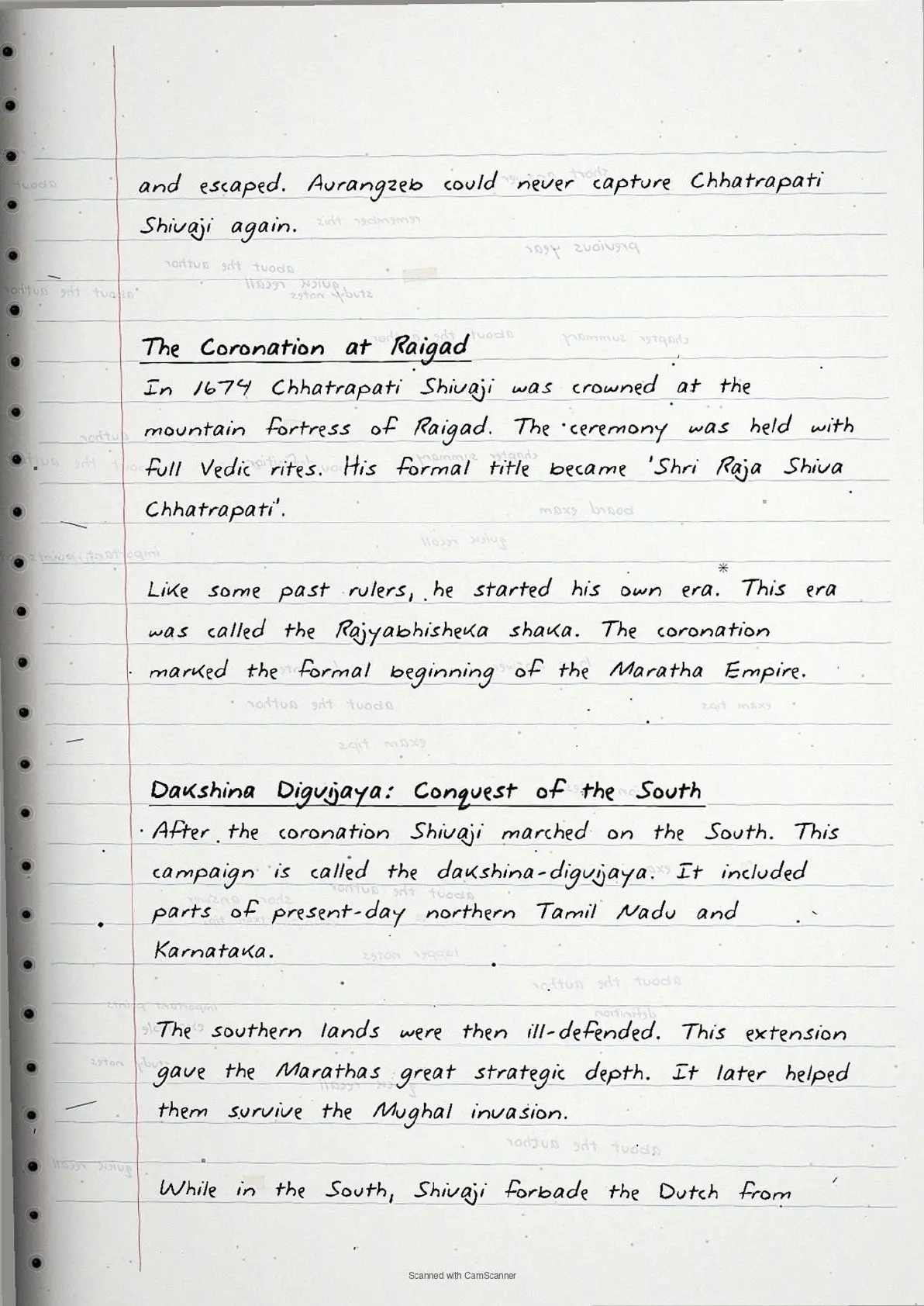
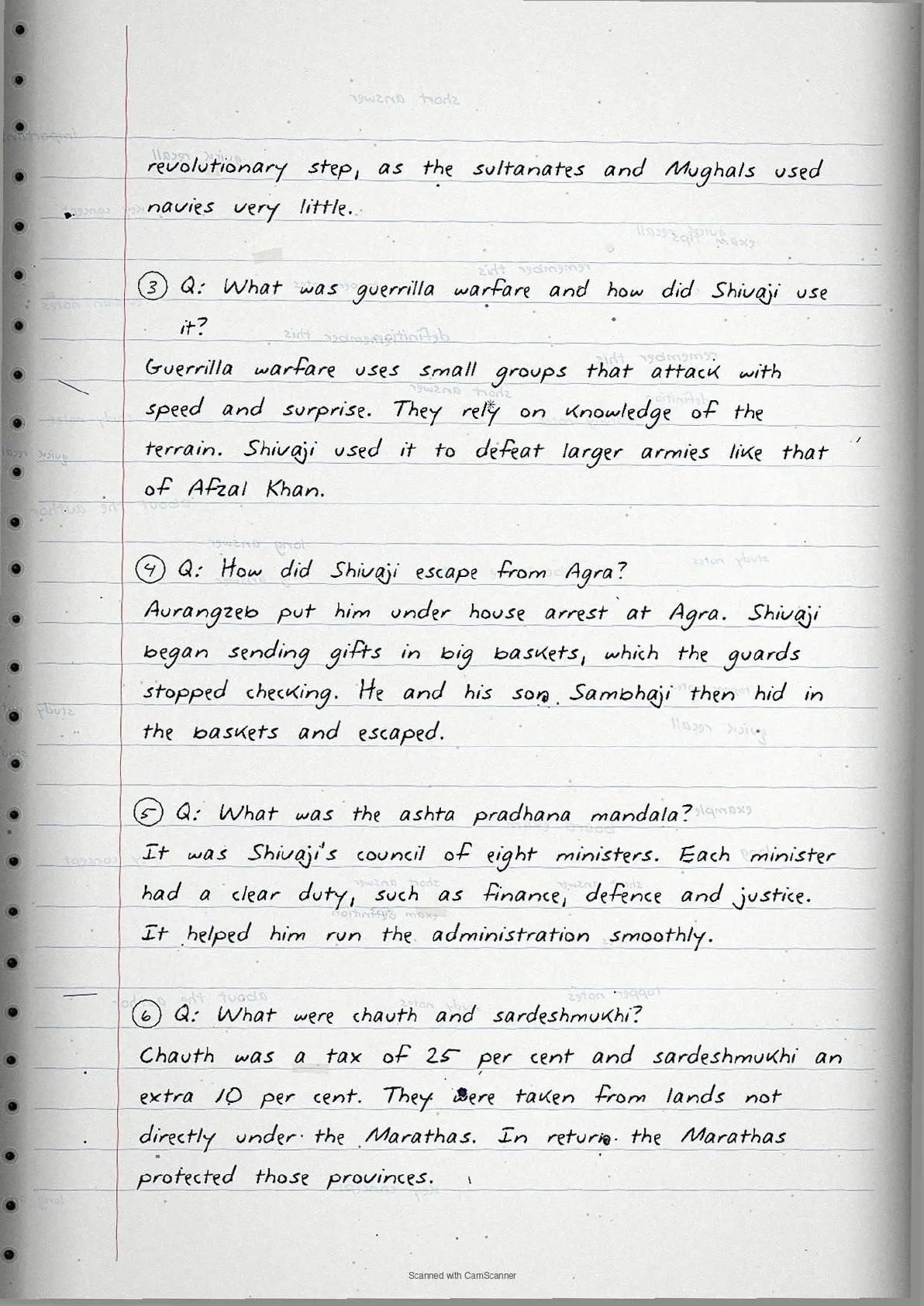
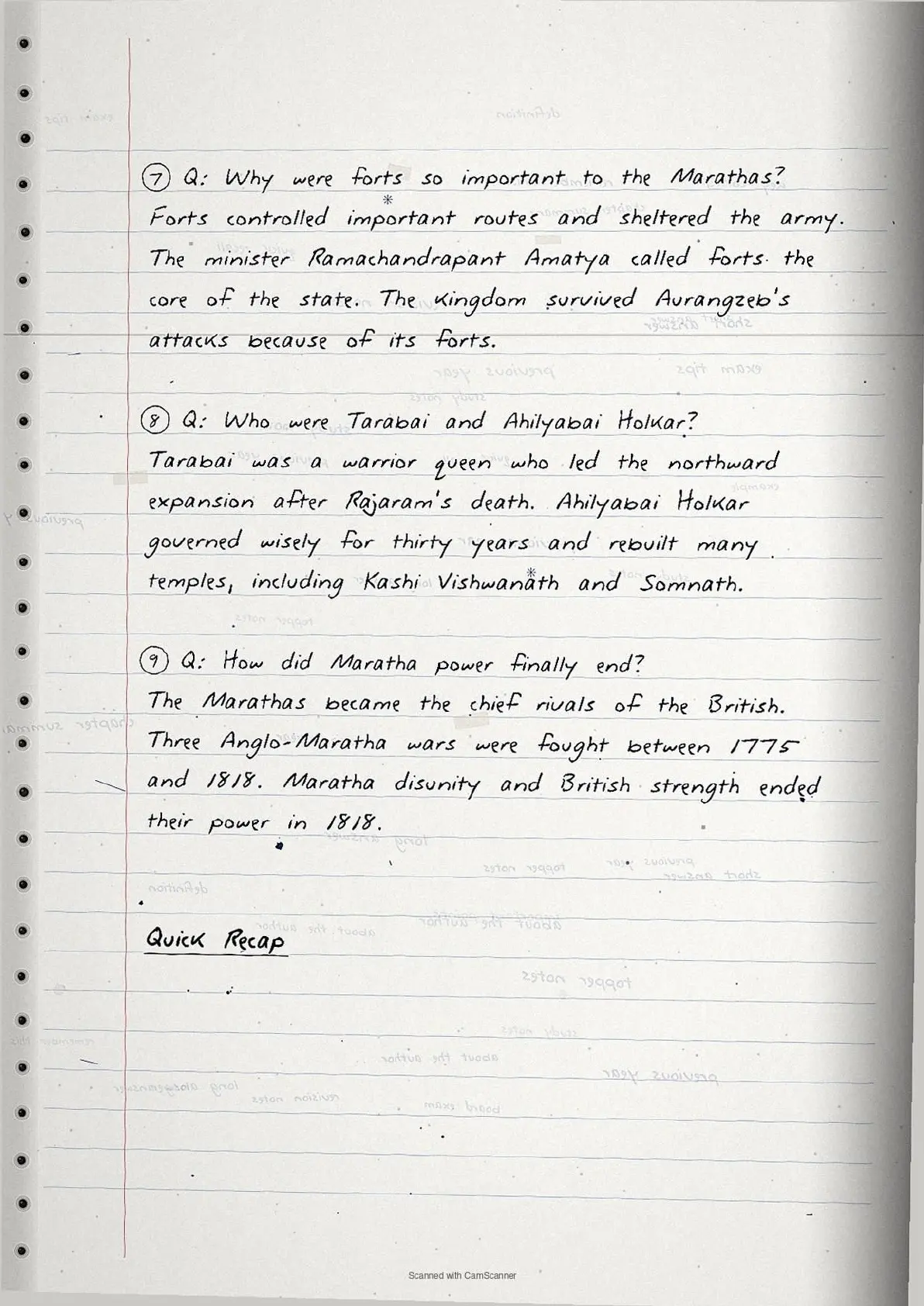
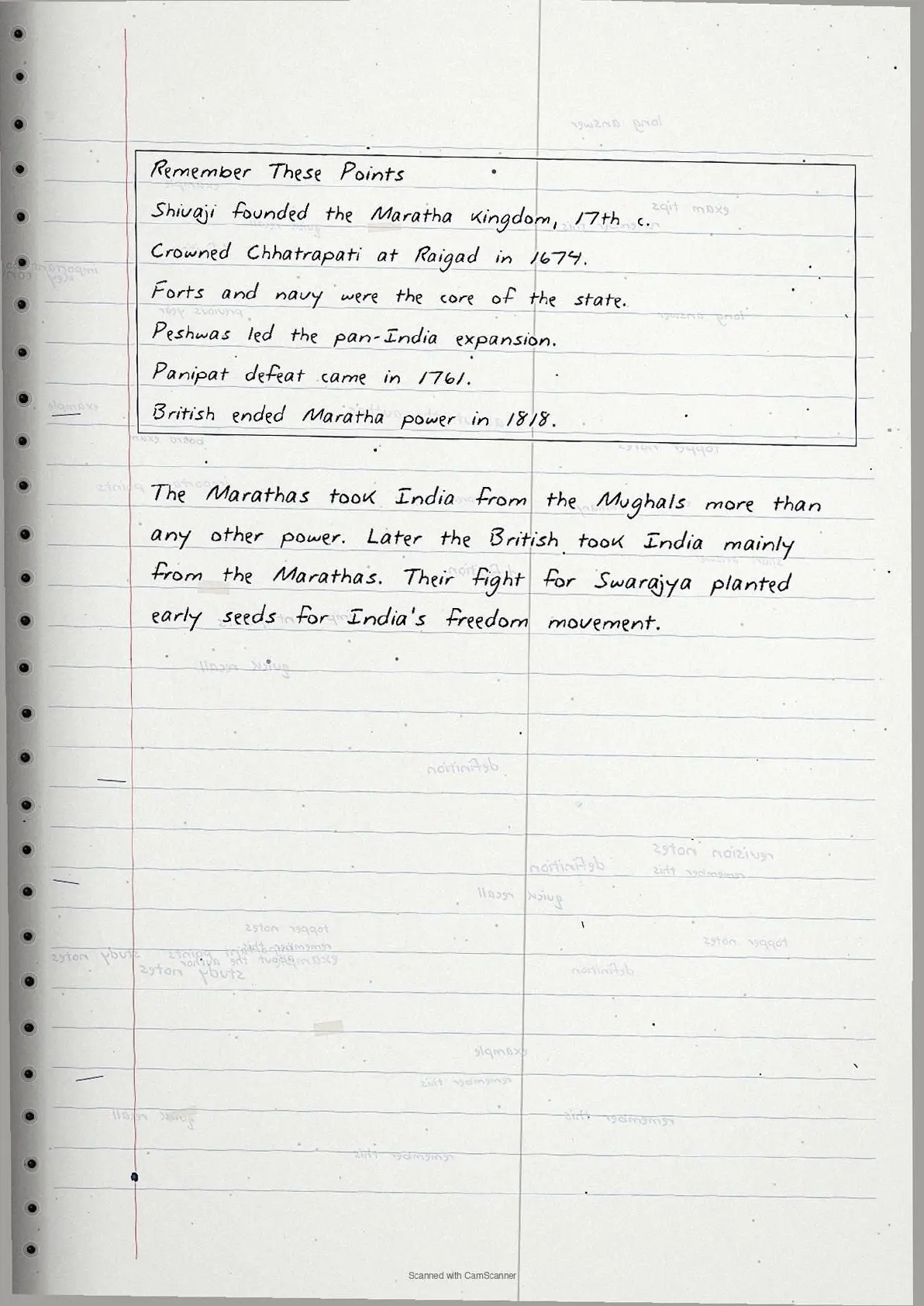
- CBSE Class 8 Weightage: a scoring chapter in the Social Science paper, asked in short and long answers.
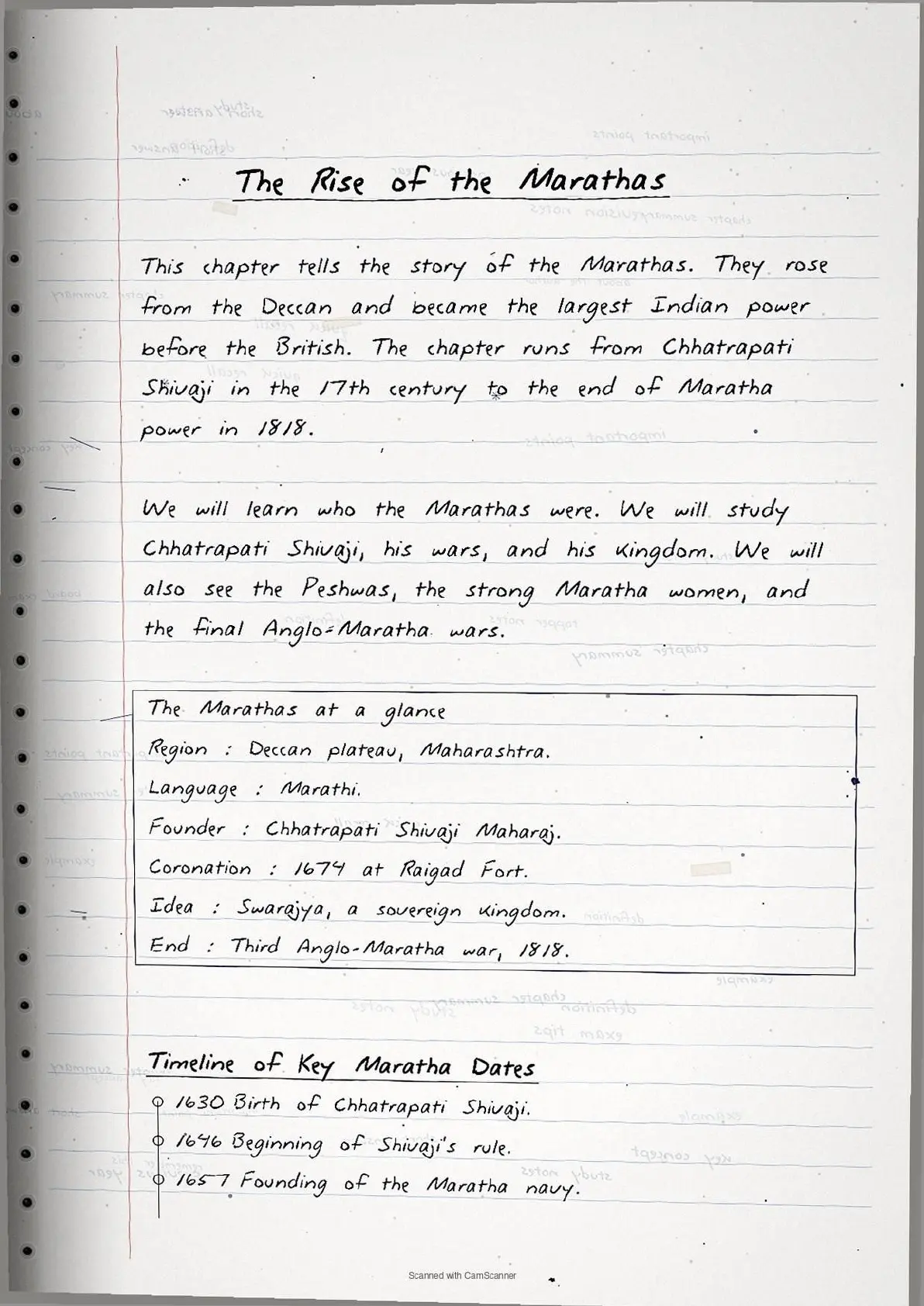
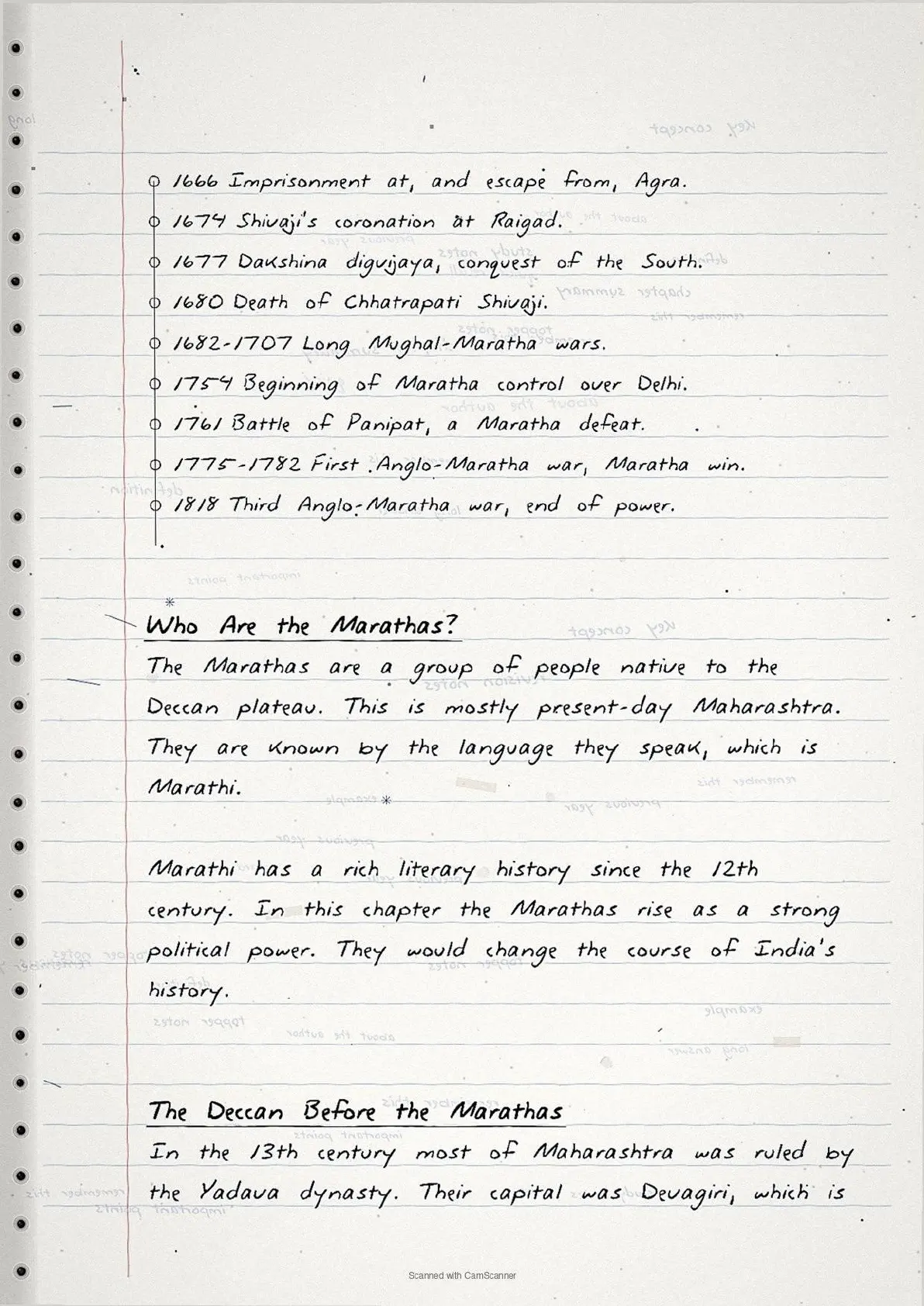
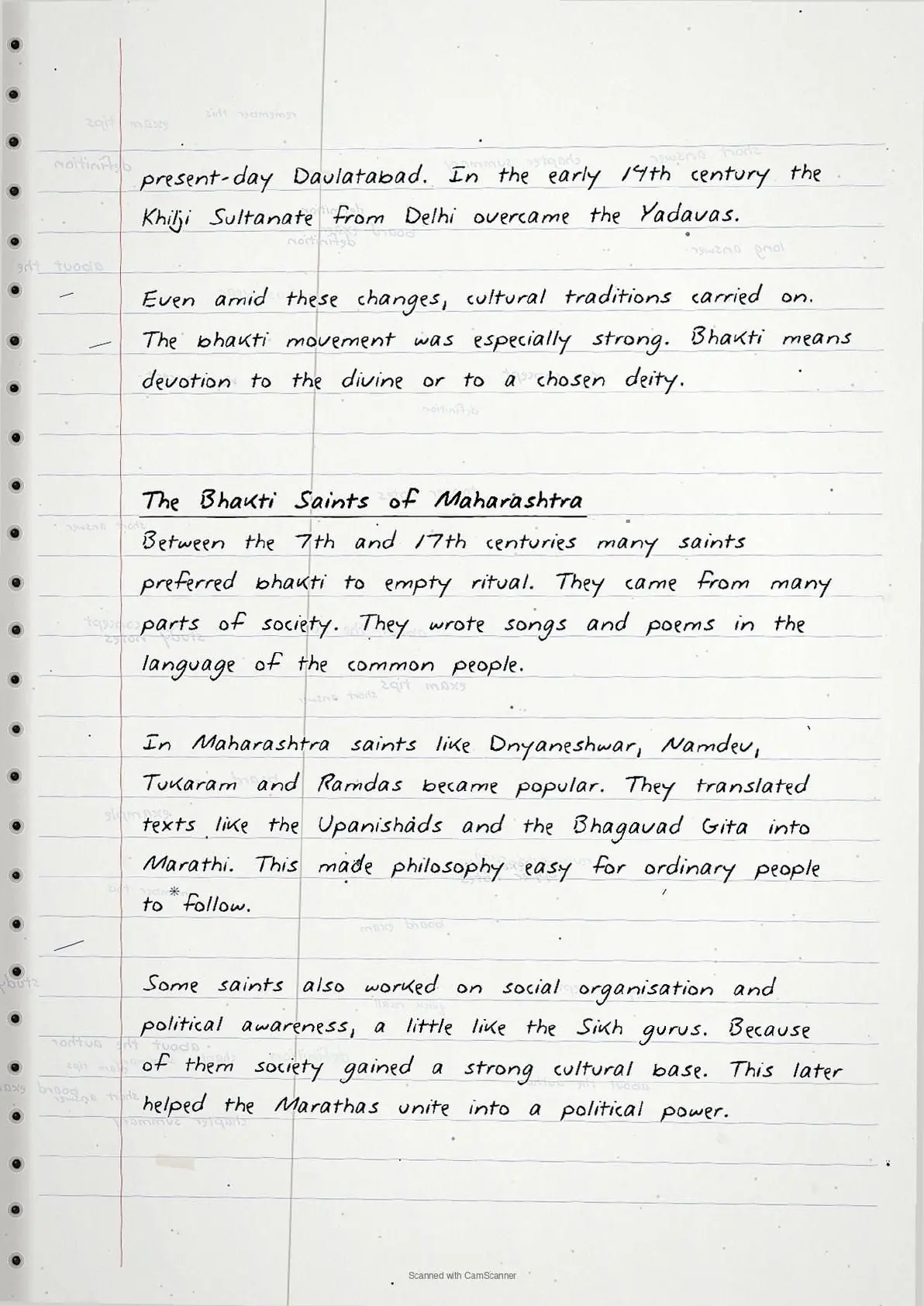
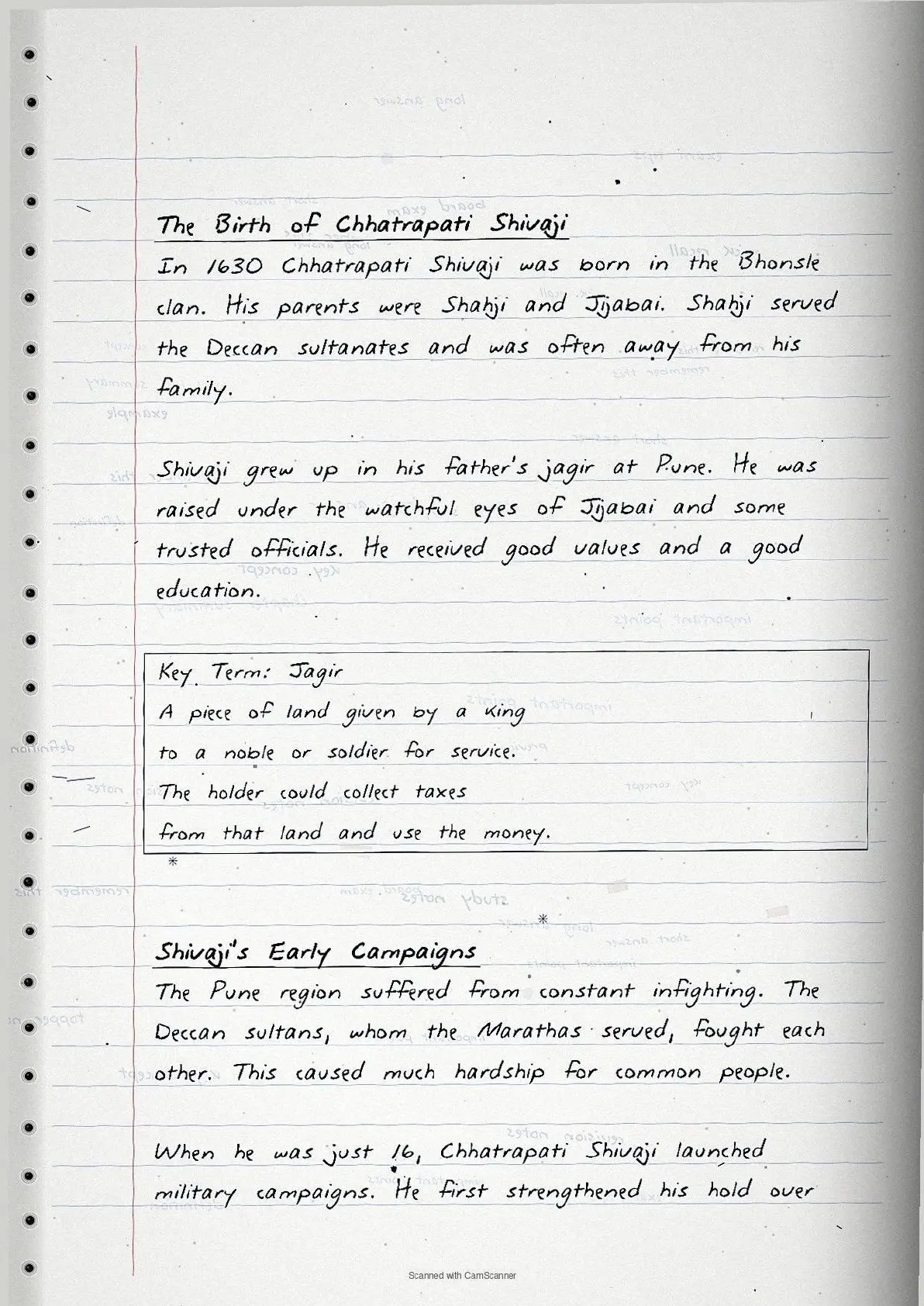
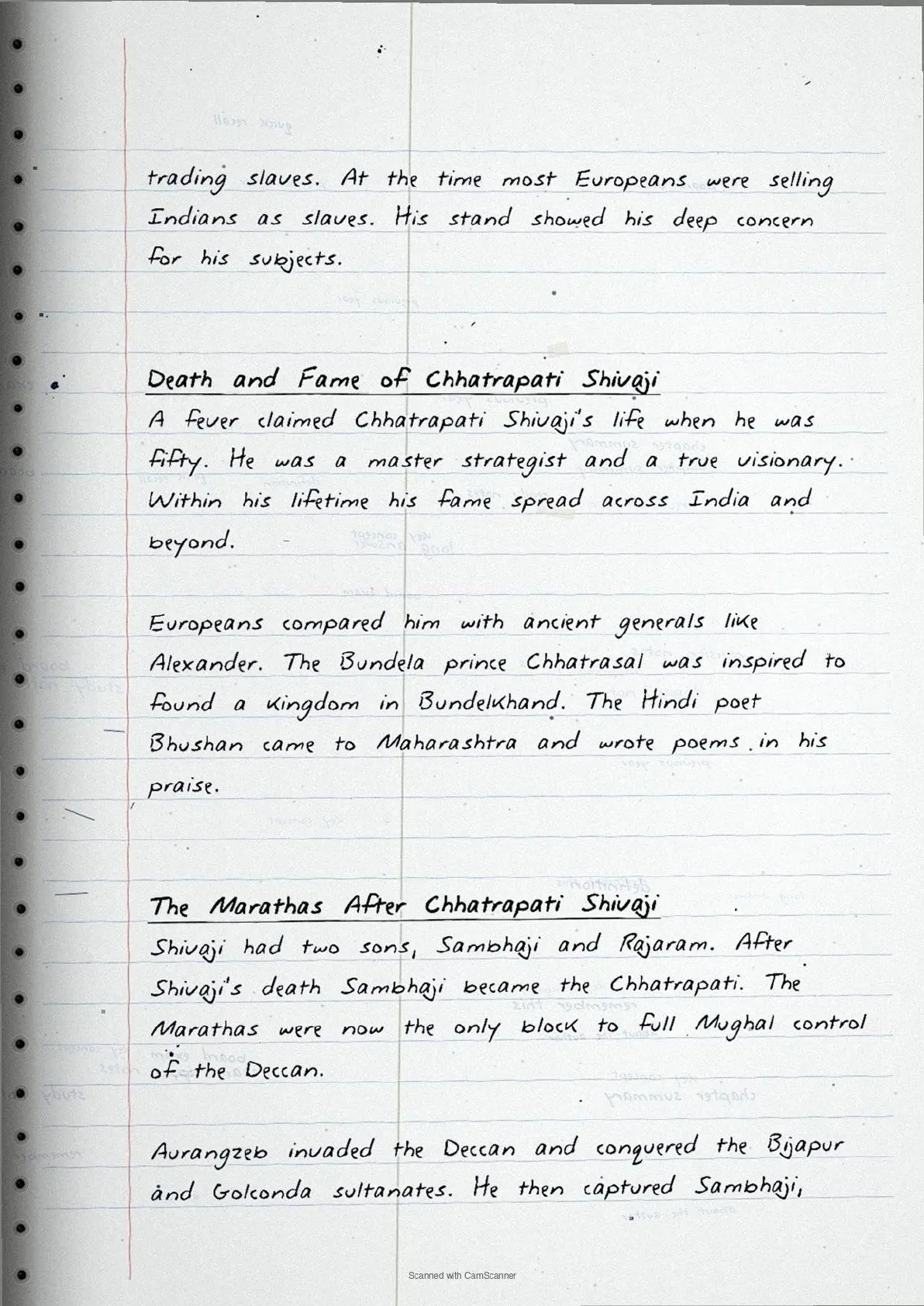
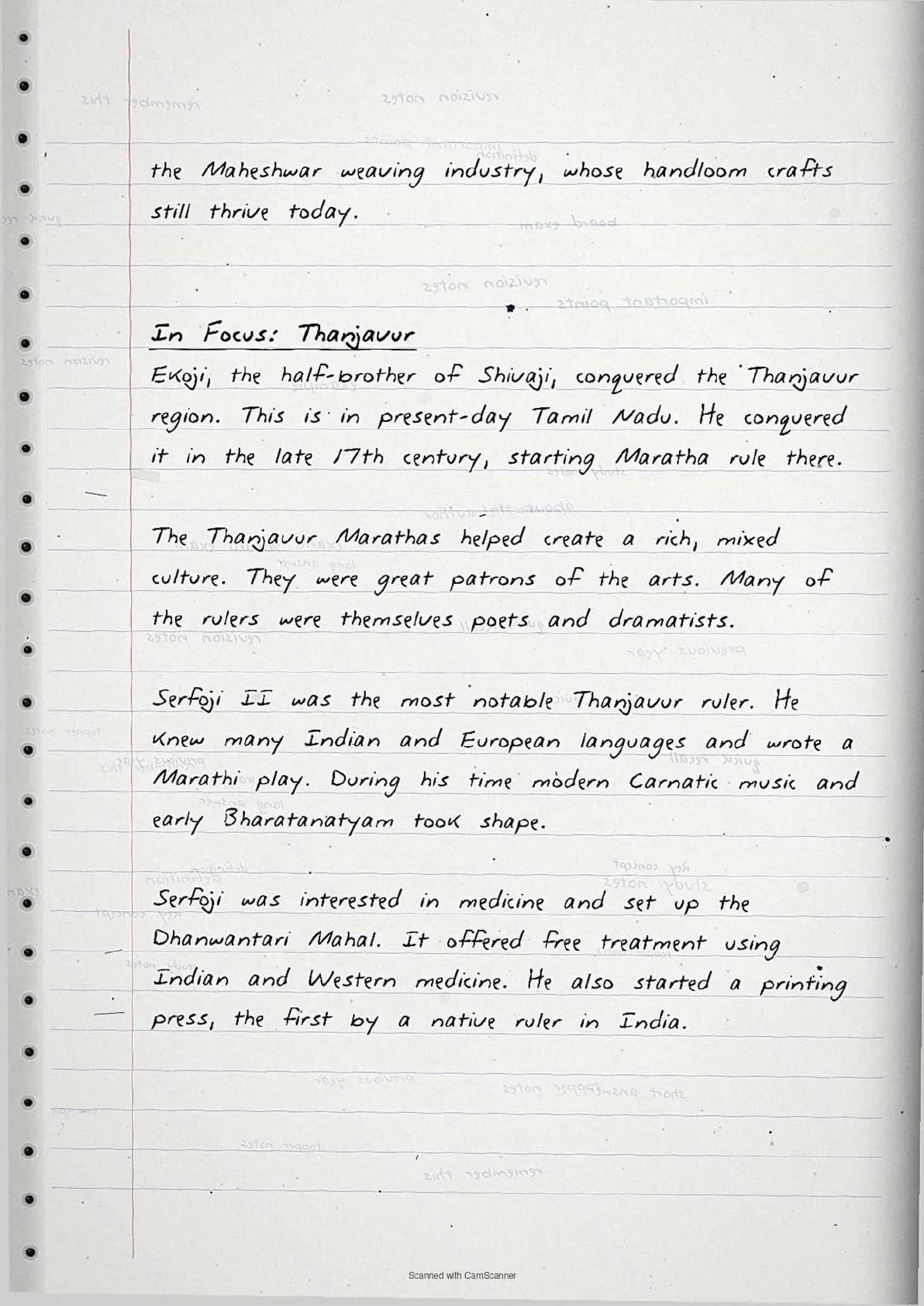
- What the notes cover: who the marathas were and the deccan before them, the bhakti saints of maharashtra, chhatrapati shivaji, his campaigns and navy, guerrilla warfare and the escape from agra.
- Best for: quick revision before Class 8 exams and a strong base for Class 9.
You can read the complete class 8 social-science handwritten notes for The Rise of the Marathas, with key terms, boxed definitions, and quick revision points, in the PDF below.
These handwritten notes are written by subject teachers, mapped to the 2026-27 NCERT, and checked against the last five years of CBSE Class 8 Social Science papers.
What the The Rise of the Marathas Handwritten Notes Cover
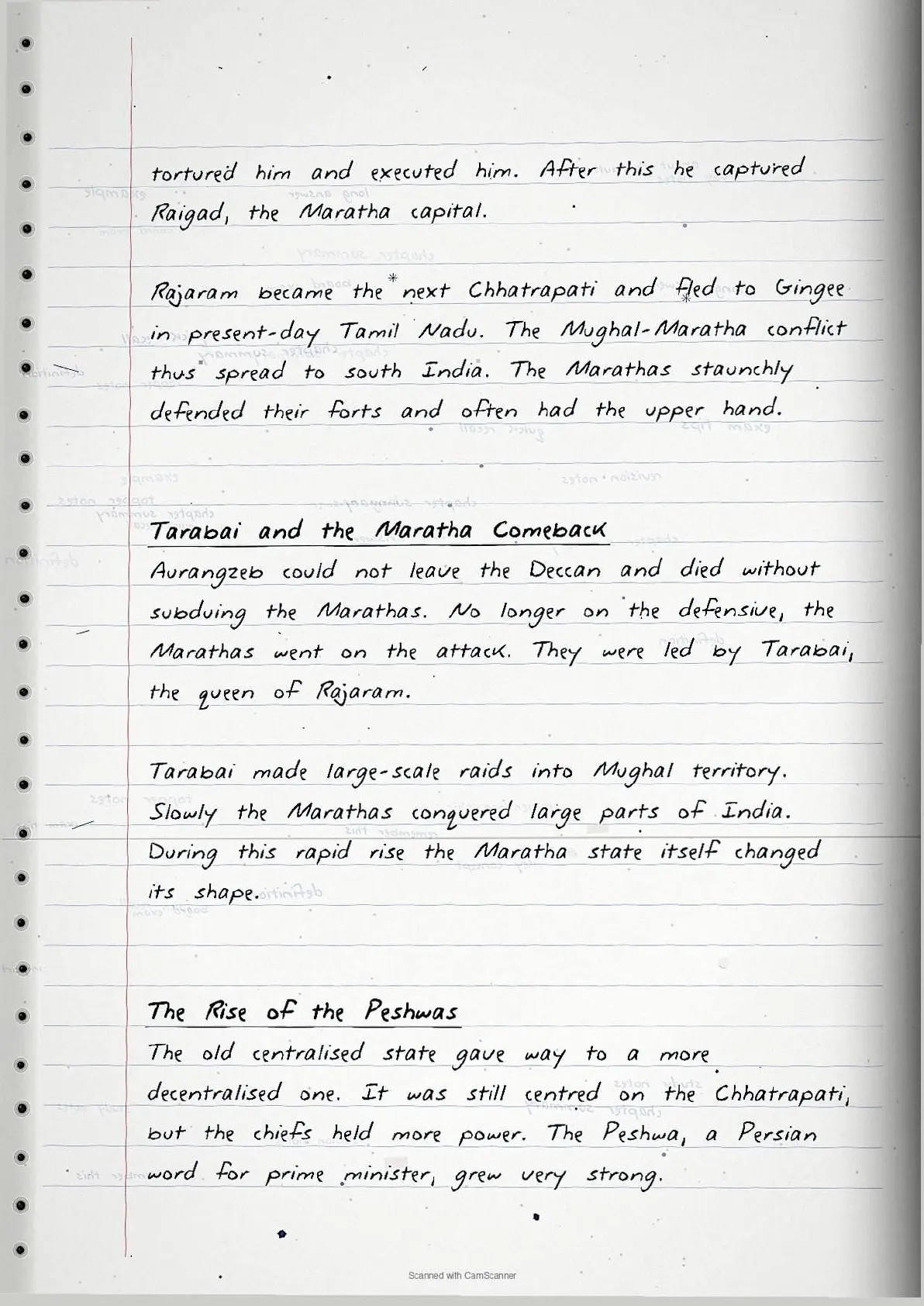
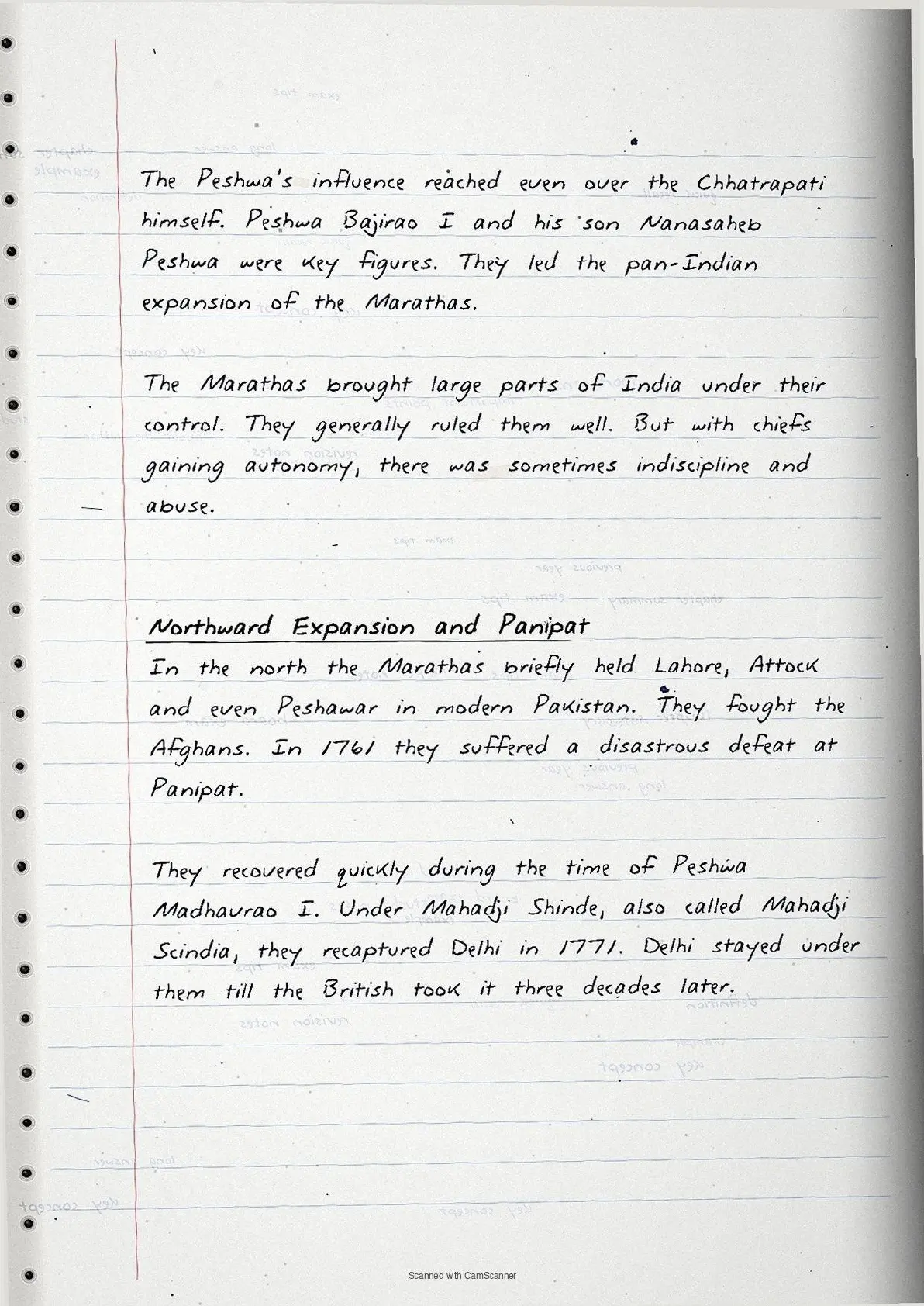
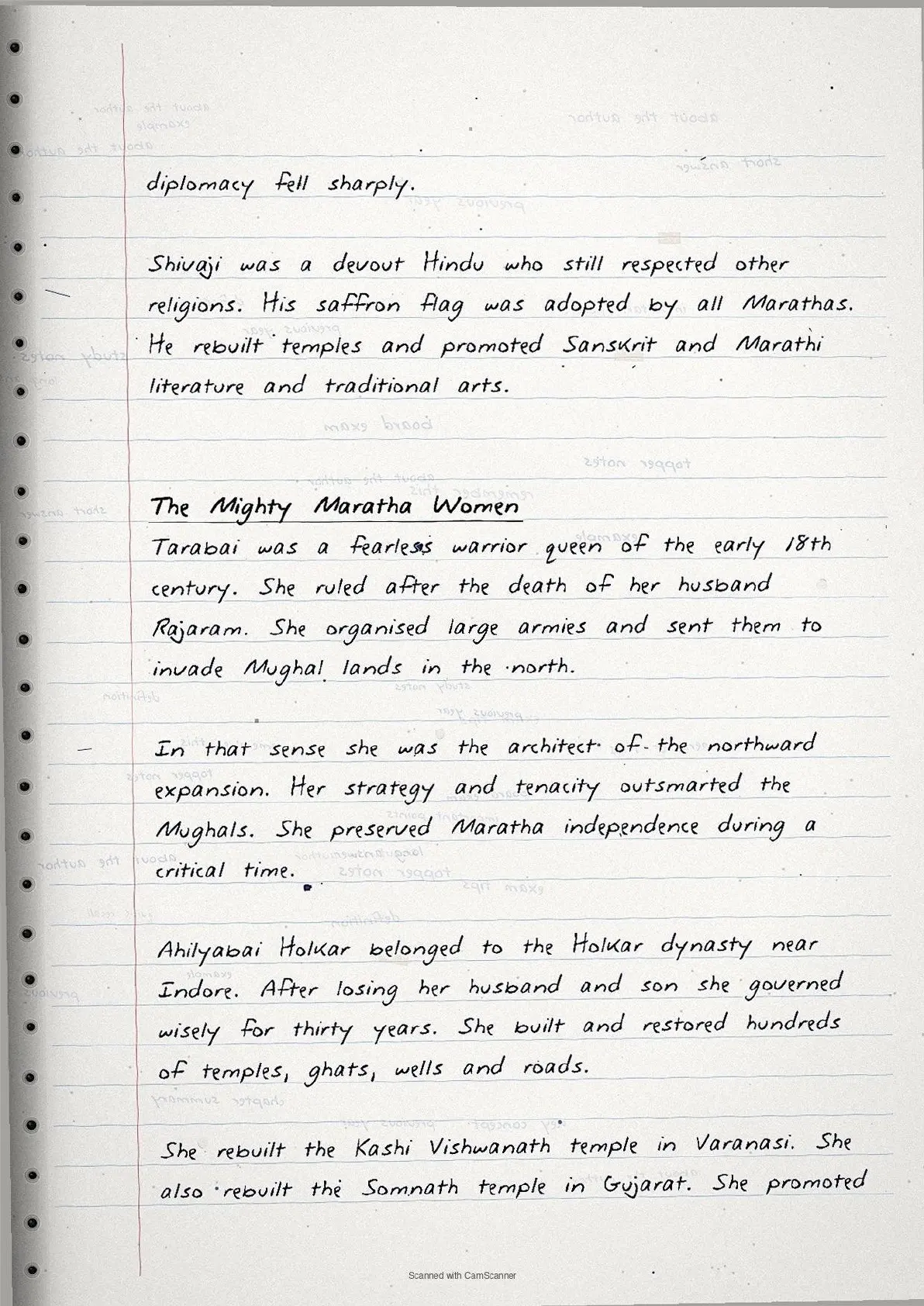
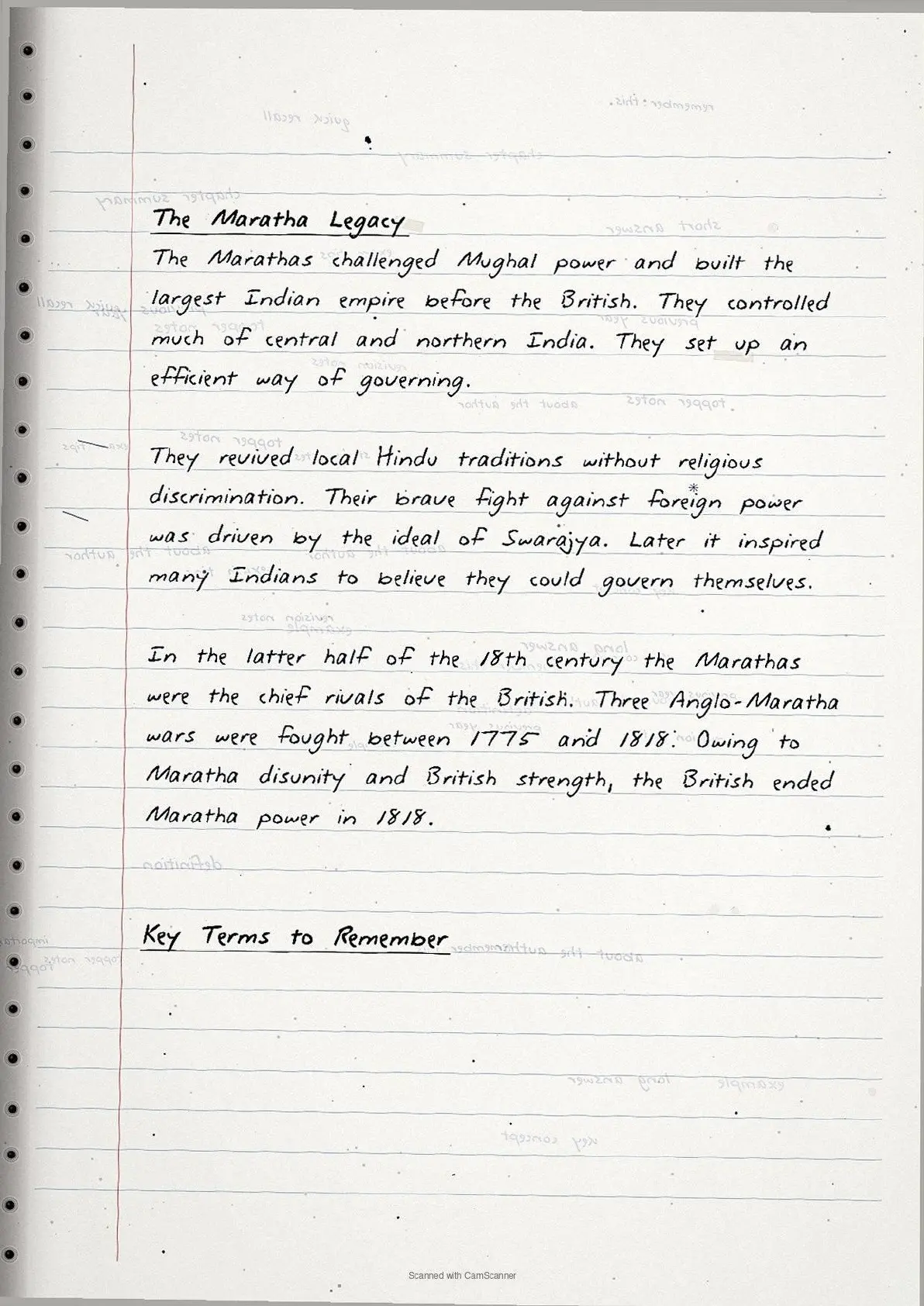
This chapter tells the story of the Marathas, who rose from the Deccan to become the largest Indian power before the British. It runs from Chhatrapati Shivaji in the 17th century to the end of Maratha power in 1818. It covers Shivaji's wars and kingdom, the Peshwas, strong Maratha women and the Anglo-Maratha wars.
- Who the Marathas were and the Deccan before them
- The bhakti saints of Maharashtra
- Chhatrapati Shivaji, his campaigns and navy
- Guerrilla warfare and the escape from Agra
- The coronation at Raigad and Swarajya
- The rise of the Peshwas and expansion
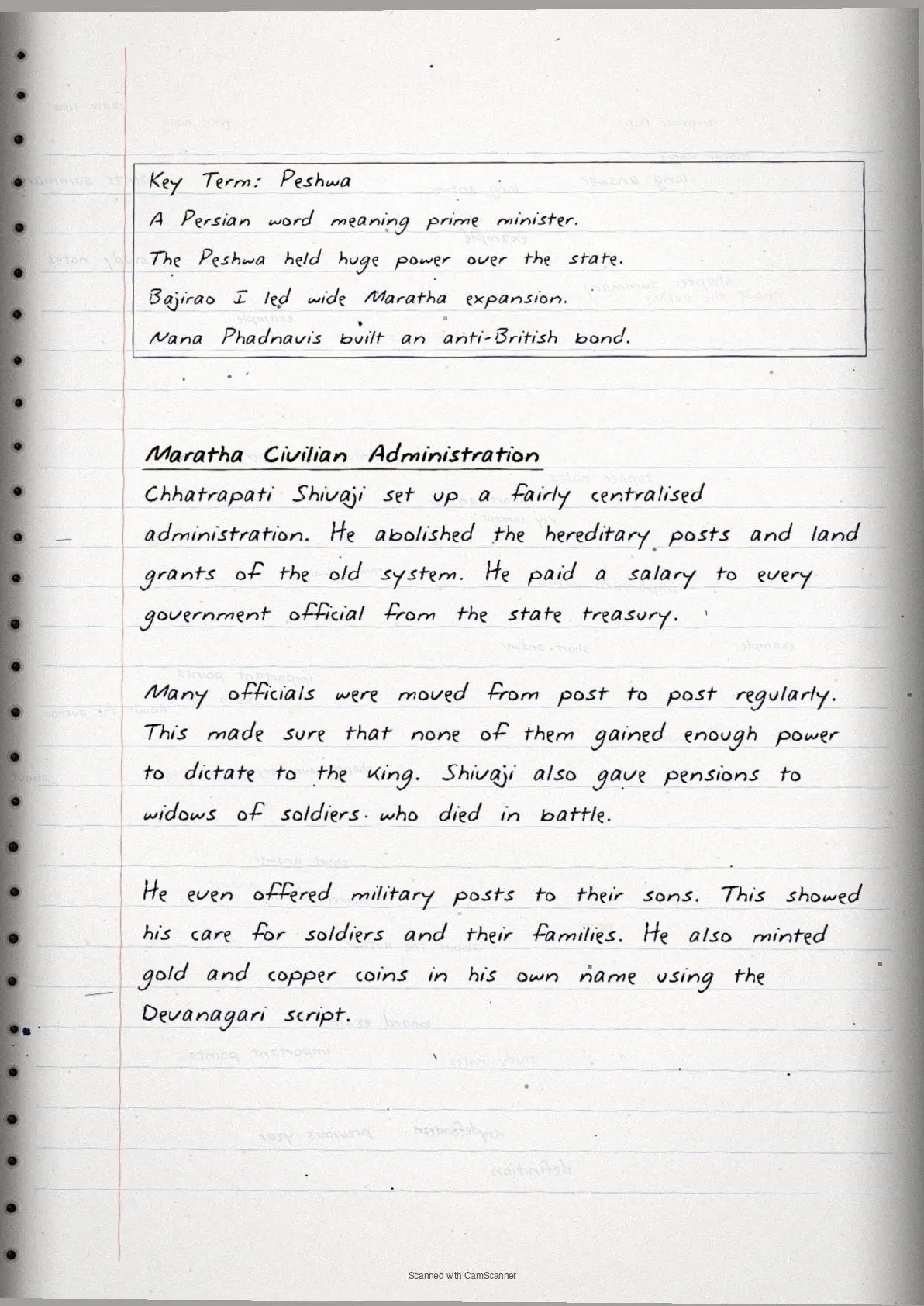
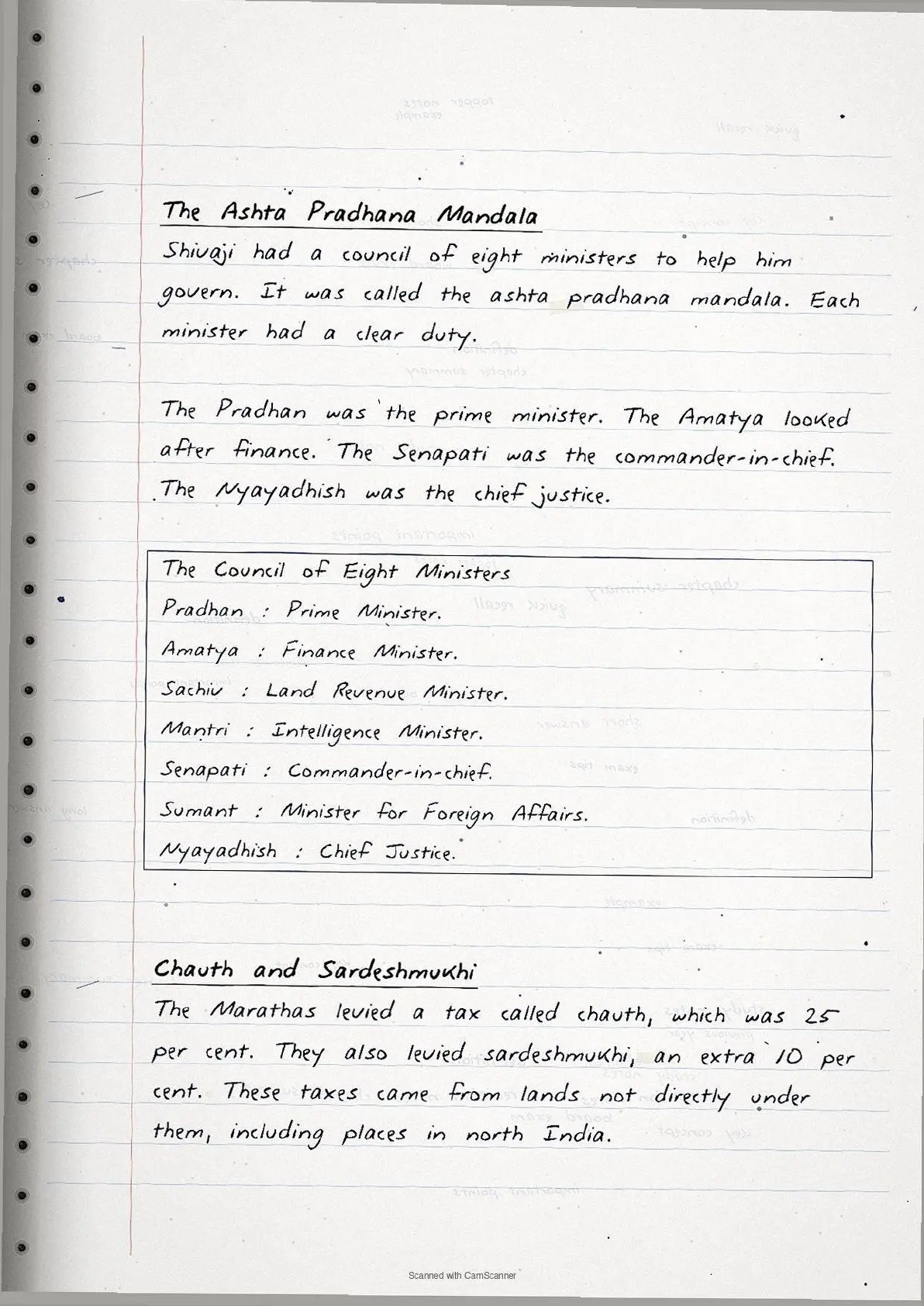
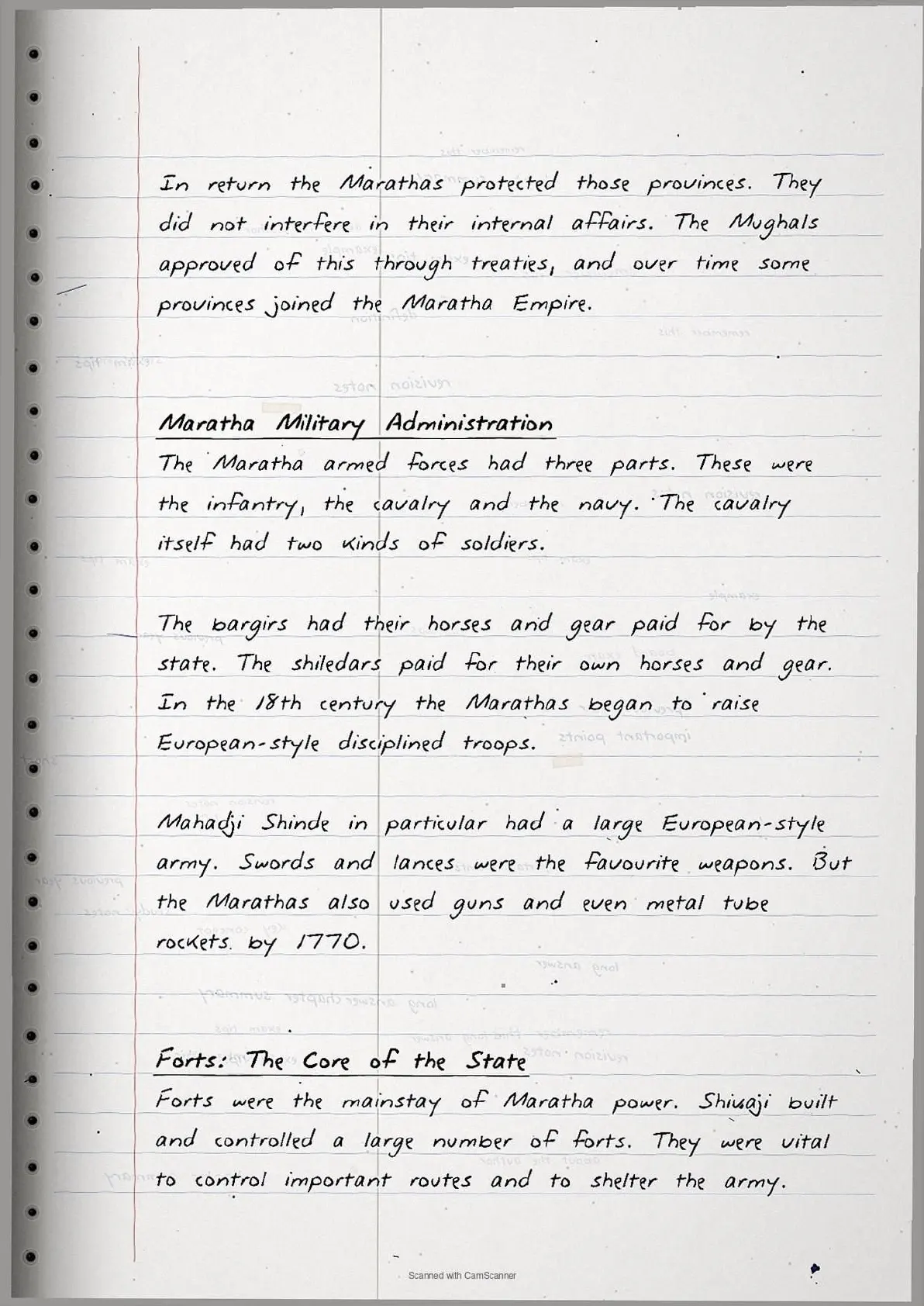
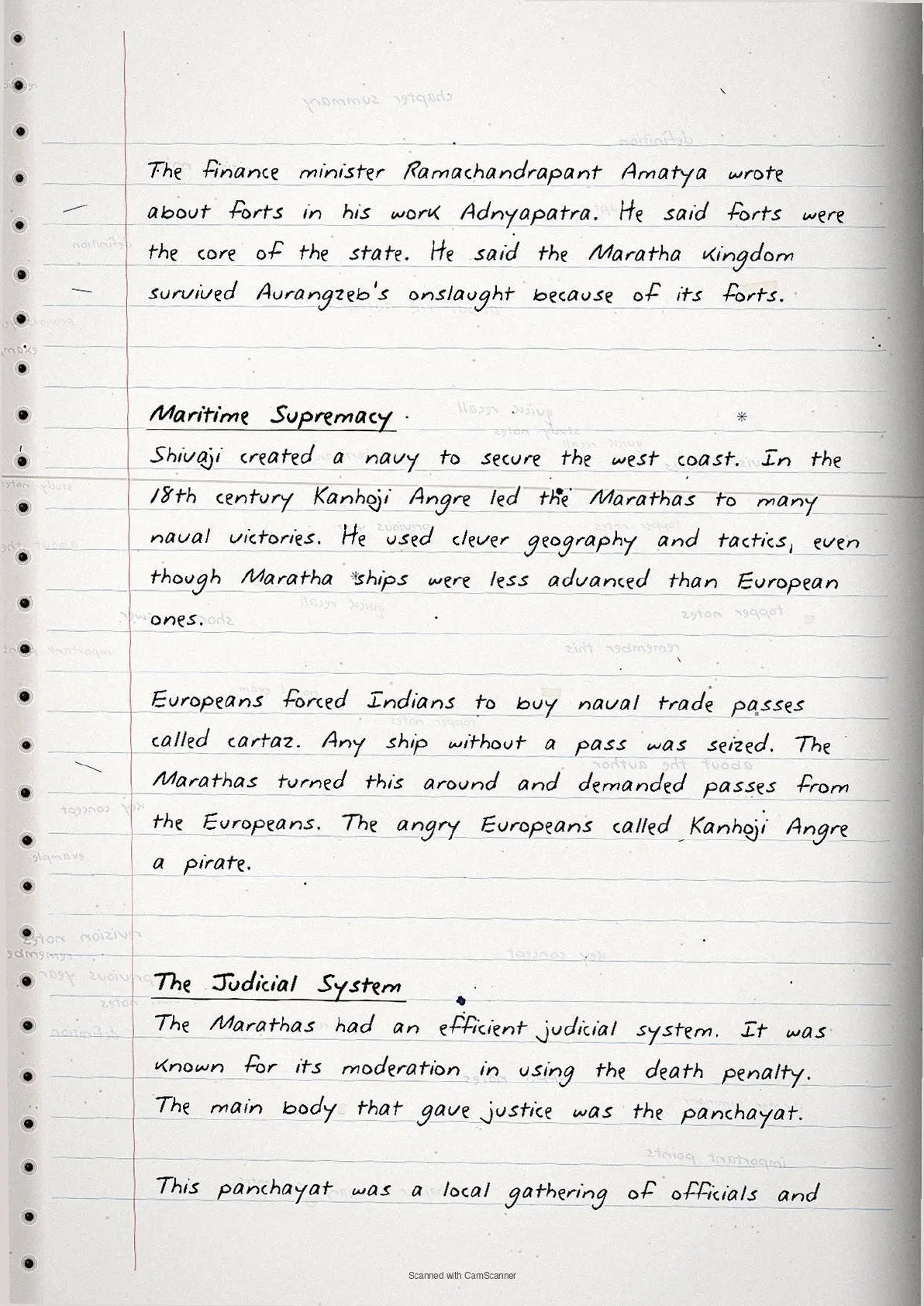
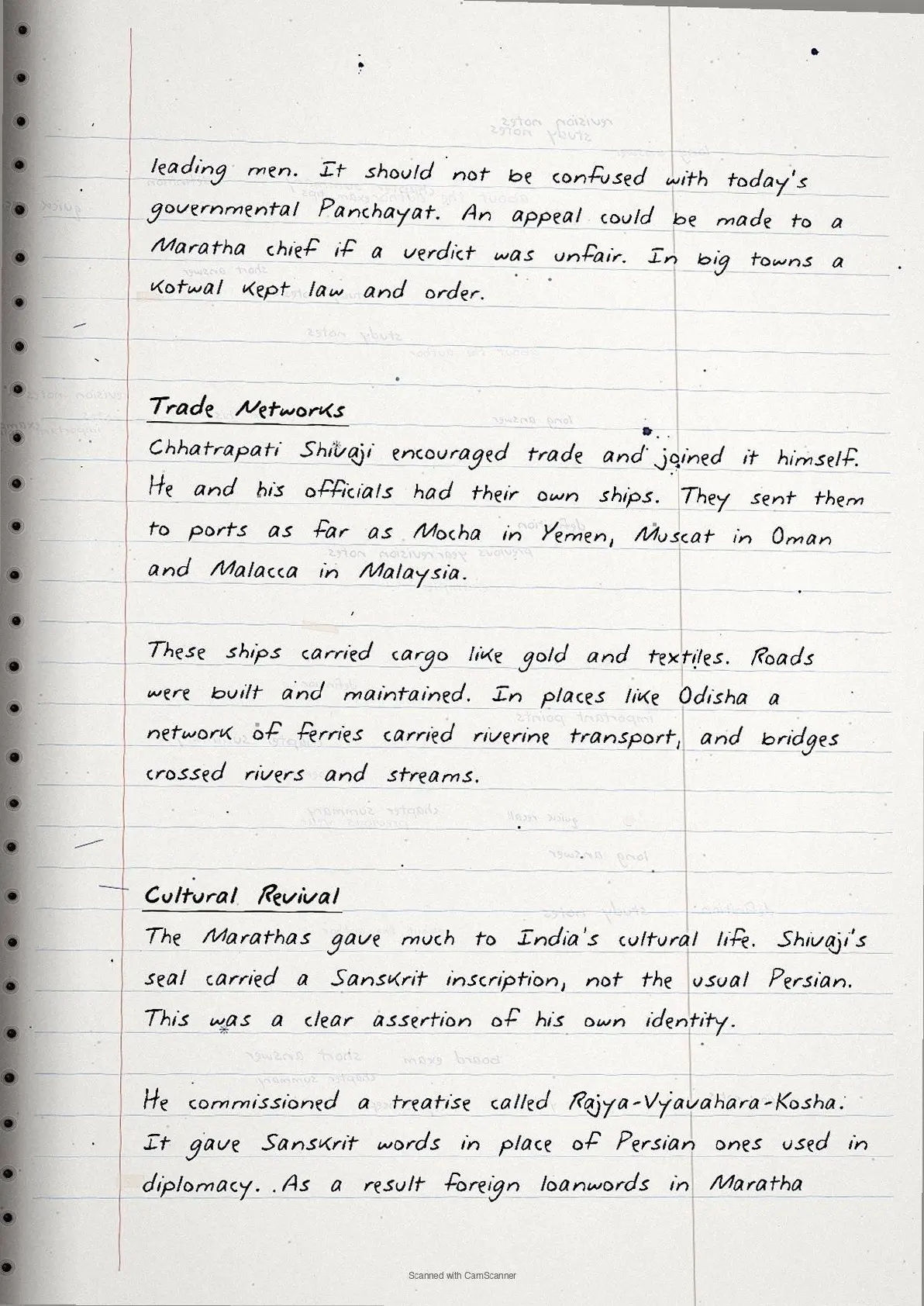
- Maratha administration, forts and taxes
- Mighty Maratha women and the end of power
The Rise of the Marathas Topic-wise Weightage for CBSE Class 8 Social Science
Some parts of this chapter are asked more often than others. The table below shows which sub-topics to revise first, based on recent CBSE Class 8 question trends.
| Sub-topic | Weightage | CBSE Frequency |
|---|---|---|
| Chhatrapati Shivaji and his campaigns | High | asked often |
| Maratha administration and forts | High | asked often |
| The rise of the Peshwas and expansion | Medium | asked sometimes |
| Mighty Maratha women | Medium | asked sometimes |
| Chauth and sardeshmukhi taxes | Medium | asked sometimes |
| The bhakti saints of Maharashtra | Low | asked rarely |
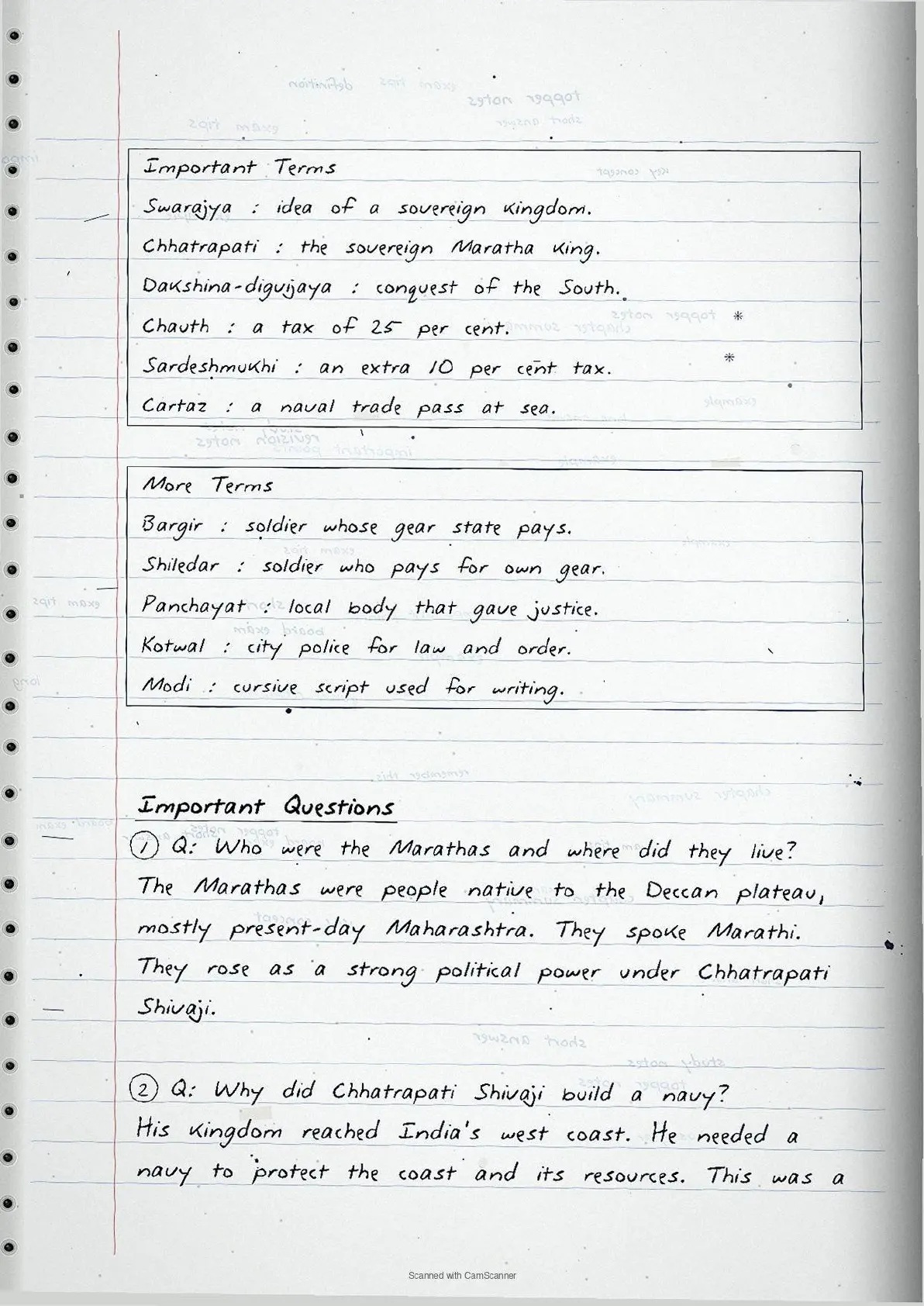
Key Terms and Ideas in The Rise of the Marathas
These are the terms and ideas the exam asks about most. Learn each one so you can define it and use it in your answers.
| Term / Idea | What it means |
|---|---|
| Swarajya | the idea of a sovereign, self-ruled kingdom |
| Chhatrapati | the title of the sovereign Maratha king |
| Guerrilla warfare | small groups attacking with speed, surprise and terrain |
| Chauth | a tax of 25 per cent levied by the Marathas |
| Sardeshmukhi | an extra tax of 10 per cent |
| Ashta pradhana mandala | Shivaji's council of eight ministers |
| Peshwa | a Persian word for prime minister who grew very powerful |
| Cartaz | a naval trade pass demanded from ships at sea |
How Collegedunia's Handwritten Notes Help You Revise The Rise of the Marathas
These notes are made for the night before the exam. They keep the facts short and easy to scan. Collegedunia maps every point to the 2026-27 NCERT.
- Clear handwriting: each topic is written in neat, easy-to-read handwriting.
- Boxed key terms: the main terms and definitions are boxed by hand for fast recall.
- Diagrams and tables: simple hand-drawn tables and charts make ideas clear.
- Colour-coded headings: new sub-topics stand out, so you find any section in seconds.
The Rise of the Marathas Self-Assessment Quiz
Try these quick questions after you read the notes. Tap each question to check your answer. They cover the points CBSE asks most often.
In which year was Shivaji crowned at Raigad?
(a) 1630 (b) 1674 (c) 1707 (d) 1761
Answer: (b) 1674 - the coronation marked the start of the Maratha Empire.
Which general did Shivaji kill at Pratapgad?
(a) Shaista Khan (b) Afzal Khan (c) Jai Singh (d) Aurangzeb
Answer: (b) Afzal Khan - Shivaji used the wagh nakh in close combat.
What was chauth?
(a) a 25 per cent tax (b) a fort (c) a navy (d) a council
Answer: (a) a 25 per cent tax - taken from lands not directly under the Marathas.
Who rebuilt the Kashi Vishwanath and Somnath temples?
(a) Tarabai (b) Jijabai (c) Ahilyabai Holkar (d) Rani Durgavati
Answer: (c) Ahilyabai Holkar - she governed wisely for thirty years.
When did British rule end Maratha power?
(a) 1761 (b) 1799 (c) 1818 (d) 1857
Answer: (c) 1818 - after the Third Anglo-Maratha war.
How to Use These Handwritten Notes for Class 8 Social Science Revision
Use these class 8 social-science handwritten notes in two passes. Read them slowly once for the full chapter. Then, near the exam, read only the boxes and key terms for a fast recall.
- Read the notes once with the NCERT chapter open beside you.
- Say each key term and idea in your own words.
- Practise one long-answer question from a past paper.
- On the last day, revise only the key terms and the boxes.
Class 8 Social Science Handwritten Notes for All Chapters
The table below links the class 8 social-science handwritten notes for every chapter. Use it to jump to any other chapter's notes.
The Rise of the Marathas Class 8 Social Science Handwritten Notes FAQs
Ques. Where can I download The Rise of the Marathas Class 8 Social Science Handwritten Notes PDF?
Ans. You can download the The Rise of the Marathas Class 8 Social Science Handwritten Notes PDF directly from this page. Both the Normal and HD versions are free.
Ques. Are these handwritten notes aligned with the 2026-27 NCERT?
Ans. Yes. These notes follow the current 2026-27 syllabus for Class 8 Social Science. What Swarajya meant to the Marathas.
Ques. How many pages is the Class 8 Social Science The Rise of the Marathas Handwritten Notes PDF?
Ans. The notes run about 23 pages. They cover the full chapter with key terms, hand-drawn boxes, and a short self-assessment quiz.
Ques. What is the main idea of the 8th standard Social Science chapter The Rise of the Marathas?
Ans. The chapter shows how the Marathas rose from the Deccan under Chhatrapati Shivaji and built the largest Indian empire before the British. Its main idea is that their fight for Swarajya, a sovereign kingdom, and their efficient rule inspired later Indians to believe they could govern themselves.
Ques. Are these The Rise of the Marathas notes enough for the CBSE Class 8 exam?
Ans. Yes, for revision. The Collegedunia handwritten notes cover every key point and exam term. Read them with the NCERT chapter and practise past questions.



Comments