




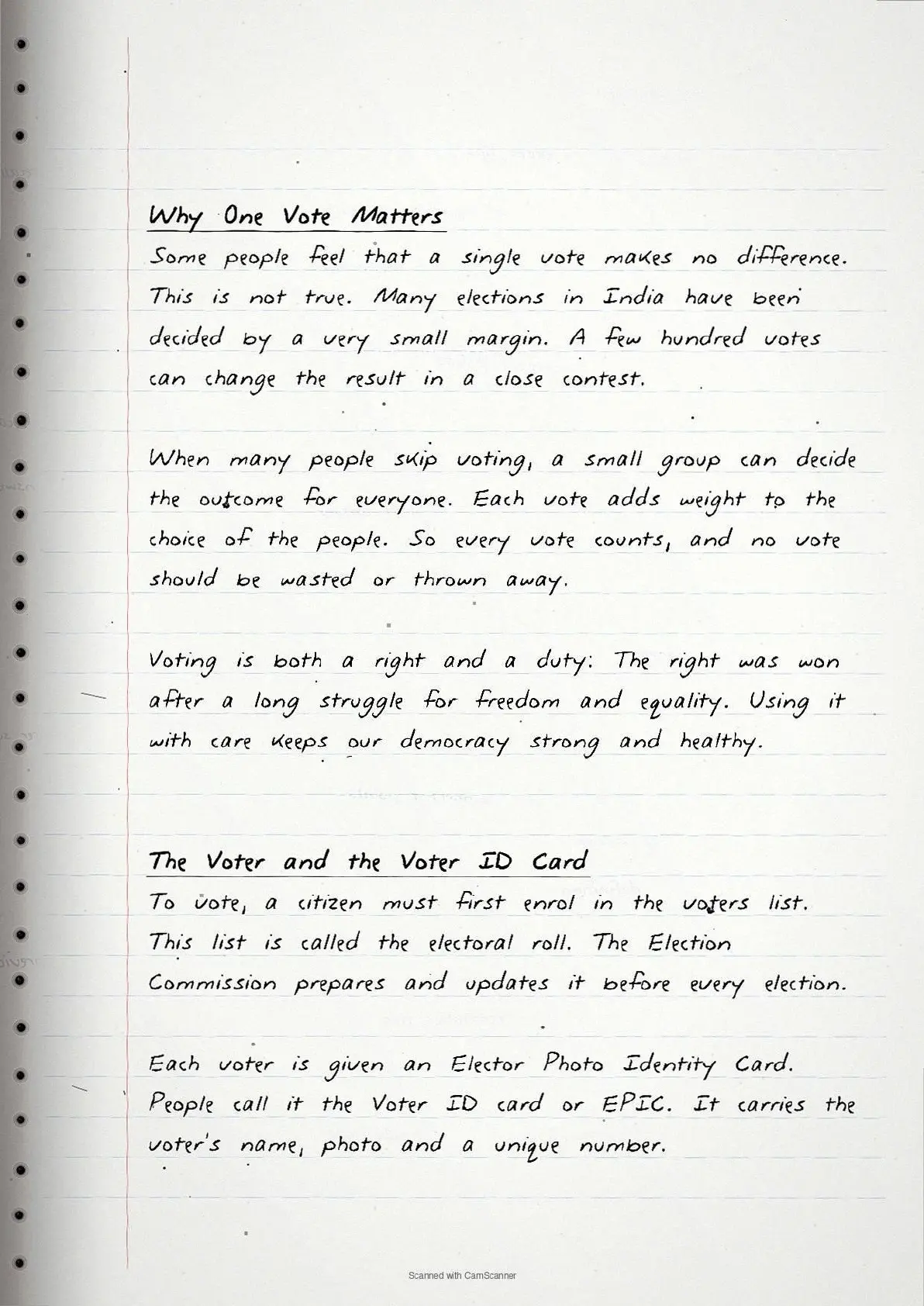
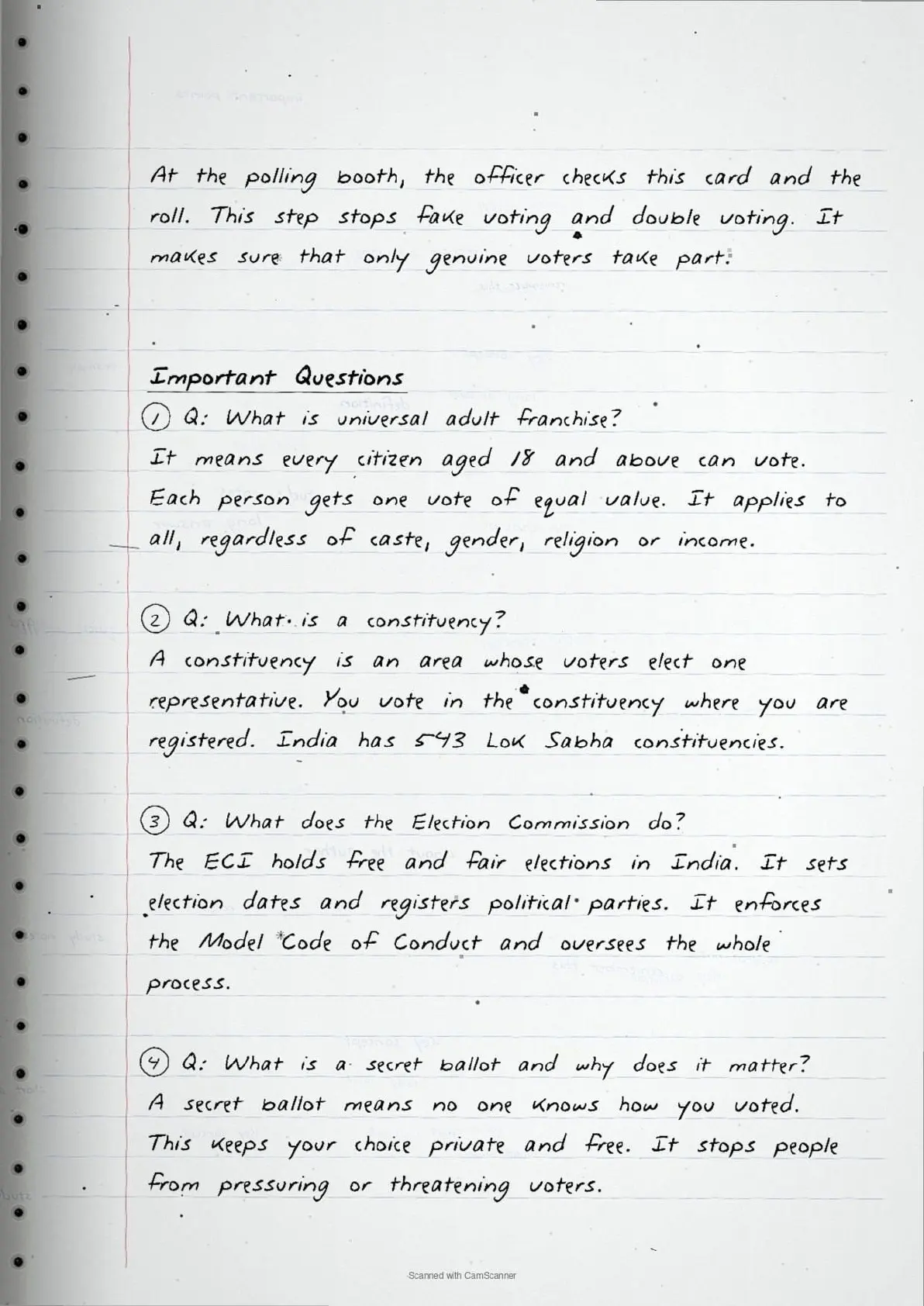
Class 8 Social Science Chapter 5 Universal Franchise and India's Electoral System is a high-frequency chapter in the CBSE Class 8 Social Science exam. These class 8 social-science handwritten notes chapter 5 Universal Franchise and India's Electoral System follow the 2026-27 NCERT and cover universal adult franchise and the voting age, franchise before and after independence, why universal.
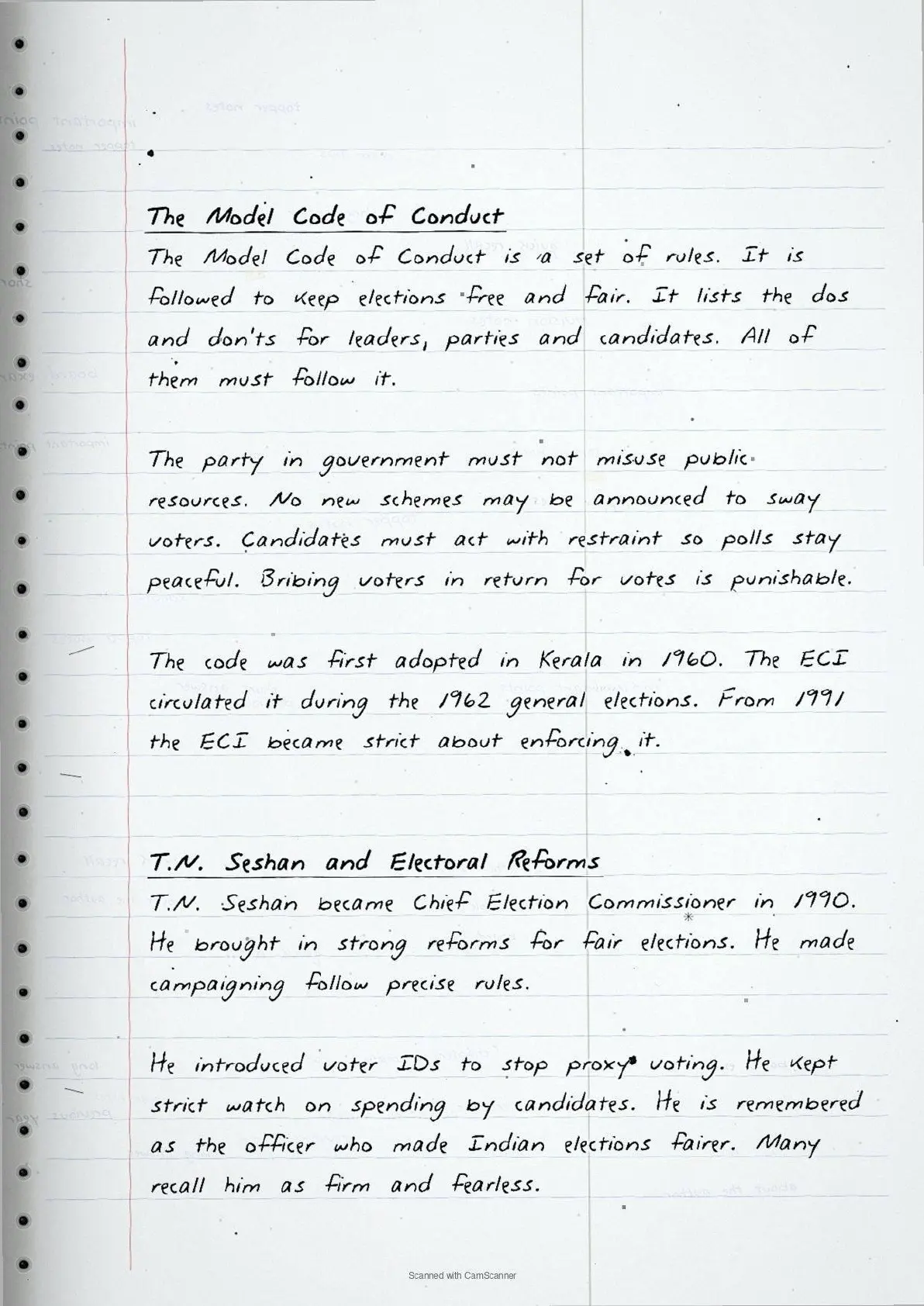
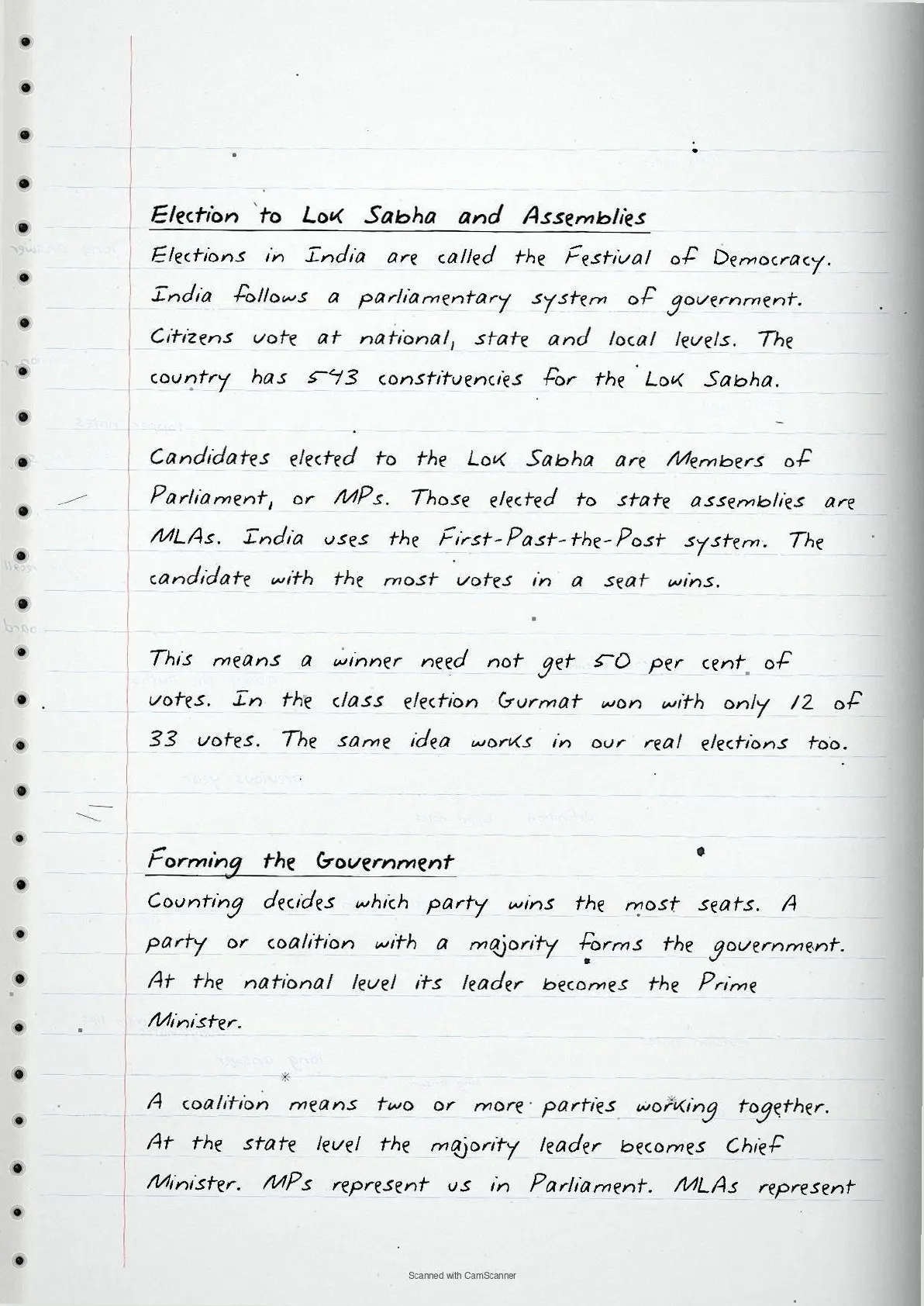
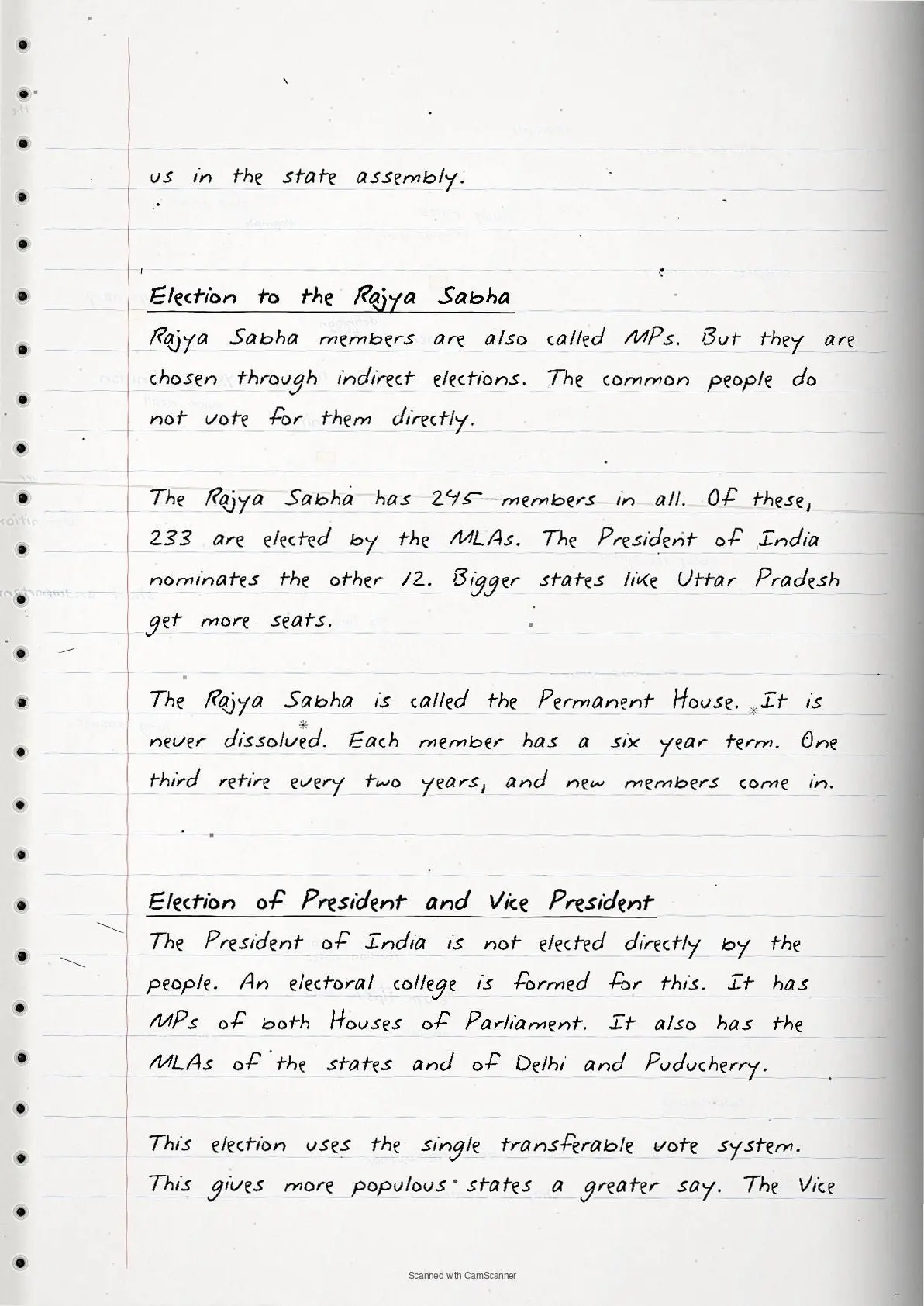
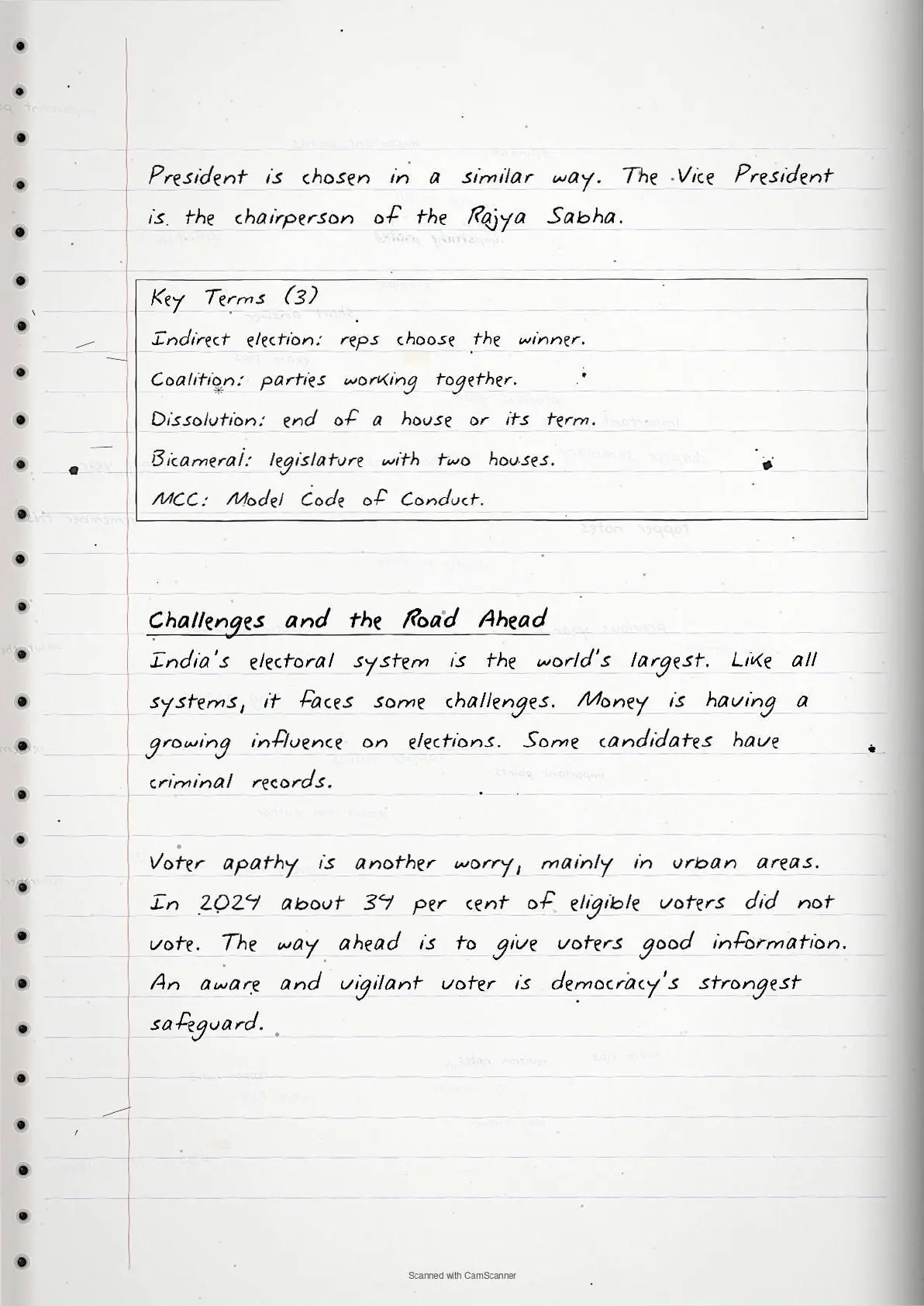
- CBSE Class 8 Weightage: a scoring chapter in the Social Science paper, asked in short and long answers.
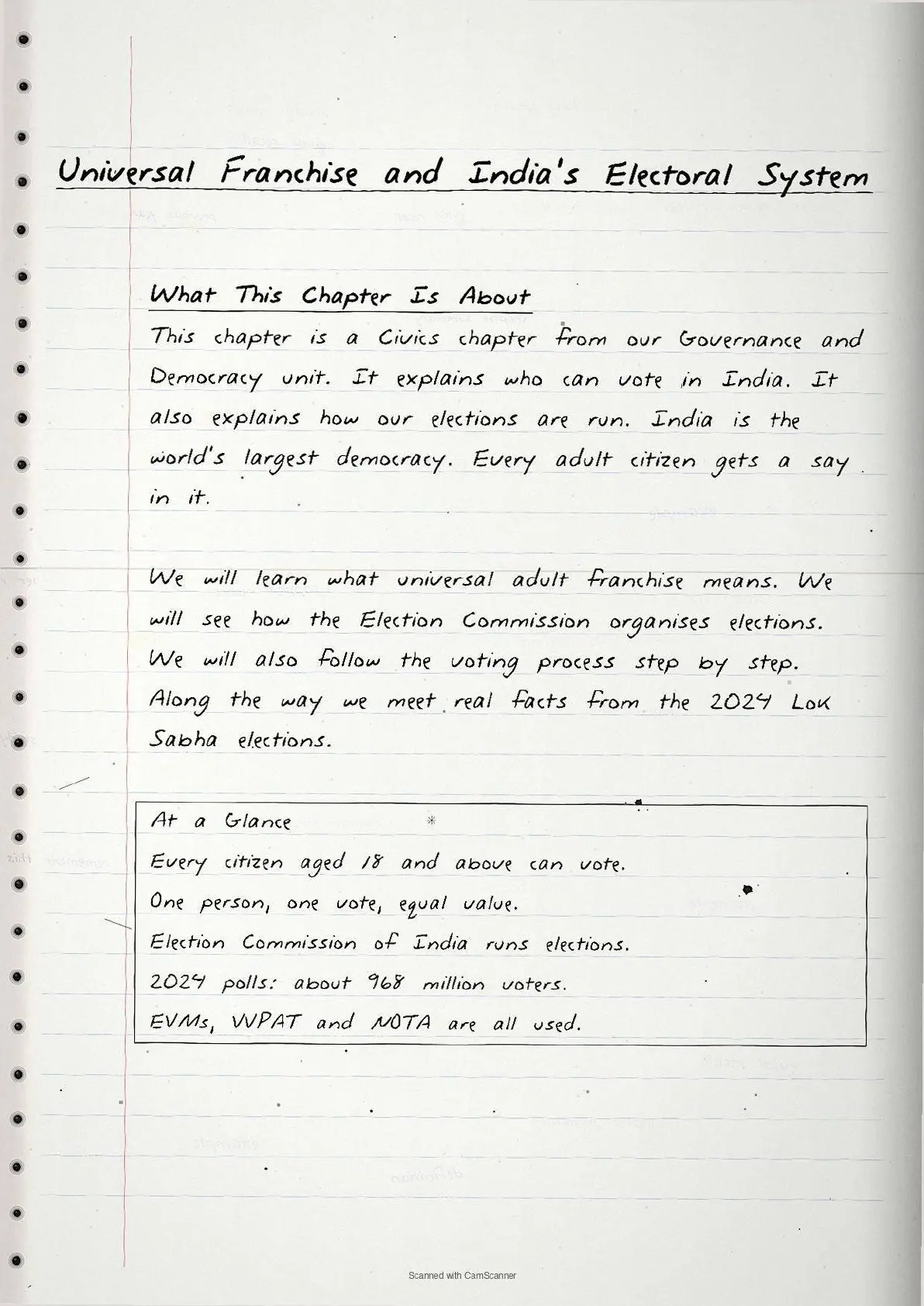
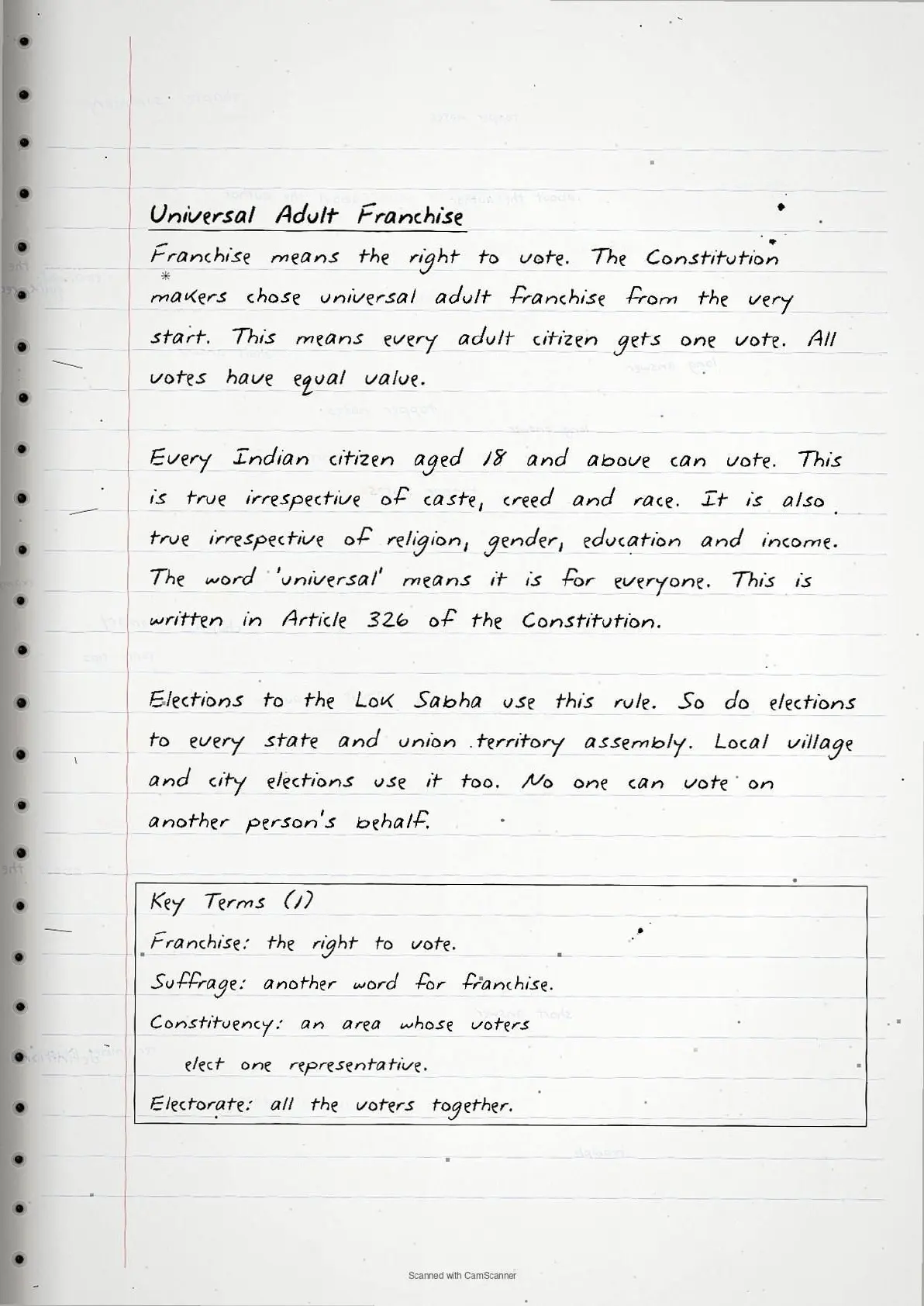
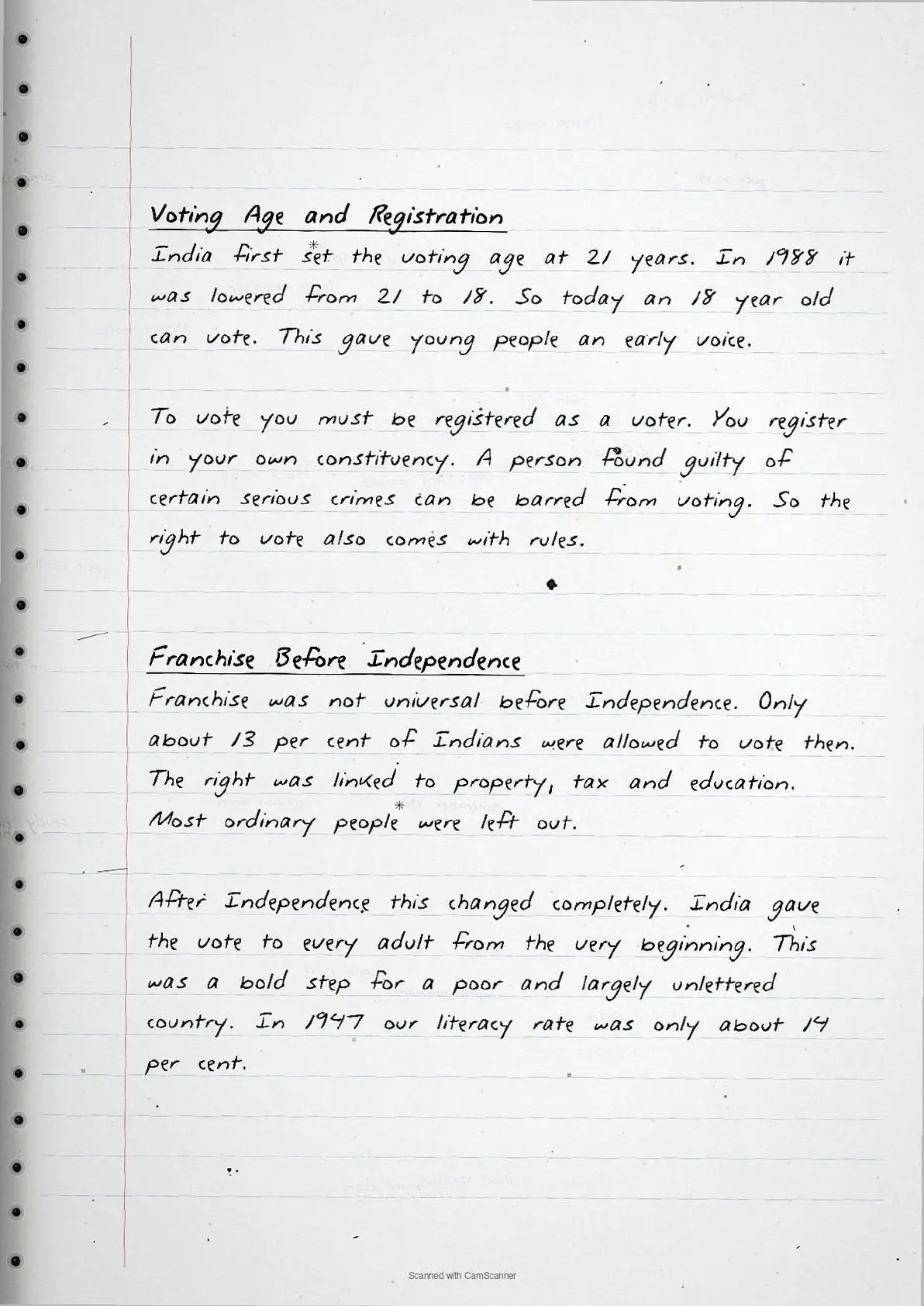
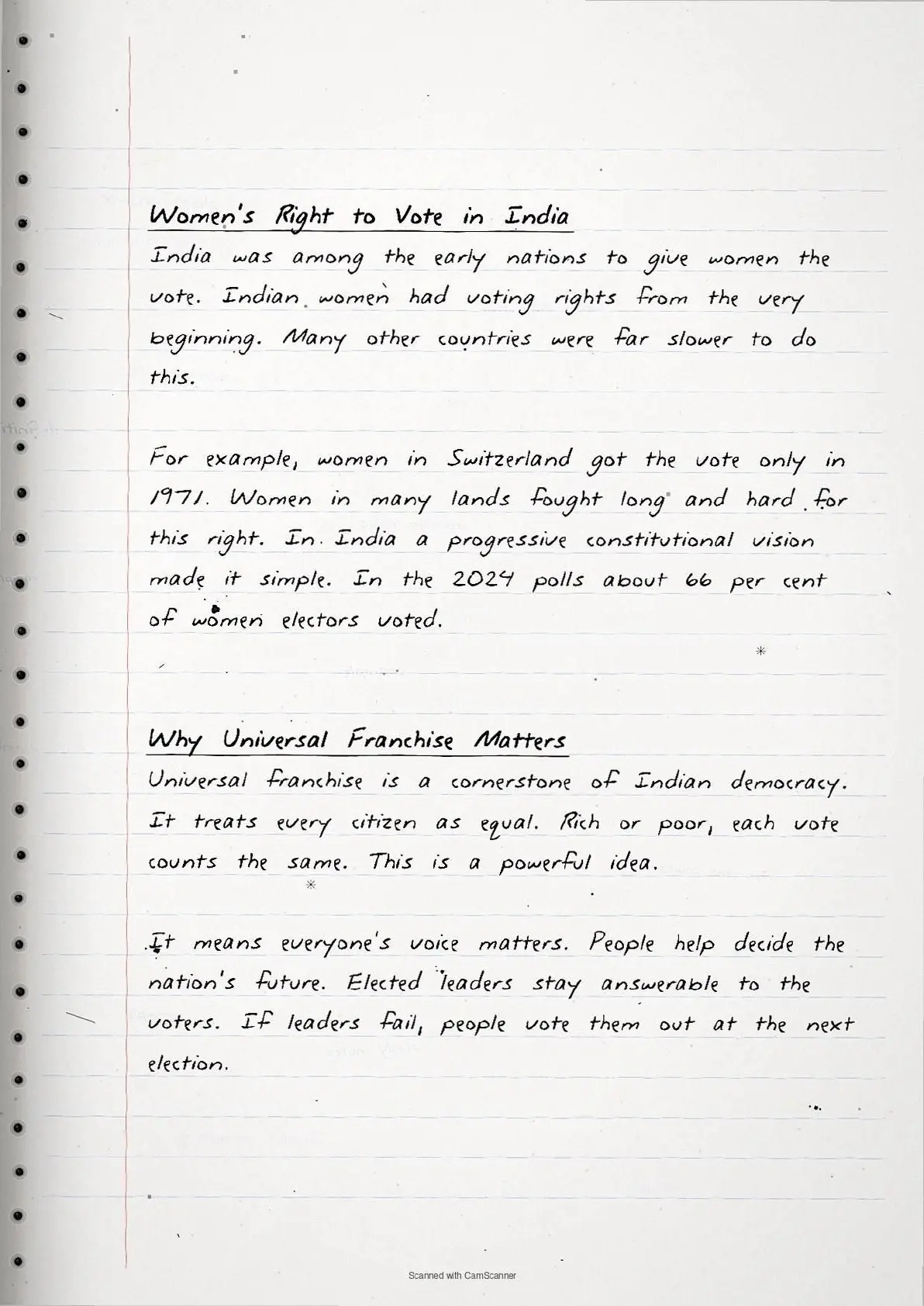
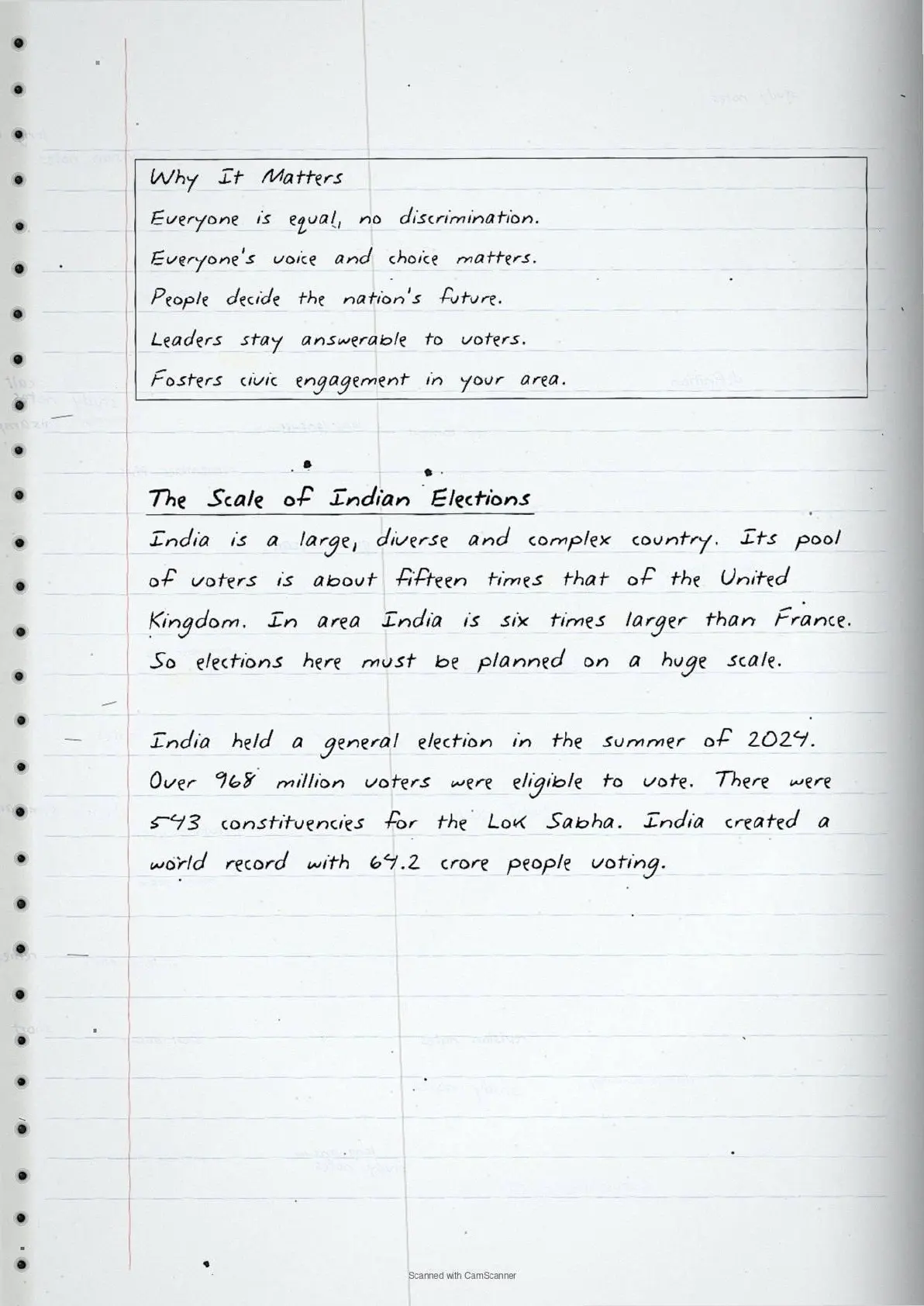
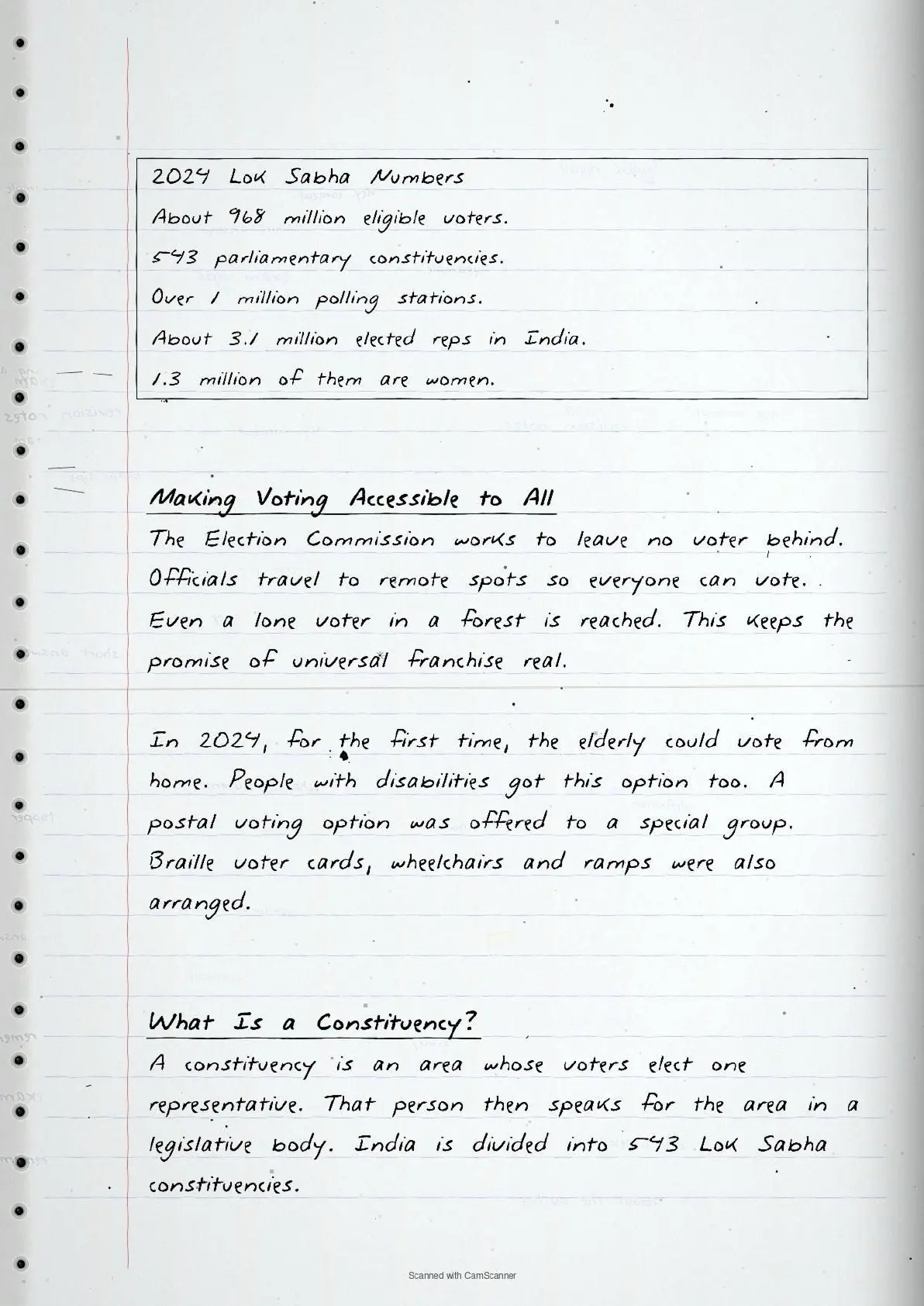
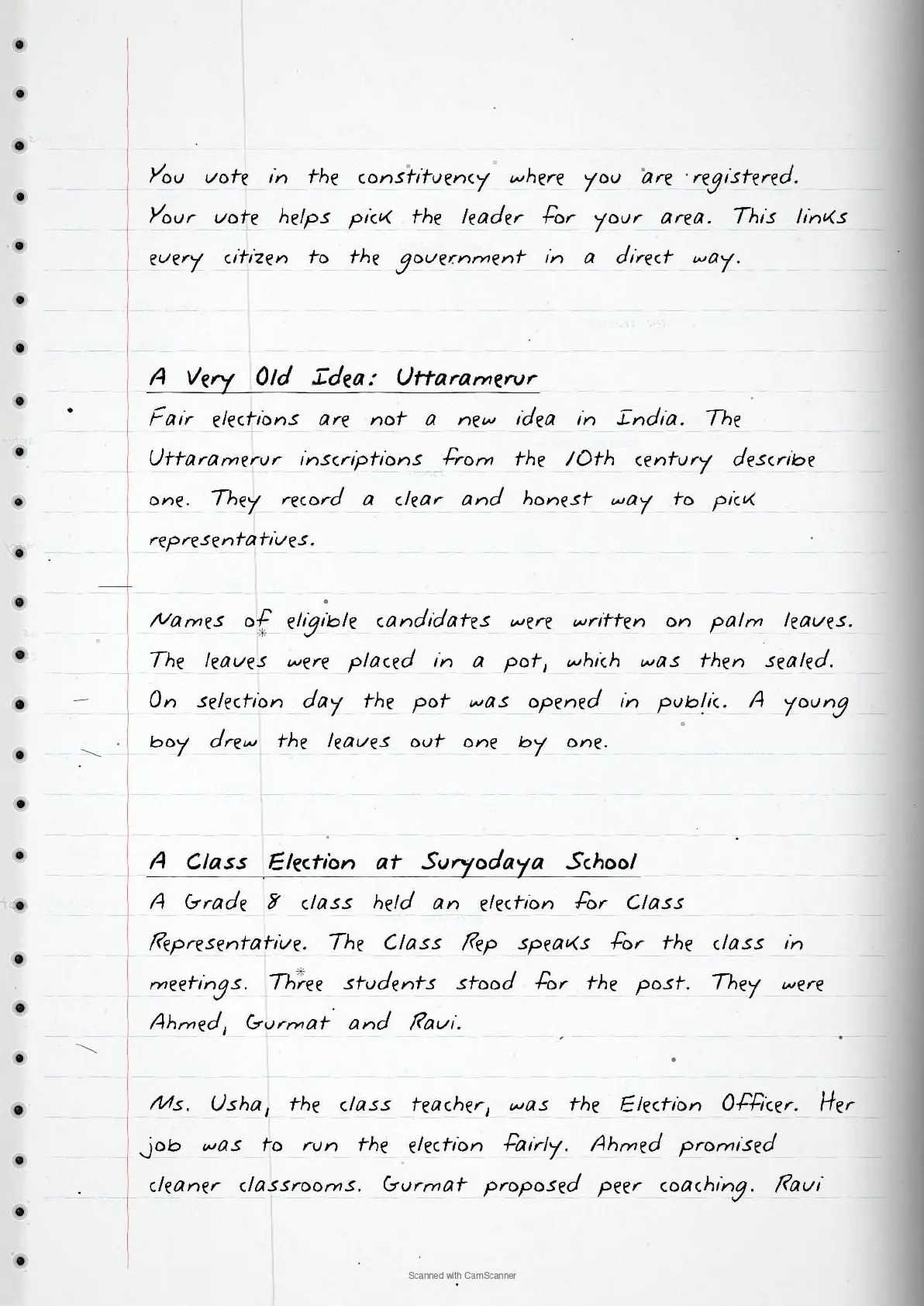
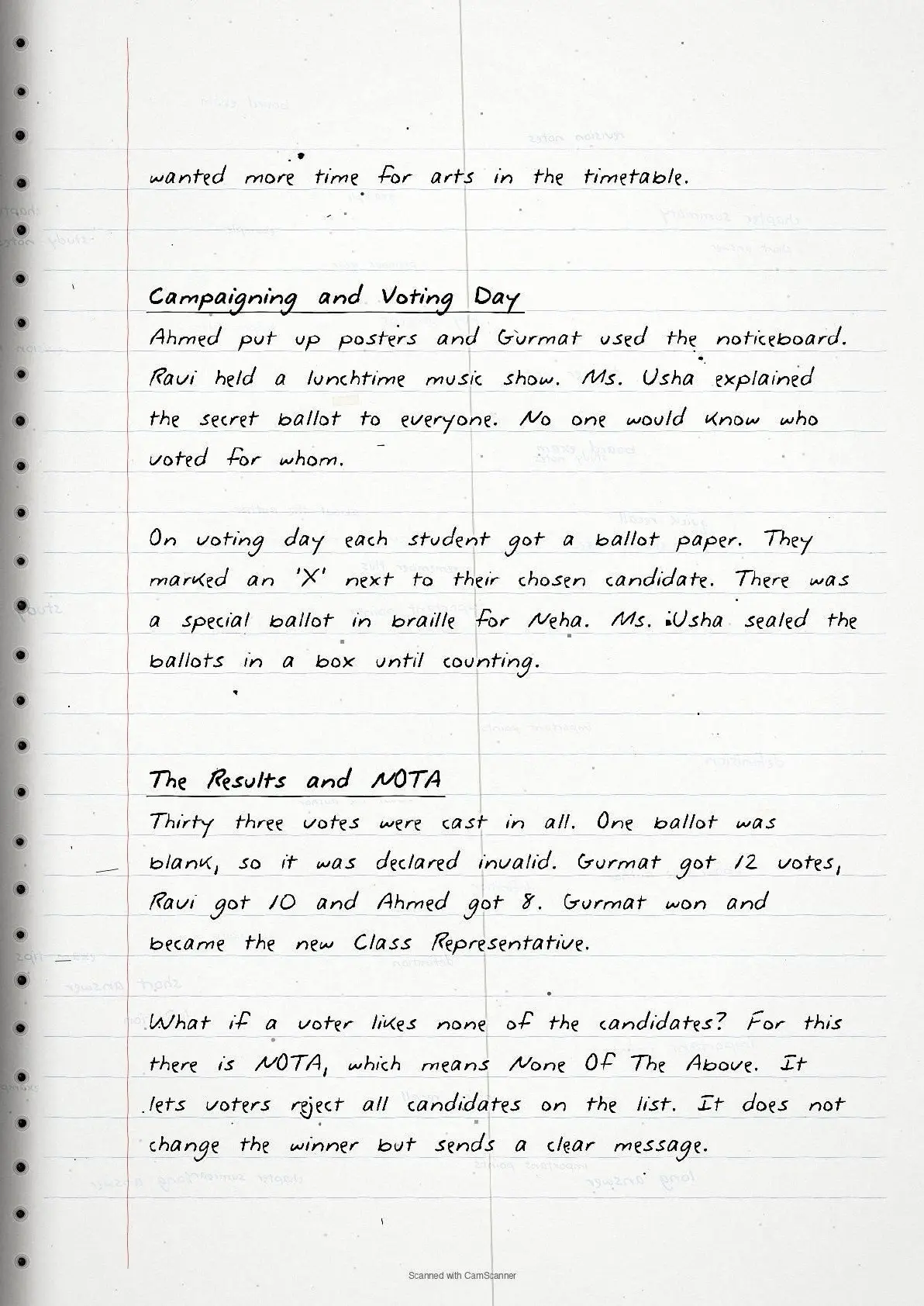
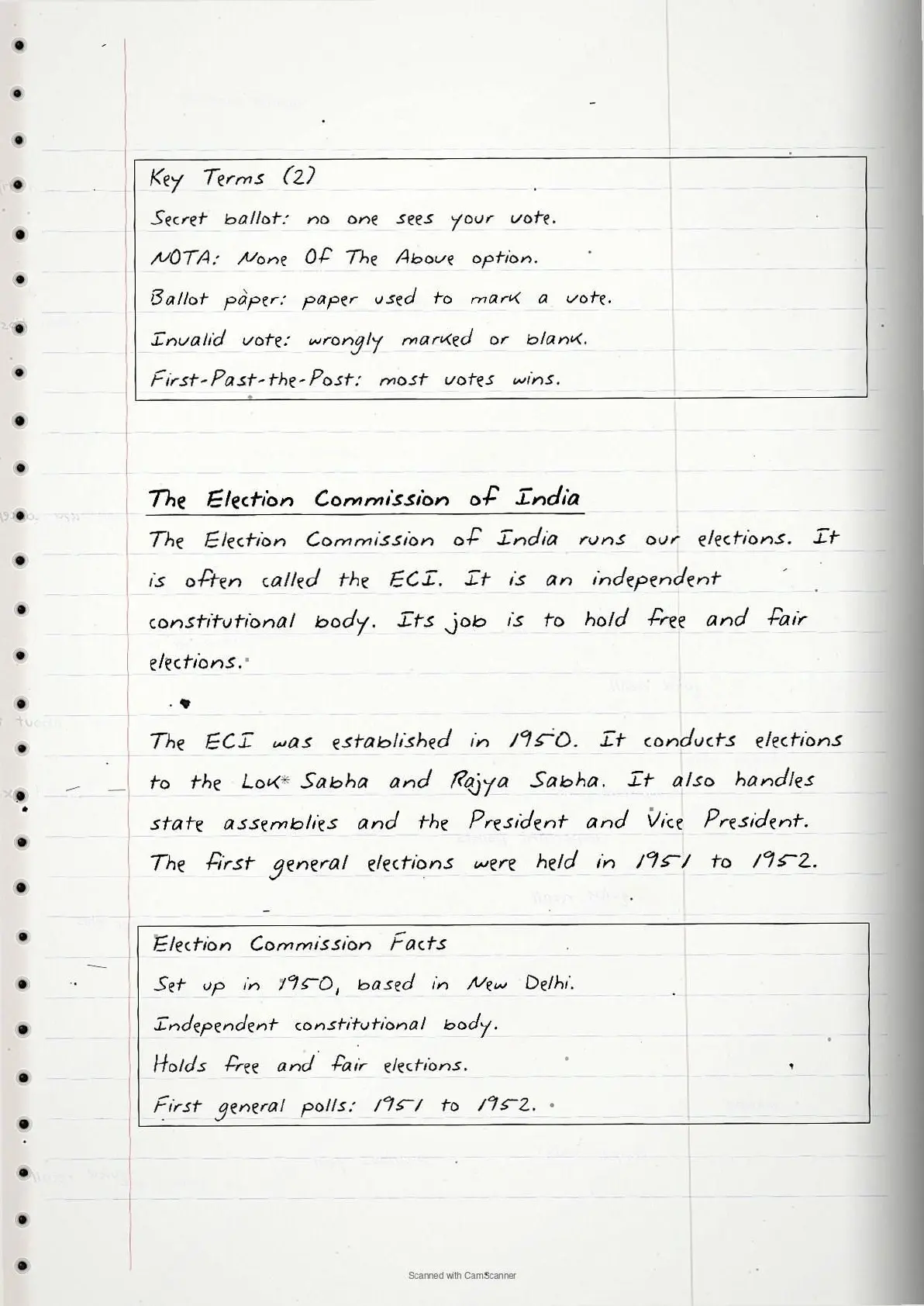
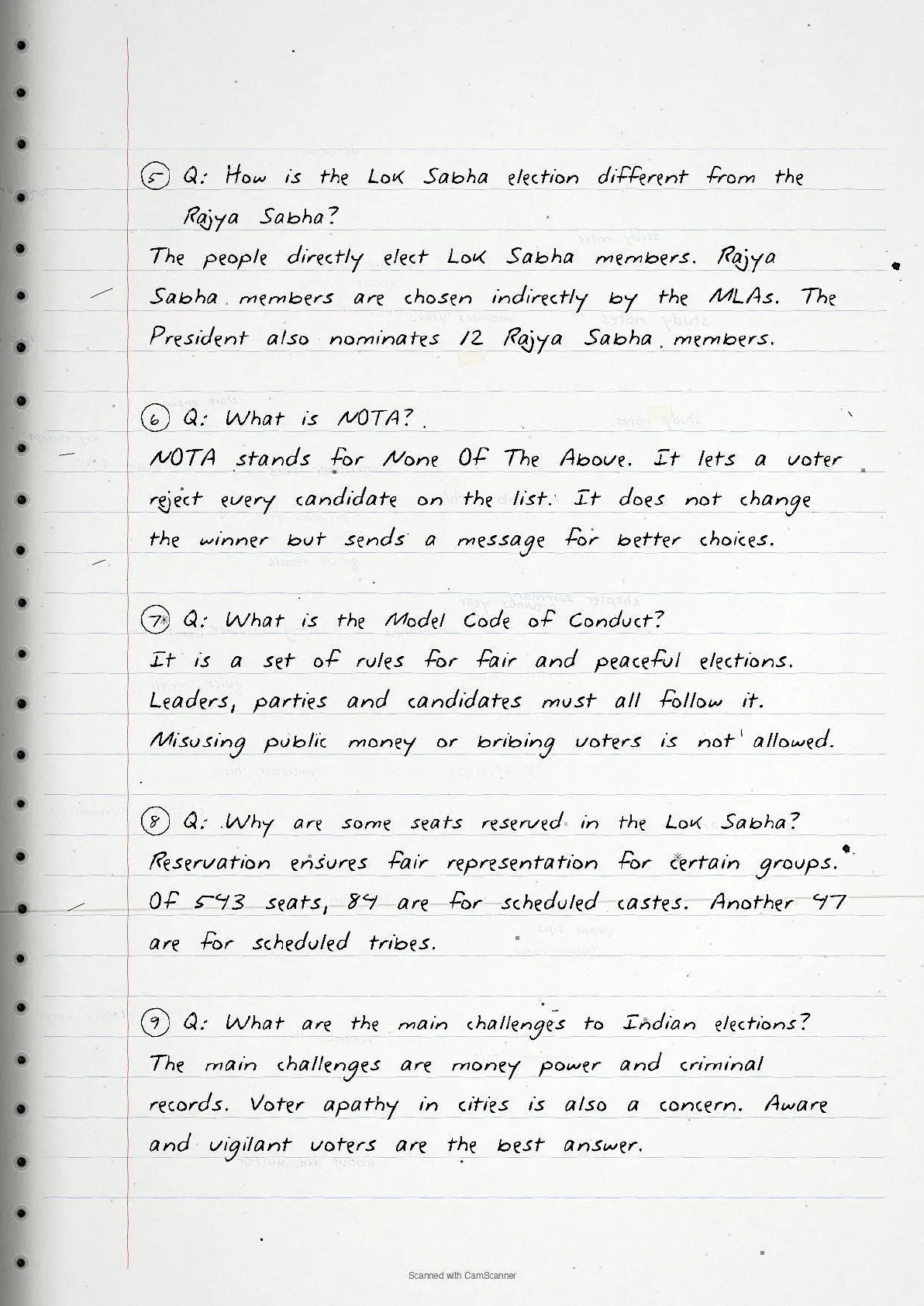
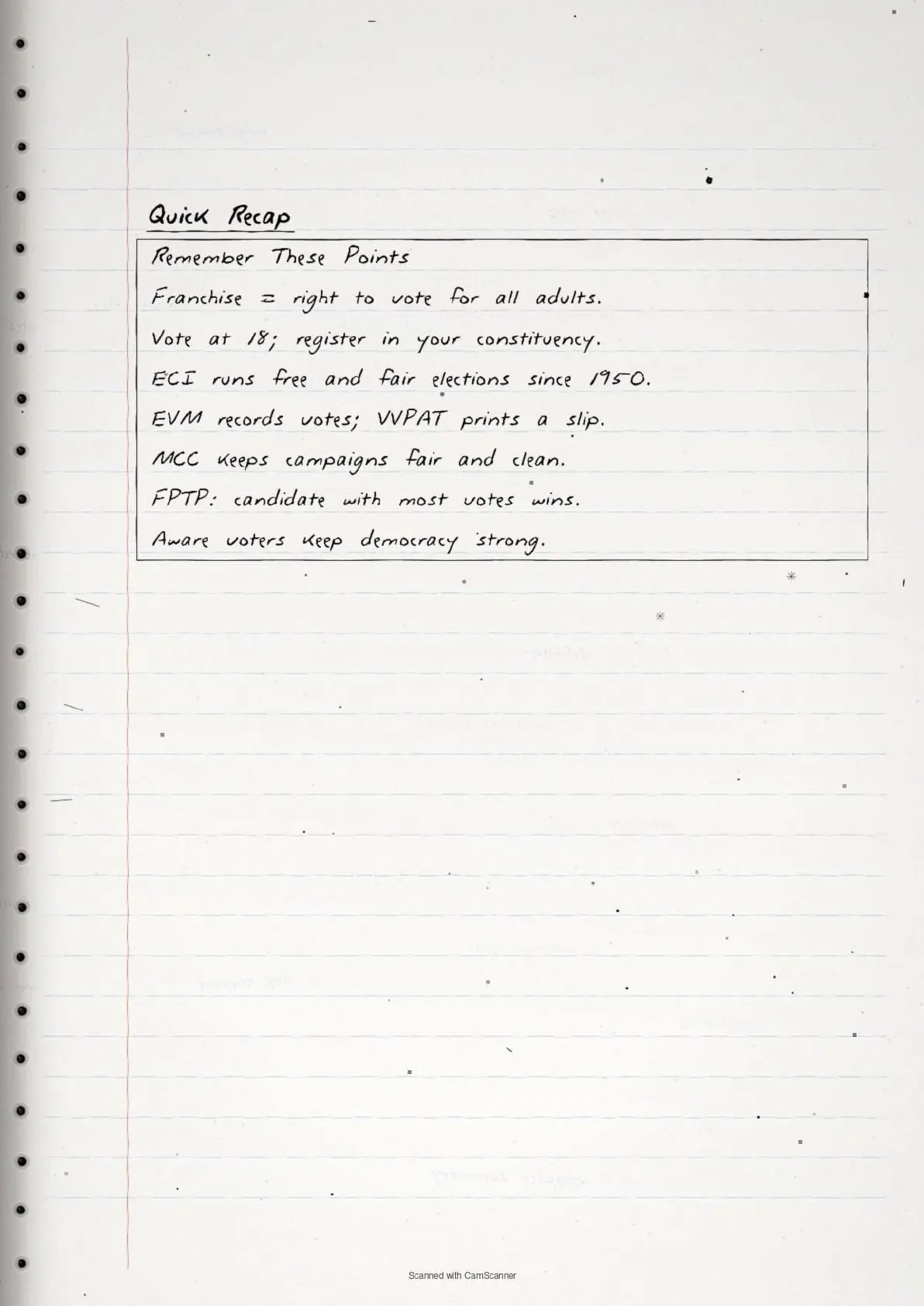
- What the notes cover: universal adult franchise and the voting age, franchise before and after independence, why universal franchise matters, the scale of indian elections in 2024.
- Best for: quick revision before Class 8 exams and a strong base for Class 9.
You can read the complete class 8 social-science handwritten notes for Universal Franchise and India's Electoral System, with key terms, boxed definitions, and quick revision points, in the PDF below.
These handwritten notes are written by subject teachers, mapped to the 2026-27 NCERT, and checked against the last five years of CBSE Class 8 Social Science papers.
What the Universal Franchise and India's Electoral System Handwritten Notes Cover
This Civics chapter explains who can vote in India and how our elections are run. India is the world's largest democracy, where every adult citizen gets a say. It covers universal adult franchise, the Election Commission and the voting process, with real facts from the 2024 Lok Sabha elections.
- Universal adult franchise and the voting age
- Franchise before and after Independence
- Why universal franchise matters
- The scale of Indian elections in 2024
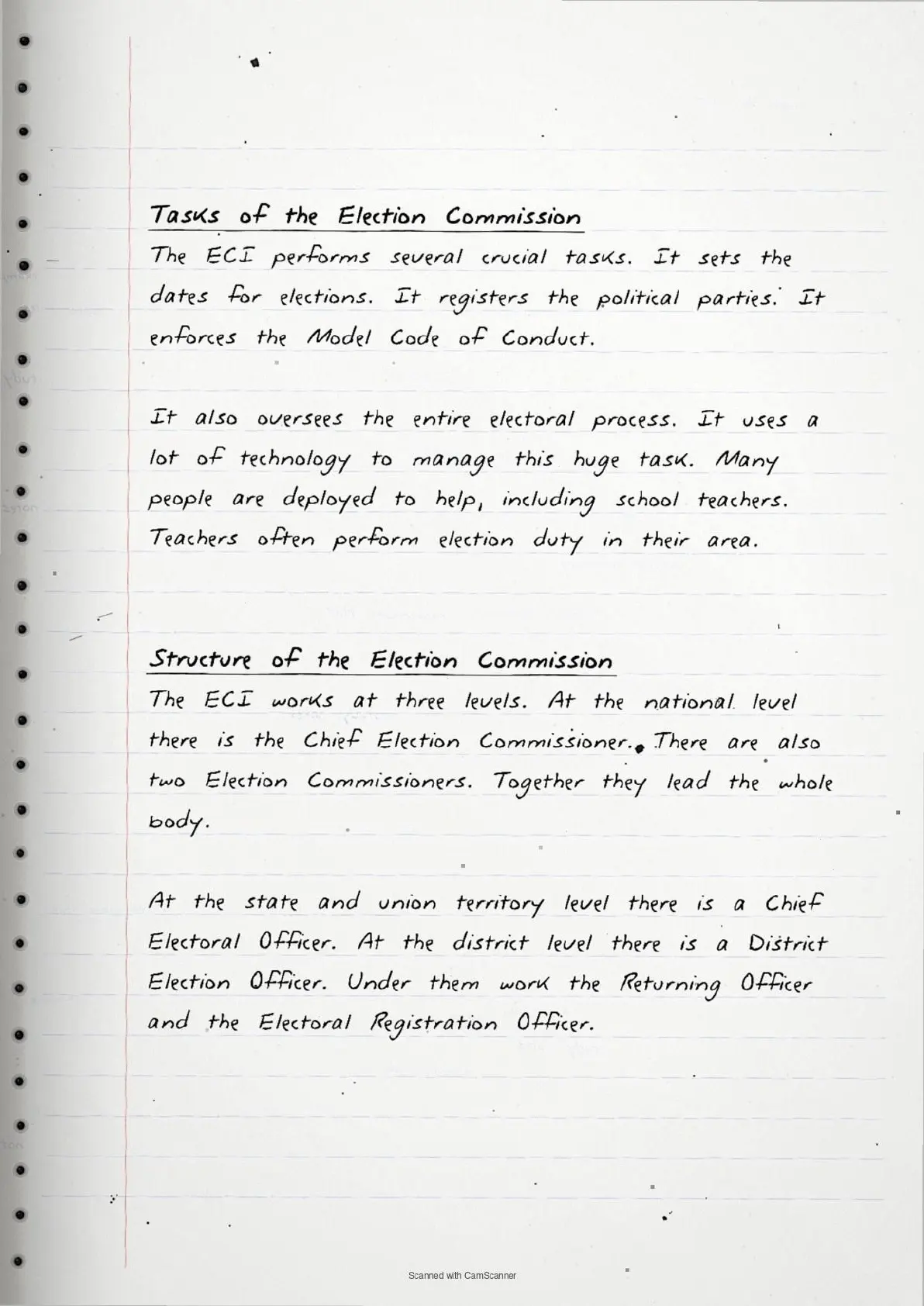
- The Election Commission of India
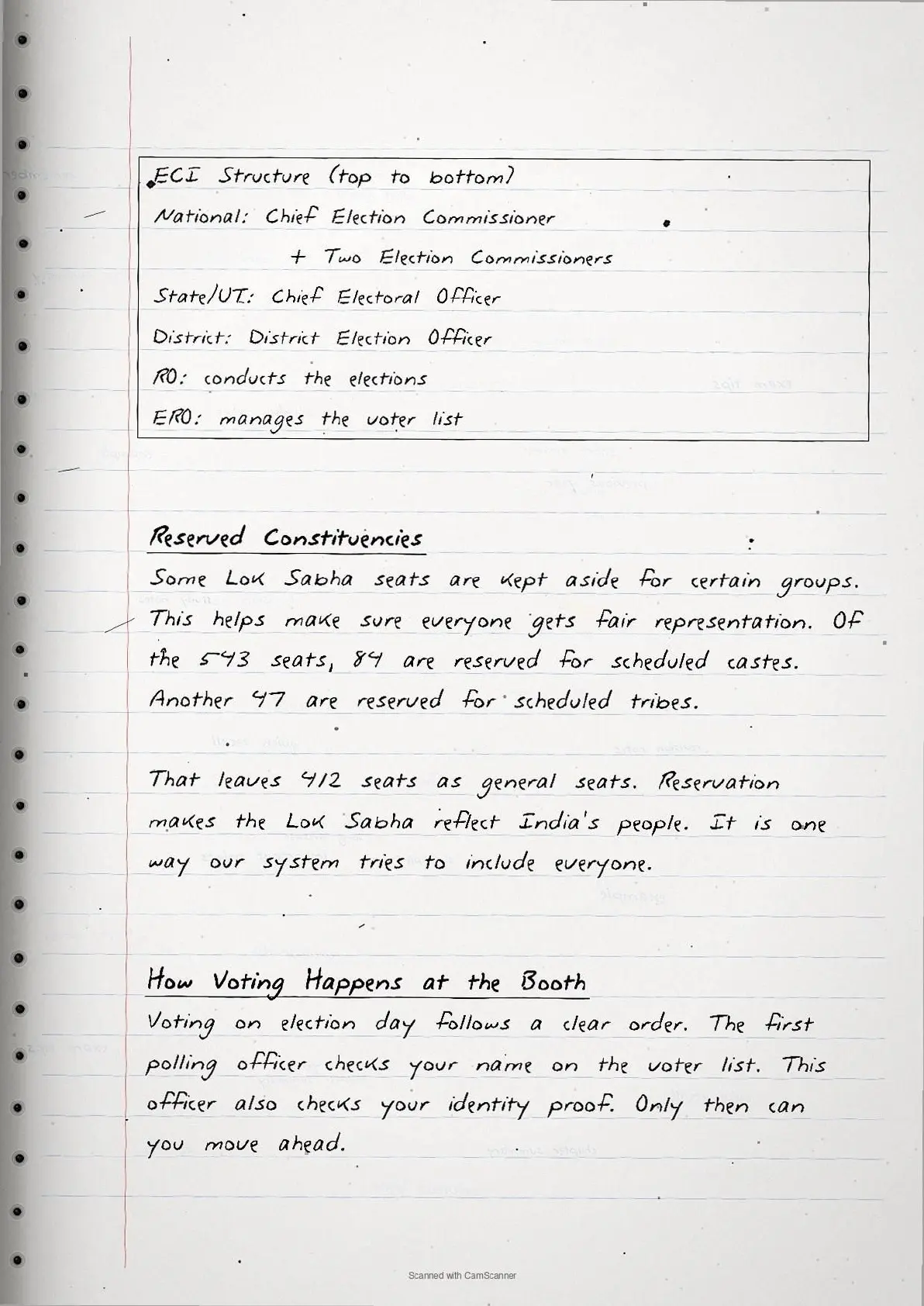
- Constituencies and reserved seats
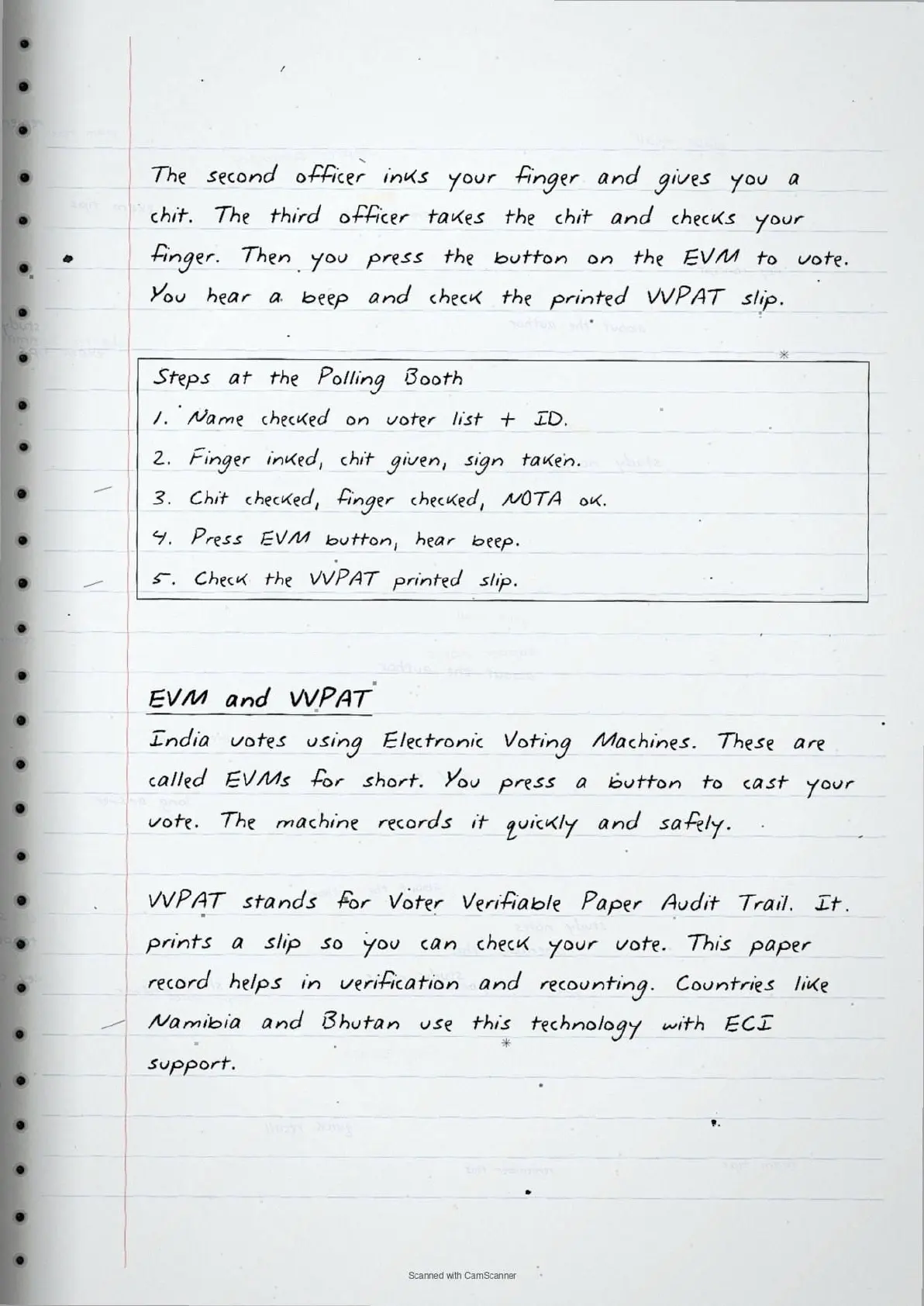
- Voting at the booth, EVM and VVPAT
- The Model Code of Conduct and NOTA
Universal Franchise and India's Electoral System Self-Assessment Quiz
Try these quick questions after you read the notes. Tap each question to check your answer. They cover the points CBSE asks most often.
What is the minimum voting age in India today?
(a) 16 (b) 18 (c) 21 (d) 25
Answer: (b) 18 - it was lowered from 21 in 1988.
Which body runs elections in India?
(a) Parliament (b) Supreme Court (c) Election Commission (d) President
Answer: (c) Election Commission - an independent constitutional body set up in 1950.
What does NOTA stand for?
(a) No Other Time Allowed (b) None Of The Above (c) New Order To Act (d) Not On The Agenda
Answer: (b) None Of The Above - it lets voters reject all candidates.
What does VVPAT print?
(a) a ballot paper (b) a voter ID (c) a paper slip to verify your vote (d) results
Answer: (c) a paper slip to verify your vote - it helps in recounting.
How many Lok Sabha constituencies are there?
(a) 245 (b) 543 (c) 550 (d) 84
Answer: (b) 543 - each elects one Member of Parliament.
Universal Franchise and India's Electoral System Topic-wise Weightage for CBSE Class 8 Social Science
Some parts of this chapter are asked more often than others. The table below shows which sub-topics to revise first, based on recent CBSE Class 8 question trends.
| Sub-topic | Weightage | CBSE Frequency |
|---|---|---|
| Universal adult franchise | High | asked often |
| The Election Commission of India | High | asked often |
| Voting process, EVM and VVPAT | Medium | asked sometimes |
| Lok Sabha and Rajya Sabha elections | Medium | asked sometimes |
| Model Code of Conduct and NOTA | Medium | asked sometimes |
| Uttaramerur inscriptions | Low | asked rarely |
Key Terms and Ideas in Universal Franchise and India's Electoral System
These are the terms and ideas the exam asks about most. Learn each one so you can define it and use it in your answers.
| Term / Idea | What it means |
|---|---|
| Franchise | the right to vote, also called suffrage |
| Constituency | an area whose voters elect one representative |
| Universal adult franchise | every adult citizen gets one equal vote |
| Secret ballot | voting so that no one knows how you voted |
| NOTA | the None Of The Above option to reject all candidates |
| EVM | the Electronic Voting Machine that records votes |
| VVPAT | a machine that prints a slip so you can check your vote |
| Model Code of Conduct | rules that keep elections free and fair |
How Collegedunia's Handwritten Notes Help You Revise Universal Franchise and India's Electoral System
These notes are made for the night before the exam. They keep the facts short and easy to scan. Collegedunia maps every point to the 2026-27 NCERT.
- Clear handwriting: each topic is written in neat, easy-to-read handwriting.
- Boxed key terms: the main terms and definitions are boxed by hand for fast recall.
- Diagrams and tables: simple hand-drawn tables and charts make ideas clear.
- Colour-coded headings: new sub-topics stand out, so you find any section in seconds.
How to Use These Handwritten Notes for Class 8 Social Science Revision
Use these class 8 social-science handwritten notes in two passes. Read them slowly once for the full chapter. Then, near the exam, read only the boxes and key terms for a fast recall.
- Read the notes once with the NCERT chapter open beside you.
- Say each key term and idea in your own words.
- Practise one long-answer question from a past paper.
- On the last day, revise only the key terms and the boxes.
Class 8 Social Science Handwritten Notes for All Chapters
The table below links the class 8 social-science handwritten notes for every chapter. Use it to jump to any other chapter's notes.
Universal Franchise and India's Electoral System Class 8 Social Science Handwritten Notes FAQs
Ques. Where can I download Universal Franchise and India's Electoral System Class 8 Social Science Handwritten Notes PDF?
Ans. You can download the Universal Franchise and India's Electoral System Class 8 Social Science Handwritten Notes PDF directly from this page. Both the Normal and HD versions are free.
Ques. Are these handwritten notes aligned with the 2026-27 NCERT?
Ans. Yes. These notes follow the current 2026-27 syllabus for Class 8 Social Science. The difference between Lok Sabha and Rajya Sabha elections.
Ques. How many pages is the Class 8 Social Science Universal Franchise and India's Electoral System Handwritten Notes PDF?
Ans. The notes run about 20 pages. They cover the full chapter with key terms, hand-drawn boxes, and a short self-assessment quiz.
Ques. What is the main idea of the 8th standard Social Science chapter Universal Franchise and India's Electoral System?
Ans. The chapter explains that India uses universal adult franchise, so every citizen aged 18 and above gets one equal vote. Its main idea is that free and fair elections run by the Election Commission make India the world's largest democracy, and an aware voter is its strongest safeguard.
Ques. Are these Universal Franchise and India's Electoral System notes enough for the CBSE Class 8 exam?
Ans. Yes, for revision. The Collegedunia handwritten notes cover every key point and exam term. Read them with the NCERT chapter and practise past questions.



Comments