




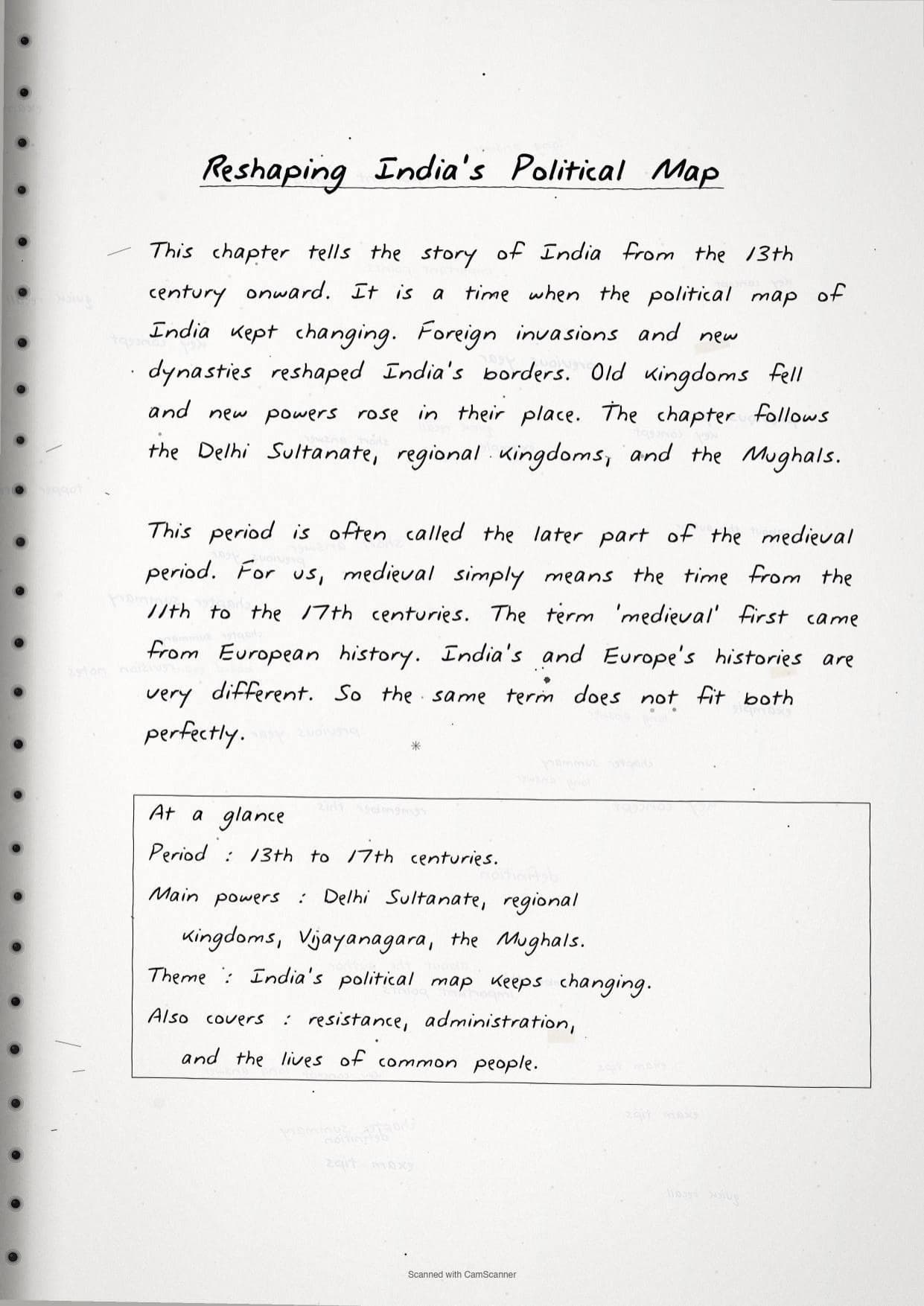
From the 13th to the 17th centuries India's political map was reshaped again and again by invasions, new dynasties and resistance. Class 8 Social Science Chapter 2 Reshaping India's Political Map builds this idea step by step. These class 8 social-science handwritten notes chapter 2 Reshaping India's Political Map follow the 2026-27 NCERT and cover a new era.
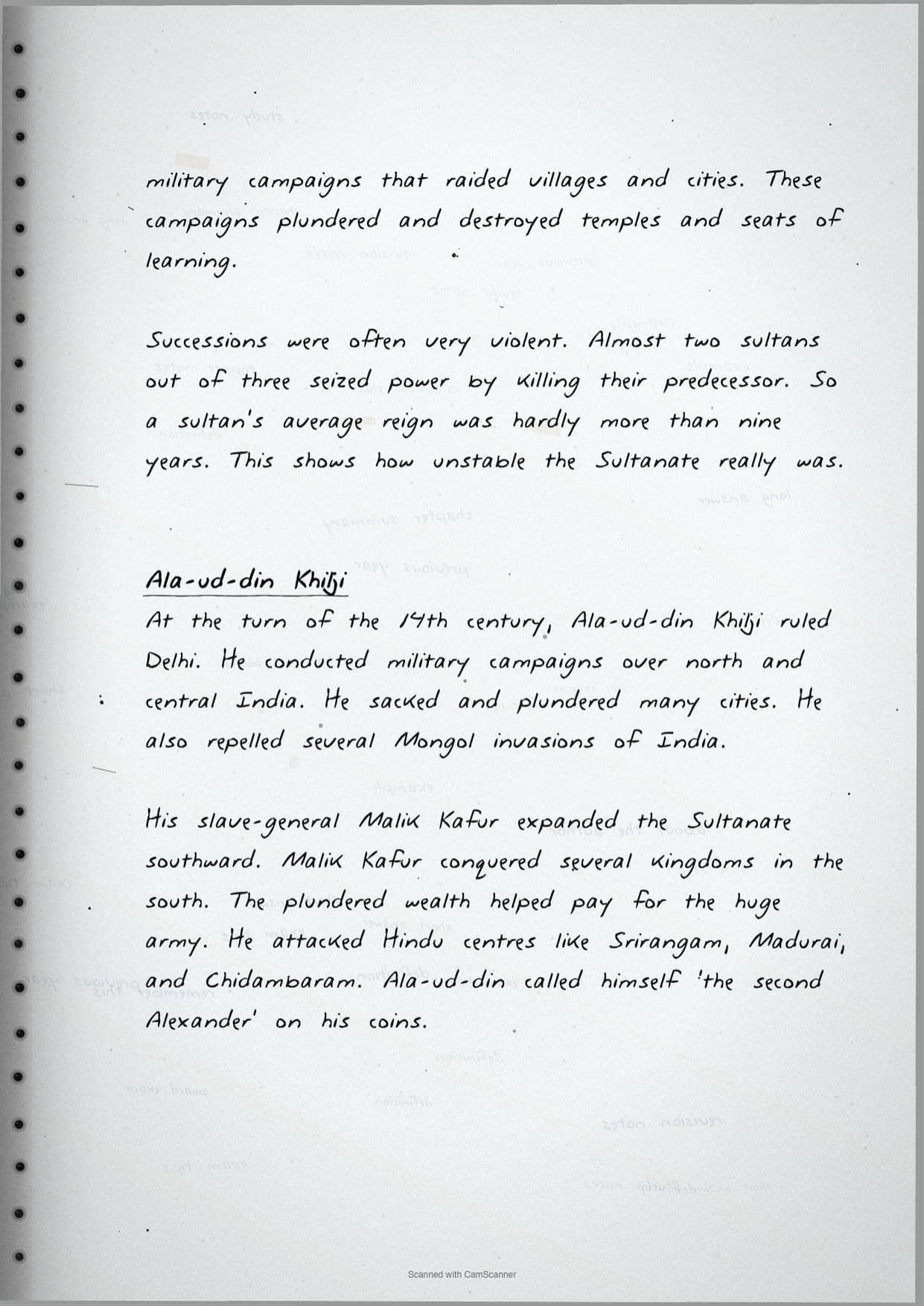
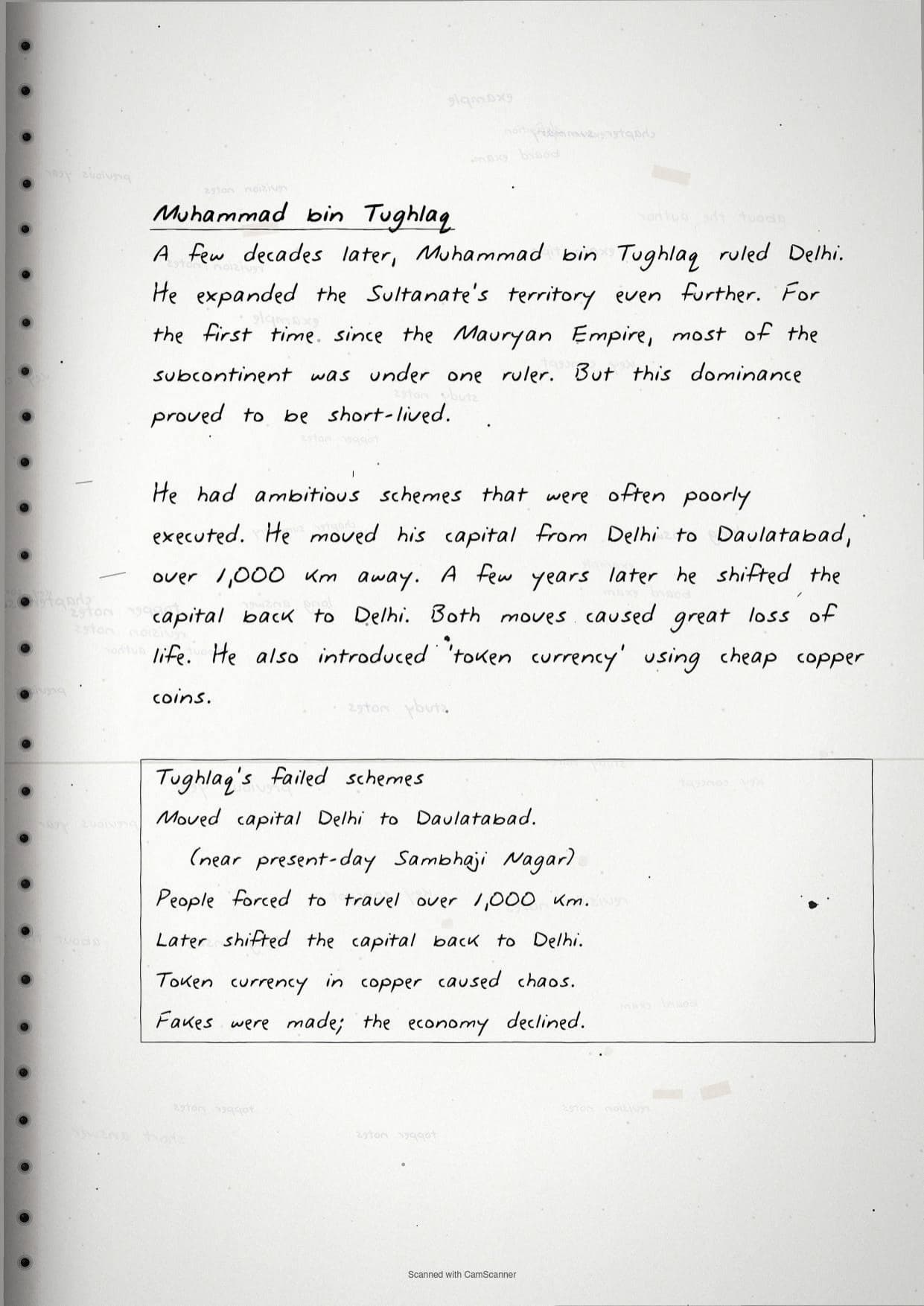
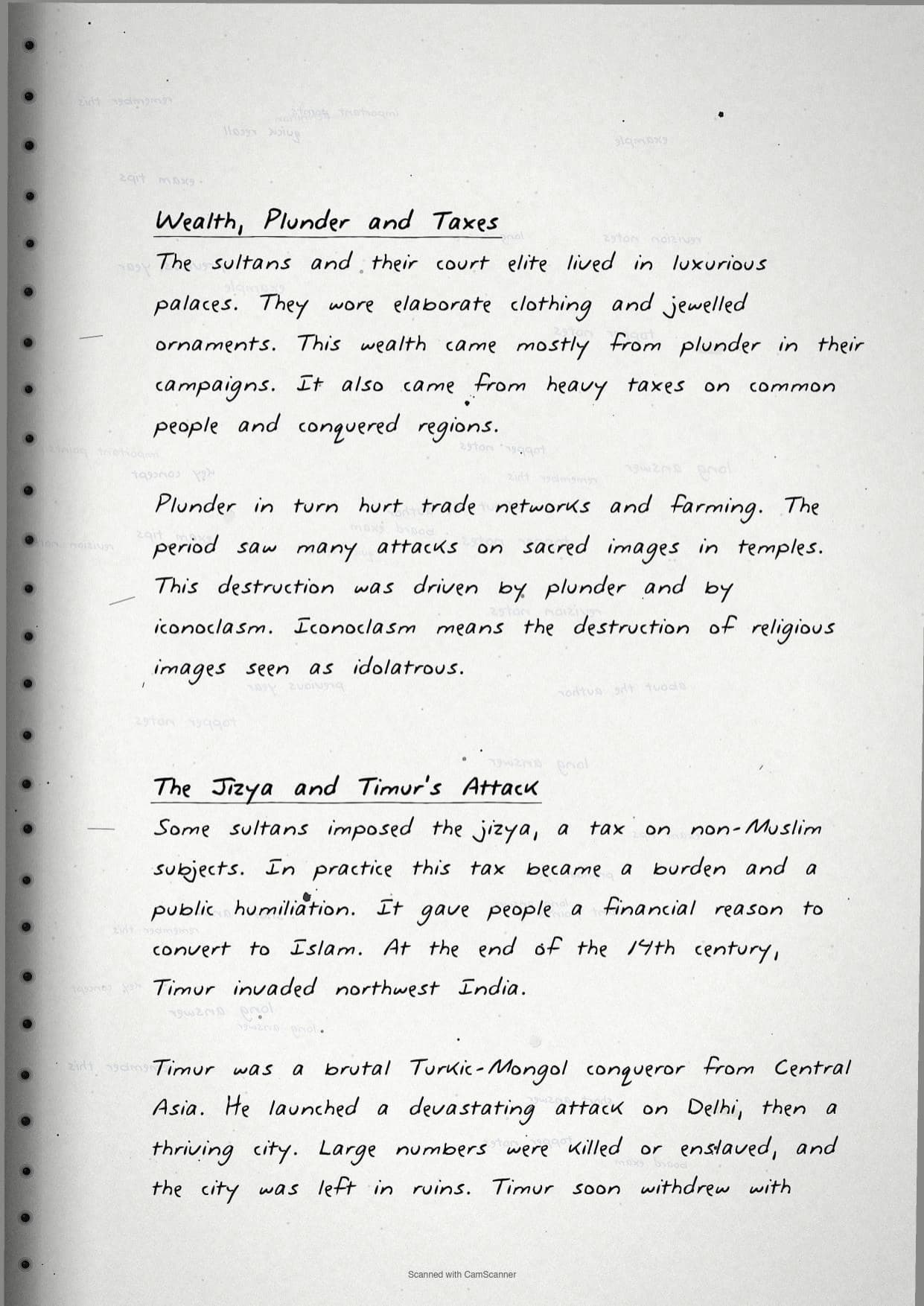
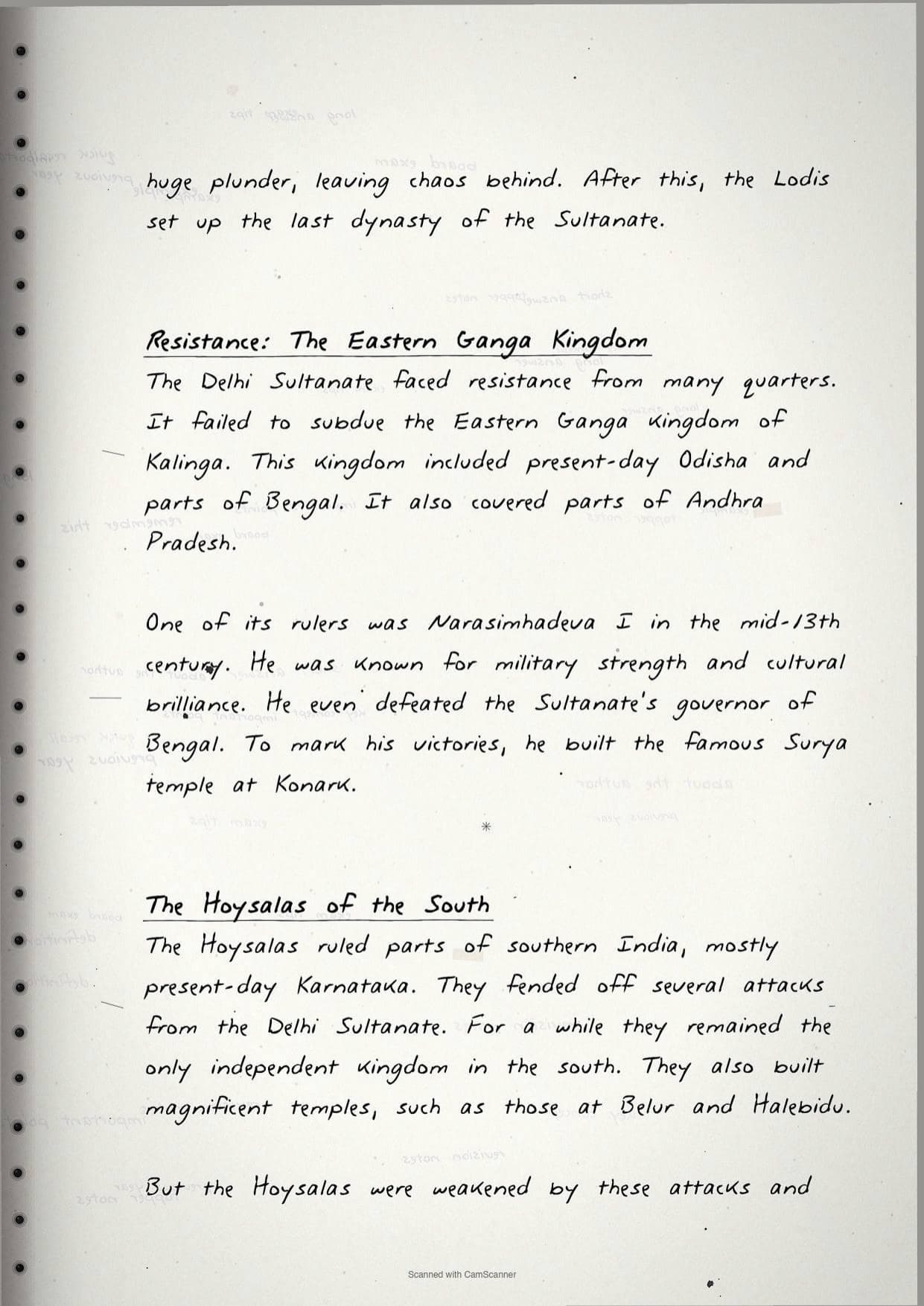
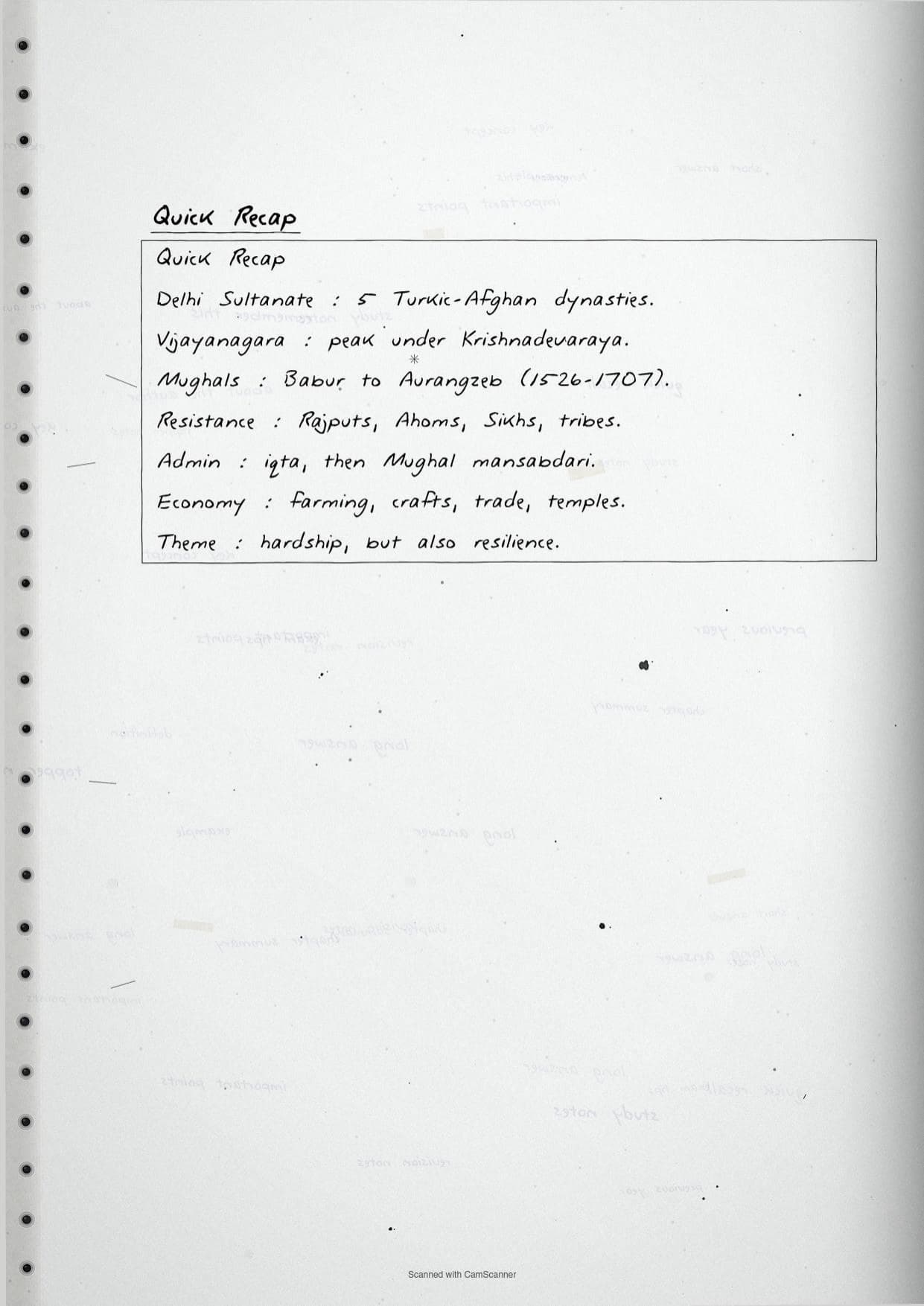
- CBSE Class 8 Weightage: a scoring chapter in the Social Science paper, asked in short and long answers.
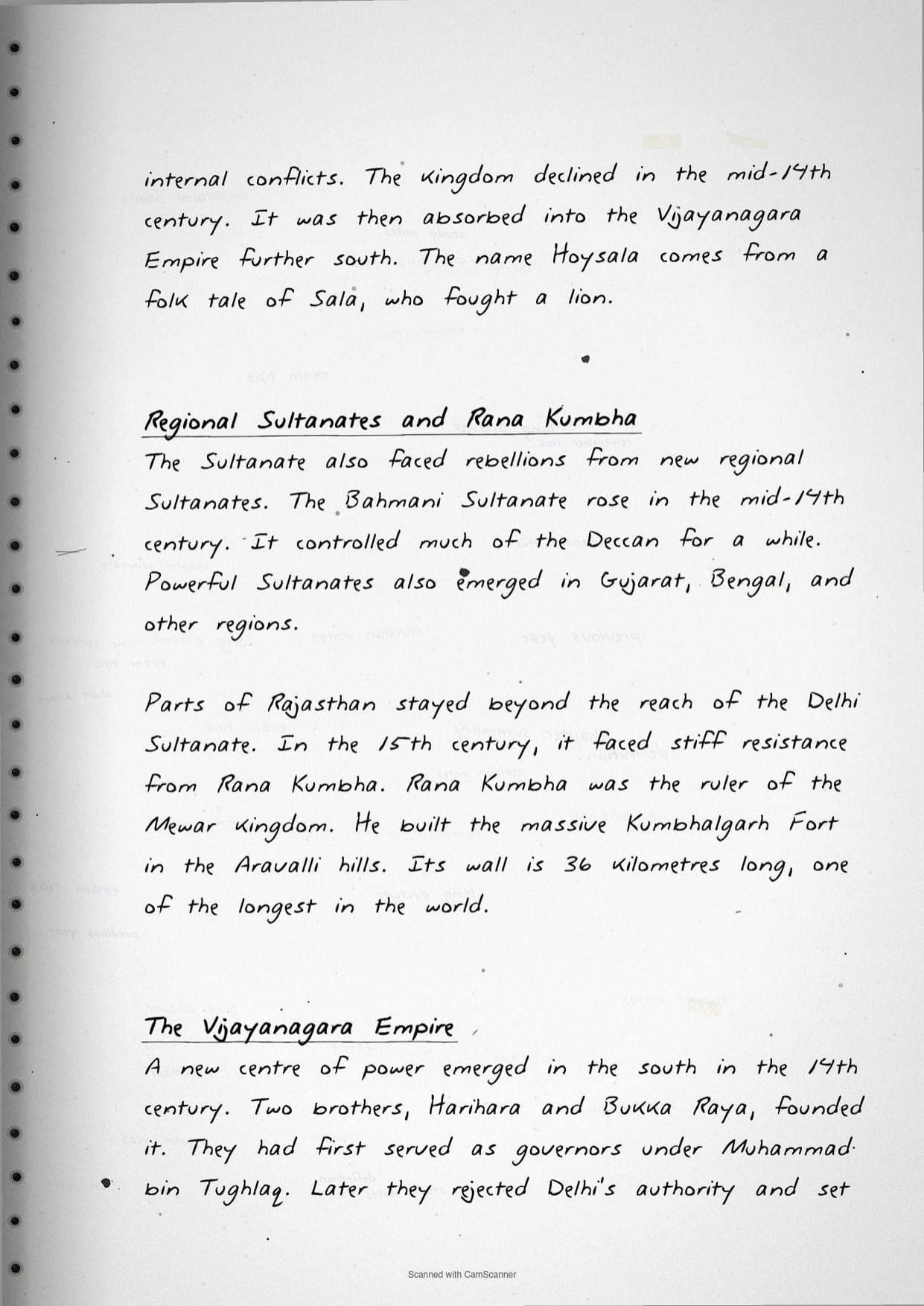
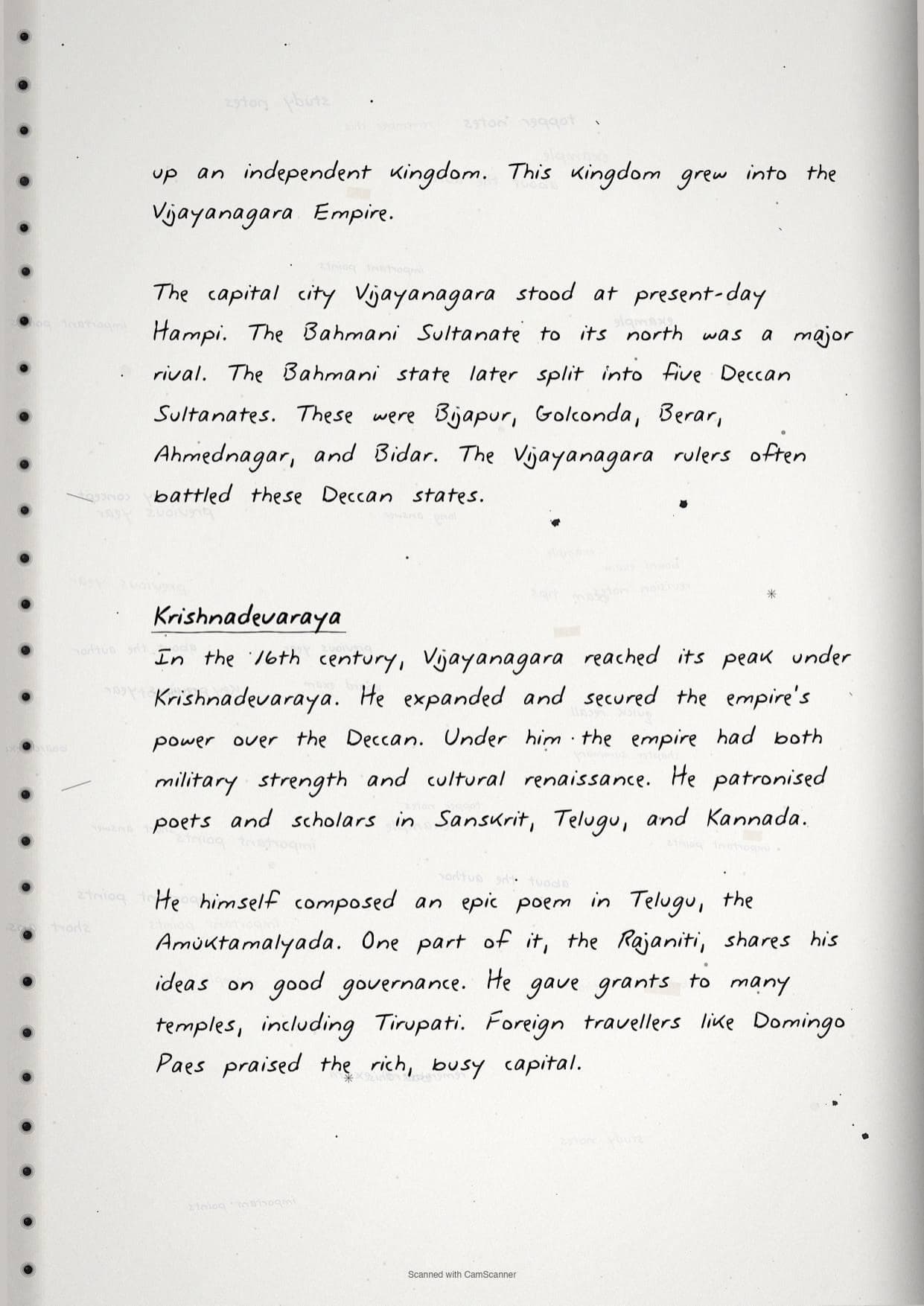
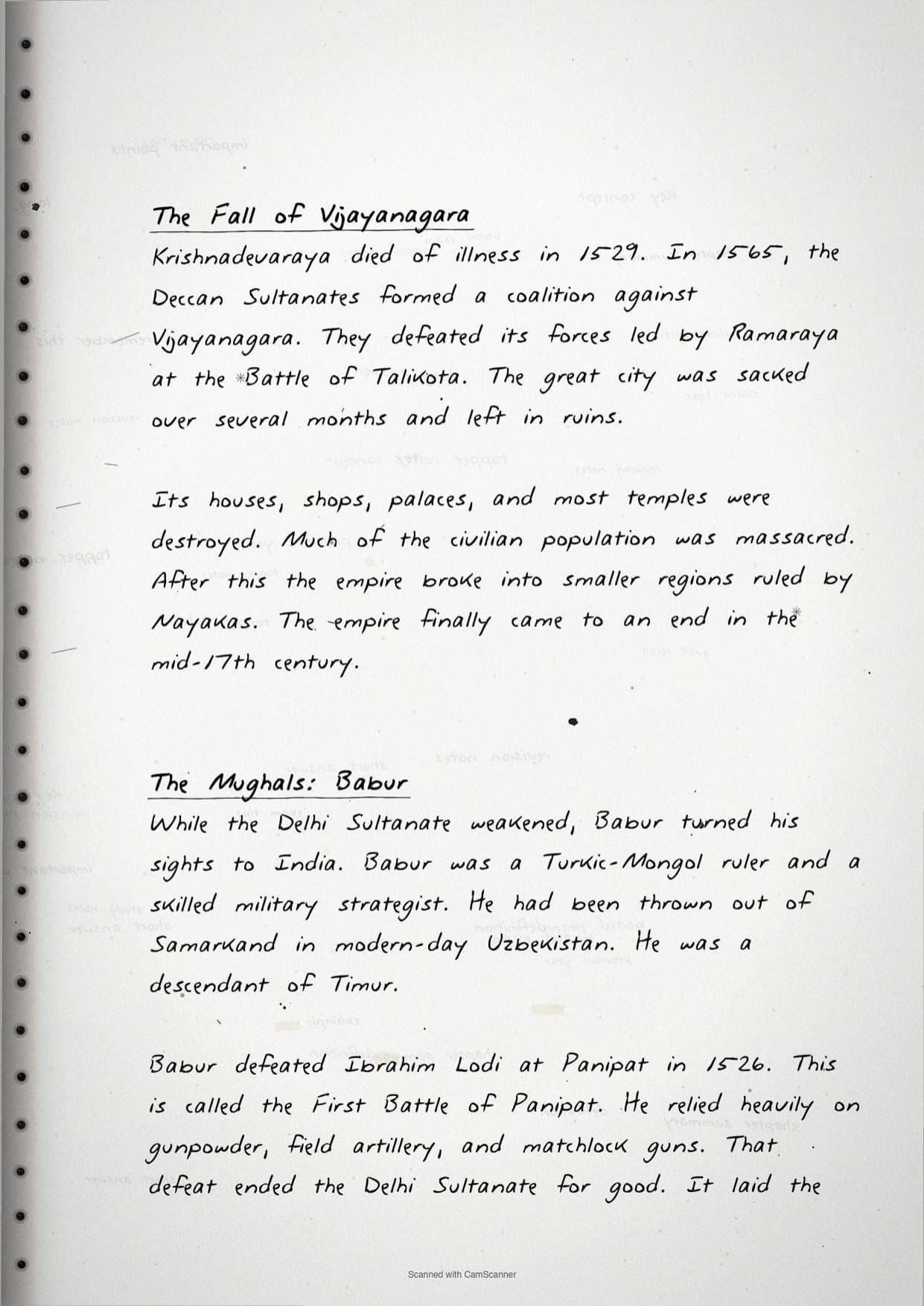
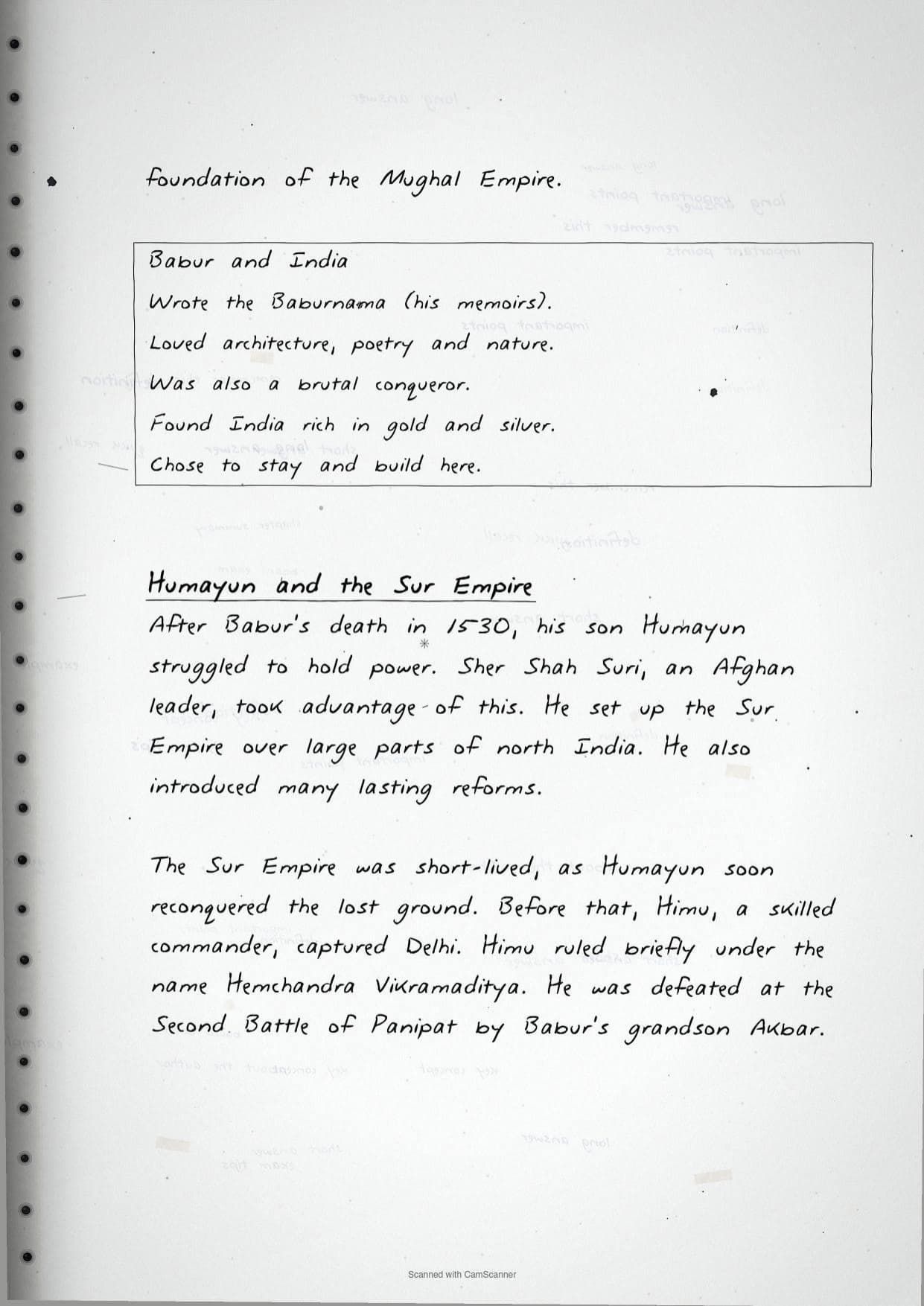
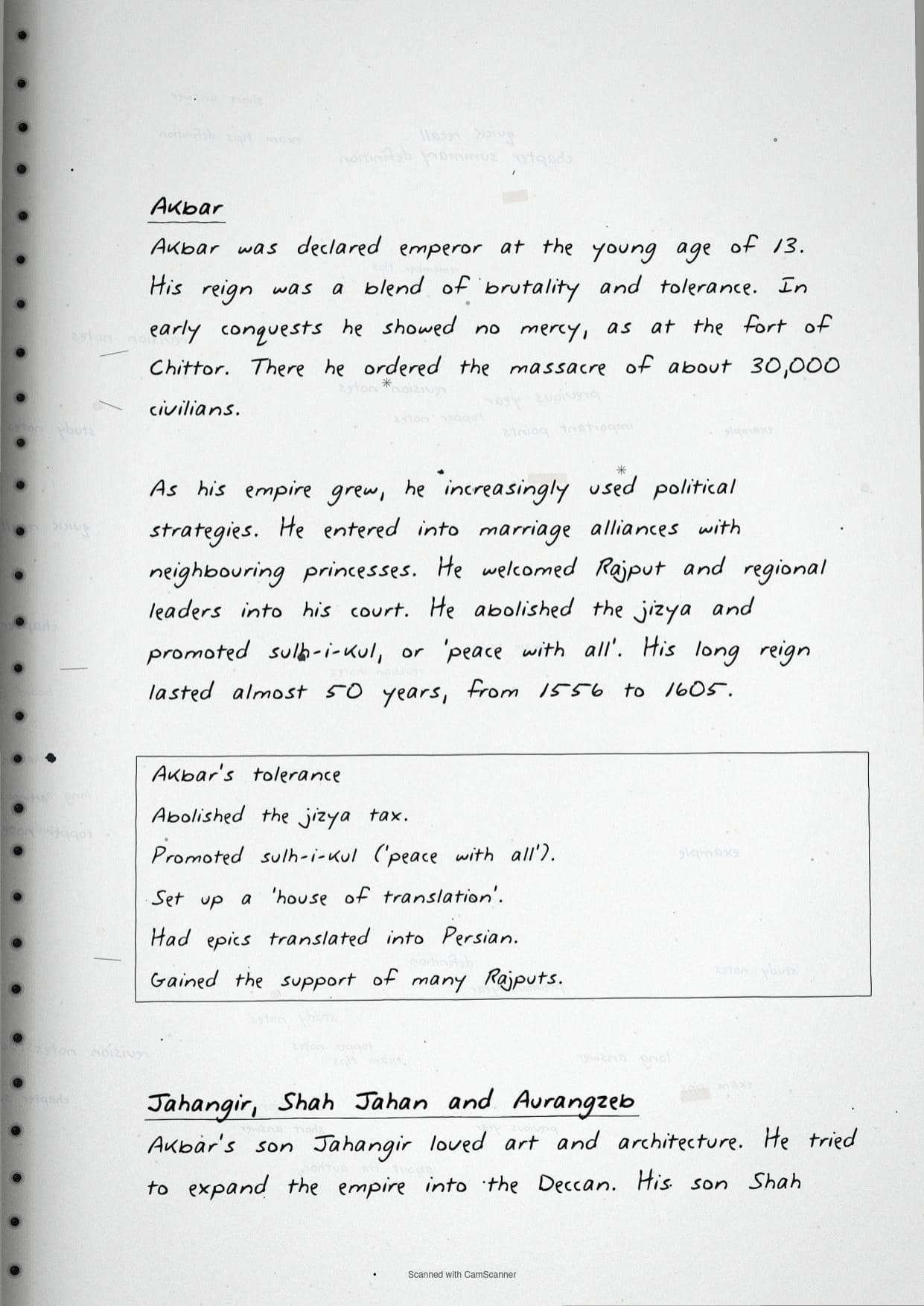
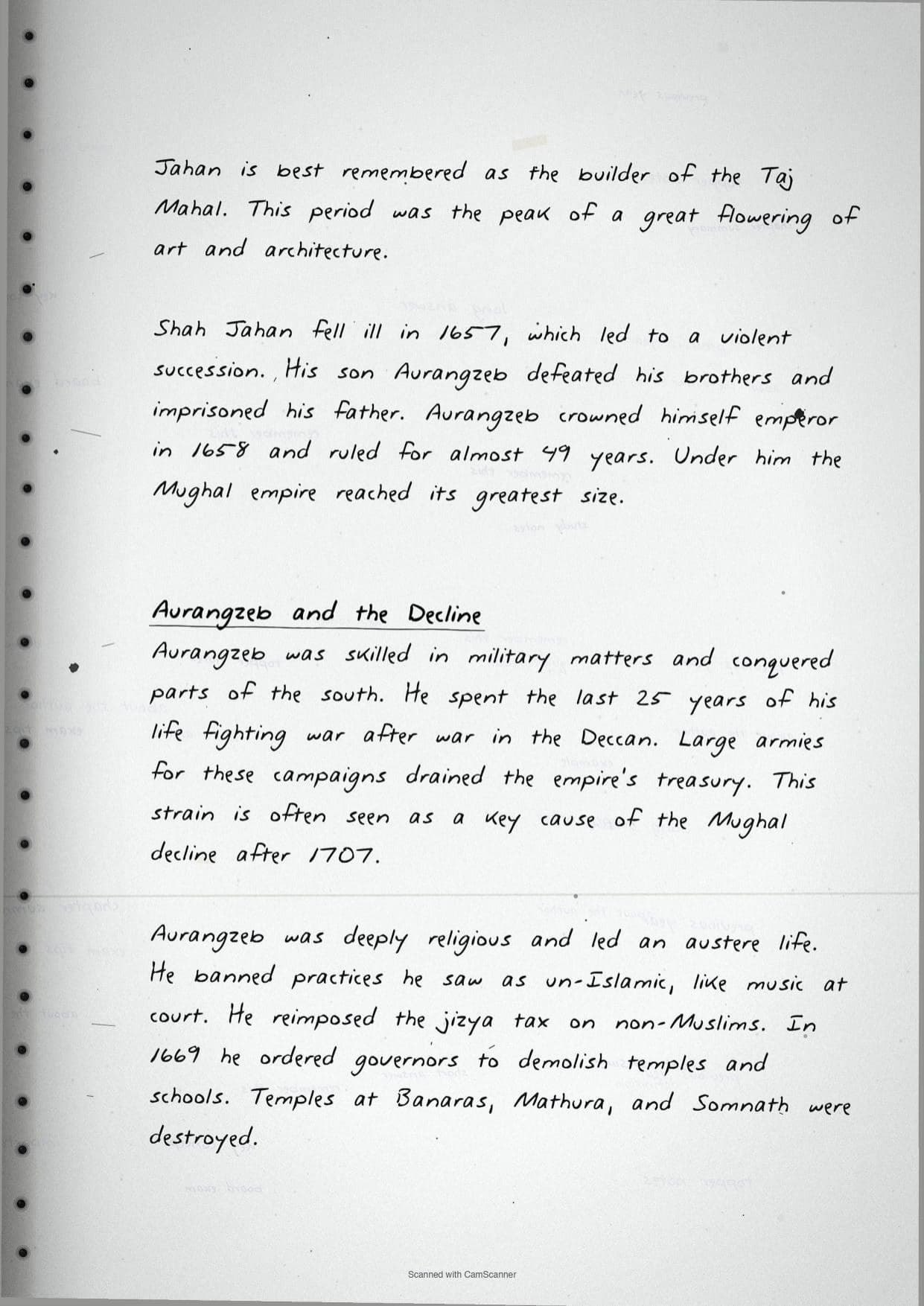
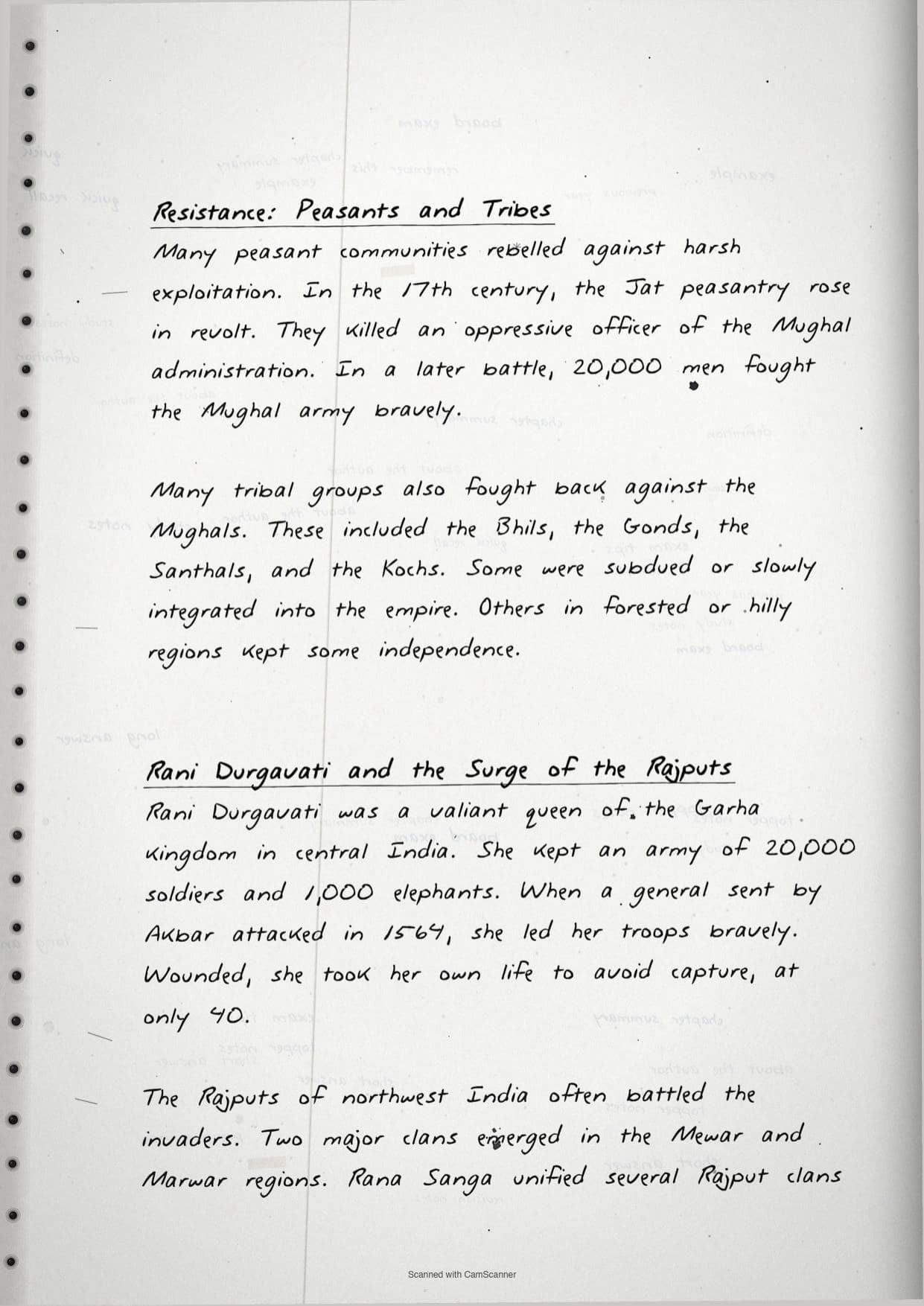
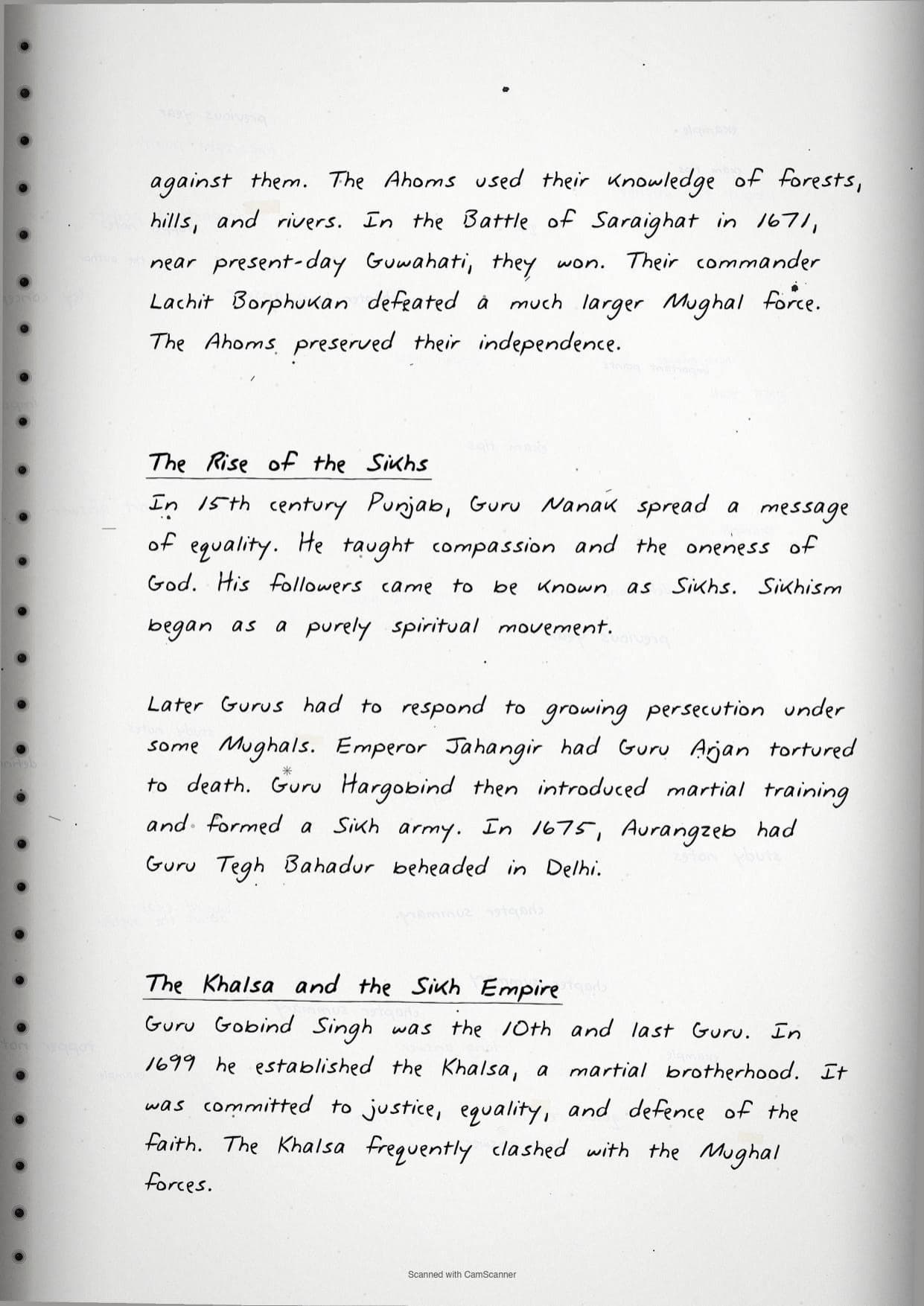
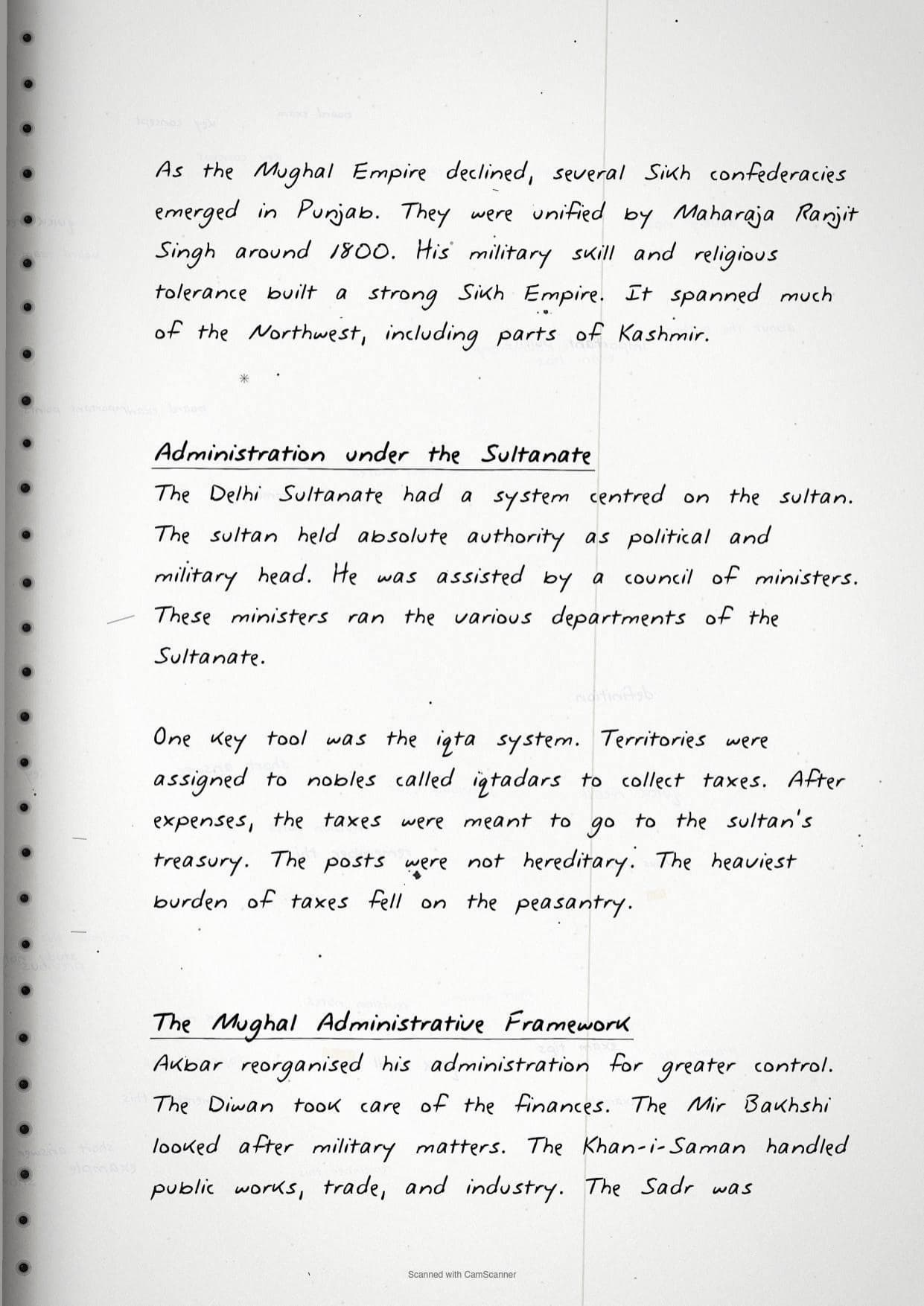
- What the notes cover: a new era of invasions from the 11th century, rise of the delhi sultanate and its five dynasties, the vijayanagara empire and krishnadevaraya, the mughals from babur to aurangzeb.
- Best for: quick revision before Class 8 exams and a strong base for Class 9.
You can read the complete class 8 social-science handwritten notes for Reshaping India's Political Map, with key terms, boxed definitions, and quick revision points, in the PDF below.
These handwritten notes are written by subject teachers, mapped to the 2026-27 NCERT, and checked against the last five years of CBSE Class 8 Social Science papers.
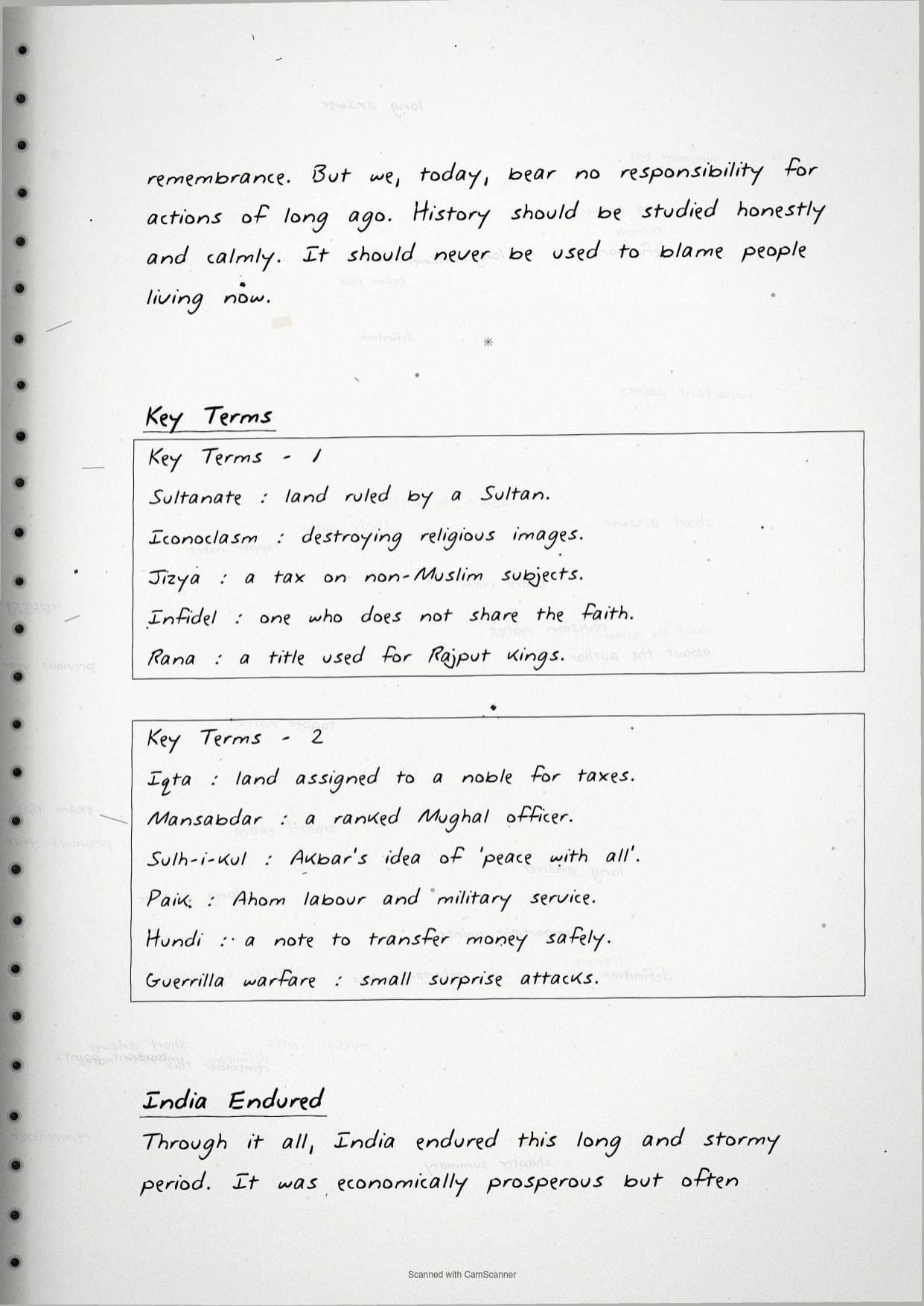
Key Terms and Ideas in Reshaping India's Political Map
These are the terms and ideas the exam asks about most. Learn each one so you can define it and use it in your answers.
| Term / Idea | What it means |
|---|---|
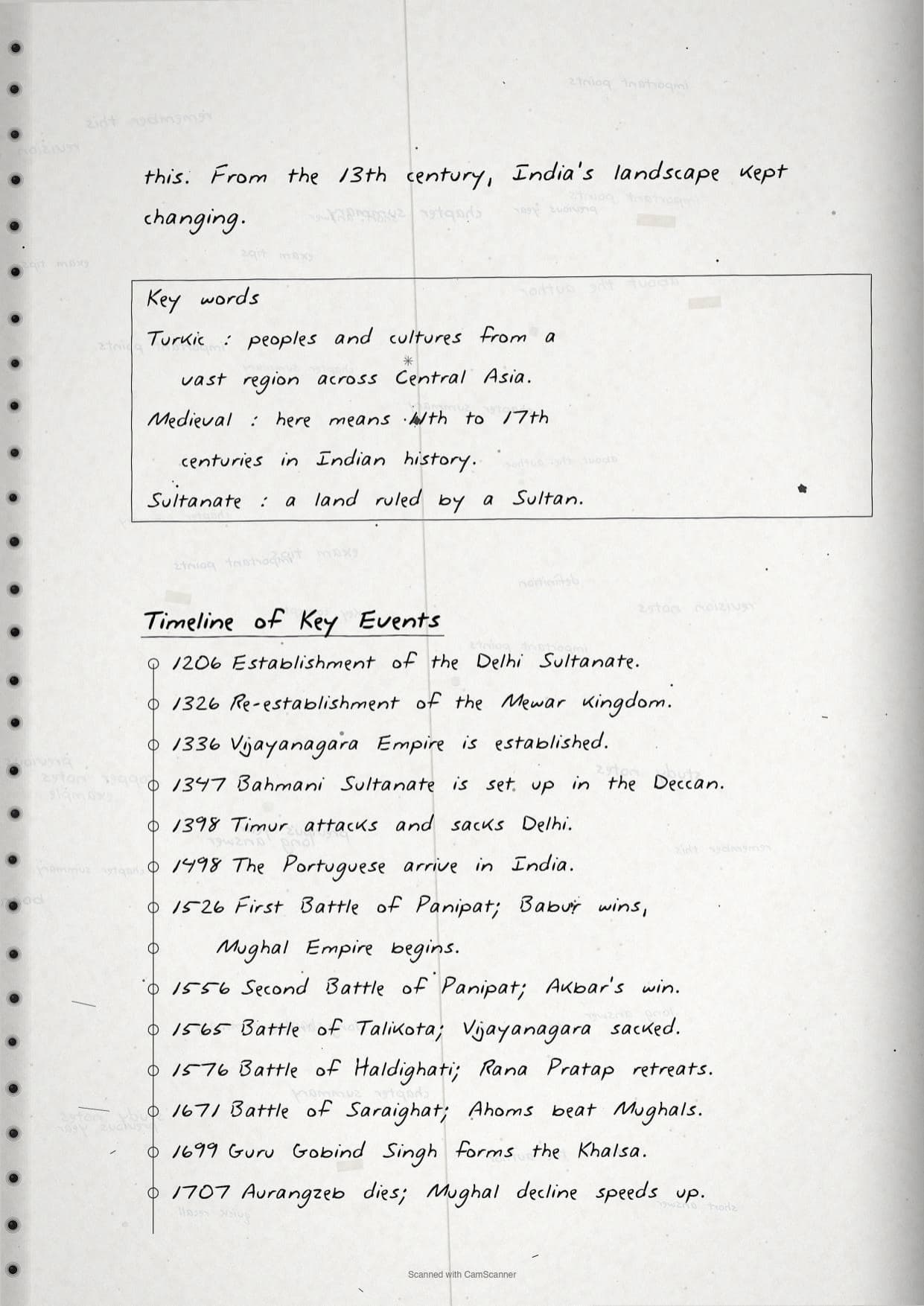
| Sultanate | a land ruled by a Sultan |
| Iqta | land assigned to a noble to collect taxes for the state |
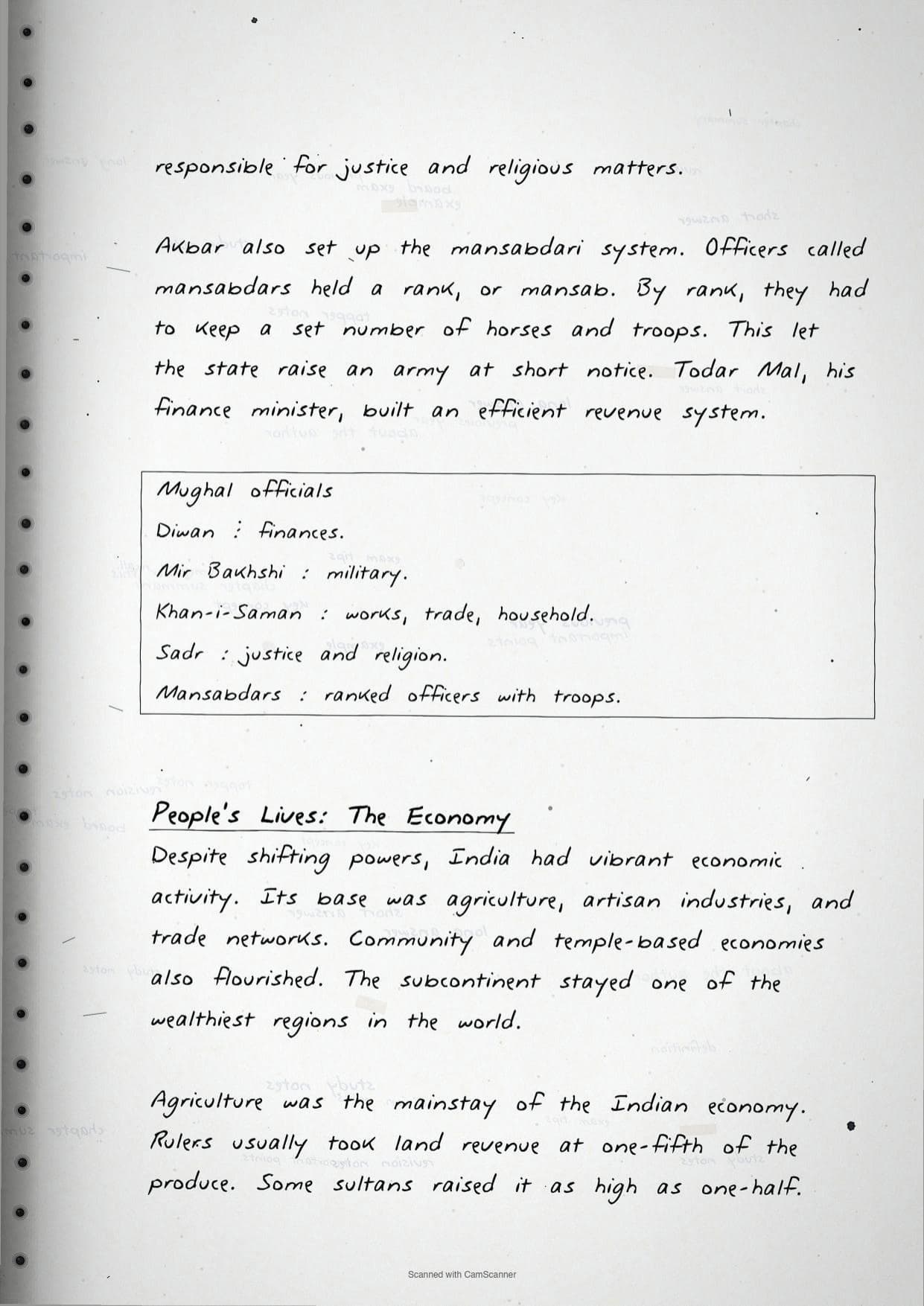
| Mansabdar | a ranked Mughal officer who kept horses and troops |
| Sulh-i-kul | Akbar's idea of peace with all religions |
| Jizya | a tax placed on non-Muslim subjects |
| Iconoclasm | the destruction of religious images seen as idolatrous |
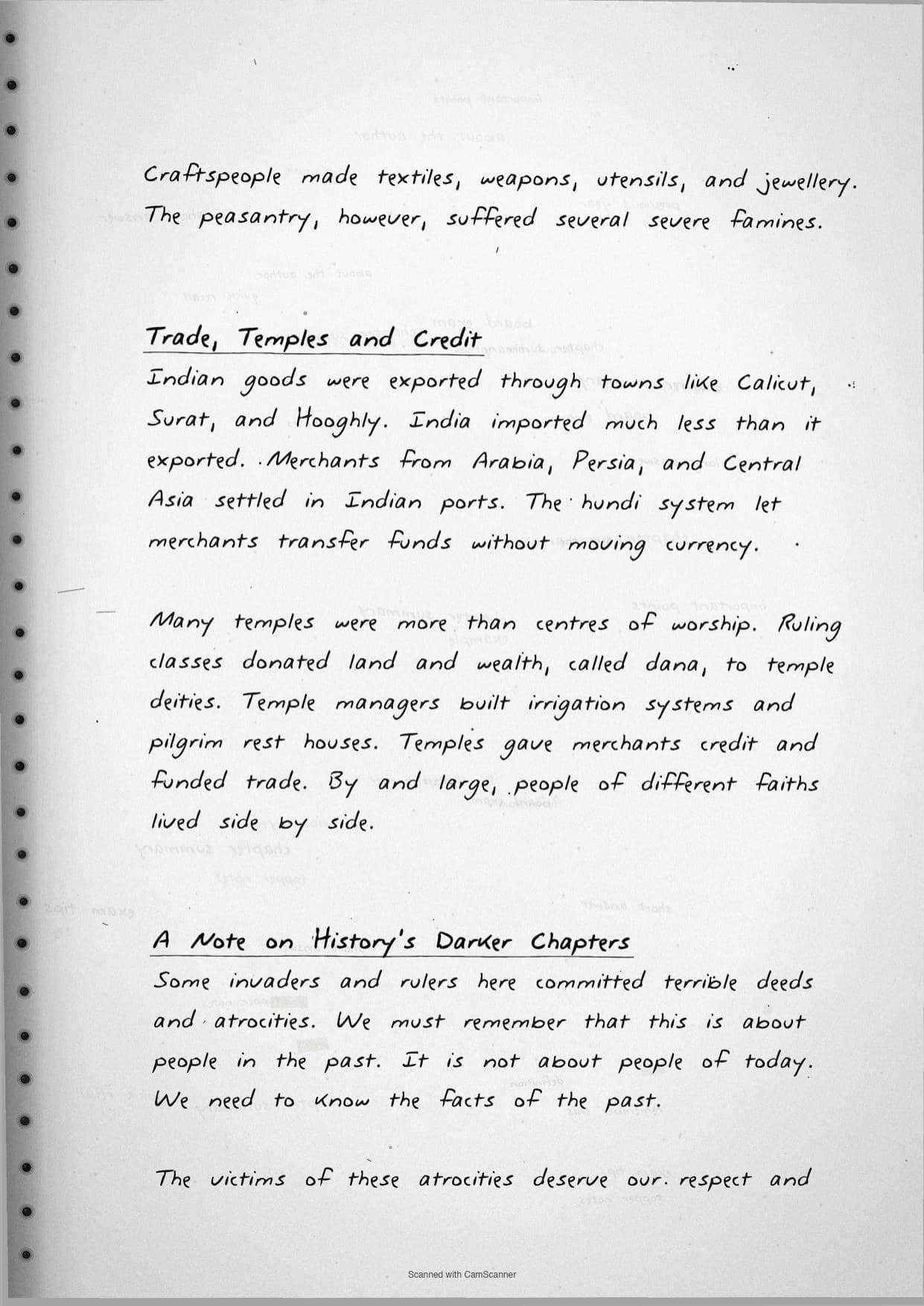
| Hundi | a note used to transfer money safely without carrying cash |
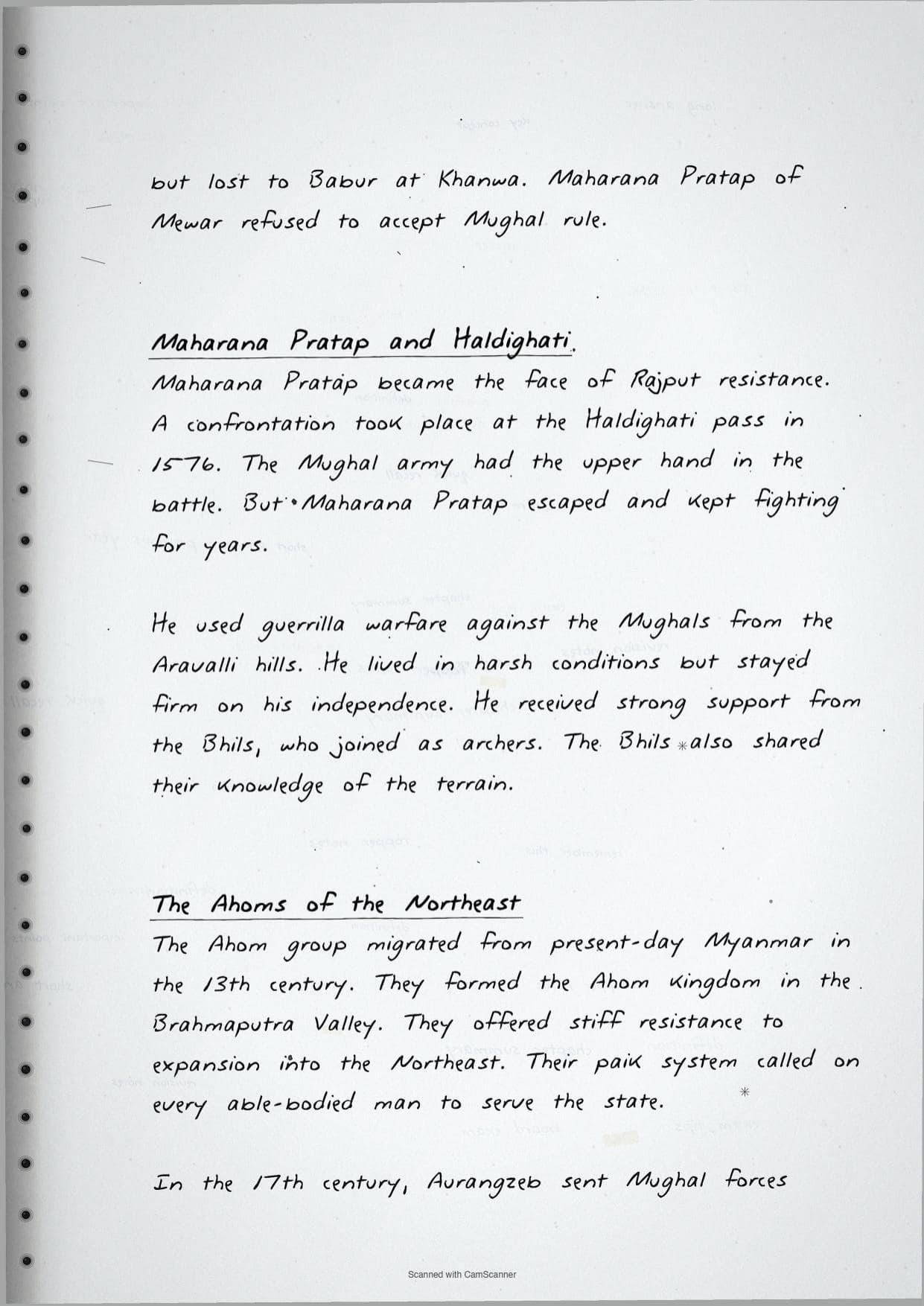
| Paik | the Ahom system of labour and military service |
What the Reshaping India's Political Map Handwritten Notes Cover
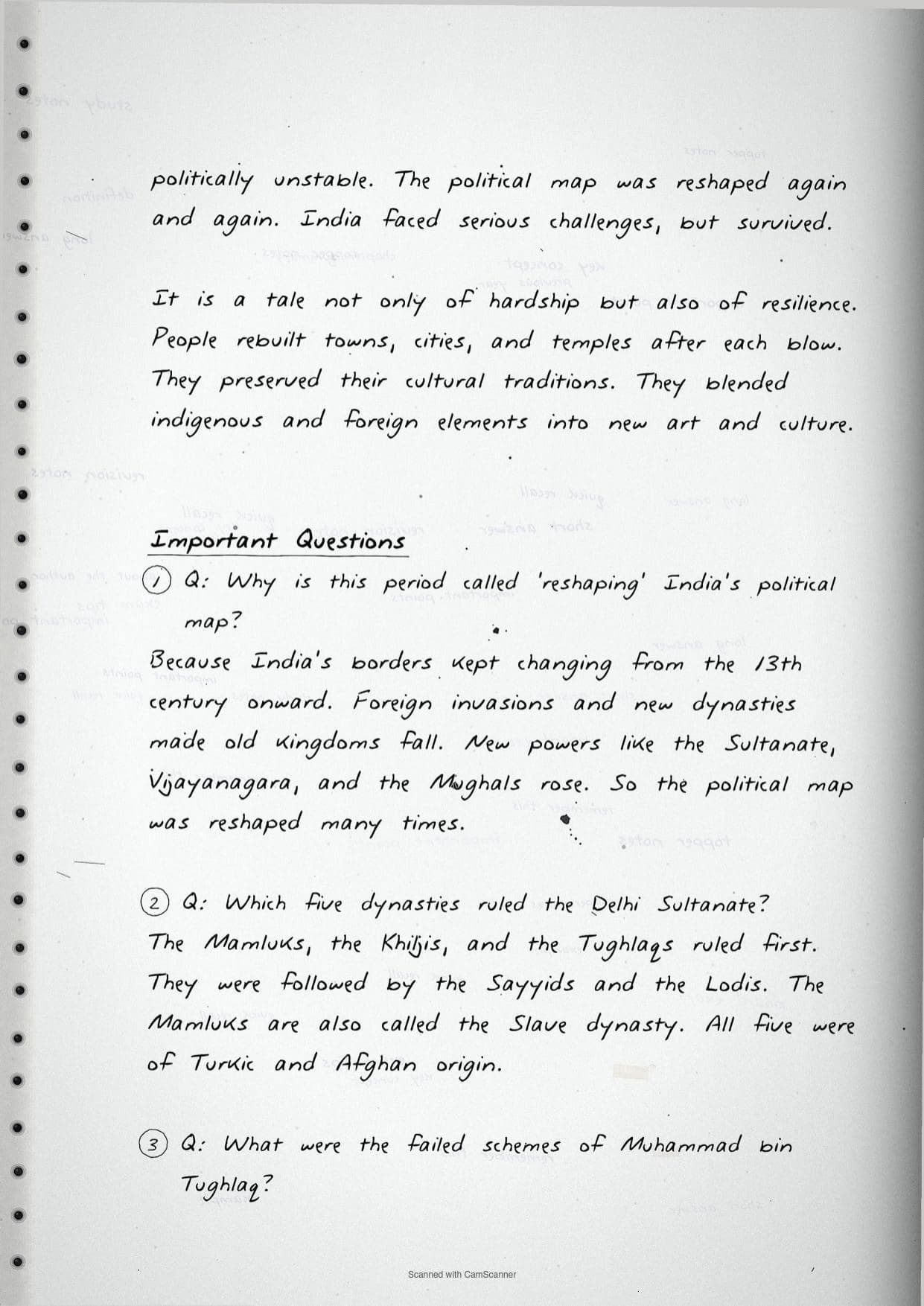
This chapter tells the story of India from the 13th to the 17th centuries. It is a time when India's political map kept changing as old kingdoms fell and new powers rose. It follows the Delhi Sultanate, regional kingdoms, Vijayanagara and the Mughals, and the resistance they faced.
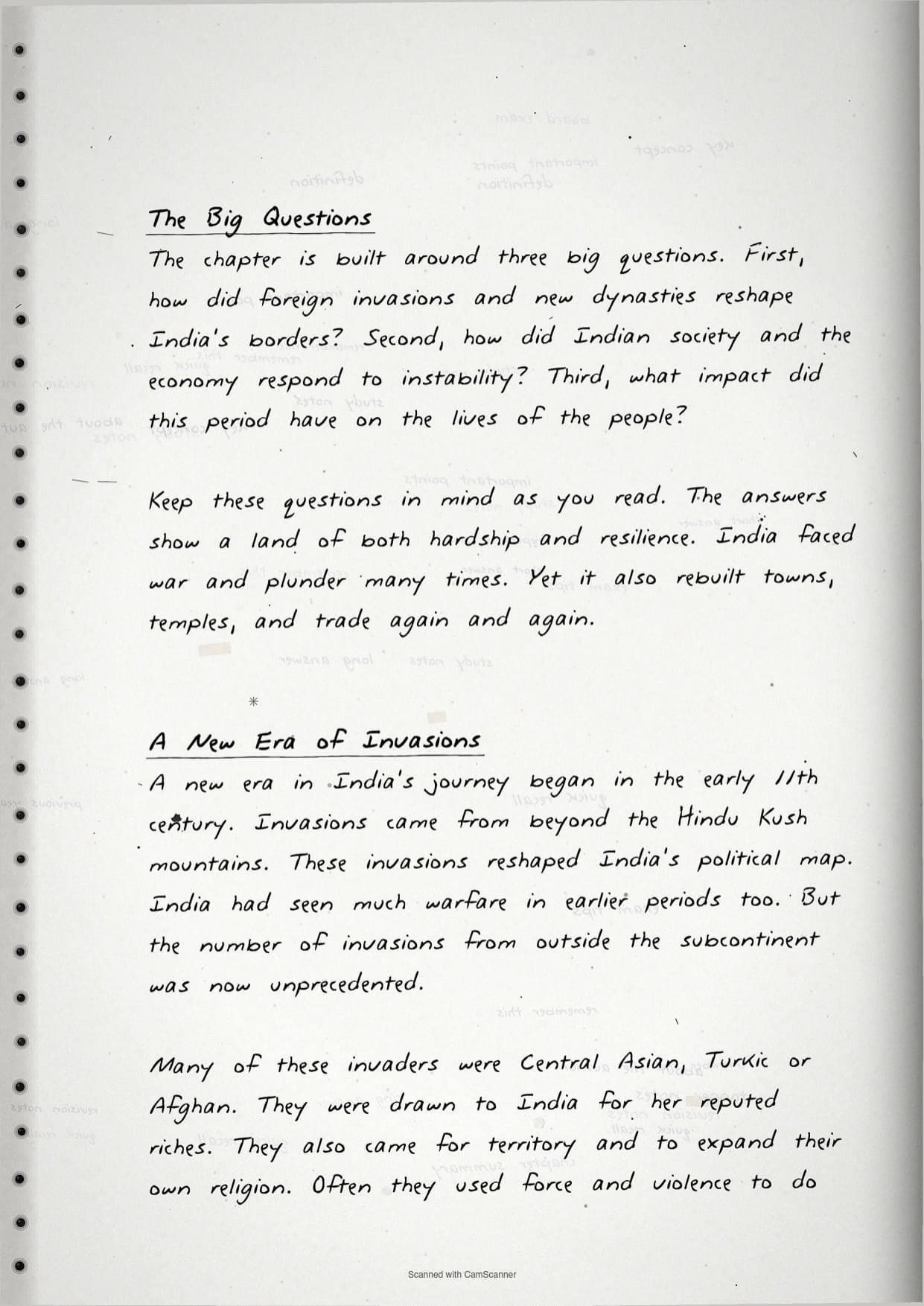
- A new era of invasions from the 11th century
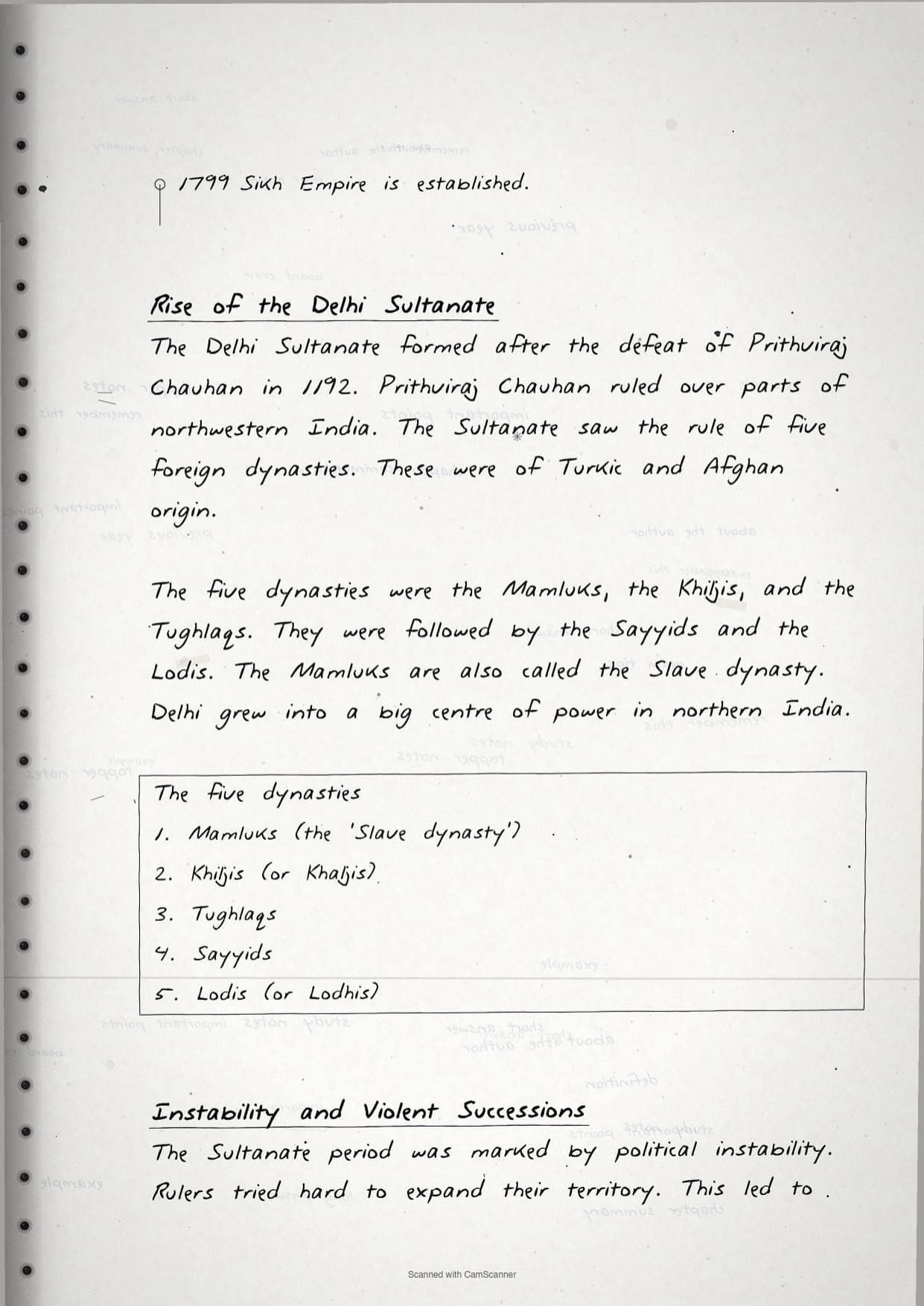
- Rise of the Delhi Sultanate and its five dynasties
- The Vijayanagara Empire and Krishnadevaraya
- The Mughals from Babur to Aurangzeb
- Resistance: Rajputs, Ahoms, Sikhs and tribes
- Administration: iqta and mansabdari systems
- People's lives, economy, trade and temples
- A tale of hardship and resilience
Reshaping India's Political Map Topic-wise Weightage for CBSE Class 8 Social Science
Some parts of this chapter are asked more often than others. The table below shows which sub-topics to revise first, based on recent CBSE Class 8 question trends.
| Sub-topic | Weightage | CBSE Frequency |
|---|---|---|
| The Mughals from Babur to Aurangzeb | High | asked often |
| Delhi Sultanate and its dynasties | High | asked often |
| Resistance: Rajputs, Ahoms, Sikhs | Medium | asked sometimes |
| The Vijayanagara Empire | Medium | asked sometimes |
| Administration and the economy | Medium | asked sometimes |
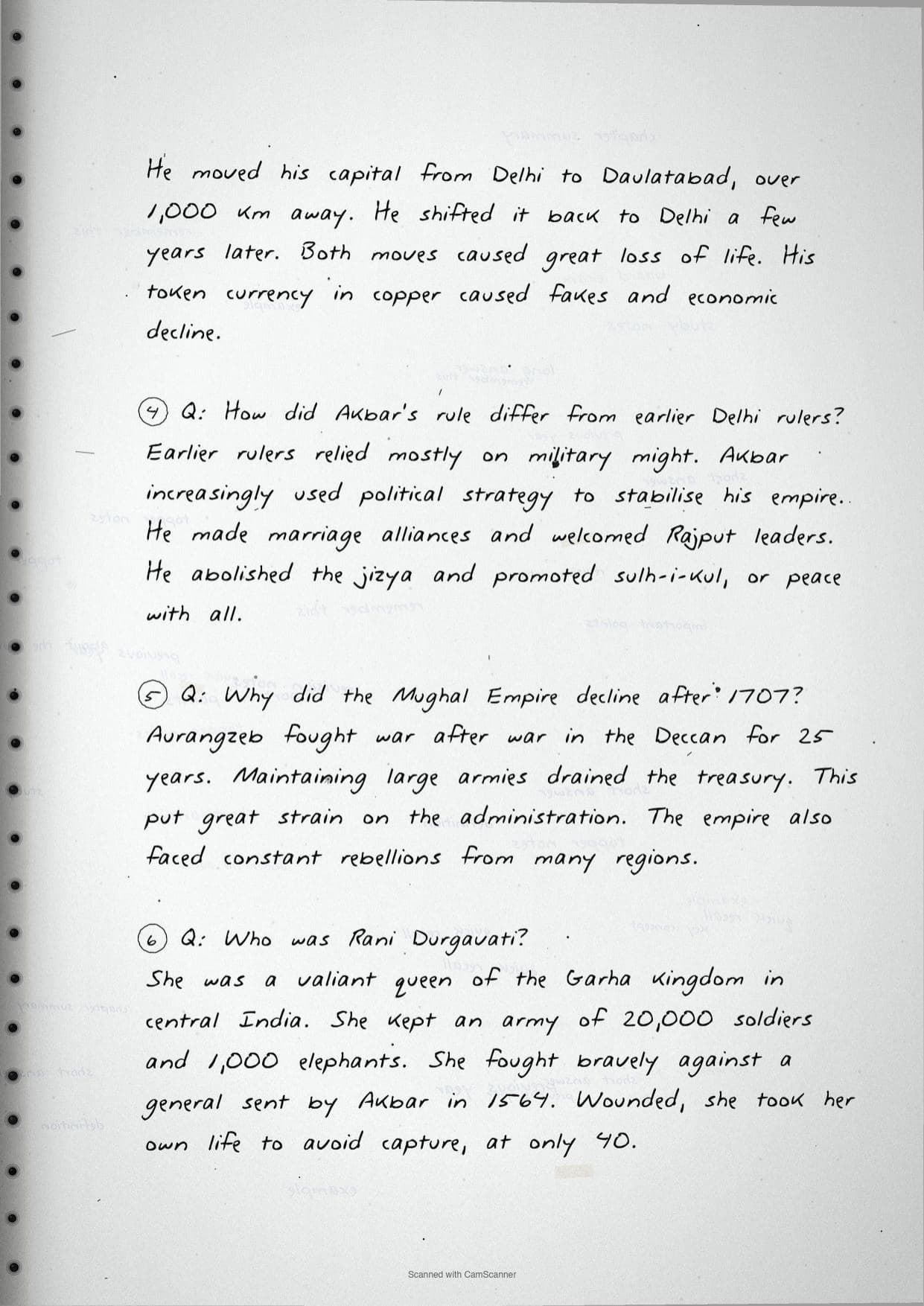
| Muhammad bin Tughlaq's failed schemes | Low | asked rarely |
How Collegedunia's Handwritten Notes Help You Revise Reshaping India's Political Map
These notes are made for the night before the exam. They keep the facts short and easy to scan. Collegedunia maps every point to the 2026-27 NCERT.
- Clear handwriting: each topic is written in neat, easy-to-read handwriting.
- Boxed key terms: the main terms and definitions are boxed by hand for fast recall.
- Diagrams and tables: simple hand-drawn tables and charts make ideas clear.
- Colour-coded headings: new sub-topics stand out, so you find any section in seconds.
Reshaping India's Political Map Self-Assessment Quiz
Try these quick questions after you read the notes. Tap each question to check your answer. They cover the points CBSE asks most often.
Which dynasty is also called the Slave dynasty?
(a) Khiljis (b) Mamluks (c) Tughlaqs (d) Lodis
Answer: (b) Mamluks - the first of the five Delhi Sultanate dynasties.
Under whom did Vijayanagara reach its peak?
(a) Harihara (b) Bukka (c) Krishnadevaraya (d) Ramaraya
Answer: (c) Krishnadevaraya - he strengthened the empire in the 16th century.
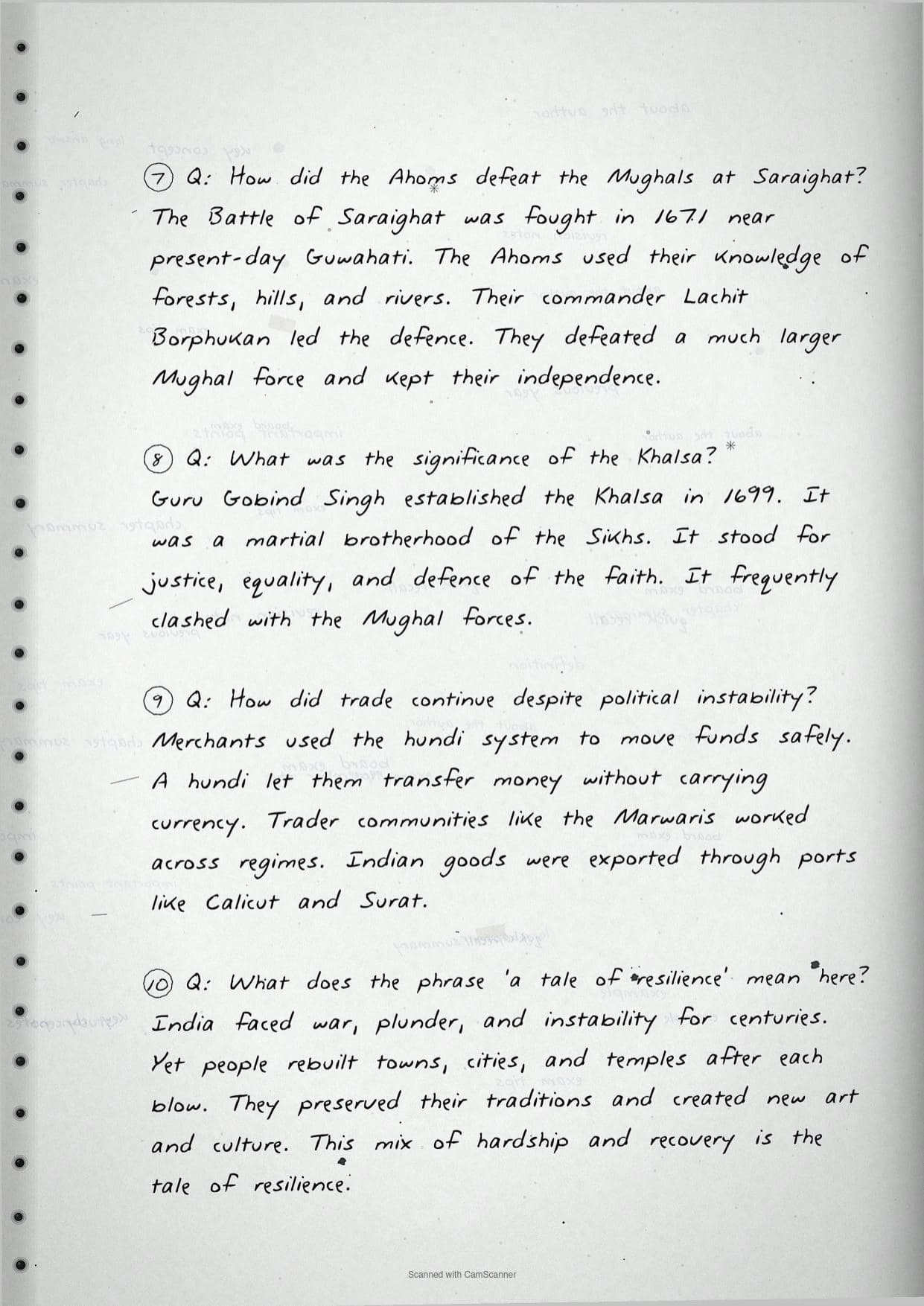
Who defeated the Mughals at the Battle of Saraighat in 1671?
(a) Rajputs (b) Ahoms (c) Sikhs (d) Jats
Answer: (b) Ahoms - led by Lachit Borphukan near present-day Guwahati.
Who established the Khalsa in 1699?
(a) Guru Nanak (b) Guru Arjan (c) Guru Gobind Singh (d) Guru Tegh Bahadur
Answer: (c) Guru Gobind Singh - the 10th and last Sikh Guru.
Akbar's administrative system of ranked officers was called?
(a) iqta (b) mansabdari (c) hundi (d) paik
Answer: (b) mansabdari - officers held a rank and kept troops.
How to Use These Handwritten Notes for Class 8 Social Science Revision
Use these class 8 social-science handwritten notes in two passes. Read them slowly once for the full chapter. Then, near the exam, read only the boxes and key terms for a fast recall.
- Read the notes once with the NCERT chapter open beside you.
- Say each key term and idea in your own words.
- Practise one long-answer question from a past paper.
- On the last day, revise only the key terms and the boxes.
Class 8 Social Science Handwritten Notes for All Chapters
The table below links the class 8 social-science handwritten notes for every chapter. Use it to jump to any other chapter's notes.
Reshaping India's Political Map Class 8 Social Science Handwritten Notes FAQs
Ques. Where can I download Reshaping India's Political Map Class 8 Social Science Handwritten Notes PDF?
Ans. You can download the Reshaping India's Political Map Class 8 Social Science Handwritten Notes PDF directly from this page. Both the Normal and HD versions are free.
Ques. Are these handwritten notes aligned with the 2026-27 NCERT?
Ans. Yes. These notes follow the current 2026-27 syllabus for Class 8 Social Science. Why the period is called 'reshaping' India's political map.
Ques. How many pages is the Class 8 Social Science Reshaping India's Political Map Handwritten Notes PDF?
Ans. The notes run about 25 pages. They cover the full chapter with key terms, hand-drawn boxes, and a short self-assessment quiz.
Ques. What is the main idea of the 8th standard Social Science chapter Reshaping India's Political Map?
Ans. The chapter shows how India's borders kept changing from the 13th century as invasions and new dynasties made old kingdoms fall and new powers rise. Its main idea is that this long period was one of both hardship and resilience, as people rebuilt towns, temples and trade after each blow.
Ques. Are these Reshaping India's Political Map notes enough for the CBSE Class 8 exam?
Ans. Yes, for revision. The Collegedunia handwritten notes cover every key point and exam term. Read them with the NCERT chapter and practise past questions.



Comments