




NCERT Notes Class 11 Economics Chapter 1 Introduction help students revise scarcity, choice, economic activities and statistics for the 2026-27 syllabus. The page follows the NCERT Statistics for Economics chapter and keeps the main terms ready for short answers.
- Download the Introduction notes PDF for offline revision.
- Revise scarcity, consumption, production, distribution and economic data in one place.
- Use the tables for quick answers on statistics and policy decisions.




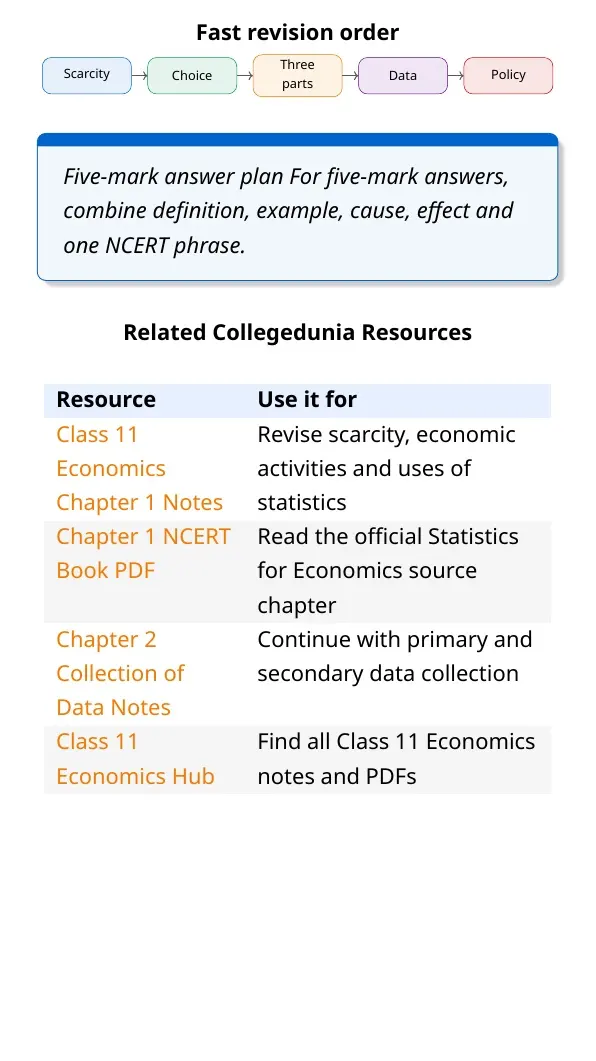

Student Feedback: In a Collegedunia poll of 12,480 Class 11 Economics students conducted before the 2026 boards, 71% said the link between scarcity and statistics was the hardest first-chapter idea. These notes explain both ideas with flow charts and tables.
Introduction Class 11 Economics Notes: Scarcity and Choice
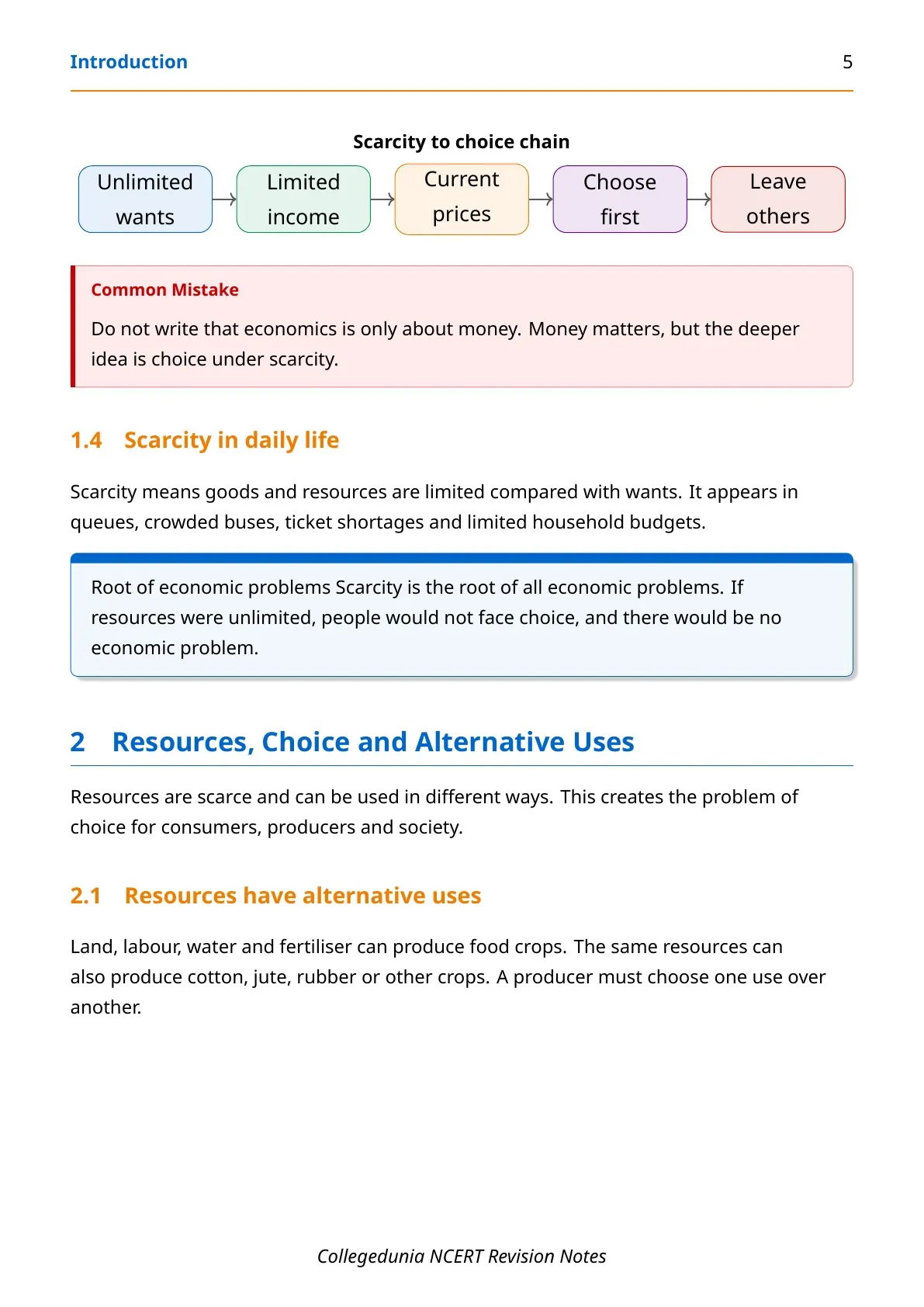
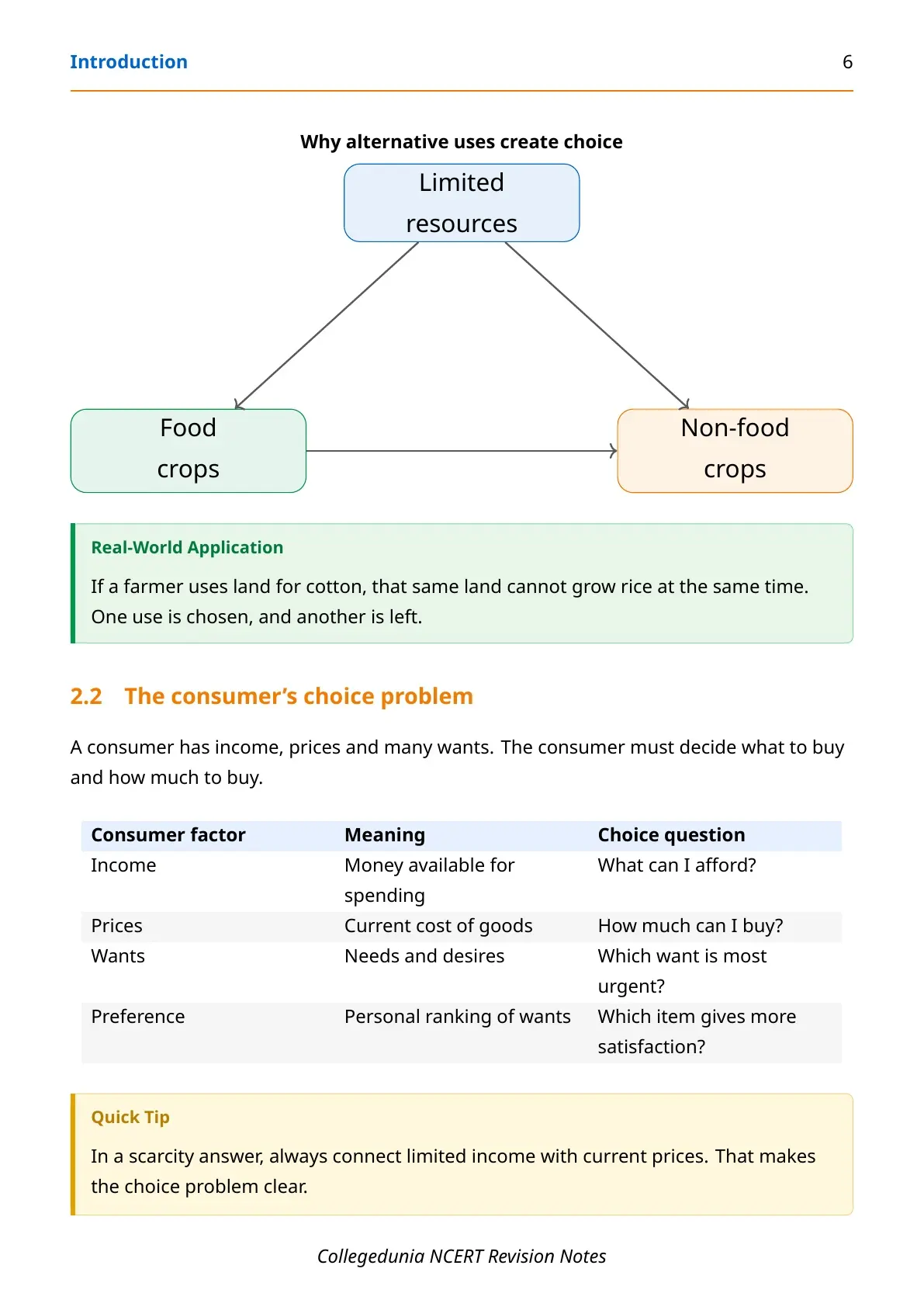
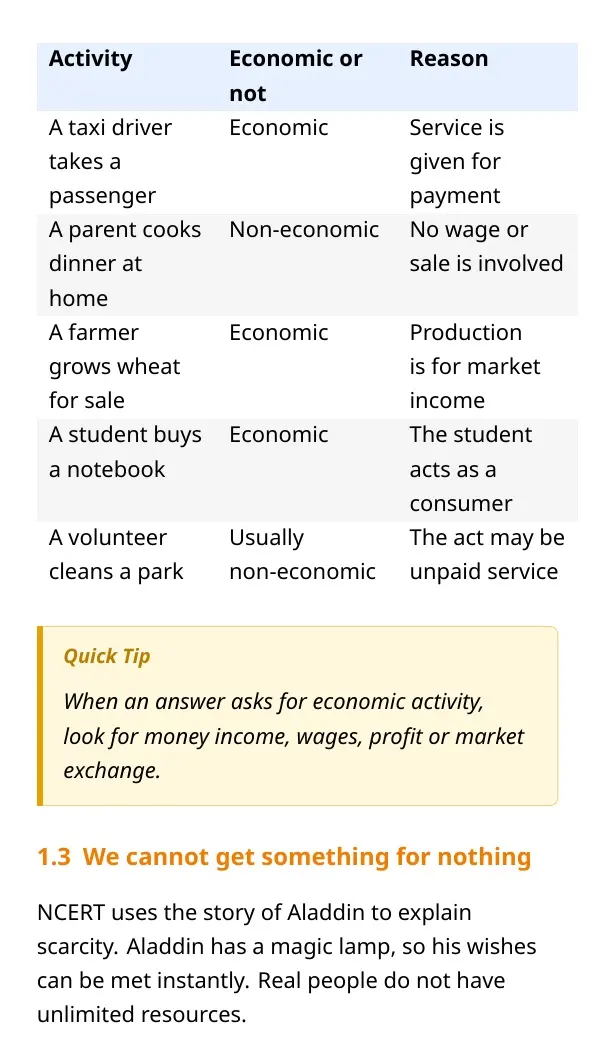
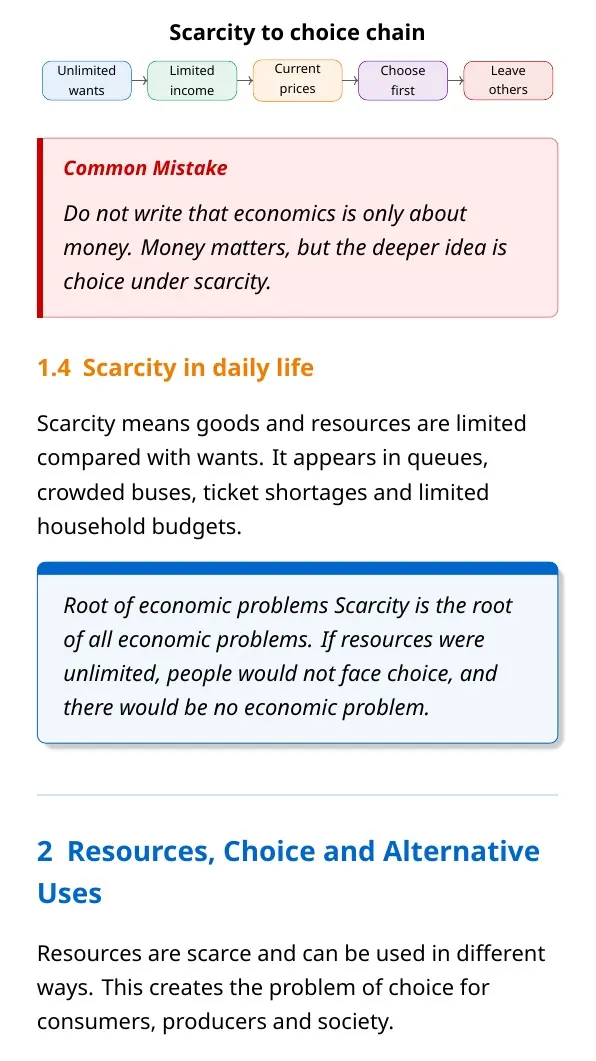
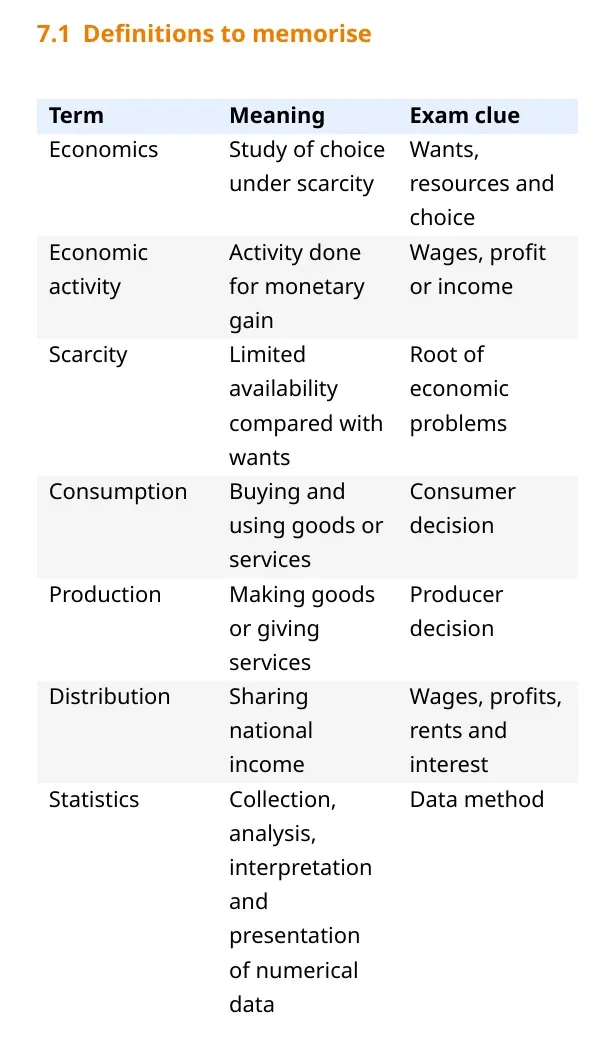
Scarcity is the root of economic problems. Wants are unlimited, but income, land, labour, water and other resources are limited. This is why every economic decision involves choice.

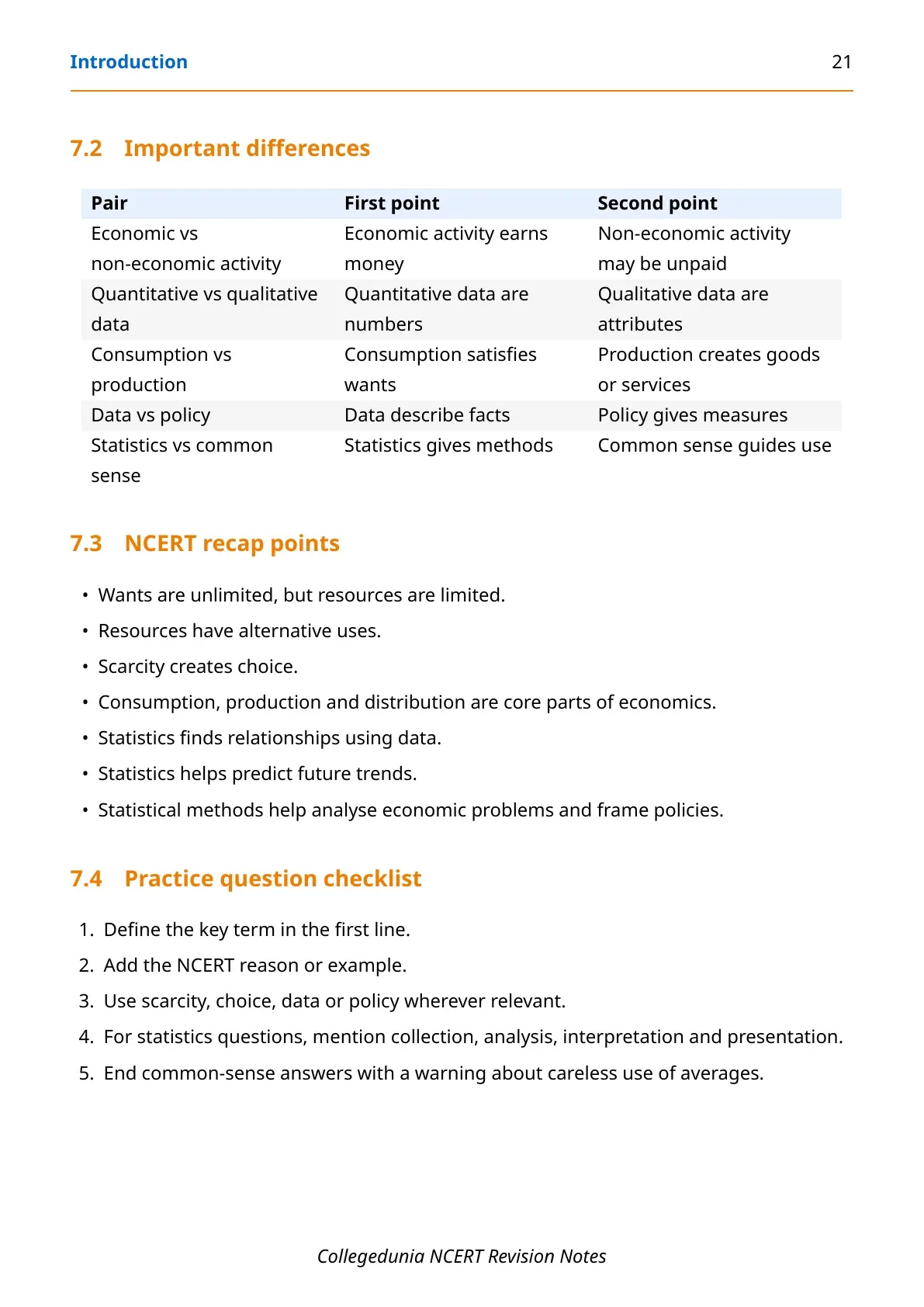
| NCERT idea | Meaning | Example |
|---|---|---|
| Unlimited wants | People want many goods and services | A student wants snacks, stationery and travel money |
| Limited resources | Money and inputs are not unlimited | Pocket money allows only some purchases |
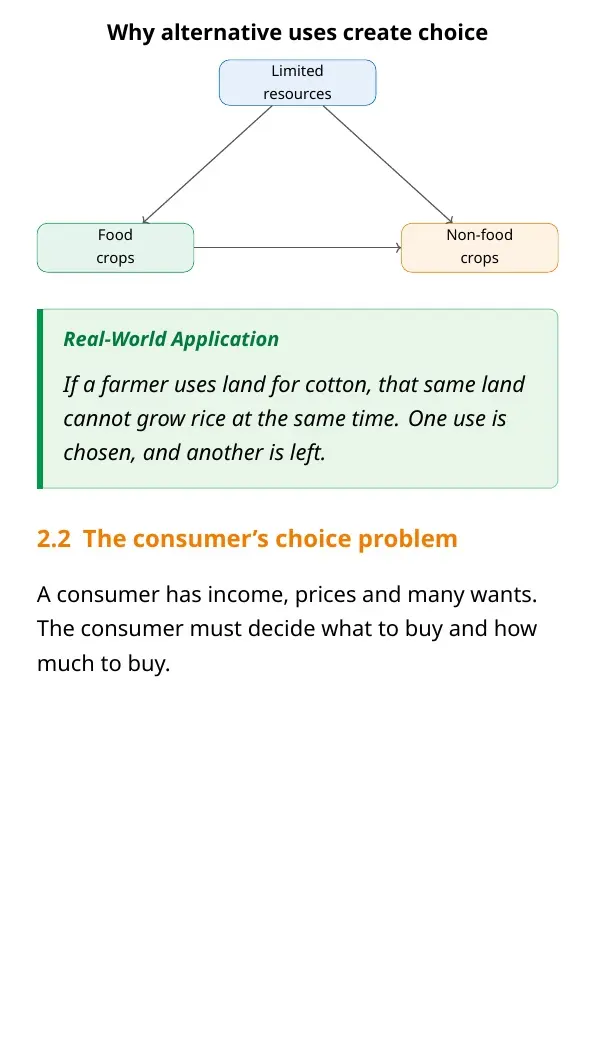
| Alternative uses | The same resource can be used differently | Land can grow food crops or cotton |
| Choice | One use is selected over another | A farmer chooses rice instead of jute |
Introduction Class 11 Economics Video Recap
Source: Magnet Brains on YouTube
Consumption Production and Distribution in Introduction Economics
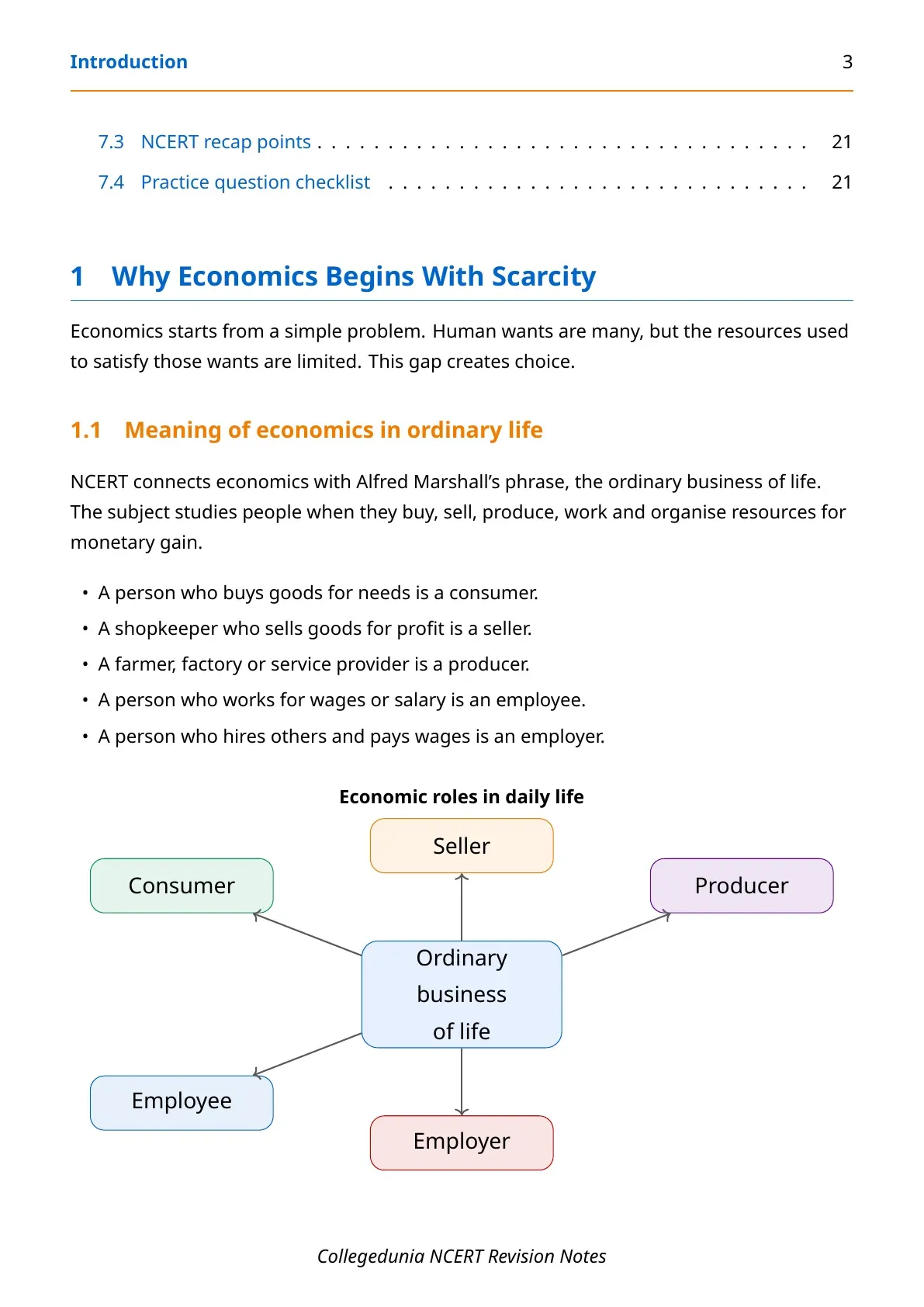
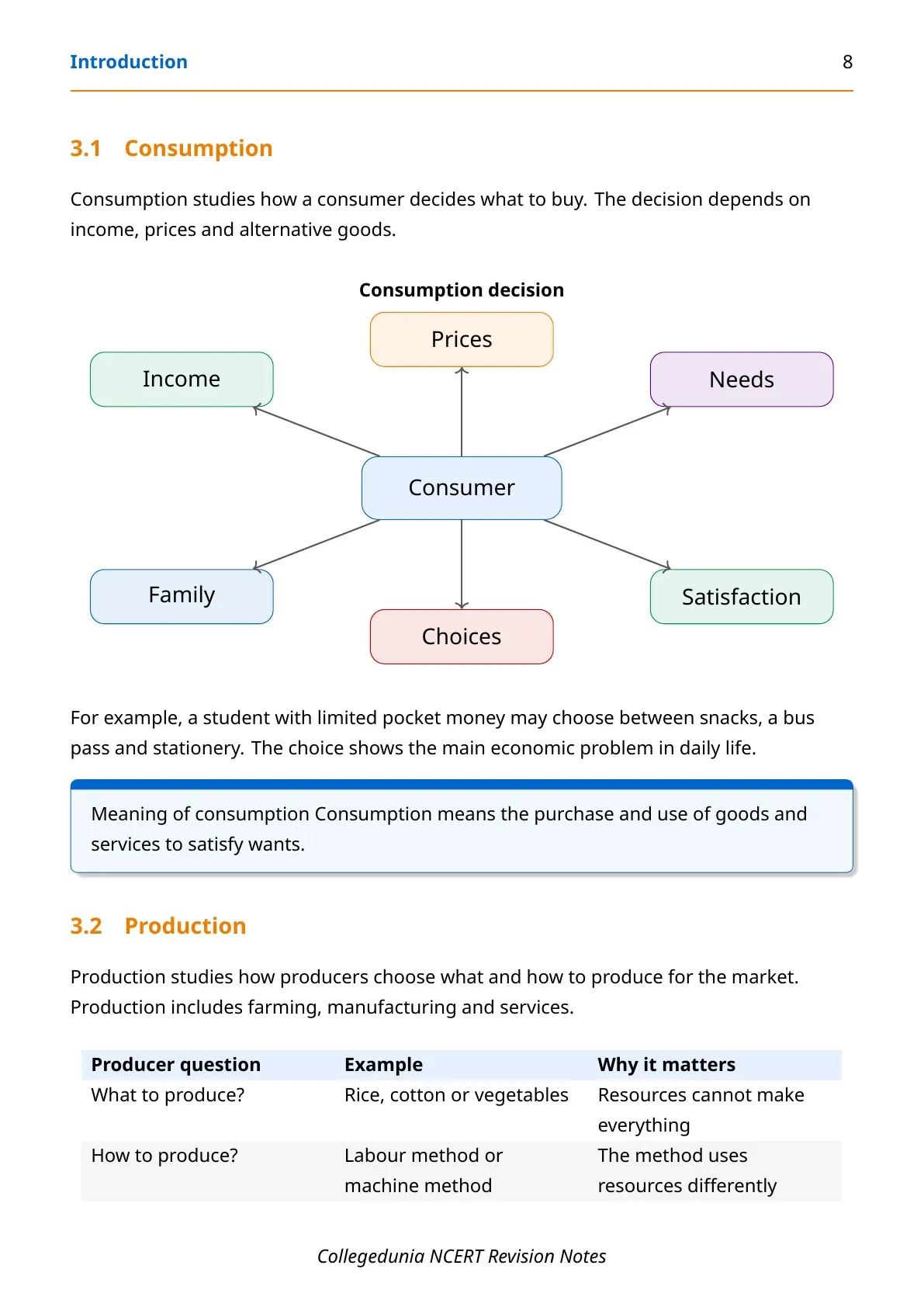
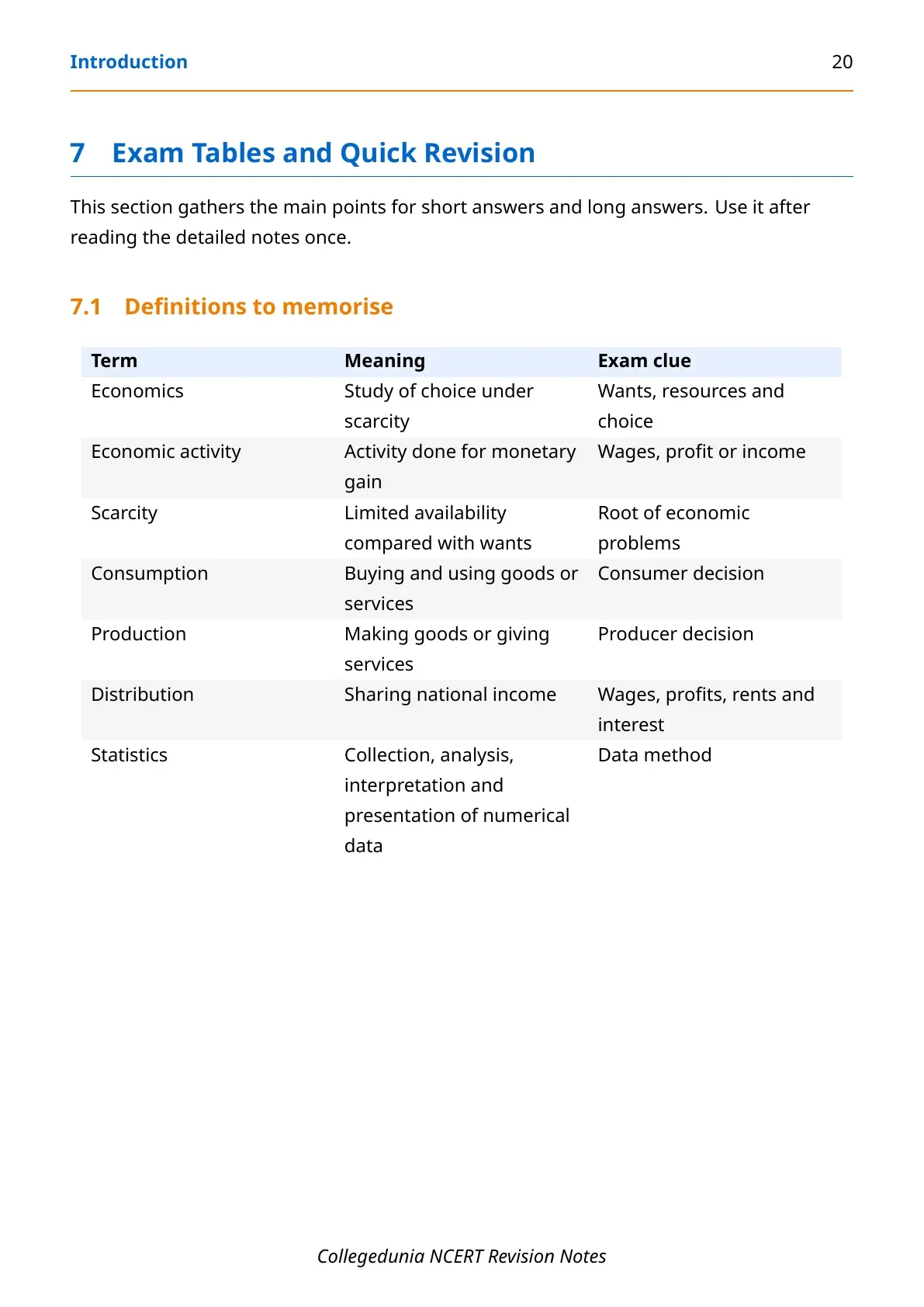
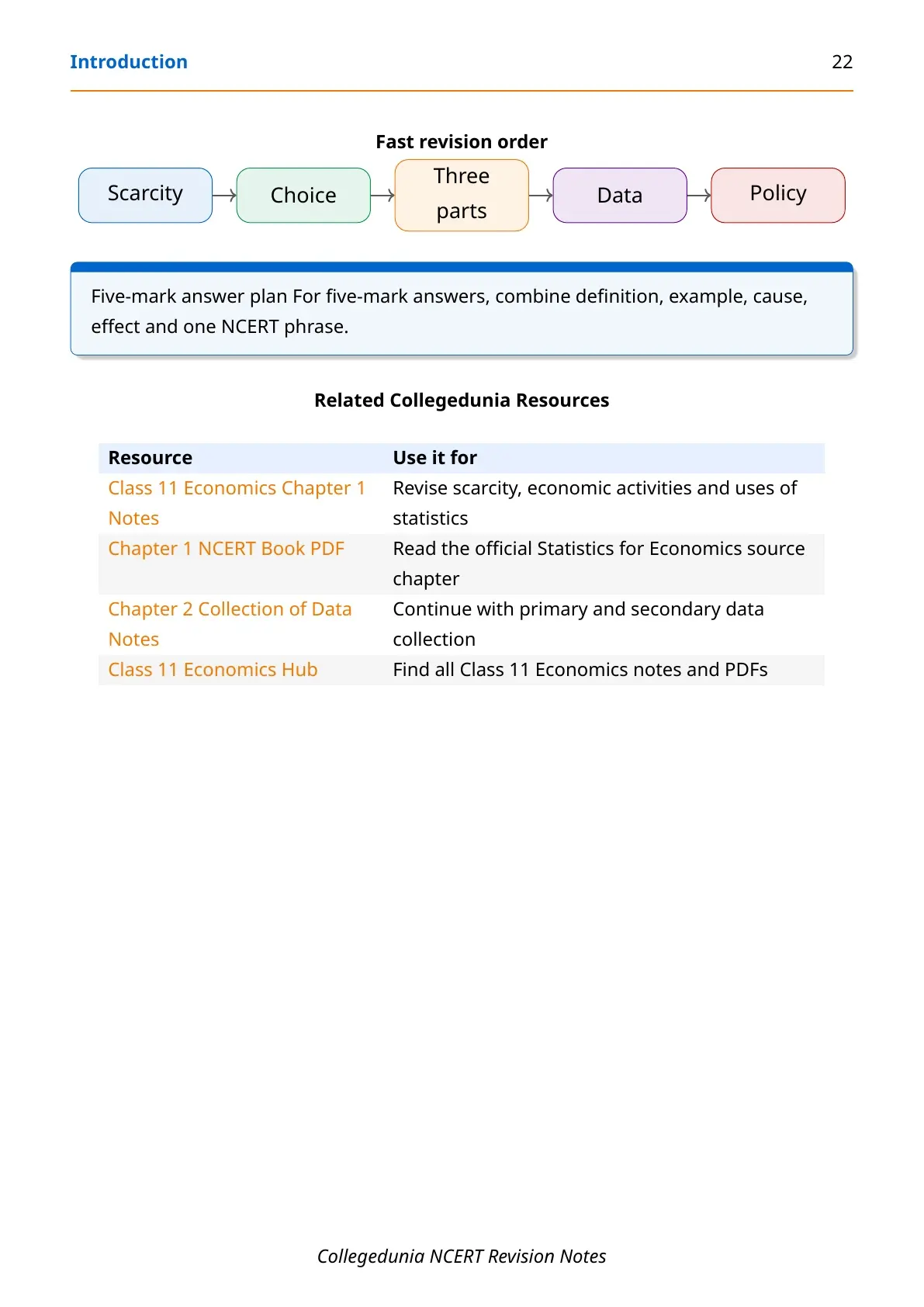
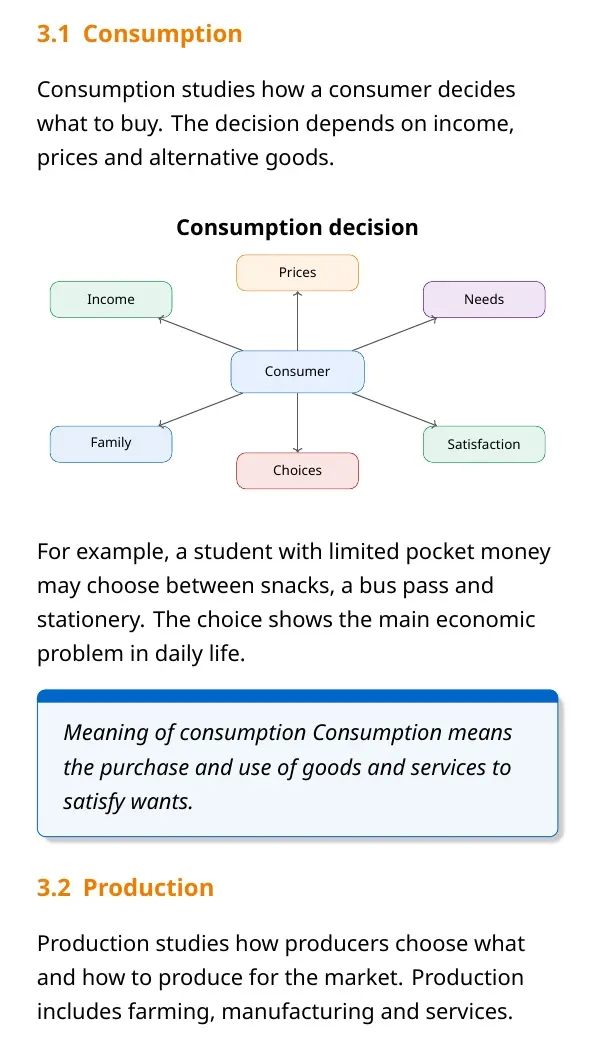
NCERT explains economics through three core parts: consumption, production and distribution. These three ideas help students organise almost every answer from this chapter.
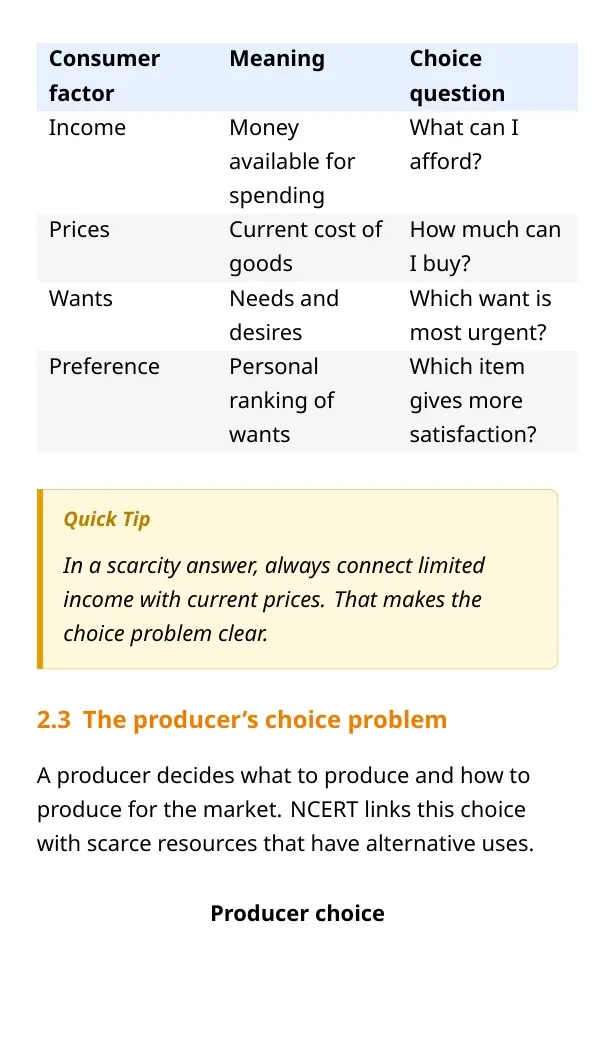
- Consumption: how consumers decide what to buy with income and prices.
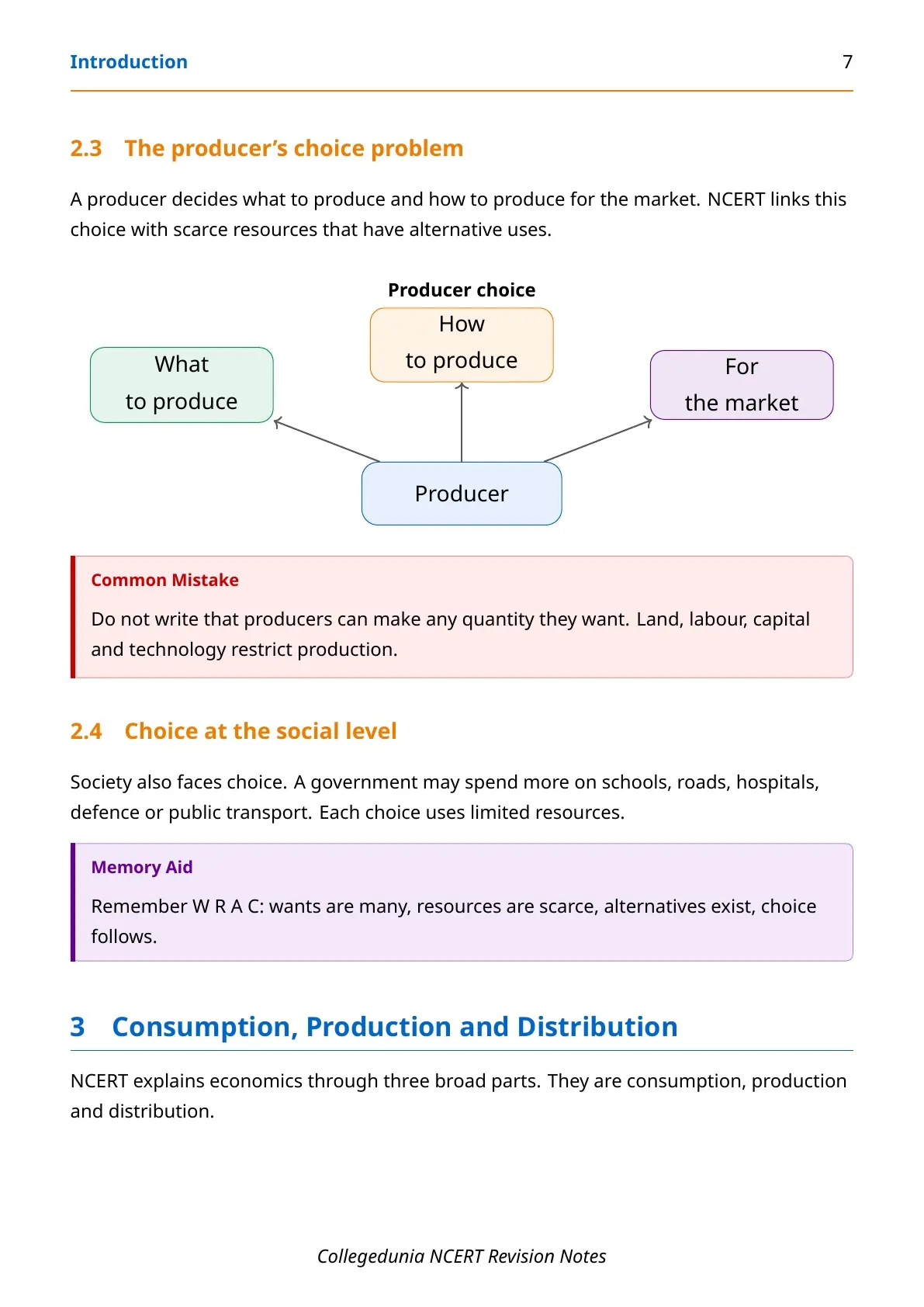
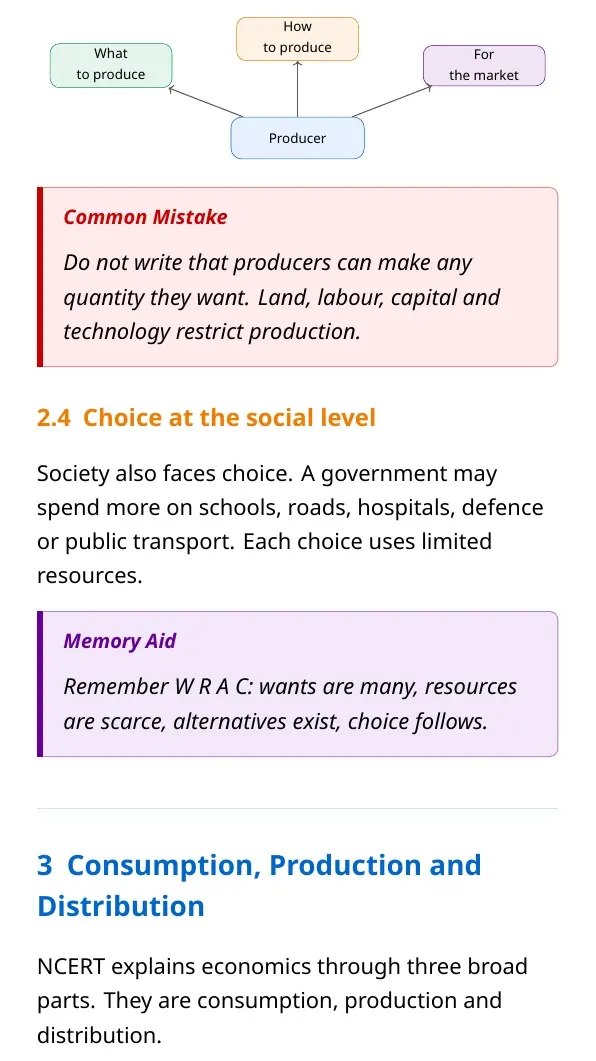
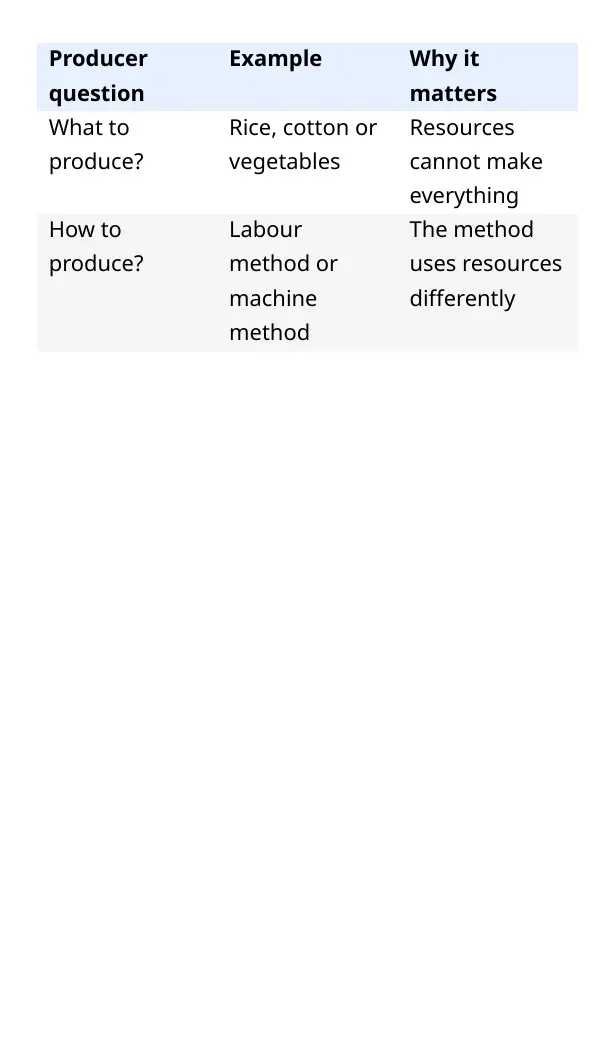
- Production: how producers decide what to produce and how to produce it.
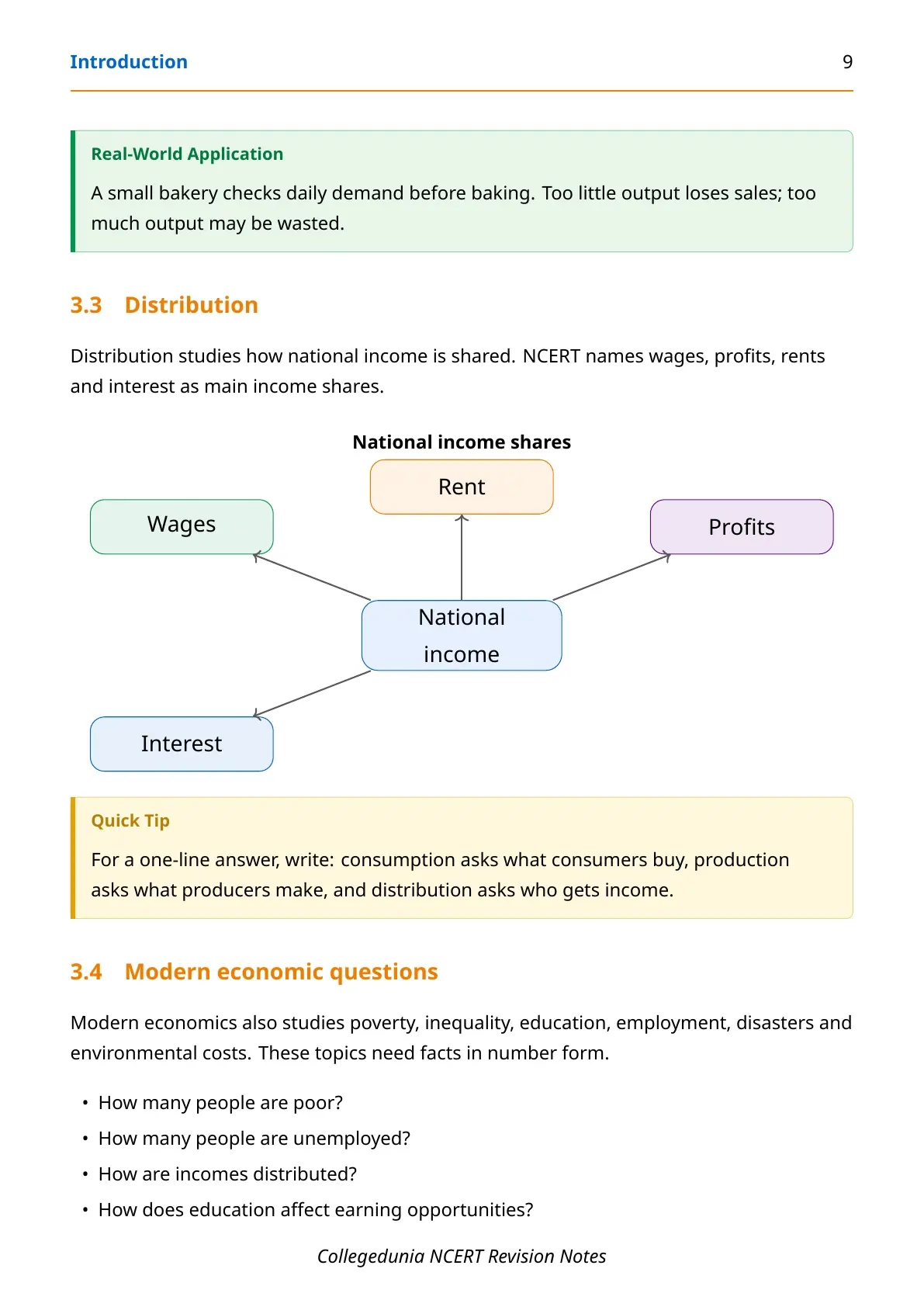
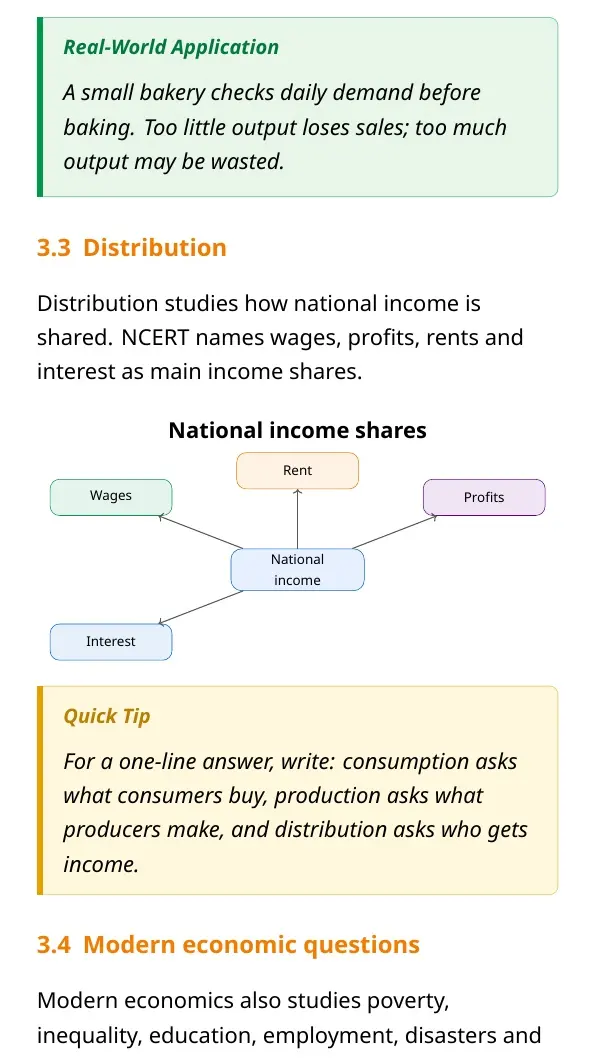
- Distribution: how national income is shared as wages, profits, rent and interest.
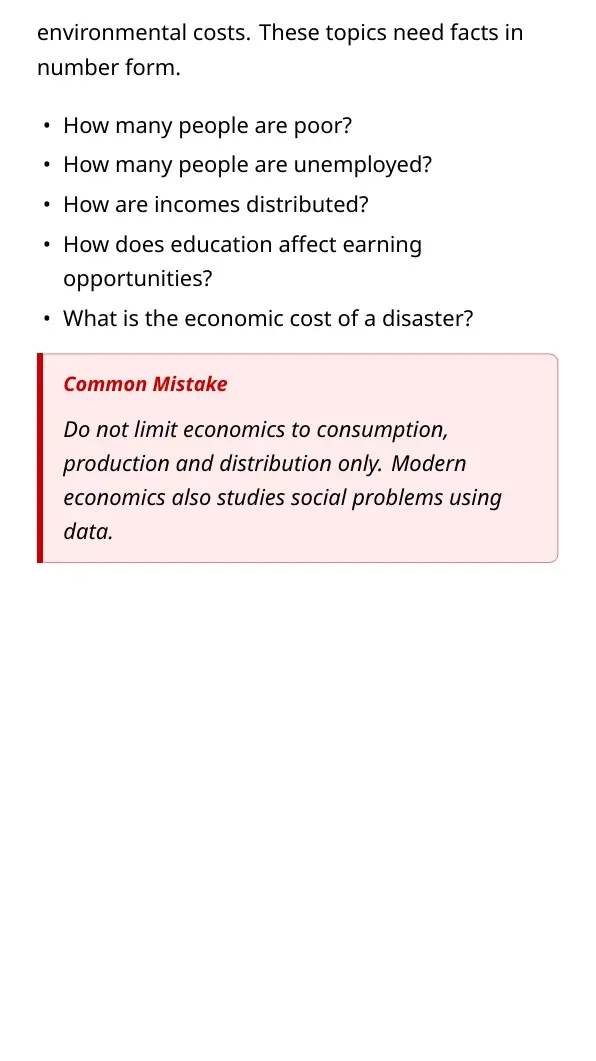
Modern economics also studies poverty, inequality, unemployment, education and disasters. These topics need facts in number form.
Statistics in Economics Class 11 Introduction Notes
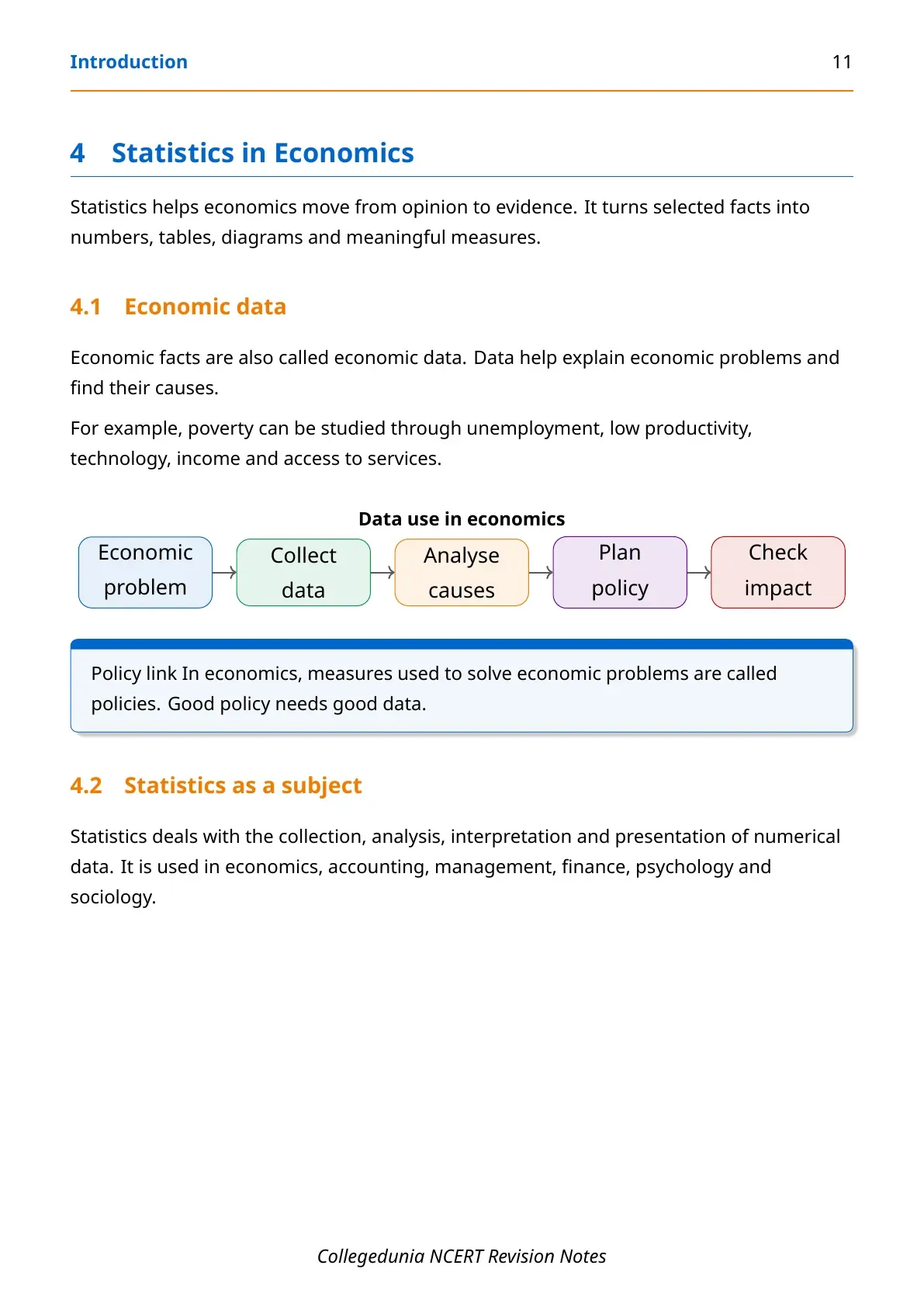
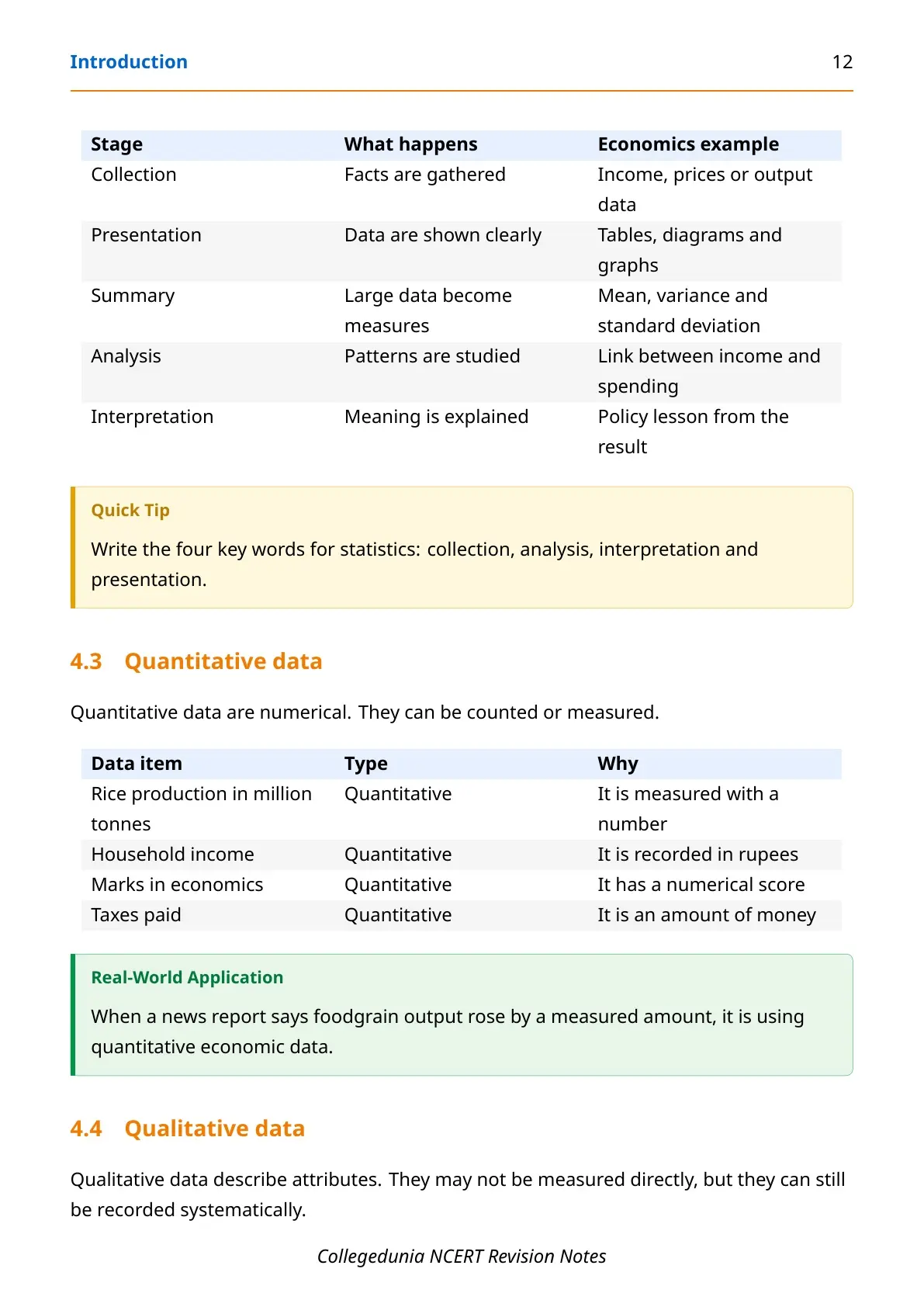
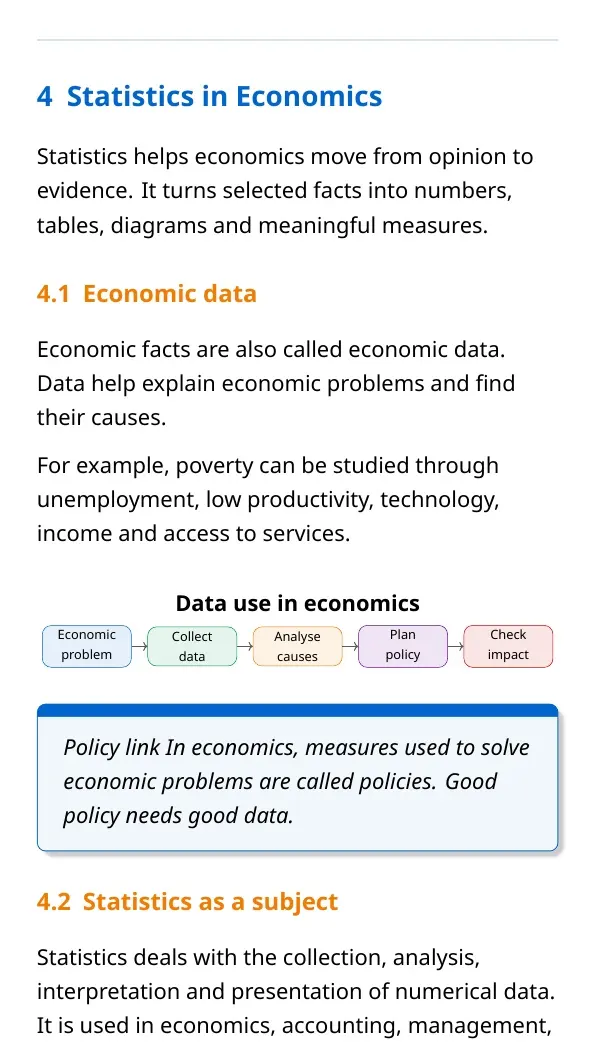
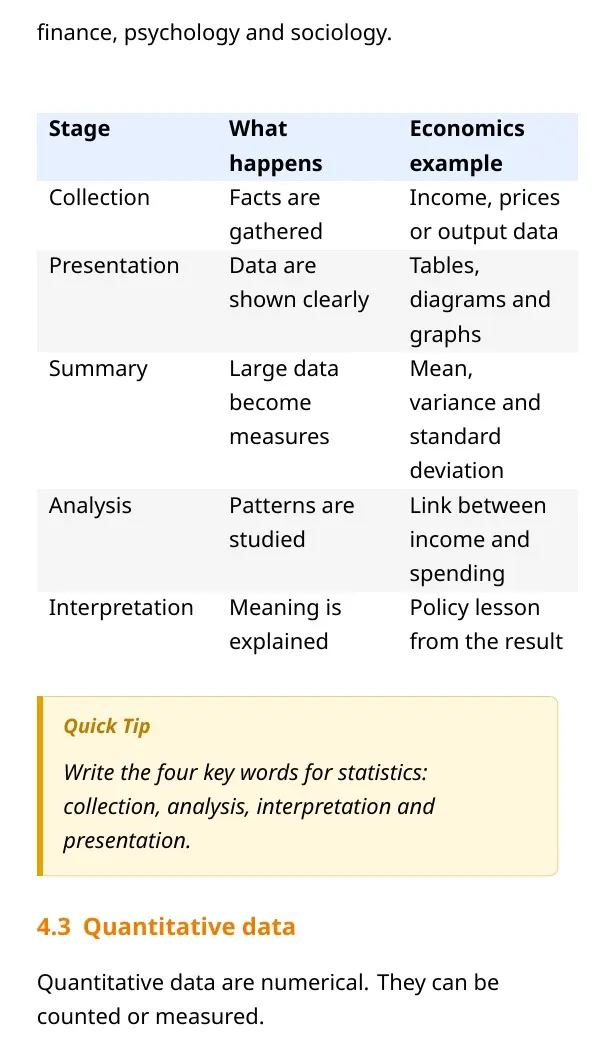
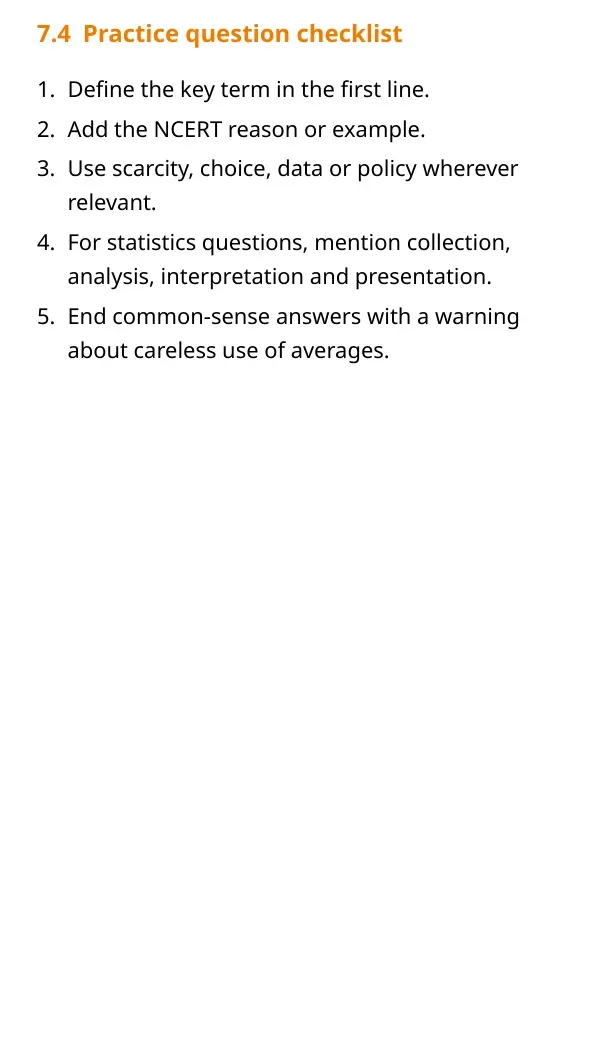
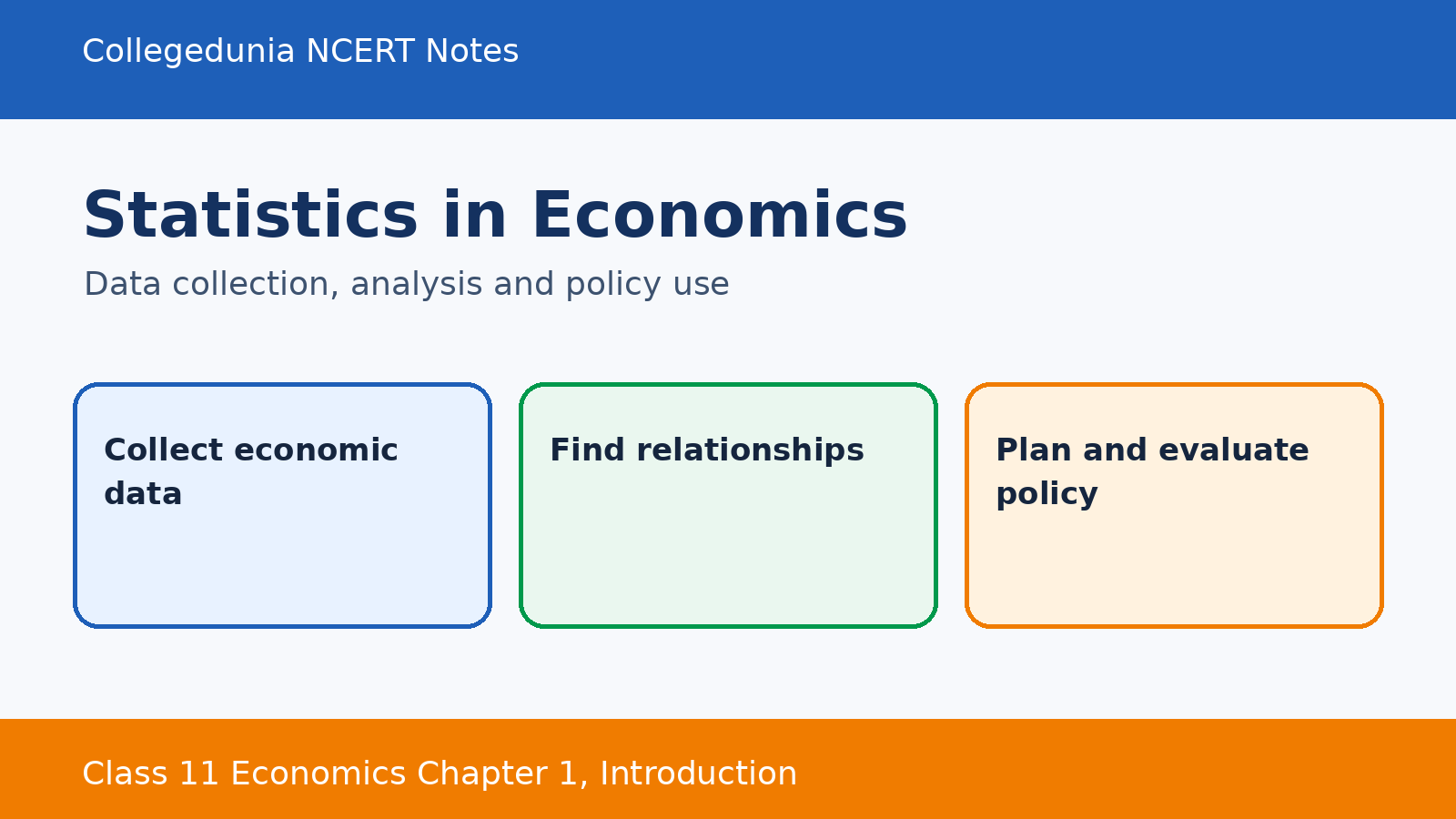
Statistics helps economics move from opinion to evidence. It deals with collection, analysis, interpretation and presentation of numerical data.
| Data type | What it records | Class 11 example |
|---|---|---|
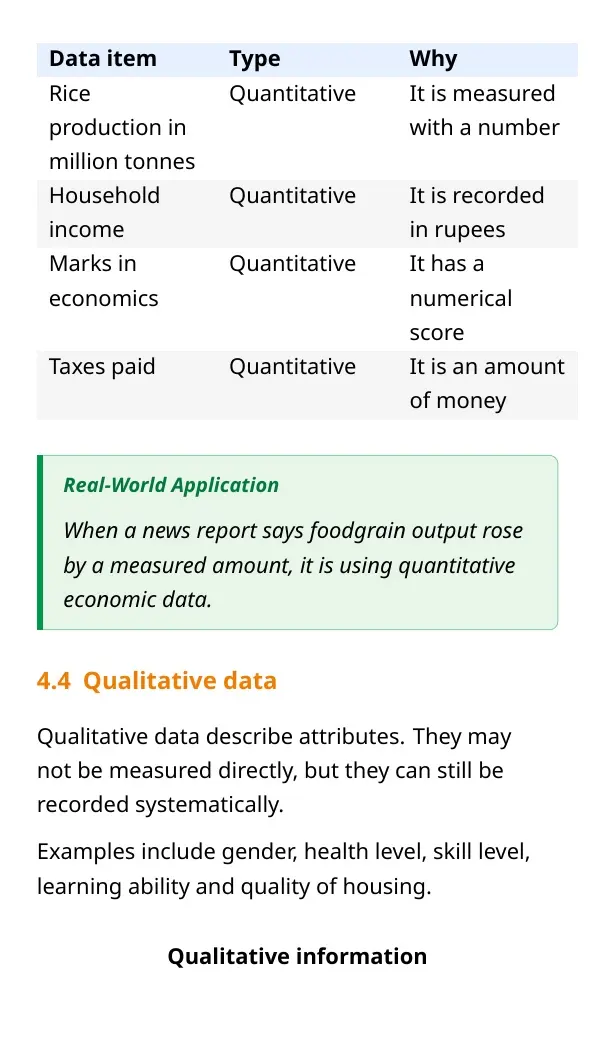
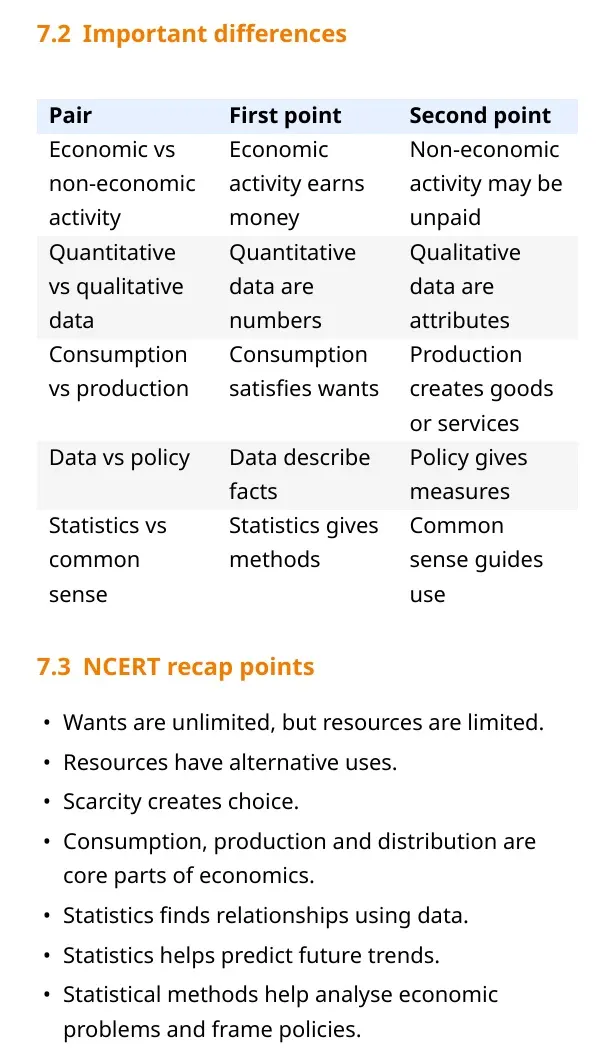
| Quantitative data | Numbers that can be counted or measured | Income, prices, marks, taxes, output |
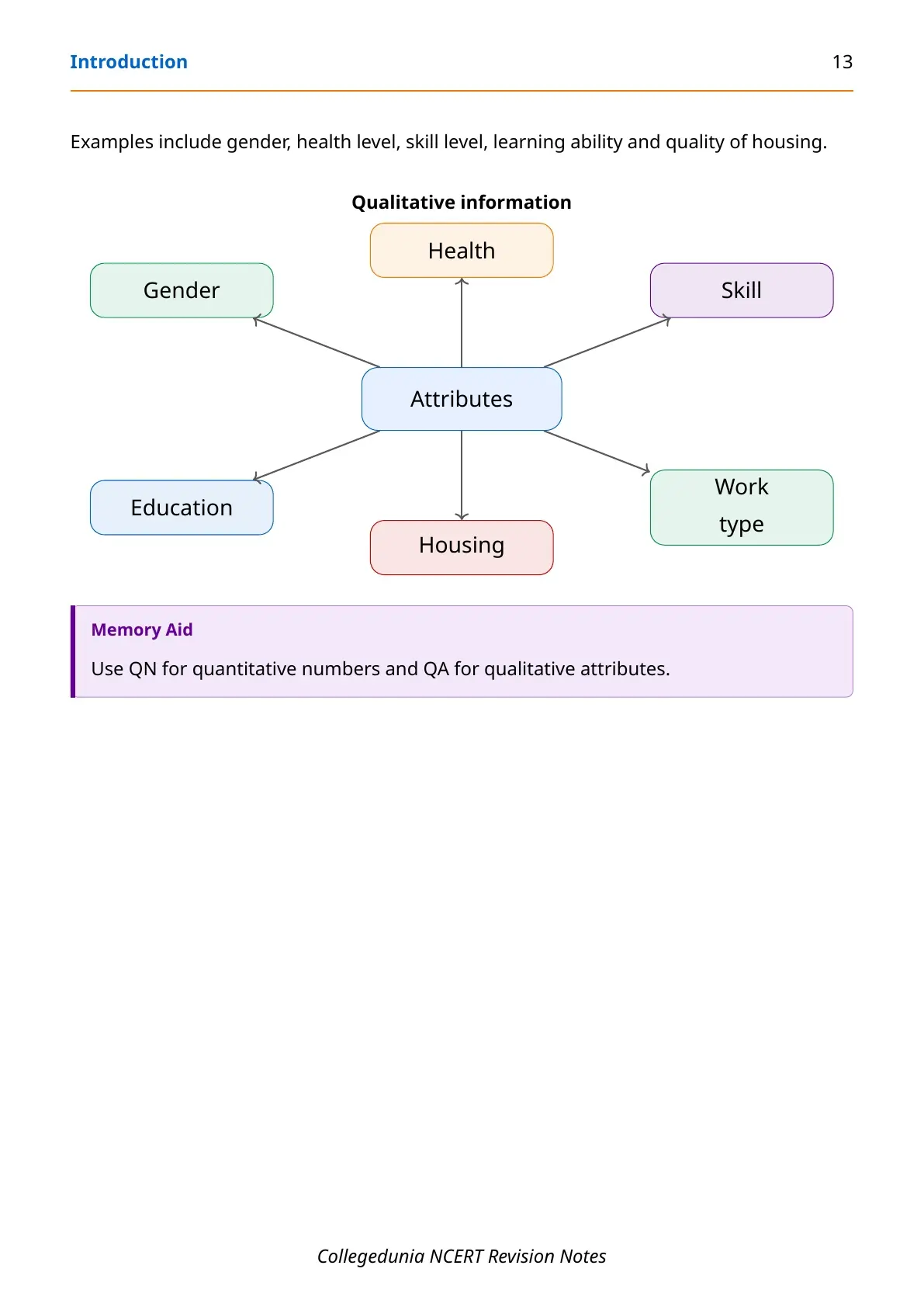
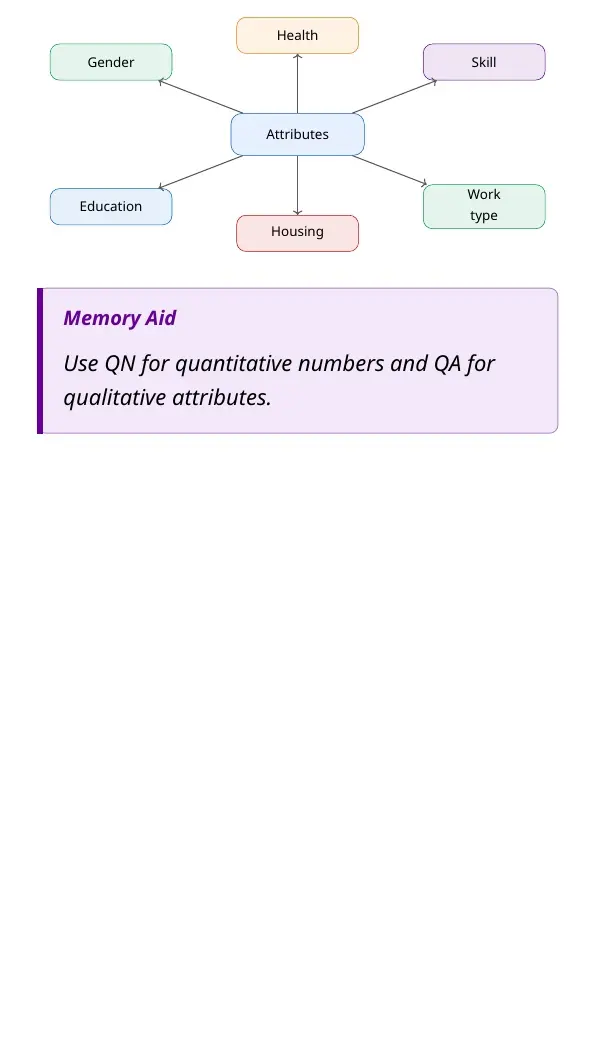
| Qualitative data | Attributes that describe people or groups | Gender, health level, skill level |
| Economic data | Facts about economic activities | Poverty, employment, production and spending data |
How Statistics Helps Economic Policy in Introduction Notes
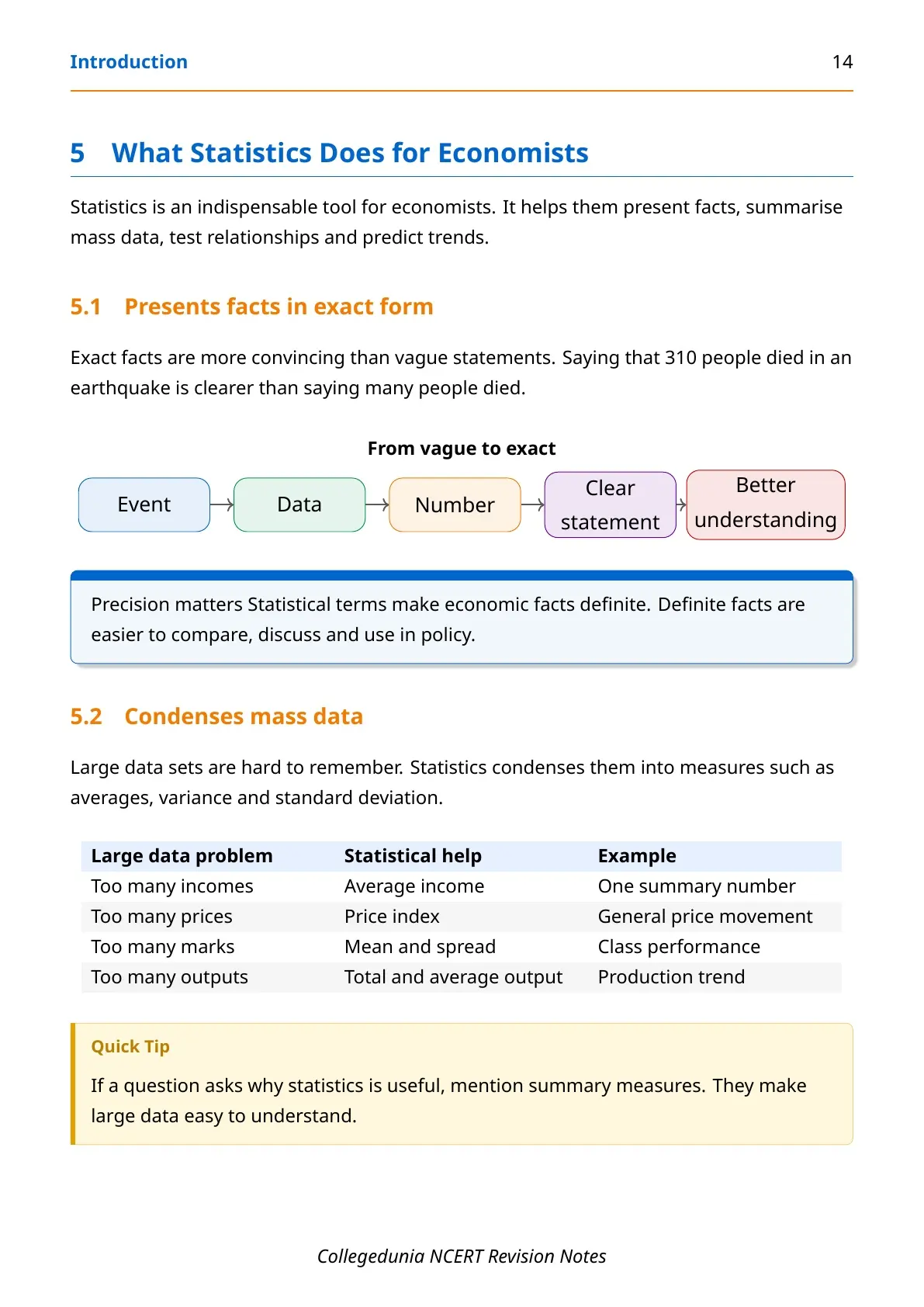
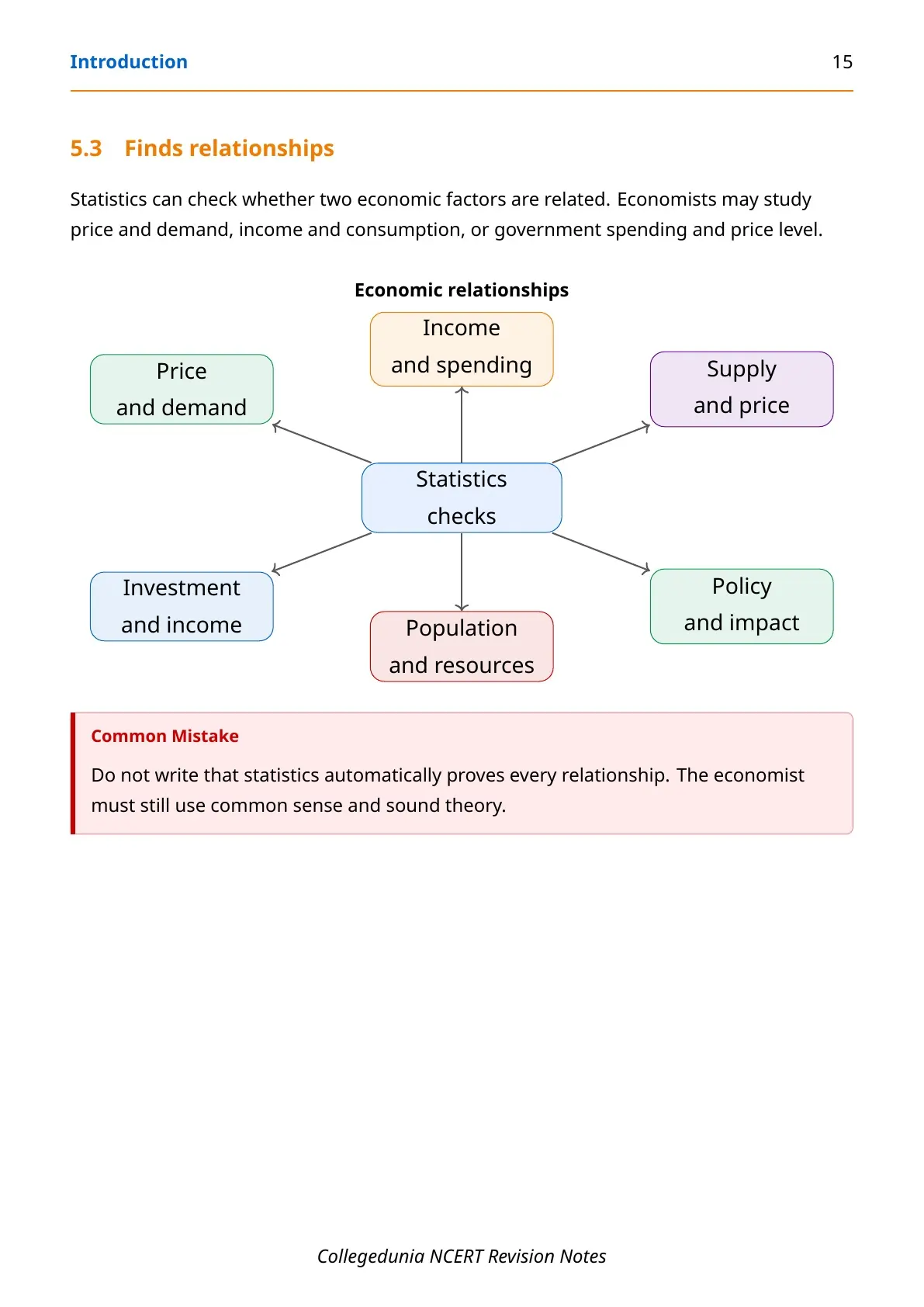
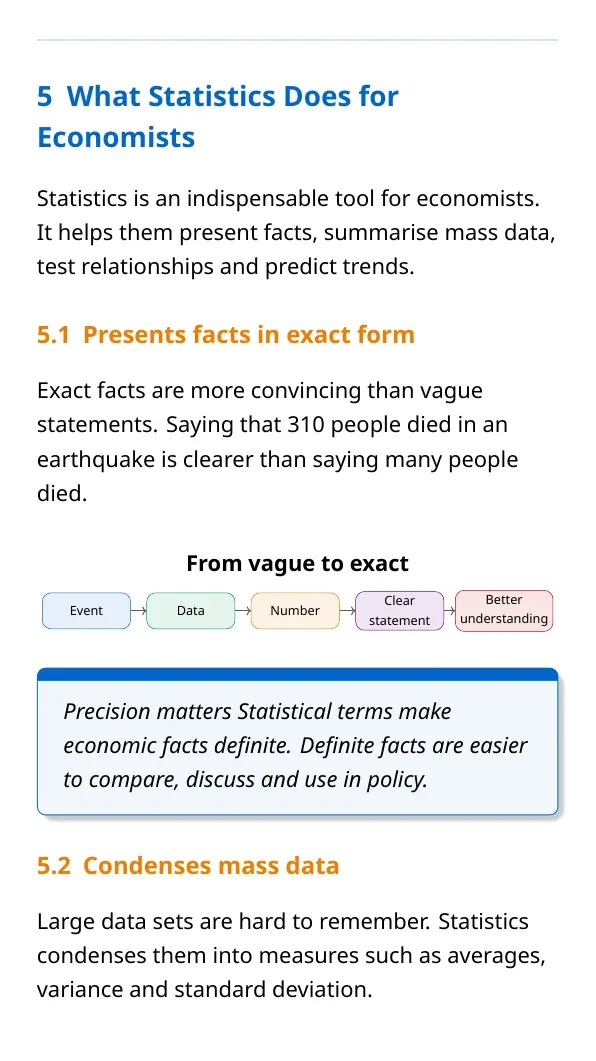
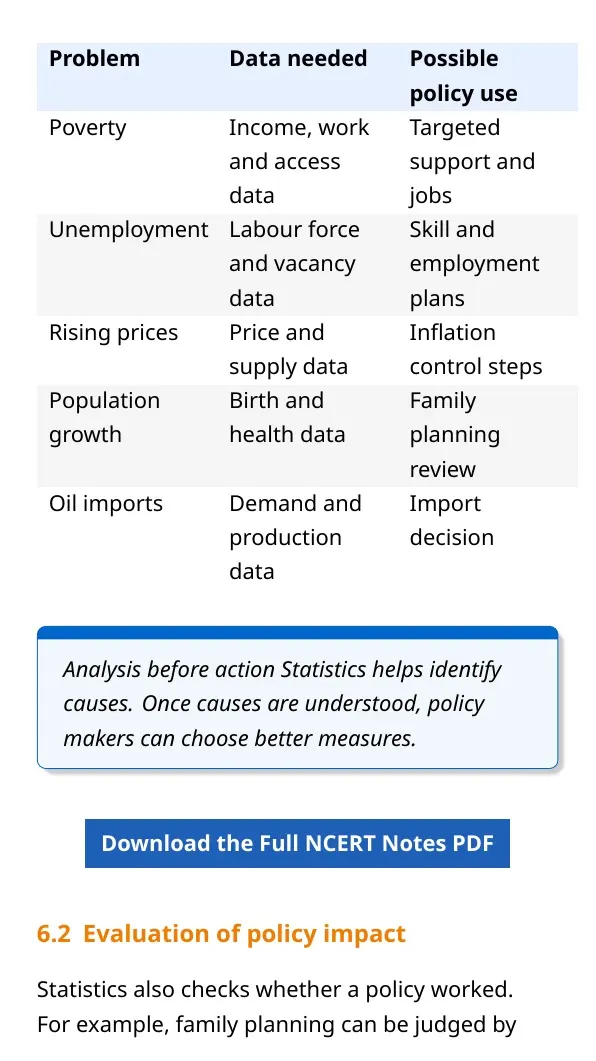
Statistics helps economists present exact facts, summarise mass data and find relationships. Exact facts are more convincing than vague statements, especially in policy decisions.
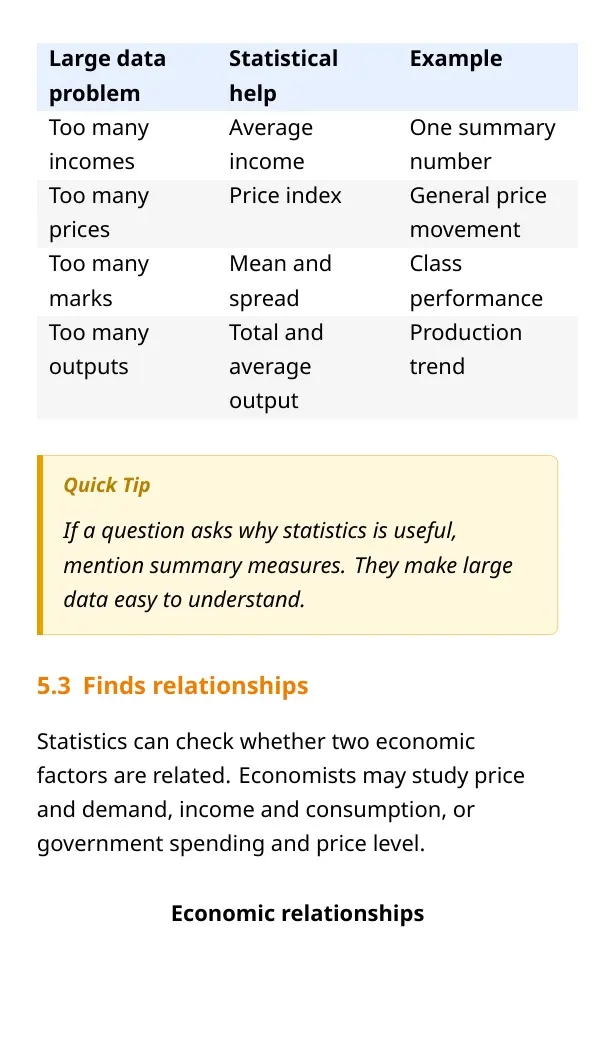
- It condenses large data into averages and other measures.
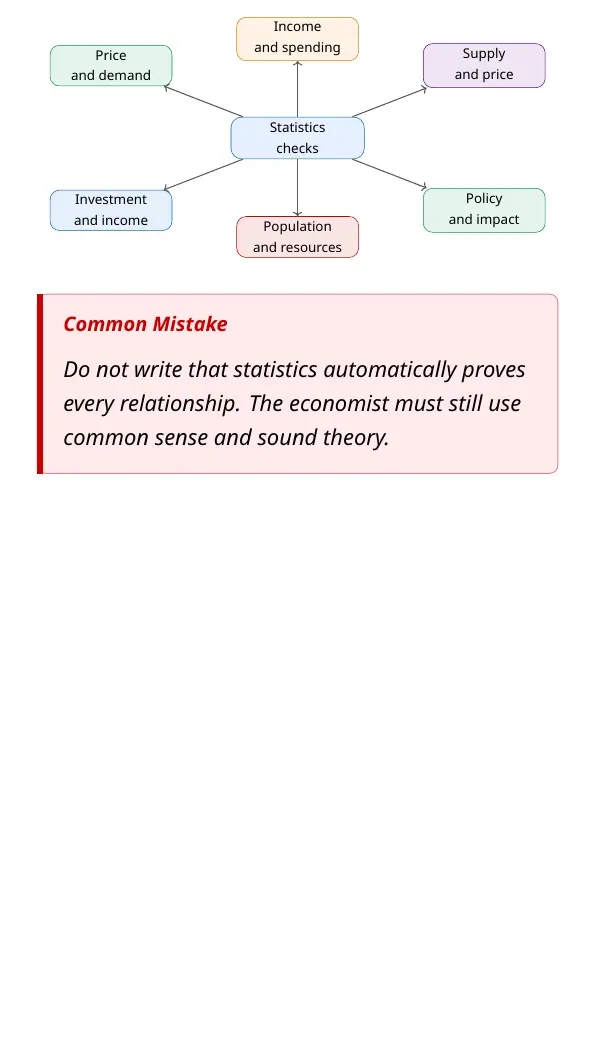
- It checks links such as price and demand or income and consumption.
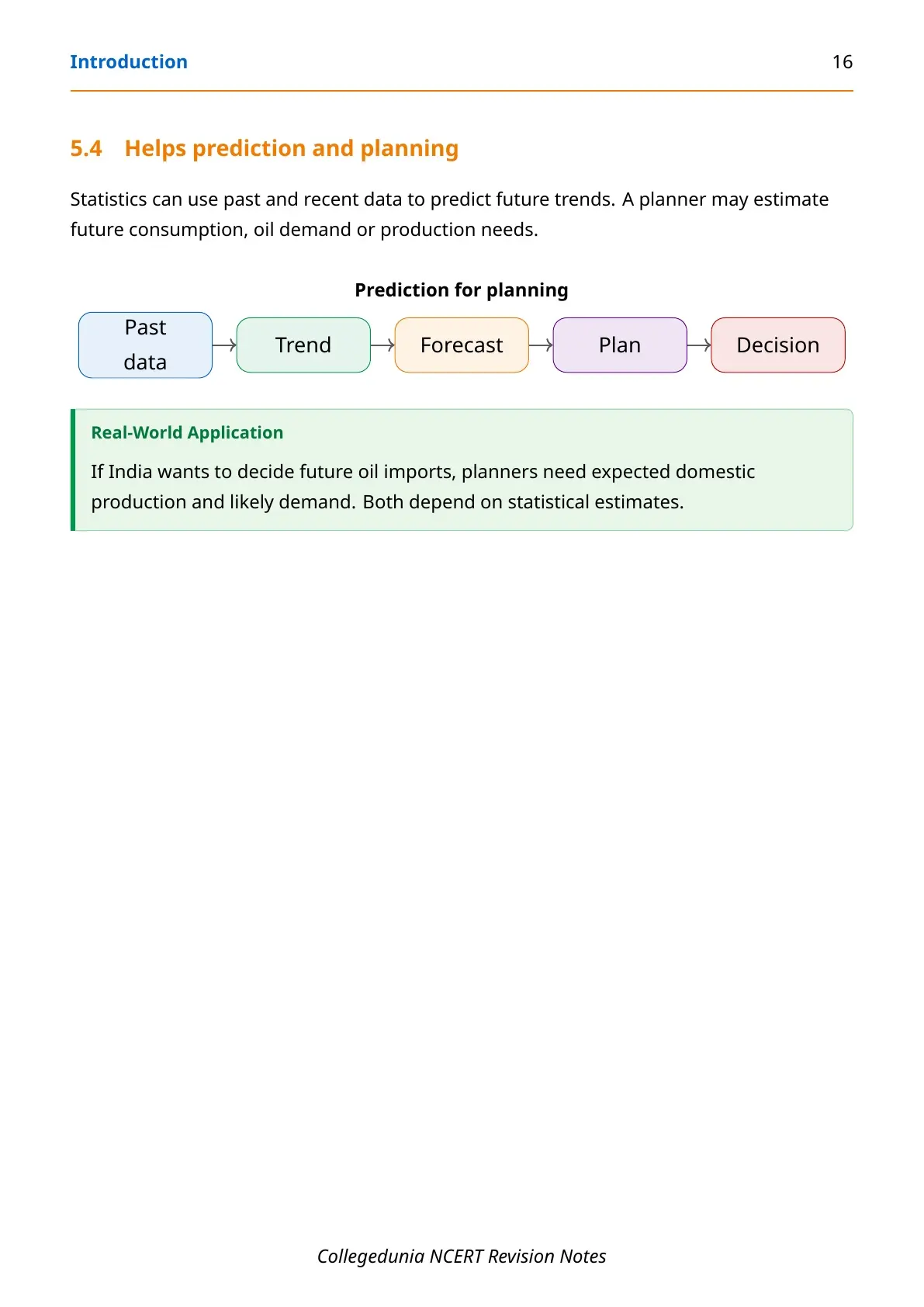
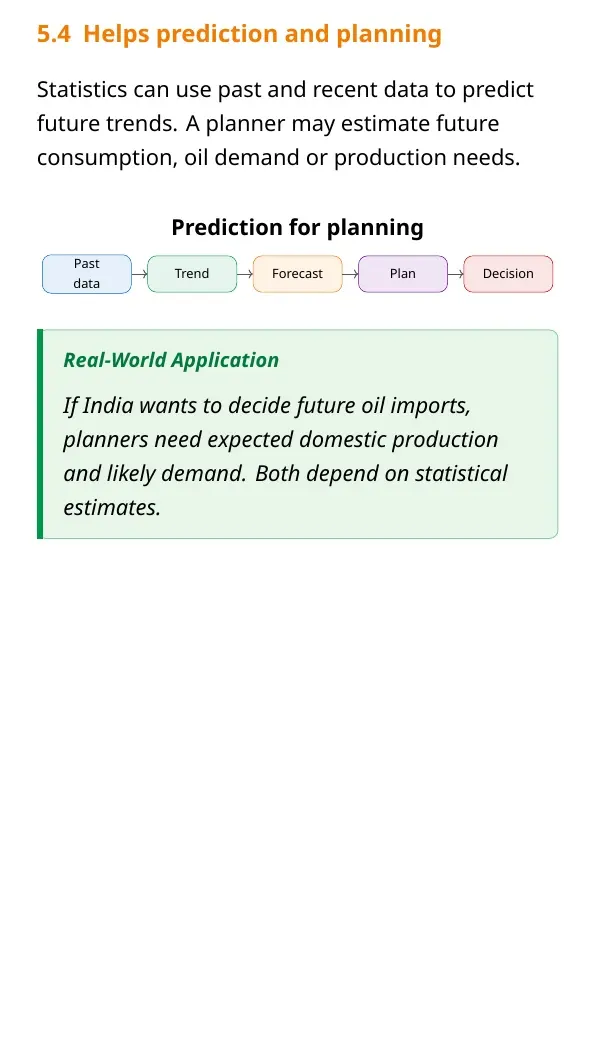
- It helps predict future trends for planning.
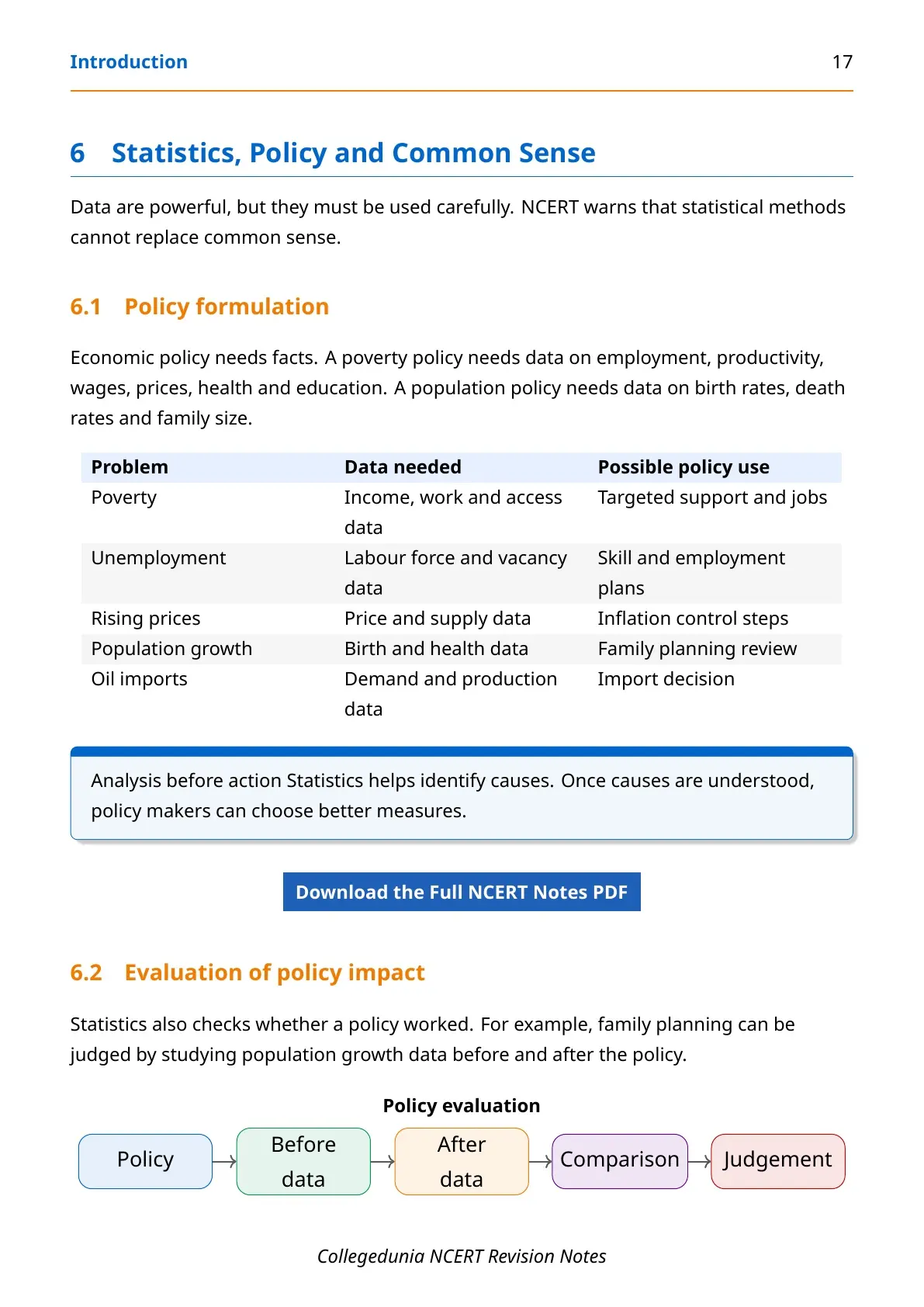
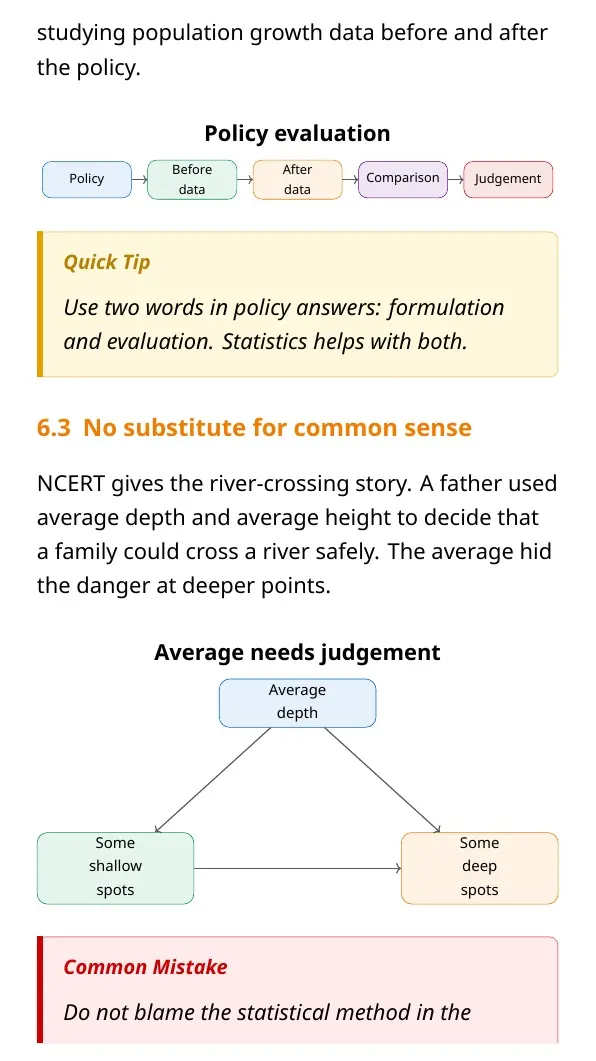
- It helps judge whether a policy worked.
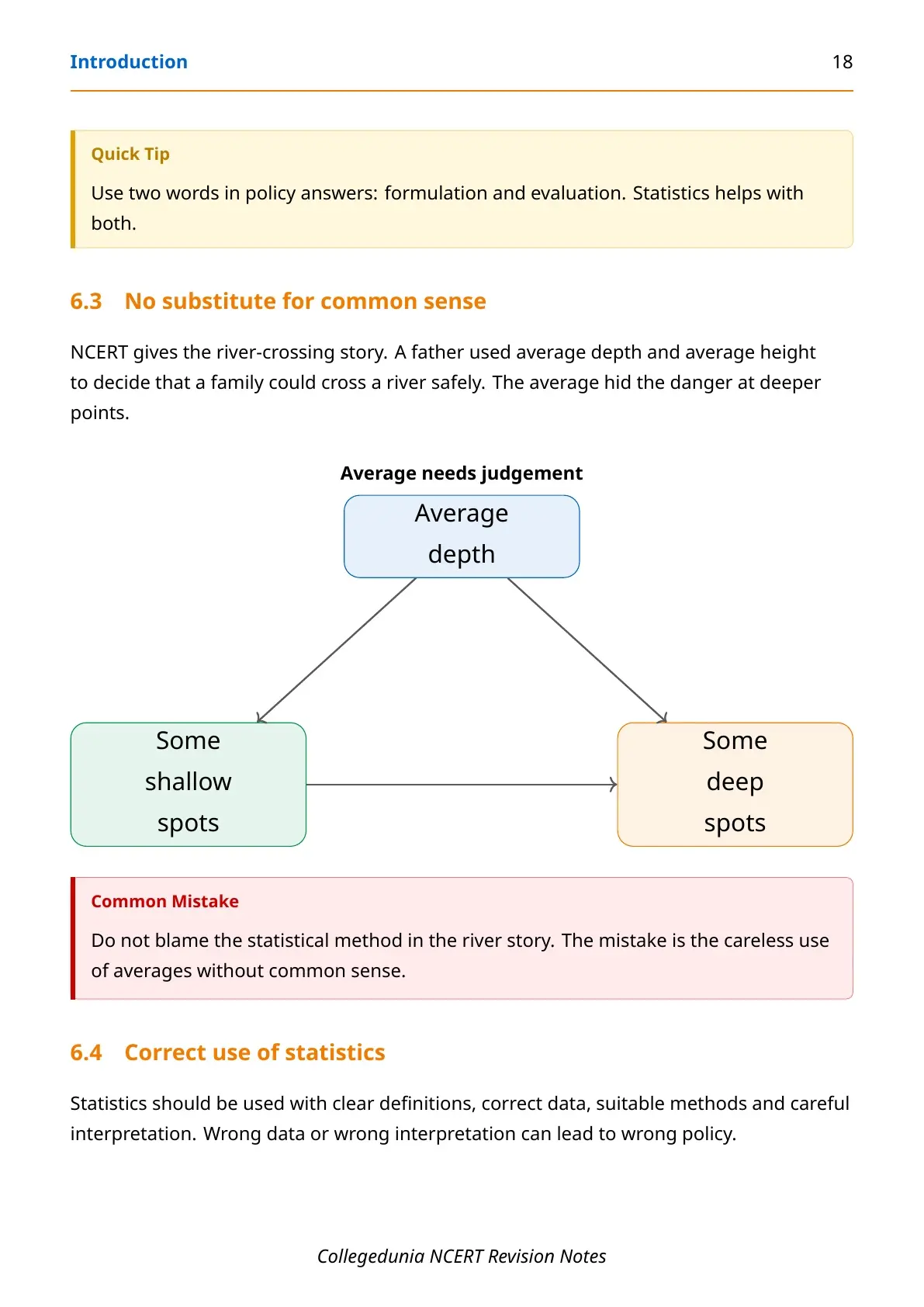
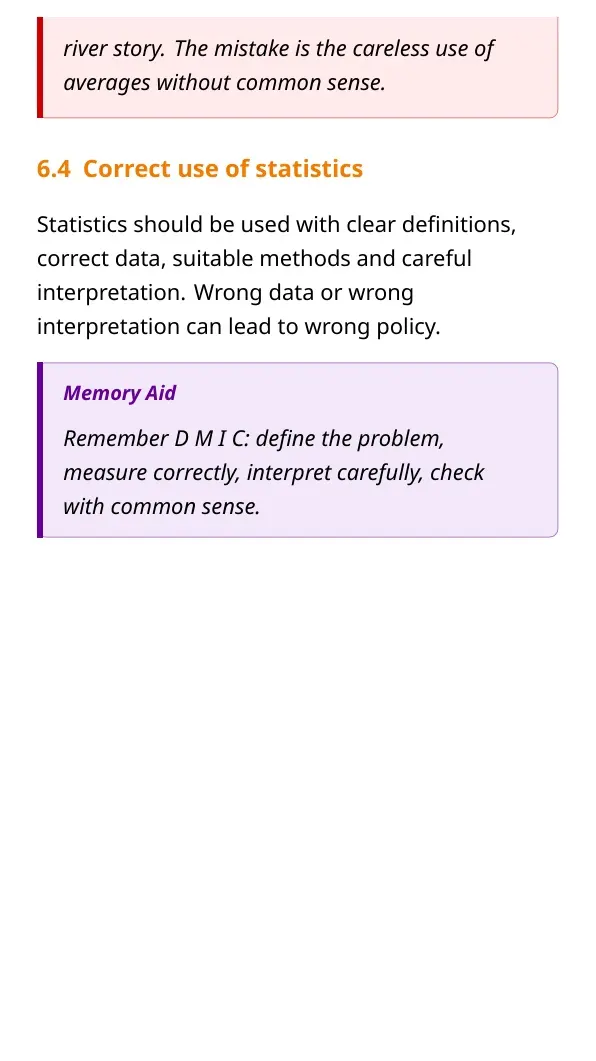
Statistical methods are no substitute for common sense. The river-crossing story in NCERT warns students not to misuse averages.
Download Introduction Class 11 Economics Notes PDF and Study Plan
The PDF above gives a 21-page revision set for Introduction. It covers scarcity, economic roles, consumption, production, distribution, data types, policy use and common-sense limits of statistics.
| Study pass | What to revise | Target |
|---|---|---|
| Pass 1 | Scarcity, alternative uses and choice | Basic definitions |
| Pass 2 | Consumption, production and distribution | Three-part answer structure |
| Pass 3 | Statistics, data and policy | Long-answer readiness |
Download the Introduction Notes PDF for Class 11 Economics
Use the PDF for scarcity, statistics, economic data and policy revision.
Download PDFRelated Class 11 Economics Resources for Introduction
Also Check: use these links with the notes PDF when you need the same chapter in another format.
| Resource | Best used for | Link |
|---|---|---|
| NCERT Book PDF | Official chapter wording and exercises | Introduction Class 11 NCERT Book PDF |
| NCERT Solutions | Answers to textbook questions | Introduction Class 11 NCERT Solutions |
| Handwritten Notes | Fast visual revision before tests | Introduction Class 11 Handwritten Notes |
Class 11 Economics Notes for All Chapters
| Chapter | Notes Link |
|---|---|
| Chapter 1 | You are here |
| Chapter 2 | Collection of Data Notes |
| Chapter 3 | Organisation of Data Notes |
| Chapter 4 | Presentation of Data Notes |
| Chapter 5 | Measures of Central Tendency Notes |
| Chapter 6 | Correlation Notes |
Introduction Class 11 Economics Notes FAQs
Ques. What is covered in Class 11 Economics Chapter 1 Introduction notes?
Ans. The notes cover scarcity, choice, economic activities, consumption, production, distribution, statistics, economic data and policy use.
Ques. Why is scarcity called the root of economic problems?
Ans. Scarcity exists because wants are unlimited but resources are limited. This forces people and society to choose between alternatives.
Ques. What are the main parts of economics in Chapter 1?
Ans. The main parts are consumption, production and distribution. NCERT uses these parts to explain economic activities.
Ques. How does statistics help economics?
Ans. Statistics helps collect, present, analyse and interpret economic data. It supports policy planning and checks relationships between factors.



Comments