




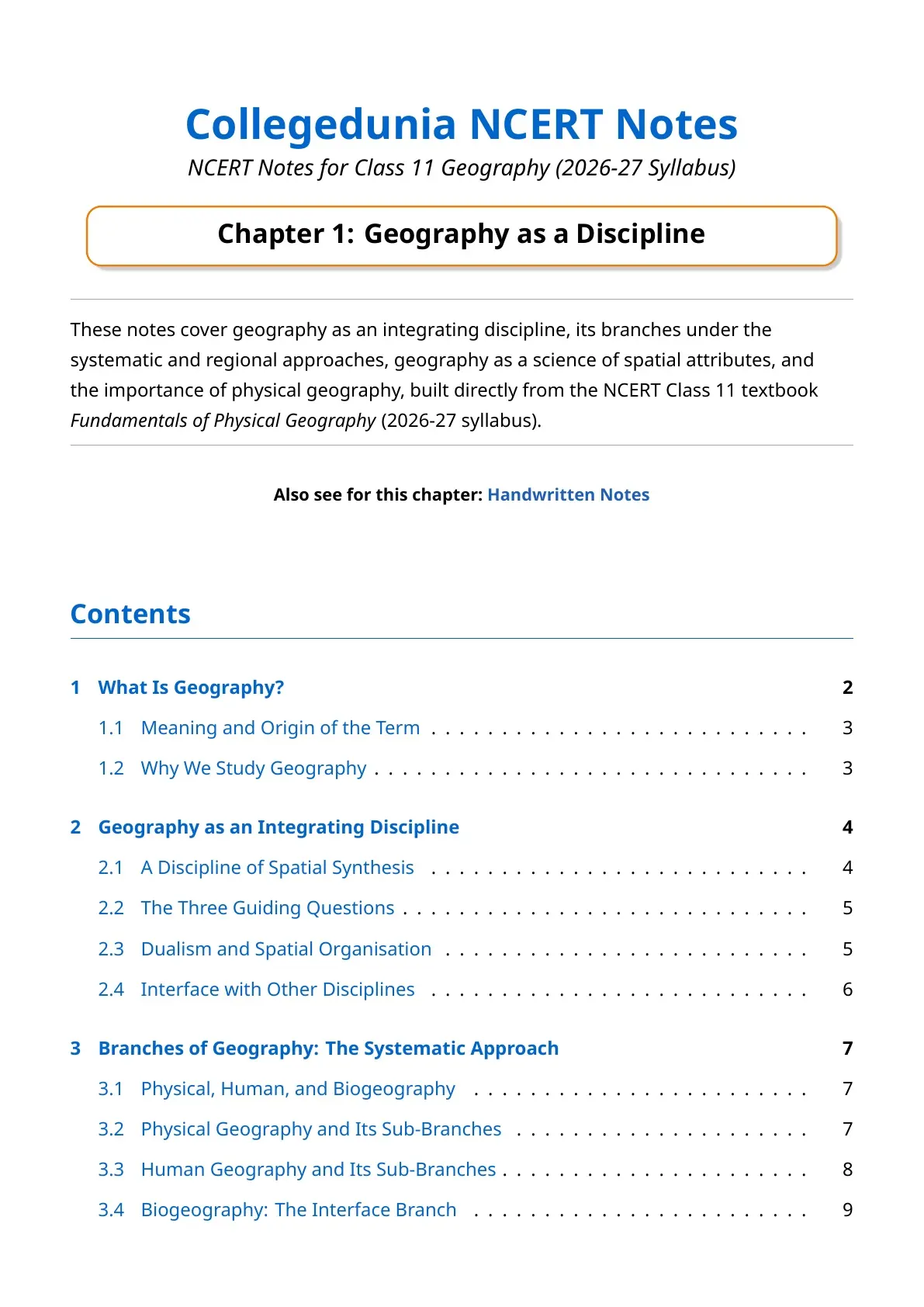
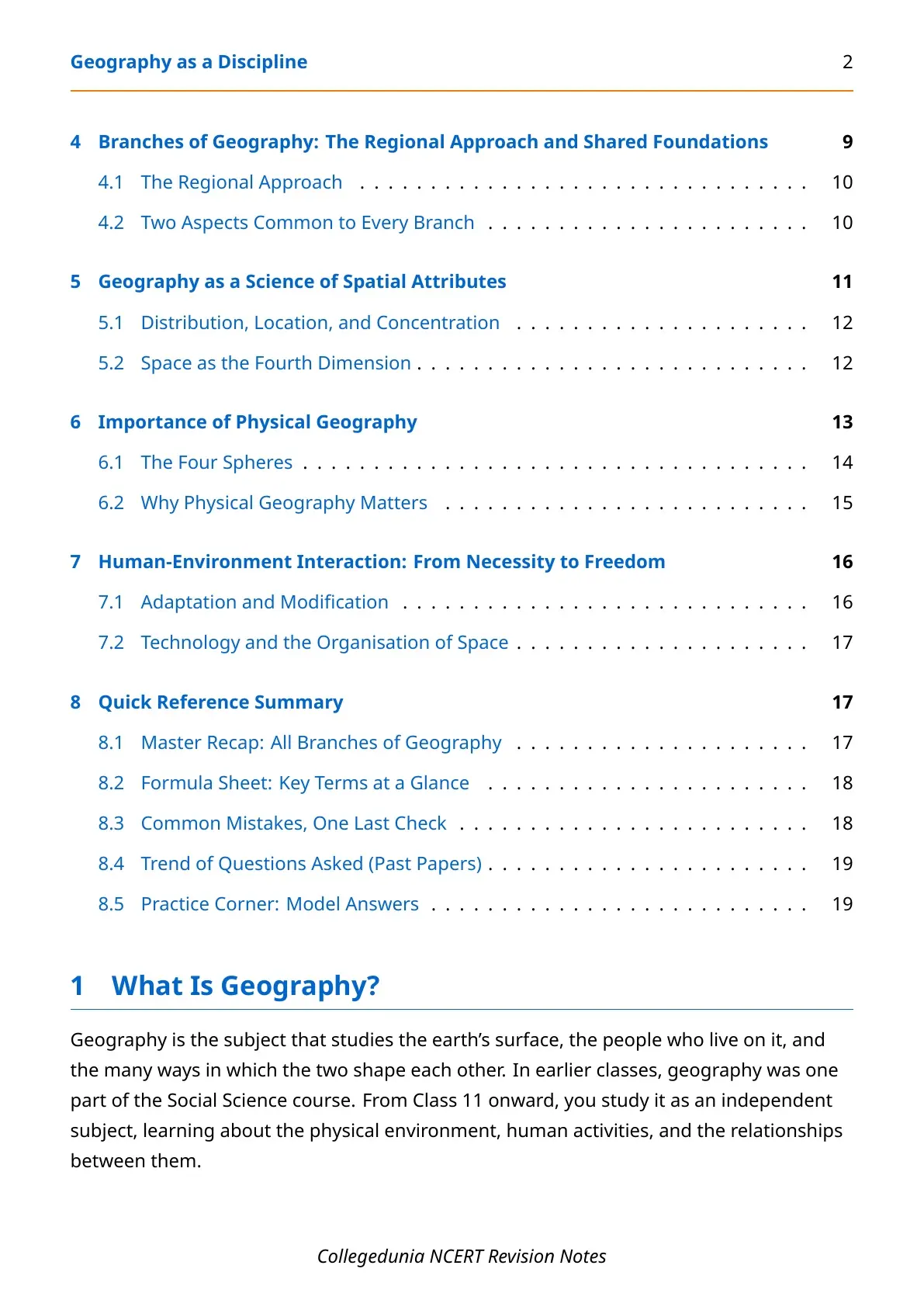
These NCERT Notes Class 11 Geography Chapter 1 Geography as a Discipline cover the meaning of geography, its branches, and why physical geography matters, according to the latest 2026-27 CBSE syllabus. The notes are built from the NCERT textbook Fundamentals of Physical Geography and explain every idea in plain language with diagrams.
- Board Weightage: forms the base for 1 to 2 short-answer or MCQ questions almost every year.
- Pages: a 20-plus page PDF with diagrams for every branch of geography.
- Also Useful For: UPSC, state PCS, and other exams that test geography basics.
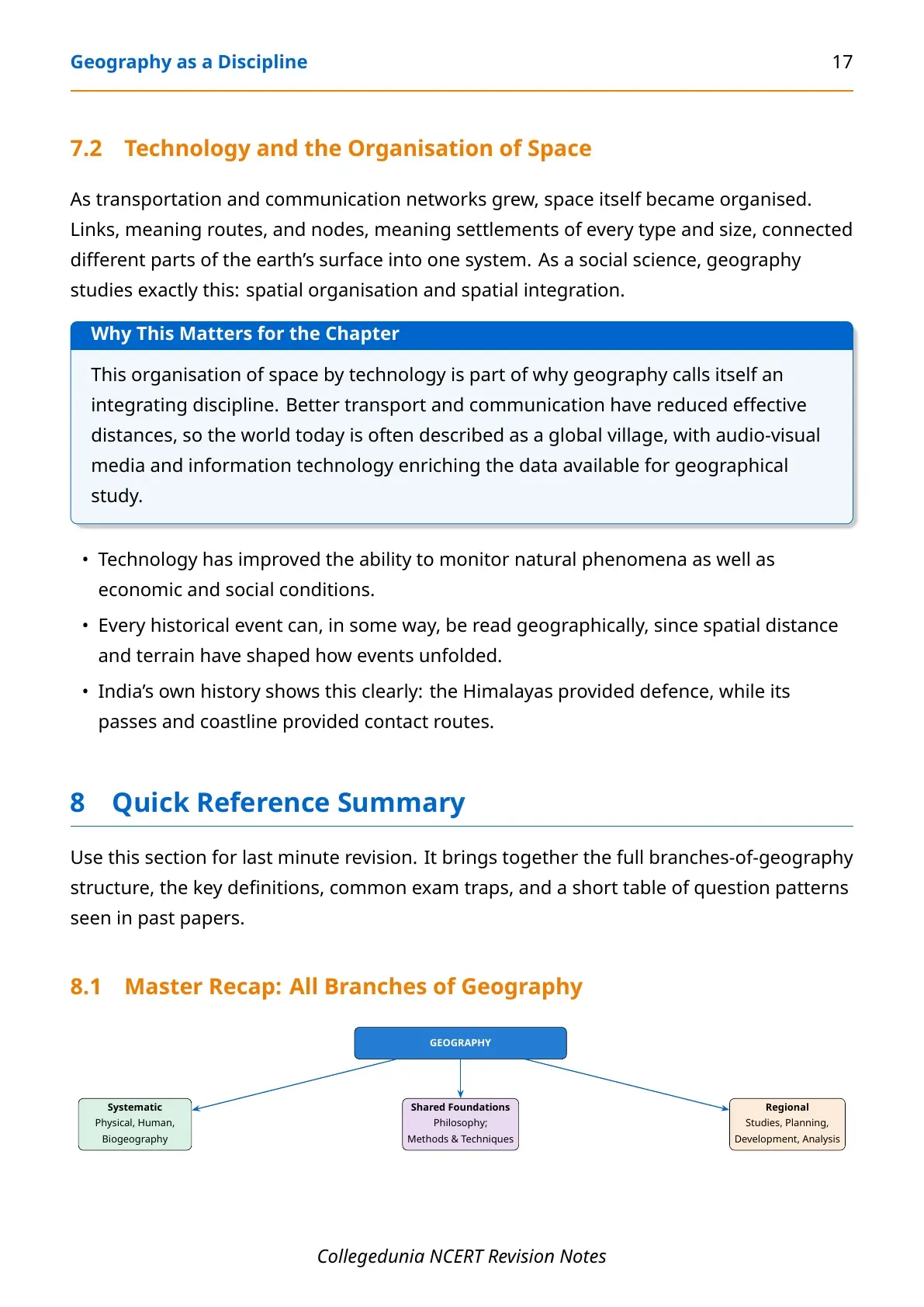
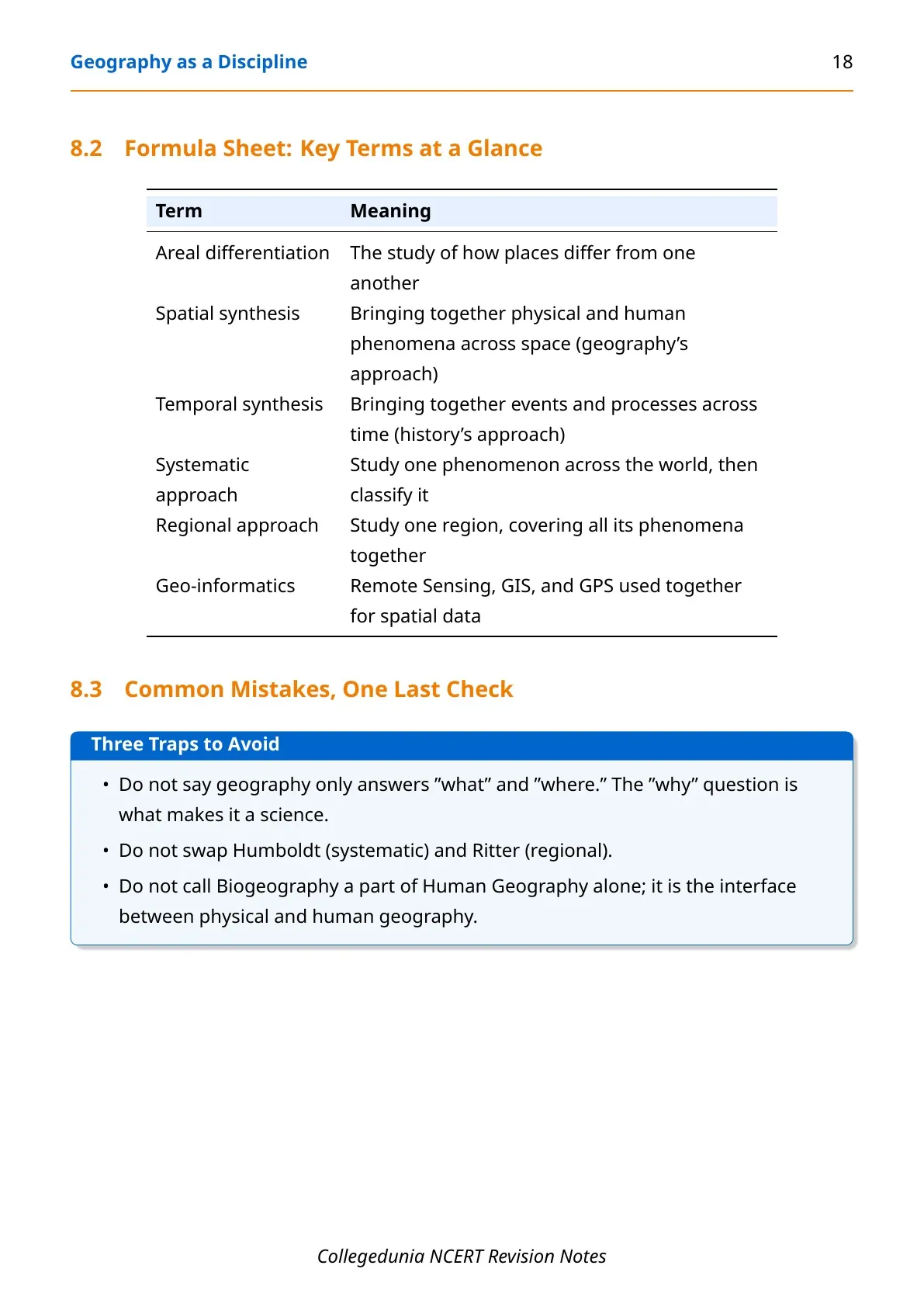
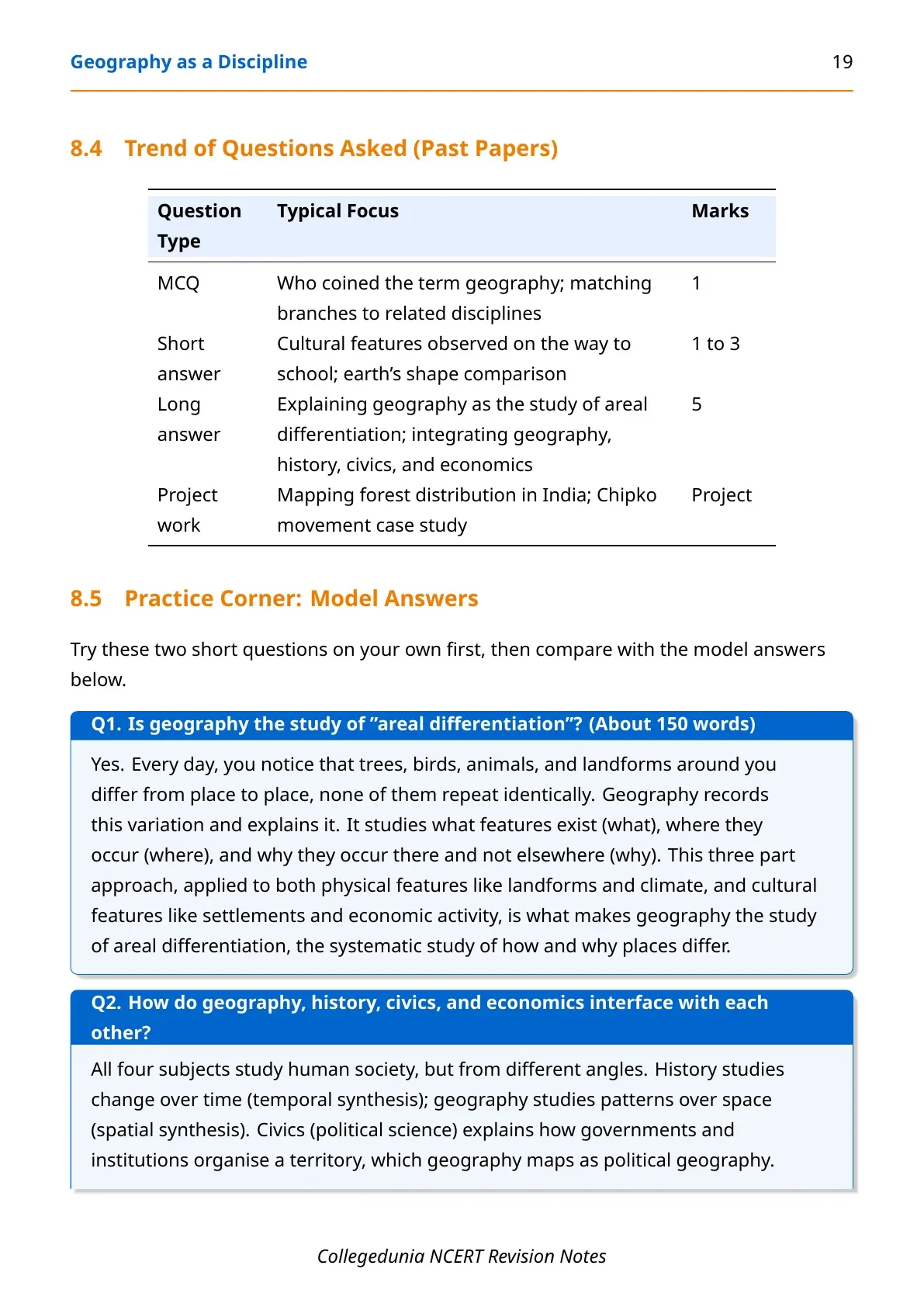
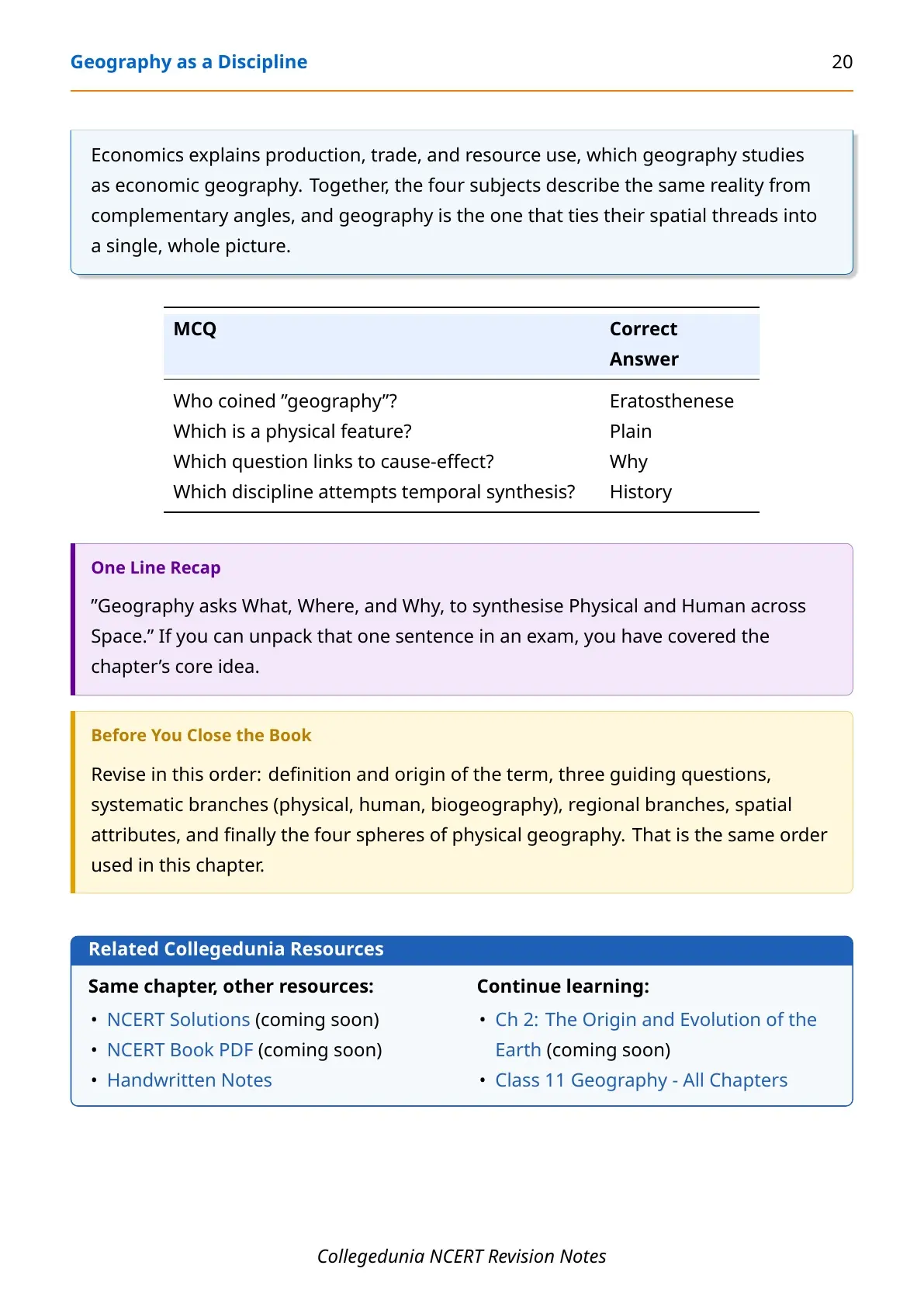
This NCERT Notes Class 11 Geography Chapter 1 Geography as a Discipline page is curated by subject experts, mapped to the 2026-27 NCERT textbook Fundamentals of Physical Geography, and checked against past CBSE Class 11 question papers.
Student Feedback
In a Collegedunia survey of 12,480 Class 11 students conducted before the 2026 boards, 68% said the hardest part of this chapter was telling apart the systematic and regional approaches. Students who used a branches-of-geography diagram while revising scored better on the match-the-column questions.
What Is Geography? Meaning, Origin, and Why We Study It
Every student working through this NCERT Notes Class 11 Geography Chapter 1 Geography as a Discipline page starts with a simple question: what does geography actually study? The chapter answers this before moving to branches or approaches, so it is worth getting this part exactly right.
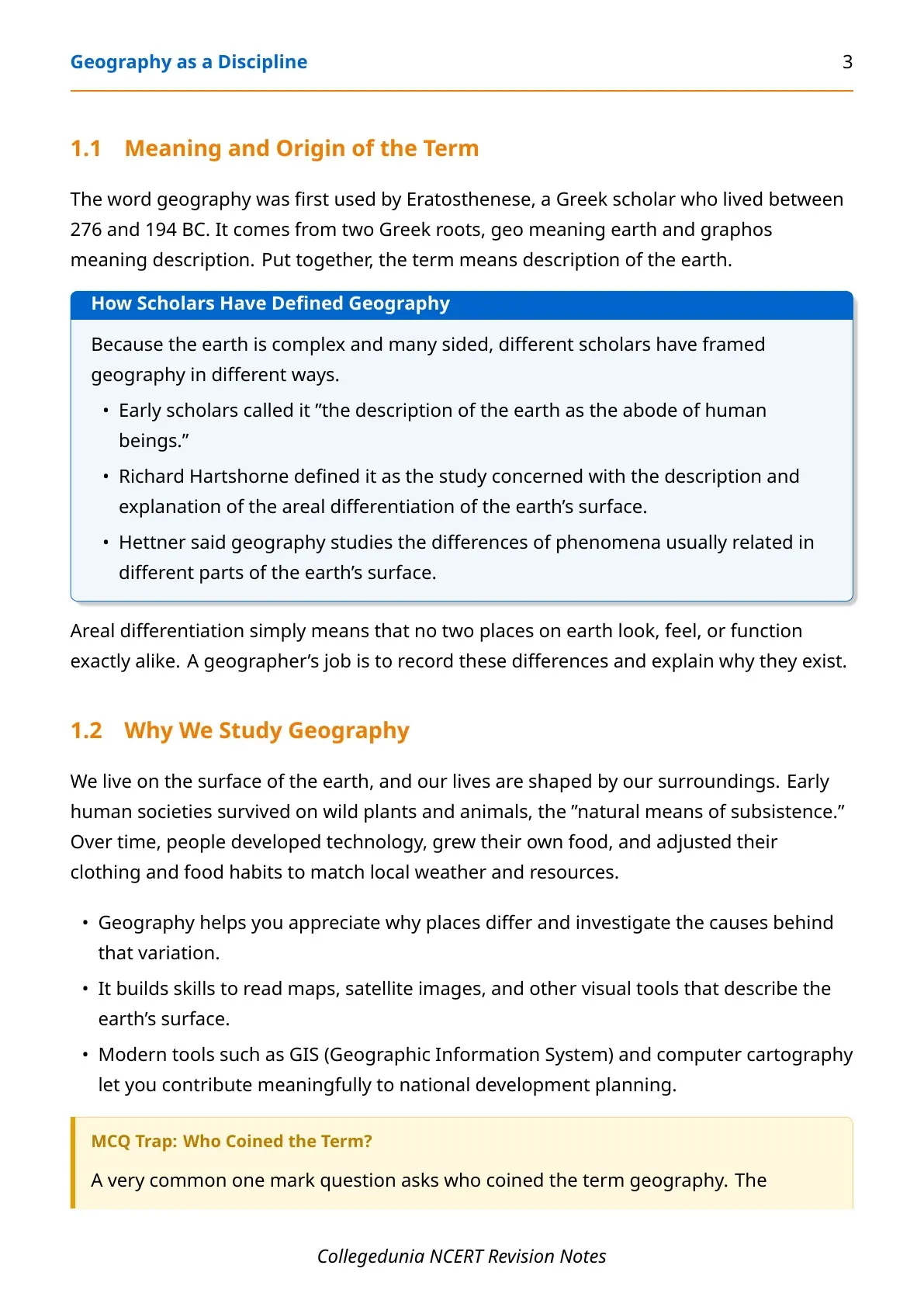
The word geography comes from two Greek words, geo (earth) and graphos (description). It was first used by Eratosthenese, a Greek scholar who lived between 276 and 194 BC. Put together, the word means "description of the earth". Later scholars refined this idea further.
- Richard Hartshorne called it the study of the areal differentiation of the earth's surface, meaning how places differ from each other.
- Hettner described it as the study of differences in phenomena across different parts of the earth.
- Early scholars simply called it "the description of the earth as the abode of human beings".
We study geography because our lives are shaped by our surroundings. Early societies survived on wild plants and animals. Over time, people built technology, grew crops, and adjusted their food and clothing to local weather. Geography today also teaches modern skills such as GIS (Geographic Information System) and computer cartography, both useful for national planning.
Geography as a Discipline Explained for Class 11
Source: Magnet Brains on YouTube
Geography as an Integrating Discipline: Spatial Synthesis and the Three Questions
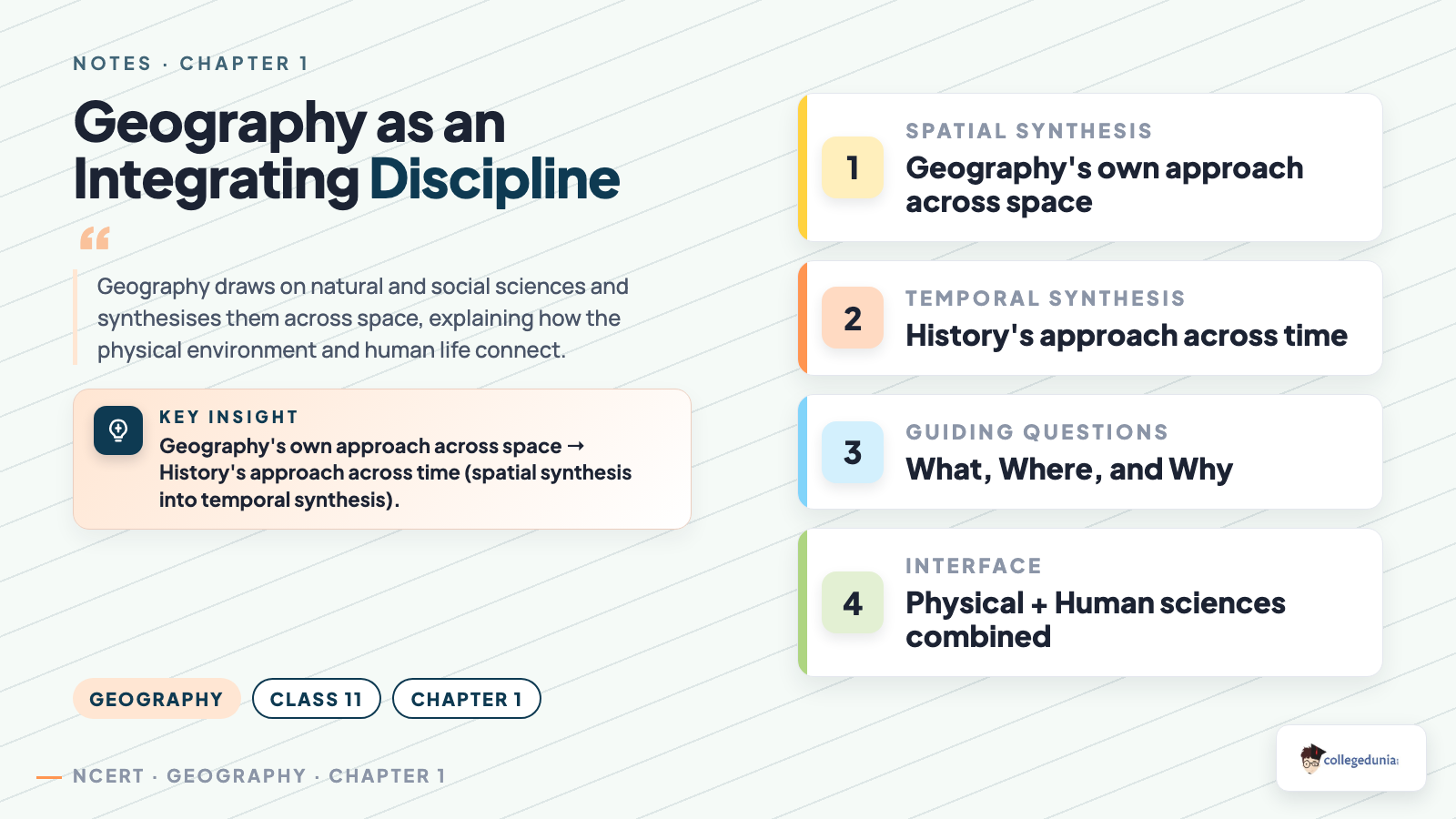
Geography is called a discipline of synthesis because it brings together knowledge from many sciences to explain how the physical environment and human life connect. This section is one of the most frequently tested parts of the chapter.
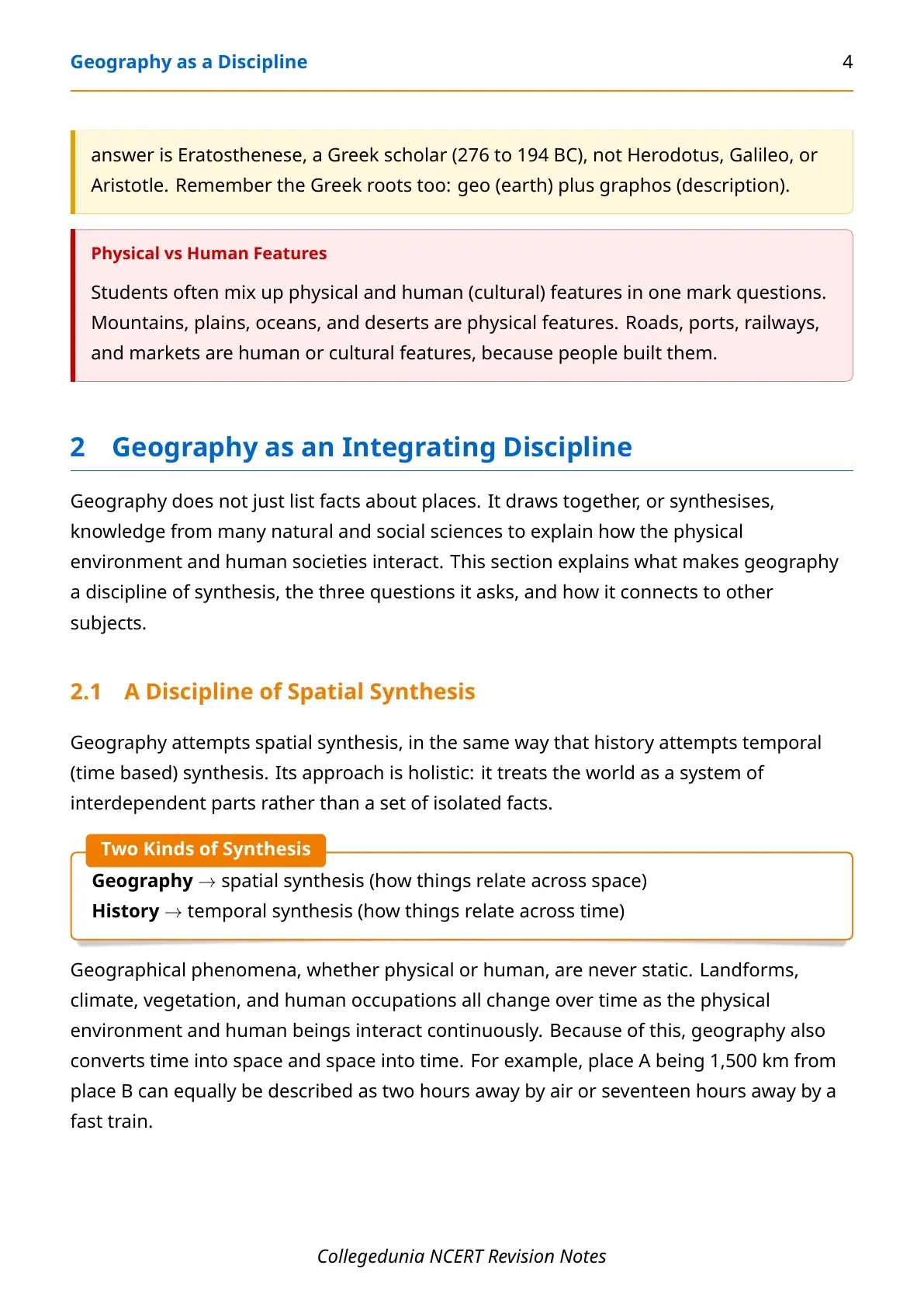
Geography attempts spatial synthesis (across space), the same way history attempts temporal synthesis (across time). Its approach is holistic: it treats the world as a system of connected parts, not a set of separate facts. Every geographical phenomenon, physical or human, keeps changing because human beings and the environment interact constantly.
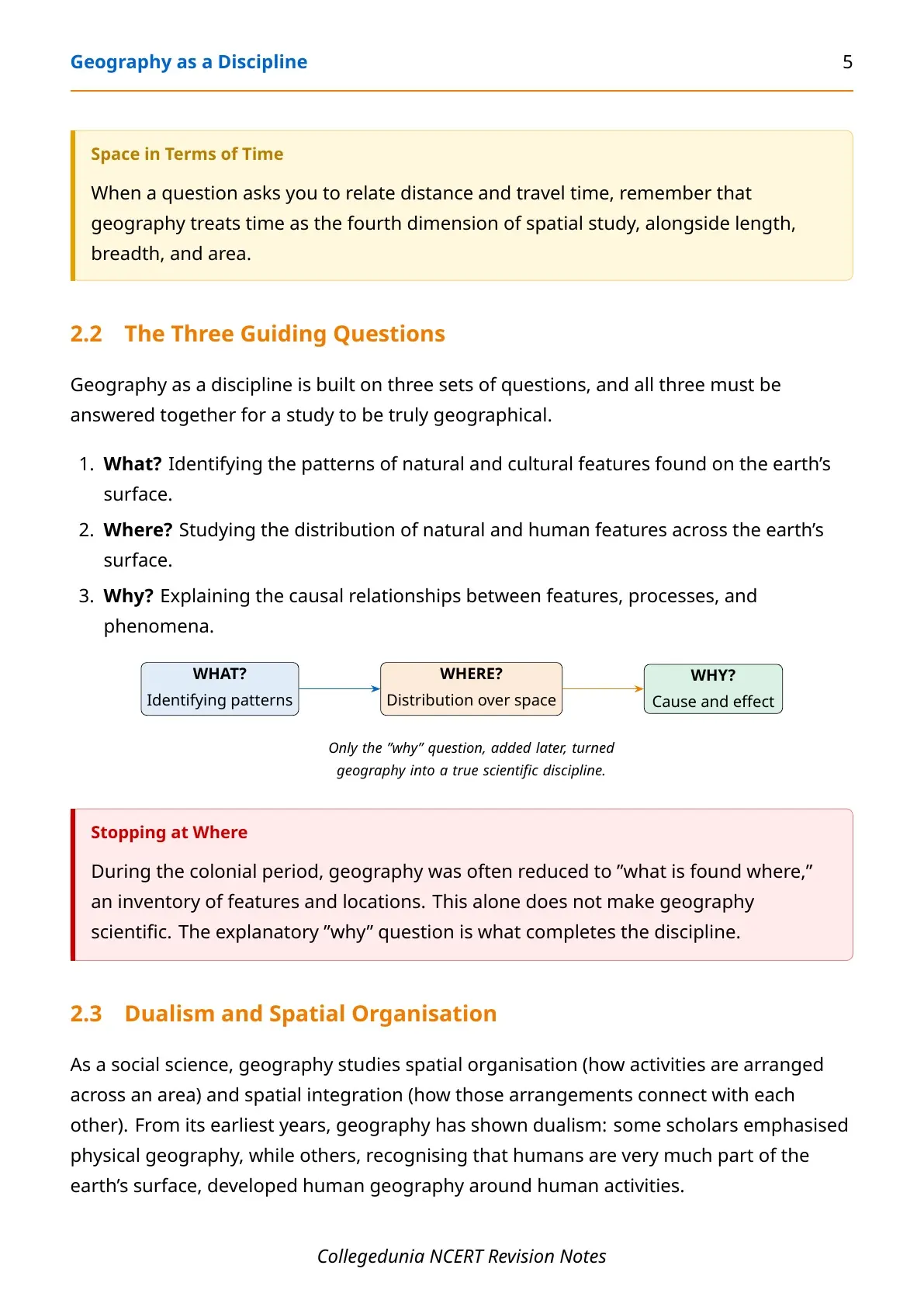
| Question | What It Identifies |
|---|---|
| What? | Patterns of natural and cultural features on the earth's surface |
| Where? | Distribution of natural and human features across space |
| Why? | The cause-and-effect relationship between features and processes |
During the colonial period, geography often stopped at "what is found where," a simple inventory. It was the "why" question that turned geography into a real scientific discipline, since it forces a geographer to explain, not just list, what is observed.
Geography also studies spatial organisation (how activities are arranged across an area) and spatial integration (how those arrangements connect). This dualism, physical geography on one side and human geography on the other, has existed since the subject's earliest years.
Branches of Geography Under the Systematic Approach
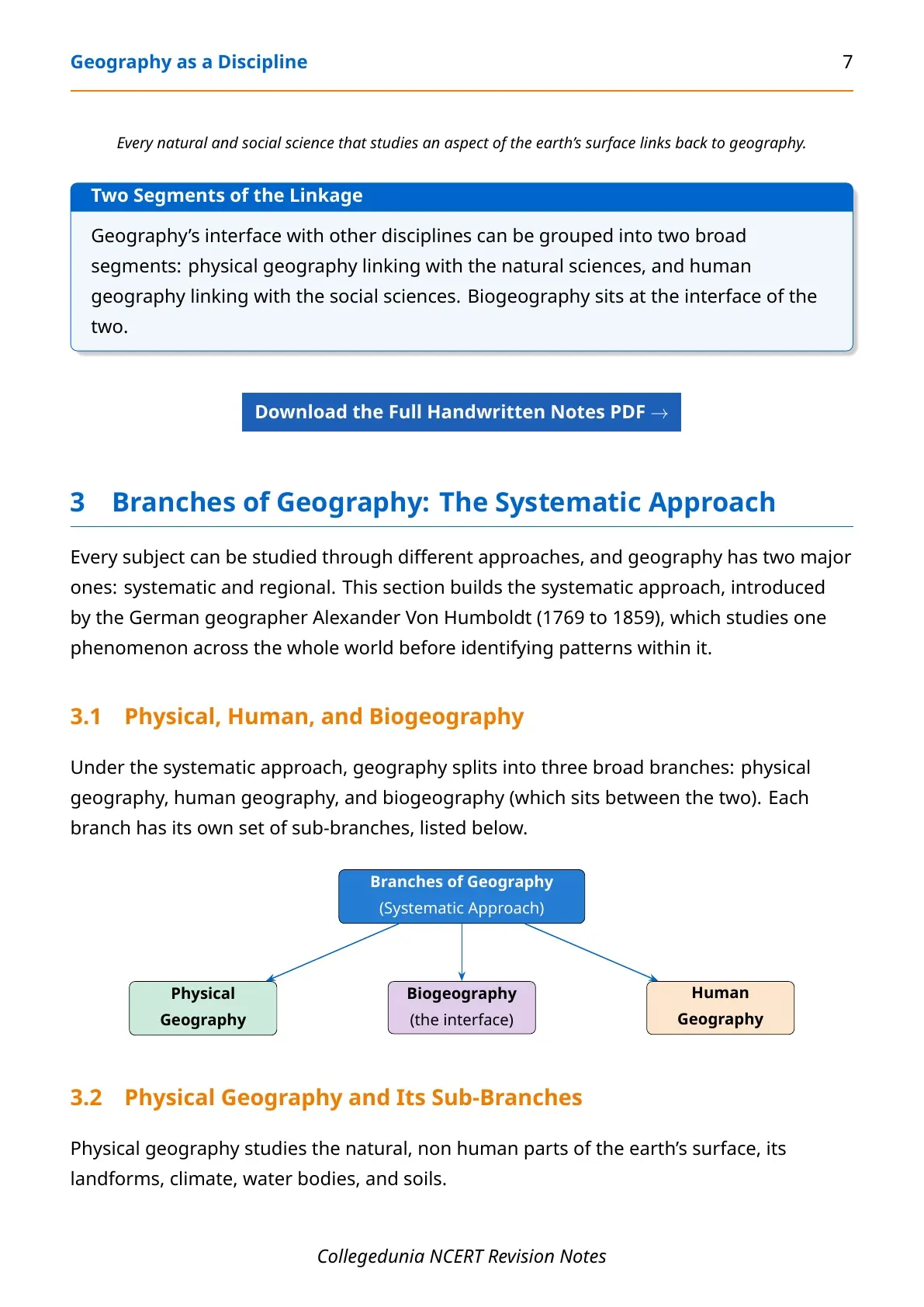
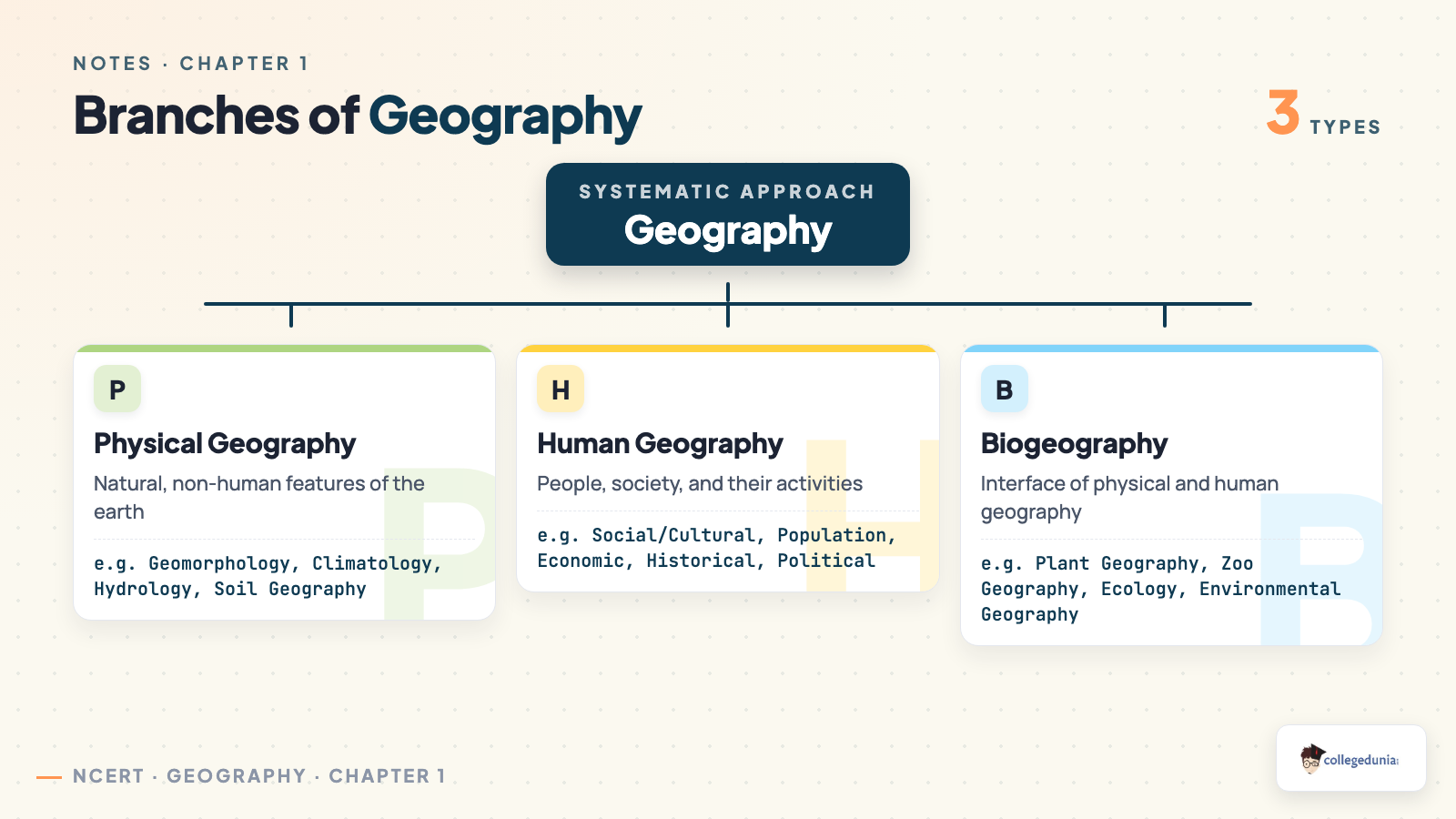
The systematic approach, introduced by German geographer Alexander Von Humboldt (1769-1859), studies one phenomenon across the whole world first, then classifies it into types. Under this approach, geography splits into three broad branches.
| Branch | Sub-branches | What It Studies |
|---|---|---|
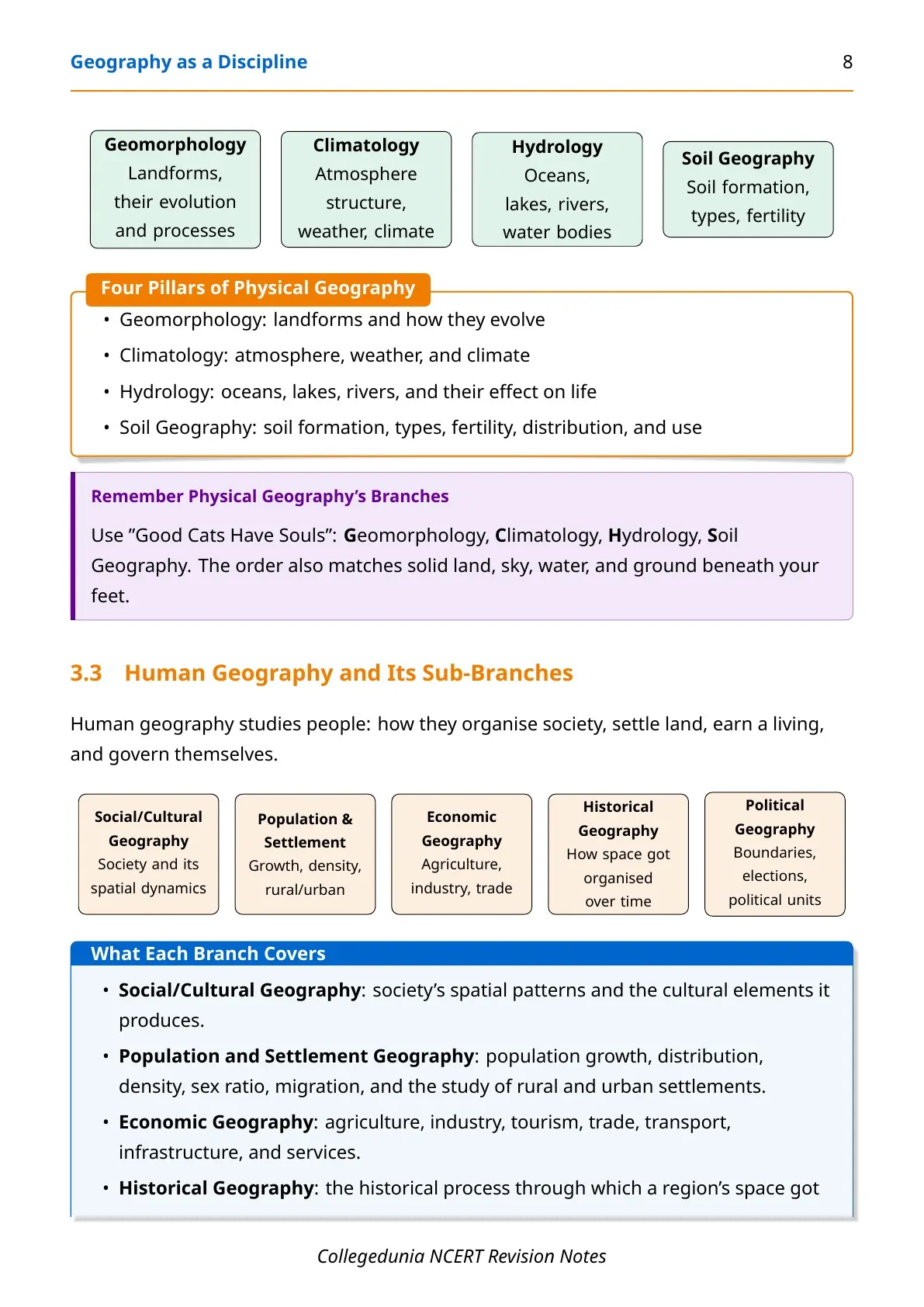
| Physical Geography | Geomorphology, Climatology, Hydrology, Soil Geography | Landforms, climate, water bodies, and soils |
| Human Geography | Social/Cultural, Population and Settlement, Economic, Historical, Political | How people organise society, settle land, and govern themselves |
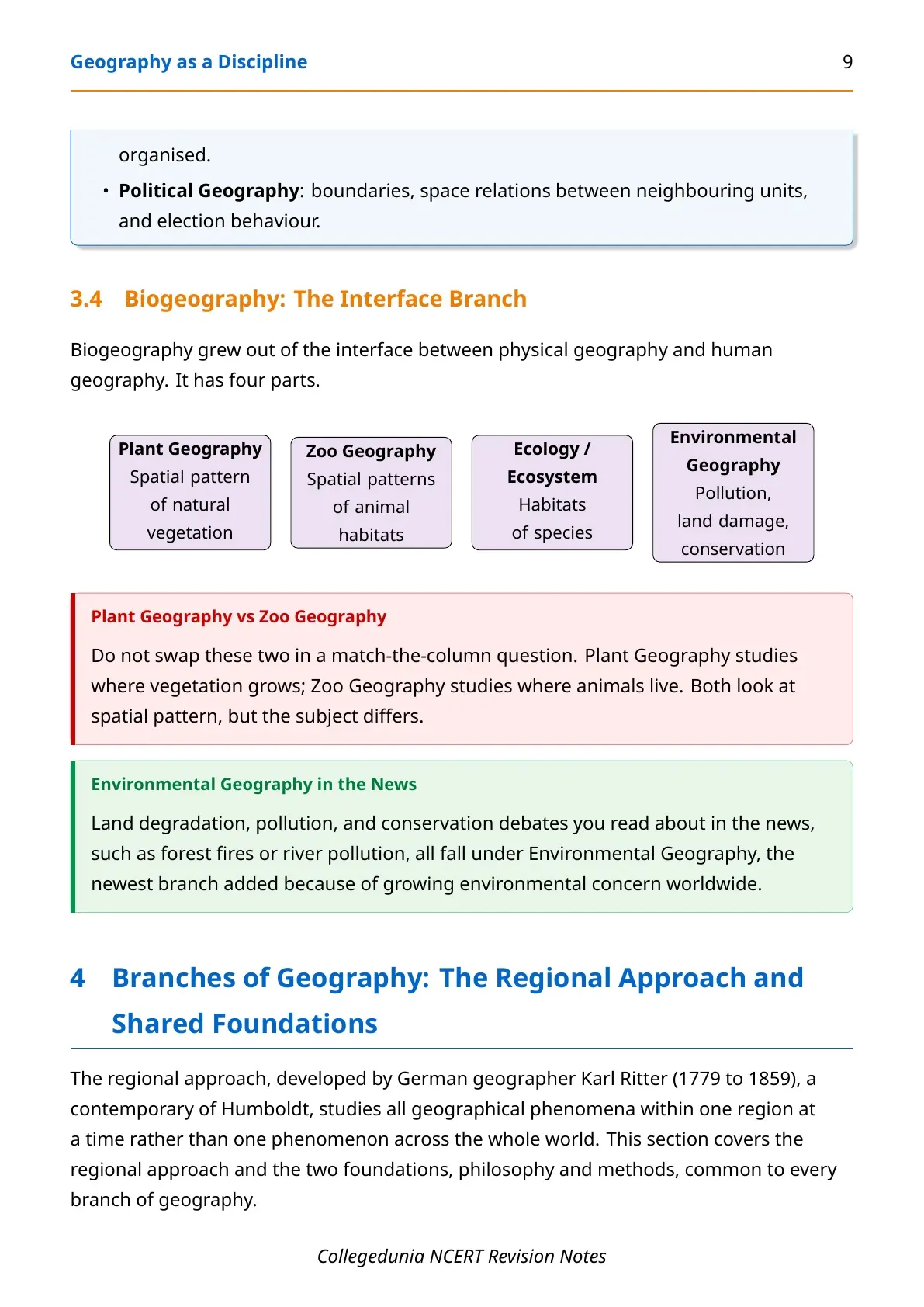
| Biogeography | Plant Geography, Zoo Geography, Ecology/Ecosystem, Environmental Geography | The interface between physical and human geography |
Environmental Geography is the newest sub-branch, added because of growing concern over pollution, land degradation, and conservation. It sits inside Biogeography, since environmental problems involve both natural processes and human activity.
Branches of Geography Under the Regional Approach
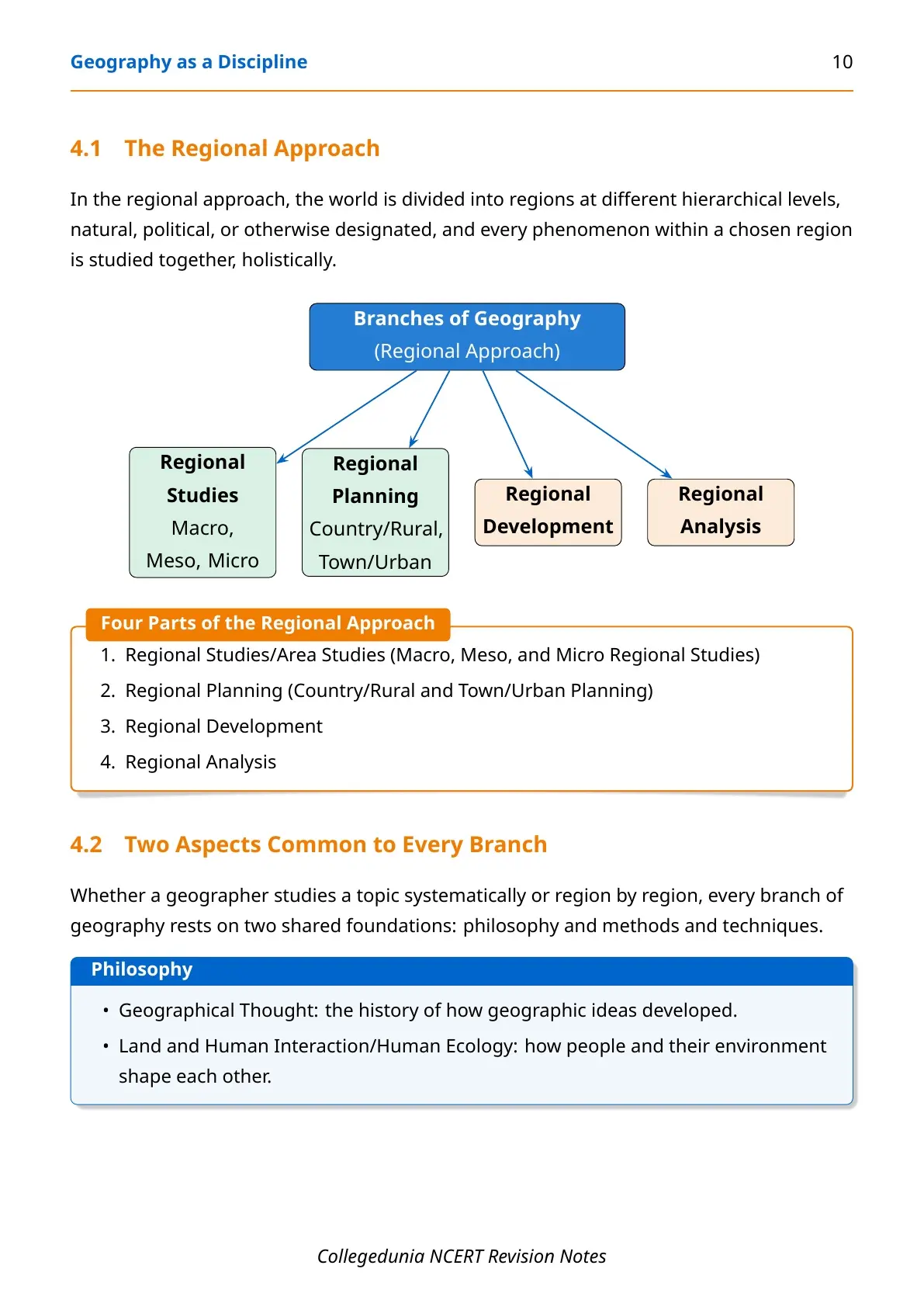
The regional approach, developed by German geographer Karl Ritter (1779-1859), a contemporary of Humboldt, studies all the geographical phenomena of one region together, instead of one phenomenon across the whole world. The world is divided into regions at different levels, natural, political, or otherwise designated, and every feature inside that region is studied holistically.
- Regional Studies/Area Studies: covers Macro, Meso, and Micro Regional Studies.
- Regional Planning: covers Country/Rural and Town/Urban Planning.
- Regional Development and Regional Analysis round out the four parts.
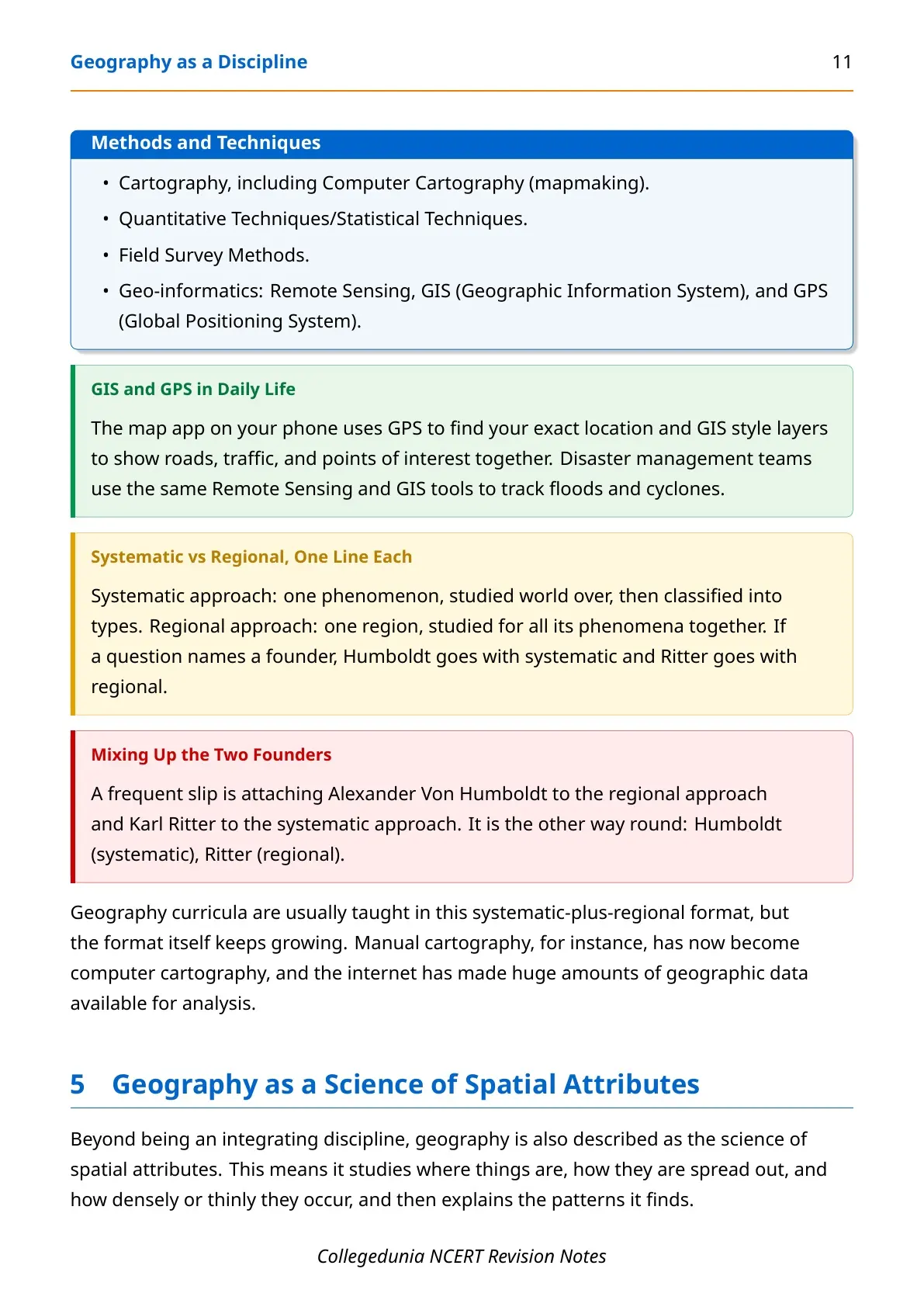
Two aspects are common to every branch of geography, whichever approach is used: Philosophy (Geographical Thought, and Land and Human Interaction/Human Ecology) and Methods and Techniques (Cartography, Quantitative Techniques, Field Survey Methods, and Geo-informatics, which covers Remote Sensing, GIS, and GPS).
Geography as a Science of Spatial Attributes
Beyond synthesis, geography is also described as the science of spatial attributes. It studies the patterns of distribution, location, and concentration of phenomena across space, then explains why those patterns exist. It also studies how one feature relates to another across the same space.
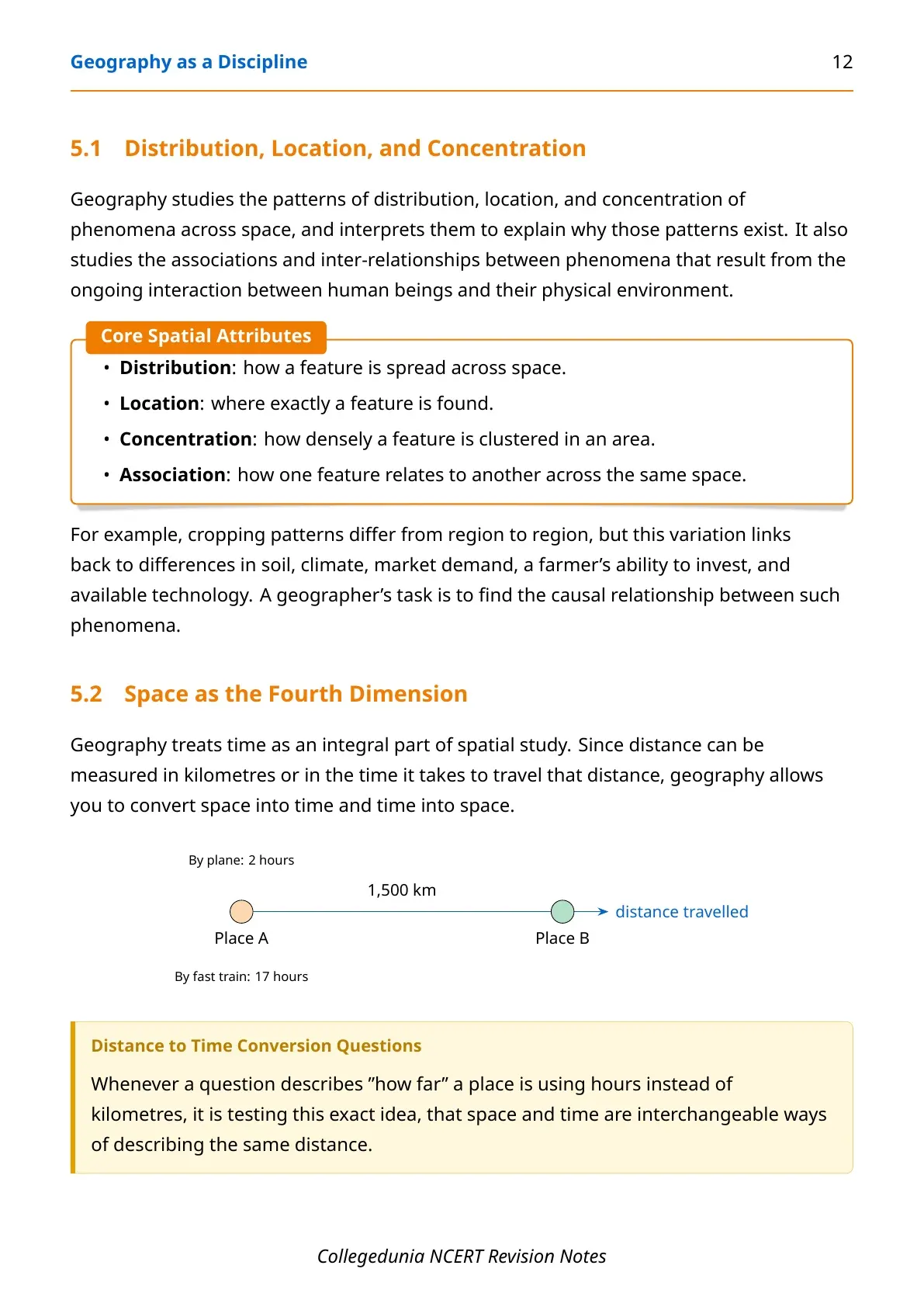
For example, cropping patterns differ from region to region, but this variation links back to differences in soil, climate, market demand, and available technology. Geography also treats time as an integral part of spatial study, since a distance of 1,500 km can be described in kilometres or in hours of travel time, by air or by train.
Geography's Interface with Other Natural and Social Sciences
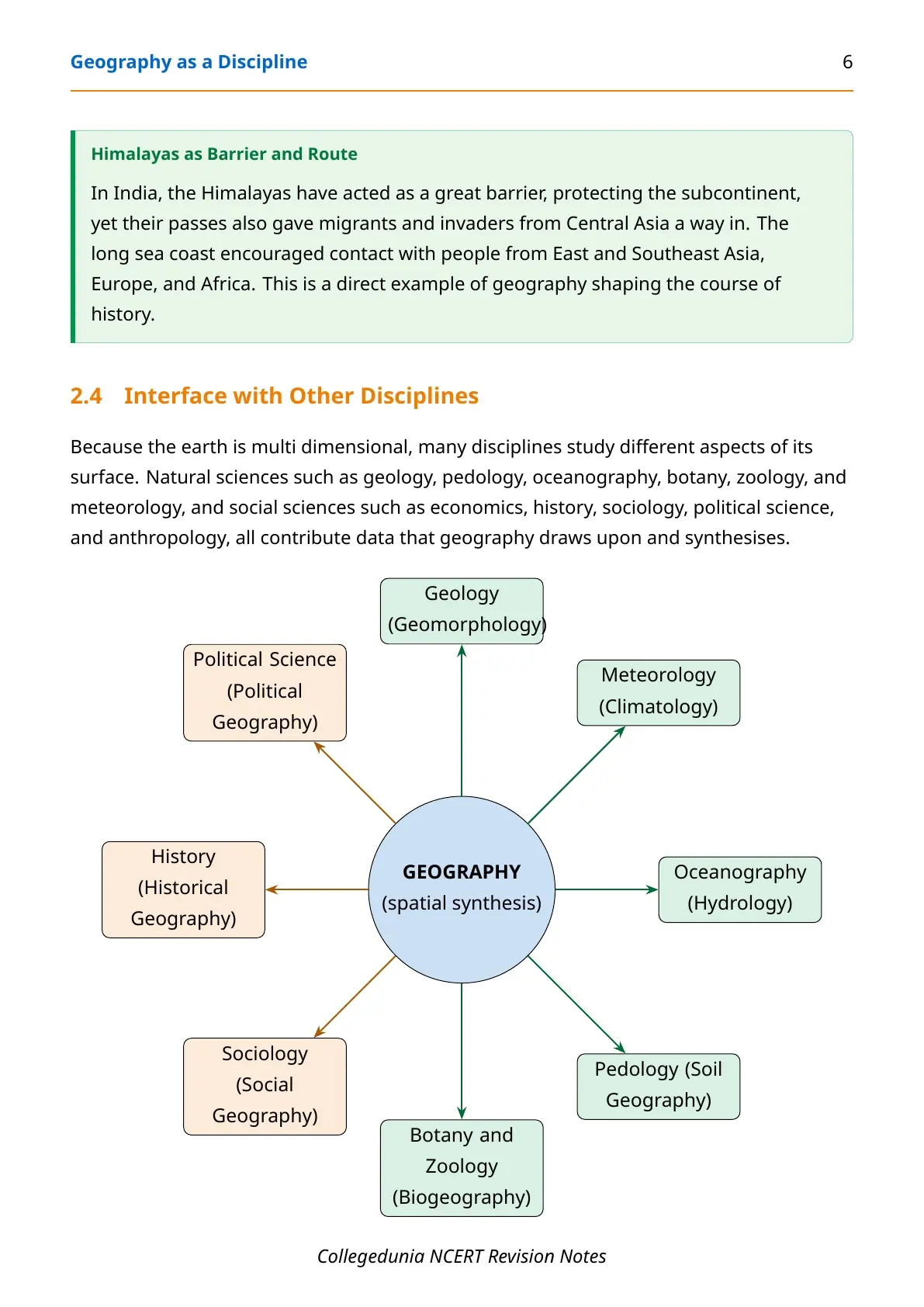
Because the earth is multi-dimensional, many other subjects study different parts of its surface. Geography does not compete with these subjects, it draws on their data and brings the pieces together.
| Other Discipline | Linked Branch of Geography |
|---|---|
| Geology | Geomorphology |
| Meteorology | Climatology |
| Oceanography | Hydrology |
| Pedology | Soil Geography |
| Botany and Zoology | Biogeography |
| Sociology | Social/Cultural Geography |
| History | Historical Geography |
| Political Science | Political Geography |
| Economics | Economic Geography |
This linkage explains why the Himalayas matter in a history answer as much as a geography one. In India, the Himalayas acted as a barrier that protected the subcontinent, while their passes let migrants and traders in from Central Asia. The long coastline encouraged contact with East and Southeast Asia, Europe, and Africa, and geography reads all of this as one connected story rather than isolated facts.
Importance of Physical Geography for Class 11 Students
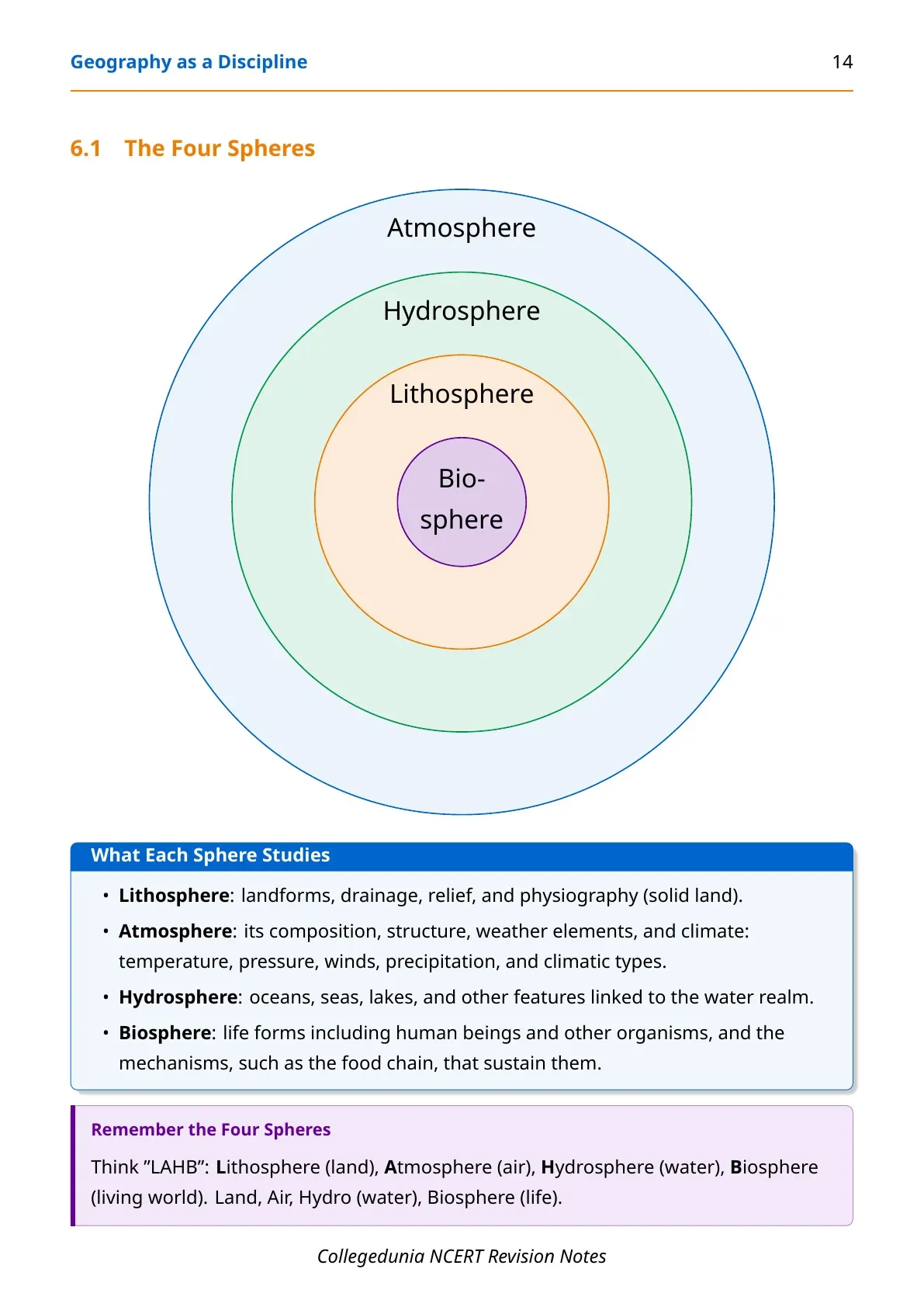
This chapter is the opening chapter of the NCERT textbook Fundamentals of Physical Geography, so it is worth knowing why this branch matters. Physical geography covers four connected spheres of the earth.
| Sphere | What It Covers |
|---|---|
| Lithosphere | Landforms, drainage, relief, and physiography |
| Atmosphere | Composition, weather elements, and climate |
| Hydrosphere | Oceans, seas, lakes, and other water bodies |
| Biosphere | Human beings and other life forms, and how they sustain themselves |
Landforms decide where human activity happens. Plains support agriculture, plateaus give forests and minerals, and mountains supply pastures, tourism, and river water for the lowlands. In India, monsoon rainfall sets the whole farming calendar and recharges groundwater used later for irrigation. Unplanned, fast-paced resource use has also created ecological imbalance in many regions, which is why physical geography now doubles as a discipline for evaluating and managing natural resources.
How This NCERT Notes Class 11 Geography Chapter 1 Geography as a Discipline Page Helps You Revise
Collegedunia's notes are built to save revision time before a test or the boards, not just repeat the textbook line by line.
- 2026-27 NCERT Alignment: every definition and example matches the current textbook print.
- Diagram-First Explanations: the branches-of-geography structure is shown as a labelled diagram, not just a list.
- Quick-Recall Boxes: mnemonics and concept boxes for the ideas students mix up most.
- Common Mistakes Flagged: the exact traps examiners use in one-mark and match-the-column questions.
Common Mistakes in Geography as a Discipline
- Swapping Humboldt (systematic approach) with Ritter (regional approach).
- Calling Biogeography a part of Human Geography alone, when it is the interface between physical and human geography.
- Forgetting that the "why" question, not just "what" and "where", is what makes geography scientific.
| Resource for This Chapter | Link |
|---|---|
| NCERT Notes (this page) | Geography as a Discipline Class 11 Notes |
| Handwritten Notes | Geography as a Discipline Class 11 Handwritten Notes |
| NCERT Solutions | Coming Soon |
| NCERT Book PDF | Coming Soon |
| Chapter 2: The Origin and Evolution of the Earth Notes | Coming Soon |
| Class 11 Geography, All Chapters | Class 11 Geography Chapter Hub |
Geography as a Discipline Class 11 Geography Notes FAQs
Ques. Who coined the term geography?
Ans. The term geography was coined by Eratosthenese, a Greek scholar who lived between 276 and 194 BC. It comes from the Greek words geo (earth) and graphos (description).
Ques. What is areal differentiation in geography?
Ans. Areal differentiation is the study of how places differ from one another in their physical features, such as landforms and climate, and their cultural features, such as settlements and economic activity.
Ques. What are the main branches of geography under the systematic approach?
Ans. Under the systematic approach, geography splits into Physical Geography, Human Geography, and Biogeography. Physical Geography further includes Geomorphology, Climatology, Hydrology, and Soil Geography.
Ques. Who introduced the systematic and regional approaches in geography?
Ans. Alexander Von Humboldt introduced the systematic approach, while Karl Ritter, his contemporary, developed the regional approach. Both were German geographers active in the late eighteenth and early nineteenth centuries.
Ques. What are the four spheres studied under physical geography?
Ans. Physical geography studies the lithosphere (landforms), atmosphere (weather and climate), hydrosphere (oceans and water bodies), and biosphere (life forms, including human beings).
Ques. Is this Notes PDF aligned with the 2026-27 NCERT syllabus?
Ans. Yes. Collegedunia's notes for this page reflect the current 2026-27 syllabus for Class 11 Geography and follow the NCERT textbook Fundamentals of Physical Geography exactly.
Ques. How many pages is the Class 11 Geography Chapter 1 Notes PDF?
Ans. The Notes PDF runs about 20 pages and covers the meaning of geography, its branches under both approaches, spatial attributes, and the importance of physical geography, with diagrams for every section.
Ques. Why is geography called an integrating discipline?
Ans. Geography is called an integrating discipline because it draws data from natural sciences, such as geology and meteorology, and social sciences, such as history and economics, and synthesises them across space.



Comments