



These Class 11 revision notes on Physical and Physiological Aspects of Physical Education and Sports bring together every definition, difference table and body value that the annual paper actually asks for. Growth and development, the nine factors behind them, warming up, conditioning, cooling down and the four body systems are all covered in the order the 2026-27 NCERT textbook prints them.
- Covers the full growth versus development table, all nine factors and the three developmental stages.
- Chapter 3 usually carries 12 to 16 marks in the Class 11 annual paper.
- Written according to the 2026-27 NCERT Health and Physical Education textbook for Class 11.
Every note on this page is curated by Class 11 Physical Education teachers, checked line by line against the 2026-27 NCERT print, and refined against the last five years of school question papers.
Student Feedback: In a Collegedunia poll of 14,260 Class 11 Physical Education students taken before the 2026-27 school exams, 71% said the effects of exercise on the four body systems was the hardest part of this chapter. Only 34% could write the difference between tidal volume and vital capacity without opening the book.
Source: 2026-27 Class 11 Physical Education student poll. Sample of 14,260 students from CBSE schools across 19 states.
What the Class 11 Physical and Physiological Aspects Notes Cover
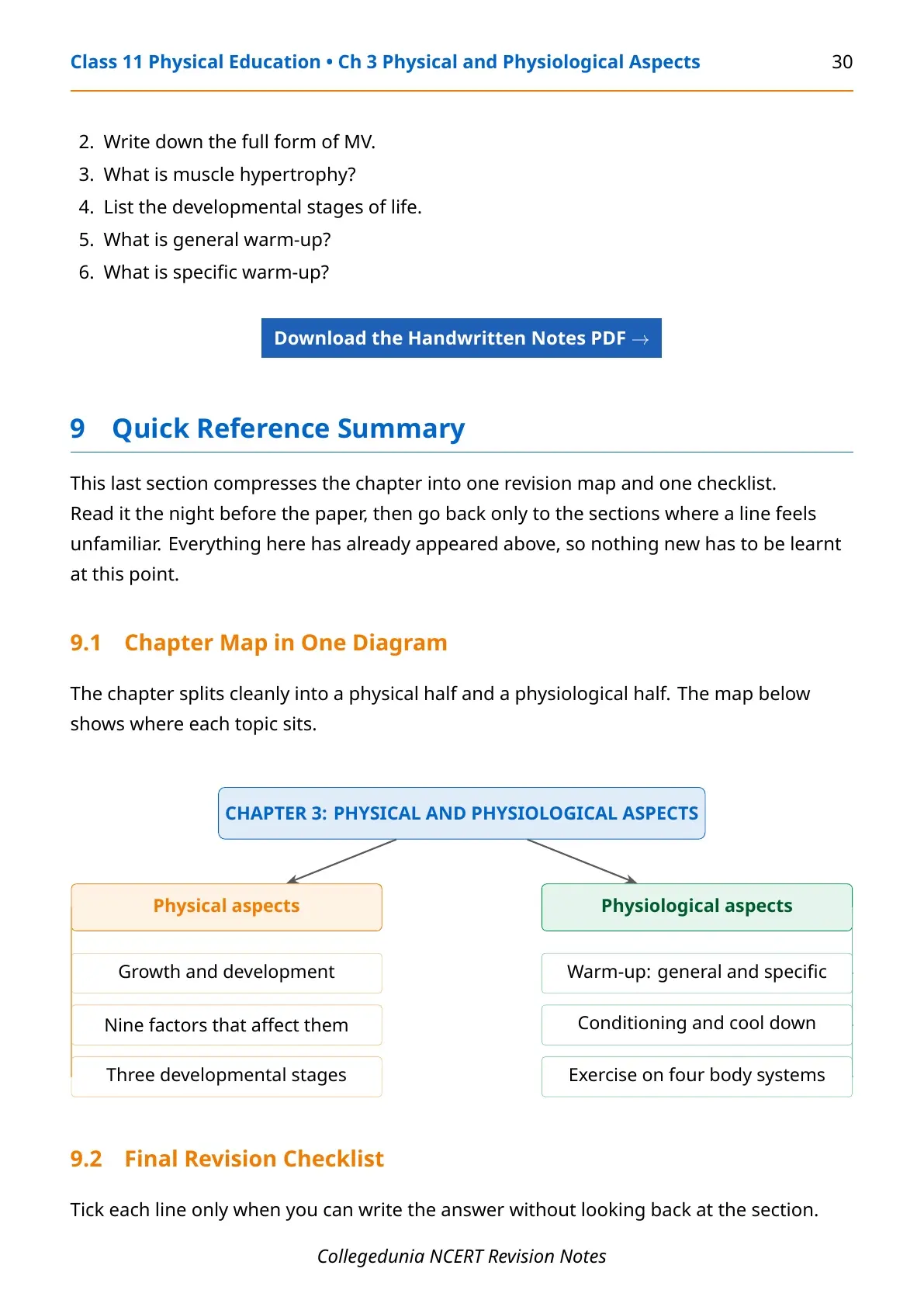
This chapter has two halves. The first half is psychology and biology, built on growth, development and the forces that shape a child. The second half is exercise physiology, built on warm-up, conditioning, cool down and body values you must quote exactly.
- Growth and development, the meaning of each and the nine-row difference table the book prints.
- Heredity and environment, the three types of environment and the role each force plays.
- The nine factors that affect growth and development, from gender and nutrition to pollution.
- Early childhood, middle childhood and adolescence, with the height and weight figures for each.
- Warming up, general and specific, its objectives, four methods and the 15 to 20 minute rule.
- Sports conditioning and cooling down, with the four effects of a cool down.
- Effects of exercise on the cardiovascular, respiratory, muscular and digestive systems.
Tip: The second half is where marks are won and lost. A paper will ask for the normal heart rate, the resting tidal volume or the cardiac output formula. Those are one-mark answers only if the figure is exact.
Growth and Development: Meaning, Difference and Why Both Matter
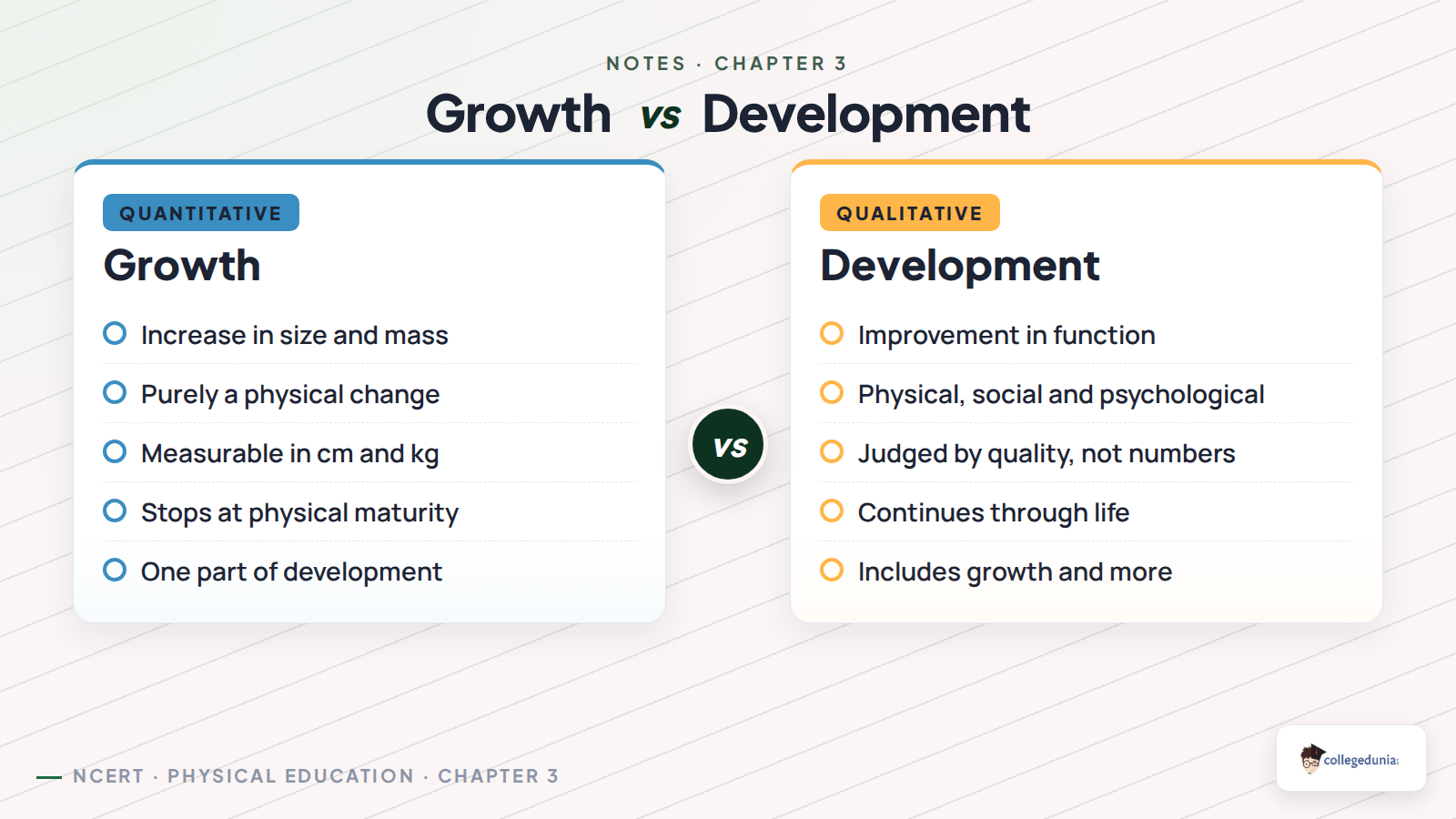
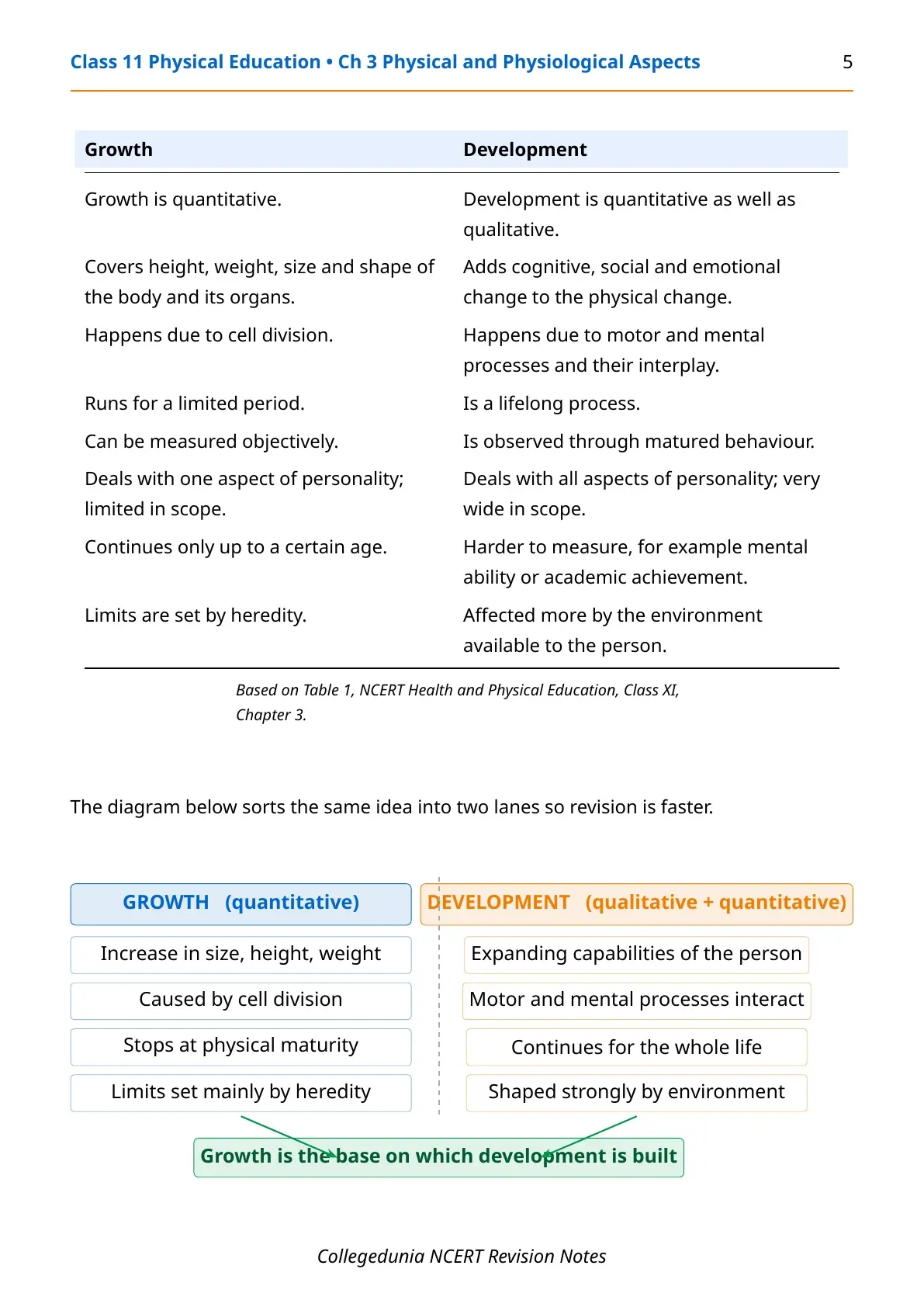
The chapter opens by separating two words students use as if they mean the same thing. Growth is a physical change. Development includes physical, social and psychological changes. Growth is quantitative. Development is quantitative as well as qualitative.
Development also means transformation or improvement. Keep that single line ready, because a two-mark question often asks nothing more than what each term means.
What Growth Means in Class 11 Physical Education
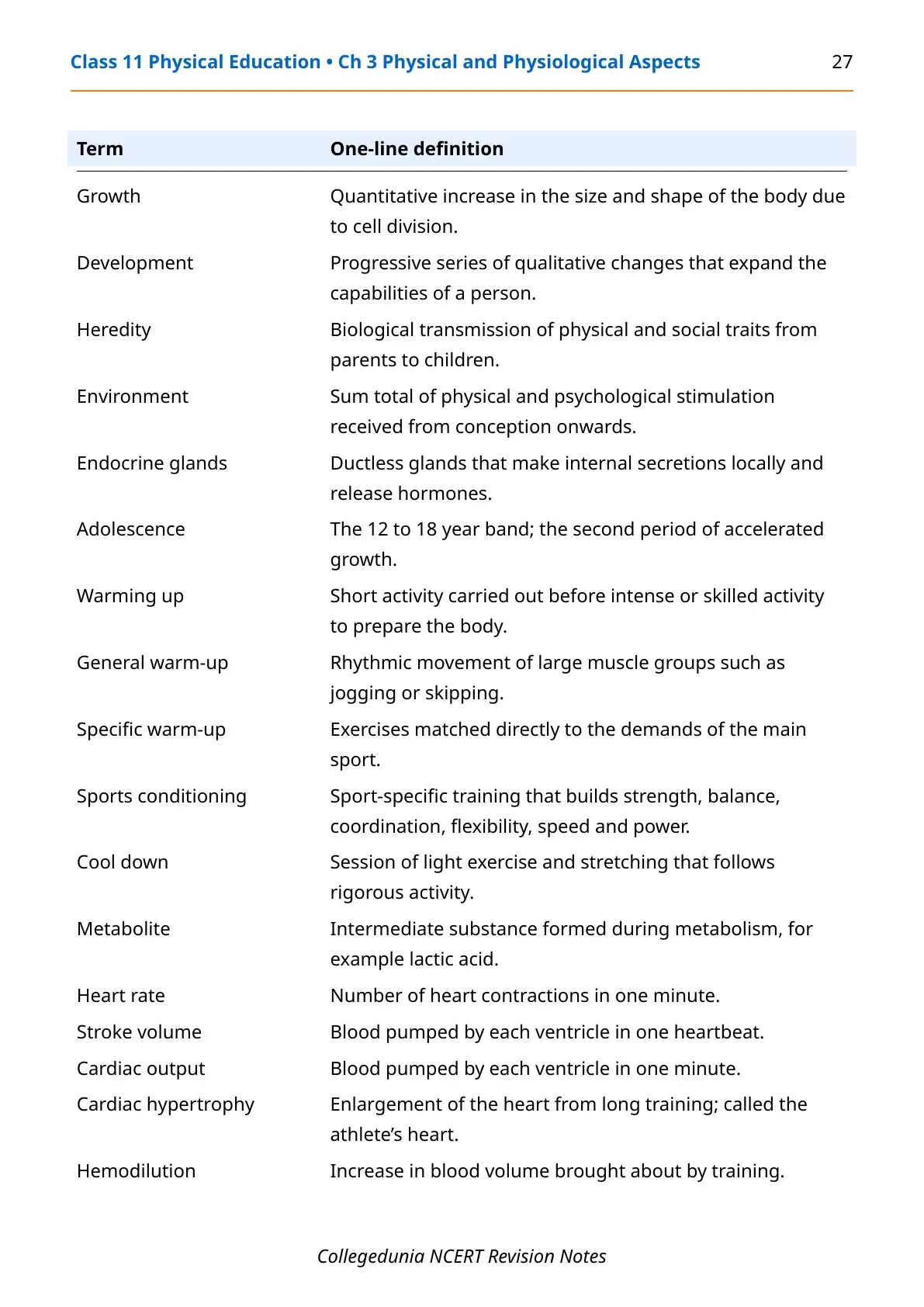
Growth refers to the process through which the body increases in size and shape. It is a biological process. In other words, growth means an increase in mass.
- The process of growth starts from the time of conception, inside the mother's womb.
- The fertilised egg continues to grow, and after birth the process goes on until complete physical maturity is obtained.
- Growth is a quantitative increase in size and shape.
- Physical growth refers to changes in the size and shape of different organs of the body. Each organ normally proceeds at a different rate.
- Growth is therefore a tangible biological process in which the organism gains in size, volume, height and weight.
What Development Means and Why It Never Stops
Development is related with advancement and a progressive series of qualitative changes. Development processes have a greater relationship with external factors than growth does.
- Proper development cannot take place unless external factors are ensured: nutrition, activity, protection from diseases and other socio-cultural influences.
- More specifically, development is defined as the emerging and expanding of the capabilities of the individual.
- Growth forms the basis for the development of the functional capacities of the child. Without proper growth, the required level of development may not be reached at a given stage.
- Acquisition of skills and knowledge also indicates a developmental process.
- Growth comes to an end at some stage of life. Development continues till death.
Difference Between Growth and Development (Table 1 of the Textbook)
This is the most frequently set long answer in the chapter. The book prints nine points. Write them as a two-column table in the paper and you keep every mark.
| Growth | Development |
|---|---|
| Growth is visible. | Development can be observed. |
| Growth is quantitative. | Development is quantitative as well as qualitative. |
| Growth comprises of height, weight, size and shape of the body and its organs. | Along with the physical changes, cognitive, social and emotional changes are also included. |
| It is due to cell division. | It happens due to motor and mental processes and their interplay. |
| Growth is for a limited period. | Development is a lifelong process. |
| Growth can be measured objectively. | It can be observed by matured behaviour. |
| Growth tells about one aspect of the personality and is limited in scope. | Development deals with all the aspects of personality and has a vast scope. |
| Growth can be measured and continues up to a certain age of an individual. | Development is more related to the qualitative aspect and is difficult to measure, for instance mental ability or academic achievement. |
| The limits of growth are set by the heredity of an individual. | Development is more affected by the environment available to the person. |
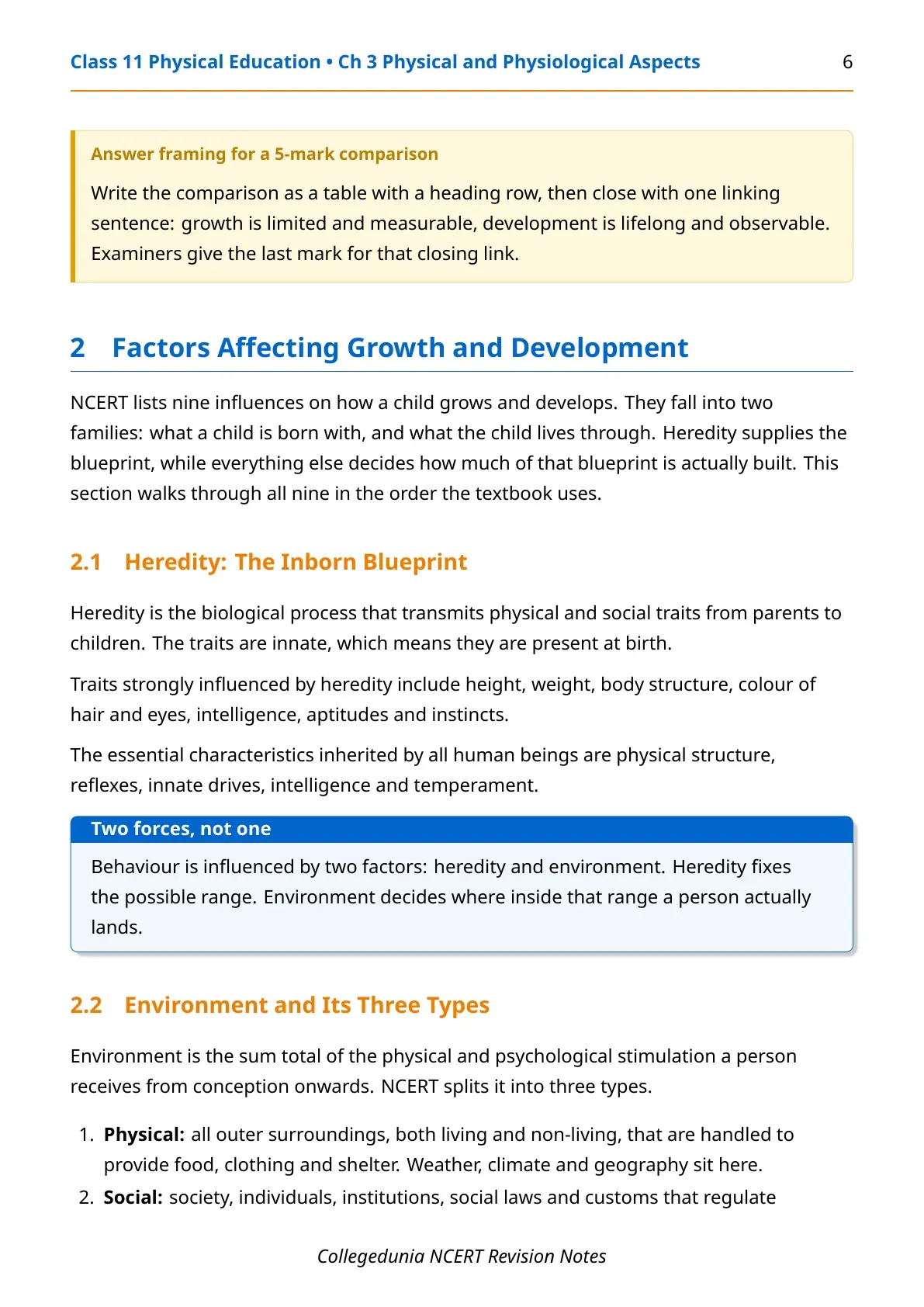
Memory hook: the last row is the bridge to the next section. Heredity sets the ceiling for growth, environment decides how much of that ceiling a person actually reaches. Examiners like that sentence.
Physical and Physiological Aspects Full Chapter Explained
Source: Magnet Brains on YouTube
Heredity and Environment: The Two Forces Behind Every Trait
The chapter says the behaviour of a living organism is influenced by two factors, heredity and environment. Both are listed as factors affecting growth and development, but they get more space than the rest, so treat them as a section of their own.
Heredity and the Traits That Are Present at Birth
Heredity is a biological process that plays an important role in the transmission of physical and social attributes from parents to their children. The biological or psychological characteristics transmitted by parents to children are known as heredity.
- Traits highly influenced by heredity: height, weight and structure of the body, colour of hair and eyes, intelligence, aptitudes and instincts of the child.
- Heredity is the transmission of certain traits of appearance and behaviour of the parents towards their offspring.
- Hereditary traits are innate. They are present at birth.
- The essential characteristics inherited by all human beings are physical structure, reflexes, innate drives, intelligence and temperament.
Environment and Its Three Types
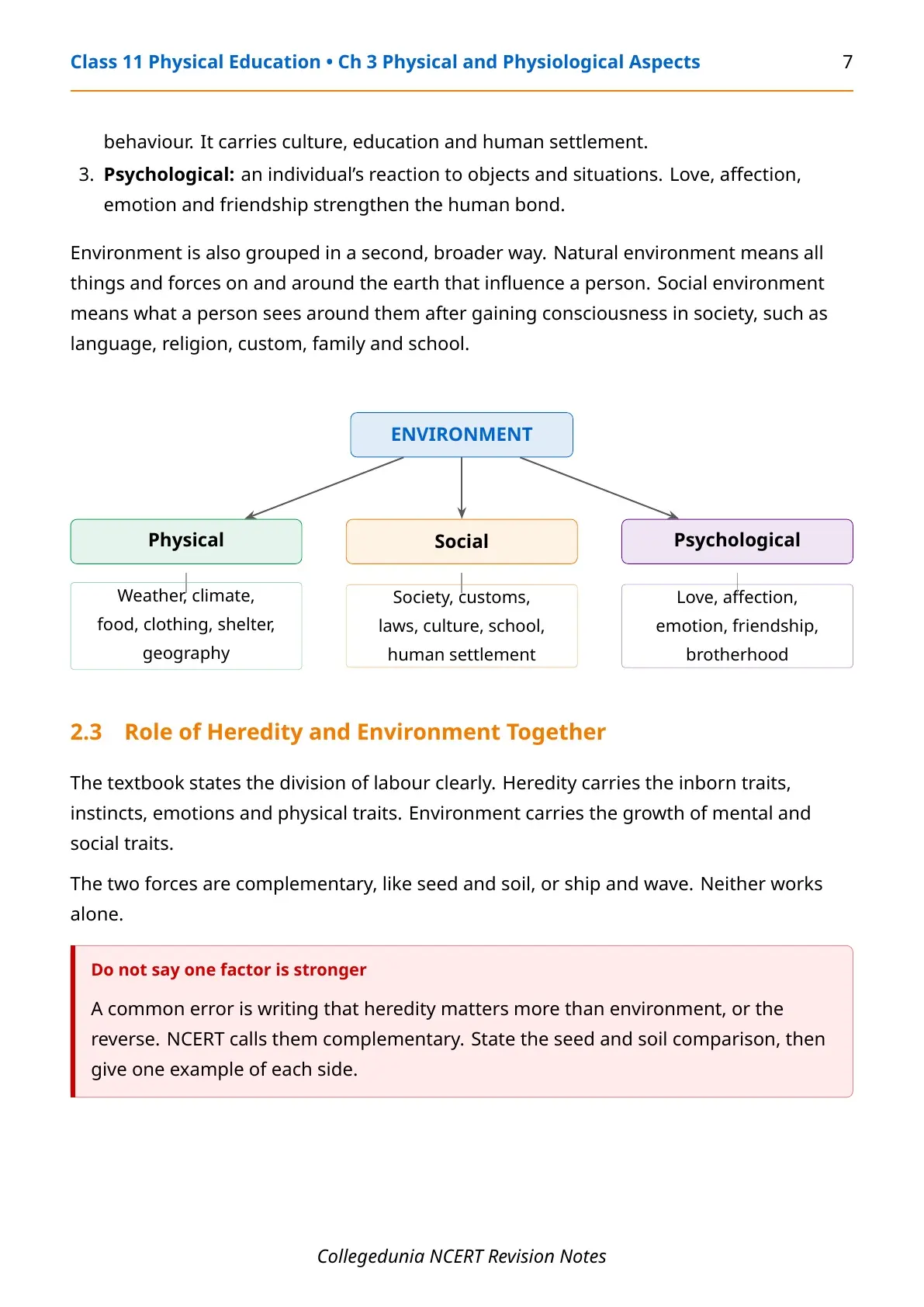
Psychologically, a person's environment is the sum total of the stimulations, physical and psychological, received from the conception. The chapter names three types and you should be able to give one line of example for each.
| Type of environment | What it consists of | Example the chapter gives |
|---|---|---|
| Physical | All outer physical surroundings, both animate and inanimate, which have to be manipulated in order to provide food, clothing and shelter | Geographical conditions such as weather and climate have a considerable impact on an individual child |
| Social | The society, individuals, institutions, social laws and customs that regulate human behaviour. It is the physical and social setting in which a child lives | Culture, education and human settlement |
| Psychological | Rooted in an individual's reaction with an object and a situation | Love, affection, emotion, and the feeling of friendship and brotherhood, which strengthen the human bond |
The chapter then gives a second, simpler split of the same idea. Environment is the sum total of the surroundings in which an individual has to live, and it is generally divided into two categories, natural and social.
- Natural environment refers to all those things and forces on and around the earth that are natural and that influence a person.
- Social environment is what one sees around oneself on acquiring consciousness in society: languages, religions, customs, traditions, means of communication, means of luxury, family, school and social groups.
Role of Heredity and Environment on Growth and Development
The book prints this as a three-point box, which makes it an easy three-mark question. Learn all three lines and the comparison at the end.
- Heredity is responsible for all the inborn traits, instincts, emotions and physical traits.
- Environment is responsible for the growth and development of the mental and social traits.
- The two forces are complementary to each other, like seed and soil, or ship and wave.
The section closes with a line worth quoting. Growth and development are regulated by the surrounding environment of a child, or by where an individual lives.
Nine Factors Affecting Growth and Development Every Class 11 Student Must Know
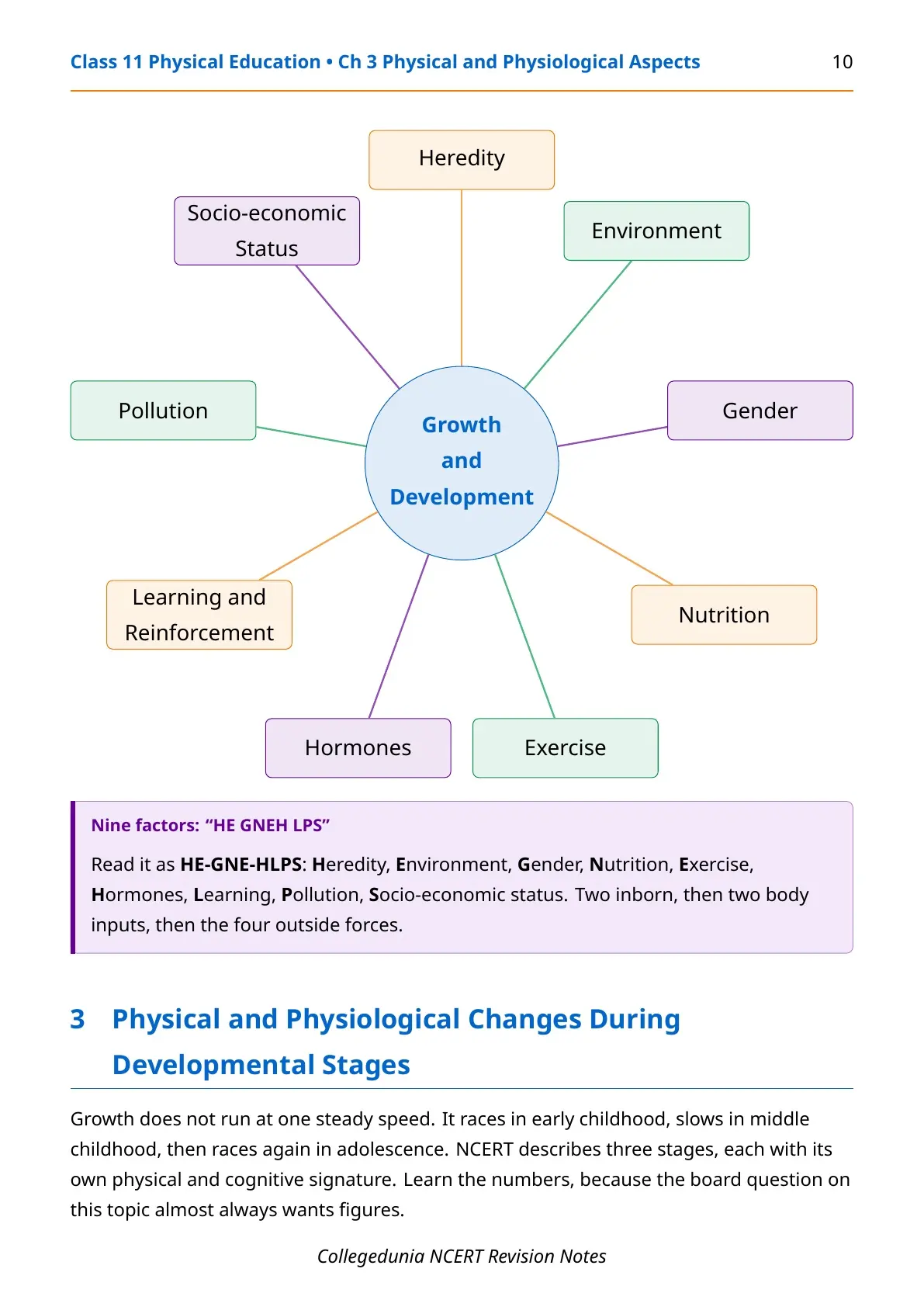
The chapter lists nine factors that influence the growth and development of a living organism. Heredity and environment are the first two and are covered above. The remaining seven are shorter, so learn them as a single block with one supporting fact each.
| Factor | What the chapter says |
|---|---|
| Heredity | Transmits height, weight, body structure, hair and eye colour, intelligence, aptitudes and instincts. Traits are innate and present at birth. |
| Environment | Physical, social and psychological. Responsible for the mental and social traits. Complementary to heredity. |
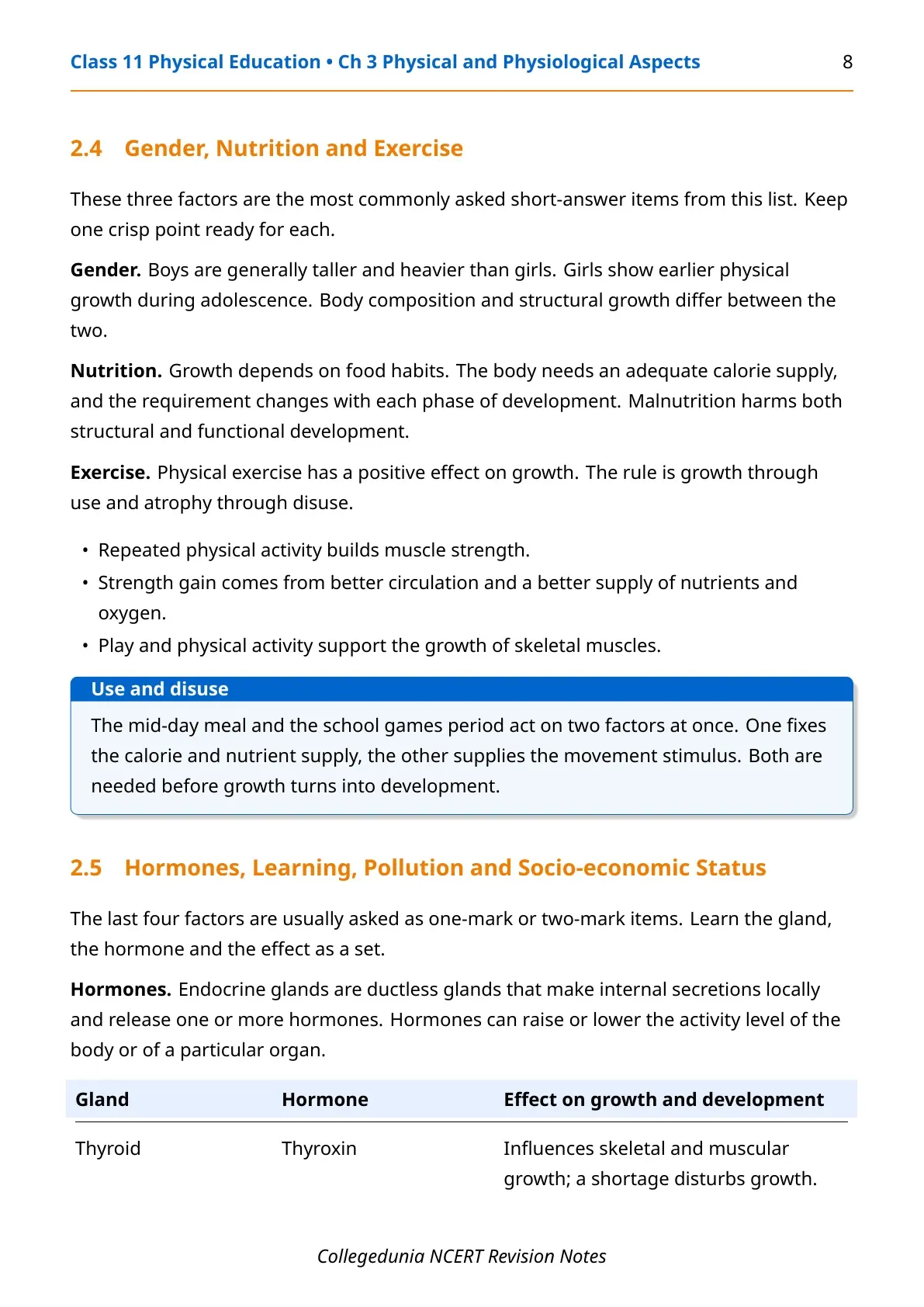
| Gender | Boys in general are taller and heavier than girls, but girls show early physical growth during adolescence. Body composition and structural growth of girls differ from boys. |
| Nutrition | The body requires an adequate supply of calories for normal growth, and the requirement varies with the phase of development. Malnutrition has an adverse effect on structural and functional development. |
| Exercise | Growth through use and atrophy through disuse. Repeated physical activity builds muscle strength through better circulation and better supply of nutrients and oxygen. |
| Hormones | Chemical substances secreted by ductless endocrine glands that regulate growth and development. Thyroxin, adrenaline and the hormones of the gonads are the three named examples. |
| Learning and reinforcement | Development consists of maturation and learning. Reinforcement means repeating the activity until the desired result is obtained. |
| Pollution | Air pollution harms the respiratory organs and human growth. Indoor pollution, such as lead from old lead-based paint, obstructs the normal development of the brain and other organs. |
| Socio-economic status | Children from different backgrounds vary in average body size at all ages. Family size also affects the growth rate. |
Hormones: The Three Glands the Chapter Names
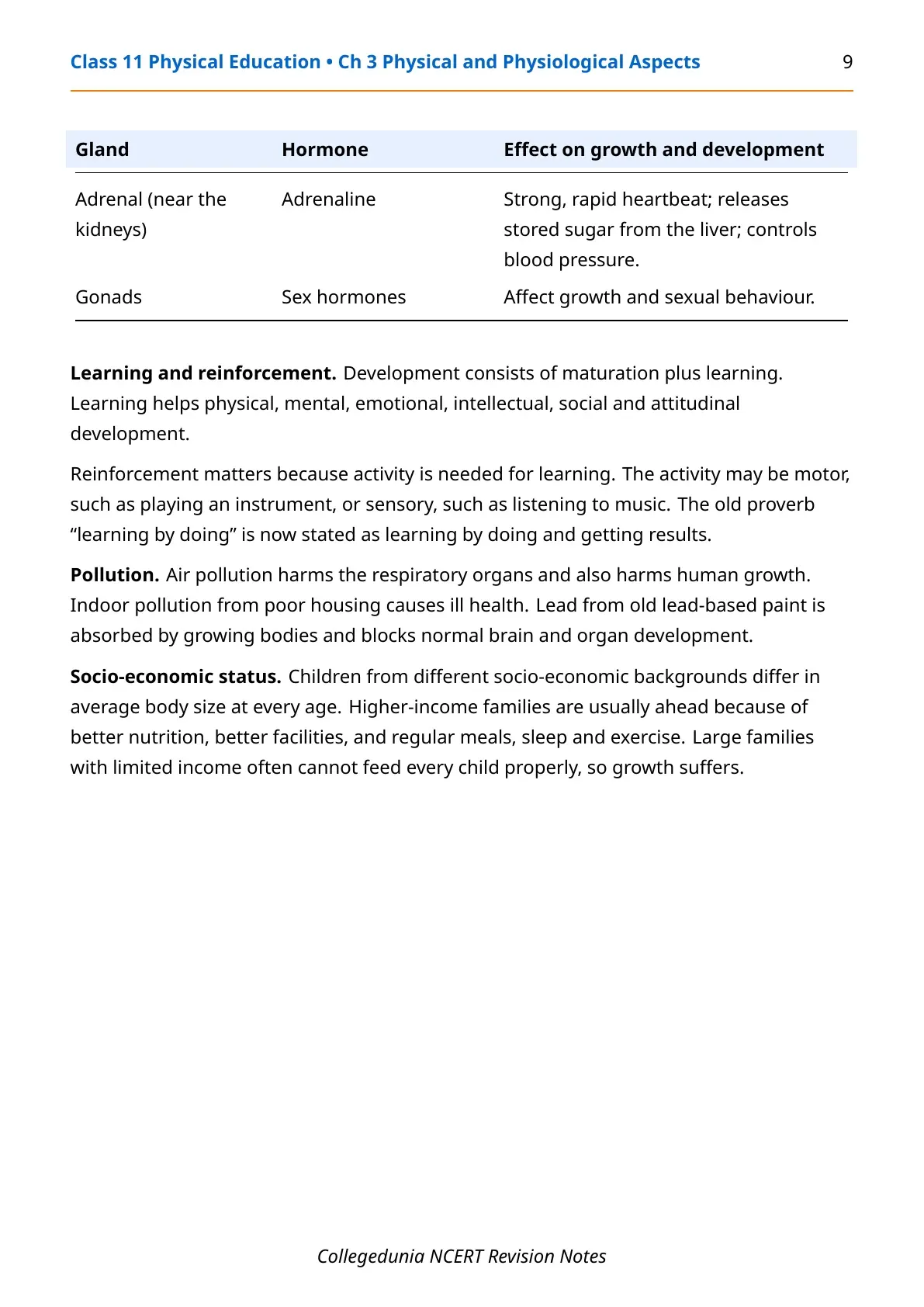
Hormones are physiological substances that have the power to increase or decrease the activity level of the body or of certain organs. Endocrine glands are ductless glands situated in specific parts of the body. They make internal secretions locally and produce one or more hormones.
| Gland | Hormone | What it does |
|---|---|---|
| Thyroid | Thyroxin | Influences skeletal and muscular growth. If this hormone is not present in the right proportion, growth and development are affected. |
| Adrenal (situated very close to the kidneys) | Adrenaline | Responsible for a strong and rapid heartbeat, the release of stored sugar from the liver, and control of blood pressure. |
| Gonads (reproductive glands) | Sex hormones | Affect growth and sexual behaviour. |
Learning, Reinforcement and the Proverb the Chapter Rewrites
Learning is called the most important and fundamental topic in the whole science of psychology. Development consists of maturation and learning, and learning includes much more than school learning.
- Learning helps the child in physical, mental, emotional, intellectual, social and attitudinal development.
- All knowledge and skill, all good and bad habits, all attitudes built while dealing with people and things are learned.
- Reinforcement is an important factor in learning. Exercise or activity is necessary for learning.
- The activity may be motor, as in playing a musical instrument, or sensory, as in listening to a piece of music.
- The old proverb is learning by doing. The chapter says it should now be replaced by learning by doing and getting results, because the activity should be repeated till the desired result is obtained.
Also Check: A five-mark question often reads "define growth and development and explain the factors affecting them". Write the two definitions first, then name all nine factors, then explain any four in detail. Naming carries its own marks.
Physical and Physiological Changes During the Three Developmental Stages
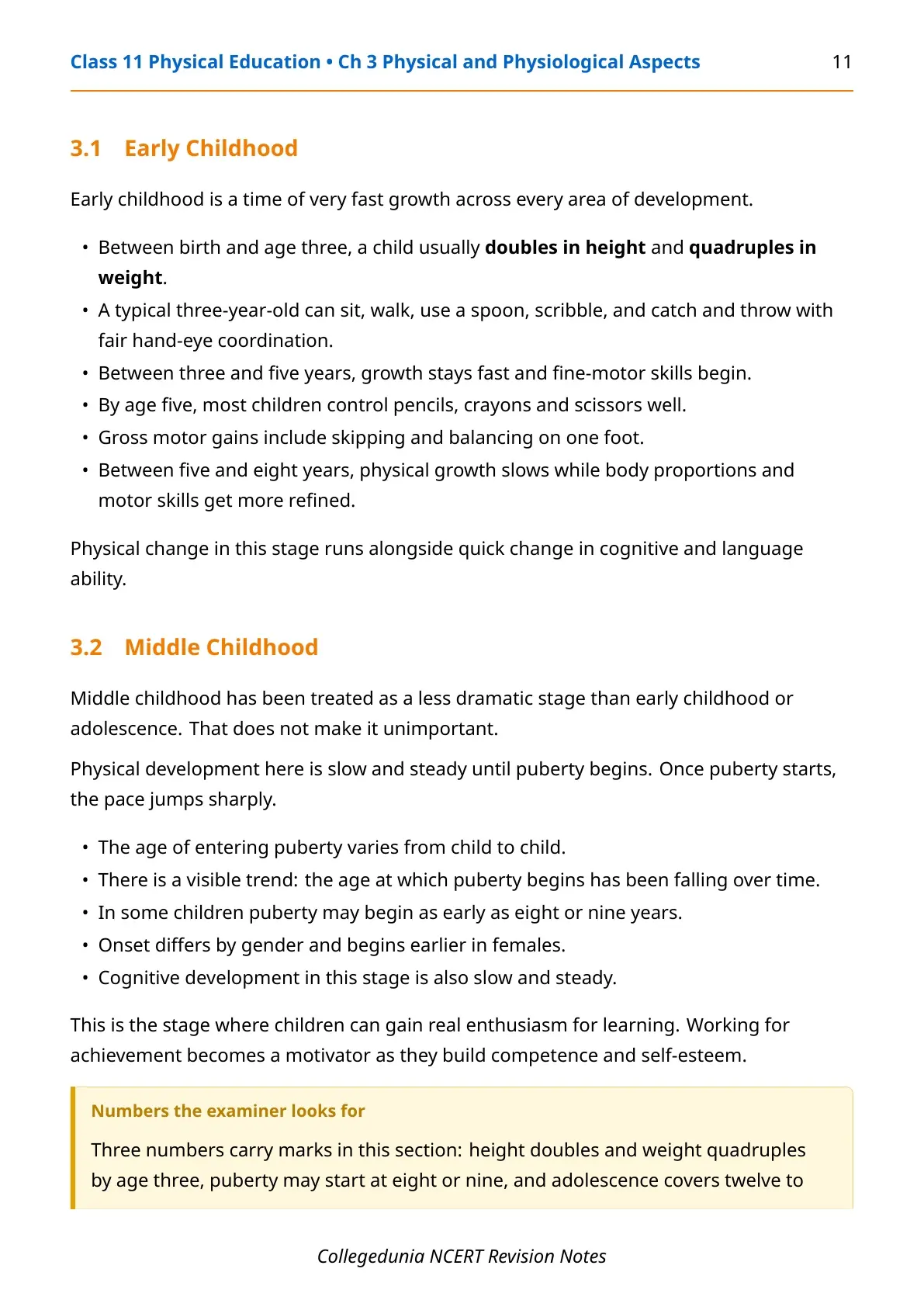
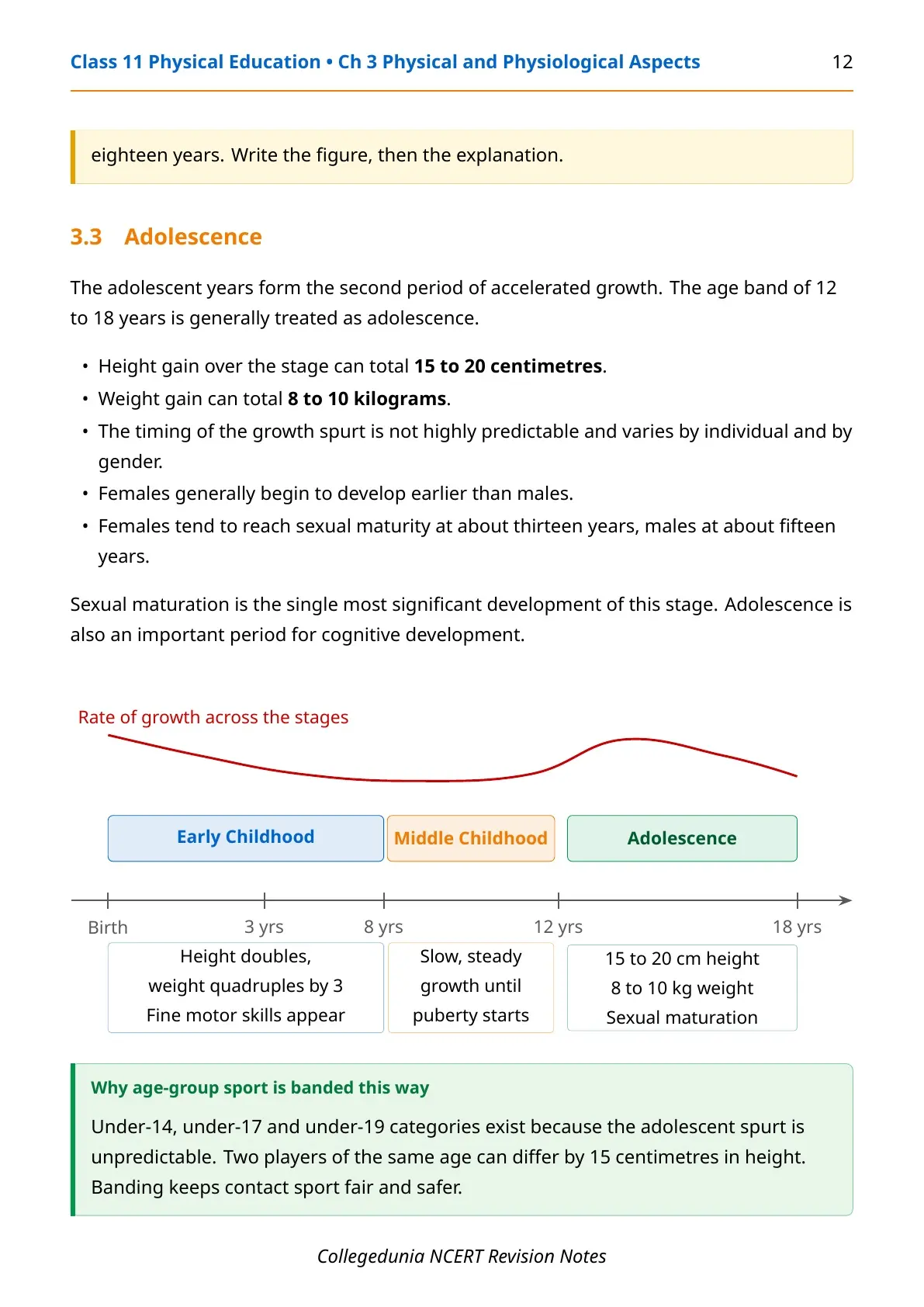
The chapter divides the growing years into early childhood, middle childhood and adolescence. Each stage has its own figures, and the figures are what an examiner checks first.
| Stage | Rate of physical growth | Key figures to quote |
|---|---|---|
| Early childhood | Tremendous growth across all areas of development | Between birth and age three a child typically doubles in height and quadruples in weight |
| Middle childhood | Less dramatic than early childhood or adolescence. Slow and steady until the onset of puberty | Puberty may start as early as age eight or nine in some individuals |
| Adolescence | The second period of accelerated growth | A gain of 15 to 20 centimetres in height and 8 to 10 kg in weight, between ages 12 and 18 |
Early Childhood, from Birth to Eight Years
Early childhood is a time of tremendous growth across all areas of development. The physical changes are matched by rapid changes in the child's cognitive and language development.
- Between birth and the age of three, a child typically doubles in height and quadruples in weight.
- A typical three-year-old may have mastered sitting, walking, toilet training, using a spoon, scribbling, and enough hand-eye coordination to catch and throw.
- Between three and five years, children continue to grow rapidly and begin to develop fine motor skills.
- By the age of five, most children show fairly good control of pencils, crayons and scissors. Gross motor gains include the ability to skip and to balance on one foot.
- Physical growth slows down between five and eight years, while body proportions and motor skills become more refined.
Middle Childhood and the Falling Age of Puberty
Middle childhood has not been treated as an important stage in human development when compared with early childhood. Physical development during this stage is less dramatic, and growth is slow and steady until puberty begins.
- Once puberty starts, individuals begin to develop at a much quicker pace.
- The age at which individuals enter puberty varies, but there is a visible trend. The age at which puberty begins has been decreasing over time.
- In some individuals puberty may start as early as age eight or nine.
- The onset of puberty differs across gender and begins earlier in females.
- Cognitive development in middle childhood is also slow and steady.
- This is the stage when children can gain enthusiasm for learning. Working for achievement becomes a motivating factor as they build competence and self-esteem.
Adolescence, the Second Period of Accelerated Growth
The age between 12 and 18 years is generally considered adolescence. It is called the second period of accelerated growth, and it is the stage the paper asks about most often.
- Individuals may gain a total of 15 to 20 centimetres in height and as much as 8 to 10 kg in weight.
- The timing of this growth spurt is not highly predictable. It varies across individuals and across gender.
- In general, females begin to develop earlier than males.
- Sexual maturation is one of the most significant developments during this time, and there is significant variability in the age at which it is attained.
- Females tend to mature at about age thirteen and males at about age fifteen.
- Adolescence is also an important period for cognitive development.
Warming Up: Meaning, Objectives and the 15 to 20 Minute Rule
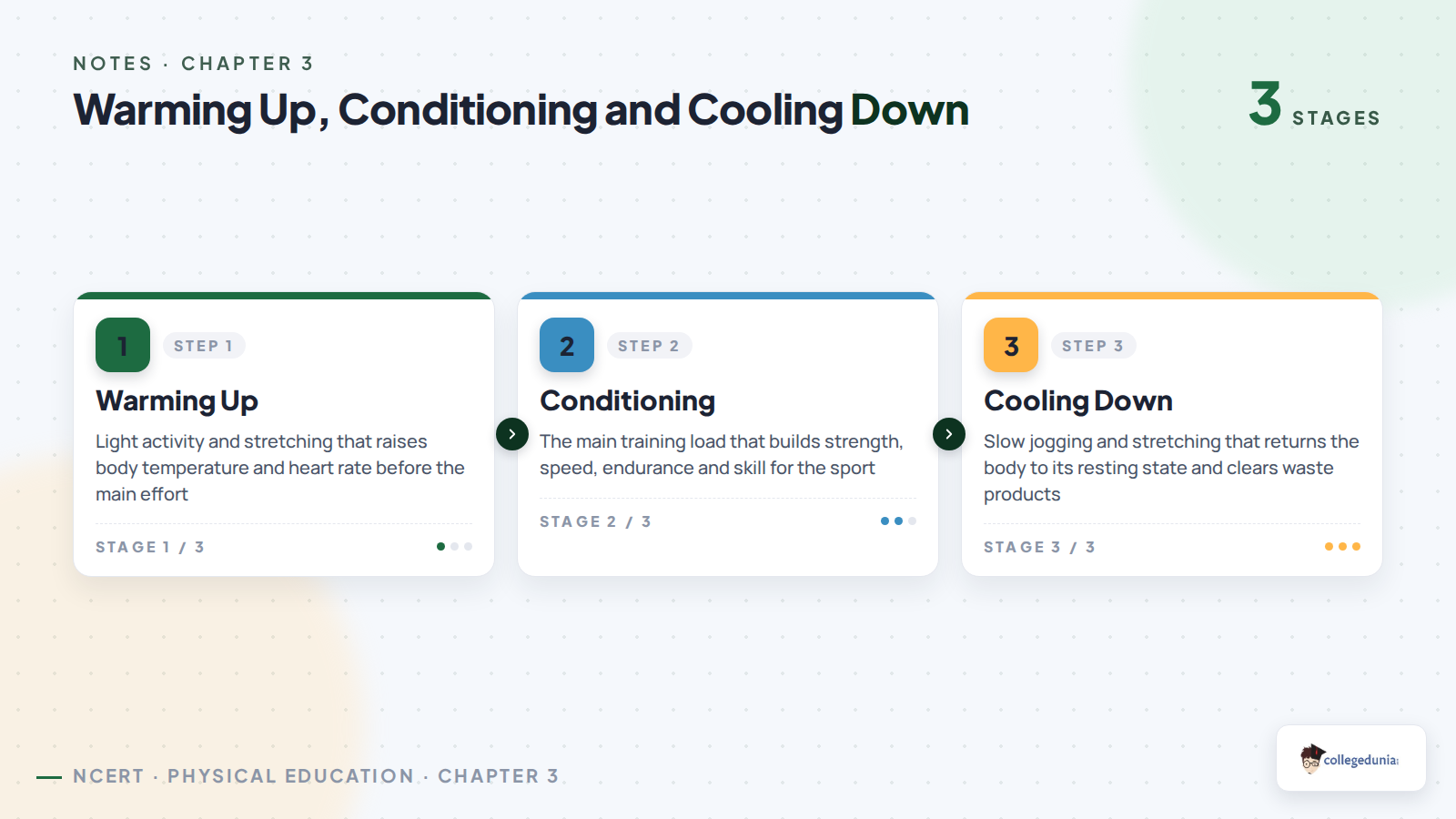
The second half of the chapter starts here. The body's physiological responses to exercise occur in the musculoskeletal, cardiovascular, respiratory, endocrine and immune systems. Different types of exercise have different effects on the muscles used, so the body has to be warmed up properly first.
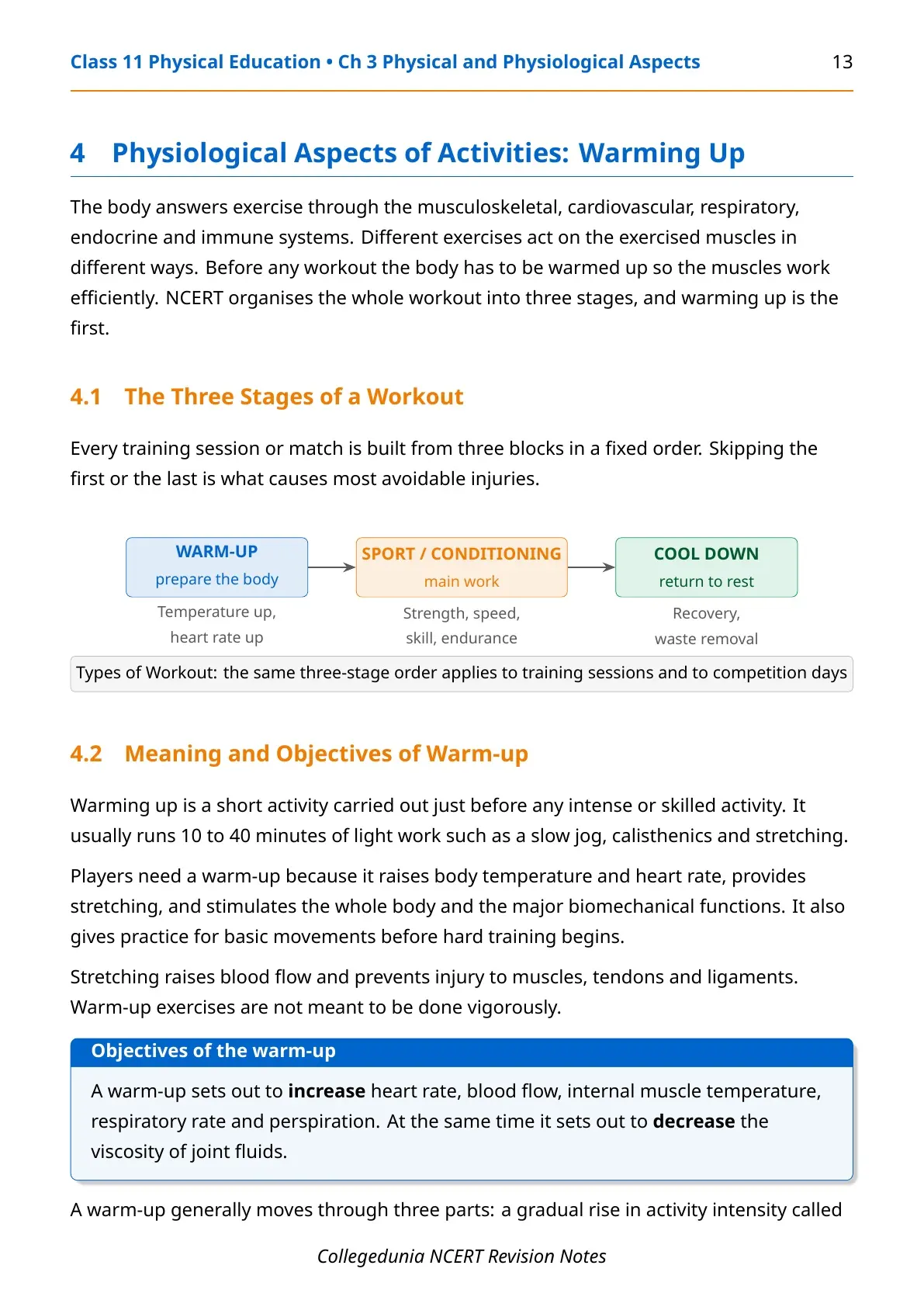
The chapter shows the workout as three parts in sequence: warm-up, sports conditioning and cool down. Warming up is a short activity carried out prior to any intense or skilled activity.
| Point | What the chapter prints |
|---|---|
| Usual duration of light activity | 10 to 40 minutes of light activities such as a slow jog, calisthenics and stretching |
| Optimum duration suggested by researchers | 15 to 20 minutes |
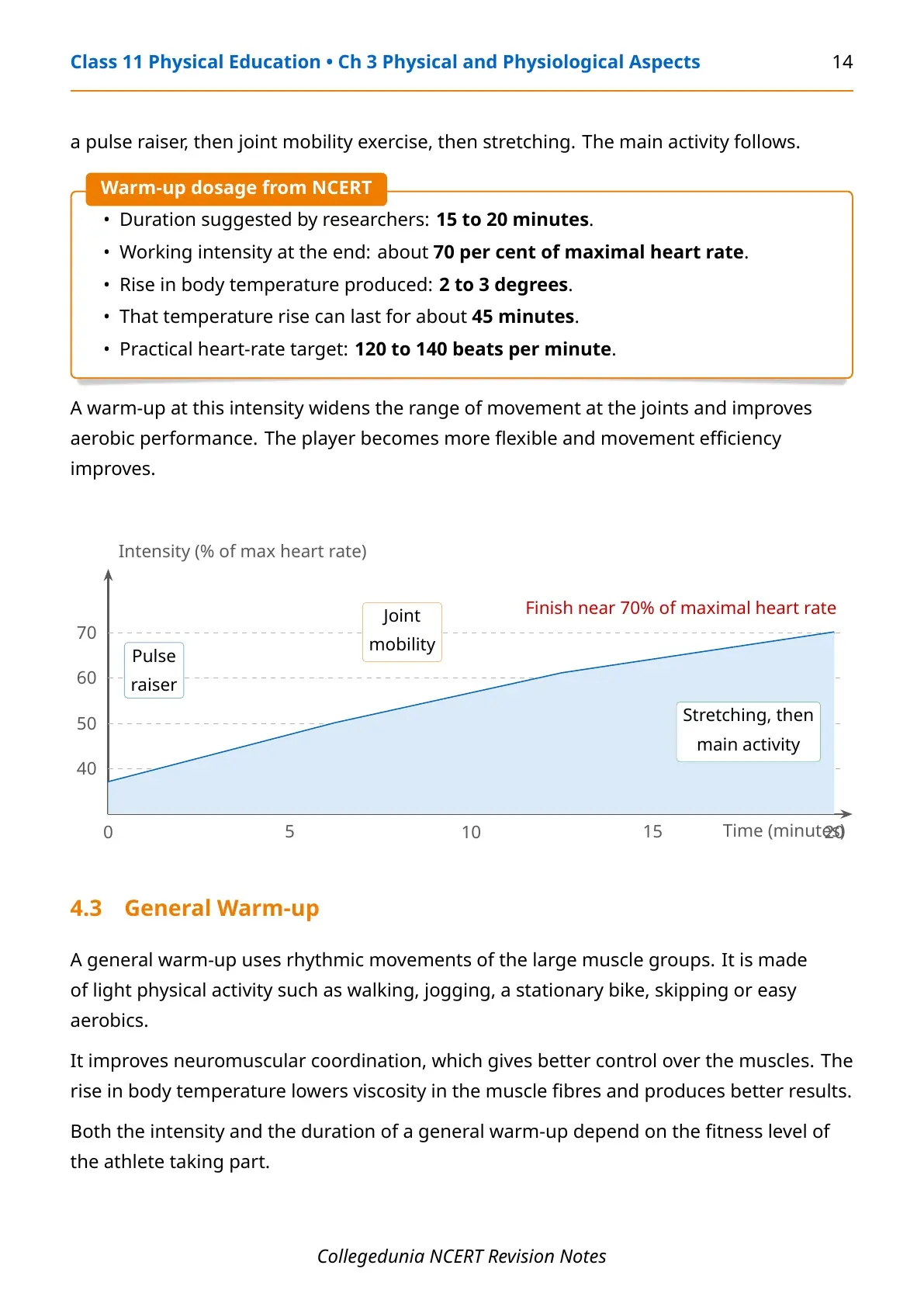
| Target intensity | A gradual increase in intensity until the player is working at 70 per cent of maximal heart rate |
| Rise in body temperature | A 2 to 3 degree rise that can last for 45 minutes |
| Three parts of a warm-up | A gradual increase in intensity of physical activity called a pulse raiser, then joint mobility exercise, then stretching, followed by the main activity |
Why Players Need a Warm-up
The book gives one long list of reasons. Split it into two short answers so you can use either half depending on the marks.
- It increases body temperature and heart rate.
- It provides stretching, which increases blood flow and prevents injuries to the muscles, tendons and ligaments.
- It stimulates the entire body and the major biomechanical functions.
- It provides practice for basic movements.
- It prepares the player or athlete for rigorous athletic activity and training.
- It brings the body to a condition at which it safely responds to nerve signals for quick and efficient action.
- It prepares the player physiologically and psychologically to compete in a game.
Important: the chapter adds a caution that students often miss. Proper warm-up exercises are not supposed to be done vigorously. If a true or false question says a warm-up should be vigorous, the answer is false.
The Six Objectives of a Warm-up
This is a direct one-mark or two-mark question. Five of the six objectives are increases, and the last one is a decrease. That contrast is the easiest way to remember the list.
- Increase heart rate.
- Increase blood flow.
- Increase the internal temperature of the muscles.
- Increase respiratory rate.
- Increase perspiration.
- Decrease the viscosity of joint fluids.
A warm-up at the right intensity also increases the range of movement of the joints and improves aerobic performance. In plain words, the player becomes more flexible and movement efficiency improves.
General Warm-up and Specific Warm-up Compared, with Sport Examples
Both types appear in the textbook assessment as separate short-answer questions. Learn the definition, then one example, then one benefit for each. That is enough for full marks.
| Point | General warm-up | Specific warm-up |
|---|---|---|
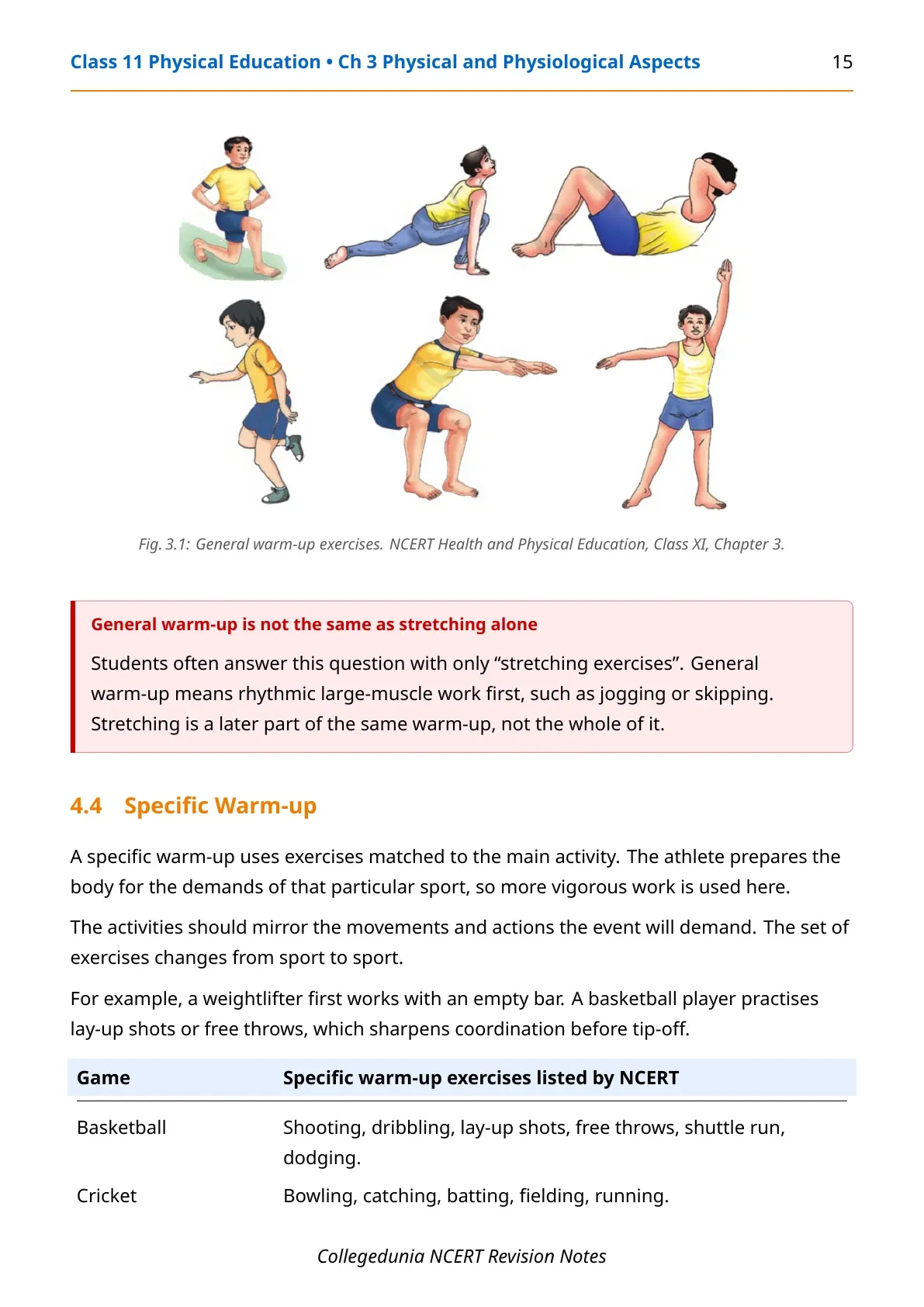
| What it involves | Rhythmic movements using large muscle groups | Specific exercises which are matched to the main activity and have a direct relation with it |
| Typical activities | Light physical activity such as walking, jogging, stationary bike, skipping or easy aerobics | Special sets of exercises that reflect the movements and actions required during the sporting event |
| Intensity | Light. Both intensity and duration are governed by the fitness level of the athlete | More vigorous activity should be employed in this part |
| Main benefit | Improves neuromuscular coordination, giving better control on muscles. Raises body temperature and reduces viscosity in muscle fibres | Prepares the body for the demands of the particular sport and improves coordinating abilities |
| Same for every sport? | Yes, the activities are common | No. The set of activities differs from sport to sport |
Specific Warm-up Exercises for Six Sports
The book prints six sports with their own drills. A question can name any one sport and ask for its specific warm-up, so learn at least three drills per sport.
| Sport | Specific warm-up exercises |
|---|---|
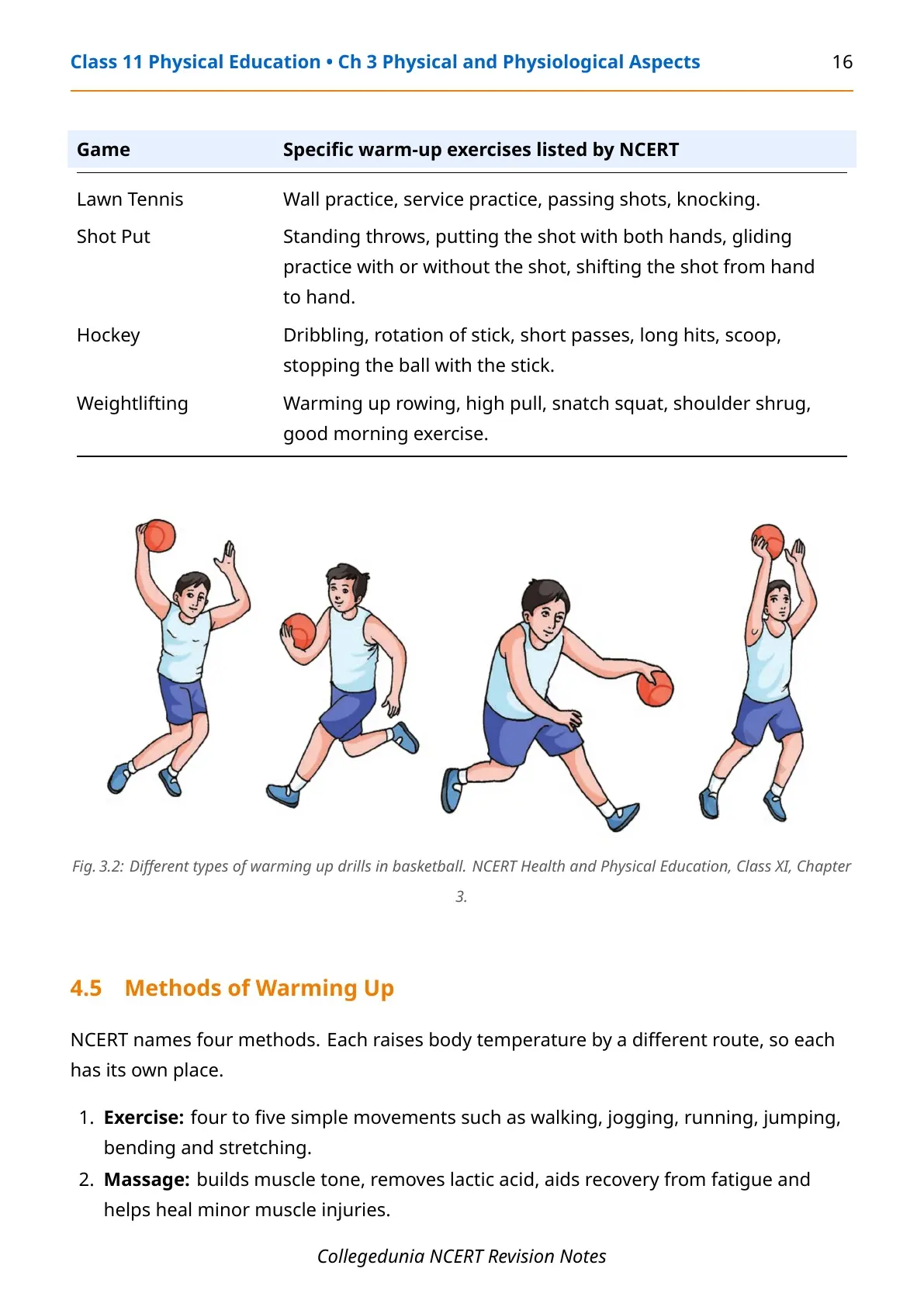
| Basketball | Shooting, dribbling, lay-up shots, free throws, shuttle run, dodging |
| Cricket | Bowling, catching, batting, fielding, running |
| Lawn tennis | Wall practice, service practice, passing shots, knocking |
| Shot put | Standing throws, putting the shot with both hands, gliding practice with or without the shot, shifting the shot from the left hand to the right hand and back |
| Hockey | Dribbling, rotation of the stick, short passes, long hits, scoop, stopping the ball with the stick |
| Weightlifting | Warming up rowing, high pull, snatch squat, shoulder shrug, good morning exercise |
The chapter gives two worked examples in prose as well. In weightlifting, the athlete first performs some exercises with a bar. In basketball, the player practises lay-up shots or free throws before the competition, which helps improve coordinating abilities.
Four Methods of Warming Up and the Rules Every Player Must Follow
The chapter names four methods of warming up. Only the first one is exercise. The other three are worth learning because they turn up as one-mark questions that most students leave blank.
| Method | How it works | What it achieves |
|---|---|---|
| Exercise | Most sets include four to five very simple movements: walking, jogging, running, jumping, bending and stretching exercises | Raises heart rate and prepares the whole body in stages |
| Massage | Massaging of the muscles | Gains muscle tone, helps in the removal of lactic acid, aids recovery from fatigue and helps healing of minor muscle injuries |
| Hot water bath | A bath in hot water, also useful for relaxation of muscles after competition | Raises body temperature, which activates the muscles by increasing blood circulation in them |
| Hot beverage | A small intake of tea, soup, coffee or any other hot drink | Stimulates body functions and helps prepare the body for competition. A large quantity may cause discomfort |
Four Rules to Follow While Performing a Warm-up
The book closes the warm-up section with a practical box. These four points are the model answer for "things to keep in mind while warming up".
- Always start with a continuous slow run to prepare the body and increase temperature. Move all the parts of your body, from head to toes.
- Do not get tired. Avoid too many repetitions of each movement and move the alternate parts of the body.
- It has to be progressive, from low-intensity to high-intensity exercises.
- End with some sprints or short, fast races. This part should last 10 to 15 minutes and the heart rate should rise to 120 to 140 beats per minute.
Sports Conditioning: Purpose, Components and Injury Prevention
Sports conditioning offers an edge over the competition. Its purpose is to complement current sports training, not to replace it. The chapter calls it ideal for children who strive for greater performance in any sporting activity.
Conditioning is meant to enhance an individual's strength, balance, coordination, flexibility, speed and power. Those six qualities can be carried over into all the sports a person plays.
| Question the paper asks | Answer from the chapter |
|---|---|
| What is the purpose of sports conditioning? | To complement current sports training and to give an edge over the competition |
| What does it enhance? | Strength, balance, coordination, flexibility, speed and power, which carry over into all sports |
| How does it help with injuries? | The conditioning programme is an important step in injury prevention. Proper training reduces the incidence of injury in young athletes |
| What does a good programme include? | Strength, power, speed, quickness, agility, movement, skills, deceleration, balance, reactivity and anaerobic capacity |
| Should it be the same for everyone? | No. It should be specific to the sport and should meet the individual needs of the athlete |
Two extra lines are worth adding to a five-mark answer. Conditioning offers teams a chance to grow strong together, and it helps athletes apply their sport-specific skills better. Athletes of all levels and abilities need a sports-oriented training programme besides general fitness.
Cooling Down or Limbering Down and Its Four Effects
Cool down is a session of light exercises that follows rigorous physical activity. The session usually includes gentle exercises and stretching activities. Stretching is the major factor in the procedure of cooling down, because it allows the body muscles to build elasticity and repair from aerobic and anaerobic exercises.
Cooling down is an easy exercise done after a more intense activity. It allows the body to gradually transition to a resting or near resting state. The main aim is to promote recovery and return the body to a pre-exercise or pre-workout level.
Why is that needed? During a strenuous workout the body goes through a number of stressful processes. Muscle fibres, tendons and ligaments get damaged, and waste products build up within the body.
The Four Effects of Cooling Down
The textbook prints these as a numbered list, which makes it a clean four-mark answer. Write all four with the reason attached to each.
- Helps heart rate and breathing return towards resting levels gradually.
- Helps avoid fainting or dizziness, which can result from blood pooling in the large muscles of the legs when a vigorous activity is stopped suddenly.
- Helps to remove metabolites from the muscles, such as lactic acid. Metabolites are the intermediate substances formed during metabolism.
- Helps to prepare the muscles for the next exercise session, whether that is the next day or in a few days' time.
The chapter also prints a small diagram with three more effects. Add them if the question carries five marks or more.
- Faster removal of lactic acid from fast twitch muscle fibre.
- Faster removal of carbon dioxide from muscle tissue.
- Reduction in the risk of muscle soreness.
Do You Know: the chapter notes there are two main types of muscle fibres, fast twitch and slow twitch. Fast twitch fibres are the ones named in the cool down diagram.
Effects of Exercise on the Cardiovascular System
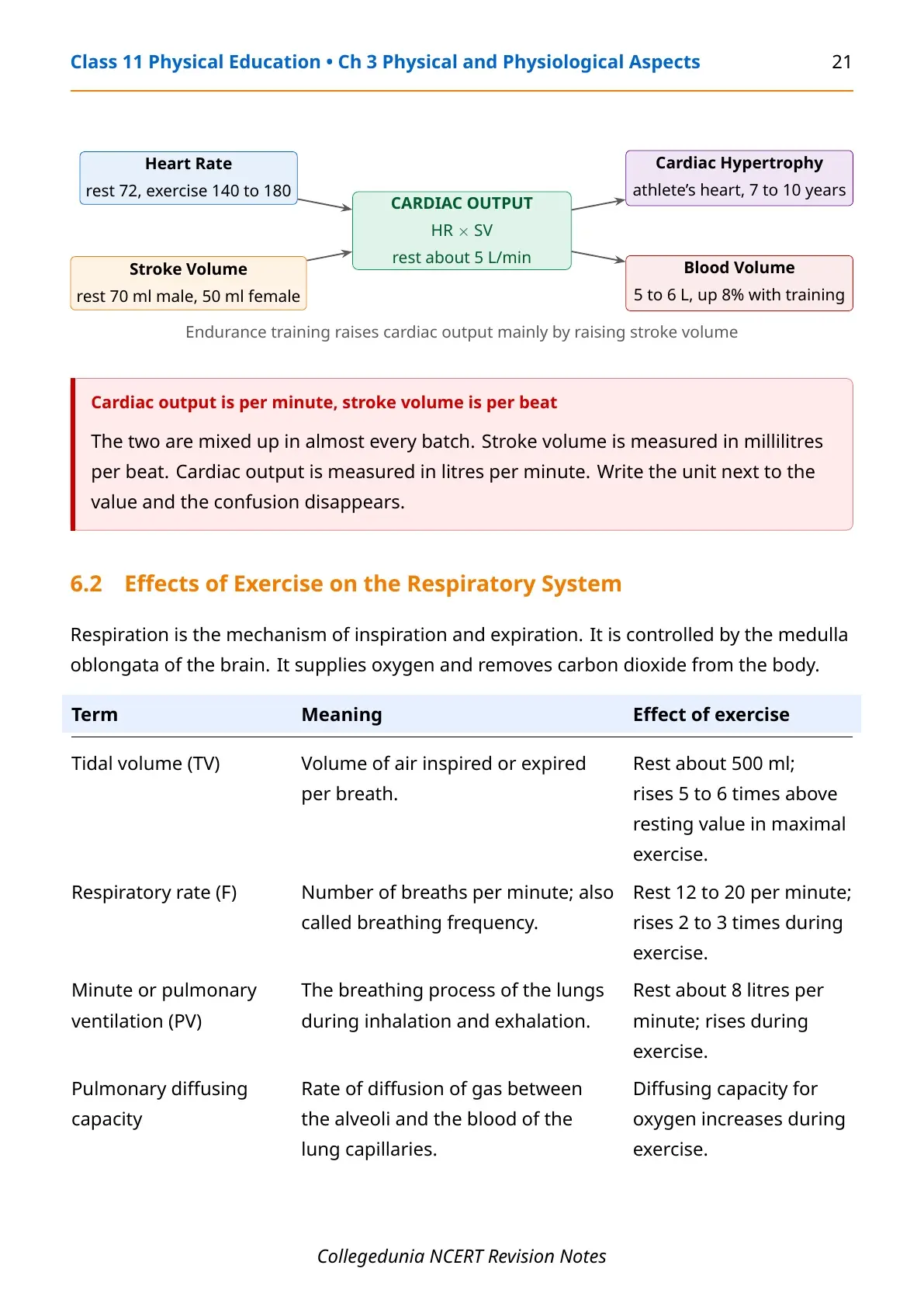
The cardiovascular system is the system of the heart, blood vessels and blood. This section carries the most quotable numbers in the whole chapter, so learn the resting value and the exercise value as a pair for every term.
| Term | Definition | At rest | During exercise |
|---|---|---|---|
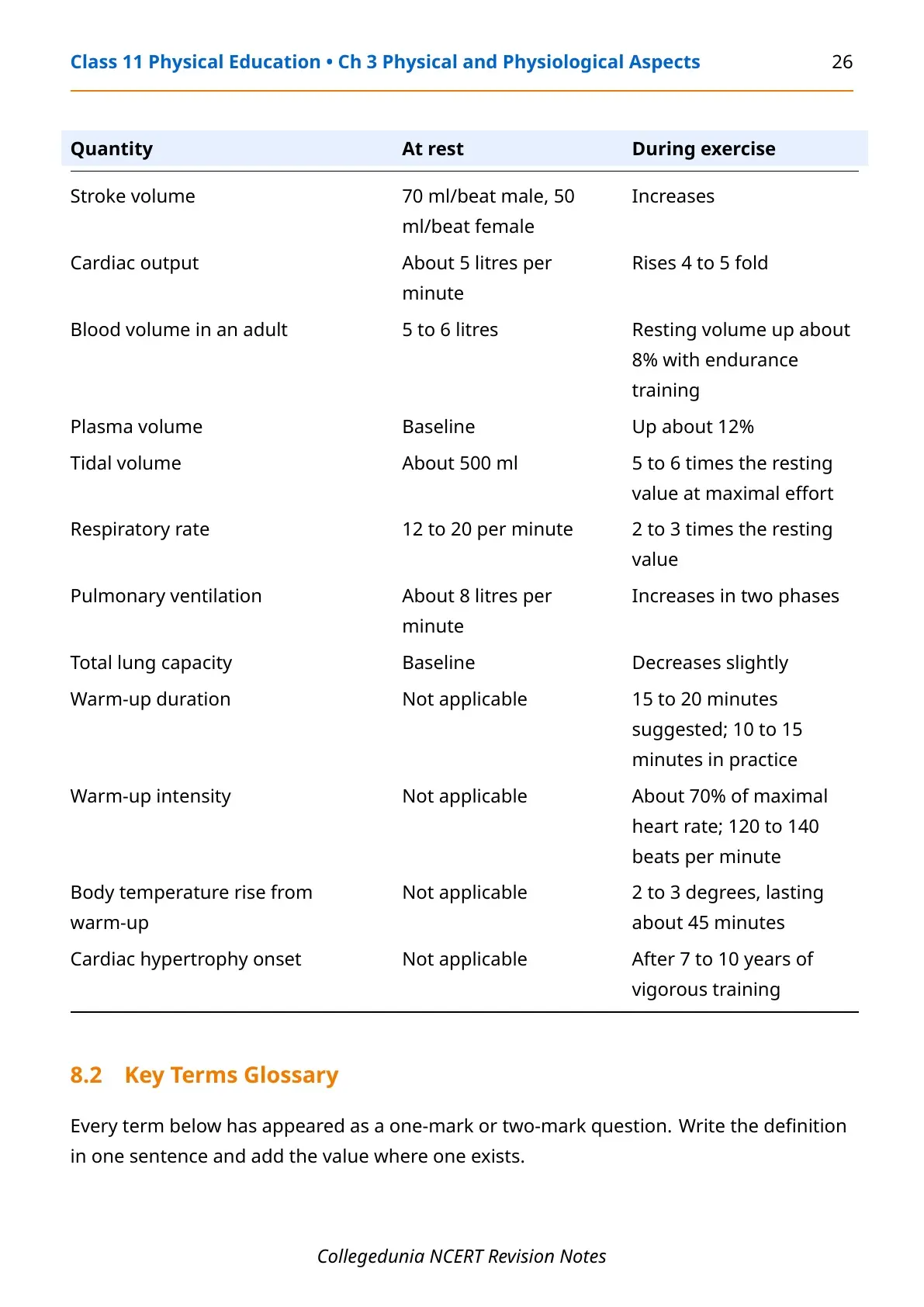
| Heart rate | The number of beats or contractions of the heart in one minute | Ranges from 60 to 80 beats per minute. 72 beats per minute is the normal heart rate | Increases and may range from 140 to 180 beats per minute, depending on the intensity of exercise |
| Stroke volume | The amount of blood pumped out by each ventricle in each heartbeat | Around 70 ml per beat for males and 50 ml per beat for females | Stroke volume increases |
| Cardiac output | The amount of blood pumped out by each ventricle of the heart in one minute. It is the product of stroke volume and heart rate | Around 5 litres per minute | The increase may be about 4 to 5 fold |
| Blood volume | The blood is a reddish fluid, alkaline in reaction and salty in taste | An adult body contains about 5 to 6 litres of blood | Resting blood volume rises by about 8 per cent with endurance training, and plasma volume by 12 per cent |
The one formula in this chapter sits here, and it is asked as a direct short answer. Cardiac output = Heart rate × Stroke volume. Endurance training increases cardiac output through an increased stroke volume, and cardiac output increases directly with increased exercise.
Cardiac Hypertrophy and the Athlete's Heart
Hypertrophy is the increase in the volume of an organ or tissue due to the enlargement of its component cells. When it happens to the heart it is called cardiac hypertrophy.
- Cardiac hypertrophy is referred to as the athlete's heart.
- It may occur after 7 to 10 years of vigorous physical training.
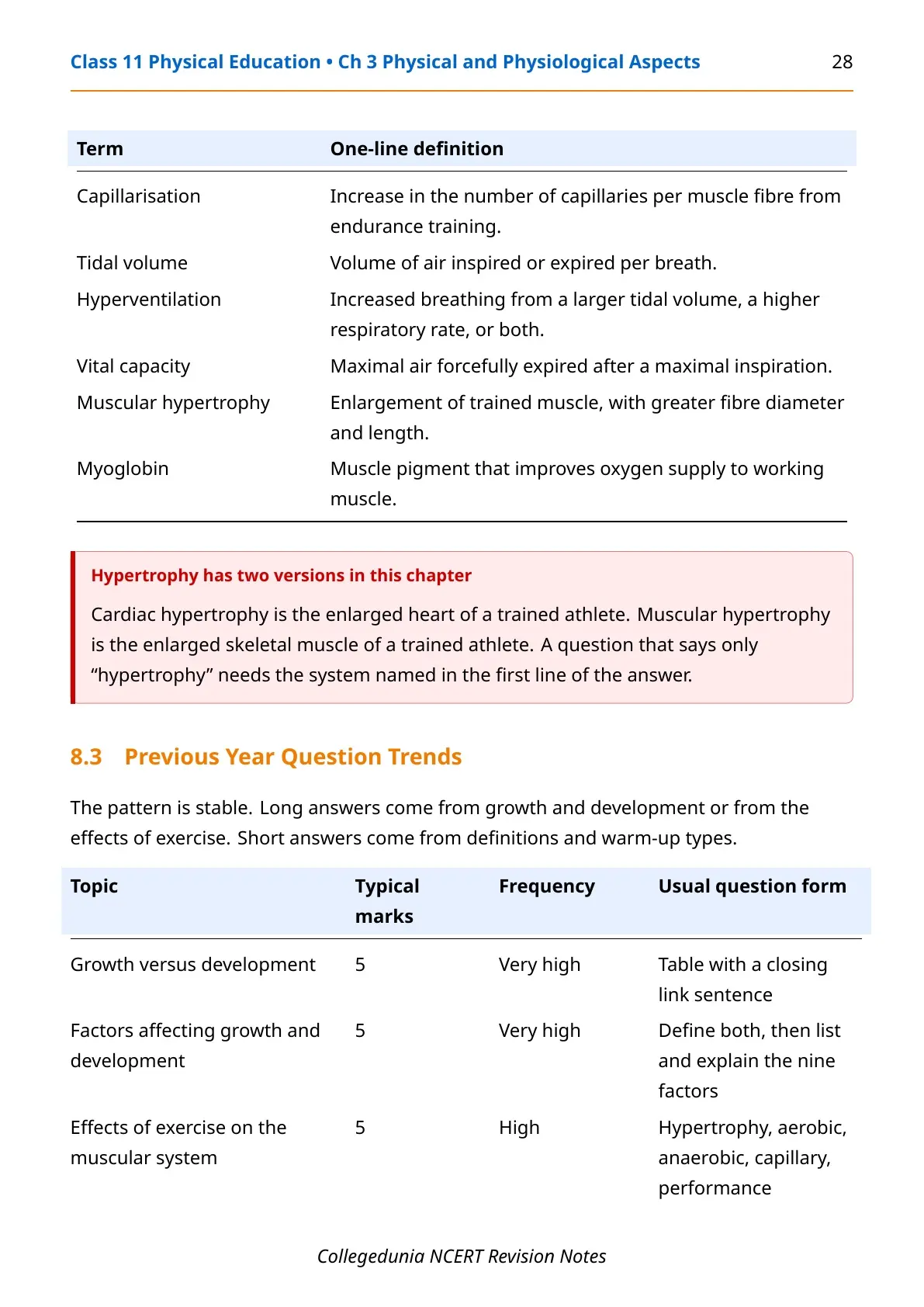
- Do not confuse it with muscular hypertrophy, which is the enlargement of skeletal muscle covered further down this page.
Six Effects of Exercise on Blood Volume
The book prints six bullet points for blood volume. All six can be asked together as a three-mark question, so keep them in one block.
- The effect of exercise on blood volume depends on the type and intensity of the exercise.
- During endurance training, the resting blood volume increases approximately by 8 per cent.
- Plasma volume in the blood increases by 12 per cent.
- An increase in blood volume is known as hemodilution.
- There is an increase in the number of blood vessels and in their size.
- By continuous and endurance training, capillarisation takes place.
Tip: the textbook activity asks you to record your heart rate from the radial artery or the carotid artery before and after a 100 metre sprint. That practical detail has appeared as a one-mark question, so learn both artery names.
Effects of Exercise on the Respiratory System
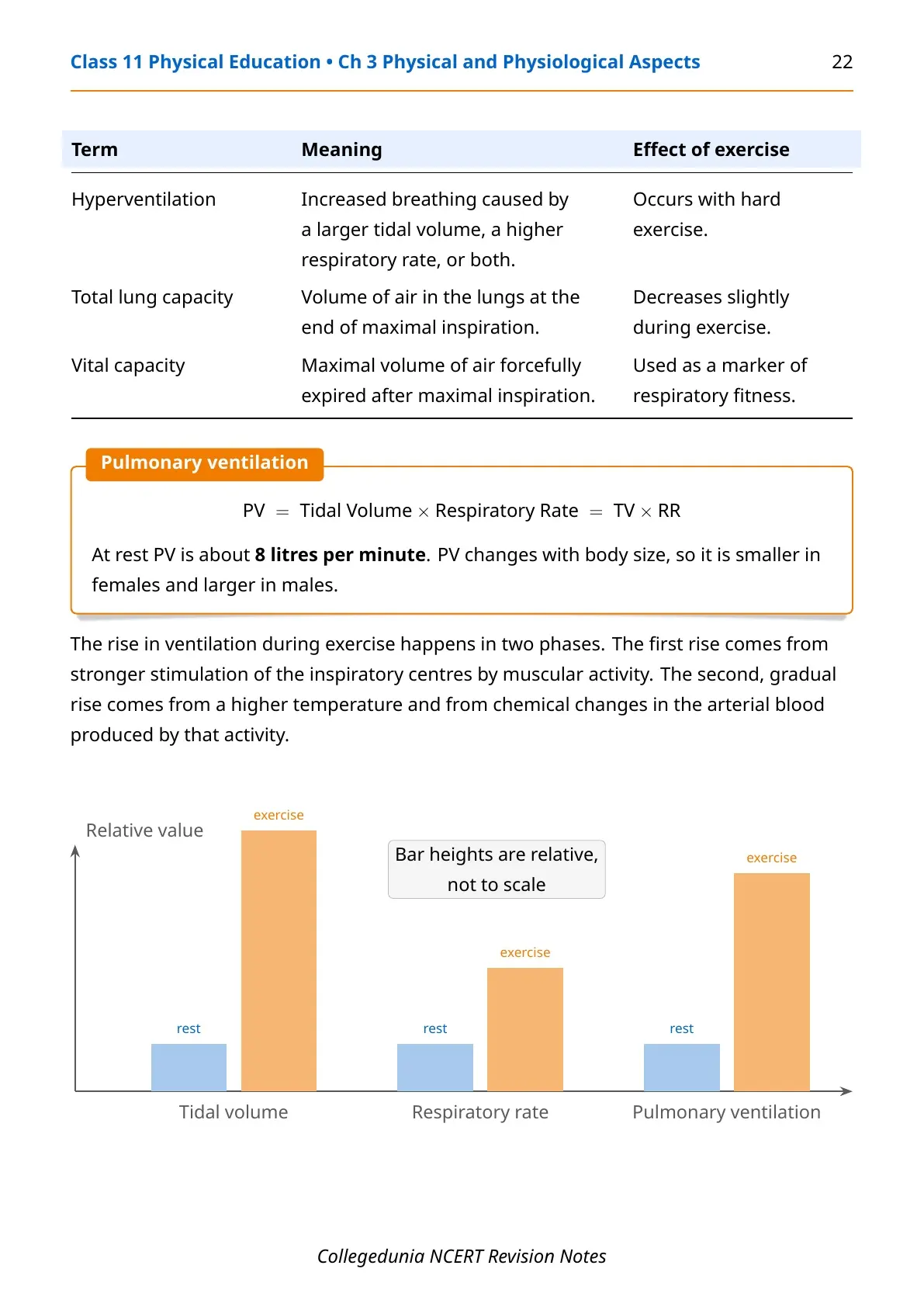
The mechanism of inspiration and expiration is known as respiration. It is controlled by the medulla oblongata of the brain, and it helps in the adequate supply of oxygen and the elimination of carbon dioxide from the body.
Seven terms are defined in this section. Four of them carry a number, and those four are the ones the paper picks.
| Term | Definition | Value at rest | Change during exercise |
|---|---|---|---|
| Tidal volume | The volume of air inspired or expired per breath | Around 500 ml | Increases 5 to 6 times above resting values during maximal exercise |
| Respiratory rate (F) | Also called breathing rate or breathing frequency. The number of breaths per minute | 12 to 20 per minute | Increases to 2 to 3 times the resting rate |
| Minute ventilation or pulmonary ventilation (PV) | The breathing process of the lungs during inhalation and exhalation | 8 litres per minute. It changes with body size, smaller in females and larger in males | Increases. See the two phases explained below |
| Pulmonary diffusing capacity | The rate of diffusion of gas between the alveoli of the lungs and the blood of the lung capillaries | Not given as a figure | The diffusing capacity for oxygen increases |
| Hyperventilation | Increased breathing due to an increased tidal volume, or an increased respiratory rate, or both | Not applicable | Occurs with heavy exercise |
| Total lung capacity | The volume of air in the lungs at the end of maximal inspiration | Not given as a figure | Slightly decreases during exercise |
| Vital capacity | The maximal volume of air which is forcefully expired after maximal inspiration | Not given as a figure | Improves with training |
The formula for minute ventilation is the second formula in the chapter and it is short enough to be a one-mark question. PV = Tidal volume × Respiratory rate, written in short as PV = TV × RR.
Why Ventilation Rises in Two Phases
The chapter gives a two-step reason for the rise in ventilation during exercise. Most students write only the first step, so the second one is easy marks.
- The initial rise in ventilation is due to the increased stimulation of the inspiratory centres caused by muscular activity.
- The second phase of gradual increase happens because of a rise in temperature and because of chemical changes in the arterial blood produced by muscular activity.
Important: total lung capacity is the one value in this section that goes down during exercise. Everything else goes up. Students routinely write that it increases and lose the mark.
Effects of Exercise on the Muscular System
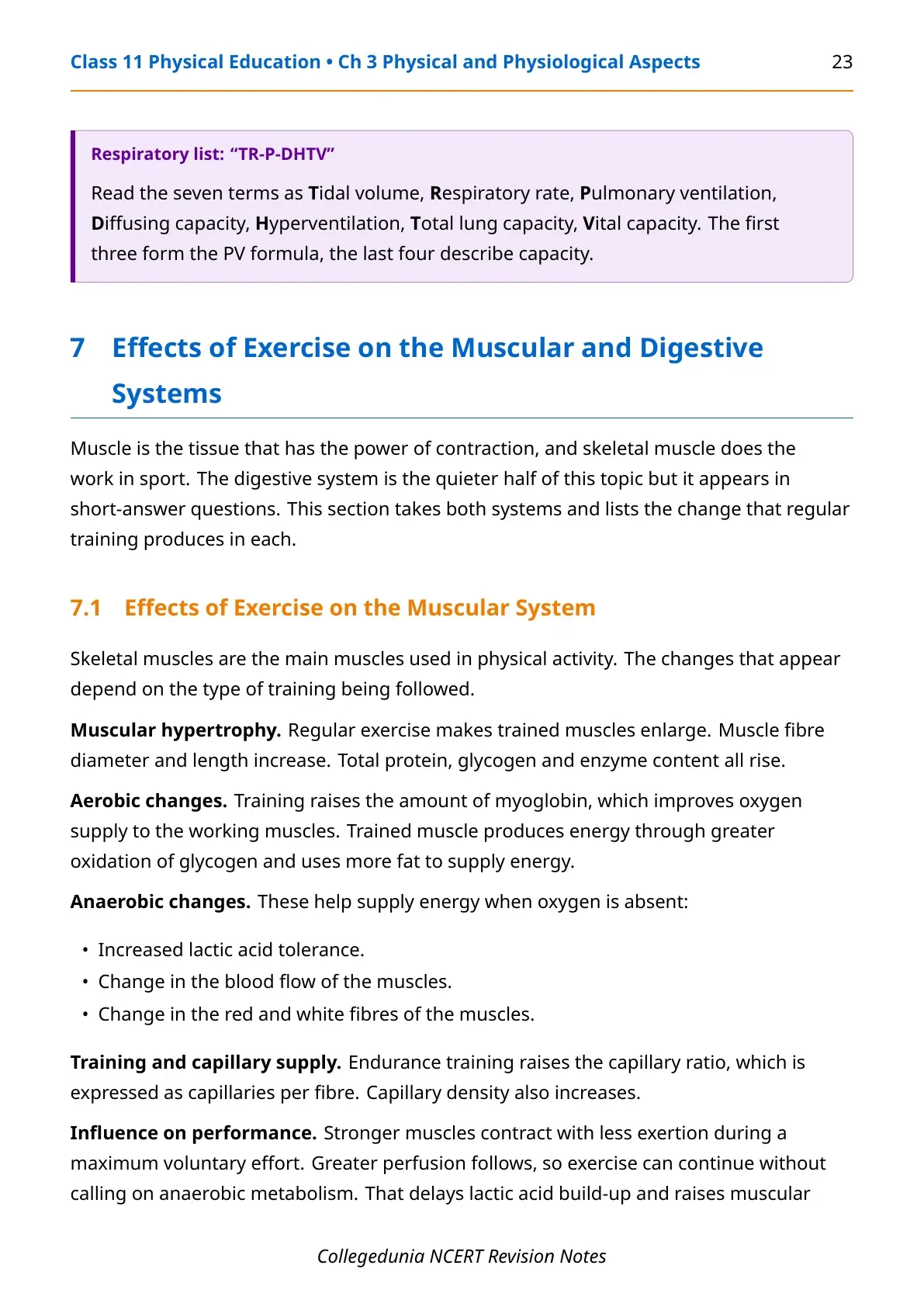
Muscle is a tissue which has the power of contraction. Skeletal muscles are the main muscles used for physical activities and exercises. Several changes take place in skeletal muscle depending on the type of training an individual is doing.
| Effect | What happens in the muscle |
|---|---|
| Muscular hypertrophy | Due to regular exercise and training, muscles become enlarged. Muscle fibres increase in diameter and length. The total amount of protein, glycogen and enzymes is increased |
| Aerobic changes | The amount of myoglobin increases, which helps a better supply of oxygen to the working muscles. Muscles produce energy by increased oxidation of glycogen, and a trained muscle uses more fat to supply more energy |
| Anaerobic changes | Changes that help supply energy in the absence of oxygen: increased lactic acid tolerance, a change in the blood flow of the muscles, and a change in the red and white fibres of the muscles |
| Training and capillary supply | Endurance training increases the capillary ratio, expressed as capillaries per fibre. Training increases capillary density as well |
| Influence on performance | Stronger muscles contract with less exertion during a maximum voluntary force. Greater perfusion occurs, so exercise can continue without involving anaerobic metabolism. This delays lactic acid accumulation and increases muscular force |
The section closes with one summary line that belongs at the end of any answer on this topic. Strength, flexibility and endurance are all increased after training.
Also Check: the textbook short answer asks "what is muscle hypertrophy". Define it as the enlargement of muscles due to regular exercise, then add the three details: fibre diameter, fibre length, and the rise in protein, glycogen and enzymes.
Effects of Exercise on the Digestive System
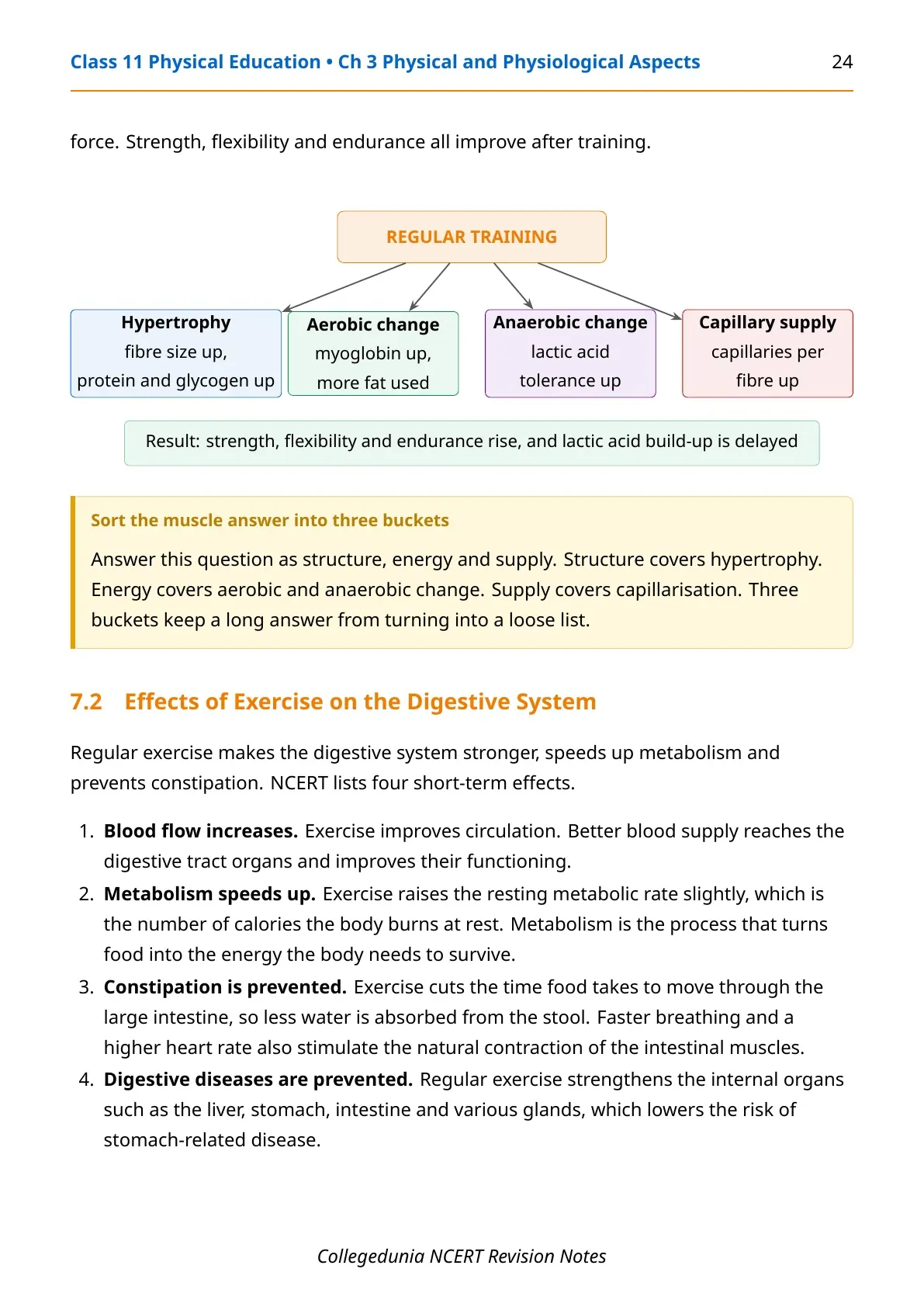
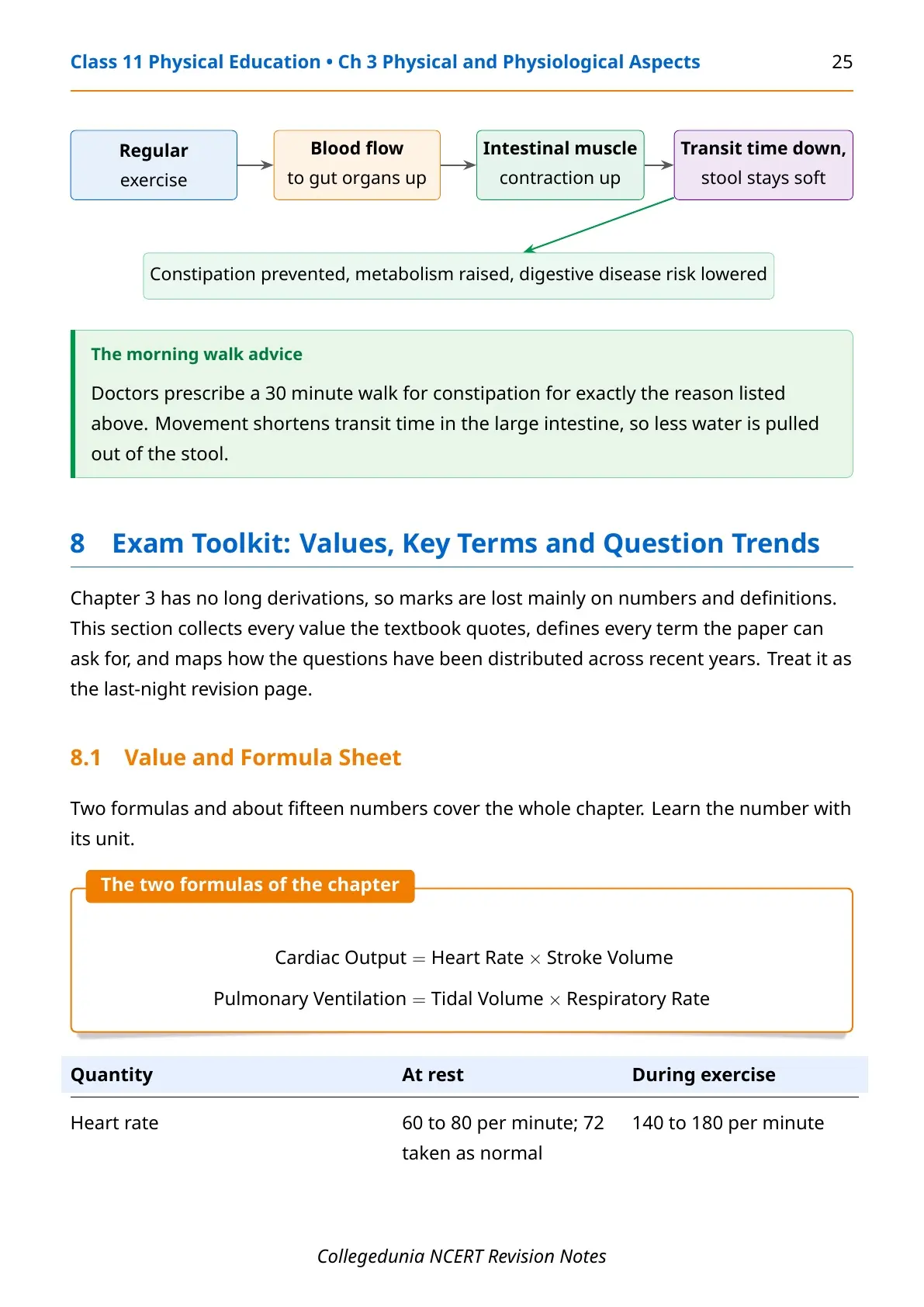
Regular exercise makes the digestive system strong. It speeds up metabolism and prevents constipation. The chapter lists four short term effects, and each one has its own mechanism attached.
| Effect | How exercise produces it |
|---|---|
| Blood flow increases | Exercise improves blood flow. Circulation reaches all areas of the body, including the digestive tract organs, and enhances their functioning |
| Speeds up metabolism | Exercise can slightly increase the resting metabolic rate, which is the amount of calories the body burns at rest. Metabolism is the process in which the food we consume is converted into the energy the body needs to survive |
| Prevents constipation | It decreases the time food takes to move through the large intestine, which limits the amount of water absorbed from the stool into the body. Faster breathing and heart rate also stimulate the natural contraction of the intestinal muscles |
| Prevents digestive diseases | Regular exercise strengthens internal organs such as the liver, stomach, intestine and various glands, which protects against diseases associated with the stomach |
This is the shortest of the four systems in the book, so it usually appears as a two-mark or three-mark question rather than a full long answer. Learn all four effects and one mechanism each, and the answer is complete.
Common Mistakes Students Make in the Physical and Physiological Aspects Chapter
- Saying development is only qualitative. Growth is quantitative. Development is quantitative as well as qualitative.
- Writing that growth continues till death. It is the other way round. Growth ends at some stage, development continues till death.
- Mixing up the two hypertrophies. Cardiac hypertrophy is the athlete's heart after 7 to 10 years of training. Muscular hypertrophy is the enlargement of skeletal muscle.
- Quoting 72 as the exercise heart rate. 72 beats per minute is the normal resting rate. During exercise it is 140 to 180.
- Saying total lung capacity increases. It slightly decreases during exercise. Tidal volume and respiratory rate are the ones that rise.
- Reversing the stroke volume figures. 70 ml per beat is for males and 50 ml per beat is for females.
- Naming only two types of environment. There are three: physical, social and psychological.
- Writing a vigorous warm-up. The chapter says proper warm-up exercises are not supposed to be done vigorously.
- Confusing general and specific warm-up. General uses large muscle groups and is the same for all. Specific is matched to the sport and differs from sport to sport.
In the same student poll, the respiratory system values were the single biggest source of lost marks, ahead of both the growth versus development table and the factors question.
Physical and Physiological Aspects Textbook Assessment Questions Answered
The chapter ends with four question types. Here is what each one tests and where the answer sits in these notes.
| Question type | What the textbook asks | Where the answer sits |
|---|---|---|
| Long answer 1 | What is the difference between growth and development | The nine-row difference table |
| Long answer 2 | Define growth and development and explain the factors affecting them | The growth and development section plus the nine factors table |
| Long answer 3 | Explain the effects of exercise on the muscular system | The five-row muscular system table |
| Long answer 4 | List and explain the effects of exercise on the respiratory system | The seven-term respiratory table plus the two-phase ventilation list |
| Long answer 5 | Explain the physical and physiological changes during different developmental stages | The three developmental stages section |
| Short answers | Cardiac output, full form of MV, muscle hypertrophy, developmental stages, general warm-up, specific warm-up | The cardiovascular, muscular, stages and warm-up sections |
Short Answer Questions, Solved
- What is meant by cardiac output? It is the amount of blood pumped out by each ventricle of the heart in one minute. Cardiac output = Heart rate × Stroke volume. At rest it is around 5 litres per minute.
- Write down the full form of MV. Minute Ventilation, also called pulmonary ventilation. It is the breathing process of the lungs during inhalation and exhalation, and it equals tidal volume multiplied by respiratory rate.
- What is muscle hypertrophy? The enlargement of muscles due to regular exercise and training. Muscle fibres increase in diameter and length, and the total amount of protein, glycogen and enzymes increases.
- List the developmental stages of life. Early childhood, middle childhood and adolescence, as the chapter presents them.
- What is general warm-up? Rhythmic movements using large muscle groups, such as walking, jogging, stationary bike, skipping or easy aerobics. It improves neuromuscular coordination and reduces viscosity in muscle fibres.
- What is specific warm-up? A set of exercises matched to the main activity, with a direct relation to the sport to be played. It is more vigorous, and it differs from sport to sport.
Fill in the Blanks and Match the Following, Solved
- Growth refers to the process through which the body increases in size and shape.
- There are nine major factors which directly or indirectly influence the growth and development of a living organism.
- Hormones play an important role in regulating the process of growth and development.
- An increased tidal volume, or increased respiratory rate, or both, is referred to as hyperventilation.
- Heart rate increases during submaximal exercise and it is caused due to increase in sympathetic activity.
- Weight training with high velocity movement develops explosive strength or power.
| Column A | Correct match | Why |
|---|---|---|
| Stroke volume | Heart | It is the blood pumped by each ventricle in one heartbeat |
| Residual volume | Lung | It is a lung volume, measured after maximal expiration |
| Lactic acid | Muscles | It builds up in muscle during anaerobic work and is removed during cool down |
| Snatch | Weight lifting | Snatch squat is listed in the weightlifting specific warm-up |
| Gliding | Basketball | This is the pairing left by elimination in the textbook key. Note that gliding practice also appears in the shot put warm-up list |
How the Physical and Physiological Aspects Chapter Appears in the Class 11 Paper
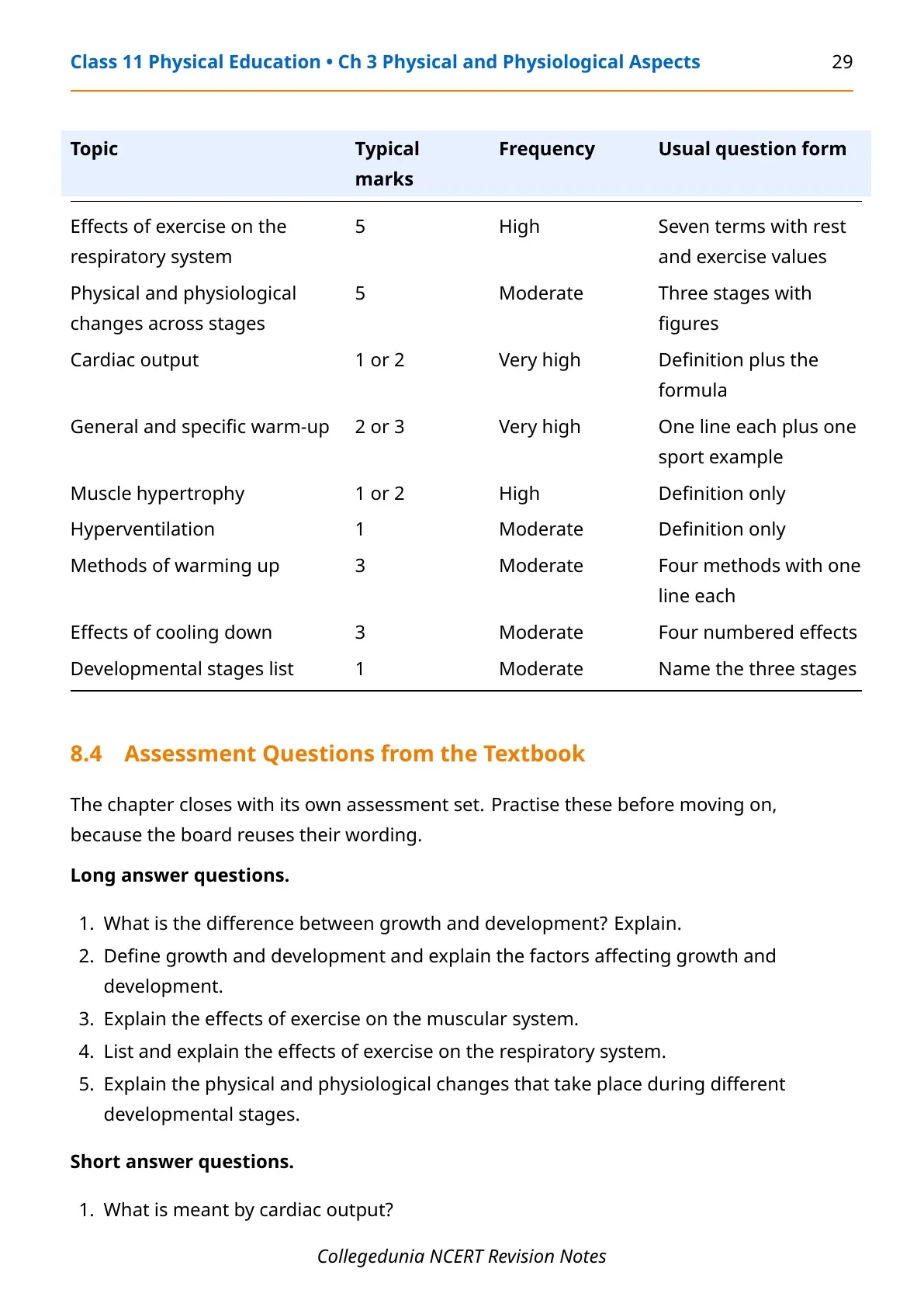
This is one of the heaviest chapters in the Class 11 book because it holds both a psychology block and a physiology block. In the annual paper it usually contributes one long answer and three or four shorter ones.
| Question type | Marks | Typical ask |
|---|---|---|
| Very short answer | 1 | Normal resting heart rate, resting tidal volume, or the full form of minute ventilation |
| Short answer | 2 to 3 | General warm-up, specific warm-up, or the meaning of cardiac output |
| Short answer | 3 | Effects of cooling down, methods of warming up, or the effects of exercise on the digestive system |
| Long answer | 5 | Difference between growth and development, factors affecting growth and development, or the effects of exercise on the muscular or respiratory system |
Together that is roughly 12 to 16 marks from one chapter. The same content also feeds the CUET Physical Education paper, where the warm-up figures and the cardiovascular values appear as direct one-mark questions.
How to Revise the Physical and Physiological Aspects Chapter in One Sitting
Students in the poll reported an average of 100 minutes for this chapter and its questions. That is longer than most Class 11 Physical Education chapters because of the number of values. Split the time in three blocks.
- First 30 minutes: learn the growth and development definitions and write the nine-row difference table from memory. Then list the nine factors and add one line to each.
- Next 30 minutes: do the three developmental stages with their figures, then the whole warm-up block including the six objectives, the four methods and the general versus specific table.
- Last 40 minutes: learn the four body systems. Make a single value sheet with heart rate, stroke volume, cardiac output, tidal volume, respiratory rate and minute ventilation, then write one five-mark answer without looking.
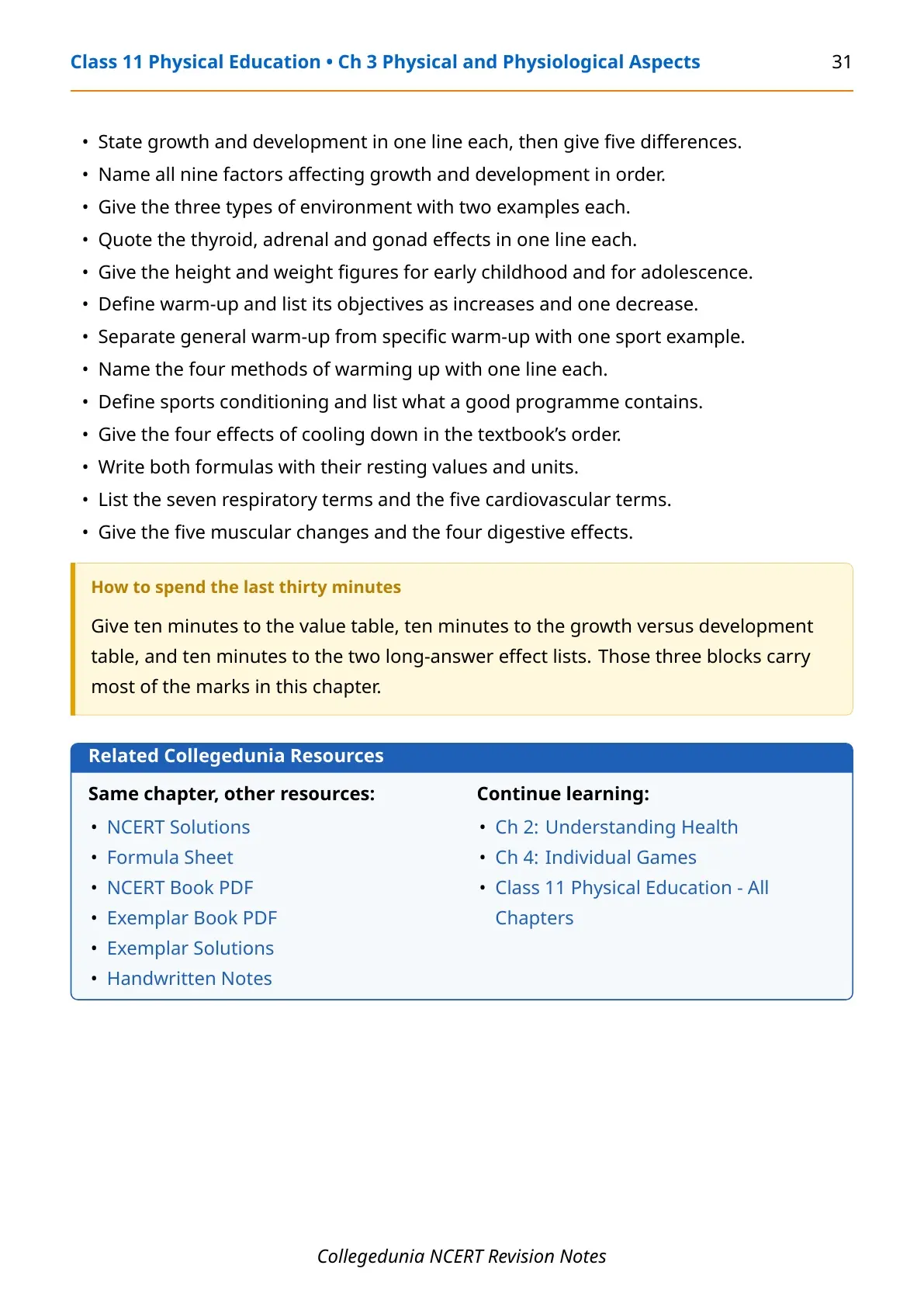
Also Check: the night before the paper, revise only the growth versus development table, the two formulas, and the resting values for the heart and the lungs. Those three blocks cover most of what an examiner can set from this chapter.
Where the Physical and Physiological Aspects Chapter Connects to the Rest of the Class 11 Book
This chapter does not sit alone. Three other chapters in the Class 11 Health and Physical Education book use the same terms, and questions sometimes cross between them. Revise them together and you save time on both.
| Related chapter | What it shares with Chapter 3 | Revision notes |
|---|---|---|
| Chapter 2 Understanding Health | The benefits of regular physical activity, the WHO activity minutes and the health needs of adolescents overlap with the developmental stages block | Understanding Health Class 11 Notes |
| Chapter 6 Yoga and its Relevance in the Modern Times | Breathing, relaxation and the effects of practice on the respiratory system | Yoga and its Relevance Class 11 Notes |
| Chapter 8 Health Related Physical Fitness | Strength, flexibility, endurance and body composition, the same qualities a conditioning programme builds | Health Related Physical Fitness Class 11 Notes |
NCERT Notes for All Class 11 Physical Education Chapters
The Class 11 Health and Physical Education book runs across eleven chapters, and revision notes are published for the first ten. Each page follows the same shape as this one, with tables, a common mistakes block and a downloadable PDF.
| Chapter | Title | Revision Notes |
|---|---|---|
| Chapter 1 | Physical Education | Physical Education Class 11 Notes |
| Chapter 2 | Understanding Health | Understanding Health Class 11 Notes |
| Chapter 3 | Physical and Physiological Aspects of Physical Education and Sports | You are here |
| Chapter 4 | Individual Games | Individual Games Class 11 Notes |
| Chapter 5 | Team Games | Team Games Class 11 Notes |
| Chapter 6 | Yoga and its Relevance in the Modern Times | Yoga and its Relevance Class 11 Notes |
| Chapter 7 | Safety and Security | Safety and Security Class 11 Notes |
| Chapter 8 | Health Related Physical Fitness | Health Related Physical Fitness Class 11 Notes |
| Chapter 9 | Measurement and Evaluation | Measurement and Evaluation Class 11 Notes |
| Chapter 10 | Tournaments and Competitions | Tournaments and Competitions Class 11 Notes |
Class 11 Physical Education Chapter 3 Physical and Physiological Aspects of Physical Education and Sports Notes FAQs
Ques. What is the difference between growth and development?
Ans. Growth is a quantitative increase in the size and shape of the body and happens due to cell division. Development is quantitative as well as qualitative and includes cognitive, social and emotional changes. Growth is visible and can be measured objectively, while development is observed through matured behaviour. Growth is limited to a certain age, but development is a lifelong process.
Ques. What is growth in Class 11 Physical Education?
Ans. Growth is the process through which the body increases in size and shape. It is a biological process that means an increase in mass. It starts from the time of conception in the mother's womb and continues after birth until complete physical maturity is obtained.
Ques. How is development defined in the chapter?
Ans. Development is related with advancement and a progressive series of qualitative changes. It is defined as the emerging and expanding of the capabilities of the individual. It depends heavily on external factors such as nutrition, activity, protection from diseases and socio-cultural influences.
Ques. What are the factors affecting growth and development?
Ans. The chapter names nine factors: heredity, environment, gender, nutrition, exercise, hormones, learning and reinforcement, pollution, and socio-economic status. Heredity fixes the inborn traits and the limits of growth, while environment shapes the mental and social traits.
Ques. What are the three types of environment?
Ans. Physical, social and psychological. Physical environment is all outer physical surroundings including weather and climate. Social environment is the society, institutions, social laws and customs. Psychological environment is rooted in a person's reaction with an object and a situation, such as love, affection and friendship.
Ques. What is warming up and how long should it last?
Ans. Warming up is a short activity carried out before any intense or skilled activity, usually 10 to 40 minutes of light work such as a slow jog, calisthenics and stretching. Researchers have suggested an optimum duration of 15 to 20 minutes, with intensity rising until the player is working at 70 per cent of maximal heart rate.
Ques. What is the difference between general warm-up and specific warm-up?
Ans. General warm-up uses rhythmic movements of large muscle groups, such as walking, jogging, skipping or easy aerobics, and is broadly the same for every athlete. Specific warm-up uses exercises matched directly to the sport, is more vigorous, and differs from sport to sport. Lay-up shots for basketball and bar work for weightlifting are the two examples the chapter gives.
Ques. What are the objectives of a warm-up?
Ans. To increase heart rate, blood flow, the internal temperature of the muscles, respiratory rate and perspiration, and to decrease the viscosity of joint fluids. A warm-up also raises body temperature by 2 to 3 degrees, a rise that can last for 45 minutes.
Ques. What is sports conditioning?
Ans. Sports conditioning is training that complements current sports training and gives an edge over the competition. It enhances strength, balance, coordination, flexibility, speed and power. A good programme includes strength, power, speed, quickness, agility, movement, skills, deceleration, balance, reactivity and anaerobic capacity, and it must be specific to the sport.
Ques. What are the effects of cooling down?
Ans. Cooling down helps heart rate and breathing return towards resting levels gradually, avoids fainting or dizziness caused by blood pooling in the leg muscles, removes metabolites such as lactic acid from the muscles, and prepares the muscles for the next exercise session. The chapter diagram adds faster removal of lactic acid from fast twitch fibres, faster removal of carbon dioxide, and a lower risk of muscle soreness.
Ques. What is cardiac output and what is its formula?
Ans. Cardiac output is the amount of blood pumped out by each ventricle of the heart in one minute. Cardiac output = Heart rate × Stroke volume. At rest it is around 5 litres per minute, and during exercise the increase may be about 4 to 5 fold.
Ques. What is the normal heart rate and how much does it rise during exercise?
Ans. The resting heart rate ranges from 60 to 80 beats per minute, and 72 beats per minute is considered normal. During exercise it may range from 140 to 180 beats per minute, depending on the intensity of the exercise.
Ques. What is tidal volume and how does exercise change it?
Ans. Tidal volume is the volume of air inspired or expired per breath. At rest it is around 500 ml. During maximal exercise it increases 5 to 6 times above the resting value. Respiratory rate at rest is 12 to 20 breaths per minute and rises to 2 to 3 times that during exercise.
Ques. What are the effects of exercise on the muscular system?
Ans. Muscular hypertrophy enlarges the muscles and raises protein, glycogen and enzyme content. Aerobic changes raise myoglobin and improve oxygen supply. Anaerobic changes increase lactic acid tolerance and alter blood flow and fibre type. Endurance training raises capillary ratio and density. Overall, strength, flexibility and endurance all increase after training.
Ques. How does exercise affect the digestive system?
Ans. Exercise increases blood flow to the digestive tract organs, speeds up metabolism by raising the resting metabolic rate, prevents constipation by moving food faster through the large intestine, and helps prevent digestive diseases by strengthening the liver, stomach, intestine and glands.
Ques. Are these Class 11 Physical and Physiological Aspects notes according to the current syllabus?
Ans. Yes. Every definition, table, figure and body value on this page follows the 2026-27 reprint of the NCERT Health and Physical Education textbook for Class 11. The assessment questions at the end of the chapter are unchanged in this edition, so the notes apply to the current session and to CUET Physical Education preparation.



Comments