




These Class 11 revision notes on Measurement and Evaluation pull together every definition, test procedure, scoring rule and norm table that the annual paper actually asks for. Test, measurement, evaluation, the five fitness components with their test items, the BMI and waist-to-hip ratio formulas and the three somatotypes are all covered in the order the 2026-27 NCERT textbook prints them.
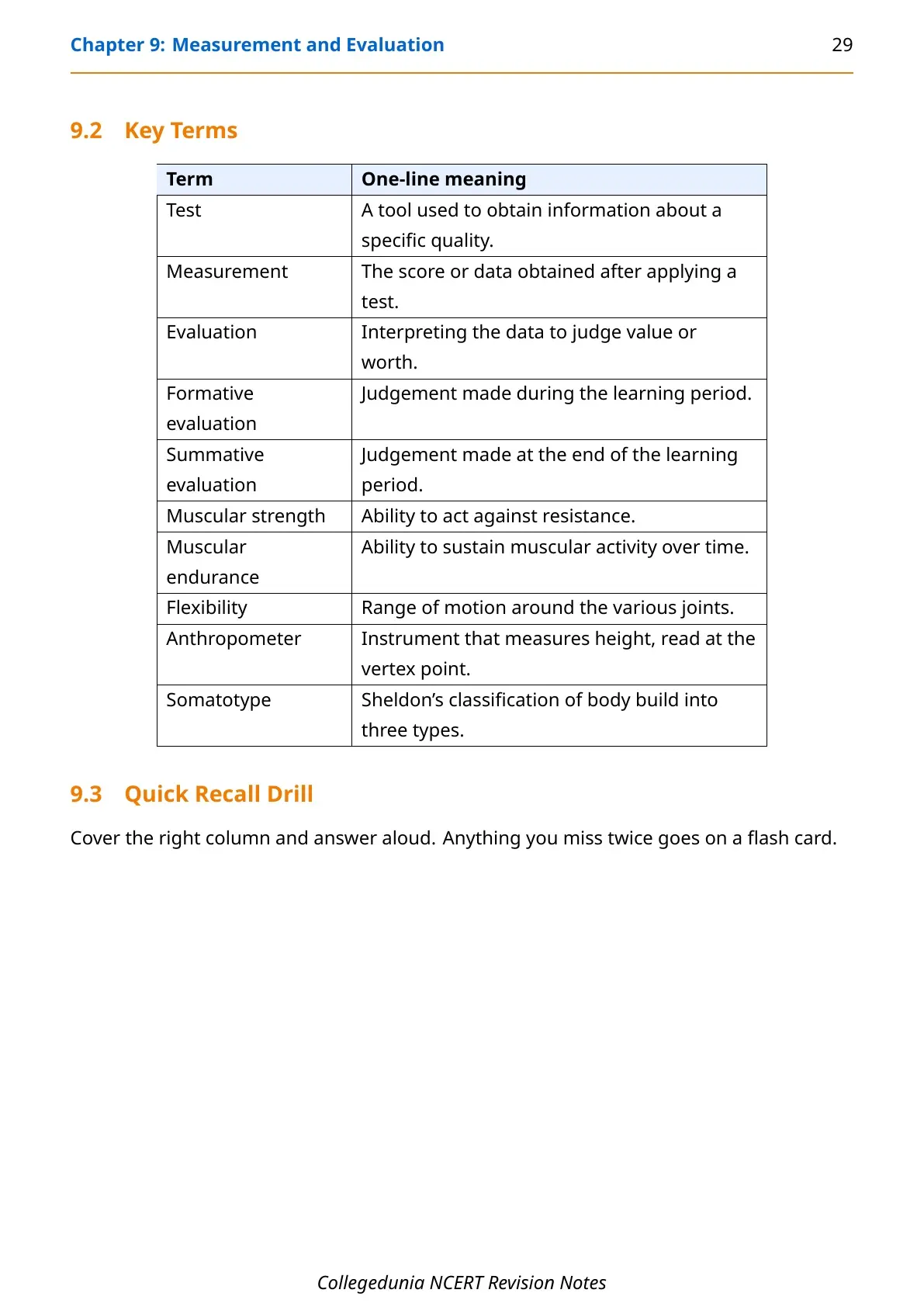
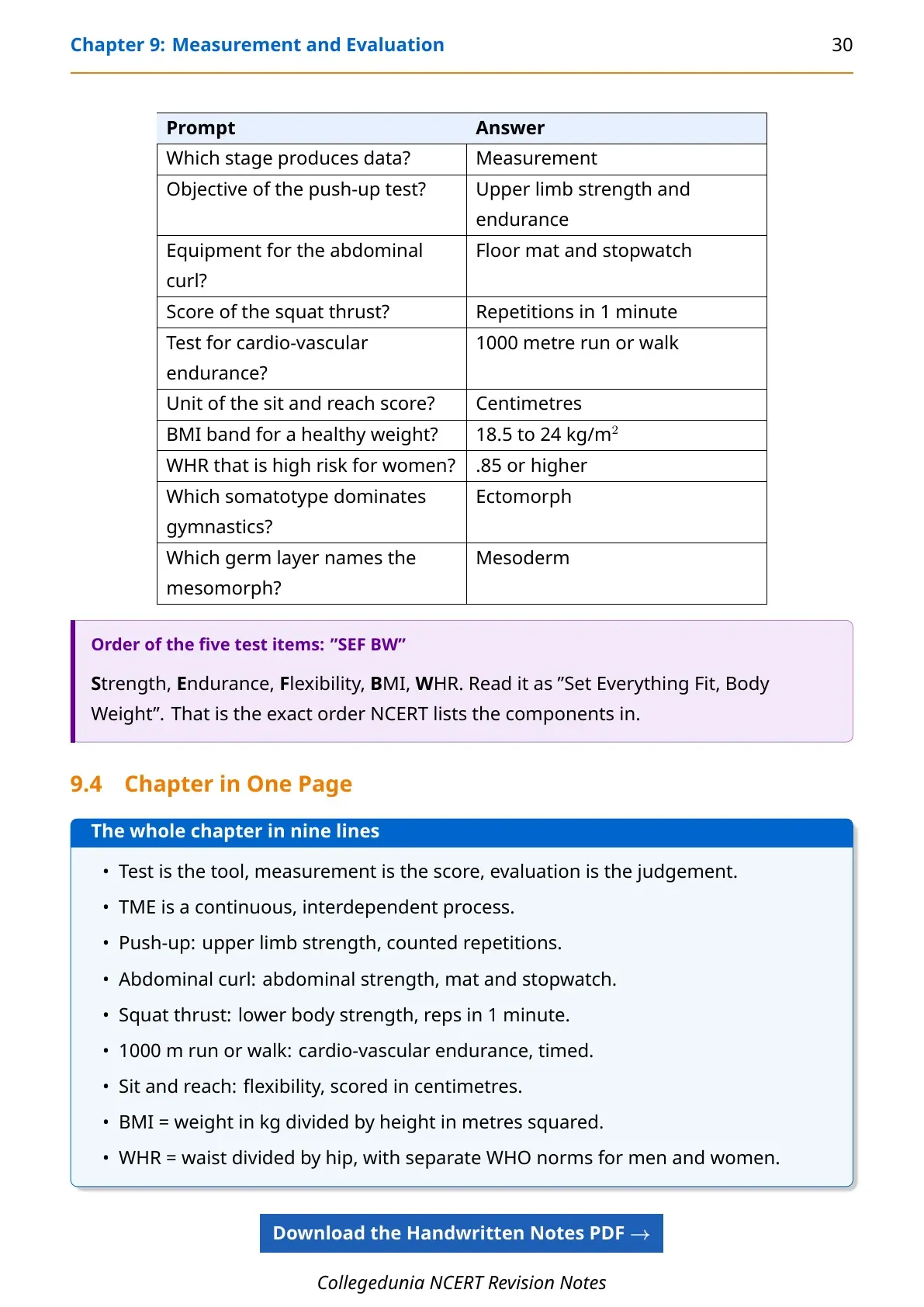
- Covers all five selected physical fitness components with the exact test, procedure and scoring the textbook prints.
- This chapter usually carries 10 to 14 marks in the Class 11 annual paper.
- Written according to the 2026-27 NCERT Health and Physical Education textbook for Class 11.
Every note on this page is curated by Class 11 Physical Education teachers, checked line by line against the 2026-27 NCERT print, and refined against the last five years of school question papers.
Student Feedback: In a Collegedunia poll of 12,840 Class 11 Physical Education students taken before the 2026-27 school exams, 66% said the three somatotypes were the hardest part of this chapter. Only 31% could write the difference between test, measurement and evaluation without opening the book.
Source: 2026-27 Class 11 Physical Education student poll. Sample of 12,840 students from CBSE schools across 20 states.
What the Class 11 Measurement and Evaluation Notes Cover
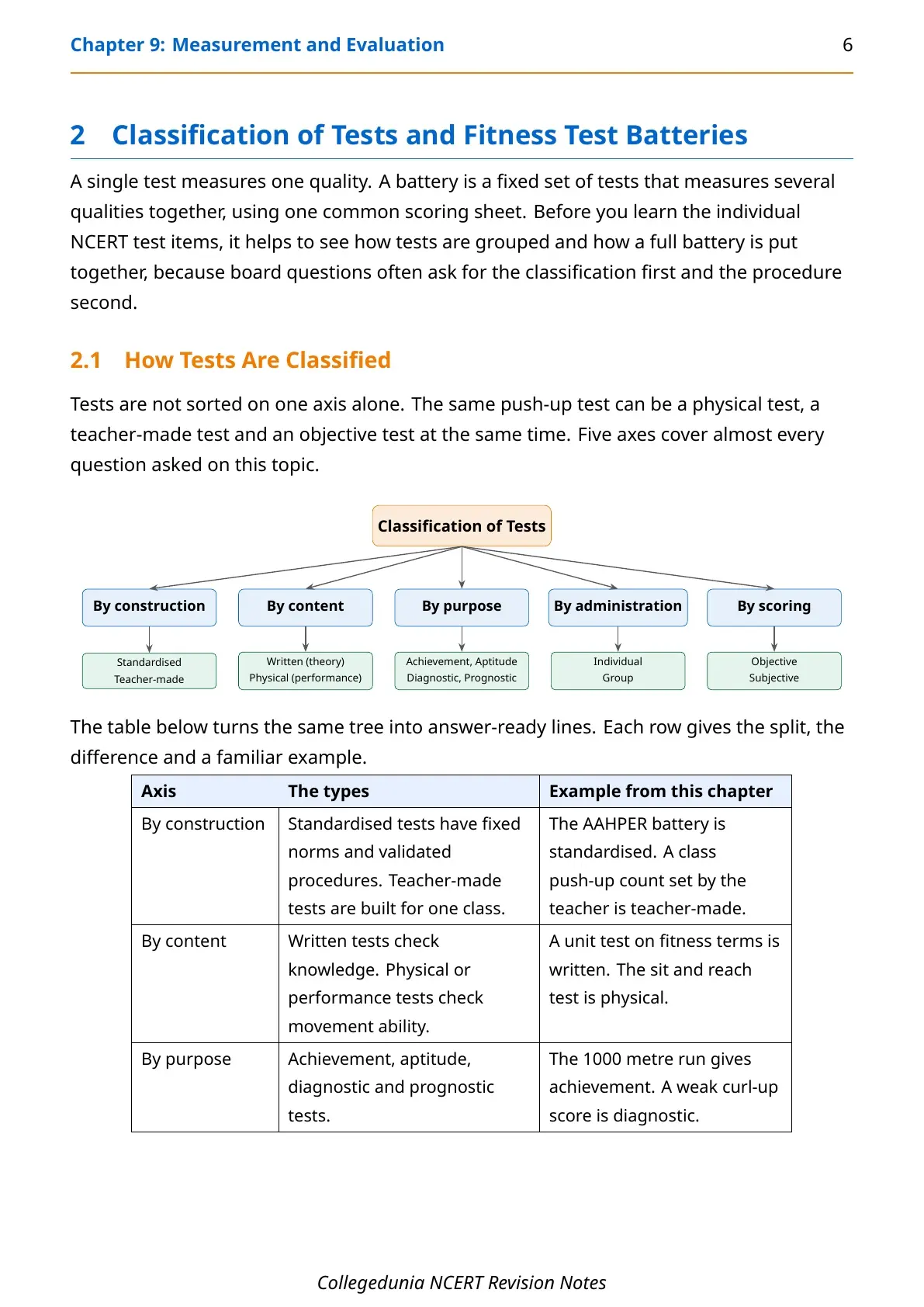
This is one of the most practical chapters in the Class 11 book. Almost everything in it is a test with a fixed procedure and a fixed scoring rule, so the marks come from writing the steps in the right order and quoting the right norm figures.
- Test, measurement and evaluation, the three definitions and how they depend on one another.
- The uses of a measurement and evaluation programme for teachers, students and parents.
- Muscular strength with its physiological and psychic factors, plus the push-up, abdominal curl and squat thrust tests.
- Muscular endurance and the 1000 metre run or walk test.
- Flexibility and the sit and reach test, with the five-band norm table in inches and centimetres.
- Body Mass Index, its formula, the height and weight measurement procedures and the WHO category table.
- Waist-to-hip ratio, its formula, its measurement procedure and the WHO risk table for men and women.
- Somatotypes: endomorph, mesomorph and ectomorph, with the physical characteristics and sport suitability of each.
Tip: every test in this chapter has the same three-part shape in the book, which is objective, equipment required, procedure and scoring. Answer every test question in that same order and you will not miss a mark even if you forget a step.
Test, Measurement and Evaluation Defined
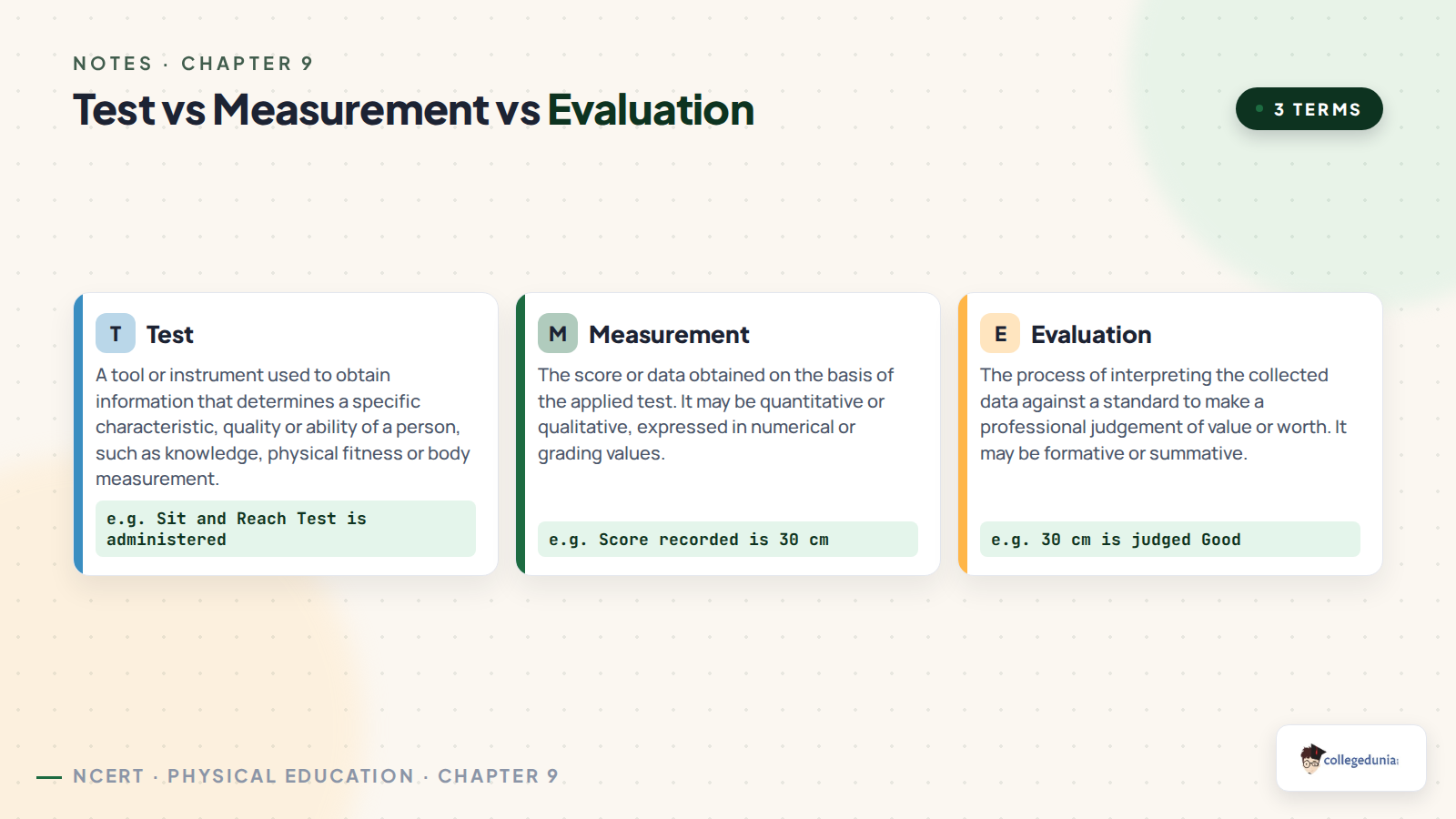
The chapter opens by saying that our day-to-day life is largely associated with these three terms, because we constantly want to know the status or level, attitude or skill, cause or effect of someone's effort. To answer any query or assumption, we use test, measurement and evaluation.
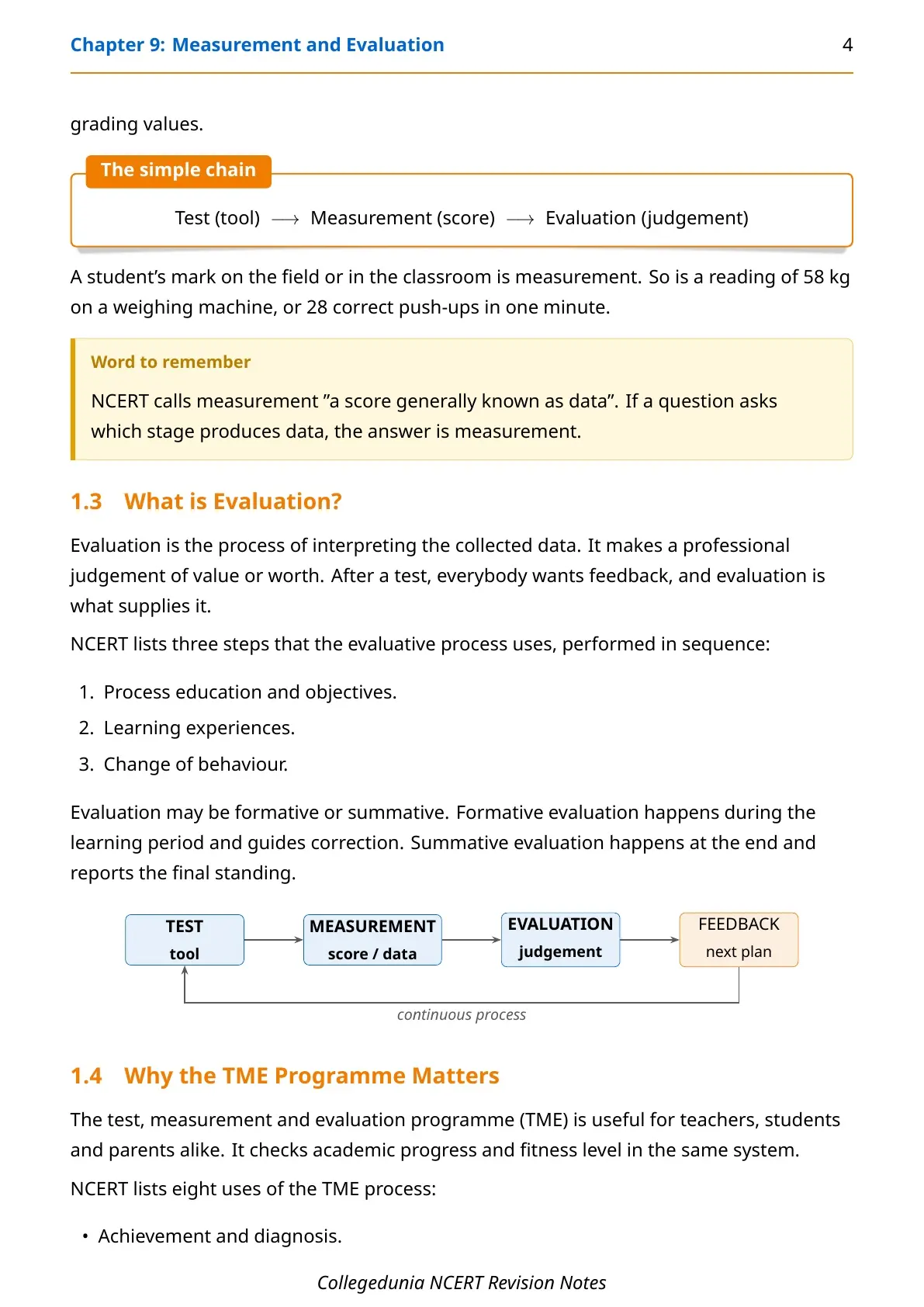
The key line to quote is the relationship between them. Any idea or thought cannot take constructive shape without evaluation, evaluation is based on measurement, and measurement cannot start without using an appropriate test. Test, measurement and evaluation are interrelated, interdependent and follow a continuous process.
| Term | Definition the textbook prints | Example given |
|---|---|---|
| Test | A tool to obtain information to determine the specific characteristics or qualities of an individual regarding knowledge, physical abilities, skill abilities and so on | Unit test, annual examination, physical fitness test, body measurement such as height and weight |
| Measurement | A score or data in numerical or grading values, indicating the capacity or ability of an individual, obtained on the basis of the applied test. It can be quantitative, qualitative or both | The score a student gets in a test or examination, either on the field or in the classroom |
| Evaluation | The process of interpreting the collected data to measure and make the professional judgement of value or worth | The feedback or effectiveness of the measures gathered after a test has been given |
Do You Know: the textbook prints a small box saying measurement is a score generally known as data. That single line has appeared as a one-mark fill in the blank.
The Two Forms of Evaluation and Its Three Steps
Evaluation may be formative or summative. The book then says the evaluative process uses three steps, performed in sequence.
- Process education and objectives, which set what is being judged.
- Learning experiences, which are what the student actually goes through.
- Change of behaviour, which is the outcome the evaluation looks for.
Because these steps are performed in sequence, a question asking you to "write the steps of the evaluative process" expects them in this order and not as a random list.
Measurement and Evaluation Basics Explained
Source: Magnet Brains on YouTube
Why the Measurement and Evaluation Programme Matters
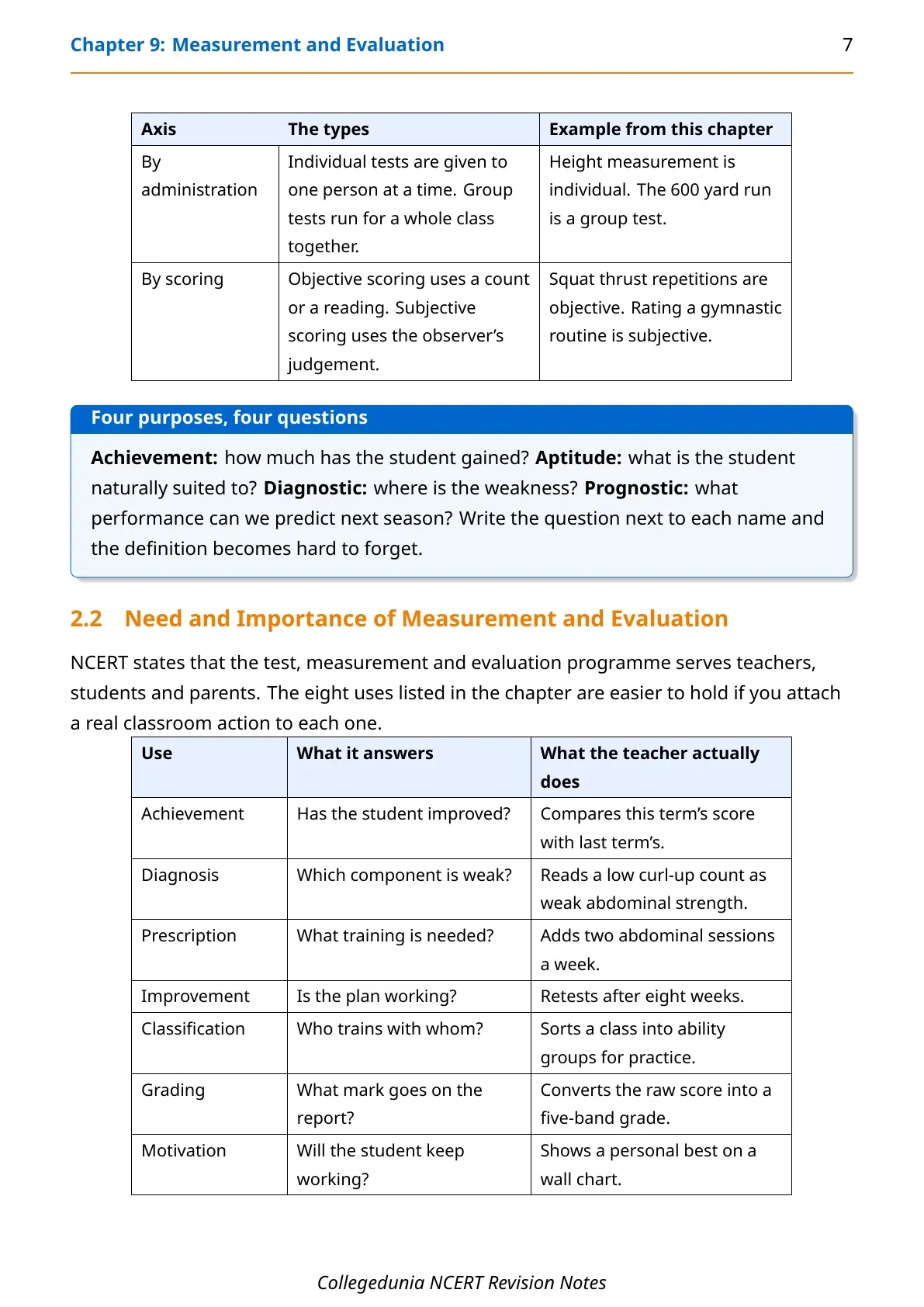
The book gives one compact paragraph on usefulness, and it is a guaranteed short answer. A measurement and evaluation programme is very useful for teachers, students and parents in the field of health and physical education, either to check academics or to check the level of fitness.
It then names the purposes of the TME process, which is short for the test, measurement and evaluation process. Learn all eight, because a three-mark question usually asks for any four with a line of explanation.
| Purpose | What it means in a school setting |
|---|---|
| Achievement | Shows how much a student has actually gained against the target set at the start of the session |
| Diagnosis | Identifies the weak component, such as poor flexibility or low abdominal strength |
| Prescription | Lets the teacher prescribe the right exercise or training load for that weakness |
| Improvement | A retest after a training block shows whether the prescribed programme worked |
| Classification | Groups students of similar ability together so that practice is safe and fair |
| Grading | Converts raw scores into grades for the report card |
| Motivational purpose | A visible score pushes a student to better the previous reading |
| Prediction of performance | Helps a teacher judge how a student is likely to perform in a future competition |
Measurement and Evaluation of Selected Physical Fitness Components
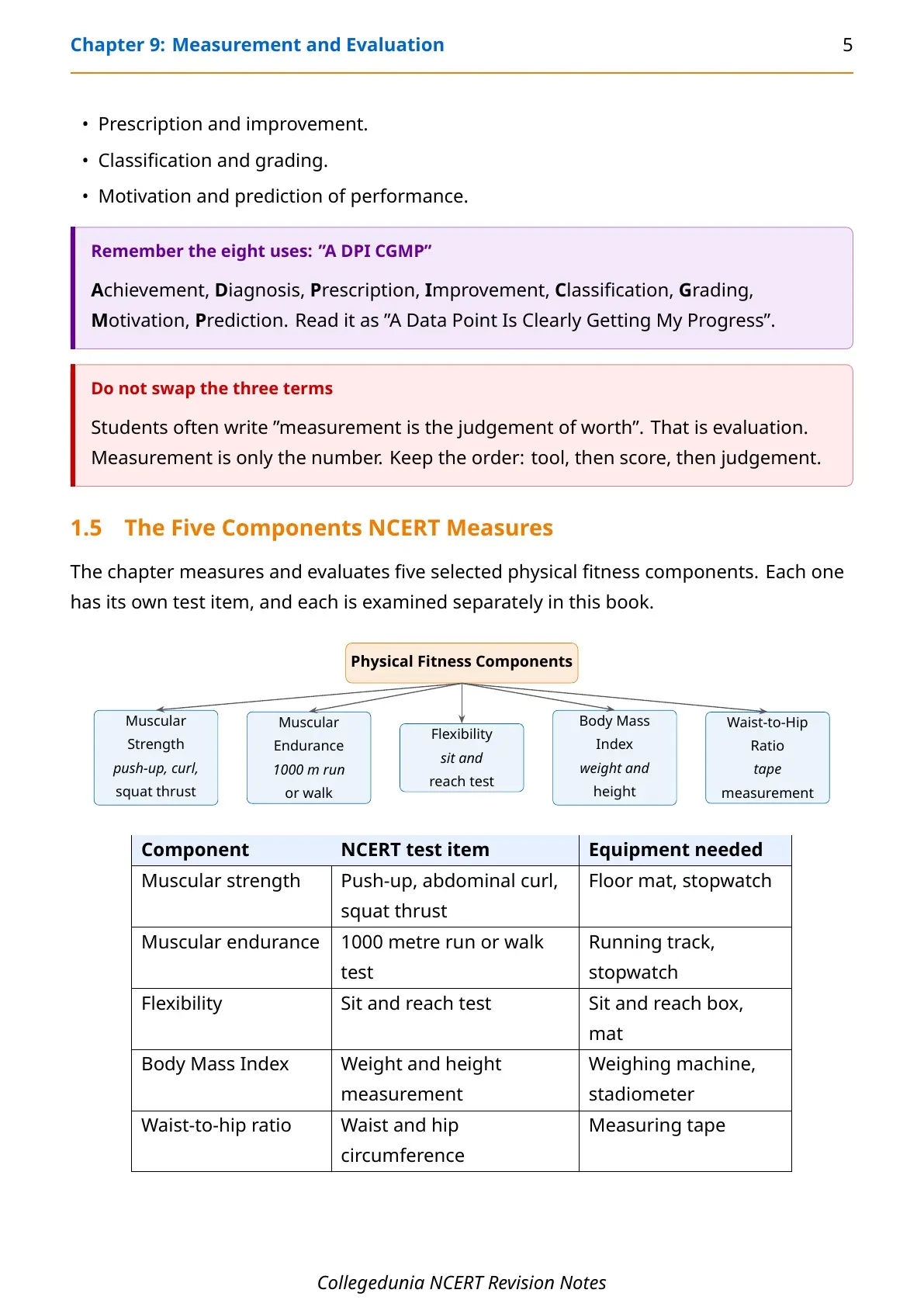
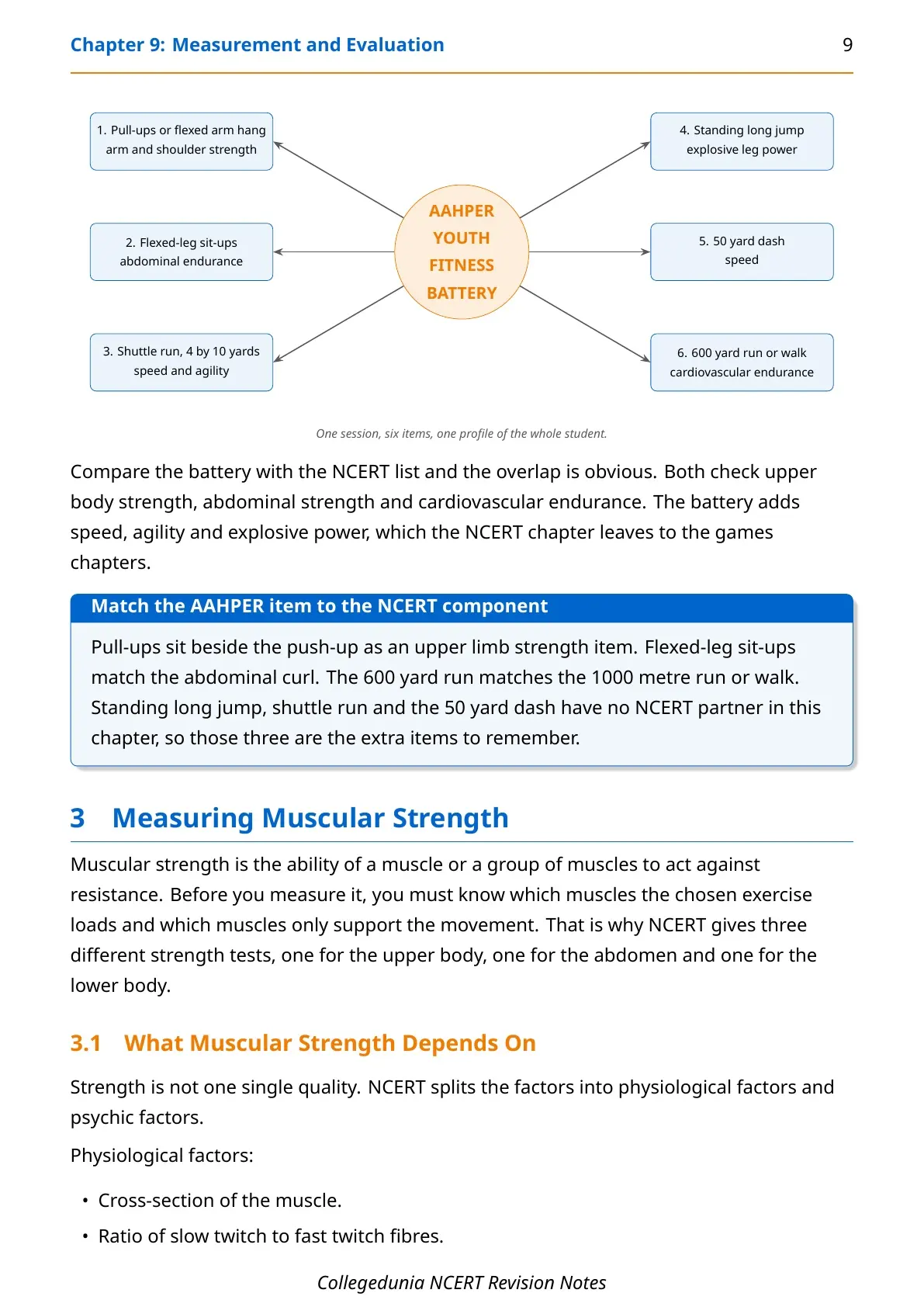
The chapter names five components and fixes one or more test items against each. This list is the skeleton of the whole chapter, so learn the pairing first and the procedures afterwards.
| Component | Test item the textbook names | What the test assesses |
|---|---|---|
| Muscular strength | Push-ups, abdominal curls and squat thrust | Strength and endurance of the upper body, the abdominal muscles and the lower body |
| Muscular endurance | 1000 metre run or walk test | Cardio-vascular endurance |
| Flexibility | Sit and reach test | Flexibility of the lower back muscles and the hamstring muscle group |
| Body composition | Assessment of Body Mass Index | The level of obesity of an individual |
| Fat distribution | Waist-hip ratio or waist-to-hip ratio | Where body fat sits, which helps evaluate overall health |
Also Check: a very common one-mark question is "which test measures flexibility" or "which test measures cardio-vascular endurance". If you know only this table, you already hold those marks.
Muscular Strength: Meaning, Factors and Three Test Items
Muscular strength refers to the ability of the muscle or group of muscles of an individual to overcome or to act against the resistance. The chapter says this was defined in the previous chapter, and then adds the factors it depends on.
| Group of factors | What the chapter lists |
|---|---|
| Physiological factors | Cross-section of the muscle, the ratio of slow and fast twitch fibres in the muscle, coordination between muscles (agonist and antagonist), and the ATP and CP store, which plays an important role in providing energy to the active muscle or group of muscles |
| Psychic factors | The present state of mind such as anger, aggression, motivation and emotional state. These have a positive as well as a negative correlation with muscular strength |
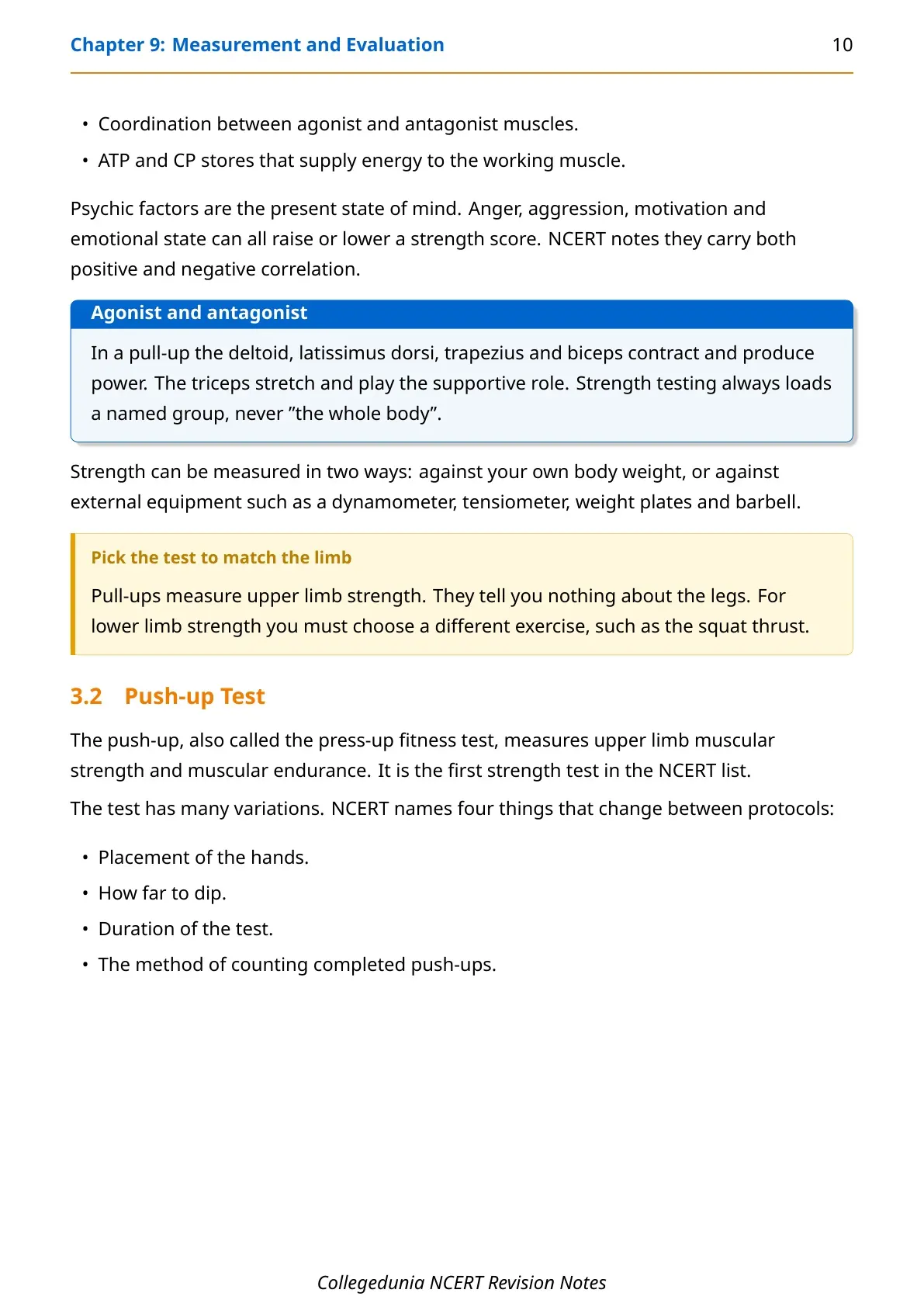
Before measuring strength, the book says we must have knowledge of the muscles involved and of the particular exercise meant for a particular muscle along with its supportive muscles. It gives one worked example. While performing pull-ups an individual lifts his body, so the deltoid, latissimus dorsi, trapezius and biceps contract and produce power, whereas the triceps stretch and play the supportive role.
That example leads to the point the paper likes. Pull-ups can be a test item for the strength of the upper limbs, but for the strength of the lower limbs a different exercise is needed. Muscular strength can be measured with the help of one's own body weight, or with equipment such as a dynamometer, tensiometer, weight plates and barbell.
Push-up Test: Objective, Procedure and Scoring
The push-up or press up fitness test measures upper limb muscular strength and muscular endurance. The chapter notes that there are many variations of this test, such as different placement of the hands, how far to dip, the duration of the test and the method of counting the completed push-ups.
- Objective: to identify and assess the muscular strength and endurance of the upper body.
- Equipment: depending on the protocol used, a floor mat, metronome, beat drum, audio tape, clapping or a stopwatch.
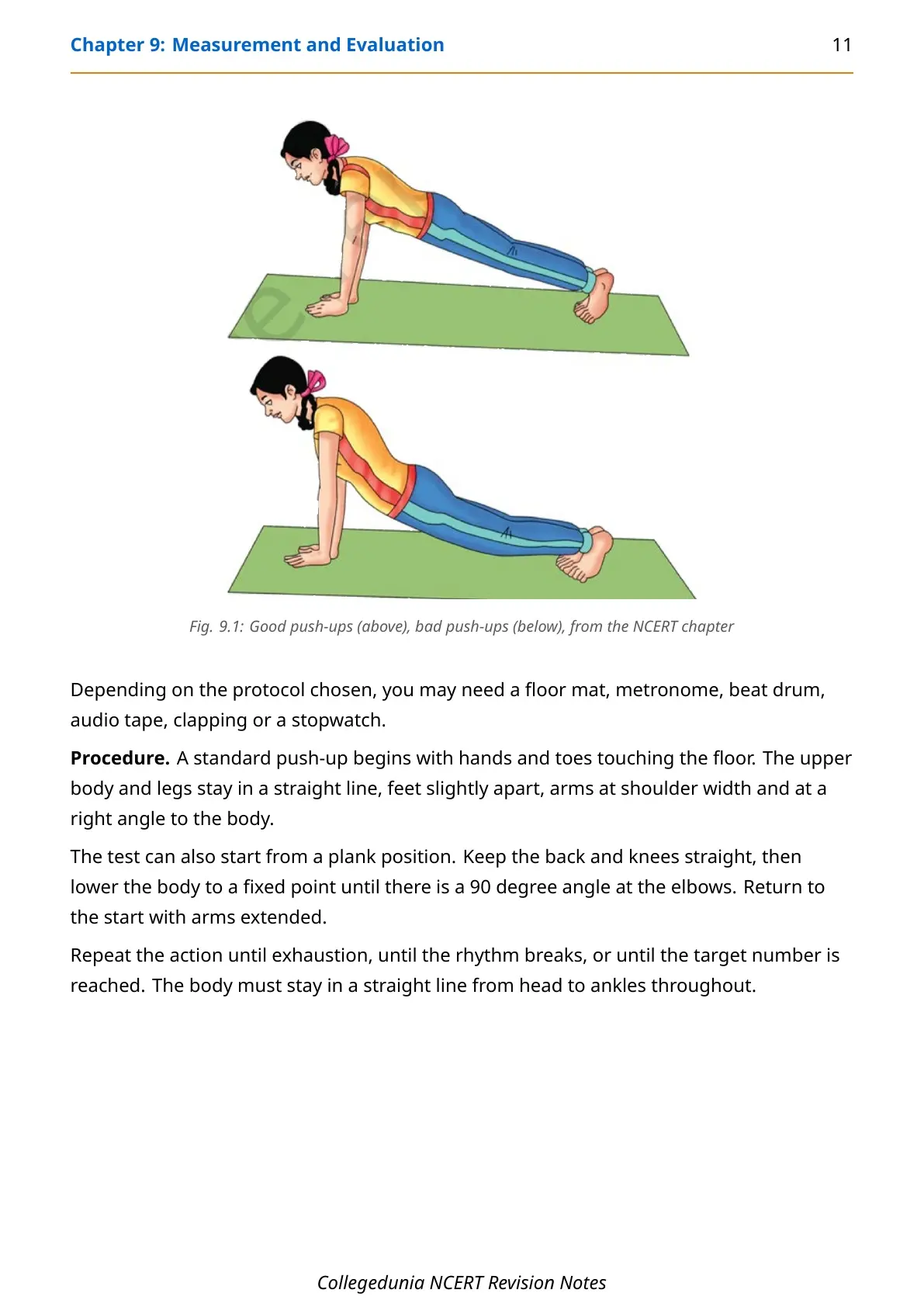
- Starting position: hands and toes touching the floor, upper body and legs in a straight line, feet slightly apart, arms at shoulder width apart, extended and at a right angle to the body.
- The push-up can also be started from a plank position, aligning the body with the hands on the floor.
- Action: keeping the back and knees straight, lower the body to a predetermined point, to touch some other object, or until there is a 90 degree angle at the elbows, then return to the starting position with the arms extended.
- The action is repeated until exhaustion, until the individual is unable to perform it in rhythm, or until the target number of push-ups is reached.
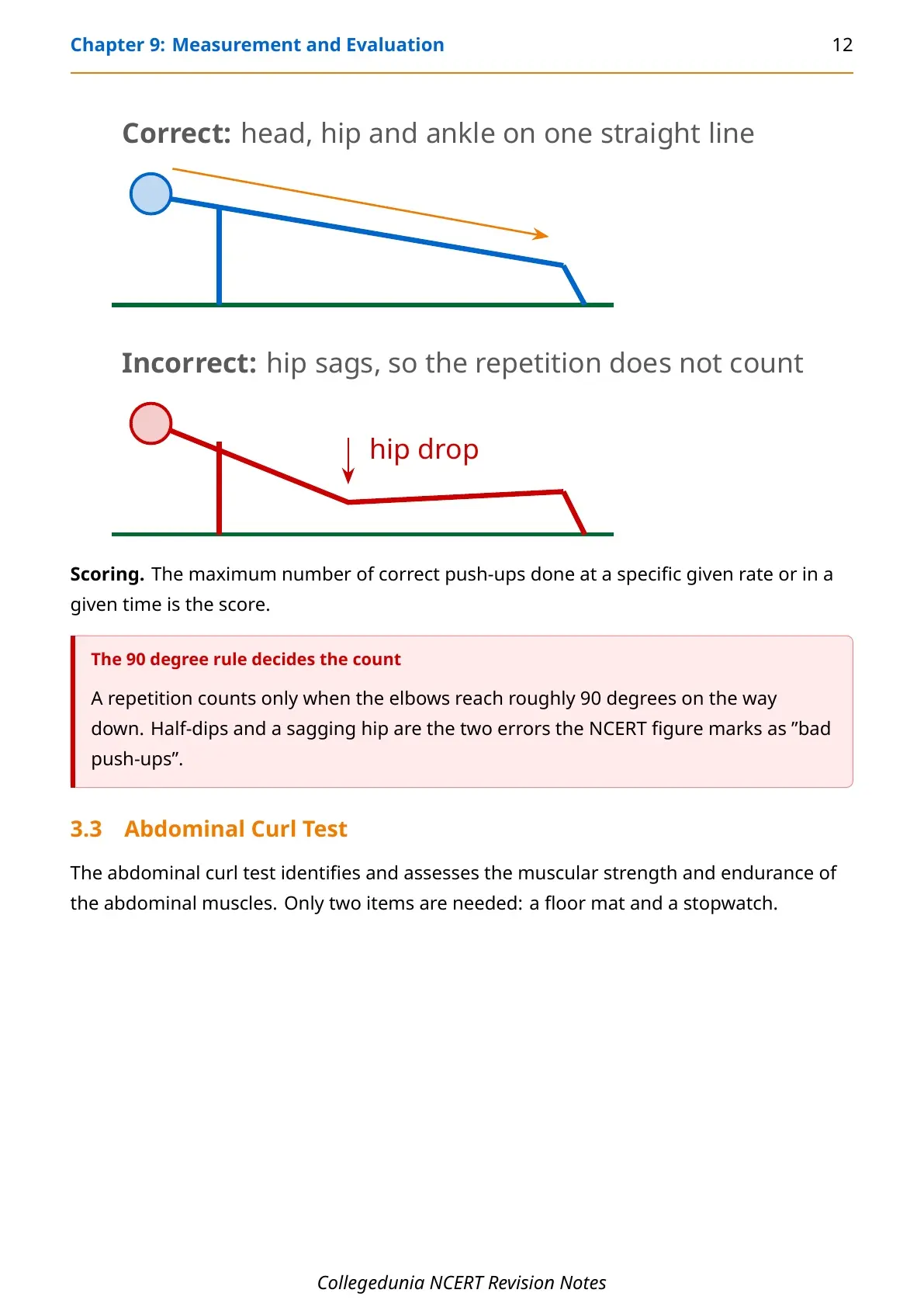
- The body should be in a straight line from head to ankles. Hold the down position at 90 degrees, go up, and hold the upward position.
- Scoring: the maximum number of correct push-ups done by the participant at a specific given rate or time is the score.
The book prints a figure showing good push-ups above and bad push-ups below, which is where the "straight line from head to ankles" instruction comes from. If a question asks how a wrong push-up looks, say the hips sag or rise so the body loses the straight line.
Abdominal Curl Test: Objective, Procedure and Scoring
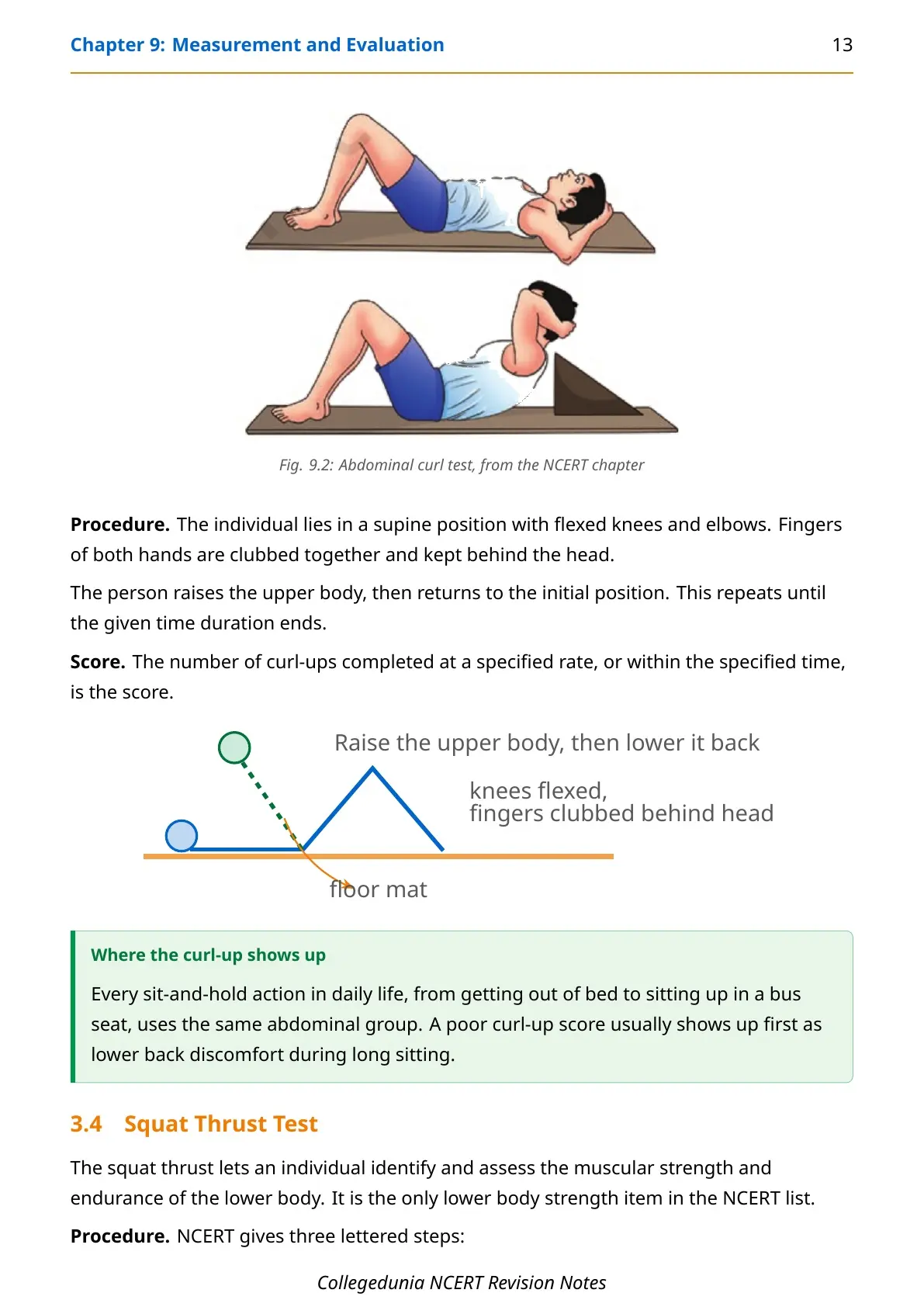
The abdominal curl test helps identify and assess the muscular strength and endurance of the abdominal muscles. This is the single most misquoted objective in the chapter, so fix it now: it is the abdominal muscles, not the back muscles.
- Equipment: a floor mat and a stopwatch.
- Starting position: the individual lies in a supine position with flexed knees and elbows.
- The fingers of both hands are clubbed with each other and kept behind the head.
- Action: the individual raises the upper body and then returns to the initial position, repeatedly, till the given set of time duration ends.
- Scoring: the number of curl ups done at a specified rate or in a specific time is the score.
Squat Thrust Test: Objective, Procedure and Scoring
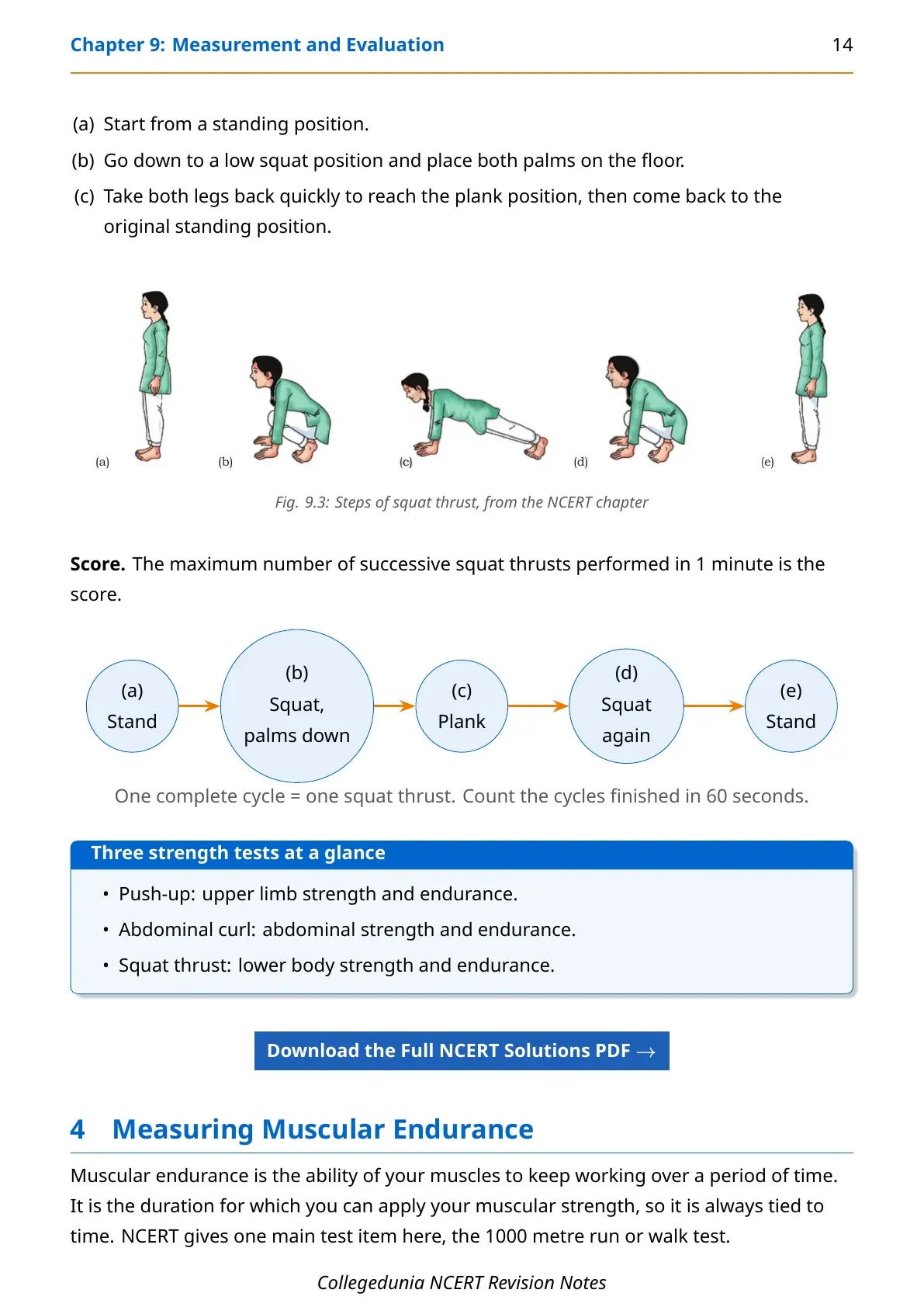
The squat thrust test enables an individual to identify and assess the muscular strength and endurance of the lower body. The book prints it as three lettered steps, so write it back in the same three steps.
- Start from a standing position.
- Go down, achieving a low squat position, and place both palms on the floor.
- Take both legs back quickly to achieve the plank position, then quickly come back to the original standing position.
Scoring: the maximum number of successive squat thrusts performed in 1 minute is the score. The one-minute time limit is unique to this test in the chapter, so it makes an easy one-mark question.
Tip: the three strength tests split neatly by body region. Push-up is upper body, abdominal curl is abdominal muscles, squat thrust is lower body. Memorise that trio and the true or false section of the assessment is done.
Muscular Endurance and the 1000 Metre Run or Walk Test
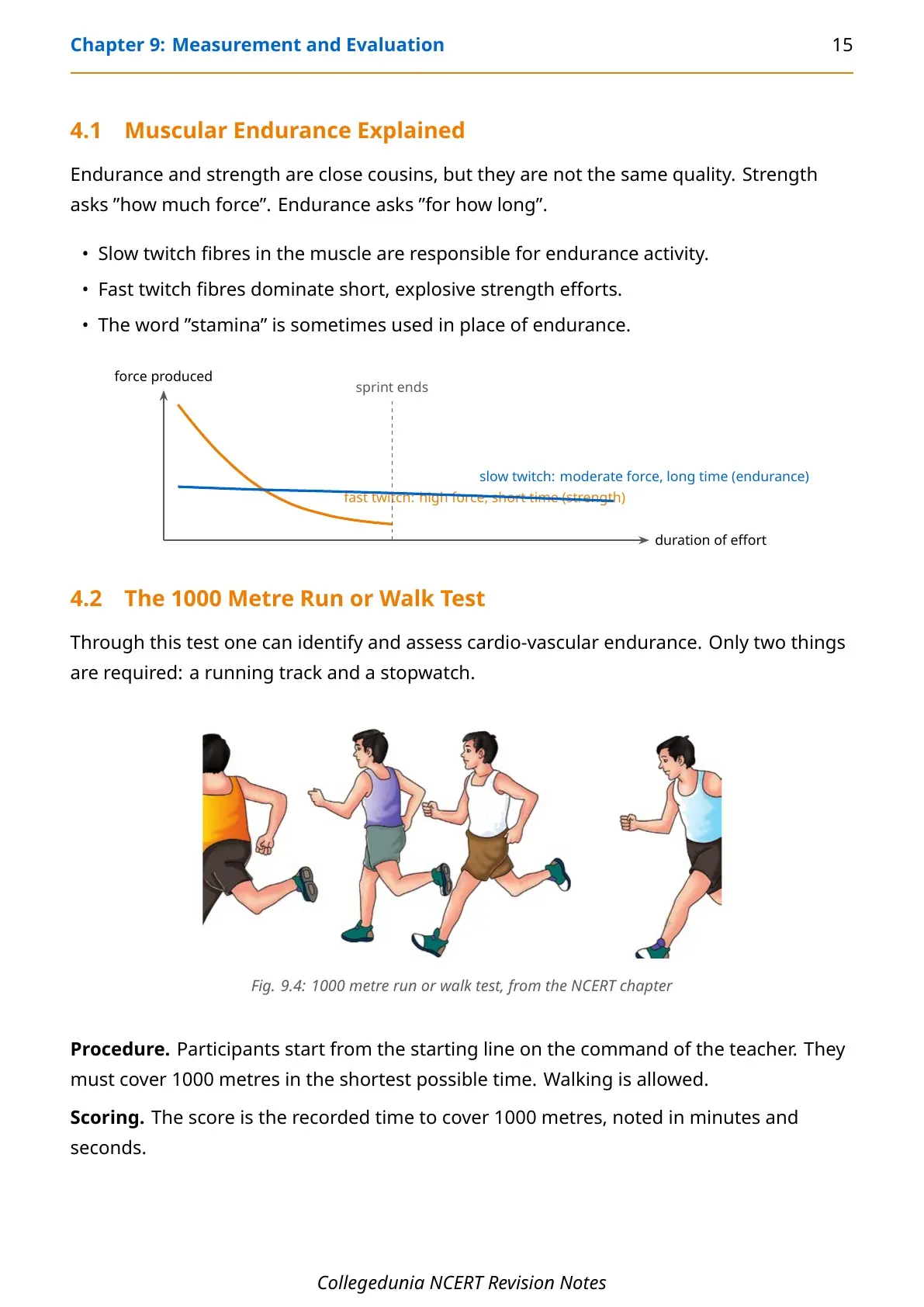
Muscular endurance is the ability of the muscles to perform muscular activity over a period of time, or the duration up to which muscular strength can be applied. The chapter attaches three more facts to that definition, and each has appeared as a one-mark question.
- Muscular endurance is related with the time and duration of the activity.
- Slow twitch fibre in muscles is responsible for the activities of muscular endurance.
- Sometimes the term stamina is used in place of endurance.
Many tests exist for muscular endurance, but the textbook discusses only one in detail. Note the wording carefully, because the book says this test is used to identify and assess cardio-vascular endurance even though it appears under the muscular endurance heading.
| Head | What the textbook prints |
|---|---|
| Name of test | 1000 metre run or walk test |
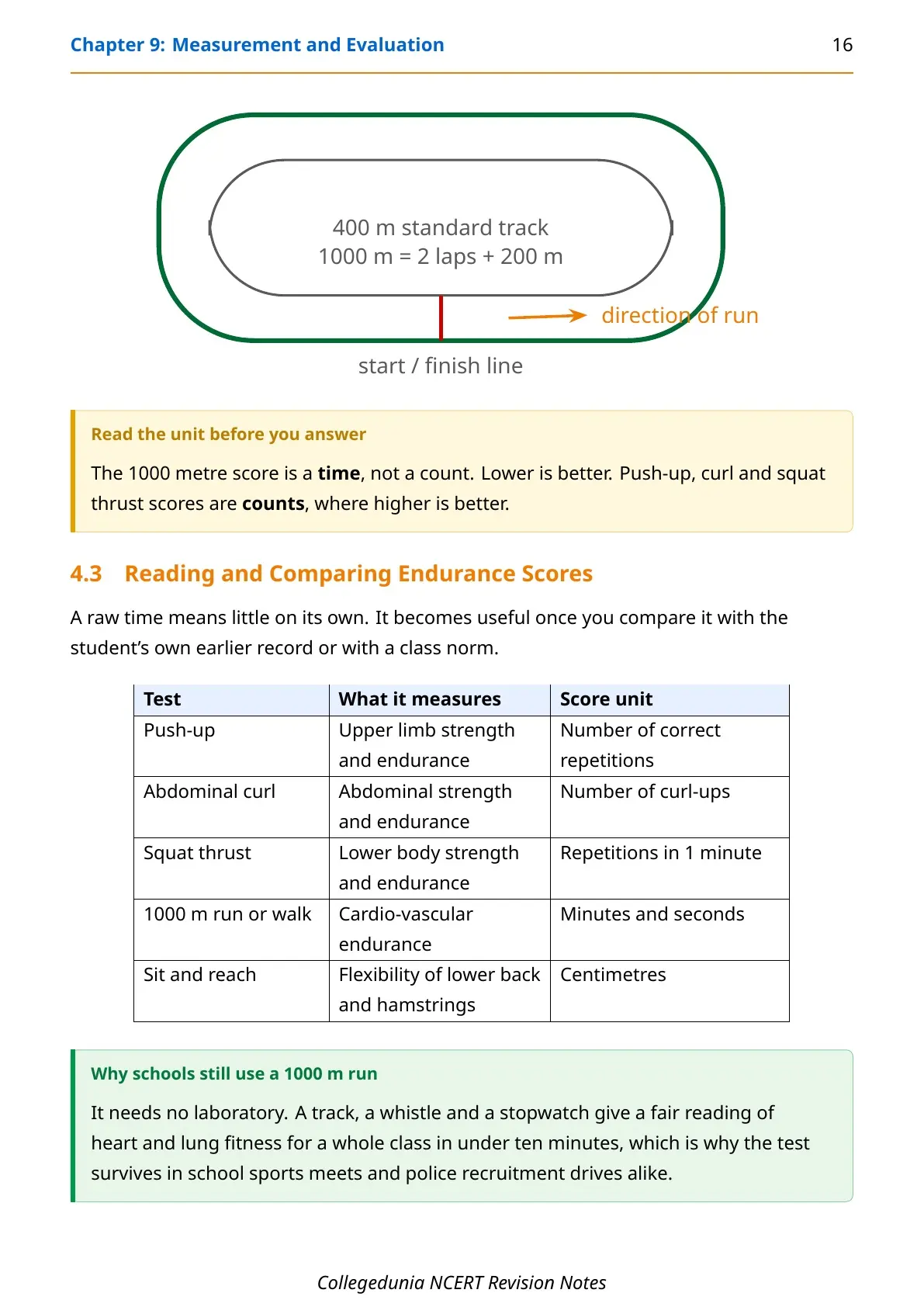
| Objective | To identify and assess cardio-vascular endurance |
| Equipment required | A running track and a stopwatch |
| Procedure | Participants start running from the starting line on the command of the teacher and have to cover 1000 metres in the shortest possible time. Walking is also allowed. |
| Scoring | The score is given on the basis of the recorded time taken to cover 1000 metres, noted in minutes and seconds |
Flexibility and the Sit and Reach Test
Flexibility is the range of motion around the various joints. The chapter adds that flexibility is the ability of the joints and muscles to perform movements with greater range, and that good flexibility helps execute movement with less muscle tension.
Only one test is given, and it carries a norm table, which makes it the most examinable test in the chapter.
| Head | What the textbook prints |
|---|---|
| Name of test | Sit and reach test |
| Objective | Measurement of the flexibility of the lower back muscles and the hamstring muscle group |
| Equipment required | A sit and reach box and a mat |
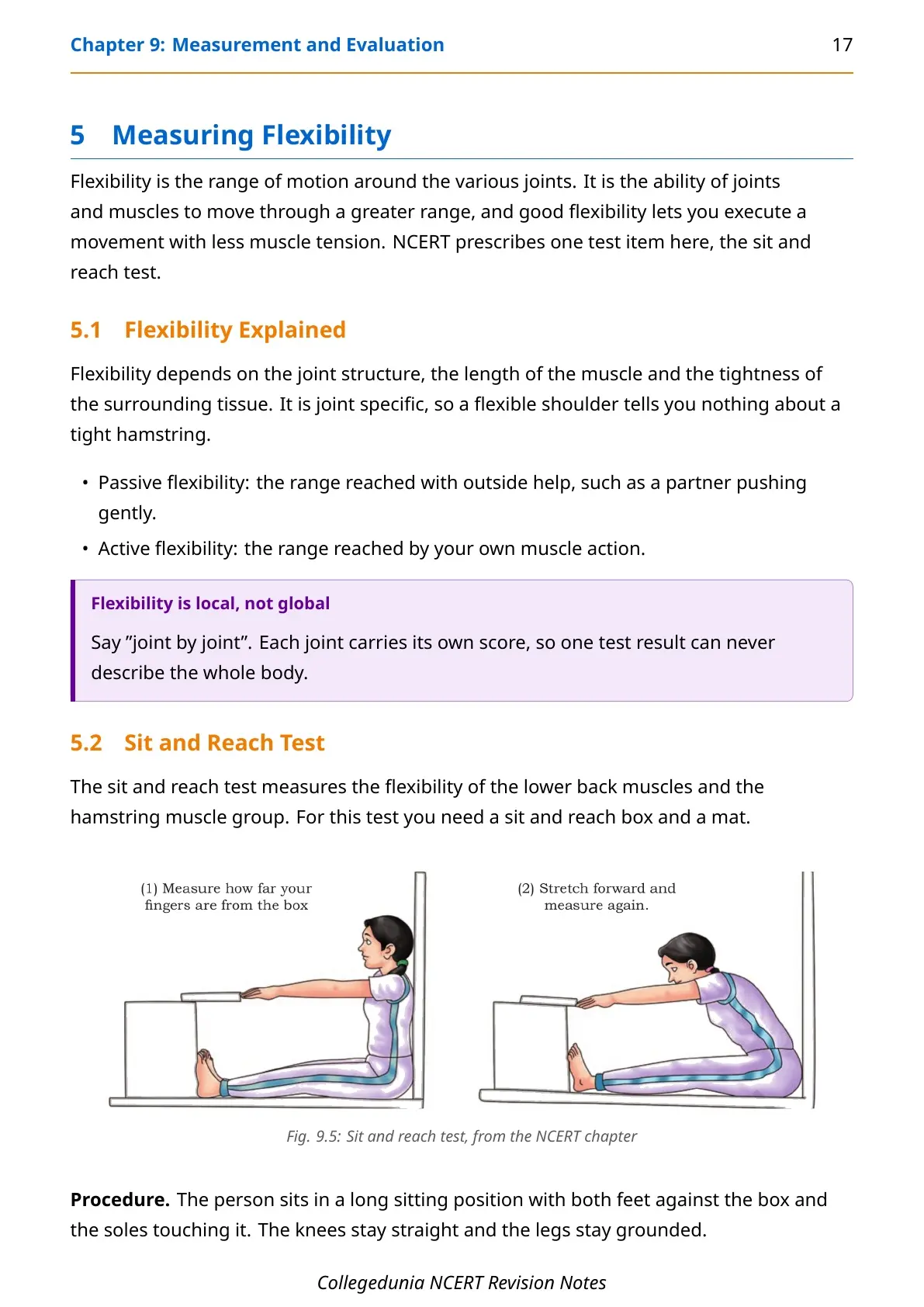
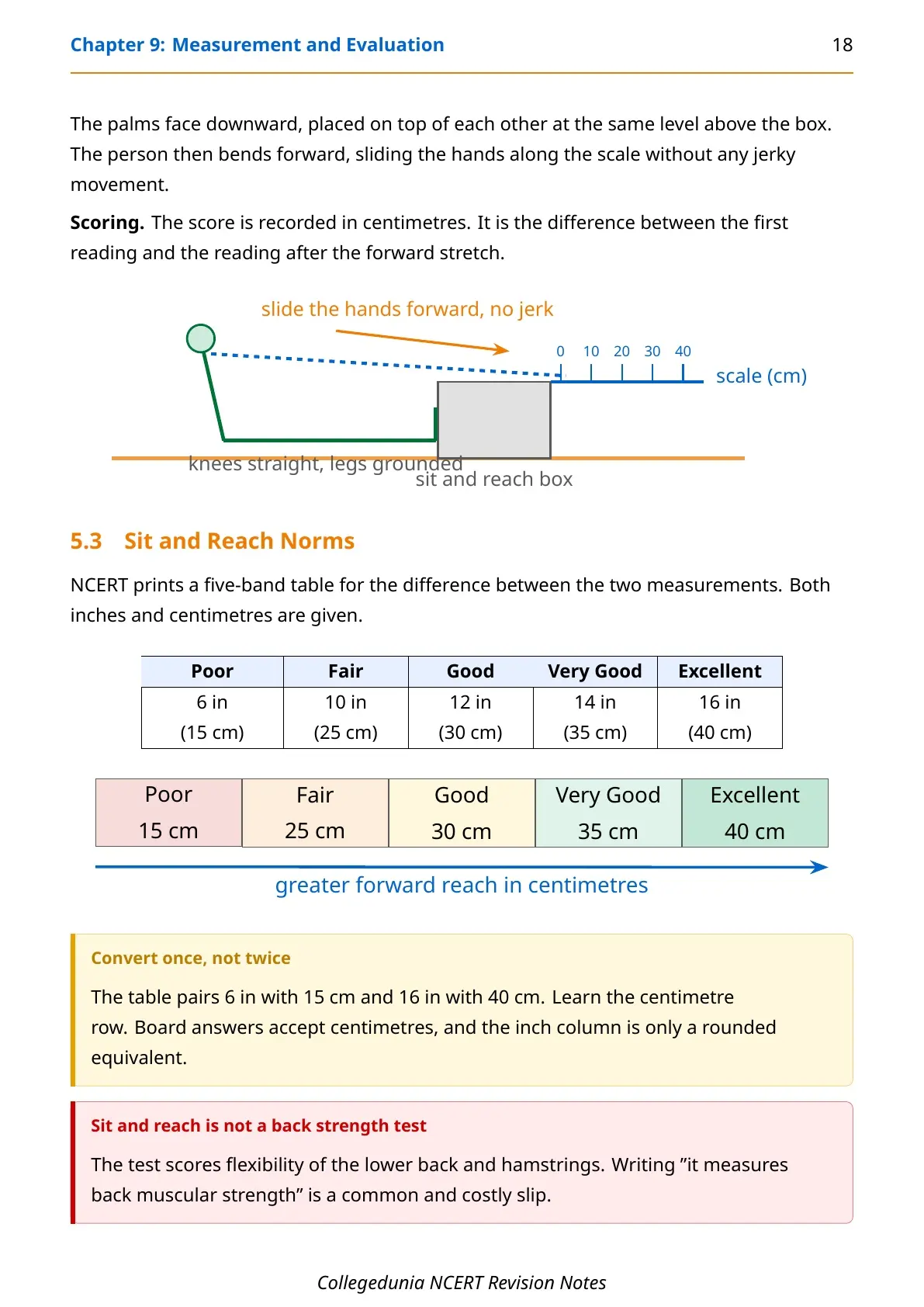
| Procedure | The person sits in a long sitting position with both feet against the box and the soles touching it. The knees stay straight, the legs stay grounded, and the palms face downward on top of each other at the same level above the box. The person then bends forward, sliding the hands along the scale without any jerky movement |
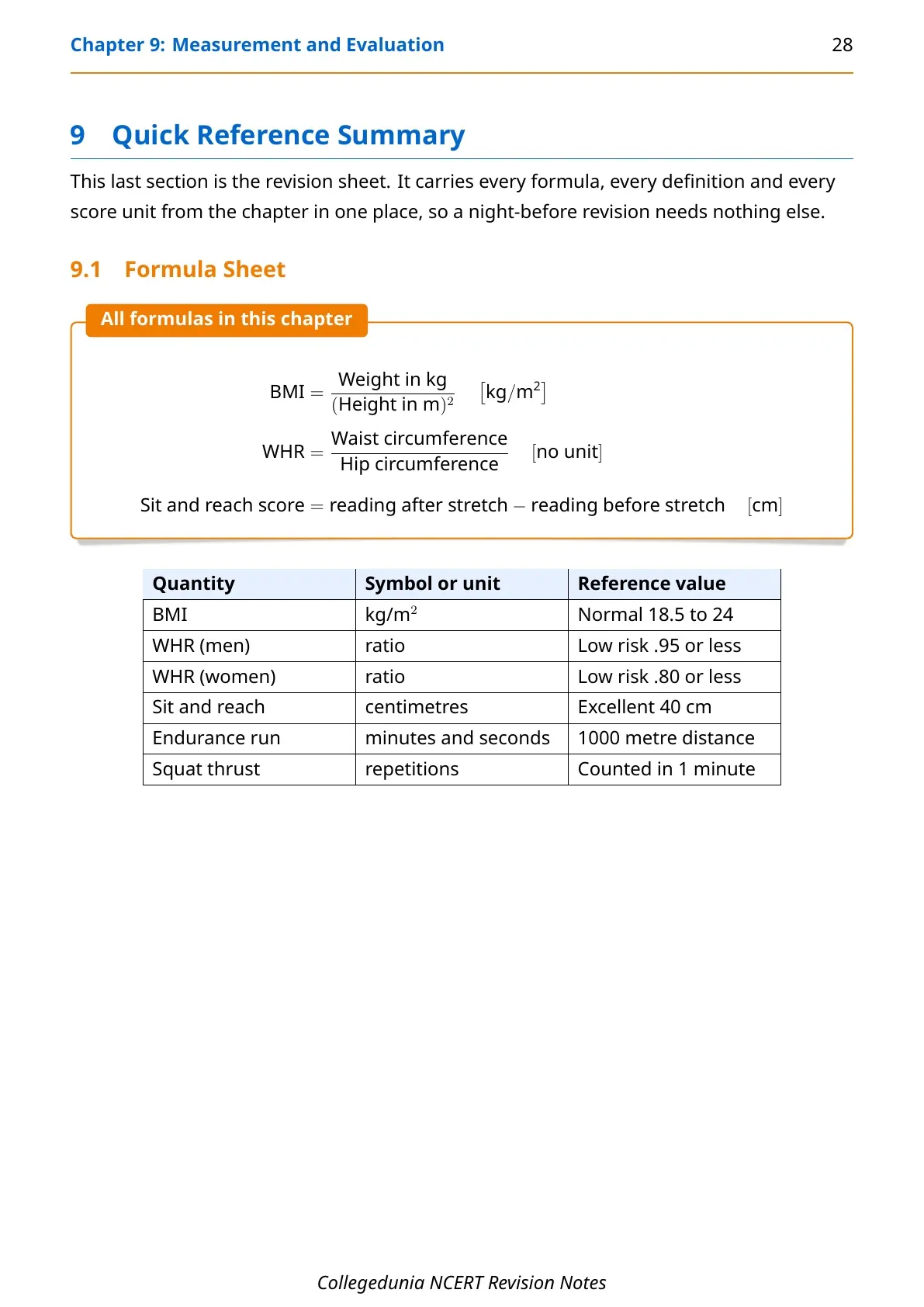
| Scoring | The score is recorded in centimetres |
Sit and Reach Norm Table
The book prints the difference between measurements in five bands, in inches with the centimetre value below. Learn the centimetre row, because the answer is scored in centimetres.
| Rating | Difference in inches | Difference in centimetres |
|---|---|---|
| Poor | 6 in | 15 cm |
| Fair | 10 in | 25 cm |
| Good | 12 in | 30 cm |
| Very good | 14 in | 35 cm |
| Excellent | 16 in | 40 cm |
The book also shows the test in two steps in its figure. First, measure how far the fingers are from the box. Second, stretch forward and measure again. The difference between the two measurements is what the norm table rates.
Body Mass Index: Formula, Measurement Procedure and WHO Categories
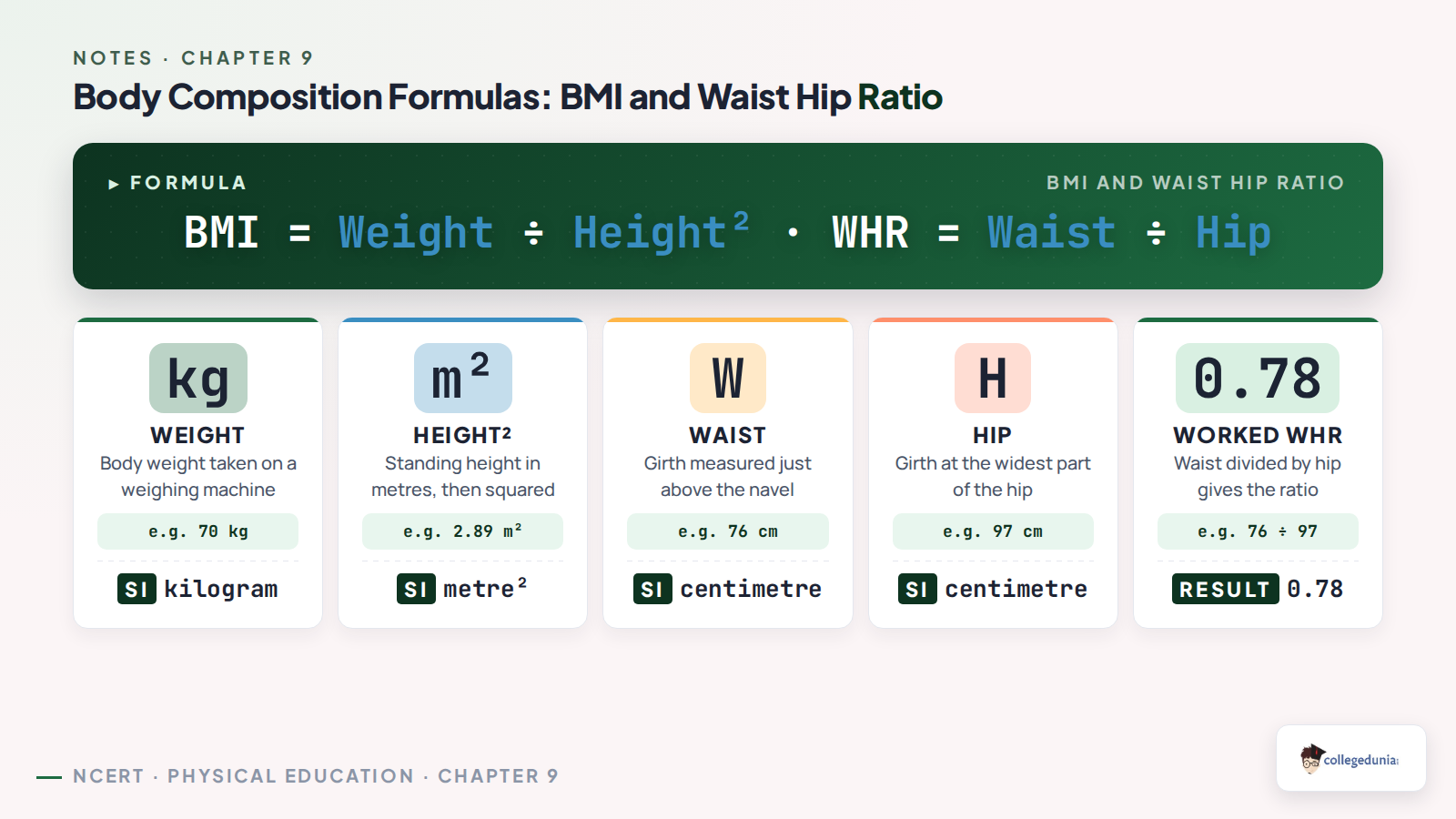
The assessment of Body Mass Index gives information about an individual's level of obesity. The definition and the formula are both one-line answers, so write them exactly.
BMI = Weight in kg divided by (Height in metres) squared. The unit is kg/m2. In words, BMI is calculated by dividing the weight of a person by the square of his or her height.
The chapter treats the two measurements that feed the formula as separate procedures, and both have been asked as short answers.
| Measurement | Instrument | Procedure | Unit recorded |
|---|---|---|---|
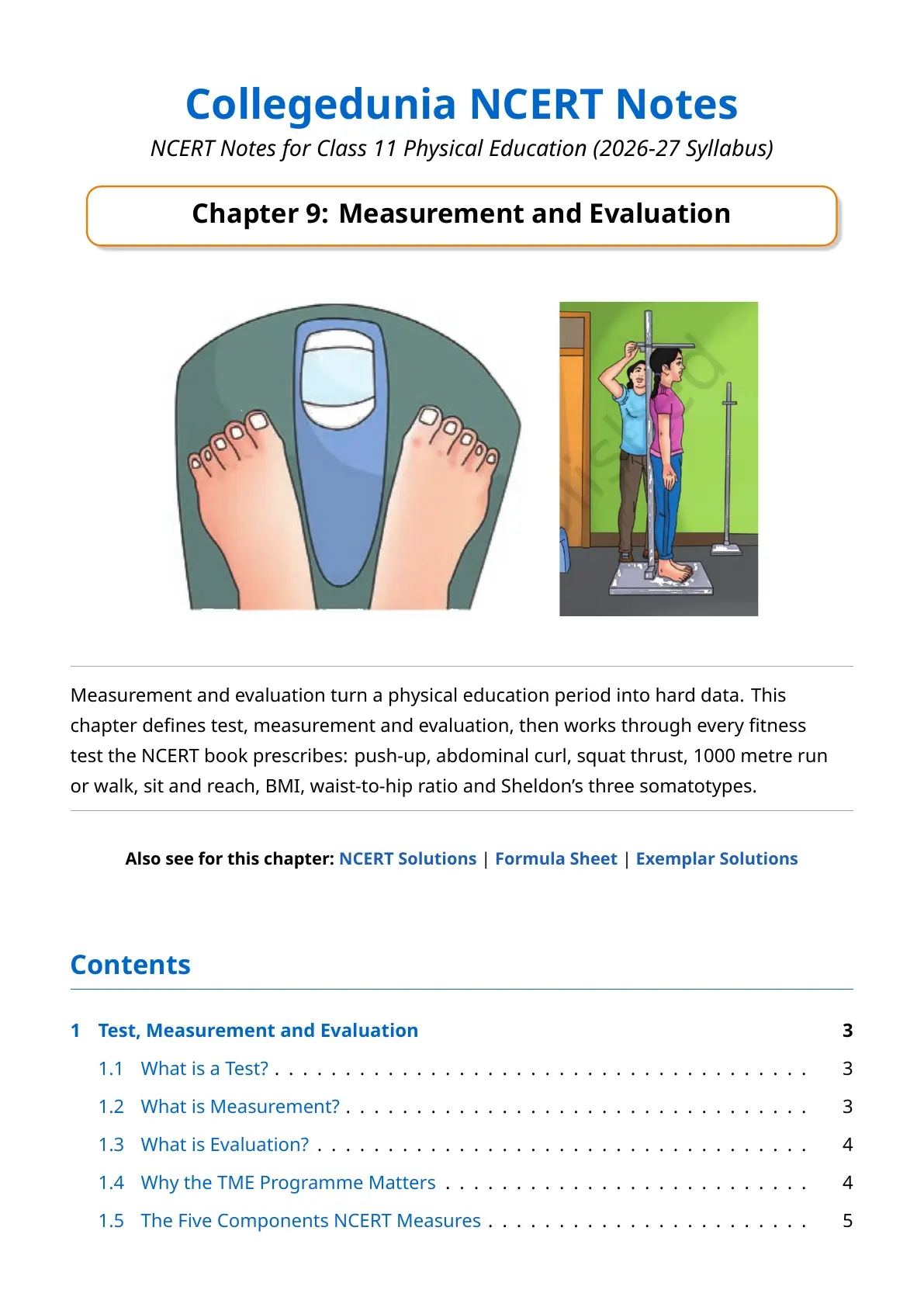
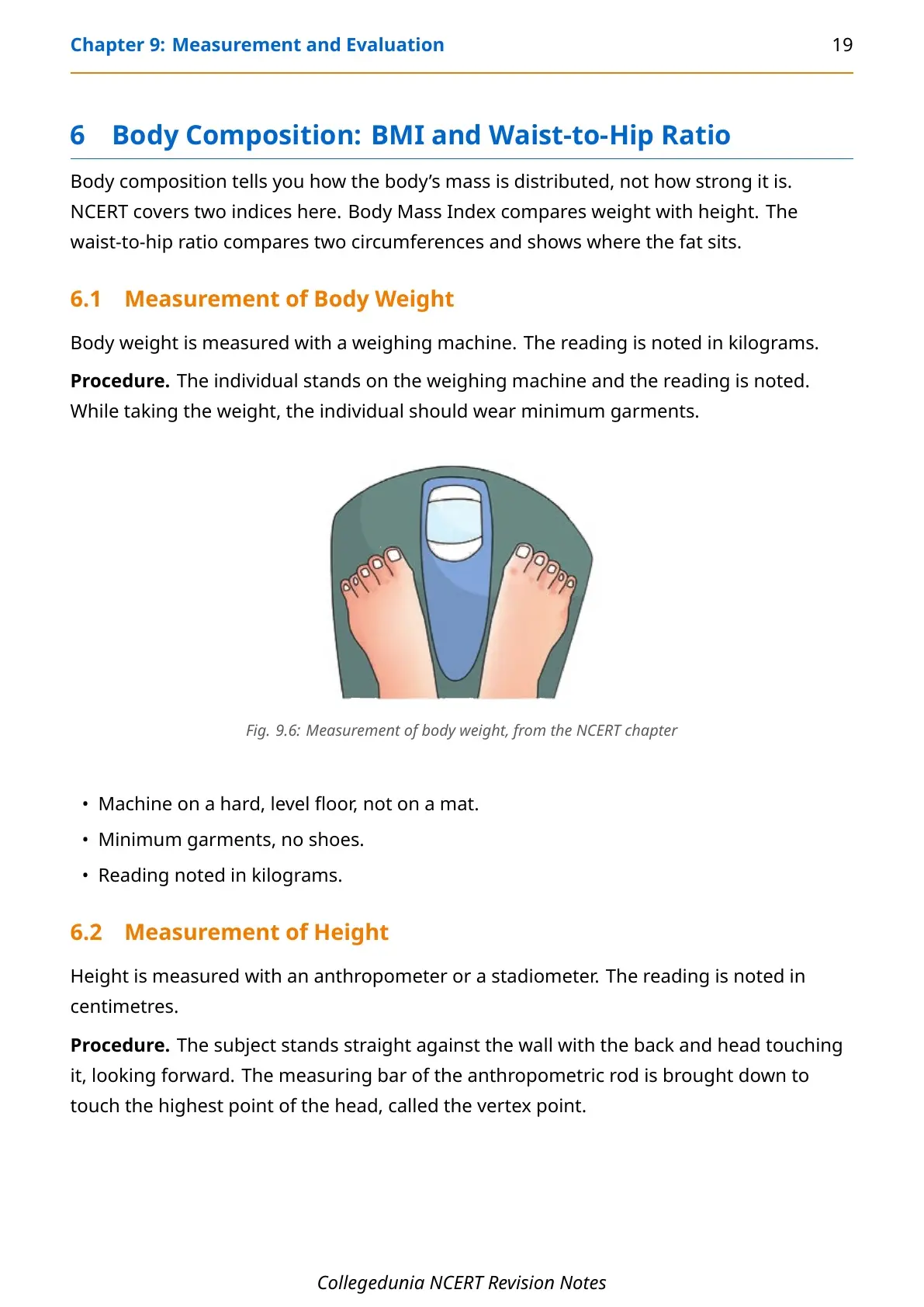
| Body weight | Weighing machine | The individual stands on the weighing machine and the reading is noted. While taking the weight, the individual should wear minimum garments | Kilograms |
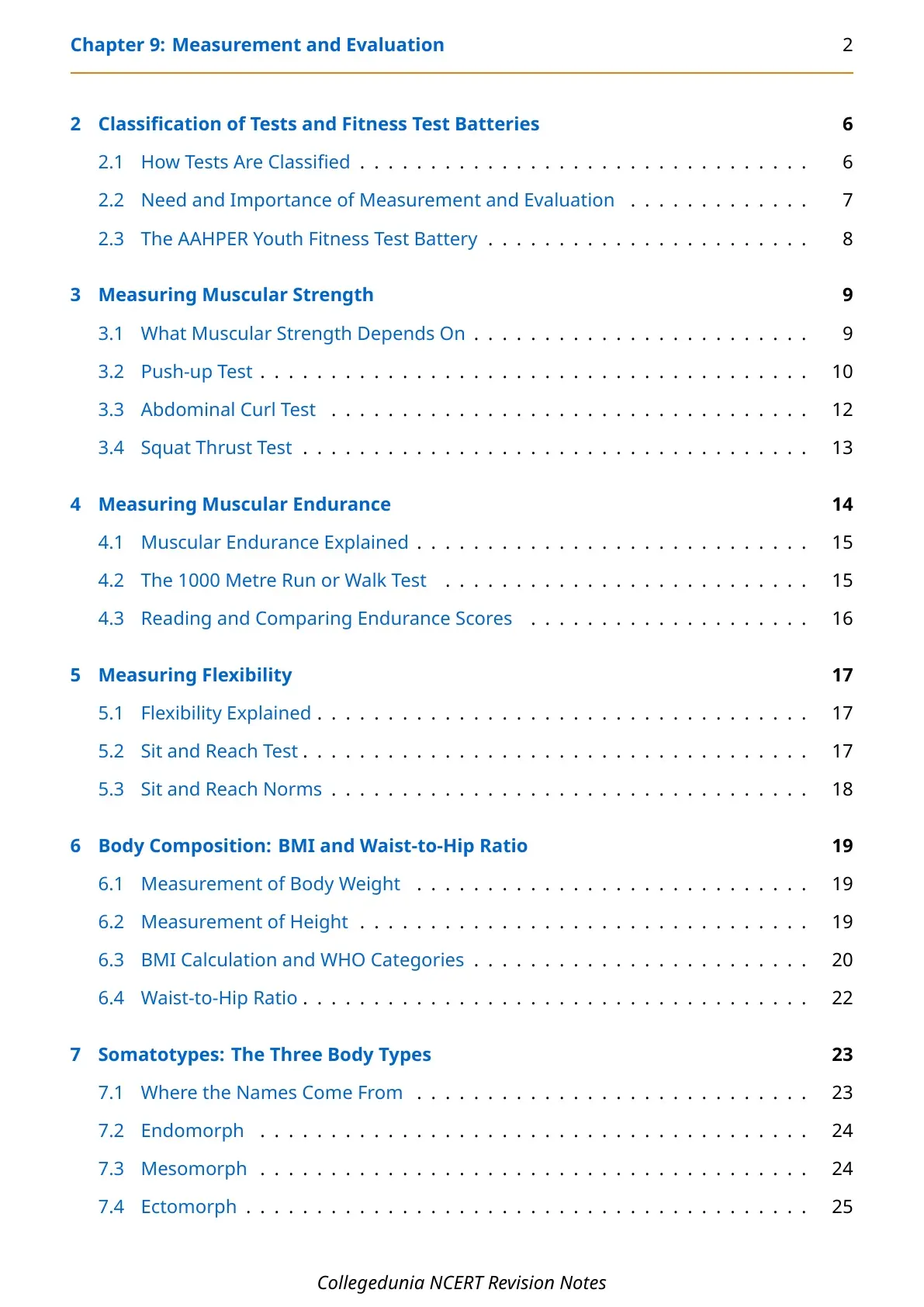
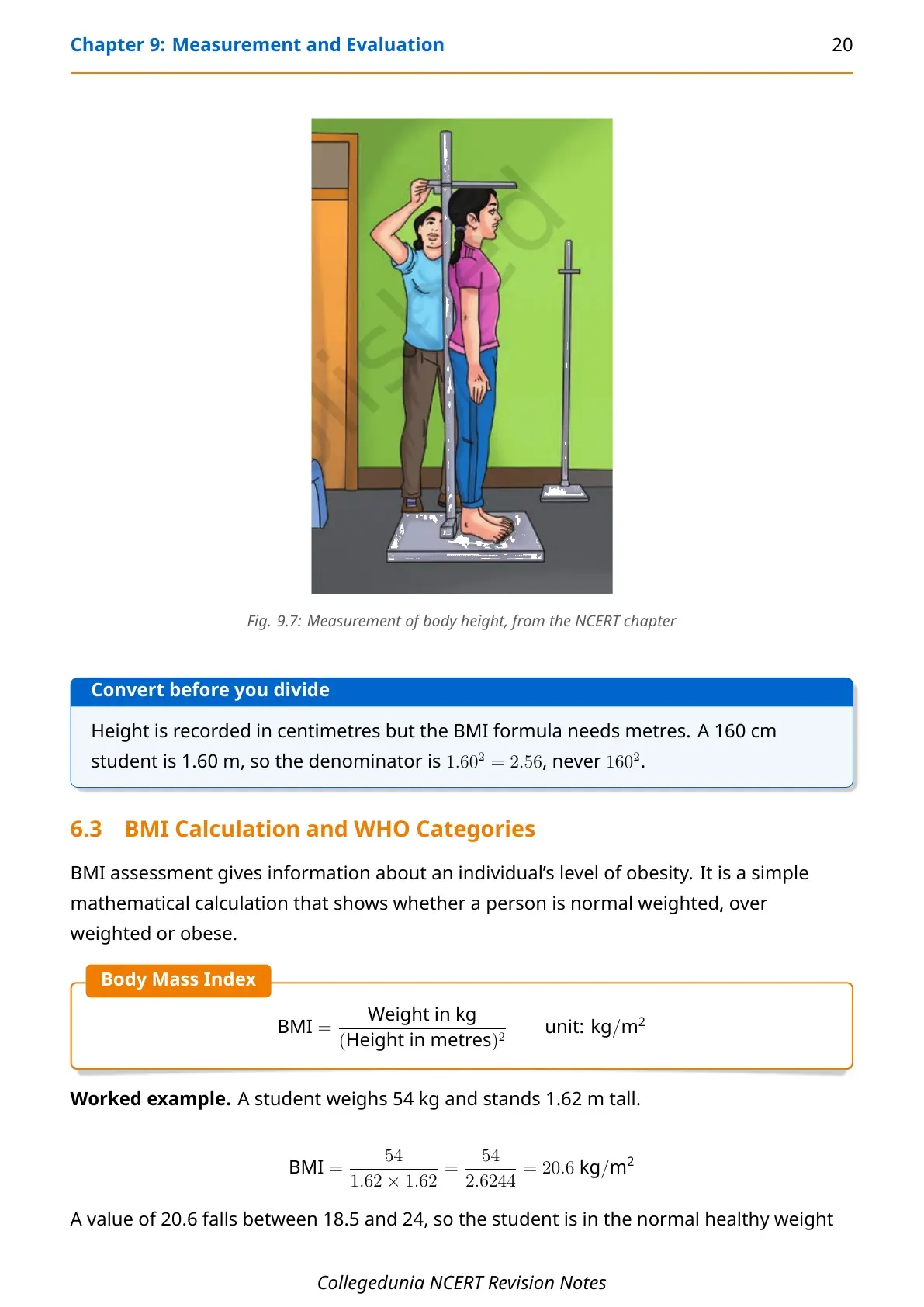
| Height | Anthropometer or stadiometer | The subject stands straight against the wall with the back and head touching the wall, looking in the forward direction. The measuring bar of the anthropometric rod is touched at the highest point of the head, called the vertex point | Centimetres |
WHO BMI Category Table
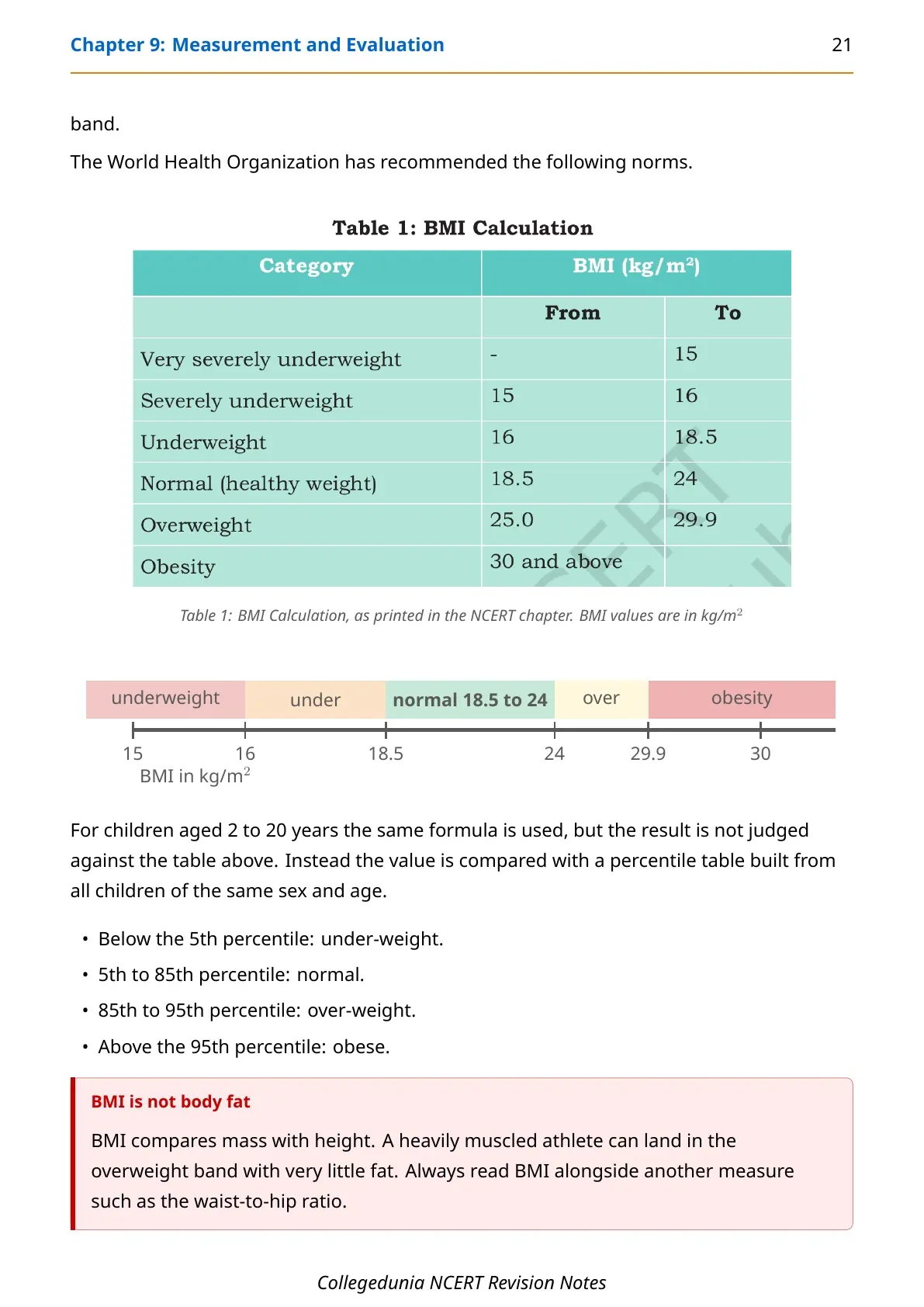
BMI is a simple mathematical calculation which tells us whether an individual is normal weighted, over weighted or obese. The World Health Organization has recommended the norms below, printed in the book as Table 1.
| Category | BMI from (kg/m2) | BMI to (kg/m2) |
|---|---|---|
| Very severely underweight | Not specified | 15 |
| Severely underweight | 15 | 16 |
| Underweight | 16 | 18.5 |
| Normal (healthy weight) | 18.5 | 24 |
| Overweight | 25.0 | 29.9 |
| Obesity | 30 and above | |
Why BMI Is Read Differently for Children
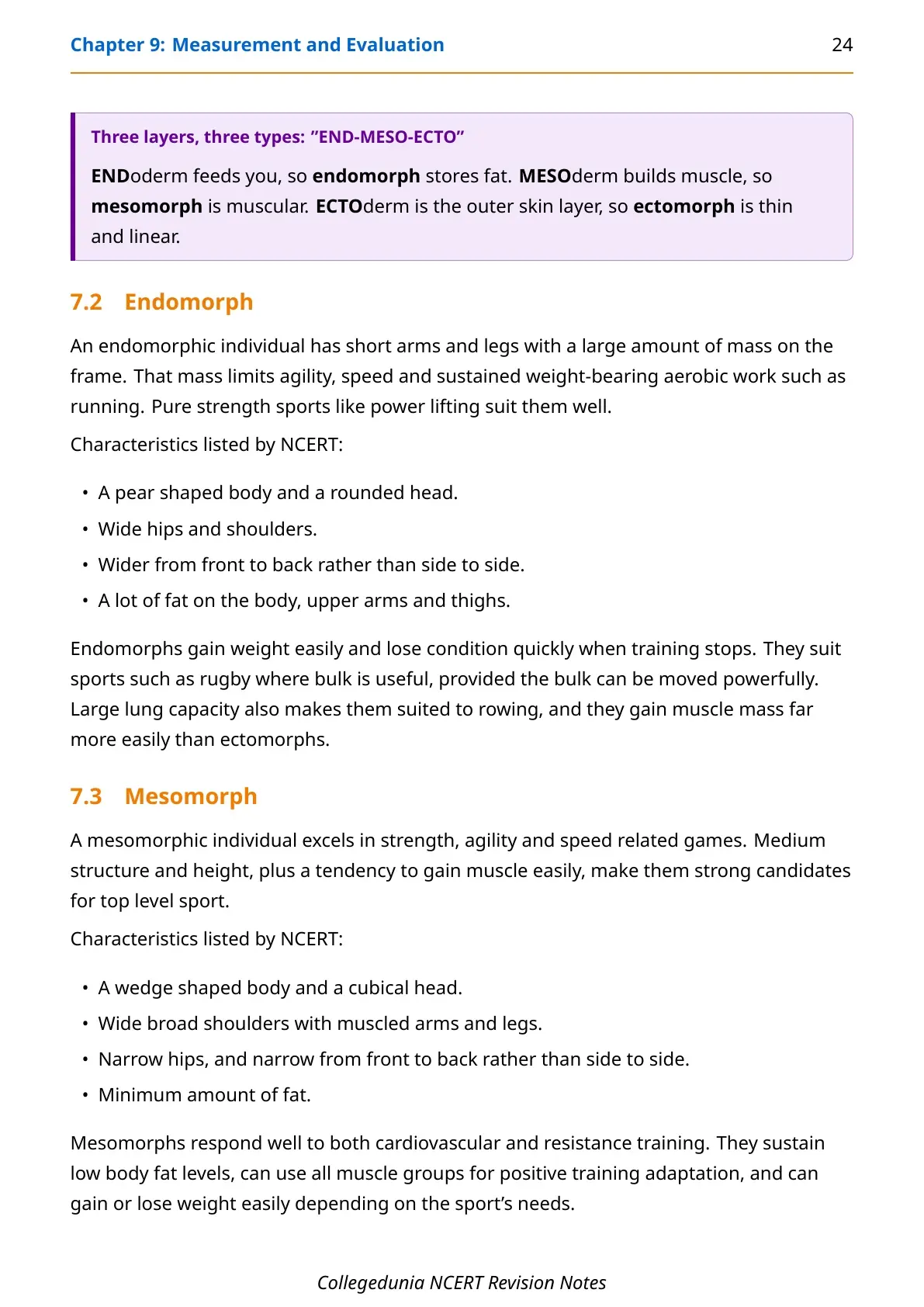
The chapter adds a paragraph that most students skip, and it is exactly the kind of detail a three-mark question rewards. BMI for children aged between 2 and 20 years is calculated in the same way and with the same formula, but it is not judged on the basis of the norms in the table above.
Instead, whatever result comes after calculating the BMI is compared after preparing a percentile table of all the children falling under the same sex and age category.
| Percentile | Category for children aged 2 to 20 years |
|---|---|
| Less than 5th percentile | Underweight |
| 5th to 85th percentile | Normal |
| 85th to 95th percentile | Overweight |
| Above 95th percentile | Obese |
Waist-to-Hip Ratio: Formula, Procedure and WHO Risk Norms
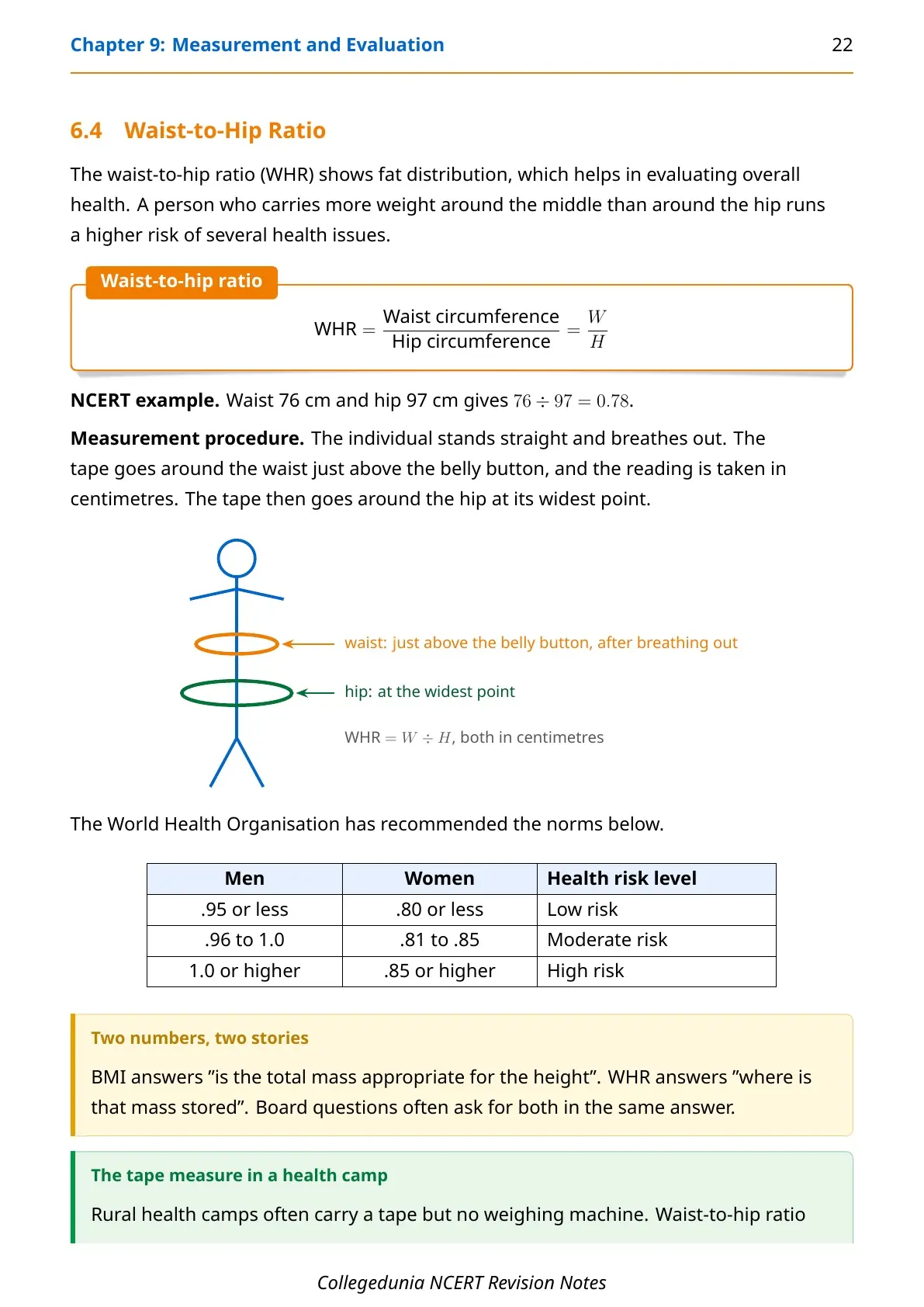
The waist-to-hip ratio helps find out the fat distribution of a person, which in turn helps evaluate overall health. The chapter gives the reason it matters in one sentence: one who carries more weight around the middle than around the hip may have a higher risk of developing several health issues.
The formula is a straight division. WHR = Waist measurement divided by Hip measurement, written in the book as W divided by H. It is the ratio of the circumference of the waist to the circumference of the hip.
The textbook works one example, and the same numbers turn up in papers, so learn them. If the waist measures 76 cm and the hip measures 97 cm, the waist-hip ratio is 0.78.
Measurement Procedure for the Waist and the Hip
- Ask the individual to stand straight and breathe out before the waist reading is taken.
- Place the tape around the waist just above the belly button and take the measurement in centimetres.
- In the same manner, place the tape around the hip where the hip is widest, and take that measurement.
- Divide the waist measurement by the hip measurement to get the ratio.
WHO Norms for Waist-to-Hip Ratio
The book prints separate columns for men and women against three health risk levels. Both columns are asked, so do not learn only one.
| Men | Women | Health risk level |
|---|---|---|
| 0.95 or less | 0.80 or less | Low risk |
| 0.96 to 1.0 | 0.81 to 0.85 | Moderate risk |
| 1.0 or higher | 0.85 or higher | High risk |
Apply the table to the worked example and the answer writes itself. A waist-hip ratio of 0.78 sits in the low risk band for a man and also for a woman, because both low risk limits are above that value.
Somatotypes: Endomorph, Mesomorph and Ectomorph
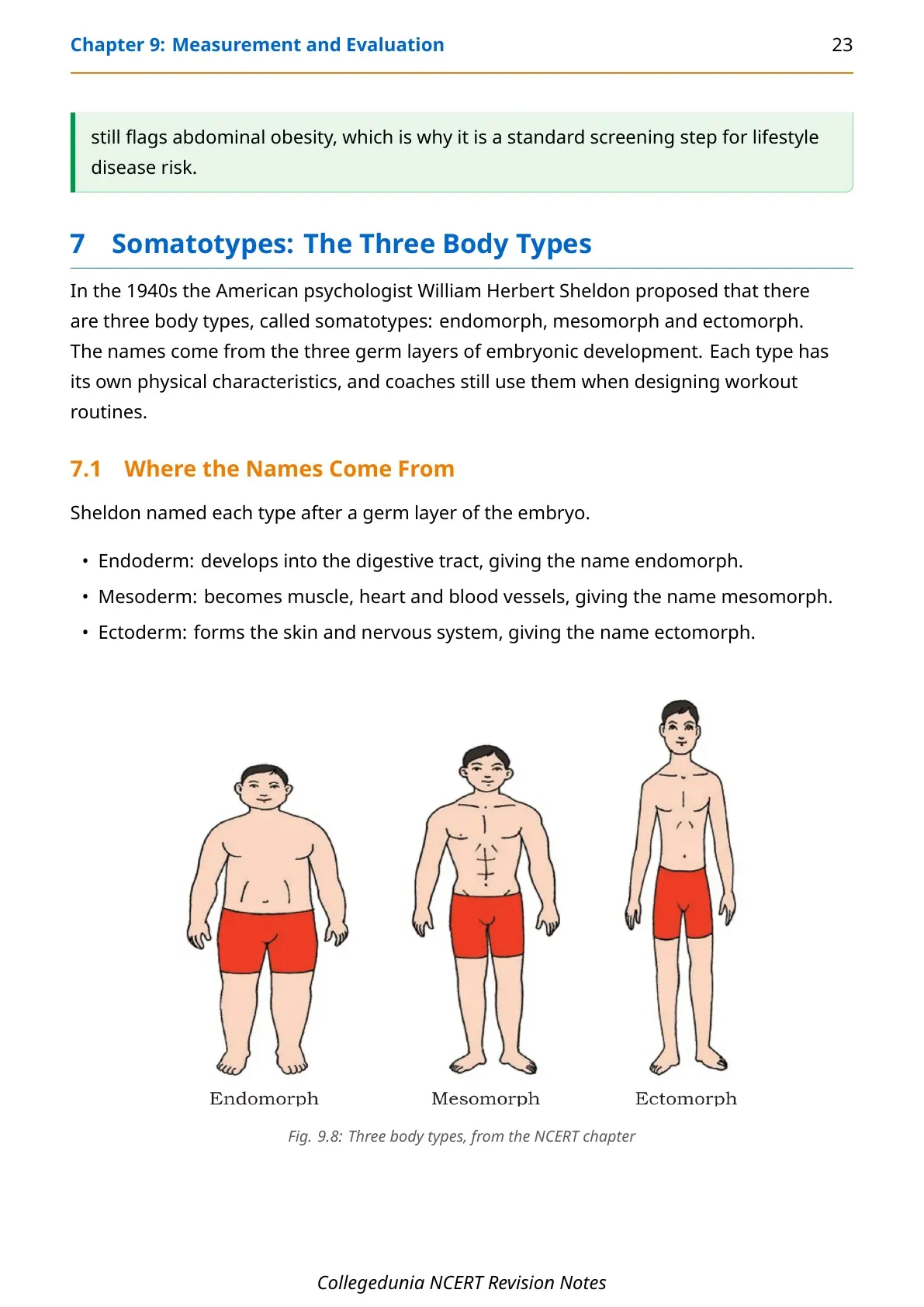
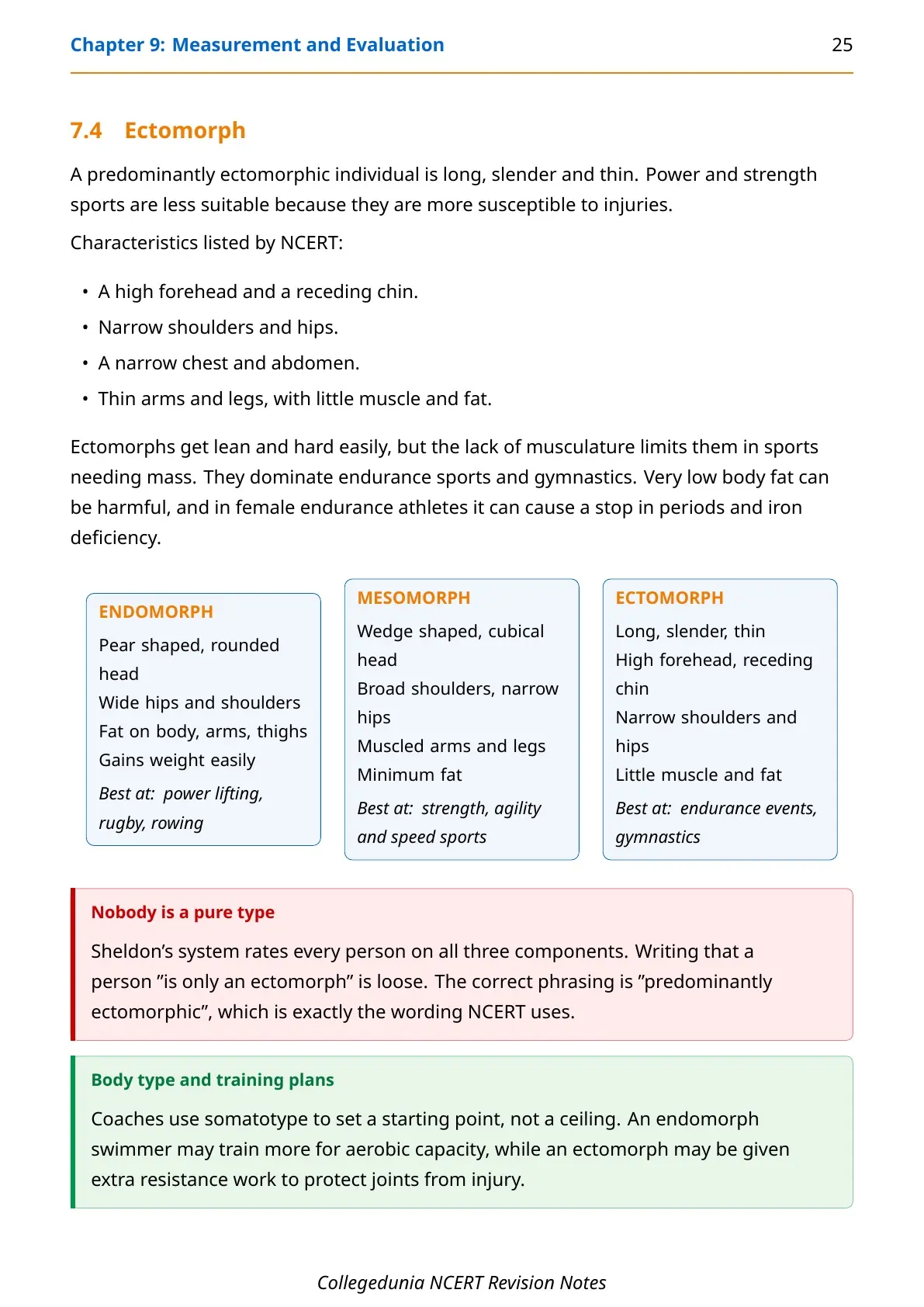
In the 1940s, the American psychologist William Herbert Sheldon developed a theory that there are three body types, or somatotypes: endomorph, mesomorph and ectomorph. This is the section students in the poll found hardest, mostly because the naming logic is skipped.
The names were given after the three germ layers of embryonic development. Learn this table first and the three body types stop being a memory exercise.
| Somatotype | Germ layer it is named after | What that layer develops into |
|---|---|---|
| Endomorph | Endoderm | Develops into the digestive tract |
| Mesomorph | Mesoderm | Becomes muscle, heart and blood vessels |
| Ectomorph | Ectoderm | Forms the skin and nervous system |
Each somatotype has its own distinct physical characteristics and its own supposed personality. The chapter notes that the unique physical characteristics of each body type are still widely used as an important factor while designing workout routines for an individual.
Endomorph
An endomorphic individual typically has short arms and legs and a large amount of mass on the frame. That mass hampers the ability to compete in sports requiring high levels of agility or speed, and to perform sustained weight bearing aerobic activities such as running.
- A pear shaped body.
- A rounded head.
- Wide hips and shoulders.
- Wider front to back rather than side to side.
- A lot of fat on the body, upper arms and thighs.
- Sports of pure strength, like power lifting, are perfect for an endomorph.
- Good for sports such as rugby where bulk is useful, provided it can be moved powerfully.
- They tend to have a large lung capacity, which can suit them to sports such as rowing.
- They can increase muscle mass much more easily than ectomorphs, gain weight easily, and lose condition quickly if the training stops.
Mesomorph
A mesomorphic individual excels in strength, agility and speed related games and sports. Their medium structure and height, along with their tendency to gain muscle and strength easily, makes them a strong candidate for a top athlete in any sport.
- A wedge shaped body.
- A cubical head.
- Wide broad shoulders.
- Muscled arms and legs.
- Narrow hips.
- Narrow from front to back rather than side to side.
- A minimum amount of fat.
- They respond well to cardiovascular and resistance training and can sustain low body fat levels. All the muscle groups can be used to derive positive training adaptation.
- Depending on the sport's needs, they can easily gain or lose weight.
Ectomorph
A predominantly ectomorphic individual is long, slender and thin. Power and strength sports are perhaps not suitable for them, as they are more susceptible to injuries. While they can easily get lean and hard, their lack of musculature severely limits their chances in sports requiring mass.
- A high forehead.
- A receding chin.
- Narrow shoulders and hips.
- A narrow chest and abdomen.
- Thin arms and legs.
- Little muscle and fat.
- Ectomorphs dominate endurance sports and gymnastics.
- They can achieve low levels of body fat, which can be detrimental to health. For females in endurance sports it can result in a cessation of periods and iron deficiency.
The chapter closes with its own conclusion, which makes a neat last line for any five-mark answer. Every individual should try to find out, by using these tests, what types of activities should be done to remain healthy and fit.
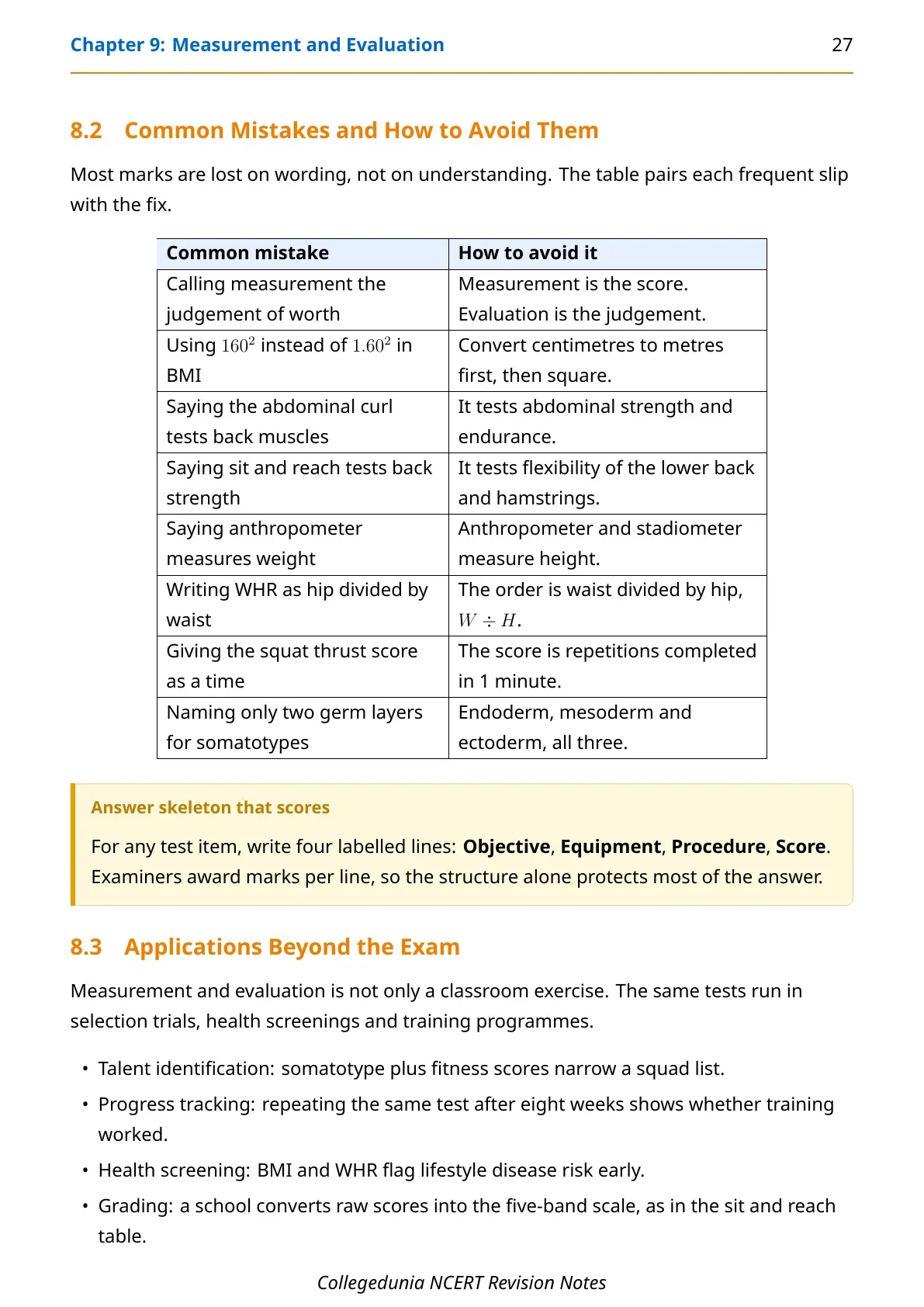
Common Mistakes Students Make in the Measurement and Evaluation Chapter
- Expanding BMI as body measurement index. It is Body Mass Index. This exact trap is printed as a true or false statement in the textbook assessment.
- Saying the abdominal curl tests the back muscles. It tests the strength and endurance of the abdominal muscles.
- Saying the anthropometer measures weight. The anthropometer or stadiometer measures height. Weight is taken on a weighing machine.
- Dividing weight by height instead of height squared. BMI needs the square of height in metres.
- Recording height in metres and weight in pounds. The chapter records height in centimetres and weight in kilograms, then converts height to metres for the formula.
- Inverting the waist-to-hip ratio. It is waist divided by hip, not hip divided by waist. Invert it and the worked example gives 1.28 instead of 0.78.
- Saying walking is not allowed in the 1000 metre test. The book states plainly that walking is also allowed.
- Writing that fast twitch fibres cause endurance. It is the slow twitch fibre that is responsible for muscular endurance activities.
- Swapping the squat thrust and push-up objectives. Squat thrust is the lower body test, push-up is the upper body test.
- Mixing up the germ layers. Endoderm is the digestive tract, mesoderm is muscle and heart, ectoderm is skin and nervous system.
In the same student poll, the BMI and waist-to-hip ratio norm tables were the single biggest source of lost marks, ahead of both the test procedures and the somatotype characteristics.
Measurement and Evaluation Textbook Assessment Questions Answered
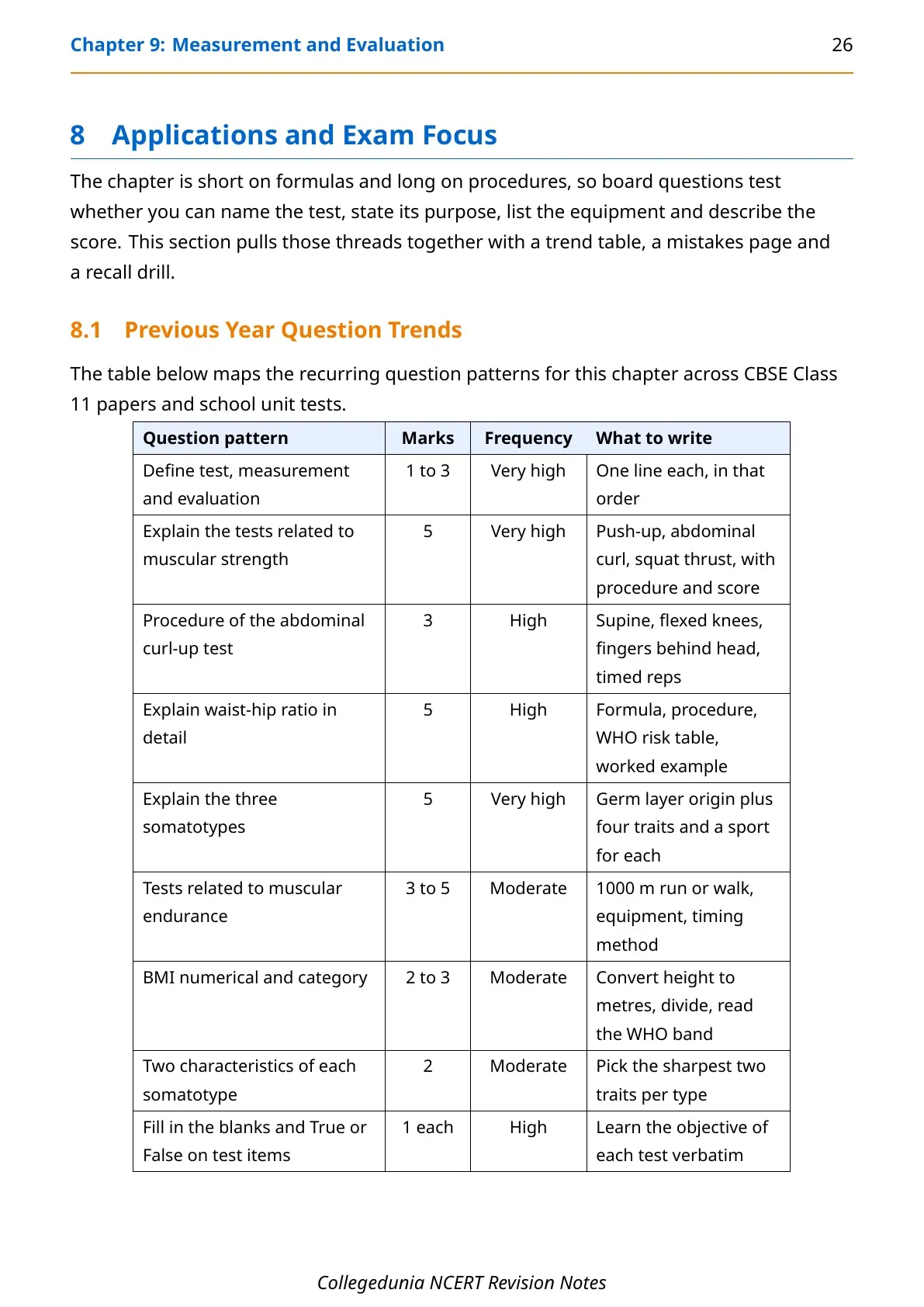
The chapter ends with four question types. Here is what each one tests and where its answer sits in these notes.
| Question type | What the textbook asks | Where the answer sits |
|---|---|---|
| Long answer 1 | List and explain the tests related to muscular strength | Push-up, abdominal curl and squat thrust sections |
| Long answer 2 | List and explain the tests related to muscular endurance | The 1000 metre run or walk test table |
| Long answer 3 | Write down the procedure of the abdominal curl-up test | The abdominal curl procedure list |
| Long answer 4 | Explain the waist-hip ratio in detail | The WHR formula, procedure and WHO norm table |
| Long answer 5 | Explain the three somatotypes in detail | The endomorph, mesomorph and ectomorph sections |
| Short answers | Test, measurement, evaluation, flexibility, and two characteristics of each somatotype | The definitions table and the somatotype lists |
Short Answer Questions, Solved
- What is test? A test is a tool used to obtain information to determine the specific characteristics or qualities of an individual regarding knowledge, physical abilities and skill abilities. A unit test, an annual examination, a physical fitness test and a body measurement such as height or weight are all examples.
- What is measurement? Measurement is a score or data in numerical or grading values, indicating the capacity or ability of an individual, obtained on the basis of an applied test. It can be quantitative, qualitative or both. The score a student gets on the field or in the classroom is measurement.
- What is evaluation? Evaluation is the process of interpreting the collected data to measure and make the professional judgement of value or worth. It may be formative or summative, and it gives the feedback or effectiveness of the measures after a test has been given.
- What is flexibility? Flexibility is the range of motion around the various joints. It is the ability of the joints and muscles to perform movements with a greater range, and good flexibility helps execute movement with less muscle tension.
- Write two characteristics of each somatotype. Endomorph: a pear shaped body and wide hips and shoulders. Mesomorph: a wedge shaped body and wide broad shoulders. Ectomorph: narrow shoulders and hips, with little muscle and fat.
Fill in the Blanks and True or False, Solved
- BMI is calculated by dividing weight by the square of height.
- Test is a tool.
- Measurement can be quantitative or qualitative or both.
- Two types of flexibility are passive flexibility and active flexibility.
| Statement | Answer | Why |
|---|---|---|
| BMI stands for body measurement index | False | BMI stands for Body Mass Index |
| Flexibility is range of motion around the various joints | True | This is the definition printed in the chapter |
| Anthropometer or stadiometer is used for measuring weight | False | Both instruments measure height. Weight is taken on a weighing machine |
| The objective of squat thrust is to assess muscular strength and endurance of the lower body | True | The chapter states this objective word for word |
| The objective of the abdominal curl-up test is to assess muscular strength and endurance of the back muscles | False | It assesses the abdominal muscles |
| The objective of the push-up test is to assess muscular strength and endurance of the upper body | True | The push-up measures upper limb strength and endurance |
How the Measurement and Evaluation Chapter Appears in the Class 11 Paper
This chapter is short in pages but dense in askable facts, because every test carries an objective, an equipment list, a procedure and a scoring rule. In the annual paper it usually contributes one long answer and three or four shorter ones.
| Question type | Marks | Typical ask |
|---|---|---|
| Very short answer | 1 | Full form of BMI, the WHR formula, the equipment for the sit and reach test, or the scoring time for the squat thrust |
| Short answer | 2 to 3 | Define test, measurement, evaluation or flexibility, or give two characteristics of a somatotype |
| Short answer | 3 | Procedure of the abdominal curl-up test, or the uses of a measurement and evaluation programme |
| Long answer | 5 | Tests related to muscular strength, the waist-hip ratio in detail, or the three somatotypes in detail |
Together that is roughly 10 to 14 marks from one chapter. The same content also feeds the CUET Physical Education paper, where BMI categories and the somatotype characteristics appear as direct one-mark questions.
How to Revise the Measurement and Evaluation Chapter in One Sitting
Students in the poll reported an average of 80 minutes for this chapter and its questions. That is shorter than most Class 11 Physical Education chapters because there is very little theory to argue about, only procedures and figures. Split the time in three blocks.
- First 20 minutes: learn the three definitions of test, measurement and evaluation, the sequence that links them, and the eight uses of the TME process.
- Next 30 minutes: write out the five components with their test items, then the objective, equipment, procedure and scoring for all five tests without looking.
- Last 30 minutes: learn the numbers. The sit and reach norms in centimetres, the BMI category table, the child percentile bands, the WHR norms for men and women, and the worked example of 76 cm and 97 cm.
Also Check: the night before the paper, revise only the two formulas, the three norm tables and the germ layer pairing for the somatotypes. Those three blocks cover most of what an examiner can set from this chapter.
Where the Measurement and Evaluation Chapter Connects to the Rest of the Class 11 Book
This chapter does not sit alone. Three other chapters in the Class 11 Health and Physical Education book use the same terms, and questions sometimes cross between them. Revise them together and you save time on both.
| Related chapter | What it shares with this chapter | Revision notes |
|---|---|---|
| Chapter 8 Health Related Physical Fitness | Muscular strength, muscular endurance, flexibility and body composition are all defined there and only tested here | Health Related Physical Fitness Class 11 Notes |
| Chapter 3 Physical and Physiological Aspects of Physical Education and Sports | Slow and fast twitch fibres, muscular hypertrophy and the body values that a fitness test records | Physical and Physiological Aspects Class 11 Notes |
| Chapter 2 Understanding Health | Obesity, healthy weight and the health risks that BMI and the waist-hip ratio are used to flag | Understanding Health Class 11 Notes |
NCERT Notes for All Class 11 Physical Education Chapters
Revision notes are published for each scheduled chapter of the Class 11 Health and Physical Education book. Each page follows the same shape as this one, with tables, a common mistakes block and a downloadable PDF.
| Chapter | Title | Revision Notes |
|---|---|---|
| Chapter 1 | Physical Education | Physical Education Class 11 Notes |
| Chapter 2 | Understanding Health | Understanding Health Class 11 Notes |
| Chapter 3 | Physical and Physiological Aspects of Physical Education and Sports | Physical and Physiological Aspects Class 11 Notes |
| Chapter 4 | Individual Games | Individual Games Class 11 Notes |
| Chapter 5 | Team Games | Team Games Class 11 Notes |
| Chapter 6 | Yoga and its Relevance in the Modern Times | Yoga and its Relevance Class 11 Notes |
| Chapter 7 | Safety and Security | Safety and Security Class 11 Notes |
| Chapter 8 | Health Related Physical Fitness | Health Related Physical Fitness Class 11 Notes |
| Chapter 9 | Measurement and Evaluation | You are here |
| Chapter 10 | Tournaments and Competitions | Tournaments and Competitions Class 11 Notes |
Class 11 Physical Education Chapter 9 Measurement and Evaluation Notes FAQs
Ques. What is the difference between test, measurement and evaluation?
Ans. A test is a tool used to obtain information about a person's knowledge, physical abilities or skill abilities. Measurement is the score or data in numerical or grading values that the test produces, and it can be quantitative, qualitative or both. Evaluation is the process of interpreting that collected data to make a professional judgement of value or worth. The three are interrelated, interdependent and follow a continuous process.
Ques. What is a test in Class 11 Physical Education?
Ans. A test is a tool to obtain information to determine the specific characteristics or qualities of an individual regarding knowledge, physical abilities and skill abilities. The examples the chapter gives are a unit test, an annual examination, a physical fitness test and a body measurement such as height or weight.
Ques. What are the uses of a measurement and evaluation programme?
Ans. The programme is useful for teachers, students and parents in health and physical education, both to check academics and to check the level of fitness. The process serves achievement, diagnosis, prescription, improvement, classification, grading and motivational purposes, and it also helps in the prediction of performance.
Ques. Which physical fitness components are measured in this chapter?
Ans. Five components. Muscular strength through push-ups, abdominal curls and squat thrust. Muscular endurance through the 1000 metre run or walk test. Flexibility through the sit and reach test. Body composition through the assessment of Body Mass Index. Fat distribution through the waist-to-hip ratio.
Ques. What does the push-up test measure and how is it scored?
Ans. The push-up test measures the muscular strength and endurance of the upper limbs and upper body. The body stays in a straight line from head to ankles, and the elbows bend to a 90 degree angle before returning to the extended arm position. The score is the maximum number of correct push-ups completed at a specific given rate or time.
Ques. What is the procedure of the abdominal curl-up test?
Ans. A floor mat and stopwatch are needed. The individual lies in a supine position with flexed knees and elbows, with the fingers of both hands clubbed together behind the head. The individual then raises the upper body and returns to the initial position repeatedly until the set time duration ends. The score is the number of curl ups done at a specified rate or in a specific time.
Ques. What is the objective and scoring of the squat thrust test?
Ans. The squat thrust test identifies and assesses the muscular strength and endurance of the lower body. From standing, the person drops to a low squat with both palms on the floor, takes both legs back quickly to a plank position, and returns to standing. The score is the maximum number of successive squat thrusts performed in 1 minute.
Ques. What does the 1000 metre run or walk test measure?
Ans. It identifies and assesses cardio-vascular endurance. A running track and a stopwatch are required. Participants start on the command of the teacher and cover 1000 metres in the shortest possible time, and walking is also allowed. The score is the recorded time in minutes and seconds.
Ques. What is the sit and reach test and what does it measure?
Ans. The sit and reach test measures the flexibility of the lower back muscles and the hamstring muscle group. A sit and reach box and a mat are required. The person sits in a long sitting position with the soles against the box, knees straight and palms facing downward, then bends forward along the scale without any jerky movement. The score is recorded in centimetres, with 15 cm rated poor and 40 cm rated excellent.
Ques. What is BMI and what is its formula?
Ans. Body Mass Index gives information about an individual's level of obesity. It is calculated by dividing the weight of a person in kilograms by the square of the height in metres, so the unit is kg per square metre. Height is measured with an anthropometer or stadiometer and weight on a weighing machine.
Ques. What are the WHO BMI categories?
Ans. Very severely underweight is below 15, severely underweight is 15 to 16, underweight is 16 to 18.5, normal or healthy weight is 18.5 to 24, overweight is 25.0 to 29.9, and obesity is 30 and above. For children aged 2 to 20 years the same formula is used but the result is read against a percentile table for the same sex and age group.
Ques. How is BMI judged for children aged 2 to 20 years?
Ans. The same formula is used, but the result is compared against a percentile table of all children in the same sex and age category. Below the 5th percentile is underweight, the 5th to 85th percentile is normal, the 85th to 95th percentile is overweight, and above the 95th percentile is obese.
Ques. What is the waist-to-hip ratio and how is it calculated?
Ans. The waist-to-hip ratio shows fat distribution, which helps evaluate overall health. It is the ratio of the circumference of the waist to the circumference of the hip, calculated by dividing the waist measurement by the hip measurement. If the waist is 76 cm and the hip is 97 cm, the ratio is 0.78.
Ques. What are the WHO norms for waist-to-hip ratio?
Ans. For men, 0.95 or less is low risk, 0.96 to 1.0 is moderate risk and 1.0 or higher is high risk. For women, 0.80 or less is low risk, 0.81 to 0.85 is moderate risk and 0.85 or higher is high risk. Carrying more weight around the middle than around the hip raises the risk of several health issues.
Ques. What are the three somatotypes?
Ans. Endomorph, mesomorph and ectomorph, described by the American psychologist William Herbert Sheldon in the 1940s. The names come from the three germ layers of embryonic development: the endoderm which develops into the digestive tract, the mesoderm which becomes muscle, heart and blood vessels, and the ectoderm which forms the skin and nervous system.
Ques. Which somatotype is best suited to endurance sports?
Ans. The ectomorph. Ectomorphs are long, slender and thin with little muscle and fat, narrow shoulders and hips, a narrow chest and abdomen and thin arms and legs. They dominate endurance sports and gymnastics, but they are more susceptible to injuries in power and strength sports.
Ques. Are these Class 11 Measurement and Evaluation notes according to the current syllabus?
Ans. Yes. Every definition, test procedure, formula and norm table on this page follows the 2026-27 reprint of the NCERT Health and Physical Education textbook for Class 11. The assessment questions at the end of the chapter are unchanged in this edition, so the notes apply to the current session and to CUET Physical Education preparation.



Comments