



Safety and Security usually carries 10 to 12 marks in the Class 11 Health and Physical Education annual paper, and almost every mark is list work. These revision notes set out the ground, gymnasium and swimming pool checklists, the causes of sports injuries, the tobacco and substance abuse content and the full doping section, in the order the 2026-27 NCERT textbook prints them.
- Covers playground safety, injury prevention, substance abuse, common medicines and doping in one page.
- This chapter usually carries 10 to 12 marks in the Class 11 annual paper.
- Written according to the 2026-27 NCERT Health and Physical Education textbook for Class 11.
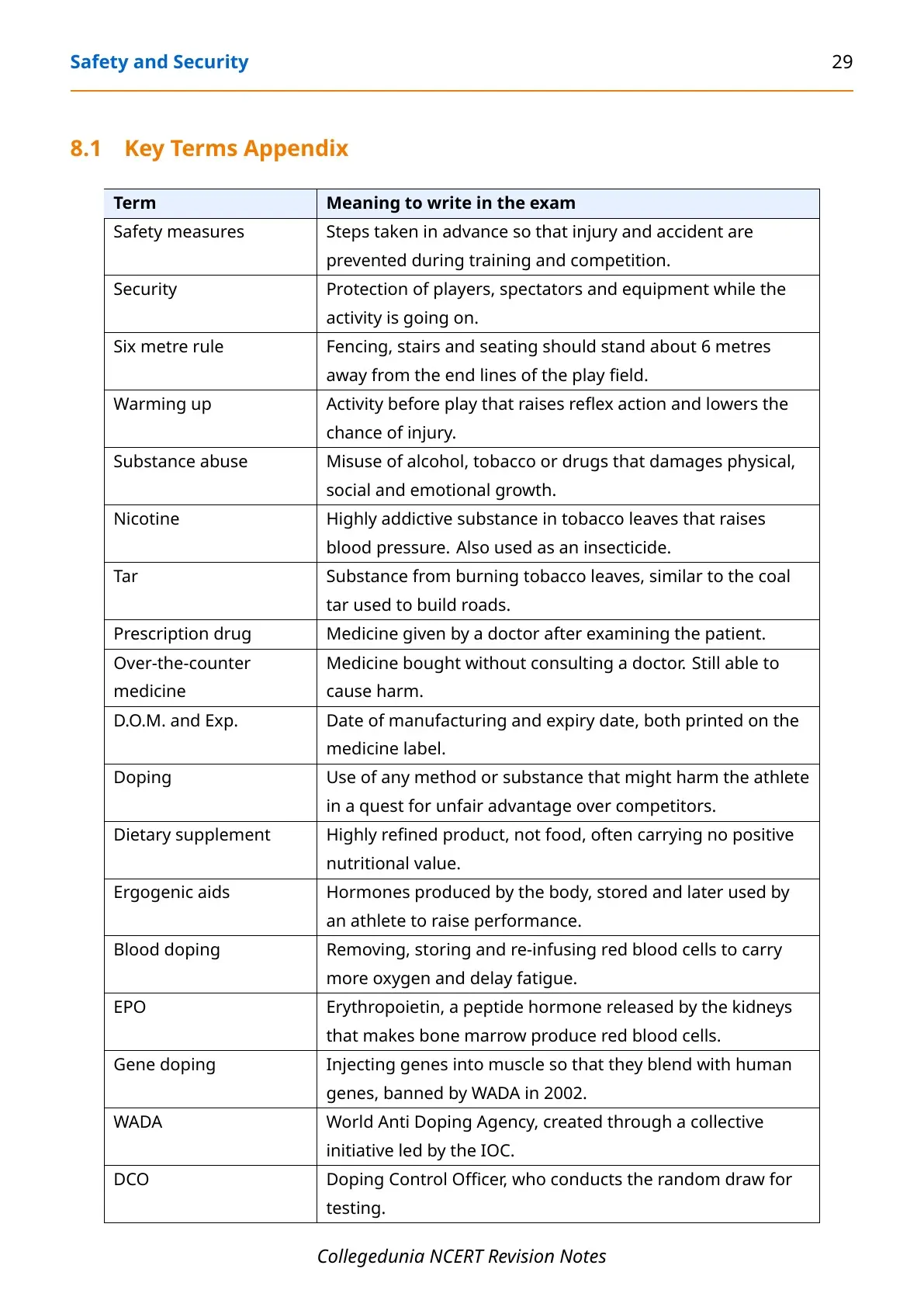
Every note on this page is curated by Class 11 Physical Education teachers, checked line by line against the 2026-27 NCERT print, and refined against the last five years of school question papers.
Student Feedback: In a Collegedunia poll of 12,760 Class 11 Physical Education students taken before the 2026-27 school exams, 71% said the doping section was the hardest part of this chapter. Only 34% could name the two principal categories of performance-enhancing substances without opening the book.
Source: 2026-27 Class 11 Physical Education student poll. Sample of 12,760 students from CBSE schools across 19 states.
What the Class 11 Safety and Security Notes Cover
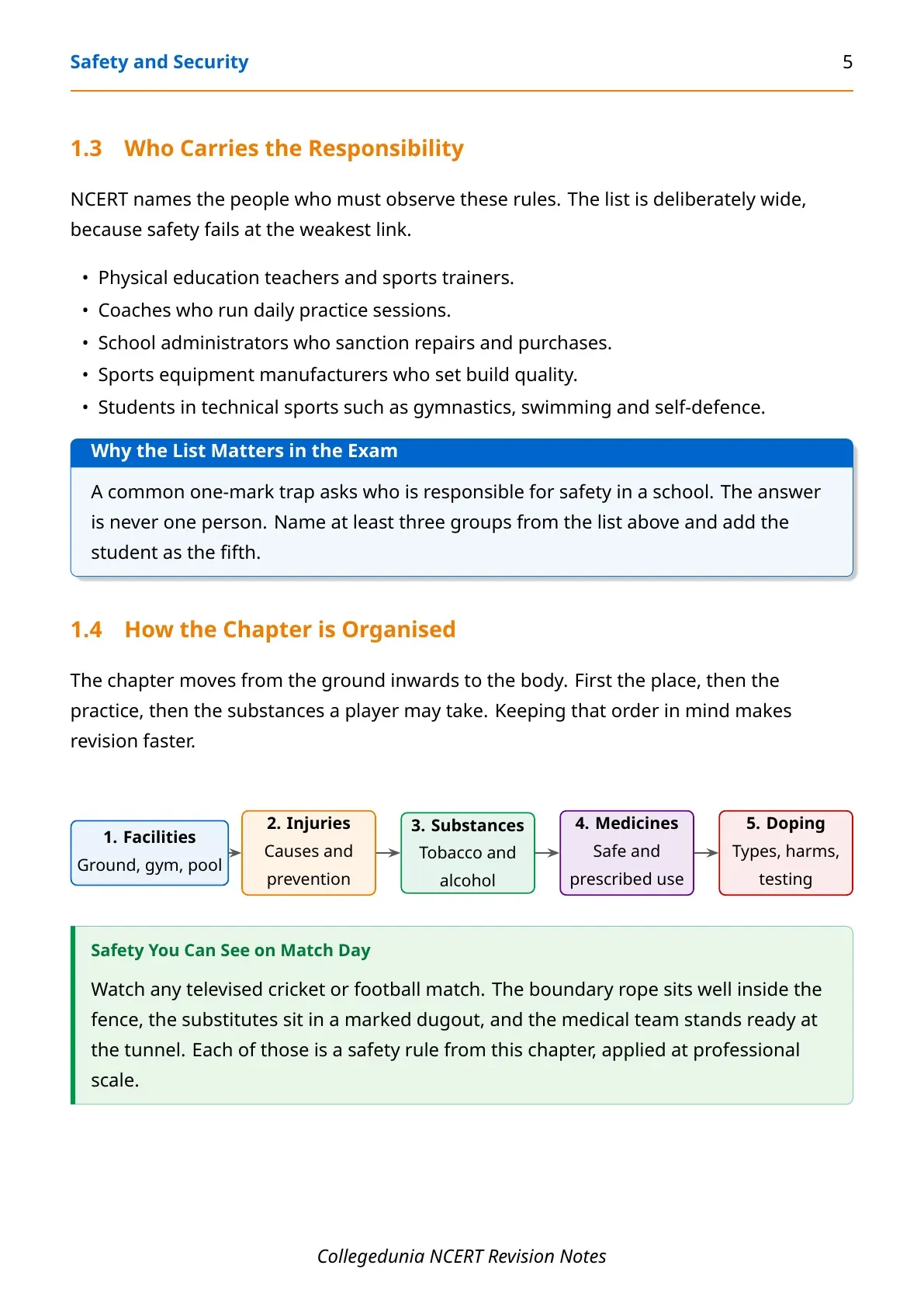
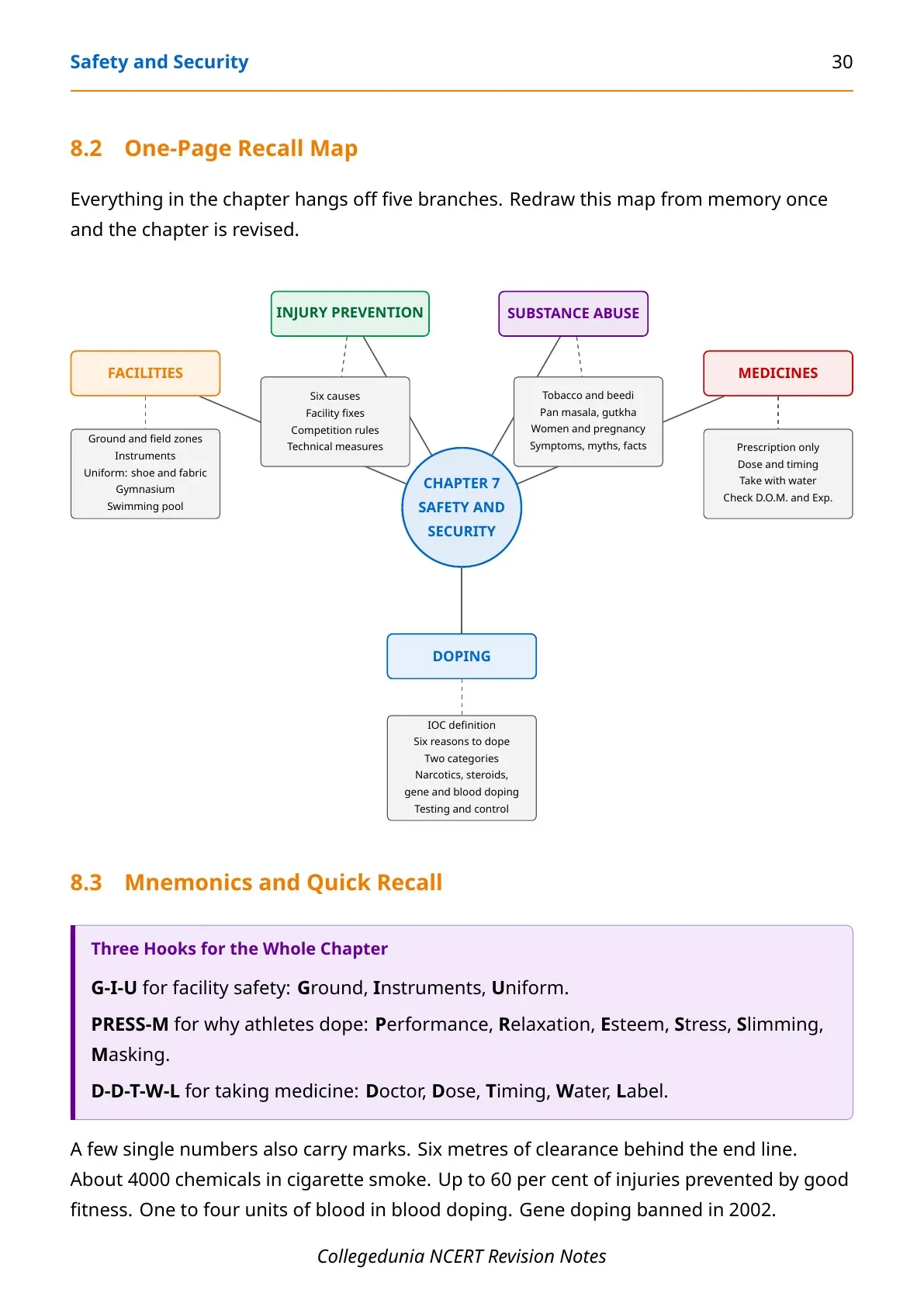
This chapter has three clear blocks. The first is safety on the sports field, in the gymnasium and at the swimming pool. The second is injury prevention. The third is health hazards, and it runs from tobacco and alcohol through common medicines to doping.
- Safety regarding sports facilities: the ground, the field, the instruments and the uniform.
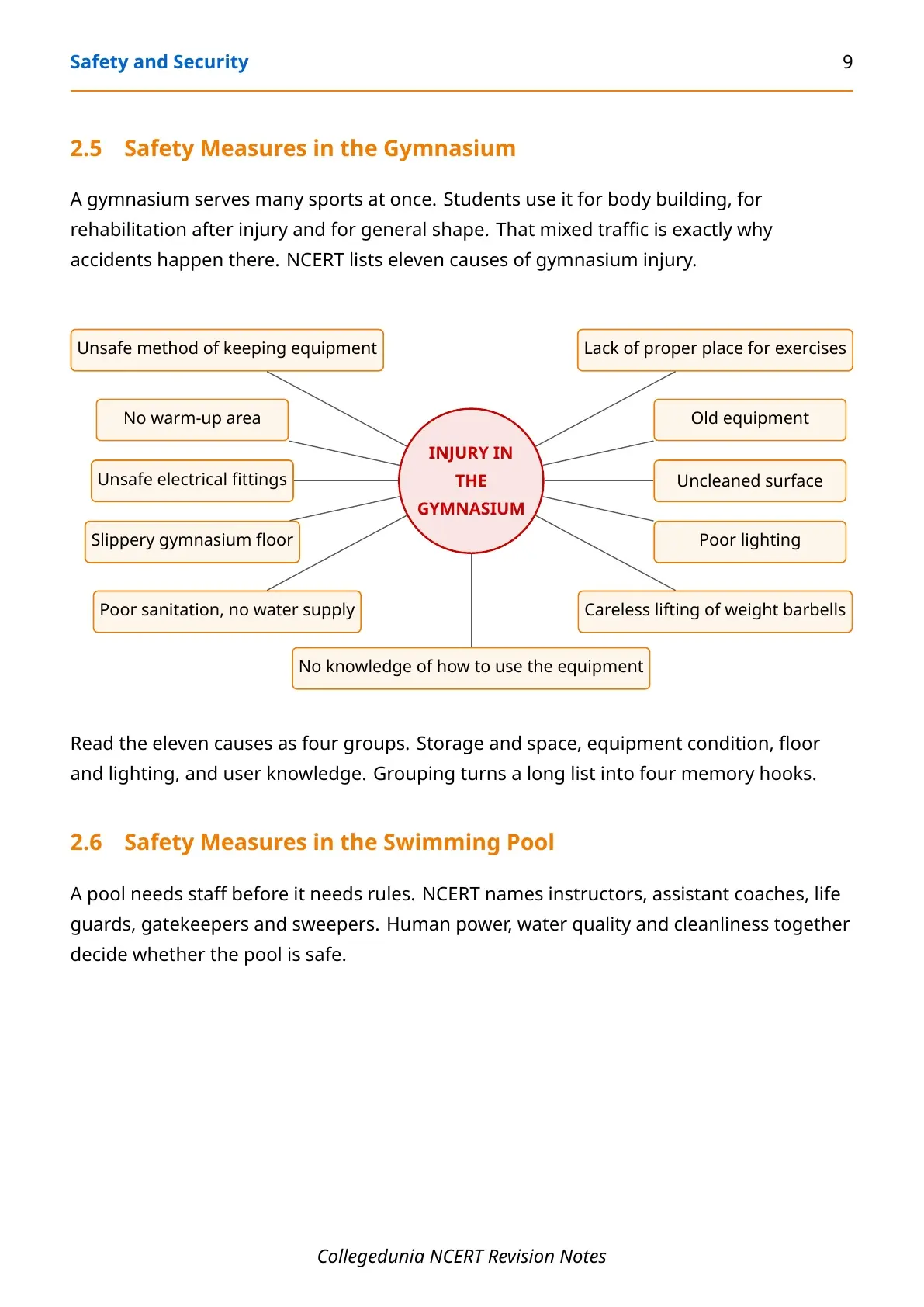
- Gymnasium safety, listed as eleven causes of injury you can quote straight into an answer.
- Swimming pool safety, a fifteen-point checklist plus the staff a pool must have.
- Why sports injuries occur and the three levels of prevention: facilities, competition and technical.
- Alcohol, tobacco and substance abuse during adolescence, with symptoms, reasons and the myths and facts table.
- Common medicines, how to use them, and the precautions before taking any medicine.
- Doping: the concept, the IOC definition, the classification, the basic drugs, the harms and the two testing types.
Tip: examiners set most one-mark questions from the fixed lists in this chapter. Learn the counts first. Eleven gymnasium causes, six reasons injuries occur, two doping test types, two categories of doping substances.
Safety Measures in Playgrounds for Class 11 Students: Ground, Field and Instruments
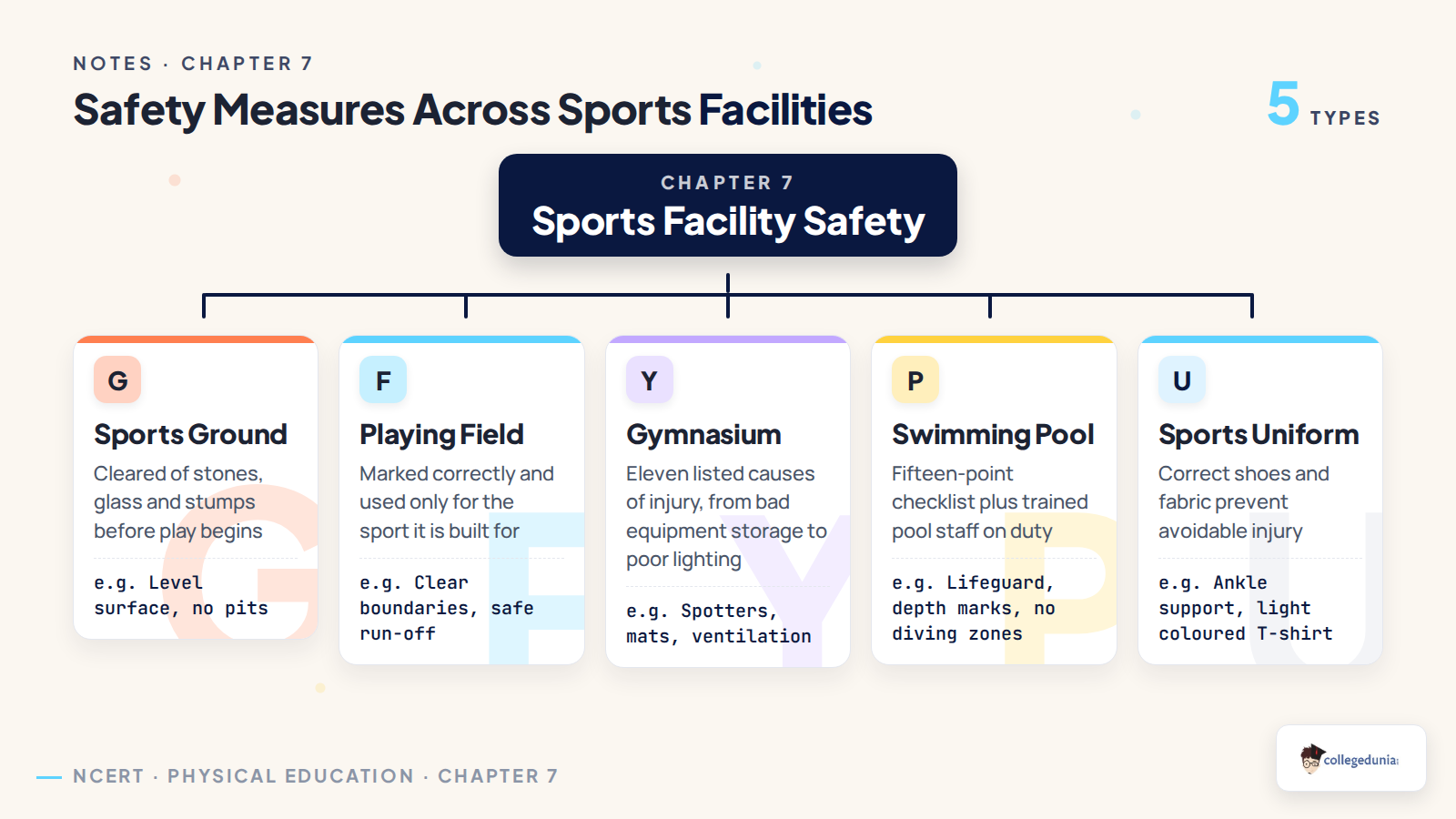
The chapter starts with a simple argument. Coaches and athletes chase the winning spirit, so safety gets forgotten. Injuries during training then create a fearful emotional or psychological phobia. Simple safety rules stop that phobia before it starts.
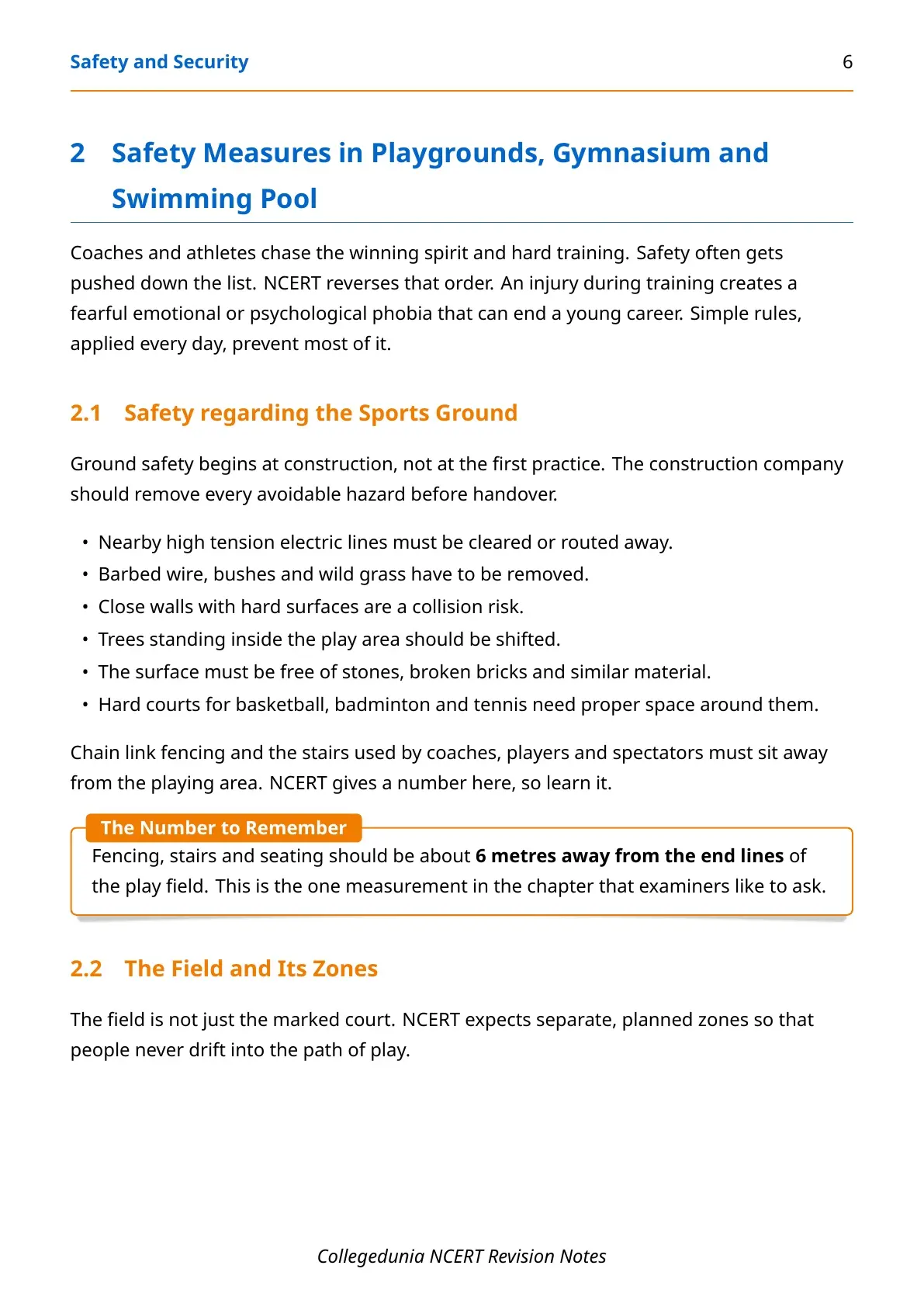
These rules are to be observed by physical education teachers, sports trainers, coaches, school administrators and sports equipment manufacturers. Students in technical sports such as gymnastics, swimming and self-defence must also be taught to avoid injuries.
Sports Ground and Field
The ground section is about what the construction company must remove before play begins. The field section is about how the space is used on match day.
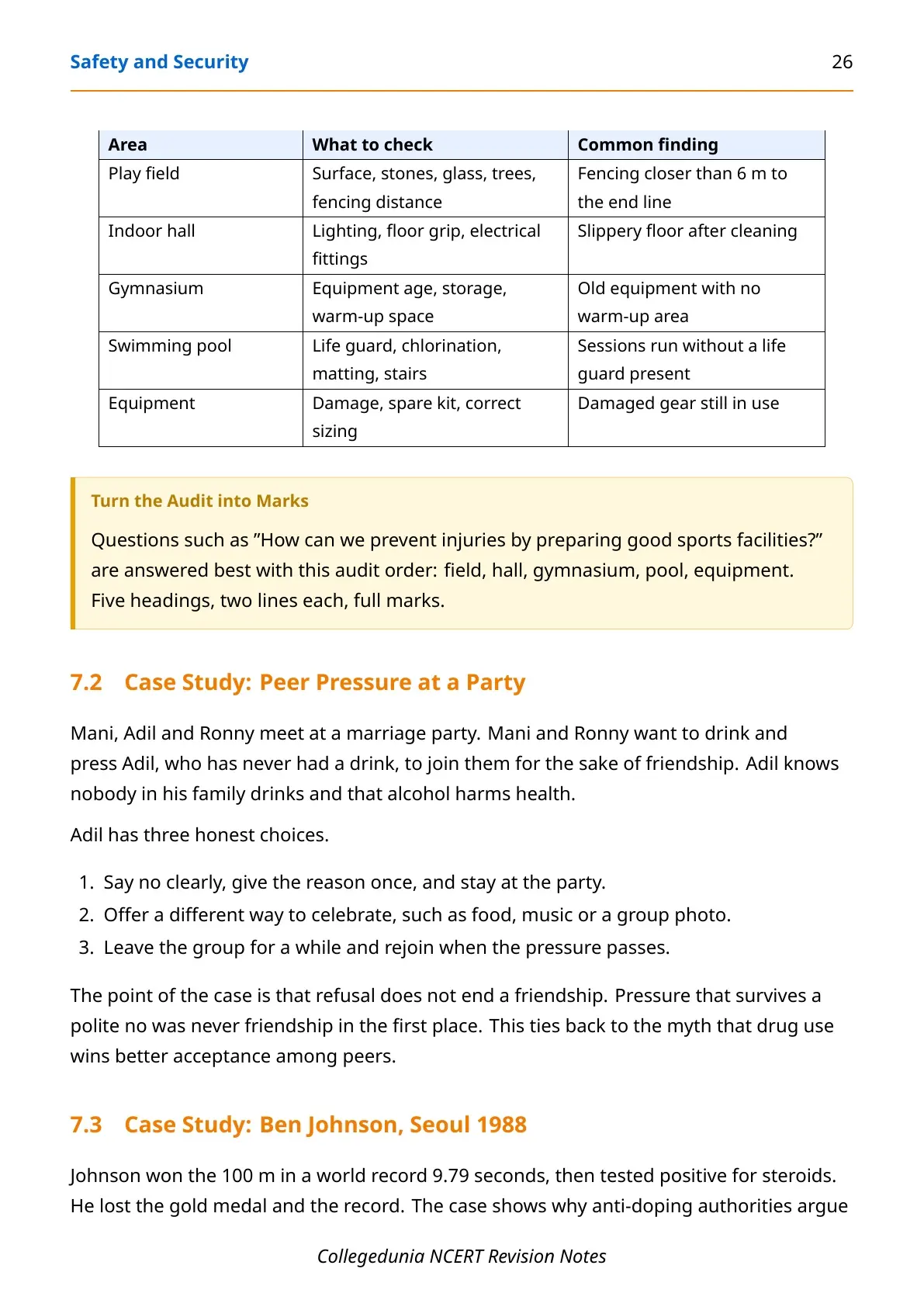
| Area | What the textbook says |
|---|---|
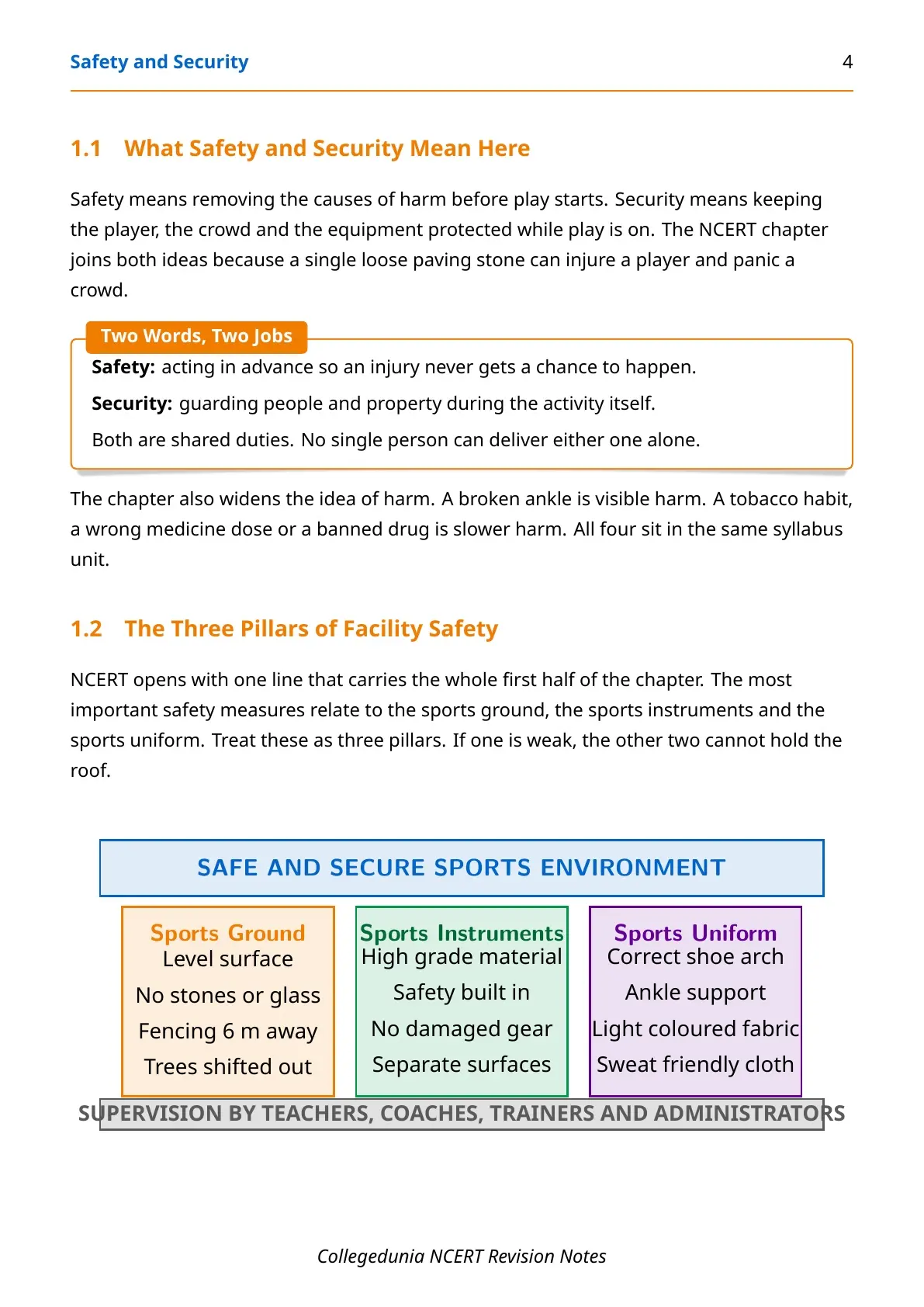
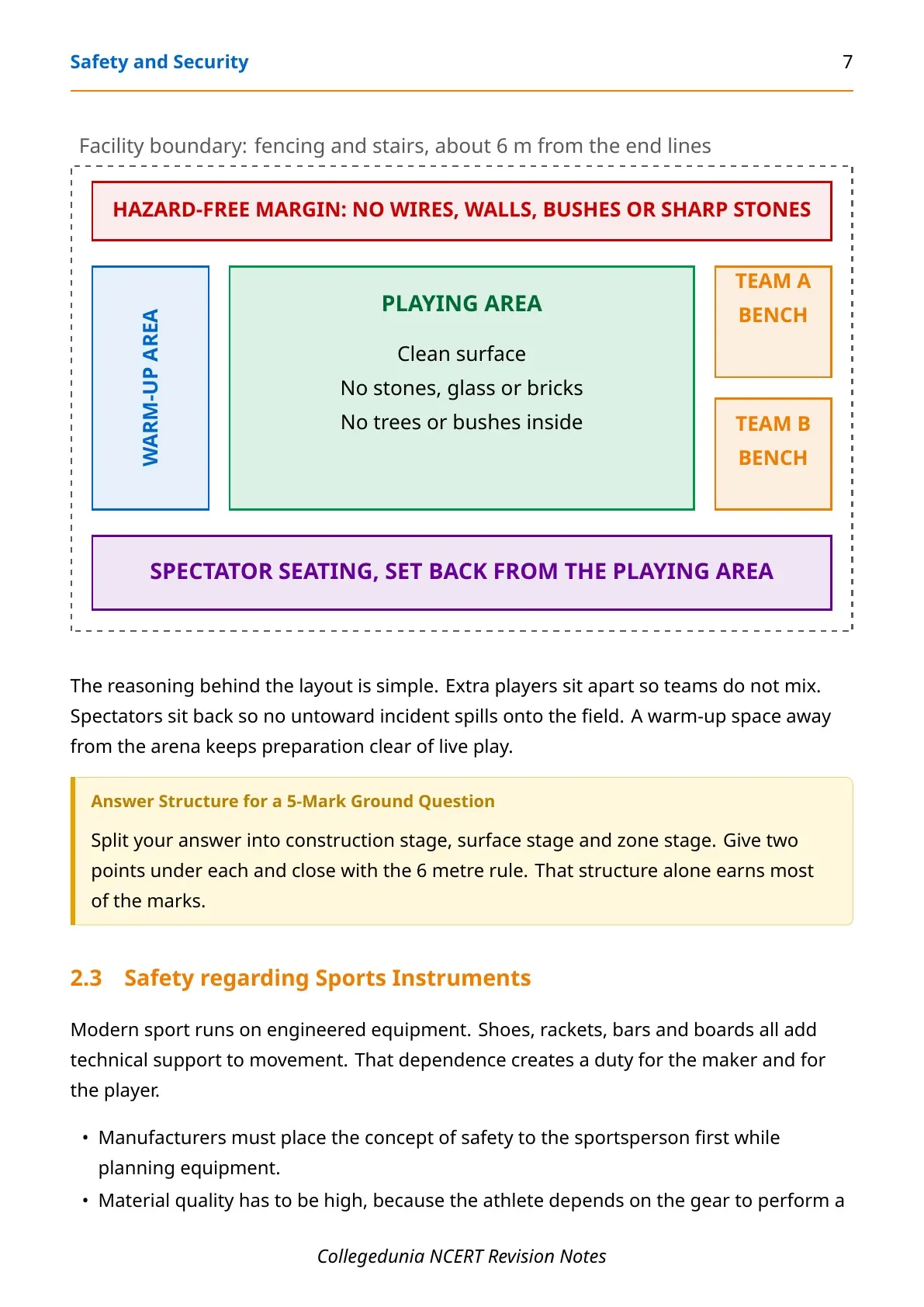
| Hazards to remove | Nearby high tension electric line, barbed wire, bushes or wild grass bushes, close wall with a hard surface, and trees |
| Surface | Safe and clean, free from hazardous material like stone and broken bricks |
| Fencing and stairs | Chain link fencing or stairs for trainers, coaches, players and spectators kept 6 metres away from the end lines |
| Sitting area | Proper and separate sitting for extra players of both teams, so players do not mix. Spectators seated away from the playing area |
| Warming up | Sufficient warming up area provided away from the competition arena |
| Sharp objects | Broken glass and sharp edged stones removed to avoid potential injury |
The textbook adds one environmental note in a Do You Know box. Because the land and forest ratio is falling, cutting or eliminating trees is not permissible, so trees near a play field are shifted, not felled.
Safety Regarding Sports Instruments
Modern sports use equipment that is performance friendly and adds technical support during movement. That makes the manufacturer part of the safety chain.
- Manufacturers must add the concept of safety to sportsperson as a priority while planning and organising equipment.
- The material used must be of high standard, because the sportsperson depends on it to perform skills.
- Players are advised never to use damaged equipment or instruments.
- Playing surfaces for different games should be constructed separately, as advised by the officials, federations or associations.
Safety Regarding Uniforms, Shoes and T-shirt Fabric
A uniform adds glamour, but poor fabric and unsuitable shoes cause pain. The chapter says preparation of a sportsperson for competition includes the selection of the type of shoe, and the fabric and colour of the T-shirt.
| Item | The defect | What it causes |
|---|---|---|
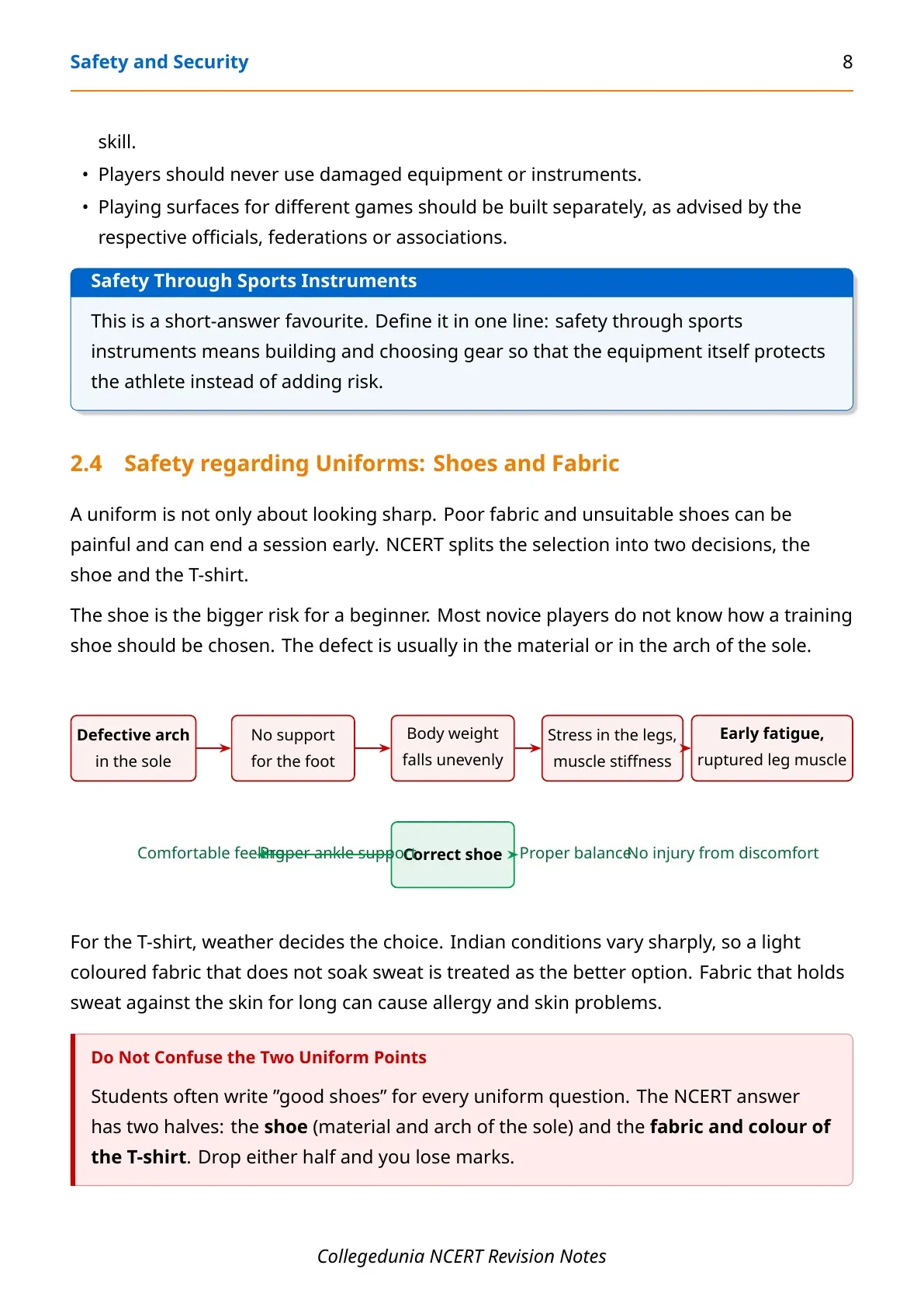
| Shoe | Defect in the material or in the arch of the sole | No support to the foot, unbalanced body weight, stress in the legs, muscle stiffness, tiredness, and rupture of leg muscles |
| T-shirt fabric | Dark, sweat absorbing fabric | Allergy and skin problems when it stays in contact with the body for a long time |
The four objectives of wearing properly manufactured shoes are a favourite four-mark question. They are comfortable feeling, proper ankle support, proper balance, and avoiding leg injury. For the T-shirt, India's weather variation makes a light coloured fabric that does not absorb sweat the better choice.
Safety and Security Chapter Explained in Video
Source: Magnet Brains on YouTube
Gymnasium Safety: Eleven Causes of Injury Every Class 11 Student Must List
The gymnasium is called an asset to the institute. Students use it to build the body, to rehabilitate after injury and to get into shape. The textbook then lists exactly eleven reasons an injury happens there, and the answer to the assessment question is simply that list.
- Unsafe method of keeping equipment.
- Lack of proper place for exercises.
- Lack of a warm-up area.
- Old equipment.
- Unsafe fitting of electrical gadgets.
- Uncleaned surface.
- Slippery gymnasium surface.
- Poor lighting conditions.
- Poor sanitation and lack of water supply.
- Not observing safety measures while lifting and keeping the weight barbells.
- Lack of proper knowledge of using equipment.
Also Check: if the paper asks for five precautions instead of the full list, pick the five that are easiest to expand into a sentence each. Old equipment, slippery surface, poor lighting, unsafe electrical fittings and lifting barbells without knowledge.
Swimming Pool Safety Measures and the Fifteen-Point Checklist
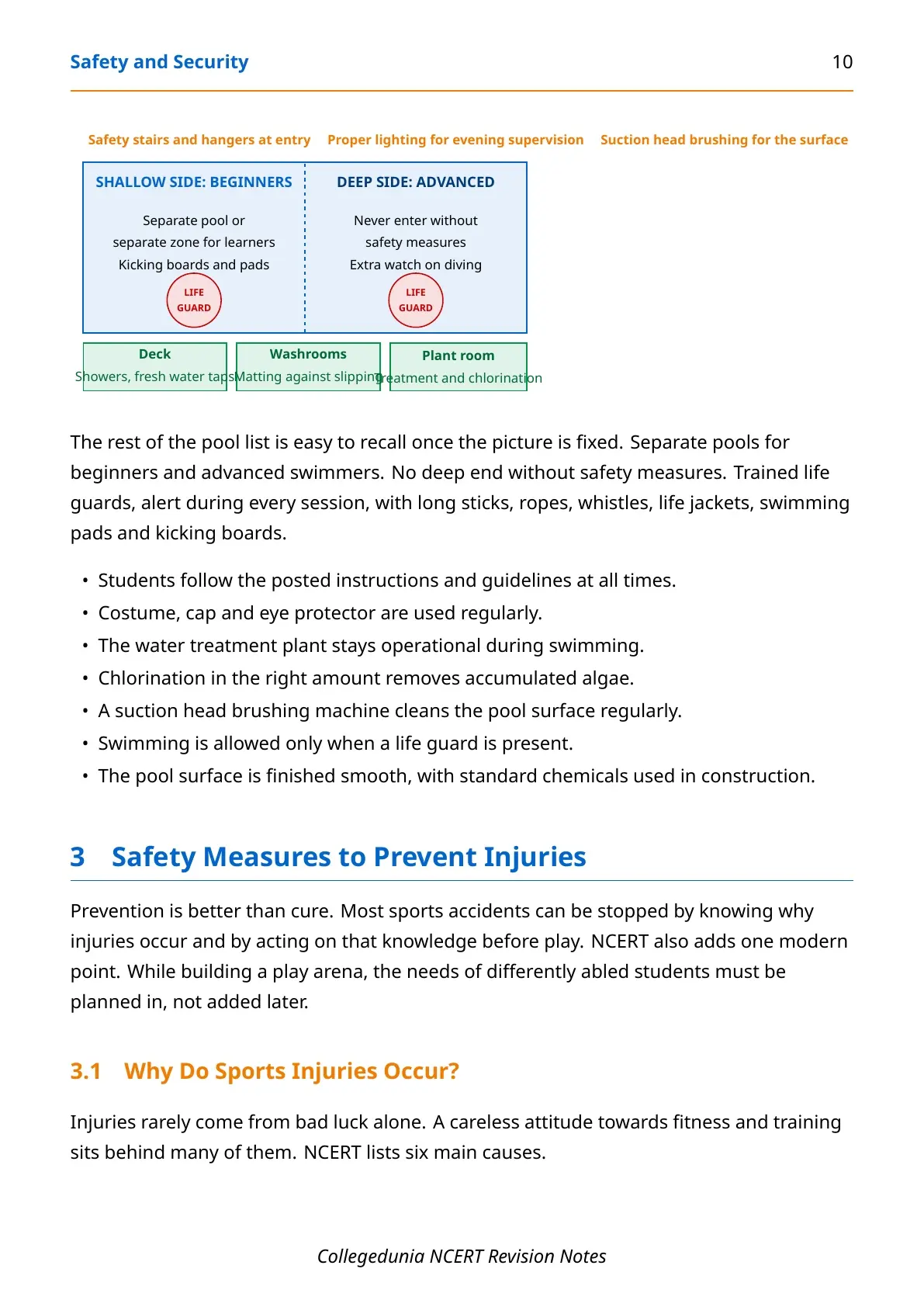
A school with a pool has to run it with staff and with a routine. The chapter names the staff first, then gives fifteen steps for safe and hygienic pool conditions. The three ideas the examiner looks for are human power, water quality and cleanliness.
The staff a pool must have are instructors, assistant coaches, life guards, a gatekeeper and sweepers. Swimming activities are allowed only in the presence of life guards.
| Theme | Safety steps from the textbook |
|---|---|
| Separation of swimmers | Separate pool for beginners and advanced swimmers. Students avoid the deeper side without proper safety measures |
| Life guards | Well trained and careful during pool activity, with special attention to swimming and diving at the deep end |
| Life saving devices | Long stick, rope, whistle, life saving jackets, swimming pads and kicking boards |
| Swimmer discipline | Follow the pool instructions and guidelines. Wear the proper costume, cap and eye protector every session |
| Water quality | Water treatment plant kept operational. Chlorination in the proper amount removes accumulated algae |
| Cleaning | Pool surface cleaned regularly with a suction head brushing machine |
| Construction | Smooth finishing of the pool surface and use of standard chemicals. Safety stairs and hangers to help entry |
| Pool side | Showers with fresh water taps for pre and post swim showers. Matting on washroom surfaces to stop slips |
| Lighting | Proper lighting, useful in the evening for supervising swimmers inside the pool |
Two-mark questions on this section ask for any two measures. Pick separate pools for beginners and swimming only in the presence of life guards, because both are one line long and both are unmistakably from this chapter.
Why Sports Injuries Occur and How to Prevent Them Before Competition
The prevention section opens with the line the paper likes to quote, that prevention is better than cure. Many accidents during sports can be stopped with the right preventive measures. The chapter also notes that while building a play arena, the needs of differently abled students must be kept in mind.
Why do Sports Injuries Occur
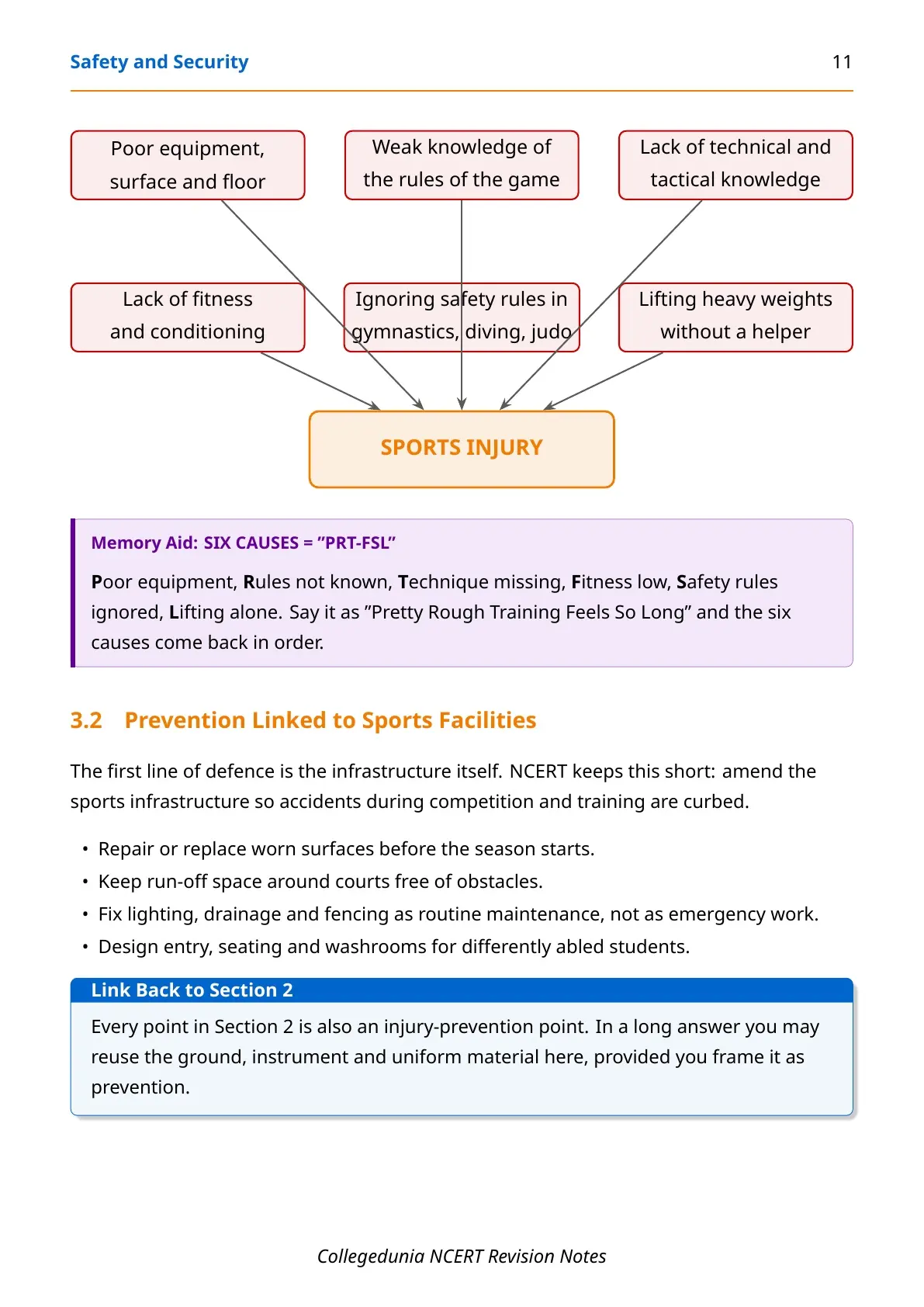
The root cause given is a careless attitude of the player towards fitness and training. Six specific factors follow, and they are the safest opening to any injury prevention answer.
- Poor equipment, surface and floor.
- Lacking knowledge of the rules of the game.
- Lack of technical and tactical knowledge.
- Lack of fitness and conditioning.
- Not observing safety rules in technically difficult sports such as gymnastics, diving, judo and wrestling.
- Lifting heavy weights without helpers, which can cause a severe injury.
Prevention of Injury Related to Competition
Five measures are listed for the period just before a competition. Supervision by the coach and instructor sits above all of them.
- Proper warming up before any game, because it enhances the body's reflex actions and reduces the chance of injury.
- Proper safety gears and clothing adopted for the competition.
- Players follow the rules and regulations of the competition.
- All equipment checked thoroughly, and anything broken or in bad shape replaced or repaired.
- Officials evaluate the playing arena before the start of the game.
Technical Measures for Prevention of Injuries
These five points are the ones the long answer on physical fitness as a tool for injury prevention is built from. The chapter's Do You Know box states that developing physical fitness may help a player prevent injuries up to 60 per cent in that particular game.
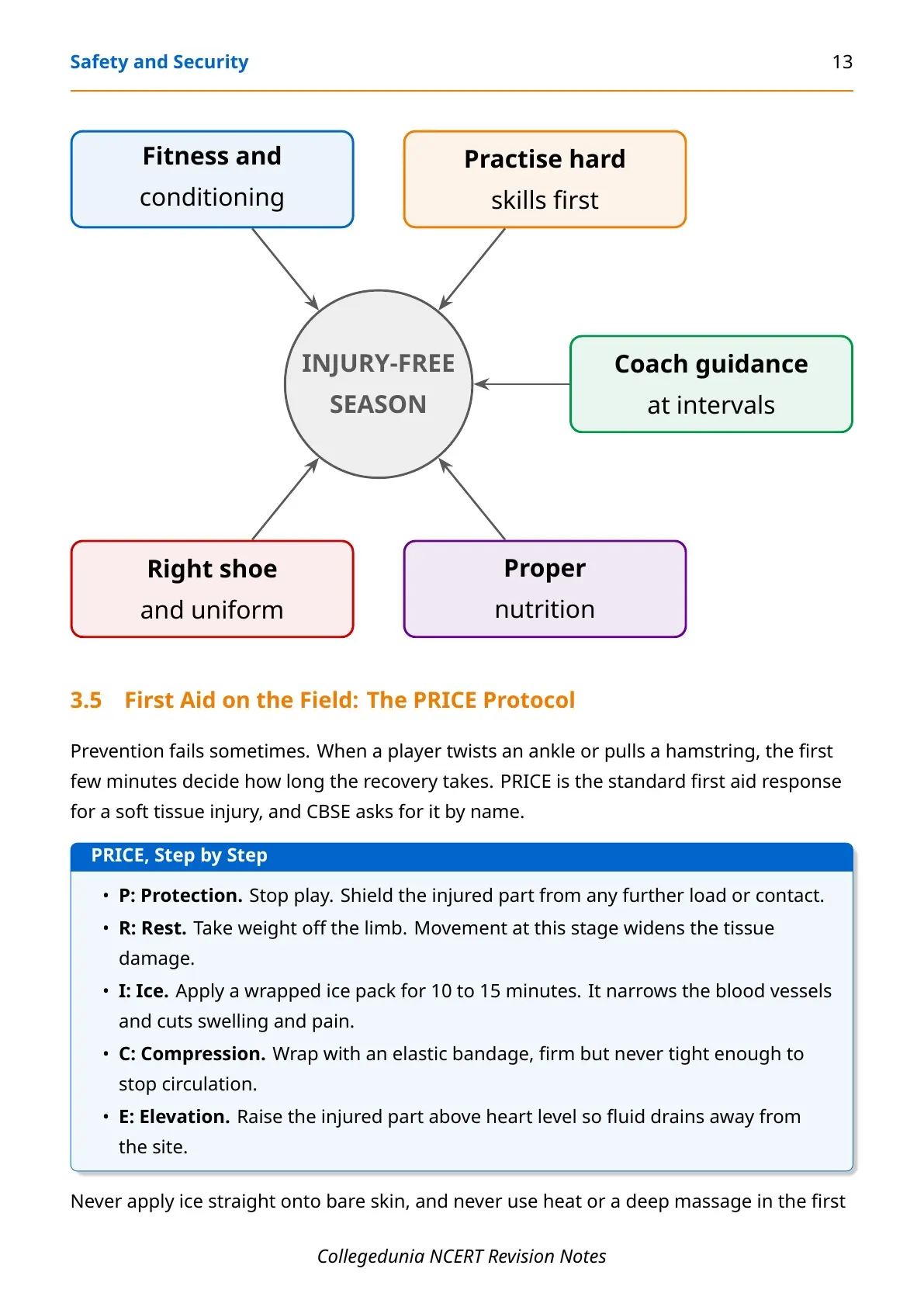
- Fitness and conditioning stop tiredness. A tired player has slower reaction and slower speed, and is most likely to get injured.
- In sports where the difficulty level of movement is high, players should practise the difficult technical movements before taking active part.
- Coaches and trainers guide students on safety rules at regular intervals and check that the measures are being followed.
- Proper nutrition avoids injuries caused by stress or overload training, and repairs and builds ruptured muscle fibres.
- The right shoe and sports uniform prevent bruises, blisters, broken nails, sprain, strain and shin pain.
Good physical fitness is also linked in the textbook to better reaction ability, better decision making ability and higher self-confidence. Add those three to the 60 per cent figure and the elaborate-type question is complete.
Alcohol, Tobacco and Substance Abuse During Adolescence Explained
Adolescence is called a vulnerable time in a person's life. Substance abuse hits the physical, social and emotional growth of an adolescent. Of all substances, alcohol and tobacco are the two most commonly misused, and tobacco here includes pan masala, gutkha, khaini, cigarette and beedi.
Two lines from this section are quoted almost every year. Children are exposed to these substances at home very early because they are easily available, and parents are role models, whether good or bad. Children of parents who misuse substances are at greater risk of addiction. With proper treatment and the support of loved ones, young people can overcome the habit.
Why Tobacco Use is Unhealthy
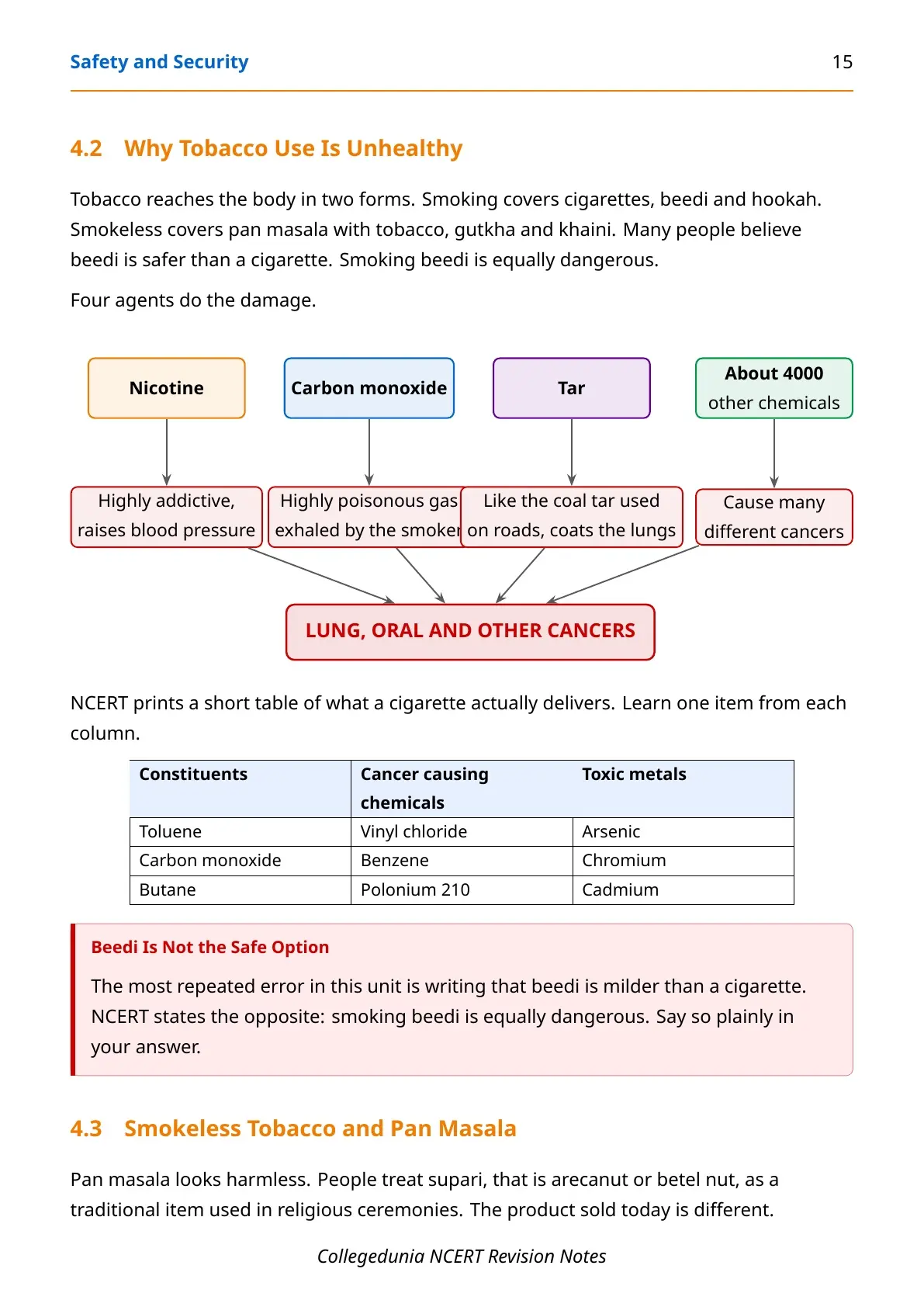
Tobacco is used in two forms. Smoking covers cigarettes, beedi and hookah. Smokeless covers pan masala with tobacco, gutkha and khaini. Most people believe beedi is safer than a cigarette, and the chapter says plainly that smoking beedi is equally dangerous.
- Nicotine in tobacco leaves is highly addictive and raises the blood pressure. The textbook notes it is used as an insecticide and pesticide in agriculture.
- There are about 4000 chemicals in cigarette smoke, and they cause different kinds of cancer.
- Carbon monoxide gas exhaled by the smoker is highly poisonous.
- Tar, produced by burning tobacco leaves, is similar to the coal tar used for building roads.
- Half of the users who start tobacco in their youth will lose their lives by middle age.
| Constituents | Cancer causing chemicals | Toxic metals |
|---|---|---|
| Toluene | Vinyl chloride | Arsenic |
| Carbon monoxide | Benzene | Chromium |
| Butane | Polonium 210 | Cadmium |
Smokeless Tobacco and Its Health Hazards
Pan masala contains supari, that is arecanut or betel nut, a traditional item used in many religious ceremonies. Most people believe it is only a mixture of areca nut cuttings, food flavours and sweeteners. The chapter corrects that belief.
- Pan masala is a specialised, ingenious mix of traditional items and chemical products developed to cause addiction.
- New formulations are introduced constantly to deliver higher highs to addicts.
- Continuous use of tobacco causes oral cancer. Research links pan masala, gutkha and khaini to oral cancer.
- Use by a pregnant mother is nearly as dangerous as drinking alcohol, and the unborn baby is harmed by the chemicals in gutkha and pan masala.
- Smoking causes different cancers, the most common being lung cancer. Products labelled low tar or additive free are still harmful.
- Substance misuse leads to dependence and addiction, makes a person angrier, volatile, depressed and tense, and damages thinking, memory and school work.
Effect of Tobacco Abuse Among Women
Young women are one of the biggest targets of the tobacco industry. Richly funded campaigns falsely link tobacco use with freedom and liberty, or beauty, slim figure and prestige. Misleading labels such as light and low tar do the rest.
Light smokers often inhale more deeply and more often to absorb the nicotine they want, so light does not mean safer. Women who smoke are more likely to face infertility and delays in conceiving. Smoking during pregnancy raises the risk of premature delivery, still birth and death, and smoking also raises the risk of cancer of the cervix.
Symptoms and Reasons for Alcohol Consumption and Substance Abuse in Adolescence
This section splits into two lists. One is what a family or teacher can observe. The other is why a teenager starts. Learn them as two separate blocks, because the paper asks for them separately.
Symptoms to Observe for Alcohol or Tobacco Abuse
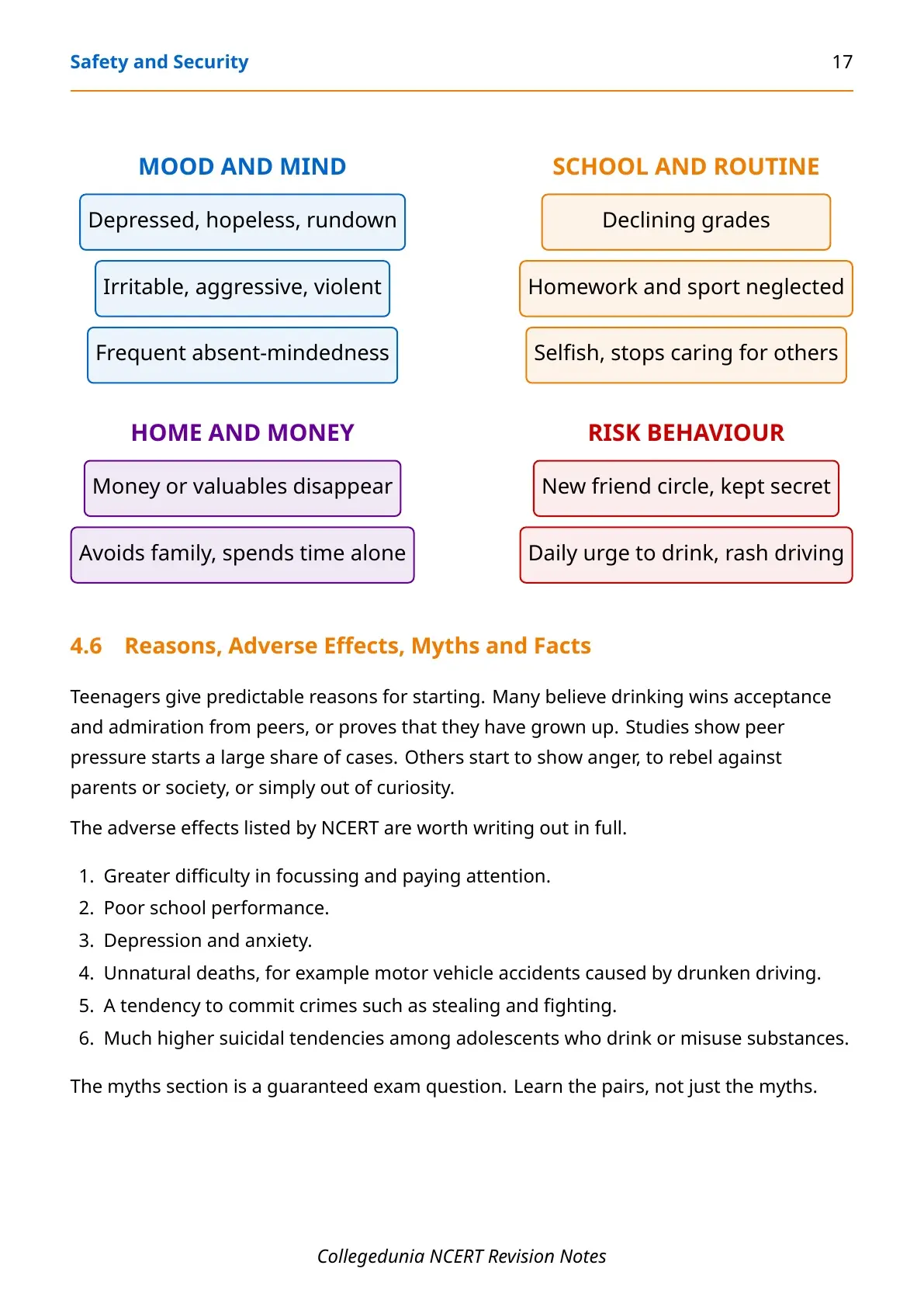
- Feeling depressed, hopeless, rundown or even suicidal.
- Being selfish and not caring for others, and frequent absent-mindedness.
- Money or valuables disappear from home.
- Irritability, aggressiveness and violent behaviour.
- Declining grades, with homework and sports getting affected.
- A new friend circle, often not disclosed to the family.
- An urge to drink daily, and avoiding family and friends to spend time alone consuming alcohol or drugs.
- Taking risks, including rash driving and other risky behaviour.
Reasons and Adverse Effects
Many teenagers believe drinking wins them acceptance and admiration from peers, helps them fit into a friend circle, and shows they have grown up. Studies quoted in the chapter say peer pressure starts most cases. Others begin out of anger, as a way of rebelling against parents or society, or simply out of curiosity.
- Greater difficulty in focussing and paying attention.
- Poor school performance.
- Depression and anxiety.
- Unnatural deaths, for example motor vehicle accidents caused by drunken driving.
- A tendency to indulge in crimes such as stealing and fighting.
- Suicidal tendencies are much higher in adolescents who drink or misuse substances.
Myths and Facts About Substance Abuse Set as a Five-Mark Question
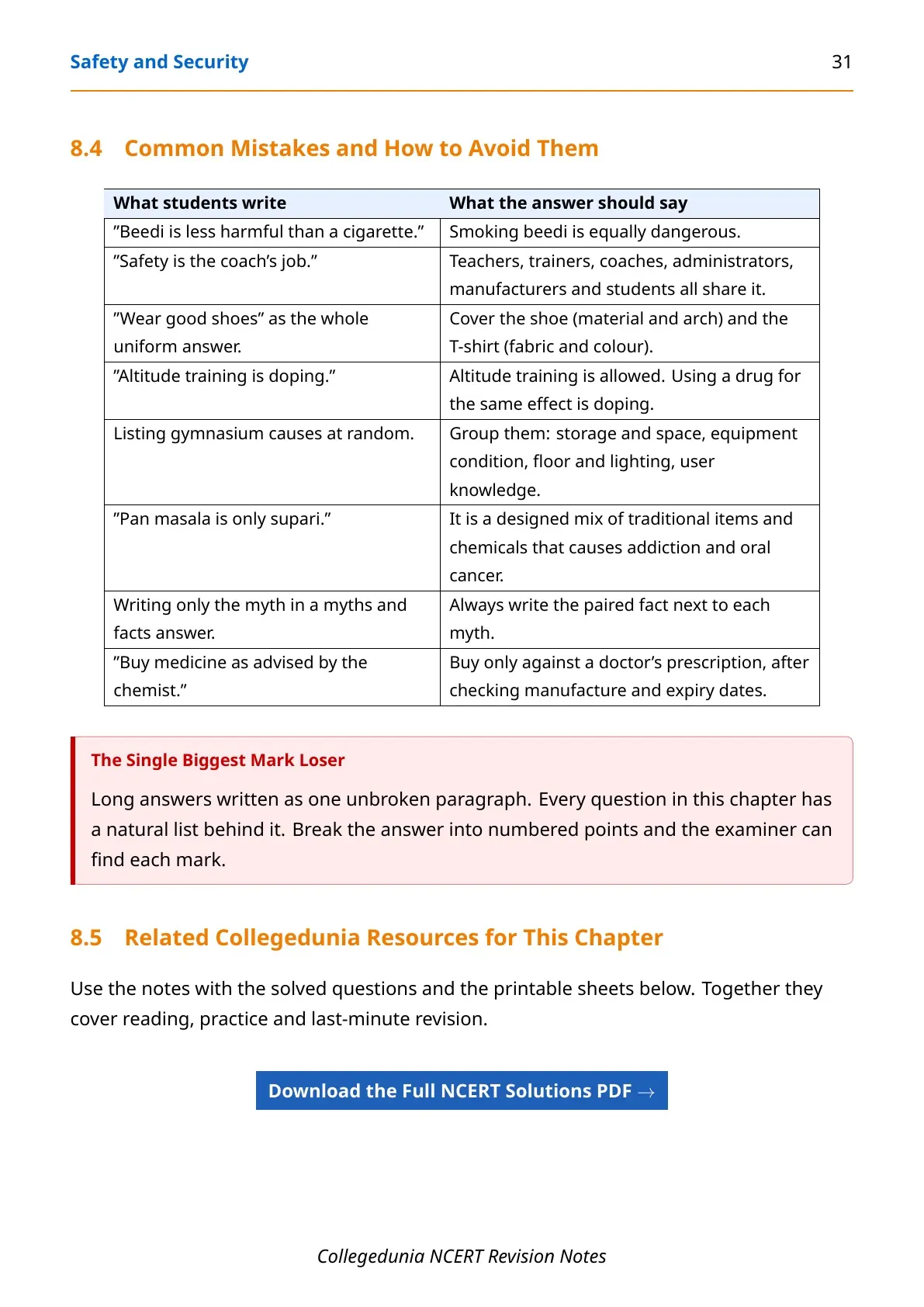
The textbook prints seven myth and fact pairs, and the assessment section asks you to write them down. Learn them as pairs. Writing the myth without the matching fact scores half.
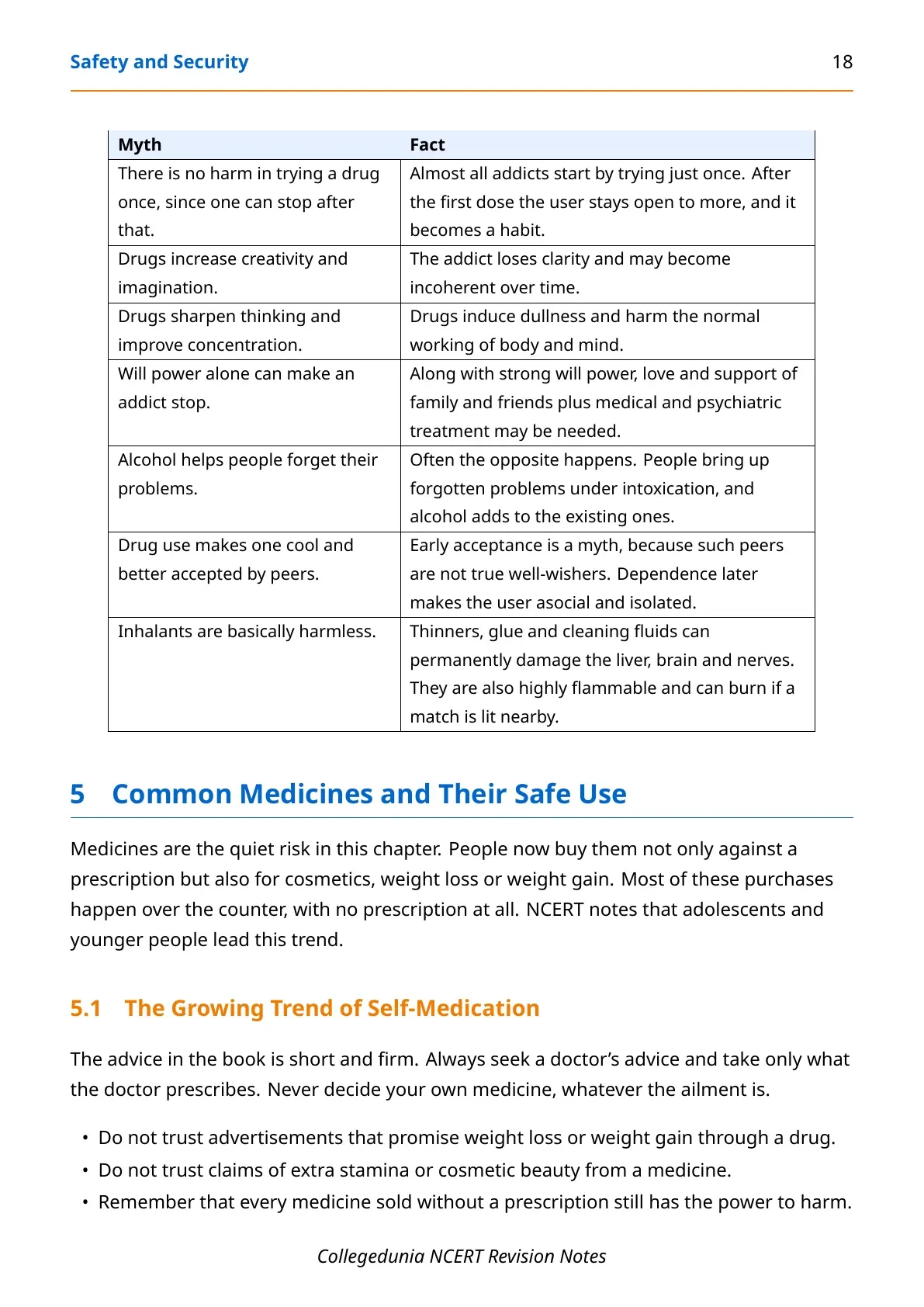
| Myth | Fact |
|---|---|
| There is no harm in trying a drug just once, because one can stop after that | Almost all addicts start by trying just once. After the first dose the user is always open to more, and it becomes a habit |
| Drugs increase creativity and make the user more imaginative | A drug addict loses clarity and may become incoherent over time |
| Drugs can sharpen thinking and lead to greater concentration | Drugs induce dullness and harm the normal functioning of body and mind |
| Will power alone can help an addict stop taking drugs | Besides strong will power, love and support of family and friends, and medical and psychiatric treatment may be needed |
| Alcohol helps people forget their problems | The opposite is often true. People bring up forgotten problems under intoxication, and alcohol adds to existing problems |
| Drug use makes one cool and better accepted by peers | Those peers are not true friends. Over time drug dependence makes a person asocial and isolated |
| Inhalants are basically harmless | Thinners, glue and cleaning fluids cause permanent damage to the liver, brain and nerves, and are extremely flammable |
Common Medicines: How to Use Them and What Precautions to Take
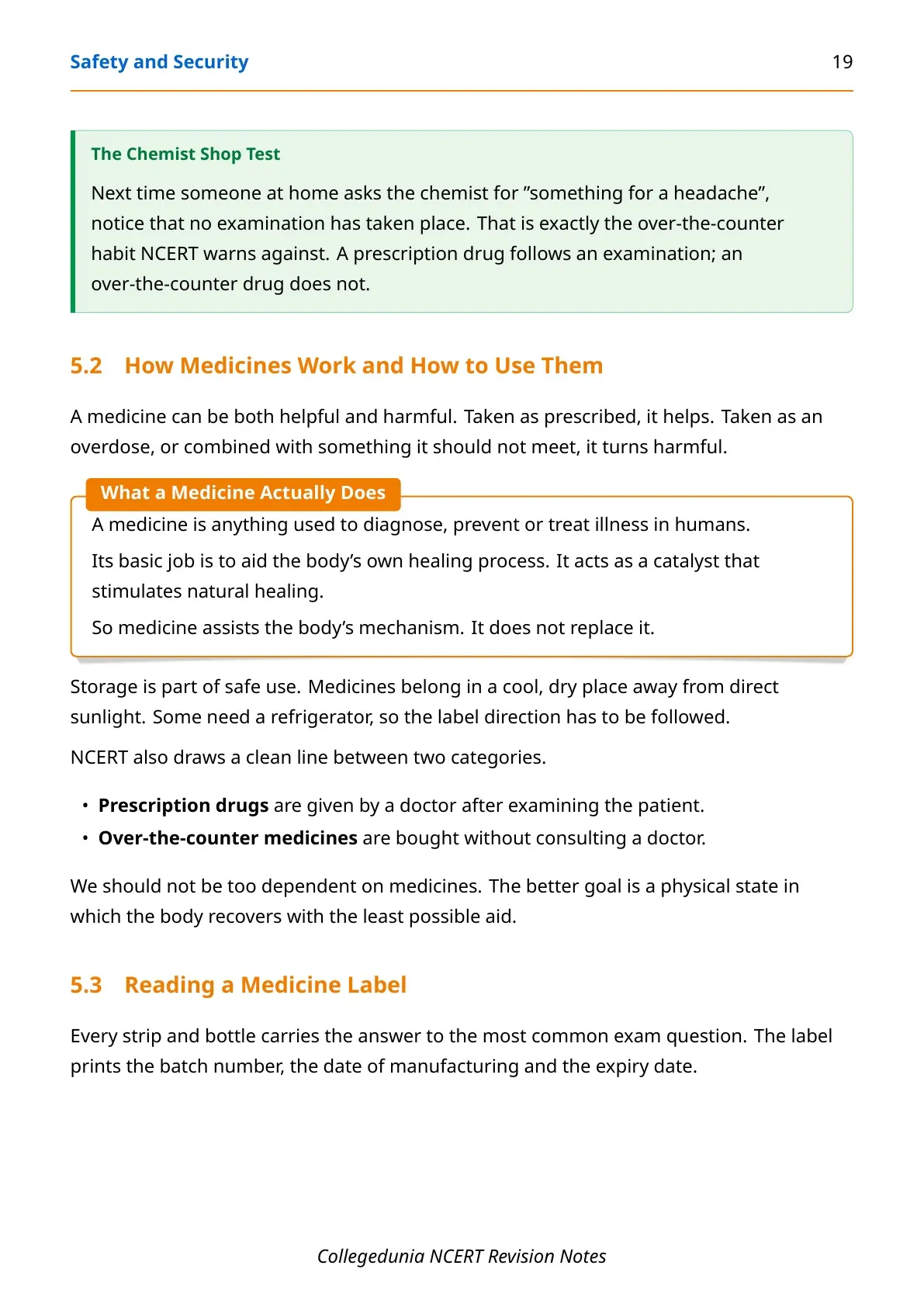
The chapter records a growing trend of taking medicine without a prescription, for cosmetics, weight loss or weight gain, bought over the counter. It is seen most among adolescents and younger people. The rule it gives is short. Take only what a doctor prescribes, and never decide your own medicine.
| Point the paper asks | What the chapter says |
|---|---|
| What is a medicine? | Anything used to diagnose, prevent or treat illness in humans |
| Basic function | To aid the healing process of the body. It acts as a catalyst that stimulates the natural healing process |
| Prescription drugs | Prescribed by a doctor after examining the patient |
| Over the counter medicines | Bought without consulting a doctor. All of them have the potential to cause harm |
| Storage | A cool dry place away from direct sunlight. Some medicines need a refrigerator, so follow the label |
| Dependence | Do not become too dependent. Work towards a physical state that recovers with the least possible aid of medicine |
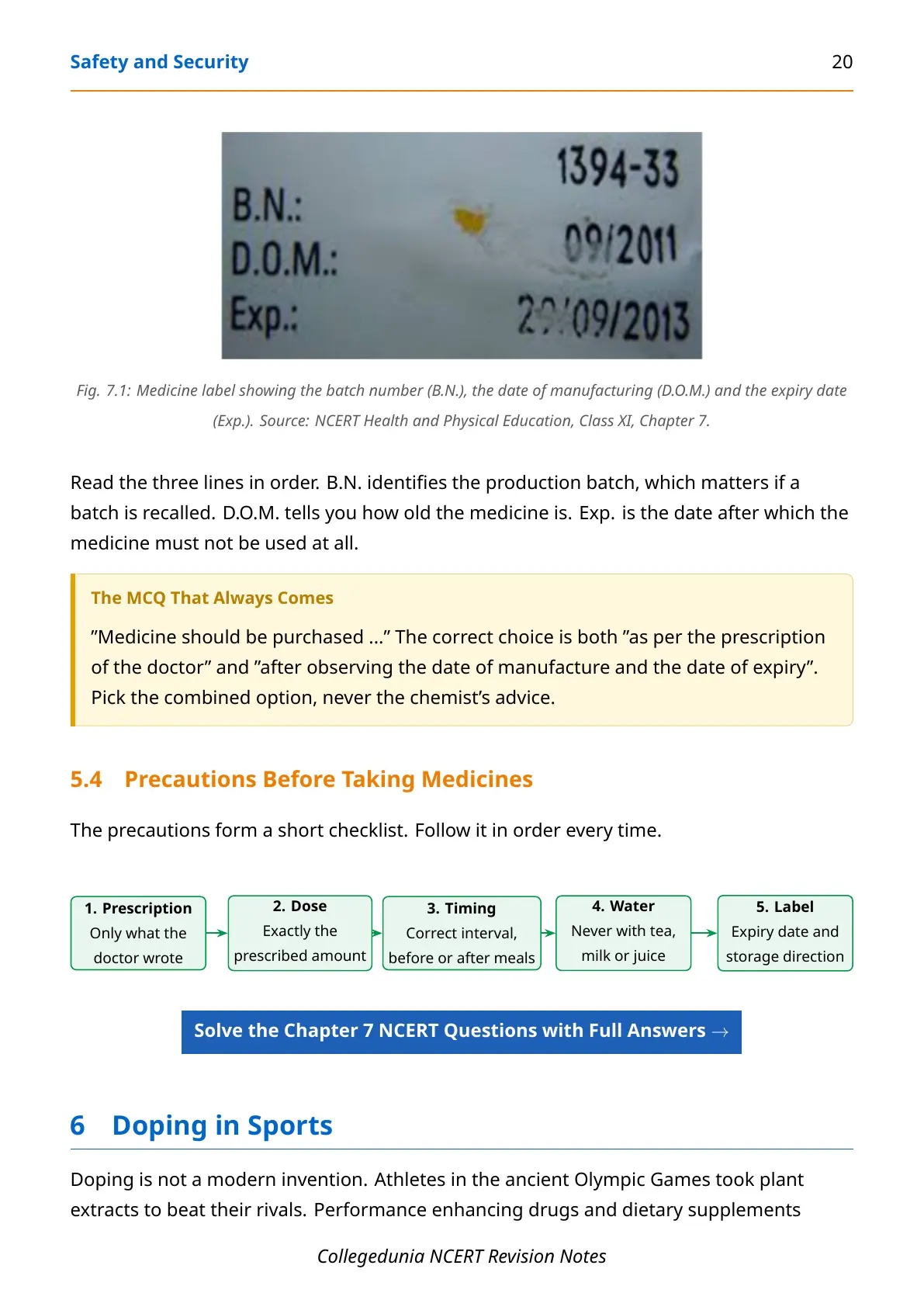
The precautions before taking any medicine make a neat three-mark answer. Follow the dosage and time intervals the doctor sets, follow instructions such as before or after meals, and take medicine with water rather than tea, milk or juice. When buying, check the prescription, the date of manufacture and the date of expiry on the label.
Doping in Sports: Concept, the IOC Definition and the Ben Johnson Case
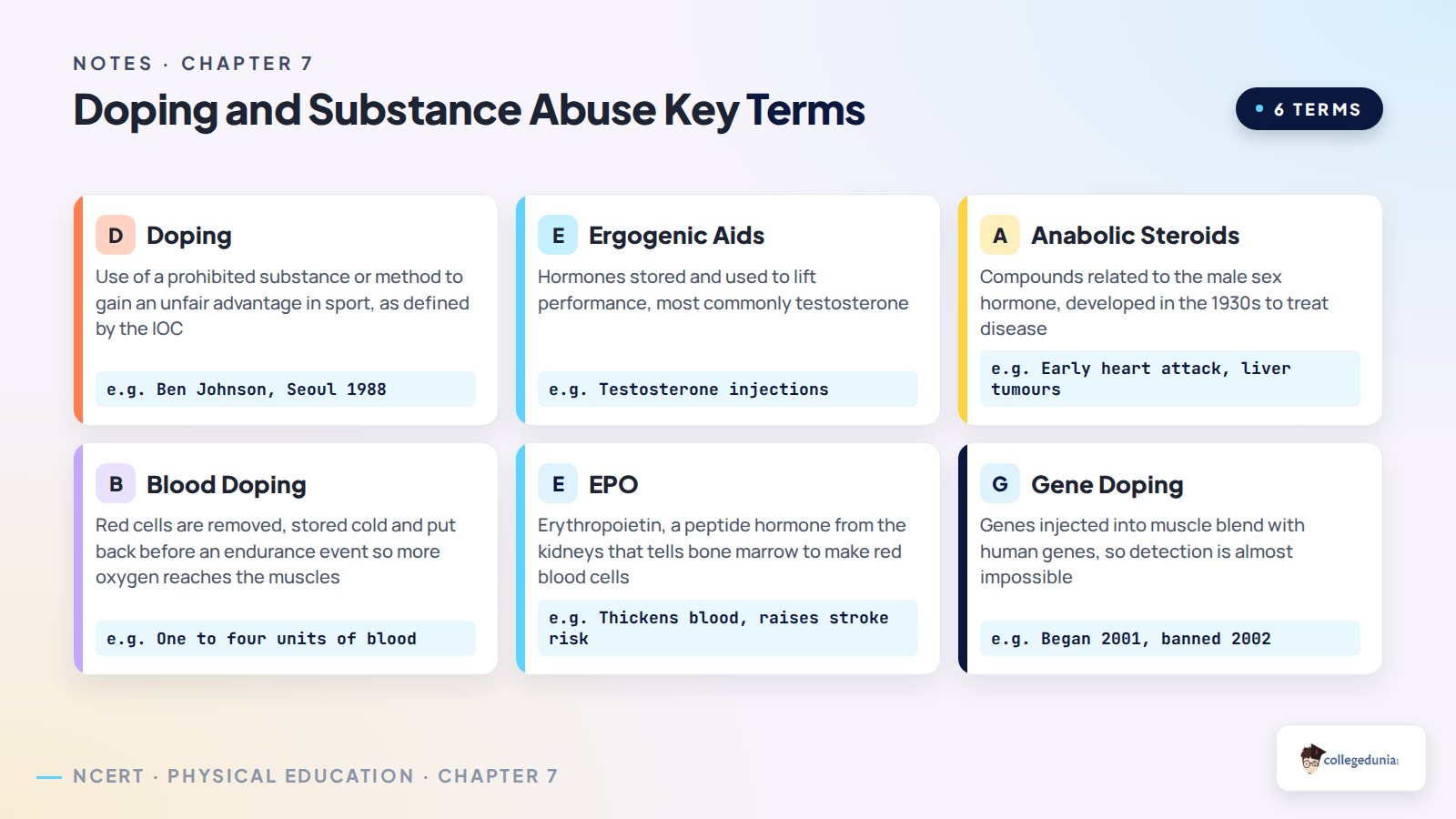
Doping is not new. Athletes at the ancient Olympic Games took plant extracts to beat their competitors. Because of the unfair advantage and the risk of harm, most athletic governing bodies now publish a list of substances banned from national and international competition.
Doping is the use of performance enhancing drugs in sport. The International Olympics Committee defines it as the use of any method or substance that might harm the athlete, in a quest to gain an unfair advantage over his or her fellow competitors. Learn that definition word for word, because it is the standard opening line of the long answer.
- Drugs are banned because they give an unfair advantage, pose a health risk, or violate the spirit of sport.
- Training at altitude to raise the blood's ability to carry oxygen is allowed. Using a drug for the same result is prohibited.
- Ben Johnson won the 100 m sprint in 1988 in a world record time of 9.79 seconds, tested positive for steroids, and lost the gold medal and the record.
- The World Anti Doping Agency was created through a collective initiative led by the International Olympic Committee.
The chapter also lists six reasons athletes dope, and this is the other half of the long answer. They dope to enhance physical performance and avoid falling behind, to wind down and relax, to cope with the pressure and stress of constantly needing to win, to boost self-esteem and confidence, to mask the pain of injuries, to control and reduce weight, and to hide the use of other banned substances.
Classification of Doping and the Basic Doping Drugs Used in Sports
The classification question is worth two marks and has a two-line answer. The two principal categories of performance enhancing substances are dietary supplements and injectable supplements, meaning hormones and drugs.
- Dietary supplements are highly refined products that should not be confused with food. They may carry no positive nutritional value, which is why they are not called nutritional supplements.
- Hormones are produced inside the body and used to enhance performance. The most common is testosterone, which produces strength and stimulates skeletal muscle function at a higher energy level. Hormones stored and used this way are called ergogenic aids.
- A drug is a chemical substance that alters normal bodily function when absorbed. If a substance looks like a medicine, or is taken in a way food would not be taken, it may be classified as a drug.
| Doping type | What it is | Side effects the textbook names |
|---|---|---|
| Narcotics | Injected into the blood stream, muscles or under the skin, or swallowed. They reduce, remove and hide pain. Examples are morphine and methadone. Common in football and hockey, where recovery time between games is short | Decrease heart rate, cause nausea and vomiting |
| Steroids | Anabolic androgenic steroids, powerful compounds related to the male sex hormone testosterone. Developed in the 1930s to help with different diseases | Early heart attacks, strokes, liver tumours, kidney failure, serious psychiatric problems, and infection risk such as HIV or AIDS and Hepatitis B and C from needles. Physical signs include a very large head, acne flare ups, aggression and mood swings |
| Gene doping | Began around 2001 and was banned by the World Anti Doping Agency in 2002. Genes injected into muscles camouflage with human genes, so detection is almost impossible | Abnormal growth, extra muscle that starves other systems of blood, unwanted hair growth, heart problems, nervous breakdown and cancer at an early age |
| Blood doping | Raises red blood cell mass so more oxygen reaches the muscles. Blood is removed, the red cells stored cold, then fused back about a week before a high endurance event. Used in cross-country, cycling and swimming. One to four units of blood is taken out | EPO thickens the blood and raises the risk of heart disease, stroke, and cerebral or pulmonary embolism. Recombinant human EPO may also cause autoimmune disease |
EPO, or erythropoietin, is a peptide hormone produced naturally by the body. It is released from the kidneys and acts on the bone marrow to stimulate red blood cell production. That single sentence answers most short questions on blood doping.
Harms of Prohibited Substances and How Doping Control Testing Works
The harms list runs to nine points and covers every drug family in the chapter. The safest way to write it is one line per family, naming the family and then its damage.
- Steroids interrupt normal hormone development and cause irreversible change: reduced sperm production, baldness, breast development in men, breast reduction and voice deepening in women, high blood pressure, heart attack risk, irritability and aggression.
- Blood doping thickens the blood, so the heart strains to pump it, which leads to heart disease.
- Narcotics are street drugs and shared needles pass disease. Overdose can kill. Withdrawal brings limited vision, reduced sex drive, menstrual problems, chronic constipation, mood swings and muscle twitches.
- Lean mass builders such as anabolic steroids raise cholesterol dangerously and cause heart attack, hypertension, stroke, liver and kidney damage, jaundice, depression, aggression, mood swings, acne, reduced sperm count and impotence in men, and amenorrhea in women.
- Beta-2 antagonists cause nausea, headaches, dizziness, muscle cramps and heart flutters. Human growth hormone is linked to liver problems, heart disease and irregular insulin processing.
- Stimulants such as amphetamines raise heart rate, blood pressure and body temperature, and cause stroke, hypertension, agitation, anxiety and sudden cardiac death.
- Relaxants such as alcohol and marijuana impair judgement, balance, coordination and memory, and cause hallucinations and drowsiness.
- Diuretics cause dehydration, dizziness, cramps and kidney failure.
- Masking drugs used to hide other banned substances cause severe allergic reactions, nausea and vomiting.
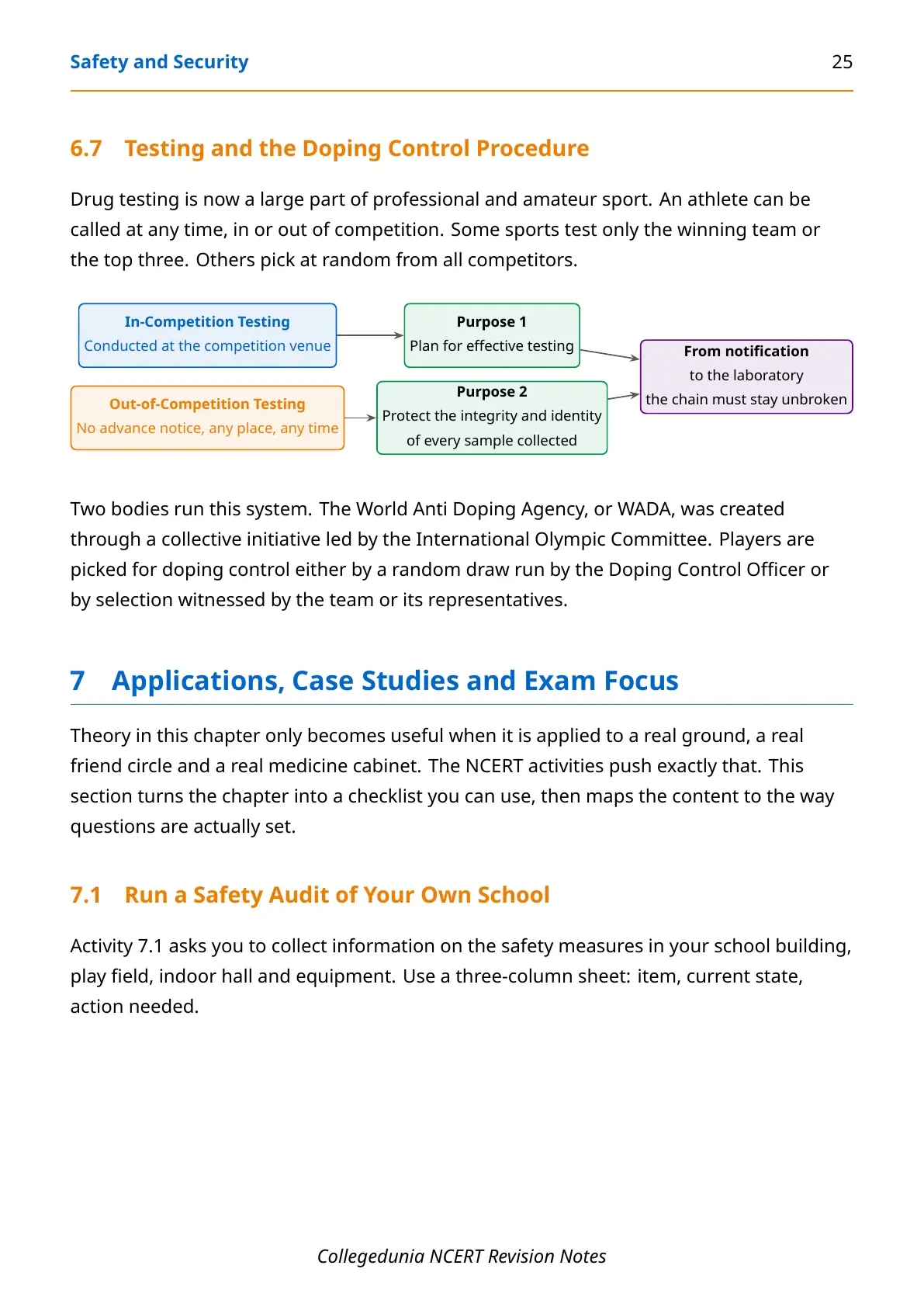
Testing closes the chapter. An athlete can be called for a test at any time, in or out of competition. Some sports test only the winning team or the top three, others test by random selection across all competitors.
| Test type | Where and when |
|---|---|
| In-Competition Testing | Conducted at the competition venue |
| Out-of-Competition Testing | Occurs with no advance notice, at any location and at any time |
The doping control procedure has two stated purposes: to plan for effective testing, and to maintain the integrity and identity of the samples from the moment the athlete is notified until the samples reach the laboratory. Players are selected either by a random draw conducted by the Doping Control Officer, witnessed by the team or its representatives.
Common Mistakes Students Make in the Safety and Security Chapter
- Writing that fencing must be 6 feet from the end line. The textbook says 6 metres away from the end lines of the play field.
- Saying dark, sweat absorbing fabric is better in Indian weather. A light coloured fabric that does not absorb sweat is the one recommended.
- Mixing up the two doping categories. They are dietary supplements and injectable supplements, not steroids and narcotics.
- Calling EPO a drug. EPO is a peptide hormone produced naturally by the body and released from the kidneys.
- Confusing gene doping dates. It began around 2001 and was banned by the World Anti Doping Agency in 2002.
- Getting the Ben Johnson figures wrong. The year is 1988, the event is the 100 m sprint, and the time is 9.79 seconds.
- Saying beedi is safer than a cigarette. The chapter states it is equally dangerous.
- Writing 400 chemicals in cigarette smoke. The figure is about 4000 chemicals.
- Listing only four objectives for the sports shoe. Name all four: comfortable feeling, proper ankle support, proper balance, and avoiding leg injury.
- Forgetting the fitness figure. Physical fitness may prevent injuries up to 60 per cent in a particular game.
In the same student poll, the doping drug side effects were the single biggest source of lost marks, ahead of both the swimming pool checklist and the myths and facts table.
Safety and Security Textbook Assessment Questions Answered
The chapter closes with five question types. Here is what each one tests and where the answer sits in these notes.
| Question type | What the textbook asks | Where the answer sits |
|---|---|---|
| Long answer 1 to 4 | Preventing injury through good sports facilities, safety rules for buying a shoe, safety through sports instruments, and how the uniform helps | The ground, field, instruments and uniform sections |
| Long answer 5 and 6 | Precautions in the gymnasium, and curbing accidents in the swimming pool | The eleven-point gymnasium list and the pool checklist table |
| Long answer 7 | Physical fitness as a tool to prevent sports injuries | The technical measures block plus the 60 per cent figure |
| Long answer 8 | Myths and facts about substance abuse | The seven-row myths and facts table |
| Long answer 9 and 10 | What doping is, side effects of blood doping, why athletes dope and the side effects of prohibited substances | The doping concept section and the nine-point harms list |
| Short answers | Meaning of safety measures, importance of T-shirt fabric, two pool measures, two ways to prevent injury, smoking and status, why tobacco is deadly, three things to check when buying medicine, categories of doping | Spread across the safety, tobacco, medicine and doping sections |
Multiple Choice and Match the Following, Solved
- Medicine should be purchased as per the prescription of the doctor, and after observing the date of manufacture and the date of expiry. The correct option is (d), both (a) and (c).
- Medicines should be consumed as advised by the doctor, option (a).
- The surface used in modern times to play Kabaddi that helps prevent injury is the synthetic surface, option (a). Indoor synthetic surfaces are less vulnerable to injuries, and Kho-Kho is now played on them too.
- Warming up prevents injury in all the listed ways, option (d). It enhances reaction ability, prepares the player for smooth movements, and prepares the athlete mentally and physically.
For the matching question, pair nicotine with insecticides, tar with making roads, tobacco use with severe effects on the lungs, and smoking with causing cancer.
How the Safety and Security Chapter Appears in the Class 11 Annual Paper
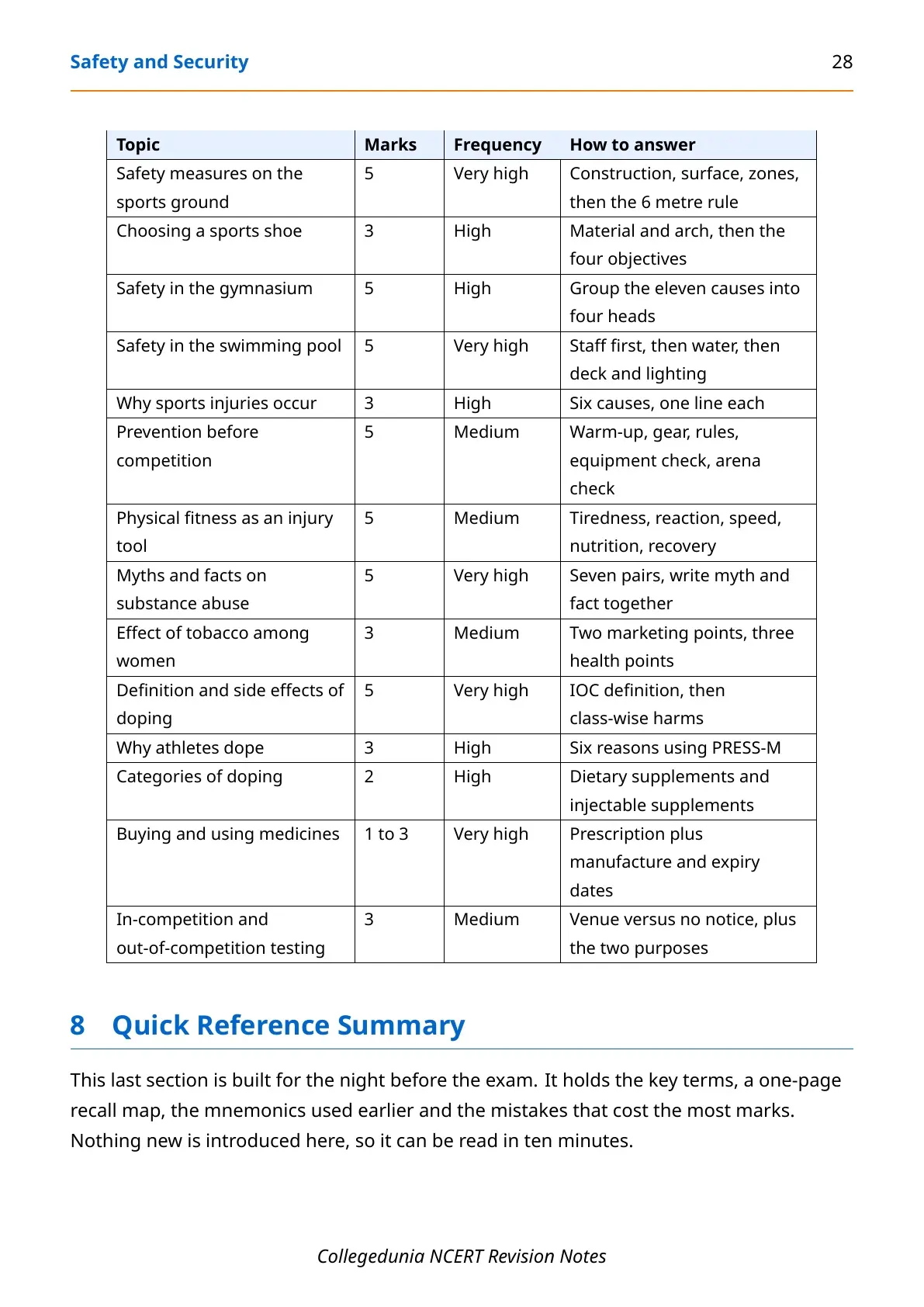
This chapter is list heavy, so it gives away marks quickly if the lists are learnt and loses them just as quickly if they are half remembered. The table below shows the shape most school papers follow.
| Question type | Usual topic | Marks |
|---|---|---|
| Multiple choice or one word | Kabaddi surface, medicine purchase rule, nicotine, tar, EPO | 1 mark each |
| Very short answer | Meaning of safety measures, two pool measures, categories of doping | 2 marks |
| Short answer | Why tobacco is deadly, why the T-shirt fabric matters, two ways to prevent injury | 3 marks |
| Long answer | Gymnasium precautions, swimming pool safety, physical fitness for injury prevention | 5 marks |
| Long answer | Doping, its classification, the harms of prohibited substances, myths and facts | 5 marks |
Across the last five years of school papers, one long answer from the safety block and one from the doping or substance abuse block is the most common pairing. Prepare one from each half and you cover both.
How to Revise the Safety and Security Chapter in One Sitting
Students in the poll reported an average of 75 minutes for this chapter and its questions. Most of that time goes on the doping drugs, so split the sitting into three blocks and take the facility checklists first while you are fresh.
- First 20 minutes: write the ground and field hazards, the shoe and T-shirt points, and the eleven gymnasium causes from memory. Check them against the tables above.
- Next 25 minutes: do the swimming pool checklist, the six reasons injuries occur, the five competition measures and the five technical measures. Say the 60 per cent fitness figure out loud once.
- Last 30 minutes: learn the tobacco facts with their numbers, the seven myth and fact pairs, the medicine rules, and the four doping drug families with side effects. Finish by writing the IOC definition of doping without looking.
Also Check: the night before the paper, revise only the numbers. 6 metres, 4000 chemicals, 60 per cent, 1988 and 9.79 seconds, 2001 and 2002, and one to four units of blood. Those carry most of the one-mark questions from this chapter.
Where the Safety and Security Chapter Connects to the Rest of the Class 11 Book
This chapter shares terms with three others in the Class 11 Health and Physical Education book, and questions sometimes cross between them. Revise them together and you save time on both.
| Related chapter | What it shares with the Safety and Security chapter | Revision notes |
|---|---|---|
| Chapter 2 Understanding Health | Adolescent health, the dimensions of health and the effect of substance abuse on growth repeat the tobacco and alcohol content here | Understanding Health Class 11 Notes |
| Chapter 8 Health Related Physical Fitness | Fitness and conditioning, the same idea this chapter uses to argue that fitness prevents injuries up to 60 per cent | Health Related Physical Fitness Class 11 Notes |
| Chapter 11 Adventure Sports | Safety gear, supervision and risk management in high difficulty activities extend the technical prevention measures listed here | Adventure Sports Class 11 Notes |
NCERT Notes for All Class 11 Physical Education Chapters
The Class 11 Health and Physical Education book runs across eleven chapters. Each notes page follows the same shape as this one, with tables, a common mistakes block and a downloadable PDF.
| Chapter | Title | Revision Notes |
|---|---|---|
| Chapter 1 | Physical Education | Physical Education Class 11 Notes |
| Chapter 2 | Understanding Health | Understanding Health Class 11 Notes |
| Chapter 3 | Physical and Physiological Aspects of Physical Education and Sports | Physical and Physiological Aspects Class 11 Notes |
| Chapter 4 | Individual Games | Individual Games Class 11 Notes |
| Chapter 5 | Team Games | Team Games Class 11 Notes |
| Chapter 6 | Yoga and its Relevance in the Modern Times | Yoga and its Relevance Class 11 Notes |
| Chapter 7 | Safety and Security | You are here |
| Chapter 8 | Health Related Physical Fitness | Health Related Physical Fitness Class 11 Notes |
| Chapter 9 | Measurement and Evaluation | Measurement and Evaluation Class 11 Notes |
| Chapter 10 | Tournaments and Competitions | Tournaments and Competitions Class 11 Notes |
| Chapter 11 | Adventure Sports | Adventure Sports Class 11 Notes |
Class 11 Physical Education Chapter 7 Safety and Security Notes FAQs
Ques. What is meant by safety measures in games and sports?
Ans. Safety measures are the simple rules and steps taken to protect players from injury during sports training and competition. They cover the sports ground, the sports instruments and the sports uniform. They are observed by physical education teachers, sports trainers, coaches, school administrators and equipment manufacturers. Injuries during training create a fearful emotional or psychological phobia, and these measures are meant to prevent that.
Ques. How can we prevent injuries by preparing good sports facilities?
Ans. The construction company must remove hazards such as a nearby high tension electric line, barbed wire, bushes or wild grass, and a close wall with a hard surface, and shift trees away from the play field. The surface must be clean and free of stones and broken bricks. Chain link fencing or stairs for coaches and spectators stay about 6 metres from the end lines. Separate sitting is given to extra players of both teams, a warming up area is provided away from the arena, and broken glass and sharp stones are removed.
Ques. What are the safety rules to observe when buying a sports shoe?
Ans. Check the material and the arch of the sole, because those are the two places where the defect usually sits. A defective arch does not support the foot, so body weight becomes unbalanced, the legs take stress, the muscles stiffen, and the leg muscles can rupture. The four objectives of wearing a properly manufactured shoe are comfortable feeling, proper ankle support, proper balance, and avoiding leg injury.
Ques. Why is the fabric of the T-shirt important for athletes?
Ans. The T-shirt and its colour prepare the mood of a sportsperson and help the player feel better, which matters most for a novice. Because of India's weather variation, a light coloured fabric that does not absorb sweat is considered better. Fabric that consumes sweat can cause allergy and skin problems if it stays in contact with the body for a long time.
Ques. What precautions can be taken to prevent injuries in the gymnasium?
Ans. Injury in a gymnasium happens because of an unsafe method of keeping equipment, lack of proper place for exercises, lack of a warm-up area, old equipment, unsafe fitting of electrical gadgets, an uncleaned or slippery surface, poor lighting, poor sanitation and lack of water supply, not observing safety measures while lifting and keeping weight barbells, and lack of proper knowledge of using the equipment. Correcting each of these is the precaution.
Ques. How can accidents in the swimming pool be curbed?
Ans. Keep separate pools for beginners and advanced swimmers, and stop students from going to the deeper side without safety measures. Life guards must be well trained and equipped with a long stick, rope, whistle, life saving jackets, swimming pads and kicking boards. Swimming is allowed only when life guards are present. Run the water treatment plant, chlorinate the water to remove algae, clean the surface with a suction head brushing machine, use matting in washrooms, provide safety stairs and hangers, and keep proper lighting.
Ques. Why do sports injuries occur?
Ans. The main reason is a careless attitude of the player towards fitness and training. The six factors listed in the chapter are poor equipment, surface and floor, lacking knowledge of the rules of the game, lack of technical and tactical knowledge, lack of fitness and conditioning, not observing safety rules in technically difficult sports such as gymnastics, diving, judo and wrestling, and lifting heavy weights without helpers.
Ques. How does physical fitness help prevent sports injuries?
Ans. Developing physical fitness may help a player prevent injuries up to 60 per cent in that particular game. Good fitness improves reaction ability and decision making ability and raises self-confidence. A tired player reacts slowly and moves slowly, and is the most likely to get injured, so fitness and conditioning remove that tiredness. Proper nutrition supports this by repairing and building ruptured muscle fibres.
Ques. Why is tobacco use deadly?
Ans. Nicotine in tobacco leaves is highly addictive and raises blood pressure, and it is used as an insecticide and pesticide in agriculture. Cigarette smoke contains about 4000 chemicals that cause different cancers. The carbon monoxide a smoker exhales is highly poisonous, and tar from burning tobacco leaves is similar to the coal tar used for roads. Smoking causes lung cancer, while pan masala, gutkha and khaini cause oral cancer. Half of the users who start in youth lose their lives by middle age.
Ques. How does tobacco use affect women?
Ans. Young women are one of the biggest targets of the tobacco industry, and campaigns falsely link tobacco with freedom and liberty, or beauty, slim figure and prestige. Labels such as light and low tar mislead, because light smokers inhale more deeply and more often. Women who smoke face more infertility and delays in conceiving. Smoking during pregnancy raises the risk of premature delivery, still birth and death, and raises the risk of cancer of the cervix.
Ques. What are the symptoms of alcohol or substance abuse in adolescence?
Ans. Feeling depressed, hopeless, rundown or even suicidal, being selfish and not caring for others, frequent absent-mindedness, money or valuables disappearing from home, irritability, aggressiveness and violent behaviour, declining grades with homework and sports getting affected, a new friend circle that is not disclosed to the family, an urge to drink daily, avoiding family and friends to be alone, and taking risks such as rash driving.
Ques. What are the myths and facts about substance abuse?
Ans. Trying a drug once does not let you stop, because almost all addicts start that way. Drugs do not increase creativity, they cause loss of clarity. They do not sharpen thinking, they induce dullness. Will power alone is not enough, family support and medical and psychiatric treatment may be needed. Alcohol does not help people forget problems, it brings them up and adds more. Drug use does not win real friends, it makes a person asocial and isolated. Inhalants such as thinners, glue and cleaning fluids are not harmless, they permanently damage the liver, brain and nerves and are extremely flammable.
Ques. What precautions should be taken before taking medicines?
Ans. Take only what a doctor prescribes and never decide your own medicine. Follow the dosage and the time intervals set by the doctor, and follow instructions such as taking the medicine before or after meals. Take medicine with water rather than tea, milk or juice. Buy only against a prescription and check the date of manufacture and the date of expiry on the label. Store medicine in a cool dry place away from direct sunlight, and refrigerate it when the label says so.
Ques. What is doping and how is it defined?
Ans. Doping is the term used for performance enhancing drugs in sport, and the use of banned drugs by athletes is called doping. The International Olympics Committee defines it as the use of any method or substance that might harm the athlete, in a quest to gain an unfair advantage over his or her fellow competitors. Drugs are banned because they give an unfair advantage, pose a health risk, or violate the spirit of sport. Training at altitude to raise oxygen carrying capacity is allowed, but using a drug for the same result is prohibited.
Ques. What are the categories of doping?
Ans. There are two principal categories of performance enhancing substances. The first is dietary supplements, which are highly refined products that should not be confused with food and may carry no positive nutritional value. The second is injectable supplements, which means hormones and drugs. The most commonly used hormone is testosterone, which produces strength and stimulates skeletal muscle function, and hormones stored and used this way are called ergogenic aids.
Ques. What is blood doping and what are its side effects?
Ans. Blood doping increases red blood cell mass so more oxygen reaches the muscles, which raises endurance and delays fatigue. One to four units of blood is taken from the athlete, the red cells are stored cold, and the blood is fused back about a week before a high endurance event. It is used in sports such as cross-country, cycling and swimming. EPO thickens the blood and raises the risk of heart disease, stroke, and cerebral or pulmonary embolism, and recombinant human EPO may cause autoimmune disease.
Ques. What are the two types of doping control tests?
Ans. In-Competition Testing and Out-of-Competition Testing. In-Competition Testing is conducted at the competition venue. Out-of-Competition Testing happens with no advance notice and can occur at any location and at any time. Some sports test only the winning team or the top three competitors, while others test by random selection among all competitors. Players are selected through a random draw conducted by the Doping Control Officer and witnessed by the team or its representatives.
Ques. Are these Class 11 Safety and Security notes according to the current syllabus?
Ans. Yes. Every checklist, definition, figure and side effect on this page follows the 2026-27 reprint of the NCERT Health and Physical Education textbook for Class 11. The assessment questions at the end of the chapter are unchanged in this edition, so the notes apply to the current session and to CUET Physical Education preparation.



Comments