



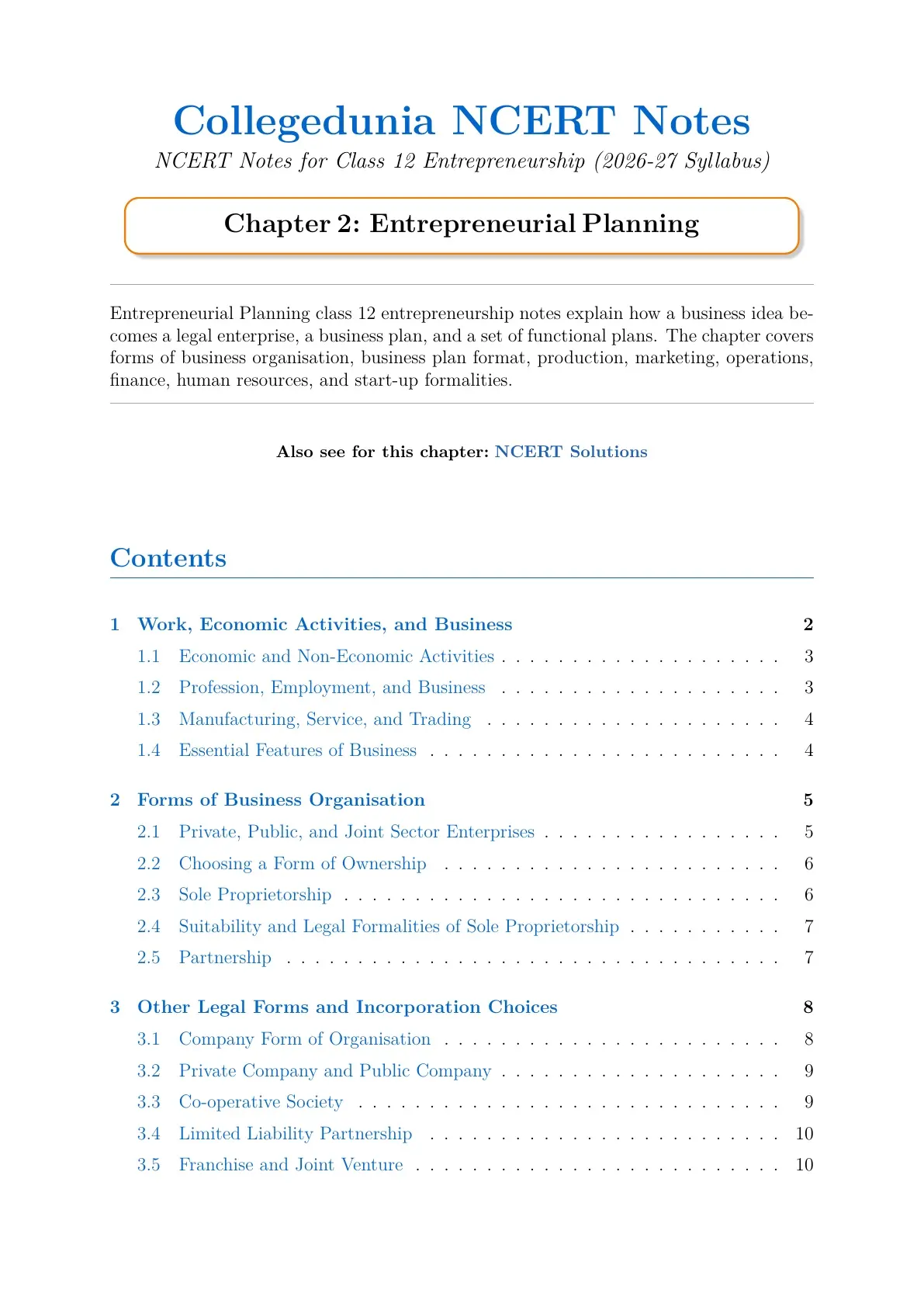
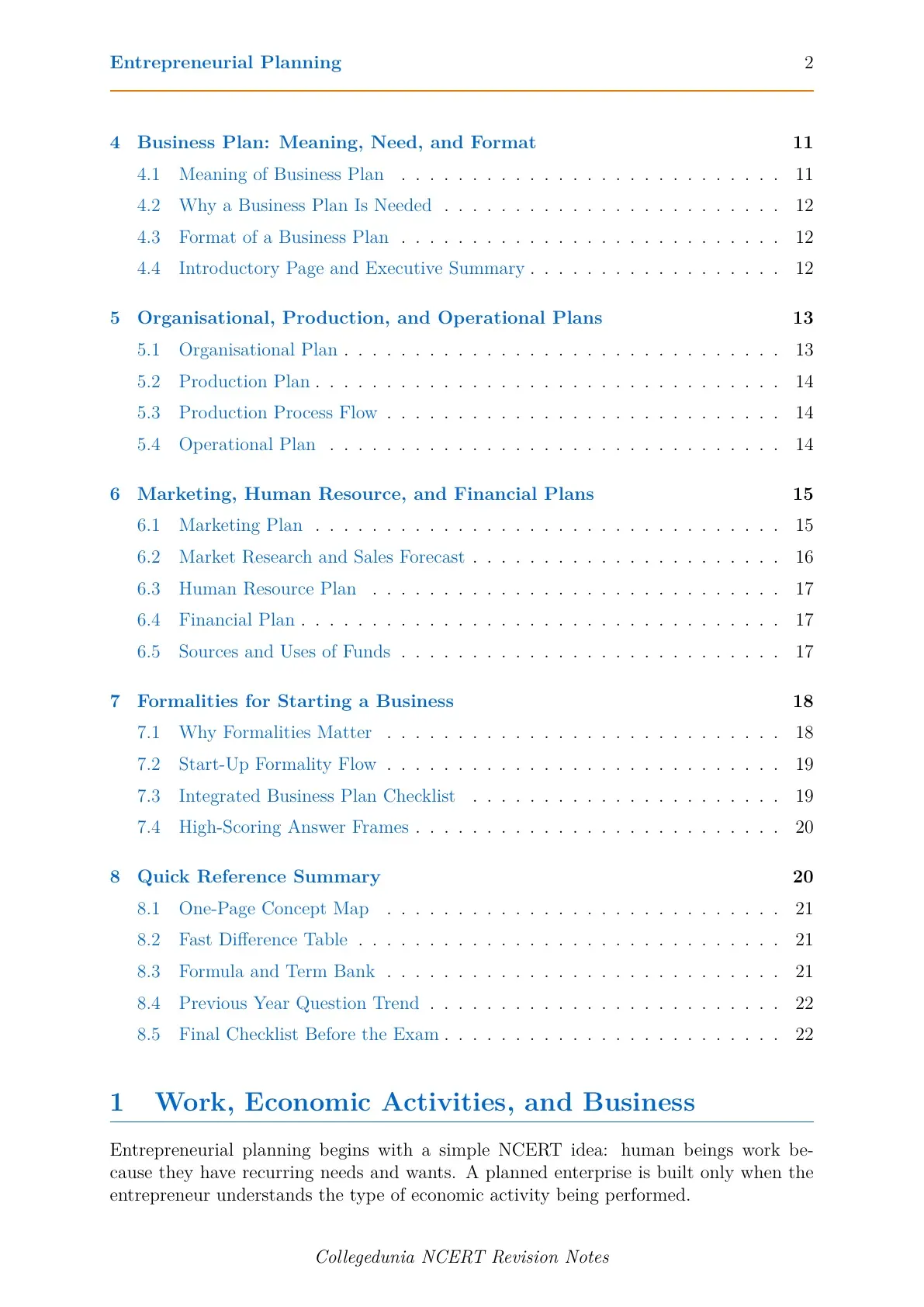
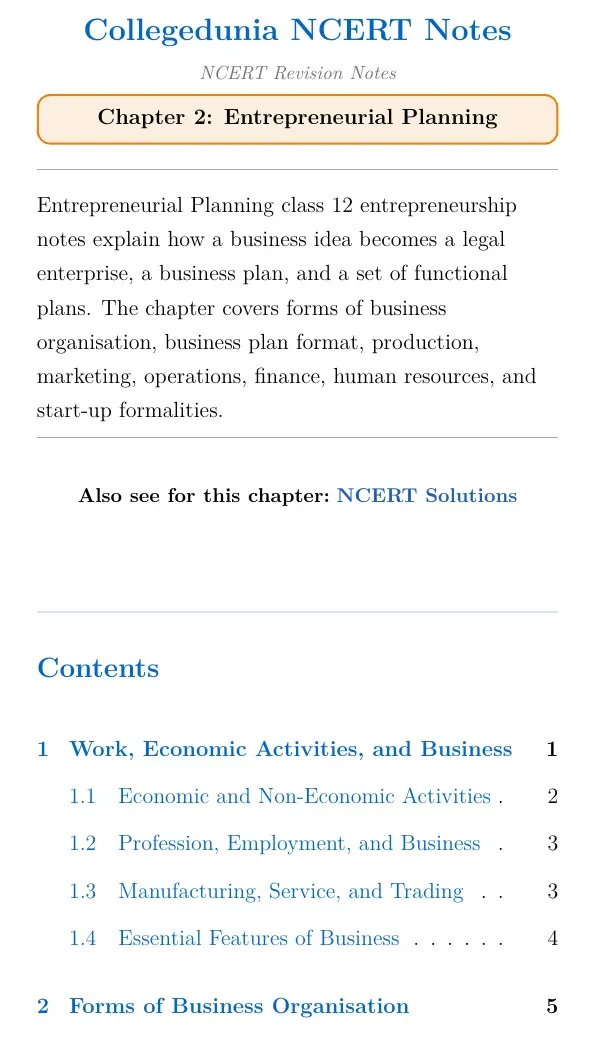
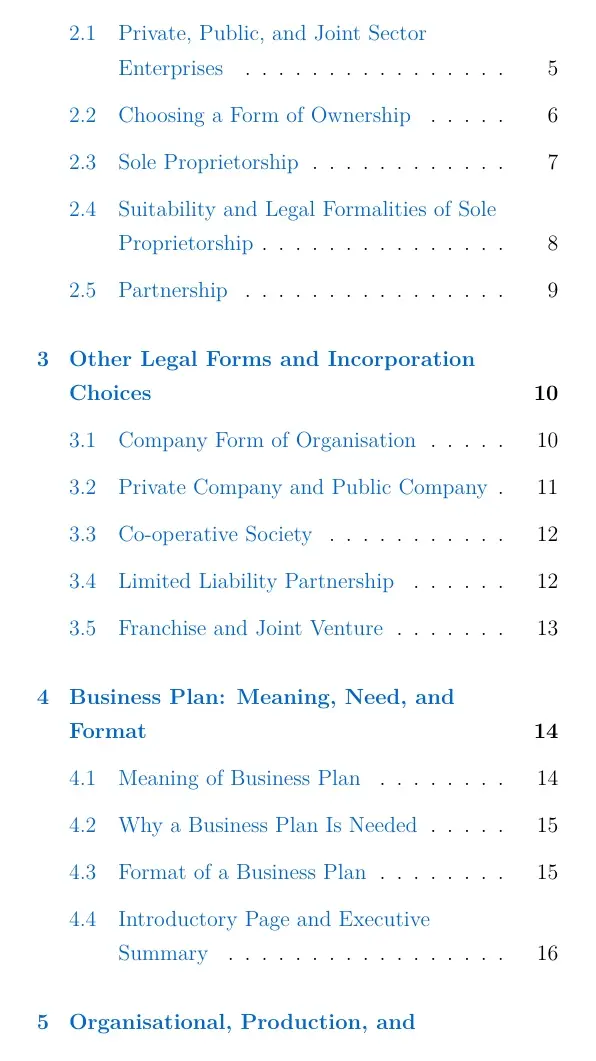
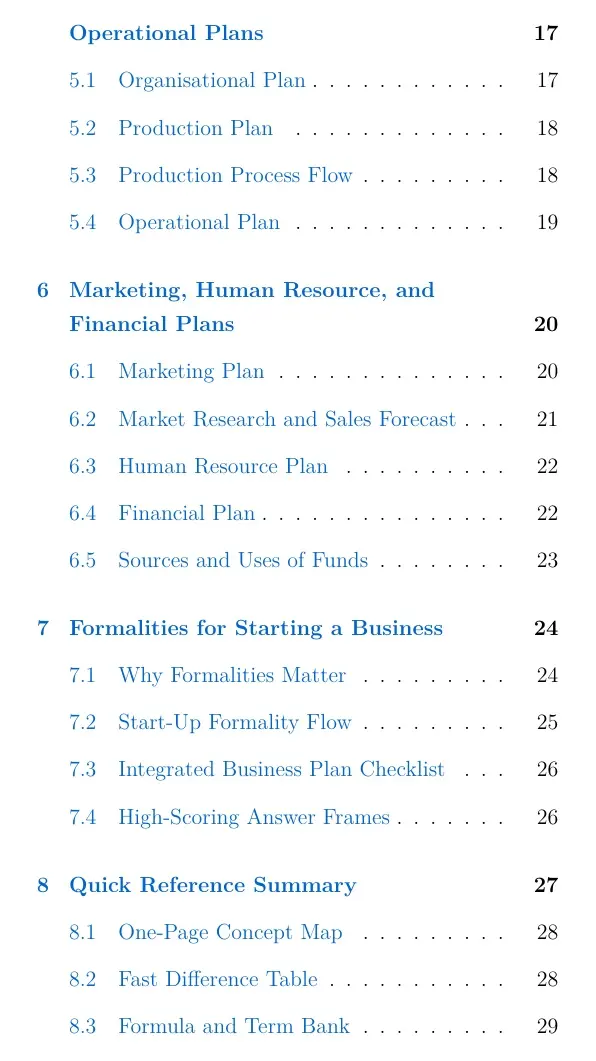
Class 12 Entrepreneurship Chapter 2 Entrepreneurial Planning notes help students revise how a business idea is converted into a written plan for the 2026-27 syllabus. The PDF covers forms of business organisation, the business plan, production plan, operations plan, organisational plan, marketing plan, financial plan, human resource plan and start-up formalities.
- 23-page PDF follows the official NCERT chapter order.
- Best for quick revision before case-based and long-answer questions.
- New coverage includes CBSE question anchors and plan-wise answer tables.
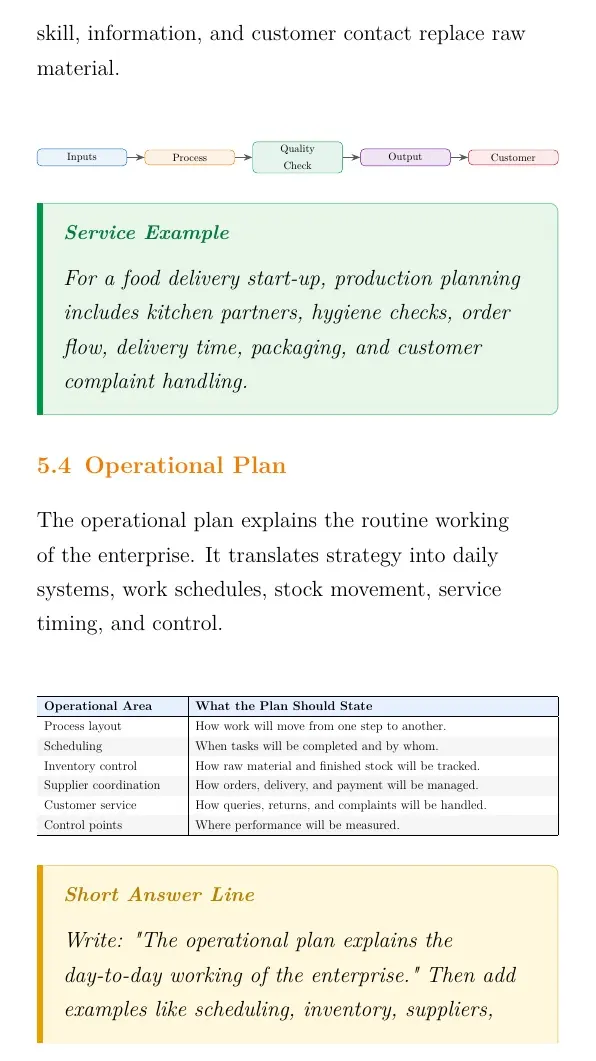
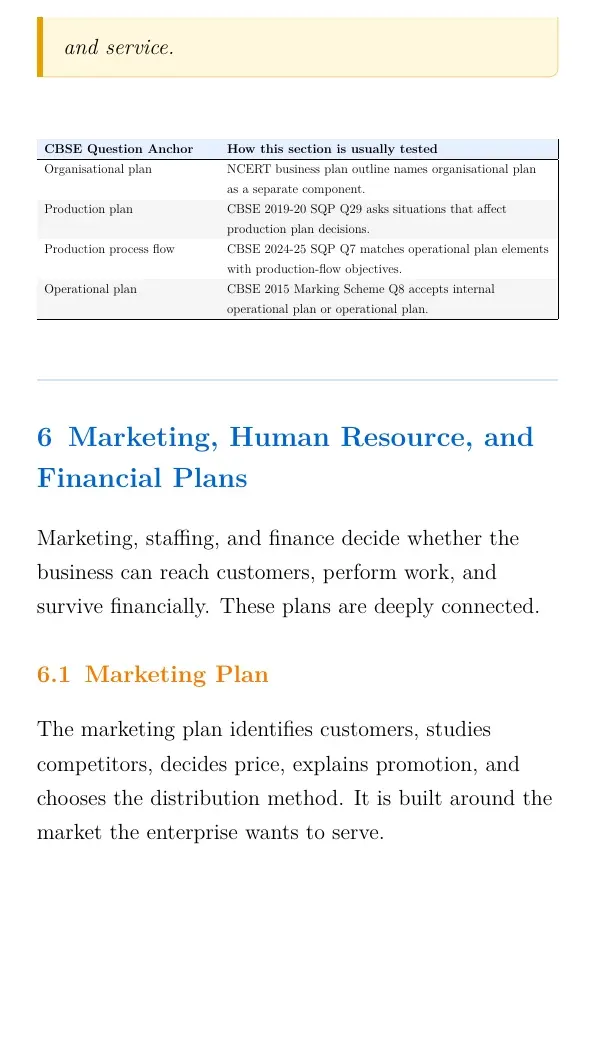

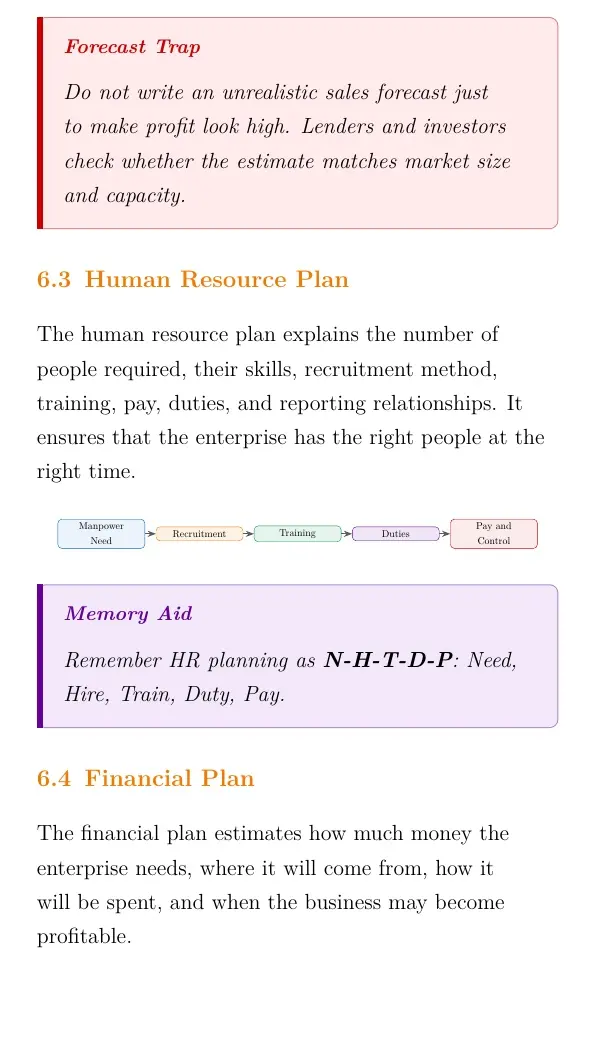
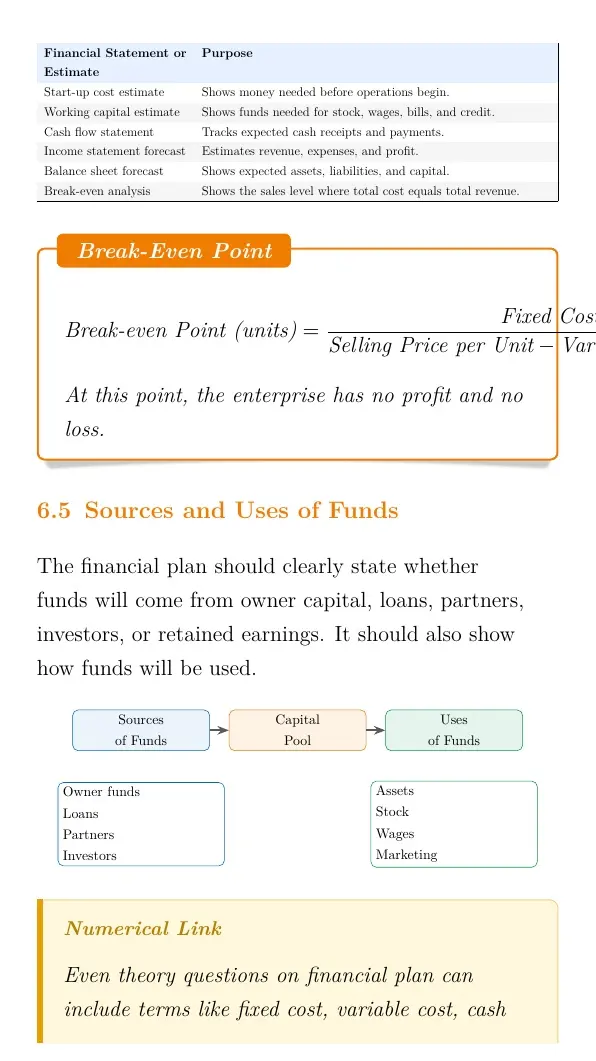
Student Feedback on Entrepreneurial Planning Notes
In a Collegedunia review sample of 9,860 Class 12 commerce students before the 2026 boards, most students said this chapter becomes easier when every plan is revised through one purpose, one content point and one exam use.
- 74% wanted forms of organisation in one comparison table.
- 69% asked for production, marketing and finance plans in separate boxes.
- 6 out of 10 students preferred CBSE question anchors beside definitions.
Source: 2026-27 Class 12 Entrepreneurship student feedback sample for Collegedunia NCERT resources.
These notes are checked against the official NCERT Entrepreneurship chapter and follow the 2026-27 Class 12 syllabus.
|
Table of Contents |
Entrepreneurial Planning Notes PDF Highlights
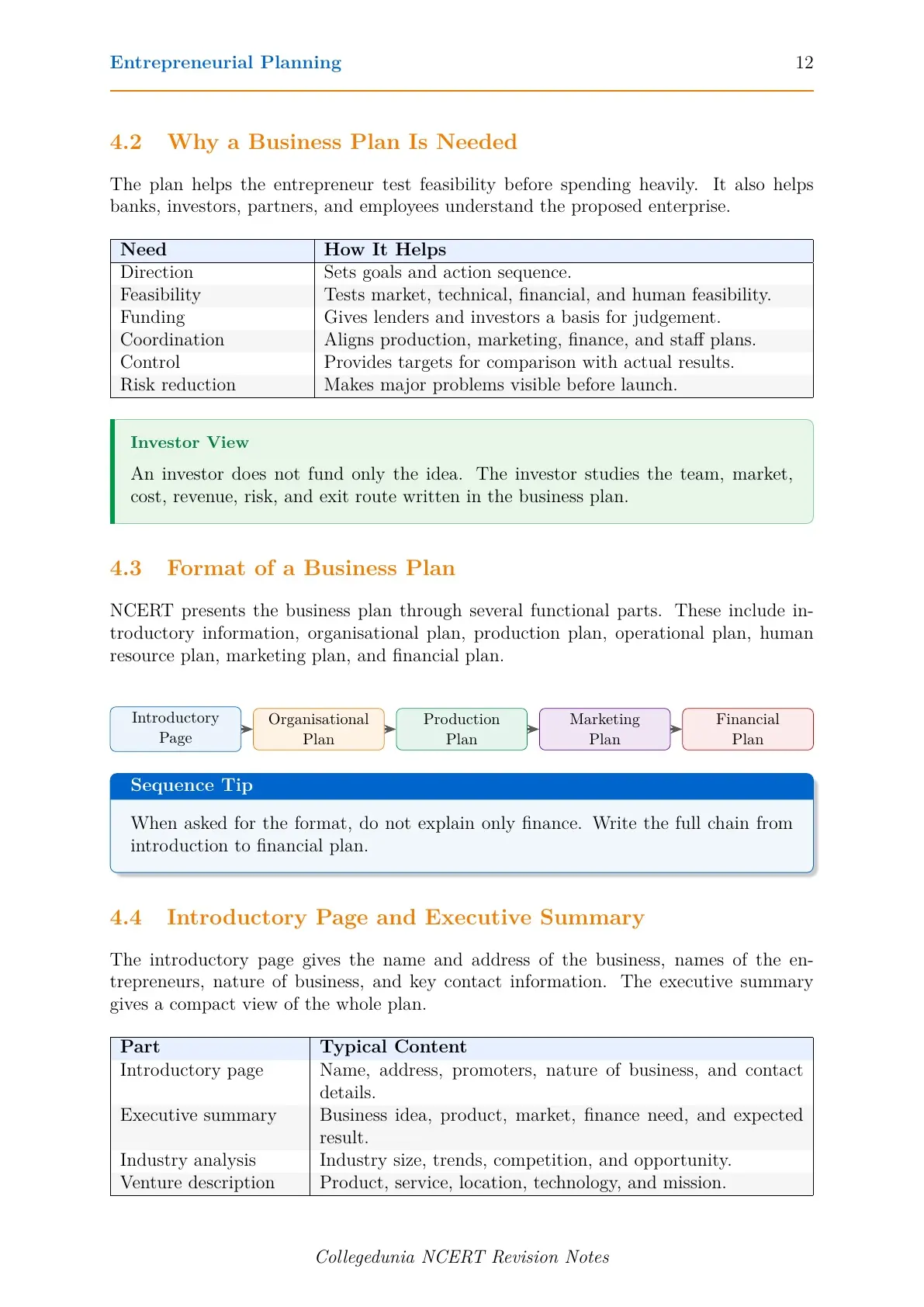
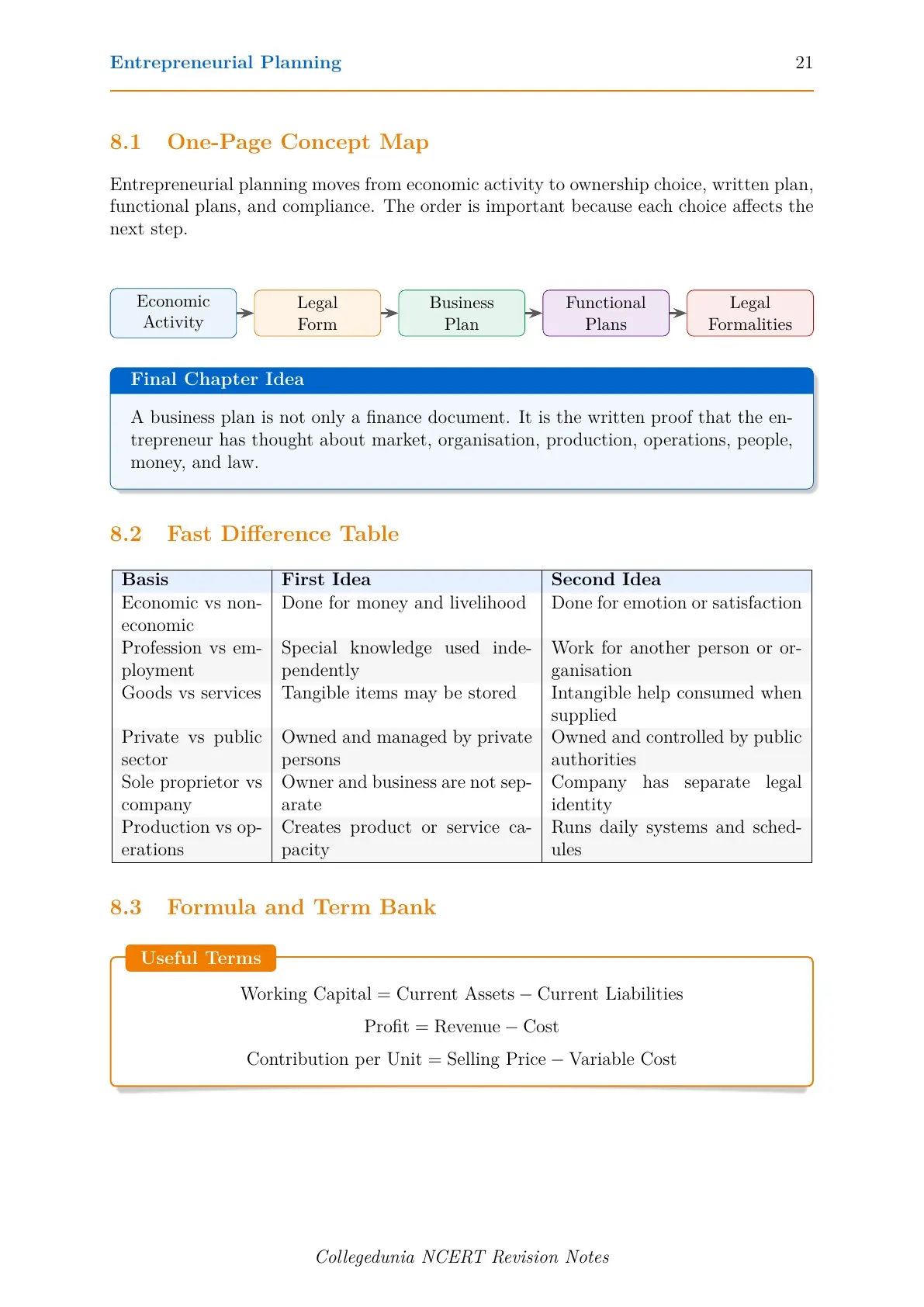
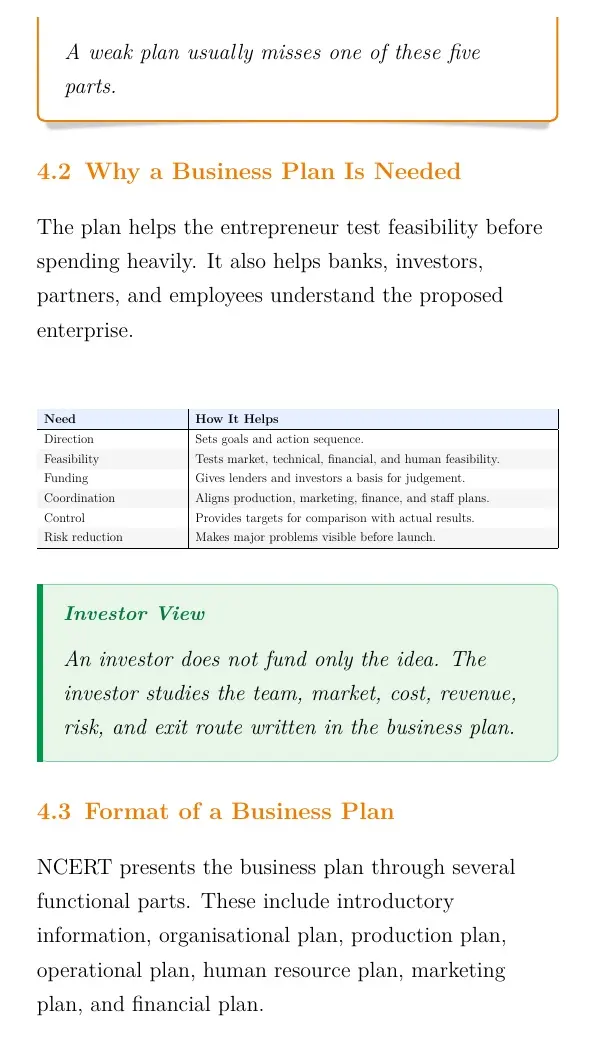
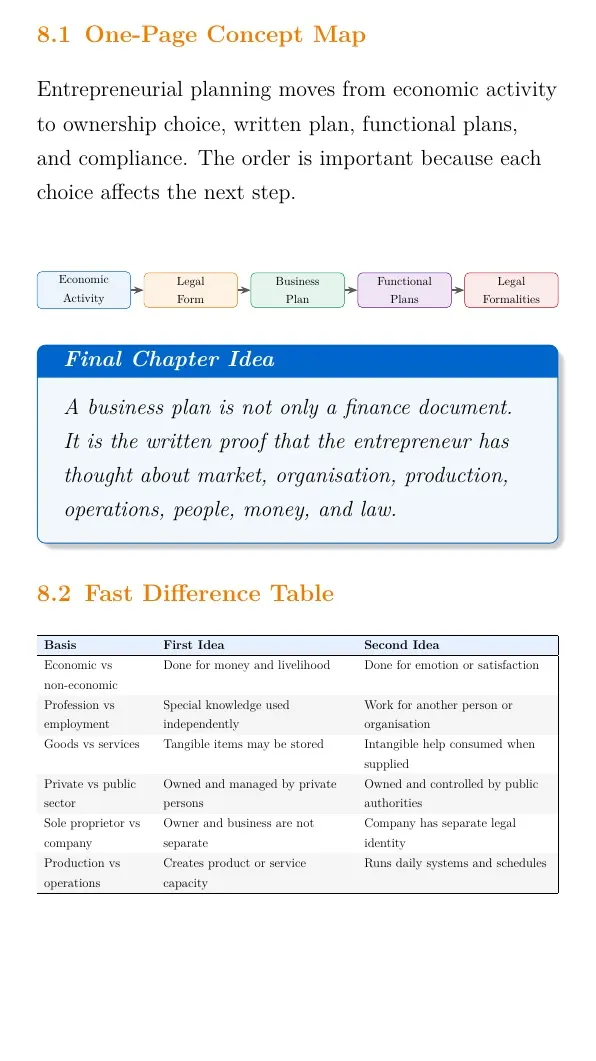
The notes start with the basic forms of business organisation and then move to the business plan. Students should first learn why planning is written: it gives direction, estimates resources, attracts support and reduces uncertainty before launch.
| Part of the PDF | What students revise | Exam use |
|---|---|---|
| Forms of organisation | Sole proprietorship, HUF, partnership, company and cooperative | Definition and comparison answers |
| Business plan | Meaning, need, users and major components | 3-mark and 4-mark answers |
| Operational planning | Production, operations, organisational and HR plans | Case-based planning answers |
| Market and finance planning | Marketing mix, break-even, cash flow and profit planning | Application and long-answer questions |
| Starting formalities | Name approval, registration, PAN, GST, licences and opening tasks | Project and sequence questions |
Forms of Business Organisation in Chapter 2
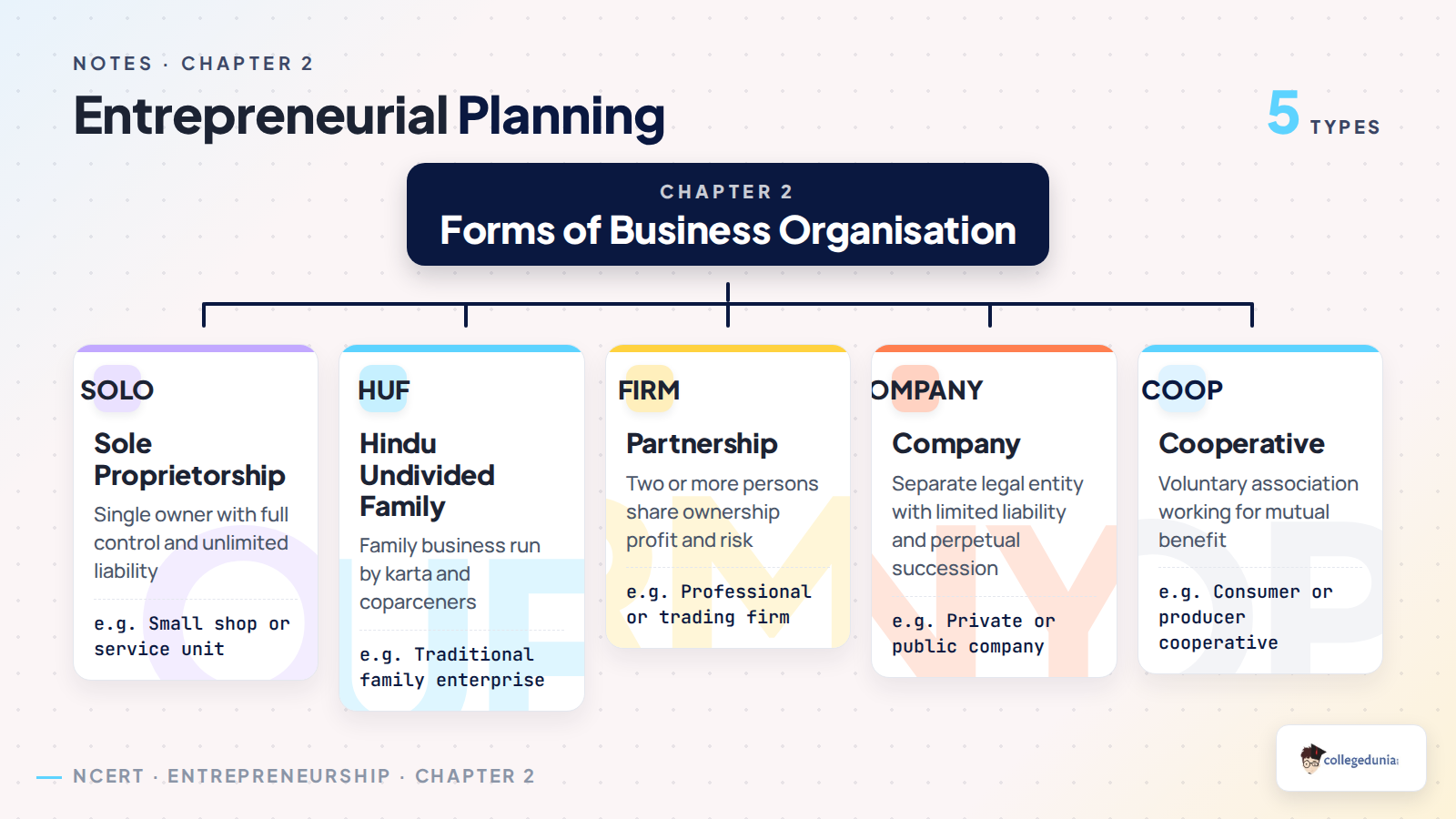
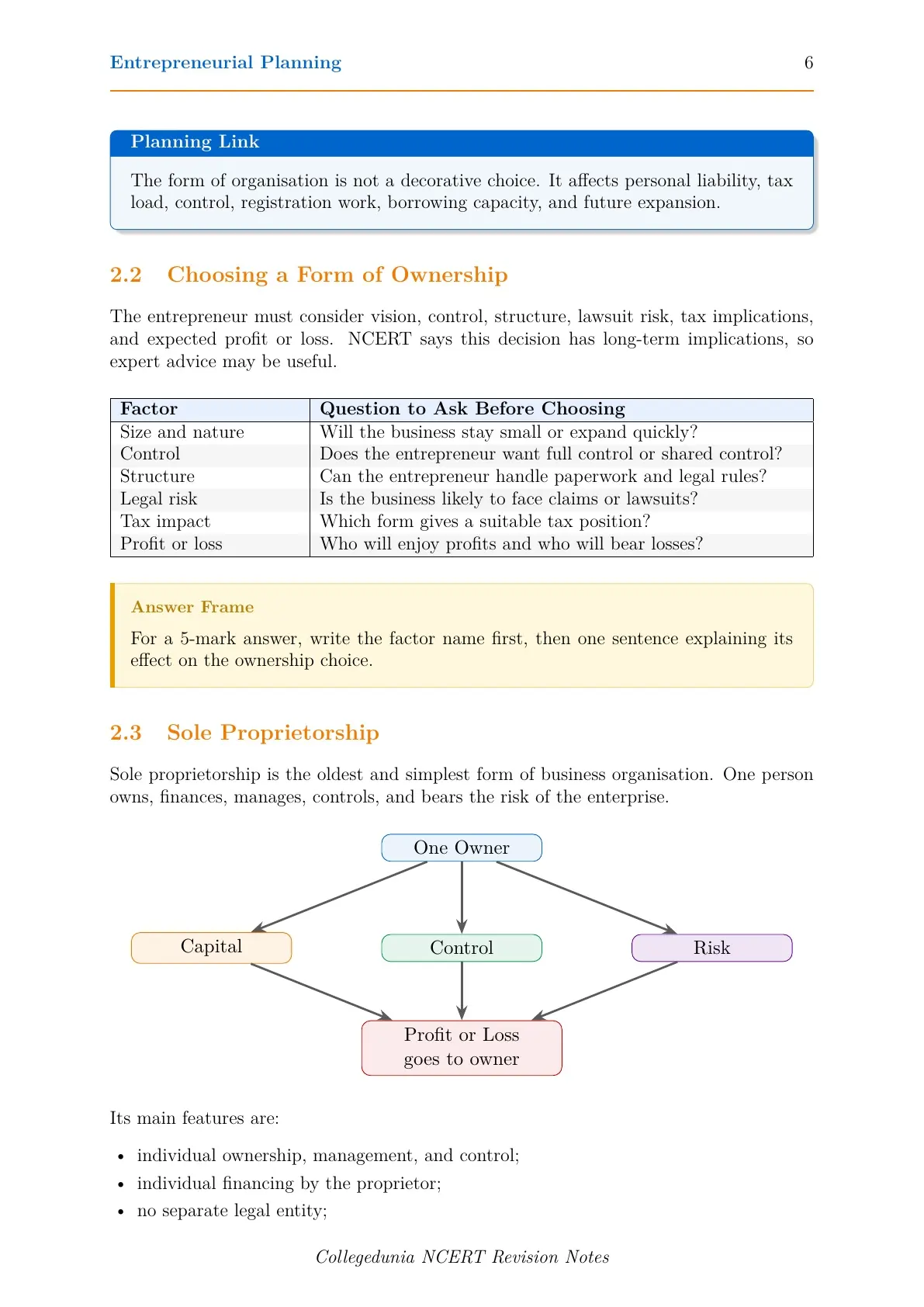
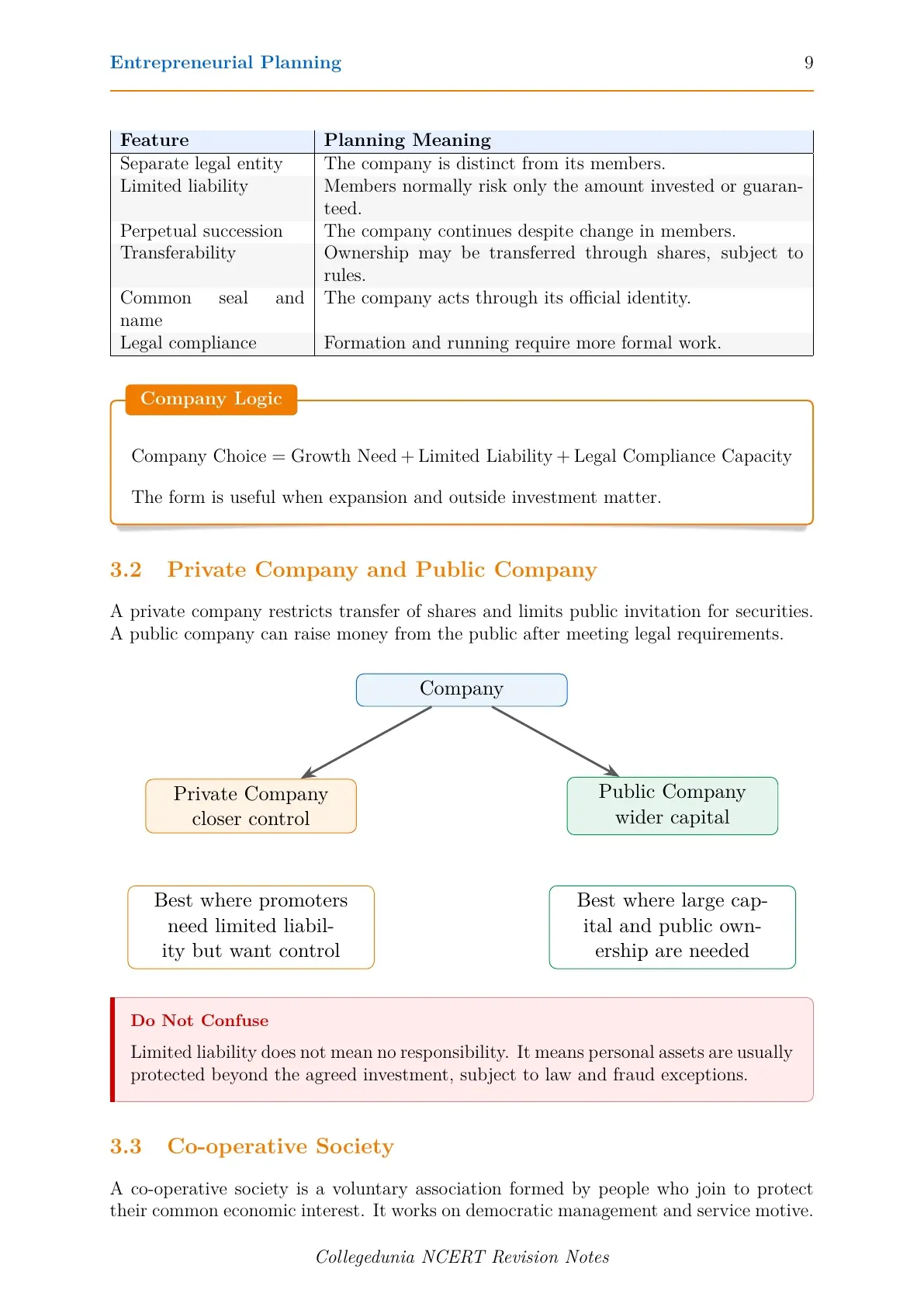
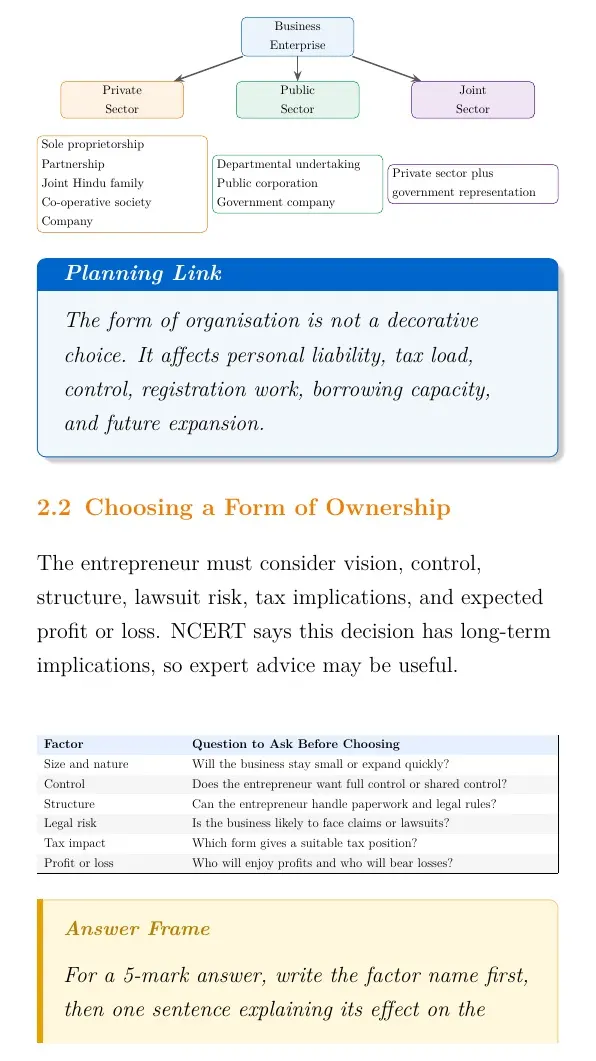
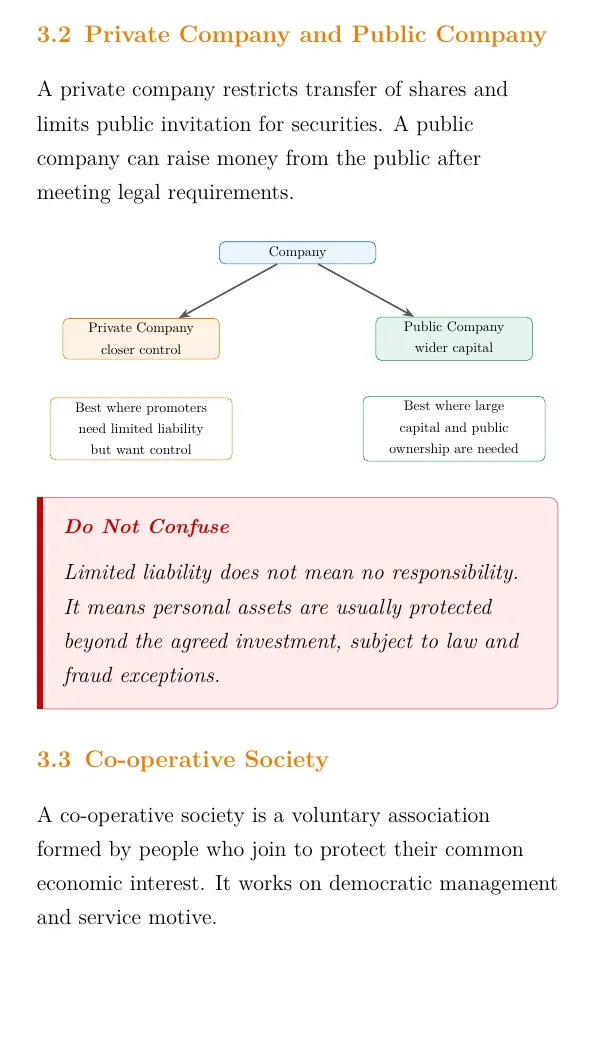
NCERT expects students to identify the legal form before writing the business plan. The form affects ownership, liability, continuity, capital raising and control.
| Form | Core meaning | Quick exam clue |
|---|---|---|
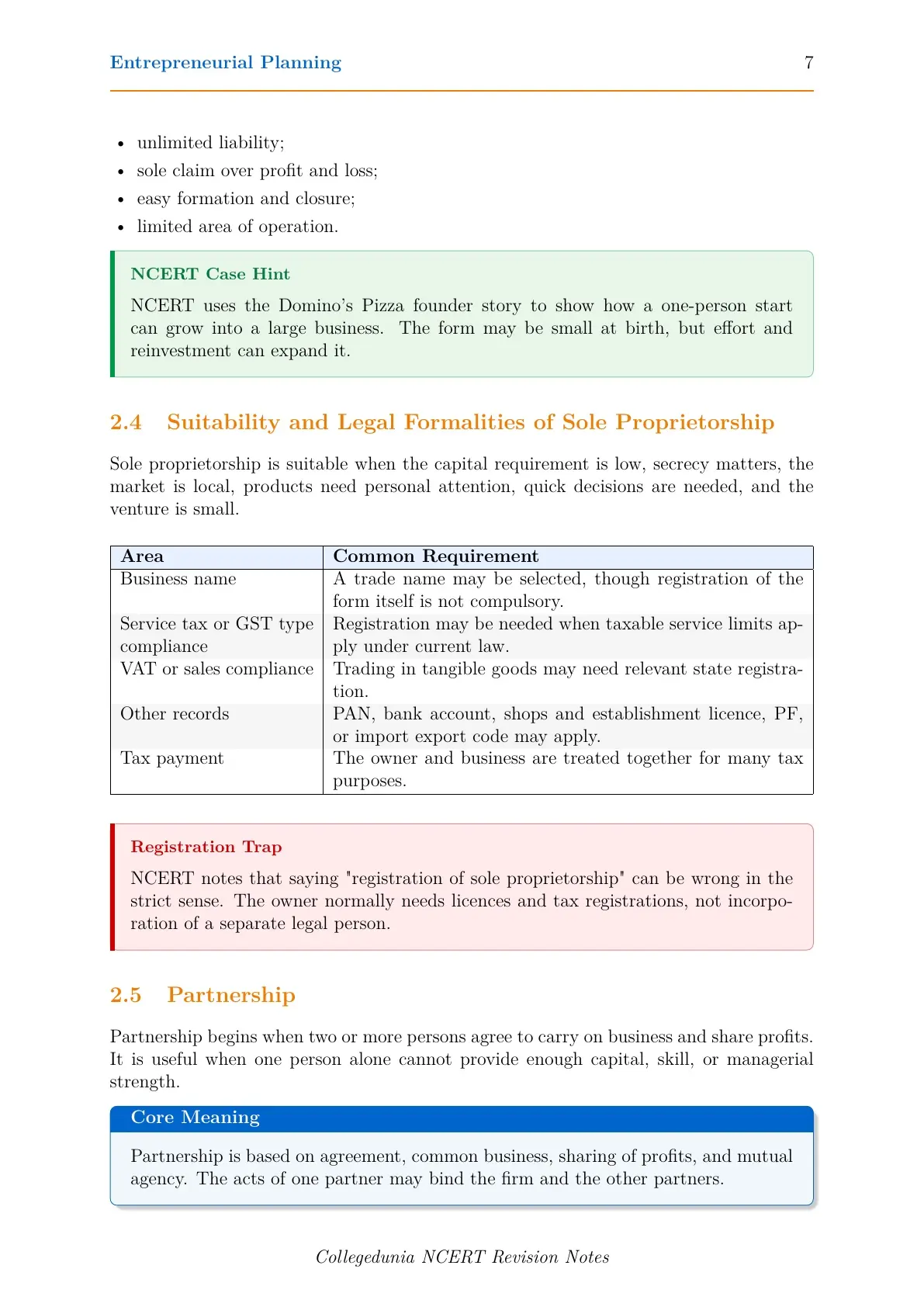
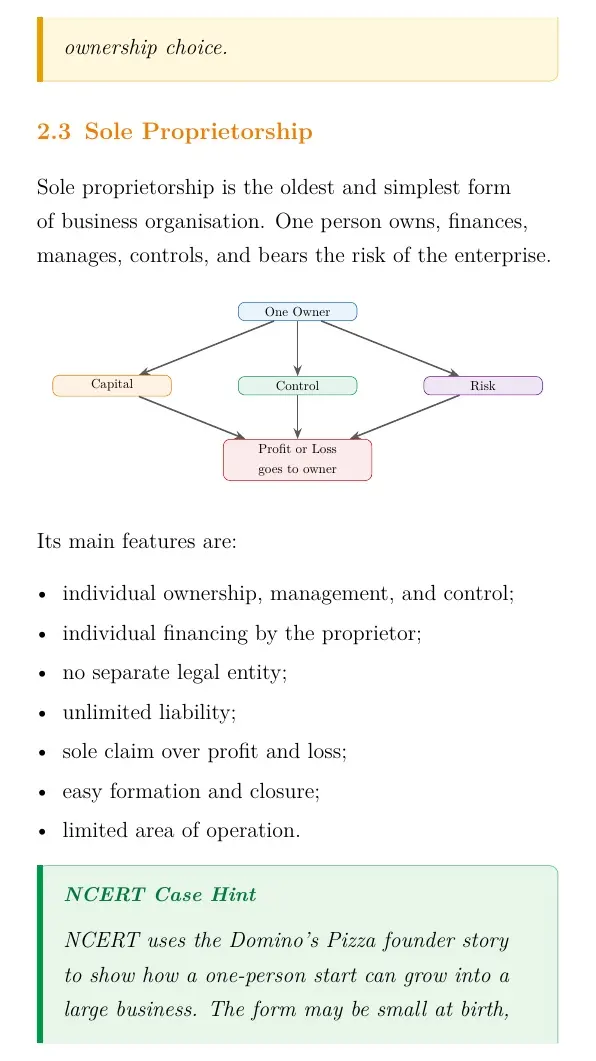
| Sole proprietorship | One person owns, manages and bears the risk. | Maximum control but unlimited liability |
| Hindu Undivided Family business | Karta manages a family business for coparceners. | Based on birth in the family |
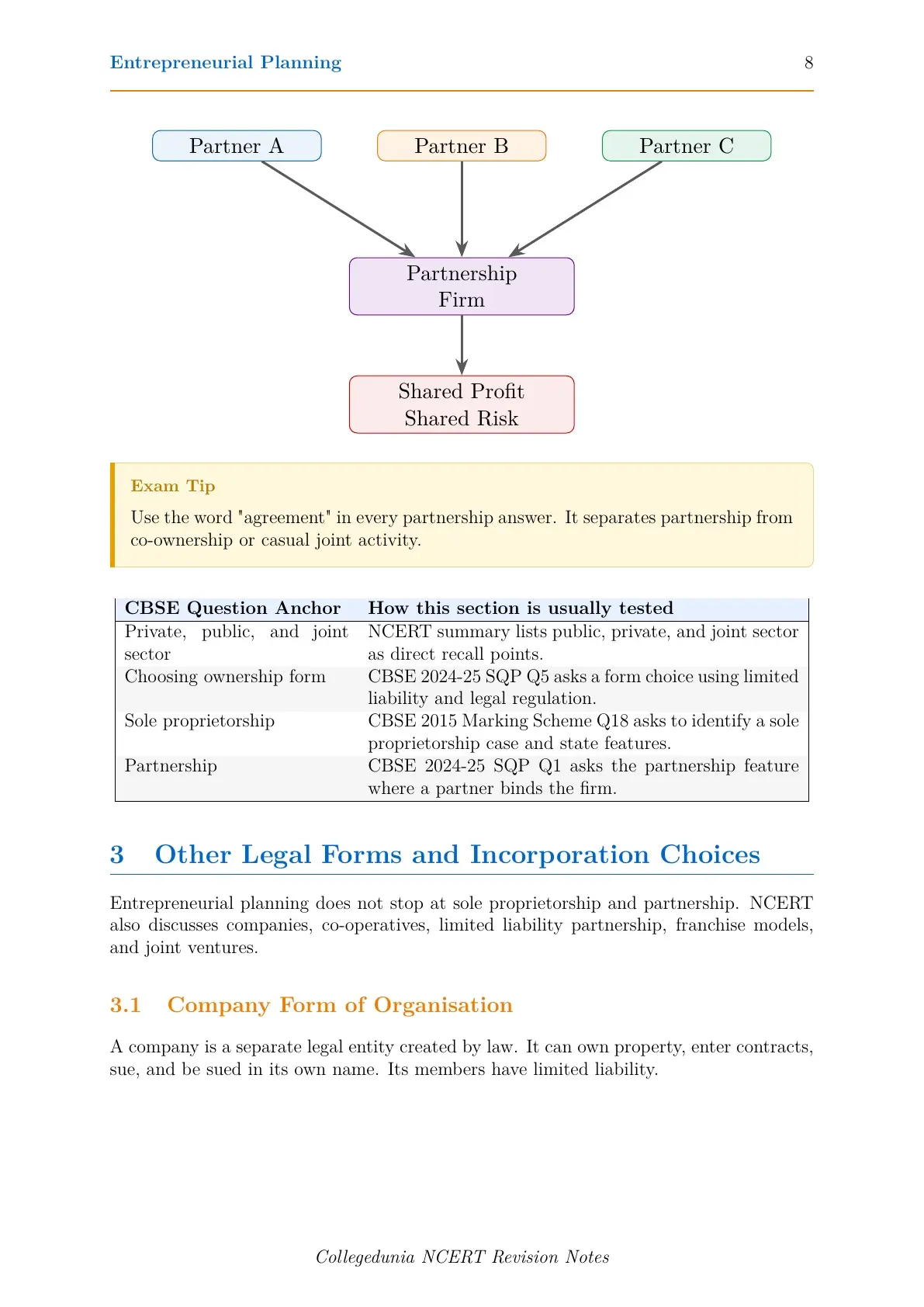
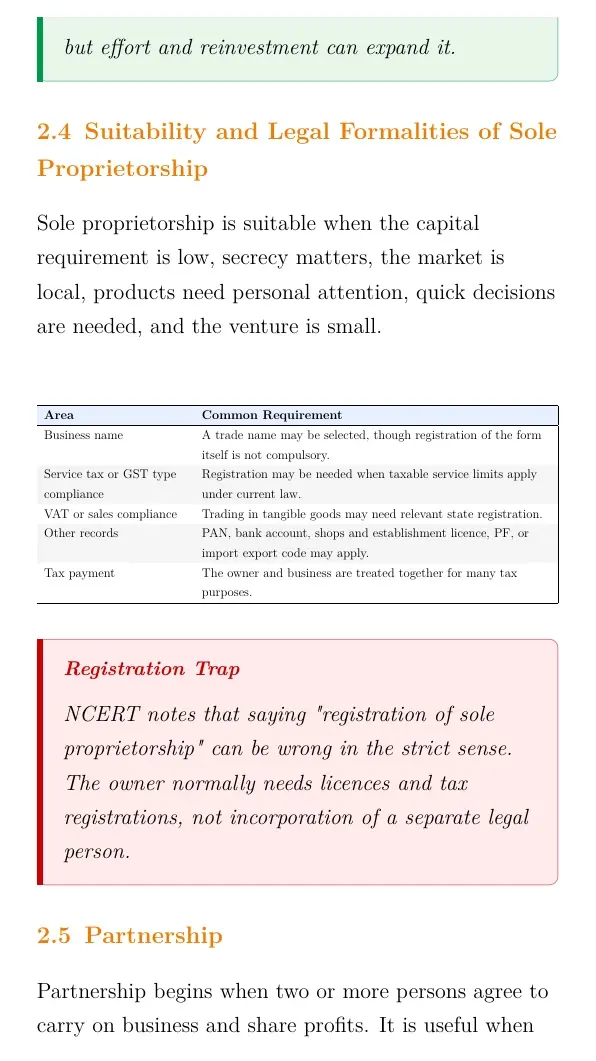
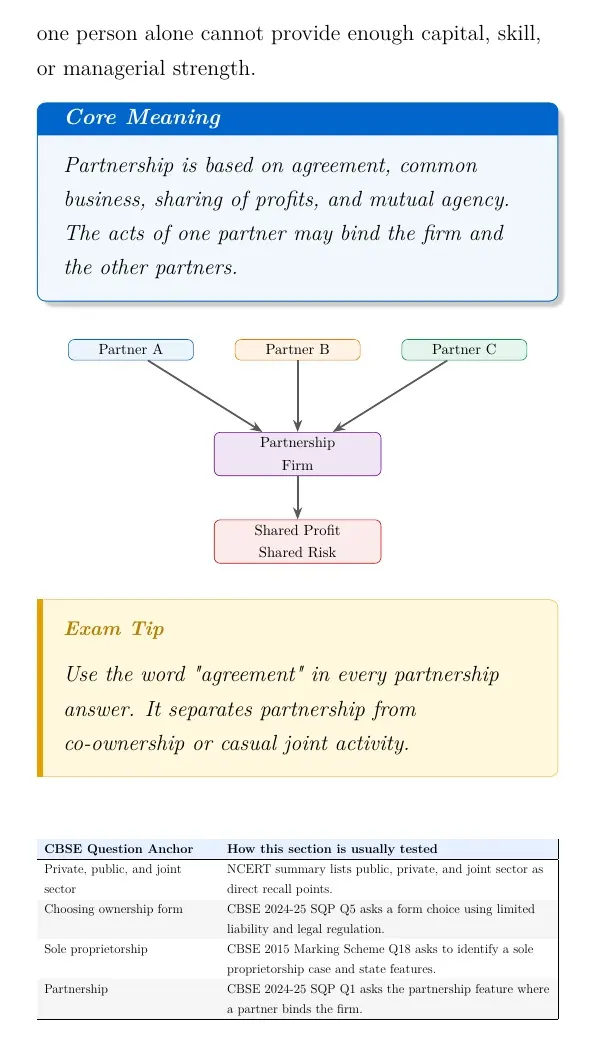
| Partnership | Two or more persons agree to share profits of a business. | Partnership deed becomes important |
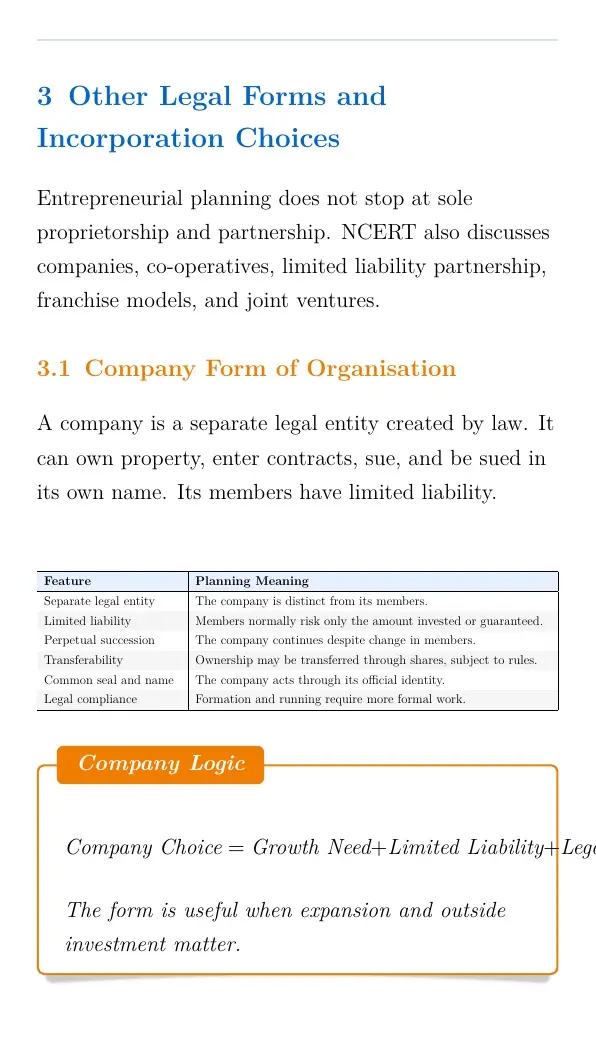
| Company | A separate legal entity formed under law. | Limited liability and perpetual succession |
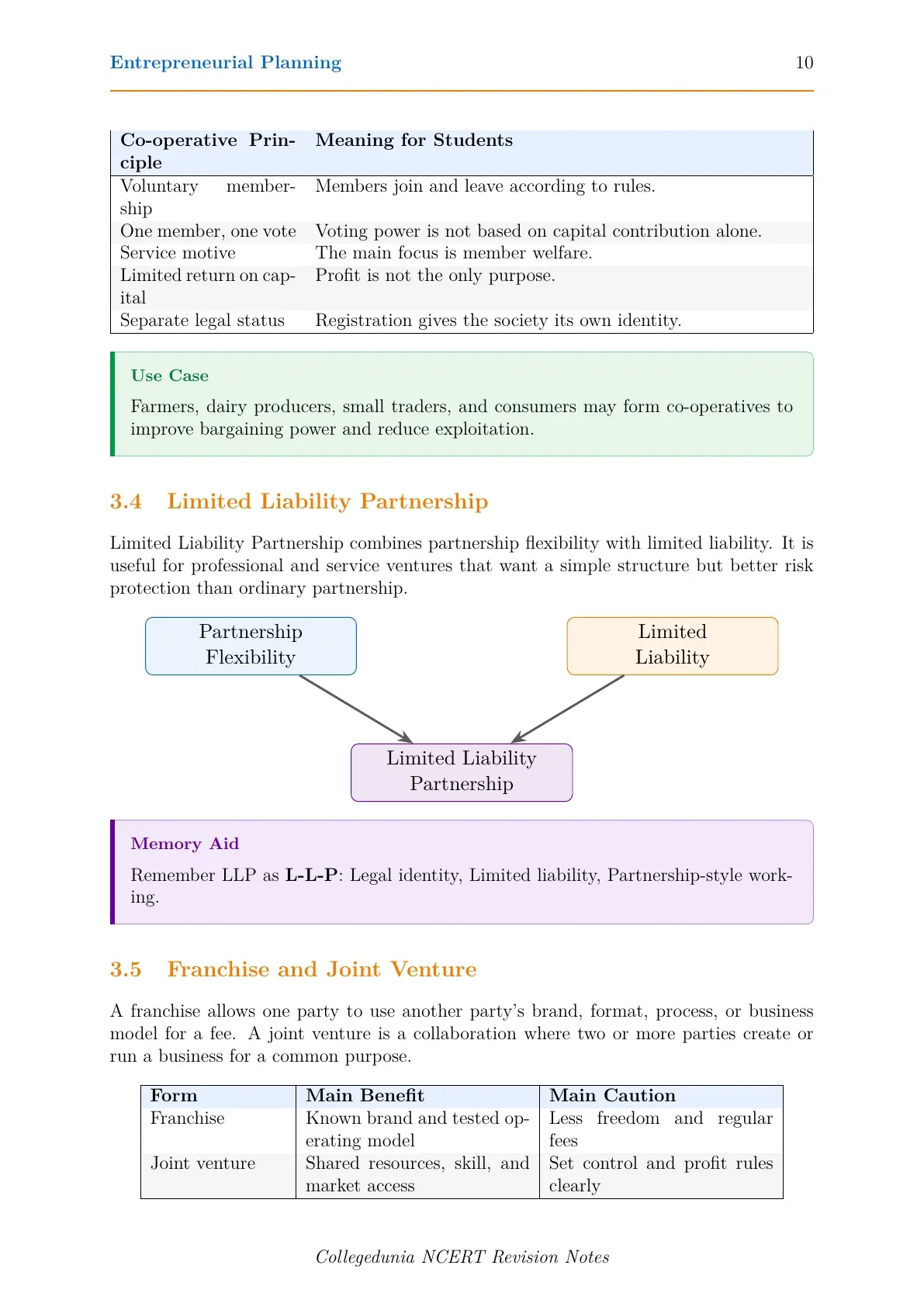
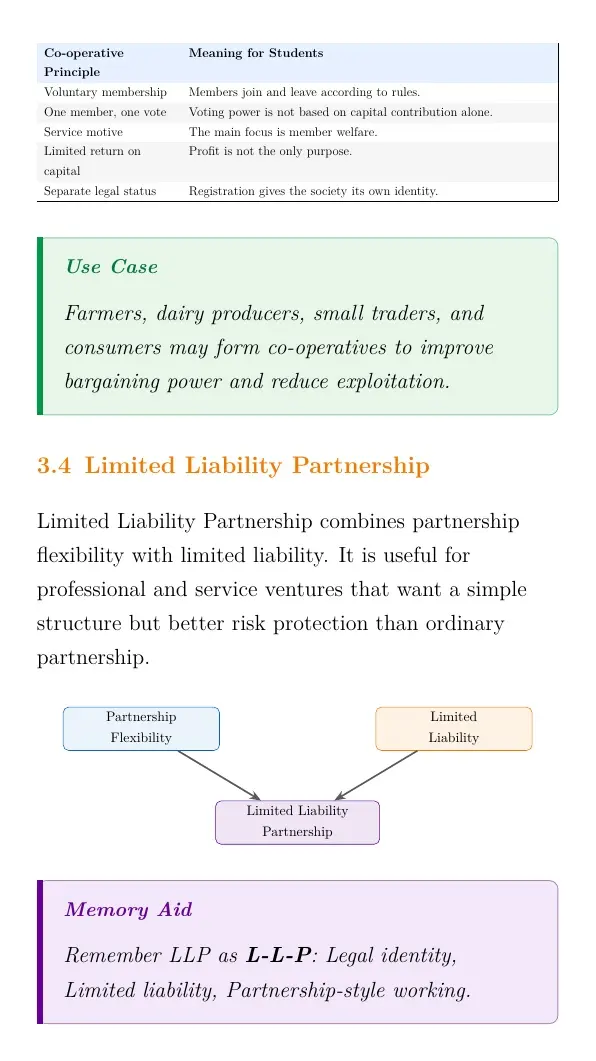
| Cooperative society | Voluntary association formed for mutual benefit. | Service motive with democratic control |
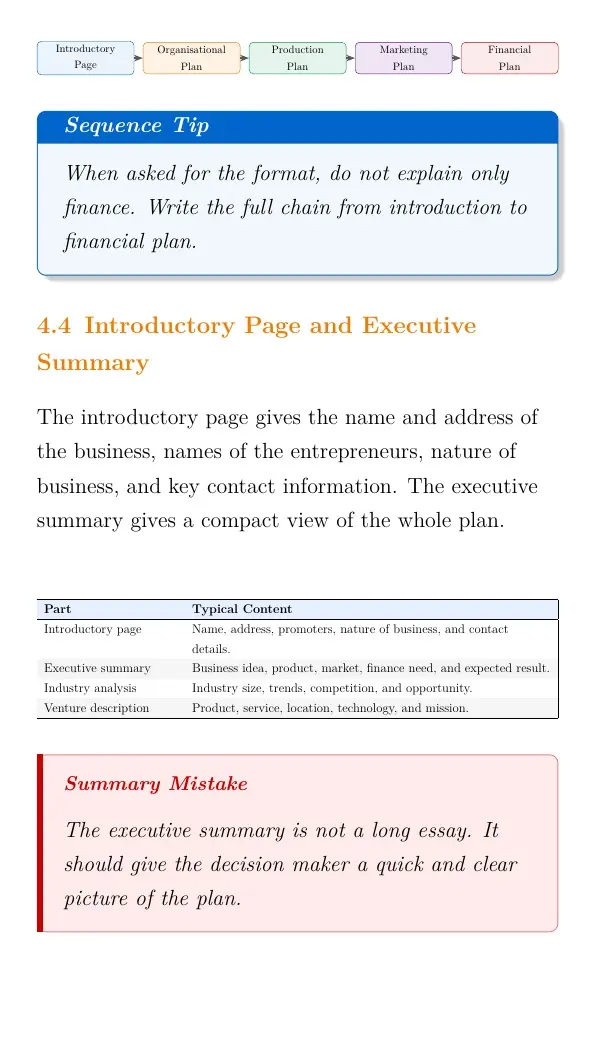
Business Plan Components for Class 12 Entrepreneurship
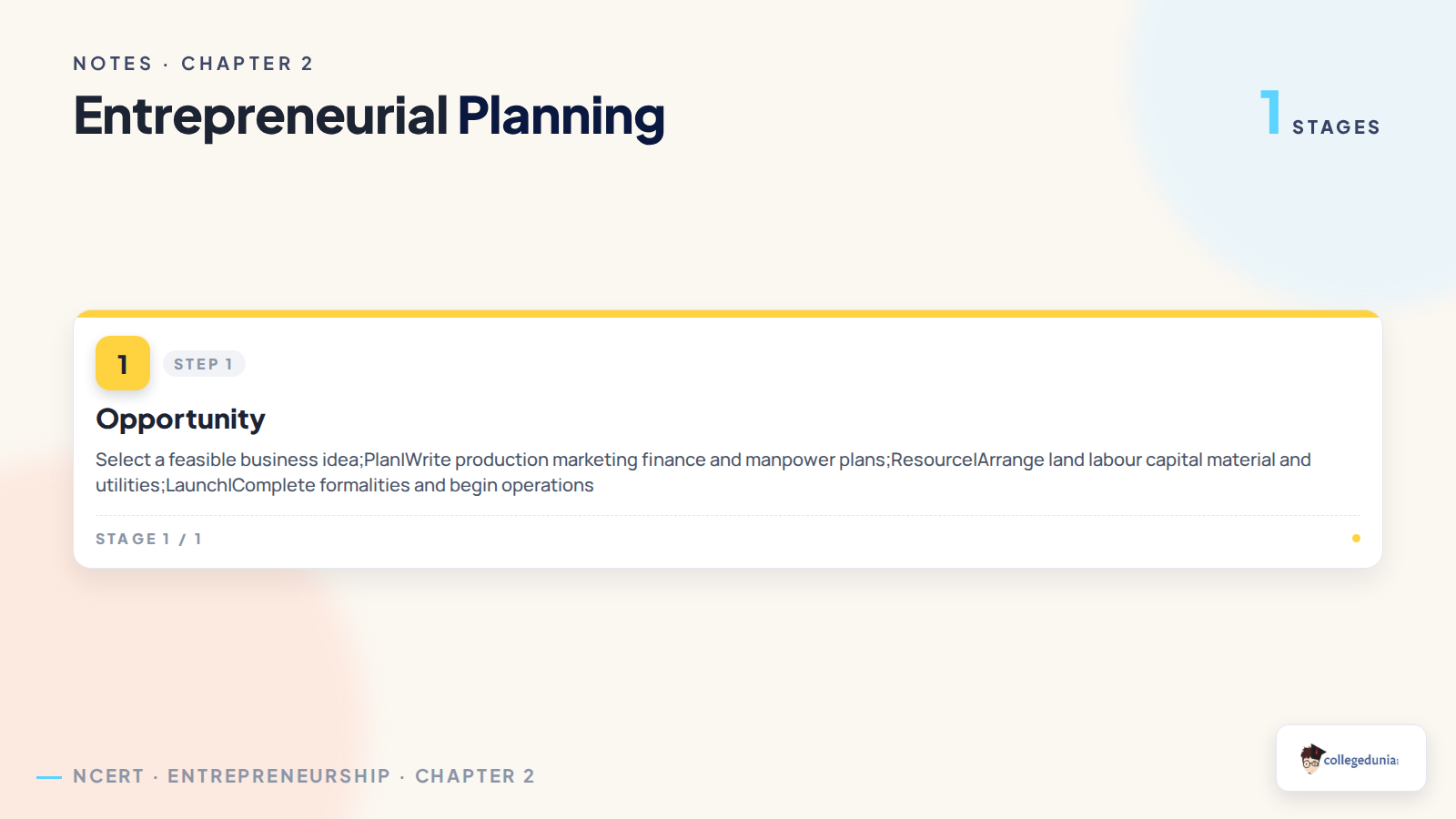
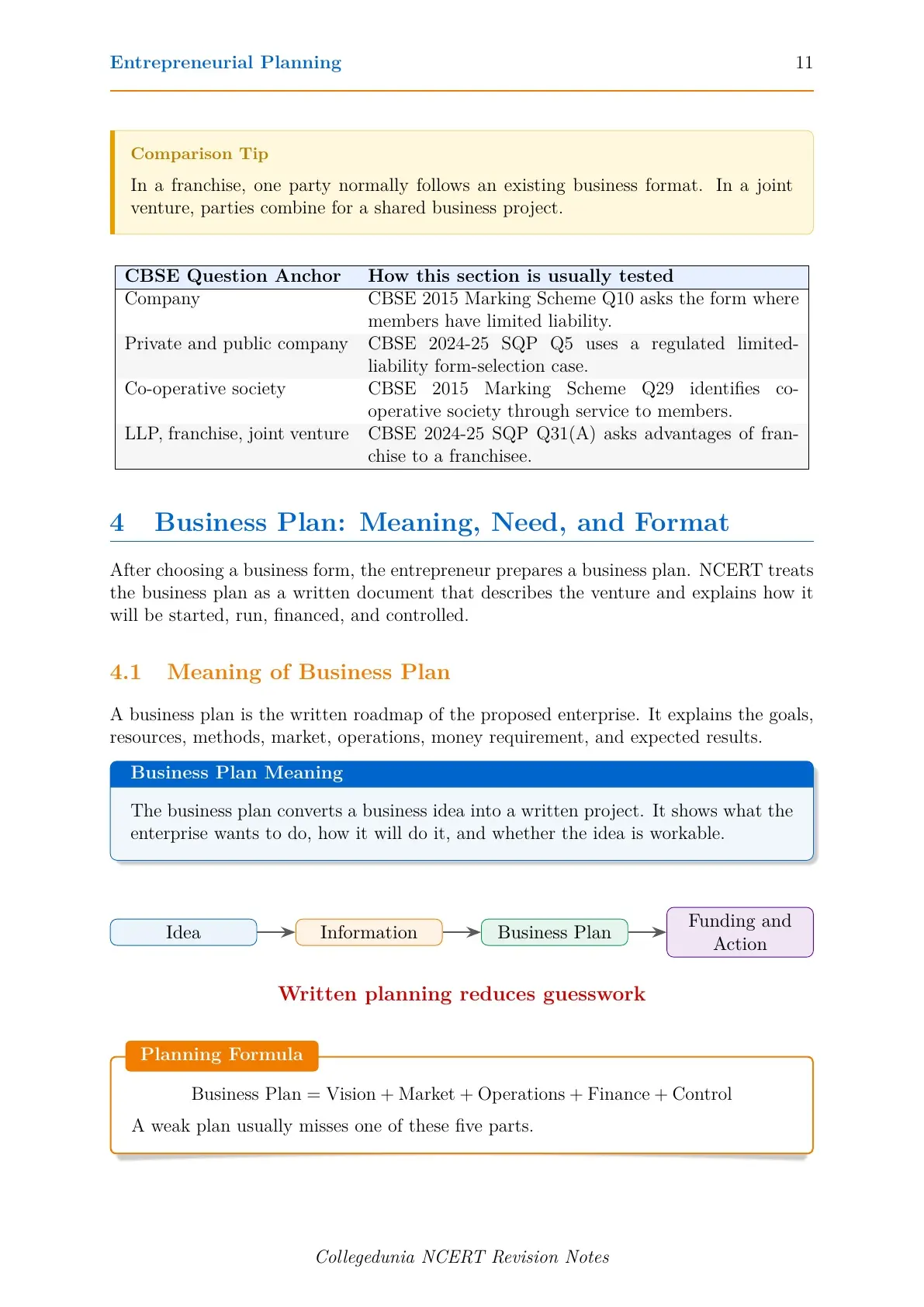
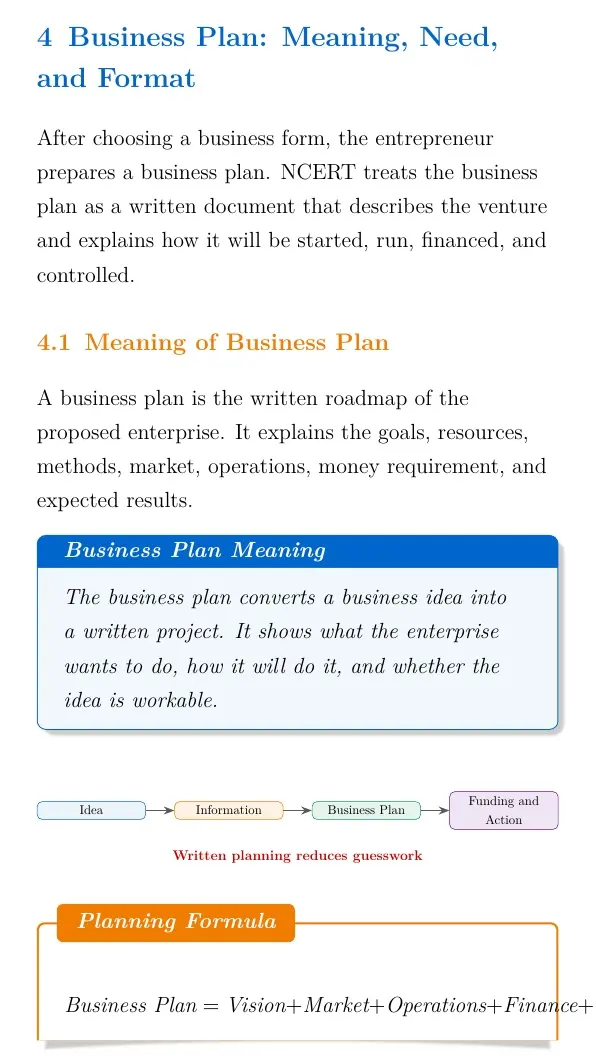
A business plan is a written document that explains what the enterprise will do, how it will do it and what resources it will need. NCERT treats it as a blueprint for action, finance and control.
- Executive summary: gives the compact overview of the proposed enterprise.
- Business description: explains the product, ownership form and opportunity.
- Production or operations plan: shows how goods or services will be delivered.
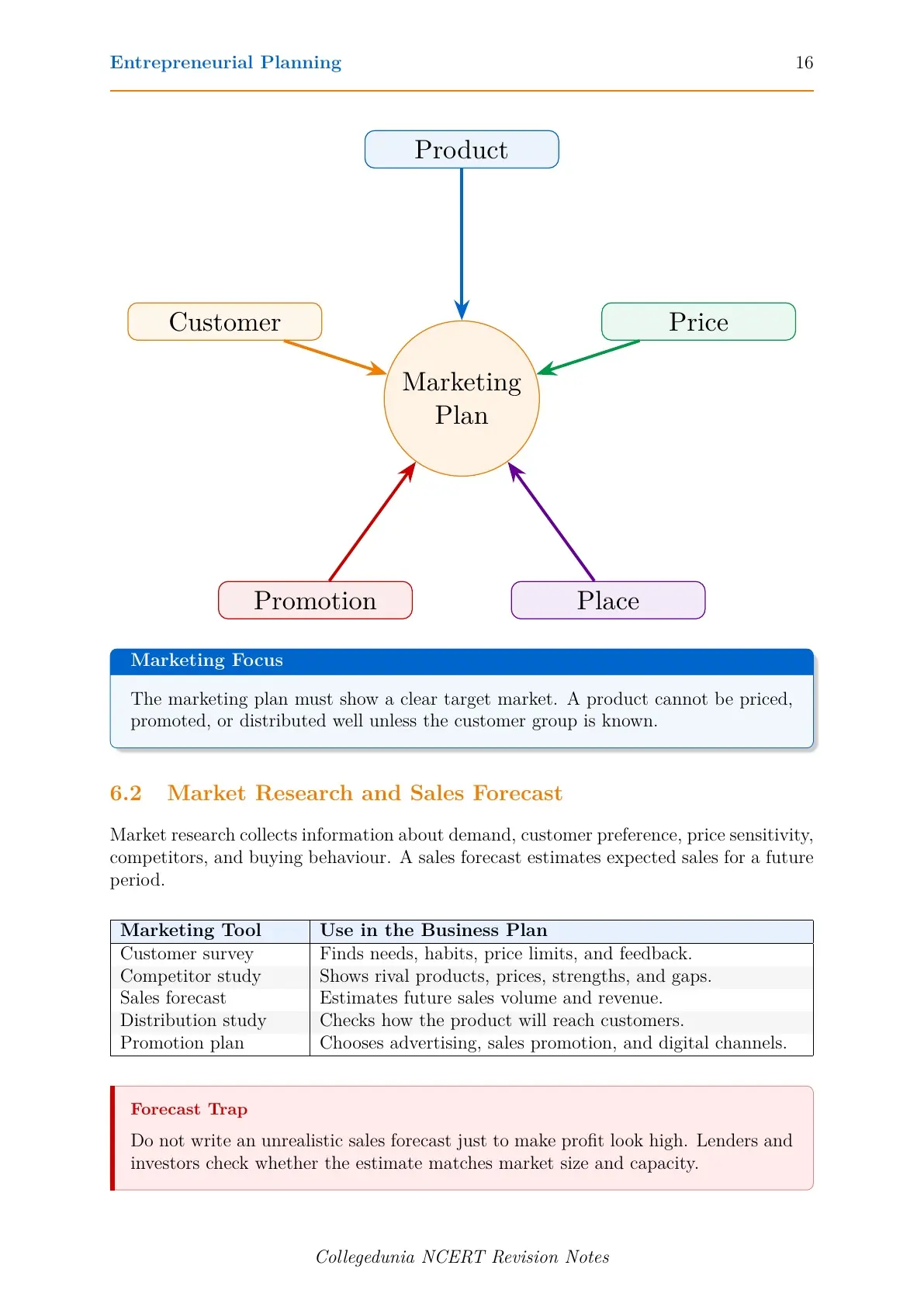
- Marketing plan: covers product, price, place, promotion and customer strategy.
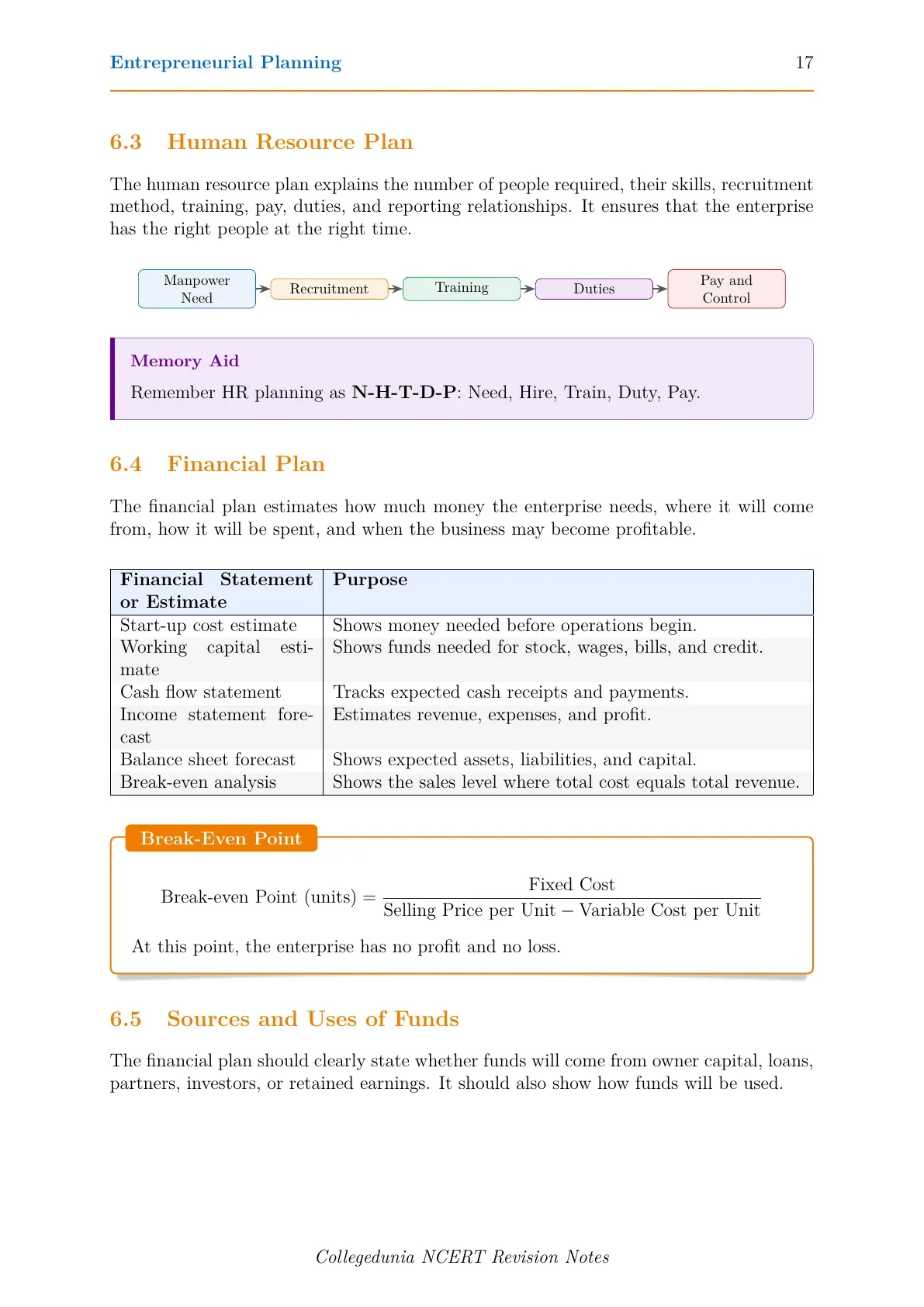
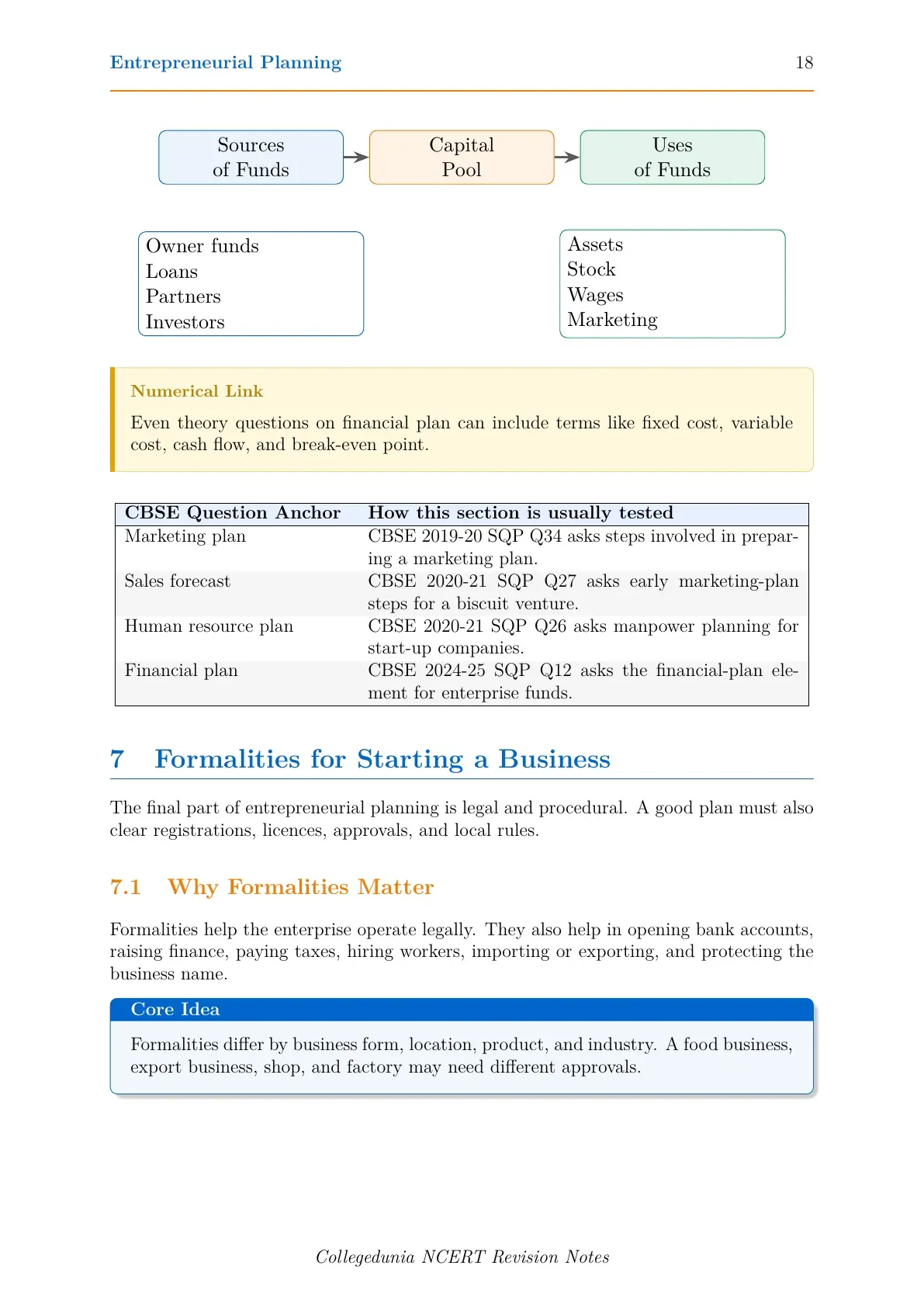
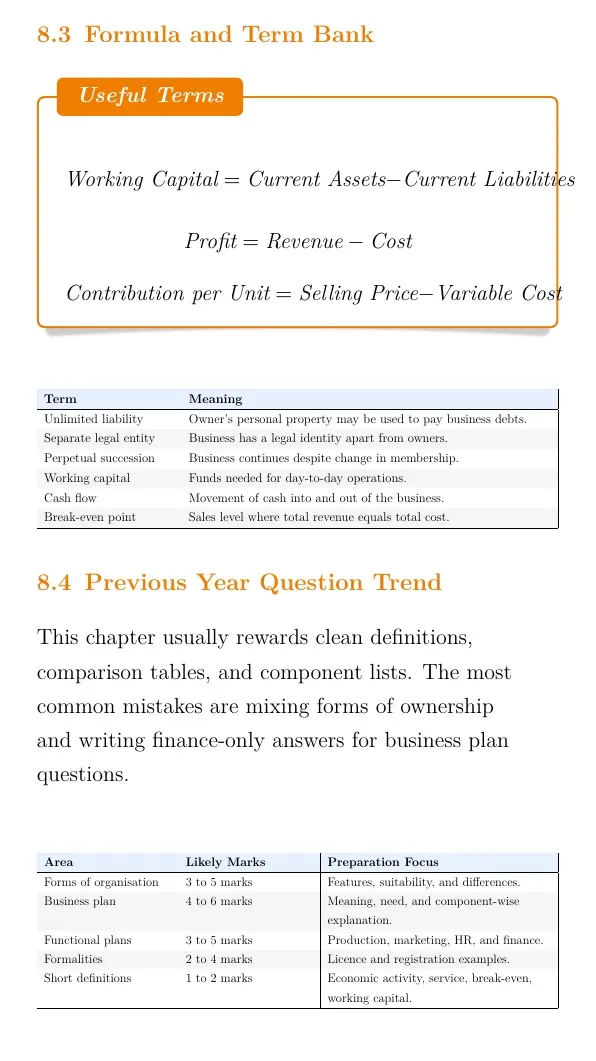
- Financial plan: estimates capital, sales, cost, cash flow and break-even point.
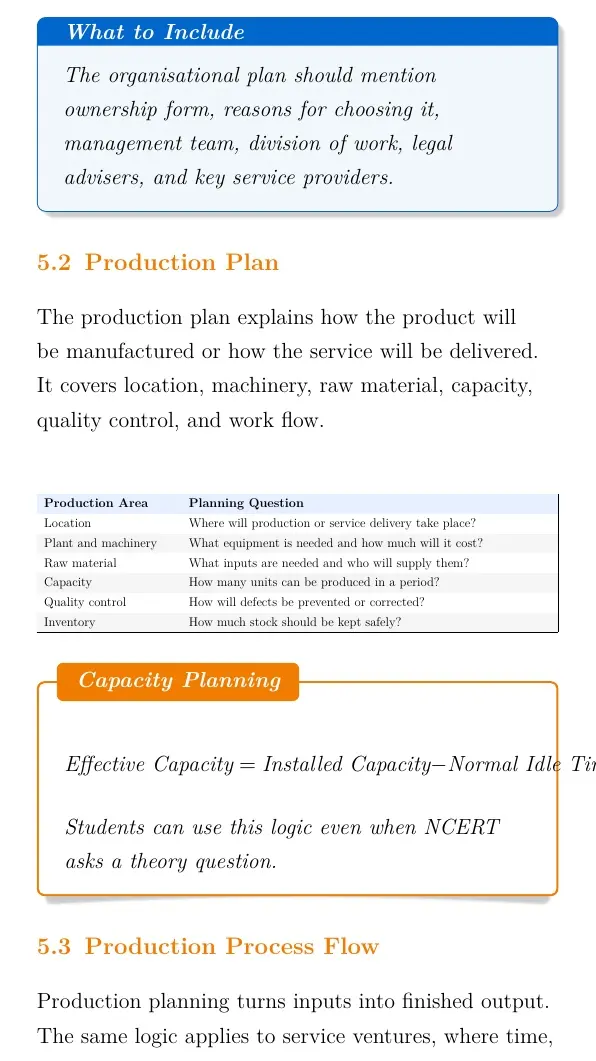
Production Operations Marketing and Finance Plans
Students often mix up the internal plans. Use the plan name, the question keyword and the output expected from the entrepreneur to separate them.
| Plan | What it answers | Important contents |
|---|---|---|
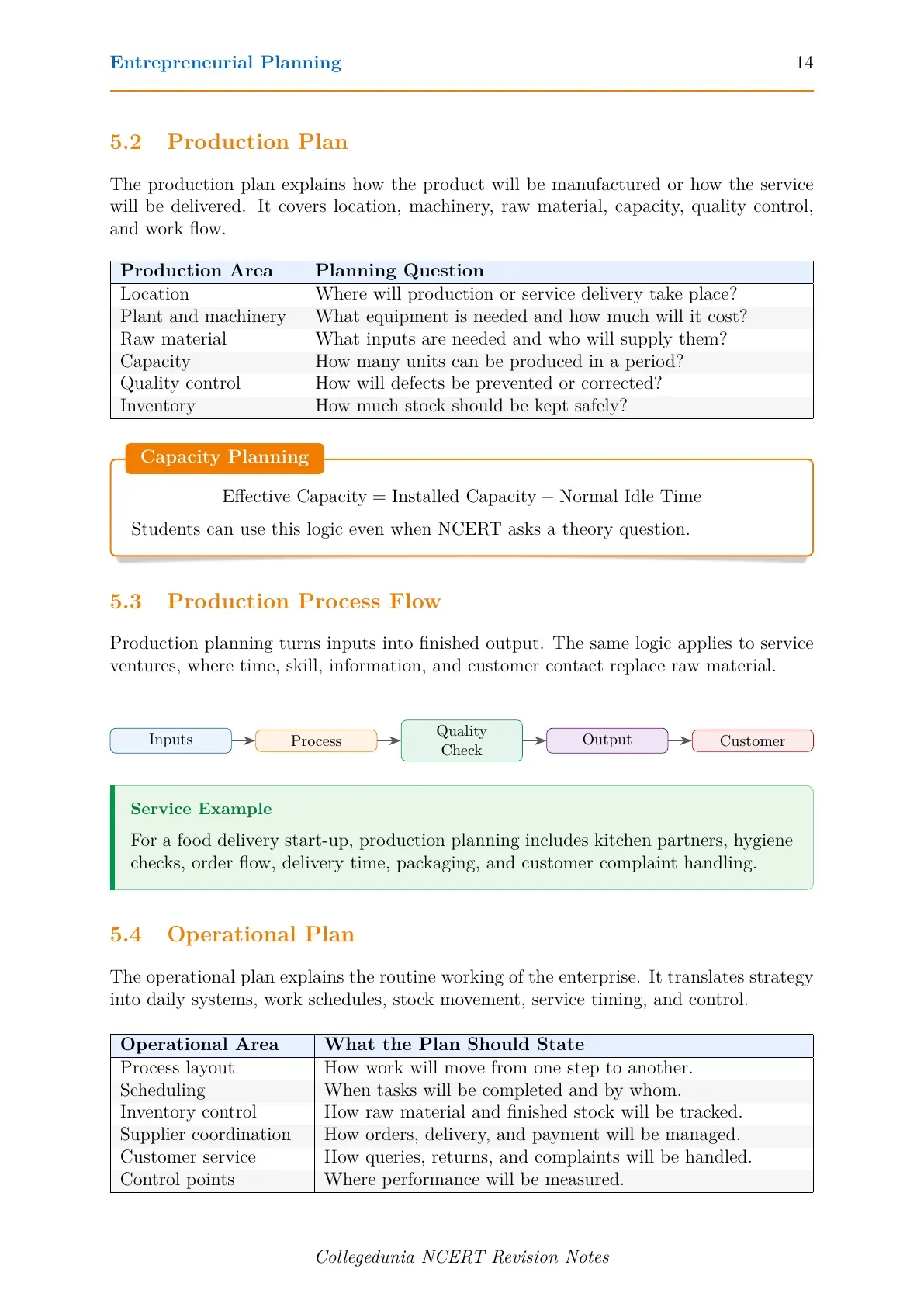
| Production plan | How will the product be made? | Process, plant layout, machinery, capacity and material requirement |
| Operations plan | How will daily work flow? | Routing, scheduling, dispatching, follow-up and quality control |
| Organisational plan | Who will own and manage the enterprise? | Legal form, authority, responsibility and management team |
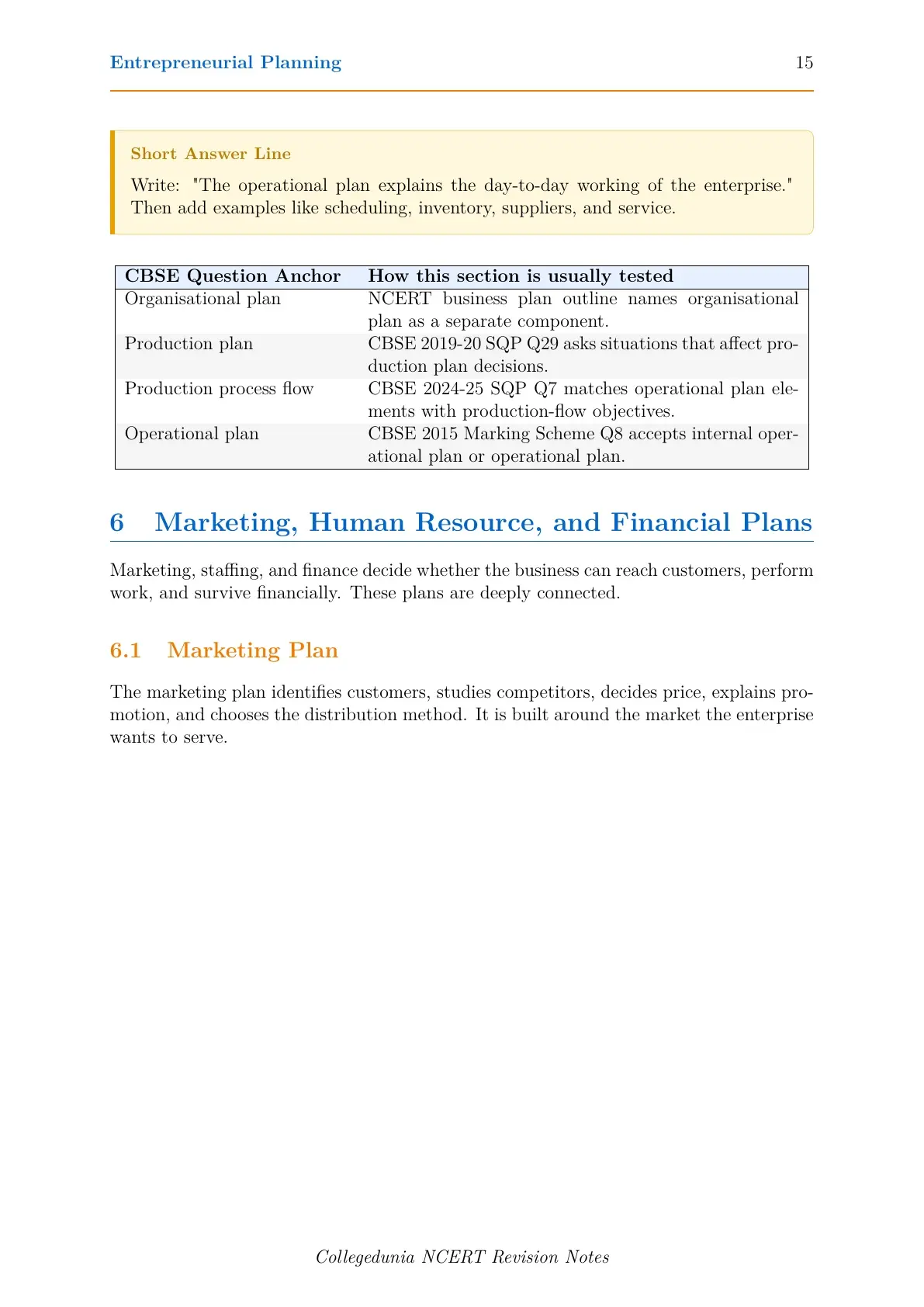
| Marketing plan | How will customers be reached? | Target market, product mix, price, channel and promotion |
| Financial plan | How much money is needed and earned? | Fixed capital, working capital, projected income, cash flow and break-even analysis |
Entrepreneurial Planning Class 12 Revision Video
Source: Rajat Arora on YouTube
Formalities for Starting a Business
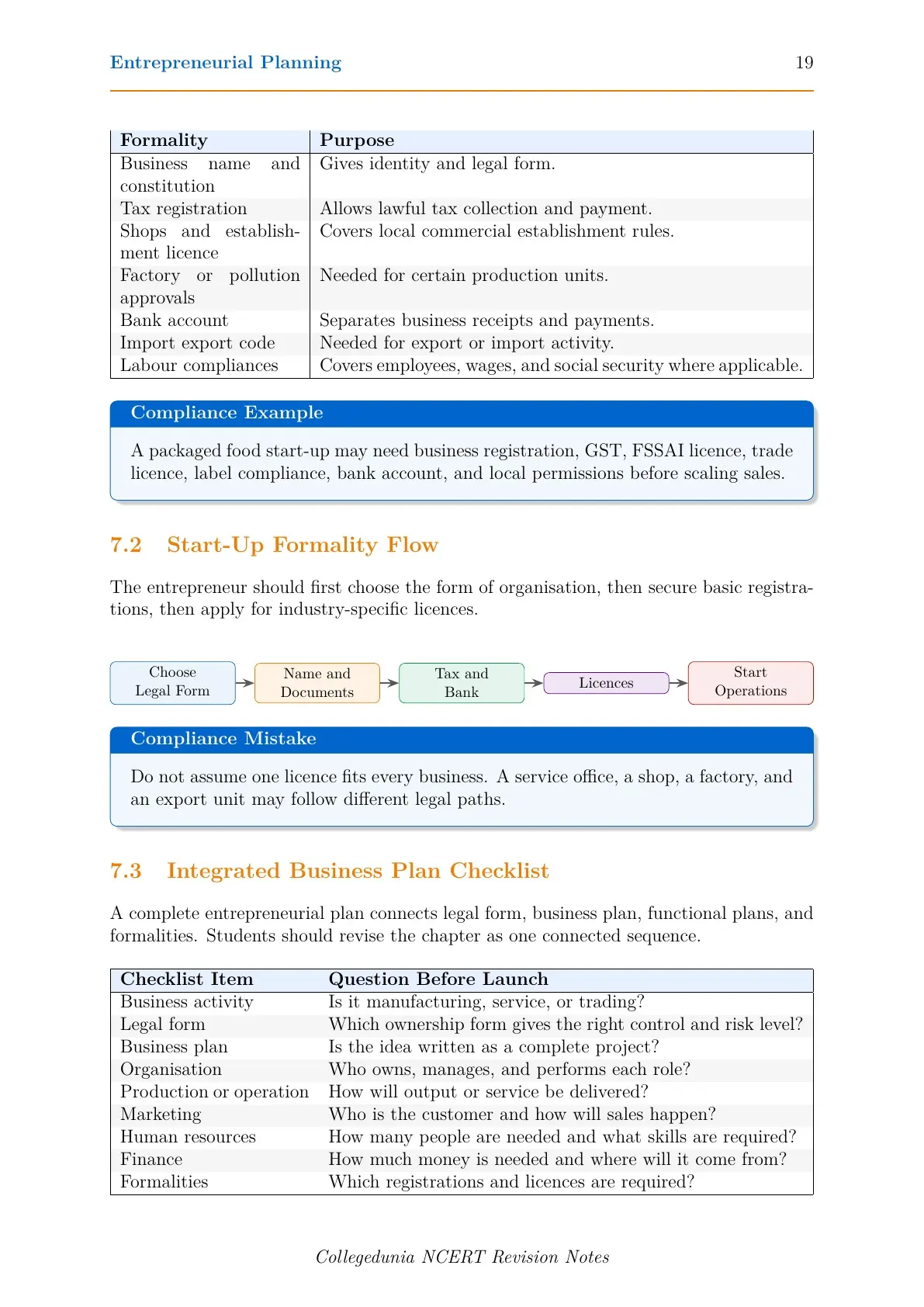
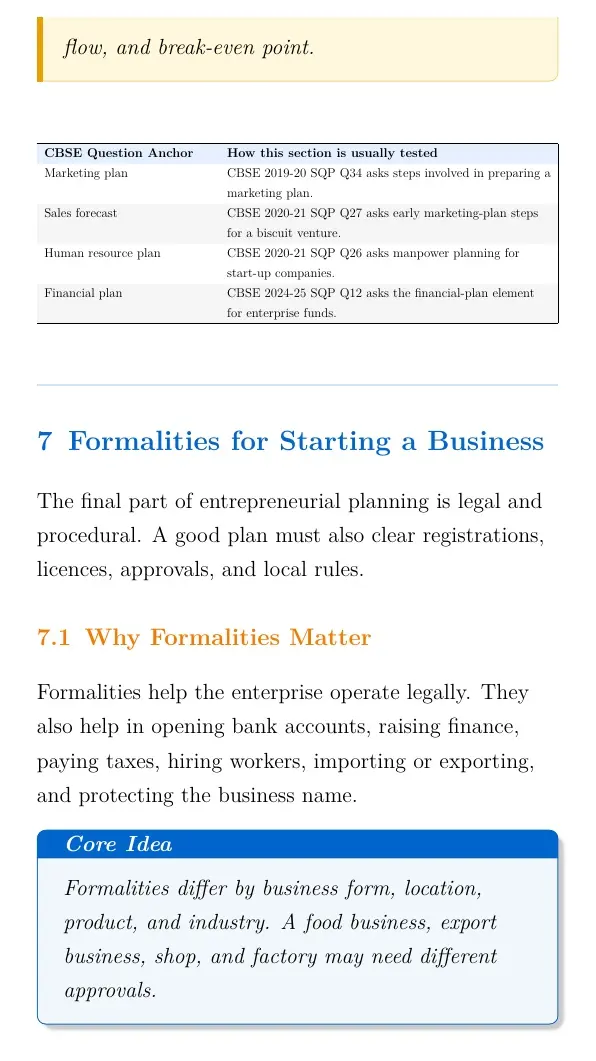
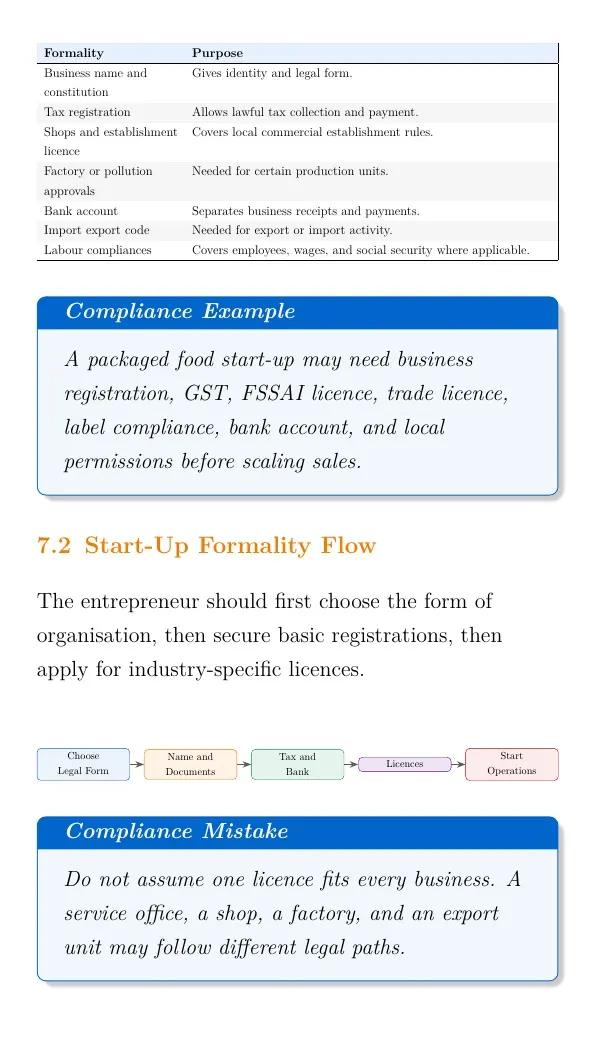
Formalities are tested as sequence-based and application-based questions. The exact steps depend on the chosen form of organisation, but the broad logic remains the same.
- Select the form of organisation after checking liability, capital need and continuity.
- Choose and approve the name so the business identity is legally usable.
- Register the enterprise wherever the law requires registration or incorporation.
- Arrange statutory numbers such as PAN, GST and bank account details as applicable.
- Obtain licences and clearances linked with location, product, safety or trade rules.
Common Mistakes in Entrepreneurial Planning Answers
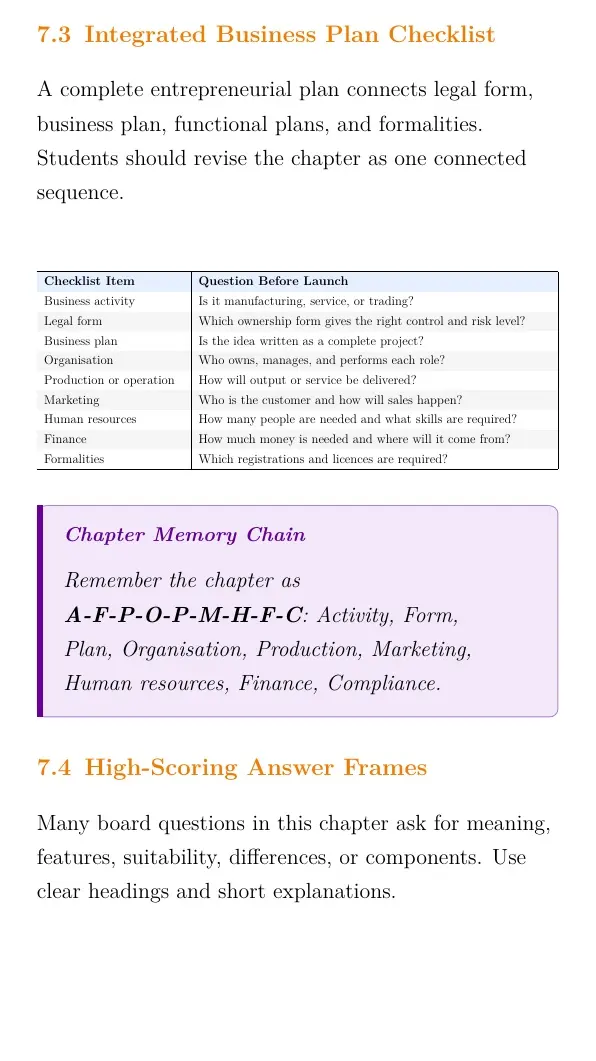
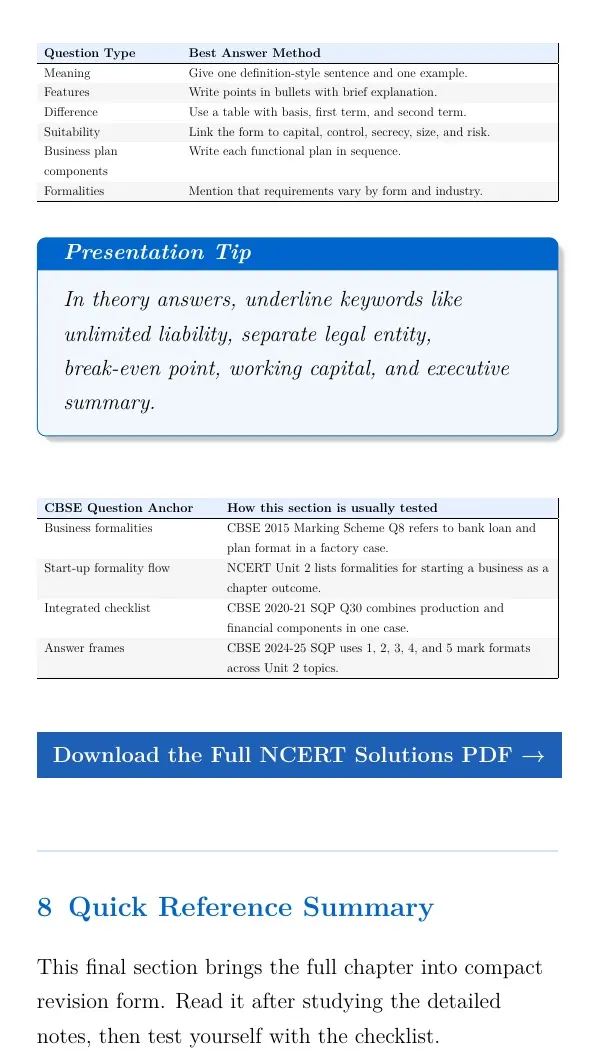
Many students know the chapter but lose marks because they write general start-up advice instead of NCERT planning terms. Keep each answer tied to the exact plan or legal form asked in the question.
- Do not call a business plan only a finance document. It also covers production, marketing, organisation and manpower.
- Do not merge production plan with operations plan. Production focuses on making goods; operations tracks work flow and control.
- Do not ignore liability. Liability is a major basis for choosing the form of business organisation.
- Do not write one generic marketing answer. Include target market, marketing mix and sales forecast when the question asks for marketing plan.
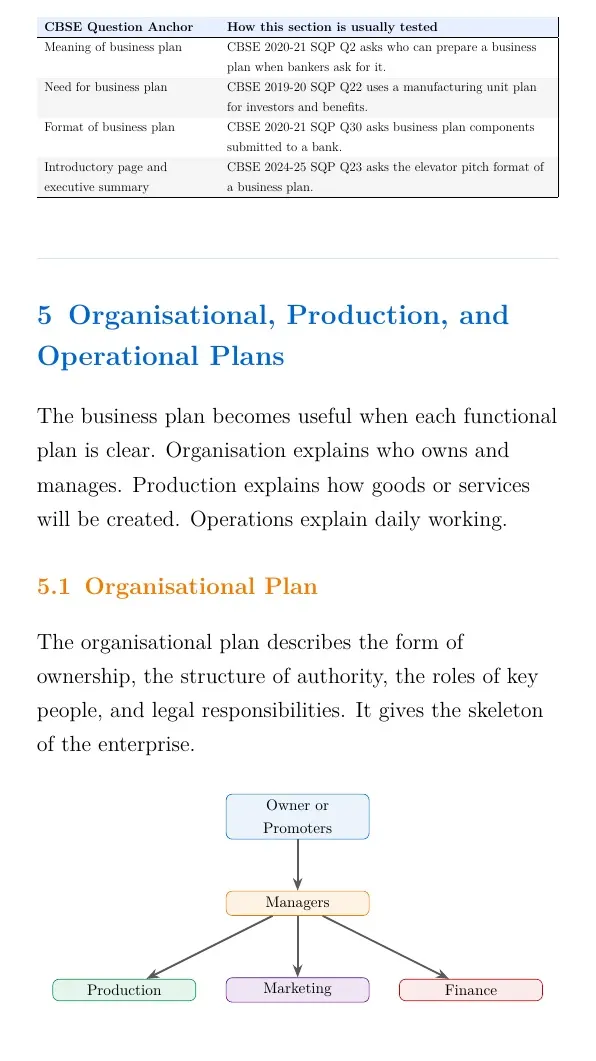
Entrepreneurial Planning CBSE Question Anchors
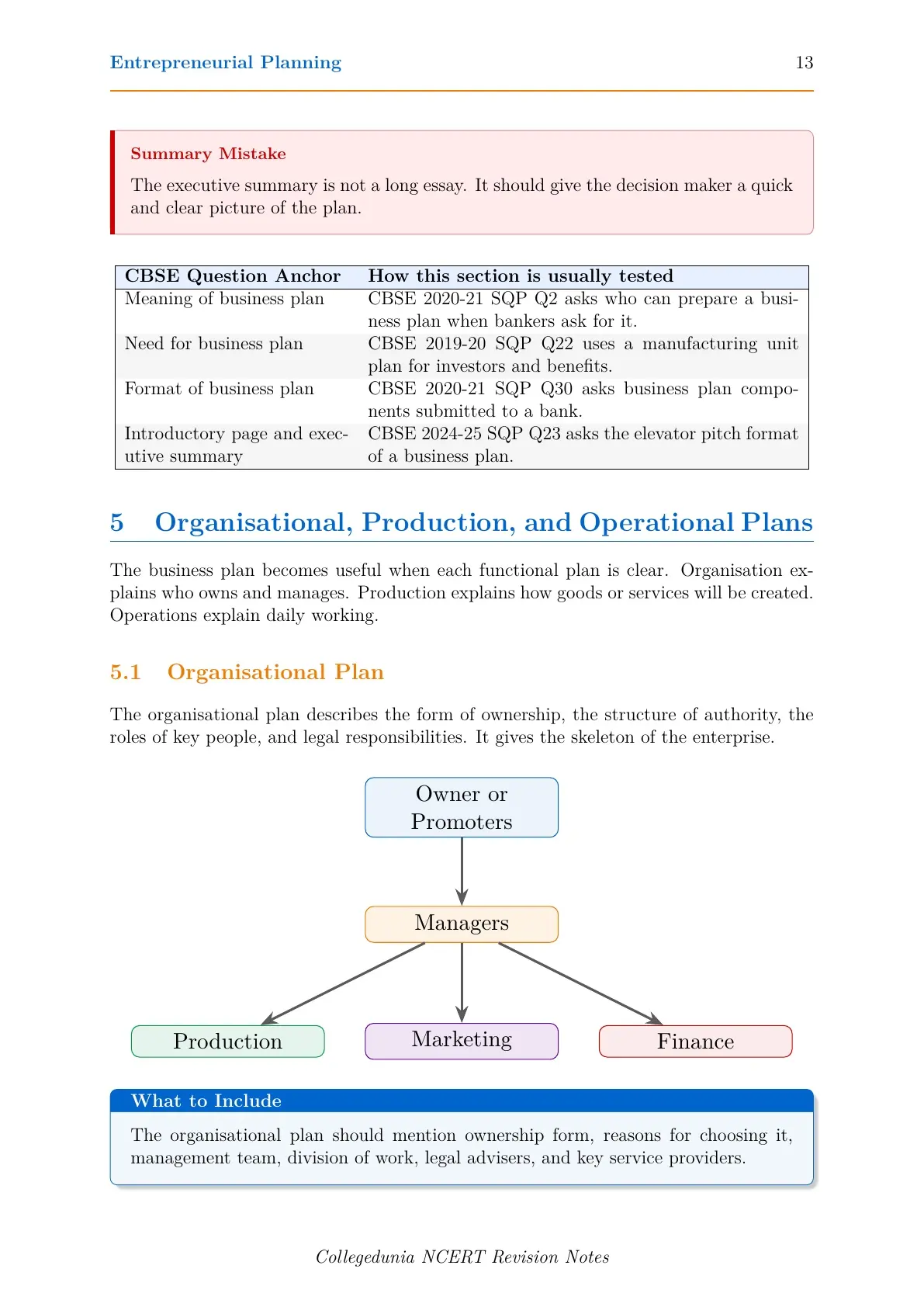
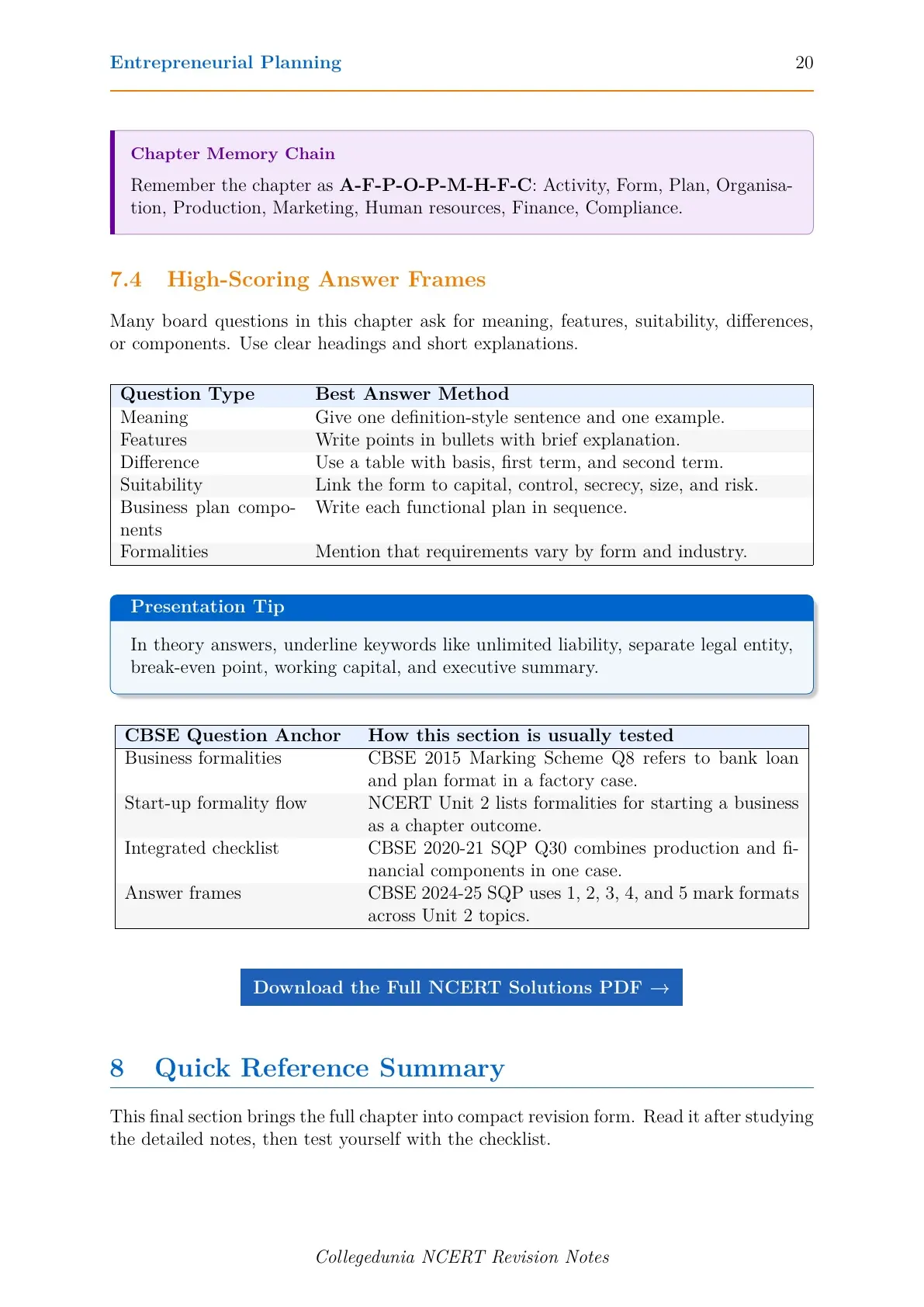
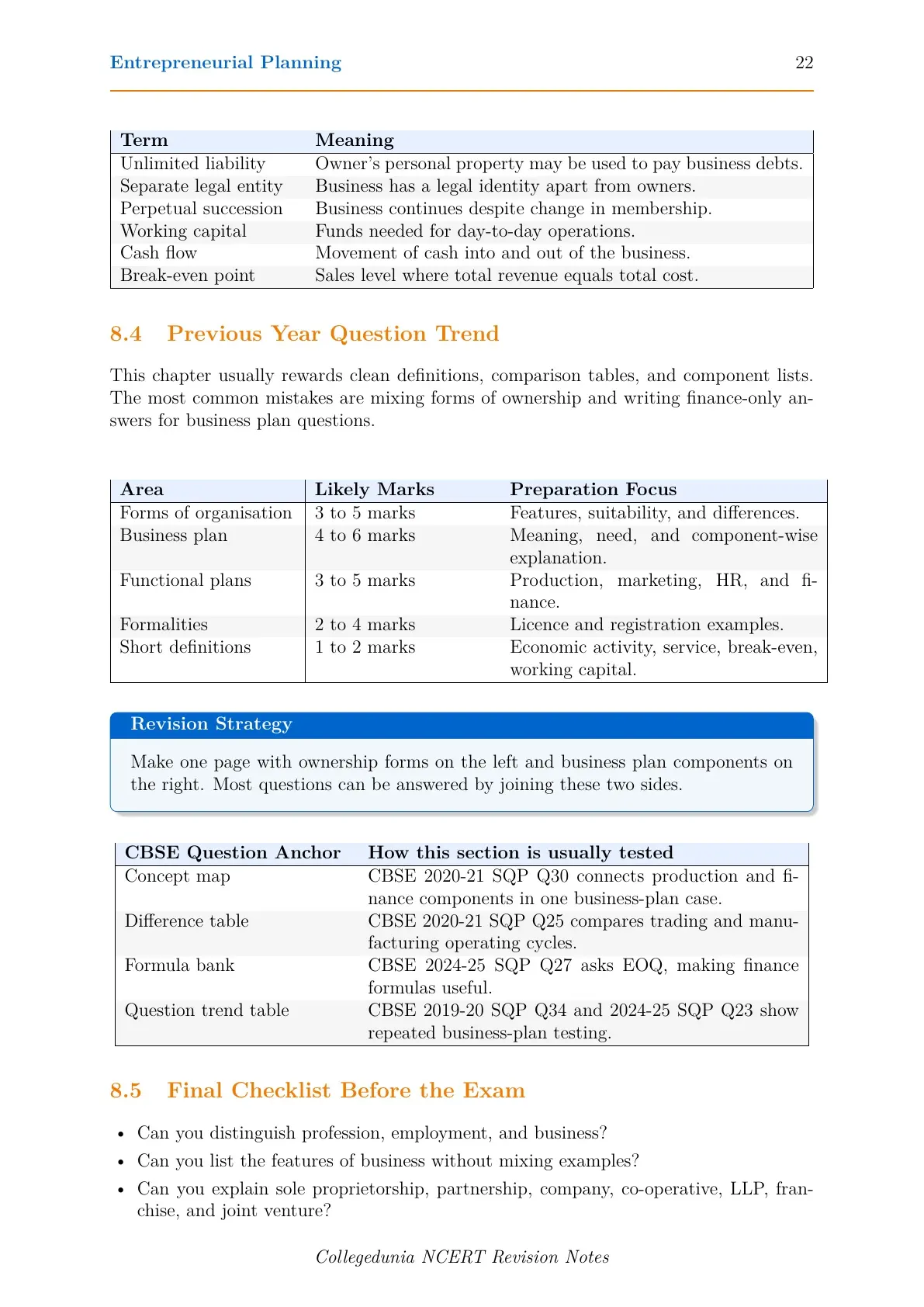
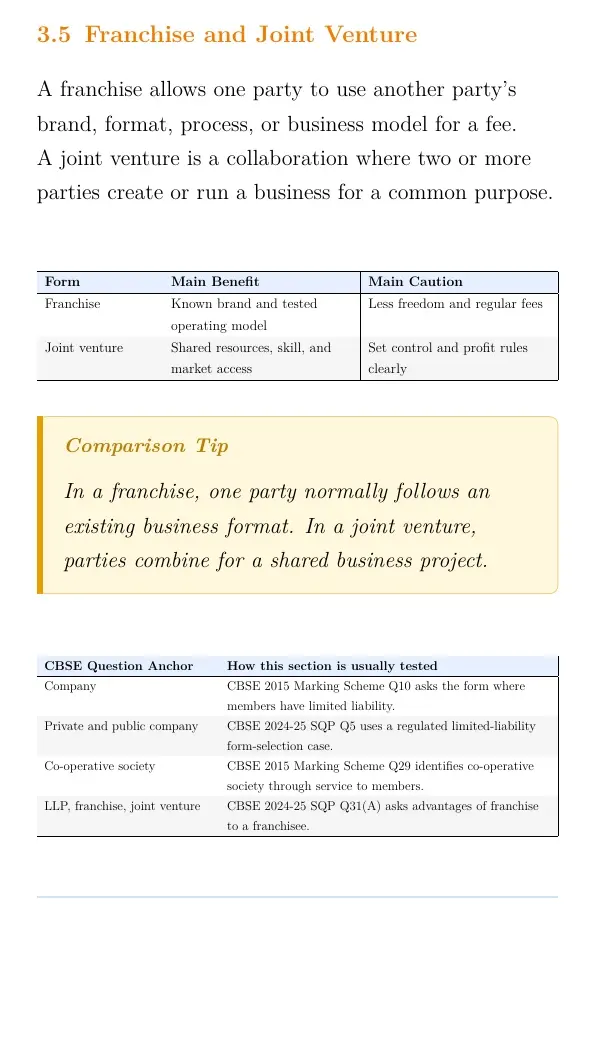
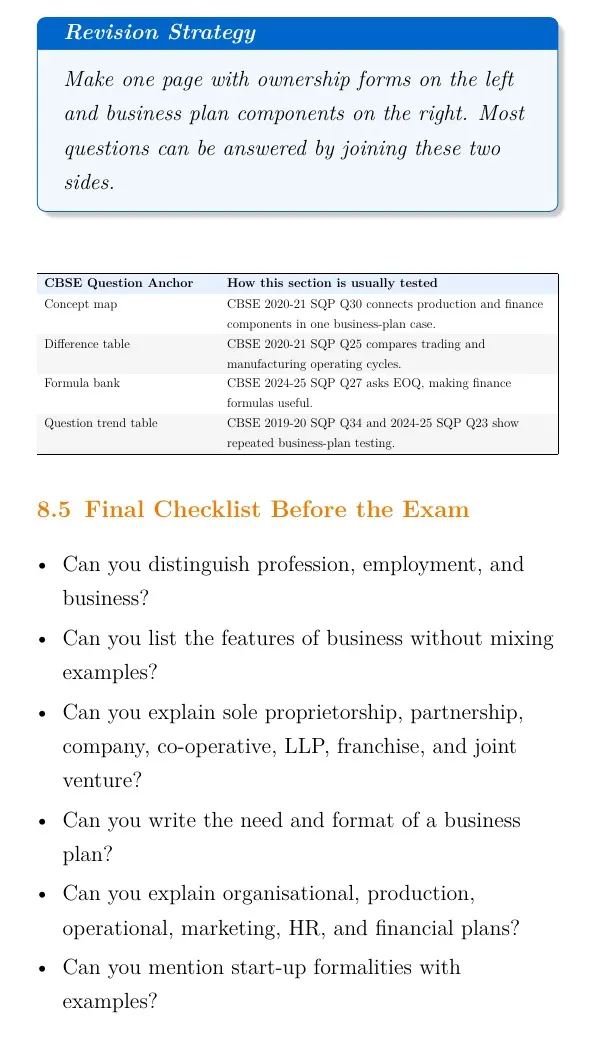
This chapter is usually tested through definitions, distinctions and planning situations. The safest answer pattern is: identify the plan, define it, list the NCERT contents and connect the point to the enterprise.
| Topic | Board-style anchor | Use this in answer |
|---|---|---|
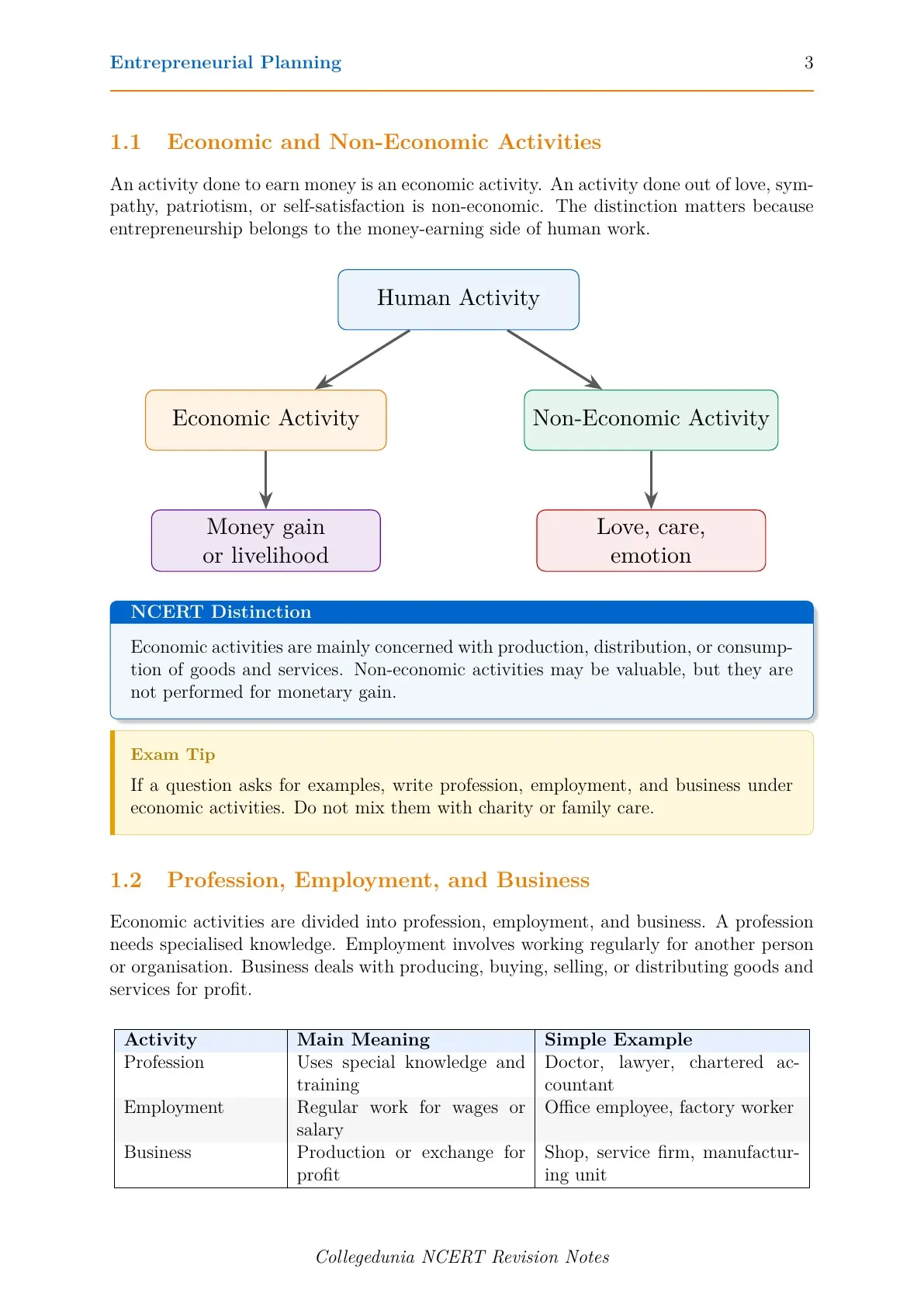
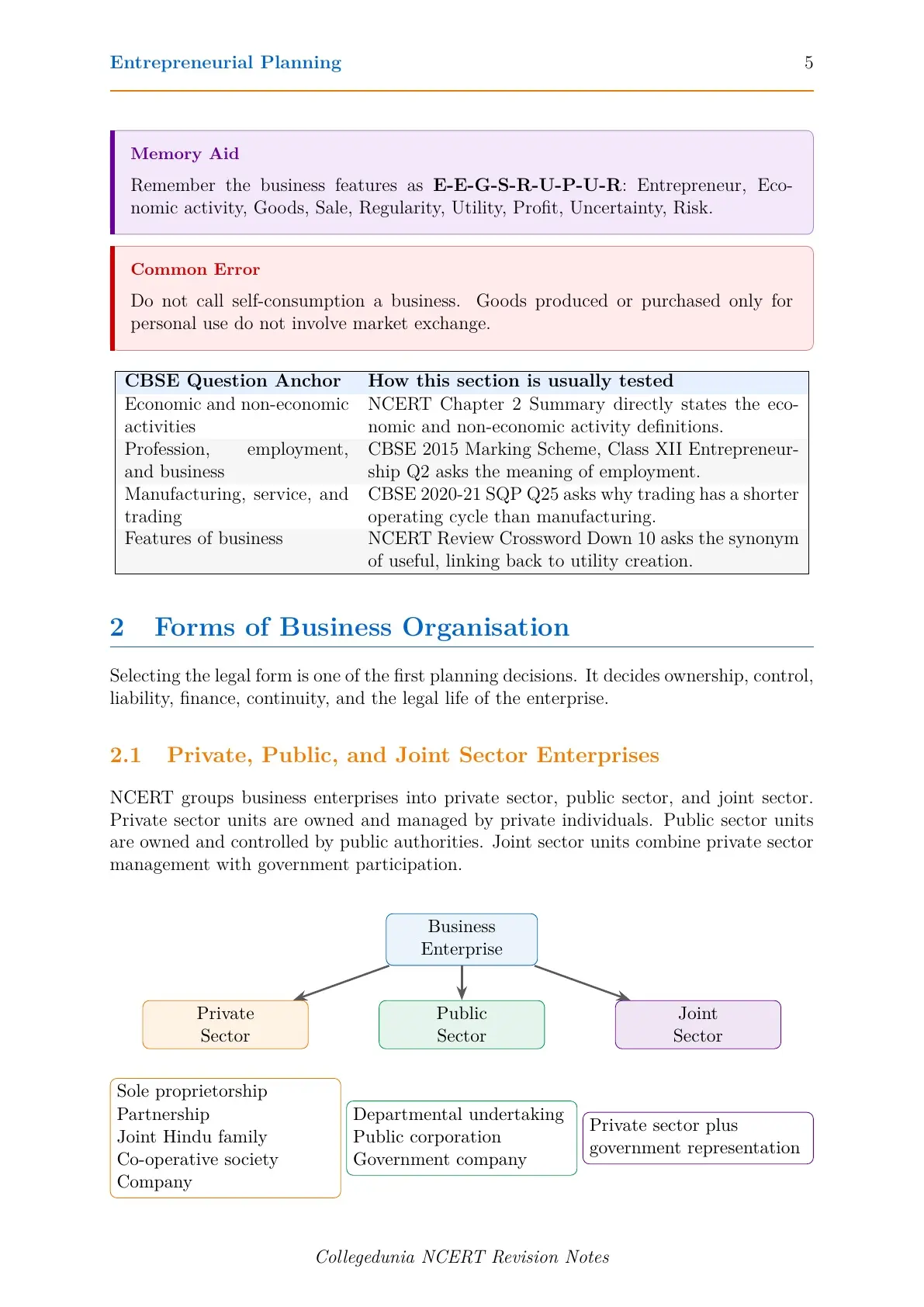
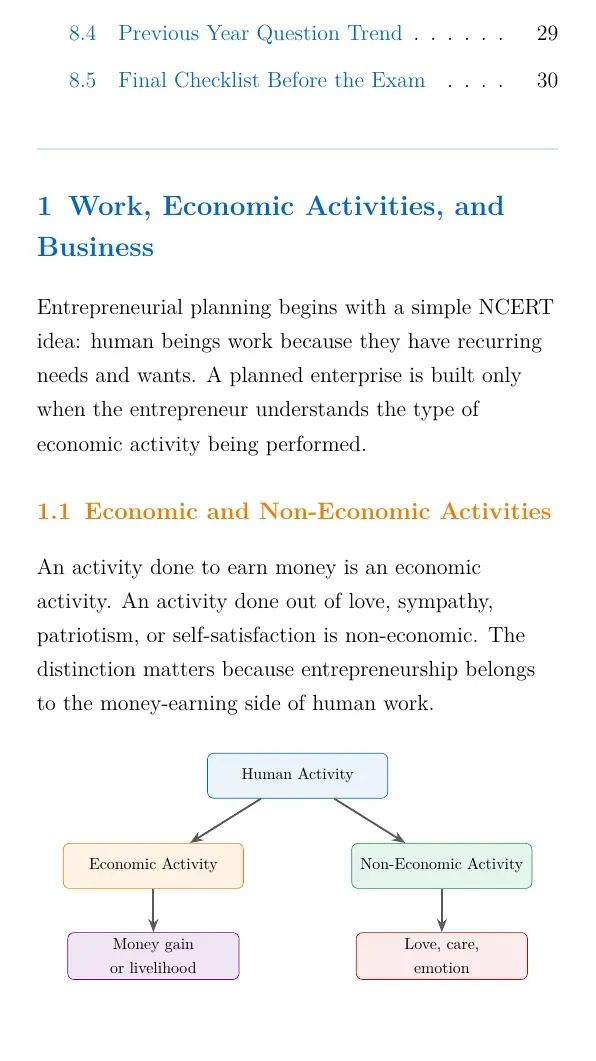
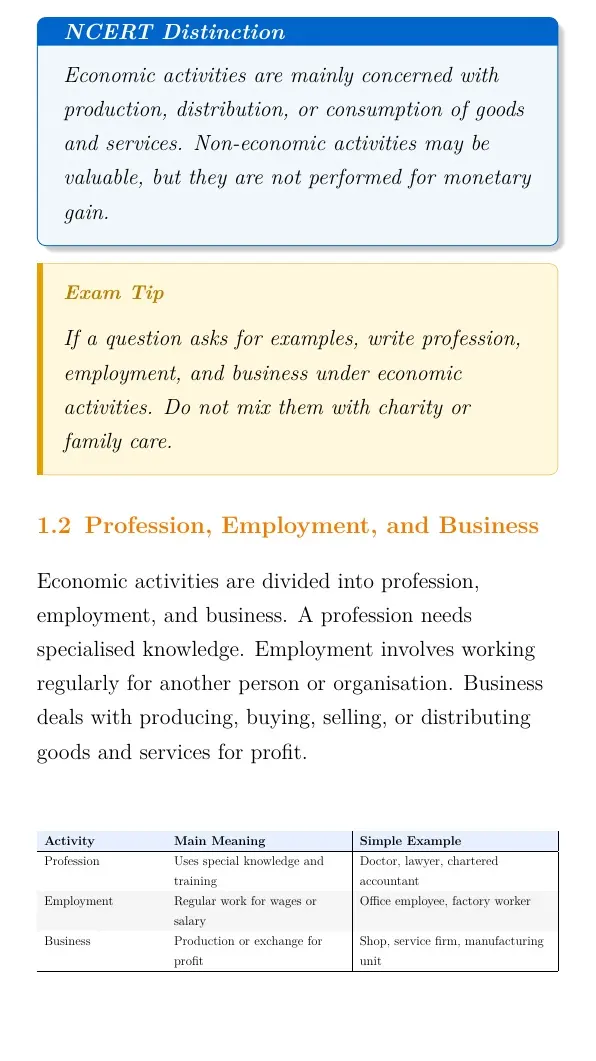
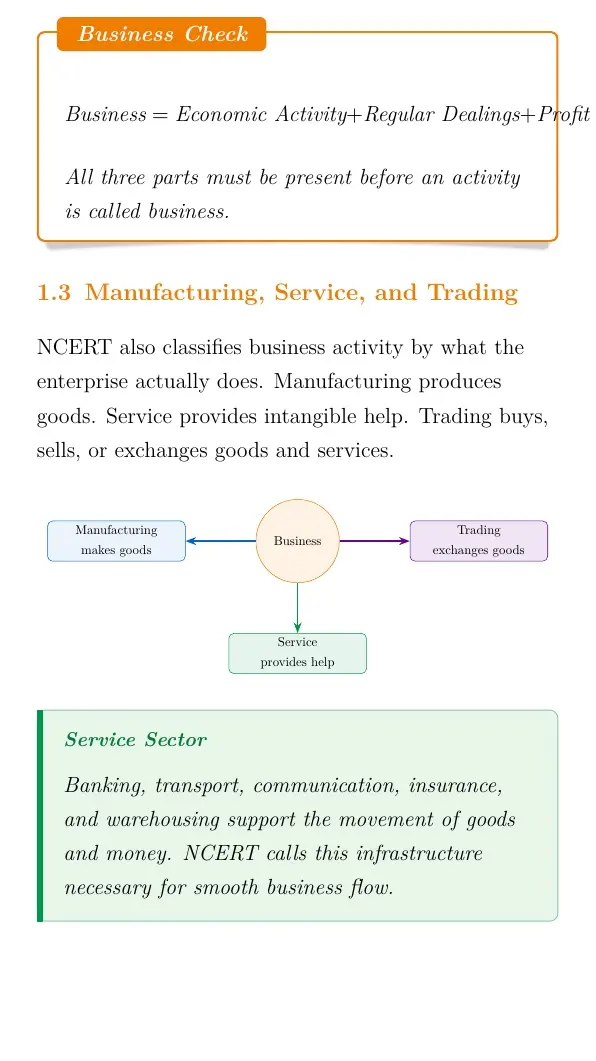
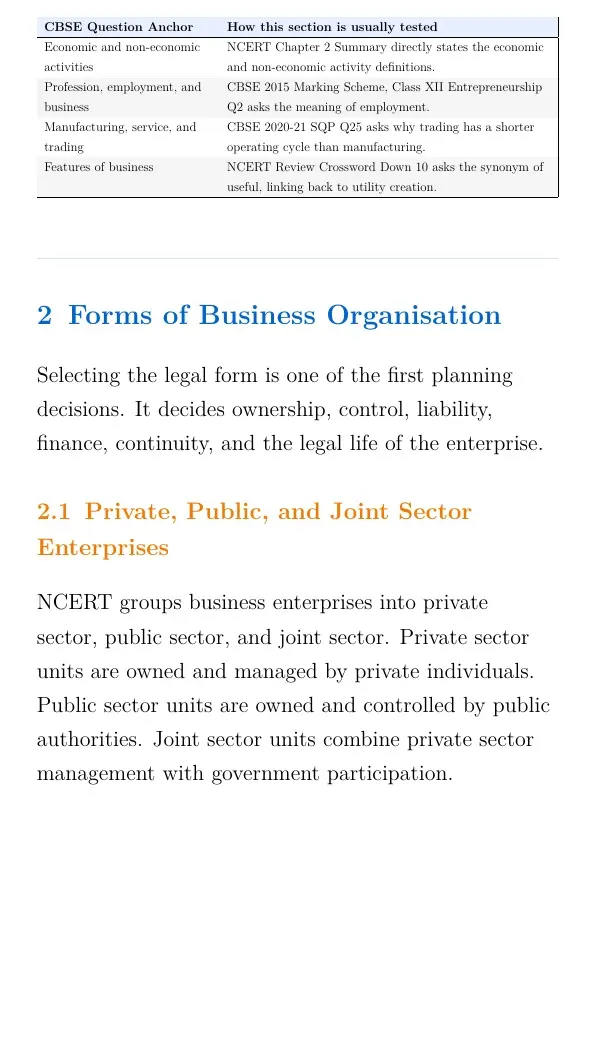
| Economic and non-economic activities | NCERT Chapter 2 summary states both definitions directly. | Purpose of earning livelihood versus satisfaction or service |
| Employment | CBSE 2015 Marking Scheme, Class XII Entrepreneurship Q2 asks the meaning of employment. | Work under an employer for wage or salary |
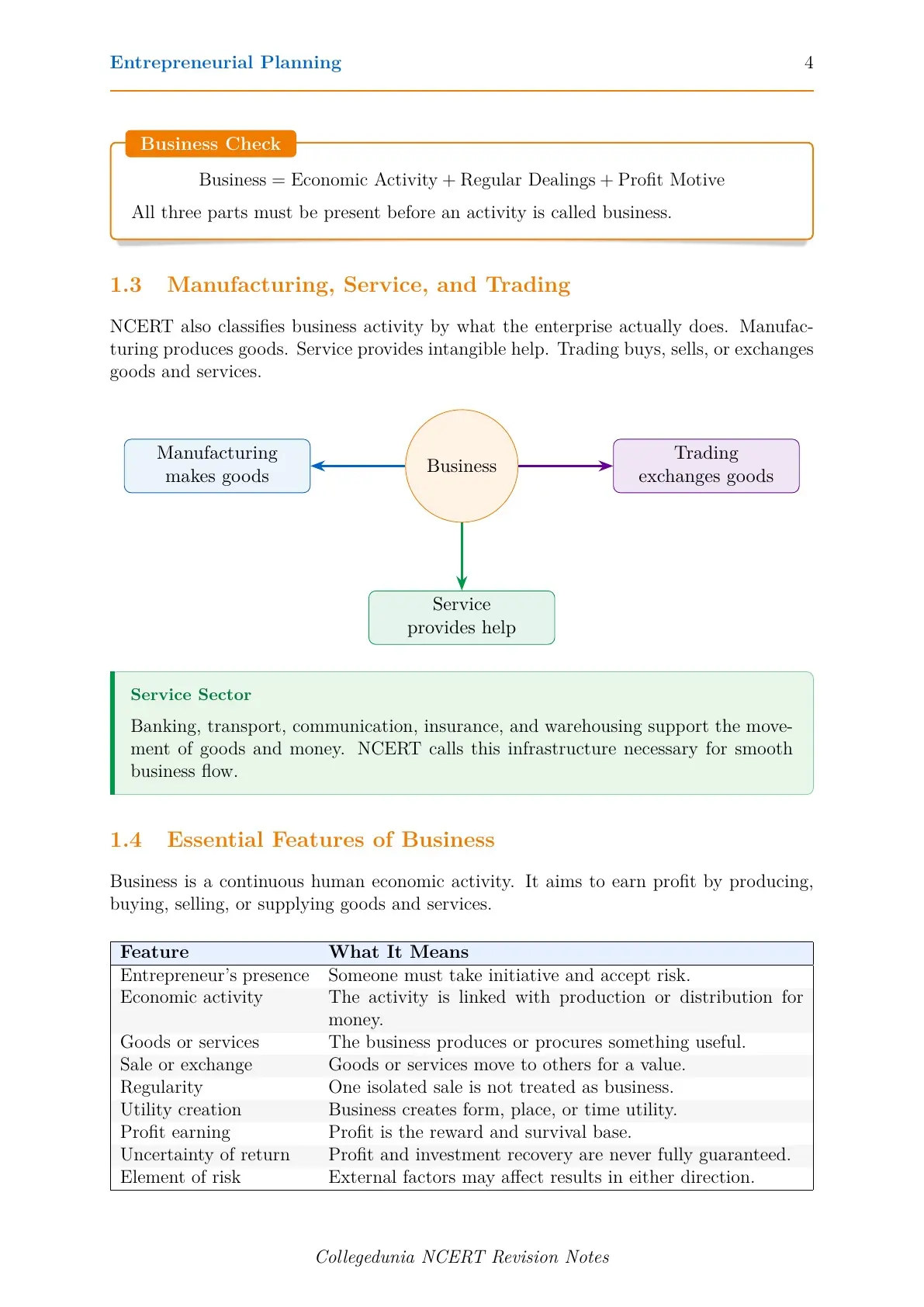
| Manufacturing and trading | CBSE 2020-21 Sample Question Paper Q25 asks why trading has a shorter operating cycle than manufacturing. | Manufacturing adds conversion time; trading moves goods from seller to buyer |
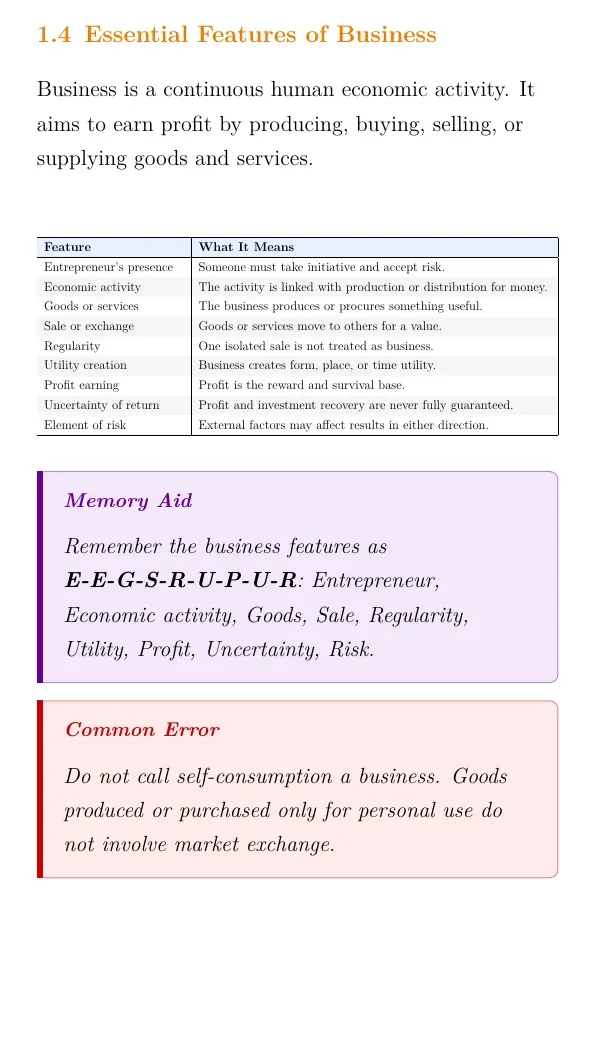
| Utility creation | NCERT review crossword Down 10 asks the synonym of useful. | Business creates utility by making goods or services useful to customers |
Class 12 Entrepreneurship Chapter 2 Related Resources
Use the Notes PDF with these companion resources when revising the same chapter.
| Resource | Best use | Link |
|---|---|---|
| NCERT Solutions | Practice solved textbook questions | Entrepreneurial Planning Class 12 NCERT Solutions |
| Handwritten Notes | Revise forms and plans in a quick visual format | Entrepreneurial Planning Class 12 Handwritten Notes |
| NCERT Book PDF | Read the original NCERT chapter | Entrepreneurial Planning Class 12 Book PDF |
NCERT Notes for Class 12 Entrepreneurship All Chapters
The same Notes series helps students move through the Entrepreneurship syllabus chapter by chapter.
| Chapter | Chapter Name | NCERT Notes |
|---|---|---|
| Chapter 1 | Entrepreneurial Opportunity | View notes |
| Chapter 2 | Entrepreneurial Planning | View notes |
| Chapter 3 | Enterprise Marketing | View notes |
| Chapter 4 | Enterprise Growth Strategies | View notes |
| Chapter 5 | Business Arithmetic | View notes |
Entrepreneurial Planning Class 12 Notes FAQs
Ques. What do Class 12 Entrepreneurship Chapter 2 notes cover?
Ans. They cover forms of business organisation, meaning and need of a business plan, production plan, operations plan, organisational plan, marketing plan, financial plan, human resource plan and start-up formalities.
Ques. Why is a business plan important in Entrepreneurial Planning?
Ans. A business plan gives written direction, estimates resources, helps raise funds, guides implementation and allows the entrepreneur to compare actual performance with planned targets.
Ques. What is the difference between production plan and operations plan?
Ans. Production plan explains how goods will be produced through process, machinery and capacity decisions. Operations plan explains routine work flow through routing, scheduling, dispatching and control.
Ques. How should students revise Entrepreneurial Planning for boards?
Ans. Revise forms of organisation first, then learn each plan with its purpose and contents, practise comparison tables and connect case questions to the correct NCERT planning term.



Comments