



Inside the Class 12 KTPI notes for Life Sciences, you will find Ayurveda's history, major texts, eight branches, the tridosha system and preventive health. The coverage follows the reprinted 2026-27 NCERT chapter and keeps Sanskrit terms linked with their plain meanings.
- Core focus: understand Ayurveda as a connected science of life, health and disease.
- Quick recall: match texts, authors, branches and clinical fields.
- Exam help: tables organise Vata, Pitta, Kapha and health regimens.

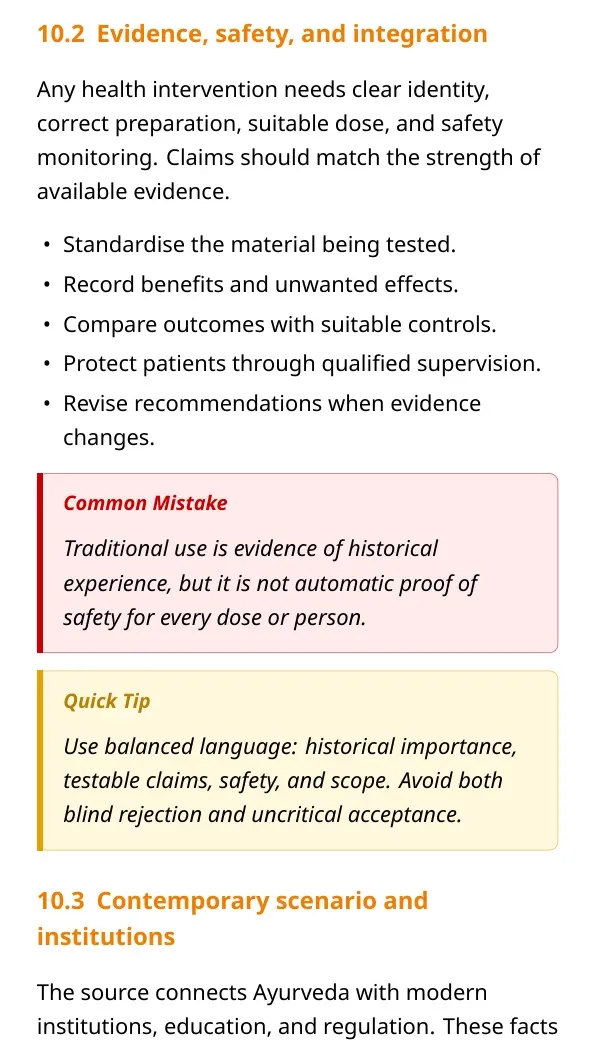
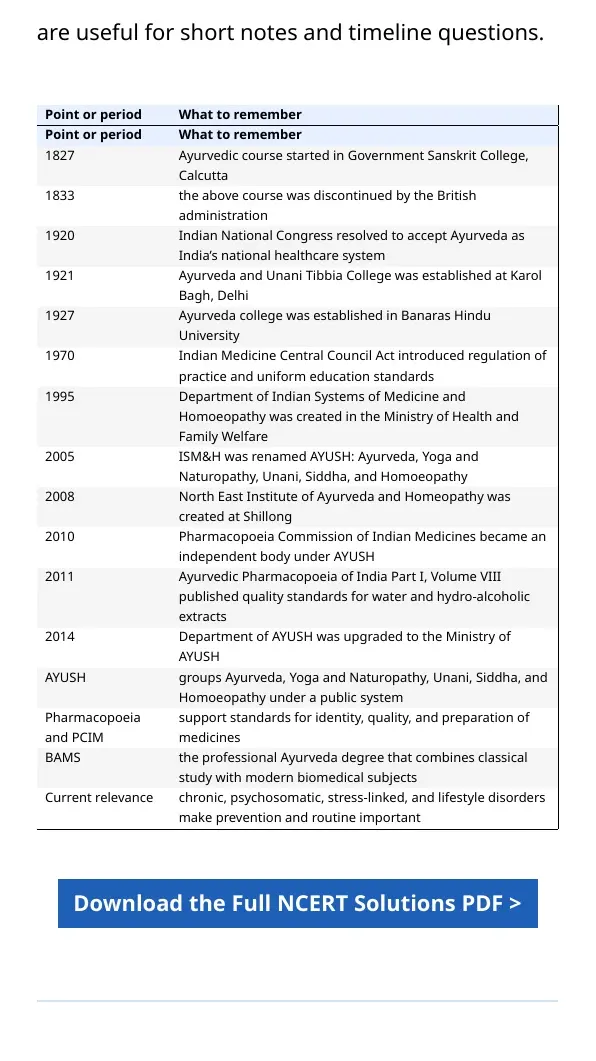
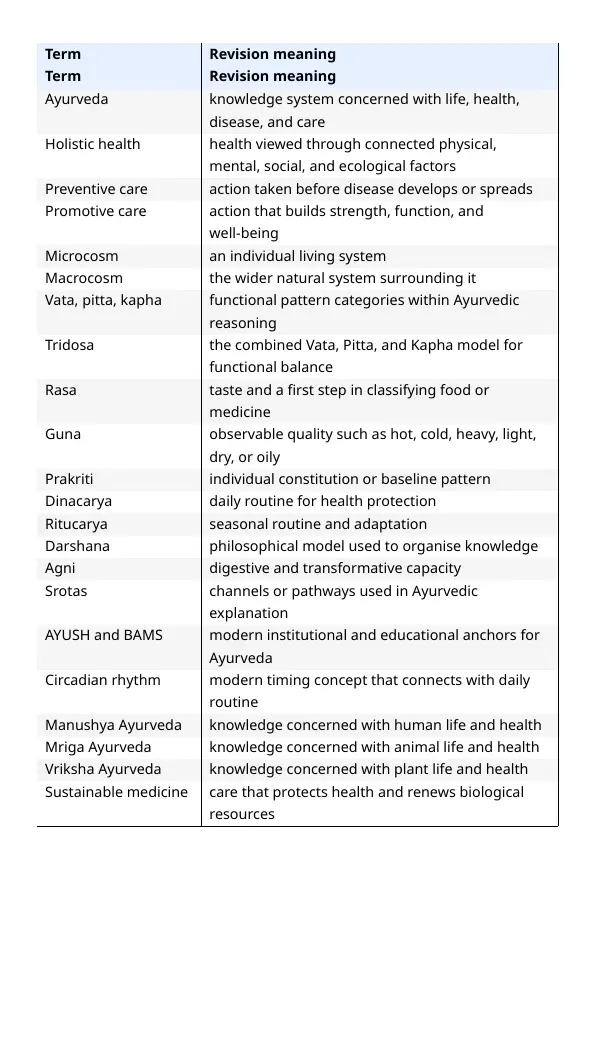

These Collegedunia Life Sciences notes follow the 2026-27 NCERT text and keep every historical and scientific claim tied to the chapter.
Life Sciences Important Ideas for Class 12 KTPI
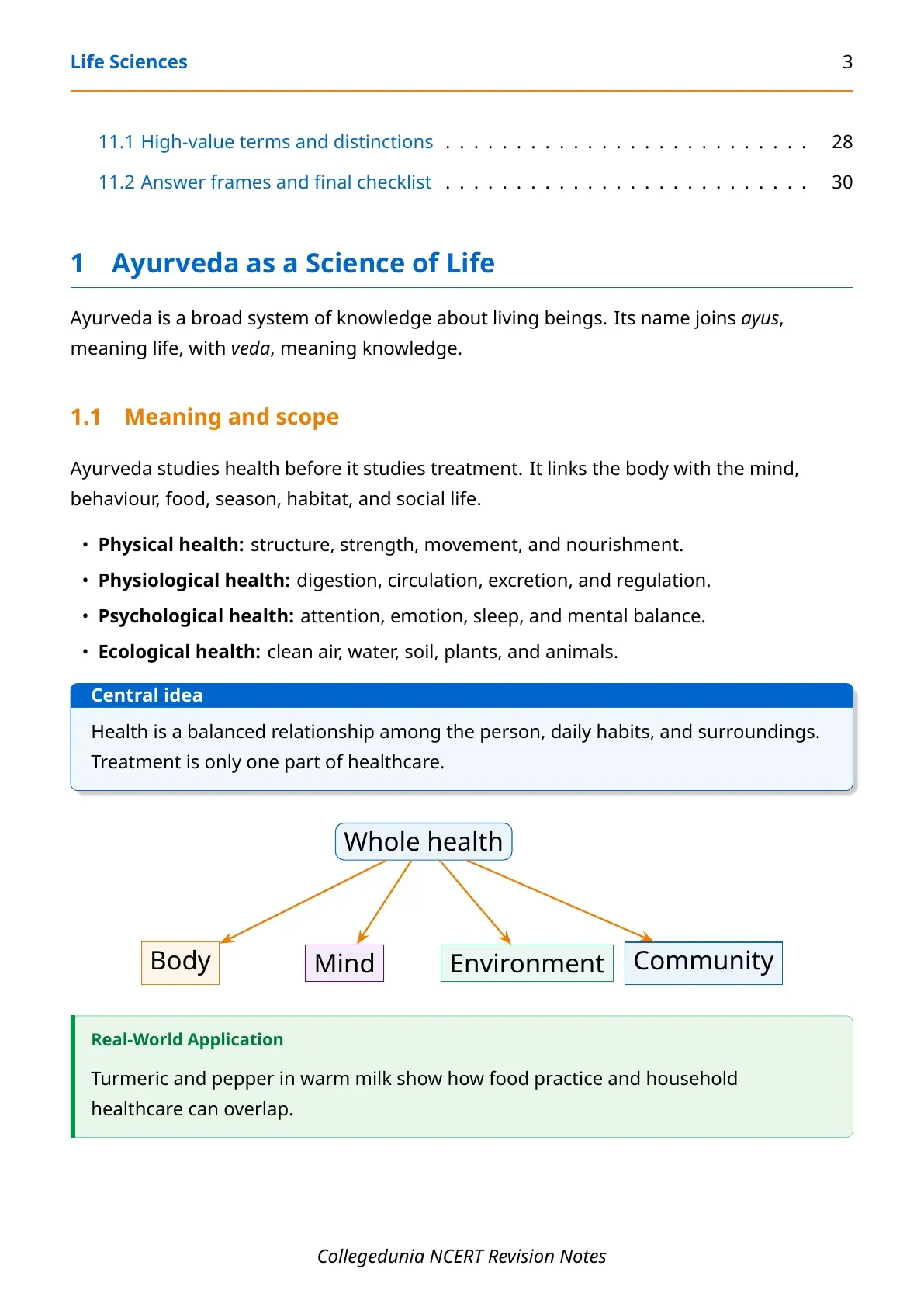
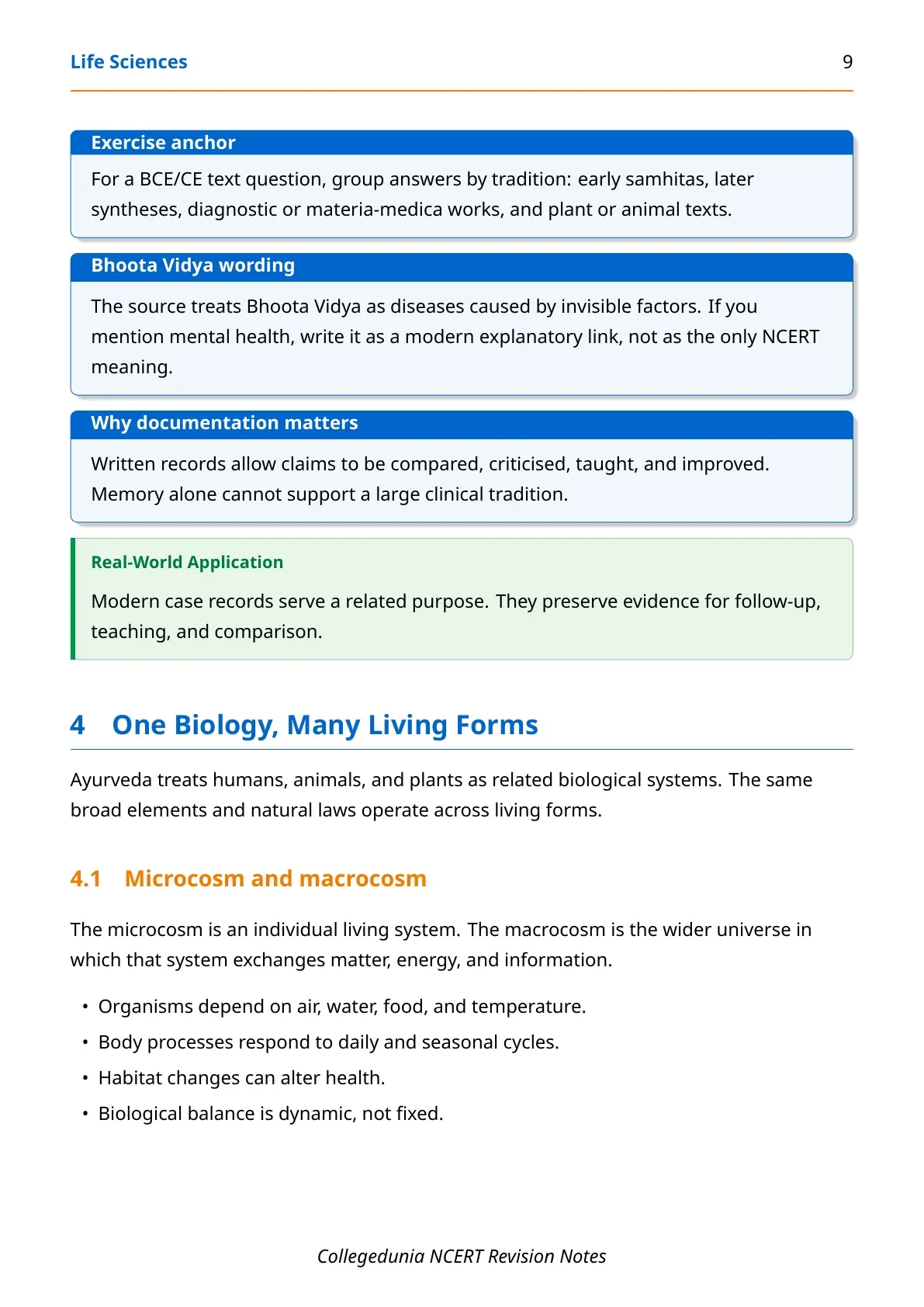
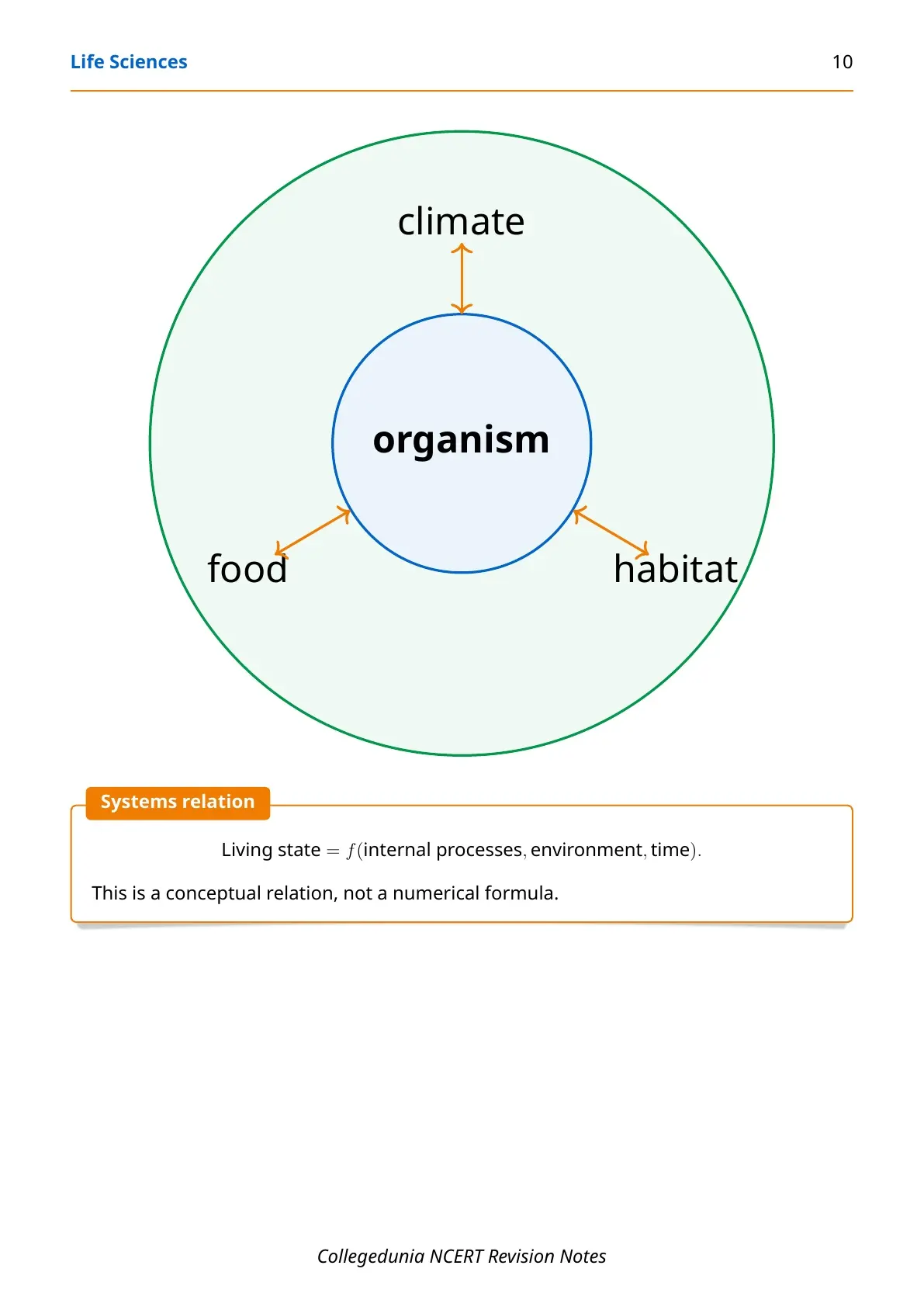
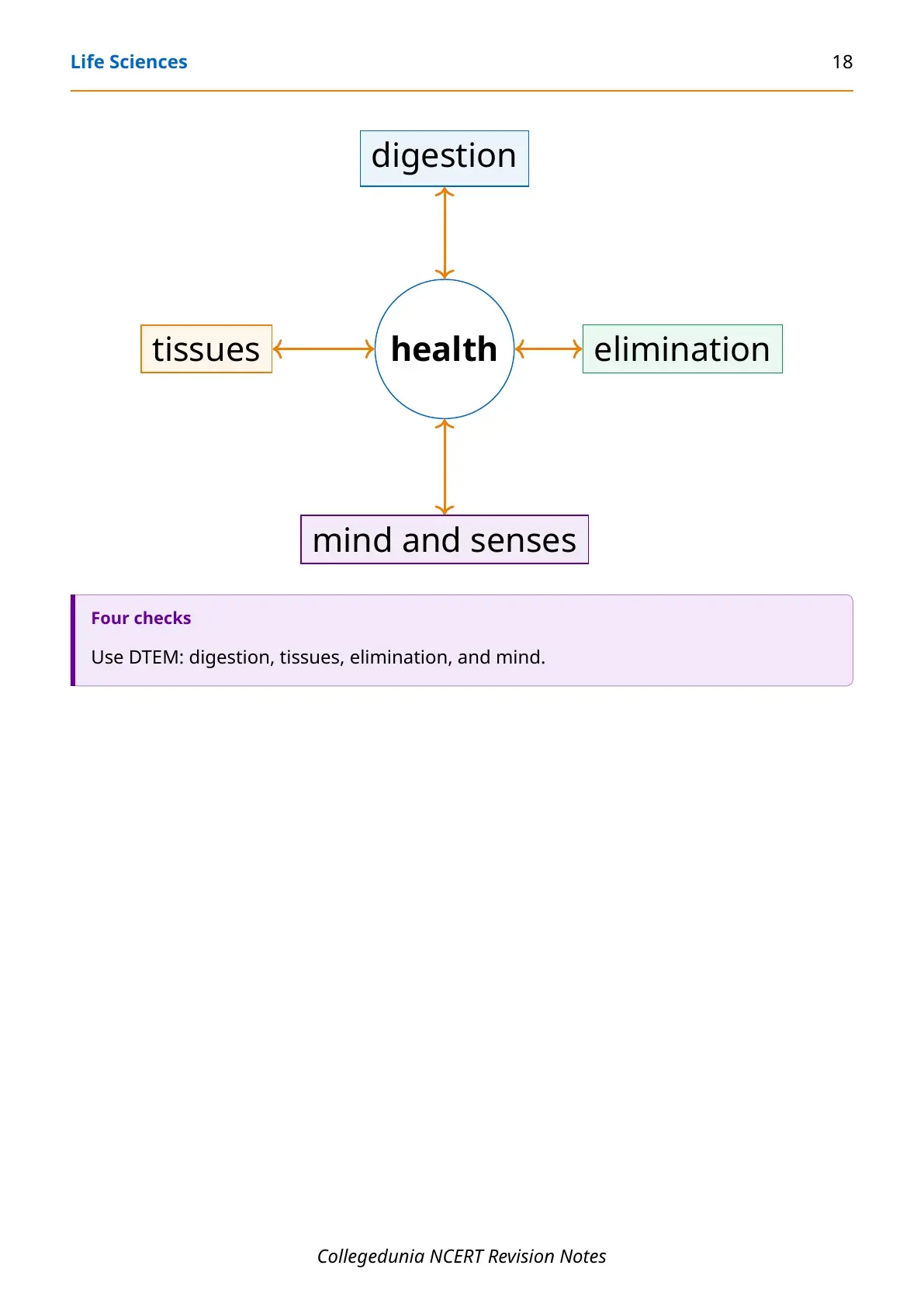
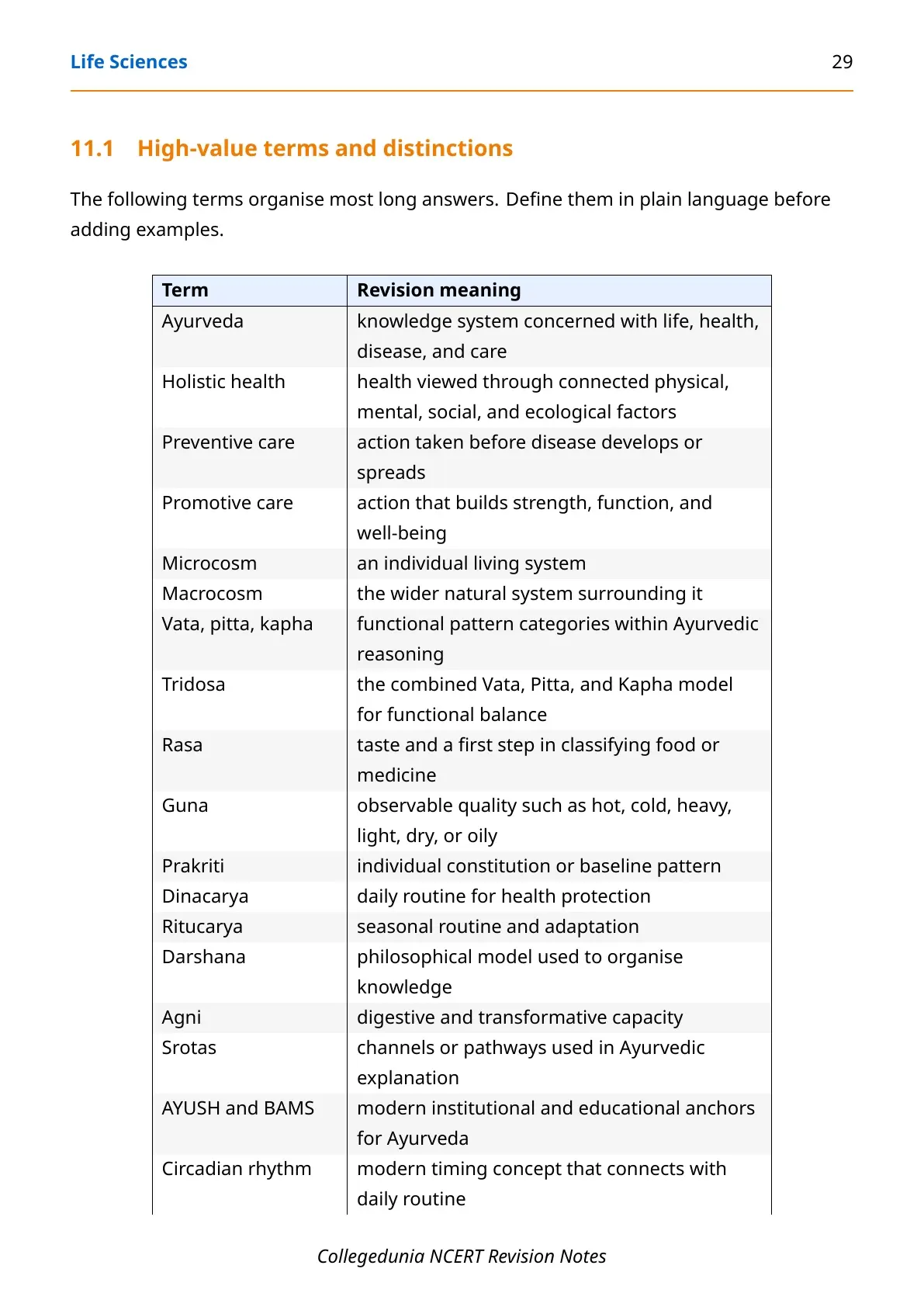
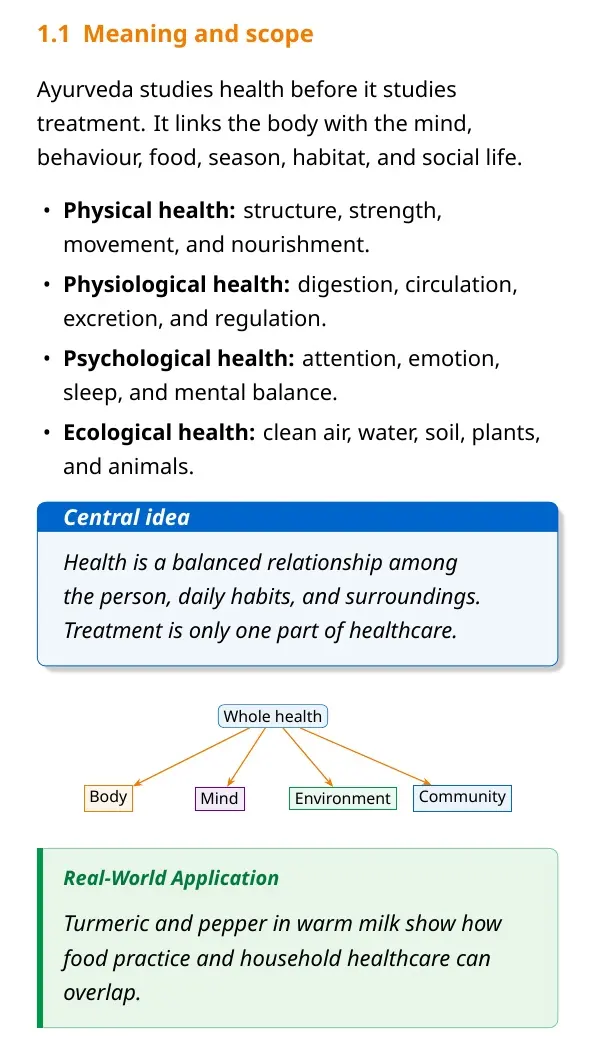
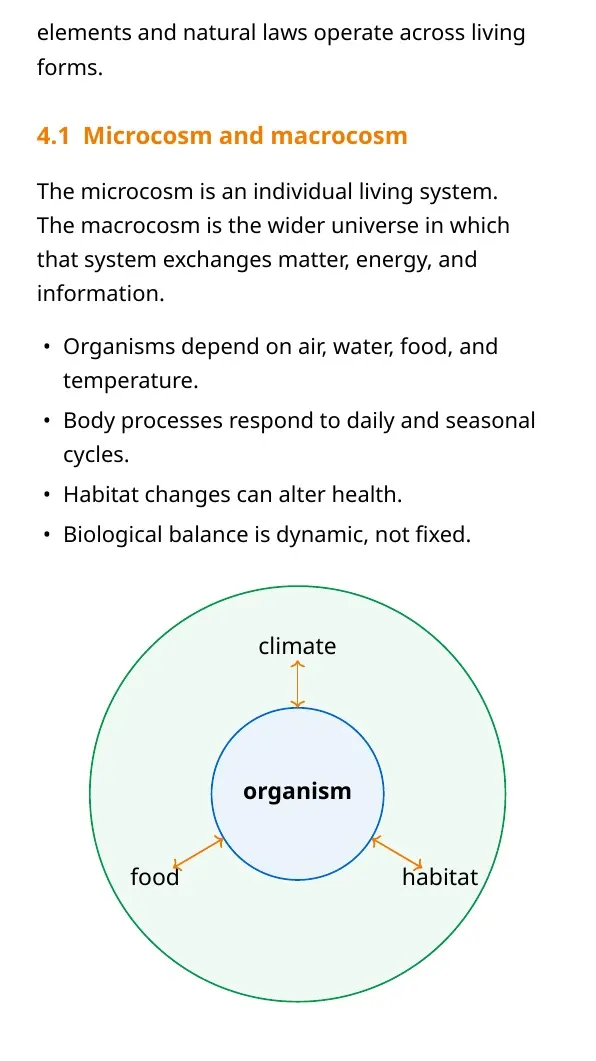
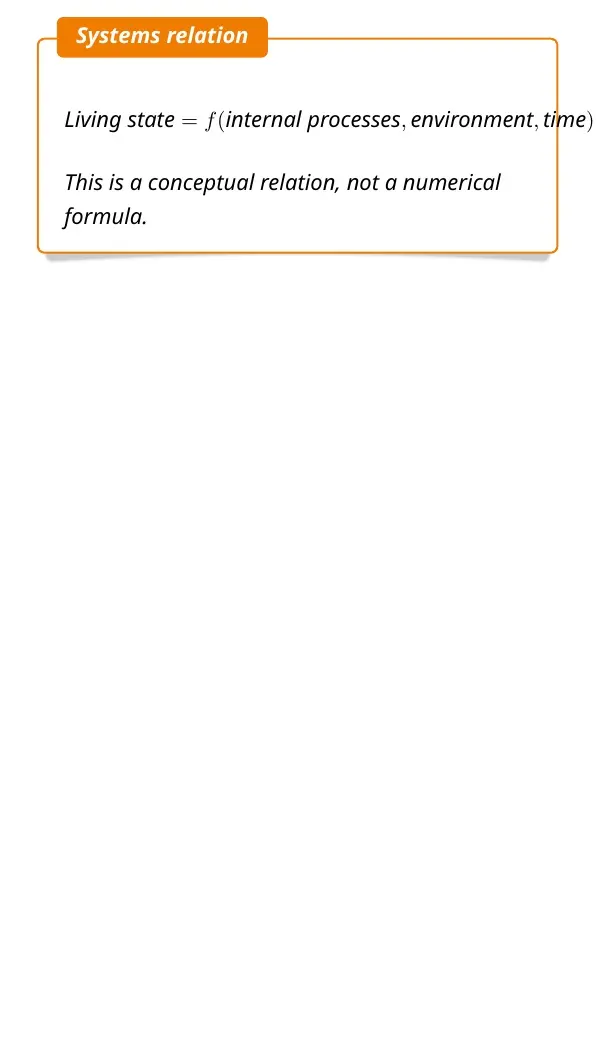
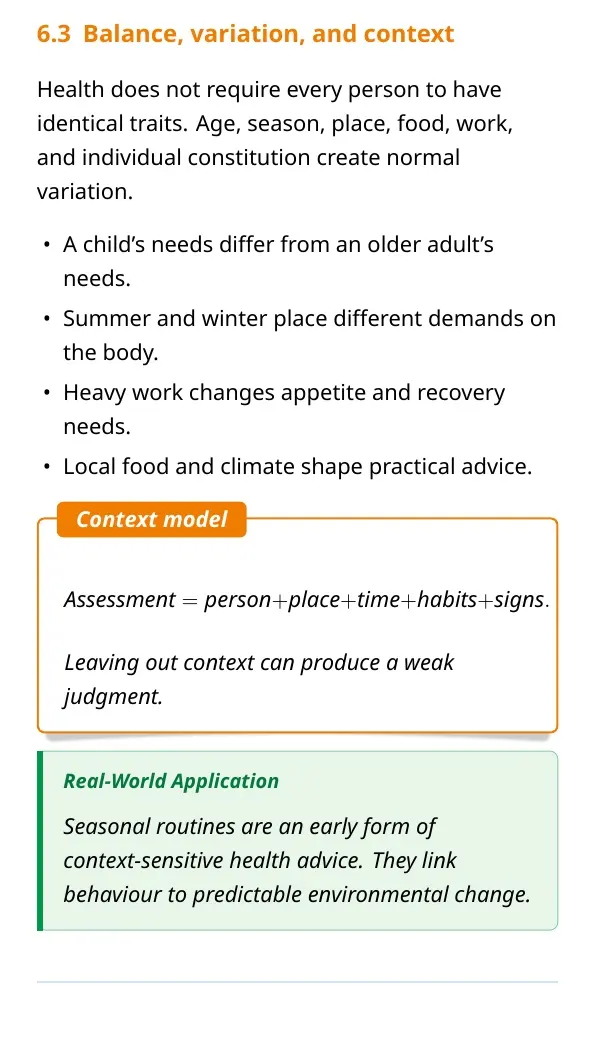
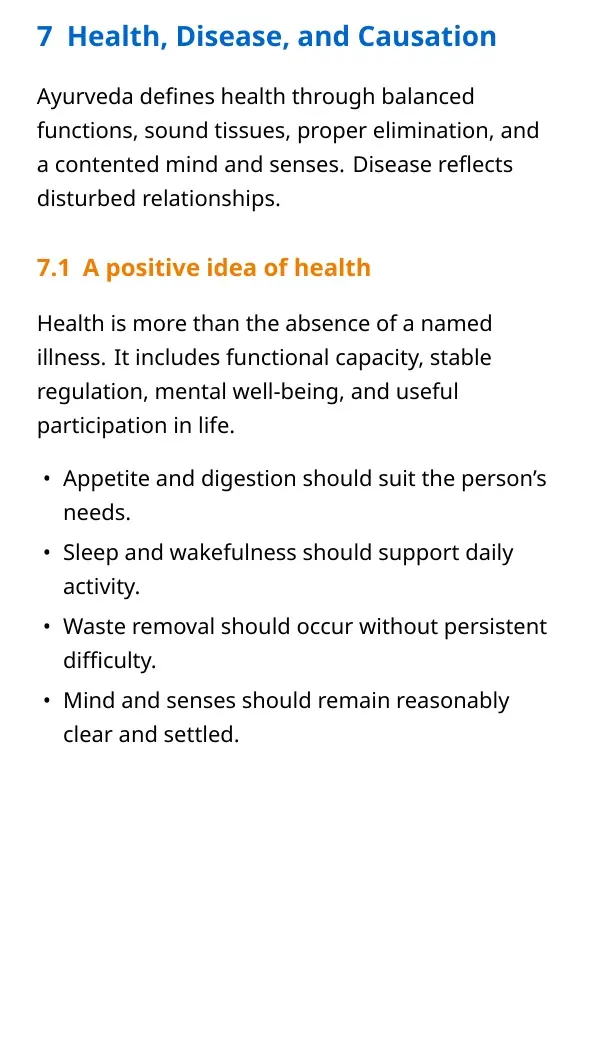
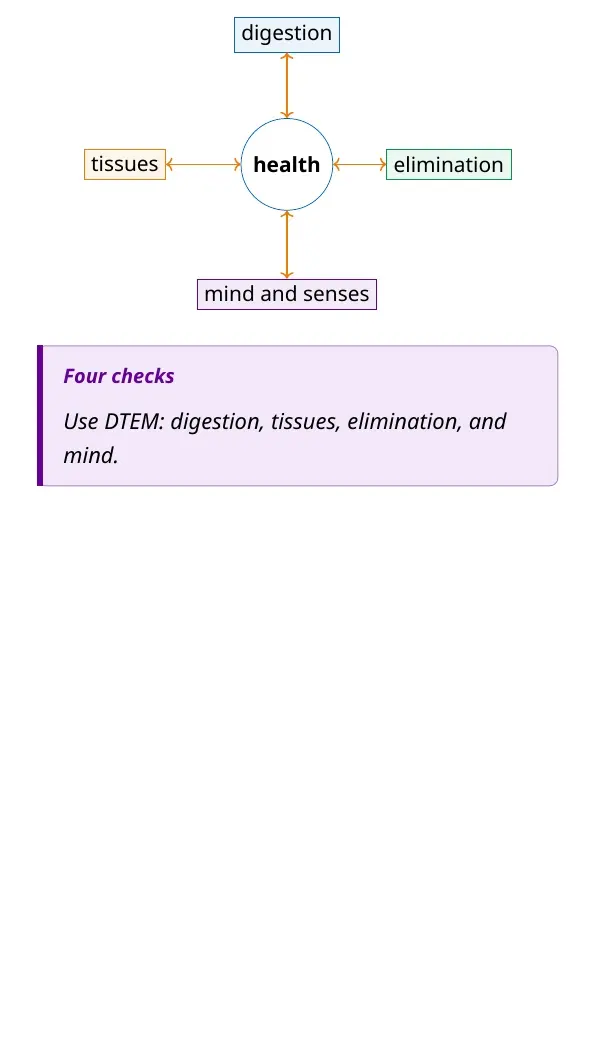
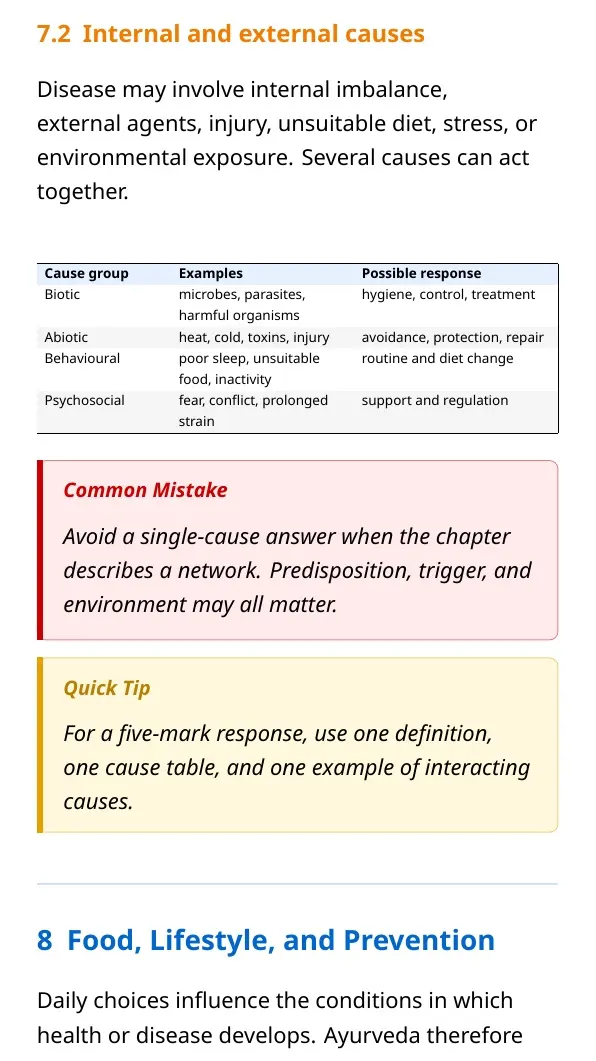
Ayurveda literally means the science of life. It studies physical, mental, environmental and ecological health together. The chapter presents health as a balanced system, not simply the absence of illness.
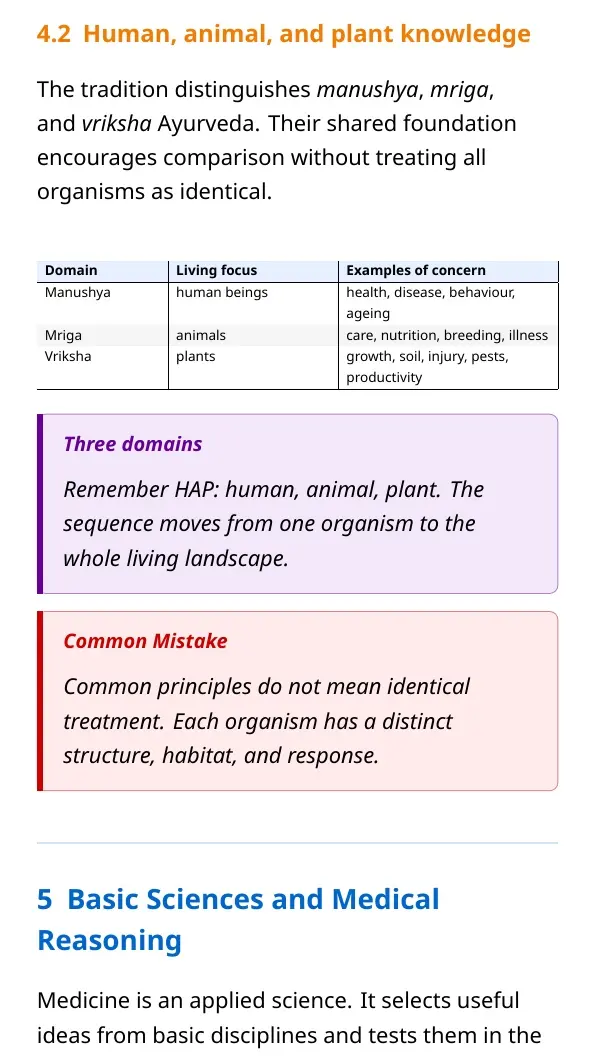
- Shared principles: humans, animals, plants and nature follow common underlying patterns.
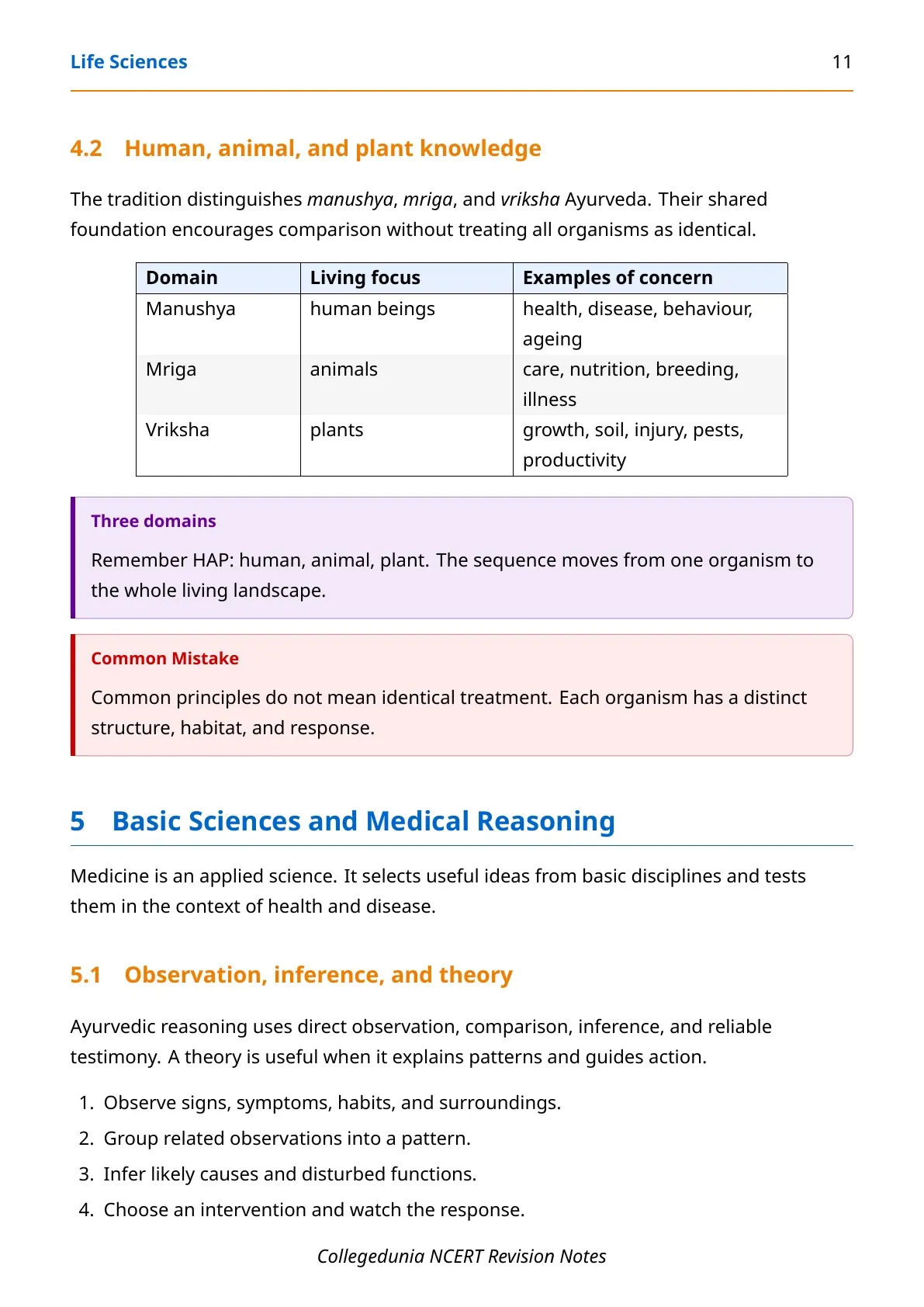
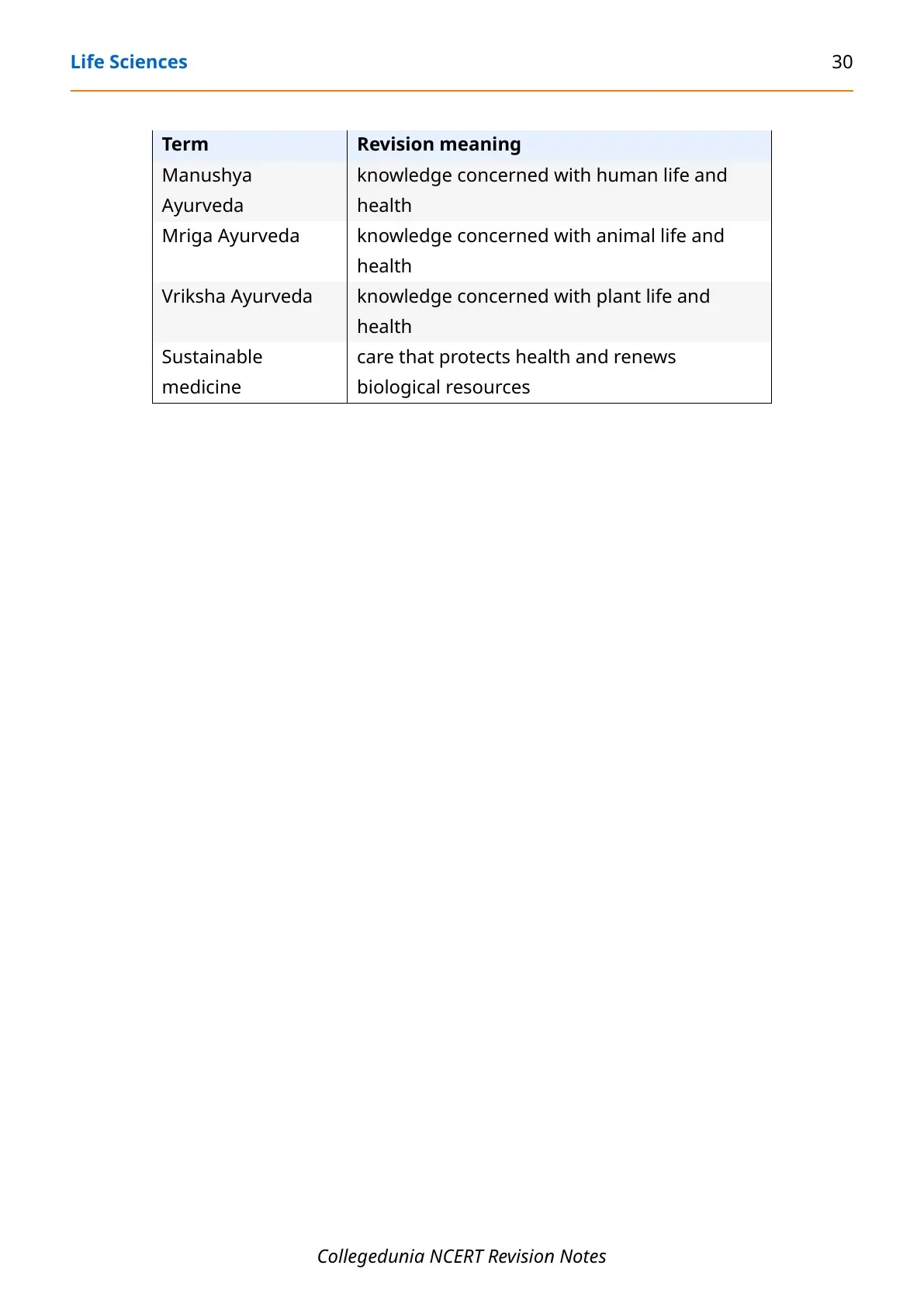
- Three fields: manushya, mriga and vriksha Ayurveda cover people, animals and plants.
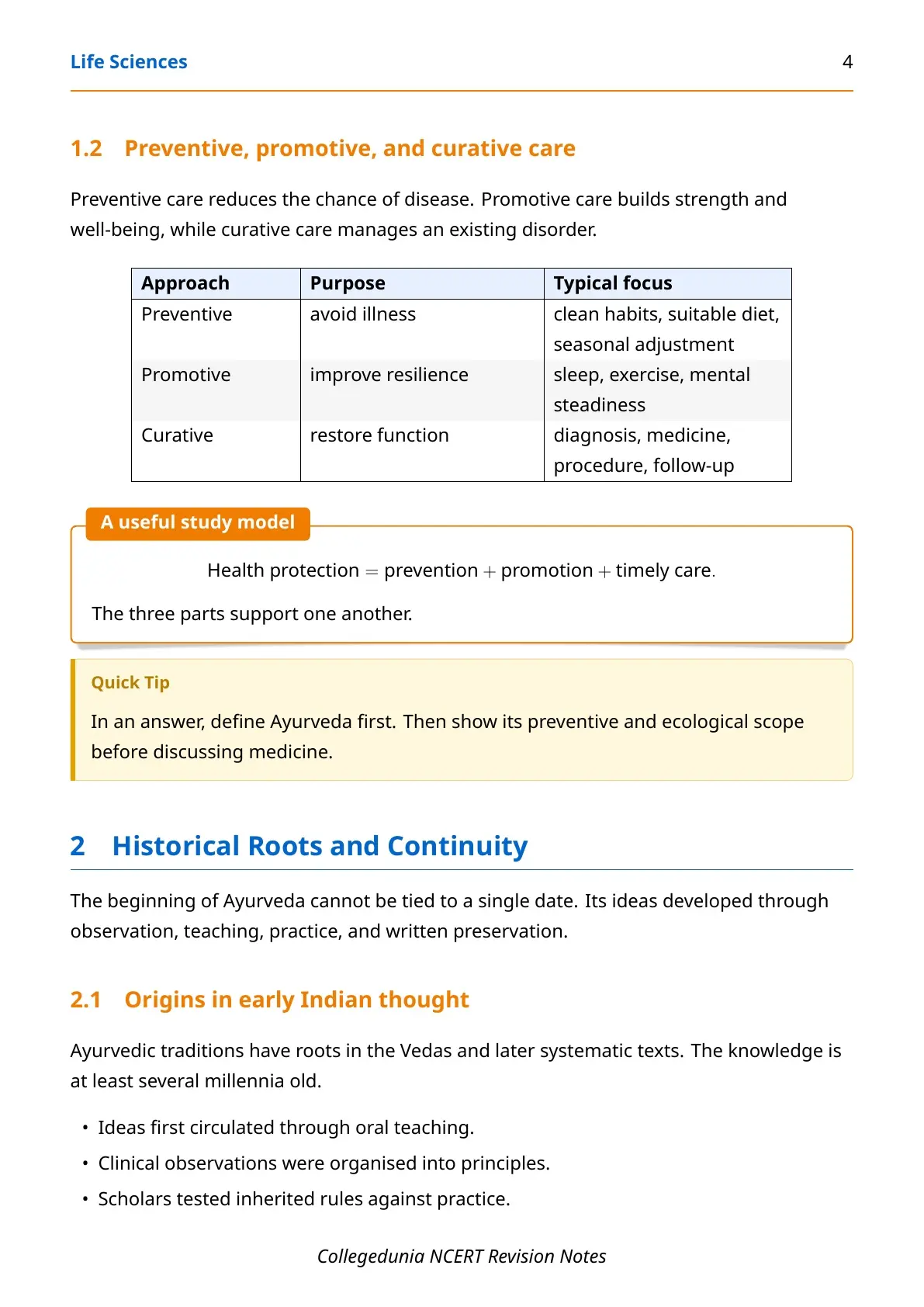
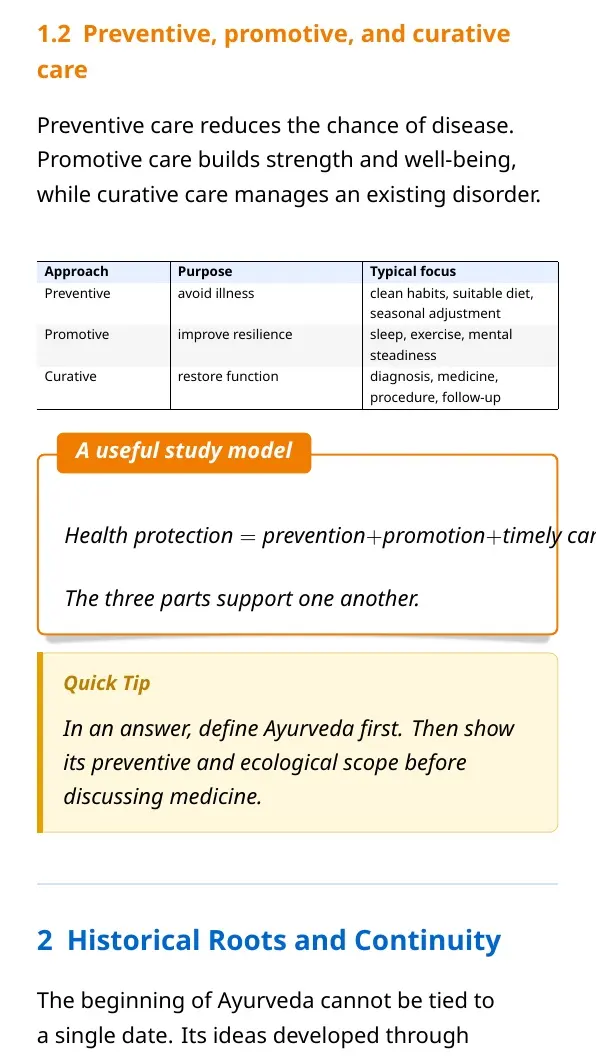
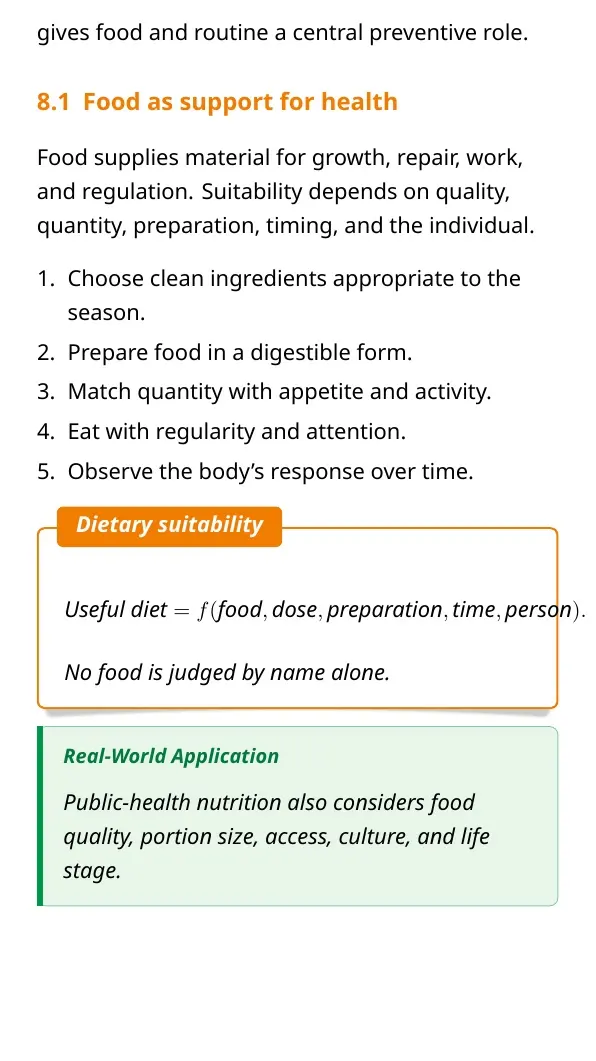
- Prevention: diet, routine, seasons and surroundings all affect health.
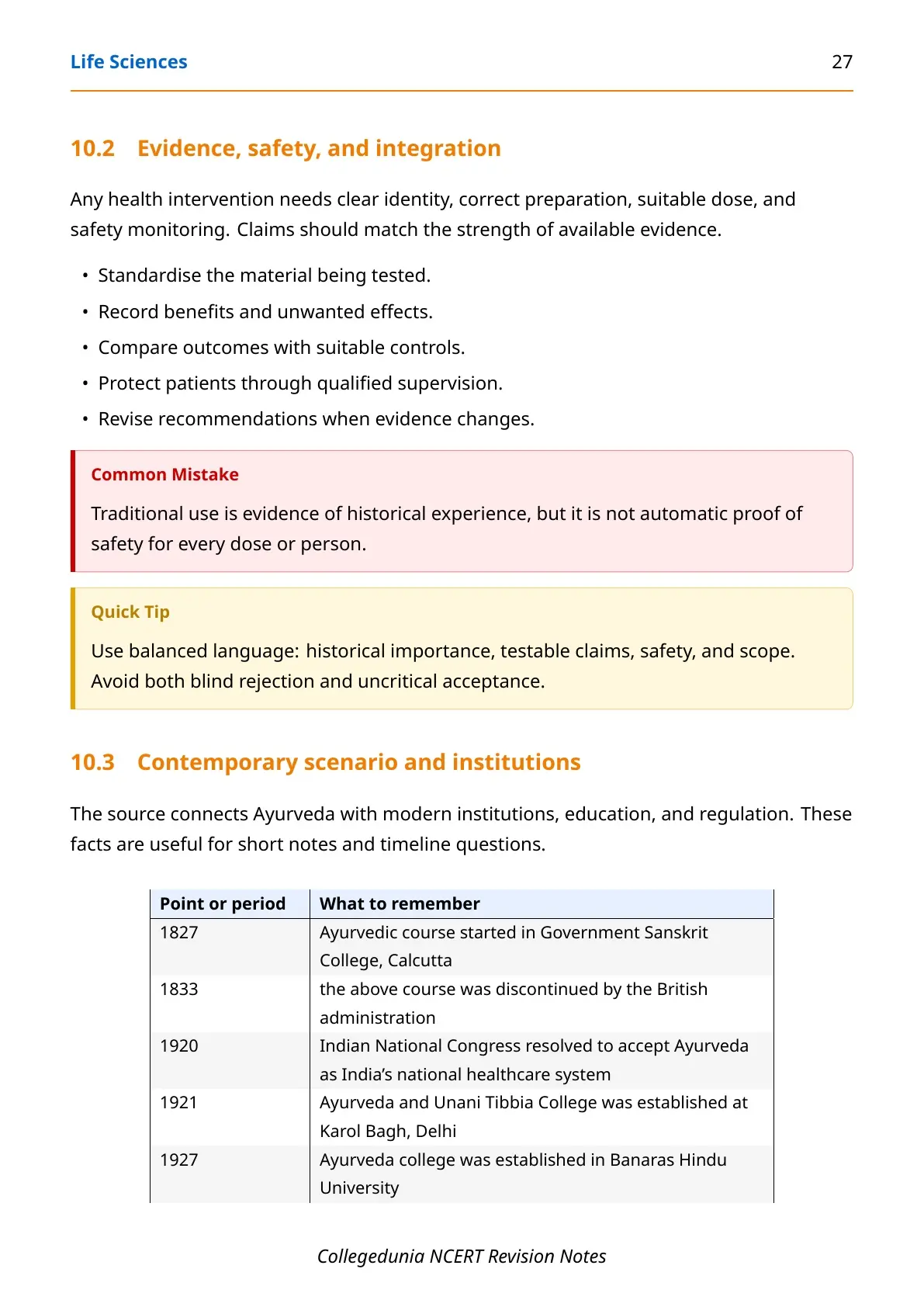
- Treatment: care aims to restore functional balance within the whole system.
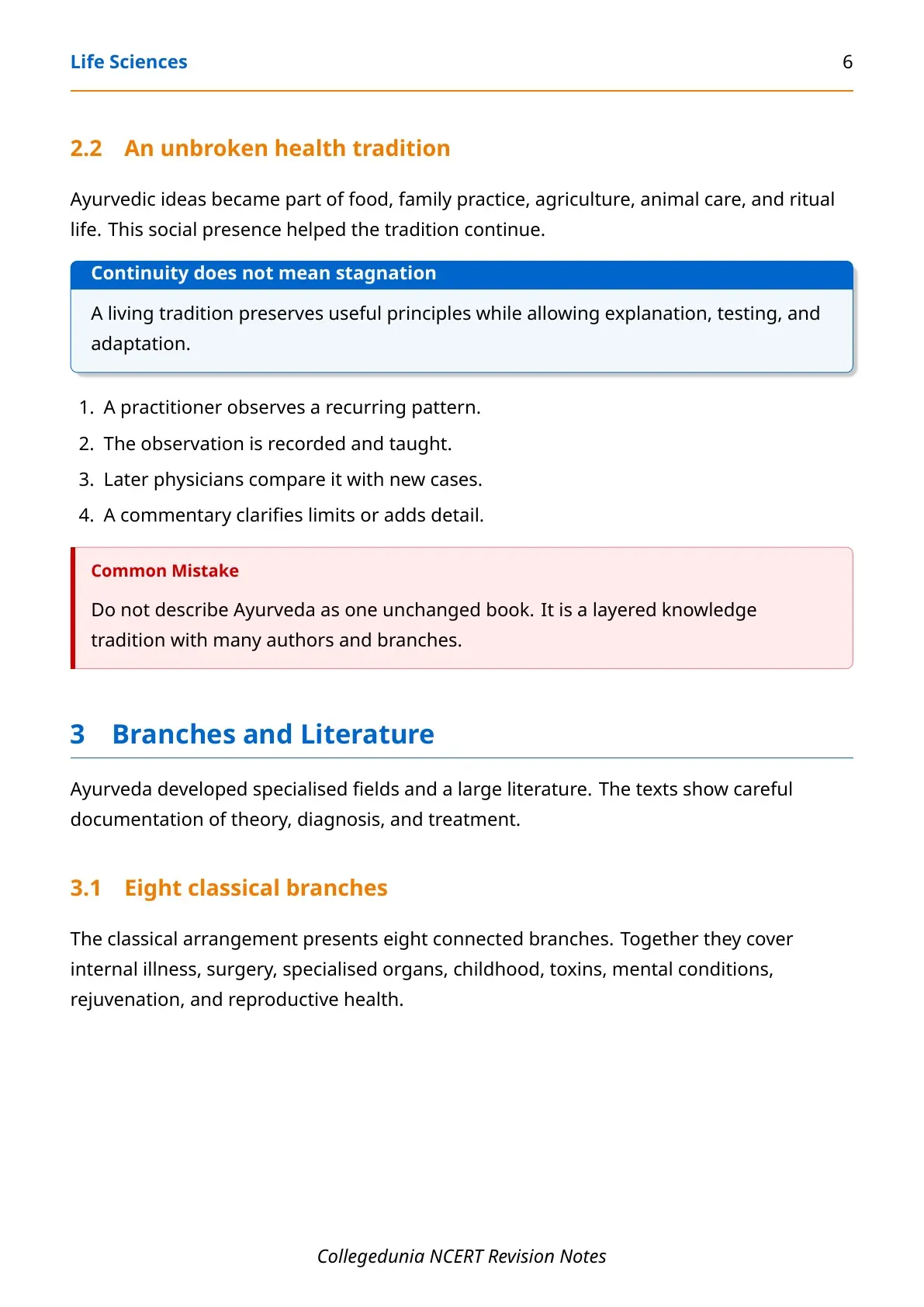
Ayurveda is described as India's longest unbroken health tradition. Its ideas remain visible in food, household practices and daily routines.
Life Sciences and Modern Biology Overview
Source: Khan Academy on YouTube
Ayurveda History, Literature and the Three Biological Fields
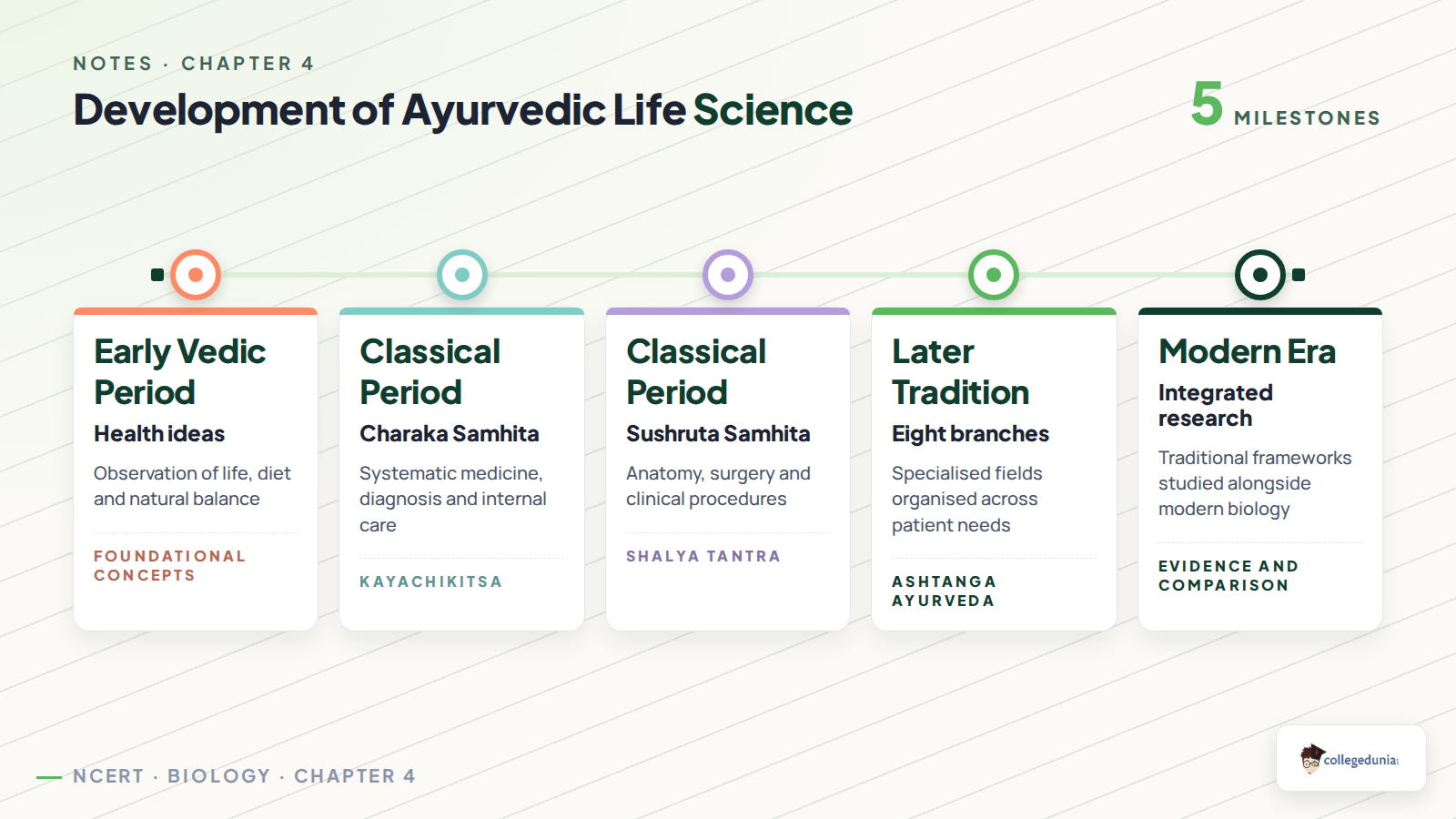
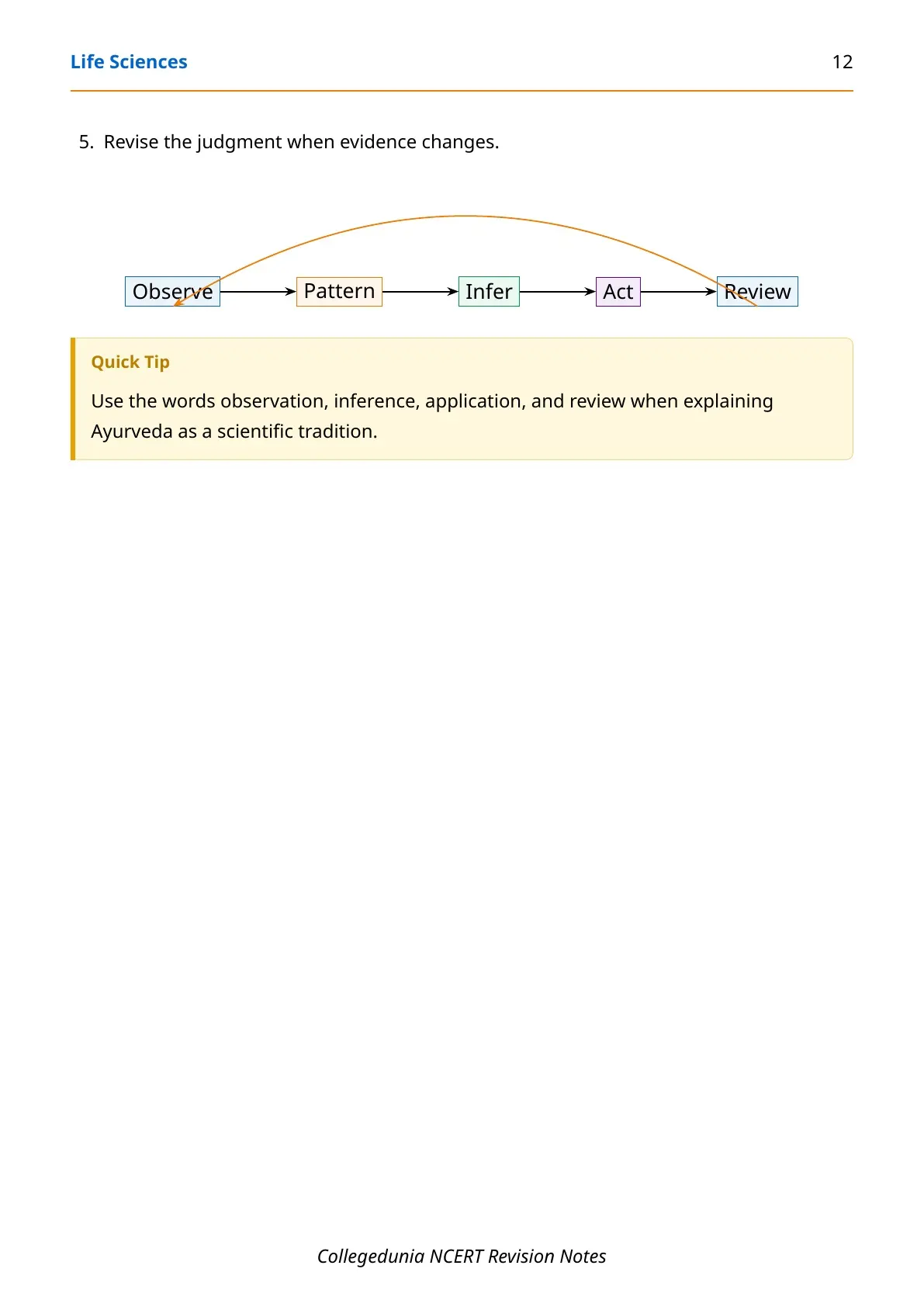
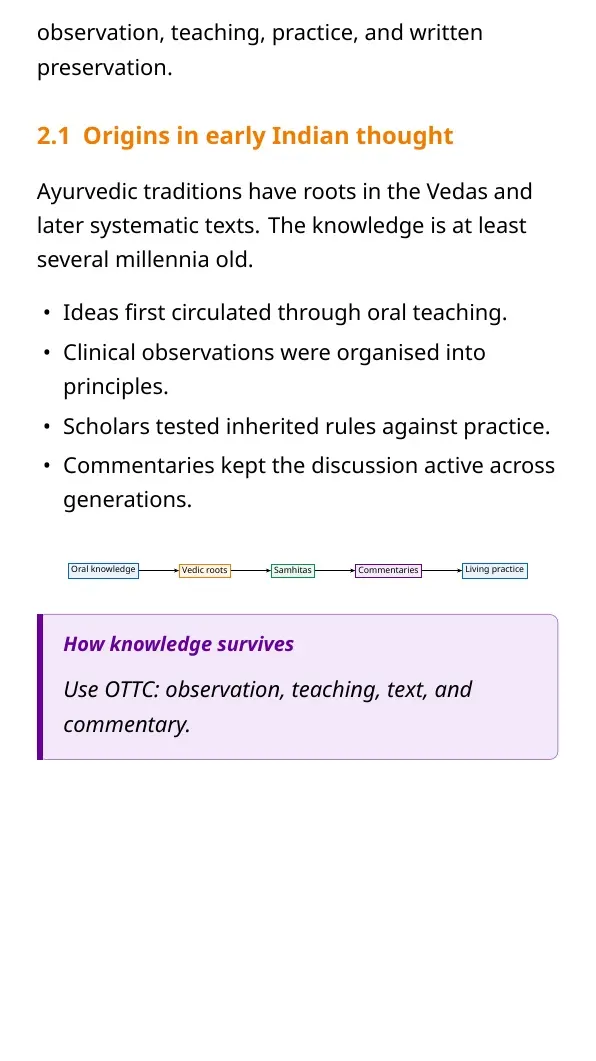
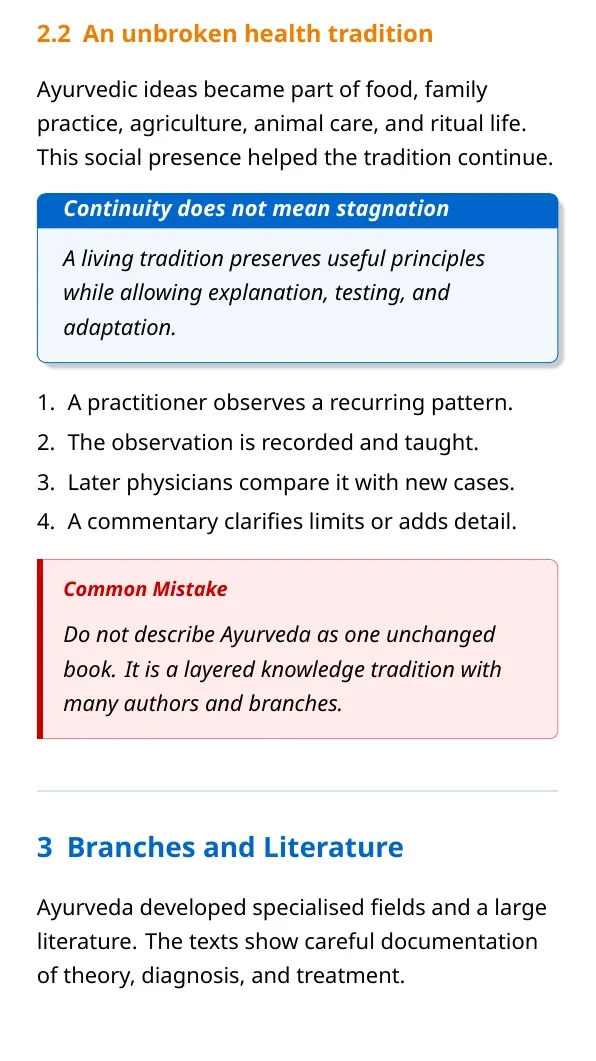
Ayurveda has roots in the Vedas and developed through observation, documentation and practical care. Ancient physicians recorded clinical findings across human, animal and plant health. Their texts show continuity rather than a single moment of discovery.
| Field or text | Main focus stated in NCERT |
|---|---|
| Manushya Ayurveda | Human health, disease, prevention and treatment |
| Mriga Ayurveda | Animal care, including horses, elephants and cattle |
| Vriksha Ayurveda | Plant health, cultivation and treatment |
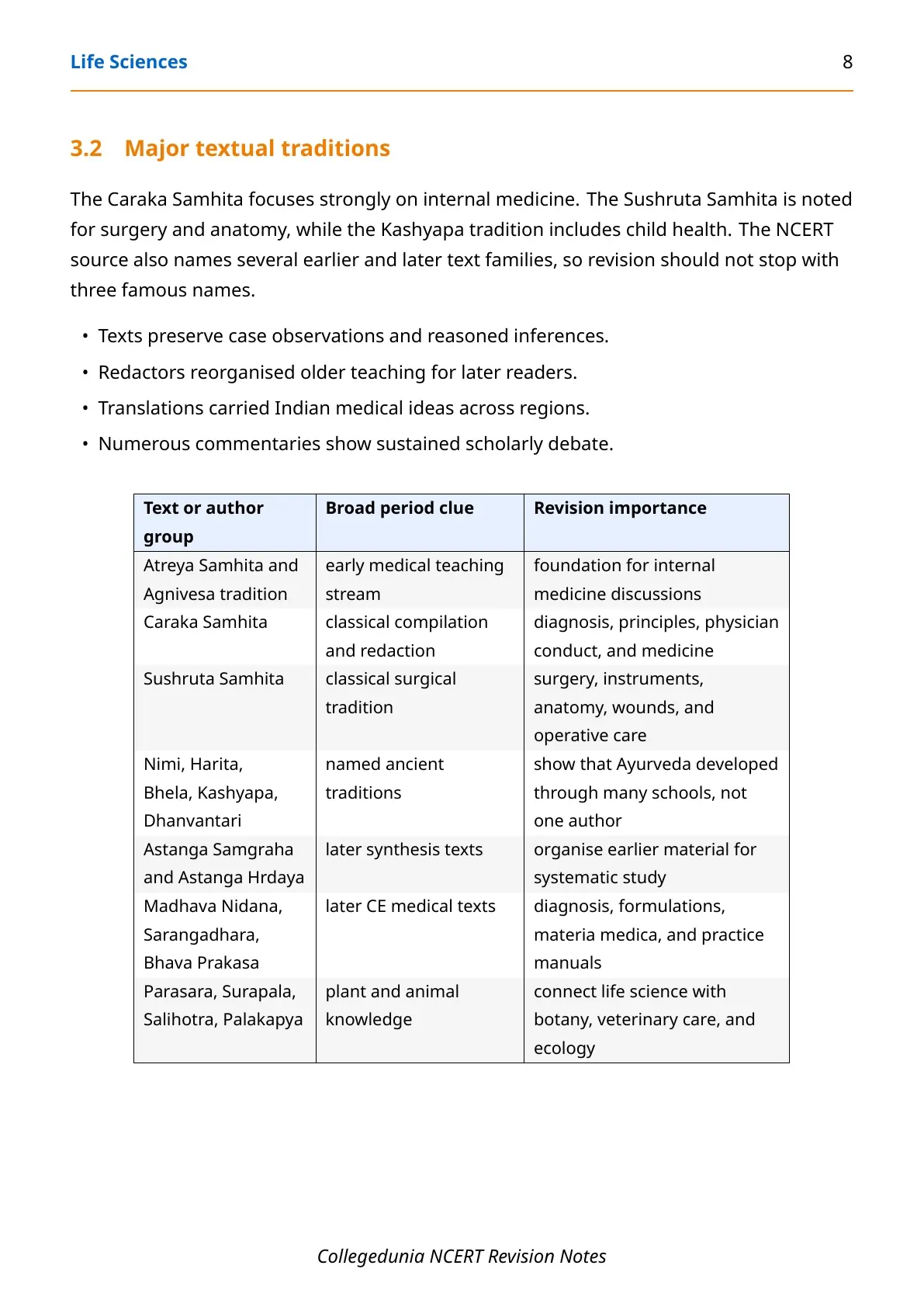
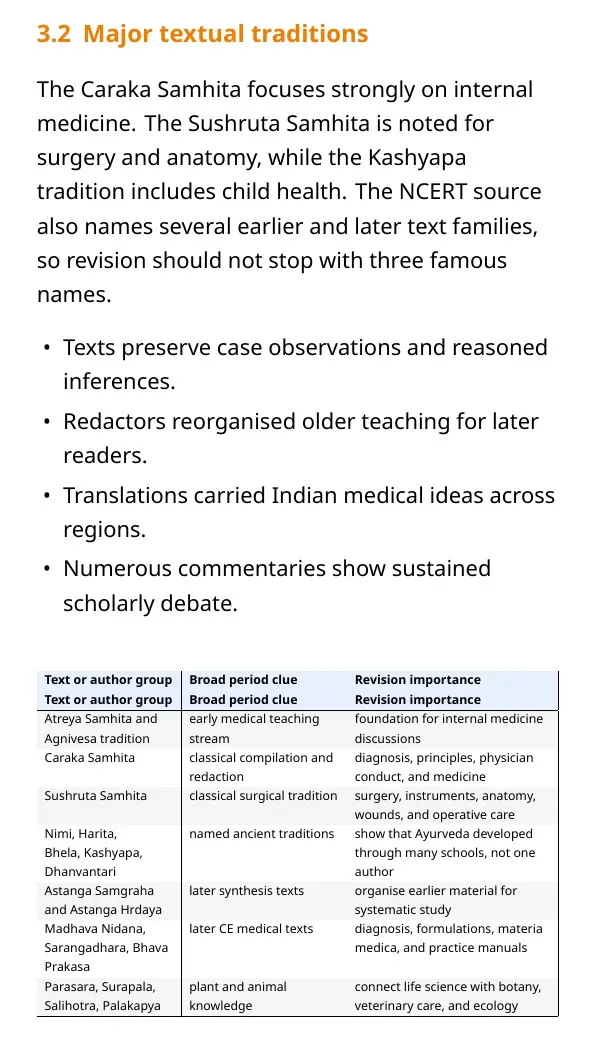
| Caraka Samhita | Internal medicine and basic principles of health management |
| Sushruta Samhita | Surgery, anatomy, cataract and reconstructive procedures |
| Kashyapa Samhita | Paediatrics, women's health and related care |
Caraka and Sushruta represent two major streams: internal medicine and surgery. The chapter also names specialist works on eye care, veterinary science and plant science.
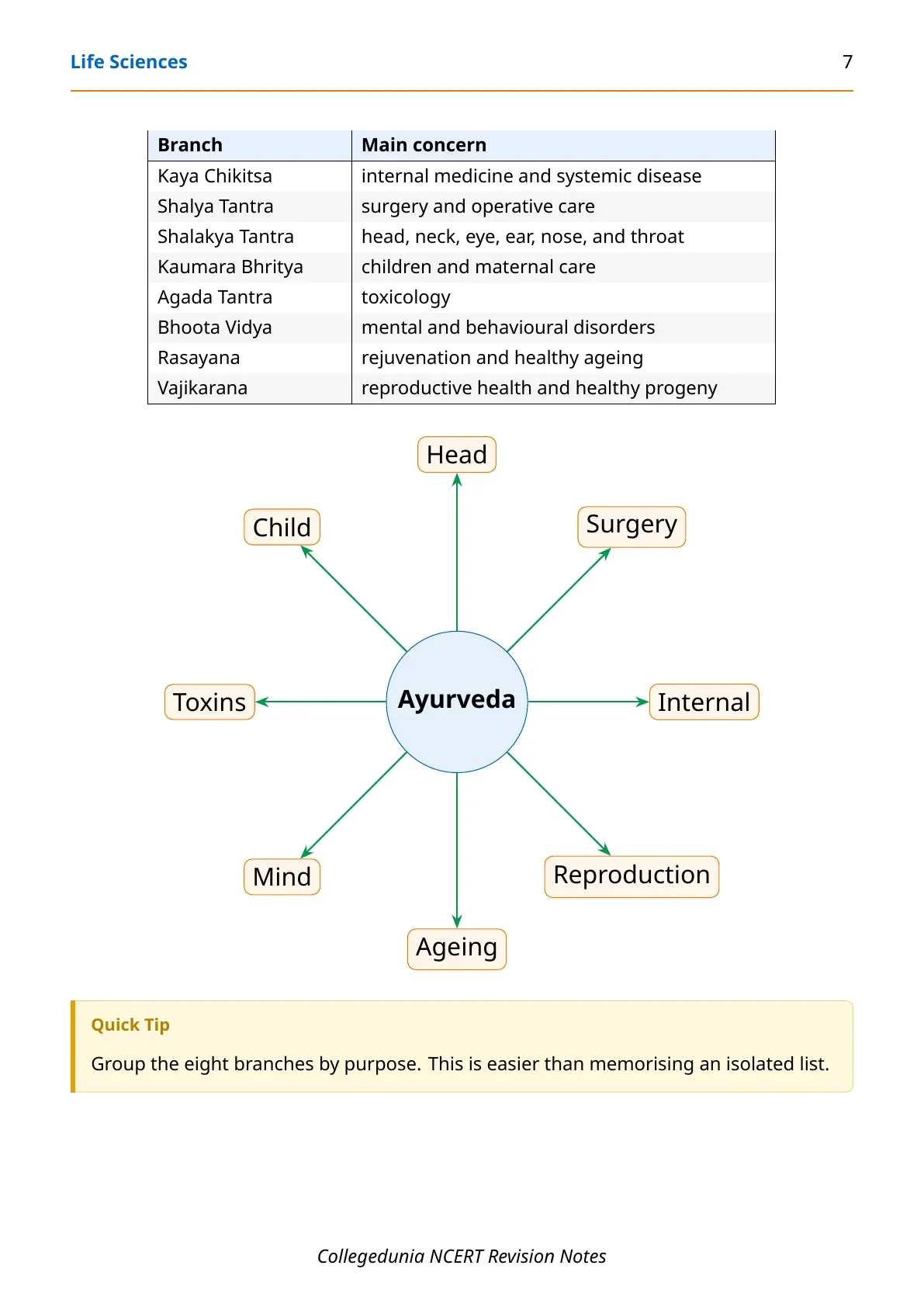
Eight Branches of Ayurveda and Their Main Purposes
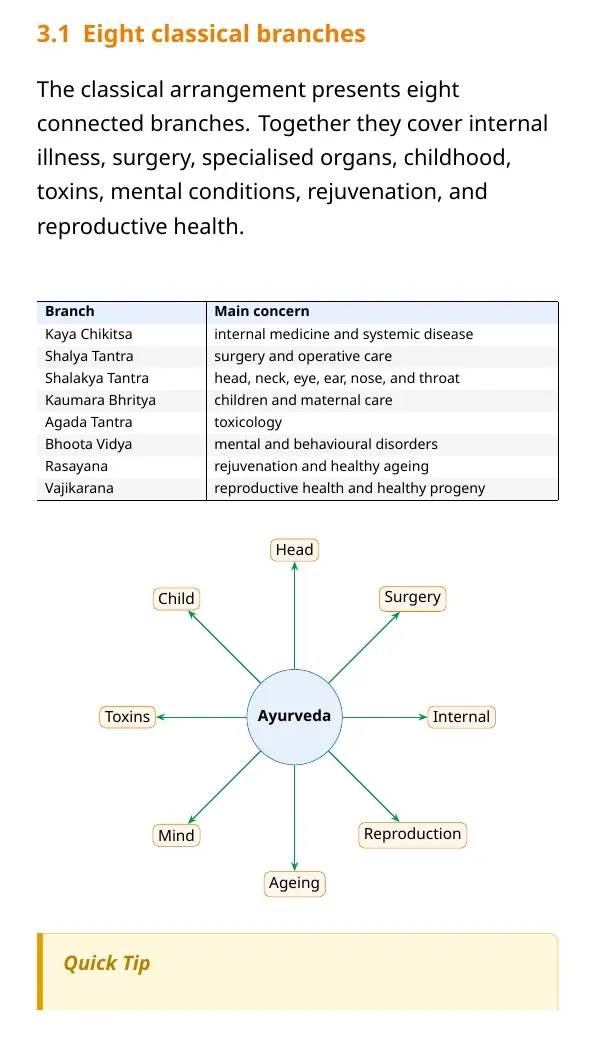
The classical system groups medical knowledge into eight branches. Learning each Sanskrit name with its field makes this section easier to answer in exams.
| Branch | Area of care |
|---|---|
| Kaya Chikitsa | Internal medicine |
| Shalya Tantra | Surgery |
| Shalakya Tantra | Diseases of the head and neck |
| Kaumara Bhritya | Paediatrics and child care |
| Agada Tantra | Toxicology |
| Bhuta Vidya | Conditions linked with unseen causes |
| Rasayana | Rejuvenation and healthy ageing |
| Vajikarana | Healthy progeny and reproductive well-being |
The eight-branch chart is a high-value recall list. Write both the traditional term and its function to make an answer complete.
Tridosha Theory: Vata, Pitta and Kapha in Health
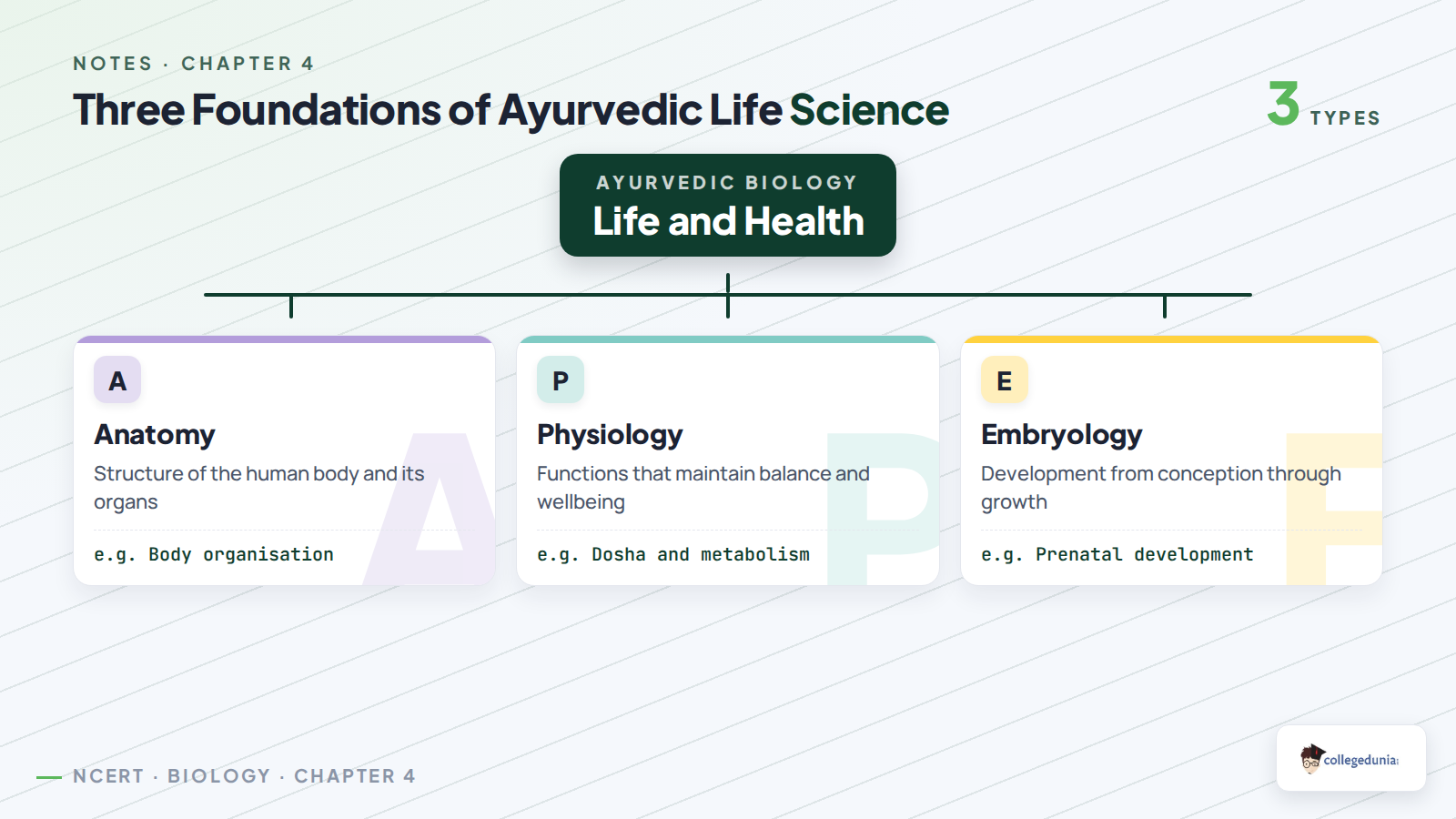
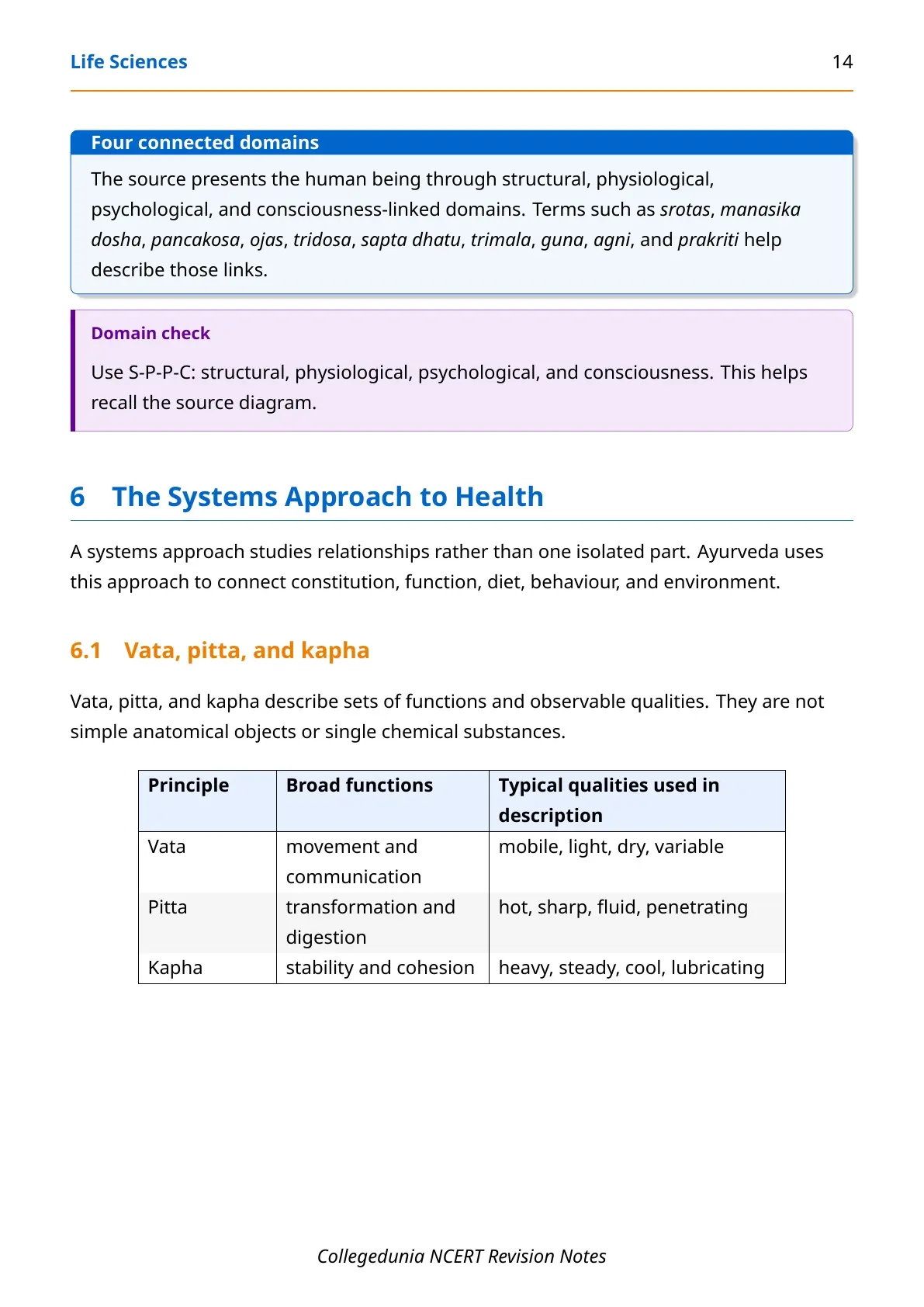
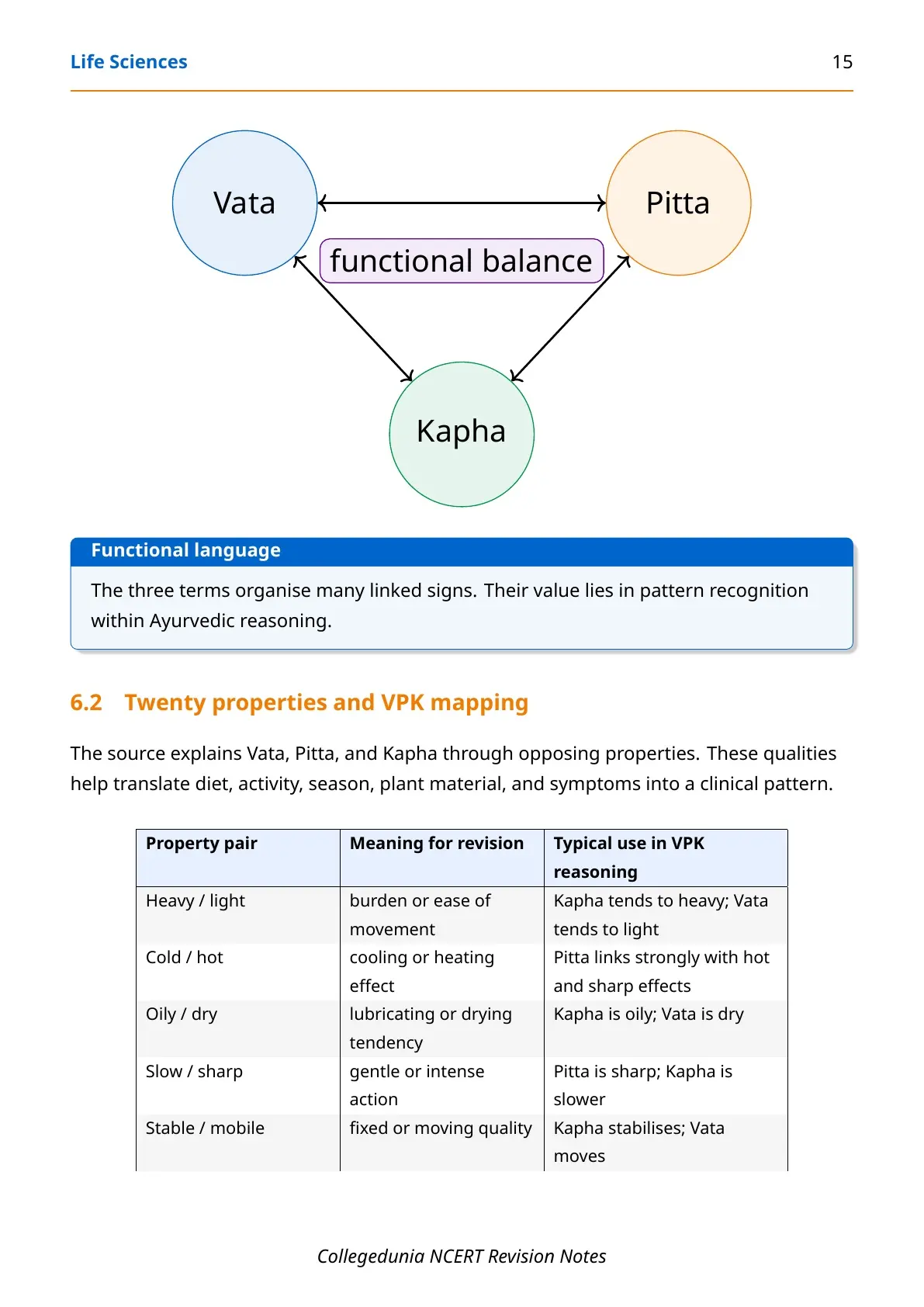
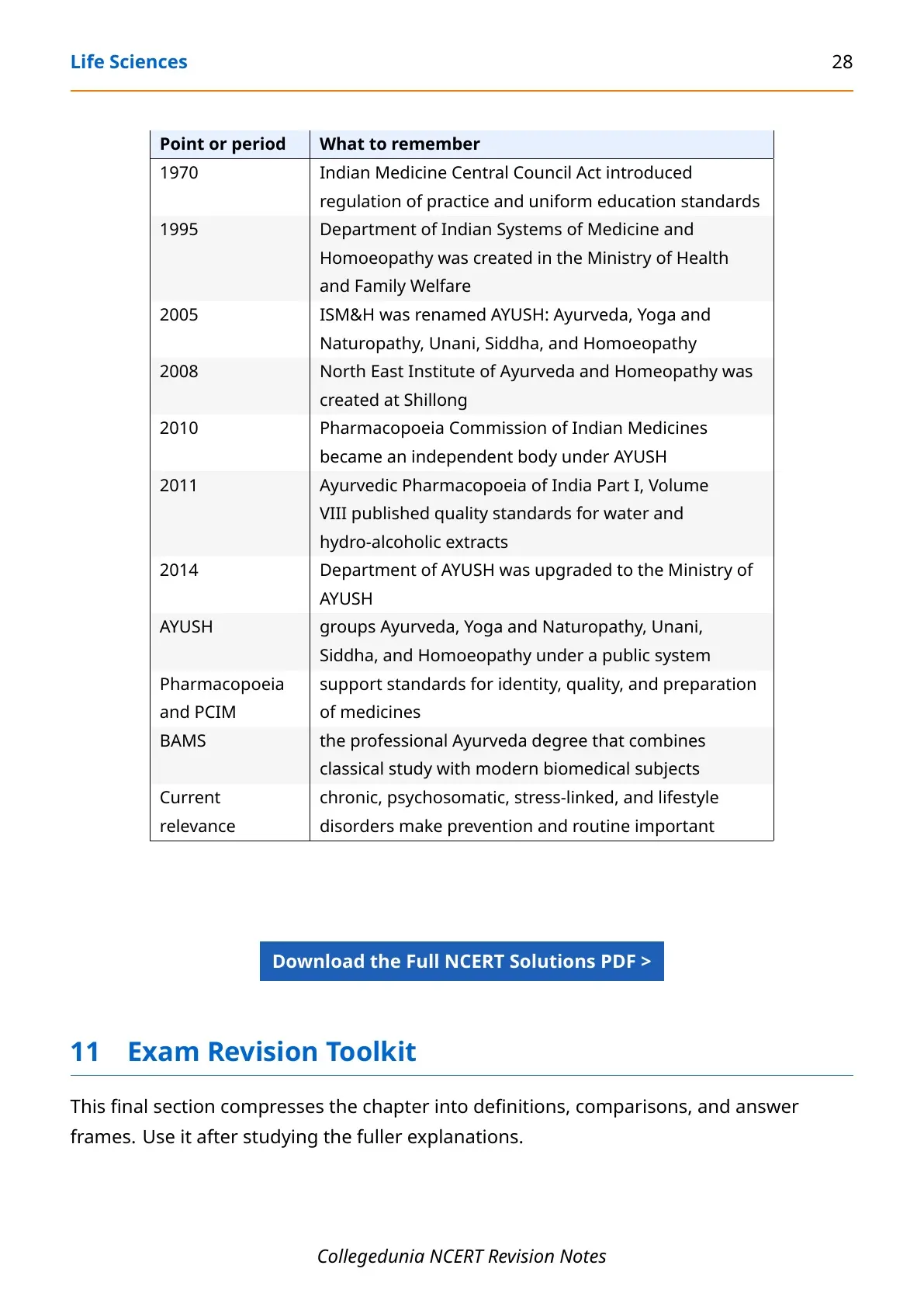
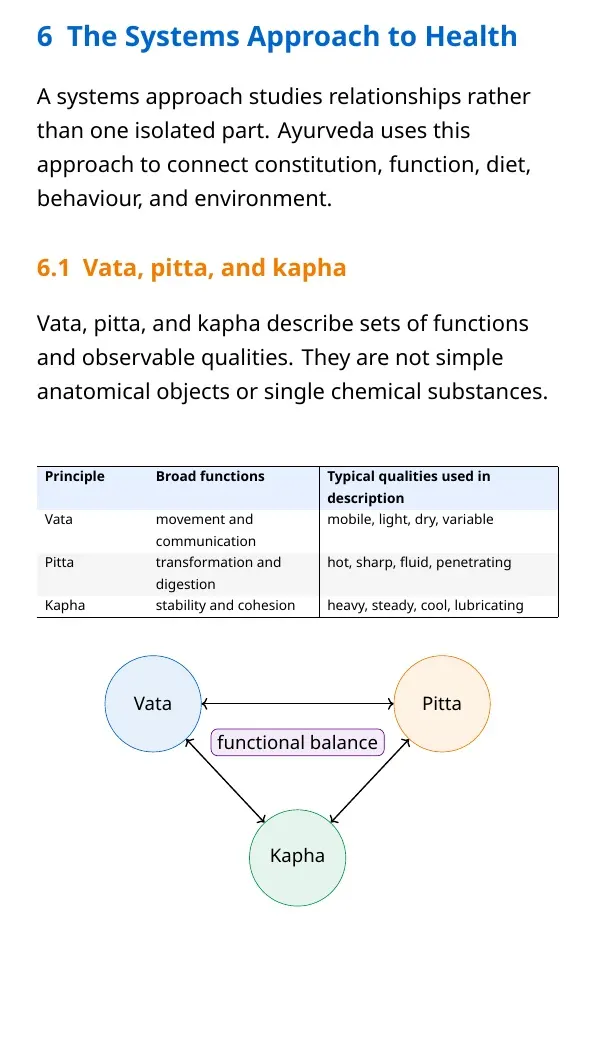
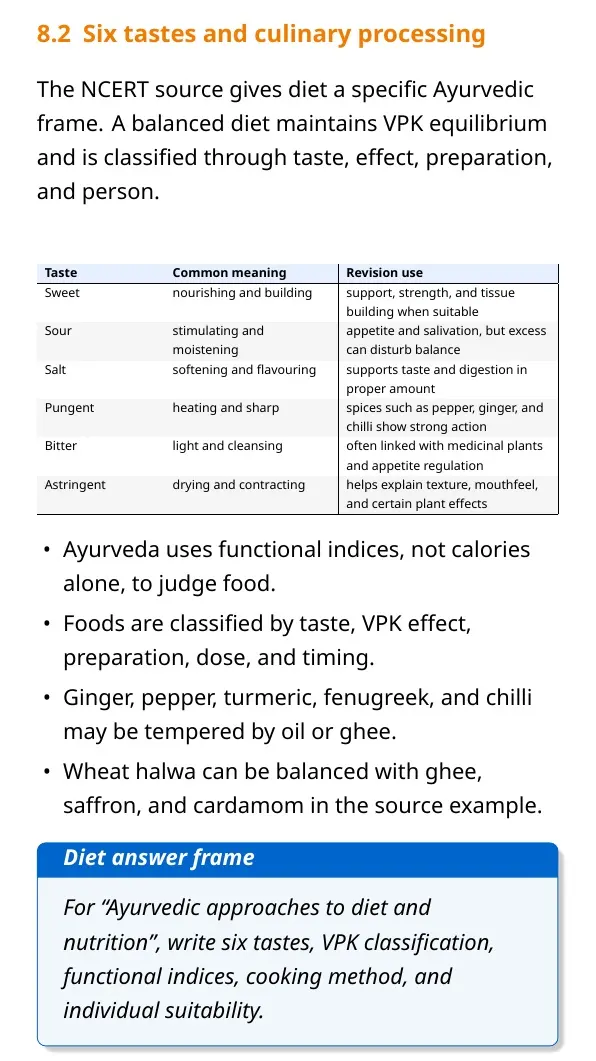
Tridosha is central to Ayurveda's systems approach. It classifies functions as movement, transformation and support. The three categories also connect food, seasons, activities, symptoms and treatment choices.
- Vata: movement and activity within the body.
- Pitta: metabolism, heat and transformation.
- Kapha: growth, stability and support.
- Health: stable interaction among these functional factors.
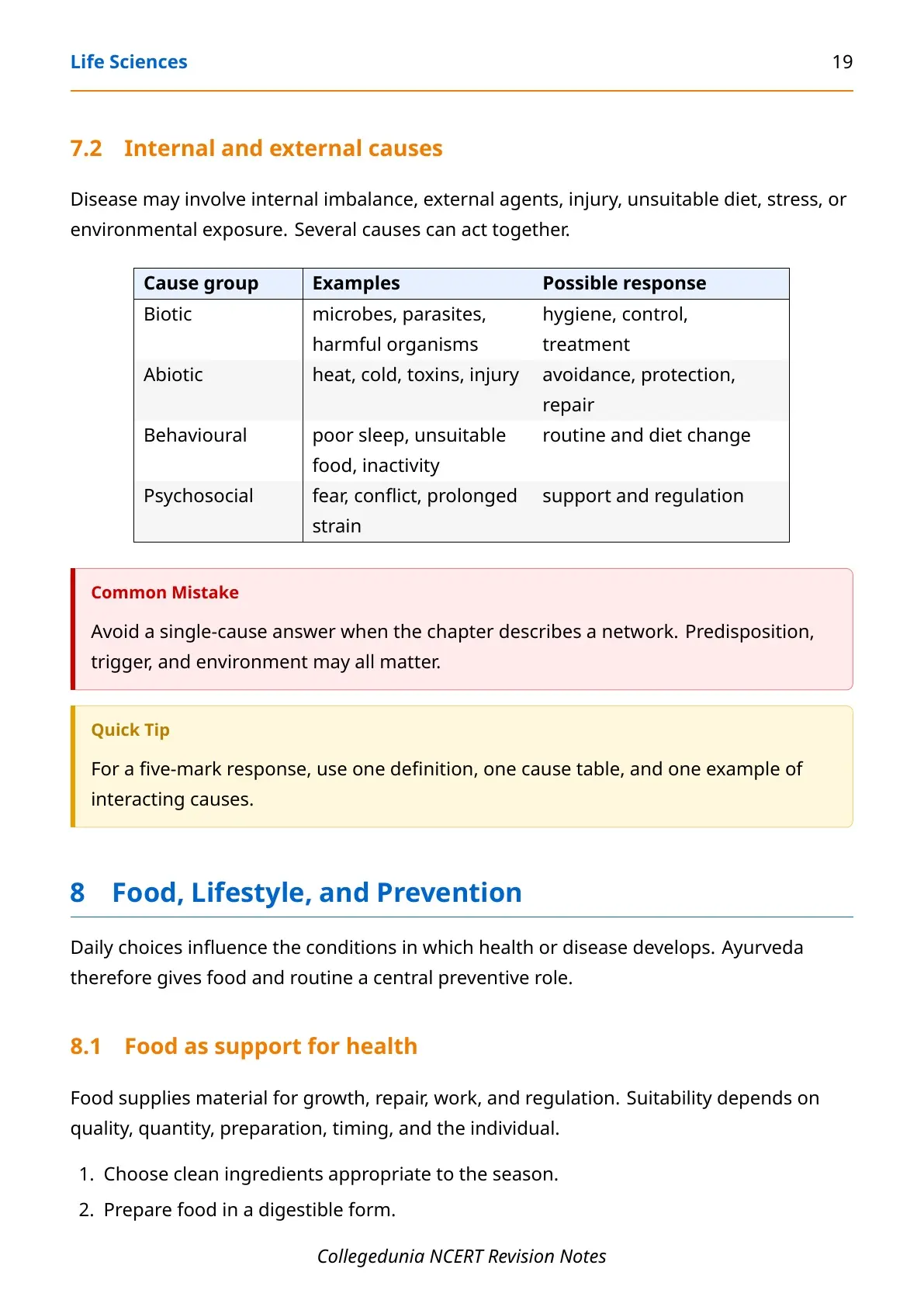
- Disease: disturbance in their connected network and resulting functional failure.
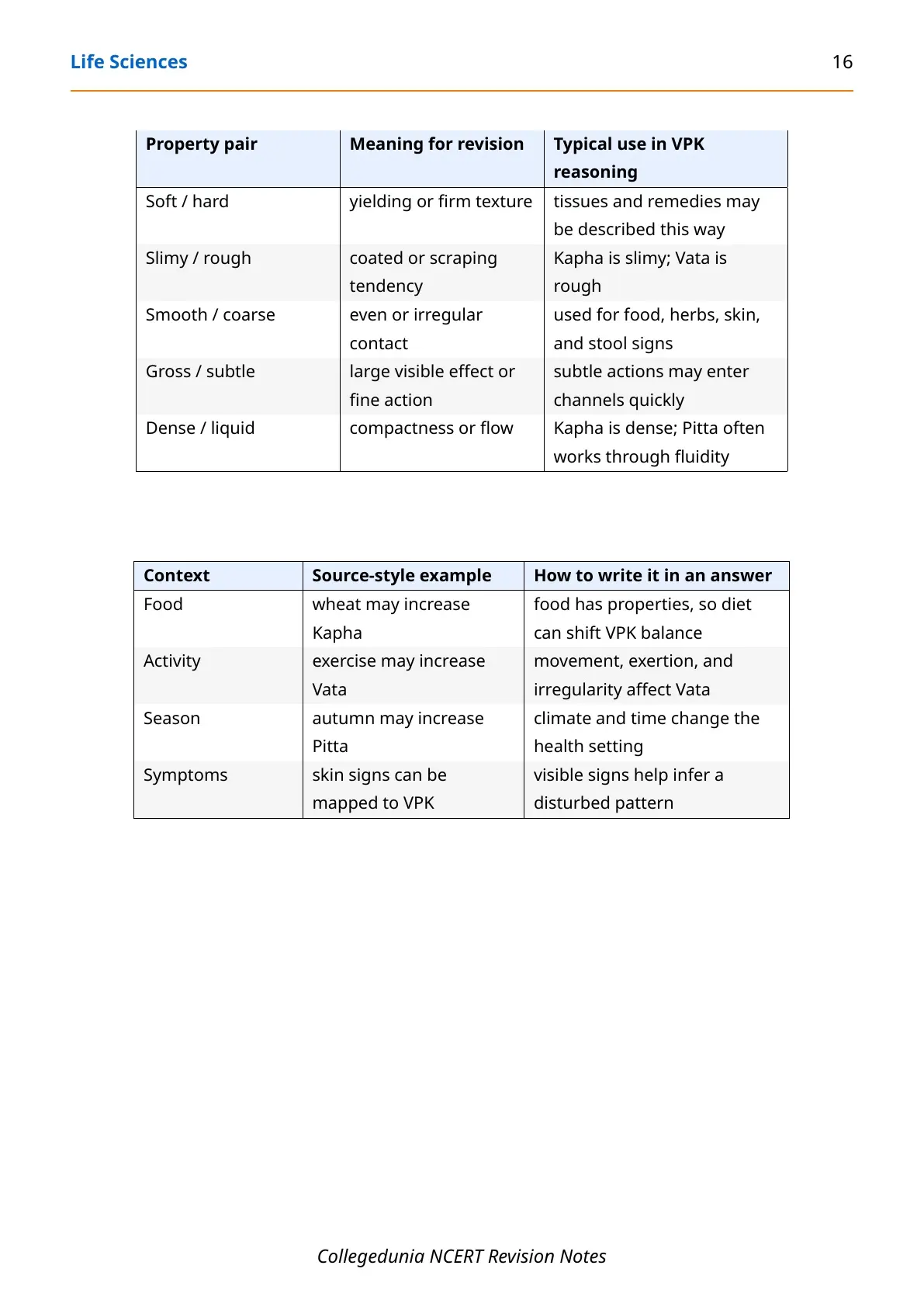
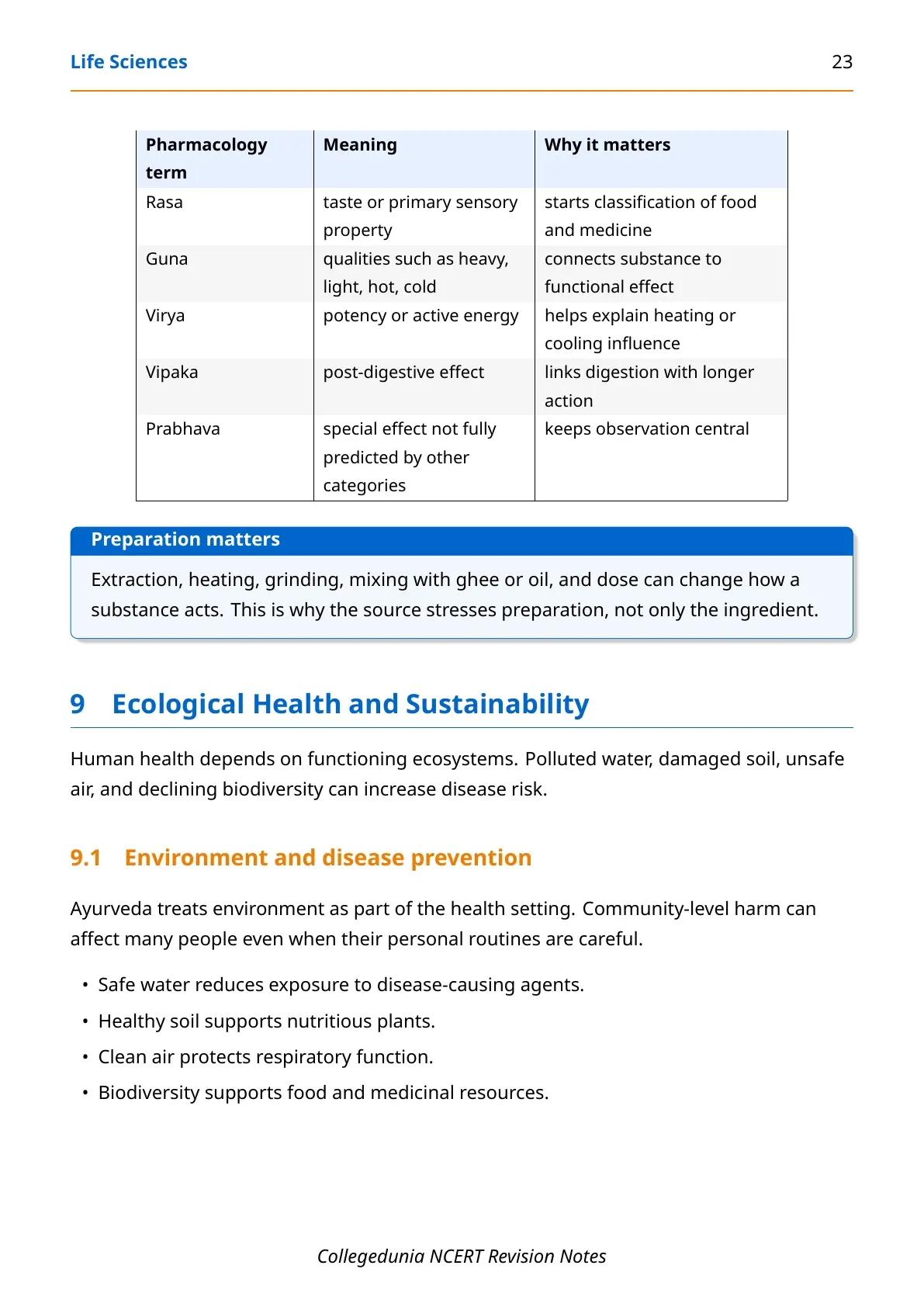
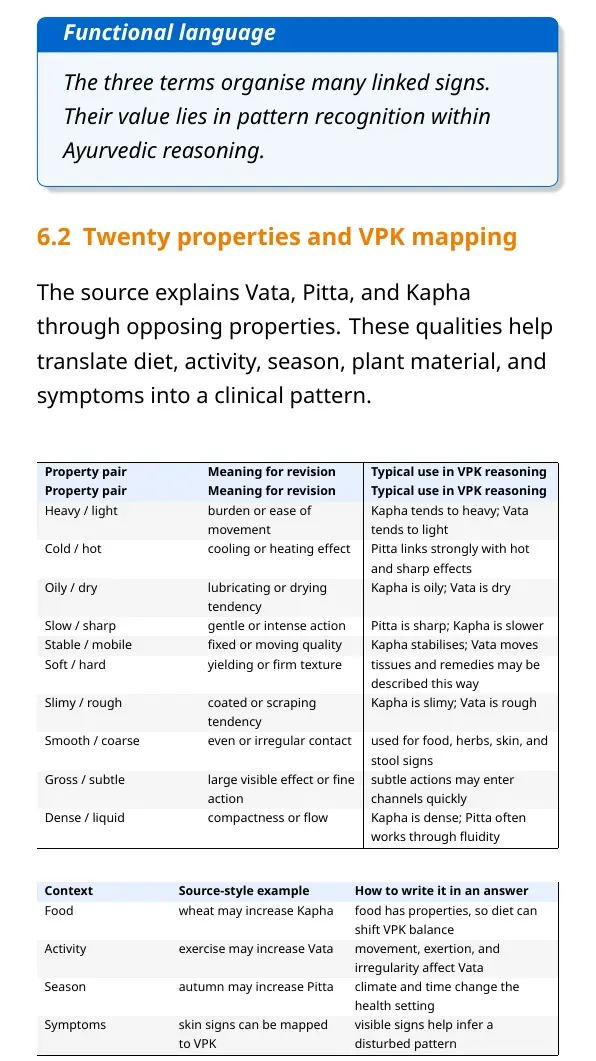
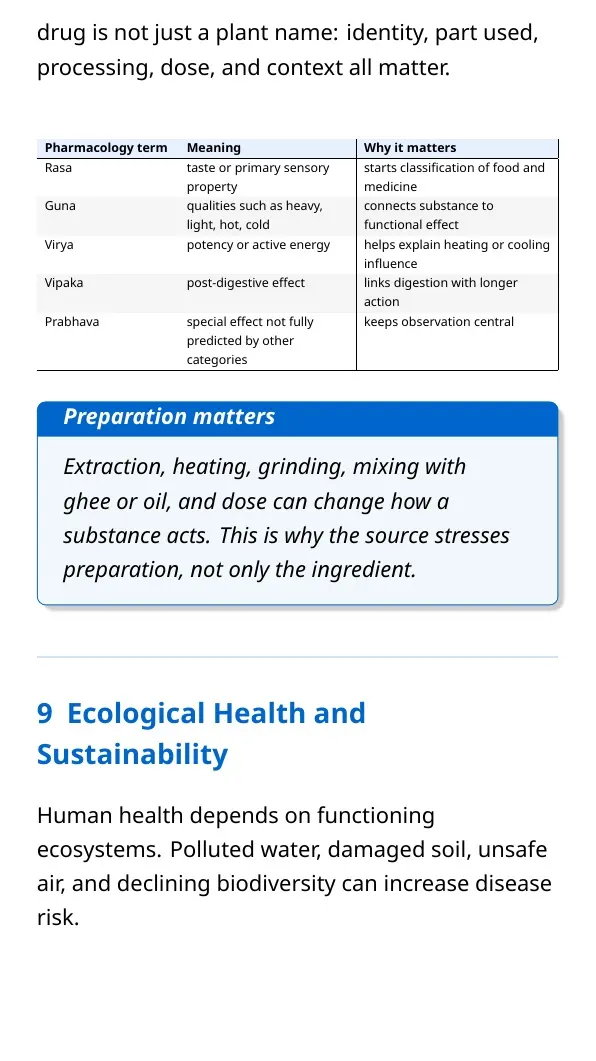
The chapter also lists twenty opposing properties, called Vimshatiguna. Examples include cold and hot, heavy and light, oily and dry, mobile and still, soft and hard. These properties describe substances and their effects on the body.
Daily Routine, Seasonal Routine and Personalised Care
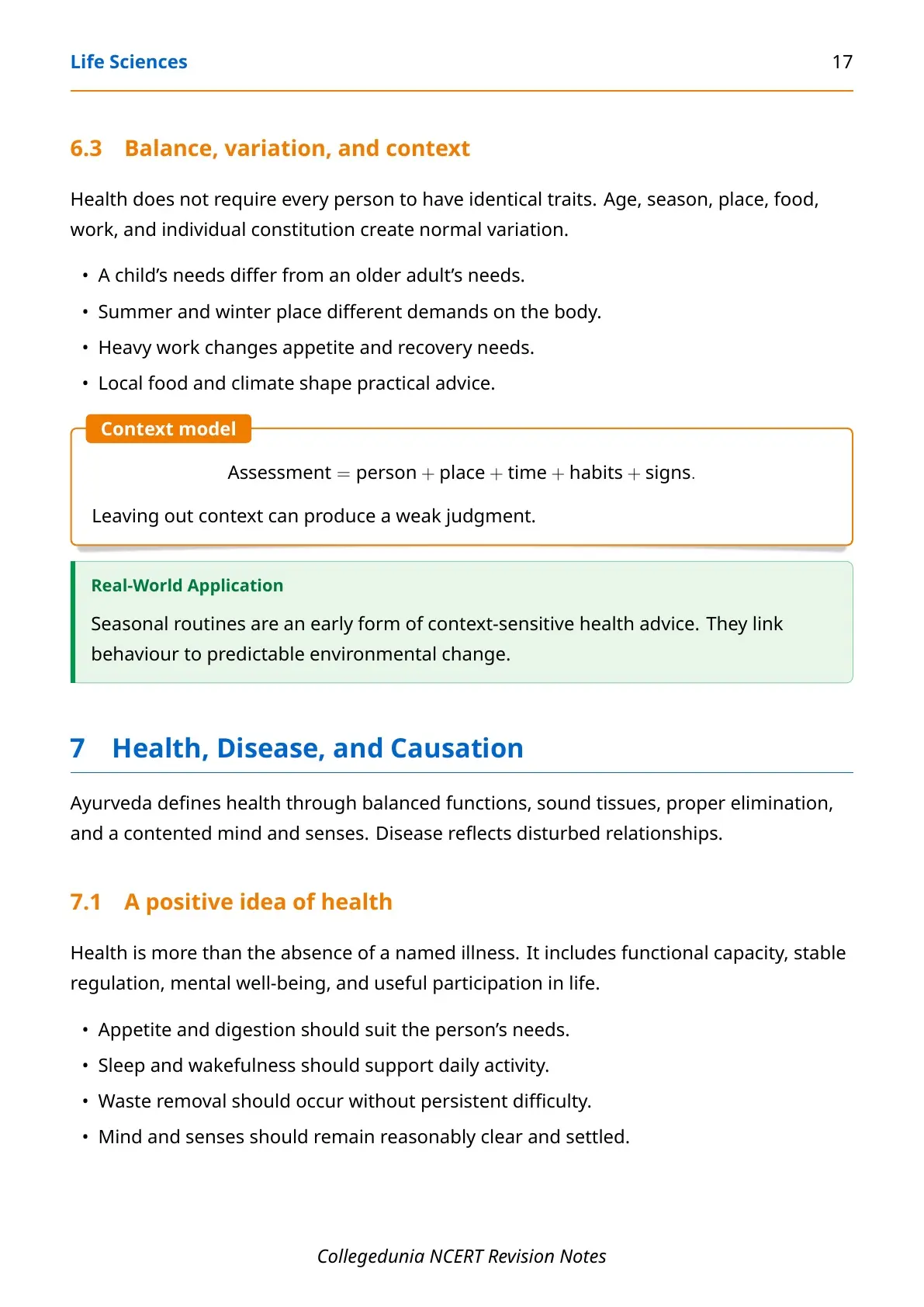
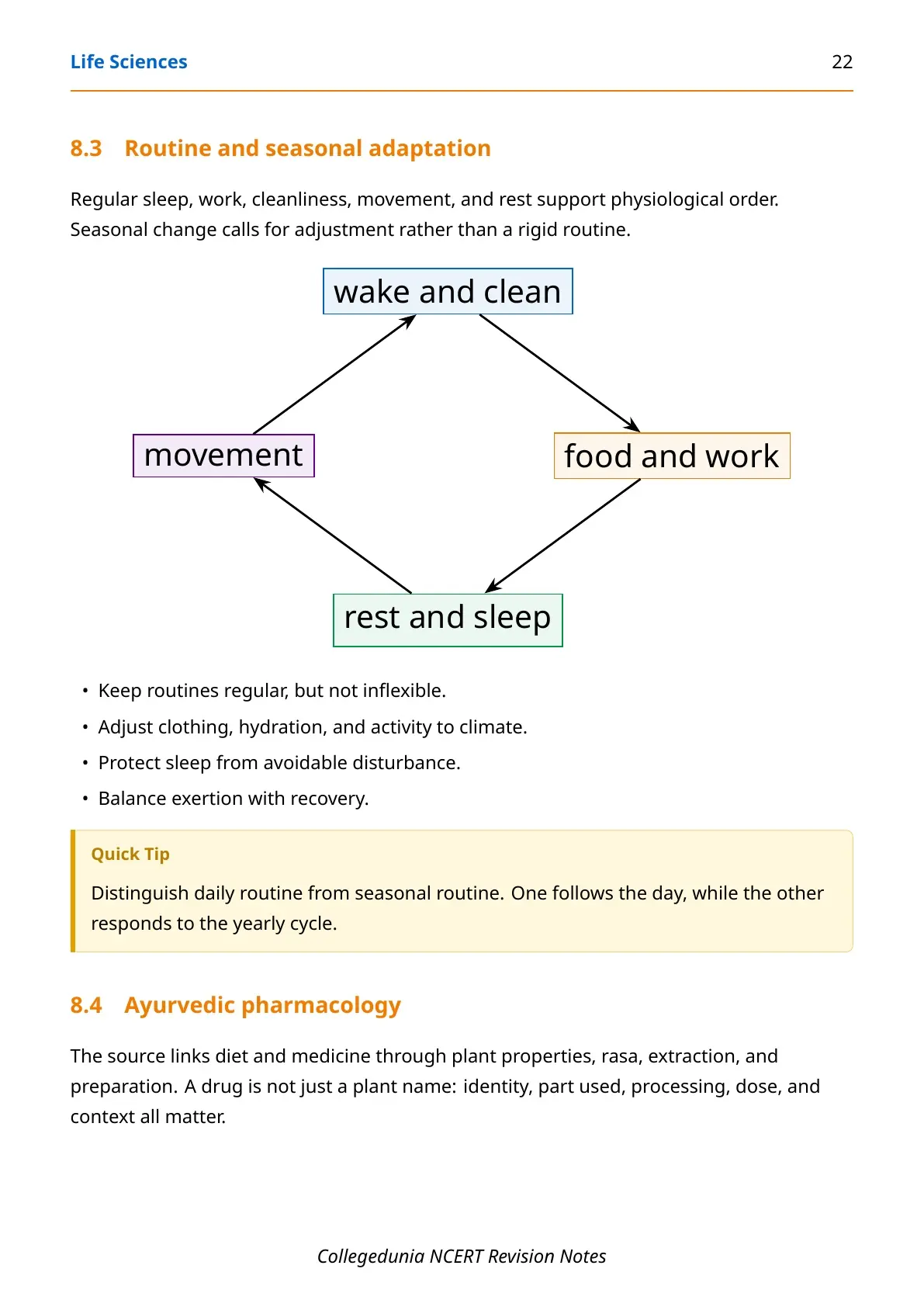
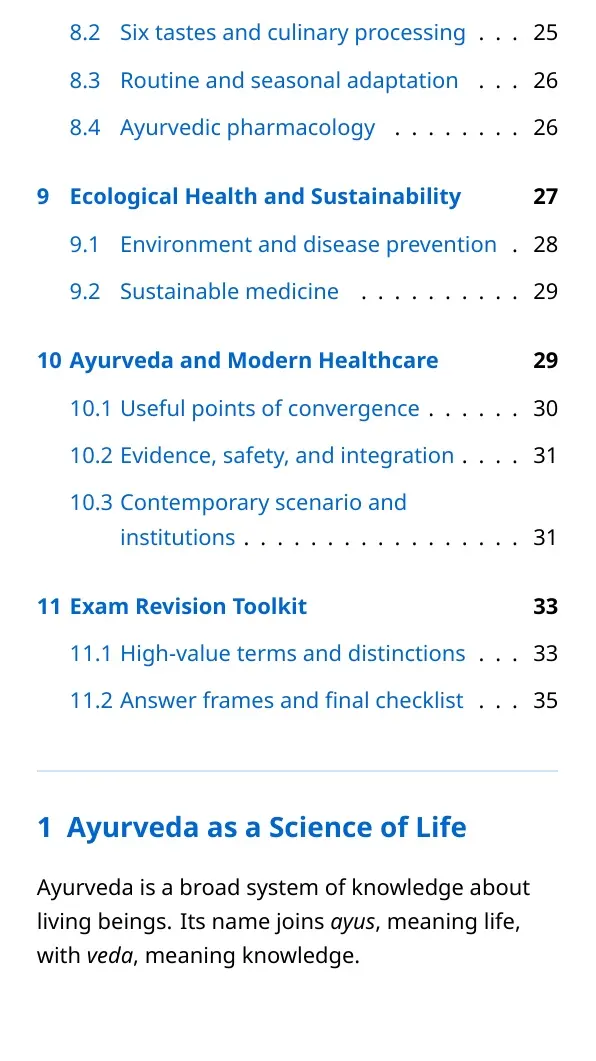
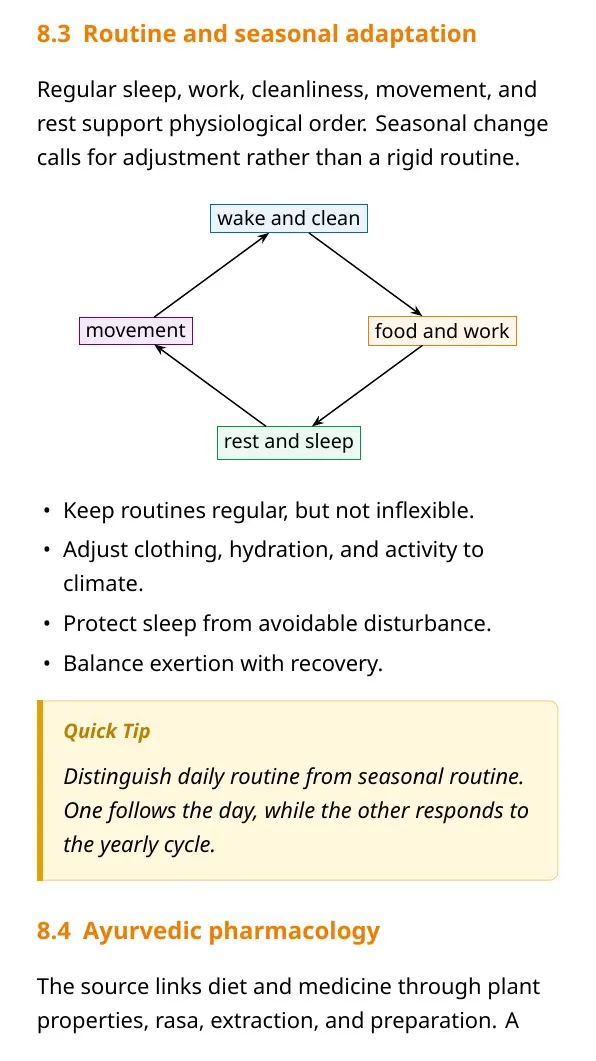
Ayurveda uses dinacharya, or daily routine, and ritucharya, or seasonal routine, for preventive health. These ideas connect body functions with daily and yearly natural cycles.
- Observe changes linked with time of day and season.
- Adjust food and activity to maintain functional balance.
- Use prakriti, or individual constitution, to personalise advice.
- Choose treatment after considering the whole person and environment.
Prakriti supports personalised prevention and treatment. This differs from giving every person the same advice for the same symptom.
Life Sciences Links with Modern Health Ideas
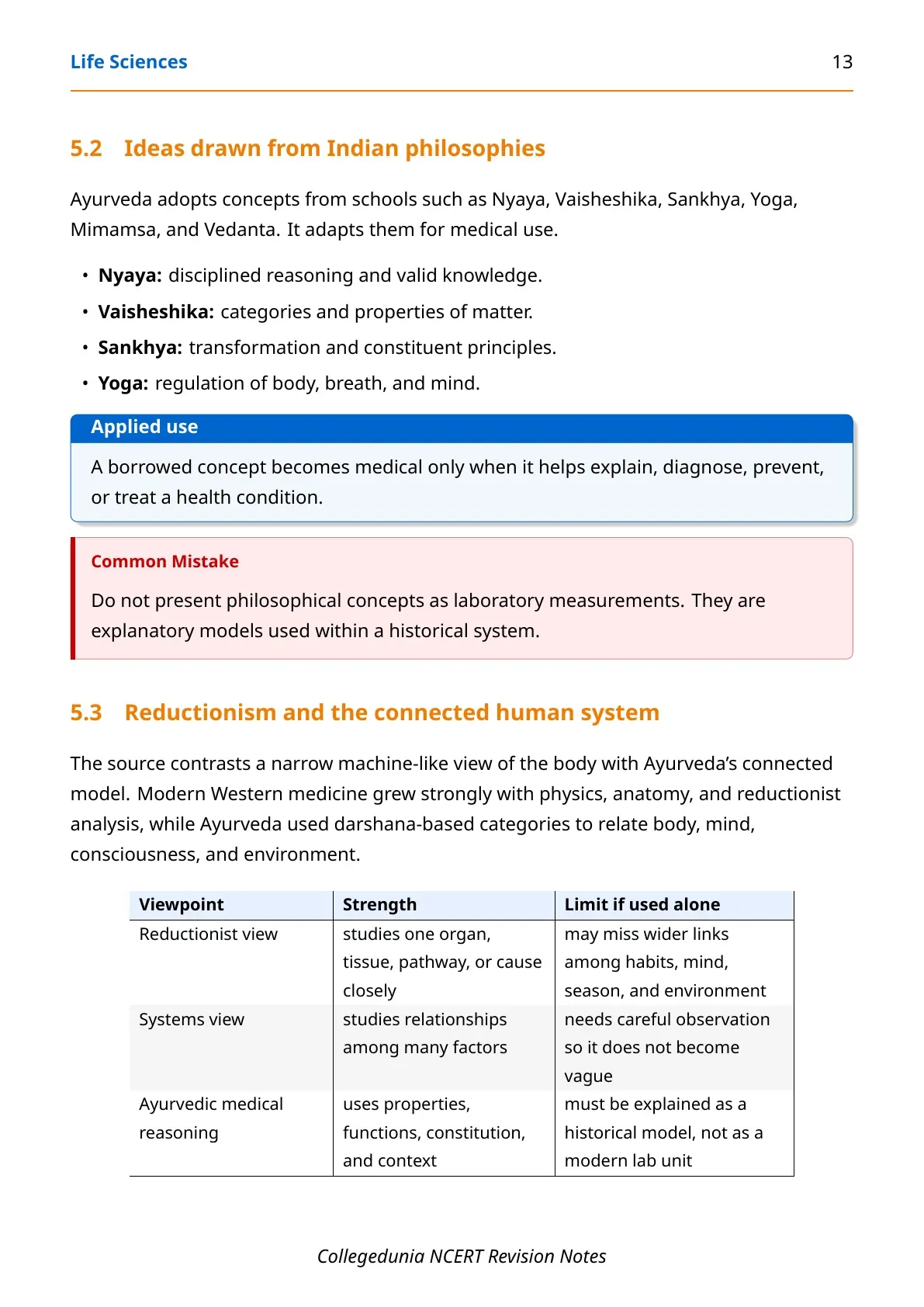
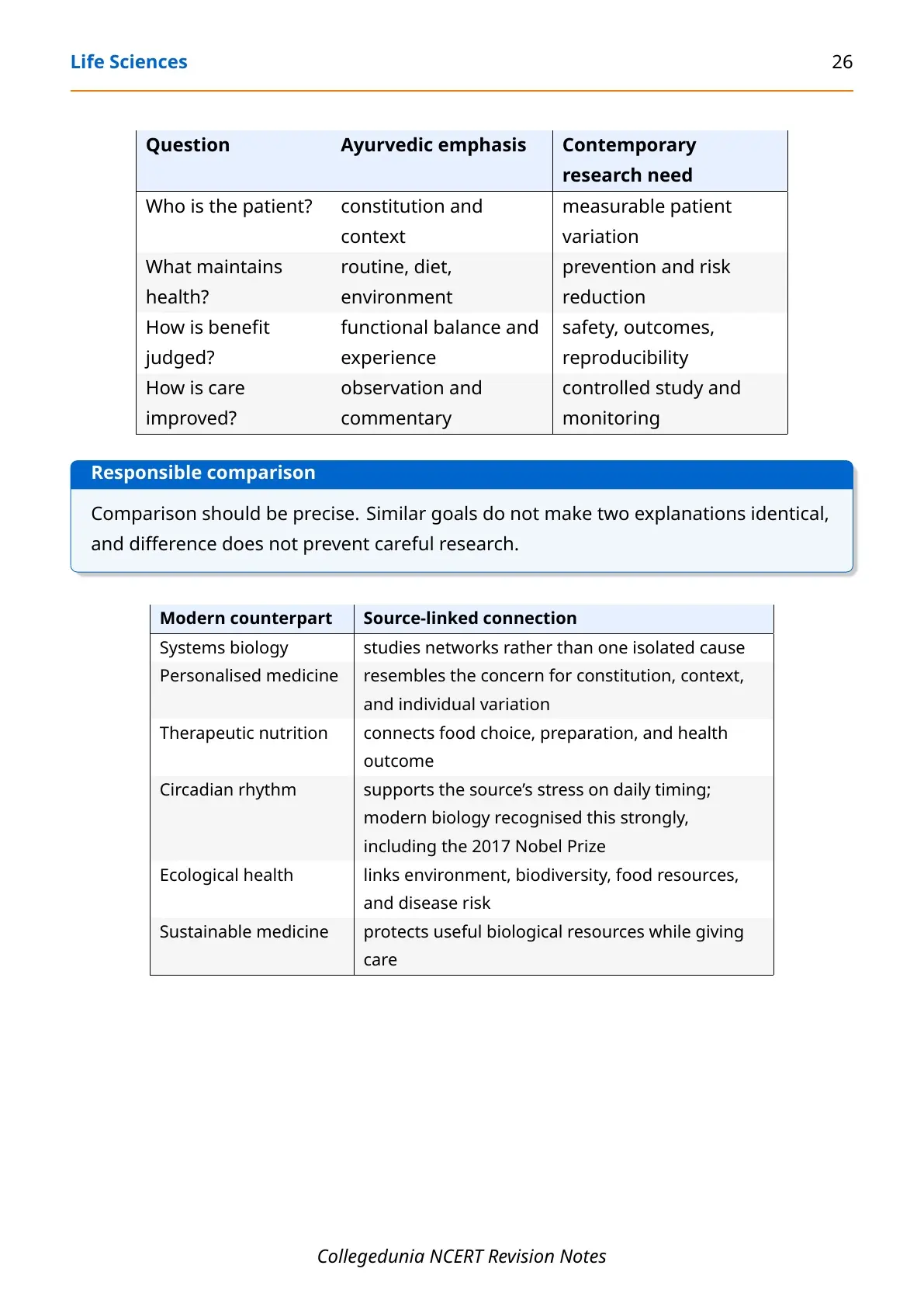
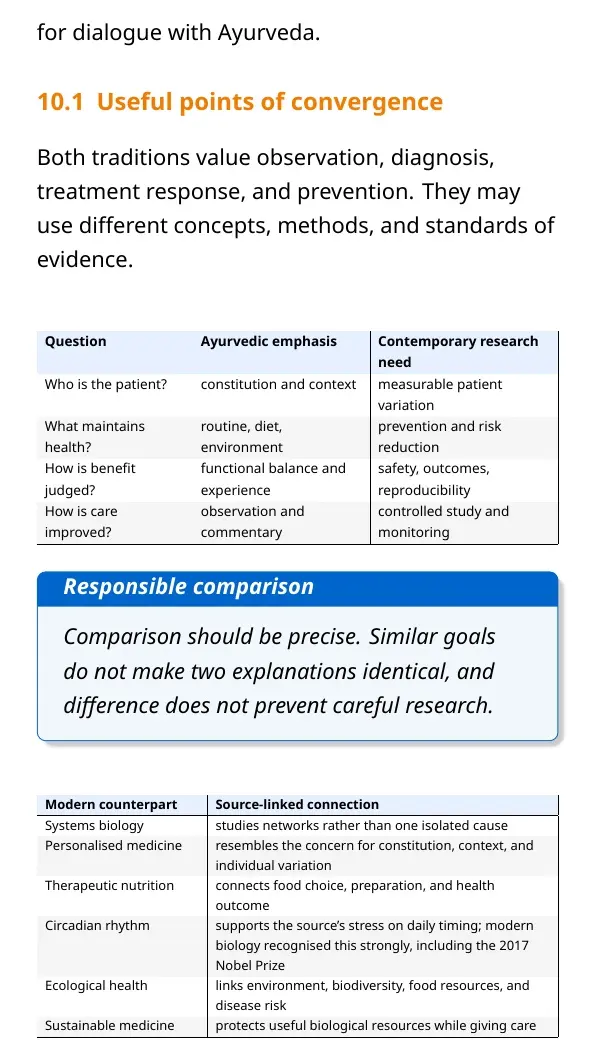
The NCERT chapter compares Ayurvedic thought with ideas now discussed in modern medicine. The purpose is not to treat the systems as identical. It shows where their broad concerns meet.
| Modern idea | Ayurvedic connection in the chapter |
|---|---|
| Systems biology | Interactions create functions that isolated parts cannot explain fully. |
| Personalised medicine | Prakriti helps tailor prevention and treatment. |
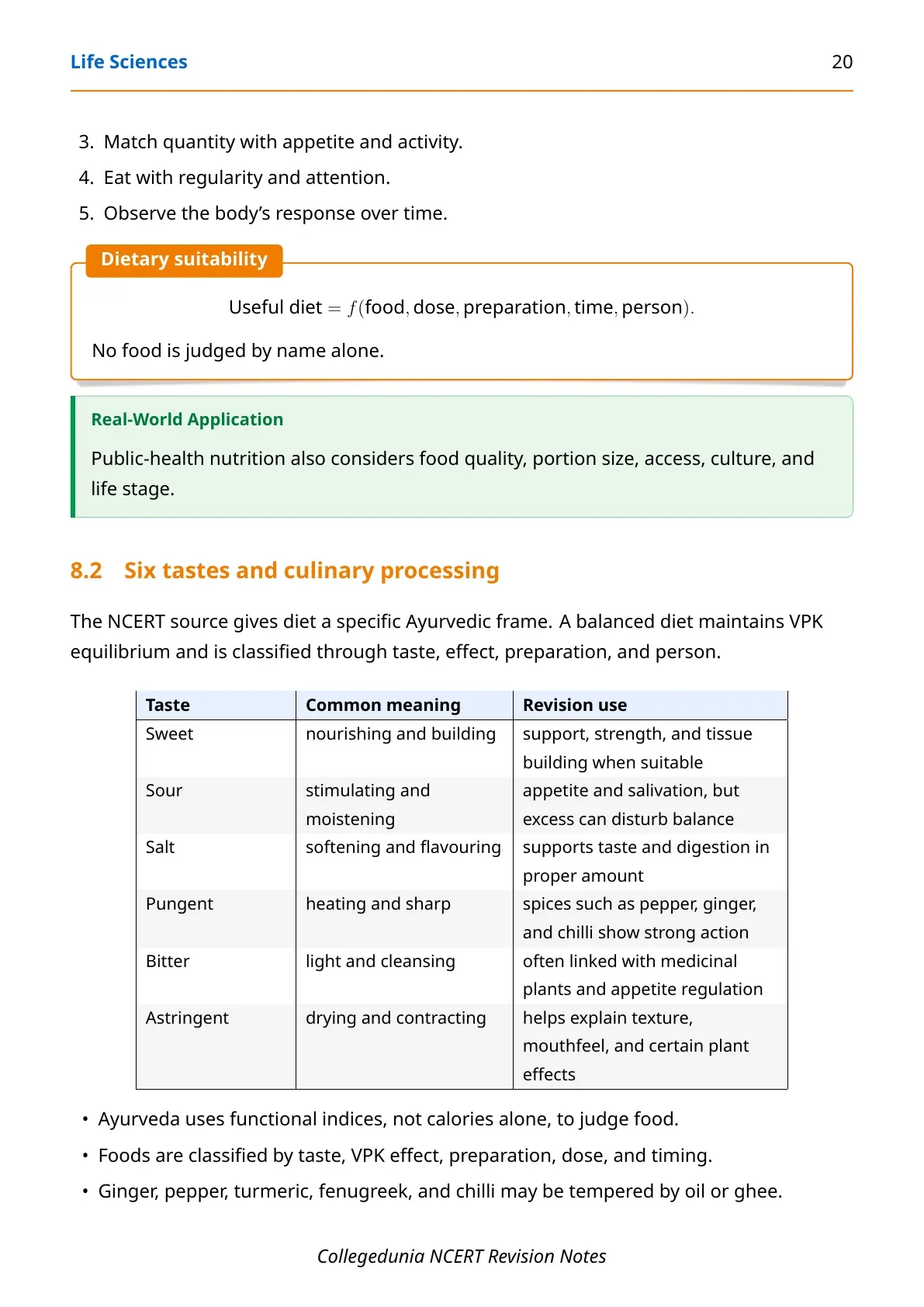
| Therapeutic nutrition | Food supports prevention, healing and complementary care. |
| Circadian rhythm | Daily and seasonal routines follow biological cycles. |
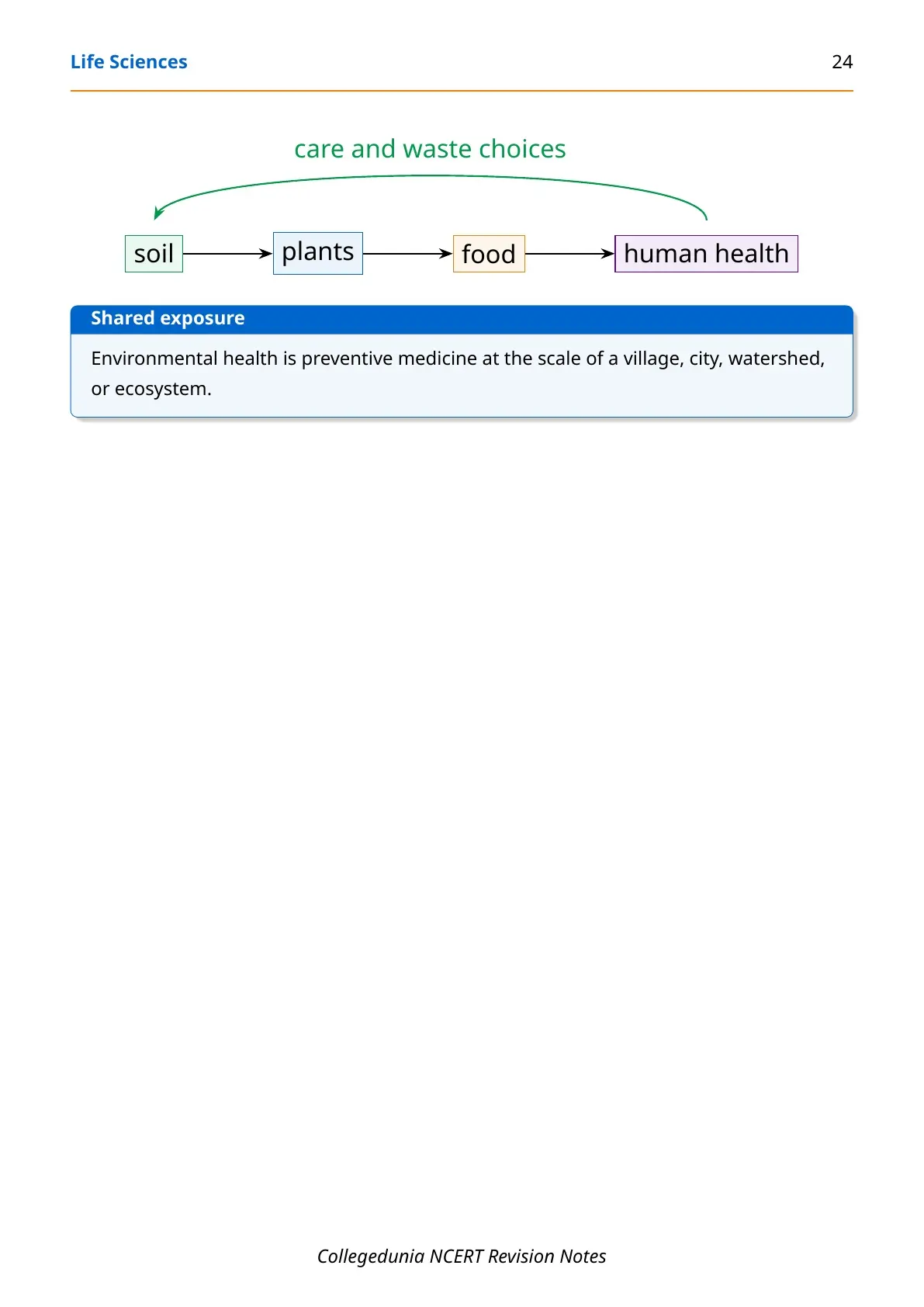
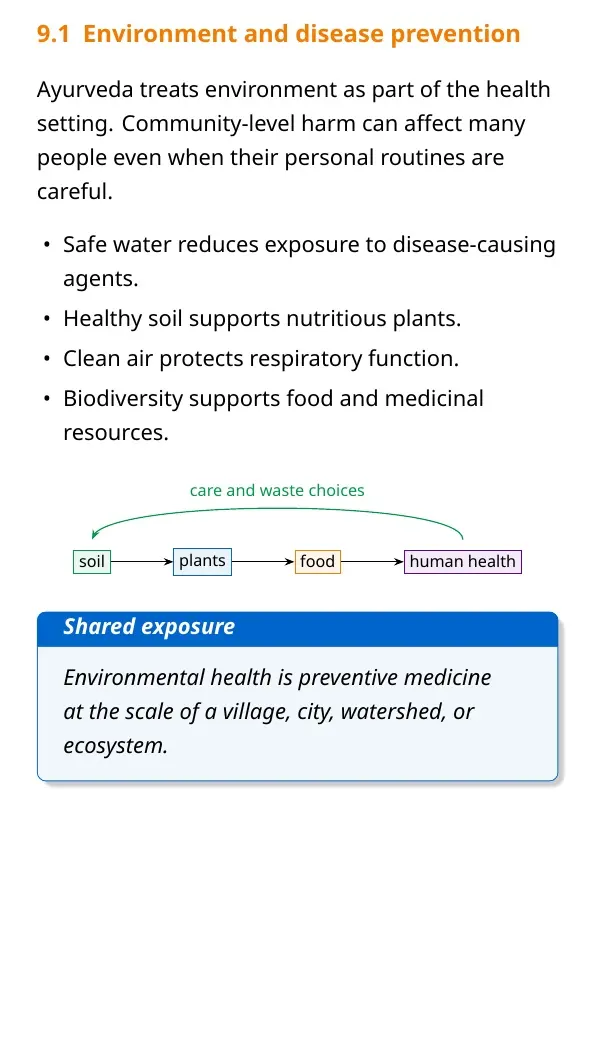
| Ecological health | Human and public health remain connected with nature. |
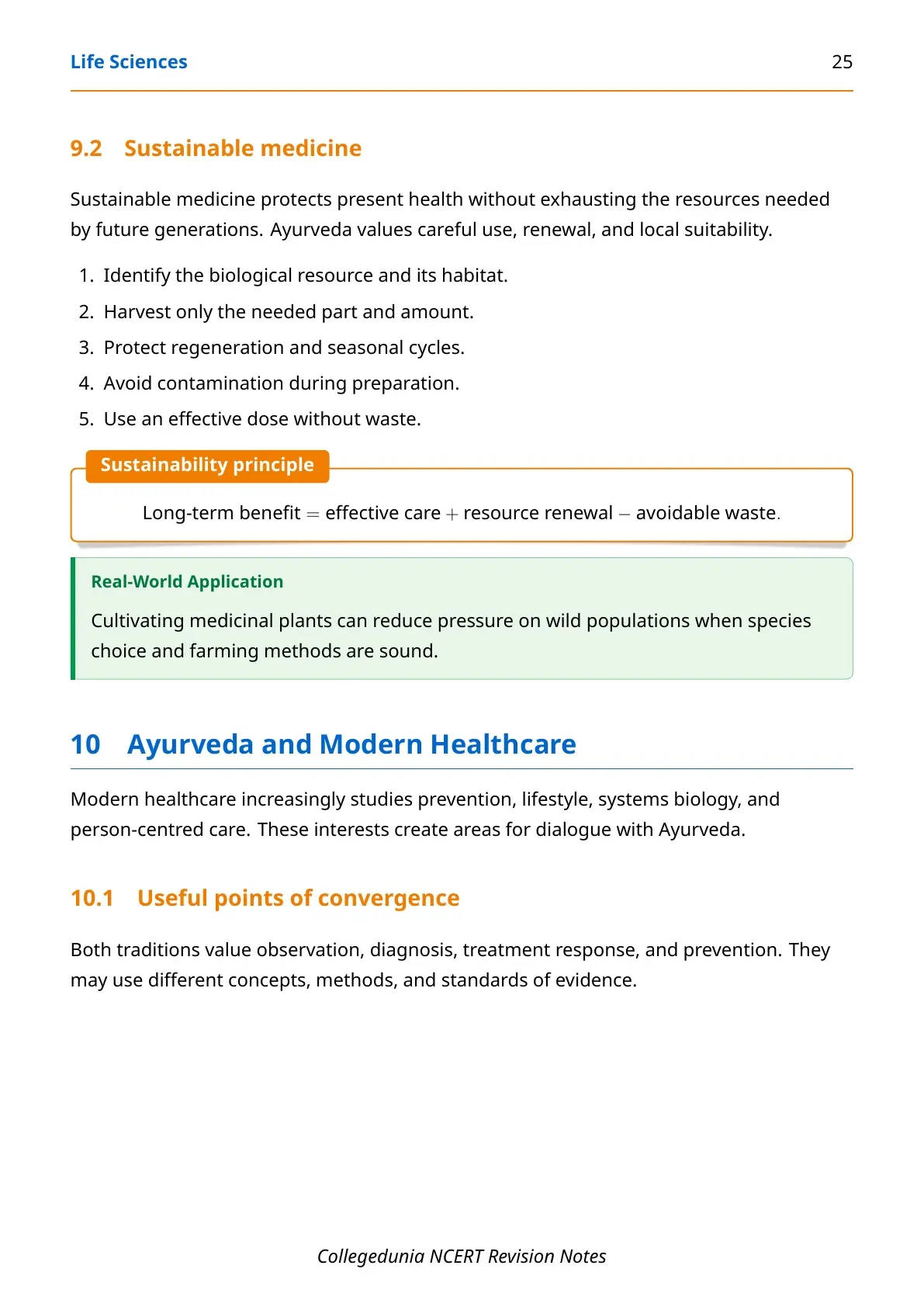
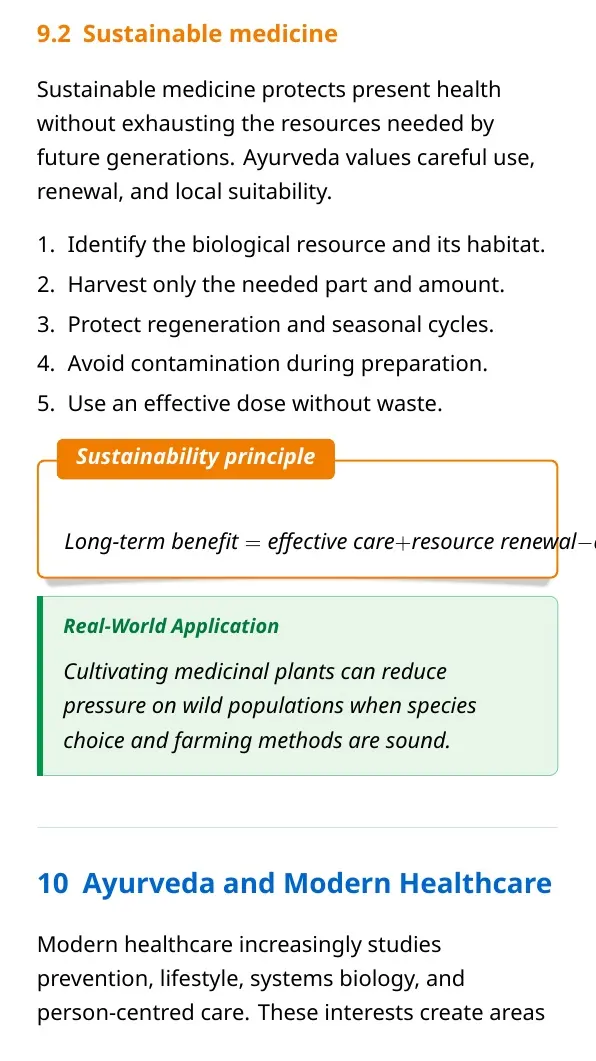
| Sustainable medicine | Resources, lifestyle and prevention are used with long-term care. |
How to Revise Life Sciences for the 2026-27 Exam
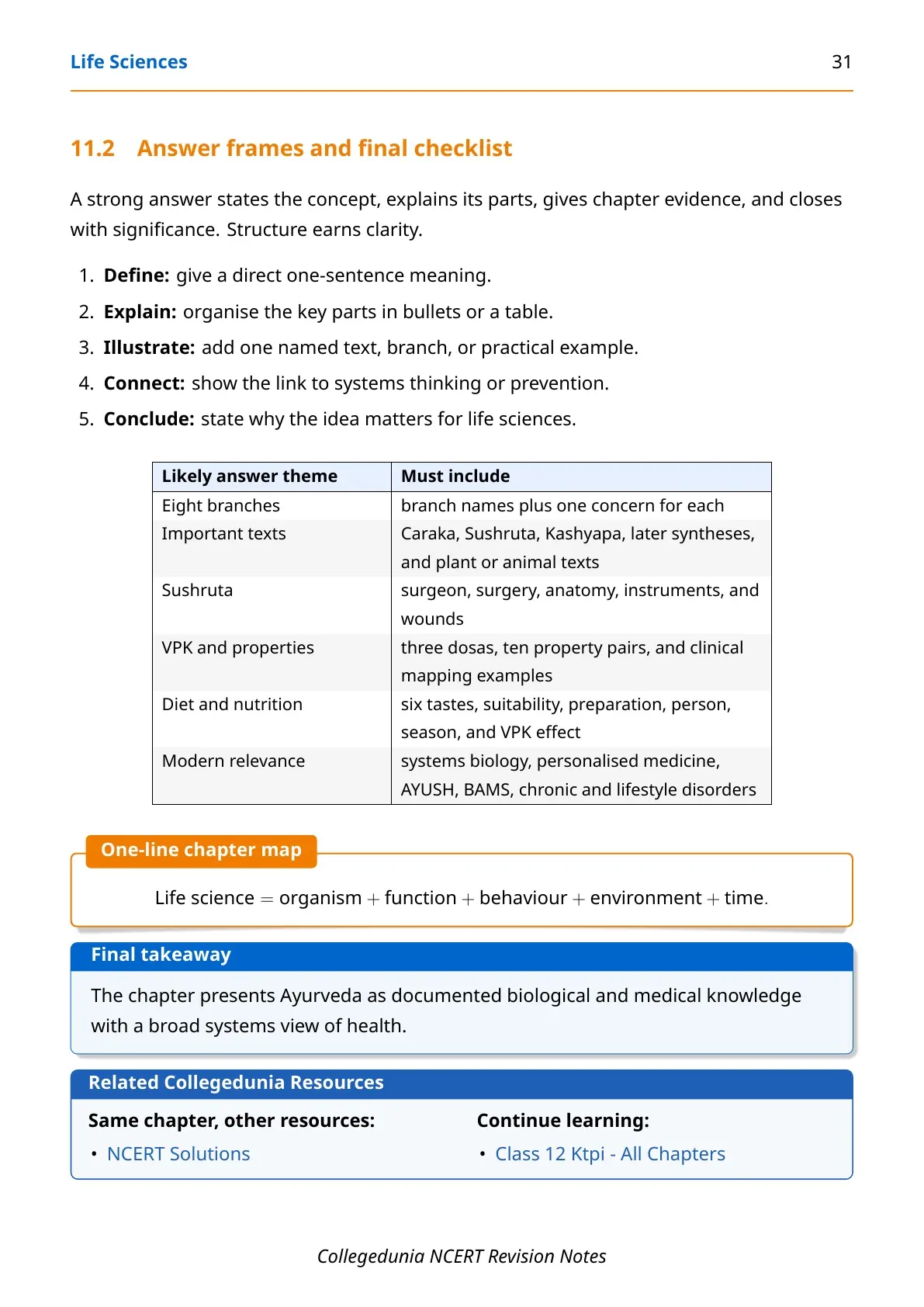
Build four links while revising: text and author, branch and function, dosha and activity, concept and modern parallel. This method keeps similar terms separate.
- Draw a three-column chart for Vata, Pitta and Kapha.
- Learn all eight branches in the textbook order.
- Compare manushya, mriga and vriksha Ayurveda.
- Prepare short notes on dinacharya, ritucharya and prakriti.
Common mistake: Do not describe Vata, Pitta and Kapha as isolated body parts. NCERT presents them as connected functional categories.
Student Feedback on Life Sciences Revision
What 10,640 students told us: In a Collegedunia poll conducted before the 2026 boards, students preferred branch-and-function tables for revising Ayurveda.
Source: 2026-27 Class 12 KTPI student poll. Sample of 10,640 students from schools across India.
Other Life Sciences Class 12 KTPI Resources
Use the official chapter for the complete account. Use solutions to check the seven review questions and activity prompts.
| Resource | Use it for |
|---|---|
| Life Sciences Class 12 NCERT Solutions | Textbook questions and clear answers |
| Life Sciences Class 12 NCERT Book PDF | Official chapter text, figures and activities |
| Life Sciences Class 12 Handwritten Notes | Fast recall before the exam |
NCERT Notes for Class 12 KTPI: All Chapters
Read these notes in order to connect Indian developments across science, mathematics, health and technology.
| Chapter | Class 12 KTPI Notes |
|---|---|
| Chapter 1 | Astronomy in India Notes |
| Chapter 2 | Chemistry in India Notes |
| Chapter 3 | Mathematics in India Notes |
| Chapter 4 | Life Sciences Notes |
| Chapter 5 | Medicine in India Notes |
Life Sciences KTPI Notes FAQs
Ques. What are the main topics in Life Sciences?
Ans. The chapter covers Ayurveda's history, literature, branches, tridosha theory, health regimens, personalised care and ecological health.
Ques. Are these Life Sciences notes based on the 2026-27 NCERT?
Ans. Yes. The notes follow the reprinted 2026-27 NCERT chapter and its terms, examples, tables and review themes.
Ques. What are the three fields of Ayurveda?
Ans. Manushya Ayurveda studies human health, mriga Ayurveda studies animal health, and vriksha Ayurveda studies plant health.
Ques. What are the eight branches of Ayurveda?
Ans. They are Kaya Chikitsa, Shalya Tantra, Shalakya Tantra, Kaumara Bhritya, Agada Tantra, Bhuta Vidya, Rasayana and Vajikarana.
Ques. What is tridosha theory?
Ans. It explains health through the connected functions of Vata for movement, Pitta for transformation, and Kapha for growth and support.
Ques. How does Ayurveda support preventive health?
Ans. It links food, activity, daily routine, seasonal routine, individual constitution and ecological conditions with the maintenance of balance.



Comments