




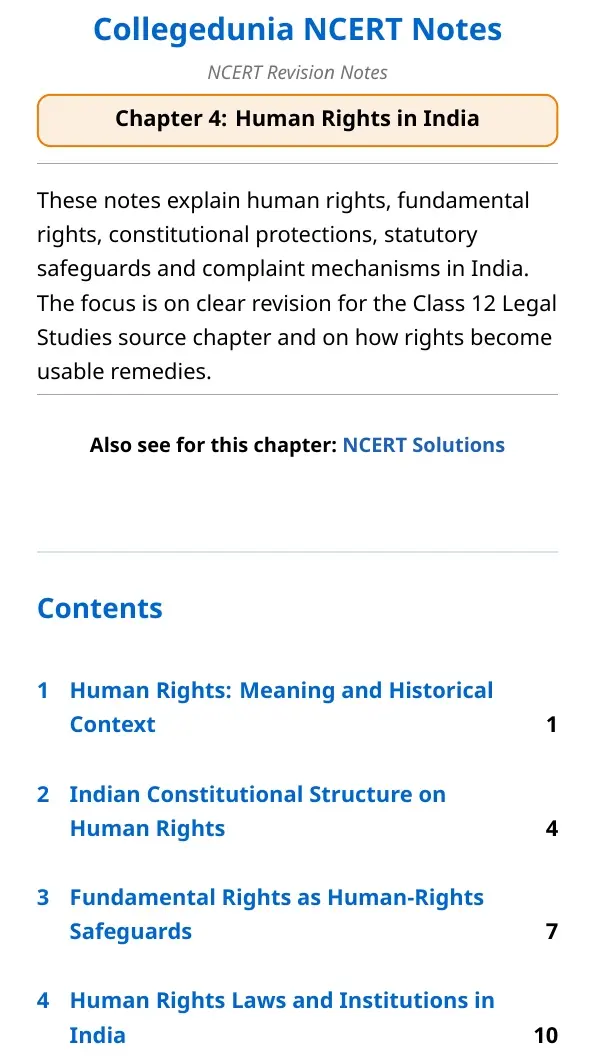
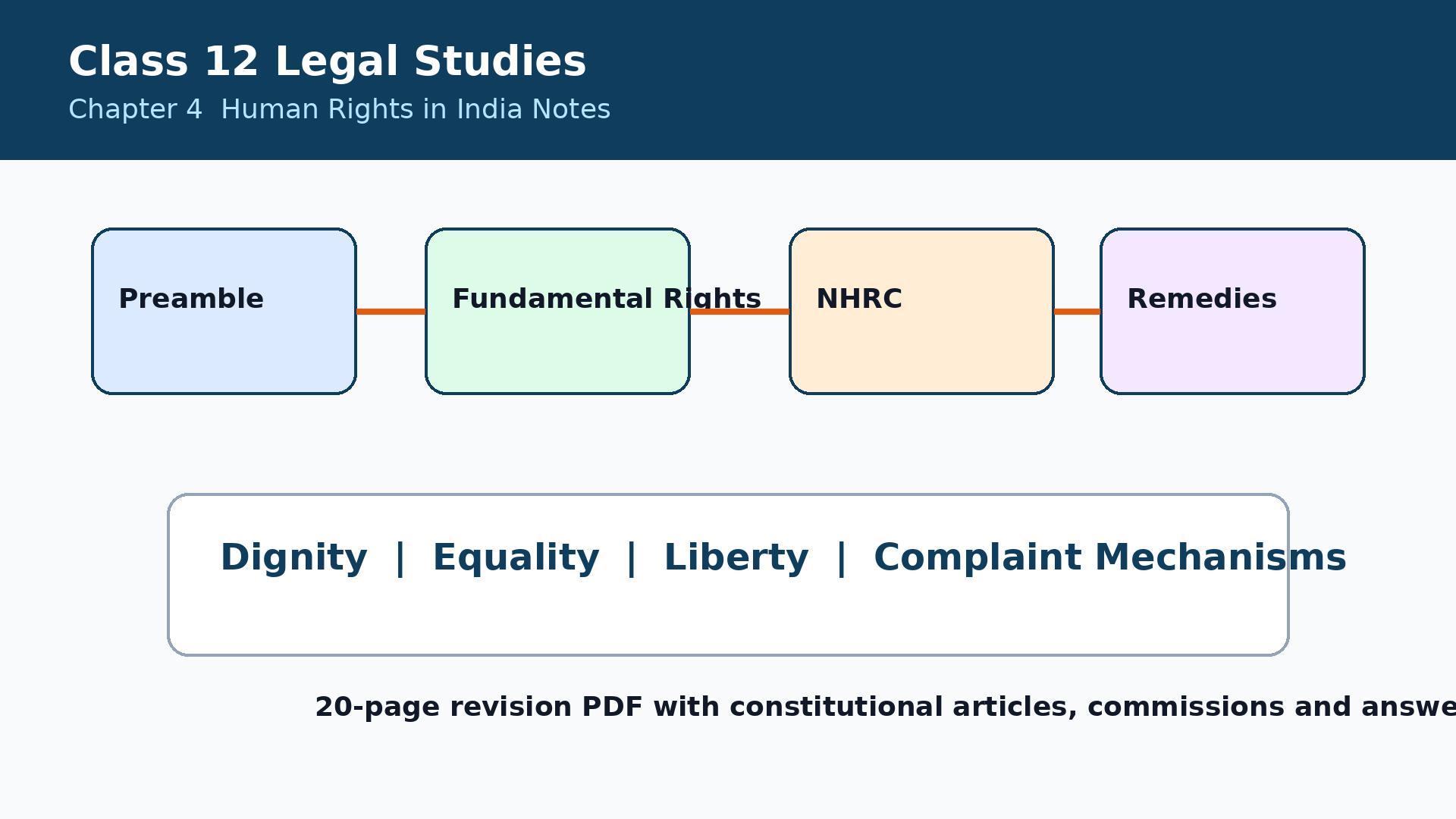
NCERT Class 12 Legal Studies Chapter 4 Human Rights in India Notes explain human rights, Fundamental Rights, Directive Principles, NHRC, complaint mechanisms and special commissions for the 2026-27 syllabus. The PDF gives students a short route from constitutional values to practical remedies.
- PDF included: 20 pages with article tables, complaint flow and revision prompts.
- Key focus: dignity, equality, liberty, NHRC, NCW and NCPCR.
- Best use: revise definitions first, then practise case-style answers.
Student Feedback: In a Collegedunia poll of 11,920 Class 12 Legal Studies students preparing for 2026 boards, 74% said NHRC functions and complaint format needed the most revision.
|
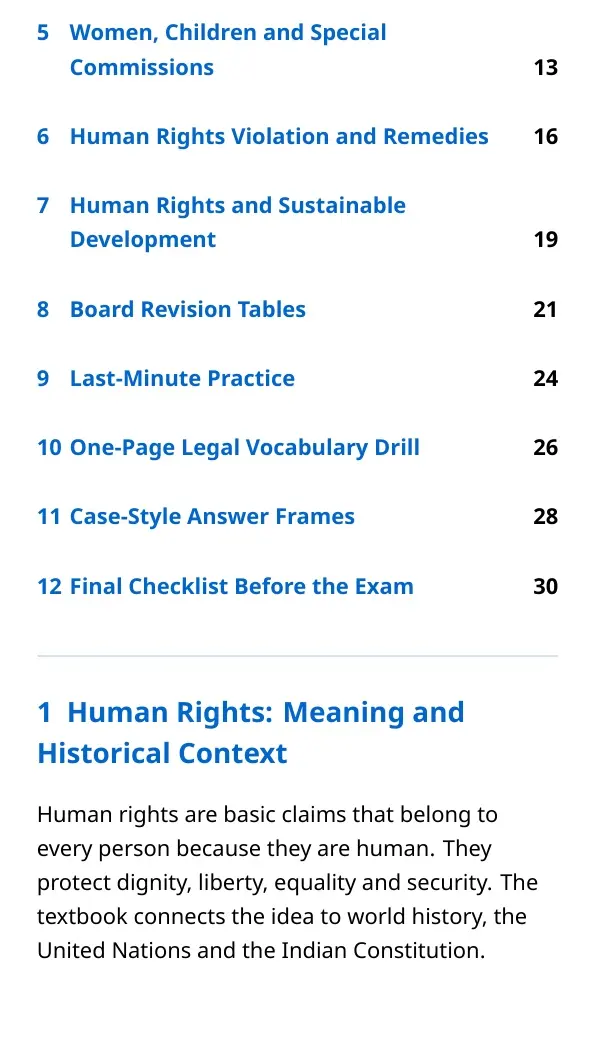
Table of Contents |
Human Rights in India Notes PDF Overview
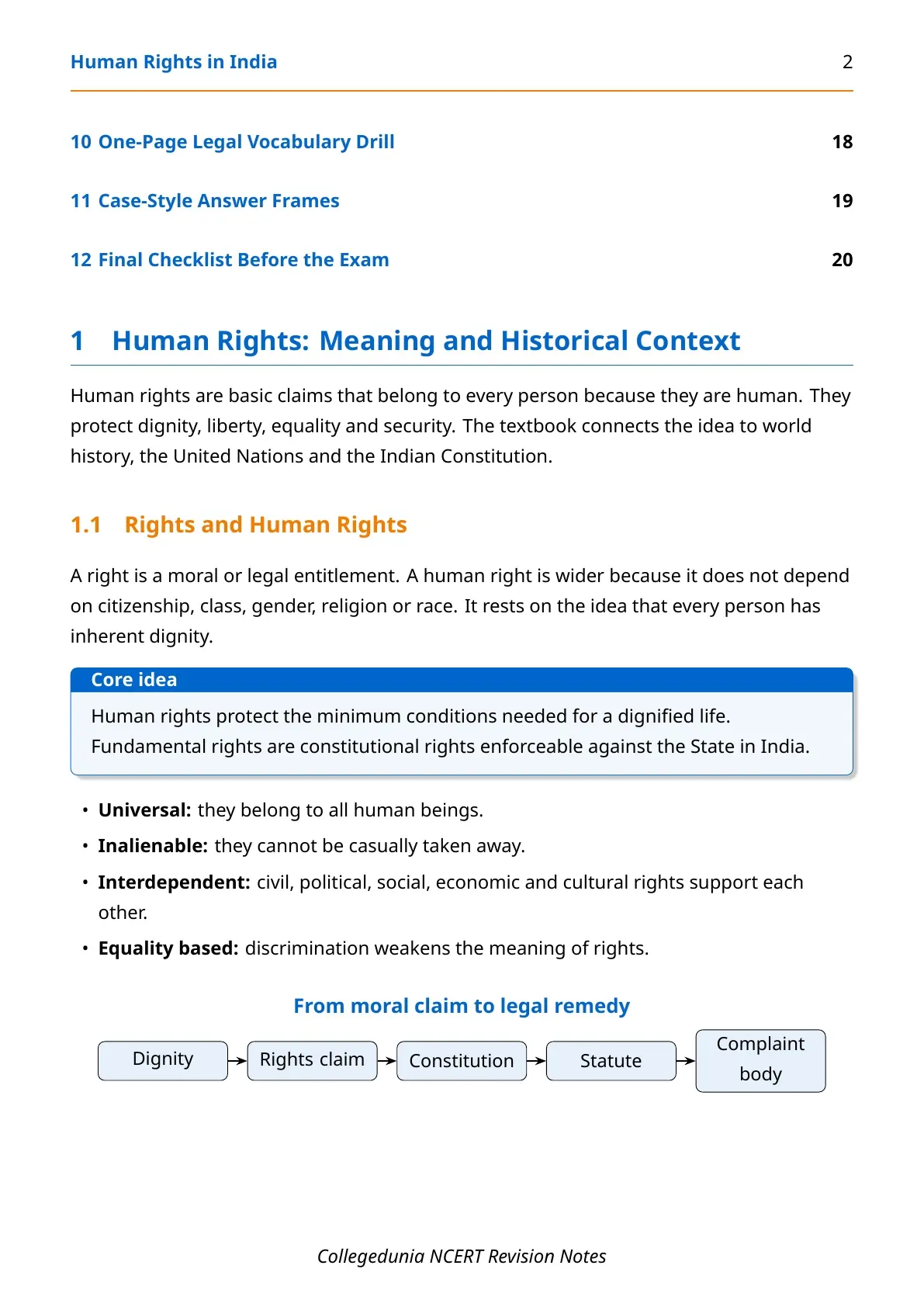
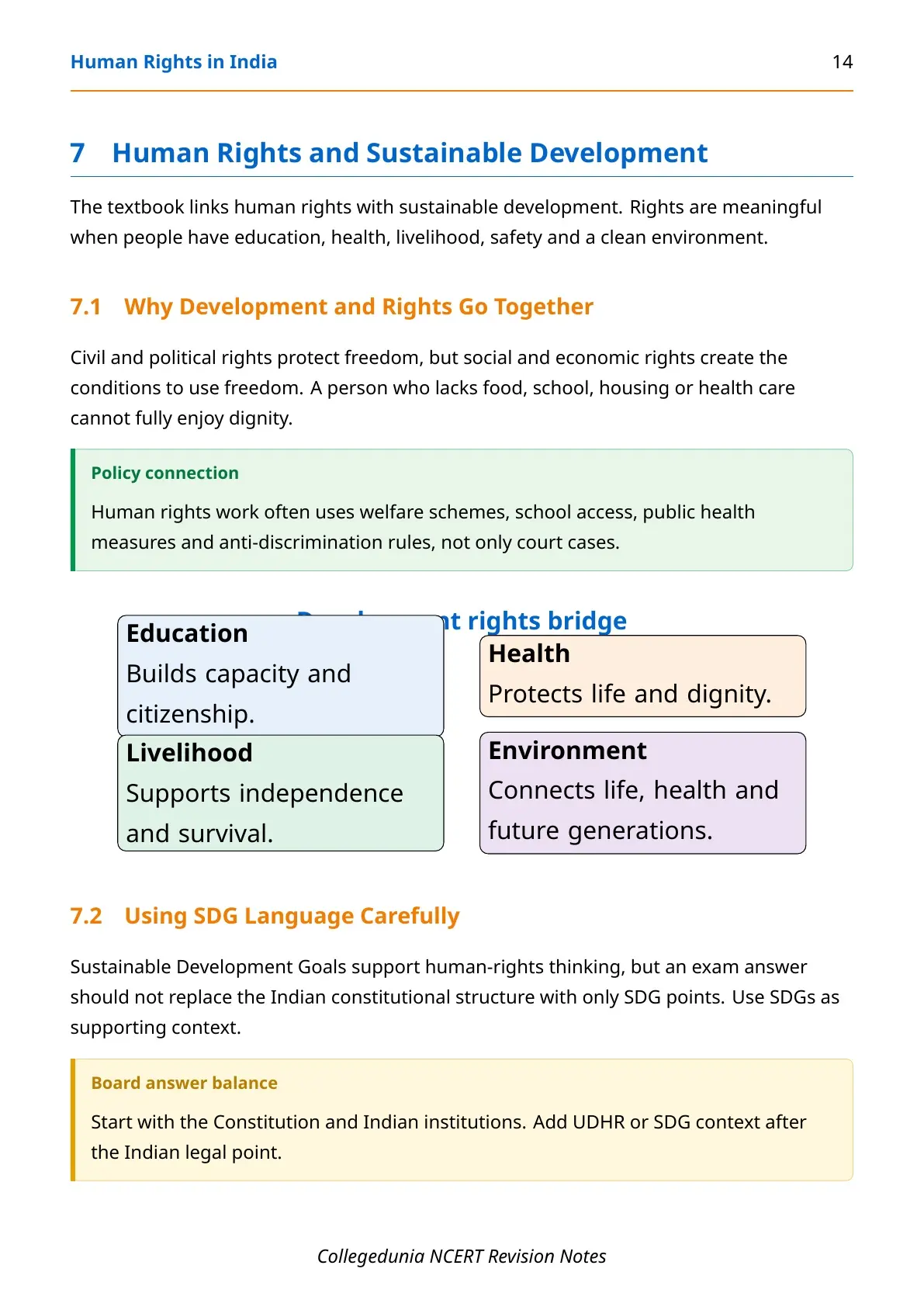
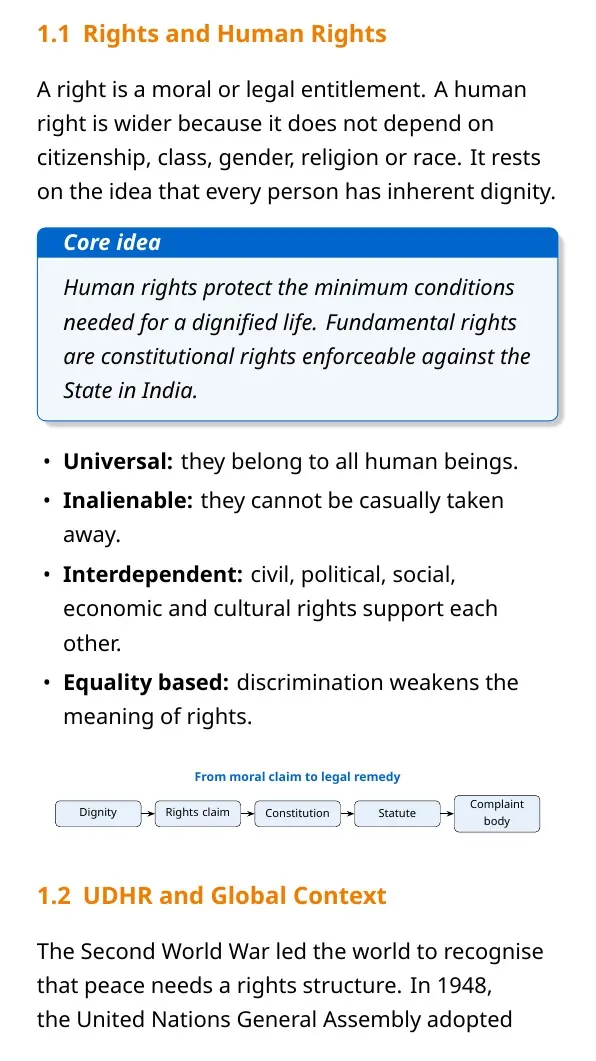
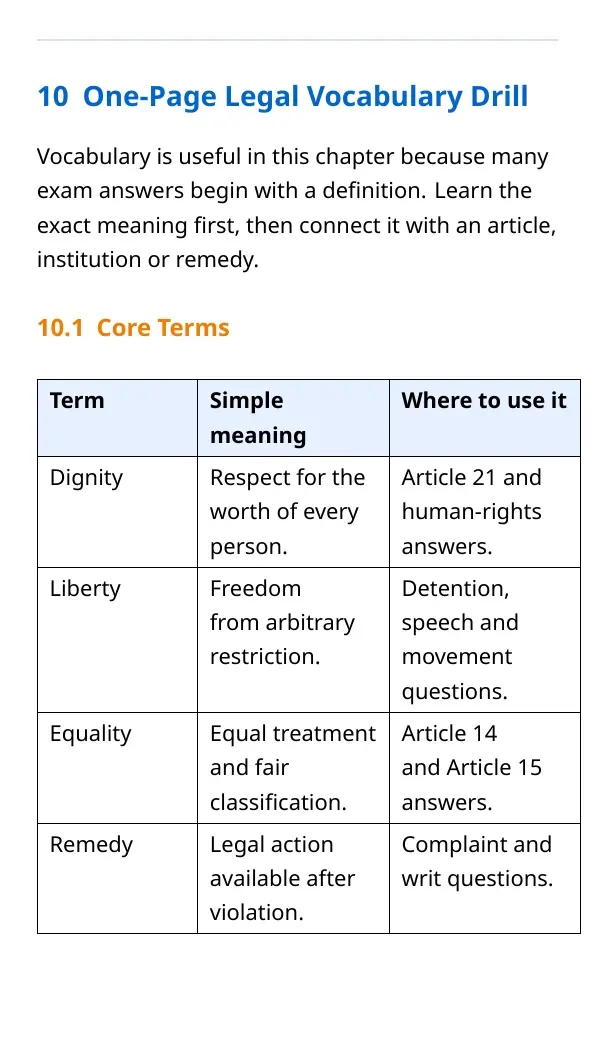
Human Rights in India explains how dignity, equality and liberty are protected through the Constitution and through special bodies. The chapter begins with rights and human rights, then moves to Fundamental Rights, Directive Principles, commissions and complaint routes.
The most important revision habit is to connect every right with an article, institution and remedy. This keeps answers legal instead of only moral.
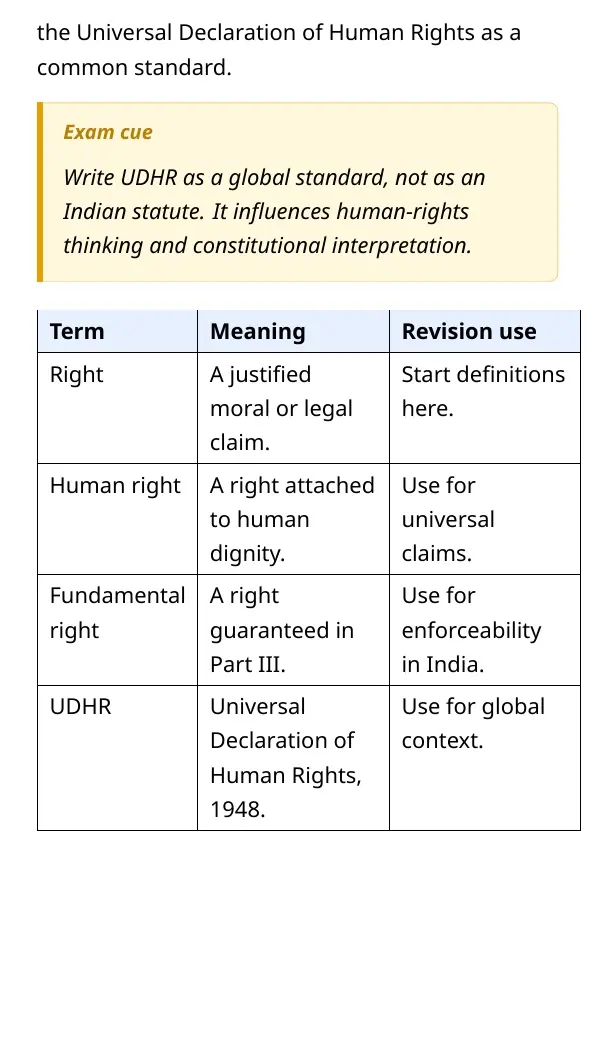
| Topic | What Students Revise | Quick Cue |
|---|---|---|
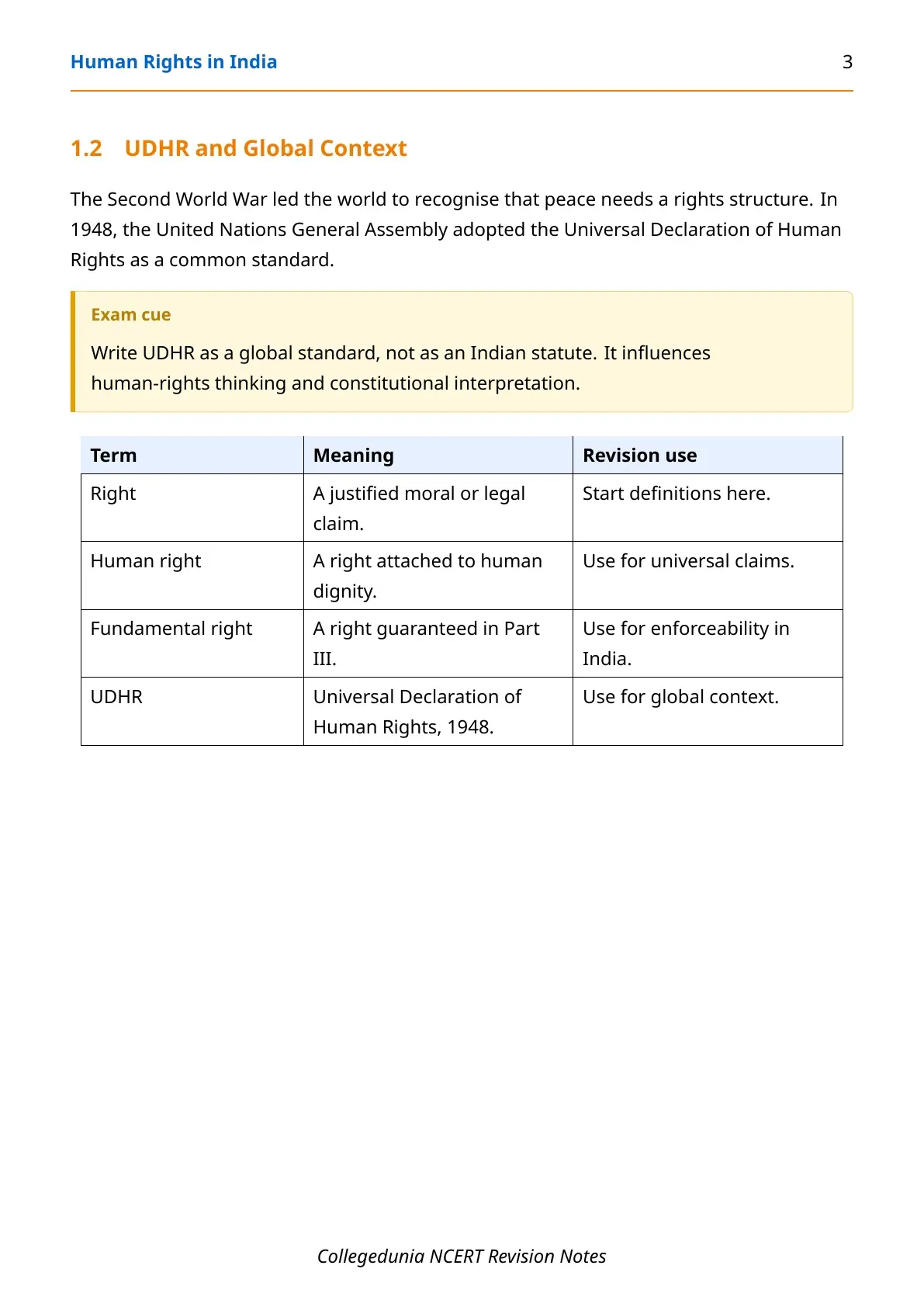
| Human rights | Meaning, universality and UDHR context. | Dignity for all persons. |
| Constitution | Preamble, Fundamental Rights, Directive Principles and Duties. | Preamble plus Part III. |
| Institutions | NHRC, NCW, NCPCR and special commissions. | Complaint and recommendation. |
Constitutional Protection of Human Rights
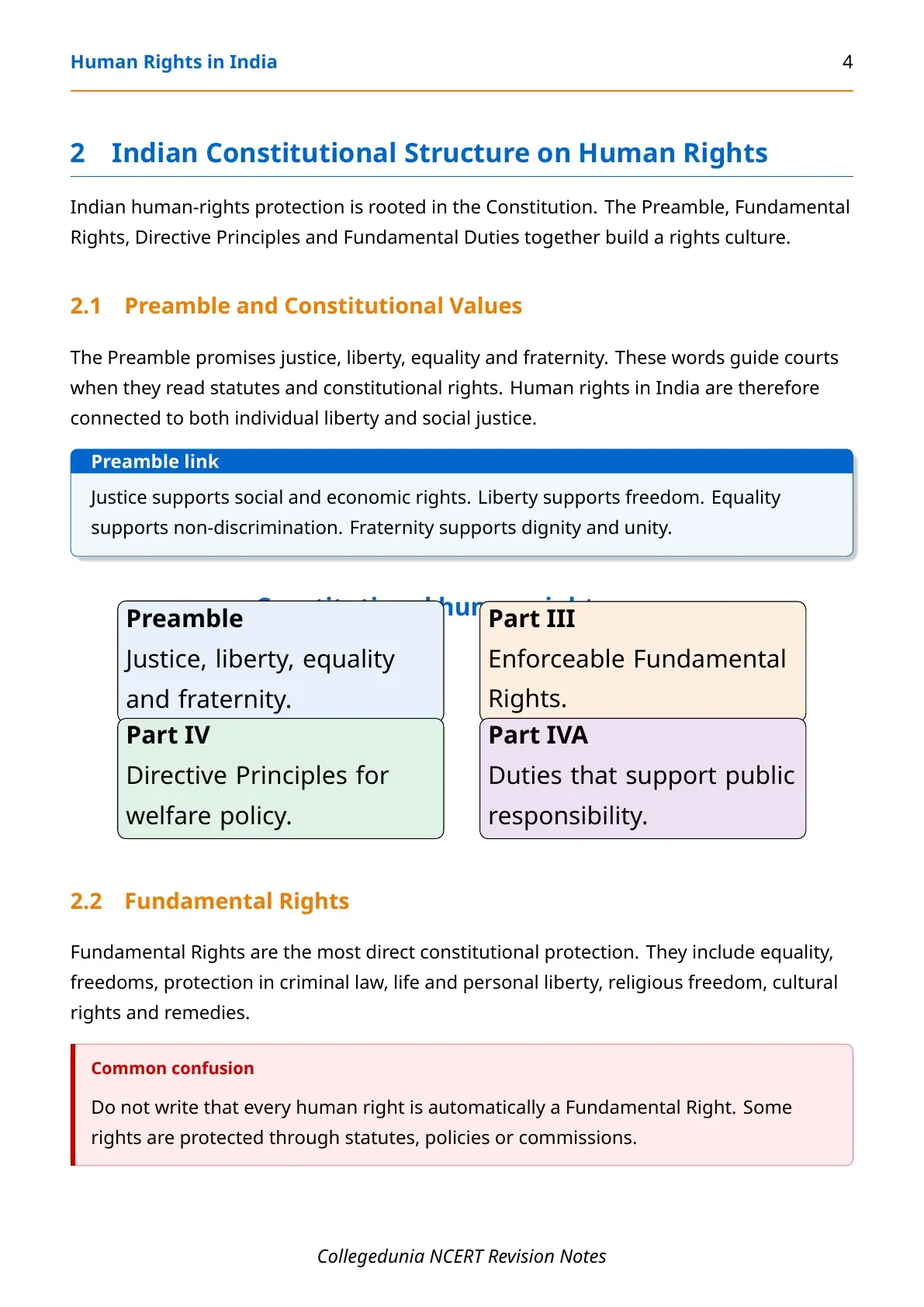
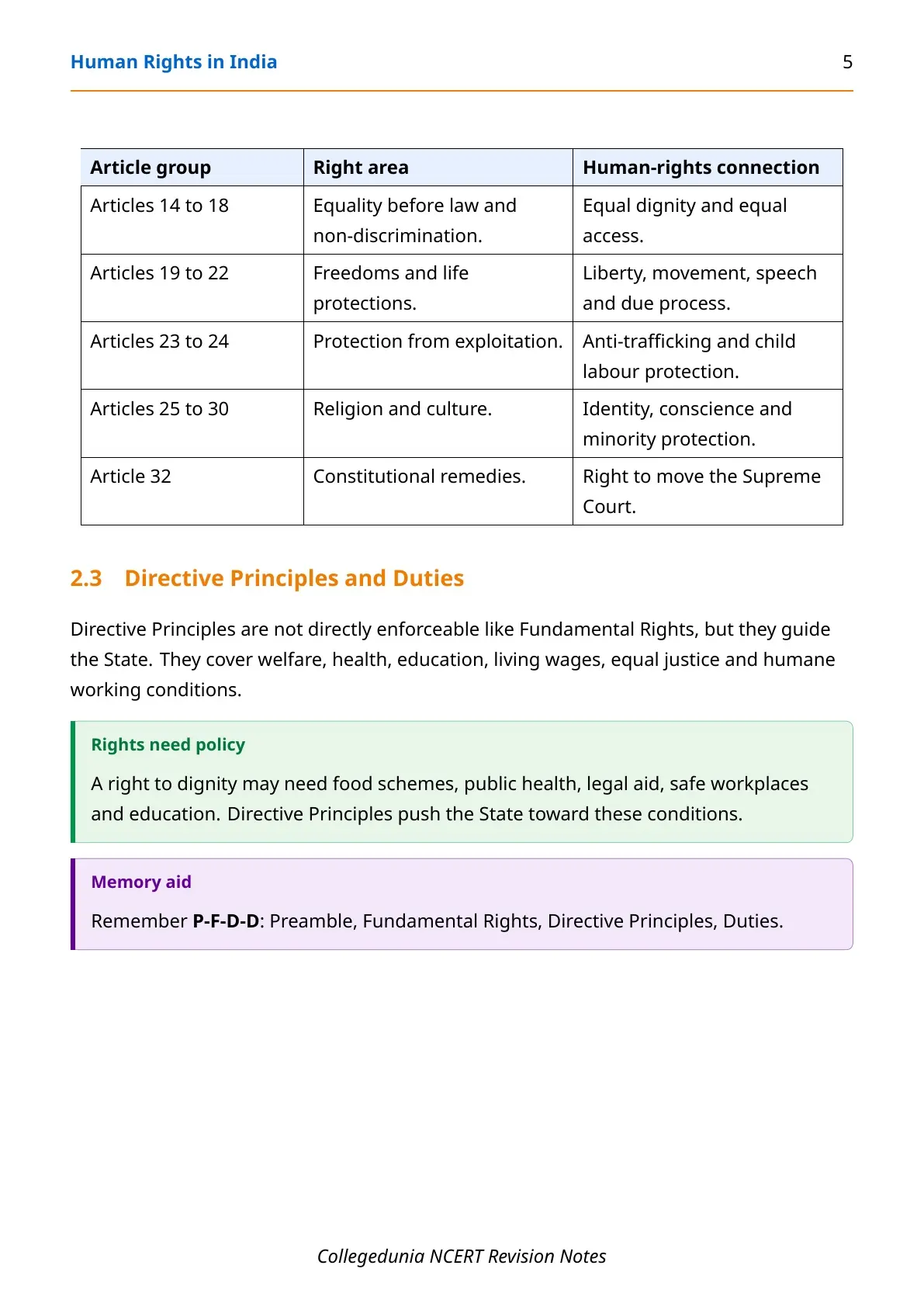
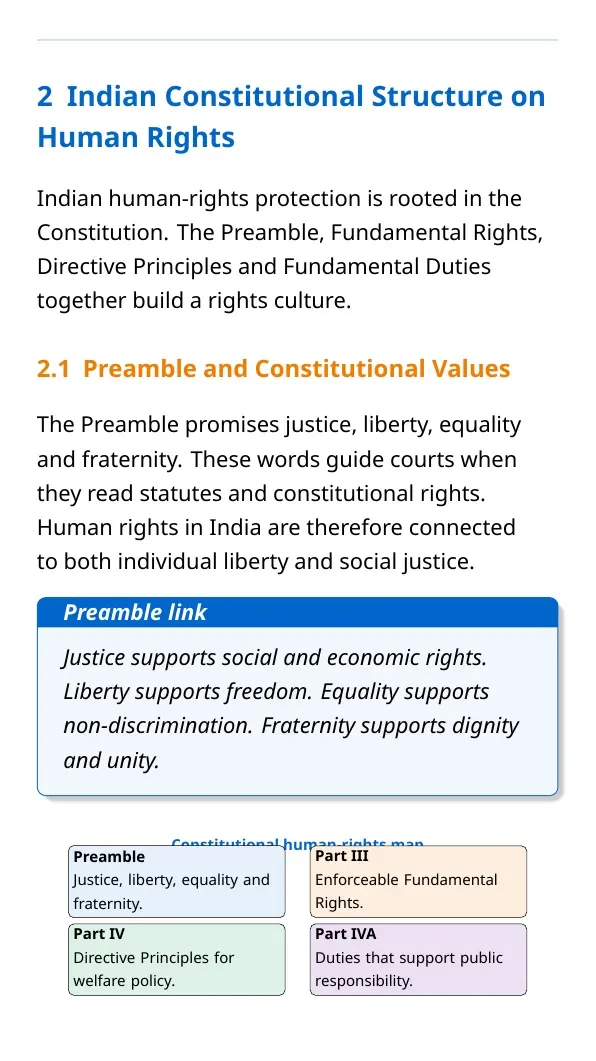
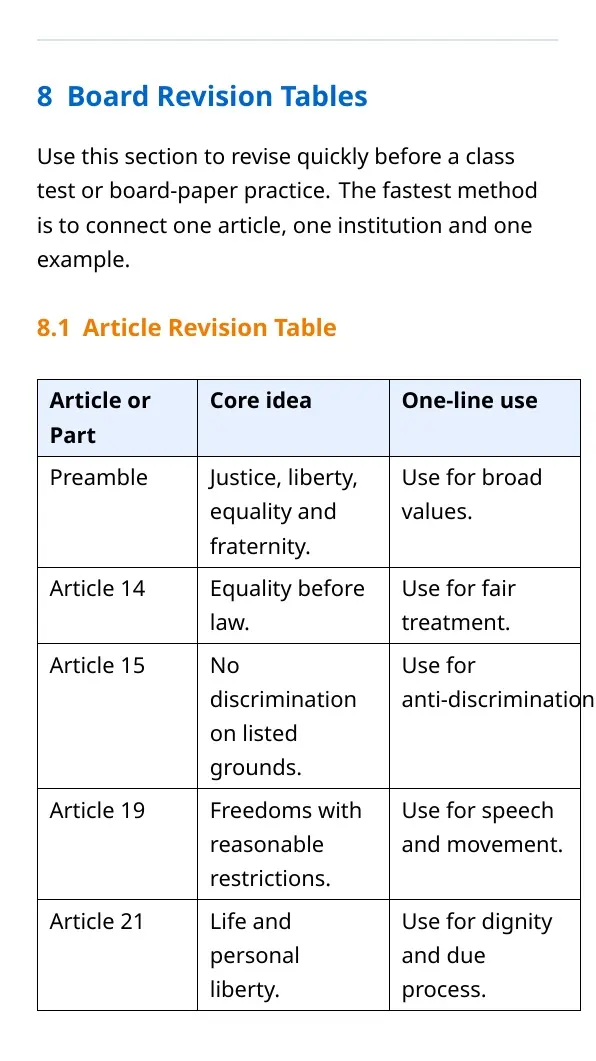
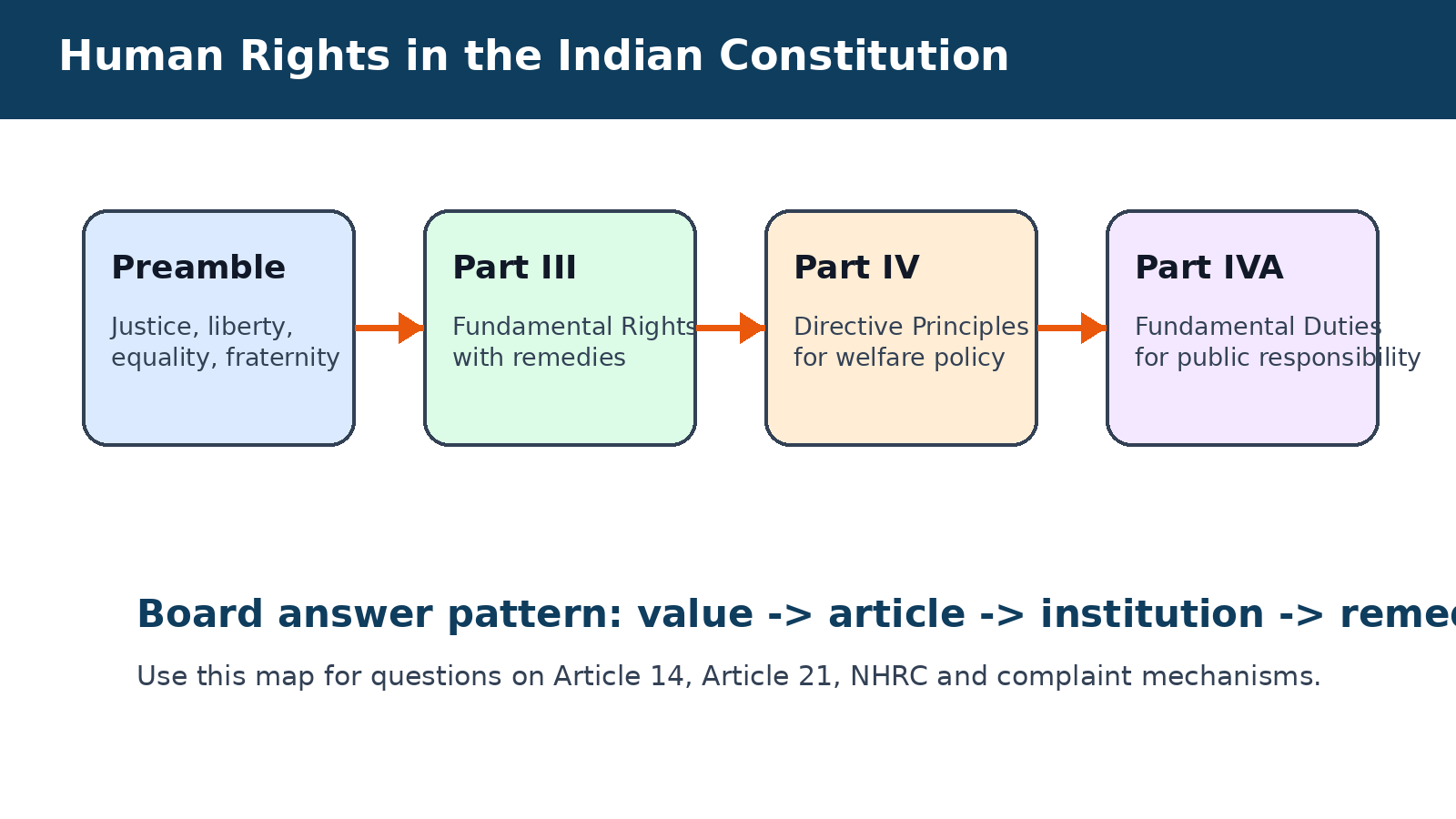
The Indian Constitution protects human rights through several connected parts. The Preamble gives values, Part III gives enforceable Fundamental Rights, Part IV guides welfare policy and Part IVA reminds citizens of duties.
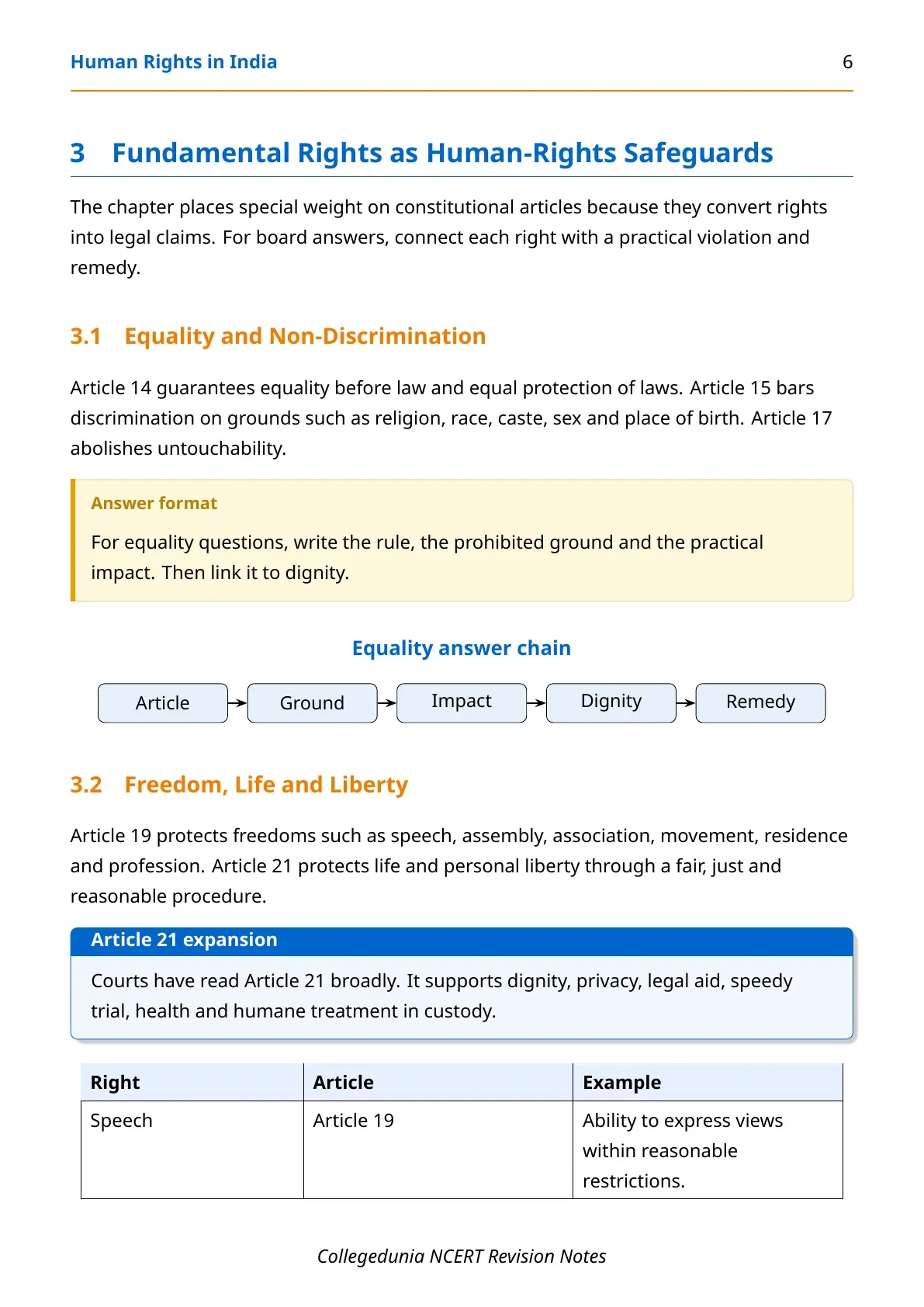
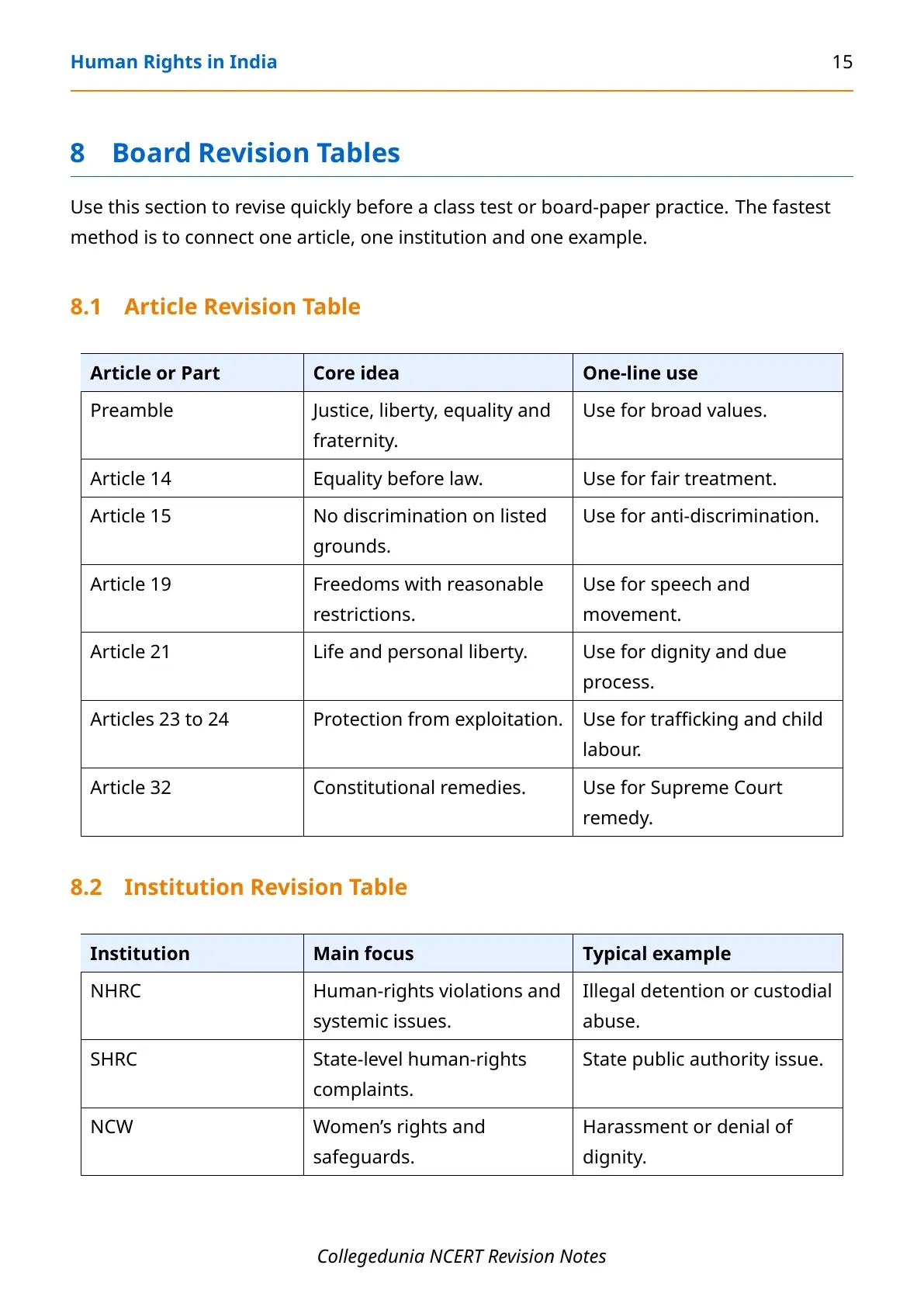
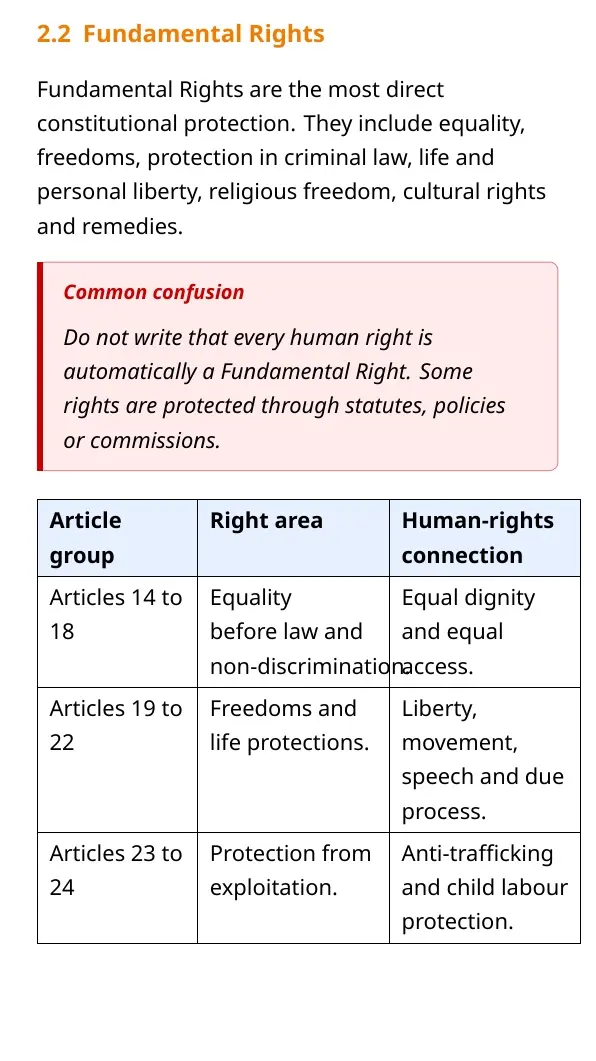
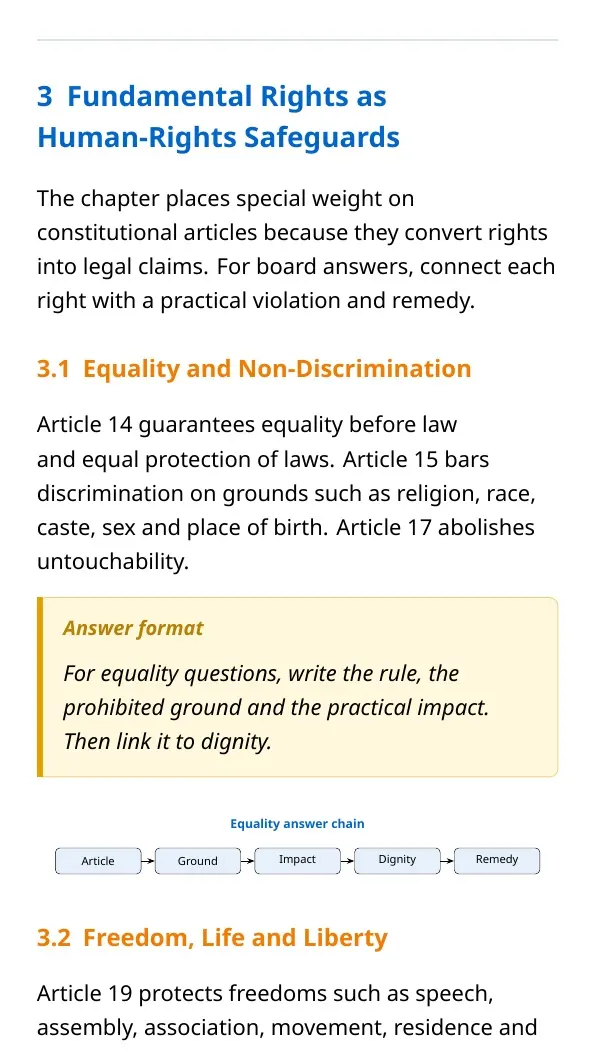
- Article 14: equality before law and equal protection of laws.
- Article 15: non-discrimination on listed grounds.
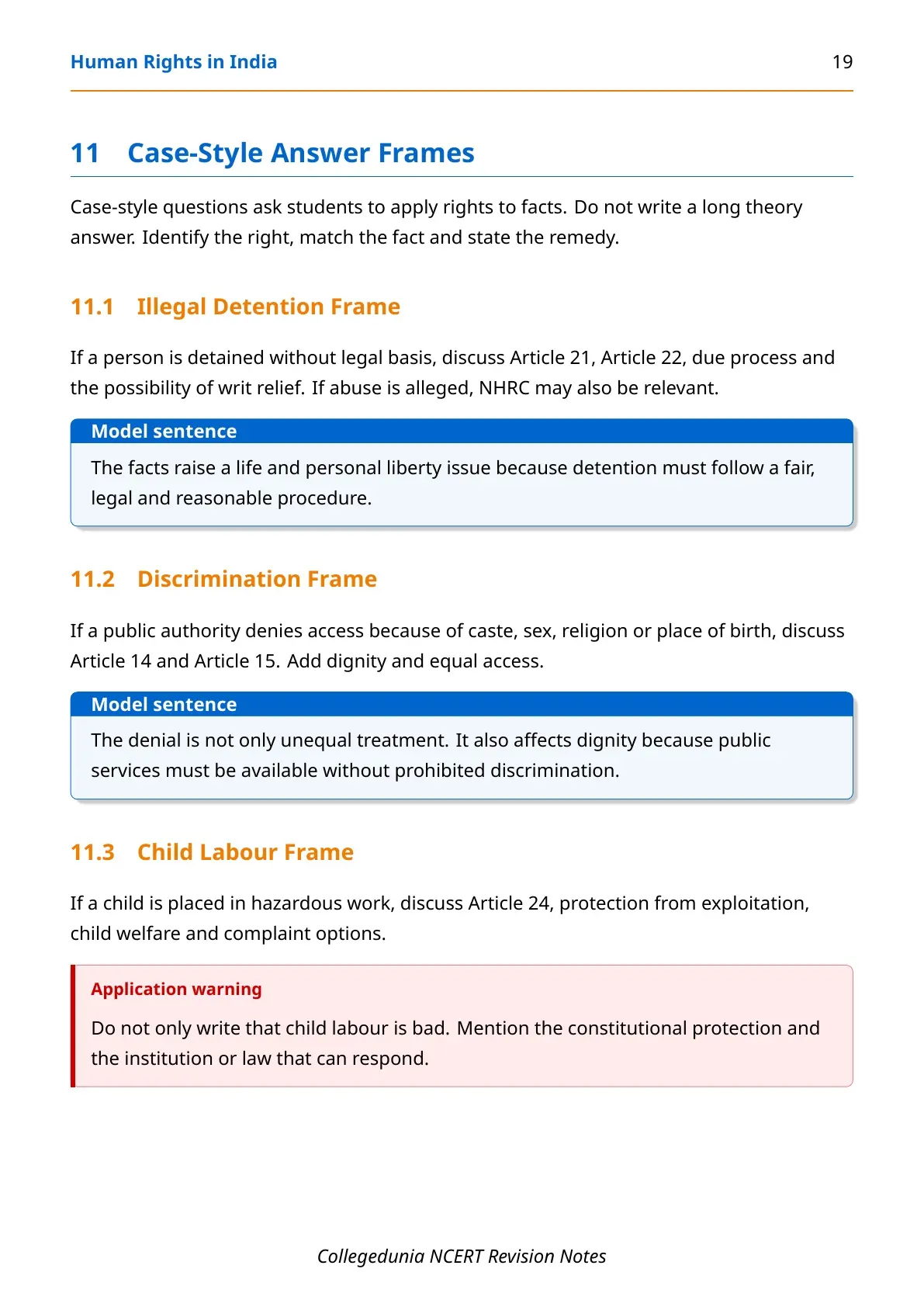
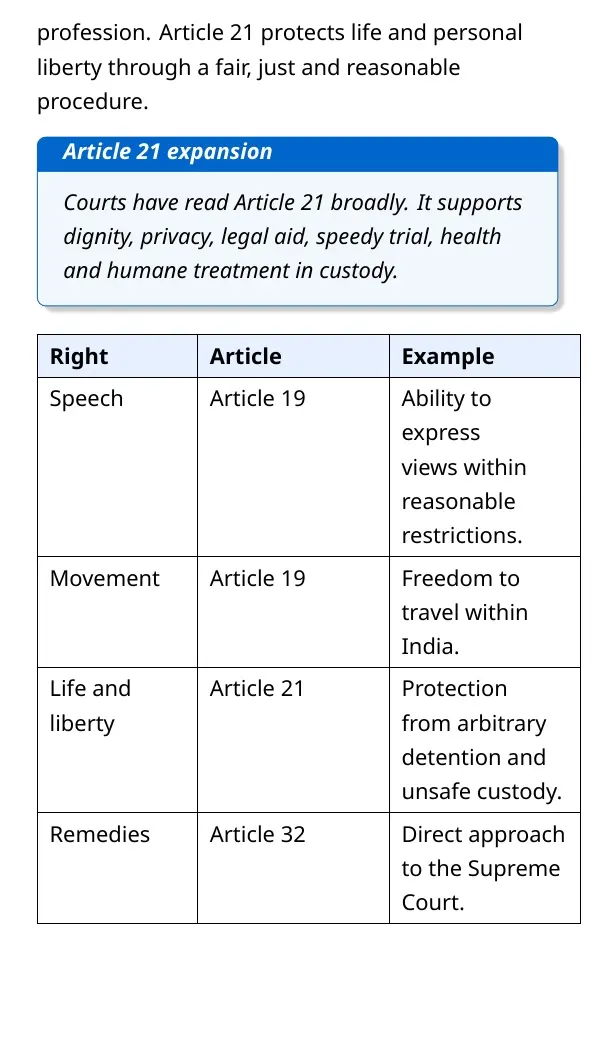
- Article 21: life and personal liberty with dignity.
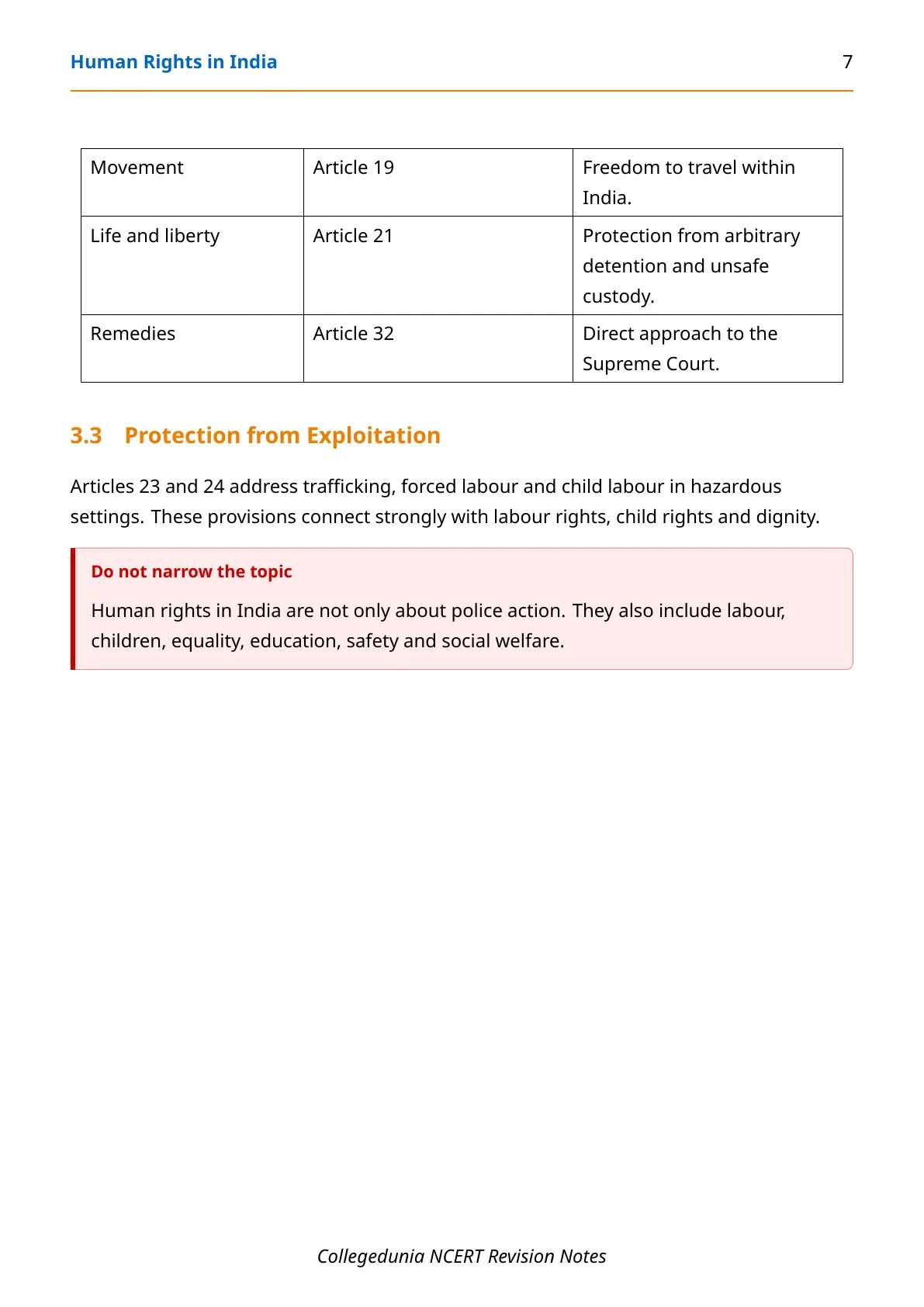
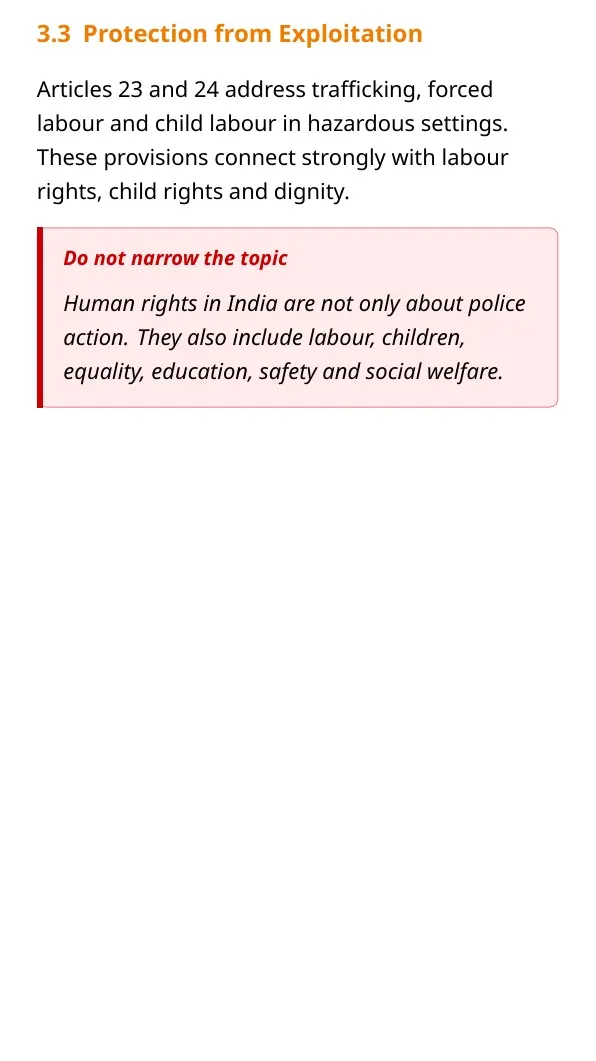
- Articles 23 and 24: protection from exploitation.
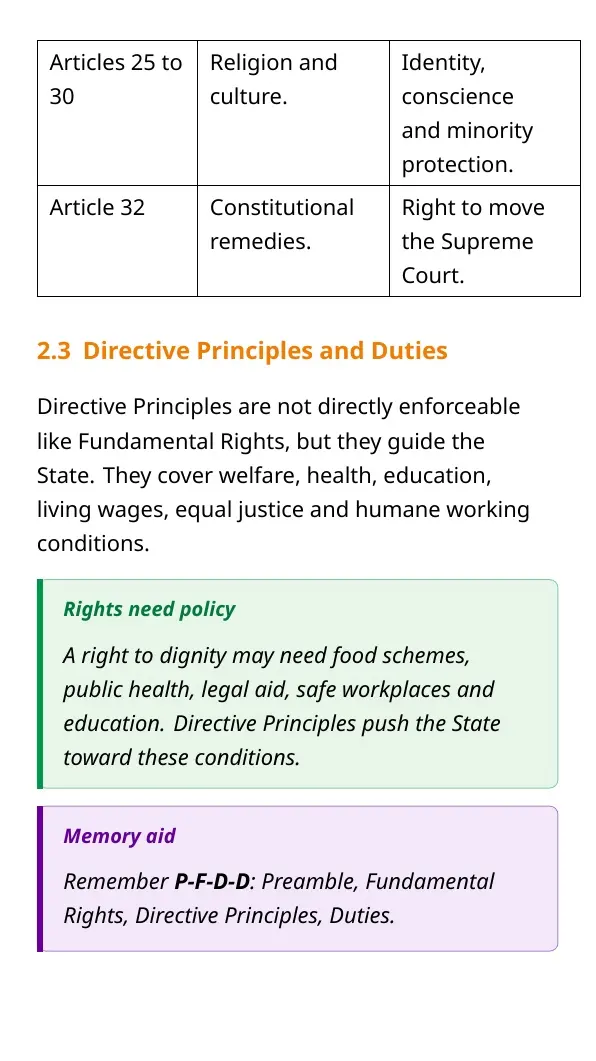
- Article 32: right to constitutional remedies.
Human Rights in India Revision Video
Source: Magnet Brains on YouTube
NHRC and Complaint Mechanism in Human Rights in India
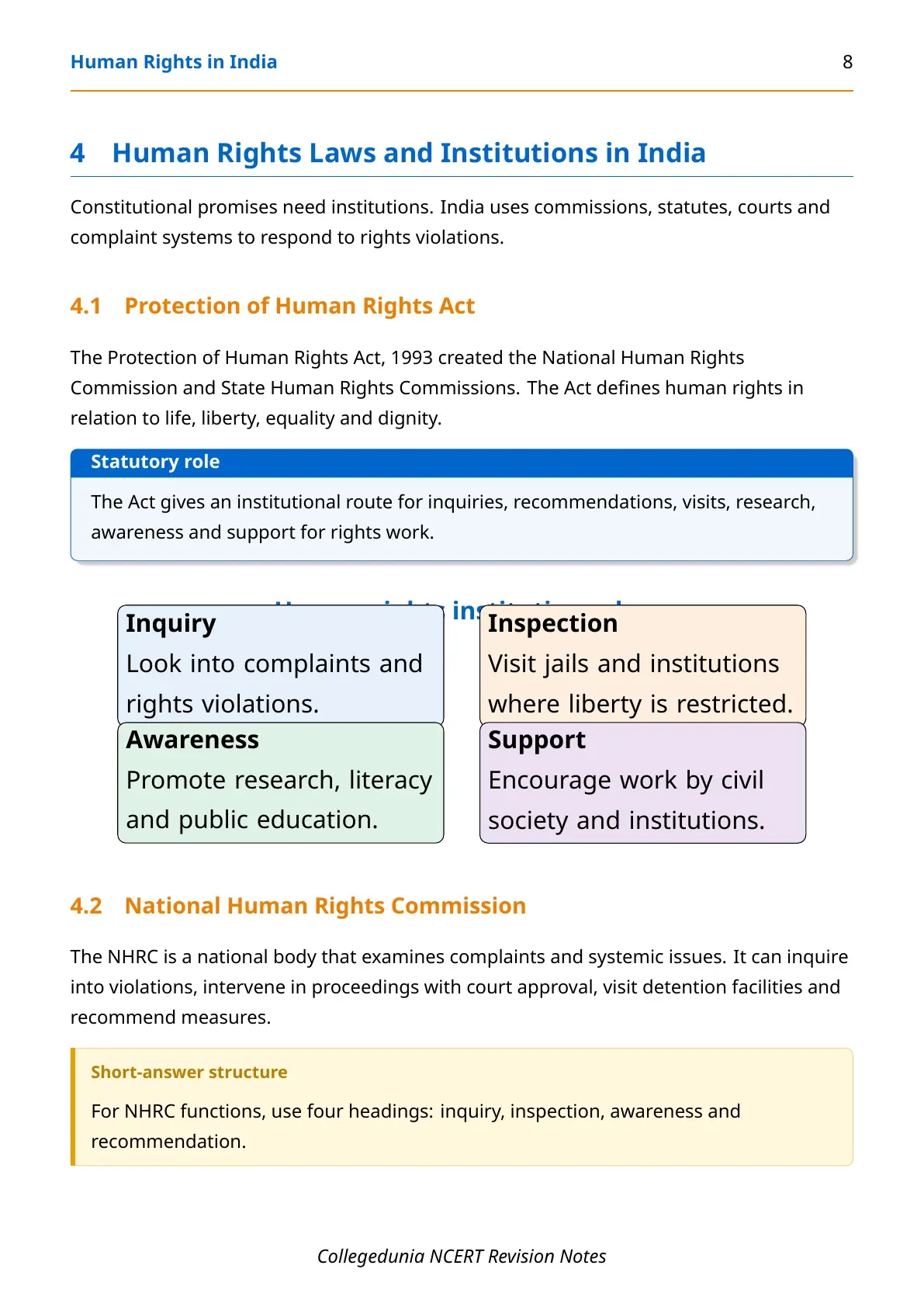
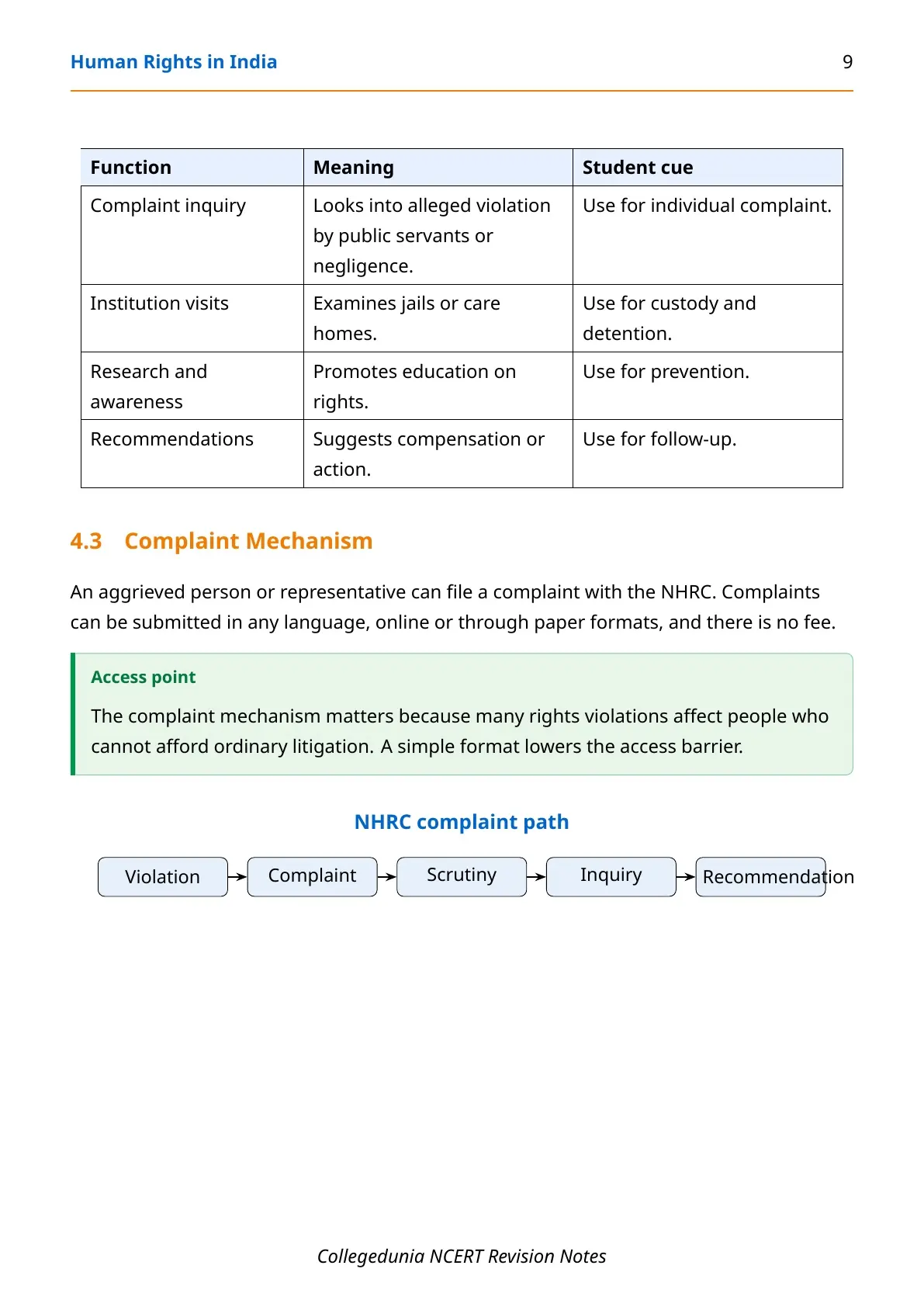
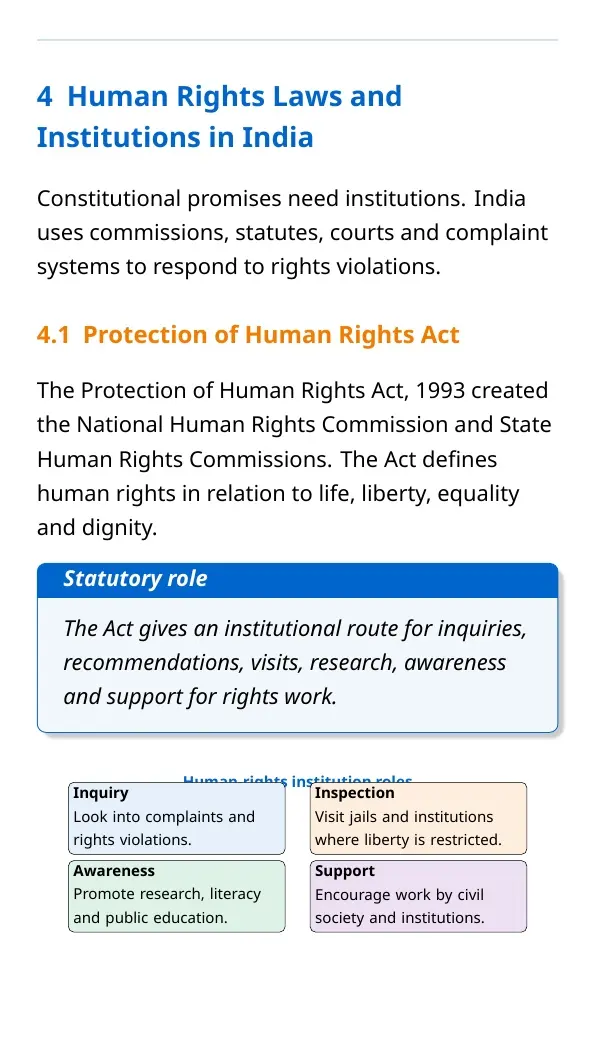
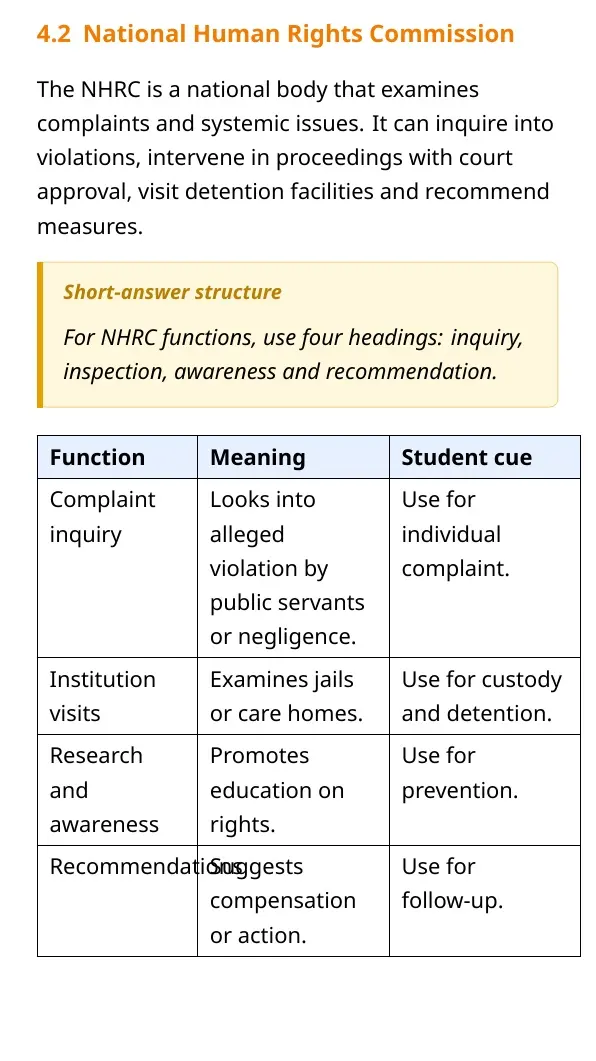
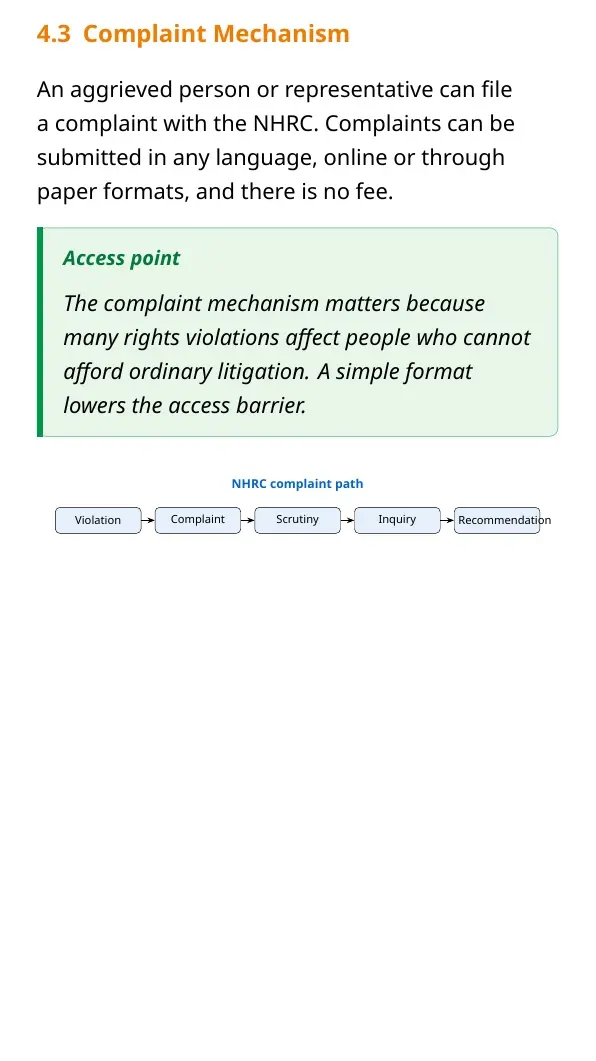
The Protection of Human Rights Act, 1993 gives an institutional route for human-rights complaints. The National Human Rights Commission can examine violations, visit institutions, promote awareness and recommend action.
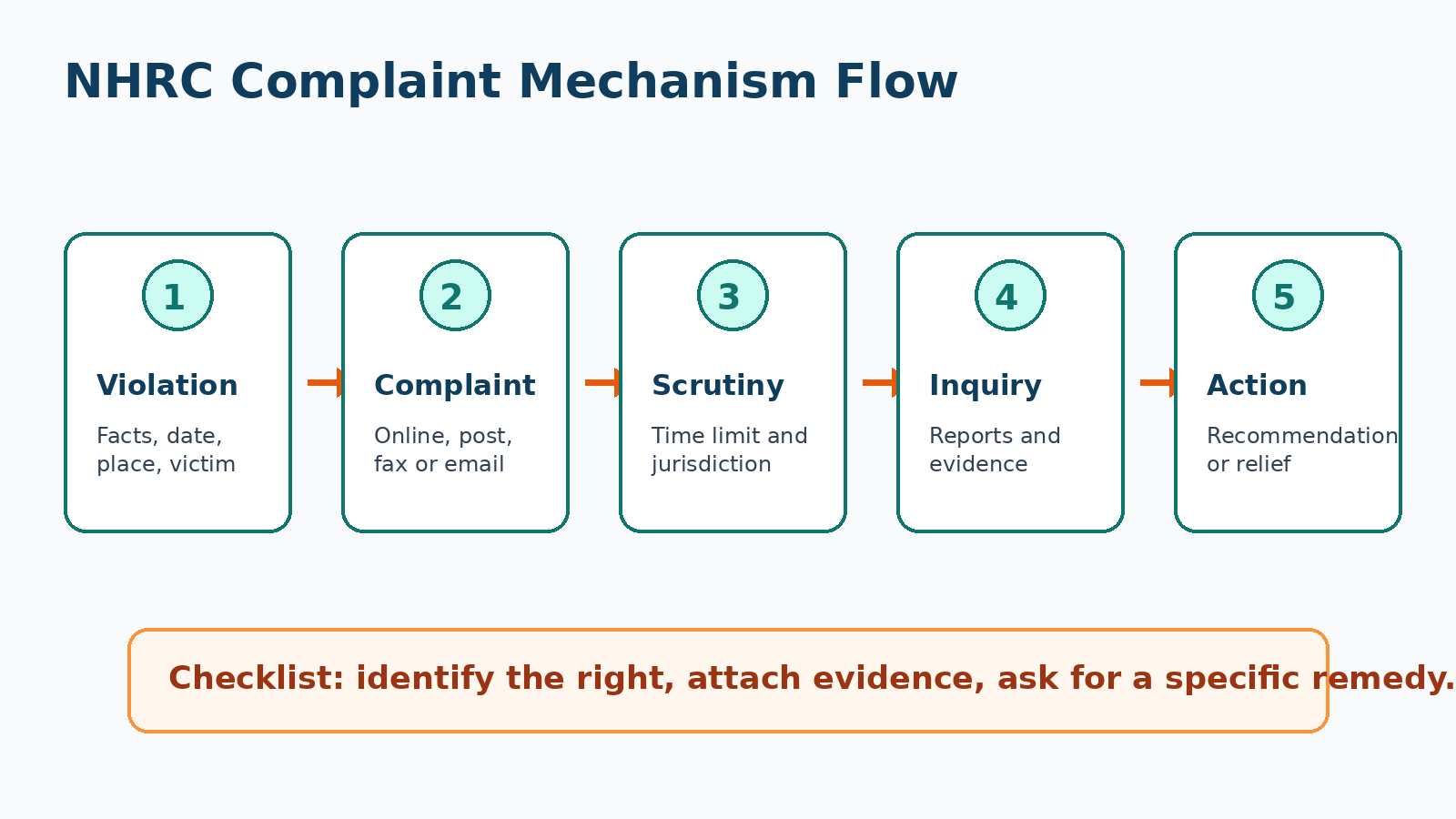
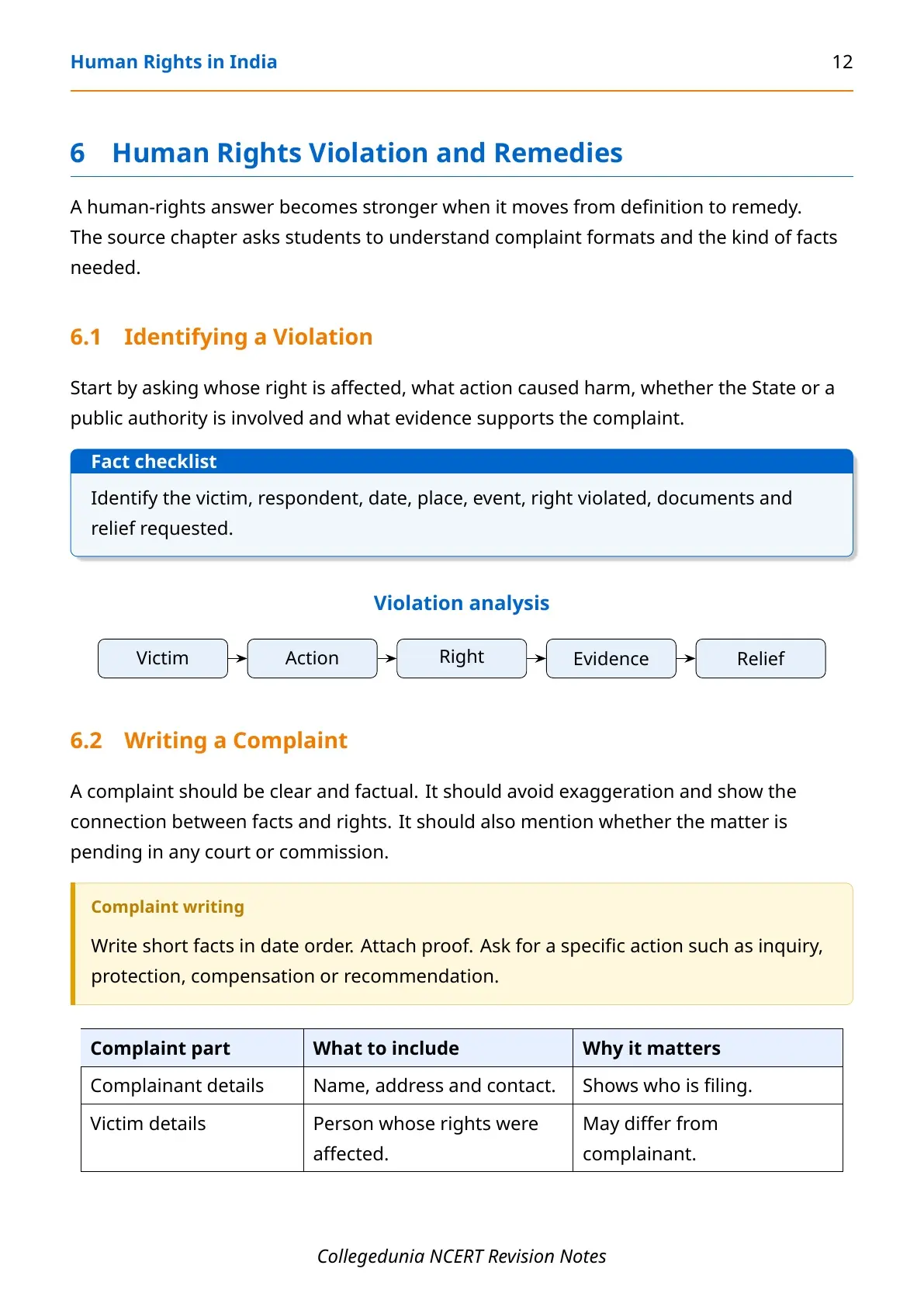
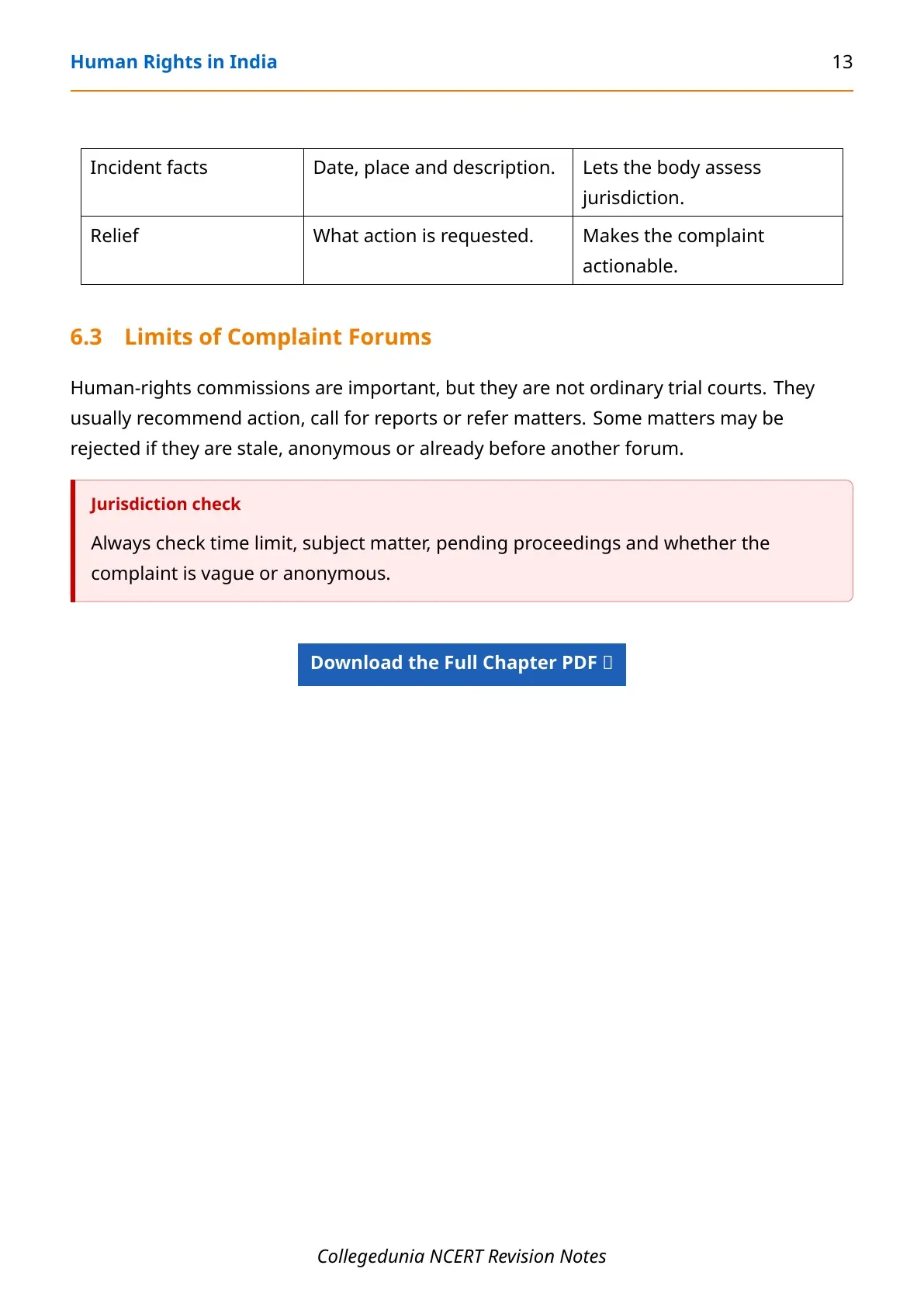
Complaint checklist: mention the complainant, victim, date, place, facts, documents and relief requested. The complaint must be clear and should not hide if the matter is already before another court or commission.
Women, Children and Special Commissions
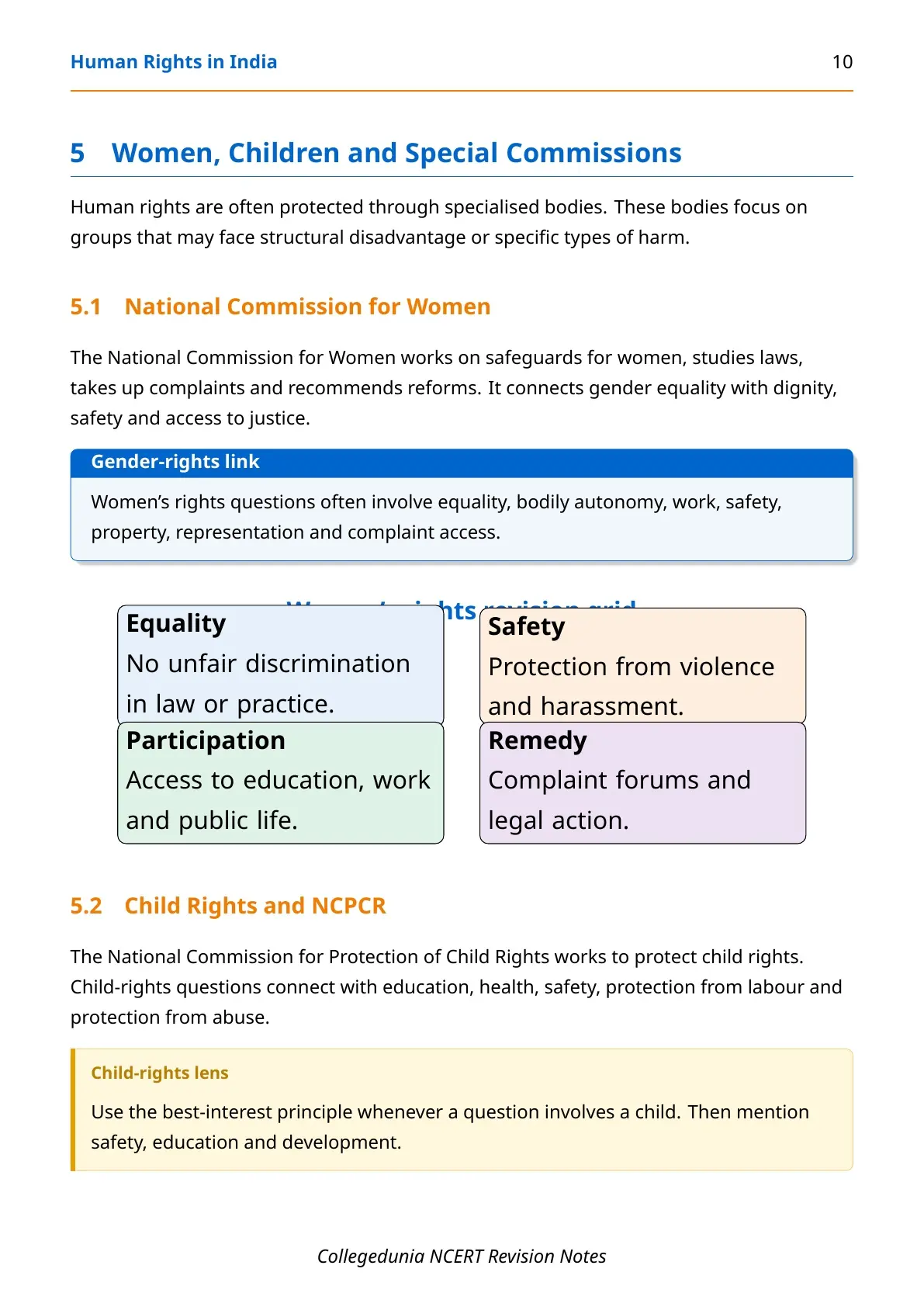
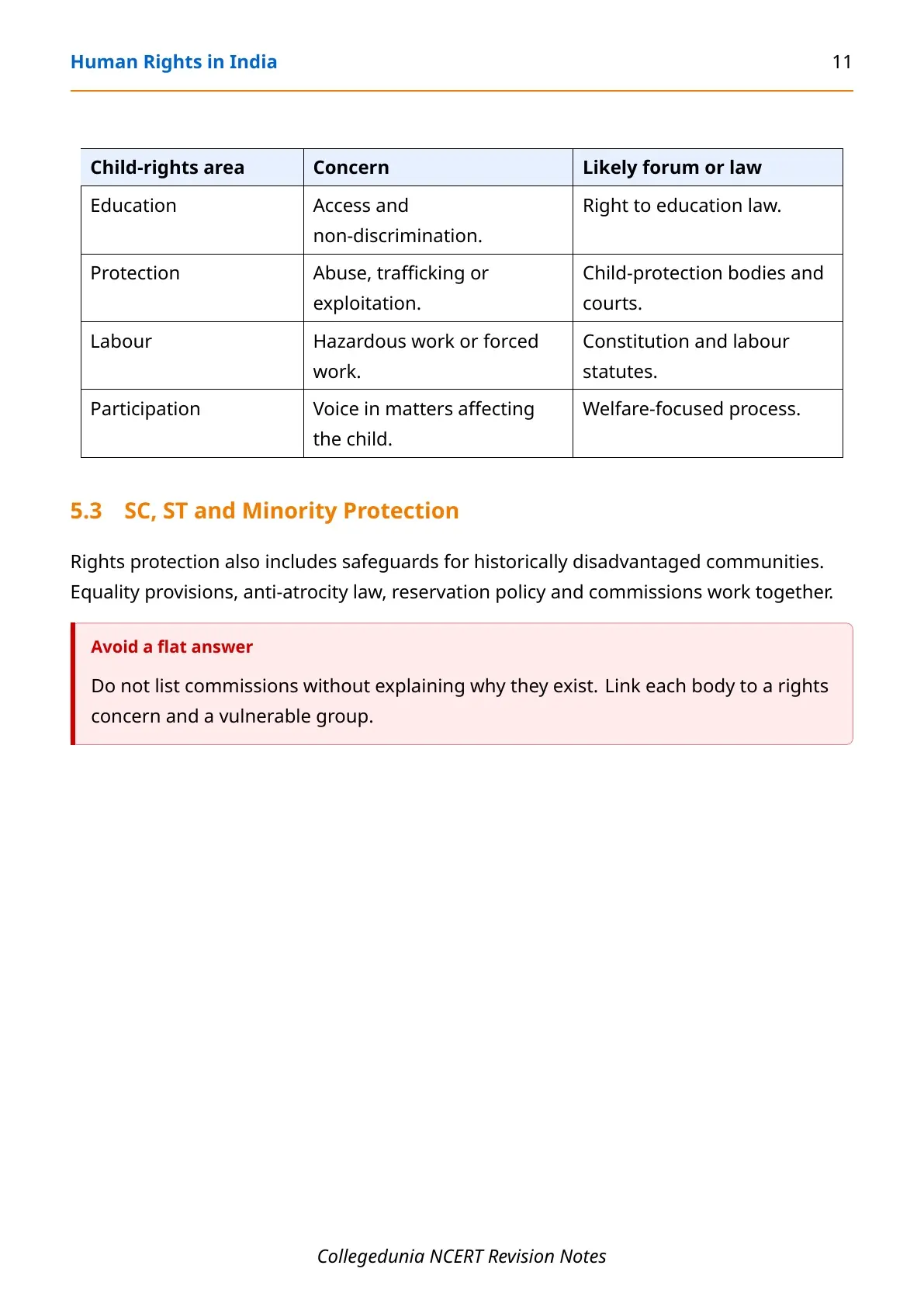
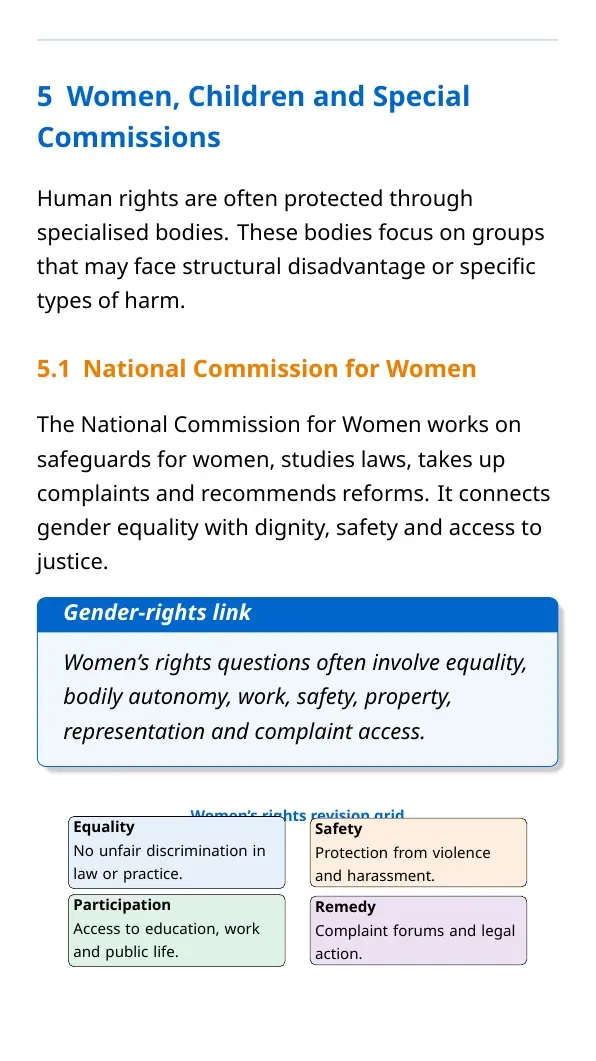
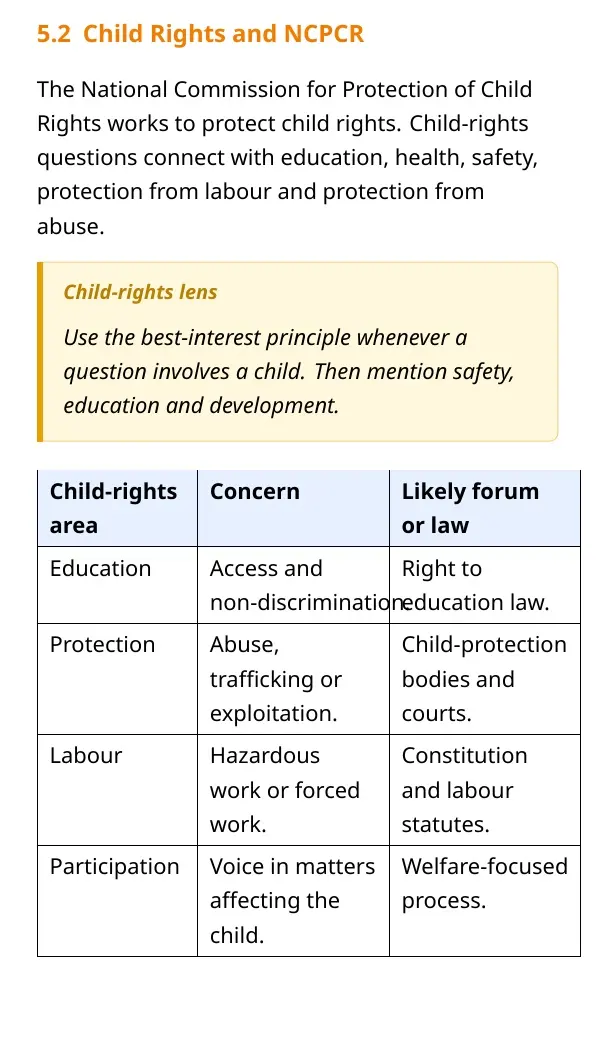
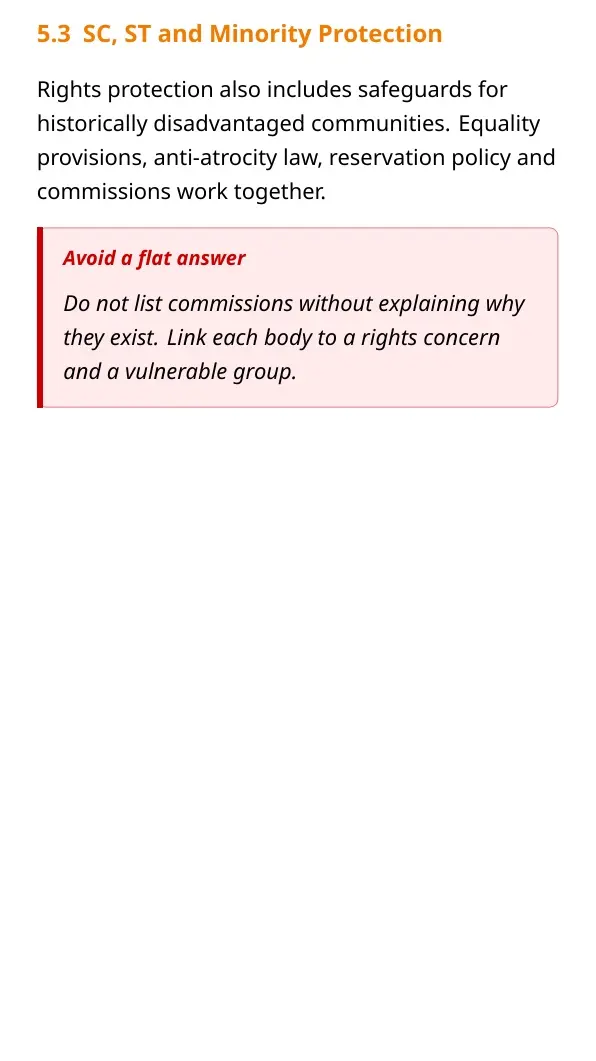
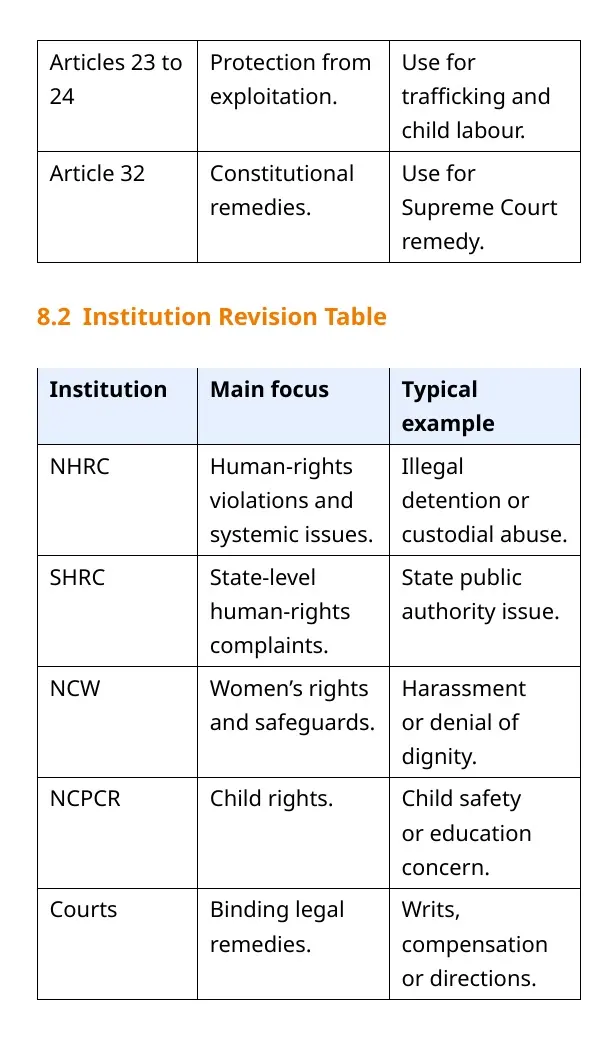
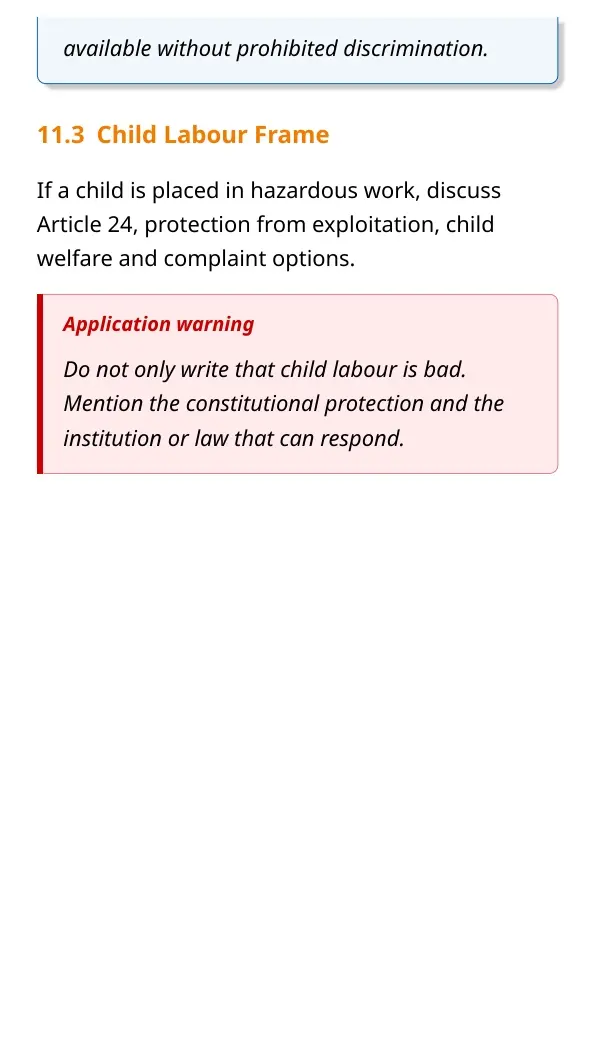
Human-rights protection in India also uses specialised bodies for vulnerable groups. The National Commission for Women works on women's safeguards, while the National Commission for Protection of Child Rights focuses on child safety, education, protection and development.
| Body | Main Focus | Example Answer Use |
|---|---|---|
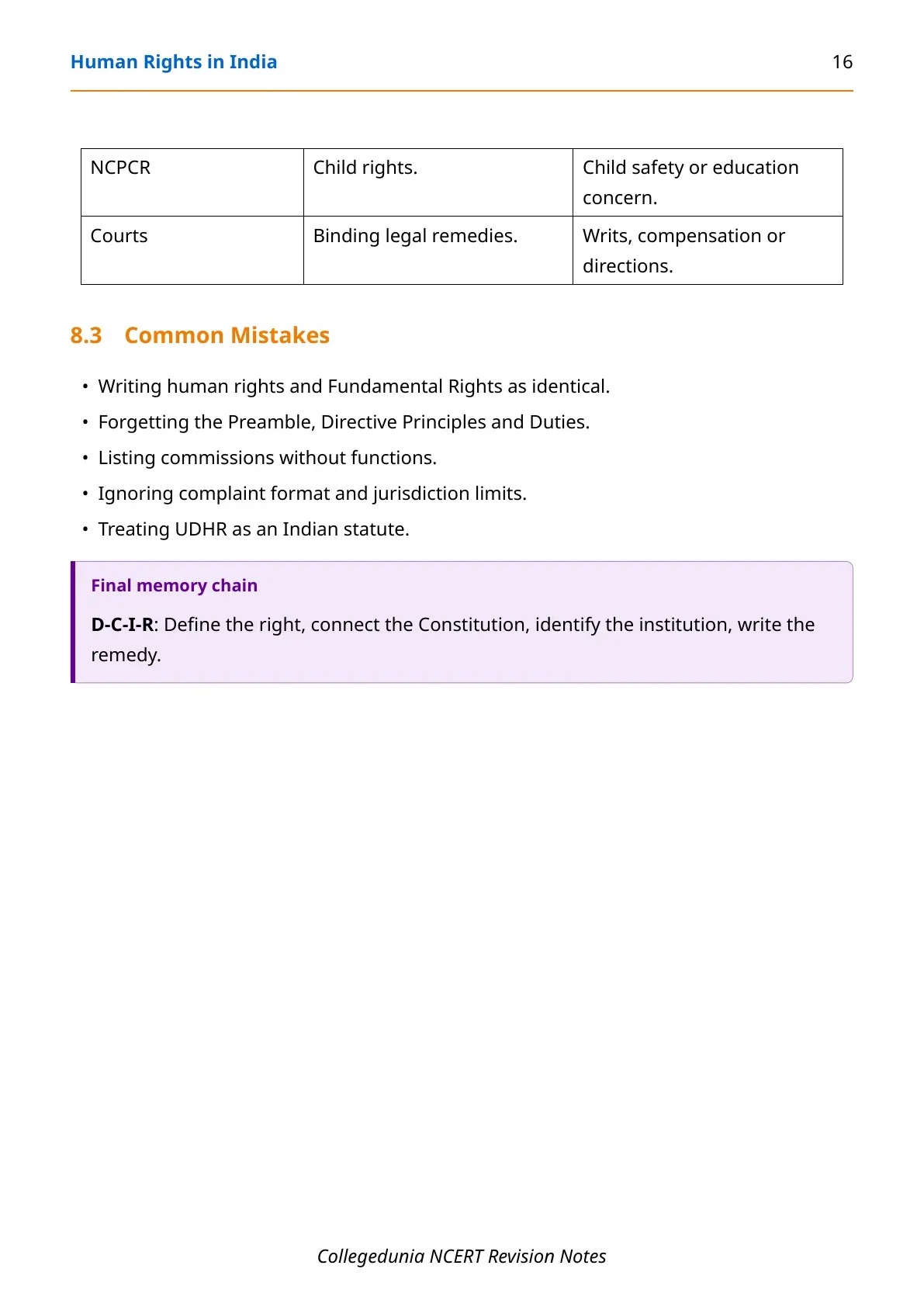
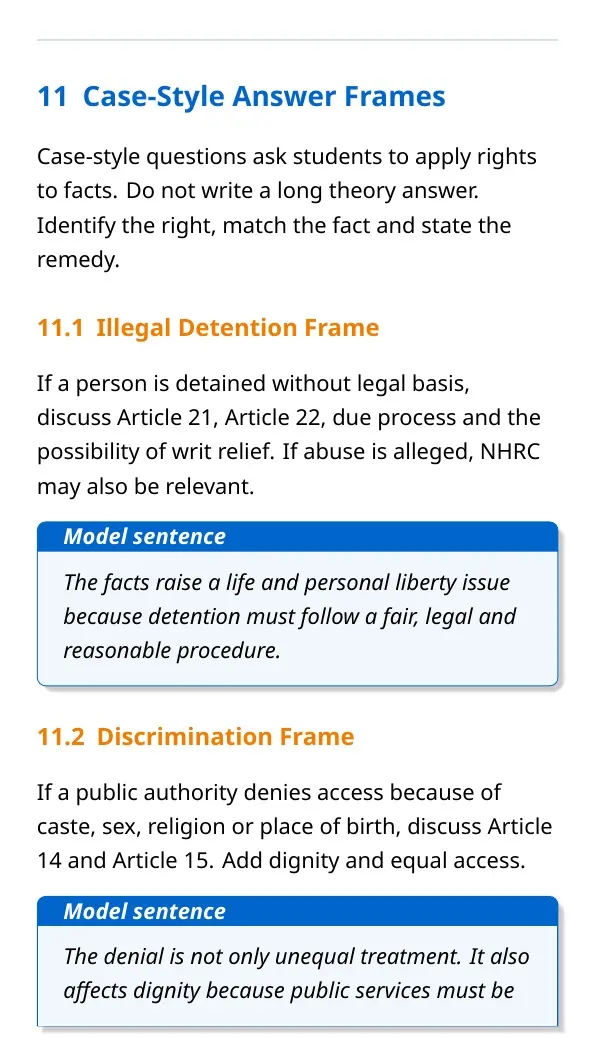
| NHRC | Human-rights violations and systemic issues. | Illegal detention, custodial abuse or rights violation. |
| NCW | Women's rights and legal safeguards. | Gender discrimination, harassment or violence. |
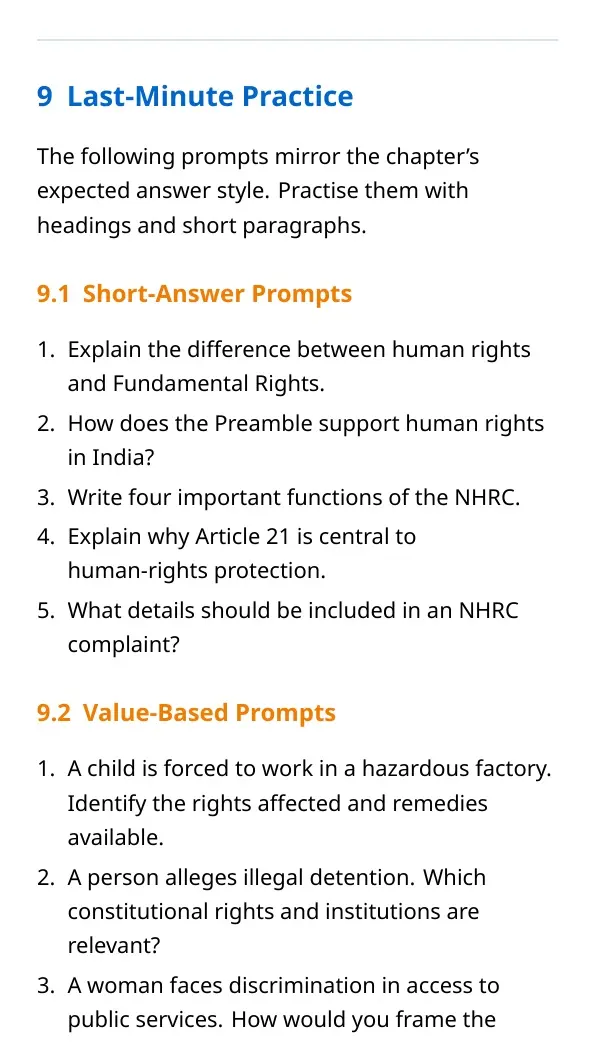
| NCPCR | Child rights and protection. | Child labour, abuse, education or safety. |
| Courts | Binding constitutional remedies. | Writs, compensation or directions. |
How to Revise Human Rights in India for Board Exams
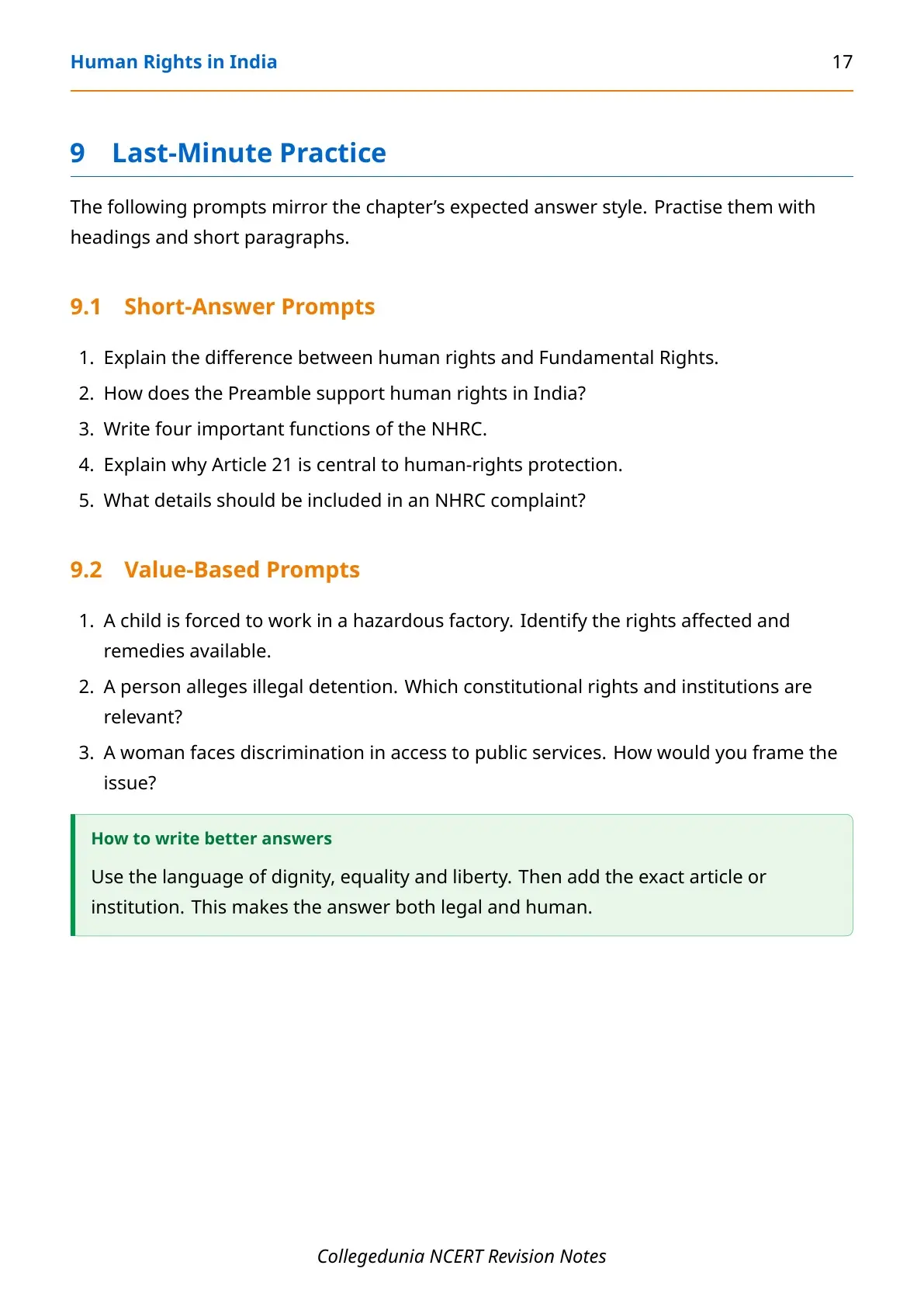
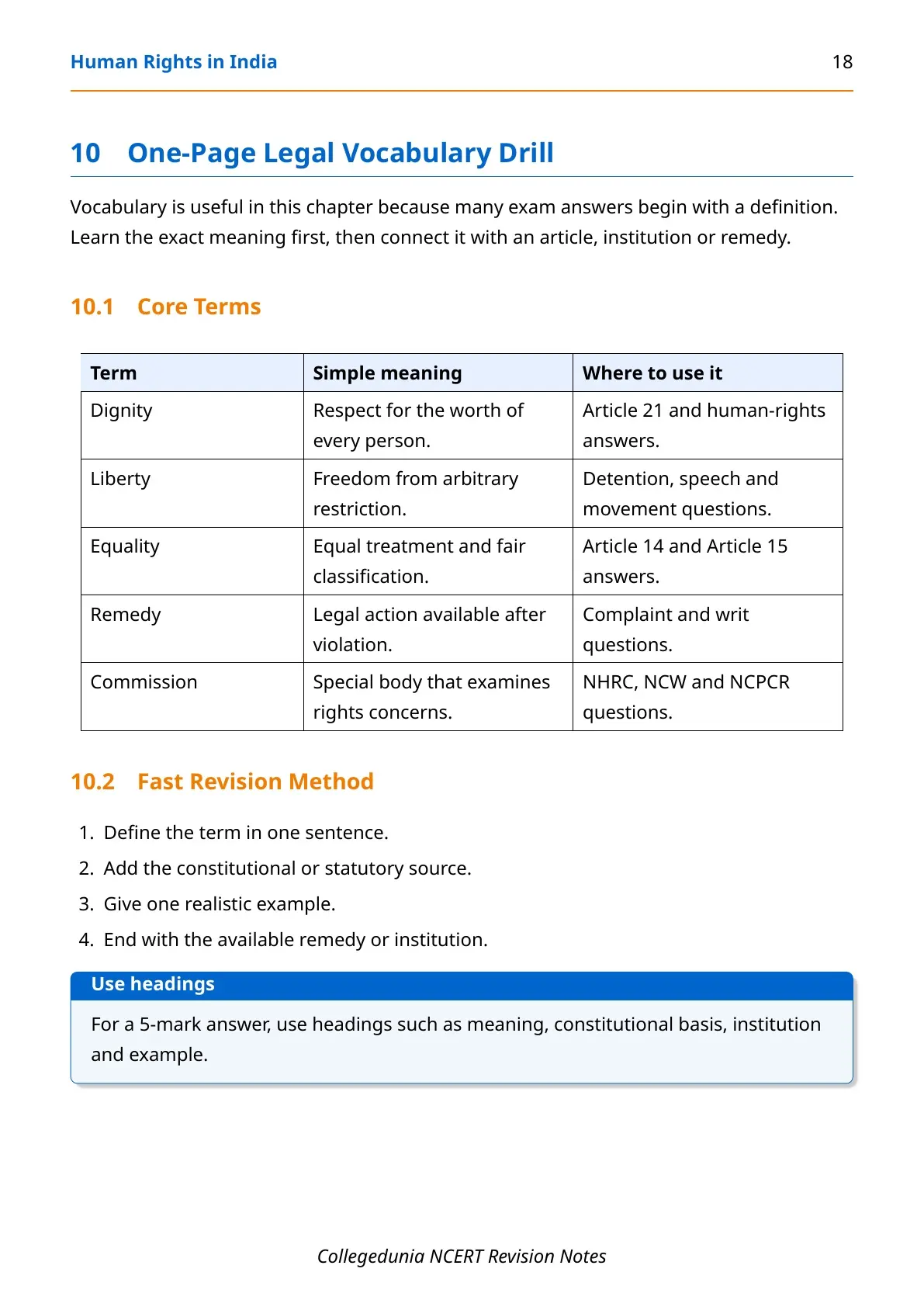
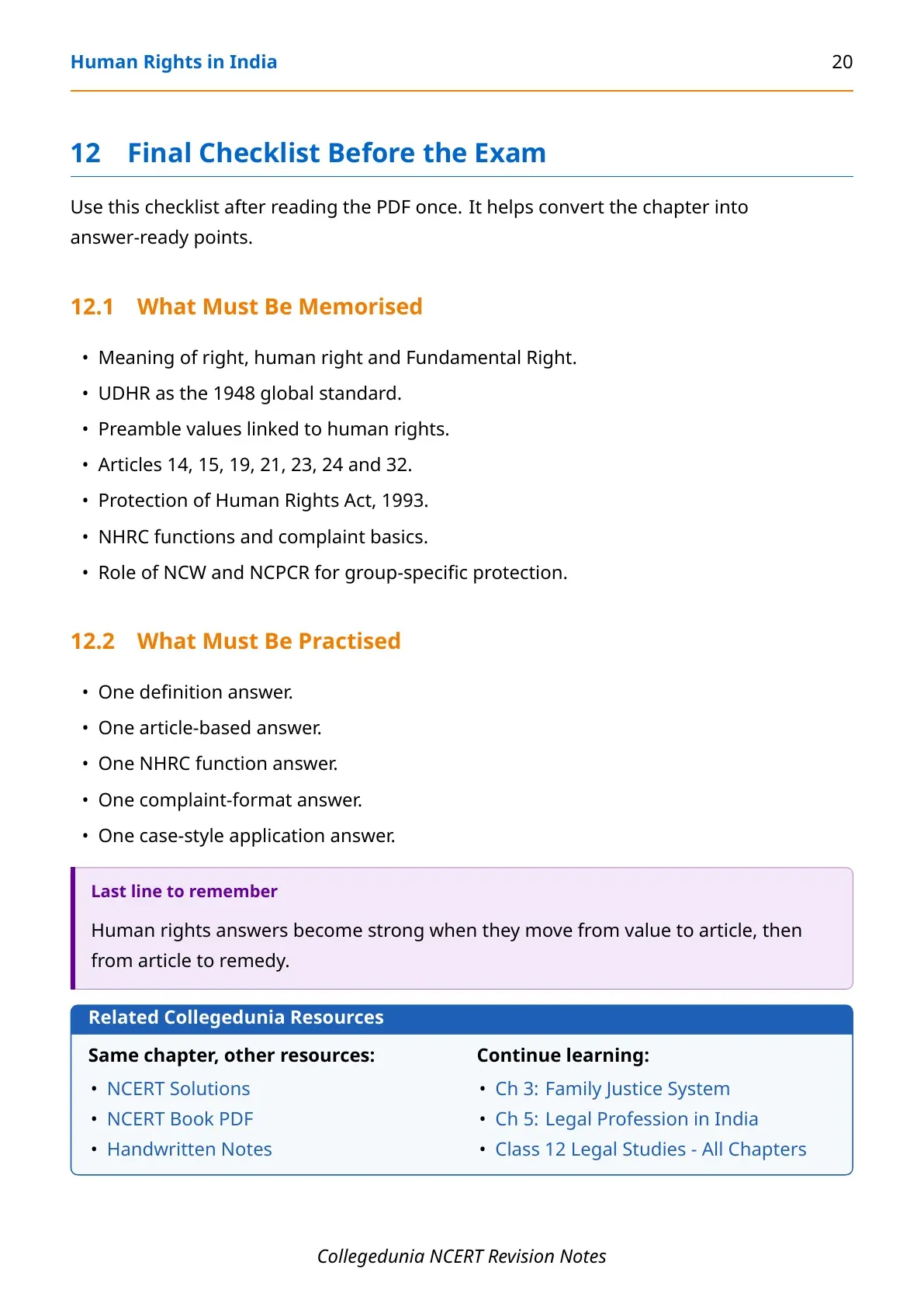
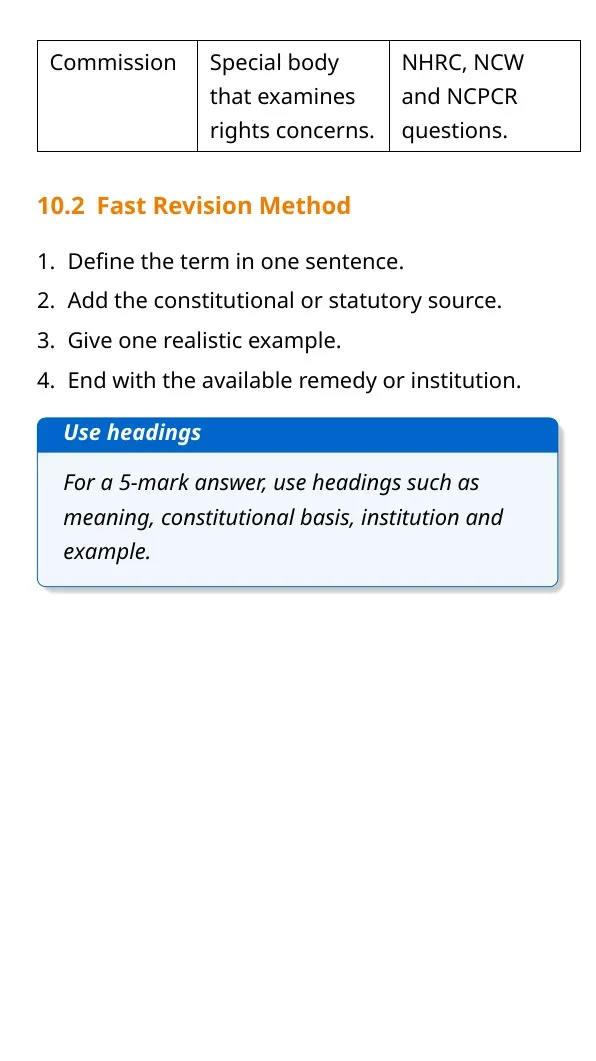
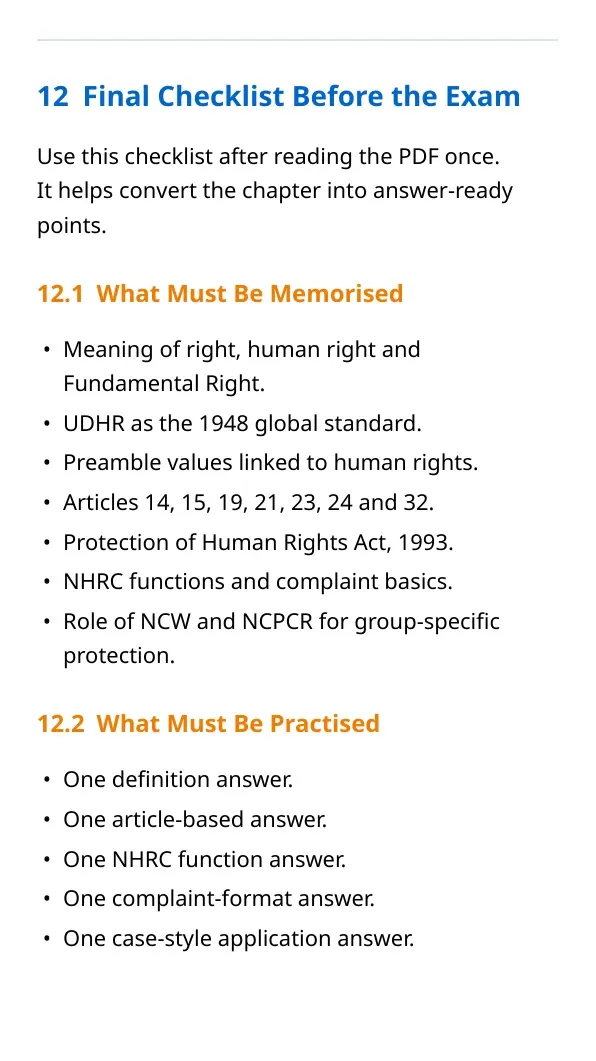
Start with definitions, then revise Articles 14, 15, 19, 21, 23, 24 and 32. After that, practise NHRC functions and complaint-format questions. A strong answer moves from value to article, then from article to remedy.
- Write one-line definitions of right, human right and Fundamental Right.
- Make a short table for Preamble, Part III, Part IV and Part IVA.
- Practise a five-point NHRC function answer.
- Draft one complaint on a hypothetical rights violation.
Human Rights in India Related NCERT Resources
| Resource | Class 12 Legal Studies Link |
|---|---|
| NCERT Solutions | Human Rights in India Class 12 NCERT Solutions |
| NCERT Book PDF | Human Rights in India Class 12 NCERT Book PDF |
| Handwritten Notes | Human Rights in India Class 12 Handwritten Notes |
Class 12 Legal Studies Notes for All Chapters
| Chapter | Notes Link |
|---|---|
| Chapter 1 Judiciary | Class 12 Legal Studies Notes |
| Chapter 2 Topics in Law | Class 12 Legal Studies Notes |
| Chapter 3 Family Justice System | Class 12 Legal Studies Notes |
| Chapter 4 Human Rights in India | Current chapter notes |
| Chapter 5 Legal Profession in India | Class 12 Legal Studies Notes |
| Chapter 6 Legal Services | Class 12 Legal Studies Notes |
| Chapter 7 International Context | Class 12 Legal Studies Notes |
Human Rights in India Class 12 Legal Studies Notes FAQs
Ques. What is covered in Human Rights in India Class 12 Legal Studies notes?
Ans. The notes cover human rights, Fundamental Rights, Directive Principles, NHRC, NCW, NCPCR and complaint mechanisms for the 2026-27 syllabus.
Ques. Which articles are most important in Human Rights in India?
Ans. Students should revise Articles 14, 15, 19, 21, 23, 24 and 32 because they link equality, liberty, exploitation and remedies.
Ques. How should students revise NHRC functions?
Ans. Students should remember inquiry, inspection, awareness and recommendations, then connect each function with one example of rights violation.



Comments