



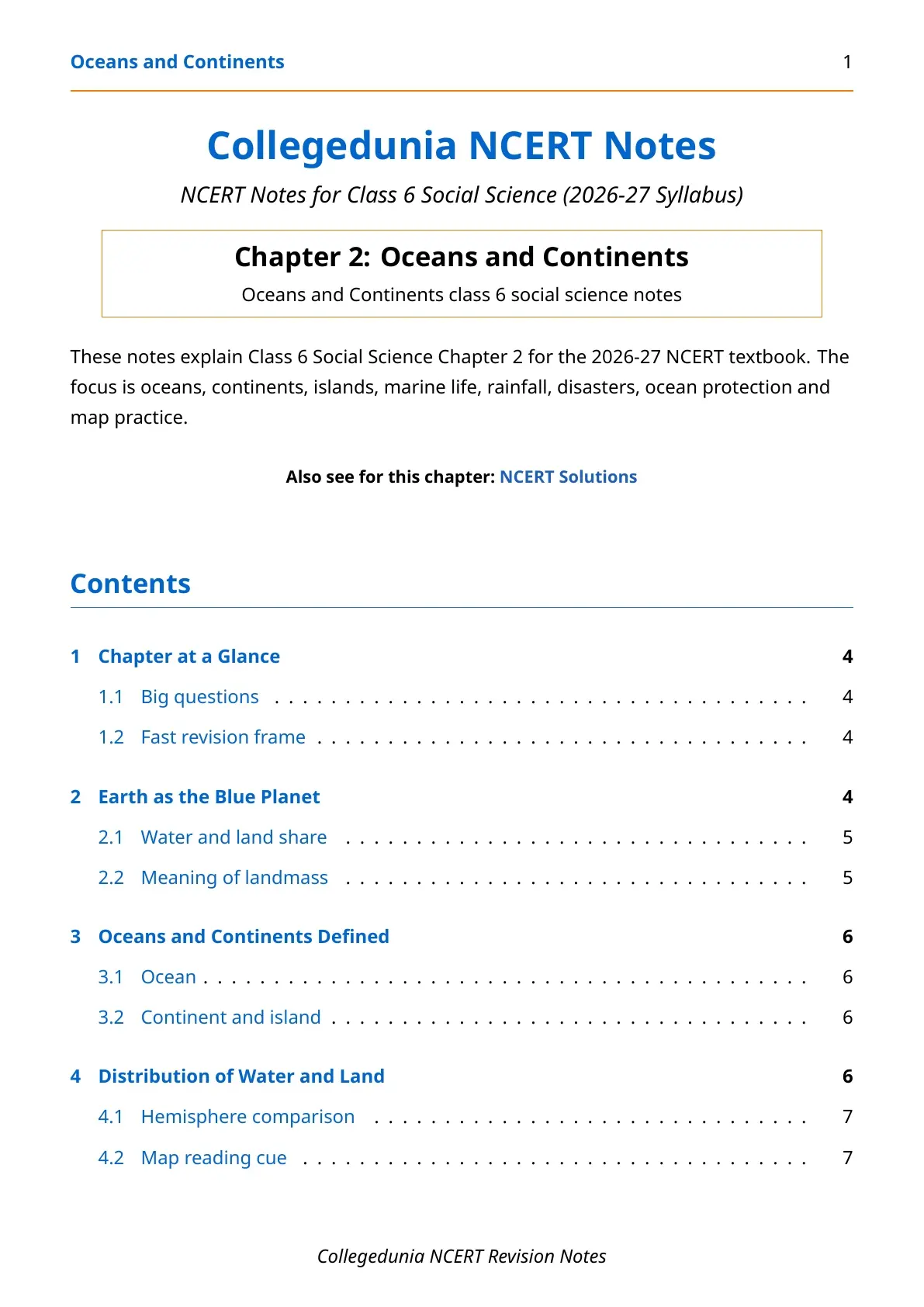
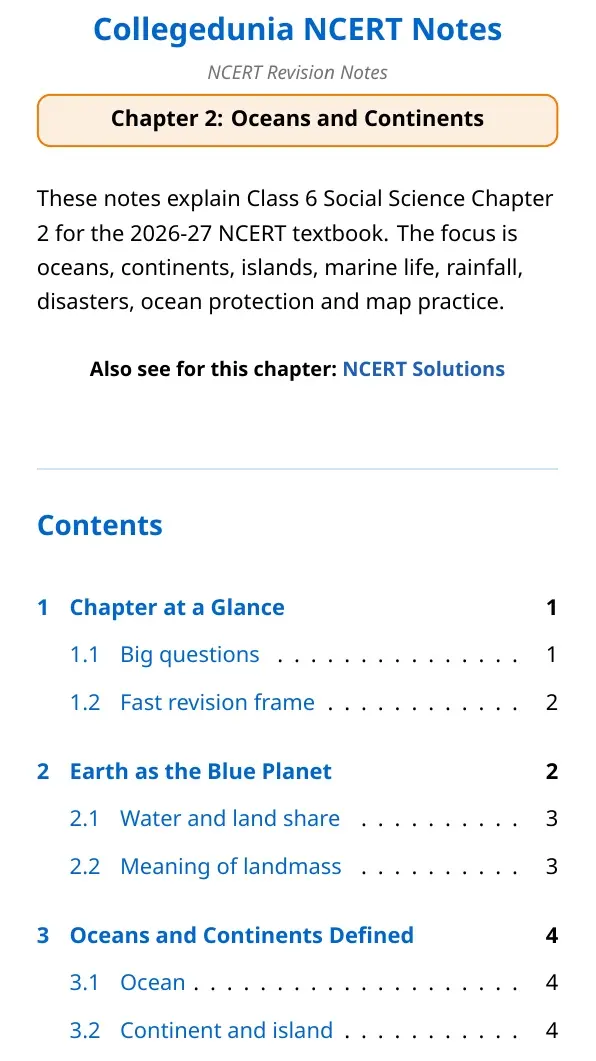
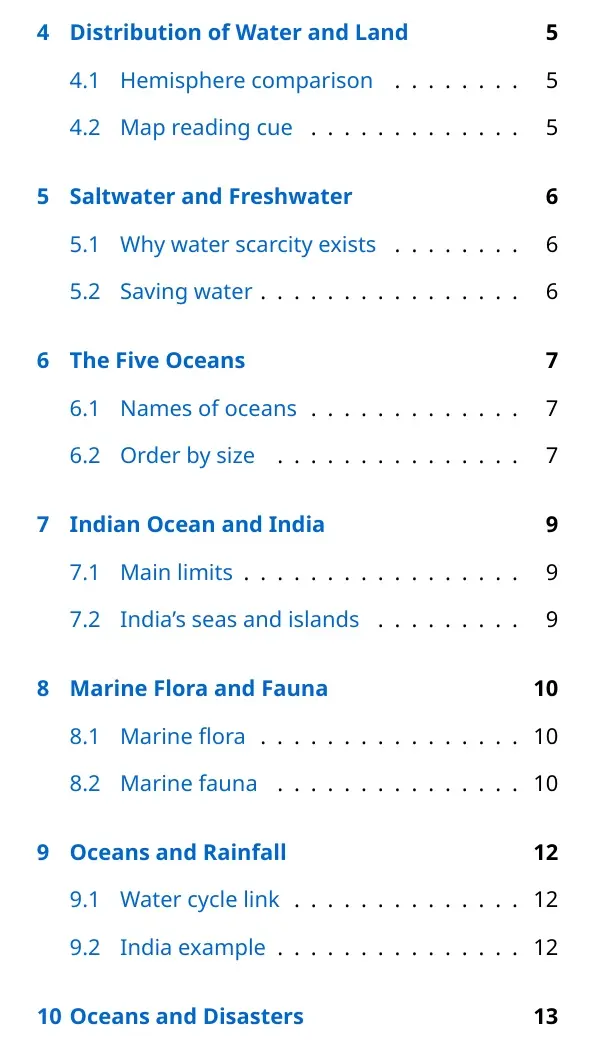
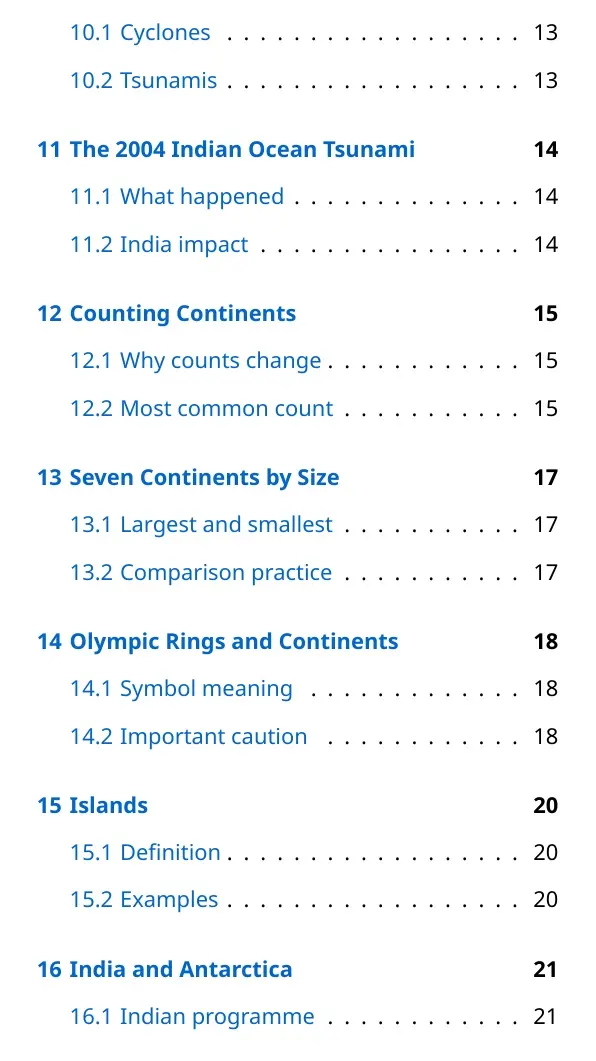
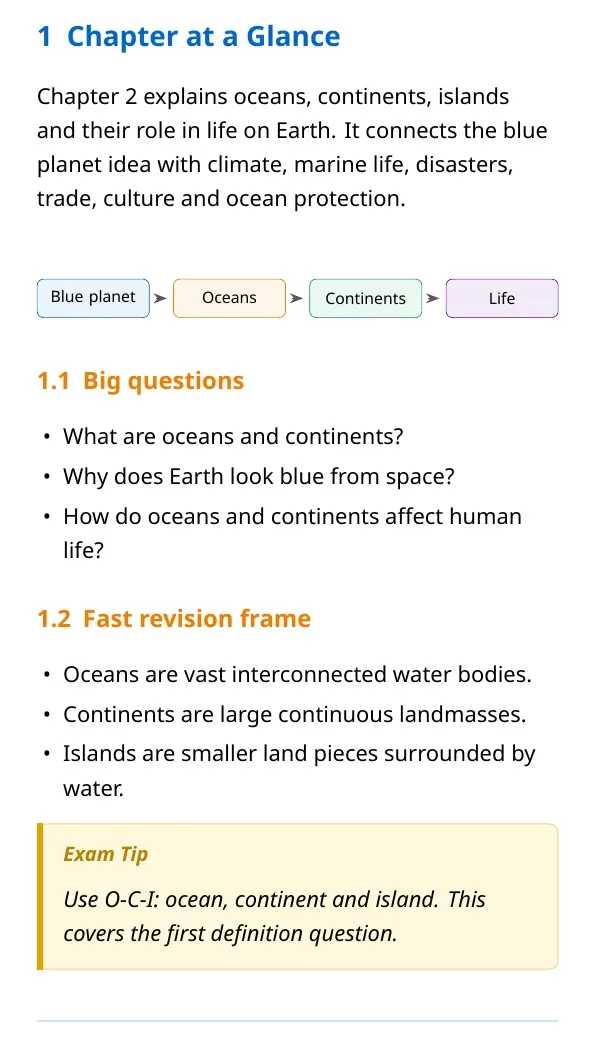
The NCERT Class 6 Social Science Chapter 2 notes for Oceans and Continents explain the blue planet, five oceans, seven continents, islands, marine life, monsoon rain, cyclones, tsunamis and ocean protection. These notes follow the 2026-27 NCERT textbook and include a free PDF for quick revision.
- Best for revision: ocean names, continent counts, islands and map labelling.
- Use with the PDF: read the tables first, then practise the world map activity.
- 2026-27 focus: follows Exploring Society: India and Beyond, Chapter 2.


Student Feedback: Students revise this chapter faster after grouping it into definitions, map labels, ocean life and disaster examples.
Oceans and Continents Notes Overview
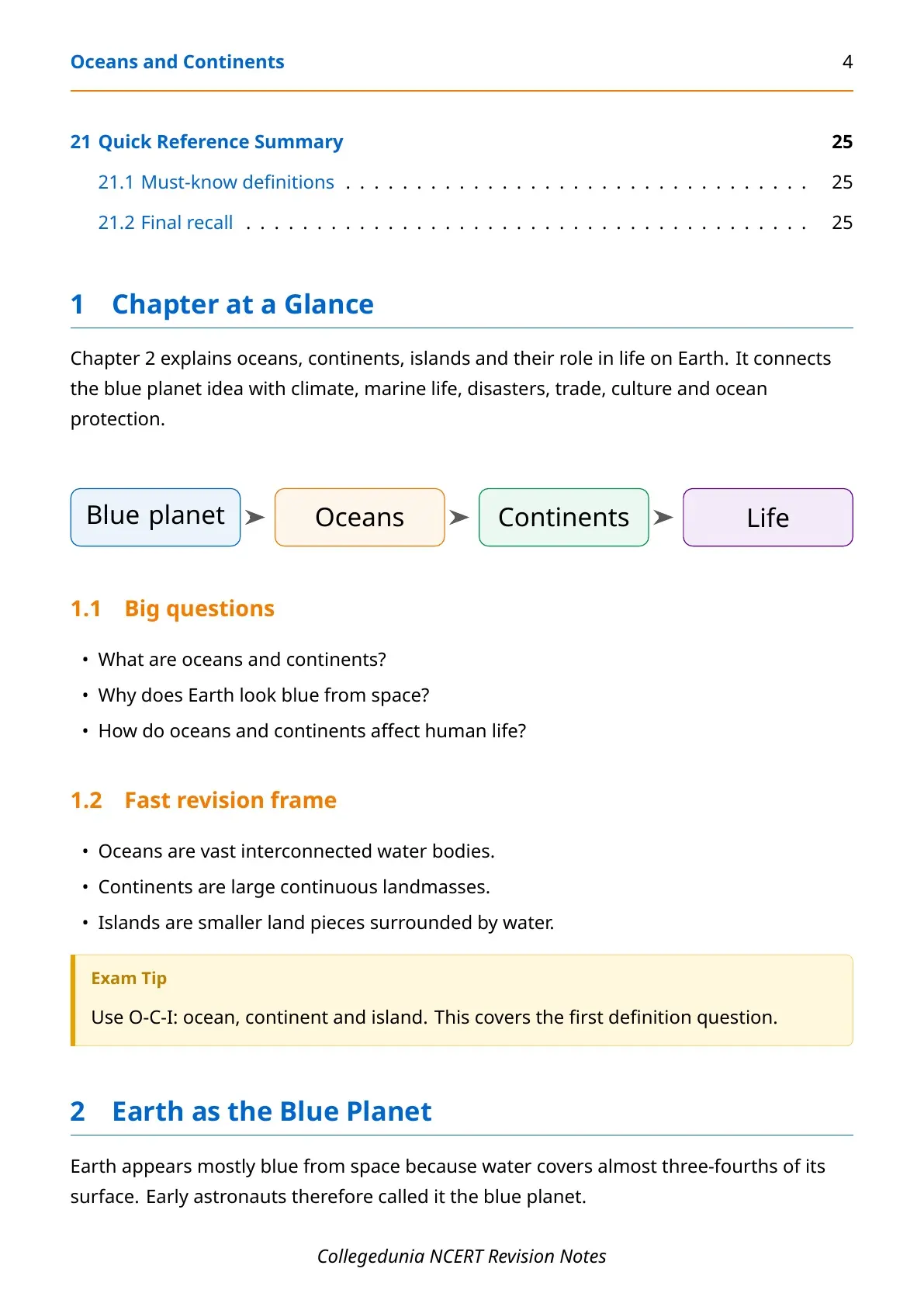
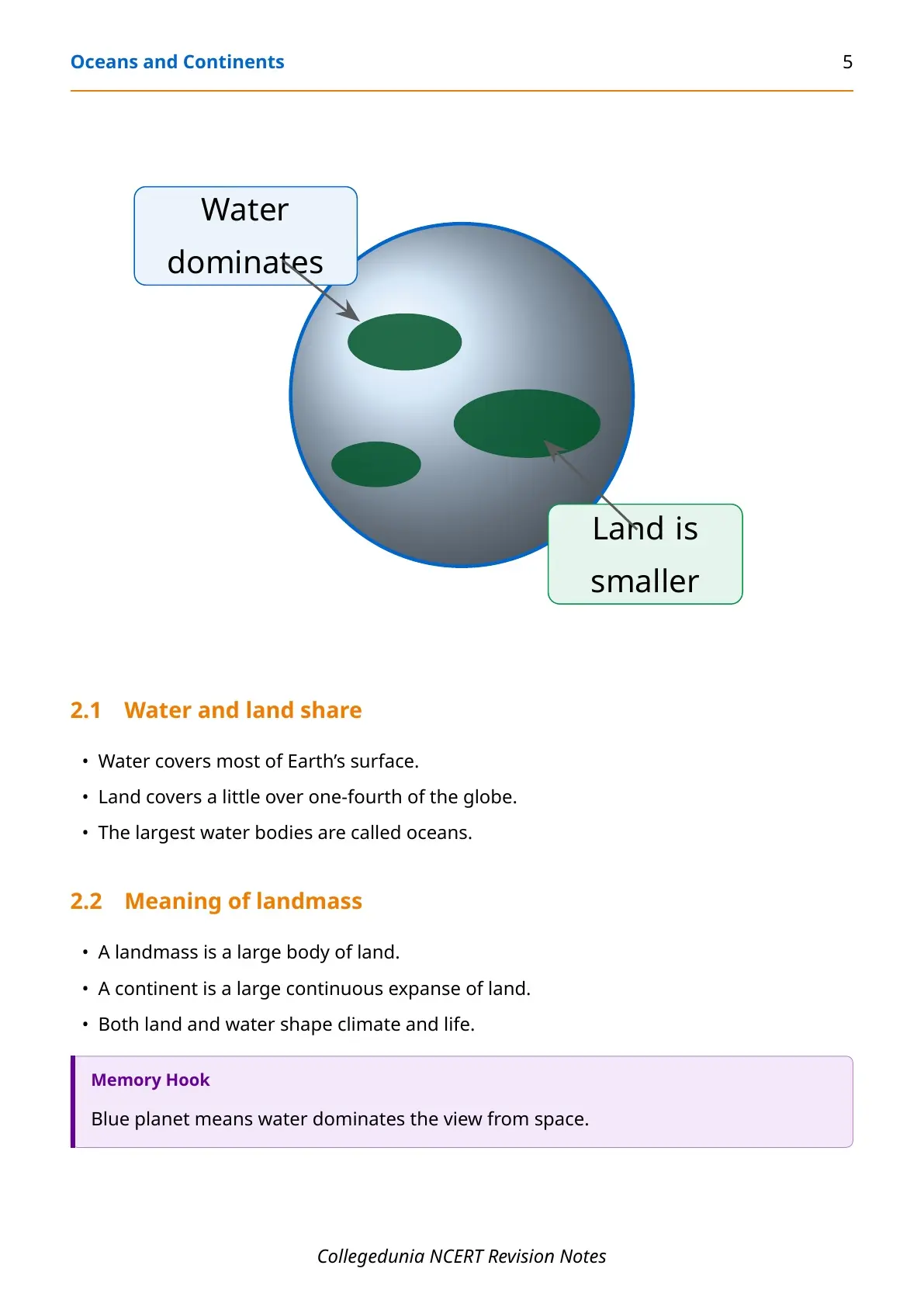
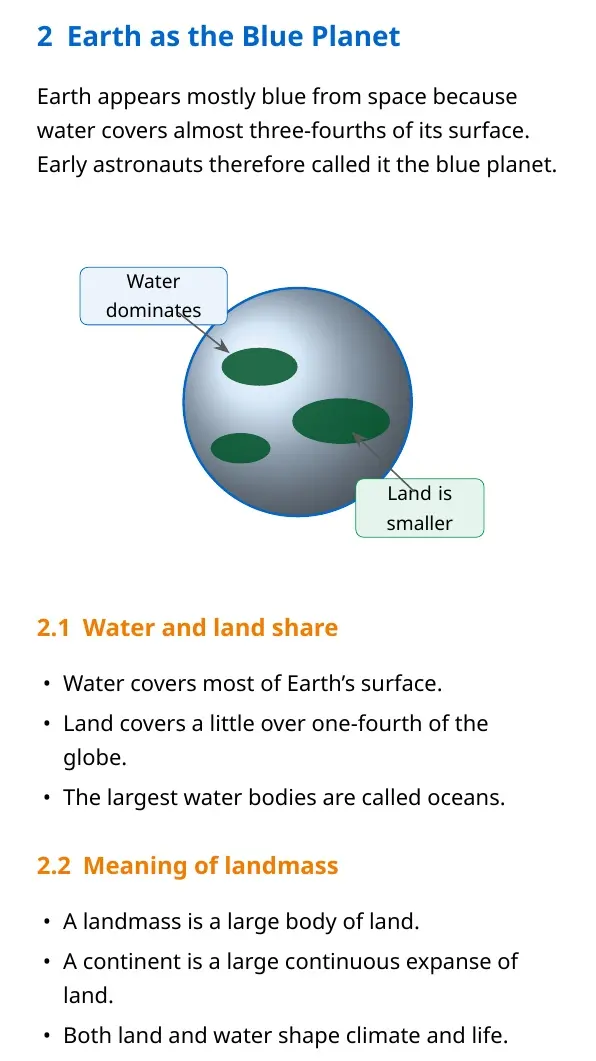
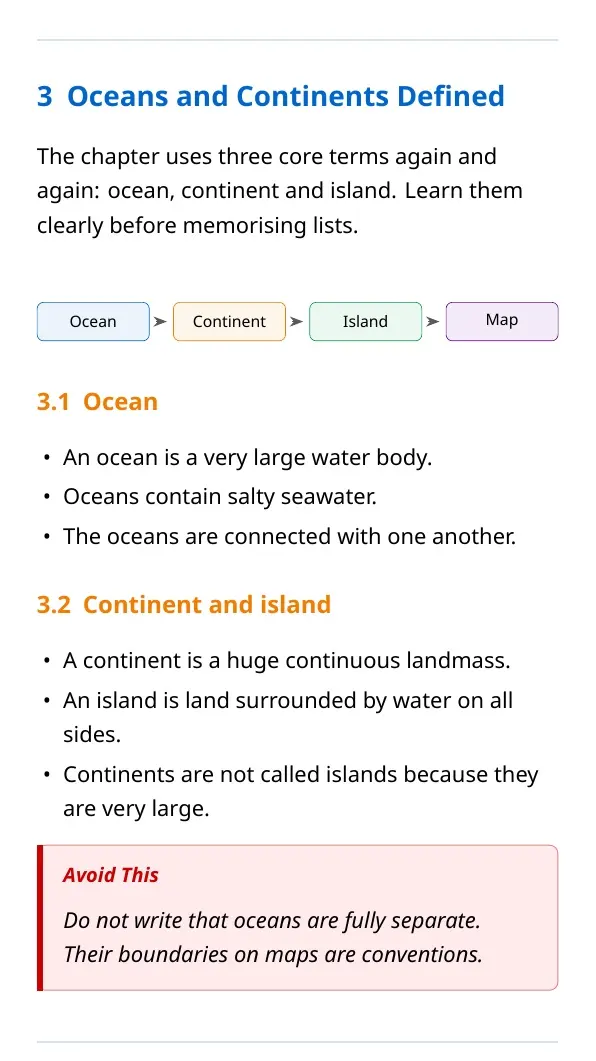
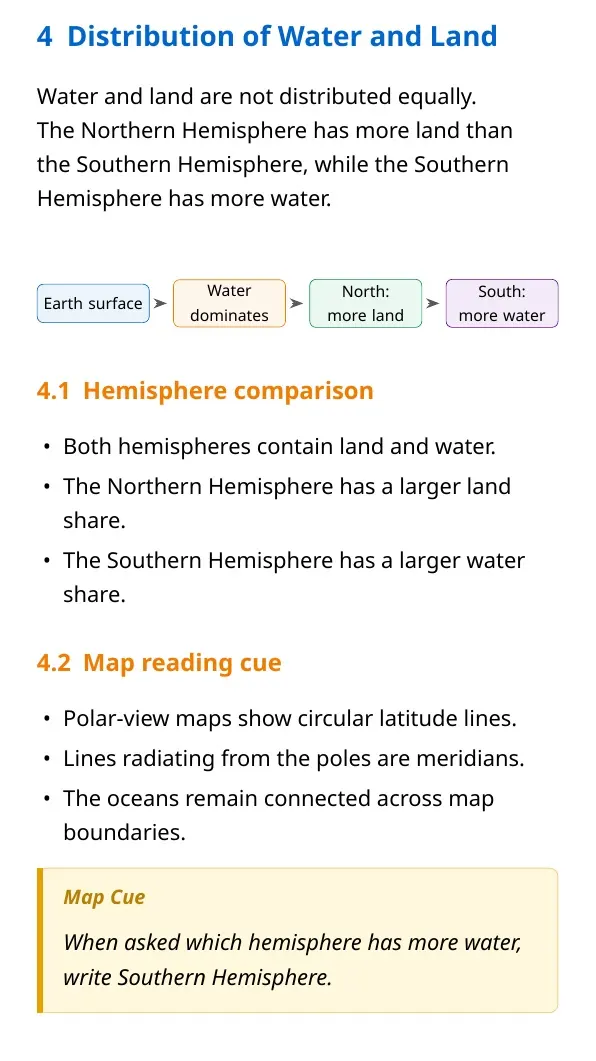
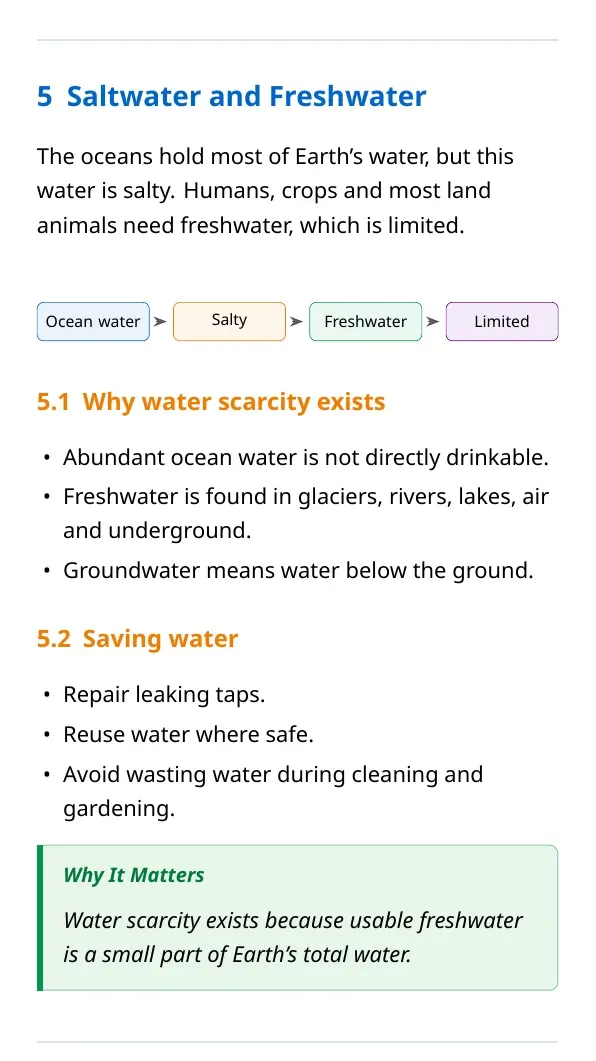
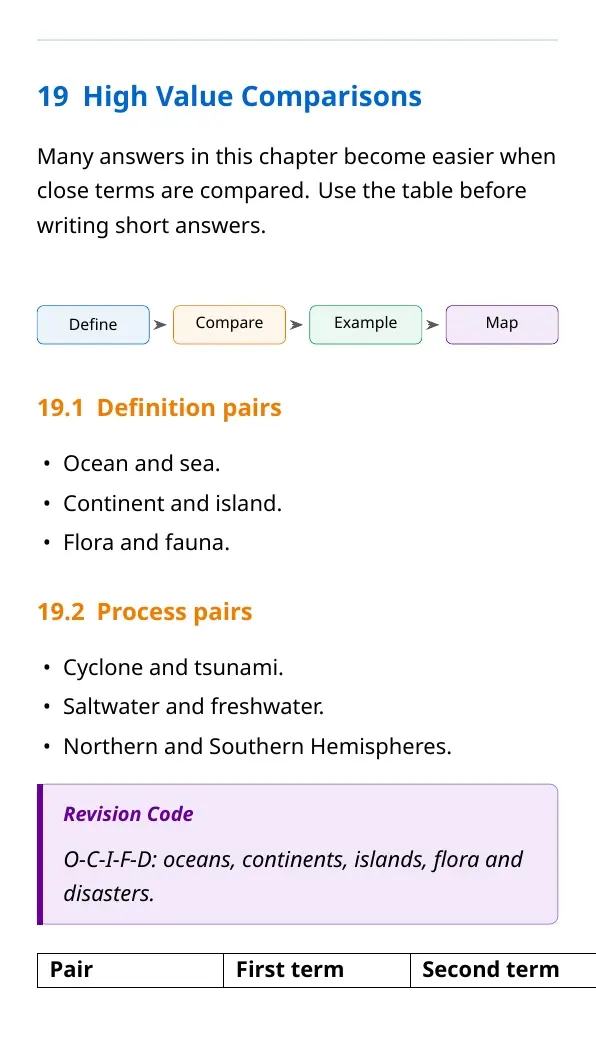
Chapter 2 begins with Earth as the blue planet. It explains that almost three-fourths of Earth's surface is covered by water, while land covers a little over one-fourth. The largest water bodies are oceans, and large continuous landmasses are continents.
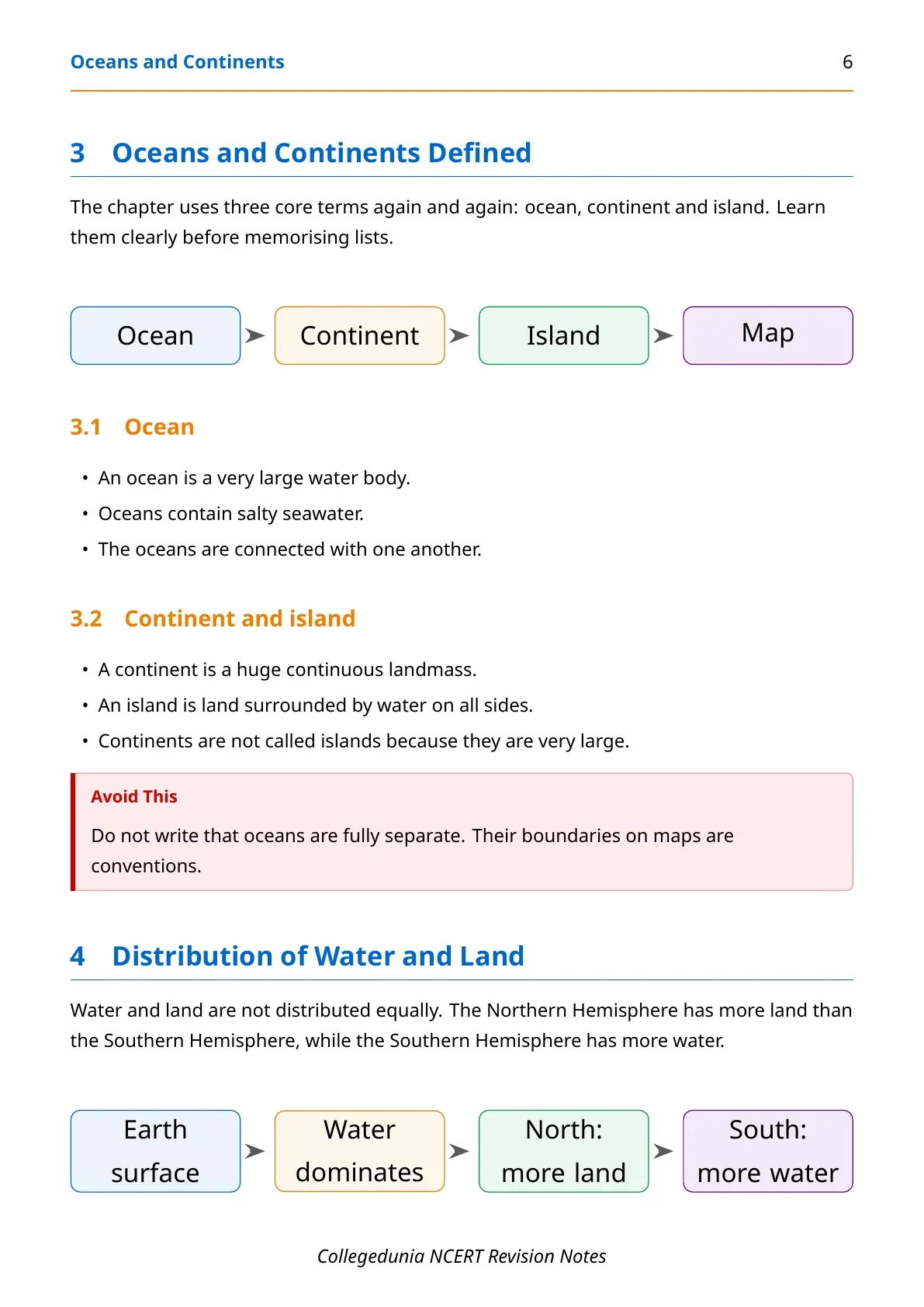
| Term | Meaning | Chapter cue |
|---|---|---|
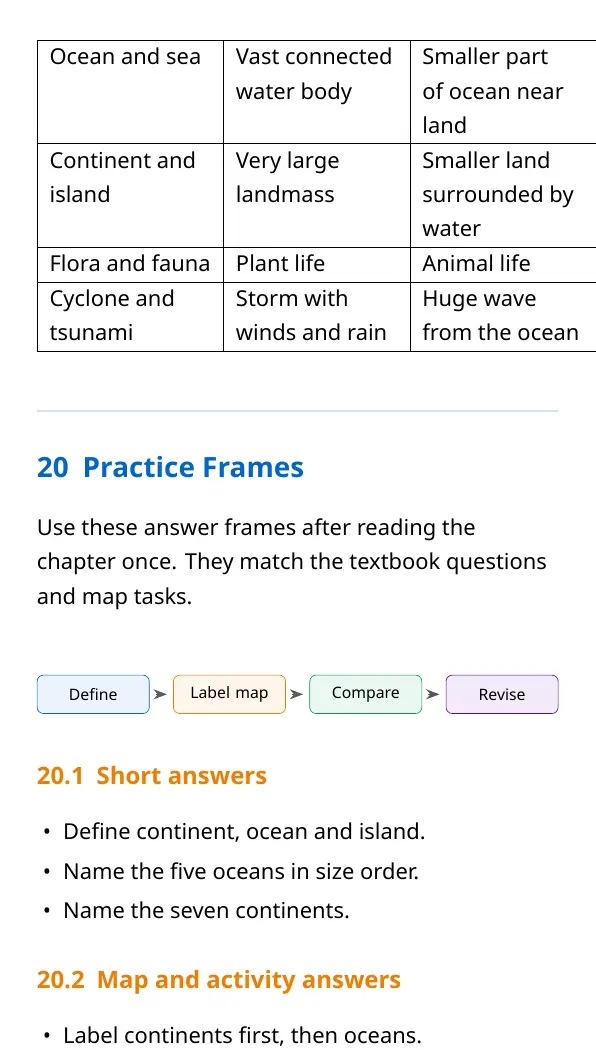
| Ocean | Vast salty water body | Five oceans are named on the world map |
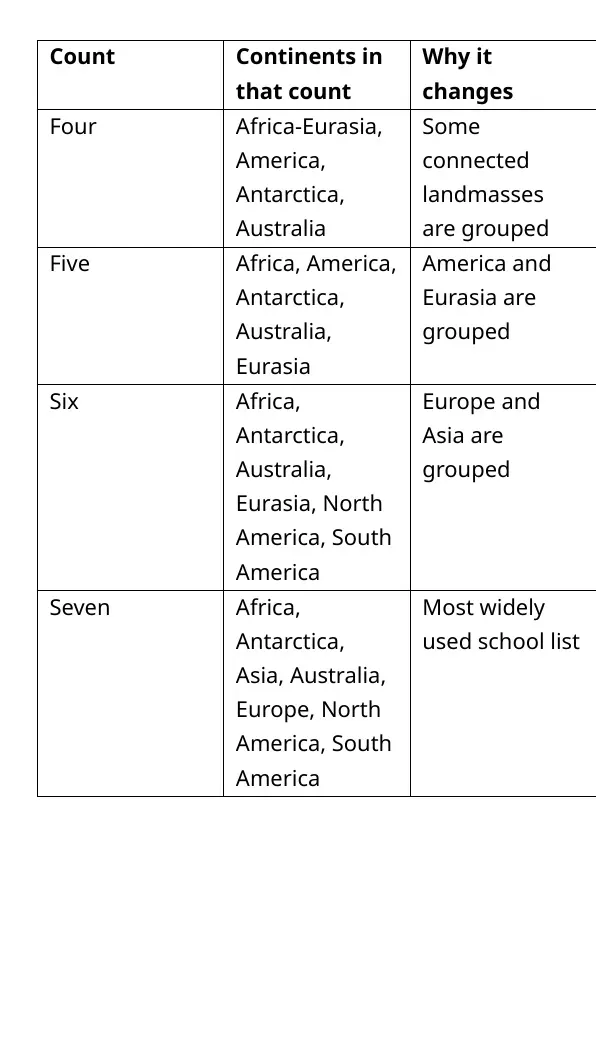
| Continent | Large continuous landmass | Seven-continent list is most widely used |
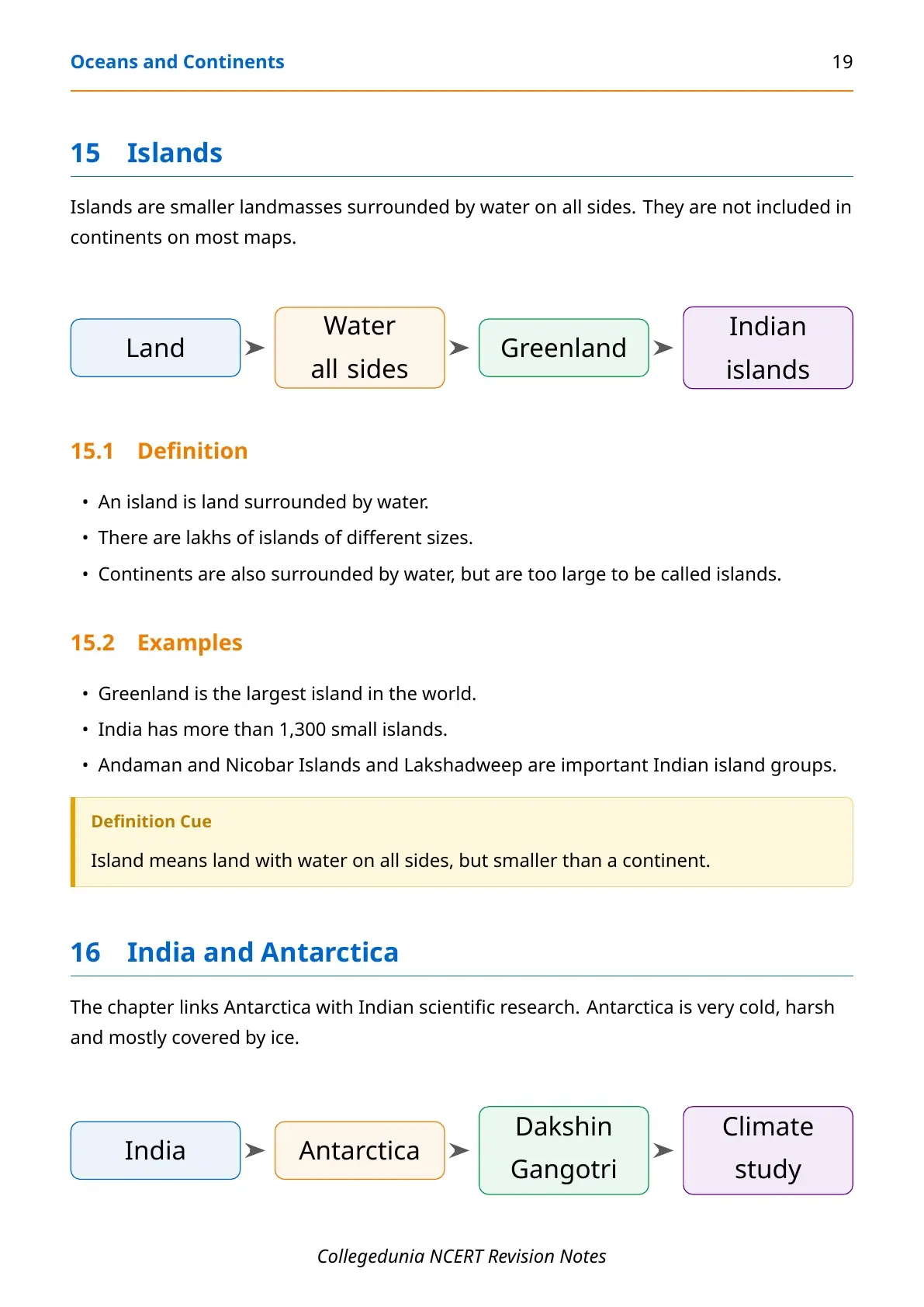
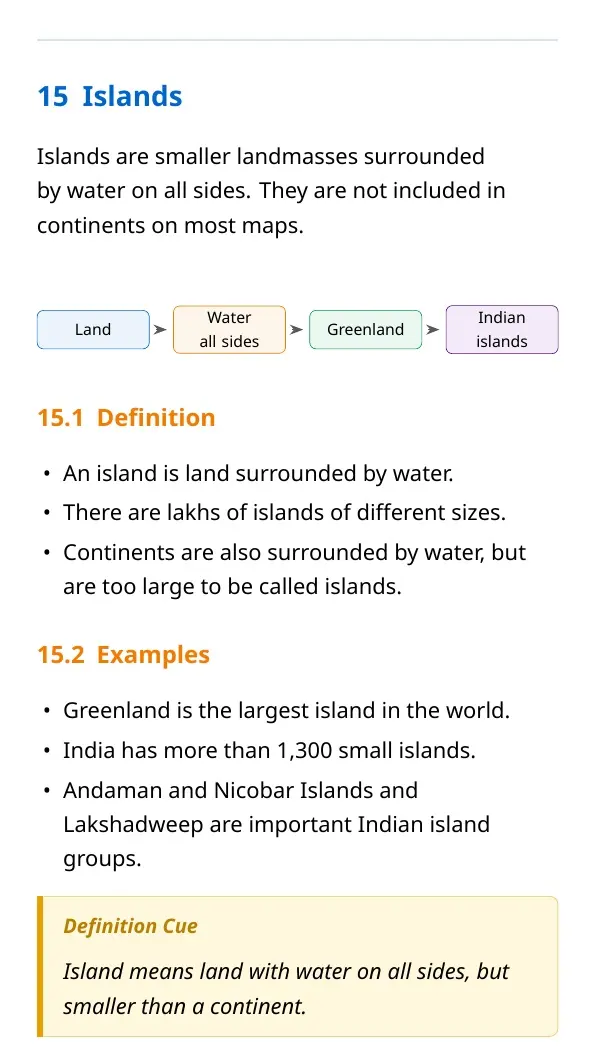
| Island | Land surrounded by water | Greenland is the largest island |
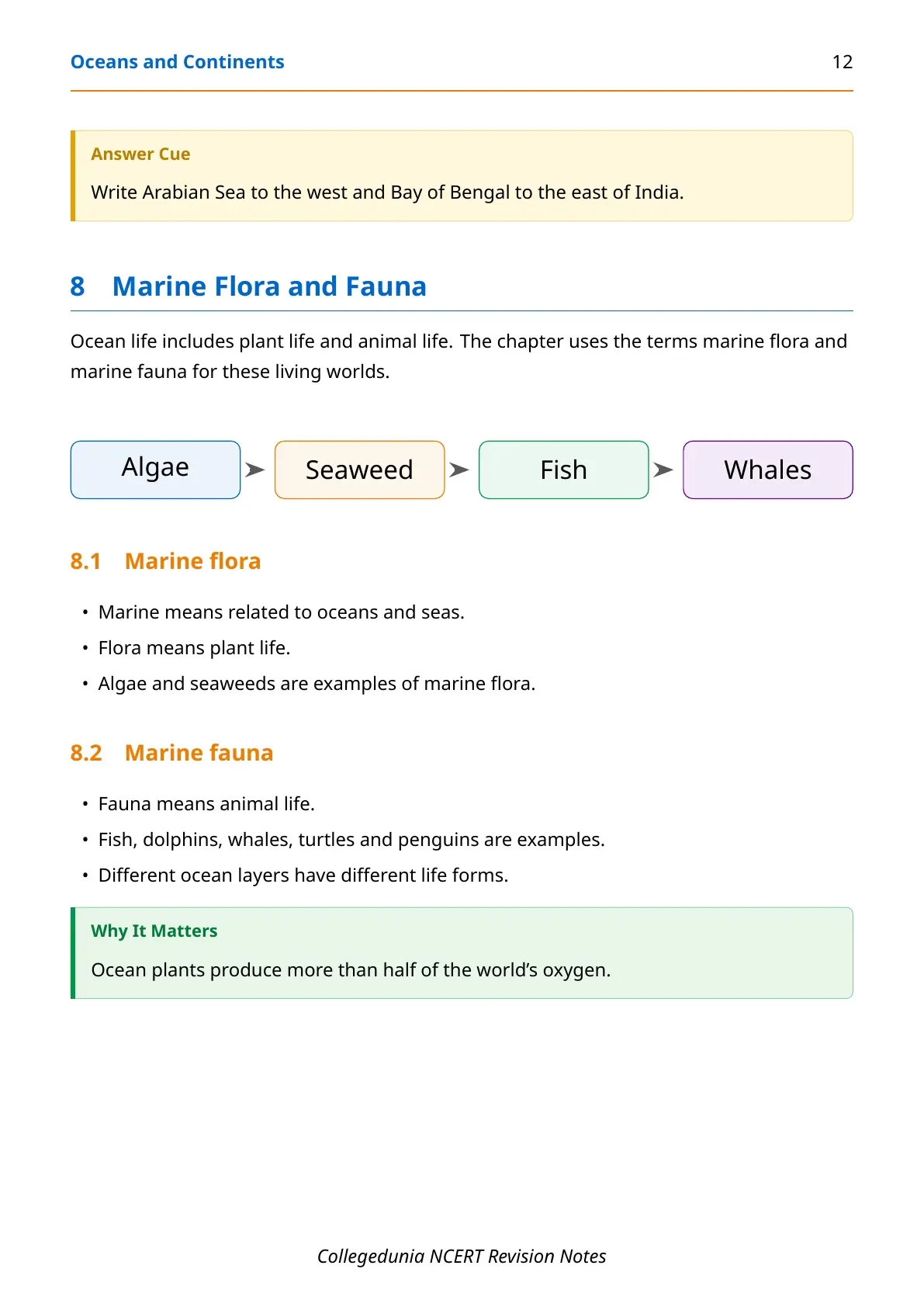
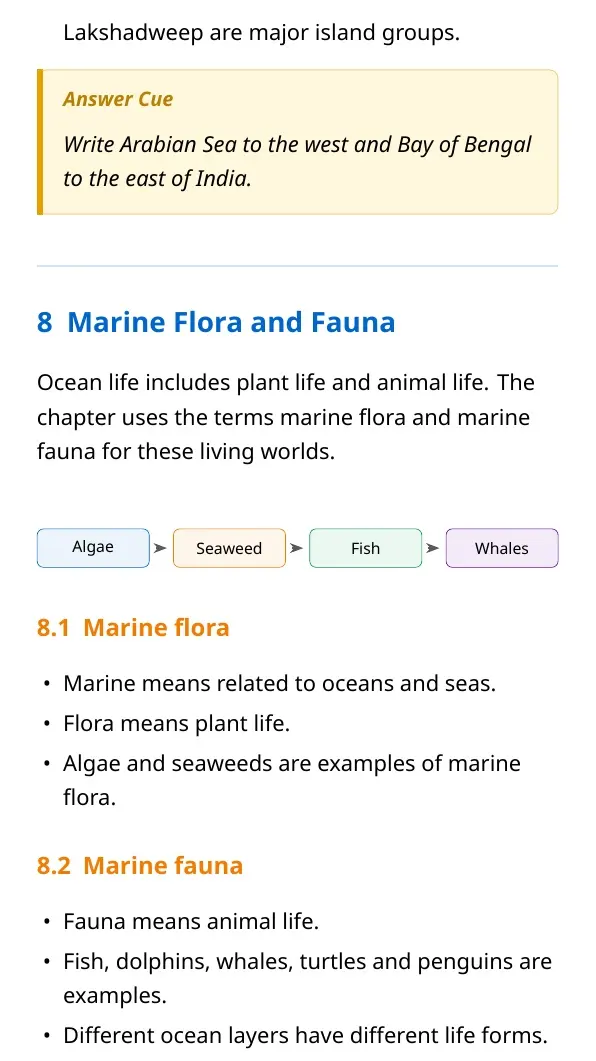
| Marine flora | Ocean plant life | Algae and seaweeds |
| Marine fauna | Ocean animal life | Fish, dolphins, whales and turtles |
Five Oceans and Seven Continents
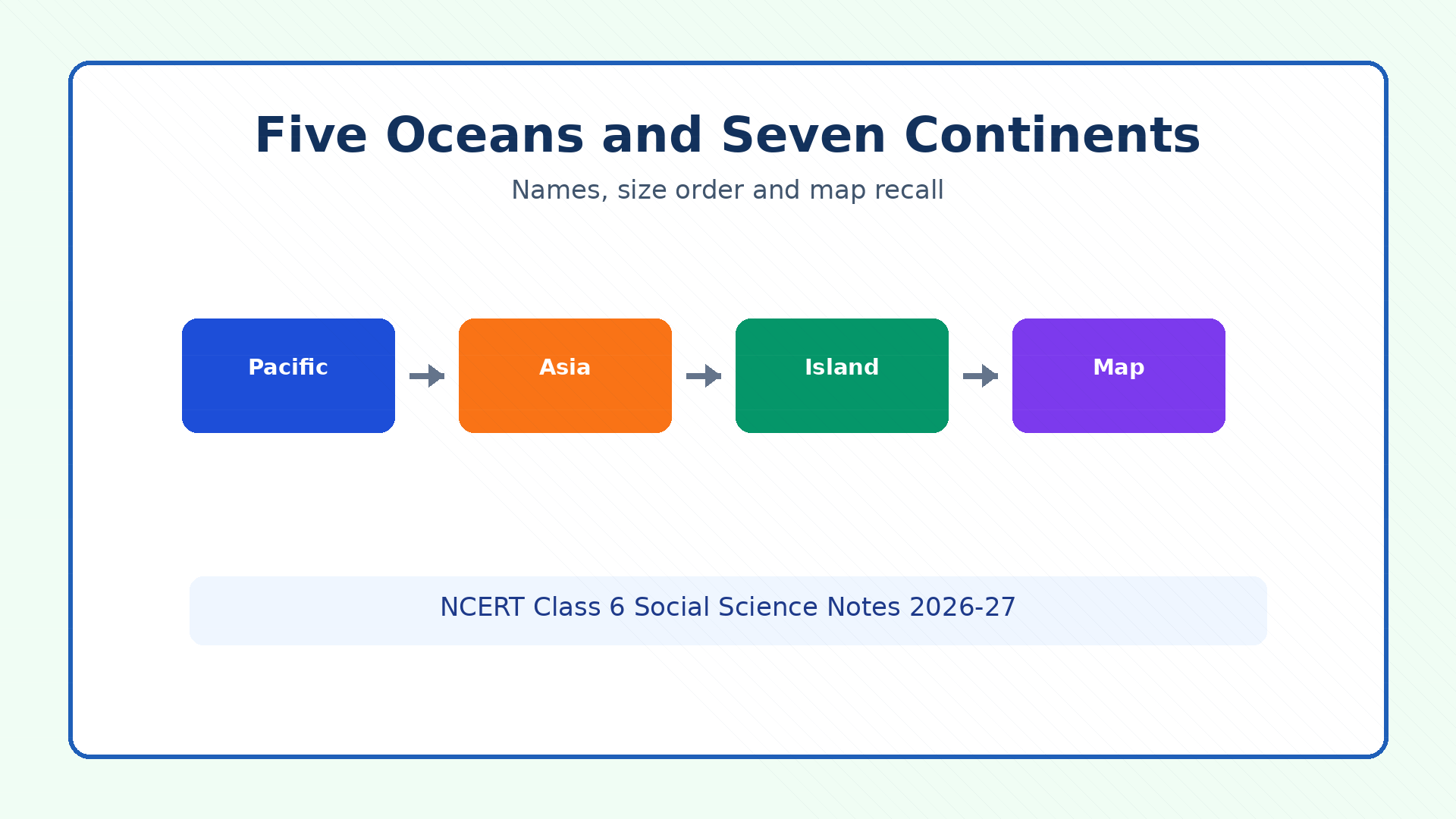
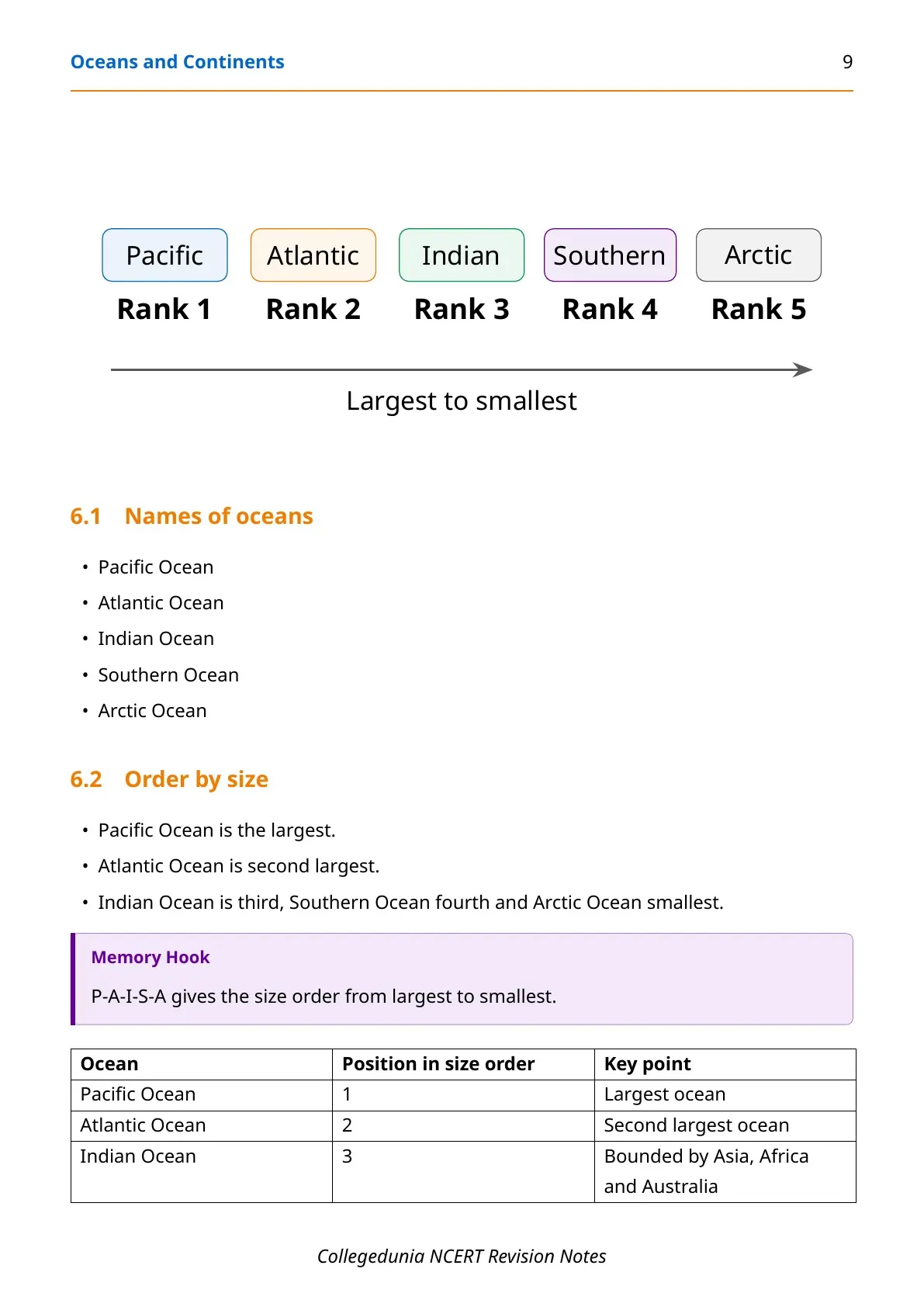
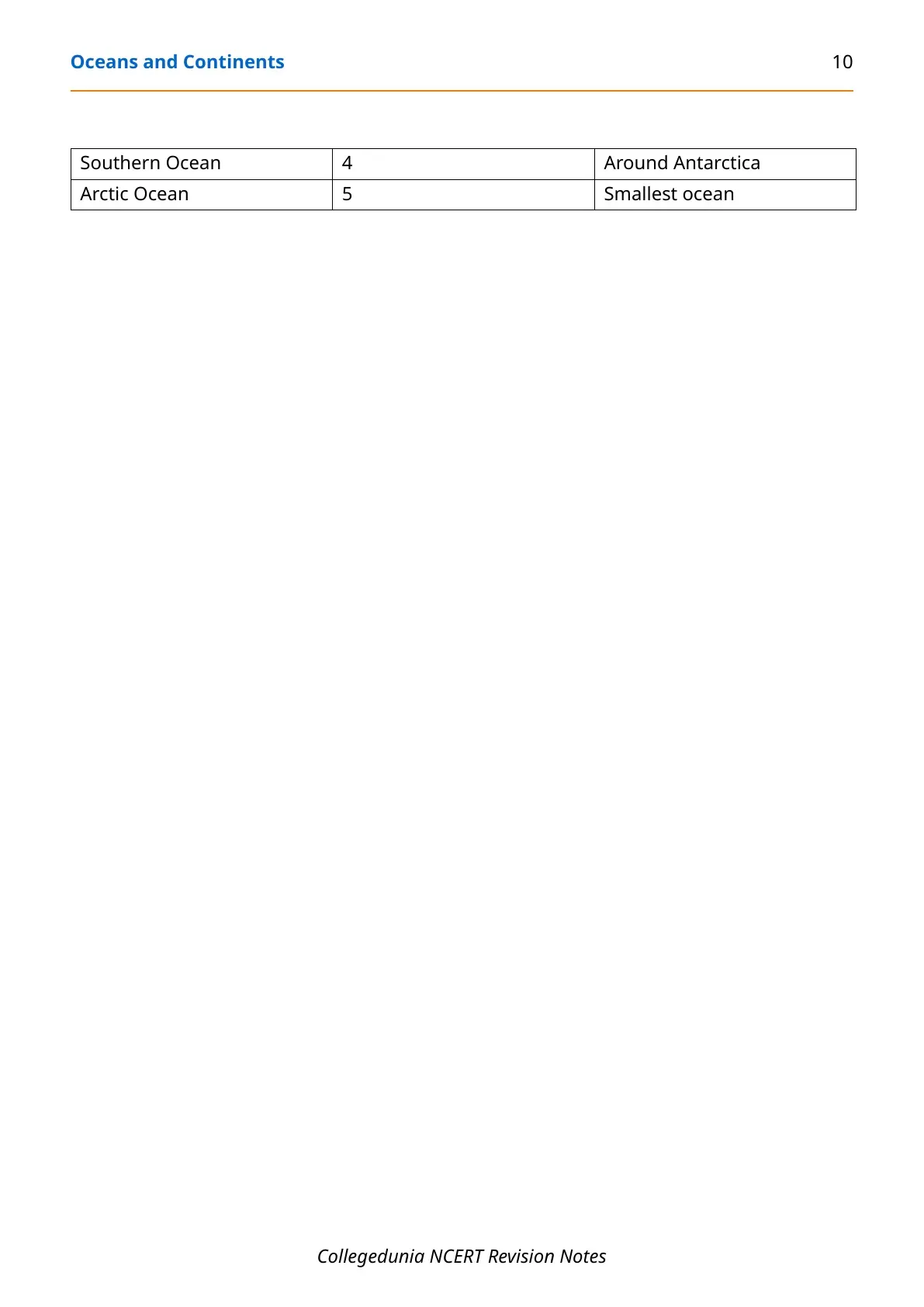
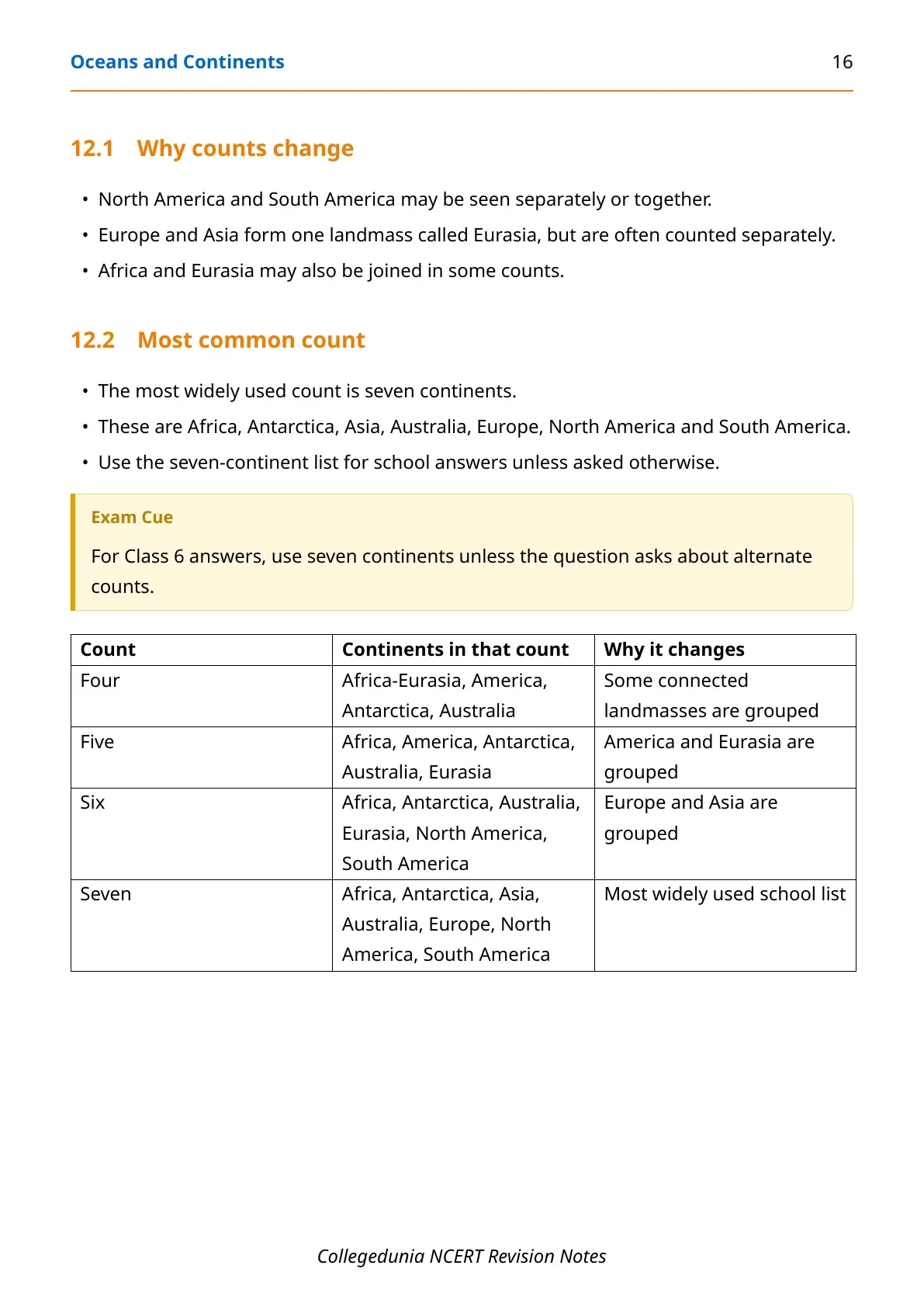
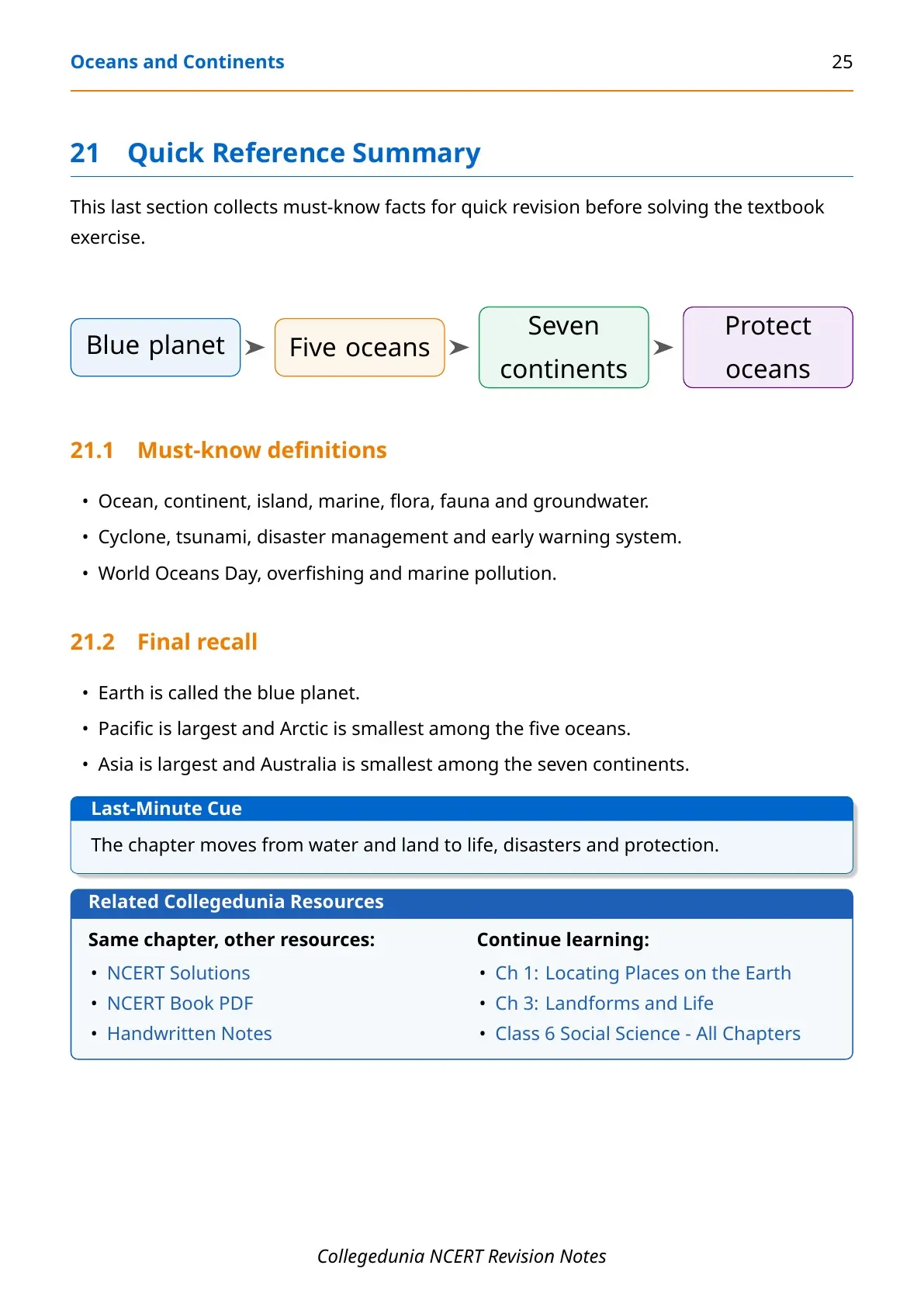
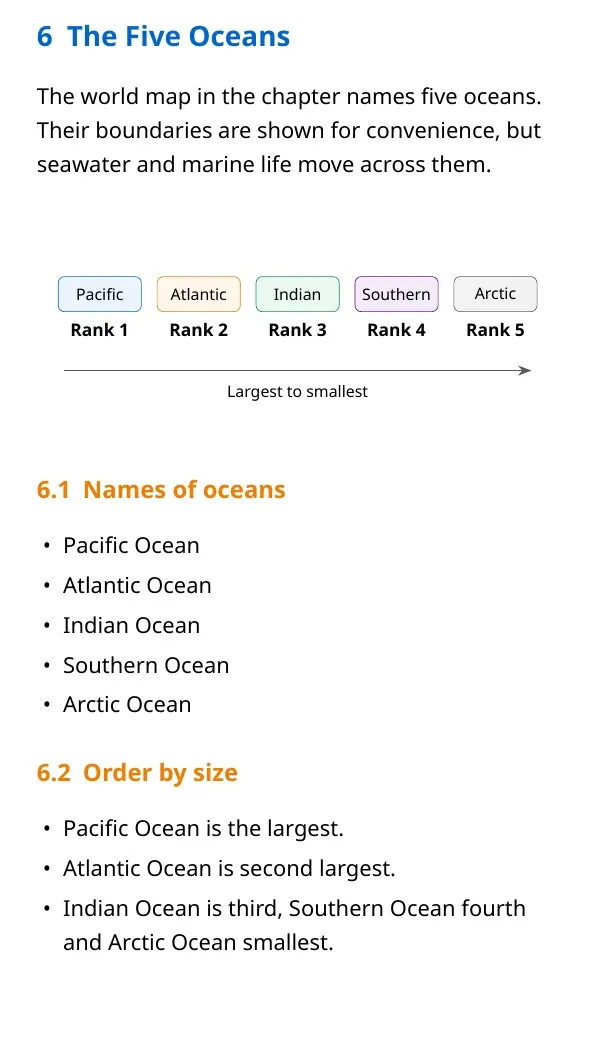
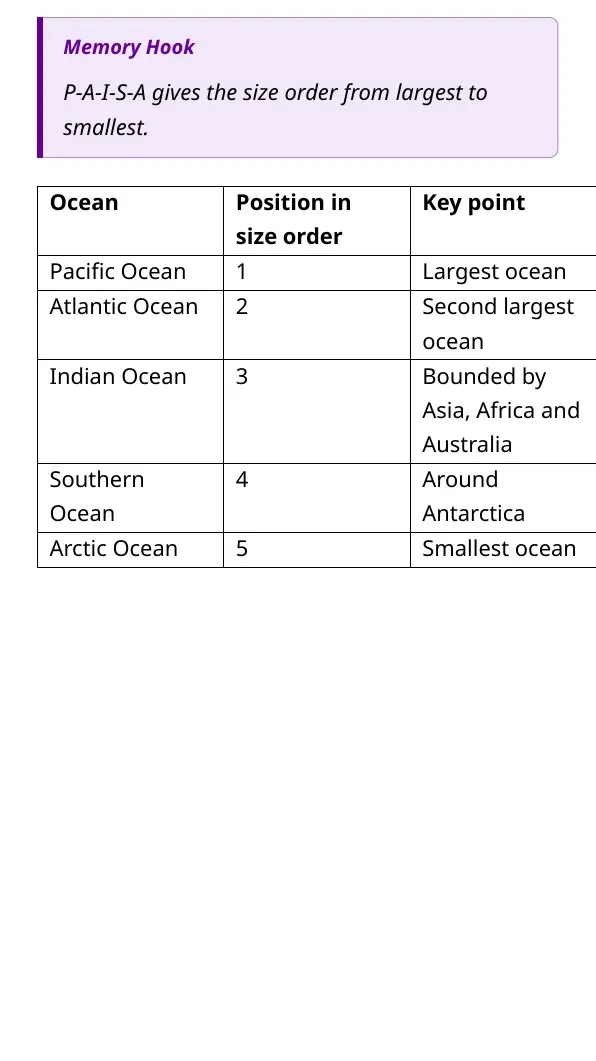
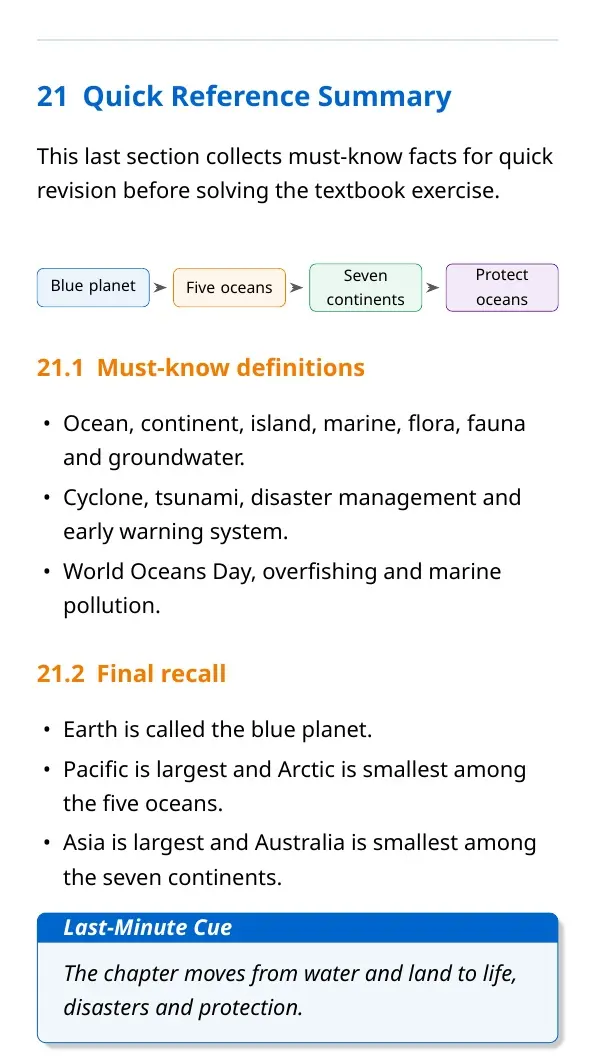
The five oceans are the Pacific, Atlantic, Indian, Southern and Arctic Oceans. The Pacific Ocean is the largest and the Arctic Ocean is the smallest. The oceans are interconnected, so the boundary lines on maps are conventional.
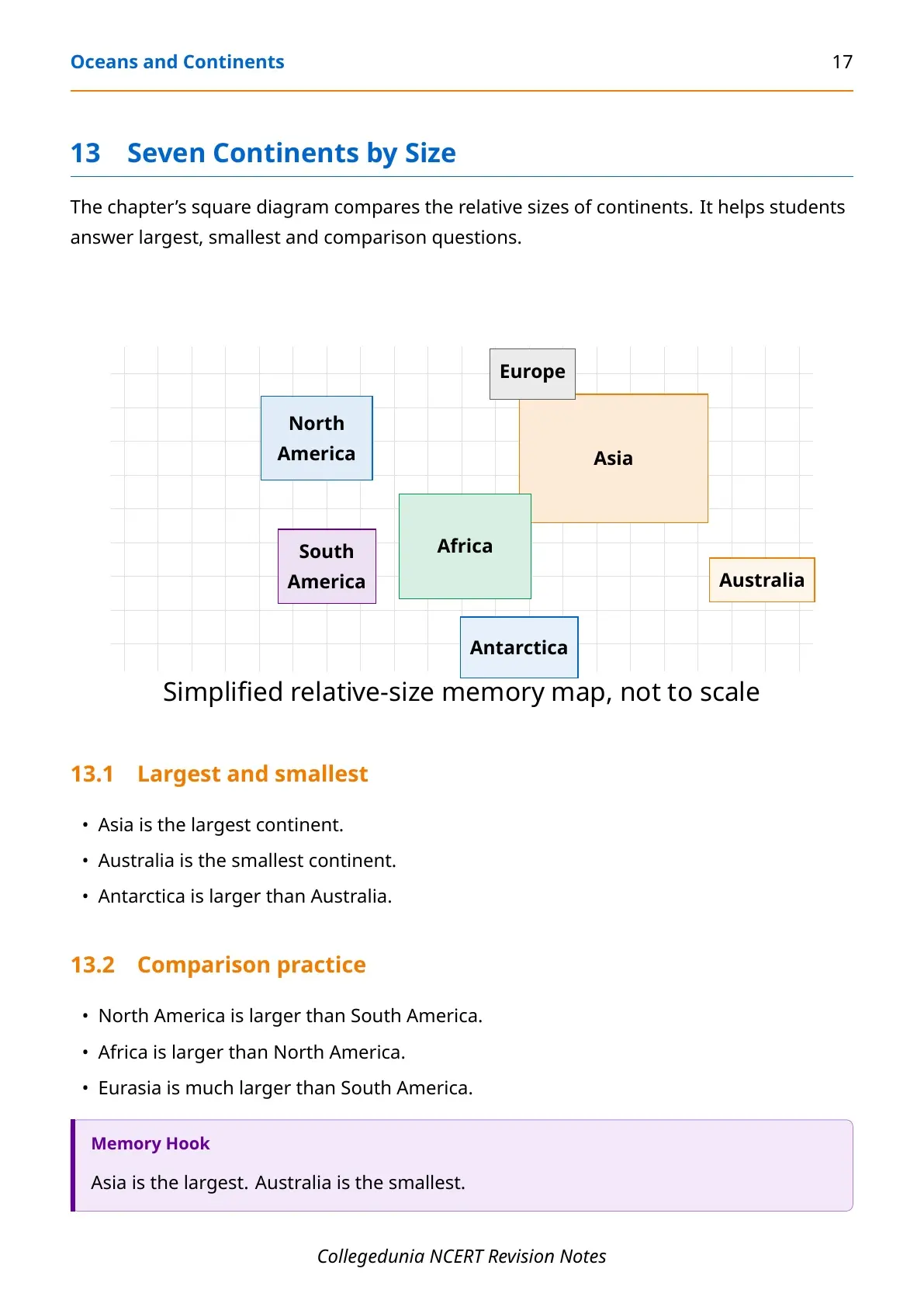
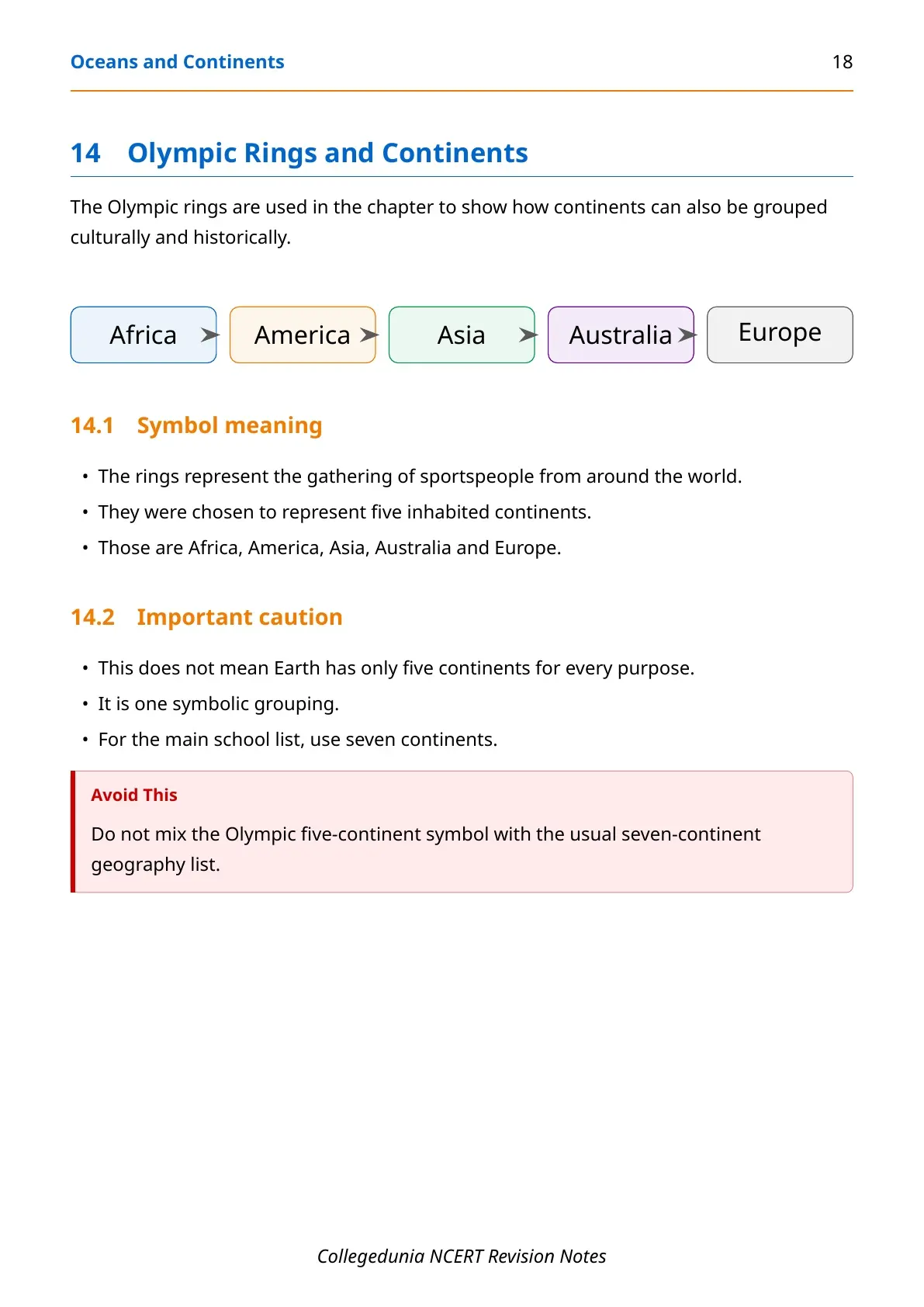
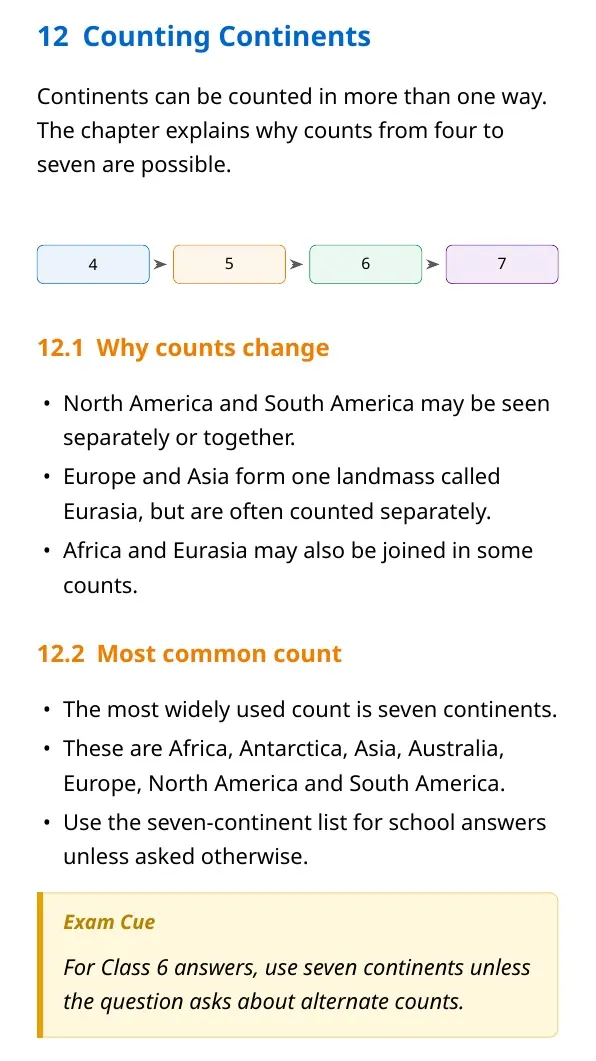
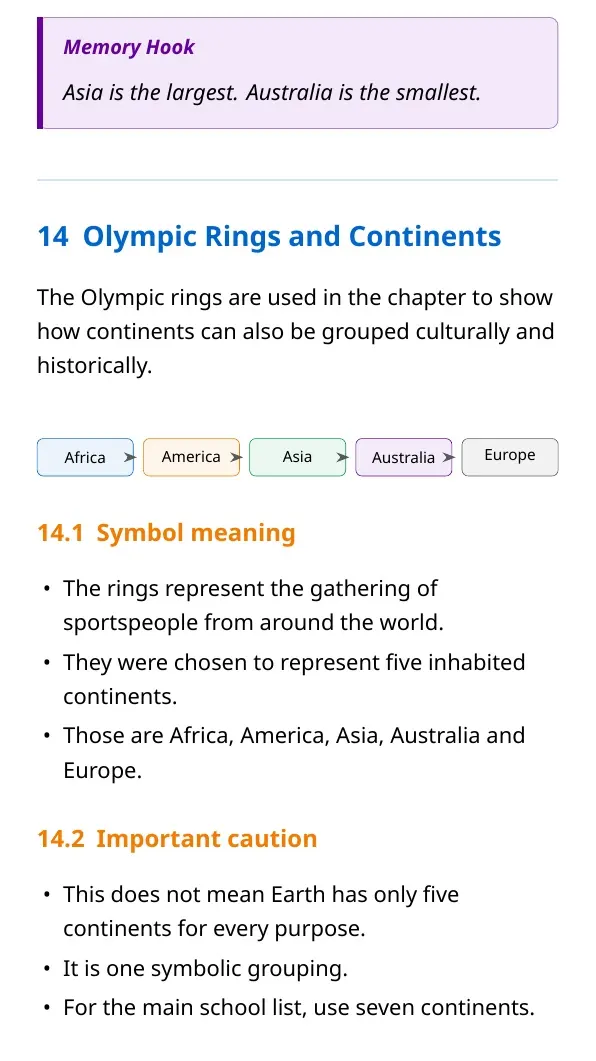
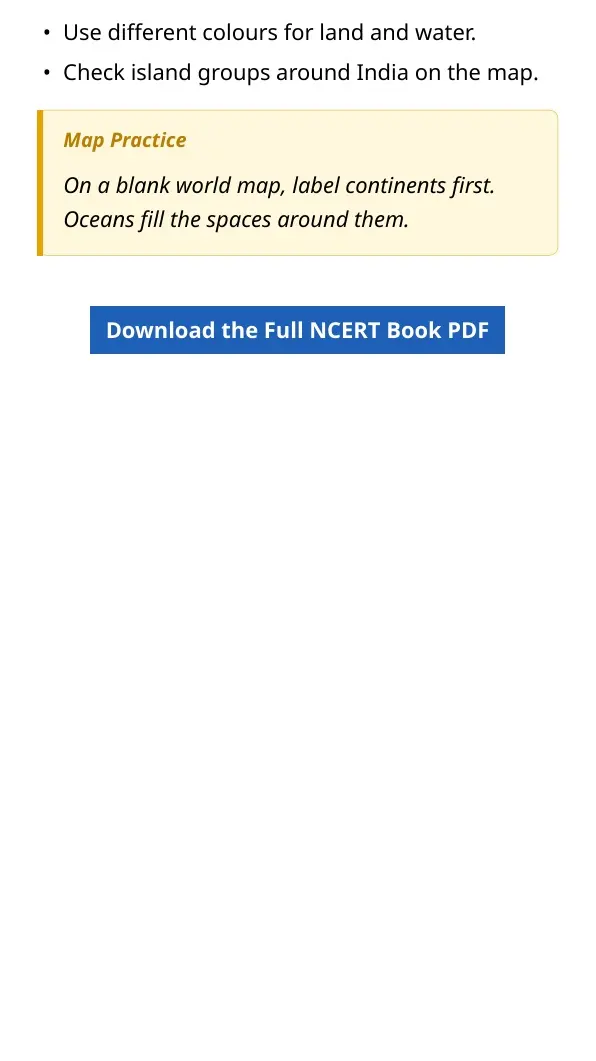
- Seven continents: Africa, Antarctica, Asia, Australia, Europe, North America and South America.
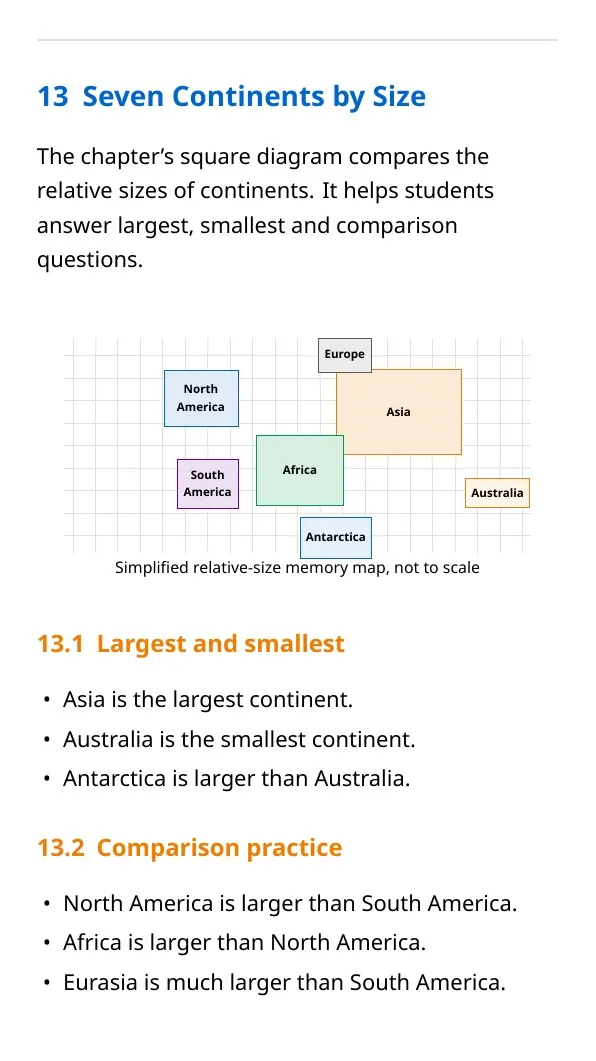
- Largest continent: Asia.
- Smallest continent: Australia.
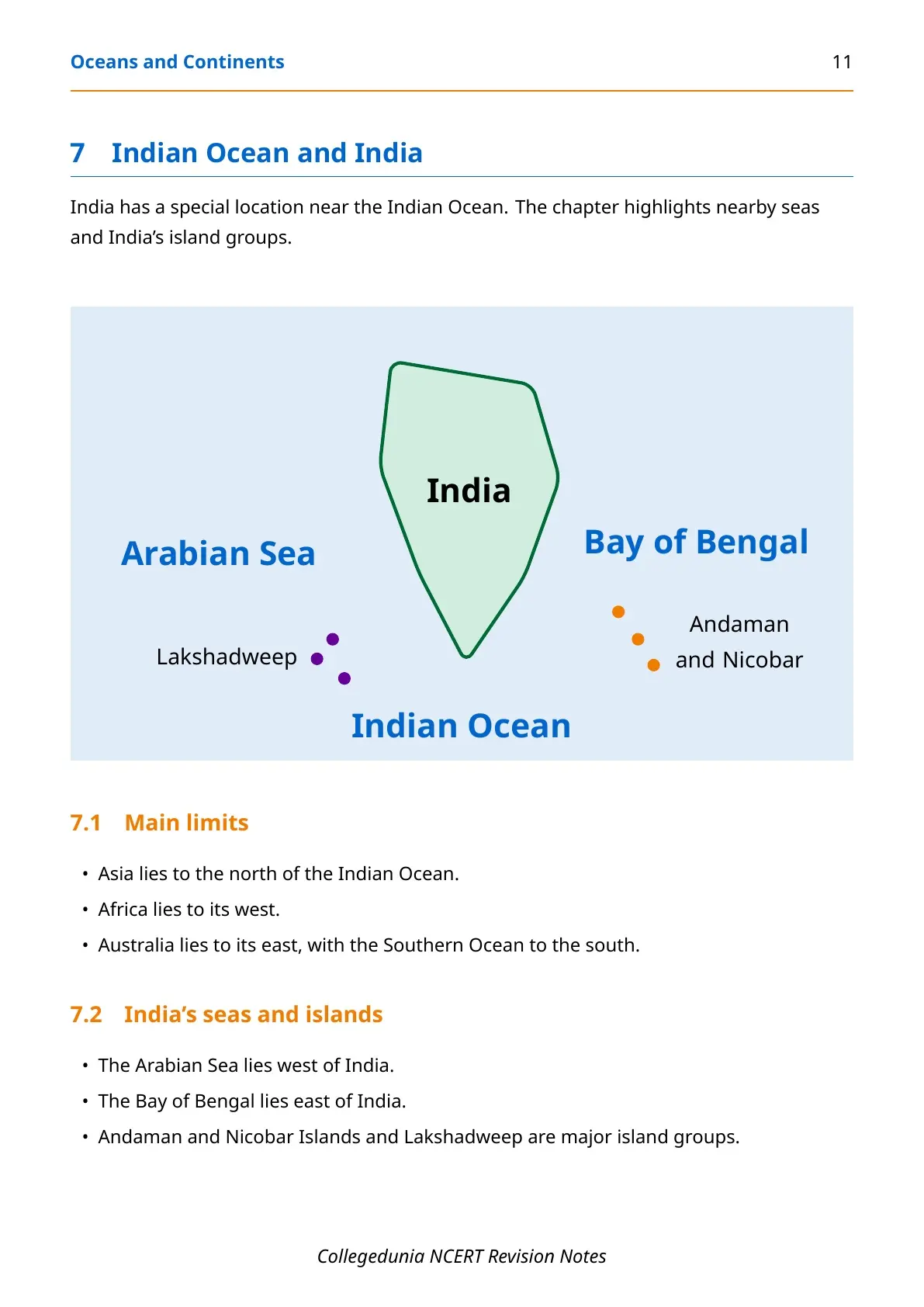
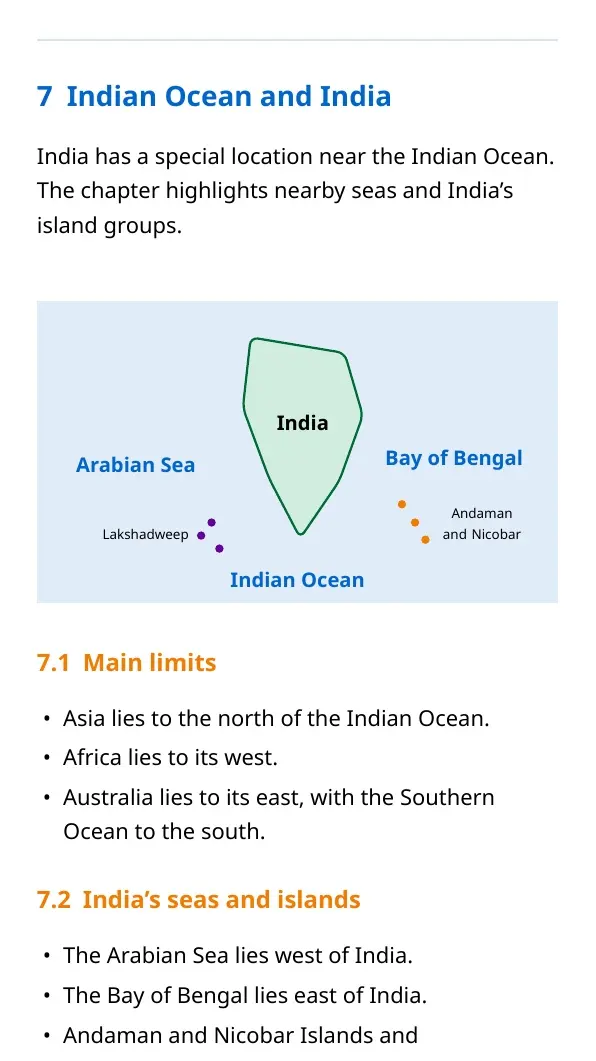
- India's ocean setting: Arabian Sea to the west and Bay of Bengal to the east.
Oceans and Continents Chapter 2 Revision Video
Source: Magnet Brains on YouTube
How Oceans Support Life and Climate
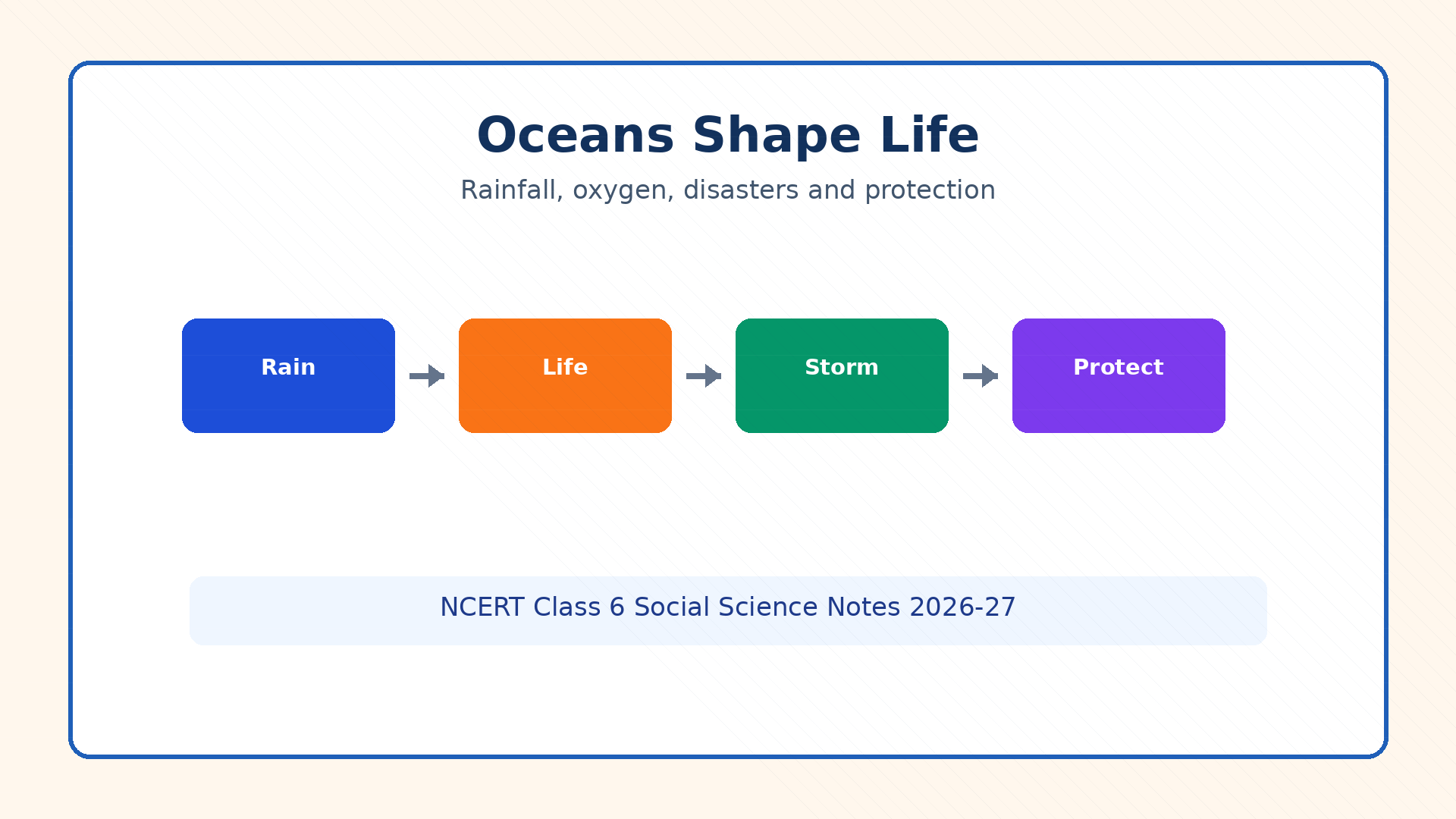
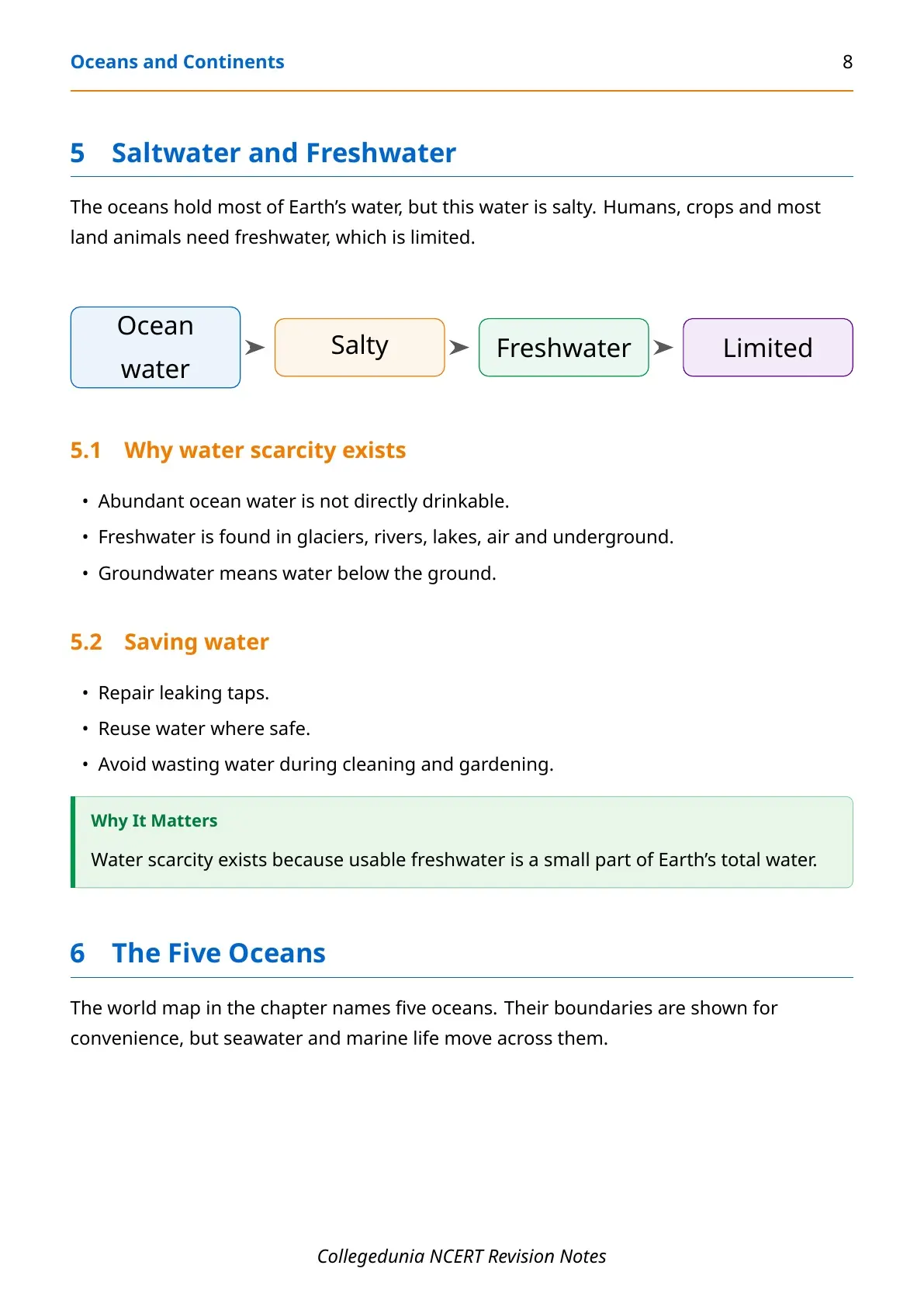
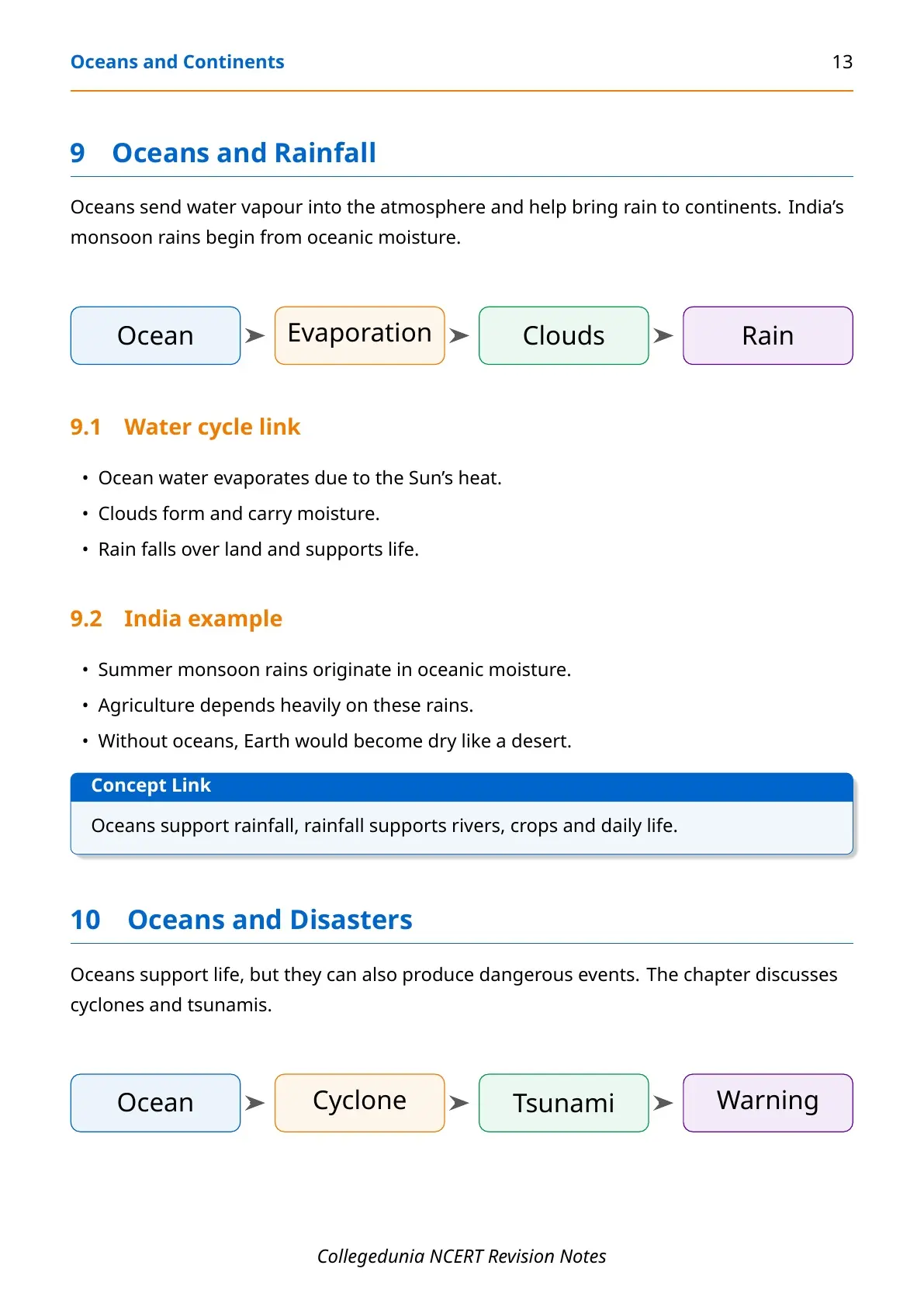
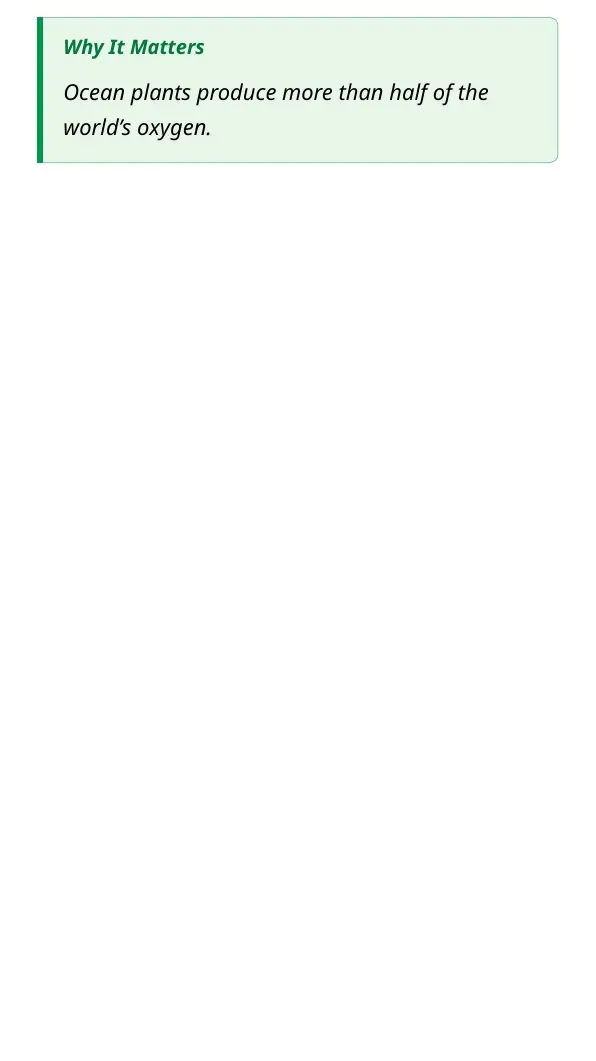
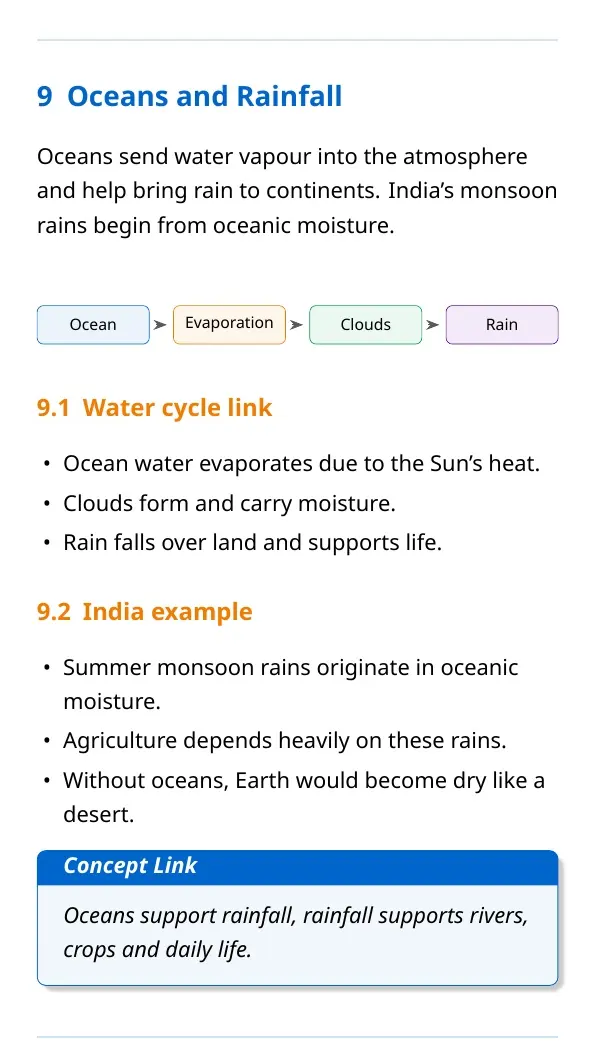
Oceans send moisture to the continents and help bring rainfall. India's monsoon rains originate from oceanic moisture. Ocean flora also produces more than half of the world's oxygen, which is why oceans are called the planet's lungs.
| Ocean role | Chapter explanation | Revision example |
|---|---|---|
| Rainfall | Clouds form over oceans and bring rain to land | Indian monsoon |
| Oxygen | Marine flora produces a large share of oxygen | Algae and seaweeds |
| Food | Oceans support fishing communities | Coastal livelihoods |
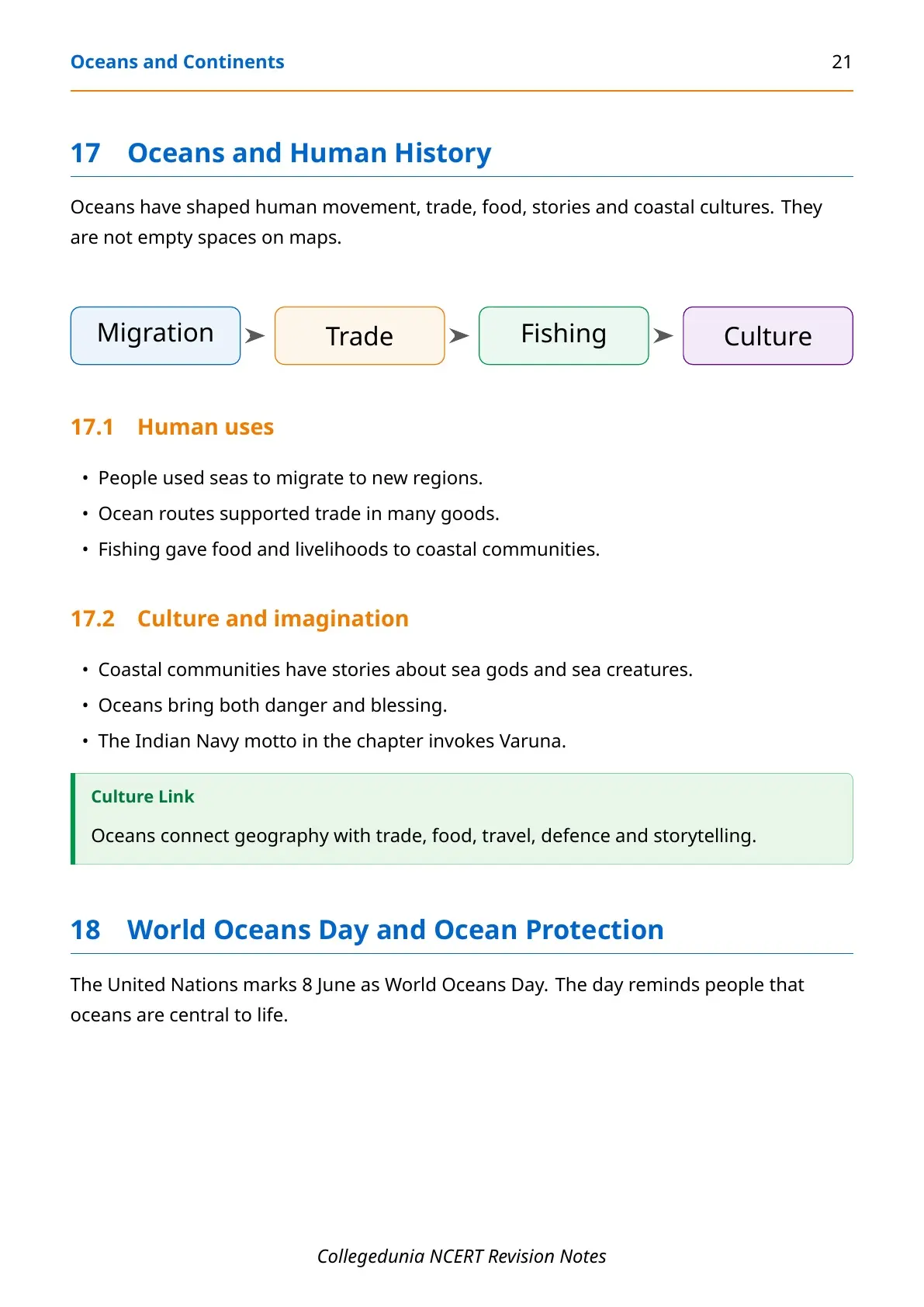
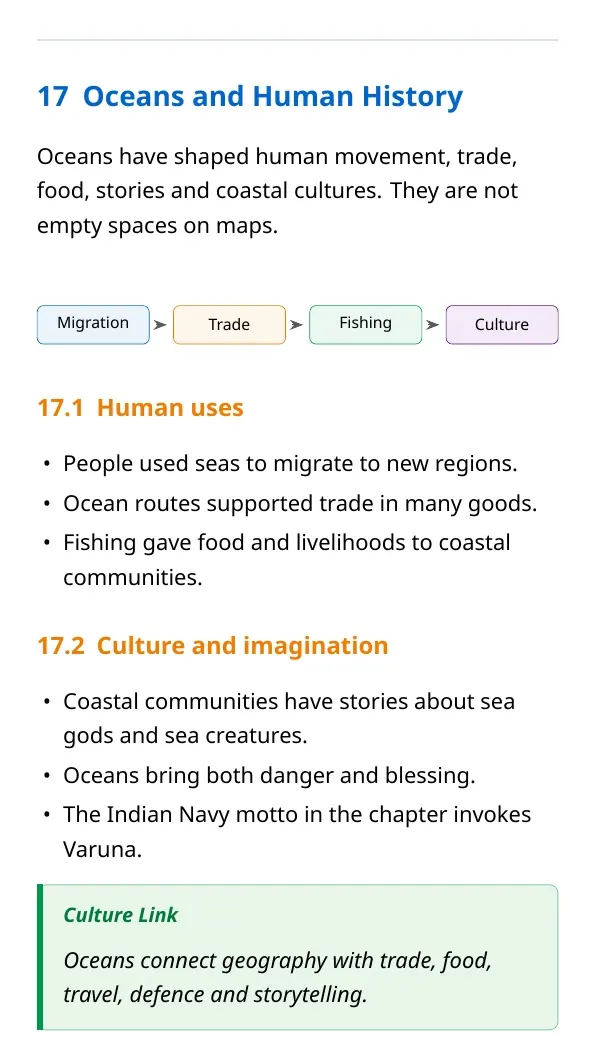
| Trade | People used seas for migration and trade | Ocean routes |
Disasters, Islands and Ocean Protection
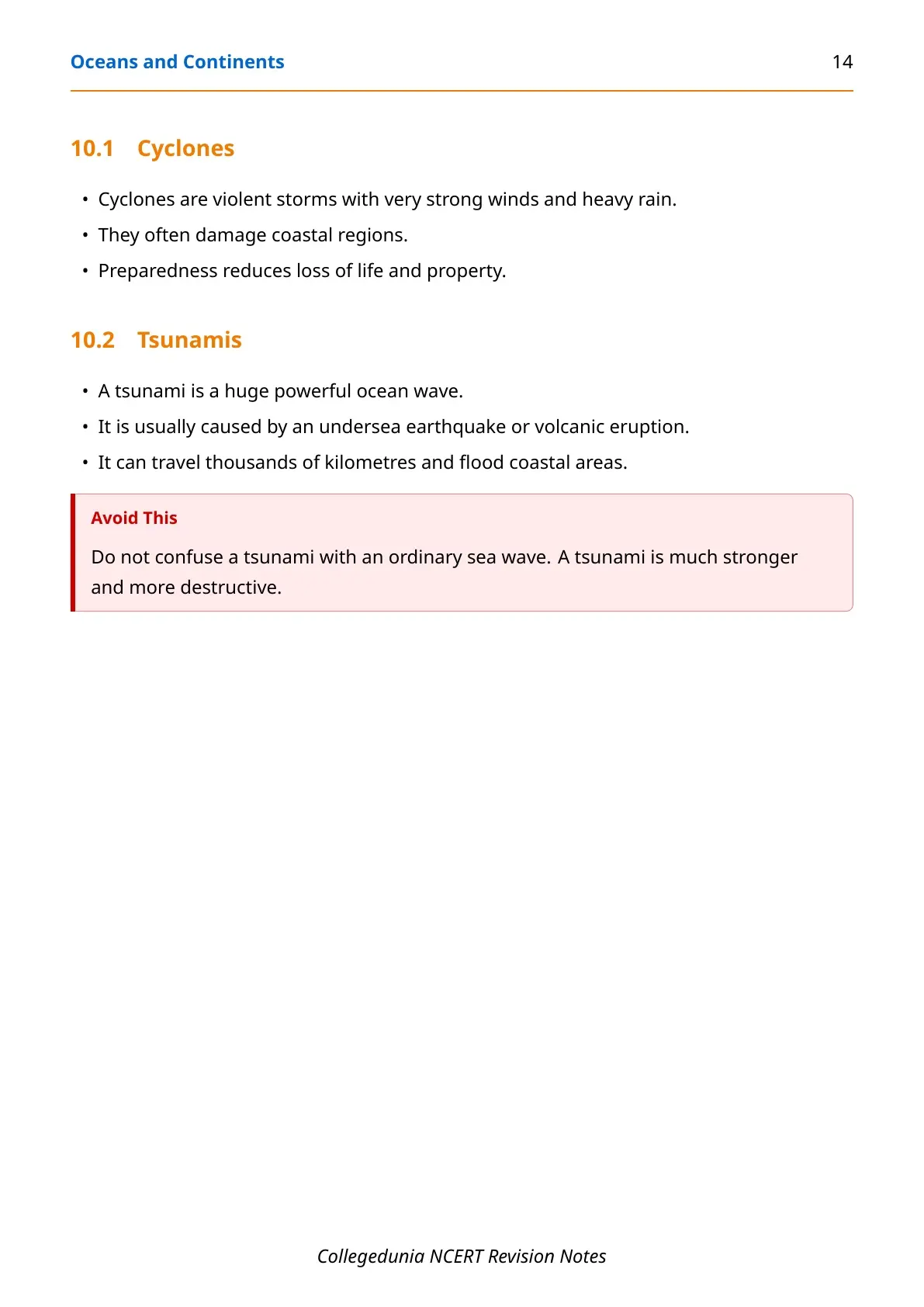
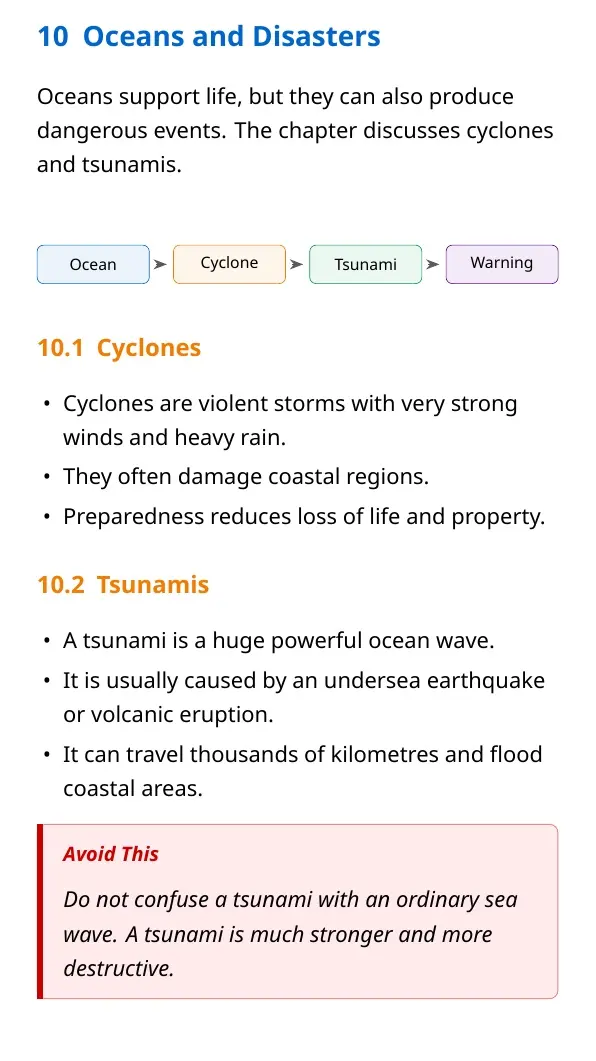
Oceans can also produce dangerous events. Cyclones bring strong winds and heavy rain to coastal regions. A tsunami is a huge powerful wave usually caused by an undersea earthquake or volcanic eruption.
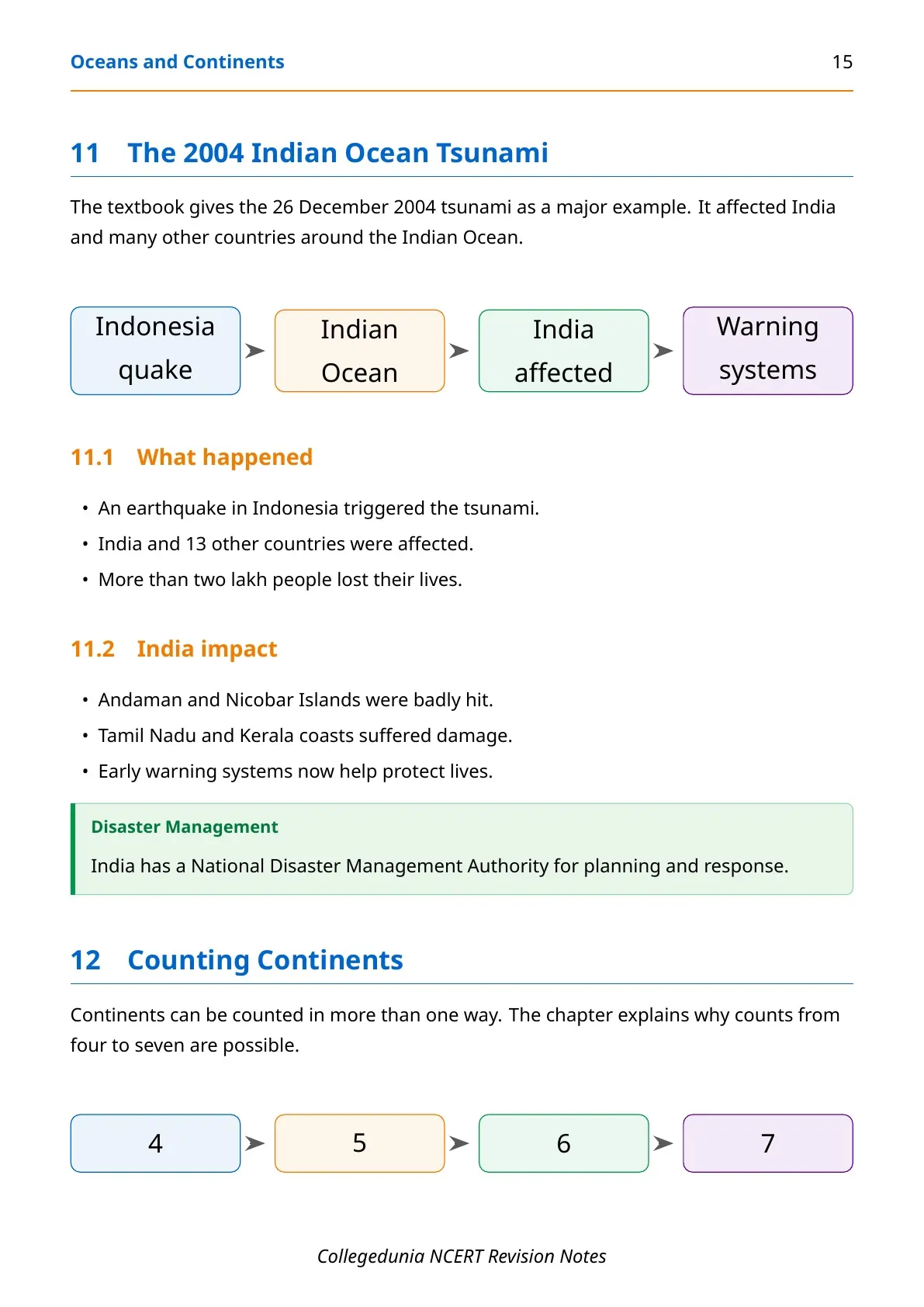
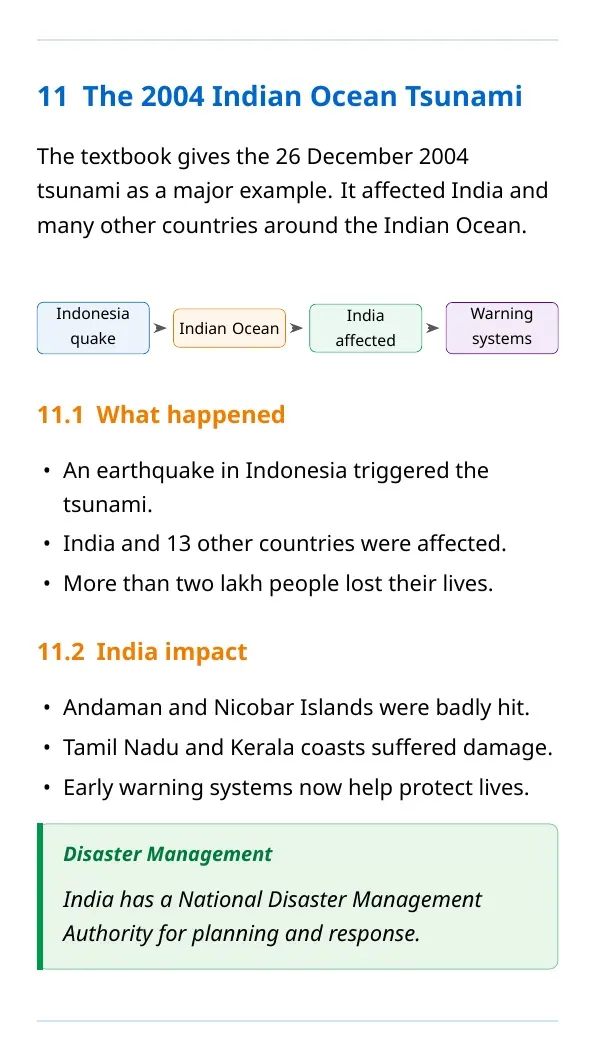
- The 26 December 2004 tsunami affected India and 13 other countries around the Indian Ocean.
- Andaman and Nicobar Islands and the coasts of Tamil Nadu and Kerala were badly affected.
- Early warning systems help reduce damage from such disasters.
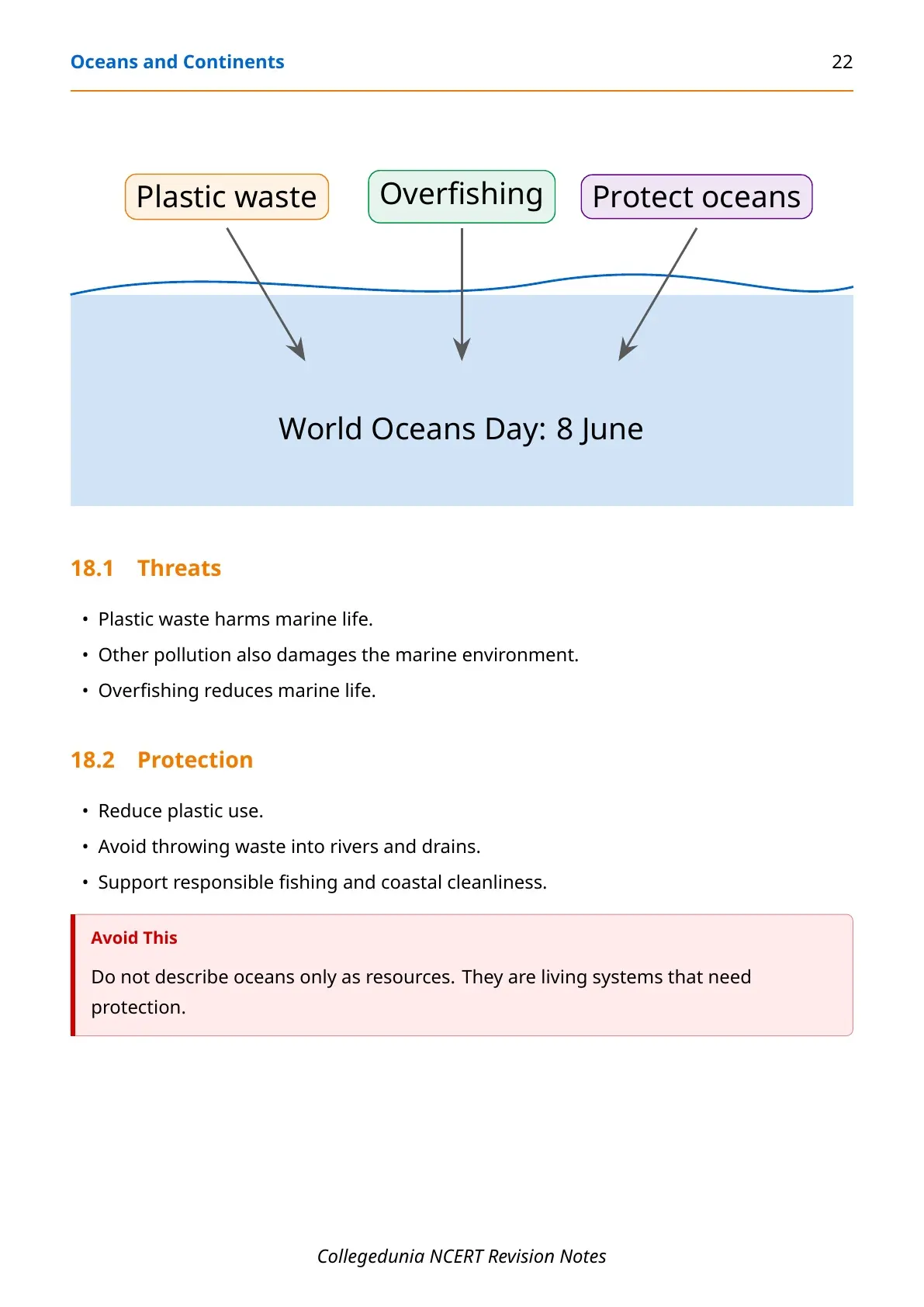
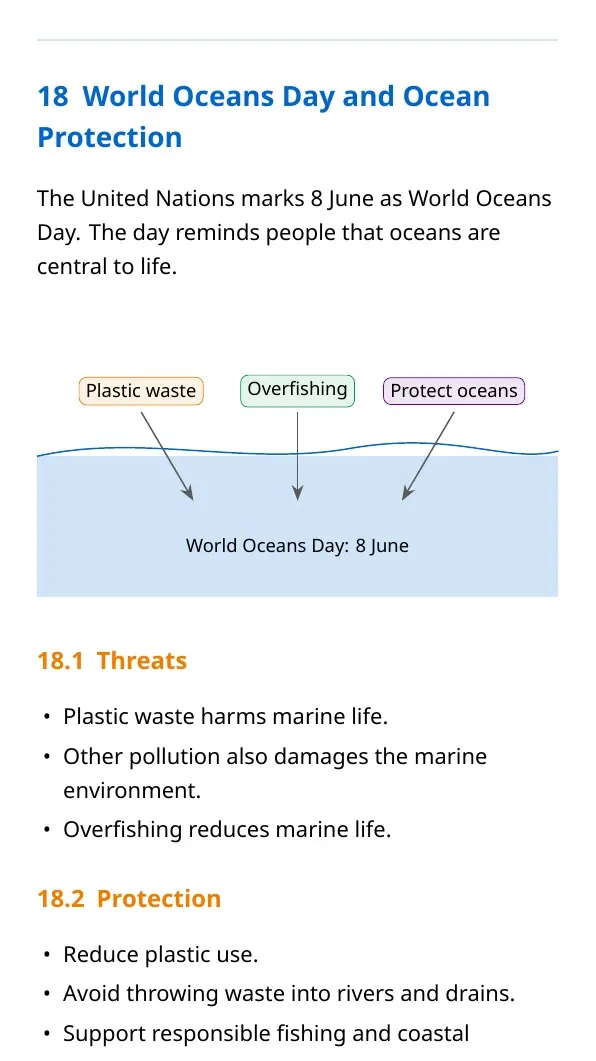
- World Oceans Day is marked on 8 June to remind people to protect oceans.
Oceans and Continents Related Resources
| Resource | Best use | Link |
|---|---|---|
| NCERT Notes | Topic-wise revision with tables | Current page |
| NCERT Solutions | Practice textbook questions | Open NCERT Solutions |
| NCERT Book PDF | Read the official chapter | Open Book PDF |
| Handwritten Notes | Quick one-sitting revision | Open Handwritten Notes |
Social Science Notes for All Chapters
| Chapter | NCERT chapter title | Notes link |
|---|---|---|
| Chapter 1 | Locating Places on the Earth | Open Notes |
| Chapter 2 | Oceans and Continents | Current notes |
| Chapter 3 | Landforms and Life | Open Notes |
| Chapter 4 | Timeline and Sources of History | Open Notes |
| Chapter 5 | India, That Is Bharat | Open Notes |
| Chapter 6 | The Beginnings of Indian Civilisation | Open Notes |
| Chapter 7 | India's Cultural Roots | Open Notes |
| Chapter 8 | Unity in Diversity, or Many in the One | Open Notes |
| Chapter 9 | Family and Community | Open Notes |
| Chapter 10 | Grassroots Democracy Part 1 Governance | Open Notes |
| Chapter 11 | Grassroots Democracy Part 2 Local Government in Rural Areas | Open Notes |
| Chapter 12 | Grassroots Democracy Part 3 Local Government in Urban Areas | Open Notes |
| Chapter 13 | The Value of Work | Open Notes |
| Chapter 14 | Economic Activities Around Us | Open Notes |
Oceans and Continents Class 6 Notes FAQs
Ques. What is Class 6 Social Science Chapter 2 about?
Ans. It explains oceans, continents, islands, marine life, rainfall, disasters, ocean protection and the way land and water affect life on Earth.
Ques. What are the five oceans named in the chapter?
Ans. The five oceans are the Pacific Ocean, Atlantic Ocean, Indian Ocean, Southern Ocean and Arctic Ocean.
Ques. Which ocean is the largest and which is the smallest?
Ans. The Pacific Ocean is the largest ocean. The Arctic Ocean is the smallest ocean.
Ques. What are the seven continents?
Ans. The seven continents are Africa, Antarctica, Asia, Australia, Europe, North America and South America.
Ques. Why is Earth called the blue planet?
Ans. Earth is called the blue planet because almost three-fourths of its surface is covered by water, so it looks mostly blue from space.



Comments