



The NCERT Class 6 Social Science Chapter 4 notes for Timeline and Sources of History explain BCE and CE, timelines, centuries, millenniums, historical sources, specialists who study the past and early human life. These notes follow the 2026-27 NCERT textbook and include a free PDF for quick revision.
- Best for revision: BCE and CE calculations, source types and early human changes.
- Use with the PDF: revise the tables first, then practise the date exercises.
- 2026-27 focus: follows Exploring Society: India and Beyond, Chapter 4.
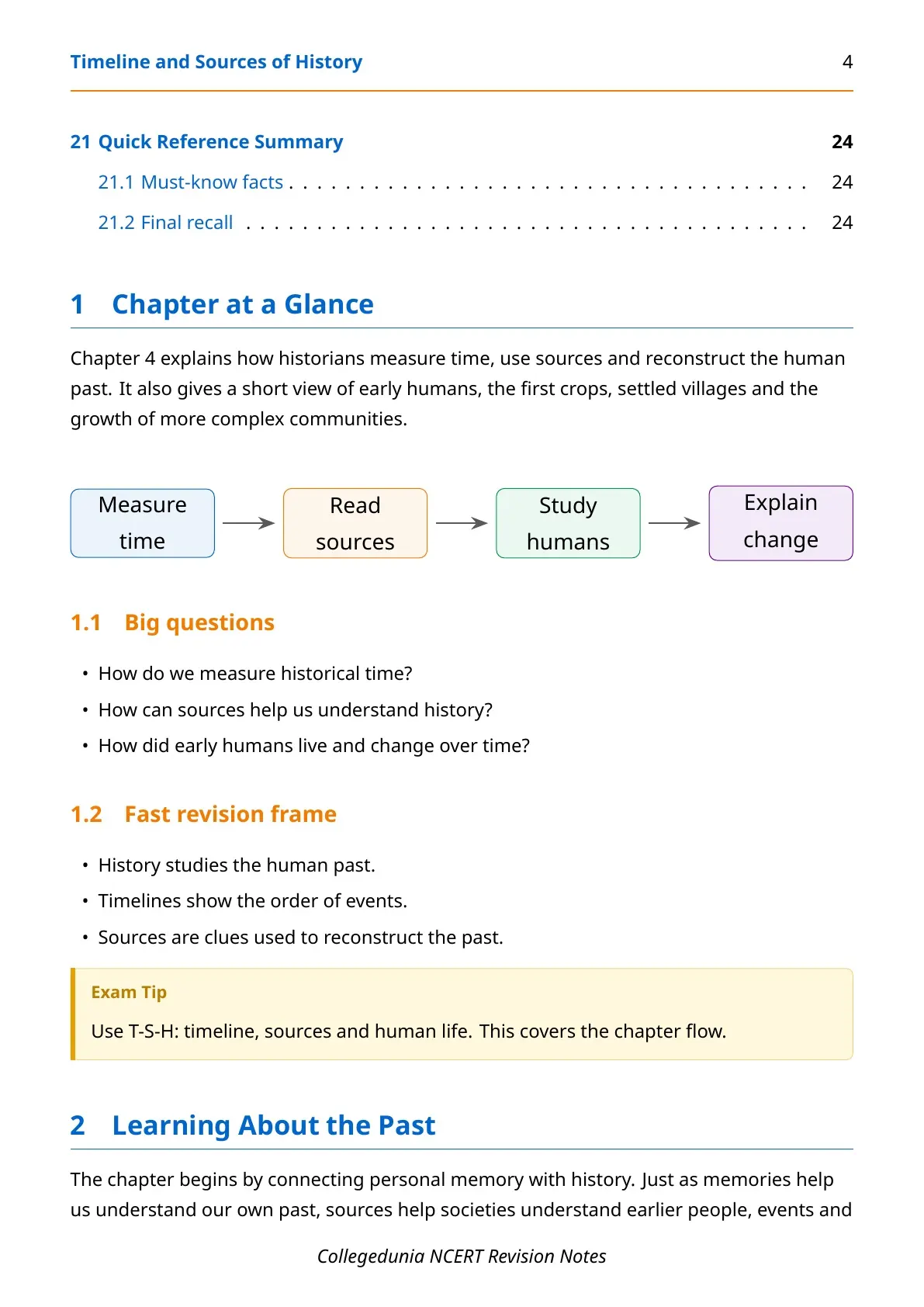
Student Feedback: Students usually revise this chapter faster after grouping it into time measurement, source types and early human life.
|
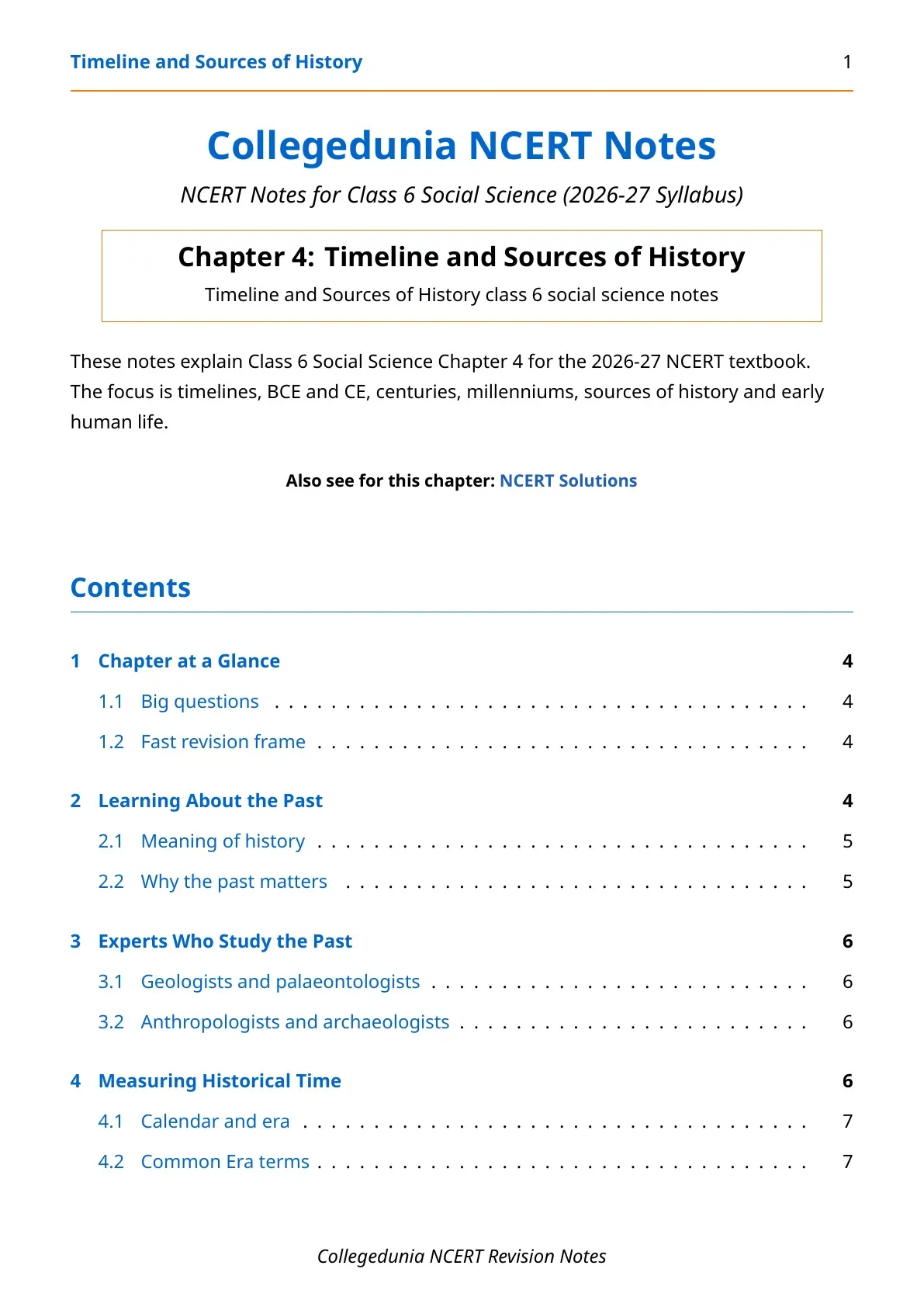
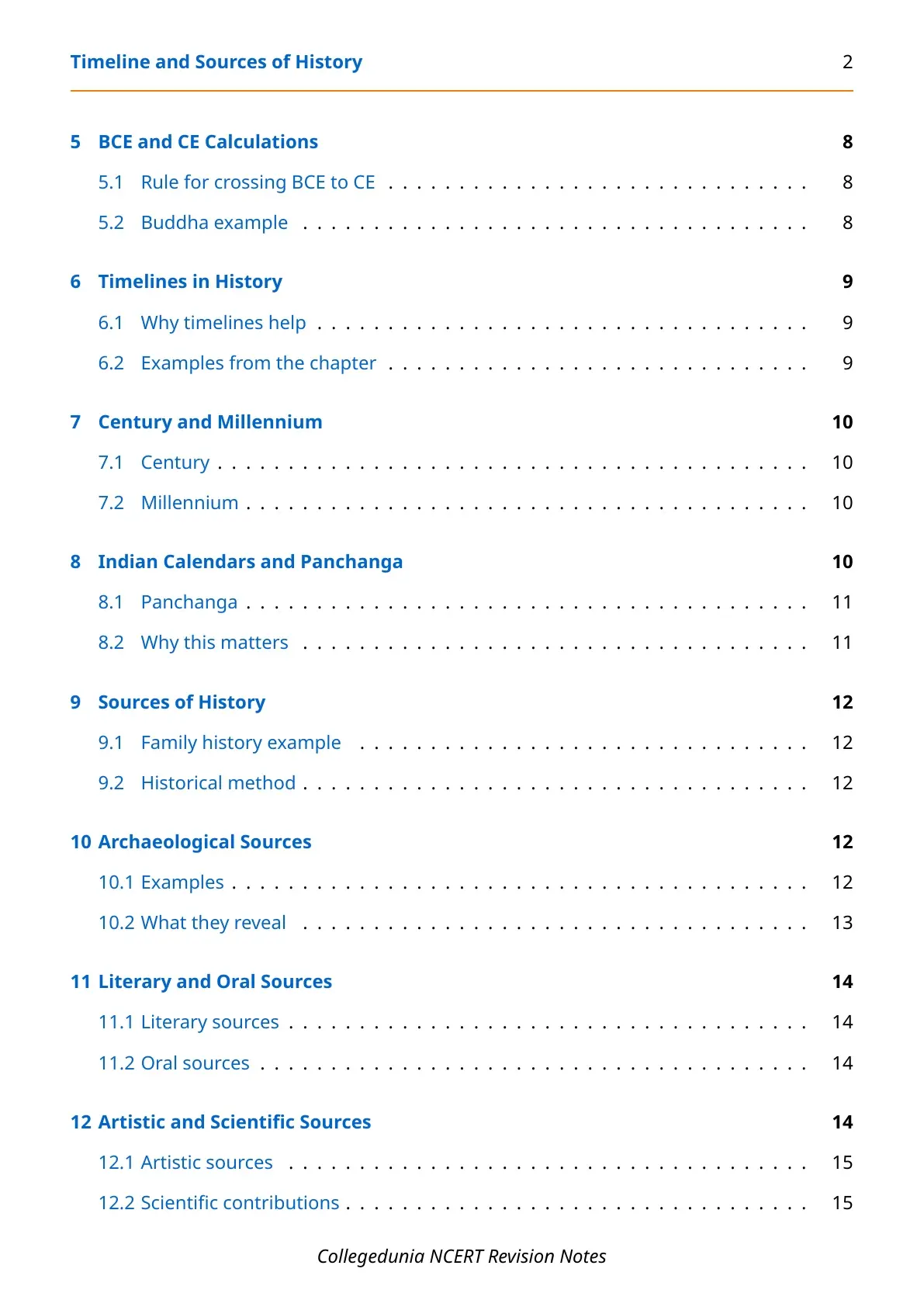
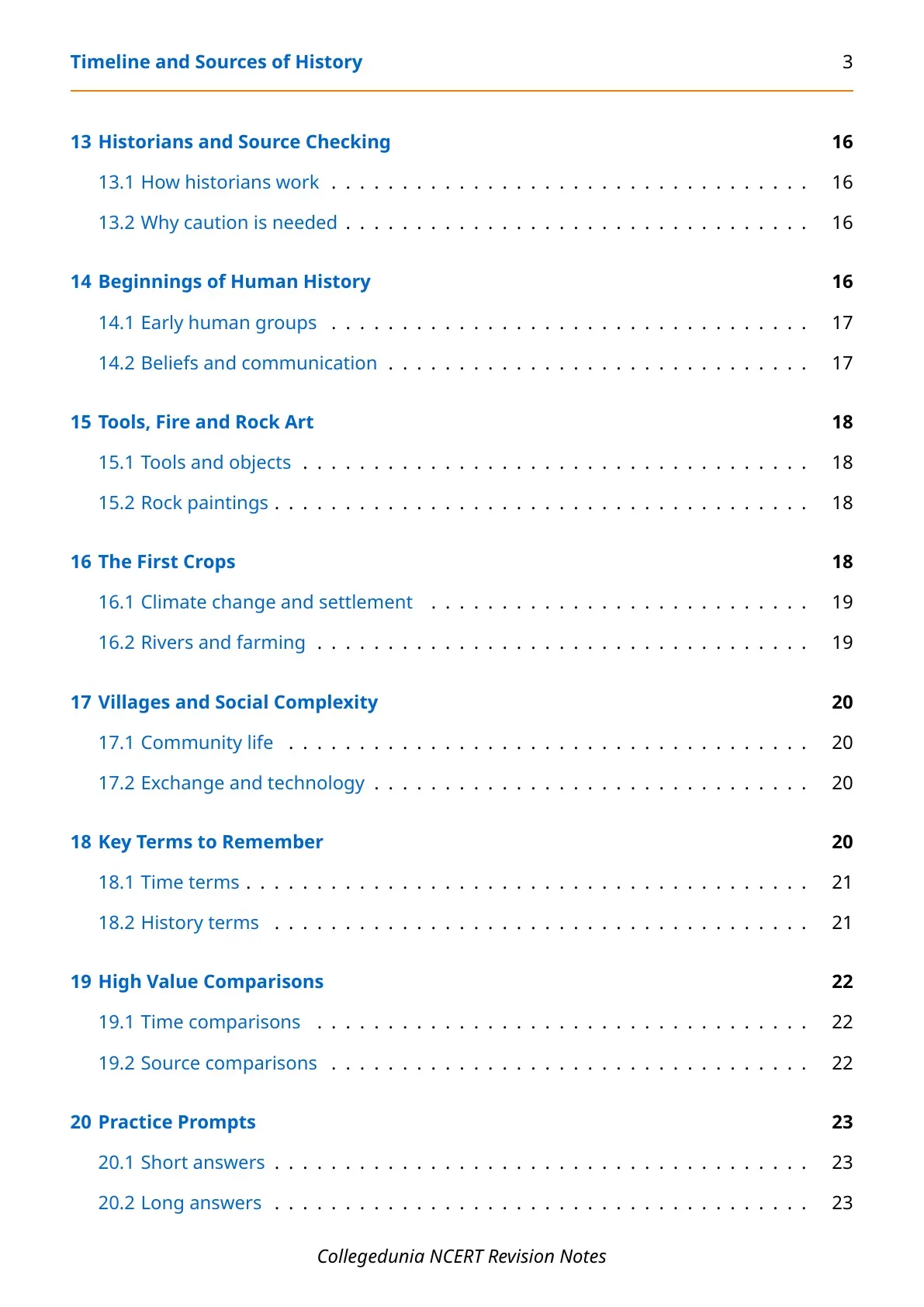
Table of Contents |
Timeline and Sources of History Notes Overview
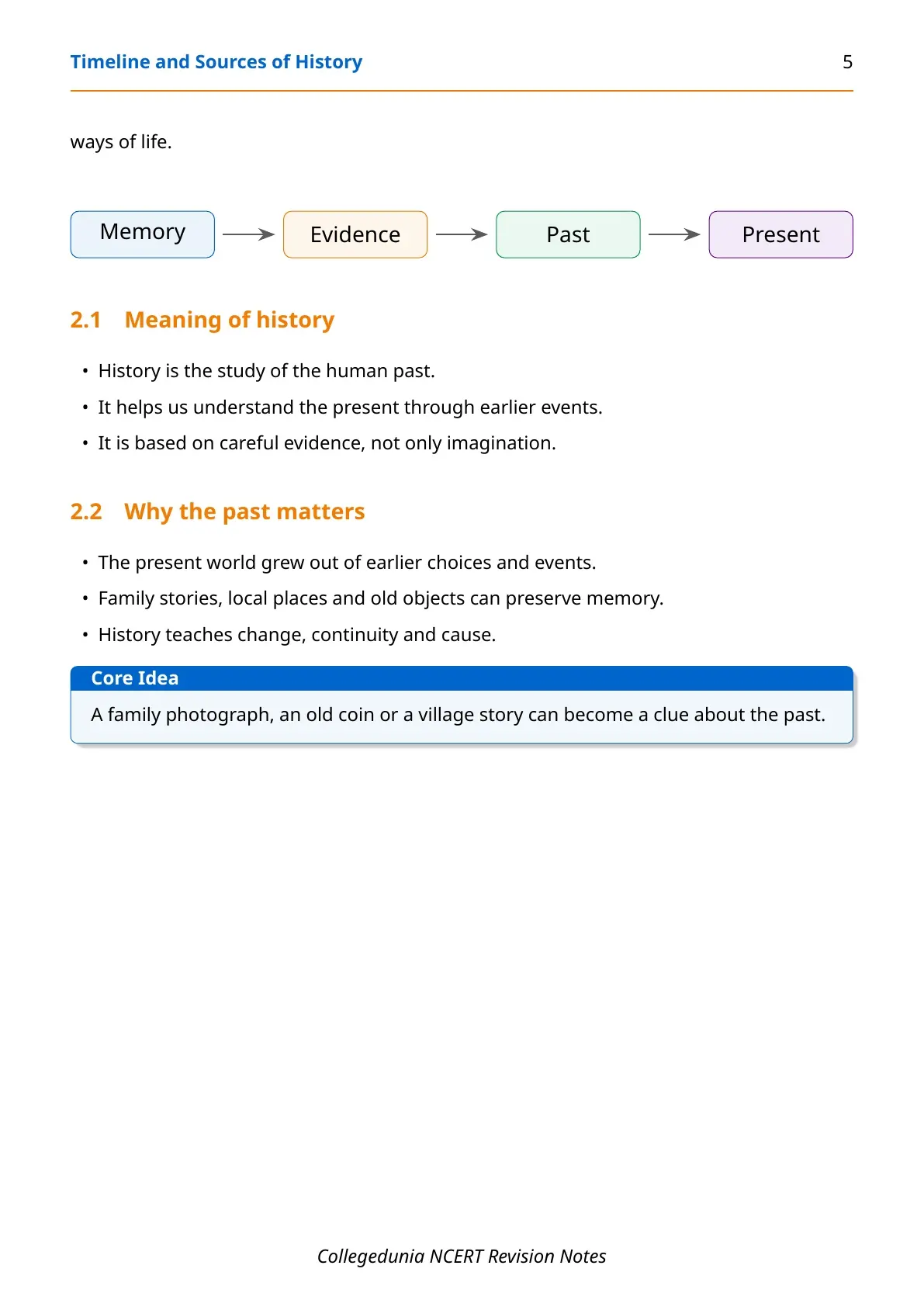
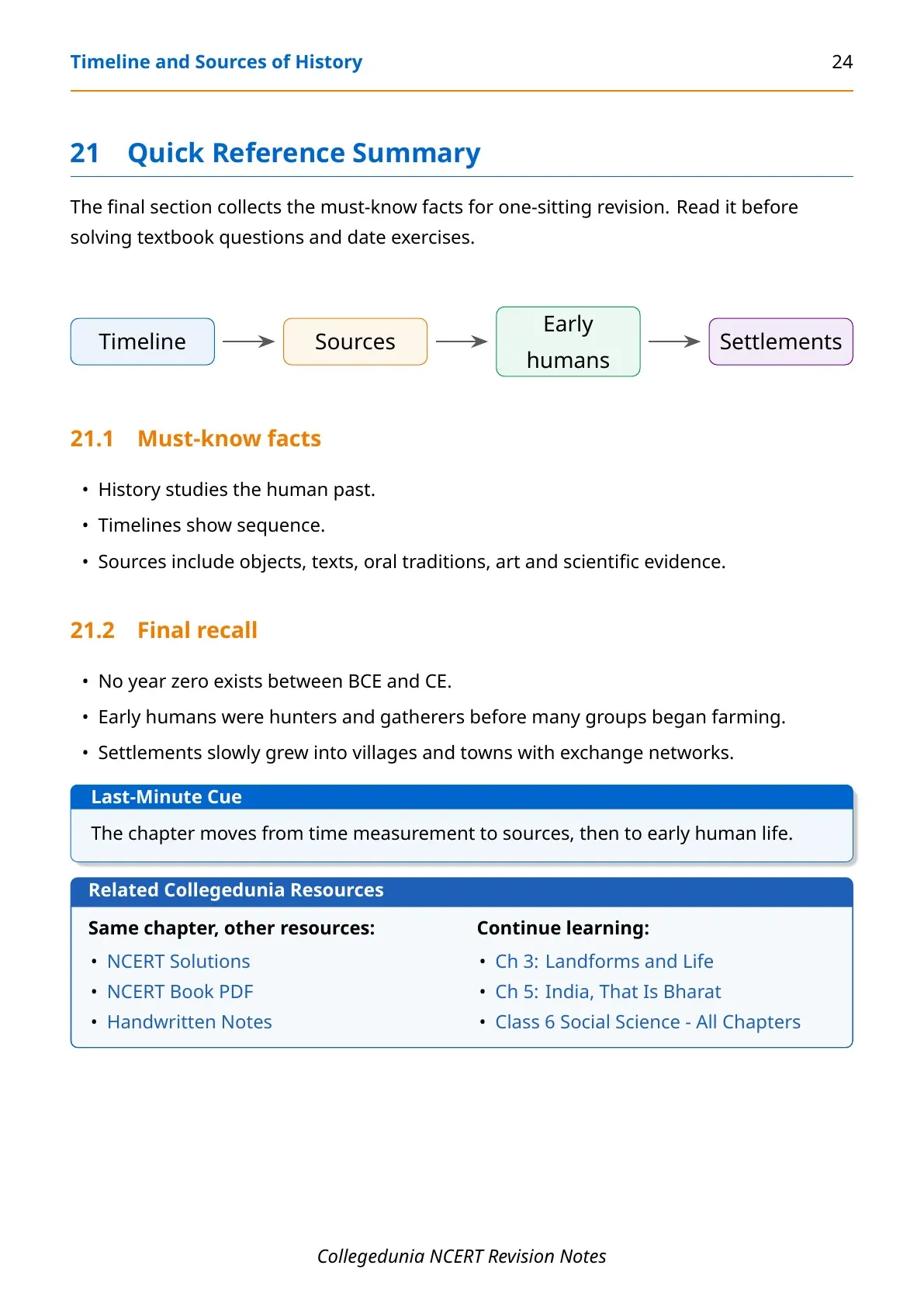
Chapter 4 explains how historians measure time and use evidence. It begins with memory and the human past, then moves to timelines, BCE and CE, sources of history and the life of early humans.
| Revision area | Key idea | Example cue |
|---|---|---|
| History | Study of the human past | Past helps us understand the present |
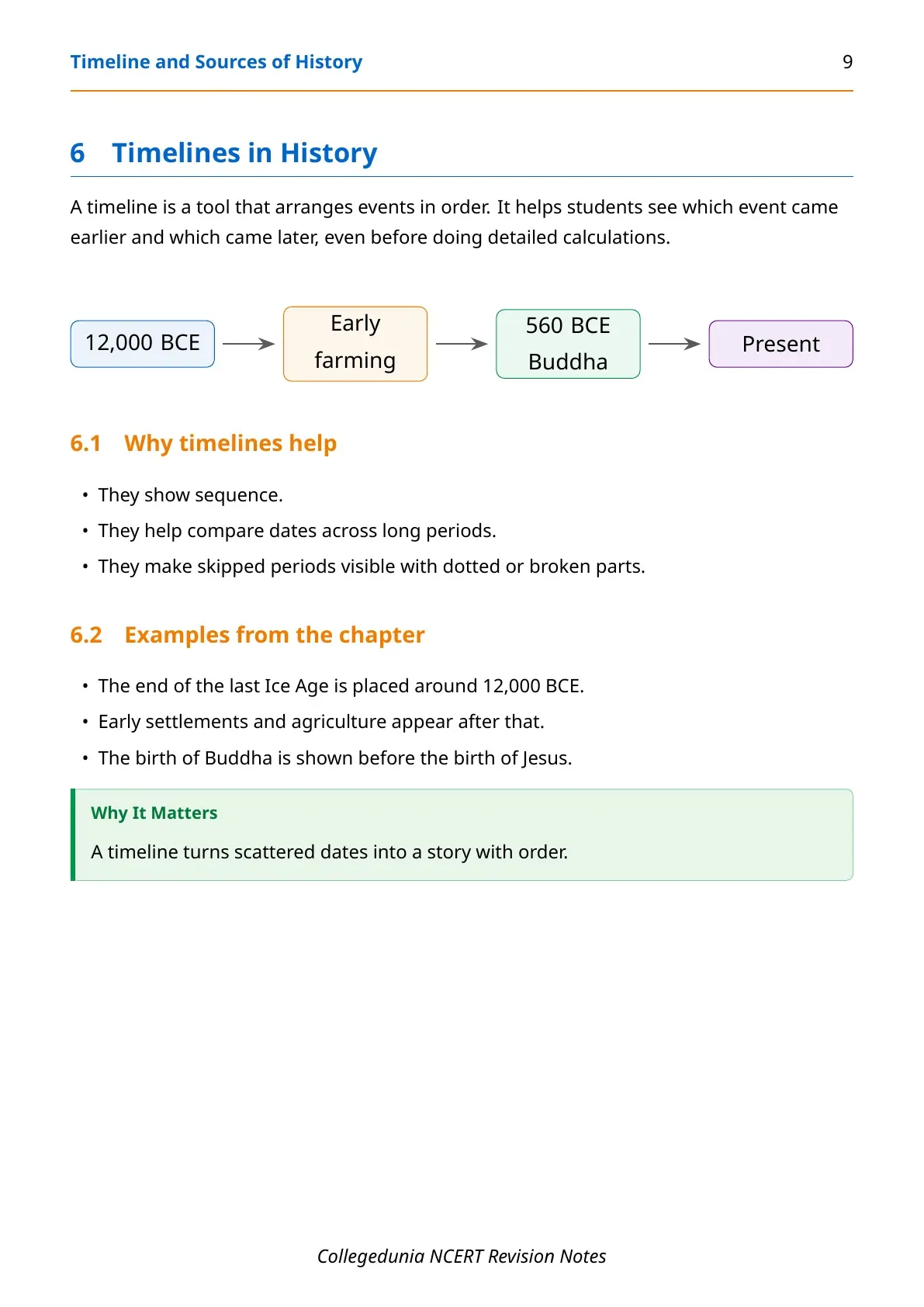
| Timeline | Events arranged in sequence | Buddha before Jesus |
| BCE and CE | Common historical date labels | No year zero between them |
| Sources | Evidence used to know the past | Coins, texts, stories and remains |
| Early humans | Hunters and gatherers who later farmed | Rock art, tools and first crops |
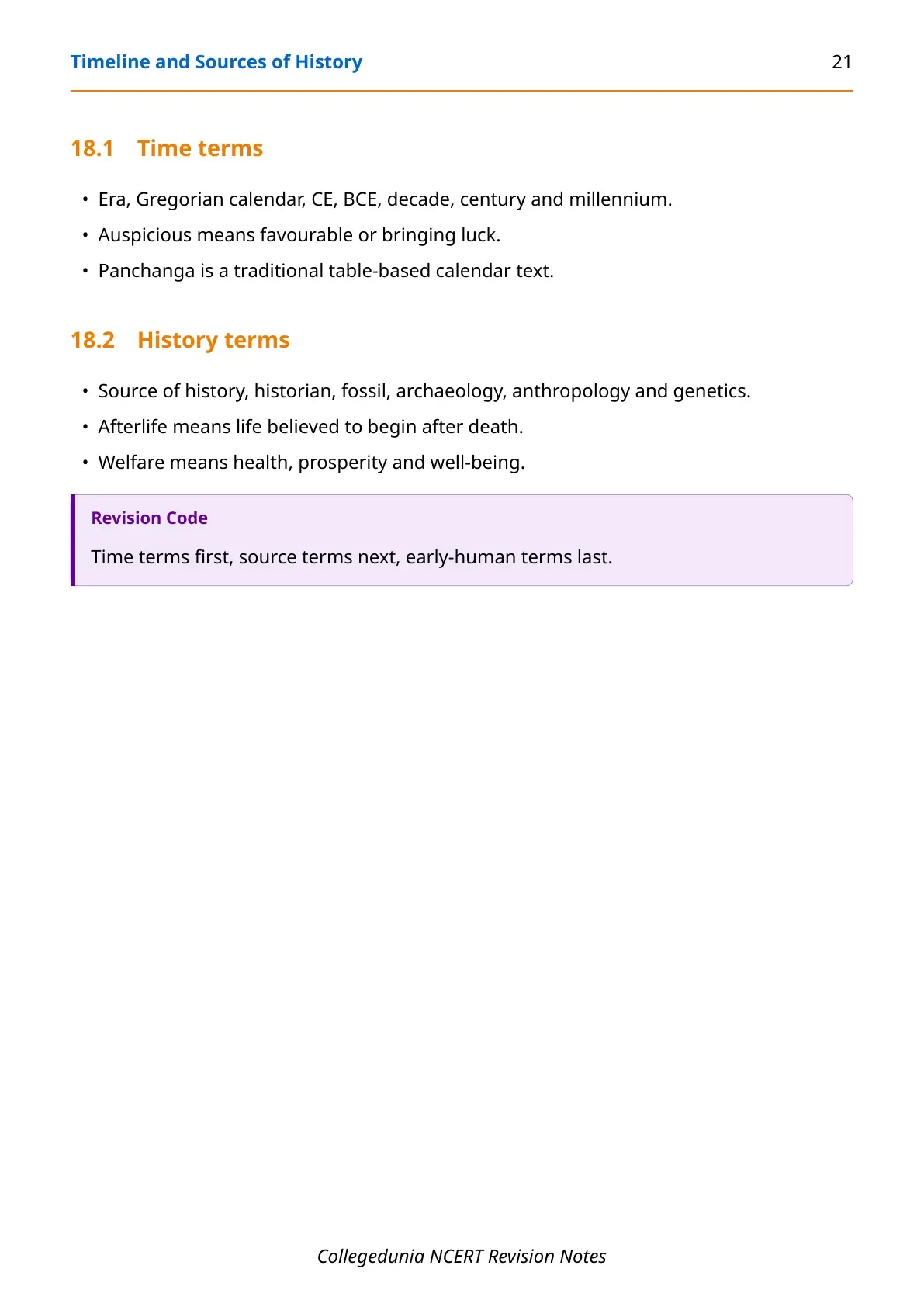
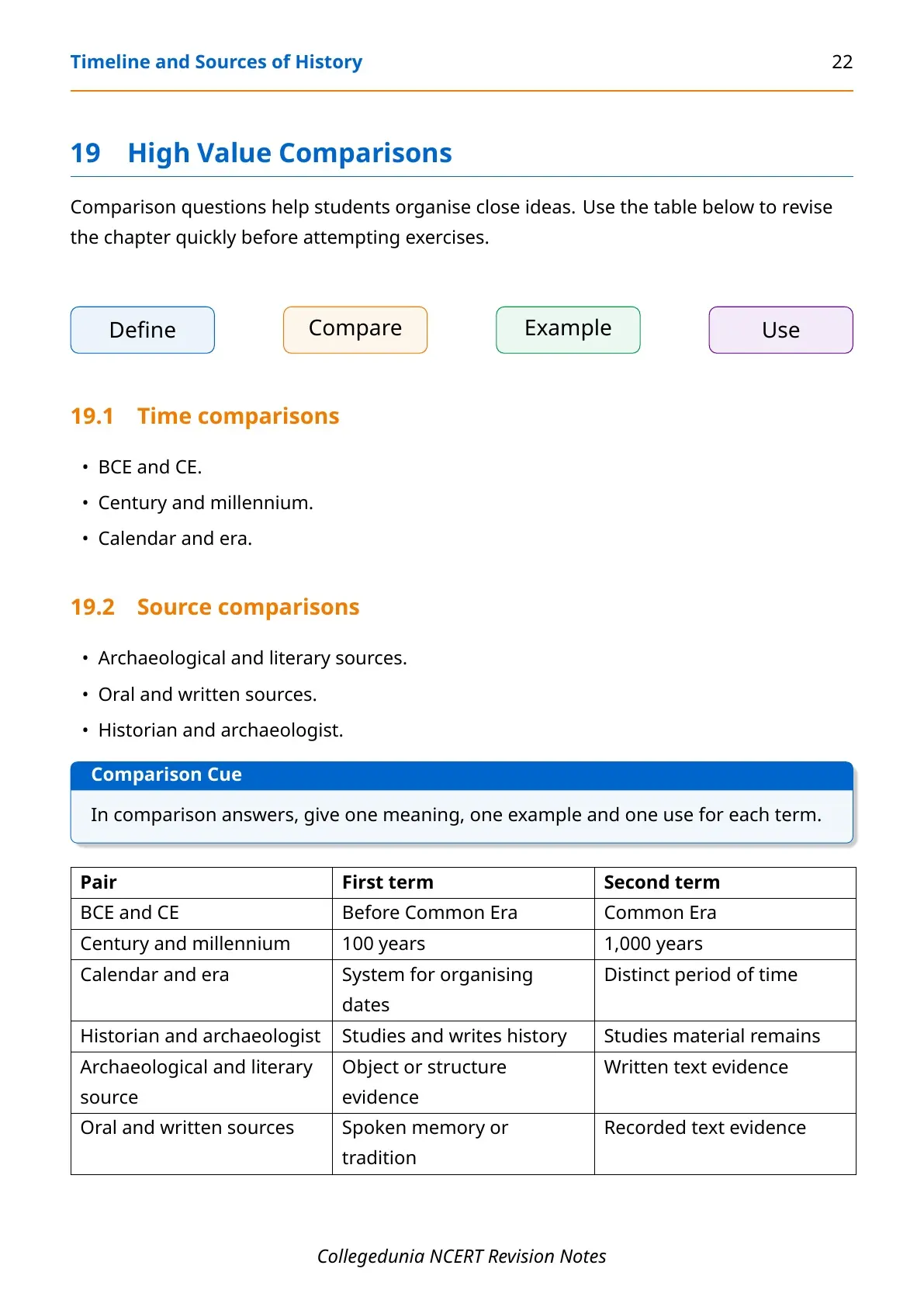
BCE, CE, Century and Millennium
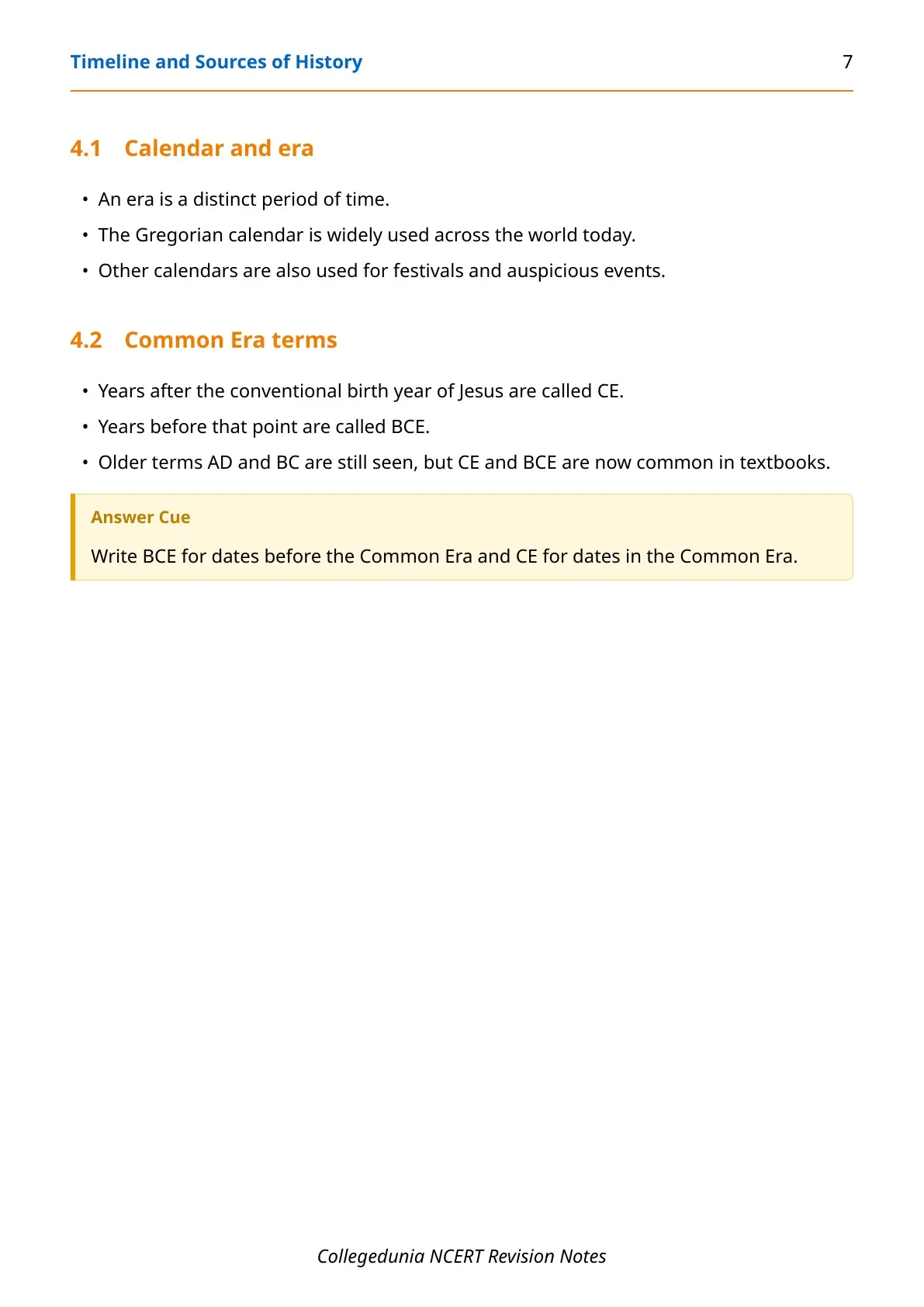
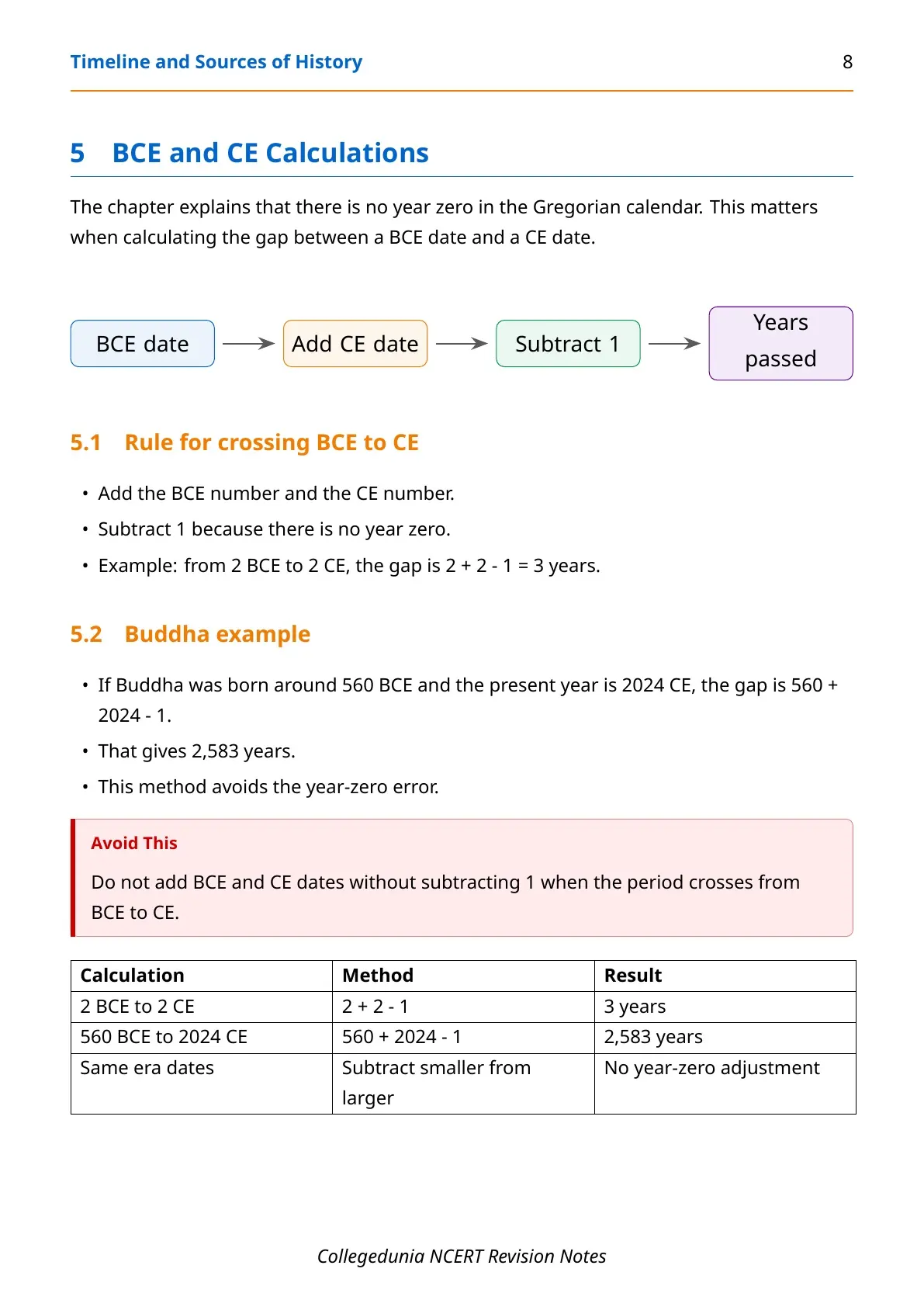
The Gregorian calendar is commonly used across the world. Years after the conventional birth year of Jesus are called CE, and years before that point are called BCE. Because there is no year zero, students must subtract 1 when crossing from BCE to CE.
- BCE to CE rule: add both numbers and subtract 1.
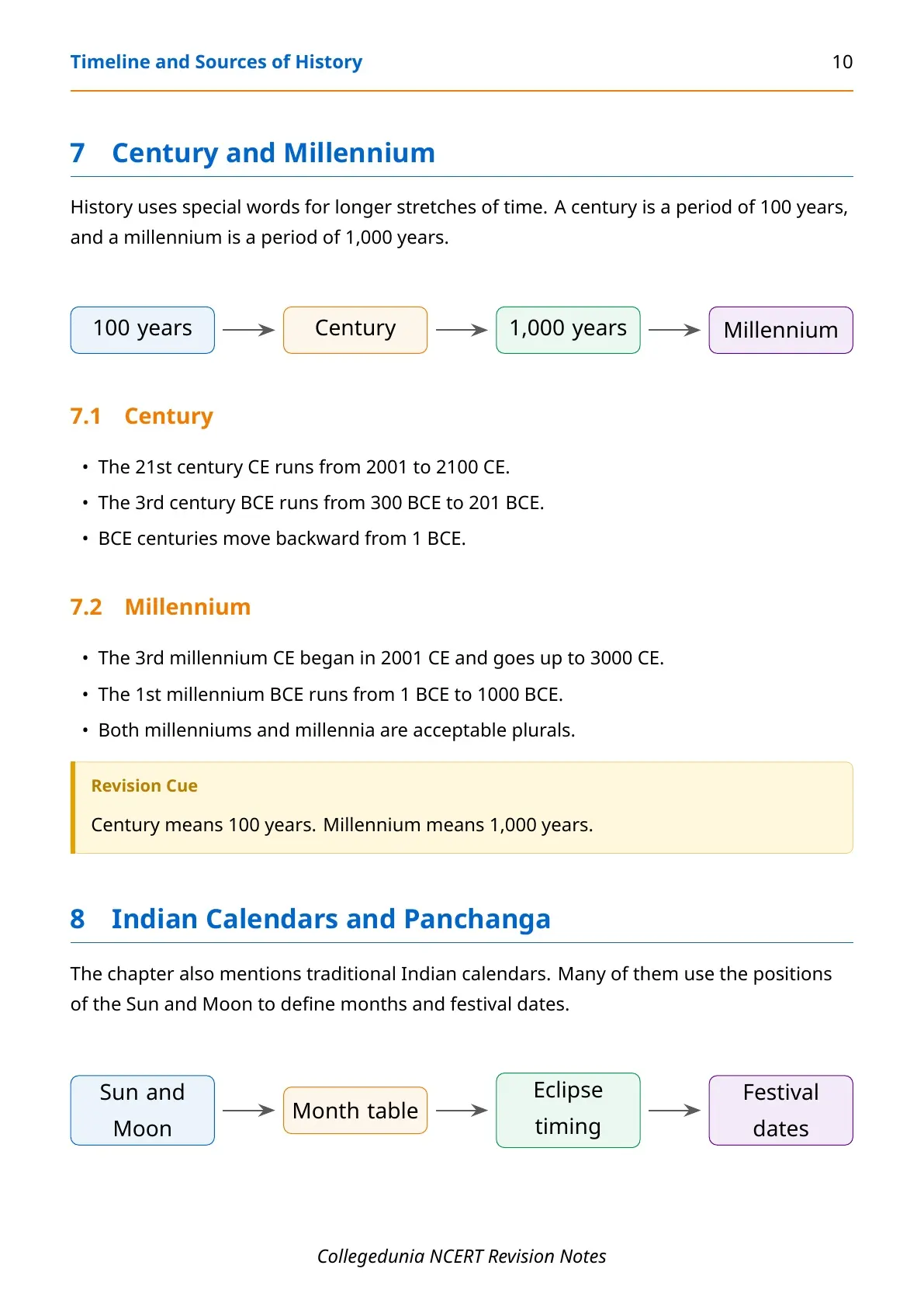
- Century: any period of 100 years.
- Millennium: any period of 1,000 years.
- Timeline: a line that shows dates and events in order.
Timeline and Sources of History Chapter 4 Revision Video
Source: Magnet Brains on YouTube
Sources of History and Historical Evidence
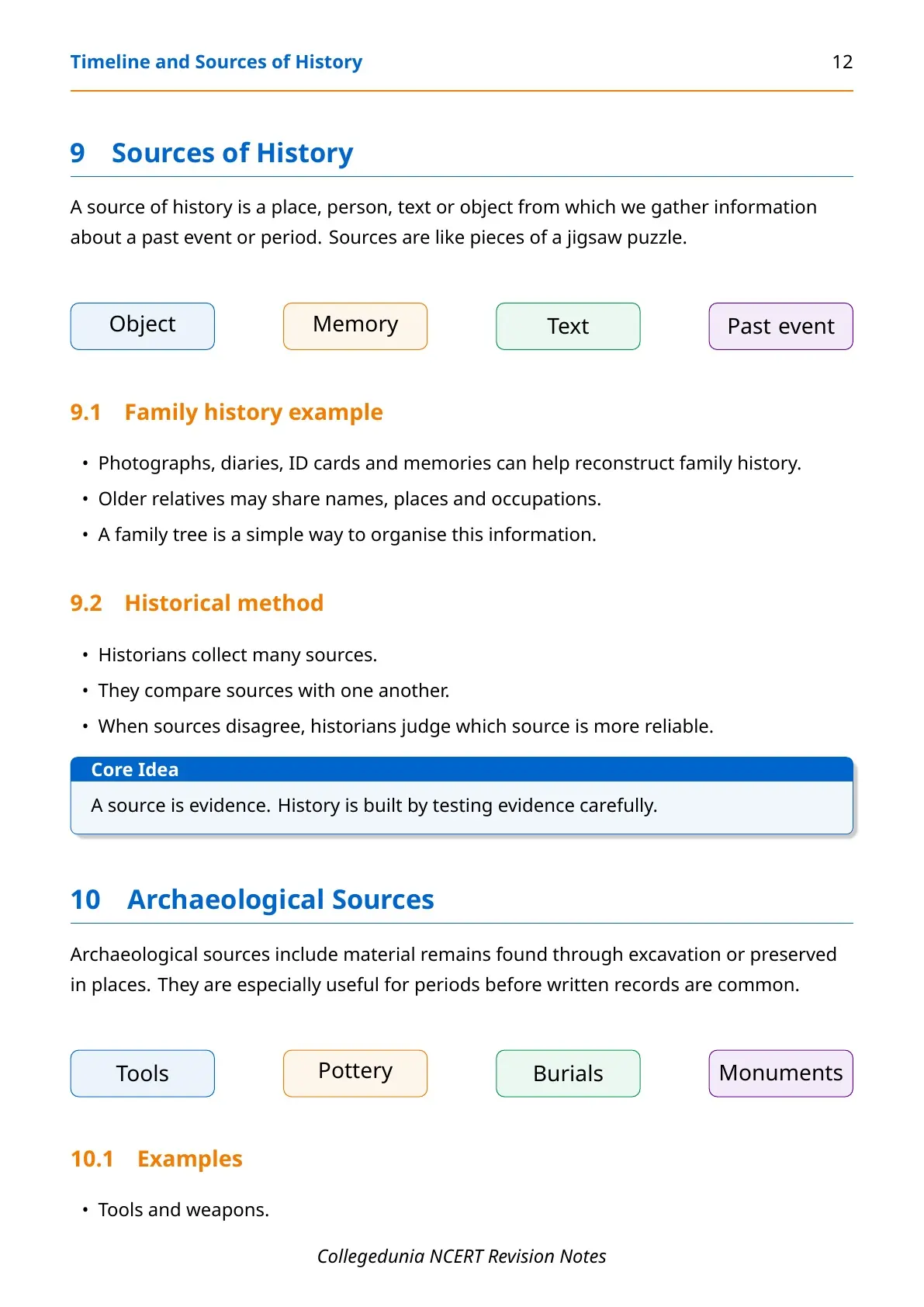
A source of history is a place, person, text or object that gives information about the past. Historians collect many sources, compare them and decide which evidence is most reliable.
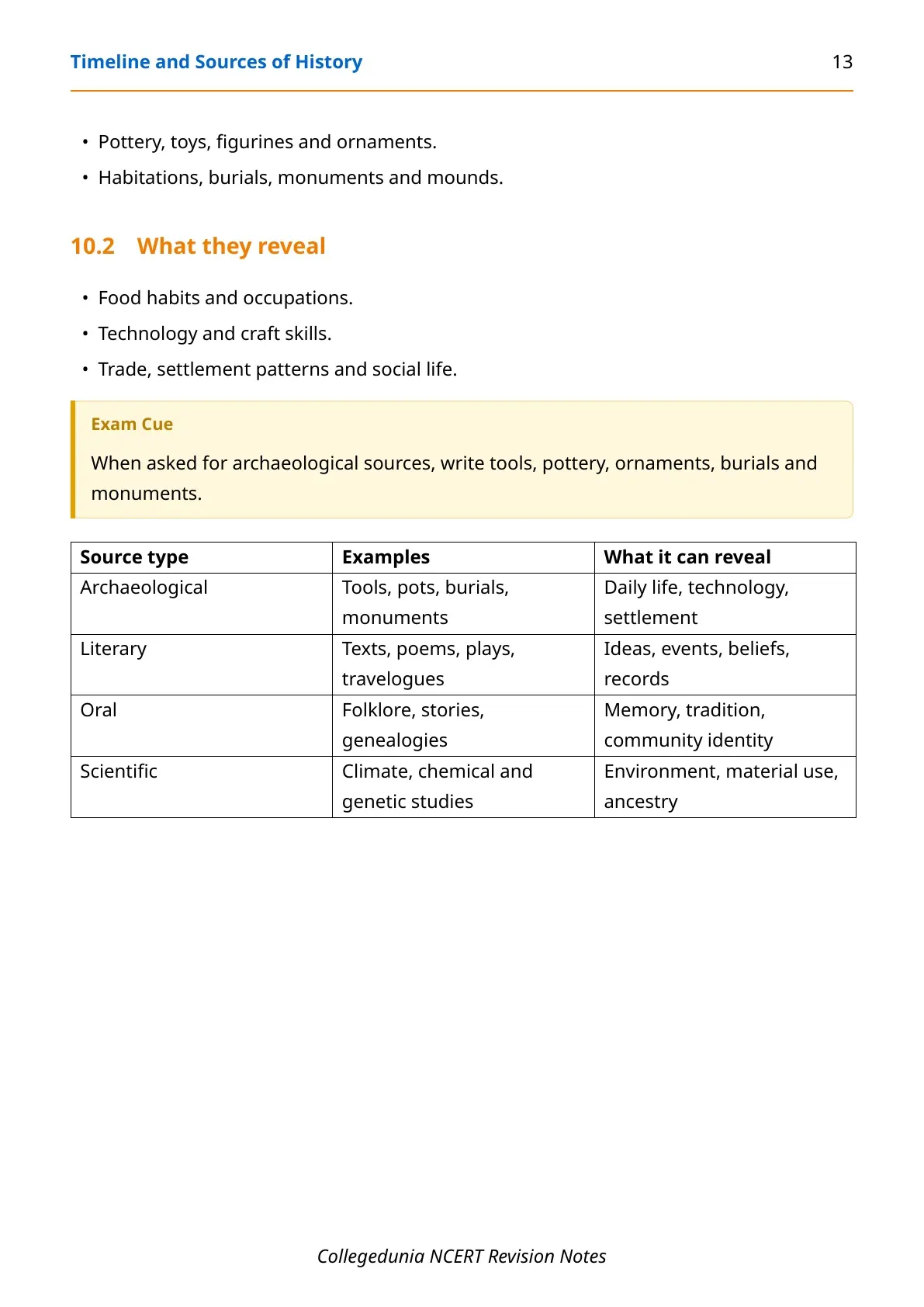
| Source type | Examples | Use in history |
|---|---|---|
| Archaeological | Tools, pottery, ornaments, burials and monuments | Shows daily life and technology |
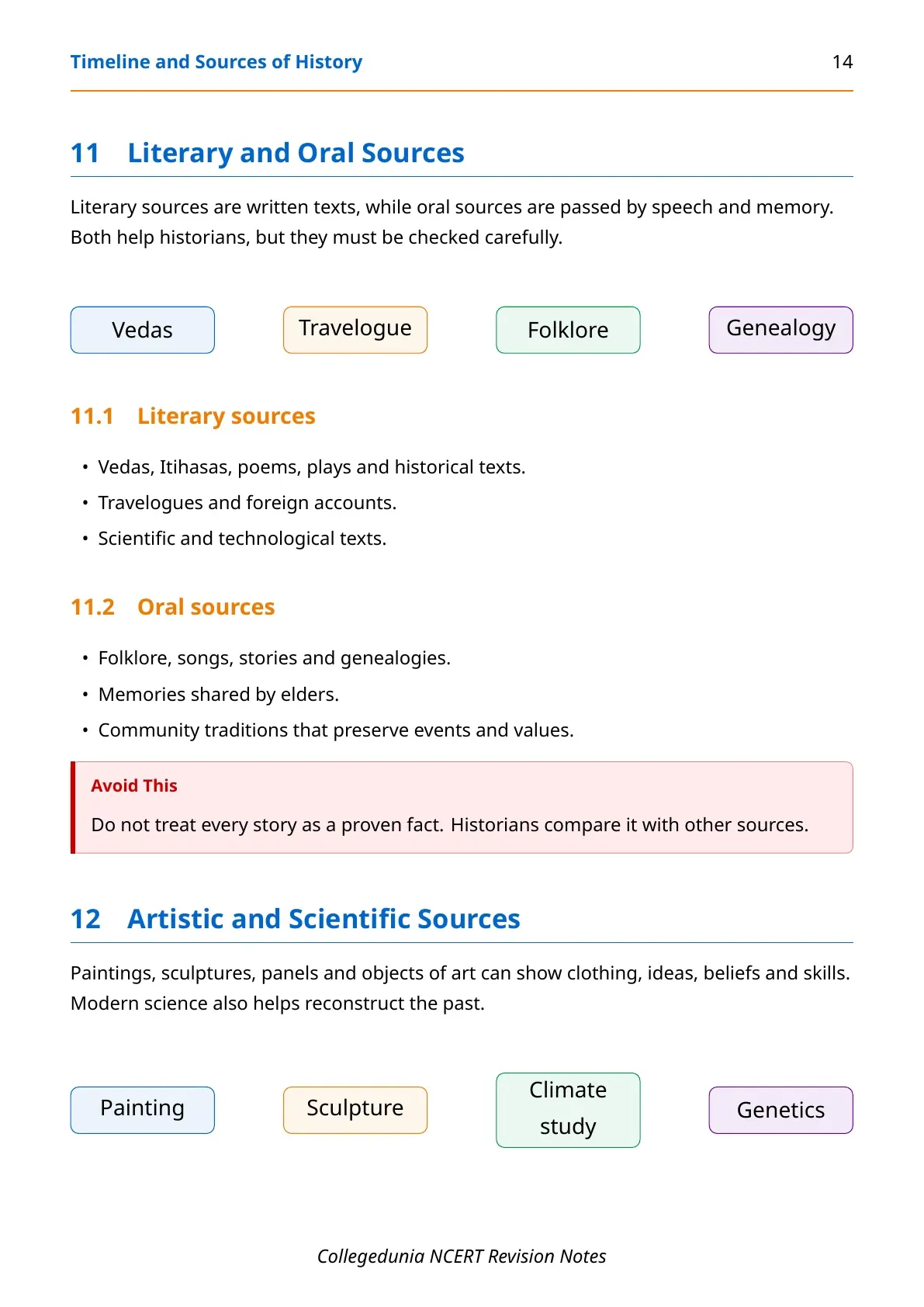
| Literary | Texts, poems, plays, travelogues and accounts | Gives written information and ideas |
| Oral | Folklore, genealogies, stories and memories | Preserves community memory |
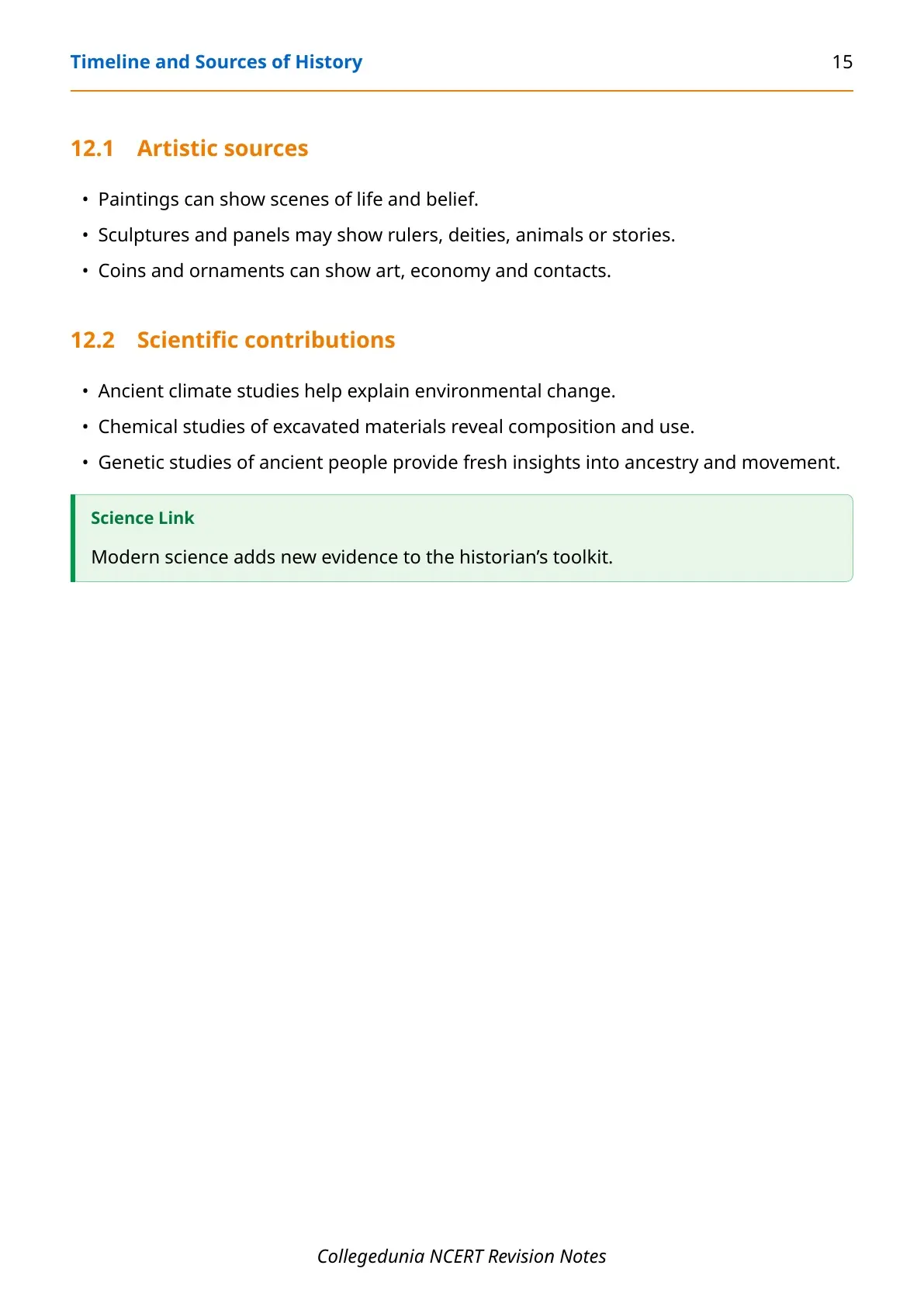
| Scientific | Climate, chemical and genetic studies | Adds evidence about environment and ancestry |
Early Humans and the First Crops
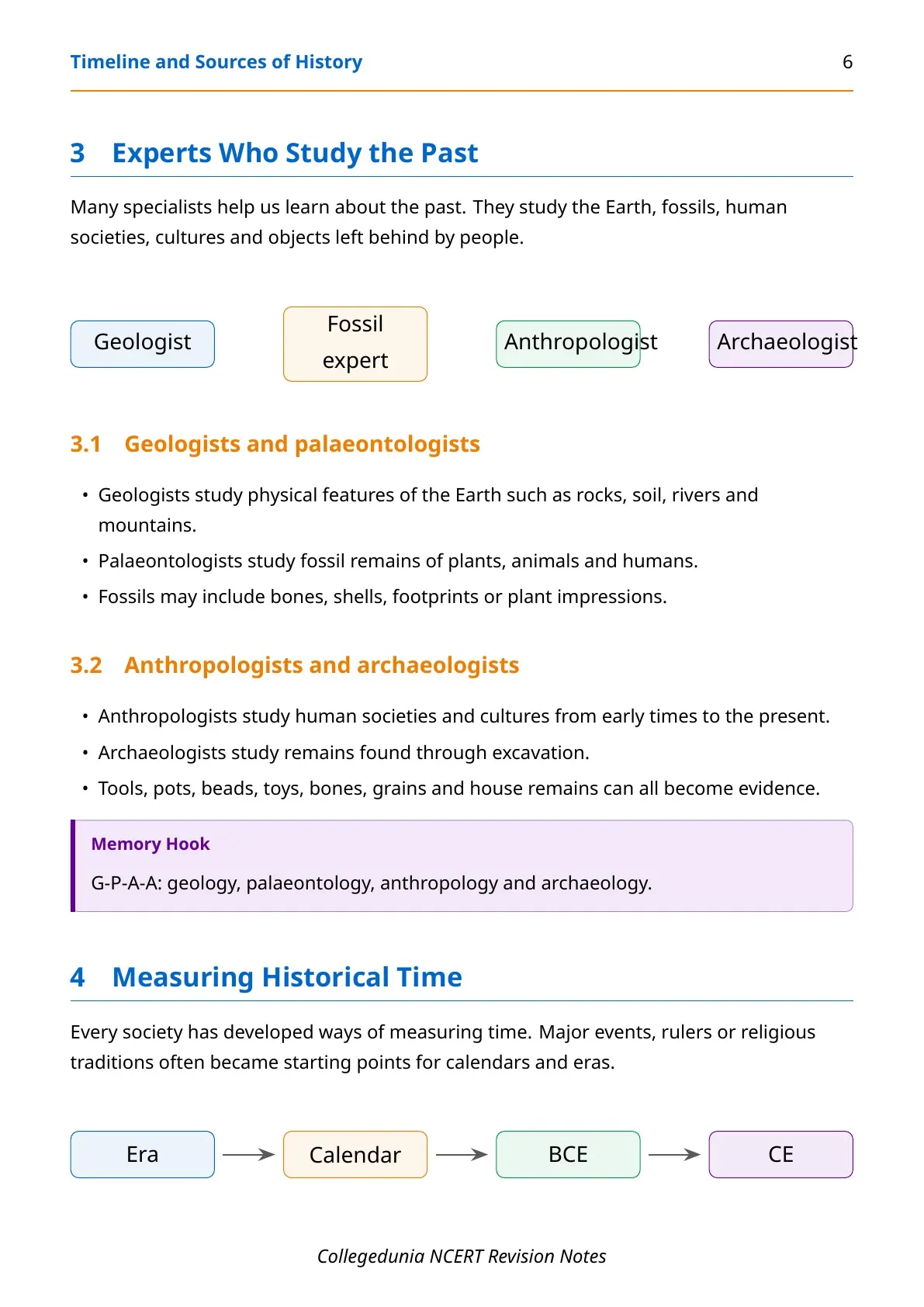
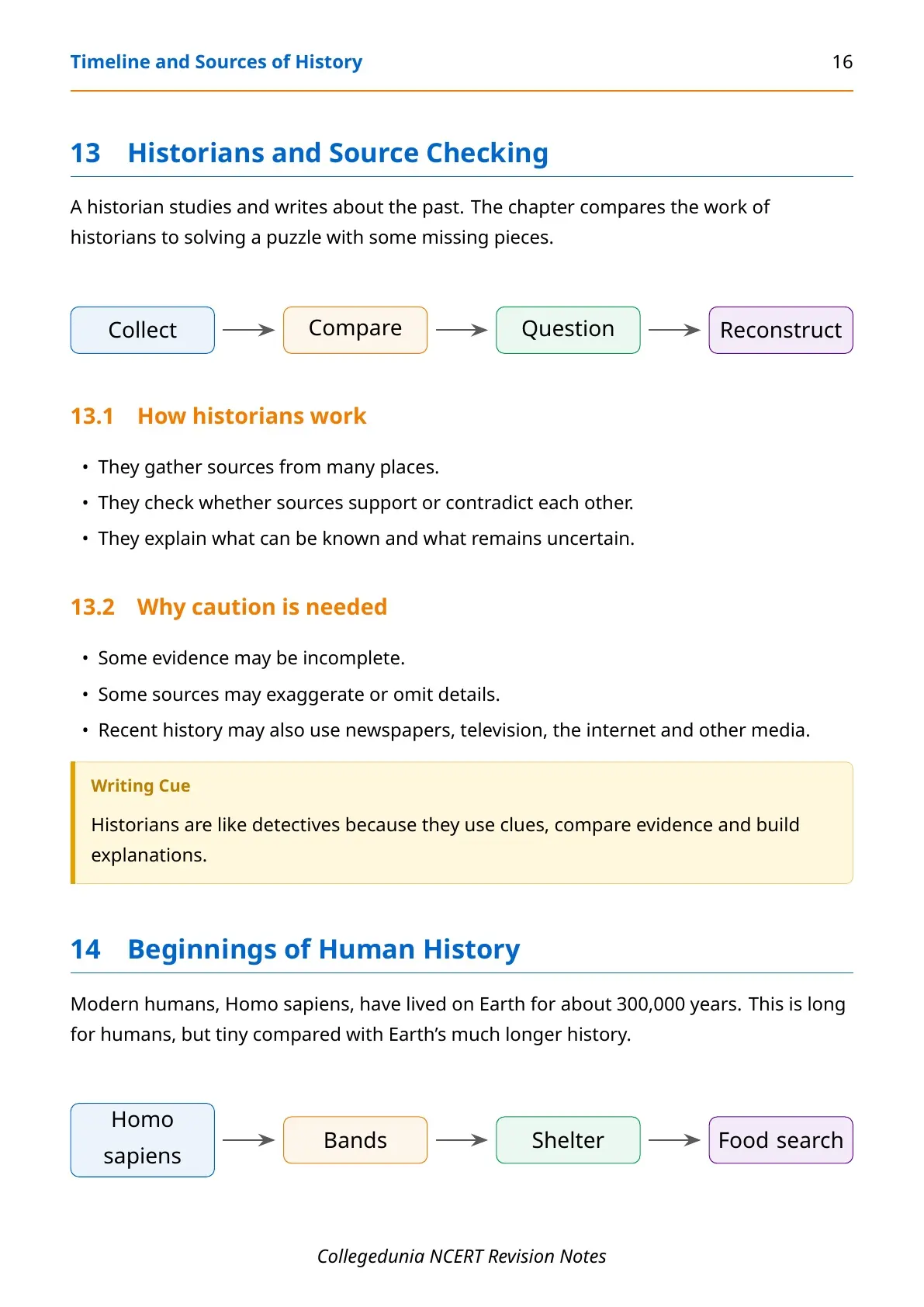
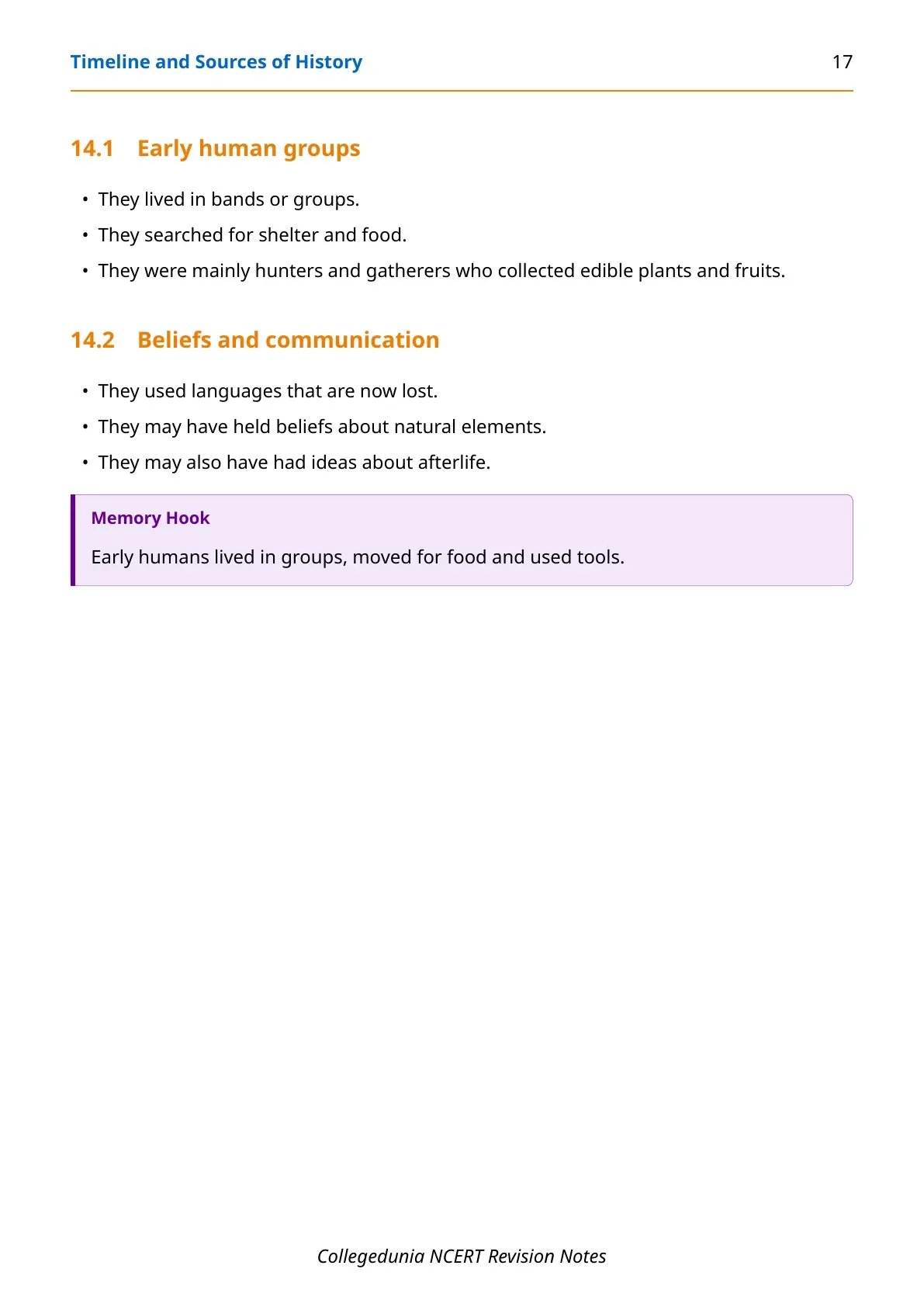
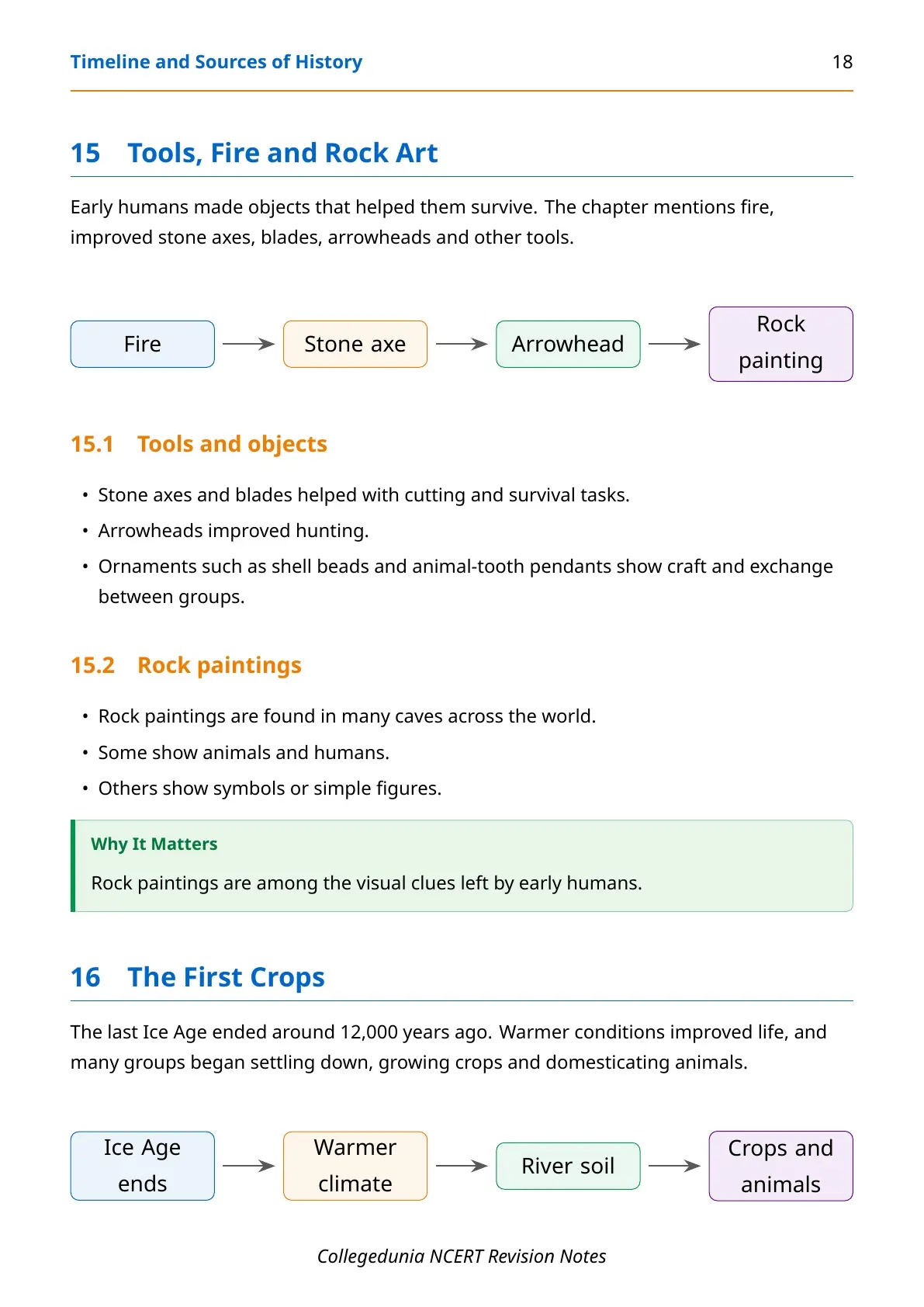
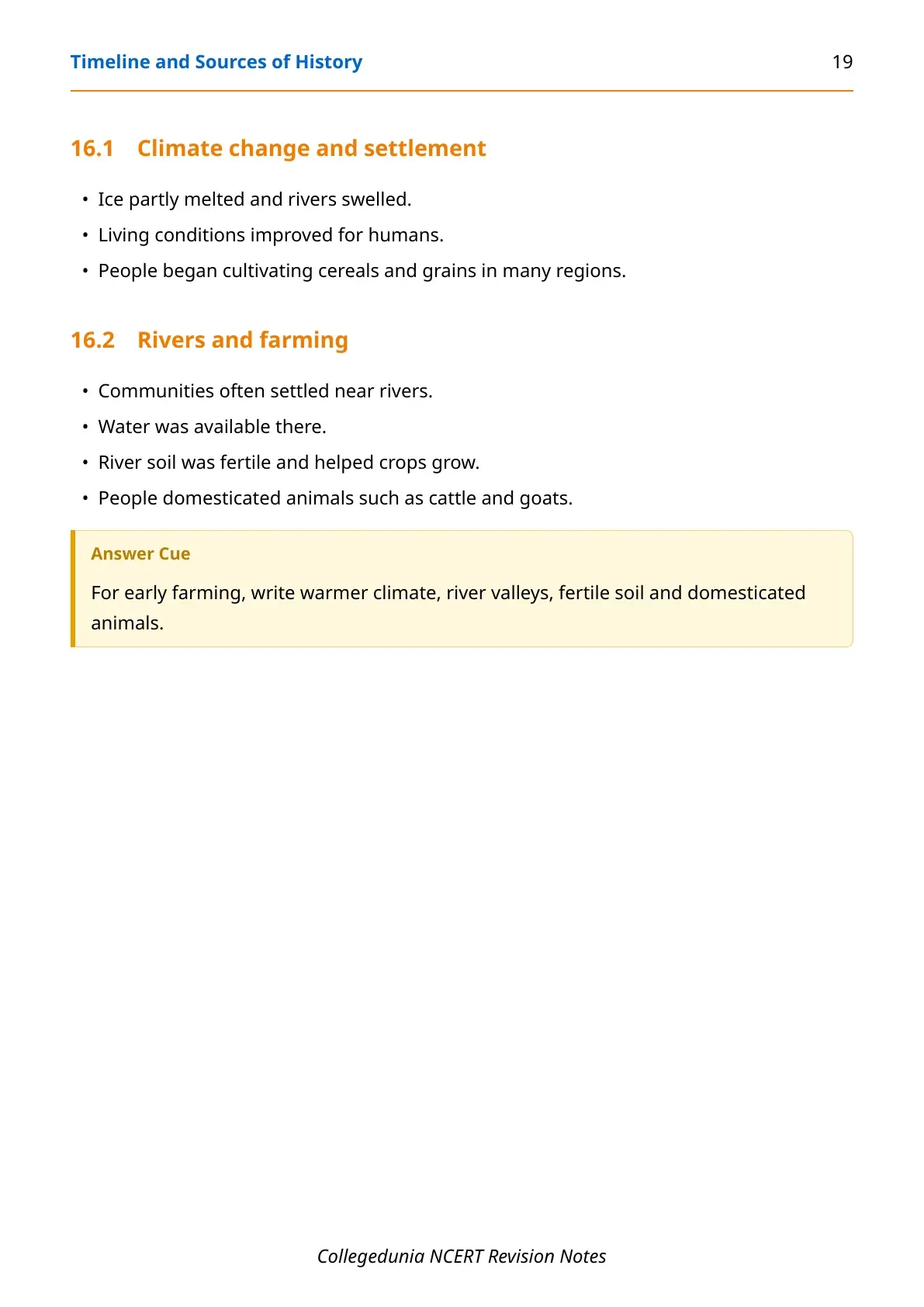
Modern humans have lived on Earth for about 300,000 years. Early humans lived in groups, searched for food and shelter, made tools, used fire and left rock paintings. After the last Ice Age, many groups began farming and domesticating animals.
- Early humans were mainly hunters and gatherers.
- They lived in temporary camps, rock shelters or caves.
- Warmer climate after the last Ice Age helped farming begin.
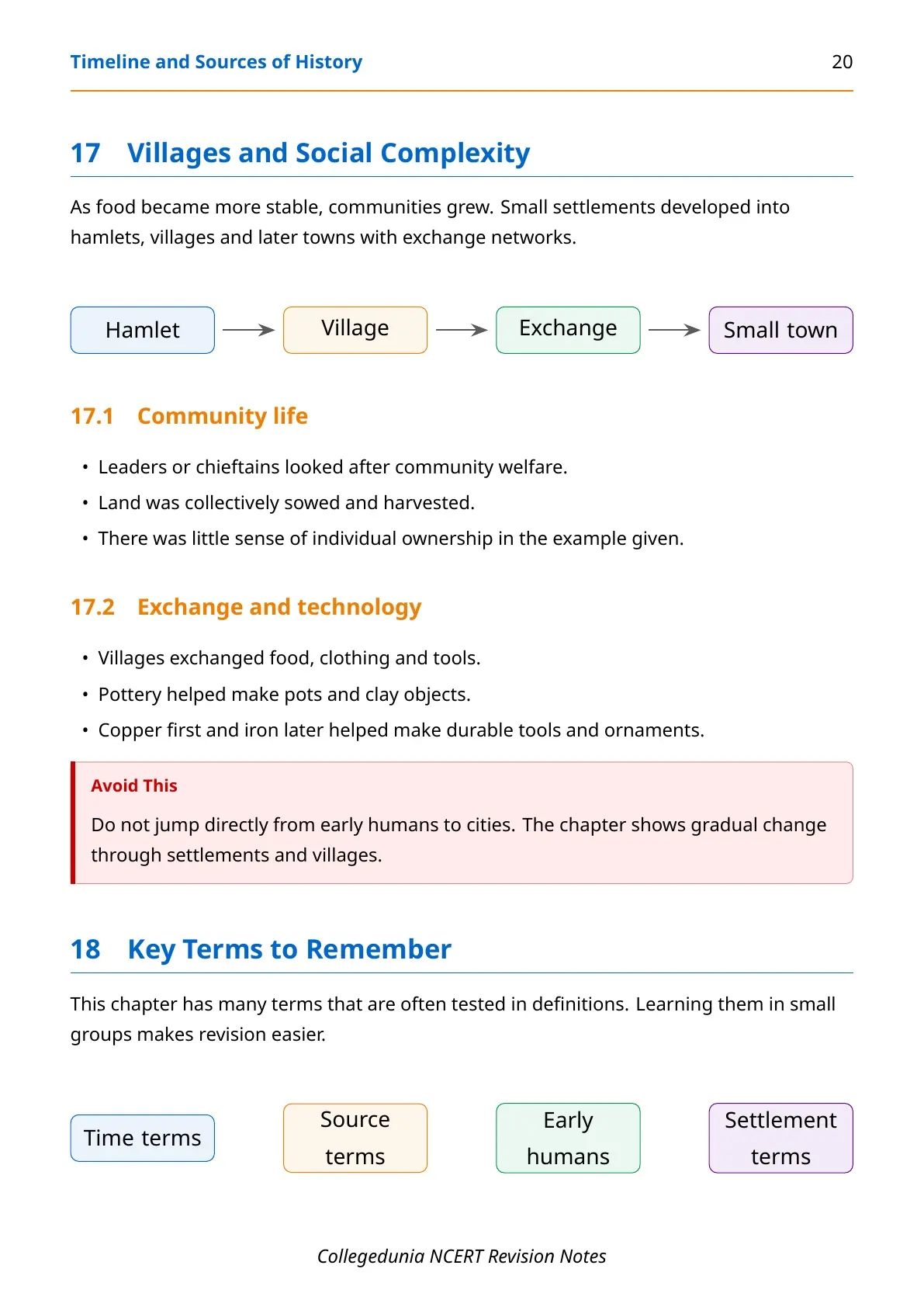
- Settlements near rivers grew into hamlets, villages and small towns.
Timeline and Sources of History Related Resources
| Resource | Best use | Link |
|---|---|---|
| NCERT Notes | Topic-wise revision with tables | Current page |
| NCERT Solutions | Practice textbook questions | Open NCERT Solutions |
| NCERT Book PDF | Read the official chapter | Open Book PDF |
| Handwritten Notes | Quick one-sitting revision | Open Handwritten Notes |
Social Science Notes for All Chapters
| Chapter | NCERT chapter title | Notes link |
|---|---|---|
| Chapter 1 | Locating Places on the Earth | Open Notes |
| Chapter 2 | Oceans and Continents | Open Notes |
| Chapter 3 | Landforms and Life | Open Notes |
| Chapter 4 | Timeline and Sources of History | Current notes |
| Chapter 5 | India, That Is Bharat | Open Notes |
| Chapter 6 | The Beginnings of Indian Civilisation | Open Notes |
| Chapter 7 | India's Cultural Roots | Open Notes |
| Chapter 8 | Unity in Diversity, or Many in the One | Open Notes |
| Chapter 9 | Family and Community | Open Notes |
| Chapter 10 | Grassroots Democracy Part 1 Governance | Open Notes |
| Chapter 11 | Grassroots Democracy Part 2 Local Government in Rural Areas | Open Notes |
| Chapter 12 | Grassroots Democracy Part 3 Local Government in Urban Areas | Open Notes |
| Chapter 13 | The Value of Work | Open Notes |
| Chapter 14 | Economic Activities Around Us | Open Notes |
Timeline and Sources of History Class 6 Notes FAQs
Ques. What is Class 6 Social Science Chapter 4 about?
Ans. It explains timelines, BCE and CE, sources of history, specialists who study the past, early humans and the growth of farming communities.
Ques. What is a timeline in history?
Ans. A timeline is a line that arranges dates and events in sequence, so students can understand which event happened earlier or later.
Ques. How do we calculate years between BCE and CE?
Ans. Add the BCE number and the CE number, then subtract 1 because there is no year zero in the Gregorian calendar.
Ques. What are sources of history?
Ans. Sources of history are places, people, texts or objects that give information about past events or periods.
Ques. Why are historians compared to detectives?
Ans. Historians are compared to detectives because they collect clues, compare evidence and build careful explanations about the past.



Comments