



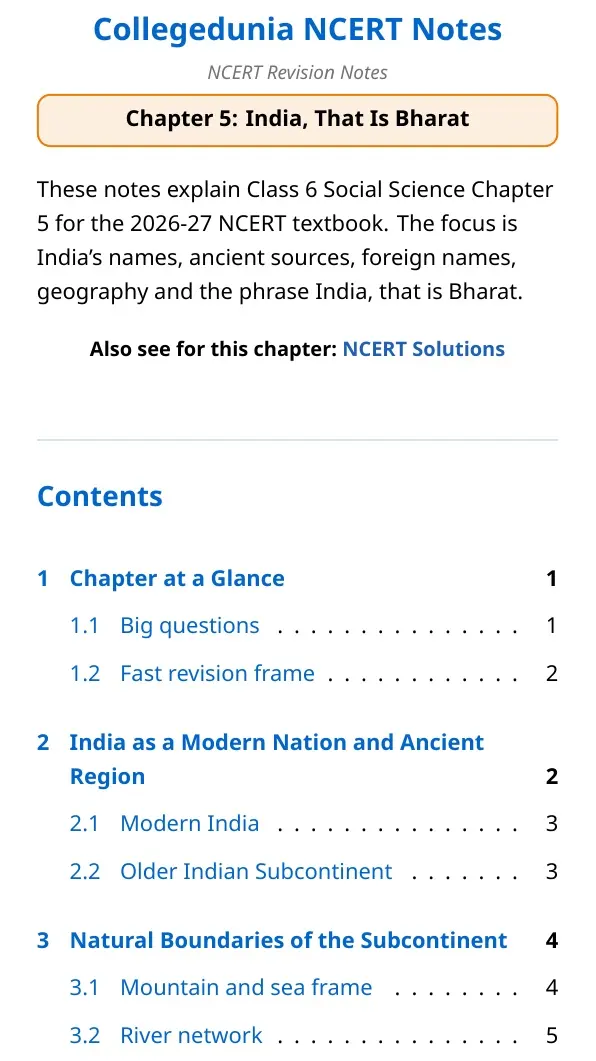
The NCERT Class 6 Social Science Chapter 5 notes for India, That Is Bharat explain ancient Indian names, foreign names, the role of Sindhu, the meaning of Bharata and Jambudvipa, and the phrase India, that is Bharat in the Constitution. These notes follow the 2026-27 NCERT textbook and include a free PDF for quick revision.
- Best for revision: Sapta Sindhava, Bharata, Jambudvipa, Hindu, Indoi, Yindu and India.
- Use with the PDF: revise the tables first, then practise true or false corrections.
- 2026-27 focus: follows Exploring Society: India and Beyond, Chapter 5.

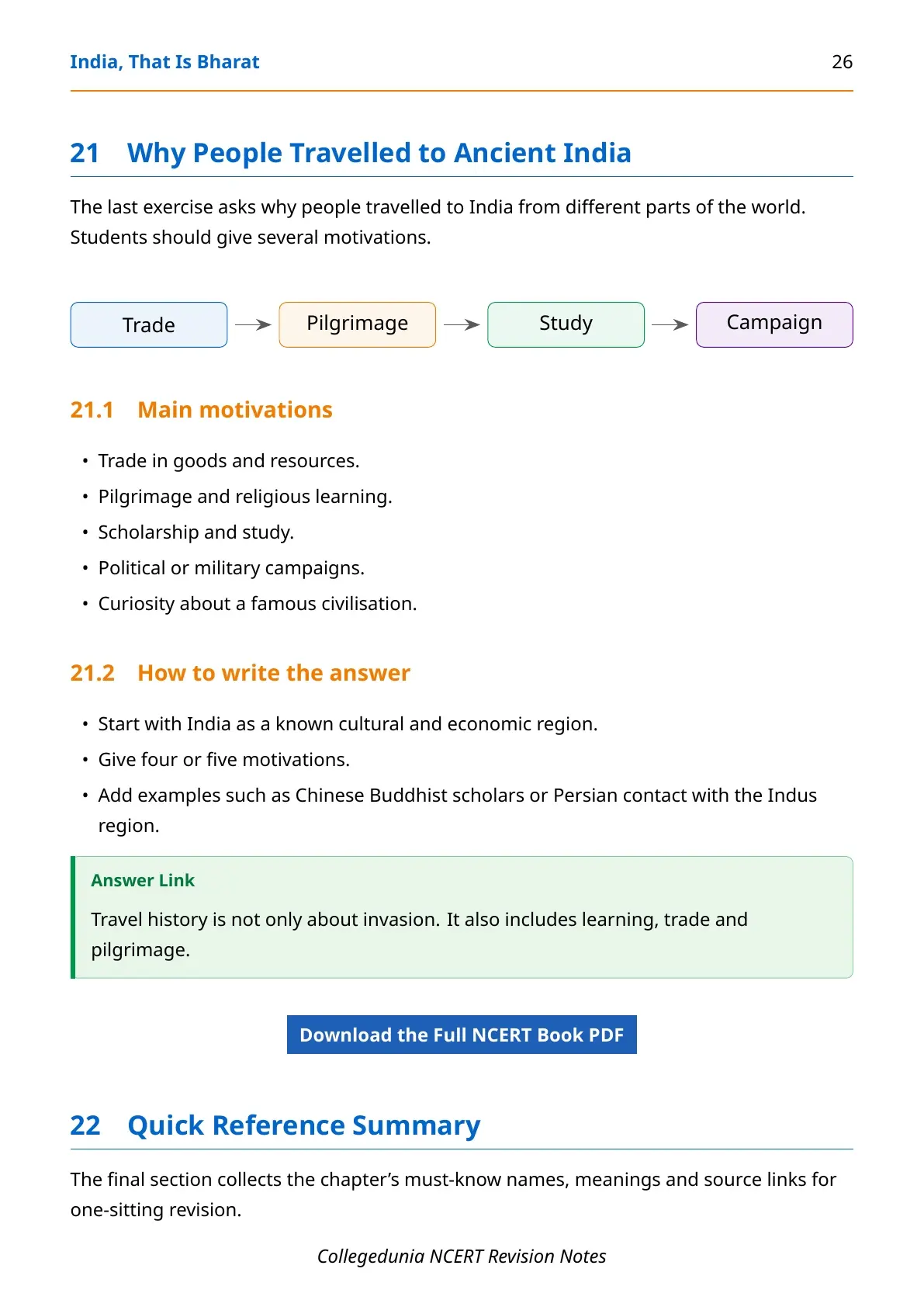
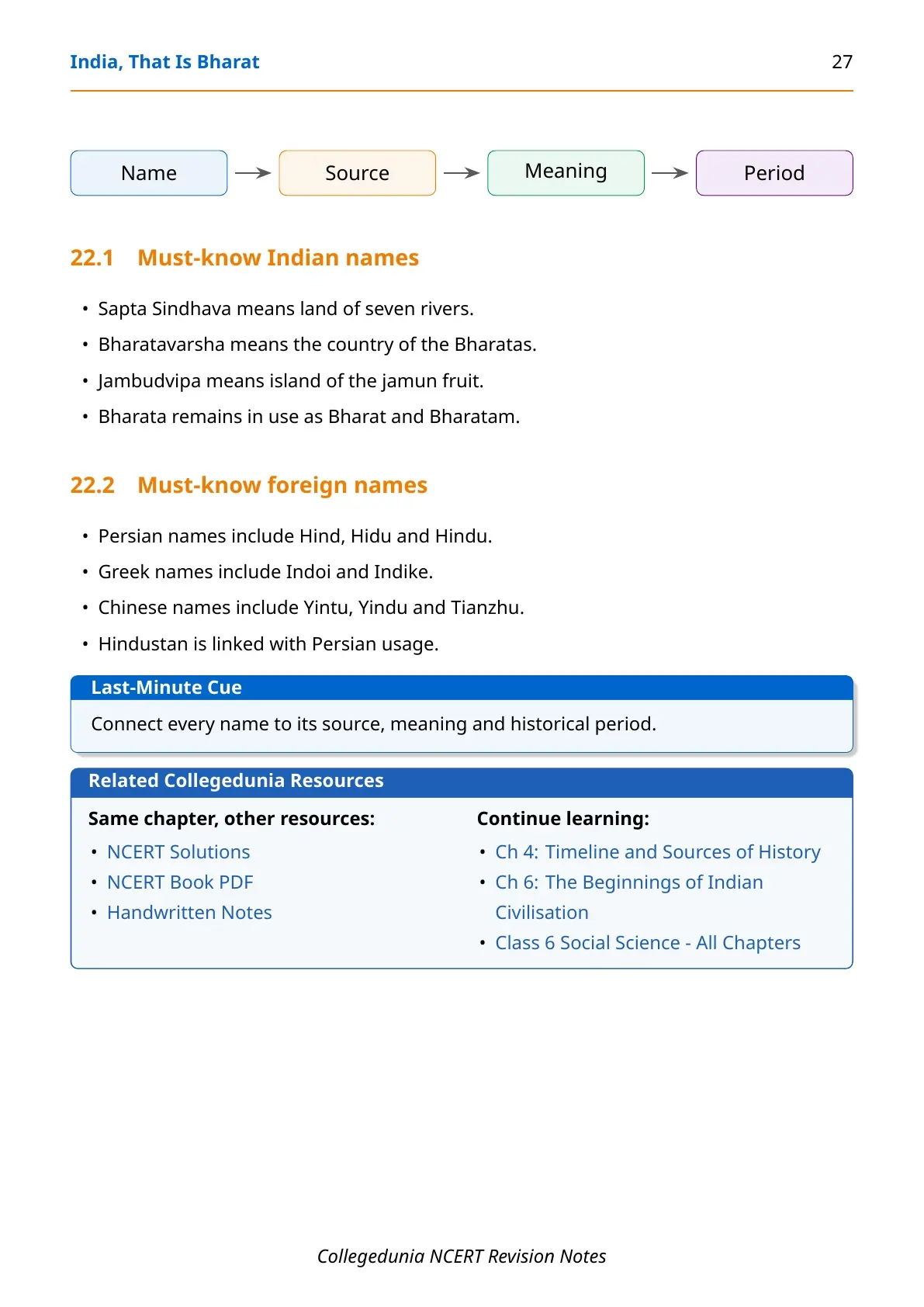
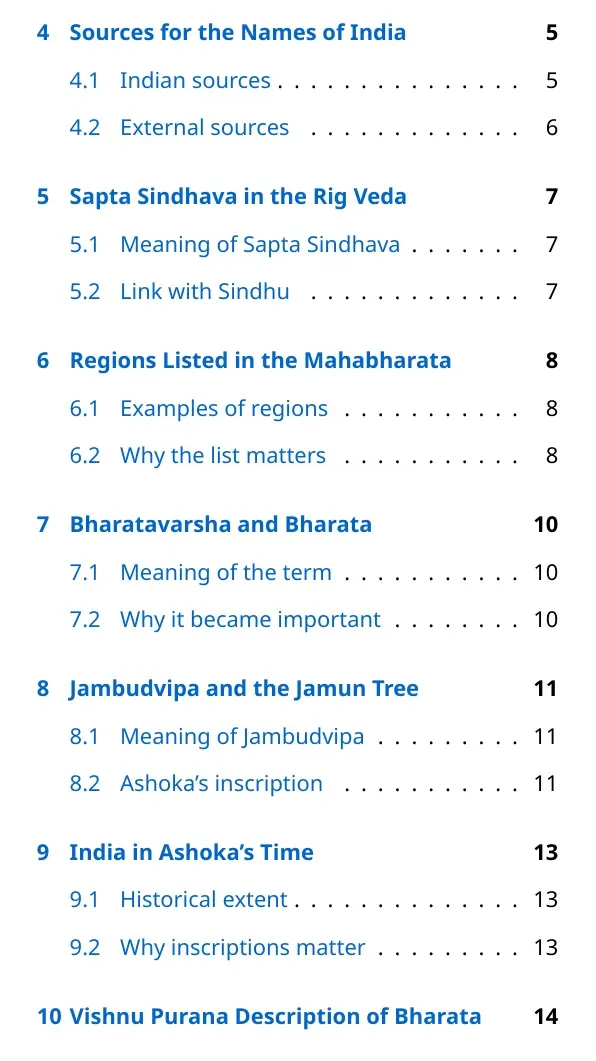
Student Feedback: Students usually remember this chapter faster by grouping every name with its source, meaning and language route.
India, That Is Bharat Notes Overview
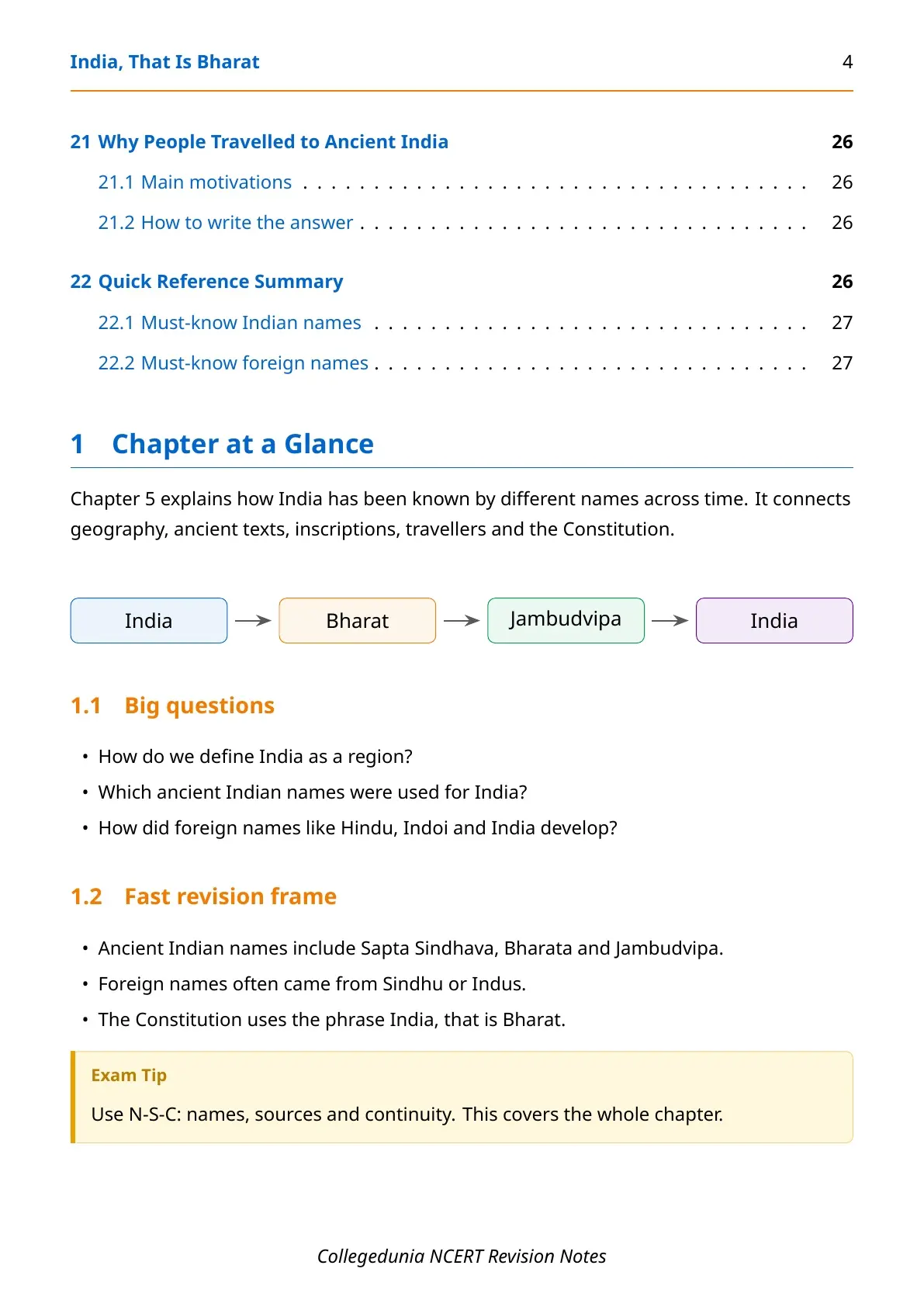
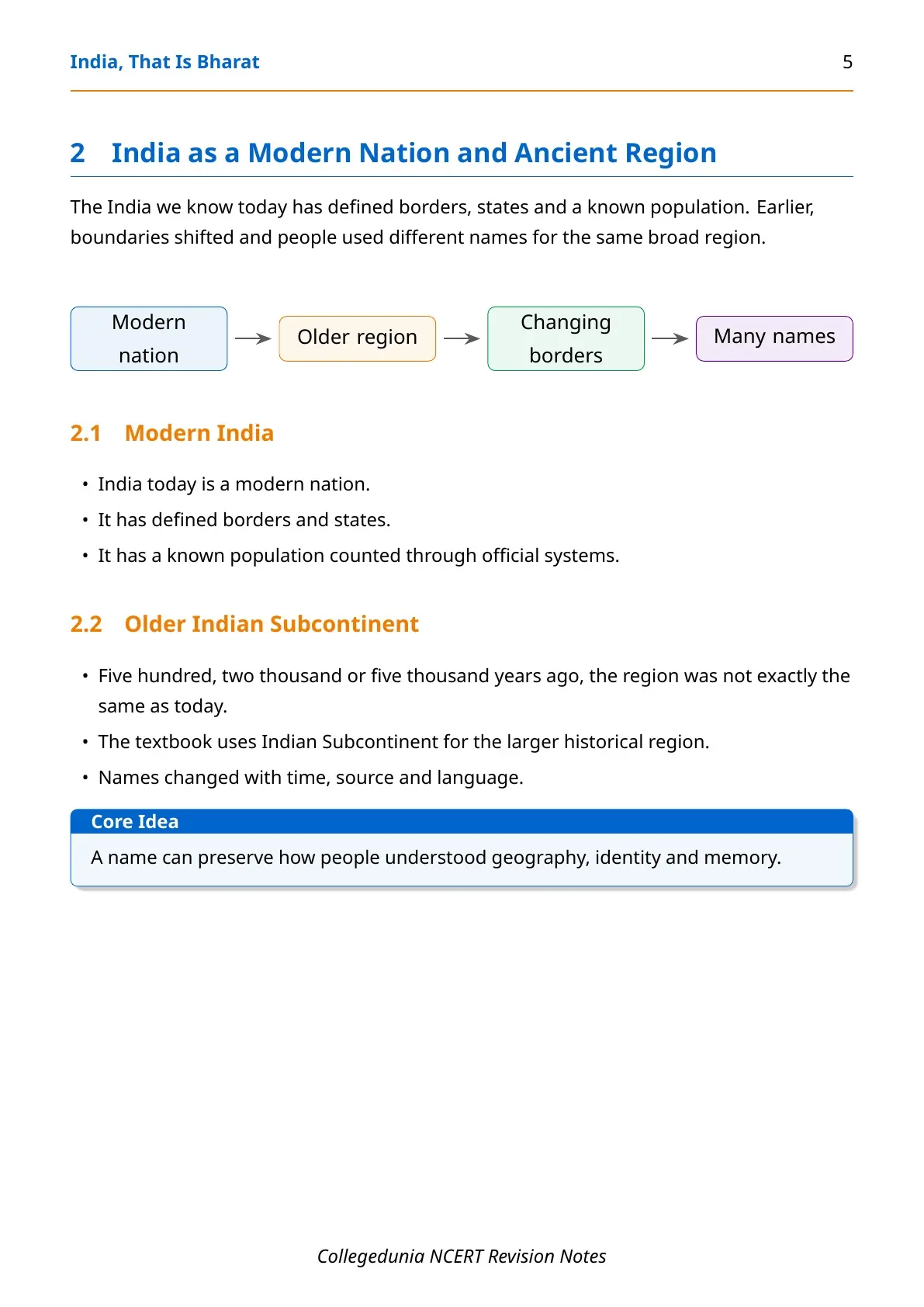
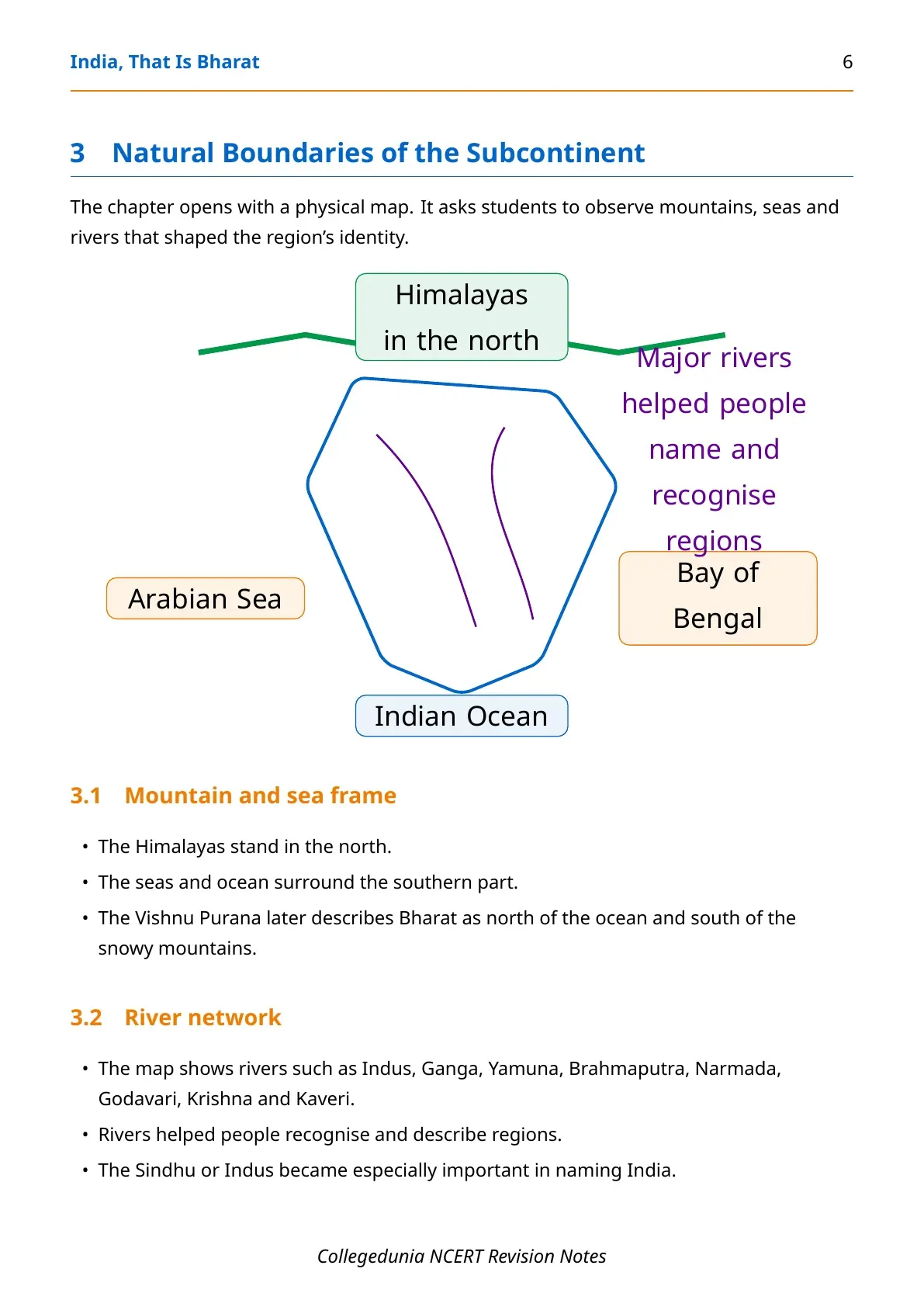
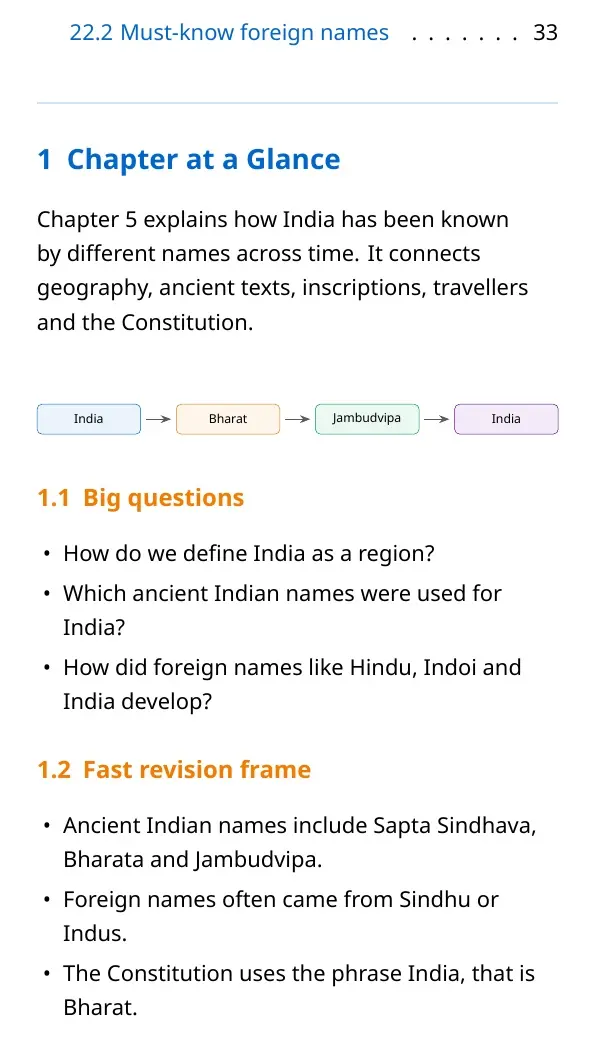
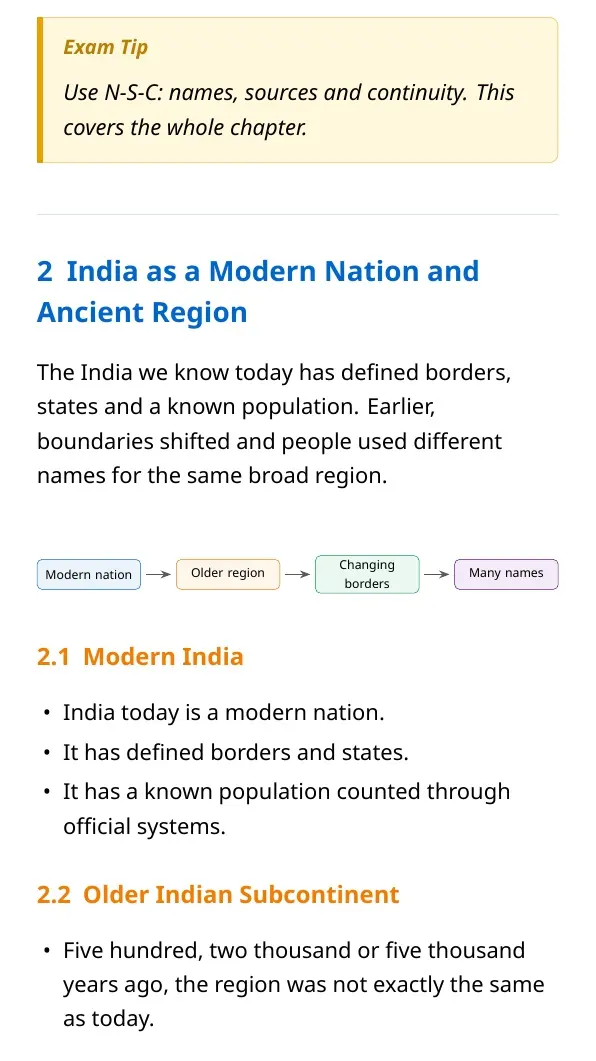
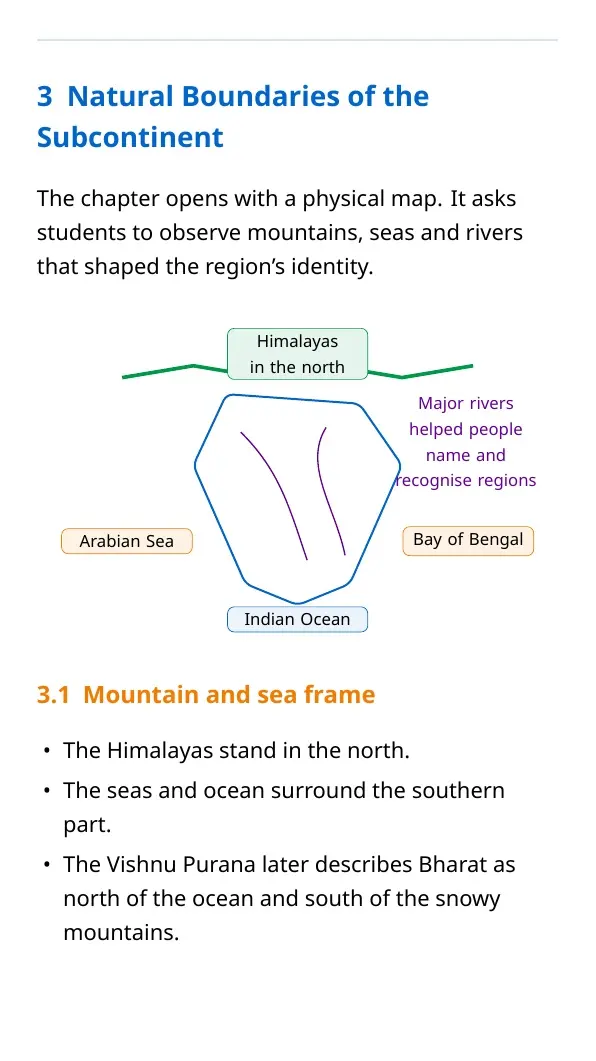
Chapter 5 explains why India has had many names across history. Some names came from Indian texts and inscriptions. Other names came from visitors and foreign languages. The chapter also shows how geography, rivers and natural boundaries shaped these names.
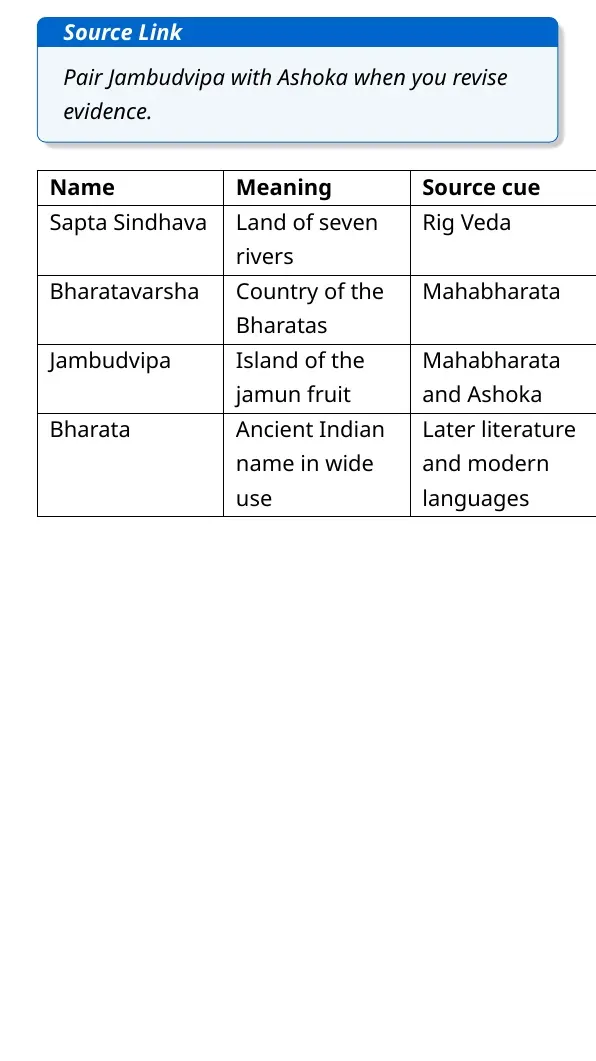
| Revision area | Key idea | Source cue |
|---|---|---|
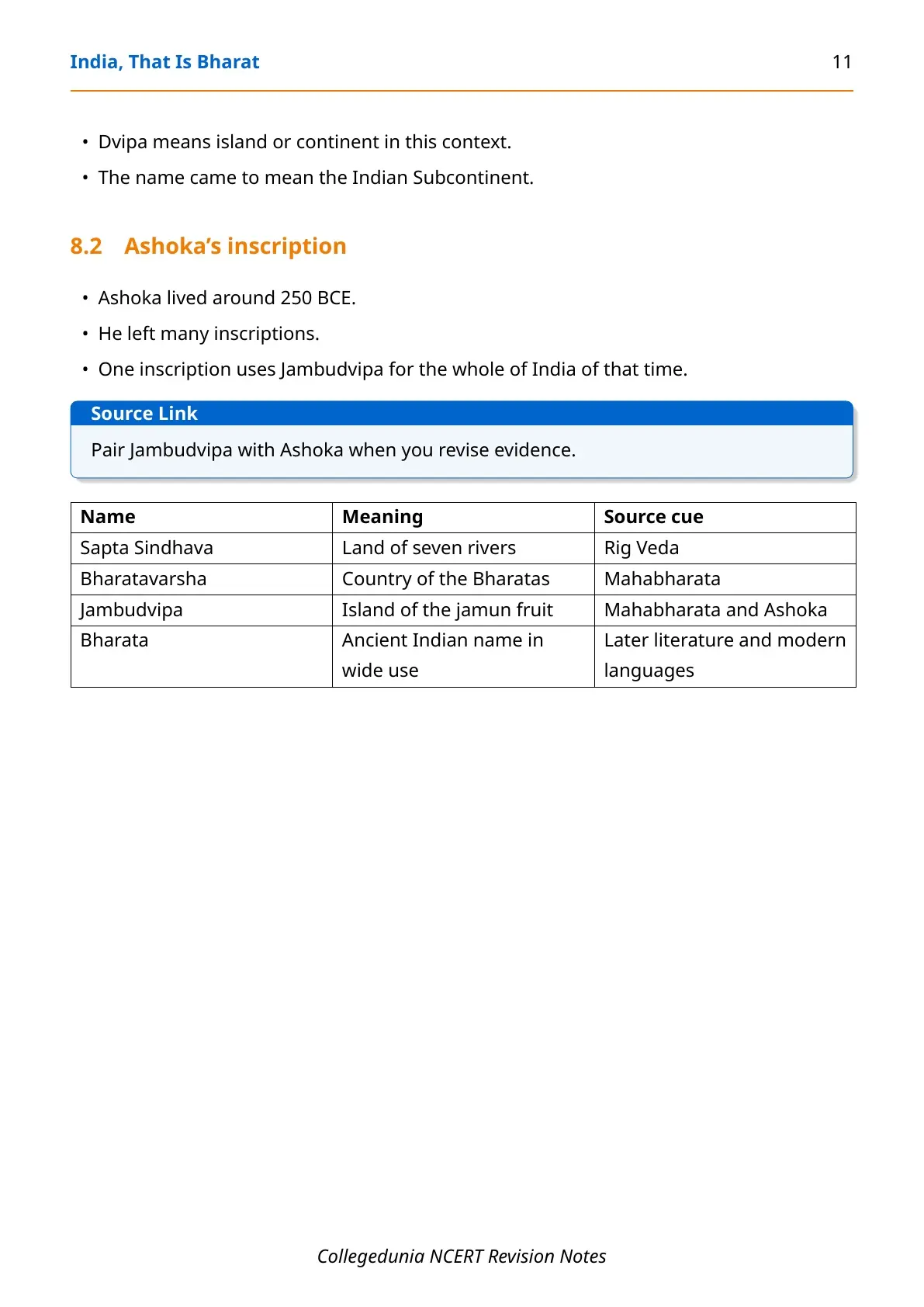
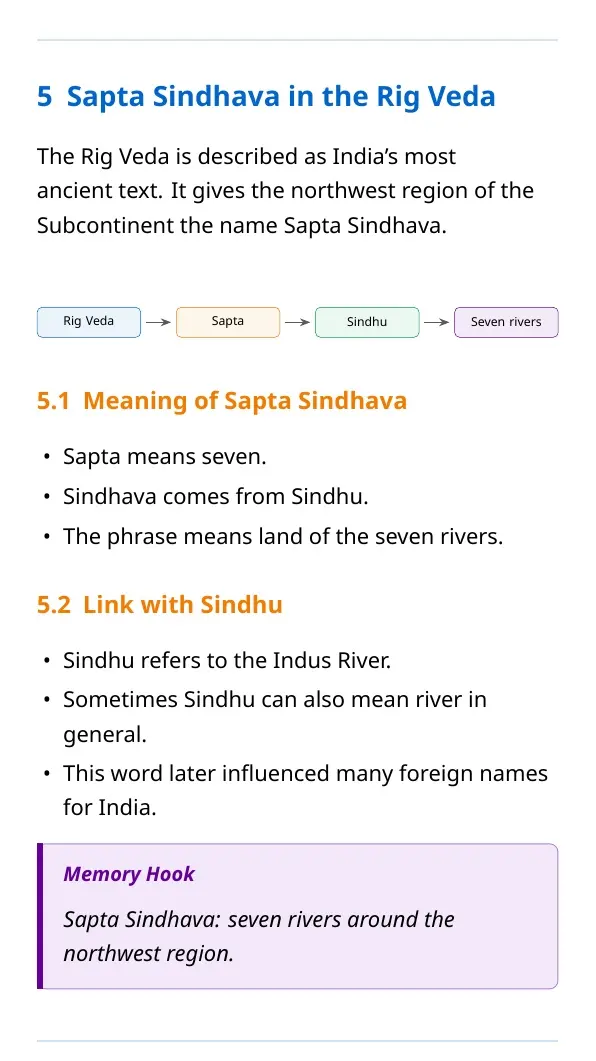
| Sapta Sindhava | Land of seven rivers in the northwest | Rig Veda |
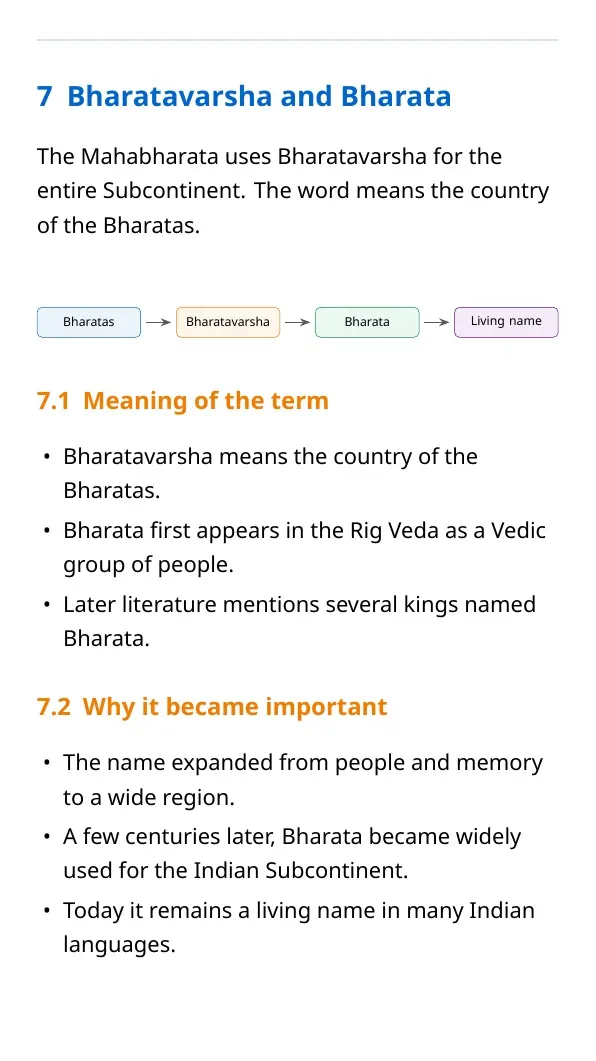
| Bharatavarsha | Country of the Bharatas | Mahabharata |
| Jambudvipa | Island of the jamun fruit | Mahabharata and Ashoka |
| Hindu, Indoi, Yindu | Foreign names linked to Sindhu | Persian, Greek and Chinese records |
Ancient Indian Names for India
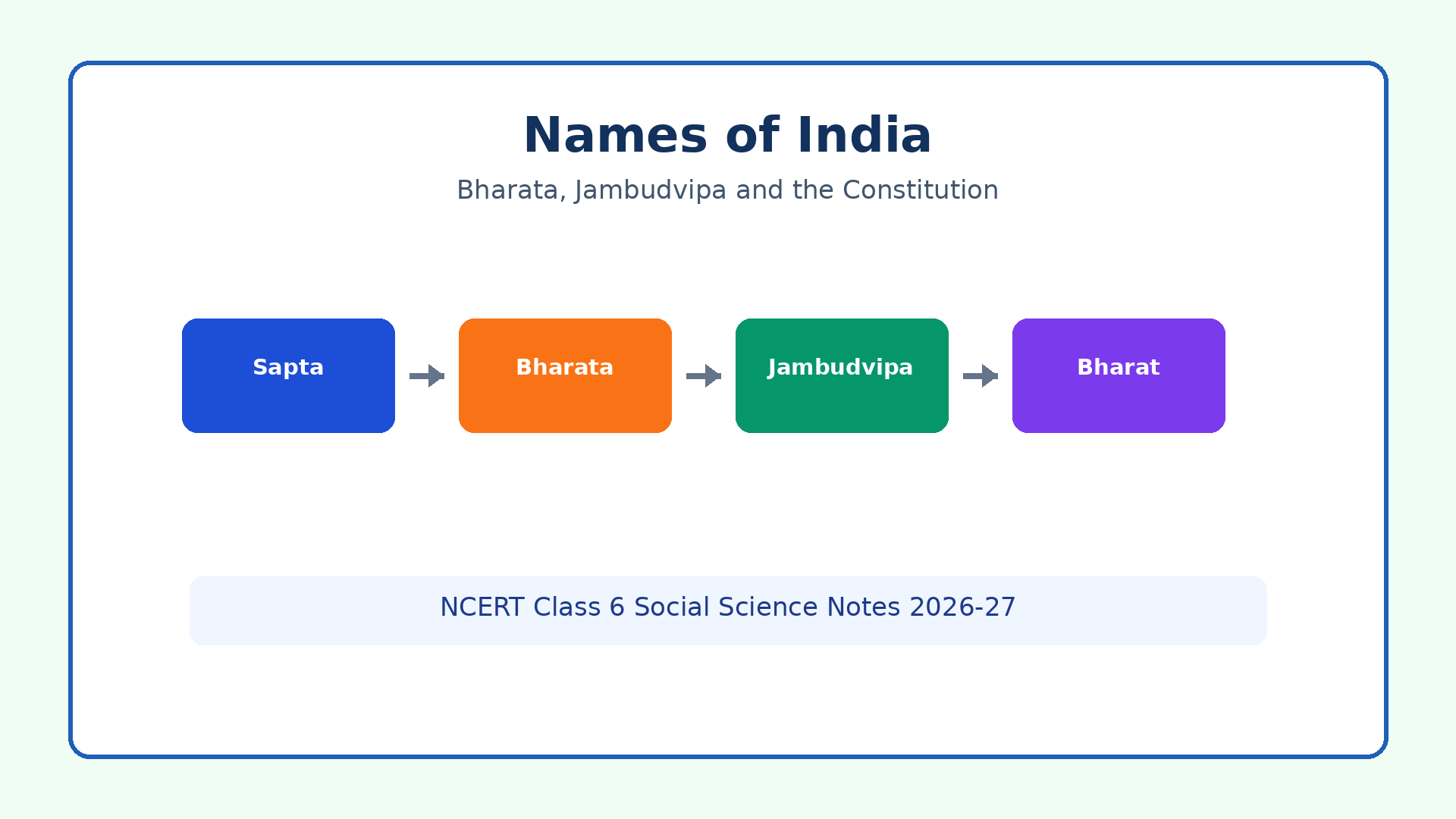
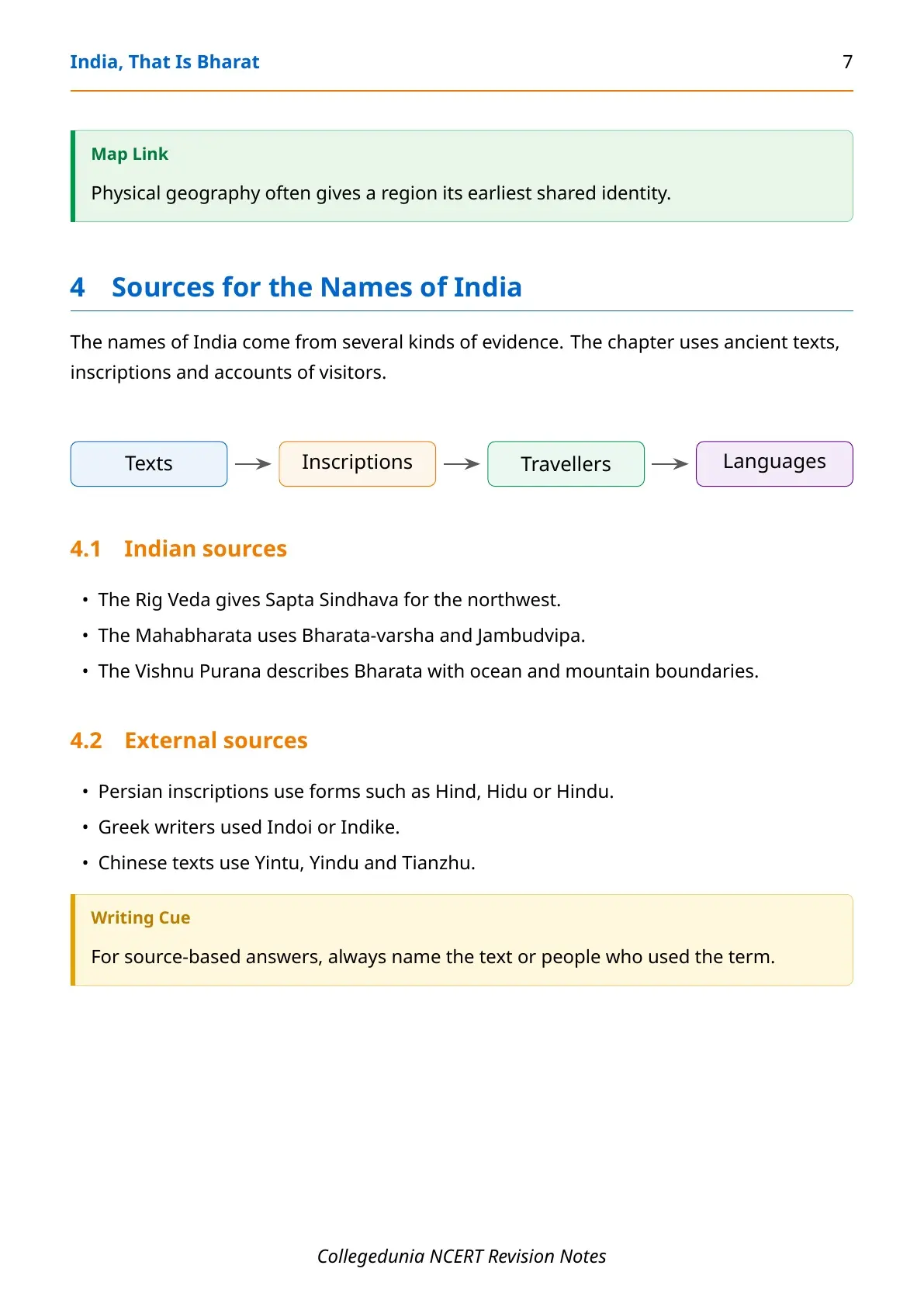
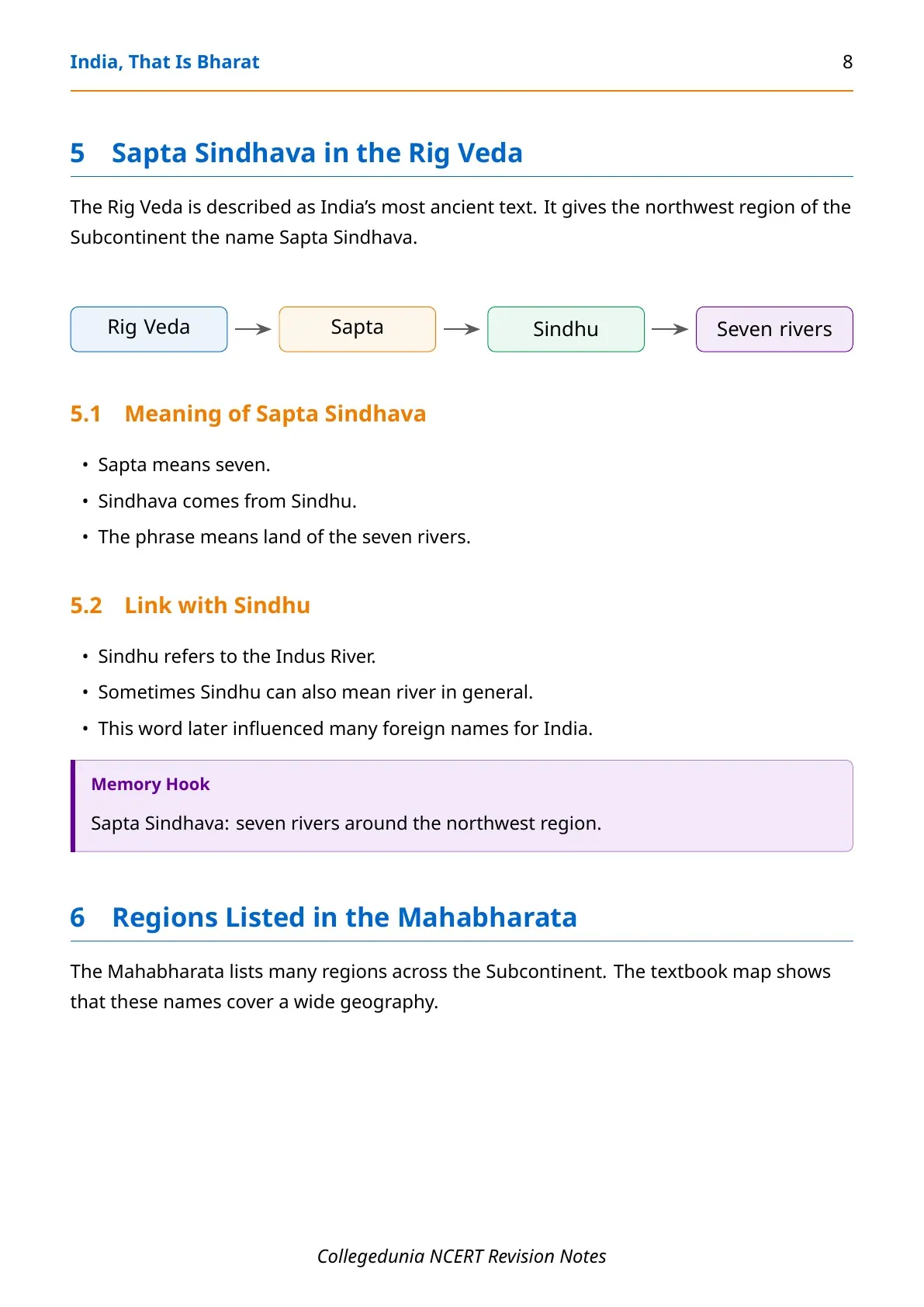
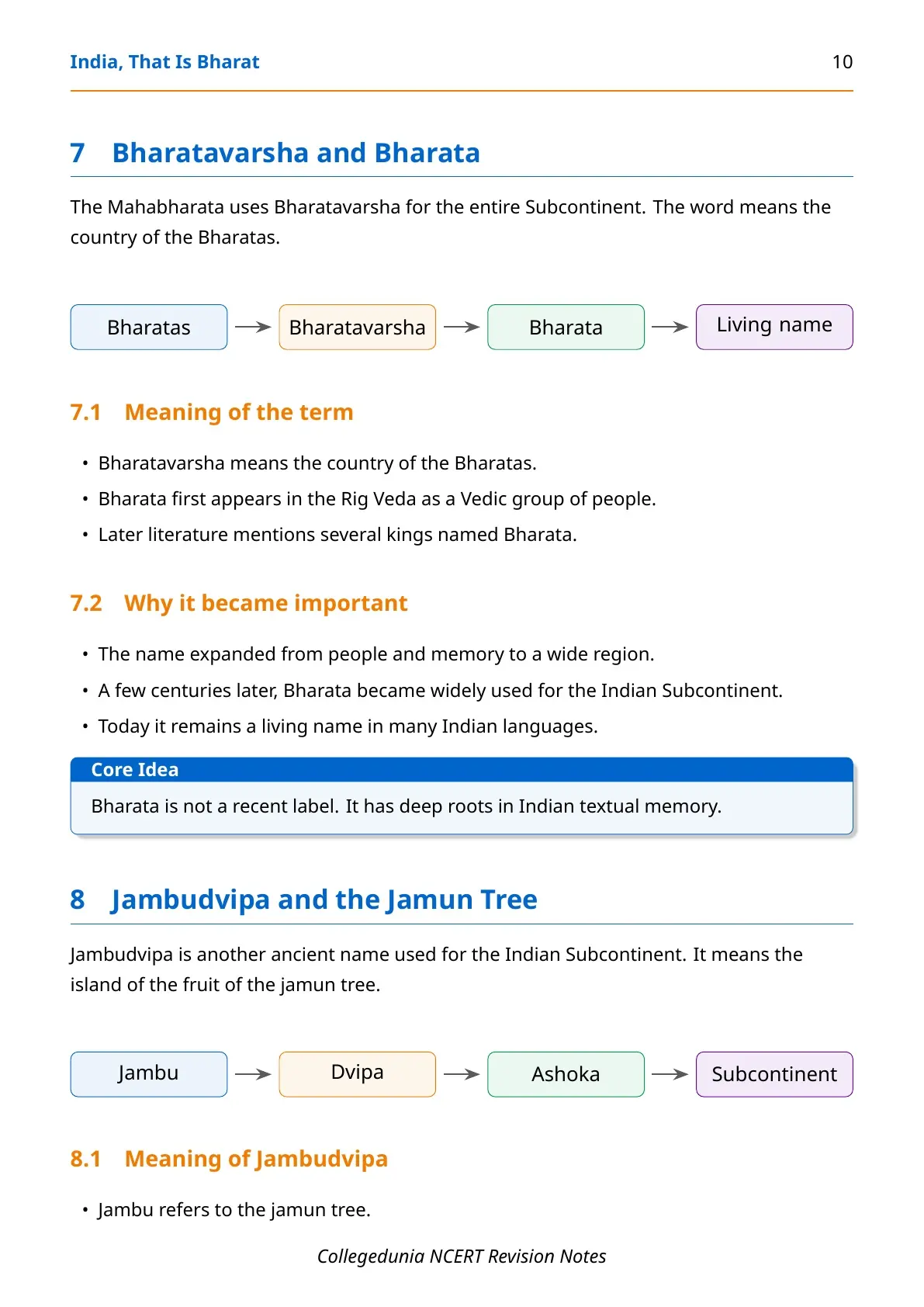
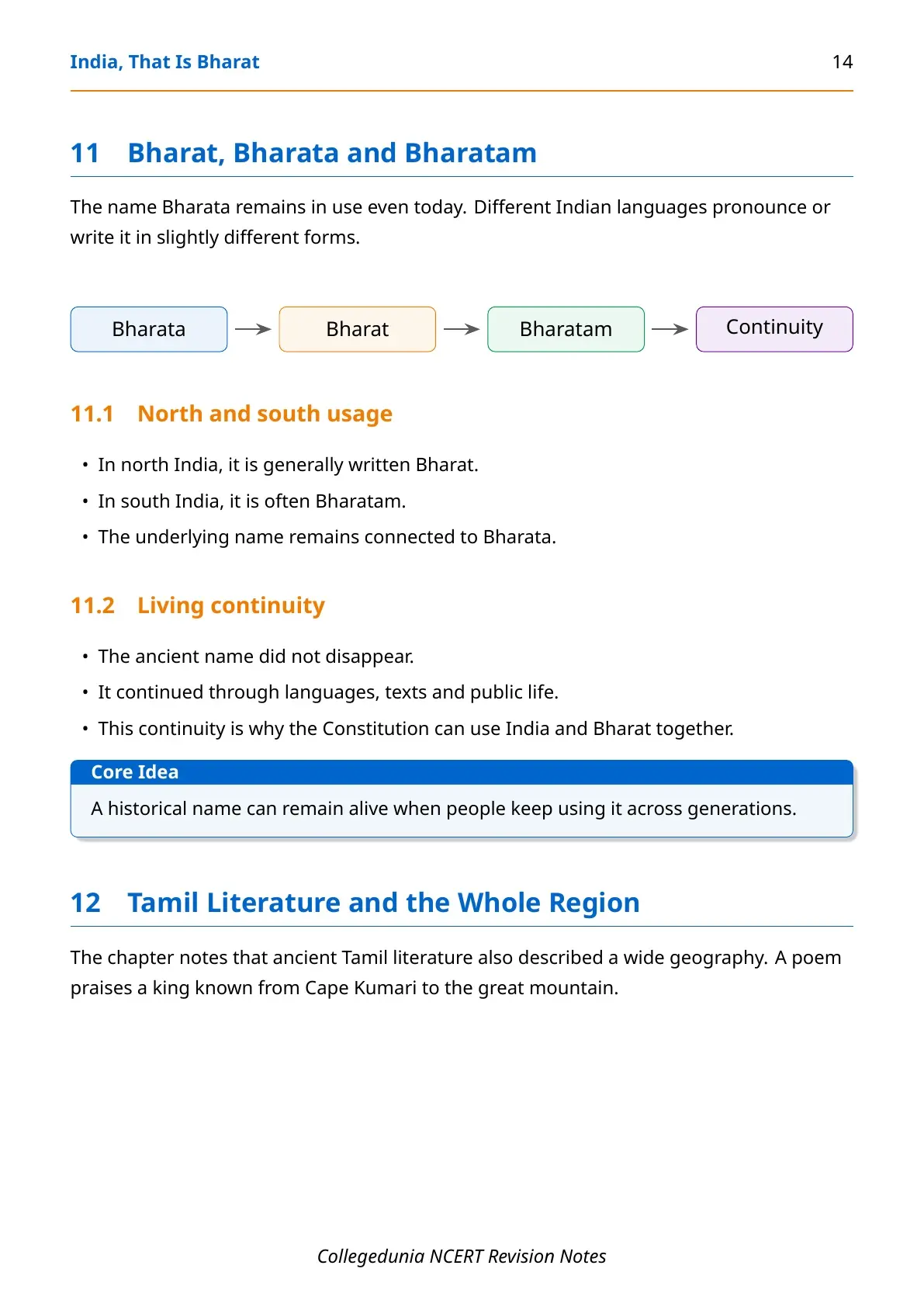
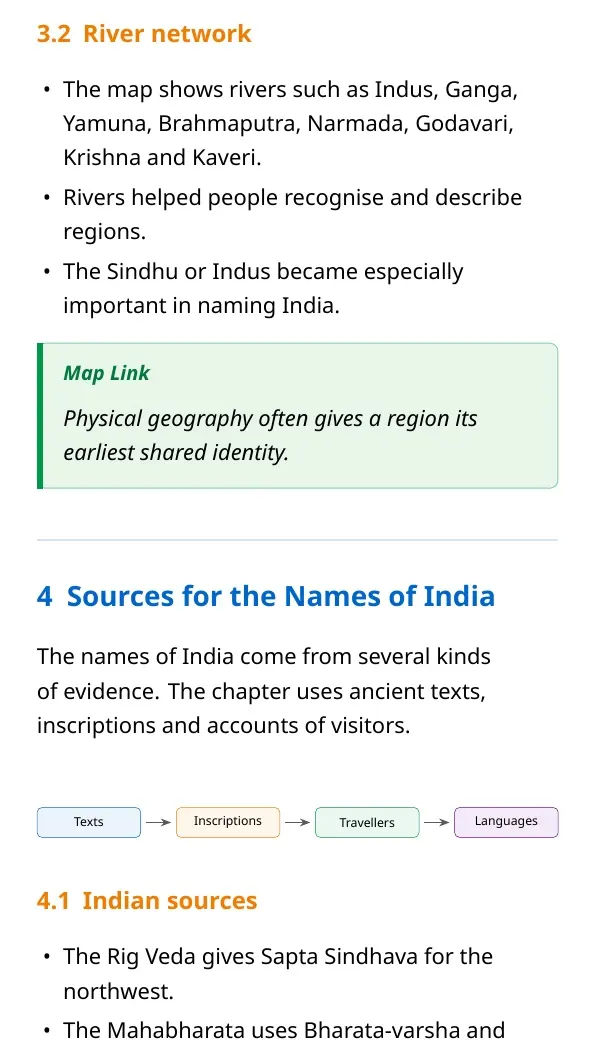
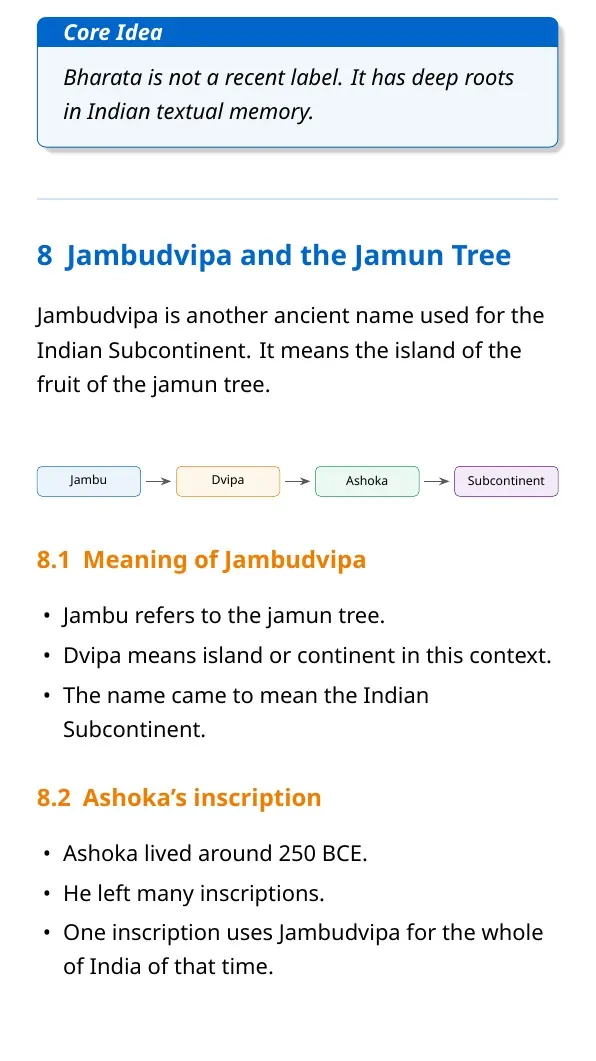
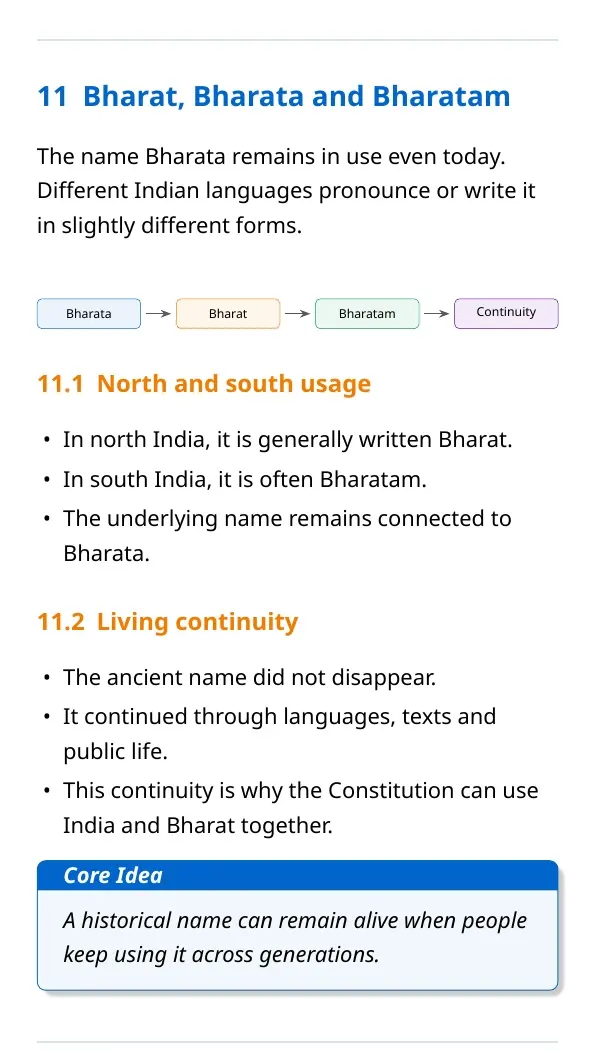
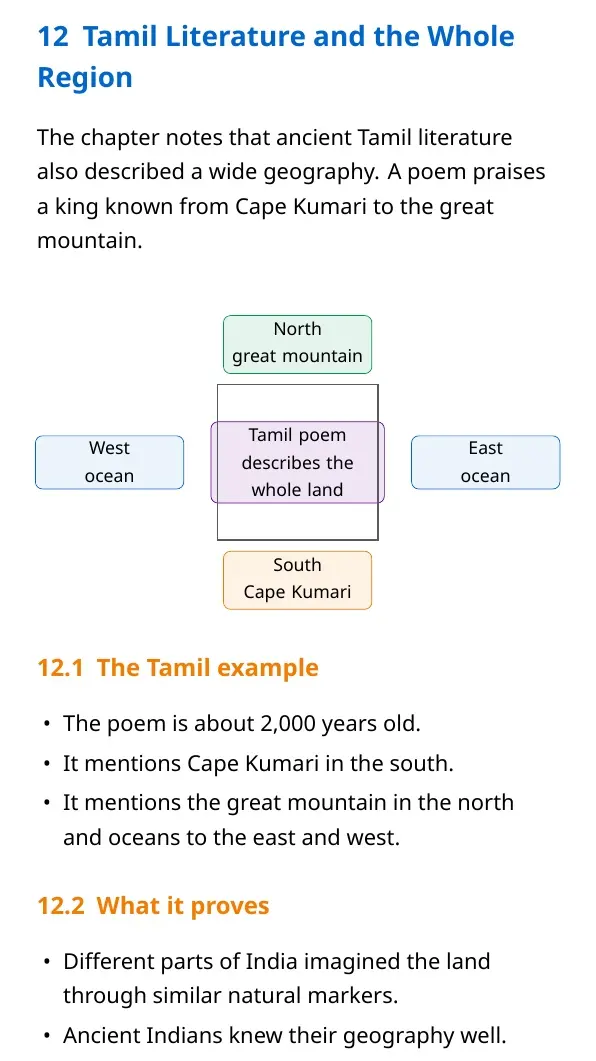
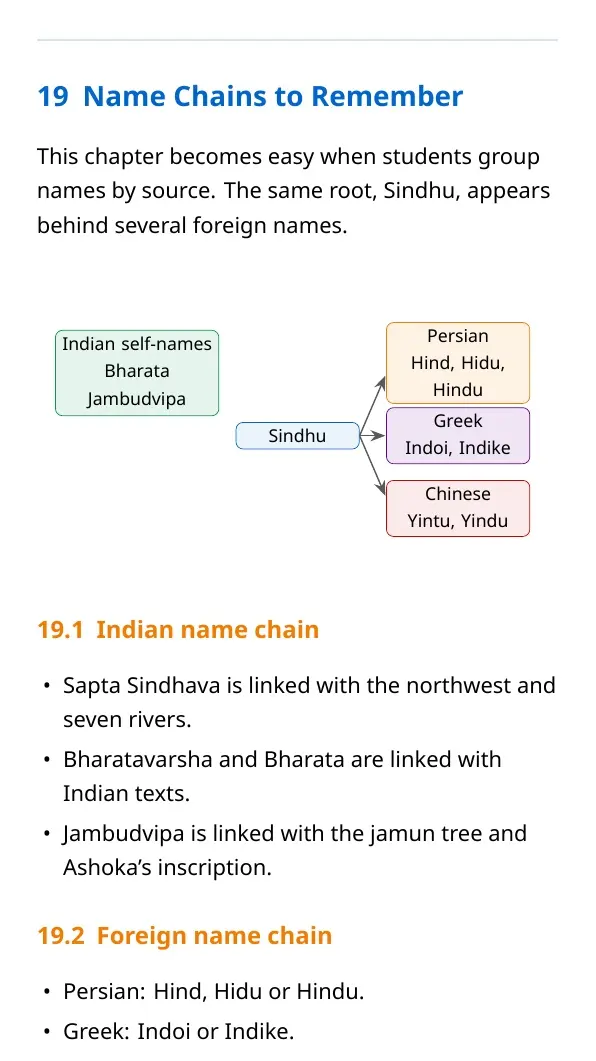
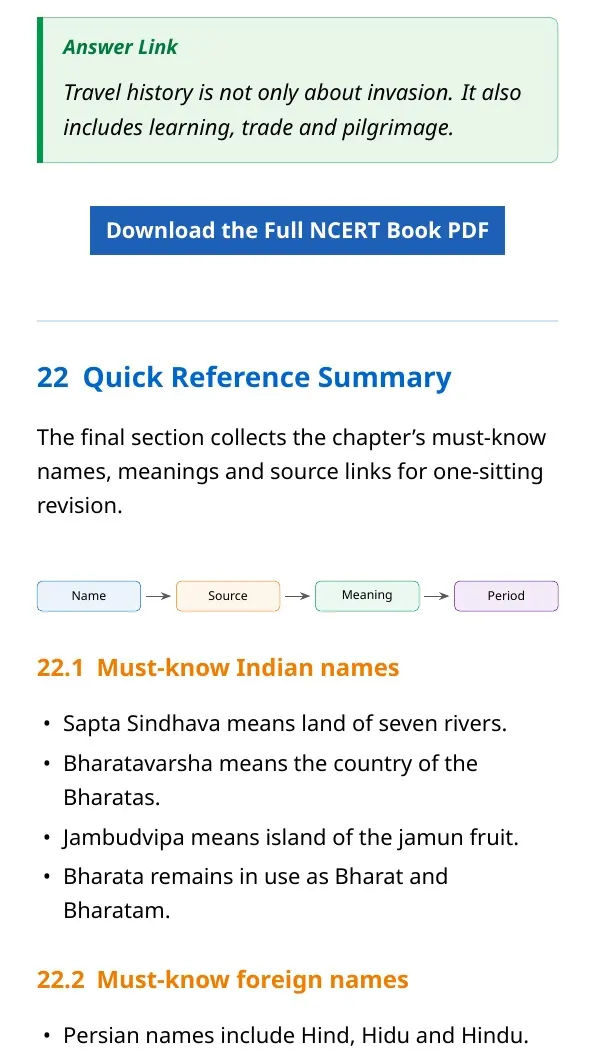
The Rig Veda uses Sapta Sindhava for the northwest region. The Mahabharata uses Bharatavarsha and Jambudvipa for the wider Subcontinent. Later, Bharata became a common name and remains alive as Bharat and Bharatam.
- Sapta Sindhava: land of the seven rivers.
- Bharatavarsha: country of the Bharatas.
- Jambudvipa: island of the jamun fruit.
- Bharata: a living name for India across Indian languages.
India, That Is Bharat Chapter 5 Revision Video
Source: Magnet Brains on YouTube
How Foreign Names Came from Sindhu
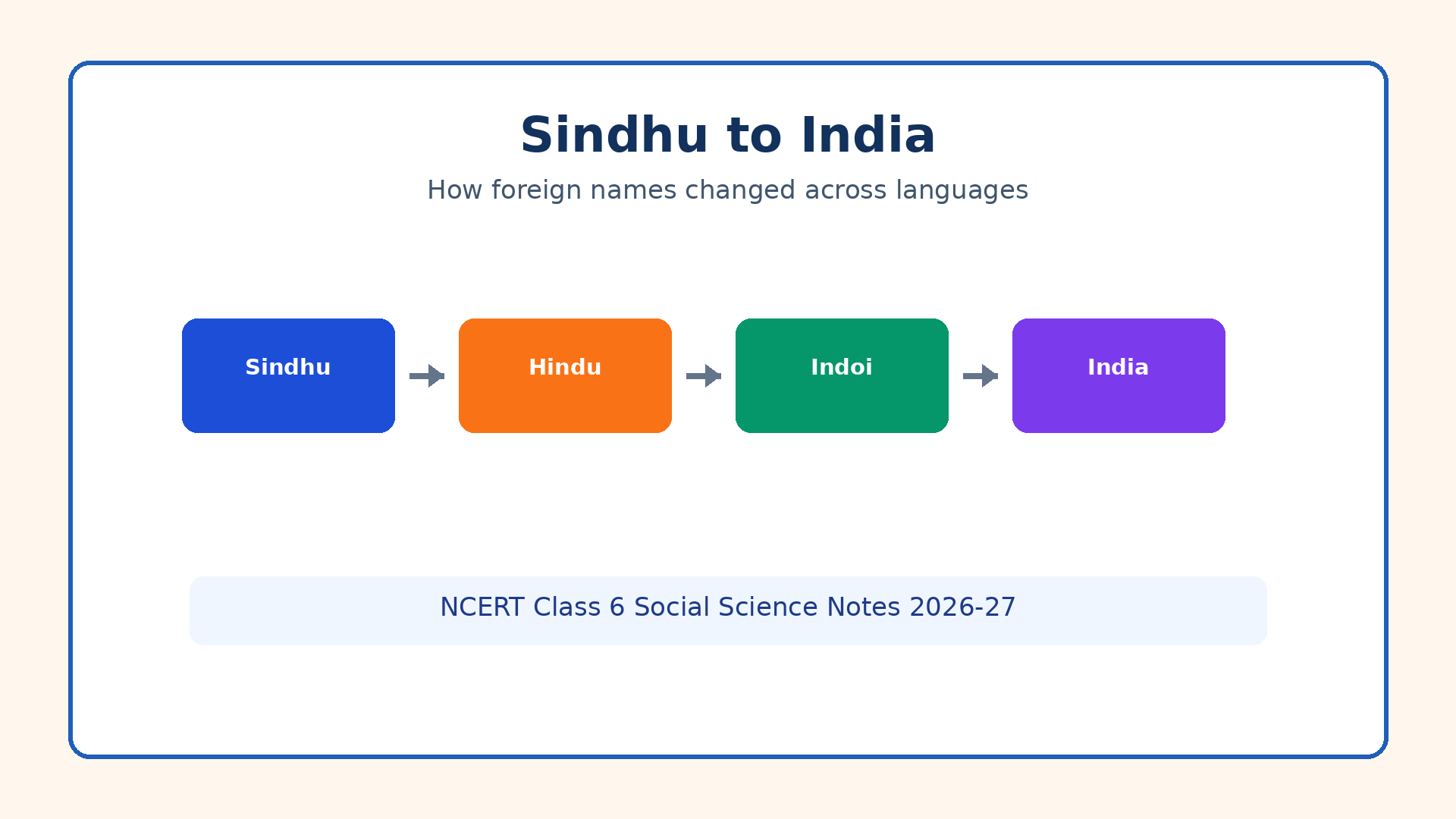
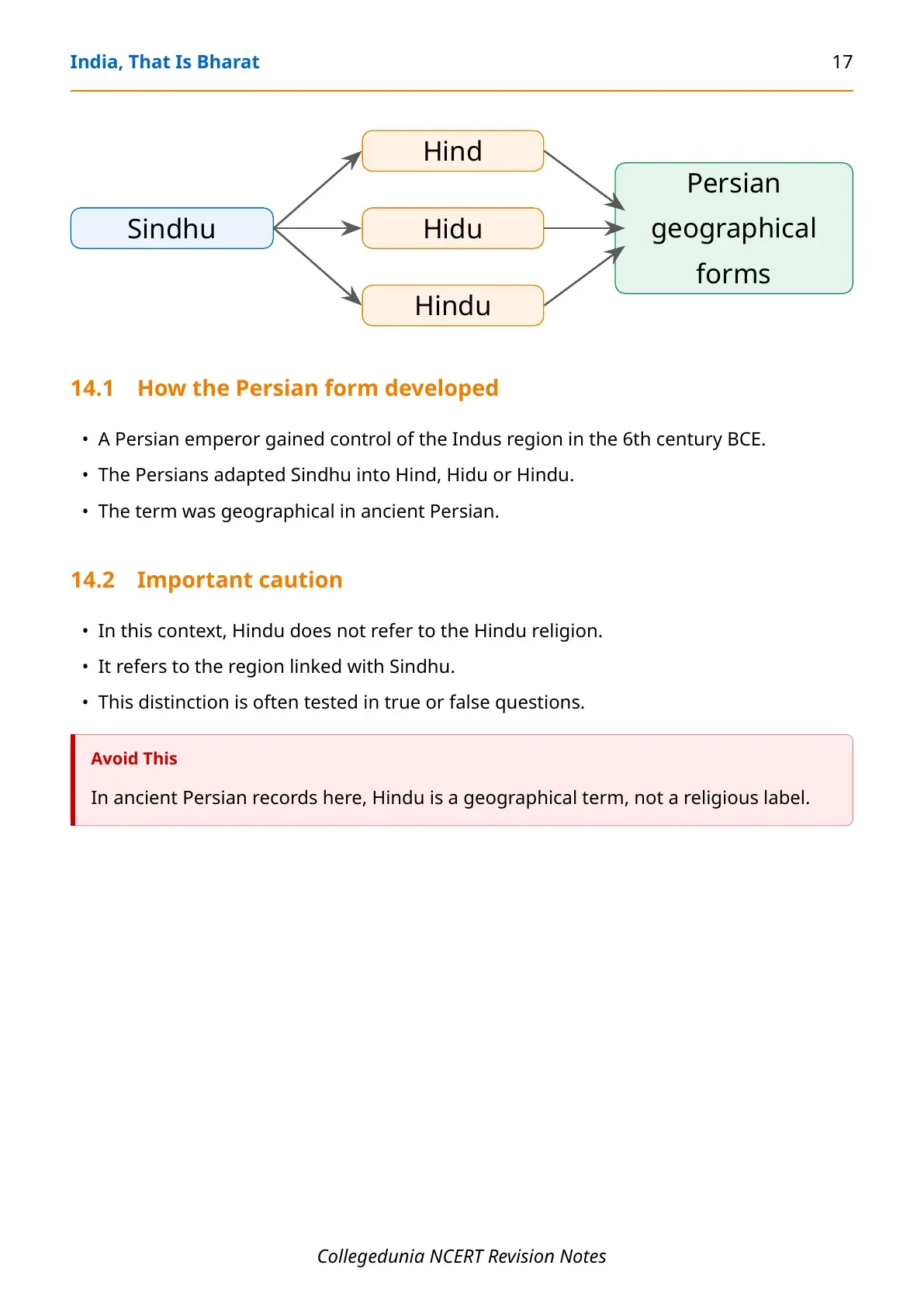
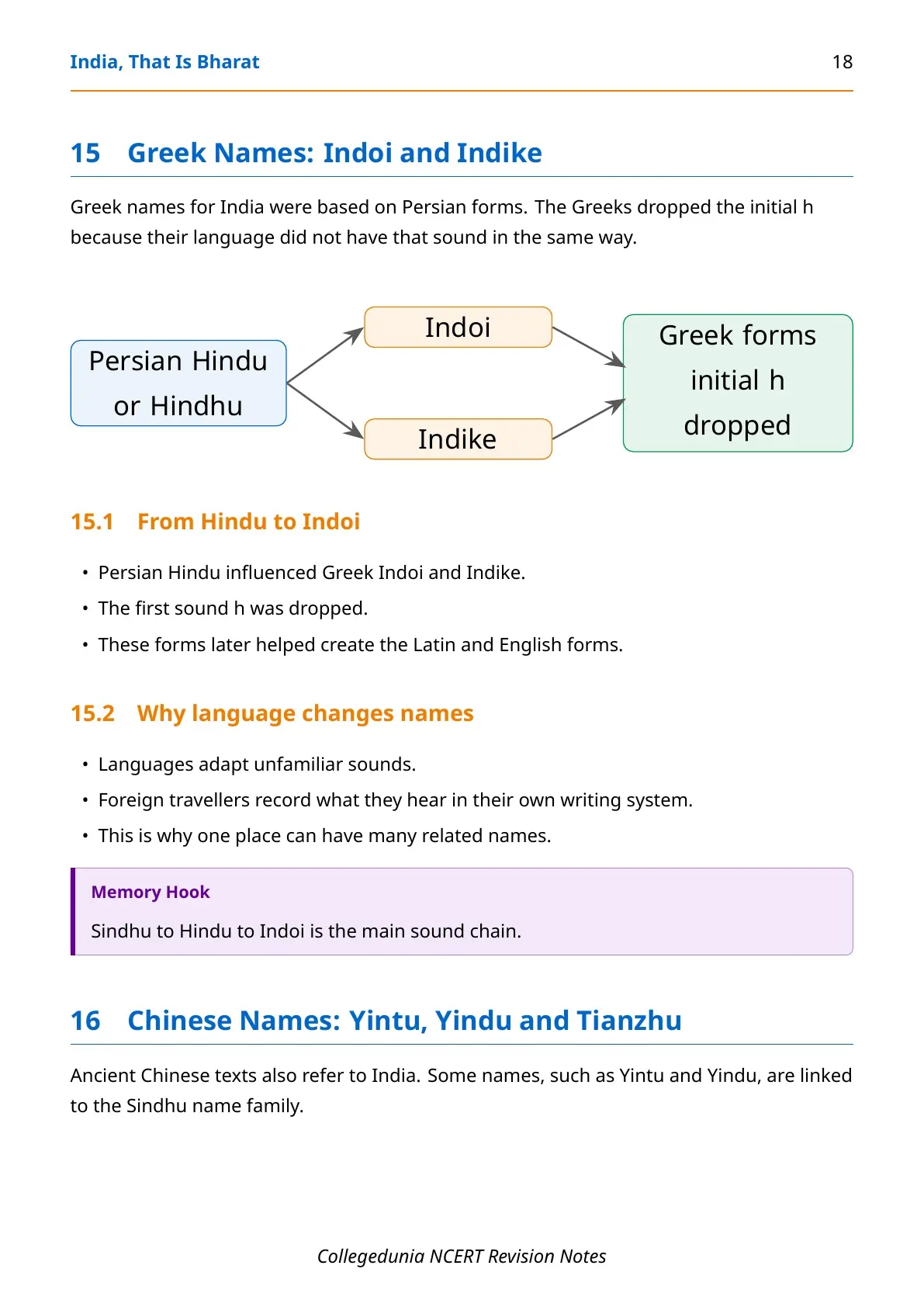
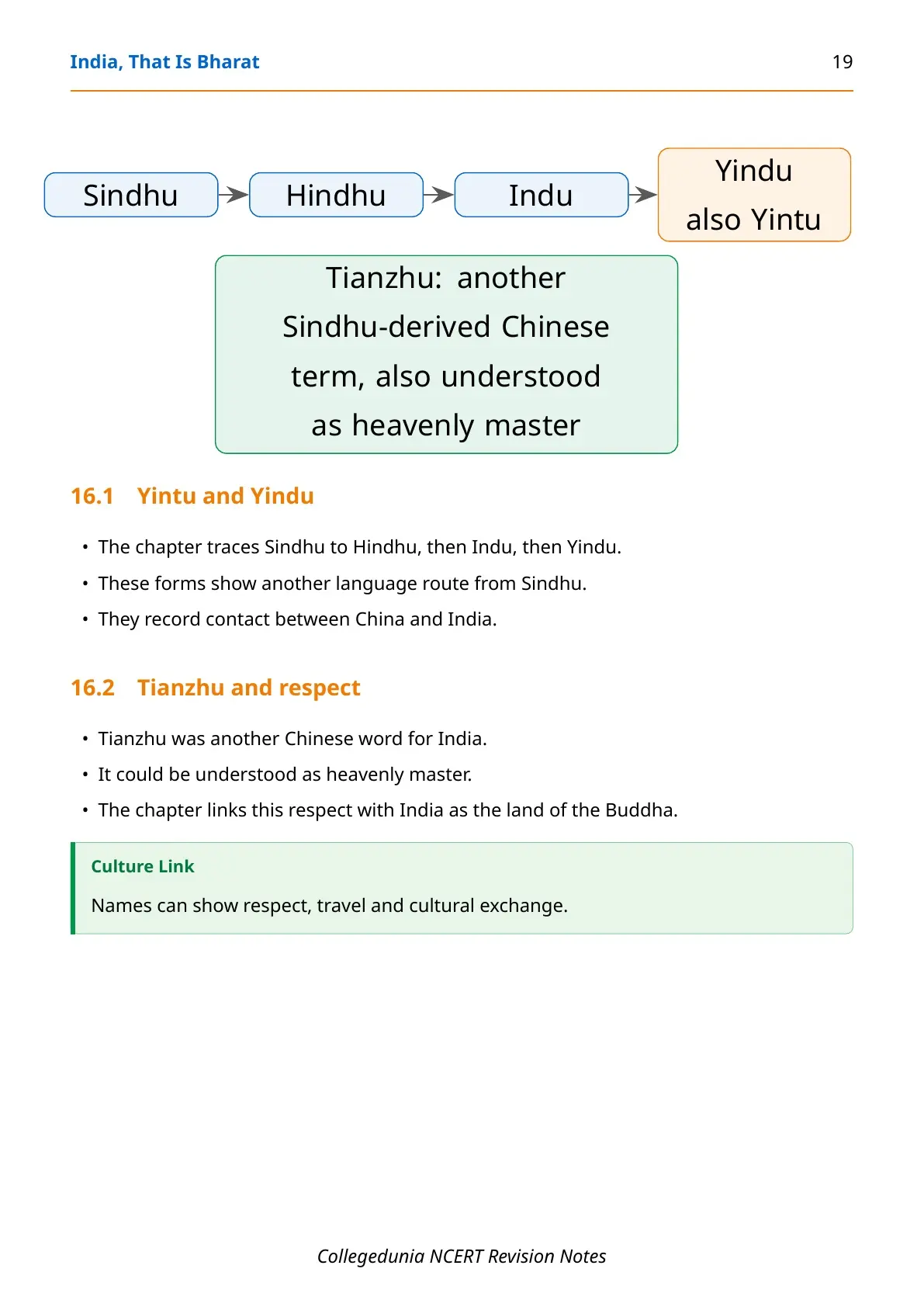
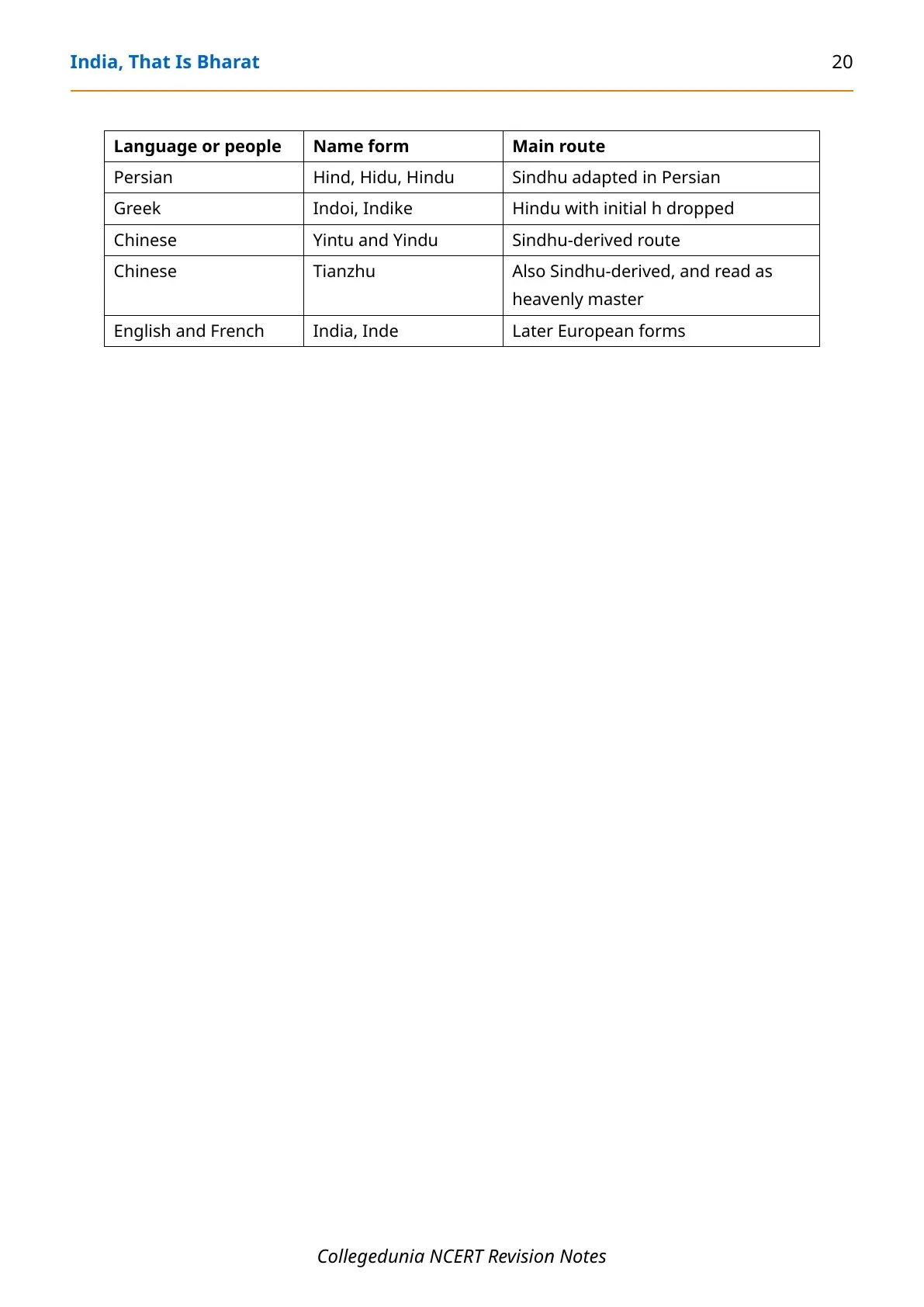
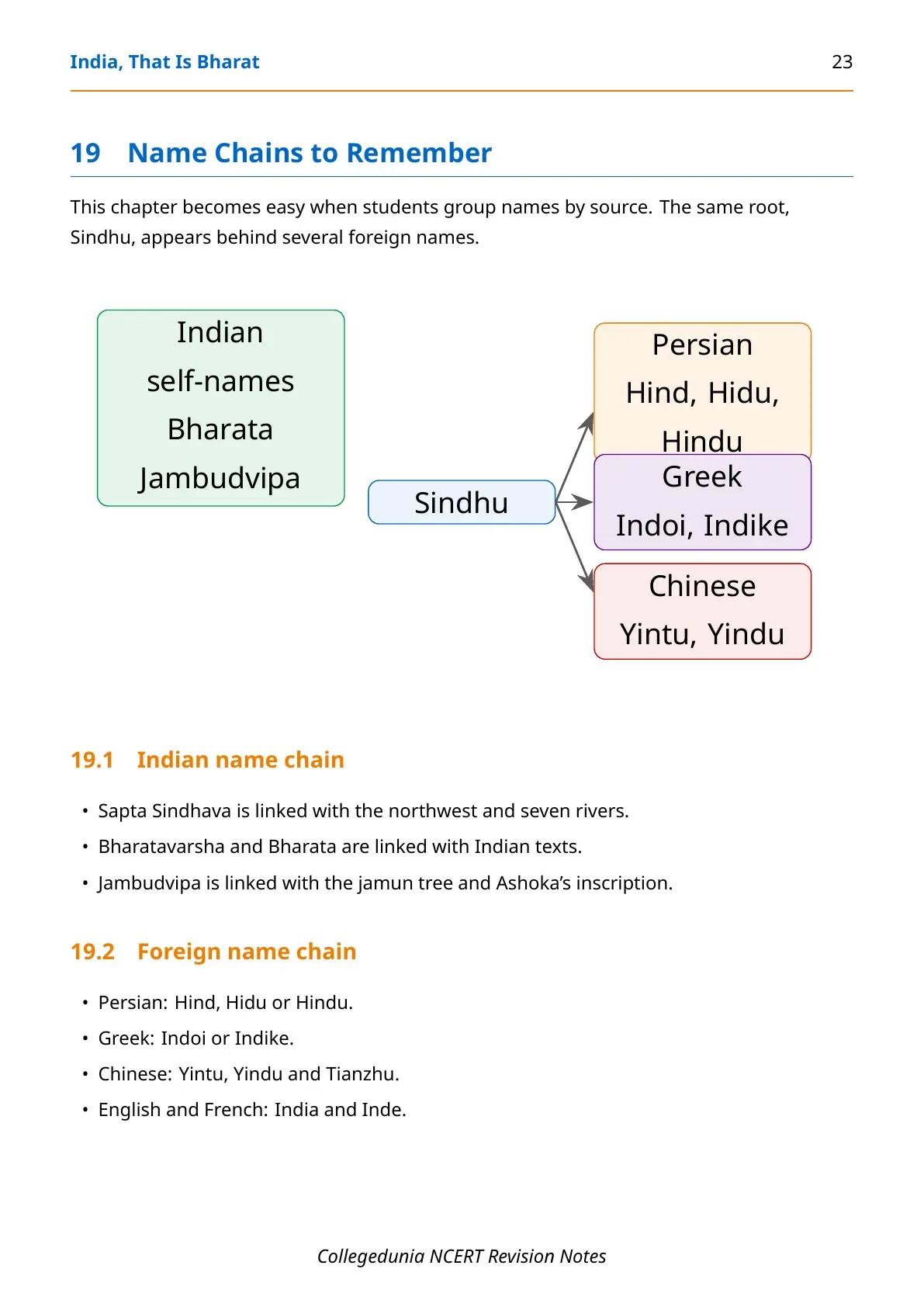
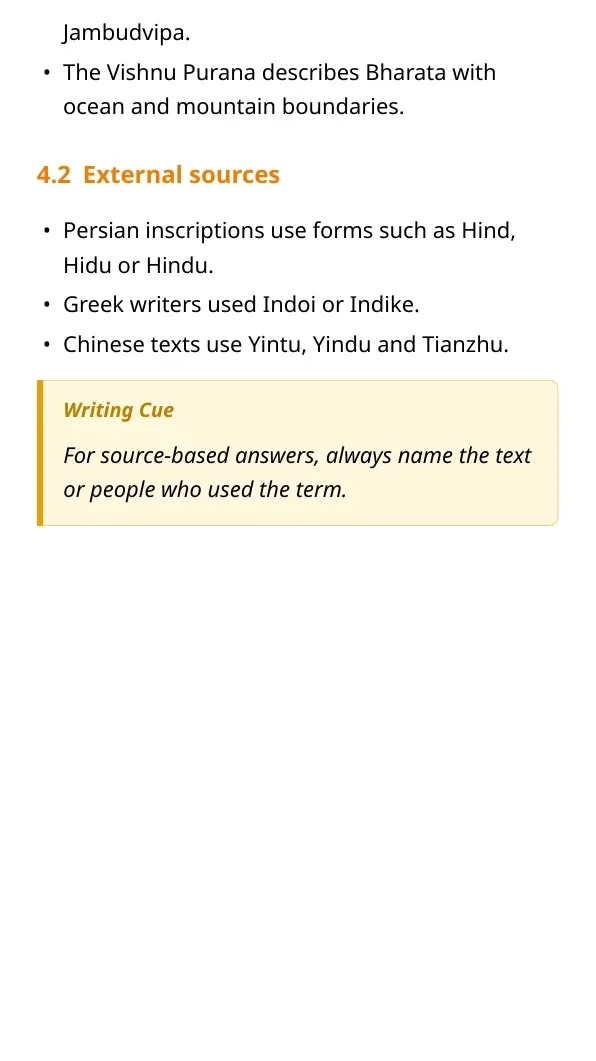
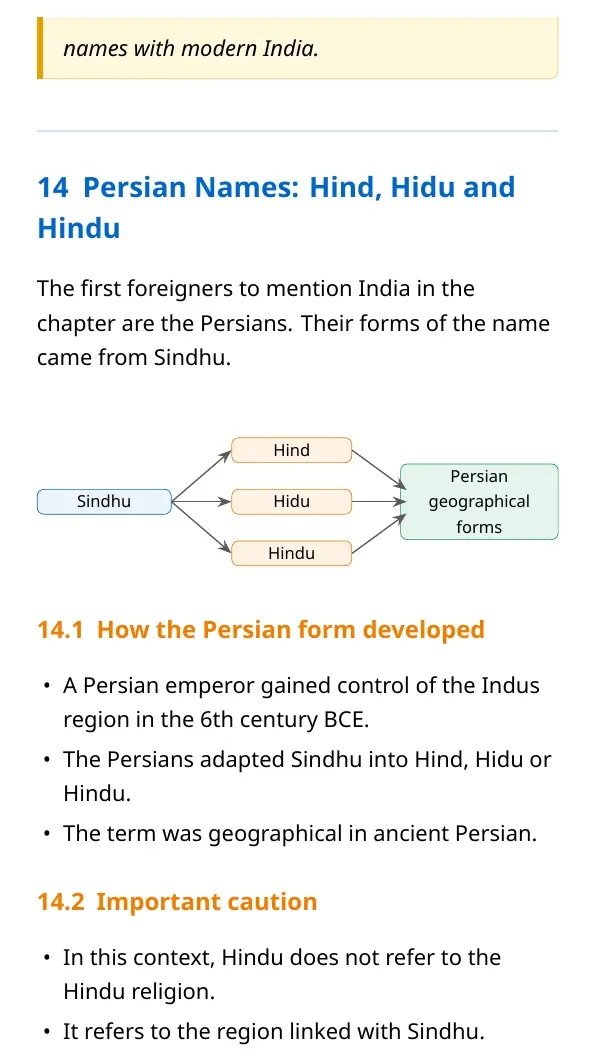
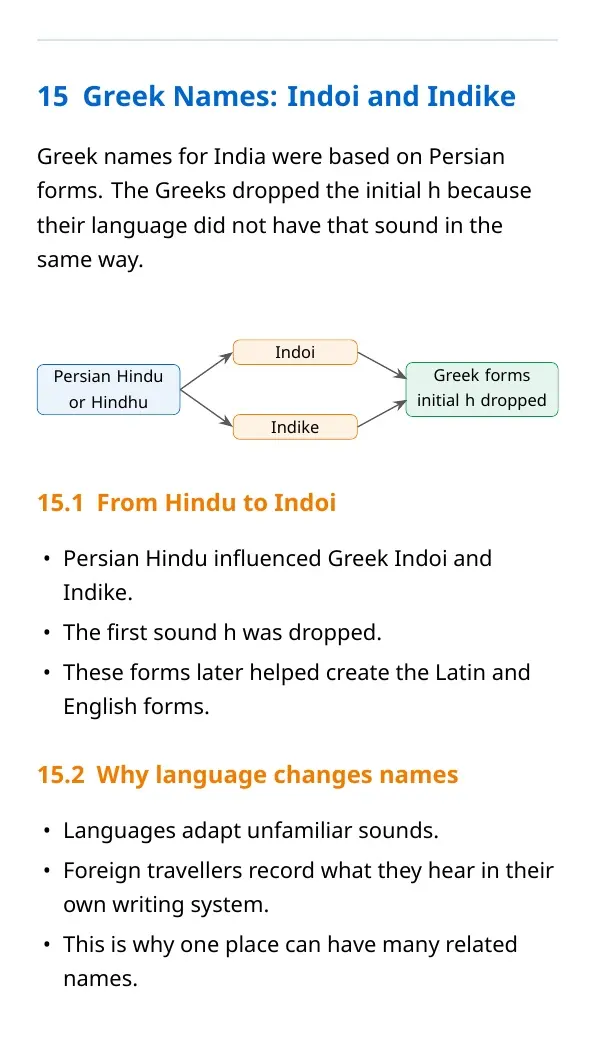
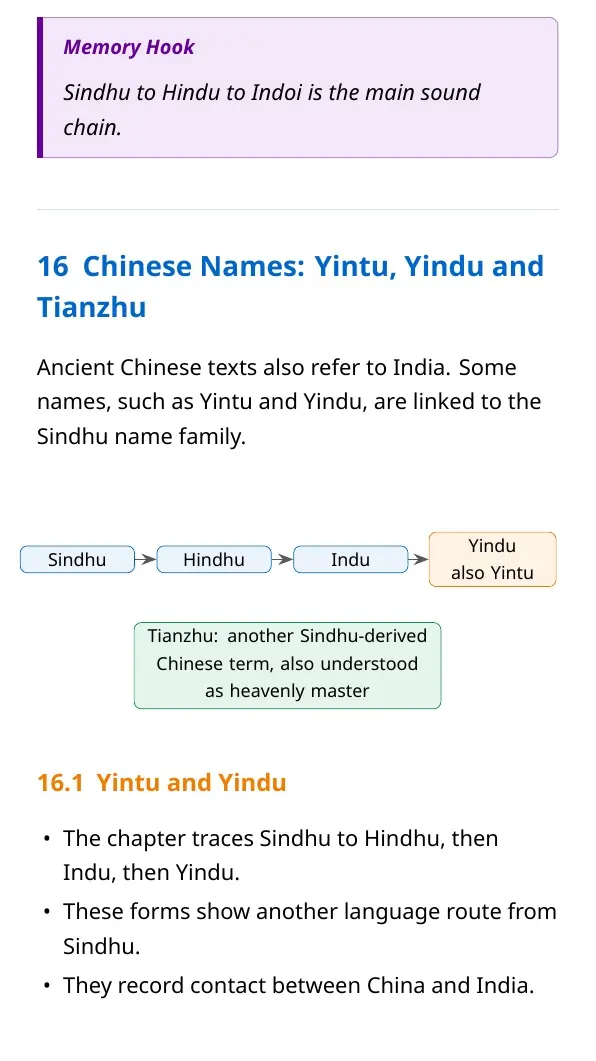
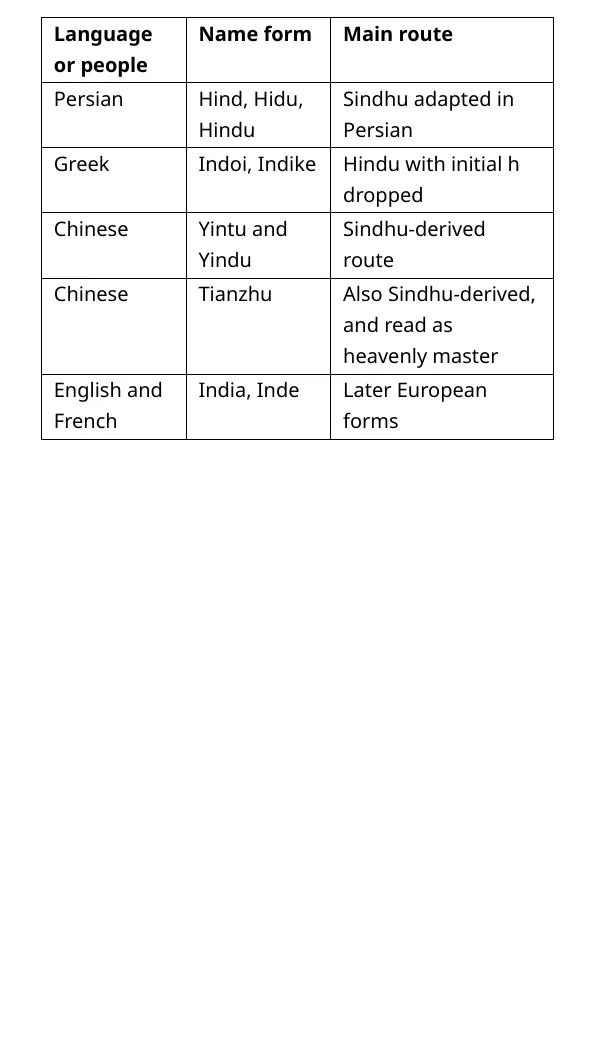
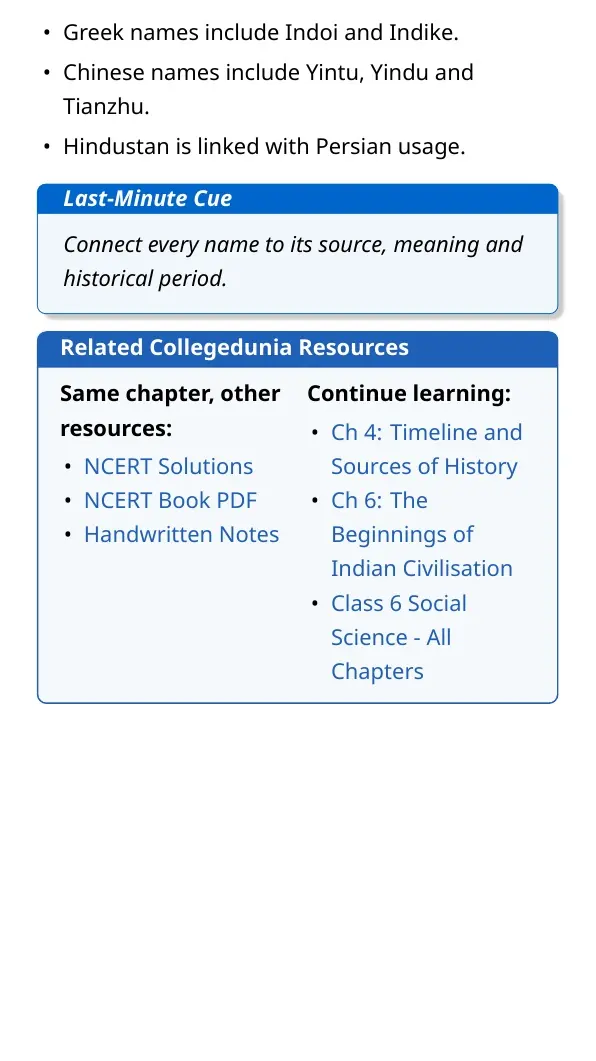
Many foreign names for India came from Sindhu or Indus. Persians adapted Sindhu as Hind, Hidu or Hindu. Greeks used Indoi or Indike. Chinese texts used Yintu, Yindu and Tianzhu. Later European names include India and Inde.
| People or language | Name form | Important note |
|---|---|---|
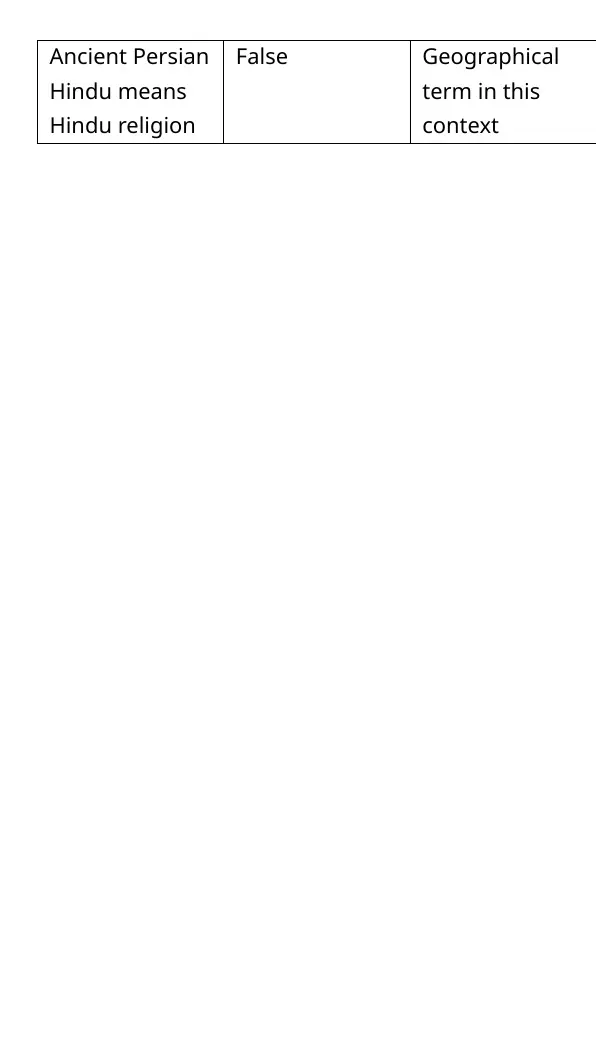
| Persian | Hind, Hidu, Hindu | Geographical term in this context |
| Greek | Indoi, Indike | Initial h was dropped |
| Chinese | Yintu, Yindu | Sindhu-derived route |
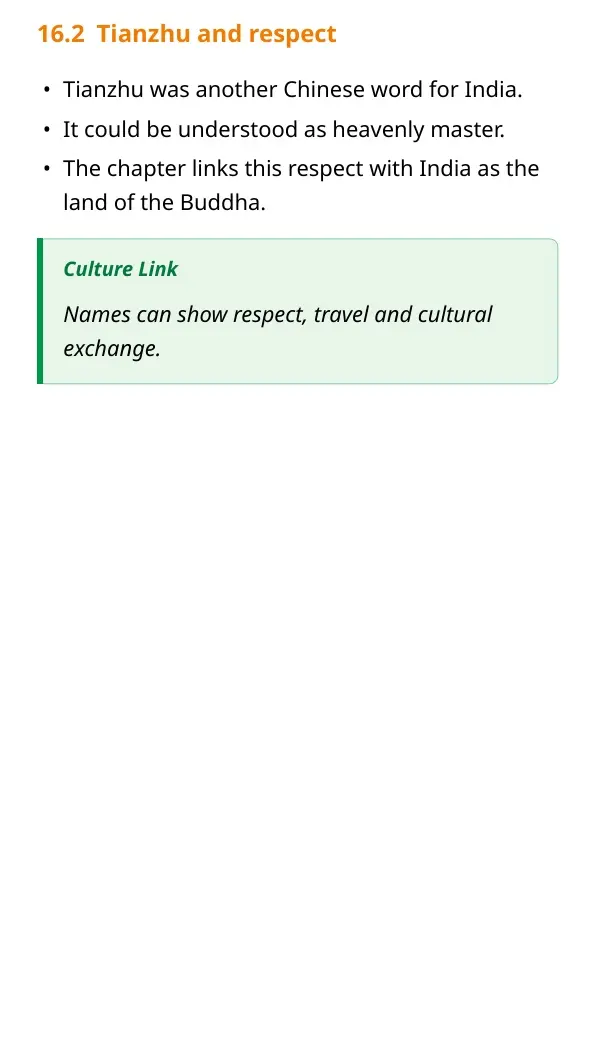
| Chinese | Tianzhu | Also Sindhu-derived, and understood as heavenly master |
| English and French | India, Inde | Later European forms |
Constitution and Key Exercise Points
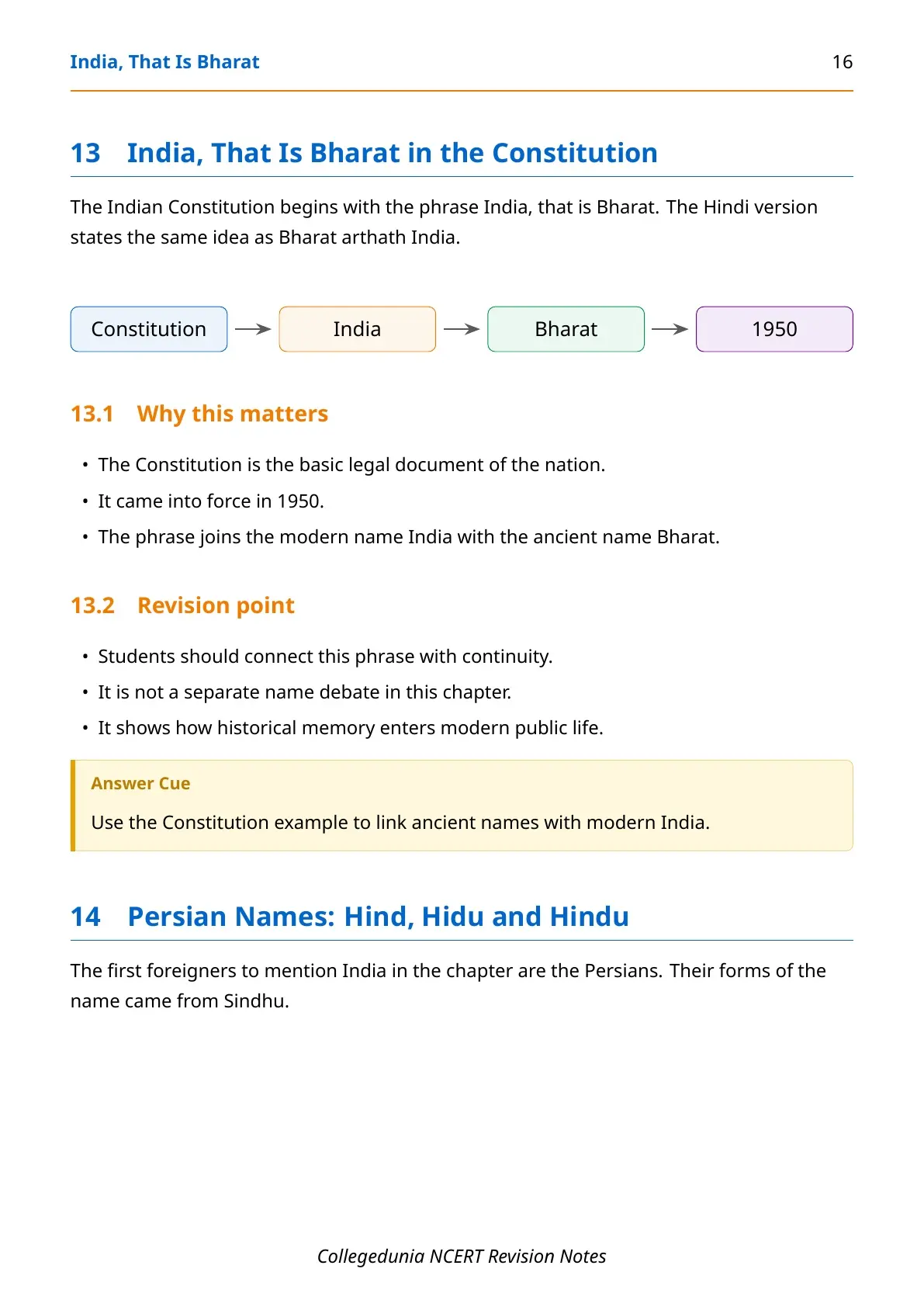
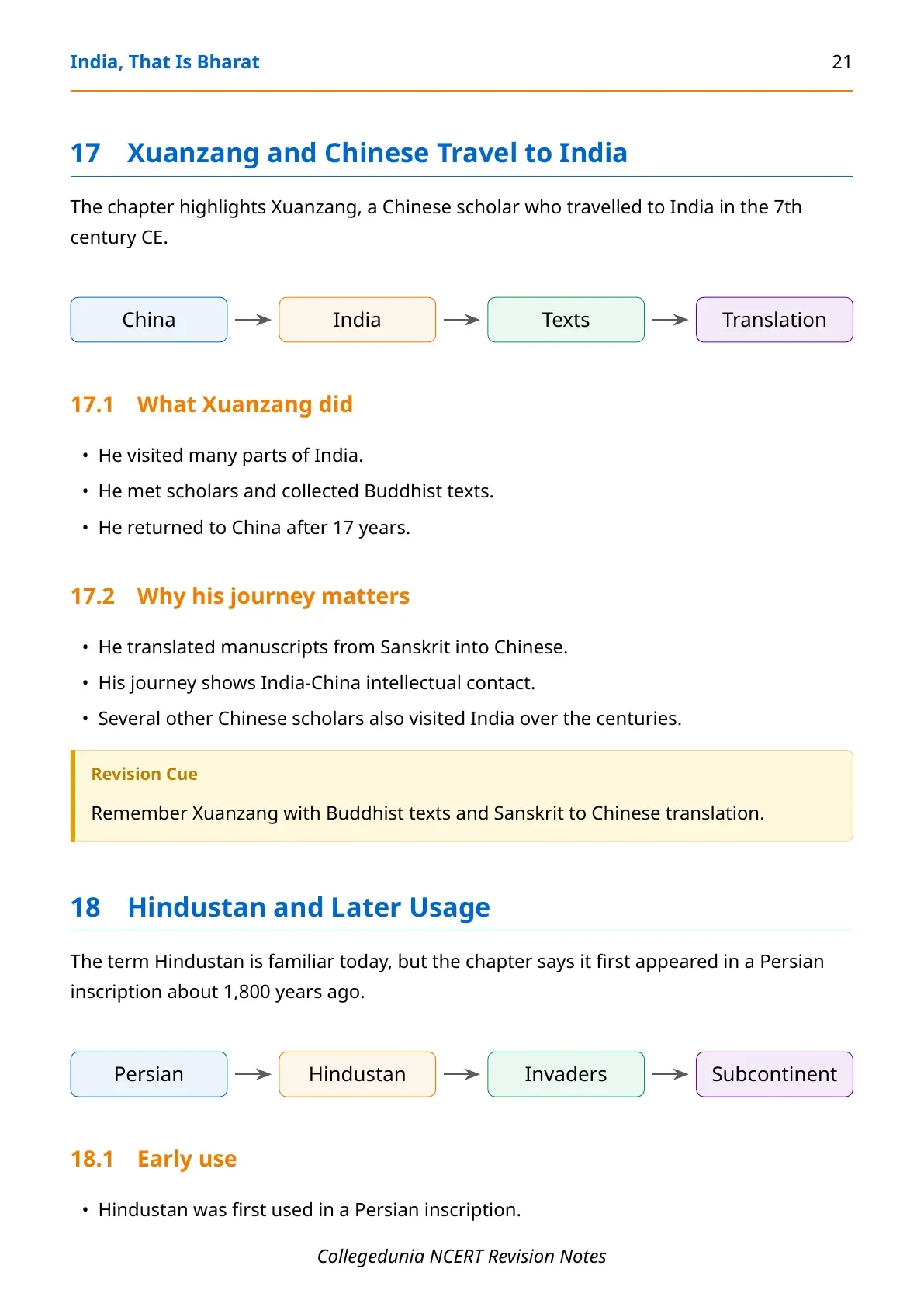
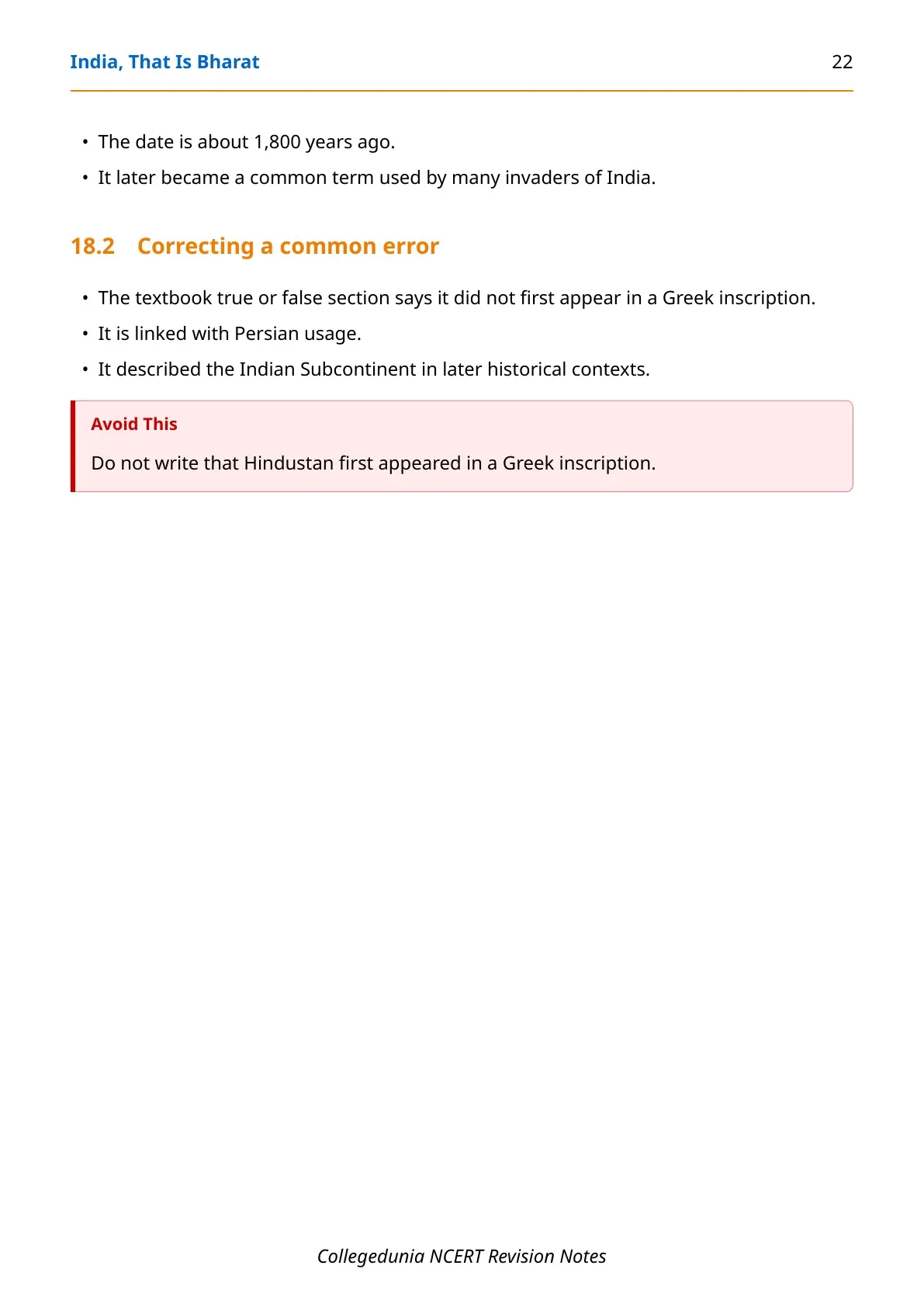
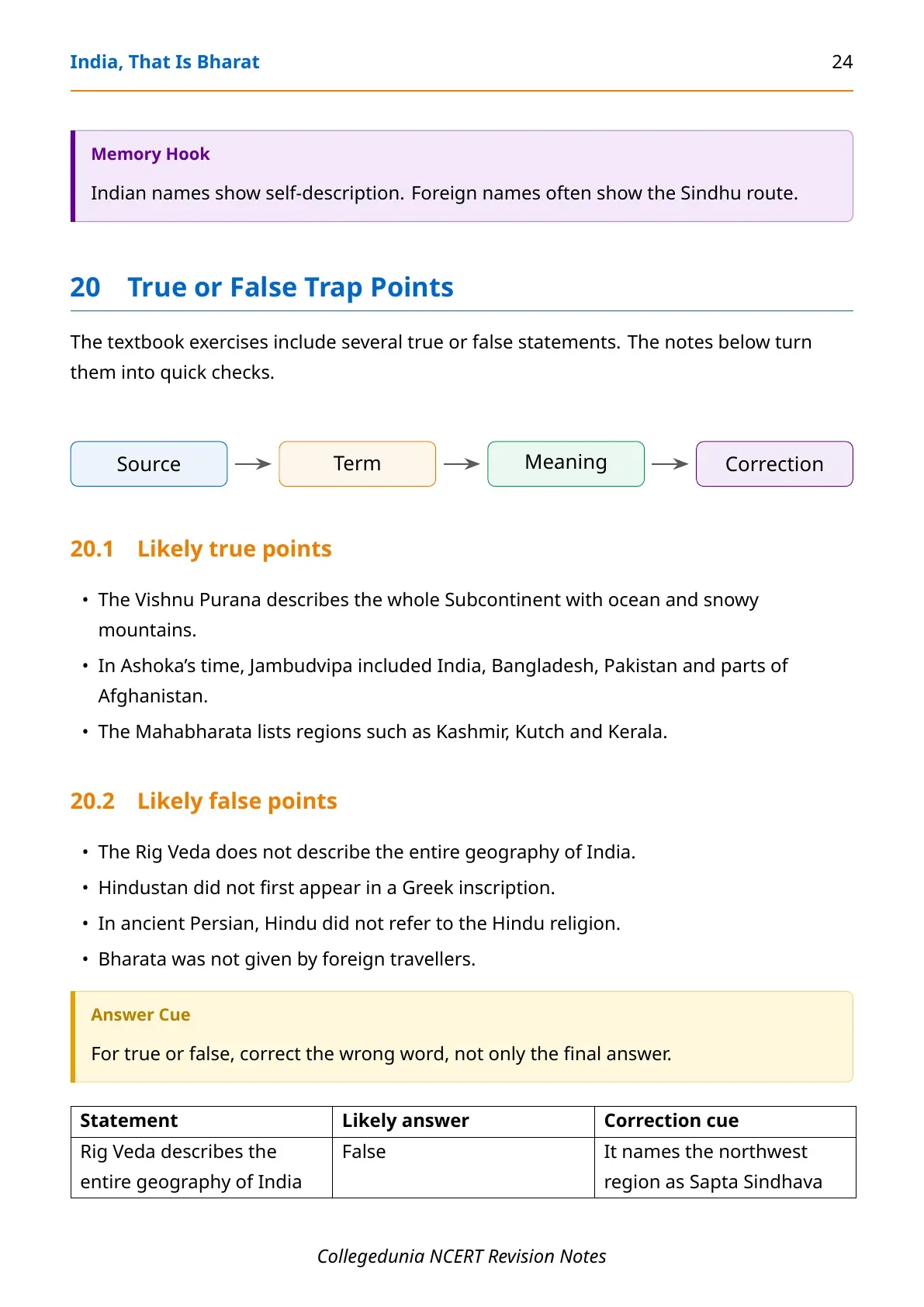
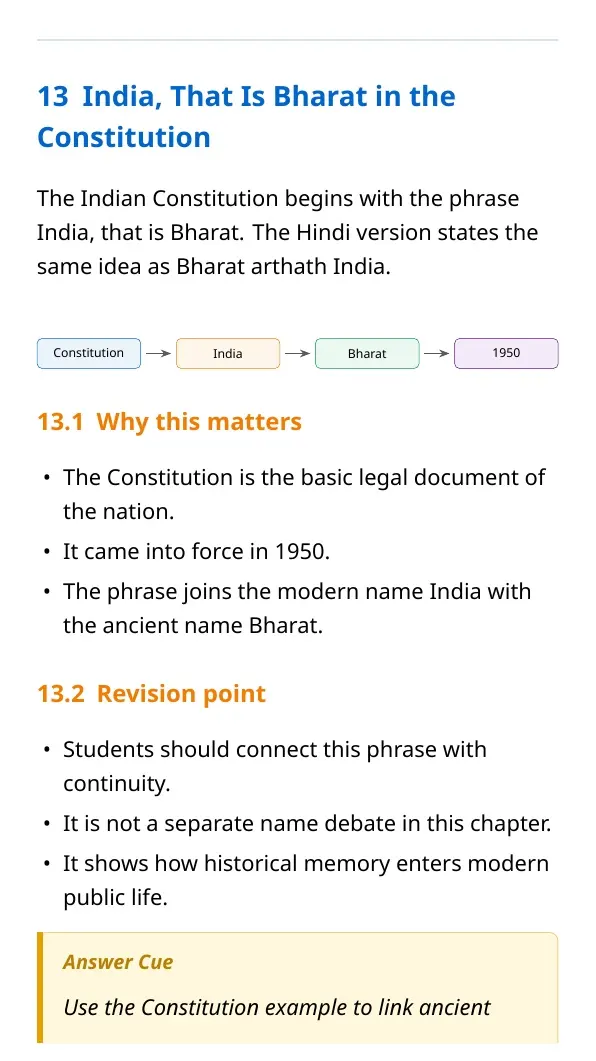
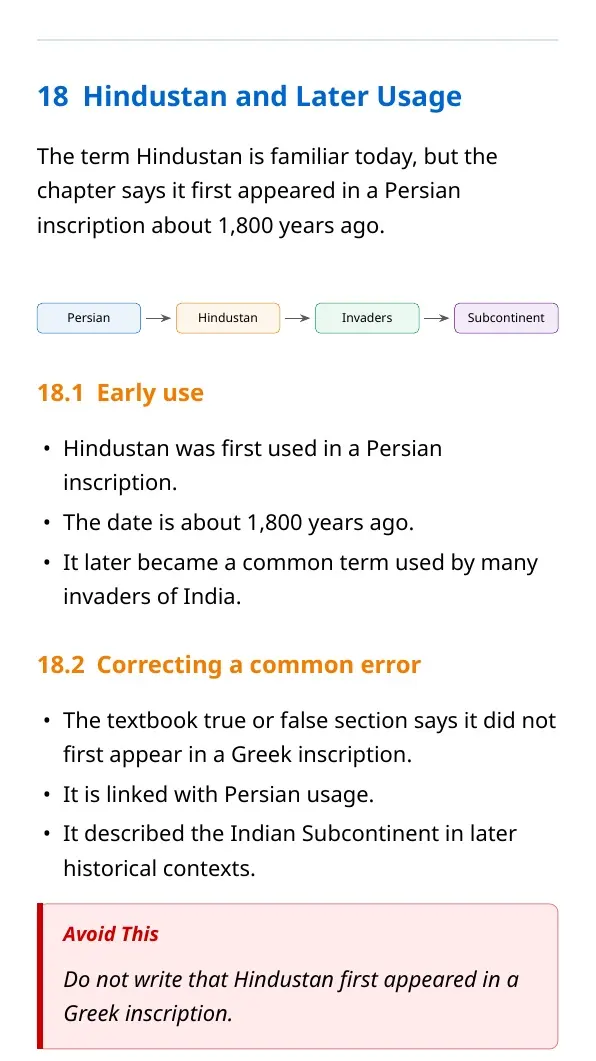
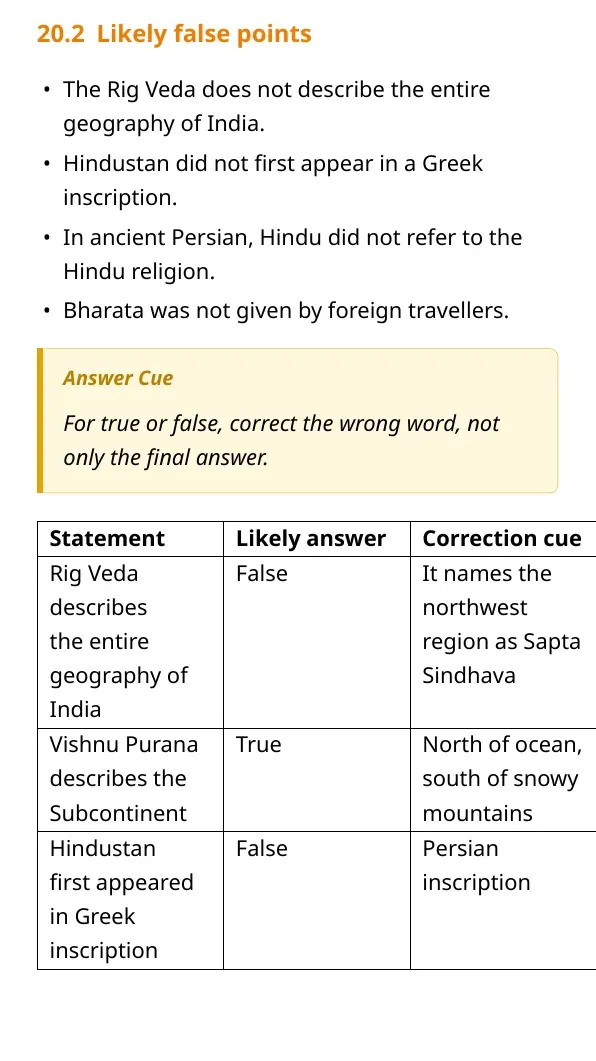
The Constitution begins with the phrase India, that is Bharat. This links the modern nation with a long historical name. For exercises, remember that the Rig Veda does not describe all India, ancient Persian Hindu is not a religious term in this context, and Hindustan first appeared in a Persian inscription.
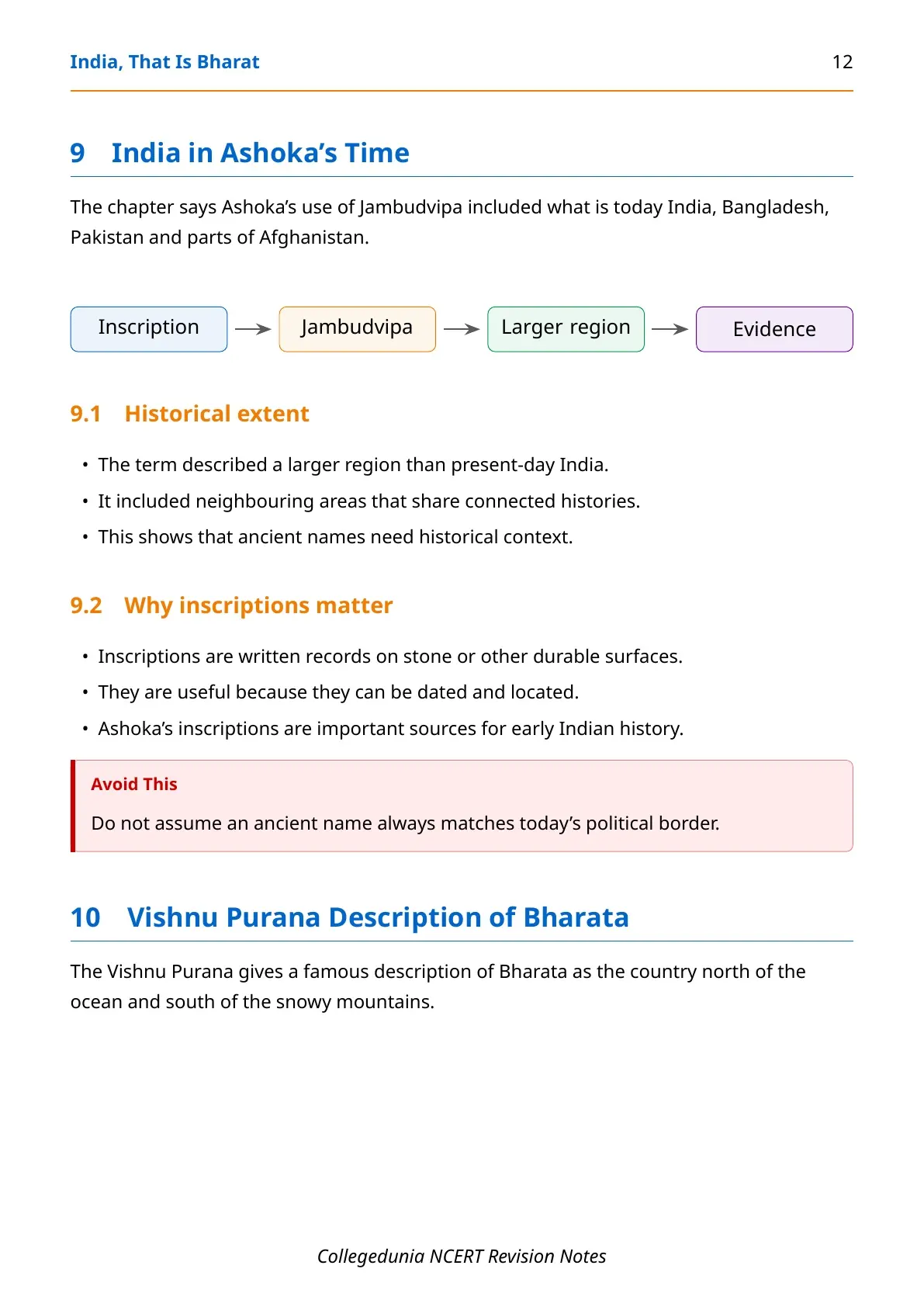
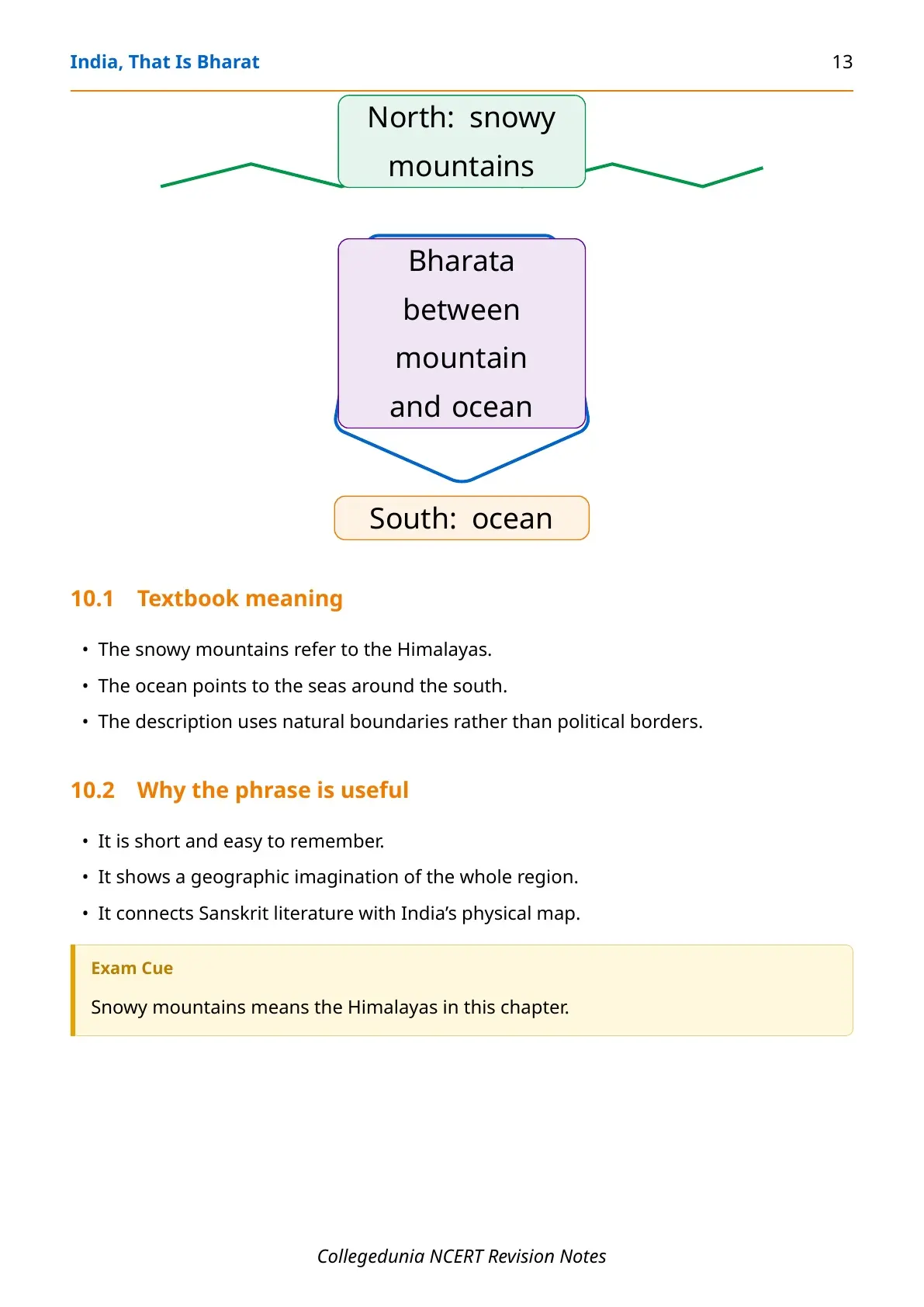
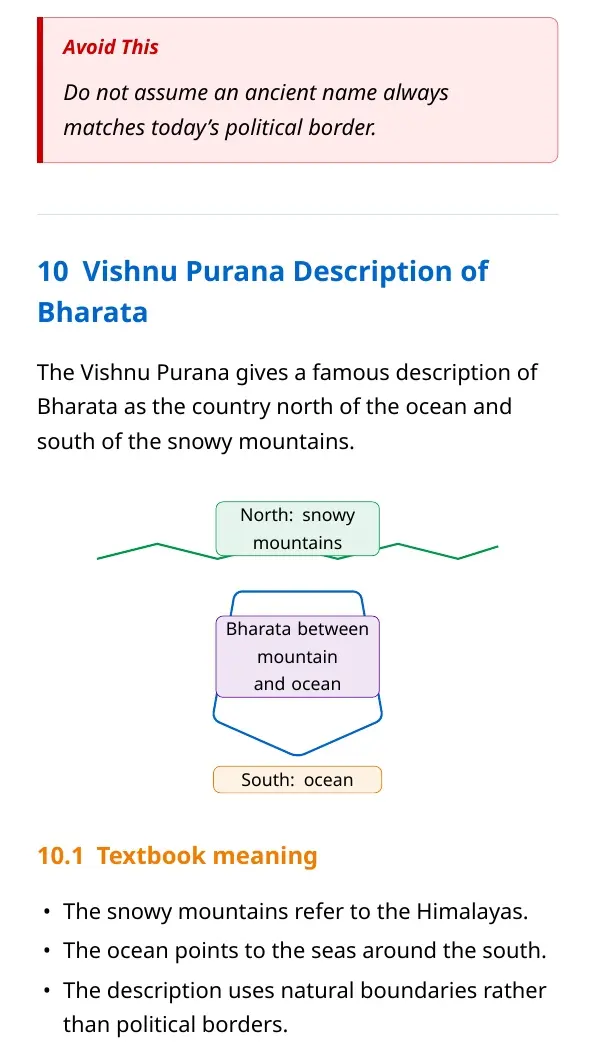
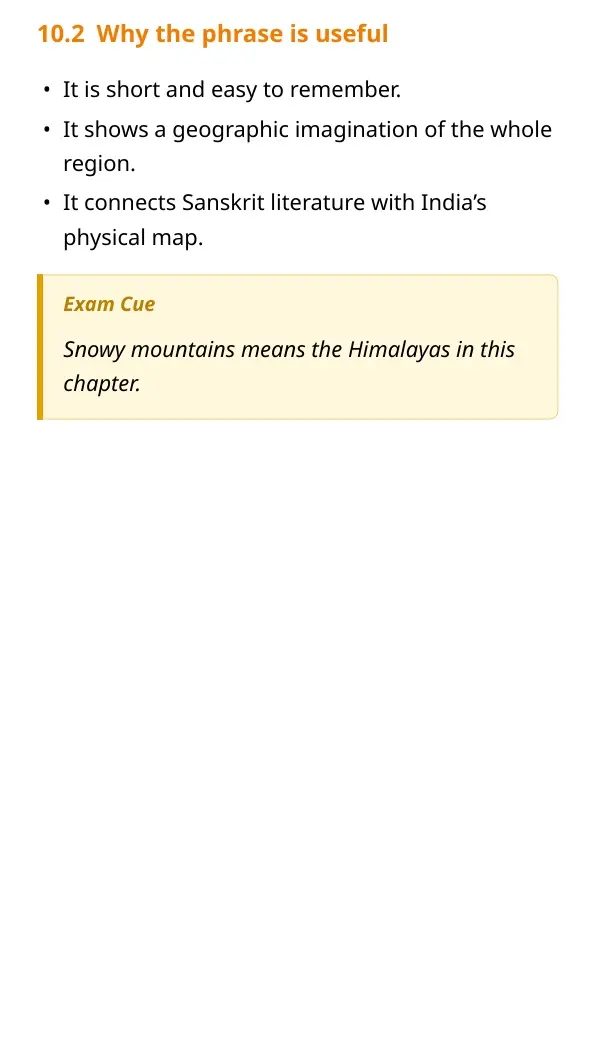
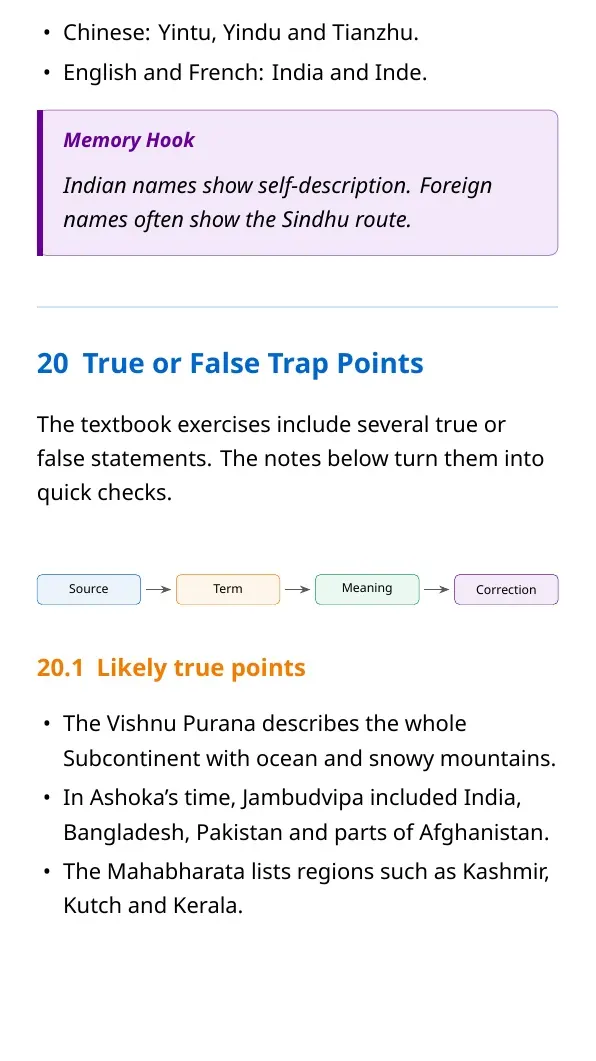
- The Vishnu Purana describes Bharata as north of the ocean and south of snowy mountains.
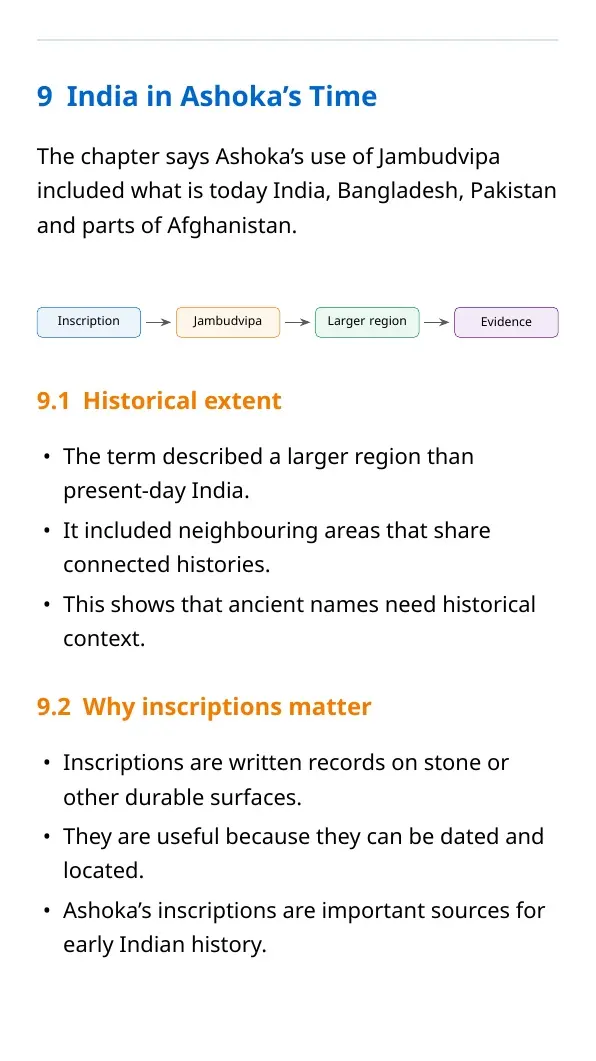
- Ashoka used Jambudvipa for a larger region than present-day India.
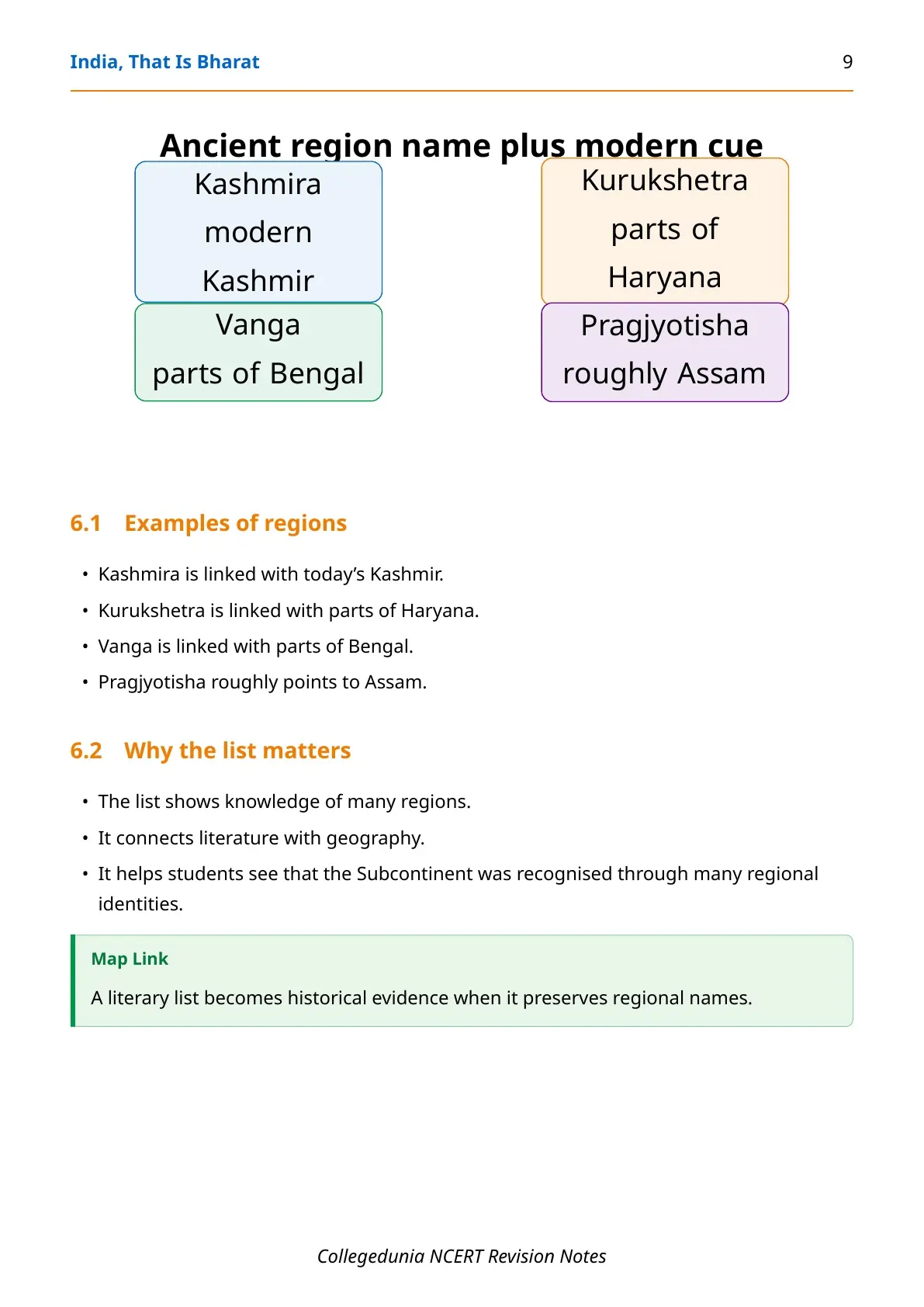
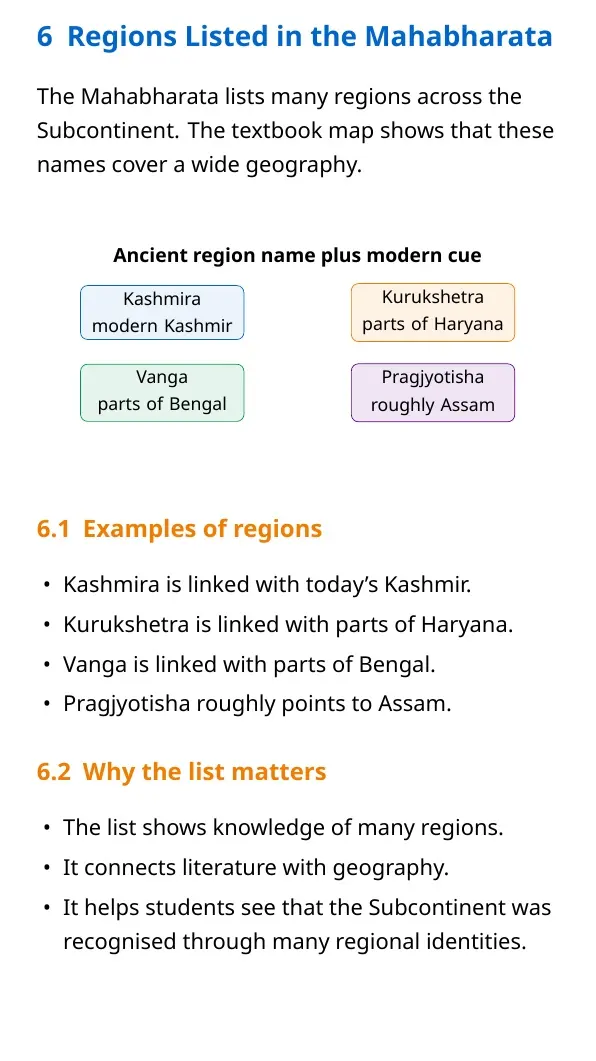
- The Mahabharata lists regions such as Kashmir, Kutch and Kerala.
- Foreign travellers often used names linked to Sindhu or Indus.
India, That Is Bharat Related Resources
| Resource | Best use | Link |
|---|---|---|
| NCERT Notes | Topic-wise revision with tables | Current page |
| NCERT Solutions | Practice textbook questions | Open NCERT Solutions |
| NCERT Book PDF | Read the official chapter | Open Book PDF |
| Handwritten Notes | Quick one-sitting revision | Open Handwritten Notes |
Social Science Notes for All Chapters
| Chapter | NCERT chapter title | Notes link |
|---|---|---|
| Chapter 1 | Locating Places on the Earth | Open Notes |
| Chapter 2 | Oceans and Continents | Open Notes |
| Chapter 3 | Landforms and Life | Open Notes |
| Chapter 4 | Timeline and Sources of History | Open Notes |
| Chapter 5 | India, That Is Bharat | Current notes |
| Chapter 6 | The Beginnings of Indian Civilisation | Open Notes |
| Chapter 7 | India's Cultural Roots | Open Notes |
| Chapter 8 | Unity in Diversity, or Many in the One | Open Notes |
| Chapter 9 | Family and Community | Open Notes |
| Chapter 10 | Grassroots Democracy Part 1 Governance | Open Notes |
| Chapter 11 | Grassroots Democracy Part 2 Local Government in Rural Areas | Open Notes |
| Chapter 12 | Grassroots Democracy Part 3 Local Government in Urban Areas | Open Notes |
| Chapter 13 | The Value of Work | Open Notes |
| Chapter 14 | Economic Activities Around Us | Open Notes |
India, That Is Bharat Class 6 Notes FAQs
Ques. What is Class 6 Social Science Chapter 5 about?
Ans. It explains India's ancient and foreign names, including Sapta Sindhava, Bharata, Jambudvipa, Hindu, Indoi, Yindu and India.
Ques. What does Bharatavarsha mean?
Ans. Bharatavarsha means the country of the Bharatas. The Mahabharata uses this term for the wider Indian Subcontinent.
Ques. What does Jambudvipa mean?
Ans. Jambudvipa means the island of the fruit of the jamun tree. It came to mean the Indian Subcontinent.
Ques. How did the name India develop?
Ans. Many foreign names came from Sindhu. Persian forms like Hindu influenced Greek Indoi and later forms such as India.
Ques. What phrase does the Constitution use for India?
Ans. The Constitution uses the phrase India, that is Bharat. The Hindi version gives the same idea as Bharat arthath India.



Comments