



The NCERT Class 6 Social Science Chapter 6 notes for The Beginnings of Indian Civilisation explain the Harappan Civilisation, planned cities, water management, farming, crafts, trade, seals, daily life and decline. These notes follow the 2026-27 NCERT textbook and include a free PDF for quick revision.
- Best for revision: civilisation features, Harappan sites, water systems, trade and decline.
- Use with the PDF: revise the site-feature tables before solving exercise questions.
- 2026-27 focus: follows Exploring Society: India and Beyond, Chapter 6.


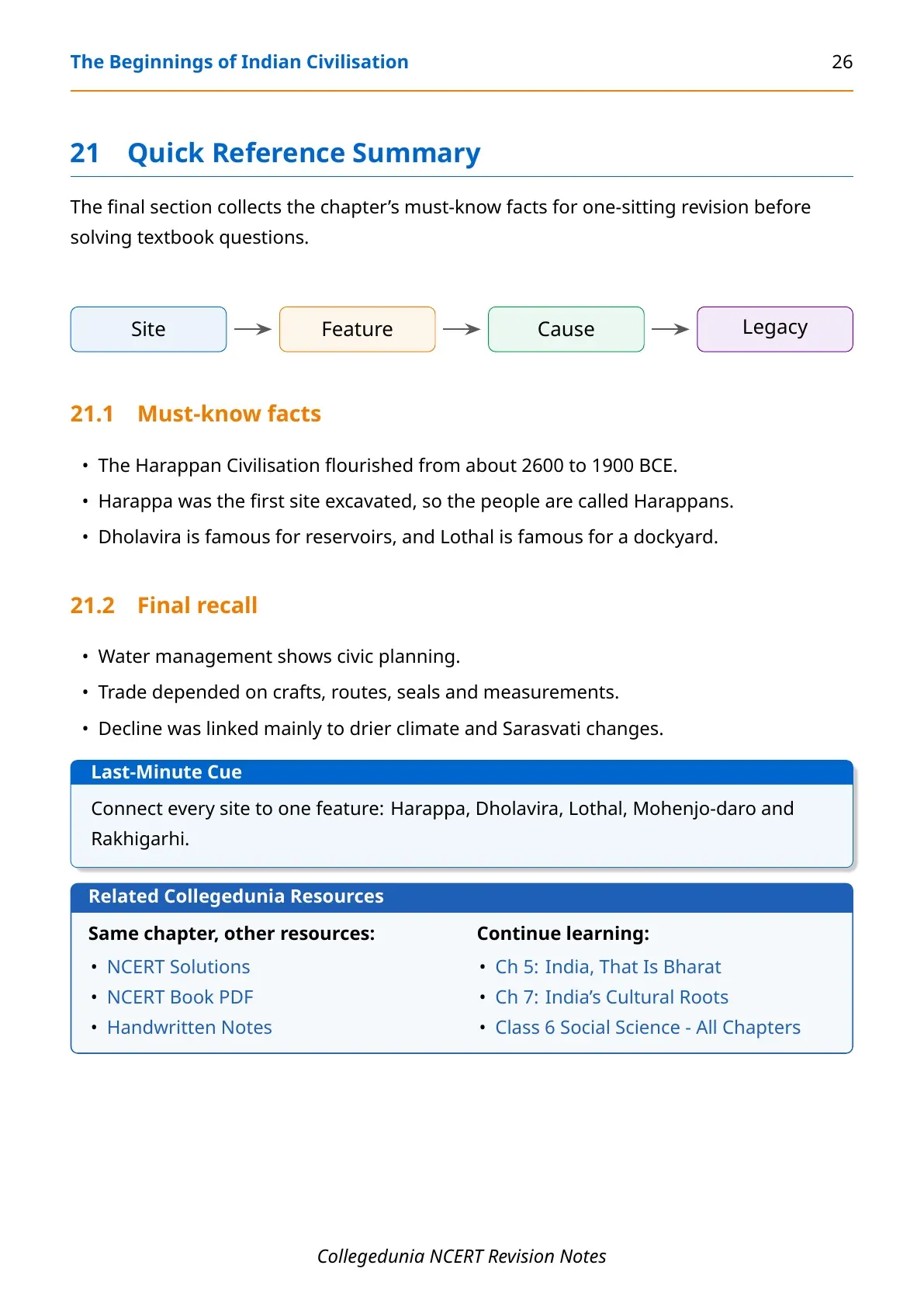
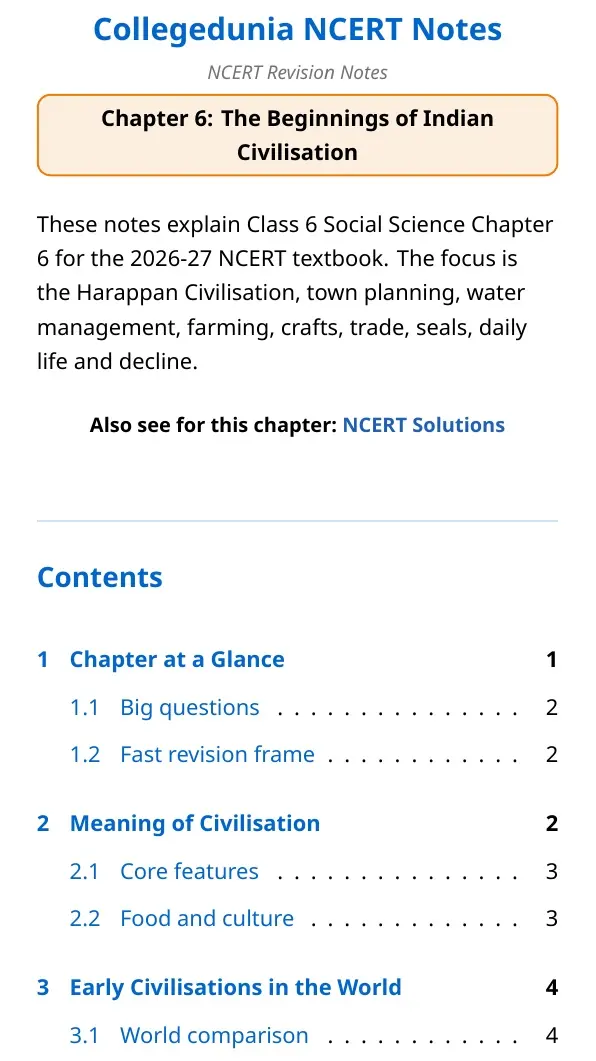
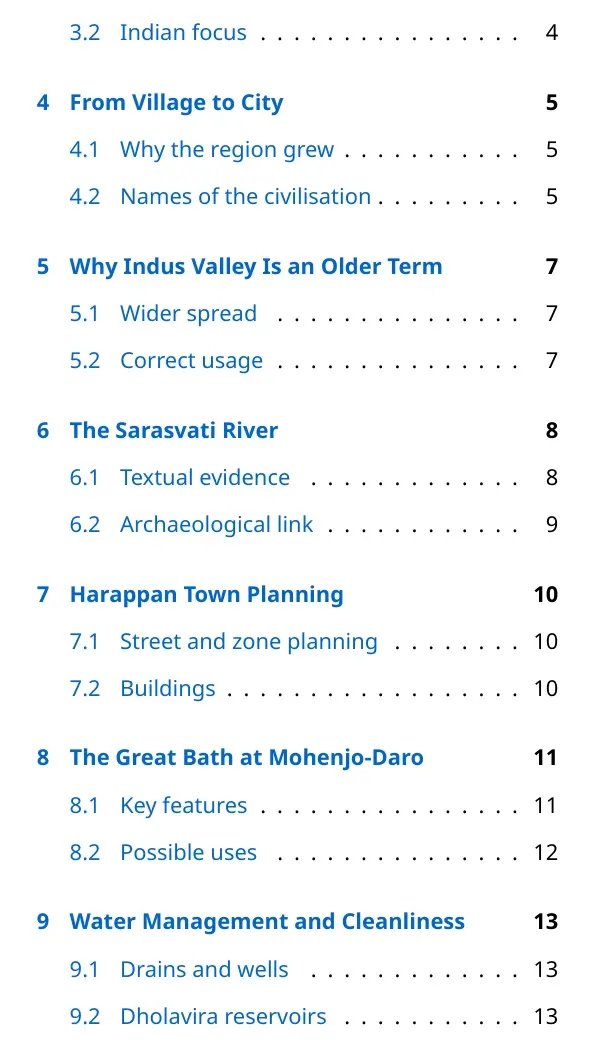
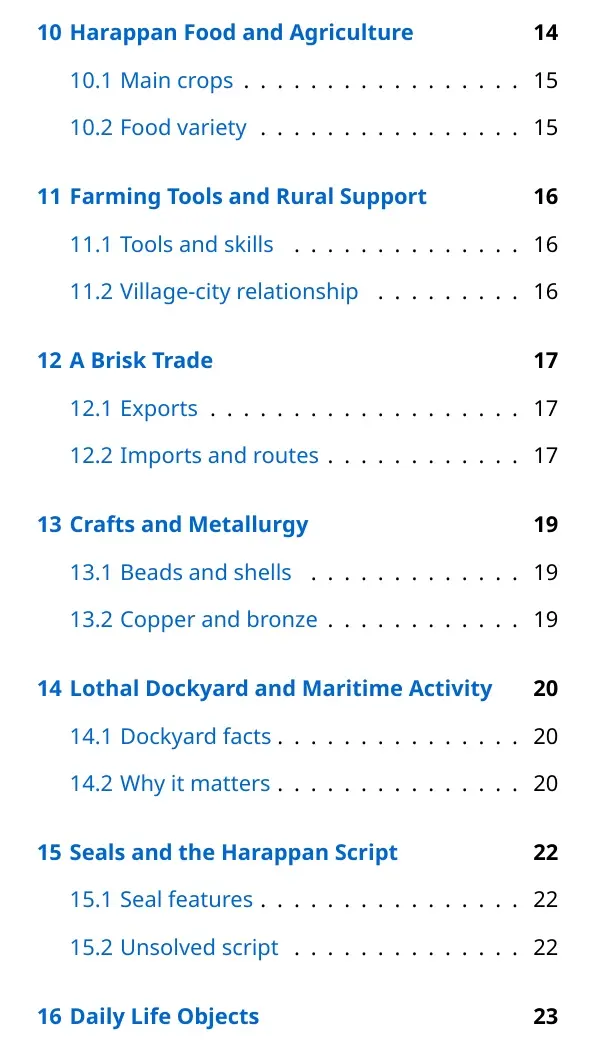
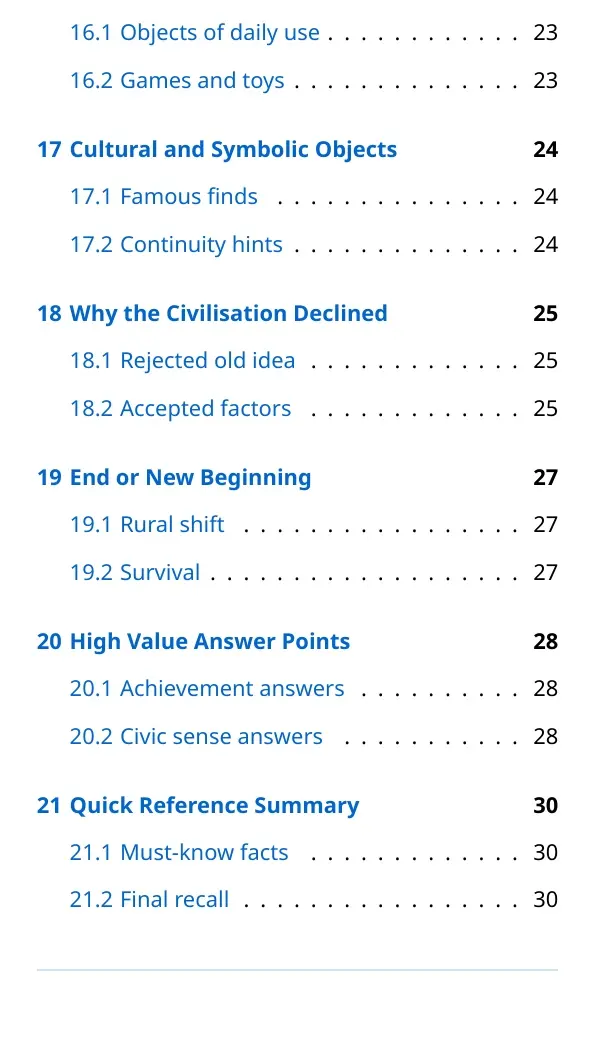
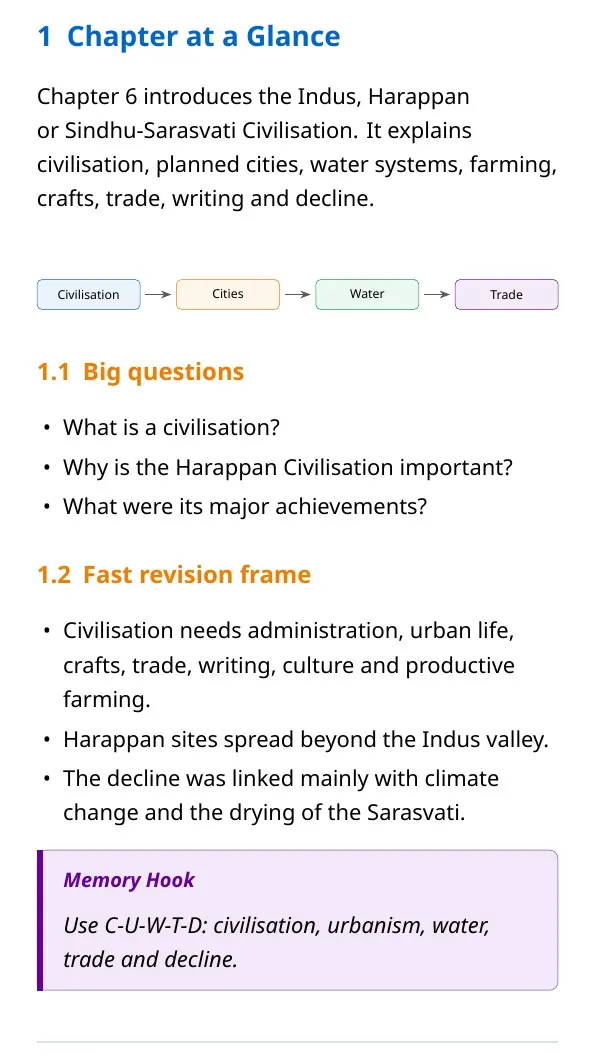
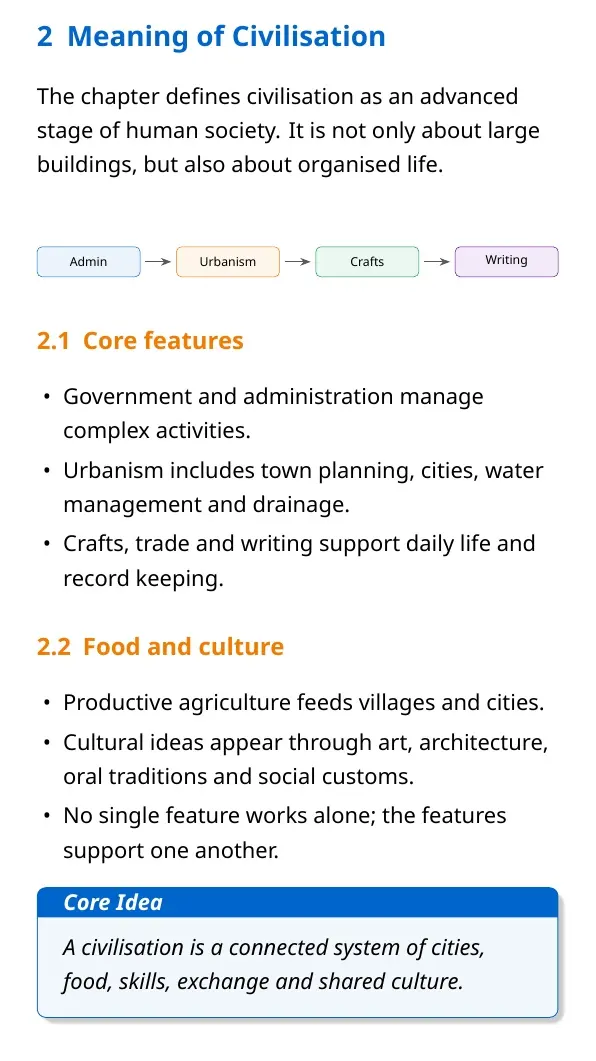
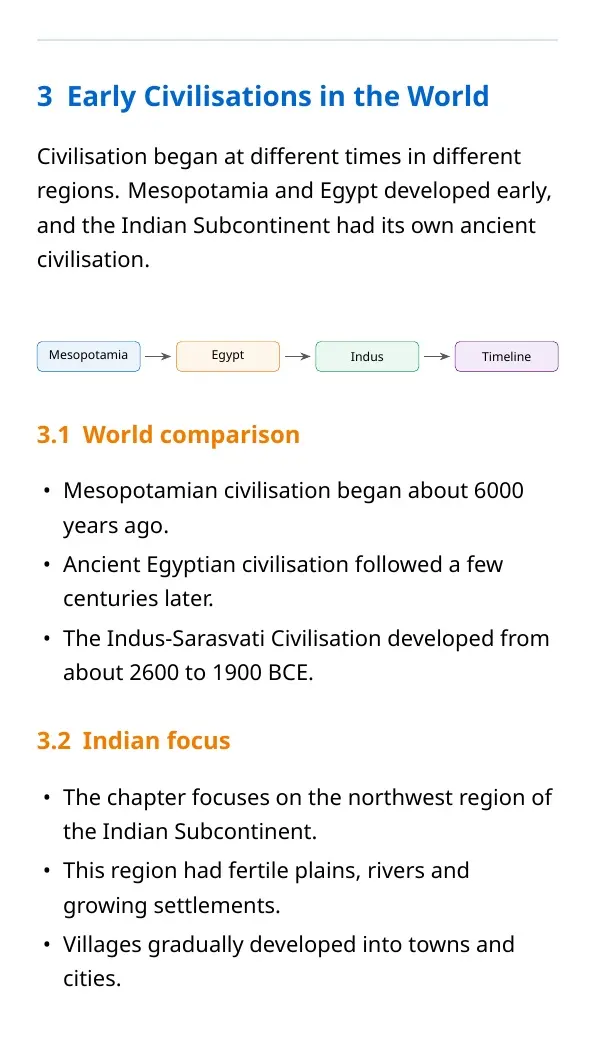
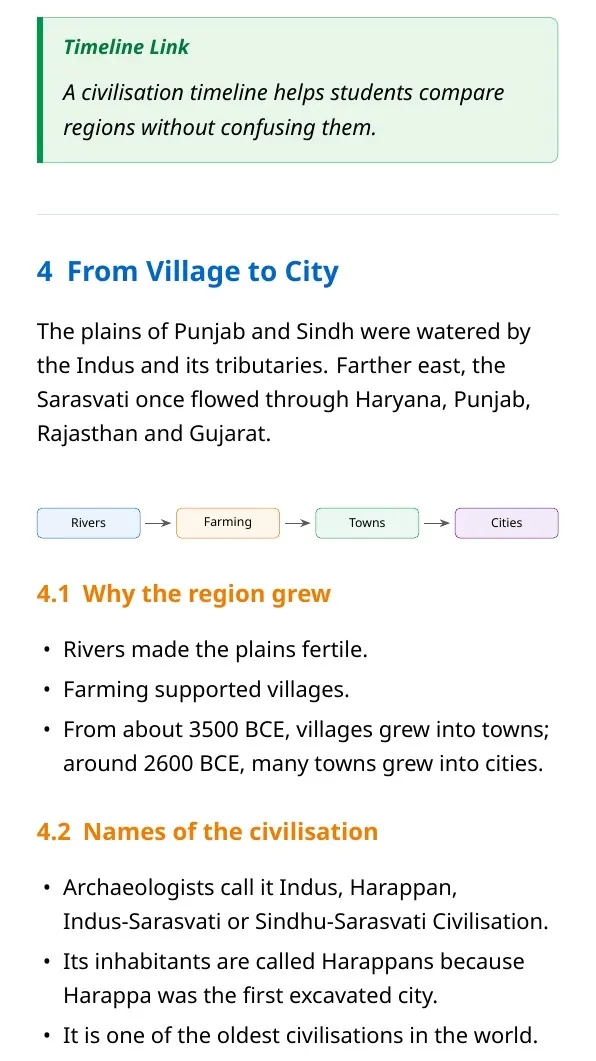


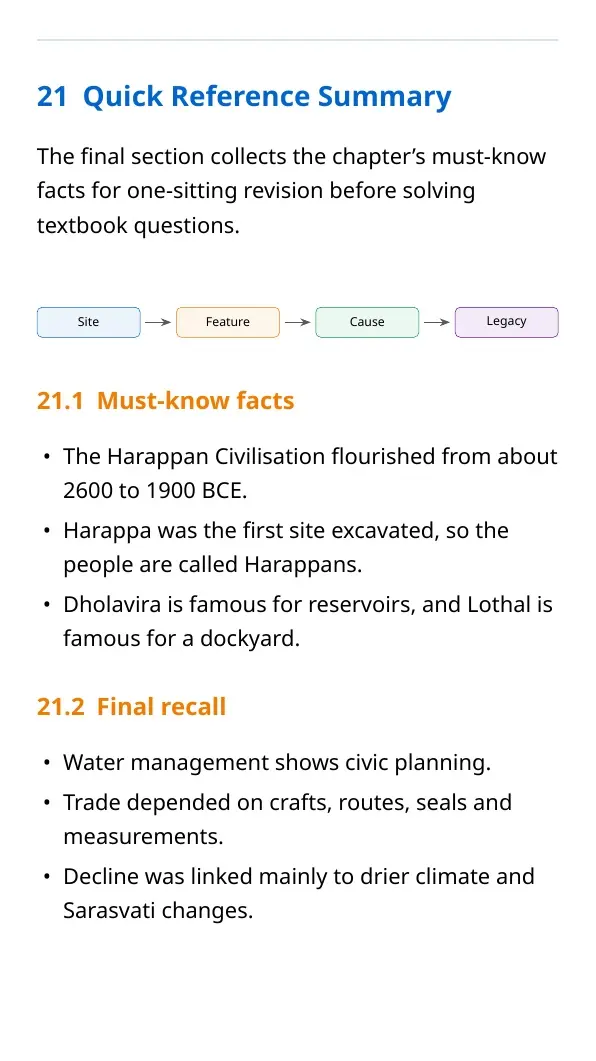
Student Feedback: Students usually remember this chapter faster by linking every Harappan site with one clear feature, such as Dholavira reservoirs or Lothal dockyard.
|
Table of Contents |
Beginnings of Indian Civilisation Notes Overview
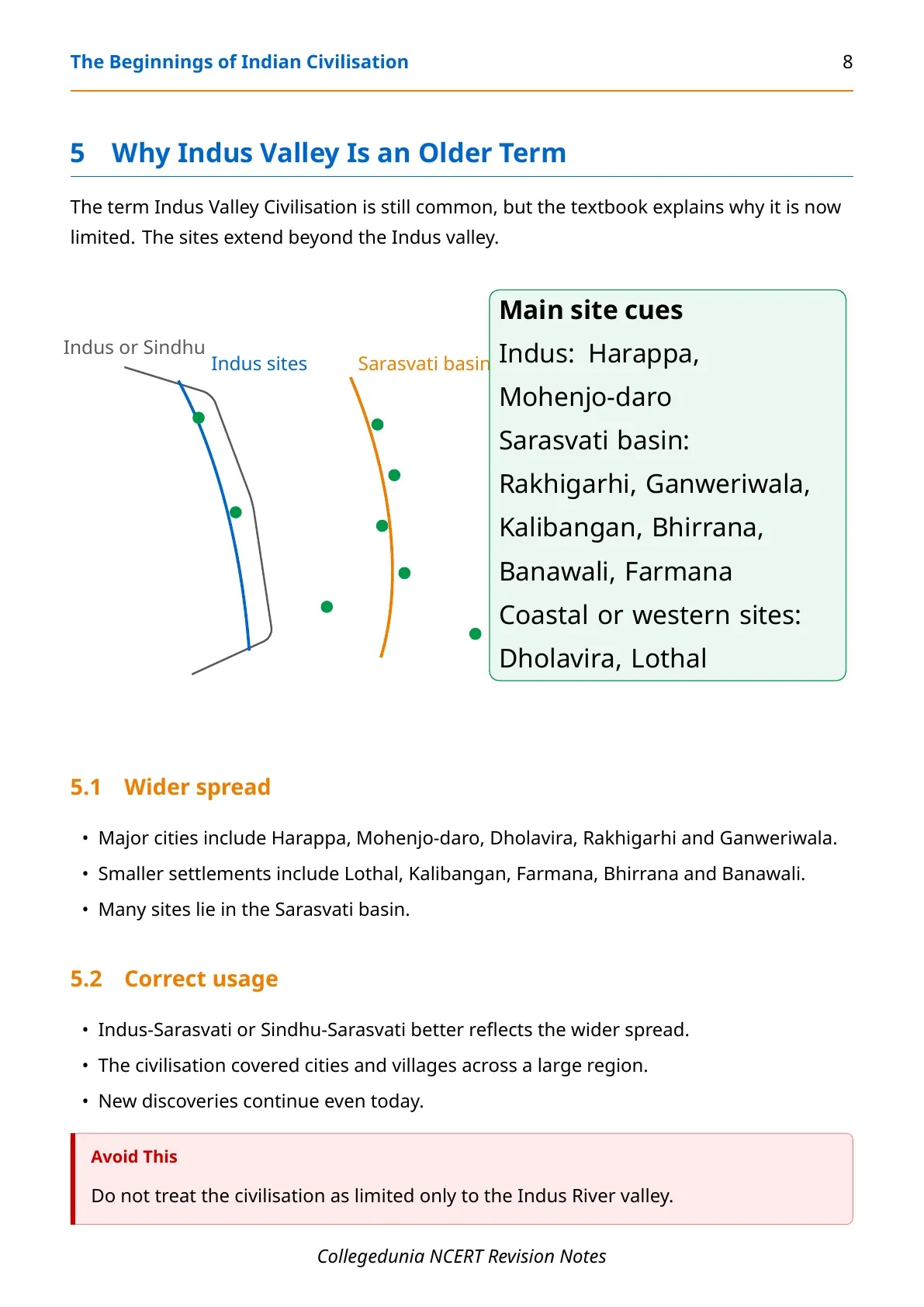
Chapter 6 describes one of the world's oldest civilisations. The Harappans built planned cities, managed water carefully, grew many crops, made skilled crafts, traded over long distances and used seals with writing signs.
| Revision area | Key idea | Example cue |
|---|---|---|
| Civilisation | Advanced society with administration, cities, crafts, trade and culture | Harappan urban life |
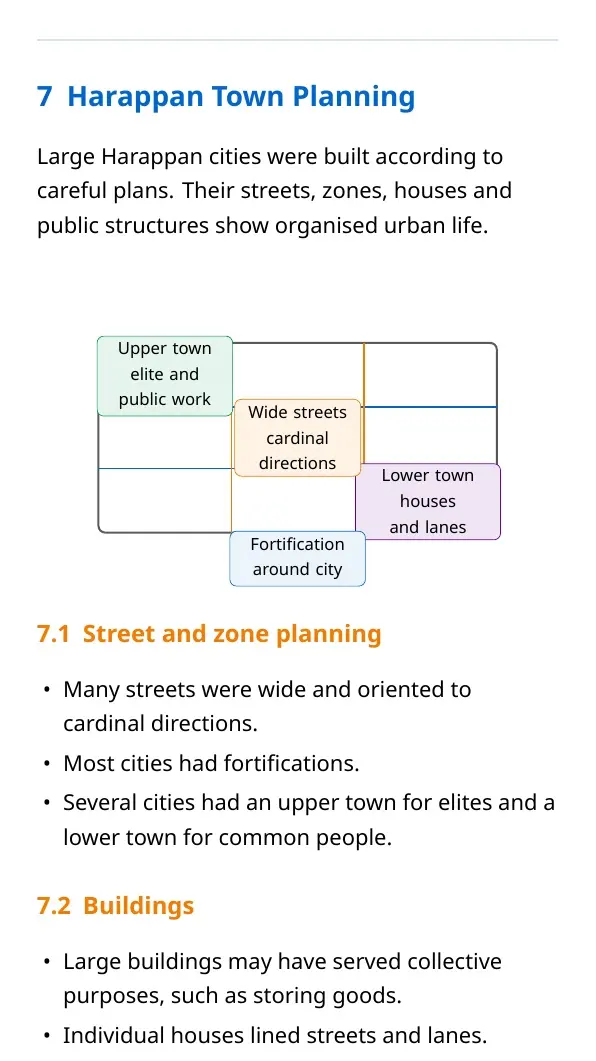
| Town planning | Wide streets, zones, fortifications and brick houses | Harappa, Mohenjo-daro, Dholavira |
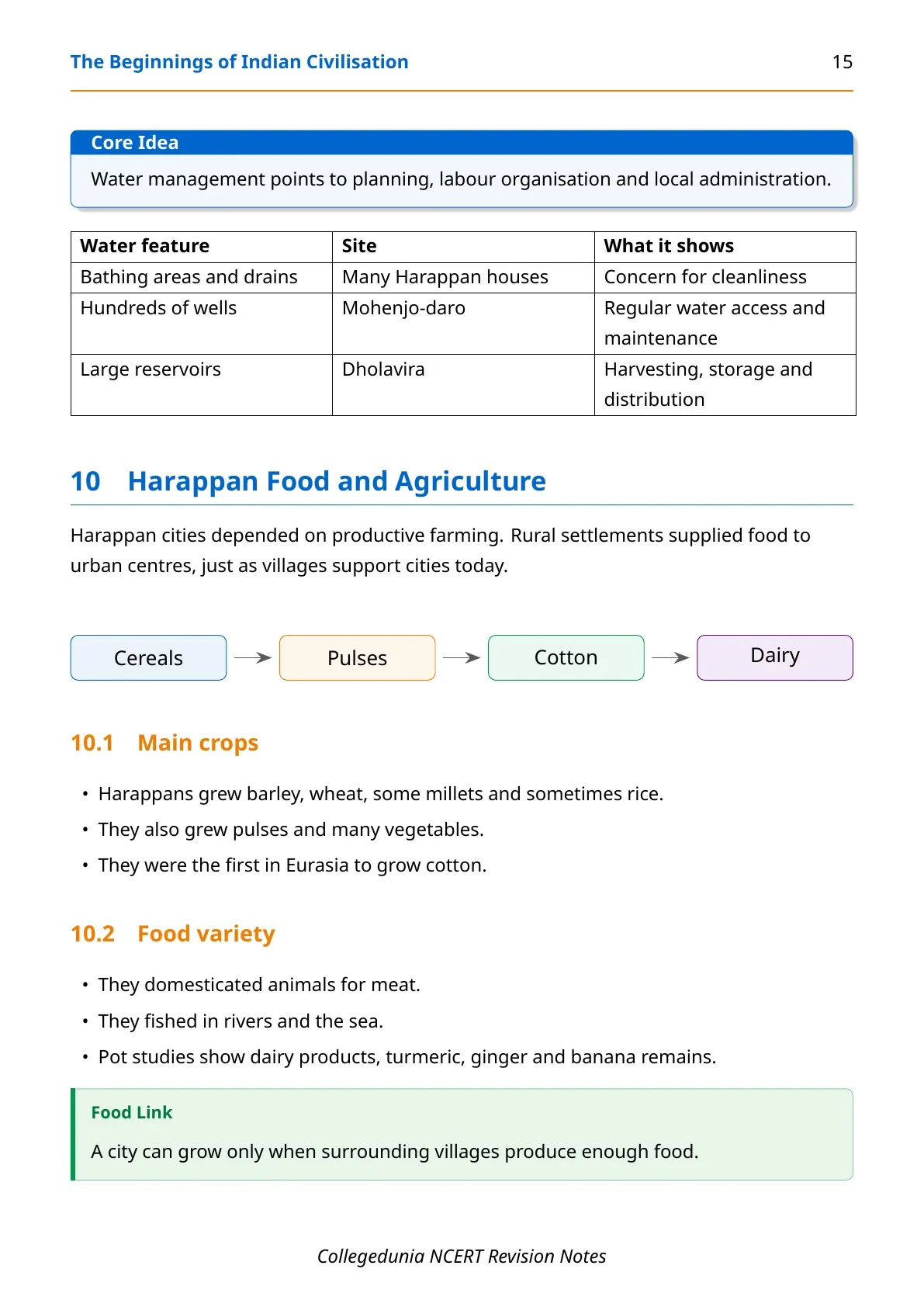
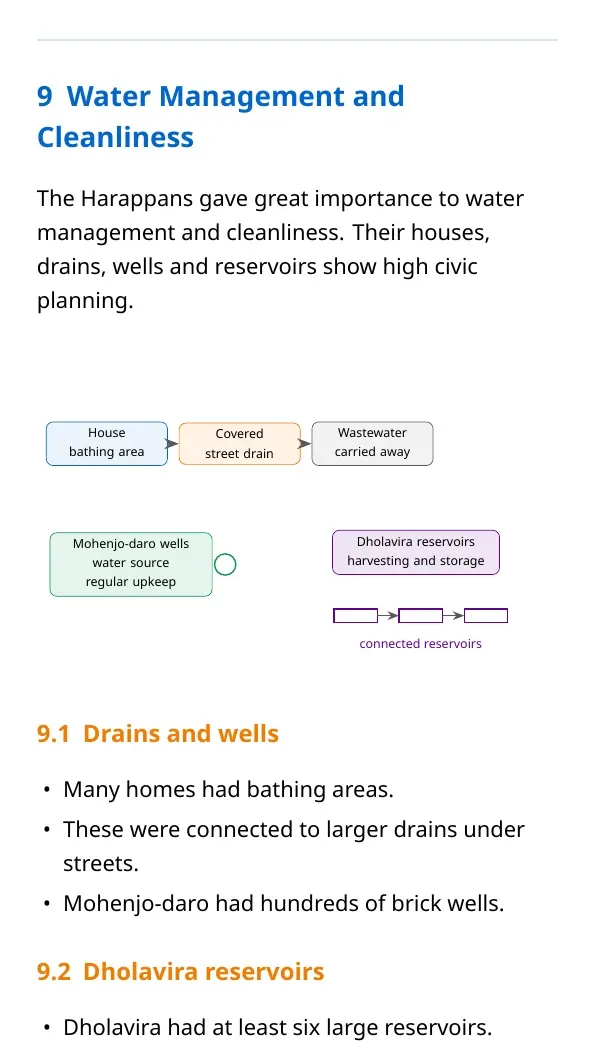
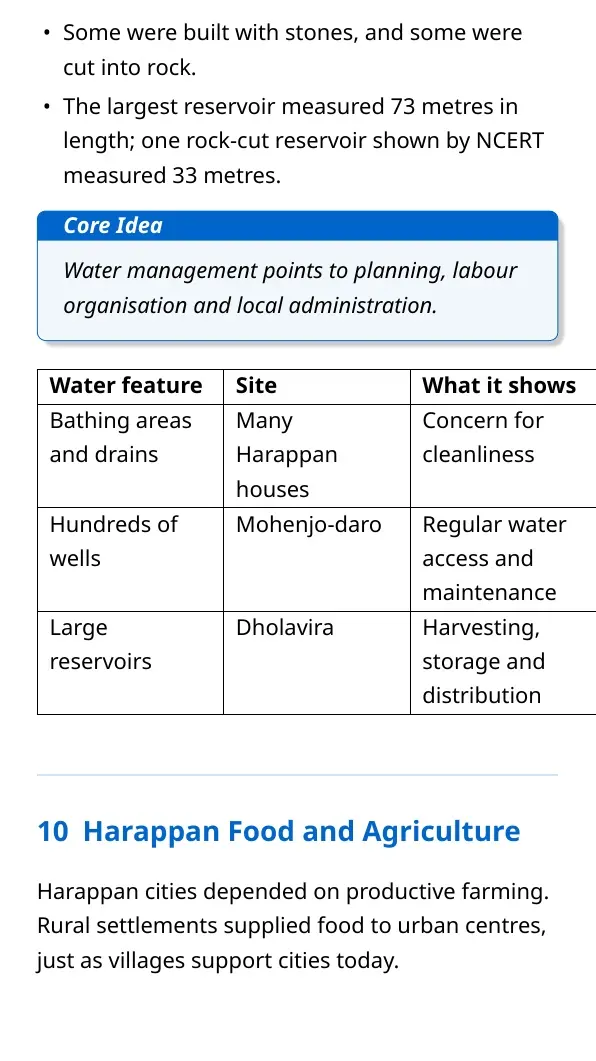
| Water management | Bathrooms, drains, wells and reservoirs | Dholavira reservoirs, Mohenjo-daro wells |
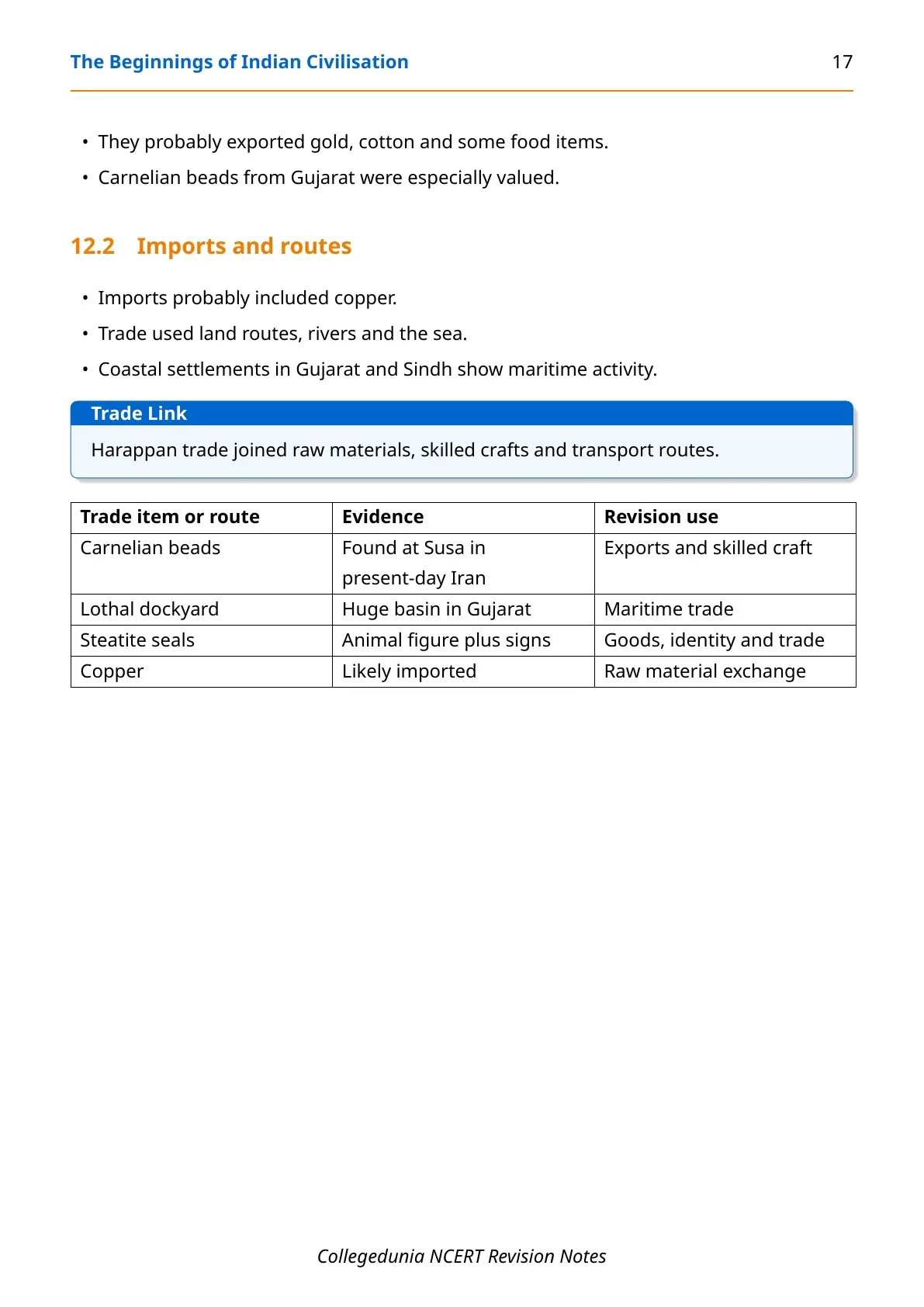
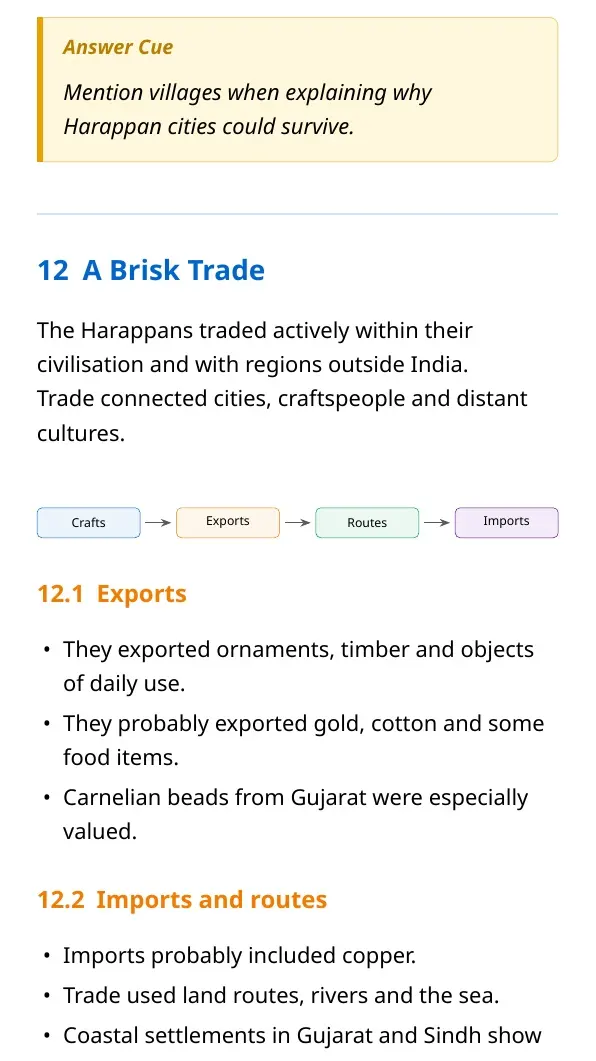
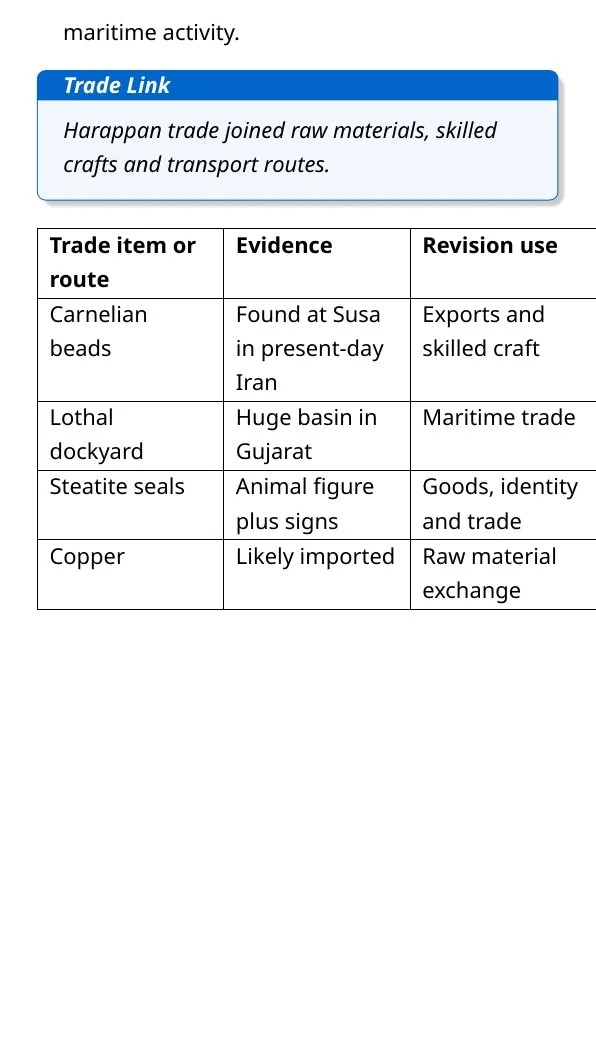
| Trade | Exports, imports, routes, seals and dockyard | Lothal, carnelian beads, steatite seals |
Harappan City Planning and Water Management
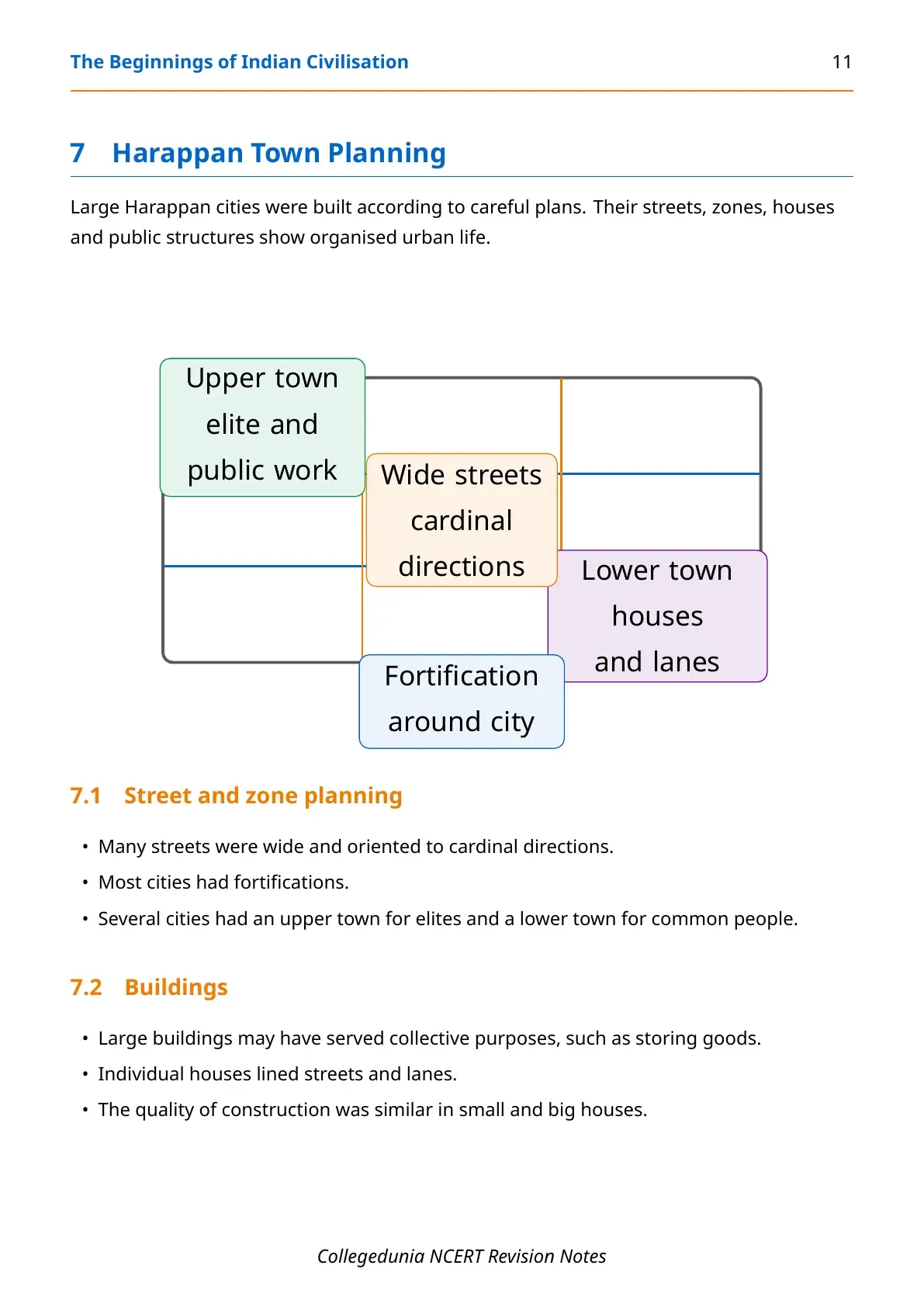
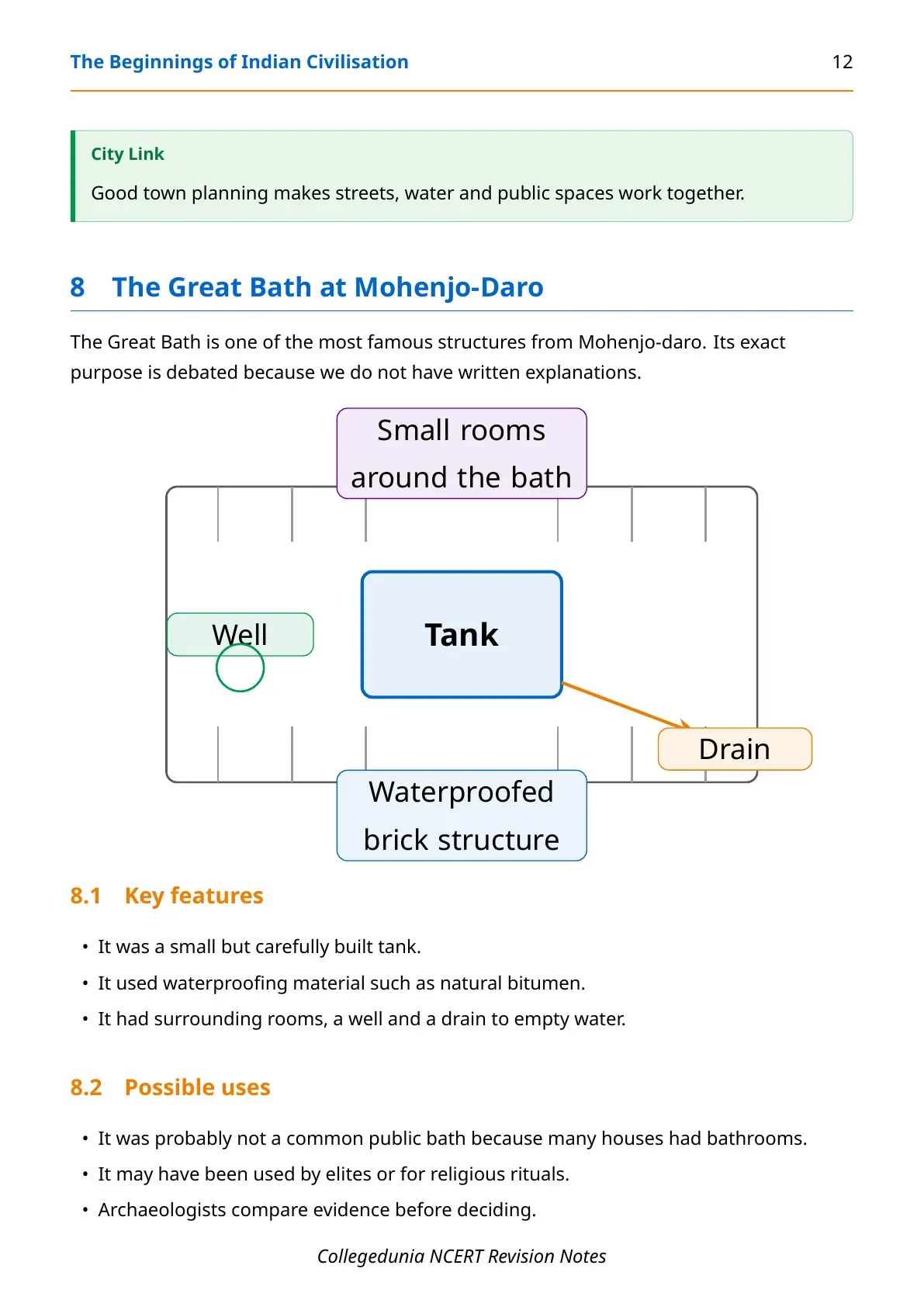
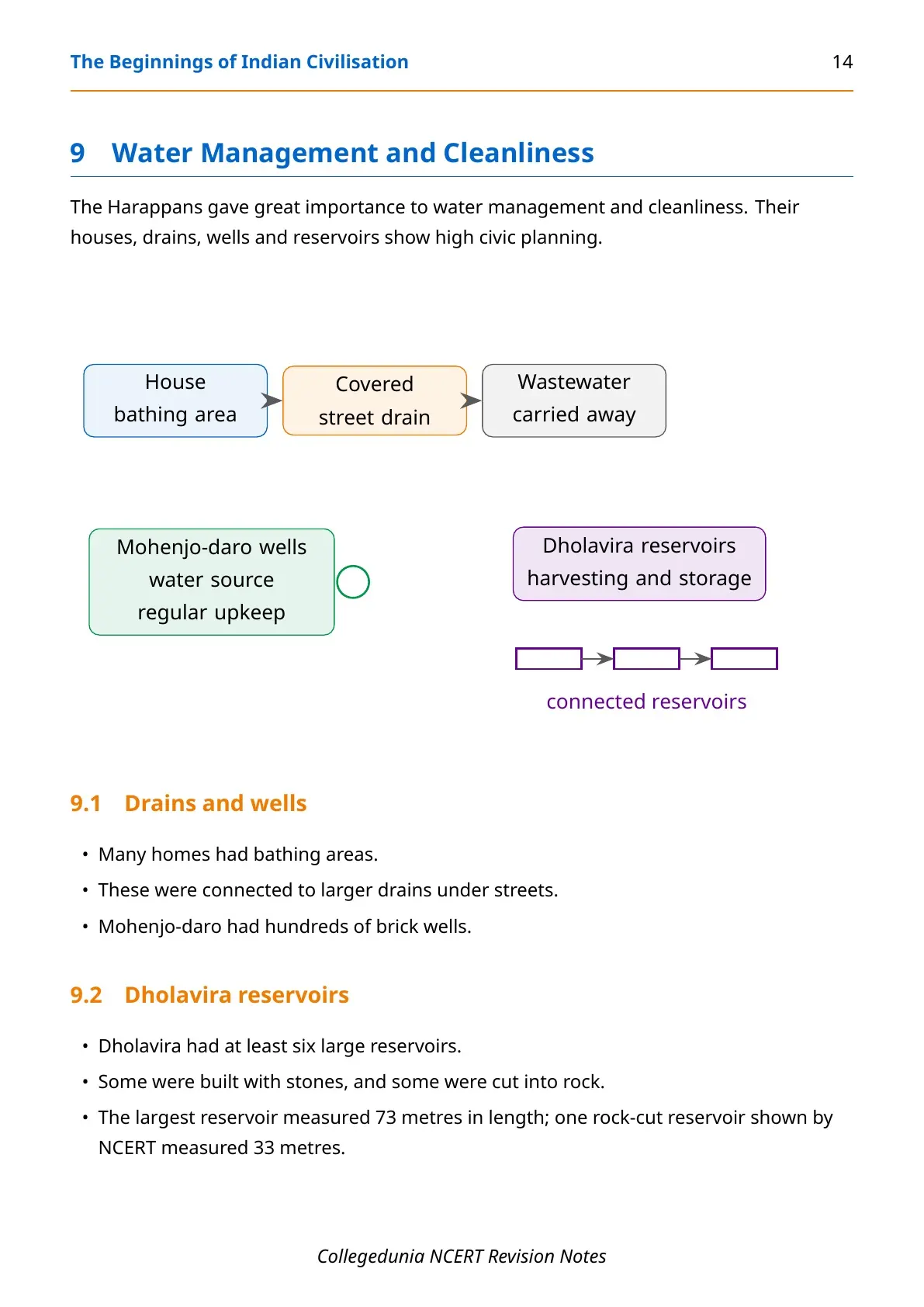
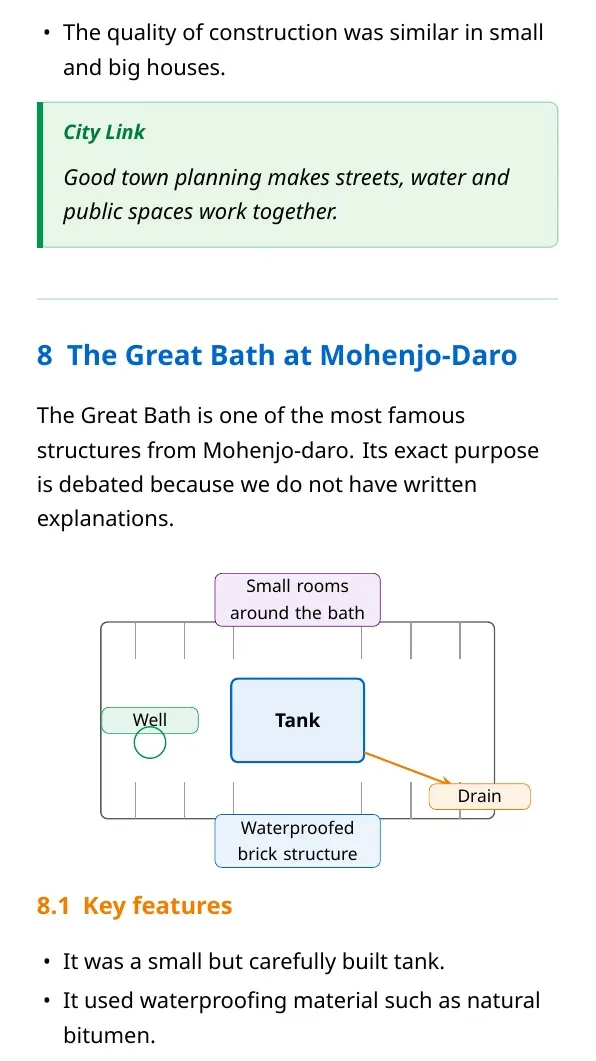
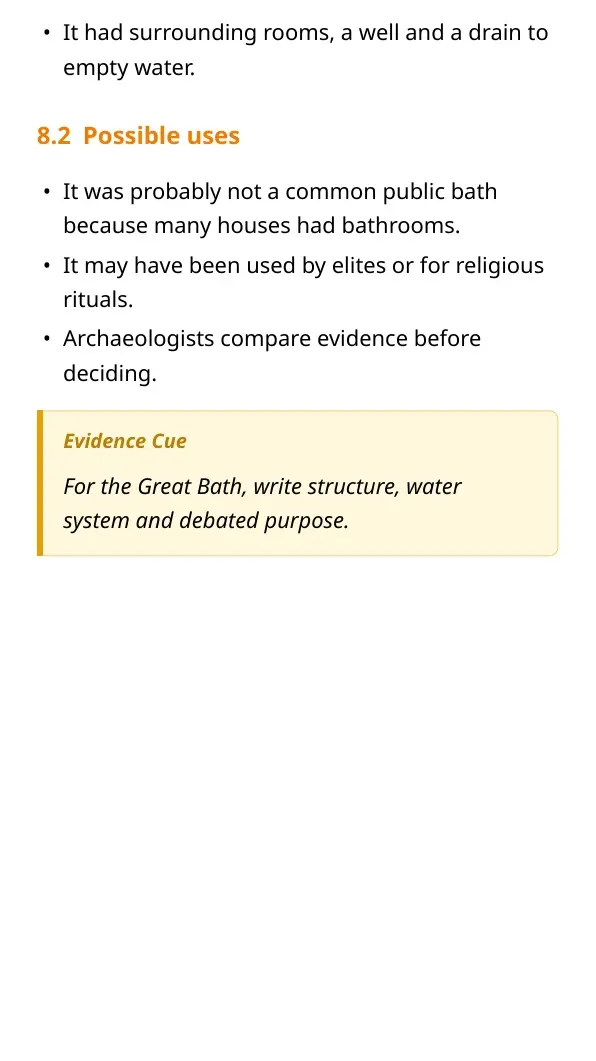
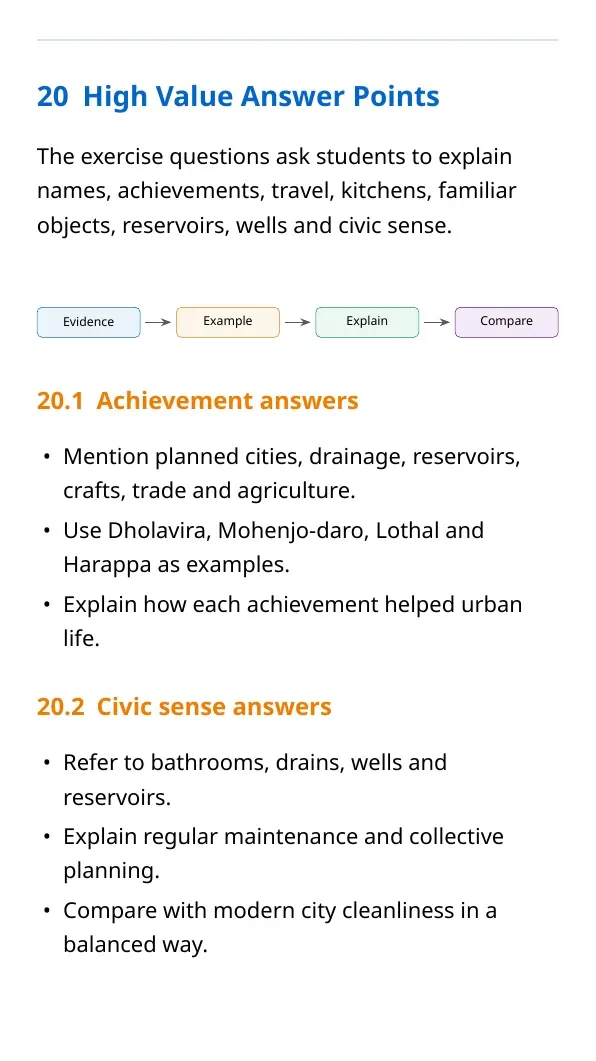
Harappan cities were carefully planned. Many had wide streets, fortifications, an upper town and a lower town. Houses were built along streets and lanes. The Great Bath at Mohenjo-daro, house bathrooms, street drains and Dholavira reservoirs show that water was managed with care.
- Mohenjo-daro: Great Bath, many bathrooms and hundreds of brick wells.
- Dholavira: large reservoirs built with stone or cut into rock.
- Lothal: drainage system and coastal trade link.
- Kalibangan: planned streets in the lower town area.
The Beginnings of Indian Civilisation Chapter 6 Revision Video
Source: Magnet Brains on YouTube
Food, Crafts, Trade and Seals
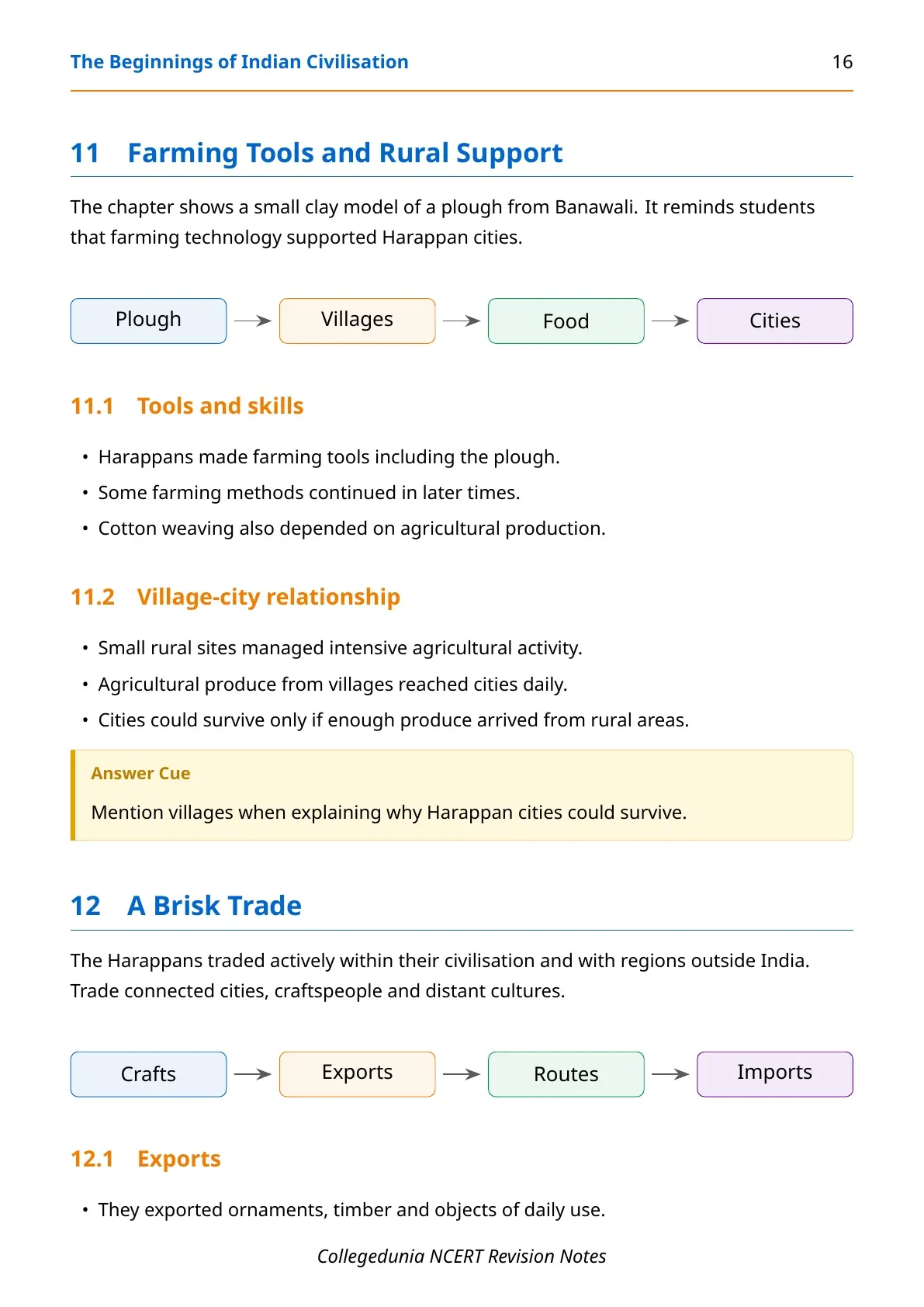
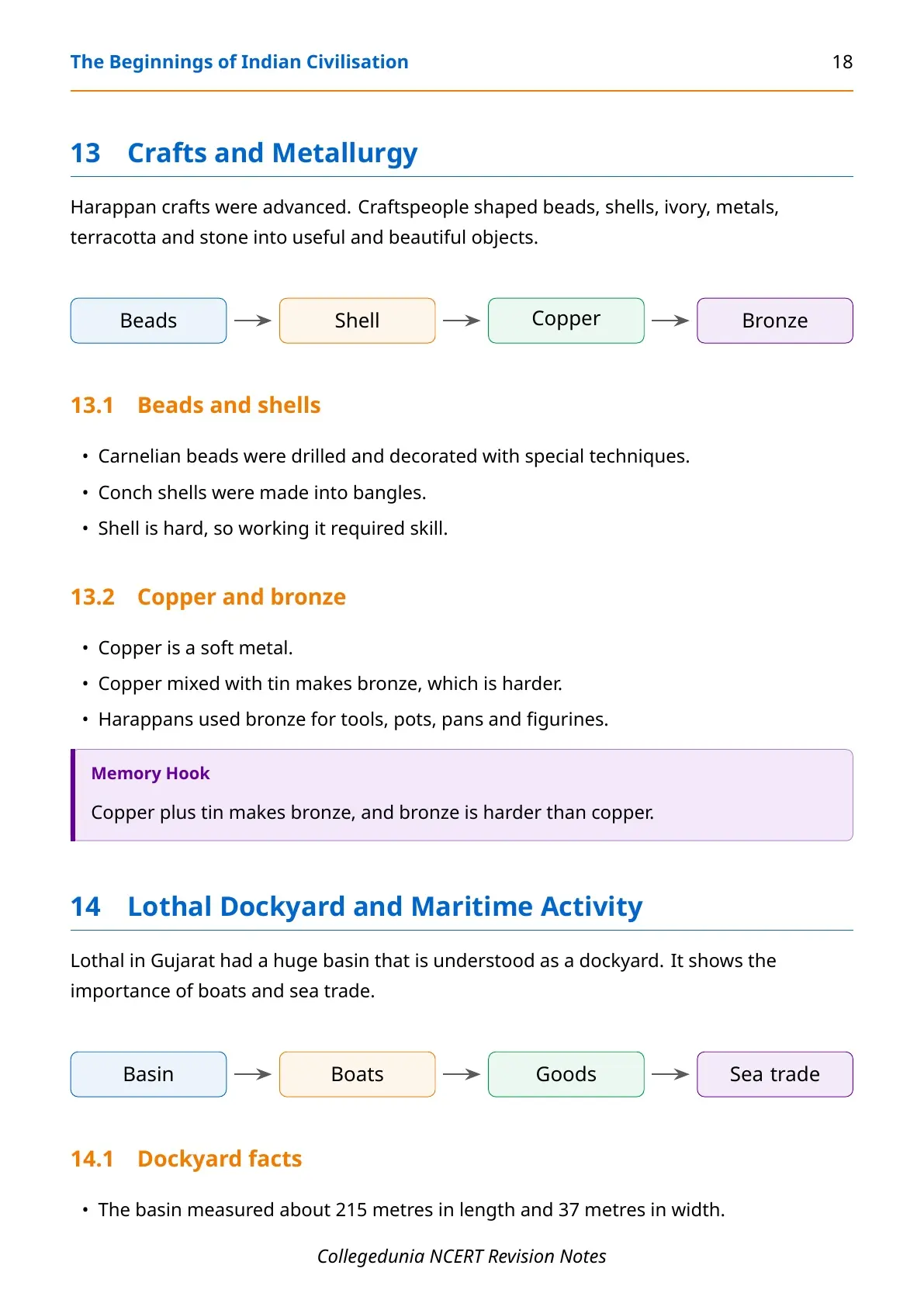
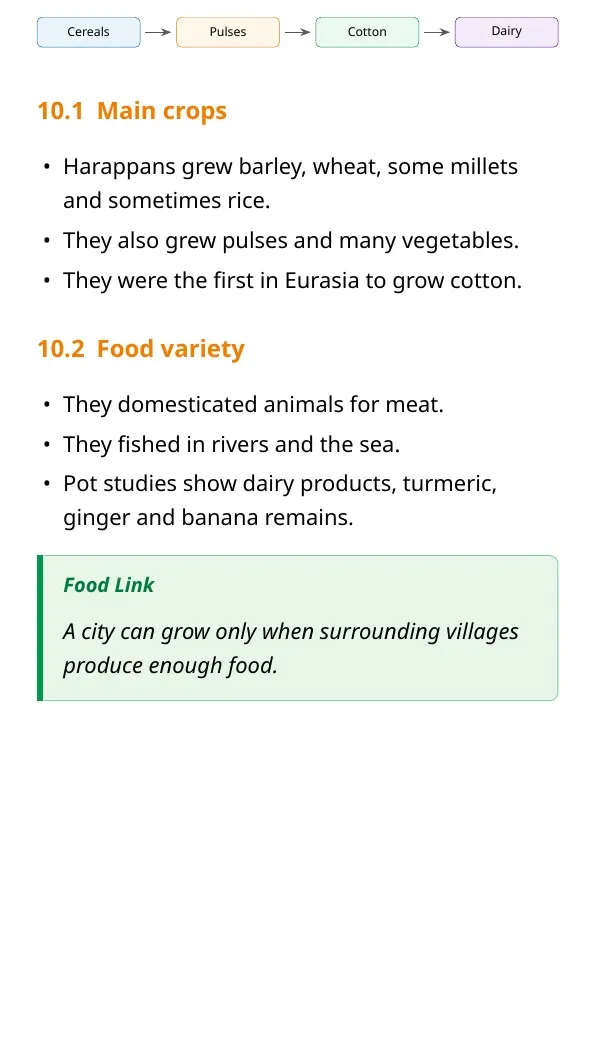
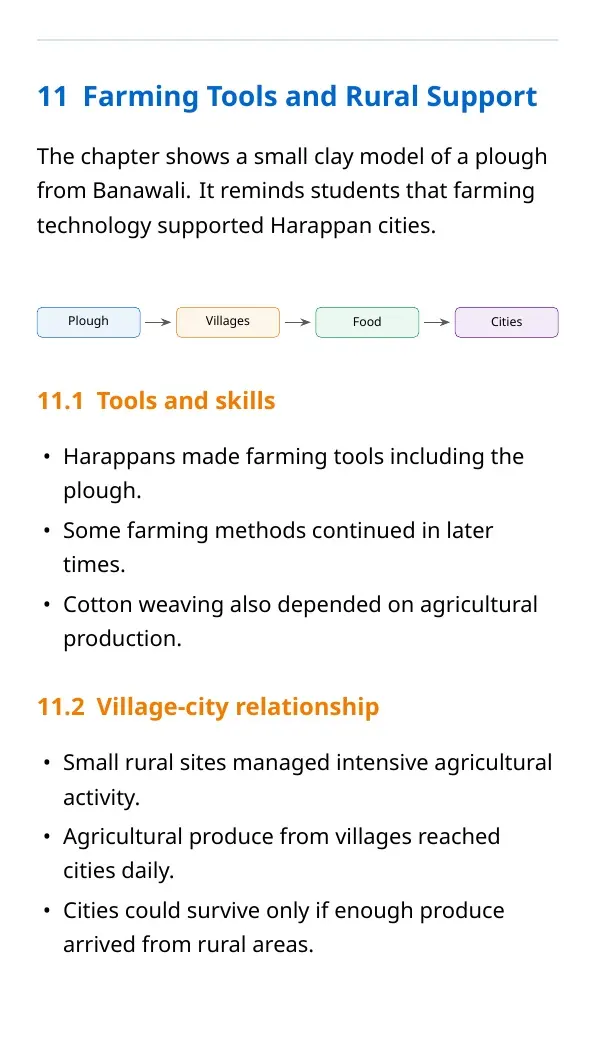
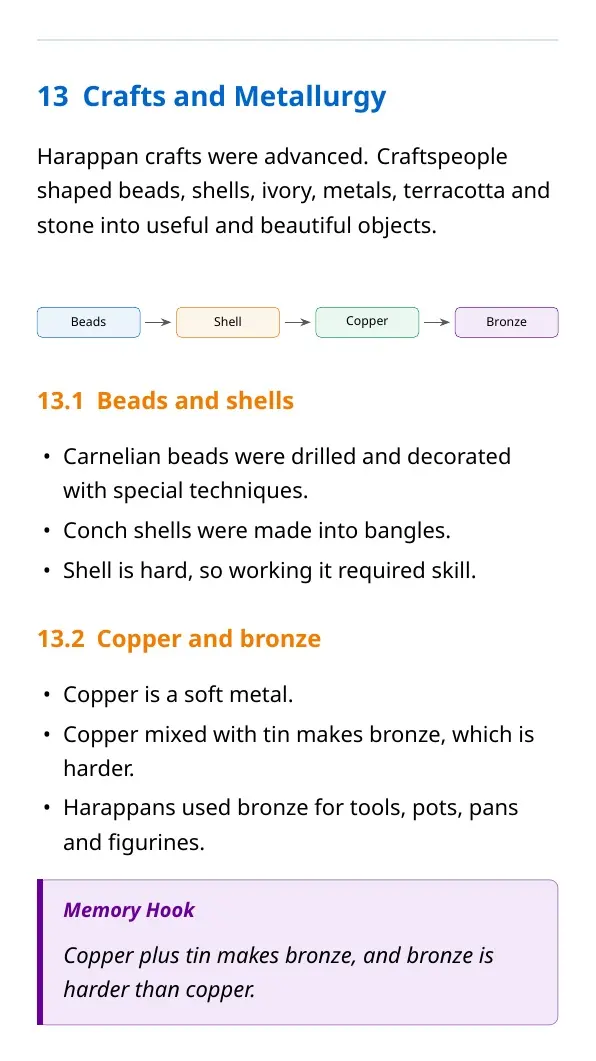
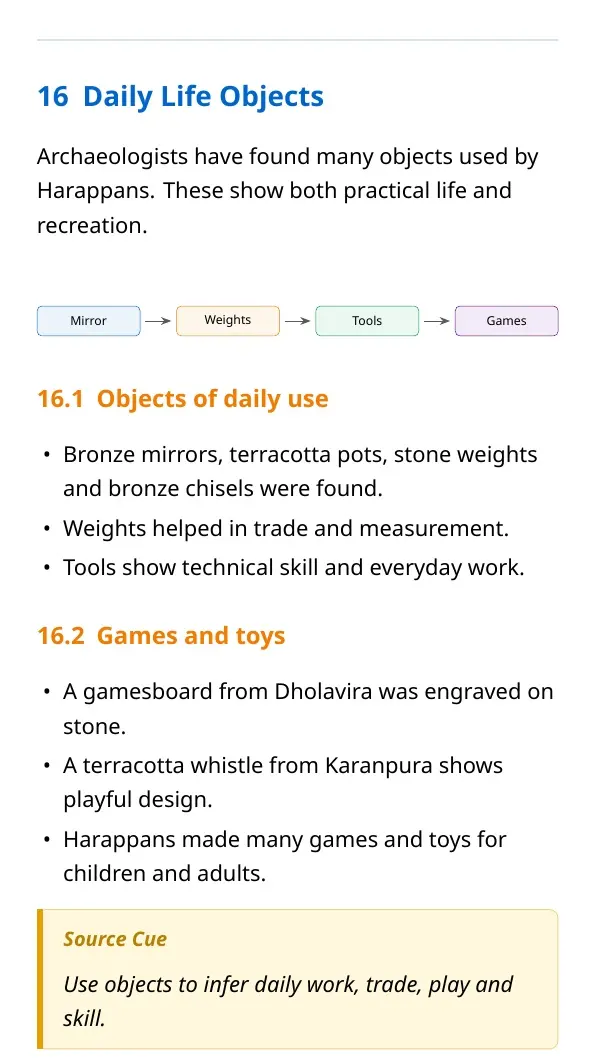
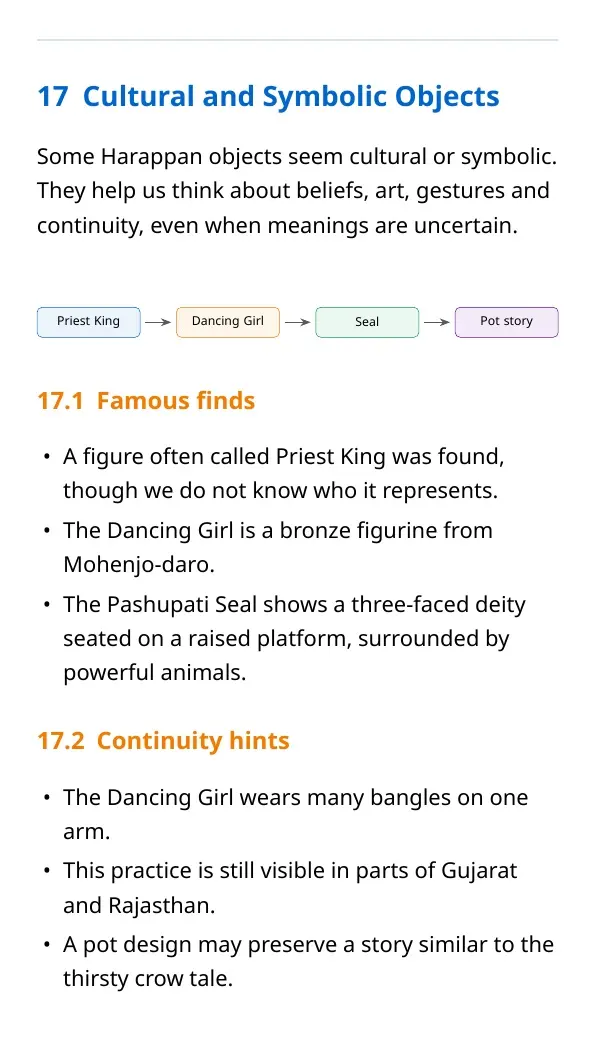
Harappan cities depended on rural farming. The people grew barley, wheat, millets, sometimes rice, pulses, vegetables and cotton. They also used dairy products, turmeric, ginger and banana. Craftspeople made carnelian beads, shell bangles, bronze tools and terracotta objects.
| Topic | Important fact | Why it matters |
|---|---|---|
| Cotton | Harappans were the first in Eurasia to grow cotton | Shows farming and textile skill |
| Carnelian beads | Made mostly from stone found in Gujarat | Shows skilled craft and exports |
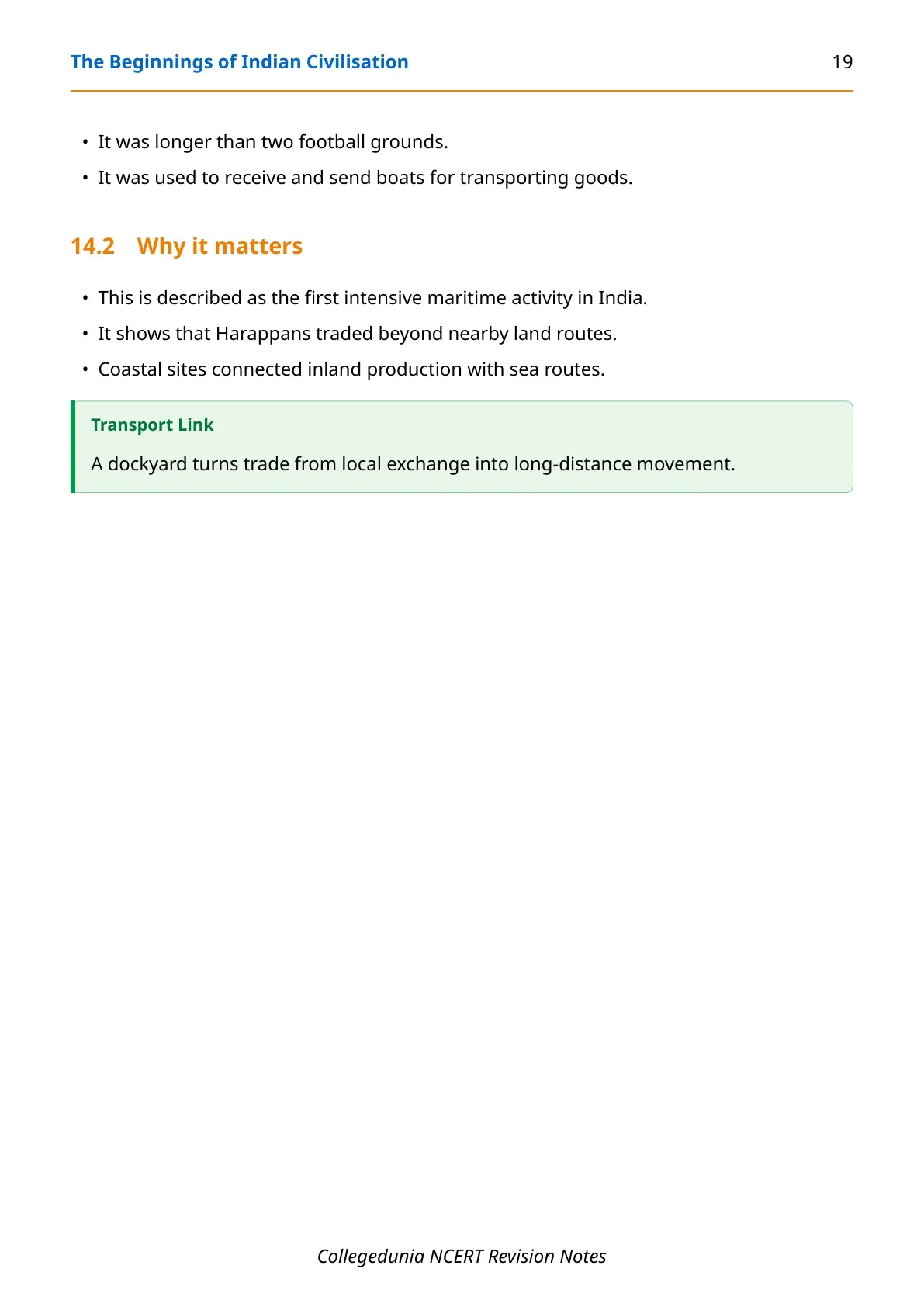
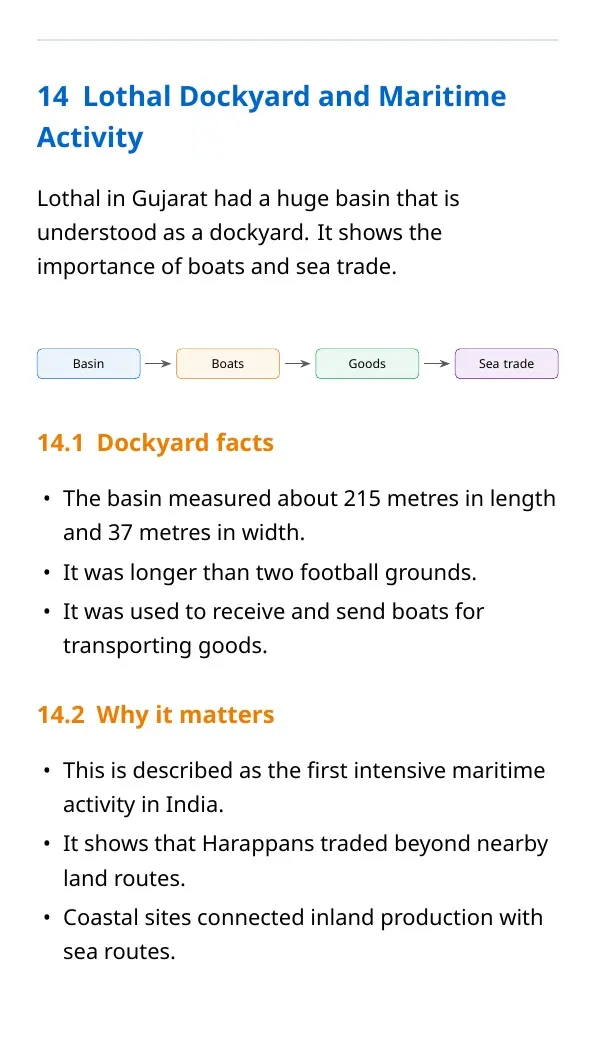
| Lothal dockyard | Huge basin for receiving and sending boats | Shows maritime trade |
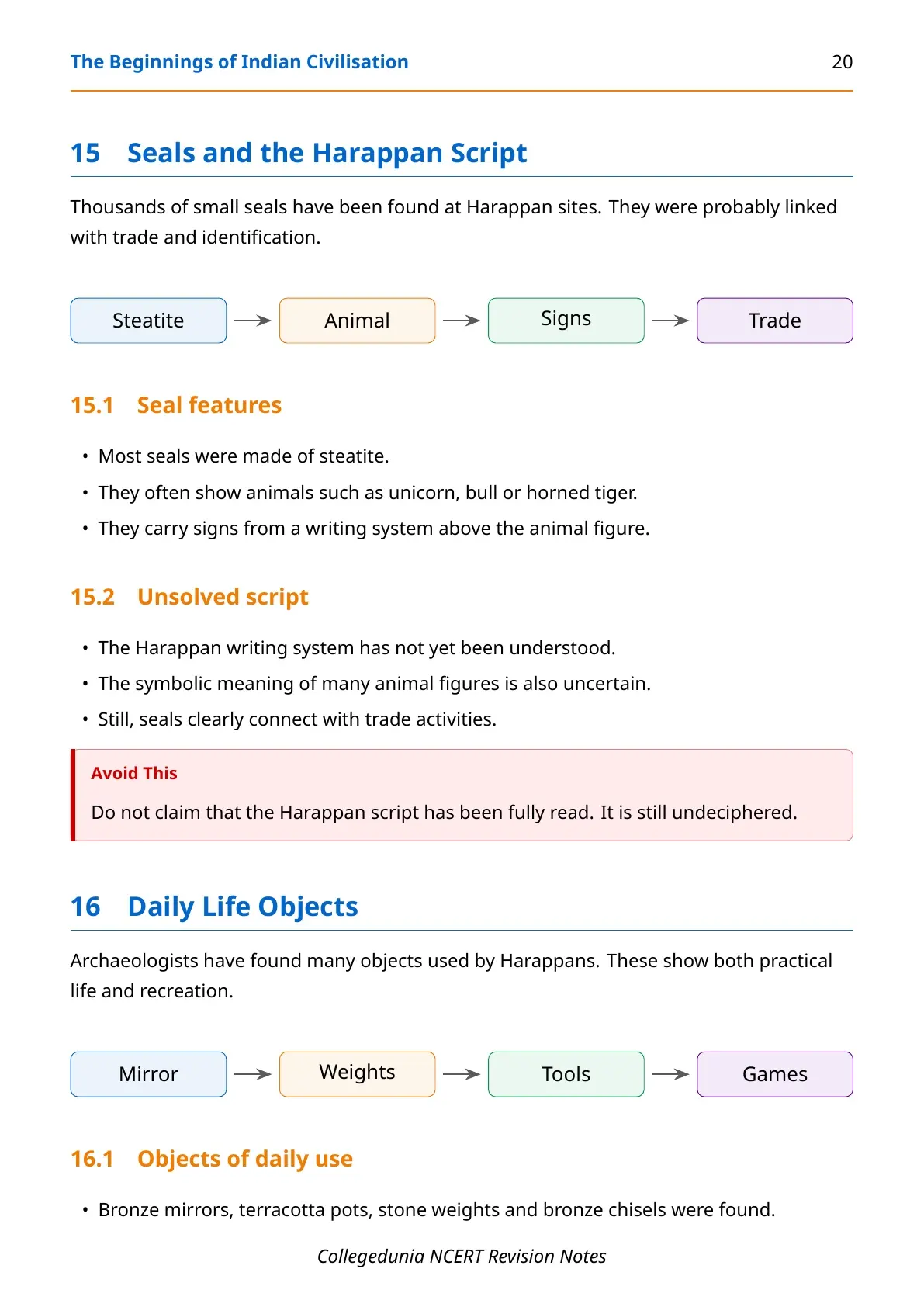
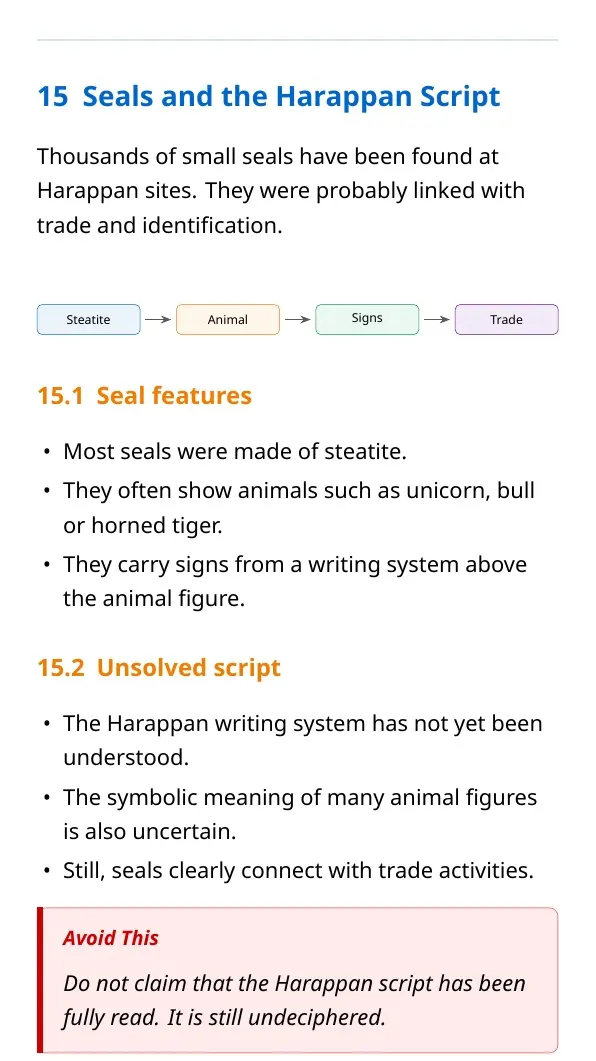
| Steatite seals | Animal figure plus undeciphered signs | Likely linked with trade identification |
Decline and Legacy of the Harappans
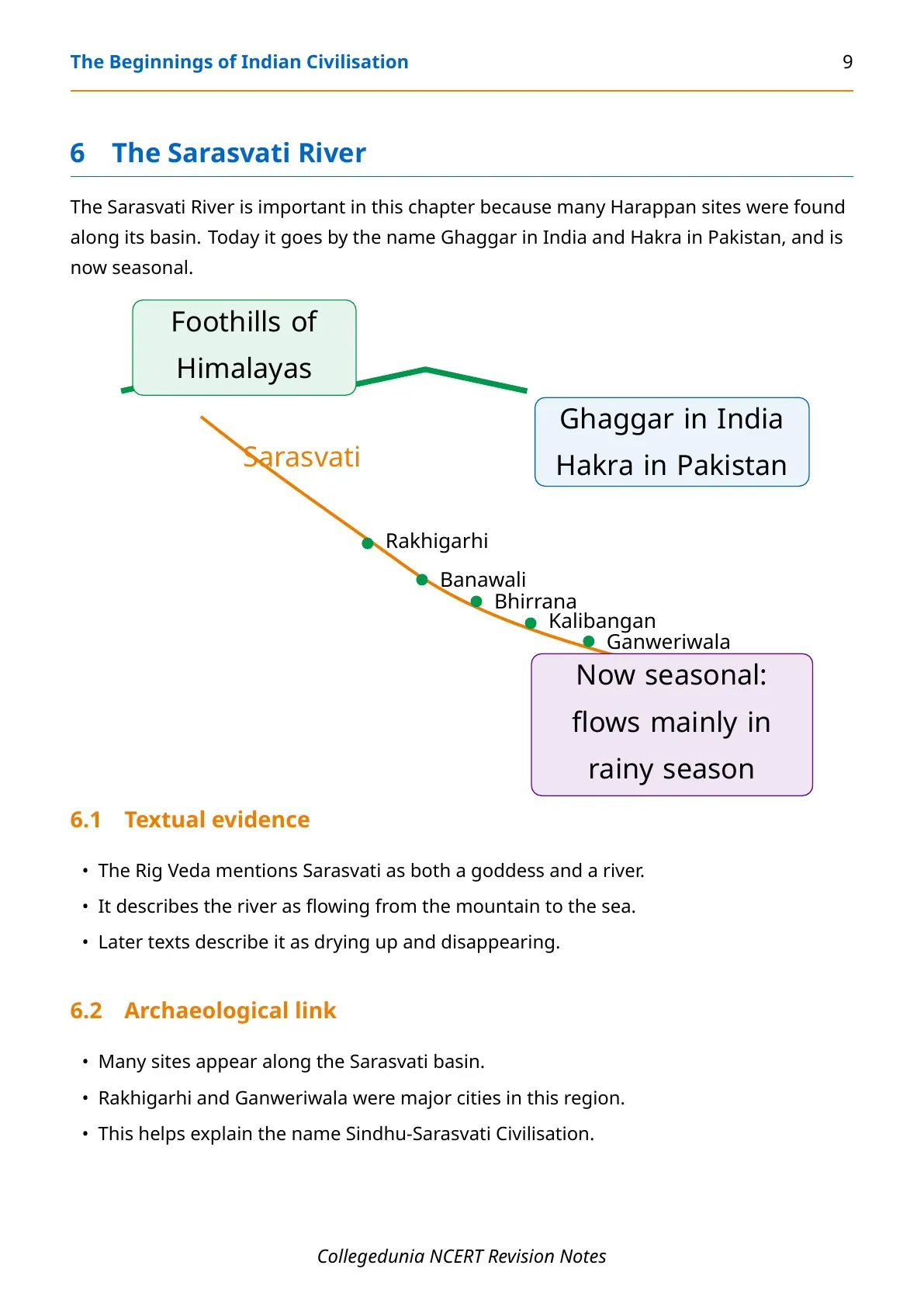
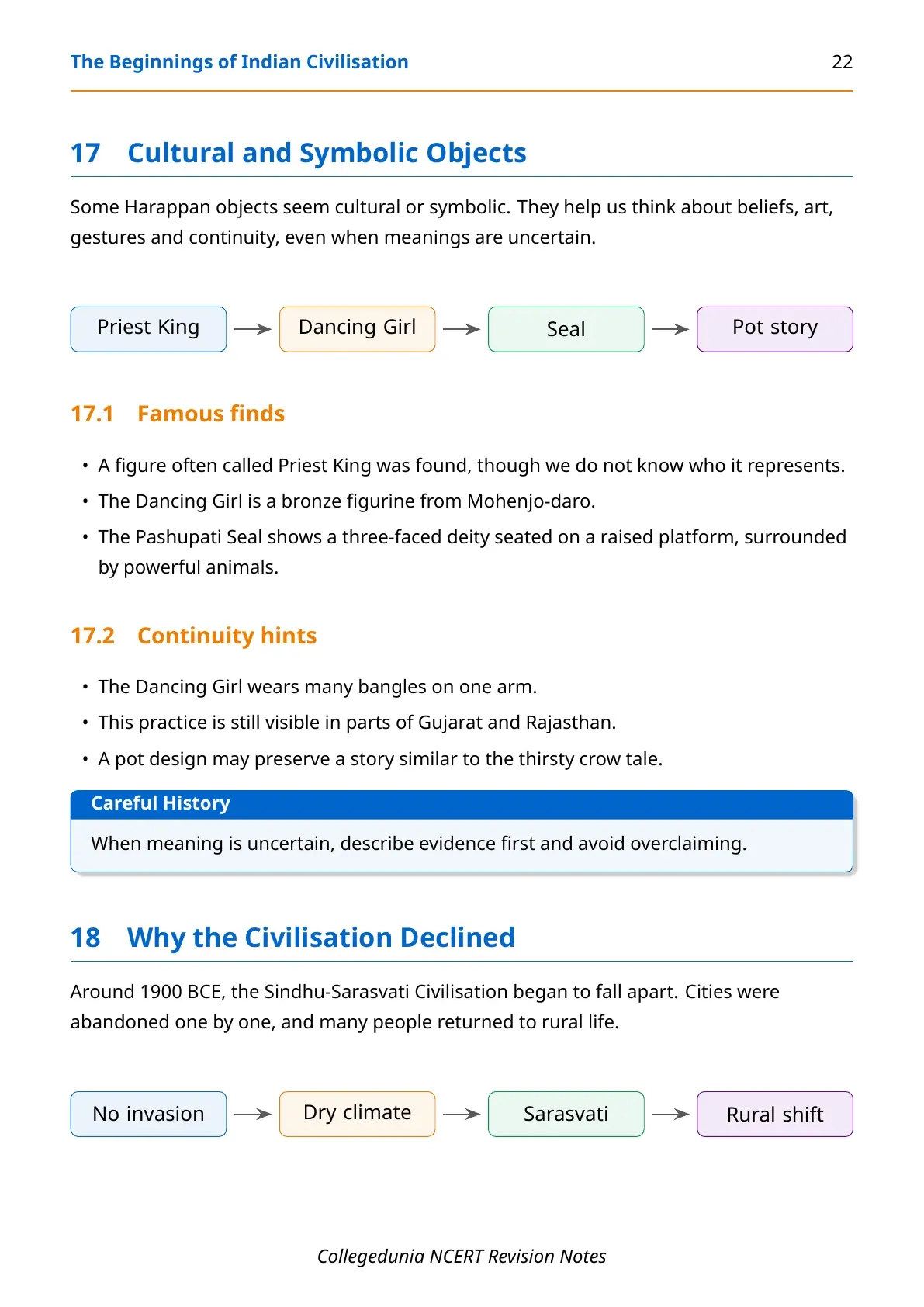
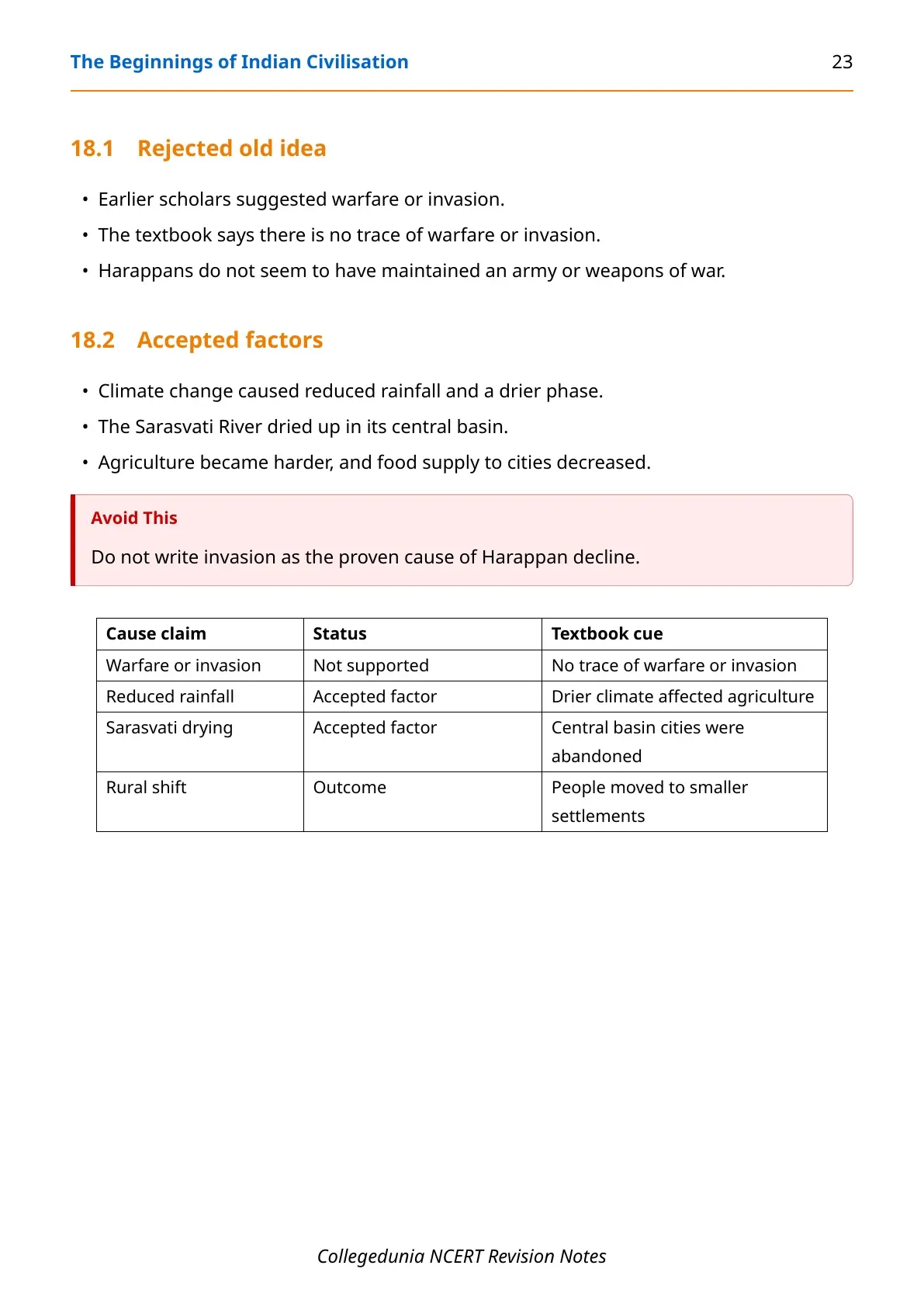
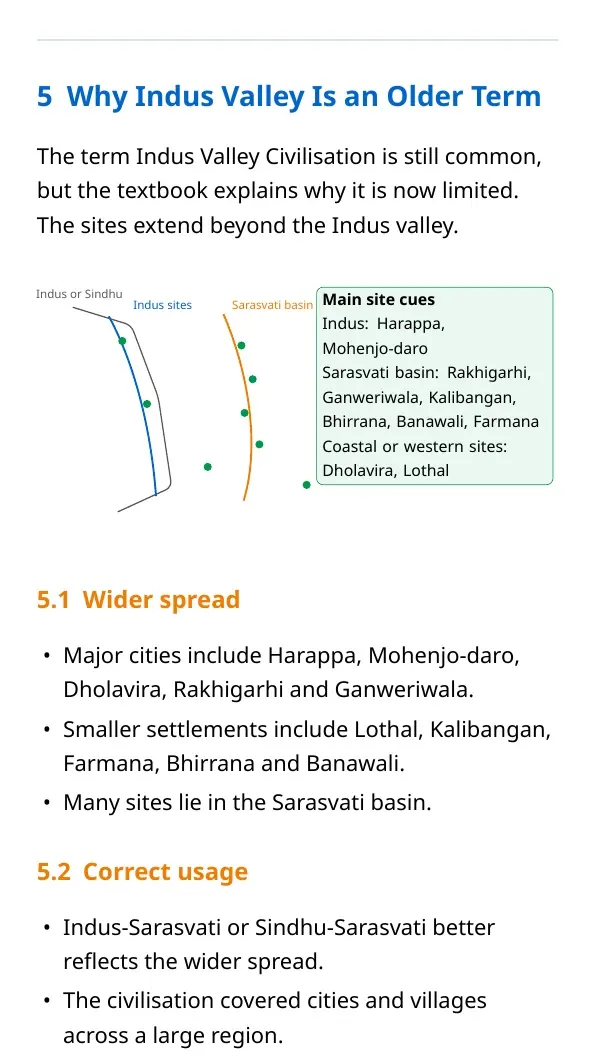
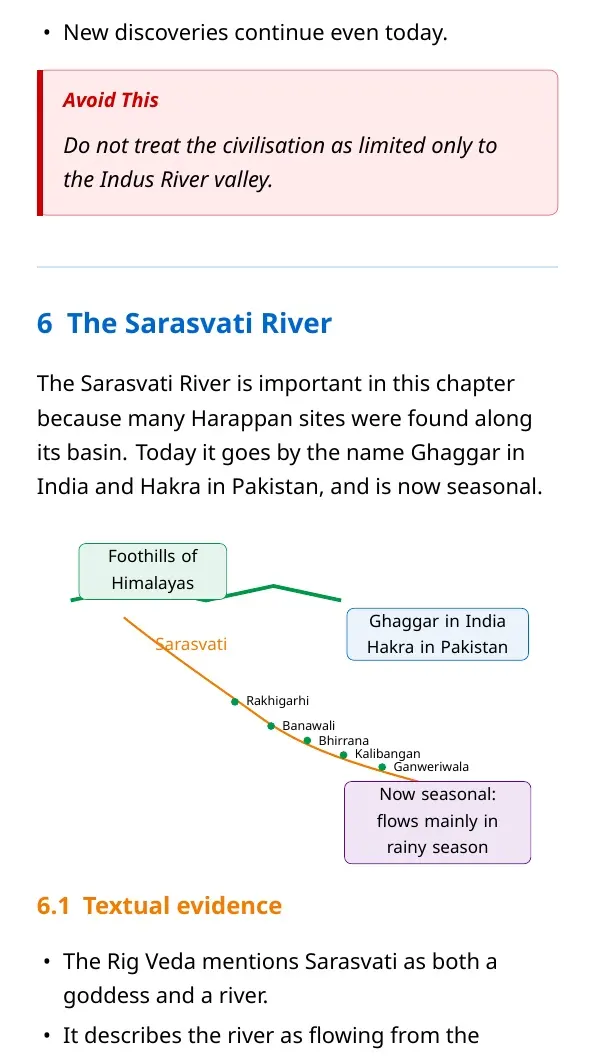
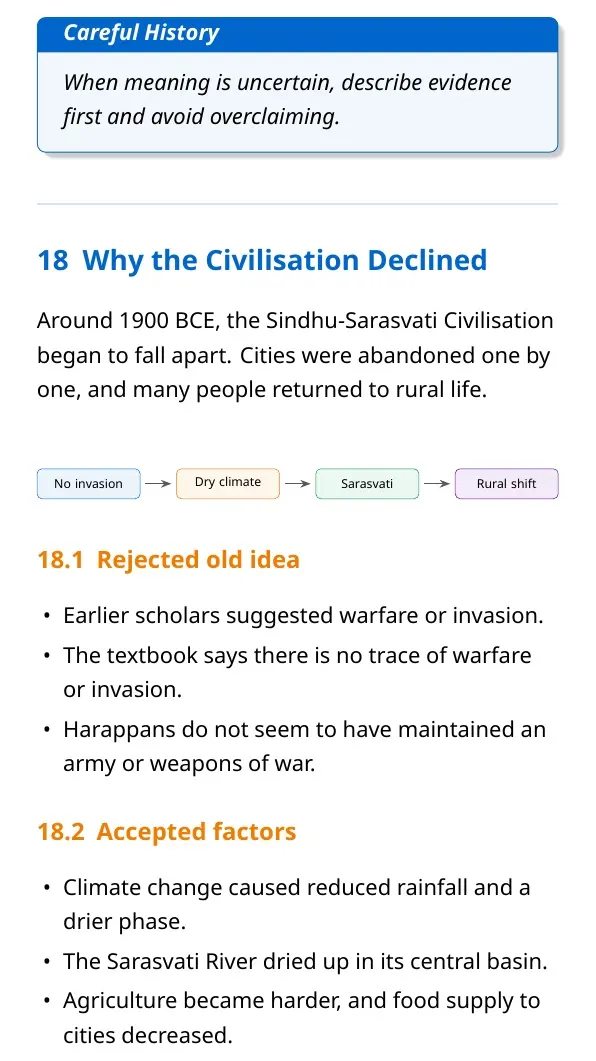
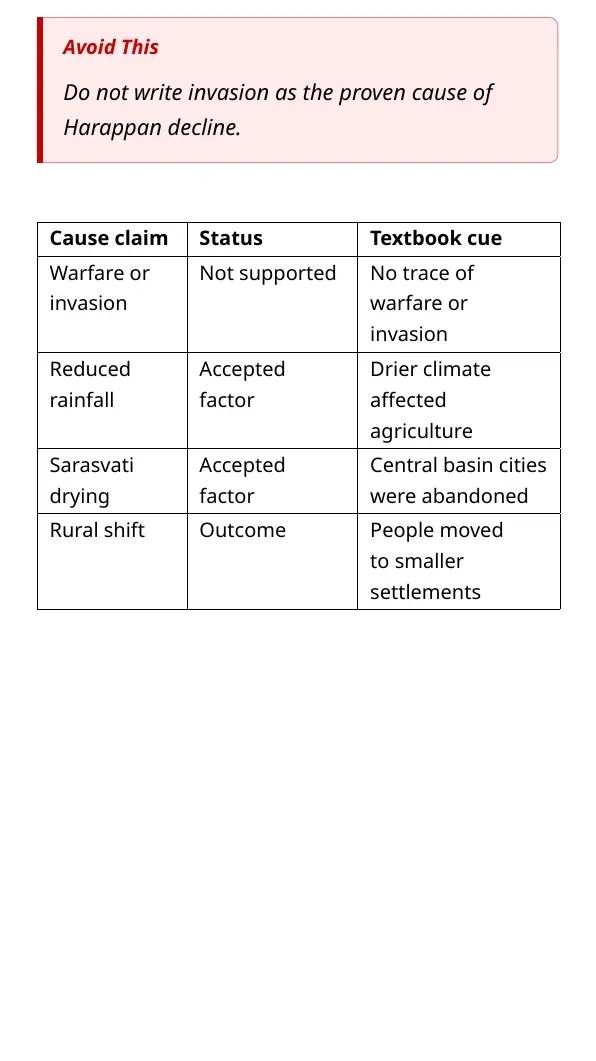
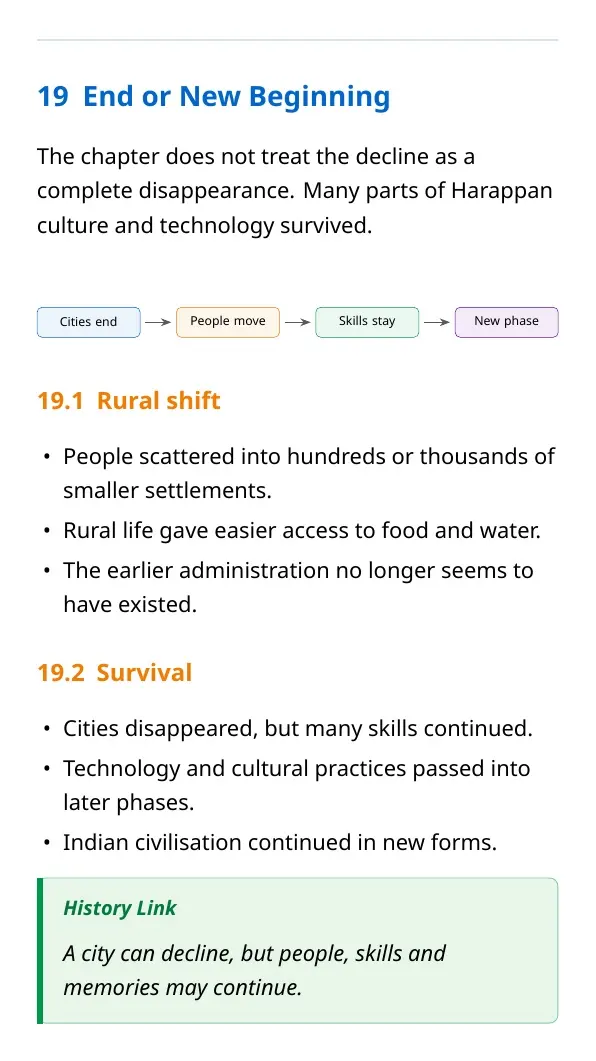
Around 1900 BCE, the Sindhu-Sarasvati Civilisation began to decline. The textbook says there is no trace of warfare or invasion. The stronger explanation is environmental: reduced rainfall made farming difficult, and the Sarasvati dried up in its central basin.
- Cities were abandoned one by one.
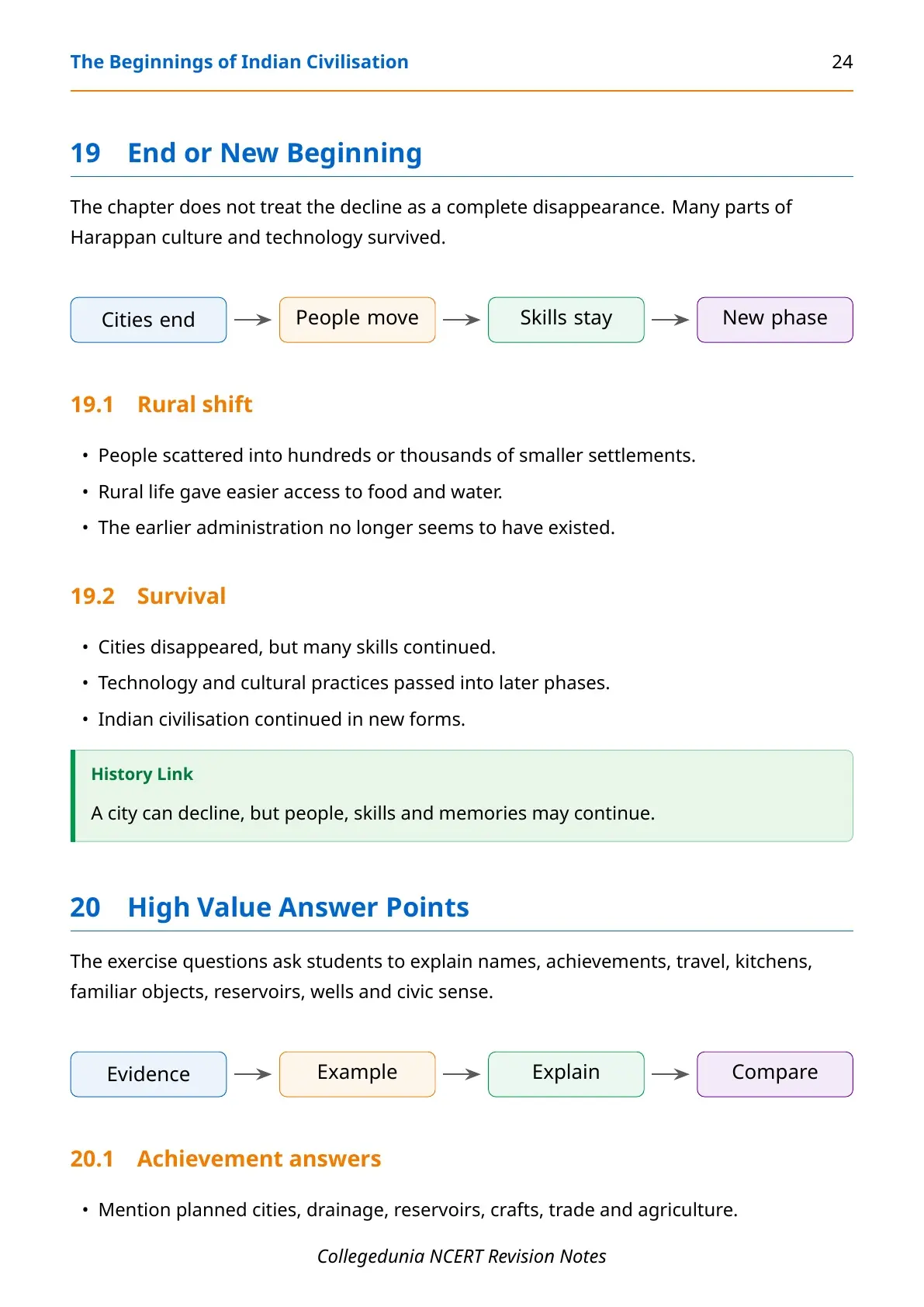
- People moved into many smaller rural settlements.
- The earlier administration no longer seems to have existed.
- Many Harappan skills and cultural practices survived into later Indian civilisation.
The Beginnings of Indian Civilisation Related Resources
| Resource | Best use | Link |
|---|---|---|
| NCERT Notes | Topic-wise revision with tables | Current page |
| NCERT Solutions | Practice textbook questions | Open NCERT Solutions |
| NCERT Book PDF | Read the official chapter | Open Book PDF |
| Handwritten Notes | Quick one-sitting revision | Open Handwritten Notes |
Social Science Notes for All Chapters
| Chapter | NCERT chapter title | Notes link |
|---|---|---|
| Chapter 1 | Locating Places on the Earth | Open Notes |
| Chapter 2 | Oceans and Continents | Open Notes |
| Chapter 3 | Landforms and Life | Open Notes |
| Chapter 4 | Timeline and Sources of History | Open Notes |
| Chapter 5 | India, That Is Bharat | Open Notes |
| Chapter 6 | The Beginnings of Indian Civilisation | Current notes |
| Chapter 7 | India's Cultural Roots | Open Notes |
| Chapter 8 | Unity in Diversity, or Many in the One | Open Notes |
| Chapter 9 | Family and Community | Open Notes |
| Chapter 10 | Grassroots Democracy Part 1 Governance | Open Notes |
| Chapter 11 | Grassroots Democracy Part 2 Local Government in Rural Areas | Open Notes |
| Chapter 12 | Grassroots Democracy Part 3 Local Government in Urban Areas | Open Notes |
| Chapter 13 | The Value of Work | Open Notes |
| Chapter 14 | Economic Activities Around Us | Open Notes |
The Beginnings of Indian Civilisation Class 6 Notes FAQs
Ques. What is Class 6 Social Science Chapter 6 about?
Ans. It explains the Harappan Civilisation, its planned cities, water systems, farming, crafts, trade, seals, daily life and decline.
Ques. Why are the inhabitants called Harappans?
Ans. They are called Harappans because Harappa, now in Pakistan's Punjab, was the first city of this civilisation to be excavated.
Ques. What shows Harappan water management?
Ans. Bathrooms, street drains, brick wells at Mohenjo-daro and large reservoirs at Dholavira show careful water management.
Ques. What did Harappans trade?
Ans. They traded ornaments, timber, daily-use objects, carnelian beads, cotton and probably food items. They may have imported copper.
Ques. Why did the Harappan Civilisation decline?
Ans. The main accepted causes are reduced rainfall and the drying of the Sarasvati River in its central basin, which affected farming and cities.



Comments