




Inside the NCERT Notes for Class 6 Vocational Education Kaushal Bodh Chapter 1 School Kitchen Garden, you will find the full 15-item tools table explained line by line, the seven-step vermicompost method written out in order, and the five-step neem pesticide recipe with exact quantities, all according to the latest 2026-27 Kaushal Bodh syllabus.
- Covers all ten activities of the project, from planning the garden to pricing the harvest.
- Every table from the chapter is written out in full: tools, fertilisers, sowing steps and harvesting methods.
- Also on this page: a common-mistakes box, a quick recall table and links to the other chapter resources.
These School Kitchen Garden notes are written out in full sentences, checked against the 2026-27 Kaushal Bodh print, and organised the same way the project file and class test ask about tools, compost and harvesting.
Student Feedback: In a Collegedunia survey of 12,860 Class 6 students who worked on the kitchen garden project during the 2026-27 school year, 71% of students said they could not recall the seven vermicompost steps in the right order without reading the chapter twice. Students who wrote the steps as one short story, bin, waste, water, worms, food, moisture, harvest, said they remembered every step on the first try.
Source: 2026-27 Class 6 Vocational Education student survey. Sample of 12,860 students from schools across 14 states.
What a School Kitchen Garden Is and What the Class 6 Project Asks You to Do
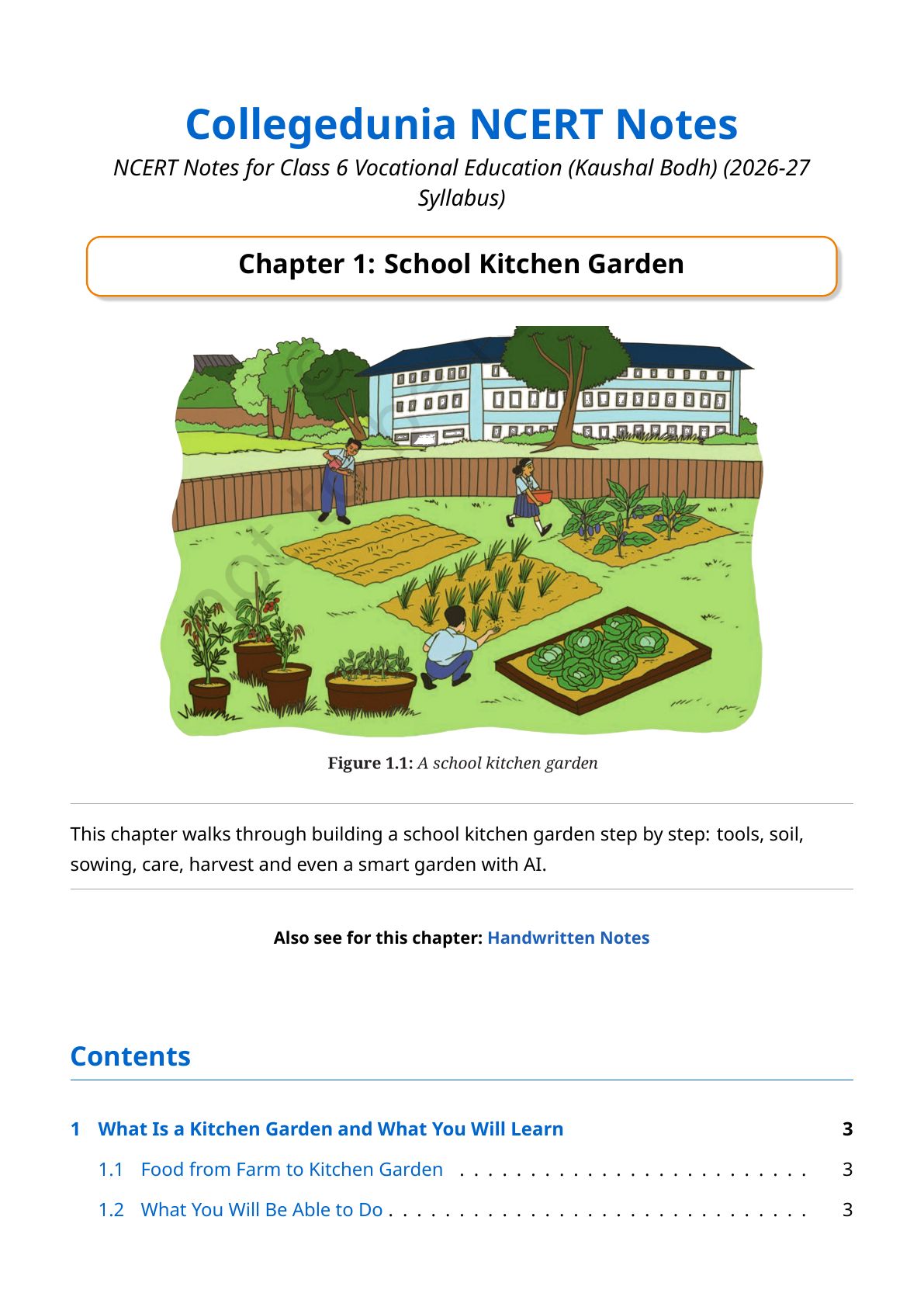
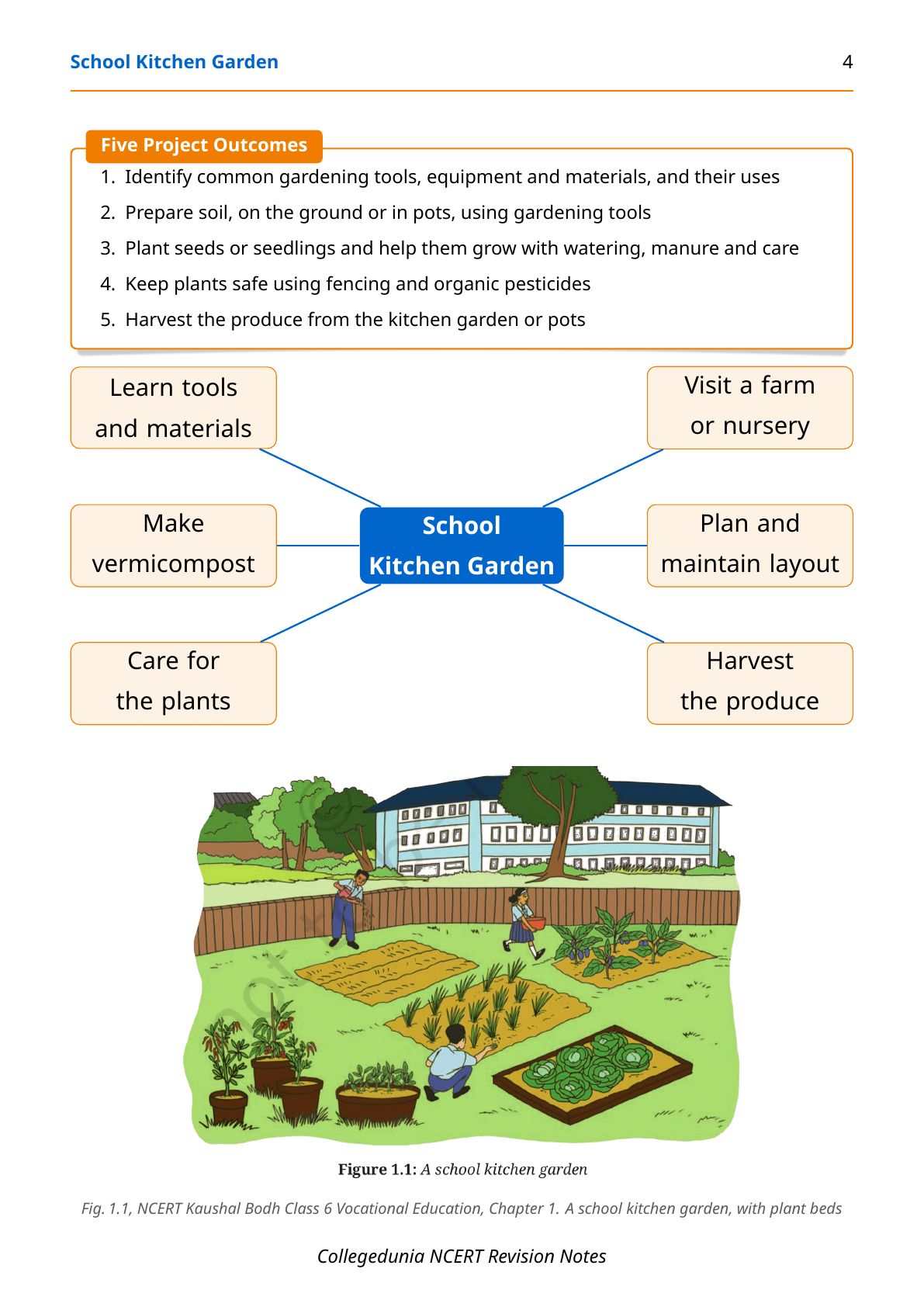
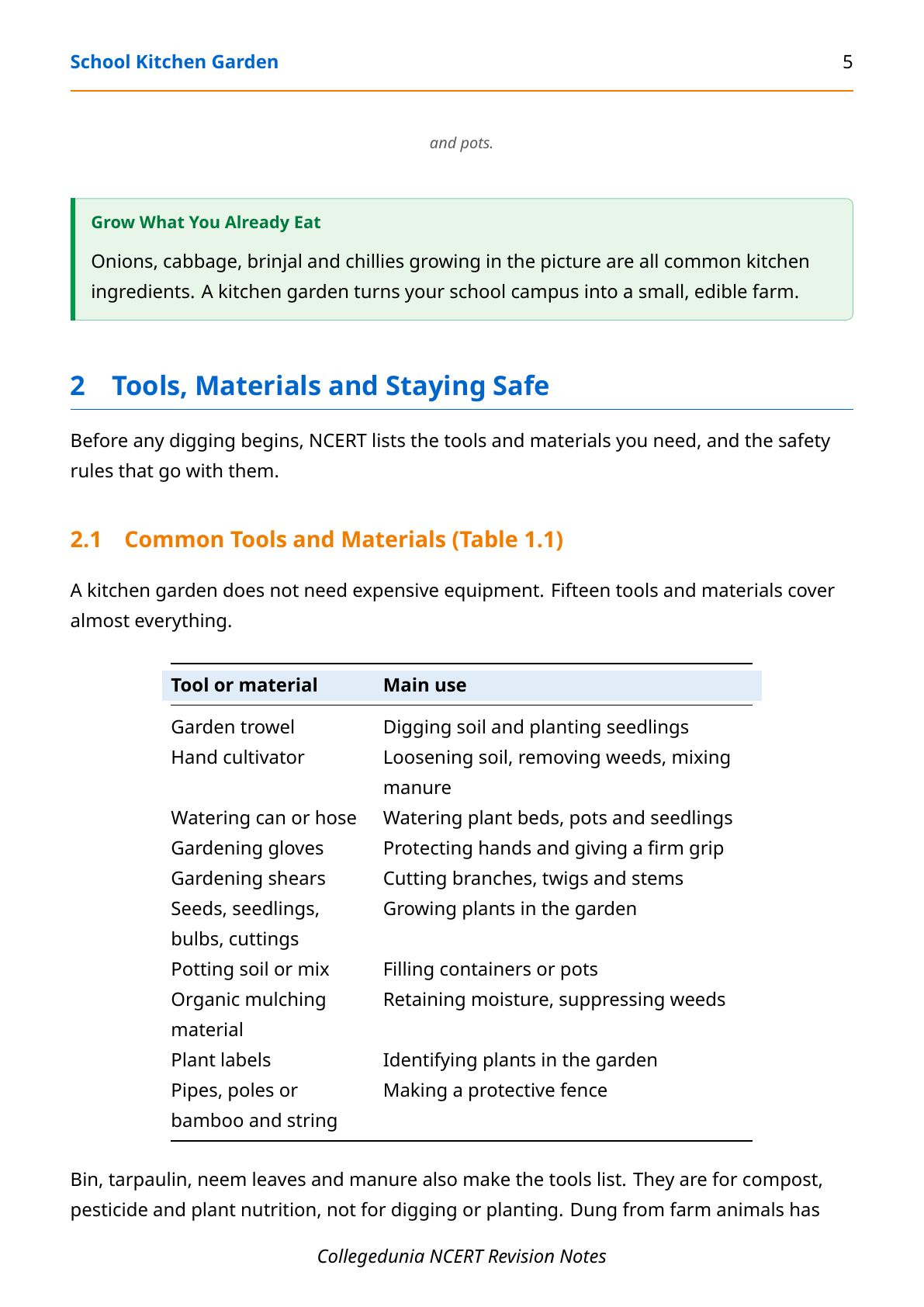
A kitchen garden, also called a vegetable garden, is a garden where fruits, vegetables and herbs are grown. The produce, or yield, from such a garden is usually enough to meet one family's needs. In this project, you build one on your own school campus, either in plant beds or in pots.
The chapter sits inside the section called Work with Life Forms. Life forms include every living thing on earth: people, animals, birds, fish, plants, insects, and even bacteria and viruses. The book gives two example projects in this section and asks you to take up only one of them.
The book lists five things you should be able to do once the project is over. This list ties every activity in the chapter together.
- Identify common gardening tools, equipment and materials, and describe their uses.
- Prepare soil on the school ground or in pots using gardening tools.
- Plant seeds or seedlings and help them grow with watering, manure, fertilisers and care.
- Protect the plants with fencing and organic pesticides.
- Harvest the produce from the kitchen garden or the pots.
Brinjal, cucumber, chilli, coriander and mint are the examples the book names. All of them can be grown in a school kitchen garden without any special equipment, which is why they are the plants most schools choose for the project.
School Kitchen Garden Video Explanation
Source: NCERT OFFICIAL on YouTube
Gardening Tools and Materials Listed in Table 1.1 of the Kitchen Garden Chapter
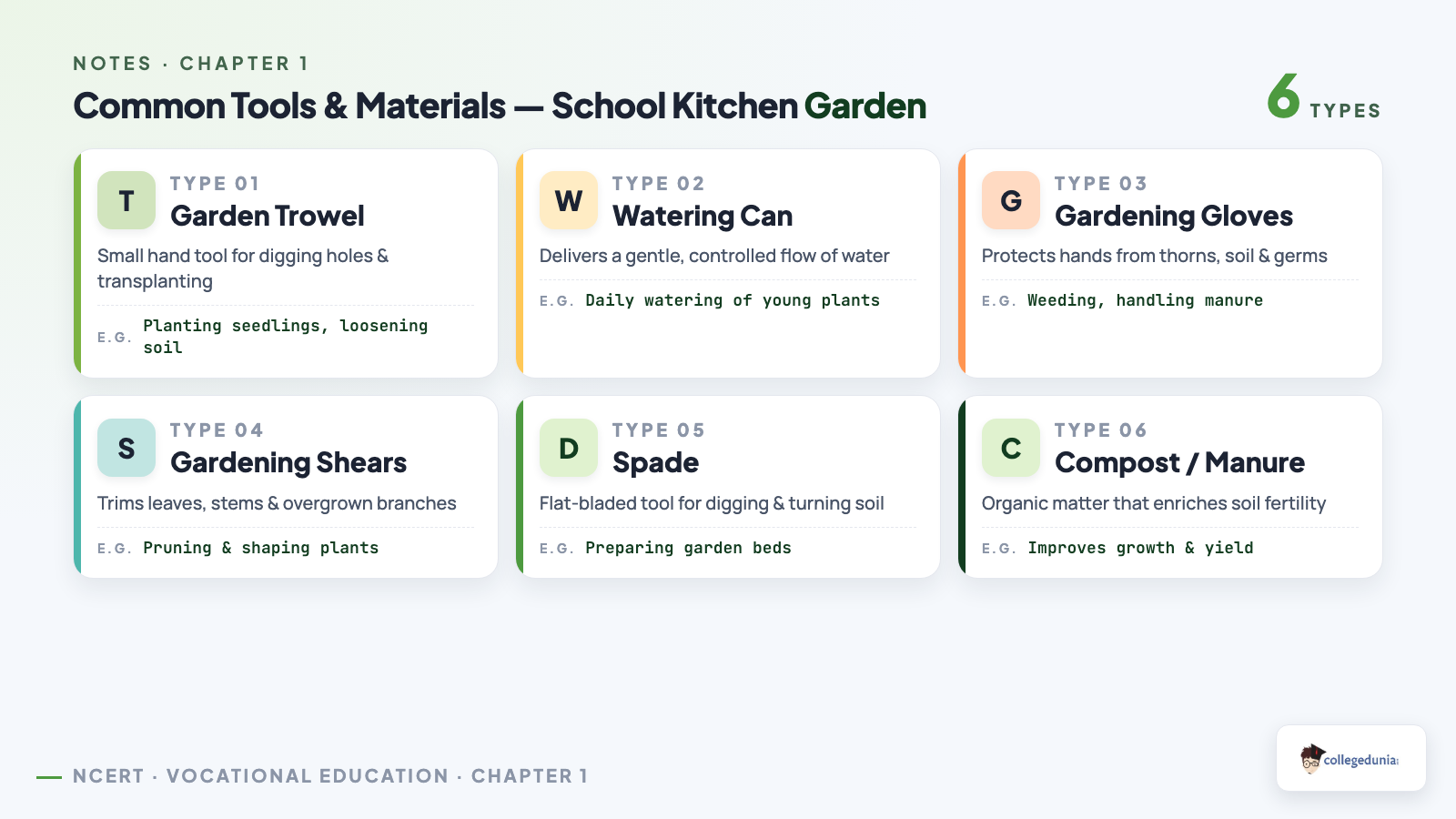
Table 1.1 of the book lists 15 tools and materials, with a sketch and a use written beside each one. Learn the use, not just the name, because the chapter comes back to these tools in almost every later activity.
| Tool or material | What it is used for |
|---|---|
| Garden trowel | Digging up soil and planting seedlings |
| Hand cultivator | Loosening soil, removing weeds, mixing manure in soil |
| Watering can with rose attachment or hose pipe | Watering plant beds, pots, seedlings and plants |
| Gardening gloves (rubber) | Protecting hands and giving a firm grip on tools |
| Gardening shears | Cutting branches, twigs and stems |
| Seeds, seedlings, bulbs, rhizomes, cuttings | Growing plants in the garden |
| Potting soil or potting mix | Filling containers or pots; the mix blends compost, perlite, vermiculite, soil, coir or peat-moss |
| Organic mulching materials | Retaining moisture and stopping weeds; grain straw, leaf mould, shredded leaves, grass clippings |
| Plant labels | Identifying the different plants in the garden |
| Old pipes, PVC pipes, wooden sticks, bamboo or metal poles and string | Making a protective fence |
| Bin and tarpaulin or a scrap of old thick cloth | Preparing compost or vermicompost |
| Neem leaves and a jerry can or large bottle | Preparing organic pesticide |
| Manure | Natural fertiliser made from the dung of farm animals, gives extra nutrition to plants |
| Spray bottle | Spraying a small amount of liquid |
| Spade | Digging, edging and moving soil or other materials |
Tip: the book adds a helpful note below the table. If your school cannot get all these tools and materials, do not worry. Ask your teacher or the resource person for alternatives that do the same job.
Staying Safe While Working in the School Kitchen Garden
The section titled "How do I keep myself and others safe?" is short but it matters, because safety is part of every vocational project. Seven precautions are listed in the book, and each one is easy to explain in one line.
- Ask your teacher the correct way to lift pots. If a pot feels too heavy, get help and never lift it alone.
- Wear gloves that fit well when you handle tools and materials, so your skin stays safe and your grip stays firm.
- Follow the instructions given for every gardening tool and material.
- Pay attention during demonstrations so that you learn the correct technique.
- Always ask for help if you are unsure how to use a tool.
- Clean tools regularly and wipe them after washing to prevent rusting.
- Store tools neatly in a store or on shelves so that nobody trips over them.
The book also adds an internet safety line for this project. Ask your teacher for help while using the internet, check before you upload or download anything, and never share personal information anywhere.
Vrikshayurveda: The Ancient Indian Book on Plant Health and Tree Care
One "Did you know?" box in the chapter explains where India's gardening knowledge comes from. Farming and the rearing of animals were the main work in ancient Bharat, so the science of plant life was given great importance. That knowledge was written down in a treatise called Vrikshayurveda, which means Ayurveda for trees.
- There were two texts of the same name. Salihotra wrote the earlier one, around 400 BCE. Surapala wrote the second one about fourteen centuries later.
- The only surviving palm leaf manuscript of Surapala's Vrikshayurveda is kept at Oxford University.
- The text deals with growing many species of plants, water management, soil conservation, fertilisers, plant diseases and their treatment.
- Surapala encourages planting sacred trees: Bilva (bael or stone apple), Nyagrodha (banyan), Ashwattha (fig) and Neem.
The text says that planting trees is one of the ways to reach the goals of human life. Climate change, soil erosion and health worries have brought back interest in this old knowledge, because it helps keep soil healthy and protects biodiversity around us.
Planning the School Kitchen Garden and Choosing the Right Plants
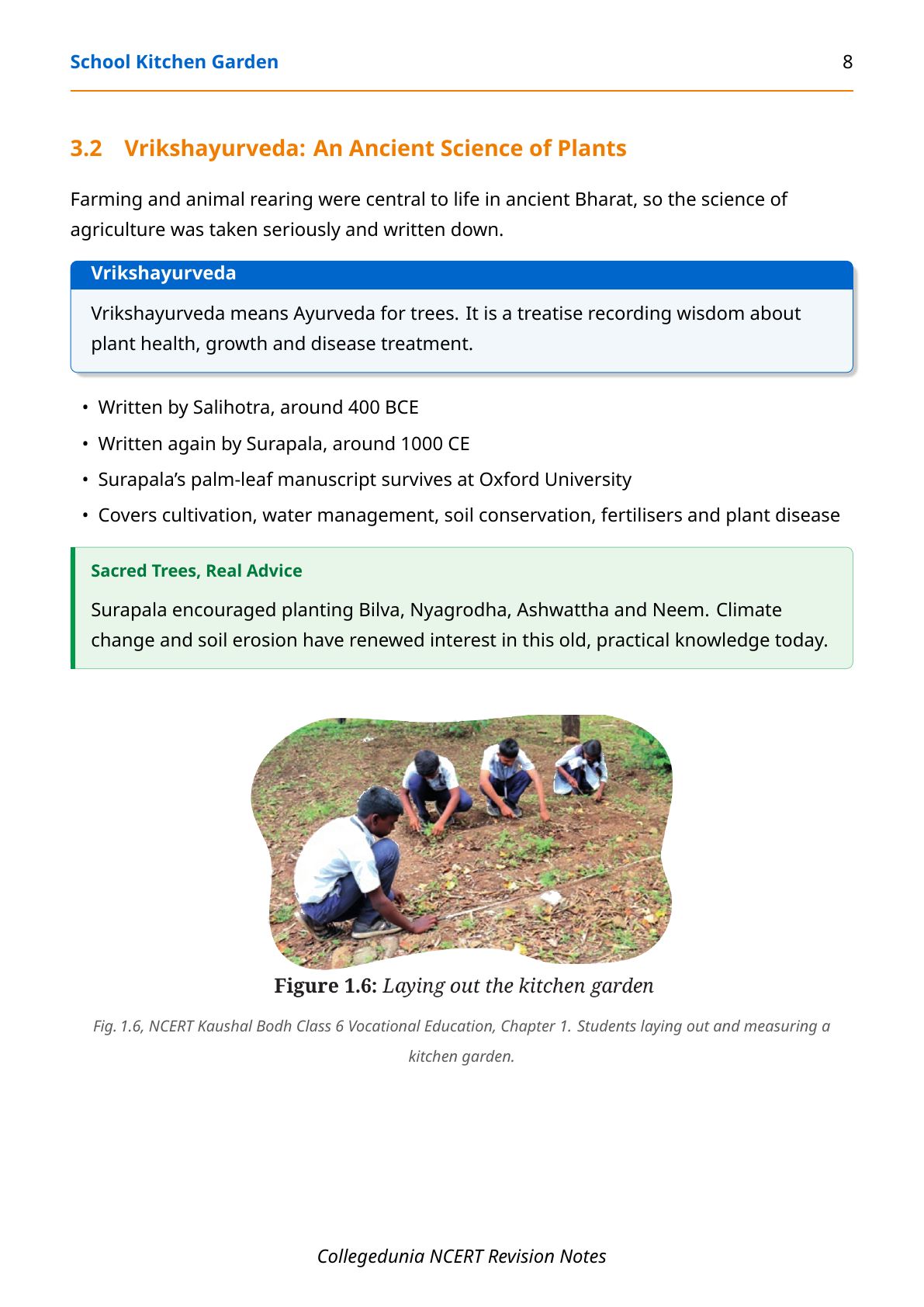
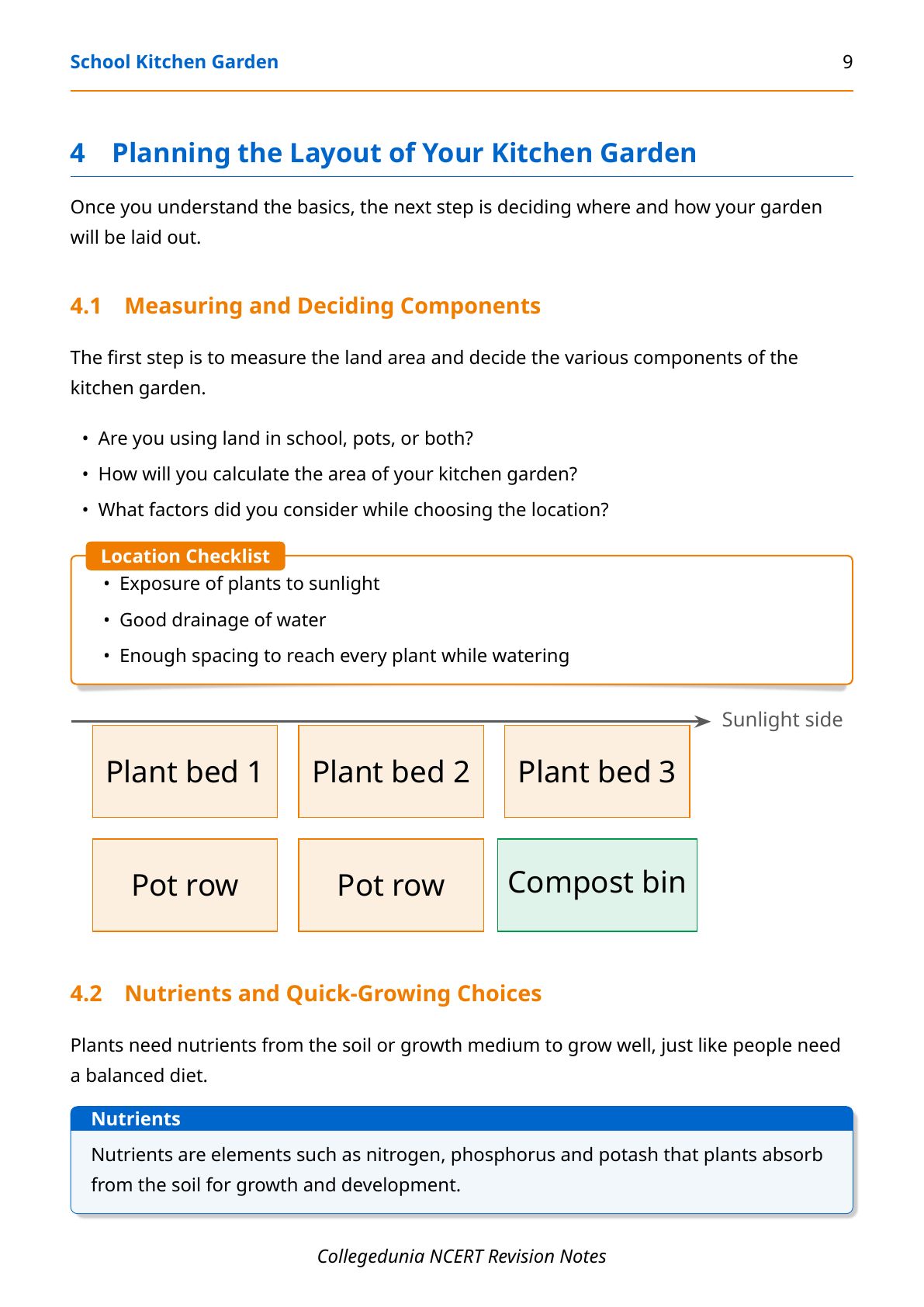
Activity 2 is the planning step. You first measure the land area and decide the parts of the garden. Then you choose the spot. Three factors decide the location, and all three appear in the book.
- Sunlight: how much sun the plants will get through the day.
- Drainage: whether extra water can run off instead of collecting around the roots.
- Spacing: enough room to reach every plant while watering.
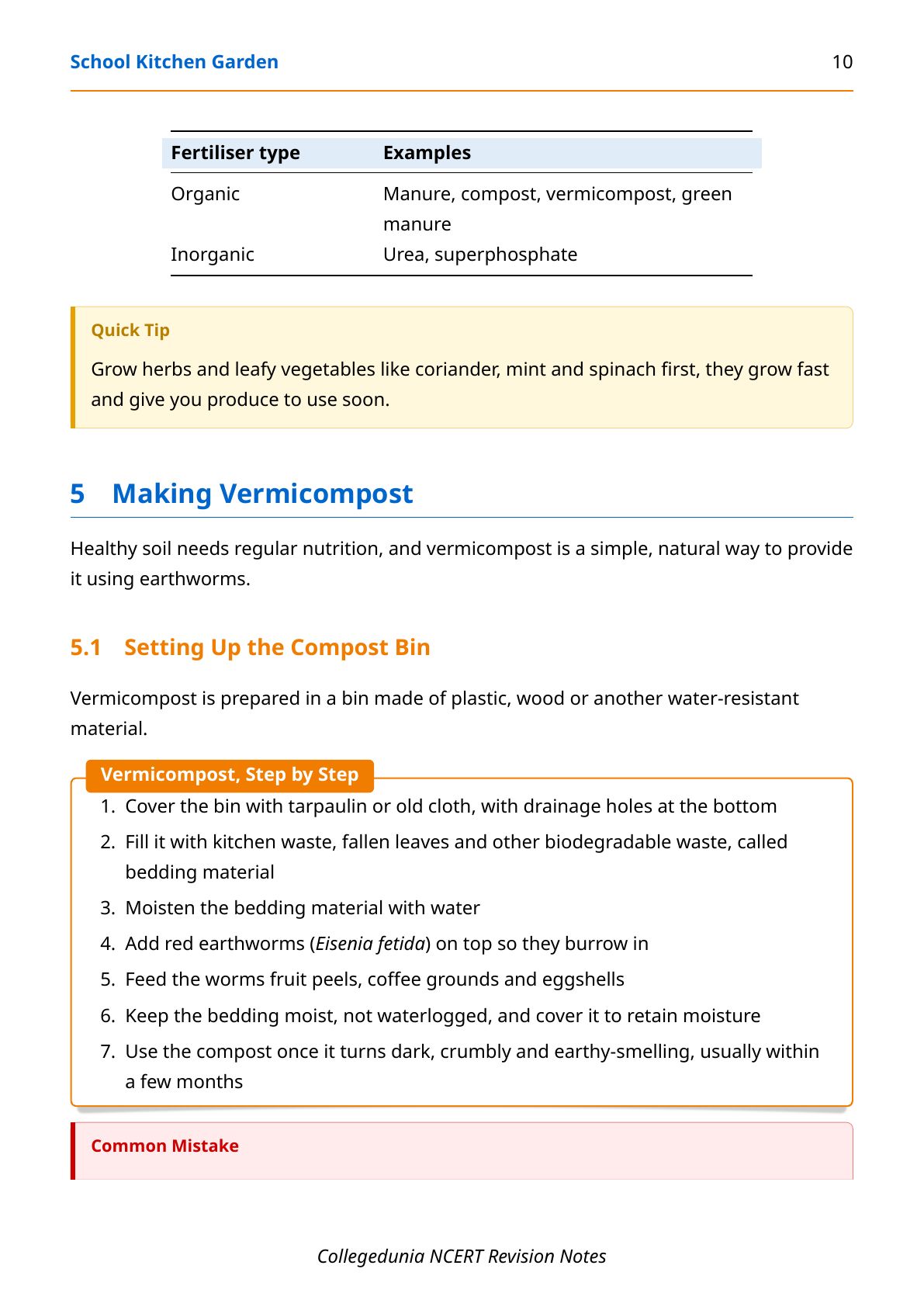
Plants need nutrients to grow. Nutrients are elements such as nitrogen, phosphorus and potash that plants take from the soil or growing medium. The book splits fertilisers into two groups, and this split is worth learning as a pair.
| Type of fertiliser | Examples from the book |
|---|---|
| Organic | Manure, compost, vermicompost, green manure |
| Inorganic | Urea, superphosphate |
For a school garden, the book suggests herbs and leafy vegetables that grow fast, such as coriander, mint and spinach. They are ready soon, so you see a result within the term, and they are a good source of vitamins and minerals for the midday meal too.
Preparing the Soil, Sowing Seeds and Planting Seedlings the Right Way
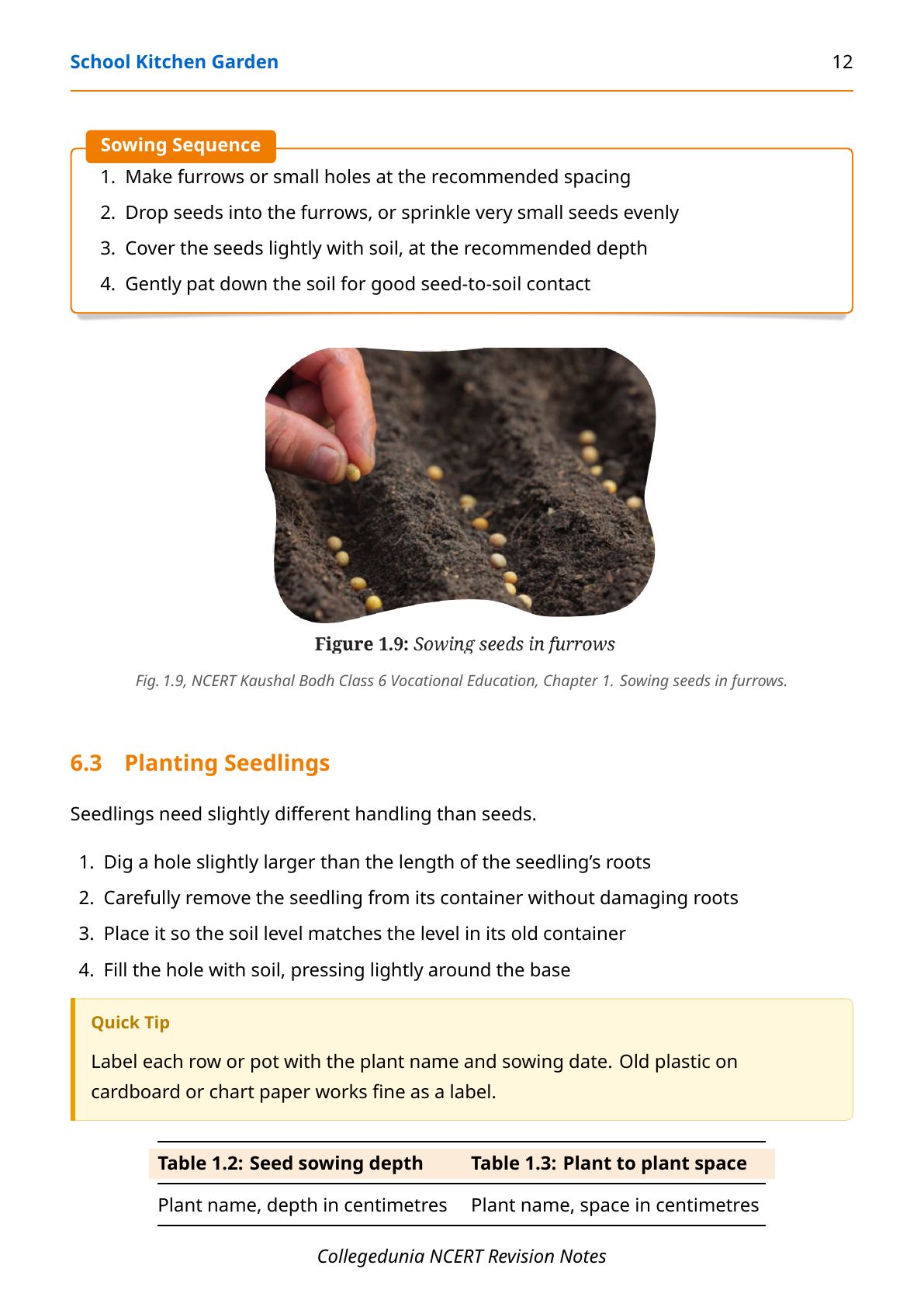
Activity 4 is soil preparation. You clear the soil of debris, rocks and unwanted plants that would block growth, then mix manure with the soil as your teacher directs. Activity 5 splits into two related jobs, and the book gives four steps for each one.
| Step | Sowing seeds | Planting seedlings |
|---|---|---|
| 1 | Make furrows or small holes at the recommended spacing | Dig holes slightly larger than the length of the roots |
| 2 | Drop the seeds in; sprinkle them evenly if they are very small | Remove each seedling from its container without damaging the roots |
| 3 | Cover the seeds lightly, following the recommended planting depth | Place the seedling so the soil level matches the level in its old container |
| 4 | Pat the soil gently for good seed-to-soil contact | Fill the hole and press lightly around the base to hold the plant in place |
Before you sow anything, read the seed packet. It gives the planting depth, the spacing and the right season. If you use farm seeds saved from an earlier harvest, ask the farmer or gardener for guidance instead of guessing.
Write the plant name and the date of sowing on labels with a permanent marker. Labels can be made from old plastic bags stuck on waste cardboard or chart paper. Place one at the start of each row or in each pot. The book then asks you to fill Table 1.2 for seed sowing depth and Table 1.3 for plant to plant space, both measured in centimetres.
Making Vermicompost at School with Red Earthworms Step by Step
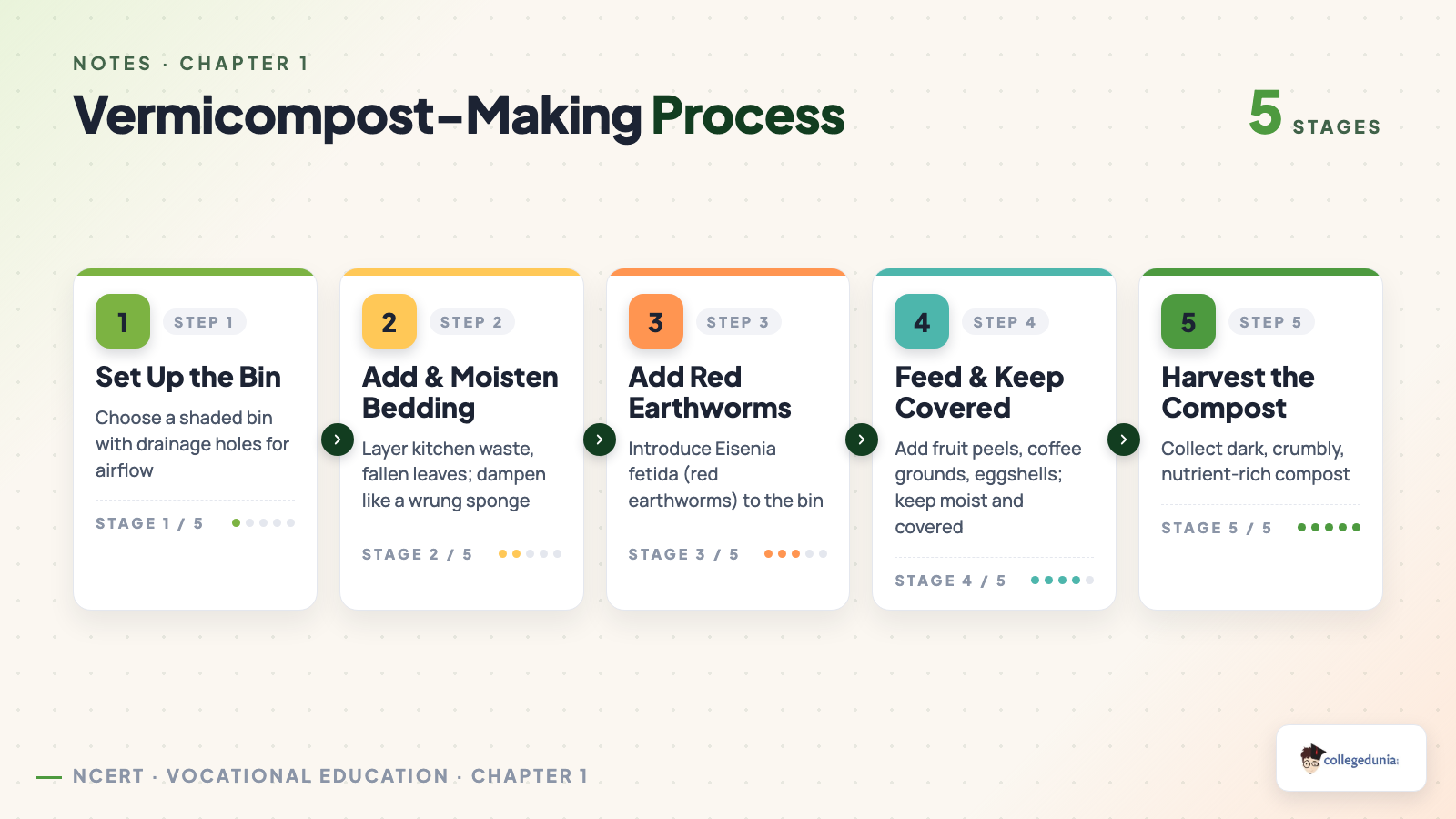
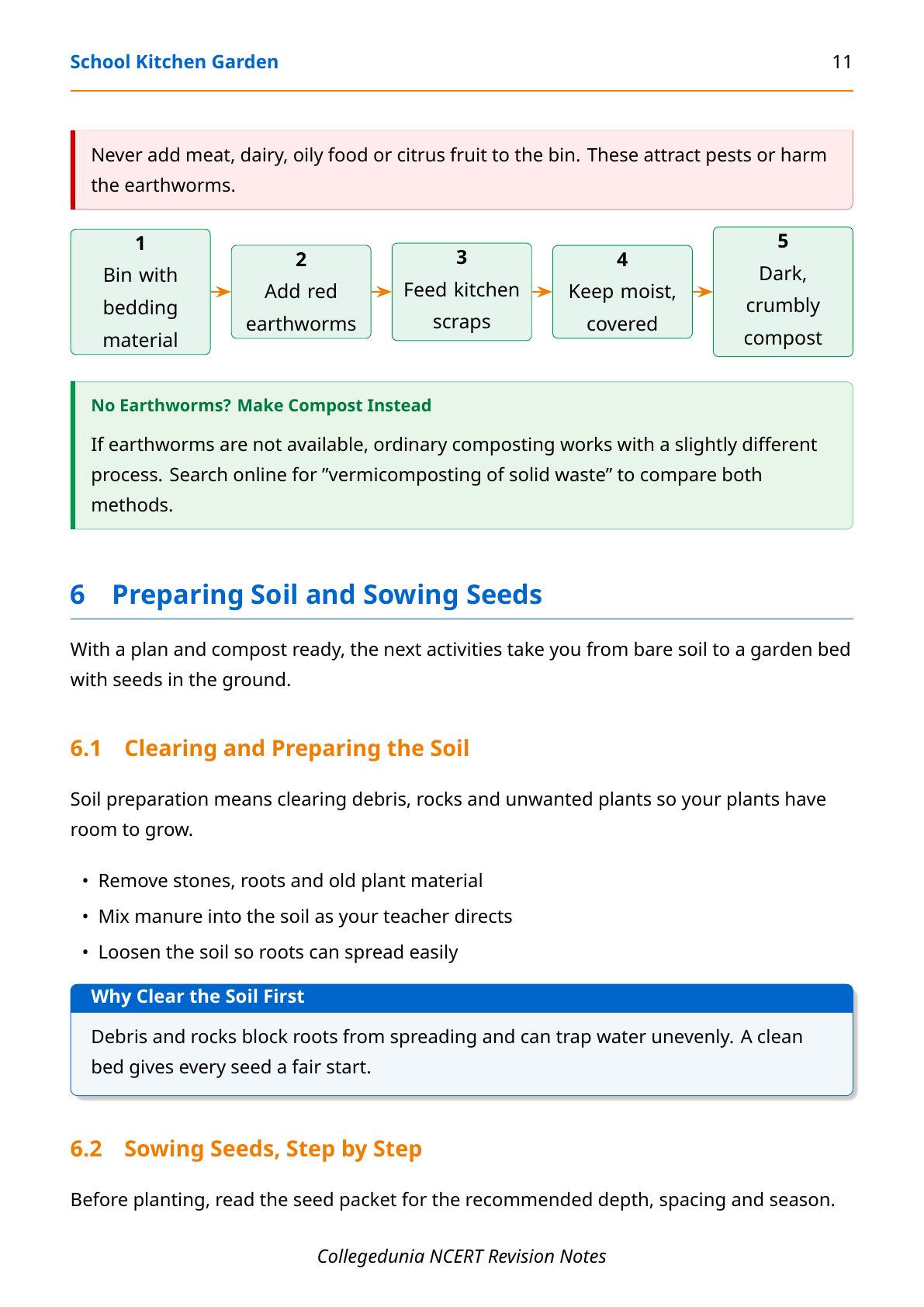
Activity 3 teaches one method of making vermicompost. Most students find this the hardest part of the chapter to remember, so it helps to learn it as seven steps in a fixed order.
- The bin. Use plastic, wood or any water-resistant material. Cover it with tarpaulin or old thick cloth. Make holes in the bottom so extra water drains out.
- The bedding material. Fill the bin with kitchen waste, fallen leaves, garden waste or any biodegradable waste. Midday meal waste from school works well.
- Moisten it. Add water to the bedding material as your teacher instructs.
- Add the worms. Put red earthworms (Eisenia fetida) on top of the bedding and let them burrow in. You can get them from a farm or a nursery.
- Feed them. Add fruit and vegetable peelings, coffee grounds, eggshells and non-greasy food waste.
- Keep it moist. Spray water as needed but never waterlogged, and keep the lid on to hold moisture and keep pests out.
- Take the compost. Vermicompost from the bottom of the bin is ready when it turns dark, crumbly and earthy smelling, usually within a few months.
Tip: the one line to remember is what you must not put in the bin. Avoid meat, dairy, oily foods and citrus fruits, because they attract pests or harm the worms. If earthworms are not available, you can make plain compost instead, using a slightly different process without the worms.
Taking Care of Plants: Fencing, Staking, Watering, Mulching and Weeding
Activity 6 is the longest activity in the chapter. General protection of plants includes making a fence, companion planting, sanitation, weeding, wind protection and organic pesticides. That six-part list is worth learning as it stands, since it covers most of the care work in the garden.
- Fencing. Measure the area, sketch it, then collect bamboo, old pipes or old wooden sticks as poles and bind them with strong string.
- Staking. Tall or weak-stemmed plants become top-heavy and fall over. Tomatoes, cucumbers, peas and beans need stakes. Choose the height and thickness of the stake to suit the plant, then tie the plant to it with string.
- Watering. Keep the soil moist but never waterlogged, because overwatering harms plants. New plants need water more often. Water in the early morning or late afternoon so that less water is lost to evaporation.
- Mulching after watering. Spread straw, wood chips or shredded leaves around the plants. Mulch holds moisture, stops weeds and keeps the soil temperature steady.
- Weeding. Check often and pull weeds out as soon as they appear. A hand cultivator is the right tool for this job.
The chapter also has a short "Decorate Your Garden" box. You can paint stones to edge the beds, make painted clay pots or sculptures from old objects, and build a scarecrow to keep birds away. It points to the work of Shri Nek Chand, who built the Rock Garden in Chandigarh out of waste material.
Making Neem Organic Pesticide in Five Simple Steps
The neem pesticide box is the most practical recipe in the chapter and it is worth learning by heart. Neem based pesticide controls caterpillars, grasshoppers, whitefly and aphids in crops without using chemicals.
- Take 500 gram of neem leaves, wash them, and chop or break them into smaller pieces.
- Mix the neem leaves with 5 litres of water.
- Put the mixture in a jerry can or large bottle and leave it for around 14 days.
- Separate the suspended solids from the liquid using a strainer.
- Spray the liquid on your plants with a spray bottle.
If neem is not available, an expert at the local Krishi Vigyan Kendra or an Agriculture Research Centre can suggest another bitter plant leaf. The book also lists neem oil, garlic, chilli pepper and soap as ingredients for organic pesticides, and asks you to follow instructions carefully so that helpful insects, birds and animals are not harmed.
Harvesting the Produce and Setting a Price for What You Grow
Activity 8 is harvesting. Once the produce is ready to eat, you pick it and sort it by quality and size. The method changes with the crop, and the book gives three cases worth learning together.
| Crop | How to harvest it |
|---|---|
| Leafy greens such as lettuce and spinach | Cut-and-come-again; take the outer leaves and let the inner leaves keep growing |
| Root vegetables such as carrots and radishes | Loosen the soil around the base, then pull them out by hand or with a garden trowel |
| Tomatoes, brinjals and peppers | Cut them from the vine with gardening shears, leaving a short stem attached |
Remove any debris, foreign matter or damaged produce so that only the best quality is kept. Activity 7, just before this, asks you to track growth week by week in Table 1.4, noting the height of plants, the colour of leaves, flowering and any pest attack.
Activities 9 and 10 turn the garden into a small business lesson. You visit the local vegetable market, note prices in Table 1.5, then estimate a price for your own produce in Table 1.6 by adding the cost of seeds or seedlings, soil amendments, tools and equipment, and labels. Most schools give the produce to the school kitchen for the midday meal.
Common Mistakes Students Make in the School Kitchen Garden Chapter
Five slips that cost easy marks in the Class 6 project file and class test:
- Mixing up manure and vermicompost. Manure comes from the dung of farm animals. Vermicompost is made by red earthworms from kitchen and garden waste.
- Putting the wrong waste in the compost bin. Meat, dairy, oily food and citrus fruits must be kept out.
- Naming urea as an organic fertiliser. Urea and superphosphate are inorganic. Manure, compost, vermicompost and green manure are organic.
- Swapping the trowel and the hand cultivator. The trowel digs and plants. The hand cultivator loosens soil, removes weeds and mixes manure.
- Writing the wrong watering time. Early morning or late afternoon, so that less water evaporates.
Tick each slip off only after you have written the correct answer once on your own. Students who did this said the tools question stopped costing them marks after two attempts.
Quick Recall Table: Every Term from the School Kitchen Garden Chapter
This is the page to read the night before the test and once again in the morning. Everything the chapter can ask sits in one place, so you do not need to flip through your book.
| Term | One-line meaning |
|---|---|
| Kitchen garden | A garden where fruits, vegetables and herbs are grown |
| Produce or yield | What the garden gives, usually enough for one family |
| Nutrients | Elements such as nitrogen, phosphorus and potash taken from the soil |
| Manure | Natural fertiliser made from the dung of farm animals |
| Vermicompost | Compost made by red earthworms, Eisenia fetida |
| Bedding material | The layers of waste placed inside the compost bin |
| Potting mix | Blend of compost, perlite, vermiculite, soil, coir or peat-moss |
| Mulching | A layer spread on soil to hold moisture and stop weeds |
| Staking | Supporting a tall or weak plant with a stake and string |
| Organic pesticide | Pest control made from neem, garlic, chilli pepper or soap |
| Cut-and-come-again | Harvesting outer leaves so inner leaves keep growing |
| Vrikshayurveda | Ancient Indian treatise on plant health, the Ayurveda for trees |
These notes also carry a short memory line for the order of work: Plan, Prepare, Plant, Protect, Pick.
How to Use the School Kitchen Garden Notes Most Effectively
This chapter is a project, so reading alone is not enough. Split your revision into three short blocks and keep these notes open beside the actual garden work.
- Block 1, 30 minutes. Read what a kitchen garden is, the five outcomes and the tools table. Then write any eight tools with their uses from memory.
- Block 2, 35 minutes. Learn the safety rules, the planning factors and the seven vermicompost steps. Say the steps aloud in order.
- Block 3, 30 minutes. Cover sowing, plant care, the neem recipe and harvesting. Fill Tables 1.2 and 1.3 with your own garden data.
- Night before, 10 minutes. Read the quick recall table and the five common mistakes, nothing else.
The chapter also asks what jobs are linked to this project. The book names farmer, gardener, agricultural scientist and mechanic for agricultural equipment such as tractors and harvesters. Keep that list at the back of your project file, since it often shows up as a short-answer question.
| Resource | Best used for | Open it |
|---|---|---|
| Handwritten Notes | Hand-written, page-by-page revision copy for one-sitting recall | School Kitchen Garden Class 6 Handwritten Notes |
| NCERT Book PDF | The official Kaushal Bodh chapter with all original figures and tables | School Kitchen Garden Class 6 Book PDF (coming soon) |
| Next chapter | The project on recording the living things around your school | Biodiversity Register Class 6 Handwritten Notes |
NCERT Notes for Class 6 Vocational Education Kaushal Bodh: All Chapters
Related Links: typed revision notes for every chapter of the Class 6 Kaushal Bodh textbook, written to the 2026-27 syllabus.
| Chapter | Class 6 Vocational Education Kaushal Bodh Notes |
|---|---|
| Chapter 1 | School Kitchen Garden Class 6 Notes (this page) |
| Chapter 2 | Biodiversity Register Class 6 Notes (coming soon) |
| Chapter 3 | Maker Skills Class 6 Notes (coming soon) |
| Chapter 4 | Animation and Games Class 6 Notes (coming soon) |
| Chapter 5 | School Museum Class 6 Notes (coming soon) |
School Kitchen Garden Class 6 Notes FAQs
Ques. What is a kitchen garden in Class 6 Vocational Education?
Ans. A kitchen garden, also called a vegetable garden, is a garden where fruits, vegetables and herbs are grown. The produce or yield from it is usually enough to meet one family's needs. In the school project you make one on the school campus, either in plant beds or in pots.
Ques. How is vermicompost made in the school kitchen garden project?
Ans. Fill a water-resistant bin with kitchen and garden waste, moisten it, and add red earthworms called Eisenia fetida on top. Feed them peelings, coffee grounds, eggshells and non-greasy food waste. Keep the bedding moist and covered. The compost at the bottom is ready when it turns dark, crumbly and earthy smelling.
Ques. Which wastes should not be added to a vermicompost bin?
Ans. Keep out meat, dairy, oily foods and citrus fruits. These attract pests or harm the earthworms. Use fruit and vegetable peelings, coffee grounds, eggshells, fallen leaves, garden waste and other biodegradable waste instead.
Ques. What is the difference between organic and inorganic fertilisers?
Ans. Organic fertilisers come from natural material and include manure, compost, vermicompost and green manure. Inorganic fertilisers are made chemically, and the book names urea and superphosphate. Both supply nutrients such as nitrogen, phosphorus and potash to the plants.
Ques. How do you make organic pesticide from neem leaves?
Ans. Wash and chop 500 gram of neem leaves, mix them with 5 litres of water, and keep the mixture in a jerry can or large bottle for around 14 days. Strain out the solids, then spray the liquid on plants with a spray bottle. It controls caterpillars, grasshoppers, whitefly and aphids.
Ques. What is Vrikshayurveda?
Ans. Vrikshayurveda means Ayurveda for trees. It is an ancient Indian treatise on plant health, growth and the treatment of plant diseases. Two texts carry the name, one by Salihotra and a later one by Surapala. The only surviving palm leaf manuscript of Surapala's text is kept at Oxford University.
Ques. Which tools are needed for a school kitchen garden?
Ans. Table 1.1 of the chapter lists 15 tools and materials. The main ones are a garden trowel, hand cultivator, watering can with rose attachment or hose pipe, gardening gloves, gardening shears, spade, spray bottle, plant labels, potting mix, mulching material, manure, seeds or seedlings, a compost bin, neem leaves and poles with string for fencing.
Ques. What is the best time to water plants in a kitchen garden?
Ans. Water in the early morning or late afternoon, because less water is lost to evaporation at those times. Keep the soil moist but never waterlogged, since overwatering harms plants. New plants need watering more often than settled ones.
Ques. How is produce harvested from a school kitchen garden?
Ans. The method depends on the crop. For leafy greens such as lettuce and spinach, use the cut-and-come-again method and take only the outer leaves. For carrots and radishes, loosen the soil and pull them out by hand or with a trowel. For tomatoes, brinjals and peppers, cut them with gardening shears, leaving a short stem.
Ques. Where can I download the Class 6 Vocational Education Chapter 1 notes PDF?
Ans. Use the download option at the top of this page. The notes are free and printable, follow the 2026-27 Kaushal Bodh chapter order in full, and can sit open beside the textbook and your project file while you revise.



Comments