



NCERT Notes for Class 6 Vocational Education Kaushal Bodh Chapter 6 Cooking without Fire help students revise the 2026-27 project on no-fire food preparation. The chapter covers recipe reading, kitchen tools, safety, beverages, salads, sprouts, measurement, storage, waste disposal and food Mela planning.
- Best for quick revision: use these notes before writing the Cooking without Fire project file.
- Project focus: revise safe no-fire recipes, tool handling, ingredient measurement and clean serving.
- Classroom focus: prepare short answers, activity records, food Mela plan and waste-sorting points.
Chapter6CookingwithoutFireNotes.pdf?page=1&dpi=150)
Chapter6CookingwithoutFireNotes.pdf?page=2&dpi=150)
Chapter6CookingwithoutFireNotes.pdf?page=3&dpi=150)
Chapter6CookingwithoutFireNotes.pdf?page=4&dpi=150)
Chapter6CookingwithoutFireNotes.pdf?page=5&dpi=150)
Chapter6CookingwithoutFireNotes.pdf?page=6&dpi=150)
Chapter6CookingwithoutFireNotes.pdf?page=7&dpi=150)
Chapter6CookingwithoutFireNotes.pdf?page=8&dpi=150)
Chapter6CookingwithoutFireNotes.pdf?page=9&dpi=150)
Chapter6CookingwithoutFireNotes.pdf?page=10&dpi=150)
Chapter6CookingwithoutFireNotes.pdf?page=11&dpi=150)
Chapter6CookingwithoutFireNotes.pdf?page=12&dpi=150)
Chapter6CookingwithoutFireNotes.pdf?page=13&dpi=150)
Chapter6CookingwithoutFireNotes.pdf?page=14&dpi=150)
Chapter6CookingwithoutFireNotes.pdf?page=15&dpi=150)
Chapter6CookingwithoutFireNotes.pdf?page=16&dpi=150)
Chapter6CookingwithoutFireNotes.pdf?page=17&dpi=150)
Chapter6CookingwithoutFireNotes.pdf?page=18&dpi=150)
Chapter6CookingwithoutFireNotes.pdf?page=19&dpi=150)
Chapter6CookingwithoutFireNotes.pdf?page=20&dpi=150)
Chapter6CookingwithoutFireNotes.pdf?page=21&dpi=150)
Chapter6CookingwithoutFireNotes.pdf?page=22&dpi=150)
Chapter6CookingwithoutFireNotes_flat_MobileCard.pdf?page=1&dpi=150)
Chapter6CookingwithoutFireNotes_flat_MobileCard.pdf?page=2&dpi=150)
Chapter6CookingwithoutFireNotes_flat_MobileCard.pdf?page=3&dpi=150)
Chapter6CookingwithoutFireNotes_flat_MobileCard.pdf?page=4&dpi=150)
Chapter6CookingwithoutFireNotes_flat_MobileCard.pdf?page=5&dpi=150)
Chapter6CookingwithoutFireNotes_flat_MobileCard.pdf?page=6&dpi=150)
Chapter6CookingwithoutFireNotes_flat_MobileCard.pdf?page=7&dpi=150)
Chapter6CookingwithoutFireNotes_flat_MobileCard.pdf?page=8&dpi=150)
Chapter6CookingwithoutFireNotes_flat_MobileCard.pdf?page=9&dpi=150)
Chapter6CookingwithoutFireNotes_flat_MobileCard.pdf?page=10&dpi=150)
Chapter6CookingwithoutFireNotes_flat_MobileCard.pdf?page=11&dpi=150)
Chapter6CookingwithoutFireNotes_flat_MobileCard.pdf?page=12&dpi=150)
Chapter6CookingwithoutFireNotes_flat_MobileCard.pdf?page=13&dpi=150)
Chapter6CookingwithoutFireNotes_flat_MobileCard.pdf?page=14&dpi=150)
Chapter6CookingwithoutFireNotes_flat_MobileCard.pdf?page=15&dpi=150)
Chapter6CookingwithoutFireNotes_flat_MobileCard.pdf?page=16&dpi=150)
Chapter6CookingwithoutFireNotes_flat_MobileCard.pdf?page=17&dpi=150)
Chapter6CookingwithoutFireNotes_flat_MobileCard.pdf?page=18&dpi=150)
Chapter6CookingwithoutFireNotes_flat_MobileCard.pdf?page=19&dpi=150)
Chapter6CookingwithoutFireNotes_flat_MobileCard.pdf?page=20&dpi=150)
Chapter6CookingwithoutFireNotes_flat_MobileCard.pdf?page=21&dpi=150)
Chapter6CookingwithoutFireNotes_flat_MobileCard.pdf?page=22&dpi=150)
Chapter6CookingwithoutFireNotes_flat_MobileCard.pdf?page=23&dpi=150)
Chapter6CookingwithoutFireNotes_flat_MobileCard.pdf?page=24&dpi=150)
Chapter6CookingwithoutFireNotes_flat_MobileCard.pdf?page=25&dpi=150)
Chapter6CookingwithoutFireNotes_flat_MobileCard.pdf?page=26&dpi=150)
Chapter6CookingwithoutFireNotes_flat_MobileCard.pdf?page=27&dpi=150)
Chapter6CookingwithoutFireNotes_flat_MobileCard.pdf?page=28&dpi=150)
Chapter6CookingwithoutFireNotes_flat_MobileCard.pdf?page=29&dpi=150)
Chapter6CookingwithoutFireNotes_flat_MobileCard.pdf?page=30&dpi=150)
Chapter6CookingwithoutFireNotes_flat_MobileCard.pdf?page=31&dpi=150)
Chapter6CookingwithoutFireNotes_flat_MobileCard.pdf?page=32&dpi=150)
Chapter6CookingwithoutFireNotes_flat_MobileCard.pdf?page=33&dpi=150)
Chapter6CookingwithoutFireNotes_flat_MobileCard.pdf?page=34&dpi=150)
Chapter6CookingwithoutFireNotes_flat_MobileCard.pdf?page=35&dpi=150)
Chapter6CookingwithoutFireNotes_flat_MobileCard.pdf?page=36&dpi=150)
Chapter6CookingwithoutFireNotes_flat_MobileCard.pdf?page=37&dpi=150)
Student Feedback: In a Collegedunia review of Class 6 Kaushal Bodh project doubts from over 8,900 students, Cooking without Fire became easier when students revised it as a workflow from recipe reading to clean-up.
- 76% needed a clear difference between mixing, spreading and assembling.
- 70% wanted a simple measurement table for teaspoon, tablespoon and cup.
- 63% confused wet waste, dry waste and reusable kitchen items.
|
Table of Contents |
Cooking without Fire Chapter 6 Quick Map
Cooking without Fire is Project 6 of Class 6 Kaushal Bodh. Students learn how to prepare simple dishes without a stove, flame or direct heat. The project covers recipes, safety, tools, measurement, food presentation, waste handling and food Mela organisation.
Classroom-use anchor: A good answer should connect recipe, tools, safety, measurement, presentation and waste disposal.
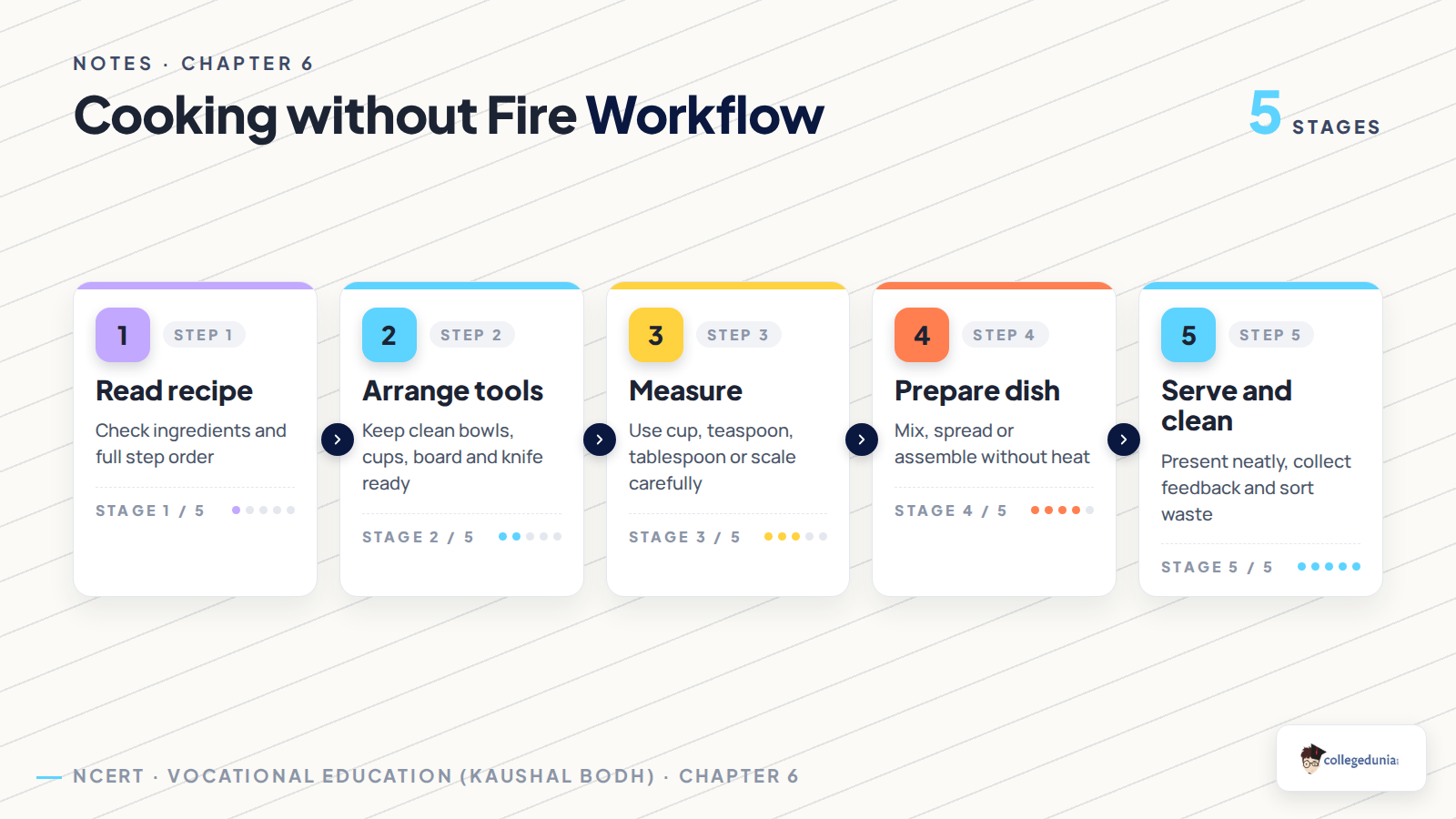
| Stage | What Students Do | Output |
|---|---|---|
| Read | Read the whole recipe and check ingredients. | Recipe card |
| Prepare | Arrange clean tools and measure ingredients. | Ready work table |
| Make | Mix, spread or assemble the dish without heat. | No-fire food item |
| Finish | Serve neatly, collect feedback and sort waste. | Clean project record |
Cooking without Fire Chapter Read Along
The video below supports the official Class 6 Kaushal Bodh Chapter 6 project and can be used before revising the recipe sequence.
Cooking without Fire Project Video
Source: NCERT OFFICIAL on YouTube
What Cooking without Fire Means
Cooking without fire means preparing food without direct heat from a stove, flame or oven. It can use fresh fruits, selected raw vegetables, curd, sprouts, puffed rice, bread and other ready-to-eat ingredients. Students should still follow hygiene and safety rules.
- Some foods can be eaten raw after proper washing.
- Some foods need heat and should not be eaten raw.
- No-fire dishes can keep freshness and make students creative.
- Teamwork matters because a kitchen needs divided roles.
Kitchen Tools Materials and Safety Rules
Students need trays, bowls, plates, measuring cups, knife, chopping board, peeler, grater, fork, whisk, apron, hair cover, soap, clean water and separate bins for wet and dry waste.
| Tool | Use | Safety Point |
|---|---|---|
| Knife and board | Cut fruits, bread and vegetables. | Cut slowly and away from the body. |
| Measuring cup | Measure water, curd and chopped ingredients. | Use level quantities. |
| Whisk | Mix buttermilk, dressing or curd. | Hold the bowl steady. |
| Wet and dry bins | Separate kitchen waste. | Do not mix all waste. |
Recipe Reading and No-fire Methods
A recipe gives ingredients and steps. Students should read the complete recipe, check quantities, collect utensils and follow steps in order. Read the full recipe before starting any cutting or mixing.
| Method | Meaning | Example |
|---|---|---|
| Mixing | Combining ingredients together. | Buttermilk, salad, beverage. |
| Spreading | Applying a soft item on a surface. | Butter on bread, chutney on roll. |
| Assembling | Putting ready parts together. | Bhel Puri, sandwich, sprouts Chaat. |
Beverages Salads Sprouts and Assembled Dishes
The chapter includes buttermilk, Jaljeera, Kokam sherbet, lemonade, salad, Koshimbir, fruit Chaat, Shrikhand, Bhel Puri, sprouts, mint chutney, sandwich, cucumber Raita, sprouts Chaat and coconut chocolate balls.
- Beverages: measure liquid, mix or whisk, taste safely and serve fresh.
- Salads and Chaat: wash, cut, season and mix gently.
- Sprouts: soak legumes, wrap in wet cloth, wait and season.
- Assembled snacks: layer, combine and serve before the dish becomes soggy.
Measuring Ingredients and Storing Food
Cooking uses standard measures such as grams, millilitres and litres. It also uses kitchen measures such as a pinch, teaspoon, tablespoon and cup. Correct measurement keeps taste consistent.
| Measure | Approximate Meaning | Use |
|---|---|---|
| Pinch | Very small dry amount. | Salt or spice. |
| Teaspoon | About 5 ml liquid. | Lemon juice or cumin powder. |
| Tablespoon | About 15 ml liquid. | Chutney or dressing. |
| Cup | About 250 ml liquid. | Water, curd or chopped fruit. |
Dish Presentation and Food Mela Planning
Dish presentation is part of the project. Students should use colour, neat arrangement, small garnish, clean plates and fair portions. The final food Mela needs a safe menu, poster, clean stall, serving roles and feedback notes.
- Use colourful ingredients and clean plate edges.
- Write what is special about the food item.
- Prepare a poster or invitation card.
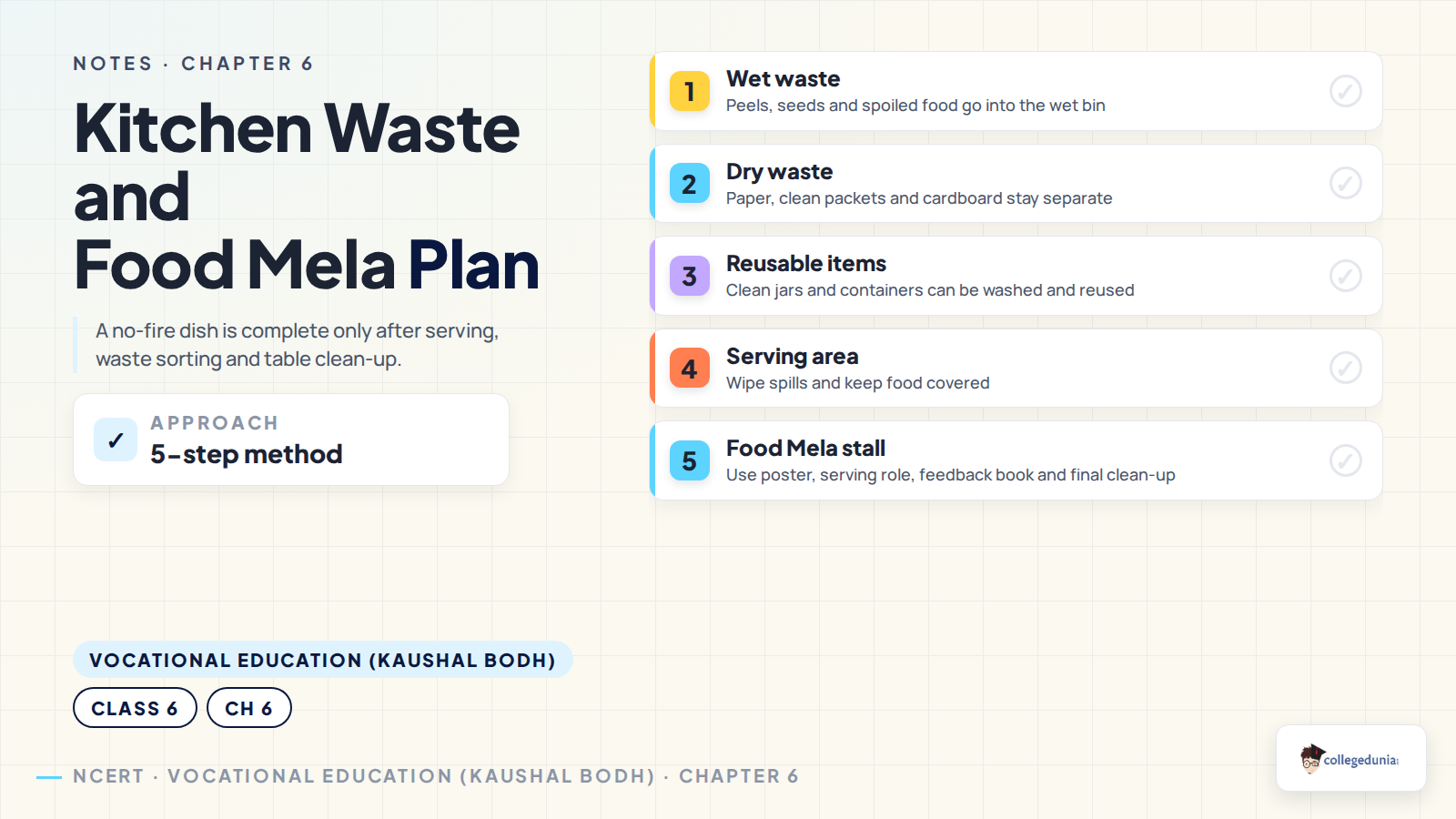
- Keep wet waste, dry waste and reusable items separate.
- Clean the table after serving.
Kitchen Waste Disposal after No-fire Cooking
No-fire cooking can still create waste. Organic waste such as peels and seeds should be separated from dry waste such as paper or clean packets. Reusable containers should be washed and dried.
| Waste Type | Examples | Correct Handling |
|---|---|---|
| Wet waste | Peels, seeds, spoiled food. | Collect separately, compost if possible. |
| Dry waste | Paper, packets, cardboard. | Keep separate for recycling. |
| Reusable items | Clean jars or containers. | Wash, dry and reuse with permission. |
Cooking without Fire Activity Record Format
After preparing a dish, students should record the dish name, ingredients used, method, feedback, waste produced and what they learnt. This makes the project file easier to assess.
| Record Field | What to Write | Example |
|---|---|---|
| Dish prepared | Name the food item. | Lemonade or sprouts Chaat. |
| Ingredients | Main ingredients and quantities. | Water, lemon and sugar. |
| Feedback | One specific suggestion. | Add more lemon next time. |
| Learning | One practical skill. | Measured one cup accurately. |
Related Class 6 Kaushal Bodh Resources
| Resource | Use It For | Link |
|---|---|---|
| NCERT Book PDF | Read the official Cooking without Fire chapter. | Cooking without Fire NCERT Book PDF |
| Handwritten Notes | Revise in notebook-style format. | Class 6 Cooking without Fire Handwritten Notes |
| Previous Notes | Revise the previous Kaushal Bodh project. | School Museum Notes |
Class 6 Vocational Education Kaushal Bodh Notes Chapter List
| Chapter | Notes Link |
|---|---|
| Chapter 1 School Kitchen Garden | School Kitchen Garden Notes |
| Chapter 2 Biodiversity Register | Biodiversity Register Notes |
| Chapter 3 Maker Skills | Maker Skills Notes |
| Chapter 4 Animation and Games | Animation and Games Notes |
| Chapter 5 School Museum | School Museum Notes |
| Chapter 6 Cooking without Fire | Cooking without Fire Notes |
Class 6 Cooking without Fire Notes FAQs
Ques. What is Cooking without Fire in Class 6 Kaushal Bodh?
Ans. Cooking without Fire is a Class 6 project where students prepare safe dishes without using a stove, flame or direct heat.
Ques. What are the main methods in Cooking without Fire?
Ans. The main methods are mixing, spreading and assembling. Students use these for beverages, salads, sandwiches, Bhel Puri and sprouts Chaat.
Ques. Which safety rules should students remember?
Ans. Students should wash hands, use sharp tools carefully, wipe spills, keep food covered and follow teacher instructions during the activity.
Ques. Why is waste segregation important after no-fire cooking?
Ans. Waste segregation keeps wet waste, dry waste and reusable items separate, which makes clean-up easier and supports composting or recycling.



Comments