



Inside the Class 7 Science Curiosity notes for Life Processes in Animals, you will find the journey of food, breathing movements and animal adaptations. These 2026-27 notes explain how digestion supplies nutrients and respiration releases energy. Use the Collegedunia PDF to revise labelled body parts, textbook activities and the difference between breathing and respiration.
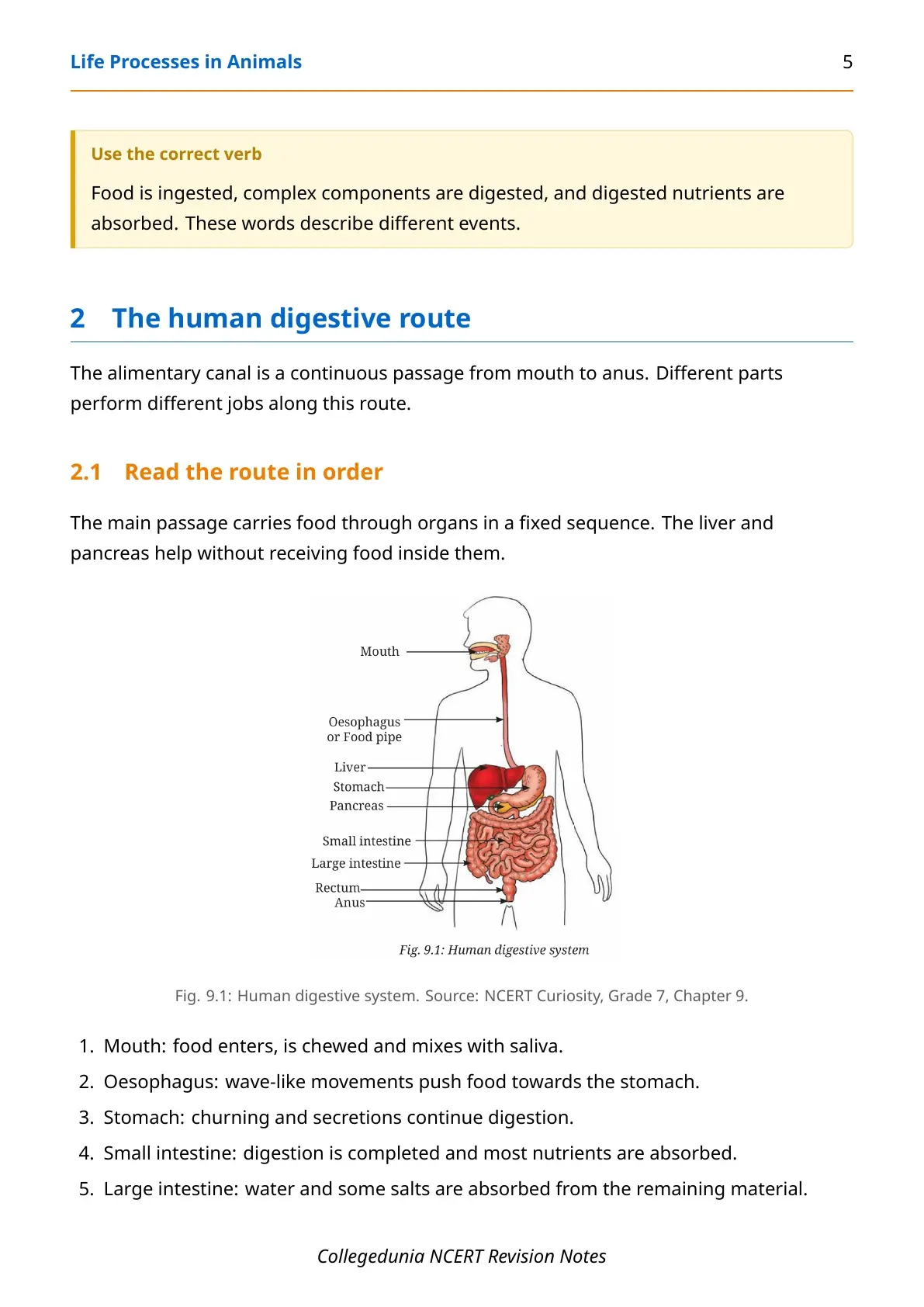
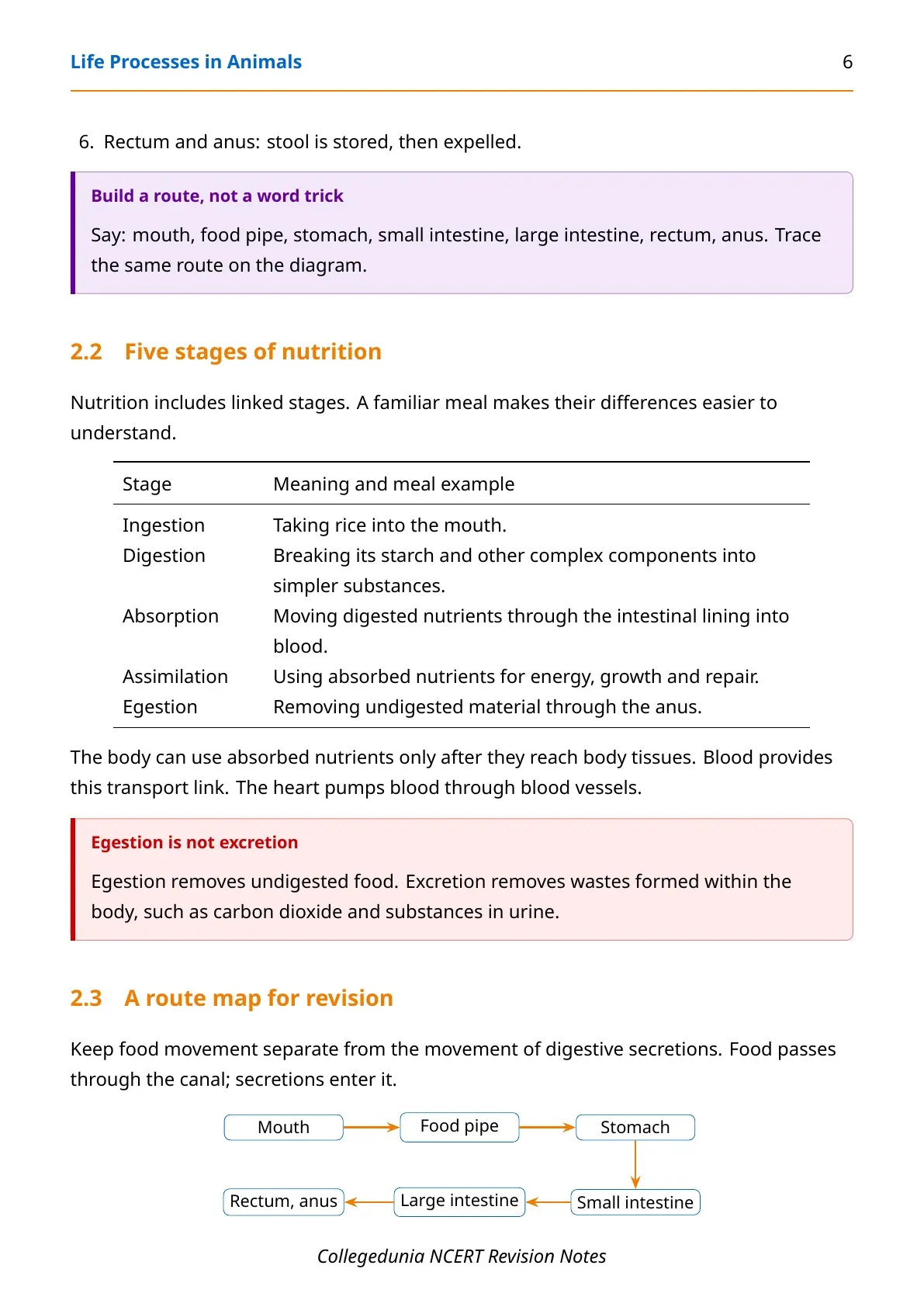
- Trace food through the alimentary canal and identify each organ's role.
- Explain inhalation, exhalation and gas exchange in the lungs.
- Compare digestion and breathing in humans and other animals.
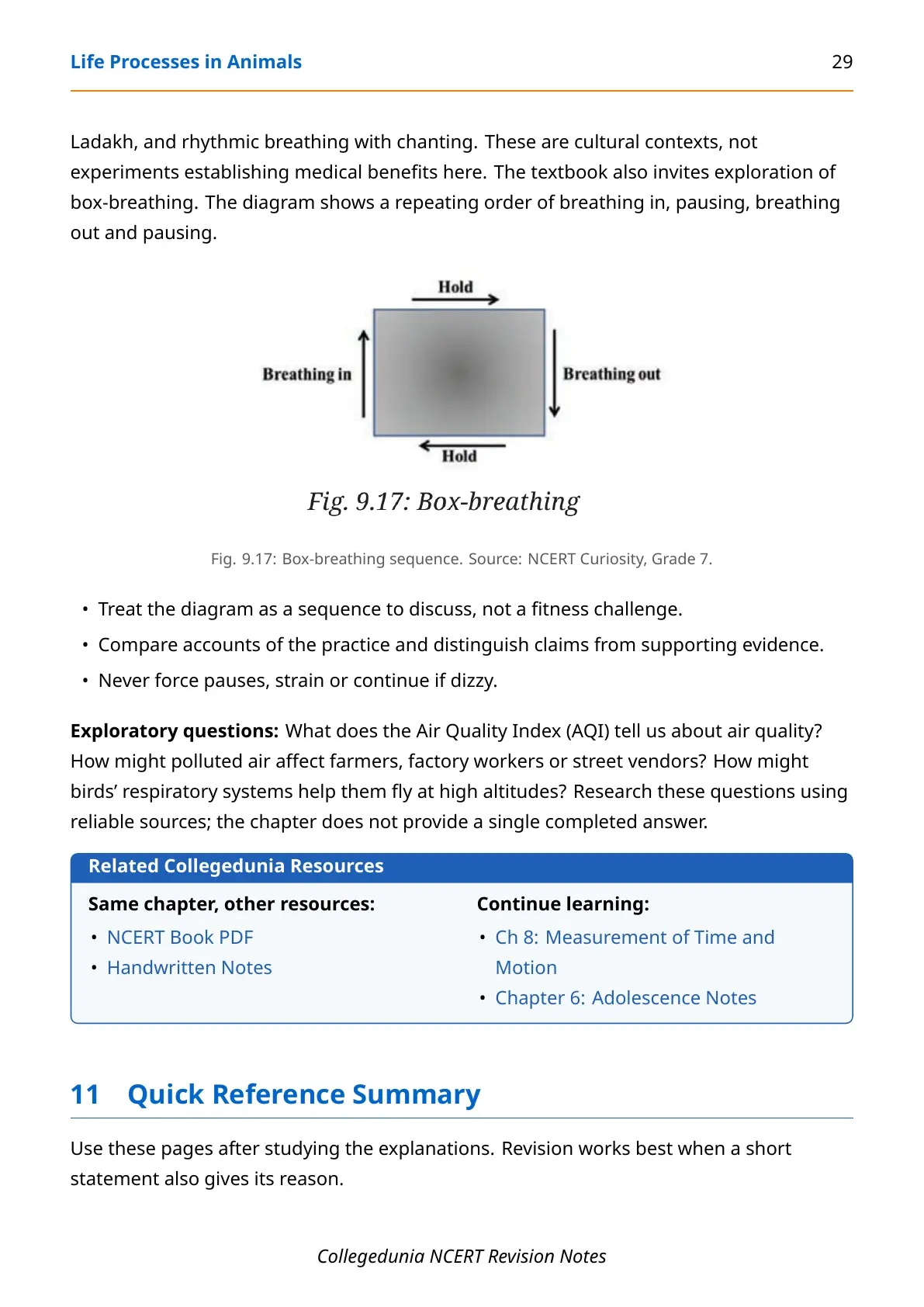
Student Feedback and Self-Check
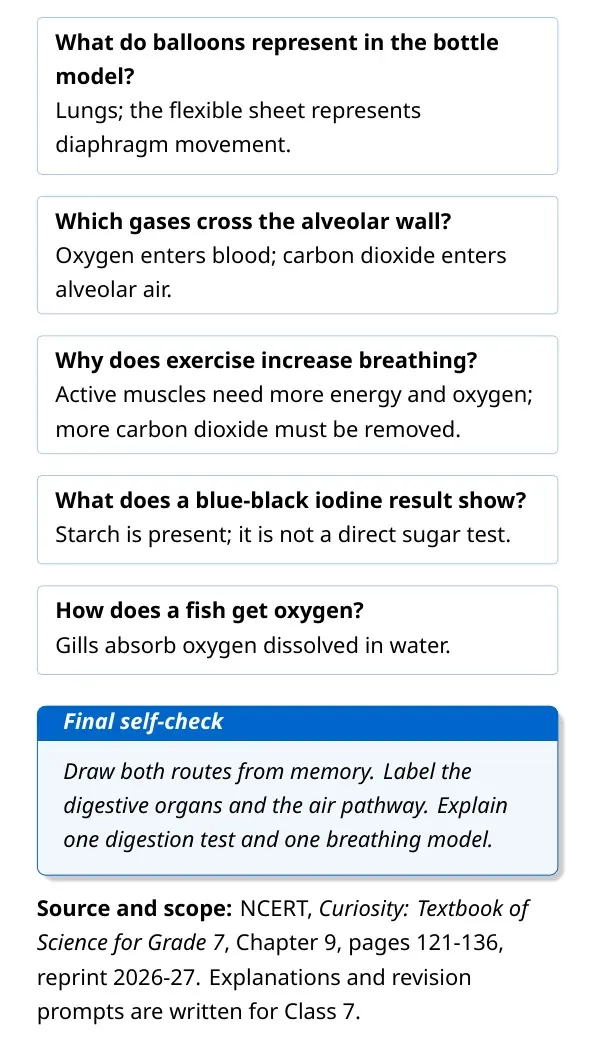
After revising, tell your teacher which needs more practice: digestive organs, breathing movements or explaining the activities.
These Collegedunia notes follow the topics and activities in the 2026-27 NCERT Curiosity chapter.
Life Processes in Animals: The Journey of Food
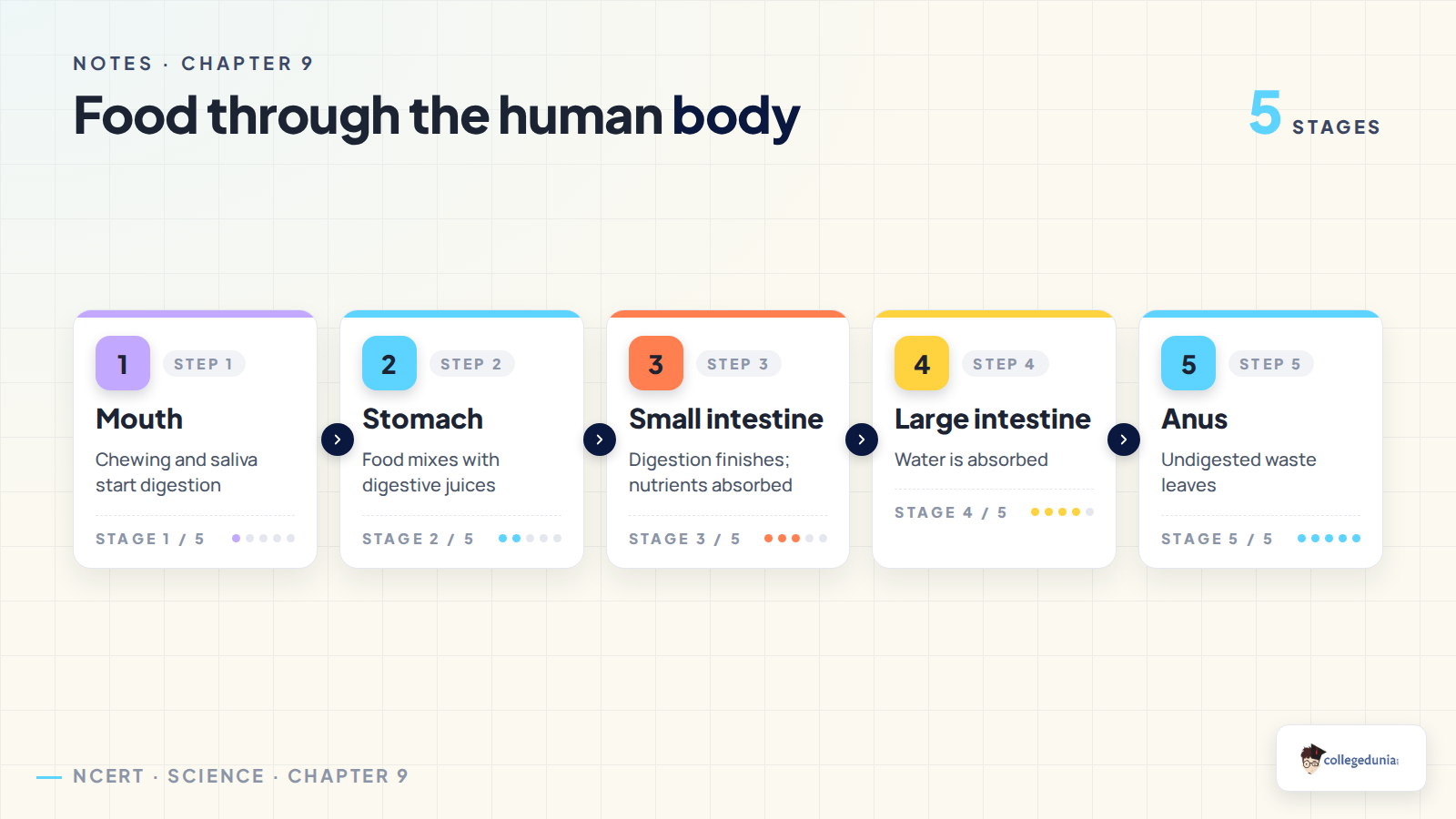
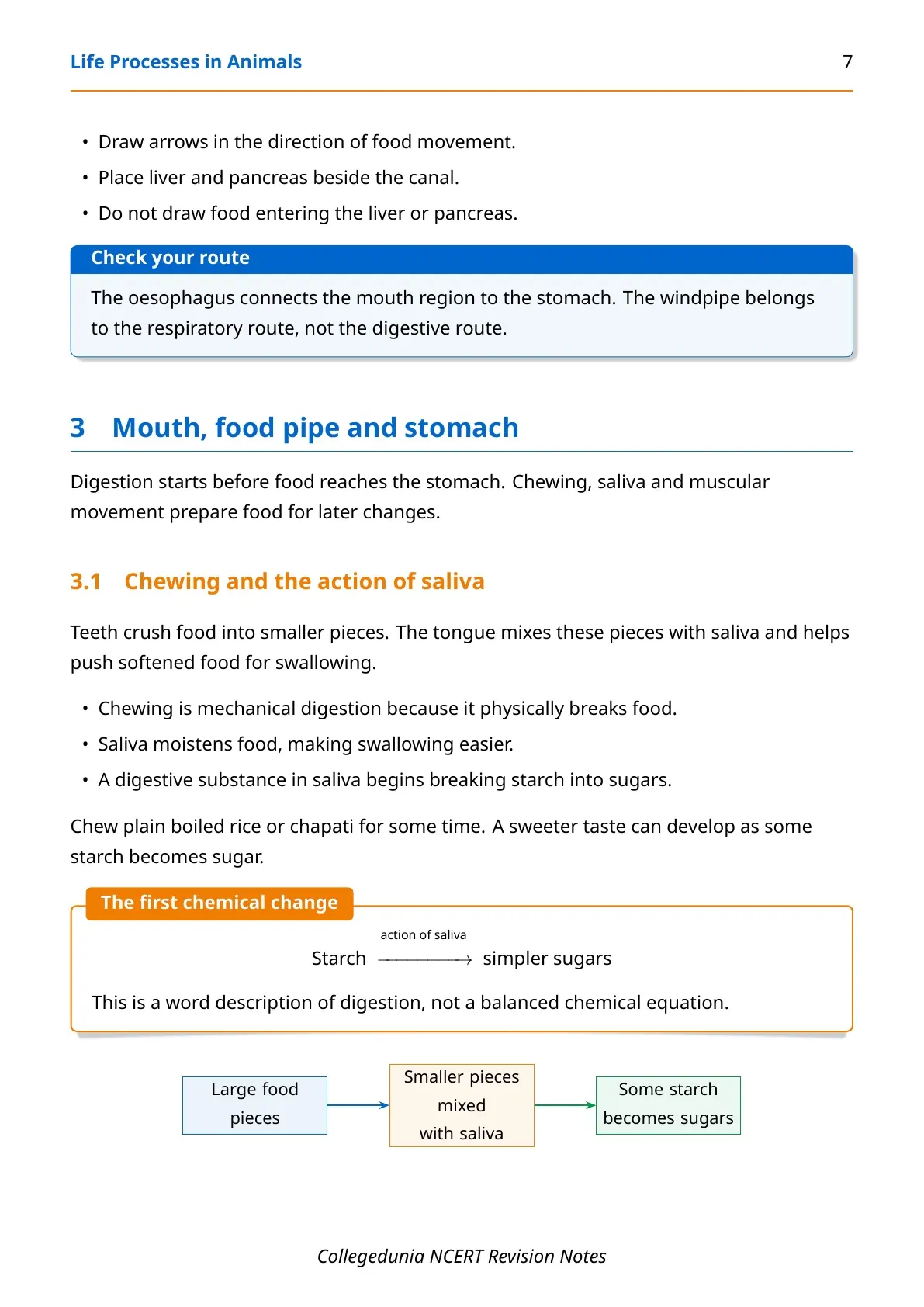
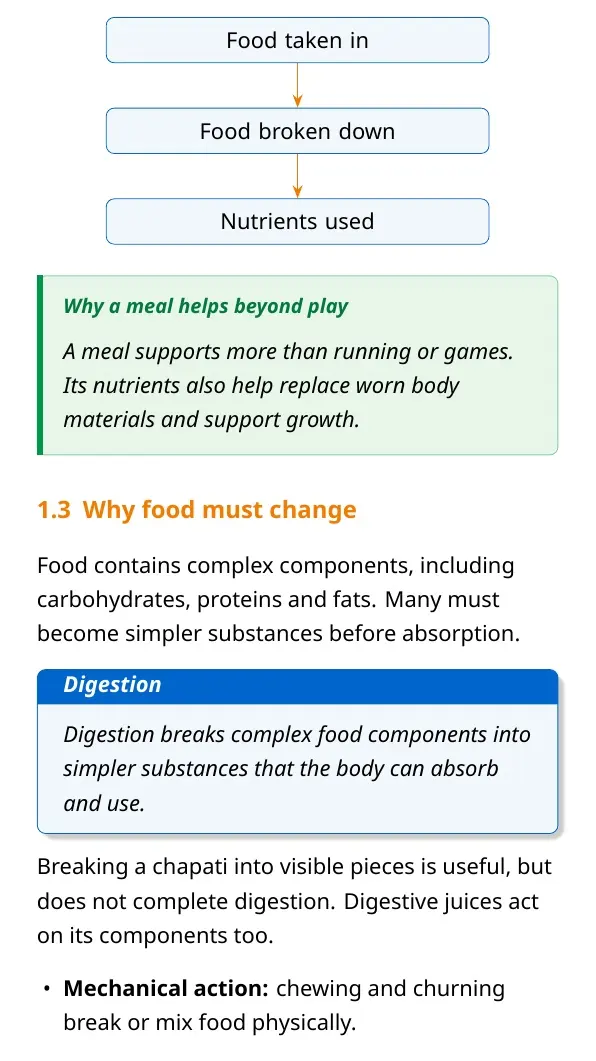
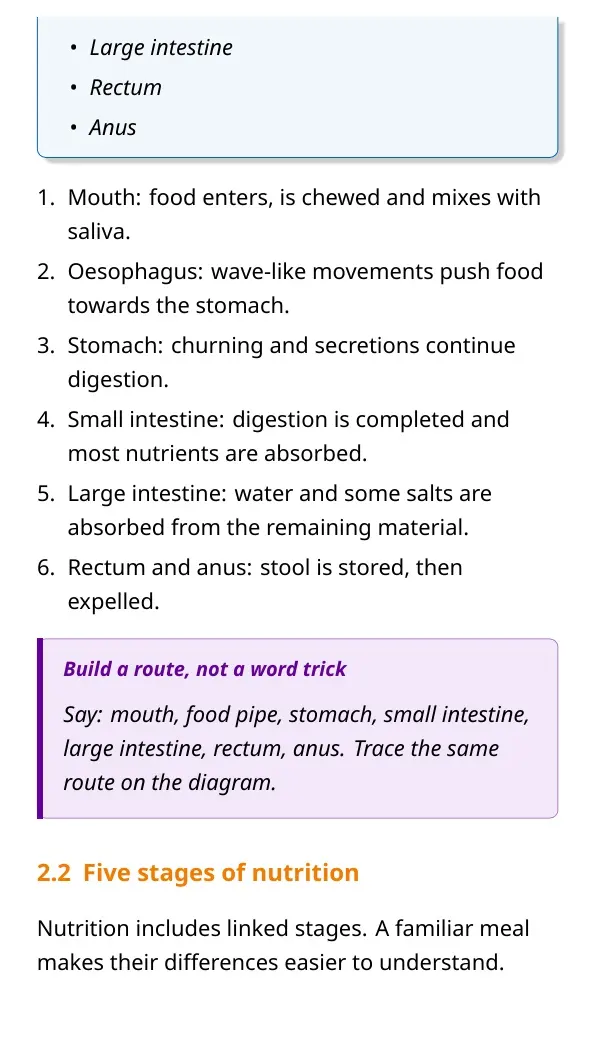
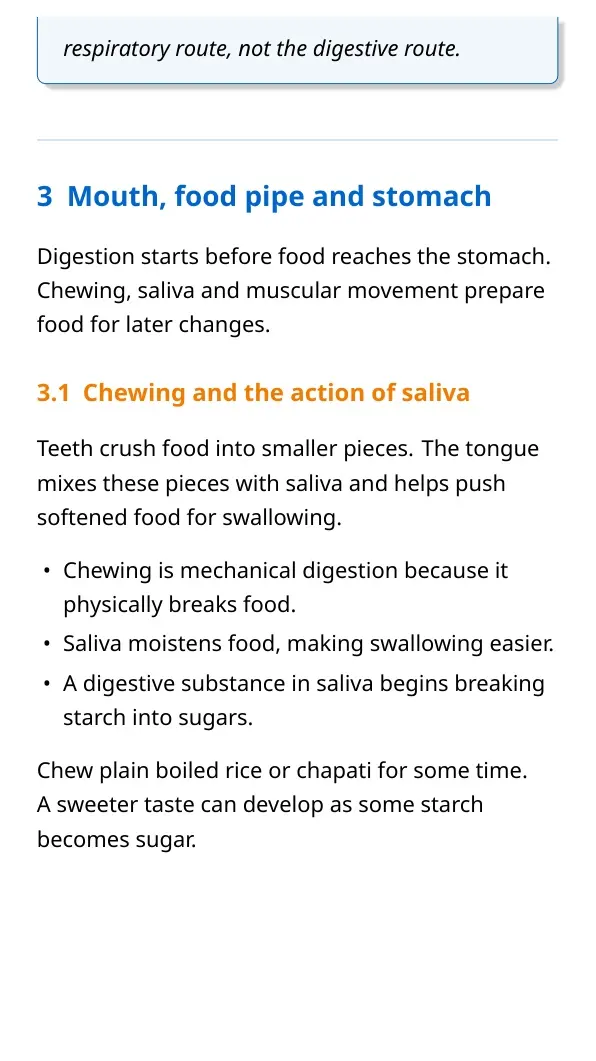
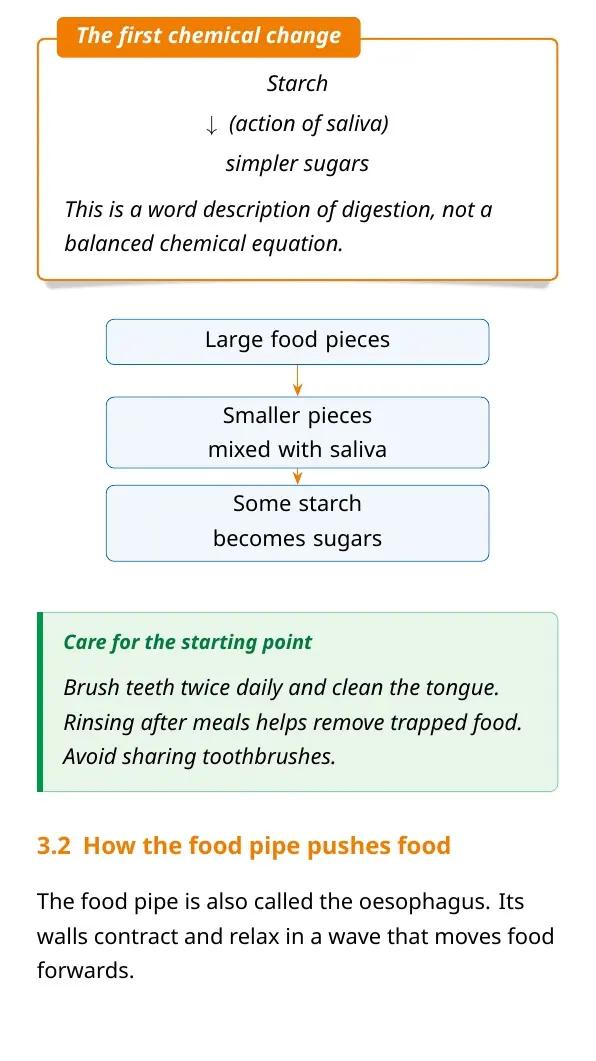
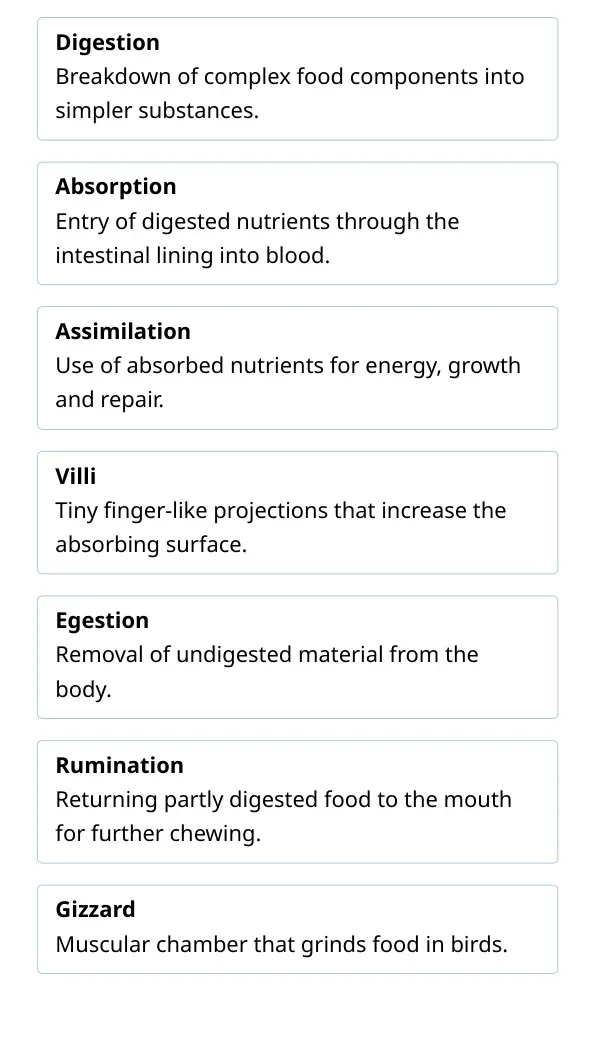
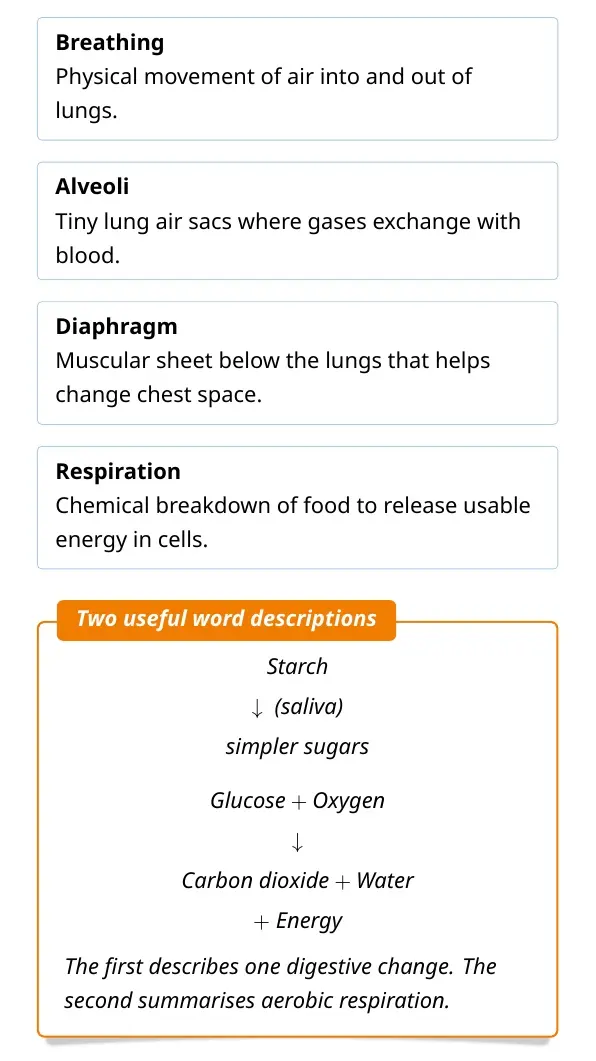
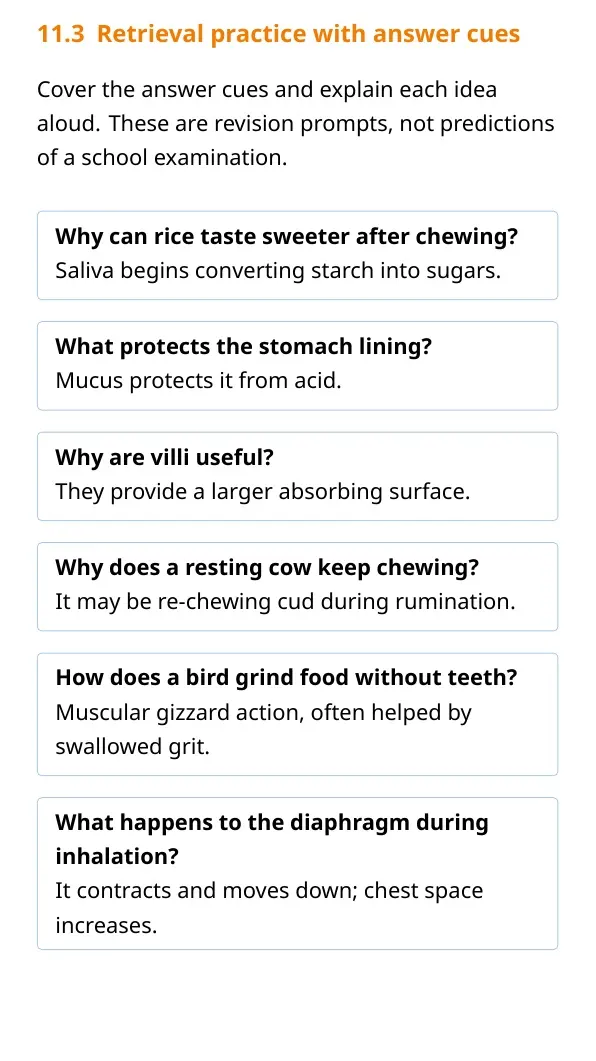
Digestion breaks complex food into simpler substances. Teeth crush food in the mouth. Saliva moistens it and starts changing starch into sugars. This explains why chewed chapati can taste sweet. The tongue mixes food with saliva and helps you swallow.
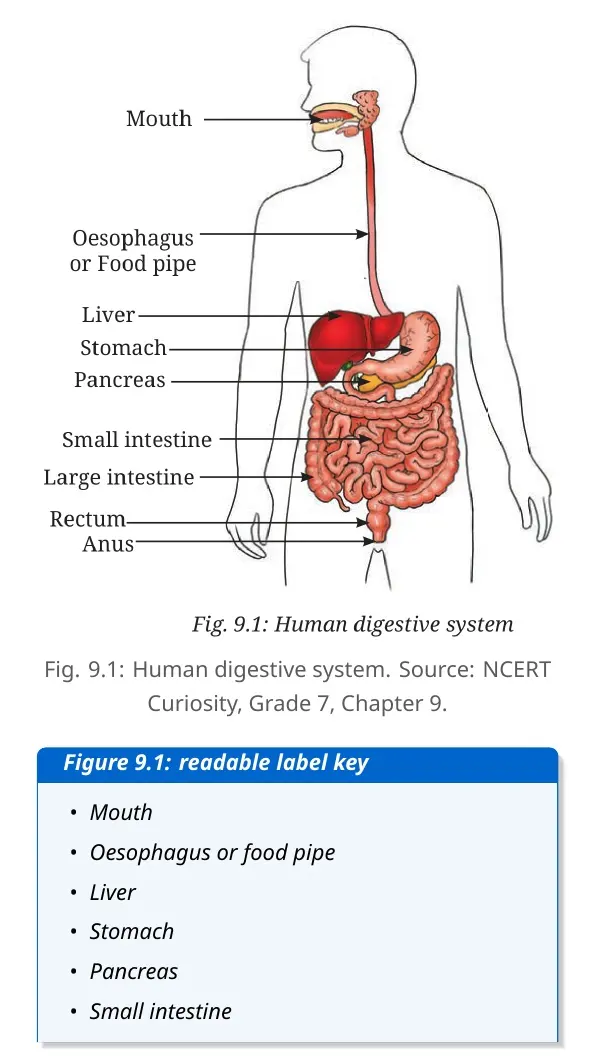
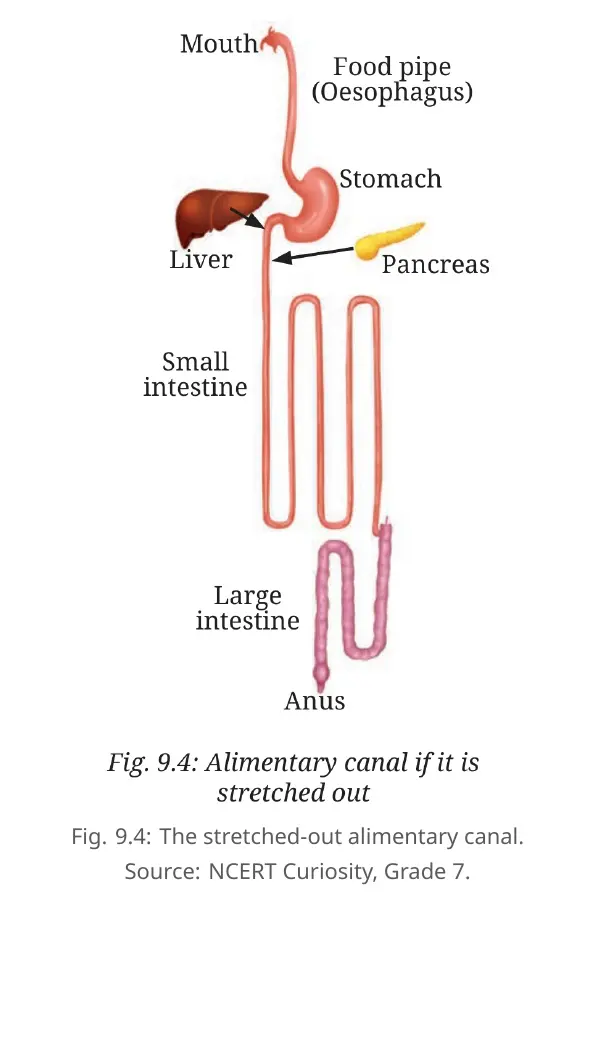
| Part | Role in digestion |
|---|---|
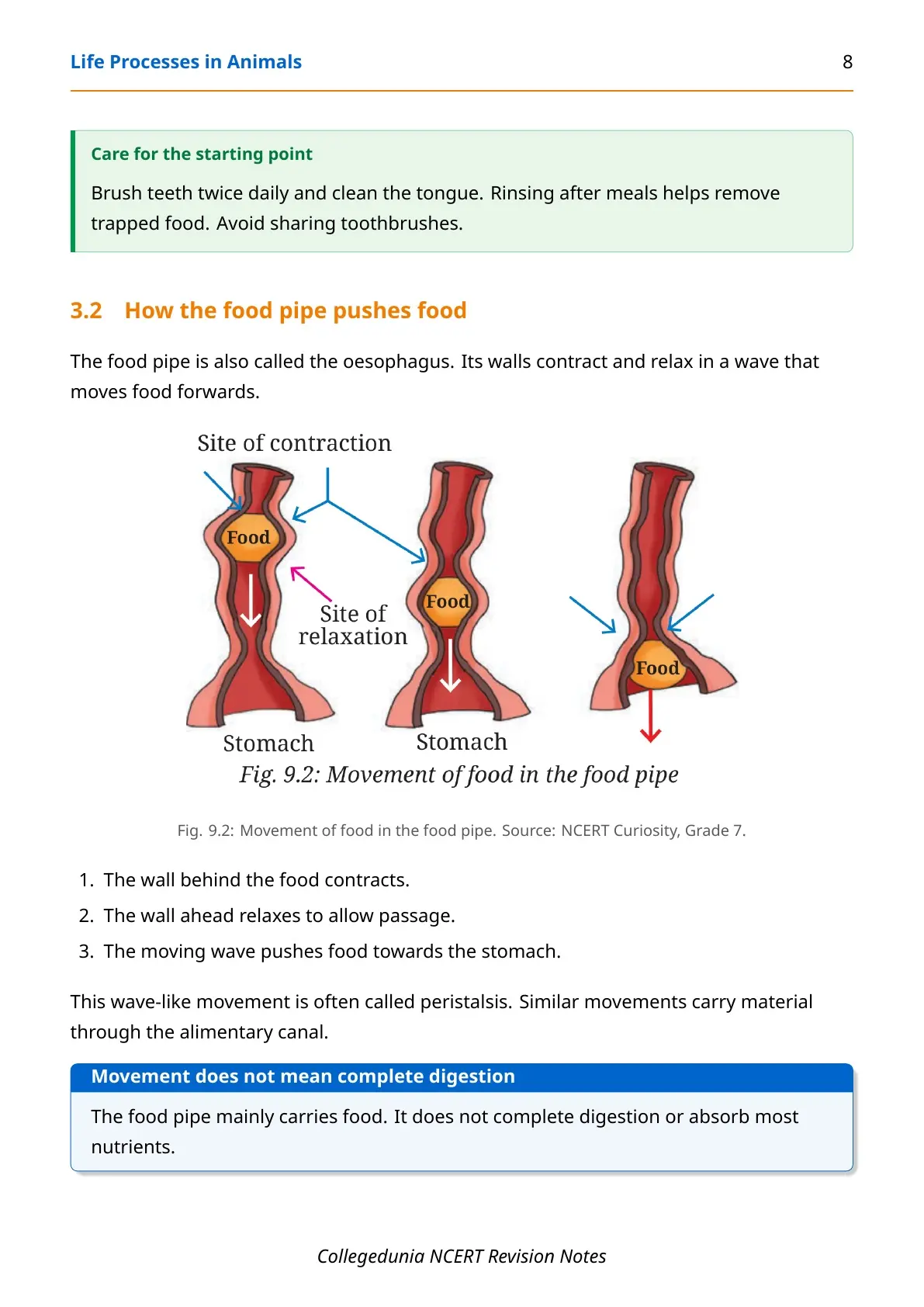
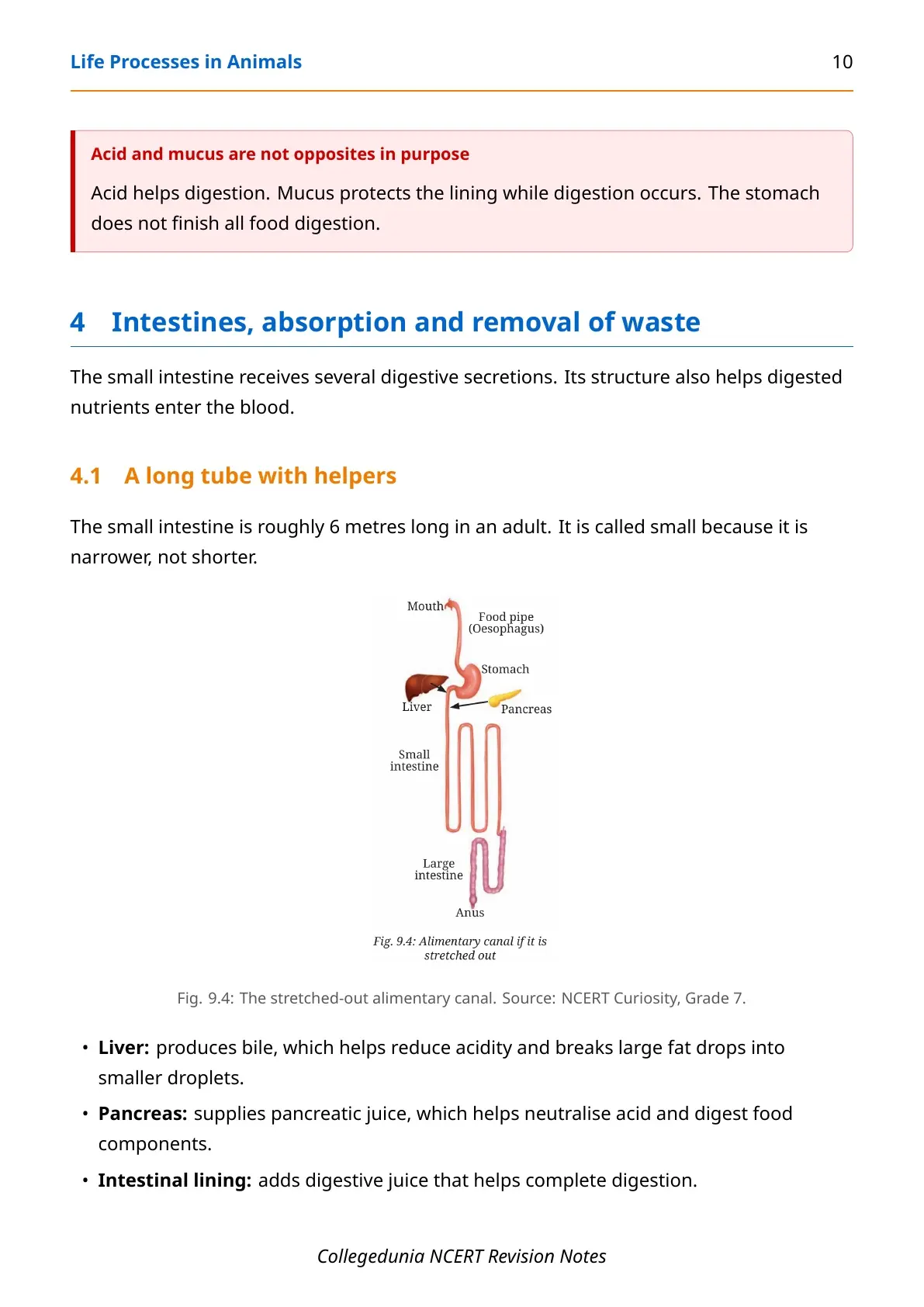
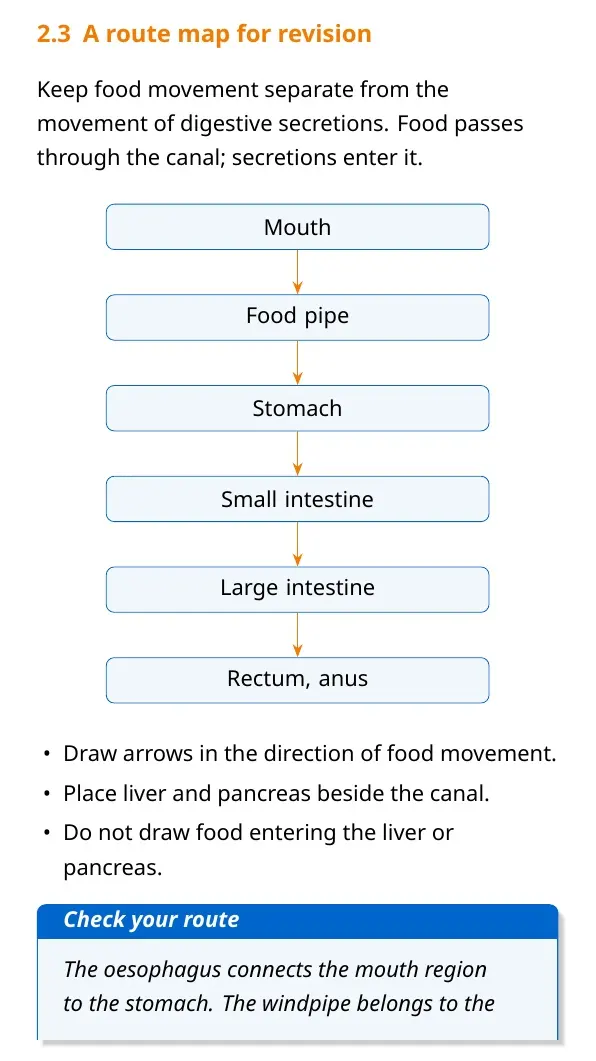
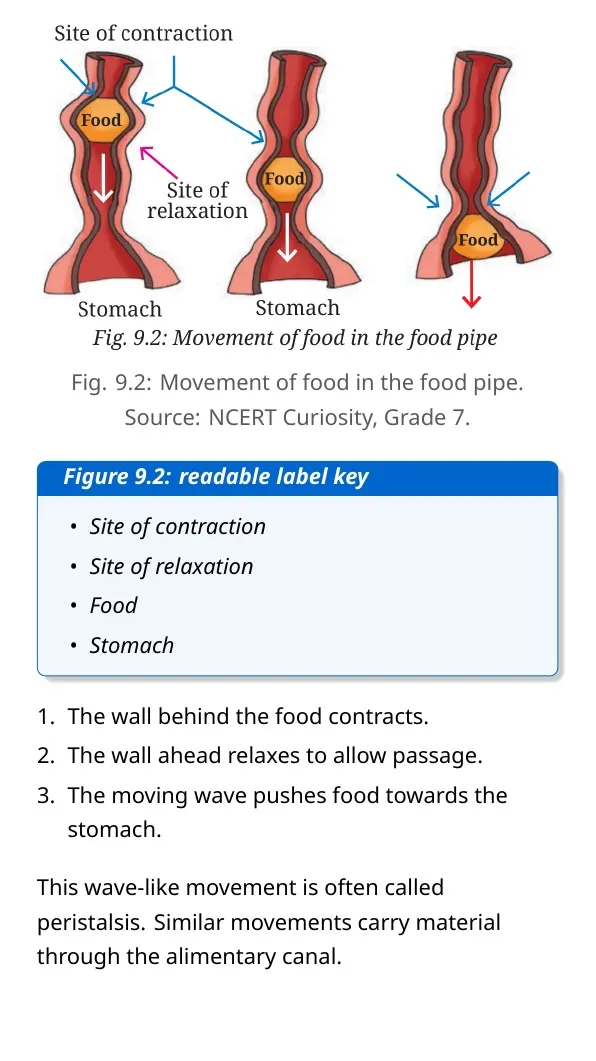
| Food pipe or oesophagus | Wave-like contraction and relaxation push food towards the stomach. |
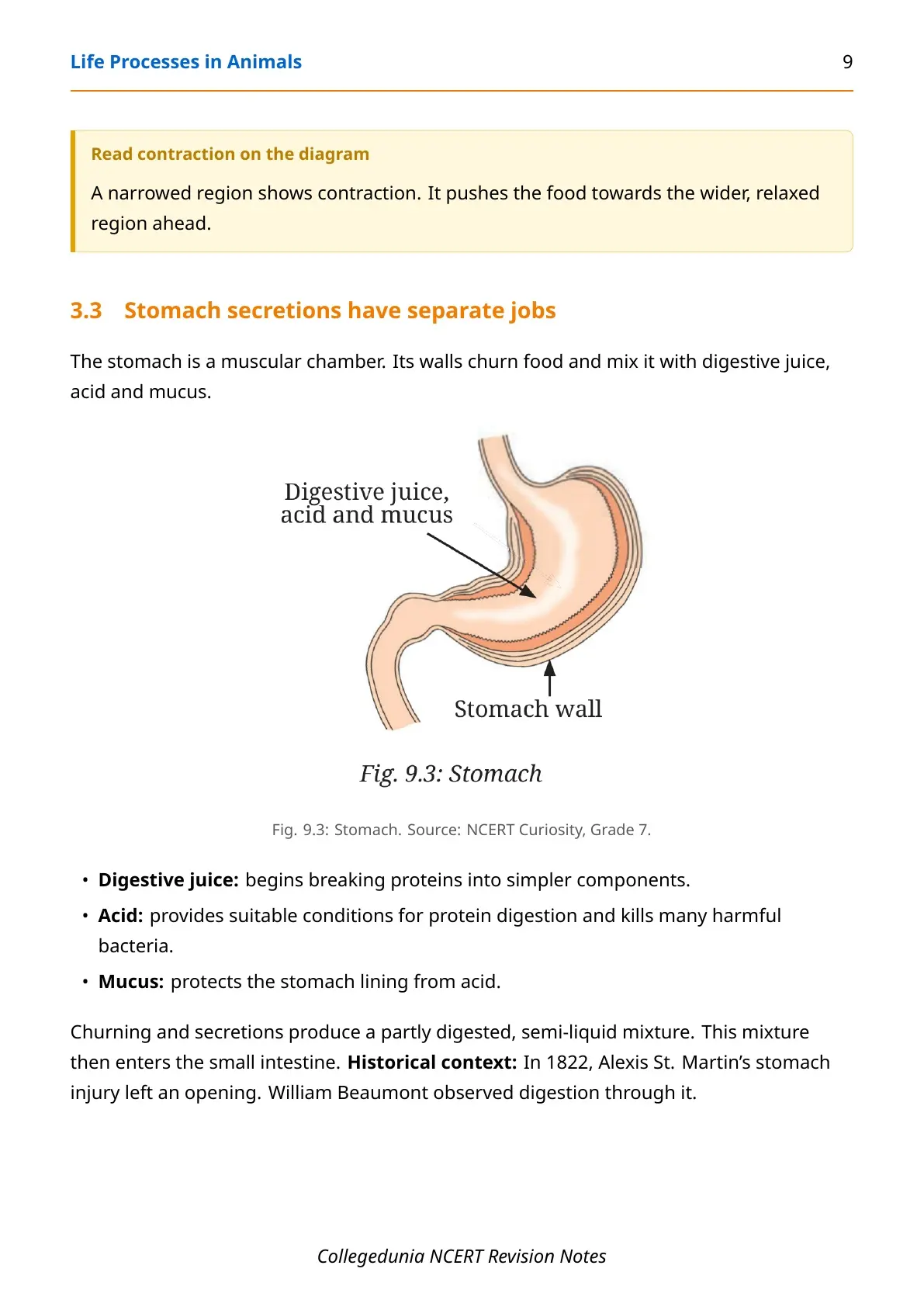
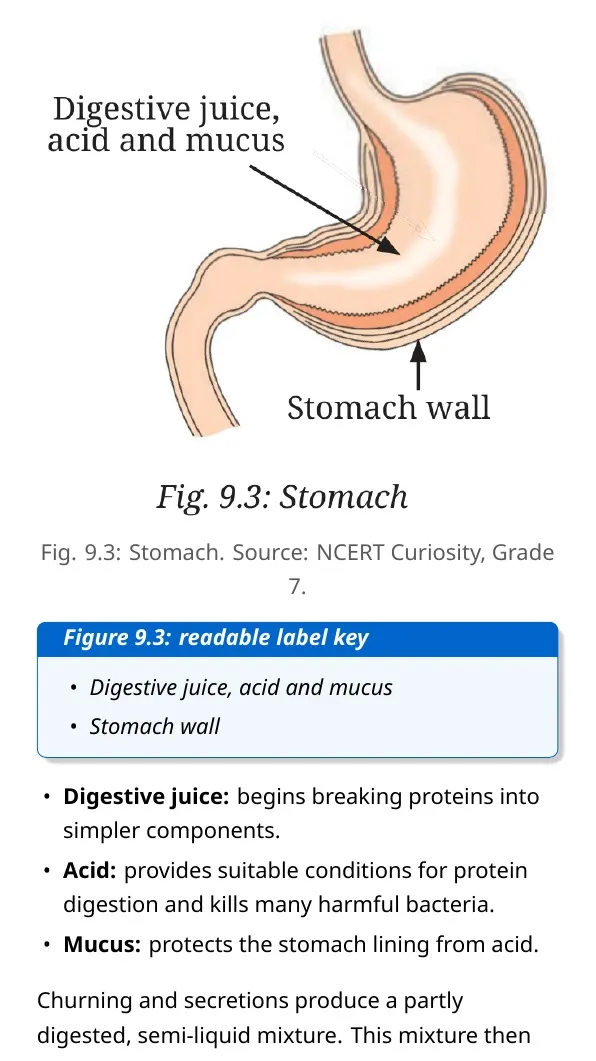
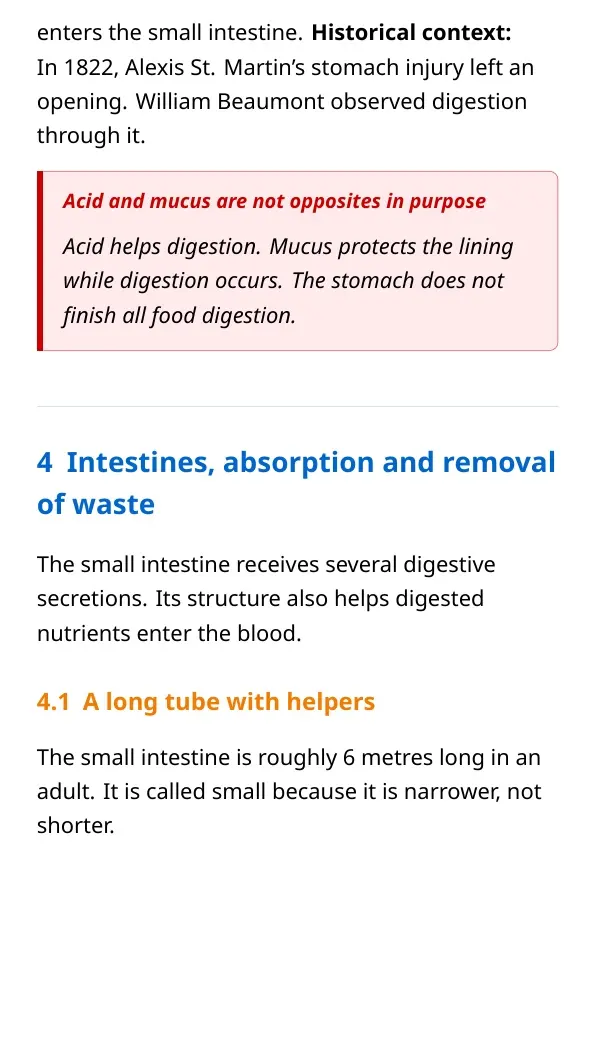
| Stomach | Churns food; digestive juice acts on proteins. Acid helps digestion and kills many harmful bacteria; mucus protects the lining. |
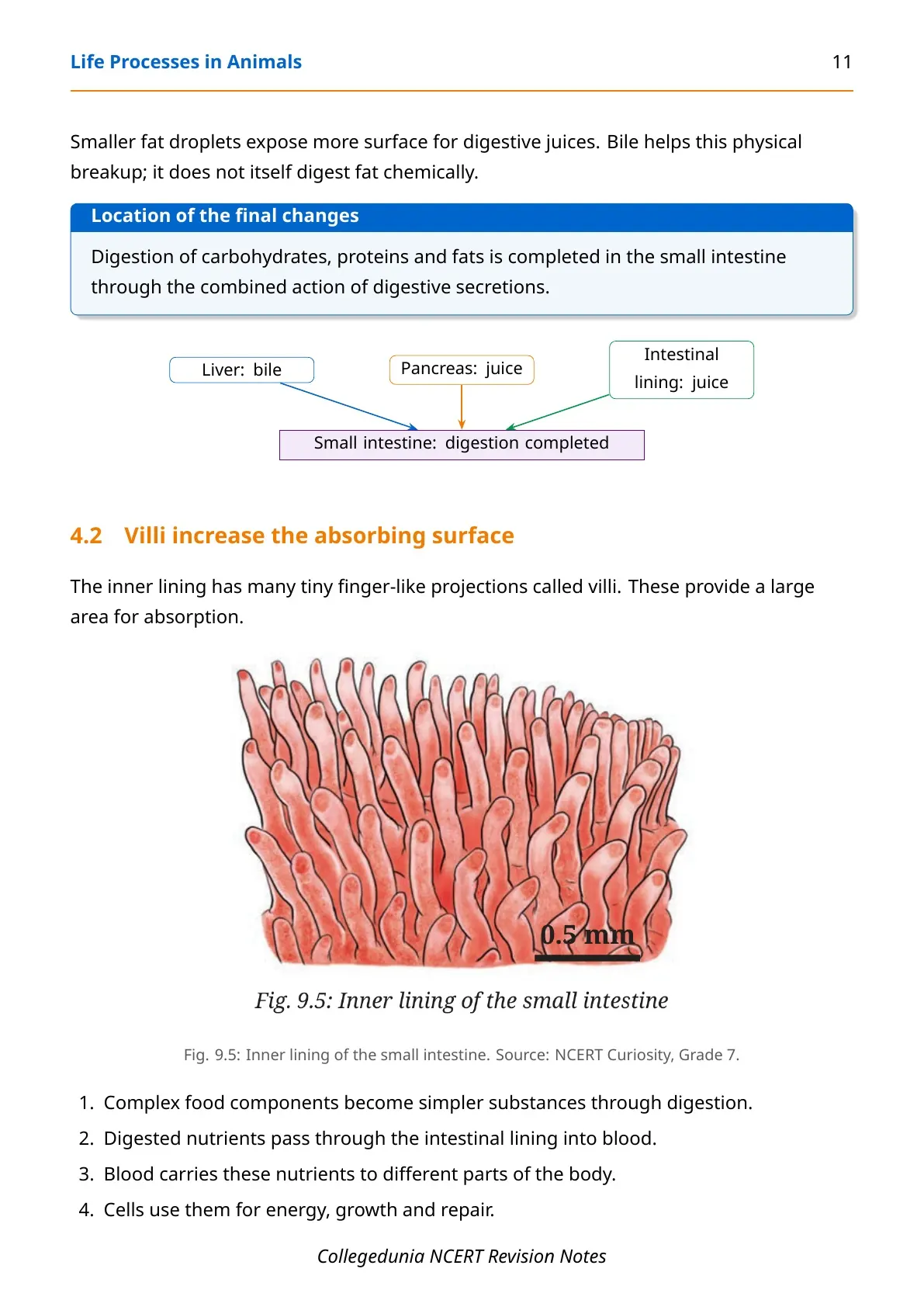
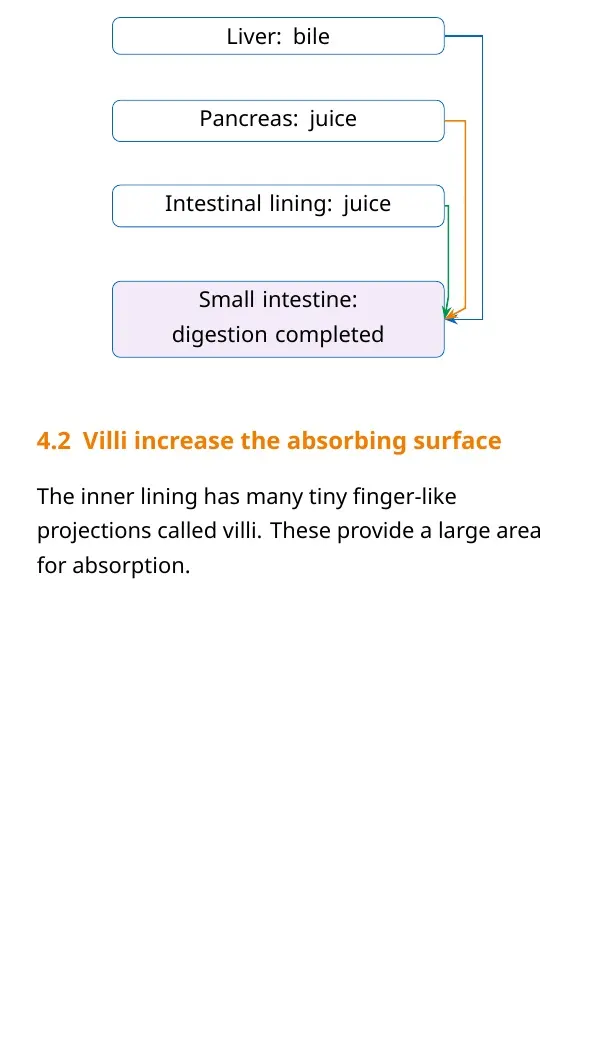
| Small intestine | Receives secretions from its lining, liver and pancreas. Digestion finishes here; its walls absorb nutrients. |
| Large intestine | Absorbs most remaining water and some salts from undigested food. |
| Rectum and anus | Waste is stored in the rectum and leaves through the anus. |
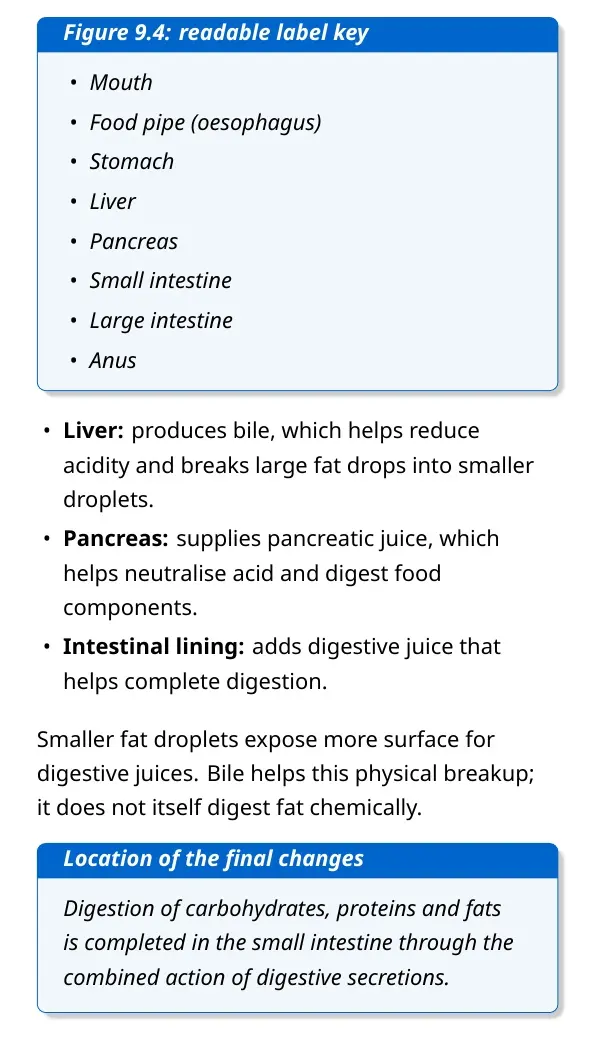
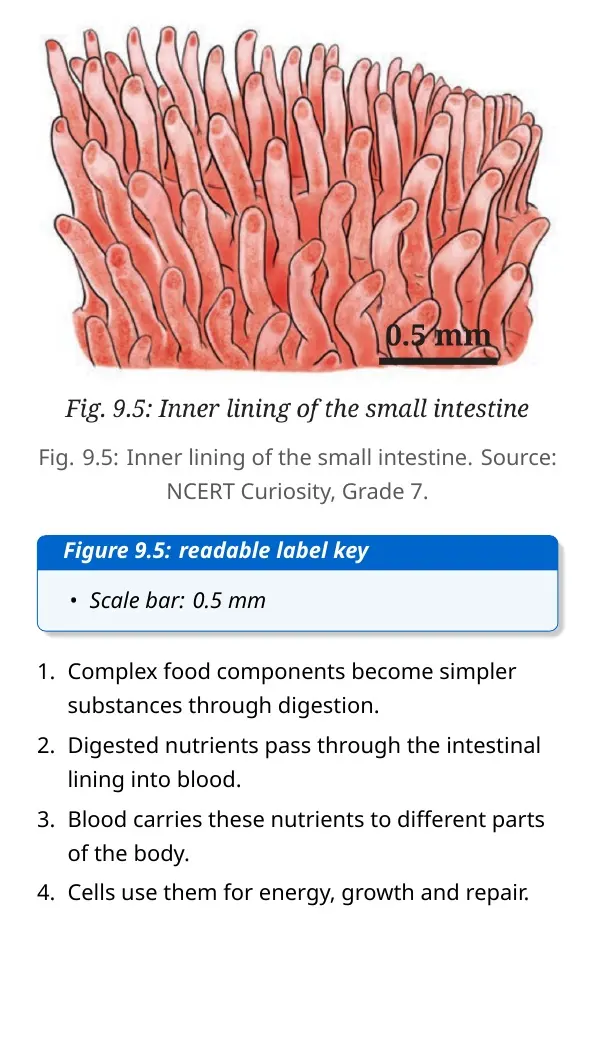
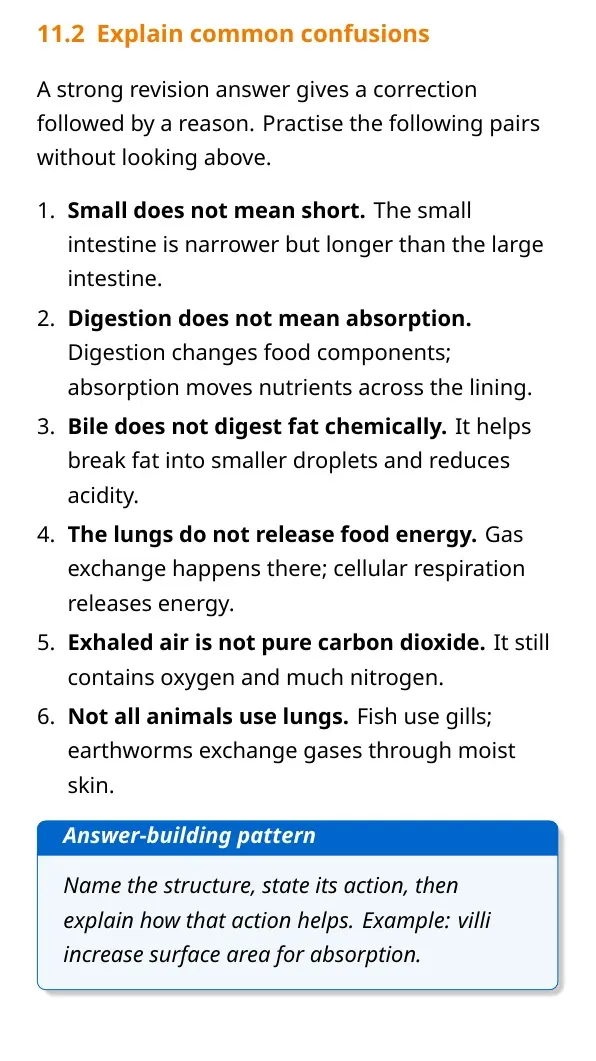
The small intestine is the main site of nutrient absorption. Blood carries absorbed nutrients to body parts. Bile from the liver helps neutralise acidic food and breaks fat into tiny droplets. Pancreatic juice helps digest carbohydrates, proteins and fats.
Nutrition in Animals Explained for Class 7
Source: Magnet Brains on YouTube
Life Processes in Animals: Food Habits and Adaptations
Animals obtain food in different ways. A sunbird sucks nectar, while a python swallows its prey. Their feeding structures suit their food.
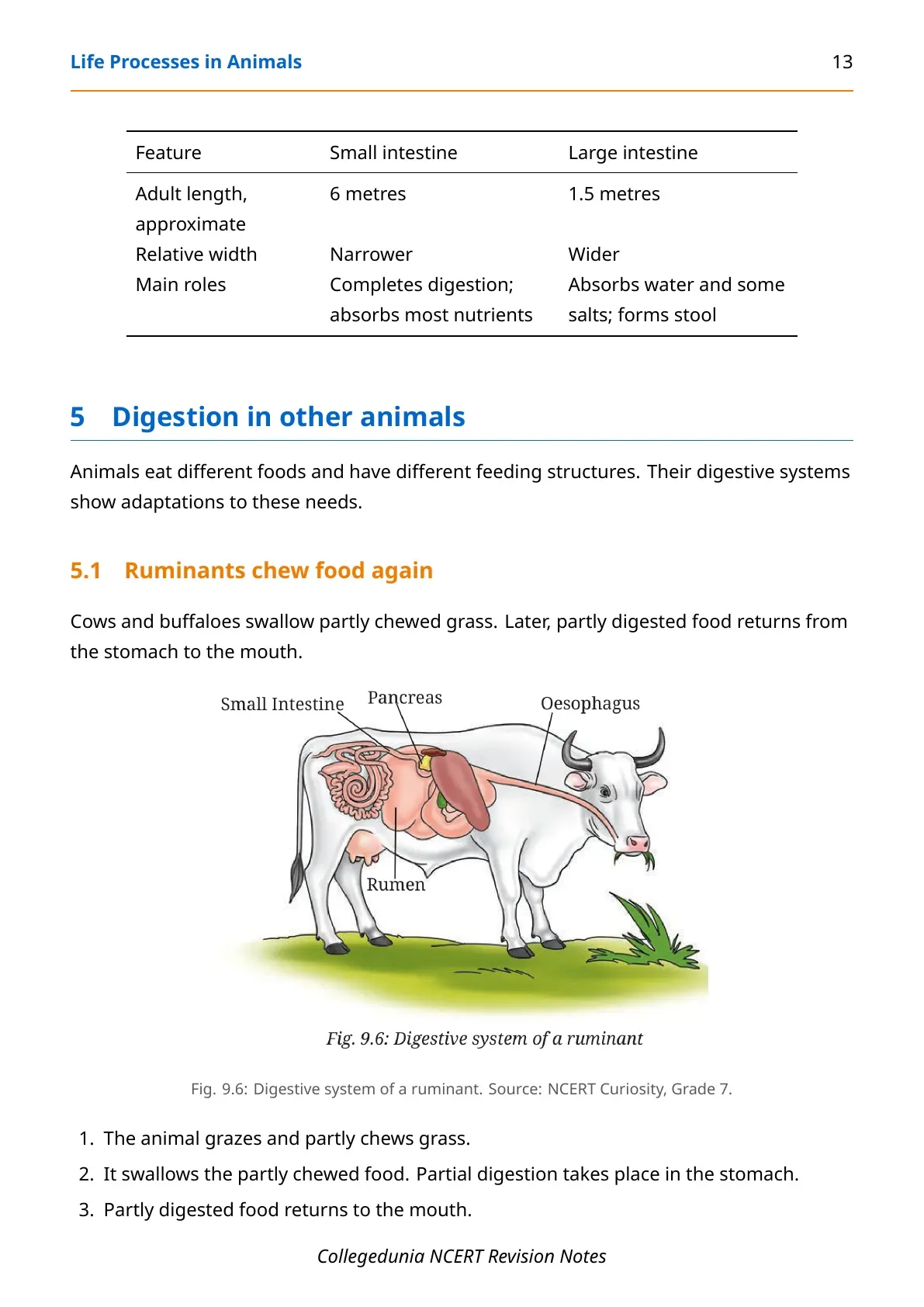
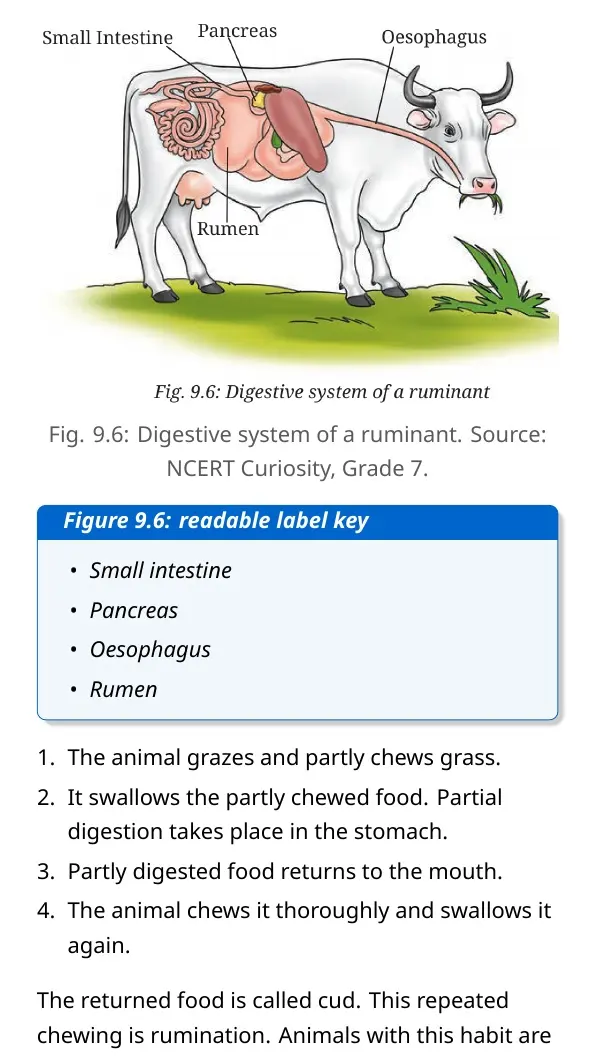
- Ruminants: cows and goats swallow partly chewed food, return it to the mouth and chew it again.
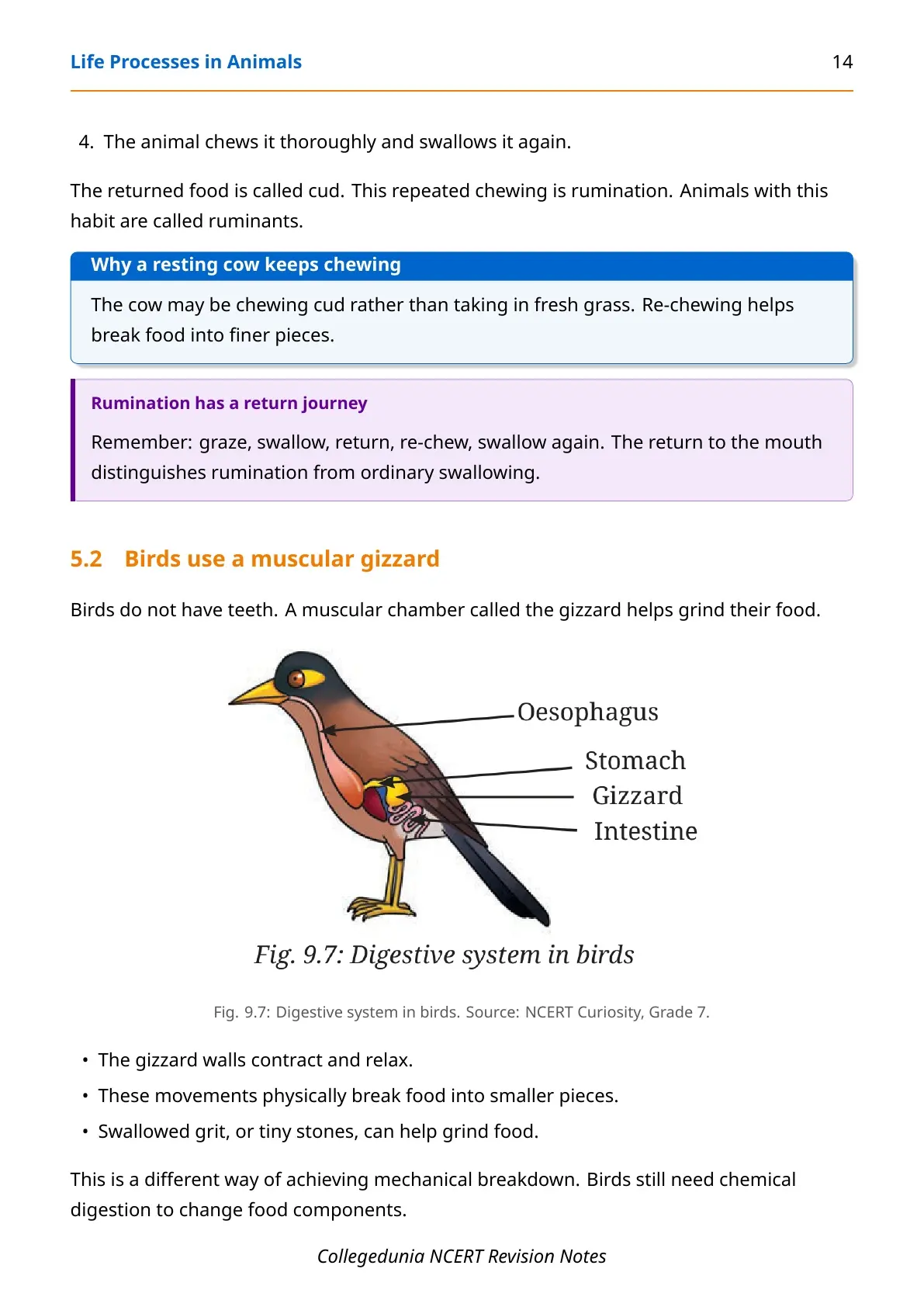
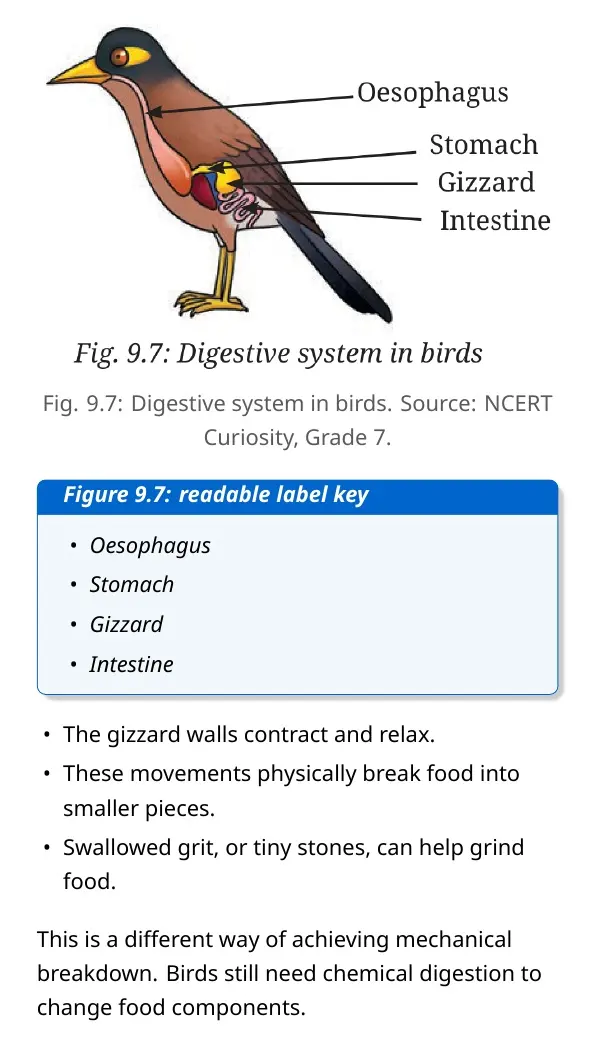
- Birds: use beaks instead of teeth; a muscular gizzard helps grind food.
- Amoeba: surrounds food with temporary projections called pseudopodia; digestion takes place in a food vacuole.
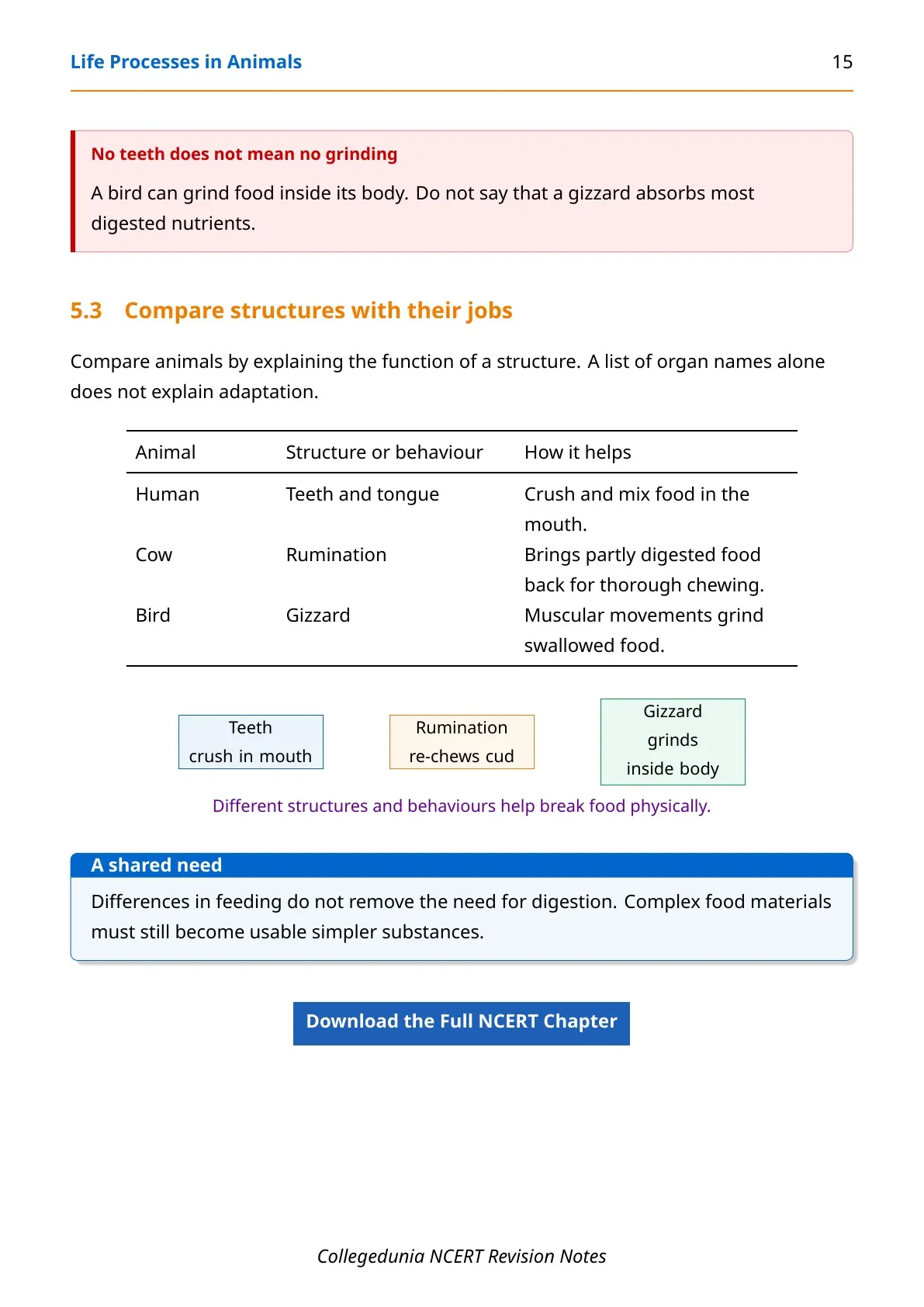
Match the structure to its job when answering comparison questions. Avoid writing that all animals have a digestive system identical to ours.
Life Processes in Animals: Breathing and Energy Release
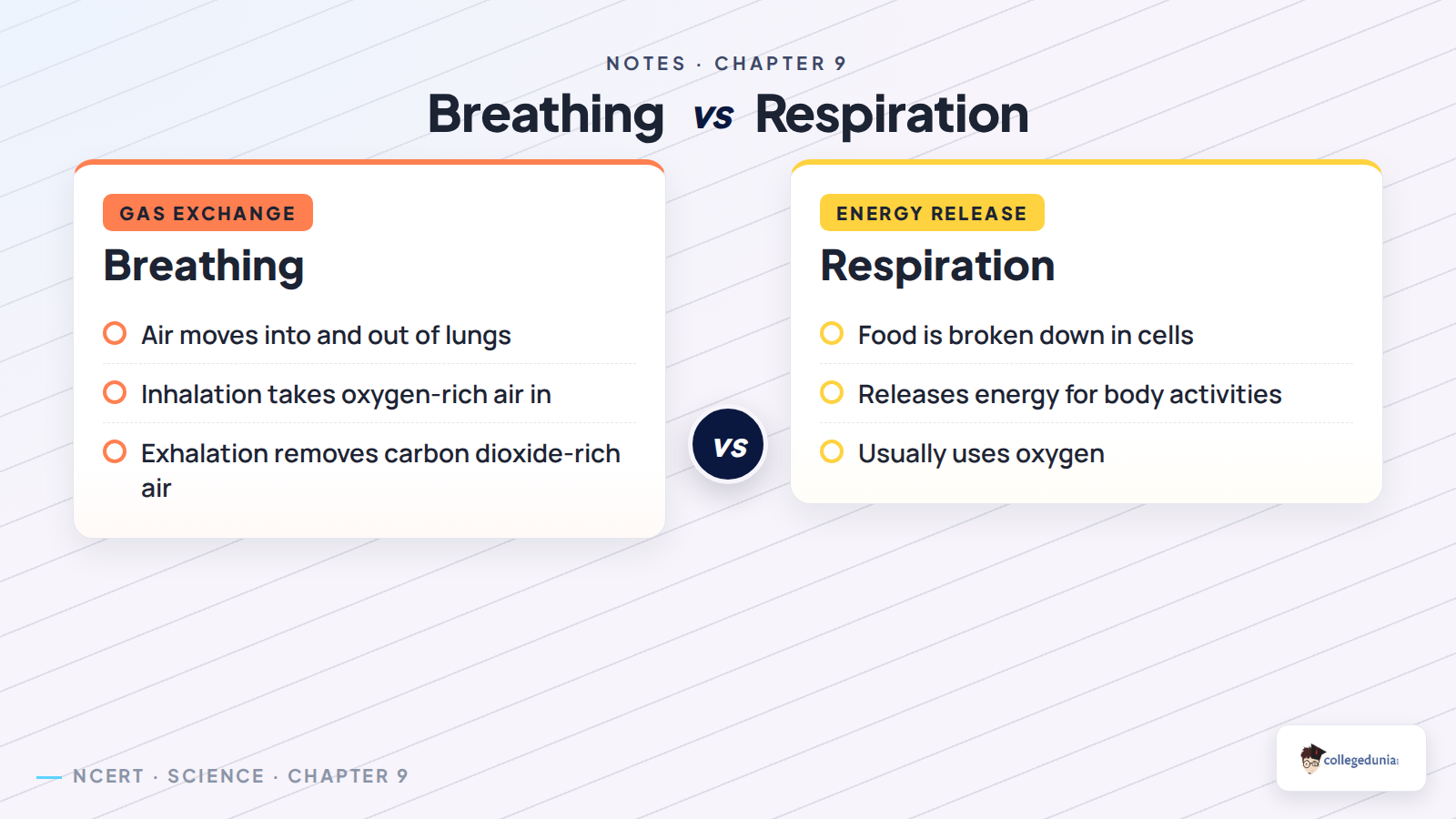
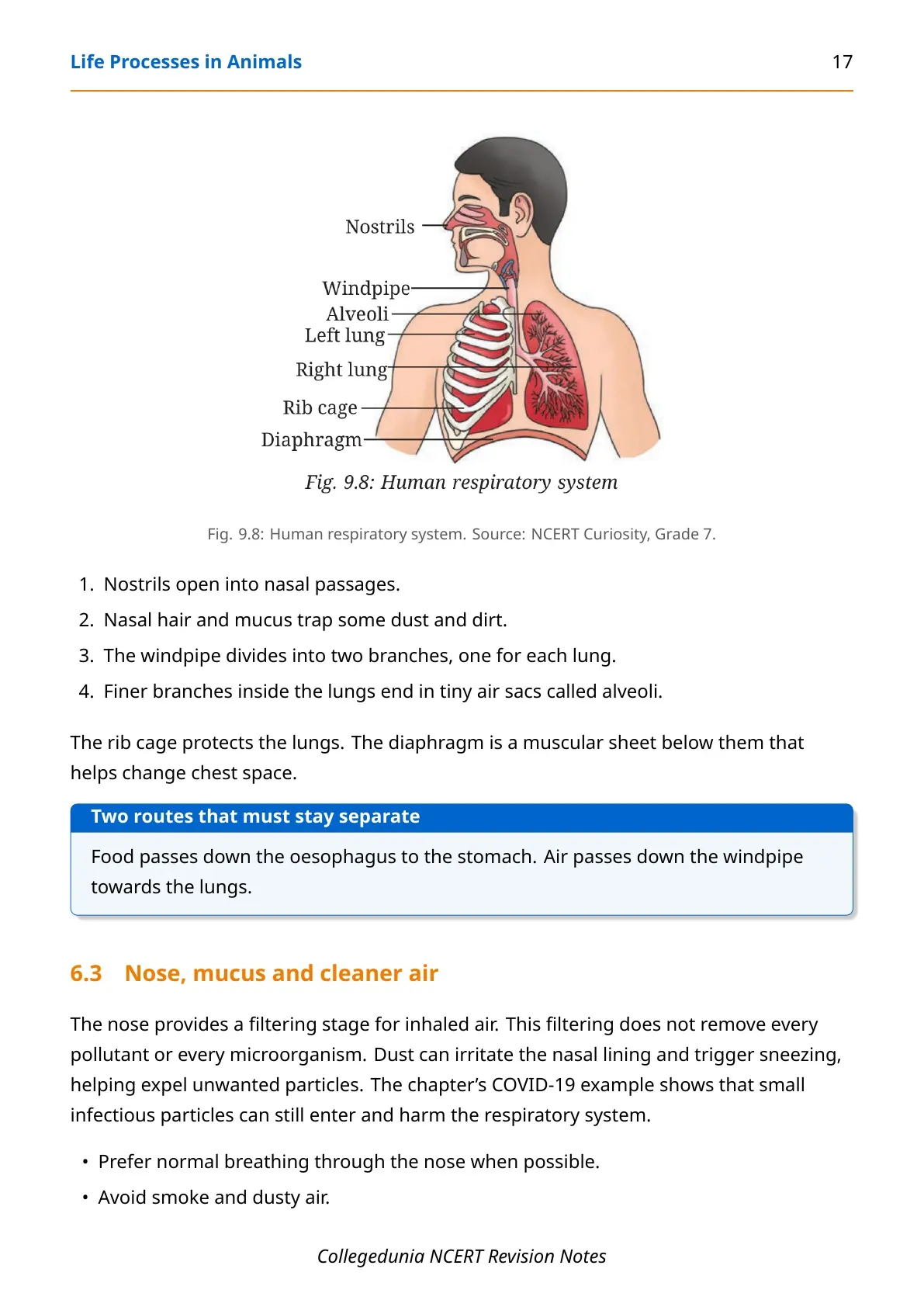
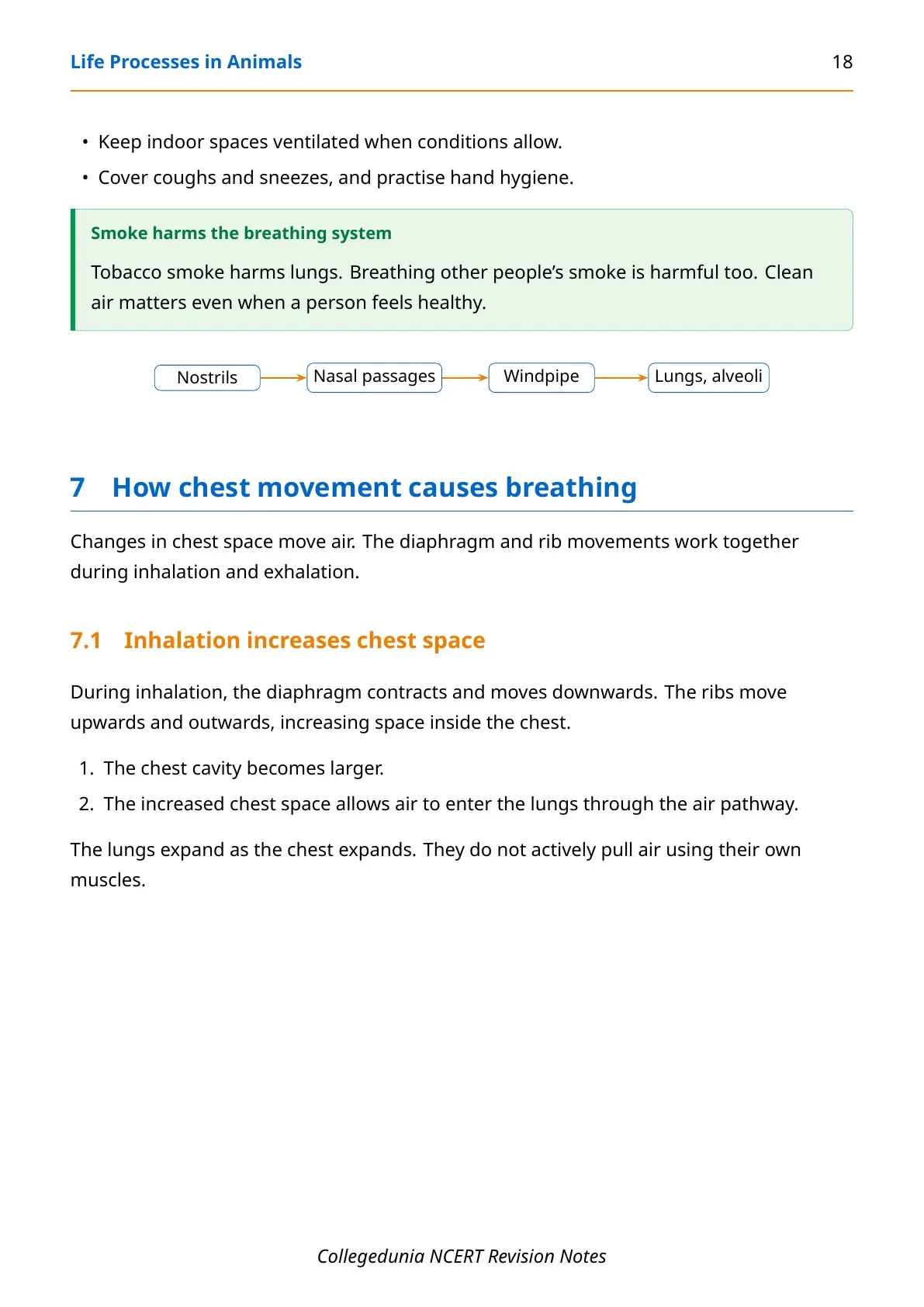
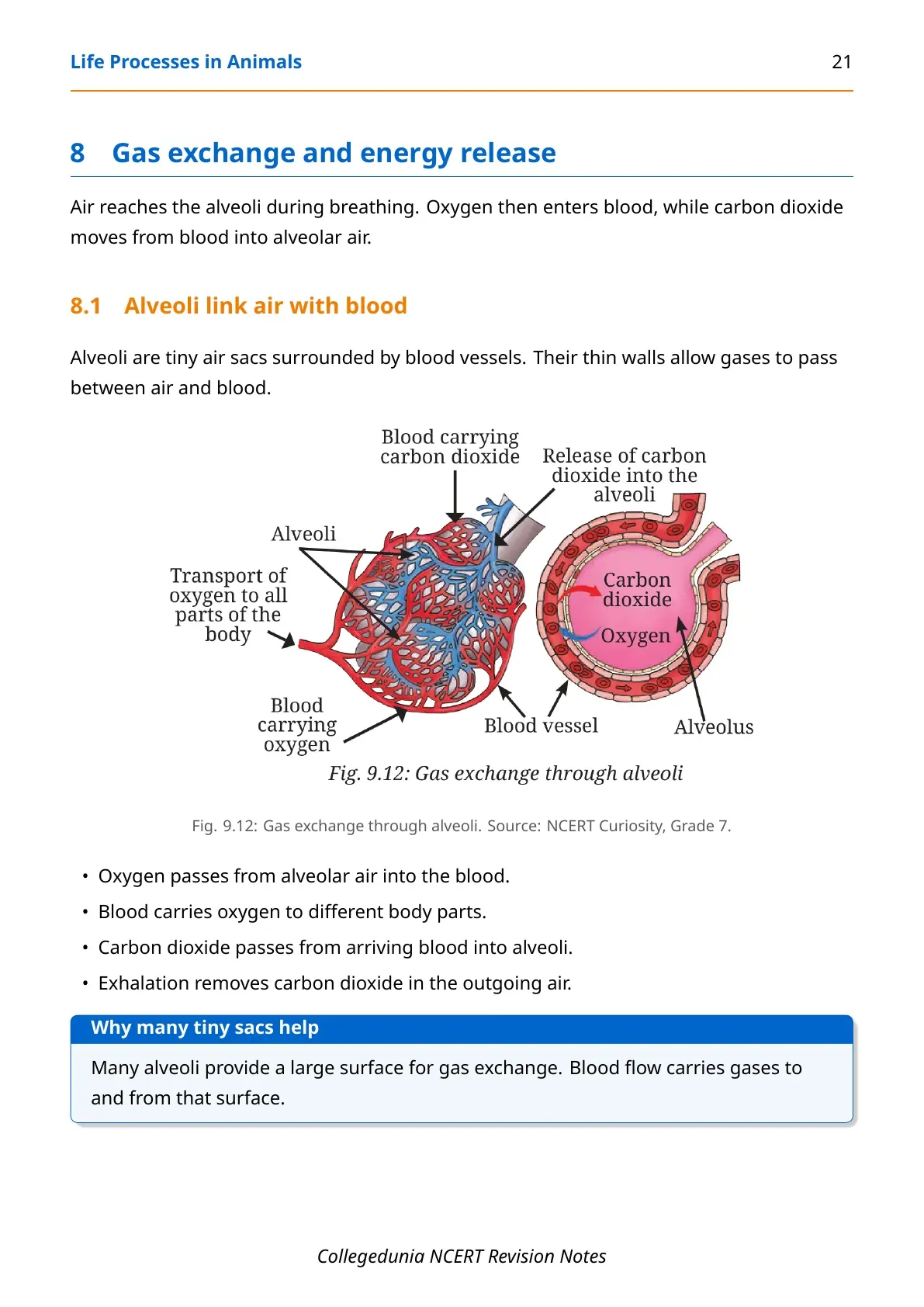
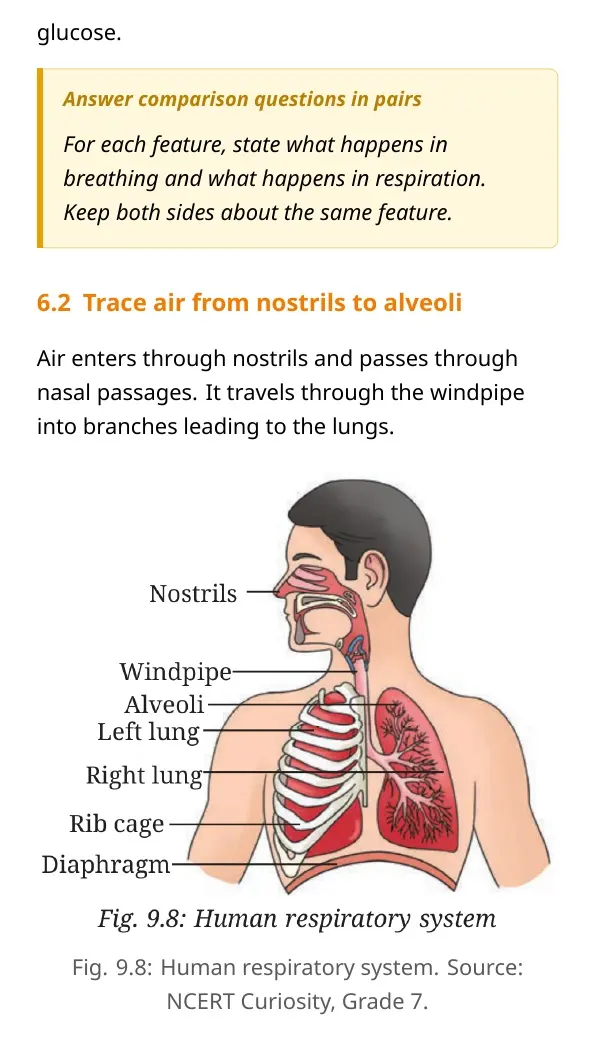
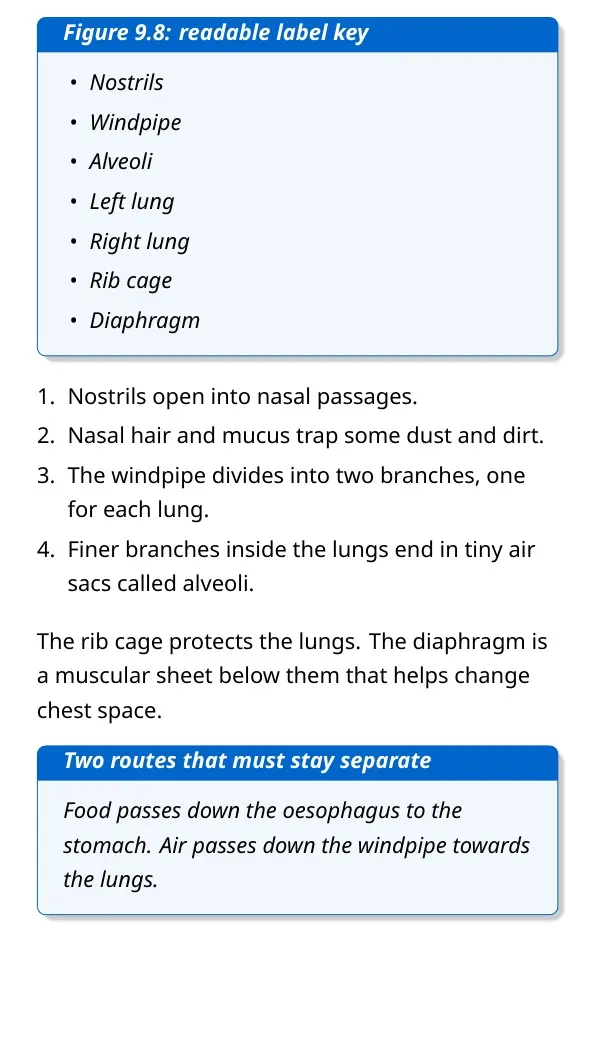
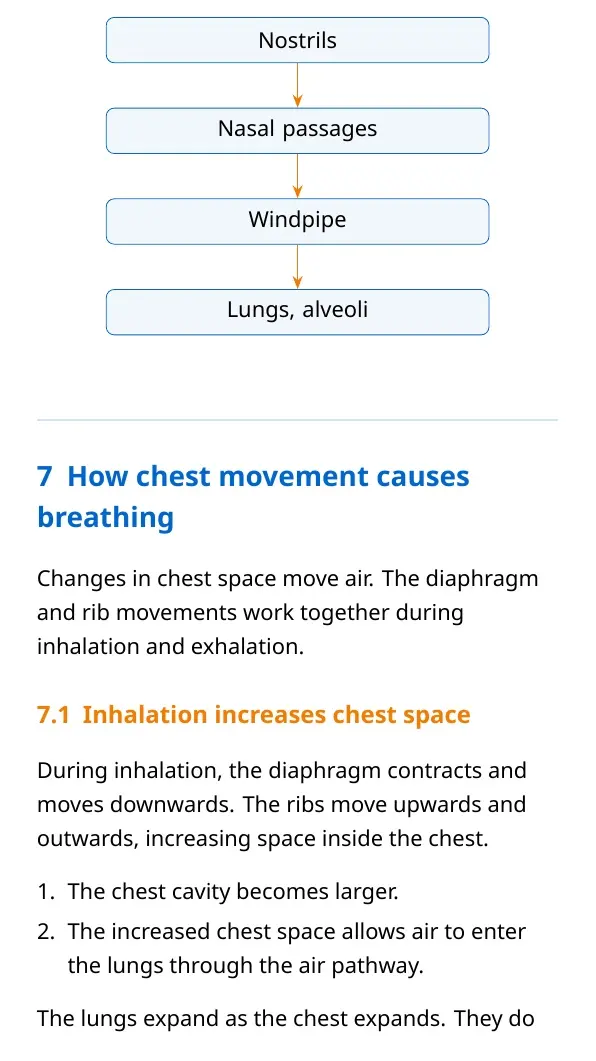
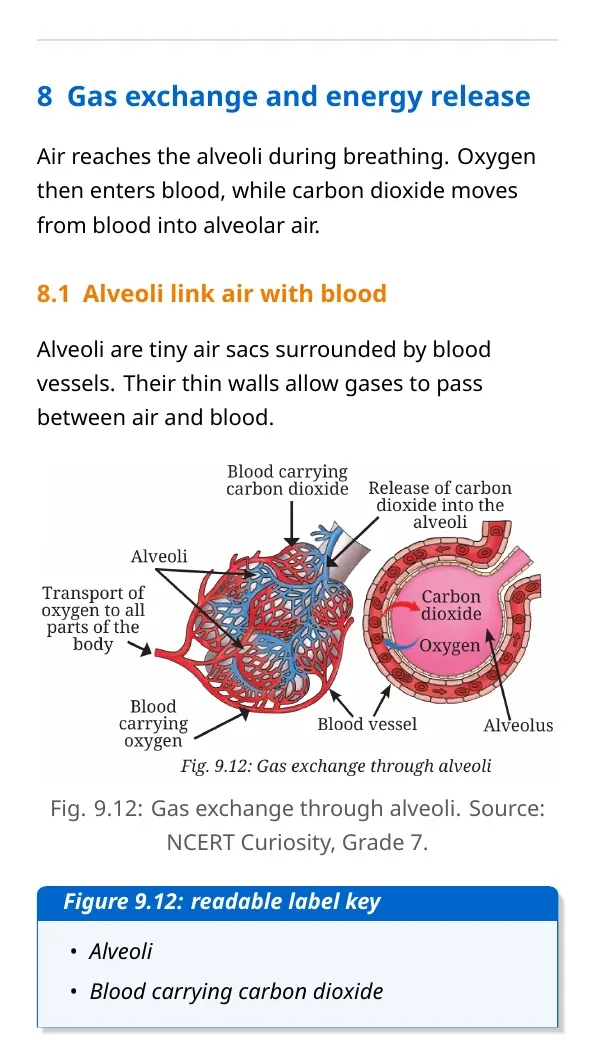
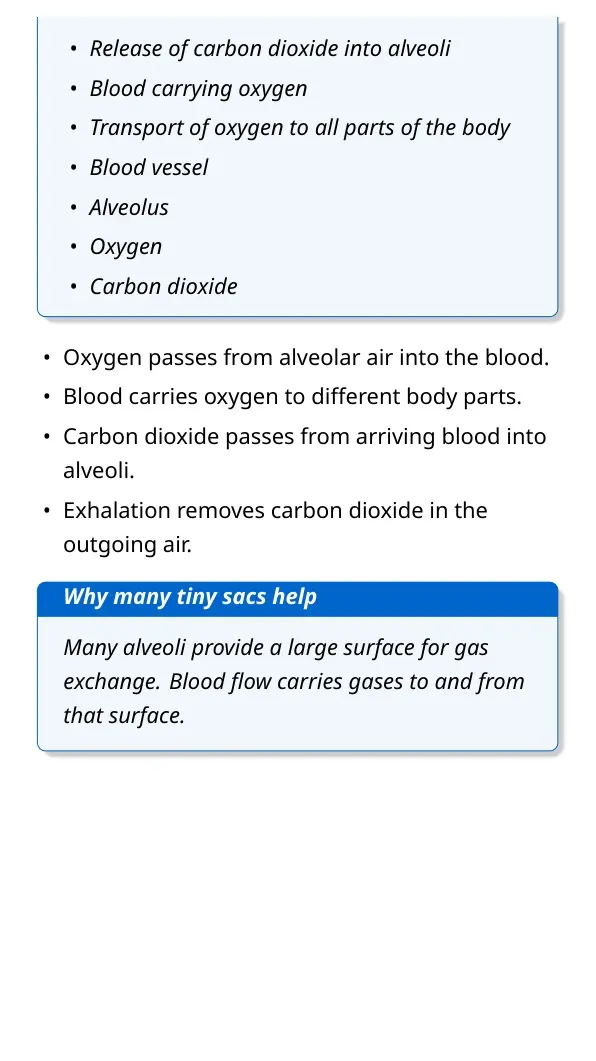
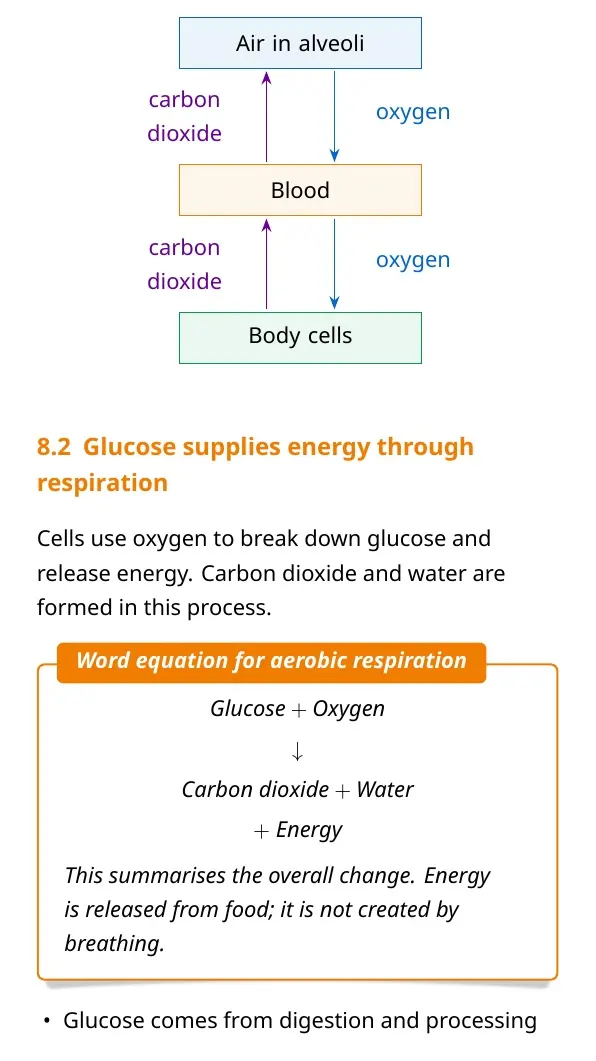
Air enters through the nostrils and nasal passages, where tiny hairs and mucus trap dust. It passes through the windpipe towards the lungs. The lungs contain tiny air sacs called alveoli. Oxygen passes into blood here, while carbon dioxide passes from blood into the air sacs.
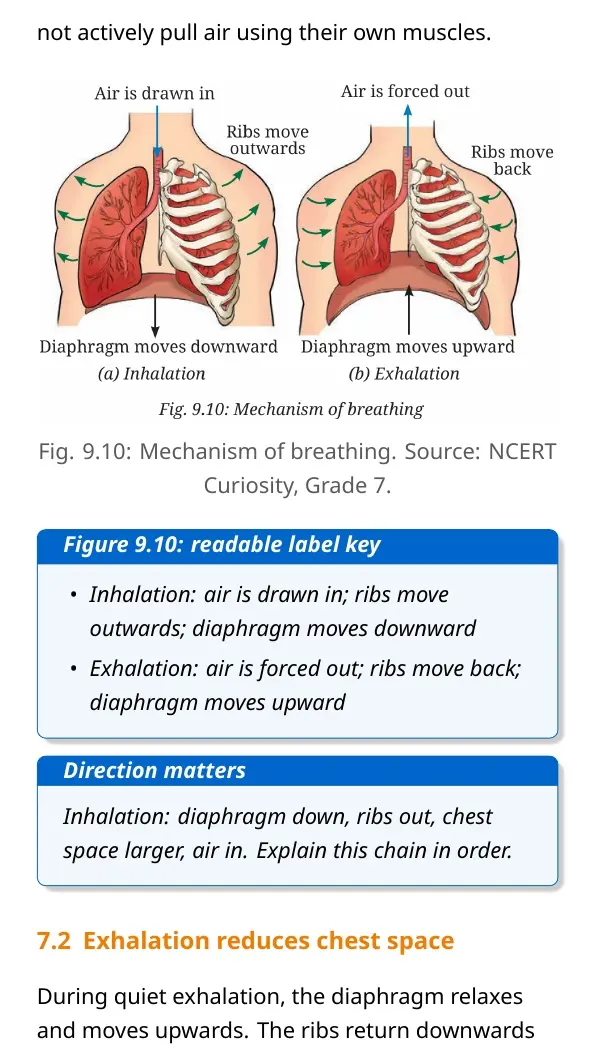
| Movement | Ribs and diaphragm | Result |
|---|---|---|
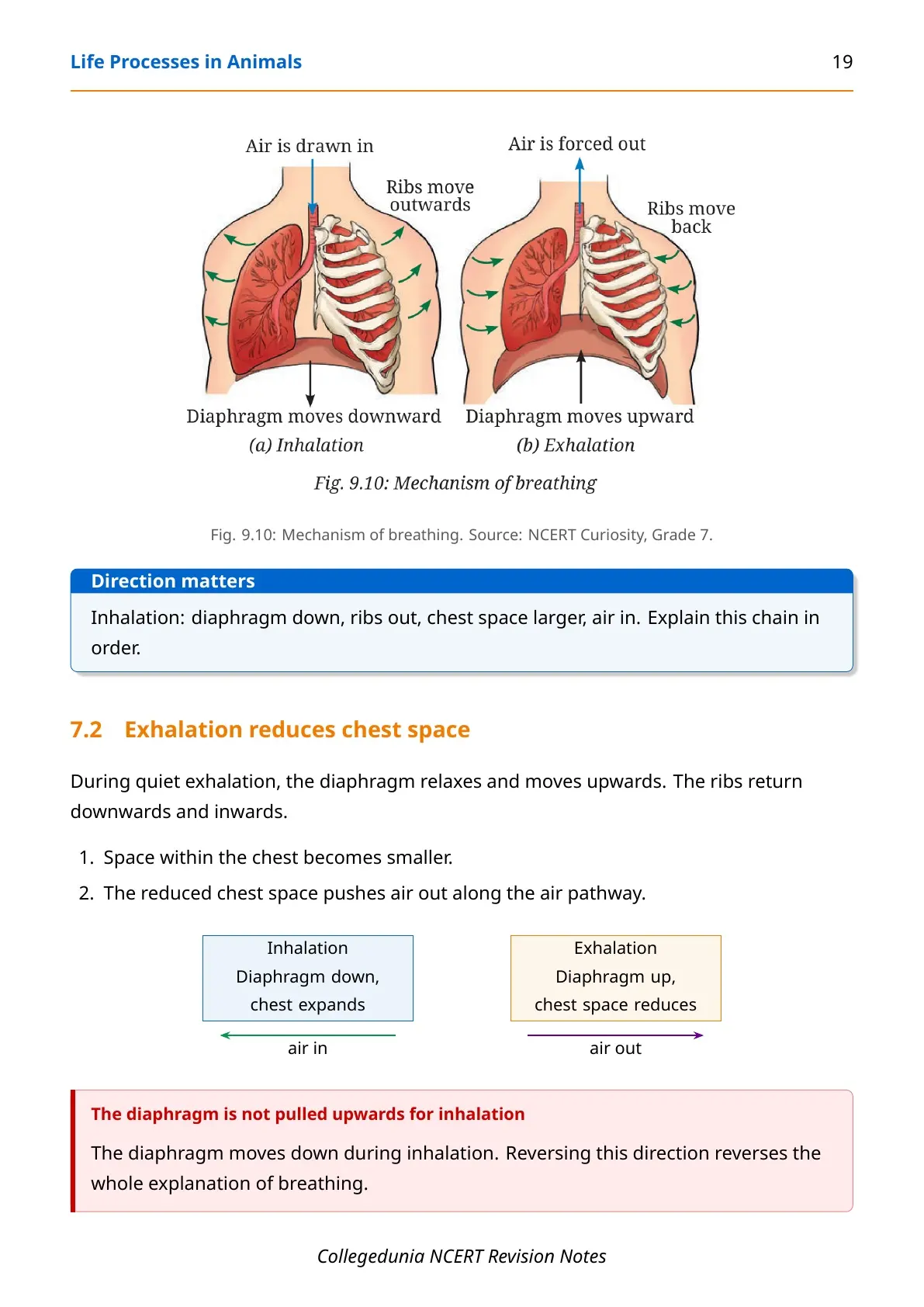
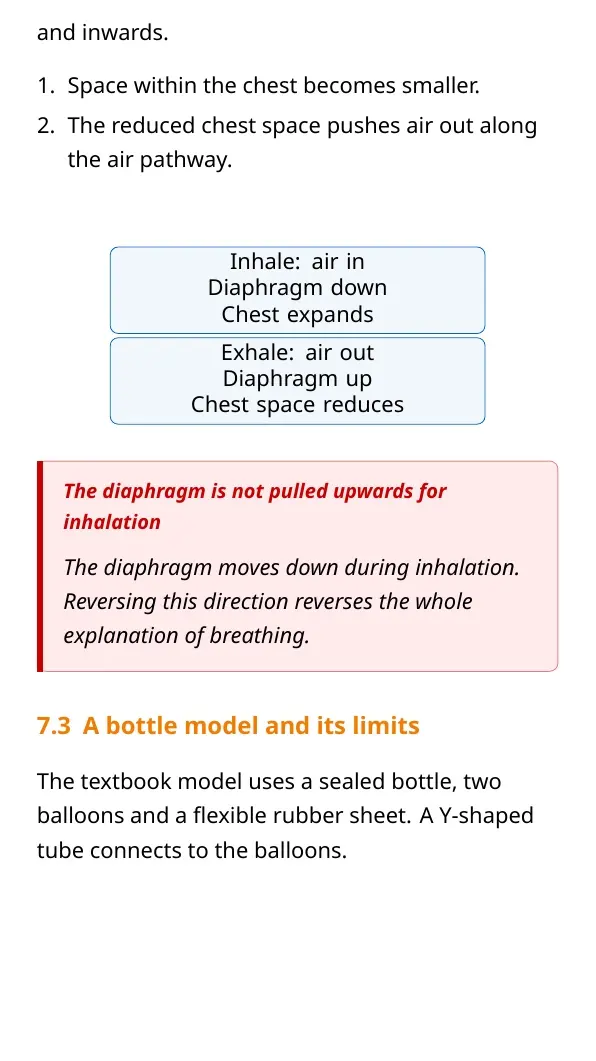
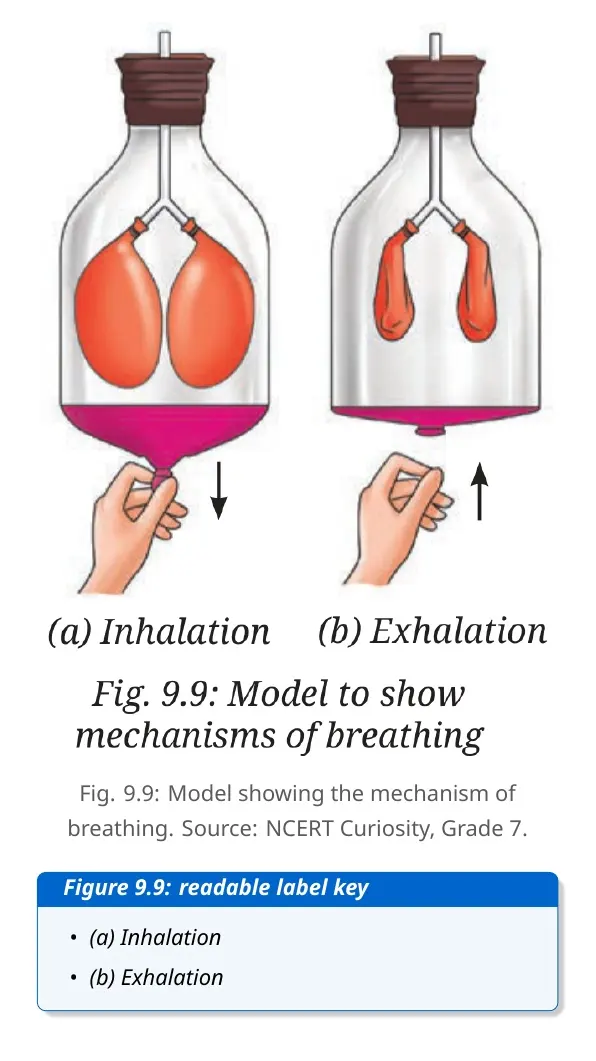
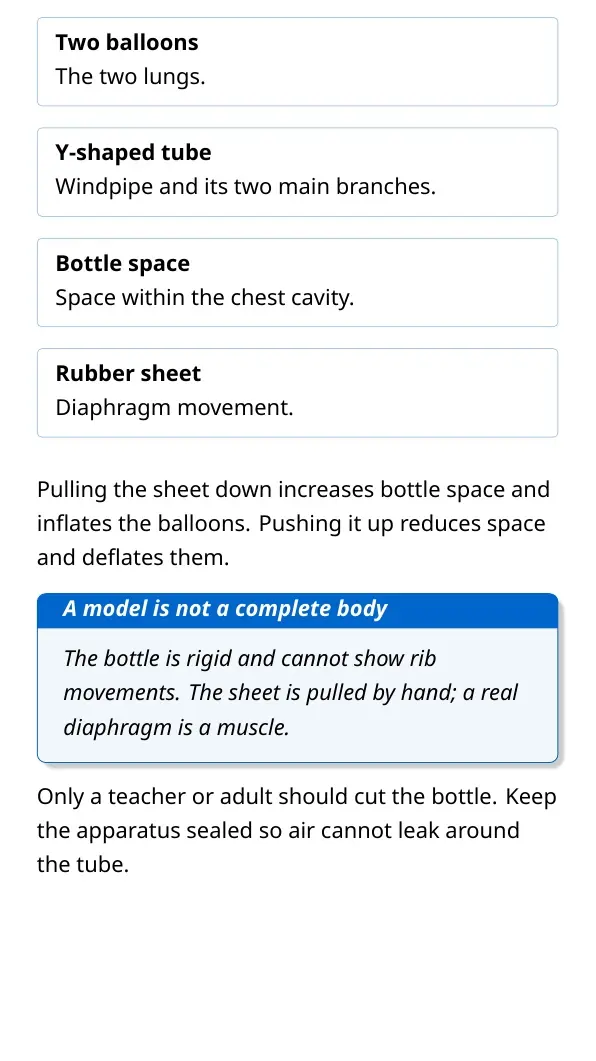
| Inhalation | Ribs move up and out; diaphragm moves down. | Chest space increases and air enters the lungs. |
| Exhalation | Ribs move down and in; diaphragm moves up. | Chest space decreases and air leaves the lungs. |
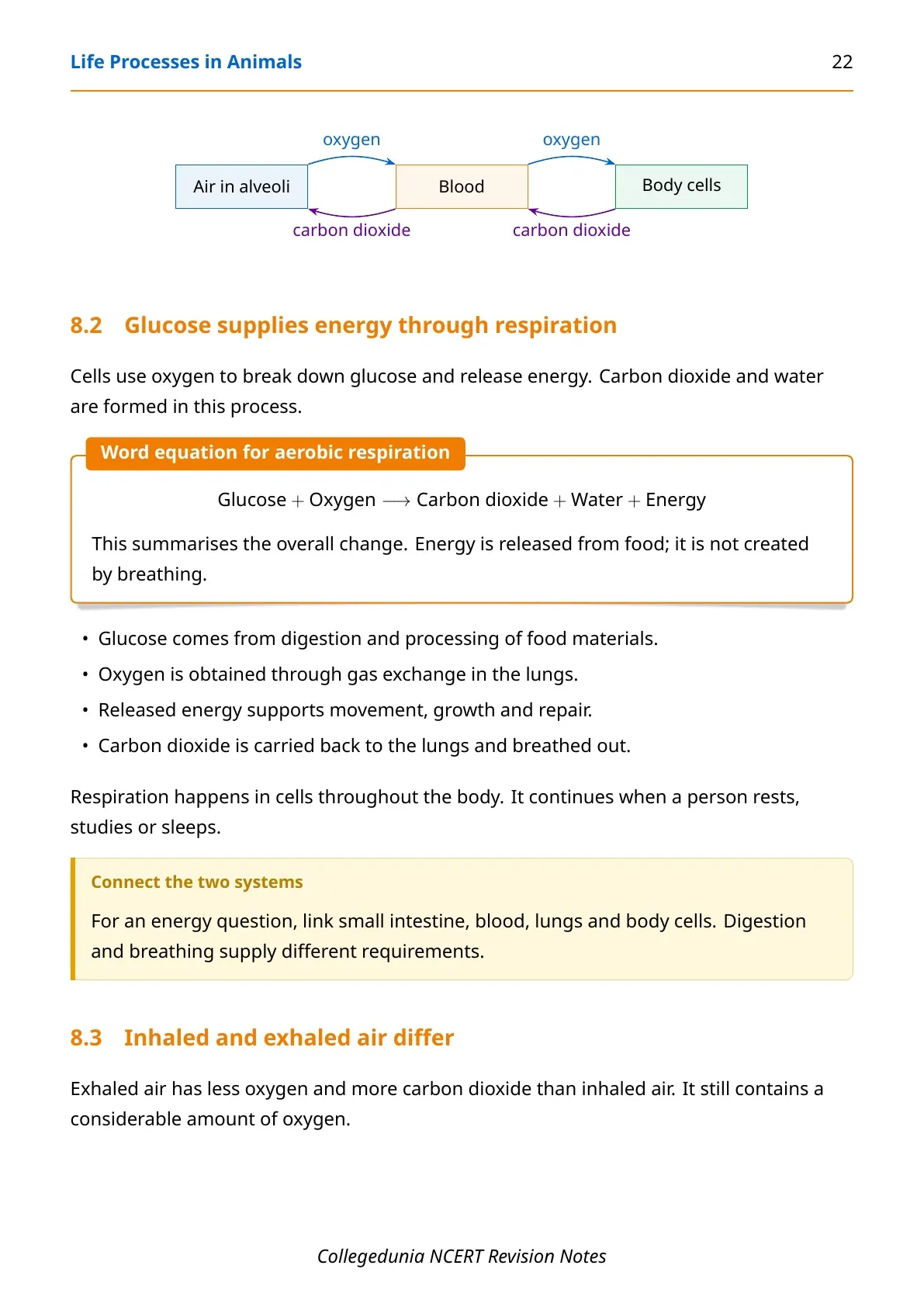
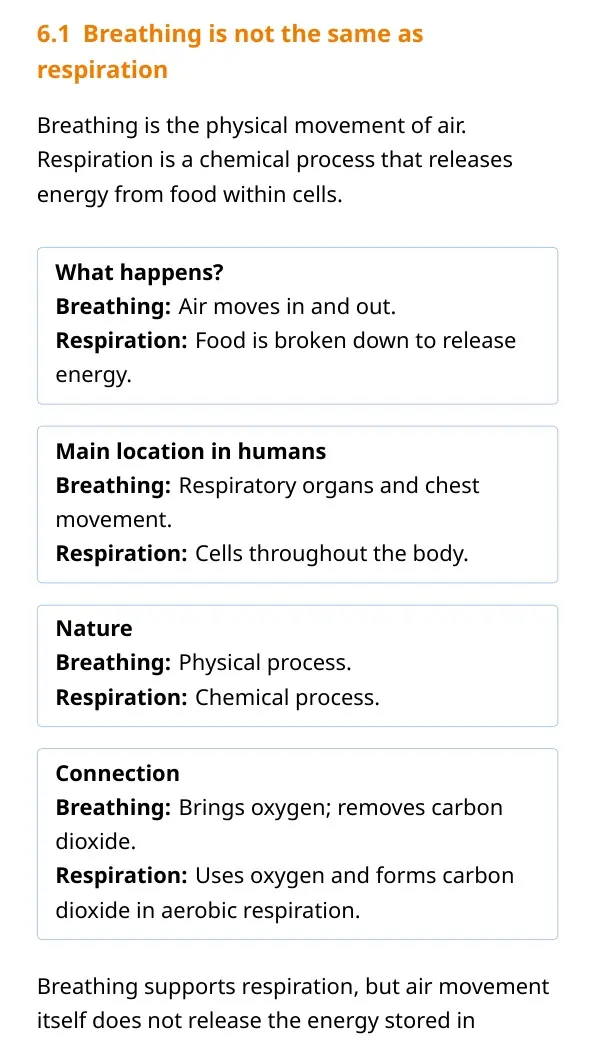
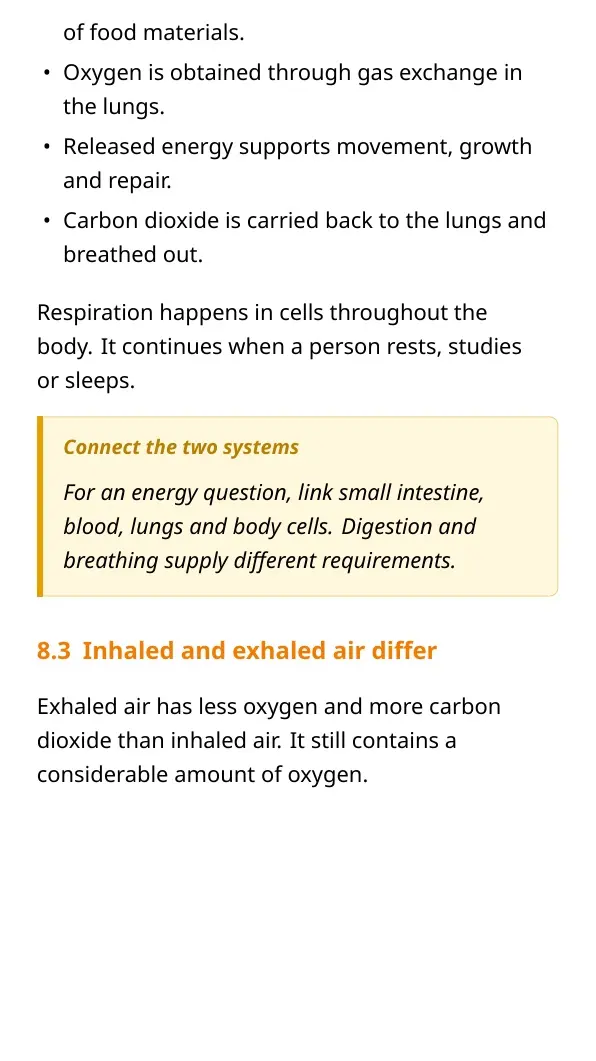
Breathing moves air; respiration releases energy from food in cells. In oxygen-using respiration, glucose reacts with oxygen to form carbon dioxide and water, releasing energy. After exercise, muscles need more energy, so breathing usually becomes faster. The heart, blood and blood vessels transport nutrients, gases and wastes.
Life Processes in Animals: Breathing Across Habitats
| Animal | Breathing structure |
|---|---|
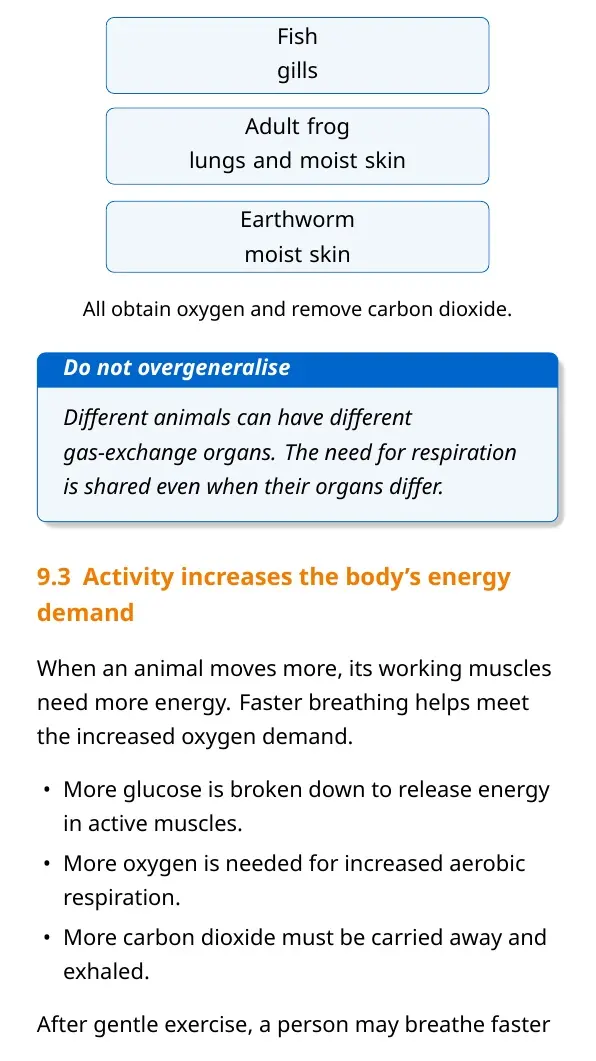
| Humans, birds, cows and lizards | Lungs, with structures that vary between groups |
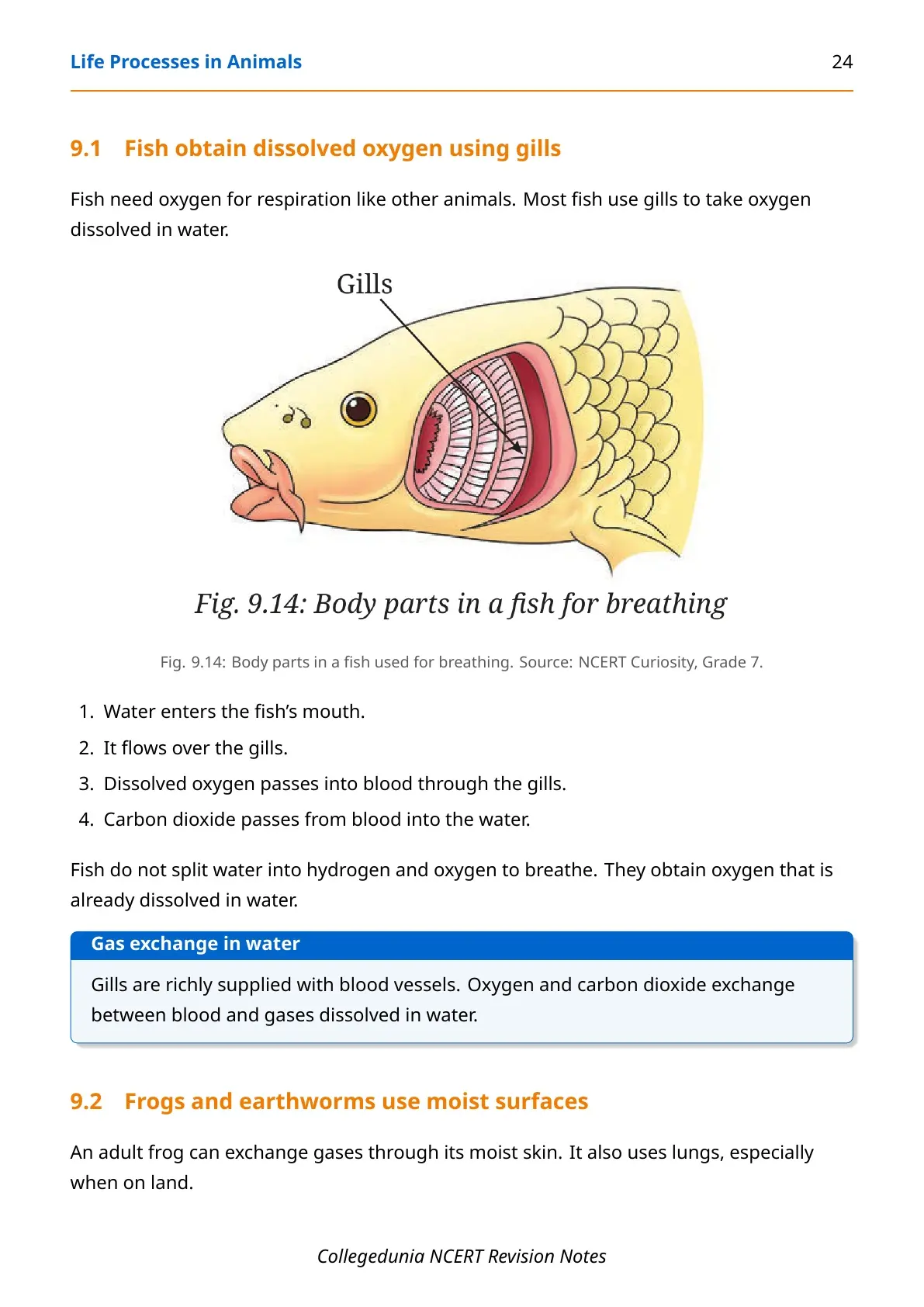
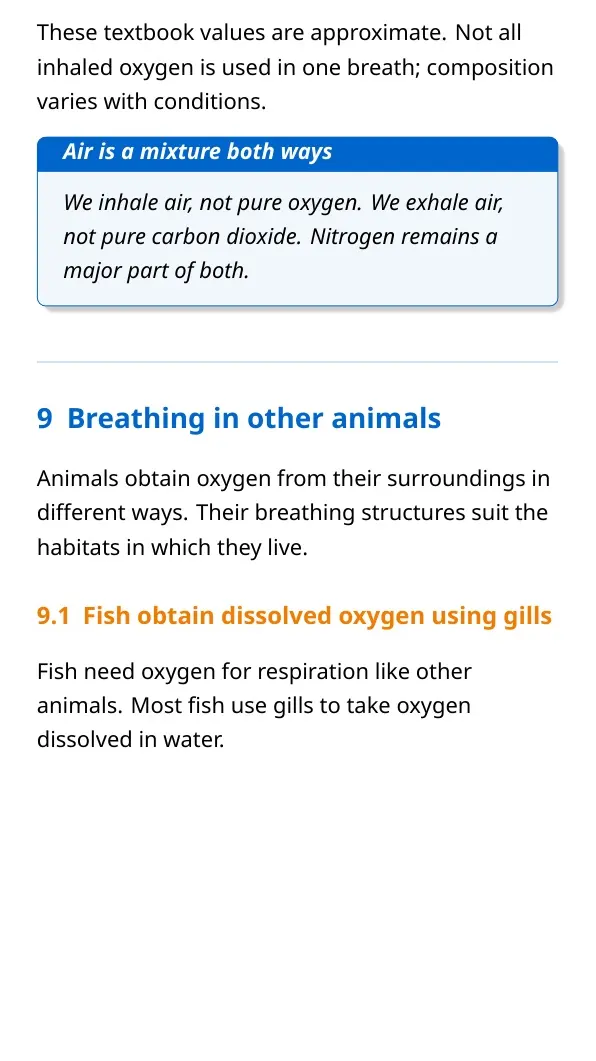
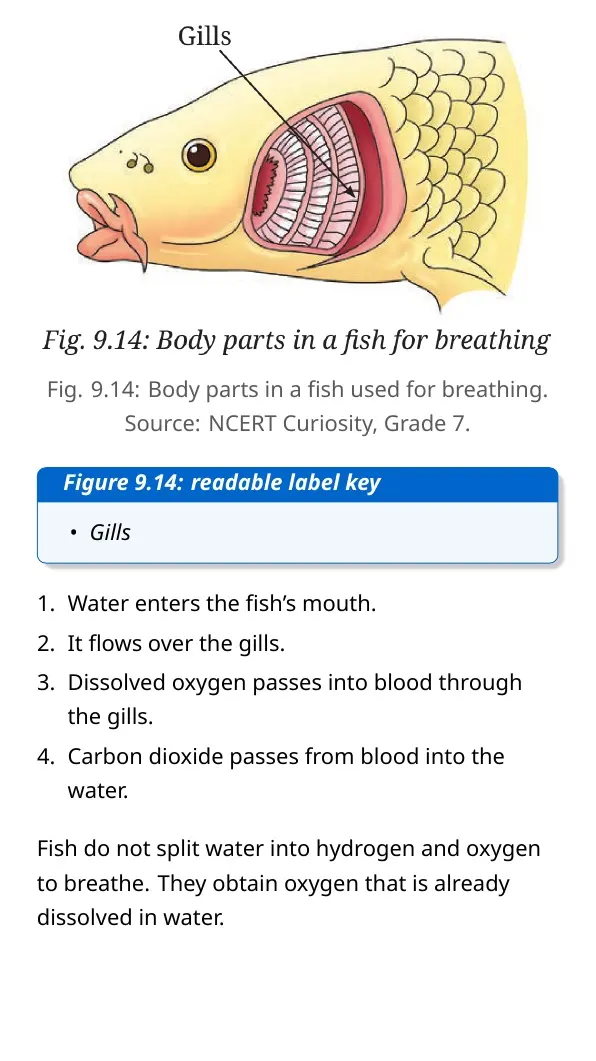
| Fish | Gills exchange gases dissolved in water |
| Tadpoles | Gills |
| Adult frogs | Lungs on land; skin exchanges gases in water |
| Earthworms | Moist skin |
Life Processes in Animals: Activities and Revision Checks
Revise the observation and explanation together. An activity answer needs both, rather than only the final colour.
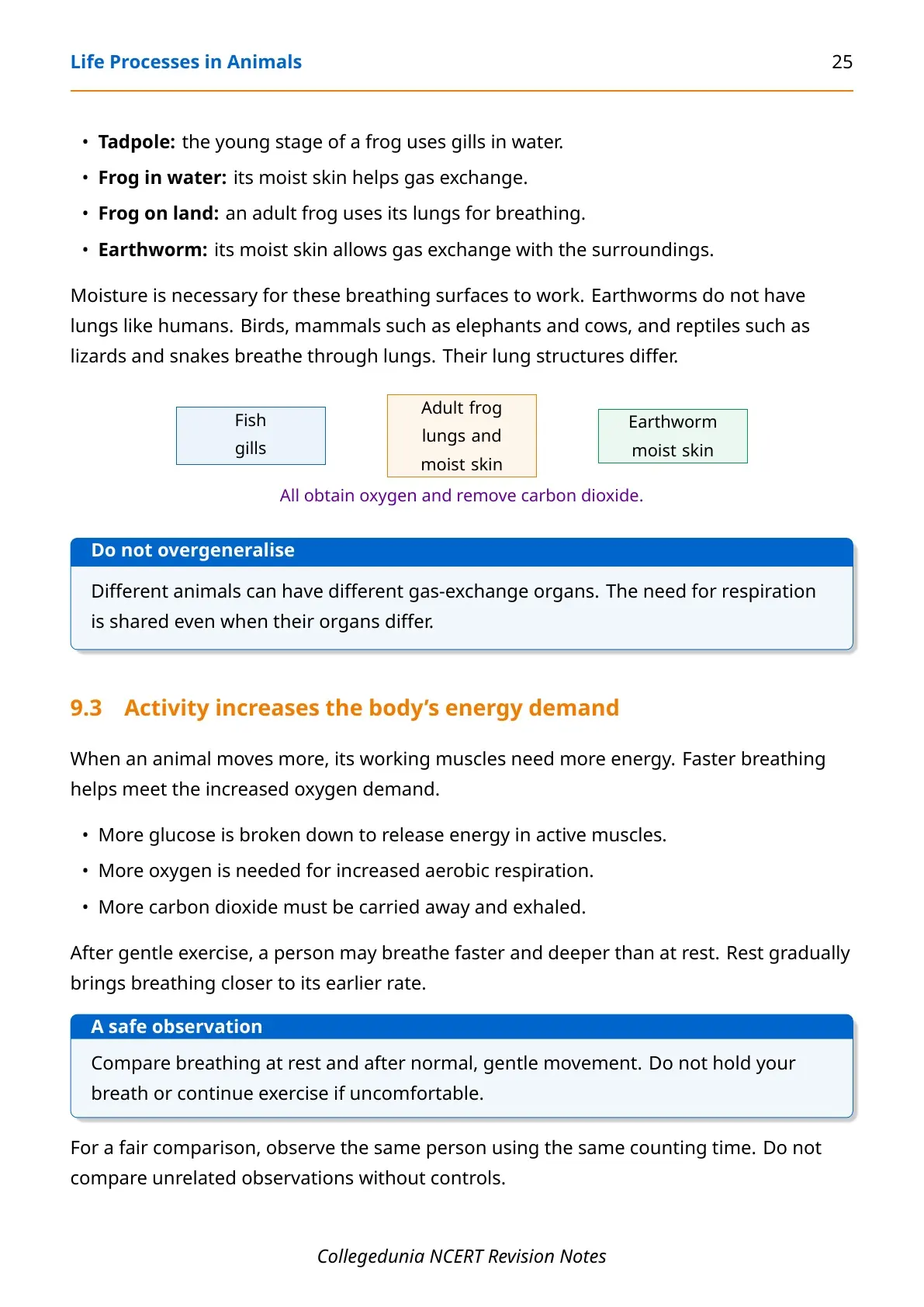
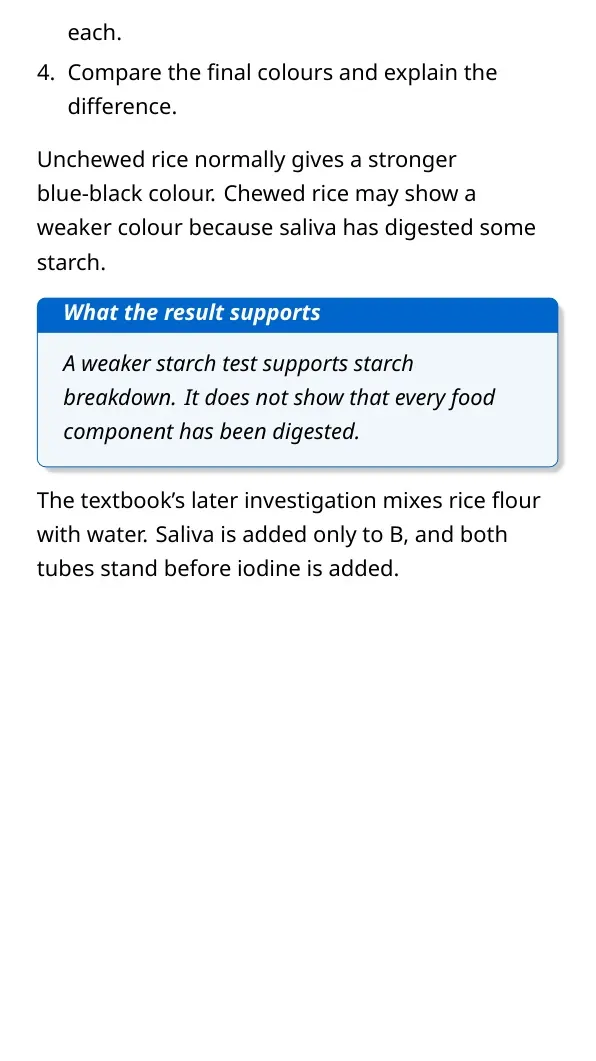
- Iodine test: unchewed rice turns blue-black because it contains starch. Chewed rice shows less colour as saliva acts.
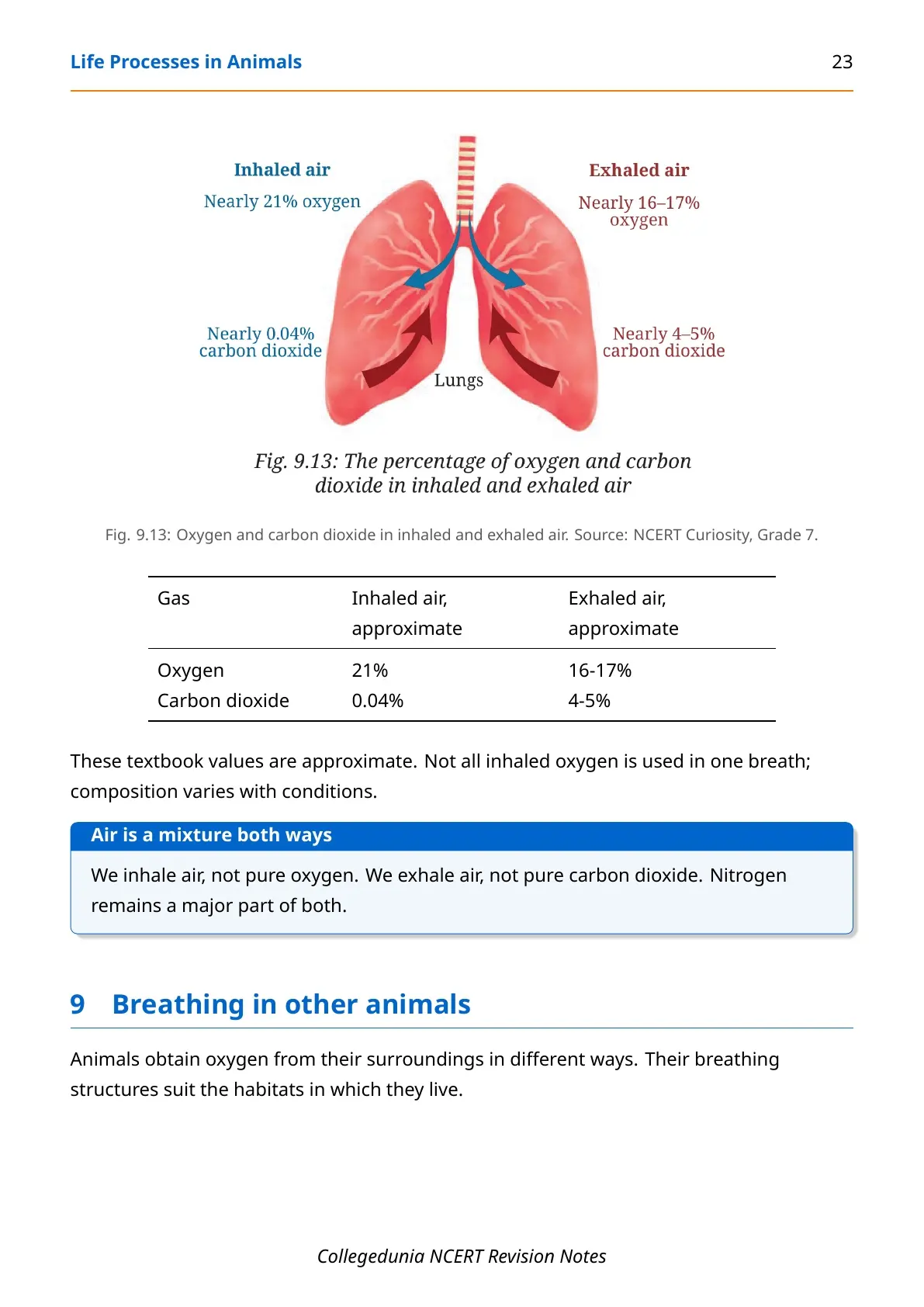
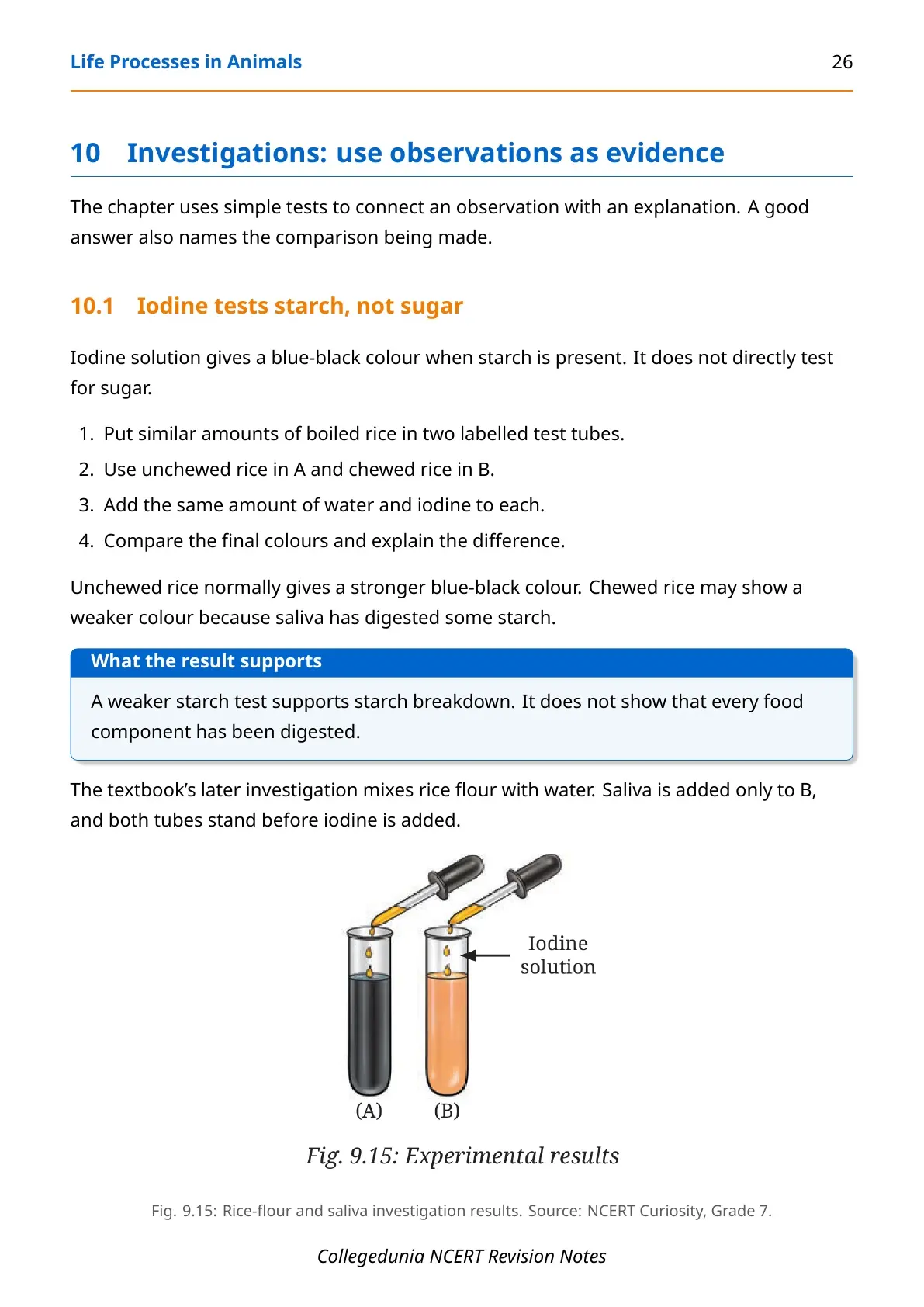
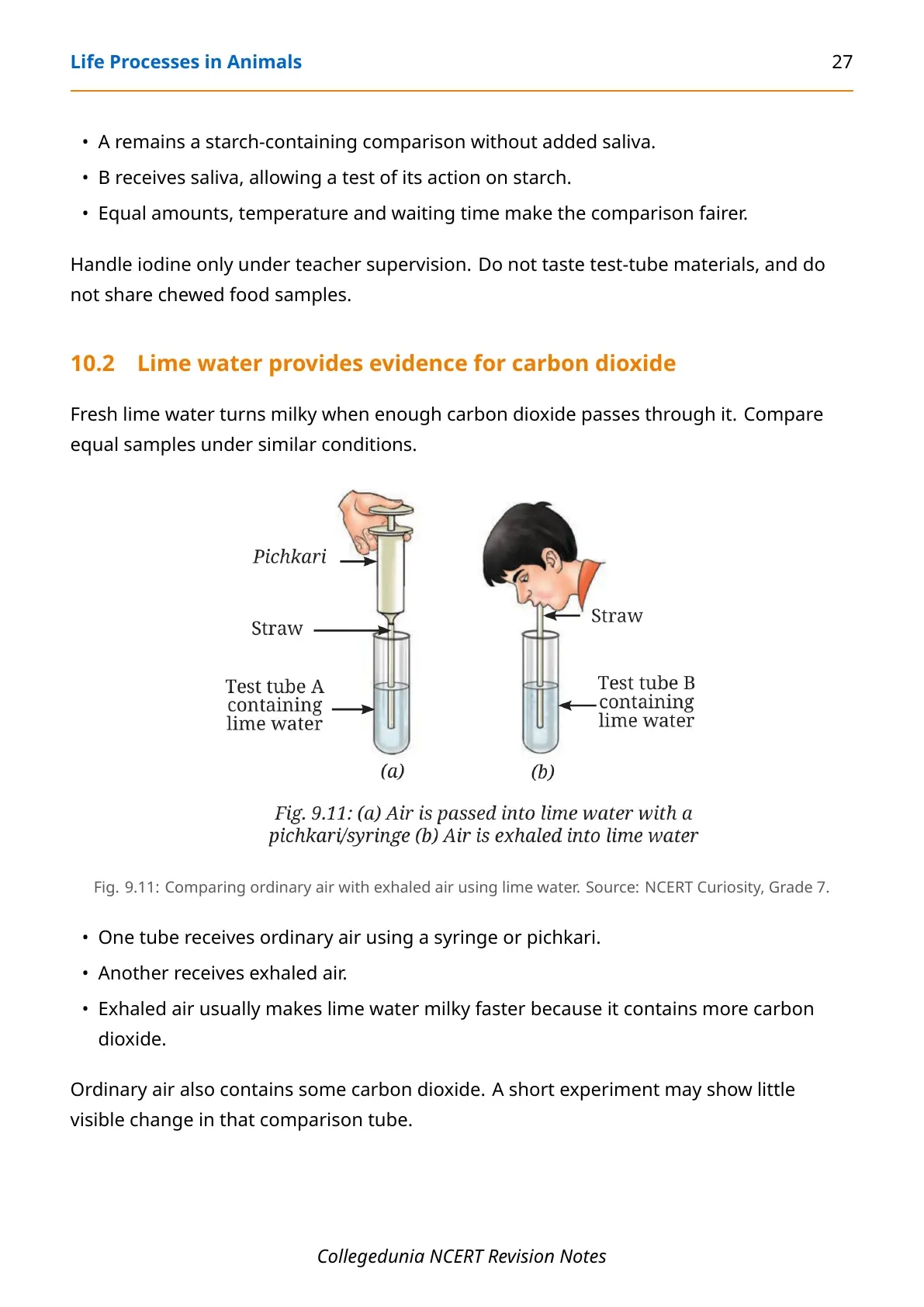
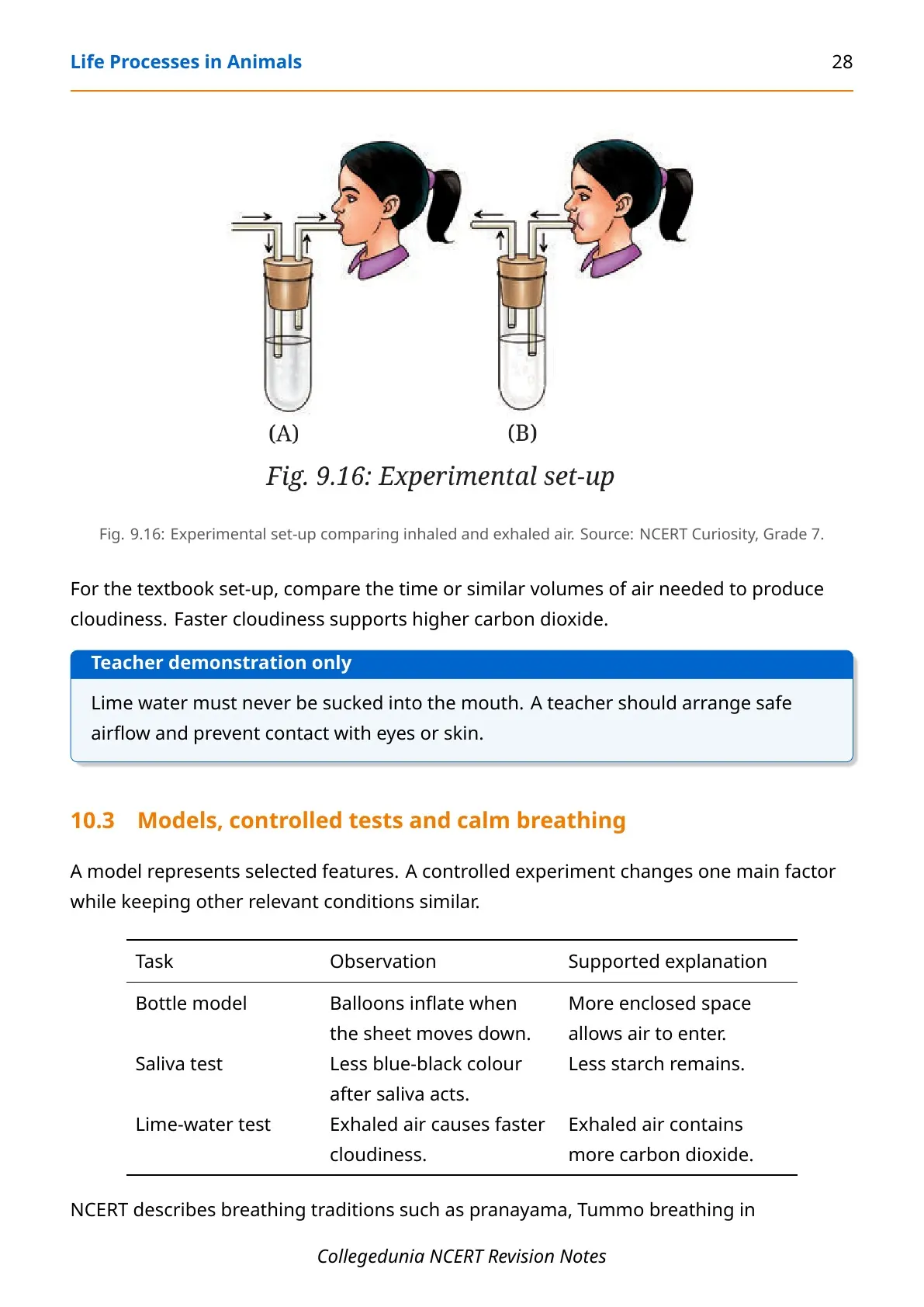
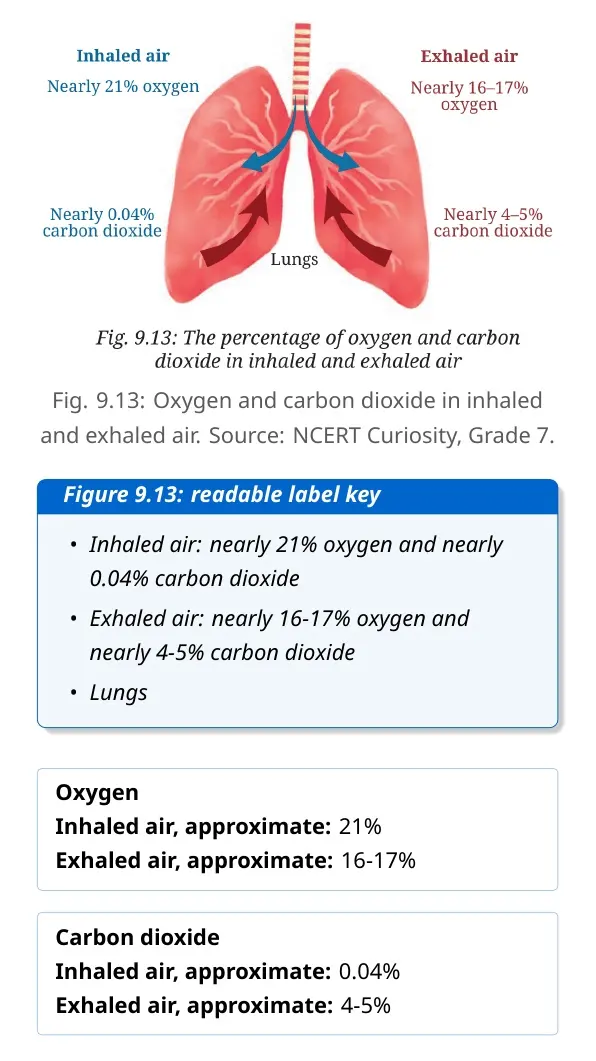
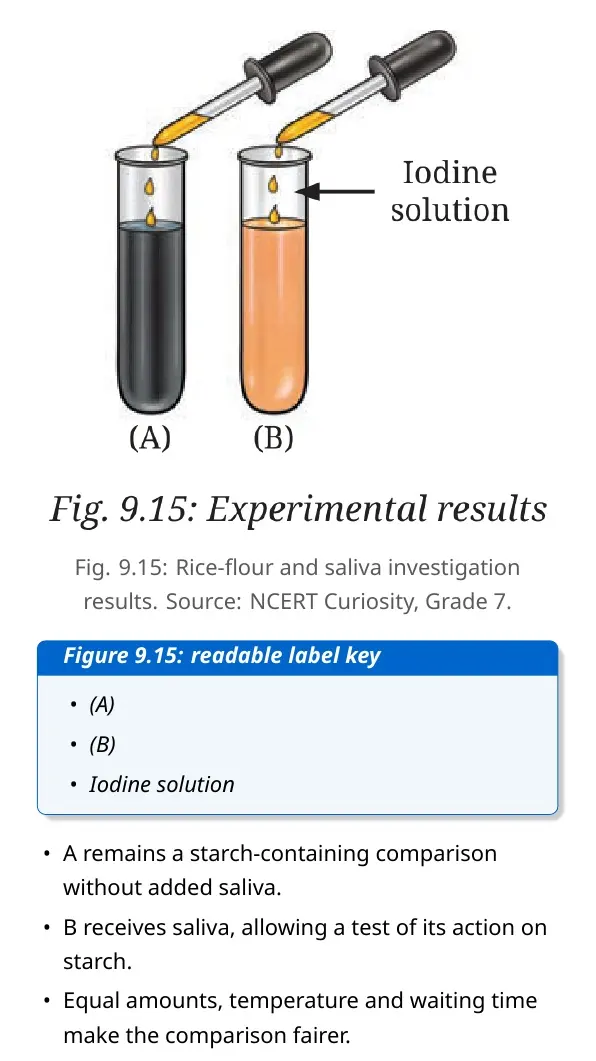
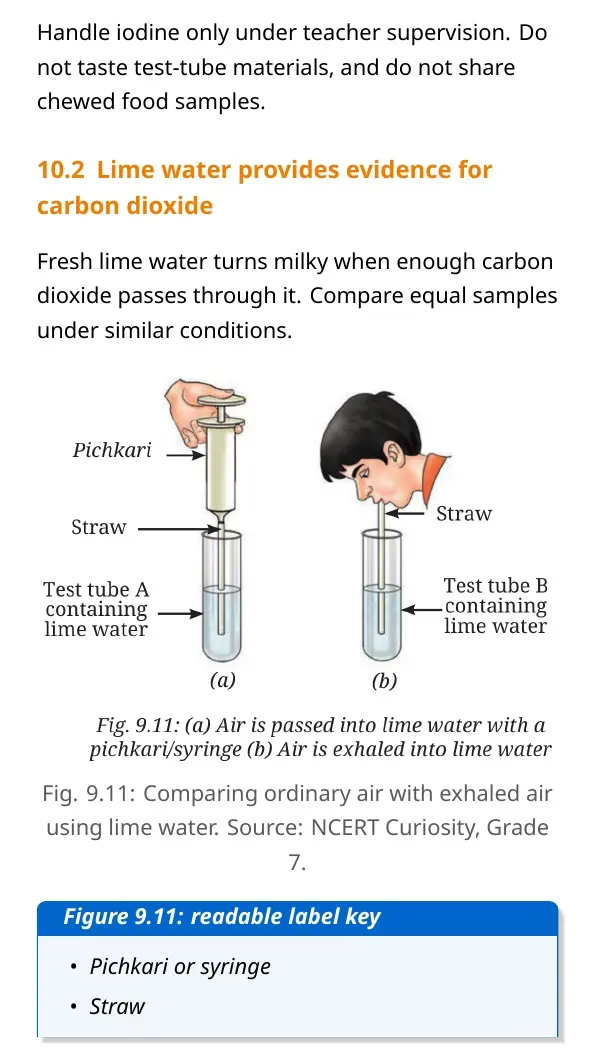
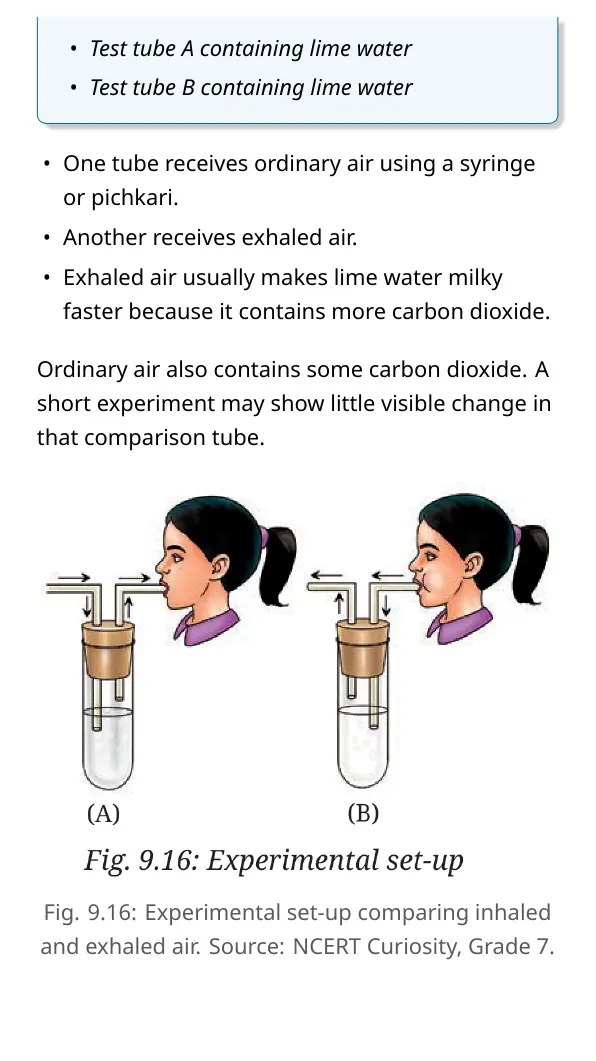
- Limewater test: exhaled air turns limewater milky faster than inhaled air because it contains more carbon dioxide.
- Draw the digestive and respiratory systems from memory, then check each label against NCERT.
- Explain why inhaled air is a mixture, rather than pure oxygen.
- Compare breathing with respiration using site, action and energy release.
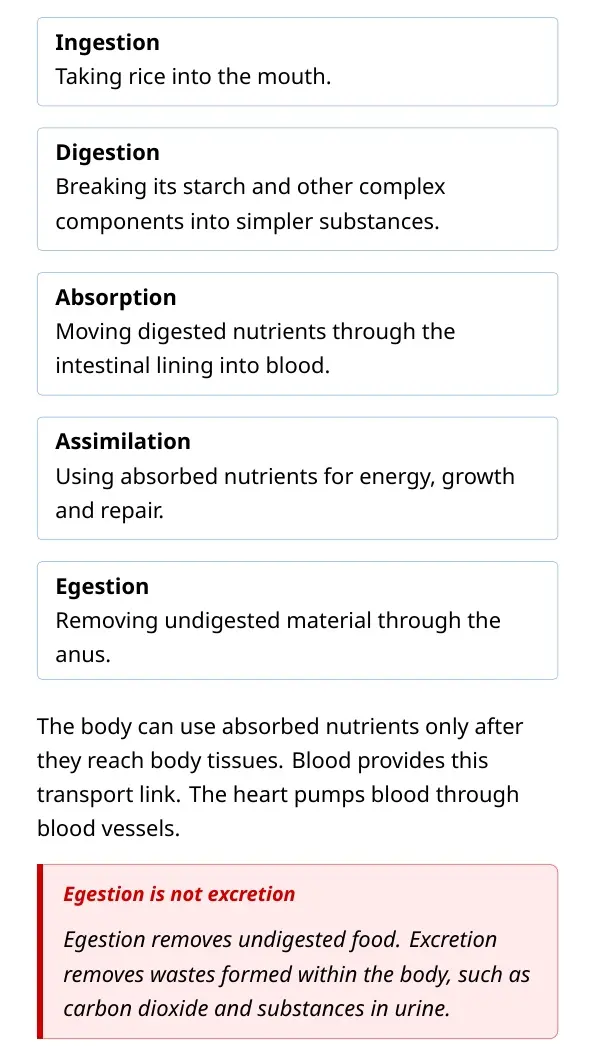
Do not confuse egestion with excretion. Egestion removes undigested food; excretion removes wastes produced by body processes. Follow your teacher's instructions for practical activities.
Life Processes in Animals: Related Study Resources
| Resource | Use |
|---|---|
| Life Processes in Animals Class 7 NCERT Solutions | Check answers after trying the textbook questions. |
| Life Processes in Animals Class 7 NCERT Book | Read the official explanations and activities. |
| Life Processes in Animals Class 7 Handwritten Notes | Review key terms and diagrams. |
All Chapters: Class 7 Science Curiosity Notes
| Chapter | Revision notes |
|---|---|
| Adolescence A Stage Of Growth And Change | Adolescence A Stage Of Growth And Change Class 7 Notes |
| Changes Around Us: Physical and Chemical | Changes Around Us: Physical and Chemical Class 7 Notes |
| Measurement Of Time And Motion | Measurement Of Time And Motion Class 7 Notes |
Life Processes in Animals Science Notes FAQs
Ques. What do these Life Processes in Animals notes cover?
Ans. They cover human digestion, nutrition in other animals, breathing, respiration and textbook activities.
Ques. Where does digestion begin?
Ans. Digestion begins in the mouth. Teeth break food into smaller pieces and saliva starts acting on starch.
Ques. Why is mucus present in the stomach?
Ans. Mucus protects the stomach lining from the acid present there.
Ques. Where are nutrients mainly absorbed?
Ans. Digested nutrients are mainly absorbed through the walls of the small intestine.
Ques. Why do cows chew food again?
Ans. Cows are ruminants. Partly digested food returns to the mouth, where it is chewed thoroughly.
Ques. How does the diaphragm help inhalation?
Ans. It moves down, increasing space in the chest so air enters the lungs.
Ques. Do fish use the oxygen in water molecules?
Ans. Fish use oxygen dissolved in water. Their gills exchange gases between the water and blood.
Ques. Why does breathing become faster after running?
Ans. Working muscles need more energy. Faster breathing helps supply oxygen and remove carbon dioxide.
Ques. How should I revise the chapter diagrams?
Ans. Draw each system, label its parts, then describe the function of each part using your textbook.
Ques. What is digestion?
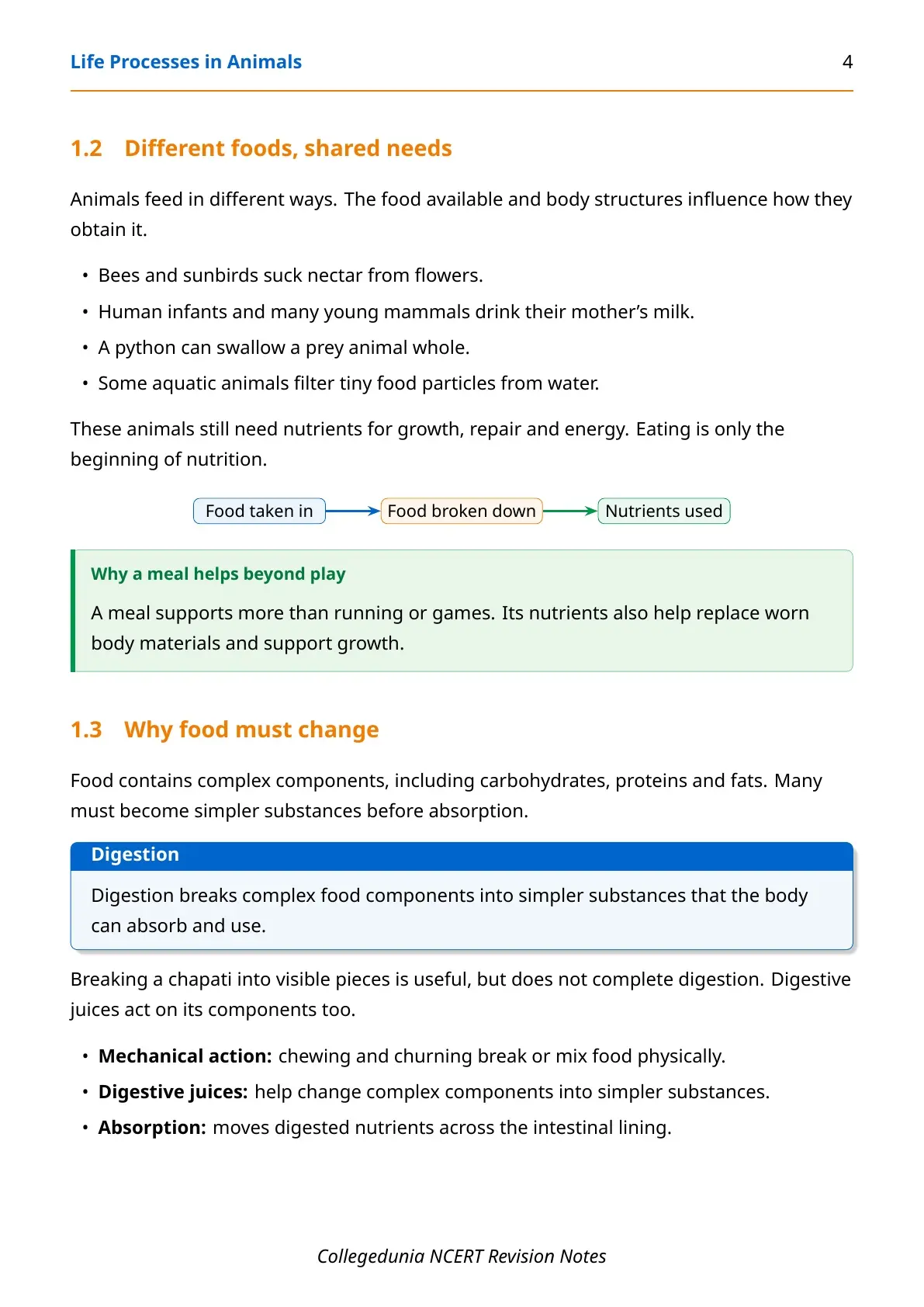
Ans. Digestion is the breakdown of complex food components into simpler forms that the body can absorb and use.
Ques. What is respiration?
Ans. Respiration is the process that converts nutrients into usable energy. Oxygen-using respiration forms carbon dioxide and water.
Ques. What are alveoli?
Ans. Alveoli are tiny air sacs in the lungs where oxygen and carbon dioxide are exchanged with blood.



Comments