




Class 7 Science Chapter 9 Life Processes in Animals follows food and air through the body. These class 7 science handwritten notes chapter 9 Life Processes in Animals follow the 2026-27 NCERT and cover the human digestive system, digestion in other animals, and respiration in humans and beyond.
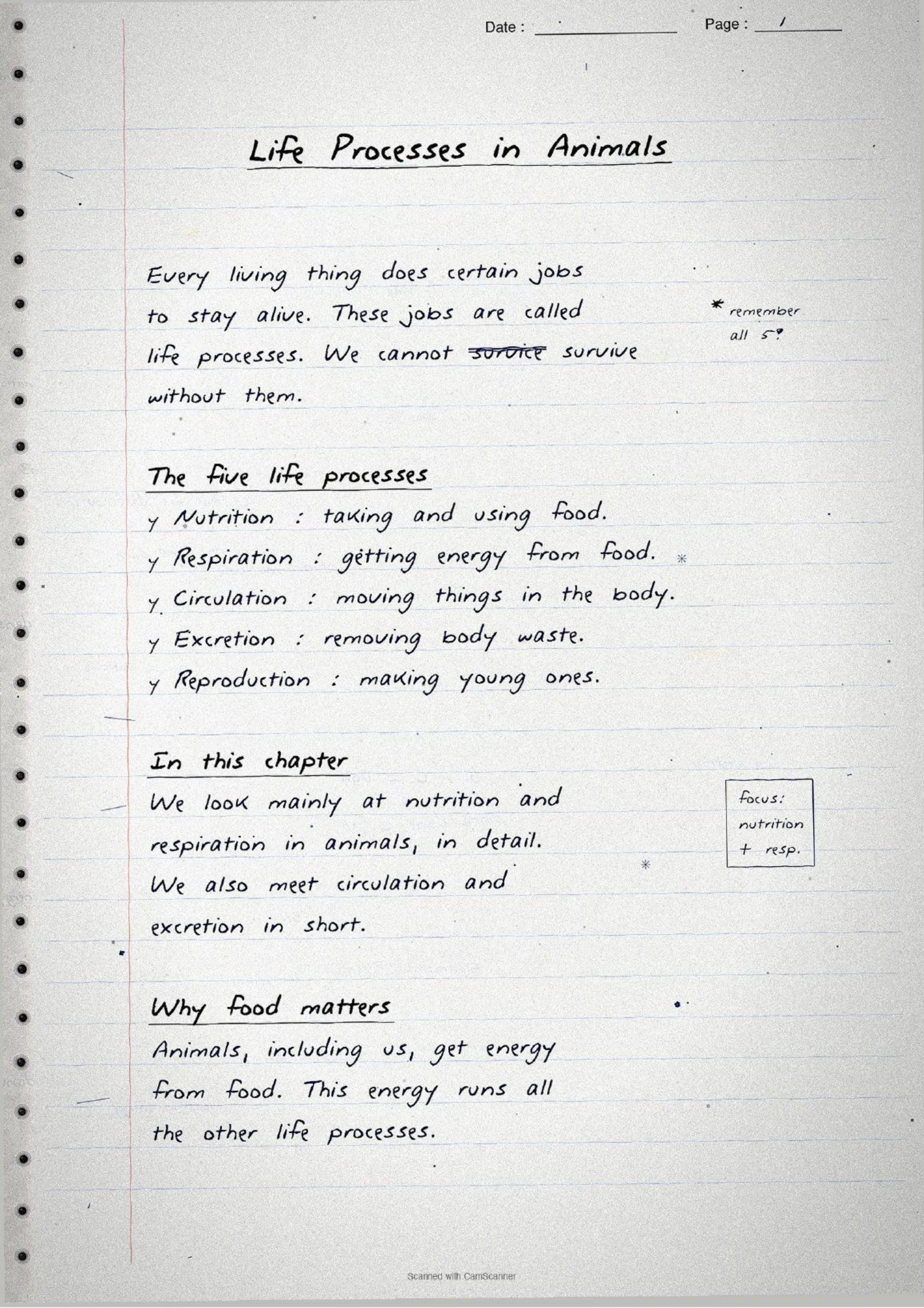
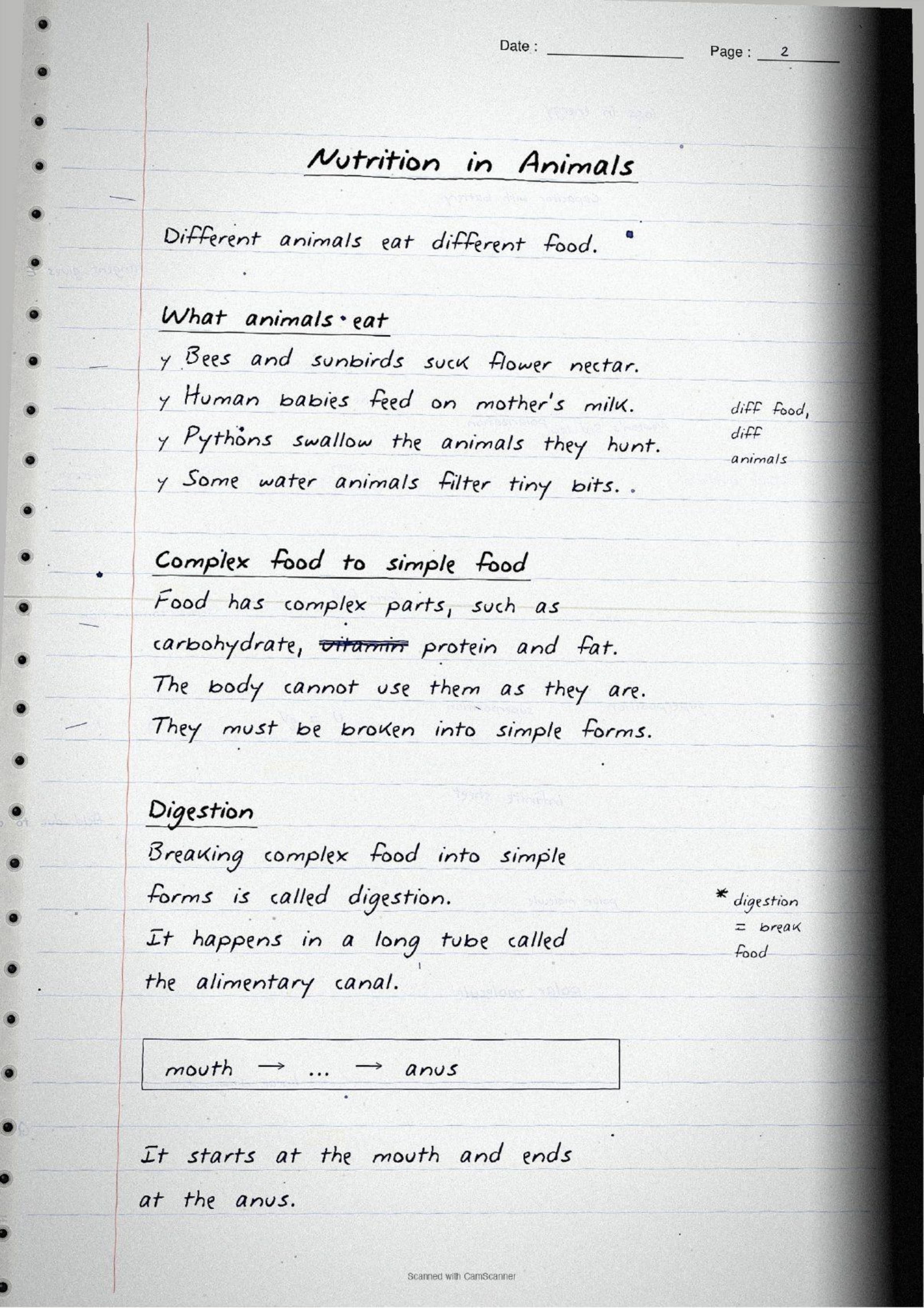
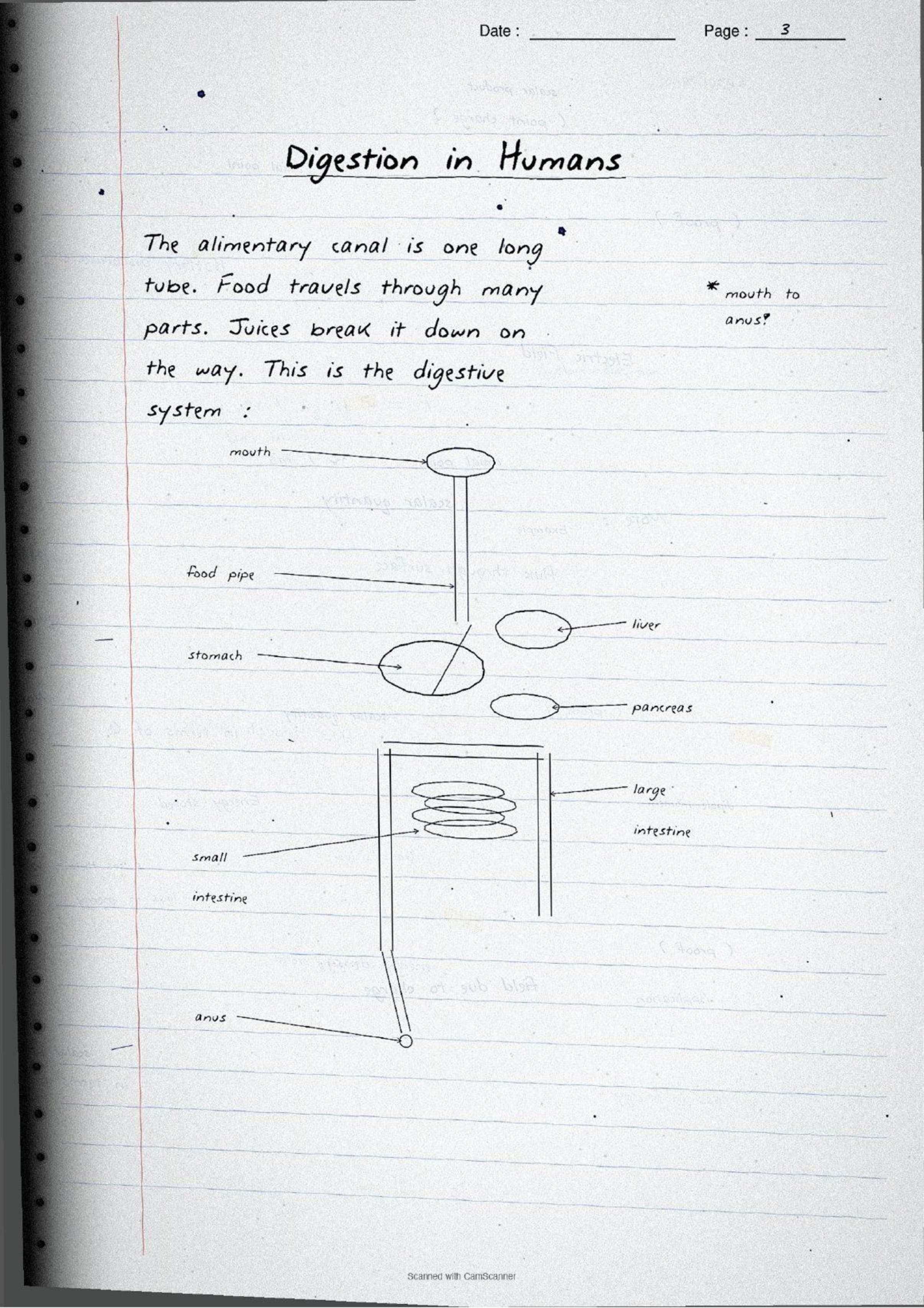
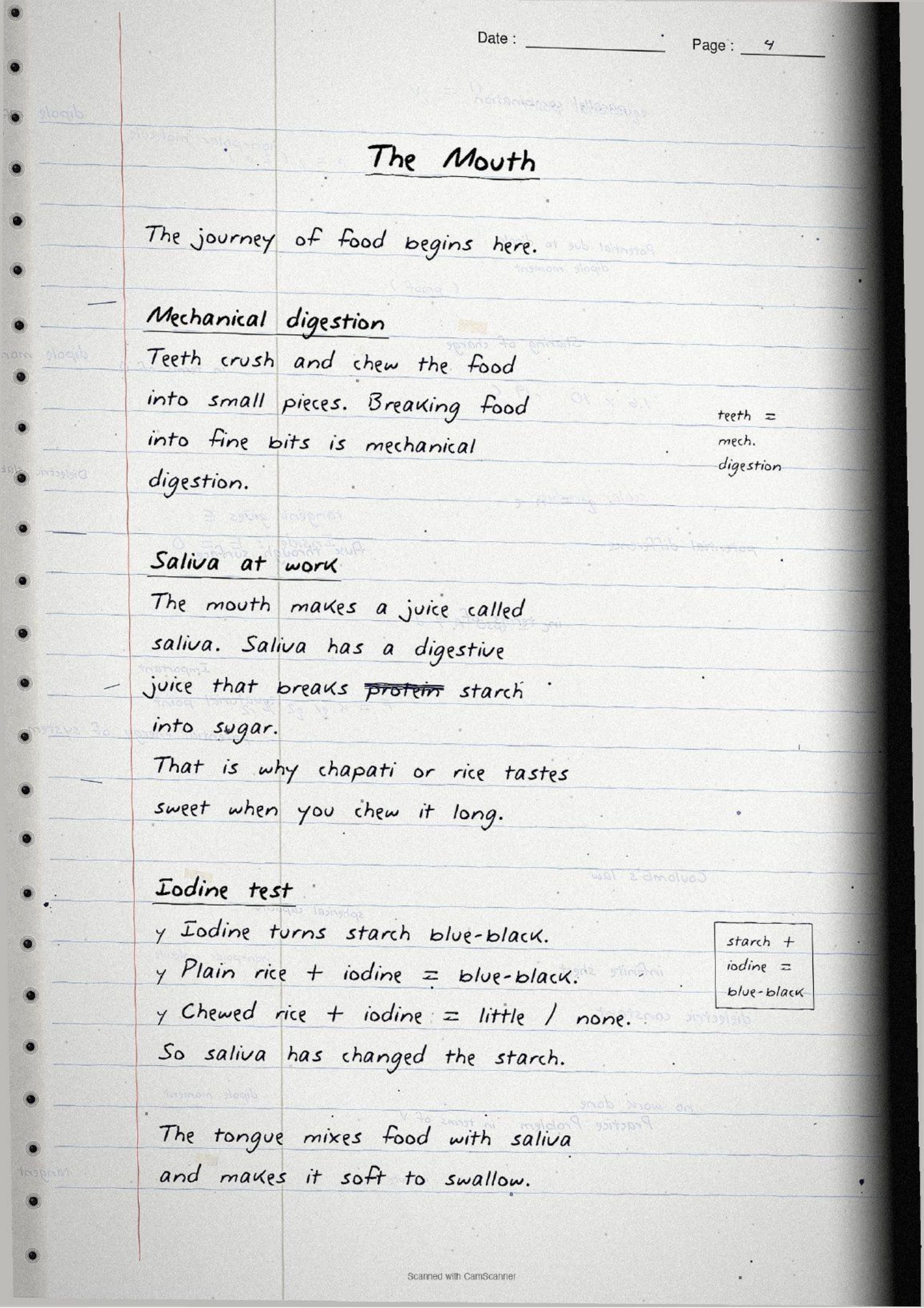
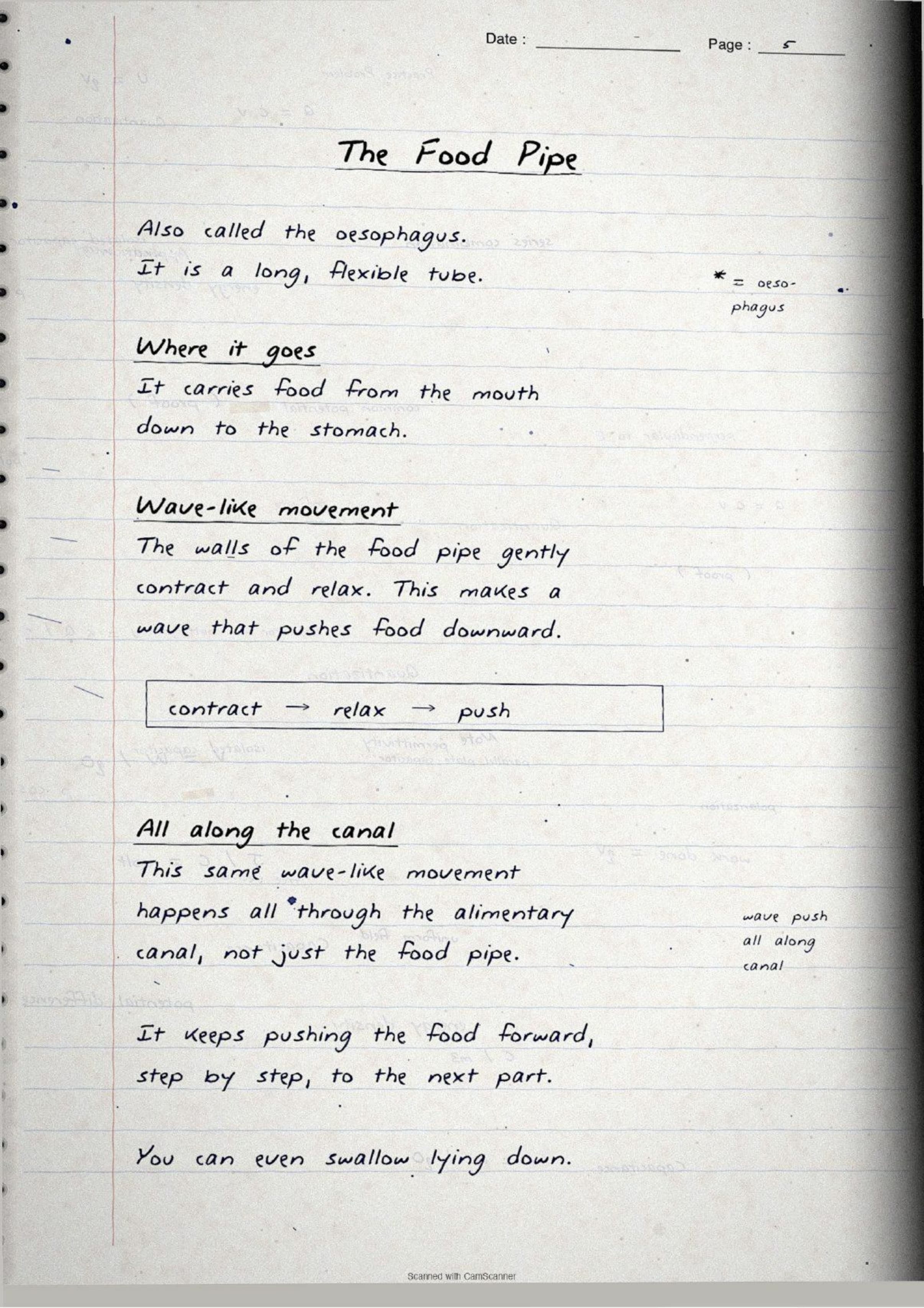
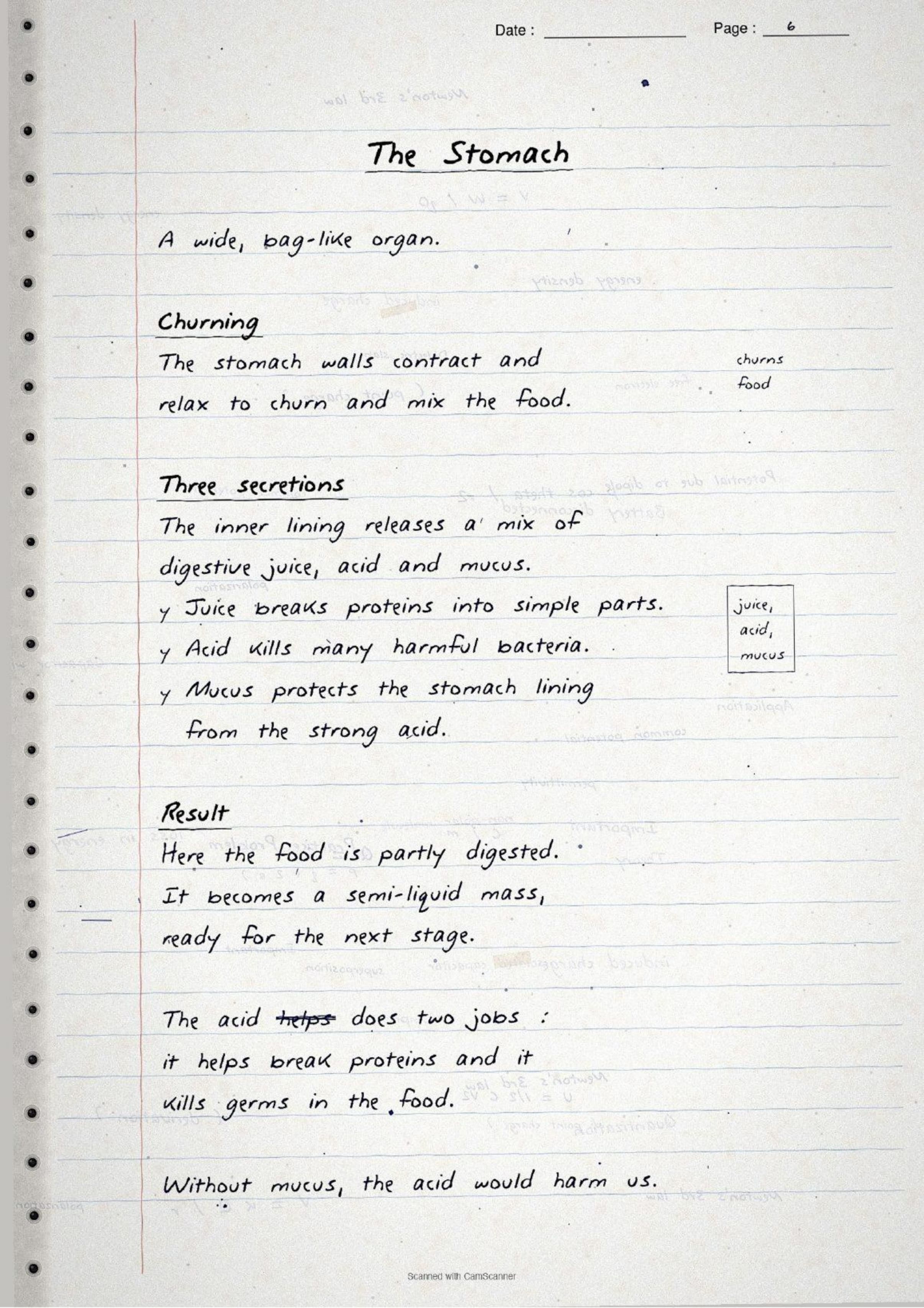
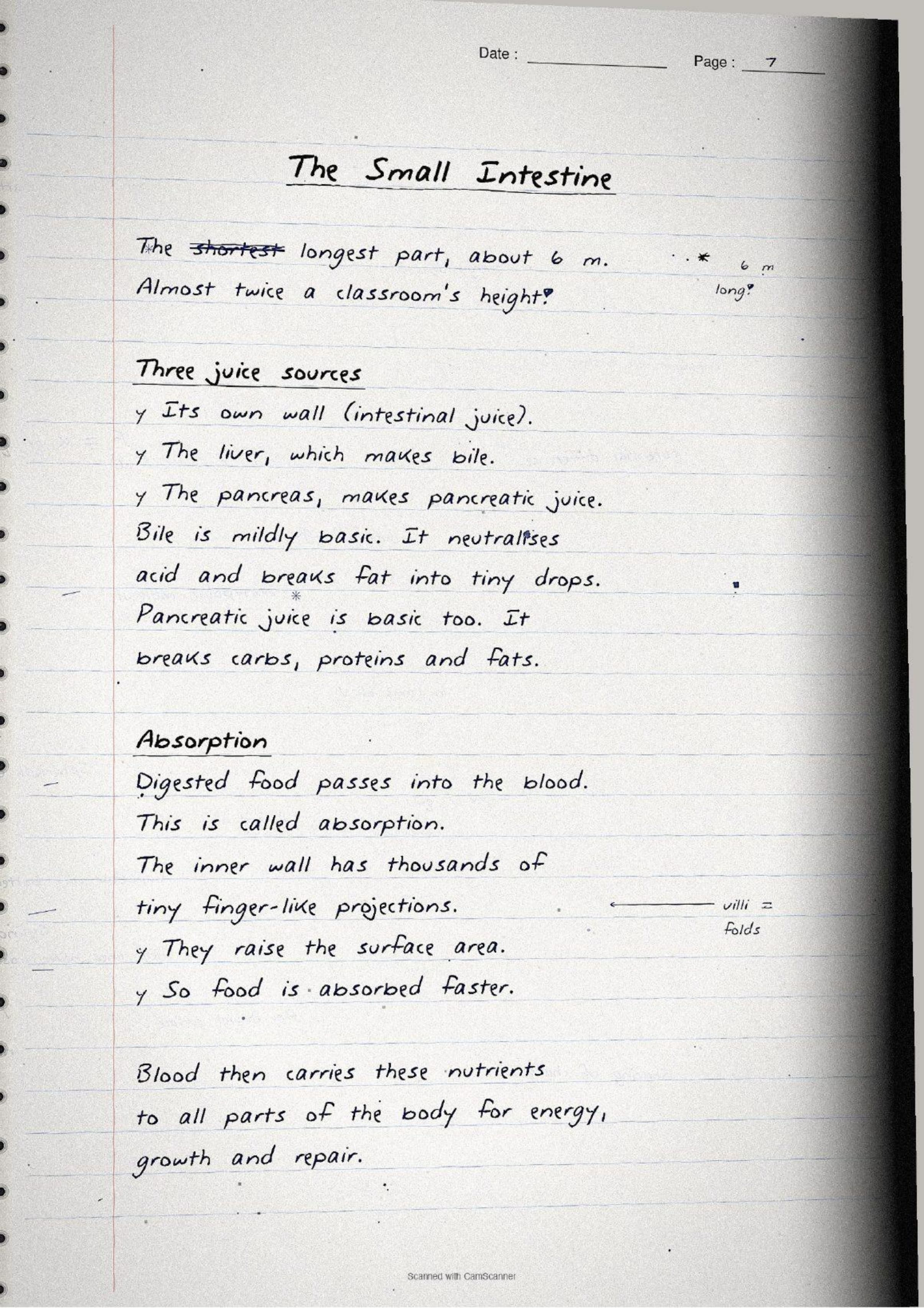
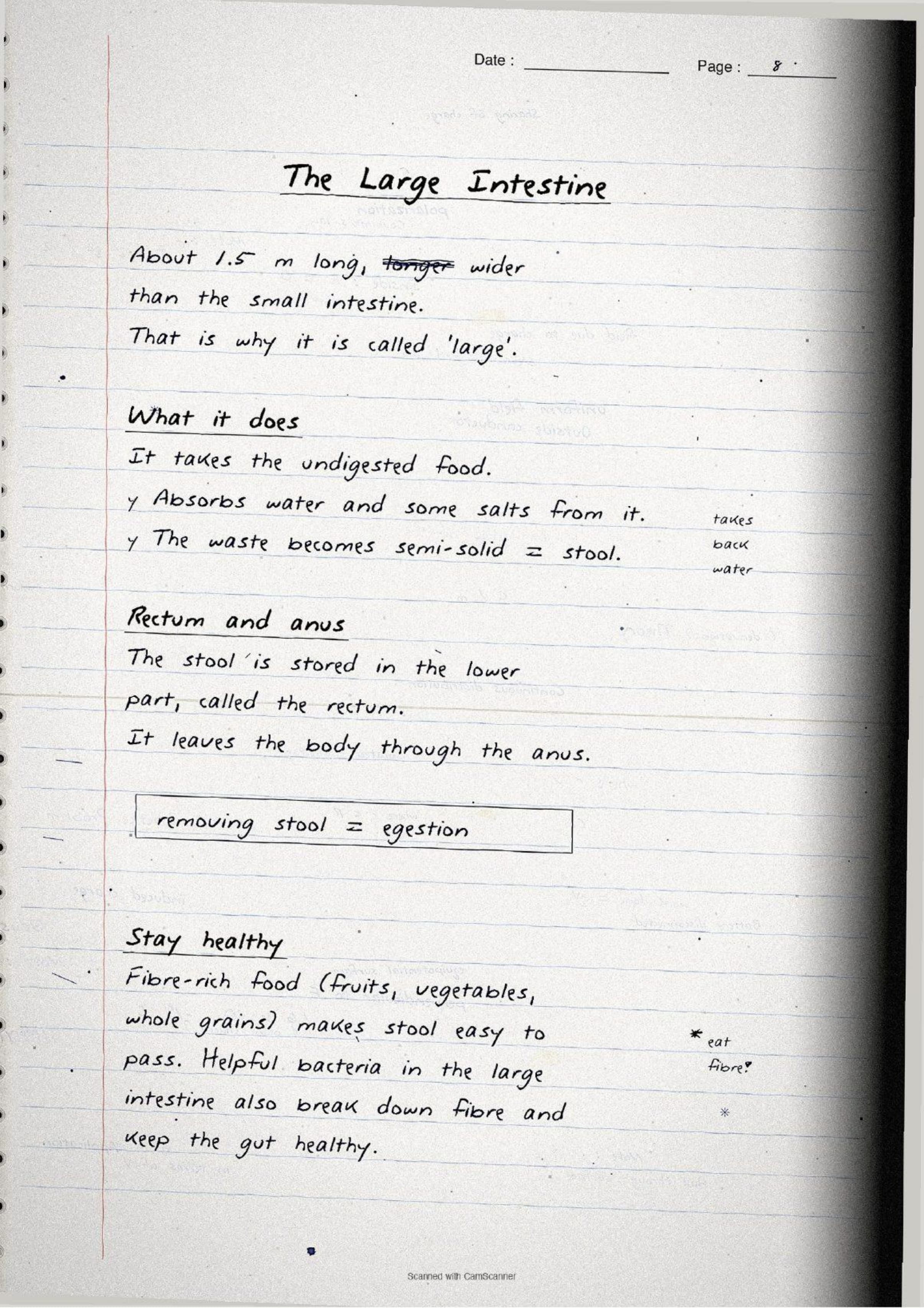
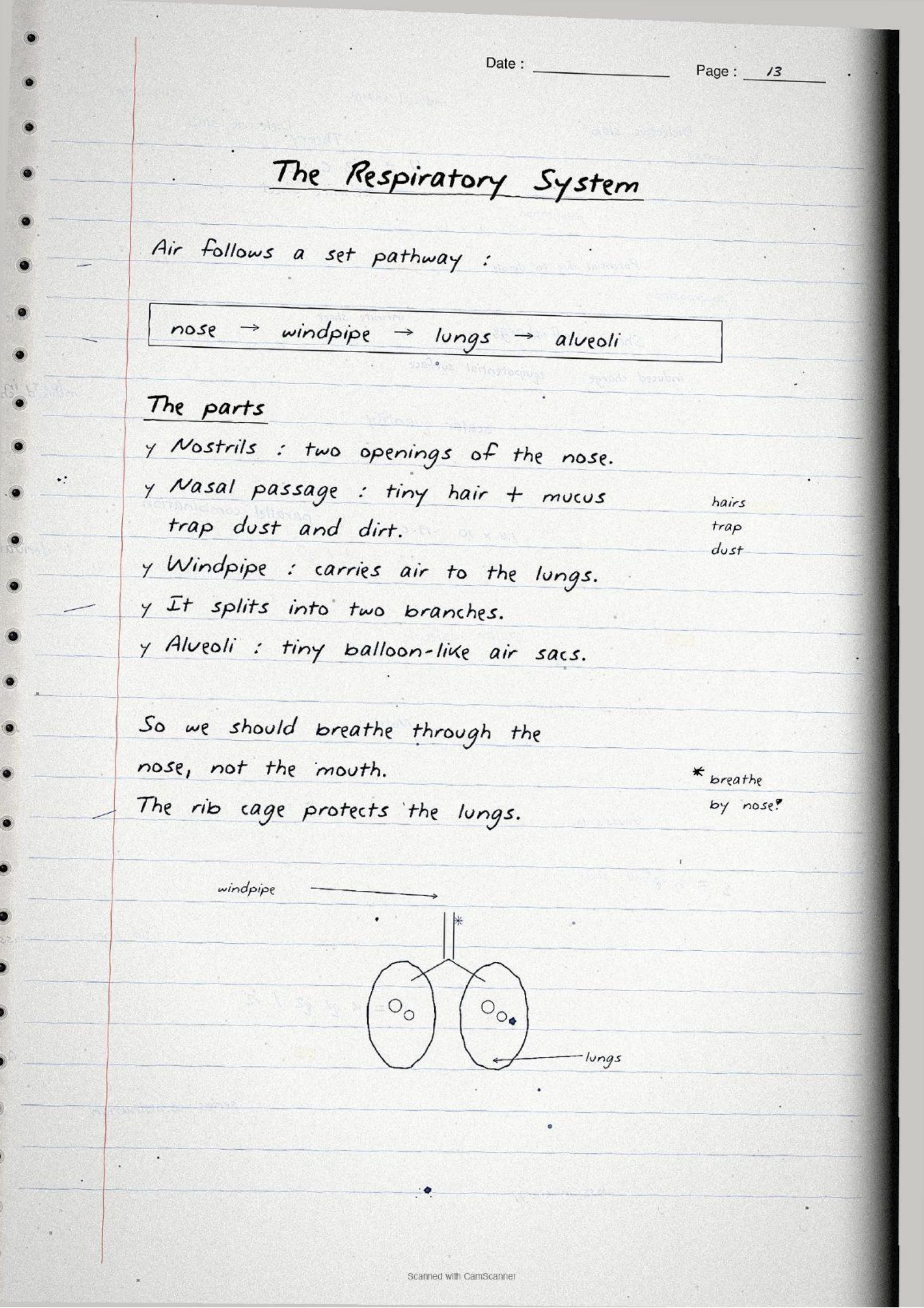
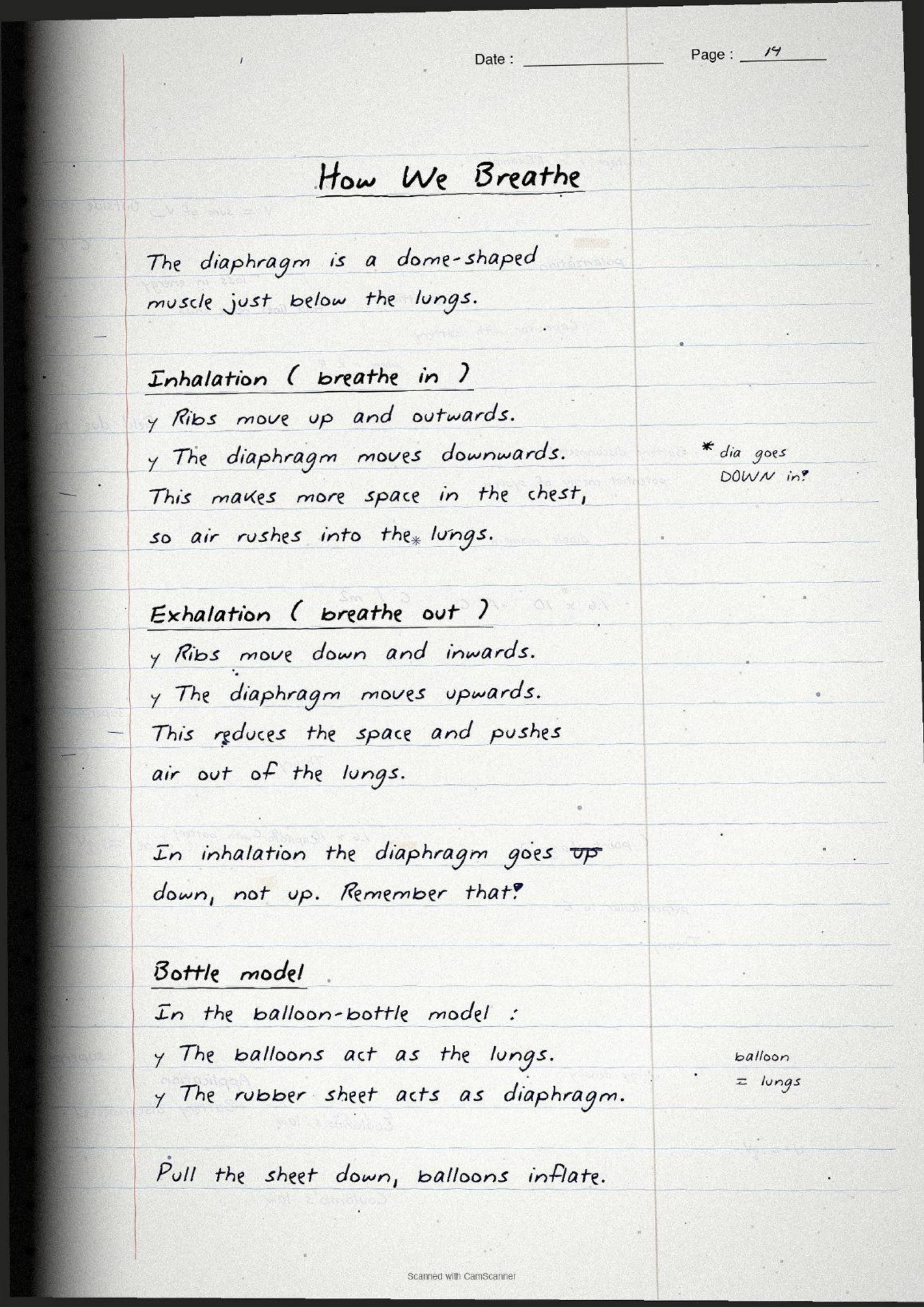
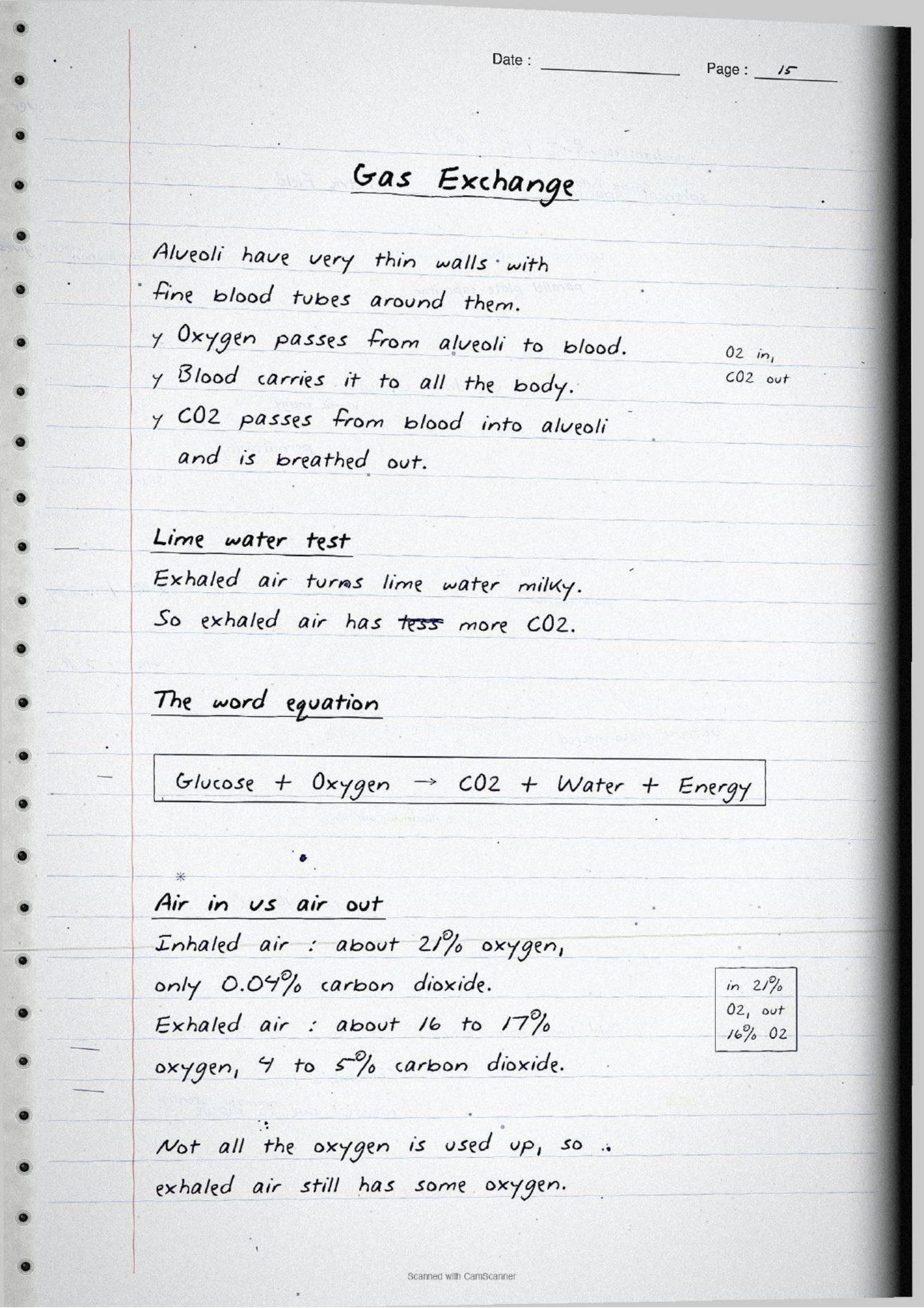
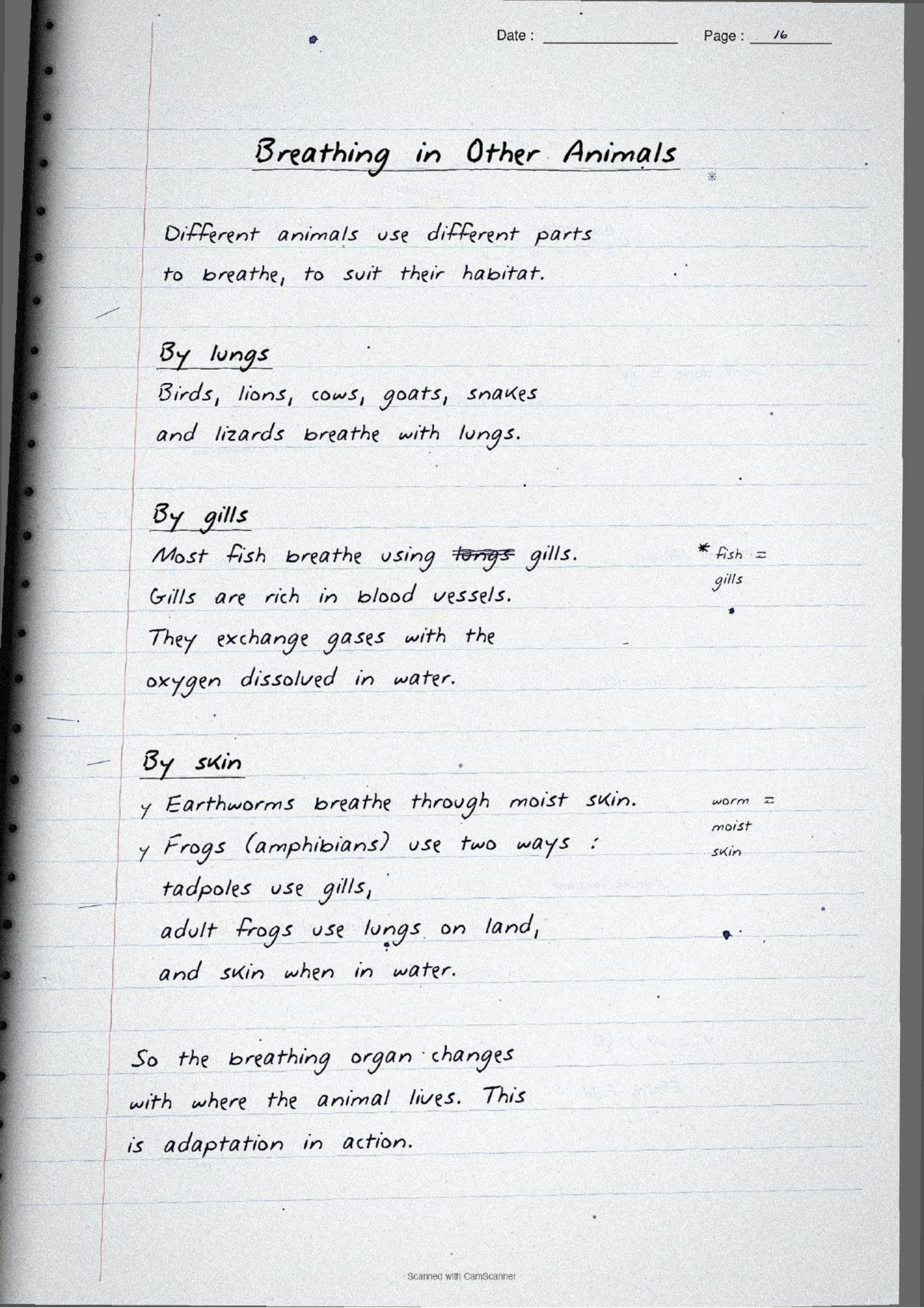
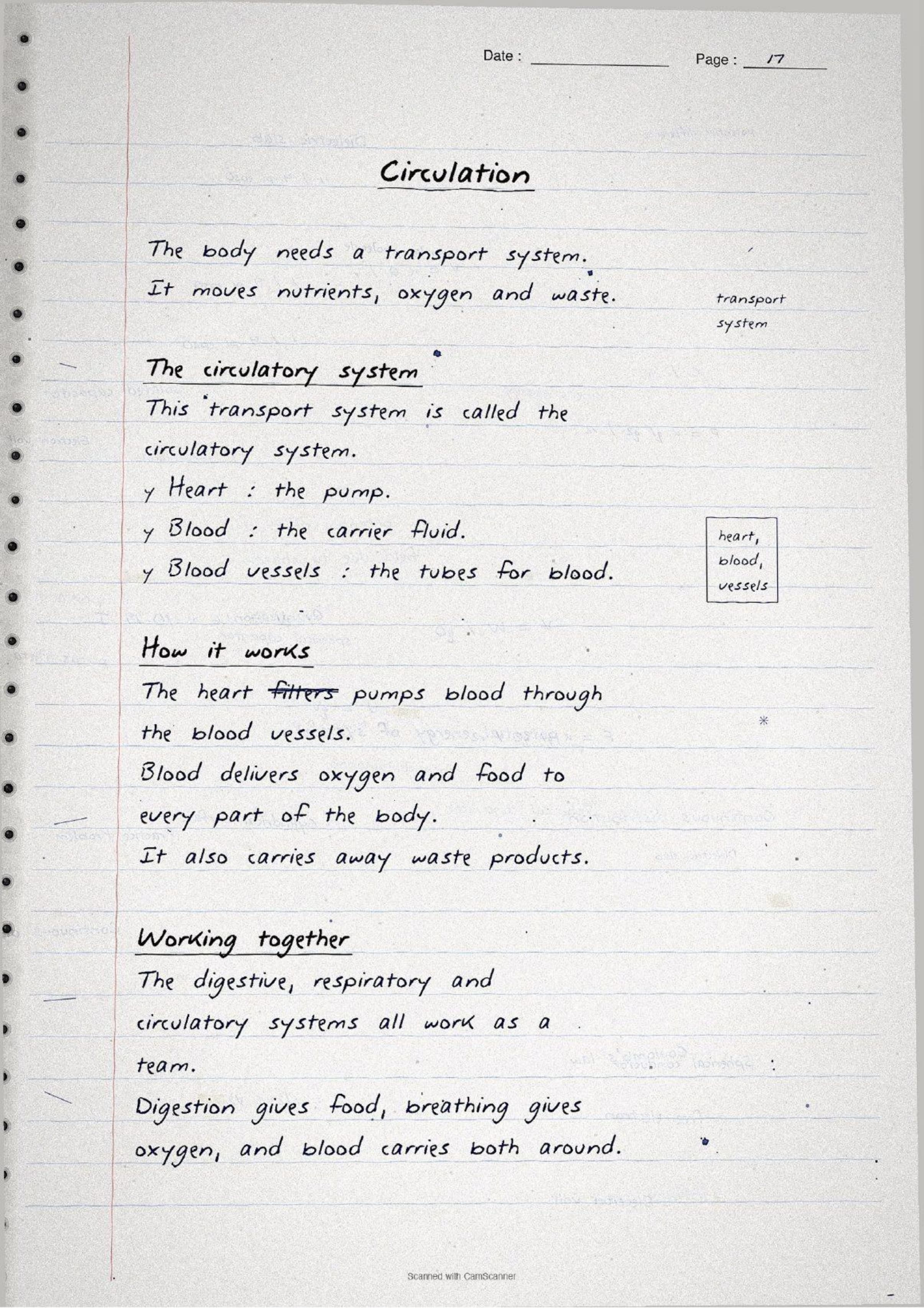
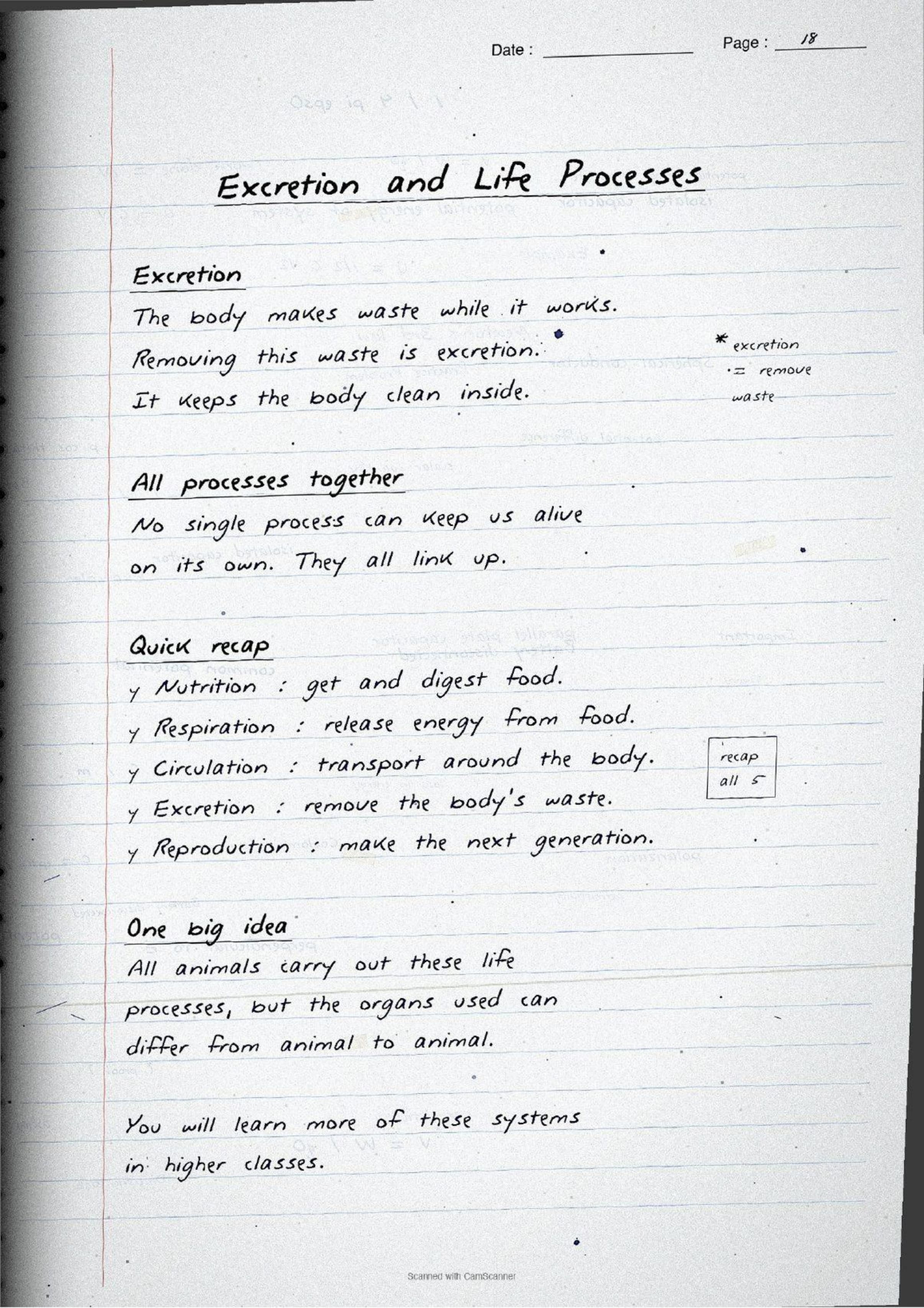
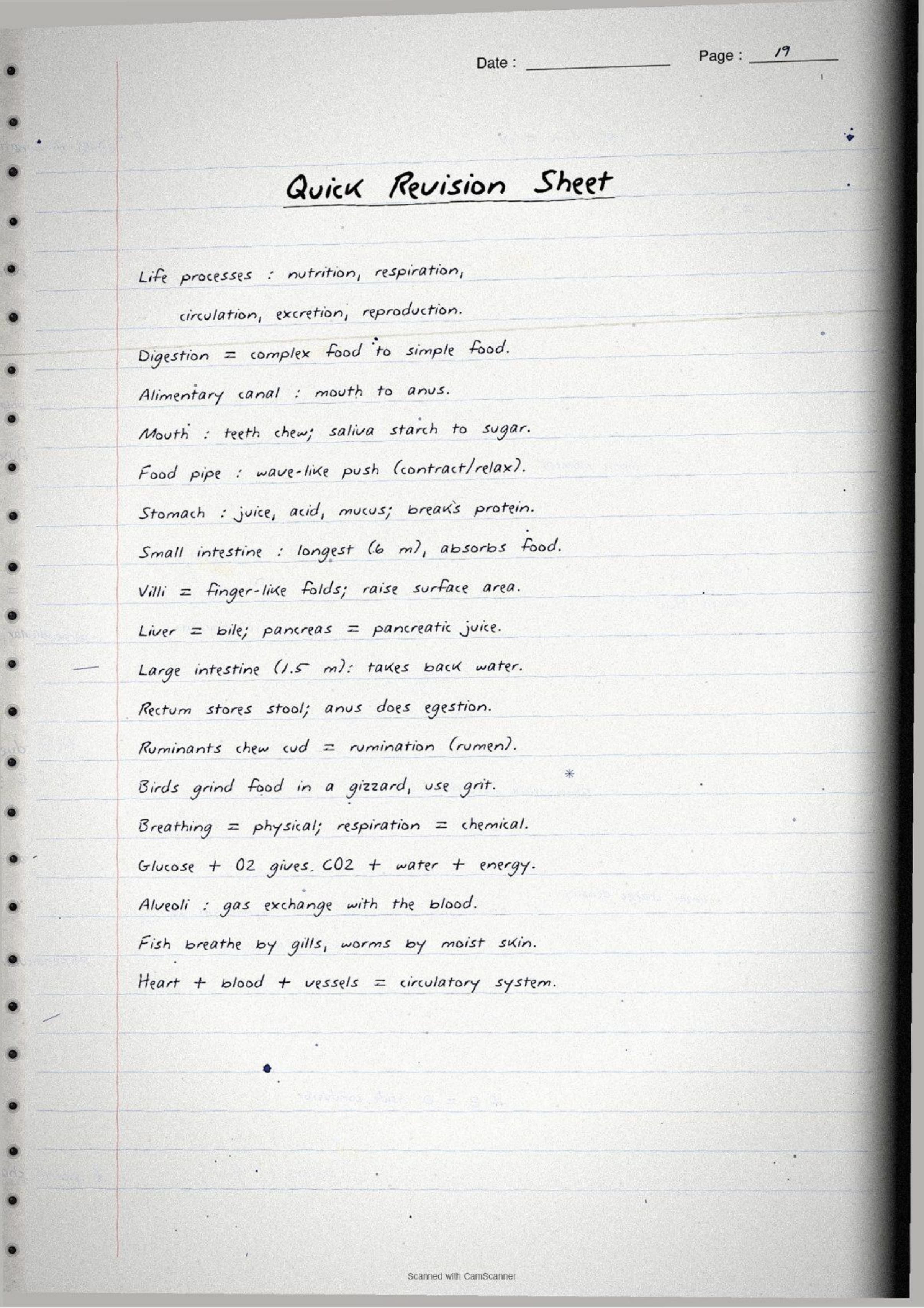
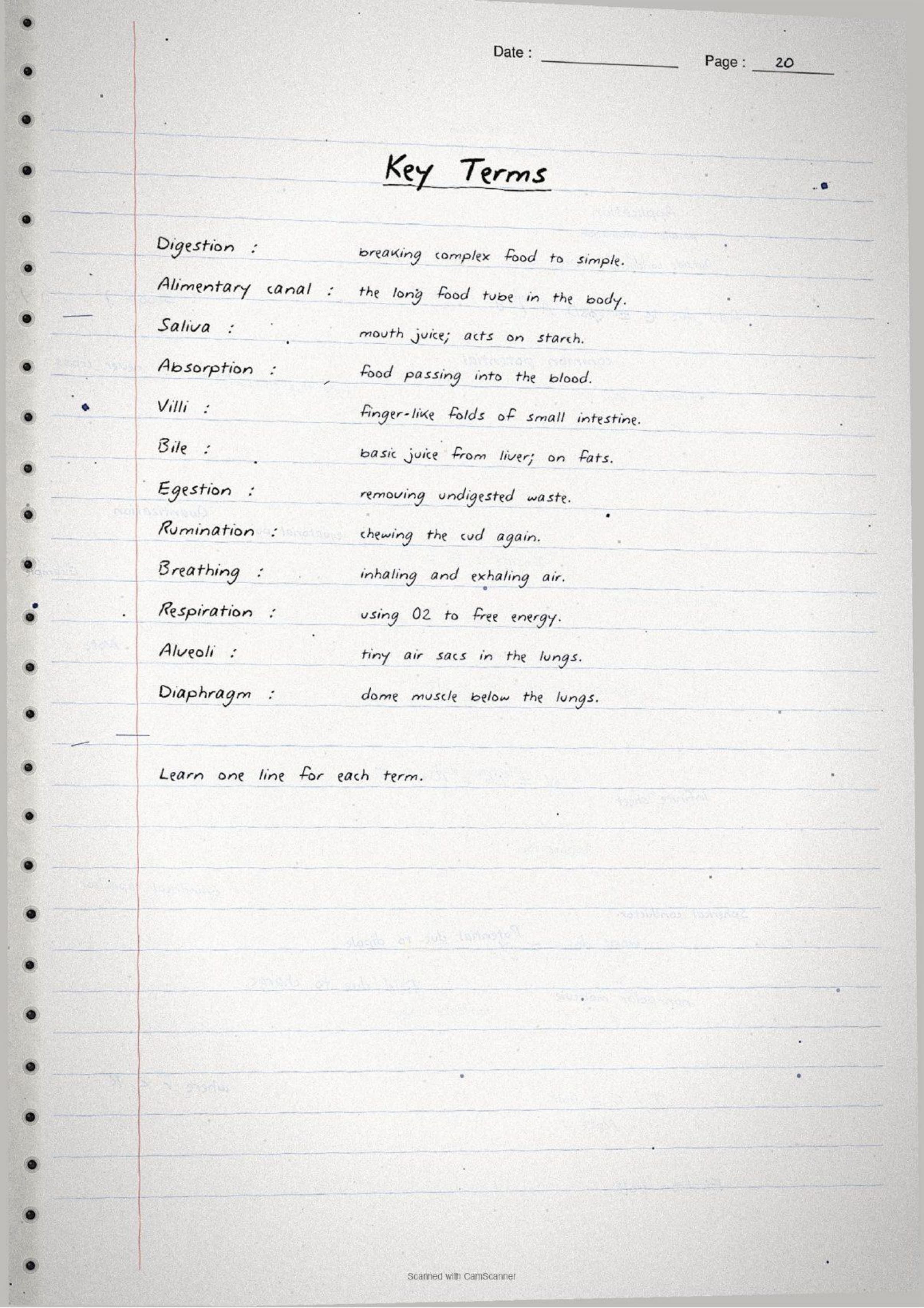
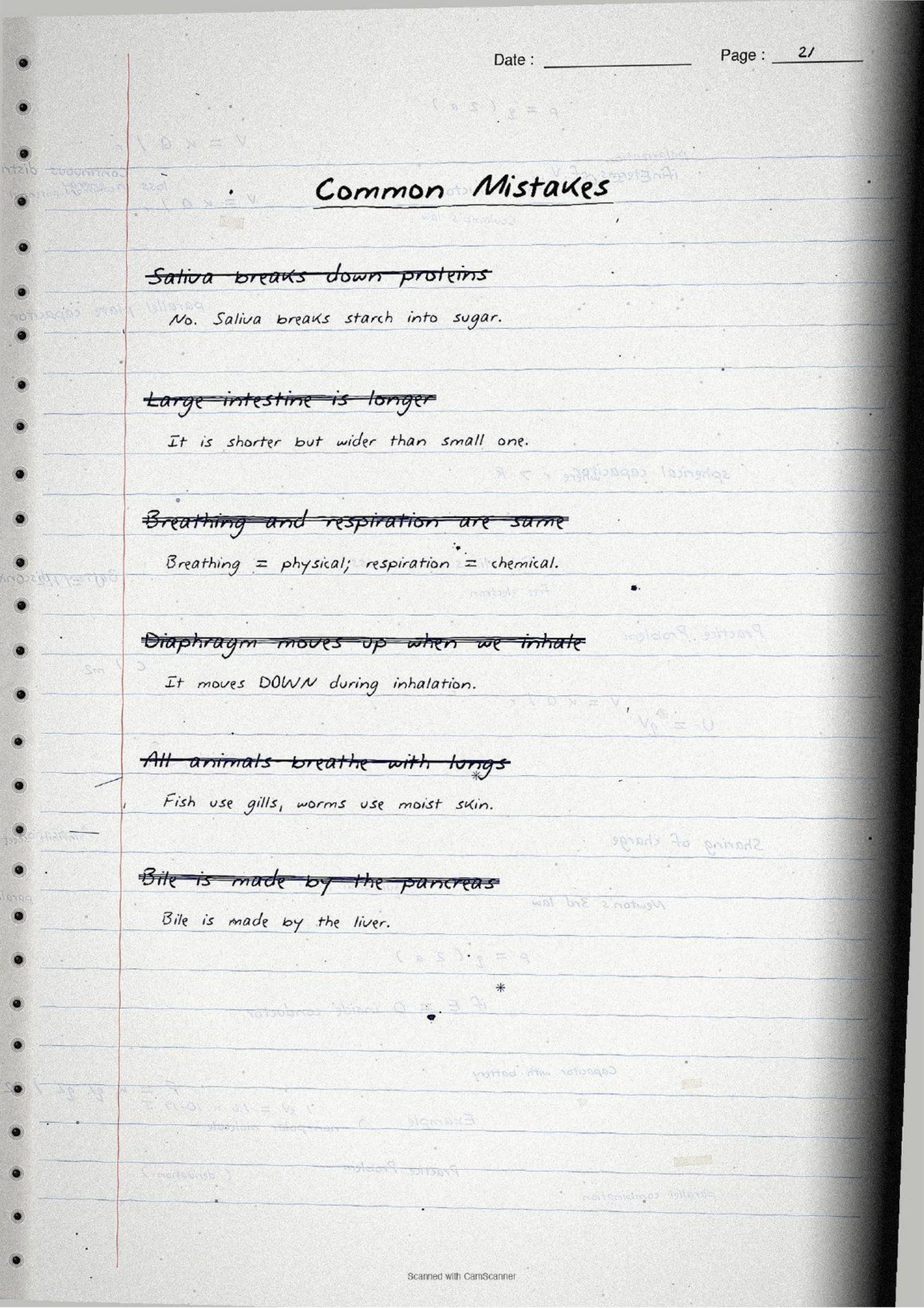
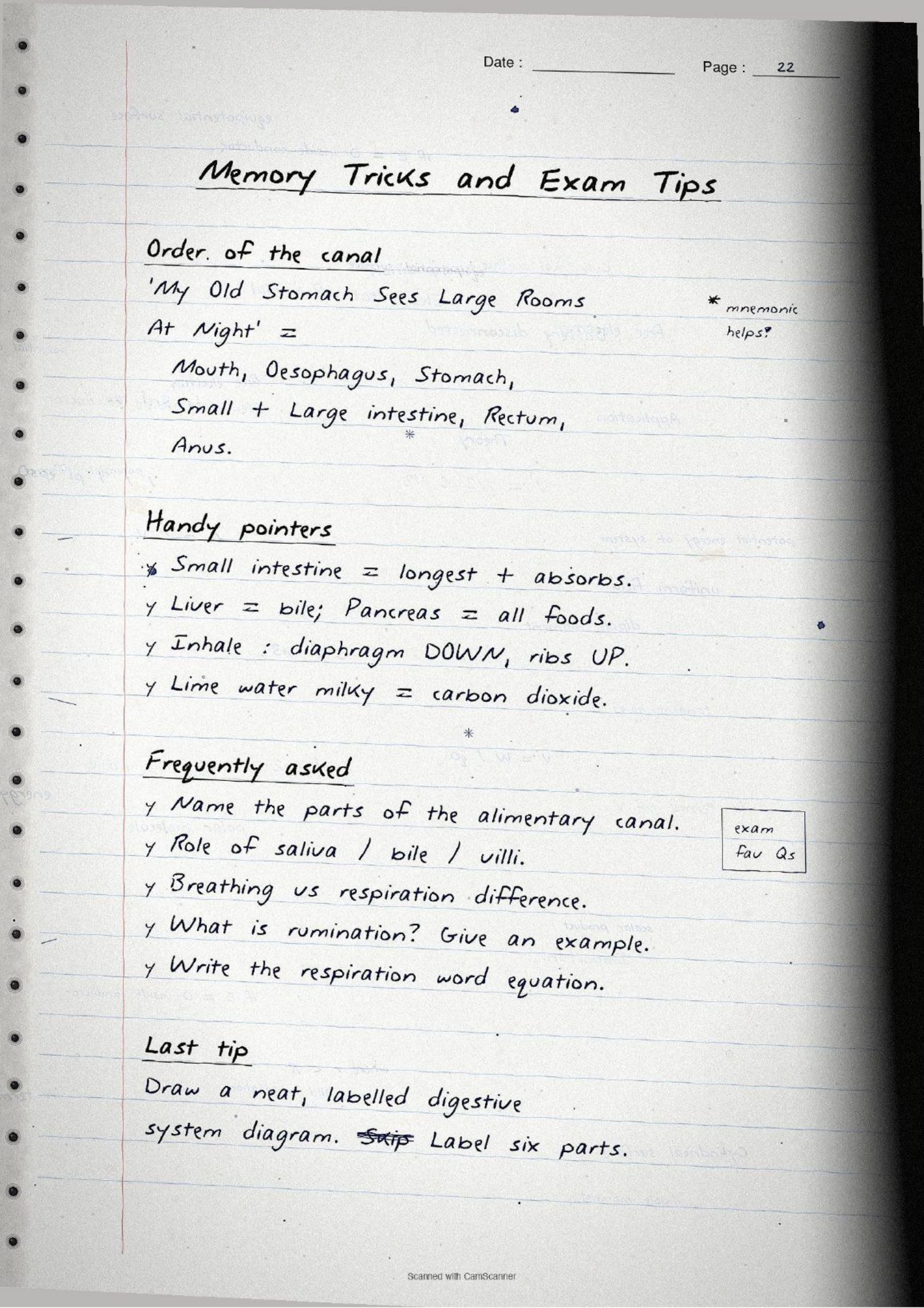
- Two labelled systems: the digestive path and the breathing path drawn and labelled by hand
- What the notes cover: nutrition in animals, digestion in humans, respiration in humans, and how other animals differ
- Best for: diagram-labelling questions, the highest-scoring type in this chapter
Open the PDF below for the complete class 7 science handwritten notes covering Life Processes in Animals from the first page to the last.
These handwritten notes are written by Science teachers, mapped to the 2026-27 NCERT, and checked against Class 7 school question papers.
Where Students Lose Marks in Life Processes in Animals
Diagram marks are the easiest marks in Class 7 biology, and they are also the most often lost to unlabelled sketches.
- A labelled digestive system is asked in most Class 7 papers
- The organ-and-function match is a standard two-mark question
- Comparisons of breathing organs across animals appear as one-mark questions
- Both systems are studied again in Class 10 in more detail
Why Students Pick Collegedunia's Life Processes in Animals Handwritten Notes
These class 7 science handwritten notes were written by teachers who set Class 7 papers. Collegedunia drew both systems large, with every label written out, so you can copy them under exam pressure.
- Two large diagrams: the digestive path and the breathing path, both fully labelled
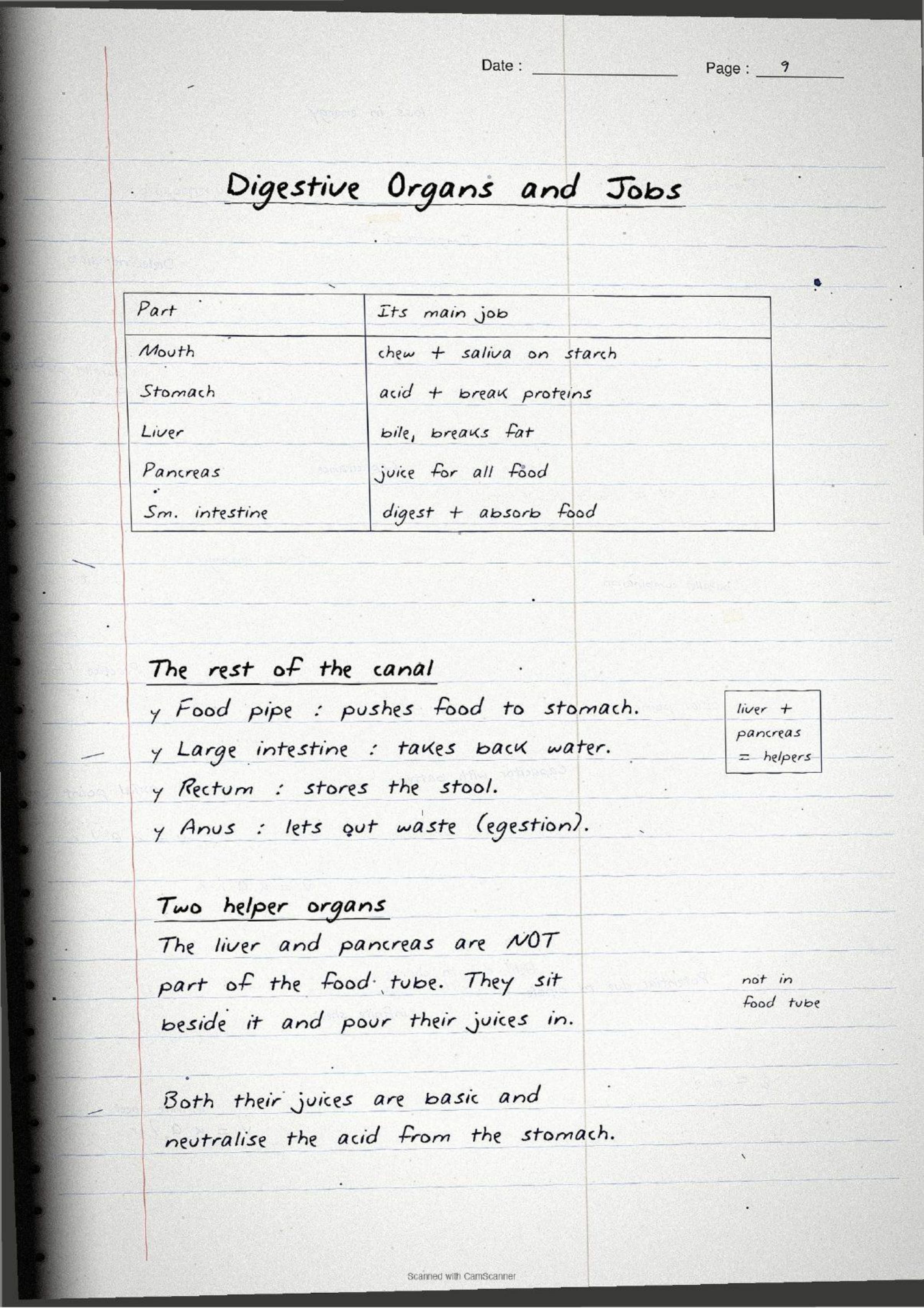
- Organ-function table: each organ paired with what it does, in one grid
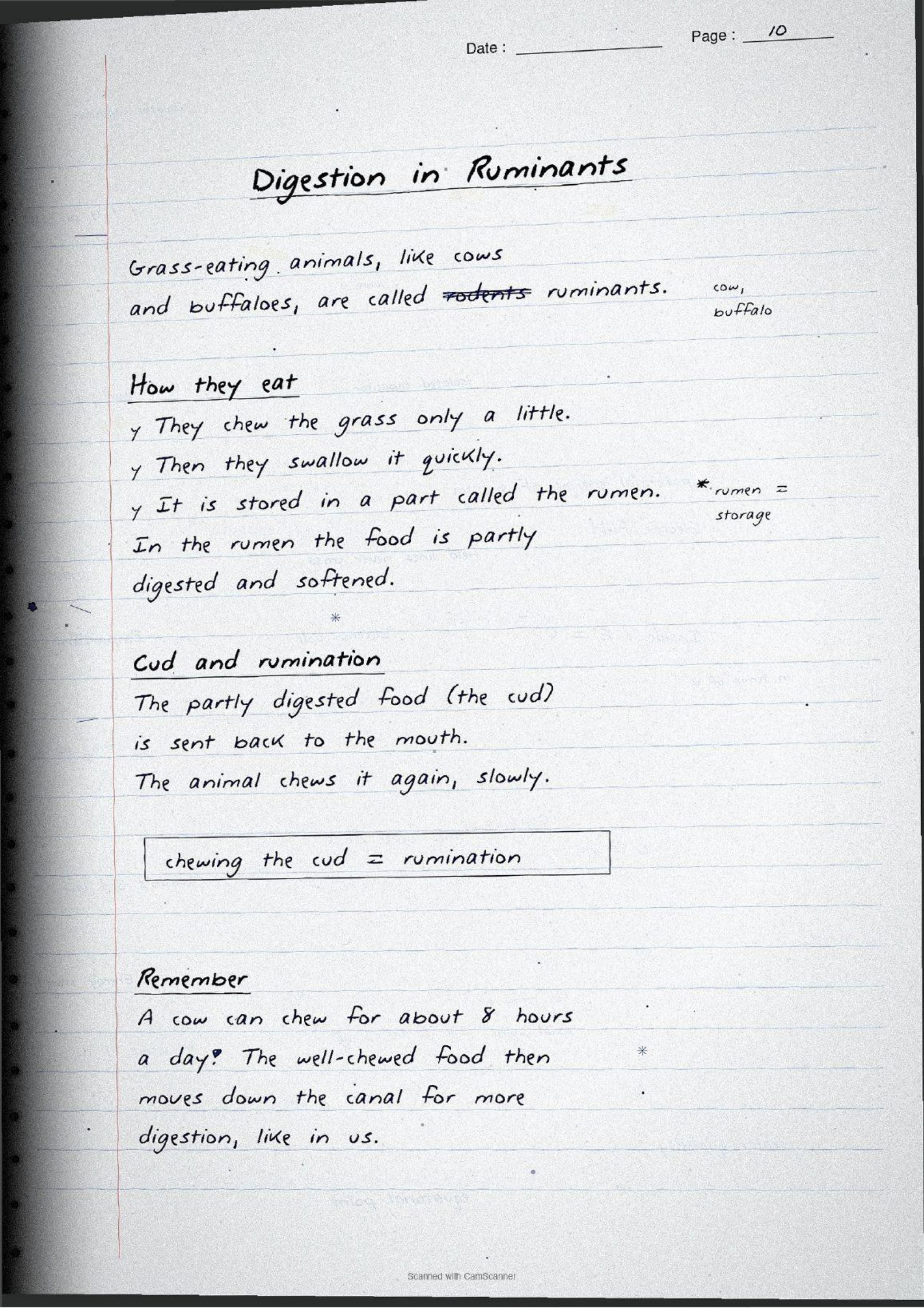
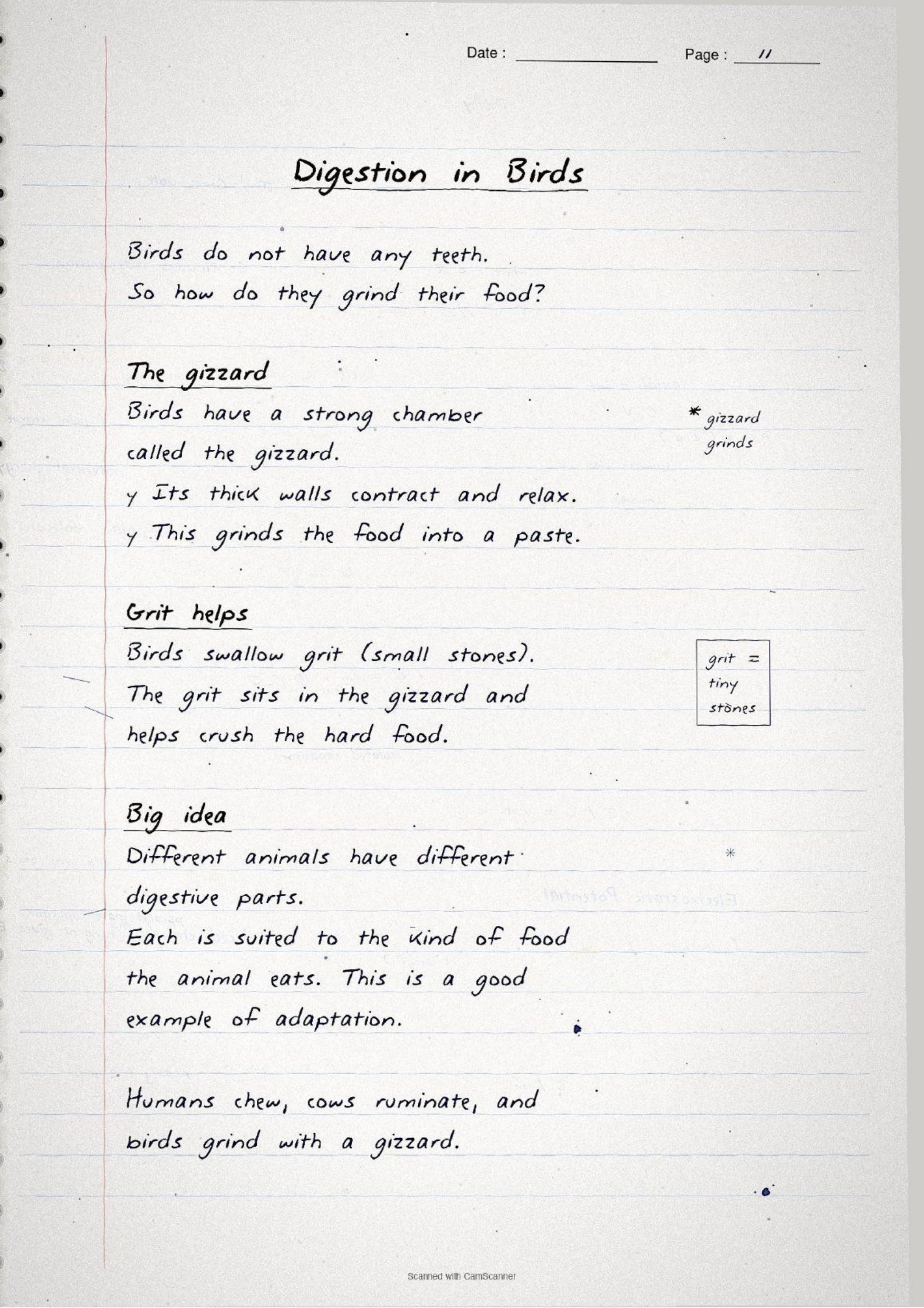
- Animal comparison panel: how cows, birds, fish, insects and amoeba differ
- Colour-coded sub-headings: sub-topics in red so nutrition and respiration stay separate
Test Yourself on Life Processes in Animals
Five questions on the two systems. Tap to reveal each answer.
Most absorption of digested food happens in the
(a) stomach (b) small intestine (c) large intestine (d) oesophagus
Answer: (b) small intestine
The food pipe is also called the
(a) trachea (b) oesophagus (c) rumen (d) gullet muscle
Answer: (b) oesophagus
A cow chewing cud again is showing
(a) absorption (b) rumination (c) respiration (d) excretion
Answer: (b) rumination
Fish take in oxygen through their
(a) lungs (b) spiracles (c) gills (d) skin only
Answer: (c) gills
Insects breathe through small openings called
(a) gills (b) spiracles (c) trachea rings (d) stomata
Answer: (b) spiracles
Topics Written Out in the Life Processes in Animals Notes
The chapter picks up the life processes named in Grade 6 and takes two of them further. The notes handle nutrition first and respiration second, matching the textbook.
- Nutrition in animals
- The human digestive system
- Mouth, oesophagus, stomach and intestines
- The role of digestive juices
- Absorption of digested food
- Digestion in other animals: ruminants, birds, amoeba
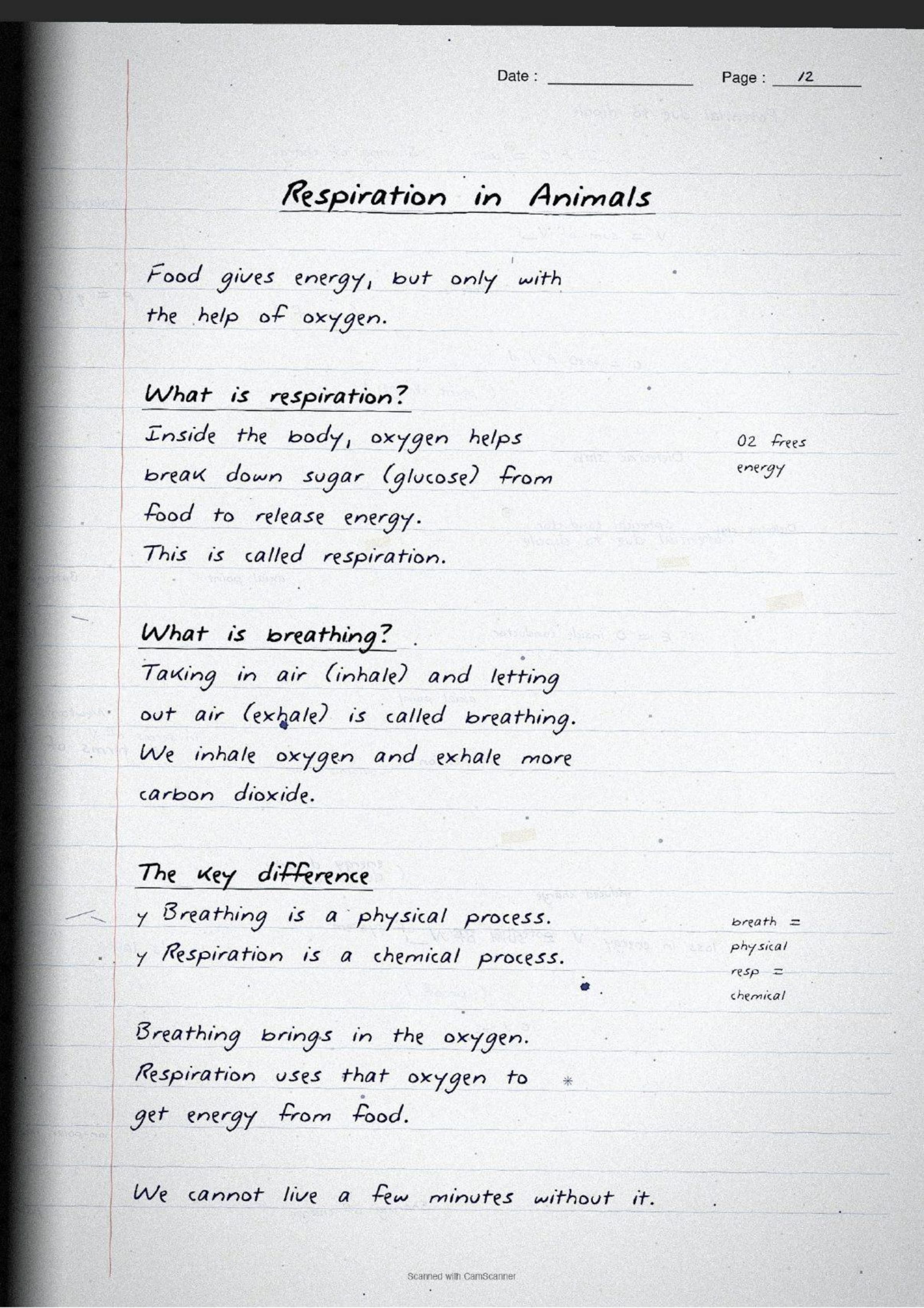
- Respiration in animals
- Respiration in humans and the path of air
- Breathing in fish, insects and earthworms
Life Processes in Animals Sub-topic Priority List for CBSE Class 7 Science
Labelled diagrams and the organ-function table are where the marks sit.
| Sub-topic | Weightage | How often asked |
|---|---|---|
| Human digestive system with labels | High | asked often |
| Functions of digestive organs | High | asked often |
| Human respiratory path | High | asked often |
| Digestion in ruminants | Medium | asked sometimes |
| Breathing in fish and insects | Medium | asked sometimes |
| Nutrition in amoeba | Low | asked rarely |
Life Processes in Animals in the Last Hour Before the Exam
The last-hour card for both systems.
- Digestion breaks food down; absorption passes it into the blood
- Small intestine does most digestion and all absorption
- Oesophagus is the food pipe; trachea is the windpipe
- Cows ruminate; fish use gills; insects use spiracles
- Breathing moves air; respiration releases energy in the cell
Hand-drawn Sketches Inside the Life Processes in Animals Notes
Two big diagrams anchor this chapter, and the notes give each a full page.
| Figure drawn by hand | What it shows |
|---|---|
| Human digestive system | mouth, oesophagus, stomach, small and large intestine labelled |
| Organ-function grid | each digestive organ paired with its job |
| Human respiratory path | nose, trachea, bronchi and lungs marked |
| Ruminant stomach | the chambers of a cow's stomach sketched |
| Fish gills close-up | water in through the mouth and out over the gills |
| Amoeba feeding | the food vacuole forming around a food particle |
Words and Ideas the Life Processes in Animals Notes Box Off
Organ names and their jobs must be paired correctly. Learn them as pairs.
| Term / Idea | What it means |
|---|---|
| Digestion | the breaking of food into simple substances the body can absorb |
| Oesophagus | the food pipe that carries food from the mouth to the stomach |
| Small intestine | the long tube where most digestion and absorption happen |
| Absorption | the passing of digested food into the blood |
| Rumination | the chewing again of partly digested food by animals like cows |
| Respiration | the process that releases energy from food inside cells |
| Trachea | the windpipe that carries air towards the lungs |
| Gills | the breathing organs of a fish, which take oxygen from water |
| Spiracles | the tiny openings through which insects take in air |
Best Way to Read the Life Processes in Animals Handwritten Notes
A short plan works better than one long sitting with the class 7 science handwritten notes. Learn by drawing. A labelled sketch fixes the order of organs faster than a list.
- Draw the digestive system and label eight parts from memory
- Draw the breathing path from nose to lungs
- Fill the organ-function table with the notes closed
- Before the test, revise the two diagrams and the animal comparison panel
Where to Go After the Life Processes in Animals Notes
Pair the notes with the solved exercises for diagram practice.
Chapter-wise Class 7 Science Handwritten Notes
Every one of the twelve Class 7 Science chapters has handwritten notes. Use the table to open the class 7 science handwritten notes for any other chapter.
Life Processes in Animals Class 7 Science Handwritten Notes FAQs
Ques. Where can I download the Life Processes in Animals Class 7 Handwritten Notes PDF?
Ans. The PDF is available free on this page in both the normal and the HD version.
Ques. Do the notes include labelled diagrams of the digestive and respiratory systems?
Ans. Yes. Both systems are drawn large by hand with every part labelled, so you can copy them into an answer sheet.
Ques. How many pages is the Chapter 9 handwritten notes PDF?
Ans. It runs 22 pages and covers both sections of the chapter plus a quiz.
Ques. Where does most digestion happen in the human body?
Ans. In the small intestine. Digestive juices act there on the food, and the digested food is absorbed into the blood through the intestinal wall.
Ques. How do fish and insects breathe?
Ans. Fish take dissolved oxygen from water using gills. Insects take in air through tiny openings called spiracles, which lead to a network of air tubes.



Comments