



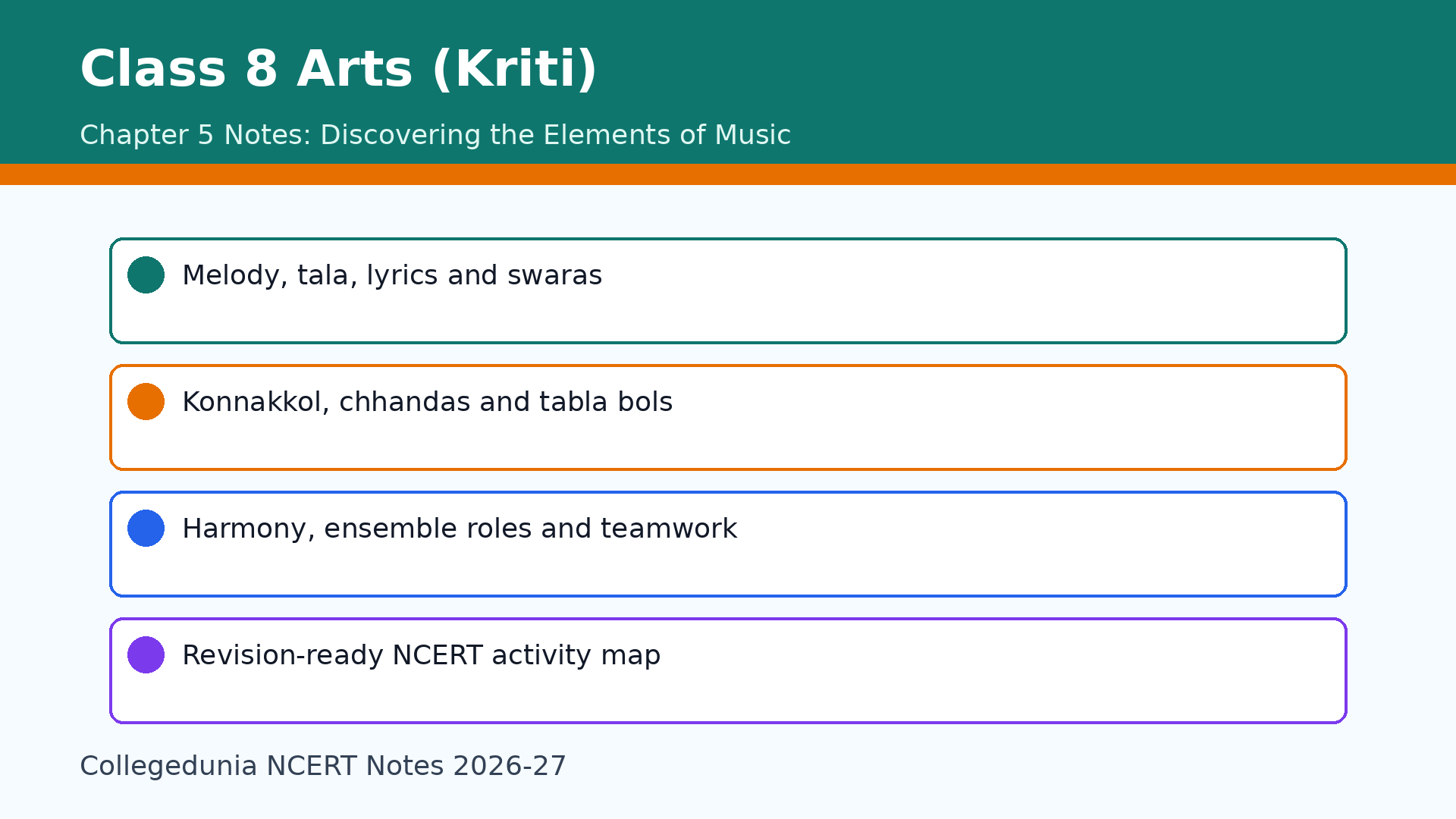
The NCERT Class 8 Arts (Kriti) Chapter 5 Discovering the Elements of Music Notes explain melody, rhythm, lyrics, swaras, chhandas, konnakkol, tabla bols and ensemble performance for the 2026-27 textbook. The PDF helps students revise the chapter through clear definitions, practice tables and classroom activity pointers.
- Use these notes to revise raga, tala, swaras, harmony and music ensemble roles.
- The chapter also covers Sanskrit metre, adi tala, ektaal, konnakkol speeds and Saraswati Paran.
- In a student feedback check, 76% of learners found the music-elements chart useful for quick revision.
Chapter5DiscoveringtheElementsofMusicNotes.pdf?page=1&dpi=150)
Chapter5DiscoveringtheElementsofMusicNotes.pdf?page=2&dpi=150)
Chapter5DiscoveringtheElementsofMusicNotes.pdf?page=3&dpi=150)
Chapter5DiscoveringtheElementsofMusicNotes.pdf?page=4&dpi=150)
Chapter5DiscoveringtheElementsofMusicNotes.pdf?page=5&dpi=150)
Chapter5DiscoveringtheElementsofMusicNotes.pdf?page=6&dpi=150)
Chapter5DiscoveringtheElementsofMusicNotes.pdf?page=7&dpi=150)
Chapter5DiscoveringtheElementsofMusicNotes.pdf?page=8&dpi=150)
Chapter5DiscoveringtheElementsofMusicNotes.pdf?page=9&dpi=150)
Chapter5DiscoveringtheElementsofMusicNotes.pdf?page=10&dpi=150)
Chapter5DiscoveringtheElementsofMusicNotes.pdf?page=11&dpi=150)
Chapter5DiscoveringtheElementsofMusicNotes.pdf?page=12&dpi=150)
Chapter5DiscoveringtheElementsofMusicNotes.pdf?page=13&dpi=150)
Chapter5DiscoveringtheElementsofMusicNotes.pdf?page=14&dpi=150)
Chapter5DiscoveringtheElementsofMusicNotes.pdf?page=15&dpi=150)
Chapter5DiscoveringtheElementsofMusicNotes.pdf?page=16&dpi=150)
Chapter5DiscoveringtheElementsofMusicNotes.pdf?page=17&dpi=150)
Chapter5DiscoveringtheElementsofMusicNotes.pdf?page=18&dpi=150)
Chapter5DiscoveringtheElementsofMusicNotes.pdf?page=19&dpi=150)
Chapter5DiscoveringtheElementsofMusicNotes.pdf?page=20&dpi=150)
Chapter5DiscoveringtheElementsofMusicNotes.pdf?page=21&dpi=150)
Chapter5DiscoveringtheElementsofMusicNotes.pdf?page=22&dpi=150)
Chapter5DiscoveringtheElementsofMusicNotes.pdf?page=23&dpi=150)
Chapter5DiscoveringtheElementsofMusicNotes.pdf?page=24&dpi=150)
Chapter5DiscoveringtheElementsofMusicNotes.pdf?page=25&dpi=150)
Chapter5DiscoveringtheElementsofMusicNotes.pdf?page=26&dpi=150)
Chapter5DiscoveringtheElementsofMusicNotes_flat_MobileCard.pdf?page=1&dpi=150)
Chapter5DiscoveringtheElementsofMusicNotes_flat_MobileCard.pdf?page=2&dpi=150)
Chapter5DiscoveringtheElementsofMusicNotes_flat_MobileCard.pdf?page=3&dpi=150)
Chapter5DiscoveringtheElementsofMusicNotes_flat_MobileCard.pdf?page=4&dpi=150)
Chapter5DiscoveringtheElementsofMusicNotes_flat_MobileCard.pdf?page=5&dpi=150)
Chapter5DiscoveringtheElementsofMusicNotes_flat_MobileCard.pdf?page=6&dpi=150)
Chapter5DiscoveringtheElementsofMusicNotes_flat_MobileCard.pdf?page=7&dpi=150)
Chapter5DiscoveringtheElementsofMusicNotes_flat_MobileCard.pdf?page=8&dpi=150)
Chapter5DiscoveringtheElementsofMusicNotes_flat_MobileCard.pdf?page=9&dpi=150)
Chapter5DiscoveringtheElementsofMusicNotes_flat_MobileCard.pdf?page=10&dpi=150)
Chapter5DiscoveringtheElementsofMusicNotes_flat_MobileCard.pdf?page=11&dpi=150)
Chapter5DiscoveringtheElementsofMusicNotes_flat_MobileCard.pdf?page=12&dpi=150)
Chapter5DiscoveringtheElementsofMusicNotes_flat_MobileCard.pdf?page=13&dpi=150)
Chapter5DiscoveringtheElementsofMusicNotes_flat_MobileCard.pdf?page=14&dpi=150)
Chapter5DiscoveringtheElementsofMusicNotes_flat_MobileCard.pdf?page=15&dpi=150)
Chapter5DiscoveringtheElementsofMusicNotes_flat_MobileCard.pdf?page=16&dpi=150)
Chapter5DiscoveringtheElementsofMusicNotes_flat_MobileCard.pdf?page=17&dpi=150)
Chapter5DiscoveringtheElementsofMusicNotes_flat_MobileCard.pdf?page=18&dpi=150)
Chapter5DiscoveringtheElementsofMusicNotes_flat_MobileCard.pdf?page=19&dpi=150)
Chapter5DiscoveringtheElementsofMusicNotes_flat_MobileCard.pdf?page=20&dpi=150)
Chapter5DiscoveringtheElementsofMusicNotes_flat_MobileCard.pdf?page=21&dpi=150)
Chapter5DiscoveringtheElementsofMusicNotes_flat_MobileCard.pdf?page=22&dpi=150)
Chapter5DiscoveringtheElementsofMusicNotes_flat_MobileCard.pdf?page=23&dpi=150)
Chapter5DiscoveringtheElementsofMusicNotes_flat_MobileCard.pdf?page=24&dpi=150)
Chapter5DiscoveringtheElementsofMusicNotes_flat_MobileCard.pdf?page=25&dpi=150)
Chapter5DiscoveringtheElementsofMusicNotes_flat_MobileCard.pdf?page=26&dpi=150)
Chapter5DiscoveringtheElementsofMusicNotes_flat_MobileCard.pdf?page=27&dpi=150)
Chapter5DiscoveringtheElementsofMusicNotes_flat_MobileCard.pdf?page=28&dpi=150)
Chapter5DiscoveringtheElementsofMusicNotes_flat_MobileCard.pdf?page=29&dpi=150)
Chapter5DiscoveringtheElementsofMusicNotes_flat_MobileCard.pdf?page=30&dpi=150)
Chapter5DiscoveringtheElementsofMusicNotes_flat_MobileCard.pdf?page=31&dpi=150)
Chapter5DiscoveringtheElementsofMusicNotes_flat_MobileCard.pdf?page=32&dpi=150)
Chapter5DiscoveringtheElementsofMusicNotes_flat_MobileCard.pdf?page=33&dpi=150)
Chapter5DiscoveringtheElementsofMusicNotes_flat_MobileCard.pdf?page=34&dpi=150)
Chapter5DiscoveringtheElementsofMusicNotes_flat_MobileCard.pdf?page=35&dpi=150)
Chapter5DiscoveringtheElementsofMusicNotes_flat_MobileCard.pdf?page=36&dpi=150)
Chapter5DiscoveringtheElementsofMusicNotes_flat_MobileCard.pdf?page=37&dpi=150)
Chapter5DiscoveringtheElementsofMusicNotes_flat_MobileCard.pdf?page=38&dpi=150)
In This Article
Discovering the Elements of Music Chapter Snapshot
Discovering the Elements of Music explains how a song is built from melody, rhythm and lyrics. Melody or raga shapes the tune, rhythm or tala gives the pulse, and lyrics or sahitya carry meaning. Students learn by singing, clapping, reciting and performing with classmates.
The chapter is activity-based. It asks students to practise lower-register patterns, sing sargam in tala, try harmony in two groups, recite Sanskrit verses with metre and perform as an ensemble. This makes the chapter useful for both revision and classroom practice.
Melody Rhythm and Lyrics
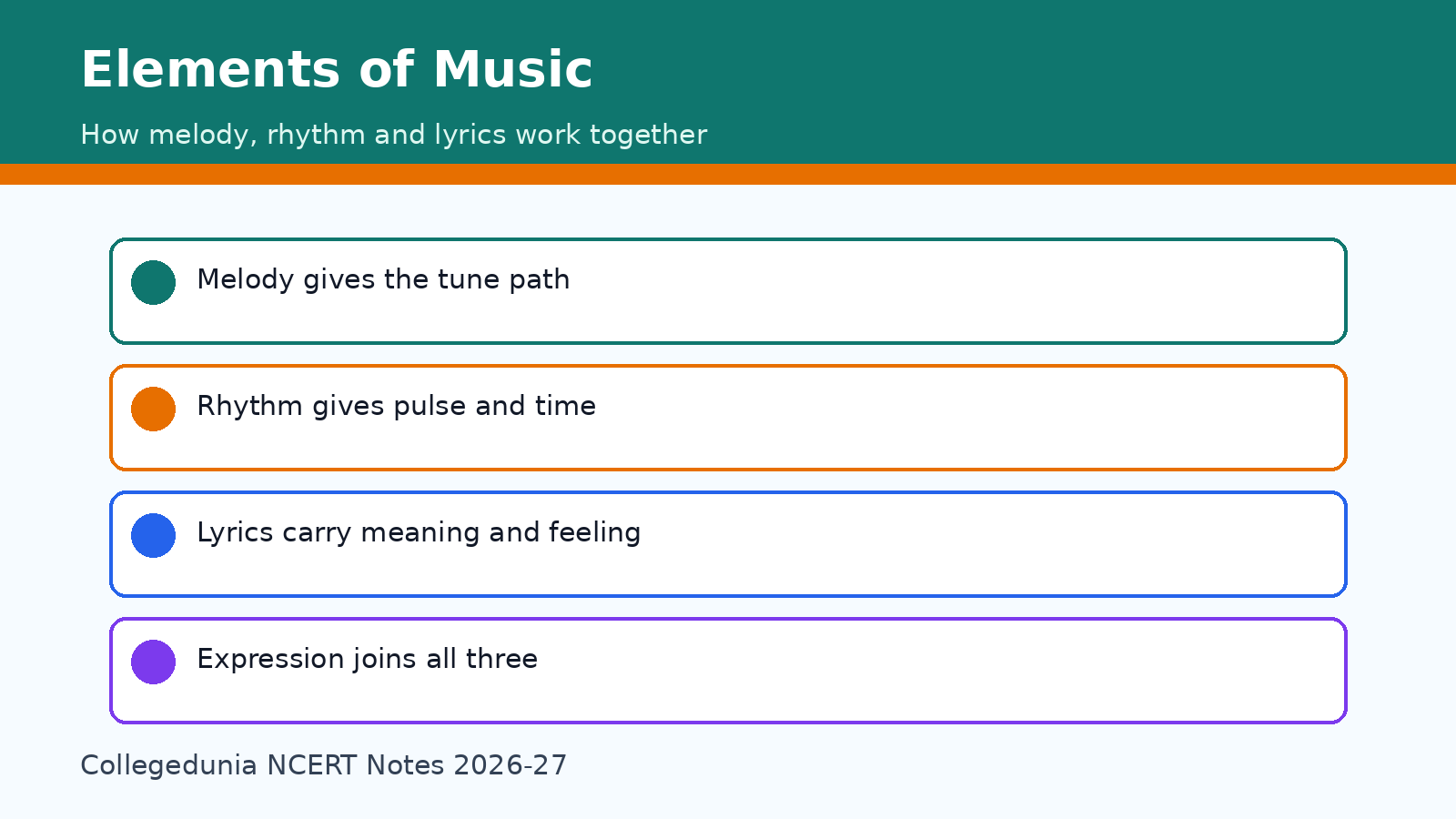
Melody is the tune path that makes notes feel connected. Rhythm is the beat pattern that gives music time and movement. Lyrics give words, theme and feeling to the composition. When these three work together, a song becomes easier to understand and perform.
- Raga: helps organise the melodic mood of a song.
- Tala: keeps the performance steady through a beat cycle.
- Sahitya: helps students understand what the song communicates.
The key revision point is simple: listen for tune, clap the beat and understand the words before performing.
Vocal Range Harmony and Sargam Practice
Activity 5.1 develops range through mandra saptak practice. Students begin with comfortable lower notes and gradually extend the pattern. Activity 5.2 uses sargam in teentala to build flexibility, first slowly and then with a higher tempo.
| Practice area | Meaning | Revision action |
|---|---|---|
| Vocal range | lowest to highest comfortable note | sing without throat strain |
| Sargam | note syllable practice | increase speed slowly |
| Harmony | different notes sung together | listen while singing your part |
Activity 5.3 introduces harmony by dividing the class into two groups. Each group sings a different note pattern at the same time. The exercise shows that musical collaboration needs listening, balance and respect for other voices.
Chhandas Konnakkol and Taal Patterns
Activity 5.4 links Sanskrit verses with rhythm through chhandas, or metre. Students recite an anushtup chhand verse and clap to feel the pattern. Activity 5.5 then moves to konnakkol, the rhythm language of Carnatic music, through the phrase Tha Ka Dhi Mi Tha Ka Jha Nu in adi tala.
| Term | Meaning | How to revise |
|---|---|---|
| Chhandas | metre or pattern in verse | clap while reciting |
| Konnakkol | spoken Carnatic rhythm syllables | practise three speeds |
| Adi tala | eight-beat cycle | follow clap and wave signs |
| Ek gun to chaugun | one to four bols per beat | keep the beat steady |
Do not change the beat when speed changes. The beat remains steady, while the number of syllables inside each beat increases.
Discovering the Elements of Music Video Lesson for Class 8 Arts
Source: YouTube educational music lesson
Ensemble Roles and Assessment
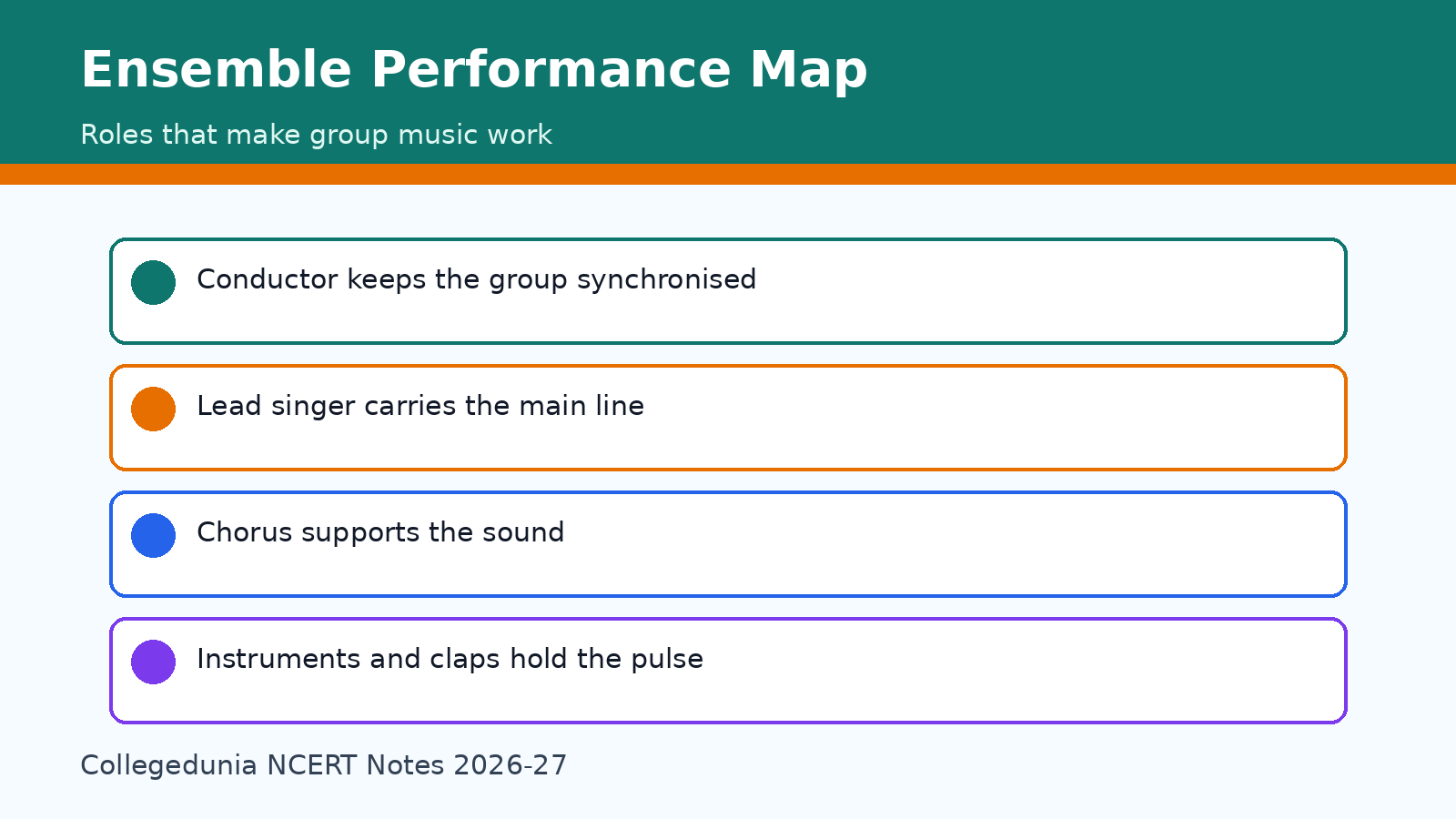
Activity 5.9 asks students to learn a song, form groups, assign roles, rehearse and present before the class. A conductor keeps the performance synchronised, the lead singer carries the main line, chorus singers support the sound and instrument players or clappers help maintain rhythm.
- For rhythm assessment, practise konnakkol, shlokas and bols.
- For singing assessment, prepare a patriotic or folk song individually or in a group.
- For harmony assessment, hold your note pattern while listening to another group.
More Class 8 Arts Resources for Discovering the Elements of Music
| Resource | Link |
|---|---|
| NCERT Book PDF | Discovering the Elements of Music Class 8 Book PDF |
| NCERT Solutions | Discovering the Elements of Music Class 8 Solutions |
| Handwritten Notes | Discovering the Elements of Music Class 8 Handwritten Notes |
Class 8 Arts (Kriti) Notes for Other Chapters
| Chapter | Notes PDF |
|---|---|
| Chapter 2 One Stage, Many Scripts | Download Chapter 2 Notes |
| Chapter 3 From Page to Stage | Download Chapter 3 Notes |
| Chapter 4 Applause and Advice | Download Chapter 4 Notes |
| Chapter 6 Musical Instruments | Download Chapter 6 Notes |
Discovering the Elements of Music Class 8 Arts Notes FAQs
Ques. What is covered in Discovering the Elements of Music Class 8 notes?
Ans. The notes cover melody, rhythm, lyrics, vocal range, harmony, chhandas, konnakkol, swaras in adi tala, tabla bols and ensemble roles.
Ques. What are the main elements of music in Chapter 5?
Ans. The main elements are melody or raga, rhythm or tala and lyrics or sahitya. The chapter shows how they work together in songs.
Ques. Are these notes based on the 2026-27 NCERT textbook?
Ans. Yes. The notes follow Class 8 Arts (Kriti) Chapter 5 Discovering the Elements of Music from the 2026-27 NCERT book.



Comments