




कर चले हम फ़िदा by कैफ़ी आज़मी is chapter 6 of स्पर्श भाग 2, the Class 10 Hindi Course B textbook. The ncert book class 10 hindi sparsh chapter 6 कैफ़ी आज़मी - कर चले हम फ़िदा file on this page is the official NCERT chapter for 2026-27. Download it to read the full गीत, the कवि परिचय, the शब्दार्थ list and every प्रश्न-अभ्यास question from the source.
- Chapter: Chapter 6, कर चले हम फ़िदा, the sixth poem of the पद्य खंड
- Book: स्पर्श भाग 2, the Class 10 Hindi Course B textbook for 2026-27, with 14 chapters
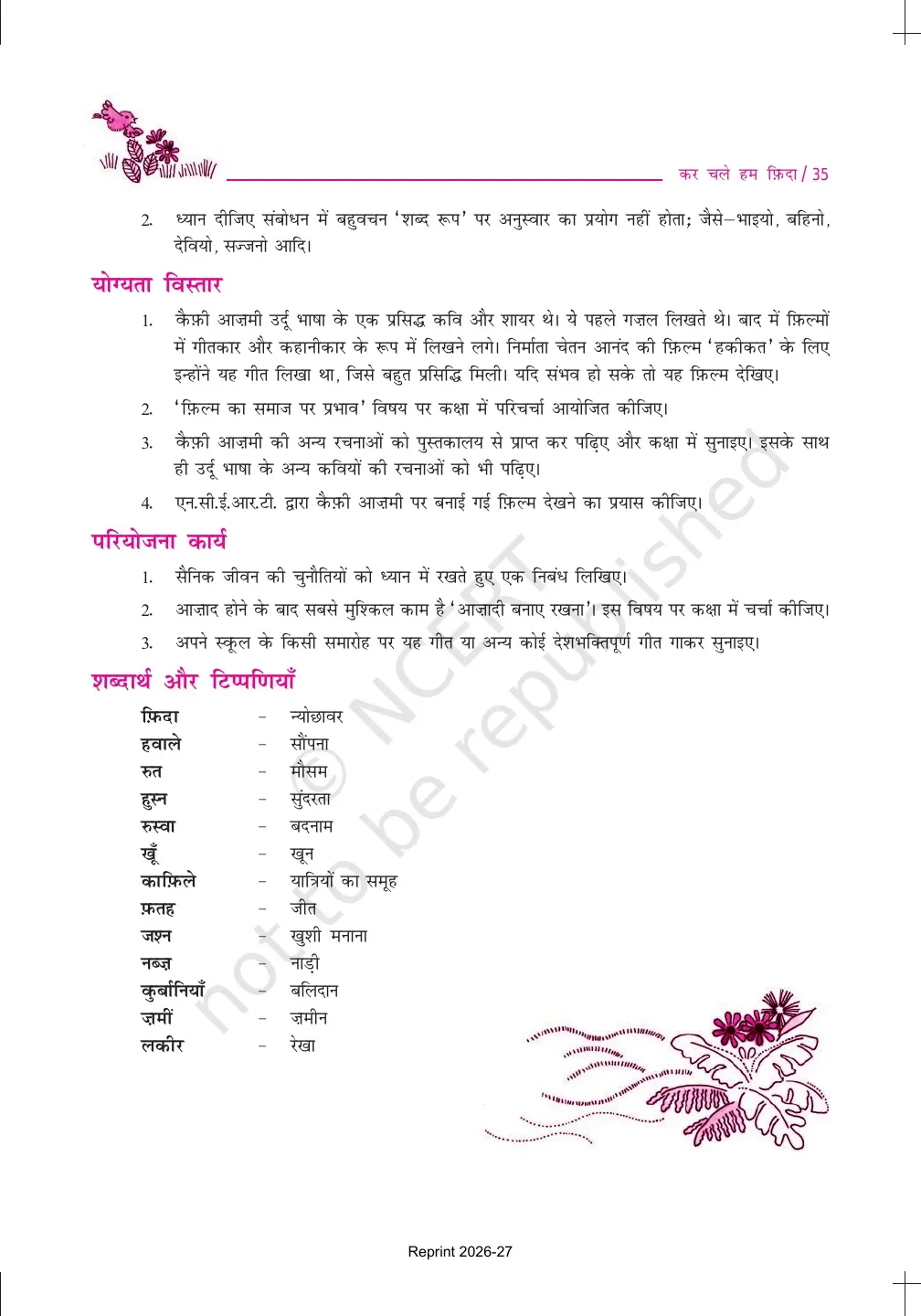
- File: 5 pages, the complete official chapter, printed on pages 33 to 35
You can page through the कवि परिचय, the पाठ प्रवेश, all four stanzas and the exercises in the viewer above before downloading the file.
This is the official NCERT chapter file for the 2026-27 session, hosted by Collegedunia with no pages removed.
How the कर चले हम फ़िदा Chapter Is Laid Out
Every poem in स्पर्श भाग 2 carries the same working parts, and कर चले हम फ़िदा is the sixth of them. The table below lists them in the order they appear in the file.
| Part of the chapter | What it does |
|---|---|
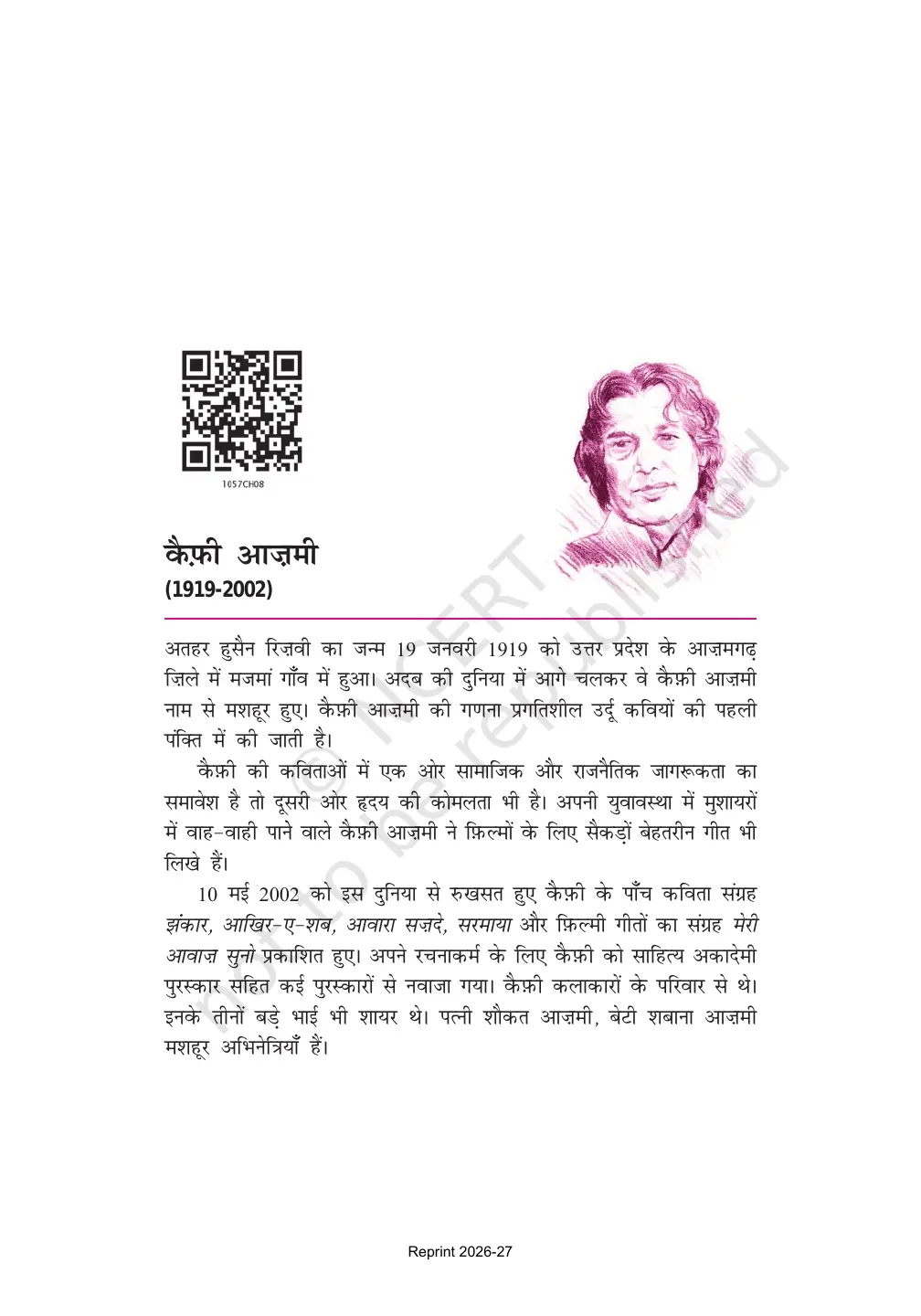
| कवि परिचय | the life sketch of कैफ़ी आज़मी, 1919 to 2002, opening with his given name अतहर हुसैन रिज़वी |
| पाठ प्रवेश | the lead-in contrasting an ordinary life with a soldier's |
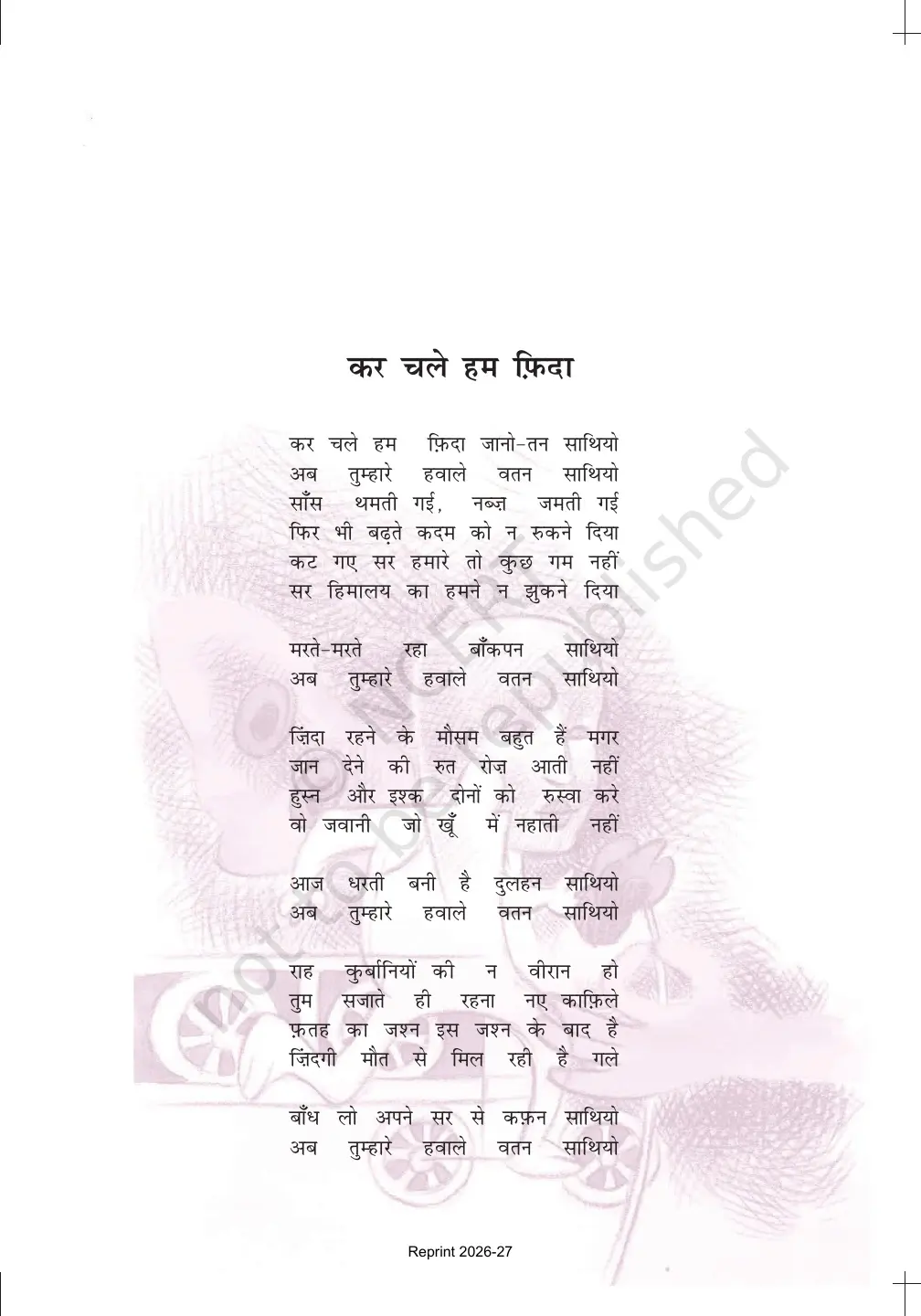
| कर चले हम फ़िदा | the गीत, four stanzas, each closing on the same two-line refrain |
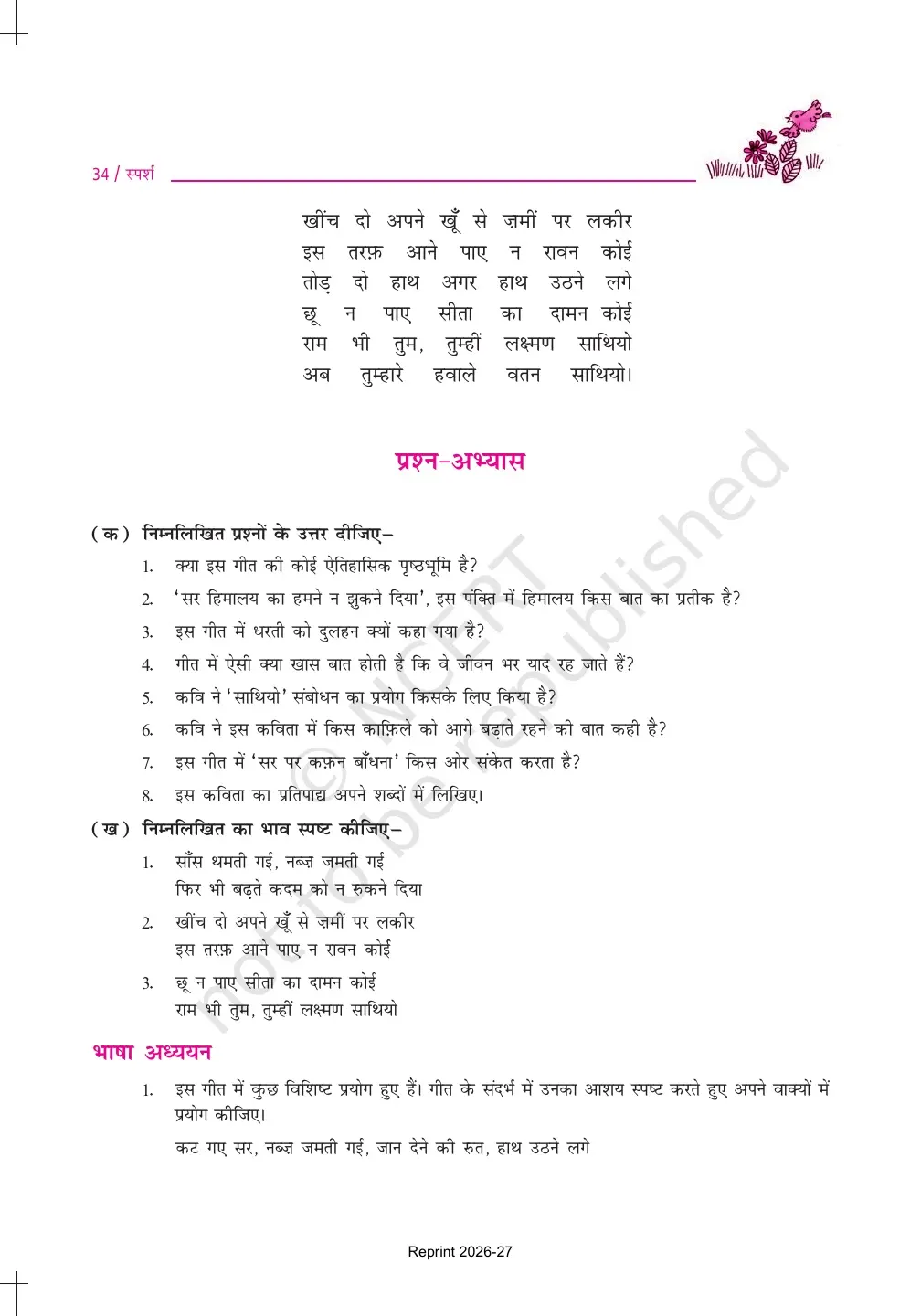
| प्रश्न-अभ्यास | eight questions in part क, three भाव स्पष्ट कीजिए passages in part ख |
| भाषा अध्ययन | two tasks, on विशिष्ट प्रयोग and on the अनुस्वार rule |
| योग्यता विस्तार and परियोजना कार्य | four activities around कैफ़ी आज़मी and हकीकत, then three projects |
| शब्दार्थ और टिप्पणियाँ | twelve word meanings, most of them उर्दू |
What the कर चले हम फ़िदा Chapter PDF Contains
The PDF holds the whole chapter exactly as NCERT printed it. The गीत, the poet sketch and every exercise are in place, with nothing trimmed.
- The complete गीत, opening on कर चले हम फ़िदा जानो-तन साथियो and closing on राम भी तुम, तुम्हीं लक्ष्मण साथियो
- The कवि परिचय, naming his five collections: झंकार, आखिर-ए-शब, आवारा सज़दे, सरमाया and मेरी आवाज़ सुनो
- पाठ प्रवेश, which sets up the question the chapter ends on: are we meeting what these soldiers expected of us
- The full प्रश्न-अभ्यास, भाषा अध्ययन, योग्यता विस्तार and परियोजना कार्य sections
- शब्दार्थ और टिप्पणियाँ, covering फ़िदा, हवाले, रुत, हुस्न, रुस्वा, खूँ, काफ़िले, फ़तह, जश्न, नब्ज़ and लकीर
कर चले हम फ़िदा Explained in Simple Hindi
Source: EduRev Class 6 - 10 on YouTube
The 1962 War and the Film हकीकत Behind कर चले हम फ़िदा
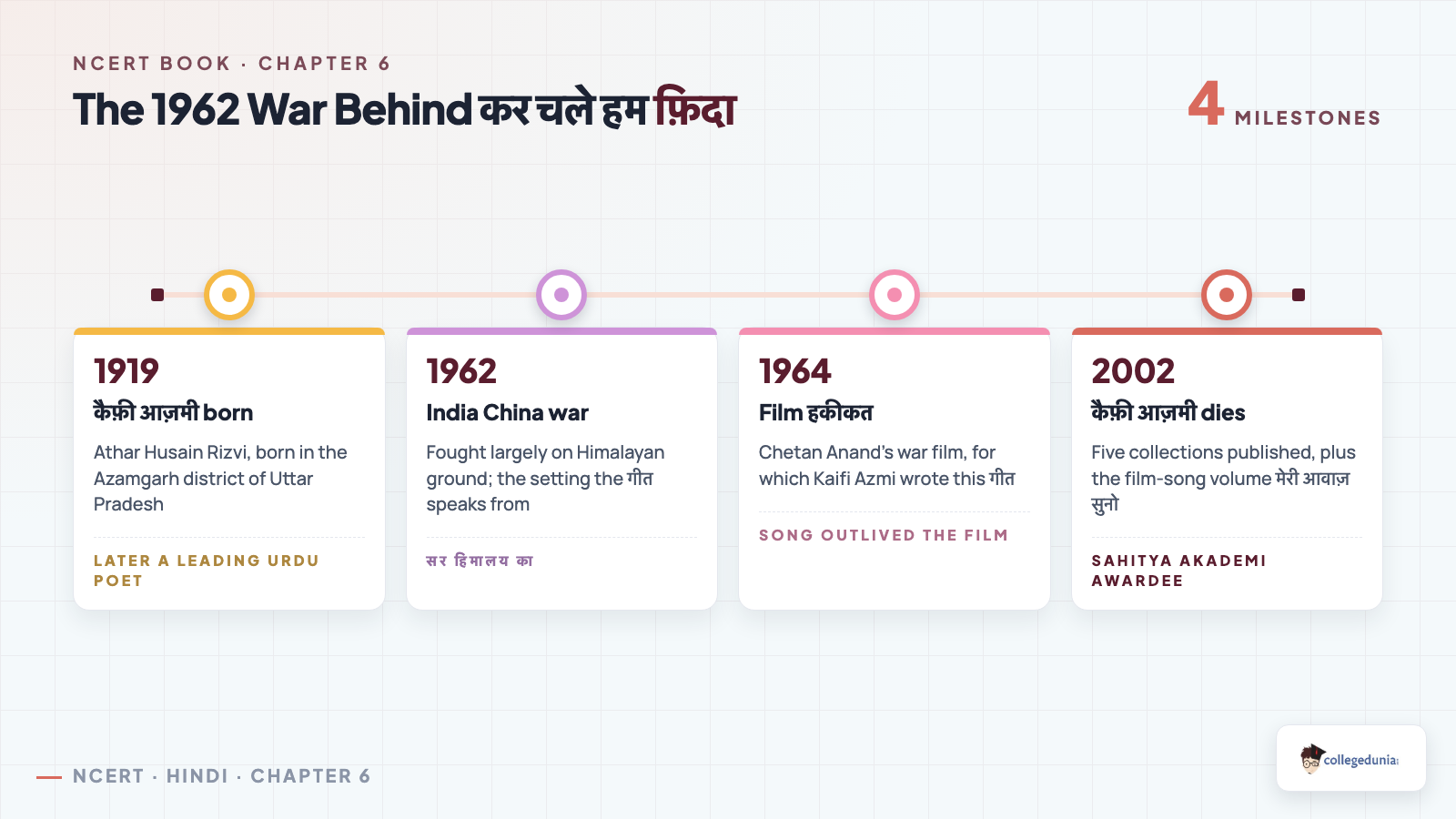
This is the one poem in the पद्य खंड with a dated event standing behind it, and the first exercise question asks about exactly that. It was not written for a book. It was written for a screen.
- The India China war of 1962 was fought largely in the Himalayan cold, and that is where the गीत speaks from
- Producer चेतन आनंद made the 1964 film हकीकत on that war, and कैफ़ी आज़मी wrote this गीत for it
- योग्यता विस्तार names the film and its producer, and asks students to watch it if they can
- It also points to an NCERT film on कैफ़ी आज़मी himself, and to the उर्दू poetry he came from
- The song outlived the film, which is why परियोजना कार्य asks you to sing it at a school event
The line सर हिमालय का हमने न झुकने दिया only lands once you know the fighting happened on Himalayan ground, and question 2 asks what हिमालय stands for.
Why अब तुम्हारे हवाले वतन साथियो Returns After Every Stanza
The refrain is the spine of the poem. It appears at the very start, then after each of the four stanzas, and the chapter ends on it. Everything else changes, but that line does not.
- The speaker is a soldier dying as he speaks, so the गीत is a handover, not a report
- हवाले means सौंपना, to hand over. The country is placed in someone else's care, and that someone is you
- साथियो is printed without an अनुस्वार, and भाषा अध्ययन uses it to teach that plural संबोधन forms drop it
- Each stanza's closing word changes just before the refrain: बाँकपन, दुलहन, कफ़न, लक्ष्मण. The rhyme holds while the image moves
- Question 5 asks who साथियो addresses, and question 7 asks what सर पर कफ़न बाँधना points to
The उर्दू Words in कर चले हम फ़िदा and What They Mean
कैफ़ी आज़मी came to film songwriting from उर्दू ग़ज़ल, and the diction shows it. Most of the twelve words on the शब्दार्थ page are उर्दू, so the glossary is worth reading before the poem rather than after.
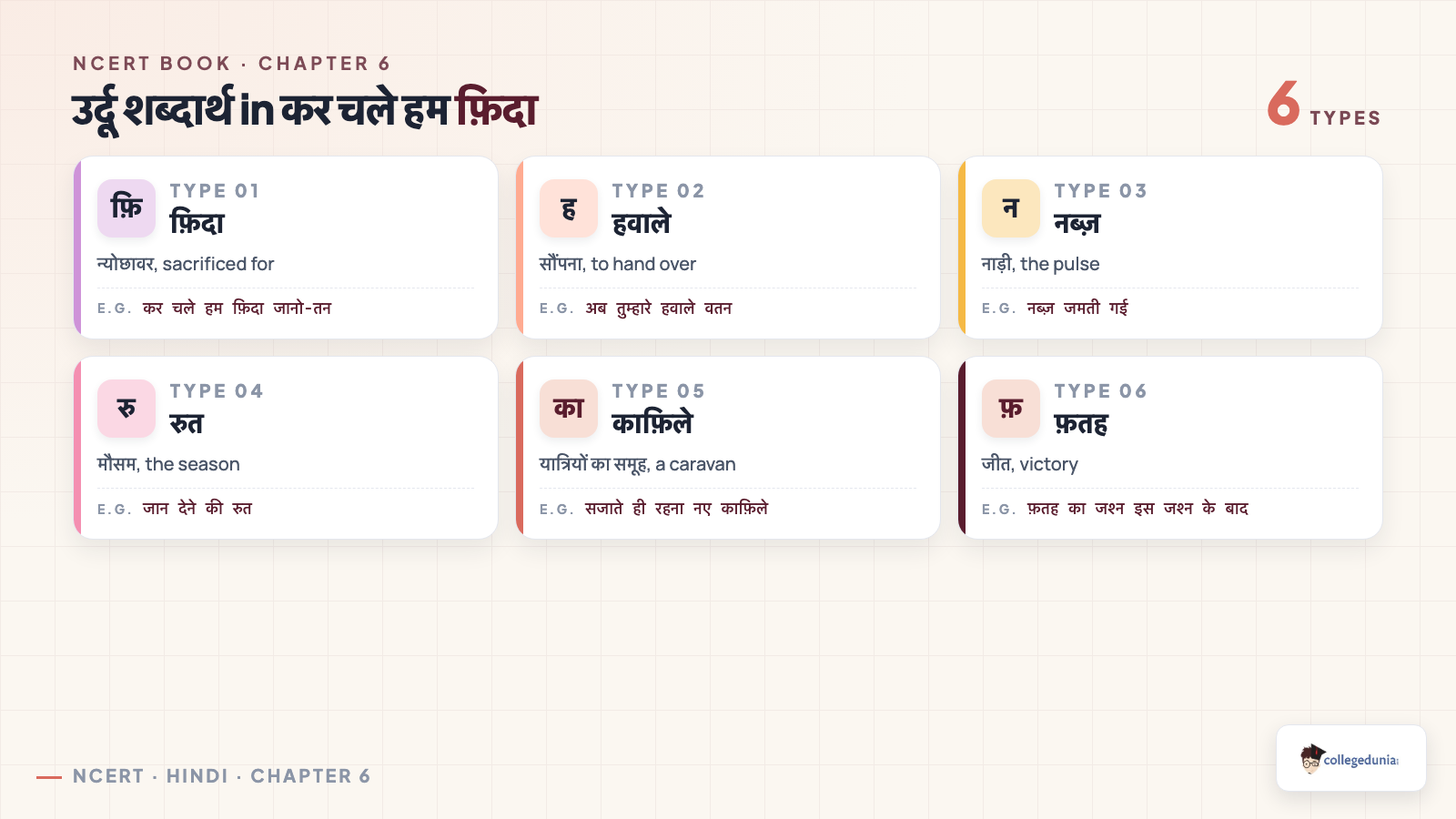
| शब्द | अर्थ | Where it appears |
|---|---|---|
| फ़िदा | न्योछावर | कर चले हम फ़िदा जानो-तन |
| हवाले | सौंपना | अब तुम्हारे हवाले वतन |
| नब्ज़ | नाड़ी | साँस थमती गई, नब्ज़ जमती गई |
| रुत | मौसम | जान देने की रुत रोज़ आती नहीं |
| हुस्न, रुस्वा | सुंदरता, बदनाम | हुस्न और इश्क दोनों को रुस्वा करे |
| खूँ, लकीर | खून, रेखा | खींच दो अपने खूँ से ज़मीं पर लकीर |
| काफ़िले | यात्रियों का समूह | तुम सजाते ही रहना नए काफ़िले |
| फ़तह, जश्न | जीत, खुशी मनाना | फ़तह का जश्न इस जश्न के बाद है |
| कुर्बानियाँ | बलिदान | राह कुर्बानियों की न वीरान हो |
The last stanza changes register. After stanzas of उर्दू vocabulary, the poem reaches for रावन, सीता, राम and लक्ष्मण. The border a soldier draws becomes the लक्ष्मण रेखा.
What the कर चले हम फ़िदा प्रश्न-अभ्यास Asks
The exercises reward close reading of single lines rather than a memorised summary. Several questions point at one phrase and ask what it stands for, so the poem and the शब्दार्थ page must be read together.
| Section | What it asks you to do |
|---|---|
| प्रश्न-अभ्यास (क) | eight questions: the ऐतिहासिक पृष्ठभूमि, what हिमालय is a प्रतीक of, why धरती is a दुलहन, why songs stay in memory, who साथियो addresses, which काफ़िला to carry forward, what सर पर कफ़न बाँधना signals, and the प्रतिपाद्य |
| प्रश्न-अभ्यास (ख) | three passages for भाव स्पष्ट कीजिए: the साँस थमती गई couplet, the ज़मीं पर लकीर couplet, and the सीता का दामन lines |
| भाषा अध्ययन | using four विशिष्ट प्रयोग in your own sentences: कट गए सर, नब्ज़ जमती गई, जान देने की रुत, हाथ उठने लगे |
| योग्यता विस्तार | watching चेतन आनंद's हकीकत, discussing फ़िल्म का समाज पर प्रभाव, and reading other उर्दू poets |
| परियोजना कार्य | a निबंध on सैनिक जीवन, a discussion on आज़ादी बनाए रखना, and singing a patriotic गीत |
A Reading Plan for कर चले हम फ़िदा and What Collegedunia Adds
The गीत is short, but four of the eight questions in part क turn on a single image. Work through the file in passes rather than reading it once end to end.
- Read the whole गीत aloud first. It was written to be sung, so the rhythm carries the sense before the vocabulary does.
- Take the शब्दार्थ page next, since नब्ज़, रुत, रुस्वा and फ़तह appear nowhere else in the book
- Name the image each stanza closes on, because questions 2, 3 and 7 sit on those
- Read पाठ प्रवेश again after the poem, since its closing question is close to what question 8 wants
- Attempt part ख last, and quote the line before you explain it
Alongside the file, Collegedunia gives you a way into it. The chapter PDF is the official NCERT file, untouched.
- Official file: the exact NCERT chapter PDF, with no pages removed
- Read in the browser: page through all five pages before you download
- Study material: notes and solutions for the same chapter where available
कर चले हम फ़िदा Class 10 Hindi NCERT Book PDF FAQs
Common Student Questions on the कर चले हम फ़िदा Chapter File
Ques. Where can I download the Class 10 Hindi कर चले हम फ़िदा NCERT Book PDF?
Ans. The official 5-page chapter file from स्पर्श भाग 2 is on this page, free to download.
Ques. Does कर चले हम फ़िदा have a historical background?
Ans. Yes, and question 1 asks about it. कैफ़ी आज़मी wrote the गीत for चेतन आनंद's 1964 film हकीकत, set against the India China war of 1962.
Ques. How many pages is the कर चले हम फ़िदा chapter?
Ans. 5 pages in the 2026-27 स्पर्श भाग 2 edition, printed on pages 33 to 35, and this PDF is the complete chapter.
Ques. What does अब तुम्हारे हवाले वतन साथियो mean?
Ans. हवाले means सौंपना, so the line reads as the country is now handed to your care. A dying soldier passes on the responsibility.
Ques. What does हिमालय stand for in सर हिमालय का हमने न झुकने दिया?
Ans. The country's pride. The 1962 fighting happened on Himalayan ground, so the mountain is both the real battlefield and the honour the soldiers refused to let fall.
Ques. Why are राम, लक्ष्मण and सीता named in the last stanza?
Ans. The border drawn in blood becomes the लक्ष्मण रेखा, the land becomes सीता, and the invader becomes रावन. Part ख question 3 asks about those lines.
Ques. Why is साथियो written without an अनुस्वार?
Ans. Because plural संबोधन forms drop it. भाषा अध्ययन states the rule and gives भाइयो, बहिनो, देवियो and सज्जनो as examples. This is the official NCERT chapter PDF, hosted as published with no pages removed.



Comments