



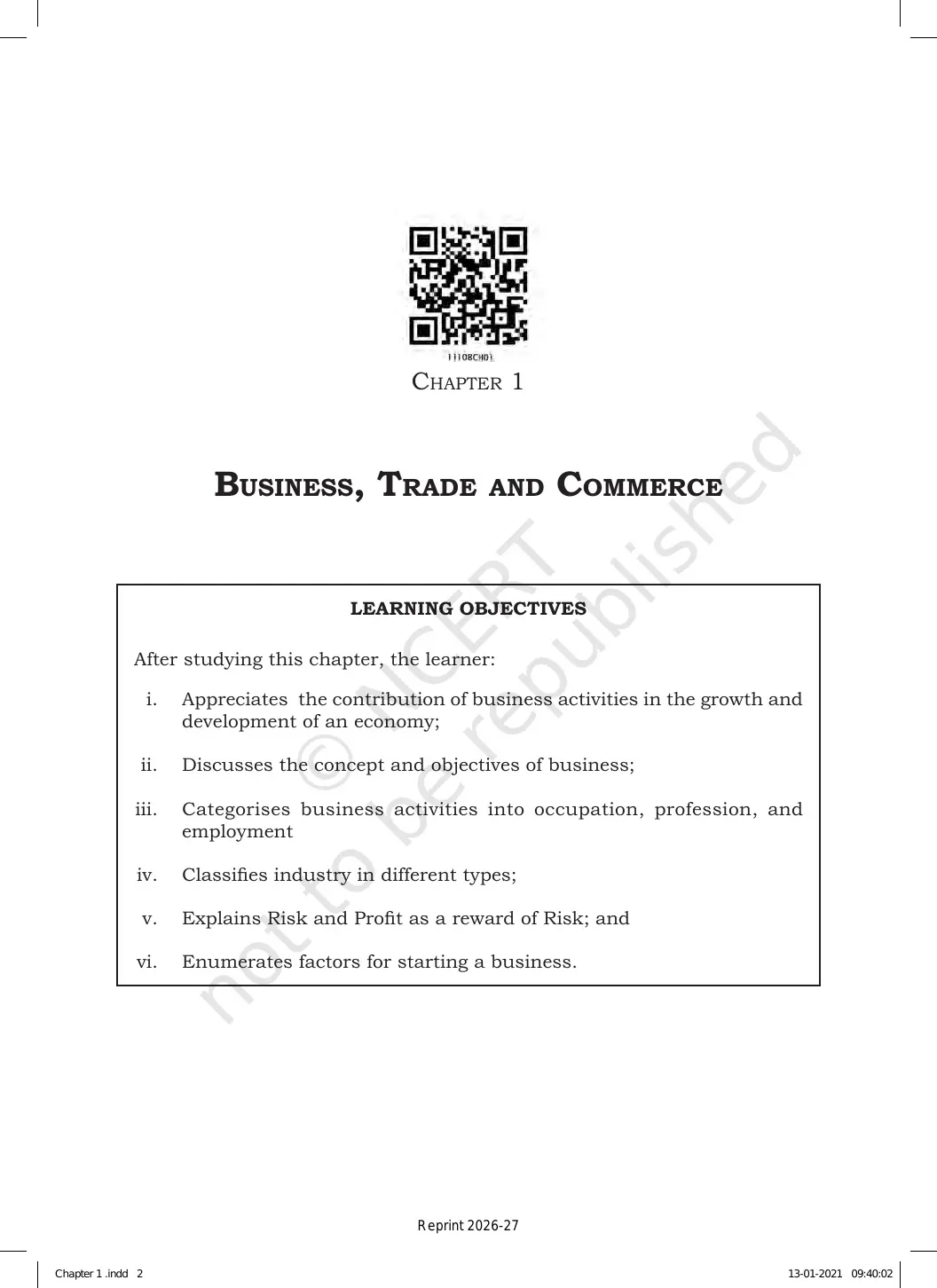
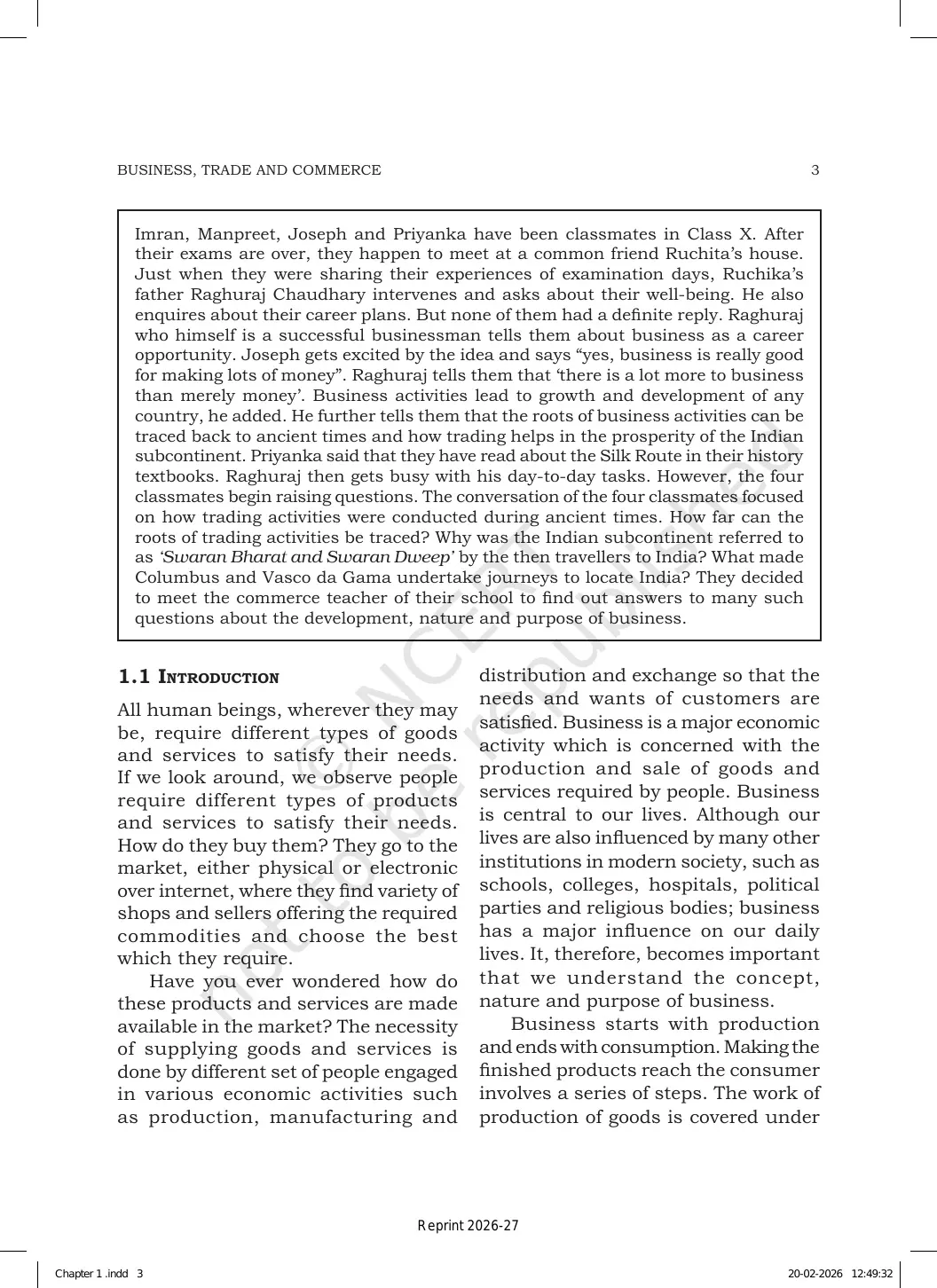
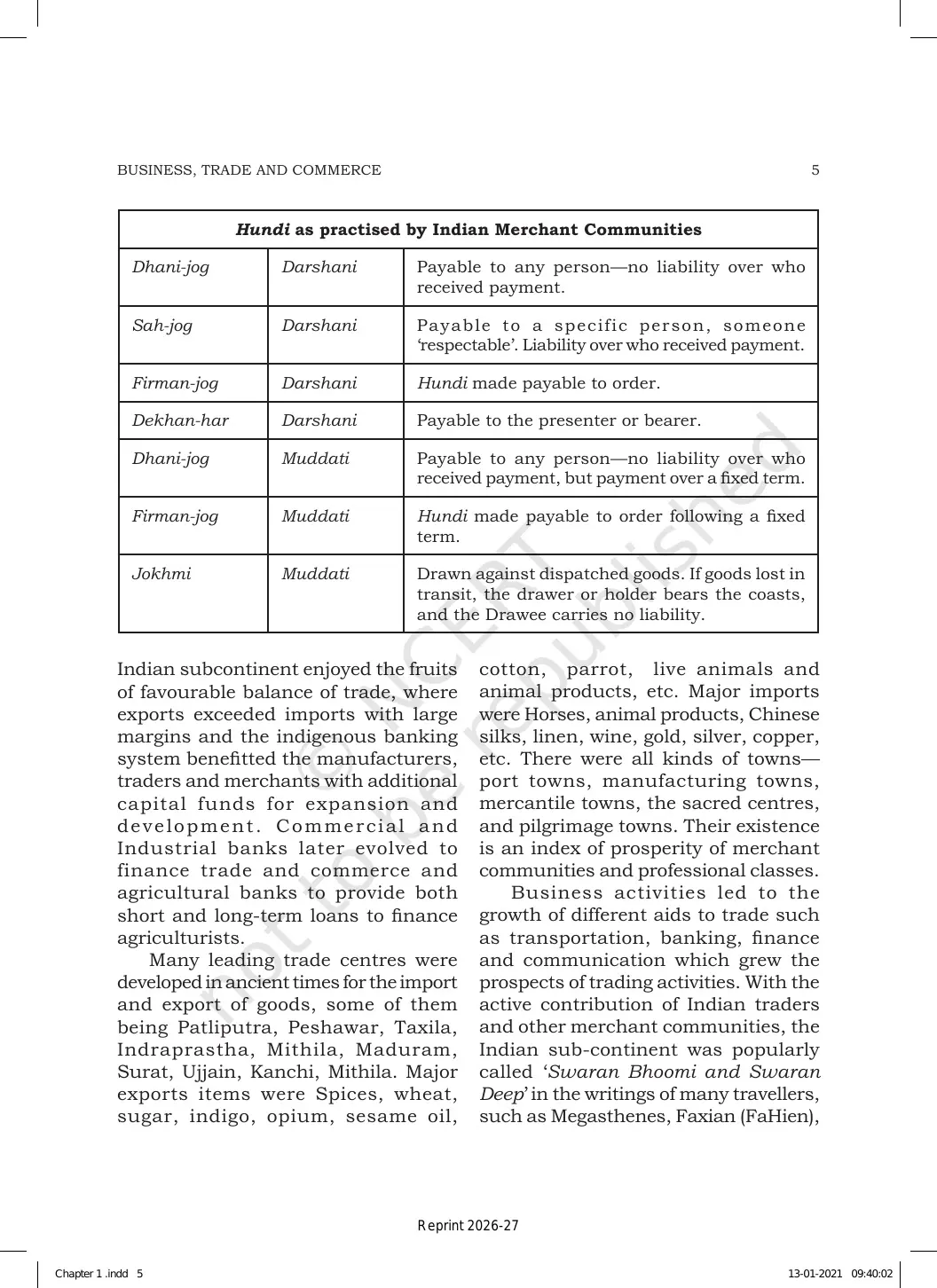
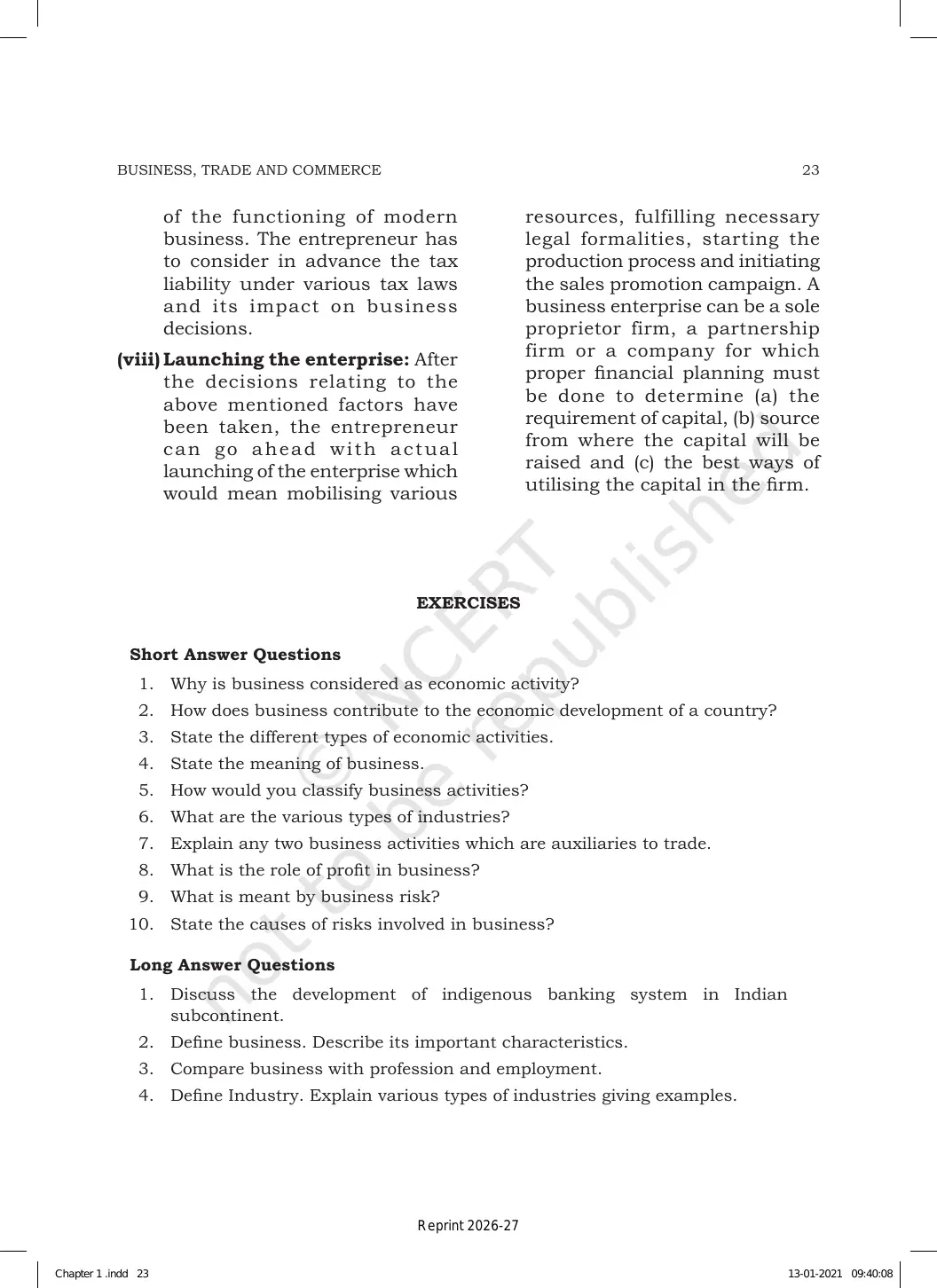
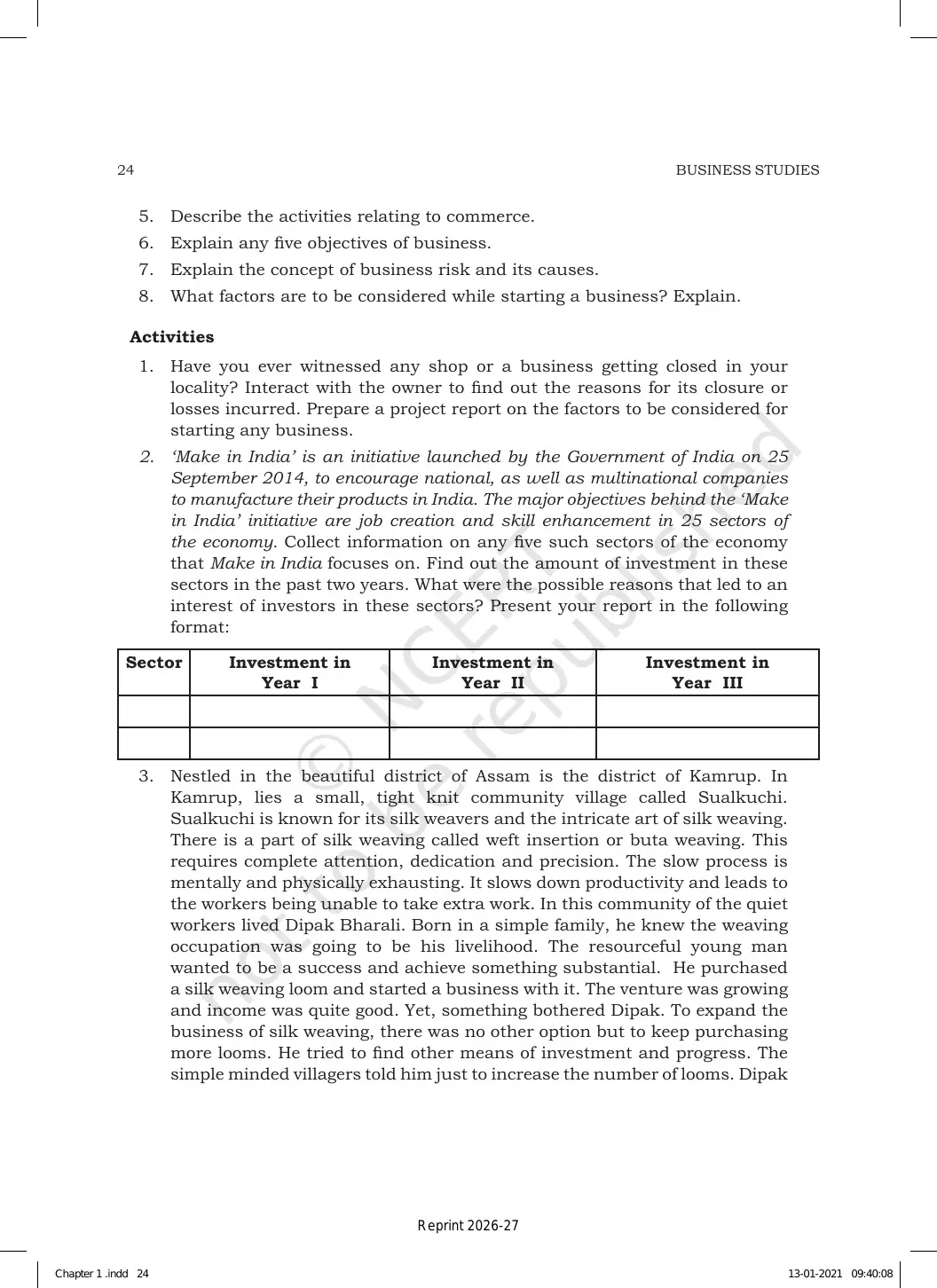
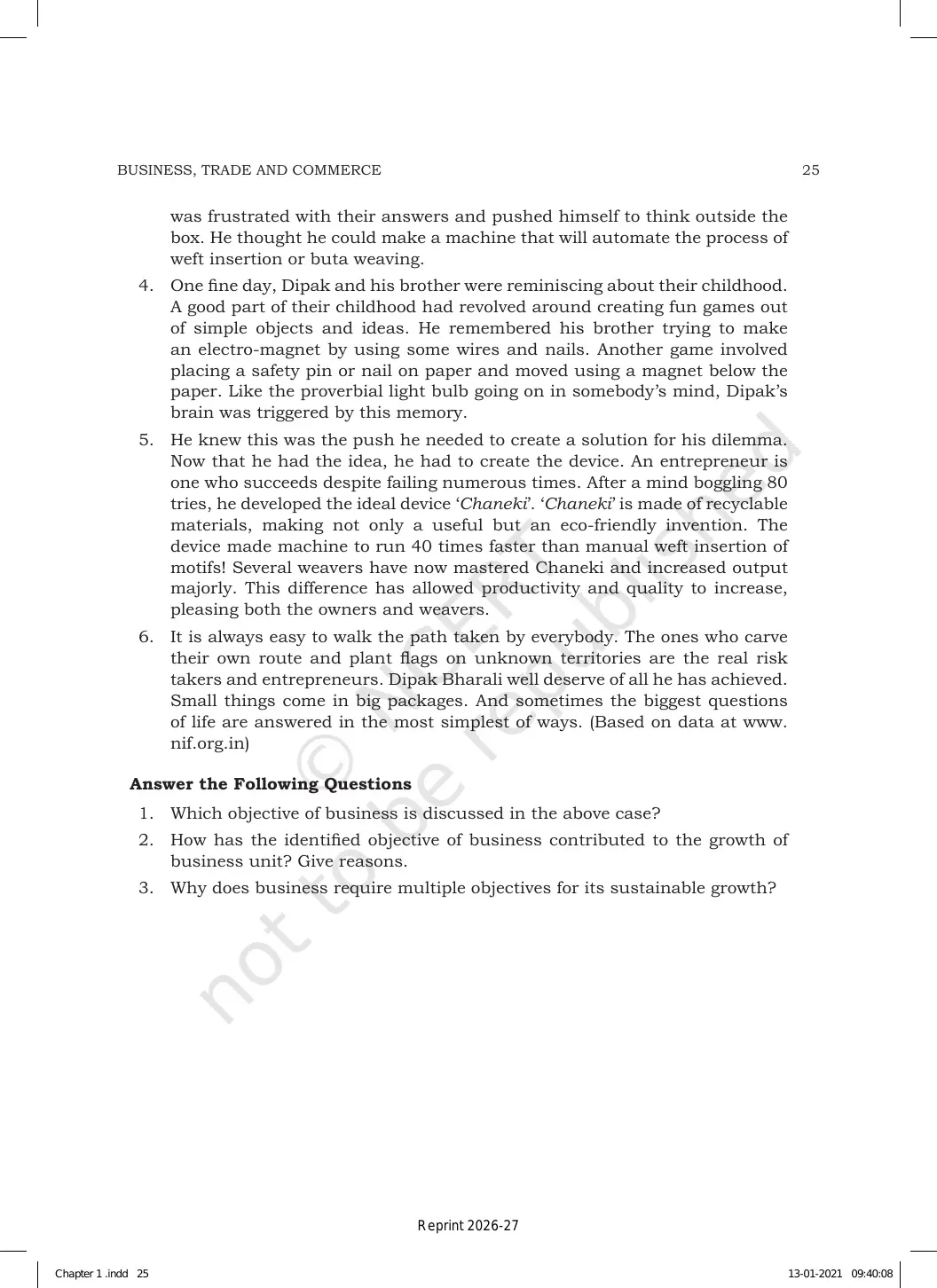
The NCERT Class 11 Business Studies Chapter 1 Business, Trade and Commerce PDF brings together the meaning of business, its objectives, industry types, commerce, trade and business risks according to the 2026-27 textbook.
- Core focus: business activities, industry, commerce, trade and auxiliaries to trade.
- Best use: read the chapter first, then revise its classification tables.
- Exam value: definitions, differences and case-based identification are frequently tested.

This Collegedunia chapter guide follows the 2026-27 NCERT Business Studies textbook and keeps the official concepts, classifications and examples together for careful study.
Student Feedback: In a Collegedunia poll of 10,000 students, most students said classification tables made theory chapters easier to revise before tests.
Business, Trade and Commerce Concepts Covered in the NCERT PDF
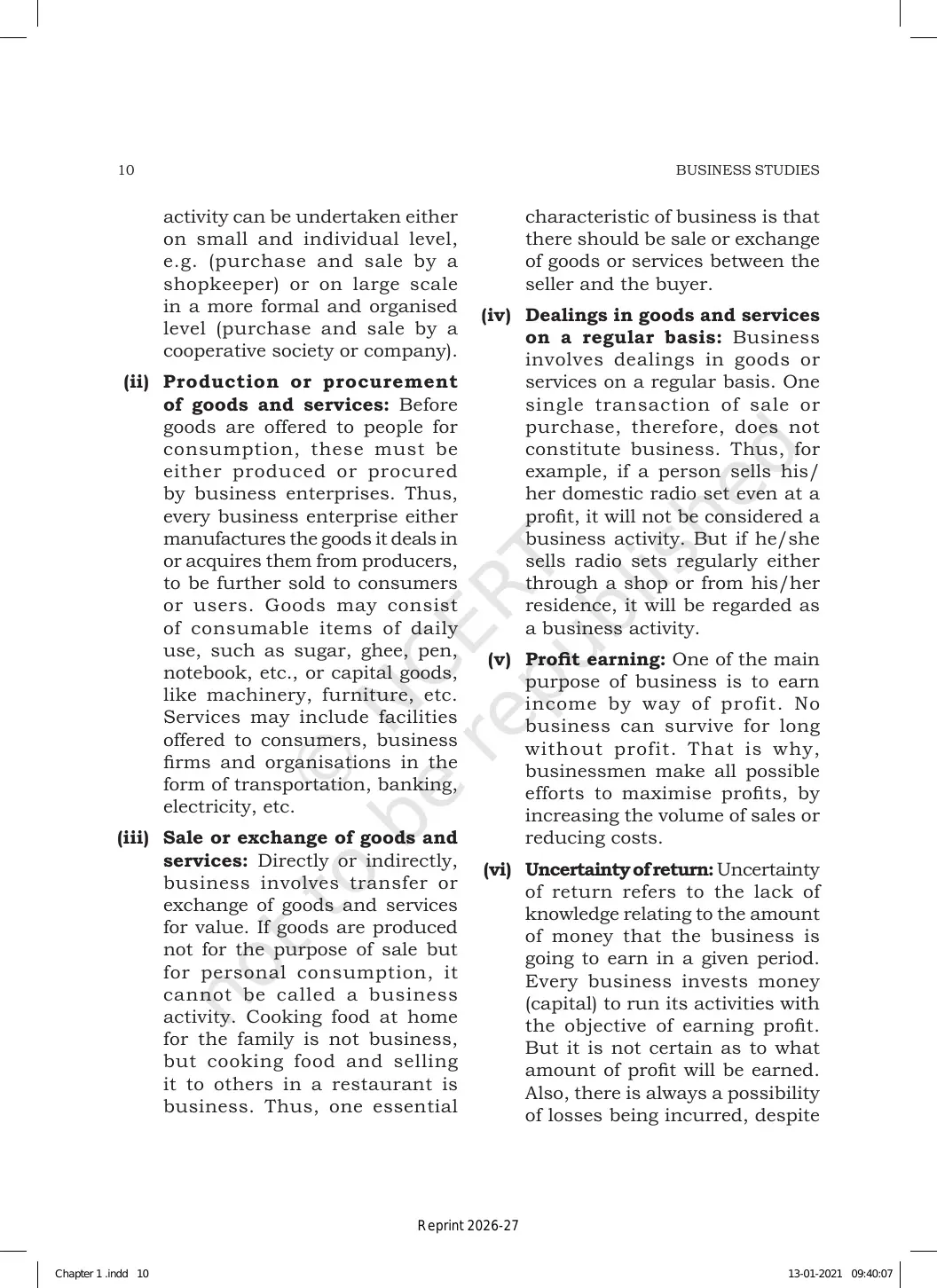
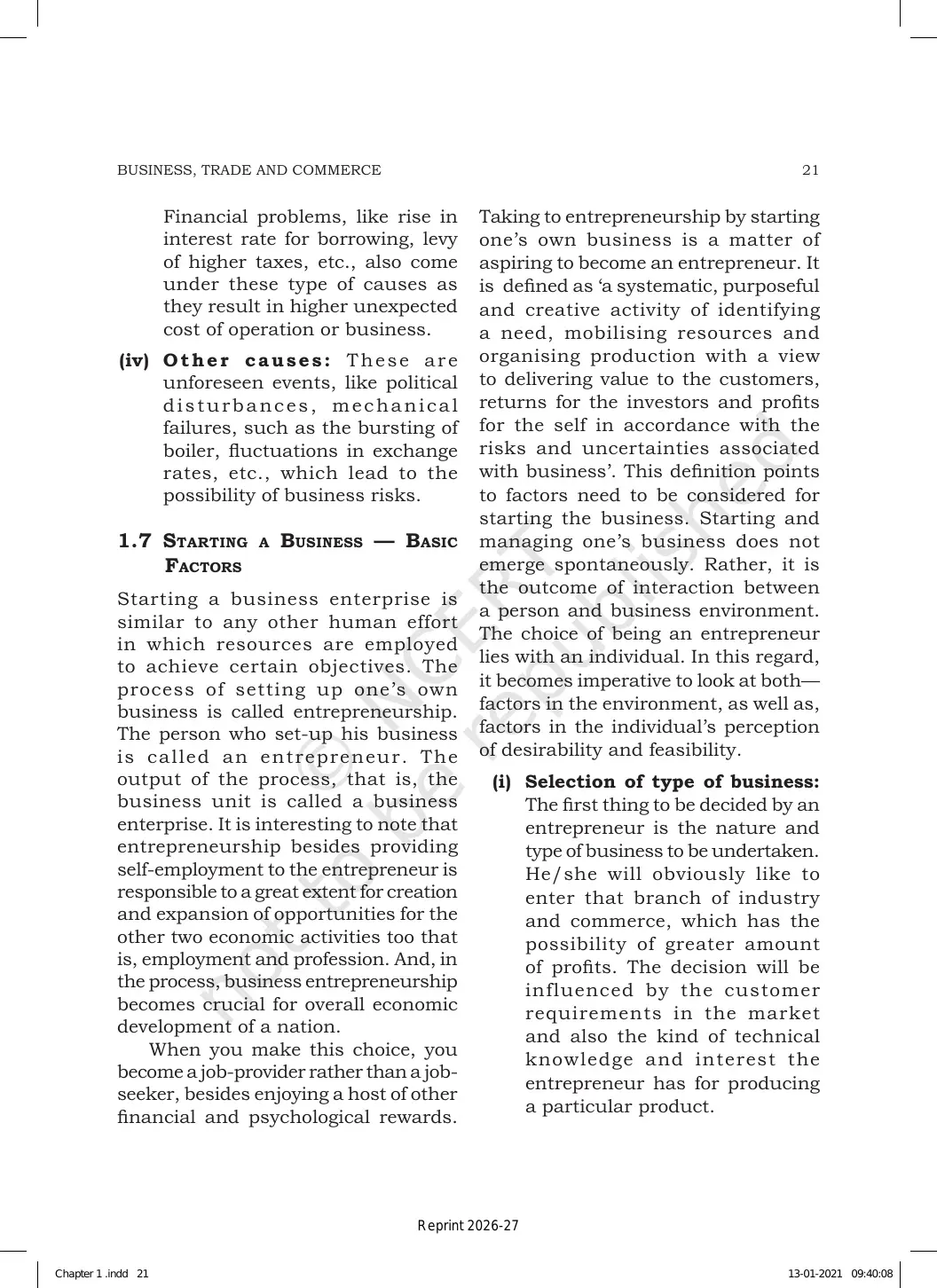
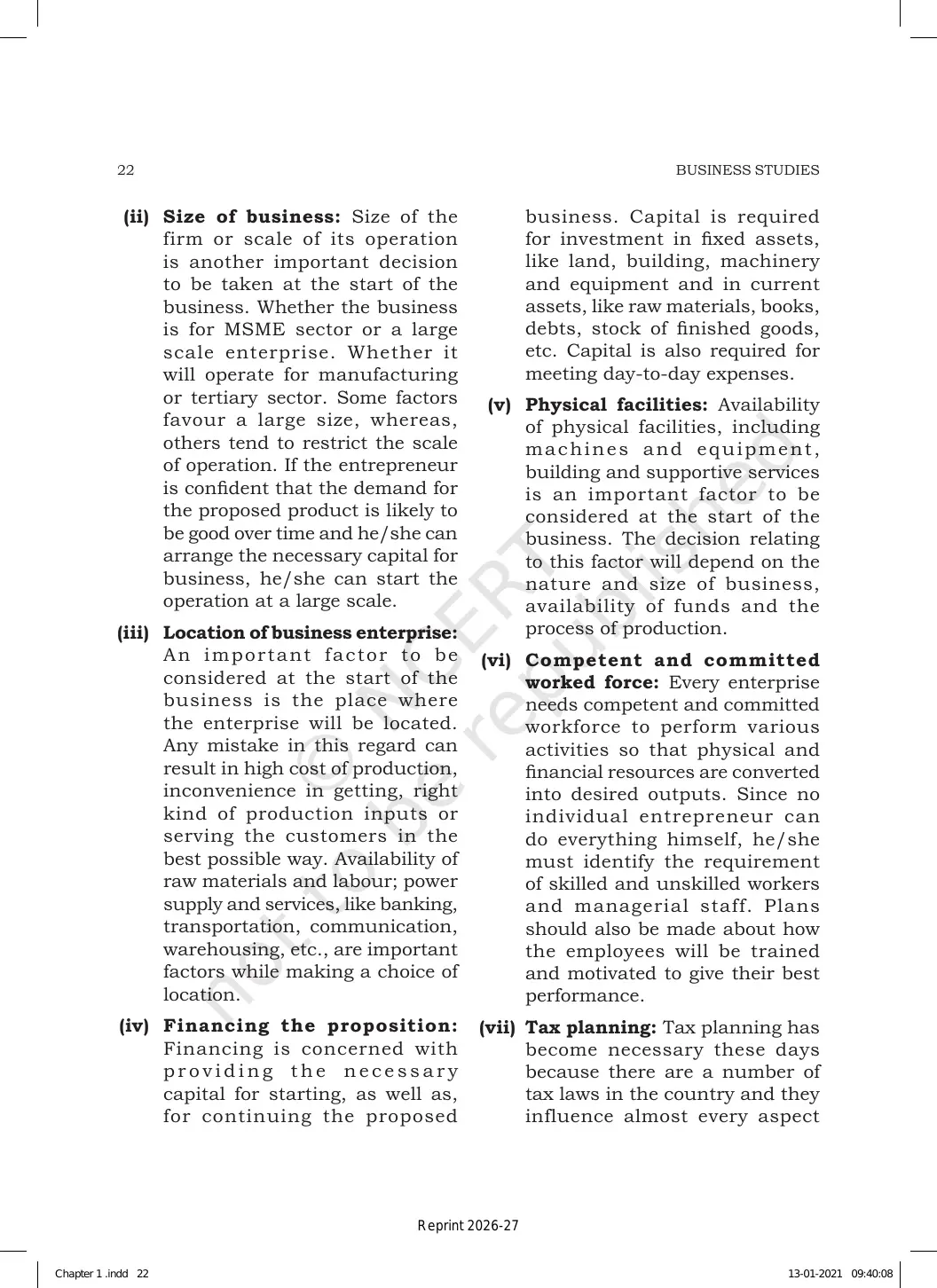
Business begins with an economic activity carried out regularly to earn income. The chapter separates business from profession and employment. It then explains how industry creates or processes goods while commerce removes barriers between producers and consumers.
| Area | What to learn | Typical question |
|---|---|---|
| Business | Characteristics and objectives | Identify whether an activity is business |
| Industry | Primary, secondary and tertiary groups | Classify an enterprise |
| Commerce | Trade and auxiliaries to trade | Explain how a hindrance is removed |
| Risk | Nature and causes of business risk | Link a cause with a business loss |
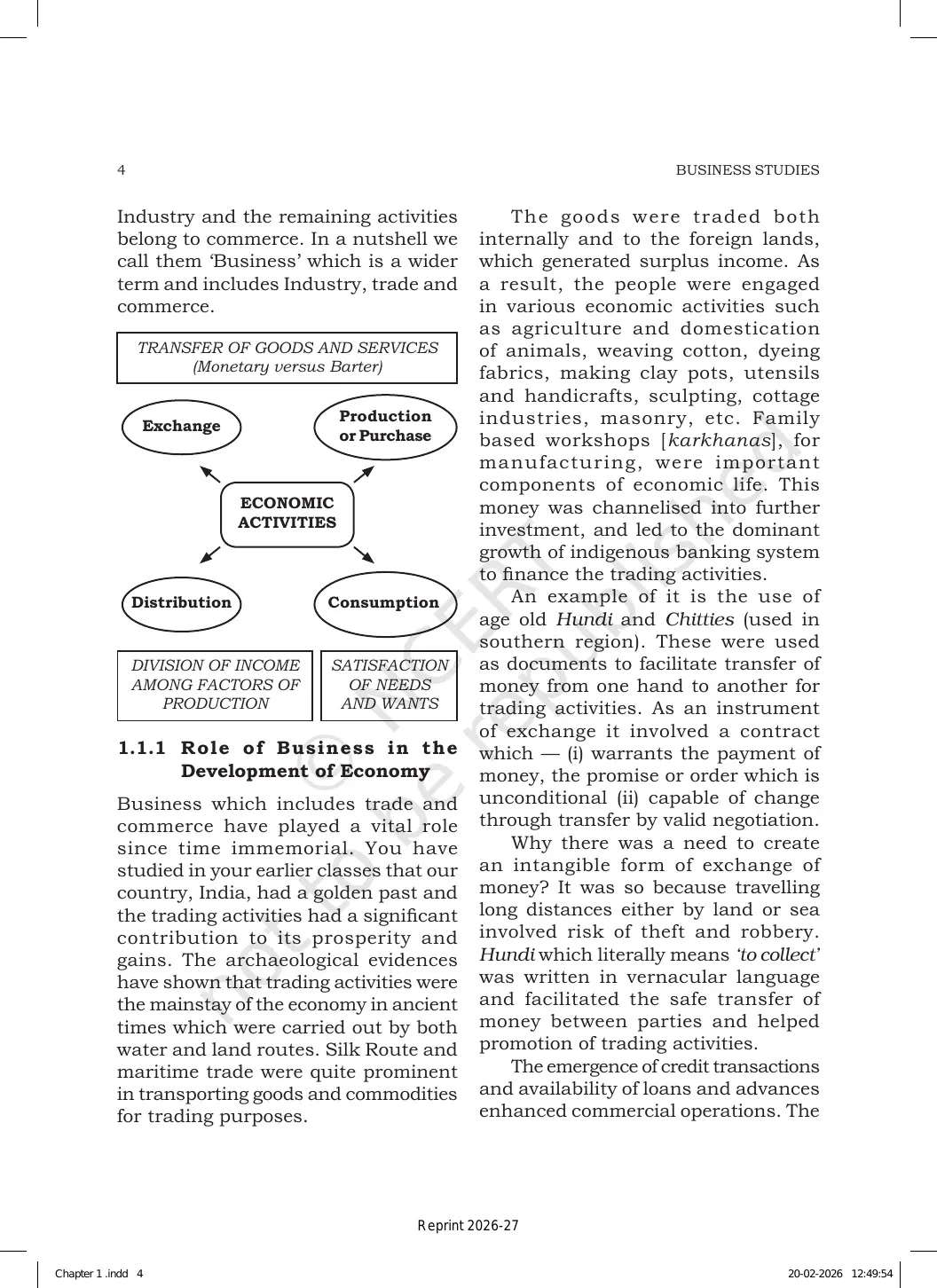
Business is wider than trade. Trade covers buying and selling, while commerce also includes transport, banking, insurance, warehousing, advertising and communication.
Business, Trade and Commerce Chapter Overview
Source: Magnet Brains on YouTube
Business Activities, Profession and Employment Compared Clearly
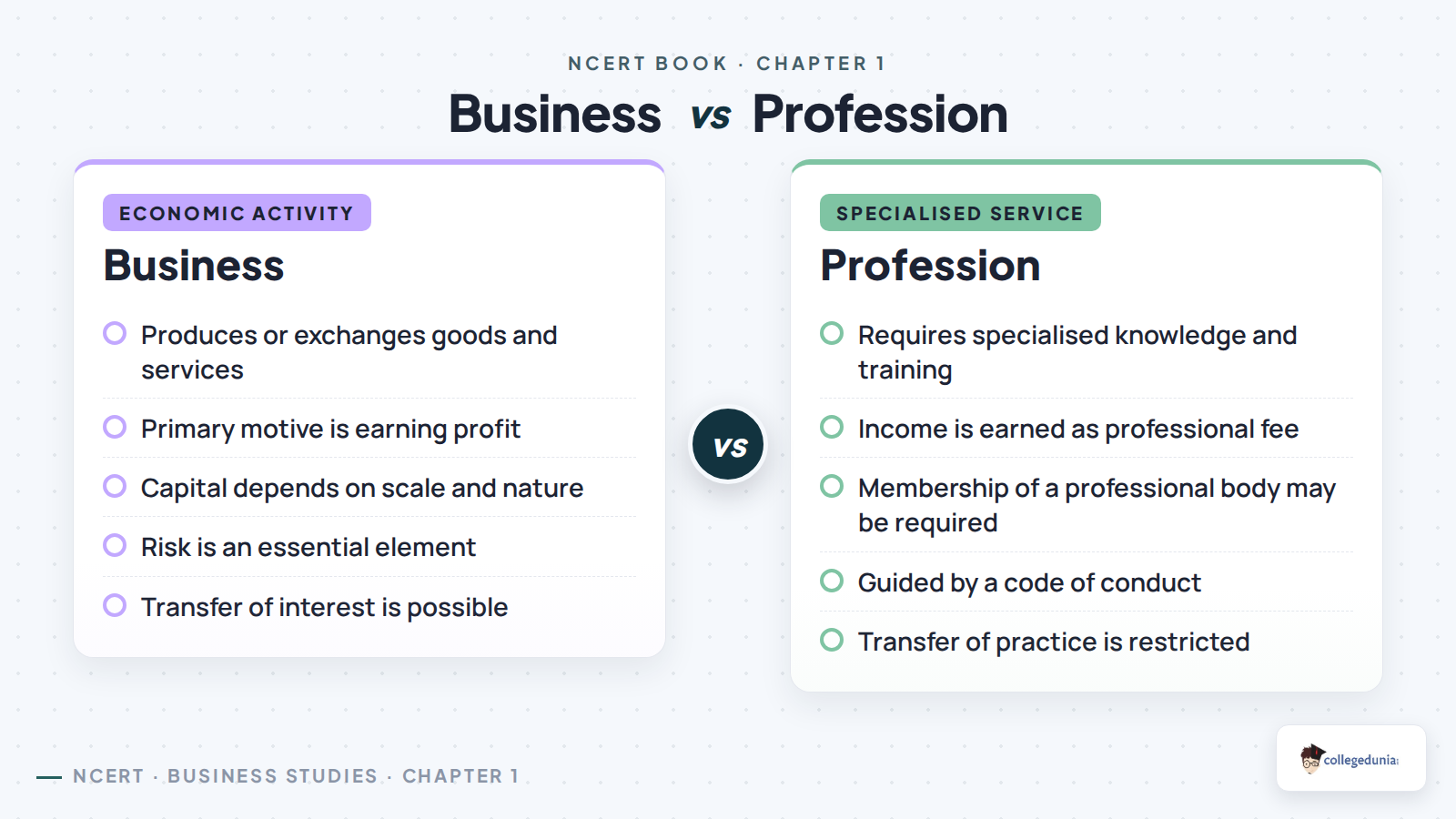
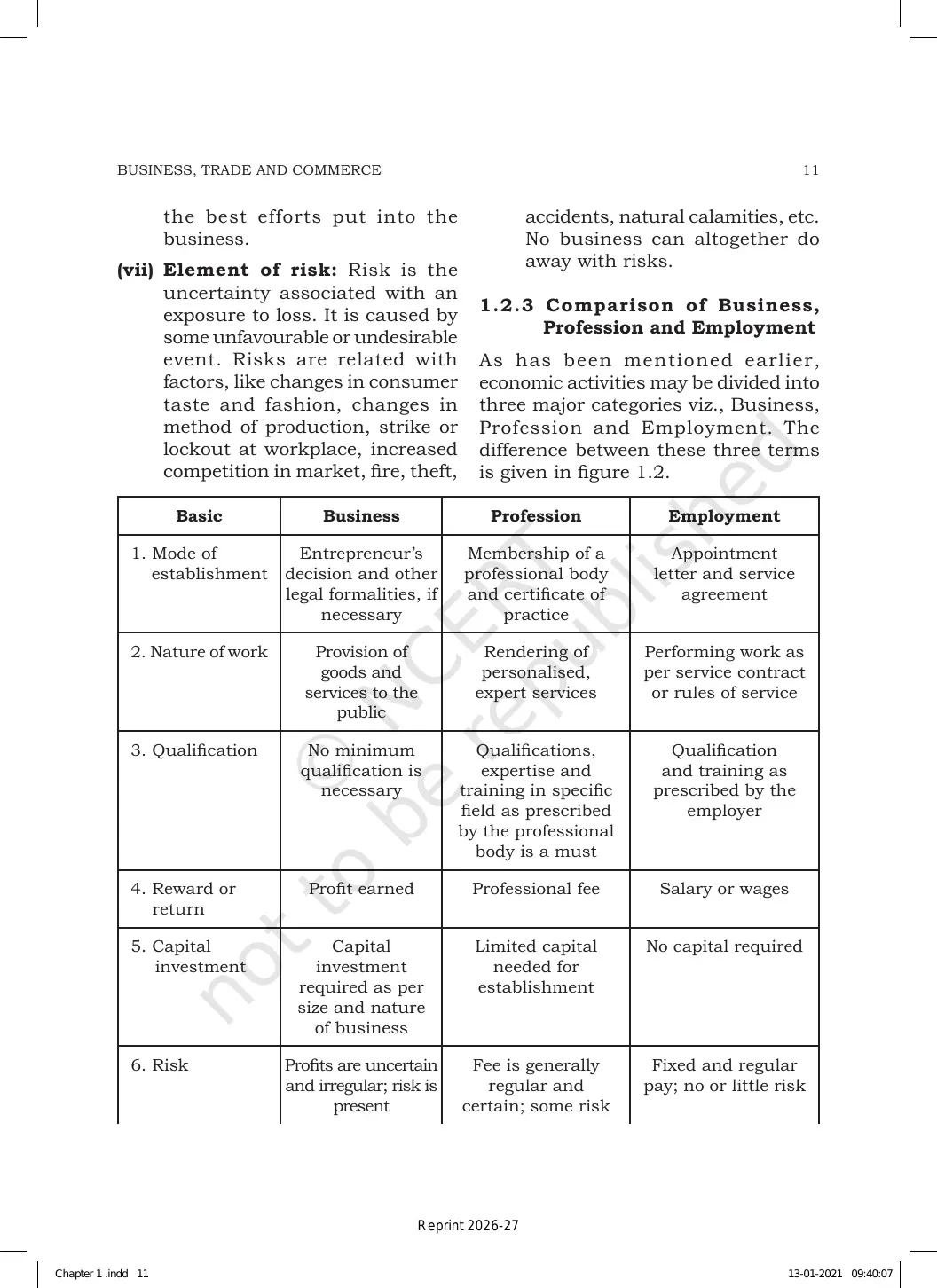
The opening part of Business, Trade and Commerce helps students distinguish three ways of earning a livelihood. Focus on the basis of entry, reward, investment, risk and code of conduct. These points often appear in short-answer and case-based questions.
- Business: profit is the reward, capital is needed and risk is present.
- Profession: specialised knowledge and membership of a professional body may be needed.
- Employment: an employee works under a service agreement and receives salary or wages.
One activity can change category when its purpose or regularity changes. Selling an old bicycle once is not business. Buying bicycles regularly for resale is business.
Industry, Commerce and Auxiliaries to Trade Explained
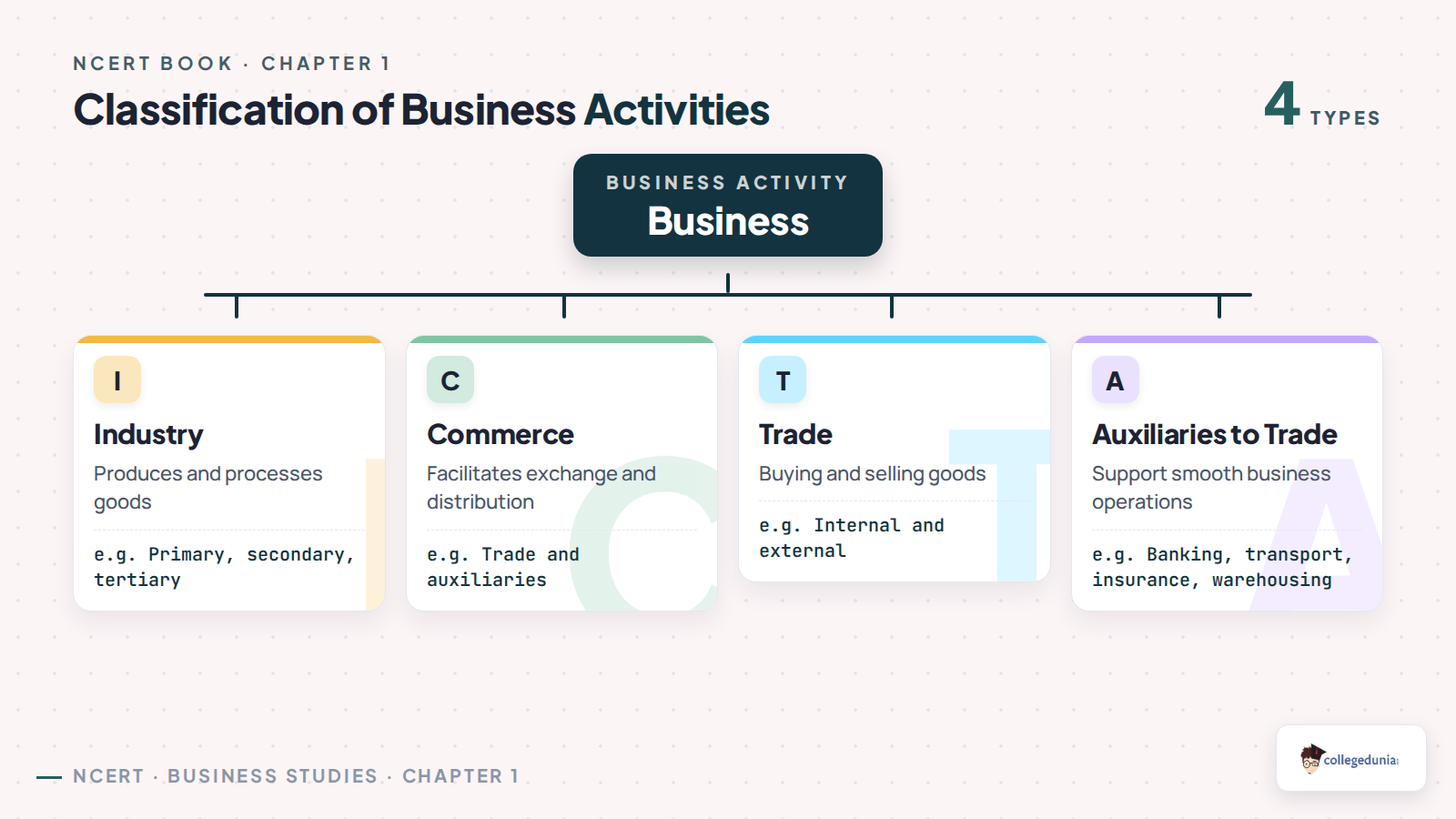
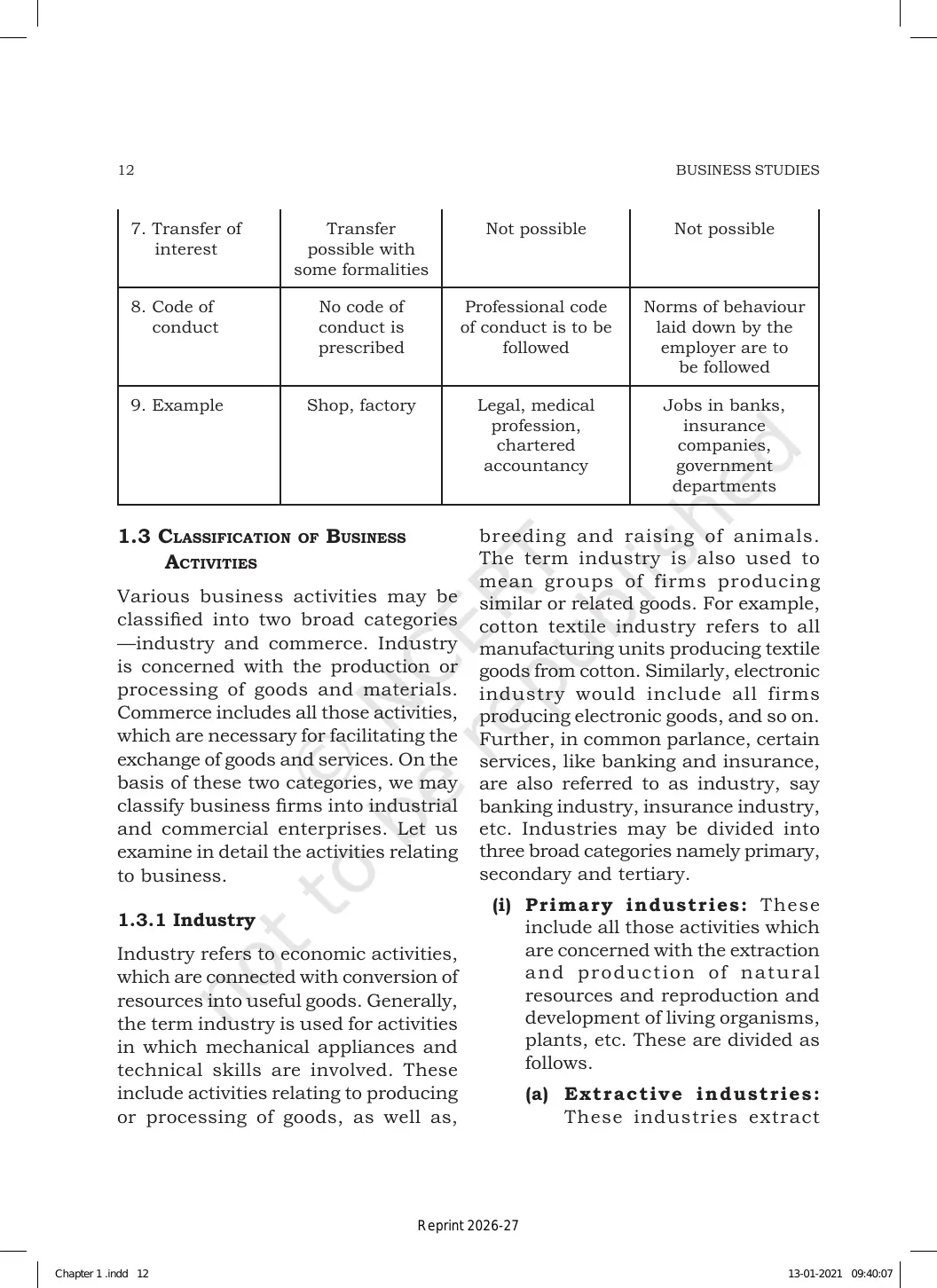
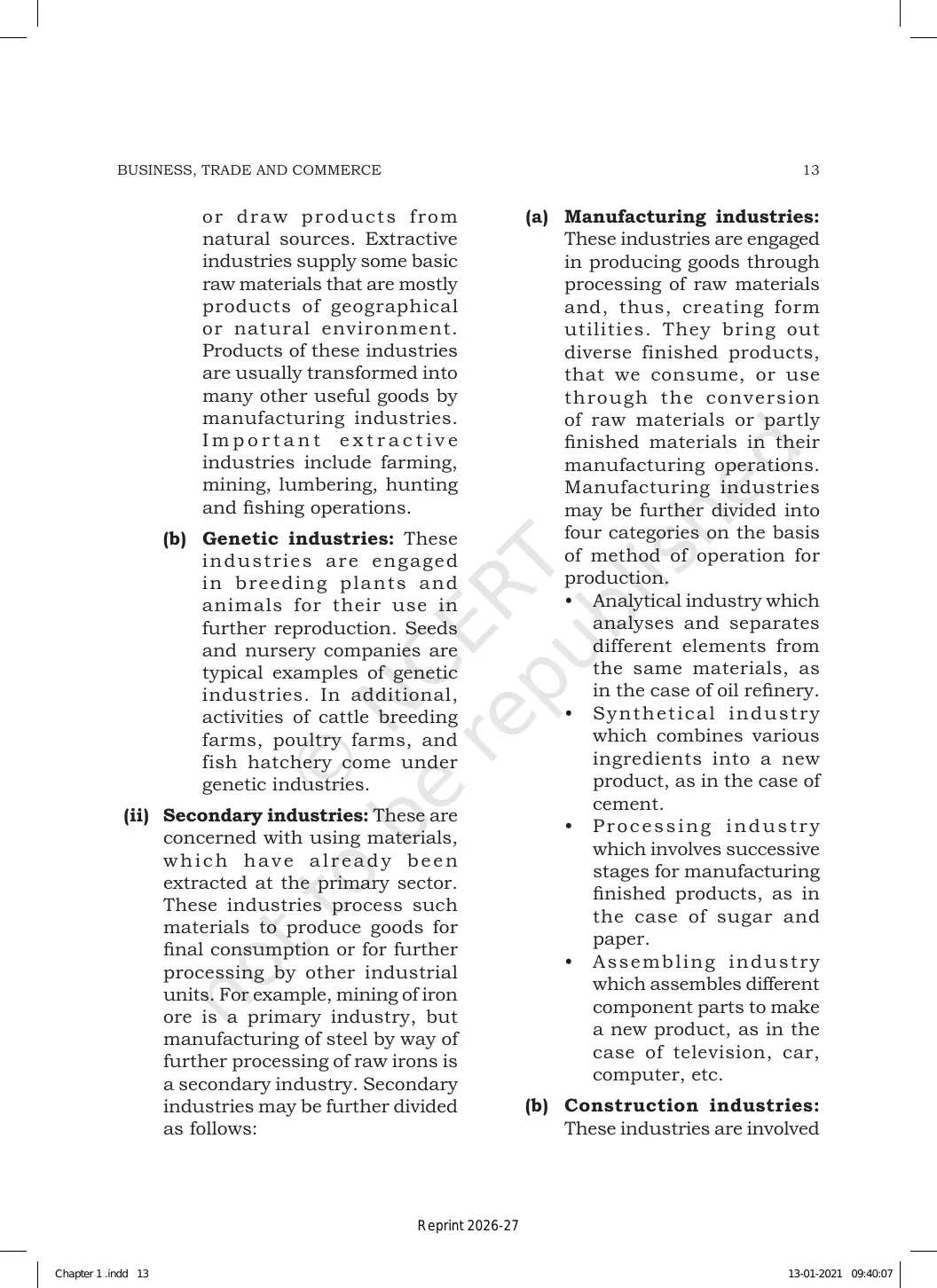
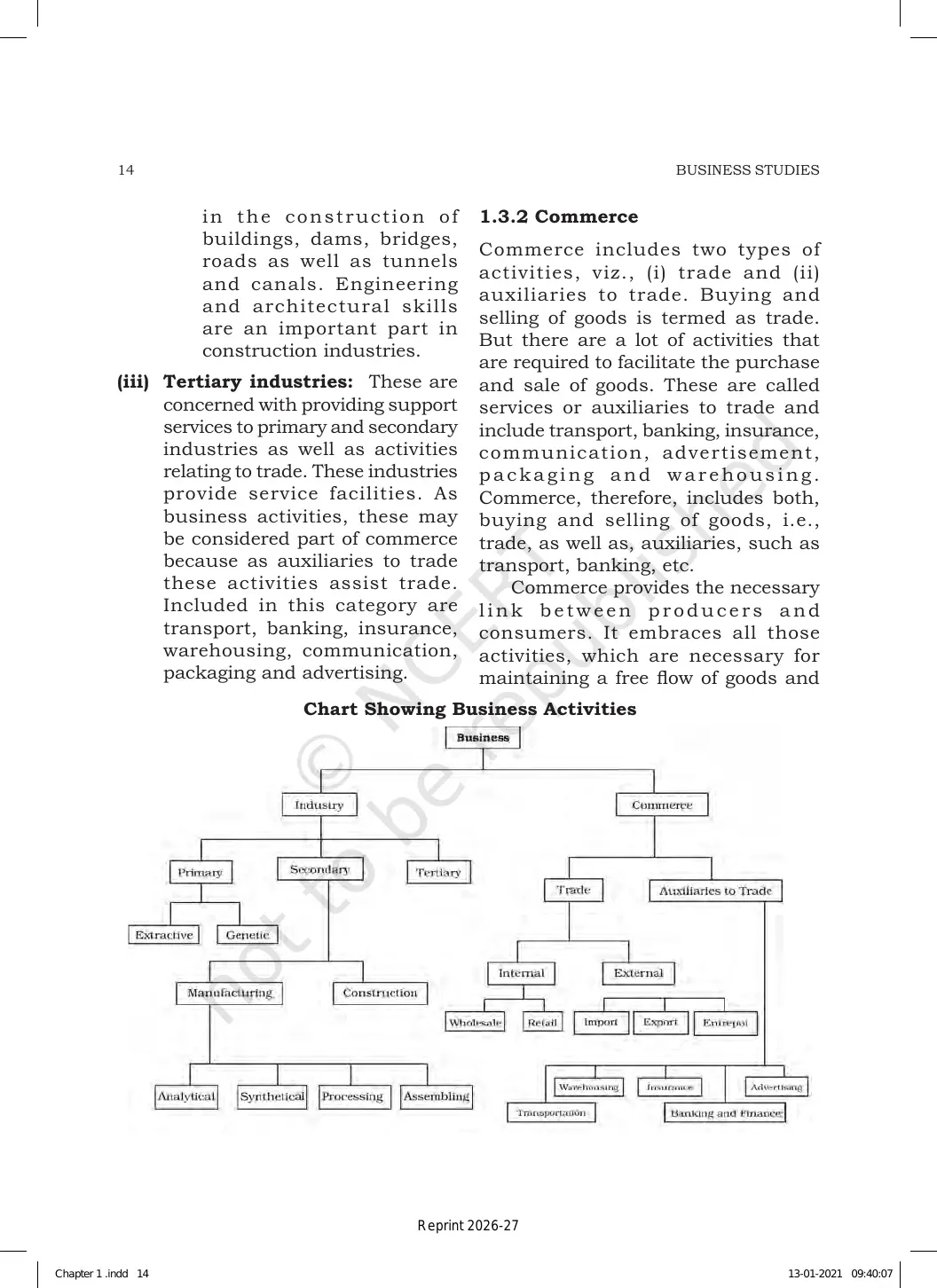
Industry deals with producing, processing or extracting goods. Commerce supports distribution. The textbook groups industry into primary, secondary and tertiary activities, then shows how different services help trade run smoothly.
- Extractive industries take resources from nature, such as mining and fishing.
- Genetic industries breed plants and animals for further use.
- Manufacturing industries turn raw materials into finished or semi-finished goods.
- Construction industries build roads, bridges, dams and buildings.
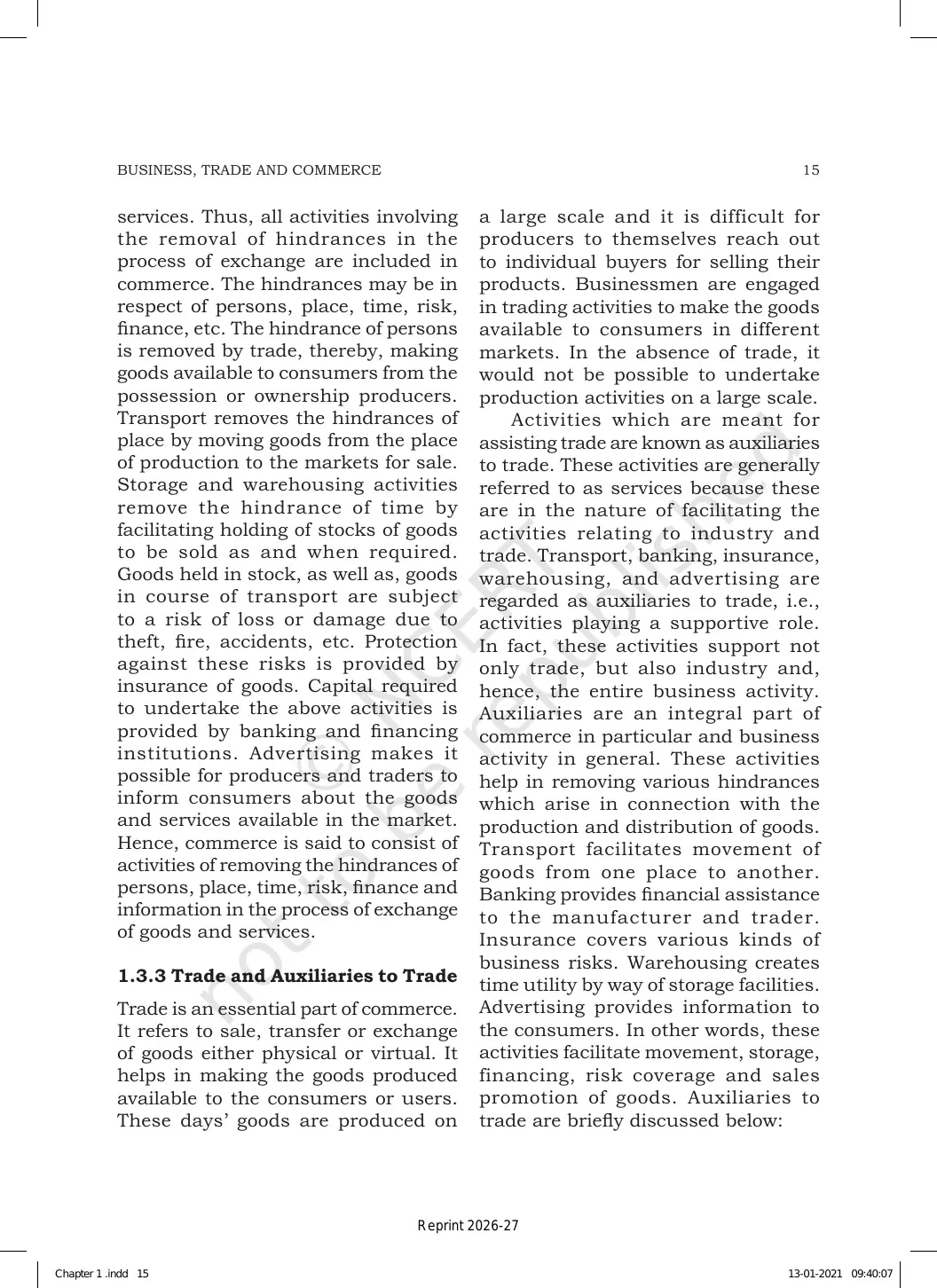
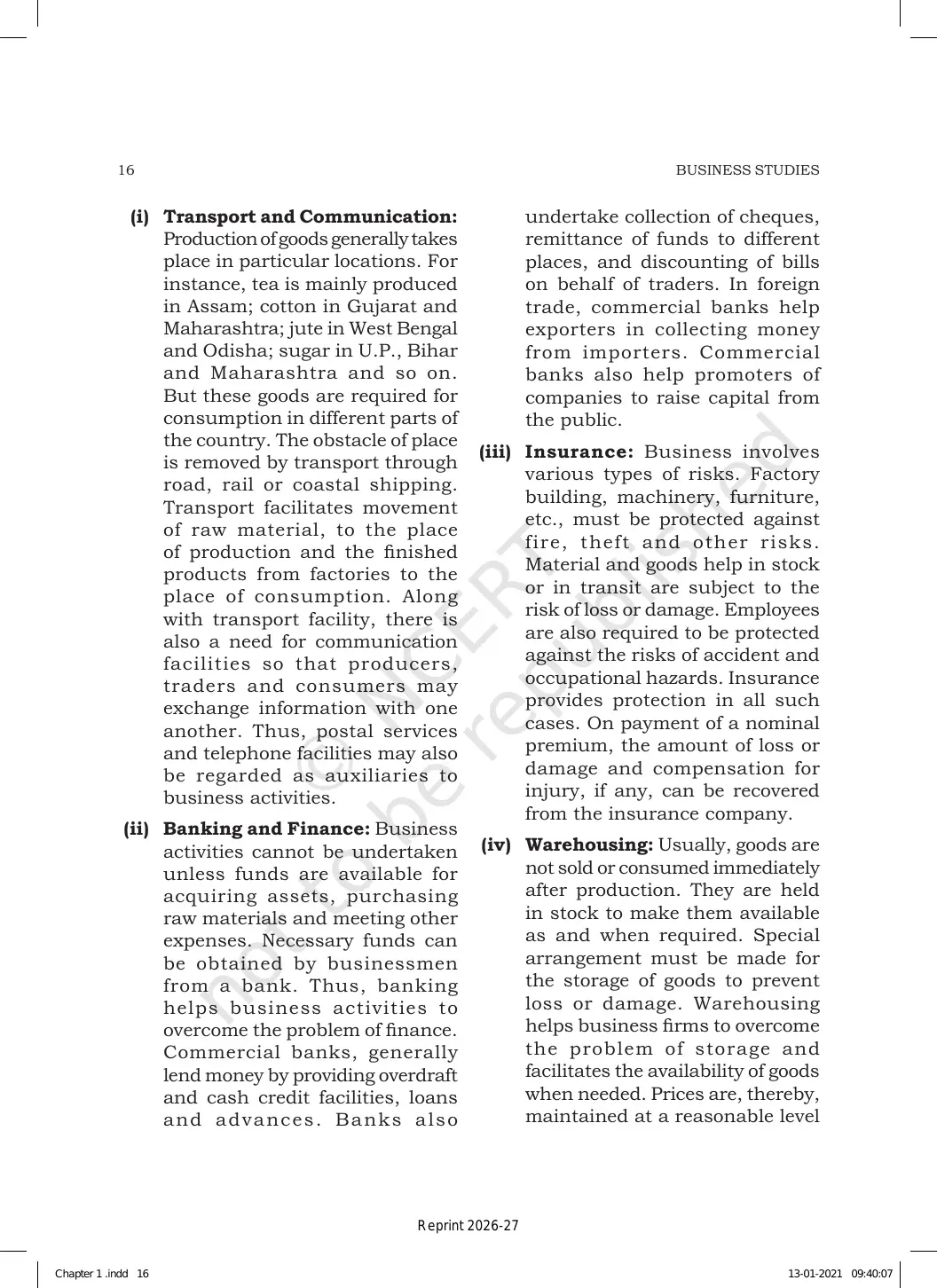
- Auxiliaries remove barriers of place, time, finance, risk and information.
Transport removes the barrier of place, while warehousing removes the barrier of time. This cause-and-function link is useful in application questions.
How to Read the Business, Trade and Commerce Chapter PDF
Use the official PDF in three short passes. The first pass builds the idea map. The second fixes classifications and examples. The final pass turns every heading into a possible question.
- Read for meaning: mark the definitions of business, profession, employment, industry and commerce.
- Build comparison tables: compare occupations and types of industry on the same page.
- Connect services: match each auxiliary to the barrier it removes.
- Test recall: explain business risk and its causes without looking at the book.
Do not memorise examples without their category. In the exam, the reason for classification usually earns the mark.
Business Objectives and Business Risk Revision Checklist
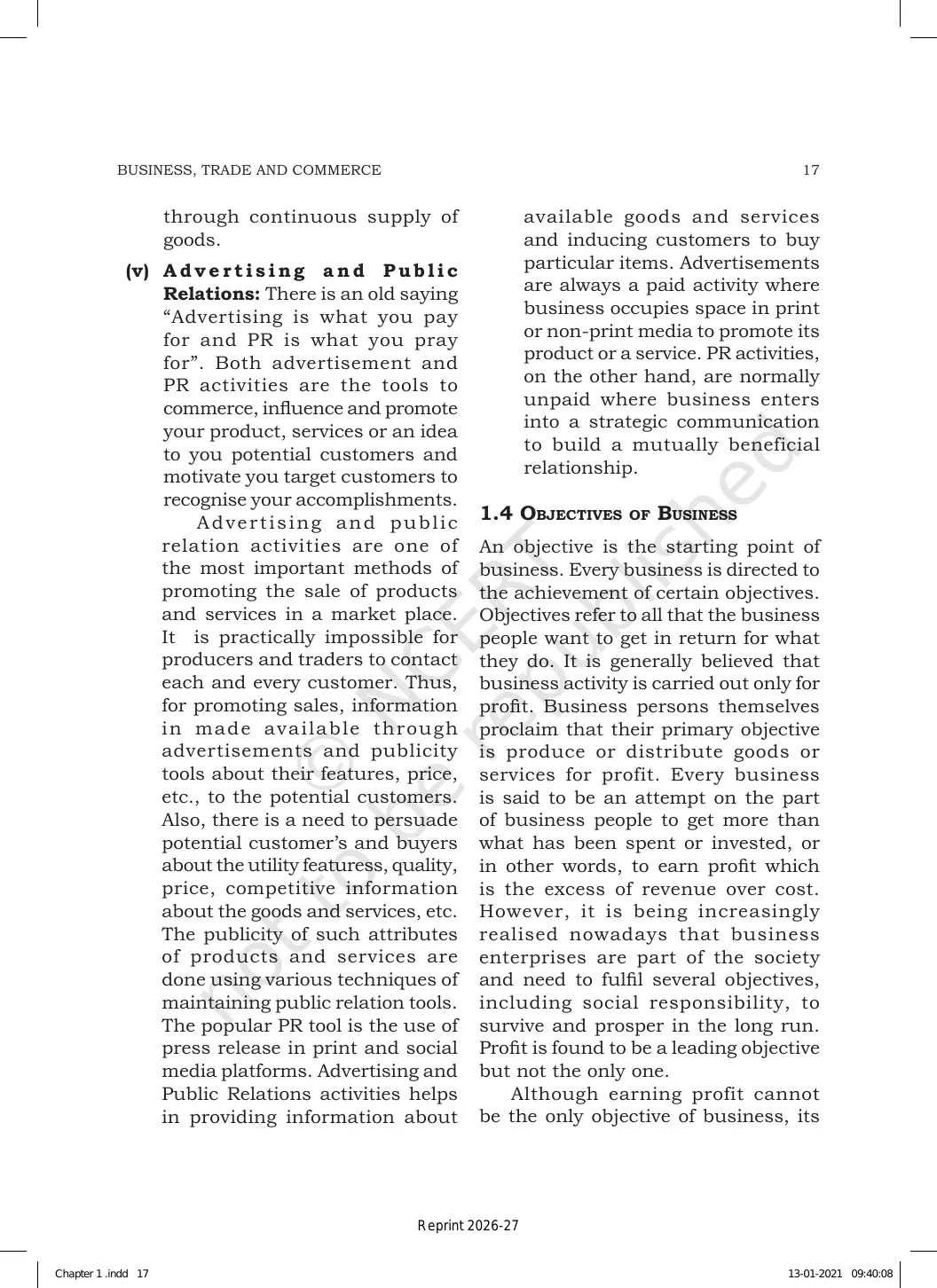
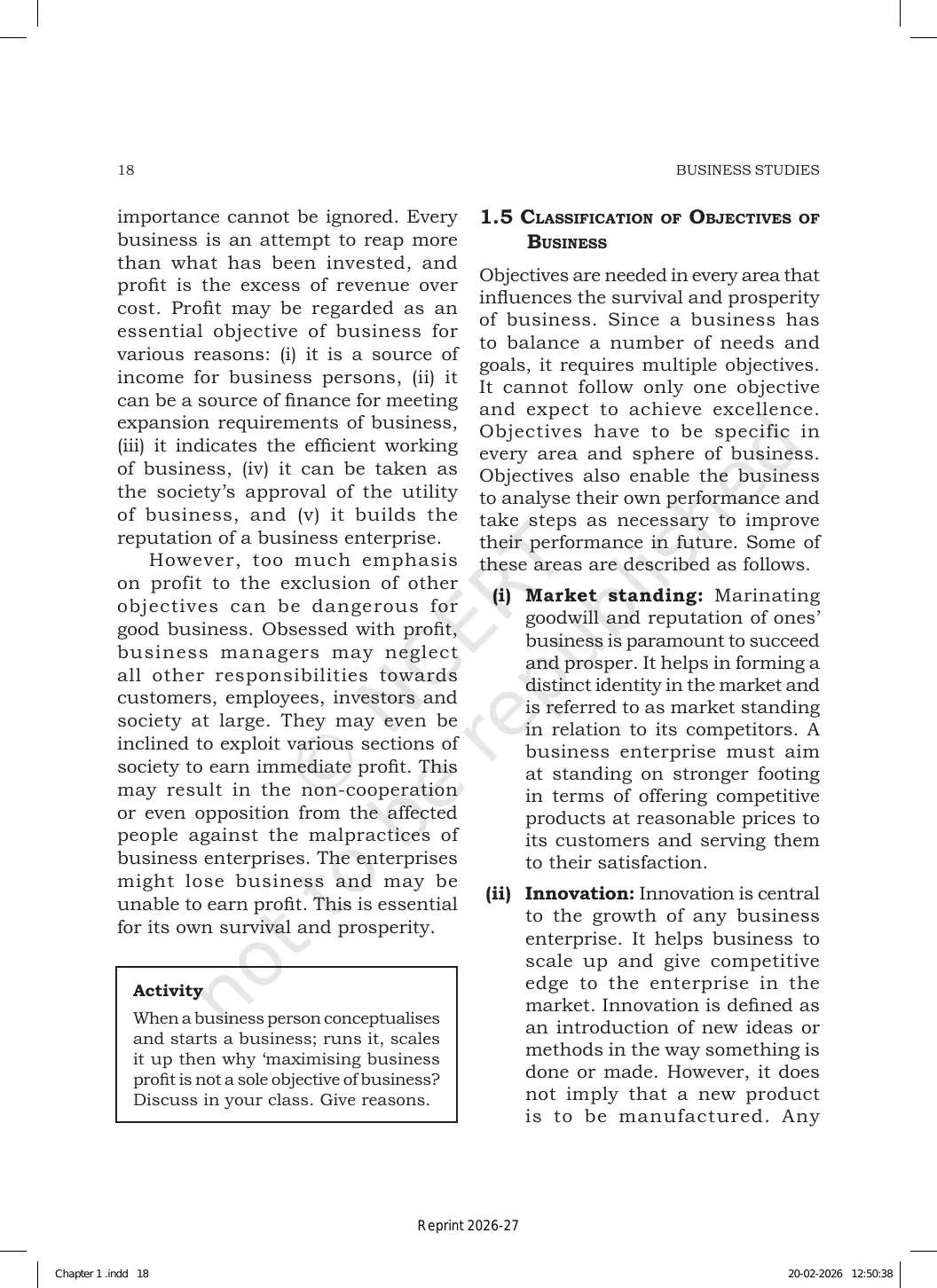
Profit is necessary for survival and growth, but it is not the only business objective. The chapter also covers market standing, innovation, productivity, physical and financial resources, manager performance, worker development and social responsibility.
- Explain why profit is essential but cannot be the sole objective.
- Separate economic objectives from wider social responsibilities.
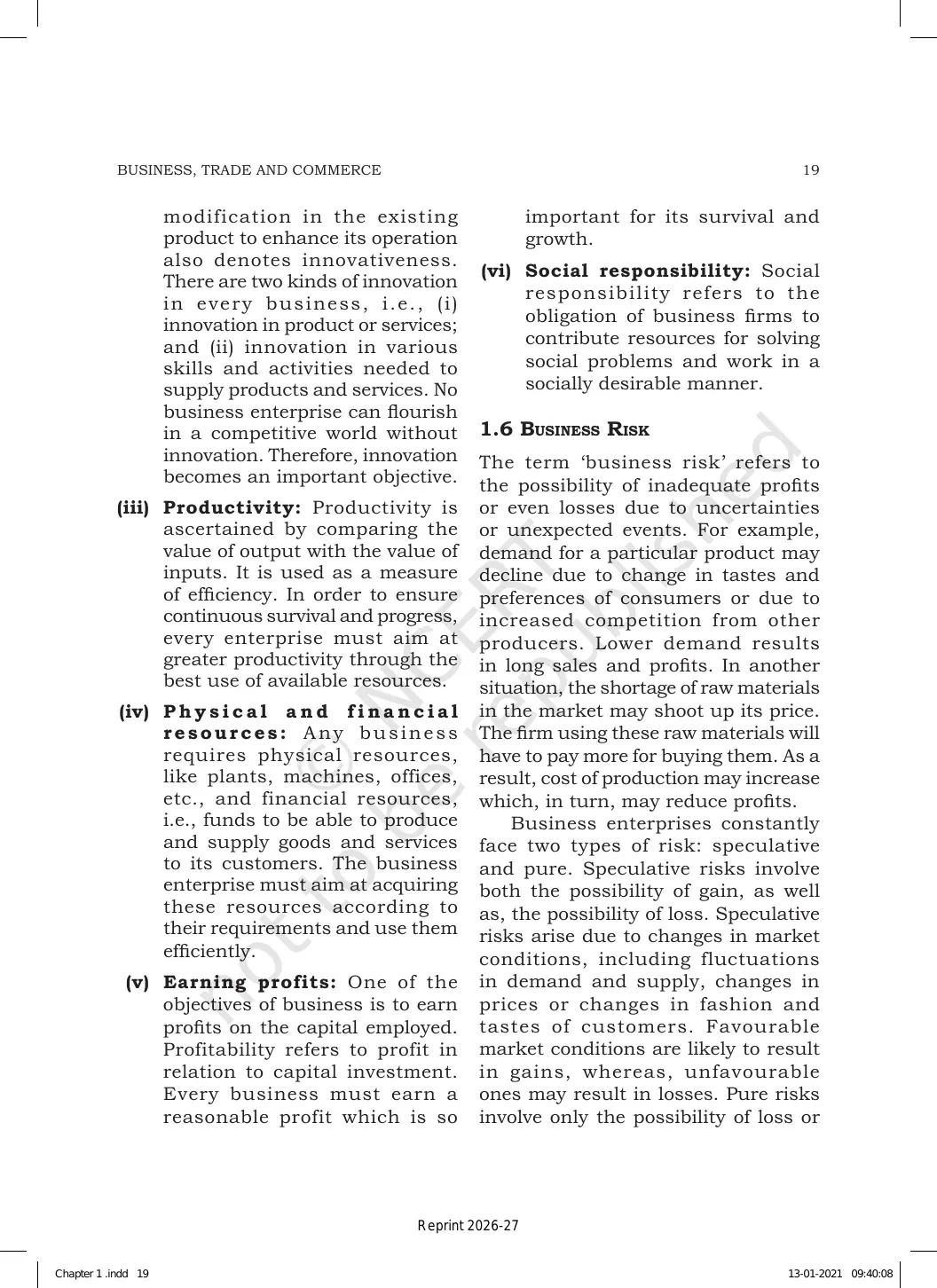
- Define business risk as uncertainty about inadequate profits or possible loss.
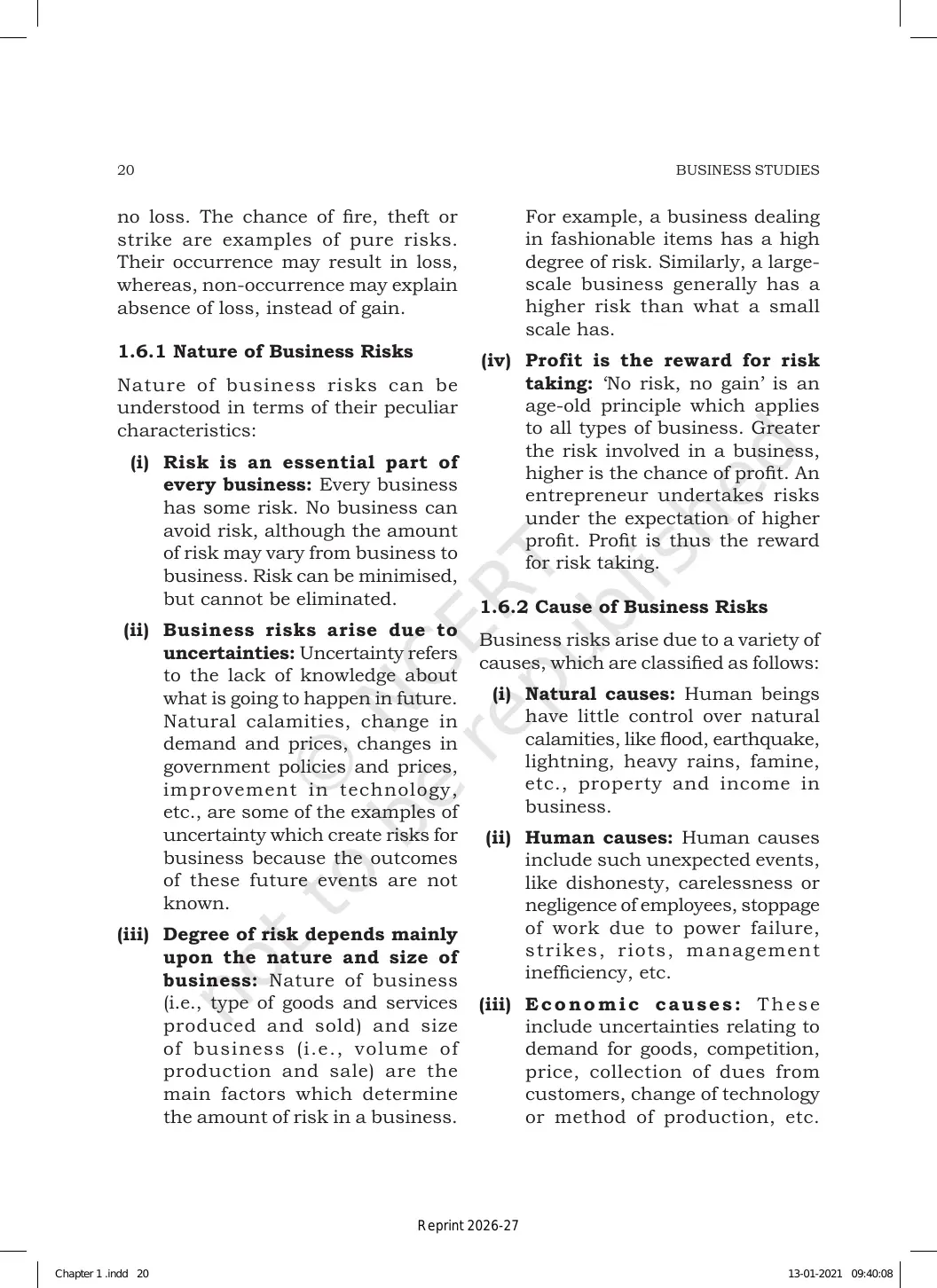
- Revise natural, human, economic and other causes of business risk.
Higher expected returns usually come with higher risk. Risk cannot be removed completely, but planning and insurance can reduce its effect.
Business, Trade and Commerce Class 11 Related Resources
| Resource | Best use |
|---|---|
| Business, Trade and Commerce Class 11 NCERT Solutions | Check textbook answers and case-based reasoning |
| Business, Trade and Commerce Class 11 Notes | Revise concepts in a shorter format |
| Business, Trade and Commerce Class 11 Handwritten Notes | Prepare for a quick final recap |
All Class 11 Business Studies NCERT Book Chapters
| Chapter | NCERT Book PDF |
|---|---|
| 1 | Business, Trade and Commerce |
| 2 | Forms of Business Organisation |
| 3 | Private, Public and Global Enterprises |
| 4 | Business Services |
| 5 | Emerging Modes of Business |
| 6 | Social Responsibilities of Business and Business Ethics |
| 7 | Formation of a Company |
| 8 | Sources of Business Finance |
| 9 | MSME and Business Entrepreneurship |
| 10 | Internal Trade |
| 11 | International Business |
Business, Trade and Commerce Class 11 NCERT Book FAQs
Ques. What does the Business, Trade and Commerce chapter explain?
Ans. It explains business activities, industry, commerce, trade, supporting services, business objectives and the nature and causes of business risk.
Ques. Is trade the same as commerce?
Ans. No. Trade means buying and selling goods and services. Commerce includes trade plus services such as transport, banking, insurance, warehousing and communication.
Ques. How is business different from employment?
Ans. A business owner invests capital, bears risk and earns profit. An employee works under an agreement and receives salary or wages.
Ques. What are auxiliaries to trade?
Ans. They are services that support trade by removing barriers. Major examples include transport, banking, insurance, warehousing, advertising and communication.
Ques. What is business risk?
Ans. Business risk is the possibility of inadequate profit or loss because future events are uncertain. Its causes may be natural, human or economic.



Comments