




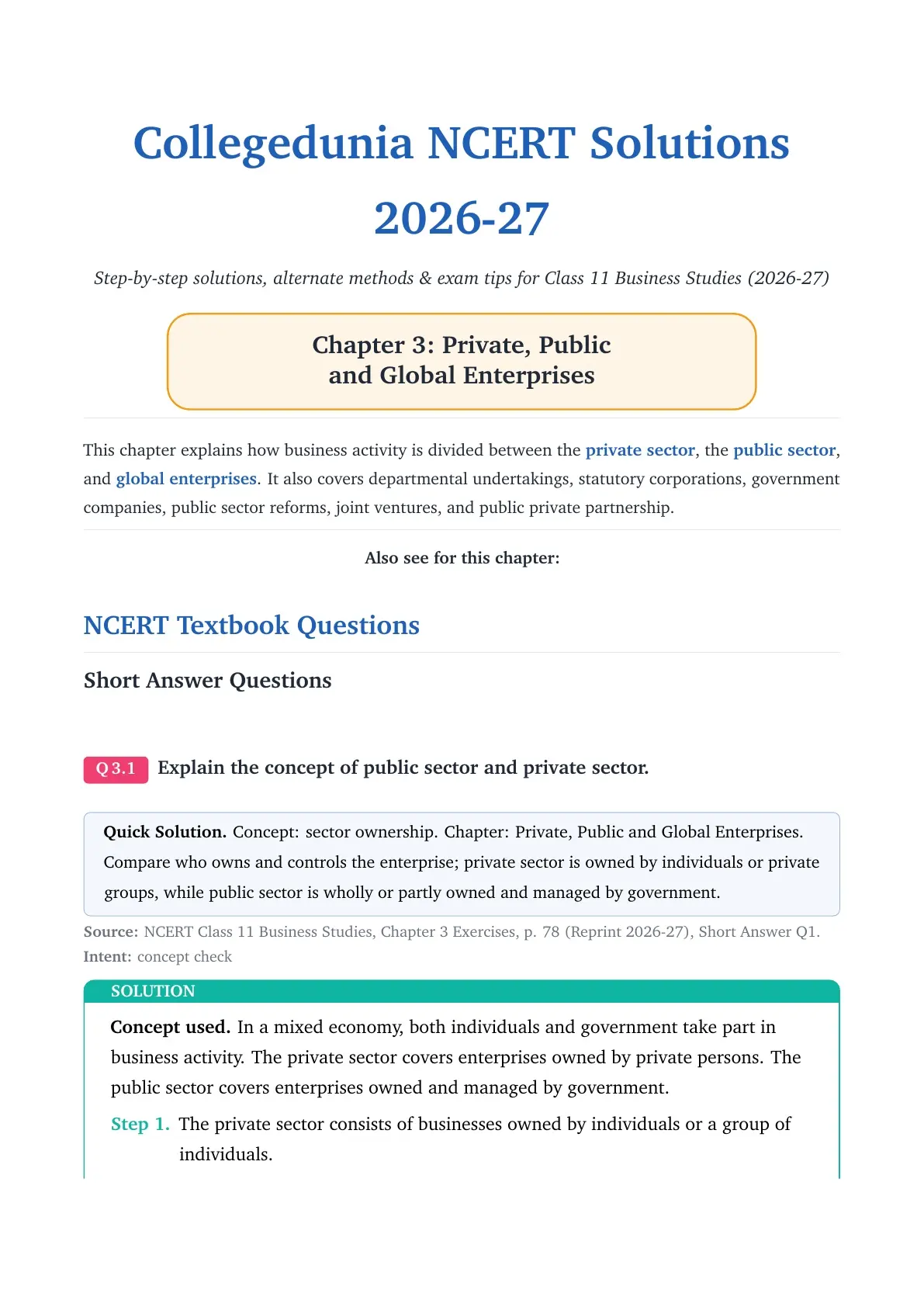
NCERT Solutions for Class 11 Business Studies Chapter 3 Private, Public and Global Enterprises cover every textbook question from the 2026-27 NCERT book. The answers explain private sector, public sector, government companies, global enterprises, joint ventures, and public private partnership in clear CBSE answer language.

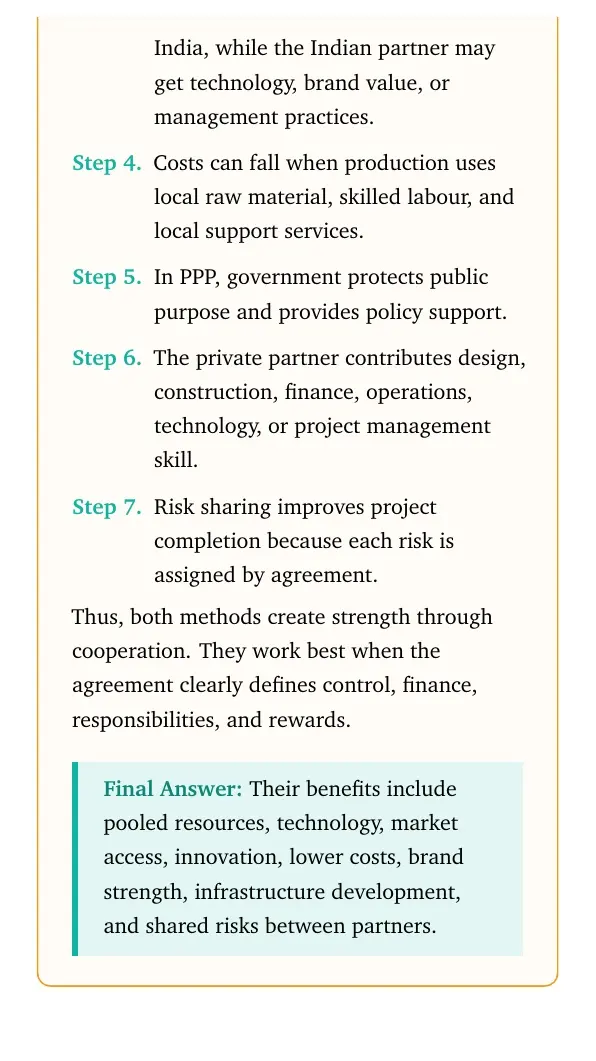
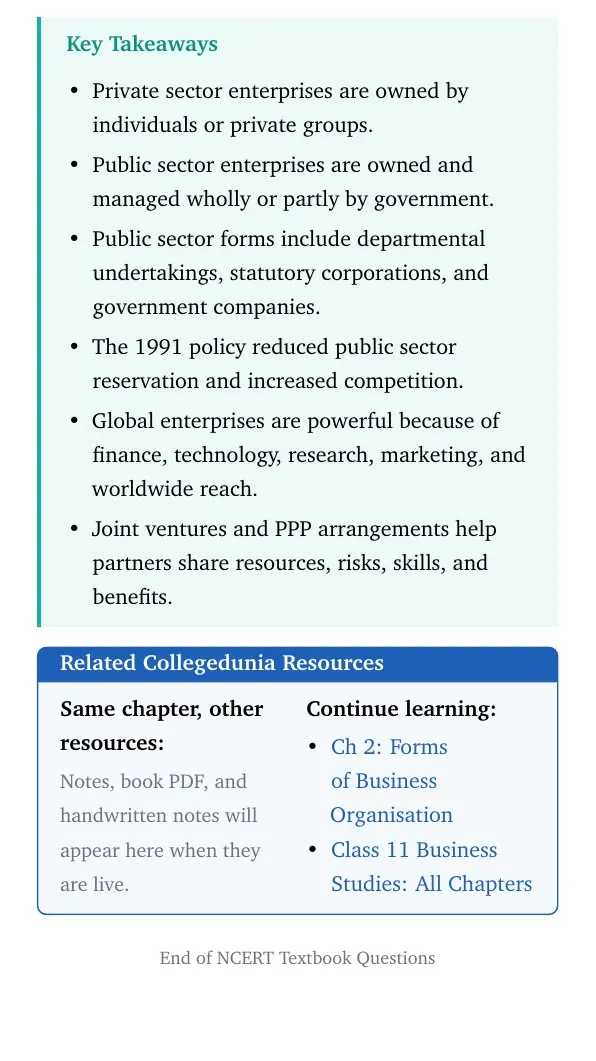
Student Feedback: In a Collegedunia survey of 11,480 Class 11 commerce students, 78% said the public sector comparison table helped them write faster long answers before the 2026 boards.
Each answer in this Class 11 Business Studies Chapter 3 solutions PDF is checked against the 2026-27 NCERT textbook and written for direct CBSE answer practice.
- PDF coverage: 12 textbook questions with step-by-step solutions and expert explanations.
- Best for: revising public sector forms, 1991 reforms, MNC features, joint ventures, and PPP.
- Use this with: the official NCERT book, chapter notes, and the all-chapters solutions table below.
Private, Public and Global Enterprises NCERT Solutions PDF
The PDF explains the chapter through direct textbook answers. Private, Public and Global Enterprises is a scoring Business Studies chapter because many answers follow a fixed points pattern. Students should focus on ownership, control, legal form, autonomy, accountability, and market competition.
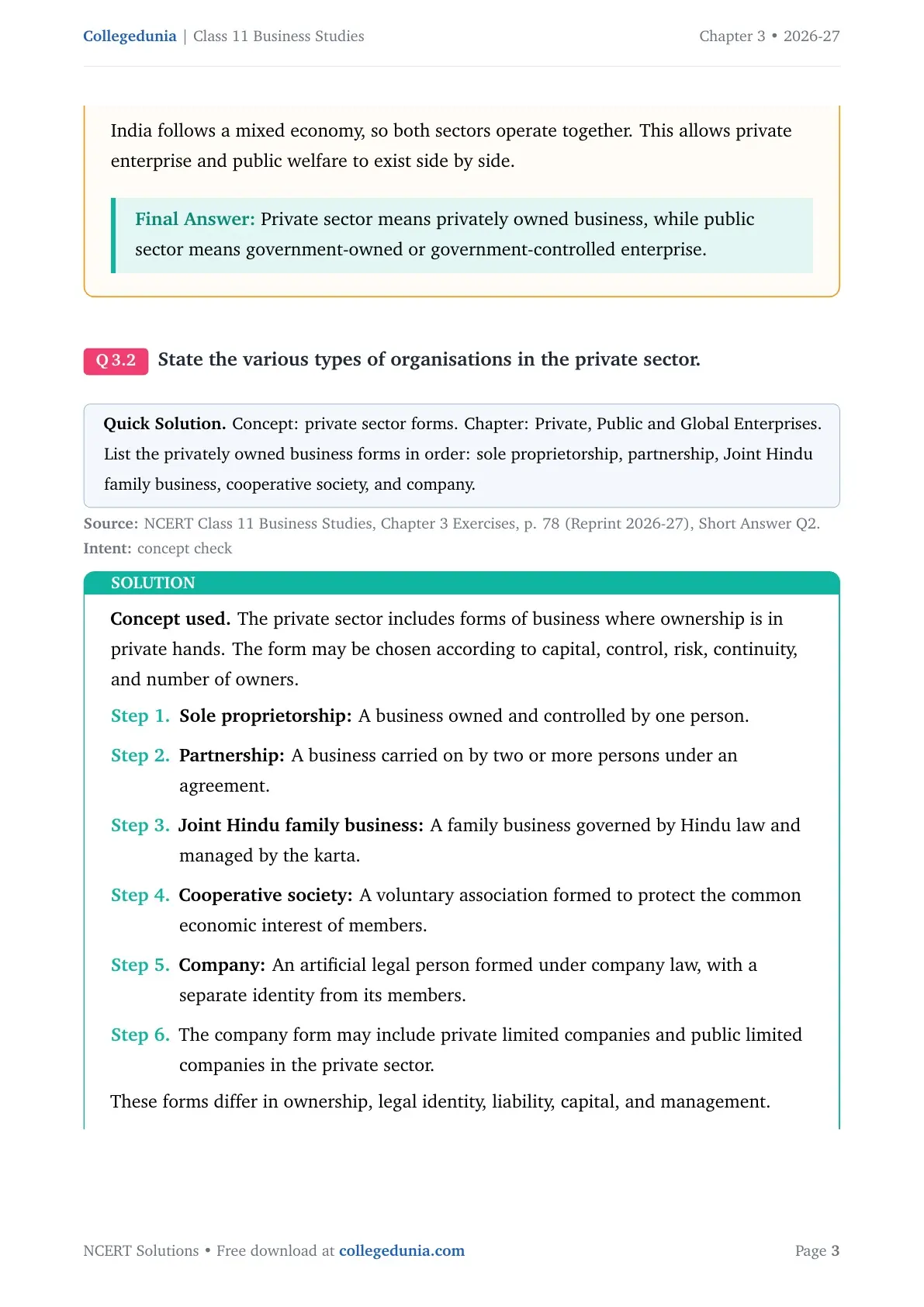
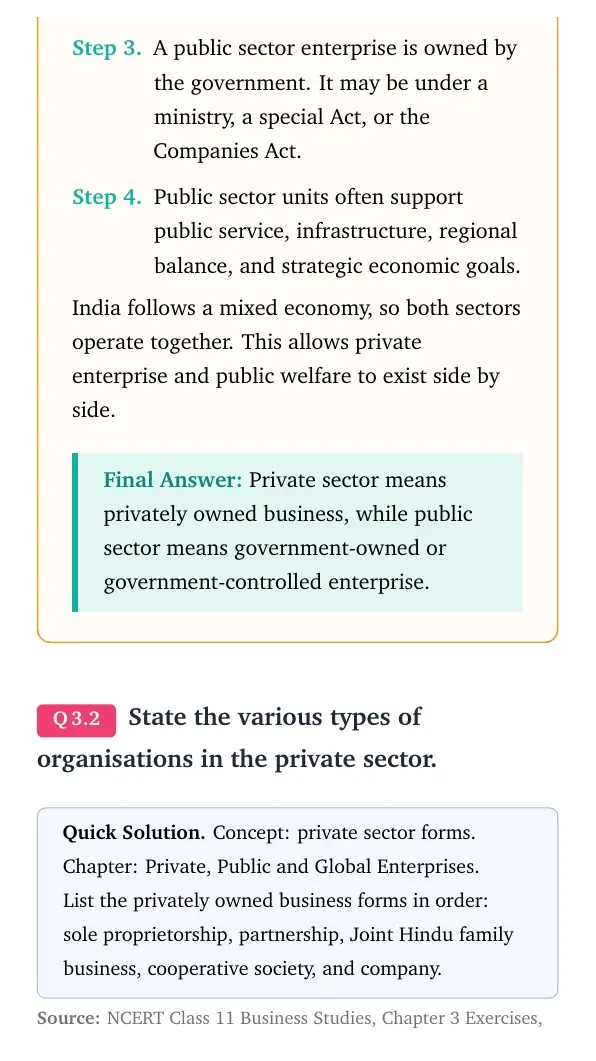
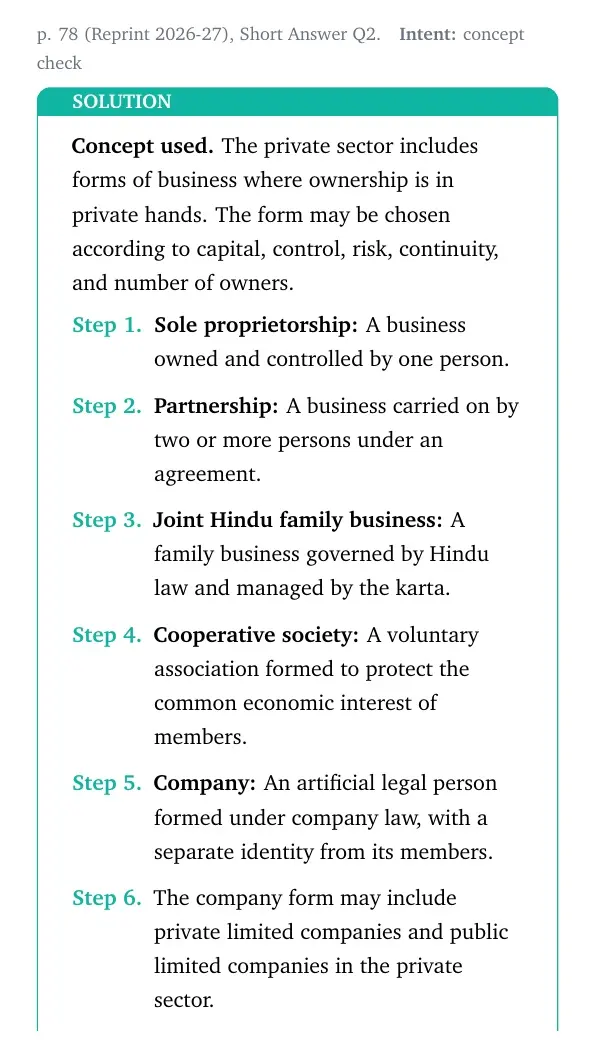
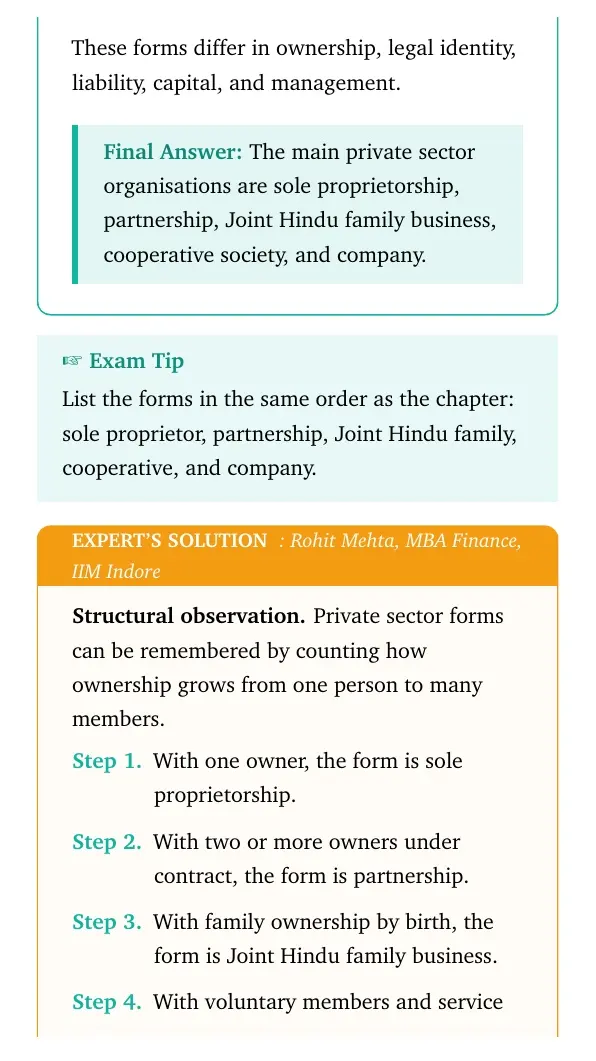
- Short answers define private sector, public sector, PPP, and public enterprise forms.
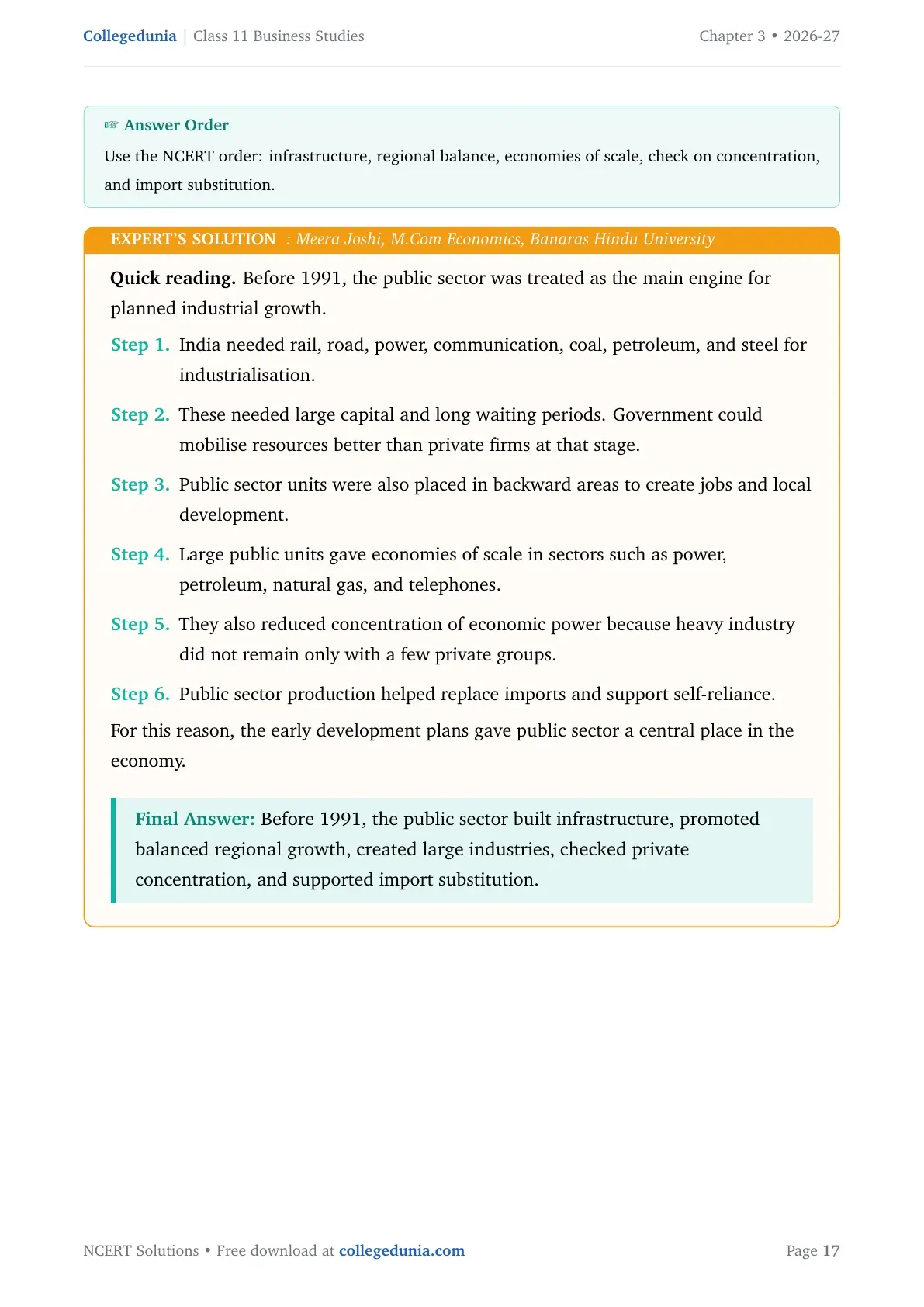
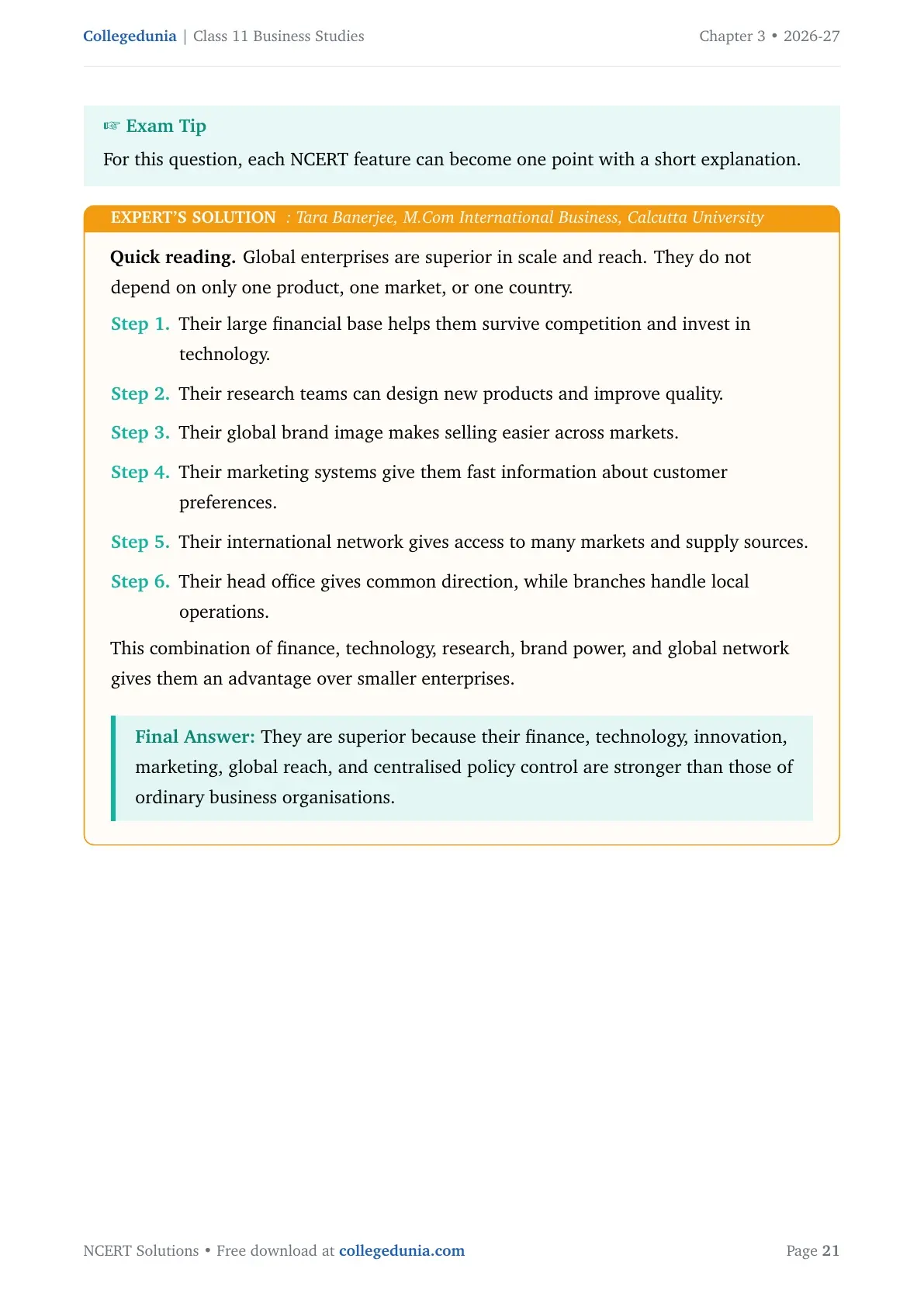
- Long answers explain 1991 reforms, pre-1991 public sector roles, and global enterprises.
- Case-style points connect business ownership with government policy and market competition.
Enterprise Types in Private, Public and Global Enterprises
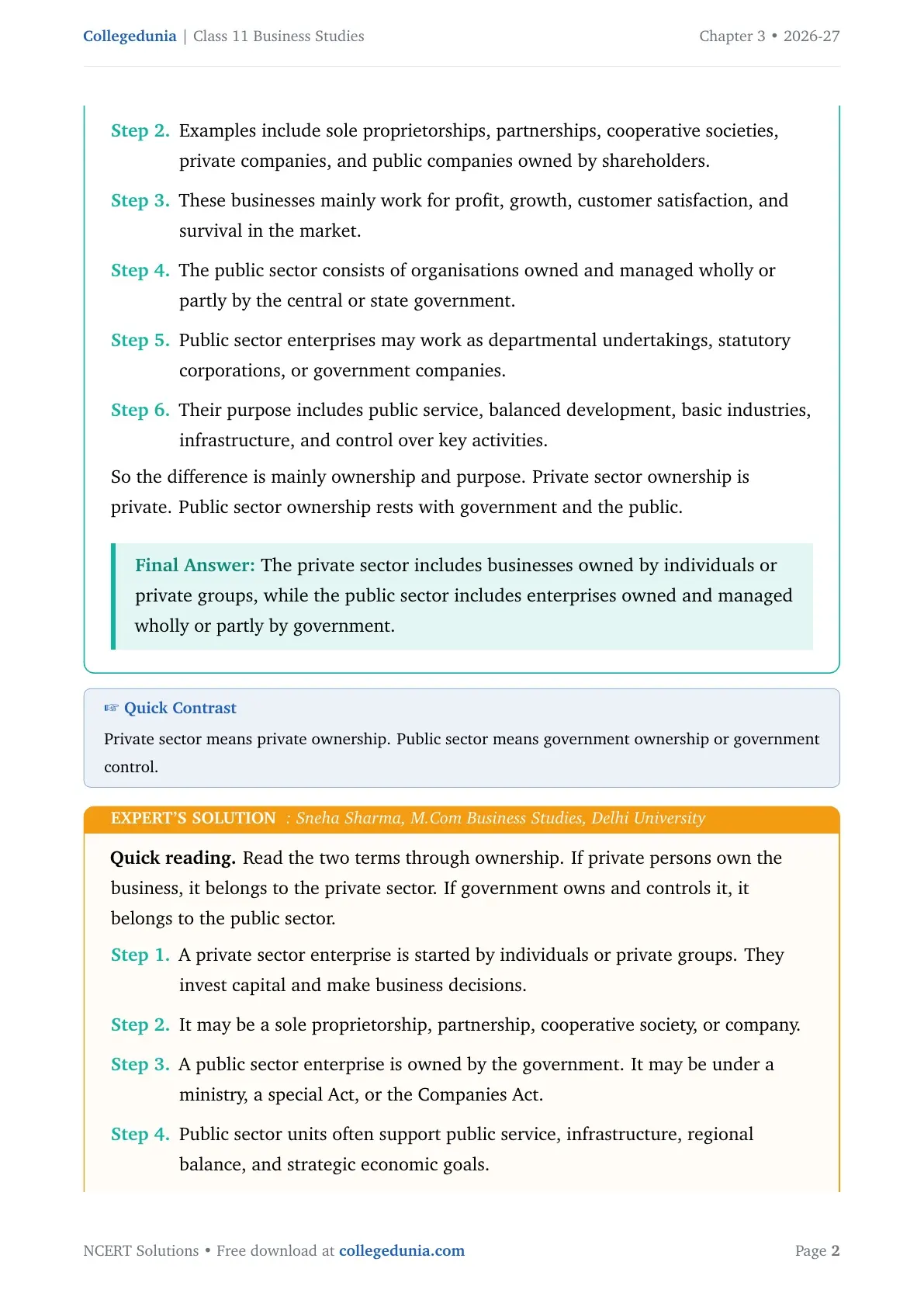
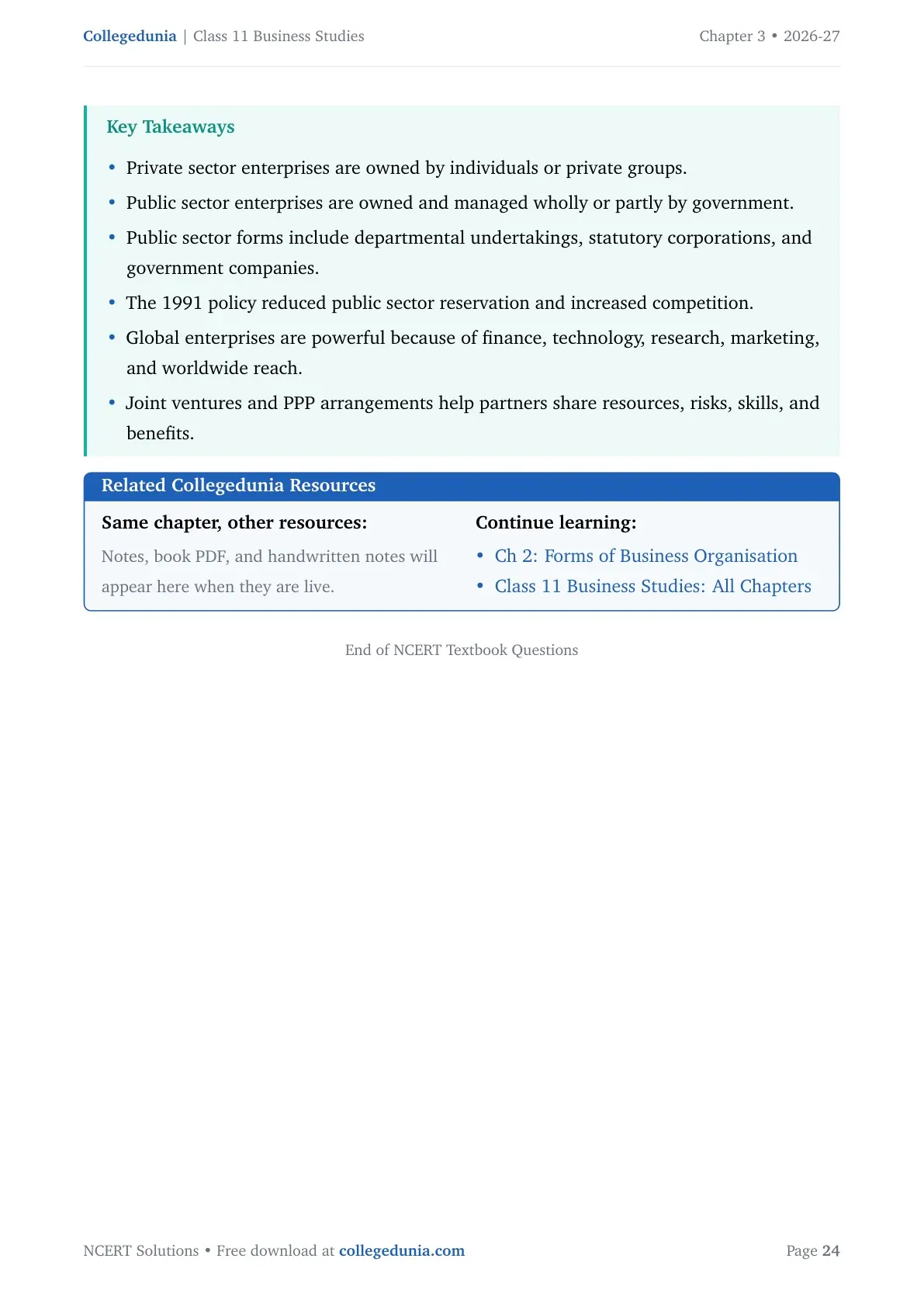
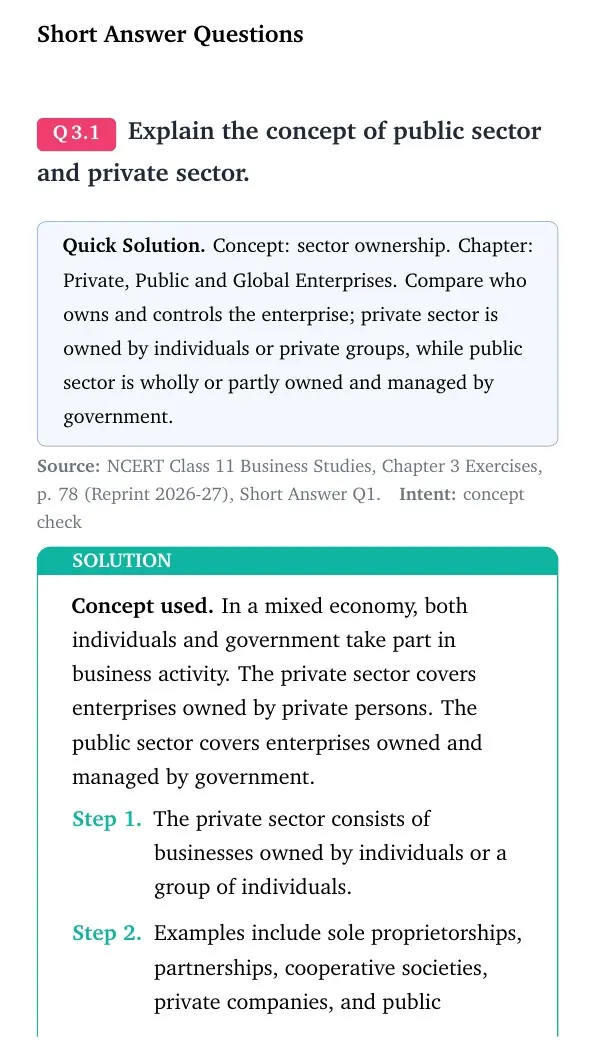
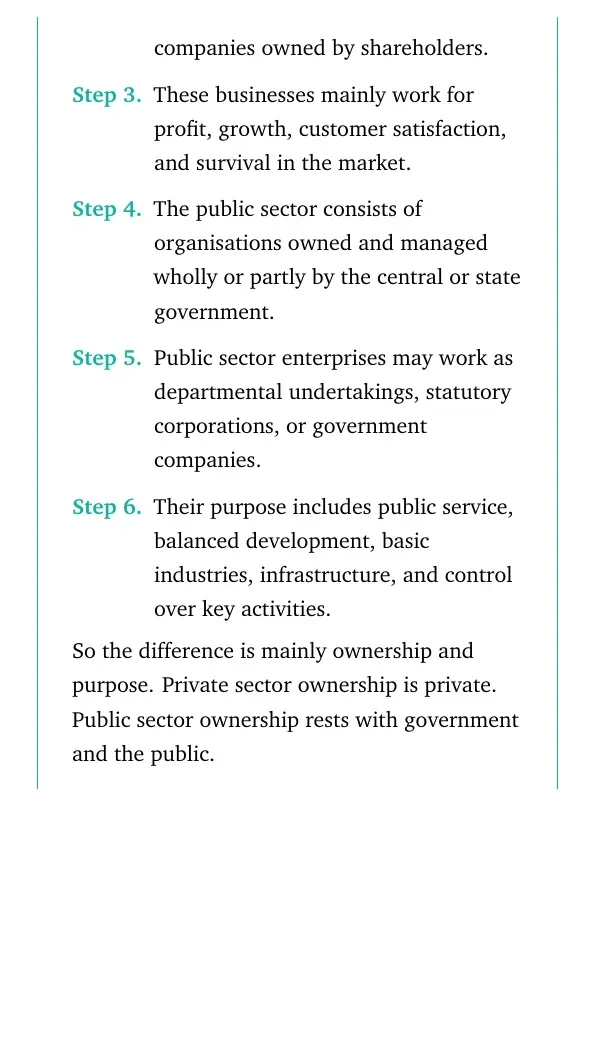
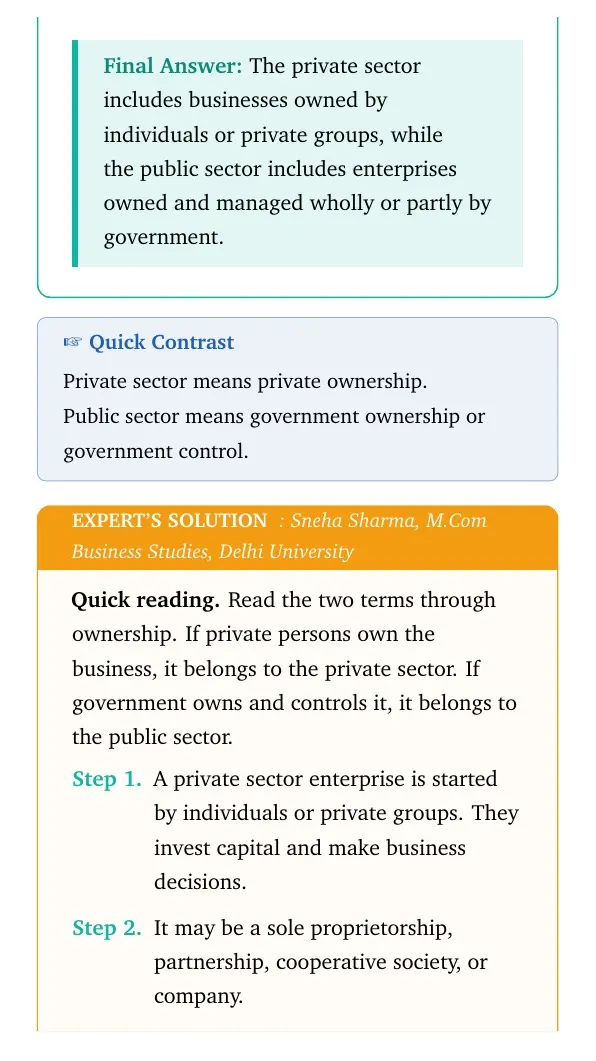
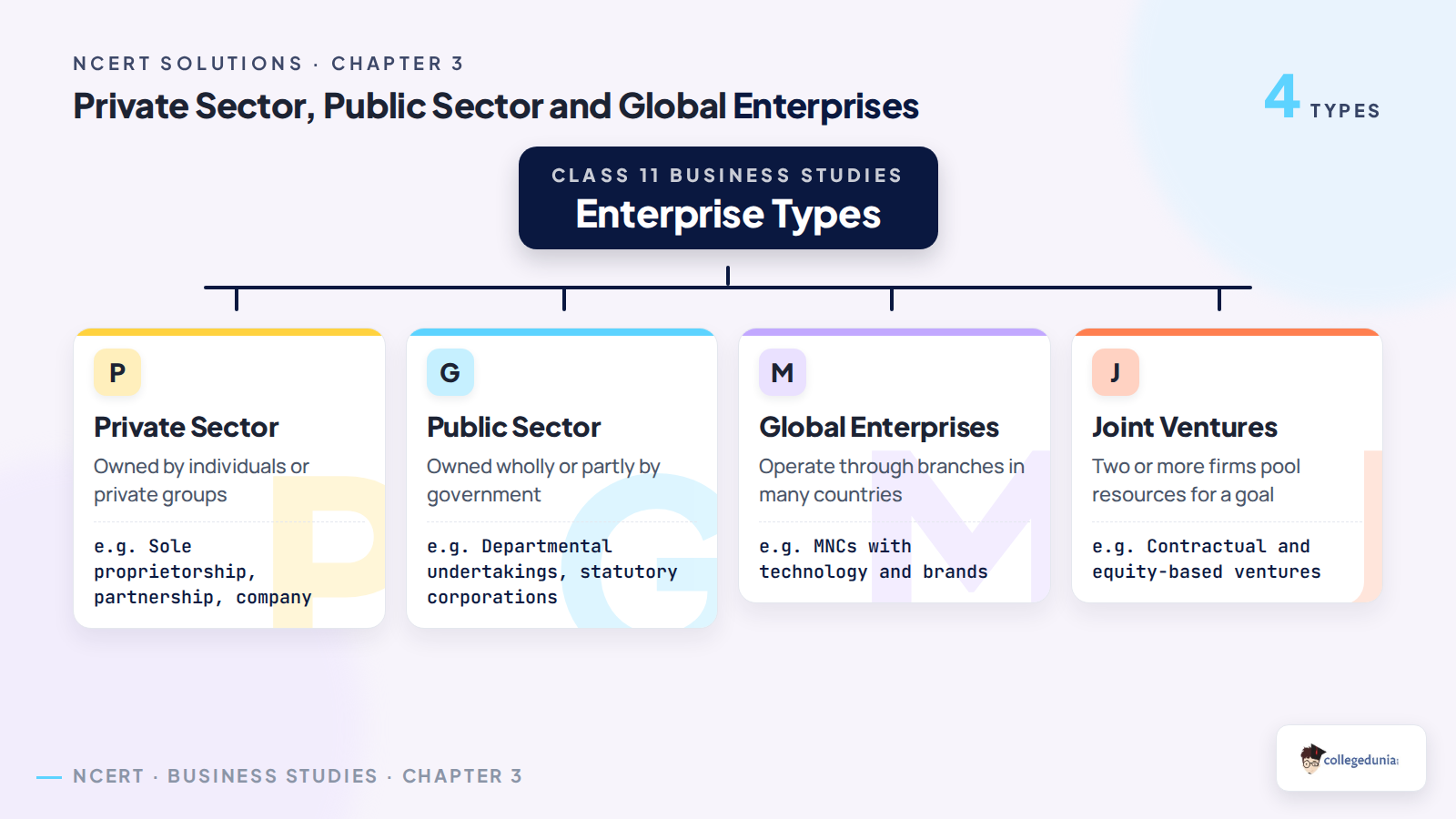
The chapter starts by separating business activity into private sector, public sector, and global enterprises. Private sector ownership stays with individuals or private groups, while public sector ownership stays wholly or partly with government.
| Enterprise type | Core idea | Answer cue |
|---|---|---|
| Private sector | Owned by individuals or private groups | Mention profit, private capital, and market risk |
| Public sector | Owned and managed wholly or partly by government | Mention public accountability and economic development |
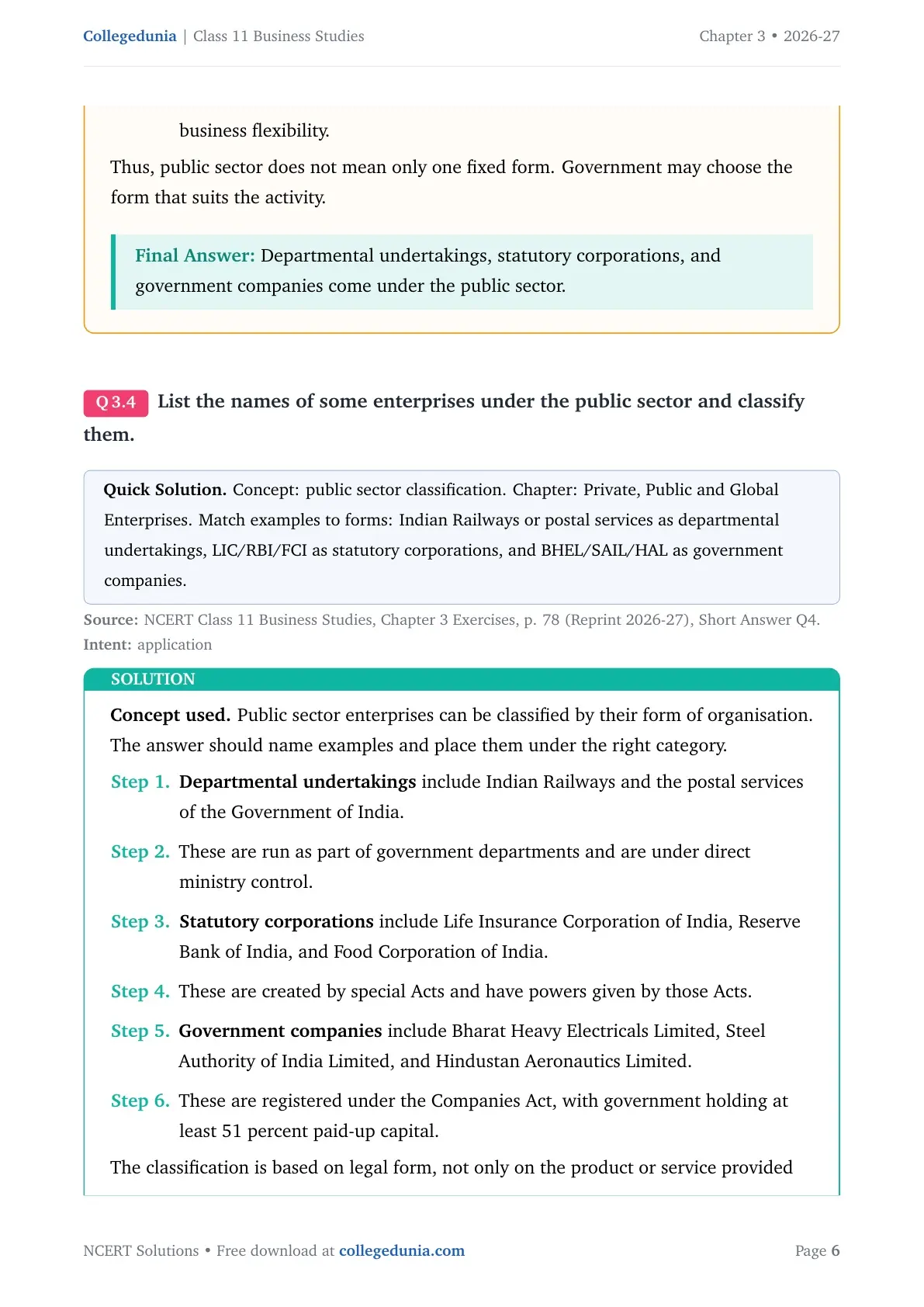
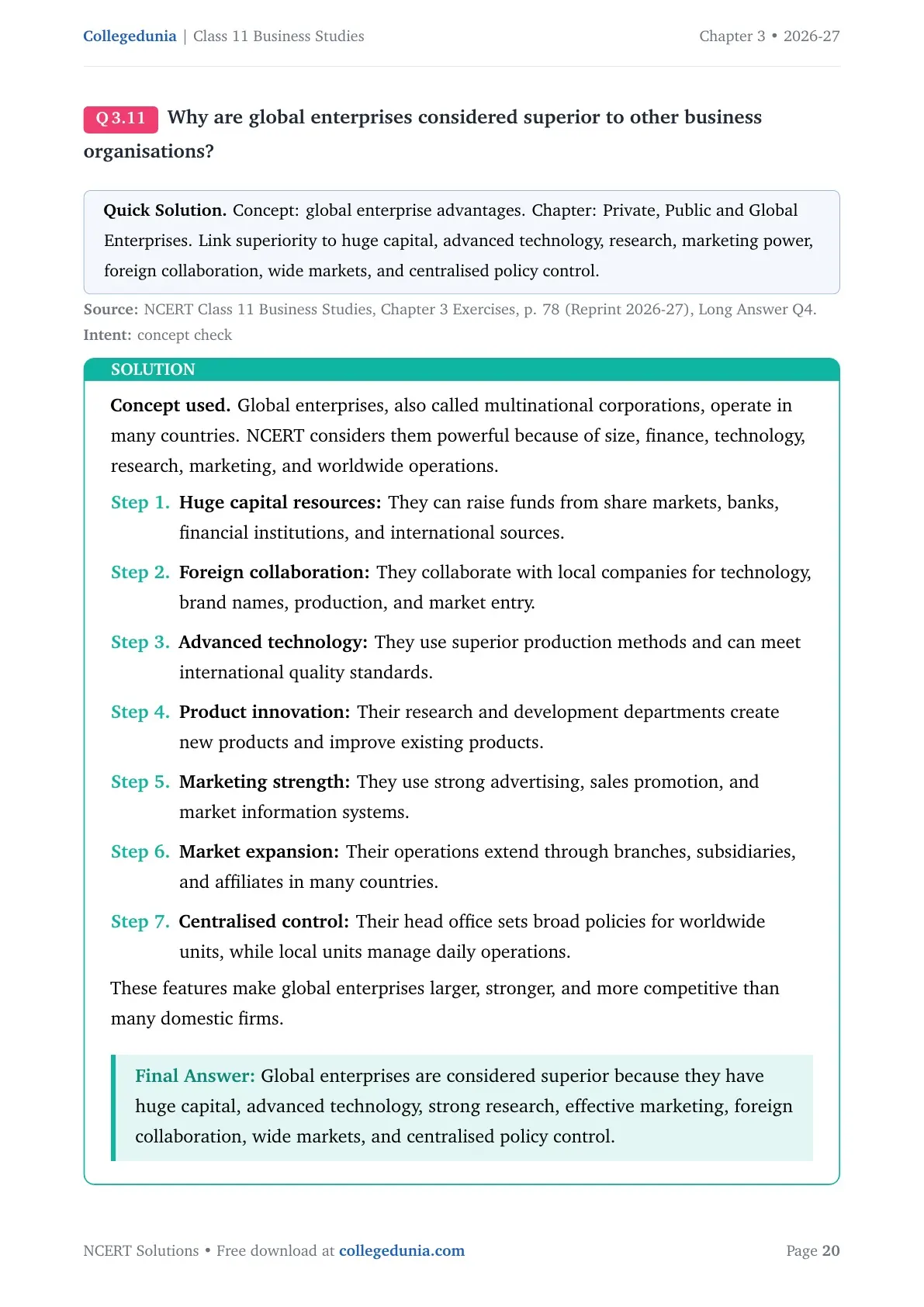
| Global enterprises | Operate in more than one country through branches or subsidiaries | Mention technology, large capital, and marketing strength |
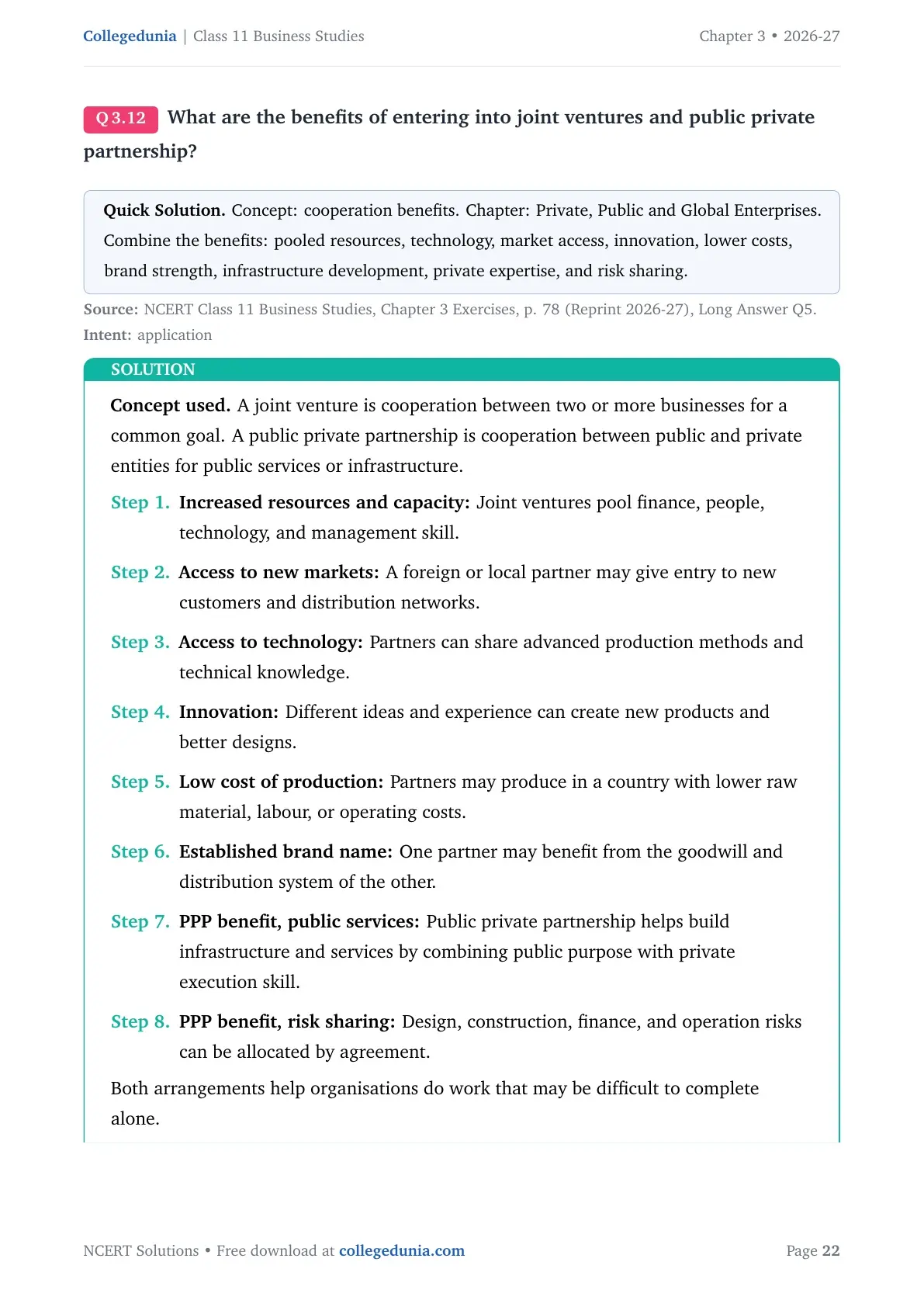
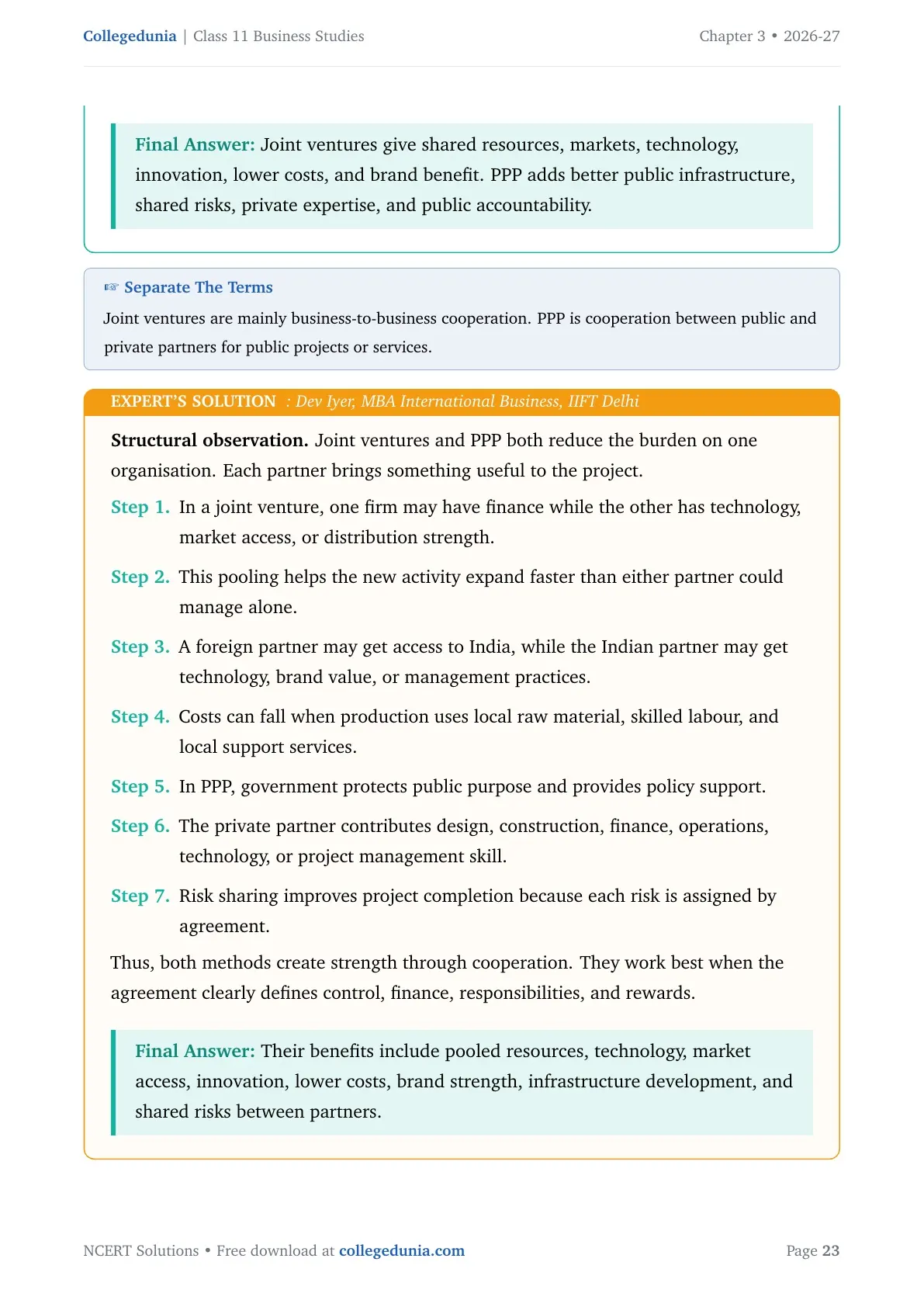
| Joint ventures | Two or more businesses pool resources for a common goal | Mention shared capital, risk, technology, and rewards |
Private, Public and Global Enterprises Video for Class 11
Source: Magnet Brains on YouTube
Public Sector Forms in Private, Public and Global Enterprises
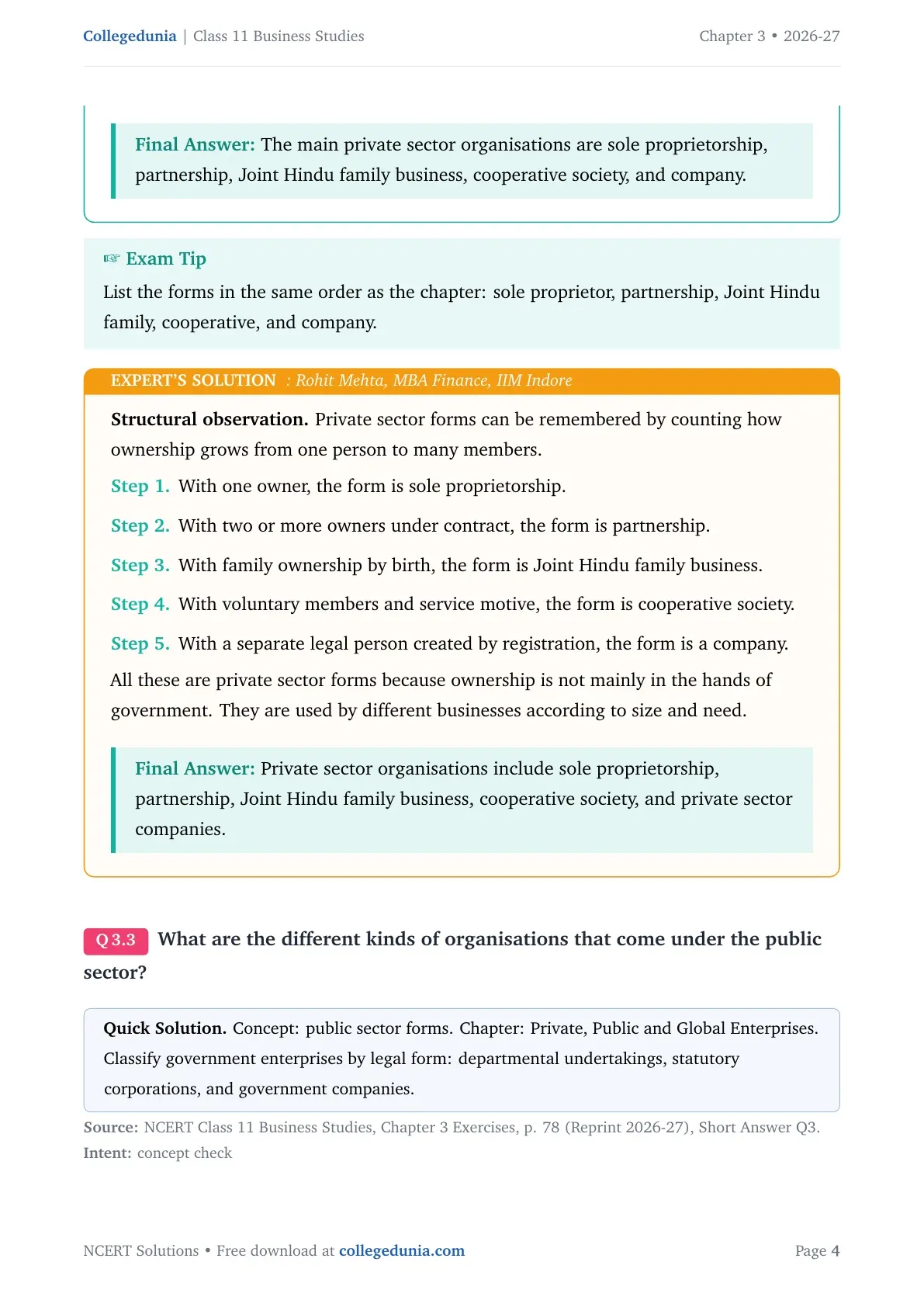
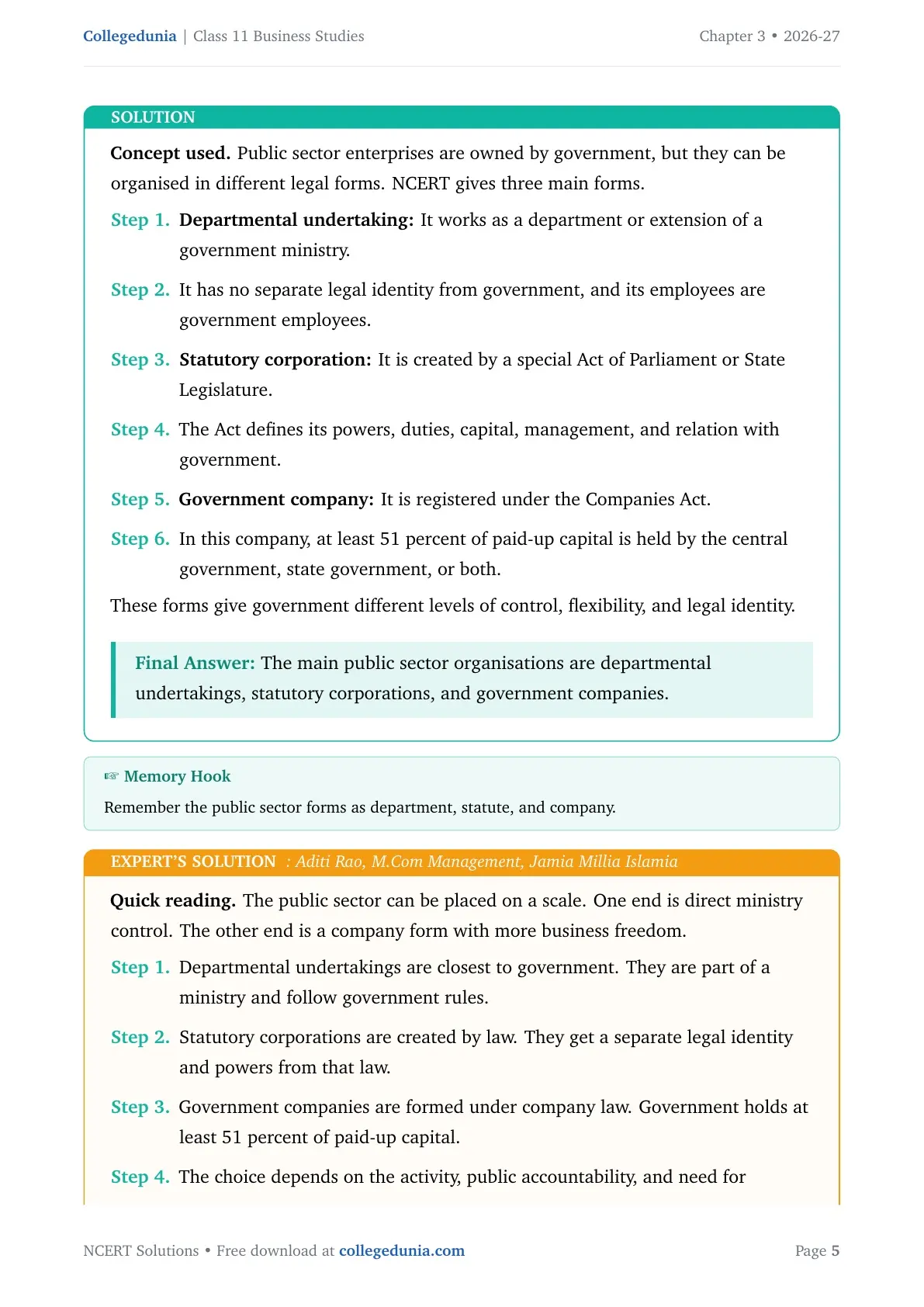
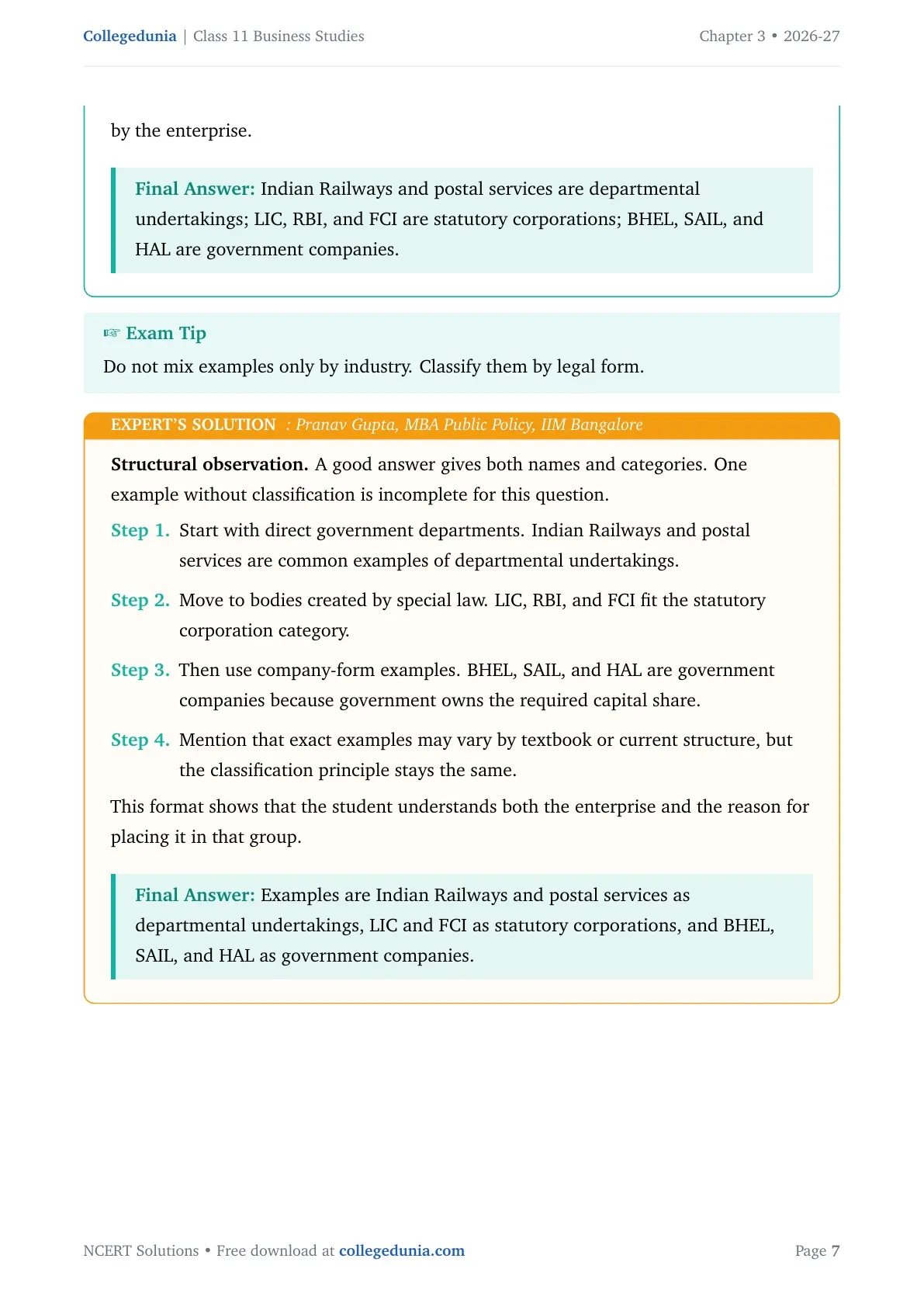
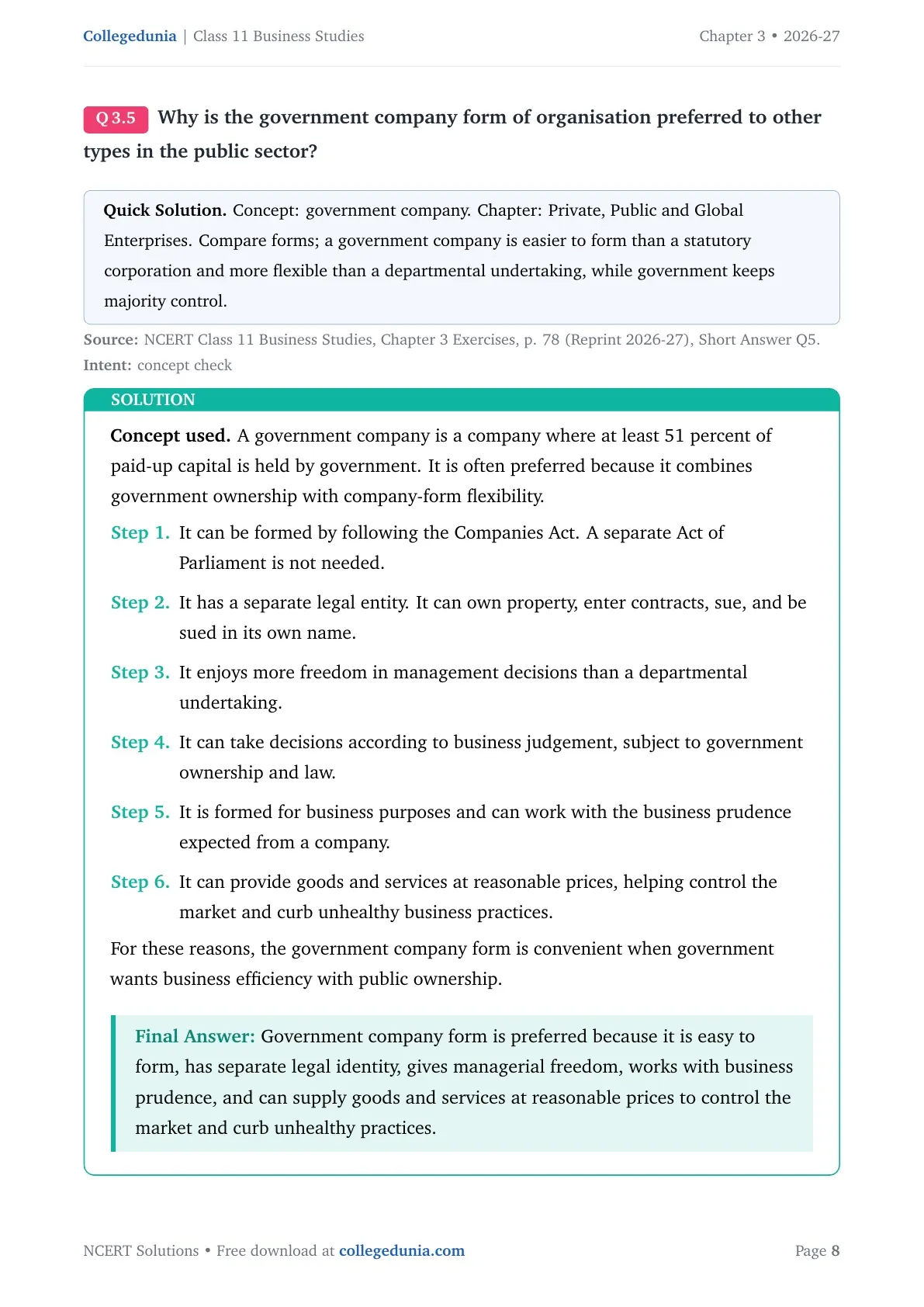
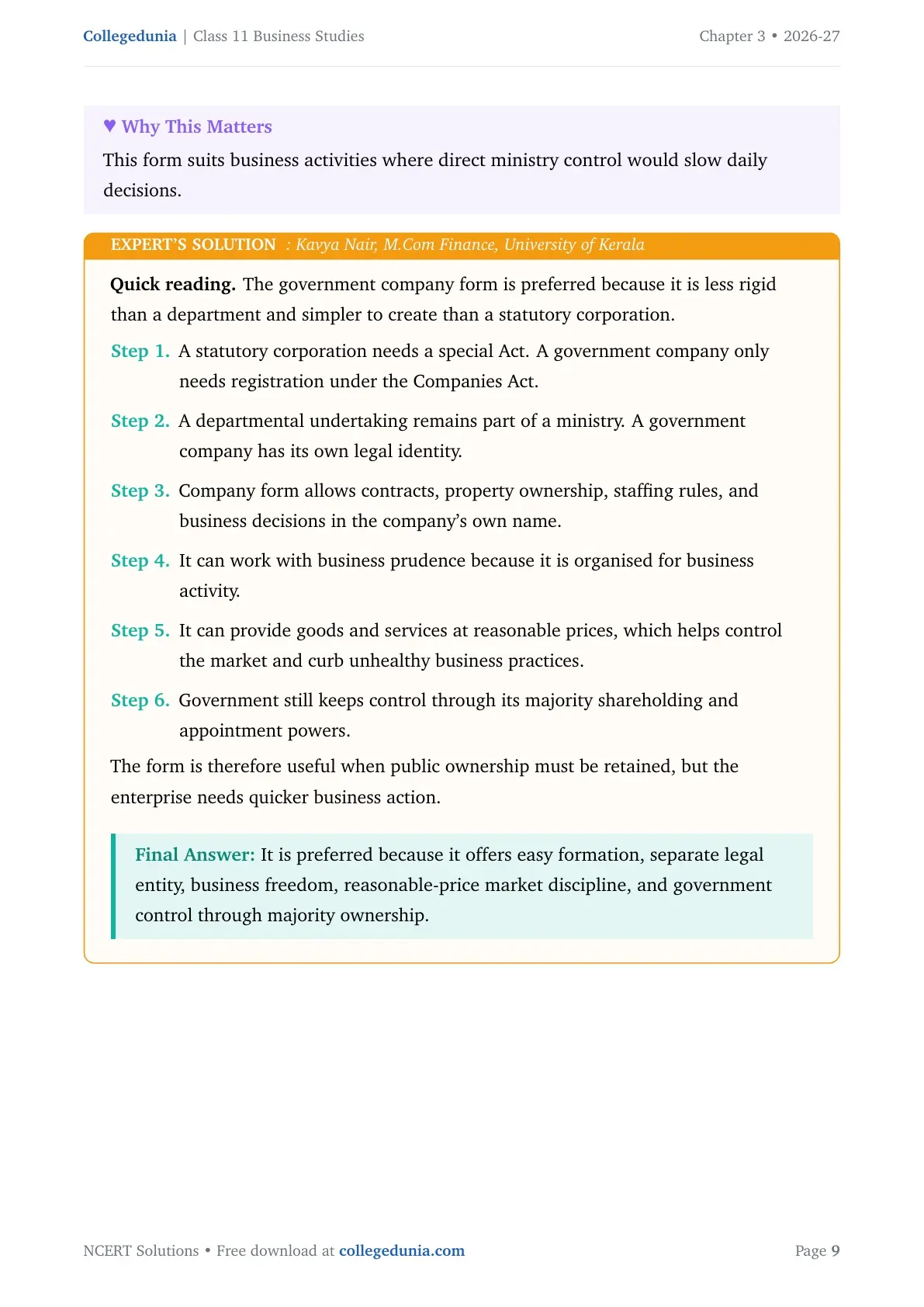
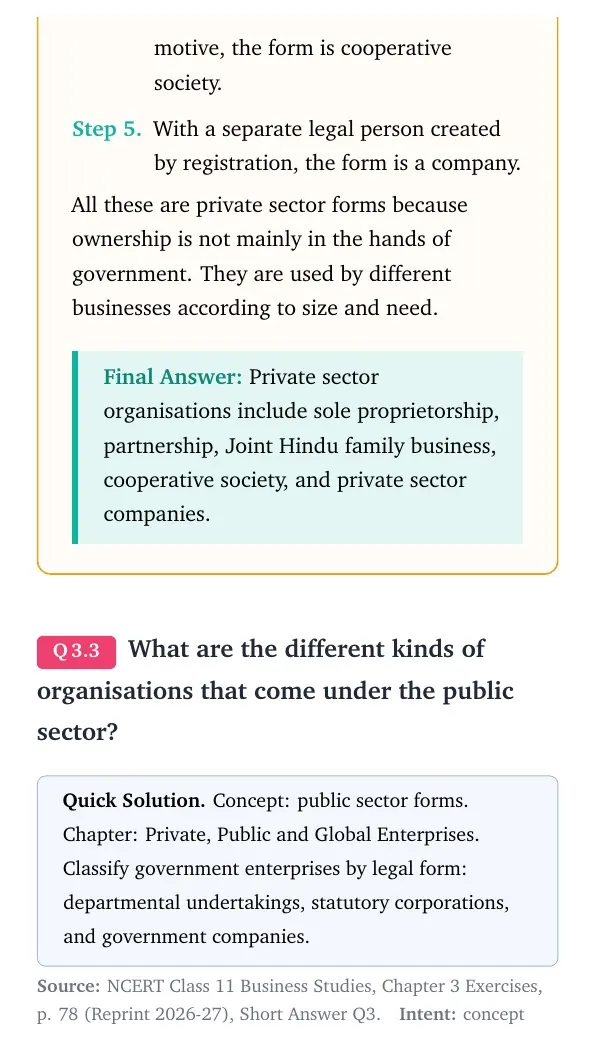
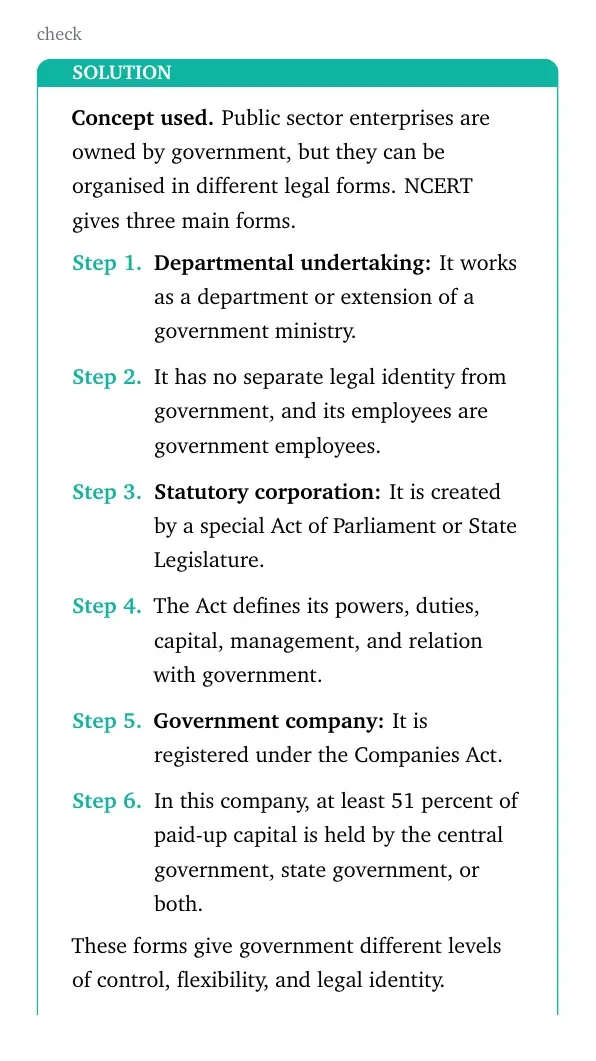
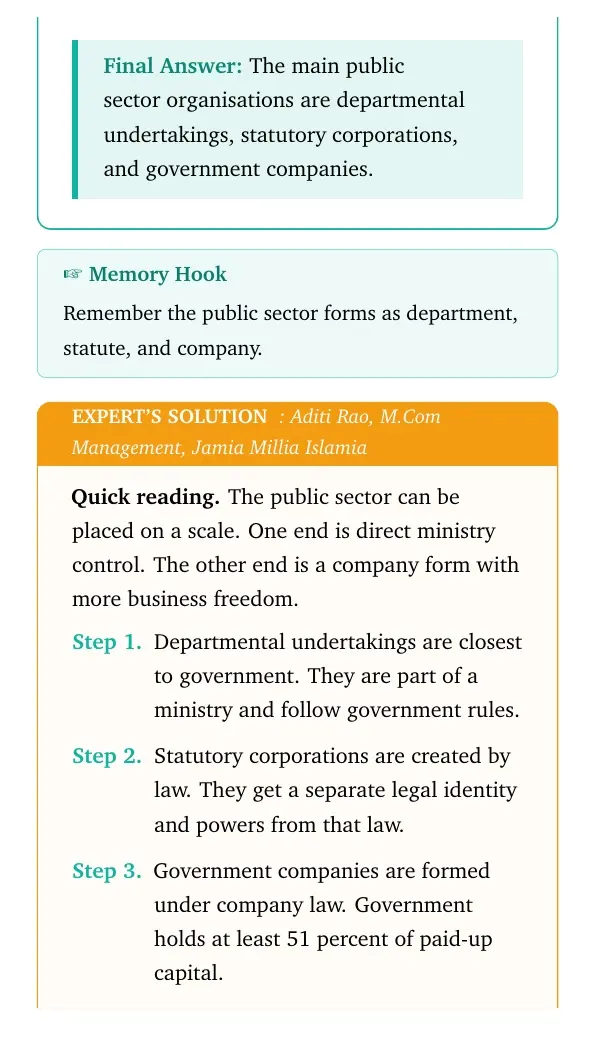
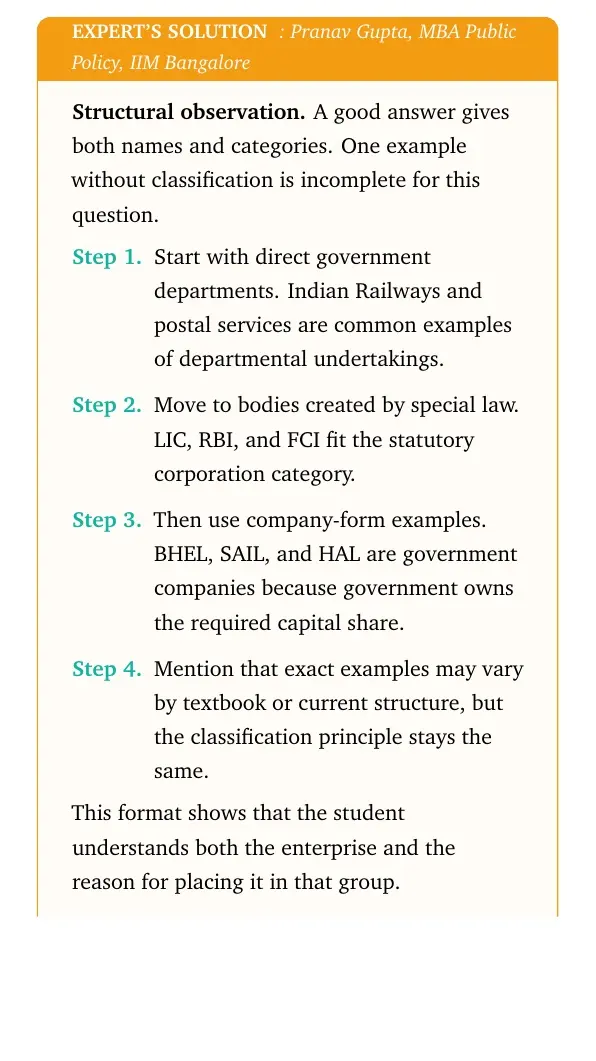
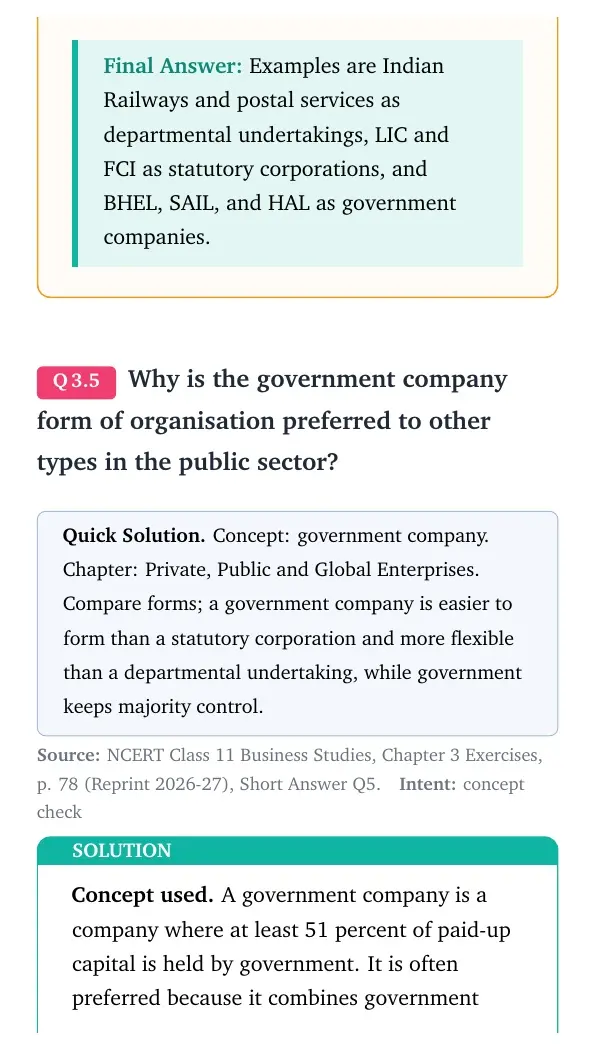
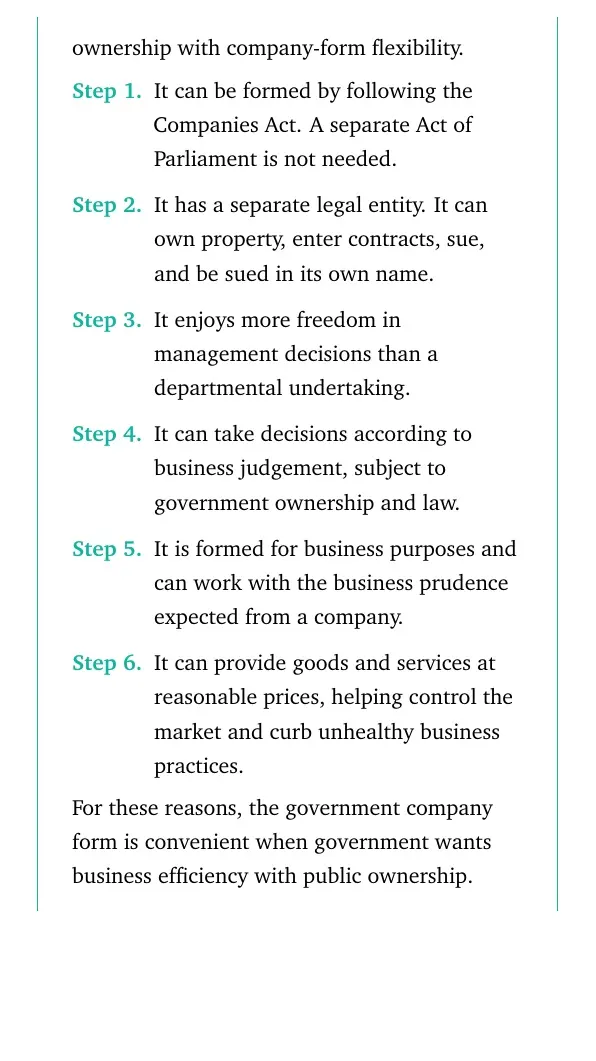
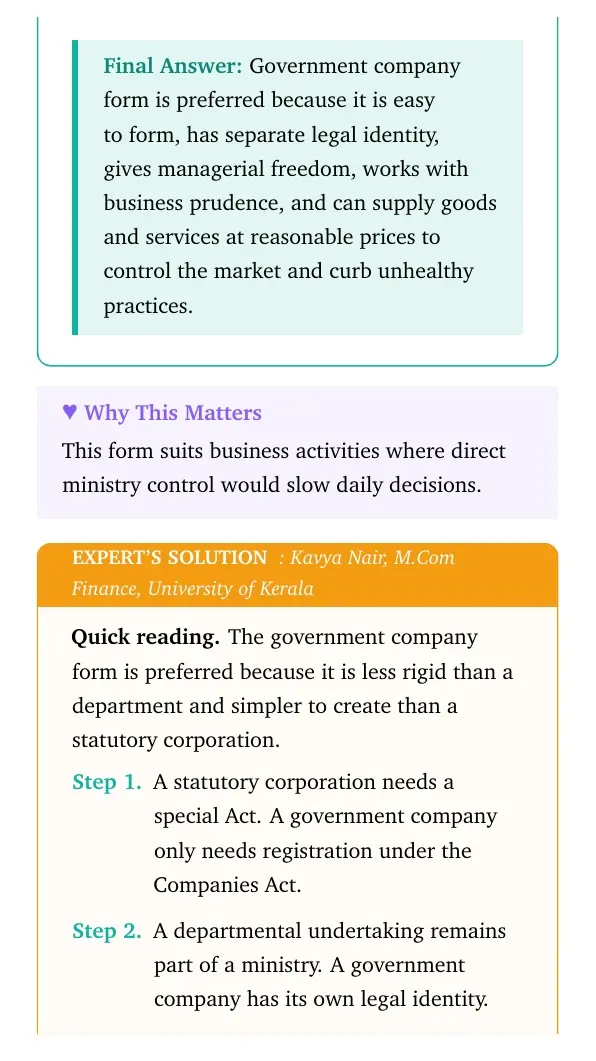
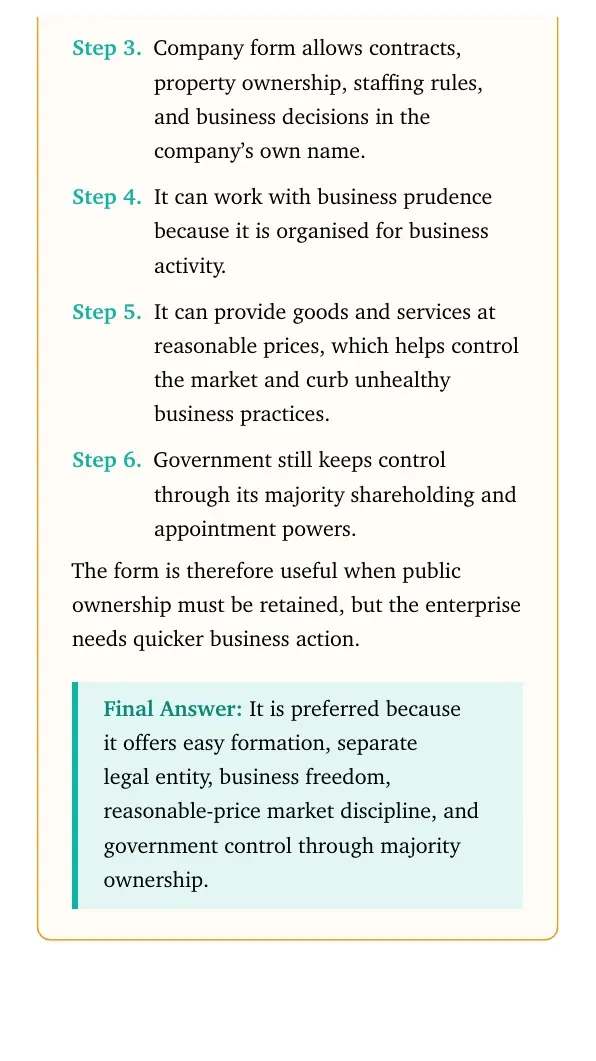
Public sector enterprises are not all organised in the same way. The NCERT chapter lists three forms: departmental undertakings, statutory corporations, and government companies. Government companies are often preferred when public ownership needs business freedom.
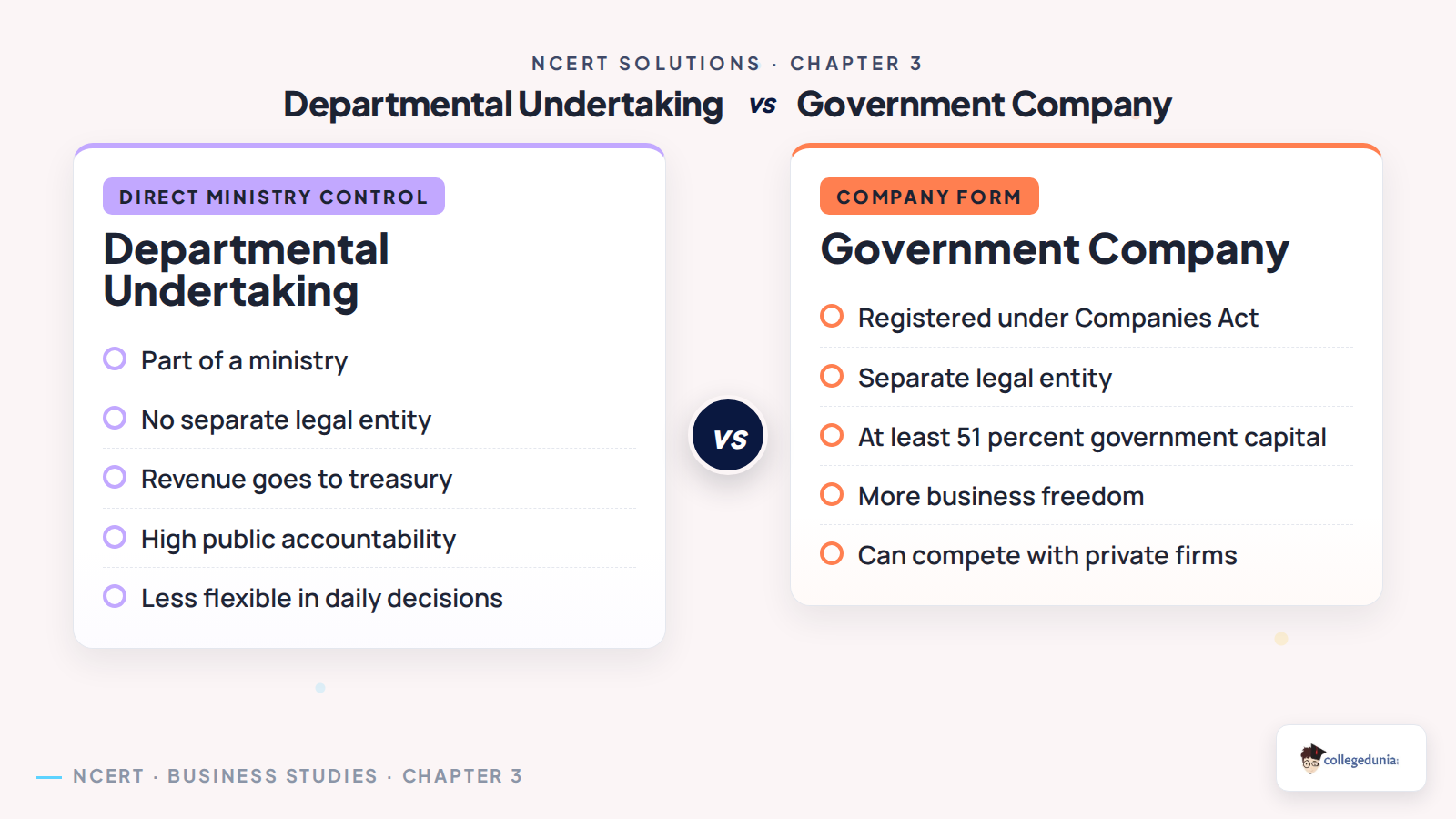
- Departmental undertaking: part of a ministry, direct control, strong accountability, less flexibility.
- Statutory corporation: created by special law, separate body, more freedom than a department.
- Government company: registered under company law with at least 51 percent government capital.
Industrial Policy 1991 and the Changing Role of Public Sector
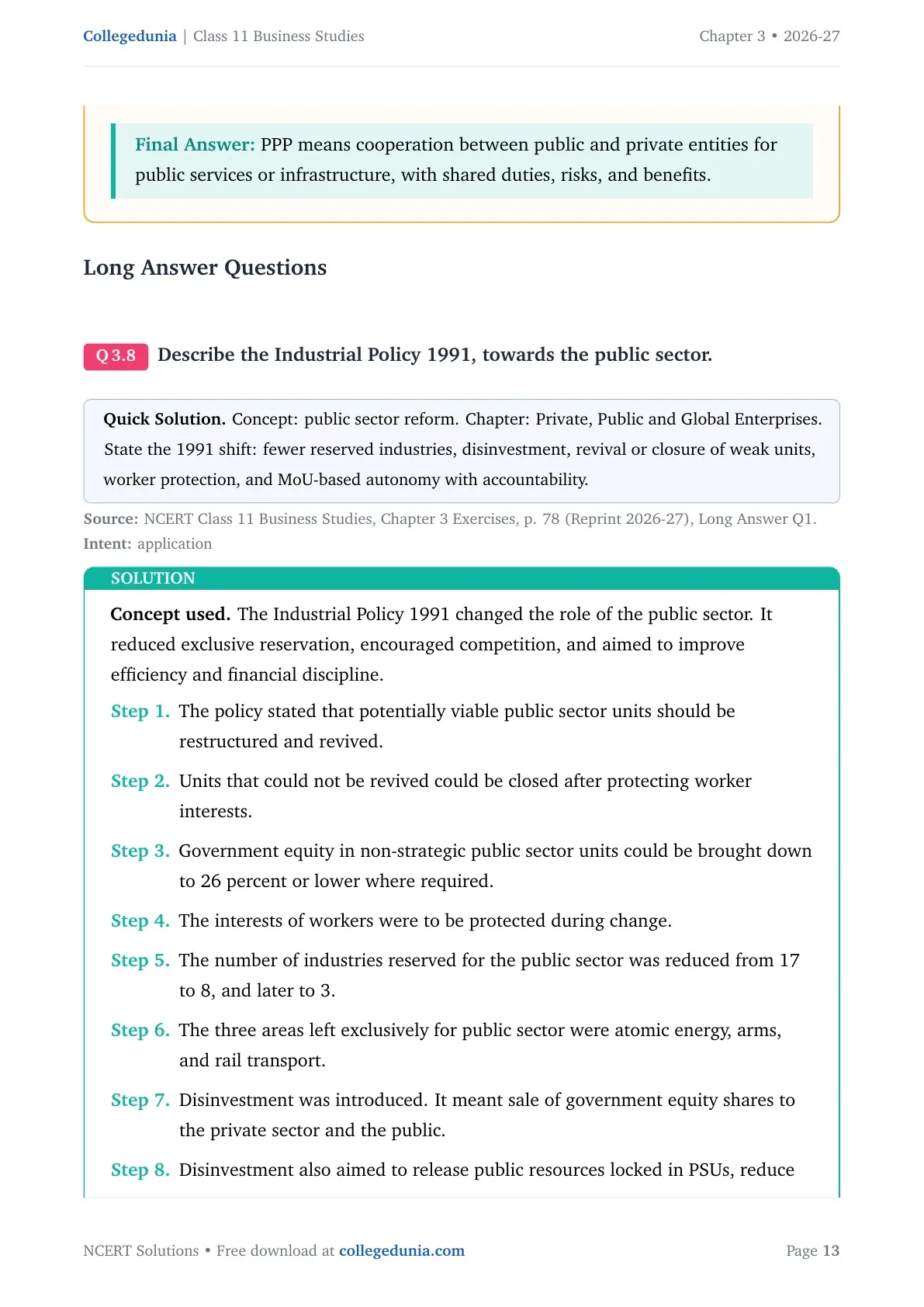
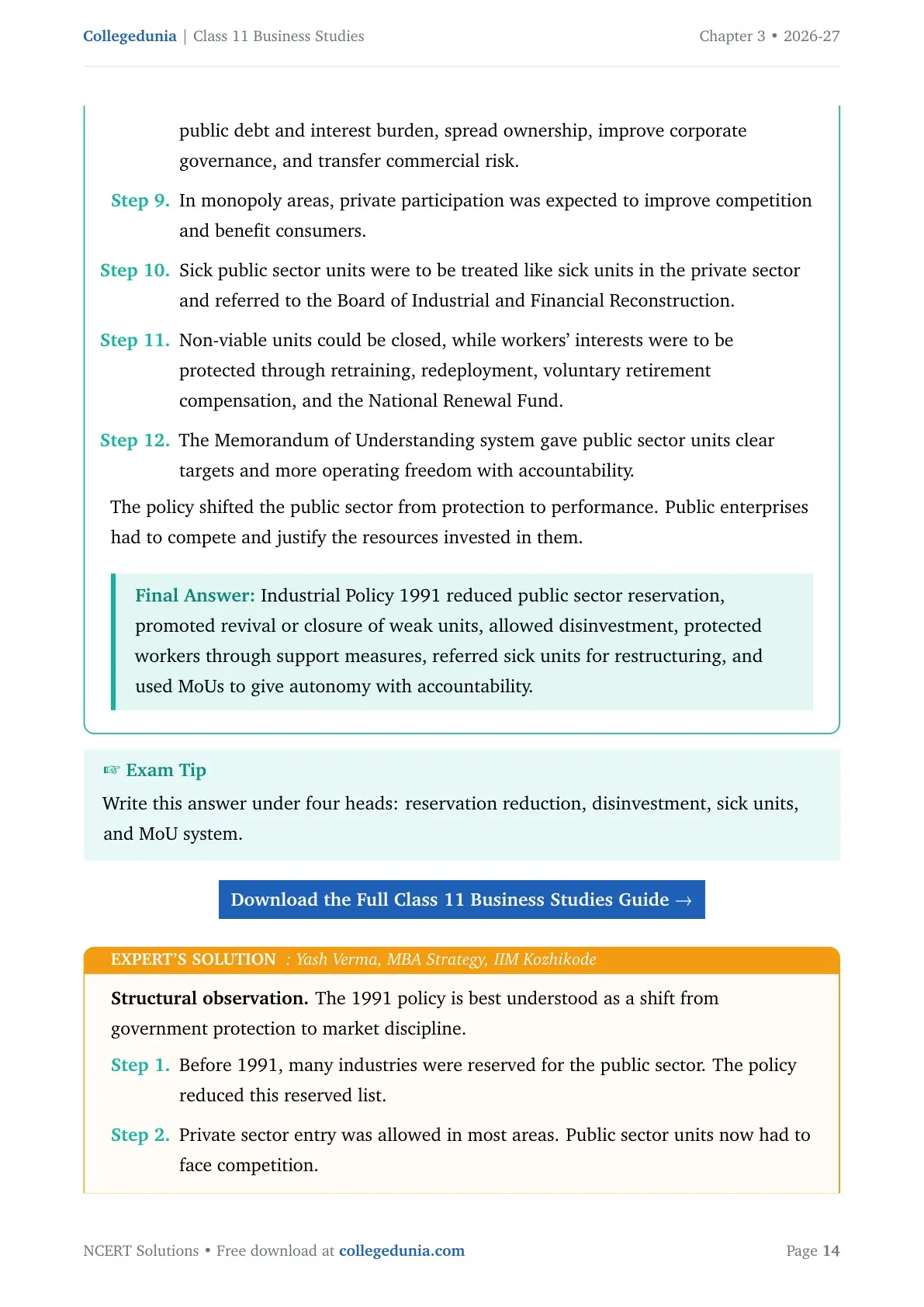
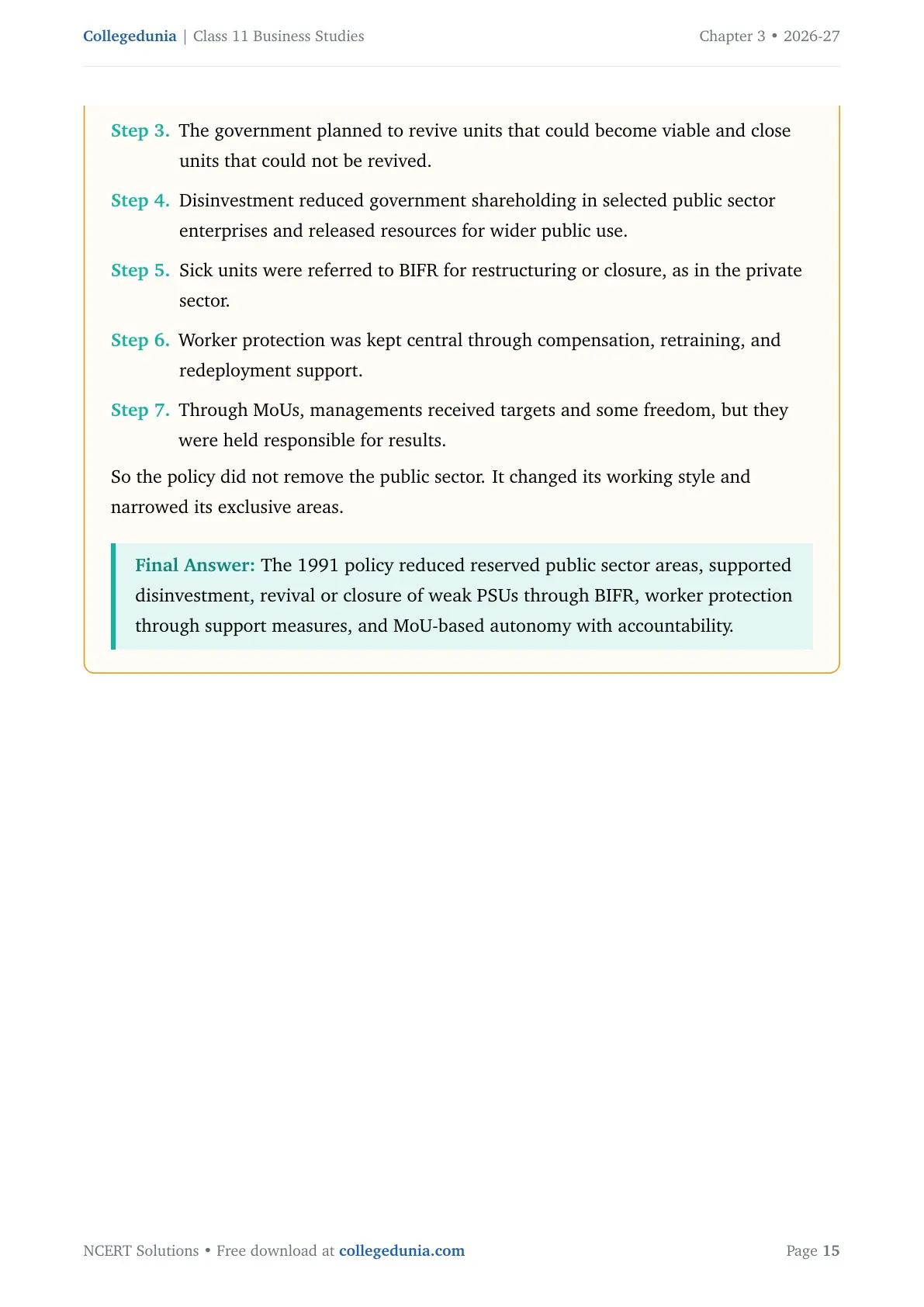
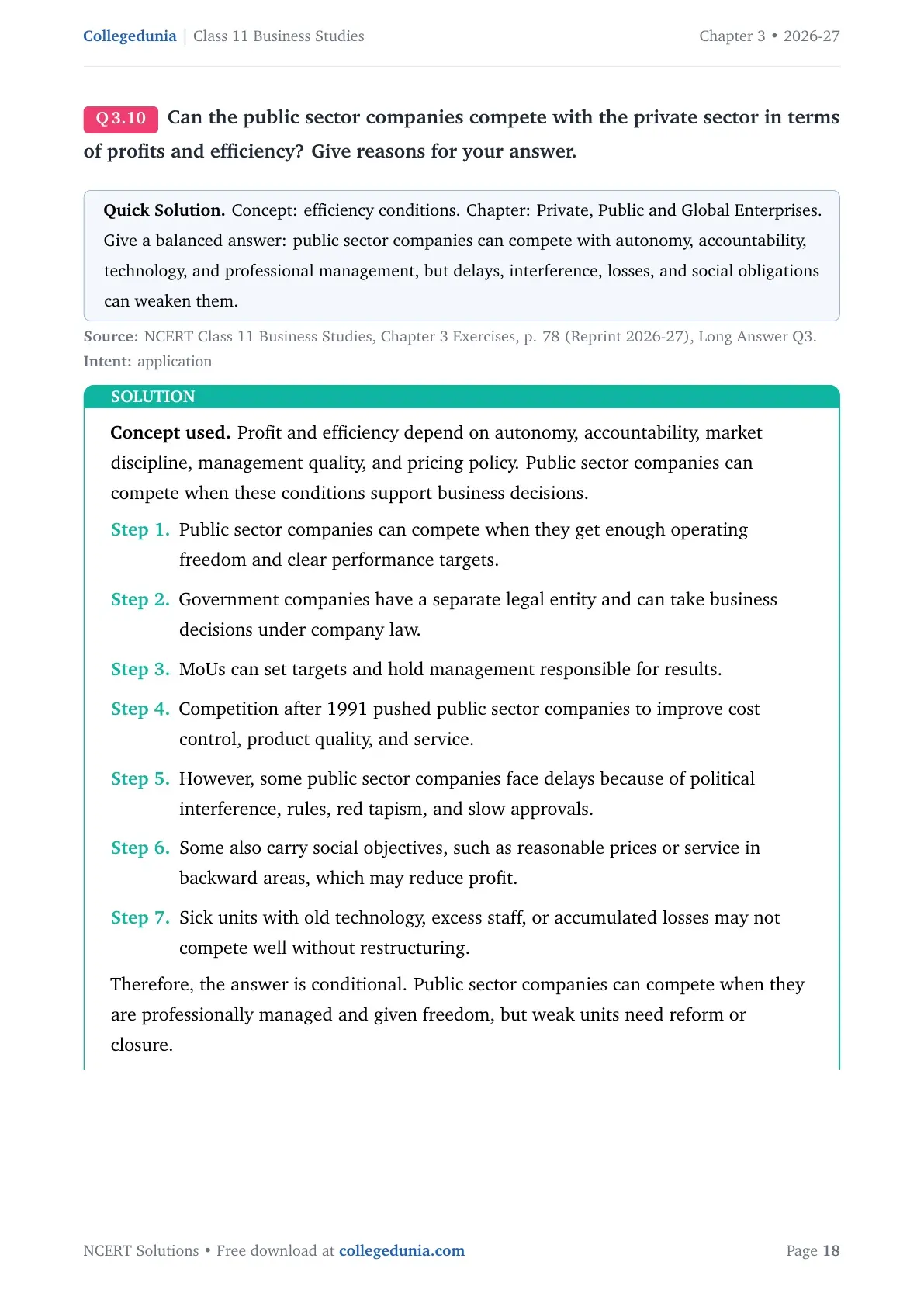
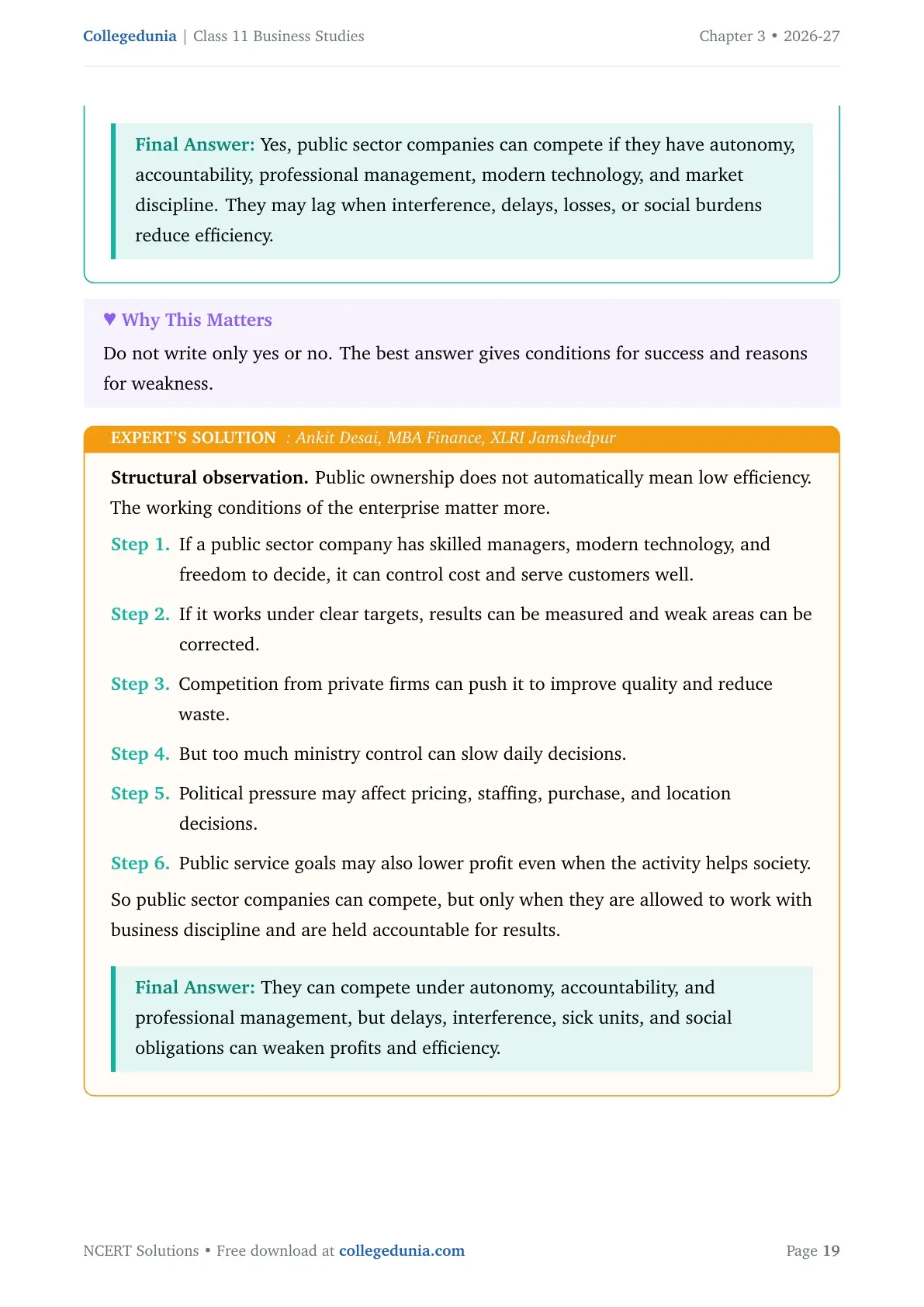
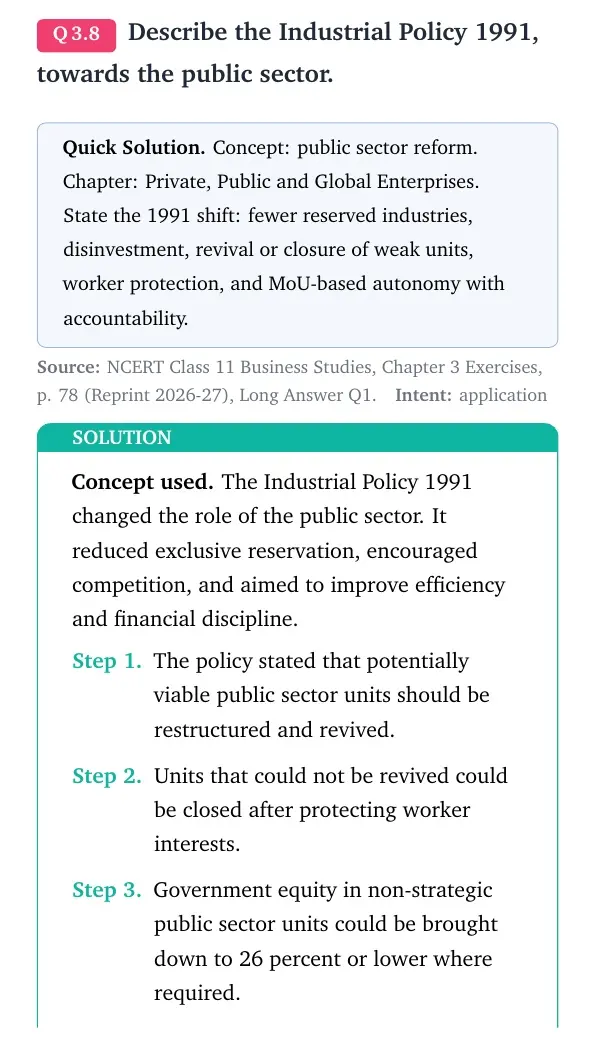
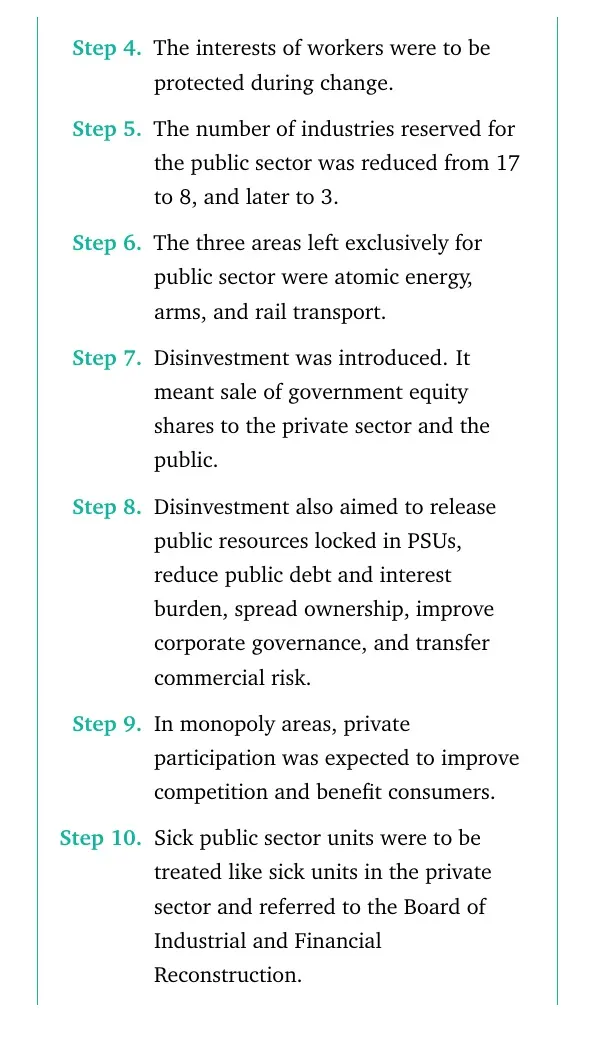
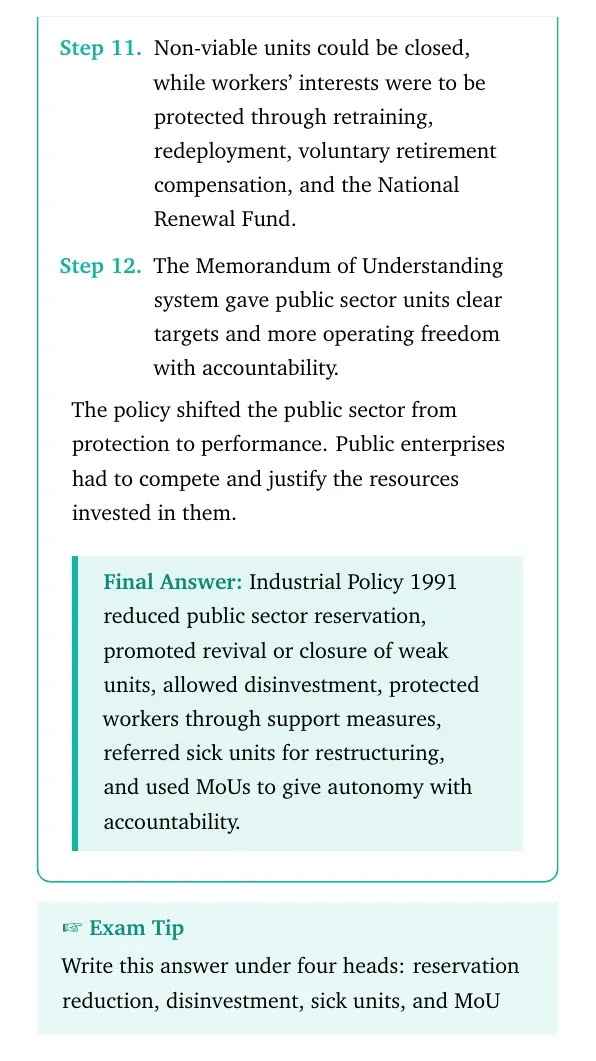
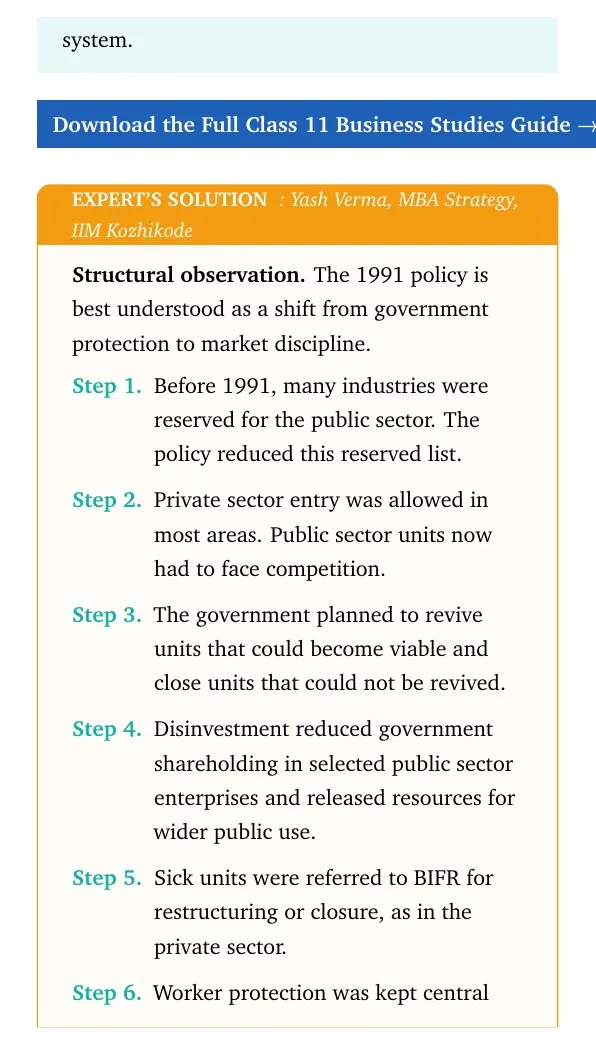
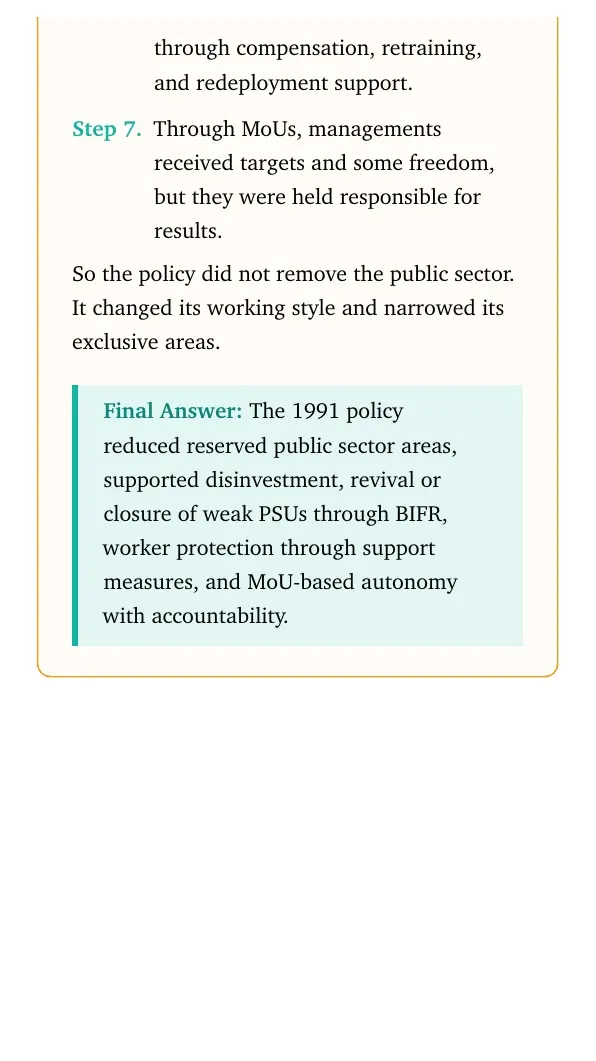
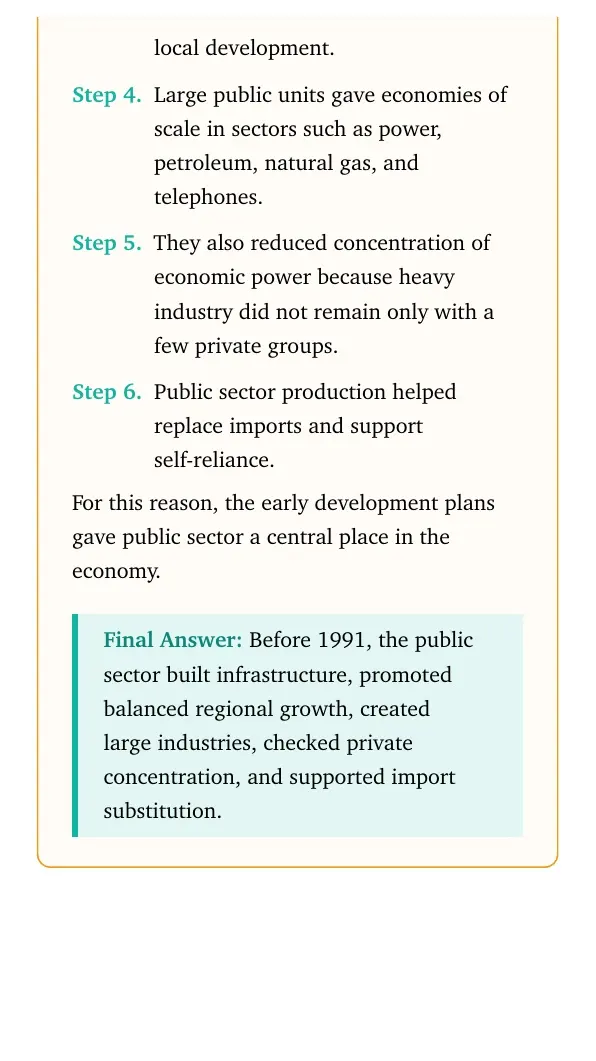
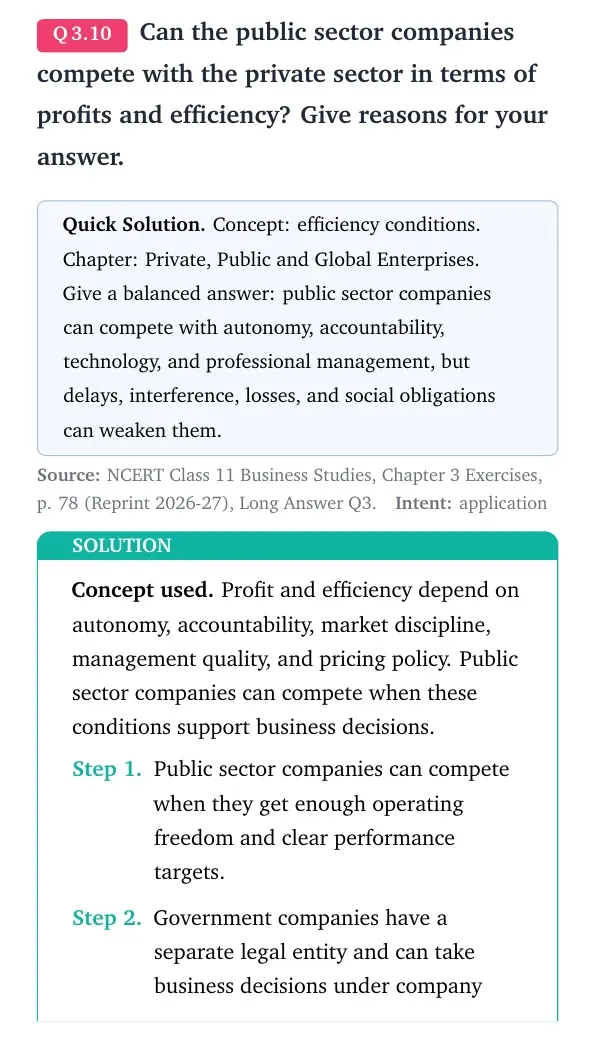
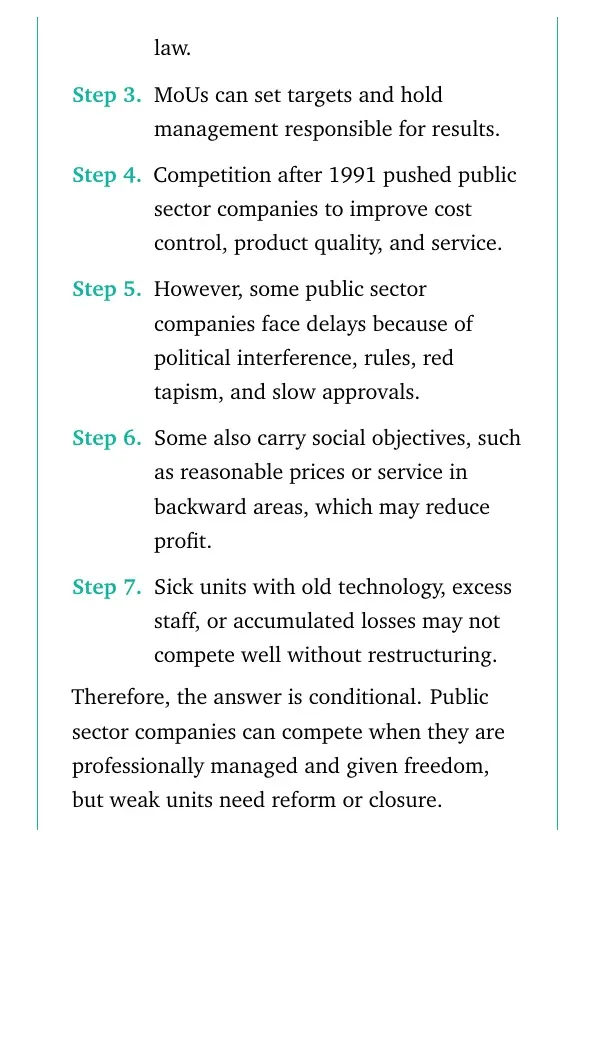
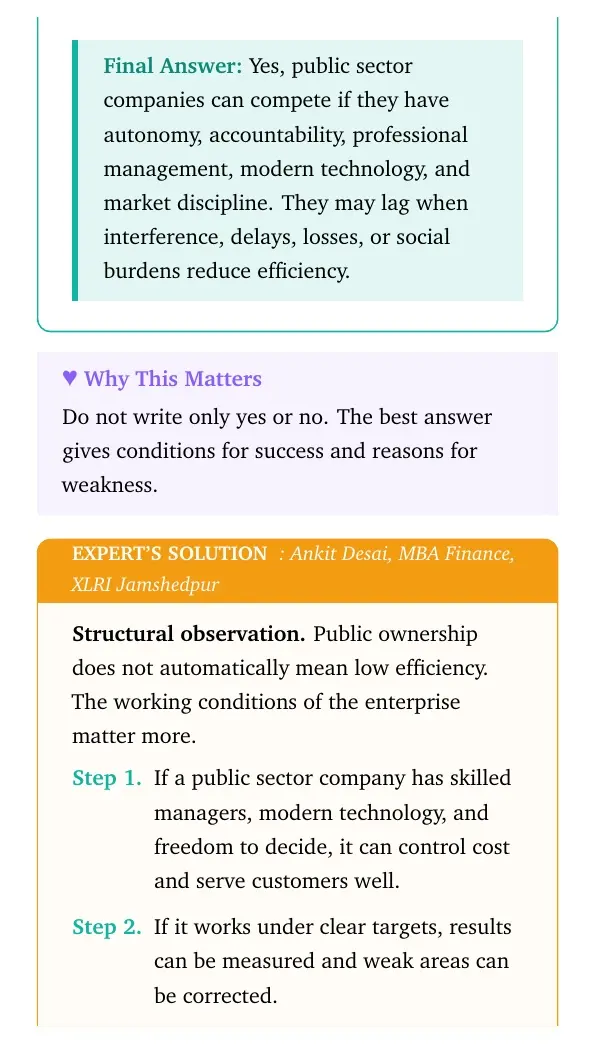
The 1991 policy changed the role of the public sector from protected growth to competitive performance. The government reduced reserved industries, used disinvestment, reviewed sick units, and introduced MoUs for targets and accountability.
- Reserved industries reduced: from 17 to 8, and later to 3.
- Disinvestment: sale of government equity shares to the public and private sector.
- Sick units: weak PSUs could be revived, restructured, or closed.
- MoU system: management received targets and more operating freedom.
How to Write Class 11 Business Studies Chapter 3 Answers
Most answers in this chapter become easy when students first identify the comparison base. Before writing, decide whether the question asks about ownership, legal identity, funding, autonomy, accountability, technology, market access, or risk sharing.
- Definition questions: give one clean meaning and two features.
- Comparison questions: use a table or point-wise format.
- Policy questions: write the year, reform point, and effect.
- Joint venture questions: link resources, technology, markets, and shared risk.
All NCERT Solutions for Class 11 Business Studies Chapter 3 with Step-by-Step Solutions
The companion question page carries the full collapsible Q&A layout for all textbook prompts from this PDF, including detailed solutions and expert explanations. Open it when you want to practise the chapter question by question.
Open question-wise answers: Private, Public and Global Enterprises NCERT Solutions question bank
Related Class 11 Business Studies Chapter 3 Resources
Use these related resources after finishing the NCERT solutions. They help revise the same chapter through notes, textbook PDF access, and handwritten revision support.
| Resource | Use it for | Link |
|---|---|---|
| Chapter Notes | Revise public sector forms, policy changes, MNC features, and PPP | Class 11 Business Studies Chapter 3 Notes |
| NCERT Book PDF | Read the official textbook chapter alongside answers | Class 11 Business Studies Chapter 3 NCERT Book PDF |
| Handwritten Notes | Quickly revise definitions, merits, limitations, and reforms | Class 11 Business Studies Chapter 3 Handwritten Notes |
Class 11 Business Studies NCERT Solutions All Chapters
The table below helps students move across the same resource type for Class 11 Business Studies. Chapter 3 should be revised with Chapter 2 because forms of business organisation explain how ownership choices lead into private and public sector enterprises.
| Chapter | NCERT Solutions Link |
|---|---|
| Chapter 1 Business, Trade and Commerce | Open solutions |
| Chapter 2 Forms of Business Organisation | Open solutions |
| Chapter 3 Private, Public and Global Enterprises | Open solutions |
| Chapter 4 Business Services | Open solutions |
| Chapter 5 Emerging Modes of Business | Open solutions |
| Chapter 6 Social Responsibilities of Business and Business Ethics | Open solutions |
| Chapter 7 Formation of a Company | Open solutions |
| Chapter 8 Sources of Business Finance | Open solutions |
| Chapter 9 MSME and Business Entrepreneurship | Open solutions |
| Chapter 10 Internal Trade | Open solutions |
| Chapter 11 International Business | Open solutions |
Private, Public and Global Enterprises Class 11 NCERT Solutions FAQs
Ques. What does Class 11 Business Studies Chapter 3 mainly cover?
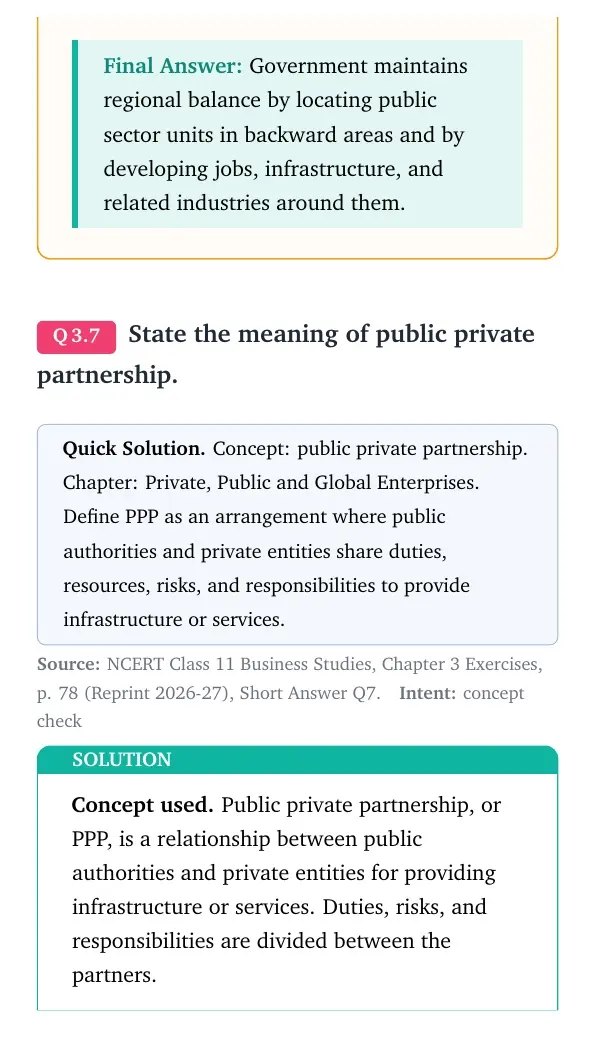
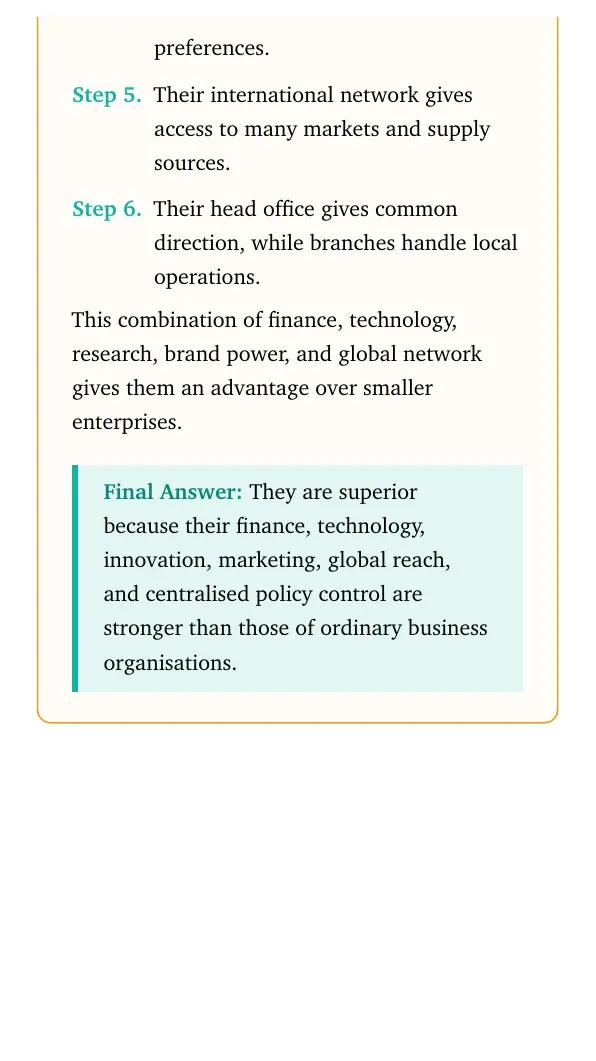
Ans. The chapter covers private sector, public sector, departmental undertakings, statutory corporations, government companies, global enterprises, joint ventures, and public private partnership.
Ques. Which public sector forms are most important in this chapter?
Ans. The three important forms are departmental undertakings, statutory corporations, and government companies. Students should compare them through legal identity, control, funding, flexibility, and accountability.
Ques. Why was Industrial Policy 1991 important for the public sector?
Ans. It reduced public sector reservation, encouraged disinvestment, reviewed sick PSUs, protected workers, and used MoUs to give public enterprises autonomy with accountability.
Ques. How many questions are solved in this Chapter 3 PDF?
Ans. The PDF solves 12 textbook questions from the NCERT exercise, with step-by-step answers and expert explanations for each question.
Ques. What is the difference between joint ventures and PPP?
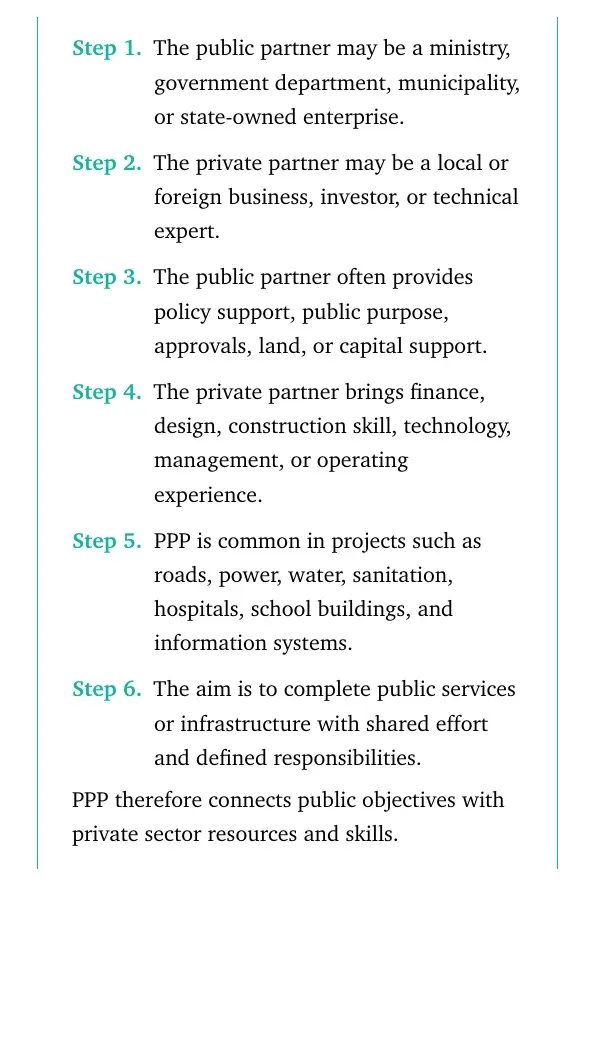
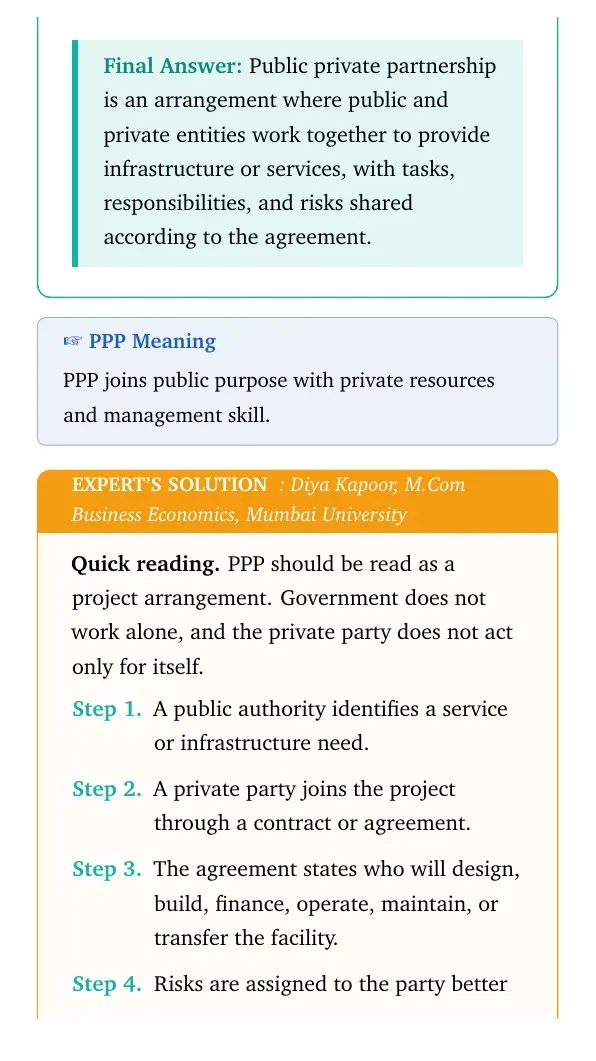
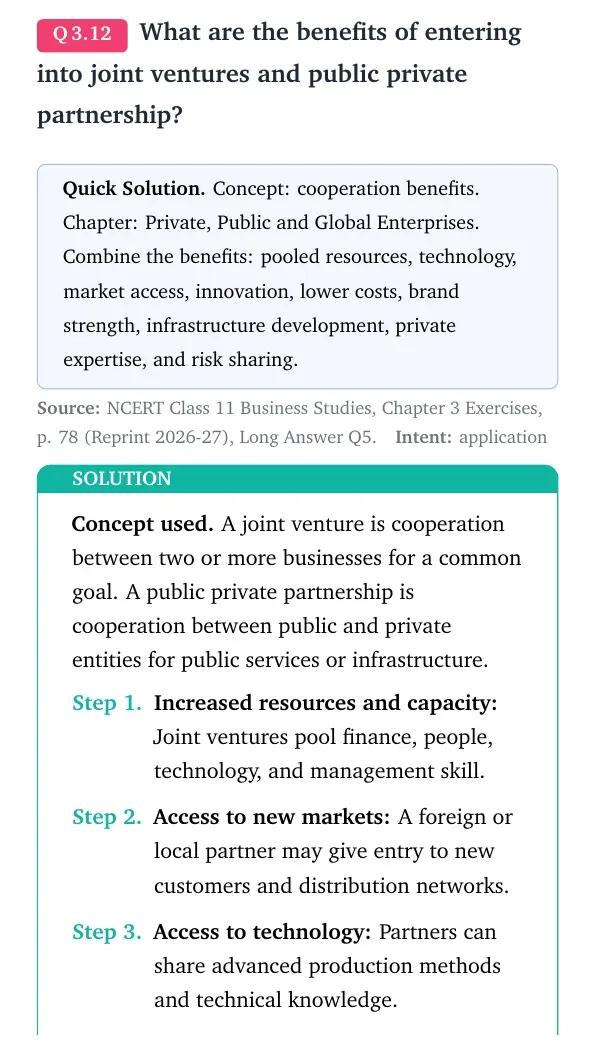
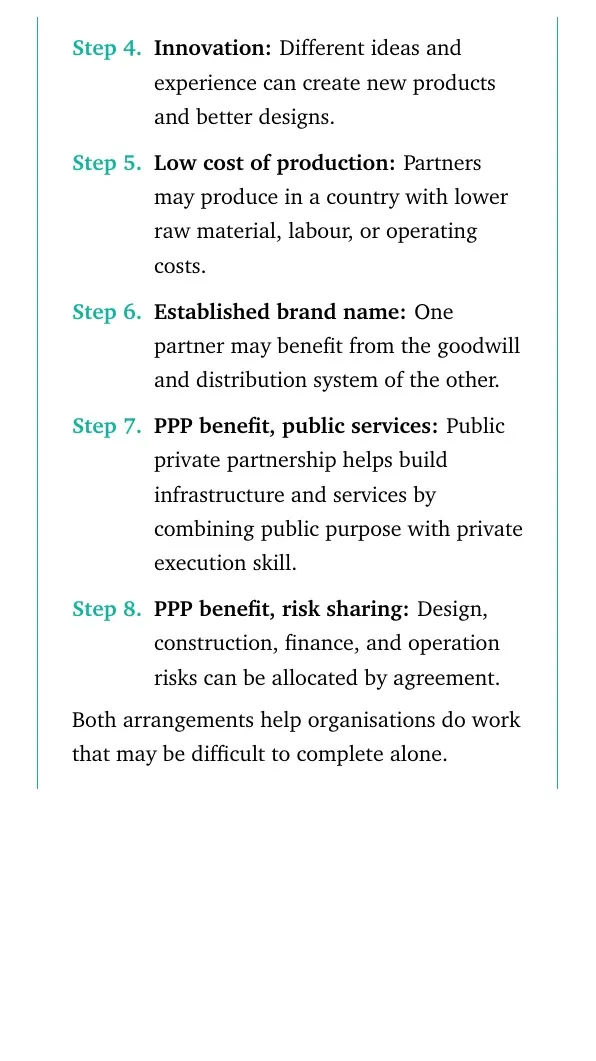
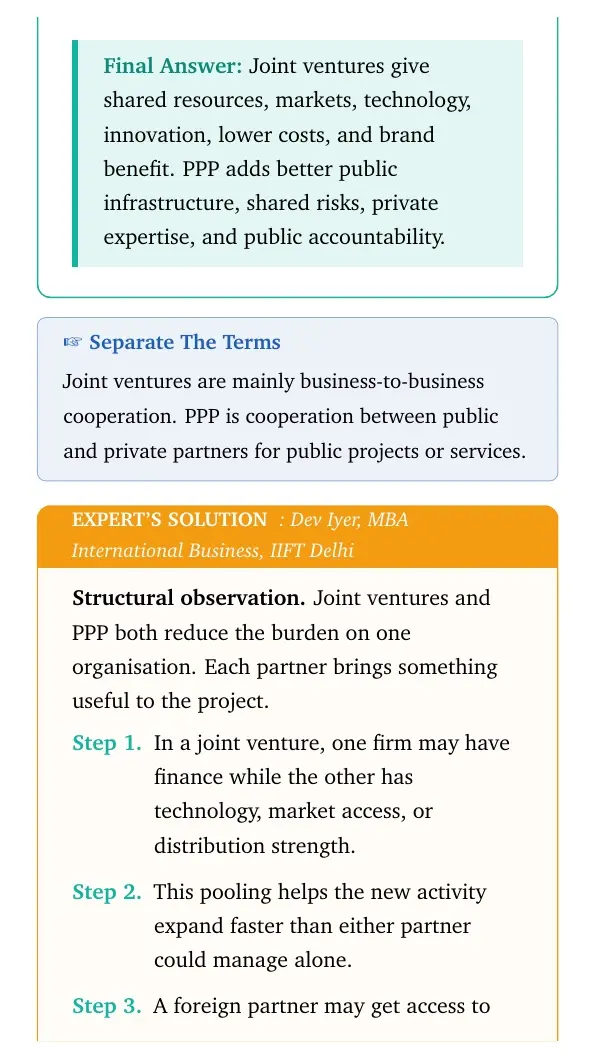
Ans. A joint venture is usually cooperation between businesses for a common goal. PPP is cooperation between public and private partners for infrastructure or public services.



Comments