




The NCERT Class 11 Economics Chapter 7 Index Numbers Book PDF gives students the official Statistics for Economics chapter for the 2026-27 syllabus. Use it to study price index, quantity index, value index, cost of living index, CPI, WPI, IIP and the limits of index numbers.
- Book section: official NCERT chapter text, examples, formulas and exercise questions.
- Best use: read the PDF before practising price relatives and weighted index numericals.
- Revision cue: keep the base year as 100 before comparing any two periods.
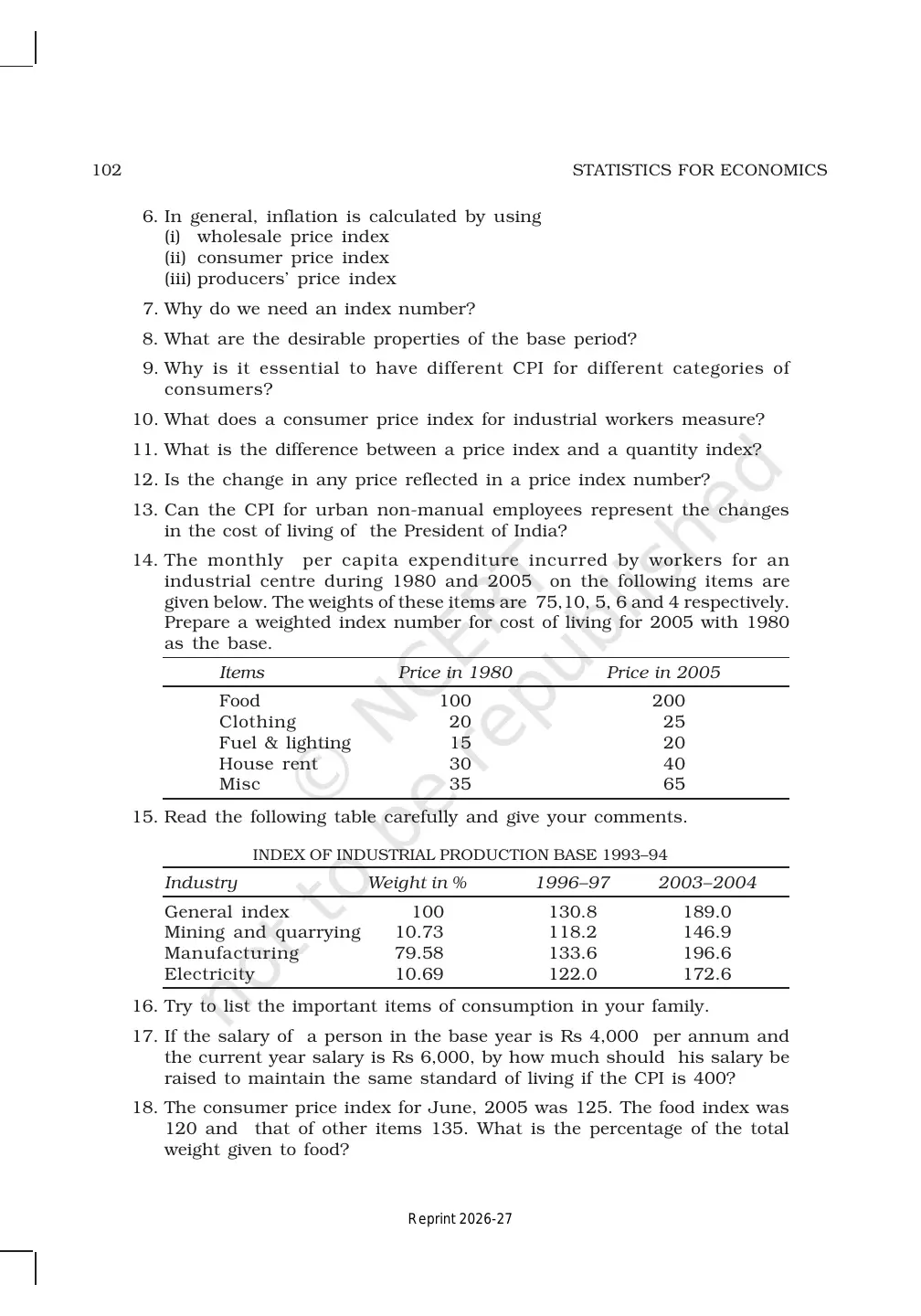
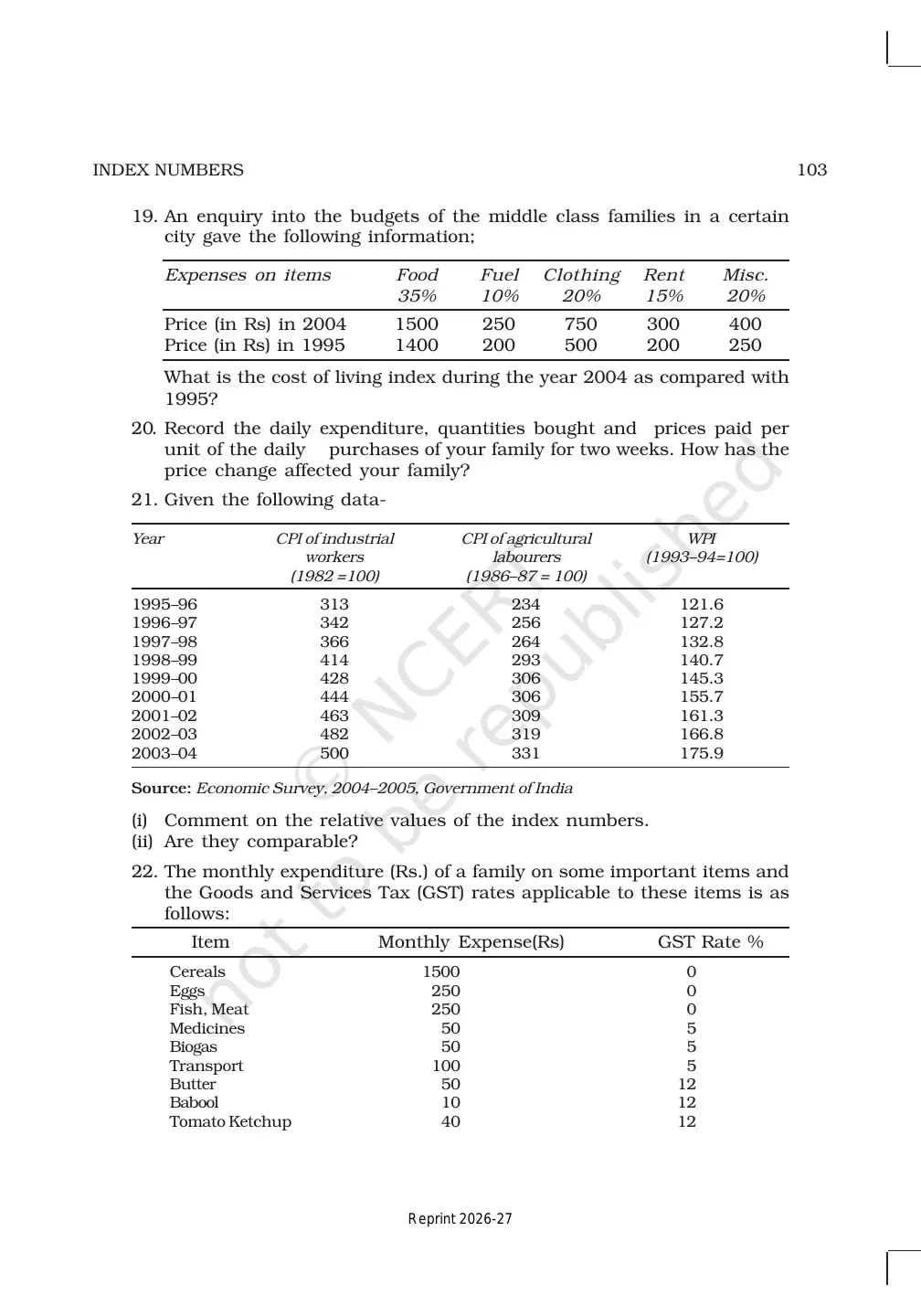
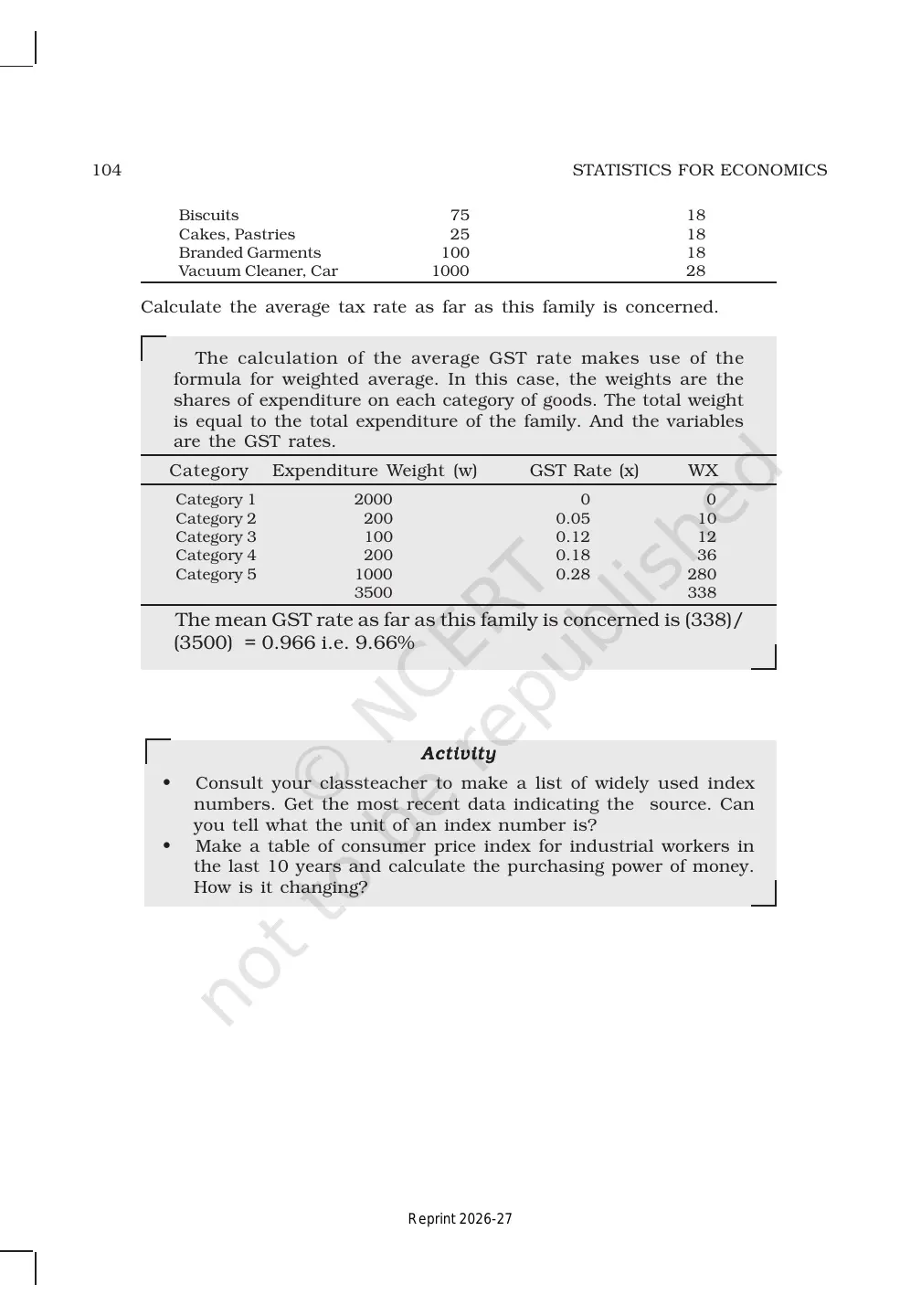
Student Feedback: In a Collegedunia check of 12,140 Class 11 Economics students, most mistakes in this chapter came from mixing base-year and current-year prices, or using an unweighted index when the question gives weights.
Index Numbers Class 11 Economics NCERT Book PDF: What It Covers
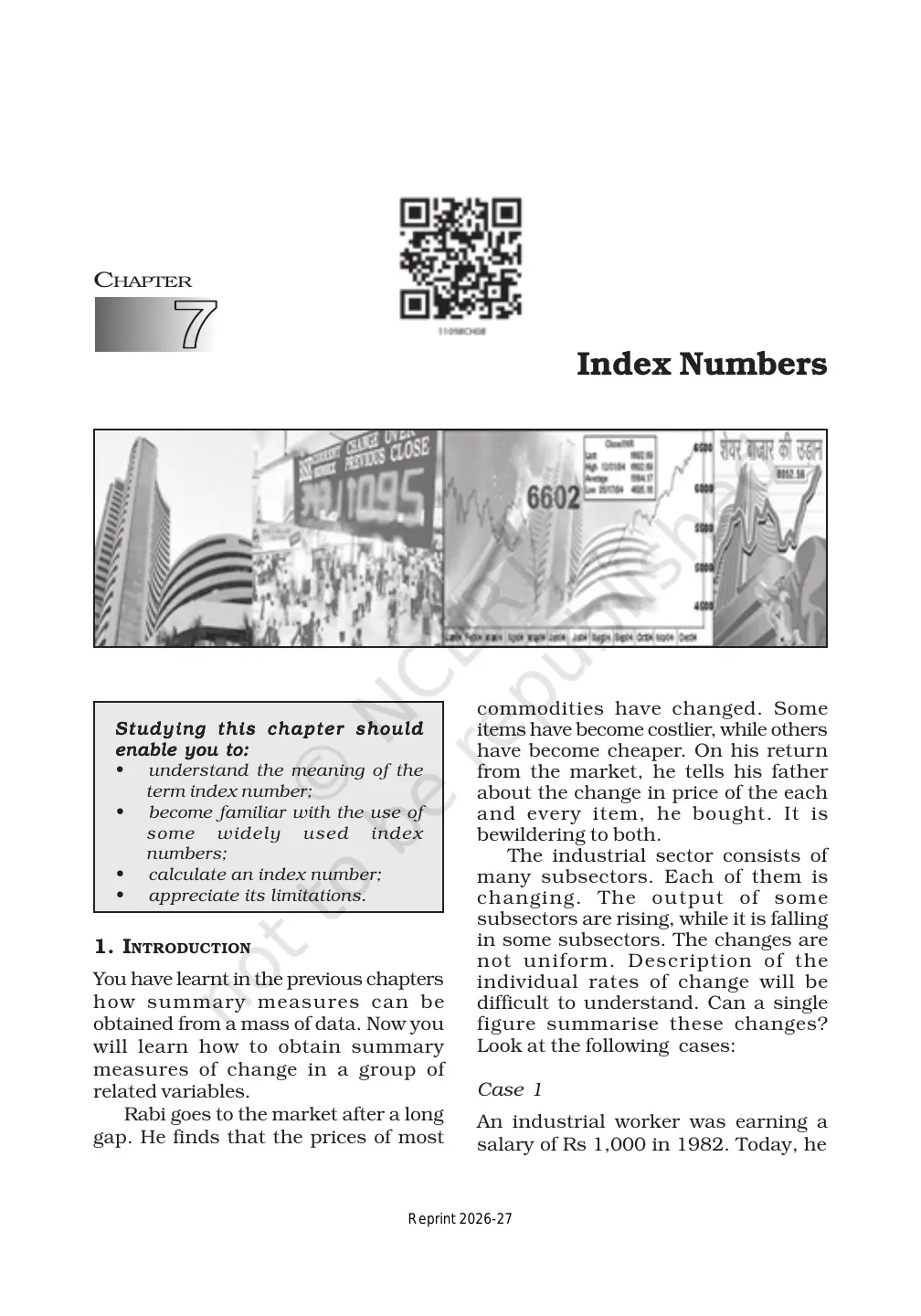
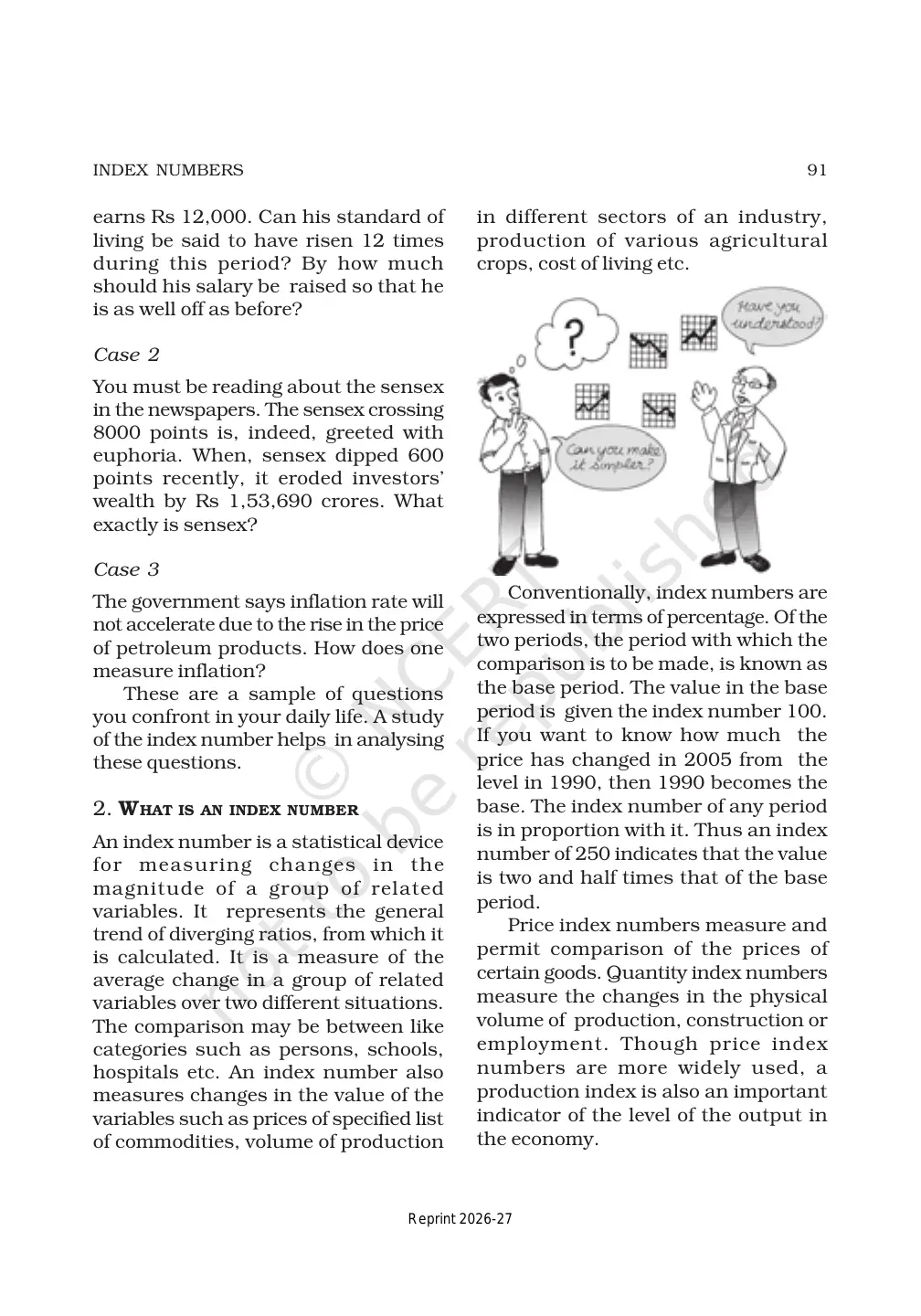
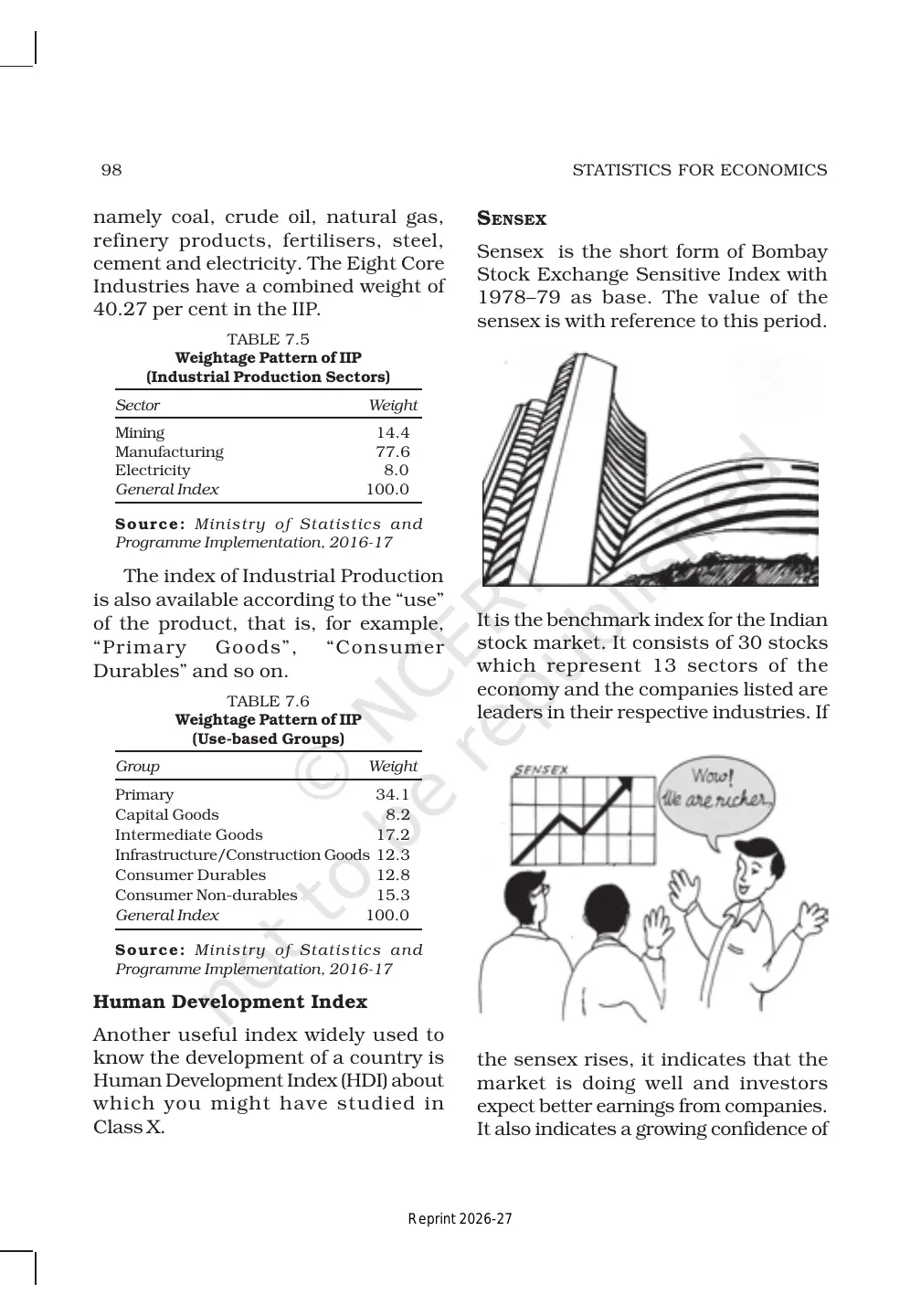
The chapter explains how one number can show change in a group of related variables. NCERT starts with price changes in daily life, then moves to index numbers used in industry, production, inflation and cost of living.
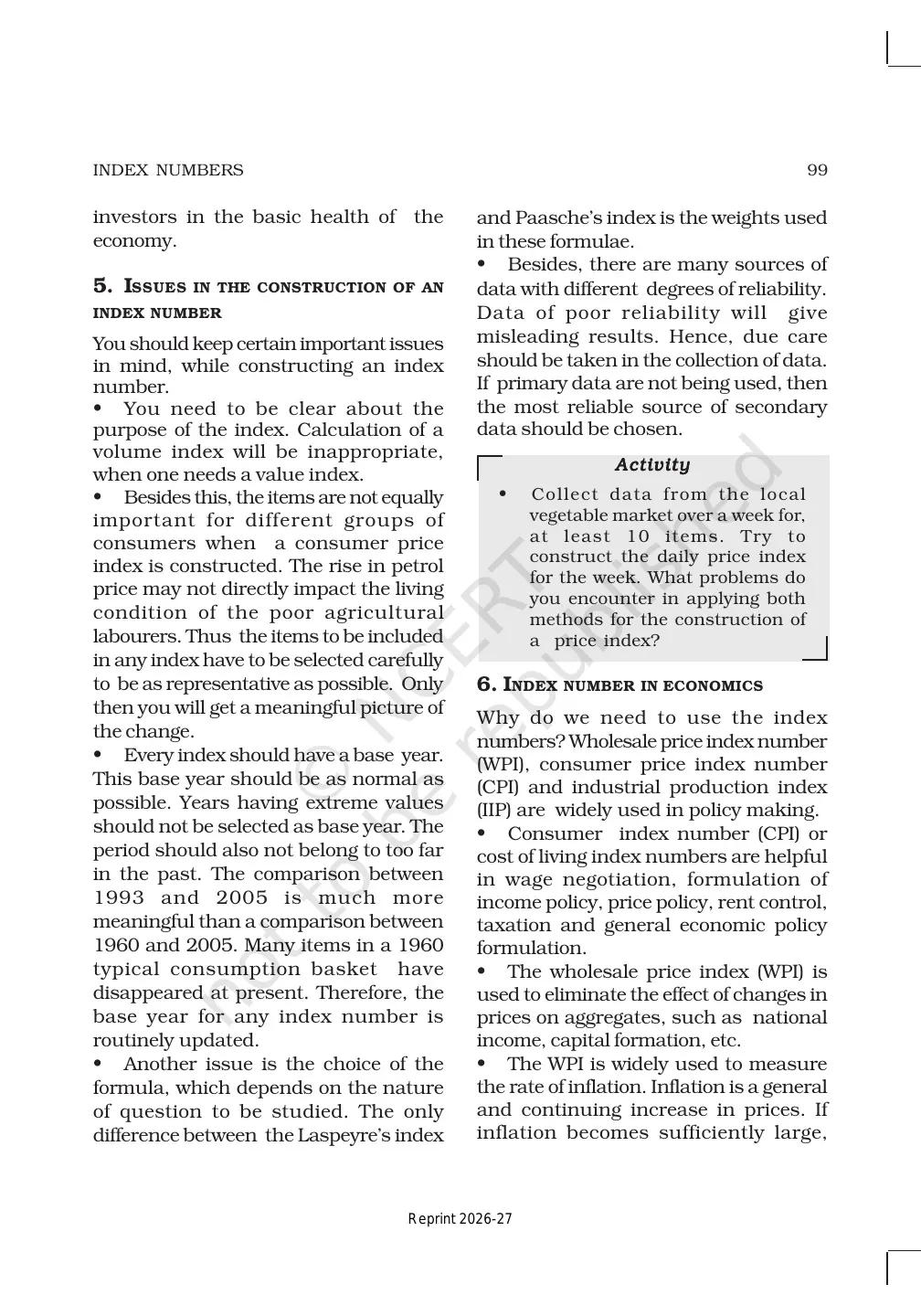
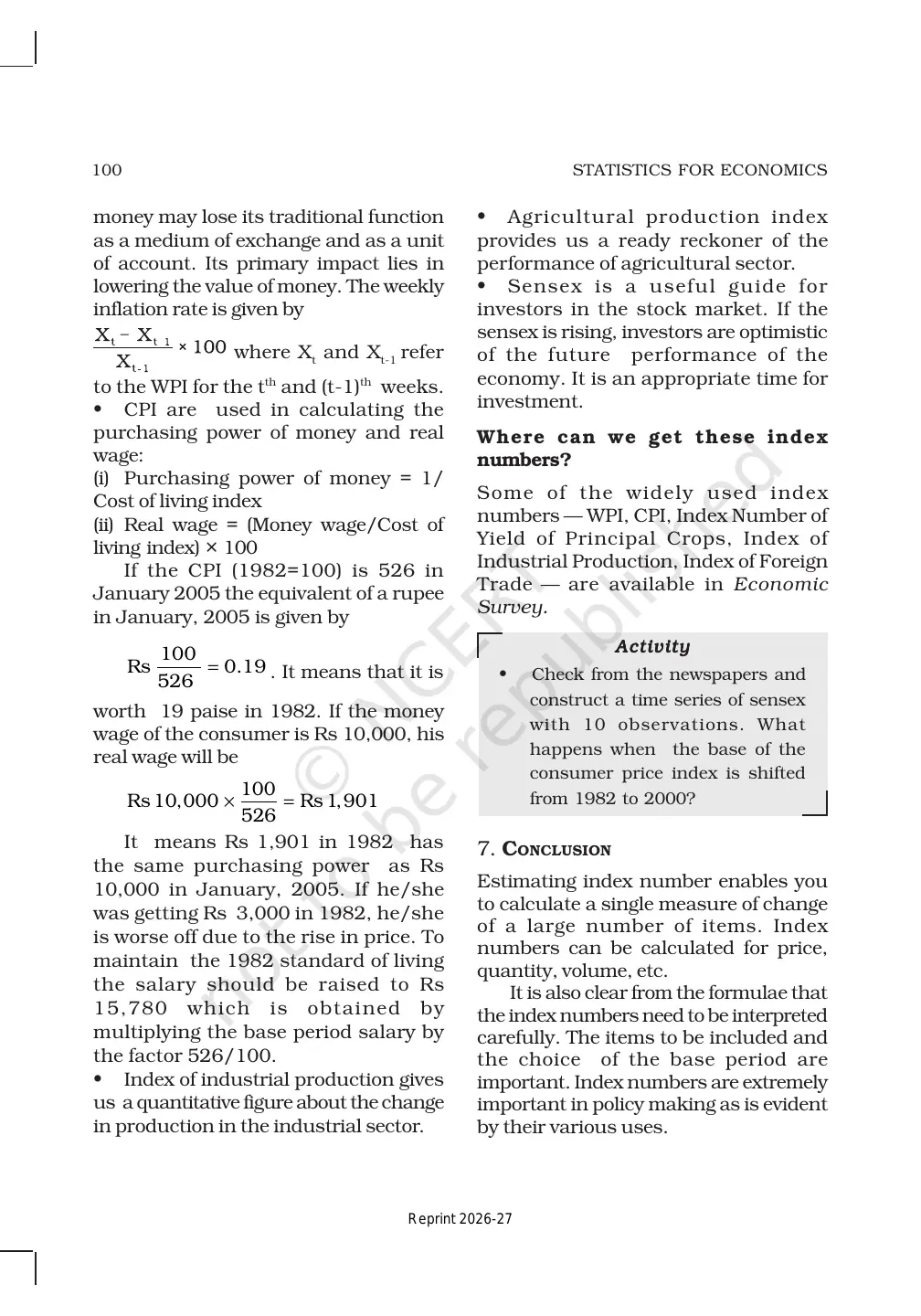
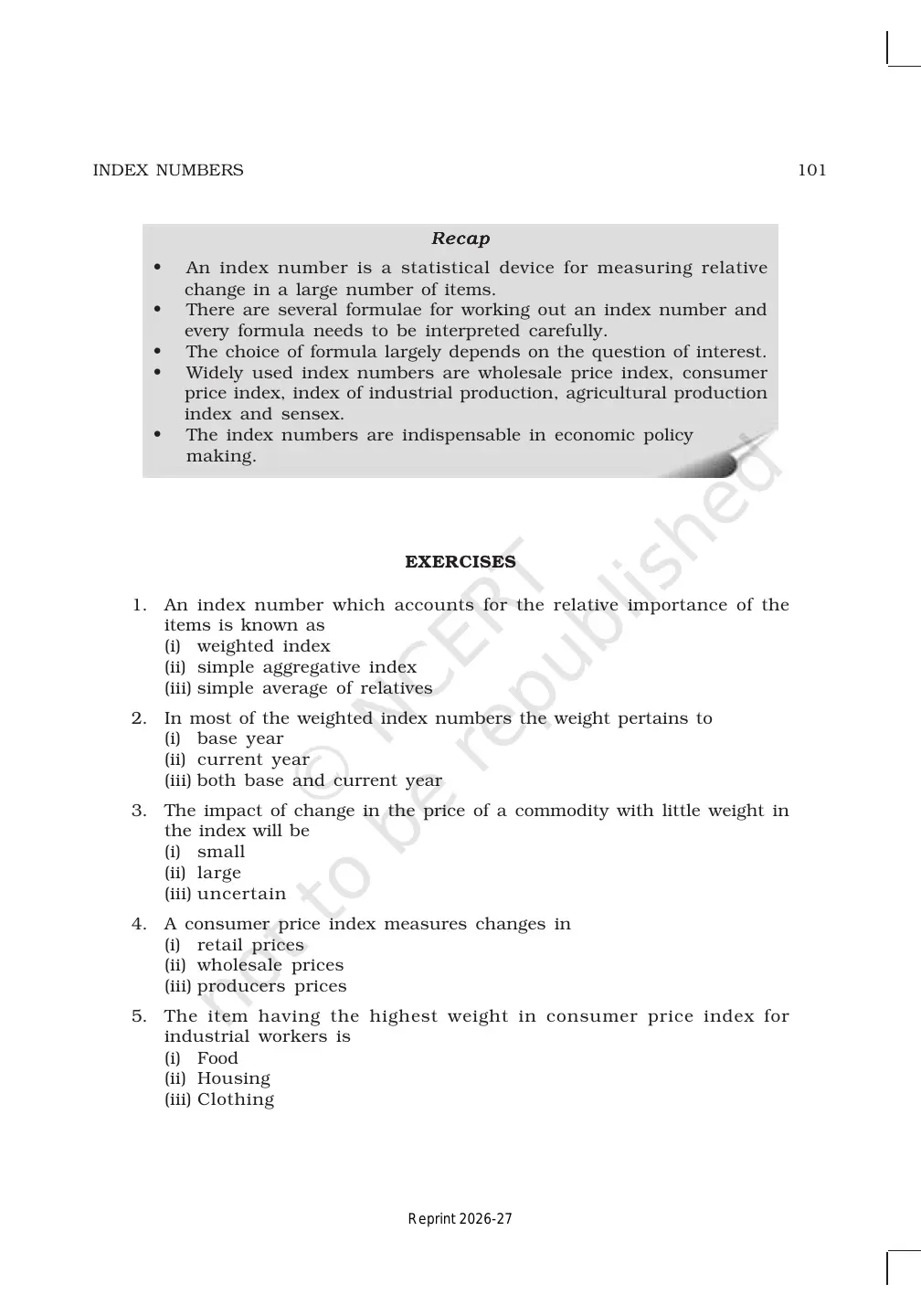
The PDF is the official source text for Chapter 7. It gives the theory, formulas, worked examples and exercise questions in the same order as the NCERT book.
| NCERT area | What students should notice | Answer cue |
|---|---|---|
| Meaning of index numbers | Shows relative change with the base year as 100. | Name the base period and current period clearly. |
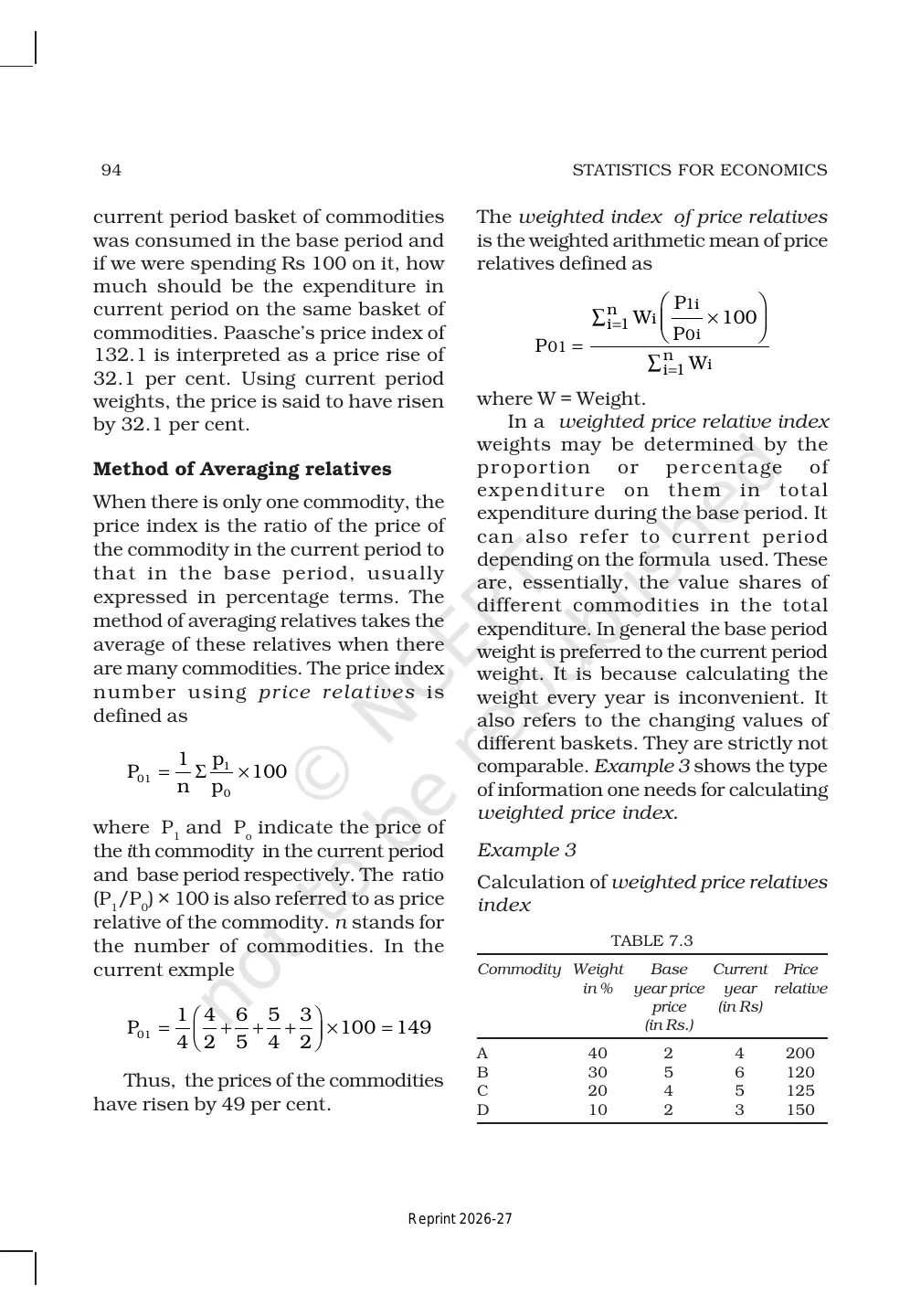
| Price index | Compares prices across two periods. | Use price relatives or aggregate prices correctly. |
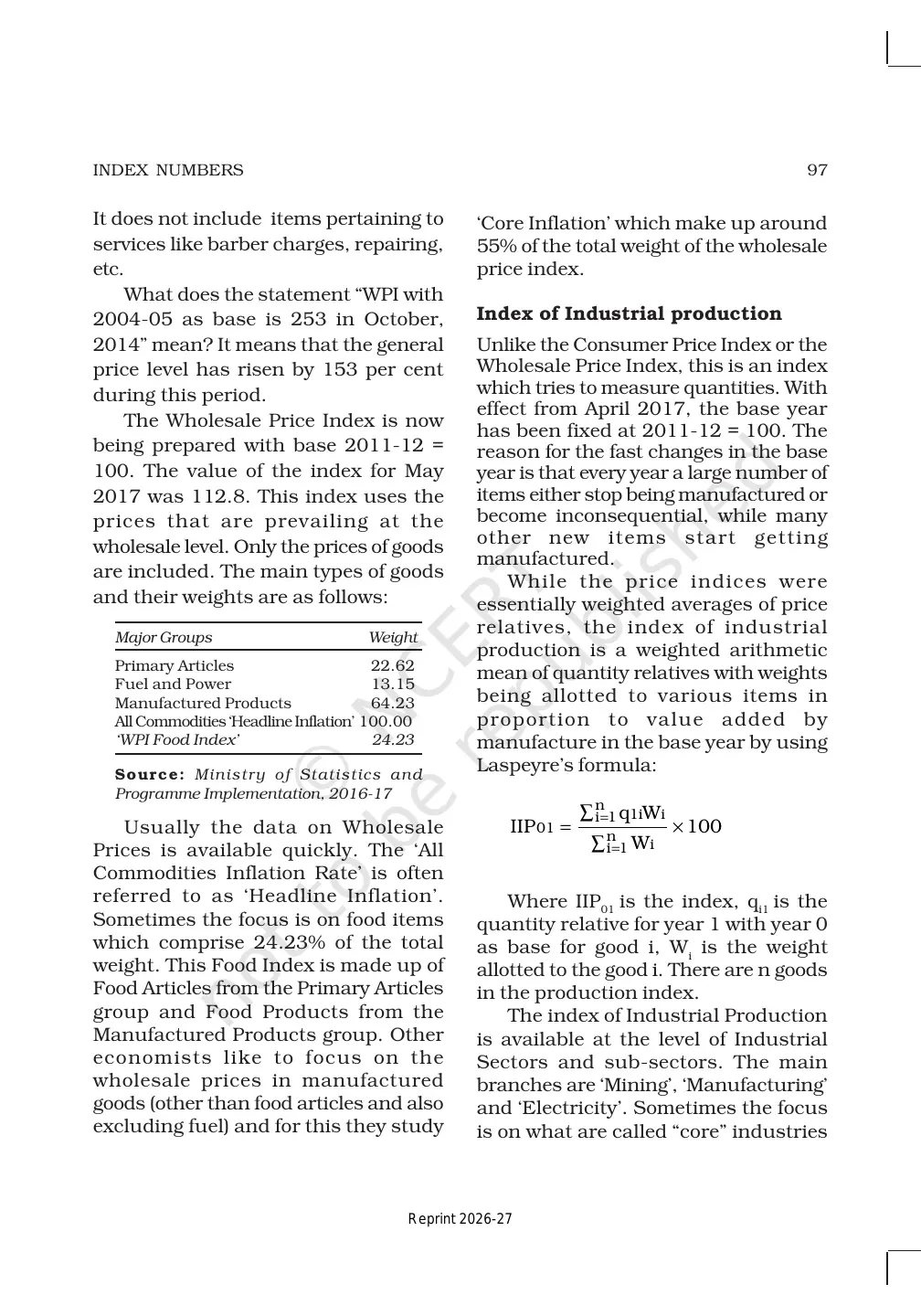
| Quantity index | Compares physical quantities across two periods. | Do not use price data in a quantity-index question. |
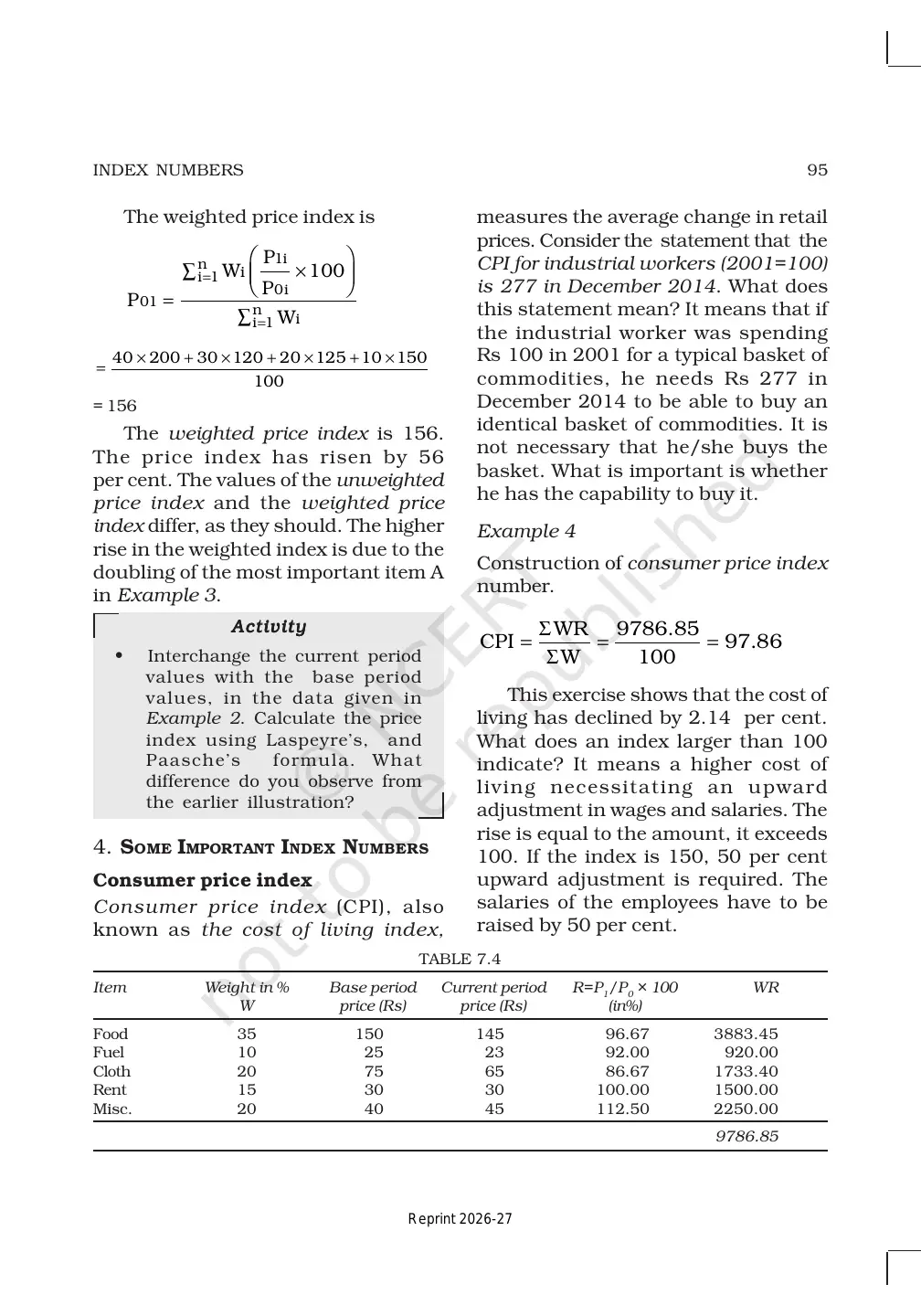
| Cost of living index | Tracks change in the cost of a fixed basket. | Use weights when the question gives item importance. |
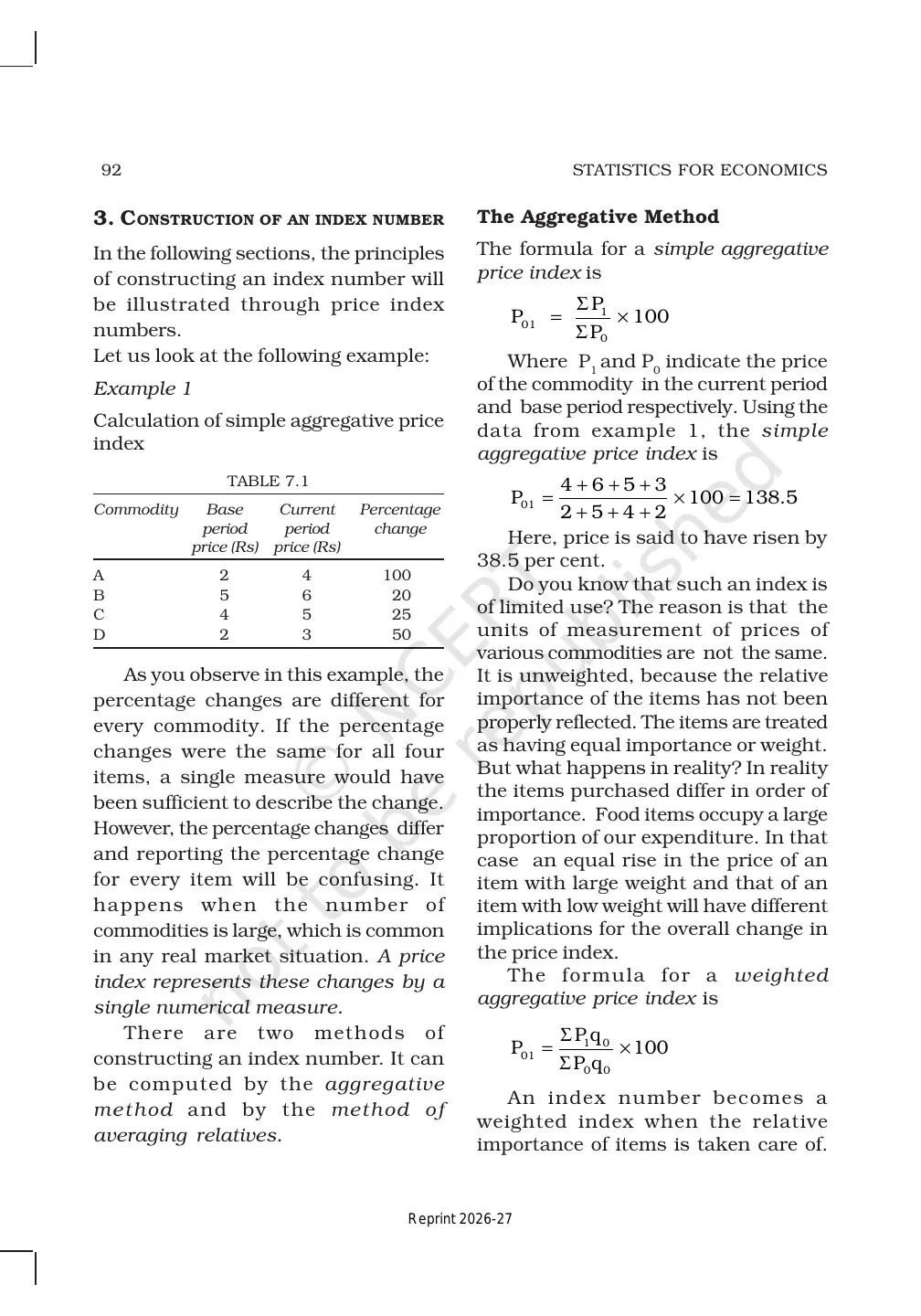
Simple Aggregative Price Index Formula
The simple aggregative price index compares the total current-year prices with the total base-year prices. The base year is treated as 100, so a value of 125 means prices are 25 percent higher than the base year.
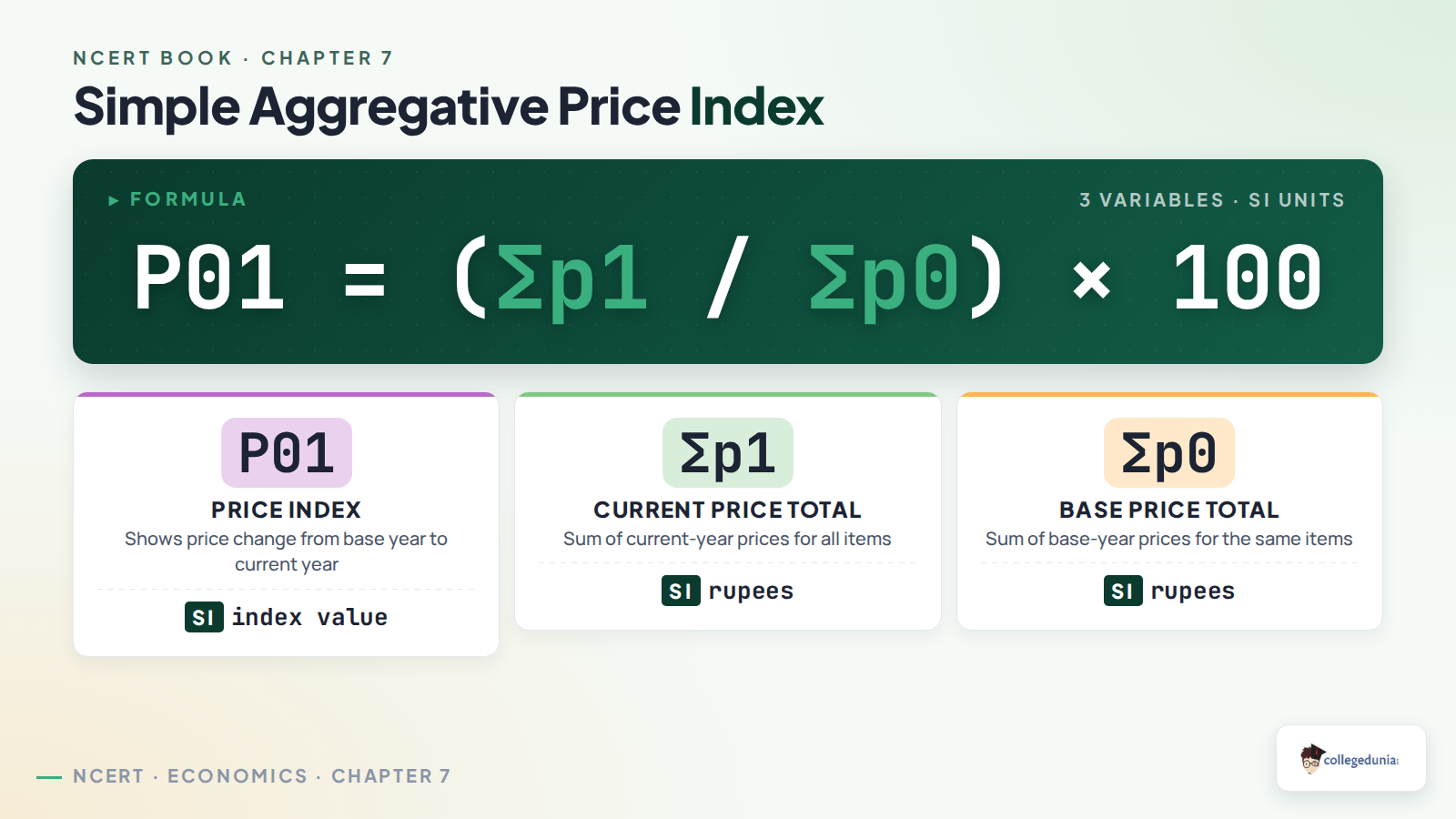
- p0: price of an item in the base year.
- p1: price of the same item in the current year.
- P01: price index for the current year compared with the base year.
Always compare the same basket of items in both years. Otherwise the index will not show a fair price change.
Watch Index Numbers for Class 11 Economics
Source: Magnet Brains on YouTube
Price Index and Quantity Index: What Changes?
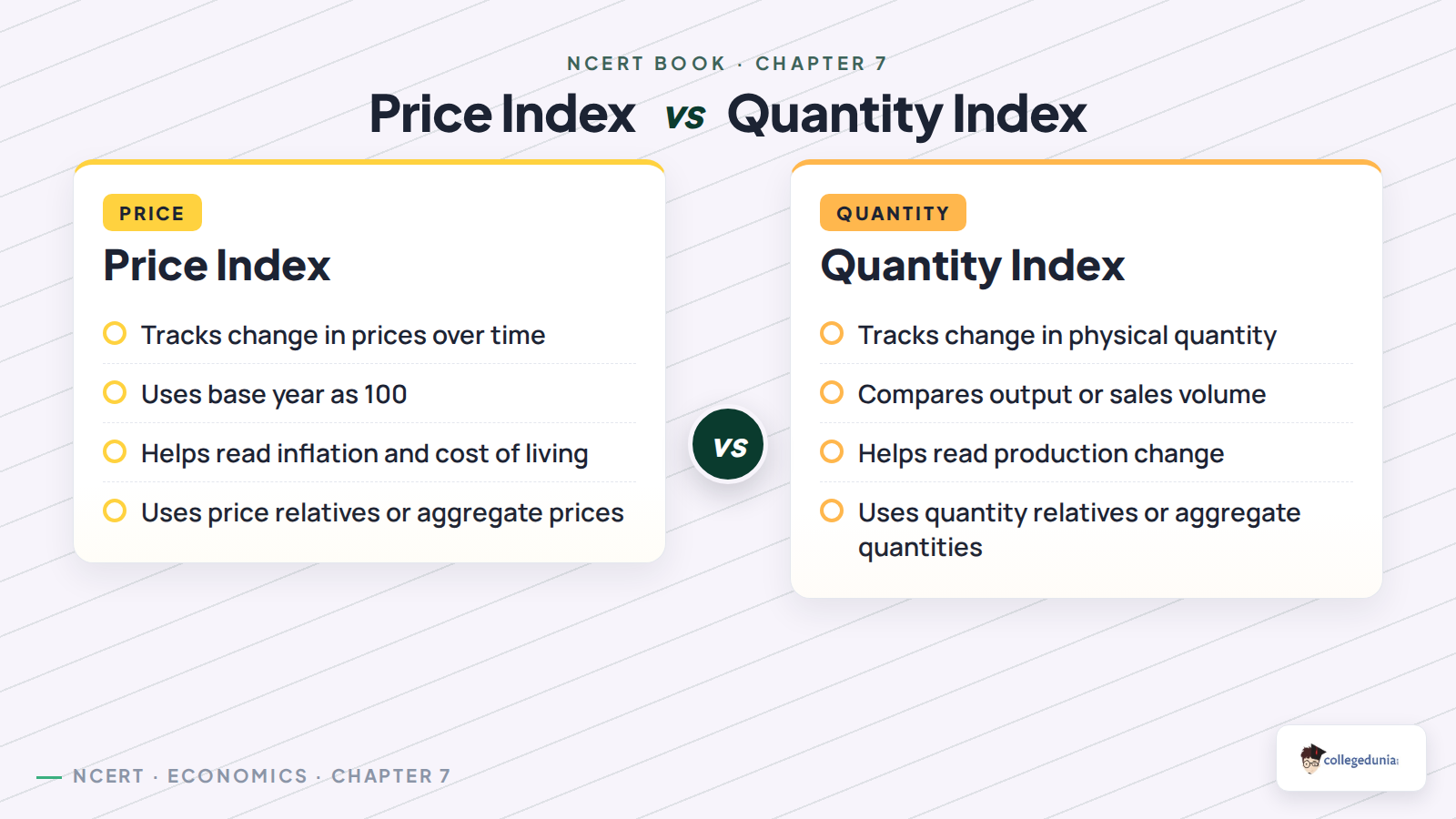
NCERT separates price and quantity because each index answers a different question. A price index measures price movement. A quantity index measures change in physical output, sales or production.
| Index type | What it measures | Common use |
|---|---|---|
| Price index | Change in prices over time. | Inflation and cost of living checks. |
| Quantity index | Change in physical quantity. | Production, sales or output comparison. |
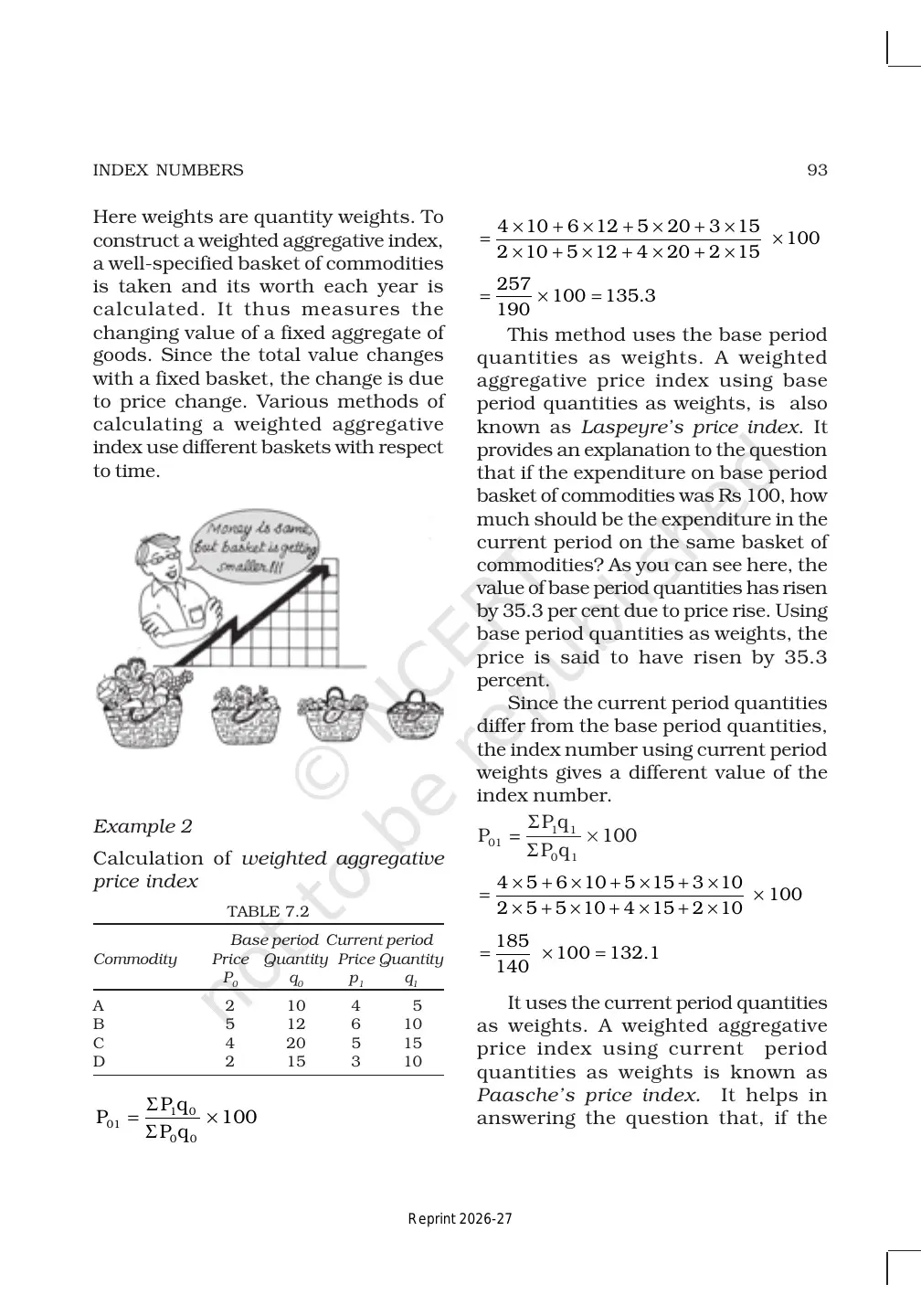
| Value index | Change in total value. | Price multiplied by quantity. |
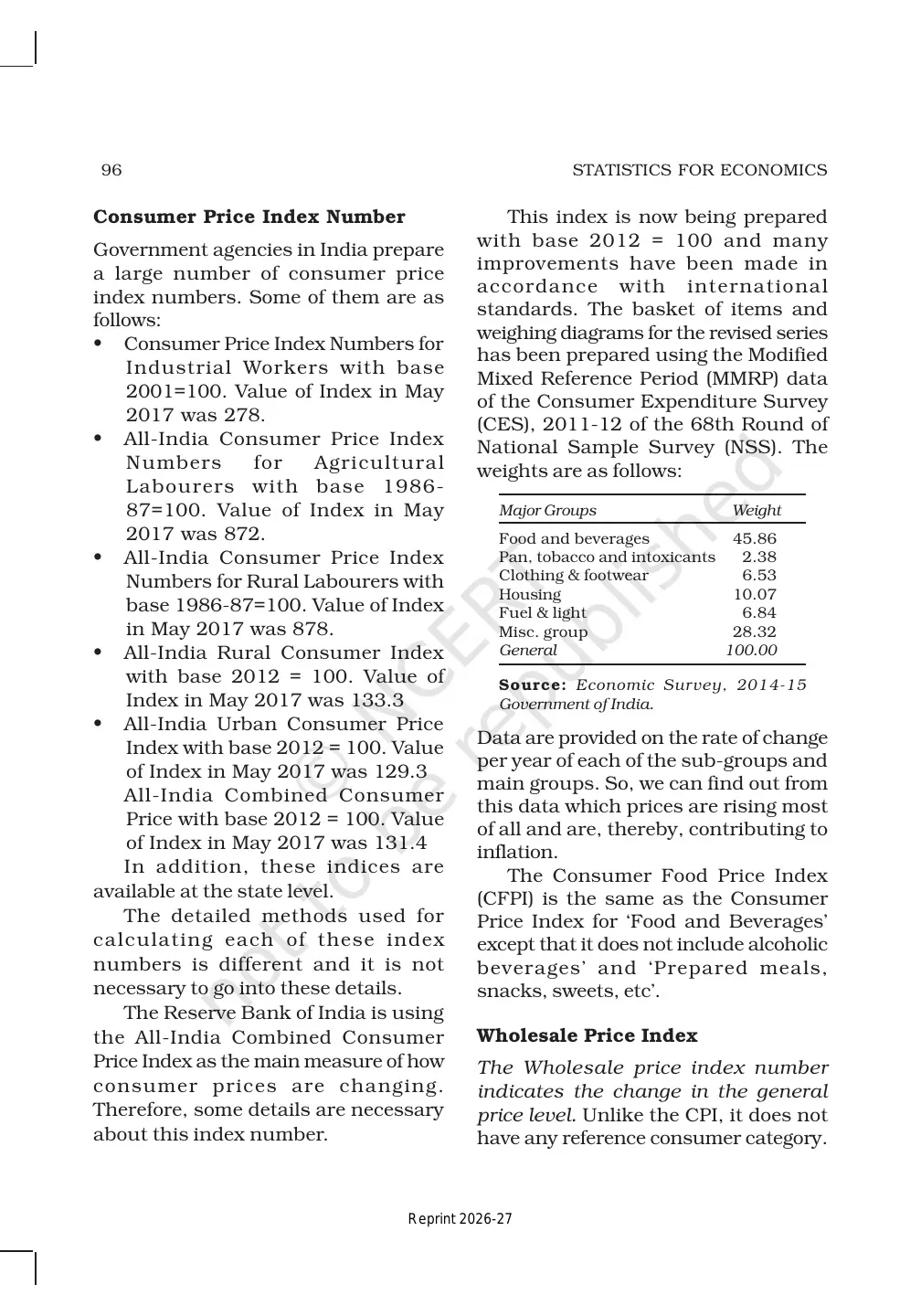
| Consumer price index | Change in prices paid by consumers. | Cost of living and wage adjustment. |
Read the word after "index" before choosing the formula. Price, quantity and value questions use different data.
How to Use the Chapter 7 NCERT Book PDF
Use the PDF in three passes. First, read the meaning and need for index numbers. Second, revise the formulas with one solved example. Third, solve the exercise after marking the base year, current year and weights.
- For formula questions: write whether the index is price, quantity or value.
- For CPI questions: check the weights before multiplying price relatives.
- For short answers: explain why index numbers are averages, not exact measurements.
- For revision: compare the official NCERT book PDF with notes after solving one example of each index.
Related Class 11 Economics Resources for Index Numbers
Also Check: use the official book PDF with notes and practice resources for the same chapter.
| Resource | Best use | Link |
|---|---|---|
| NCERT Notes | Revise formulas, definitions and limitations quickly. | Index Numbers Notes |
| NCERT Solutions | Practise textbook questions after reading the PDF. | Index Numbers NCERT Solutions |
| Handwritten Notes | Use for quick formula revision before class tests. | Index Numbers Handwritten Notes |
Class 11 Economics NCERT Book PDFs for All Chapters
The table below keeps the Class 11 Economics NCERT Book PDF chapters in one place. Chapters 1 to 8 come from Statistics for Economics, and later chapters come from Indian Economic Development.
| Chapter | Title | NCERT Book PDF |
|---|---|---|
| Chapter 1 | Introduction | NCERT Book PDF |
| Chapter 2 | Collection of Data | NCERT Book PDF |
| Chapter 3 | Organisation of Data | NCERT Book PDF |
| Chapter 4 | Presentation of Data | NCERT Book PDF |
| Chapter 5 | Measures of Central Tendency | NCERT Book PDF |
| Chapter 6 | Correlation | NCERT Book PDF |
| Chapter 7 | Index Numbers | Current NCERT Book PDF |
| Chapter 8 | Use of Statistical Tools | NCERT Book PDF |
Index Numbers Class 11 Economics NCERT Book PDF FAQs
Ques. What does the Class 11 Economics Chapter 7 Index Numbers NCERT Book PDF include?
Ans. It includes the official NCERT chapter text, formulas, examples and exercise questions from Statistics for Economics.
Ques. Which index numbers are covered in Chapter 7?
Ans. The chapter covers price index, quantity index, value index, consumer price index, wholesale price index and index of industrial production.
Ques. Is this NCERT Book PDF useful for the 2026-27 syllabus?
Ans. Yes. The PDF is from the official NCERT book for the 2026-27 session and should be used as the source chapter before notes or solutions.
Ques. What should students revise first from Index Numbers?
Ans. Students should revise base year, current year, price relatives, weighted average, CPI, WPI, IIP and the limitations of index numbers.



Comments