




Class 11 Economics Chapter 7 Index Numbers notes help students revise base period, price relatives, CPI, WPI and IIP according to the 2026-27 NCERT syllabus. The PDF keeps formulas, tables and interpretation rules together so students can revise the chapter faster.
- Download the Index Numbers notes PDF for offline revision.
- Revise base 100, weighted indices, CPI, WPI, IIP and real wage.
- Use the formula tables before solving NCERT exercise questions.





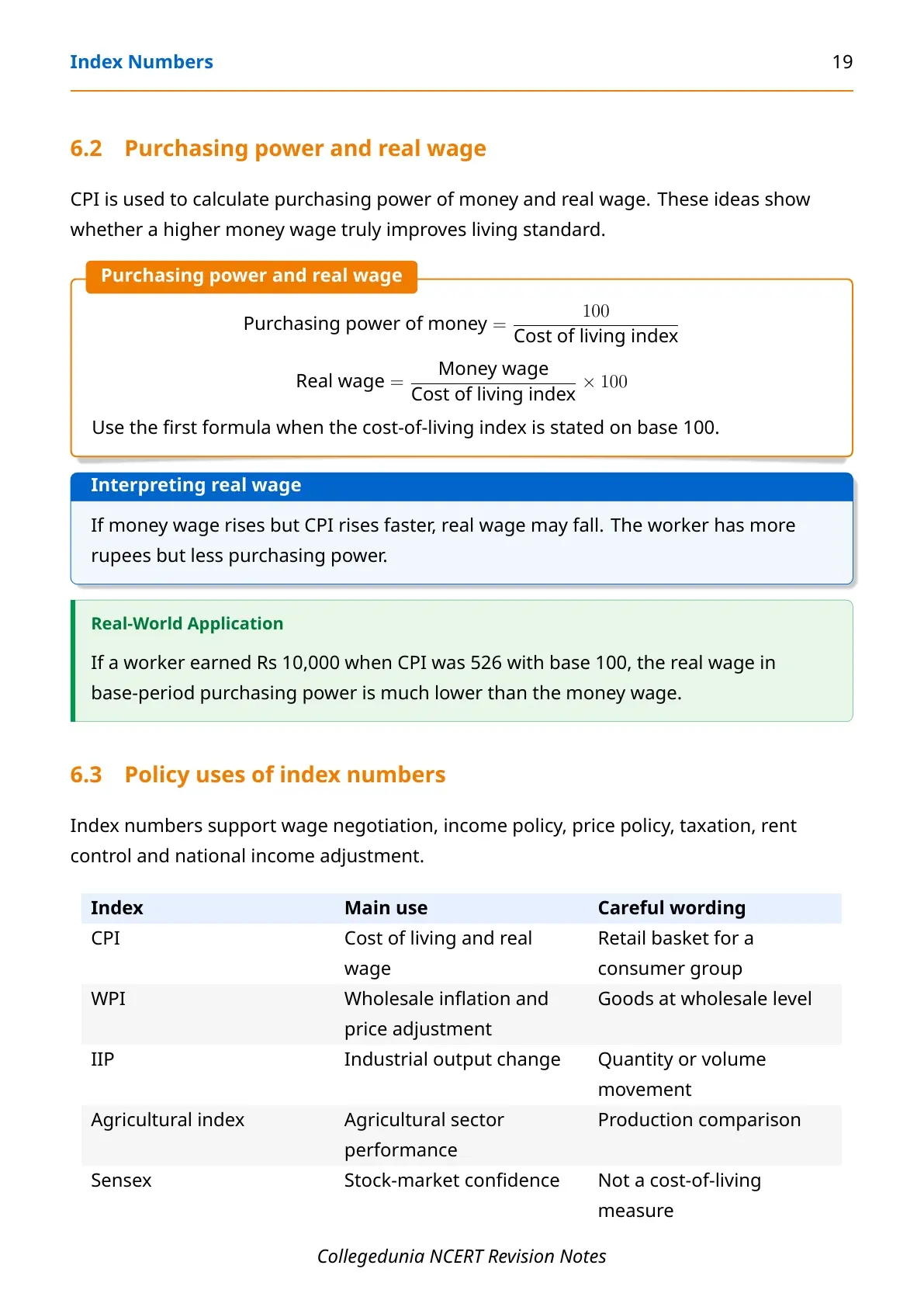
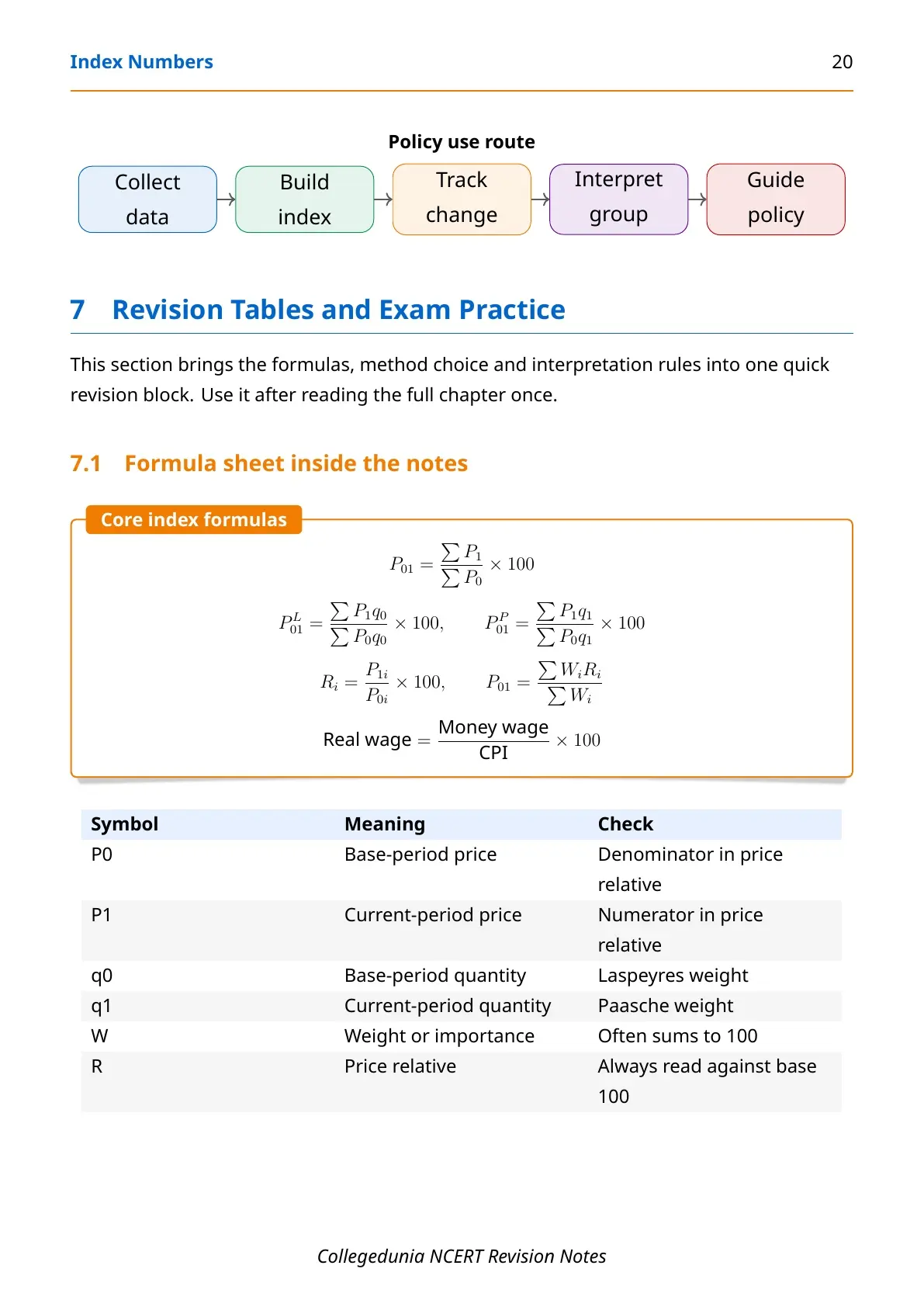


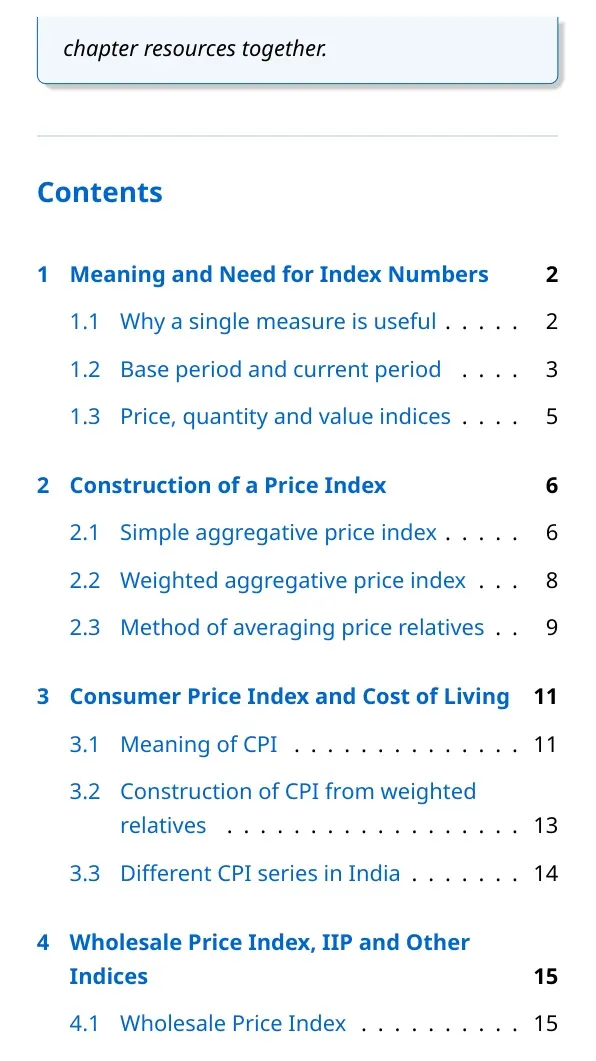


Each Index Numbers notes PDF is based on the 2026-27 NCERT chapter and checked for CPI, WPI, IIP and formula accuracy.

Student Feedback: In a Collegedunia poll of 12,740 Class 11 Economics students conducted before the 2026 boards, 68% of students said CPI and weighted price relatives were the easiest topics to mix up. These notes place the formulas beside short examples and comparison tables.
Index Numbers Meaning and Base Period
Index numbers measure change in a group of related items. NCERT uses them to compare prices, quantities, production and cost of living. The base period is usually taken as 100, and every later value is read against that base.
| Term | Meaning | Quick clue |
|---|---|---|
| Base period | Reference period for comparison | Usually index 100 |
| Current period | Period being compared with the base | Shows rise or fall |
| Price index | Change in prices of selected goods | CPI and WPI |
| Quantity index | Change in physical output | IIP and production index |
Index Numbers Video for Class 11 Economics
Source: Magnet Brains on YouTube
Index Numbers CPI, WPI and IIP in One Place
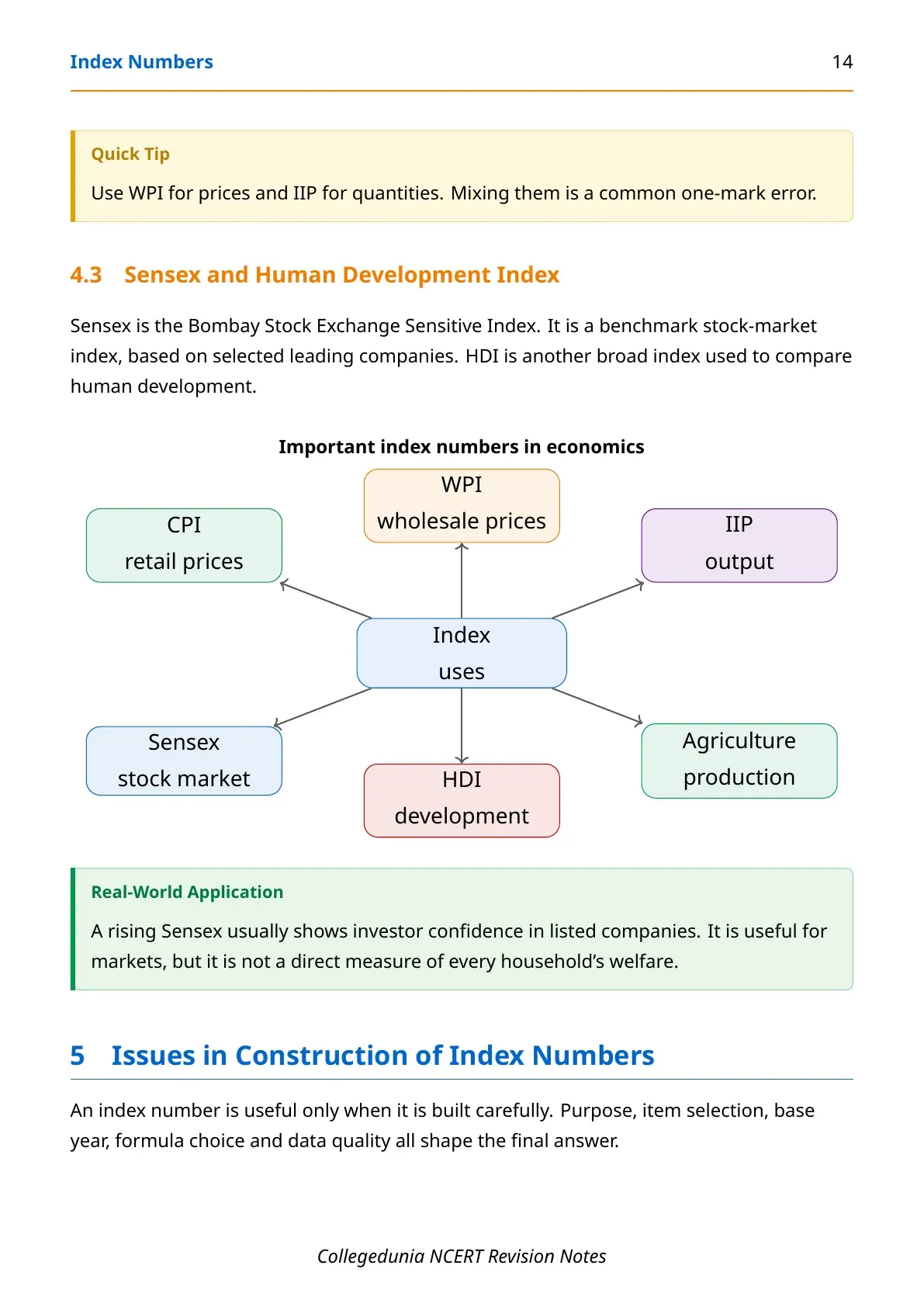
CPI, WPI and IIP answer different questions. CPI focuses on the retail basket of a consumer group. WPI tracks wholesale goods prices. IIP tracks physical output in industry. Using the wrong index gives the wrong economic meaning.
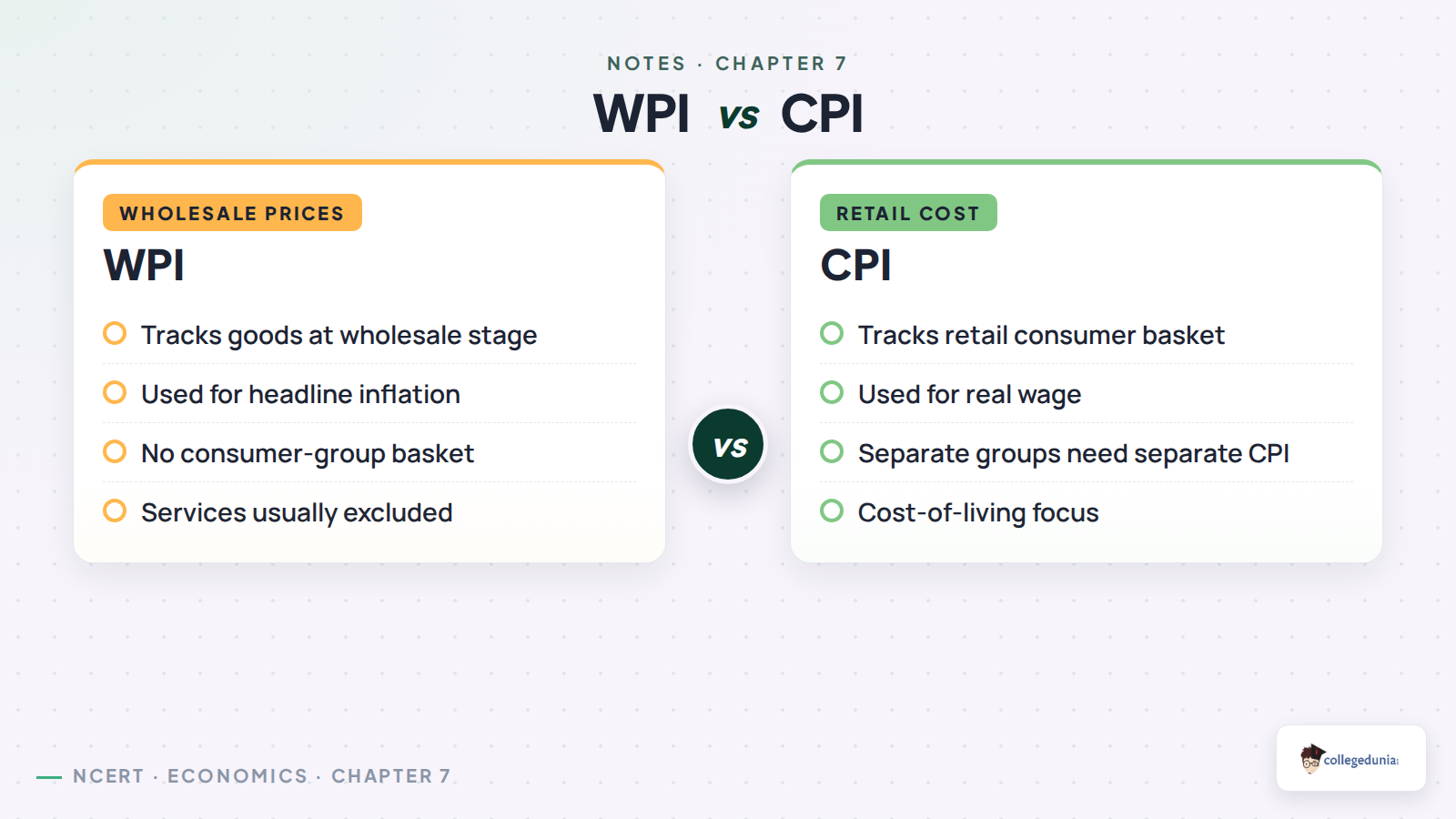
- CPI: use it for cost of living, purchasing power and real wage.
- WPI: use it for wholesale price movement and headline inflation.
- IIP: use it for industrial output in mining, manufacturing and electricity.
Index Numbers Formula List for Class 11 Economics
The chapter has a small formula set, but each formula has a different use. Learn the symbols before substituting values. Most errors happen when students mix price, quantity and weight columns.
| Formula | Use | What to remember |
|---|---|---|
| P01 = sum P1 / sum P0 x 100 | Simple aggregative price index | No weights used |
| P01 = sum P1q0 / sum P0q0 x 100 | Laspeyres index | Uses base-year quantity |
| P01 = sum P1q1 / sum P0q1 x 100 | Paasche index | Uses current-year quantity |
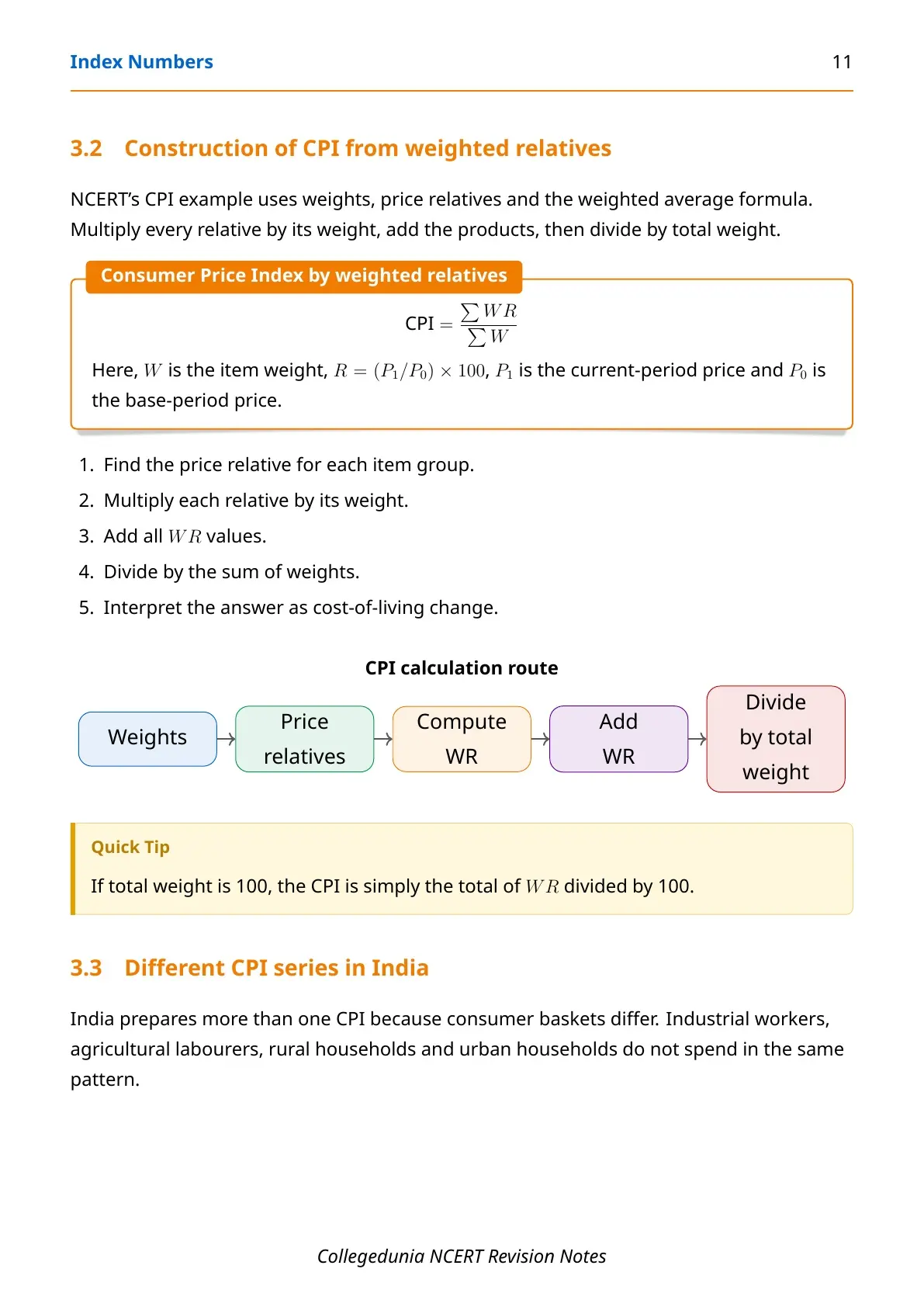
| CPI = sum WR / sum W | Consumer price index | Weighted price relatives |
CPI Construction Steps in Index Numbers
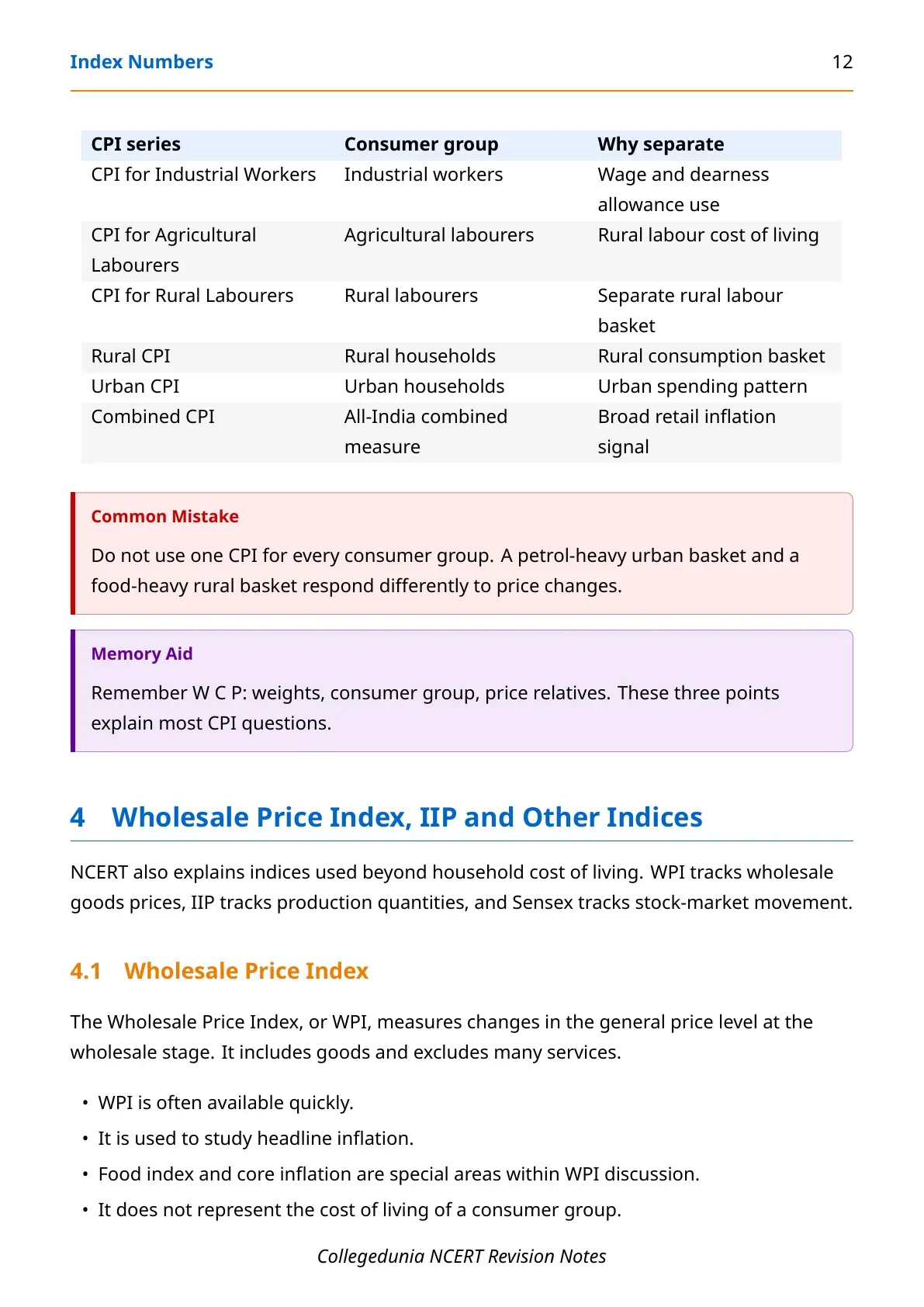
CPI is a cost-of-living index. It uses item weights because each consumer group spends differently. NCERT explains that industrial workers, agricultural labourers, rural labourers and urban households may need separate CPI series.

- Choose the consumer group and basket.
- Find price relatives using current and base prices.
- Multiply each relative by its weight.
- Add WR values and divide by the total weight.
How to Use the Index Numbers Notes PDF
The PDF above is built for quick revision before a class test or board-style practice set. Start with the base-period idea, then revise formula selection. Finish with CPI uses, WPI inflation and IIP output.
| Revision pass | What to study | Target |
|---|---|---|
| Pass 1 | Meaning, base period and types of indices | Concept clarity |
| Pass 2 | Laspeyres, Paasche and price relatives | Formula accuracy |
| Pass 3 | CPI, WPI, IIP, purchasing power and real wage | Application practice |
Common Mistakes in Index Numbers Class 11
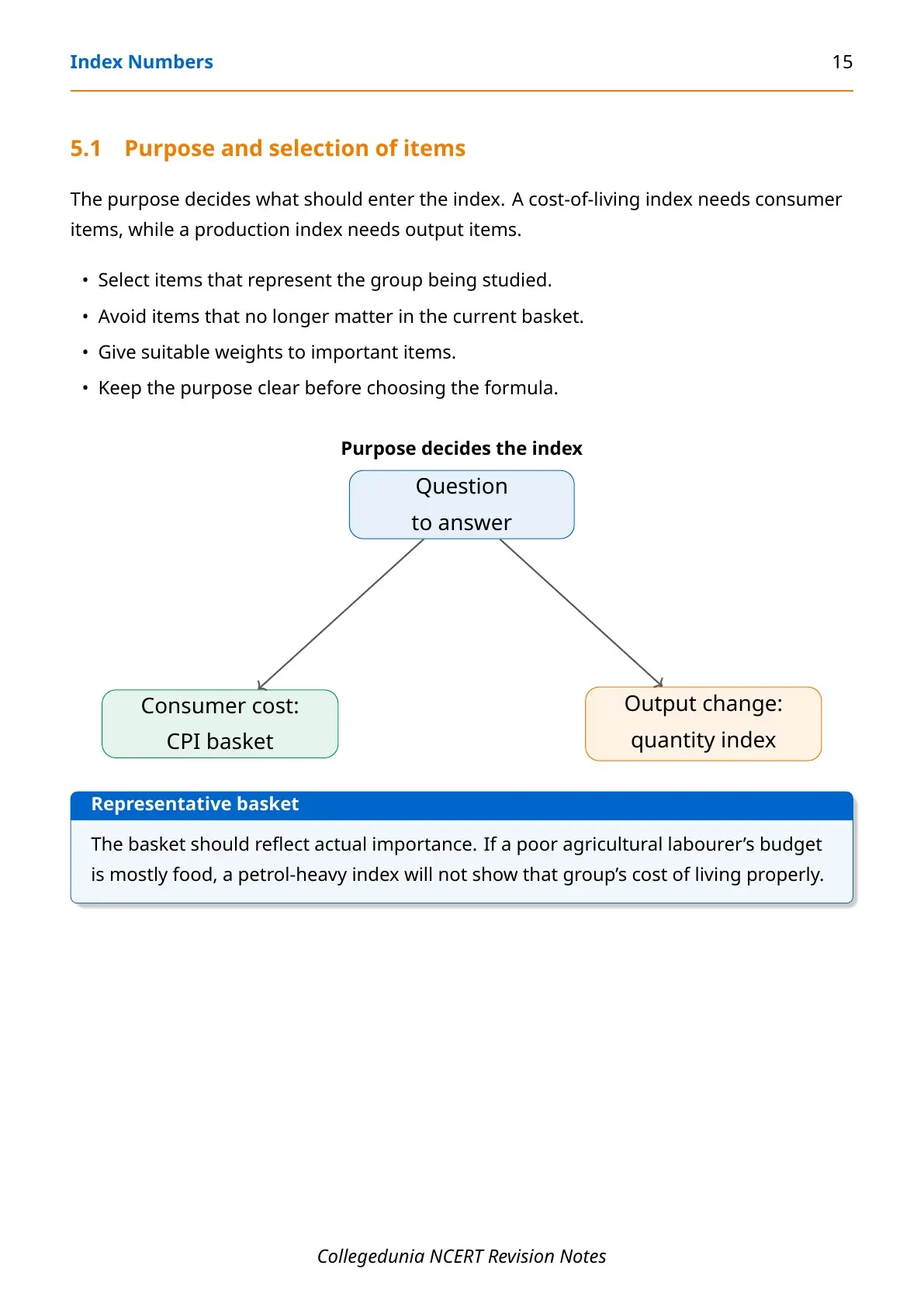
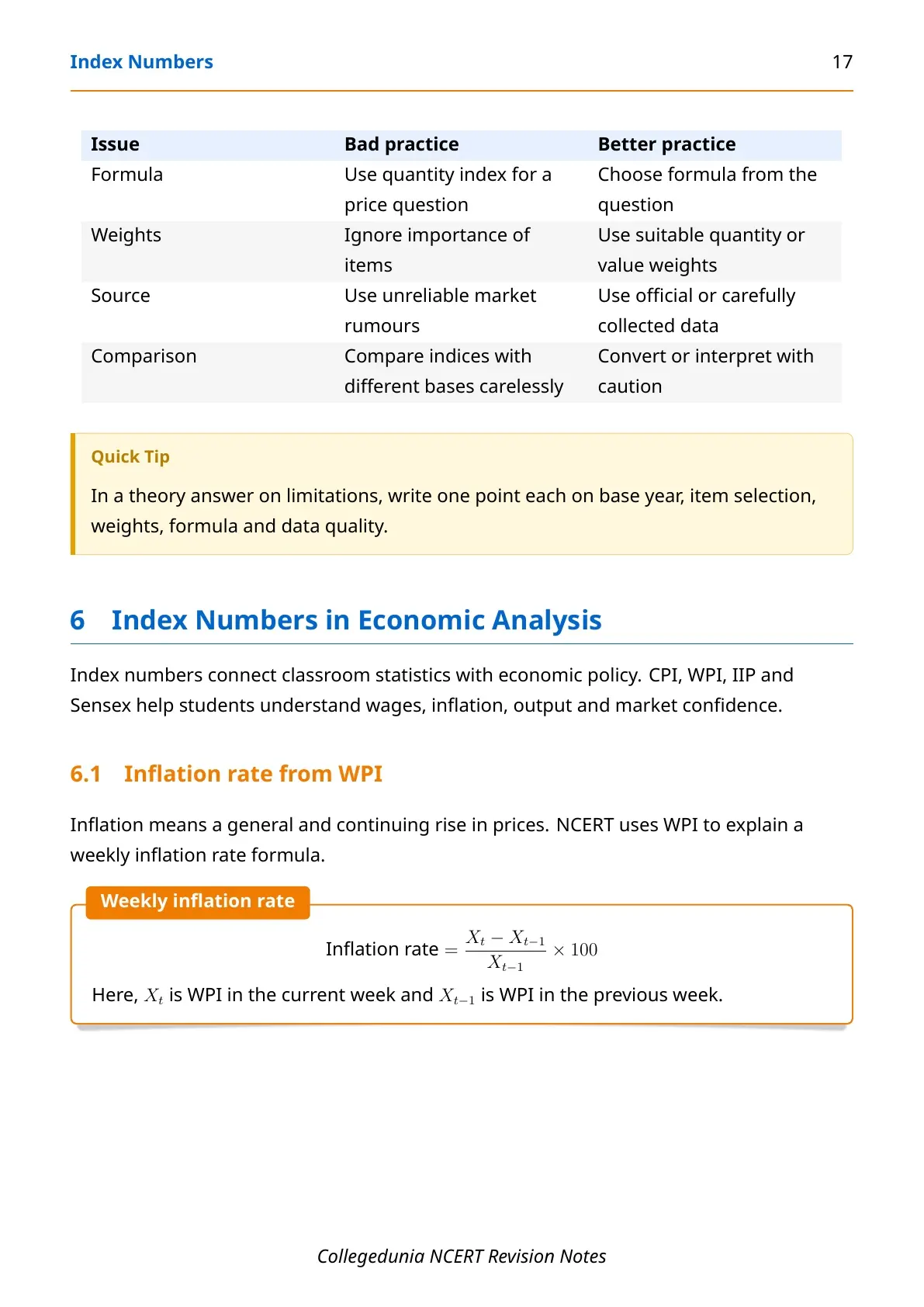
Index Numbers questions often look short, but the marks depend on choosing the right base and index type. Check the word price, quantity, value, weight and consumer group before writing a formula.
- Do not treat every index as a price index.
- Do not use Paasche when the question gives only base-year quantities.
- For purchasing power with base 100, use 100 divided by cost-of-living index.
- Do not use one CPI for every consumer group.
Related Class 11 Economics Resources for Index Numbers
Also Check: use these links when you need the same chapter in another format.
| Resource | Best used for | Link |
|---|---|---|
| NCERT Book PDF | Official chapter wording and examples | Index Numbers NCERT Book PDF |
| NCERT Solutions | Answers to textbook exercises | Index Numbers NCERT Solutions |
| Handwritten Notes | Fast visual revision before tests | Index Numbers Handwritten Notes |
Class 11 Economics Notes for All Chapters
| Chapter | Notes Link |
|---|---|
| Chapter 1 | Introduction Notes |
| Chapter 2 | Collection of Data Notes |
| Chapter 3 | Organisation of Data Notes |
| Chapter 4 | Presentation of Data Notes |
| Chapter 5 | Measures of Central Tendency Notes |
| Chapter 6 | Correlation Notes |
| Chapter 7 | You are here |
| Chapter 8 | Use of Statistical Tools Notes |
Index Numbers Class 11 Economics Notes FAQs
Ques. What is covered in Class 11 Economics Chapter 7 Index Numbers notes?
Ans. The notes cover index number meaning, base period, price relatives, weighted indices, CPI, WPI, IIP, purchasing power, real wage and common formula mistakes.
Ques. What is the base period in index numbers?
Ans. The base period is the reference period used for comparison. Its index value is usually taken as 100, and the current period is read against it.
Ques. How is CPI different from WPI?
Ans. CPI tracks the retail cost of living for a consumer group, while WPI tracks wholesale goods prices. CPI is used for real wage and purchasing power.
Ques. Which formulas are important in Index Numbers Class 11?
Ans. Students should revise simple aggregative price index, Laspeyres index, Paasche index, average of price relatives, weighted price relatives and CPI formula.



Comments