




The NCERT Class 11 Economics Chapter 8 Use of Statistical Tools Book PDF gives students the official Statistics for Economics chapter for the 2026-27 syllabus. Use it to learn how a project is planned, surveyed, tabulated and interpreted with statistical tools.
- Book section: official NCERT chapter text, project steps, examples and practice questions.
- Best use: read the PDF before preparing a survey-based Economics project.
- Revision cue: connect every tool to the problem, target group and data source.

Student Feedback: In a Collegedunia check of 12,360 Class 11 Economics students, most students said this chapter felt easier after they wrote the project problem before choosing the tool.
Use of Statistical Tools Class 11 Economics NCERT Book PDF: What It Covers
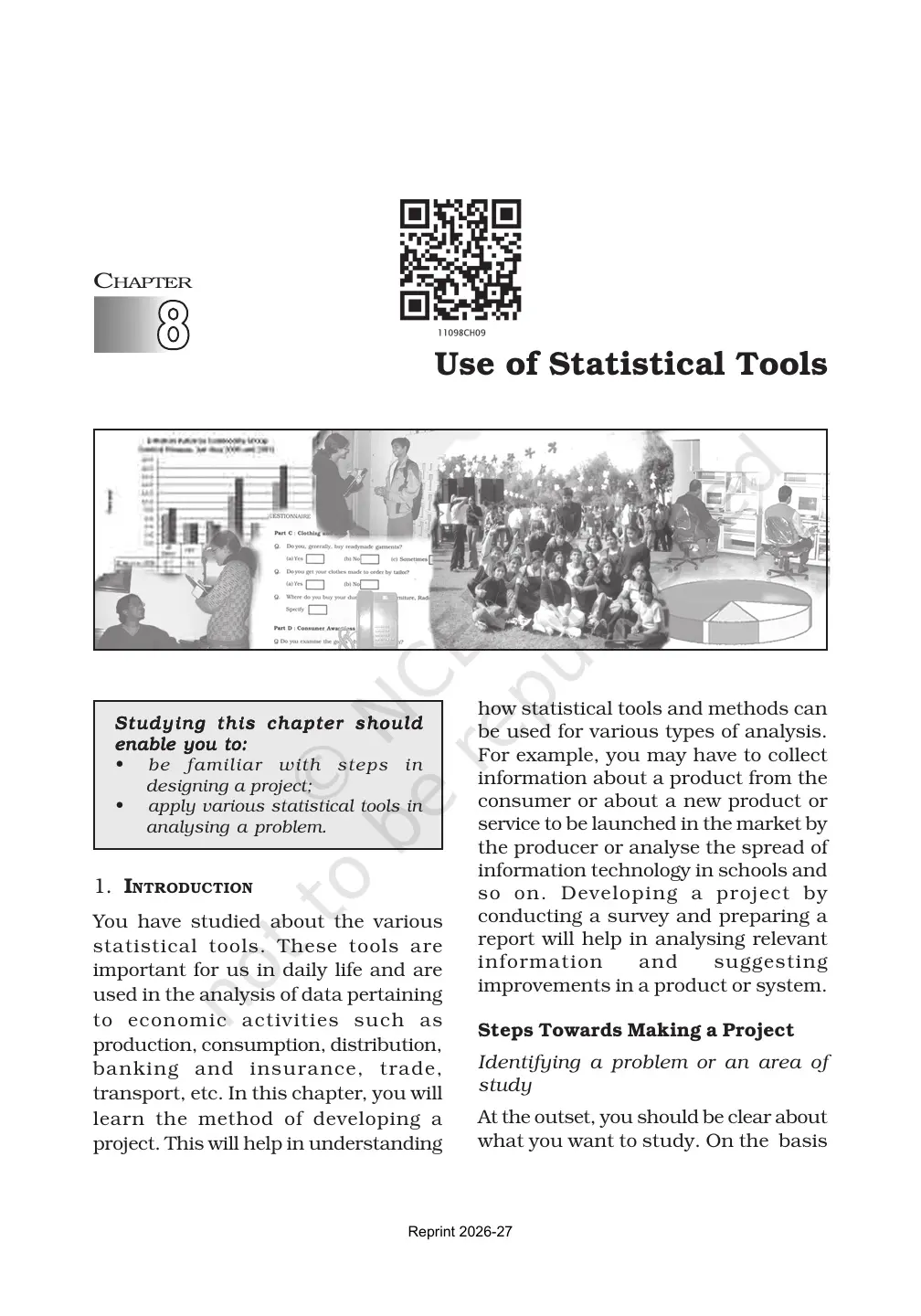
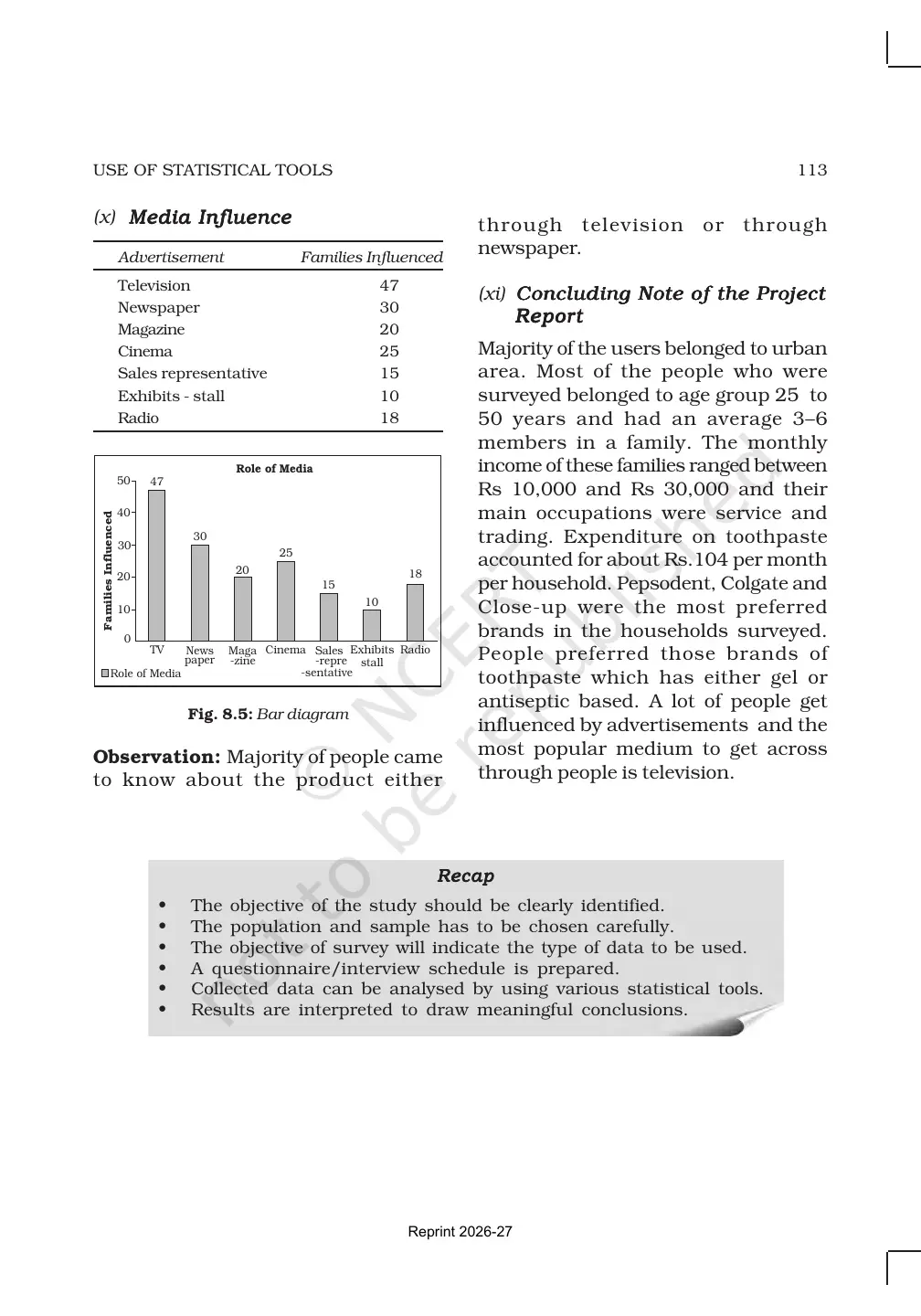
The chapter shows how statistical tools work inside a real project. NCERT starts with choosing a problem, then explains the target group, data collection, questionnaire design, presentation and final interpretation.
The PDF is the official source text for Chapter 8. It helps students see how mean, correlation, index numbers and charts support one complete enquiry.
| NCERT area | What students should notice | Answer cue |
|---|---|---|
| Project topic | The problem must be clear and narrow. | Write the exact economic issue first. |
| Target group | The group decides the questions you ask. | Match the survey to the people studied. |
| Questionnaire | Questions should be short and unbiased. | Avoid leading or confusing wording. |
| Interpretation | Tools are used to explain the data. | Link every result to the project aim. |
Steps in a Class 11 Economics Statistics Project
NCERT treats the chapter as a bridge between theory and field work. Students should not start with formulas. First, they should decide what they want to study and who can give useful data.
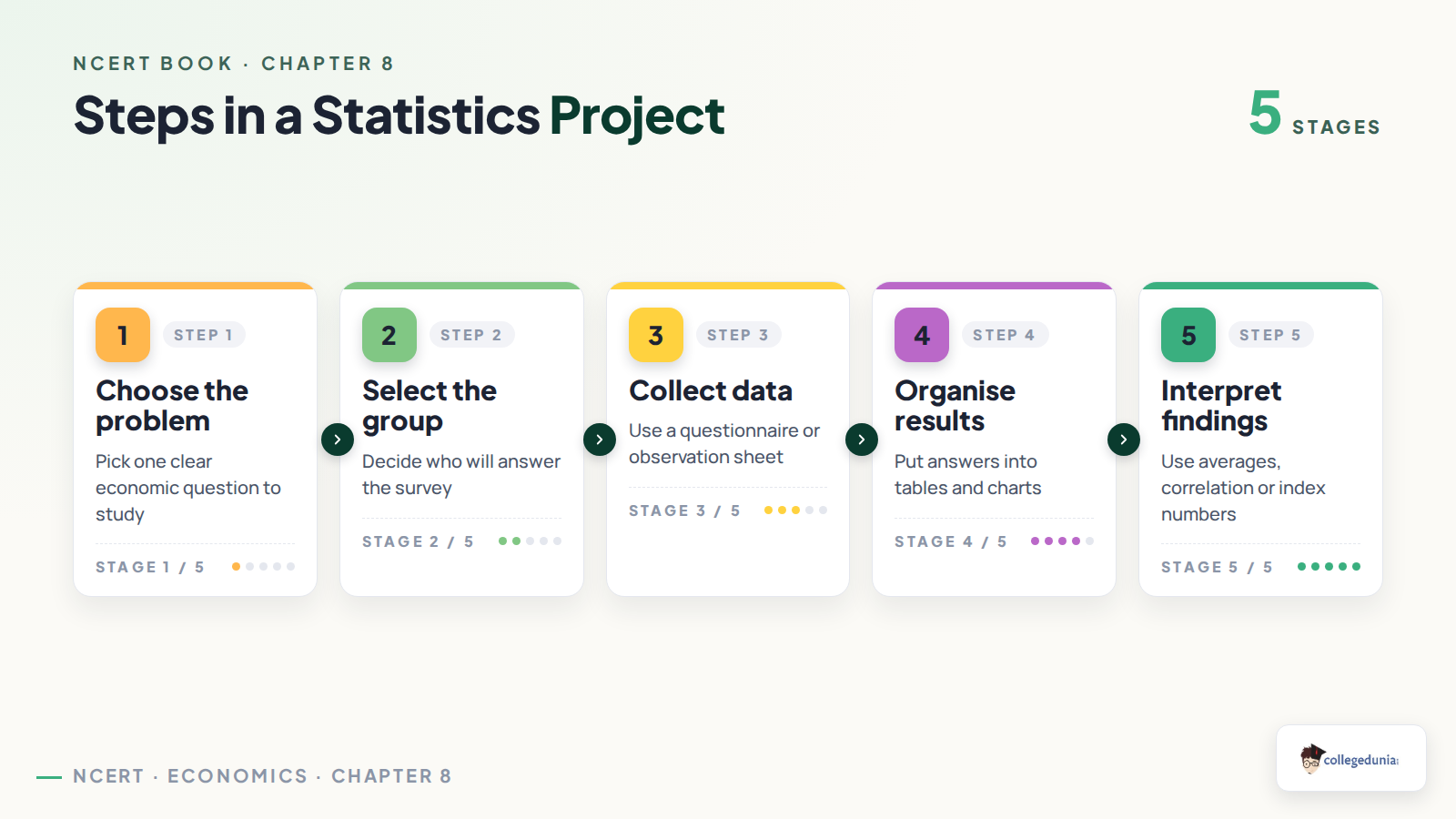
- Choose the problem: keep the topic small enough for a student project.
- Select the group: decide whether the survey is for students, households or consumers.
- Collect data: use questions, observation or existing records.
- Interpret findings: connect the result to averages, charts, correlation or index numbers.
The tool comes after the problem, not before it. This is the main idea of the chapter.
Watch Use of Statistical Tools for Class 11 Economics
Source: School Pro Kid on YouTube
Questionnaire and Observation in Use of Statistical Tools
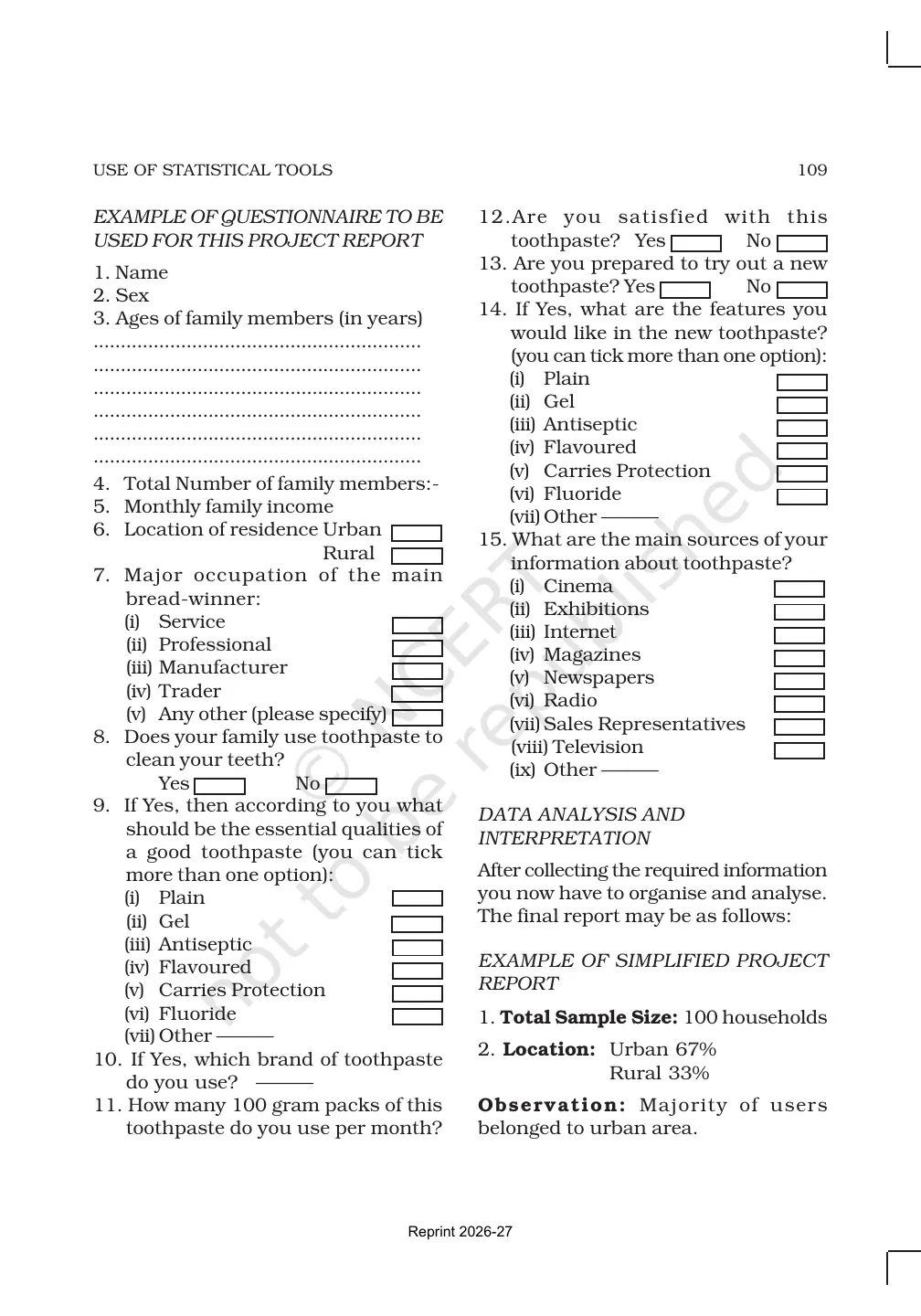
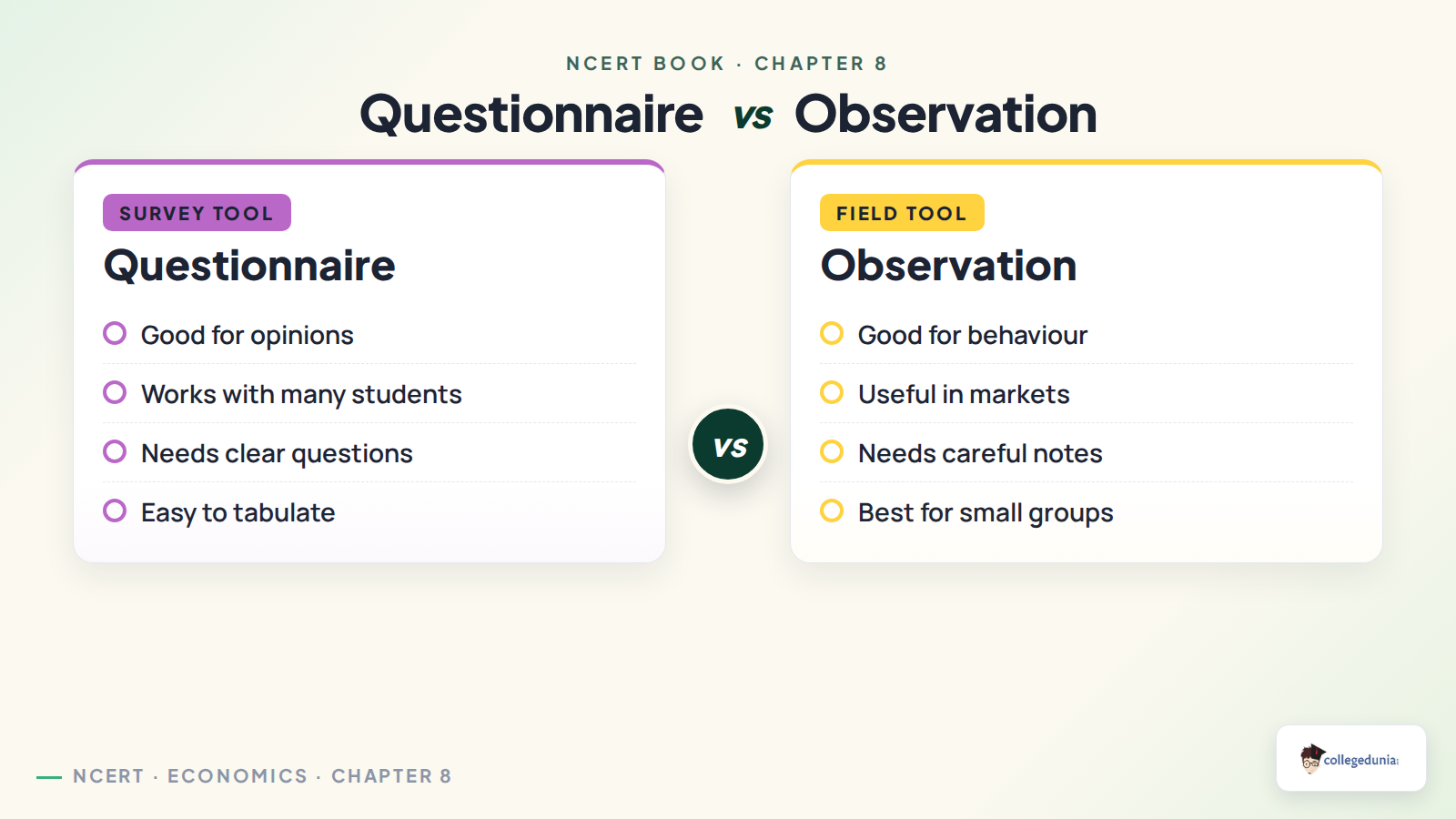
Questionnaire and observation are two common ways to collect primary data. A questionnaire is better when many people can answer the same questions. Observation is better when the student needs to watch behaviour directly.
| Method | Best use | Common mistake |
|---|---|---|
| Questionnaire | Opinions, habits and preferences. | Writing long or leading questions. |
| Observation | Market behaviour and visible actions. | Recording only what supports your idea. |
| Interview | Detailed answers from a small group. | Changing the question for each person. |
| Secondary data | Reports, books and published sources. | Using old data without checking the year. |
How to Use the Chapter 8 NCERT Book PDF
Use this PDF in three passes. First, read the project steps from start to finish. Second, mark where data collection ends and interpretation starts. Third, make a sample questionnaire and test whether every question links to the project aim.
- For project work: write the title, objective, target group and tool in one page.
- For viva questions: revise why a sample is chosen and how bias is avoided.
- For tables: keep headings, units and source notes clear.
- For interpretation: state what the data shows, not what you guessed earlier.
Related Class 11 Economics Resources for Use of Statistical Tools
Also Check: use the official book PDF with notes and practice resources for the same chapter.
| Resource | Best use | Link |
|---|---|---|
| NCERT Notes | Revise project steps, questionnaires and interpretation points quickly. | Use of Statistical Tools Notes |
| NCERT Solutions | Practise textbook questions after reading the PDF. | Use of Statistical Tools NCERT Solutions |
| Handwritten Notes | Use for quick project-method revision before class tests. | Use of Statistical Tools Handwritten Notes |
Class 11 Economics NCERT Book PDFs for All Chapters
The table below keeps the Class 11 Economics NCERT Book PDF chapters in one place. Chapters 1 to 8 come from Statistics for Economics, and later chapters come from Indian Economic Development.
| Chapter | Title | NCERT Book PDF |
|---|---|---|
| Chapter 1 | Introduction | NCERT Book PDF |
| Chapter 2 | Collection of Data | NCERT Book PDF |
| Chapter 3 | Organisation of Data | NCERT Book PDF |
| Chapter 4 | Presentation of Data | NCERT Book PDF |
| Chapter 5 | Measures of Central Tendency | NCERT Book PDF |
| Chapter 6 | Correlation | NCERT Book PDF |
| Chapter 7 | Index Numbers | NCERT Book PDF |
| Chapter 8 | Use of Statistical Tools | Current NCERT Book PDF |
Use of Statistical Tools Class 11 Economics NCERT Book PDF FAQs
Ques. What does the Class 11 Economics Chapter 8 Use of Statistical Tools NCERT Book PDF include?
Ans. It includes the official NCERT chapter text on project design, target group selection, questionnaires, data collection and interpretation.
Ques. Is this NCERT Book PDF useful for the 2026-27 syllabus?
Ans. Yes. The PDF is from the official NCERT Statistics for Economics book for the 2026-27 session.
Ques. Which tools are connected to this chapter?
Ans. The chapter connects questionnaires, surveys, tables, charts, averages, correlation and index numbers to one student project.
Ques. How should students revise Use of Statistical Tools?
Ans. Students should revise the project steps first, then practise writing clear survey questions and interpreting results from small data tables.



Comments