



The NCERT Book PDF for Class 11 Engineering Graphics Chapter 1 Introduction gives students the opening page of the official Engineering Graphics textbook and explains how the subject works as a precise drawing language for the 2026-27 CBSE course.
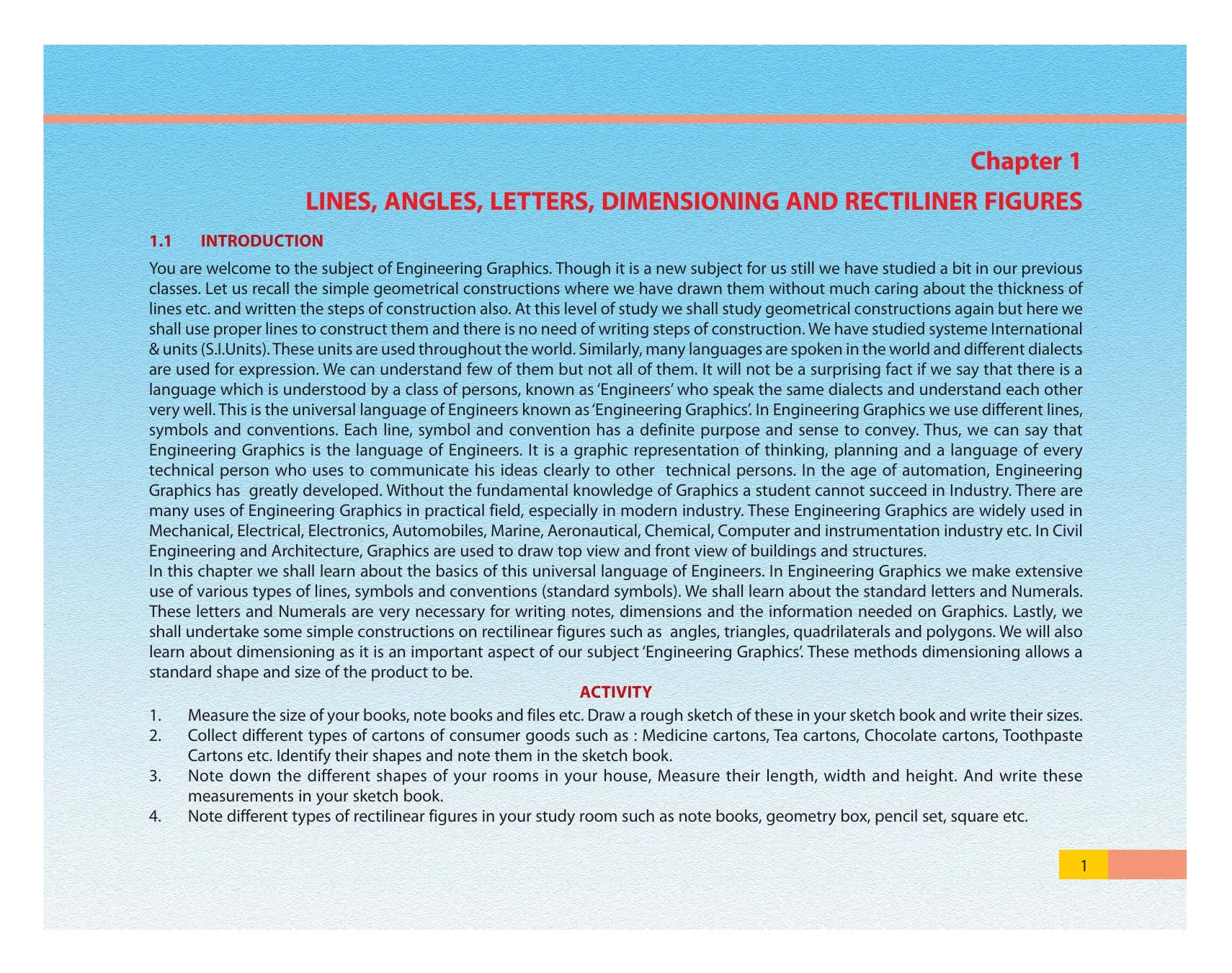
- Page count: 1 official introductory page extracted from the CBSE Engineering Graphics Class XI textbook archive.
- Core focus: why Engineering Graphics uses standard drawing conventions, symbols and sheet discipline.
- Best use: read this page before practising line types, lettering and dimensioning in the next textbook unit.
This Class 11 Engineering Graphics Introduction PDF is kept as the textbook opening students need before starting the 2026-27 drawing-practice chapters.
|
Table of Contents |
What the Introduction PDF Contains
The chapter opening welcomes students to Engineering Graphics and frames the subject as a universal technical language. It tells students that drawings are not casual sketches; they are structured communication tools used by engineers, architects, interior decorators, apparel designers and many other professionals.
The page also prepares students for the textbook sequence that follows. After this introduction, students move into line conventions, lettering, dimensioning, construction of rectilinear figures, circle constructions and projection work. The main habit to build from this page is accuracy before speed.
| Introductory idea | What it means for students | Where it helps later |
|---|---|---|
| Engineering Graphics as a language | Every drawing has fixed signs, labels and line meanings | Line types, symbols and projection diagrams |
| Use of instruments | Students need scale, compass, set-square, pencil and eraser ready | Sheet work and construction questions |
| Standard conventions | Line weight, arrows, dimensions and lettering must be consistent | Dimensioning and orthographic projection |
| Practice-based learning | The chapter is understood by redrawing examples, not by reading only | All practical Engineering Graphics units |
Engineering Drawing Introduction for Class 11
Source: VISHWAKARMA ENGINEERING DRAWING CLASSES on YouTube
Engineering Graphics Starter Kit
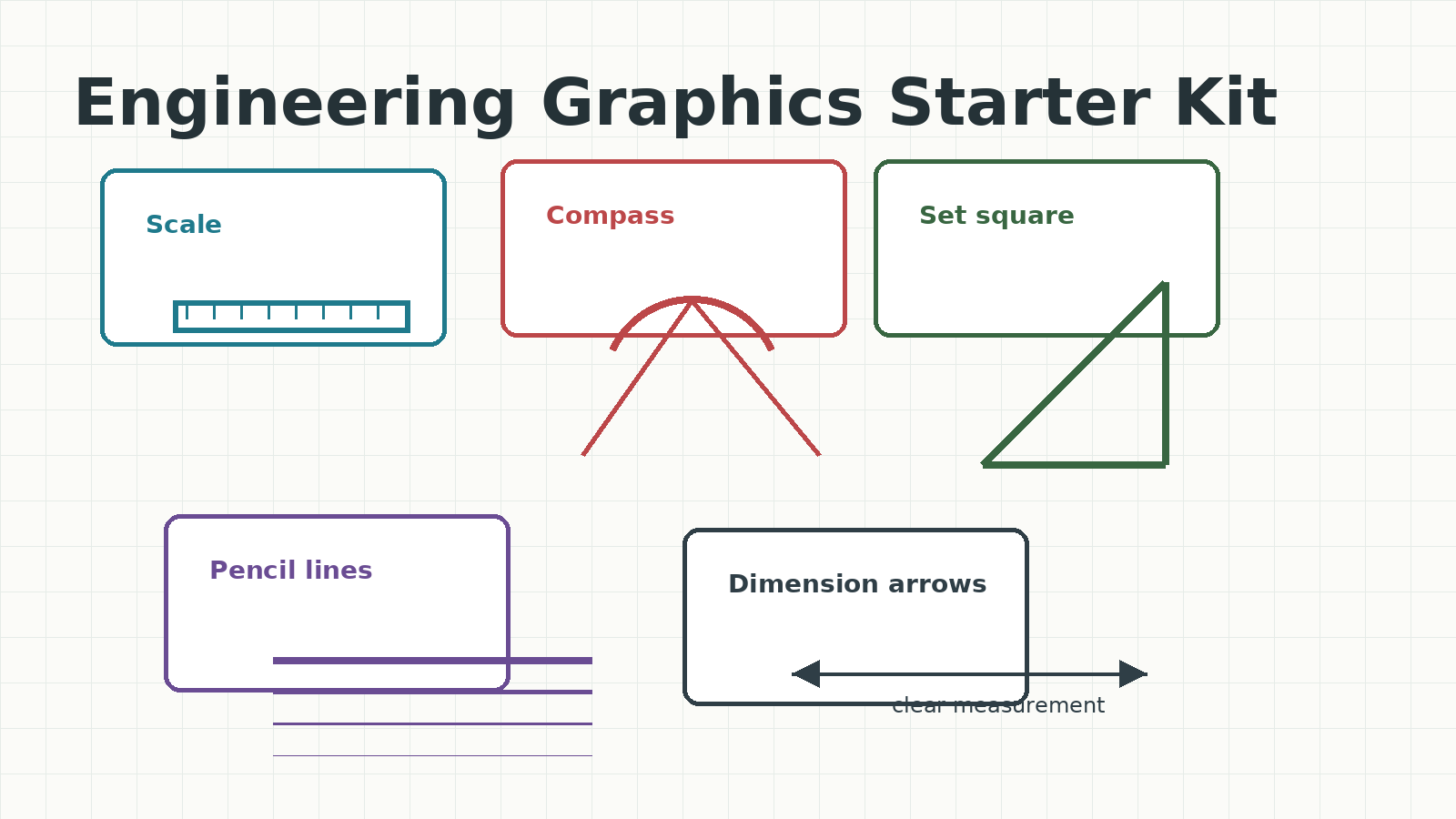
Students should keep drawing tools ready while reading even the introduction page. The subject becomes easier when the textbook idea is immediately tested on a sheet. A scale helps maintain proportion, a compass builds arcs and circles, and a set-square keeps vertical and inclined edges clean.
- Use a sharp pencil: construction lines should stay light and removable.
- Keep object lines darker: final visible edges must stand out from guide lines.
- Label neatly: letters and numerals should be readable without crowding the figure.
- Measure before darkening: wrong dimensions are harder to correct after the final line is drawn.
Introduction Page Reading Flow
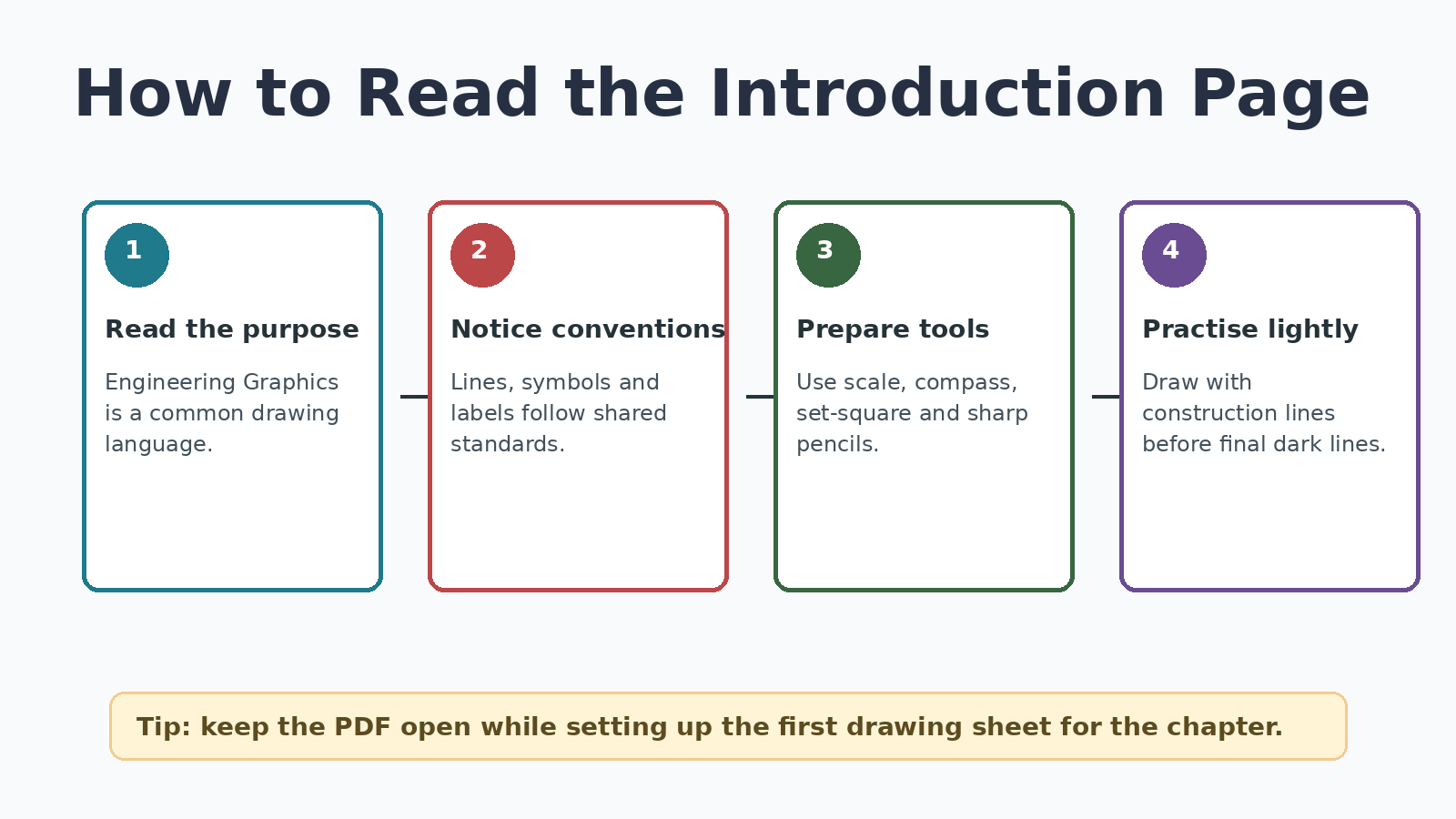
Read the introduction as a setup page for the full Engineering Graphics course. It is short, but it tells students how to approach the rest of the textbook. The subject rewards neatness, standard practice and repeated drawing, so students should start with that mindset.
- Understand why Engineering Graphics is called a technical language.
- Notice that every line, arrow, label and symbol has a fixed purpose.
- Set up the drawing instruments before starting the next unit.
- Practise one clean sheet habit at a time, starting with line weight.
How Students Should Use This Opening Page
The Introduction PDF is not meant to be memorised line by line. It should help students shift from ordinary sketching to technical drawing. Before opening Chapter 2, students should know that Engineering Graphics demands exactness in both idea and presentation.
- Before reading: skim the page to understand the role of drawings in engineering communication.
- During reading: underline words such as conventions, instruments, lines and dimensioning.
- After reading: prepare a drawing sheet and practise straight line control for five minutes.
- Before exams: revise this page with the first chapter on line types and dimensioning.
Student Feedback on the Introduction Unit
Student Feedback: In a Collegedunia survey of 9,860 Class 11 students preparing for the 2026 boards, students said the opening Engineering Graphics page was most useful when teachers connected it directly to line weight, sheet layout and instrument handling.
Source: 2026-27 Class 11 Engineering Graphics student poll across CBSE schools.
Engineering Graphics Chapter 1 Related Resources
| Resource | Use it for |
|---|---|
| NCERT Solutions for Class 11 Engineering Graphics Introduction | Question answers based on the introductory unit |
| Introduction Class 11 Engineering Graphics Notes | Quick revision of drawing-language basics |
| Introduction Class 11 Engineering Graphics Handwritten Notes | Last-minute starter checklist before sheet practice |
All Chapters of Engineering Graphics with NCERT Book PDFs
| Chapter | NCERT Book PDF |
|---|---|
| Chapter 1 | Introduction Book PDF |
| Chapter 2 | Lines, Angles, and Rectilinear Figures Book PDF |
| Chapter 3 | Circles, Inscribing and Circumscribing of Circles Book PDF |
| Chapter 4 | Orthographic Projection of Points and Lines Book PDF |
| Chapter 5 | Orthographic Projection of Regular Plane Figures Book PDF |
| Chapter 6 | Orthographic Projection of Right Regular Solids Book PDF |
| Chapter 7 | Section of Solids Book PDF |
Engineering Graphics Introduction NCERT Book PDF FAQs
Ques. What does the Class 11 Engineering Graphics Chapter 1 Introduction PDF cover?
Ans. It covers the textbook opening that explains Engineering Graphics as a technical drawing language and prepares students for conventions, instruments, lines and dimensioning.
Ques. How many pages are in the Introduction PDF?
Ans. The hosted Introduction PDF has 1 official page extracted from the CBSE Engineering Graphics Class XI textbook archive.
Ques. Is the Introduction page enough before starting drawing practice?
Ans. The page is a starter. Students should continue with line types, lettering, dimensioning and construction practice in the next Engineering Graphics chapter.
Ques. Which tools should students keep ready after reading this page?
Ans. Students should keep a drawing pencil, eraser, scale, compass, protractor and set-square ready before beginning the practical drawing units.



Comments