




Writing and City Life opens the Class 11 History book Themes in World History with Mesopotamia, the land between the Euphrates and Tigris where the world's first cities grew. The ncert book class 11 history chapter 1 writing and city life file on this page is the official NCERT chapter for 2026-27. Download it for the full account of Sumerian cities, cuneiform writing and the Epic of Gilgamesh.
- Chapter: Chapter 1, Writing and City Life
- Book: Themes in World History, the Class 11 NCERT textbook for 2026-27, 7 chapters
- File: 28 pages, the complete official chapter
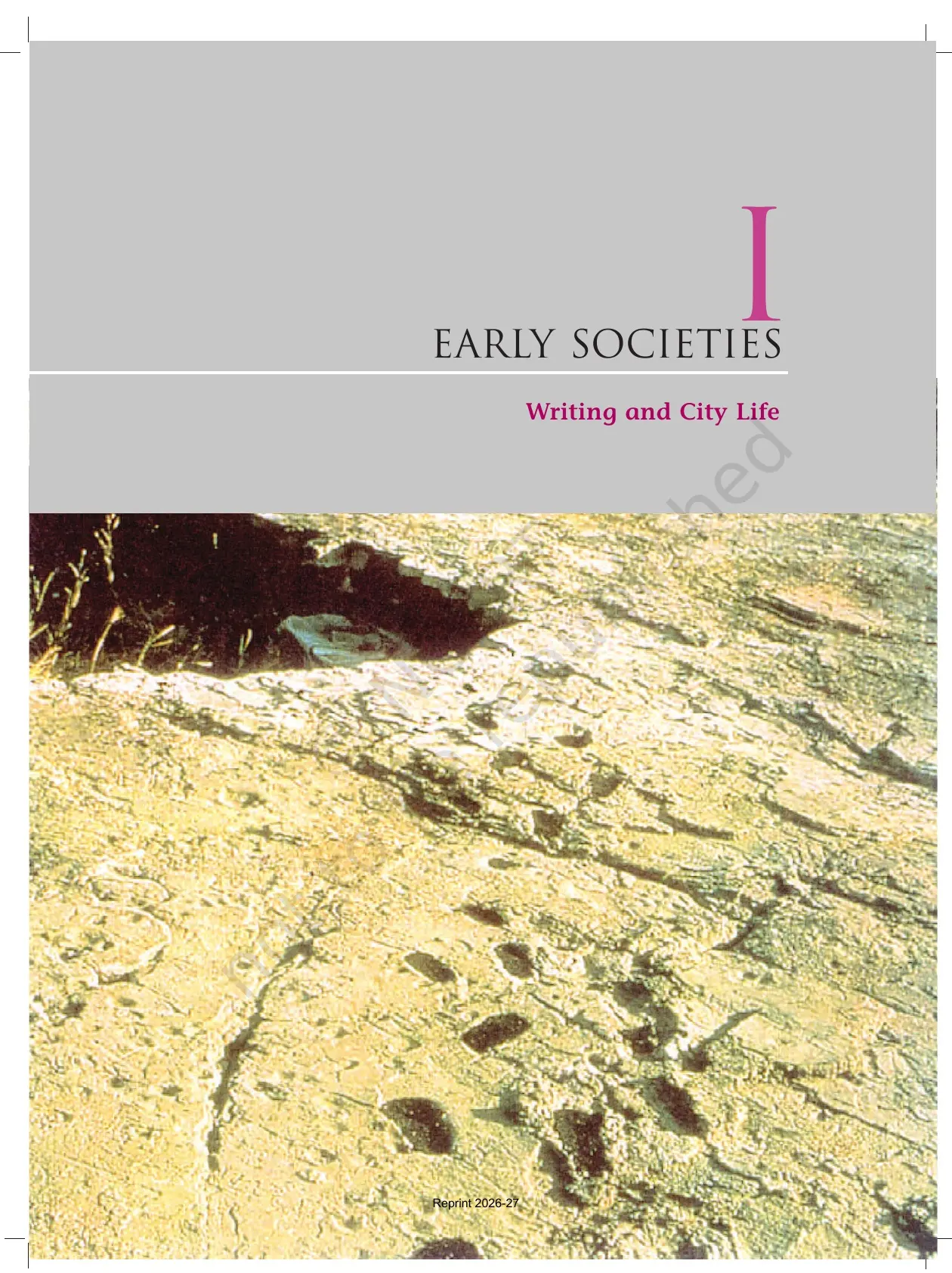
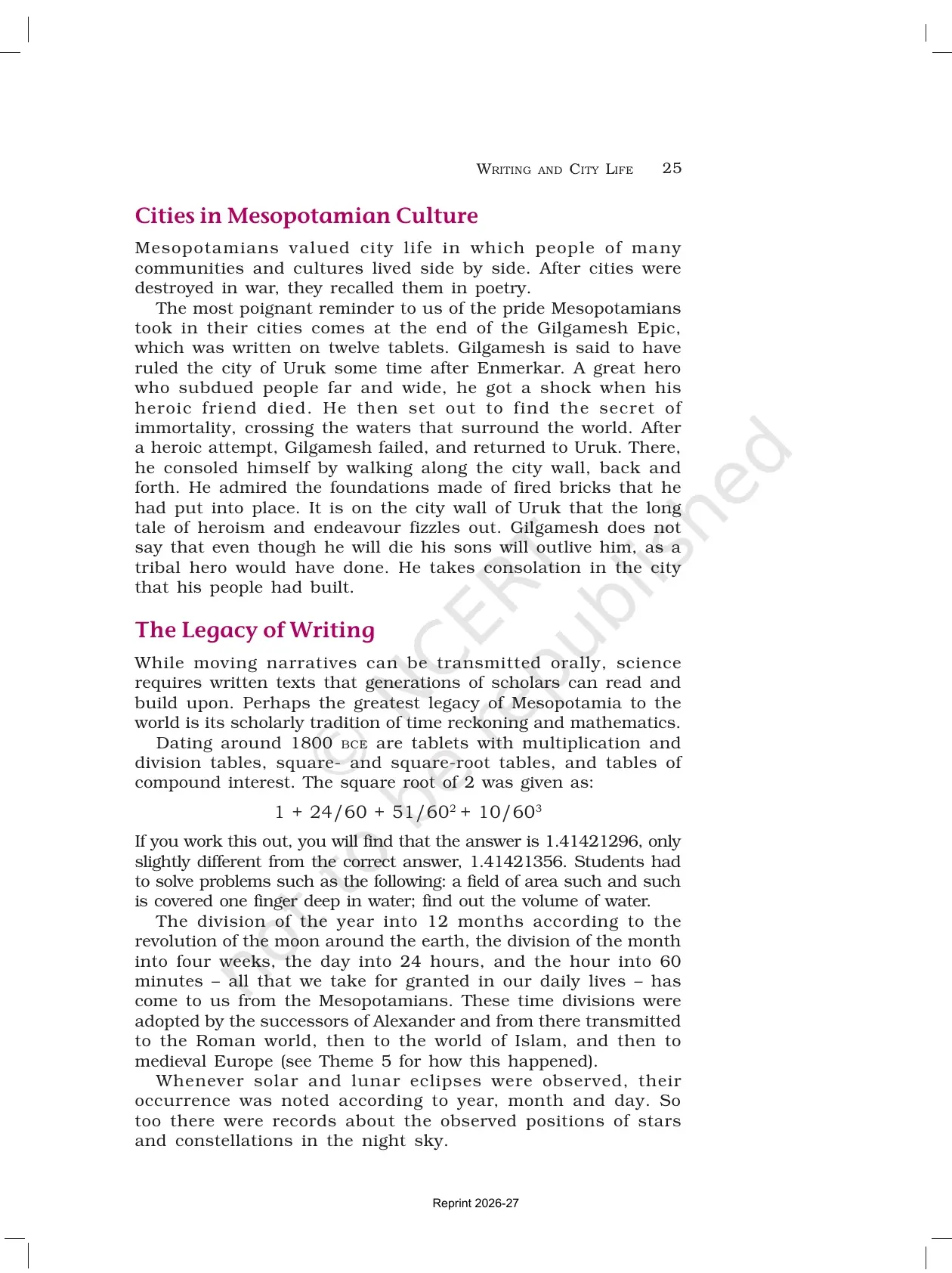
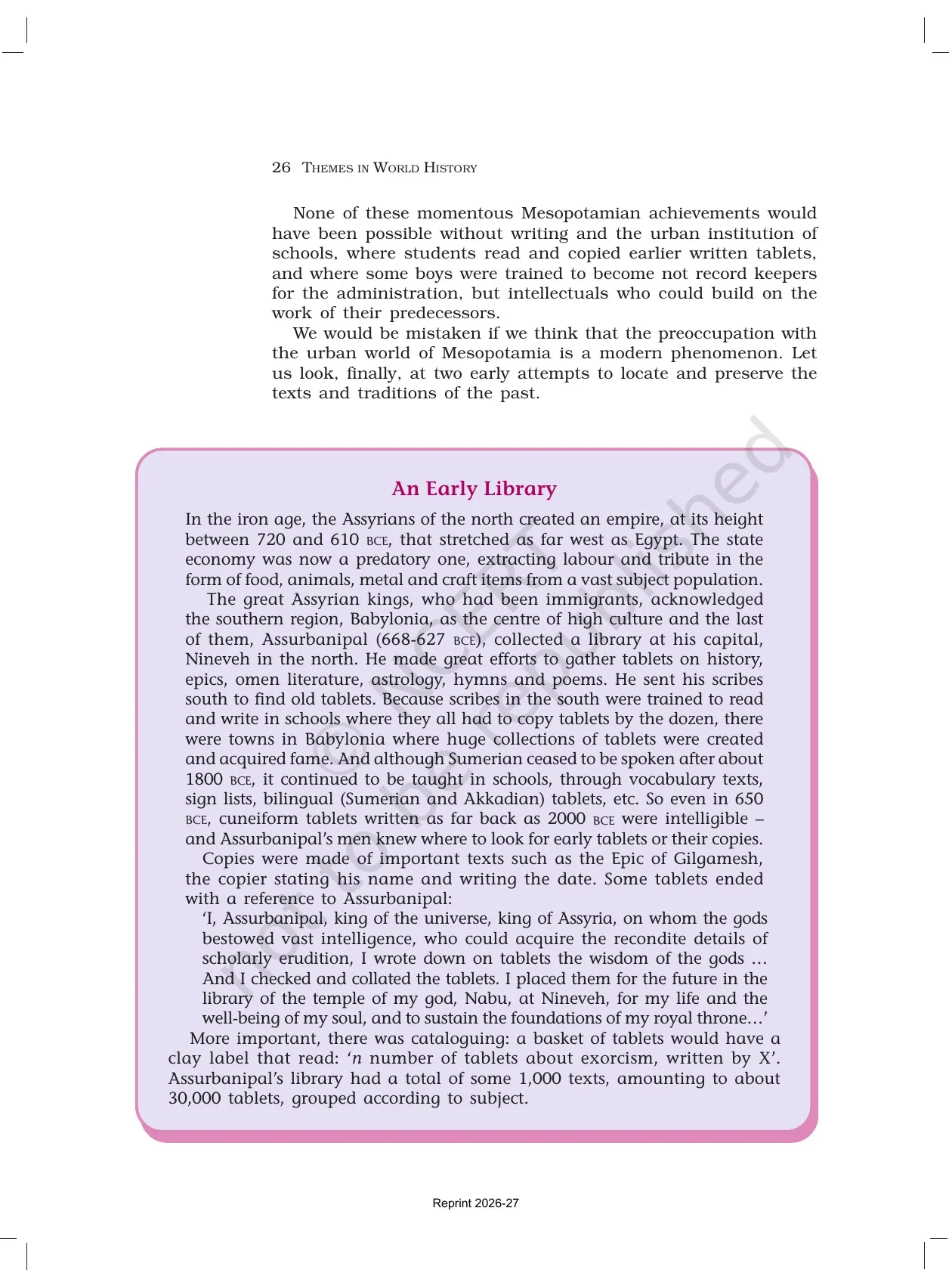
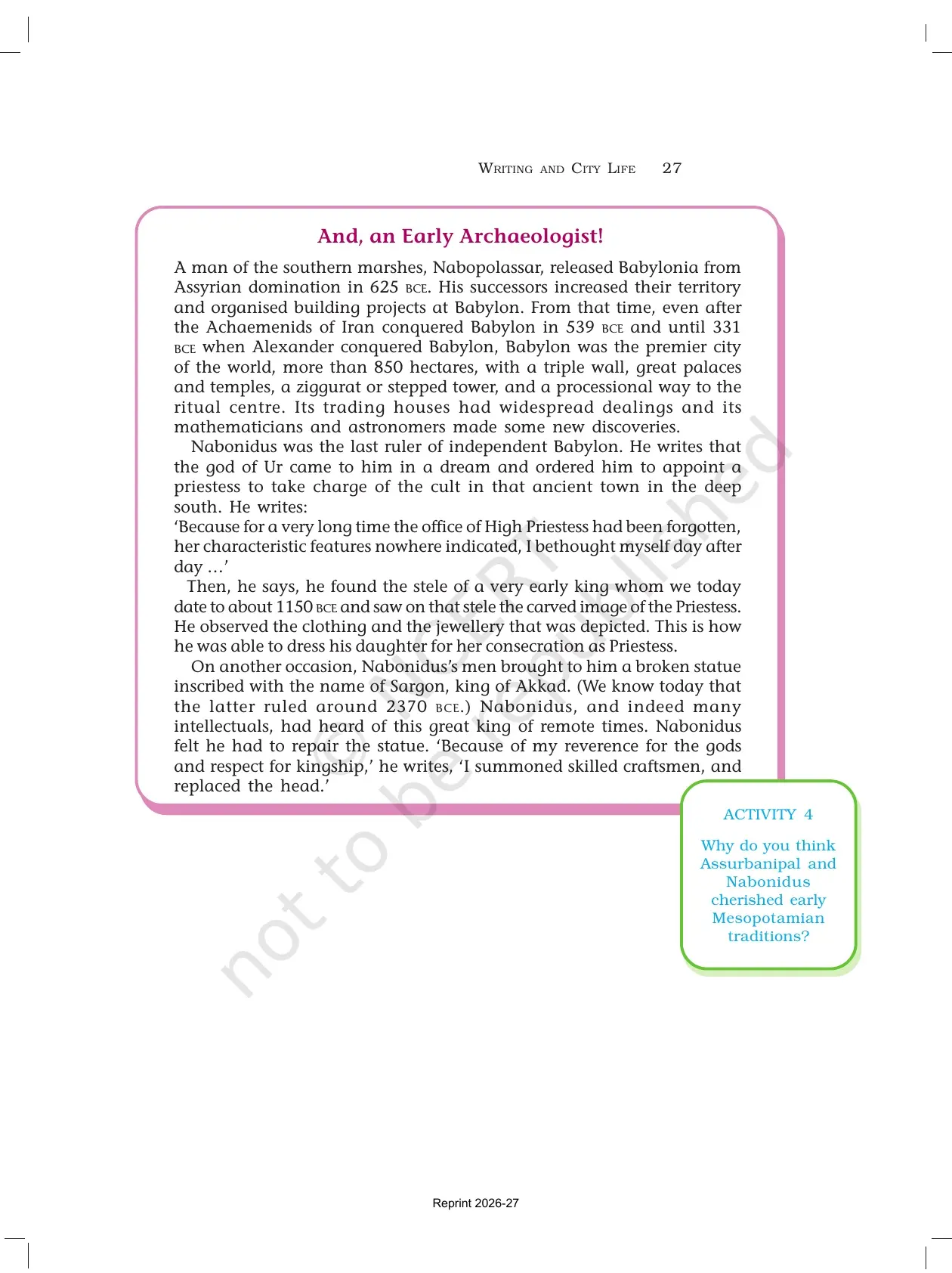
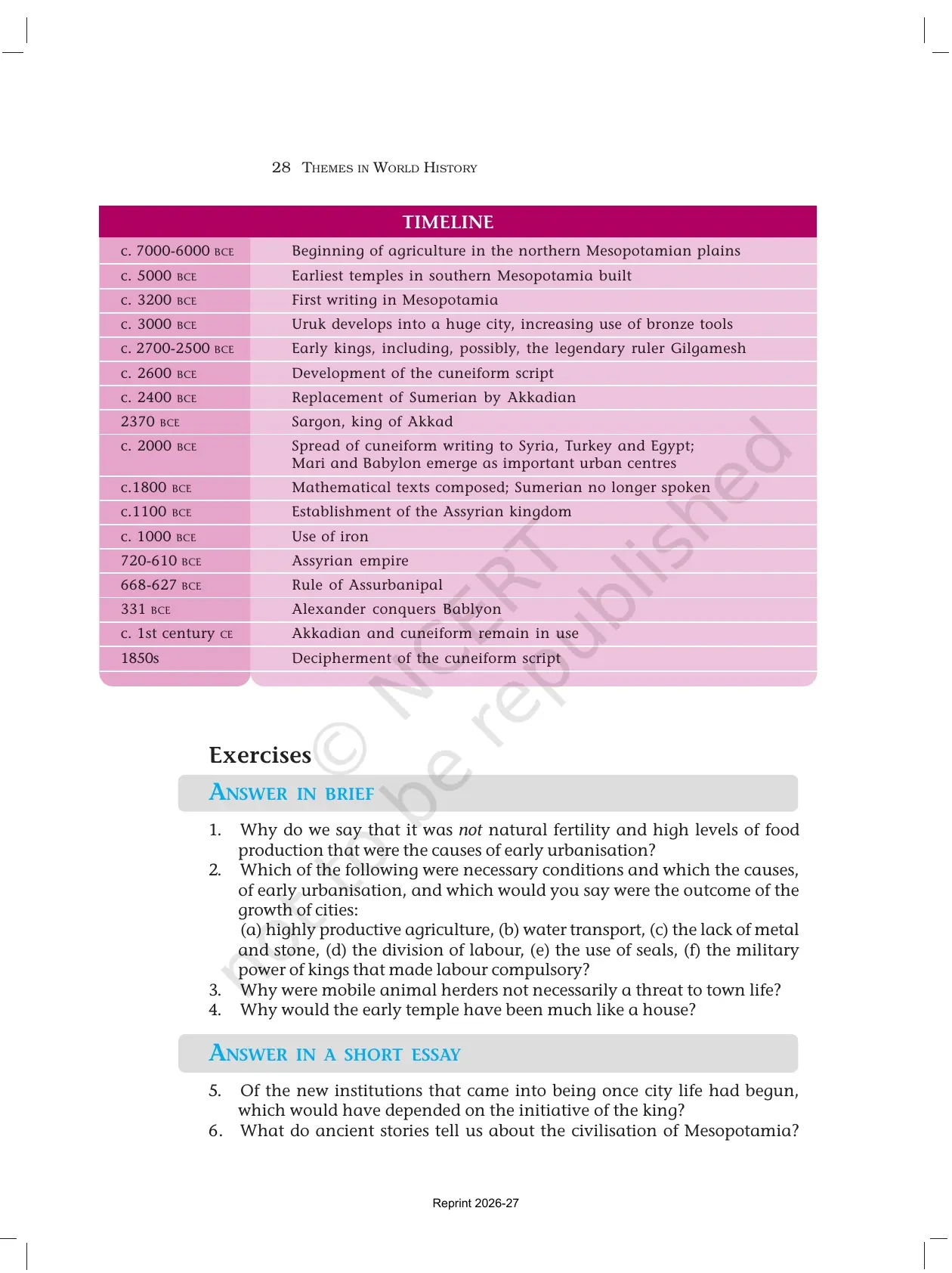
You can page through the chapter in the viewer above, from the geography of Mesopotamia to the Gilgamesh Epic, before downloading the file.
This is the official NCERT chapter file for the 2026-27 session, hosted by Collegedunia with no pages removed.
How the Writing and City Life Chapter Is Laid Out
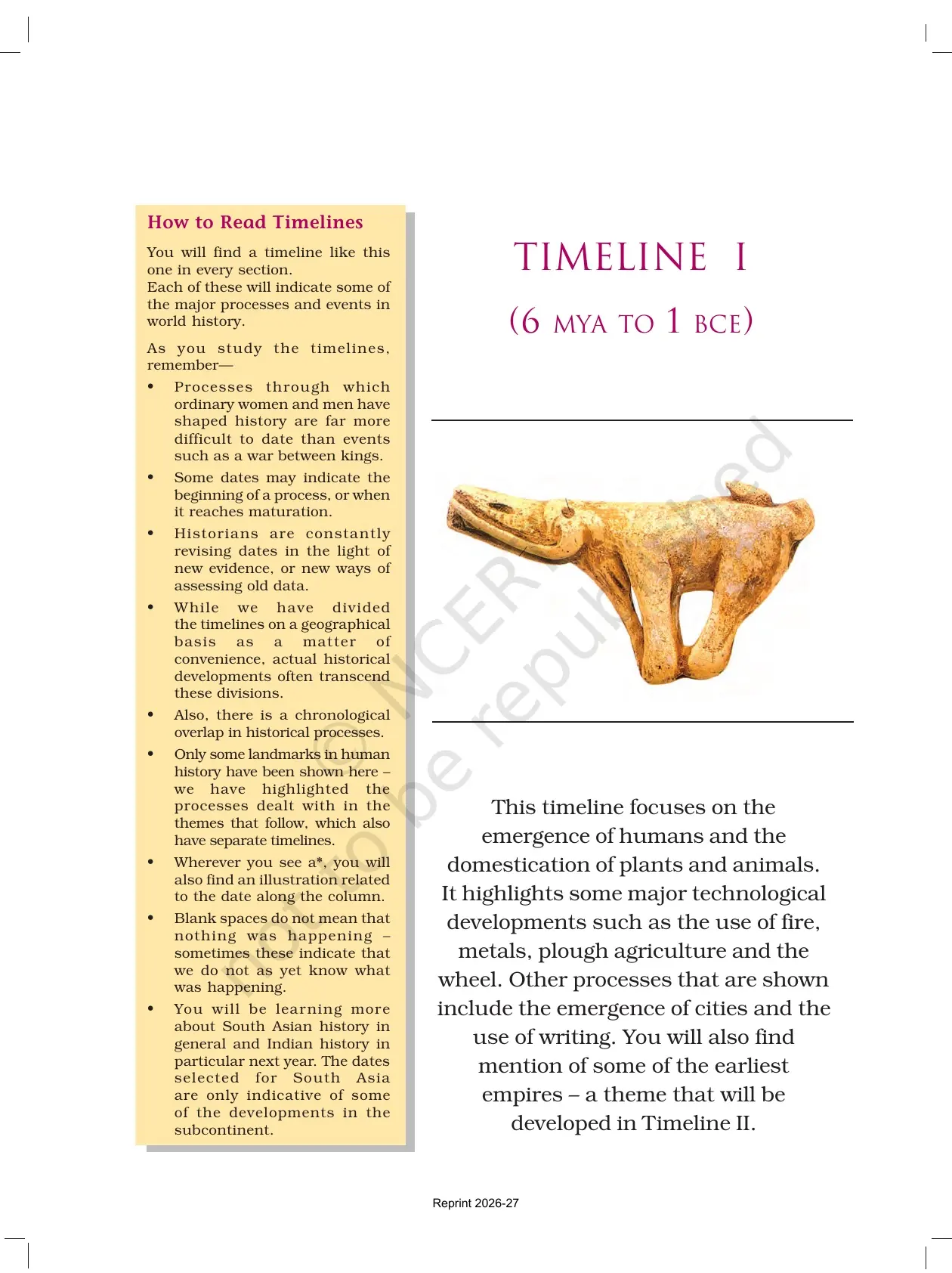
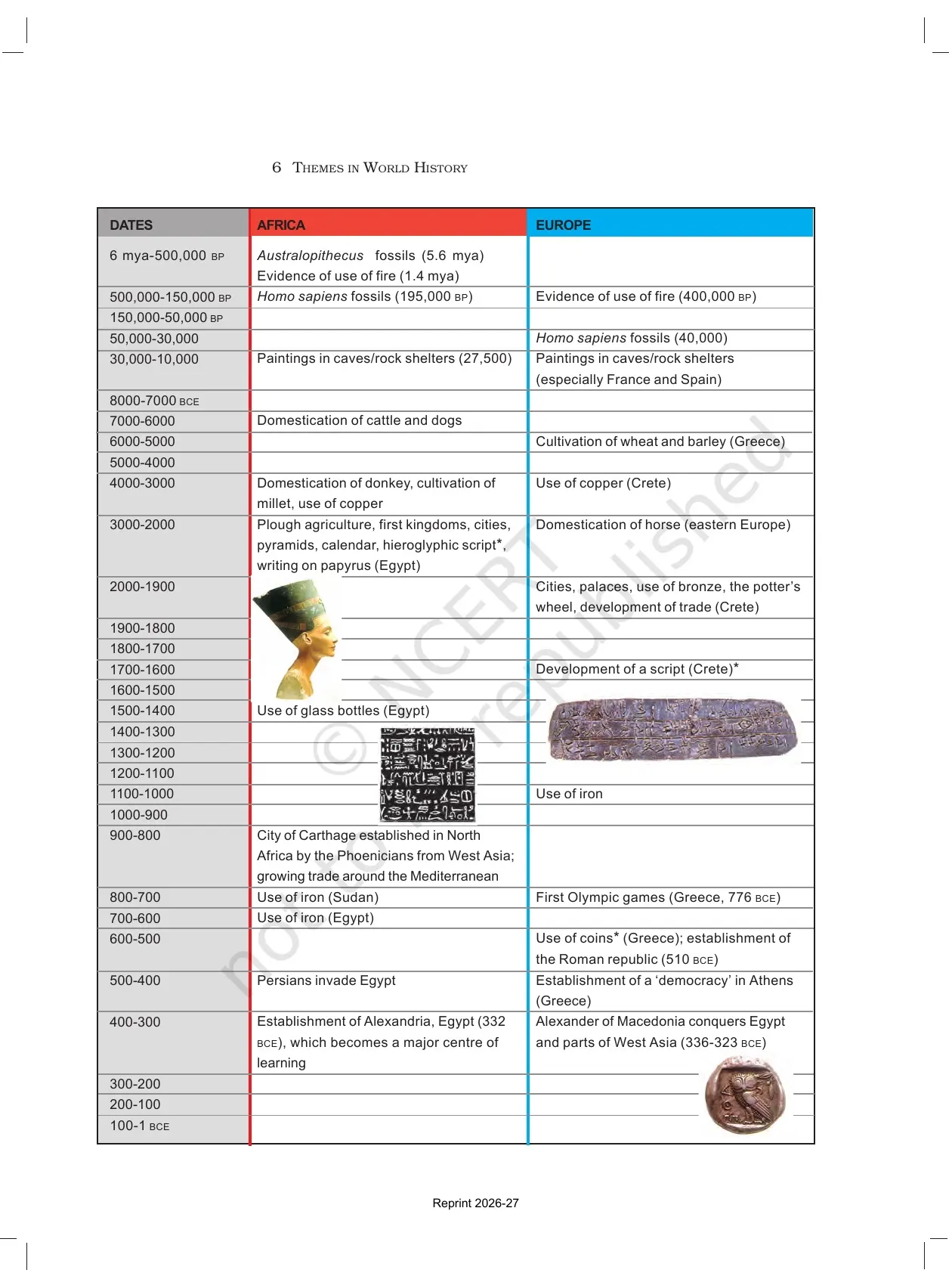
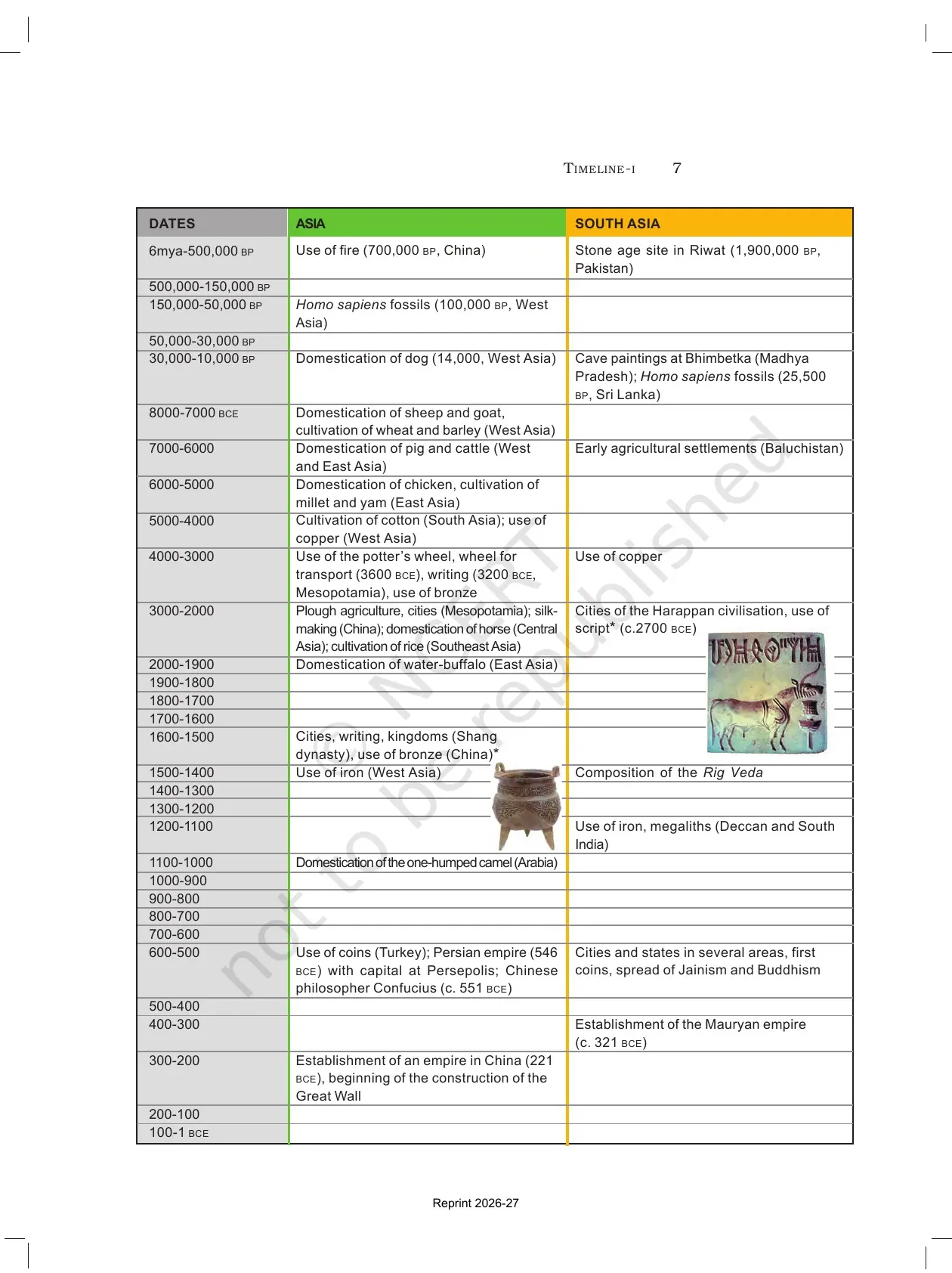
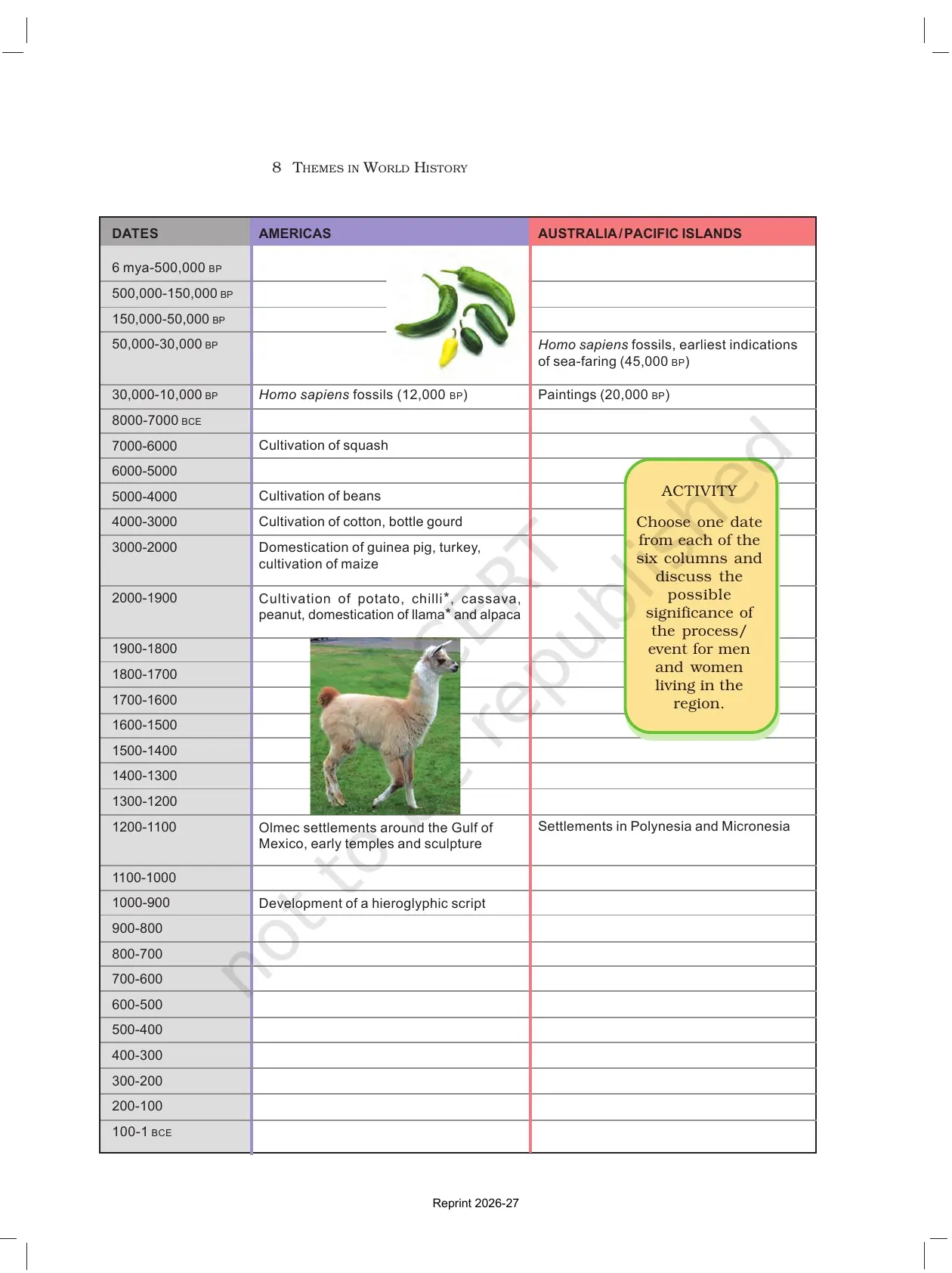
The chapter opens with an unheaded introduction on early human societies before it names Theme 1 and turns to Mesopotamia. A shared Timeline connects the rise of cities in Iraq to parallel developments in Africa, Europe, Asia, South Asia and the Americas, and every later section builds on the link between writing and city life that the chapter sets up on its first page.
| Section | What it covers |
|---|---|
| Introduction (unheaded) | early societies, the shift from gathering to farming, and Timeline I linking Mesopotamia to other early civilisations |
| Mesopotamia and its Geography | the diverse regions of Iraq and why the southern desert became the cradle of cities |
| The Significance of Urbanism | why food surplus alone did not create cities, and what division of labour means |
| Movement of Goods into Cities | why the mineral-poor south had to trade for wood, copper, tin and stone |
| The Development of Writing, The System of Writing, Literacy | the first picture tablets of 3200 BCE, cuneiform signs, and who could actually read |
| The Uses of Writing | the Enmerkar epic that links kingship, trade and the invention of writing |
| Urbanisation in Southern Mesopotamia: Temples and Kings | temples as the first urban institution, and how war leaders became kings |
| The Seal, Life in the City, A Trading Town in a Pastoral Zone | seals as an urban artefact, housing at Ur, and the trading town of Mari |
| Excavating Mesopotamian Towns | how archaeologists read wall outlines, plant remains and animal bones at Abu Salabikh |
| Cities in Mesopotamian Culture, The Legacy of Writing | the Gilgamesh Epic, and Mesopotamian mathematics and astronomy |
| An Early Library, An Early Archaeologist | Assurbanipal's library at Nineveh and King Nabonidus's own excavations |
| Exercises | 4 Answer in Brief questions and 2 Answer in a Short Essay questions |
Writing and City Life Explained for Class 11 Boards
Source: Eklavya Study Point on YouTube
What the Writing and City Life Chapter PDF Contains
The PDF holds the whole chapter exactly as NCERT printed it, with nothing trimmed from either end.
- The full account of Mesopotamian geography, from the northern hills to the irrigated southern desert
- Timeline I, connecting human origins and the domestication of plants and animals to the first cities and writing across five continents
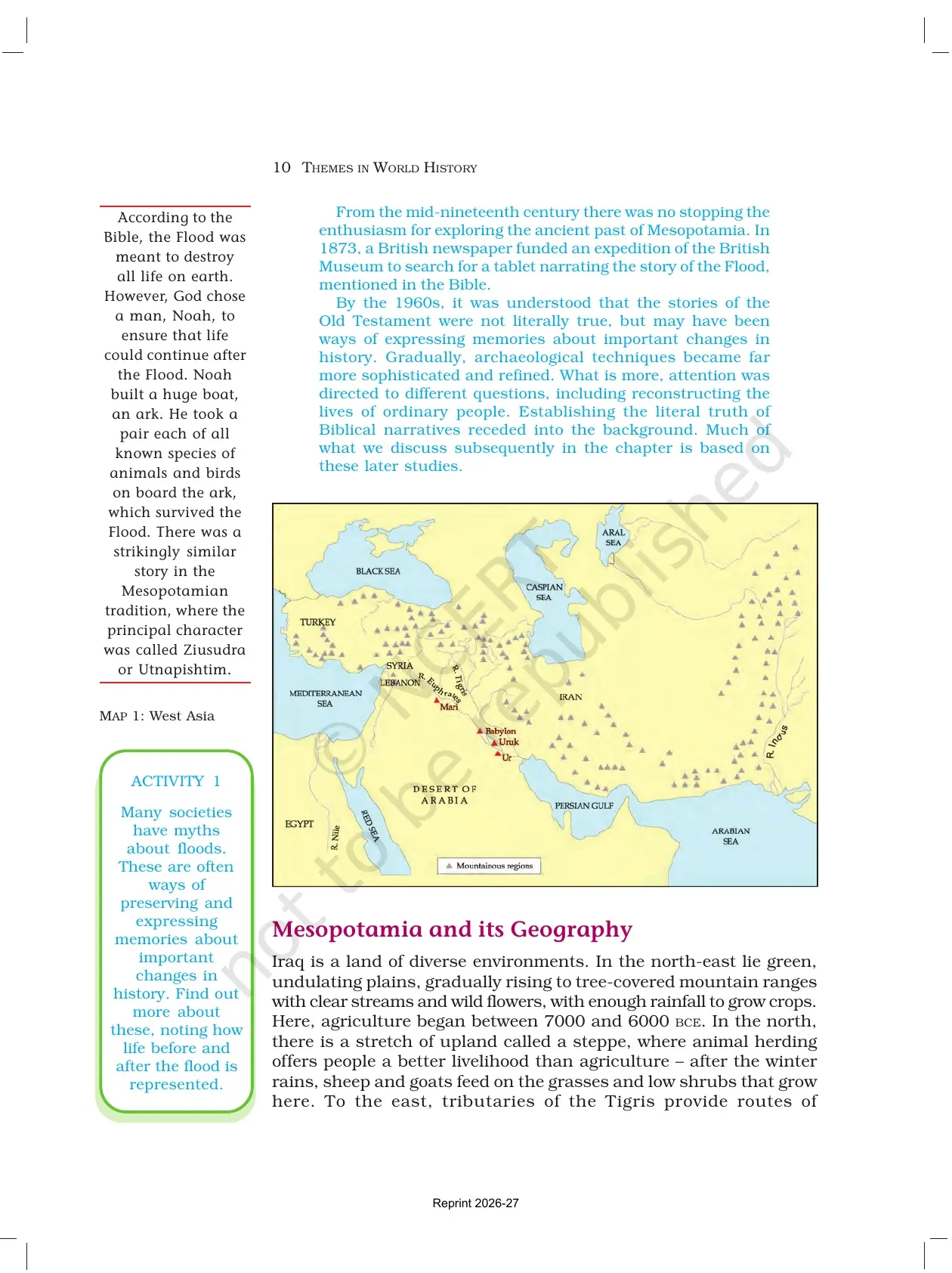
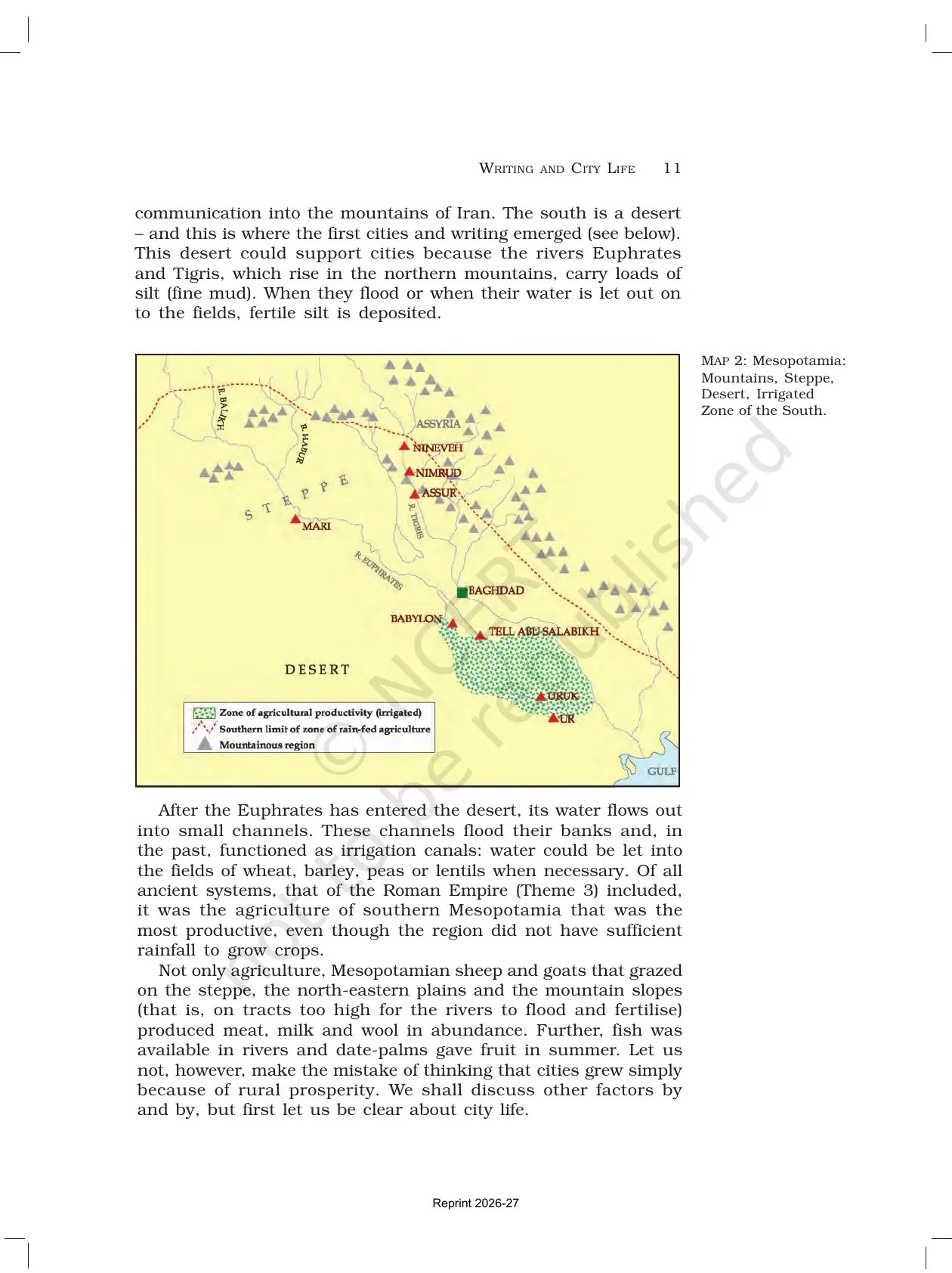
- Map 1 of West Asia and Map 2 of the mountains, steppe, desert and irrigated zones of Mesopotamia
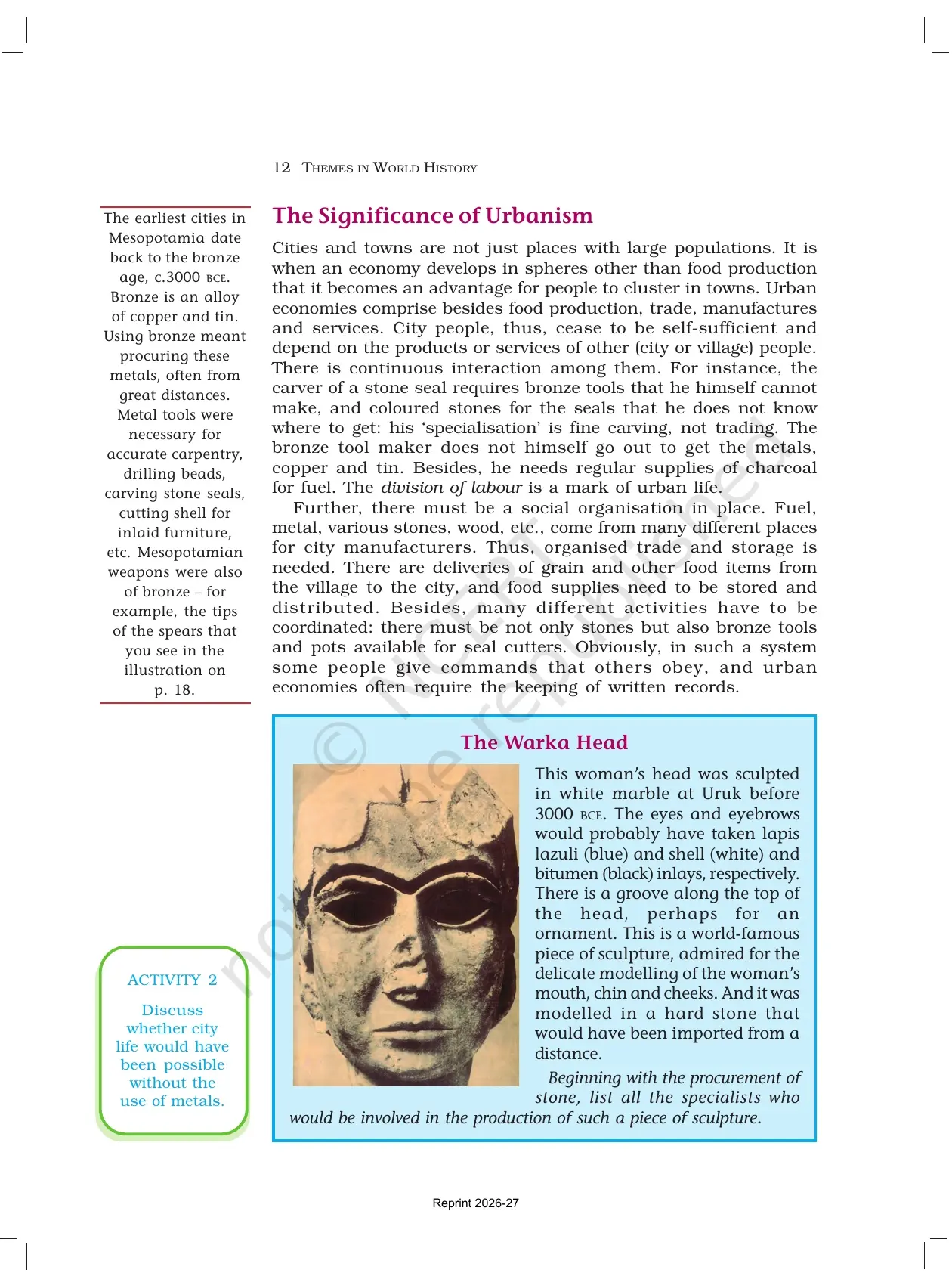
- Photographs of the Warka Head, cylinder seals, the Mari palace plan and cuneiform tablets, each with its caption
- The Exercises section in full, plus a chapter Timeline listing 18 dated events
Mesopotamia's Geography Between the Euphrates and Tigris
Mesopotamia takes its name from the Greek words for middle and river, and the chapter explains why the region between the Euphrates and Tigris is not one uniform landscape. Iraq has green rain-fed plains in the north-east, a dry steppe further north, and a desert in the south where the two rivers carry silt that made farming, and later cities, possible.
- North-east plains: rain-fed land where agriculture began between 7000 and 6000 BCE
- Northern steppe: too dry for crops, but good grazing for sheep and goats after the winter rains
- Eastern tributaries: Tigris routes that connect Mesopotamia to the mountains of Iran
- Southern desert: too dry to farm without irrigation, but fed by silt from the Euphrates and Tigris, which is where the first cities and writing appeared
Why Cities Grew: Trade, Temples and the Movement of Goods
The chapter is careful to say that rural prosperity alone did not create cities. The Significance of Urbanism section explains that a place becomes a city once people stop being self-sufficient and start depending on specialists such as seal carvers and bronze toolmakers, which needs organised trade and storage. Southern Mesopotamia had grain, wool and fish in plenty but almost no stone, wood or metal, so its cities had to trade for everything else.
| What the south lacked | Where it was traded from |
|---|---|
| Stone for tools, seals and jewels | Turkey and Iran, and across the Gulf |
| Wood for carts, boats and beams | the uplands of Turkey, Syria and Lebanon |
| Copper, tin and silver for bronze and jewellery | distant expeditions, including the island of Cyprus for copper |
| Charcoal, needed steadily for bronze work | organised supply routes rather than one-off trips |
Water transport made all this workable, since a river boat could carry goods far more cheaply than a pack animal that also needed feeding. The chapter's account of the trading town of Mari on the Euphrates, where officers inspected river cargo and charged about a tenth of its value, shows this system in practice.
Cuneiform Writing and Its Decipherment
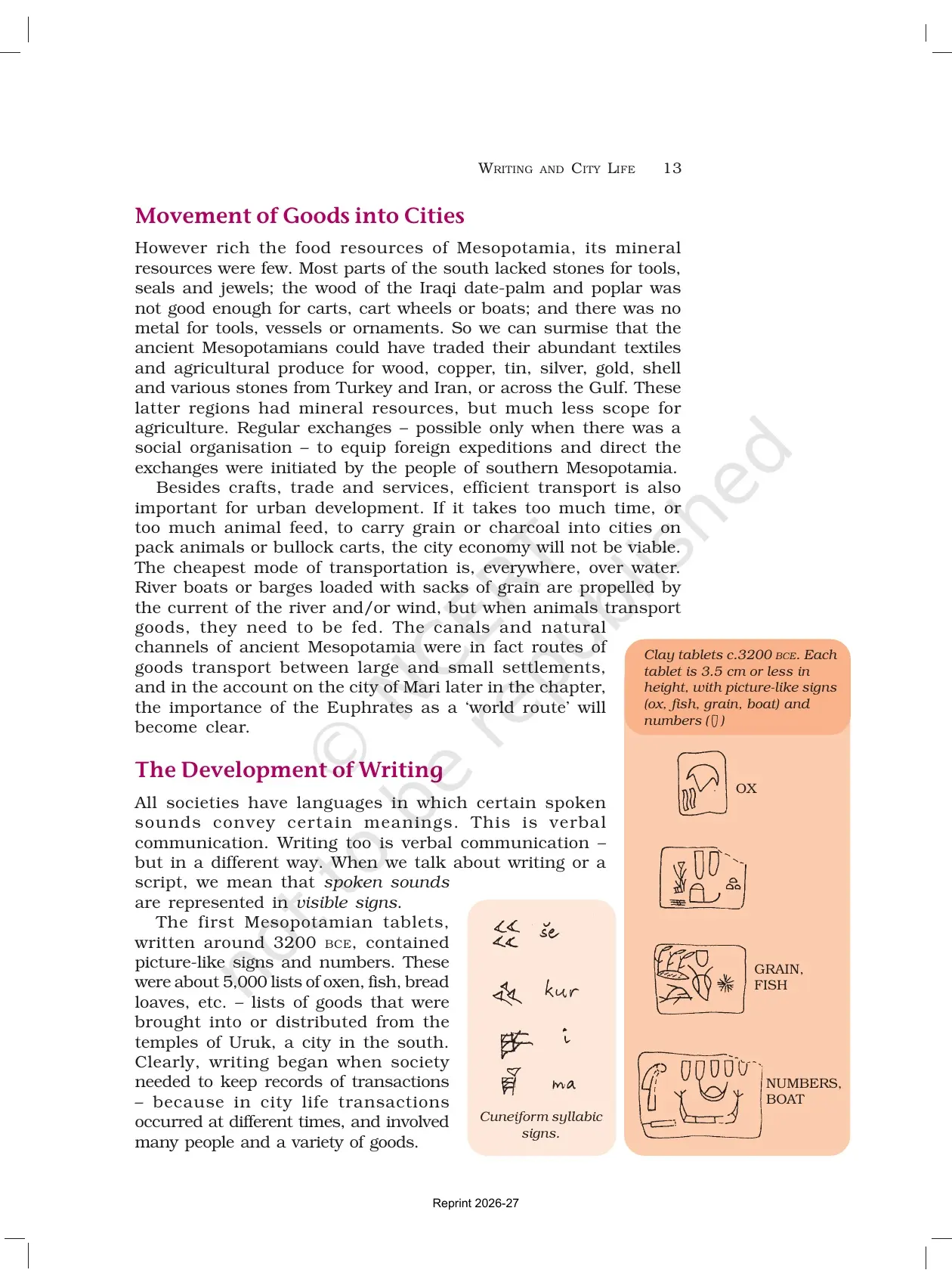
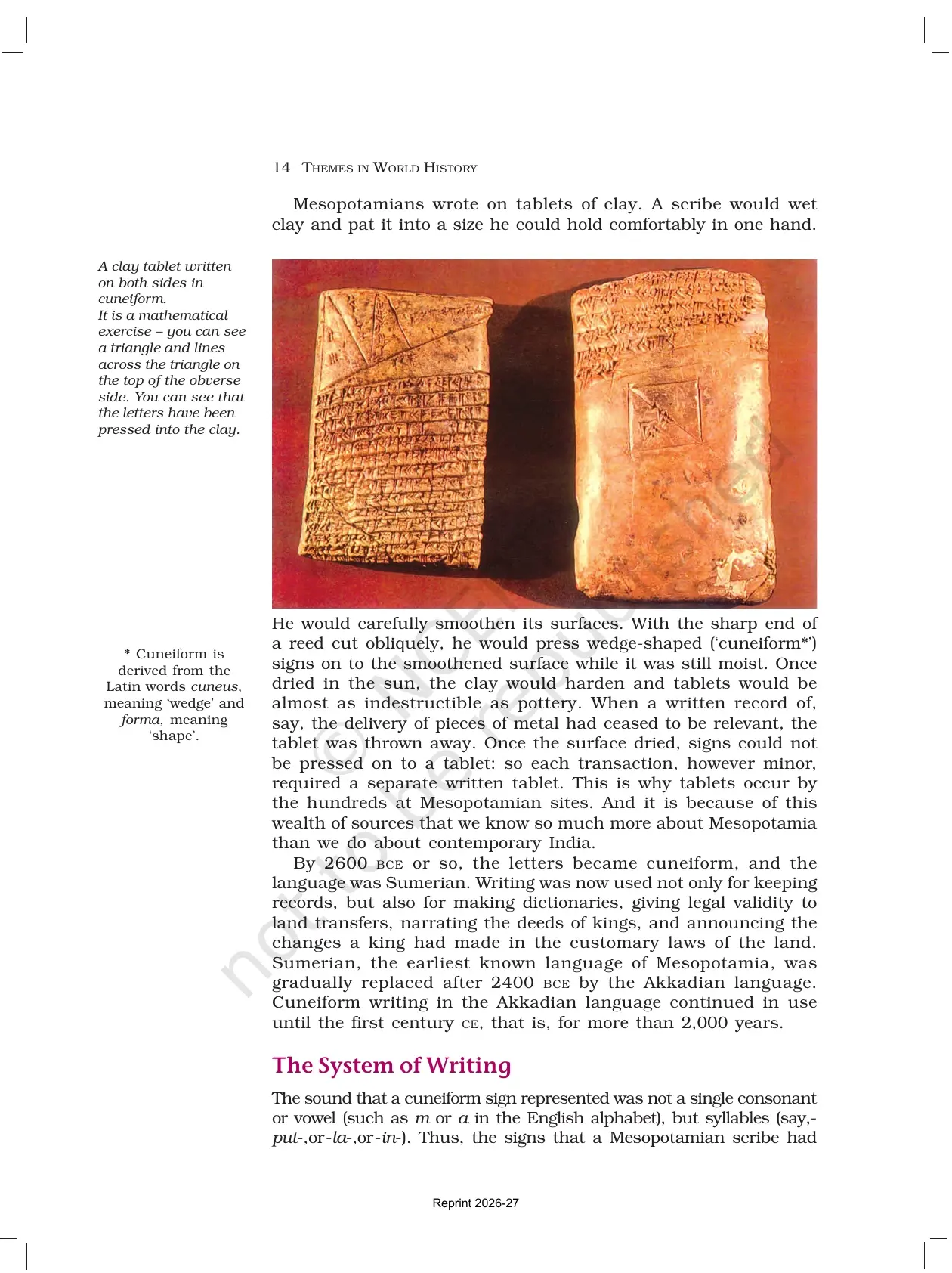
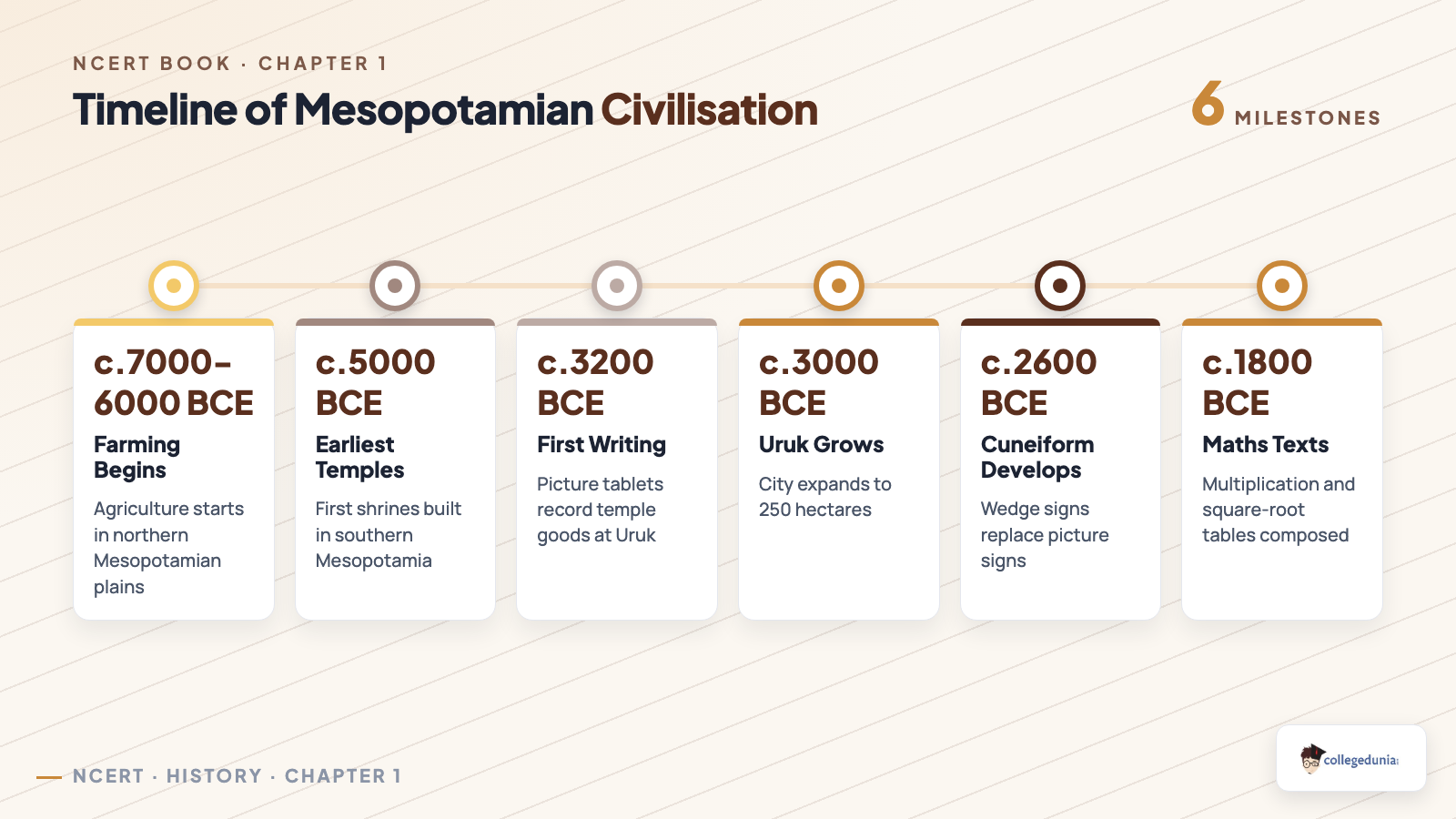
Writing began, the chapter says, because city life needed records of transactions between many people at different times. The earliest Mesopotamian tablets, from around 3200 BCE, carried picture-like signs and numbers listing goods such as oxen, fish and bread moving in and out of the temples of Uruk. By about 2600 BCE these signs had become cuneiform, wedge-shaped marks pressed into wet clay with a cut reed, in the Sumerian language.
- Not alphabetic: each cuneiform sign stood for a syllable, not a single letter, so a scribe had to learn hundreds of signs
- Written on clay: a scribe pressed signs into moist clay, which hardened in the sun and became almost as durable as pottery
- Limited literacy: very few Mesopotamians could read or write, and a king who could read had it recorded as an achievement
- Long life: cuneiform writing in the Akkadian language stayed in use for more than 2,000 years, until the first century CE
- Decipherment: the script was worked out by scholars in the 1850s, opening up thousands of Mesopotamian documents to modern historians
The Epic of Gilgamesh and the Uses of Writing
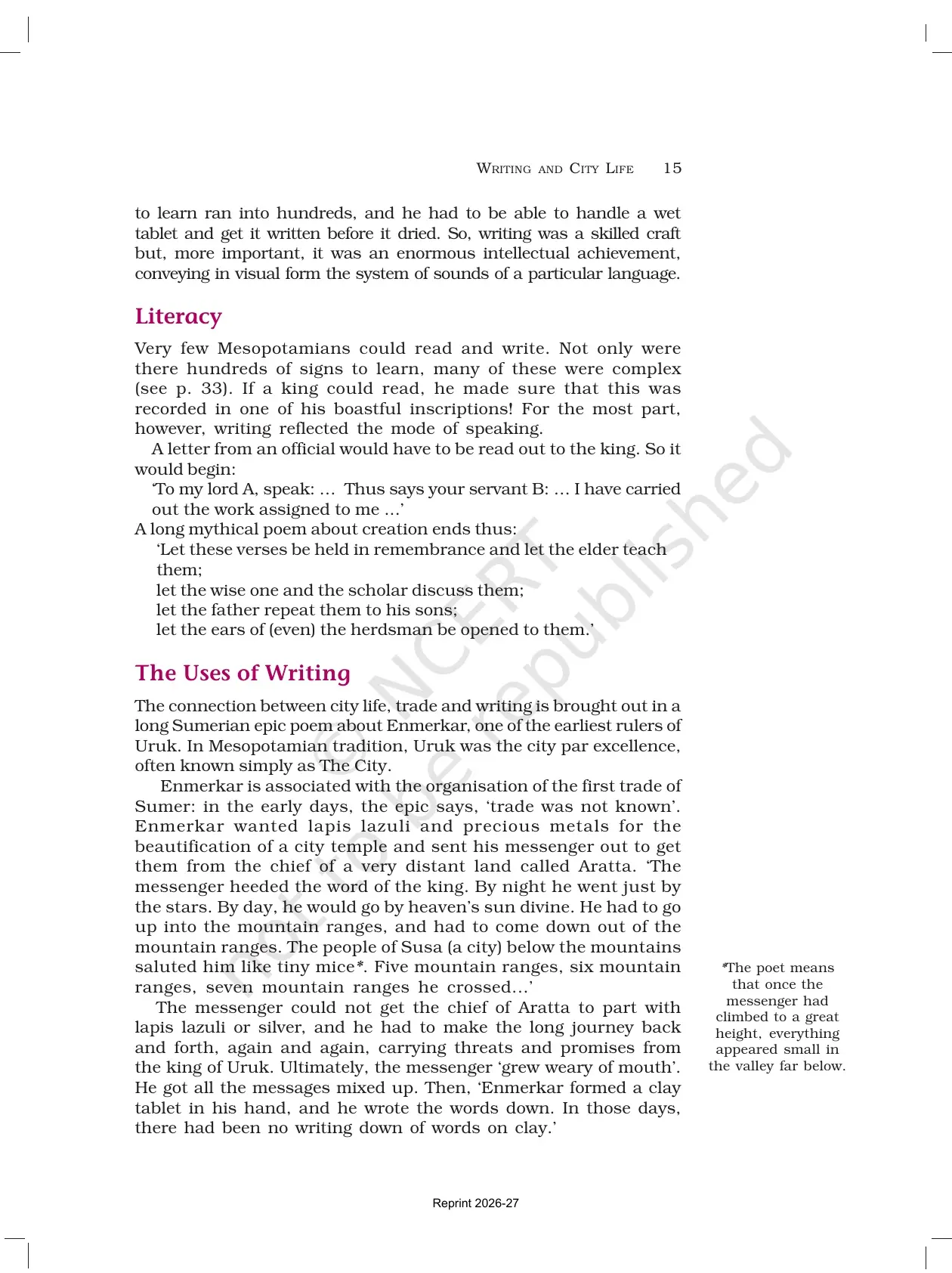
The chapter uses two epic poems to show what writing meant to Mesopotamians. In the story of Enmerkar, an early ruler of Uruk, a messenger sent to a distant land grows too tired to remember the king's message correctly, so Enmerkar presses the words onto a clay tablet instead, a moment the poem treats as the invention of writing itself. The longer Epic of Gilgamesh, written on twelve tablets, follows the hero's failed search for immortality, and ends with Gilgamesh finding comfort not in his own fame but in the city wall of Uruk that his people had built.
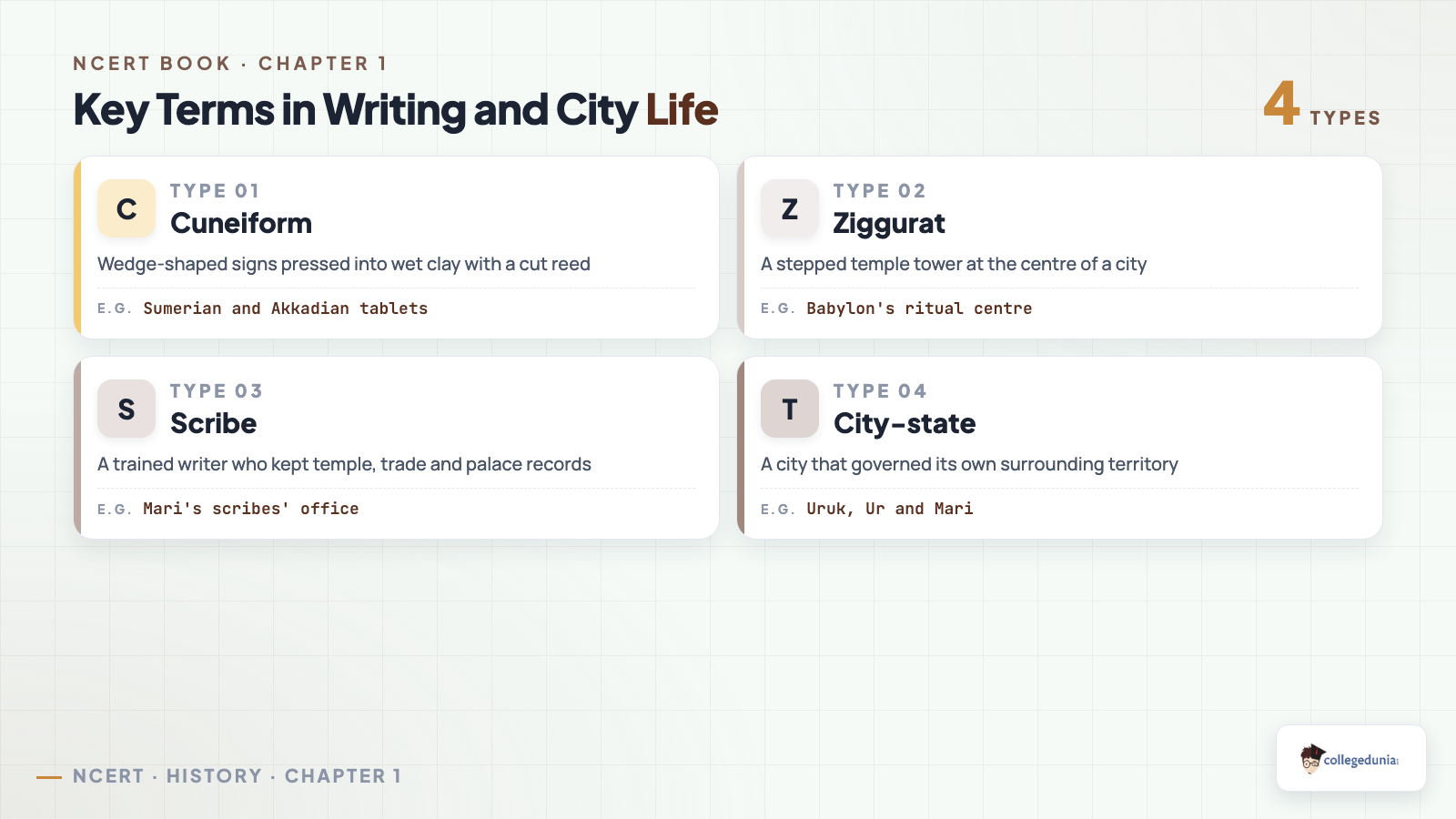
| Term | What it means in the chapter |
|---|---|
| Cuneiform | wedge-shaped signs pressed into clay, from the Latin words for wedge and shape |
| Ziggurat | a stepped temple tower, part of Babylon's ritual centre described near the end of the chapter |
| City-state | a city such as Uruk or Ur that governed its own surrounding territory |
| Scribe | a trained writer who kept records for temples, kings and traders |
Temples, Kings and City Life in Ur and Mari
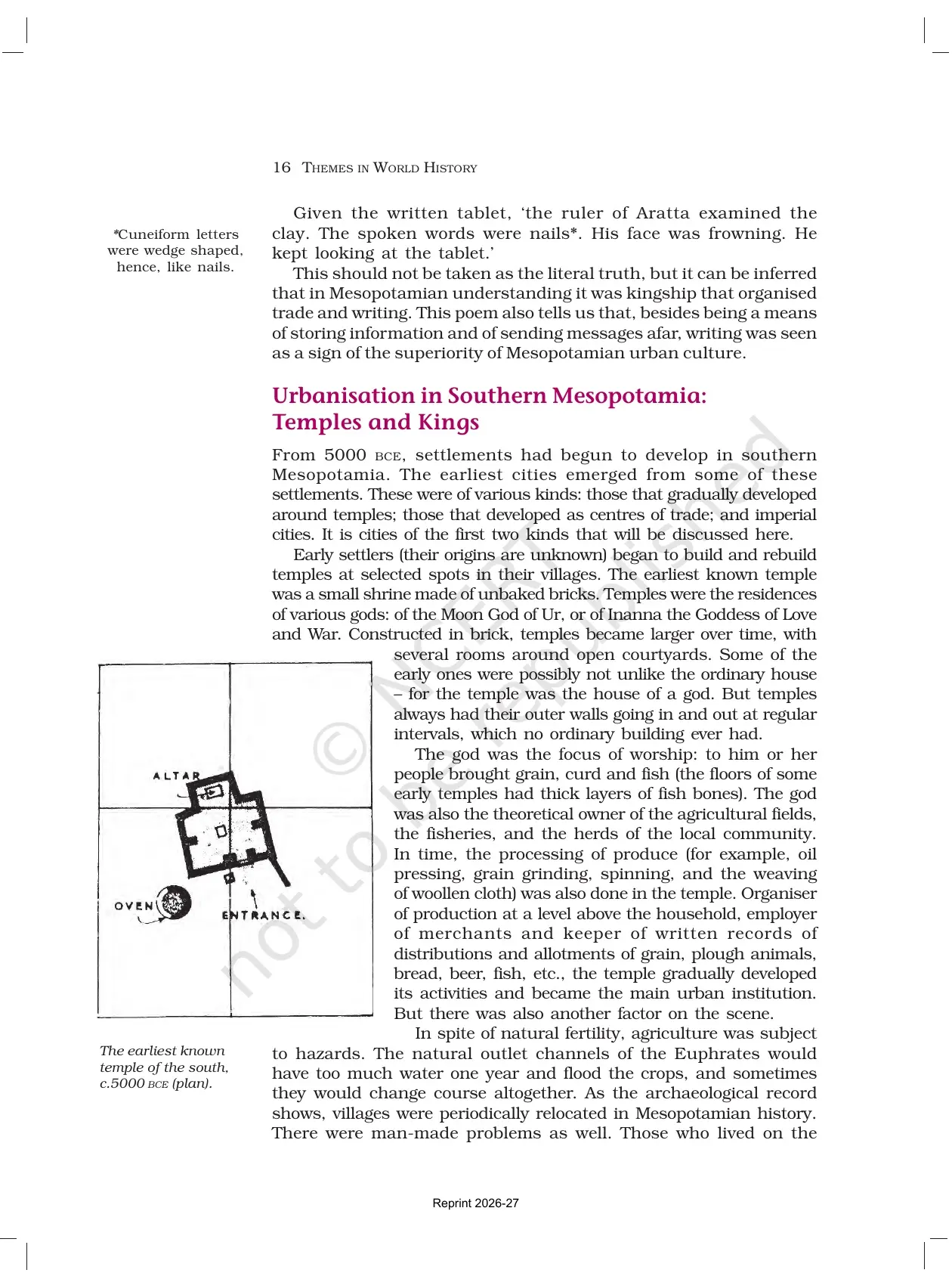
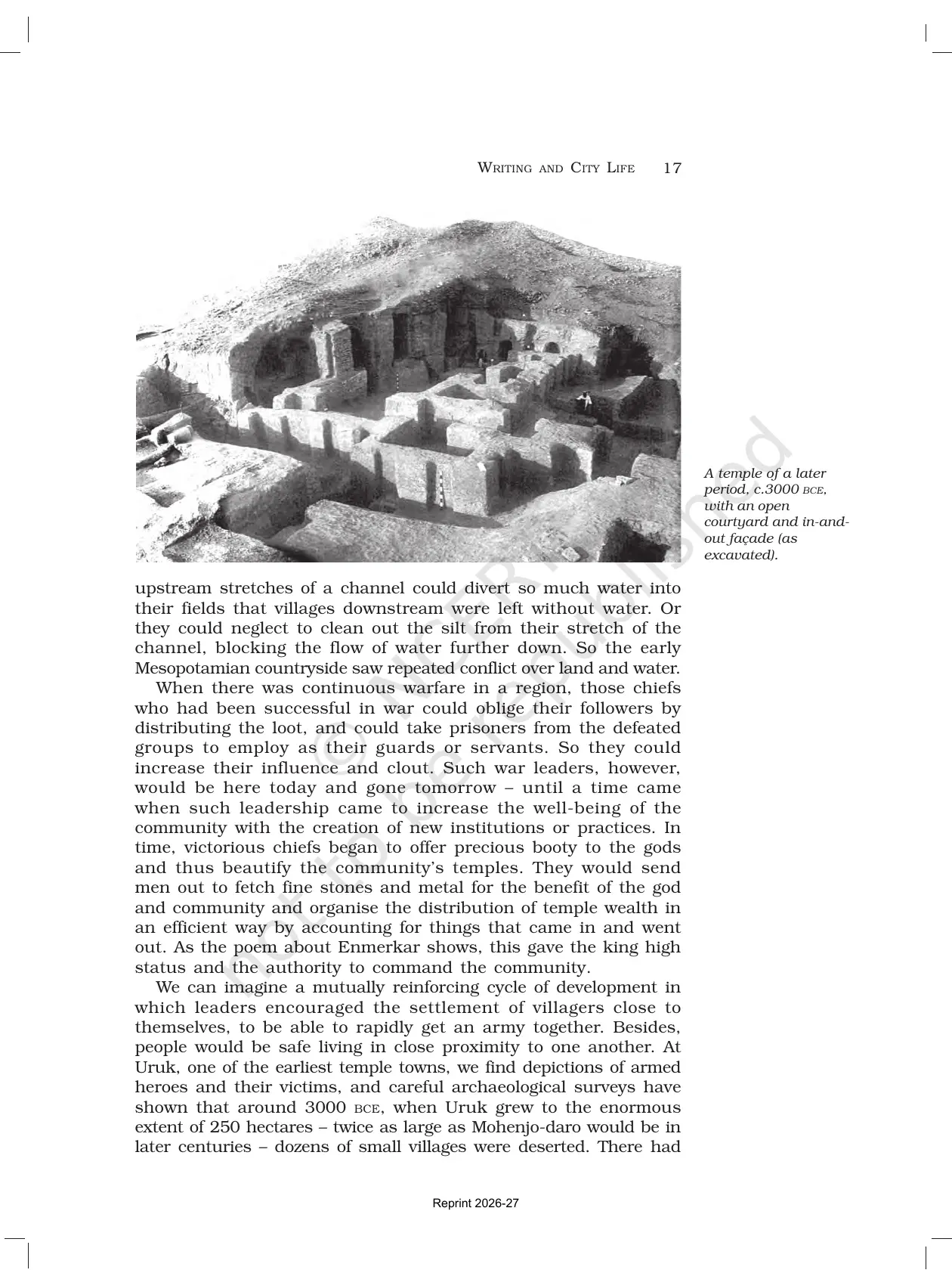
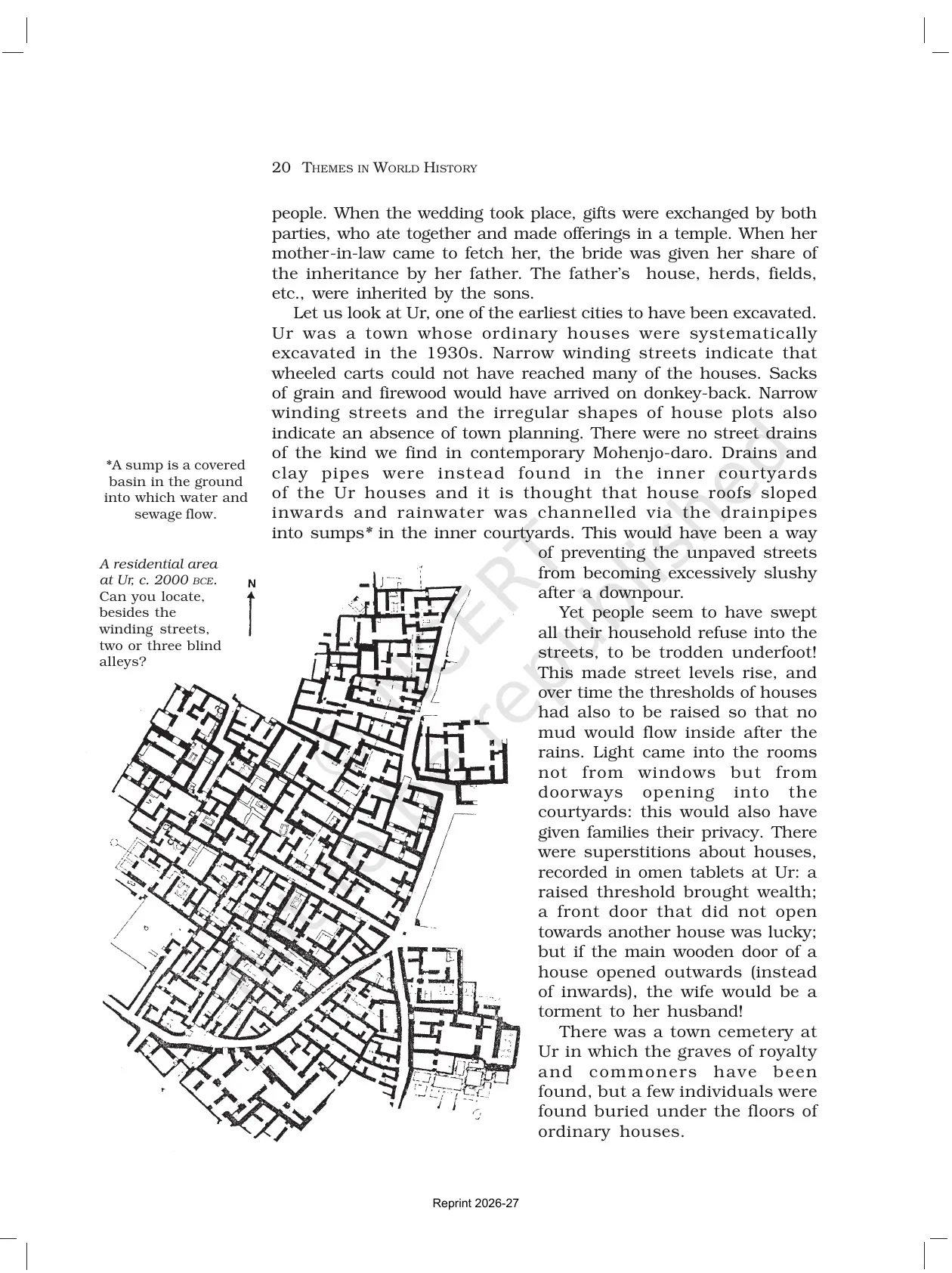
Before kings, the chapter says, the temple was the main urban institution: it owned fields and herds, organised craft production, and kept written records of what came in and went out. War leaders who could distribute loot and protect their followers gradually turned that authority into kingship, and the excavated houses of Ur show what ordinary city life looked like, narrow winding streets, courtyards that drained rainwater, and superstitions about which way a front door should open.
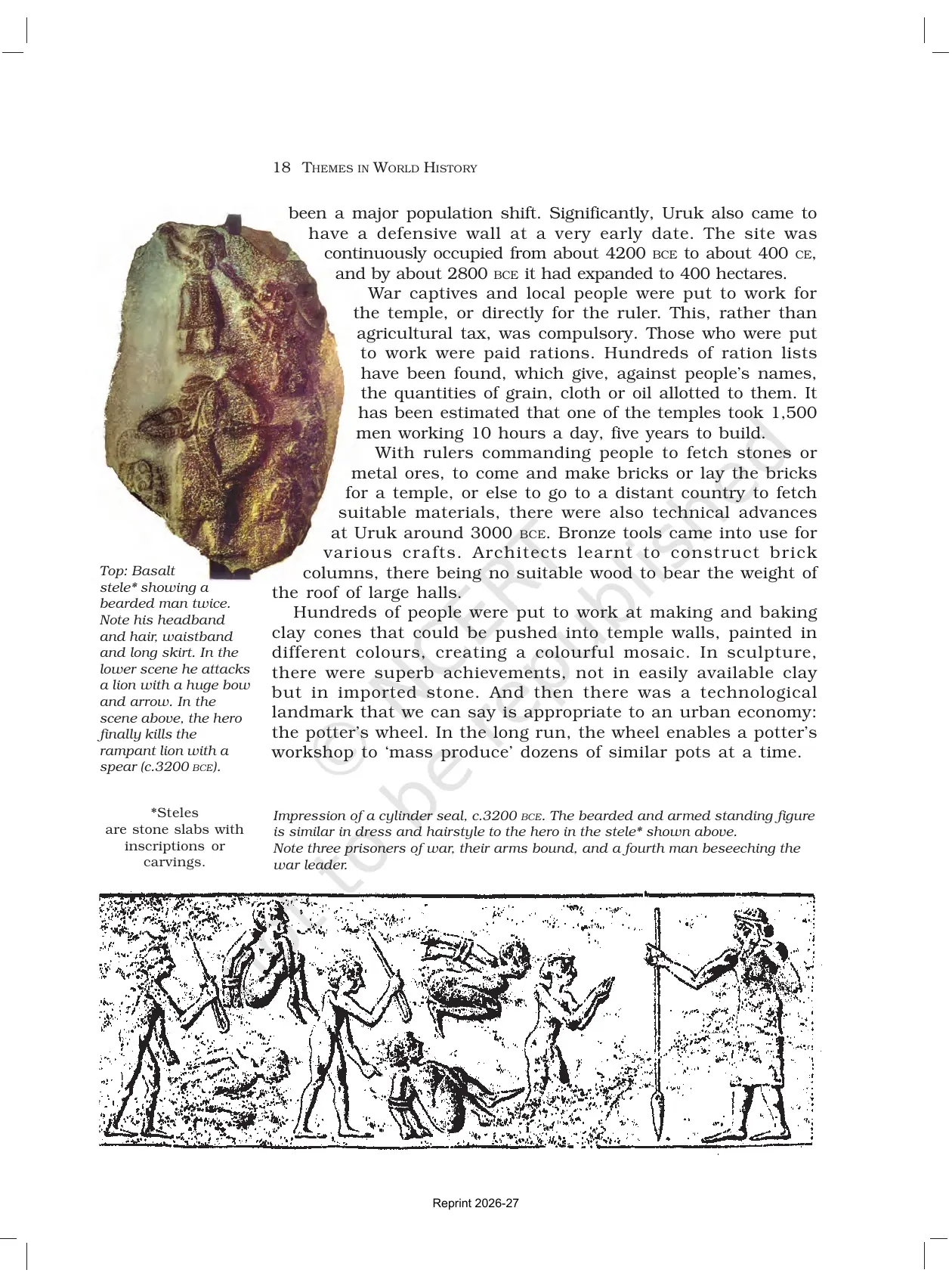
- Uruk grew to 250 hectares by around 3000 BCE, twice the size Mohenjo-daro would later reach
- One temple project reportedly took 1,500 workers ten hours a day for five years to complete
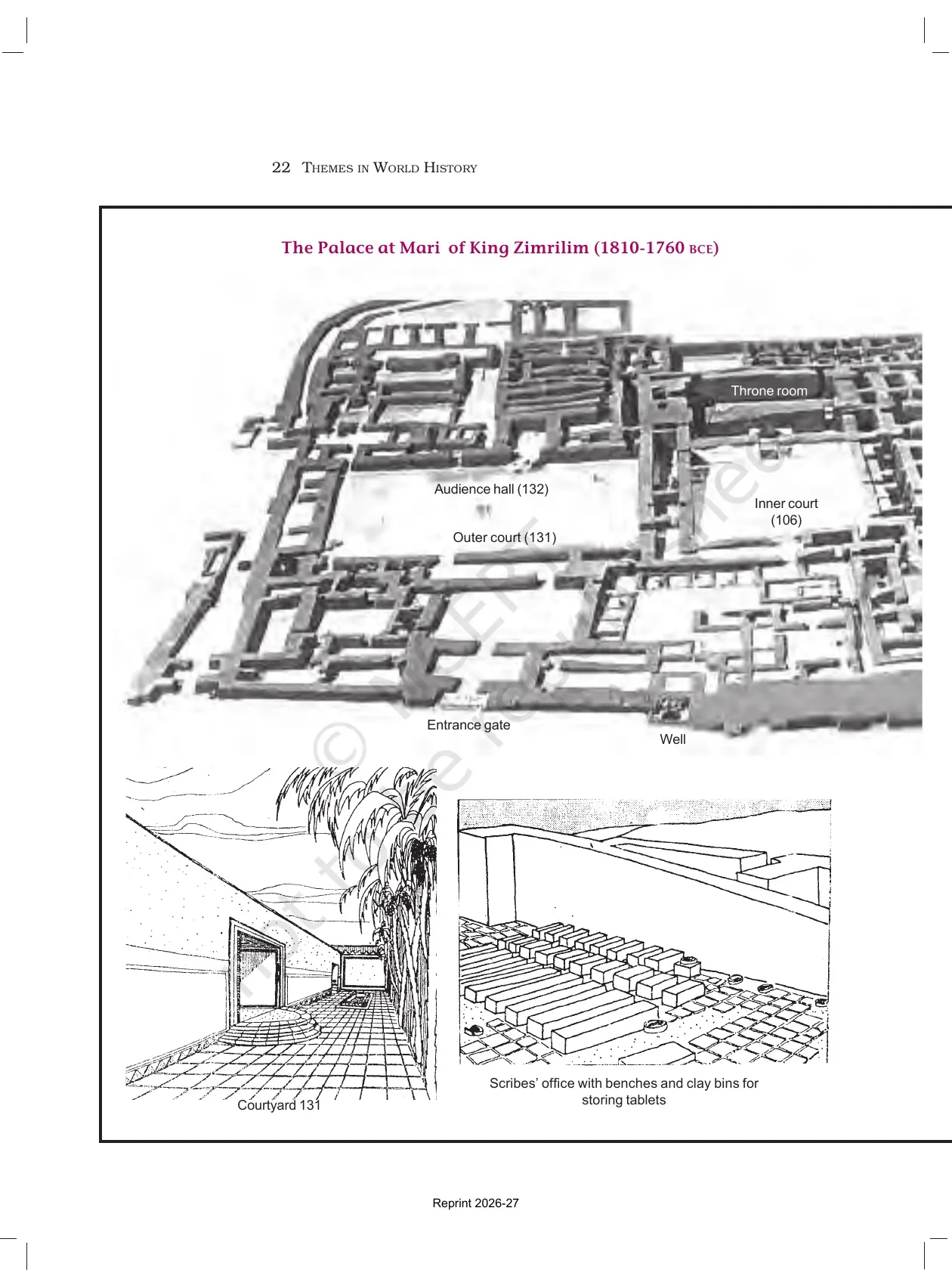
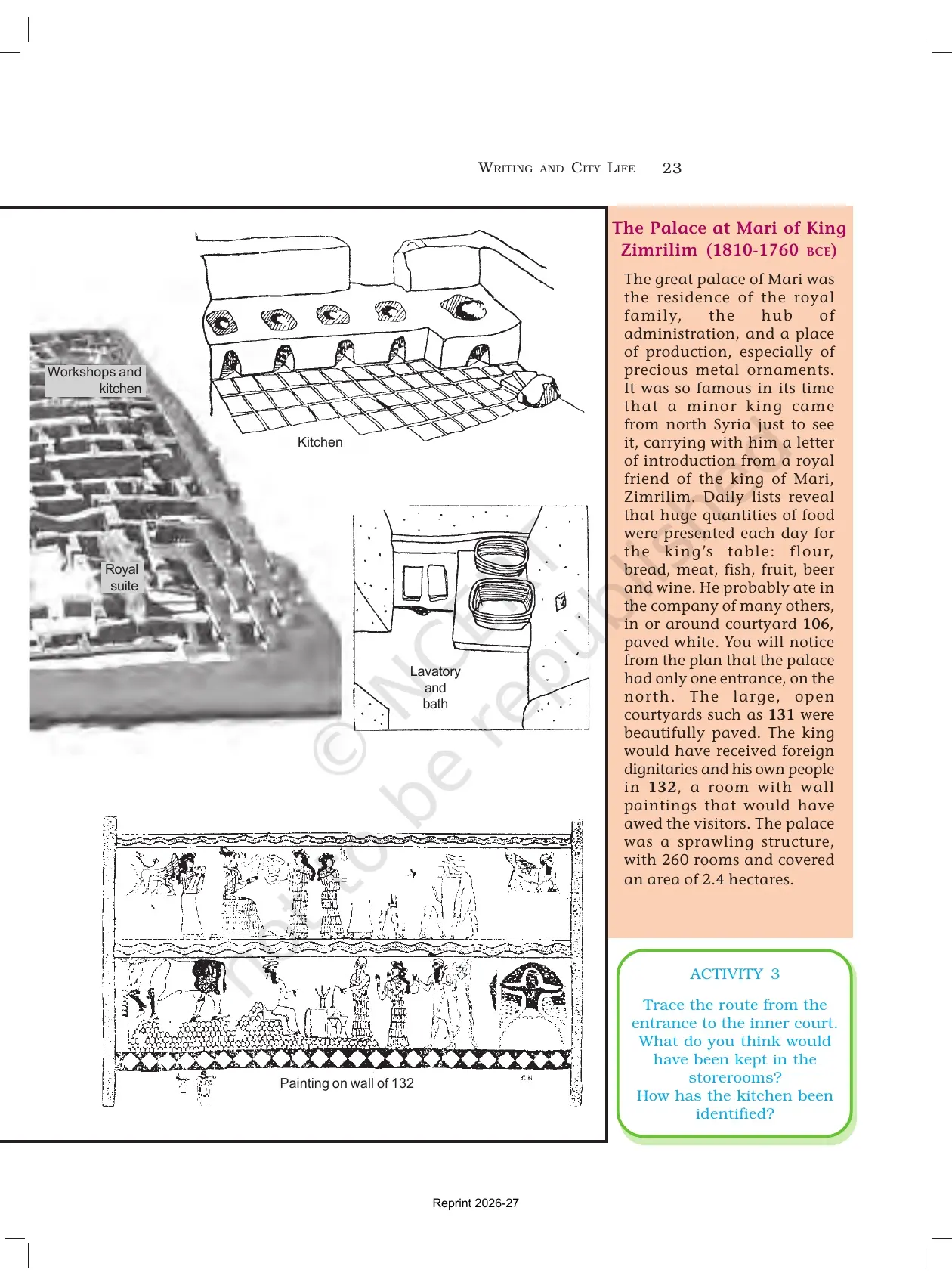
- Mari's palace, home of King Zimrilim, had 260 rooms across 2.4 hectares, including a scribes' office for storing tablets
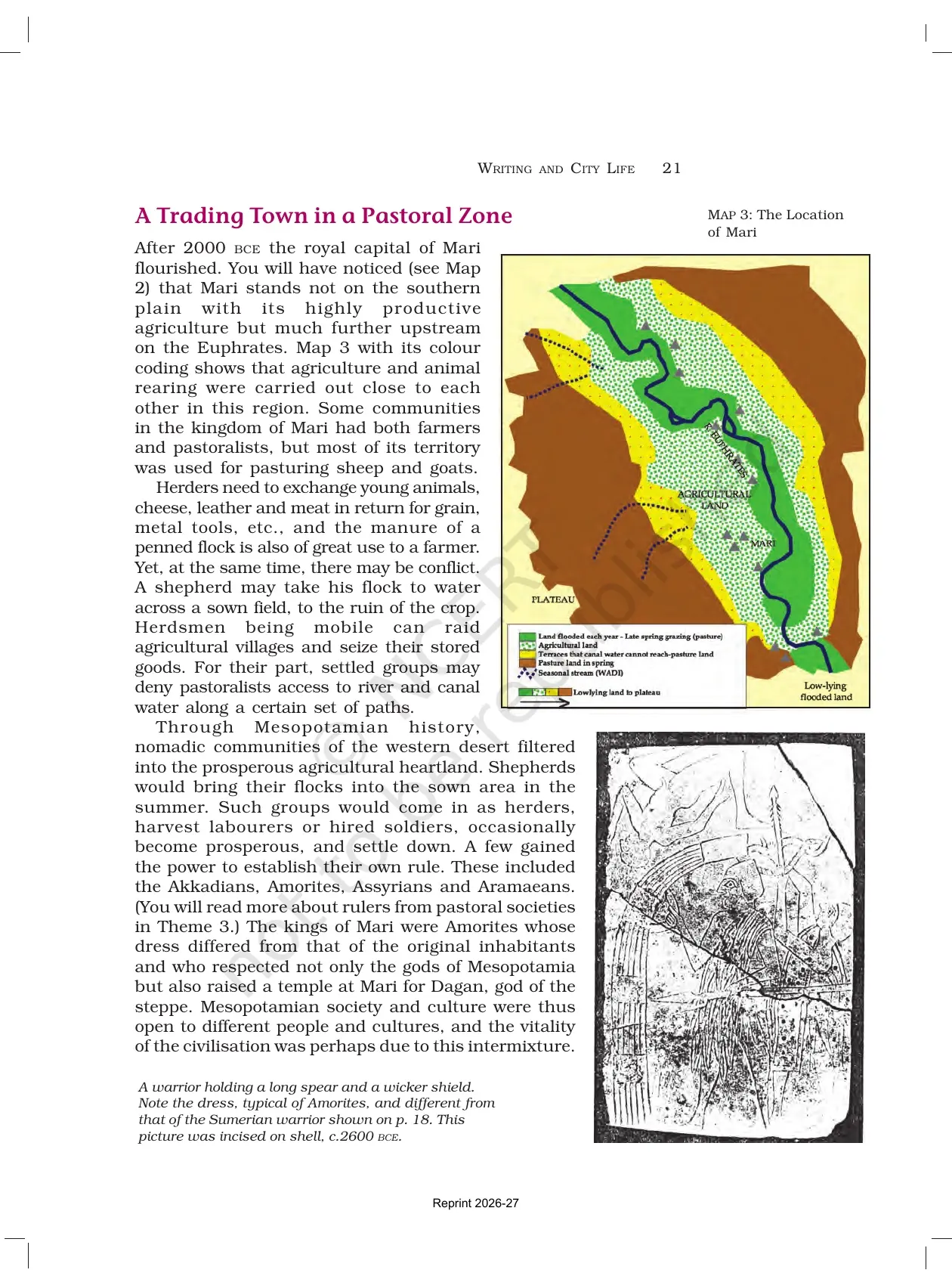
- Herders and settled farmers in the Mari region depended on each other for grain, cheese, leather and manure, though conflicts over water and grazing were common
The Legacy of Mesopotamian Mathematics and Astronomy
The chapter's closing sections credit Mesopotamia with an achievement that outlasted its cities: a written tradition of mathematics and time reckoning. Tablets from around 1800 BCE show multiplication, division and square-root tables, and Mesopotamian scribes calculated the square root of 2 to a value only slightly different from the modern figure.
| Legacy | What it gave later civilisations |
|---|---|
| Calendar | a year of 12 months based on the moon's cycle, and a month divided into four weeks |
| Time units | a day of 24 hours and an hour of 60 minutes, passed on through Alexander's successors to Rome and medieval Europe |
| Mathematics | multiplication, division and square-root tables, and compound interest calculations |
| Astronomy | dated records of solar and lunar eclipses and the observed positions of stars |
The chapter credits two later Mesopotamian rulers with preserving this legacy on purpose. The Assyrian king Assurbanipal built a library of around 30,000 tablets at Nineveh, while the Babylonian king Nabonidus excavated an early stele to copy a priestess's dress and repaired a statue of a king who had ruled 1,500 years before him, an early example of deliberate archaeology.
What Collegedunia Adds to This Chapter PDF
Collegedunia gives students the file plus a way into it. The chapter PDF itself is the official NCERT file, untouched.
- Official file: the exact NCERT chapter PDF, no pages removed
- Read in the browser: page through all 28 pages before downloading
- Chapter list: jump to any other chapter from one table
Also Check: the other Class 11 History resources for this chapter, and a related Class 11 humanities resource that is already live on Collegedunia.
| Resource | Link |
|---|---|
| Chapter notes | Writing and City Life Class 11 Notes (coming soon) |
| Chapter solutions | Writing and City Life Class 11 NCERT Solutions (coming soon) |
| Handwritten notes | Writing and City Life Class 11 Handwritten Notes (coming soon) |
| Next chapter book PDF | An Empire Across Three Continents Class 11 Book PDF (coming soon) |
| Related Class 11 humanities resource | Constitution: Why and How Class 11 Political Science Handwritten Notes |
Class 11 History NCERT Book PDF: All Chapters
Every chapter of the book is on its own page. The 2026-27 Class 11 History textbook Themes in World History has 7 chapters, moving from the earliest cities to the making of the modern world.
| Chapter | Download |
|---|---|
| Chapter 1 | Writing and City Life NCERT Book PDF |
| Chapter 2 | An Empire Across Three Continents NCERT Book PDF (coming soon) |
| Chapter 3 | Nomadic Empires NCERT Book PDF (coming soon) |
| Chapter 4 | The Three Orders NCERT Book PDF (coming soon) |
| Chapter 5 | Changing Cultural Traditions NCERT Book PDF (coming soon) |
| Chapter 6 | Displacing Indigenous Peoples NCERT Book PDF (coming soon) |
| Chapter 7 | Paths to Modernisation NCERT Book PDF (coming soon) |
Writing and City Life Class 11 NCERT Book PDF FAQs
Common Student Questions on the Writing and City Life Chapter File
Ques. Where can I download the Class 11 History Chapter 1 NCERT Book PDF?
Ans. The official 28-page chapter file, Writing and City Life, is on this page, free to download for the 2026-27 session.
Ques. How many pages is the Writing and City Life chapter?
Ans. 28 pages, and this PDF is the complete official chapter with nothing removed.
Ques. What is cuneiform writing?
Ans. Cuneiform is the wedge-shaped script that Mesopotamian scribes pressed into wet clay tablets with a cut reed. It represented syllables rather than single letters, and it developed from the picture-like signs used on tablets from around 3200 BCE.
Ques. Where was the earliest city life in this chapter?
Ans. In Mesopotamia, the land between the Euphrates and Tigris rivers in what is now Iraq. The chapter focuses on cities such as Uruk, Ur and Mari.
Ques. Why did cities in southern Mesopotamia need trade?
Ans. The south had fertile soil and plenty of grain, wool and fish, but almost no stone, timber or metal. Cities had to trade their surplus textiles and produce for materials from Turkey, Iran and across the Gulf.
Ques. What is the Epic of Gilgamesh about?
Ans. It is a Mesopotamian epic written on twelve tablets about Gilgamesh, a ruler of Uruk who searches for immortality after his friend dies. He fails in the search and instead takes pride in the city wall his people built.
Ques. What did Mesopotamia contribute to mathematics and astronomy?
Ans. Multiplication, division and square-root tables from around 1800 BCE, a calendar of 12 lunar months, a 24-hour day divided into 60-minute hours, and dated records of eclipses and star positions.
Ques. Is this the official NCERT file?
Ans. Yes. It is the NCERT chapter PDF for 2026-27 hosted as published, with no pages removed or added.



Comments