




The Three Orders is the chapter where Class 11 History leaves the Mongol steppe behind and turns to medieval Europe, where the entire population was sorted into three groups: those who prayed, those who fought and those who worked. The ncert book class 11 history chapter 4 the three orders file on this page is the official NCERT chapter for 2026-27. Download it for the full account of feudal lords, the Church and the peasants who supported them both.
- Chapter: Chapter 4, The Three Orders, from the Themes in World History textbook
- Focus: feudal society in western Europe between the ninth and sixteenth centuries, split into clergy, nobility and peasantry
- File: the complete official chapter, with the manorial estate, the Church section and all exercise questions
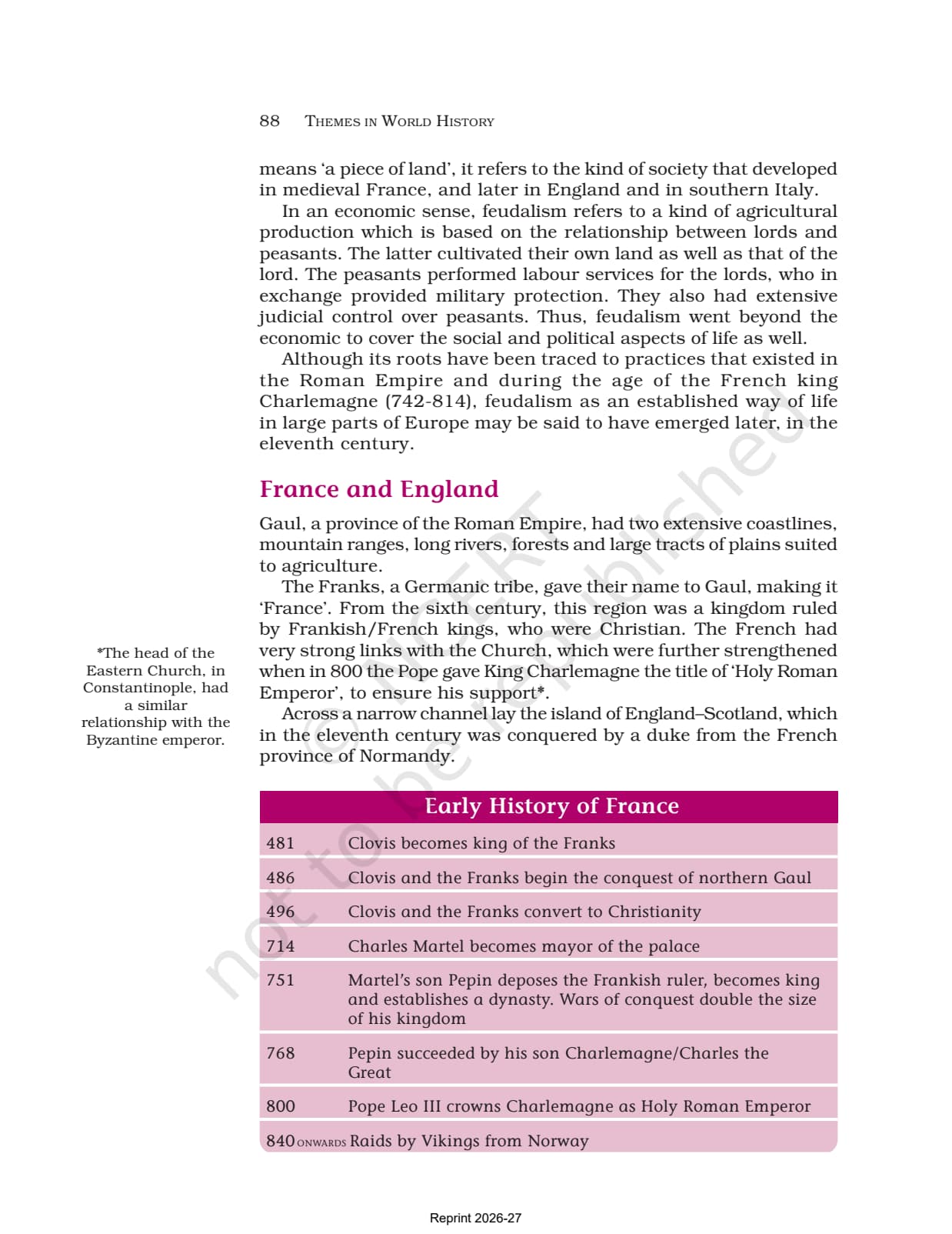
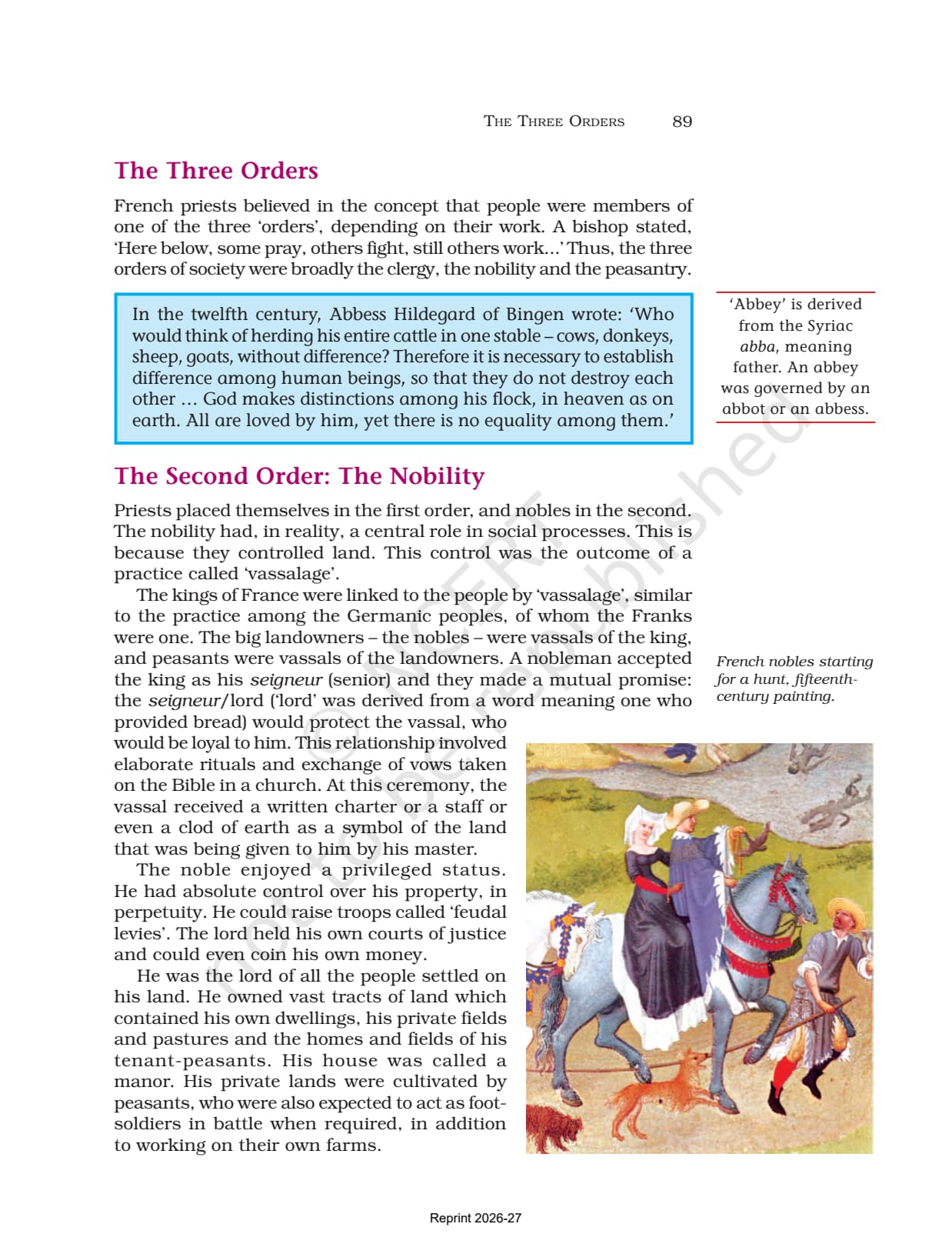
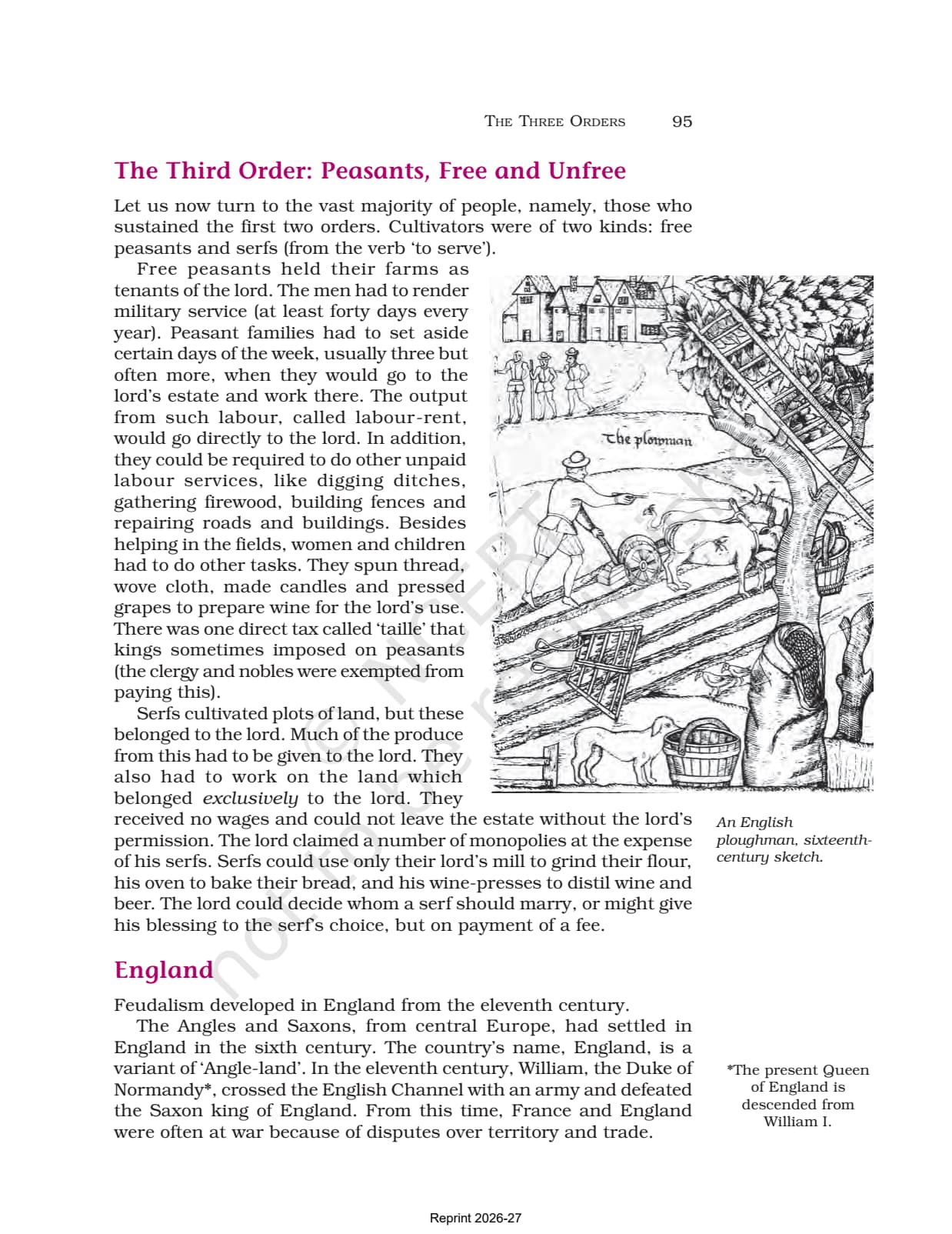
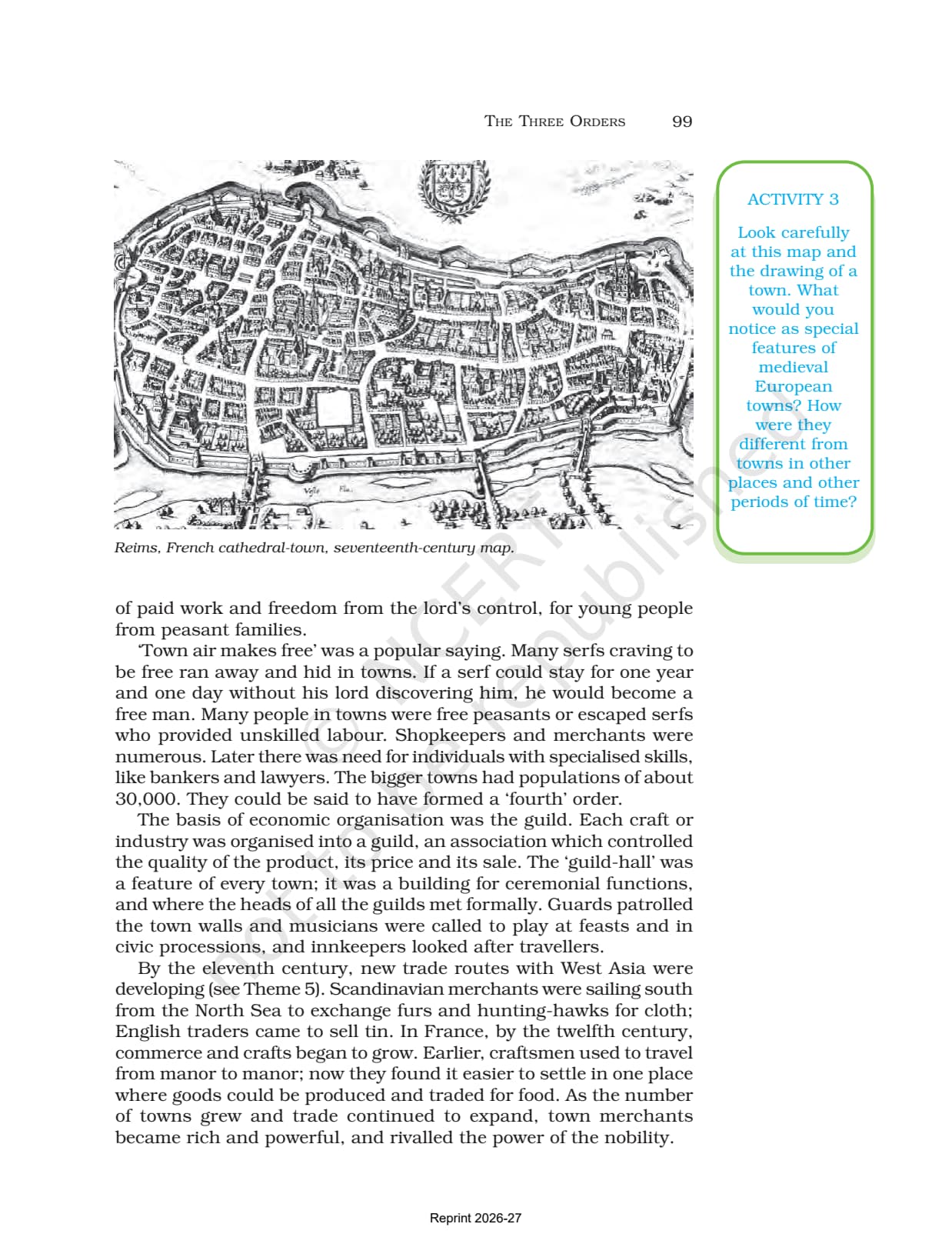
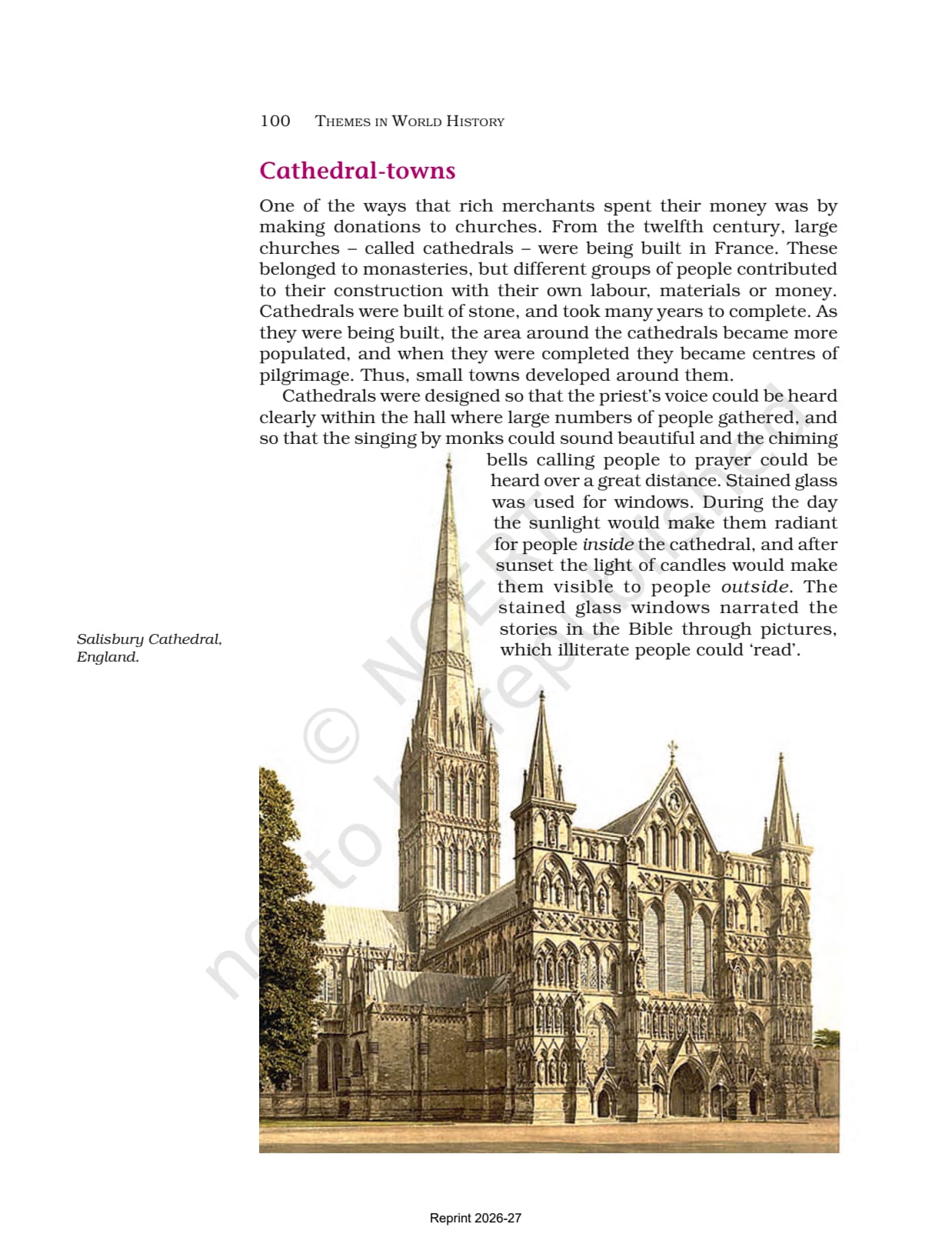
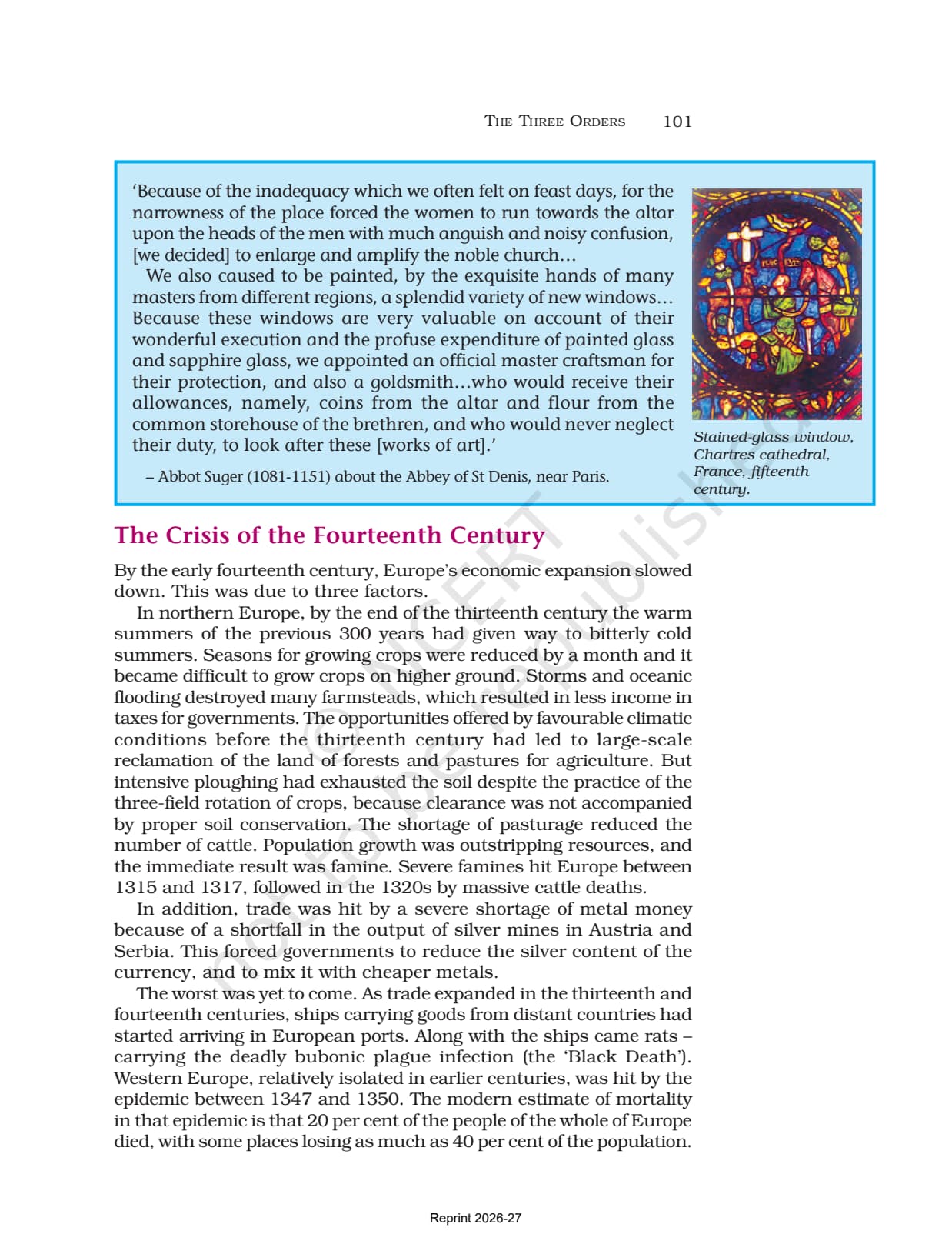
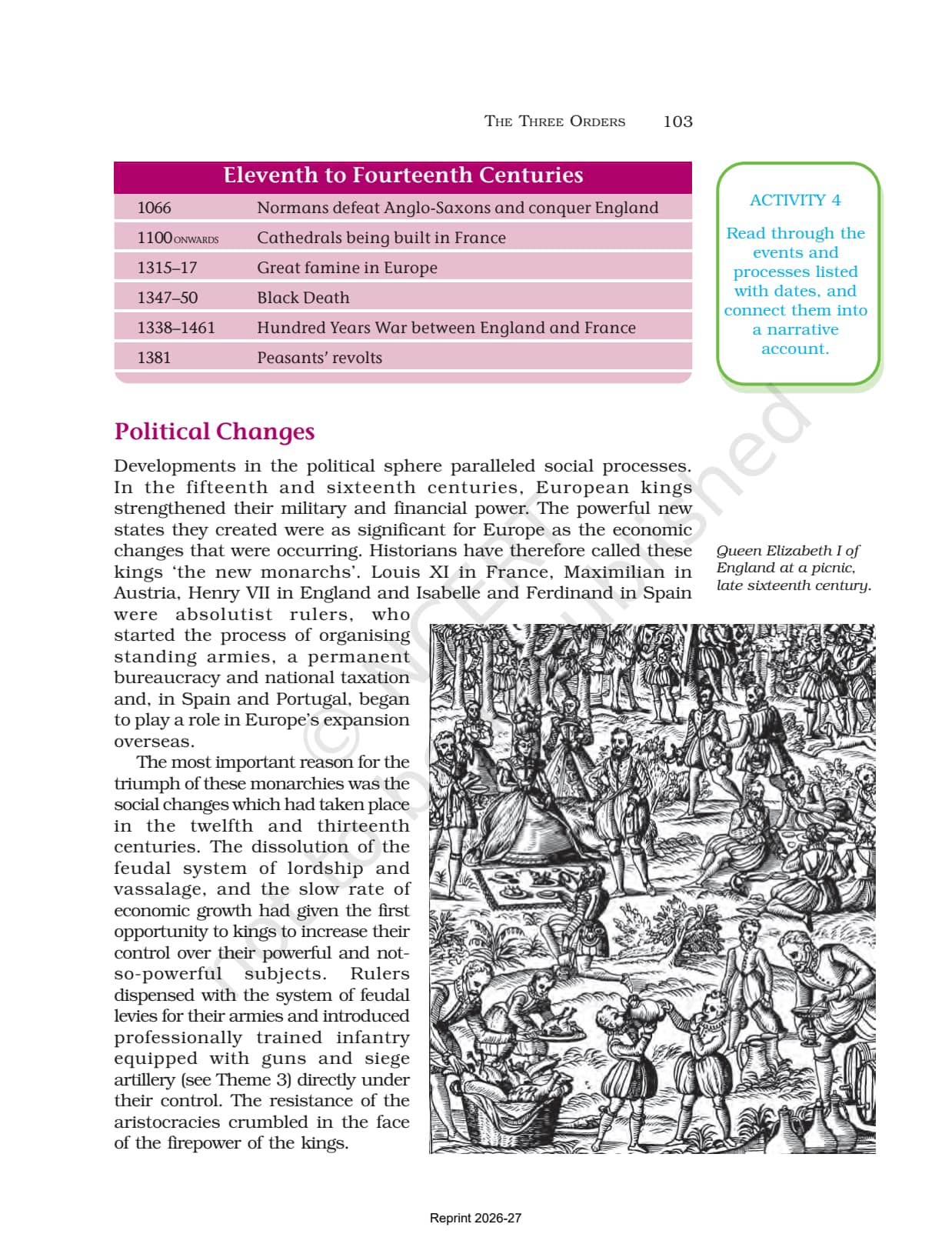
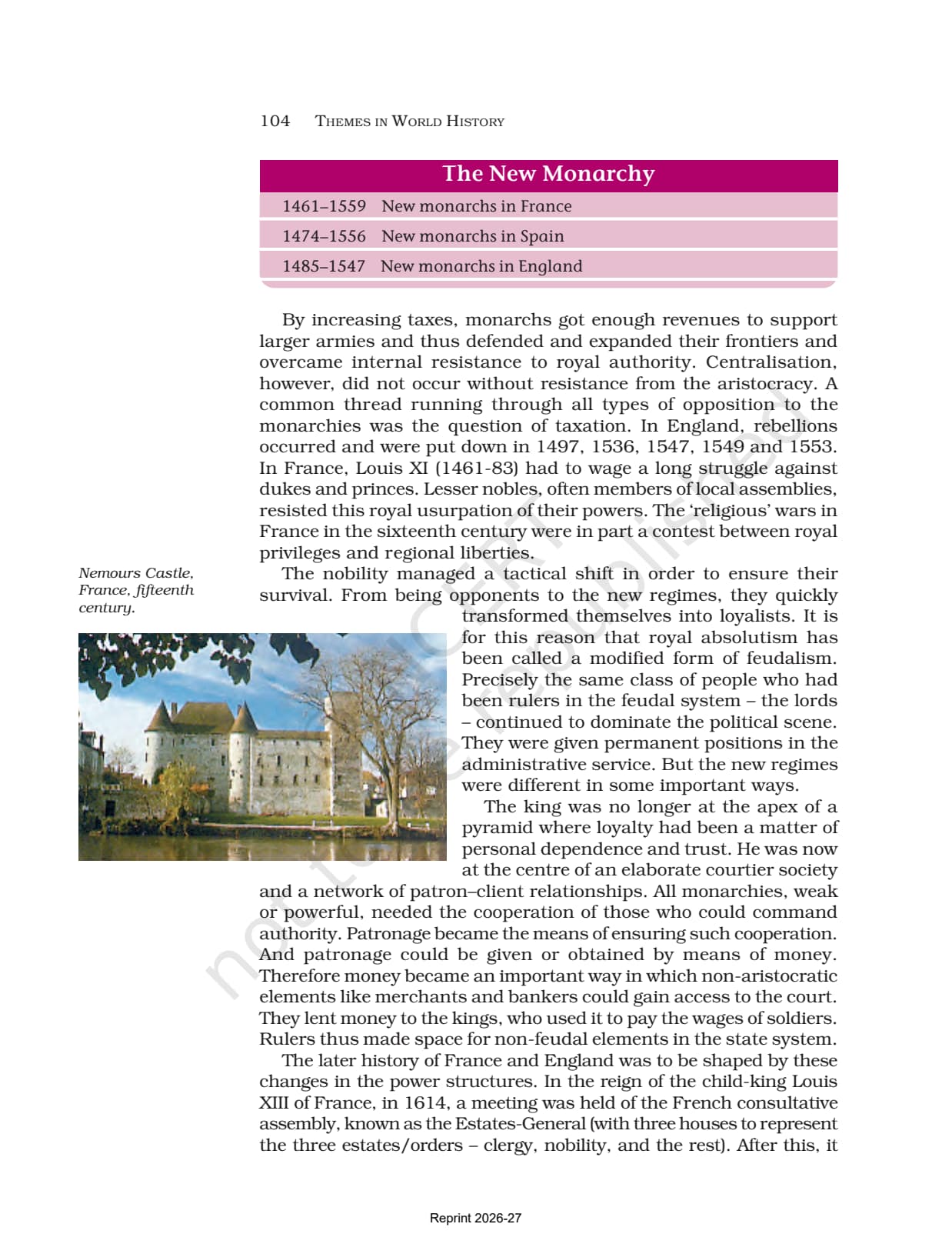
This is the official NCERT chapter file for the 2026-27 session, hosted by Collegedunia with no pages removed.
|
Table of Contents |
How the Three Orders Chapter Is Laid Out
The chapter opens with a bishop's line about people who pray, fight or work, then builds the whole feudal picture around that one sentence. NCERT moves from the nobility and the manor, through the Church and the peasantry, and ends with the changes that slowly broke the system apart.
| Section | What it covers |
|---|---|
| An Introduction to Feudalism | where the word 'feudalism' comes from, and Marc Bloch's Feudal Society |
| The Three Orders | the bishop's statement dividing society into clergy, nobility and peasantry |
| The Second Order: The Nobility | vassalage, the manorial estate, and the rise of the knights |
| The First Order: The Clergy | bishops, the tithe, monasteries and the Benedictine Rule |
| The Third Order: Peasants, Free and Unfree | free peasants, serfs, labour rent and the taille |
| Factors Affecting Social and Economic Relations | the environment, farming technology, and the growth of towns |
| The Crisis of the Fourteenth Century | famine, the Black Death, and political change across Europe |
| Summary and Exercise | a recap plus 4 Answer in Brief and 2 Answer in a Short Essay questions |
The Three Orders Class 11 Chapter Overview
Source: Humanities Corner on YouTube
What the Three Orders Chapter PDF Contains
The PDF holds the whole chapter exactly as NCERT printed it, with nothing trimmed from either end.
- The complete explanation of feudalism, from its German root meaning 'a piece of land' to its social and political reach
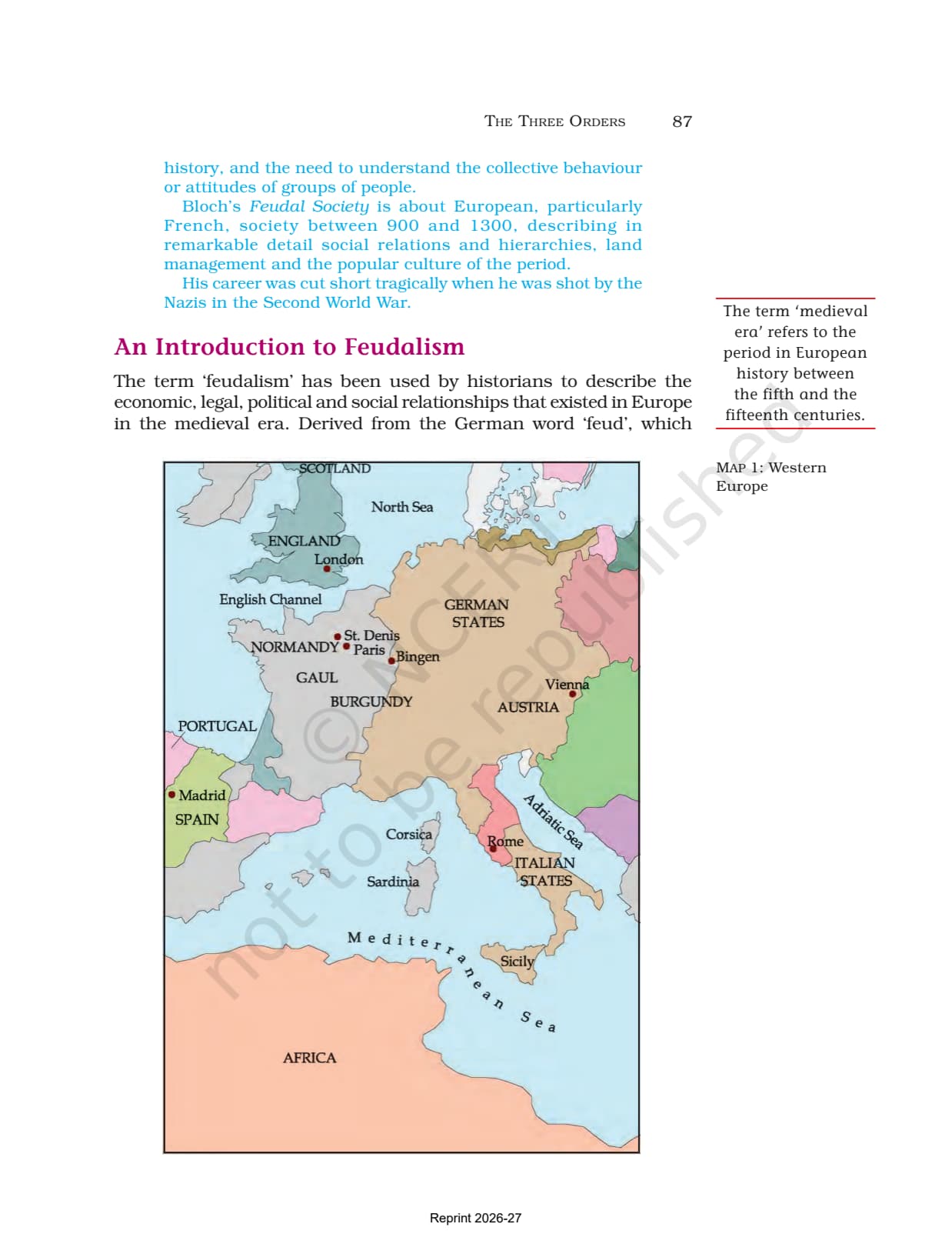
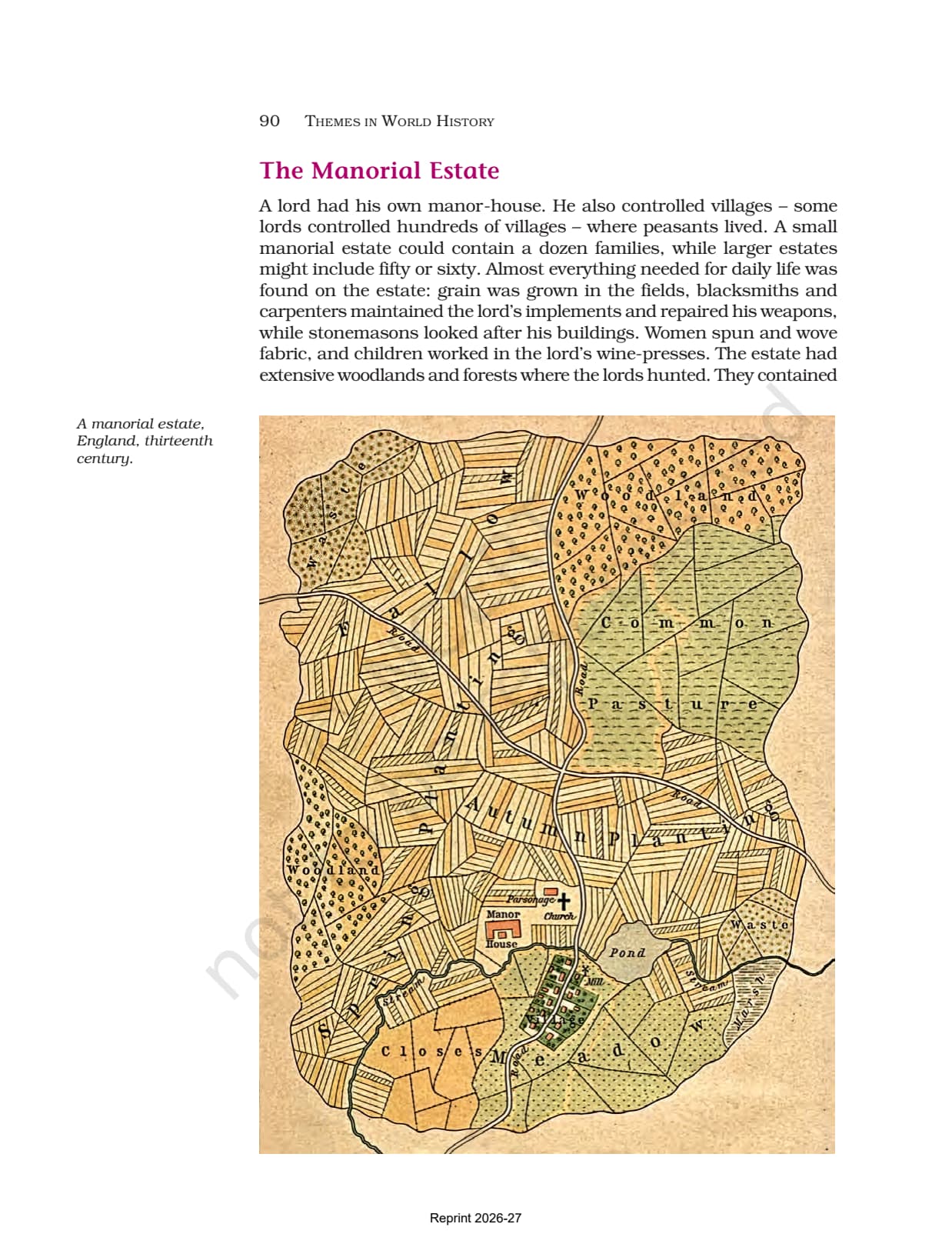
- The map of Western Europe and the illustration of a thirteenth-century English manorial estate
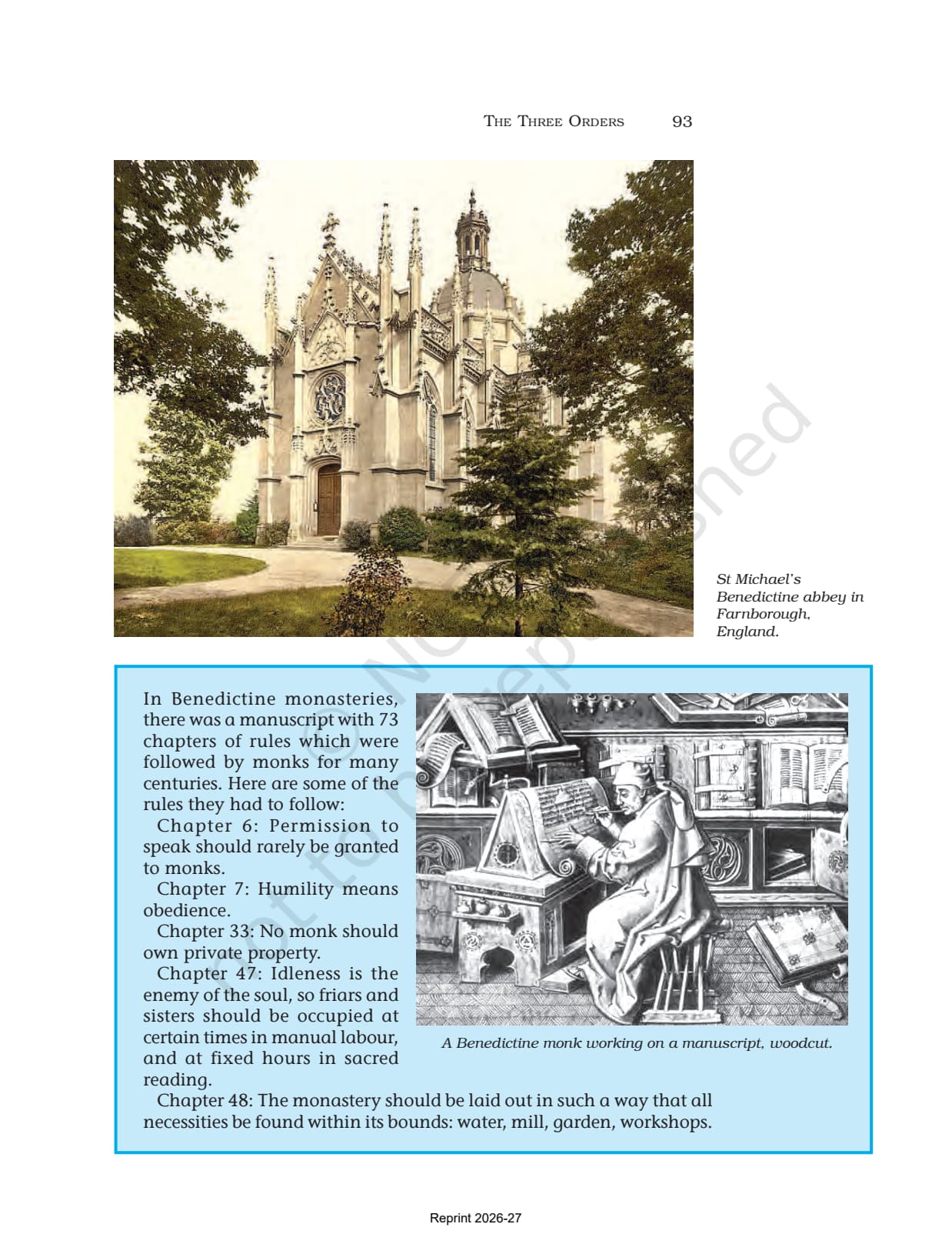
- The Benedictine monastery rule box, listing four of its seventy-three chapters of instructions for monks
- Source extracts, including Abbot Suger on the Abbey of St Denis and Boccaccio's account of the Black Death
- The Summary and all 6 exercise questions, four short-answer and two essay-length, that close the chapter
The Three Orders of Medieval Society: Clergy, Nobility and Peasantry
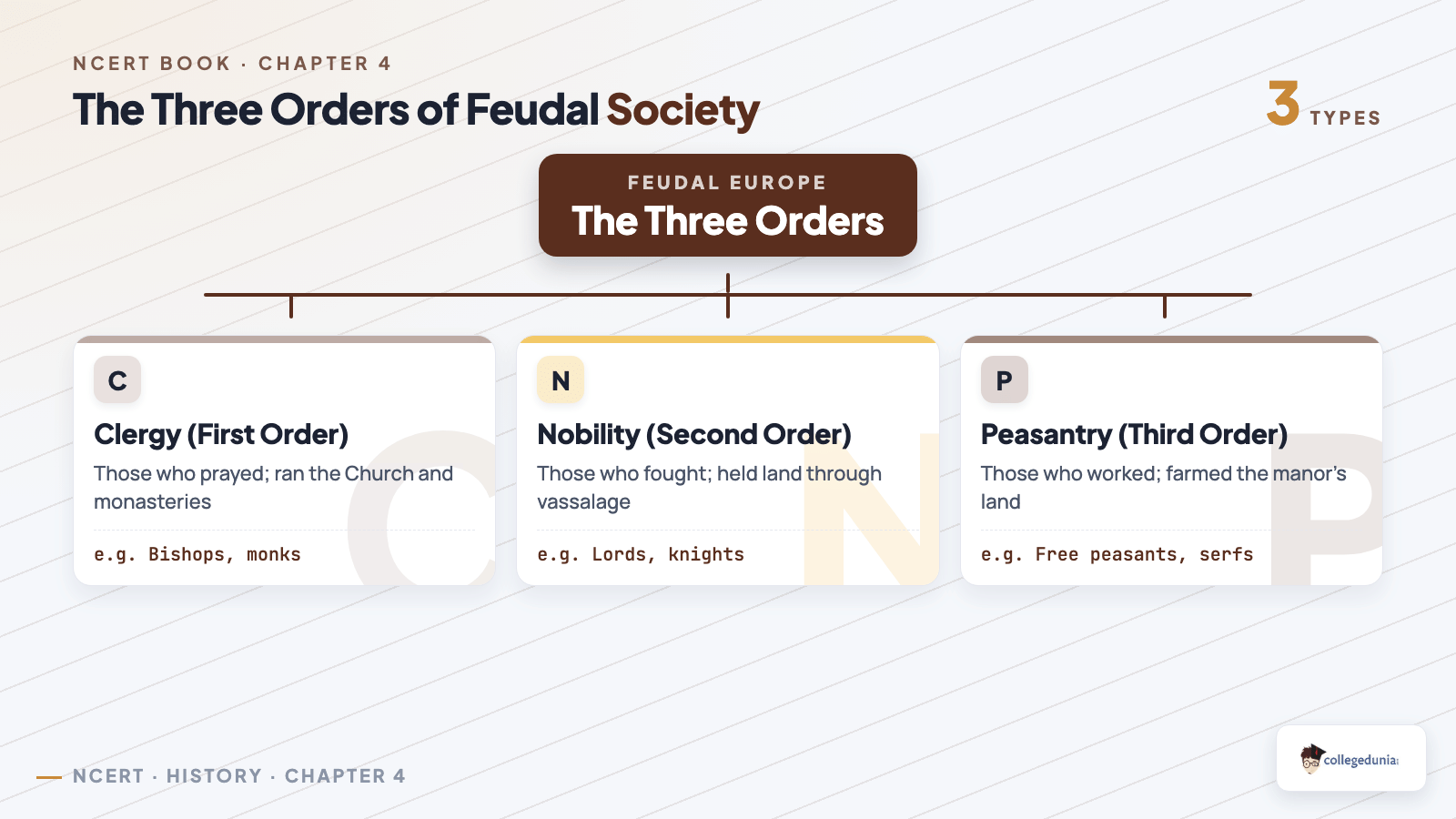
The chapter takes its title from a line that French priests used to explain their world: 'Here below, some pray, others fight, still others work.' This single sentence sorted every person in feudal Europe into one of three orders, and the chapter spends the rest of its pages showing what each order actually did.
- First order: the clergy, who prayed and ran the Church
- Second order: the nobility, who fought and controlled the land
- Third order: the peasantry, who worked the fields and supported both the others
Abbess Hildegard of Bingen defended this ranking in the twelfth century by comparing people to a herd that needed sorting, and the chapter uses her words to show that medieval writers saw inequality as part of a divine order, not a problem to fix.
Feudal Lords, Vassals and the Manorial Estate
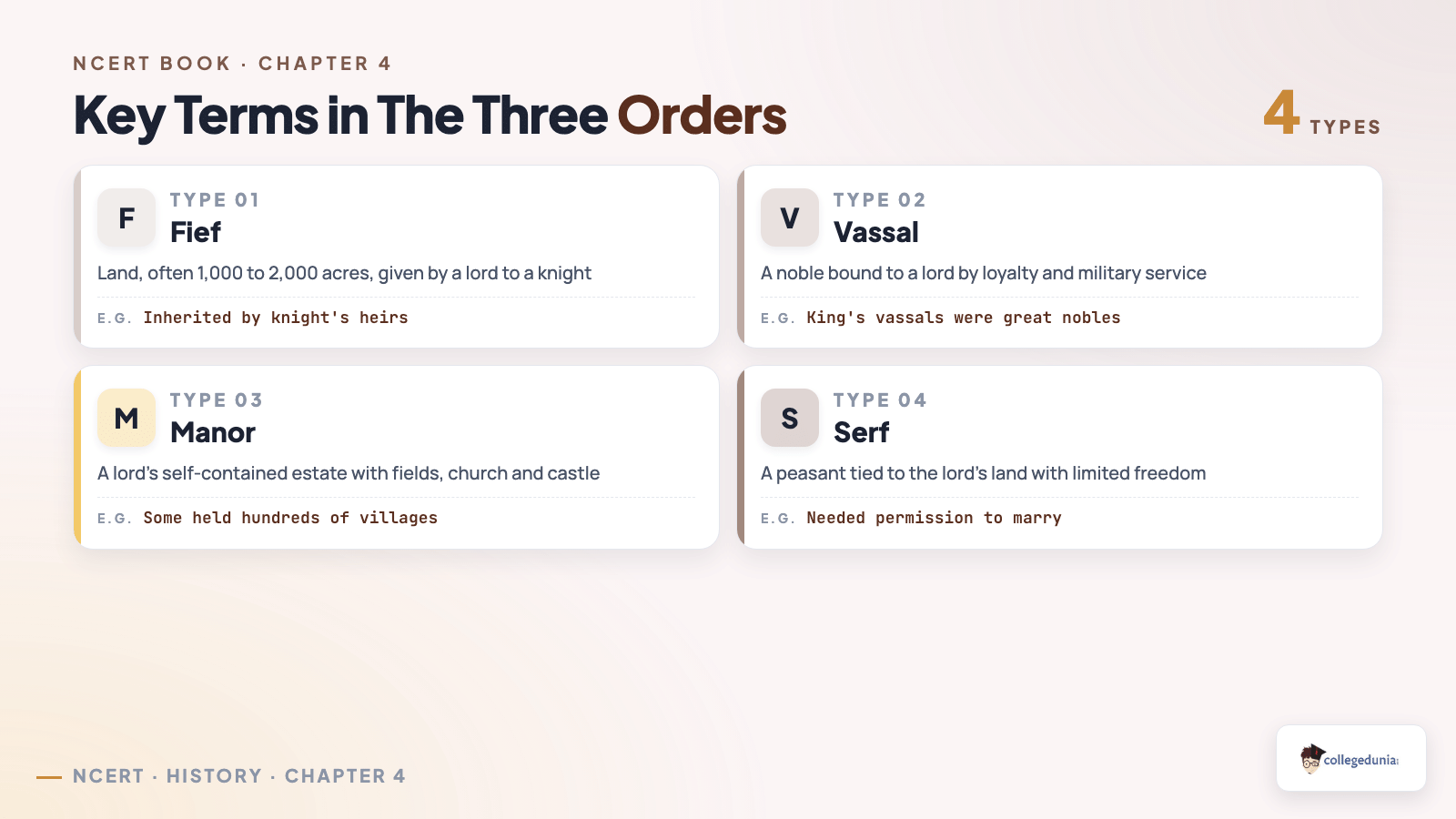
The nobility held their power through vassalage. A lord gave land to a vassal in exchange for loyalty and military service, and kings stood at the top of this chain with their own great nobles as vassals. Each lord ran his estate through a manor-house, and some lords controlled hundreds of villages at once.
| Term | What it means in the chapter |
|---|---|
| Vassal | a noble who received land from a lord in return for loyalty and military help |
| Fief | a piece of land, often 1,000 to 2,000 acres, given by a lord to a knight |
| Manor | a lord's estate, with fields, woodland, a church and a castle for defence |
| Knight | a mounted soldier who served a lord, first mentioned from the ninth century |
A manor tried to grow or make everything it needed, from grain to blacksmith work, but it still had to trade outside for salt, metalware and luxury goods. Frequent local wars from the ninth century made trained cavalry essential, and this need created the knight as a distinct social group, linked to the lords the same way lords were linked to the king.
The chapter uses England after 1066 as a worked example of how vassalage actually spread. William I had the conquered land mapped and handed it out to around 180 Norman nobles who had come with him. These nobles became the king's chief tenants and had to supply knights for his army, and they in turn granted smaller pieces of land to their own knights on the same terms.
The Church, Monks and the First Order
The clergy formed the first order, and not everyone could join it. Serfs and the physically challenged were banned, women could not become priests, and priests could not marry. Bishops lived like nobles, holding vast estates and grand palaces, and the Church collected a tithe, a tenth share of what peasants produced every year.
- Shared customs: kneeling in prayer copied a knight's vow of loyalty to his lord, and God was addressed as 'lord' too
- Monasteries: Benedictine monks followed a 73-chapter rulebook covering silence, obedience and manual labour
- Growing doubt: by the fourteenth century, writers like Langland and Chaucer questioned the luxury some monks enjoyed
The chapter treats monasticism as more than religious devotion. Monasteries were self-contained communities with their own water, mills, gardens and workshops, which made them centres of both faith and daily economic life in the countryside.
Even after Europe turned Christian, people kept older folk customs alongside the new faith. Christmas replaced a pre-Roman festival tied to the solar calendar, while Easter absorbed an older spring festival tied to the lunar calendar, which is why its date still moves every year. Village tours that once marked land boundaries continued under Christianity, simply renamed in the Church's honour, showing how closely the religious and the everyday were woven together.
Peasants, Serfs and Life on the Manor
The third order, the peasantry, sustained the other two. NCERT splits this order into two groups with very different lives, and this split is the part of the chapter students find hardest to keep straight.
| Group | Their position |
|---|---|
| Free peasants | held land as tenants, owed military service and labour rent, and paid the taille tax |
| Serfs | worked land owned by the lord, gave up much of their produce, and needed permission to marry or leave |
Both groups owed unpaid work beyond the fields, such as digging ditches and repairing roads, while women and children spun thread and pressed grapes for the lord's wine. Serfs who escaped to a town and stayed hidden for a year and a day became free, which is why the chapter quotes the saying 'Town air makes free.'
Farming Changes and the Rise of Towns
Feudal society was not fixed forever. Between the fifth and tenth centuries, thick forest and marsh covered most of Europe, and clearing new land for farming was slow, backbreaking work done largely by hand. From the eleventh century, better farming methods, including the switch to three-field crop rotation, roughly doubled output and let peasants farm smaller, more efficient holdings. This freed up time and money that slowly reshaped rural life.
- Guilds: each craft or trade organised itself into a guild that fixed prices and product quality
- Growing towns: some towns held about 30,000 people and were called a 'fourth' order by historians
- Cathedral-towns: stone cathedrals, funded by merchant donations, drew pilgrims and built new towns around them
Money slowly replaced the personal bonds of feudalism, since lords increasingly wanted cash rather than labour service. This economic shift, more than any single event, is what began pulling the three orders apart.
The Fourteenth-Century Crisis and New Monarchies
The old order faced its sharpest test in the fourteenth century. Colder summers cut harvests, famine spread, and then the Black Death killed so many people that Europe's population fell from 73 million in 1300 to 45 million in 1400.
- Population collapse: whole villages emptied, and labour became scarce and costly for the first time
- New monarchs: rulers such as Louis XI in France and Henry VII in England built standing armies and national taxation
- Political divergence: France's Estates-General was not called for two centuries after 1614, while England's Parliament kept meeting regularly
Higher taxes did not go unchallenged. In England, rebellions against royal taxation broke out in 1497, 1536, 1547, 1549 and 1553, and in France, Louis XI fought a long struggle against dukes and princes who resisted the crown's growing reach. The chapter's closing point is that the same feudal nobility survived into this new age by taking administrative posts under the new monarchs, so royal absolutism grew out of feudalism rather than replacing it overnight.
What Collegedunia Adds to This Chapter PDF
Collegedunia gives students the file plus a way into it. The chapter PDF itself is the official NCERT file, untouched.
- Official file: the exact NCERT chapter PDF, no pages removed
- Read in the browser: page through the chapter before downloading
- Chapter list: jump to any other chapter from one table
Also Check: the other Class 11 History resources for this chapter.
| Resource | Link |
|---|---|
| Handwritten notes | The Three Orders Class 11 Handwritten Notes |
| Chapter notes | The Three Orders Class 11 Notes (coming soon) |
| Chapter solutions | The Three Orders Class 11 NCERT Solutions (coming soon) |
| Chapter 1 Book PDF | Writing and City Life NCERT Book PDF (coming soon) |
| Chapter 2 Book PDF | An Empire Across Three Continents NCERT Book PDF (coming soon) |
| Chapter 3 Book PDF | Nomadic Empires NCERT Book PDF (coming soon) |
| Chapter 5 Book PDF | Changing Cultural Traditions NCERT Book PDF (coming soon) |
Class 11 History NCERT Book PDF: All Chapters
Every chapter of the book is on its own page. The 2026-27 Class 11 History textbook, Themes in World History, has 7 chapters in the current syllabus, and The Three Orders sits between the Roman world of Nomadic Empires and the cultural shifts of the chapter that follows it.
| Chapter | Download |
|---|---|
| Chapter 1 | Writing and City Life NCERT Book PDF (coming soon) |
| Chapter 2 | An Empire Across Three Continents NCERT Book PDF (coming soon) |
| Chapter 3 | Nomadic Empires NCERT Book PDF (coming soon) |
| Chapter 4 | The Three Orders NCERT Book PDF |
| Chapter 5 | Changing Cultural Traditions NCERT Book PDF (coming soon) |
| Chapter 6 | Displacing Indigenous Peoples NCERT Book PDF (coming soon) |
| Chapter 7 | Paths to Modernisation NCERT Book PDF (coming soon) |
The Three Orders Class 11 NCERT Book PDF FAQs
Common Student Questions on the Three Orders Chapter File
Ques. Where can I download the Class 11 History Chapter 4 NCERT Book PDF?
Ans. The official The Three Orders chapter file is on this page, free to download.
Ques. What are the three orders in this chapter?
Ans. The clergy, who prayed and ran the Church, the nobility, who fought and controlled land through vassalage, and the peasantry, who worked the fields and supported both the other orders.
Ques. What is the difference between a free peasant and a serf?
Ans. A free peasant held land as a tenant, owed military service and labour rent, and paid a tax called the taille. A serf worked land that belonged to the lord, handed over much of the produce, and needed the lord's permission to marry or move away.
Ques. What was a fief?
Ans. A fief was a piece of land, often between 1,000 and 2,000 acres, that a lord gave to a knight in exchange for military service. The fief could be passed on to the knight's heirs.
Ques. What role did the Church play in medieval society?
Ans. The Church formed the first order. Bishops held large estates like nobles, and the Church collected a tithe, a tenth of what peasants produced. Monasteries followed strict rules and worked as self-contained economic communities.
Ques. What changed feudal society after the eleventh century?
Ans. Better farming methods such as three-field crop rotation raised output, towns and guilds grew, and money slowly replaced labour service. The Black Death in the fourteenth century then cut Europe's population sharply and weakened the old feudal ties further.
Ques. How did France and England develop differently after feudalism declined?
Ans. In France, new monarchs stopped calling the Estates-General for nearly two centuries after 1614. In England, Parliament, made up of the House of Lords and the House of Commons, continued to meet regularly and had to be consulted before taxes were raised.
Ques. Is this the official NCERT file?
Ans. Yes. It is the NCERT chapter PDF for 2026-27 hosted as published, with no pages removed or added.



Comments