




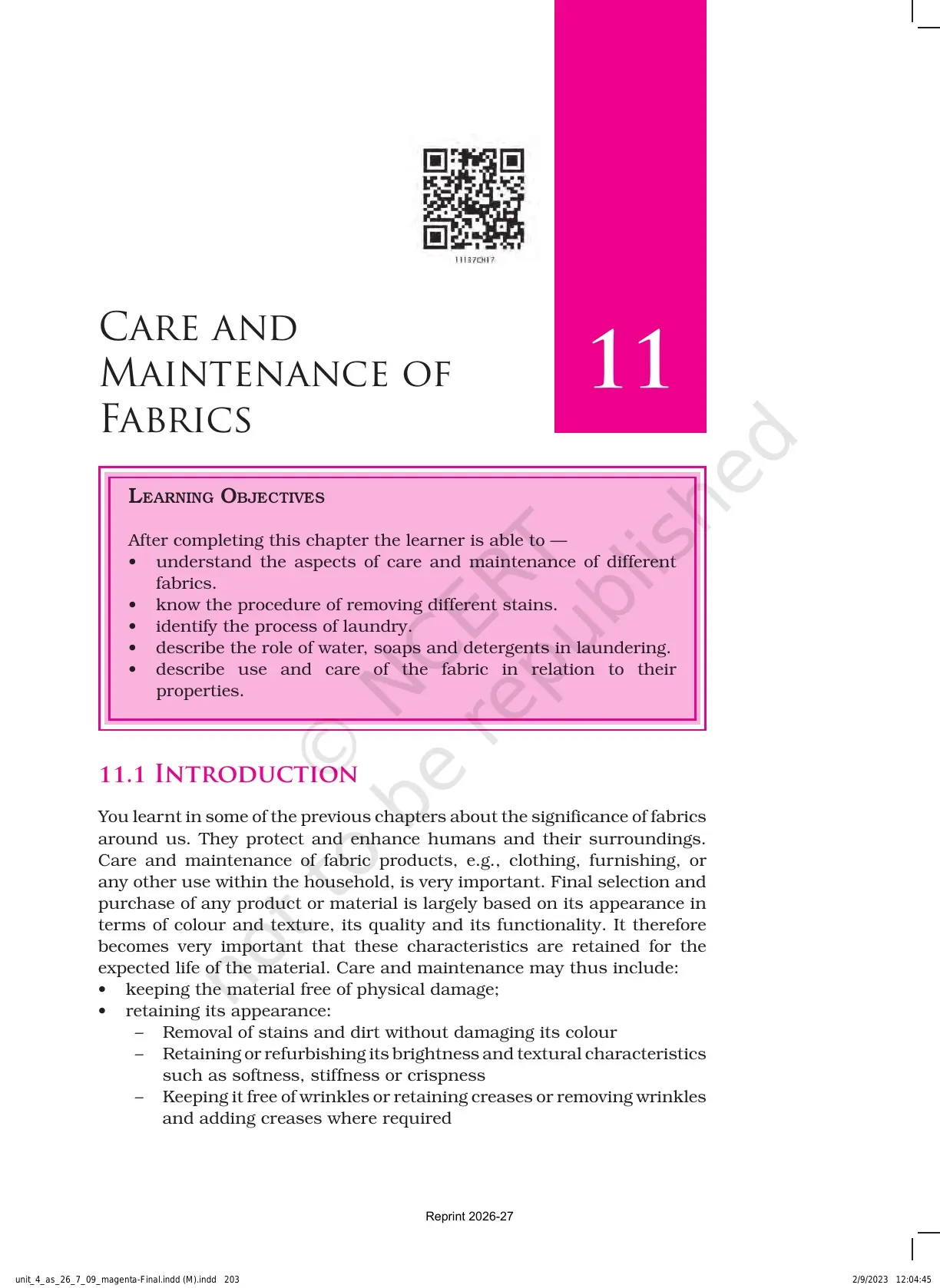
The NCERT Class 11 Home Science Chapter 11 NCERT Book PDF gives students the official 2026-27 chapter on Care and Maintenance of Fabrics. It explains how clothes and household fabrics are mended, washed, stain-treated, finished and stored so their colour, texture and usefulness last longer.
- Download the 18-page official NCERT chapter PDF for offline reading.
- Revise mending, stain removal, laundry, soap, detergents, blueing, starching and ironing.
- Use the PDF before reading notes or solved answers for exact NCERT wording.
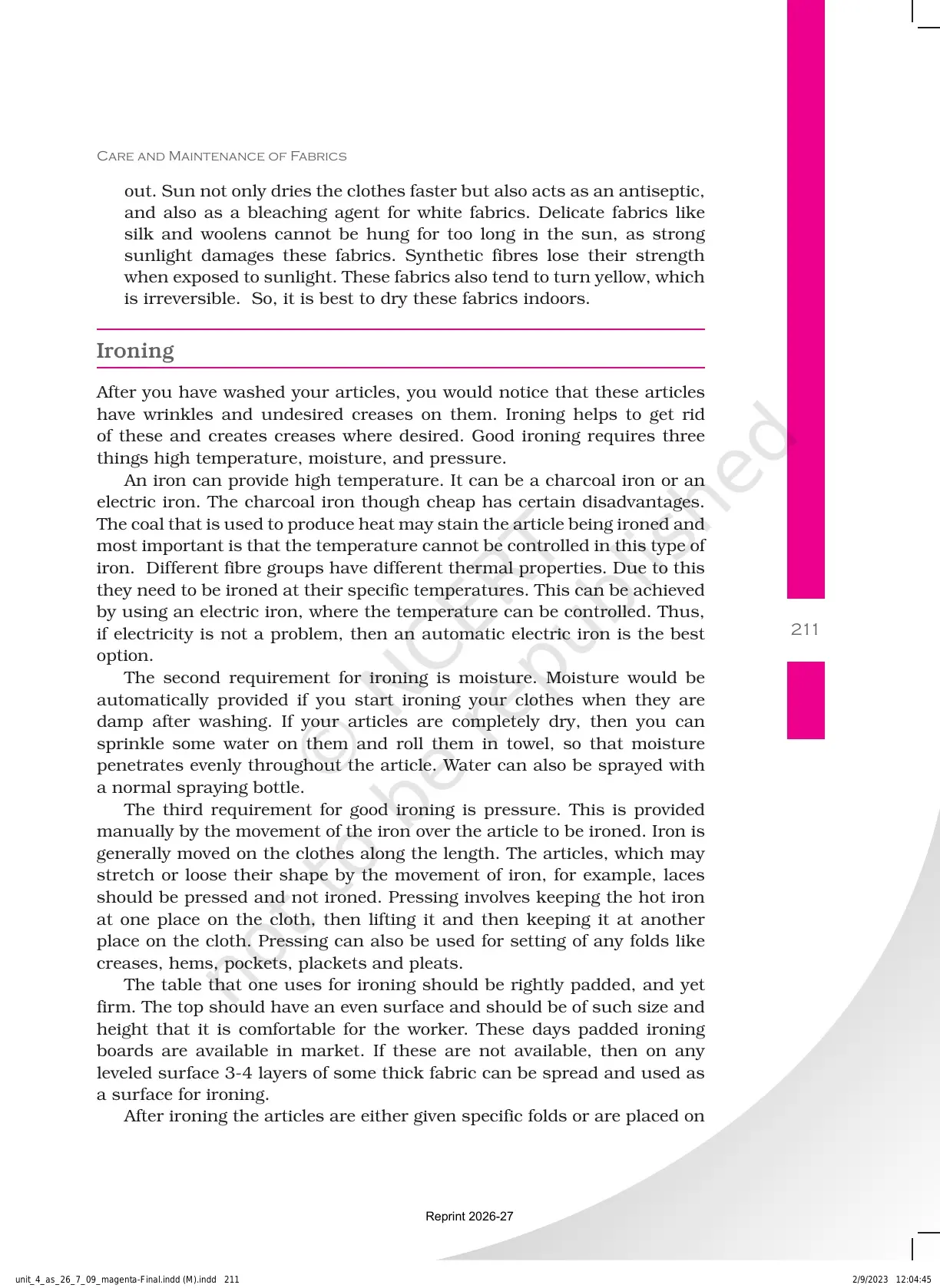
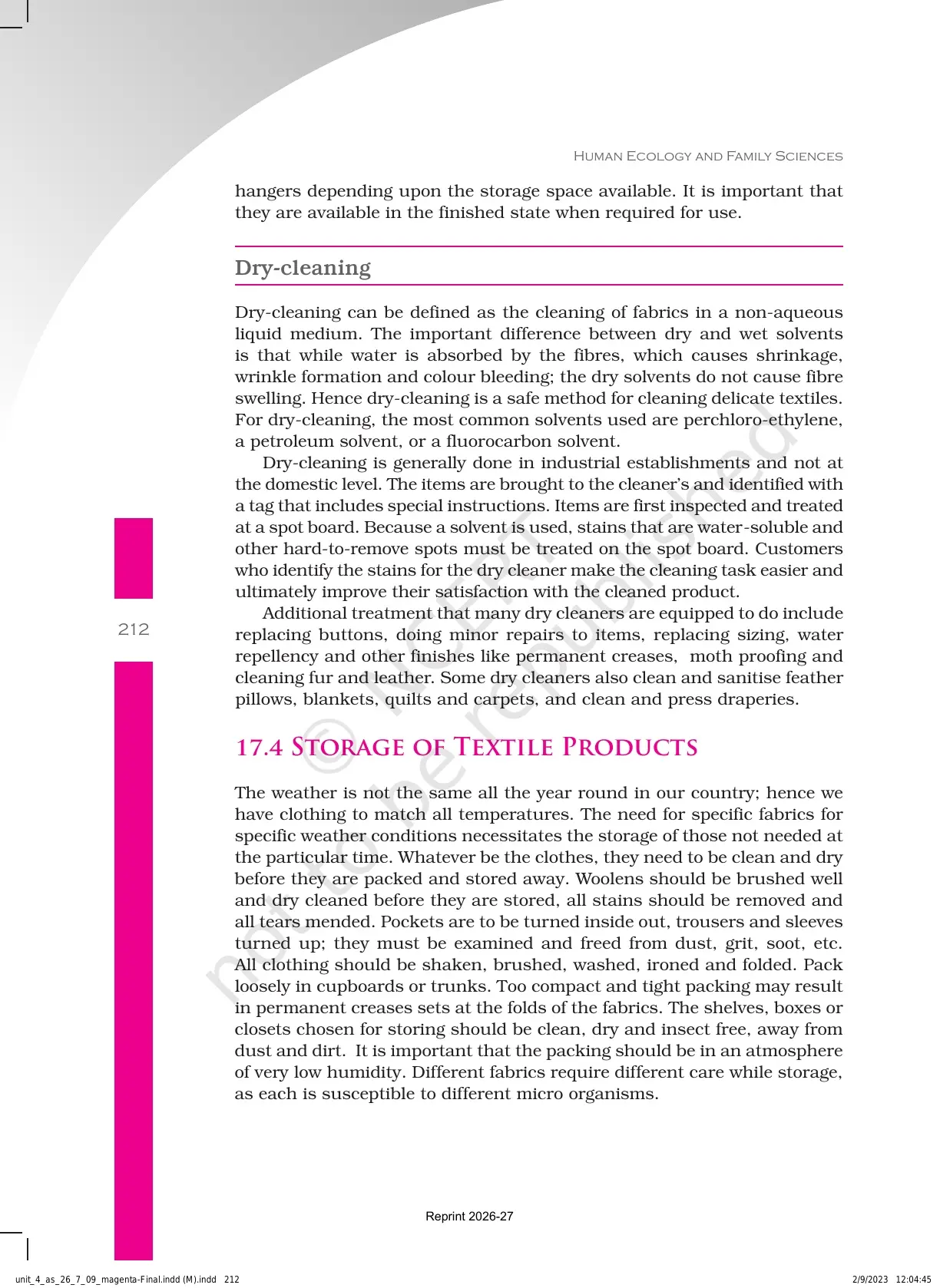
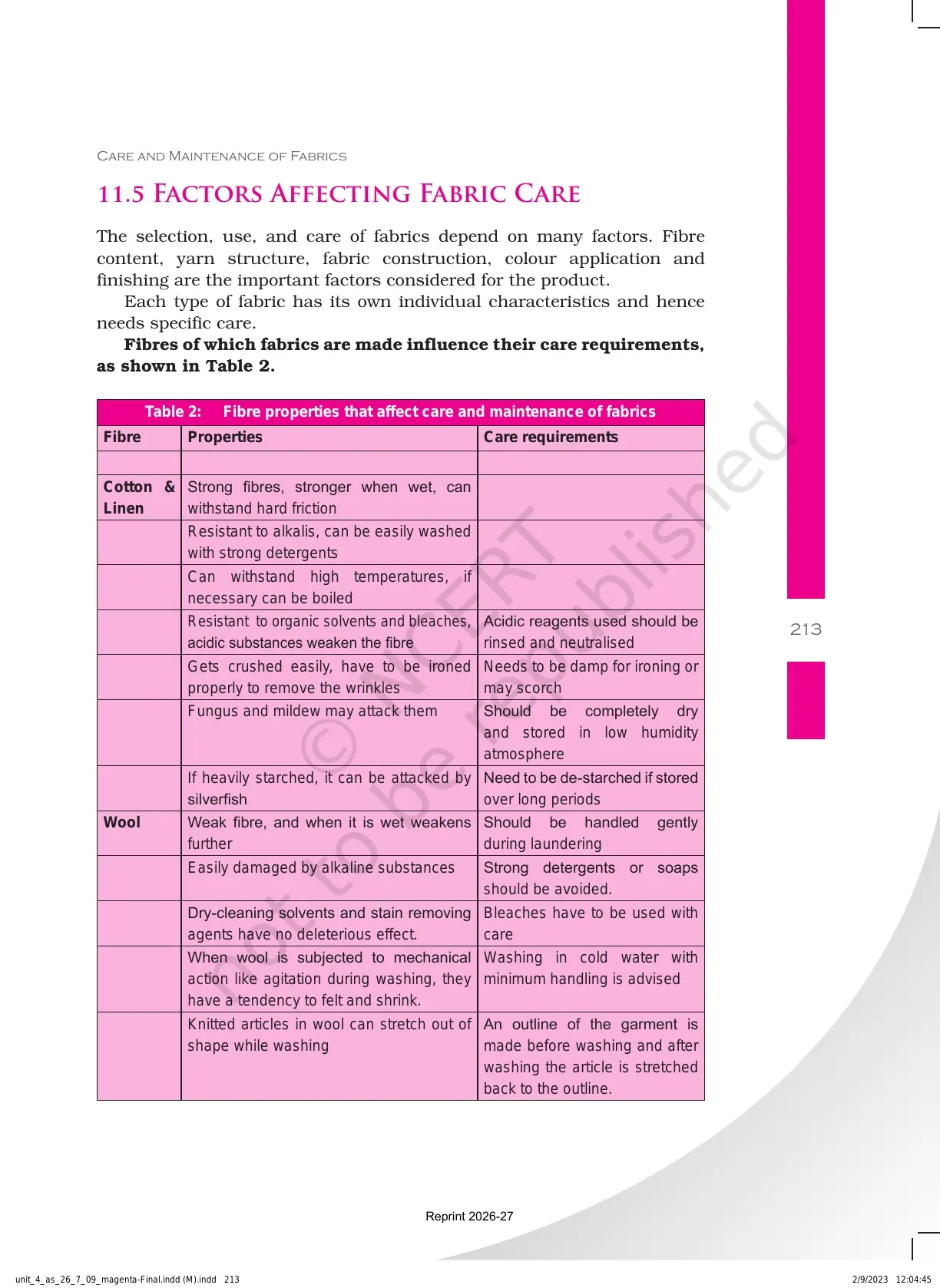
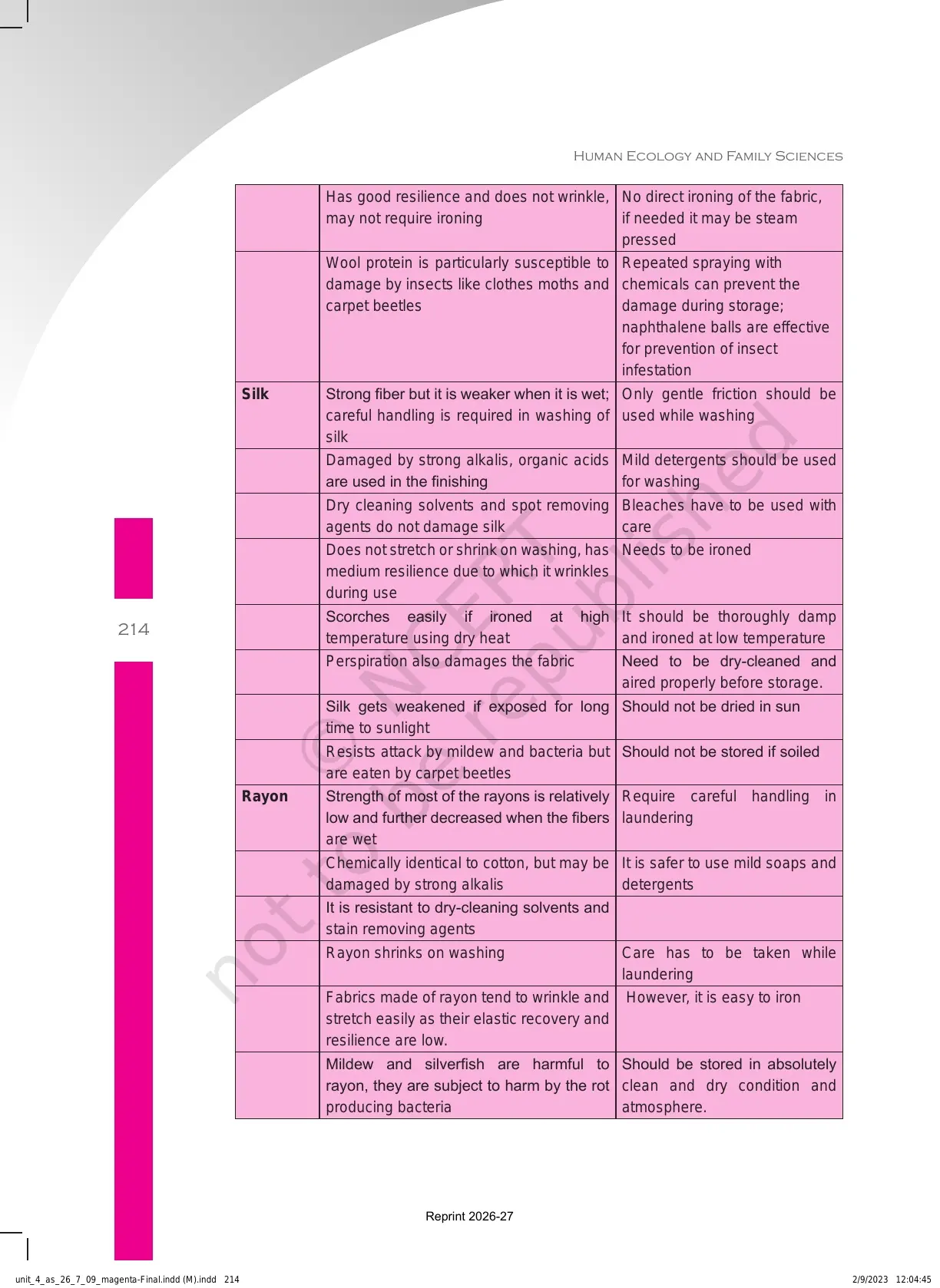
Student Feedback: In a Collegedunia check-in with 9,850 Class 11 Home Science students, 72% said stain-removal questions became easier after they grouped stains by source before memorising reagents.
In This Article
This NCERT Book PDF follows the 2026-27 reprint and should be used as the source text before attempting notes or solutions.
Class 11 Home Science Chapter 11 NCERT Book PDF Highlights
Chapter 11 explains that fabric care starts before washing. NCERT first asks students to protect a fabric from physical damage and then maintain its appearance by removing stains, keeping colour bright, preserving texture and controlling wrinkles or creases.
| Chapter area | NCERT focus | Exam point |
|---|---|---|
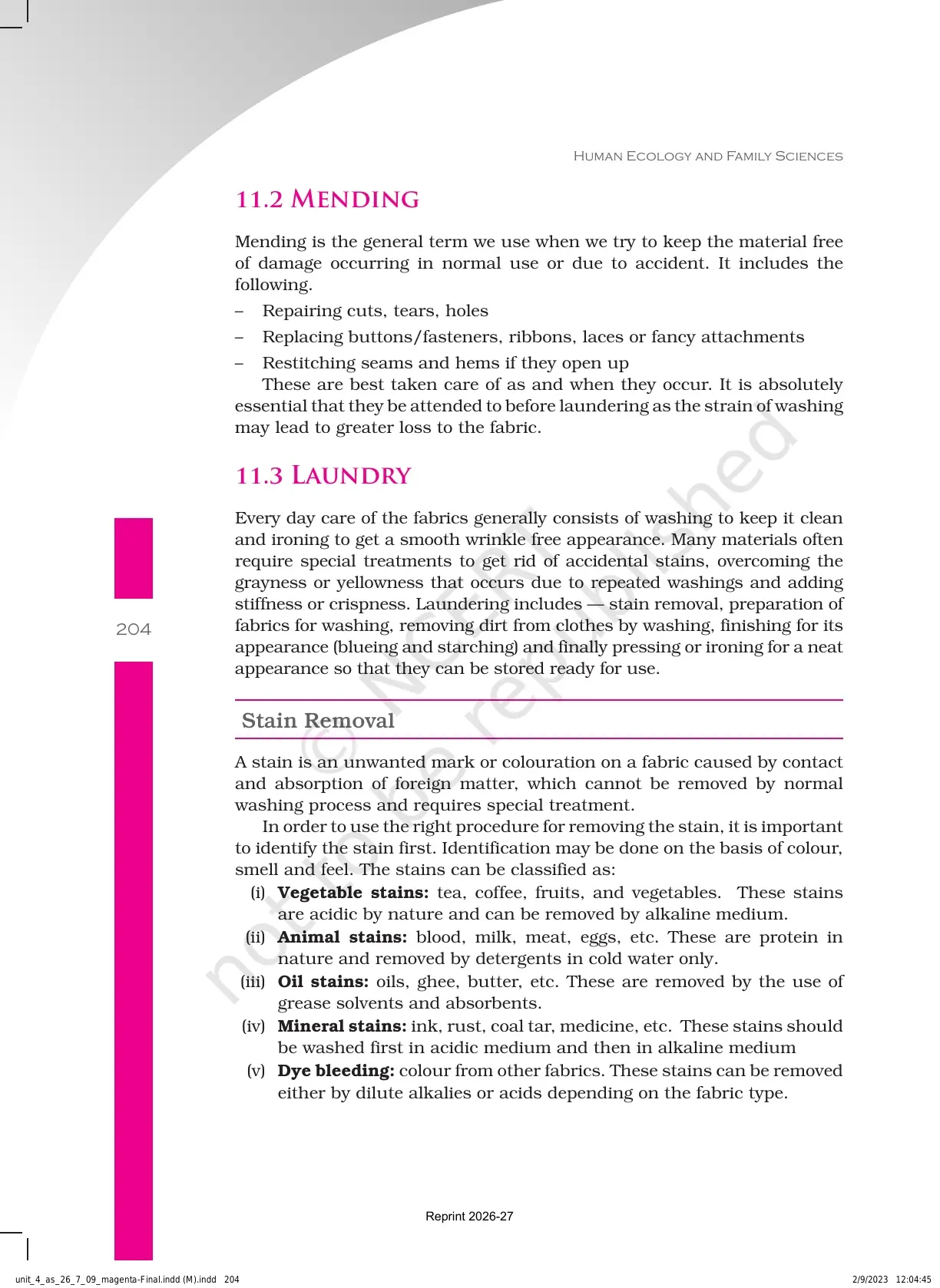
| Mending | Repair cuts, tears, holes, buttons, fasteners, seams and hems | Mend before laundering so washing does not increase damage |
| Laundry | Stain removal, washing, finishing, pressing and storage | Write laundry as a full process, not only washing |
| Stain removal | Identify stains by colour, smell and feel | Fresh stains and mild reagents are safest |
| Soaps and detergents | Use cleaning agents according to fabric and water condition | Hard water and fabric type affect the choice |
| Finishing | Blueing, starching and ironing | These restore appearance after washing |
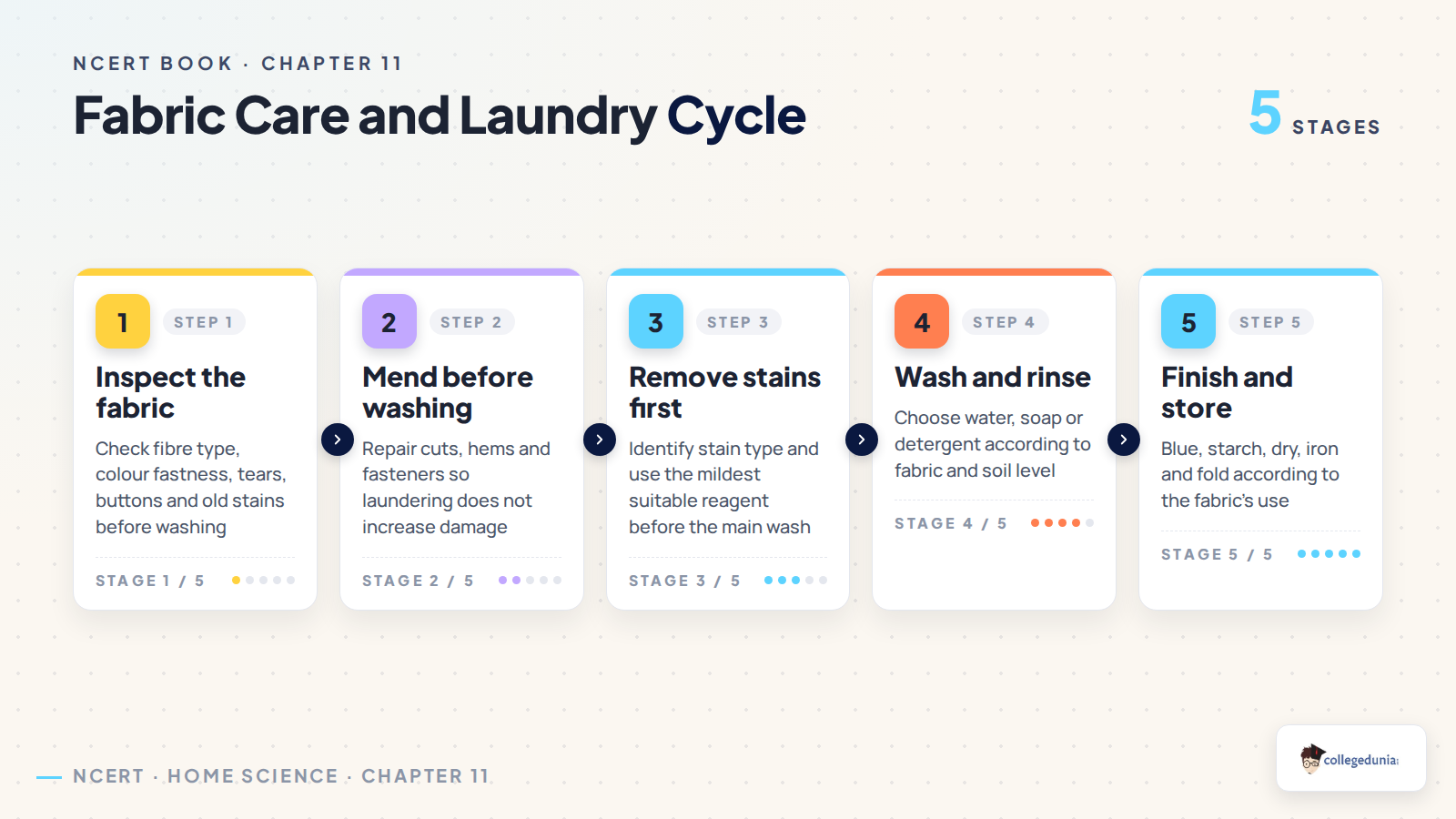
NCERT treats fabric care as a sequence: inspect, mend, remove stains, wash, finish and store.
Fabric Care and Laundry Cycle
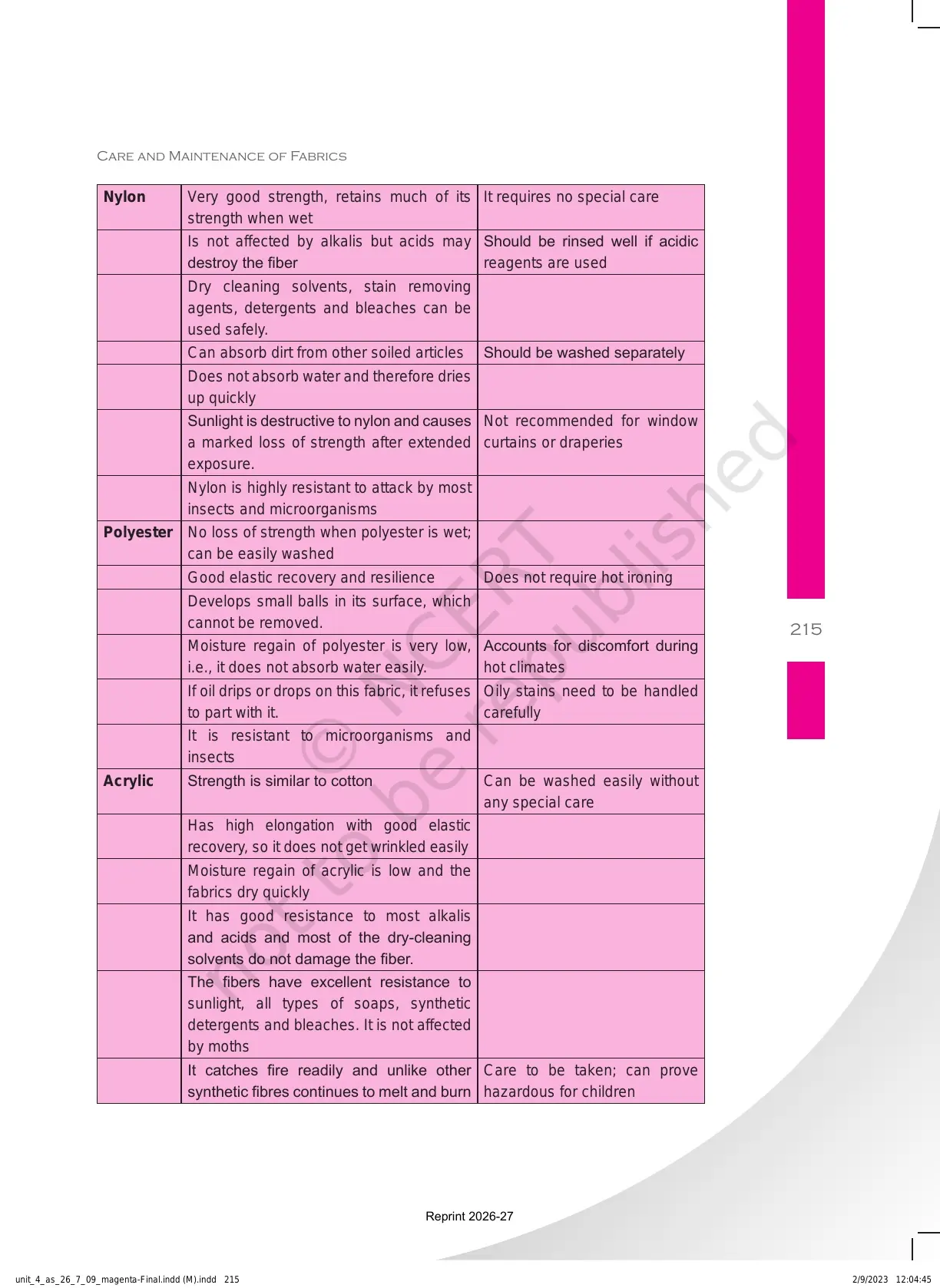
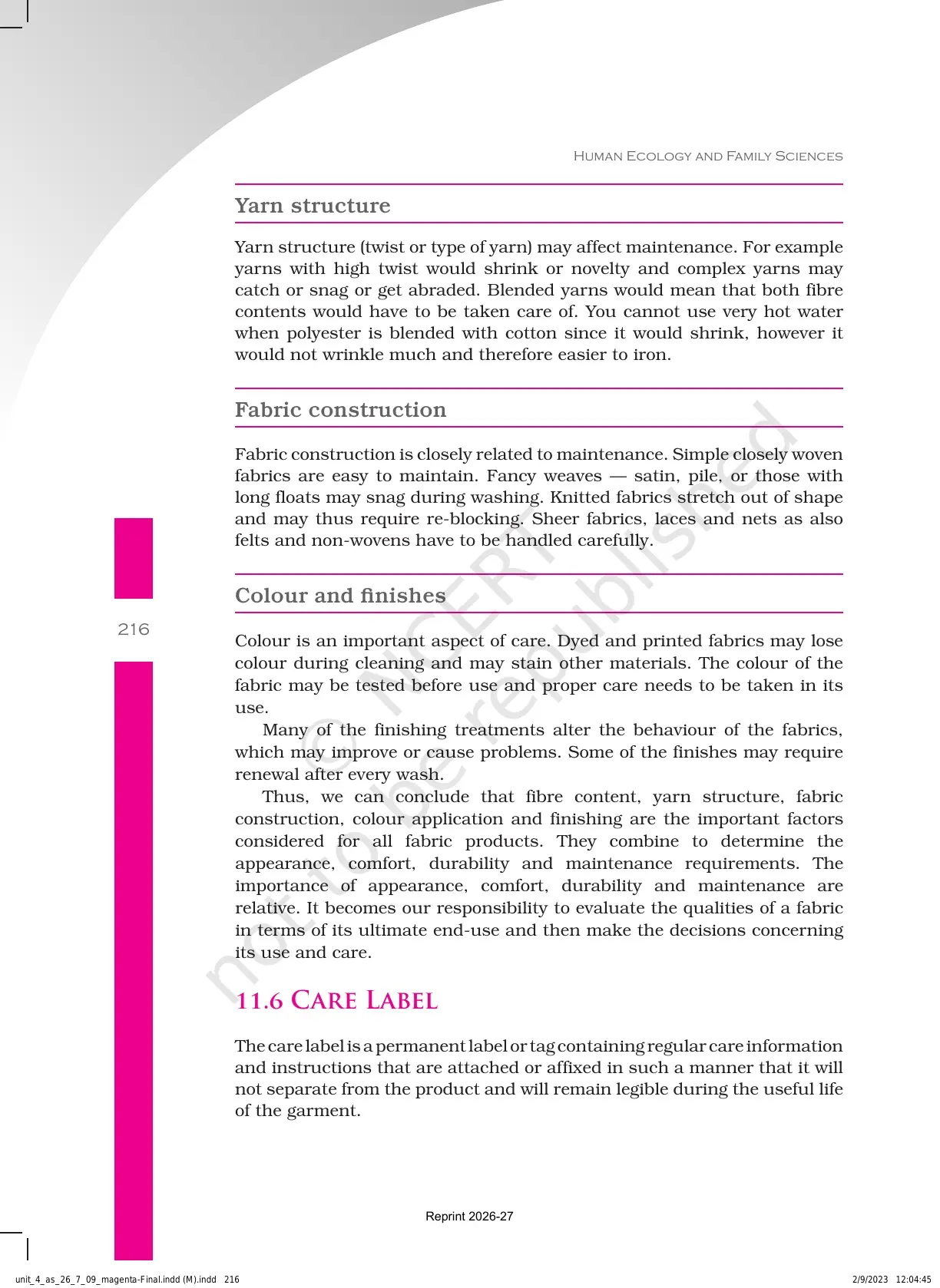
The chapter says that everyday care usually includes washing and ironing, but many fabrics need extra work. Stains may need special treatment. Repeated washing can cause grey or yellow appearance. Some fabrics may need blueing, starching or careful pressing to regain a neat look.
- Before washing: check tears, open seams, missing fasteners and stains.
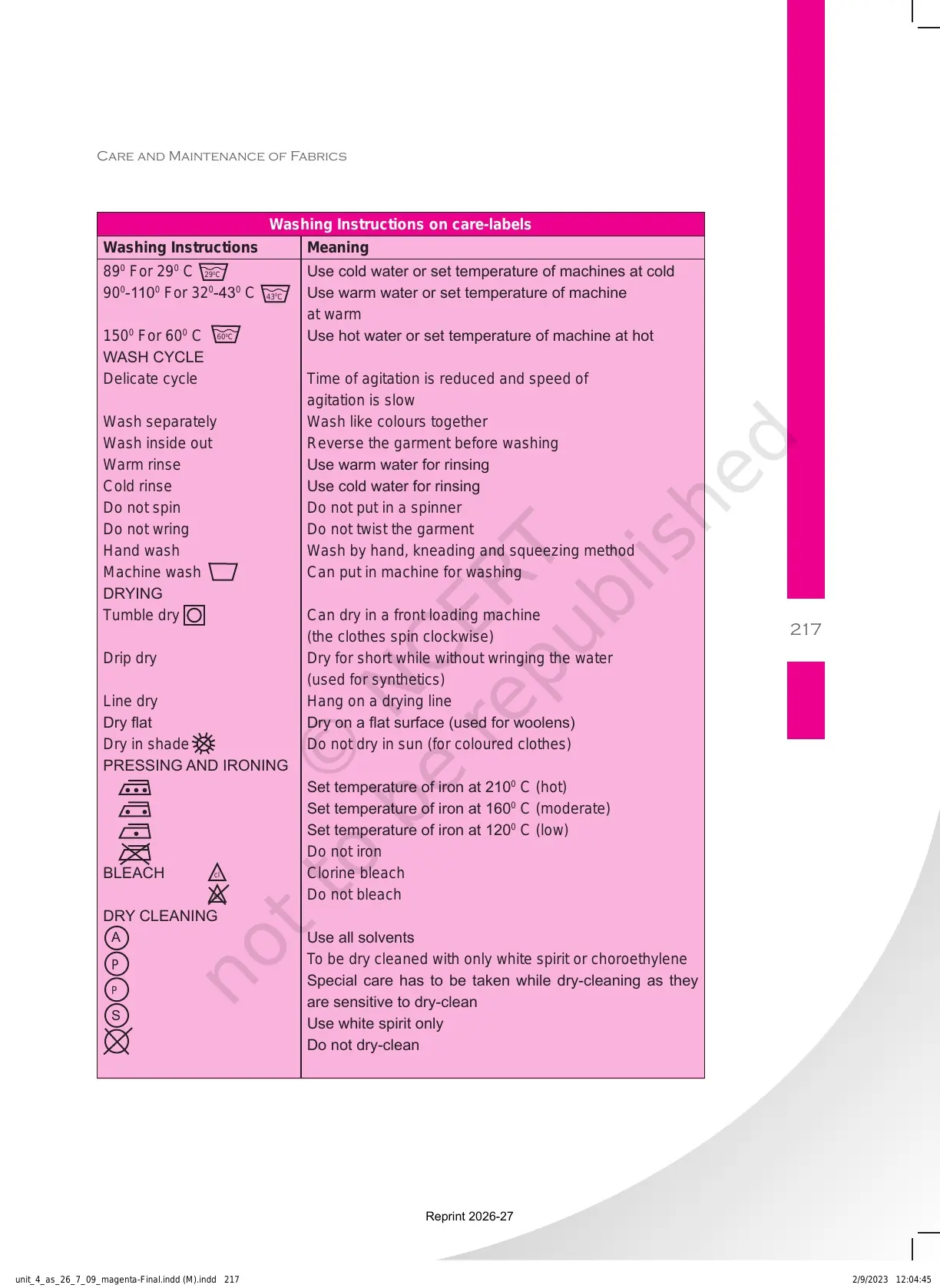
- During washing: use water, soap or detergent suited to the fabric.
- After washing: dry, finish, iron and store the material properly.
Stain Removal Guide from the NCERT Chapter
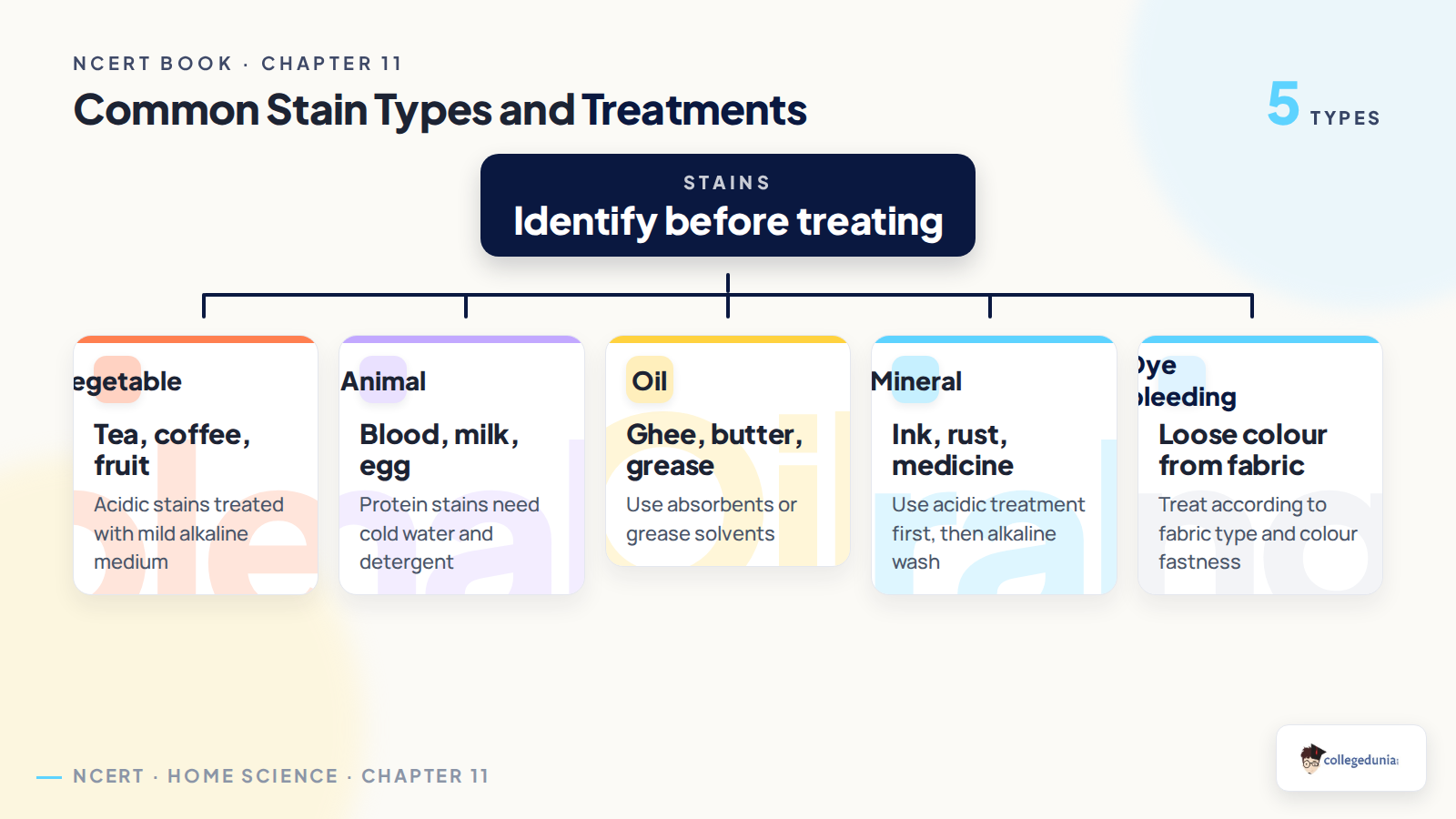
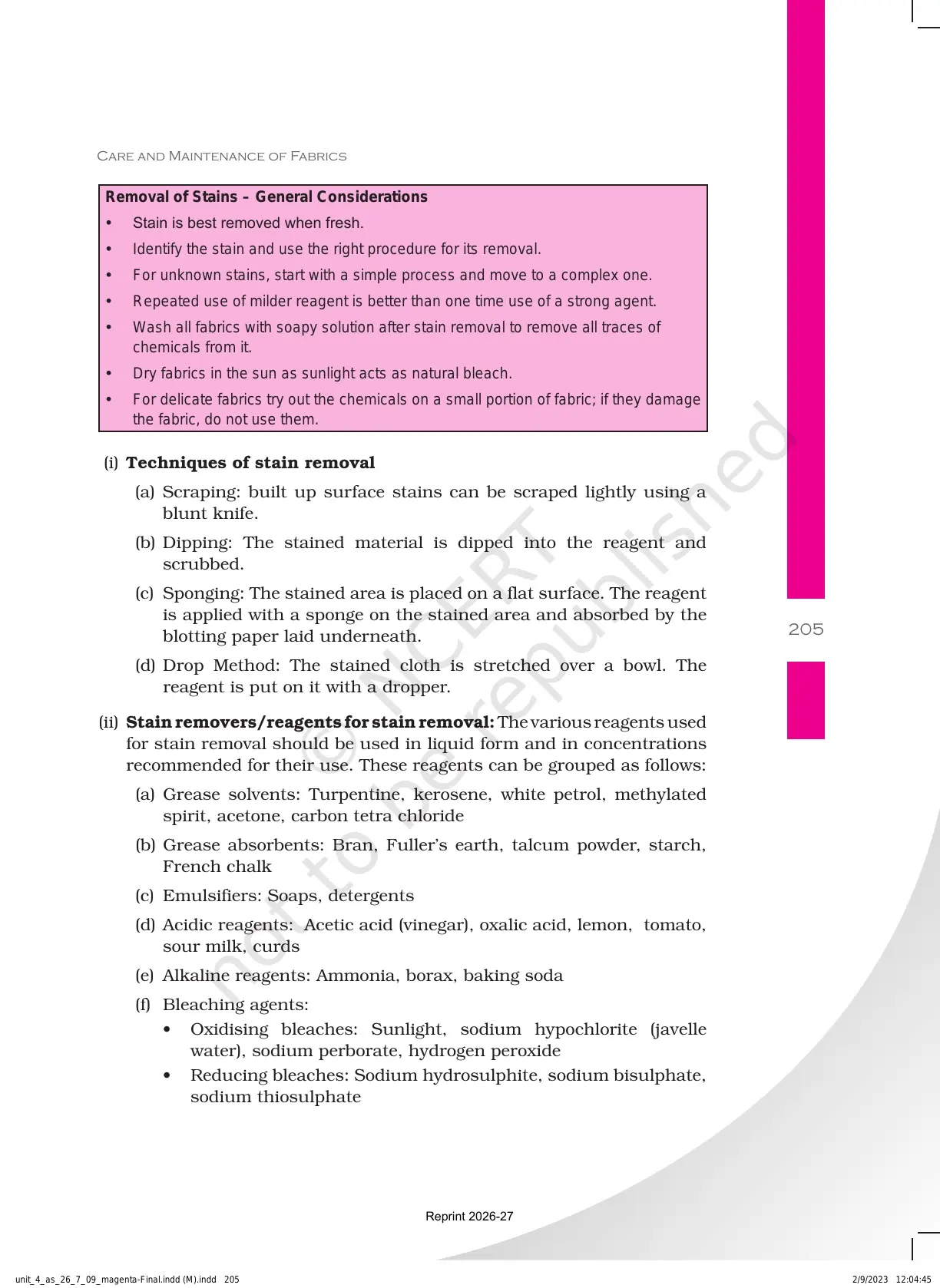
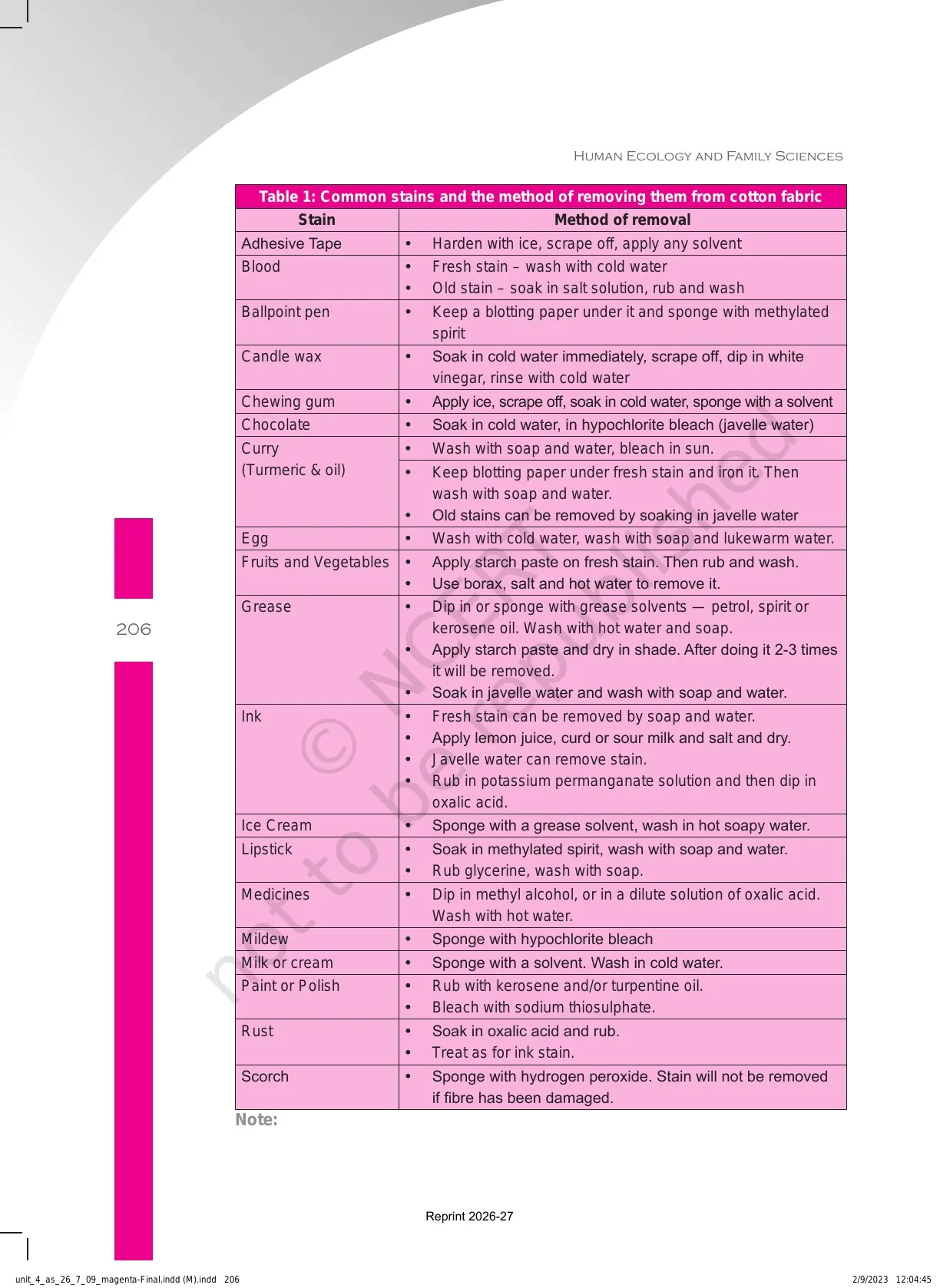
NCERT classifies stains by source so students can choose the correct treatment. Vegetable stains such as tea and fruit are acidic. Animal stains such as blood and milk are protein stains. Oil stains need absorbents or grease solvents, while mineral stains such as ink and rust need careful chemical treatment.
Important: start with a simple process for unknown stains. Repeated use of a mild reagent is safer than one strong treatment that may damage colour or fibre.
The safest stain-removal answer mentions identification, mild treatment, washing after chemicals and testing delicate fabrics first.
Care and Maintenance of Fabrics Video
Source: Home Science School on YouTube
How to Use This Home Science Chapter 11 Book PDF
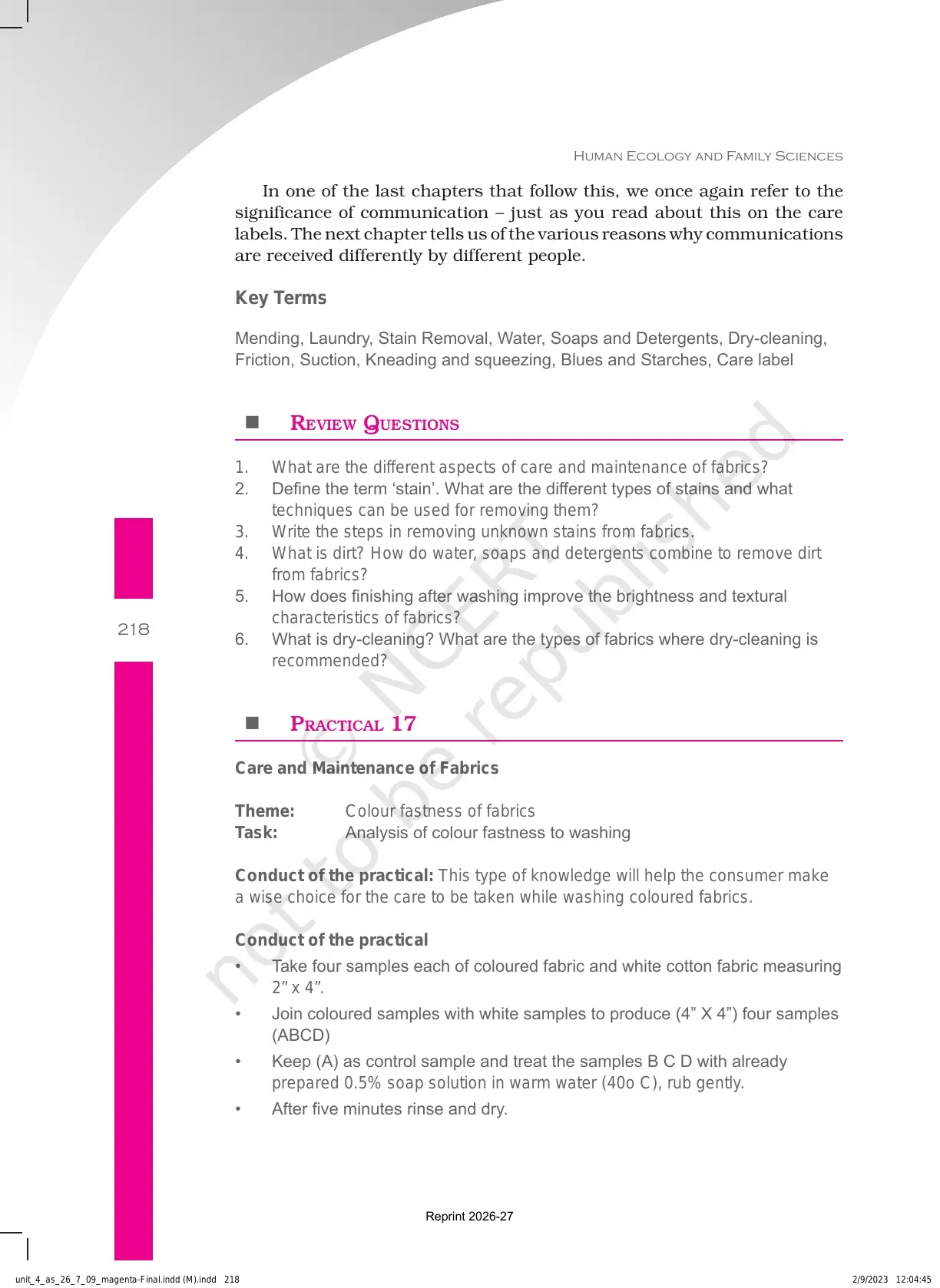
Use the PDF with a two-column notebook. In one column, write each process from NCERT: mending, stain removal, washing, blueing, starching, ironing and storing. In the second column, add one example from daily clothing care. This keeps definitions close to real life.
- Make one table for stain types and reagents.
- Revise why mending is done before laundering.
- Underline rules for delicate fabrics, sunlight drying and chemical traces.
For exams, avoid writing one general stain-removal method for every stain. NCERT expects the treatment to match the stain type.
More Class 11 Home Science Chapter 11 Resources
Use these related resources when you want Chapter 11 in another format. The table stays above the FAQ so students can move from the official book PDF to revision and practice material without losing the chapter context.
| Resource | Best use | Link |
|---|---|---|
| NCERT Book PDF | Read the official 2026-27 source chapter | Open book PDF |
| Notes | Revise laundry, stain removal and fabric-wise care points | Open notes |
All NCERT Book PDFs for Class 11 Home Science Chapters
The table below keeps the same resource type together, so students can move chapter by chapter through the Class 11 Home Science NCERT book PDFs.
| Chapter | NCERT chapter title | Book PDF |
|---|---|---|
| Chapter 1 | Introduction: Evolution of the Discipline and its Relevance to Quality of Life | Open book PDF |
| Chapter 2 | Understanding the Self | Open book PDF |
| Chapter 3 | Food, Nutrition, Health and Fitness | Open book PDF |
| Chapter 4 | Management of Resources | Open book PDF |
| Chapter 5 | Fabrics Around Us | Open book PDF |
| Chapter 6 | Media and Communication Technology | Open book PDF |
| Chapter 7 | Concerns and Needs in Diverse Contexts | Open book PDF |
| Chapter 8 | Nutrition, Health and Well-being | Open book PDF |
| Chapter 9 | Our Apparel | Open book PDF |
| Chapter 10 | Financial Management and Planning | Open book PDF |
| Chapter 11 | Care and Maintenance of Fabrics | Current book PDF |
Care and Maintenance of Fabrics Class 11 Home Science NCERT Book FAQs
Ques. What is included in the Class 11 Home Science Chapter 11 NCERT Book PDF?
Ans. The PDF includes the official NCERT chapter on mending, laundry, stain removal, soaps, detergents, blueing, starching, ironing and fabric care.
Ques. How many pages are there in this Chapter 11 NCERT PDF?
Ans. The official Class 11 Home Science Chapter 11 PDF used here has 18 pages in the local NCERT chapter file.
Ques. Why should stains be treated before normal washing?
Ans. Normal washing may not remove absorbed foreign matter. NCERT says stains should be identified first and treated with the correct mild reagent.
Ques. Why is mending done before laundering?
Ans. Mending is done before laundering because washing can increase cuts, tears, open seams or loose fasteners if they are left unrepaired.



Comments